Shared posts

10 Dec 22:58

The FAA will give Bezos and Branson its last astronaut wings

by Bryan Menegus

Whether or not the average person considers Jeff Bezos and Richard Branson to be explorers of the cosmos after their respective joyrides into the upper atmosphere, they and their crew members have met the Federal Aviation Administration's criteria "astronauts." They're even giving them a little medals! And they'll be the last of their kind ever produced.

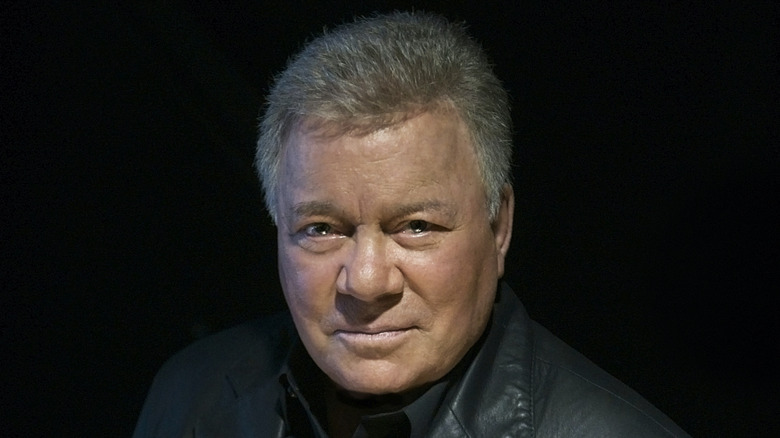
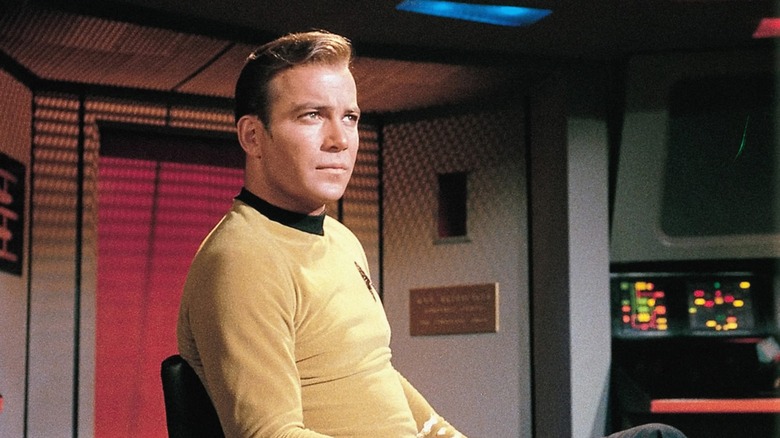
The administration announced an abrupt end to its Commercial Space Astronaut Wings program today. The 2021 recipients include Bezos and Branson, as well as Star Trek actor William Shatner; since it was created in 2004, the honor has been given to 24 individuals, 15 of whom received their wings this year. Starting January 1, 2022, those who would normally qualify for wings will instead only be recognized on the FAA's website.

"The Wings program was created [...] to recognize pilots and flight crew who furthered the FAA’s mission to promote the development of vehicles designed to carry humans into space," the FAA wrote. "With three commercial space companies now licensed by the FAA to fly spaceflight participants, and companies conducting operations, [program creator Patti Grace Smith's] vision is largely fulfilled."

An ego trip 50 miles up is, arguably, substantively different from spending time on the ISS or landing on the Moon. So while it might gall some to see two guys who already have everything claiming a soon-to-be-extinct bit of space travel memorabilia, keep in mind that it's one of many similar baubles. Astronauts still can be awarded different, arguably nicer-looking wings from each branch of the military, in three different degrees. NASA also produces non-military pins for astronauts, and a separate pins for civilians who take part in missions. If anything, the refusal to gift knickknacks for scientifically pointless exercises in polluting the environment suggests humankind's esteem for real space travel remains untarnished.

10 Dec 22:58

The Best Movies Streaming Right Now: Vertigo, Barton Fink, And More

by Chris Evangelista

(Welcome to Now Stream This, a weekly column dedicated to the best movies streaming on Netflix, Amazon, Hulu, and every other streaming service out there.)

Let's just get right to it, shall we? It's the weekend, the holidays are coming, it's cold, it's time to stay inside and watch movies. If you celebrate Christmas, you can trim the tree (if you haven't already) while these play in the background. Or you can fill a Big Gulp cup up with wine and plop down on the couch, ready for the wonderful world of cinema. As always, I try to bring you a wide variety of options, and this week is kind of all over the place in terms of quality. But that's part of the fun. So let's get streaming. 

Vertigo

Now Streaming on The Criterion Channel

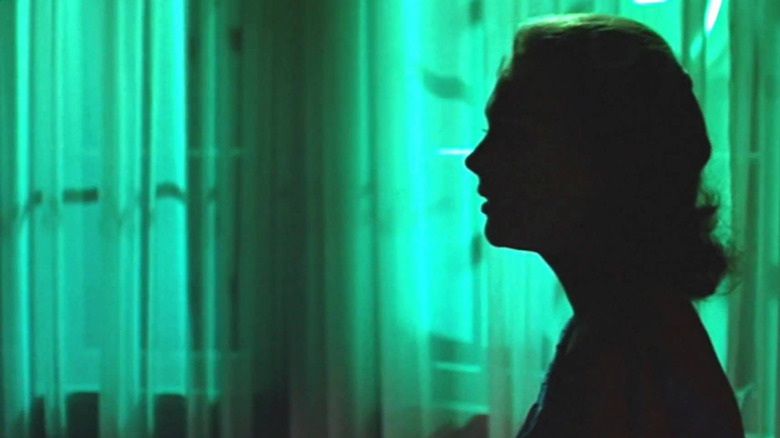
What is Alfred Hitchcock's best movie? I'm sure a compelling case can be made for many of his films to claim that title. But the one that seems to always lead the pack is "Vertigo," Hitchcock's psychosexual thriller about obsession. A box office disappointment when it arrived in 1958, years of reappraisals have helped solidify "Vertigo" as a masterpiece. James Stewart is a former cop who was forced into early retirement after developing a serious case of vertigo. Later, Stewart is hired as a private eye by a rich man to tail his wife (Kim Novak) because she's been acting odd. This sets the stage for a twisty, haunting saga, with Hitchock drilling into the obsessive nature of his main character at every turn. 

Barton Fink

Now Streaming on Hulu

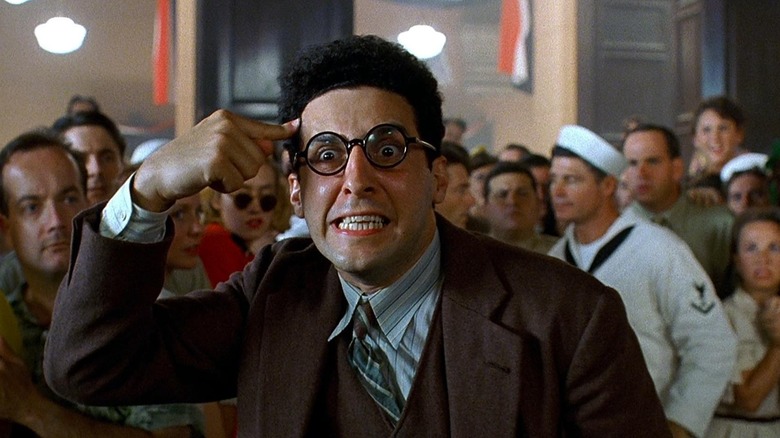
One of the very best Coen Brothers movies (and that's saying something), "Barton Fink" has John Turturro as the titular character, a playwright who gets called to Hollywood in 1941. This could be a big break, in theory. But when Fink is drafted to pen the script for a wrestling picture, he immediately succumbs to writer's block. Instead of working on his script, he spends his days listless, hanging out in a creepy hotel where his neighbor is the good-natured Charlie (John Goodman, who really should've won an Oscar for his work here). As the writer's block continues to plague Fink he falls into depression, and it certainly doesn't help when he wakes up next to a dead body one morning. The end result is a fantastic film that is strange, surreal, and macabrely funny. 

End Of Days

Now Streaming on Amazon Prime Video

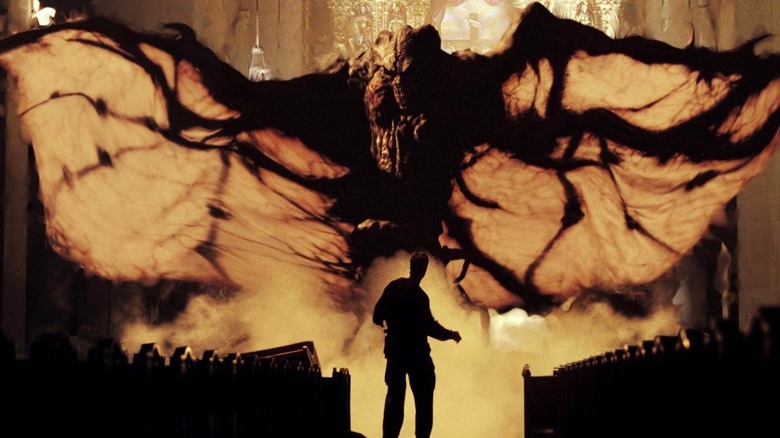
Arnold Schwarzenegger vs. Satan: place your bets! "End of Days" is a very silly, and yet very watchable horror film set at the end of 1999. You might be too young to remember this, reader, but back in '99 there was hysteria involving the potential end of the world. Some turned to biblical prophecy while others attempted to keep the doom in the real world by implying computer systems would fail when the clock rolled over to the year 2000. Planes would fall out of the sky! Blackouts would sweep the land! Cats and dogs, living together, mass hysteria! Of course, none of that happened. No matter. In the world of "End of Days," the Y2k bug isn't what we have to worry about. Instead, we should be concerned about the devil, who has come up from hell in the form of Gabriel Byrne. He hopes to take a bride in the form of Robin Tunney, and the only person who can save the day is Arnold Schwarzenegger, playing a miserable guy who puts a piece of pizza in a blender. Like I said: silly. And yet, it's hard not to have fun here. I mean, this is a movie where Arnold fires a friggin' bazooka at the devil. How can you not enjoy that? 

Coming Home In The Dark

Now Streaming on Netflix

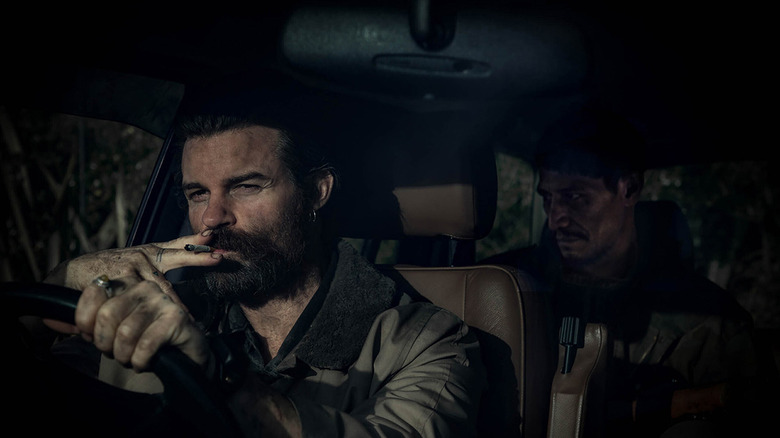
"Coming Home in the Dark" is extremely bleak stuff, so maybe skip this one if you're in a less-than-great mood. However, if you can handle it, you'll be in for something special. This nightmare from filmmaker James Ashcroft concerns a New Zealand family on holiday who runs into two strangers in the middle of nowhere. What follows is a violent, disturbing long night's journey into day, complete with secrets slowly revealing themselves. If it sounds like I'm being vague here it's because I don't to give away the film's shocks. Just know that the atmosphere of "Coming Home in the Dark" is foreboding, to say the least. For more info, here's my review of the film from Sundance

Jupiter Ascending

Now Streaming on HBO Max

Look, The Wachowskis' "Jupiter Ascending" has lots of problems. Lots and lots of problems. And yet ... it's so wildly inventive that it kind of wins you over. The story involves intergalactic warfare and Channing Tatum playing a half-man/half-dog with rocket roller skates. But really it's just an excuse for the Wachowskis to get weird, unleashing all sorts of strange characters and worlds. There's a pilot with an elephant head! Sean Bean controls bees (I think?)! And Eddie Redmayne chews so much scenery that I'm surprised he didn't break every single tooth in his mouth. 

Read this next: 14 Remakes That Are Better Than The Original

The post The Best Movies Streaming Right Now: Vertigo, Barton Fink, and More appeared first on /Film.

10 Dec 22:49

Dangerous “Log4j” security vulnerability affects everything from Apple to Minecraft

by Adam Conway

Zero-day exploits are about as bad as it gets, especially when they’re identified in software as ubiquitous as Apache’s Log4j logging library. A proof-of-concept exploit was shared online that exposes everyone to potential remote code execution (RCE) attacks, and it affected some of the largest services on the web. The exploit has been identified as “actively being exploited”, and is one of the most dangerous exploits to be made public in recent years.

Log4j is a popular Java-based logging package developed by the Apache Software Foundation, and CVE-2021-44228 affects all versions of Log4j between version 2.0-beta-9 and version 2.14.1. It has been patched in the most recent version of the library, version 2.15.0, released a few days ago. Many services and applications rely on Log4j, including games like Minecraft, where the vulnerability was first discovered. Cloud services such as Steam and Apple iCloud were also found to be vulnerable, and it’s likely that anybody using Apache Struts is too. Even changing an iPhone’s name was shown to trigger the vulnerability on Apple’s servers.

This vulnerability was discovered by Chen Zhaojun of the Alibaba Cloud Security Team. Any service that logs user-controlled strings was vulnerable to the exploit. The logging of user-controlled strings is a common practice by system administrators in order to spot potential platform abuse, though those strings should then be “sanitized” — the process of cleaning user input to ensure that there is nothing harmful to the software being submitted.

Log4Shell rivals Heartbleed in its severity

The exploit has been dubbed “Log4Shell”, as it’s an unauthenticated RCE vulnerability that allows for total system takeover. There’s already a proof-of-concept exploit online, and it’s ridiculously easy to demonstrate that it works through the use of DNS logging software. If you remember the Heartbleed vulnerability from a number of years ago, Log4Shell definitely gives it a run for its money when it comes to severity.

“Similarly to other high-profile vulnerabilities such as Heartbleed and Shellshock, we believe there will be an increasing number of vulnerable products discovered in the weeks to come,” the Randori Attack Team said in their blog today. “Due to the ease of exploitation and the breadth of applicability, we suspect ransomware actors to begin leveraging this vulnerability immediately,” they added. Malicious actors are already mass-scanning the web to try and find servers to exploit (via Bleeping Computer).

“Many, many services are vulnerable to this exploit. Cloud services like Steam, Apple iCloud, and apps like Minecraft have already been found to be vulnerable,” LunaSec wrote. “Anybody using Apache Struts is likely vulnerable. We’ve seen similar vulnerabilities exploited before in breaches like the 2017 Equifax data breach.” LunaSec also said that Java versions greater than 6u211, 7u201, 8u191, and 11.0.1 are less affected in theory, though hackers may still be able to work around the limitations.

The vulnerability can be triggered by something as mundane as an iPhone’s name, demonstrating that Log4j truly is everywhere. If a Java class is appended to the end of the URL, then that class will be injected into the server process. System administrators with recent versions of Log4j can execute their JVM with the following argument to also prevent the vulnerability from being exploited, so long as they’re on at least Log4j 2.10.

-Dlog4j2.formatMsgNoLookups=true

CERT NZ (New Zealand’s national Computer Emergency Response Team) has issued a security advisory warning of active exploitation in the wild, and this has also been confirmed by Coalition Director Of Engineering – Security Tiago Henriques and security expert Kevin Beaumont. The vulnerability has also been deemed so dangerous by Cloudflare that all customers are granted “some” protection by default.

This is an incredibly dangerous exploit and one that can wreak havoc online. We’ll be keeping a close eye on what happens next.

The post Dangerous “Log4j” security vulnerability affects everything from Apple to Minecraft appeared first on xda-developers.

10 Dec 21:45

'China Will Soon Lead the US in Tech'

by msmash
Graham Allison, a professor of government at Harvard, and Eric Schmidt, former CEO of Google, writing in a column for WSJ: Last year China produced 50% of the world's computers and mobile phones; the U.S. produced only 6%. China produces 70 solar panels for each one produced in the U.S., sells four times the number of electric vehicles, and has nine times as many 5G base stations, with network speeds five times as fast as American equivalents. In the advanced technology likely to have the greatest effect on economics and security in the coming decade -- artificial intelligence -- China is ahead of the U.S. in crucial areas. A spring 2021 report from the National Security Commission on AI warned that China is poised to overtake the U.S. as the global leader in AI by 2030. U.S.-born students are earning roughly as many doctorates each year in AI-related fields as in 1990, while China is on track to graduate twice as many science, technology engineering and mathematics Ph.D.s as the U.S. by 2025. The Harvard report adds that China now clearly tops the U.S. in practical AI applications, including facial recognition, voice recognition and fintech. The U.S. still has a dominant position in the semiconductor industry, which it has held for almost half a century. But China may soon catch up in two important arenas: semiconductor fabrication and chip design. China's production of semiconductors has surpassed America's, with its share of global production rising to 15% from less than 1% in 1990, while the U.S. share has fallen from 37% to 12%. In 5G, the Pentagon's Defense Innovation Board reports that China is on track to replicate the economic and military advantages America gained from being the global leader in 4G. China has installed 950,000 base stations to America's 100,000. By the end of last year, 150 million Chinese were using 5G mobile phones with average speeds of 300 megabits a second, while only six million Americans had access to 5G with speeds of 60 megabits a second. America's 5G service providers have put more focus on advertising their capabilities than on building infrastructure. The Chinese Communist Party has made no secret of its ambitions: China intends to become the global leader in the technologies that will shape the decades ahead.

Read more of this story at Slashdot.

10 Dec 20:17

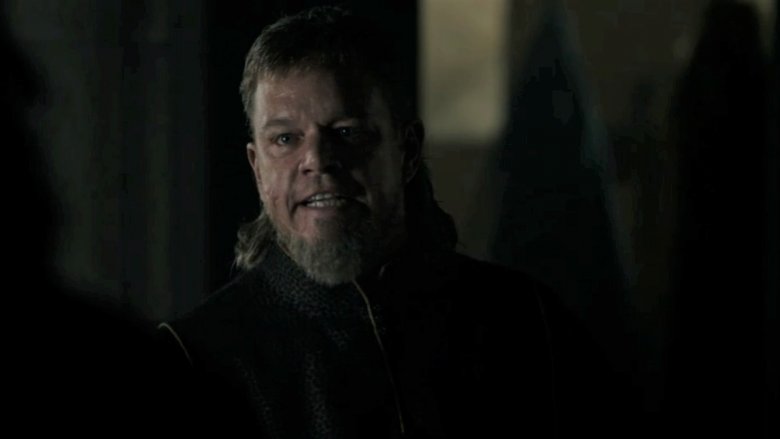
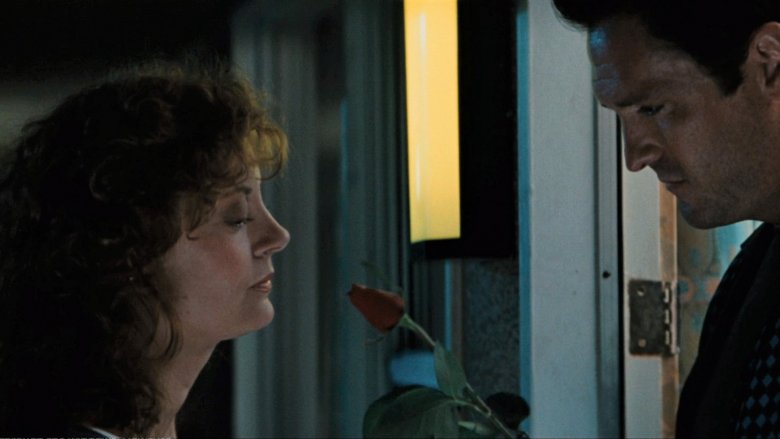
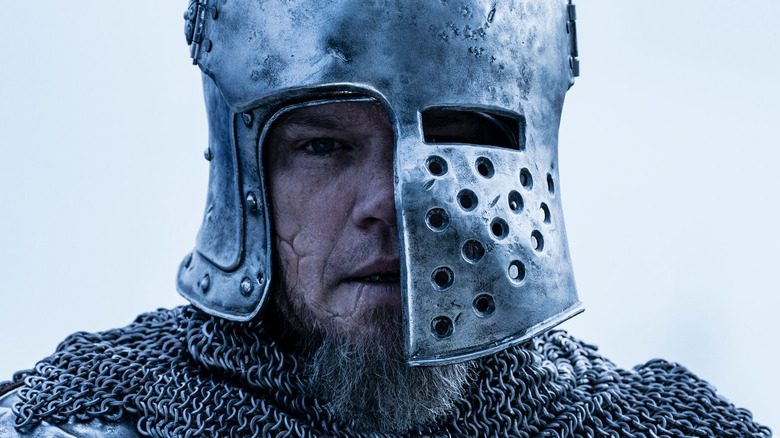
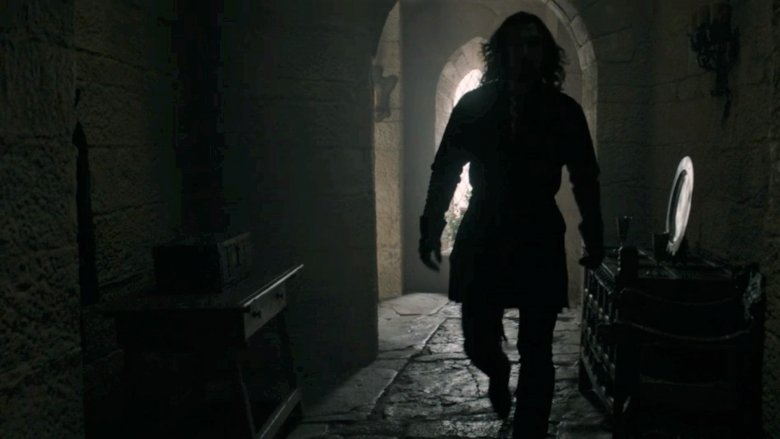
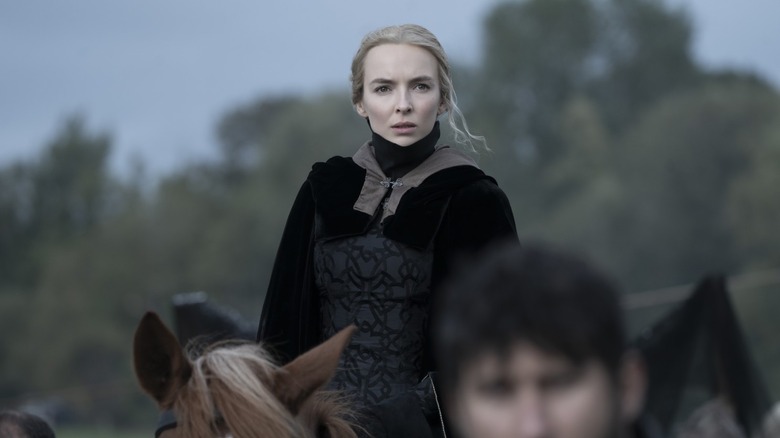
An Accusation Hard To Be Proved: The Last Duel And Survival In A World Built By Men

by La Donna Pietra

This essay contains detailed analysis of sexual assault scenes and spoilers for "The Last Duel," as well as links to some poetry that was NSFW seven and a half centuries ago.

In the Late Medieval period, the Catholic Church had an extensive problem with sales of indulgences. A sinner could pay a particular fee to the Church, often to fund the construction of a cathedral or the expenses of a Crusade, in exchange for the promise of salvation from eternal damnation. This resulted in the cynical perception that the Church was willing to overlook nearly any sort of sin for the right price, mostly because it was. With apologies to Martin Luther, I would really like to resurrect this practice, if only because the marketing department at 20th Century Studios would have to buy a lot of them for their false and unjust campaign for Sir Ridley Scott's "The Last Duel."

Here's an actual screenshot of "The Last Duel" marketers in the Tenth Bolgia of the Eighth Circle of the "Inferno," where Dante placed alchemists, impersonators, counterfeiters, and liars.

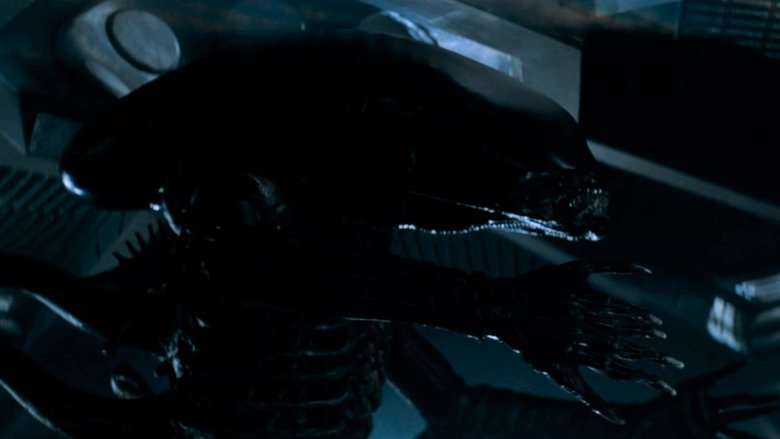
Rather than presenting the film as a thoughtful, innovative, and fine-grained analysis of the delusions men tell about themselves and the effects they have on the women they supposedly love, the trailers for the movie instead made it look like an overstuffed "Gladiator" redux smarmily focused on whether or not a man had committed rape. This is insulting for a film made by the director of "Alien" and "Thelma and Louise." Scott was never going to make a film in which sexual assault was going to be titillating or an excuse for cheap voyeurism. That said, he is no stranger to vicious penis monsters menacing beautiful young women:

More Than Hairstyles

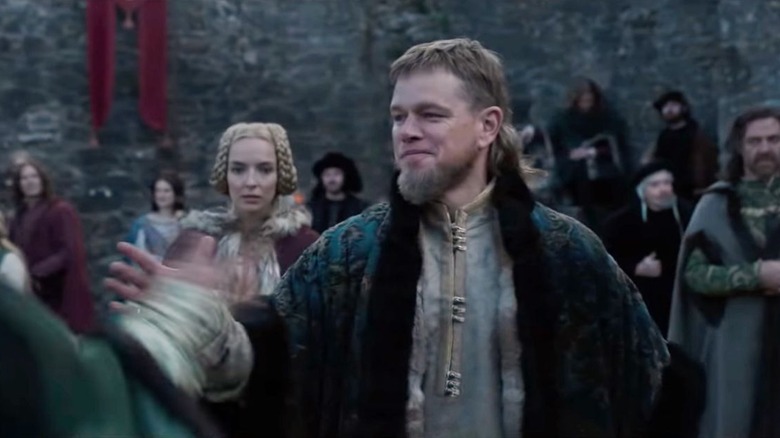
Most of the early buzz for "The Last Duel" centered around Matt Damon and Ben Affleck's hairstyles in the movie, which were definitely choices. (Toner! It's a thing!) I am the last person who will tell you that costumes and makeup are minor details for a film, especially a period piece, but it is quite true that Matt Damon's baby-bangs mullet makes him look like someone who would cook meth on the outskirts of my hometown. That it was a common late 14th-century hairstyle is not really the point. Historical films may portray a specific period in time; they may even attempt to re-enact specific historical events. What they are about is the era in which they are filmed -- its concerns, biases, predilections, and social mores. If you don't believe me, go watch "Braveheart" in 2021 and marvel that anyone in 1995 thought that Mel Gibson was the second coming of Akira Kurosawa.

In Damon's case, the point is that without a random happy accident of birth, his character, Jean de Carrouges, would be the sort of person who would be sourcing red phosphorus in the modern era. Largely because he is a sad, stupid, self-obsessed little man, de Carrouges' section of the film is deliberately flat, stilted, and one-dimensional. At his most self-aggrandizing ideal, he is barely a bit player in a chanson de geste. He is good at exactly two things: hand-to-hand combat and screwing up every social situation in which he finds himself. He thinks he's a knight when he's a squire, and when he actually becomes a knight, he does so in name only. He cannot begin to live up to the chivalric standard even in the section where he is trying to burnish his own self-image. From anyone else's perspective, he comes across like a muskrat in the early stages of rabies.

As Eric Jager's excellent 2004 history (on which "The Last Duel" is based) "The Last Duel: A True Story of Trial by Combat in Medieval France" makes clear, the actual de Carrouges was litigious and dumb, but no clear evidence exists to prove that he was anything like as awful as Damon wrote and portrayed him. However, at 635 years' remove, what's he going to do, sue? (Trick question: he would definitely sue.) Scott's decision to open the movie with such an unlikeable and absurd protagonist is risky, but pays immeasurable dividends by the end; this might be the best thing Damon has ever done.

Hot Cleric As Xenomorph

Damon doesn't disappear into the role; I don't think that's possible, given his longstanding fame and his extremely recognizable face, even as the makeup artists have tried to ugly it up with a couple of scars. What he and Ben Affleck manage to do is a stunning trick of reverse alchemy, turning celebrity gold into gleefully toxic lead. Unlike the marketing department, they do not need to purchase any indulgences. Neither d'Alençon or de Carrouges' roles would have worked if they were not played by former People's Sexiest Men Alive (Affleck, 2004; Damon, 2007). They are playing characters who are supposed to be the gleaming, gorgeous heroes and are instead two of the three villains. That they are co-scriptwriters, along with Nicole Holofcener, is honey on the lozenges fryes.

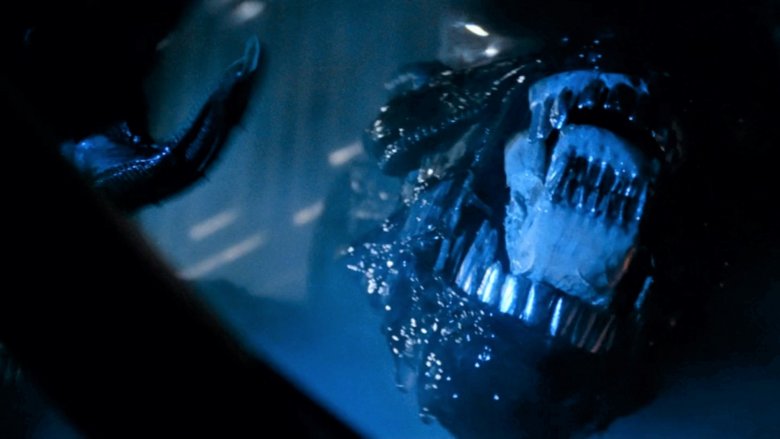
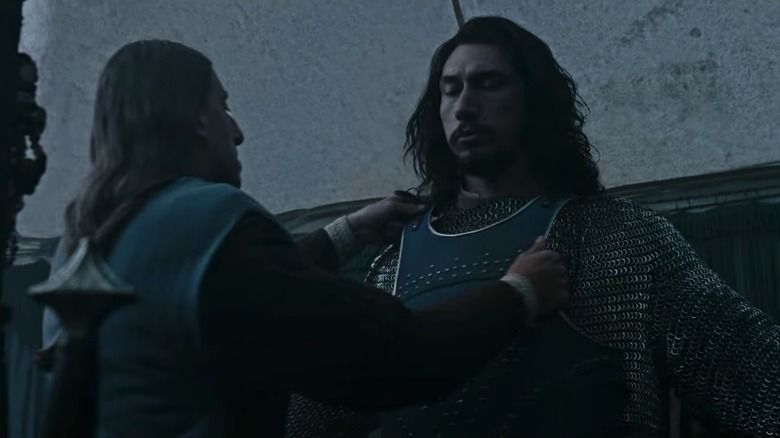
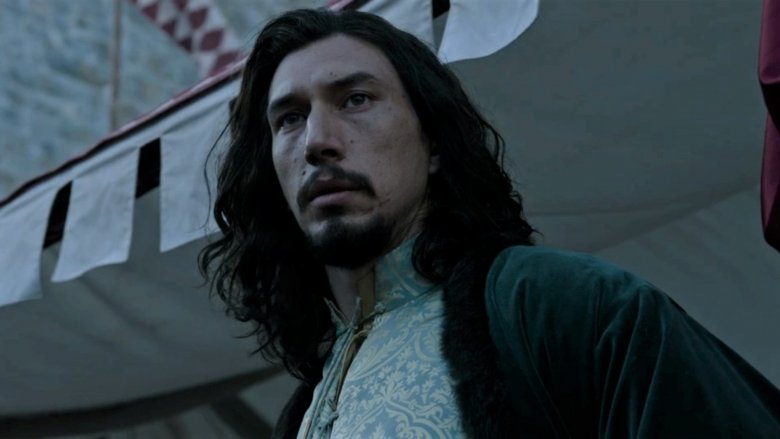
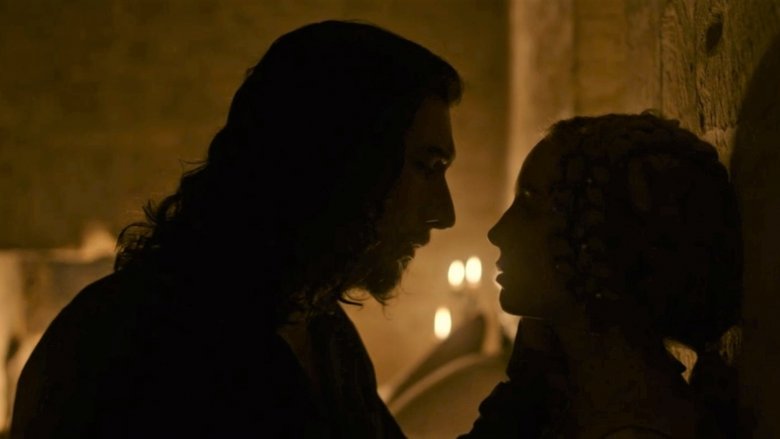
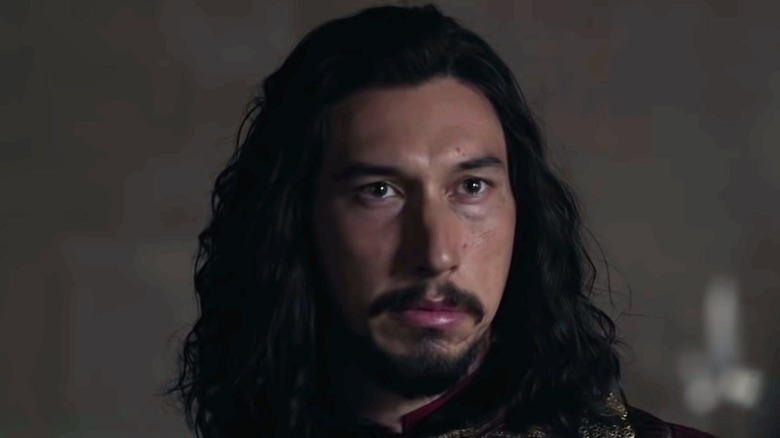
Unlike Affleck and Damon, Adam Driver looks absolutely amazing any time the camera is pointed at him, which even comes up as a key point in Marguerite's testimony. He looms and broods and strides menacingly, occasionally taking a break to ride a gorgeous dapple gray charger that has galloped off a romance novel cover. All the single ladies and most of the married ones are quite sure that he's what they prefer and deserve, and their gossipy swooning over him is an interesting inversion of the usual pining-man courtly love dynamic. He is also a Hot Cleric -- not quite a Hot Priest, but we'll take it. He's frequently wearing all black, tall and rangy and saturnine, and he is nothing quite so much as a combination of Harlan and the Xenomorph.

At least he has only one set of jaws.

The Romance Of The Rose

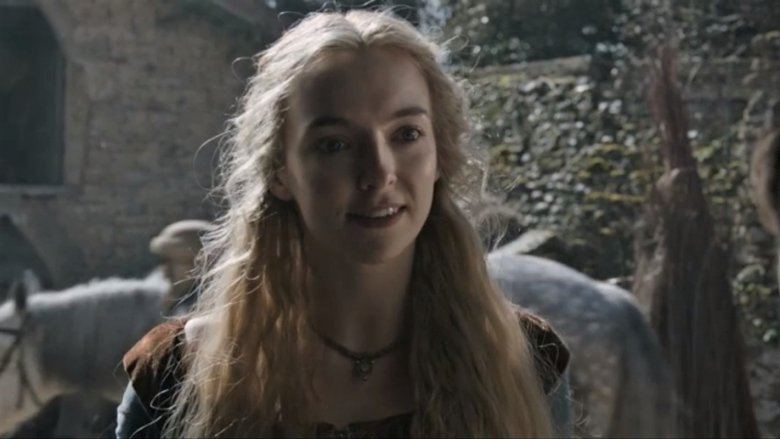
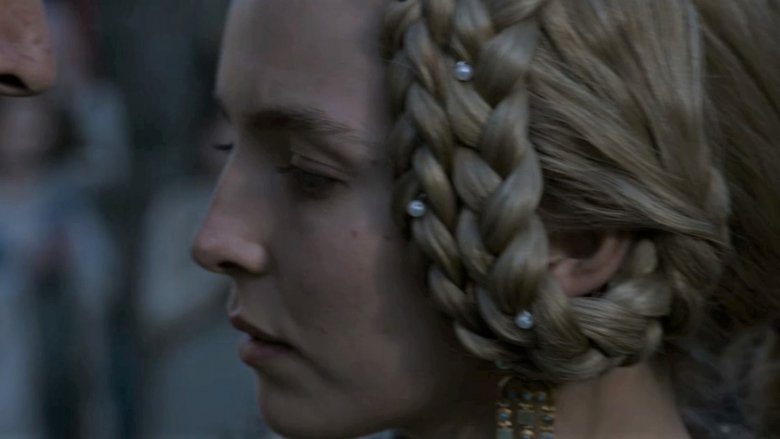
For further proof that the makeup department did know what it was doing, Jodie Comer looks as though she's walked straight out of a medieval poem:

"Young and blonde and, I declare,/Neat and graceful, frank and teasing,/Slender but firm, noble yet pleasing." -- "The Romance of the Rose," Chapter VI, lines 31-33

"She seemed a new-blown rose there/In color, with her skin so tender,/Only a little thorn would rend her" -- "The Romance of the Rose," Chapter V, lines 10-11

If you are unfamiliar with "The Romance of the Rose," the Old French poem with which Le Gris leads when he's macking on Marguerite in his sequence, here is a brief explainer: it's a long allegory about romantic love from the 13th century, featuring a lover on a quest to pluck a rose, after which it will fade and die. He must squeeze through a tight entryway and penetrate further and further into a Garden of Pleasure, all the while meeting a wide range of allegorical figures (Covetousness, Joy, etc.), where the God of Love shoots him with five golden arrows. Grievously wounded, he must then lay siege to a tower containing the rose, guarded by Resistance. The rose is both the name of his female lover and also a symbol for, well, a lot of things, some of them more risqué than others. In "The Last Duel," Le Gris' casual namedropping of it at a christening celebration is roughly the modern equivalent of bringing up Cameron Diaz's weird Ferrari wriggling in "The Counselor" at a PTA event. That said, if you are looking for medieval horniness on main, you will probably be disappointed long before you actually get to any of the extremely allegorized salacious parts of "The Romance of the Rose."

Jimmy, up against more Resistance than he can possibly comprehend.

It is very clearly Le Gris' equivalent of GQ, along with quite a lot of Dante, right down to his frustrated dream about his beloved. He is, however, capable of switching gears when Marguerite reacts with dismay and tells him that it is not her jam ("dull" in this case is clearly a code word for "eeew"). The two of them happily quote Wolfram van Eschenbach's "Parzival" to each other, which mostly confirms to Le Gris to whom he's talking: a woman who likes heroic romances, especially the kind that elevate a noblewoman to the equivalent of the Holy Grail, an object to be won. (Among other things, we have van Eschenbach to blame for Dan Brown.) This in turn feeds directly into Le Gris' own fantasy about Marguerite, which is that she is precisely the sort of woman that everything he has read tells him that he should want.

This Is Not Rashomon

"The Romance of the Rose" is one of the formative texts for the medieval concept of courtly love, which comes in for some heavy critique in Le Gris' section of the film, in much the same way that the chanson de geste gets hung out to dry in de Carrouges'. In its most basic form, it's the notion of a man's unrealized and idealized love for a noblewoman; by the time of the events in "The Last Duel," several much darker strains had developed in various parts of Europe, of which Dante's Rime Petrose are exemplars. They're the logical realization that perpetually pining over a disinterested or unavailable lover will eventually lead to all kinds of frustration or curdled resentment at her lack of interest and lead to fantasies about "conquering" her in a variety of creepy ways. Le Gris' entire section is one of these poems brought to life in stunning fashion.

However, it quickly becomes clear that his perception of nearly everything is warped by his unquestioning acceptance of contemporary love poetry as a model for actual human interaction. This is one thing when he's flirting and another thing entirely when he forces himself into the de Carrouges' castle to profess his love to Marguerite. He mirrors the earlier scene with the sex workers almost to the letter in the bedchamber, and in his head, it's a passionate and bittersweet seduction scene. As Louise (of "and Louise" fame) would say, "You got a real [foutu] idea of fun."

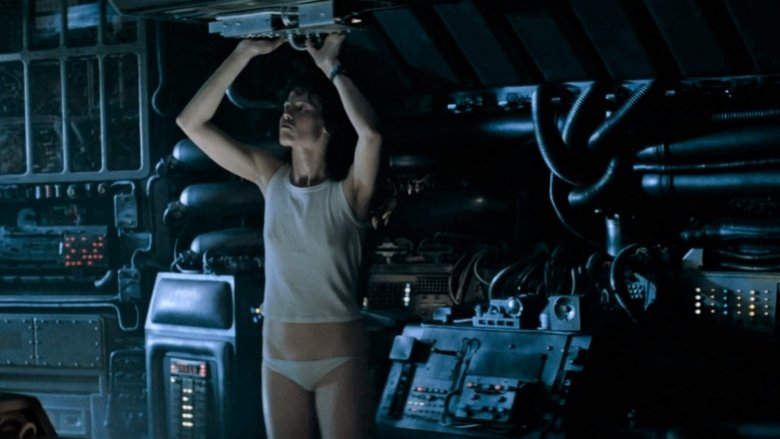
Le Gris' conviction that he is the Lover and Marguerite is the Rose is sincere and profound. This is not "Rashomon." He is not lying to himself or anyone else, but he is instead so steeped in the profoundly toxic literary and social environment in which he lives that he cannot comprehend that he has committed rape instead of adultery. He genuinely thinks that Marguerite reciprocated his affection and enjoyed the experience, and he cannot admit otherwise even when a misericorde is at his throat. In a creepy Galenistic echo of "Alien," his belief that she felt pleasure is reinforced by the fact that he may have impregnated her. If you ever wanted to know how a particular type of man perceives sexual assault, Scott has given it to you in abundance, in a clear and incisive manner that is nearly impossible to misinterpret. There is a reason why nearly all the rapists in the "Inferno" are centaurs, and it is because they are only half-human.

(Just so we're all clear, adultery is the hotel room scene with Brad Pitt and Geena Davis in "Thelma and Louise.")

In Normandy, No One Cares If You Scream

The tendency to film sexual assault scenes as closeups of actresses' faces has a number of practical advantages, namely the opportunity to allow actresses to, well, act. It also allows for the convenient elision of any other body parts that would warrant a more severe rating or censorship. However, it also casts that sexual assault solely as something affecting that woman, not something that a man is actively doing to her. In much the same way that our society predominantly frames sexual assault in the passive voice ("She was raped" vs. "He raped her"), the way that many films portray it allows the person responsible to literally disappear from the frame. It becomes solely a woman's trauma rather than a crime that a man commits. For a really egregious example of this tendency, see "Wind River," or rather, don't.

This is not a call for more explicit 9nine-minute-long medium-shot full-focus rape scenes a la "Irreversible," but I do think that if a film is going to center on sexual assault, it needs to be extremely thoughtful about the full impact of how it presents it. "The Last Duel" does so with all the care and respect that one would expect from Scott and then some. For all the concern raised by a number of critics prior to watching the movie about the scene appearing twice, this choice circumvents many issues. Because we see the version that exists solely in Le Gris' head first, we already have his actions firmly in mind when we see what really happened, which is almost completely from Marguerite's perspective and communicated to us by Jodie Comer's facial expressions and dialogue. In both scenes, both actors are fully clothed, and the film gets everything across with suggestion and sound.

Which is not to say that it isn't harrowing, but for my money, the really awful part is shown later, when Marguerite is in a state of dissociative shock. Scott understands that the trauma of sexual assault isn't just limited to the act itself but the repercussions afterwards, both internal and external. Marguerite must relive her experience over and over again, both in her own mind and also by telling it to anyone who will listen and a lot of people who won't. Most movies about the medieval period take great pains to paint it as a backwards and benighted time from which our modern society has so impressively evolved, but not this one. Marguerite's pain and frustration is not so much different from Thelma and Louise's, and it resonates today. The less said about Todd Akin, the better. Likewise, if you think d'Alençon's smirking announcement that he is the law in Normandy is a little too on the nose, wait until you find out that Brett Kavanaugh's mother was the Montgomery County, MD prosecutor in 1982. She would have been the sole person who decided whether or not to convene a grand jury panel if Christine Blasey Ford had reported her attempted rape.

A Knight Must Defend The Innocent

What Marguerite gains at the end of "The Last Duel," after her useless husband has finally managed to prove himself useful for precisely one time in his life, is something far greater than what either Ripley (from "Alien") or Thelma and Louise manage to attain. Ripley is safe in her perhaps-too inviolable keep of the shuttle, having slain her own monster, but she is all alone aside from her loyal squire Jonesy, floating out on the sterile edge of space. Thelma and Louise choose to drive off the edge of the Grand Canyon rather than continue to live in a world made for and by men with no room for women who step an inch out of line. That is the world in which we still live, with the main difference being that the Supreme Court is rapidly rolling back all the progress we have made since 1991. Marguerite regains her honor, which she should have never lost in the first place, and she is reunited with her son, who she loves regardless of who his father is in a solid rebuke of the entire concept of primogeniture.

In a social system meant to treat women as property and violence against them as property claims against their husbands, in a duel that treated both the direct combatants and the indirect combatant as equals both in punishment and glory, Marguerite wins. "The Last Duel" is a historical film about an era wracked by plague, social strife, and misogyny, and the one person who comes out ahead by the end intertitle sequence is a woman. What Scott left out of that intertitle is another infuriating fact: as per Jager, a number of contemporary chroniclers began to report that another man had confessed to the rape on his deathbed and therefore Marguerite had lied. This misrepresentation made it into multiple historical sources into the late 20th century, including the entry for "Duel" in the 14th edition of the Encyclopedia Brittanica. Sir Ridley Scott's 25th film guarantees that in popular culture, no one will ever doubt her again. 

After all, the chivalric code requires that a knight defend the innocent.

Read this next: The Best Movies Of 2021 So Far

The post An Accusation Hard To Be Proved: The Last Duel and Survival in a World Built By Men appeared first on /Film.

10 Dec 19:20

Star Wars Eclipse Trailer Breakdown: Welcome To The High Republic

by Ryan Scott

"The Game Awards" took place last night and brought the goods in a big, bad way. We got loads of trailers and reveals, and many of them pertained to gigantic franchises, such as a "Texas Chan Saw Massacre" video game, a new "Dune" game, the first trailer for the "Halo" series, and our first footage from "Sonic the Hedgehog 2." But it was perhaps the complete surprise reveal of "Star Wars Eclipse" that stole the night. And for good reason.

Lucasfilm Games teamed has teamed with Quantic Dream for the game, which is described as being in early development. Be that as it may, they had enough time to craft one of the best-looking "Star Wars" trailers of any kind you're ever likely to see. It is also set during the High Republic era, which is roughly 200 years before the events of "The Phantom Menace." That means it contains a lot of new stuff, with some familiar imagery to anchor it to the universe.

Given how cinematic this trailer is, and given the wealth of fascinating imagery, we decided it would be a good idea to break this puppy down and have a closer look to see what we can glean about this very mysterious game. Let's dig in, shall we?

Big Drummer Alien

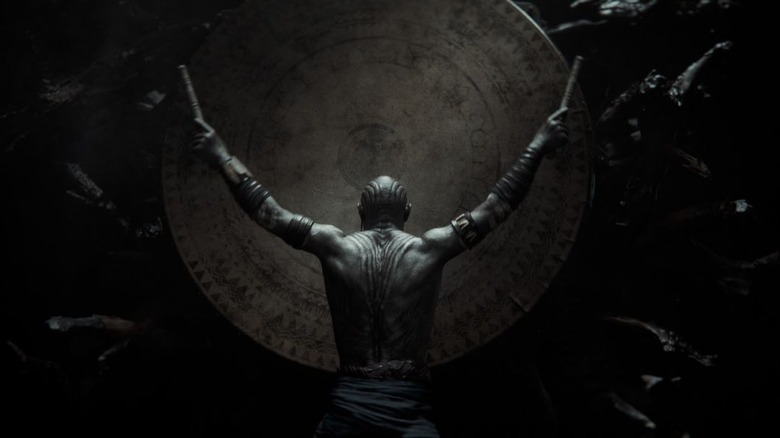
We open with a very intriguing shot of a grey-skinned humanoid of an unconfirmed species banging on some drums. We see lots of him and his drum-banging counterparts throughout the footage. We'll get a lot of unconfirmed stuff in this trailer, since this is new territory, and that means lots of new stuff. That being said, another shot later in the trailer opens the door for some speculation (we'll get there.) In the meantime, the atmosphere is interesting, as there are tree roots jutting out from behind the drum. Where are they, exactly? A good question with precious few answers right now.

Eclipse

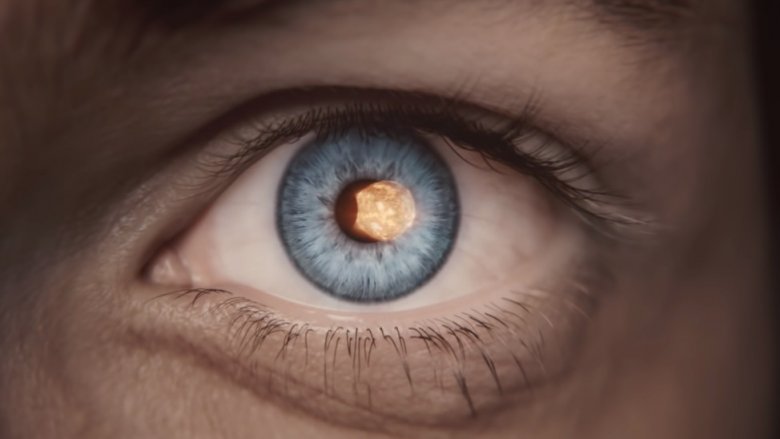
Here we get a shot of an actual eclipse taking place in a galaxy far, far away, which gets right to the point of the title. As a companion to the shot of the actual eclipse, which continues to show up throughout the trailer, we get this neat look of the event mirrored on an unidentified figure's eye.

Just some very cool visual stuff here. And that's pretty much all this trailer has to hang its hat on, as there is no dialogue. It's all about creating the visual language of this era and this portion of the Outer Rim.

A Bad Feeling About This

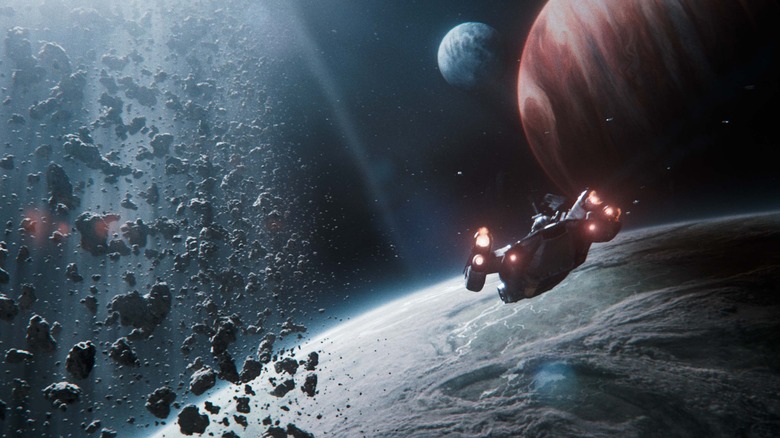
Next, we get an unidentified spacecraft limping its way to a planet (also unidentified) after suffering some damage. How was it damaged? A good question! Also, not for nothing, but the panning shot across the asteroid field to reveal the ship is very classic "Star Wars" movie intro stuff, and I am here for it.

Big Galaxy, Big City

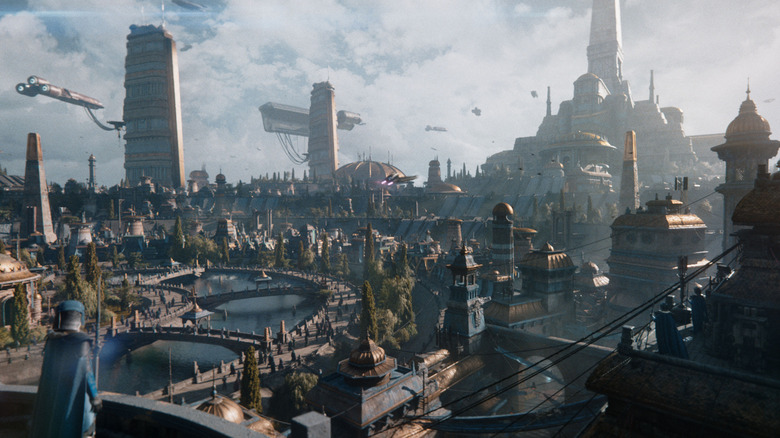
Here we have a shot of what is described as a "bustling cityscape" on the game's official website. While not named, it does look an awful lot like Coruscant, though we can't confirm at this time if that's what we're looking at. Wherever it may be, it certainly looks to be a prosperous place. Sort of the opposite of Tatooine.

A Bizarre Bazaar

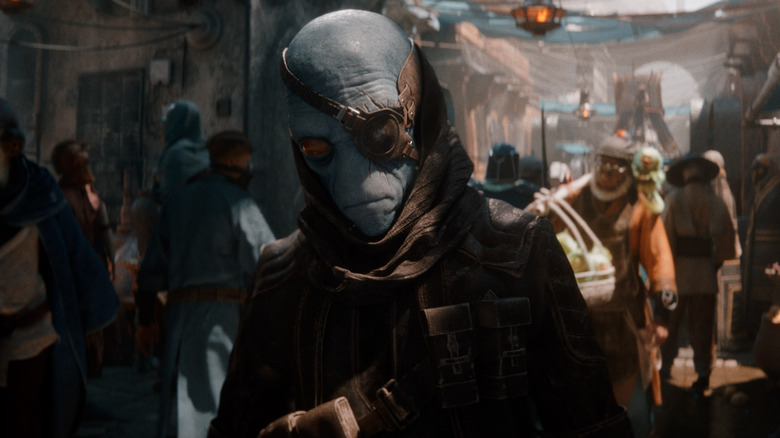
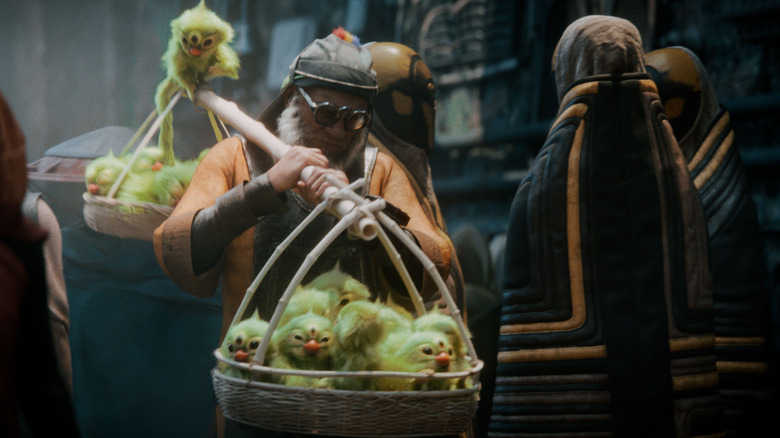
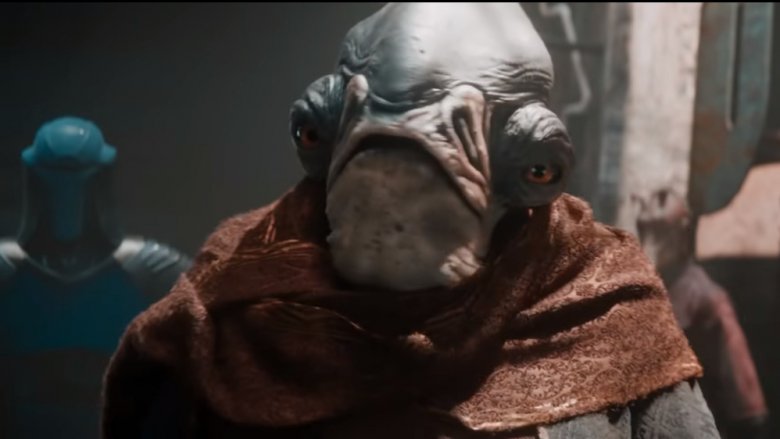
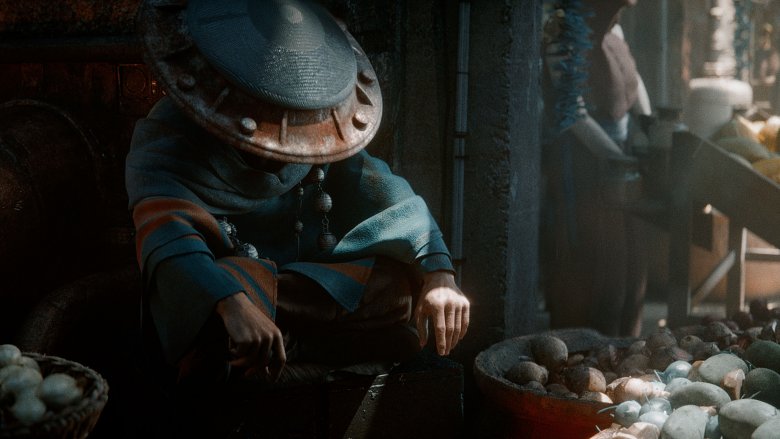
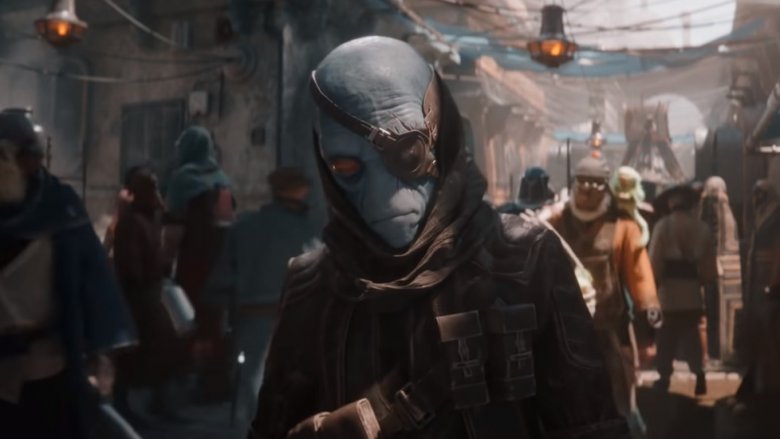
Now we move to a particularly intriguing section of the trailer, which sees us wandering through a bazaar on an unknown planet. It's jam-packed with interesting visuals that feel like they are right at home in the franchise. We get some weird chicken creatures (pictured above), as well as Mon Calamari (below), not to mention this suspicious fellow with his big hat tipped down (also below).

Perhaps the most visually striking shot is the one just below of a Duros, an alien species we have indeed seen before in "Star Wars." Fans of "The Clone Wars" may recognize Cad Bane as another example.

This one has a bit of a steampunk look, which is pretty interesting. It's an aesthetic that certainly suits the franchise, while also looking kind of new. Part of what makes this trailer so appealing is that it's adding a lot to the universe, rather than leaning too much on the familiar. 

A Galaxy Full Of Nature

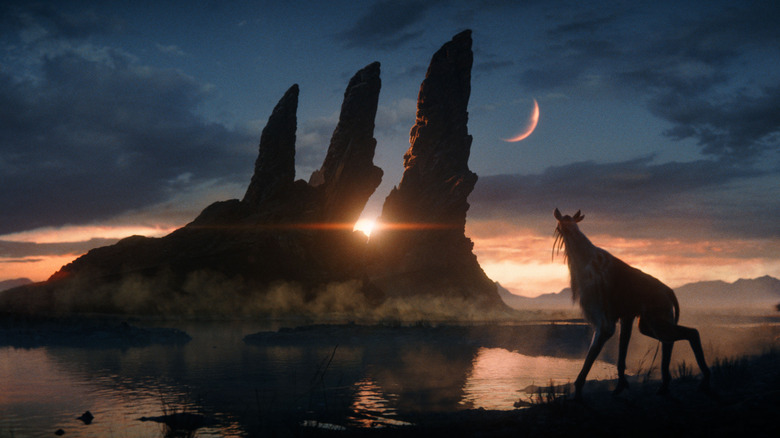
We get one pretty neat shot of a speeder bike racing across a seemingly shallow body of water on a planet that may be in the shadow of this eclipse. An unidentified horse-like creature watches on. Not much significant happening here other than it is neat to look at.

Young (Ish) Yoda

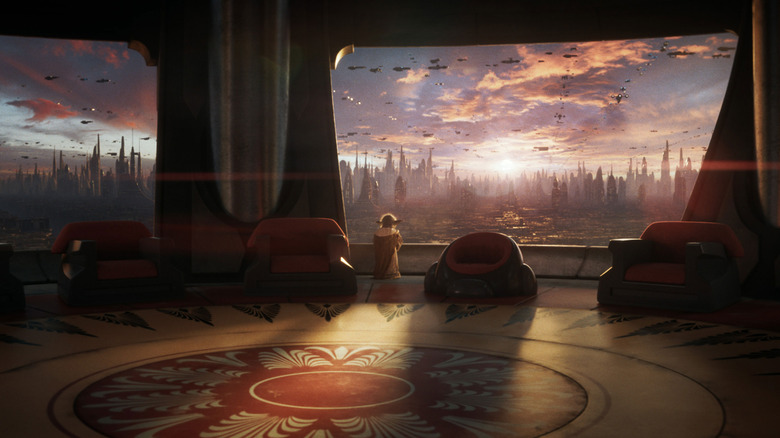
While the High Republic era is largely populated by new characters, given that it takes place so long ago in the "Star Wars" timeline, we do get a shot of Yoda here, who lived to be around 900. During this time, he was a spry young Jedi Master in his 600s. Here, we see him overlooking Coruscant from the Jedi Council chambers. One of the few familiar shots in the whole trailer.

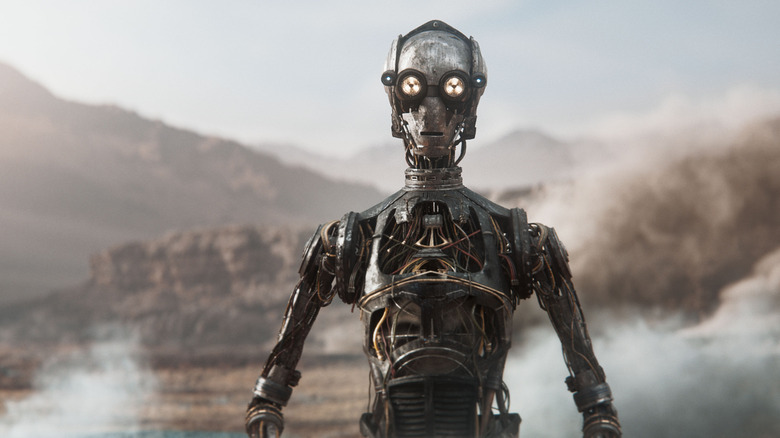
New Protocol Droid?

One of the more impressive shots from a visual standpoint is this shot of this new droid. It looks to be a protocol droid not dissimilar to C-3PO, especially from "The Phantom Menace," before he got his plating. Did they include this shot because the droid is significant to the story? Or just because it looks cool? Time will tell.

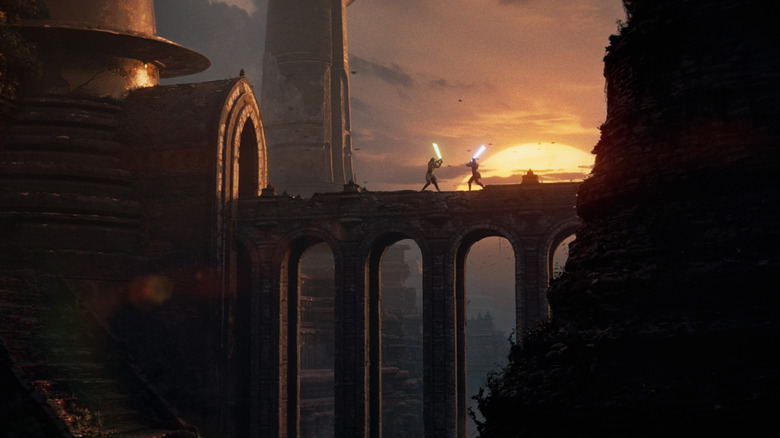
Jedi Duel

Now we're talking. This sequence should feel familiar to fans, as we see a couple of Jedi dueling on a bridge. There is no red lightsaber in the bunch, which signals that this is indeed two Jedi, with no Sith among them. The High Republic era is devoid of Sith, as this is when the Jedi were at the height of their powers. Are these Jedi in a heated disagreement? Or just training? Whatever the case, it sure does look good.

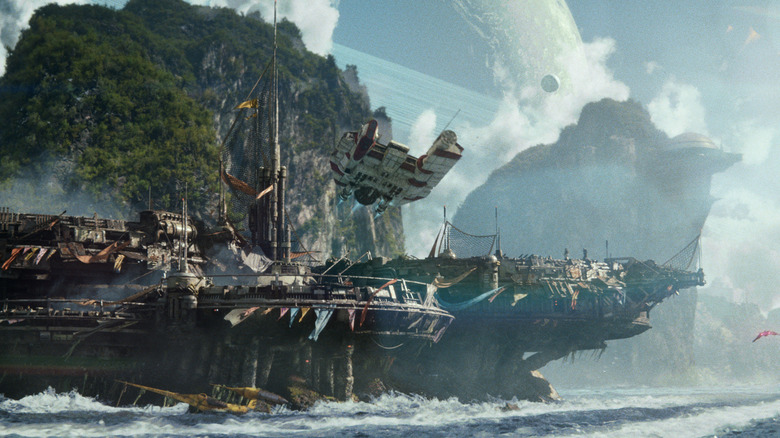
Ships And Landscapes

Next, we get a couple of shots of new ships across watery landscapes. The first sees what looks to be more of a freighter landing on a dock in a more sunny part of the galaxy. Then we get a very different look at some smaller ships flying towards a fortress of some kind in a gloomy landscape.

If Darth Vader had built a castle somewhere on the ice as opposed to on Mustafar, this looks like the kind of thing he would have built. It's ominous and imposing. It doesn't look like the kind of place that good guys hang out, that much is certain.

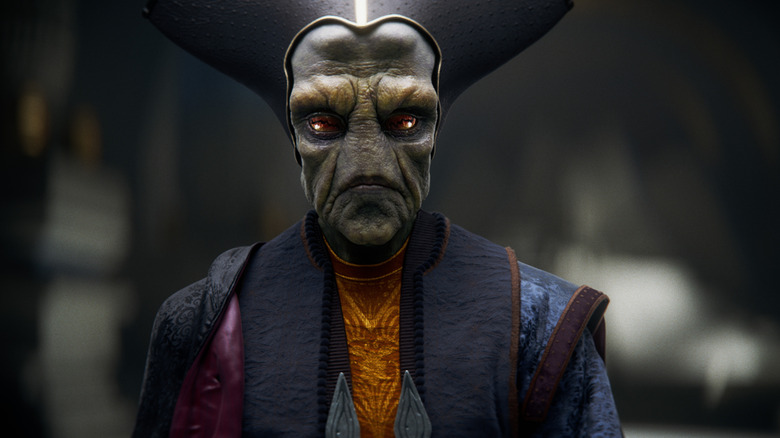
Neimoidians Return

As we can see, we have a good shot of a Neimoidian that is reminiscent of something from the prequel era. We saw several members of this species in movies like "The Phantom Menace" and "Attack of the Clones," as many of them headed up the Trade Federation. Given that we also see some ships and space stations in this trailer that look similar to the ones used by the Trade Federation, perhaps we might see some of the early shades of that organization in "Eclipse."

Two Jedi, One Big Fight

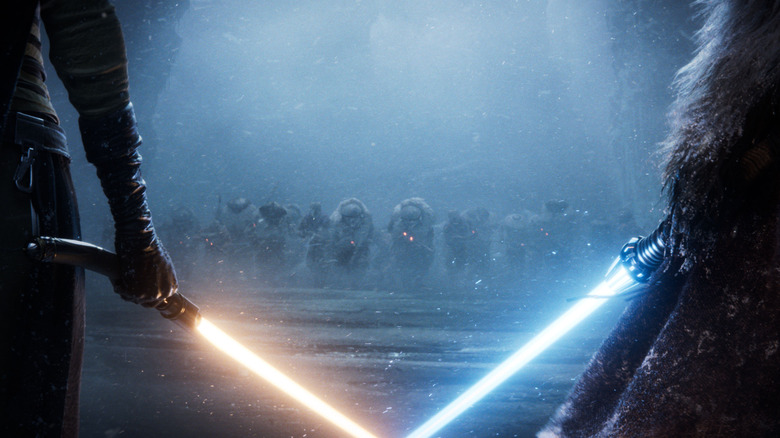
This is my personal favorite moment in the trailer. We see two Jedi in a snow-covered landscape, both igniting their lightsabers as an oncoming threat approaches. The threat is unidentified, but it's a formidable force. Also of note, the orange lightsaber on the left has a curve in it, much like the one Count Dooku used. The idea is that this would allow its user to slash and lunge with more precision.

A Mysterious Figure

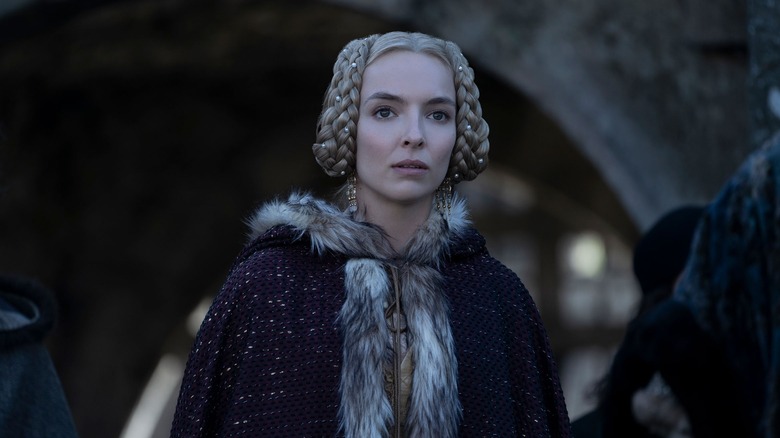
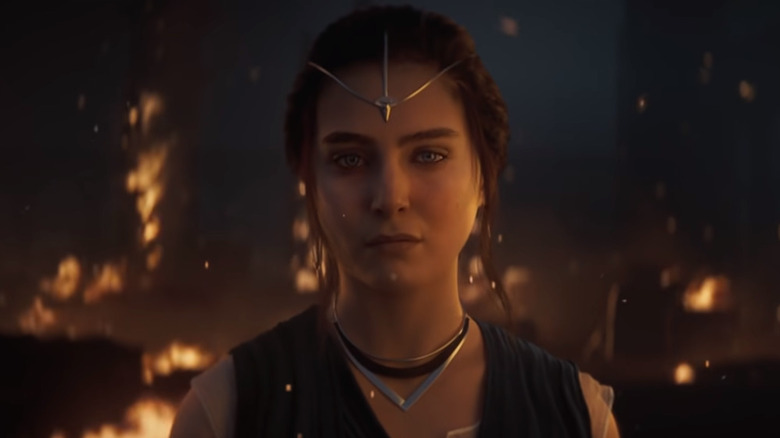
We get a brief shot of this regal-looking human. While her appearance is that of royalty, the landscape around her is fiery and desolate. She also looks distraught, which is certainly worth taking into account.

A Grand Army

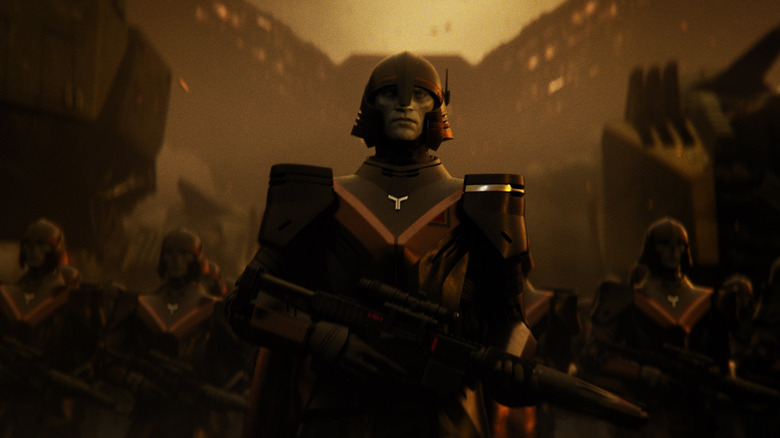
Here we get into another one of my personal f*** yeah! moments, with an unidentified alien figure leading a truly grand army into battle. It is a truly sizable force, which is noteworthy as the High Republic era is a time of relative peace in the galaxy. Then again, crazy things happen in the Outer Rim, and there are pockets of wild space where the Jedi may not have as much control. And there is always someone looking to obtain power.

A Massive Space Battle

As I mentioned before, we have some ships that look like the ones employed by the Trade Federation during the prequel era. Here, those ships are under attack by some fighters that look quite a bit like the ones we saw flying at that ice fortress earlier.

The sheer size and scope of this battle is impressive (most impressive) and looks to be as grand as anything we've ever seen of this sort in "Star Wars." Based on what we've seen in this trailer, I'd put it right up there with the climax of "Return of the Jedi" or the third act of "Rogue One." They are not messing around.

The Big Reveal

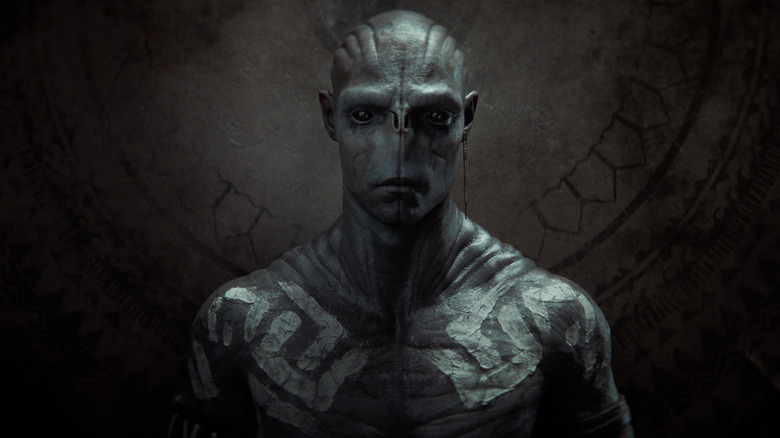
As the trailer reaches its big climax, we finally see the face of our mysterious lead drummer. They are noseless, though with nasal passages in the middle of their face. This almost looks like something ripped out of "Prometheus" more than "Star Wars," which is pretty interesting. But the big reveal has to do with what he's looking at.

Who is this mysterious figure rising out of the black goo much like Baron Harkonnen in "Dune?" Was all of this drumming a ritual to summon this figure? Unfortunately, we have way more questions than answers at this point, but it's sure as hell enough to pique interest. And that's about it! We then get a title card as the eclipse finally happens, which is pretty neat to send this all home.

"Star Wars Eclipse" does not yet have a release date set, but we'll be sure to keep you posted as further updates come our way.

Read this next: The 12 Best Boba Fett Moments In Star Wars Shows And Movies

The post Star Wars Eclipse Trailer Breakdown: Welcome to The High Republic appeared first on /Film.

10 Dec 18:54

The Supreme Court is about to take away a woman's right to abortion, but the conservative justices on it want you to know that they're only doing it because women have achieved full equality with men and abortions are no longer needed. So feel proud [Facepalm]

10 Dec 18:50

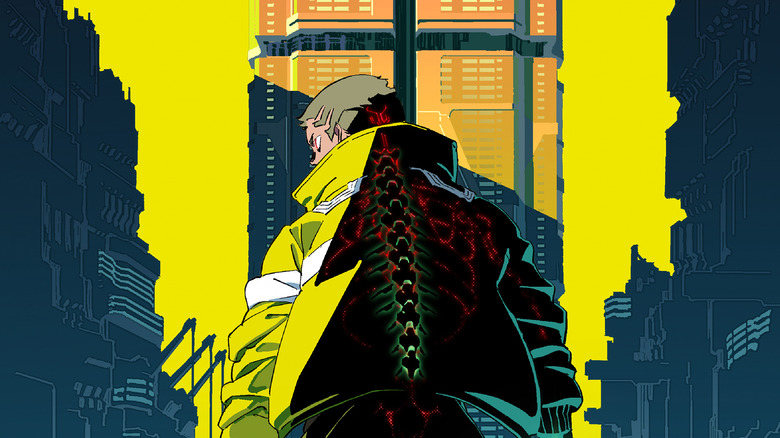
Everything We Know About Cyberpunk: Edgerunners So Far

by Kaylee Dugan

Sometimes you want to play a video game and sometimes you want to watch a video game (and sometimes you want to watch a significantly more or less talented person play a video game, but that's a different content stream). For those of you who don't want to deal with the glitches of "Cyberpunk 2077" but still want to soak up that sweet William Gibson-esque atmosphere, Netflix and CD PROJEKT RED have heard your cries, and boy do they have the anime for you. "Cyberpunk: Edgerunners" will take you deep into the world of edgerunners, a sort of mercenary outlaw, as they traverse the city of the future. If it's anything like the video game it's based on, there will be a lot of genital stuff. So buckle in!

When And Where To Watch Cyberpunk: Edgerunners

"Cyberpunk: Edgerunners" will be colliding into a screen near you when it hits Netflix in 2022. Obviously, that leaves an entire 365 days for it to touchdown and take you on a wild and sexy future adventure, but we're hopping we'll have a more specific date by the time January rolls around. Netflix announced a whole slate of shows at the same time, including "Magic: The Gathering" (another game turned show!), "The Witcher: Blood Origin" (are you sensing a theme?) and "The Cuphead Show!" (this was also a video game!), and that's just a sliver of what they have on tap for 2022. 

Obviously, they're leaning hard on the video game IP content, which makes sense considering Netflix themselves have moved into the video game space. With the Netflix Games app you can spend your day playing "Stranger Things: 1984" while binge watching "Stranger Things." It's only a matter of time before they move out of the mobile market and into the land of PC or console gaming, and I wouldn't be surprised if CD PROJECKT RED, the creators of "Cyberpunk 2077" and the "Witcher" video games, are a part of that future. They're already making TV content together (and in the case of "The Witcher," doubling down with a prequel series), why not take it to the next level? I mean, call me when Netflix owns "The Sims" because I would burn my paycheck before I gave another cent to EA, but that's my own personal cross to bear.

What We Think Cyberpunk: Edgerunners Will Be About

Lucky for us, we do have a general idea of the "Cyberpunk: Edgerunners" plot, even if we might not have a firm release date. According to the official synopsis, the 10 episode standalone series will tell the story of:

A street kid trying to survive in a technology and body modification-obsessed city of the future. Having everything to lose, he chooses to stay alive by becoming an edgerunner – a mercenary outlaw also known as cyberpunk.

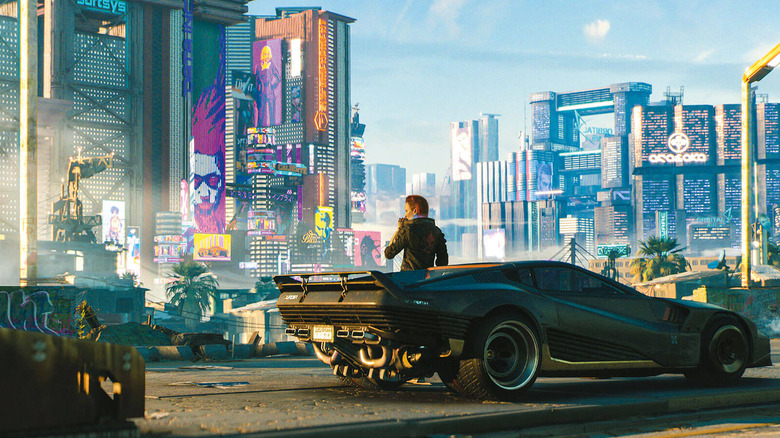
Which doesn't sound that dissimilar from the source material, but that doesn't mean they'll just be rehashing the same old storylines from "Cyberpunk 2077." Netflix has confirmed that "Edgrunners" is taking place in the same location as the video game, the all encompassing Night City, but considering all of the different ways Netflix and CD PROJEKT RED can use Night City's sleek and grungy dystopian setting to tell an interesting story, I'm sure they'll be able to do something different. Also, since this is about a kid, hopefully there will be less jarring sex stuff. Hopefully.

What We Know About Cyberpunk: Edgerunners Cast And Crew

If you've been reading this article, pacing back and forth wondering who the hell is producing this anime, don't worry, we've got you. We might not know much about the voice actors involved in "Cyberpunk: Edgerunners," but Netflix has confirmed that the series is being produced by Studio Trigger, who is well known for their series like "Kill la Kill," "Little Witch Academia," "Inferno Cop" and more. Studio Trigger's Hiroyuki Imaishi will take on the task of directing "Edgrunners," while Yoh Yoshinari will be handling character design. 

So far, it sounds like a fun collaboration between Netflix, CD PROJEKT RED and Studio Trigger, and it will be interesting to see how they all mesh together. CD PROJEKT RED and Netflix certainly seem to have it on lock with their live action TV shows, but it's cool that they're mixing it up and doing something different with the "Cyberpunk 2077" universe. 

Read this next: The 12 Best Video Game Movies Ranked

The post Everything We Know About Cyberpunk: Edgerunners So Far appeared first on /Film.

10 Dec 18:42

Best holiday car gift ideas under $500 - Roadshow

by Roadshow staff
For that special car-obsessed someone who deserves a little extra this holiday season.
10 Dec 18:36

Cuphead: The Delicious Last Course Finally Gets a Release Date a New Boss-Filled Trailer

by Nathan Birch

Cuphead The Delicious Last Course

Cuphead: The Delicious Last Course is one of the longest-awaited pieces of DLC in recent memory… maybe ever. First announced all the way back in 2018, the add-on was pushed out of 2020 and then 2021 due to the stresses of the pandemic, but it seems like fans can finally enjoy more beautifully-animated punishment in 2022. Last evening during The Game Awards we got a new release date trailer showcasing a ton of new bosses that will be driving us crazy next summer – check it out, below.

Looking like more of the Cuphead we know and love! Need to know more? Here’s how Canadian Cuphead developer Studio MDHR describes The Delicious Last Course:

In Cuphead - The Delicious Last Course, stalwart brothers Cuphead and Mugman are joined by the clever, adventurous Ms. Chalice - known to fans of the original as the wise Legendary Chalice - for a rollicking adventure on a previously undiscovered Inkwell Isle! With the aid of new weapons, magical charms, and Ms. Chalice's unique abilities, players will take on a new cast of fearsome,  larger than life bosses to assist the jolly Chef Saltbaker in Cuphead's final challenging quest!

  • Featuring Ms. Chalice as a brand new playable character with a modified moveset and new abilities. Once acquired, Ms. Chalice is fully playable through the DLC and the original Cuphead adventure!
  • Traverse a new Inkwell Isle and wallop the most wacky and monstrous bosses Cuphead has faced yet!
  • Find new weapons and charms to aid you in overcoming brand new challenges and setting new records on old bosses!
  • Help Chef Saltbaker on a brand new adventure to uncover the mystery of Legendary Chalice's secret quest!

Cuphead: The Delicious Last Course launches on PC, Xbox One, PS4, and Switch on June 30, 2022. The game will also be playable via backward compatibility on Xbox Series X/S and PS5.

The post Cuphead: The Delicious Last Course Finally Gets a Release Date a New Boss-Filled Trailer by Nathan Birch appeared first on Wccftech.

10 Dec 18:32

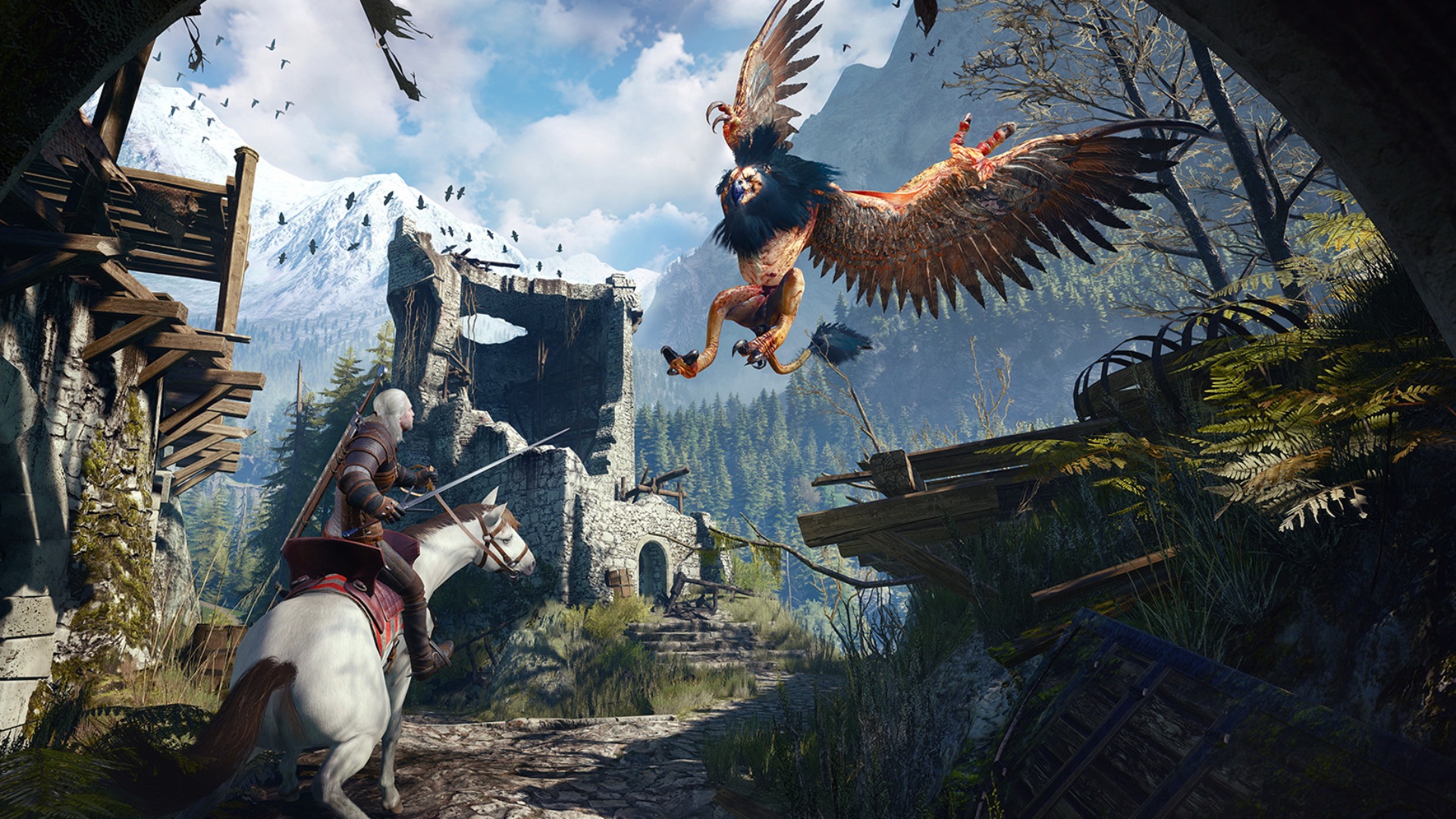
The best fantasy games 2025

by Cameron Bald
The best fantasy games 2025

What are the best fantasy games? There's nothing quite like escaping into another world, immersing yourself in its history and people, and getting to grips with your new virtual life. Fantasy games are especially good at offering these sorts of experiences, but the genre is so packed with great adventures that it can be hard to pinpoint where exactly to place your attention.

We've put together this list of the best fantasy games on PC so you'll know where to hitch your horse, so to speak. As always, we want to highlight a varied selection of the best PC games, from mammoth RPGs to 2D action platformers. Whether you're looking to slay some dragons in a sprawling open world or try something a little off the beaten path, we've got you covered with our list of the best fantasy games on PC. Here are the best fantasy games to play now.

Continue reading The best fantasy games 2025
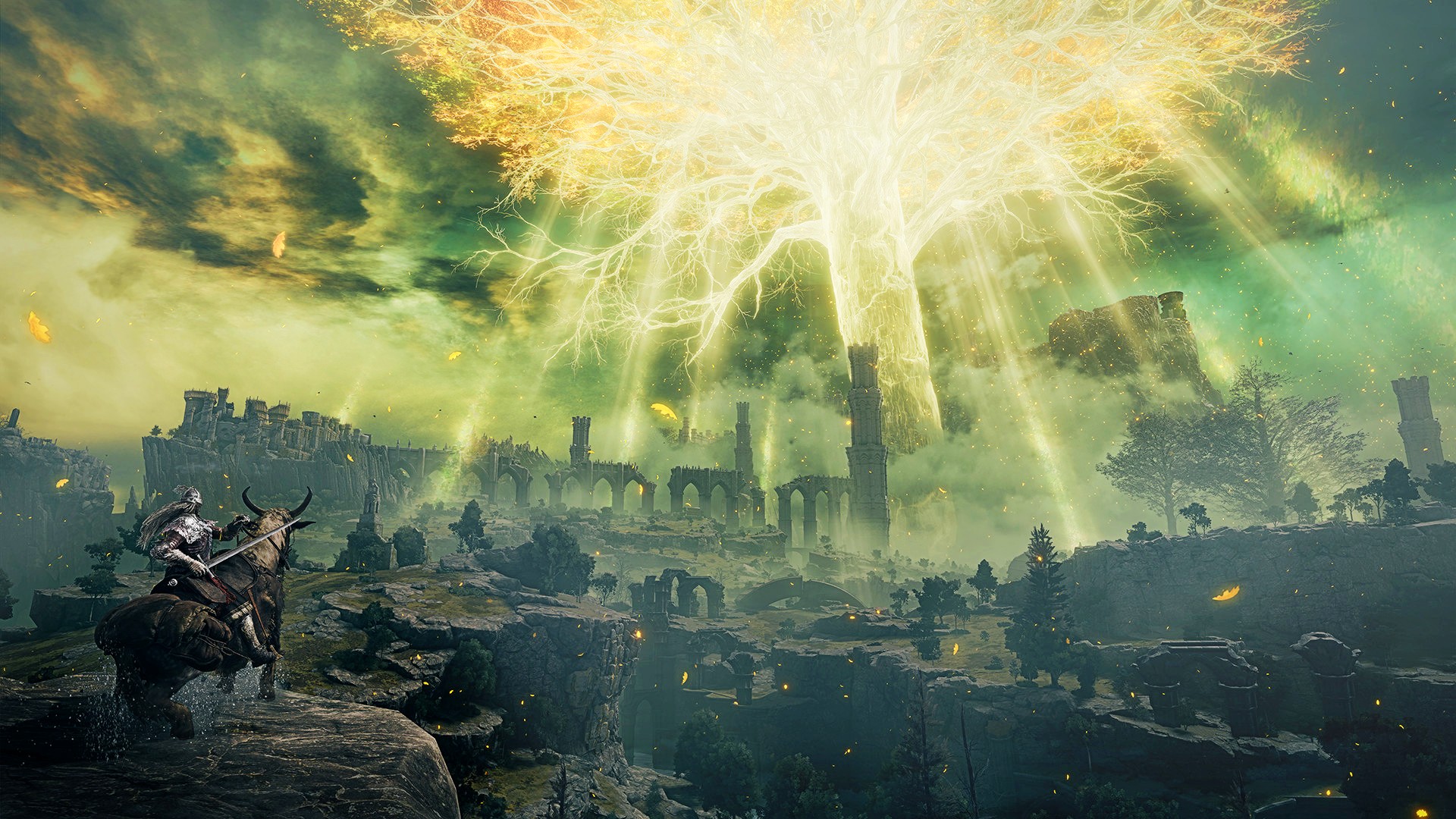
MORE FROM PCGAMESN: Elden Ring builds, Elden Ring bosses, Elden Ring weapons
10 Dec 18:22

The Disgusting Truth Behind Evil Dead's Melting Corpse Scene

by Witney Seibold

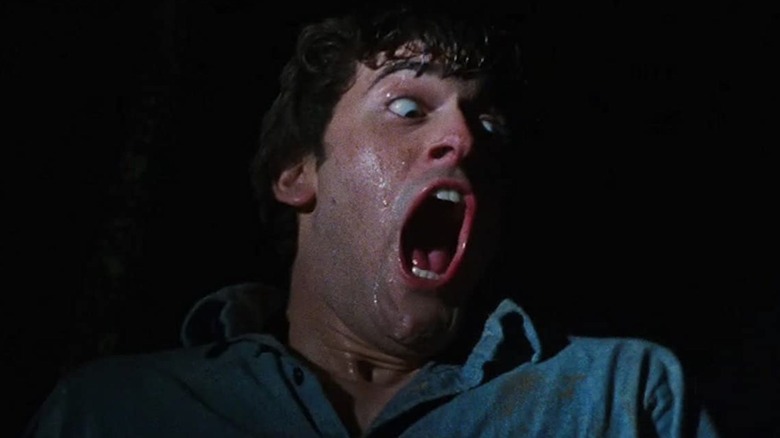
Sam Raimi's 1981 film "The Evil Dead" is a film about a man being attacked by monsters in a cabin in the woods, yes, but it's also about an actor being attacked by a genre. The plot is almost knowingly oversimplified and contrived, and the summoning of demons -- via a tape recorder; it's not even something the protagonists elect to do wittingly! -- is so incidental as to be arbitrary. As such, when the aperture to Heck is opened, and Ash Williams (Bruce Campbell) is beset by cackling humanoid manifestations of eldritch ungodliness, it plays less like an eternal struggle against the forces of evil and more like a whimsical contemplation of the absurdity of life as it exists inside a slasher movie. Indeed, there is a scene in "The Evil Dead" where blood is splattered on a film projector, and Ash stumbles into its light, the projected blood cinematically running down his body. He is not so much a human being, but an abstract tool of the horror genre, a gore recipient with no free will. 

As you can imagine, Ash doesn't feel too good about this. 

When "The Evil Dead" was first released in 1981, it faced some pretty harsh scrutiny from censors. Raimi didn't really care about ratings or censorship while he was making the film -- a goof he made with friends on a budget of $375,000 -- so he went for broke and, following in the footsteps of the great Herschell Gordon Lewis, made the film as gruesome as he possibly could. To this day, Raimi and Campbell can tell you the best way to make fake blood. The film initially received an X rating, and notoriously became one of the Video Nasties

Some of the gross effects seen in "The Evil Dead" weren't just gross to look at either. Some of them were gross to make.

Days Of Coffee And Corn Syrup

The makeup and effects for "The Evil Dead" were made by the now-legendary Tom Sullivan, a friend of Sam Raimi's. The two of them had a mutual excitement for gore and stop-motion animation, and they worked on all three of the "Evil Dead" movies together. Sullivan was one of the original artists who came up with the above-mentioned blood recipe (red food dye, Karo syrup, and coffee; make some today!) as well as the designer of the film's Necronomicon. 

The effects in "The Evil Dead," like every element of "The Evil Dead," had to be done on the cheap. the production was wild, dangerous, tiring, and pretty miserable for most people involved; Campbell has talked a lot about how uncomfortable the shoot was, and Raimi claims that he was working so hard on the film he passed out. This was also a time when safety wasn't necessarily of highest concern on film sets, so the shotgun blasts you see were not blanks. Also, Campbell admits that some rogue filmmaker forced him, forced him I say, to ingest cannabis during production. It's kind of a miracle no one was seriously injured while making the film. 

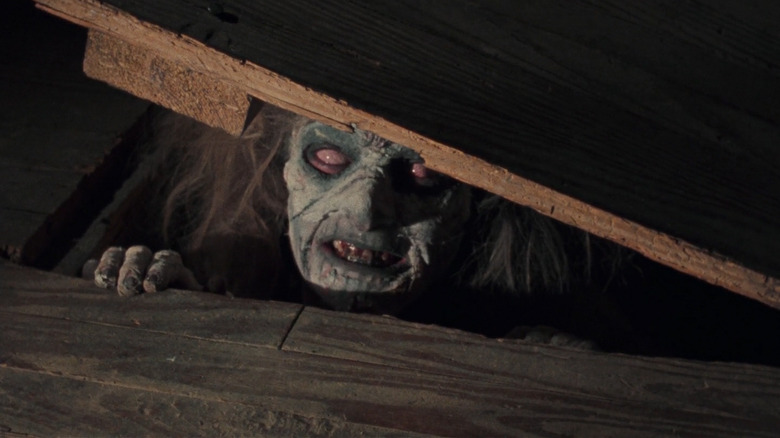
When it came to creating demon and gore effects for "The Evil Dead," Tom Sullivan had to get creative. He also wanted more than just the usual blood, and was, perhaps passingly, aware that too much traditional red blood would get them in trouble with the MPAA. As such, the demons in "Dead" needed to look, in Sullivan's words, "like their biology had changed." 

The Melting Corpse

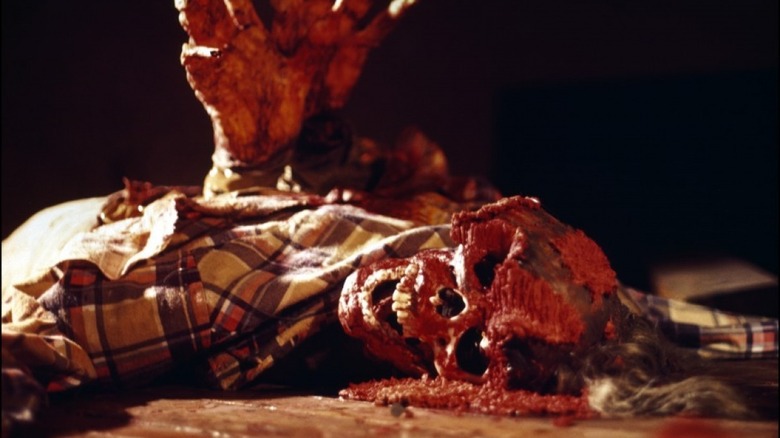
Near the end of "The Evil Dead," the character of Scott (Richard DeManincor, credited as Hal Delrich) is possessed by a demon and, naturally, attacks Ash. Ash yanks a tree branch out of his gut, and he falls to the ground. His corpse melts. It's friggin' amazing. In order to make a melting corpse, Tom Sullivan had to get really creative ... and really gross. More than just blood, the corpse had a much more pungent recipe. The stringy guts were made of warmed up marshmallows -- I like to think the crew were having s'mores after hours -- and the wiggling snake-like things were actual snakes. To make the blood look clumpy and necrotic, Sullivan mixed oatmeal into the usual mixture. Side note: Coffee-flavored blood oatmeal sounds like an amazing breakfast for writers, or a good hangover cure. 

And yes, creepiest of all, were the Madagascar cockroaches. You know, the big orange ones with the long bodies. The ones that hiss. The cockroaches were acquired from Michigan State University. A sure way to delight any horror fan is to dump a fistful of cockroaches onto a rotting corpse. It's like a Thanksgiving meal to us.

I imagine it didn't smell too good in that cabin.

Read this next: Every Texas Chainsaw Massacre Movie Ranked Worst To Best

The post The Disgusting Truth Behind Evil Dead's Melting Corpse Scene appeared first on /Film.

10 Dec 16:27

Don't Look Up Ending Explained: It's The End Of The World As We Know It

by Jeremy Mathai

Writer and director Adam McKay has made quite the mid-career transition, pivoting from his usual mode of crowd-pleasing (but deceptively clever) comedies, to more serious-minded films that function as vehicles for political commentary just as much as they provide laughs. It might be easy to believe that the same filmmaker could be credited for movies like "Anchorman: The Legend of Ron Burgundy," "Talladega Nights: The Ballad of Ricky Bobby," "Step Brothers," and "The Other Guys," but then things get a little more complicated with the additions of "The Big Short," "Vice," and now "Don't Look Up" in recent years. For his part, McKay has provided a solid reason for his shift away from a once-comfortable niche, explaining that, "The themes of those comedies were about sort of empty-suit white guys, and that's what Will [Ferrell] and I riffed on. That's what really made us laugh. But then you started to see the ravages of that culture, and it wasn't so funny anymore."

In many ways, "Don't Look Up" feels like the culmination of those steadily building feelings of shock and dismay at a world gone off the rails. The last few years alone have made it impossible to ignore a precipitous increase in political extremism, science denialism, and a pandemic on top of it all, providing plenty of fodder for this latest film -- about an incoming comet on a collision course with Earth and two low-level scientists tasked with getting the word out to the world at large -- to channel some very real, pent-up frustration with. Chris Evangelista's review for /Film, however, doesn't hold back in detailing the many missteps and misguided approaches that add up to a wildly uneven film. Is this a cathartic release to help us come to terms with the absurdity of everyday life, or a navel-gazing exercise in smug self-satisfaction? Regardless of where you personally land on it, the ending of "Don't Look Up" is still very much worth digging into for those who've seen the film, which is currently playing in select theaters ahead of its Netflix debut later this month.

Screaming Into The Void

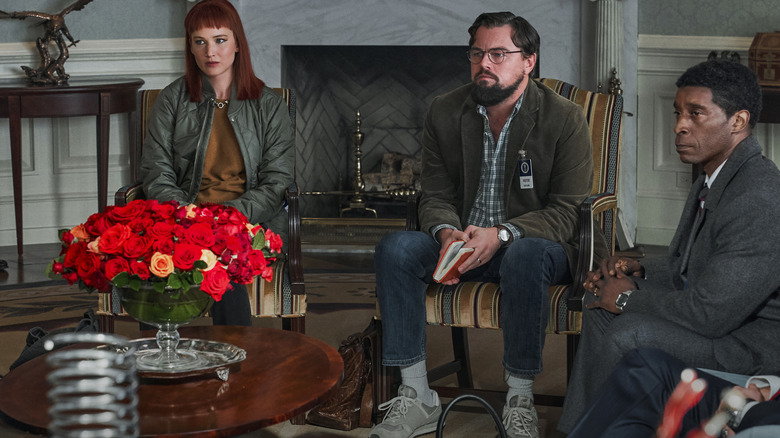
"Don't Look Up" stars Leonardo DiCaprio as the neurotic and woefully in-over-his-head Dr. Randall Mindy and Jennifer Lawrence as fiercely uncompromising grad student Kate Dibiasky, the unwitting astronomer who initially stumbles upon the data indicating a new 5 to 10 kilometer-wide comet in the film's very first scene. The awe over her once-in-a-lifetime discovery quickly turns sour once Dr. Mindy crunches the numbers and calculates the exact trajectory of this planetary body -- Earth. From that point on, it becomes a race against time (6 months and 14 days, to be precise) to notify a stubborn, ambivalent, and deeply fractured world of everyone's impending doom in the face of a genuine planet-killer.

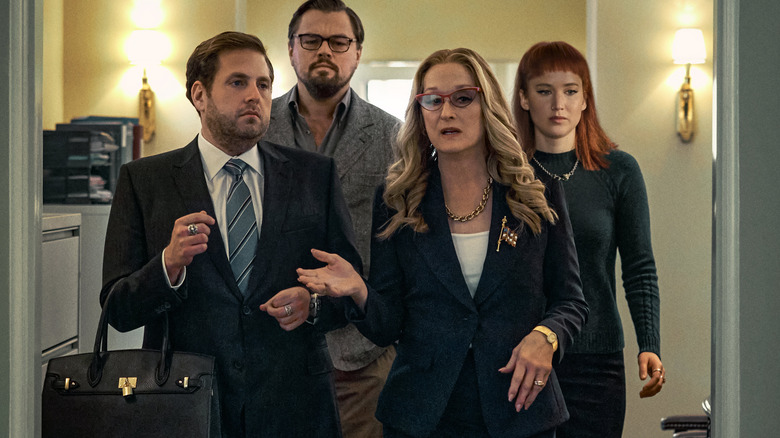
To put the ending in proper context, it's important to note that these early stages of the film do lots of heavy-lifting to establish the darkly comedic tone and uncomfortably real satire on display, as Mindy and Dibiasky scramble to put on a brave face and find the right words to convince the White House of the very real and present danger. Unfortunately, their scientific expertise proves to be spectacularly useless against the sheer force of Meryl Streep's calculating celebrity politician, President Janie Orlean, who -- you'll never believe it -- is a thinly-veiled reference to the disastrous presidency of one Donald J. Trump. McKay lays on the farce pretty thick in these scenes, putting viewers through a seemingly endless array of riffs between President Orlean and her incompetent son and Chief of Staff, Jason (Jonah Hill) to ram home the idea that science, no matter how hard anyone tries, will only ever bounce off the impenetrable wall of bureaucracy until it becomes politically convenient to do otherwise.

Suffice to say, anyone who has ever watched HBO's "Chernobyl" (or, you know, current events during the last several years) will immediately -- and repeatedly -- realize what McKay is attempting to get across here.

Compromising Character

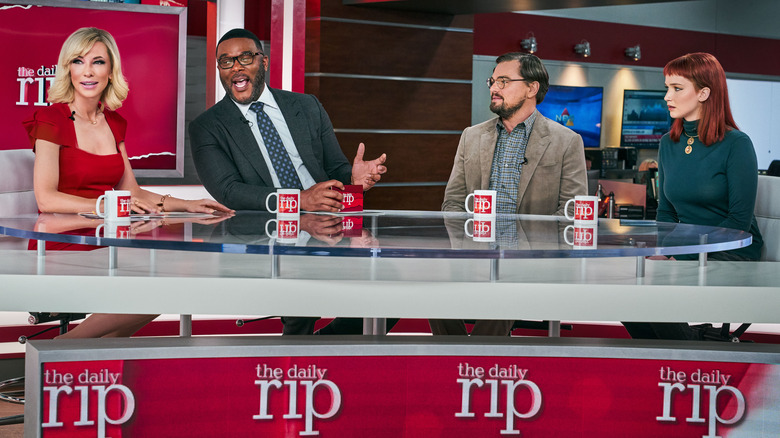
The prolonged middle act of "Don't Look Up" likely proves to be the make-or-break point for most viewers who may be left on the fence, as Dr. Mindy inexplicably finds himself a media darling and a lightning rod figure among the general public along the lines of Dr. Fauci. The marginalization of Dibiaski is presented for laughs and scathing social commentary in equal measure -- the film wrings plenty of dry humor out of the idea that the one time a woman is properly credited with a huge discovery, of course that happens to be when her name is historically associated with an extinction-level event. Memes and misogyny swiftly follow while Mindy goes on to enjoy worldwide fame and the attention of renowned morning show host Brie Evantee (Cate Blanchett, doing her best Megyn Kelly impersonation). Dibiaski is further relegated to playing second fiddle in all matters concerning planetary defense, as she and NASA liaison Dr. Teddy Oglethorpe (Rob Morgan) become afterthoughts. Mindy, meanwhile, is paraded around in high-profile meetings and further compromises his own morals when it becomes clear that political agendas remain priority number one above all else.

As the comet draws nearer and nearer, viewers will either find humor in the increasingly broad, almost slapstick antics of the film's contingent of comet denialists ("Don't Look Up," naturally, becomes the basis of President Orleans' MAGA-like sloganeering campaign once the comet becomes visible to the naked eye in the skies above) ... or find themselves turned off completely by the never-ending (if no less accurate!) bleakness depicting how humanity would very likely react to such an existential threat to the survival of our species. By the time Mindy and Dibiaski join forces once more and are driven out of desperation to go on the offensive against Orleans, the damage is already done and the American government -- with a crucial assist by the Elon Musk stand-in Peter Isherwell (Mark Rylance) -- has already enacted plans to mine the comet for rare and valuable minerals as opposed to blowing it up.

Last Supper

Amid all the prior doom and gloom associated with McKay's efforts to turn "Don't Look Up" into a climate change parallel, a pandemic allegory, and an anti-Trump screed all at once, however, the final act of the film somehow turns itself around and achieves something almost (dare I say it) profound. The writing is on the wall the minute Isherwell convinces President Orleans to abandon the launch of the comet-destroying mission and instead pivot to the tremendously risky, yet absurdly lucrative scheme to mine it instead. With all other options thoroughly exhausted and the fate of the world in the hands of greedy hyper-capitalists, well, things predictably don't turn out well and the mission is rendered a catastrophic failure.

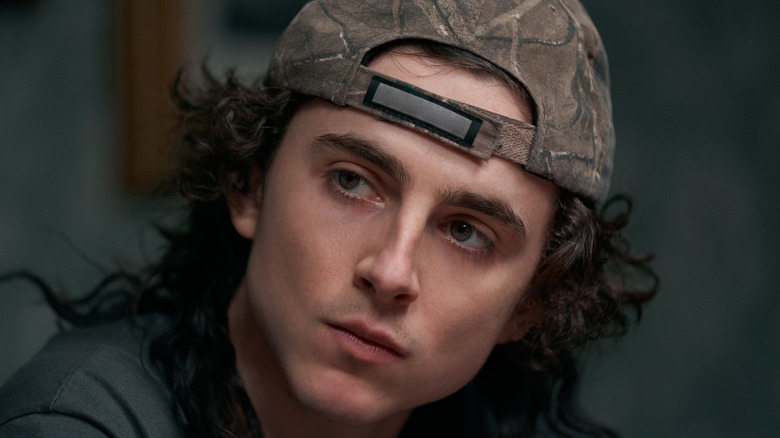
On the ground, our remaining characters try to find hope and comfort through whatever means are left to them. Dibiasky finds herself in the orbit of Timothée Chalamet's rambunctious and irrepressibly horny skater dweeb, named Yule, who actually contains quite a bit of heart underneath his (relatively) repelling exterior. Mindy returns home to Michigan to his estranged wife June (Melanie Lynskey), finally making up with his family after his mistake-prone media tour and bringing along all his colleagues for one last shared meal before the end. After more than two hours of suffocating, irony-drenched humor and a vaguely smug sense of being above it all, here's where the earnestness finally pokes through and lends a sorely-needed dose of meaning to it all.

As our characters gather at the Mindy household and the comet is making its final approach to Earth, their unassuming and refreshingly normal conversation around the table provides a sense of humanity that much of the rest of the film has lacked to this point. When the world is far past the point of no return, this scene seems to argue, we can at least find comfort among our loved ones and in the beauty of everyday things. Yule puts a poignant button on this thought with his stirring final prayer, confidently calling upon a higher power for dignity, hope, and humility in the face of a global cataclysm. This all occurs far too late to redeem the overall movie, but it'll be difficult to forget the final moments of this quiet, peaceful last supper and the terrifying death rattle of the Earth as the comet impacts and systematically wipes out life as we know it.

Read this next: Top 15 Best Natural Disaster Movies

The post Don't Look Up Ending Explained: It's The End Of The World As We Know It appeared first on /Film.

10 Dec 16:27

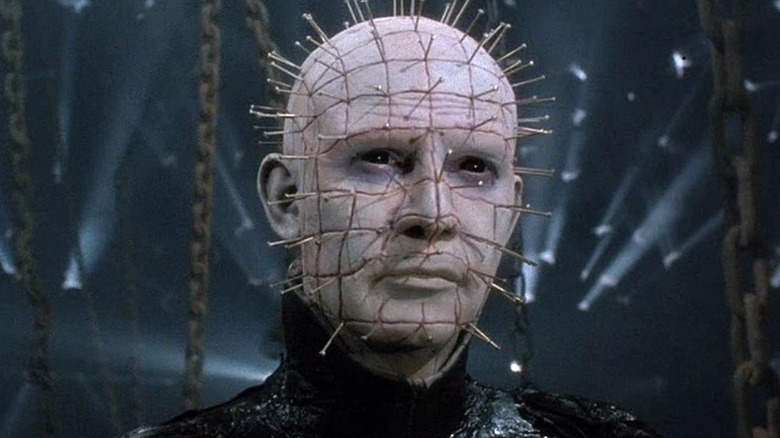
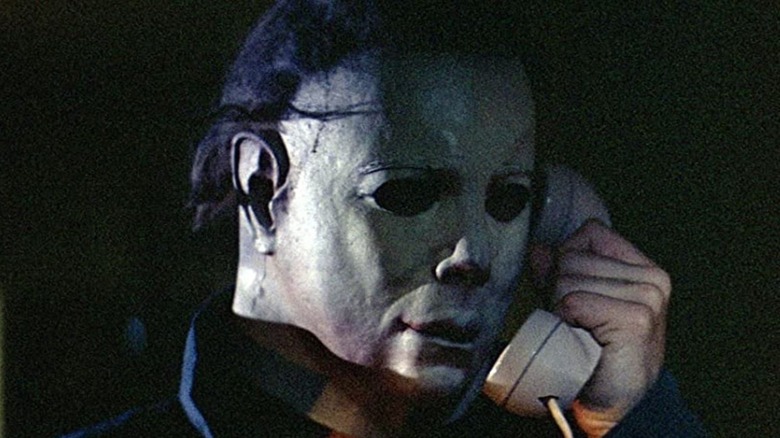
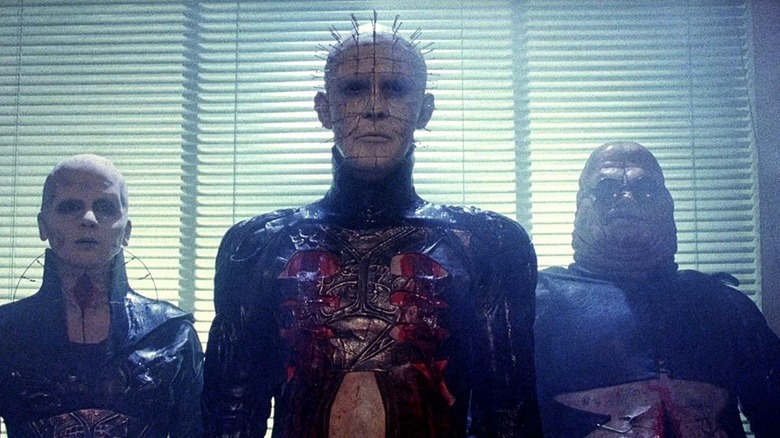
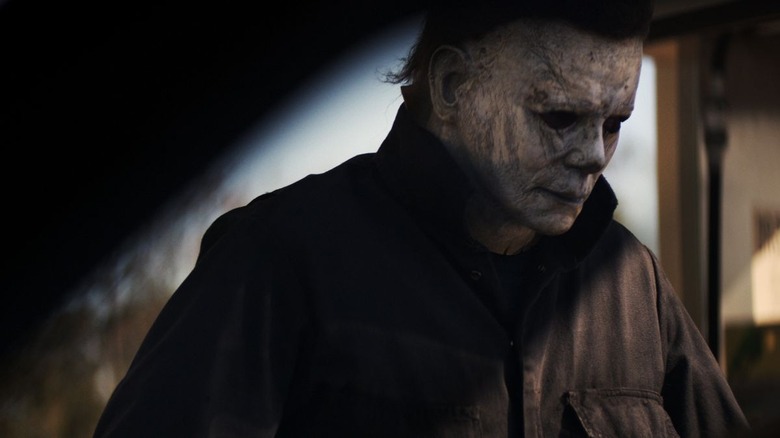
The Michael Myers Vs Pinhead Crossover We Never Got To See

by BJ Colangelo

Crossover stories have excited audiences for generations, with "The Jetsons" meeting "The Flintstones," Abbott and Costello meeting the Universal monsters, Godzilla coming to blows with other kaiju monsters, and even the NBA meeting the "Looney Tunes" with "Space Jam." The world of comic books frequently featured crossover issues, which eventually led to the cinematic universes we know and love today. One of the biggest crossover hits in pop culture history, however, is the 2003 slasher mash-up, "Freddy Vs. Jason." The combination of the "Nightmare on Elm Street" and "Friday the 13th" franchises was sparked after fans requested to see a showdown between Freddy Krueger and Jason Voorhees, and Paramount first began planning for the film all the way back in 1987. Unfortunately, no one could agree on the story, and the film fell through.

Two years later, "Friday the 13th Part VIII: Jason Takes Manhattan" bombed at the box office and "Friday the 13th" co-creator Sean S. Cunningham looked to get the rights back to the franchise to begin working with New Line Cinema on the crossover film, as they owned the "Nightmare" series. Allegedly, 16 different writers were given a chance at the script when finally, in 2003, we got "Freddy Vs. Jason." The film grossed over $116 million worldwide, becoming the highest-grossing film for both series. The success of the film inspired other crossovers like "Alien vs. Predator" but there was a previous crossover that almost made it to screen that we just missed out on: Michael Myers of "Halloween" and Pinhead of "Hellraiser."

A Blending Of Dimension Monsters

Back in the 1990s, filmmaker Dave Parker ("The Hills Run Red," "Tales of Halloween") had pitched an idea for "Freddy vs. Jason" at Sean Cunningham's company, but the pitch was unsuccessful. However, it got him thinking about other possible crossovers, and he realized that Dimension at the time owned the rights to both "Halloween" and "Hellraiser," and the seasoned editor put together a trailer using footage from the films called "Helloween." In an interview with Fangoria Corner, he divulged his plot combining the two mythos:

I was just trying to come up with a plausible way to get these two guys together to fight. So, why does he all of a sudden go out and kill his sister in "Halloween?" He's trick-or-treating in a flashback and he goes up to this one house ... and sees the guy with the black boots, who gives him the box. He opens it and the Lord of the Dead – Sam Hain – escapes from hell and takes over Michael's body because he doesn't want to be in hell. Now, Sam Hain is who the Shape is, and that's why he can't be killed.

Parker had the perfect set-up, or so it seemed.

How Do Pinhead And Michael Myers Fight?

Parker continued in his interview with Fangoria Corner saying:

The story takes place when people try to destroy the Myers house and they find the box hidden between the walls. Of course, they open it and Pinhead shows up, and it's Halloween and it's the Myers house, so Michael shows up because there are people there and Pinhead recognizes that Michael is Sam Hain because he can feel it – which begins this whole battle in the real world. And of course, the third act takes them all to hell...

Unfortunately for Parker, Dimension wasn't on board, and wouldn't humor the idea of a crossover until the success of "Freddy vs. Jason." Dimension reached out to "Hellraiser" creator Clive Barker and "Halloween" creator John Carpenter, hoping that Barker would come up with a script for Carpenter to direct. During an interview with Den of Geek, "Hellraiser" star Doug Bradley admits he was excited about the possibility of the crossover, but noted Barker wasn't super-interested in a face-off, especially because Michael Myers doesn't speak. "He was interested in finding the places where the Hellraiser and Halloween landscapes might have crossed over," Bradley said. "The first 'Halloween' works like a classic vampire movie with Michael as Dracula and Dr. Loomis as Van Helsing." Barker, being the wonderful filth peddler he is, saw Michael as a kindred spirit to Pinhead. "Clive saw him as a sadomasochistic sexual pervert and serial killer which would be enough to pique Pinhead's interest," said Bradley.

Why It Didn't Happen

Barker and Carpenter were both on board, but the long-time "Halloween" producer and rights holder Moustapha Akkad absolutely hated the idea. It's never been outright stated that Akkad is the one who put a stop to the crossover, but it definitely put a delay on everything. Sadly, Akkad was unfortunately killed in the 2005 Amman bombings along with his daughter. In the time that followed, "Alien vs. Predator" was torn apart by critics and Hollywood was no longer interested in mashups. Blumhouse acquired the rights to "Halloween" and David Gordon Green began a new trilogy, and "Hellraiser" was snagged by Spyglass Media Group and Phantom Four Films in the wake of the Weinstein take-down, with a new film to come in 2022.

It's likely that a crossover won't happen in the future as the gimmick seems to only seem viable for massive universes with guaranteed returns like with Marvel or DC, but it's still fun to fantasy book our favorite horror stories. Maybe if there's any justice in the world, something like "Celebrity Deathmatch" will come back and we'll finally get a chance to see how Michael vs. Pinhead would play out. 

Read this next: 20 Movies About Serial Killers That Will Absolutely Creep You Out

The post The Michael Myers vs Pinhead Crossover We Never Got to See appeared first on /Film.

10 Dec 16:26

How Robin Williams Nearly Ended Up In The Shining

by Sandy Schaefer

Stephen King tends to support many of the movies and TV series adapted from his novels and short stories, with the notable exception of Stanley Kubrick's "The Shining." The author has long taken issue with the way Kubrick's classic horror film re-works his book — enough so that it inspired him to write and produce a not-so-beloved miniseries adaptation of "The Shining" in the late 1990s.

Prominent among the things King has criticized Kubrick's movie for is its casting of Jack Nicholson as Jack Torrance, the struggling writer who accepts a job as the off-season caretaker at the haunted Overlook Hotel, only to try to kill his wife and son with an axe under the influence of the building's supernatural entities. Nicholson, King has argued, had too much of a devilish screen persona to convincingly portray Jack's evolution from a decent everyman into a vicious murderer, coming on the heels of his Oscar-winning turn in "One Flew Over the Cuckoo's Nest."

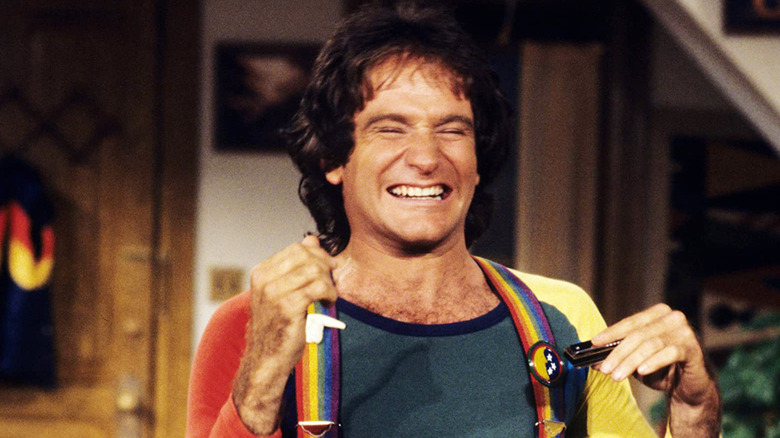
Funnily enough, Kubrick had similar concerns about another famous actor (and then-future Oscar-winner) he considered for the role before casting Nicholson: Robin Williams. As the story goes (via Screen Rant), Kubrick came seriously close to hiring Williams for "The Shining," only to drop the idea after watching an episode of "Mork and Mindy." The hit sitcom, a "Happy Days" spinoff centered on Williams' outlandish alien Mork from the show's infamous "Jumping the Shark" season, convinced Kubrick that Williams was "too psychotic" to play Jack Torrance, and the rest is history.

Here's Robin!

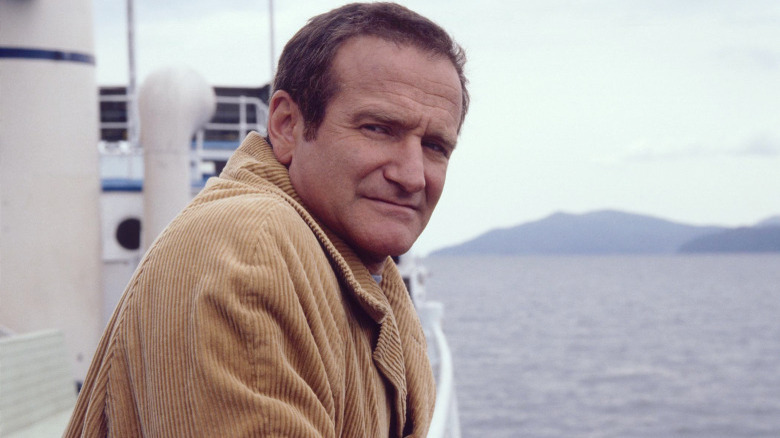
Kubrick's concerns about Williams are understandable. This was years before the latter demonstrated his dramatic acting chops in "Dead Poets Society" and proved that he could believably portray someone as reserved as Dr. Malcolm Sayer from "Awakenings." And as renowned as Williams was for his bouncing-off-the-walls comedic performance style, he also continued to hone his craft and play more serious, melancholic characters over the course of his career, even after winning an Oscar for his turn in the 1997 drama "Good Will Hunting."

Perhaps most relevant to this discussion, Williams showed just how quietly unsettling or even chilling he could be with his dual roles in 2002's "One Hour Photo" and "Insomnia." It's his work in those movies, especially, that leave you wondering how the actor would've handled the role of Jack Torrance. Where Nicholson imbued Jack with a menacing air from the start before plunging into horror-comedy territory with his antics, Williams might have played Jack's internal journey as a more slow-burn and grounded procession.

One imagines Williams would have really thrived in a "Shining" adaptation that had him play Jack as a sincere family man corrupted by the Overlook's malevolent forces and his alcoholism relapse, like in King's book. The only problem with that scenario? Kubrick's movie saw Jack as an entitled jerk from the get-go and played down his substance abuse (a change King very much disliked). So, in that sense, Kubrick was accidentally correct about Williams not being a fit for his film.

Read this next: 17 Horror Movies Based On True Stories That Will Creep You Out

The post How Robin Williams Nearly Ended Up in The Shining appeared first on /Film.

10 Dec 16:25

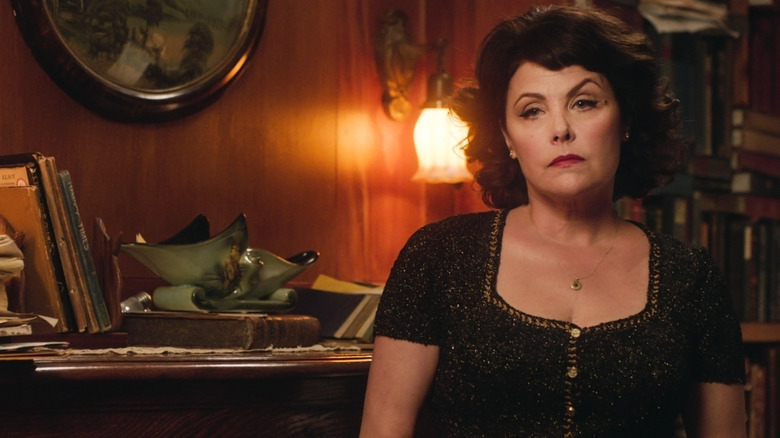
David Lynch Has Twin Peaks' Red Room Memorized Right Down To The Curtain Texture [Exclusive]

by Joshua Meyer

David Lynch himself can be a cagey interview subject; he's not one to explain his art. However, his collaborators sometimes offer interesting insights into what makes him tick as a filmmaker. One of those collaborators is Cara Brower, the production designer for "Twin Peaks: The Return."

It's been four years since the Showtime event series took viewers back to the world of "Twin Peaks" and perhaps scrambled their brains and sent them diving down the Reddit rabbit hole for answers. Lynch, the creative genius behind "Blue Velvet" and "Mulholland Drive" (the 21st century's greatest film, according to the BBC), directed all 18 episodes of "Twin Peaks: The Return." In /Film's interview with Brower, she talked about working with him and bringing the famous red room back to life.

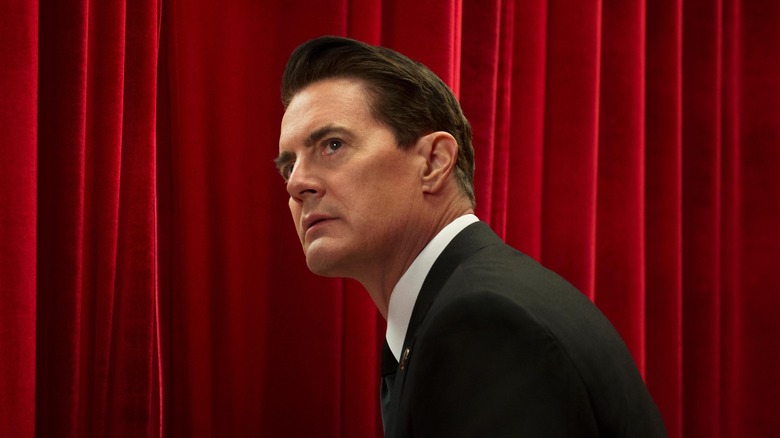
The red room is an extradimensional waiting room where Kyle MacLachlan's character, Agent Dale Cooper, has been known to wander. It's a place as loopy as Reddit, but with actual red curtains and black-and-white lines zigzagging across the floor. People talk backward there, but it must have been an honor to help re-conceptualize it, right? Bower said:

"Oh, yeah. Well, there was a lot of pressure, because David specifically remembers the texture of the curtains and the feeling of the fabric between his fingers. He has the colors memorized. And so, that specifically, when we were recreating some of the older sets, there was a lot of pressure to get it right."

A Photographic Memory And A Nostalgia Critique

It almost sounds like Lynch has a photographic memory or 94% recall like Truman Capote (as played by Philip Seymour Hoffman in "Capote.") This isn't the first time, actually, that someone has alluded to that. In a 2017 interview with No Film School, Jon Nguyen, the director of the documentary "David Lynch: The Art Life," discussed Lynch's capacity for recalling specific conversations and images years later. He said:

"Sometimes [Lynch] would repeat stories years apart and it would be exact, down to the detail. I really believe it's because he's been meditating two times a day for the last 40 years. His brain is so clear. He does transcendental meditation two days a week. He hasn't missed a day since he began."

Lynch's work has a dream logic to it that can be challenging but rewarding depending on how invested you are in theme and mood. There are moments of lucidity and clarity, but depending on who you ask, his oblique storytelling manner might be as dissatisfying as it is deeply gratifying.

My fundamental takeaway from "Twin Peaks: The Return" was that it did make sense as a critique of nostalgia-driven entertainment. No one notices, for instance, that Cooper's tulpa, Dougie, is just repeating the same thing back to them. While arm-wrestling, his evil doppelgänger, Mr. C, notes that the "starting position is more comfortable." Even the brief return of Audrey Horne (Sherilyn Fenn) feels like a knowing subversion of fan-service. She ends in front of a mirror like Cooper in the original "Twin Peaks" finale at the end of season 2.

Ultimately, "Twin Peaks: The Return" was not the same show as "Twin Peaks," and to revisit/rewrite the past could only strand us somewhere beyond recognition.

Read this next: The 12 Best Neo-Noir Films Ranked

The post David Lynch Has Twin Peaks' Red Room Memorized Right Down To The Curtain Texture [Exclusive] appeared first on /Film.

10 Dec 16:24

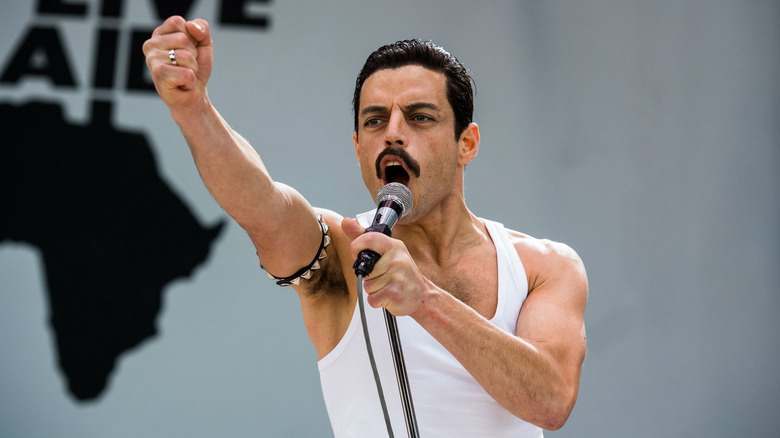
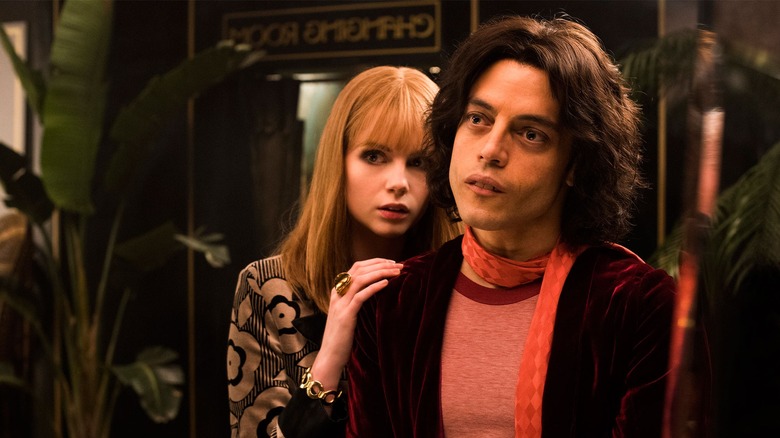
Queen's Roger Taylor Thinks Sacha Baron Cohen's Freddie Mercury Would've Been 'Utter S***'

by Kaylee Dugan

The movie industry is an industry filled with should have, would have, could have. Projects are constantly blossoming and then dying on the vine. Actors, directors and important crew members are shuffled in and out of projects like a dependable deck of cards. I mean, just think of all the movies you were hyped to see that were suddenly shelved, never to be seen again. Or the movies that were announced and then finally finished years, or maybe even decades, down the line, with a completely new cast and crew. As with everything in life, sometimes things just don't work out. Unless you're Queen drummer Roger Taylor, in that case, everything works out just fine.

In an interview with Metro, the prolific musician didn't hold anything back when talking about "Bohemian Rhapsody," which starred Rami Malek as Freddie Mercury, a role that was originally supposed to go to Sacha Baron Cohen. Cohen was incredibly passionate about the film and even pulled in "The Crown" creator Peter Morgan, who wrote a screenplay for the project. Directors David Fincher and Tom Hooper were both connected to the film at one point, with Stephen Frears eventually stepping into the role (Bryan Singer would ultimately direct the final film). Later on, Cohen left the project due to creative differences, and Malek stepped in. 

"Sacha Is Pushy, If Nothing Else"

While many Queen and Cohen fans, including Fincher, have spoken wistfully about the movie that could have been, Taylor is definitely doing the opposite. He seems beyond confident in his belief that Cohen wasn't right for the role, saying:

"I think he would have been utter s***. Sacha is pushy, if nothing else ... He's also six inches too tall. But I watched his last five films and came to the conclusion he's not a very good actor. I might be wrong there. I thought he was an utterly brilliant subversive comedian, that's what he's great at.

This might be the first time Taylor has so bluntly stated his feelings about Cohen playing Mercury, but it's not especially surprising. Frears mentioned that Taylor and fellow band member Brian May felt a little apprehensive about Cohen's vision for the role in a 2018 interview with Vulture. If this is how Taylor felt at the time, and clearly still does feel all these years later, it's easy to see why things didn't work out.

Speaking of things not working out, Taylor didn't leave anything to the imagination when it comes to who he preferred to play Mercury. After giving his full appraisal of Cohen as an actor and a comic, he went on to praise Malek's performance saying, "Anyway, I think Rami did a brilliant job in an almost impossible role."

And clearly someone agrees with him, considering "Bohemian Rhapsody" took home four Academy Awards, including Best Actor for Malek, in 2019.

Read this next: Top 15 Best Natural Disaster Movies

The post Queen's Roger Taylor Thinks Sacha Baron Cohen's Freddie Mercury Would've Been 'Utter S***' appeared first on /Film.

10 Dec 16:24

Year After Cyberpunk Debut, CD Projekt No Nearer Redemption

by msmash
A year since the botched premiere of CD Projekt SA's Cyberpunk 2077, things haven't got a whole lot better for the struggling Polish video-game studio. From a report: The shares are down 54% in that time and analyst price targets indicate a further 15% downside over the coming 12 months. It's a far cry from the hype that surrounded the launch of the futuristic role-playing game that had been touted as the next in a line of blockbusters that culminated with the third installment of the Witcher series in 2015. Where analysts had originally expected Cyberpunk sales of 30 million units in the year after the game's release, they now expect 17.3 million copies to have been sold in that time, according to the average of nine estimates compiled by Bloomberg. That includes 13.7 million sold in pre-orders and at around the time of last year's launch. "2021 has illustrated how long and bumpy the road to rehabilitation will be," said Matti Littunen, an analyst at Bernstein. "Fixing Cyberpunk, which is the key for audience relationship, will take a while." Even as Cyberpunk is finally getting better reviews thanks to multiple patches, redemption remains distant. In 2022, when the studio plans to release a new, technically advanced version of the game for next-generation consoles, analysts see sales rising to only 5.3 million units from 3.6 million for 2021. They are also uncertain about average prices, as Cyberpunk is continues to be sold at a discount to its launch price of $59.99.

Read more of this story at Slashdot.

10 Dec 16:17

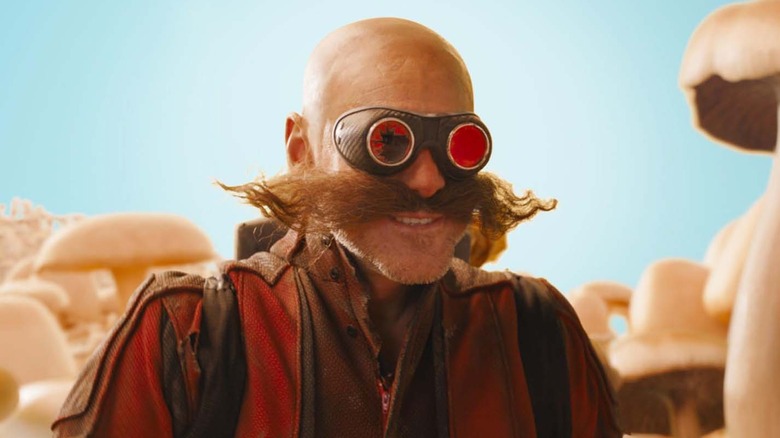
The Apocalypse Now Easter Egg You May Not Have Noticed In Sonic The Hedgehog

by BJ Colangelo

People sometimes forget that the creatives behind family films aren't also the same age as the children who will fall in love with their work, and in fact have their own collection of personal favorite films that aren't always kid-friendly. Patrick Casey and Josh Miller are the screenwriting team behind the "Sonic the Hedgehog" movie, and will be joined by John Whittington of "The Lego Batman Movie" and "The Lego Ninjago Movie" for the sequel, "Sonic the Hedgehog 2." Casey and Miller are frequent collaborators, having penned the scripts for "National Lampoon Presents Dorm Daze," "Golan the Insatiable," and the "School Spirit" entry of Hulu's "Into the Dark."

It's also pretty common practice for family friendly films to sneak in jokes or references for the adults in the audience, ones that should theoretically fly over the heads of little ones (unless you had parents like mine that didn't censor your content and therefore was a weird 9-year-old who completely understood Buzz' wings flying open in "Toy Story 2" upon seeing Jessie was a boner joke). During an online watch party for "Sonic the Hedgehog," screenwriter Patrick Casey pointed out that there's a hidden reference to "Apocalypse Now" in the post-credits scene, something that (hopefully) no kid could possibly clock.

Yes, Casey obviously meant "Brando." Autocorrect is a cruel mistress. Don't @ him.

"I've Never Seen Apocalypse Now, Please Explain The Reference" - You, Maybe.

Francis Ford Coppola's "Apocalypse Now" is a psychological war epic in which Marlon Brando plays U.S. Army Special Forces Colonel Walter E. Kurtz during the Vietnam War. Kurtz has completely lost it, going rogue and waging guerrilla warfare and commanding a militia of American and Montagnard troops who view him as a sort of demigod. When Kurtz finally comes face to face with Captain Benjamin L. Willard, the man tasked with the mission to assassinate him, he is introduced partially lit, his bald head illuminated by fire. Brando delivers a monologue to Willard and begins to wash his hands, face, and bald head before pushing through the darkness and showing his face.

In "Sonic the Hedgehog," Jim Carrey as Dr. Robotnik has been banished to the Mushroom Planet, scavenging in complete isolation and driven totally insane, but believing himself to be of sound mind. He is seen washing his hands and shaving his now bald head in a puddle of water, achieving his trademark form of "Dr. Eggman," with the close-up shot similarly imitating the reveal of Kurtz in "Apocalypse Now." It's a definite blink-and-you'll-miss-it reference, or an elaborate troll sparked by Casey just to watch movie dorks lose their minds. Regardless, it's a fun little homage if true, but still doesn't beat the best Easter egg in the movie ...that title belongs to Sanic.

Read this next: The 20 Greatest War Films Of All Time

The post The Apocalypse Now Easter Egg You May Not Have Noticed in Sonic the Hedgehog appeared first on /Film.

10 Dec 14:26

How to Prepare for a Solar Flare Hitting Earth (Because It's Probably Going to Happen)

by Stephen Johnson

In the Tom Hanks movie Finch, a massive solar flare destroys the ozone layer, annihilating almost all life on Earth (and leading to the invention of annoying robots). While a mass coronal ejection really could hit Earth at any time—a sun-like star 100 light years away called EK…

Read more...

10 Dec 01:13

Play XCOM 2 Free This Weekend

by Blue
A post on Steam announces everyone can play XCOM 2 for free all weekend. If you feel the need to continue to battle the alien invaders after the weekend, the Window, macOS, and Linux strategy game...
10 Dec 01:13

Remote workers are using “mouse movers” to stay active while AFK

by Andy Baio
put your optical mouse on your phone and play one of the "mouse jiggler" videos on YouTube full-screen #
10 Dec 01:13

The 15 Best Marlon Brando Movies Ranked

by Molly Turner

Widely considered to be one of — if not the — greatest actors of all time, Marlon Brando's career spanned more than six decades and left an indelible impact on cinema. Across the nearly 50 films he made, Brando was nominated for eight Oscars and won two, first in 1955 for "On the Waterfront" and again in 1973 for his most famous role in "The Godfather." 

Brando's career began in the theater, training with famed acting teacher Stella Adler. Thanks to her tutelage, Brando popularized method acting on stage and screen and formed a naturalistic style all his own, imbuing his characters with a deep personal and emotional connection that set the bar for all actors to come. In addition to his incredible talent, Brando was also an activist who cared deeply about the Civil Rights Movement and American Indian Movement, famously sending Sacheen Littlefeather to accept his Oscar for "The Godfather" on his behalf, giving him the chance to speak publicly about the treatment of Native Americans in Hollywood. 

Needless to say, Brando was an incredibly talented actor and fascinating man. With such a broad and varied career to celebrate, we've ranked his 15 best film roles from worst to best.

Sayonara

An intimate war film and romance, "Sayonara" takes place in Kobe, Japan in 1951, when the United States government had banned Japanese citizens from immigrating to America. This policy extended to the spouses of military personnel, which is the primary focus of "Sayonara." Brando plays U.S. Air Force Major Lloyd Guvner, who is initially opposed to the idea of Americans marrying Japanese women. 

However, when one of his good friends falls in love and marries a local woman in Kobe, Lloyd slowly begins to change his mind, especially when he's introduced to a Kabuki performer named Hana-Ogi (Miiko Taka). The politics and race relations of the film are deeply troubling and don't hold up to the scrutiny of the modern era at all, but Brando still manages to find depth in a somewhat shallow character. While it's not his most moving romantic lead, Brando is still convincing as a man who slowly shifts his worldview over the course of the film without being overly preachy, earning him his fifth Oscar nomination.

Viva Zapata!

Brando's second film with director Elia Kazan follows a fictionalized account of the life of Mexican revolutionary Emiliano Zapata (Brando). The film takes place in 1909 Mexico, when Zapata brings a complaint about the government's infringement on his land to the president. This sets off Zapata's journey to become a leader in the effort to overthrow Porfirio Díaz and create a new government. 

Though the film is competently made, it has huge issues of representation in casting, including the fact that Marlon Brando is playing a Mexican character at all. While his hair and makeup are distracting enough, Brando also adopts an odd, stilted diction that seems to be his take on an accent, all of which hinders an otherwise thoughtful and measured performance. It's a testament to Brando's talent and abilities that, even when he's at his worst, he delivers an overall incredible performance, one that earned him his second Oscar nomination.

The Score

Despite his incredible talent, Brando had an uneven career with high highs and low lows, perhaps due to the fact that he was notoriously difficult to work with. "The Score" marks Brando's last feature film appearance before his death three years later, and it's fascinating to watch his evolution as an actor. The film follows Nick (Robert DeNiro), an expert safecracker who is ready to retire until a young, arrogant thief (Edward Norton) persuades him to do one last heist. 

Brando plays Max, Nick's fence who helps him move stolen goods and find new targets. As Max, Brando doesn't get a lot of screen time, but per usual, he makes the most of what he has. While Brando seems hindered by his declining health, he still delivers a funny and naturalistic performance, working particularly well with DeNiro, the other actor to win an Oscar for playing Vito Corleone. Overall, "The Score" is an incredible film that puts a final bow on the career of one of the greatest film actors of all time.

A Dry White Season

In part because of his leftist politics, Brando made several message films throughout his career, some more successful than others. "A Dry White Season" is perhaps one of the more thoughtful political films that Brando made, depicting a privileged white man's journey to becoming involved in apartheid in South Africa. Ben Du Toit (Donald Southerland) is a teacher who is aware of apartheid but largely ignorant of the law's daily impacts until his Black gardener's son goes to jail for playing with his own child. 

When Ben starts an inquiry into the case, he recruits the help of an attorney, McKenzie (Marlon Brando), who routinely fights and loses similar cases in the courts. Because the film largely focuses on Ben's arc, Brando has limited screen time as McKenzie, but his story culminates in a moving courtroom scene reminiscent of Gregory Peck's turn as Atticus Finch. Brando's performance earned him his eighth and final Oscar nomination for a role that is both rousing and thoughtful.

The Chase

A sprawling crime thriller, "The Chase" centers on the impact an escaped convict has on a small southern town. When Sheriff Calder (Marlon Brando) hears that Bubba Reeves (Robert Redford) has broken out of jail, he expresses little concern, convinced that the criminal won't be reckless enough to come back home. Unfortunately, that's exactly what happens, forcing Calder to act. While his goal is to maintain justice and bring Reeves in alive, everyone in town has competing interests, starting a mutinous manhunt that has deadly consequences. 

Calder is a different role for Brando, more reserved and neutral than the other authoritative characters he played. Calder's detached demeanor can make him seem a bit wooden, but serves as a sharp contrast during the film's climax when his morals are put to the test against the rest of the town's. While it's not his most dynamic performance, Brando still commands the screen as the quiet and commanding Calder in a credible performance.

Guys And Dolls

While Brando didn't star in as many films as other actors of his caliber, he still managed to make a wide variety of movies and create many different characters. "Guys and Dolls" reunites Brando with director Joseph L. Mankiewicz and sees him take on a different type of role entirely as the romantic lead in a musical. The film follows Frank Sinatra as Nathan Detroit, the host of a weekly craps game that every gambler in New York City wants to attend. 

However, on this particular week, Nathan doesn't have the money needed to rent a location for the game, so he bets Sky Masterson ( Brando) $1,000 that he can't convince a Salvation Army girl to go to Havana with him in the next 24 hours. Sky accepts and soon finds himself falling in love with his mark. Brando gives a solid effort in his musical performances, making him far from the worst actor to sing on screen. Additionally, "Guys and Dolls" once again finds Brando mining a morally ambiguous character for relatability and pathos. Brando plays the role with subtle charm and swagger, making this an understated star role.

Last Tango In Paris

Bernardo Bertolucci's masterpiece follows two people who engage in a secretive romantic tryst to disastrous consequences. Paul (Brando) is recovering from his wife's sudden and unexpected suicide, while Jeanne (Maria Schneider) has anxiety about her impending wedding, amplified the fact that her fiancé is shooting a documentary about her. The two meet while looking at an apartment and begin an illicit affair, sharing no information about their true identities, not even their names. As their affair comes to a close, Paul refuses to let go, forcing Jeanne to take drastic measures. 

The film was controversial at the time of its release due to its graphic depictions of sex, which are all the more upsetting in light of Schneider's later discussions of her treatment on set. In spite of the issues with the film, Brando delivers a moving portrayal of a confused, hurt, and abusive man. It's as layered as any of his other characters, and resulted in his seventh Oscar nomination.

Superman

Richard Donner's superhero epic changed the genre forever, introducing mainstream audiences to Christopher Reeve's Superman and his alter ego, Clark Kent. The film tells Clark's origin story, beginning with his time as a baby on Krypton, an advanced alien world facing a world-ending disaster. Krypton's chief scientist, Jor-El (Brando), sends his son, Kal-El, the sole survivor of the planet, to live among and be raised as a human. 

Because the film mostly follows Kal-El's adventures as Superman, Brando's Jor-El has limited screen time. However, Brando manages to make a huge impact with a nearly unrecognizable performance that features a loud and clear voice that's miles away from the mumbled speech that made him famous. As Jor-El, Brando commands the screen and brings a gravitas to what could otherwise be a silly role, lending emotional weight to a serious story of a lost father and his son.

The Wild One

Johnny Strabler (Brando) is the leader of the Black Rebels Motorcycle Club, which arrives in a quiet, small town much to the dismay of the locals and the sheriff. Johnny hates cops, but generally obeys the law, even as his gang causes trouble. While the sheriff disapproves, he doesn't do much to stand up to Johnny and the Black Rebels, despite protests from the rest of the town. 

However, things take a turn when Johnny falls in love with the sheriff's daughter and deals with the arrival of another gang. Throughout his career, Brando perfected the ability to play morally questionable characters who had full hearts that made them empathetic and warm. Johnny is a great example of this, a reluctant leader who has to reevaluate his beliefs and learn what it means to truly stand up for what he believes in. Furthermore, Brando's charm is off the charts, without ever feeling like overkill.

The Fugitive Kind

Working with classic director Sidney Lumet, "The Fugitive Kind" places Marlon Brando once again in the world of a Tennessee Williams melodrama. This time, Brando stars as Valentine "Snakeskin" Xavier, a drifter who floats in and out of jail. When Val arrives in a small southern town with hopes of going straight, he catches the attention of numerous women there, particularly Lady Torrance (Anna Magnani), who offers him a job in her mercantile store. 

As the two develop a friendship, something deeper blooms between them, but complicating matters is Lady's sick and jealous husband, Jabe (Victor Jory). While Val is trying to make a better life for himself, his past haunts him, and the sheriff asks him to leave just as Jabe's jealousy reaches a disastrous fever pitch. As Val, Brando makes it easy to see why the women there are attracted to him, yet there's also something deeper behind his eyes, a desperation to make things right for himself as well as those around him.

Julius Caesar

An epic adaptation of the classic Shakespeare play, "Julius Caesar" follows political machinations and maneuvers in Rome. With growing concern that Caesar is going to use his popularity to turn his elected position into a dictatorship, a group of conspirators convince his close friend, Brutus (James Mason), to kill him for the good of the country. When another one of Caesar's advisors, Marc Antony (Brando), learns of Brutus' betrayal, he gives an impassioned speech to the public and challenges Brutus to a duel, leaving the fate of Rome up to the winner. 

In his first film with Joseph L. Mankiewicz as director, Brando handles Shakespeare's difficult dialogue masterfully and delivers an impassioned and moving performance. With Shakespeare, an actor's delivery can make all the difference in the audience's connection to the story and character. As Antony, Brando delivers one of the play's most famous monologues with precision, making it a singular take on the classic character that landed him his third Oscar nomination.

Apocalypse Now

Reuniting with Francis Ford Coppola after his Oscar-winning turn in "The Godfather," Brando delivers another singular performance in the sprawling, existential Vietnam war epic, "Apocalypse Now." The film follows Captain Willard (Martin Sheen), a special intelligence agent sent on an inside job to assassinate a rogue Green Beret officer, Colonel Kurtz (Brando), who now lives as a demigod in the jungle. The film largely follows Willard's journey into the heart of the jungle to find Kurtz and his growing obsession with the man he's been assigned to kill. 

While he looms large over the film, Brando only appears in a mere 15 minutes, and yet still manages to create a lasting, iconic performance. Kurtz is an eerie and unsettling character who is somehow also alluring and charismatic. In a few sparse scenes, Brando easily sells the audience on Kurtz's worldview, building the tension as Willard must decide whether or not to kill him.

A Streetcar Named Desire

Elia Kazan's adaptation of Tennessee Williams' stage play formed the beginning of a fruitful partnership between the director and Brando, who starred as Stanley Kowalski in one of his most famous roles. The film follows two sisters, Stella (Kim Hunter), Stanley's wife, and Blanche (Vivien Leigh), Stella's flirtatious but troubled sister who arrives to stay with Stella and Stanley under somewhat mysterious circumstances. As the film progresses, Stanley becomes increasingly fixated with Blanche's unconventional lifestyle, causing heightened physical and emotional tension between Stella and Stanley, and eventually Stanley and Blanche. 

Kazan previously directed Brando as Kowalski on Broadway, and the film is a testament to Brando's magnetism and raw appeal, regardless of the likability of the character. On paper, Stanley is a downright despicable person, but Brando brings him to life with an impressive level of empathy and sizzling charisma, making for a performance you can't take your eyes off of.

On The Waterfront

Next to Vito Corleone and Stanley Kowalski, Terry Malloy may be Marlon Brando's most famous role. "On the Waterfront" reunites Brando with Elia Kazan for a third time and follows the corruption in New York's longshoreman unions. Terry is a one-time prizefighter who spends his days ignoring the depravity around him, particularly because his older brother, Charley, is at its center. When he witnesses a murder and becomes romantically involved with the victim's sister (Eva Marie Saint), he's moved to testify against the criminals who have hemmed in his life. 

"On the Waterfront" has one of the most famous lines in cinema history, but to actually witness Brando deliver "I coulda been a contender" is still a shockingly moving and transformative moment for the audience. As Terry, Brando convincingly and tenderly portrays someone who gave up a promising career to please his brother, only to question his sacrifices. The performance is never theatrical or over the top, but unceasingly empathetic, earning Brando his first Oscar.

The Godfather

Arguably his most famous character, Don Vito Corleone is also Brando at his best. Francis Ford Coppola's gangster masterpiece follows Brando as the head of the Corleone crime family and his struggle to maintain power in a changing world. Brando brilliantly and subtly portrays Vito as a man full of intelligence and warmth, with plenty of kindness and generosity for those who respect him, and an equal amount of ruthlessness and apathy for those who do not. 

When rival crime lord Sollozzo (Al Lettieri) wants to expand into the drug business, he needs Vito's approval. The Don refuses, igniting a violent gang war that threatens Vito's life and engages his previously disinterested son, Michael (Al Pacino), in the family business. As Vito's power wanes, Michael earns and cements his place in the Corleone organization, eventually becoming the new don. 

Brando's performance is transformative and studied, creating a one-of-a-kind mafioso who many would attempt to imitate, but who none would ever come close to capturing. With his quiet and commanding delivery, Brando created one of the most iconic characters in cinema history, delivering him his second and final Oscar.

Read this next: The 14 Best Noir Movies Ranked

The post The 15 Best Marlon Brando Movies Ranked appeared first on /Film.

10 Dec 01:11

See Ya, Space Cowboy: Netflix Cancels Cowboy Bebop After First Season Flop

by Danielle Ryan

Bad, but not entirely unexpected news for fans of the Netflix "Cowboy Bebop" adaptation. Despite the fact that showrunner André Nemec was only getting warmed up, Netflix has canceled the audacious adaptation only a month after the first season was released on the streaming service. According to The Hollywood Reporter, the live-action "Cowboy Bebop" is no more after a lackluster reception by critics and fans alike. It turns out that Netflix just won't carry that weight.

A Big Swing And A Miss For Netflix

I'll be honest, this news is a real bummer for folks who appreciated the intensely weird experiment for what it was, and I was among the series' staunch defenders. I was in the minority, however, as critics panned the series overall and audiences felt about the same. Social media was tough on this little-adaptation-that-couldn't, with many fans decrying its release as if someone had burned their childhood photo albums. While nostalgia and reverence for the original series certainly factored into its harsh reception, the series was a messy, sometimes frustrating ride that didn't quite deliver what it promised. Some of the changes made to the series' overall plot were risky, especially regarding Spike (John Cho) and his former lady love, Julia (Elena Satine). The adaptation, much like the ragtag crew it depicts, just couldn't quite get the job done right. 

The lengthy, much-hyped marketing campaign probably hurt "Cowboy Bebop" a bit, too. It gave people plenty of time to think about what their ideal live-action "Cowboy Bebop" would look like, and when those expectations weren't met, they were more sorely disappointed than if they hadn't been geared up for months on end. 

THR reports that while the series did pretty well in its first month streaming on Netflix, it plummeted once initial interest had worn off. With a series as big and expensive as "Bebop," the streamer has to make sure that people are going to stay subscribed for additional seasons. With the anime adaptation's rough reception and streaming numbers flagging, it just didn't make sense for them to finance another season. 

The Future Of An Ill-Fated Adaptation

It's unlikely that any other streaming services will try to revive "Cowboy Bebop," so fans who did enjoy this 10-episode run of jazzy space cowboy mayhem will just have to imagine what the second season might have looked like. While the series didn't always work, the chemistry between the main cast made for some truly fun episodes in the middle section of the season, and it's a shame we won't get to hang out with John Cho's Spike, Daniella Pineda's Faye, and Mustafa Shakir's Jet on the Bebop any longer. At least we'll always have season 1, and who knows? Maybe in time, the series could become a cult classic. Now wouldn't that be something?

See you later, space cowboy. The ride was a little rocky, but it was fun and all too brief. 

Read this next: 15 Must-See Horror Anime Movies

The post See Ya, Space Cowboy: Netflix Cancels Cowboy Bebop After First Season Flop appeared first on /Film.

09 Dec 23:11

Biden order sets end date for federal purchase of gas-powered cars - Roadshow

by Sean Szymkowski
By 2035, the federal government will only buy zero-emission vehicles as part of a new executive order.
09 Dec 23:05

Releasing The Ayer Cut: Or, Why Giving The Fans What They Want Isn't Actually A Good Idea

by BJ Colangelo

David Ayer has been very vocal about his disappointment with the release of 2016's "Suicide Squad," a film he was only given six weeks to write and one that received a flurry of highly publicized re-shoots after "Batman v Superman: Dawn of Justice" was nailed by critics and audiences for being "too somber." Warner Bros. decided that Ayer's cut of "Suicide Squad" was too dark, and instead wanted the film to resemble the lighthearted and comedic energy delivered by the film's trailers. Warner Bros. spent an approximate $22 million in re-shoots, and according to Ayer, the film that ended up on screen was almost unrecognizable compared to what he had delivered.

Critics hated "Suicide Squad" despite the film's $747 million worldwide box office earnings, but fans, and David Ayer himself, have been pushing for Warner Bros. to release Ayer's original cut of "Suicide Squad" ever since news broke that HBO Max would be the exclusive home to the "Zack Snyder's Justice League" (remember #ReleaseTheSnyderCut?), the version of "Justice League" that director Zack Snyder had intended to make but was unable to fulfill after leaving the production following the loss of his daughter. Joss Whedon was brought in to complete the project, but the final product was not the same as what Snyder had envisioned. Considering the extenuating circumstances surrounding his departure, a massive fan campaign was sparked in the hopes of DC fans getting to see the movie as originally intended. This motivated Ayer and fans to push for similar treatment, but WarnerMedia Studios has already stated they "won't be developing David Ayer's cut" of "Suicide Squad."

Why Won't Warner Bros. Release Ayer's Cut?

Ayer has personally noted that his director's cut of the film exists, but after WarnerMedia Studios CEO Ann Sarnoff's definitive statement about it not happening, it seems the #ReleaseTheAyerCut campaign is futile. That hasn't stopped Ayer or his rabid fanbase from trying. While Warner Bros. hasn't given an on-record reason for not releasing the film, there are a multitude of reasons in WB's defense. Perhaps the biggest reason they won't pursue unleashing Ayer's "Suicide Squad" cut is because James Gunn's sequel "The Suicide Squad" was released in 2021 to critical acclaim and a ton of fan love, even inspiring the upcoming spin-off series, "Peacemaker." It also killed off a lot of the cast featured in Ayer's film.

There's no real benefit for Warner Bros. to go back and release the cut of a film whose story has already progressed, especially when the released cut not only scored them a massive payday, but also earned an Academy Award (for its make-up effects). Sarnoff justified the decision to release the Snyder Cut as a way to complete his trilogy, but noted "We're very happy we've done this, but we're very excited about the plans we have for all the multi-dimensional DC characters that are being developed right now."

How Does Ayer Really Feel?

The reshoots Warner Bros. made for "Suicide Squad" were not a secret, but upon the film's release, Ayer defended the theatrical cut and claimed it as his own. "This cut of the movie is my cut, there's no sort of parallel universe version of the movie, the released movie is my cut," he said in an interview with Collider. That interview was shortly after the film's release, however, where directors aren't usually willing to tell the full truth about their experience in production. After this year's release of James Gunn's "The Suicide Squad" far surpassed the critical response of his own film, Ayer took to Twitter to deliver a biting essay completely slamming the film he had previously defended as his own.

"The studio cut is not my movie. Read that again," he said. His response echoes that of director Josh Trank who behaved similarly in regard to "Fantastic Four," where he initially played the game of Hollywood pleasantries before doing his best to completely distance himself from the world. Studio meddling isn't anything new, but if Warner Bros. had any inclination to release Ayer's cut of "Suicide Squad," his impassioned rant was the final nail in the coffin.

How Does The Cast Feel About It?

Jared Leto, who played The Joker in "Suicide Squad," has been arguably the most vocal supporter of the release, likely because his character received some of the biggest cuts from the final product. When asked about the Ayer Cut at the premiere of "House of Gucci" (because anytime an actor is involved in a superhero property it is brought up no matter what other project they're promoting) Leto said, "Why wouldn't they? I mean, that's what streaming's for, right?" Ayer agreed with him, taking to Twitter to once again discuss the matter, despite his previous essay claiming that he'd no longer talk about the situation publicly.

John Cena, who appears in James Gunn's "The Suicide Squad," took the Miss America approach, stating "It's in a company's best interest to listen to their audience, and if it's something that's so in demand and they got it, why not?" Margot Robbie, who plays Harley Quinn in both "Suicide Squad" films, called the situation "complicated," but admitted she would want to see every cut of every movie she's been a part of:

The funny thing is that when you're an actor — not when you're a producer — as an actor, sometimes I don't see it until half the country has seen it. You don't really get to see the different iterations along the way unless you're a producer.

It's totally understandable for an actor to want to see all versions of their work, but these statements are less of an endorsement and more of a "maintain a positive response as to not upset Ayer or Warner Bros."

The Ayer Cut Isn't Financially Viable

Additionally, the Snyder Cut of "Justice League" wasn't exactly the financial powerhouse anyone likely anticipated. Sure, the promise of the film's availability spiked HBO Max subscription numbers by 64%, but Warner Bros. had to shell out an additional $70 million in reshoots. While Ayer's new cut wouldn't possibly cost nearly as much, any post-production work from needed from his deliverables to Warner Bros. will still cost something.

In general, director's cuts are only released as a way for studios to make additional money off of their existing IP. By and large, people who don't like a movie aren't going to magically be convinced to revisit the story just because a new cut of the film exists. There's no financial gain to be had for Warner Bros. to release Ayer's cut. "Justice League" was a way to honor the horrific circumstances surrounding Snyder's departure, but let's call it for what it is: releasing the highly-anticipated film was also a great way to inspire people to subscribe to HBO Max. The reality is that the same people pleading for the Ayer Cut are likely the same people who begged for the Snyder Cut, and Warner Bros. already has their subscription numbers and dollars.

Being A Huge Fan Doesn't Qualify Someone To Make Creative Decisions

Imagine it's Super Bowl Sunday and your favorite team is playing. Chances are, you and everyone else in the room has been watching this team for years. You know all of the players' strengths and weaknesses, and your home and wardrobe is filled with signs of your dedication to the team. Suddenly, you look at the screen, and your favorite team is losing. What happens? You shout at the scream. You insult the coach's intelligence. You and everyone in the room start debating over what plays they should run to overcome the odds and win the game. Sure, you might have some really great ideas, but ultimately, you're not the coach, you're a spectator, and screaming at the television screen is not going to change the course of the game.

But now that Twitter gives fans a direct connection to their favorite creators, everything has changed. Sometimes, vocal fan outrage can work for good, like Sonic getting a redesign to something less nightmare-inducing or saving shows like "Brooklyn Nine-Nine" and "Chuck." Unfortunately, these fan campaigns don't always come with good intentions. Sometimes, these campaigns are guided by a singular view of entitlement at best (like with the complaints surrounding "Star Wars: The Last Jedi" influencing the giant fan film known as "Star Wars: The Rise of Skywalker"), and straight-up perpetuation of bigotry at worst.

Unfortunately, It Sets A Dangerous Precedent

#ReleaseTheSnyderCut was a success in the sense that a movie was made, but the toxic fan culture that came with it absolutely tarnished any success the movie had. Allowing for the release of the film opened the floodgates, with fans getting louder and more vicious in an attempt to have their demands met. "Snyderbros" review-bombed "Godzilla vs. Kong" in retaliation of Warner Bros. decision not to make additional DC superhero movies from Zack Snyder.

Sarnoff certainly doesn't have the patience for this brand of "fandom" saying:

We're not tolerating any of that. That behavior is reprehensible no matter what franchise you're talking about or what business you're talking about. It's completely unacceptable. I'm very disappointed in the fans that have chosen to go to that negative place with regard to DC, with regard to some of our executives. It's just disappointing because we want this to be a safe place to be. We want DC to be a fandom that feels safe and inclusive. We want people to be able to speak up for the things they love, but we don't want it to be a culture of canceling things that any small faction isn't happy with. We are not about that. We are about positivity and celebration.

We Don't Negotiate With Terrorists

Completely putting aside the tragic situation that caused Snyder to leave the project and therefore allowing for a complete justification for wanting to give him the space to create the film that was ultimately taken from him for reasons beyond his control, the #ReleaseTheSnyderCut campaign was overwhelmingly not operating from a place of empathy for the director, but instead fan entitlement. The release of Snyder's "Justice League" was not viewed as a success for the director in their minds, but instead vindication for their extremely loud and downright cruel fanbase. The day HBO announced the film would be released, there were less excited comments about what this means for Snyder and his story, instead replaced by a flood of fans exclaiming, "We did it!" This was proof that if you complain enough and harass enough people, you can get whatever you want, and that's dangerous.

Fans obviously have a right to complain when something they love misses the mark (See: the final season of "Game of Thrones,") but a distinct line is crossed when the disappointment or critique becomes a rallying cry for an entire fanbase. Look at what happened with films like "Black Panther" and "Captain Marvel," which were review bombed by racist and misogynist superhero fans so badly, Rotten Tomatoes had to completely change their score system, or Netflix who removed their star-rating after people review bombed Amy Schumer's comedy special simply because angry fanboys felt like it. Releasing the Ayer Cut would be caving into the demands of a group of people who should be reprimanded, not rewarded.

It's Time To Move On

Not every movie is going to be exactly what the viewer wants or what the director had in mind, and that's just the way the cookie crumbles. Filmmaking is a collaborative medium, and no one person is responsible for the success or failure of a film. However, constantly bending to the wills of fans or very loud directors online is only perpetuating the already vanishing line between creator and consumer. We already have algorithms telling us what to watch and telling studios how to design a poster, who to cast, and what stories are "worth" telling, and allowing projects to be held hostage by angry fans only exacerbates the situation.

It's hard, but it's time for fans to move on. Warner Bros. isn't going to make the Ayer cut, and harping on it is only going to dissuade others from wanting to work with him in the future because they're not going to want to deal with the guaranteed baggage of a toxic fandom screaming at them every second of every day. If fans truly care about Ayer, they'll knock it the f*** off. There's definite empathy to be had for Ayer, who won't get to show his cut of "Suicide Squad" to the world en masse, but continuing to kick and scream like a petulant toddler who didn't get the toy they wanted for their birthday is not behavior that deserves encouragement, and certainly is the furthest possible thing from heroic.

Read this next: The 14 Best Christmas Movies Ranked

The post Releasing the Ayer Cut: Or, Why Giving the Fans What They Want Isn't Actually a Good Idea appeared first on /Film.

09 Dec 23:04

William Shatner: The Future Is Worth Fighting For, And Fans Will Lead The Way

by William Shatner

So. I'm back from space.

I saw just how fragile our home, this spinning blue ball, really is in the depthless darkness with my own eyes and I was moved. It made all the constant static we are surrounded with evaporate and gave a clarity unknown to me.

If only the world could see what I saw -- this comforter of blue that surrounds us. When everyone can see how fragile and special life is, we will finally see ourselves as one community, one people.

This past August I was in the green room of a San Jose pop culture convention when I was approached by two men -- one dressed in jeans and a t-shirt, the other wearing an Indiana Jones costume complete with bullwhip. They didn't want a selfie, but instead pitched me on a startup (this was Silicon Valley, after all) – Legion M, an entertainment company built from the ground up to be owned by fans.

It's a simple but brilliant idea: Harness the wisdom and power of the community. Shorten the distance between creators and consumers. Give people a say in what gets made and a stake in the outcome. Grow that community large enough, and you could potentially change the way entertainment is produced forever. A big idea.

It's only been over the last 20 years that I've grown to appreciate and accept what fans give me, and to understand the role that these fans play in furthering the narratives of the shows they celebrate. Fans don't come to pop culture conventions to see people like me -- they come to see each other, and to be part of a community. When they attend panels and put on cosplay, they aren't worshipping at the altar of pop culture, they are playing an active role in creating it. I'd argue that the fans bear as much of the credit for the long-term impact of shows like "Star Trek" as the creators, producers and cast. Shakespeare should be so lucky.

Fans Will Lead The Way

That said -- it doesn't take a rocket scientist to understand the power of fans. People point out all the time that fans are responsible for my career. The fact is, fans are responsible for my entire industry. Take the fans away and the collective value of every company from Netflix to Walt Disney Studios drops to zero. That's why the idea of a fan-owned company is so powerful, and why I decided to become a Legion M shareholder and advisory board member, joining their quest to unite one million people as shareholders of the company.

Will they succeed? Nobody knows. What I know as an artist and an entrepreneur is that nothing of value comes without risk. To move forward, we need to boldly go where none have gone before.

But after returning from space, what excites me most about this project is their mission to UNITE. We live in an age when so many things are pulling us apart. Our politics, our media, and our technology are all optimized to exploit our differences. But when you look down from 300,000 feet, all that falls away. What remains is an appreciation of the word "humankind", and fierce desire to work towards a future defined by things that bring us together instead of those that tear us apart.

With "Star Trek," Gene Rodenberry envisioned a future that showcased the best of humanity. A future in which people of all races, creeds and colors worked together to solve problems and fight existential threats. The Starship Enterprise has always been a metaphor for the planet earth -- a delicate habitat traveling through the lifeless black of space. And while I may not be at the helm of this starship, I'm proud to throw in my lot with those working towards the future Gene showed us. A future worth fighting for. A future worth uniting for.

This time, the fans will lead the way.

Read this next: Star Trek: The Next Generation's 10 Best Episodes

The post William Shatner: The Future is Worth Fighting For, and Fans Will Lead the Way appeared first on /Film.

09 Dec 22:53

The 20 Best Action Movies Of 2021 Ranked

by Scott Thomas

Before we cover the 20 best action films of 2021, let's begin with two qualifiers. One, this list is being written and published before "The Matrix Resurrections," "Spider Man: No Way Home," and "The Kings Man" arrive in theaters. So, sadly, none of them qualify for this list. Two, the fact that there are 20 other face-meltingly great action films released in 2021 speaks volumes about how stellar action movies were this year. The genre offered a smörgåsbord of violent riffs in which no limb went un-ripped and no big idea was ignored. If you wanted ecstatic gun ballets, you got them. Ludacris in space? Yes, that too. 

What's more, action movies were important this year. It was the sight of Saul Goodman going full John Wick that ushered audiences back to theaters last February. The debut of "Shang-Chi" broke box-office records in September. "Below Zero" was an early Netflix smash, and "Red Notice" (which does not appear on this list) was the company's biggest hit to date. After a year and change of lockdown, a genre that hinges on acts of fearlessness reminded us why moviegoing matters. So, grab some popcorn and strap in, because here, without adieu, are the 20 best action films of 2021, ranked.

Sentinelle

Some great action films are bangers from front to back, while others have single moments that are so visceral that they vault the entire film into the conversation. That's the case for Julien Leclercq's "Sentinelle," a movie that is generally very good but is particularly great when it's dispatching Olga Kuryelnko upon unassuming thugs in close quarters brawls. To call these fights nasty is an understatement. They're tendon-snapping tête-à-têtes in which anyone could wind up dead, including Kuryelnko herself. 

That unpredictability helps offset the film's generally rote plot (an officer suffering from PTSD threatens to cross multiple lines while taking vengeance on the scum who hurt her sister). And yet, one could argue that it's the simplistic story and scalding action that make "Sentinelle" an ideal Netflix action film. "Red Notice" failed as both a cultural event and sweeping heist pic. Ditto "6 Underground." But "Sentinelle" doesn't carry either film's blockbuster baggage. Load it up on your preferred viewing device, ideally with as few expectations as possible, and be pleasantly surprised by the excellent punishment it dishes out.

Hell Hath No Fury
It is easy to laud a low-budget film for what it does with its limited resources, even if it's not entirely effective. That proves especially tempting in the case of "Hell Hath No Fury," which is the latest from direct-to-video mainstay Jesse V. Johnson ("Avengement," "Accident Man"). It's a World War II film made for $5 million dollars (at least according to IMDb, so take that figure with a grain of salt), which would mean it cost at least $60 million less than both "Saving Private Ryan" and "Inglorious Bastards" while covering the same blood-soaked territory.

But make no mistake, "Hell Hath No Fury" starts in as grim a spot as any film and just gets grimmer. Characters meet horrifying ends, and those who don't test the audience's sympathy from the jump. That is, however, what makes it singular. "Hell Hath No Fury" is miles removed from the military propaganda of early World War II films, or modern flag-waving efforts like "Midway," telling the story of characters who clamor for more rope in the face of steep odds. That's a stellar premise for an action film, regardless of budget, and "Hell Hath No Fury" executes like it was scorned into doing so. Check it out.

Army Of The Dead
Zach Snyder has never come up with a concept that he wouldn't shoot in slow motion. It's his Rosetta Stone for cinema. That said, it's hard to imagine that a young Snyder ever imagined that he would open one of his films with under-tempo shots of zombies ripping Las Vegas to shreds. But I'm happy to report that's exactly how 2021's "Army of the Dead" begins -- with a symphony of goofy violence extreme enough to render any Rosetta Stone useless.

Even better? Things get even sillier — and more violent — from there. "Army Of The Dead" is simultaneously Snyder at his least self-serious and his most ambitious, marrying the throuple of playful fun, low-key pretension, and cinematic verve into an unholy but awesome union. At its best, the movie is some of the year's best beatdown cinema. At its worst, it's utterly confounding. But when it's making stars out of Samantha Win and Matthias Schweighöfer as Sin City becomes blood and ash in the background, it's hard to have too many qualms. "Army of the Dead" lets Snyder, and the good times, roll (in slo-mo, natch). That's reason enough to see it.

No Time To Die
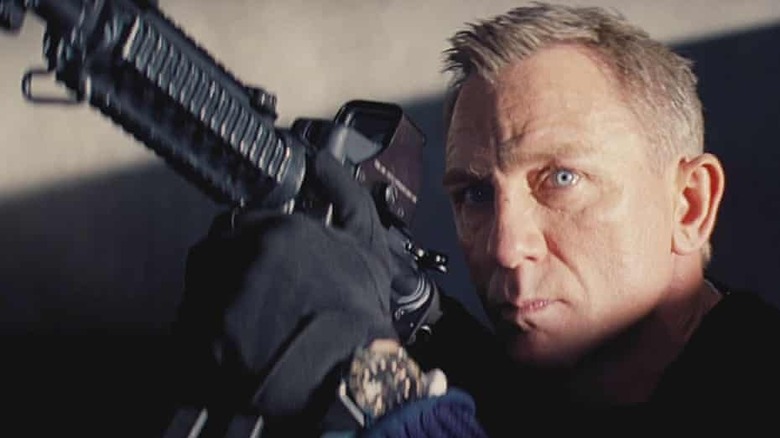
Critiquing "No Time to Die" is tremendously difficult. One the one hand, the film is a magnificent sendoff to Daniel Craig's James Bond, replete with all the lush action and old-fashioned spycraft the franchise has relied on for decades. (It even adds tremendous new blood in Lashana Lynch's Nomi.) As a movie, it's messy and tied far too closely to the lackluster "Spectre" to stand on its own two feet. 

In some ways, the best comparison point for "No Time to Die" is "Avengers: Endgame," which asked if saga-concluding films could correct the wrongs of lesser efforts in their franchises. "No Time to Die" is no "Avengers: Endgame," but the fact that it is more in conversation with that film than "Quantum of Solace" or "Die Another Day" tells you that Cary Fukunaga stuck the landing, however ungracefully. This movie would change spots on this ranking given my mood on any given day, so see "No Time to Die" for the unreal stunt work and adjust your other expectations appropriately.

F9
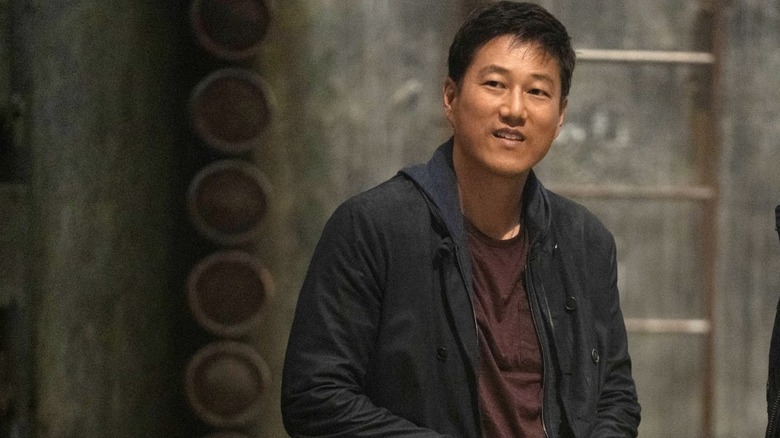
There was no world in which a movie that features cars being pulled through multiple buildings by massive magnets wasn't making a "best of action" list. That the movie in question also sends Tyrese and Ludacris on a mission to space and features Helen Mirren and Vin Diesel capital-F Flirting is just icing on the cake. And if this all sounds kind of ridiculous -- have you even seen a "Fast and Furious" movie? 

To be honest, "F9" is a flawed and bloated film. It's also a peak latter-day "Fast and Furious" effort. These ideas aren't mutually exclusive. By the time that "Furious 7" was serving as both a dream-like eulogy for Paul Walker and careening Lambos through Dubai skyscrapers, the series had evolved past normal criticism. Instead, "F9" is best measured against the franchise that birthed it and the canon of ridiculous action cinema. On both of those fronts? It slaps. 

You don't come to "F9" because it's perfect. You come because Charlize Theron is going to call someone Qasar Kahn, John Cena will punch someone on top of a moving vehicle, and Vin Diesel will gravely intone the word "family" approximately a thousand times. "F9" reshapes the world into one where all those moments feel like true cinema.

Black Widow
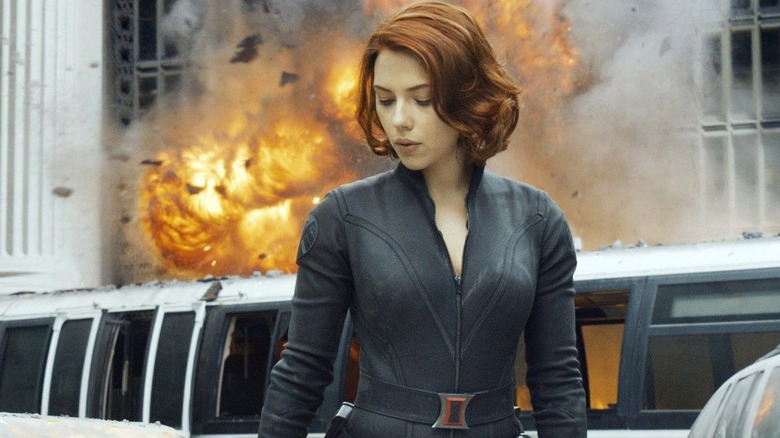
Natasha Romanoff, aka Black Widow, has a tendency to go too far, especially in the Marvel Cinematic Universe. This Nat filled her ledger with red (in more ways than one). This Nat makes the big heroic play that Cap thought Tony couldn't (even if it results in her demise). So, it's hardly any wonder that the "Black Widow" finale, which ambitiously aims to blend a chamber play with "Mission: Impossible"-like spycraft, is a bridge too far for director Cate Shortland and crew.

And yet, the first two thirds of "Black Widow" hit as hard as anything Marvel has ever made. Shortland stages every single brawl sharply and dynamically, attuning herself to her players' feelings as much as their flying fists. The result is a movie that makes room for Red Guardian's joy as he escapes a maximum security prison and gets to be a hero again, a blockbuster that makes a game of chicken between cops and a propeller plane feel strangely maudlin. "Black Widow" is a better film than the narrative that surrounds it, and one that easily slides onto this (and hopefully other) best of 2021 lists.

Godzilla Vs. Kong
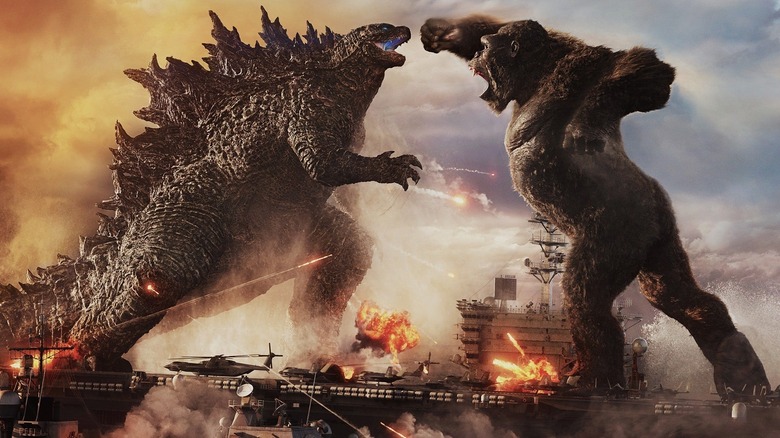
My favorite moment of "Godzilla vs. Kong" didn't appear in the actual movie. It comes from the film's trailer, when Godzilla emerges from the ocean's depths onto a quaking battleship to smack a defiant King Kong in the face while Chris Classic's "Here We Go" revs to life to underscore it. Classic literally screams "Yeah!" and "Come on!" while two massive kaijus go at it. Fantastic choice. No notes.

Classic has penned themes for WWE wrestlers; "Godzilla vs. Kong" director Adam Wingard is on record as saying Kong reminds him of "Die Hard" legend John McClane. These facts reveal "Godzilla vs. Kong" for the bruising action pic it is, albeit one as rooted in the Toho films of old as it is modern blockbusters. The three-way battle between Godzilla, Kong, and Mecha-Godzilla stacks smackdown on top of smackdown, achieving a euphoric high worthy of this decades-old rivalry. It may be heavy on the CGI and hokey mythology, but "Godzilla Vs Kong" is a knockdown, drag-'em-out good time at the movies. Yeah. Come on.

Space Sweepers
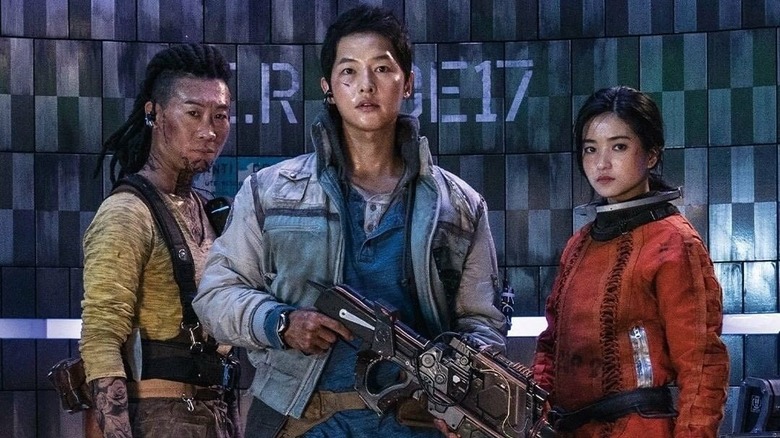
2021 may go down as the year in which Netflix and Korean genre movies and TV shows formed a beautiful, lasting friendship. Recently, "Hellbound" was the platform's number one show. Before that, "Squid Game" became a worldwide sensation. But all the way back in February, Netflix dropped "Space Sweepers," a grandiose space opera worthy of both those shows' acclaim, and then some. 

Netflix pitched "Space Sweepers" as Korea's answer to "Guardians of the Galaxy." As it turns out, that is inordinately reductive. "Space Sweepers" skewers the eco-friendly posturing of global corporations while building its universe from the smoldering ruins of environmental carelessness. The result? A film full of garbage that's anything but trashy. 

The space combat is clear and visceral. All of the film's performances are great, particularly Kim Tae-ri as the hard-drinking, cynicism-battling Captain Jang. By the time the film reaches its quietly devastating conclusion, you're reminded how emotionally solvent action films can be. Uneven patches aside, "Space Sweepers" is a win for Korean cinema, Netflix, and movie fans everywhere.

Free Guy
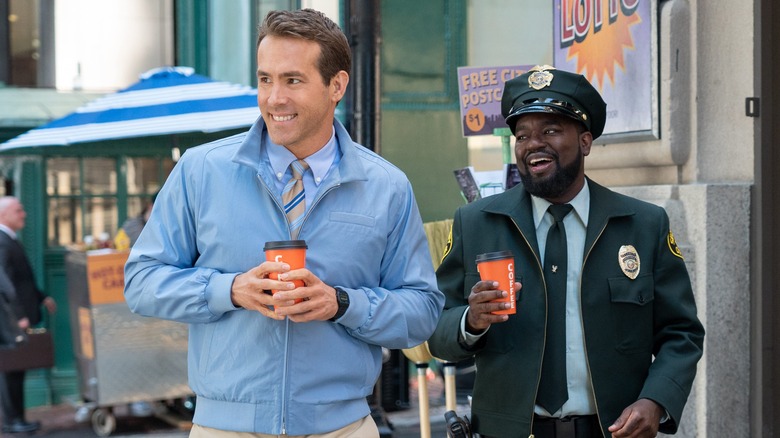
It's time to stop sleeping on Shawn Levy. The man made a serviceable family film in "Cheaper by the Dozen." He channeled his inner Spielberg, however unsuccessfully, with the "Night at the Museum" films. And then, with little warning, he refined that Amblin-centric strain of hero worship into an existentially harsher, more broadly appealing strain of blockbuster cinema. Shawn Levy made the darkest episodes of "Stranger Things," the oddly heart-tugging "Reel Steel," and "'The Truman Show" meets "Grand Theft Auto" free-for-all that is "Free Guy." Tough but tender is just what he does.

That's also why the action scenes in "Free Guy" are stellar. Neither Levy nor his special effects team shy away from the fact that the film is set in a video game, meaning that fights defy the laws of gravity and human anatomy and arefunnier for it. "Free Guy" is a genuinely good family action film that will serve as a gateway to more adult fare down the road. Whatever Levy wants to unleash on cinemas next, let's anticipate it properly.

Shadow In The Cloud
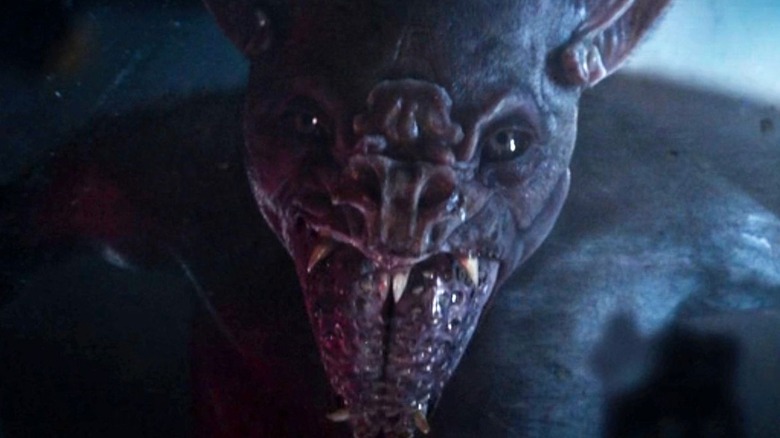
When speaking with ComicBook.com's Jamie Jirak about "Shadow in the Cloud" on my podcast "And the Best Picture Is...", Jamie mused, "What if my favorite film of 2021 came out on January 1st?" "Shadow in the Cloud" did indeed release that day and, while I can't speak for Jamie, 11 months later, it's still one of mine.

The word "gonzo" gets tossed around a lot, but Rosanne Liang's hybrid of a World War II epic, horror film, and chamber play is the real deal. The story of a bomber pilot (Chloe Grace Moritz) who encounters an actual gremlin on a not-so-routine mission is packed with more ridiculous sequences than you can shake several sticks at. What's more, they're all far too gasp-worthy to spoil here. 

So, I'll just offer this: Action films, like cinema, are meant to translate life (or life as we imagine it) into recognizable art. We thrill at seeing bodies both defying gravity and succumbing to it, and we love to see new, thrill-inducing stories. "Shadow in the Cloud" gives us all three, and then some. Stream it ASAP.

The Suicide Squad
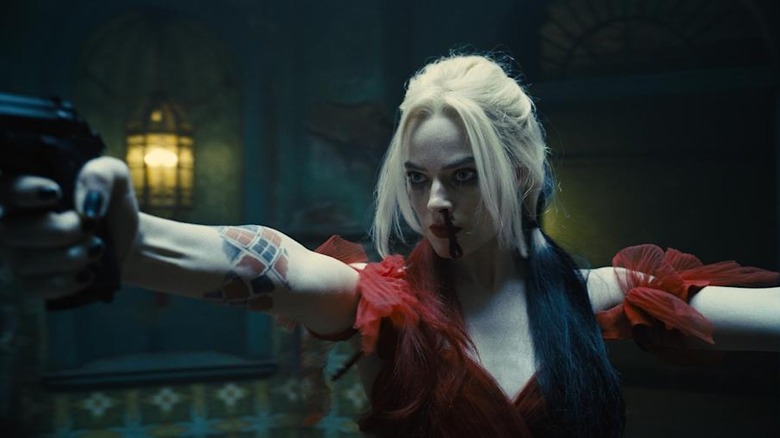
James Gunn's "The Suicide Squad" does so many things well that it's easy to overlook half of them. Case in point: an early set piece in which Bloodsport and Peacemaker have a pissing contest determined via body count. Each takes to offing bad guys in increasingly violent fashion, using progressively excessive weaponry. It's very violent. It's kind of funny. And then, all of a sudden, the punchline: The bad guys they've been killing are heroic rebels. Cue the rimshot. 

It's a very good joke, but it's an even better action sequence, one that's impeccably orchestrated and one in which every bloody beat hits. The catch? You remember it for the laughs. "The Suicide Squad" features the best scenes of Gunn's directing career, the most ambitious structure of any of his scripts, and the most diverse lineup of characters he's ever tackled. But it's that large ensemble and the assemblage of amazing actors who bring them to life that live largest in the audience's memory. "The Suicide Squad" is an unbelievably fun comic book film that's one of 2021's 10 best action films. Don't overlook its bonafides.

Copshop
Anyone who's been a connoisseur of action cinema for more than a minute knows that the Gerard Butler revival is real. "Den Of Thieves" is a classic. The "White House Down" films are trashy gut-level pleasures. And now there's "Copshop," a movie that drops Butler into a nest of other grizzled actors and gives each permission to go HAM for 90-plus minutes.

The setup of "Copshop" is simple: A very bad man gets delivered to a corrupt police precinct and mayhem ensues. The execution of "Copshop" is gloriously complicated. Director Joe Carnahan sticks to his usual, narrative-twisting guns but adds a massive dash of Walter Hill to his arsenal, staging the third act like it's "Last Man Standing" on steroids. Add in Toby Huss doing career-best work and a dash of the surreal, and you have one of the more ignored but wonderful action films to hit theaters all year. One more win for the Butler renaissance.

The Harder They Fall
"While the events of this story are fictional... These. People. Existed." With that 10-word opening crawl, "The Harder They Fall" lays down its gauntlet. Director Jeymes Samuel hasn't come to make a great western so much as take on an anthropological task — show the world that people of color belong, and have always belonged, in both a genre and the history that inspired it. And, reader, does he ever succeed. 

Yes, "The Harder They Fall" is more of a western than an action film, but its action beats are righteous and exceptional. Its swagger and style are of a caliber that every action film wants under its hood, helping the film race over the finish line while the competition is still miles behind. The best action films render their casts absolutely mythic. "The Harder They Fall" does that, and more. If you didn't know that everyone involved is already a movie star when you started watching, you'll never forget by the time that "The Harder They Fall" is finished.

The Paper Tigers
I've already written volumes about why "The Paper Tigers" rips. What I haven't elucidated clearly enough (because I couldn't if I tried) is just how much it rips that "The Paper Tigers" works overtime to eradicate the "I'm too old for this s***" ethos from existence. There are two great action films featuring elder statesmen on this list; "The Paper Tigers" is the only one in which age is more than just a number. Age is stasis. Age is the acceptance of everyday mediocrity. Age is what happens when wonder dies for good. 

Part of what makes "The Paper Tigers" such a youthful, life-affirming film is that it finds just as much wonder in martial arts touchstones as in movies like "Space Cowboys" and "Wild Hogs." It laughs with, not at, its aging protagonists. What's more, it posits that relearning old tricks creates just as much grace as learning new ones. When "The Paper Tigers" lets its heroes rediscover how to honor each other through impeccable fight choreography, it honors the genres that birthed it while giving hope that we, ever-aging, can stay youthful and awesome and butt-kicking with every passing year. That's why "The Paper Tigers" rips.

Dune
To those who reflexively think that "Dune" isn't an action film, I would offer that any movie that features Jason Momoa fighting for his life with nothing but daggers can't not be an action movie. That's just science.

But, if you remain unconvinced, it's worth noting that Denis Villeneuve's blockbuster epic lives or dies by its fight scenes. They are as integral to its character development as any of the film's hallucinogenic visuals or brain-expanding world building. Paul doesn't move onto "Dune Part 2" without besting a swath of soldiers in close combat. Its second half is nothing but skirmishes. And the execution of almost all of these scenes hinges on communicating a combat language that was once considered unfilmable.

"Dune" isn't just a groundbreaking blockbuster. It's grand and mind-bending action cinema that elevates the genre's sci-fi contingent to greater prominence in this new decade.

Shang-Chi And The Legend Of The Ten Rings
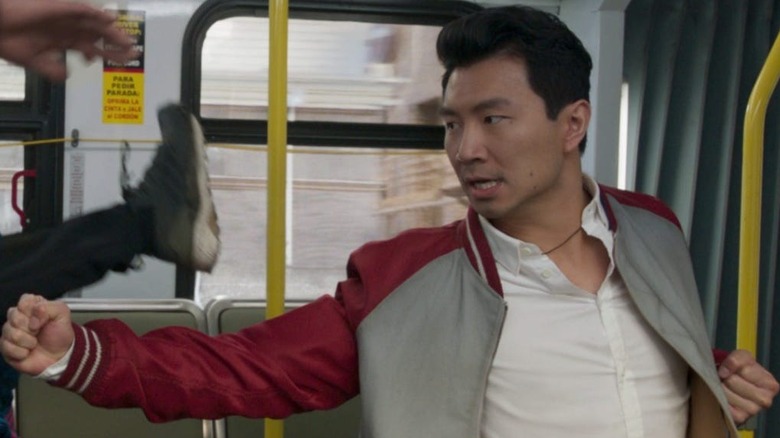
The MCU leveled up its action scenes across the board this year. The Brooklyn Bridge battle from the Disney+ series "Hawkeye" is a contender for 2021's best. In "Eternals," the siege of Druig's hideout proved both electrifying and heartbreaking. But from its very first trailer, it was clear that "Shang-Chi" was on a whole other level.

Watch this bus fight, and dazzle at not only its crisp choreography but the way each dodge, punch, and swerve of an out-of-control vehicle is more about Shang-Chi or Katy than "awesomeness." The best action films put characters first. "Shang Chi never forgets to do so -- and does so, in fact, for its heroes, villains, and minor players alike. (In the film's conclusion, Shang and his sister Xailing literally harness the archetypal power of a dragon to both best a demon and come into their own.) This is what makes "Shang-Chi" not only one of the year's best action films, but one of the best movies Marvel's ever made.

Riders Of Justice
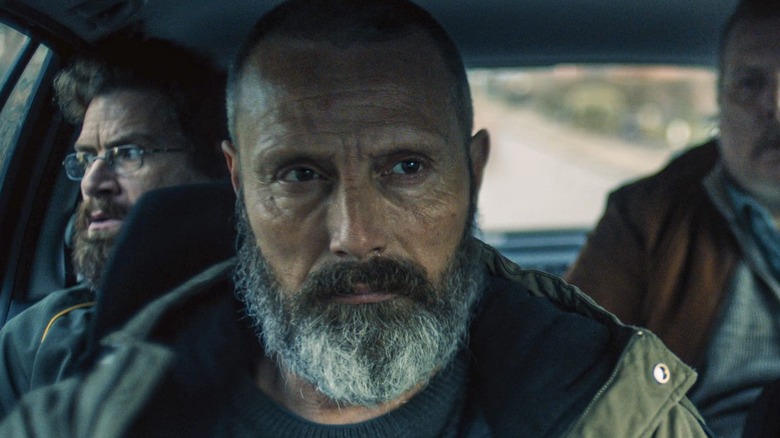
I imagine this list already has some readers wondering what my definition of an action movie actually is, and "Riders of Justice" will only confuse the issue. The latest film from Academy Award-winner Anders Thomas Jensen is ostensibly a thriller starring Mads Mikkelsen that runs headlong into an existentialist comedy featuring some of Denmark's finest actors without either picture giving the other any quarter. 

What results is something of a tonal shock to the system in which action beats occur, but are still surprising. Laughs come, but are often maudlin, and the end product is unclassifiable but weirdly satisfying on almost every imaginable front. It's the equivalent of hearing Frank Zappa for the first time and realizing that, yes, this is rock music. Here's the other thing about Frank Zappa, though: He's great. And "Riders of Justice" is a great movie, arguably the best one on this list, even if it isn't the most action-packed one.

In a piece about moviegoing for the Guardian, Walter Murch described what cinema achieves as a "paradoxical mass-intimacy," one that comes from every audience member having an idiosyncratic experience that is also universal. "Riders of Justice" asks questions that viewers can only answer quite personally, but it intersperses them with huge thrills, big laughs, and all the other things we love action movies for. To paraphrase "Star Trek," it's action cinema, Jim, just not as we know it. "Riders of Justice" belongs on this list, and high up to boot. Don't be surprised if it nets Jensen another Oscar next year.

Nobody
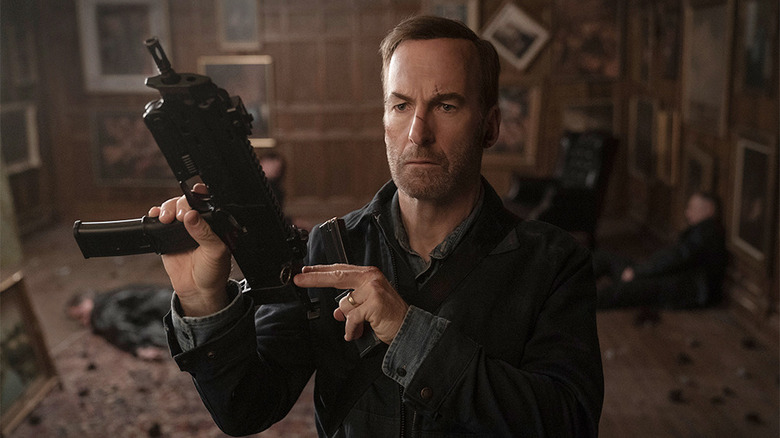
There are multiple American dreams. One of them is suburbia. For many, the promise of a white picket fence and financial security is Elysium on Earth. What "Nobody" asks in between its electric shootouts and bus beatdowns: What good is that dream if it doesn't serve who you are? Hutch Mansell (Bob Odenkirk) is a killer. He was raised to be an assassin, and he's great at being one. By contrast, Yulian Kuznetsov is a monster who'd rather be a lounge singer. By the time these two men butt heads, leaving countless bodies in their wake, one of them has embraced who he is, while the other is still fighting it. 

If a treatise on nature versus nurture sounds like heavy stuff for a bloody shoot 'em up, know that "Nobody" is also as thrilling as they come, a perfectly contained and particularly rich slice of whoop-ass that only grows more delectable on repeat viewings. "Nobody" is a dream of action cinema that eviscerates the mythology of the country that birthed it. It owns, full stop.

Wrath Of Man
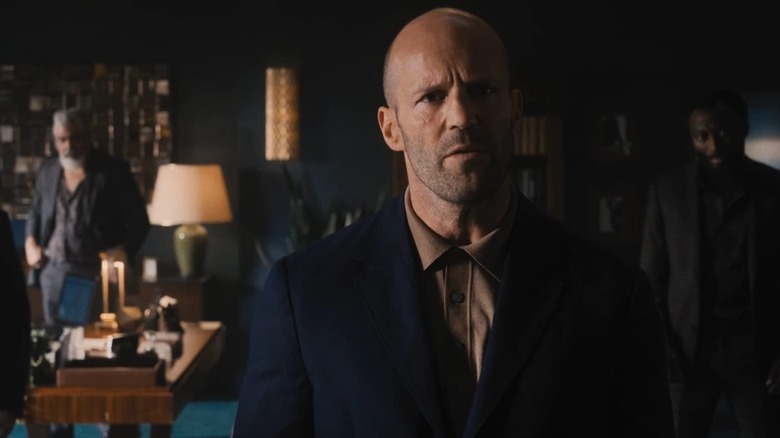
The experience of watching "Wrath of Man" is to wait for it to become a typical Guy Ritchie movie. It never does. Yes, some of the British director's hallmarks are there — sophomoric banter, audacious music cues — but they're downplayed and mostly absent. In their place? A relentlessly grim tale of murder, robbery, and armored truck driving set in the City of Angels.

You keep waiting for the film to not work. Yes, the score by Chris Benstead is manifesting voids underneath you. Yes, the action is above average. Most importantly, the story doesn't pull any of its punches. Still, you wait until the final frame for "Wrath of Man" to fall apart. Then you reach the final credits, and need to see it again immediately. That's what happened to me, and it's what will likely happen to you, because "Wrath of Man," God bless it, is a new kind of Guy Ritchie movie. As a fan of his classic stuff? I hope he makes many more just like this.

Raging Fire
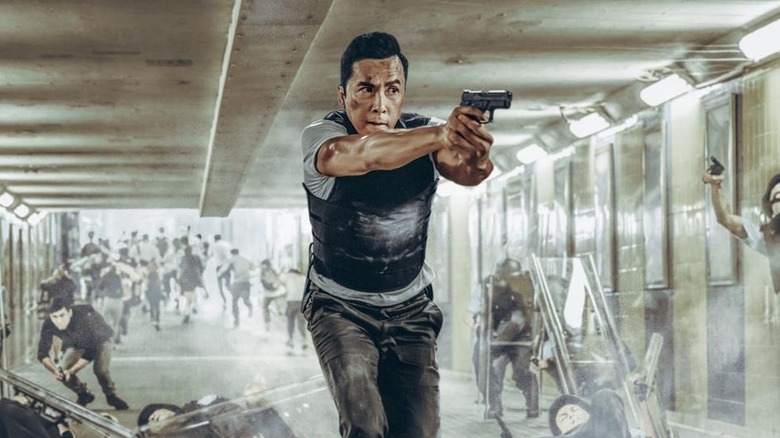
When it comes to the best action film of 2021, it's not really a contest. There's more glorious action in the first 20 minutes of "Raging Fire" than in entire movies on this list. In fairness, that's because the first 20 minutes of "Raging Fire" can go toe-to-bloody-toe with any in the history of Hong Kong action cinema. Late director Benny Chan (who passed away shortly after filming) distills the essence of the genre he helped form into 120 blood-soaked, operatic minutes. That means a dynamite turn from Donnie Yen. It means gun ballets both brutal and beautiful. Most of all, it means zero chill and white-hot fights that brim over with cinematic badassery.

You could show "Raging Fire" to both cinema neophytes and recently landed aliens and they'd both fall in love with it — and Hong Kong action in general — forever. That doesn't just make "Raging Fire" one of the year's best action films. It makes it important. Few works of art can serve as an ambassador for an entire genre. This massively entertaining film absolutely can. Watch it before year's end, and send 2021 out on a high note.

Read this next: The Best Movies Of 2021 So Far

The post The 20 Best Action Movies of 2021 Ranked appeared first on /Film.
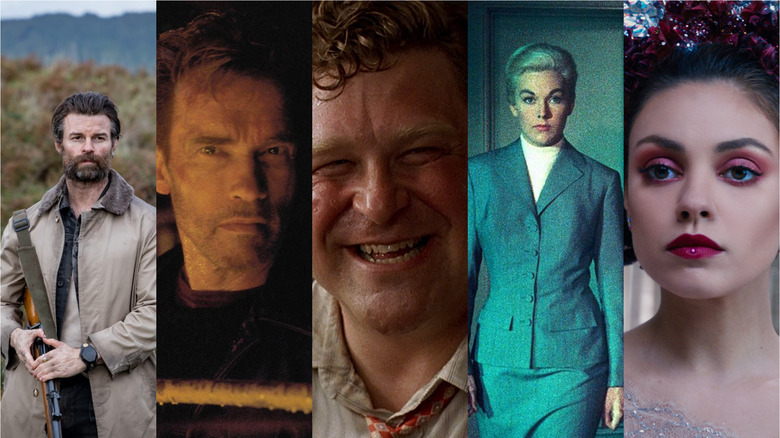
09 Dec 22:53

How A Pay Dispute Almost Shut Down The Sopranos

by Natalia Keogan

The drama of one of HBO's most acclaimed series extended well beyond the confines of its slot on the schedule. Before filming was set to commence on the fifth season of "The Sopranos," the cast felt that they needed a contract re-negotiation, namely one that would include a substantial pay raise. When considering how much money "The Sopranos" was making HBO (projected to be around $100 million in 2003), it's no wonder that the cast felt they deserved compensation rivaling that of popular network stars of shows like "Frasier" or "Everybody Loves Raymond."

One cast member in particular went so far as to take HBO to court: James Gandolfini, the New Jersey icon who brought Tony Soprano to life. In a surprising turn of events, HBO threw a lawsuit right back at Gandolfini, beginning a fiery battle that threatened to shut the show down indefinitely. Despite the tension (and incessant media attention) between Gandolfini and HBO, there was utmost solidarity among the cast — culminating in a generous gesture by Gandolfini that continues to be remembered by principal "Sopranos" cast members to this day.
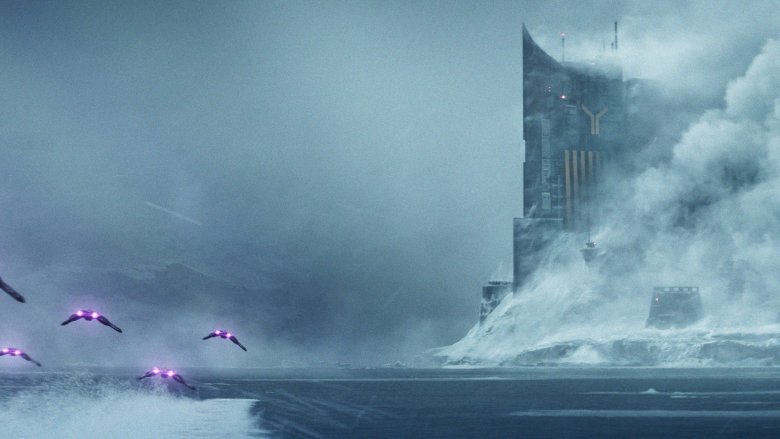
What Started This Stalemate?

Essentially, it began as a grumbling. Cast members began to feel that their pay was not accurately mirroring the profit being made at HBO off of "The Sopranos," which at this point had concluded filming its fourth season. When the prospect of re-negotiation appeared out of the question, the core cast resolved to orchestrate an on-set protest. Edie Falco, who embodies the uncomfortable Carmela, gave a pithy description of the ordeal in Vanity Fair's 2012 oral history of "The Sopranos":

"There was a period of mutiny within the cast members, who thought we should be getting more money, and this was a very complicated issue, because I know HBO was making a lot of money. The actors were like, 'Yeah, we need to renegotiate our contracts. We're not getting enough.' There was like a sit-in, like the shutdown of the set. It was like "Occupy Vesuvio." And I thought, Are you f****ing kidding me? I worked at restaurants for 20 years, and this thing comes along and I'm going to complain about not getting enough money?"

Yet this dispute evolved on an entirely different level when Gandolfini felt he needed to play hard ball with the network in order for his demands to be taken seriously. At the time, he was making about $400,000 per episode, and sought to increase this number to at least $1 million. Instead of granting Gandolfini's request, HBO countered with $800,000 — causing Gandolfini to file a Superior Court complaint claiming that the network breached his contract.

Though the figure of $1 million per episode seems outlandish, it was certainly standard for the time. Comparatively, Kelsey Grammar was making around $1.6 million per episode of "Frasier," while Ray Romano was earning roughly $1.7 million per episode on "Everybody Loves Raymond." When looking at the issue with this context, it's clear that Gandolfini was merely fighting for fair compensation from a network that made $800 million in revenue that year.

Bada Bing, Bada Bankroll: James Gandolfini Puts His Money Where His Mouth Is

As we all know, "The Sopranos" did not end over this issue. In the end, Gandolfini took the $800,000 figure, still making approximately $10 million per season. As the head honcho on the show, he certainly ended up making more than his co-stars ... but he was hell-bent on making his fight for fair compensation pay off for the rest of his on-screen famiglia as well.

Steven Schirippa, known as Bobby "Bacala" Baccalieri on the show, recounts a gesture made by Gandolfini before filming of season 5 was set to finally commence:

After Season Four [when Gandolfini and HBO had a pay dispute and filming was delayed], Jim called all the regulars into his trailer and gave us $33,333 each, every single one of us. Now, there were a lot of big actors—Kelsey Grammer, Ray Romano—and they're all nice guys, I'm sure, but nobody gave their cast members that kind of money. That's like buying everybody an S.U.V. He said, "Thanks for sticking by me."

Though he arguably got less than what he sought out for, it's clear that this spat was never just about the money for Gandolfini. He simply wanted for himself and his fellow cast members to be recognized not just critically for the impressive work they were achieving through creator David Chase's TV opus, but financially, as well.

Read this next: The 13 Best Movies About The Devil Ranked

The post How a Pay Dispute Almost Shut Down The Sopranos appeared first on /Film.

09 Dec 22:51

BoJack Horseman Creator Raphael Bob-Waksberg Released A Cut Joke About David Fincher (For Charity)
by Valerie Ettenhofer

Yesterday, "Bojack Horseman" creator Raphael Bob-Waksberg spoke up for a good cause, with hilarious results. Initially, the showrunner tweeted a thought about Dave Chappelle's controversial Netflix deal. "Still mystified that apparently Dave Chappelle's deal is that he says whatever he wants and Netflix just has to air it, unedited," he tweeted.

Bob-Waksberg asked whether it was normal for comedians to get carte blanche control over their final product, citing a time Netflix pushed back against a scene Bob-Waksberg himself wrote about David Fincher in the first season of "Bojack Horseman."

Support For Trans Lifeline

After his followers began responding to the tweet, Bob-Waksberg decided to turn it into an opportunity to make a positive difference. He proposed that he would share the deleted David Fincher scene if 100 different people donated to Trans Lifeline. Within hours, followers met his goal, sharing receipts totaling over $2000 in donations to the trans-led charity that provides a resource hotline and direct support to transgender people.

Bob-Waksberg has long-since been an exceptionally thoughtful presence on Twitter, but this move is especially nice to see. It would've been easy to make the conversation entirely about "Bojack Horseman" (a show that's frankly always worth talking about), but Bob-Waksberg instead chose to focus on Netflix's inability to properly address Chappelle's ongoing transphobia.

Meet David Fincher, Bojack-Style

"Good pushback and feedback (if it's good!) makes art better and if you as a network don't know how to give it, you might as well be throwing your money down the toilet," Bob-Waksberg said in a follow-up tweet. For its part, Netflix has not only responded inconsistently to Chappelle's behavior in recent months, but also just announced that Chappelle will perform at their upcoming Netflix Is A Joke comedy festival.

In the end, Bob-Waksberg revealed the David Fincher scene as promised. He concluded that Netflix may have simply cut the joke because it wasn't funny enough, but that's debatable. Check out the full script excerpts above, and try not to laugh out loud at the idea of Princess Carolyn (Amy Sedaris) affectionately calling the "Seven" director a "skinny b***h" before cracking a "What's in the box?" joke.

Read this next: The 20 Best Bob's Burgers Episodes Ranked

The post BoJack Horseman Creator Raphael Bob-Waksberg Released a Cut Joke About David Fincher (For Charity) appeared first on /Film.