Shared posts

09 Dec 22:46

You Should Stop Killing House Centipedes (But How to Get Rid of Them, If You Must)

by Becca Lewis

I get it: House centipedes travel at alarming speeds, and they look pretty intimidating while doing it, what with all their legs scampering about. But before you run for a shoe the next time you spot one, stop and take a breath. For as creepy as they look, the truth is that they’re not only harmless, they are actually

Read more...

09 Dec 22:36

Omicron PSA

by Bill Harris
This is an excellent twitter thread about what we know about the Omicron variant. One note: the third text says "this weekend." It should read "This winter."

I went to get my haircut today, and no one was wearing a mask, except me. Michigan has been one of the worst places in the country for COVID the last six months, and it's going to get worse, because people seem to have given up. 

I'm beginning to understand the "flood the zone" strategy that assholes have used to create this situation. A very select number of sites will post a ton of articles that are outright lies, and then those articles get distributed on Facebook and Facebook amplifies them because it makes them money. Word for word, it creates a situation where there's much more misinformation available than accurate information, with predictable results. 

It's really clear at this point. Vaccines + booster provide excellent protection against anything. Masking provides additional protection (and a KN95, properly worn, provides outstanding protection). 

It's not hard to understand any of this. And it's even less difficult to do it right. Yet we have thousands of people dying every day because they refuse to, and endangering a massive number of other people as well. 

Damn it. 
09 Dec 22:26

Radeon Linux Driver Has A Huge Optimization Two Decades Later For ATI R300~R500 GPUs

While earlier this year AMD dropped pre-Polaris support from their mainline Radeon Software Windows driver, under Linux with open-source software older GPUs can live on much longer with superior driver support... Pending for Mesa 22.0 and as a surprise Christmas gift for those with nearly two decade old GPUs, a big optimization is pending for those with ATI Radeon R300/R400/R500 series graphics cards still in operation...
09 Dec 18:52

Our 15 Favorite Underrated Film Noirs

by Nick Bartlett

Film Noir is a notoriously difficult genre to pin down, in that nobody can give an entirely comprehensive definition of what it is. Everyone can list examples and recurring traits -- the femme fatale, hard-boiled dialogue, and chiaroscuro cinematography, but ask 10 people to define it and you'll get 10 different answers.

The problem with compiling a list of the best films like this is that there will never be any new entries. It's invariably the same titles that occupy the top positions -- "Double Indemnity," "Touch Of Evil" and "The Big Sleep," just to name a few.

You can't argue with this because they're all excellent choices, but it does mean that certain films are nearly always neglected. Below are some movies that are underrated in this respect. Many are held in high esteem by movie buffs, but you'll rarely find them in Top 10 lists.

Born To Kill
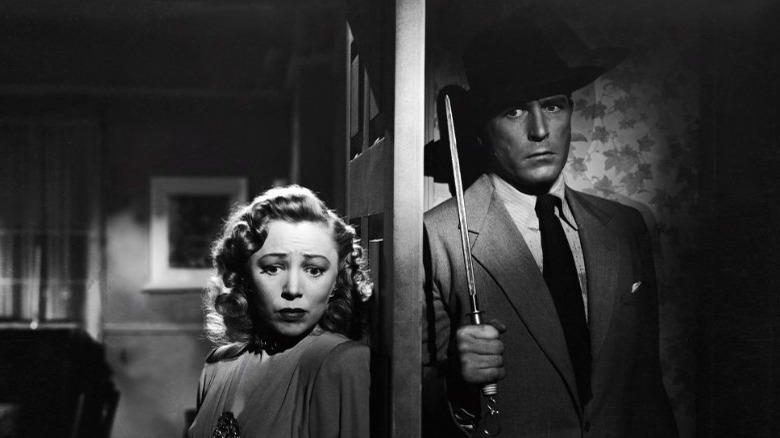
"Born To Kill" might be the single nastiest noir of the classic era -- directed by the man who would go on to direct "The Sound Of Music," no less! In a genre full of sadistic, amoral anti-heroes, Sam Wilde (Lawrence Tierney) is the nastiest of them all. Tierney was a nightmare of an actor by all accounts, but he is perfectly cast here, playing a pure psychopath who finds a kindred spirit in Claire Trevor's sociopathic socialite. 

Sam is a terrifyingly unpredictable character, and his brutal murder of both his romantic rival and the girl they were fighting over makes for distressing viewing. With the amount of violence and general seediness on display, it's a wonder this even got made during the days of the production code. The twisted relationship between Tierney and Trevor is especially depraved, as they make leery faces at each other behind the backs of their wholesome partners. Walter Slezak is great as the twinkly-eyed, literate private eye, and Elisha Cook Jr is as wonderful as ever as Sam's creepy roommate (the scene where he charms a potential murder victim is truly skin-crawling stuff).

Woman On The Run
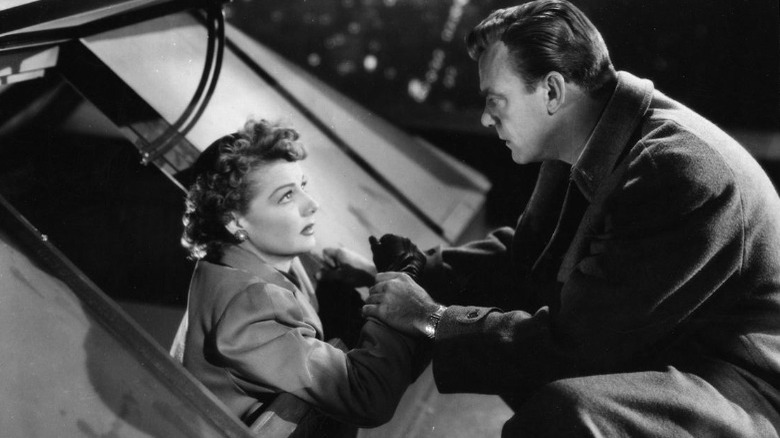
"So, Frank's a fugitive from the law? Well, that's just like him."

A much lighter affair, this film earns a spot on the list due to Ann Sheridan's wry, sardonic performance as the laconic Eleanor, the wife of a witness to a murder. Sheridan is excellent, and it's refreshing to have a female lead who is neither a femme fatale nor a damsel in distress driving the story forward in the search for her husband.

While she's initially indifferent to her husband's disappearance, he leaves clues to his location specific to their romantic history, and the nostalgic trail of breadcrumbs gradually cuts through Eleanor's cold exterior and reignites her love for her husband.

She's assisted in her search by Dennis O'Keefe's enigmatic but charming newspaperman, and there's a wry playfulness in their scenes together, accompanied by a real sense of menace as potential witnesses keep getting murdered. Norman Foster's direction is light but assured, effectively directing both a serious noir and a witty, heartwarming love story. The twist is neat and subversive, and the supporting cast is uniformly excellent - especially Robert Keith's grumpy lead detective.

He Walked By Night
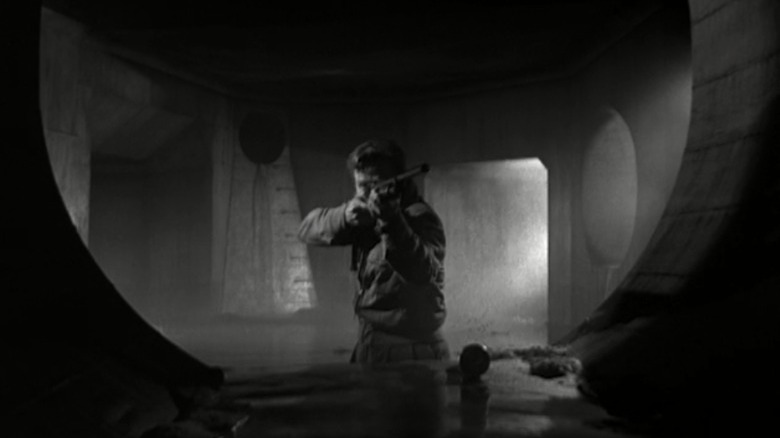
The documentary thriller was a fertile subgenre of the classic noir era -- films like "T-Men" and "The Naked City" show the apparent mundanity of police work, and laid the groundwork for police procedurals today. "He Walked By Night" is different, mainly because it forces the audience to identify with a cold-hearted, ruthless killer, and shows him to constantly outmaneuver the cops on his tail.

Richard Basehart gives an impassive, cold performance as the fugitive, in a part that could have been a major influence on "Le Samourai" and "Drive" -- although neither of the leads in those films is quite as ruthless. 

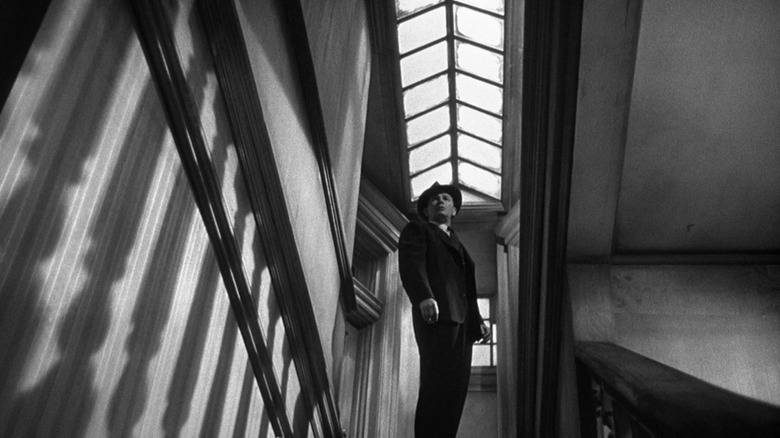
Predating "The Third Man" and its beautifully shot chase sequence by about a year, Alfred L Werker and an uncredited Anthony Mann execute an uncannily similar finale as Basehart desperately flees the police through a series of underground sewer tunnels. John Alton's cinematography proved one of the defining features of noir, and he makes excellent use of silhouettes and shadows, creating a striking look for the film.

The Prowler
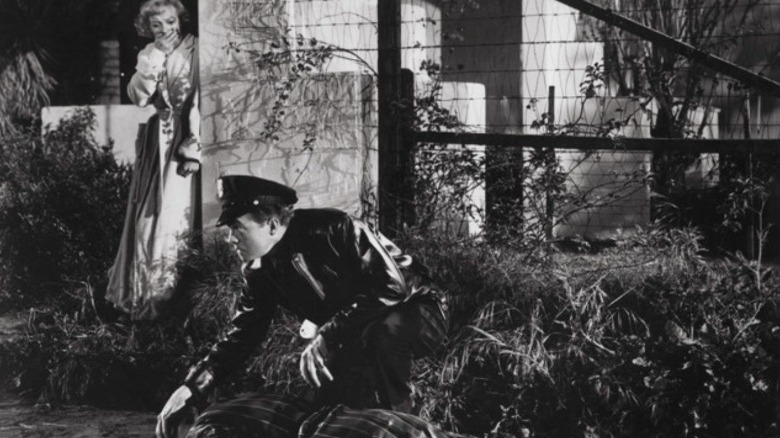
Joseph Losey's dark character piece is decidedly B-movie stuff, but it's an especially potent slice of Film Noir all the same. Written by Dalton Trumbo just as the blacklist was coming into force (which might explain the cynical depiction of law enforcement as corrupt or incompetent), it stars Van Heflin as an unrepentantly amoral uniform cop. When a local prowler causes trouble and Heflin's cop is called to attend the crime scene, he immediately falls for the lady of the house (Evelyn Keyes). The two begin a love affair and he quickly devises a plan to get rid of her husband. 

Often feeling like an inverted "Double Indemnity" with Heflin playing the tempter and Keyes the gullible accomplice,"The Prowler" is a deeply unpleasant film, and a precursor to films like "Blue Velvet," where the idyllic suburbs conceals a dark underbelly. Aside from Heflin's truly abhorrent character, the rest of the film's characters (including his comically credulous partner) are played with the sort of small-town decency that makes his actions all the more obscene by contrast. The film gets seedier as it goes on, culminating in a genuinely tense climax in the desert.

The Narrow Margin
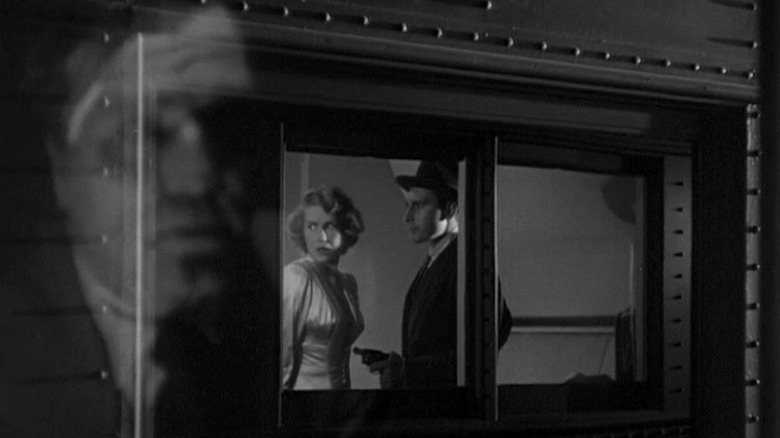
Forget the remake with Gene Hackman, this is one of the tensest, tightest Film Noirs ever made. FBI agent Charles McGraw is assigned to protect a gangster moll turned government witness (Marie Windsor). As they travel back to headquarters by train, the gangsters close in on them, and when McGraw searches for an ally on the train, he finds nobody is what they seem. 

Marie Windsor played an iconic femme fatale in "The Killing," but is even better here as the tough-as-nails witness who is openly hostile, never softening her character. McGraw, so good as one of the titular hitmen in "The Killers," is a little too straitlaced, but it hardly matters when the rest of the film is so much fun. It's full of witty dialogue and narrative twists that are genuinely surprising (which is something of a rarity in older films), and features memorable roles for the supporting cast -- most notably Peter Virgo as the hitman and Paul Maxey as the overweight passenger who gets the immortal line: "Nobody loves a fat man except his grocer and his tailor!"

The Breaking Point
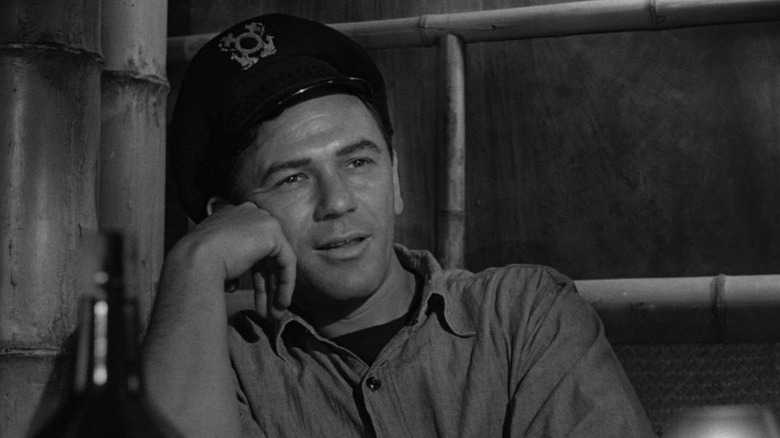
Ernest Hemingway's "To Have And Have Not" already had a definitive movie adaptation thanks to Howard Hawks when Michael Curtiz made "The Breaking Point." Hawks' film features quotable dialogue, palpable sexual chemistry between Bogart and Bacall, and catchy songs. However, it bears so little resemblance to the source material that John Huston was able to steal the book's ending for his own "Key Largo" without anybody noticing!

Curtiz's adaptation is far truer to the original novel. Gone are the upbeat songs and irreverent tone, and in its place is an oppressive hopelessness that swallows up every character that inhabits the film. It's a lot more noirish than Hawks' movie, and relentlessly bleak, with John Garfield as the struggling fisherman forced to take on illegal jobs to pay the bills.

Garfield might not be as iconic as Bogart, but he gives an effortlessly grounded, natural performance here. Patricia Neal is well cast as a wry inversion of the femme fatale, Wallace Ford is wonderfully sleazy as the shady lawyer, and Phyllis Thaxter is touching as Garfield's loyal wife -- their relationship is the only one in the film that's left untainted. The final shoot-out is nail-biting stuff, and it has one of the most cynical, bittersweet endings of the genre.

The Set-Up
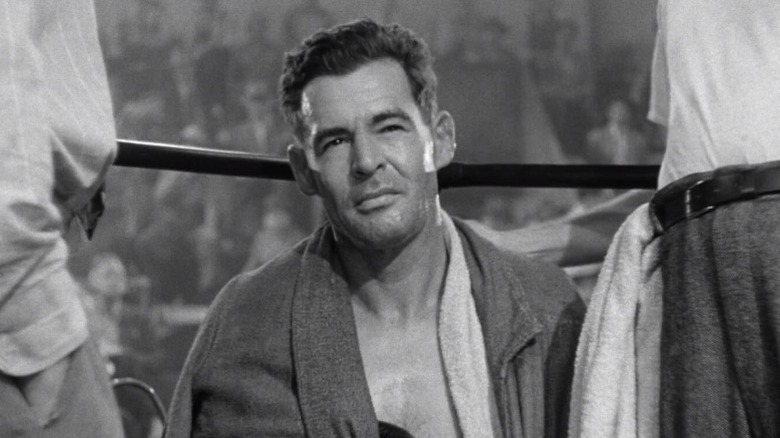
Robert Ryan might be the definitive noir actor, a guy who could deploy his chiseled looks and imposing stature to depict either troubled heroes or malevolent villains. Here he gives a tragic, touching performance as Stoker Thompson, an over-the-hill boxer. So certain is his manager that he will lose his upcoming bout that he takes a pay off from the local gangster to throw the fight. But nobody tells Stoker this, and against all odds, he begins to win.

Around Ryan's beautifully observed, touching performance, Robert Wise populates his film with bloodthirsty punters who long to see Stoker beaten, from a blind man whose friend provides a running commentary to the mousy housewife who goes from reluctant attendee to the most vocal of the bunch, screaming for the boxers to kill each other.

One of the greatest boxing films of all time and Ryan's favorite role of his career, the actor gives a raw, dignified performance full of pathos. It helps that he could actually box in real life, having been a champion at college, and he makes his character authentic and lived in. Audrey Totter is wonderfully humane as Stoker's despairing wife, who refuses to watch the fights and longs for him to quit. Their final exchange is both heartwarming and devastating, encapsulating the film's bittersweet tone in one line of dialogue. 

Shield For Murder
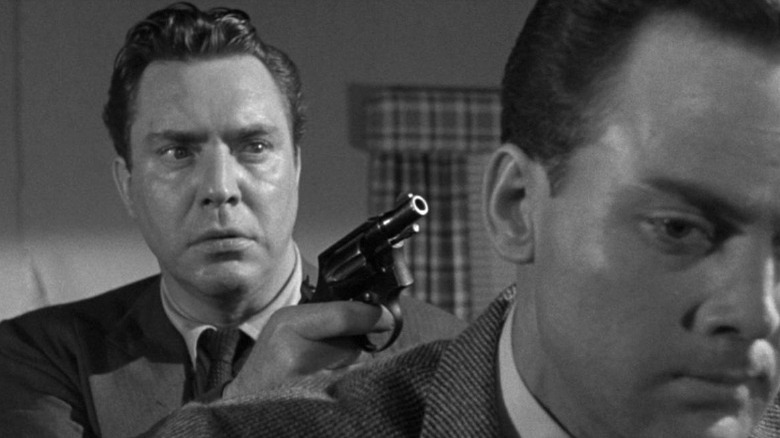
Edmond O'Brien might be the most overlooked noir actor. He was ostensibly the lead in both "White Heat" and "The Killers," but was overshadowed by James Cagney and Burt Lancaster, respectively. "Shield For Murder" (which he co-directed) gives him the rare opportunity to shine, and O'Brien grabs the opportunity with both hands. He is quite simply electric here. 

Playing a crooked cop desperate to start over, he gives a dynamic, sweaty, desperate performance, reminiscent of both Richard Widmark in "Night & The City" and Orson Welles in "Touch Of Evil." O'Brien's Barney has no redeeming features, and certainly no compunction about breaking the law. He's corrupt, violent, and thoroughly unpleasant, yet there are also hints of the cop he used to be that make you stop short of hating him altogether. 

The final chase and the shootout in a swimming pool are proper tense stuff, and the moment where Barney inflicts a prolonged beating on Claude Akins' hood is truly nasty, as is evident from the onlookers' shocked expressions. An unceremonious, violent thriller with shocking moments and an appropriately abrupt ending, this is noir at its most pulpy and hard-boiled.

Act Of Violence
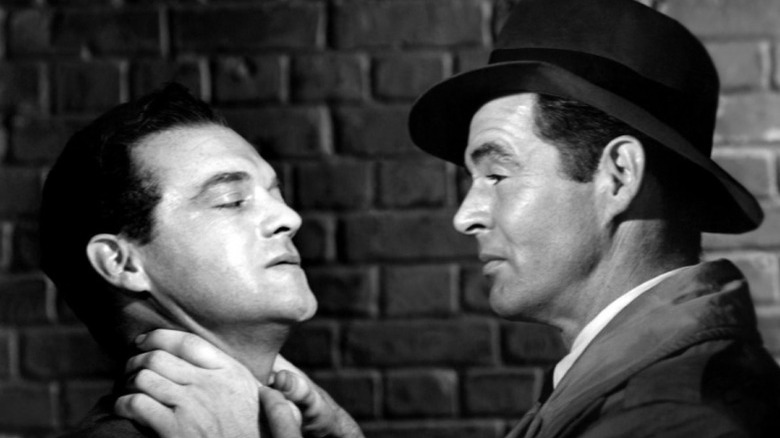
The Second World War looms large over the Film Noir genre. Several films use the war as an explicit plot point, such as "The Blue Dahlia," "Thieves' Highway," and "Crossfire," but few confront the trauma and long-reaching impact of the war better than Fred Zinnemann's "Act Of Violence." 

Van Heflin plays a former POW who is now a pillar of the community, revered as a war hero and living a life of suburban respectability with his beautiful wife (an impossibly young Janet Leigh). That is, until fellow survivor Robert Ryan arrives in town, haunting his every step. Zinnemann wisely cuts to the chase quickly, allowing both actors to explore their characters in more depth -- Heflin was no hero, betraying his fellow soldiers and getting them killed, and Ryan is the avenging angel here to settle the score.

A lean, efficient thriller masterfully told, Zinnemann adroitly blurs the lines between hero and villain; both leads give incredible performances as characters who prove to be infinitely more complicated than they first appear. Berry Kroeger is a lot of fun as a sleazy hitman, but best of all is Mary Astor as the alcoholic prostitute who gives a poignant, soulful performance, miles away from her glamorous turn as one of noir's first femme fatales in "The Maltese Falcon."

Raw Deal
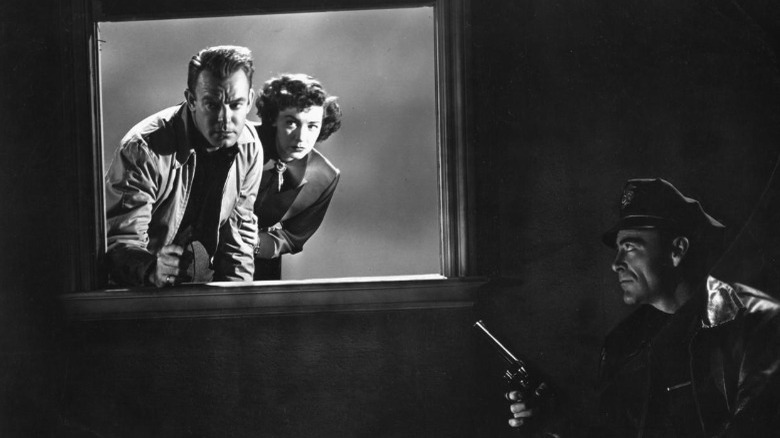
While Anthony Mann is best remembered for his westerns, he made his name with a series of hard-boiled noirs. "Raw Deal" is the slickest of all,  a dark, lean thriller with a stripped-back script. Pat (Claire Trevor) helps her boyfriend Joe (Dennis O'Keefe) escape prison after he takes the fall in a bank robbery, taking idealistic assistant lawyer Ann (Marsha Hunt) along as a hostage. Complicating matters is O'Keefe's former partner (Raymond Burr), who owes him money from the robbery but is unwilling to pay up, choosing a more permanent solution. 

John Alton's striking cinematography makes stunning use of shadows, silhouettes, and lighting, and renders the relatively simple story vibrant, fatalistic, and almost poetic. The fog-lit final sequence is especially beautiful, as is the confrontation at the beach. Burr makes an imposing, sadistic villain, and John Ireland is effortlessly cool as his laconic henchman. 

However, it's the central love triangle that makes the film stand out, specifically the insight given by having a female narrator. This is rare in noir, but somehow it's entirely fitting when that character is played by the iconic Claire Trevor. She gives the stand-out performance as the tragically loyal Pat, who recognizes Joe falling in love with Ann before he does.

Odds Against Tomorrow
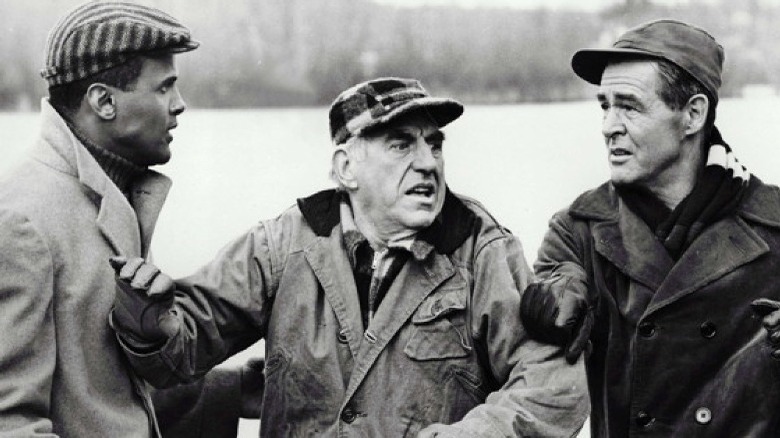
We've discussed this late addition to the genre as a heist film before, but as a piece of noir, it's even more potent. Director Robert Wise takes his time establishing the plight of the main character as we discover each of them at their lowest ebb, and get to know them before they're finally convinced to take part in a bank robbery.

Harry Belafonte gives a surprisingly nuanced turn as the jazz singer hopelessly out of his depth. Even better is Robert Ryan, who David Thomson once called "an actor who seemingly had no wish or need to be liked." It's certainly true of this character, a tightly wound ball of bigoted, impotent rage. When he asserts his masculinity by beating up a marine in a bar, it's not the triumphant moment you might expect, but a pitiful one. Ryan refuses to make his character a one-note racist, though, and he remains decidedly human.

Unapologetically nihilistic, "Odds Against Tomorrow" is way ahead of its time, examining the bitterness that fuels racism in a vivid and nasty way. Abraham Polonsky's harsh, uncompromising dialogue and Wise's excellent direction make this a unique and modern noir. The final coda is both apt and gruesome - the harshest possible way of observing the ultimate futility of racism. 

Elevator To The Gallows
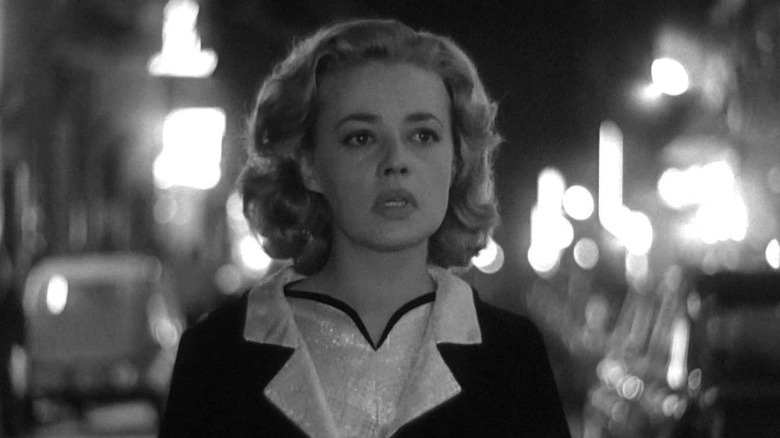
Louis Malle's existential debut bridges the gap between classic noir and the early films of the French New Wave. "Elevator To The Gallows" has an irresistible premise: Julien (Maurice Tavernier) has just committed the perfect murder -- he's killed the husband of the woman he loves (Jeanne Moreau) so they can be together, but as he tries to make his escape he gets trapped in an elevator. As he waits for the inevitable arrival of the police, we are shown the events that led him to this point via flashback.

Moreau is wonderful as the fading beauty, whose insecurities and paranoia are writ large on her face as she desperately wanders the streets of Paris, slowly becoming convinced that her lover has abandoned her, and the whole thing's set to an iconic, groundbreaking Miles Davis score. 

Filmed when Malle was just 24, this is an incredibly mature feature, owing a debt to Alfred Hitchcock, Henri Georges Clouzot, and Julien Duvivier. As with most European noir, there isn't a huge amount of plot here; Malle is more concerned with the internal conflicts of his characters. The ending is devastating, and as with most classic noir, drenched in irony.

Force Of Evil
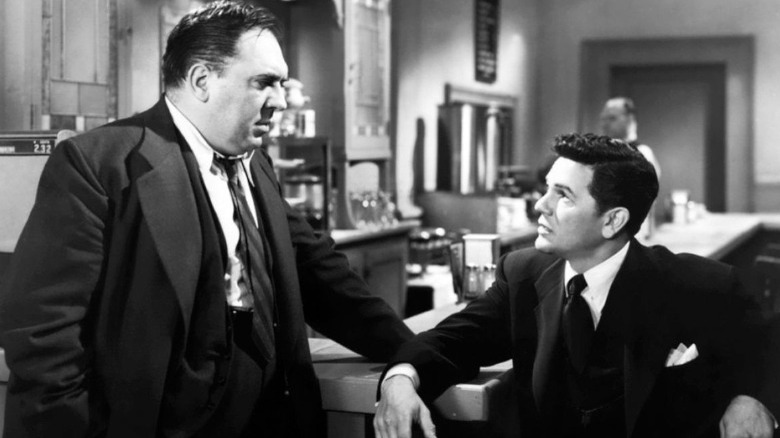
"All Cain did to Abel was murder him." 

A story of illegal numbers rackets made biblical through the elliptical dialogue and the fraternal relationship at its core, "Force Of Evil" occupies a singular place in the genre. John Garfield was never better than he is here as the flashy, corrupt lawyer struck by an unexpected crisis of conscience, while Thomas Gomez looks positively saintly next to him as his small-time bookie brother. The scenes between the two are a joy to watch, with Gomez easily walking away with the film.

There are so many iconic moments, from the audible click on Garfield's telephone letting him know he's being bugged to the final iconic shootout in the dark. An intensely personal project for Polonsky (who was blacklisted shortly after), this is the ultimate testament to his talents. 

Polonsky's script is dense without feeling flashy or sacrificing the noirish tone. The dialogue is delivered rapid-fire by a solid cast who hardly even pauses for breath. "Force Of Evil" is a grown-up noir that expects the audience to keep up, and it looks beautiful, with breathtaking location cinematography that still looks impressive today. It's a unique film, perfectly conceived and executed, and deserves wider recognition.

Criss Cross
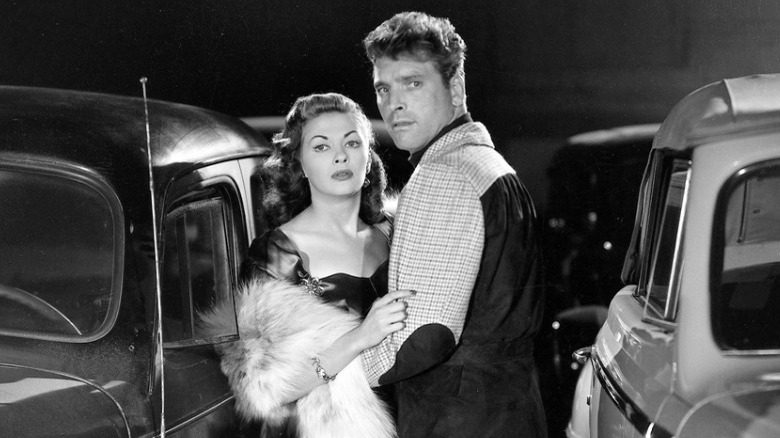
Robert Siodmak is the unheralded master of noir, and this is his crowning achievement. Burt Lancaster is excellent here, more vulnerable and less gullible than in "The Killers," as is Yvonne DeCarlo as the somewhat reluctant femme fatale (Film Noir maestro Eddie Muller called the shot where DeCarlo looks directly into the camera "noir's defining moment"). DeCarlo's character is interesting in that she isn't overtly manipulative, just opportunistic. That's what makes the story so tragic: They have the potential to be happy, and Lancaster is willing to forget the money if they can be together, but she just can't let it go. 

From the moment we meet the central couple almost literally caught in the headlights, their fate is irrevocably sealed as they drift towards the nihilistic ending, and despite a handful of playful moments Siodmak never lets up on the heavy, oppressive atmosphere. The ending is potentially the most emotionally raw of the genre, with even Dan Duryea's silky villain looking visibly shaken.

"The Killers" might have the flashier story, but "Criss Cross" is infinitely more nuanced and infused with a fatalism that really gets under your skin. It's a deeply complex film and one that demands your attention.

Night & The City
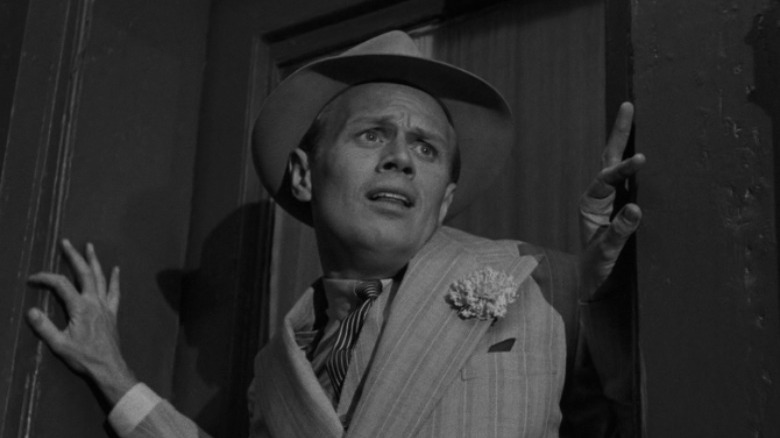
"You've got it all ... but you're a dead man, Harry Fabian."

Blacklisted for his communist sympathies, Jules Dassin was effectively exiled to Britain, where he made one of the defining Film Noir movies -- and yet one that is rarely listed among the greats. "Night And The City" features stunning location photography, deep focus camerawork to rival Orson Welles, and a kinetic, fast-moving plot that undoubtedly served as an influence on "Uncut Gems." 

Richard Widmark gives his greatest film performance as the irrepressible grifter Harry Fabian. Harry is "an artist without an art," constantly wheeling and dealing. Widmark does an impressive job portraying Harry as irredeemably venal (he's introduced stealing from his girlfriend) and still manages to generate empathy from the audience. As despicable as he is, it's impossible to not feel for him, and it's agonizing to watch his dream dissipate in front of his eyes.

The film is full of well-rounded, colorful characters, all infinitely more likable than Harry, with clear and distinct motivations that keep the plot moving in unpredictable ways. Herbert Lom's "villain" is both ruthless and honorable, and the bitterly comic double act of Francis L. Sullivan and Googie Withers is a delight whenever they appear onscreen. It's a bleak yet beautiful film, and a highlight of the genre.

Read this next: The 12 Best Neo-Noir Films Ranked

The post Our 15 Favorite Underrated Film Noirs appeared first on /Film.

09 Dec 14:30

Why the Hell Did We Ever Stop Wearing Sweatbands?

by Beth Skwarecki

Sweatbands, popular in the ’80s, now only really exist as a symbol. Just like a floppy disk lives on as the “save” icon, and an old-school telephone handset is the image we tap when we want to make a call on a smartphone, a set of sweatbands are a cheesy way of indicating that somebody is working out (see picture…

Read more...

09 Dec 14:30

And now for some good news about Americans and money. Tl;dr: If you give them enough government handouts and take away most of their spending opportunities, they actually start to build a savings. Just like rich people. Whoda thunk it [Murica]

09 Dec 14:30

Ubisoft Quartz Brings NFTs to Video Games: Here's How It Works

by Matt Moore

Non-fungible tokens (NFTs) aren’t going away, and Ubisoft is jumping aboard the trend train with its release of Quartz, a platform where you can obtain what the company calls Digits.

09 Dec 14:30

Halo Infinite PC Performance Analysis

by John Papadopoulos

Microsoft has just released the latest part in its Halo series, Halo Infinite. Powered by the Slipspace Engine, it’s time now to benchmark it and see how it performs on the PC platform. For this PC Performance Analysis, we used an Intel i9 9900K with 16GB of DDR4 at 3600Mhz, AMD’s Radeon RX580, RX Vega … Continue reading Halo Infinite PC Performance Analysis →

The post Halo Infinite PC Performance Analysis appeared first on DSOGaming.

09 Dec 14:12

Rebel FM - Halo Infiinite Special

Halo Infinite is finally here, and we're joined by IGN's Miranda Sanchez to talk all about the campaign - without spoilers, of course. 
09 Dec 14:03

Prey 2017 Part 22: The Next Prey

by Shamus

Like System Shock 2 and System Shock before it, I have worn this game out. I have played it to the point where it all feels too familiar. I know where the good loot is, I know which monsters I’m about to run into, and I’ve even memorized a handful of container combinations.

A big part of the appeal of this game is the suspense of not knowing what comes next. Of scrounging for resources. Or improvising when the unexpected happens. But now I always know what comes next. I know which resources I’ll need (save the nullwave grenades for Weavers) and which I can use freely (recycler grenades are plentiful, just throw them anytime there’s a big pile of furniture in your way) and when usage spikes will happen. (Need lots of disruptor rounds for dealing with the two different groups of possessed crew members in the crew quarters.)

I know how to spend my neuromods to get the most bang for my buck. (Don’t need to get the highest level of hacking until WAY late in the game, because so few worthwhile containers require it. On the other hand, Necropsy yields more Typhon tissue, which yields more exotic material, which yields more neuromods, so get that as soon as possible.) I know where the good weapons are. I know where spare turrets are stashed. I know which quests are worth doing, and which ones are worth putting off until I’m headed to the other end of the station.

The more I play, the more same-y my playthroughs get as my personal run becomes more optimized.

I wish there was DLC to randomize this stuff. Actually, I guess they sort of did that…

Mooncrash

In Mooncrash, you're once again playing through a simulation. Thankfully, the game tells you this up front this time. I don't think it would be a good idea to pull the same twist a second time.

A year after Prey 2017 came out, we got the Mooncrash DLC. It left behind the characters and events of Talos-1 and allowed us to explore a moonbase that had been overrun with Typhon. It was a sort of roguelite-type experience. You had a handful of playable characters, and you could use them in any order.

Actions taken by one character would persist for the next. So you could have your engineer fix doors to open the way for other characters in subsequent runs. If a character died or escaped the base, you’d pick another character and have another go. This introduced a lot of interesting tradeoffs to the game: “Hey, I found a great weapon! Do I take it with me and clear out these Typhon, or should I leave the gun here for one of my weaker characters to grab when it’s their turn?” Once you’d played all the characters, the world would reset and you’d get to try again. The goal was to get a single run where everyone escaped.

The world was randomized between runs, so you couldn’t count on finding the same gun in the same location after a reset. The layout of the station was fixed, but there were random hazards that would make some routes more attractive than others. Maybe this time there’s a raging fire in Section A, and maybe next time there’s a blackout in Section B.

The Typhon got stronger over time, which meant you always needed to be moving like a speedrunner. There was no time to scrounge or sneak, because that difficulty timer was always running, always ramping up. Once the threat reached max level, you’d be up against waves of ridiculously powerful foes. It felt like trying to play through Doom 2016, except you’re Agent 47. While not strictly impossible, it was brutal enough that it took the fun out of the game. Worse, when you died you were going to have to come right back in and face this chaos with another character. Letting the Typhon threat level get too high felt like a blanket Game Over that made further attempts pointless. “The odds of getting through are so low, why bother? I might as well reset the world.”

Then after many runs you’d unlock the ability to stop the difficulty from ramping up. By that point you’d unlocked a lot of abilities and gear. So just about the time you became strong enough to stand up to a max-threat world, you also gained the ability to stop the threat from climbing. The game would then slam from “nearly impossible” to “insultingly easy” as your overpowered characters steamrolled the bottom-tier monsters.

I enjoyed the suspense and thoughtful pacing of the base game, so the constant time pressure of the DLC really broke the mood for me. The DLC had a bit of story, but it wasn’t nearly as detailed or as interesting as the story of Talos-1. The moonbase was more varied than Talos-1, but it was also much smaller.

I really liked this DLC. I gave it my #2 spot in 2018. At the same time, the whole thing felt like a prototype or a rough draft. I wanted to see the team take some of these systems, balance them, polish things up a bit, and implement them on the scale of a full-fledged game.

Which leads us to…

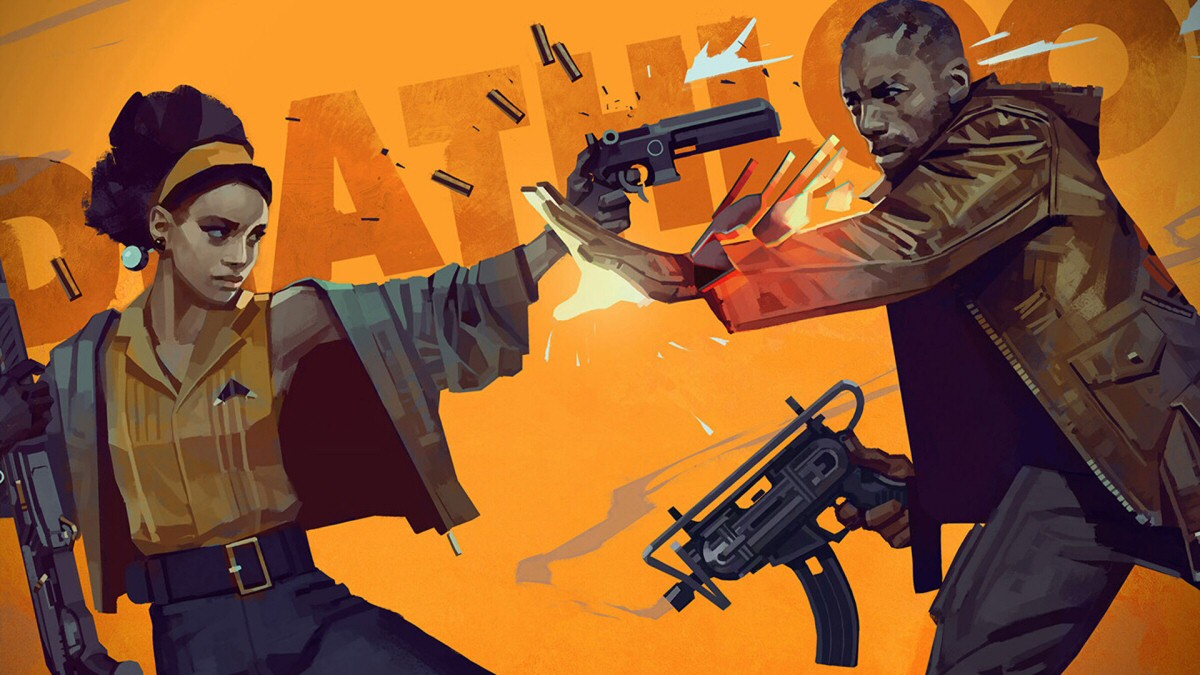
Deathloop

I LOVE the art style in this game. I love the music. I love the retro-future punchcard-punk aesthetic. I love the animated chapter introductions. Sadly, I don't care for the gameplay itself.

I wanted Prey with randomized content, and instead I got Dishonored with randomized content. I can’t really accuse the team of doing anything wrong. In terms of sales, Dishonored is the stronger property.

Deathloop was fine, I guess. Like Mooncrash, you loop through the world over and over again, gathering power and learning the maps.

Your goal is to assassinate all of the enemy leaders in a single day. I managed to assassinate them in separate runs, so all I needed to do was take everything I’ve learned and combine it into a single perfect run. But then I lost interest in the game and wandered off. There’s nothing wrong with the game, but I didn’t find the duels with my rival assassin to be as interesting as discovering the Typhon in Prey. I much prefer the spooky horror of Prey to the gleeful badassery of Deathloop.

Immersive Sims

A screenshot from the in-progress System Shock remake. It's four years overdue, but the kickstarter updates do seem to suggest the project is in the home stretch.

And so we come back to the beginning. I love these immersive sims, 451 games, Looking Glass games, Thinking Person’s Shooters, Space Station Games, or whatever it is you want to call them. This genre is my home, but the things I love seem to be very different from the things that sell well. I want a science fiction story that has you being hunted by an existential threat in an isolated location where you use obsessive looting and hoarding to gradually transition from survival horror to competency, and from competence to empowerment.

Everyone else seems to want a globetrotting adventure where you’re a heroic badass that carves your way through an army of hapless mooks using a collection of superpowers. Normally when I complain about the design of games, I’m faulting executives for blindly chasing trends instead of learning about different market segments. Or I’m criticizing a developer that doesn’t understand how their mechanics are undercutting their design.

But in this case, I think developers are just doing what makes sense. The market has spoken, and my kind of game is too niche to support a tentpole AAA title. Like I said at the end of 2017:

For years you yearn for something different. Something that just isn’t done anymore. Something very specific to your tastes. Then by some staggering miracle the lumbering machine that is the videogames industry manages to – seemingly by accident – deliver this missing element. Going against current trends, fads, and conventional wisdom, someone manages to design, pitch, finance, develop, and ship this exotic gem with your sought-after flavor still intact.

The game doesn’t run out of money during development. It doesn’t get caught in development hell. It doesn’t compromise or betray the core vision due to publisher meddling.  It isn’t a confused mess of conflicting purposes due to a creative team that can’t agree. Instead this albino unicorn hits the digital shelves on the promised release date. You buy it, and it turns out to be everything you’ve always wanted.

And then the public at large immediately sets on it, bitching and whining at how it should be changed to be more like every other videogame the industry pukes out every year.

Gamespot said Prey feels “trapped in the past”. Eurogamer was fawning with praise, but lamented all the ways the combat wasn’t enough like Dishonored’s system of gleeful player empowerment. PC Gamer was supportive all the way through, but then at the end held up Dishonored as a good (better) stealth game and BioShock as an example of better combat. And then they gave this once-in-a-generation title a score of 79 because the shooting wasn’t “fun” enough.

I don’t normally get defensive about review scores, but when the critics began turning up their noses at Prey I wanted to grab them by the shoulders and shake them screaming, “That is not a flaw! That’s the entire point of the game, you uncultured whelp!”

This is a very unforgiving genre. Prey got good scores, but it didn’t set the sales charts on fire. If it had scored ten points lower, or if it had an unlucky release that put it against a stronger game, then it probably would have lost money. If you’re a publisher looking to gamble on the roulette wheel of video games, then it costs a lot to bet on an immersive sim, the odds of winning aren’t great, and even if you win the payout isn’t particularly enticing. Almost any other genre will offer you more favorable odds with a better payout.

We’re talking about a spooky first-person shooter in a persistent open world with stealth elements, complex inventory and resource management. Let’s break it down…

  • Spooky – It’s a little harder to design spooky spaces, since you need to thread the needle between “it’s too bright to be scary” and “it’s so dark I can’t see what I’m doing”. Balance is harder, because it’s really hard to keep the player in the “just enough resources to get by” zone. The soundscape requires more care and attention, encounters need to be carefully paced and telegraphed, and you need to contrive some way of delivering exposition[1] so that the player is aware that there are threats lurking in the darkness ahead. None of these things are a concern in a more straighforward shooter where the player is just going to run around shotgunning dudes while rock music plays.
  • First person shooter – Some may argue, but I think to really get the “immersive” in “immersive sim” the game needs to be first person and not (say) a 2D top-down experience. But first-person worlds are expensive to build.
  • Persistent – Linear shooters allow the designer to wipe the slate clean at the end of every level. You can just throw away the current level and load the next one. But if the world is persistent, then you need some horrendously complex system for tracking the position of every object thrown on the ground, every monster killed, and every container looted, all across the gameworld. This makes the game more complicated in terms of technology, and also more complex in terms of balance.
  • Open world – An immersive sim game needs really big levels so that you can have multiple branching routes through the space. This makes the levels harder to develop. It also makes it a little harder to optimize the game. It takes a long time to pull those huge levels into memory, and it takes a lot of work to figure out what parts to render. If the player can backtrack, then you can’t just throw away a room once they move on.
  • Stealth elements – Doom AI is pretty easy: Just have monsters run at the player as soon as they come into view. But stealth AI is much harder to do. You need multiple states of awareness from “oblivious” to “suspicious” to “aggressive”. You need to connect your rendering code to your AI code so that the AI can understand how dark it is where the player is standing. The AI needs to be reactive to light, sound, movement speed, and environmental changes so it doesn’t come off as comical or brain dead.
  • Inventory and resource management – Being able to drop, sort, discard, upgrade, repair, and re-arrange inventory introduces a ton of UI complexity.
  • Story – While not a strict rule, I’m willing to bet that people expect more challenging narrative and thematic material from immersive sims than from (say) a standard first-person shooter.

The audience is too small to comfortably support a AAA project, but the genre is too complicated for indies to tackle. So I don’t know if this genre has a future.

The Next Prey

Those first 11 were pretty surprising. But a 12th? I never saw THAT coming.

Even if we somehow get another one of these, it’s obvious that the designer won’t be able to re-use this setting. The ending of this game pretty much closed the door on any possible sequels. The earth is gone, humanity is screwed, and Alex is the last man standing. That’s a lousy place to start a new story from, because there’s nothing to fight for. Alex is a cool character, but he’s not my best bud. I’m not looking forward to seeing him the way I look forward to seeing Tiny Tina, Jim Raynor, Johnny Gat, or Alyx Vance.

More importantly, the too-clever-by-half ending of this game has left the writer without a leg to stand on. The intro to the game was revealed to be a simulation built by a liar. Then it was revealed that the rest of the game was also a simulation, built by that same liar. Then at the end we learn the world already ended, a fact that is explained to us by the same goddamn liar.

I am reminded of the Rick & Morty episode where Rick finds himself in a simulation.[2] Once we see that there’s a simulation-within-a-simulation, the jig is up and we know it’s going to be simulations all the way down. At that point the guy running the sims becomes the butt of the joke, congratulating himself for a gag we can see coming a mile away.

There's no way you could anticipate me telling the same joke a THIRD time in a row. Gotcha!

No matter where the story goes in the next game, the audience isn’t going to believe a word the storyteller says. This entire game was a lie, and we’re going to assume the sequel is woven from the same cloth. Either the writer pulls the same trick again and we all see it coming, or the writer plays it straight and we spend the whole game assuming we’re playing through yet another lie, and the big surprise reveal at the end is that… there is no twist? Either way, that sucks.

And finally, there’s the classic problem that movie monsters get less interesting every time they show up. It was a thrill to see the Typhon for the first time. It was much less thrilling to see them for the 200th time.

Just come up with a new alien and a new story. We already did that when going from Prey 2006 to Prey 2017. Just make this an anthology series defined by shared tropes, the way Final Fantasy does it. You can have all the freedom to keep or change whatever gameplay mechanics you like, without dragging any sequel baggage into the design.

So that’s ~50k words on Prey 2017. I loved it, but I doubt we’ll see another one anytime soon. In any case, I hope you enjoyed this retrospective. As always, if you’d like to support my efforts, please consider joining my Patreon. You can also make a one-time donation if you’re not into the whole commitment thing.


Thanks so much for reading.

09 Dec 14:02

20-year-old unsolved murder case re-opened because of a conch shell

by Thom Dunn

The Boston Globe reports that the unsolved 2001 murder of a disabled woman in New Bedford, Massachusetts is being re-examined, thanks to newly-found DNA evidence from a conch shell. The woman, Rose Marie Moniz, was found bludgeoned to death inside her home with a conch shell, a fireplace poker, and a cast-iron fireplace kettle, while her then-19-year-old son was asleep on the second floor. — Read the rest

09 Dec 11:29

Nvidia reportedly plans to release three new GeForce RTX 3000 GPUs in January

by Samuel Willetts
Nvidia reportedly plans to release three new GeForce RTX 3000 GPUs in January

Despite rumours suggesting that Nvidia hopes to release RTX 4000 graphics cards in 2022, the company is also reportedly planning to release three new GeForce RTX 3000 GPUs in January. These three cards are said to be comprised of all new entry-level RTX 3050, a high-end 3090 Ti, as well as a refreshed 3070 Ti with 16GB of VRAM.

According to new information obtained by Videocardz, it looks like the 3070 Ti 16GB will be announced by team green on December 17, and will be on the shelf January 11, 2022. There's no reveal date for the 3090 Ti yet, but the outlet claims it should be available to buy January 27, 2022.

It's likely the two aforementioned GPUs will rank among the best graphics cards you can buy, provided their launch doesn't mirror the recent release of the RTX 2060 12GB. However, Videocardz has also received confirmation that Nvidia will reveal the presumably much cheaper RTX 3050 on January 4, 2022, possibly during the company's CES press conference, and release on the same day as the 3090 Ti.

RELATED LINKS: RTX 2070 Super review, RTX 2060 Super review, Best graphics card
09 Dec 11:27

This mod restores all the radio songs that were cut from GTA: Vice City Definitive Edition

by John Papadopoulos

The release of Grand Theft Auto: The Trilogy – The Definitive Edition was one of the most underwhelming launches we’ve seen. And while Rockstar is currently busy fixing its numerous bugs and glitches, modders are bringing back content that the team cut from it. Modder ‘ToxicLBC’ has released the following mod that adds all cut … Continue reading This mod restores all the radio songs that were cut from GTA: Vice City Definitive Edition →

The post This mod restores all the radio songs that were cut from GTA: Vice City Definitive Edition appeared first on DSOGaming.

09 Dec 03:14

Suicide Pods Now Legal In Switzerland, Providing Users With a Painless Death

by BeauHD
Switzerland is giving the green light to so-called "suicide capsules" -- 3-D printed pods that allow people to choose the place where they want to die an assisted death. Global News reports: The country's medical review board announced the legalization of the Sarco Suicide Pods this week. They can be operated by the user from the inside. Dr. Philip Nitschke, the developer of the pods and founder of Exit International, a pro-euthanasia group, told SwissInfo.ch the machines can be "towed anywhere for the death" and one of the most positive features of the capsules is that they can be transported to an "idyllic outdoor setting." Currently, assisted suicide in Switzerland means swallowing a capsule filled with a cocktail of controlled substances that puts the person into a deep coma before they die. But Sarco pods -- short for sarcophagus -- allow a person to control their death inside the pod by quickly reducing internal oxygen levels. The person intending to end their life is required to answer a set of pre-recorded questions, then press a button that floods the interior with nitrogen. The oxygen level inside is quickly reduced from 21 per cent to one per cent. After death, the pod can be used as a coffin. [...] Nitschke said his method of death is painless, and the person will feel a little bit disoriented and/or euphoric before they lose consciousness. He said there are only two capsule prototypes in existence, but a third machine is being printed now, and he expects this method to become available to the Swiss public next year.

Read more of this story at Slashdot.

09 Dec 00:53

The Marvel Comics Character You Missed In Hawkeye Episode 4

by Ben F. Silverio

If you've seen the latest episode of "Hawkeye" on Disney+, you're likely raving about that wild cameo on the rooftop. I won't spoil it here, but a familiar face finally makes their highly-anticipated return to the Marvel Cinematic Universe to catch up with Clint Barton. However, there was also another appearance by someone else from the Avenging Archer's past that some fans may have missed.

Warning: minor spoilers ahead for that second appearance. The first cameo will remain unspoiled. 

Sound My Barbaric LARP Over The Roofs Of The World

This probably-not-anticipated cameo surfaced when Clint (Jeremy Renner) and Kate (Hailee Steinfeld) need to track down their trick arrows. For one reason or another, he no longer has access to more of them, so the duo need to find the ones they used during their epic car chase with the Tracksuit Mafia in order to beef up their artillery. Thankfully, Clint was able to determine that the arrows are being kept in an NYPD facility near the Manhattan Bridge. And he recently met some NYC cops and firefighters who might be willing to help him.

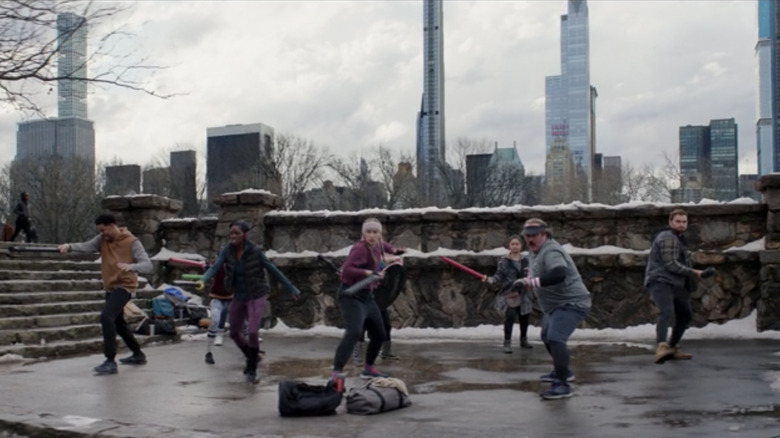
That's where Kate and Pizza Dog jump into action ... by meeting the LARPers in the park.

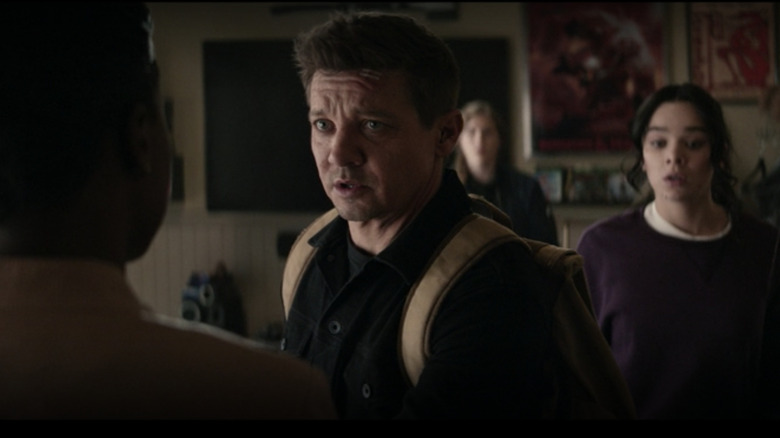
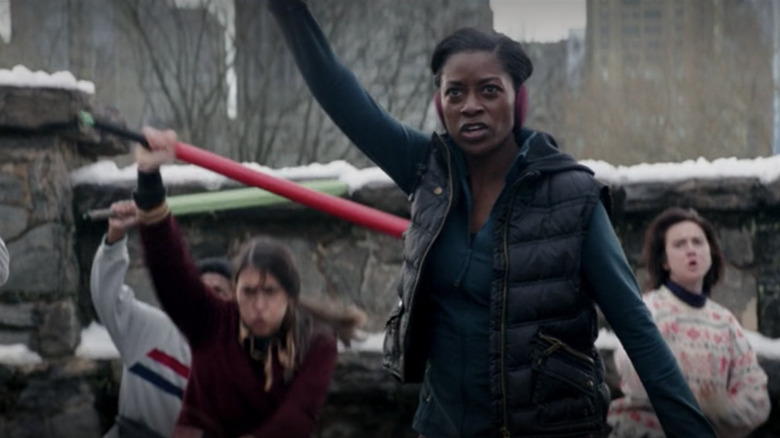
Once Hawkeye finishes his friendly chat with Kazi, he returns to Kate's aunt's apartment to find the guild of LARPers making cookies and fitting Kate with some lovely hand-made armor. Officer Wendy Conrad (better known as Elsbeth of Deepdale in the LARPing community) joins the party shortly thereafter with trick arrows in hand. In exchange, Kate and Clint must provide materials to the guild so they can make new costumes for themselves. Seeing an opportunity to improve the Hawkeye brand (trademark pending), Kate also asks them to make two more costumes as well.

Drop The Bombshell

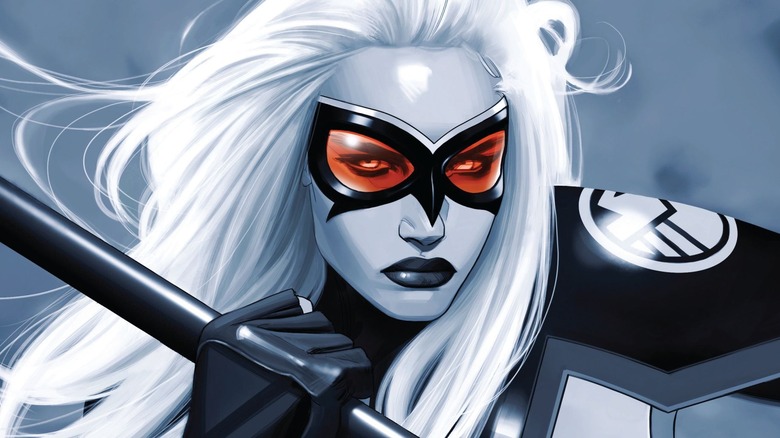
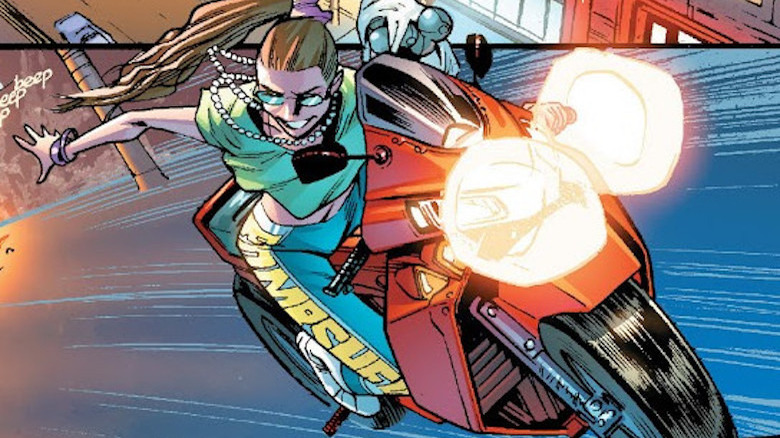
And there she is. If you missed it again, the character in this week's episode from Hawkeye's past is Wendy Conrad. While she may be a cop played by Adetinpo Thomas in the MCU, Wendy is a mercenary in the world of Marvel Comics. Better known as Bombshell (just like what MCU Wendy's wife embroidered on her bag), she specializes in explosives and (I swear, I am not making this up) juggling.

Created in 1983 by Mark Gruenwald and Elliot Brown for a Hawkeye solo series, Bombshell was hired by Crossfire to kidnap the titular hero with the help of Oddball and The Silencer. After her first plan of dressing up as a nun in order to get close enough to Barton to break his arms so he couldn't use his bow and arrow didn't play out successfully, Wendy and her team known as The Death Throws used her explosive gauntlets and other incendiary weaponry to capture Hawkeye and Mockingbird. In the end, the two Avengers escaped and lived to fight another day.

Throughout her history, Bombshell aligned herself with a number of teams. Aside from her crew of criminal jugglers, she also associated with The Femizons, an all-female team of supervillains, The Hero Killers, who targeted Spider-Man and the New Warriors on behalf of Justin Hammer, and a terrorist organization called RAID, who reunited the Death Throws for more juggling-related crimes around London.

A Possible Heel Turn?

Since the Marvel Cinematic Universe opted to change up Wendy Conrad from a juggling assassin to a mostly law-abiding LARPer, it's unlikely that we'll see a villainous turn from her on "Hawkeye." But it was still fun to see a lesser known character from Clint Barton's storied past from the pages of Marvel Comics pop up in a small way. However, if Hawkeye and Kate Bishop fail to bring her beloved embroidered bag back from battle, who knows what Elsbeth of Deepdale or her wife is truly capable of?

Read this next: The 14 Greatest Action Movies Of The 21st Century

The post The Marvel Comics Character You Missed in Hawkeye Episode 4 appeared first on /Film.
09 Dec 00:50

Sam & Max: Beyond Time and Space Released

by Blue
Sam & Max are once again journeying beyond time and space in the release of Sam & Max: Beyond Time and Space for Windows and consoles. This is a remastered edition of the second set of episodic...
08 Dec 22:57

Kids Vs. Aliens: The Director Of Hobo With A Shotgun Is Back With Another Title That Says It All

by Anya Stanley

Jason Eisener, whose credits include "Hobo With a Shotgun" and the "Dark Side Of The Ring" docuseries, is directing the sci-fi horror film "Kids vs. Aliens," which centers around a house party interrupted by extraterrestrials. Of course, that title really does tell you everything you need to know.

Shooting has wrapped on the invasion movie, which was shot in Halifax, Nova Scotia and brings the "Hobo With A Shotgun" band back together for more genre fare. Eisener co-writes the screenplay with John Davies, with Rob Cotterill producing the film, as he has for several past projects with Eisener. Also producing are Cinepocalypse Productions' Josh Goldbloom (V/H/S/94) alongside "V/H/S" franchise producer Brad Miska for Bloody Disgusting. It'll be Miska's first team-up with the "ABC's of Death" contributor since "V/H/S/2" in 2013. Marc Tetreault and Jason Levangie of Shut Up & Colour Pictures and Rob Cotterill for Yer Dead Productions will also produce. Mark Ward, Adam Boorstin and Michael Schreiber executive produce for Studio71, and Tom Owen also grabs an executive producer credit.

"Kids vs. Aliens" will feature a few familiar faces and some newcomers. Dominic Mariche (of the new "Are You Afraid Of The Dark?" series) and Calem MacDonald ("The Umbrella Academy") star, along with fresh blood Phoebe Rex, Asher Grayson, Ben Tector, Emma Vickers, and Isaiah Fortune. Here's the synopsis for the film:

The story follows Gary and his older sister Samantha as an all-time rager of a teen house party turns to terror when aliens attack, forcing the two warring siblings to band together to survive the night.

Eisener calls the chance to bring alien nightmares to life, "a literal dream come true." Says the filmmaker: "'Kids vs Aliens' is inspired by my childhood nightmares and obsessions. Hopefully my parents will forgive me for using their house as our main location."

A New Monster Squad

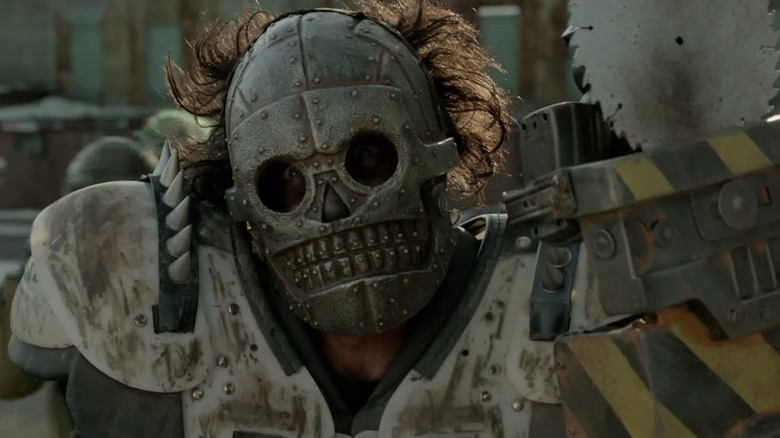
Fellow parents: I know what you're thinking. A quick IMDB search of Eisener brings up "Hobo With A Shotgun," "The ABC's of Death," "V/H/S/ 2" -- certainly nothing you might find on Nickelodeon. But under his production credits, you'll find that Eisener backed one of the more innovative, fun (and yeah, ultra-violent) films of the past decade, about a young comic book nerd who adopts the persona of one of his heroes to save his friend in a post-apocalyptic 1997. "Turbo Kid" is written and directed by François Simard, Anouk Whissell, and Yoann-Karl Whissell, a creative trio collectively known as Roadkill Superstars -- okay, that name might not help matters. But "Turbo Kid" rules for older horror fans, and reveals a collective youthful spirit in everyone involved in its production, surely an element that will translate into something in the vein of kids-save-the-day jams like "Attack the Block" and "Vampires vs. the Bronx." 

For a more direct clue as to what to expect, those brave enough to check out "V/H/S/2" will find Eisener's taut segment, "Slumber Party Alien Abduction" for their viewing pleasure, which involves... kids vs. aliens at an impromptu parent-free party. The inclusion of "V/H/S" franchise producers Goldbloom and Miska further indicates that this story is a loose expansion of that very segment, so it'll be fascinating to see where the story goes. Let's hope the dog is spared this time around.

Read this next: The 11 Scariest Scenes In The Halloween Franchise

The post Kids vs. Aliens: The Director of Hobo With a Shotgun is Back With Another Title That Says It All appeared first on /Film.
08 Dec 22:31

[News] Supernatural Horror WARHUNT Hits Theaters Jan 22

by Sarah Musnicky

[News] Supernatural Horror WARHUNT Hits Theaters Jan 22
Courtesy Saban Films
Saban Films have unveiled the official poster, trailer, and release date for the supernatural horror film, WARHUNT. Make sure you check out the trailer below and let us know what you think.

1945.  A US military cargo plane loses control and violently crashes behind enemy lines in the middle of the German black forest.  Immediately ruthless Major Johnson (Mickey Rourke) sends a squad of his bravest soldiers on a rescue mission to retrieve the top secret material the plane was carrying.  Led by Sergeant Brewer (Robert Knepper) and Walsh (Jackson Rathbone), the soldiers venture deep into the forest near the crash site.  They soon discover hanged Nazi soldiers and other dead bodies bearing ancient, magical symbols. Suddenly their compasses fail, their perceptions twist and straying from the group leads to profound horror as they are attacked by a powerful, supernatural force.  Fighting for the dainty and struggling to survive they must uncover the shocking truth behind the force before the Nazis and do everything they can to remove all evidence it ever existed, even at the cost of their own lives.

WARHUNT stars Robert Knepper (Jack Reacher: Never Go Back, Redemption Day), Jackson Rathbone (The Twilight Saga, “Finding Carter”) and Mickey Rourke (The Wrestler, Iron Man 2).

The film is directed and written by Mauro Borrelli (The Recall, The Ghostmaker). The screenplay was also written by Reggie Keyohara III (Mindcage, The Cargo) and Scott Svatos (The Ghostmaker, Kill for Me).

WARHUNT will be available in theaters, On Demand and Digital on January 21, 2022.

The post [News] Supernatural Horror WARHUNT Hits Theaters Jan 22 appeared first on Nightmarish Conjurings.

08 Dec 22:30

New research shows IoT and OT innovation is critical to business but comes with significant risks

by Emma Jones

The need for much improved IoT and operational technology (OT) cybersecurity became clearer this year with recent attacks on network devices,1 surveillance systems,2 an oil pipeline,3 and a water treatment facility,4 to name a few examples.

To better understand the challenges customers are facing, Microsoft partnered with the Ponemon Institute to produce empirical data to help us better understand the state of IoT and OT security from a customer’s perspective. With this data, we hope to better target our cybersecurity investments and to improve the efficacy within Microsoft Defender for IoT, and our other IoT-related products. Ponemon conducted the research by surveying 615 IT, IT security, and OT security practitioners across the United States.

To get an overview of the key findings from the 2021 The State of IoT and OT Cybersecurity in the Enterprise, download the full report.

IoT adoption is critical despite significant security challenges

The research showed that a large majority of respondents believe that IoT and OT adoption is critical to future business success. As a result, they are advancing IoT and OT projects as a key priority.

  • 68 percent of respondents say senior management believes IoT and OT are critical to supporting business innovation and other strategic goals.
  • 65 percent of respondents say senior management has made it a priority for IT and OT security practitioners to plan, develop, or deploy IoT and OT projects to advance business interests.

Within this group, only a small minority of organizations slowed, limited, or stopped IoT and OT projects even though a majority believe that generally these types of devices are not built with security in mind and that they represent one of the least secured aspects of their IT and OT infrastructure.

  • 31 percent of IT security practitioners have slowed, limited, or stopped the adoption of IoT and OT projects due to security concerns.
  • 55 percent of respondents do not believe IoT and OT devices have been designed with security in mind.
  • 60 percent of respondents say IoT and OT security is one of the least secured aspects of their IT and OT infrastructure.

Based on the data, it appears that business interests are currently taking priority over the increased security risks that organizations assume, as they advance their IoT and OT projects. This puts security and risk leaders in a difficult place and explains why IoT and cyber-physical systems security has become their top concern for the next three to five years.5

“We believe this unique research highlights the obstacles organizations face as they use IoT and OT to drive business innovation with technologies that are more easily compromised than traditional endpoints,” said Dr. Larry Ponemon, Chairman and Founder of Ponemon Institute. “On a positive note, a vast majority of security and risk leaders recognize the threat and have made shoring up their IoT and OT defenses a top priority for the next 12 to 24 months.”

Outdated IoT and OT assumptions are putting organizations at risk

In the past, there was a common assumption about IoT and OT devices that is no longer true. It was assumed that IoT and OT devices were typically segmented from traditional endpoints (workstations, servers, and mobile) or that they were deployed within separate air-gapped networks. The research confirmed that devices on IT and OT networks are frequently connected directly or indirectly to the internet, making them targets that can be breached from outside of the organization. The latest evolution to the Mozi attack1 is a great example of how a business network can be breached through network gear running on the edge of business networks.

  • 51 percent of OT networks are connected to corporate IT (business) networks, like SAP and remote access.
  • 88 percent of respondents say their enterprise IoT devices are connected to the internet—for instance, for cloud printing services.
  • 56 percent of respondents say devices on their OT network are connected to the internet for scenarios like remote access.

It’s critical that these dated assumptions are removed from organizational thinking so that proper mitigations can be put in place.

Key security challenges for IoT and OT devices

When it comes to securing IoT and OT devices, the top challenge is related to visibility. Per the research, only a small subset of respondents shared that they had a complete view of all their IoT and OT asset inventory.

  • 29 percent of respondents mentioned that their organizations have a complete inventory of IoT and OT devices. Among them, they have an average of 9,685 devices.

But visibility isn’t just about building a complete asset inventory. It’s also about gaining visibility into the security posture of each IoT and OT device. Questions like “Is the device optimally configured for security,” “Are there any known vulnerabilities in the device’s firmware,” “Is the device communicating or connected directly to the internet,” and “Is the device patched with the latest firmware build?” are some of the questions that organizations need answers to but struggle with for their IoT and OT devices.

  • 42 percent of respondents claimed they lack the ability to detect vulnerabilities on IoT and OT devices.
  • 64 percent of respondents have low or average confidence that IoT devices are patched and up to date.

Another dimension of visibility that customers are seeking solutions for is related to the ability for organizations to become aware of IoT and OT devices that are involved in attacks. Most of the survey respondents have low to average confidence that the tools they have deployed will be successful in detecting compromised devices.

  • 61 percent have low or average confidence in the ability to identify whether IoT devices are compromised.

Another important aspect of visibility worth mentioning is that customers struggle with the ability to efficiently determine how compromised IoT and OT devices are part of broader end-to-end incidents. To resolve attacks completely and decisively, organizations frequently use manual investigation processes to correlate and make sense of the end-to-end attack. Meanwhile, attackers use this time to broaden the attack and get closer to the end goal.

  • 47 percent of respondents say their organizations are primarily using manual processes to identify and correlate impacted IoT and OT devices.

IoT and OT attacks are not hypothetical

The Ponemon research shows us that a good percentage of the surveyed respondents are encountering IoT and OT attacks. Nearly 40 percent of respondents told us that they’ve experienced attacks where the IoT and OT devices were either the actual target of the attack (for example, to halt production using human-operated ransomware) or were used to conduct broader attacks (such as lateral movement, evade detection, and persist). Most respondents felt these types of attacks will increase in the years to come.

  • 39 percent of respondents experienced a cyber incident in the past two years where an IoT or OT device was the target of the attack.
  • 35 percent of respondents say in the past two years their organizations experienced a cyber incident where an IoT device was used by an attacker to conduct a broader attack.
  • 63 percent of respondents say the volume of attacks will significantly increase.

One thing to keep in mind with these last three statistics is that the study also showed that customers have low to average confidence in their ability to detect when IoT and OT devices have been compromised. Based on this, it’s likely that the real numbers are higher.

The new Microsoft Defender for IoT is available now for your feedback

Last month at Ignite, we announced that Microsoft Defender for IoT, formerly Azure Defender for IoT, is adding agentless monitoring capabilities to help secure enterprise IoT devices connected to IT networks such as Voice over Internet Protocol (VoIP), printers, and smart TVs. This complements the product’s existing support for industrial systems and critical infrastructure like ICS/SCADA. Additionally, we announced that Defender for IoT is part of the Microsoft SIEM and XDR offering bringing its AI, automation, and expertise to complex multistage attacks that involve IoT and OT devices.

An open investigation dashboard for P L C programming and related alerts.

Figure 1. Deep contextual telemetry (like asset and connection details) combined with threat intelligence (like analytics rules, SOAR playbooks, and dashboards) from Section 52 helps analysts perform high-efficiency incident responses.

Microsoft Security would now like to invite you to try out the new public preview of the integrated solution that addresses the challenges surfaced in the Ponemon research, such as complete asset inventory, vulnerability management, threat detection, and correlation. Try the public preview functionality within the Microsoft 365 Defender console or within the Microsoft Defender for IoT experiences. We look forward to hearing and integrating your feedback for the new Microsoft Defender for IoT.

More details on the public preview and roadmap can be viewed in our Ignite session.

Video with link to the Accelerate digital transformation by securing your Enterprise I o T devices with Microsoft Defender for I o T session with Nir Krumer, Principal P M Manager, and Chris Hallum, Senior Product Marketing Manager.

Figure 2. Nir Krumer, Principal Program Manager, and Chris Hallum, Senior Product Marketing Manager, discuss securing your Enterprise IoT devices with Microsoft Defender for IoT.

Learn more

More information on the current release of Microsoft Defender for IoT, which offers OT security, can be found in the following resources:

To learn more about Microsoft Security solutions, visit our website. Bookmark the Security blog to keep up with our expert coverage on security matters. Also, follow us at @MSFTSecurity for the latest news and updates on cybersecurity.


1This is why the Mozi botnet will linger on, Charlie Osborne, ZDNet. 1 September 2021.

2‘Thousands’ of Verkada Cameras Affected by Hacking Breach, IFSEC Global Staff, Dark Reading. 10 March 2021.

3Hackers Breached Colonial Pipeline Using Compromised Password, William Turton, Kartikay Mehrotra, Bloomberg. 4 June 2021.

4‘Dangerous Stuff’: Hackers Tried to Poison Water Supply of Florida Town, Frances Robles, Nicole Perlroth, New York Times. 8 February 2021.

5Develop a Security Strategy for Cyber-Physical Systems, Susan Moore, Gartner. 13 April 2021.

The post New research shows IoT and OT innovation is critical to business but comes with significant risks appeared first on Microsoft Security Blog.

08 Dec 22:29

Did Hawkeye Episode 4 Hint That This Major Character Is Actually Mockingbird?

by Danielle Ryan

The Disney+ series "Hawkeye" has given fans a lot to chew on regarding the future of the Marvel Cinematic Universe, but episode four might have revealed the secret identity of a classic Marvel hero. 

In "Partners, Am I Right?," Clint Barton (Jeremy Renner) goes out of his way to retrieve a Rolex watch stolen from the wreckage of the Avengers compound. The secrecy surrounding the watch and its owner could reveal something about the superhero known as Mockingbird to the MCU. While she previously existed in the ABC series "Agents of S.H.I.E.L.D.," played by Adrianne Palicki, that series exists in a weird nebula tangential to the MCU canon, but not a part of it. Therefore, it's entirely possible that we've finally been introduced to the real Barbara "Bobbi" Morse in the MCU, better known as Mockingbird. 

This post contains spoilers for the latest episode of "Hawkeye," as well as some speculation about the future.

Hawkeye And Mockingbird, Sittin' In A Tree...

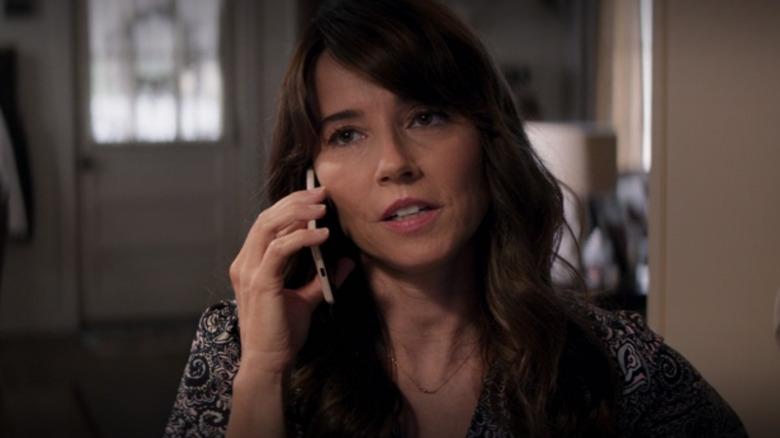
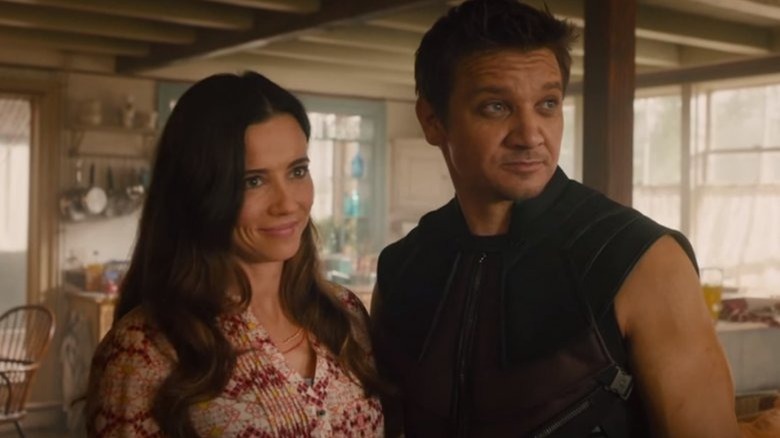
In the comics, Clint Barton falls in love with and marries Bobbi Morse, aka Mockingbird, and they eventually help train the Great Lakes Avengers. In the MCU, Barton's wife and kids seemingly exist completely separate from his superhero life. Sure, he went murder-crazy as the assassin Ronin after they were blipped out of existence by the Thanos snap, but they're back now, safe and out of harm's way. The only problem is that Barton's wife Laura, played by Linda Cardellini, doesn't seem all that normal. She's incredibly calm and receptive during Clint's phone call informing her of the watch's continued existence, and she knows immediately what he's referring to. While married couples often have this kind of shorthand with one another, it's not likely that a civilian would have the kind of knowledge Laura has. Not only does she know about the watch instantly, but she knows how to check for its signal and dig into records on Sloan Limited. 

Is it possible the watch once belonged to Laura, who was formerly the hero named Mockingbird? It would make a lot of sense that Clint wants to hide his wife's former identity, especially since she's retired and living under a different name. While Barton and Morse don't have children together in the comics, that could just be another layer added to the MCU to make Barton's character more complex. It would also explain how Laura knows how to do some high-level private information digging and signal tracing, because those aren't exactly things you can just Google. 

Mockingbird's Possible Future In The MCU

If Laura is actually Mockingbird, what could that mean for her future in the MCU? It will depend entirely on how closely the writers want to stick to the comics, though the Marvel movies and shows rarely adhere too closely to comic book canon. After all, in the comics, Maya Lopez was Ronin before Clint Barton! 

If the folks behind "Hawkeye" decide to hew closely to the comics, then we can expect to see an unpleasant divorce some time in the future for these two lovebirds. It could propel Mockingbird back into her role as a superhero, though the kids will definitely make that more difficult. Hopefully the Disney+ series decides to give Clint a break for once, and he and his lady love can live happily ever after. 

Read this next: Every Pre-MCU Marvel Movie Ranked

The post Did Hawkeye Episode 4 Hint That This Major Character is Actually Mockingbird? appeared first on /Film.
08 Dec 22:28

Chores You Only Need to Do Once a Year (Thank God)

by Sarah Showfety

There are many annoying chores that need to be done daily: washing dishes, spraying and wiping down kitchen counters, picking toys up off the floor, sweeping. And then there are those that are blessedly much less frequent. It will always suck that we have to do more things, but at least some of them are merely…

Read more...

08 Dec 21:38

Disney to reboot Firefly without accused harasser Joss Whedon

by Jason Weisberger

Disney evidently acquired the rights to Firefly and plans to make a Disney+ streaming version intended to be more family-friendly. In keeping with Disney's family-friendly ideals, Joss Whedon will not be joining the project.

I hope they still swear in Chinese. — Read the rest

08 Dec 21:37

The Legal Drama You Didn't See Behind The Scenes Of Back To The Future

by Ben F. Silverio

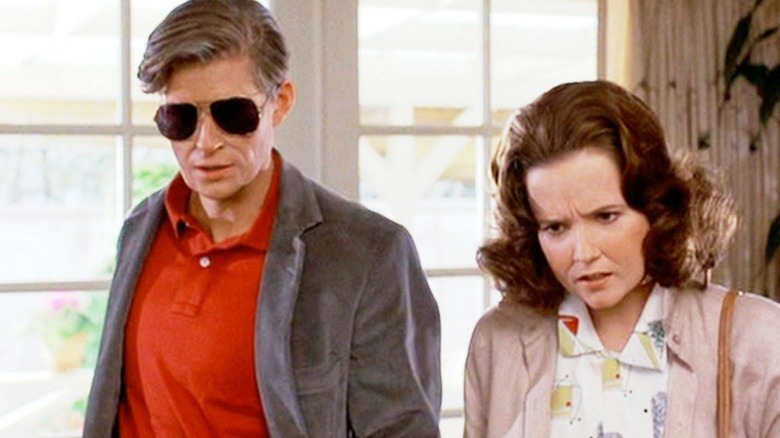
Over three decades after its release, "Back to the Future" remains one of the most beloved films ever made. Many look back fondly on the time-traveling adventures of Doc Brown and Marty McFly, including the cast and crew. However, that definitely isn't the case for one person in particular: Crispin Glover.

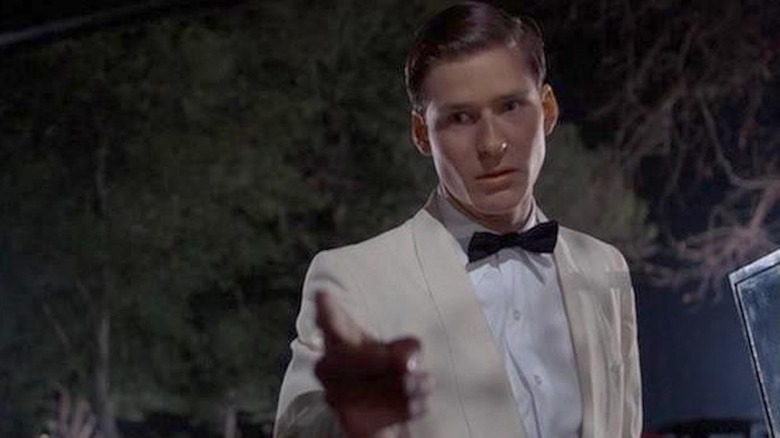
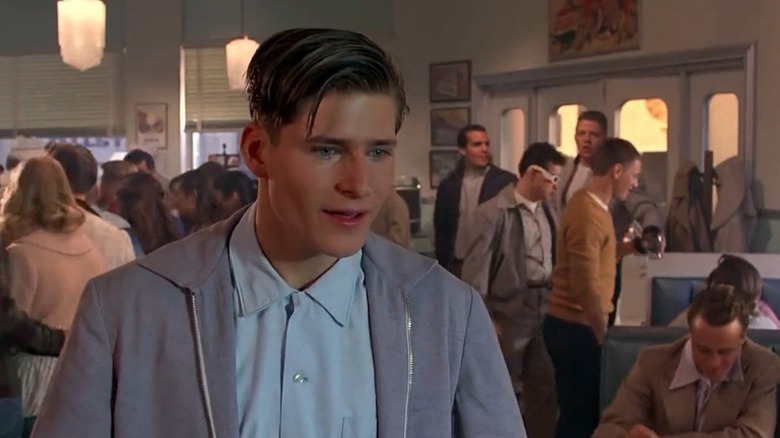
The actor who would go on to star in such films as "Willard," the 2000 reboot of "Charlie's Angels," "Hot Tub Time Machine," and "What's Eating Gilbert Grape?" first gained recognition in Hollywood for his breakout role as George McFly in "Back to the Future." But this part also gave him the biggest headache of his career since it resulted in a precedent-setting lawsuit and a grudge with series co-creator Bob Gale that is still going on to this day.

Creative Differences And Contract Disputes

Glover's issues with "Back to the Future" started out relatively small. During his 2013 appearance on "The Opie and Anthony Show," he revealed that he questioned a few elements of the script, particularly the ending. While some things did get changed, the actor still had an issue with the message being sent. "I thought it was not a good idea for our characters to have a monetary reward, because it basically makes the moral of the movie that money equals happiness," Glover said. "Love should be the reward."

Notes like this were the beginning of the strain in the relationship between Glover and the producers. But things really ramped up when work began on the sequel. In the same interview, he shared that he initially wanted to be in "Back to the Future Part II." Somewhat ironically, money ended up being a factor in his decision to leave. According to Glover, he was offered less than half of what costars Lea Thompson and Tom Wilson were getting despite having similar sized roles.

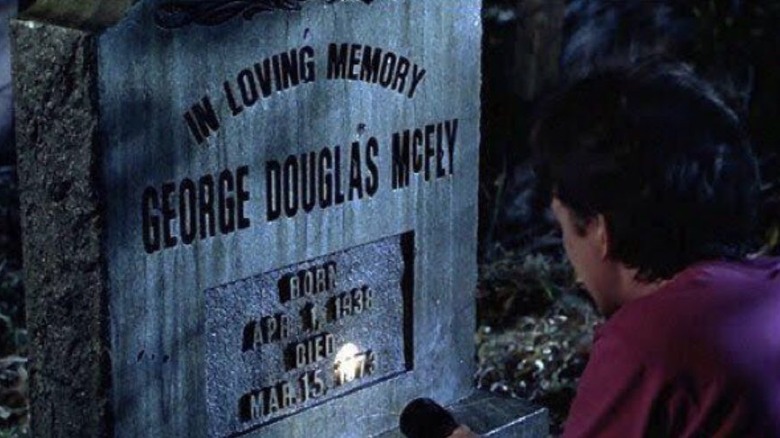
During his own interview on the show, Bob Gale went into a bit more detail with Opie and Anthony about what Glover was looking for in his contract. According to the writer and producer, the actor wanted the same deal as Michael J. Fox, which was $2 million, plus script approval. Obviously unwilling to grant those terms to someone without top billing, Gale and Robert Zemeckis moved on thinking that Glover would not be involved. That's why George McFly is dead in the alternate 1985. But two months before filming began, it looked like there might have been a chance for the actor to board the project after all.

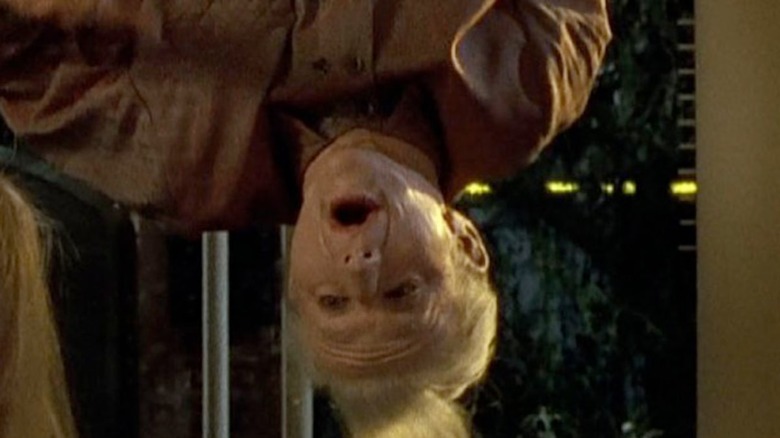
"Two months before the movie was supposed to start shooting, Crispin's agent called and said that Crispin thinks he may have made a mistake. I said okay, we're happy to put him in the movie, but it's not going to be a very big role. And the whole idea of having George McFly floating around upside down because he threw out his back? We didn't really want to have George dead in the more positive future because that would be kinda sad. Let's put the guy upside down so if we have to recast him, it'll be hard to recognize if it's really him or not. And if Crispin really does it, then we can hang him upside down."

Ultimately, Crispin Glover did not return for "Back to the Future Part II." But unless you paid extremely close attention or knew about this drama before your first viewing of the movie, there's a good chance that you had no idea.

The Fake Shemp

Recasting roles for a sequel is a fairly common occurrence. Don Cheadle replaced Terrence Howard as Colonel James Rhodes AKA War Machine in "Iron Man 2." Michael Gambon stepped in as Professor Albus Dumbledore in the "Harry Potter" films after Richard Harris passed away. And even in "Back to the Future Part II," Claudia Wells was unavailable to play Jennifer Parker due to a family emergency, so Elizabeth Shue took over that role. Presumably, that's what would happen to George McFly when Crispin Glover finally decided not to reprise the part for the sequel. But as he would find out, that was not the case.

Rather than traditionally recasting, the production took some extreme measures to include George McFly in the second film. First, director Robert Zemeckis got creative with footage from the first movie featuring Glover. Then, they made prosthetics of his face from the molds used to create the 1985 George McFly make up and brought in Jeffrey Weissman to wear those pieces as he recreated scenes from the first film at different angles. Eventually, Weissman would not only portray 1955 George, but 1985 and 2015 George as well. This had gone far beyond the stand-in or photo double work that he thought he was signing up for.

The Lawsuit

"Had they only hired another actor, which is kind of what I thought had happened, that would have been totally legal, and I would have been completely fine with it," recounted Glover while speaking to radio personality Sam Roberts in 2014. But with events playing out the way that they did, the actor sued Universal Studios and the producers of "Back to the Future," including Robert Zemeckis, Bob Gale, and Steven Spielberg. Glover's attorney at the time Doug Kari argued that using the George McFly prosthetics on another actor was a violation of the original actor's publicity rights. With computer graphics technology evolving at a rapid pace, Kari and Glover also thought about how this could affect other actors in the future. "What I said to the judge was, 'Things may happen in the future that will make this important,'" Kari said to The Hollywood Reporter in 2015. "We need to draw a line."

An important tool that Kari had at his disposal to draw that line was a conversation he had with Jeffrey Weissman. While the second George McFly didn't comment on the THR piece, Weissman did get rather in depth about the lawsuit and his entire "Back to the Future" experience while speaking to the Hasslein Books Blog:

"When Crispin decided he wanted to sue Universal, the cast and the production team, he contacted me and was very whiney about how badly they treated him on the first film. The producers belittled him and made him cry in front of extras on the first shoot, cut his hair without his approval, and how much he had been "done wrong" because they were going to pay him twice scale for the use of the short clips they used of him from the first film, inserted into my work on the second.

I did see that he was being cheated, especially because they used his likeness (Universal's argument was that they were using "George's likeness"), and after Crispin got his $760,000 out-of-court settlement (before it went to trial), using much of our conversation as fuel for his case, Universal blacklisted me and never used me on a TV show or film again, and Crispin has never taken my calls nor spoken to me since.

I took it very hard that production tried to keep my work a secret, kept me from promoting my work on the films publicly, and I had a nervous breakdown when I heard of the blacklisting by Universal. To top it all, hardcore Back to the Future and Crispin fans have written "hate Jeffrey Weissman" postings in public forums, which are pretty painful. Ahh, showbiz."

Time And Time Again

Despite the settlement and integral changes made to the Screen Actors Guild policies to prevent this sort of thing from happening again, the feud between Crispin Glover and Bob Gale persists. It has turned into a giant, "He said, he said" that is seemingly never-ending. In 2020, Yahoo spoke to both parties separately and neither side is showing signs that the bitterness has subsided.

Bob Gale said:

"I'm sorry that Crispin is still angry with me. He seems to take it on me personally, I don't understand why. Everybody at the studio was involved in this decision. We checked with the legal department at Universal, if we had permission to use footage of him from the first movie in the second movie, and they said, 'Yes.' And [we asked], 'Do we have permission to make another actor resemble him?' 'Yes.' And you see that all the time. We didn't do anything that was illegal."

Crispin Glover said:

"They stole something, and it's illegal to steal something, it's really that simple. Bob Gale is quite literally a thief, no exaggeration.[He's] obviously unrelenting, he pretends that it isn't illegal, which amazes me. There's a classic thing where someone will blame a victim, when they've done something [wrong]. That's what Bob Gale does. That is incredibly infuriating."

Unfortunately, it doesn't look like this feud will be ending any time soon. Both Gale and Glover may take this grudge to their graves. This just goes to show that even something that brings so much joy like the "Back to the Future" movies can have a dark side. 

Read this next: 20 Movies About Time Travel Ranked Worst To Best

The post The Legal Drama You Didn't See Behind the Scenes of Back to the Future appeared first on /Film.
08 Dec 20:16

This Classic Novel Inspired Mad Max Beyond Thunderdome

by Witney Seibold

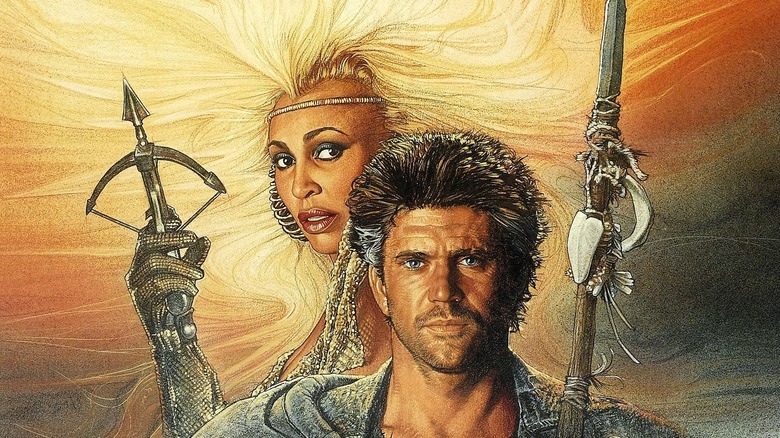
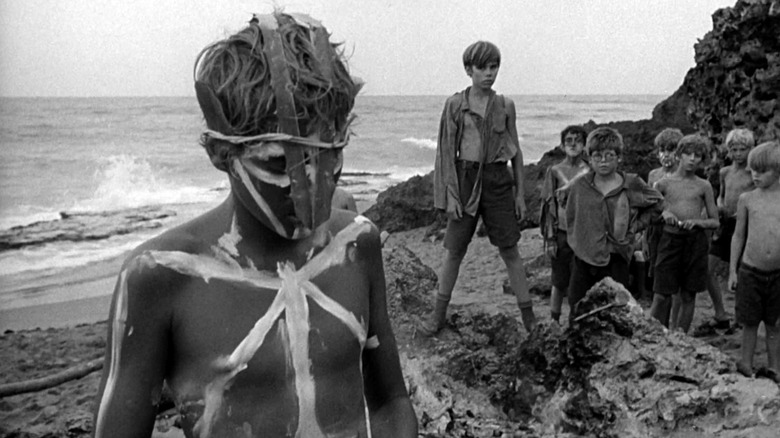
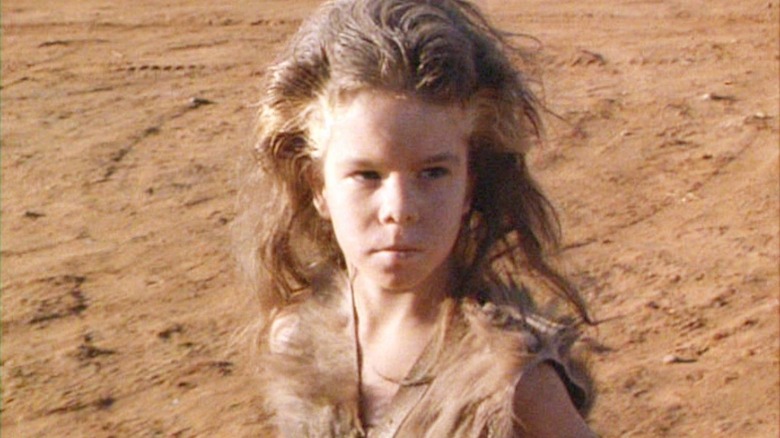
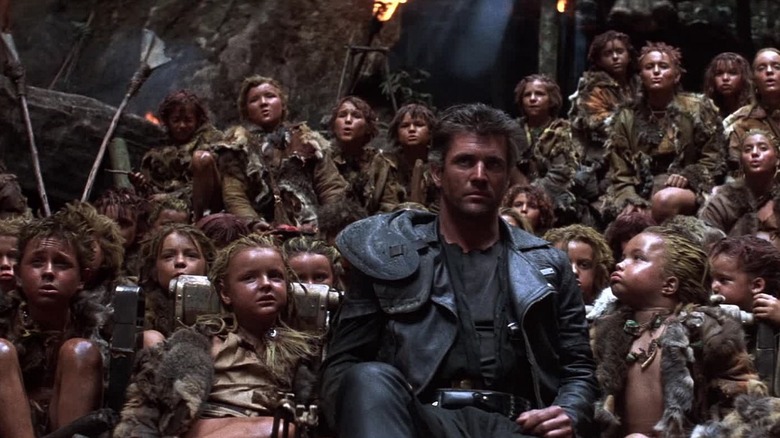
George Miller's post-apocalyptic thriller "Mad Max: Beyond Thunderdome" was released in 1985 to generally favorable critical acclaim and a good deal of financial success. Roger Ebert called it one of the best films of the year, citing its centerpiece fight scene -- involving a dome lined with knives, bungee cords, and a lot of hooting mutants -- as one of the wholly original fight scenes in cinema. In the years since its release, however, many have cited it as the black sheep of the series (which includes 1979's "Mad Max," 1981's "Mad Max 2," aka "The Road Warrior," and 2015's "Mad Max: Fury Road"). Anecdotally, I have heard critics and colleagues point to the film's second half as less exciting than the first, as the freaky and energetic fight scenes are followed by mellower scenes of Max (Mel Gibson) interacting with a tribe of children who are developing their own society -- and patois -- without the input of adults. 

It was in this portion that audiences saw a little bit of what happened in the "Mad Max" future timeline, and how the world came to a desperate post-apocalyptic landscape full of violence and vehicle fetish. It was the first time the series became forthrightly didactic. The latter portion of "Thunderdome" has received much criticism over the years, from mere disappointment to outright outrage. Some cited said didacticism as a mere screenwriting error, preferring the series' usual anarchic sense of fun punk rock defiance. Others have merely screamed to the heavens about the how inclusion of annoying little kids interrupts the mayhem. 

Those little kids, however have a clear antecedent in literature. George Miller has clearly read William Golding's 1954 novel "Lord of the Flies."

Lord Of The Flies

If you're unfamiliar with "Lord of the Flies" ... well, then I suppose you were never in the fifth grade. William Golding's classic novel, frequently included on elementary school reading lists, is about a group of British schoolboys evacuating a war by plane. Their plane is shot down, and the surviving boys -- all about 11 or 12 years old -- have to learn to survive on a remote desert island. Over the course of the novel, readers witness the boys descend from civilization into vicious tribalism and ritual.

"Lord of the Flies" was intended to be an antidote to novels like Johann David Wyss'  "The Swiss Family Robinson" (1812) or, specifically cited by Golding, R.M. Ballantyne's "The Coral Island: a Tale of the Pacific Ocean" (1857); stories that depicted being lost in the wilderness as an opportunity to rise up and be decent, creating a pastoral Arcadia of togetherness. Golding, taking a much more cynical approach, told a tale of young peoples who, free of the strictures of adult supervision, have a tendency toward savagery and power. While many young children read this book in school, I might argue that it is not for children. Like J.D. Salinger's "The Catcher in the Rye" and William Shakespeare's "Romeo and Juliet," these are stories about youths that are for adults with perspective on youth. They are not necessarily for young readers. 

The World From The Eyes Of Children

George Miller revealed in a 1985 interview that he was interested in the perspective of the "Mad Max" universe as seen through the eyes of The Feral Kid (Emil Minty) from "Mad Max 2." The unnamed character didn't speak, and loped around like a wild animal. He even killed people with a bladed boomerang. At the film's conclusion, we learn that the Feral Kid would grow up to be the film's narrator. Miller, in a conversation he had with one of the sequel's co-screenwriters Terry Hayes, began discussing mythology, and how, perhaps if left to our own devices, humans take what little information we possess and author new meanings of how things came to be. A child with no knowledge of history -- and no way of accessing written history of the past -- would only have vague memories of airplanes and old worlds to draw on, and mythic figures like Max to facilitate a new pantheon of heroes. 

In short, Miller pondered, what would the origin of the world look like to a child who only had "Mad Max" films to draw on? This immediately had him thinking of "Lord of the Flies," and how children are perfectly capable of creating their own myths and heroes and laws and, in the case of Golding's novel, violence. Would children let loose in the world of "Mad Max" all be Feral Kids ready to kill and to harm? Miller, perhaps more optimistic than Golding, posited that perhaps they wouldn't.

But Hopeful This Time

William Golding explored the origins of morality in his book, and how humanity's will to power can quickly devolve into a need to dominate. It's about how rational thought can be overwhelmed by base emotions. It's about the dangers of groupthink, and how groups can commit acts of violence that no individual would. 

"Mad Max: Beyond Thunderdome" had to be gentler and less cynical by design, mostly by dint of its hero. In the same 1985 interview, George Miller describes Mad Max as a "closet human being," in that he has humanity deep within him, but keeps it locked up in order to survive in a brutal world. It may be why the character is so appealing to several generations of fans. He's a brute who looks out for himself ... until he needs to help someone. The children in "Beyond Thunderdome" are, like the kids in "Lord of the Flies," creating their own morality as they go, but they have fallen toward myth, heroes, and togetherness. Max fills the Messiah-shaped hole in their worldview. And, in being looked up to, Max is permitted to let his humanity out. He becomes a more well-rounded human being as a result.

Violence and badassery are things to be outgrown. Perhaps fans of a badass and violent film series -- who identified with Max's capacity for action -- felt betrayed by a sudden injection of pacifism into the films' philosophy. Hence why "Beyond Thunderdome" still carries something of a bad reputation to this day. The adults in the "Mad Max" movies tend to be, well, mad. They are the ones obsessed with power, control of resources, and their own bloodlines. In "Mad Max: Beyond Thunderdome," we learn that children are ultimately going to outgrow the darkness of the current world. 

"Beyond Thunderdome," then, is just as much a rebuttal to "Lord of the Flies" as "Flies" was to "The Coral Island." 

Read this next: Movies About Cults That Will Keep You Up At Night

The post This Classic Novel Inspired Mad Max Beyond Thunderdome appeared first on /Film.
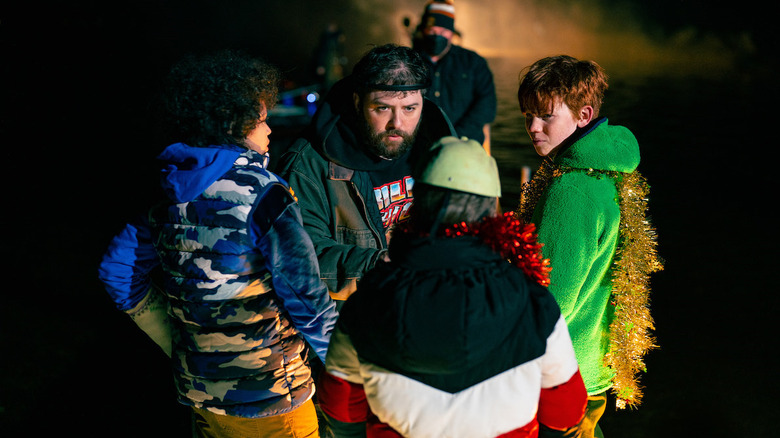
08 Dec 20:05

On December 7, 2021, the Hawaii Department of Health attacked the US Navy for previously attacking Hawaii [Interesting]

08 Dec 20:03

Distribution Release: Tails 4.25

The Amnesic Incognito Live System (Tails) is a Debian-based live DVD/USB with the goal of providing complete Internet anonymity for the user. The project's latest release is Tails 4.25 introduces a number of package updates for key components. It also features a backup utility to copy important files....
08 Dec 20:03

BSD Release: FreeBSD 12.3

The FreeBSD team has announced the availability of the third update to the operating system's 12.x branch. FreeBSD 12.3 includes several bug fixes to the kernel, userland updates, and improvements to network drivers. The project's release announcement reports: "The FreeBSD Release Engineering team is pleased to announce the....
08 Dec 20:03

NFTs coming to Ghost Recon Breakpoint as in-game items - CNET

by Daniel Van Boom
Ubisoft is launching the biggest experiment with blockchain tech undertaken by a major gaming company yet.
08 Dec 19:58

Games coming to GOG in 2022

Discover some of the most anticipated titles coming to GOG next year!

2022 already promises to be a year full of amazing releases. From action blockbusters to classic-inspired adventure and strategy games with a side of boundary-pushing indies... We already can't wait! So take your time to explore this list and to make sure you won't miss their release, whishlist all of the titles that suit your own gaming needs.

08 Dec 19:58

Kamala Harris and other VIPs are right to be concerned about Bluetooth security - CNET

by Bree Fowler
It doesn't happen often, but Bluetooth connections do get hacked.