Shared posts

06 Jan 12:01

Intel’s take on Nvidia DLSS will benefit PCs more than its Arc GPUs

by Samuel Willetts
Intel’s take on Nvidia DLSS will benefit PCs more than its Arc GPUs

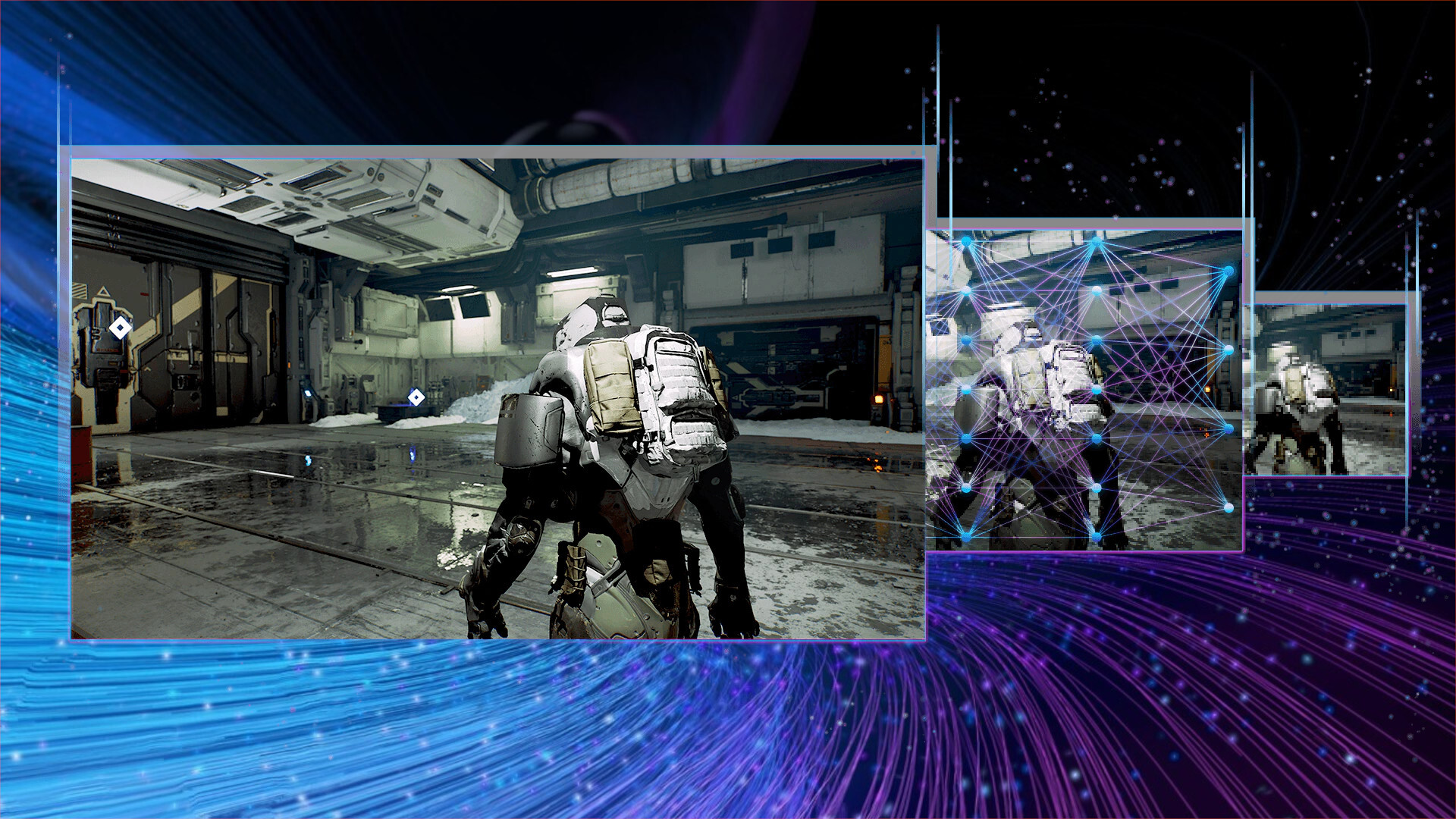
Intel doesn't have much of a presence in the discrete graphics card market just yet, but its Arc Alchemist lineup is just around the corner and should give AMD and Nvidia a run for their money in 2022. Just how competitive these GPUs will be is anyone's guess, but I'm willing to bet that gaming PCs will benefit more from Intel XeSS (Xe Super Sampling) than its first generation physical GPUs.

XeSS will be Intel's answer to Nvidia DLSS, using artificial intelligence to upscale your game from a lower, less demanding resolution to a higher one. This means 4K resolution - or possibly even 8K for that matter - won't tank your performance because your PC only has to churn out 1080p or lower before it hits your screen. And if pixel count isn't your thing, you'll be able to stick with your normal resolution and use XeSS to boost fps instead.

Currently, AI upscaling is only possible with Nvidia DLSS, which is exclusive to RTX GPUs. However, Intel is optimising XeSS for its own Alchemist graphics cards, but says it will open the technology up to other hardware manufacturers in the future.

RELATED LINKS: Intel Core i9 9900K review, Intel Core i7 9700K review, Best CPU for gaming
06 Jan 01:51

Every DC Movie Made Prior To The DCEU Ranked From Worst To Best

by David Court

With the creative success of "Birds of Prey" and "The Suicide Squad" and films like "Black Adam," "Shazam! The Fury of the Gods," and the multiverse-spanning "The Flash" on the way, the DC Extended Universe has finally found its footing. The DCEU got off to a controversial start with 2013's "Man of Steel," but has since proved that it's as comfortable with comedy as it is with super-heroics.

However, it was Richard Donner's 1978 "Superman" that became the first DC film to meet with real success, and, despite little opportunities for crossovers, arguably set the stage for the success of today's live-action comic book adaptations. Plenty more followed. A few of the characters here may have once belonged to DC's other publishing imprints — DC's Vertigo line has inspired quite a few films — but now that they've all been incorporated into the standard DC Universe, I'm considering them fair game.

Also, despite an abundance of animated material, for reasons of brevity, we're only considering live action movies. So, with that in mind, up, up, and away!

Catwoman
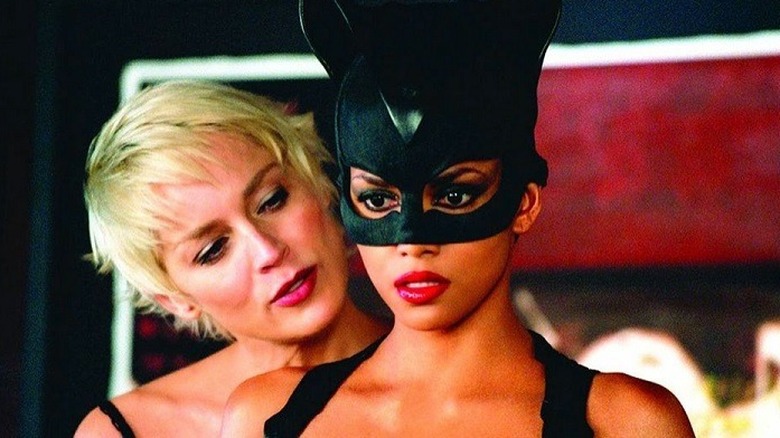
It's to Halle Berry's eternal credit that she turned up in person to pick up her Golden Raspberry Award for worst actress for her purr-formance in "Catwoman," but, in an ideal world, this abhorrent excuse for a film shouldn't even exist. Rather than simply taking the more promising route and producing a spin-off for Michelle Pfeiffer's take on the feline felon, the filmmakers opted for a complete reboot that bears little resemblance to the character from the movies or the comics.

Berry plays a woman named Patience Phillips, and patience is exactly what you'll need to tolerate the lackluster script. Dealing with Catwoman's new muddled origin story and her attempts to halt the machinations of a crooked cosmetics company, the film seems little more than a confusing excuse to champion female empowerment whilst reducing the ordinarily excellent Berry to little more than a scantily-clad cipher. Thankfully, this Catwoman only had one short-lived life. What was she thinking?

Steel
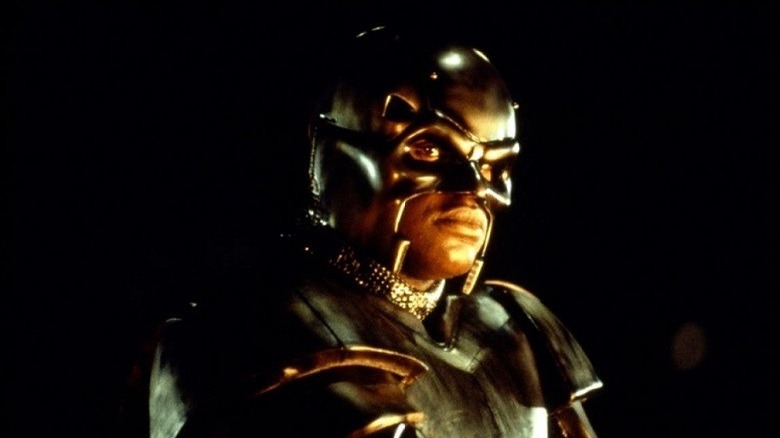
In the comics, when Superman "died" at the bony claws of the Kryptonian genetic experiment known as Doomsday, a number of heroes rose up to take his place. One such man was John Henry Irons, an engineer who made himself an armored suit emblazoned with Superman's distinctive S-shield logo, sort of like a DC version of Iron Man, to honor the temporarily deceased Man of Steel.

As far as film legacies go, the movie version of "Steel" pounds Superman's flat with his trademark hammer. A hopelessly miscast Shaquille O'Neal plays the alloyed vigilante, parading around in a supposedly metal suit that's really made out of poorly painted rubber. Judd Nelson's pantomimic villain, Burke, elevates the material ever-so slightly, but the mediocre special effects, predictable plot, and unexpected levels of schmaltz make it feel more like a direct-to-TV feature than something intended for a cinema screen.

Superman IV: The Quest For Peace

Forget "Threads" and "The Day After." There's probably been no greater argument for nuclear disarmament than to rid the world of the risible Nuclear Man, the main foe in 1987's "Superman IV." With neatly coiffed hair and silver nails, this radioactive reprobate is laughable at best.

Created by Lex Luthor from a Superman clone imbued with nuclear waste, the filmmakers are clearly trying to recreate the superpowered conflict between Kal-El and Zod from the second film, but the film pales in comparison. It reeks of cheapness, with the Man of Tomorrow's true weakness revealed not as kryptonite, but budget cuts — "Superman IV" failed to recoup its meager $17 million budget at the domestic box office. When a U.K. town has to pretend to be Metropolis, you know that something's gone horribly wrong.

The tagline for the first Superman film may have been "You'll believe a man can fly." This time around, the shoestring budget (in many scenes, the filmmakers barely even attempt to hide the wires holding up Christopher Reeve) means that you're slightly less inclined to believe.

Batman & Robin
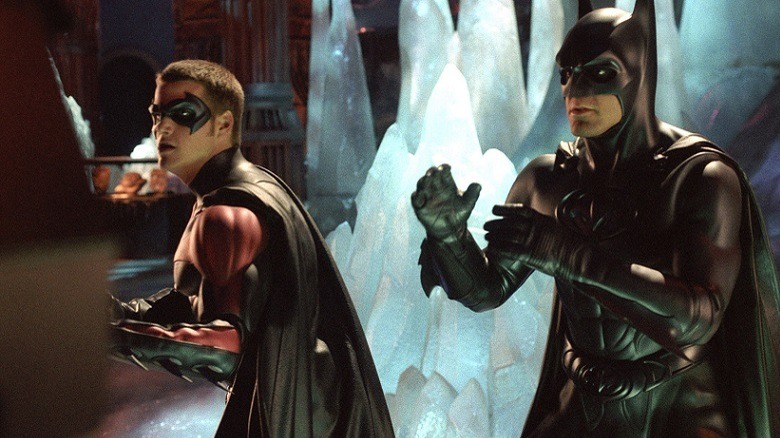
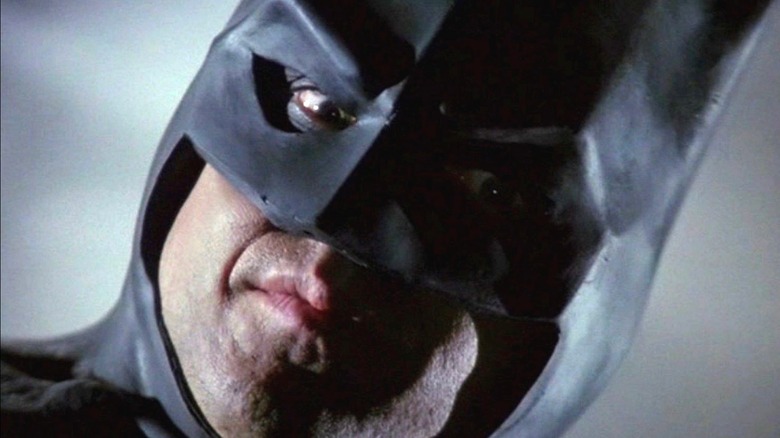
Without seismology equipment, it's difficult to determine the lowest point of Joel Schumacher's "Batman & Robin." Some might name the remarkable Bat-credit card scene, while others focus on Bat-nipples and Bat-butts.

The truth, though? The rot began in Schumacher's previous film, "Batman Forever." And yet, even that neon-drenched migraine of a movie shines like a gleaming bat signal when compared to this dismal mess. At one point, Hollywood seemed to have a doomed theory that the more villains featured in a movie, the better the film would be. As proved here, it's a flawed hypothesis, only recently broken by "Spider-Man: No Way Home."

Uma Thurman fails to convince as Poison Ivy, and Arnold Schwarzenegger simply plays Mr. Freeze as Arnold Schwarzenegger in a glowing suit while spouting terrible ice-related puns. Ordinarily top-tier DC villain Bane is relegated to an ineffectual sidekick with some tubes sticking out of his back, and despite its title, the whole movie feels like a two-hour excuse to shoehorn Batgirl (Alicia Silverstone, completely devoid of charisma) into the franchise. And, Mr. Schumacher, there's no such place as Oxbridge University.

Supergirl
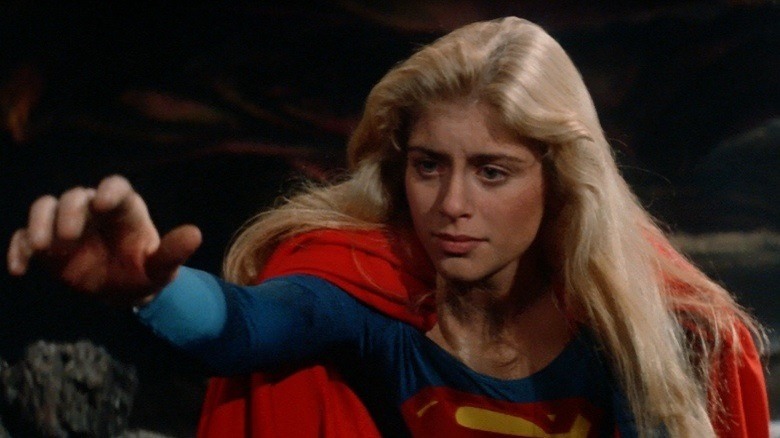
Kryptonite, that green crystalline substance that crops up with surprising frequency in the "Superman" universe, isn't the only weakness for your average Kryptonian. They're also vulnerable to magic. This is exploited to full effect in "Supergirl," which pits the Maid of Might against Faye Dunaway's witch, Selena. Sadly, little of the magic rubs off on screen.

Helen Slater is perfectly likeable as Kara Zor-El, Jor-El's niece. She's just given little to do in this obvious attempt to cash in her cousin's success. The true power of the most successful of the "Superman" movies is their utter sincerity, the ability of all involved to deliver an inherently silly concept with a straight face (and the wryest of winks). "Supergirl" is flawed because it's presented like a comedy, with laughable villains and a ludicrous plot — it feels like a parody of the material, so it's hard to find anything to admire in it. It's also an insult to cast actors of Faye Dunaway and Peter O'Toole's caliber, and then give them so little of substance to work with.

Jonah Hex
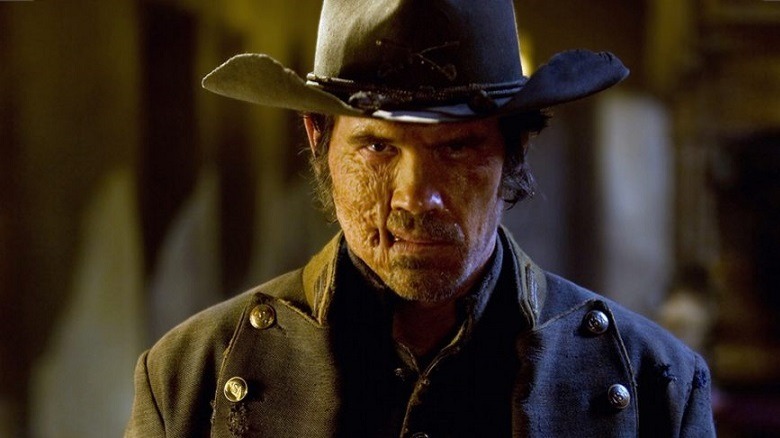
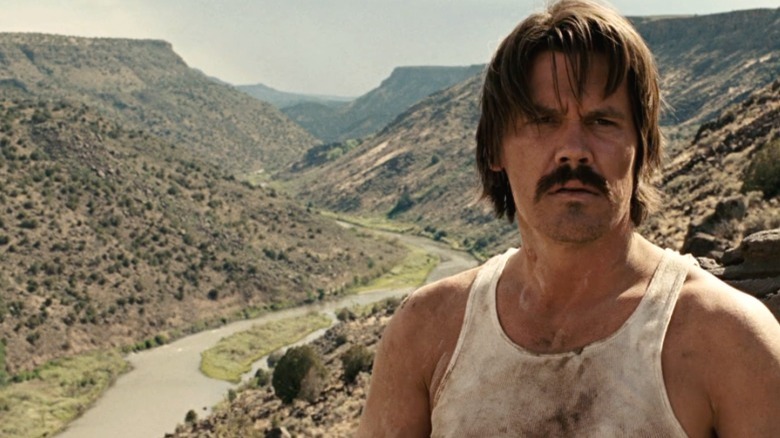
Luckily, Josh Brolin eventually got to appear in a half-decent superhero epic as Avengers big bad Thanos, but a decade earlier he played the lead role in this supernatural Wild West tale based on an obscure DC character.

Brolin is by far the best thing here, doing his best to make something decent out of the muddled plot, bizarre pacing, and the film's inability to trust the audience to remember something it was shown only moments earlier. Even the ordinarily reliable John Malkovich as the scenery-chewing villain Quentin Turnbull is disappointing here, while Megan Fox's Lilah feels like she was thrown in at the editing stage just to prove that there were actually women in the Wild West (even though, in Fox's own words, all of the female characters in the film are prostitutes).

"Johan Hex" is workmanlike and perfunctory, failing to bring anything new to the table, despite the potentially interesting crossover between the supernatural and the Old West. There's nothing in this mutilated mercenary's tale that would drive anybody to read any of the source material, which is a genuine shame.

The Return Of Swamp Thing
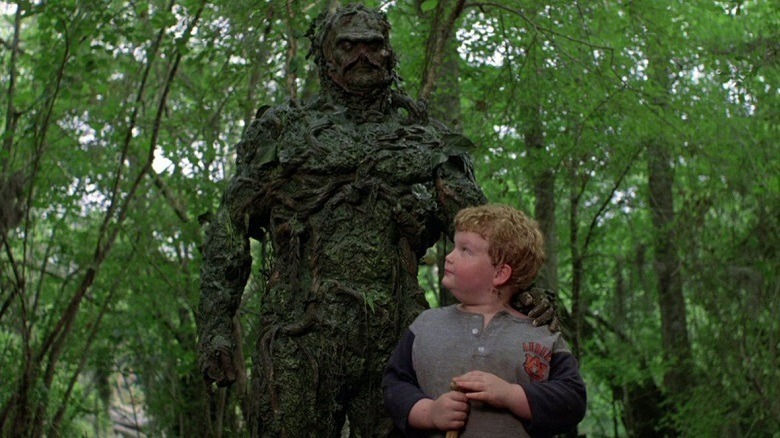
Five years after British upstart Alan Moore revitalized the ailing "Swamp Thing" title by showing that comics could be about more than larger-than-life characters beating the stuffing out of each other, director Jim Wynorski's take on the compostable champion saw the Guardian of the Green doing just that. While the "Swamp Thing" comics were delving into complex issues such as existential dread and inter-species relationships, "The Return of Swamp Thing" was little more than an excuse for Swamp Thing to fight against bizarre monsters that resembled rejects from the island of Doctor Moreau.

This small-scale kaiju botanical battle royale is billed as a horror-comedy, but it definitely tends towards the latter, with very few scenes demonstrating any tension or drama. As a film about a man in a rubber suit fighting other men in rubber suits, it's perfectly adequate entertainment — it's just a bizarre choice of license, considering that the character's comics were busy reinventing the genre. Actress Heather Locklear does have one great (and vaguely smutty) gag about vegetarianism, but you can simply watch the trailer for that and save yourself some time.

Batman Forever
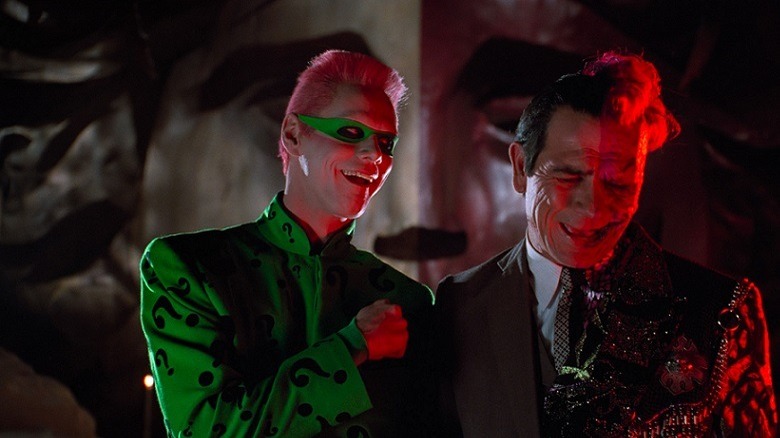
We should have noticed the cracks in "Batman Forever." The overuse of neon. The tendency to have characters shouting over each other, as opposed to engaging in dialogue. Michael Keaton had wisely departed at this stage, driven away by the script in which Two-Face teams up with disgruntled Wayne Enterprises employee Edward Nigma to invent a machine that'll suck the brains out of the citizens of Gotham City through their televisions. An audience member affected by Nigma's device might well go on to enjoy "Batman Forever."

Val Kilmer, the brand-new Batman and Bruce Wayne, does his best with the material he's given but it's hard to make an impression when you share screen time with Jim Carrey. Carrey's Riddler and Tommy Lee Jones' Two-Face squabble in almost every scene they're in, each considerable ego trying to make its presence known. "Batman Forever" also introduces Chris O'Donnell's Robin to the franchise, but even that seems like a labored excuse to sneak in a "Holy Rusted Metal" gag. "Batman Forever" is significantly better than the film that followed, but it's hard to find anything to enjoy in this noisy, garish mess.

Swamp Thing
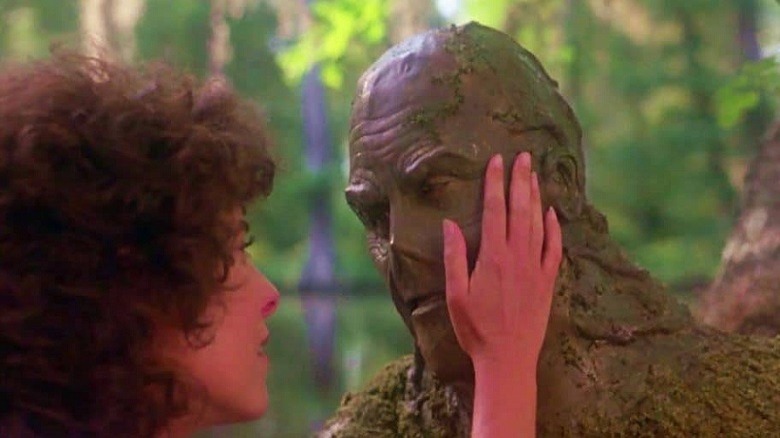
Director Wes Craven would release "A Nightmare on Elm Street" to international fanfare some two years after "Swamp Thing," presumably relieved to excise the memories of a decidedly average comic book adaptation that bears little of his trademark style or wit, and that today feels like the odd one out on his distinctive oeuvre.

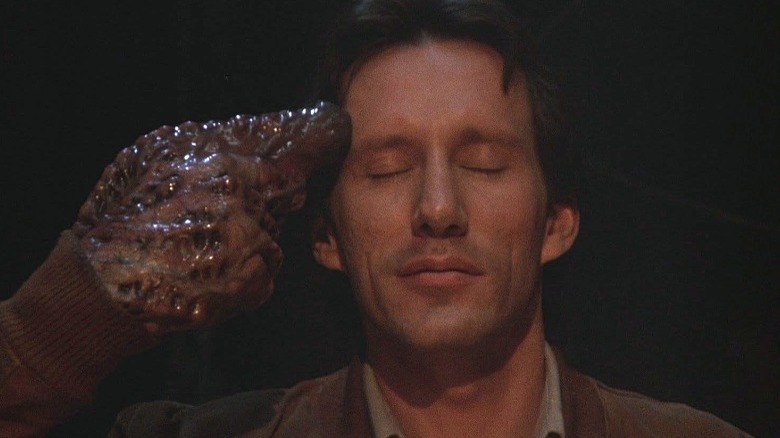
Loosely based on the comic book of the same name, Ray Wise plays Alec Holland, a scientist performing chemical research in the swamp. When rival Anton Arcane destroys his lab with explosives, Holland's corpse is thrown into the Louisiana bayou, but is resurrected through his bio-restorative formula and transformed into the human-vegetable hybrid known as Swamp Thing. Adrienne Barbeau (then John Carpenter's wife) plays love interest Alice Cable, sadly spending much of the movie relegated to a cleavage-wielding damsel in distress.

Dick Durock does a respectable job of portraying the plant-based paragon, all portentously slow dialogue and anguished expressions. Louis Jordan is clearly having fun as the villain, yet it's a shame to see him reduced to another monster in a costume for the movie's climax. It's watchable, yet struggles to find an identity. It's torn between campness and horror, as much of a hybrid as Ol' Swampy himself.

Green Lantern
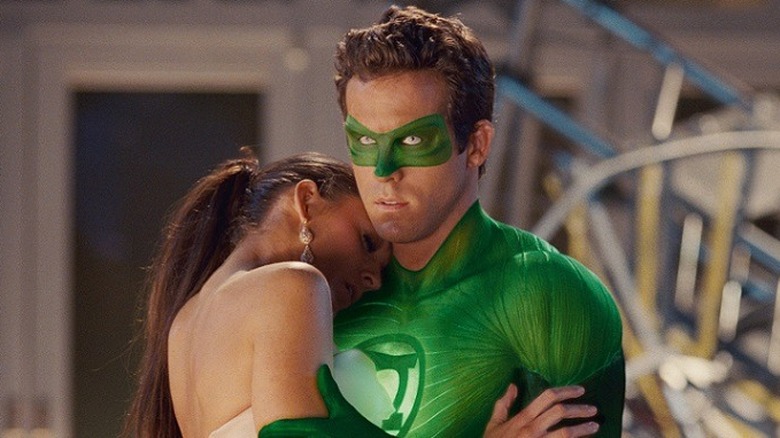
Not even safe from mockery by its own star, "Green Lantern" is a decidedly average movie elevated by the presence of Ryan Reynolds, who is effortlessly likeable as test pilot and soon-to-be superhero Hal Jordan. His charm and charisma carry this film much further than it deserves.

"Green Lantern" has proven to be a difficult property to adapt, languishing in development hell since 1997, with names like Kevin Smith and Quentin Tarantino failing to launch the property. It's easy to see why. "Green Lantern" is DC's take on space opera, focused on an intergalactic police force populated by countless alien species, not to mention a hero armed with a weapon restricted only by his imagination.

The highest praise that you can offer "Green Lantern" is that it's not as bad as you remember. Despite feeling like a prequel to a better, more interesting film, it zips along nicely, and the extensive special effects are surprisingly adequate. A lackluster villain isn't given enough depth or backstory, and the final act is a confusing huddle of CGI, but for all the jokes levelled at this movie over the years, Ryan's Green Lantern — and that CG-animated suit — isn't that bad.

Superman III
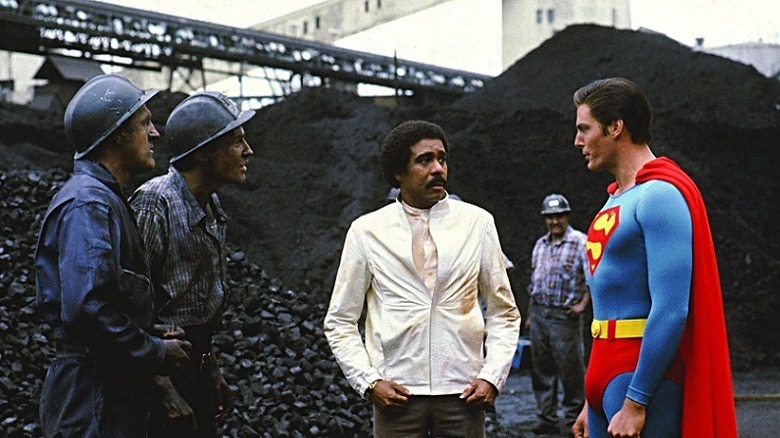
The first failure from both a commercial and critical perspective for Christopher Reeve's Superman series, "Superman III" sees the Last Son of Krypton face off against magnate Ross Webster, who seeks to make his fortune destroying by Colombia's coffee output. To help him, he enlists Richard Pryor's Gus, a computer programmer. Together, they create a new form of synthetic kryptonite.

The results are the most interesting thing about the film, as the kryptonite splits Superman into two distinct individuals. The concept of an evil Superman has been done to death (see "Invincible," "Brightburn" and DC's own "Injustice" comics), but it's fun to see Christopher Reeve play this anarchically dark take on the big blue boy scout. It's almost a letdown when the film ultimately comes down to a fight between Superman and an evil supercomputer, with some dodgy '80s video game-style graphics.

Never quite sure whether it's going for out-and-out comedy or not, "Superman III" is disjointed, almost as if it doesn't even belong in the same universe as the previous two films. There's no doubting Pryor's comedic chops — and his star was certainly on the rise in the early '80s — but he's a poor fit for Superman.

Constantine
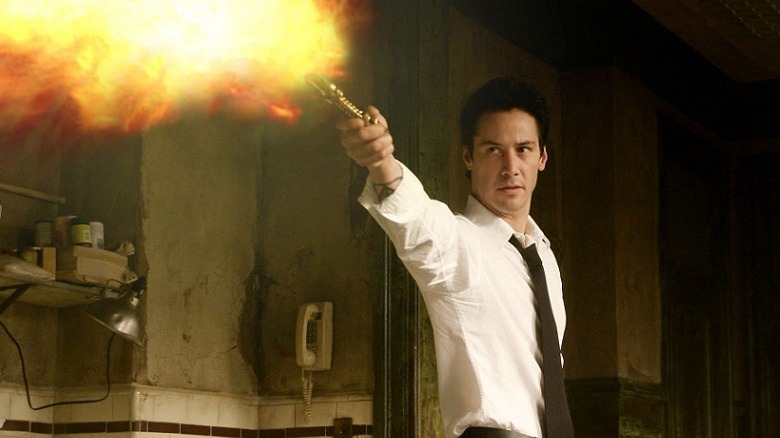
Purists may have scoffed at the fundamental differences between "Constantine" and the comics, with John Constantine played by the considerably un-Liverpudlian and non-blonde Keanu Reeves, but the essence of "Hellblazer" remained remarkably intact despite the surface changes. Loosely based on Garth Ennis and Will Simpson's "Dangerous Habits" arc, "Constantine" sees our lead — a cynical, tortured, and terminally-ill magician — help a police officer investigate the suicide of her sister, a line of inquiry that will reveal an apocalyptic plan for a war between Heaven and Hell. It's only through honorable deeds that John Constantine will be redeemed.

Welsh actor Matt Ryan would go on to play the Alan Moore-created character across a variety of media, who would eventually move from DC's adult Vertigo label to join the DC Universe proper, but Keanu's "Constantine" still stands as a fascinating and bold take on the character, treading some of the same territory as "Blade," "Hellboy," and "Spawn." With Reeves having a late-career renaissance thanks to "John Wick" and "The Matrix: Resurrections," it'll be interesting to see if he'll be tempted to don Constantine's trench coat again.

Batman Returns
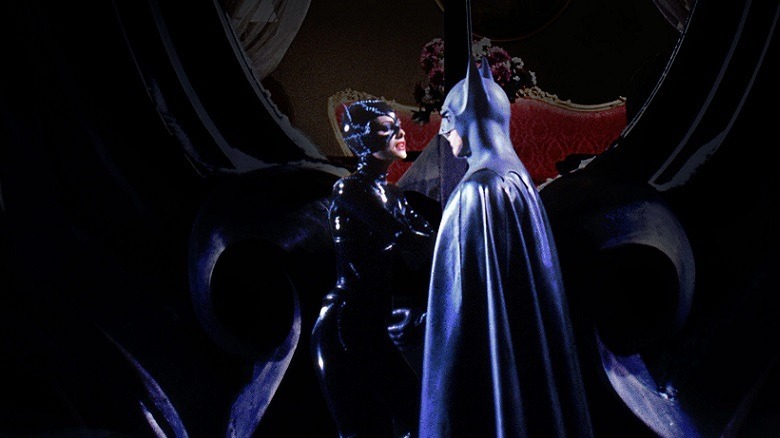
Michael Keaton's Batman returns in this Tim Burton-helmed sequel, which introduces Danny DeVito's Penguin and Michelle Pfeiffer's Catwoman. It's far from a poor film, but it does feel like a failed attempt to once again bottle lightning. The elements are all there — the return of many members of the cast, the Gothic sensibilities, the incredibly distinctive set design (inspired by the work of production designer Anton Furst), and the sublime Danny Elfman soundtrack — but it ultimately falls short of the target.

The first movie had a wry sense of humor, but there's a bleak nihilism to the sequel that sacrifices much of the original's charm. Keaton, Pfeiffer, DeVito, and the ever-consistent Christopher Walken as the white-haired Max Schreck (a kind of spiritual successor to Walken's Bond villain, Maximillian Zorin) are as excellent as ever, but the fun we expect from the franchise is largely missing. The Dark Knight is, in this case, way too dark.

Batman (1966)
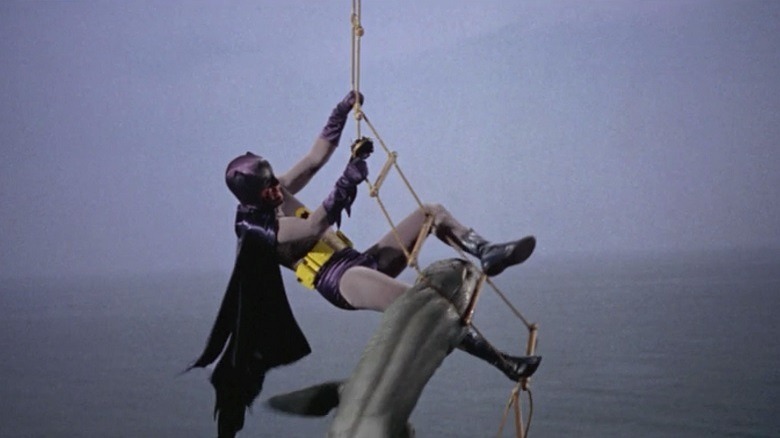
This is more like it. As camp as Christmas and more self-aware than ever, the 1966 movie adaptation of the successful "Batman" TV series sees Batman and the Boy Wonder confront their biggest and best villains in order to stop them from kidnapping the United World Organization's Security Council and taking over the world.

Adam West's performance as both Bruce Wayne and Batman was always pitch-perfect, delivered with an earnest sincerity that falls just short of winking at the audience. Burt Ward's Robin is all headstrong teenage enthusiasm. These central performances hold together what could have been an incredibly daft escapade.

The movie feels bigger than the TV series, taking the story from Gotham to the world stage. The set pieces are more ambitious, and it's hard not to love a film that introduces Bat-shark repellent and a scene in which Batman struggles to throw away a bomb, encountering nuns and innocent ducklings en route. Sadly, the movie barely broke even at the box office, but was far from a flop with either critics or and fans.

Superman Returns
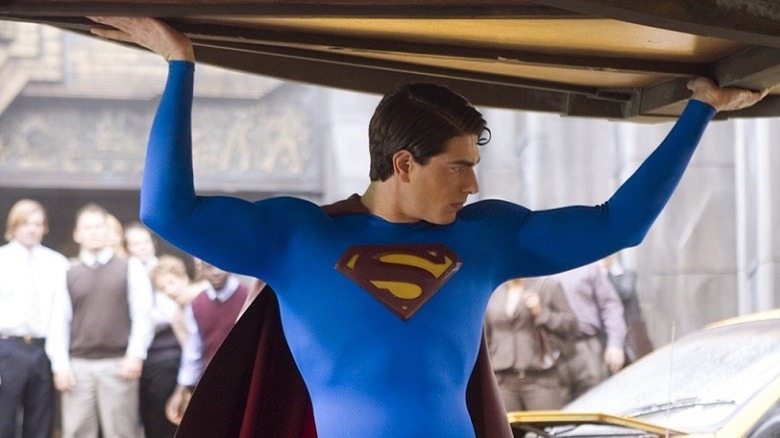
I've always had a soft spot for Brandon Routh's take on the Man of Steel. No one will ever compare to Christopher Reeve, but Routh brought his own likeability and charm to the role. His Superman was convincing, and his Clark Kent suitably clumsy and awkward. He just deserved better than this slightly above-average movie.

Before Kevin Spacey was outed as an actual bad guy, "Superman Returns" saw him channeling Gene Hackman's Lex Luthor. Getting hold of Kryptonian technology from Superman's now-abandoned Fortress of Solitude, Luthor seeks to flood the planet as part of a real estate scheme. Seriously. Between this and "Superman III" wiping out Colombia's coffee production, one almost longs for the days when the bad guys just wanted to take over the world.

Short on action but big on heart, "Superman Returns" is a brave step forward for the Superman franchise, especially when it introduces Kal-El's child. Unfortunately, all that progress was ultimately brushed aside as we moved into the new grim-dark world of the DCEU.

Watchmen
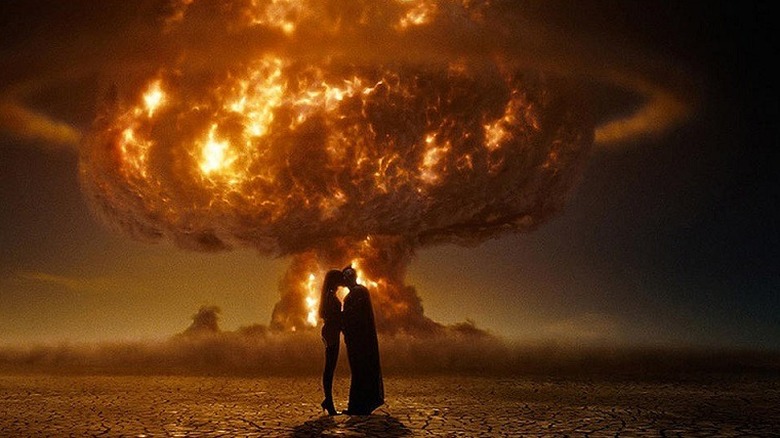
Alan Moore and Dave Gibbons' seminal 12-part series "Watchmen" blew up the comics industry when it was released in 1986. An ambitious epic that effectively reinvented the superhero genre, "Watchmen" was prime fodder for a movie adaptation. And yet, many failed. As the Independent reports, directors like Terry Gilliam, Darren Aronofsky and Paul Greengrass were all attached at some stage, but it would take Zack Snyder, who had made his presence known with his excellent remake of "Dawn of the Dead" and his striking adaptation of Frank Miller's "300," to bring it to life.

Disowned by Moore, "Watchmen" covers complex themes like totalitarianism, patriotism, and identity, all hidden beneath a sprawling tale of the rise and fall of superheroes in a world on the brink of nuclear disaster. It's inclusion here is justified by Geoff John's modern comic book sequel, "Doomsday Clock," which brought this band of dysfunctional heroes into the DC Universe proper.

"Watchmen" is far from a perfect film — an ill-fitting sex scene would have been better left on the cutting room floor — but it's a visually striking movie that feels semi-faithful to the source material. Purists may argue that the new ending misses Moore's overall point, but the movie stands as an interesting attempt to film the unfilmable.

The Dark Knight Rises
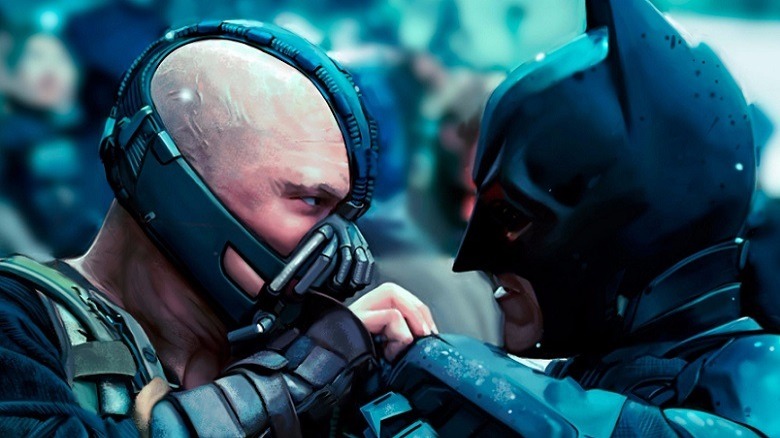
Unlike any of the cinematic Batman series that came before it, Christopher Nolan's three-film run has a proper arc. It has a beginning, a middle, and, in "The Dark Knight Rises," a competent and definitive end. Nearly a decade after going into hiding as a result of the events of "The Dark Knight," Batman is forced out of self-imposed exile thanks to the machinations of the terrorist known as Bane.

Schumacher's "Batman and Robin" may have reduced Bane to a drug-dependent sidekick, but here Tom Hardy does justice to the popular Batman villain, a foe every bit Bruce's equal in both brawn and brain. The storyline, loosely based on the epic "Knightfall" saga, sees Bruce defeated and forced to rise again. It's the weakest film of the trilogy, but any series would have struggled to sustain that level of excellence. Ultimately, this is Nolan's story. It's removed from any other continuity, but it's also a memorable approach to the material that will influence films and comics for years to come.

(As an aside, I have a special fondness for this movie. During my trip to New York to witness the "Occupy Wall Street" movement, I stumbled into the filming of the climactic street scene — I may have been erased from cinematic history thanks to a green screen, but it's a lasting memory).

Superman
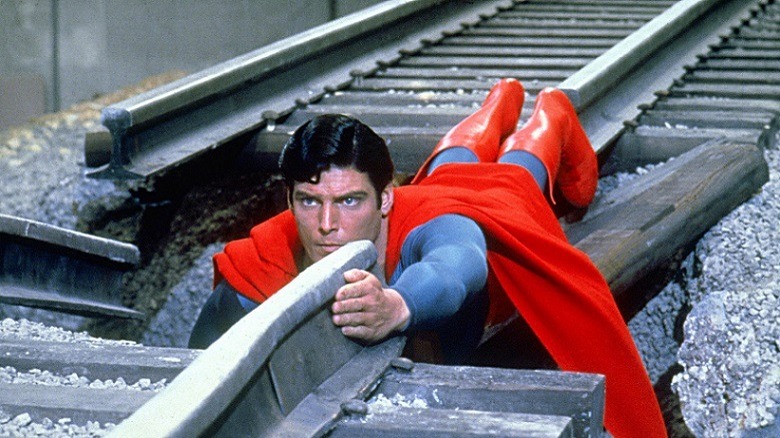
Richard Donner's "Superman" is a visual feast, with exemplary flying effects that caused cinema audiences of the time to gasp. "Superman" relates Clark Kent's familiar origin story, following him from his adolescence in Smallville through his early career in Metropolis. Many traditional elements from Superman's comics, including Lois Lane, Lex Luthor, Perry White, kryptonite, the Fortress of Solitude, and Jimmy Olsen, pop up along the way.

Unknown actor Christopher Reeve was cast as Superman, and he brings a genuine physical presence to the role. With subtle posture changes, he's as convincing as Clark as he is the Man of Steel, and it's hard to imagine now that anybody else was even considered for the part. "Superman" was one of the first of a new breed of fantasy movie, one that realized that, with proper casting and decent special effects, anything was possible.

Batman (1989)
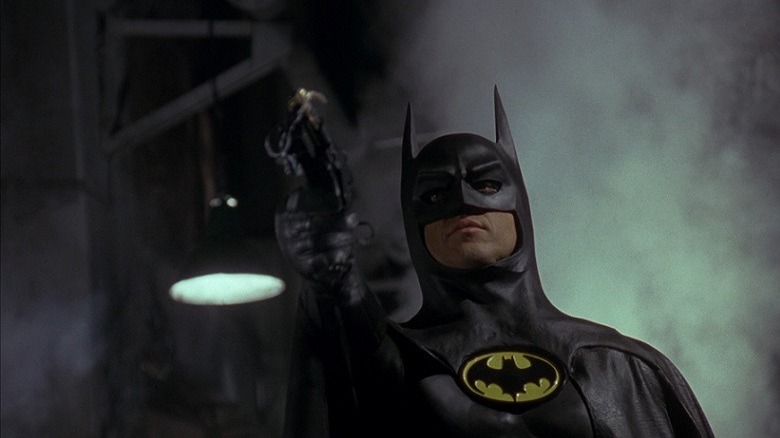
In much the same way that doubters initially cast aspersions on Heath Ledger's casting as the Joker, Michael Keaton, an actor known best for "Mr. Mom," assorted sitcom work, and "Beetlejuice," faced an unbelievable amount of backlash when he was first fitted for Batman's cape and cowl.

But, just as with Ledger's performance, the release of "Batman" saw humble pie become a fixture of many critics' diets. Keaton was excellent as both Bruce Wayne and the Caped Crusader, expertly portraying the tortured and eccentric man behind the mask as well as his armored alter-ego. Three years prior, Frank Miller's outstanding "The Dark Knight Returns" reinvented the character for modern comic book readers, and Burton's movie did exactly the same thing for cinema-goers, eschewing the camp of the '60s in favor of a moody Gothic aesthetic. Gotham itself was now as much a character as any of its bizarrely clad denizens, while Danny Elfman's score rounded off a perfect package.

It's easy to forget the impact of Nicholson's Joker as well. With Batman's arch nemesis brought to life by a legendary actor, "Batman" is that rarest of superhero movies: one where the villain is at least as interesting as the hero.

Superman II
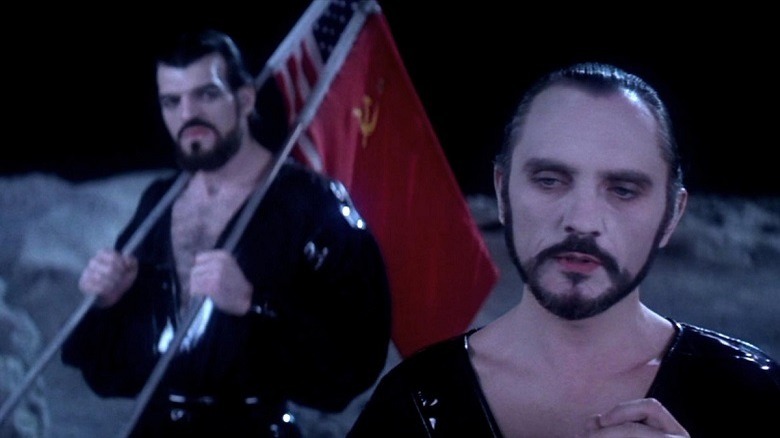
Even Gene Hackman's tongue-in-cheek portrayal of Lex Luthor is a formidable foe for the Man of Steel on a mental level, but it took a trio of Kryptonian supervillains from the Phantom Zone to put Superman through the physical wringer.

"Superman II" sees General Zod and his minions freed from the Kryptonian equivalent of a supermax, only to find themselves gifted with extraordinary powers courtesy of Earth's lower gravity and its yellow sun. Superman, now the unofficial custodian of Earth, must fight them to ensure the planet's survival, as Zod seeks to enslave humanity and Lex Luthor proves to be all too eager to betray his own species for personal gain.

Terence Stamp brings a wonderful arrogance to Zod, while his aides, the femme-fatale Ursa and mute Non, prove to be formidable lieutenants. As you'd expect, the sprawling fight scenes are wonderfully realized, and the Kryptonians make for excellent villains. One of the greatest strengths of this sequel is that it feels like a proper continuation of the 1978 original — it's more of the same, which is exactly what audiences at the time demanded.

Batman Begins
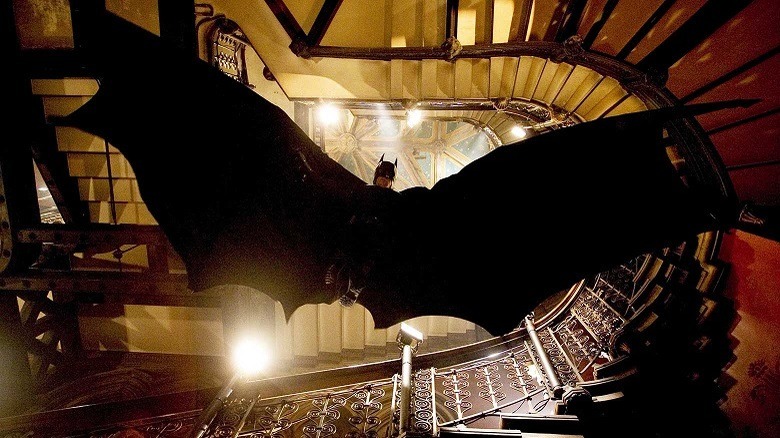
With the latest Batman reboot on the horizon, we're about to get yet another big-screen take on the Dark Knight — our third since 2005. As such, it can be difficult to appreciate exactly what Christopher Nolan accomplished with "Batman Begins." The comics of the '80s and '90s had seen the Caped Crusader take part in increasingly outlandish escapades, confronting New Gods and travelling across space and time. The dawning of the new millennium saw a return to basics, and the films would follow suit, with Nolan's film stripping out the camp that marked the Schumacher era and grounding the character in reality.

The gadgets were plausible, and the villains all too human. The fights were brutal and visceral, and took both a physical and emotional toll on our broken hero. For an origin story that we've witnessed countless times, it's telling that "Batman Begins" makes it interesting again, throwing in aspects that we'd never seen on film before. Christian Bale's Bruce isn't a million miles away from his Patrick Bateman; you could argue that they're equally as damaged, but land on different sides of the same coin. Nolan's distinct version of the character is still as watchable now as it was then, and "Batman Begins" remains one of the most interesting takes on the Bat and his earliest days.

The Dark Knight
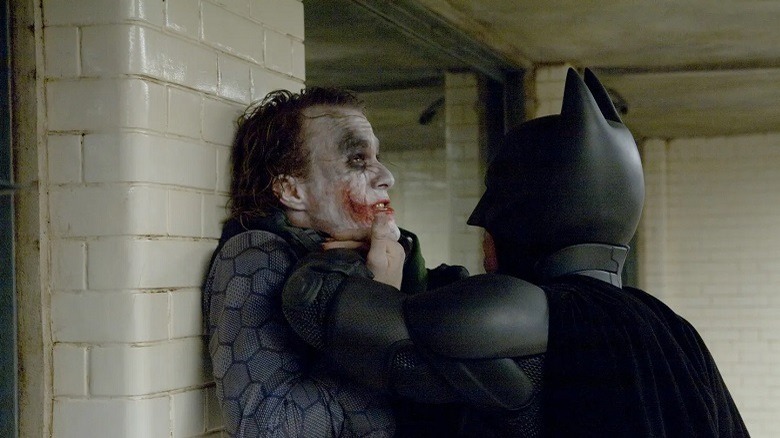
The second part of Nolan's Dark Knight trilogy does what all good sequels should: It takes the premise of the first movie and elaborates and improves on it. Heath Ledger's Joker is the perfect nemesis for Bale's Batman. Both are equally as smart and calculating, but Ledger's Clown Prince of Crime casts the character as a force of chaotic nature, a cruel and sadistic genius who, even though he's physically defeated, reigns victorious at the movie's end.

Through his actions, the Joker disassembles everything that's dear to the Dark Knight, and it's a guilty pleasure to watch his plans unfurl. "The Dark Knight" is as smart a superhero film as you're likely to ever see, and every viewing reveals new layers. It still remains one of the greatest DC movies ever made, in or out of the DC Extended Universe. It's truly outstanding.

Read this next: The 15 Best Batman Comics You Need To Read

The post Every DC movie made prior to the DCEU ranked from worst to best appeared first on /Film.
06 Jan 01:51

A big failed Russian rocket just came crashing back to Earth out of control - CNET

by Eric Mack
The test of a new upper-stage booster didn't go as planned.
05 Jan 22:21

Jabba The Hutt's Badass Lady Cousin Is 2022 Goals

by BJ Colangelo

This post contains minor spoilers for the latest episode of "The Book of Boba Fett."

There are a few universal truths in the world of "Star Wars": Yoda was the most powerful and respected Jedi of all, Han shot first, and if you're a woman who likes "Star Wars," some cheeto-dusted jackwagon is going to compare your appearance to Jabba the Hutt at some point for merely existing. Jabba's design was based on the shape and movement of slugs, but also a real-life human being, actor Sydney Greenstreet ("Casablanca," "The Maltese Falcon"). Despite the fact that Jabba ... wait, I'm sorry, His Excellency Jabba Desilijic Tiure of Nal Hutta, Eminence of Tatooine, was one of the most influential, feared, and powerful crime lords in the galaxy, his existence has been used as shorthand for "fat and gross" since his introduction. Who cares about Jabba's accomplishments as a criminal mastermind when you can poke fun at his appearance? That attitude is old, crusty, and quite frankly, BORING.

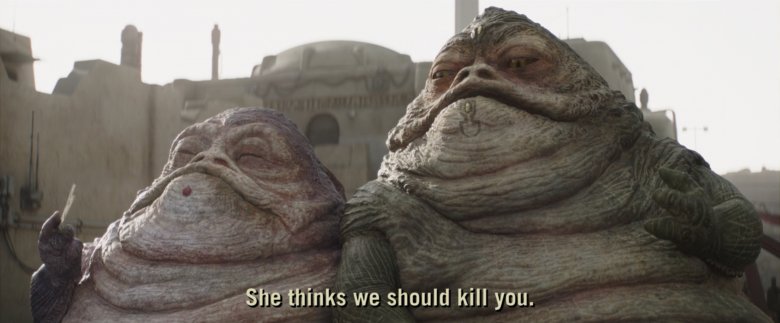
This week's episode of "The Book of Boba Fett" continues the title character's story as the new Daimyo, but introduces the currently unnamed fraternal twin cousins of Jabba who want to challenge Fett for the throne. The second they turned the corner and I caught my first glimpse of Jabba's lady cousin, I was smitten, nay, INSPIRED. I'm not one for new year's resolutions, but if I had to choose, it would be embracing my inner Lady Hutt, a comparison I've heard made to myself many times before, and living my life accordingly.

Worship Me, Respect Me, Fear Me, Or Prepare To Have A Bad Time

The first change I need to make to correctly embrace my inner Lady Hutt is an upgrade to my form of transportation. I'm pretty proud of my current lesbian mom van, but I deserve the ability to be carried by a gaggle of men who obey my every word out of fear, and I certainly deserve to enter any space with my own entrance music. Lady Hutt has a barrel bass drum, but I'm thinking keytar. The next step is to completely abandon all forms of supportive garments. Shapewear? Bras? We're done here. I'm letting it all hang out in 2022, and investing in a clack fan.

I also must perfect the aura and attitude of a Lady Hutt. As far as I'm concerned, Hutts have it made. They do whatever they want, eat whatever they want, boss around men, kill their enemies, and in the best possible scenario, die from being choked out by the hottest woman in the galaxy. In real life, the government is a disaster, we're surrounded by idiots, and the environment is crumbling. I truly have no time to waste on insolent behavior from losers who still think comparing a woman to Jabba the Hutt is some super sick burn. This year, my motto is "Worship Me, Respect Me, Fear Me, or Prepare to Have a Bad Time." Thank you, Lady Hutt. I'll try my best to make you proud, and if anyone has an issue with that ... y'all already know she knows how to handle it.

Read this next: The 12 Best Boba Fett Moments In Star Wars Shows And Movies

The post Jabba the Hutt's Badass Lady Cousin is 2022 Goals appeared first on /Film.

05 Jan 22:18

No, That Book Of Boba Fett Flashback And Attack Of The Clones Scene Don't Perfectly Match ... And That's Okay

by Jeremy Mathai

There's just something about "Star Wars," isn't there? Ever since taking an entire generation by storm and lighting their collective imaginations on fire back in 1977, George Lucas' unfathomably popular story about Jedi, princesses, lovable rogues, and space opera adventures continues to have the same effect on countless fans around the globe. It's the biggest reason why we're driven to scrutinize every Easter egg and dive deep into the many influences that make up "Star Wars." The overall reaction to any given aspect of the franchise, positive or otherwise, can go a long way towards commenting on how we as a species engage with and digest our favorite pop culture media.

But then there's the darker, ugly side of the equation. As passionate and well-intentioned as many fans can be, "Star Wars" is notorious for revealing the absolute worst qualities that we're all capable of. If you're tempted to reject that notion, just think of Jake Lloyd, Hayden Christensen, Ahmed Best, Kelly Marie Tran, and many more actors who undeservedly bore the brunt of angry fans who couldn't separate living, breathing human beings from the fiction they found disappointing.

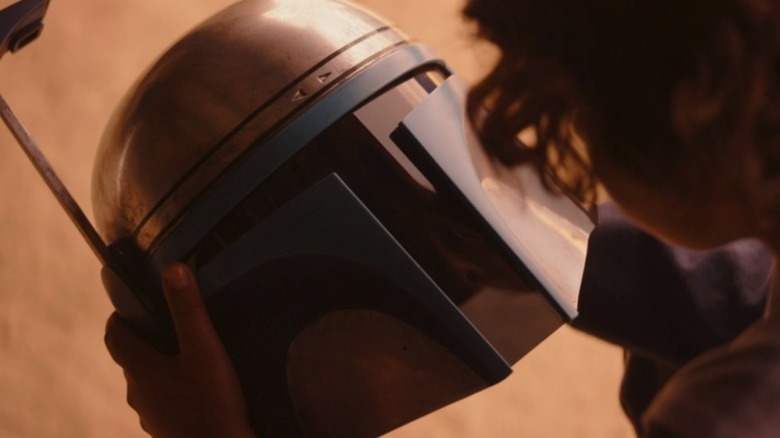
While the overall reactions to "The Book of Boba Fett" thankfully haven't risen to that level of abuse and toxicity, one seemingly minor complaint from last week's series premiere has continued to boil over in the days since. Early in the first episode, Boba Fett's regenerating bacta tank nap leads to flashbacks of previous moments in the bounty hunter's past -- both familiar and otherwise never-before-seen. One scene brought us back to young Boba Fett (played by Daniel Logan in "Attack of the Clones") witnessing his clone "father" Jango's death. The prequel era of "Star Wars" tends to be a hotbed of controversy in and of itself, which is precisely what makes this latest development so ironic. Fans took to social media to complain about a lack of faithfulness to that original scene, which we previously reported came about as a result of minor reshoots during production of "The Book of Boba Fett."

I'm here to tell you that not only is this the furthest thing from a "continuity error" and simply not a big deal at all, but is actually a promising sign for this new era of "Star Wars."

Different Stories, Different Goals

First and foremost, we need to make a couple of facts abundantly clear. Yes, the background and framing of both scenes are wildly different. You can get a better look at these apparent inconsistencies thanks to a post by the Cinematic Captures Twitter account, which helpfully places the footage from "Attack of the Clones" and "The Book of Boba Fett" one on top of the other. However, fans are nothing if not insistent about maintaining a seamless, unbroken sense of verisimilitude from one piece of "Star Wars" media to another. According to the most vocal complaints, the jarring differences in the background and framing of both scenes are proof of laziness at best, and outright provocation of "real fans" at worst.

But here's an equally crucial fact: as /Film's Peter Sciretta rightfully pointed out, both sequences are attempting to accomplish wildly different end goals. In "Attack of the Clones," the epic gladiatorial arena battle sequence serves as the backdrop to an even larger tragedy. The skirmish between the Jedi and the Geonosians is essentially the first large-scale shot fired in what would eventually become the Galactic Civil War depicted in the original trilogy, further emphasized by the Death Star plans escaping and, of course, Boba Fett's villainous origin story beginning by witnessing the death of Jango. The intentional choice to frame young Boba amid the carnage of battle with his father's helmet (sans Jango's decapitated head, importantly!) adds to the sweeping operatic flair of the prequel films and feels perfectly of a piece with Lucas' overall aims.

"The Book of Boba Fett," meanwhile, offers several reasons why the scene looks different in the show. Importantly, the episode contextualizes this flashback as a dream sequence from an unreliable narrator. We're looking at it from Boba's own eyes, which means the battle droids and reek corpse in the original background simply aren't the focus -- his loss and extreme loneliness is. But if that doesn't satisfy you, take it straight from "Star Wars" guru and longtime Lucasfilm employee Pablo Hidalgo, who suggests another sensible explanation: Different camera lenses capture images differently. If one really needs to justify their head-canon, think of this as no different than the famous dolly zoom in "Jaws," which radically changes the background from one second to the next.

Different stories demand different storytelling needs. And you know what? That's more meaningful than copy/pasting one scene onto another.

Star Wars Needs To Move Forward, Not Look Back

Don't get me wrong; I'm not saying there aren't any valid criticisms of "The Book of Boba Fett." In fact, that only makes all this noise about one minor shot in the first episode feel like even more of a waste of time! /Film's Eric Vespe already detailed one potentially thorny issue regarding the show's main protagonist, but here's another one that ties in neatly with the topic at hand. The entire premise of "The Book of Boba Fett" is predicated on breathing new life into a decades-old villain who, for all intents and purposes, had already served his purpose in the original trilogy and had since been supplanted by the overwhelming popularity of Din Djarin (Pedro Pascal) in "The Mandalorian." It's a tall task for "Star Wars" to keep attempting to expand the stories of established characters into spin-offs of their own -- the lowly box office receipts of "Solo: A Star Wars Story" are proof enough of that.

Here's why I think this whole background controversy is actually a promising sign: Hopefully, it shows that this series isn't bound by the constraints of remaining overly reverential to previous "Star Wars" installments. Painstakingly recreating a blink-and-miss-it moment from "Attack of the Clones" would no doubt please the die-hards, but at the cost of robbing "The Book of Boba Fett" of even the tiniest amount of personality that it could potentially create for itself. Instead, an otherwise nondescript moment of Boba Fett's past can take on the feel of a mission statement of sorts, teasing the possibility that this series will continue to remix and refresh our conceptions of "untouchable" franchise iconography.

By all means, let's hope "The Book of Boba Fett" keeps adding new layers to the Tusken Raiders, turning them from the harmful stereotype of mindless savages in the original and prequel trilogies to much more complex communities. Give me more bait-and-switches involving conspicuously missing Rancors that purposefully shy away from indulgent nostalgia and fan-service. Hell, I'm completely in favor of this series introducing the irresistible mystique of Jabba the Hutt's fabulous cousins, a genuinely original addition to "Star Wars" lore that I never knew I needed until now.

Every fan will have their own positive and negative takeaways from "The Book of Boba Fett," but let's just make sure they're worth the fuss, yeah?

Read this next: The 20 Best Clone Wars Episodes Ranked

The post No, That Book of Boba Fett Flashback and Attack of the Clones Scene Don't Perfectly Match ... And That's Okay appeared first on /Film.

05 Jan 22:17

Venmo, PayPal and Cash App To Report Payments of $600 or More To IRS This Year

by msmash
schwit1 writes: Millions of small business owners who rely on payment apps like Venmo, PayPal and Cash App could be subject to a new tax law that just took effect in January. Beginning this year, third-party payment processors will be required to report a user's business transactions to the IRS if they exceed $600 for the year. The payment apps were previously required to send users Form 1099-K if their gross income exceeded $20,000 or they had 200 separate transactions within a calendar year. Democrats made the change in March 2021, when they passed the American Rescue Plan without any Republican votes. The new rule only applies to payments received for goods and services transactions, meaning that using Venmo or PayPal to send a loved one a gift, pay your roommate rent, or reimburse a friend for dinner will be excluded. Also excluded is anyone who receives money from selling a personal item at a loss; for example, if you purchased a couch for $300 and sold it for $250, the amount is not taxable.

Read more of this story at Slashdot.

05 Jan 18:40

Why You Still Need a Booster, Even After a Breakthrough COVID Case

by Meredith Dietz

If you haven’t personally caught any variant of COVID-19 by this point, you might have an attitude of “well, I’m gonna get it eventually.” That isn’t necessarily true (nor is it the best attitude to have), but it sure can feel that way.

Read more...

05 Jan 18:40

Defense Contractors Must do More to Conceal Their Attack Surface

by Gordon Lawson

The world is entering a new era dominated by the rise of peer competitors like China and Russia, who are increasingly exerting their geo-political influence. After two decades of fighting a counter terrorist focused war where the tools of the US and its allies were far superior, the competitive landscape is changing significantly.  

read more

05 Jan 18:40

The leak in our bathroom ceiling

by J.D. Roth

Ah, the joys of homeownership.

Remember the peeling paint in the bathroom ceiling that I mentioned last week? The peeling paint that I felt certain was due to humidity from the shower and lack of adequate ventilation? Well, I was wrong. The paint is peeling because we have a leak in the roof.

It seems to be a small leak, but it's a leak nonetheless.

Monday morning, I noticed that there was a tea-colored water stain in the area where the paint had peeled. “I don't like that,” I thought, and I snapped a photo.

[Photo: A stain in our bathroom ceiling]

I drove up to the family box factory, where my brother and I spent several hours waiting for Mom to be discharged from the hospital. While we waited, we sorted through her paperwork to be sure we had everything in order. We updated her personal-finance records. We chatted about the future.

In the end, Mom was not released from the hospital on Monday, so I drove home in the heavy rain. When I arrived, I checked the water spot in the bathroom ceiling. Had it grown? It had.

[Photo: A *bigger* stain in our bathroom ceiling]

So, I ventured into our attic for the first time.

Crawling around in the dark, I managed to locate three roof leaks. None of them were extreme — there was no water pouring in anywhere — but all were most certainly leaks.

Yesterday morning, I climbed on the roof to see if I could locate the sources. I could not. Although I helped install a roof once long ago — back in 1993! — I'm no roof expert. I poked and prodded at the shingles, but I couldn't find any obvious damage. (The source of a leak, of course, isn't always where the leak manifests. The damage could be upslope and running under the shingles before it finds a spot to drip.)

Because our attic had no walkways (meaning that in order to move around up there, I had to move from joist to joist), I bought ten cheap boards at Home Depot. I hauled them up the ladder and into the attic, then nailed them down in order to make it somewhat easier to move through the cramped space. After that, I moved in to get a closer view of the leaks.

Ultimately, I decided there are two (possibly three) problems:

  • There is a very small leak — a seep? — coming from the chimney. This is likely due to problems with the flashing, which the home inspector had called out in August. This seep wets a rafter, but I can't find any signs that it ever drips. The insulation and joist below weren't wet, and I can't find anything inside the house that would show previous problems.
  • The larger leak, the one that spurred all of this, is near a solar tube. The wettest area is near the downslope part of the solar tube, which makes sense, but the upslope part of the roof is wet too. To me, this indicates that the leak could be above the solar tube — or that the entire area around the cut-out is problematic.
  • The third problem spot is about twelve inches downslope from the solar tube. This might be a third leak, but it might also be residual run-off from the bigger leak upslope. I don't know.

After three hours mucking around with the roof, I came inside to do research on the interwebs. Is this something I can fix myself?

I decided that while repairing leaks is theoretically non-difficult, it's not something that I'm qualified to tackle in the middle of Oregon winter. If this were summer and I had time to mess around with the shingles, fine. I'd try it. But it's not summer. It's a very wet winter (as always), and I'm afraid that if I began to tinker, I'd make things worse.

I called the experts.

The man who answered the phone at the roofing company asked me some questions about the issue. “This doesn't sound too bad,” he said. “We'll send somebody out tomorrow or Thursday. If this is as simple as it sounds, he should be able to fix it in an hour or two.” I sure hope so! There's a $250 charge just for coming out (which includes the first hour of work), then it's $130 for each additional hour. Plus materials, of course.

While I know that things like this happen with houses — especially older homes like ours — I can't help but be a little distraught. We just sold a home that needed constant repairs (although never on the roof, funny enough), so I have a bit of PTSD. These roof leaks are probably a minor one-time blip. I get that. But the cynical side of me worries that this is an ill omen.

When we bought this house, Kim and I talked about future changes we'd like to make. There's not a ton to do, but there are a few larger upgrades we'd like to tackle.

We hate the carpeting in the bedrooms, for instance. It's an off-white that stains easily and shows every bit of dirt and debris. Yikes. I wanted to replace the carpeting before we physically moved in. Kim convinced me not to. In retrospect, we should have done it.

The biggest project we'd like to tackle is remodeling one (or two) of the bathrooms. We have three bathrooms but no bathtubs. Because Kim and I both like to soak, this is a nuisance. Now that we'll have to repaint the ceiling in the hall bathroom, I've begun toying with the idea of taking the opportunity to actually remodel that room this summer — and to do it myself. It would be a challenge, no doubt, but I think it might be fun.

We'll see…

05 Jan 18:39

[Update: Accidental] Xbox begins disabling Dev Mode accounts used for emulation

by Adam Conway

Update (01/06/2022 @ 06:01 ET): Jason Ronald, partner director of product management at Xbox, has said that this was done in error. The company is working on identifying and re-enabling accounts as soon as possible and has invited users to email the address given in the email to have their accounts reinstated quicker. The article as published on January 5th, 2022, is below.

The Xbox Series S and the Xbox Series X could emulate the likes of Wii, GameCube, Nintendo DS, and PlayStation 1 pretty easily, thanks to a policy undertaken by Microsoft. The company pledged that any of its Series S and Series X devices could become full-fledged developer kits, and all you needed to do was pay a $20 fee to Microsoft to get a developer account. Developers could then load and test their own code on the consoles, which opened the door to normal users installing emulators on their consoles, masquerading as developers. However, Microsoft has now begun disabling developer accounts that were used exclusively for emulation, saying that those accounts have been disabled for not having “an active presence in the Store”.

To be clear, Microsoft has always been allowed to do this as per the release clause in its developer code of conduct. It was no secret that developer accounts essentially being abused in this way was likely a gray area at best, and it’s not too surprising that the company wanted to take action. Having said that, users were not warned ahead of time that their accounts were going to be disabled, catching many off guard, and some feel that they are entitled to a refund.

If you’re a legitimate developer working on a title that was to be released on the Xbox Store that has had your account disabled, it’s not clear what your next step should be. Presumably, you would need to contact Microsoft through the given email address and plead your case as to why you need a developer account.

Thankfully, Developer Mode isn’t the only way to access emulators anymore, and there are other ways to access them. You can run lots of different emulators in retail mode now too, including RetroArch and DuckStation. No whitelisting is required, either. While it’s unfortunate that users who paid the $20 fee exclusively just to access emulation will likely have their account access revoked, at least there are now alternatives meaning that the door to emulation isn’t completely shut.

If you created a developer mode account recently exclusively for use in emulation, it’s likely that Microsoft will let you keep your account for a little while longer until it becomes clear you don’t intend on publishing anything on the Xbox Store.


Update 1: Microsoft’s disabling of accounts was accidental

Keep an eye on your email, as it appears that Microsoft disabled accounts in error. Jason Ronald described it as “regularly scheduled maintenance” that accidentally disabled accounts that it shouldn’t have.

The post [Update: Accidental] Xbox begins disabling Dev Mode accounts used for emulation appeared first on xda-developers.

05 Jan 18:35

Microsoft is Disabling ‘Inactive’ Xbox Dev Mode Access, Locking Out Most Users From Using Emulators and Homebrew

by Aernout van de Velde

xbox dev mode

From the looks of it, Microsoft is currently disabling ‘inactive’ Xbox Dev Mode accounts, thereby locking out most users from using emulators and homebrew.

As covered earlier upon the release of Microsoft’s next-gen consoles last year, the Xbox Series S shines when it comes to emulating older titles. Although not the most powerful piece of hardware, Microsoft’s digital-only console is able to run various emulators in Developer mode, including RetroArch, DuckStation, and PCSX2. Selling for ‘only’ $299, this made the Series S quite the deal for those into emulation. Those interested in using the developer mode on their console could sign up for a developer account for $19.99 USD and switch the console to developer mode.

Unfortunately, Microsoft now appears to be disabling Xbox Developer Mode accounts for those who are not actively using the mode to upload and publish content on the Store. As such, those who only paid the fee to unlock Dev Mode on their console in order to run homebrew or emulators will likely have their access to the mode disabled.

Microsoft disabling access to Dev Mode was first brought up by a user on the GBATemp forums, after which YouTuber “Modern Vintage Gamer” confirmed that his account has also indeed by disabled recently. Apparently, plenty of users with ‘inactive’ developer mode accounts received the following e-mail from Microsoft:

We have disabled the Windows and Xbox enrollment in your Microsoft Partner Center account because it did not have an active presence in the Store. For reference, see the Developer Code of Conduct (https://docs.microsoft.com/en-us/windows/uwp/publish/store-developer-code-of-conduct) which says that an active presence in the Store must be maintained.

Quite a disappointment for a lot of users of Xbox Developer Mode, especially for those who bought an Xbox console solely for emulation and running homebrew.

What are your thoughts about this? Did you receive the same e-mail from Microsoft? Has your account been disabled as well? Hit the comments down below.

The post Microsoft is Disabling ‘Inactive’ Xbox Dev Mode Access, Locking Out Most Users From Using Emulators and Homebrew by Aernout van de Velde appeared first on Wccftech.

05 Jan 18:30

Why Thomas Edison made job applicants eat soup in front of him

by Mark Frauenfelder

Thomas Edison didn't invent the light bulb (he greatly improved upon it), but he did have more than 1,000 patents, including alkaline batteries, the phonograph, motion picture camera, and a creepy talking doll. He was also good at hiring creative people for his companies (he started over 100), and one way he weeded out bad candidates was to serve them soup during the job interview. — Read the rest

05 Jan 18:27

The Office Season 4 Superfan Episodes Add New Wrinkles To The Teapot Card Mystery And Pam & Jim's First Kiss

by Joshua Meyer

Despite airing its series finale almost a decade ago, the popularity of the U.S. version of "The Office" endures — so much so that, this time last year, we heard it was the most-streamed show of 2020. The series continues to roll out extended Superfan Episodes on Peacock, and has now worked its way up to season 4, where viewers can learn a few new details about the relationship between Jim and Pam, played by John Krasinski and Jenna Fischer.

Last November, the book, "Welcome to Dunder Mifflin: The Ultimate Oral History of The Office," revealed that Krasinski refused to shoot a scene where Jim cheats on Pam by kissing another woman. Jim and Pam shared their own first kiss in the season 2 premiere, "The Dundies," but Pam was drunk at the time and she was still with Roy (David Denman). It wasn't until later that she and Jim got together.

In the Superfan Episode, "Launch Party Part 2," which expands on the sixth episode of "The Office" season 4, Pam confirms around the 21:10 mark that she knew what she was doing when she drunkenly kissed Jim in "The Dundies." It wasn't just an unthinking moment that occurred after the Dunder Mifflin staff's annual awards debacle at Chili's. That adds a new twist to their relationship, and it's not the only one these new season 4 Superfan Episodes illuminate.

Pam's Knowledge Of The Teapot Card

In "Christmas Party," the tenth episode of "The Office" season 2, Jim stuffs a teapot full of inside-joke gifts for Pam, including a mixtape, his high school yearbook photo, a hot sauce packet, some unexplainable trinket, and a greeting card telling her how he really feels about her. Unfortunately, there's an iPod in play at the party and Michael (Steve Carrell) makes a rule allowing the employees of his Dunder Mifflin branch to trade in their secret Santa gifts for better ones, with everyone vying for the iPod.

No sooner does Pam open her gift from Jim than she's trading it away — without reading his card. The teapot eventually ends up in the insufferable hands of Dwight (Rainn Wilson), who rebuffs Jim's offer of a lucky shamrock keychain, quoting Billy Zane's character in "Titanic" to Jim and saying: "A real man makes his own luck."

Pam eventually shows Jim that she won the teapot back from Dwight, and Jim seemingly swipes the card back before she is aware of it. In these new Superfan Episodes, however, she reveals that she knew about the card. She wants to know what's in it, but Jim says he'll never tell her, and indeed, the series would maintain the mystery of what he wrote her like a "Lost in Translation" whisper. However, Fischer later revealed the contents of the card on the Office Ladies podcast.

You can stream Superfan Episodes of "The Office" along with every other episode and season on Peacock.

Read this next: 15 Shows Like Brooklyn Nine-Nine You Need To See

The post The Office Season 4 Superfan Episodes Add New Wrinkles to the Teapot Card Mystery and Pam & Jim's First Kiss appeared first on /Film.

05 Jan 18:27

The Batman Teaser: Batman And Catwoman Are A Helluva Duet

by Jenna Busch

If you haven't watched the latest trailer for "The Batman," what's stopping you? It's dark and brooding, and it looks amazing! If you want all the goods, /Film has a breakdown for you. In the meantime, a new clip appeared on the official account for the film with just a smidge of new moments for us. Hey, I'll take anything I can get with this film. 

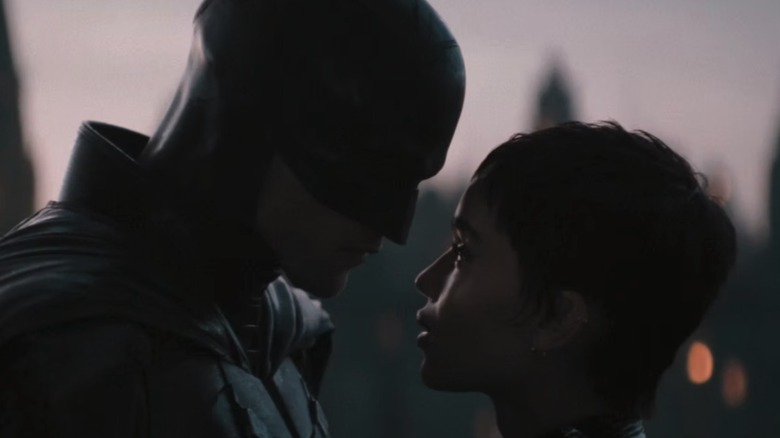
There is a lot that this clip revisits from the trailer, but there is a new line: "You guys are a hell of a duet here." Who says it? Well, you'd be forgiven if you didn't recognize Colin Farrell as Oswald "Oz" Cobblepot, aka The Penguin. It's really hard to believe the makeup here. It's as good (at least from what we've seen) as what they did with Gary Oldman in "Darkest Hour." That is to say, stunning. It's quick, but it starts at :17. Look at it and try to see Farrell in there. 

'Don't Worry Honey, I've Got Nine Of Them'

It's a small thing in terms of new footage, but it does highlight one of the things that really stands out in the trailers we've seen so far. The chemistry between Catwoman (Zoë Kravitz) and Batman (Robert Pattinson) is palpable. I think I'm looking forward to that more than anything other than the fight scenes.

Here's the film's synopsis:

Two years of stalking the streets as the Batman (Robert Pattinson), striking fear into the hearts of criminals, has led Bruce Wayne deep into the shadows of Gotham City. With only a few trusted allies — Alfred Pennyworth (Andy Serkis), Lt. James Gordon (Jeffrey Wright) — amongst the city's corrupt network of officials and high-profile figures, the lone vigilante has established himself as the sole embodiment of vengeance amongst his fellow citizens.

When a killer targets Gotham's elite with a series of sadistic machinations, a trail of cryptic clues sends the World's Greatest Detective on an investigation into the underworld, where he encounters such characters as Selina Kyle/aka Catwoman (Zoë Kravitz), Oswald Cobblepot/aka the Penguin (Colin Farrell), Carmine Falcone (John Turturro), and Edward Nashton/aka the Riddler (Paul Dano). As the evidence begins to lead closer to home and the scale of the perpetrator's plans becomes clear, Batman must forge new relationships, unmask the culprit, and bring justice to the abuse of power and corruption that has long plagued Gotham City.

"The Batman" will hit theaters on March 4, 2022. I mean, right now it does. Nothing is certain in this world anymore. I'm pretty sure Batman would agree. 

Read this next: Batman Movies Ranked From Worst To Best

The post The Batman Teaser: Batman and Catwoman Are a Helluva Duet appeared first on /Film.

05 Jan 18:27

The Prometheus Scene That Seriously Scared The Cast

by Sandy Schaefer

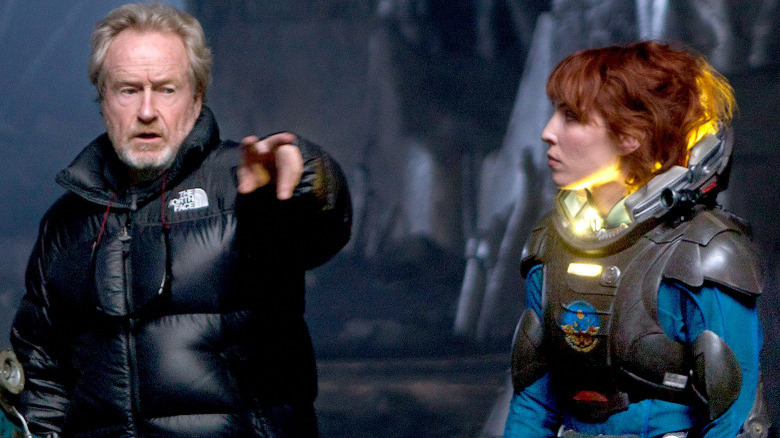
2022 marks the 10-year anniversary of "Prometheus," director Ridley Scott's return to the iconic "Alien" franchise that he'd helped launch 33 years earlier. As you can imagine, there was a lot of excitement around the project ahead of its arrival. Not only was Scott back at the helm of a sci-fi film for the first time since 1982's "Blade Runner," his "Alien" prequel was going to address two of the biggest questions that had been left unanswered since 1979: Who was the so-called Space Jockey that the crew of the Nostromo had met on the moon LV-426, and where did the acid-blooded, chest-bursting, utterly terrifying Xenomorph come from?

The initial response to "Prometheus" was quite mixed. Many reviews applauded its tactile visuals and bold ideas but criticized its thinly written human characters. "Alien" fans were similarly divided over the way the film shifted its attention away from the origins of the Xenomorph to focus more on the android David and the enigmatic aliens responsible for creating the human race (aka the Engineers). Still, there were some points that everyone seemed to agree on, like how Michael Fassbender did a great job with his performance as the mercurial David.

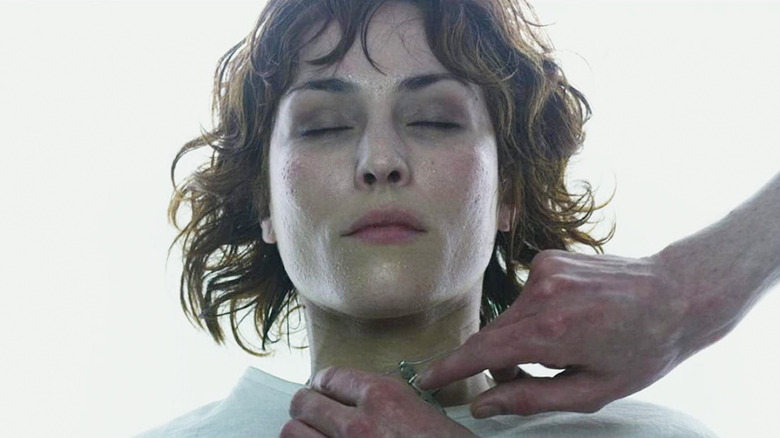
Another thing people loved? The now-infamous C-section scene, in which archaeologist Elizabeth Shaw (Noomi Rapace) uses a MedPod 720i to extract a rapidly growing squid-like creature from her abdomen after being unknowingly used as a guinea pig in David's experiment with the deadly black goo recovered from the Engineers' crashed ship on the moon LV-223. As co-writer Damon Lindelof explained to WIRED while promoting the film in 2012, the idea behind this moment was to one-up the chest-burster sequence in "Alien" by crafting a situation that "is going to play into every woman's fear of something wrong with the baby inside [them]."

Ridley Scott Is A "Sick F***"

Separately, Rapace told WIRED that she worked closely with Scott for days to make the sequence "as real as possible -- to not do it in CGI or to not cut up the scene into small pieces." Understandably, this took a toll on Rapace, who admitted the scene "messed me up completely" and led to her having some equally horrifying dreams:

"I had two dreams that I remember today. I woke up and I went into the loo, saw myself in the mirror, and I realized I had some kind of black veins that began to spread over my whole body. I started to wash my hands and thought the water was going to stop it somehow."

Her second dream, in which she touched her belly only to discover a creature moving around inside, left her "so terrified that I was crying, and I woke up and I was crying for real," Rapace added. That being said, she assured that she never felt exploited while she was shooting the scene:

"I never felt exposed like, 'I'm this girl, half-naked in front of the crew, screaming and crying and going through this very disturbed situation.' It really felt like the two of us [Scott and I] inside of it."

As a director, Scott has never been one to shy away from including disturbing and violent moments in his movies ("I'm a sick f***," he joked to WIRED). All the same, it's hard to think of too many other scenarios in his greater body of work that come close to matching the visceral body horror of the original chest-burst in "Alien" and the MedPod scene from "Prometheus." Even the sequel to the latter, 2017's "Alien: Covenant," had a tricky time clearing that high bar — although it came pretty close with its own gnarly "birth" scene, where a Neomorph bursts out of its human host's back. Years later, however, it's Elizabeth's emergency surgery that's still providing the true nightmare fuel.

Read this next: The 20 Best Dystopian Movies Of All Time

The post The Prometheus Scene That Seriously Scared the Cast appeared first on /Film.

05 Jan 18:24

As Beijing Takes Control, Chinese Tech Companies Lose Jobs and Hope

by msmash
The crackdown is killing the entrepreneurial drive that made China a tech power and destroying jobs that used to attract the country's brightest. From a report: Like many ambitious young Chinese, Zhao Junfeng studied hard in college and graduate school so he could land a coveted job as a programmer at a big Chinese internet company. After finishing graduate school in 2019, he joined an e-commerce company in the eastern Chinese city of Nanjing, got married and adopted a cat named Mango. In November of 2021, he moved to Shanghai to join one of China's biggest video platforms, iQiyi. He was on track to achieve a much-desired middle-class life, documenting his rise on his social media account. Then barely a month into his new job, he was let go when iQiyi laid off more than 20 percent of its staff. The ranks of the unemployed technology workers are swelling, as China's once vibrant internet industry is hit by a harsh and capricious regulatory crackdown. Under the direction of China's top leader, Xi Jinping, the government's unbridled hand is meddling in big ways and small, leaving companies second-guessing their strategies and praying to not become the next targets for crackdown. In place of the pride and ambition that dominated a few years ago, fear and gloom now rule as many tech companies lower their growth targets and lay off young, well-educated workers. Like their American counterparts, China's biggest tech companies are regulated to limit abuses of power and to mitigate systemic risks. But Beijing's hyper-political approach shows that it's more about the Communist Party taking control of the industry than about leveling the playing field. The crackdown is killing the innovation, creativity and entrepreneurial spirit that made China a tech power in the past decade. It is destroying companies, profits and jobs that used to attract China's best and brightest. Even people within the system are alarmed by the heavy-handed approach. The former head of China's sovereign wealth fund urged restrictions on the power of regulators. Hu Xijin, the newly retired editor of the official newspaper Global Times and an infamous propagandist, said he hoped that regulatory actions should help make most companies healthier instead of leaving them "dying on the operating table." The damage has been done. Some internet companies have been forced to shut down, while others are suffering from huge losses or disappointing earnings. Many publicly listed companies have seen their share prices fall by half, if not more.

Read more of this story at Slashdot.

05 Jan 18:24

FTC Warns of Legal Action Against Organizations That Fail To Patch Log4j Flaw

by msmash
U.S. organizations that fail to secure customer data against Log4Shell, a zero-day vulnerability in the widely-used Log4j Java logging library, could face legal repercussions, the Federal Trade Commission (FTC) has warned. From a report: In an alert this week, the consumer protection agency warned that the "serious" flaw, first discovered in December, is being exploited by a growing number of attackers and poses a "severe risk" to millions of consumer products. The public letter urges organizations to mitigate the vulnerability in order to reduce the likelihood of harm to consumers and to avoid potential legal action. "When vulnerabilities are discovered and exploited, it risks a loss or breach of personal information, financial loss and other irreversible harms," the agency said. "The duty to take reasonable steps to mitigate known software vulnerabilities implicates laws including, among others, the Federal Trade Commission Act and the Gramm Leach Bliley Act. It is critical that companies and their vendors relying on Log4j act now, in order to reduce the likelihood of harm to consumers, and to avoid FTC legal action."

Read more of this story at Slashdot.

05 Jan 18:24

Facebook Halts VR and AR Operating System Project

by msmash
Facebook parent company Meta Platforms has stopped development of a new software operating system to power its virtual reality devices and upcoming augmented reality glasses, The Information reported Wednesday, citing people familiar with the decision. From a report: Shelving the project, which had been underway for several years and involved hundreds of employees, marked a setback for the company's attempt to own the underlying software behind its Oculus VR headset and future augmented or mixed reality devices. The screens of its planned devices aim to overlay digital images on the real world or weave real-world objects into VR apps. Meta uses an open-source version of Google's Android operating system to power Meta's existing Oculus Quest VR devices. But Meta wanted to create an OS from scratch to power them and future devices, a project that became known internally as XROS. XR is a catch-all term for VR, AR, and mixed reality. In MR, the wearer of a headset could view and use real-world objects, such as a keyboard, to do work or play games in a VR-like app. Instead, the company has told some staff it would continue to modify an open-source version of Android, which Google developed for smartphones but which other companies have used to power various devices, the people familiar with the matter said. Meta's modified version of Android, known internally as VROS, powers existing Oculus VR headsets.

Read more of this story at Slashdot.

05 Jan 11:05

The Book of Boba Fett episode 2 recap: Star Wars gets weird as bounty hunter joins tribe - CNET

by Sean Keane
Boba's flashback adventures with the Tusken Raiders continue with Chapter 2's train heist.
05 Jan 11:04

Microsoft Releases an Out-of-Band Windows Update to Fix Windows Server Black Screen and Performance Issues

by Rafia Shaikh

windows 10 cumulative updates

Just days before this month's Patch Tuesday updates, Microsoft has released out-of-band (OOB) patches to address some Windows Server issues. These include a black screen, slow sign-in, and general slowness problems on Windows Server 2019 and Windows Server 2012 R2.

"After you install the December 14, 2021 Windows update on a server that is running Windows Server 2012 R2, the server may stop responding," the Windows maker explained. "Additionally, you may experience a black screen, slow sign in, or general slowness over time eventually causing the server to stop responding." The company has released KB5010196 for Windows Server 2019 and KB5010215 for Windows Server 2012 R2.

Release notes for KB5010196 (Build 17763.2369) out-of-band Windows update

Addresses a known issue that might prevent you from using Remote Desktop to reach the server. In some circumstances, the server might stop responding. The screen might also appear black, and general performance and signing in might be slow.

The update is only available via Microsoft Update Catalog. Microsoft said that you can manually import this update into Windows Server Update Services (WSUS). As for the other affected platforms, the company added that the updates for them will be released in the coming days.

- First Feature Update for Win11 (Codenamed Sun Valley 2) Scheduled to Be Finalized in May 2022

The post Microsoft Releases an Out-of-Band Windows Update to Fix Windows Server Black Screen and Performance Issues by Rafia Shaikh appeared first on Wccftech.

04 Jan 23:41

Stop Wearing Cloth Masks

by Meredith Dietz

The highly transmissible Omicron variant continues to drive a surge of infections across the country. According to the CDC’s COVID data tracker, the seven-day average for COVID-19 hospitalizations increased by more than 40% during the week between Christmas and New Year’s Eve. And in light of this current wave, many…

Read more...

04 Jan 23:41

AMD’s Radeon Super Sampling will bring upscaling to almost every game

by Phil Hayton
AMD’s Radeon Super Sampling will bring upscaling to almost every game

Upscaling tools are a lifesaver when attempting to boost fps, helping strike a balance between performance and visuals. While Nvidia DLSS often overshadows FidelityFX, it's not inherently compatible with your entire gaming PC library, meaning you could struggle to run the latest games at either 4K, or on ageing rigs. Thankfully, AMD just announced Radeon Super Resolution, a new upscaler that should work with just about any game.

Unveiled during CES 2022, AMD's RSR works within the company's new Adrenaline software, meaning that it'll likely be RDNA GPU exclusive feature. The driver-based AI also functions differently from FSR, it works its upscaling magic after rendering occurs.

While RSR probably won't replace FSR outright, the Radeon feature will help AMD take on both Nvidia DLSS and Intel’s XeSS, a scaler that's set to be included with the company's upcoming Arc Alchemist graphics cards.

RELATED LINKS: AMD Ryzen 9 3900X review, AMD Radeon RX 5700 XT review, Best CPU for gaming
04 Jan 23:39

Dell announces the XPS 13 Plus with an all-new design and cool new features

by Rich Woods

Today, Dell is introducing the latest member of its premium XPS family of laptops, the XPS 13 Plus. While a new iteration of the traditional Dell XPS 13 is coming later on, the XPS 13 Plus reimagines what a 13-inch laptop can be. Indeed, some of the changes here might be considered too radical to be included in the main lineup.

As you can see from the images, this is a completely redesigned version of the XPS 13. We can start by talking about the keyboard and the keyboard deck.

Starting with the elephant in the room, there’s no visible touchpad; however, that doesn’t mean the touchpad isn’t there. Indeed, it is. You just can’t see it. It’s a haptic touchpad, something that we’ve seen from other PCs like Microsoft’s Surface Laptop Studio, Lenovo’s ThinkPad X1 Titanium Yoga, and Apple’s MacBooks. The big difference here is that there’s no border, making for a smooth, seamless look.

It’s also got larger keys, which are now square. They’re not islanded anymore, a big change from the norm. In fact, we’re seeing larger keys in more laptops these days, but not having any space between them is a bold choice.

If you hold down on the Fn key, the shortcut keys at the top turn into F-keys.

Moving on from the keyboard, it has a new webcam, which is still 720p. Dell says that it focused on making a better HD webcam though, as previous generations haven’t been very good.

Not only does it come with a new design, but the Dell XPS 13 Plus comes with more power than a regular old XPS 13 9310. It has Intel’s new P-series chips, which have a 28W TDP instead of the more traditional 15W. These CPUs pack up to 14 cores and 20 threads with the Core i7-1280P, including six P-cores and eight E-cores.

The 13.4-inch 16:10 display comes in 1,920×1,200, 1,920×1,200 touch, 3,840×2,400 touch, and 3,456×2,160 OLED touch, and the two colors it comes in at Platinum and Graphite. In other words, with this being a new Plus model, there aren’t any fewer options to choose from than you’d get from a regular XPS. There’s even a Developer Edition, which runs Linux.

The Dell XPS 13 Plus starts at $1,199, and it will begin shipping this spring.

Dell is also introducing the UltraSharp 32 4K Video Conferencing Monitor. Yes, this is a 32-inch display with all of the bells and whistles that you’re looking for. It has dual array microphones, 14W speakers, and a 4K webcam. Indeed, that webcam that you see at the top is actually the same as the Dell UltraSharp 4K Webcam. It’s just smaller because the company was able to fit some of the guts into the monitor itself.

The Dell UltraSharp 32 4K Video Conferencing Monitor is coming on March 29, with pricing to be announced later.

The post Dell announces the XPS 13 Plus with an all-new design and cool new features appeared first on xda-developers.

04 Jan 23:36

The Dell XPS 13 Plus is the laptop of the future, and we went hands-on with it

by Rich Woods

Dell’s XPS PCs consistently tops best laptop lists from all around, including our own. They always have small footprints, amazing displays, and most importantly, they’re just great from almost every aspect that matters. So when Dell announced the XPS 13 Plus today, it’s something to take note of. After all, it’s a new member of the XPS family.

First of all, you’re probably wondering what’s so “Plus” about this thing. Aside from some radical design changes that deviate from the norm a bit too much to be folded into the standard XPS 13, the new Dell XPS 13 Plus is also meant to be the powerhouse of the 13-inch lineup.

Here’s how that works. Both the XPS 15 and XPS 17 come with beefy 45W CPUs and dedicated graphics, while historically, the XPS 13 and XPS 13 2-in-1 have come with 15W CPUs and integrated graphics. The Dell XPS 13 Plus comes with Intel’s new P-series processors, which are 28W.

These new CPUs come with up to 14 cores and 20 threads, with six performance cores and eight efficiency cores. Intel announced the new SKUs, along with its new U-series chips, today. Indeed, the new U-series processors, both UP3 and UP4, will only have two performance cores, so there’s a big difference.

Dell XPS 13 Plus Specs

Processor 12th Generation Intel Core i5-1240P (12MB
Cache, up to 4.4 GHz, 12 cores)
12th Generation Intel Core i7-1260P (18MB
Cache, up to 4.7 GHz, 12 cores)
12th Generation Intel Core i7-1270P (18MB
Cache, up to 4.8 GHz, 12 cores)
12th Generation Intel Core i7-1280P (24MB
Cache, up to 4.8 GHz, 14 cores)
Memory 8GB LPDDR5 128-bit Dual Channel at 5200MHz
16GB LPDDR5 128-bit Dual Channel at 5200MHz
32GB LPDDR5 128-bit Dual Channel at 5200MHz
Note: (onboard memory)
Storage 256GB PCIe 3 x4 SSD, 512GB PCIe 4 x4 SSD, 1TB PCIe 4 x4 SSD, 2TB PCIe 4 x4 SSD
Display 13.4-inch 4K UHD+ (3840×2400) InfinityEdge touch display; DisplayHDR 400, 500-nit, 90% DCI-P3 typical, 1650:1 contrast ratio, 0.3% antireflective, anti-smudge
13.4-inch 3.5K (3456 x 2160) InfinityEdge OLED touch display, DisplayHDR 500, 400-nit, 100% DCI-P3 color gamut, 100,000:1 contrast ratio, 0.5% anti-reflective, anti-smudge, Corning Gorilla Glass 7
13.4-inch FHD+ (1920 x 1200) InfinityEdge
touch display; 500-nits, 100% sRGB typical,
2000:1 contrast ratio, 0.3% anti-reflective, antismudge 13.4-inch FHD+ (1920 x 1200) InfinityEdge display; 500-nits, 100% sRGB typical, 2000:1 contrast ratio, anti-glare
All panels – Dolby Vision, Eyesafe technology, 178° wide viewing angle +/- 89° / 89° / 89° / 89°
Graphics Iris Xe
AC adapter 60W AC adapter, (USB Type-C)
Audio Studio quality tuning with Waves MaxxAudio Pro and Waves Nx 3D audio
Quad-speaker design with 8W total output
Dual microphone array optimized with Waves
MaxxVoice supporting VoIP – Microsoft Cortana capable
Construction CNC machined aluminum with glass palm rest in graphite
CNC machined aluminum with glass palm rest in platinum
Battery 55WHr battery (built-in)*
*Battery is built-in to the laptop and is not= replaceable by the customer.
Ports 2x Thunderbolt 4 (USB Type-C™) with DisplayPort and Power Delivery

1 USB-C to USB-A v3.0 adapter ships standard
Dimensions Height: 15.28 (0.60”) x Width: 295.3mm (11.63”) x Depth: 199.04mm (7.84”)
Starting weight: 1.24kg (2.73 lbs.)
Input Touch Display (optional)
2 Digital Array Microphones
Full size, backlit, zero-lattice keyboard; 1.0mm travel
Seamless glass, haptic ForcePad
Windows Hello fingerprint reader in power button & HD (720p) Windows Hello camera in upper bezel
Ambient Light Sensor for display backlight control
Wireless Intel® Killer™ Wi-Fi 6E 1675 (AX211) (2×2) + Bluetooth 5.2

Top down view of Dell XPS 13 Plus keyboard

Let’s take a look at the keyboard and the keyboard deck, because that’s where those radical changes are. While there are lots of big, notable things that might stick out to you, the one that sticks out to me first is the keyboard itself. It has larger keys, and there’s no longer space between them.

Personally, I’m not a fan of this. Going back to designs like the Surface Pro 3 Type Cover, I thought we all collectively decided that islanded keys are a good thing. You’ll notice that the keyboard goes completely edge-to-edge, which is super cool.

The keyboard is actually really comfortable to type on. I’m just skeptical of keyboards that aren’t islanded.

Pressing the Fn key on laptop keyboard

Notice that if you hold down the Fn key, the capacitive shortcut keys actually turn into F keys. It’s another thing that just feels modern. I can’t tell you how many laptops I review where I don’t know if it will use the F key or the shortcut by default, so I may or may not have to hold the Fn key. This solves that, showing you exactly what the key will do.

Oh, and you might have noticed the lack of a touchpad, or at least the lack of one that you can see. It’s still there, exactly where you’d expect it to be. It’s just a haptic touchpad with no border.

I spent a fair bit of time messing around with that touchpad, trying to get it to break. I wasn’t able to. It’s shockingly good. Dell credits that to muscle memory, saying that users automatically know where a touchpad ends.

I tried a lot of multi-touch drag-and-drop operations too, something that I find often screws up haptic touchpads. You know, it’s when you drag it to the end of the touchpad, hold it down with that one finger, and use another finger to continue dragging from the top. It’s a simple maneuver on a mechanical touchpad. I didn’t run into any issues. You have to remember that if your finger runs off of the touchpad when doing that, it will drop whatever you’re dragging.

Everything seemed to just be intuitive. I’m still kind of surprised that I liked it so much.

Angled view of black laptop

Let’s talk about the rest of the design. What’s not so radical overall, but is radical for Dell XPS, is the design of the laptop as a whole. You’ll notice that it’s got a black or white interior, but gone is the carbon fiber or glass fiber weave look. These are flat colors. Those colors are called Platinum and Graphite, so you’re still getting that monochrome look.

One other thing to take note of is the webcam, which I did spend a little bit of time with, but I’ll explore more of it when I review the product later this year. It’s still 720p, but Dell said that it focused on making a better HD webcam instead of using an FHD sensor. It did seem pretty good in the lighting conditions I was in, but obviously, I’ll need further testing than I could do in one afternoon.

Intel announced its third-gen Evo specs today as well, and one of the items on it was a requirement for Evo-certified laptops to have an FHD webcam. There was also a little asterisk saying that some Evo laptops might not have an FHD webcam, and that it’s just strongly recommended. It’s interesting though, because we’re about to find out how much people care about webcam quality. Dell is producing an amazing new device, but with an HD webcam, in a market that’s about to be flooded by FHD webcams.

Angled view of white laptop

Nevertheless, the Dell XPS 13 Plus is exactly what a modern laptop should be. It looks to the future instead of clinging to relics of the past, something that all-too-many laptop-makers tend to do. Dell actually stopped and thought about how things could be, without having to wait for a cue from a company like Apple. Indeed, this is the laptop of the future.

The Dell XPS 13 Plus will be available this spring, starting at $1,199. I’ll be first on line to want to review it.

The post The Dell XPS 13 Plus is the laptop of the future, and we went hands-on with it appeared first on xda-developers.

04 Jan 23:06

Mass Effect: Legendary Edition now has a happy ending, thanks to this mod

by Ian Boudreau
Mass Effect: Legendary Edition now has a happy ending, thanks to this mod

The original ending to Mass Effect 3, which capped off the trilogy when the space game first launched in 2012, was a bit of a bummer - fans were upset that their choices felt meaningless in the final act, even after BioWare released its Final Cut. Modders have come to the rescue, however, and now there's a happy ending mod for the new Mass Effect: Legendary Edition.

Audemus' Happy Ending Mod, which you can find over on Nexus Mods, makes an array of changes to the story in Mass Effect: Legendary Edition by tweaking Codex entries, cutscenes, slides, and more. If you haven't played through the Mass Effect series yet and plan to, you might want to bail out here - there's no way to talk about this mod without getting into spoiler territory.

Now that we've given the future Shepards a chance to clear out, the major change made in AHEM is that Commander Shepard survives the final mission. After the Crucible fires on the Reapers, the current squad will discover Shepard, who will then attend the memorial service. Every possible romance option from both Mass Effect 2 and Mass Effect 3 will be there, and they'll all give Shepard a nice hug after the moment of silence.
04 Jan 23:00

Give Us Your Ransom Demands

by Bill Harris

There were things I didn't write about (like online dating) because Gloria still read the blog and I felt it would be disrespectful. 

I wish I still couldn't write about them. 

I can, though, and some of them are funny, so here we go.

I don't know how many of you have tried online dating [insert your shudder HERE]. I have, because that's how it's done these days, and one of the things that genuinely amazes me is how many woman have profile pictures that look like screen captures from a hostage video. 

It seriously makes you wonder under what circumstances the pictures were taken. It's like they photoshopped out the sign that said "CALL 911." 

It gives one pause, as they say.


04 Jan 22:52

The 20 Best Feel-Bad Movies You Need To Watch

by Margaret David

Watching a film is always an emotional commitment. We empathize with the characters, good and bad, and we stay invested in what happens to them. With many movies, we're looking to feel something positive as the credits roll. A sense of victory, or relief, or, frequently, happiness depending on the type of film. But sometimes we're looking for a weirder catharsis. We're looking for the downer movie. We want to be haunted. The reasons why are complicated, but it comes down to being human.

These are the bleakest films I can recommend for those days where you just don't want to feel good. Some of them offer hope that things will turn out okay, after all. Then they don't. Some build castles out of dread, beginning with the lingering sense that things aren't alright and ending with more than enough detail to prove the point. None of them end on a cheerful note. After viewing any of these, please take care of yourself. You'll have better days ahead than these poor saps.

Threads

By 1984, the world had spent decades gripped by the paranoia surrounding the Cold War. The United States and the then-Soviet Union were in constant conflict, and the specter of nuclear war was a frequent topic. Scientists like Carl Sagan began to push back against the concept of a survivable nuclear strike, explaining the new idea of nuclear winter and the wide-ranging ecological impacts of the fallout. Then the BBC released "Threads," a small budget nightmare that looked at the likely results of a full-scale nuclear conflict, and nobody in England has slept right since.

That's hyperbole, but barely. "Threads" begins like "Coronation Street," with the town of Suffolk going about their normal business. A pair of young lovers deal with an unexpected pregnancy. Local politicians man the phones, assuring their people all is well. All to the background noise of rising conflict in the Middle East. The bombs don't fly until roughly an hour into the film, and the rest is some of the bleakest stuff put to celluloid. There is no happy ending. There's barely an ending at all. But the film is uniquely watchable for the probable horrors it demands we think about. It's a film that's changed minds, and troubled our hearts ever since.

The Man Who Fell To Earth

David Bowie was a master of multiple mediums, and his acting gigs, while uncommon, are almost all fine quality performances. Nicholas Roeg saw in him the perfect outline for a story about the consuming disasters of fame, casting him as the well-meaning alien Thomas Jerome Newton in "The Man Who Fell to Earth." Glimpses of the film suggest a psychedelic, drug-fueled romp through the back alleys of excess, and that's fairly accurate. David Bowie, at his most beautiful, romps naked or nearly naked through a sizable chunk of the film. He's ethereal, distant, and singularly perfect.

And yet, the final half-hour of the film could induce depression in Mr. Rogers. Newton's memories of his family have long since begun to fade. Paranoia and torture have rendered Newton's ability to prove himself as anything other than human moot. His imprisonment turns him into a shell of a person. All he has left is his unnatural beauty, and his excesses, his only comfort, will eventually ravage that, too.

Cloverfield

Kaiju films are fun to watch, even as they often carry loaded commentary about the selfish folly of humanity versus the natural world. We, the audience, are usually placed far from the action, peeking in with the scientists and enjoying the special effects extravaganzas as Godzilla slaps the beans out of his foes. But 2008's "Cloverfield" did something else. It put the audience down on ground level, following its cast from behind a sometimes-nauseating handheld camera as a kaiju attack on New York City turns horrifyingly personal.

The hour and a half long movie starts with some slow-paced character drama that begins to drag once the going-away party kicks into gear. But things go from awkward to hellish fast, saving the flick. "Cloverfield" leans into our post-9/11 nightmares, with the sudden mayhem-inducing, crowd-crushing panic and an instantaneous military response. The ending is black as a trucker's cup of 4AM coffee, erasing the last few hopes anyone, in the film or in the audience, might've had left.

Miracle Mile

"Cloverfield" might have changed the game for modern kaiju films by virtue of its audience participation in the horror of it all, but its narrative twist from character drama to "everything sucks" feels borrowed from a slightly obscure flick called "Miracle Mile." Our main character, Harry, quickly falls in love with Julie, but fate makes him miss his chance to meet her again after her shift at the diner. He turns up anyway, tries to call her from the public phone booth outside, and intercepts a phone call meant for someone else. A desperate-sounding man claims there's maybe an hour left before nuclear war. Then he's shot, and the call ends.

Suddenly this cute "Harry Met Sally" style rom-com turns into a horrific slow burn as Harry wonders if what he heard from the man on the phone was true. His breakdown inside the diner turns chilling when one of the other patrons reveals she believes him, and gives proof. The rest of the film is a real-time nightmare of Harry doubting his sanity while trying to reach Julie before time runes out. Since it's on this list, you know where this is going. It's a ride to the end of the world.

Videodrome

David Cronenberg isn't known for his feel-good movies, although some of them push the envelope further than others. "Videodrome" is one of his earliest major successes, a bloody commentary on social media, taboos, and the philosophies of Marshall McLuhan. James Woods plays the cultured sleaze hound Max Renn, president of a UHF station that plays material you don't admit you watch when you're visiting family. Renn, obsessed with commercializing the next popular taboo, falls into a carefully laid trap. Militarized moral guardians have hijacked both medium and message, and they're ready to kill everyone that's not up to their clean-cut standards.

It's eerie stuff, and "Videodrome" is still talked about as the movie that predicted today's internet and its shifting moral controls. Ever relevant as websites sanitize themselves while still showcasing us at our most awful, the movie rockets down a playground slide into unreality and body horror. We don't know what's real for Renn by the end. But his fervent acceptance of death and transition in the film's final moments is chilling to watch.

Carrie

Stephen King nearly gave up on his premiere novel, "Carrie," until his wife, Tabitha, fished it out of the trash and urged him to complete it. Brian DePalma pulls on the same thread I believe Tabitha found inside Carrie White's life of abuse and desolation. It's relevant, awful, and somehow comforting. Carrie went through her brief existence believing she was alone, unique in the most terrifying of ways. It's poignant to realize that she never was. We're all here with her.

Both the film and the novel start at a crucial twist in Carrie's life. The first period a woman gets is stressful at any age and education level, and Carrie's been given no tools to understand what's happened to her. She's mocked and pushed aside. It's the first aggression against her that we have to endure, and it's far from the last. Her eventual revenge is thorough and horrifying. It's also blackly satisfying. This is a movie I come back to when I'm upset and depressed. I doubt I'm the only person who does. It doesn't make you feel better, but it helps to know you're never alone.

The Mist

Frank Darabont's adaptation of Stephen King's short story "The Mist" is infamous for making King himself say 'hahaha oh wow!' at its sharply intensified, depressing finale. The fact that "The Mist" has a downer ending is less of a spoiler than it used to be these days, but for those seeking an imaginative, quality ride through a bored daydream gone to hell, this flick continues to ride supreme.

The premise remains a comfortable twist on zombie apocalypses and government experiments gone awry. "The Mist" rises above comfort with excellent performances from nearly everyone, but especially Thomas Jane as the paternal protagonist and Marcia Gay Harding as the avatar of every faux-religious jerkwad we've had to deal with lately. The effects are the third star of the show, with horrific, half-seen eldritch nightmares dipping in and out of the eponymous mist. The whys and hows of this interdimensional mistake go unexplored, like the best Lovecraft-lite tales of woe. The impact on humanity stays in focus. And like the most haywire round of "Arkham Horror," Thomas Jane's attempts to survive end the way we fear - while the camera, like some monstrous eye, never blinks.
Grave Of The Fireflies

Famously known as the movie you'll never watch twice, Studio Ghibli's "Grave of the Fireflies" nevertheless demands it be watched once. The elegiac, heart-stopping beauty of this film etches the too-real horror on a viewer's very bones. Ghibli's talent for squishy expression and lush backgrounds makes the desolation into something so personal and real, it forces emotion out of the hardiest of us.
The US's firebombing campaign against Japan is less well understood than the nuclear bombings of Hiroshima and Nagasaki, but its effects on Japanese civilians were often as devastating. But the film isn't an indictment of the West. Instead, Japan's social mores and insistence on personal honor are targeted. Seita and Setsuko are children, devastated and orphaned. No one, not even their aunt, whom they live with for a while, is empathetic enough to help Seita understand what he needs to help his sister survive. Rations are slim. Refugees are numerous. The ending is a foregone conclusion, one that reminds us of our own empathy, and shames us for not using it more often.

The Road

You know those nightmares you get where almost everything is a dull grey, sound is muffled, nobody feels like they can move at high speed, and you're not sure what went wrong in the world but clearly everything's gone to crap? Haha, no, that's not a nightmare, you're just watching the film adaptation of Cormac McCarthy's everything-sucks masterpiece, "The Road."

"The Road" is the only film on this list with a potential glimmer of hope left in its ending, but I'm here to dash it for you. If "Threads" established that a post-nuke world is ice-skating uphill towards scant recovery, the apparent total loss of a thriving biosphere means that the remaining characters of "The Road" might live with some shreds of comfort before everything falls still for a few millennia. The Earth may someday recover, and I hope the squids take over our planet next, but Viggo Mortenson's kid isn't growing up to raise ponies in Saskatchewan.

No Country For Old Men

Nothing like a Cormac McCarthy one-two punch. As a writer, McCarthy's bona fides cannot be in doubt. As a person, I refuse to denigrate a man I will likely never meet -- but I also feel like he's not the kind of guy to own a fun Christmas sweater. There's nothing fun about "No Country For Old Men," either, though there's some sly, dry humor hiding in the dialogue between its earthy but doomed cast of characters.

It helps that the film is a Coen Brothers joint, who lift the nihilistic despair of the original story and its indictment of human nature into something more melancholy. It's, in a chronological sense, the last true Western. Its characters are the final generation to have memories of the collision between whites and indigenous tribes. But such conflict never really ends. It just varies its participants, and a single sheriff can't change the world. The sheriff's kinsman suggests it's vanity to believe he ever could. In the final moments, Tommy Lee Jones shares a dream about hope, about the fire carrying on. It's only a dream. Probably.

Sicario

Villeneuve's "Sicario" can be mistaken for a high-octane thriller about the real world strife between drug cartels and law enforcement, and certainly the ill-advised sequel assumed it was. But it's actually another nihilistic character study with exactly one good and moral person trapped at the crux of the film's legal and moral conflicts. And she gets completely screwed over.

Okay, "Sicario" is also an excellent, high-octane thriller. The border crossing shootout is the most tautly-made sequence of its kind since Michael Mann's "Heat." There's a big part of us that wants to root for Josh Brolin and Benecio Del Toro, even when we know what they're doing is not only unethical, but dehumanizes the issues the film's dealing with. The outcome is fatalistically honest. The CIA has once again given up on doing the right thing. Instead, they've chosen a preferred puppet cartel, and will play by its murderous rules. Emily Blunt's idealism does nothing more than slow their decision. Her final encounter with Del Toro's Alejandro is tinted with cynical mercy -- the same cynicism that the city of Juarez will live with every day.

Logan

Wolverine is one of the most popular characters in comic book history, sometimes to a fault. The occasional X-Man, with his gruff and tumble yet sensitive storylines, is an unending well of character drama, with new scenes pulled from his amnesiac history on the regular. Killing him off never takes, and even the most apocalyptic storylines leave us with a sense that Wolvie will always come home again. With or without his adamantium skeleton, flip a coin.

"Logan" takes all that in and gives back a sense of growing discomfort. The absolute steel spine it took to make this movie is an achievement in itself. It dares to bring in Patrick Stewart, the best version of Professor Xavier we could have been granted, and trap him in the nightmarish thrall of his enfeebled mind. It then grants him a final memory of his old friend, Logan, as his murderer. Finally, the film wraps it all in a Cormac McCarthy-style flourish where all our heroes are dead and the children have no guarantees they'll be alright. "Logan" isn't just a comic book movie. It's one of the best depressing films in a generation. Thank God it's not mainline canon.

The Green Mile

Frank Darabont haș a gift for taking Stephen King's stories and making them hurt even more. "The Green Mile" is a gift package of excellent character actors, giving David Morse and Jeffrey Demunn equal footing against Tom Hanks and Michael Clarke Duncan. It's beautifully shot, with dreamlike nostalgia imbuing a troubled past. It's clever and sometimes heartwarming. And yet, nothing about this movie makes anyone feel good by the end.

The fact that the events of this film center on an early iteration of Death Row is the first suggestion that this glimpse of history isn't going to be as bucolic as we'd like to think. That nostalgia is its own weapon, too, as guilt and mundane human horror relentlessly build into the present day. Meanwhile, John Coffey's gentle gift isn't enough to overcome the cruelty we can inflict on each other, and it's brought him too much pain to want to carry on. As for Tom Hanks and his role as a firm but good-hearted prison guard? The only kindness the film offers over the book is that we don't glimpse the full hell he endures as he ages alone.

Hereditary

Ari Aster's feature film debut, "Hereditary," is designed to shake the hardiest of souls. Sweet girl Charlie is set up as an emotional pawn between her mother and her recently deceased grandmother, and there could have been more than enough drama in that dynamic to fill a trilogy. But that's not the sole issue getting unburied in this broken family, and Charlie's story is resolved via the most nightmarish events a family could fear to suffer.

Aster never pulls back, never relents, turning the second half of the film and its characters into a psychological panini press. The demonic influence hinted at throughout the film becomes less of a metaphor for broken families and more of a holy-god-he's-going-there literal summons to evil forces humanity was never meant to bargain with. There are countless stories about why one doesn't make deals with devils. "Hereditary" puts its twist in the reveal that it has a happy ending -- but not for the protagonists we've suffered with.

Fallen

Preceding "Hereditary" is a lesser known Denzel Washington joint. 1998's "Fallen" is one of the best curios to come out of the sudden rash of religious horror that preceded the turn of the century. There's a lot to unpack about that interesting fact elsewhere, but "Fallen" earns notice for being a modern noir with a devilish twist. It's all here, the long-timer detective with a string of closed cases. The one case that still haunts him. The copycat that fixates on the detective and his family. The reveal that it really is all connected.

The dark-soul'd gag here is that the copycat killer isn't a vengeful relative of the serial killer Detective Hobbes stopped. It's the same killer, transcending beyond death because, well, it's a demon. Hobbes defies this fact for as long as possible, leaving the story in a creepy limbo until he can't deny it any longer. The sequence where Azazel showcases its power to some acoustic Rolling Stones is one of the most effect moments of dread in film. And like "Hereditary," the only happy ending belongs to the wrong character.

When The Wind Blows

"The Snowman" is one of those twee holiday charmers, a beloved bit of English whimsy that's crossed the pond and immigrated into our hearts. But creator Raymond Briggs offered fans a follow-up that, at first glimpse, is just as whimsical and charming. Unfortunately for your next good night's sleep, "When the Wind Blows" is about as comforting as the holocaust memoir "Maus." The animated adaptation, with its soft voices and music from David Bowie and Roger Waters, amplifies the cuteness, and thus, the subsequent nightmares.

The "cozy catastrophe" is a divisive genre of apocalypse fiction, suggesting it's possible to weather the worst with a cuppa and a biscuit if you're plucky enough. "When the Wind Blows" deconstructs all possible coziness with a sledgehammer. Its elderly couple survived the Blitz, and surely by following all of that well-meaning government advice, they'll survive nuclear war, too. But this story has more in common with "Threads," and like its predecessor, it's willing to showcase just how bad that advice is. The outcome is known within minutes, but like this sweet old couple, you'll keep on suffering till it's over.

12 Monkeys

Terry Gilliam's time travel thriller, "12 Monkeys," is one of his most accessible films. It's not quite mainstream, with its unsettling cinematography and bleak, sometimes obscure plot. But it's a stunner of a movie, with a terrific early performance by Brad Pitt, and a reminder that Bruce Willis can be excellent when he's not phoning it in.

"12 Monkeys," in addition to its discussion of fate and immutable destiny, is also about how we perceive our reality. It's seldom clear whether Willis' James Cole has retained his sanity during his doomed mission to stop a deadly virus. Braided into Cole's other troubles is a weighty metaphor for Messianic rescue, and like Christ on the cross, Cole's fate is sealed the moment he's dropped back into time. Unlike Jesus, Cole isn't aware of or consenting to his role as a sacrificial lamb, and his few disciples aren't enough to comfort him as time seals its fated loop.

Soylent Green

Science fiction movies prior to 1980 can come off pretty cheesy today, and 1973's "Soylent Green" is no different. With Charleton Heston at the height of his scenery-chompin' career, and some hammy gusto laid over the few sequences set at the police station his cop, Frank Thorn, works at, it may be tough to settle in and see what the film really offers. But try.

The ending of "Soylent Green" is unspoilerable now. New generations are born already knowing that Heston will wail that Soylent Green -- the tasteless, inoffensive nutrient cracker that may be all someone ever gets to eat -- is made from people. But the revelation is built from a quiet yet shattering revelation that happens much earlier in the film. Frank's friend Sol carries that plot thread with poetic serenity, choosing to die in peace to guide Frank to the answer. It's not just that Soylent Green is people. It's that the oceans are dead, and soon we will have nothing left at all.

The Wicker Man

Horror films go through recurrent streaks where obscuring their gory reveals create effective scares. It's a technique that films like "Alien" have mastered, even where other films stumble and frustrate us. But unblinking daylight horror can provide an unsettling sensation that can't be otherwise matched, and the pastoral beauty of Summerisle is its own character in the psychedelic folk horror "The Wicker Man." The 1973 one. Not the Nick Cage in a bear costume one.

"The Wicker Man" hides a rich vein of cynicism under its innocent pagan veneer. The reclusive town believes in the rituals that might bring back their harvest, but their patron, Lord Summerisle, is less certain a figure. Christopher Lee inhabits the dual role of island lord and high priest with unquestionable authority -- yet he's masterful enough to ensure the questions seep in, anyway. The climax is a vision of Hell on a perfect morning, but Sergeant Howie, damning himself with his howls of vengeful fury, is the last man to dare speak what Summerisle secretly knows. The island's never getting that bountiful harvest back.

The Fly

David Cronenberg finishes out this list with a remake that doesn't try to surpass the Vincent Price original. It creates a new world of its own, leaving its predecessor equally perfect. Cronenberg's vision of "The Fly" uses body horror not just to disgust, which it does, but to highlight the dwindling humanity left inside of Seth Brundle.

The steadily increasing gore is artful in that it draws you to look closer, even knowing that watching how Brundlefly eats will put you off snacks for a couple of days. But it's also a relentlessly emotional film, and the only catharsis it allows Brundle is the sweet release of death. There's little hope in this perfect nightmare. The final scene, which in a lesser film would give its survivors time to come to grips with what they've endured, instead hard cuts to credits just as Geena Davis realizes it's finally over. There's no relief to be found here. It's just done.

Read this next: 13 Box Office Bombs That Are Truly Worth A Watch

The post The 20 Best Feel-Bad Movies You Need to Watch appeared first on /Film.

04 Jan 22:50

Movies Like Mission Impossible That Are Definitely Worth Watching

by Liam Gaughan

"Mission: Impossible" has been one of the most consistent movie franchises of the past several decades, and it's amazing to consider that the series is still relevant 25 years after the release of Brian De Palma's original film. While many franchises have fallen flat within their later installments, the "Mission: Impossible" series continues to improve. Ask a big "Mission: Impossible" fan what their favorite installment is, and you could get a variety of acceptable answers.

Based on the classic '60s espionage spy television series, the "Mission: Impossible" films explore the worldwide adventures of Impossible Mission Force (IMF) agent Ethan Hunt, played by Tom Cruise. Cruise is one of the most iconic action stars of all time, but ironically he was better known for his more straightforward dramatic and comedic roles in the '90s. "Mission: Impossible" certainly changed that, establishing Cruise as one of the most charismatic action heroes on the planet, and one that would push his body to extreme limits to pull off the film's exciting stunts.

The "Mission: Impossible" series has remained interesting because of the constant changing of directors. After De Palma expertly wowed audiences with the first film, and stylized action filmmaker John Woo took over for 2000's "Mission: Impossible II." While it was a disappointment, the series has only continued to improve with J.J. Abrams's "Mission: Impossible III," Brad Bird's "Mission: Impossible- Ghost Protocol," and Christopher McQuarrie's "Mission: Impossible- Rogue Nation" and "Mission: Impossible- Fallout."

Love "Mission: Impossible"? Check out these films while we await the arrival of the next one.

Jack Reacher

One of the most interesting aspects of the "Mission: Impossible" franchise is how each filmmaker that takes on the series crafts the direction of the saga in their own image. Unlike other franchises that have become stale because of the same creative voices failing to inject new energy, "Mission: Impossible" employs directors who have different stylistic impulses. 

However, the only filmmaker to return for multiple installments has been director Christopher McQuarrie. After delivering one of the best entries with 2015's "Mission: Impossible- Rogue Nation," McQuarrie returned to helm 2018's "Mission: Impossible - Fallout," a film often cited as one of the greatest action films ever made. McQuarrie had an unparalleled mastery of the series, and he is returning to direct this year's "Mission: Impossible 7," as well as "Mission: Impossible 8."

McQuarrie proved himself to be a brilliant auteur of mystery and suspense early within his career with his Academy Award-winning screenplay for "The Usual Suspects." McQuarrie had larger ambitions, and became a frequent screenwriter for Tom Cruise on projects like "Valkyrie" and "Knight and Day." McQuarrie's directorial debut, "The Way of the Gun," was a lower budget project, but before he moved up to the big-budget action series, he showed his understanding of Cruise's star power with the underrated 2012 crime thriller "Jack Reacher," based on the character from Lee Child's novel series. Cruise stars as a military investigator who investigates a series of urban assassinations.

The Man From U.N.C.L.E.

One of the things that some younger fans of the "Mission: Impossible" films may forget is that the action-packed franchise is actually based on a '60s television series that their grandparents may have grown up watching. While the connections between the original show and the current iterations are relatively sparse, and you certainly don't have to have a working knowledge of the original to appreciate the films, many elements are carried over, such as the gadgets, exciting espionage storylines, and of course the amazing theme song. It was a brilliant way to modernize a concept and introduce it to a new audience.

Another recent film inspired by a classic '60s spy series was the 2015 action-comedy "The Man From U.N.C.L.E.," which also took its name from a beloved series of the same name. Guy Ritchie's film took the same central concept of the globetrotting adventures of American secret agent Napoleon Solo and KGB operative Illya Kuryakin, who are forced to work together amidst political tensions between the nations in order to stop threats that span the entire globe, including a syndicate of former Nazi radicals developing evil technology. In the 2015 film, these characters are taken over by Henry Cavill and Armie Hammer, respectively.

The comedic banter between the two is fun, and Ritchie does a great job fleshing out the characters' backstories and providing insights into world politics. Like "Mission: Impossible," the gadgets are wonderfully silly.

The Fugitive

The original 1996 "Mission: Impossible" had the challenge of condensing several seasons of a beloved television show into a singular adventure. The stakes of a television show and a film needed to be different, as a mystery that spans multiple seasons couldn't be told in just two hours. Thankfully, the first film found an interesting way to tell Ethan's story by showing his origin. Ethan is framed for the death of his team within the shocking opening sequence, and he's forced to abandon his status as an IMF agent in order to clear his name.

The stakes against Ethan seem literally impossible, and his journey to redemption in the eyes of his former colleagues gave him a compelling emotional journey throughout the film. Not only is Ethan devastated by losing his friends, but he wants to regain his old life by clearing his name. It's a concept that was also utilized in the 1993 action classic "The Fugitive," which was similarly inspired by a beloved original television show from the 1960s.

The original series followed Chicago surgeon Dr. Richard Kimbel, who finds that his wife has been murdered and is subsequently accused of her murder. Kimbel manages to escape prison and goes out on his own to search for the real culprit. Harrison Ford took over the role in the film, and Tommy Lee Jones won the Academy Award for best supporting actor for his memorable performance as U.S. Marshal Sam Gerard, who realizes Kimbel's innocence.

The Untouchables

Each of the "Mission: Impossible" directors have done something interesting and original with the series, but none of the series' current success would be possible if it wasn't for what Brian De Palma did with the 1996 original. Not only did De Palma lay the groundwork for Ethan's origin and introduce characters like Ving Rhames's Luther Stickell (who would go on to appear throughout the franchise), but he set the precedent for the saga's exciting action setpieces. However, compared to the other films within the series, De Palma's film puts more emphasis on suspense and intrigue than it does on spectacle. Even when some '90s action films have shown their age due to the dated special effects, "Mission: Impossible" still holds up because of the great filmmaking.

Combining pulpy noir elements with Hitchcockian mystery is something that De Palma has done throughout his career, and it's hard to categorize any of his films as straight dramas, thrillers, mysteries, or action summer blockbusters. Nearly a decade prior to "Mission: Impossible," De Palma adapted another iconic television series with the 1987 film "The Untouchables." Based on a true story, the film follows the efforts of Chicago cops Elliot Ness (Kevin Costner), Jim Malone (Sean Connery), George Stone (Andy Garcia), and Oscar Wallace (Charles Martin Smith) as they attempt to track down the infamous gangster Al Capone (Robert De Niro). Like "Mission: Impossible," De Palma explores the team dynamic as men with different skill sets work together amidst frantic action sequences.

Top Gun

It's ironic to ever think of Tom Cruise as anything but the most ambitious action star on the planet, but surprisingly Cruise began his career as more of a teenage heartthrob than an action hero. Throughout his early career and even concurrently to the "Mission: Impossible" series, Cruise has worked with some of the most extraordinary directors in the industry, including Steven Spielberg, Martin Scorsese, Stanley Kubrick, Paul Thomas Anderson, Michael Mann, Ron Howard, Ridley Scott, Oliver Stone, Cameron Crowe, James Mangold, Francis Ford Coppola, and Rob Reiner. Perhaps the prospect of working with Brian De Palma was more intriguing to him in the first "Mission: Impossible" than the idea of being the recurring lead of a major tentpole franchise.

Despite his ambitions of working with talented filmmakers and pursuing challenging roles, Cruise had never failed to convince audiences that he's not the coolest movie star on the planet. With a unique charisma that's not exclusive to the character of Ethan Hunt, Cruise is one of the rare "movie stars" that can still sell a film on his name alone in an era where characters and properties seem more important than actors. This worldwide dominance has spanned multiple decades, and it began back in 1986 thanks to the record-breaking success of "Top Gun."

"Top Gun" doesn't work without Cruise, who perfectly captured the mix of comedy, drama, satire, and stunt work needed to embody U.S. military pilot "Maverick," who returns this year in "Top Gun: Maverick."

Kingsman: The Secret Service

The "Mission: Impossible" series has remained relevant for 25 years thanks to its adaptability to the changing times and expectations of the era. The villains of each installment are uniquely suited to the ways in which the world has changed and the current political state, and each film has done a great job at incorporating current pop culture trends. The "Mission: Impossible" films hold a unique place among major spy franchises; spy films grew darker in the early 21st Century due to the success of the rebooted James Bond series and the "Bourne" films. While "Mission: Impossible" certainly has high stakes and compelling drama, the films are still very fun and contain a lot of humor, including quips between characters as they note the incredulous circumstances they find themselves in.

Not all spy movie fans enjoy the darker aspects, and Matthew Vaughn's 2015 film "Kingsman: The Secret Service" adapted to the changing expectations by lampooning the current landscape. With frequent references to Bond, Bourne, and "Mission: Impossible," the self-aware action film was a throwback to a lighter era of espionage cinema. However, despite the high number of gags, "Kingsman" isn't just a parody like "Austin Powers." Vaughn crafts set pieces that are shocking in their brutality.

The film follows a secret British intelligence agency that directly serves the Royal Crown, and follows the training of the new recruit Eggsy (Taron Egerton) under the experienced field agent Harry Hart (Colin Firth). It was followed by "Kingsman: The Golden Circle."

Now You See Me

One of the best aspects of the "Mission: Impossible" series is the team dynamic. Obviously, Tom Cruise is the major draw for the series and no one doubts Ethan Hunt's prominence, but each film pairs Ethan with a new band of allies who each have their own skills and personalities. Hunt's original team is killed off at the beginning of the first film, so each new installment introduces additional companions for him. However, characters like Ving Rhames's Luther Stickell, Jeremy Renner's William Brandt, Simon Pegg's Benjamin Dunn, and Rebecca Ferguson's Ilsa Faust have returned for multiple installments.

Not only does each heist require multiple moving parts that necessitate team members with different abilities, but the humor and banter between characters make the stories more entertaining. It also adds to the stakes, as audiences care about the fates of each of the characters when they are put in danger. A great ensemble cast is necessary for a heist film, and the 2013 film "Now You See Me" took a new twist on the genre by following a series of activist magicians who expose corrupt corporate businessmen.

The illusionists Danny Atlas (Jesse Eisenberg), Merrit McKinney (Woody Harrelson), Jack Wilder (Dave Franco), and Henley Reeves (Ilsa Fisher) work under a mysterious organization called "The Eye" as they are pursued by FBI Agent Dylan Rhodes (Mark Ruffalo). If the "Mission: Impossible" films are known for their complex storylines, "Now You See Me" certainly matches it with a shocking plot twist.

Knight And Day

Outside of the "Mission: Impossible" franchise, Tom Cruise has frequently starred in action films that take a more elevated approach to the genre. Projects like "Minority Report, "Collateral," "War of the Worlds," "Edge of Tomorrow," "The Last Samurai," and "American Made" show Cruise in more dramatic roles as his characters go through challenging situations. What's unique about the "Mission: Impossible" films is that despite the hardships that Ethan goes through as he attempts to balance saving the world, protecting his team, and having a functional marriage, the stories are still a lot of fun.

Cruise takes his commitment to incredible stunts very seriously, but he is certainly self-aware. The 2010 espionage film "Knight and Day" showed Cruise poking fun at his familiar image with a semi-parodical storyline. James Mangold's film follows Cruise as the rogue assassin Roy Miller, who joins forces with June Haven (Cameron Diaz) as he looks to clear his name and locate a mysterious device developed by the insane evil scientist John Fitzgerald (Peter Sarsgaard). Like Hunt, Miller is considered to be highly dangerous and is framed by his own intelligence agency as he attempts to save the world.

Miller is a more over-the-top version of Hunt, and Cruise acknowledges his reputation for having eccentricities with a very quirky character. The banter between Haven and Miller adds humor and romance to the story.

Ronin

Great heist films require a compelling ensemble of characters that each bring their own skill sets and abilities to the story. A heist film requires a combination of action and problem-solving; it's not interesting if the characters are just shooting at each other the entire time, as they also need to use their minds to develop strategies to pull off tasks that seem "impossible." The incorporation of heist elements is part of the reason that the "Mission: Impossible" films are so unique among the currently running action franchises, as they're much more intelligent and require the viewer to pay attention to plot details.

The 1998 film "Ronin" tells a similar heist storyline about an eclectic group of field agents who team up to stop a world-threatening villain. The film follows American mercenary Sam Regazolli (Robert De Niro), French gunman Vincent (Jean Reno), IRA operative Deidre (Natascha McElhone), English SAS agent Spence (Sean Bean), former KGB agent Gregor (Stellan Skarsgard), and getaway driver Larry (Skipp Sudduth) as they are recruited to rob a heavily guarded vehicle in order to uncover a mysterious briefcase. The "Mission: Impossible" films are exciting because of their diverse casts, and "Ronin" has interesting character dynamics thanks to the international characters who are forced to question each others' loyalties. It added a sense of mystery to a story that already features many thrilling set-pieces throughout Europe. Director John Frankenheimer is experienced with spy thrillers and creates an elevated popcorn adventure.

Heat

Similar to the James Bond films, the "Mission: Impossible" franchise introduces new villains in each installment. While the early villains were not standouts, "Mission: Impossible III" raised the expectations with the introduction of Owen Davian (Philip Seymour Hoffman), a rogue arms dealer that kidnaps Hunt's wife. Sean Harris's character Solomon Lane, a former MI6 agent who is hell-bent on nuclear devastation, didn't leave a huge impression when he debuted in 2015's "Mission: Impossible - Rogue Nation," but he was fleshed out much more when he returned for 2018's "Mission: Impossible - Fallout."

Lane was an interesting character because he had many parallels to Hunt; both men were shaped by their experiences in MI6, yet Lane grew disenfranchised with the agency's goals and turned towards terrorism. The confrontations highlight the similarities between the two, and 1995's "Heat" is one of the greatest action crime films of all time because the audience is equally invested in both the hero and villain. LAPD Lieutenant Vincent Hanna (Al Pacino) is tasked with capturing bank robber Neil McCauley (Robert De Niro), but in the film's iconic diner scene, realizes that he and his archnemesis aren't so different.

Source Code

The ending of the first "Mission: Impossible" film follows Ethan as he attempts to stop the villain Max (Vanessa Redgrave) during a secret exchange of classified information on a TGV train to Paris. It's one of the longer set pieces within the "Mission: Impossible" franchise, but the contained environment makes the tension extremely palpable. Ethan doesn't want to risk the safety of the passengers or the leaking of information, but he also needs to stop Max from unleashing devastation.

The contained environment of the train was a unique set up for an action and mystery film, and it's something that's also adopted in the 2011 science fiction thriller "Source Code." The film follows former U.S. Army Captain Colter Stevens (Jake Gyllenhaal) as he wakes up on a commuter trip to Chicago and doesn't recognize where or who he is. Stevens realizes he's part of a repeated simulation used by the government to examine the scene of a crime. A bomb detonated on the train earlier in the day, and Stevens needs to find the culprit before they strike again.

American Animals

Morality is pivotal within the "Mission: Impossible" films, as Ethan is forced to make hard choices as he attempts to save the world. Sometimes his missions require him to give weapons or information to untrustworthy characters, and he must choose if the risks are worth the potential lives saved. The 2018 heist thriller "American Animals" took a similarly layered approach to the heist thriller genre with its interesting mix of fact and fiction.

The film follows the true story of Transylvania University students Warren Lipka (Evan Peters), Spencer Reinhard (Barry Keoughan), Chas Allen III (Blake Jenner), and Eric Borsuk (Jared Abrahamson), who rob their school's library in order to steal a rare book and sell it on the black market. Interspersed with the recreations are actual interviews with the real men who look back on their shameful youthful experiences. They were motivated by boredom, but Reinhard in particular lives under the anxiety of a moment of violence that left him traumatized.

Read this next: The 15 Best Spy Movies Of All Time

The post Movies Like Mission Impossible That Are Definitely Worth Watching appeared first on /Film.

04 Jan 22:48

Shows Like Outlander You Definitely Need To See

by Audrey Fox

Often when we think of time travel stories, they feel like a fun little jaunt, a brief adventure from which one can easily return. What would it really be like to make a life for yourself in a time that is not your own? "Outlander," based on a series of novels by Diana Gabaldon, explores such a prospect. In it, Claire (Caitriona Balfe) is sent back in time while exploring an ancient stone circle on her honeymoon, traveling from the 1940s to the mid-18th century in an instant. 

She exchanges her relatively independent life as a nurse in post-war Britain for the wild landscape of the Scottish Highlands, where she is in near-constant danger. It's there that she meets Jamie Fraser (Sam Heughan), a man with whom she has a fiery connection almost immediately (For most fans, the relationship between the two is one of the main reasons for watching the show).

But "Outlander" is far from the only television show on the air to explore time travel and historical settings. And if you're a fan of that series, it might just be worth checking out some of the other offerings below.

Jamestown

Although "Outlander" begins its long journey in Scotland, the characters we know and love eventually travel across the seas in search of a fresh start in the New World. In its depiction of colonial America, we can see a lot of similarities with another historical drama, "Jamestown." Initially airing on Sky One in the UK (and later on PBS in the United States), "Jamestown" takes place a handful of years after the initial founding of the American colony in the early 1600s. It follows the lives of a group of women who have made the long and hazardous journey across the Atlantic to meet an uncertain fate: They have agreed to marry the men in Jamestown who have paid for their passage. 

Made by the same production company that brought us "Downton Abbey," it's unsurprising that "Jamestown" has a tendency towards soap opera qualities, and probably skips on historical accuracy more often than not. But it's a fun watch, with plenty of characters that make audiences emotionally attached far more quickly than you might expect.

Lost In Austen

"Outlander" may have a post-modern approach to the historical romance, what with the early introduction of time travel and such, but it never verges on meta territory quite like "Lost in Austen." Jemima Rooper plays Amanda, a modern Londoner who is obsessed with the works of Jane Austen, especially "Pride and Prejudice." So it's rather providential that one day, she discovers a portal into the attic of the fictional Bennet family hidden in her flat's bathroom. When she steps through it, she doesn't venture into the 18th century as Claire from "Outlander" does: She enters into a fictional version of the Georgian era, as gently satirized by Austen centuries ago.

Needless to say, she doesn't quite fit in. Despite every effort to follow the plotline of "Pride and Prejudice," her presence can't help but upend matters for all the characters involved -- especially Mr. Fitzwilliam Darcy (Elliot Cowan) and Charles Bingley (Tom Mison), both of whom find themselves smitten with her unconventional manners. A thorough reevaluation of "Pride and Prejudice," "Lost in Austen" is a silly ode to the generations of Austen fans who have long fantasized about interacting with her now iconic characters.

Sleepy Hollow

Traveling back in time to the 18th century is disorienting enough: But how would a colonial-era man grapple with the concept of the modern world? Fox's fanciful reimagining of Washington Irving's classic novella "Sleepy Hollow" addresses just such a hypothetical. In it, Ichabod Crane (Tom Mison) is not murdered by the Headless Horseman, but sent forward in time to 21st-century Sleepy Hollow. There, he teams up with a Sleepy Hollow police officer, Abbie Mills (Nicole Beharie), who are powerfully bonded to one another. In addition to learning the ins and outs of modern society (his reaction to both donuts and sales tax is delightful), he and Abbie will serve a deeper purpose -- fighting to thwart the Headless Horseman and avert a biblical End of Days.

"Sleepy Hollow" ran for four seasons on Fox, although, to be honest, it loses its way fairly early into the series' run, faltering completely when the creators make the inexplicable decision to break up the dream team and write Nicole Beharie off the show. But for the first season or two, "Sleepy Hollow" is a delightfully frothy supernatural show that combines demon-fighting with the endlessly endearing "fish out of water" trope as Crane acclimates himself to the modern world.

Find Me In Paris

If you want viewers to develop an all-consuming love for the time travel fantasy, you've got to hook them while they're young. "Find Me in Paris" is a teen dramedy that stars Jessica Lord as a Russian ballerina who is training at the Opéra de Paris in 1905, before being unceremoniously transported to modern day Paris. Although she is initially eager to return home to her native time, she quickly becomes attached to her new surroundings (and, predictably, her handsome new dance partner Max, played by Rory J. Saper.) 

What begins as a fairly straightforward fantasy story eventually takes on more traditional science fiction elements, as the narrative expands to include a more complex web of time travelers. "Find Me In Paris" is perhaps not what you might call historically accurate, and its low production values make the show look a little silly at times. But it was evidently popular enough to have been renewed for three seasons, wrapping up its series run in 2020.

Dark

When you start hopping from decade to decade all willy-nilly, the natural timeline begins to resemble a corkscrew more than anything else. "Dark" plays with the ceaseless interconnections of characters who have traveled from one generation to another, weaving a complicated but endlessly fascinating web of intrigue. It all begins with the mysterious disappearance of a young boy named Mikkel in a small German town, where the frantic efforts to find him only reveal more secrets. 

The town, it seems, features a peculiar little wormhole that has been transporting its citizens backwards and forwards through time for generations. The great success of "Dark" is that it somehow manages to stop just short of total incomprehensibility. It keeps you engaged throughout all the twists and turns, and its mysteries reward attentive viewers for their patience. "Dark" ran for three seasons on Netflix, the show's first German-language television show, before coming to a conclusion in 2020.

The Paradise

When Claire arrives in 18th century Scotland on "Outlander," she's out of sync with the people around her, very much a woman out of time. Denise Lovett (Joanna Vanderham), on "The Paradise," is not so much out of her time as she is ahead of it. A country girl who moves to the big city in 1875 to find a better life for herself, Lovett is full of ingenuity and promise. She gets a job working as a salesgirl at The Paradise, a glittering example of England's early department store. 

There, she proves herself to be quick on her feet and inventive, attracting the attention of the owner of The Paradise, lonely widower John Moray (Emun Elliott.) He is drawn to her promise and natural talents more than anything else, and the most compelling part of the show is watching the two of them reconcile their roles as lovers and business partners: He imagines her gifts put to use in support of his business endeavors, and she can't imagine anything less fulfilling than constantly standing in the shadow of his genius.

Poldark

If you, like many others, are interested in "Outlander" for its male heroes brooding against the wild backdrops of remote historical Great Britain, "Poldark" may just be right up your street. It stars Aidan Turner as Ross Poldark, who returns to his native Cornwall in the aftermath of the American Revolution only to find his father's mining business in dire straits and his girlfriend engaged to another man. Not exactly the homecoming that every man dreams of.

And even though he quickly finds love with the fiery Demelza (Eleanor Tomlinson), storm clouds seem to follow Poldark around, as he perpetually bounces from one grave misfortune to the next. So there's always cause for some pensive brooding atop the rugged cliffsides of Cornwall. "Poldark" ran on BBC One for five seasons, before bringing its troubled narrative to a close in 2019. It was almost universally well-received, with sumptuous visuals and a stirring romance that would prove an unbeatable combination.

11.22.63

Ending up in a different time is serious business: You are a thing out of place, and every action could have dire consequences that threaten the integrity of time itself. "Outlander" touches on this -- Claire knows implicitly, for example, that there are certain events she can't risk interfering with, even if she would want to. But "11.22.63" makes this inherent conflict its bread and butter.

James Franco plays a washed up English teacher who is sent back in time on a mission: To prevent the assassination of John F. Kennedy. He arrives in 1960, presumably enough time to establish himself and orchestrate a workable plan as the clock ticks down to November 1963, but also enough time for his mere presence to cause an endless series of unintended consequences. This creates an unbearable dramatic tension, watching him tread gently, ever-mindful of stepping on butterflies. "11.22.63" is one of the more successful Stephen King television adaptations, with its eight-episode run giving it enough breathing room to weave an appropriately complex yarn.

Dickinson

Whereas the sense of modernity that "Outlander" has comes largely from Claire's forward-thinking presence, "Dickinson" is a historical comedy that almost seems to be post-modern in its approach. Hailee Steinfeld stars as Emily Dickinson, the famously reclusive poet of 19th century New England. But this isn't the Emily Dickinson that you see in literary textbooks, glum and morose. Here, she's vibrant, imaginative, and desperately out of place amongst her family and society at large. Not to mention the fact that she's secretly in love with her best friend Sue Gilbert (Ella Hunt), who inconveniently happens to be romantically involved with Emily's brother, Austin (Adrian Blake Enscoe). 

"Dickinson" is a historical coming-of-age story, taking the black and white imagery of a long-dead writer and making her daily tribulations feel surprisingly contemporary. Featuring a bold cast of surprising guest stars that include John Mulaney, Jason Mantzoukas, Billy Eichner, Nick Kroll, Chloe Fineman, and even Wiz Khalifa as Death, "Dickinson" is unlike any other historical television show on the air.

Timeless

Claire's time-traveling journey in "Outlander" isn't just a one-and-done thing; both she and several other key characters possess the ability to travel through time under certain circumstances, and do so on a not irregular basis. But they're not flitting through time anywhere near as often as the characters on "Timeless," whose attempts to stop a malevolent force from altering history see them visit Nazi Germany, the Salem Witch Trials, and nearly everywhere in between.

"Timeless" stars Abigail Spencer as Lucy Preston, a historian who serves as an integral part of this time-traveling team. She is flanked by U.S. Army Delta Force operative Wyatt Logan (Matt Lanter) and programmer Rufus Carlin (Malcolm Barrett) -- and if you're noticing a pattern with their names, yes, the "Bill and Ted" homage is entirely intentional. Although "Timeless" was canceled after its first season, fan support was such that the network eventually reversed their decision, giving the show a second season and an extended two-part finale to wrap things up.

Miss Scarlet And The Duke

One of the key struggles that Claire faces in "Outlander" is adjusting to attitudes towards women in the 18th century, and the restrictions placed on them. Although "Miss Scarlet and The Duke" takes place nearly two centuries later, the characters still grapple with many of the same issues. Eliza Scarlet (Kate Phillips) is a young woman raised by her father to have powers of observation and detective skills that would almost rival Sherlock Holmes. When he dies, she is determined to keep his detective agency afloat. 

But there's just one problem: It's Victorian England, and no one believes that a woman has any business working as a private investigator. It's only through her grit and a very convenient friendship with a Detective Inspector of Scotland Yard, William Wellington (Stuart Martin), that she has any hope of succeeding. "Miss Scarlet and The Duke" falls very much in line with the typical period fare we see produced by the BBC and exported to PBS in America, but Eliza's pluck and the chemistry between the two lead characters make it a charming, if conventional, affair.

The White Queen

Starz has developed quite the roster of royal historical dramas, and "The White Queen" was the very first in their lineup. Based on a novel by Philippa Gregory, it follows Elizabeth Woodville (Rebecca Ferguson) and her ascendency to the throne of England through her passionate romance and resulting marriage to King Edward IV (Max Irons, the son of Jeremy Irons in one of his first starring roles). Woodville comes from no high rank, and her relationship with Edward causes hostilities to break out with members of his family. His cousin the Earl of Warwick, also known as the Kingmaker (James Frain), is most aggrieved, furious that such an important decision could be made without consulting him. The conflict here would define English politics for generations.

"The White Queen" surely takes its liberties with historical fact, but that's never an issue. We are too drawn to the electric chemistry between Ferguson and Irons, as well as the powerful performances from a strong supporting cast, to care.

Pillars Of The Earth

If there's one thing novelist Ken Follett has always been good at, it's sweeping historical epics. "Pillars of the Earth" is a BBC adaptation of one of his most famous novels, the sprawling story centered around the building of an English cathedral in the 12th century. It covers a staggering amount of territory, from the battles between the heirs of King Henry I for the throne of England to the relatively smaller conflicts that break out within the town of Kingsbridge. 

"Pillars of the Earth" is a famously complicated book, with so many characters that it probably needs a glossary to keep them all straight. But the triumph of this adaptation is how well it streamlines the narrative, allowing the story to unfold over several episodes in easily digestible bites. It features an impressive cast of stars, chief among them Ian McShane, Rufus Sewell (in a rare non-villain role), Donald Sutherland, Matthew Macfadyen, Hayley Atwell, and Eddie Redmayne, whose work here is career-defining. It's a lush historical epic that sweeps audiences up with the depth and richness of its story.

Vikings

Part of the appeal of "Outlander" is the rugged terrain of an untamed Scotland, and "Vikings" has this quality in spades. Set in the early medieval era, it chronicles the legends of Viking hero Ragnar Lothbrok (Travis Himmel), whose wars of conquest in Anglo-Saxon England and across all of Scandinavia would make his name known throughout Europe. The show begins with the sacking of an English monastery, beginning the complicated relationship between Ragnar and an English monk named Athelstan (George Blagden) that would define "Vikings" at its best. 

In between action set pieces, it explores the intersection between Viking culture and early Christianity in a way that is more engaging than one might expect. "Vikings" aired for nearly its entire series run on History, before airing the second half of its 6th season directly on Amazon Prime. It even earned a spinoff with "Vikings: Valhalla," produced by Netflix and exploring the history of the Vikings a century after the events of the original series.

The Great

The Russian aristocracy in the late 1700s was the very picture of excess, and therefore incredibly easy to satirize. "The Great" takes a bold swing at the chaotic and frequently cruel nature of life in Russian court, by focusing on a young Catherine the Great (Elle Fanning) upon her initial arrival from Germany and marriage to Peter III (Nicholas Hoult). She has the highest of hopes for a happy wedded life, but those are immediately dashed, and she does not spend a great deal of time mourning them: Instead, she plots. Catherine realizes that if Peter cannot usher Russia into a more enlightened age, she will have to -- with or without him.

"The Great" features a sharp, brutally frank sense of humor that finds little delight in subtlety. It milks the inherent absurdities and backwardness of the Russian aristocracy for all they're worth, creating a surprisingly fresh and modern take on the almost comical viciousness of life at court in the 18th century.

Read this next: 13 Shows Like Manifest You Can Binge Watch Right Now

The post Shows Like Outlander You Definitely Need to See appeared first on /Film.

04 Jan 22:23

The RTX 3090 Ti is NVIDIA's New Flagship GPU

by msmash
At its CES press conference today, NVIDIA teased a new flagship GPU: the RTX 3090 Ti. It says more details will arrive soon, but handed out a few specs to tide its fans over until then. From a report: As a refresher, NVIDIA currently has the RTX 3090 at the top of its stack, with the RTX 3080 Ti close behind and the RTX 3080 as the mainstream flagship. All three are based on the same GA102 chip, with the number of active cores, clock speeds and memory configurations being the key differentiators. The RTX 3090 Ti will usurp the 3090 as the ultra high-end GPU outside of its creator line. Like the 3090, the 3090 Ti will have 24GB of GDDR6X memory, except it'll be running at 21Gbit/s, as opposed to the 19.5Gbit/s of the 3090's memory. NVIDIA also says the GPU is capable of calculating 40 shader teraflops, 78 RT teraflops and 320 tensor (AI) teraflops That compares to the 3090's 35.6 shader teraflops, 69.5 RT teraflops and 285 tensor teraflops.

Read more of this story at Slashdot.