CISA Concerned About Risk Posed by Log4Shell to Critical Infrastructure
The U.S. Cybersecurity and Infrastructure Security Agency (CISA) says it’s currently unaware of any significant breaches related to the recently disclosed Log4j vulnerabilities.
CISA Concerned About Risk Posed by Log4Shell to Critical Infrastructure
The U.S. Cybersecurity and Infrastructure Security Agency (CISA) says it’s currently unaware of any significant breaches related to the recently disclosed Log4j vulnerabilities.
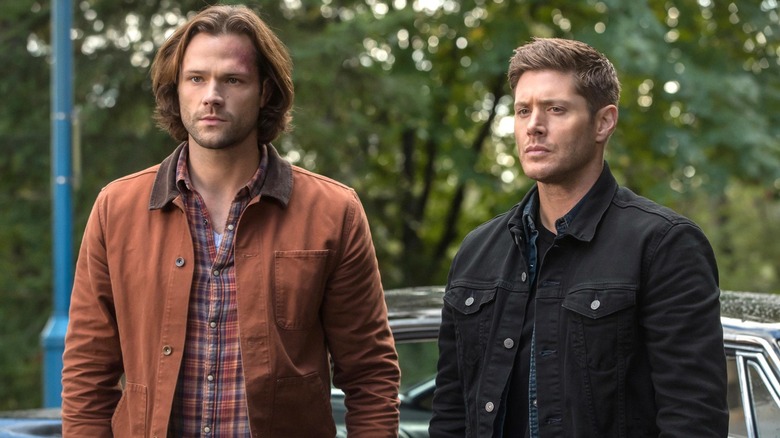
Some people move on. But not "Supernatural" fans.
It has been 15 years since Sam (Jared Padalecki) and Dean Winchester (Jensen Ackles) began saving people and hunting monsters in their '67 Chevy Impala. They killed vampires and werewolves, confronted Lucifer, and participated in an epic showdown against God himself. After what felt like an eternity, the long-running series finally came to an end in late 2020, offering a conclusion to Sam and Dean's story. I'm not entirely sure if I loved it or hated it, but I do know this: for a show that has been killing its main characters every year, the "Supernatural" finale sure knew how to drown us into a puddle of tears. This time, it truly felt like the end of an era.
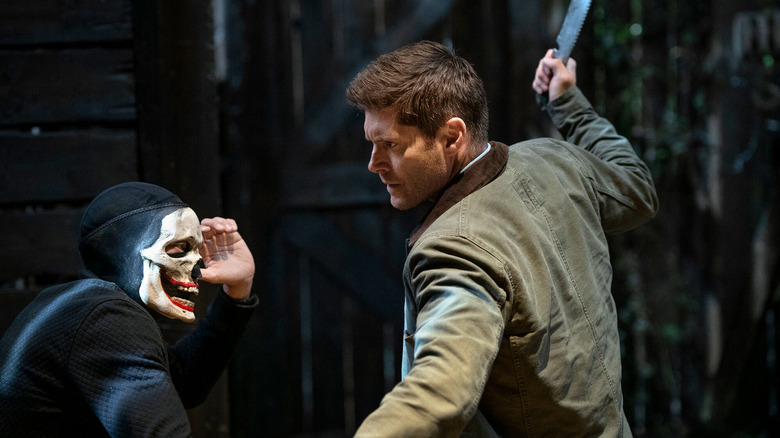
The finale fast forwards five years, where Sam and Dean are seen living normal lives (or adapting to it). Dean also ends up adopting Miracle, the dog he found previously, and they appear to be doing okay. Obviously, though, season 15 couldn't end without the Winchesters being drawn to yet another mysterious case, so that's what happens. A strange murder and kidnapping by masked vampires captures the attention of the Winchester brothers, and they soon realize it is one of their father's cases from the '80s that he was never able to solve.
Dean and Sam find their way to the vampire's nest, thanks to an established pattern by their father John that leads them to it. Upon meeting the vampires, they realize that one of them is Jenny, a vampire the brothers met during their first hunt 19 years earlier. While the Winchesters are able to kill all of the vampires, the mission ends with Dean impaled on a metal spike during the fight. What ensues next is an incredibly emotional goodbye with Sam, where Dean tells his younger brother how proud he is of him.
As Dean finds a new home in a new and improved heaven, Sam lives out the rest of his days, grows old and dies of natural causes. "Carry On Wayward Son" begins to play, and Sam and Dean are seen reuniting in heaven. The brothers' journey began on a bridge and ended on one, bringing the story to a full circle.
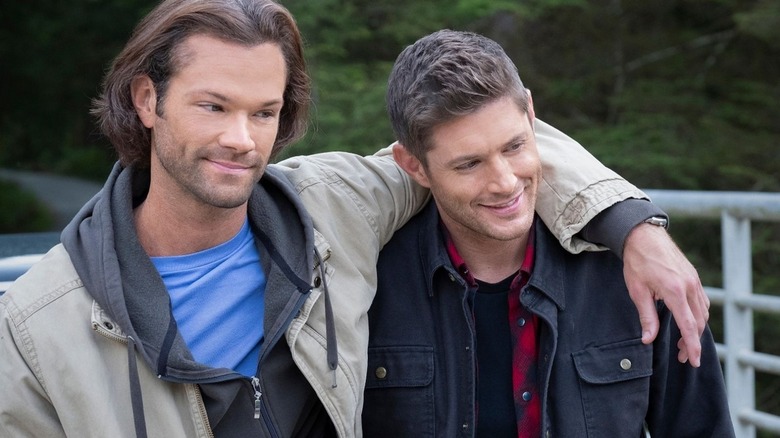
Most "Supernatural" fans had mixed feelings about the series ending. Dean and Sam fought so many vampires that it seemed too easy for him to die because of one. So it was a little lackluster — you'd think Dean deserved a better way to go. In some ways, it was also poignant because the ending reinforced that despite Dean and Sam's life being anything but normal, they were after all, just mortal men. One accident and it's all over.
Dean loved hunting, he always knew he was destined to die on the job. Since the beginning of the series, Sam was the brother who hoped to escape the business he was born into, so he could lead a normal life. He had his life mapped out — and everything changed when his brother showed up at his door. It's almost as if Sam's life was stolen away from him due to the Winchester family's destiny as hunters, despite him wanting to take control over his own.
Dean's death gave them a sense of closure, and in a way, honored creator Eric Kripe's original ending for the series. "Supernatural," until the season 5 finale, followed the arc set by Kripke. Sam died and Dean retired from the business for a family life. Season 15 pretty much replicated that idea without repeating it verbatim, giving the brothers what they wanted from the beginning: Dean, a hunter's death, and Sam, a life with his own family.
The goodbye between Sam and Dean is emotional, and makes one cry at the thought of it (like I said, "Supernatural" fans do not move on). When Sam gives Dean the permission to go, and years later, Sam's son does the same for him, it's a subtle nod to the brothers and their irreplaceable bond.
When you see the brothers reunite in heaven, there's a fitting realization that hits: Sam and Dean always knew they would see each other again, it was only a matter of time. So although the "Supernatural" ending might not have been the ending we wanted, it was the ending the Winchester brothers deserved.
Read this next: The 15 Best Horror TV Shows Of All Time
The post Supernatural Ending Explained: Carry on Wayward Son appeared first on /Film.
BadassBaboon has been working on a graphics overhaul mod for GTA V, Grand Theft Auto 5: Definitive Edition. This mod has been in development prior to the announcement of the GTA: The Trilogy – The Definitive Edition (so no, the modder did not copy that title from this recent release). GTA V: Definitive Edition is … Continue reading Grand Theft Auto 5: Definitive Edition Mod looks truly amazing →
The post Grand Theft Auto 5: Definitive Edition Mod looks truly amazing appeared first on DSOGaming.

At CES, AMD announced its Radeon Super Resolution 'RSR' image upscaling technology which will be supported on thousands of games. In the latest Sneak Peek of its upcoming AMD Software: Adrenaline Edition, AMD has promised some huge performance gains with the technology and that's going to put some smiles on the faces of gamers who want that extra boost.
In the video published by AMD, the company showed off up to an impressive 70% performance gain using Radeon Super Resolution technology by upscaling from native 1440p to 4K (RSR On). Previously, AMD has also showcased up to 55% performance gains in Warframe (222 FPS Native 4K RSR Off vs 346 FPS Native 4K RSR On) in Warframe.
The Radeon Super Resolution technology is built on the foundation of AMD's FidelityFX Super Resolution and has driver-level support which means that developers don't need to spend extra time in adding the technology to their game engine pipeline.
Radeon Super Resolution (RSR) is an in-driver upscaling feature that uses the same algorithm found in our AMD FidelityFX Super Resolution (FSR) technology. Gamers can take advantage of Radeon Super Resolution to unleash new levels of performance on any compatible game.
via AMD


Though the latter does have its own benefits, RSR will provide mostly similar results plus, the support list for games is massive with AMD promising RSR for thousands of games. All you have to do is to enable RSR (Radeon Super Resolution) within AMD Software, lower the in-game resolution to the desired input level, and the technology automatically upscale to the native resolution.

Once again, the technology is supported by all modern AMD Radeon RX graphics cards so couple that with the insane selection of gaming titles that you have at your disposal that can leverage from the performance benefits of RSR, gamers are definitely in for a treat. There is no specific date told when the Software: Adrenalin Edition with RSR will be available but it should be relatively soon since FSR already has the required framework set in the gaming segment and it's only a matter of time before we see RSR added to the latest Radeon drivers.
The post AMD Claims Up To 70% Gaming Performance Boost With Radeon Super Resolution, Available on ‘Thousands of Games’ by Hassan Mujtaba appeared first on Wccftech.
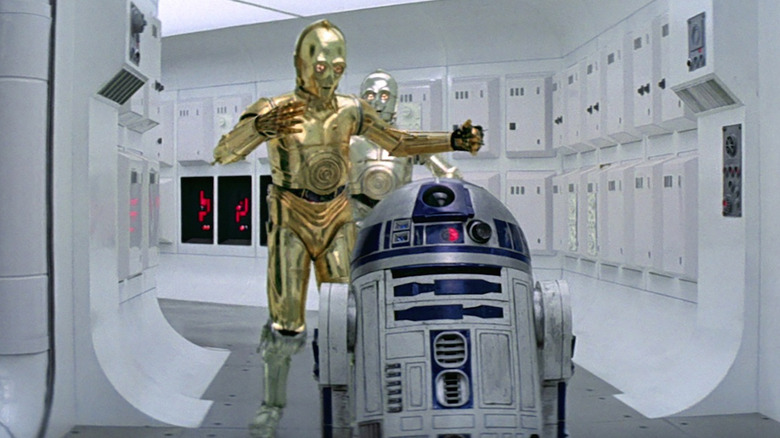
I loved Laurel and Hardy movies when I was a little kid, and I got rather upset when I found out that they were both married and lived in separate houses. I just assumed they must really live together and share a bed in real life. I had a similar feeling of disappointment not so long ago as a grown up when I found out that the relationship between Anthony Daniels and Kenny Baker, AKA C-3PO and R2-D2, was strained to say the least. Like so many other people, "Star Wars" formed a big part of my childhood, and I took it for granted they would be a double act in the real world, too.Although only one of the famous droids is humanoid, they're a classic fat guy/skinny guy comedy duo to rank amongst the best of them. Like Abbott and Costello (who also had an off-screen beef), Jay and Silent Bob, Simon Pegg and Nick Frost, you just can't really imagine one without the other. C-3PO and R2-D2 are a big part of what I love about the "Star Wars" films, especially the original trilogy. They're our guides into that galaxy as they dodge blaster fire, meet a princess, jump ship in an escape pod, and bicker their way across the deserts of Tatooine and beyond. Like all comedy duos, it is their contrasting personalities that make them shine; C-3PO the fussy, complaining, easily offended robo-butler matched with R2-D2's cheerful, forthright, brave little tin can with plenty of can-do spirit.
Daniels and Baker do such a great job of bringing their characters to life, and the onscreen chemistry of the droids is so great that I always thought that the actors must get along famously off set too. That's where I was wrong...
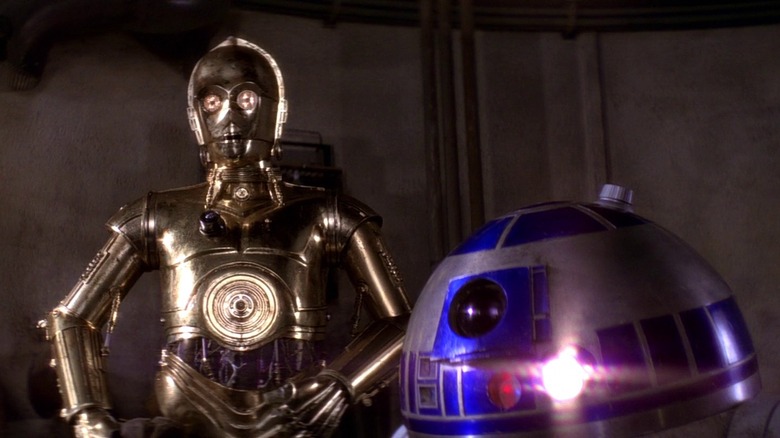
Prior to "A New Hope," Kenny Baker only had one film credit to his name, playing an uncredited dwarf in "Circus of Horrors." He worked in vaudeville, circus, and cabaret, forming a comedy duo with fellow little person Jack Purvis, who also played roles in the original "Star Wars" trilogy (Chief Jawa, Chief Ugnaught, and Teebo the Ewok respectively). Standing just 3ft 8in, George Lucas thought Baker was perfect for R2-D2, as he was small enough to fit inside the costume while also strong enough to move it. Baker brought so much humanity to the droid, although his performance was limited to inputs like turning the droid's turret-like head and rocking him side to side. A remote controlled version of R2 was used for the longer shots when he's trundling around.
Meanwhile, Anthony Daniels started out studying law before dropping out to pursue a career in acting. He moved through amateur dramatics to the BBC Radio Drama Company, which led to the National Theater in London. That's where he attracted the attention of George Lucas, but he was reluctant to even meet the director at first (via AnthonyDaniels.com):
Given the difficulties of the proposed costume, Lucas was interested in Anthony's acting and mime skills. Anthony on the other hand wasn't interested at all. Having once demanded his money back on seeing "2001 - A Space Odyssey," he had never been attracted by the world of sci-fi. He refused the interview, not wishing to waste Lucas's time. Or indeed his own.
Coerced by his agent, Anthony did meet the director. But it was a concept painting of the character that actually gained his interest. He found the script incomprehensible but liked the golden droid and so was thrilled to be given the role.
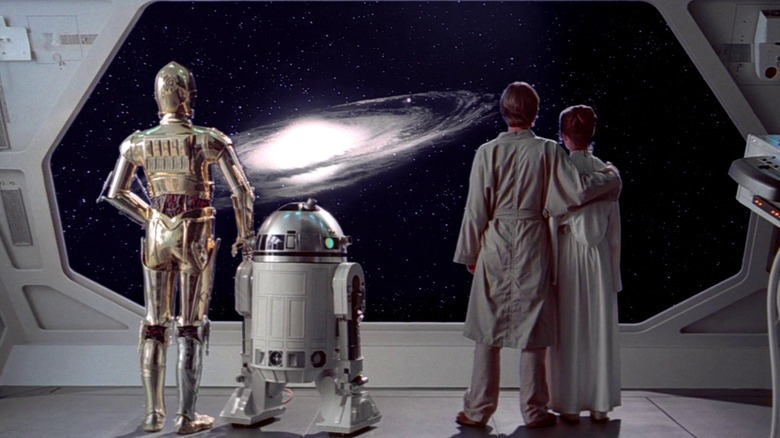
The mutual dislike between the two actors dates back at least as far as 2005, when Kenny Baker went public with his anger towards his co-star in an interview (via Hollywood.com):
"Anthony doesn't mix at all — he keeps himself to himself. He never wants to have a drink with any of us. Once, when I said hello to him, he just turned his back on me and said, 'Can't you see I'm having a conversation?' I was blazing with rage. It was the rudest thing anyone had ever done to me. I was furious. It was unbelievable."
That personal slight seemed to really stick with Baker, and he was very vocal about his differences with Daniels in interviews until his death in 2016. In 2009, Baker told Metro:
"If he just calmed down and socialized with everyone, we could make a fortune touring around making personal appearances. I've asked him four times now, but the last time, he looked down his nose at me like I was a piece of s**t. He said: 'I don't do many of these conventions – go away little man.' He really degraded me and made me feel small – for want of a better expression."
In a later interview, Baker sought to downplay the "feud" while also claiming that he wasn't the only person who didn't get on with Daniels (via Josh Gill):
"The so-called feud has been blown out of all proportion, and I absolutely detested the Justin Lee Collins 'Bring Back Star Wars' program where it was clear that Collins was out to sensationalize the situation. Daniels has no time for any of the other actors, not just me, and none of them have a good word to say about him."
While there are many anecdotes from fans online about Daniels being rather difficult, there is very little to suggest his other co-stars had any issues with him.
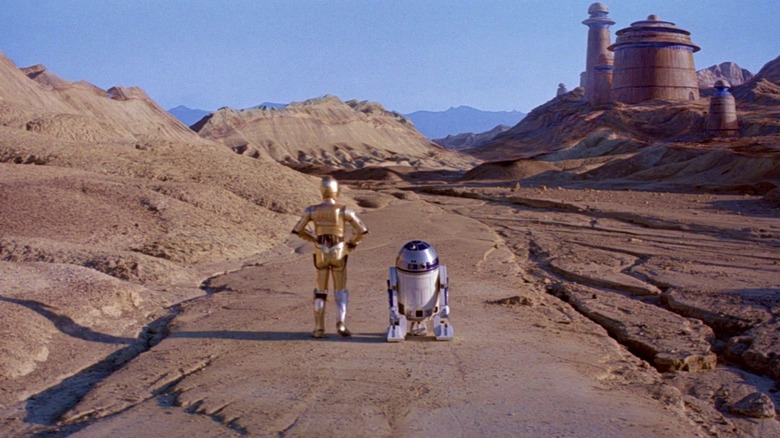
For his side of the story, Daniels has been no less dismissive of Baker. In an interview with The Mirror, he said:
"I never saw him... I mean, R2-D2 doesn't even speak. He might as well be a bucket."
This comment is key to understanding Daniels' attitude towards his co-star. Daniels considers his role as proper acting, perhaps overstating his case in some instances. He also endured quite some discomfort wearing C-3PO's tight-fitting costume (via GQ) while Baker had it relatively easy, able to hop out of the R2 unit between takes. The film is edited to make it look like the pair are inseparable, but the reality for the actors on set was much different.
Talking to Justin Lee Collins on the TV Show "Bring Back Star Wars," Daniels discussed his experiences with Baker:
"I remember one day, [Kenny] was in the costume, and I said to him, 'When I say the line, can you turn the head to look at me?' But he hadn't read the script... we have absolutely no relationship, we have nothing in common, we're... I think... really quite different people."
It is interesting to watch Daniels' reactions in that interview. It's like he is genuinely baffled about why people keep asking him questions about Baker and R2-D2. When Baker passed away in 2016, Daniels drew flak for the fan community for his tweeted condolence (via Dork Side of the Force):
"Sad to hear of Kenny's passing.1 of the truly original cast, so famed for his iconic role as R2. He'll always be remembered by so many fans."
Thankfully, knowledge of the pair's animosity does nothing to affect the joy of watching C-3PO and R2-D2 bounce off each other in the films. That's the magic of movies, I guess.
Read this next: The 11 Best Star Wars Droids Ranked By Usefulness
The post Why Star Wars' Most Famous Droids Couldn't Get Along On Set appeared first on /Film.

Back in the early aughts, there was a hidden camera/prank show that I loved called The Jamie Kennedy Experiment. In one of my favorite episodes, host Jamie Kennedy poses as a bus tour guide to show L.A. visitors celebrity homes, including Bob Saget's mansion. — Read the rest


Read more of this story at Slashdot.
Kik is an instant messenger service increasingly used for online communication by teenagers and young adults. Kik doesn't have the best reputation because anyone using it, including kids, can chat with strangers.

I like two things about this video from jiu-jitsu master Rener Gracie (of the famed Brazilian fighting family): that he gets right to explaining what happened, and that his second order of business is telling off internet victim-blamers.
— Read the restAt one in the afternoon, in Miami, at a bus stop, it should be OK to be on your phone.

2021 already feels like a broken promise. After the nightmare that was 2020, we could be forgiven for hoping something better was on the horizon. But 2021 was a dumpster fire right out of the gate, kicking off immediately with a violent insurrection that threatened to toss the few remaining tattered shreds of American democracy to the wolves. Vaccines offered a glimmer of promise against a deadly pandemic, but variants emerged, while grifters and selfish ghouls who fancy themselves heroes continue to get in the way. And if all that weren't enough, there's still the ever-present threat of climate disaster — a disaster that some say might be already too late to reverse. In short, there's an apocalyptic vibe in the air that I have been unable to shake off, and all of that combined with the bad chemicals in my dumb brain have made the world a little extra gray lately. I wake up every day with a growing chasm in my heart; a place that once felt filled-up, but has now gone hollow.
But the movies remain.
But, yes, even the movie landscape has potential for bleakness. Studios hoping for audiences returning in droves to theaters got a rude awakening when it became clear that said audiences don't really want to flock to a multiplex right now unless the movie on the screen is big, big, big. And the definition of "big" varies. You would think that a big musical from a big director like Steven Friggin' Spielberg would've caught on. But no. Movie-goers had no use for it, instead preferring to see the umpteenth "Spider-Man" movie. And before we get off on the wrong foot, I'll say now that there's nothing wrong with wanting to see a new "Spider-Man" movie. But there is something wrong when only superhero stuff and big IP-based entertainment stand a chance at turning a profit. This sort of scenario sends a message to studios: invest harder in superheroes, forget everything else. Throw whatever's left onto streaming, maybe, and hope for the best.
Despite all this, 2021 was still awash in cinematic riches. I will continue to turn to the movies as long as they're still around, and still offering me a chance to enter the lives and worlds of wonderful, challenging, unique characters. I don't have much hope for the future, but I will continue to hold onto hope for the movies. And that brings us to my top 10 films of 2021. Films that truly sparked with me; that lingered long after the credits rolled. Films that lit a small spark in my chest; a spark that grew and burned like embers that eventually spread into full-force wildfires. There are times when I'm at my absolute lowest where it feels like the movies are all I really have.
I am bound by the traditional top 10 format here, but I wish I could go longer. I wish I could include the likes of Céline Sciamma's absolutely lovely "Petite Maman," or Apichatpong Weerasethakul's haunting "Memoria." I cannot let this pass without mentioning Ryusuke Hamaguchi's brilliant "Drive My Car," Theo Anthony's remarkable "All Light, Everywhere," or Mike Mills' wonderful "C'mon, C'mon." Without paying tribute to Wes Anderson's charming "The French Dispatch," or the heartwarming joys of Michael Rianda's "The Mitchells vs. the Machines." Stephen Karam's "The Humans," Jonas Poher Rasmussen's "Flee," Asghar Farhadi's "A Hero," Guillermo del Toro's "Nightmare Alley," Denis Villeneuve's "Dune," Lana Wachowski's "The Matrix Resurrections," James Wan's "Malignant," Maggie Gyllenhaal's "The Lost Daughter," Joel Coen's "The Tragedy of Macbeth," Paul Verhoeven's "Benedetta," Rebecca Hall's "Passing," Paul Schrader's "The Card Counter," and Guy Ritchie's "Wrath of Man." These titles may not be in my top 10, but they should not be ignored, or overlooked, or forgotten. And now, here are my top 10 films of 2021. See you at the movies.
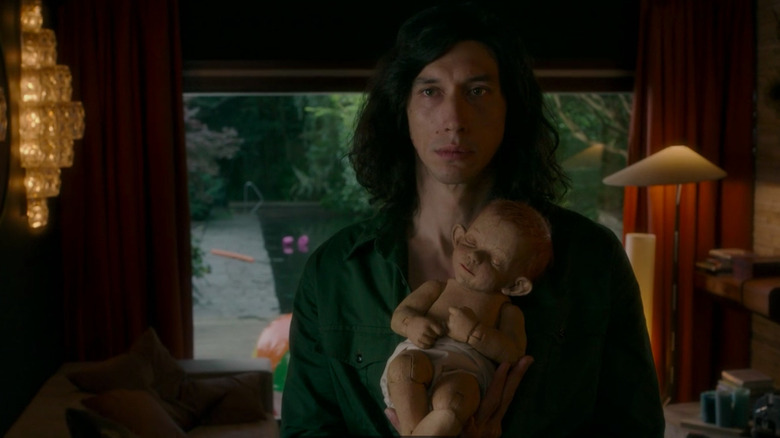
"Now you have nothing to love."
Have you met Baby Annette? Leos Carax's odd, funny, and frequently bleak musical "Annette" befuddled many who saw it, even the Cannes premiere audience that should've eaten this thing up. I understand: this is a befuddling movie. But that's what gives "Annette" its power. Adam Driver is the world's worst stand-up comic, an angry, acidic creep who takes to the stage in a bathrobe and yells at his audience. His girlfriend is a world-famous opera singer, played by Marion Cotillard. Driver's character Henry McHenry is a beast while Cotillard's Ann Defrasnoux is much-loved, and no one can seem to figure out what drew these two polar opposites together.
Things take a turn when the couple has a baby — Annette, who is very clearly a puppet that seems to be alive, a fact that no one seems to care about. And as it turns out, Annette has inherited her mother's singing voice. Henry immediately sees dollar signs in his eyes and plans to put Annette up on the stage. And if anyone gets in his way, well, they're in trouble, because Henry is fully prepared to murder people to get ahead.
Annette features utterly strange songs by Sparks, songs that are sort of half-sung/half-spoken by a very game cast. Driver is phenomenal here, really leaning into how vile Henry McHenry is. But the real breakout is Simon Helberg, who is shockingly great playing a lovelorn conductor who gets roped into Henry's schemes for his own reasons. In any sane world, we'd be talking about Helberg in the Best Supporting Actor race at the Oscars.
Those in search of a traditional musical will come away from "Annette" confounded, but again: that's the film's power. Carax knows how absurd this all is, so much so that he sets up a big climactic sequence in which drones fly the Baby Annette puppet into a packed stadium for one last concert. If the sight of a puppet baby being flown around by drones fails to give you a weird burst of joy, I don't know what to tell you — maybe "Annette" isn't for you. But it is for me. Specifically, because it all ends with a devastating scene between Henry and Annette in which the two have a genuine, honest, and heartwrenching conversation. After all, Henry has done throughout the course of the film, he's left with a haunting reminder from Annette: "Now you have nothing to love."
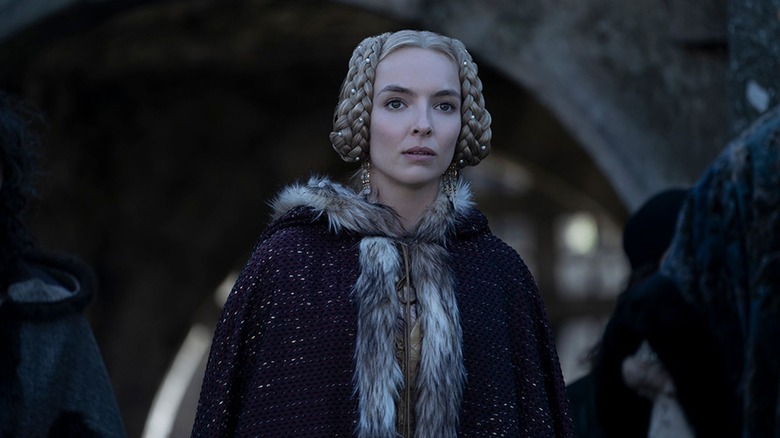
"The truth does not matter, there is only the power of men."
Ridley Scott still has it, and "The Last Duel," one of two films the 84-year-old filmmaker released in 2021, has him at the top of his game. Working with a clever script from Nicole Holofcener, Ben Affleck, and Matt Damon, Scott's "The Last Duel" is based on the true story of the final officially recognized judicial duel fought in France. The script takes a "Rashomon"-like approach, telling one story from three different perspectives. This enables Scott to employ subtle changes each time he comes back around to a familiar moment. Sometimes the simple act of moving the camera back a few inches completely alters a scene we thought we already had figured out.
It's the 1300s, and Jean de Carrouges (Matt Damon) is a knight who dreams of glory. But he's such a rude jerk that he alienates those around him, including the Count he serves, played by a scene-stealing Ben Affleck. Jean's only real friend is Jacques Le Gris (Adam Driver), but that friendship sours when Jean sees Jacques rising in stature. Things come to a horrifying head when Jean's wife, Marguerite de Carrouges (Jodie Comer), accuses Le Gris of rape. Le Gris, in turn, claims the encounter was consensual — but de Carrouges challenges his old friend to a duel to the death to sort things out. And the duel comes with dangers for Marguerite, too. If Jean loses the duel, it will legally mean that Le Gris is innocent — which would make Marguerite's accusation false. And a false accusation of rape is punishable by death.
This is heavy, challenging material, so it's perhaps not the biggest surprise that audiences didn't flock to "The Last Duel." But if they had they would've discovered an unexpectedly complex film; a film that challenges perspective, particularly that of men who see themselves as noble when they're anything but. The order of the character POV goes a long way towards tricking us and then making us question what we've assumed. When we first meet Damon's character, he's presented as a loving husband who genuinely cares about his wife. But when the story comes back around to the point of view of Comer's Marguerite, we see there's really not much that separates the cruelty of Damon and Driver's characters. They're both villains who see themselves as heroes. And Comer is the linchpin holding it all together, delivering a wrenching performance that deserved more attention.
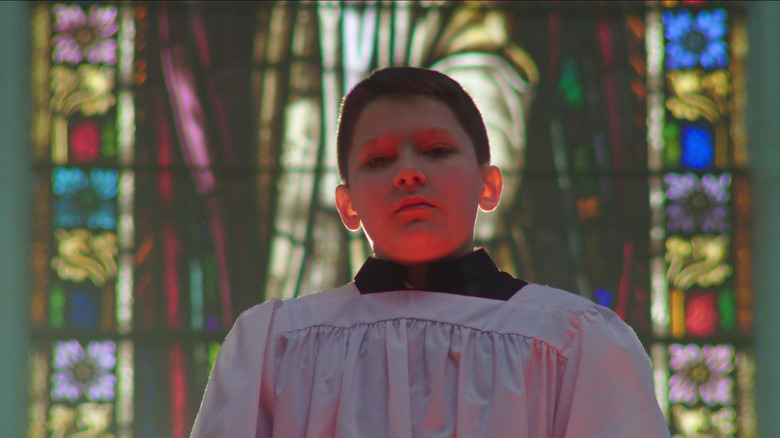
"I want you to know I tried my best to tell your story."
There's no one making documentaries quite like Robert Greene ("Kate Plays Christine"). Greene's latest, "Procession," is truly unlike any doc I've seen before. That could just be a case of me needing to watch more documentaries, but I truly think Greene has struck upon something unique here. Unique, and emotionally devastating. In "Procession," six men who were sexually abused in childhood by Catholic priests come together with drama therapy, wherein participants engage in theatre techniques to work through their trauma.
The six men craft short films inspired by their experiences, and Greene shows us both those films and the work that goes into making them. The men are all very different, and while they share similar stories of abuse, the way they each confront that abuse is markedly different, and the short films they make run the gamut from catharsis to unbottled rage. As you might guess, none of this is easy to watch, but there is genuine hope here; and that hope coming via the creation of art makes "Procession" all the more powerful. The figures at the center of the film are taking the things that could have destroyed them and creating something wholly their own; something that can't be taken away.
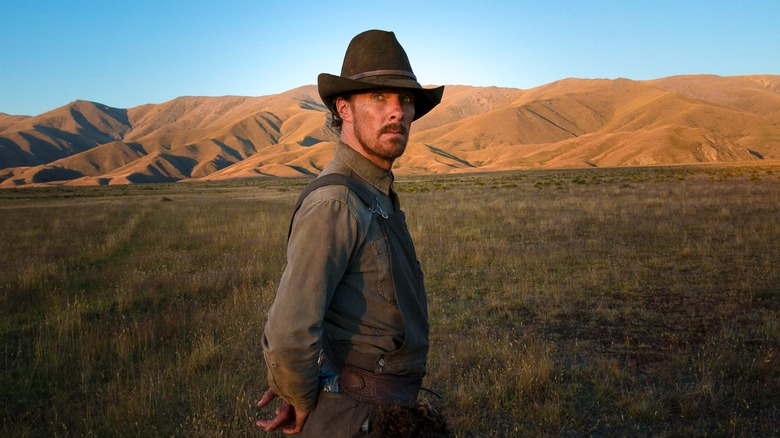
"'Deliver my soul from the sword; my darling from the power of the dog.'"
I think Benedict Cumberbatch is a good actor in general, but he's never been better than he is in Jane Campion's slow-burning neo-Western "The Power of the Dog." Cumberbatch is Phil Burbank, a brilliant guy with an Ivy League education who would rather play cowboy. He's wealthy and secure and probably doesn't need to work, but he does — as a cattle driver and ranch owner alongside his much quieter brother George (Jesse Plemons). Phil seems content with his rough-and-tumble life, romanticizing all the dirt and grime and sweat he encounters every day while wistfully remembering his late mentor, a figure known as Bronco Henry.
But Phil's entire existence is threatened when George marries a lonely widow, played by Kirsten Dunst, who doesn't have as flashy a role as Cumberbatch but still does fantastic work here. Phil loathes his new sister-in-law from the start for no real reason other than the fact that she's an outsider trespassing in his world. And when he shy, strange son Peter (Kodi Smit-McPhee) arrives to live with the family, Phil grows even more furious. But then ... a curious thing happens. Peter and Phil strike up an unlikely friendship — a friendship with undertones of something more; something unspoken but still clear as day.
Where is this all going? Campion, working from the novel by Thomas Savage, plays things extremely close to the vest here, and you might not entirely realize what "The Power of the Dog" is up to until its final moments. But that's a feature, not a bug, and it makes the film all the more incredible. Cumberbatch is the glue that holds it all together, playing Phil as a furious, hateful, threatening figure battling his own inner turmoil.

"All I need is a miracle."
Subtext be damned! "Spencer" is a film that isn't afraid to hammer you over the head with obvious metaphors, and yet ... I don't think that hurts the film. Instead, it fits in with the overall tone of Pablo Larraín's unsettling fable based on one long holiday weekend from hell for Princess Diana. You can feel decay and rot lurking under all the ornate baubles and storied traditions that blanket the film; this is practically a horror movie, with Larraín borrowing heavily from Stanley Kubrick's take on Stephen King's "The Shining."
As the doomed Princess Di, Kristen Stewart once again proves that she's so much more than her lip-biting "Twilight" days. I've long said that Stewart is one of the most interesting actors working right now, and her performance in "Spencer" highlights that. Adopting a posh, breathy accent and never quite sitting still, Stewart plays Diana as a royal on the edge of the nervous breakdown. Hounded by the press and given the cold shoulder by her in-laws, Diana struggles to get through the Christmas holiday while struggling with her eating disorder, self-harm, nosy servants, and a few unquiet ghosts lurking around in the shadows.
Again: nothing here is subtle. But why should it be? We're watching Diana lose her mind; of course things are going to be explosive and broad. To Larraín's credit, while Diana's life is ultimately a tragedy, since we know her doomed fate, there's a hopefulness buried under all of this – the sense that Diana can still find some semblance of happiness even if her time is short. And layering it all is Jonny Greenwood's often nightmarish musical score, which sounds like it was ported over from a "Dracula" film (and that's not a complaint).
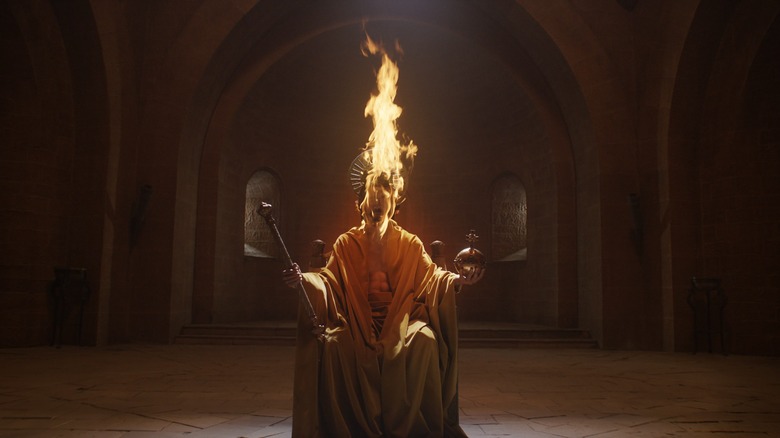
"Is this really all there is?"
David Lowery's dark twisted fantasy may be an adaptation of the epic poem "Sir Gawain and the Green Knight," but it's truly indebted to Martin Scorsese's "The Last Temptation of Christ." Both films are about young men who fight tooth and nail to escape their destiny, only to realize in the end that to do so would be a mistake, and that's better to face fate — no matter how scary — head-on. Dev Patel is Gawain, a member of King Arthur's court who would rather lounge around. He wants to be a knight someday, but he also doesn't seem to want to do any sort of heavy-lifting required to earn such a title.
Then, fate comes calling. A hulking, supernatural Green Knight arrives in court during Christmas and proposes a game: one of Arthur's knights is free to land any sort of blow on any part of the Green Knight's body, as long as the Green Knight gets to return the exact same blow in exactly one year. Gawain, seeing an opportunity, steps up to the plate. But rather than give the Green Knight a harmless little love-tap he flat-out cuts the Knight's damn head off. And that's a problem, because the Knight picks up his laughing, severed head, and reminds Gawain that he'll be seeing him in about a year.
A year later, Gawain agrees to set out on a quest to find the Green Knight and honor his part of the bargain, but every step of the way it's clear that he's looking for a way out; an escape that will somehow not dishonor him. Good luck with that, Gawain.
Lowery is working here with a fraction of the type of budget that big blockbusters get, and yet his film looks amazing — a rich, foggy, beautiful, haunted world of magic and mystery, where giants stalk the land and ghosts abound.
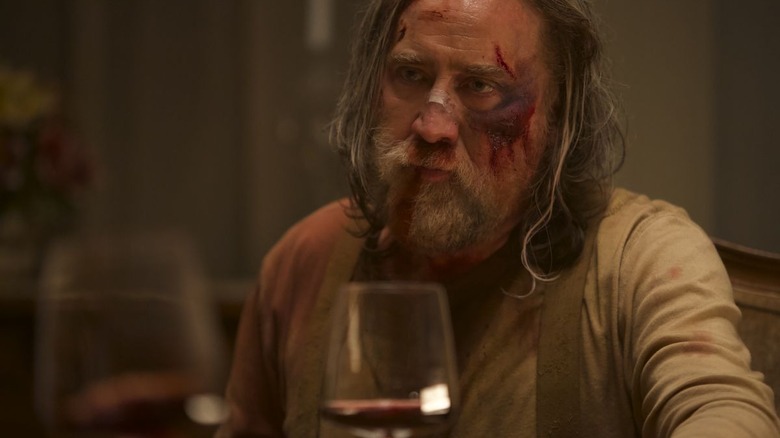
"We don't get a lot of things to really care about."
The set-up for "Pig" — Nicolas Cage is a guy looking for his kidnapped pig! — sounds like a "John Wick" knock-off. But that's not what this is. Instead, "Pig" is a quiet, strange, wonderful film about trying to hold onto the few good things in this miserable world. Cage's character is a former celebrity chef who now lives his days in the woods with his truffle-hunting pig. He shuns humanity, and only has contact with Amir (Alex Wolff), who makes his living selling luxury ingredients to restaurants.
When Cage's pig is pig-napped, he enlists Amir to take him back into the real world — the real world in this case being Portland. Cage travels from one location to the next trying to find the pig, opening old wounds in the process as we, the audience, learn more about him along the way. Much has been said about how wild and over-the-top Cage can be, and I won't disagree. But he's also a fantastic actor, and anyone who needs to be reminded of that need look no further than "Pig." Not only is Cage uncharacteristically subdued here, but he also delivers one of the best performances of his career, playing his haunted character as someone who says so much while saying very little.
Writer-director Michael Sarnoski creates a rich, textured world for the characters to inhabit here. There's a touch of surrealism at play, like a moment where Cage enters what appears to be an underground fight club for cooks. But there's also a distinct humanity here, as the characters search not just for a pig but also for something, anything, to grasp onto in this miserable, grim world.
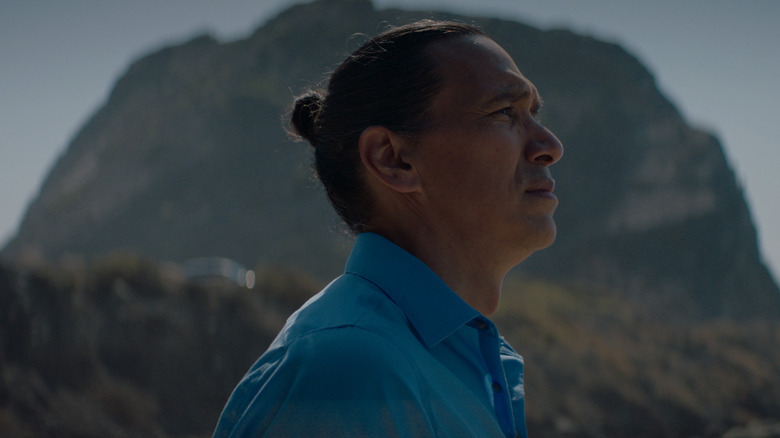
"We're the descendants of cowards. Everyone worthwhile died fighting."
"Wild Indian" is a film that lingered with me for practically all of 2021. I saw it at the start of the year at the (virtual) Sundance Film Festival and knew almost as soon as it ended it would land somewhere on my top 10 list. Michael Greyeyes is nothing short of a revelation here, playing Michael, a successful man living in California with a baby on the way. But when Michael was younger, he went by the name Makwa, living on a reservation in Wisconsin. His childhood was riddled with physical abuse from his father, and his only friend was his cousin, Teddo. One day, Makwa and Teddo are involved in a horrible incident that threatens to upend their very lives. But rather than report what happened, Makwa convinces Teddo to help him cover things up. And the cover-up works. At least for a while.
But 35years later, Makwa and Teddo are both haunted in different ways. Makwa, now Michael, loathes his Indigenous background, and that loathing seems to radiate outward from him, extending to nearly everyone in his life. Teddo, meanwhile, has just been released from prison, and he's ready to try to get his life together. As the adult Teddo, Chaskke Spencer is truly wonderful, giving us an ultimately heartbreaking performance riddled with angst. That performance, coupled with the pure self-loathing and bitterness that Greyeyes gives off, makes for something stunning and almost unbearably tense at times. "Wild Indian" doesn't seem to be a film on many people's radar, and that's a damn shame, because it's so quiet, so contemplative, so self-contained that it almost feels like a minor miracle. We don't get many films like this these days.
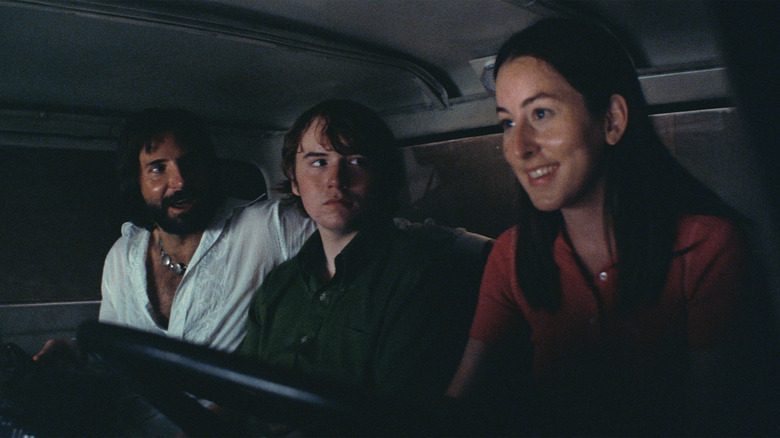
"I'm not going to forget you. Just like you're not going to forget me."
I loathe when people say "You didn't like this movie because you didn't get it," but honestly, I feel like some people just don't "get" Paul Thomas Anderson's "Licorice Pizza." To be clear: if you dislike this movie, I have nothing against you! But the ways that some folks are twisting themselves into pretzel knots to decry the film strain credulity. Specifically, folks seem to think this is some risque tale that embraces romance between an adult and an underage kid. And it doesn't, not really.
Are the two main characters — 25-year-old Alana (Alan Haim) and 15-year-old Gary (Cooper Hoffman) — drawn to each other? Yes. And do they have what could be considered a crush on each other? Yes. But "Licorice Pizza" isn't some rom-com about these two crazy kids settling down and falling into bed together. Gary and Alana need each other in their lives, but this isn't a great love story. It's not even a coming-of-age story, even though that seems to be the easiest classification for the film.
Instead, this is a hang-out movie; a film where we spend time with these characters as they traverse the San Fernando Valley in 1973. Gary is a child actor and schemer while Alana is a directionless young woman who keeps trying to find herself and her place in the world, only to stumble, be disappointed, and end up back hanging out with Gary and all his teen friends. And the film doesn't pretend this is a great thing, either. It literally has a scene where Alana states that she herself thinks it's "weird" that she hangs out with Gary and his friends all day.
The shaggy-dog, plotless nature of "Licorice Pizza" is bound to turn plenty of viewers off, and I can't fault them for that. But I fell in love with this world. I don't think Anderson is glorifying the '70s, because everything here looks kind of faded and washed-out. Everyone seems tired. There's a gas crisis, people! Instead, the filmmaker is merely transporting us to another time and another place, and hoping we'll stick along for the ride.
At the center of it all is Alana Haim, who is so good here it's kind of scary. This is Haim's first real acting gig, and she knocks it out of the park with a kind of naked openness that might've scared some more seasoned performers. Haim is already a rock star, and she can now add "movie star" to her resume as well, because she burns bright here, bringing the film to life every time she's on-screen. Throw in a hilarious cameo from Bradley Cooper playing hairdresser-turned-producer Jon Peters, and you've got yourself some satisfying "Licorice Pizza," baby.
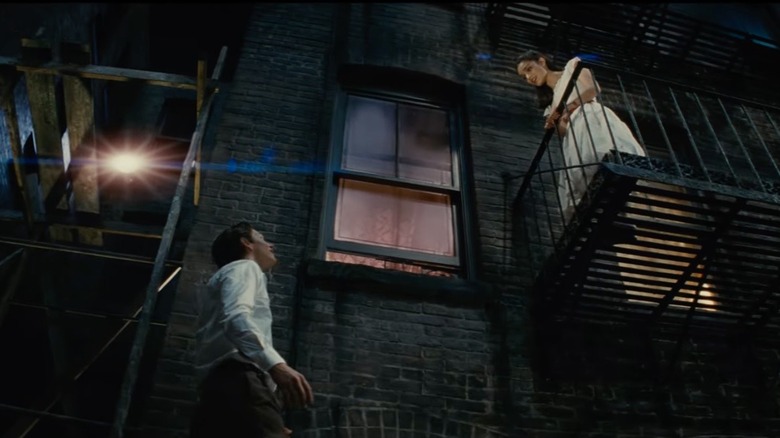
"Life can be bright in America."
Steven Spielberg has been talking about making a musical for almost his entire career, and now that he has, it was worth the wait. Spielberg's "West Side Story" has the filmmaker moving the camera in ways that post most modern filmmakers to shame; he may be getting up there in years, but he's still bursting with filmmaking energy, crafting a gorgeous, swooning, sweaty, fantastic story of doomed love. Yes, there was already a "West Side Story" movie, and yes, it's considered one of the best musicals of all time. And yet, Spielberg's film finds a way to stand on its own while complimenting what came before.
Screenwriter Tony Kushner adds new depth to the characters and their motives. The script adds in the idea that the neighborhood the warring gangs, the Jets and the Sharks, are fighting over is not long for this world — it's in the process of being leveled to make way for Lincoln Center. These characters are fighting, and dying, for something that soon won't exist. At the center of this is a love story between Tony (Ansel Elgort), who runs with the Jets, and Maria (Rachel Zegler), sister of the leader of the Sharks, Bernardo (David Alvarez). Meanwhile, a deadly rumble between the gangs threatens to boil over — in between big, sweeping musical numbers.
Elgort's performance is a little ho-hum, but everyone around him is phenomenal, particularly Mike Faist, who is dynamite as Riff, the Jets leader who clearly longs for Tony to return to the gang (and might long for him in other ways, too), and Ariana DeBose, who commands the screen as Bernardo's girlfriend Anita. Spielberg films them all against a gritty, semi-realistic backdrop (complete with lens flares!), and we watch, awed, as the characters dance, and sing, and ultimately suffer horrible tragedies. There's a cruelty to "West Side Story," as it's ultimately the story of love that cannot survive in a violent, hostile environment. As Anita sings, "Life can be bright in America." But not for these characters. But there's plenty of life here, too. In fact, this is one of the most-alive movies in recent memory, and one of Spielberg's best, too. And that's saying something.
Read this next: The Best Movies Of 2021
The post Chris Evangelista's Top 10 Movies Of 2021 appeared first on /Film.

A group of idiots "irreparably damaged" a prehistoric stone artwork at Big Bend National Park in southwest Texas. The idiots scratched the names Norma, Adrian, Isaac, and Ariel, and 12/26/21 overtop the "abstract images of geometric forms, circles, and undulating lines" that were carved into the rock by Indigenous people between 4,000 and 8,500 years ago. — Read the rest

New information on the Steam Deck's battery life, load times, and future features, based on the console's devkit, has been shared online today, shedding more light on the soon-to-be-released handheld console by Valve.
Speaking with Boiling Steam, an anonymous developer with hands-on access to the Steam Deck dev kit revealed some interesting new details on the console. For starters, this anonymous developer feels like the console has been delayed not only due to the current semiconductor shortage but also due to the SteamOS experience requiring additional polish.
The first thing they mentioned was that they’re “not convinced that even with all the improvements to SteamOS 3.0 between August and October that it would have been ready by December. Yes, there’s a semiconductor shortage but I’m thinking it’s not the real reason for the delay.”
In the Q&A session, it has been revealed that the Steam Deck's battery life is between 2, 5 hours depending on the APU load, that load times are "indistinguishable" between loading off the SD Card and the SSD, and that mid-game resuming is being worked on. This would be an extremely welcome feature, so hopefully, it won't be coming too far off in the future.
Have you tried any demanding games?
Yes – battery life is between 2-5 hours depending on APU load.
How fast are load times from the microSD card?
Indistinguishable from loading off the SSD; I’ve not timed anything.
Can you resume a game at any point in time? Or do you have to exit and restart?
Mid-game resuming is being worked on.
The anonymous developer also commented on how the Steam Deck feels compared to the Nintendo Switch, saying that it does feel better for longer sessions thanks to the console's form and good button placement.
How much “better” does it feel than a Switch when playing games? If you had to compare qualitatively.
It’s more comfortable to play for longer sessions, button placement is good. Being wider than the Switch helps with the Deck’s weight distribution and feeling of balance.
The Steam Deck console will start shipping next month. More information on the console can be found on its official website.
The post Steam Deck’s Battery Life Is Between 2, 5 Hours; Mid-game Resuming Is Being Worked On by Francesco De Meo appeared first on Wccftech.
The U.S. State Department and the National Counterintelligence and Security Center (NCSC) on Friday issued a warning over the use of commercial surveillance tools.

Monster Hunter Rise is the best Monster Hunter game to date. It maintains everything that's fun about World, makes meaningful tweaks to the flow of combat, and adds plenty of its own flavour with Palamutes, new traversal mechanics, and gorgeous environments that are teeming with nods to Japanese folklore. And now it's on PC (you can buy it here, coincidentally) we can enjoy it all with the benefit of faster frame rates and higher resolutions.
Rise kicks off in traditional Monster Hunter fashion: a dangerous phenomenon is making the local wildlife go berserk and it's up to you to fix it. This time you're up against ‘the Rampage’, which is causing enraged monsters to stampede in huge numbers, and it’s headed towards your home village of Kamura. Despite being a newly minted hunter, the village chief has charged you with investigating what’s causing the Rampage and stopping it before it threatens your home.
Kamura acts as your main hub, and it's here where you'll pick up new quests, trade goods, craft new weapons and armour, and chat with fellow villagers. So far, so Monster Hunter. However, your village also has an area called the Buddy Plaza that's dedicated to your cadre of Palicoes, as well as the new Palamutes. While previous Monster Hunter games pair you with the cat-like Palicoes, Rise introduces us to Palamutes, faithful canine companions who double up as noble steeds and fierce warriors during hunts. Palamutes inject some much-needed pace into the more tedious parts of a hunt, reducing both the time it takes to chase monsters between areas and letting you sharpen tools while on the move.
RELATED LINKS: Upcoming PC Games, Best PC RPGs
Along with bleach and horse-dewormer, anti-vaxxers have another Covid cure to add to their medicine cabinets: urine. As per the sage advice of "Vaccine Police" leader Christopher Key, drinking your own pee pee will protect you from Covid-19.
The Alabama quack — who in August threatened Walmart pharmacists that administered Covid vaccinations with "execution," and in 2013 peddled deer antler spray to pro-football players as a remedy for sports injuries — spread his urine-as-antidote message in a Telegram video over the weekend (see below). — Read the rest

In 1942, a worker cutting peat in a bog in Viksø, Denmark discovered two horned helmets that, archaeologists only now have determined, were forged in Sardinia during the Bronze Age. That means those iconic brain buckets were warn by warriors more than 2,000 years before the Vikings made the scene. — Read the rest

Locked public restrooms are an easy-to-spot sign that a municipality is suffering from an underinvestment in public infrastructure. If a city doesn't maintain public restrooms it's likely that other essential services are suffering from a similar lack of attention.
From David Perell's Monday Musings newsletter:
— Read the restTesting the Social Health of a City
I use a heuristic to judge the social health of cities I explore.
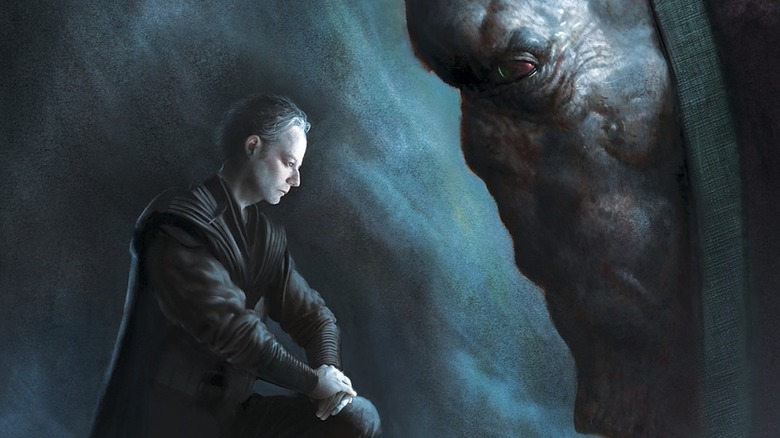
For a great many people, "Star Wars" is a series of movies that are major touchstones in pop culture. For others, it's an ever-expansive universe filled with endless corners to explore, from merchandise to audio dramas, comics, animated TV shows, and, rather importantly, novels. Over the years, fans have been treated to some downright important and excellent storytelling within a galaxy far, far away in the pages of books that have explored everything from what happened after "Return of the Jedi" (the "Heir to the Empire" trilogy and/or the "Aftermath" trilogy) to -- and this is true -- zombie Stormtroopers (read "Death Troopers").
Not all of the books are canon anymore as Disney hit the big reset button back in 2012 after purchasing Lucasfilm, relegating all of the books from before that acquisition as "Legends" tales. Even with that being the case, one book has always stood a cut above the rest: James Luceno's "Star Wars: Darth Plagueis." Published in January of 2012, it came about at an interesting time, just as Lucasfilm was about to get its biggest shake-up in history and "Star Wars" was about to come back in a massive way. But within its pages, this book contains a wildly important tale within the lore of the franchise that is as compelling, creative, weird, and fascinating as a fan looking beyond the silver screen could hope for.
In honor of the book's tenth anniversary, we're looking back at the novel, how it came to be in the first place, the importance of the story it told, and why the book itself is something of a tragedy, all with insight from the author himself, James Luceno.
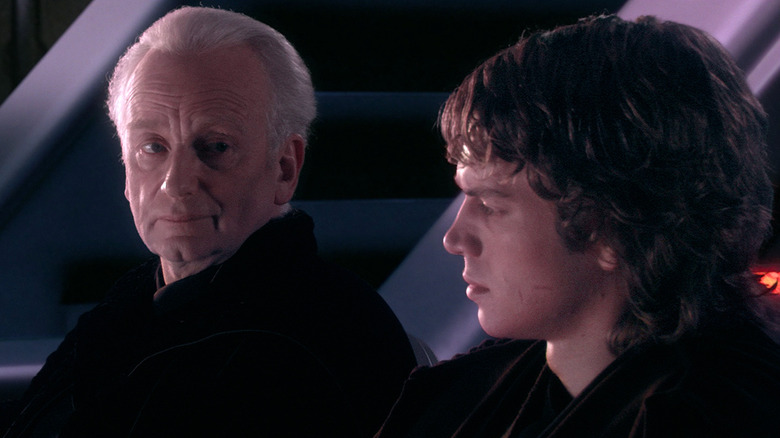
One very unique thing about "Star Wars," and part of what has allowed it to endure for so long, is that even the smallest things can open up vast, new corners of its gigantic storytelling galaxy. (Example: Boba Fett, a character with only a few lines of dialogue and mere minutes of screen time, became one of the most popular characters in the franchise.) "Star Wars: Darth Plagueis" traces its roots to a particularly interesting scene from 2006's "Revenge of the Sith," the third and final entry in George Lucas' prequel trilogy. At a pivotal moment, Chancellor Palpatine is sitting with Anakin Skywalker at the opera, and the young Jedi is concerned about the fate of his secret wife, Padme Amidala. Sensing the opportunity to strike, Palpatine decides to regale Anakin with a story, and asks him if he has ever heard the "Tragedy of Darth Plagueis the Wise." For those who need a refresher, here's the scene in question:
This is the perfect example of something that does just enough to serve the scene in the movie, yet opens up a whole host of questions that more ravenous franchise fans will want answers to. Who was Plagueis? Why did Palpatine have that knowing smile? Did they know one another? Can the Force really be used to cheat death? This was long before the advent of Disney+, where a "Darth Plagueis" series might have made sense. So, at the time, the most logical place to explore the answers to these great questions was in a novel.
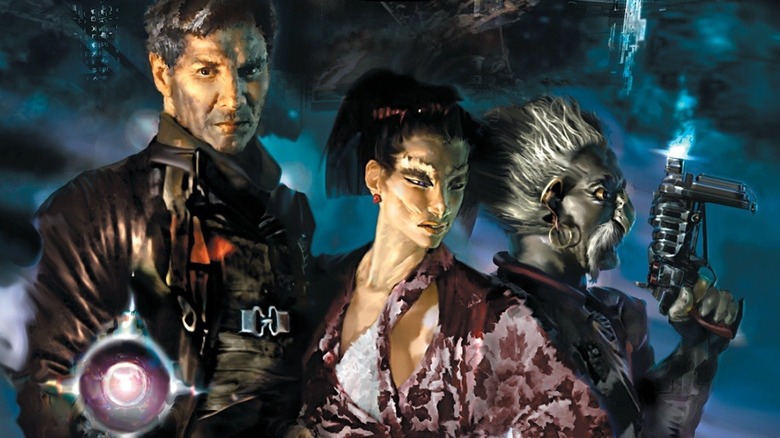
James Luceno was 30 years old when he saw the original "Star Wars" back in 1977, and it would be another 23 years before the author would make his debut in the franchise with the 2000 novel "The New Jedi Order: Agents of Chaos I: Hero's Trial." As it turns out, Luceno, much like Palpatine himself before taking over as the head of the Galactic Senate, had been quietly looming in the background, studying and learning from others before his day would come.
"I was thirty when the first film premiered - neither as 'A New Hope' nor Episode IV, but simply as 'Star Wars.' I saw it in a movie theater in Paramus, New Jersey with the late Brian Daley, my close friend and future collaborator, who, along with Alan Dean Foster [author of "Splinter of the Mind's Eye"], would author the earliest 'Star Wars' tie-in novels. I served as a kind of sounding board for Brian during the writing of his 'Han Solo' books, as well as for his scripts for the radio dramas, and so had a strong connection to 'Star Wars' long before being asked to contribute to the franchise."
Though his time wouldn't come until years later, those years of apprenticeship served Luceno well once his number was called. Luceno authored a full "New Jedi Order" trilogy, as well as books such as "Cloak of Deception" and "Labyrinth of Evil," which served as a prequel to "Revenge of the Sith" long before "The Clone Wars" came about to fill in that gap officially. So, how did it come to pass that he would be the one to tell us the Tragedy of Darth Plagueis the Wise? It turns out, this was right in his wheelhouse.
"Most of my contributions to what was once called the expanded universe - to Legends, as it were - involved unpacking obscure references in the films. Reference to the Trade Federation's taxation of the trade routes led to 'Cloak of Deception;' 'that business on Cato Neimoida,' led to 'Labyrinth of Evil.' An email from then-Lucasfilm editor Sue Rostoni that reached me in Guatemala asked: 'Who was Darth Plagueis?' I jumped at the opportunity to find out."
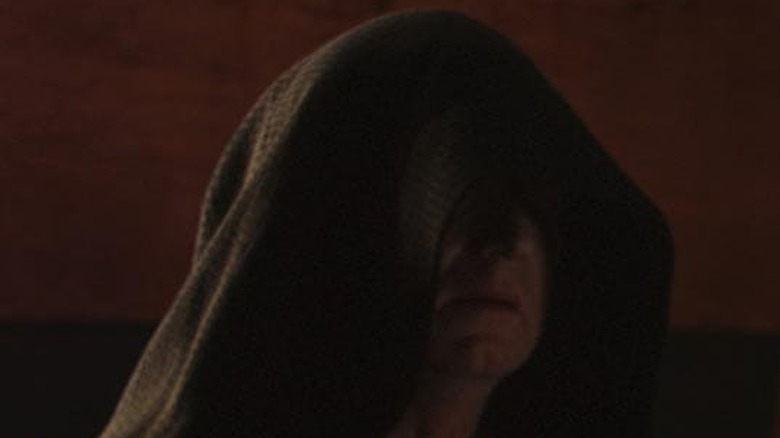
While it was crystal clear that Darth Plagueis was a hugely important figure within the dark side of the Force, there was woefully little else to go on. This left Luceno largely to his own devices to backfill this crucial story.
"Lucasfilm was always helpful in providing whatever I needed in the way of background material or answers to questions regarding continuity. I'd been thinking about Plagueis from the moment I had an early look at the script for 'Revenge of the Sith.' Once I had approval to delve into the character, it was George Lucas who suggested that he should be a Muun. I was also instructed not to be explicit about the 'parentage' of Anakin Skywalker."
That last bit is particularly interesting, as fans will surely recall that Anakin doesn't necessarily have a father (that we know of) and was born of the Force. That being said, the events of the novel ultimately crossover with "The Phantom Menace," and Plagueis' quest to achieve true immortality does lay some breadcrumbs, with the Sith at one point talking about the notion of being able to truly create life by using the Force. Later, when Anakin is introduced, these dots are sort of connected -- though not explicitly.
Setting that aside, Luceno says the business of figuring out who this tragic character was turned out to be difficult at first.
"Essentially I had nothing to go on but Plagueis' species, and in fact my first outline of the novel was rejected by Lucasfilm for failing to bring out the evil in the character. I was toying with making Plagueis a 3D chess master among other things, and writing him in first person. Months after the rejection, I asked Howard Roffman, then head of Lucasfilm Licensing, if we could revisit the idea, which by then focused on Plagueis as a power behind many scenes, with links to crime syndicates, secret societies, politicians and the rest. Persuaded of my good intentions, Lucasfilm was very generous in allowing me to run with that."
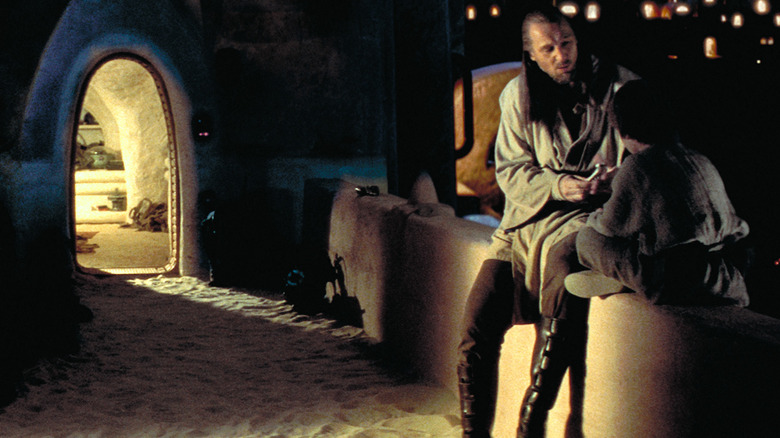
While, in hindsight, there were some serious implications in that scene from "Revenge of the Sith," it wasn't explicitly stated that Palpatine was Plagueis' apprentice. That was perhaps the biggest decision that Luceno made in crafting the story at the center of the novel that now stands atop the massive heap of "Star Wars" novels as a benchmark for just how good these stories can be. The book pulls a "Romeo & Juliet," kicking off by telling us the ending right up front, with Palpatine ultimately killing his master Plagueis. The book that unfolds shows us how this compelling tragedy came to be.
"Everyone who had watched 'Revenge of the Sith' already knew what happened; the events came straight from the lips of Palpatine to Anakin - at least from a certain point of view. So my idea was simply to get that part of the story over with and jump back in time to events that set in motion what was to come - a common enough technique for bringing things full circle, which seemed appropriate for the narrative."
The meat of the story kicks off with Plagueis surpassing the teachings of his master, killing Darth Tenebrous. This sets into motion the tragedy that unfolds, as Plagueis becomes obsessed with the notion of conquering that fate, which has been something the Sith have had to contend with ever since the Rule of Two was put into place: Only ever a master and an apprentice. No more. No less. Yet, the obsessive pursuit to cheat death and achieve immortality, crafting a Sith rule that could last generations, also led to hubris which became Plagueis' downfall, leading him to find himself in the same place Tenebrous found himself: dead at the hands of his apprentice. One thing that "Star Wars" storytelling is very good at is weaving in the notion that history repeats itself, and that thread is very present in this book.
With that as the center of the narrative, the task of crafting a young Palpatine was entrusted to Luceno. This was no small thing, since -- especially after the release of the prequels -- the character was just about as important as anyone else within the series, and we were about to learn a whole lot more about him. Again, the author's previous experience made him an ideal candidate to tell this part of the story.
"My previous dive into the nature of the Sith in 'Dark Lord,' in which Anakin transformed into Darth Vader, was crucial to my thinking about Palpatine, and the burden of being born to the dark side. I had already amassed plenty of information about Naboo when writing about Darth Maul's exploits on that planet, so I simply needed to drop Palpatine into the midst of all that, and furnish him with an incident that would ultimately drive him over the edge and into Plagueis's grip."
That incident involved manipulation on Plagueis' part after he sensed something in Palpatine, setting forth a series of events that led to Palpatine killing his own parents, leaving him with nowhere left to turn but Plagueis and setting him on an irreversible path to the dark side that shaped the galaxy as fans came to know it.
But the big question at the center of "The Tragedy of Darth Plagueis the Wise" has to do with cheating death. This idea sets Anakin on the path to becoming Darth Vader which, in the end, proves to be Palpatine's undoing. It's hugely important. Luceno took a pretty interesting approach to this aspect, opting to use midi-chlorians as the crux of the whole thing. The controversial element of "Star Wars" was introduced in "The Phantom Menace" as a means to measure one's strength in the Force, with those who have a high midi-chlorian count being more attuned to the Force. Lots of fans outright hated this inclusion by Lucas, which makes it all the more fascinating that Luceno leans into it hard in this novel, with Plagueis obsessed with the idea of manipulating the microscopic lifeforms to do his bidding and, ultimately, achieve immortality. Yet, Luceno manages to make it work, and it all comes down to his approach and reasoning.
"Midi-chlorians provided me with a means of grounding Plagueis' search to obtain mastery over life and death - as those terms apply to both the light and dark sides of the Force. I didn't want to rely on magic or psychic ability, so opted for an approach closer to 'Frankenstein' than, say, 'Doctor Strange.'"
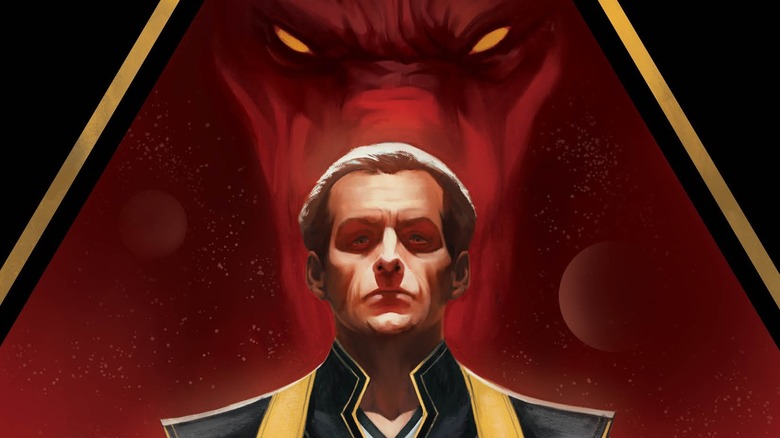
Ten years removed, "Star Wars: Darth Plagueis" is still widely considered to be one of the greatest novels ever published within the franchise. And yet, because Disney reset the canon after taking over, the novel has been relegated to "Legends" status, meaning its account of the events is not considered to be the definitive account. Disney could completely re-tell the tale in another way at some point, or they could never address it again. It remains nebulous and, in that way, frustrating.
There is no question that the "Star Wars" expanded universe as it used to exist was messy and unruly. In 1999, Chewbacca died by getting crushed by a moon. I get it. Disney had to do something and, in some ways, they made the only decision they could. Luckily, they have incorporated elements of these "Legends" tales into the new canon, with Grand Admiral Thrawn appearing in "Star Wars Rebels" before making his way to a new series of novels written by the character's creator, Timothy Zahn. But to this point, nearly ten years removed from the sale of Lucasfilm to Disney, the studio has brought elements of these tales into the canon, but nothing wholesale. And therein lies the true tragedy.
In my eyes (and surely in the eyes of many other readers), Luceno's account of "The Tragedy of Darth Plagueis the Wise" would be incredibly difficult to improve upon. It is operatic and filled with subtle history lessons on the Sith while staying on target and focusing on the story at hand, even when bringing in familiar elements from other corners of the "Star Wars" galaxy. It always serves the story and is never distracting. It even manages to improve one's view of "The Phantom Menace" in the third act, adding a ton of additional context to those events, including the formation of the Clone Army, Dooku's path to becoming a Sith, and even Maul's apprenticeship to Palpatine.
"Star Wars: Darth Plagueis" is a bold, important, and essential story within the franchise. It's a story that needs to be addressed at some point within the new canon -- no two ways about it. Yet, Luceno already told this tale in pitch-perfect fashion. To bring balance to the Force, as it were, Disney would do well to designate this novel as canon and do away with the idea of improving upon what is already there. Madness that way lies. To date, nothing in the established canon truly contradicts this novel, and there is no reason it can't be set in stone as the definitive version of these key events.
Whether or not that happens remains to be seen, but ten years removed, this remains a seminal "Star Wars" tale -- even if it is, at least for now, only from a certain point of view.
Read this next: Star Wars Movie Villains Ranked Least To Most Powerful
The post Star Wars and James Luceno's Tragedy of Darth Plagueis the Wise, 10 Years Later appeared first on /Film.
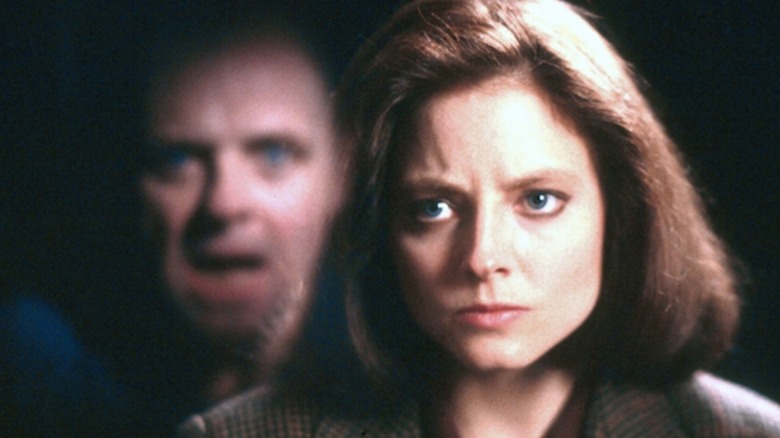
Remember that scene in Jonathan Demme's "Married to the Mob" where Michelle Pfeiffer's mob wife gets a foot rub from Matthew Modine's FBI agent to the strains of "Goodbye Horses" by Q Lazzarus? Nope, me neither. Demme stuck with the song, however, and used it to iconic effect in his next picture, the Oscar-winning crime thriller "The Silence of the Lambs." You know the scene, where serial killer Buffalo Bill (Ted Levine) tucks his meat-and-two-veg between his legs and does the little dance?
Demme's slick psychological horror is stacked with those iconic moments, and it remains part of our collective pop consciousness even 30 years later. It was also one of only three films to take home the "Big Five" Academy awards: best picture, director, actor, actress, and screenplay (the other two films were "It Happened One Night" and "One Flew Over the Cuckoo's Nest"). Subsequent expansion of the Lecterverse has been hit-and-miss, fleshing out the world of everyone's favorite cannibal while also diminishing his mystique.
Brian Cox may have played Hannibal Lecter first in "Manhunter" and some argue the merits of Mads Mikkelsen in the "Hannibal" TV series, but Anthony Hopkins' version of the character is the one people will still remember in 50 years' time. With only 16 minutes of screen time, Hopkins created an indelible character and won an Oscar for what was practically a cameo appearance. Film buffs love quoting his lip-smacking lines, and he has been parodied so much that it's easy to forget that his Lecter is defined mostly by stillness and watchfulness ... until he sees a chance to escape. Then things get very bloody indeed.
"The Silence of the Lambs" is an expertly crafted and acted potboiler, with a lot of plot points flying around during that barnstorming second hour. Let's dig into the key events of that final stretch.
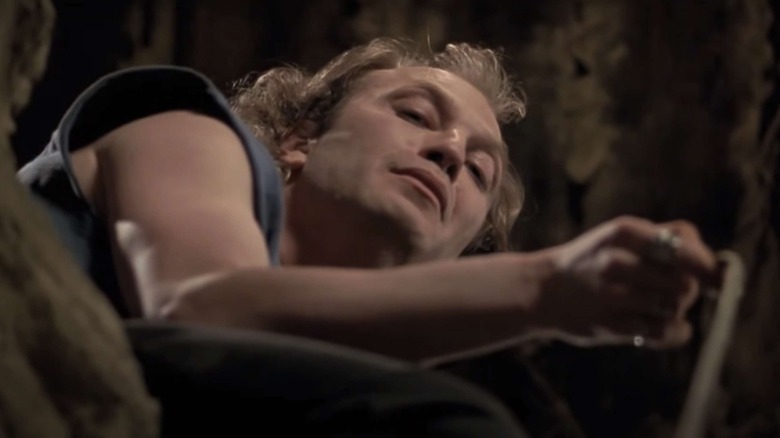
"The Silence of the Lambs" stars Jodie Foster as Clarice Starling, a young FBI trainee who is chosen by her mentor, Jack Crawford (Scott Glenn), to interview the incarcerated serial killer Dr. Hannibal Lecter (Hopkins), a former psychiatrist who got his rhyming nickname, "Hannibal the Cannibal," from his penchant for eating parts of his victims. Sometimes paired with a nice drop of wine.
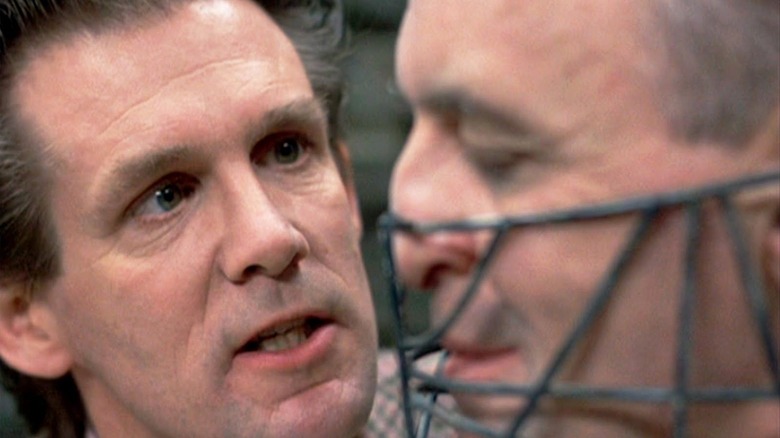
Crawford thinks that Lecter might offer some insight into the psychological profile of another killer on the loose, nicknamed Buffalo Bill. So far, he has murdered five women, removing sections of their skin before dumping their bodies with a Death's Head moth placed in their throat. Lecter guardedly toys with Starling at first, but after a fellow inmate humiliates her, he decides to give her a clue that sets her on the path to catching the killer. He also offers to profile Bill on the condition that she gets him transferred to another prison away from Dr. Chilton (Anthony Heald), the head of the psychiatric hospital whom Lecter absolutely loathes.
The stakes are raised when Buffalo Bill snatches the daughter of a senator and imprisons her at the bottom of a dry well in the basement of his house, in readiness for his next murder. Realizing there is only a small window of opportunity to get her back alive, Crawford authorizes Starling to tempt Lecter with a false deal. Meanwhile, Lecter is more interested in probing Starling for her deepest secrets in exchange for more information about the killer.
After Buffalo Bill abducts the senator's daughter, Starling approaches Lecter with Crawford's bogus deal. This ruse is scuppered by Chilton, who has bugged the cell and sees an opportunity to grab the limelight by capturing the killer. He plays hardball with Lecter, removing all the comforts from his cell. Lecter gives him half a name, saying he will only tell the rest to the senator in person. Chilton quickly arranges Lecter's transfer to Memphis, where Lecter gives the senator a phoney name and taunts her about her daughter. He is then taken to a makeshift courthouse cell where he awaits transfer back to Baltimore.
Throughout this sequence we see how cunning Lecter really is. He realizes that pretending to play ball with Chilton and the senator will get him transferred to a place with more lax security, giving him the chance to escape. He buys time with the phoney name -- Starling later figures out that "Louis Friend" is an anagram of iron sulfide, aka "fool's gold."
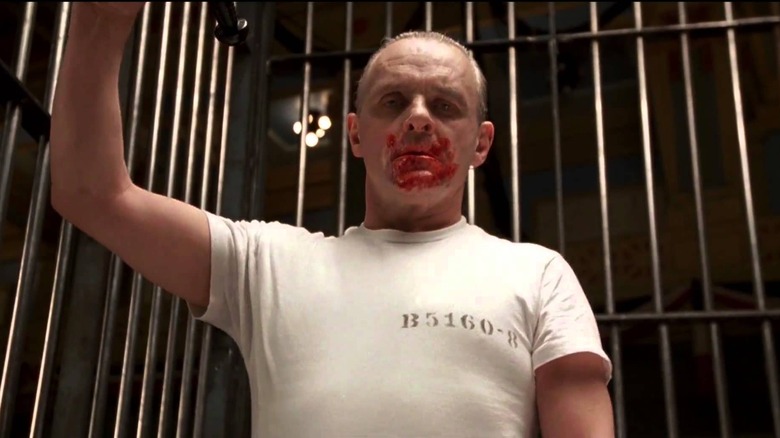
After Starling visits Lecter one last time, two guards bring his evening meal. They handcuff him to the bars of the cell as a precaution. Unfortunately for them, Lecter has his own homemade handcuff key. He attacks and kills both the guards. Mirroring Bill's M.O., he removes a guard's face to wear over his own, pretending to be one of the victims to complete his escape by ambulance.
How did Hannibal get out of his handcuffs? During the shakedown of his cell, we see Lecter in restraints, eyeing Chilton's pen on the bed. When they later arrive in Memphis, Chilton needs to sign release papers but can't find his pen. At some point between the shakedown and the flight, Lecter stole the pen and used it to pick the lock on his handcuffs.
With the help of Lecter's final clue, Starling figures out Bill knew his first victim, Frederica Bimmel, who was the third body found. Surprisingly, no-one has followed up on this angle previously, and Starling goes to visit Frederica's home in Ohio. The penny drops when she notices some clothes in Frederica's house with sewing darts pinned to them. Their shapes resemble the patches of skin from one of Bill's victims, making Starling realize that he must be a dressmaker or tailor too.
Starling calls Crawford to tell him Bill is making a woman suit from real skin. Crawford is already on his way to Illinois with a lead from John Hopkins about Jame Gumb, a patient rejected for sex reassignment due to his psychological issues. Starling is disappointed to miss out, but follows up a few loose ends, leading her to the address of Frederica's former employer, Mrs. Lippman. Here, Demme serves a brilliant mis-direct. While Bill is dealing with the senator's daughter taking his dog hostage, the doorbell rings. We see Crawford's team outside, ready to go in. But when Bill answers the door, it's not Crawford outside, but Starling.
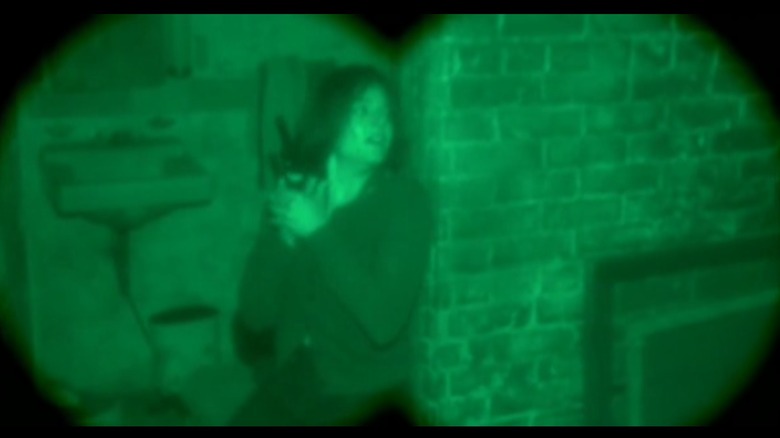
Bill tells her that Mrs. Lippman passed away, but he might still have her son's number. Although it isn't made clear in the film, the lore reveals that Bill killed Mrs. Lippman for the house, and she is the corpse we briefly seeing rotting in a bathtub. Starling spots a Death's Head moth flying around and realizes she is face-to-face with the murderer with no backup. Rumbled, Bill runs away to the basement with Starling in brave pursuit. He cuts the lights and stalks her with night vision goggles -- and just as he is about to kill her, she hears him and opens fire.
Buffalo Bill is dead and Starling graduates as an FBI agent. At the after party, she receives a call from Hannibal Lecter. We see him in the Bahamas, wearing shades and blonde wig, watching Chilton disembark from a plane. Earlier, when we find out what happened to the ambulance crew who were transporting him from the courthouse, it is mentioned that he also killed a tourist. Is that the identity he has assumed in order to travel?
Lecter tells Starling that he has no plans to seek her out, implying that he could get to her easily if he wanted to, and requests that she does the same. She tells him she can't make that promise. This brief conversation demonstrates that Lecter truly respects Starling after their exchanges, and may see her as a worthy adversary now that he's on the outside. Then the film concludes with a jokey little payoff as Lecter rings off, saying he's "having an old friend for dinner," before leisurely following Chilton down the street.
How did Lecter and Chilton end up in the same place? There are two possibilities here. The more prosaic one is that Lecter simply found out that Chilton was traveling to the Bahamas and went there to murder him. It's more satisfying, however, to think that Lecter engineered a situation to lure Chilton there, probably with some ruse that flattered the man's immense self-regard. Either way, there is little reason to doubt that Lecter will make good on his word and feast on parts of the insufferable Dr. Chilton as revenge for all the mistreatment in his care. It's a strange moment where we're left half-cheering for the cannibalistic killer, paving the way for "Hannibal," where Lecter became a kind of supervillain for the audience to root for.
Read this next: 20 Movies About Serial Killers That Will Absolutely Creep You Out
The post The Silence of the Lambs Ending Explained: A Game of Cat and Mouse appeared first on /Film.
As promised, Devolver has announced a brand new Serious Sam game, Serious Sam: Siberian Mayhem. Serious Sam: Siberian Mayhem is a new stand-alone expansion to the classic FPS series, and below you can find its first details and screenshots. In this new Serious Sam game, players will join the fight against Notorious Mental on a … Continue reading Serious Sam: Siberian Mayhem announced, first details and screenshots →
The post Serious Sam: Siberian Mayhem announced, first details and screenshots appeared first on DSOGaming.

After the roaring success of Monster Hunter: World back in 2018, the idea that the next big PC entry in Capcom's dino pants craft 'em up is a game that originally started life on the Nintendo Switch is bound to ruffle a few feathers. But far from being a step down from World, Monster Hunter Rise is every bit its equal - and Capcom's stellar work with this PC port has given it a much-needed buff and polish to really make it shine. Not only does Rise offer the same seamless and expansive environments as World, but it also adds a few new twists to make tracking down its titular titans even more enjoyable.

These days, you can't shake a stick without bouncing brown beams around the room. Raytracing has been a hot high-end graphics trend for a few years, with new games boasting support for the complex lighting simulators and old games being retrofitted with shine. This year, a new Half-Life mod will add raytracing support to Valve's seminal shooter, and even as someone usually perfectly happy with old games looking old, I think it doesn't look half-bad. See for yourself in the new video, below.
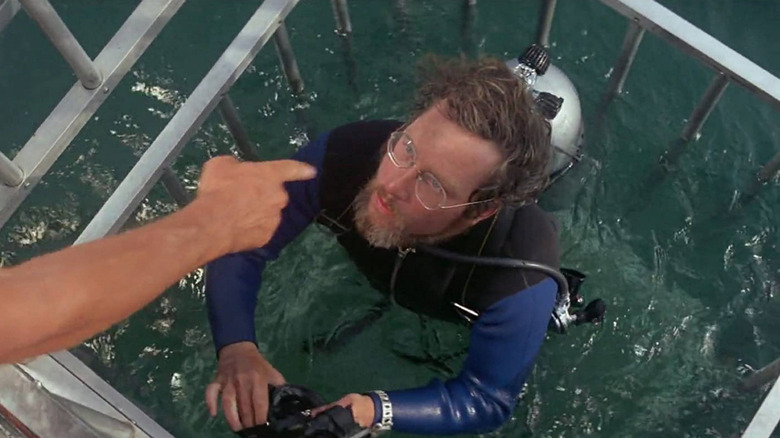
Going on 50 years later, director Steven Spielberg's "Jaws" continues to reign supreme as the champion of sharksploitation films. It's a movie full of truly iconic scenes that tap into our elemental fear of the ocean and, more specifically, the unknown terrors potentially lurking beneath its tranquil surface. However, out of the many unsettling moments in the film, there may be none more terrifying than when lovable oceanographer Matt Hooper decides to bring the fight directly to the great white shark menacing the beaches of Amity Island by entering the water in a (theoretically) shark-proof metal cage.
What ensues is a downright petrifying scene in which the shark tears through the cage (much to the screaming Hooper's horror) and nearly rips him to shreds before getting tangled in the cage itself, giving Hooper the opening he needs to swim away and hide behind the seabed. As you would expect, part of this sequence was filmed in a water tank with a mechanical shark. But the part where the shark gets stuck in Hooper's cage and thrashes about? That was footage of a real-life shark captured by Australian shark experts Ron and Valerie Taylor in the ocean near Dangerous Reef in South Australia.
Valerie Taylor recounted the incident in an interview with InsideHook in 2021, explaining:
"The shark in the movie was supposed to be 25 feet long, and the sharks on the reef were closer to 15 or 16 feet long. So to keep the appearance right, we went out on a very small boat, built a smaller shark-proof cage, and hired a very short actor. We learned after the fact that he really didn't know how to dive, and was worried about being around the sharks. At that moment there were about three large great whites gliding around outside."
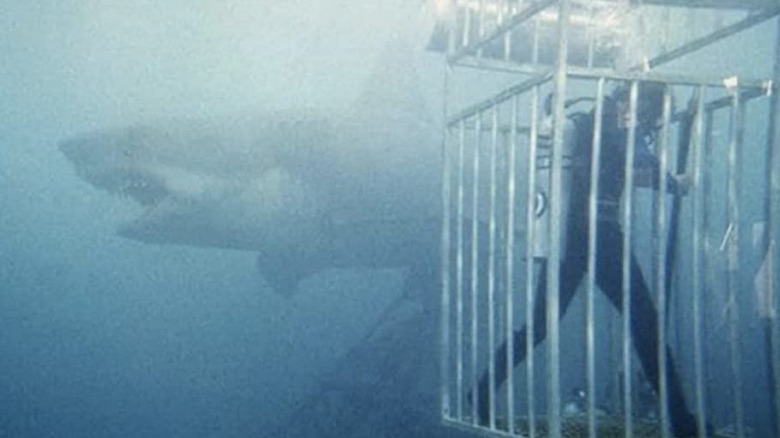
Taylor then explained how things nearly went terribly wrong, only to work out far better than expected:
"We didn't want to force anyone into the cage, and it was good that we didn't, because suddenly a huge 16-foot great white got caught in the wench that was connected to the cage. The shark started thrashing around, the wench broke off the side of the abalone boat, and fell down into a frothing mess in the sea. The cage was destroyed — clearly not as shark-proof as we had thought.
"If that actor had been in the cage when this happened, he would have died. We were fortunate that he was so reluctant. We were even more fortunate that Ron was already in the water and filming. I had run across the boat to grab our other camera and started filming from above as well. It was some of the most incredible shark footage anyone had ever seen, so of course the studio was happy. "
Spielberg was equally pleased with the footage and wanted to include it in the finished movie. In order to do that, though, some changes had to be made to the film's story, which originally had Hooper getting eaten by the shark during their cage battle. Seeing as the cage was clearly empty in the shot of the real-life great white shark getting ensnared and trying to break loose, the scene was altered so that Hooper escapes by swimming out the top of the cage while the shark rips it apart. By the time he resurfaces, Amity police chief Martin Brody has finally killed the shark by shooting and blowing up a scuba tank he had tossed into its mouth earlier (paying off a prior scene where Hooper warns Brody about just how volatile the tanks are).
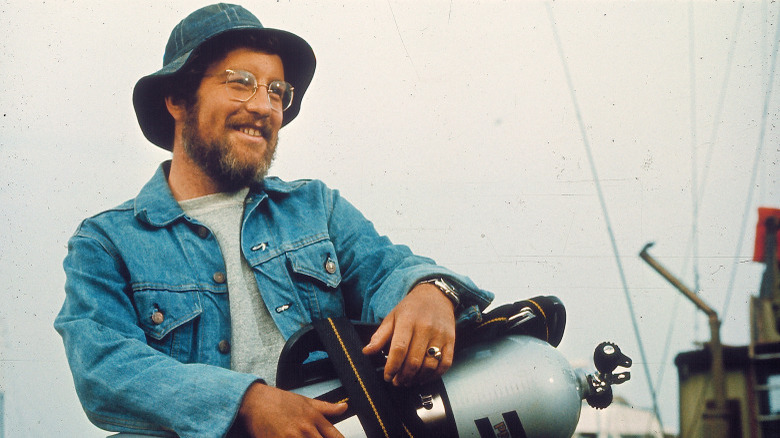
The idea to have the shark chow down on Hooper came straight from the source material by Peter Benchley, who also wrote the earlier script drafts for the film version of "Jaws." What's more, Benchley's novel featured a whole subplot that centered on Brody and Hooper being at odds and even clashing with one another during their shark hunt after Hooper meets up with Brody's wife Ellen (who had previously dated Hooper's older brother) at a motel earlier in the book, leading Brody to suspect the pair of having a tryst. Ultimately, Spielberg's adaptation left out that story thread entirely, which resulted in Brody and Hooper being on friendly terms for most of the movie. Instead, the tension was between Hooper and Quint: the seasoned working-class fisherman who Brody hires to kill the shark but doesn't take so well to Hooper (a younger man from a wealthy upbringing who values his scientific knowledge over Quint's experience) tagging along on their expedition.
Naturally, Hooper's cage fight with the shark in "Jaws" has begun to show its age over time. (If you study it closely, it's fairly easy to tell which shots depict a real great white shark and which ones feature a mechanical shark.) Even so, it remains a skillfully constructed sequence — and, if you're willing to suspend your disbelief enough, one that's just as scary today as it was back when audiences first saw it in 1975.
Read this next: The 12 Best Vampire Movies Of All Time
The post The Cage Scene In Jaws Was More Real Than You Think appeared first on /Film.
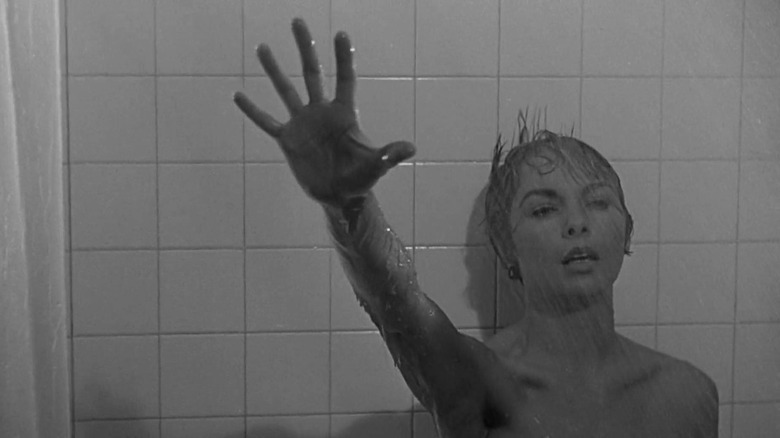
"It is required that you see 'Psycho' from the very beginning!"
When audiences first took their seats, it was clear that "Psycho" was going to be something worth talking about. Taking a cue from the William Castle playbook of gimmicks, director Alfred Hitchcock introduced a "no late admission" policy, with a poster showing the director pointing sternly at his watch (via CFI). To ramp up anticipation of the terrifying material within the film, he also hired "nurses" to stand around in cinema lobbies for early screenings, in case anyone suffered a heart attack (via Today I Found Out). How could you not see a movie with those gimmicks in place?
After the glossy spy thriller "North By Northwest," Hitchcock was looking for a change in direction. He landed on Robert Bloch's novel, "Psycho," and thought it had so much potential that he purchased the rights and tasked his assistant with buying up every copy she could find to preserve the story's twists and turns.
Paramount didn't want to make the film at all, resulting in Hitchcock funding the film himself, waiving his usual fee and taking a stake in the final product instead. Shooting in black and white with his "Alfred Hitchcock Presents" TV crew to keep costs down, Hitchcock's gamble paid off. "Psycho" was a hit and became one of the most influential horror movies in cinema history, stunning audiences by killing off the film's biggest star halfway through in the now famous shower scene.
"Psycho" was strong stuff for its time, shocking in its depiction of violence and provocative in how it portrayed sexual relationships and other controversial issues. It even featured one moment so contentious that it had never been shown in a Hollywood movie before. So, what was this cinematic milestone? Let's break it down, starting with the transgressive elements that seem like they'd fit the bill, but don't.
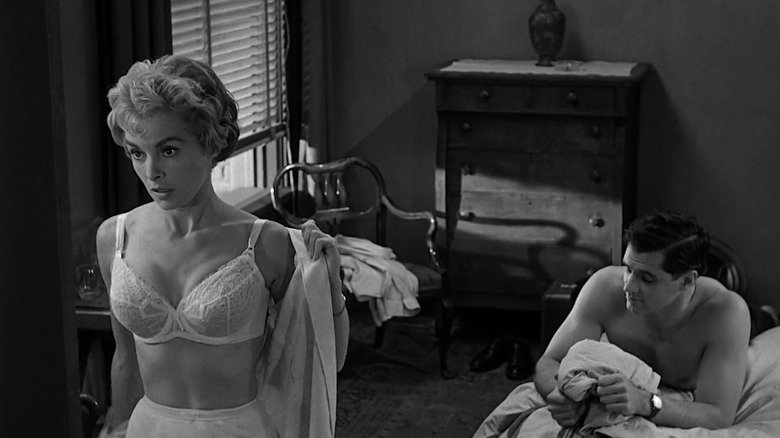
During the opening scene in the hotel room, Leigh is dressed in just a white bra and slip, indulging in a spot of post-coital canoodling on the bed with her boyfriend. This was all pretty racy for the time, and Hitchcock and his publicity team leaned into the potential controversy in the film's poster campaign. Although the restrictive Motion Picture Production Code (aka the Hays Code) was in decline by the time "Psycho" was released, filmmakers still risked the wrath of the censors by showing women in various states of undress or suggestions of sex (via Syfy). It was even more daring to show Janet Leigh, one of the biggest stars in Hollywood at the time, in just underwear and baring her midriff on the poster, along with the lurid tagline "A new -- and altogether different -- screen excitement!!!"
Despite this, it was far from a Hollywood first, although the idea of what a bra actually was changed significantly in the post-war years. The underwire style bra worn by Leigh in the scene, while developed in the '30s, only became a common garment in the '50s when metal was freed up for domestic use after World War II. Famously, Howard Hughes used his engineering skills to design an underwired push-up bra to amplify Jane Russell's breasts in 1943's "The Outlaw." However, pre-Hays Code, there were plenty of examples of women on screen wearing the period equivalent, from bralettes to lingerie (via The Lingerie Addict). One very early example of an actress wearing a bra-like top was Mae Murray's elaborate costume in "Peacock Alley" from 1922.
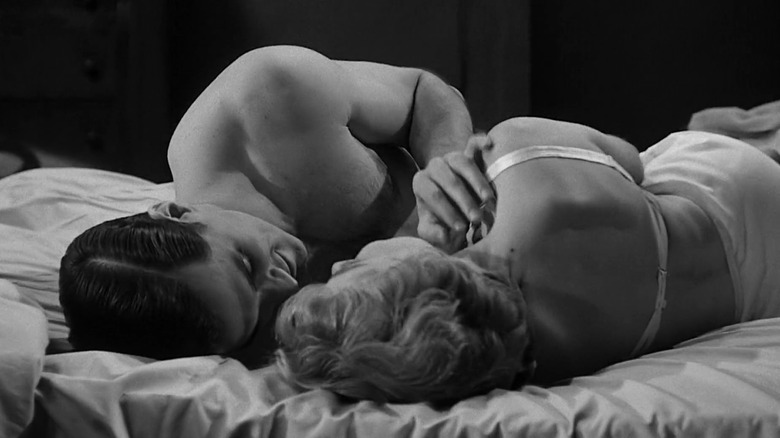
The opening scene of "Psycho" also broke another taboo, showing the unmarried Marion and Sam kissing and cuddling half-naked on a hotel bed. A man and woman sharing a bed was a big deal for a long time in Hollywood, even before the Hays Code. The precursor of the legislation, 1927's "The Don'ts and Be Careful's" guidelines of the Motion Picture Producers and Distributors of America, listed "Man and woman in bed together" as something to tread carefully with, on the grounds that "vulgarity and suggestiveness may be eliminated and that good taste may be emphasized." The standard solution was to have bedroom scenes, even for married characters in movies, with two single beds, usually separated by a nightstand.
Director Otto Preminger, who challenged the Hays Code by using forbidden words in "The Moon is Blue" and depicting drug addiction in "The Man With the Golden Arm" in the '50s (via Los Angeles Times), was delighted to break the bed-sharing rule in his 1944 film "In the Meantime, Darling." It was the first motion picture to show a married couple sharing a bed since the Code was established ten years earlier.
Although the Hays Code was in decline by the time Hitchcock made "Psycho," opening a movie with an unmarried couple in bed together was risky, and censors wanted the scene changed. Crafty Hitchcock tricked them with an invite to a reshoot, but the censors never showed up and the scene remained unaltered (via History.com).
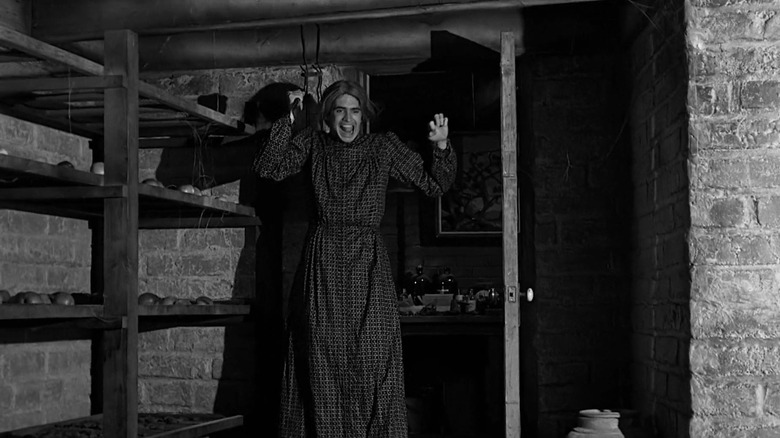
Another contentious issue in "Psycho" was Norman Bates dressing up in a wig and his mother's clothes towards the gruesome reveal in the film's third act, although the film itself debates whether he is truly a transvestite because, when he switches to mommy mode, he actually believes he is his mother. Cross-dressing in movies was far from a new thing; Billy Wilder's "Some Like it Hot," with Tony Curtis and Jack Lemmon spending much of the film dressed as women, was a big hit the previous year.
Meanwhile out in the real world, some members of the LGBTQ community faced harassment and arrest for cross-dressing in public (via History.com), something that schlock filmmaker Ed Wood passionately argued against in his semi-autobiographical "Glen or Glenda?" earlier in the '50s.
It has been argued (via The Scattered Pelican) that Norman's cross-dressing was another type of screen first: "Psycho [provided] the original model of the mentally disturbed cross-dressed murderer."
It was a trope that would appear many movies over the coming decades, like "Sleepaway Camp," "Dressed to Kill," and "The Silence of the Lambs," and is now provoking discussion in a modern context. As Harmony Colangelo writes in her excellent article on the subject (via Bloody Disgusting):
While I do not think it was the intent of all of these creators to specifically target trans women, the impact of the films they created exploited public unease towards people like myself and that attitude continues today. To the uninformed, the fear of there being a killer is usurped by the killer being a woman who is "lying" about being a woman. That queer panic becomes the new central fear and this equates trans people to a grab bag of destructive assumptions. The trans panic becomes more scary than the threat of death.
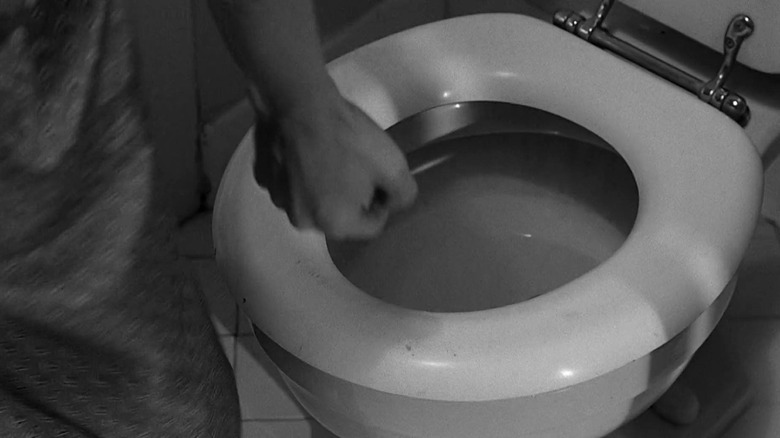
Yes, believe it or not, "Psycho" is widely regarded to be the first Hollywood movie to show an onscreen toilet flush. Scenes featuring the humble lavatory were often discouraged by the Production Code Administration, something that Hitchcock fell foul of earlier in his career. In his 1941 film "Mrs & Mrs Smith," Hitchcock planned a scene where a conversation in a bathroom was repeatedly interrupted by the sound of a flushing toilet on the floor above. Worried about the censors, RKO persuaded him to use clanking pipes instead (via The Hitchcock Zone).
Toilets were visible in previous Hollywood films, such as King Vidor's 1928 film "The Crowd," and the sound and image of a loo flushing finally came together in "Psycho." Just before Marion disrobes to take her final shower, she rips up an incriminating note, tosses it in the bowl, and yanks the handle. We see the water rising, but the great director doesn't linger long enough for us to see the scraps disappear around the bend. She's a bit careless about it, though, as one piece misses the bowl for private eye Arbogast (Martin Balsam) to discover later. This evidence was switched from a lost ring in Bloch's novel to the ripped-up note because Hitchcock thought the toilet moment would give the film some added realism.
By modern standards, the shot is totally innocuous, but where would we be without it? Would we have Jeffrey Lebowski getting his head repeatedly dunked in the toilet? Vincent Vega's fatal bathroom break? Or Jeff Daniel's unfortunate case of the squits in "Dumb and Dumber?" Cinema owes Hitchcock a great debt of gratitude for breaking that taboo.
Read this next: All 59 Stephen King Movies Ranked From Worst To Best
The post Surprisingly, Psycho Was the First Film to Ever Show This appeared first on /Film.
Based on the initial pitch and marketing campaign, "Wedding Crashers" looked like nothing more than a generic studio slapstick comedy about two hooligans that wreak havoc on a formal event. By no means did it look like it was "elevated" comedy fare, and at the time Owen Wilson and Vince Vaughn didn't have the same recognizable brand that they do now. However, "Wedding Crashers" proved to be a surprising smash hit that reenergized the enthusiasm for R-rated original comedies.
Given that many of the popular comedies of today are action-comedies, "Wedding Crashers" showed that all you need to appeal to audiences is a good story, charismatic lead performances, and a touch of genuine heart in order to justify the wild physical antics. The film successfully mixes romance and comedy without descending into melodrama, and the fact that it's hardly a traditional rom-com made it appeal to a much broader audience.
Directed by David Dobkin, the story follows the divorce mediators John Beckwith (Wilson) and Jeremy Grey (Vaughn) as they attempt to break into major weddings in a search for quick flings. Both men treat each wedding like a potential heist, but when U.S. Secretary William Cleary (Christopher Walken) introduces the pair to his daughters (Rachel McAdams and Isla Fisher) they begin to develop actual feelings for the girls.
In lieu of an actual "Wedding Crashers 2" (which may still happen), here is a list of movies with a similar vibe to "Wedding Crashers" that are definitely worth watching.
Owen Wilson has had a fascinating career trajectory from indie darling to comedy superstar, and he's one of the most exciting comic actors working today because of the genuine diversity within his filmography. Wilson started off on the indie scene collaborating with Wes Anderson, and co-wrote some of his best films including "Bottle Rocket," "The Royal Tenenbaums," and "Rushmore."
"Wedding Crashers" showed that he could successfully be a leading man, playing a character who — despite his inherent idiosyncrasies and mischievous behavior — could still develop empathetic qualities. Wilson could make the romantic aspects of a comedy genuinely interesting, and he proved it once more in 2011 with Woody Allen's nostalgic rom-com "Midnight in Paris." The fantastical premise imagines Wilson as the writer Gil Penda, who is hopelessly nostalgic for the era of 1920s Paris.
While vacationing in the city with his fiancee Inez (Wilson's "Wedding Crashers" co-star Rachel McAdams as a much less likable character), he ducks out of her materialistic shopping activities and walks alone through the city each night. Surprisingly, he's transported back in time to the '20s where he meets iconic literary figures and engages with the culture that he's studied. "Midnight in Paris" has a heartwarming message about nostalgia that essentially says the past can be a place to visit, but not live in.
"Wedding Crashers" announced Owen Wilson and Vince Vaughn as the next great comedic duo. The two had an interesting mix of personalities: Wilson's meticulous, semi-philosophical musings contrast with Vaughn's fast-talking personality and endless quips. It proved that the two were well-matched to complement each other, but before Vaughn entered this recurring collaboration with Wilson (which also includes "Starsky & Hutch" and "The Internship"), he had another great screen partner who he worked with on many comedy classics.
While he's now known as one of the most successful filmmakers in Hollywood and the shepherd of the modern "Star Wars" franchise, Jon Favreau began his career on the independent comedy scene. Favreau's script for "Swingers" follows struggling comedian Mike Peters (Favreau) as he recovers from a break up with the support of his best friend Trent Walker (Vaughn). Amidst the sincere story of trying to make it in the City of Angels and the sensitivity between two male friends is a wilder comic eccentricity from Vaughn. Like Jeremy Grey in "Wedding Crashers," Trent is a serial womanizer who is forced to reckon with his own plastic personality. In helping his friend recover from the loss of a relationship he thought would last forever, he realizes he's never taken any of his own romantic pursuits that seriously.
"Wedding Crashers" surpassed initial box office expectations by providing a broader story than some may have initially expected. While the film isn't a straight rom-com that appeals only to couples or those interested in a happy ending, it's also more than just a raunchy, slapstick R-rated comedy.
A decade earlier, Mike Newell's 1994 British romantic comedy "Four Weddings and a Funeral" launched to similar success and appealed to audiences of multiple generations and genders. Like "Wedding Crashers," the film became iconic for both its outrageous visual sight gags and the genuinely touching moments of earnest emotion. Both films recognized that there is more to seemingly cynical characters than one might expect. In both cases, it's ironically characters that profess not to believe in love that end up making the best romantic comedy heroes.
"Four Weddings and a Funeral" follows Charles (Hugh Grant), a womanizer who attends the wedding of his friend Angus (Timothy Walker) as his best man. Charles is drunk and delivers an embarrassing speech, but at the ceremony he meets the woman Carrie (Andie MacDowell) who he becomes smitten with. Over the course of two more weddings and a funeral, the two develop their relationship.
If you had to explain the plot of "Wedding Crashers" on paper or pitch the concept to a studio executive, it would probably sound scattershot, ridiculous, and uneven. The story of two con men trying to break into high profile weddings, including that of a leading U.S. military family, sounds completely silly and unexplainable. However, this is also often the case with real romantic relationships. It's hard to explain love in words because it's inherently unexplainable, and every happy couple that has stuck by each other's side has a wild story that pushes the boundaries of believability.
2011's "Crazy Stupid Love" is one of the best modern romantic comedies because it embraces this absurd quality, particularly in the world of modern romance where technology, societal cynicism, and popular media have changed the way that 21st century couplings are developed. Like "Wedding Crashers," it features a memorable cast of characters in both lead and minor roles, and each romantic participant feels like only a slightly exaggerated depiction of someone who could exist in reality.
Cal Weaver (Steve Carell) lives in a perpetually unhappy relationship with his wife Emily (Julianne Moore), who reveals that she's been cheating on him with David Lindhagen (Kevin Bacon). Depressed, Cal hits the bar scene and strikes up a friendship with the slick, smooth talking womanizer Jacob Palmer (Ryan Gosling). Jacob attempts to coach Cal in order to teach him to be more charismatic, but he falls for Cal's daughter Hannah (Emma Stone).
By turning a typical love story into a kind of heist movie (with the title duo's wedding conquests as the bounty), "Wedding Crashers" distinguishes itself from other romantic comedies of the same era. The 1978 comedy classic "Foul Play" has a similar tension that runs throughout, and like "Wedding Crashers" it successfully merges genres. While it's certainly indebted to classic mismatched capers like "His Girl Friday" and "It Happened One Night," it also predated the rise of modern romantic action-comedies, many of which Wilson and Vaughn would go on to star in. The heart of the story is the relationship between police Lieutenant Tony Carlson (Chevy Chase) and the shy librarian Gloria Mundy (Goldie Hawn).
When Gloria becomes a witness to a crime, she's rescued by Tony who asks for her help in solving the case. Chase would become known as one of the most successful comedy superstars of his generation (similar to Wilson and Vaughn), but "Foul Play" was a more dynamic character that showed that he could be both a romantic lead and an action hero. The chases as Gloria and Tony elude the film's villains are similar to the ending sequence in "Wedding Crashers."
"Wedding Crashers" is surprisingly a social critique of the generational divide between characters who define love in different ways. John and Jeremy find that U.S. Secretary William Cleary (Christopher Walken) has a very idealized idea about what a happy relationship should look like, and he asks for only the most lavish and elaborate weddings for his daughters. This is a sharp contrast to the more freewheeling lifestyle that John and Jeremy live, and "Wedding Crashers" makes the case that neither perspective is entirely correct. There must be a balance between traditionalism and modernism.
Noah Baumbach is a filmmaker who is uniquely attuned to the way that modern relationships are conducted as well as the ways that love has transformed over time. Baumbach has developed films focused on familial dynamics such as "Kicking and Screaming," "Greenberg," "The Squid and the Whale," "Marriage Story," and "The Meyerowitz Stories (New and Selected)," but 2015's "While We're Young" is the film that focuses heaviest on the generational gap. It follows an unusual friendship between two couples who — despite the moderate age gap between them — feel like they exist in entirely different worlds.
Josh (Ben Stiller) and Cornelia Srebnick (Naomi Watts) are filmmakers living in New York City who yearn to have a child. A chance encounter introduces them to the young documentary filmmaker Jamie (Adam Driver) and his girlfriend Darby (Amanda Seyfried). Amusingly, these two very different couples end up befriending each other.
"Wedding Crashers" is a fun screwball comedy that follows a pair of underdogs looking to be taken seriously. John and Jeremy are treated as less important than the rich party attendants that they meet, and John finds a rival in the eccentric Sack Lodge (Bradley Cooper). There's a sense that the two are fighting against the system, and as a result their pursuits are actually worth rooting for, despite how ridiculous they get.
Studio comedies in the early 2000s were successful when they focused on actors playing characters that upend expectations to overcome pretentious villains. As a result, some wild comedic actors ended up becoming surprisingly relatable and dynamic protagonists. Vaughn characterizes this quality better than most, and he had another memorable star turn in Rawson Marshall Thurber's 2004 sports comedy "Dodgeball: A True Underdog Story."
Pete LeFleur (Vaughn) owns a semi-respectable gym not corrupted by steroids or corporate interests. Pete is on the verge of being run out by his eccentric rival White Goodman (Ben Stiller), and discovers that the only way to save the facility he's worked so hard to develop is to win the prize money of a highly competitive dodgeball tournament. Pete assembles a team of outsiders, including Justin Redman (Justin Long), Gordon Pibb (Steven Root), Steve Cowan (Alan Tudyk), Dwight Baumgarten (Chris Williams), and Owen Dittman (Joel David Moore), who train to win the tournament and beat White.
"Wedding Crashers" follows many beats from romantic comedies, and the moments of heartbreak surprisingly hit home. The film never falls completely into melodramatic territory when the characters are at their lower points, but there's genuine affection for John and Jeremy when they're separated from their crushes. These two losers have finally found something to actually care about, only to have it taken away from them abruptly.
Sympathy is incredibly vital in comedy, as characters that are genuinely relatable can make for dynamic and interesting performances. There are few modern comedy stars as inherently charismatic as Jason Segel, who embodies a lovable loser quality that has allowed him to give many unique performances. Segel's best work to date is in Nicholas Stoller's 2008 romantic comedy "Forgetting Sarah Marshall."
Segel stars as the composer Peter Bradley, who works alongside his girlfriend Sarah (Kristen Bell) on a popular television show only to discover that she's cheating on him with eccentric rock star Aldous Snow (Russell Brand). Peter tries to escape his heartbreak by going on an island vacation, only to discover that Sarah and Aldous are staying at the same resort. He ultimately finds love with the receptionist Rachel Jansen (Mila Kunis).
Part of the reason Wilson and Vaughn have been such a compelling comedic duo in "Wedding Crashers" and other projects is that there is a genuinely believable friendship between them. Often male friendships in comedy films can be defined only by banter or crass remarks, but Wilson and Vaughn found a reason for their characters to be lifelong buddies. They're not forced together just for the sake of the plot, but rather they actually feel like men who enjoy spending time with each other.
John Hamburg's 2009 romantic comedy "I Love You, Man" finds a similarly respectful way of depicting male relationships on screen with its story of bonding. Peter Klaven (Paul Rudd) is the perfect boyfriend who is excited to marry his fiancee Zooey Rice (Rashida Jones), but before the wedding, he faces anxieties about not having a best man to give a speech. Peter has always been more comfortable around women than he is around men, so he searches for a best man and unexpectedly meets the wild stranger Sydney Fife (Jason Segel).
One of the most memorable characters in "Wedding Crashers" is Claire's hot-headed boyfriend Sack Lodge, a sports obsessive played by Bradley Cooper. Cooper depicts an over-the-top performance as a toxic man who would be genuinely vile if he wasn't so silly. Cooper was frequently cast in comedy films during this era, but in the 2010s his career took a shift when he started working on more serious projects and earned several Academy Award nominations.
David O. Russell's 2012 romantic comedy "Silver Linings Playbook" is one of Cooper's finest roles, as it mixes more complex characters with a storyline that hits all the right rom-com beats. Cooper proved that he could take the "wacky hooligan" archetype that he had embodied into a slightly more nuanced direction. He stars as the former teacher Pat Solitano Jr., who lives with his parents (Robert De Niro and Jackie Weaver) after suffering from a mental breakdown following his divorce. He finds a new love in the widow Tiffany Maxwell (Jennifer Lawrence).
Family dysfunction is at the heart of "Wedding Crashers." Even though John and Jeremy are there to disrupt the formal ceremony, the Cleary family has its own issues prior to the wedding. Dysfunctional relationships are something Wes Anderson often focuses on in his films, and his 2001 classic "The Royal Tenenbaums" is a surprisingly earnest look at how families cope with each other.
The film follows the famed lawyer Royal Tenenbaum (Gene Hackman), who trained his three young children from birth to succeed at the highest level. However, these heightened expectations gave the kids unfair expectations as they struggled to adjust to normal society. When Royal discovers that he is dying, he attempts to reconnect with his now fully-grown sons Chas (Ben Stiller) and Richie (Luke Wilson) along with adopted daughter Margot (Gwyneth Paltrow). The children are skeptical of their father's sincerity, but they grow closer as a unit as they reunite.
Modern romantic comedies and slapstick films like "Wedding Crashers" would never exist without the breakthrough of classic films from the '30s and '40s. Shortly after the introduction of sound, dialogue-driven films with complex, quippy one-liners launched a generation of stars. Such classics include "His Girl Friday," "Bringing Up Baby," "It Happened One Night," and "My Man Godfrey," but George Cukor's 1940 classic "The Philadelphia Story" features a premise similar to "Wedding Crashers."
The film follows Tracy Samantha Lord (Katharine Hepburn), the wealthy heir to a rich family who encounters her ex-husband C.K. Dexter Haven (Cary Grant). The two divorced because Haven did not meet the standards that Tracy's family had for her suitor. Haven shows up at Tracy's next wedding to the socialite George Kittredge (John Howard), and brings along the tabloid reporter Mike Connor (James Stewart). Mike is there to collect gossip, but Haven aims to reunite with his ex-wife and disrupt her wedding.
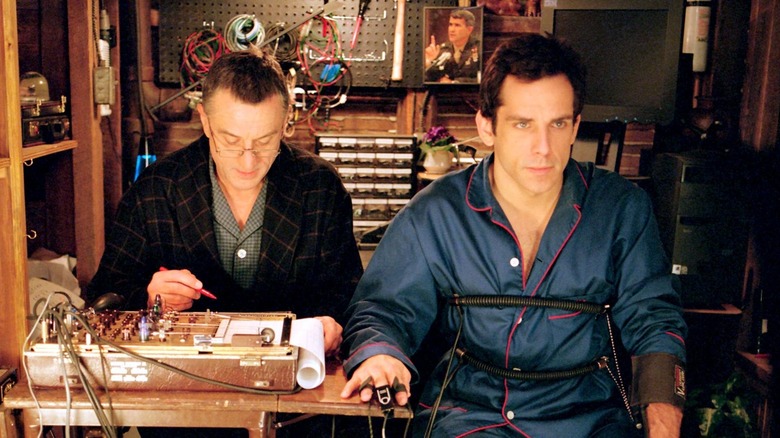
Comedy that is cringe-inducing can be handled very well or very poorly. Filmmakers don't want to push the boundaries of what is in good taste and prevent their audience from laughing, but in many situations an awkward scenario can inadvertently be very funny. "Wedding Crashers" does a good job at managing this balancing act, since Jeremy and Gloria's relationship in particular can be uncomfortable. Both actors embrace the physical comedy for hilariously awkward moments.
Few modern romantic comedies are quite as awkward as 2001's "Meet the Parents." After proposing to his girlfriend Pam Byrnes (Teri Polo), the nurse Greg Focker (Ben Stiller) is invited to meet her family, including her hard-edged father Jack Byrnes (Robert De Niro). A former veteran and secret agent, Byrne's stoic nature immediately clashes with Greg's sensitivity. Stiller captures Greg's awkward feelings of being out of place, and De Niro gives a funny caricature of the tough characters that he is known for portraying.
Read this next: The 15 Funniest Movies Of The Decade
The post Movies Like Wedding Crashers That Comedy Fans Need to Watch appeared first on /Film.
Long before Ernie Reyes Jr., Jacob Batalon, and other Asian or Asian American entertainers were out there representing their cultures in film and television, there was George Takei. Just like his "Star Trek" co-star Nichelle Nichols did for the Black community, the Japanese actor and activist was out there being a champion for diversity and representation when those things were practically unheard of in Hollywood. And both stars were able to do this thanks to the vision of the series creator Gene Roddenberry.
After spending part of his youth in an internment camp during World War II, George Takei graduated from UCLA in 1964 with a Masters in theater. He also studied at the Shakespeare Institute in England, Sophia University in Tokyo, and the Desilu Workshop in Hollywood. But before he pursued a career in acting and eventually landed the role of Sulu in "Star Trek: The Original Series," he was pressured to become an architect by his father. However, as he revealed to The Guardian in an interview about his career and his history of activism for the LGBTQ+ and immigrant communities, he wasn't about to succumb to cultural and societal expectations like that:
"My father wanted me to be an architect. I was an architecture student at UC Berkeley. I lasted two years, but my real passion was acting. My father said: 'Look at television, look at the movies, look at Broadway. Those roles for Asians are terrible; all the stereotypes. Is that what you want to be?' I took that as a challenge to prove him wrong."
As his father predicted, Takei's early career was a bit rocky. It was initially filled with one-shots on shows like "Mission: Impossible" and "Perry Mason" or voiceover work for Japanese monster films like "Godzilla Raids Again." He even starred in a 1964 episode of "Twilight Zone" that was removed from syndication for being "too disturbing" due to it's portrayal of US-Japan hatred. After it's initial air date, it wasn't seen again until it was released on video in 1992.
But everything changed in 1965. That's when Roddenberry brought in Takei to play Sulu. While the character was just meant to be an astrosciences physicist in the second pilot of the series, he was promoted to the helmsman of the starship Enterprise when NBC officially gave the show the green light once Lucille Ball (whose production company spearheaded the series) persuaded the network to give it another look. Just as Ball gave her full support to the final frontier because of her fondness of Roddenberry and his vision, Takei likewise found himself onboard (literally and figuratively) after speaking with the creator:
"Getting cast as Lt. Hikaru Sulu in 'Star Trek' was life changing. The show's creator, Gene Roddenberry, told me the idea was a metaphor for the fact that the earth's strength lay in its diversity; people from all over the world, working out their problems and being a team – and boldly going where no one had gone before."
Following his run on "Star Trek," George Takei found much success onscreen and onstage outside of the franchise. Before Benedict Wong brought the character to life in the Marvel Cinematic Universe, Takei voiced Doctor Strange's companion Wong in "Spider-Man: The Animated Series." In addition to lending his voice to a number of other beloved shows such as "Hey Arnold," "Futurama," and "Avatar: The Last Airbender," he also became the first leading actor from "Star Trek" to appear in a "Star Wars" production thanks to "Star Wars: The Clone Wars." And he starred in a musical called "Allegiance" that was based on his experiences with Japanese American internment.
But Takei still embraces "Star Trek" and finds himself talking about it with fans almost every day. In fact, he even reprised the role of Sulu in a fan-made web series titled "Star Trek: New Voyages" in 2007. While I'm sure he would've made a fine architect, it's hard to imagine a world without George Takei as Hikaru Sulu and the subsequent cultural legacy that he and the character have cultivated over the years.
Read this next: Star Trek: The Next Generation's 10 Best Episodes
The post What Really Drew George Takei to His Star Trek Role appeared first on /Film.
Read more of this story at Slashdot.
Read more of this story at Slashdot.

With several companies like EA, Ubisoft, and more recently Square Enix pointing to blockchain and NFTs as a potential growth factor for their future games, it will be a relief to SEGA fans that this historic game company doesn't have any definite plans to implement such things in their titles.
As spotted by TweakTown, SEGA executives said in a recent Q&A that while studies on the subject are undergoing, the current stance is not to proceed with the addition of blockchain/NFTs if it is perceived as 'simple money-making'.
In terms of NFT, we would like to try out various experiments and we have already started many different studies and considerations but nothing is decided at this point regarding P2E. There have been many announcement about this already including at overseas but there are users who shows negative reactions at this point. We need to carefully assess many things such as how we can mitigate the negative elements, how much we can introduce this within the Japanese regulation, what will be accepted and what will not be by the users. Then, we will consider this further if this leads to our mission “Constantly Creating, Forever Captivating”, but if it is perceived as simple money-making, I would like to make a decision not to proceed.
Elsewhere in the Q&A, SEGA executives also talked about the IPs that have the potential to be expanded in a similar way to Sonic, such as Persona and Project Sekai (Hatsune Miku).
Interestingly, the response also mentioned that SEGA is considering the revival of dormant IPs, even through partnerships with third-party companies.
As for the potential other than Sonic IP, in terms of licensing and merchandising, IPs which we are receiving a lot of offers at the moment, are Persona and Project Sekai. I think we can continue to further roll-out aggressively for these IPs in the future. However, we don’t expect they will grow to the IP that can reach to hundreds of millions of people, at the similar scale with Sonic, at this moment.
In addition, Super Monkey Ball, which we released the remake this year, has a history of recorded millions of downloads once when it was released as a launch title in App Store, and is very popular especially in the U.S., so we may see the possibility of the roll-out in video and merchandising. The offer for making video and remake of past IP is increasing significantly following the success of Sonic movie. We are considering revitalizing the revival of dormant IPs in the future, including the possibility of working with other partners.
SEGA fans have been waiting to get revivals for a very long time. The Japanese company certainly has a treasure trove of IPs worth reviving, such as Crazy Taxi, Condemned, Jet Set Radio, and Shinobi, just to name a few. Which one would you prefer to see again?
The post SEGA Won’t Proceed with NFTs If It’s Perceived as Simple Money-Making; Vows to Revive Dormant IPs by Alessio Palumbo appeared first on Wccftech.