

Read more of this story at Slashdot.
Read more of this story at Slashdot.
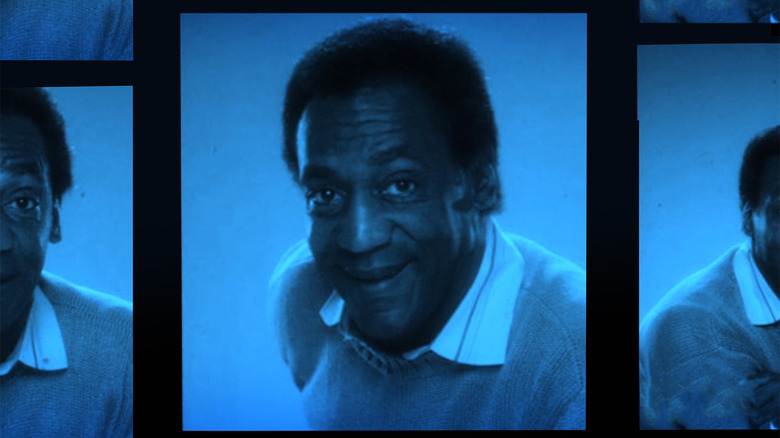
In the wake of the #MeToo movement, Hollywood and movie/TV fans have been forced to come to terms with the fact that some of their most beloved performers were actually sexual predators whose horrific behavior went swept under the rug for far too long. But a couple of years before that powerful movement came along, one of the most notorious sexual predators in Hollywood was finally being taken to task by the dozens of women he was accused of raping and assaulting across a career that's spanned over 50 years.
Bill Cosby became the subject of intense scrutiny and investigation when nearly three dozen women came forward in The New Yorker (that number has now reached over 60 women), each with their own horror story of how the beloved comedian, once fondly referred to as "America's dad," used his profile as a kind, trustworthy mentor to allegedly drug, assault, and rape them. Though this was all kickstarted by a now-famous stand-up set from comedian Hannibal Buress in 2014, the sins of Cosby's past began in the earliest days of his career. Comedian W. Kamau Bell doesn't pull any punches in his damning, harrowing, and thorough four-part documentary series "We Need to Talk About Cosby," which tries to reconcile Cosby's legacy as a trailblazing, barrier-breaking, undeniable influence in pop culture and society with the frequent and heinous deeds he was accused of committing every step of the way.
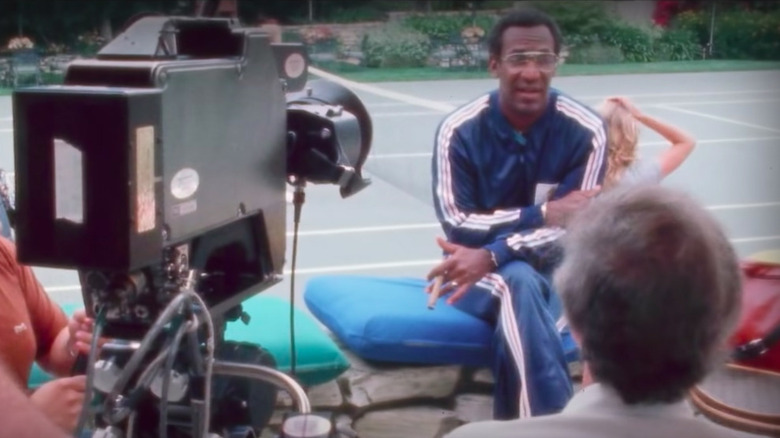
Note: Even though our language in this review uses words like "accusations" and "allegedly" and others like it, we want to make it clear that no matter what the court of law has determined, we believe the women who have accused Bill Cosby of sexual crimes.
You can't have a documentary about the purported transgressions of Bill Cosby without remembering why the comedian was previously so revered. For many, it might just be the groundbreaking sitcom "The Cosby Show," which depicted an affluent Black family without the burden of living paycheck-to-paycheck in the slums of a major city. For others, it's his legendary stand-up sets which have influenced everybody from Jerry Seinfeld to Chris Rock and every comedian in between. But beyond those two major cornerstones of Cosby's career, there's so much more that the comedian accomplished that turned him into a revered and beloved figure.
W. Kamau Bell starts at the very beginning by chronicling the meteoric rise of Bill Cosby's career, which made him a household name in just a few years -- an especially incredible feat for a Black comedian in the racially tense 1960s. With the help of comedians, pop culture experts, historians, journalists, scholars, and more as talking heads, Bell hones in on what made Cosby a pure force of entertainment. His clean, charming stand-up routine gave him a reputation as a "raceless" comedian, a descriptor Bell pointedly notes is only a compliment in the eyes of white people. We're also reminded of the importance of his role in the classic TV series "I Spy," which allowed audiences to see an intelligent, cool, and skilled Black man in the world of espionage rather than the dopey, insulting tropes that Black actors and actresses had been relegated to during that time. Even behind the scenes, Cosby was breaking new ground by ensuring that he had a stunt double who was actually Black rather than a white man who was literally painted black.
Each of the four one-hour episodes of "We Need To Talk About Cosby" recounts the many milestones of Cosby's career through each decade in an equally informative fashion. But we all know this isn't a documentary celebrating Cosby's accolades and accomplishments. Why does Bell spend so much time building up Bill Cosby? Because everyone needs to understand how much of a cultural touchstone Cosby became, and how difficult it was for people to not believe the squeaky clean reputation the comedian created for himself. Furthermore, Bell digs even deeper by examining the seemingly calculated fashion by which Cosby intentionally crafted such an image for himself, almost as if he knew it would keep anyone from not only suspecting him of such monstrous actions but also from accusing him of the very misdeeds that he has been accused of frequently carrying out.
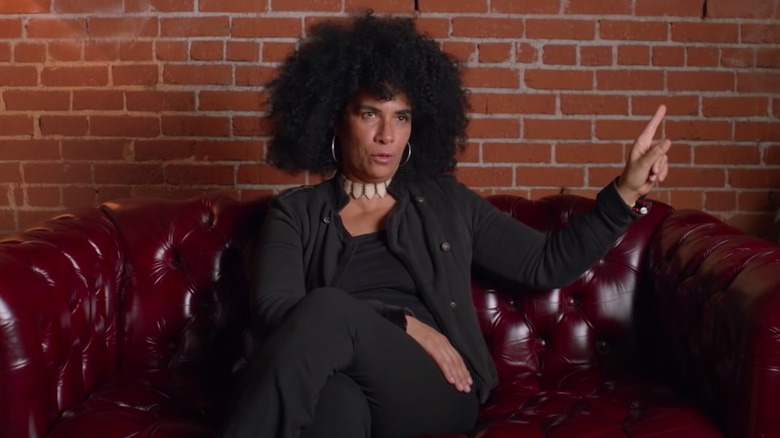
The most powerful and potent part of "We Need to Talk About Cosby" doesn't come from examining Cosby's career with the hindsight of these sexual assault and rape allegations. However, it should be noted just how creepy and telling some of Cosby's comedy bits — whether in stand-up specials, sitcoms or television interviews — have become in the wake of the comedian's downfall. You'll feel both uneasy and mystified when you hear Cosby openly and gleefully discuss Spanish Fly, an extract from the beetle of the same name that has been categorized as being a sort of aphrodisiac, but actually acts as the equivalent of a roofie. You'll be even more unsettled when a moment from "The Cosby Show" seems to apply similar sexual proclivities to Dr. Cosby's trademark barbecue sauce. But it's the painful recollection of Cosby's many victims that hammers home the despicable acts of this once-beloved star.
The documentary jumps around to various talking heads, archival clips and photos, and moments from Cosby's many shows and specials. But when the time comes for the women who have accused Cosby of manipulating, drugging, assaulting, and raping them, Bell smartly lets the camera sit with each of them so that our attention is squarely focused on every unsettling detail. The graphic memories will make your skin crawl, and equally upsetting are the many women who barely have any memory of what was done to them because of the pills or drinks they were given so they could more easily be taken advantage of while unconscious.
This is where the evil genius of Cosby becomes clear. There are so many similarities between these traumatic memories that it's more than implied that Cosby knew what he was doing every single time he found a new victim. It's also no mistake that Cosby's accusers are almost all in their late teens or early 20s, when young women are most impressionable and easily manipulated in the presence of an older man of respected fame. Many of the women feel foolish for willingly taking pills that Cosby said would help them unwind and have a good time, and it's all because they trusted the man based on his public persona. Several victims recall feeling foolish and embarrassed, thinking it was their own fault for passing out and waking up with no recollection of what transpired. In retrospect, one of the victims refers to Cosby as a master of his craft, "whether it be acting, comedy or raping." It's hard-hitting to say the least.
The achievements of Cosby that are highlighted throughout the documentary are immediately crushed by the weight of these harrowing accusations. But there's another layer to this documentary that's all too important.
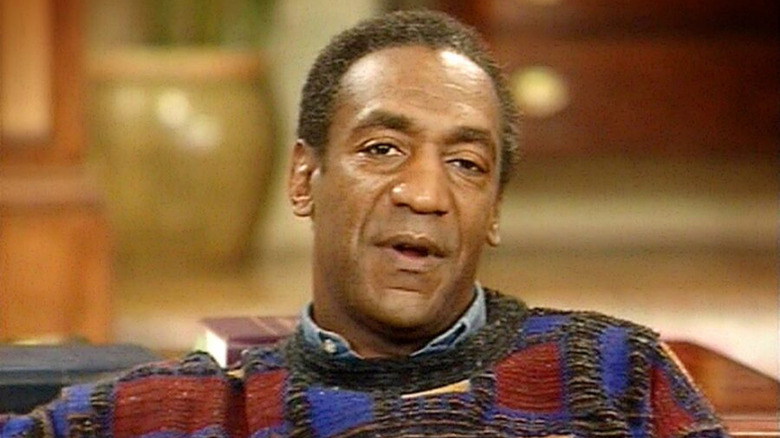
Even in the wake of so many accusations against Bill Cosby, the Black community found it difficult to believe that their beloved, fatherly icon was guilty. Part of that came from the perception that many of Cosby's victims were white women. Because the Black population has had so many of their own taken from them by the white majority, whether it's through violence or the broken justice system, they had trouble accepting these revelations and were very protective of one of their icons, even as more and more women came forward. The likes of "The Cosby Show" co-star Phylicia Rashad and Whoopi Goldberg also passionately defended Cosby. It took the accusation from Black model Beverly Johnson to help tip the scales, even as a third of Cosby's early accusers were Black women.
Bell, as a Black comedian who grew up admiring Cosby, knows that this is an uncomfortable topic for many Black people to address. How can you accept that the man who made it possible for you to see your own family on television, and paved the way for Black excellence in the media and beyond, may be nothing more than a sexual predator? Is there any way to appreciate all the good that a man did for an entire population while also understanding that he's absolutely despicable? Bell himself asks, "Can you separate the art from the artist, and should you? What happens when the artist you idolize isn't the human being you thought they were? What if that person's artistic achievement, living example, and good works were so great that they changed the world? What then?"
These are the difficult questions that Bell doesn't shy away from asking, even as he admits that it's all f**ked up enough that there were times he felt like walking away from this project entirely, especially when Cosby was released from prison in June 2021, just as he was close to wrapping production on the documentary.
"We Need to Talk About Cosby" is more than effective in tackling the transgressions of the once-respected comedian from every possible angle. Bell provides ample context to understand the significance of Cosby's career and his prominence in the public eye in order for us to understand how he would have been able to get away with raping so many women for so many years without facing any consequences before the past decade. But he is also careful to analyze the challenges and hesitation that comes with taking down a pop culture icon who has had such a positive impact on so many people's lives, even as he seems to have brought unforgettable trauma upon dozens of women.
For some, addressing the Bill Cosby problem is as simple as acknowledging that he's a rapist who once had a popular TV show. For others, it's much more complicated. The documentary doesn't provide a definitive answer one way or the other, opting to let the doc's many subjects offer their own perspectives, including Bell himself. But it offers enough thoughtful rumination and insight that you can decide for yourself.
/Film Rating: 10 out of 10
Read this next: The Best Movies Of 2021
The post We Need to Talk About Cosby Review: No Punches Are Pulled in This Raw Reconciliation of the Disgraced Icon [Sundance 2022] appeared first on /Film.

Earlier this week, during the Q4 2021 earnings call, Netflix COO and Chief Product Officer Greg Peters commented on the news that shattered the games industry: Microsoft's deal to acquire Activision Blizzard for nearly $70 billion.
Peters took it as an endorsement of the subscription model that Netflix has long championed in entertainment.
Well, I mean, it was exciting to see the activity in the space. And I think to some degree, it's an endorsement of the core thesis that we have around subscription being a great model to connect consumers around the world with games and game experiences.
Indeed, Microsoft's primary driver behind this acquisition (behind all of the many acquisitions they've made since 2018, really) was clearly Game Pass. Head of Gaming Phil Spencer immediately said Microsoft would offer 'as many as Activision Blizzard as they can' to Game Pass subscribers once the deal is closed.
Game Pass itself was, after all, openly modeled after Netflix. In October 2017, Microsoft CEO Natya Sadella stated:
I would say from a Gaming perspective, one of the bigger changes that has happened in the last, I would say, couple of years is one, of course the vibrancy of the Xbox Live network across the PC and the console and now increasingly even on the phone because of titles like Minecraft. And once you have the network, you have plenty of different opportunities. In particular, we now have a subscription offer with Game Pass that's off to a good, very good start and our goal is to be able to have essentially a Netflix for games, so that we can have the game subscriptions that people can use across all of the devices that they play in.
Of course, Microsoft still has a long way to go before it can lay a meaningful claim to being 'the Netflix of games' with Game Pass. Microsoft's gaming subscription service just surpassed 25 million subscribers, but Netflix itself now boasts over 222 million subscribers globally.
Additionally, the company headquartered in Los Gatos, California, has officially entered the gaming space in late 2021. Its initial offering includes mostly mobile titles, though Netflix did acquire Oxenfree developer Night School Studio.
In the future, though, COO Greg Peters said the company is open to licensing and accessing large, recognizable game IPs.
We’re open to licensing, accessing large game IP that people will recognize. And I think you'll see some of that happen over the year to come. But we also see back to test like building out a whole cloth and the ability to take the franchises or the big titles, let's call it, that we are excited about and actually develop interactive experiences that are connected to those. We see a huge long-term multiyear opportunity in that, too.
So we're very open. We're going to be experimental and try a bunch of things. But I would say the eyes that we have on the long-term prize really center more around our ability to create properties that are connected to the universes, the characters, the stories that we're building in other places and sort of magnify that value for the fans of those stories.
Later in the earnings call, Netflix founder and CEO Reed Hastings hinted that it might take a while to get there, but the goal is to deliver subscribers the absolute best in the category.
And then gaming, which initially we're focused on the mobile gaming, is a big one. So I would say when mobile gaming is world-leading and we're some of the best producers and like where we are at film today, 2 of the top 10 for our gaming, then you should ask, okay, what's next? Because we're definitely crawl, walk, run and like let's nail the thing and not just be in it for the sake of being in it or for a press release, but we got to please our members by having the absolute best in the category.
We wouldn't be surprised to see other acquisitions made by Netflix in the coming years. Otherwise, it could take a very long time to build up the quantity and quality of gaming content.
Credits for the earnings call quotes go to Seeking Alpha
The post Netflix Takes Microsoft + ActiBlizz Deal as an Endorsement of the Subscription Model by Alessio Palumbo appeared first on Wccftech.
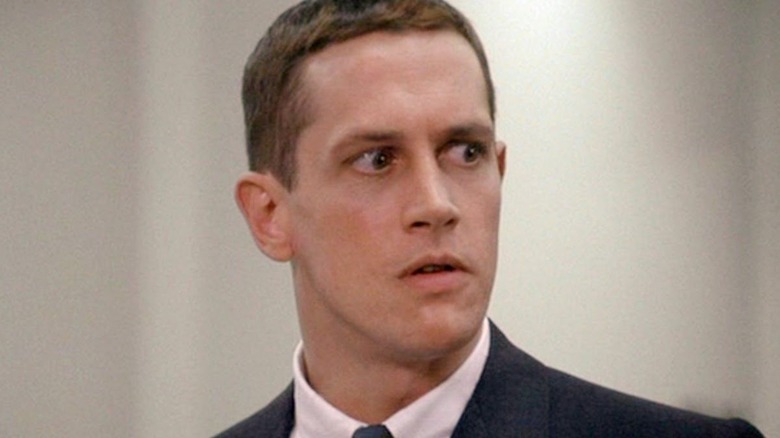
Easter eggs in movies can take numerous forms, and the best ones tend to work on multiple levels. Long before the advent of the Marvel Cinematic Universe, filmmakers liked to have fun sneaking Easter eggs into their movies that built connections between films: Kevin Smith took his characters Jay and Silent Bob around the View Askewniverse, and Quentin Tarantino still has his fictional Red Apple cigarettes turn up in every one of his features. Yet one of the earliest crossover Easter eggs to turn up in a film came before either of those filmmakers had begun working.
Director John Landis, who made both 1978's "Animal House" and the first segment of the 1983 anthology film "Twilight Zone: The Movie," snuck a cheeky, blink-and-you'll-miss-it reference to an "Animal House" character in his "Twilight Zone" segment -- one which not only establishes a shared universe between the two films, but acts as a clever punchline, too.
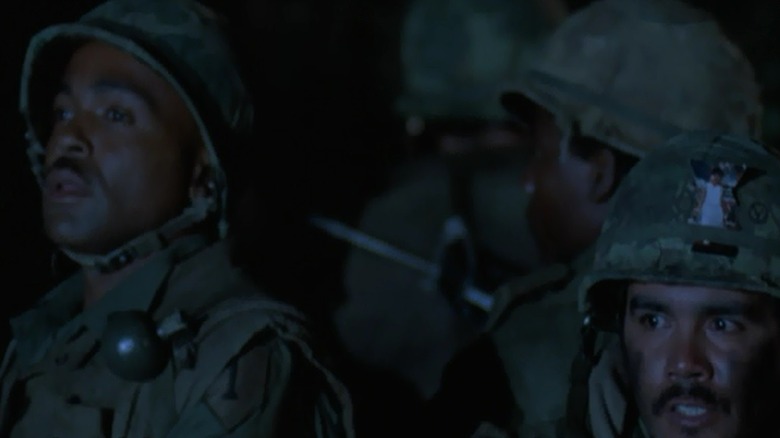
The "Animal House" Easter egg within "Twilight Zone: The Movie" pays off a gag that had appeared as an on-screen "where are they now"-style legend at the end of "Animal House." In that film, the character of Douglas C. Neidermeyer (Mark Metcalf) is a member of the Omega House frat at Faber College in the early 1960s. He relentlessly torments the slobs of the Delta House frat, a task he's adept at given his status as an ROTC head. At the end of the film, it's revealed that Neidermeyer destined to be "killed in Vietnam by his own troops."
During Landis' "Time Out" segment of "Twilight Zone: The Movie," the unapologetically racist Bill Connor (Vic Morrow) finds himself thrown through various time periods in the shoes of people of color and other persecuted groups. One of these time periods is during the height of the Vietnam War, whereupon Bill encounters a troop of scared American soldiers who seem to be missing a commanding officer. One of the soldiers reveals why: "I told you guys we shouldn't have shot Lieutenant Neidermeyer!" he exclaims. A great punchline to another movie's joke and a clever crossover Easter egg all in one.
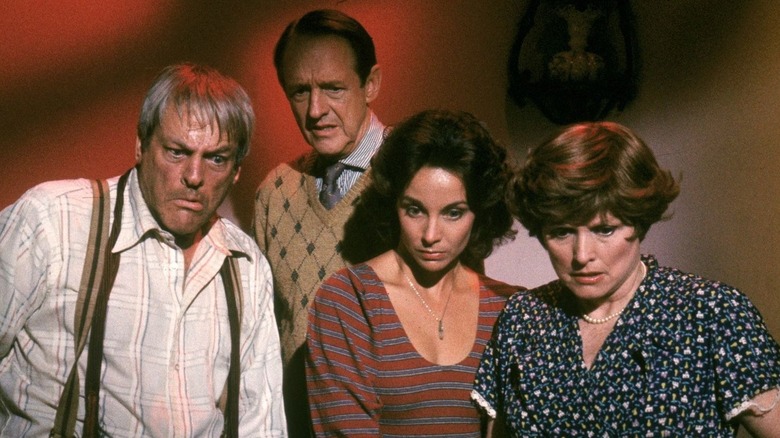
The "Animal House" Easter egg is far from the only callback found within "Twilight Zone: The Movie," as it's positively rife with references to the original 1959-64 "Twilight Zone" TV show. With the exception of Landis' "Time Out," each segment of the movie is a remake of a classic "Zone" episode: "Kick the Can" (directed by Steven Spielberg), "It's a Good Life" (directed by Joe Dante), and "Nightmare at 20,000 Feet" (directed by George Miller). Hidden inside these segments are references to other "Zone" episodes (such as a mention of the town Willoughby, from the episode "A Stop at Willoughby"), and other films entirely.
For instance, Dick Miller's character is named Walter Paisley, the name of his character from 1959's "A Bucket of Blood." The prologue segment (also directed by Landis), which sees Dan Aykroyd and Albert Brooks gabbing while driving down a lonely road, contains oodles of references to classic television. Dante's segment features numerous clips of vintage Warner Bros. cartoons. In keeping with the film's ethos, "Twilight Zone: The Movie" is a celebration of its namesake series as well as the work and interests of its creators.
Read this next: 11 Spielberg Projects We Never Saw But Wish We Could've
The post The Animal House Easter Egg You Probably Missed in the Twilight Zone Movie appeared first on /Film.
Mark Zuckerberg's vision of a sanitized, hypercapitalist metaverse will likely never be as compelling or idiosyncratic as VRChat, the virtual reality community that's been home to anime fans, Furries and a slew of other sub-cultures since 2014. That's my main takeaway from We Met in Virtual Reality, the first documentary filmed entirely in VRChat, which premiered at the Sundance Film Festival today.
There's no chance Zuck's metaverse would let people wear trademarked avatars without paying a ton, attend exotic clubs to receive (or give) virtual lapdances, or allow users to build whatever the hell they want. VRChat, as portrayed by director Joe Hunting, is basically a proto-metaverse where anything is possible. And for many, it has served as a crucial social hub during the pandemic, a place where they can forget about the world, relax with friends and maybe find love.
But of course, that's been the nature of practically every online community. We're social animals — people have always been able to connect with each other over BBS, IRC, Usenet and the plethora of forums and chat services that populated the early internet. I spent most of the '90s hanging out in anime and gaming chat rooms, the sorts of places that today's connected youth would probably find quaint. Still, the people I met there helped me survive the worst parts of middle and high school. Those relationships, and the internet itself, shaped me into who I am (for better or worse).
We Met in Virtual Reality proves that the unbridled, experimental sense of online community is still alive and well today, despite relentless consolidation from Big Tech. But now, instead of staring at tiny CRT monitors, people are slapping on VR headsets to explore fully realized environments. Hardcore VRChat users are also investing in powerful computing rigs as well as upgrades like finger and whole-body tracking. In the '90s, I was grateful to get another 16MB of RAM so that I could have more than one browser window open. Today, VRChat devotees can communicate using American Sign Language, or have their anime avatars show off their belly dancing skills.
Hunting approaches his subjects with the eye of an anthropologist, without any judgment towards their sometimes ridiculous avatars (do all the anime ladies need to have jiggly, Dead or Alive-level boob physics?). We Met in Virtual Reality begins as a chill hangout flick — we follow a group of friends as they have virtual drinks and go on joyrides in crudely-built VR cars — but it quickly moves beyond the novelty of its setting. One person credits their VRChat girlfriend for helping them to "unmute" after being silent for two years. An exotic performer explains that being able to dance for people in VRChat helped her grieve with a family tragedy and manage a bout of alcoholism.
The film chronicles how that exotic dancer, a young woman based in the UK, formed a romantic relationship with another VRChat user in Miami. These sorts of cyber relationships aren’t anything new, but the VR platform allowed them to do much more than trade links and memes over IM. They could exist in a space together, go on dates to new environments every night. I won’t spoil where things end up for the couple, but I can say that it wouldn’t have been nearly as effective outside of VR.
We Met in Virtual Reality effectively conveys why people would gravitate towards VRChat, especially during a pandemic. But it doesn't fully capture the wonder of exploring these environments yourself. Seeing people hop on a virtual rollercoaster isn't nearly as thrilling as doing it, where your entire field of vision is covered and you can easily get vertigo. But I don't blame Hunting too much for that; his job was to boil down the VR experience so people can enjoy it on a 2D screen, and the film is mostly successful in that respect. The film was shot using a virtual camera that could mimic all of the functionality of a typical shooter, from focus points to aperture levels. So even though it's produced in an alien environment most people aren't familiar with, it still feels like a traditional documentary.
Hunting has spent the past few years making VR documentaries, starting with a few short films, as well as the series Virtually Speaking. It’s clear from We Met in Virtual Reality that he’s not just dropping into the community for a quick story. Instead, he sees the humanity behind the avatars and virtual connections. These people aren't just escaping from their lives with VR — their lives are being made richer because of it.
Read more of this story at Slashdot.
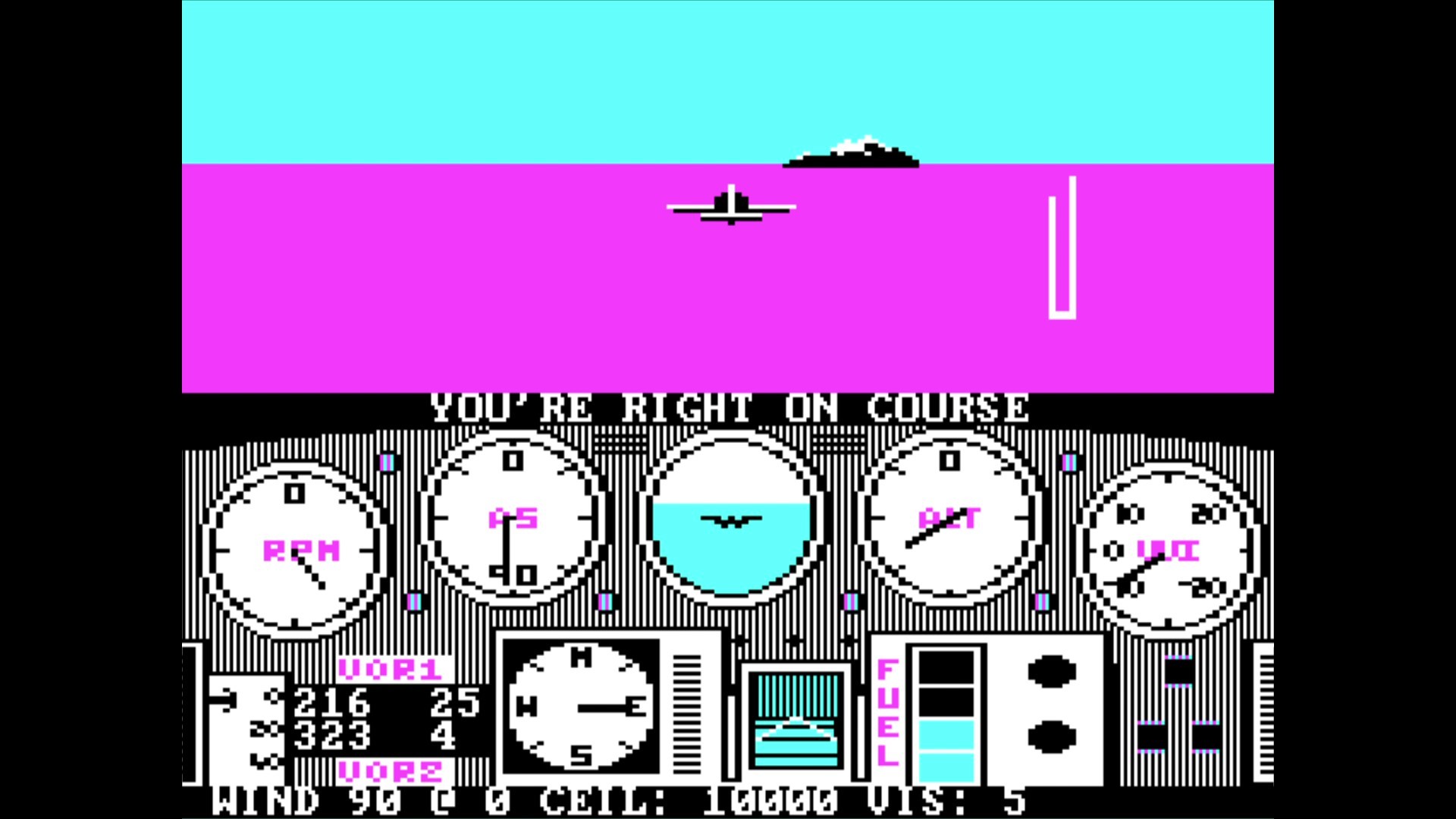
We all know Sid Meier best as the creator of Civilization, but he only led design on one of those, and he's got a whole catalogue of classics outside of it. Among his earlier games are a set of flight simulators developed at MicroProse, which are now available on Steam. The release comes as part of the ongoing MicroProse revival and also sees the modern launch of several more of the publisher's OG simulation games.
As for Meier's games, you can now pick up both Solo Flight and F-15 Strike Eagle. Solo Flight was released in 1983, in the very earliest days of PC flight simulators. F-15 Strike Eagle was released in 1984, and spiced up the whole 'flying around' thing with combat missions.
While MicroProse would later be known for a wider variety of game genres, including numerous strategy classics like the original Civilization and X-COM, Meier originally co-founded the company alongside Bill Stealey with an initial focus on flight simulation. Several of MicroProse's later sims - Harrier Jump Jet, Dogfight: 80 Years of Aerial Warfare, and The Ancient Art of War in the Skies - are also now on Steam.
Letters of recommendation can be valuable assets for aspiring undergraduate and graduate students, new job seekers, and even employees looking to move up in their organization.
However, you’ll not only need to determine who to ask — spoiler alert: Your BFF’s mother is not a good reference unless she was also your college professor or you interned at her company — but you also need to establish how and when to ask them. Understanding recommendation letter etiquette will go a long way in helping you procure the kind of correspondence that will impress college admission boards or potential employers.
This article will explain what you need to know to ask for and receive those great letters of recommendation.
Letters of recommendation are the status quo when it comes to college admissions, particularly for those applying to a graduate or professional school. However, for work-related opportunities, you might think that letters of recommendation are old-fashioned. In a world of soundbite tweets, emails from a smartphone, and text message missives, providing a hiring manager with a thoughtfully written letter might not seem effective.
Nothing could be further from the truth.
While few employers will ask you to present a formal letter of recommendation with your application or following an initial interview, many will be impressed that you took the time and initiative to solicit the letter from a reputable source and send it along with your application or interview follow-up. After all, the more information you can provide about your credentials and your ability to succeed in the position, the more likely an employer will want to learn even more about you. Presenting a solid letter of recommendation — even when not prompted to do so — is a great way to separate your application from the pack and bolster your candidacy.
A letter of recommendation request is easier than you might think. To get letters of recommendation into the right hands, follow these steps:
The first step in getting a great letter of recommendation is determining who can, should, and will write a letter on your behalf. Ideally, the letter writer will know you well on a personal level and be able to speak authoritatively on matters concerning your character, background, and abilities.
Not everyone you pursue will agree to write a letter, and not everyone who is willing to write a letter will be able to present the type of information that will further your cause. The type of letter writer you want will depend on what you need the recommendation for.
If you’re college-bound, your best bet is to start thinking about who you’d prefer to write letters of recommendation by the beginning of your junior year of high school. Many colleges will require a letter from your guidance counselor as part of the application process. Since these school professionals write letters for students all the time, however, their letters can sometimes come off as impersonal or even cookie-cutter.
Because you want your letter to stand out from the pack, you should make an effort to get to know your high school guidance counselor well before college application season. Set up an appointment to discuss your college and career plans and then arrange for a few follow-up meetings. The goal is to connect with your high school counselor so they’re inclined to write a letter on your behalf that’s punctuated with personal details and reflects your achievements, ambitions, and potential.
It’s also a good idea to develop a rapport with your teachers, especially the ones teaching classes you excel in or those that cover subjects you find particularly interesting. The better the relationships you have with your teachers, the higher they should be on your letter-writing “ask” list.
If you’re bound for graduate school, determining who should make your letter-writing shortlist is going to depend on where your jumping-off point is.
If you’re planning to enter grad school directly following the completion of your undergraduate studies, your best bet is to identify professors who teach in the area of study you’ll be pursuing in graduate school. For instance, if you’re applying to a master’s in social work program, seek out undergraduate social work, psychology, sociology, or even statistics professors (since demonstrating excellence in this type of coursework can translate well to the related graduate program).
If you’re applying to law school or a similar professional graduate school that doesn’t require a specific type of undergraduate curriculum, seek out professors whose classes required you to demonstrate the skills and abilities necessary for law school success, such as those that require critical thinking, vast amounts of information assimilation, and writing.
However, if you’re re-entering graduate school as a working professional, your selection of letter writers will hinge on how long you’ve been out of school and how and if the graduate program you’re applying for relates to your work experience. If you’re just a year or two out of college — or you’ve managed to keep up with relationships — you can approach old professors for letters. You can also look to professional colleagues who respect your work and abilities, as well as bosses and mentors who want to see you succeed further as you develop in your current field or transition to a new career. The closer the writer’s experience aligns with the graduate program you are applying for, the better.
Looking for suitable letter of recommendation writers poses different challenges for job seekers. If you’re applying for an entry-level position, look to professors, internship supervisors, mentors, and former employers, even if the jobs you previously held are unrelated to the position you’re seeking. If you’re seeking to move up in your career, look to former bosses and even colleagues who can accurately advocate for you based on their knowledge of your qualifications and work ethic. Whenever possible, try to select letter writers with substantial experience in the field you’re pursuing.
If you want someone to do you a favor, make it easy for them. And if that favor is writing you a strong letter of recommendation, provide them with all the information they need so they can easily portray you and your accomplishments in the best light possible.
For job seekers, this could be as simple as providing them with a copy of your resume or a link to your LinkedIn profile. If you have additional accomplishments you’d like them to know about that aren’t on your resume or professional profile, create a bulleted list of additional information. This could include information regarding articles you’ve published, boards you’ve sat on, or volunteer work you’ve done. You can send them a copy of the job description and highlight areas that align with your qualifications.
When determining which information to provide, your litmus test should be: Will my chances of getting the interview or job be enhanced if my prospective employer has this information? If the answer is yes, provide it to the letter-writer and ask them to include it if possible.
If you’re in school and don’t have a robust work history or much to report about yourself outside of school, though, provide a list of your most salient qualities and accomplishments to your letter-writer. If the person is a professor, remind them which of their classes you took, the grade you received, and any interesting facts about your enthusiasm for the subject matter that may have manifested while you were their student, such as the topic of a paper you wrote or your consistent class participation.
Remember, this is not a time to display false modesty. It’s a time to show the letter-writer that they can feel confident in believing in you and your abilities. In other words, it’s OK to brag a little.
The best practice for requesting a letter of recommendation is to make the initial request in person and then follow up with a more formal request. Either pick up the phone and discuss the letter with the writer, visit them face to face in their office or business, or even send your initial request via a personal email. Be sure to give the person plenty of time to write the letter, though. Last-minute requests place an undue burden on the writer and can even be interpreted as rude.
Keep in mind that most professionals, teachers, and guidance counselors have received similar requests before and understand that people applying to school or looking for a new job need these types of letters. Often, as in the case of school counselors, composing letters is part of their job. It’s fair to assume that the person you’re asking to help you has also asked for help from others in their past. Most will not hesitate to write your letter and will appreciate that you reached out in a personal way to ask for their assistance.
Once you’ve gotten the go-ahead from your informal outreach, you can contact the writer in a more formal manner for the letter. After thanking them for agreeing to write the letter, you’ll want to provide all the information necessary for them to construct the best possible letter of recommendation.
For example, if you’re applying for a job, be sure to include some details about the role, such as how the position is titled and what your primary responsibilities will be. If applying to college or grad school, remind them of the school and your primary area of study. Include your resume or “brag sheet” — that list of accomplishments previously discussed — and a copy of your transcripts (if relevant).
Be sure to provide the recipient’s full name, including title and company name, address, and email if relevant. If the letter is to be sent via mail, provide a pre-addressed, stamped envelope. If email is the preferred delivery method, make sure the writer knows what the preferred format is (e.g., written in the body of an email or provided as an attachment in Word or PDF format). Include a recommended subject line in your instructions, something like “Letter of Recommendation for Job Candidate Jane Doe.”
If the letter needs to be uploaded onto a portal or website by the writer, send a link to the site along with step-by-step instructions on how to upload the letter, what format it should be in, and any other information the writer might need to make the letter delivery process as easy and foolproof as possible.
Be sure to provide all of the necessary information in ample time for your writer to be able to compose a good letter on your behalf.
If there’s a due date for the letter, try to follow up with the writer about two weeks before it’s due to give them enough time. If there’s no set application deadline but you hope to have the letter written as soon as possible, follow up with the writer a week or so after making the initial request.
Be sure to thank them for agreeing to write the letter and reiterate how much you appreciate their help.
Once the letter has been sent, it’s important to send a thank-you note to the writer. This is one of those instances where a hand-written note of appreciation is in order. Taking the time to handwrite a note of appreciation is a nice gesture that shows the writer that you’re grateful for their time and attention. If you decide to follow up by email, be sure to express the same sentiments in a personalized email.
Think about following up again when you accept the position or are admitted to the school program, reiterating your gratitude for their help. It’s always satisfying, from the writer’s perspective, to know you helped someone move in the direction of their goals.
If you’re on your path to a better and more fulfilling career, the I Will Teach You to Be Rich team has plenty of great resources to help you on your journey. The more you explore the IWT philosophy, the more you’ll see that you really can take control of your financial future and live the Rich Life you deserve.
100% privacy. No games, no B.S., no spam. When you sign up, we’ll keep you posted
How to ask for a letter of recommendation is a post from: I Will Teach You To Be Rich.
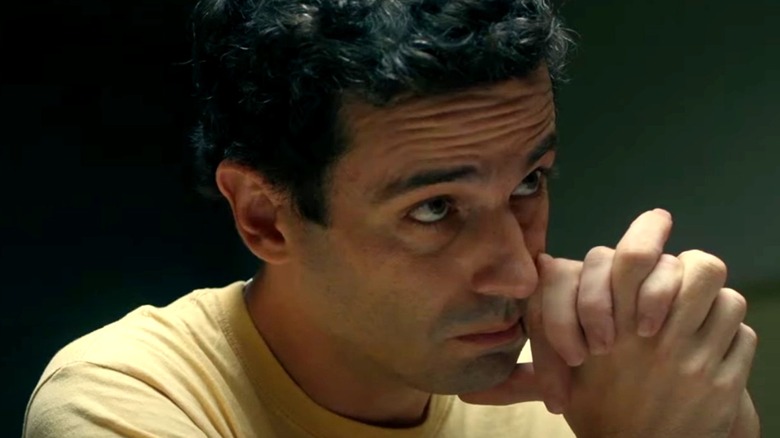
Serial killer Ted Bundy began his killing streak more than 40 years ago. Through early arrests and a highly-publicized trial, he captivated America with his charm and "good looks," although that latter claim is debatable. From the detectives working the case to psychologists to newspaper journalists, everyone wanted to know why the man displayed such a blatant disregard for human life, particularly women's. Countless books and documentaries, including Netflix's 2019 release "Conversations with a Killer: The Ted Bundy Tapes" and "Ted Bundy: Falling for a Killer," have tried to delve below the surface to understand what made one of the world's most notorious killers tick.
Over the years, several mainstream and indie films focusing on Bundy have been produced as well. Many are schlocky, low budget offerings that fail to present new information or fresh perspectives. Others, though, approach the Bundy murders with care, merely referencing the tragedies in favor of reassessing who Bundy was by examining the relationships in his life. Ted Bundy was a monster; that's an indisputable fact. But a few of the stories found here are fascinating case studies in human nature, and show how such a seemingly normal, next-door-type fooled so many innocent people.
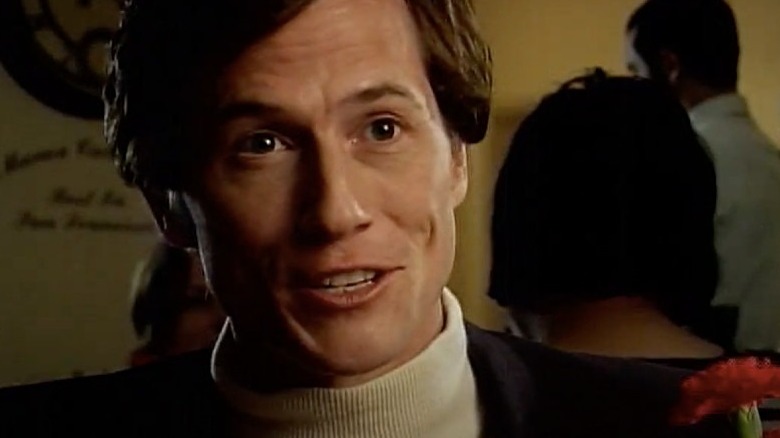
By merely existing, films about Ted Bundy are salacious, transfixed on our cultural obsession with the macabre. Billed as a biopic, 2008's "Bundy: An American Icon" (also known as "Bundy: A Legacy of Evil") frames Bundy's life story through a myopic lens. Details about his childhood are distorted to elicit gross empathy from the viewer. That would be okay if this were a fictionalized retelling, but in context such blatant misinformation is irresponsible at best. Flashbacks are mixed with boring walk-throughs of Bundy's crimes, exposing nothing that we haven't already seen in much better films.
With director Michael Feifer at the helm, "Bundy: An American Icon" has little creative merit. Its shoddy production, amateurish cinematography, and tepid lead performance by Corin Nemic make this a bottom-of-the-barrel offering. There's a crudeness to the low budget (not an inherent fault of a film) that could work in better, more capable hands. But here, it is simply an exhausting exercise in perverse violence that has nothing new or remarkable to say about its subject. You have to wonder exactly why a horror icon like Kane Hodder (known for his work as Jason Voorhees in the "Friday the 13th" franchise) signed on to such an egregious display.
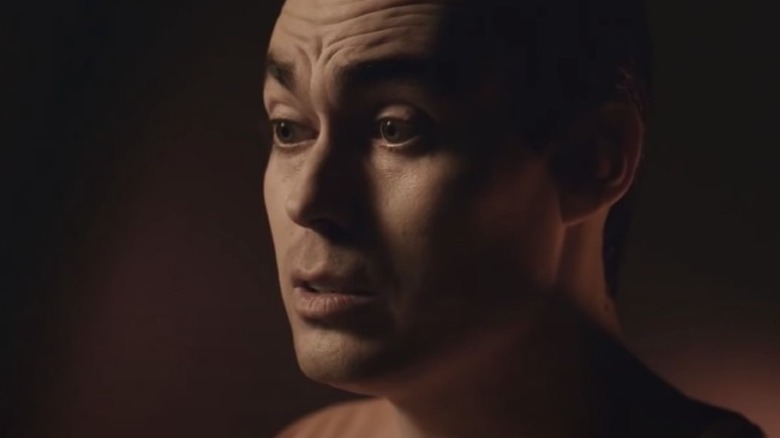
Budgetary restrictions are not a reason to dismiss a film. Rather, it's what filmmakers do with their limited resources that matters. Unfortunately, "Bundy and the Green River Killer" neither rises above its modest means nor has anything interesting to say. Directed by Andrew Jones, this 2019 film is a tepid attempt to dig into the story of infamous killer Gary Ridgway, whose case famously required insight from outside sources, including death-row inmate Ted Bundy.
Richard Mark and Jared Nelson give little life to Bundy and Ridgway, respectfully. They often feel completely detached from the rest of the picture and its players, although both actors have a strange, aloof tendency in their performances that would work quite well in another context, and with a better script.
Throughout the '80s and '90s, Seattle and Tacoma, Washington became the backdrop for Ridgway's murders, which largely involved sex workers. David Reichert (whose name was changed to David Richards in the film, and who's portrayed by Mark Homer) led the investigation with help from Robert Keppel (Bob Keller, played by Phillip Roy). "Bundy and the Green River Killer" painfully walks through the events of the case, particularly how Bundy wrote Reichert a letter to offer his services, and several of their one-on-one conversations. While Bundy did offer up advice to the task force, his involvement in helping solve the case is overblown.
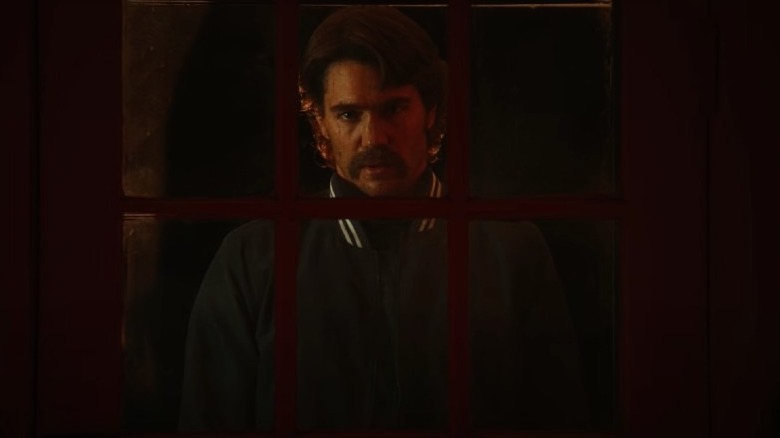
No one could have predicted that a '90s heartthrob would one day don the mantle of a serial killer, but here we are. As with most actors hired for the lead role, Chad Michael Murray is far too handsome to pull off Bundy's bizarre, mousy look. However, the "One Tree Hill" star has plenty of presence, particularly during solo moments when he's required to dig deep into the mania of a killer.
Daniel Farrands directs, and "Ted Bundy: American Boogeyman" is surprisingly far less exploitative than his offensive glimpses into the murders of Sharon Tate and Nicole Brown Simpson. Farrands, also known for penning 1995's "Halloween: The Curse of Michael Myers," could have easily tipped into the abyss of repulsive storytelling, yet he pulls the reins in here. He guides the viewer through the usual tentpoles of the story, from Bundy's early killings to the Florida State University massacre, with little purpose or drive. Moments of brilliant cinematography (a key moment involving Murray's silhouette as he descends upon the sorority is effectively chilling, for example) are muddled by an otherwise pedestrian perspective on the story.
Murray's best moment comes when he's alone in a Florida boarding house that's littered with mannequins. It's days after his much-publicized escape, and Bundy has reached his breaking point. Feeling like a leftover from 2012's "Maniac," it's one of the most unsettling sequences Murrary has ever appeared in, the only real bright spot in an otherwise shrug-worthy entry on this list.
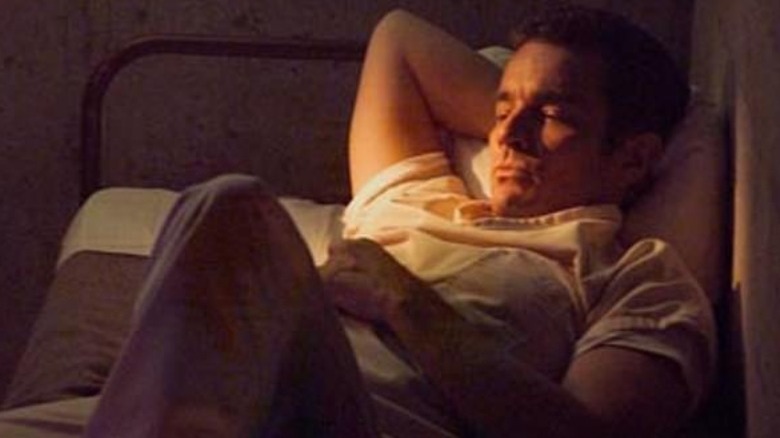
If you have three hours to spare — and you're bored — "The Capture of the Green River Killer" is not a total waste of time. Produced for Lifetime, you can expect the network's usual over-dramatization of events and superfluous plot points and characters. Much like 1986's "The Deliberate Stranger," this Norma Bailey-directed film is billed as a two-part miniseries and dives deep into the story of the hunt for Gary Ridgway, fleshing out detective Dave Reichert's family life and how he became entangled with Ted Bundy.
For Bundy's part, James Marsters only appears in one scene, and his performance is unremarkable. It certainly adheres closer how little Bundy was actually involved with solving the case, and that should be commended. That said, the 2008 feature plays to the emotions as much as possible. A new character named Helen (Amy Davidson) serves as a stand-in for the many real-life victims whose lives were ripped apart. The addition of her story, which takes her from familial strife to sex work as way to make ends meet, holds together a sterile crime procedural. Often, Helen speaks directly to the camera, even after her death, turning the entire feature into nothing more than a glorified PSA.
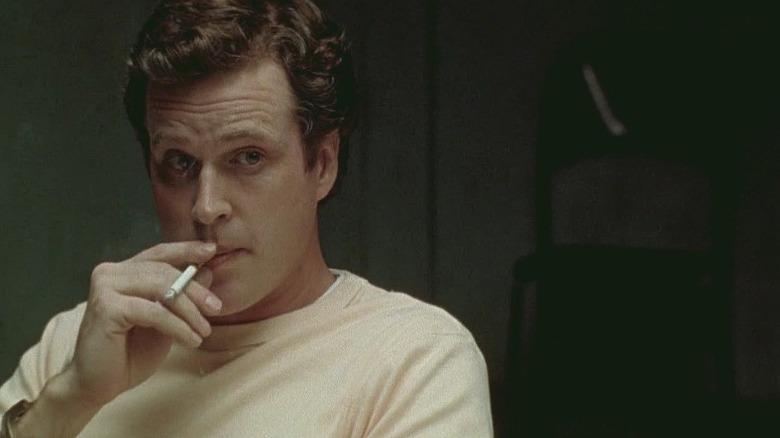
"The Riverman" was released in 2004, the same year as "Saw," both of which starred Cary Elwes. Elwes' turn as the demented serial killer probably slipped under most people's radars, largely due to an oversaturation of Bundy-related content. The film, directed by Bill Eagles, largely focuses on Detective Dave Reichart (Sam Jaeger) and his hunt for the Green River Killer. Robert Keppel (Bruce Greenwood), a criminology professor at Washington State who worked on the task force that caught Bundy a decade prior, is roped into the investigation. He soon receives a personal letter from Bundy, who offers up his services to help track down the new murderer.
As such, Bundy is a secondary character, but Elwes makes the most of it. The many one-on-one conversations featuring Bundy are shockingly engaging and frequently unnerving, with Elwes serving up a truly menacing performance. He oscillates between Bundy's cool charm and his threatening presence with refreshing subtlety. It's never overcooked or under-baked, and it's a real shame that Elwes never had the chance to lead a more Bundy-centric film.
Bundy's tips for catching a criminal, particularly his advice to consider the possibility that the killer had been arrested before, lead to an arrest and, eventually, a conviction. "The Riverman" is a decent watch, and gives the viewer a deeper understanding of the man behind the madness.
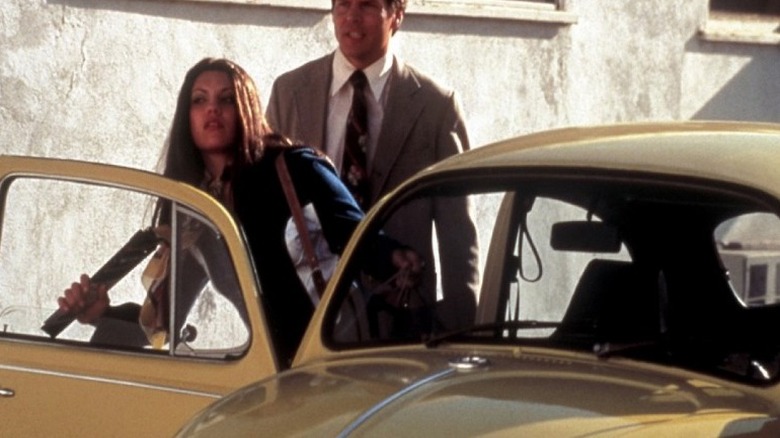
Director Matthew Bright manages to capture Ted Bundy's double life quite effectively. Co-written by Stephen Johnston, the 2002 film "Ted Bundy" blends Bundy's seemingly idyllic home life with the grotesque violence that made the man infamous. Jovial musical choices starkly contrast with haunting images; it's sometimes distracting, but serves to underscore the reality of how charming the serial killer really was. Michael Reilly Burke delivers a solid lead performance as Bundy, playing opposite Boti Bliss as his girlfriend Lee (loosely based on Bundy's real life partner, Elizabeth Kloepfer).
The film largely excels in telling Bundy's story as frankly as possible, unaltered by the public's perception of the events. Several uncomfortable sequences in the third act display Bundy's total disregard for human life, particularly a rape scene involving two of his victims. There is a realism in these moments that feel ripped out of 1978's rape-revenge film "I Spit on Your Grave," a coarse presentation that is downright sickening. The film never crosses completely into exploitation, but it toes the line. Otherwise, "Ted Bundy" walks viewers through the facts of the case, culminating in Bundy's execution by electric chair.
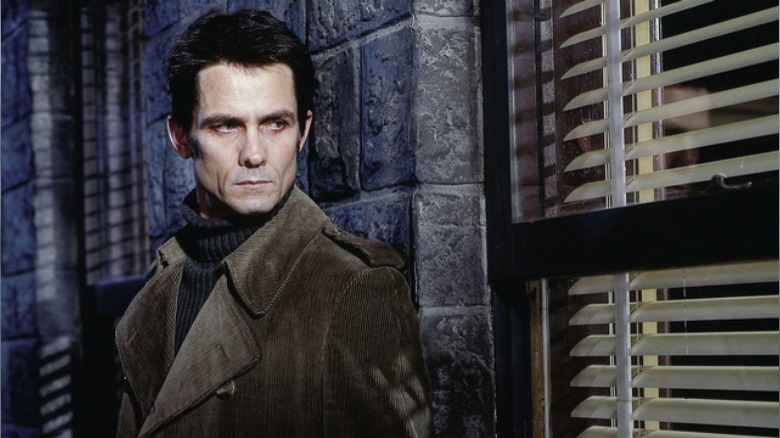
Despite being made for TV, the 2003 film "The Stranger Beside Me," an adaption of Ann Rule's acclaimed book, does not suffer from a low budget. Performances by Billy Campbell as Ted Bundy and Barbara Hershey as Ann Rule, who once worked alongside the killer at a crisis center, make the film a compelling glimpse into Bundy's platonic relationships. It is directed by Paul Shapiro, with a script co-written by Matthew McDuffie and Matthew Tabak.
Bundy's crimes take a back seat in this film, which focuses instead on his friendship with Rule. Like others, Rule never suspected her co-worker of his involvement in grisly murderers, but as the body count climbs, she begins to have doubts, and eventually reports Bundy to the police. However, law enforcement has been overwhelmed with possible leads, and her report is simply added to a growing stack of paperwork.
"The Stranger Beside Me" comes from a firmly unique perspective. It foregoes any sort of exploitation in favor thoughtful, engaging storytelling. Of course, Hershey's ("Black Swan," "The Entity") emotional performance does a lot to ground this retelling of actual events.
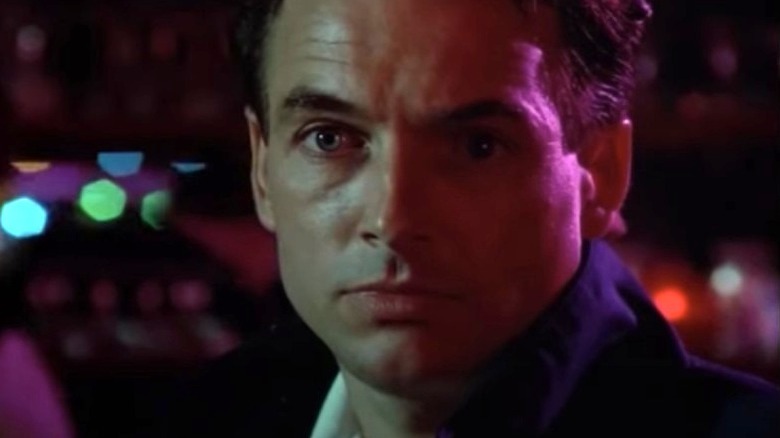
It shouldn't come as a surprise that "Bundy: The Deliberate Stranger" was released during Ted Bundy's life. Originally broadcast on NBC as a two-part miniseries, the film presents an honest portrayal of Bundy's crimes. Even his lawyer, Polly Nelson, praised the film in her 1994 book "Defending the Devil: My Story as Ted Bundy's Last Lawyer." Despite its bloated three-hour runtime, Mark Harmon shines with a Golden Globe-nominated performance that embodies everything the serial killer was: mainly, a terrifying charmer with a psychotic nature.
In 1980, Seattle Times reporter Richard W. Larsen published the book on which the film is based. Larsen's perspective offers important insights, and draws upon his own experiences covering Bundy's life and crimes in real time, starting with a 1972 interview he conducted during Bundy's political days and moving through the 1974 slayings. With direction by Marvin J. Chomsky, "The Deliberate Stranger" expands upon the story's known facts by taking a deeper, microscopic look into Bundy's private life, including his work at a suicide hotline and his burgeoning romance with Elizabeth Kendall (Glynnis O'Connor), whose name was changed for the film to Cas Richter.
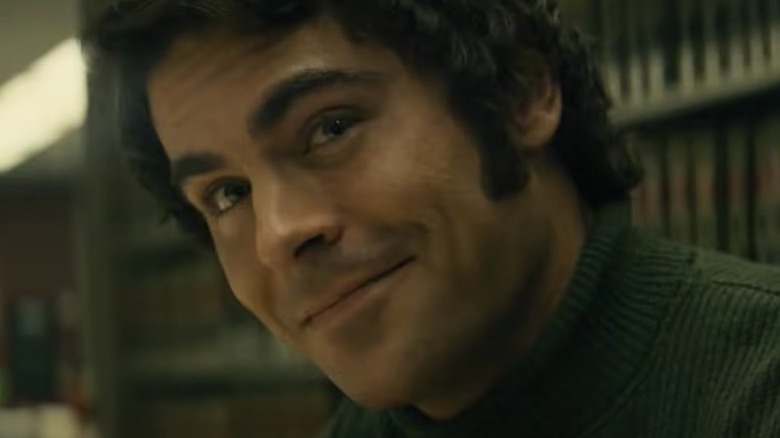
The best Ted Bundy films are those that devote little screen time to the actual murders. The strange casting of Zac Efron aside (he's far too good looking), what makes "Extremely Wicked, Shockingly Evil, and Vile" special is the lens through which the story is told. In lieu of giving Bundy yet another platform, filmmaker Joe Berlinger hands the proverbial mic to Elizabeth Kendall, portrayed by Lily Collins.
The film takes cues from Kendall's own biography, "The Phantom Prince: My Life with Ted Bundy," and offers the viewer a perspective we've never witnessed before. We see how the two met, fell in love, and nurtured a family together. As Bundy plots his rampage, we get a glimpse into Liz's reconciliation of the loving family man she knew with the deranged killer in the headlines. Collins' performance is frequently moving, even soul-crushing, and you easily understand the spell Bundy cast over her and the many other women in his life. Efron is fine as Bundy, even if he's not especially inspired, which works since Bundy is not the narrator of this story. It's fully, unapologetically Liz's, and it's empowering that she finally gets to tell it.
It's been more than 30 years since Ted Bundy's execution, and there's very little we don't know about one of the most notorious killers in history. Everything, from his childhood to his political work to the murders, has been put under the microscope. No stone has been left unturned.
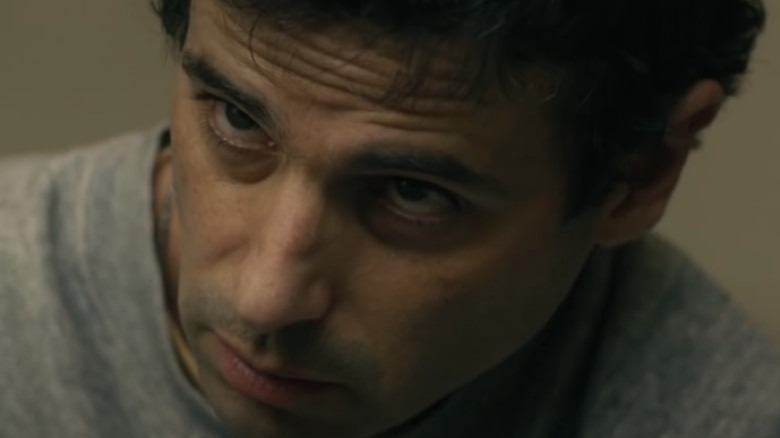
That said, "No Man of God" is one of the most surprising additions to the Bundy filmography. The movie, directed by Amber Sealy, reexamines the story through Bundy's "friendship" with FBI agent Bill Hagmaier. Transcripts and recordings from conversations conducted between 1984 and 1989 serve as the basis for the film, laying the foundation for a very different perspective than we're used to. As Hagmaier, Elijah Wood plays opposite Luke Kirby, who delivers the most brilliantly chilling on-screen Bundy to date.
Kirby's cool, calculated performance seems eerily ripped from Bundy's real-life interviews. When he explodes in anger, or his facial expression turns from congenial to menacing, you feel it in your core. Kirby's entire performance is a showpiece, but the most unsettling moment comes in the final scene, in which he finally confesses to several crimes, and it appears that he's relishing the details. Pulling off these beats is the mark of a truly great actor, and Kirby is a cut above the rest.
Read this next: 17 Horror Movies Based On True Stories That Will Creep You Out
The post Every Ted Bundy Movie Ranked Worst To Best appeared first on /Film.
![[Xbox 360] (Game) F.E.A.R. 3](https://external-preview.redd.it/J8i8FcfpZaZyrzJHM1e-aXIWe_mI0xp8T-_dwM7WgeA.jpg?width=640&crop=smart&auto=webp&s=35dbc0421dd0ffcb0e2a5e92d8484dba84f12dd6 "[Xbox 360] (Game) F.E.A.R. 3") |
submitted by /u/La_Coneja [link] [comments] |
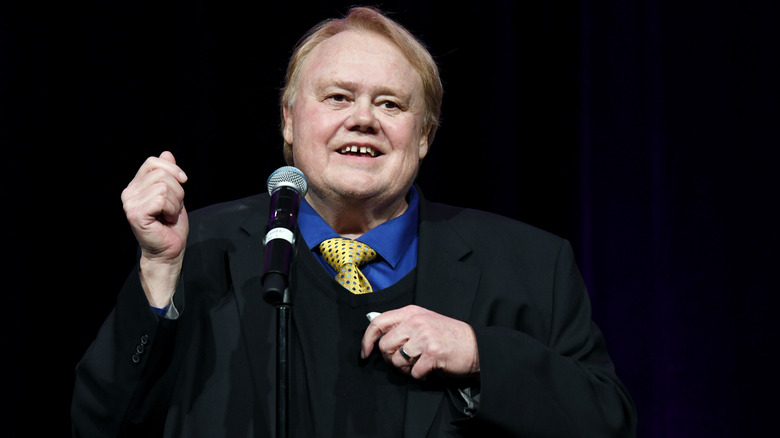
Once again, the world finds itself mourning the loss of a comedic legend, this time in the form of Louie Anderson (whose death was confirmed this morning). Born and raised in St. Paul, Minnesota, Anderson made his network debut as a comedian on "The Tonight Show Starring Johnny Carson" in 1984. He would go on to appear on other late-night talk shows and lead his own standup comedy specials starting in the late '80s. Along the way, he made a cameo in the 1986 John Hughes comedy classic "Ferris Bueller's Day Off" and co-starred opposite Eddie Murphy and Arsenio Hall (whose own talk show featured Anderson as a guest star multiple times) in the 1988 comedy hit "Coming to America," where he played the "McDowell's" employee Maurice.
Anderson's chaotic upbringing, where he was the second youngest of 11 kids raised by his mother and father, would provide much in the way of inspiration for his deeply personal and self-deprecatory brand of comedy, as well as the various books he penned over the years, like "Dear Dad: Letters from an Adult Child" and "Hey Mom: Stories for My Mother, But You Can Read Them Too." When he wasn't working the standup circuit (including his longtime stage show "Louie: Larger Than Life," which he performed in Las Vegas from 2003 to 2012), writing memoirs, or developing sitcoms, Anderson hosted "Family Feud" from 1999 to 2002 and kept busy with his roles on TV. As with most things these days, much of his best work is now available to stream online — if you know where to look.
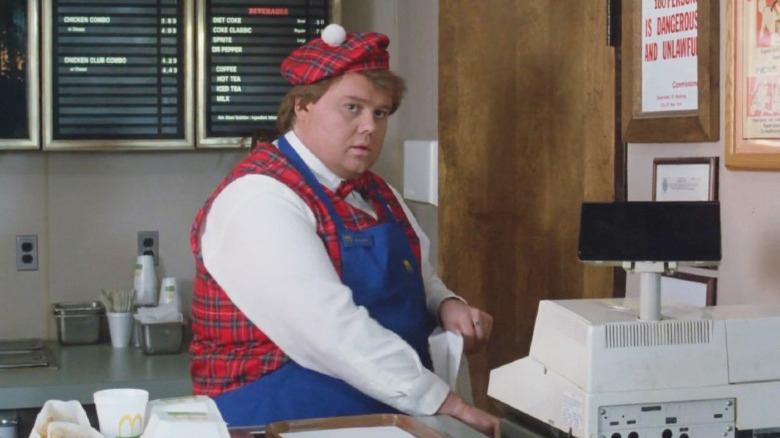
Where You Can Watch It: Streaming on Prime Video
Anderson's role in "Coming to America" only came about at the behest of Paramount (which insisted the movie feature at least one white actor in a speaking role), as Murphy and Hall revealed while promoting last year's sequel "Coming 2 America." Of course, in that same interview, Murphy described Anderson as being "the funniest white guy around" and someone the pair knew to be "cool," lest anyone think he was bad-mouthing Anderson's turn as the affable, lettuce-washing Maurice from the original film. Anderson even reprised his role for the followup more than 30 years later, with Maurice having finally gotten that long-awaited promotion he'd hoped for and now serving as the manager of Zamunda's own "McDowell's" restaurant. That being said, if you have to choose between the two or have yet to visit the "Coming to America" universe, you're better off sticking with Akeem and Semmi's first trip to the States.
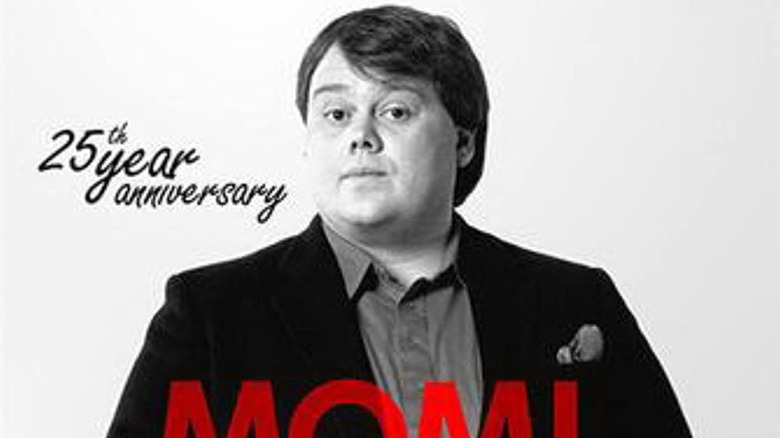
Where You Can Watch It: Available to rent or buy on iTunes
If you're searching for the quintessential Louie Anderson standup comedy special, you would be hard-pressed to find a better choice than 1989's "Mom! Louie's Looking at Me Again." The routine is based primarily around the antics of Anderson and his family when he was growing up, from his abrasive, alcoholic father (who took great pride in his beloved Bonneville and had a general dislike for other people) to his long-suffering mother and many siblings. Anderson also joked about the mischief he would cause as a kid, be it touching his dad's prized toolkit without his permission or staring at his younger brother until he complained to their parents (hence the special's title). As with so much of Anderson's work, "Mom! Louie's Looking at Me Again" blended broad laughs with pathos, allowing the comedian to mine his tumultuous childhood for bits while at the same time making his peace with it.
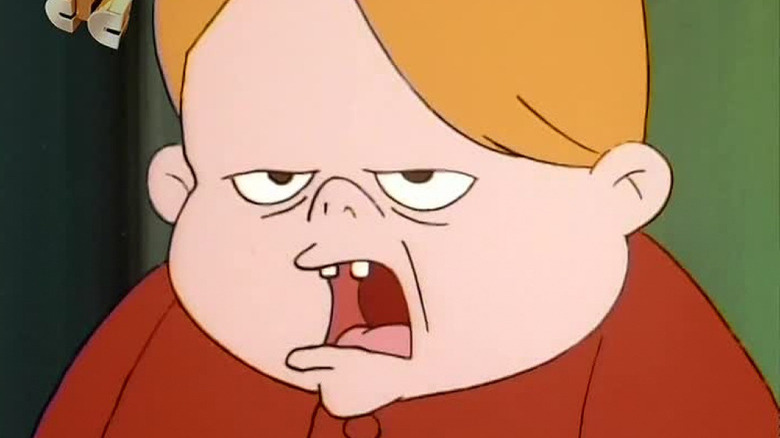
Where You Can Watch It: Available to watch on YouTube
Although his 1996 live-action CBS series "The Louie Show" (which Anderson co-created and starred in) only ran for six episodes before being canceled, Anderson enjoyed far more success with his other '90s sitcom, "Life with Louie." A semi-autobiographical animated show that Anderson co-created for Fox, "Life with Louie" centered on the comedian's life as an eight-year-old growing up with his family in 1960s Wisconsin (where in real life, as mentioned earlier, Anderson came of age in Minnesota). The series ran for three seasons from 1994-98 and garnered numerous accolades before gaining semi-cult status in later years. It also aired as part of Fox Kids on the weekends for much of its run, making it the rare old-school Saturday morning cartoon with real emotional depth and deeper meaning beneath its family-friendly shenanigans. Anderson also lent his voice to "Life with Louie" as not just its narrator but also his younger self and his on-screen father, which further goes to show how meaningful it was to him.
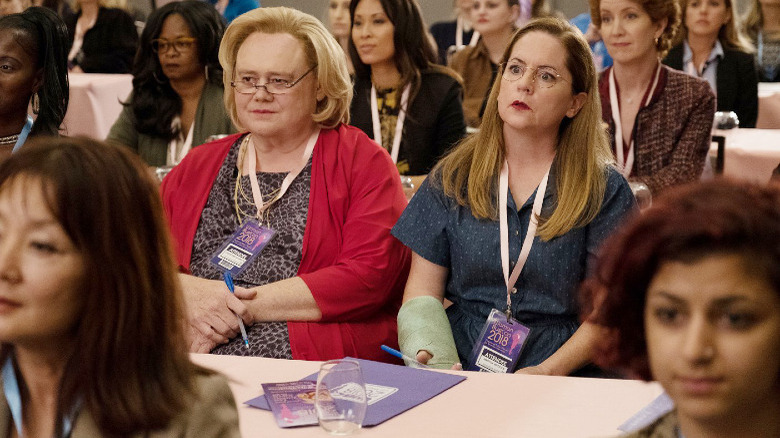
Where You Can Watch It: Streaming on Hulu
Historically speaking, when a cisgender male actor has played a cisgender woman in a film or TV show, it's meant to be a joke in and of itself. However, that was anything but the case with Anderson's role on "Baskets," the FX dramedy series co-created by and starring Zach Galifianakis as Chip Baskets, a grown man who tries but struggles to make a living as a professional clown. Anderson co-starred on the show as Chip's mother Christine, delivering a performance that was heavily influenced by his own real-life mom and allowed him to further pay his respects to her. His sincerity also imbued the character with a sense of authenticity and resulted in him landing a pair of Emmy nods, as well as a win for Outstanding Supporting Actor in a Comedy Series in 2016. But more importantly than that, it gave rise to an onscreen mother-son relationship that was as funny as it was touching.
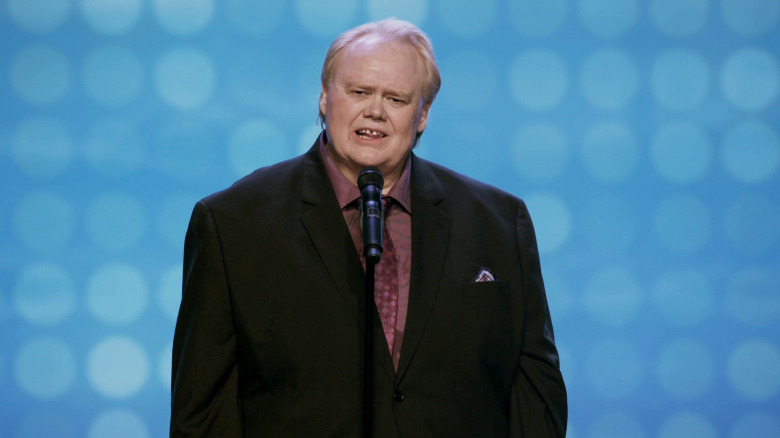
Where You Can Watch It: Streaming on Prime Video
Anderson's sixth and last stand-up comedy special, "Big Underwear," released in 2018 and, in many ways, served as the culmination of his career. Per its official synopsis, the recorded show had Anderson tackling "topics like the challenges of getting healthy, life on the road, dealing with technology and how we all eventually become our parents." After a lifetime of cracking jokes about his parents and how he saw them growing up, "Big Underwear" gave him a chance to reflect on them and how they shaped him into person he would become from an older, more knowing point of view. (And after he had spent years portraying partly-fictionalized versions of them on TV, no less.) It's sad that the special has to serve as his unexpected swan song, but for an artist who made his living using comedy to cushion the hardships of his life, it's perhaps only fitting that he should make us laugh and cry one last time.
Read this next: The 15 Funniest Movies Of The Decade
The post 5 Best Louie Anderson Roles and Where You Can Watch Them appeared first on /Film.
 Movies about WWII and the Nazi's creating some sort of supernatural entity/soldier/curse to help them win the war have become quite common over the past few years and while the staying power and quality of these varies wildly, once in a while one comes along that surpasses expectation. WarHunt is definitely one of those.
Octo-Boss and Talus Lord There’s another Breath of the Wild Second Wind fan mod update out in the wild, which...
The post The amazing Zelda: Breath of the Wild fan expansion just got two more boss battles appeared first on Destructoid.

We thank our sponsor for making this content possible; it is not written by the editorial staff nor does it necessarily reflect its views.
From phone calls to podcasts to music playlists, you listen to a lot of stuff these days. — Read the rest
The use of DNS over HTTPS (DoH) for command and control communications is making it more difficult to track botnets, according to anti-spam nonprofit Spamhaus.
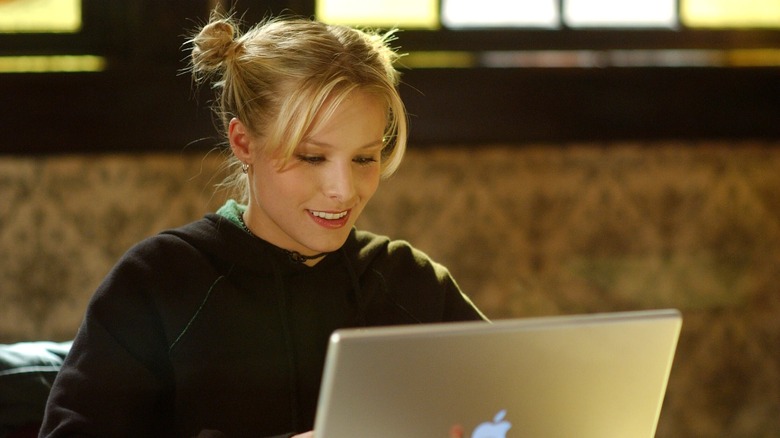
So you've finished "Veronica Mars," the "Veronica Mars" movie funded by Kickstarter, and the 4th season on Hulu. Maybe you read the novels as well. Maybe you've even watched "Play it Again Dick," the meta CW Seed spin-off about Ryan Hansen trying to pitch a spin-off for his "Veronica Mars" character Dick Casablancas. What should you watch next? Here are some shows that Marshmallows (a.k.a. fans of "Veronica Mars") should put on their watchlist ASAP.
"Veronica Mars" crossed genres in ways that made it excellent to watch but difficult to replicate. It was a neo-noir. It was a teen drama. It had a female antihero. It was a bit darker and more cynical than most of the '00s shows of its ilk, especially those geared towards a younger audience. This was during "Gilmore Girls" times, not "Euphoria" times. As for what to watch next, here are some characters who get up to darkly comic stuff, noir stuff, and your run-of-the-mill detective stuff.
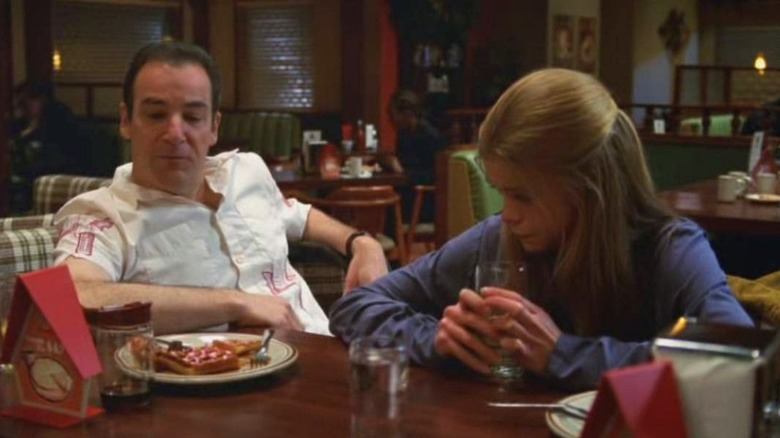
Before Bryan Fuller's cult hits "Pushing Daisies" and "Hannibal," he made this series. If you like Rob Thomas' off-beat style and sense of humor, odds are that you'll like Fuller as well. There's not a huge mystery element to "Dead Like Me," but like "Veronica Mars" they are both shows about young women with unconventional jobs. Yet there are some questions to be answered and investigated, with quirky characters you'll love just as much.
"Dead Like Me" is about a girl named Georgia "George" Lass who's going through an existential crisis when she gets killed in a freak accident and is recruited to become a Grim Reaper. Perfect timing, right? It's now her job to collect the souls of other people who die unexpectedly. Once she reaches her quota, she moves on and the last soul she collects will replace her. George's fellow Reapers and co-workers come from a variety of eras and former professions, with each having their own approach to collecting souls. They also eat together at a diner and become a found family, which is nice!
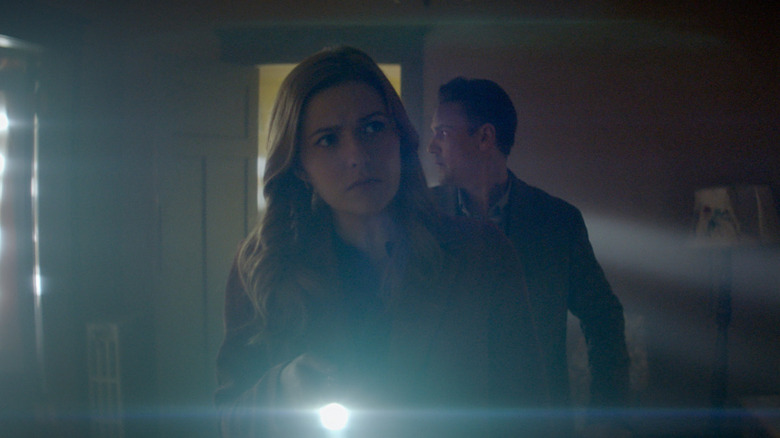
Why not check out the most famous girl detective in her snazzy new CW incarnation? The series has been running for 3 seasons and is based not only on Carolyn Keene's "Nancy Drew" novels, but also Laura Lee Hope's "Bobbsey Twins" novels. There's mystery and romance to spare and even a supernatural element. It has a cult following despite being based on one of the most popular and recognizable characters in pop culture history.
Unlike "Veronica Mars," the series is not initially set in high school. Nancy (Kennedy McMann) is a former teenage detective who gets back in the game when a murder hits close to home. We see glimpses of Nancy's days as a young private detective, but only a little. Still, "Veronica Mars" owes much to the original "Nancy Drew" on the page, and on the screen "Nancy Drew" owes a great deal to "Veronica Mars." They inspire each other ... which is pretty neat.
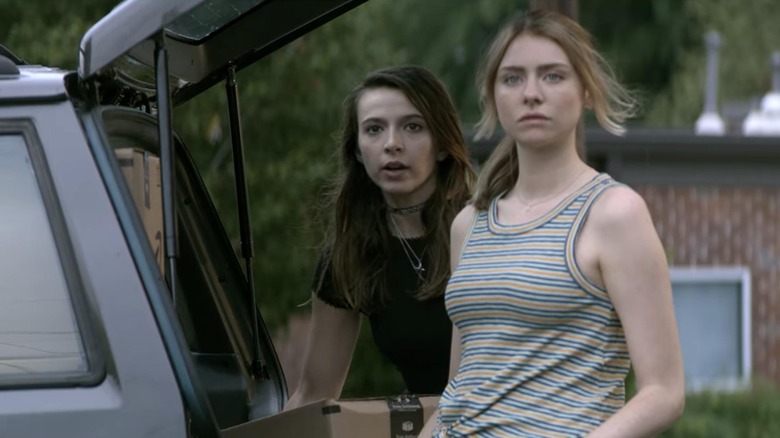
On the ever-growing list of canceled-too-soon Netflix series is this show which I bet "Veronica Mars" fans would absolutely love. The title tells you all you need to know: Teenage girls start a side hustle as bounty hunters. It's not the same job that Veronica does, but it's adjacent.
Blair and Sterling Wesley come from a conservative Christian household and go to a conservative Christian private academy in a conservative Christian part of the country (the suburbs of Atlanta, Georgia). They're the last two people you would expect to start digging through the seedy underbelly of society to catch criminals ... which makes them exceptionally good at it. It gets them out of their bubble and occasionally narrow worldview. Are there skeletons in their own family's closet that they didn't know about? You betcha. There's also plenty of teenage drama to fill the "Veronica Mars" gap in your heart, including an enemies-to-lovers storyline between two female characters.
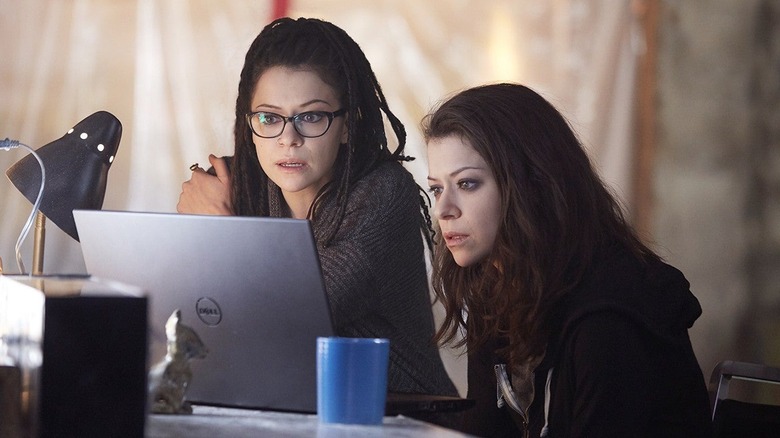
Of the various mystery box shows to catch on over the years, the BBC America series "Orphan Black" is one of the most addictive ... and also one of the weirdest. It has probably the best science fiction pilot episode I've ever seen and gets better and more twisted (in a fun way) as the seasons go on.
The saga begins when Sarah Manning, played by Tatiana Maslany, discovers that her whole life has been part of a vast conspiracy when she sees a woman (also played by Tatiana Maslany) die by suicide who looks exactly like her. She soon discovers that she is one of many illegally created clones, all played by Tatiana Maslany, and that someone is trying to kill them. Seriously, Maslany plays at least five characters in any given episode, even characters who are pretending to be other characters, and is pitch-perfect every time.
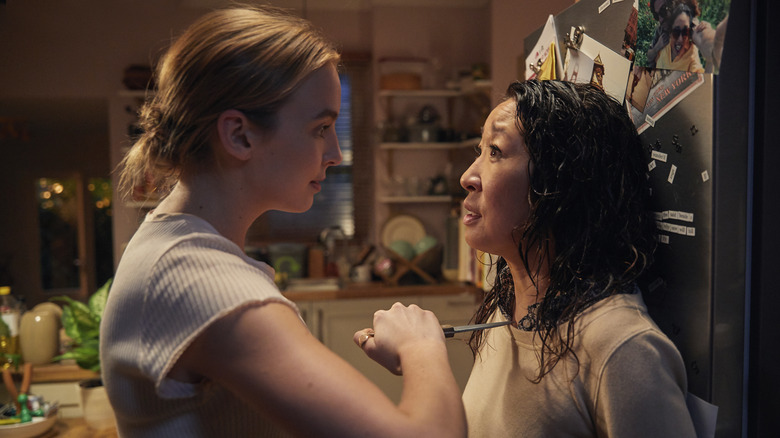
Speaking of BBC America shows, "Killing Eve" is like "Veronica Mars" for grown-ups ... not that adults can't enjoy "Veronica Mars." The subject matter is more intense and mature, as Eve Polastri (Sandra Oh) isn't searching for missing persons or solving the case of who published a fake purity test online. She's an MI5 analyst trying to catch a serial assassin called Villanelle (Jodie Comer). Remember how Rob Thomas made a teaser for a prospective Season 4 that showed Veronica entering the FBI? I wonder if that show would have eventually become more like "Killing Eve."
The show returns for its 4th and final season after a two-year hiatus in February 2022. Each season has had a different head writer, and a few you may recognize. The 1st season was captained by Phoebe Waller-Bridge ("Fleabag"), the second by Emerald Fennell ("Promising Young Woman"), the third by "See" and "Fear The Walking Dead" writer Suzanne Heathcoate, and the fourth by Laura Neal, who has been in writer's rooms on "Sex Education" and "My Mad Fat Diary."
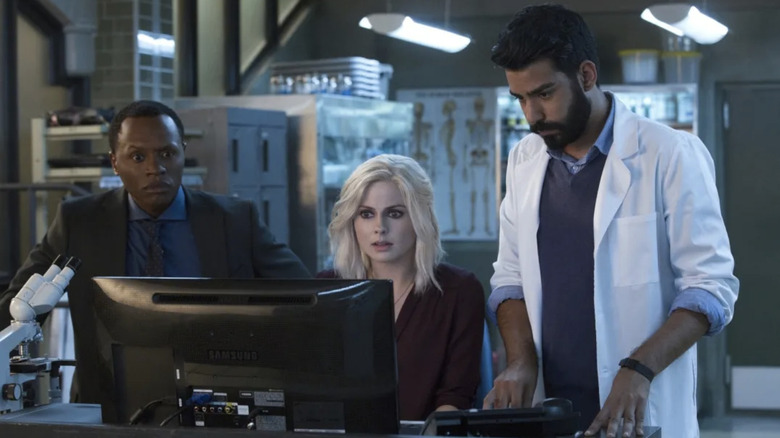
If all else fails, you can always pop on Rob Thomas' other cult hit "iZombie." It's about a young woman named Liv (Rose McIver) who, after becoming a zombie, discovers two things. One, she can live more or less a normal undead life without becoming stupified or attacking people as long as she keeps eating brains. Two, she gets flashes of a person's life and personality when she eats their brain. Liv does the only natural thing by getting a job at the morgue, where she can satisfy her cravings and put her powers to good use by solving the occasional murder.
The show also stars Rahul Kohli, who has stumbled into internet fame after "The Haunting of Bly Manor," "Midnight Mass," and by leaning into fan casting and trolling (with love) on Twitter. A handful of "Veronica Mars" alums show up on "iZombie" as well, including Enrico Colantoni and Jason Dohring.
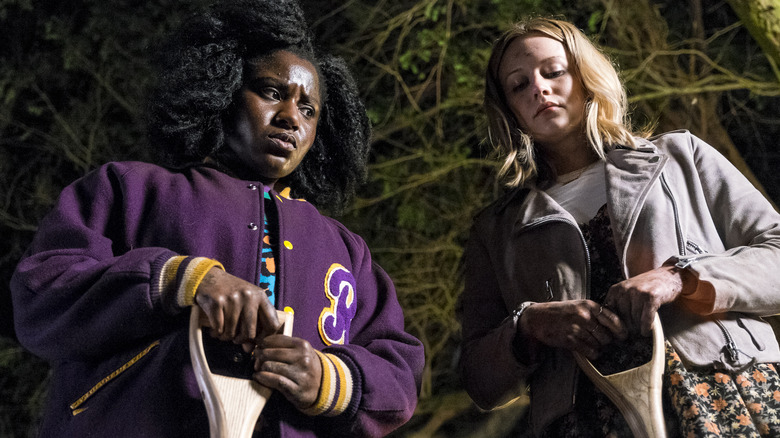
If you ever sit around, like I do, wondering whatever happened to the guy who made "Misfits," it's this! Howard Overman's series stars Susan Wokoma, who would go on to steal scenes in Michaela Coel's "Chewing Gum," as well as "Downton Abbey" actress Cara Theobold as "seers" who see monsters and demons hiding in society. The two of them team up to hunt those demons and become closer as friends in the process. They're more vigilantes than detectives, and it's more supernatural than "Veronica Mars," but the show's dry sense of humor should appeal to fans.
"Crazyhead," like many hidden gems from the U.K., is also only six episodes. This isn't some major project or show you'll keep putting off because you don't have time to devote to it. It's the perfect weekend binge ... or even weeknight if you're feeling like a couch potato.
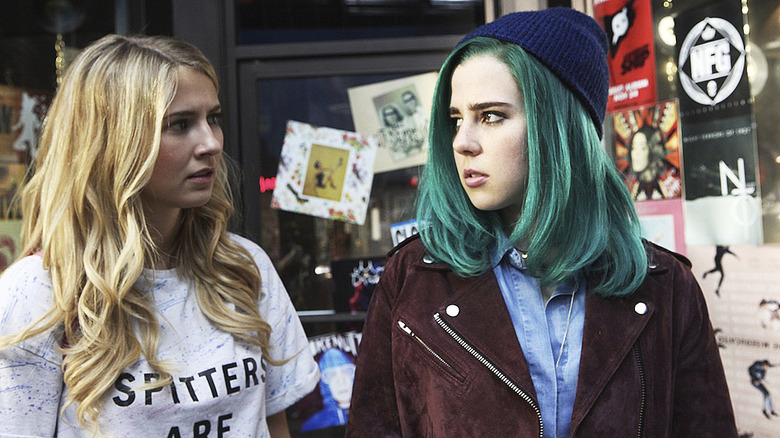
MTV's short-lived series follows two girls who seek vigilante justice against sexual assault and rape on their college campus. It shares some plot elements with "Veronica Mars" as well as a darkly comic tone. In addition to battling predators within the patriarchy, Jules and Ophelia take on fraternity and sorority scandals, dating apps, rideshares, and how the justice system fails survivors who report an assault.
The show was canceled after just one season, but its creator Jennifer Kaytin Robinson has written the films "Someone Great," "Unpregnant," the upcoming Netflix dark comedy "Strangers," the upcoming "Center Stage" series, and has also had her hands in Phase 4 of the Marvel Cinematic Universe as a consulting producer on "Hawkeye" and one of the writers on "Thor: Love and Thunder." If you're not already familiar with her work and want to get educated before she blows up, this is a great place to start.
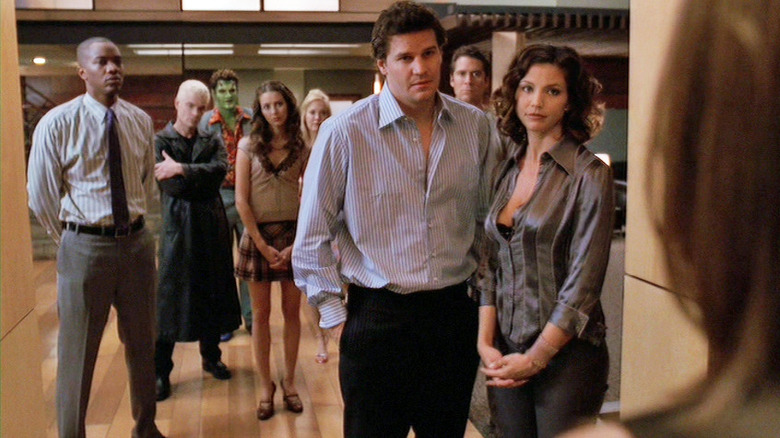
The "Buffy the Vampire Slayer" spin-off has a noir edge. It sees the titular "vampire with a soul" setting up shop in Los Angeles and starting a hero-for-hire business. He's more or less a supernatural private detective. Along with a psychic, a medium, and a couple demon hunters, Angel tries his best to "help the helpless" and not get corrupted by the city himself. As a Joss Whedon project, your mileage may vary with the material in 2022, but it's an enjoyable show and not without merits.
"Angel" is also kind of like an older cousin to "Veronica Mars," since both shows were produced by Warner Brothers in the early 00s. You don't really need to watch "Buffy the Vampire Slayer" to dive into "Angel," but if you're a "Veronica Mars" fan and really miss the high school drama from those first seasons, you'll have to go back to "Buffy."
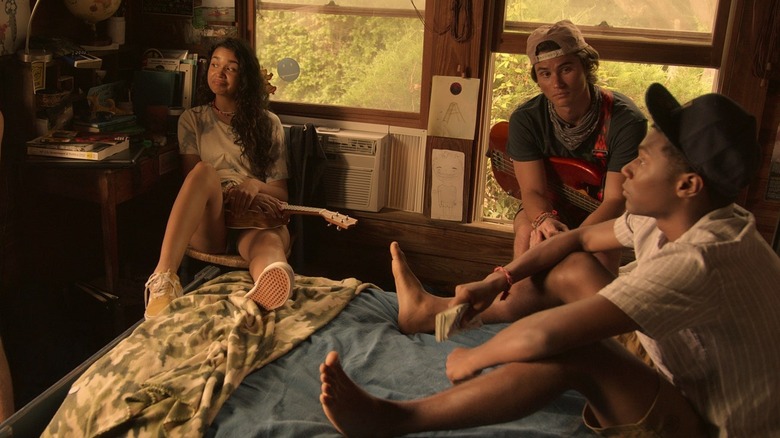
Did you know that the beach dirtbag hottie show is actually a mystery? I didn't at first either! At first glance, it might appear to be yet another YA show about relationships, but it's actually about a group of friends who start searching for answers about what happened to their leader's father and, eventually, a treasure. It may be set on the opposite coast as "Veronica Mars," and doesn't really have a female protagonist, but the atmosphere is actually pretty similar.
Another thing the shows have in common is their socio-economic commentary. Veronica Mars rides the class divide at her school by being friends with kids from either side of the proverbial "tracks." The kids on "Outer Banks" are divided by the rich out-of-towners who vacation on the beach and the locals who live there year-round and have to make ends meet in a tourism economy. They even have nicknames, the "Kooks" and the "Pogues," like the rich "09ers" on "Veronica Mars."

This Netflix series based on the eponymous Marvel Comics hero is about a female private detective and stars an actress (Krysten Ritter) who appeared in "Veronica Mars," so it's the perfect show for fans to watch. Season 1 is the most noir in tone and style, with "dark and stormy night" vibes and a chilling villain in the form of David Tennant's Kilgrave, but there are mystery elements to Seasons 2 and 3 as well.
The character of Jessica Jones gained super-strength at a young age, but prefers to solve crimes by uncovering dirty secrets as a private detective. She uses her powers sparingly. Is she helping people? Perhaps, but it's for profit, not the greater good of humanity. She's one of the most brooding and begrudging heroes you'll ever meet. After a series of traumatic life experiences, Jessica has become cynical. She's a lot like Veronica, though her marshmallow center is a little bit harder to reach.
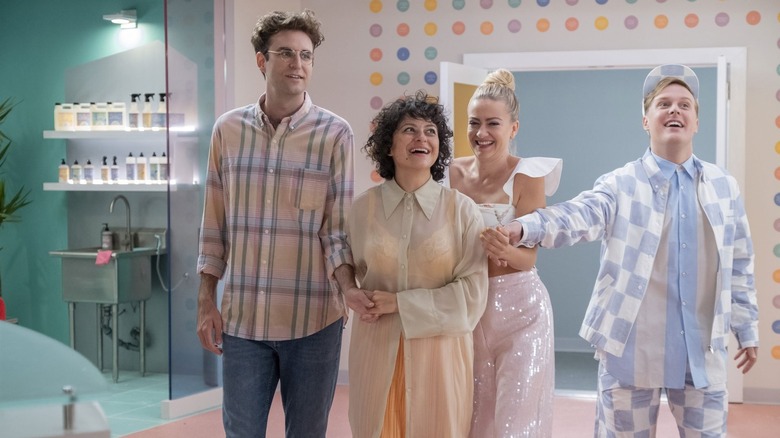
By a country mile, the best neo-noir to hit television in years is "Search Party." The show's final season dropped on HBO Max in 2022 and took some major zigs and zags, but despite the various changes in tone and setting over five seasons, the show has always had a noir element.
"Search Party" begins when a college graduate named Dory sees a "Missing" sign for a girl named Chantal that was in her class. She decides to self-medicate her own quarter-life crisis by solving the mystery of her disappearance and ropes her fellow aimless millennials — they're stereotypes, not representative of all of us, relax — into her case. Dory and her friends' skills as detectives are nowhere near Veronica Mars', and the show is more satirical and darkly comic than "Veronica Mars," but that doesn't make their efforts any less entertaining to watch.
Read this next: 15 Shows Like Brooklyn Nine-Nine You Need To See
The post Shows Like Veronica Mars You Really Need to Watch appeared first on /Film.
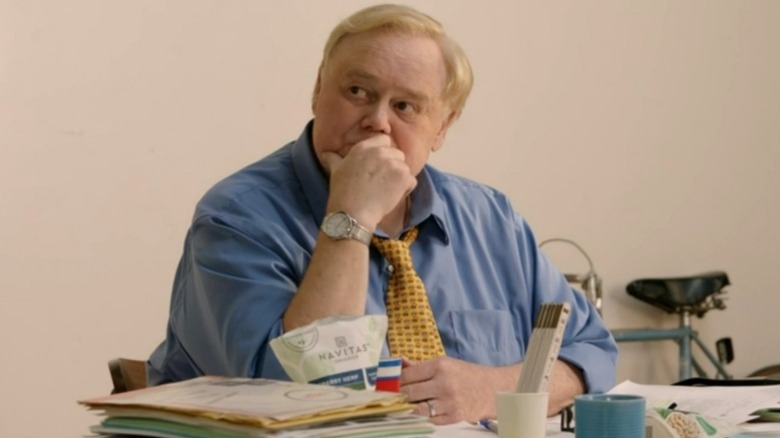
In deeply saddening news, actor and acclaimed comedy legend Louie Anderson has died at the age of 68. Initial reports of Anderson's hospitalization due to treatment of diffuse large B cell lymphoma, which is a particularly aggressive and the most common type of non-Hodgkin lymphoma cancer, came from fellow comedian, actor, and filmmaker Pauly Shore. A longtime friend of Anderson, Shore tweeted the day before that he had been visiting his Las Vegas hospital to say his goodbyes, alongside the late comedian's family and close friends. As he put it at the time:
"...I say this with a heavy heart just left the hospital in Las Vegas where Louie Anderson his sisters and close friend were kind enough to let me say my goodbyes he's still with us but keep him in your prayers."
According to Deadline, Louie Anderson's subsequent passing on Friday morning has since been confirmed by the comedian's publicist, Glenn Schwartz, who released a statement saying that Anderson died "peacefully."
The beloved comedian, game show host, and Emmy-winning actor was a regular presence on stage and on television, making a name for himself in the comedy scene and ultimately leading to his stand-up debut on Johnny Carson's "The Tonight Show" in 1984. After landing a small role in "Ferris Bueller's Day Off" (specifically appearing in the singing telegram scene), his big break in film came four years later when he was cast in John Landis' "Coming To America." His classic role as a "McDowell's" worker alongside Eddie Murphy actually came at the behest of Paramount, a story that Murphy told himself during an appearance on "Jimmy Kimmel Live" last year while promoting the sequel, "Coming 2 America."
Anderson returned to reprise his role for the 2021 film and remained busy in recent years as well, culminating in perhaps his most meaningful performance in the FX series "Baskets." His turn as Christine Baskets led to two Emmy nominations in 2017 and 2018, as well as an Emmy win for Outstanding Supporting Actor in a Comedy Series in 2016.
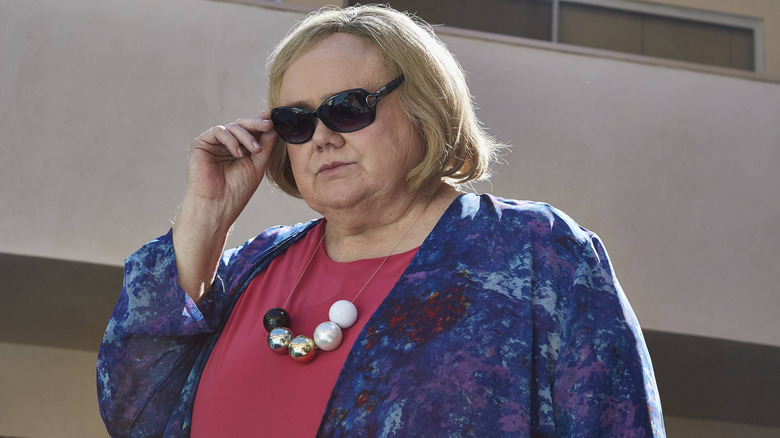
Born on March 24, 1953, in St. Paul, Minnesota, Louie Anderson was the second youngest of 11 children and constantly praised his mother's role in shaping his life -- particularly influencing his acclaimed turn in "Baskets." His self-deprecating jokes and incredible work ethic helped Anderson earn his way to the top of the stand-up circuit, further bolstered by the handful of comedy specials he took part in (including one in which he appeared with the late Bob Saget, in 1984's "Young Comedians").
A decade later, Anderson created and starred in the Fox animated series "Life With Louie," based on his own childhood and leading to two Daytime Emmy Awards for Outstanding Performer in an Animated Program. From 1999 to 2002, the talented comedian even became the host of the new version of the classic game show program, "Family Feud." Various television roles over the years included "Grace Under Fire," "Chicago Hope," "Touched by an Angel," "Scrubs," "Joey," and most recently "Young Sheldon" and "Search Party."
Mourning, fond remembrances, and public celebration of his life poured in on social media on Friday, with many of his peers taking to Twitter to eulogize the late, great comedy legend. Actor Michael Abbot Jr. praised Anderson's role in "Baskets" and his overall legacy, crowning him as "...one of tv [comedy's] greatest gifts." Michael McKean poignantly stated, "'Baskets' was such a phenomenal 'second act' for Louie Anderson. I wish he'd gotten a third." Fellow comedian Travon Free's most lasting memory of Louie Anderson might very well be the most touching, as he revealed that Anderson "...was a very dear friend and one of the people who very early in my career believed in me and would put me and a couple of other comics he loved up in a hotel in Vegas and pay us to open for him when we needed money. What a huge loss. Rest in peace my friend."
Louie Anderson leaves behind two sisters, Lisa and Shanna Anderson, and a lasting legacy that will forever live on among stand-up comics, actors, and his many, many fans.
Read this next: Actors Who Died In 2021
The post Comedian Louie Anderson Has Died at 68 appeared first on /Film.

I’ve always entertained the idea of an apocalypse. I mean, zombies are definitely scary, but it’d be a cool fantasy to play out. Over the years, I’ve even formed my own little plan. Loot some local houses and then set up a base in the fire station on my street. They’ve got electric gates and metal fences to guard the perimeter, a renewable power source thanks to a wind turbine on the roof, and a really handy watchtower. I thought 11 years of The Walking Dead would’ve prepared me fairly well and I fancied my chances. So, I made myself in Project Zomboid. It turns out, everything I learned from The Walking Dead was useless.
Read more of this story at Slashdot.

Of the many possibilities that Microsoft buying Activision Blizzard might enable, only one seems really clear: that Microsoft will put Actiblizz games on Game Pass. Beyond that, it's all mights and maybes. Here's another maybe: Microsoft Gaming CEO Phil Spencer says they're hoping to dig into Actiblizz's "franchises that I love from my childhood," raising the likes of Hexen and King's Quest. What better use for $69 billion than wallowing in nostalgia?

|
L000113AC:
mov eax,[L000195A4+edi*4] <- edi = 1
cmp byte ptr [eax+0000AA5Ch],01h <- eax = 0
jnz L000113C8
add eax,000005F8h
call SUB_L00011298
add ebx,eax
|
|
L0001133E:
cmp ebx,[ebp-04h]
jge L00011380
mov eax,[L000195A4+ebx*4] <- ebx = 1
cmp byte ptr [eax+0000AA5Ch],01h <- eax =0
jnz L0001135F
add eax,000005F8h
call SUB_L00011298
add esi,eax
|
|
push 00000011h //SVGA_REG_CAPABILITIES
push esi
call SUB_L000114B2 //VmxReadUlong
push 0000001Fh //SVGA_REG_NUM_DISPLAYS
and eax,FF7FFFFFh // ~SVGA_CAP_SCREEN_OBJECT_2
push esi
mov [esi+0000AA54h],eax
call SUB_L000114B2 // VmxReadUlong
mov [L00014A08],eax <- 2
-------------------------------------------
VmxReadUlong:
mov edi,edi push ebp
mov ebp,esp
push esi
push [ebp+0Ch]
mov esi,[ebp+08h]
push [esi+000005E4h]
call [VIDEOPRT.SYS!VideoPortWritePortUlong]
push [esi+000005E8h]
call [VIDEOPRT.SYS!VideoPortReadPortUlong]
pop esi
pop ebp
retn 0008h
|


Prepare to set off on a journey through the wildlands of Russia in a new stand-alone expansion to the cult FPS series.
Genre: Action and adventure
Discount: 10% off until the game's premiere on 25th January 2022
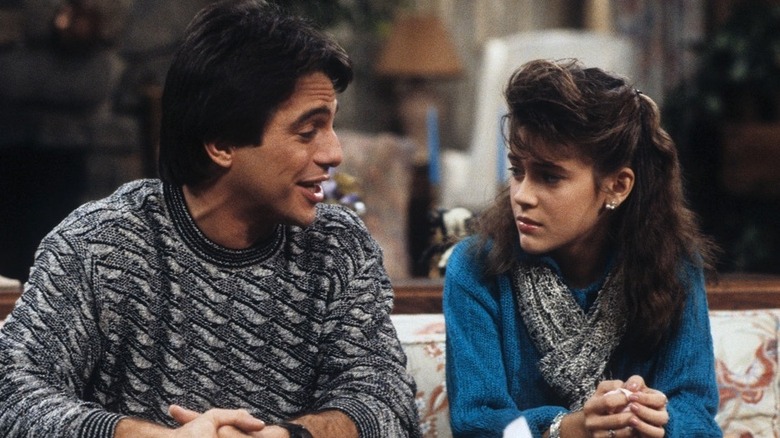
A "Who's the Boss?" sequel was announced back in August of 2020, and it was reportedly going to give us a look at what's happened in the lives of Samantha Micelli (Alyssa Milano) and her dad Tony Micelli (Tony Danza) in the years since the show went off the air in 1992. Milano and Danza both posted about it on social media at the time.
Of course, the pandemic put a hold on everything in the world, with only the name of Star-Lord's ship the Milano in "Guardians of the Galaxy" to remind us of the sitcom. Now the news has hit that the "Who's the Boss?" sequel is still in development from none other than Alyssa Milano herself! Milano spoke to Fox 4 NY (via Screen Rant) and said of the show:
We're actually developing a reboot, well it's more of a sequel and we've been developing it now for a couple of years. The pandemic sort of put everything on hold, but we're hopeful that before I'm in my 70s we'll be able to.
Milano continued, "We're just in developing, trying to figure out what the show looks like, or would look like. You know, what stage in our lives we'd pick up from." When asked if Sam would be the boss now, she answered, "I think Sam was always the boss, no?"
There isn't any more information than that, but the original idea was going to take place 30 years after the ABC series. It was supposed to feature Sam as a single mother and her pops living with her. "Who's the Boss?" ran for eight seasons on ABC from September 20, 1984, to April 25, 1992. The beloved sitcom also starred Judith Light, Danny Pintauro, and Katherine Helmond.
In the series, Tony was a retired Major League Baseball player who moves with his daughter Sam to Fairfield, Connecticut. He becomes a housekeeper who lives on site with boss Angela Bower (Light) and her son Jonathan (Pintauro), with the occasional acerbic and suggestive comment from Angela's mom Mona (Helmond). One of the big draws was the will-they-won't-they story between the tight-laced Angela and the easygoing Tony. The show was nominated for more than 40 awards and has lived on in syndication around the world.
Go ahead and listen to that theme song and tell me it doesn't take you back.
Read this next: 14 Awesome Comedies That Never Got Sequels
The post Alyssa Milano Teases Who's The Boss Sequel Show appeared first on /Film.
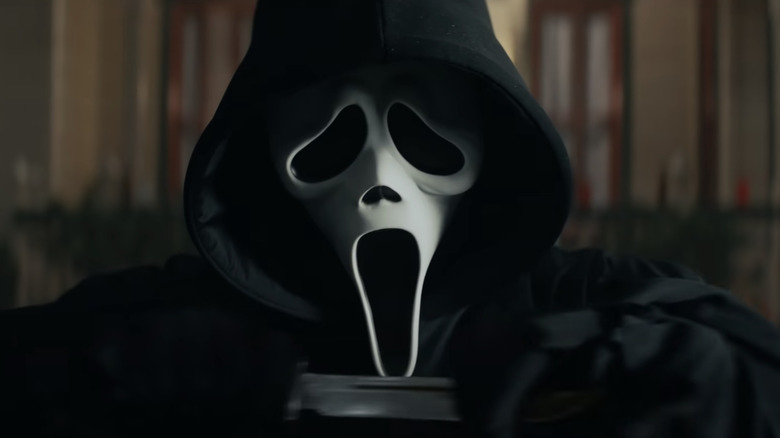
Spoiler alert: someone dies in the new "Scream" movie!
It's a given that the body count is going to be high in any teen slasher flick, and the early "Scream" movies, written by Kevin Williamson and directed by Wes Craven, were particularly good at fostering a vibe of "No one is safe." This began with the opening scene of the first film, where Drew Barrymore — probably the most well-known actor attached to the movie at that point — saw her character, Casey Becker (pictured below), suffer a grisly fate at the hands of the Ghostface killer.
Casey's death is a famous slice of horror history, and as recently as last summer, Netflix's "Fear Street" trilogy could be seen homaging it. It was the '90s equivalent of Marion Crane (Janet Leigh), dying in the shower midway through "Psycho," despite ostensibly being the main character.
"Scream" even had Billy Loomis (Skeet Ulrich) quoting "Psycho," saying, "We all go a little mad sometimes." "Scream 2" didn't pull any punches, either. The sequel brought back Randy Meeks (Jamie Kennedy), the very character who laid out the rules for survival in the first movie. He got pulled into a van in broad daylight on a bustling college campus, and stabbed to death. The message was clear: anything can happen. Again, no one is safe.
Subsequent sequels diluted that message a bit, as it soon became clear that certain legacy characters like Sydney Prescott (Neve Campbell), Dewey Riley (David Arquette), and Gale Weathers (Courteney Cox) were wearing plot armor. They've all survived to the fifth "Scream" movie, but one or more of them may not be making it out of this one alive. If you haven't seen the movie and don't want to know who that is (or isn't), look away now.
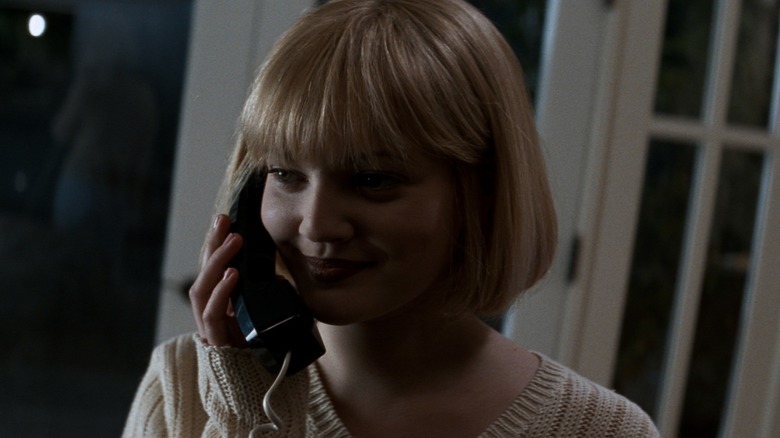
In the new "Scream," the tenacious Woodsboro survivor, Dewey, finally bites the bullet — or blade — after five movies. It only takes two knives to kill him. Co-directors Tyler Gillett and Matt Bettinelli addressed the character's death in an interview with The Wrap. Gillett made it sound like an almost inevitable byproduct of raising the narrative stakes, saying:
"I think we all knew that we were going to do what we had to do. I just think that it was that feeling of, you're Wile E. Coyote-ing towards the edge of the cliff and then you start backing up. As you start to commit to a choice that has that much gravity, I think it's natural to want to gut check yourself and go, f***, is this the right thing? I think that we all knew in our hearts though that it was, for so many reasons, right. I feel like the stakes of the movie depend so greatly on us being able to express that there isn't really a safe place to hide in our film.
"It's what I think that people forget that that's how the first movie felt. And it's one of the reasons why it's so great and so compelling, is that opening [Drew Barrymore] scene, it strips you of every expectation. And I think for us, obviously 25 years later in [the] fifth movie in a franchise that has done so much subverting of expectations, the one thing that it's never really done is go for it with a legacy cast member and specifically Dewey who is historically unkillable. And I think the challenge for us was to not treat it in a way that felt mean or cruel though obviously it's very, very brutal. I think for us we wanted to make it as iconic and sort of heroic as that character is, the two knives. The idea that the only way that you could possibly kill Dewey is to get him with two knives."
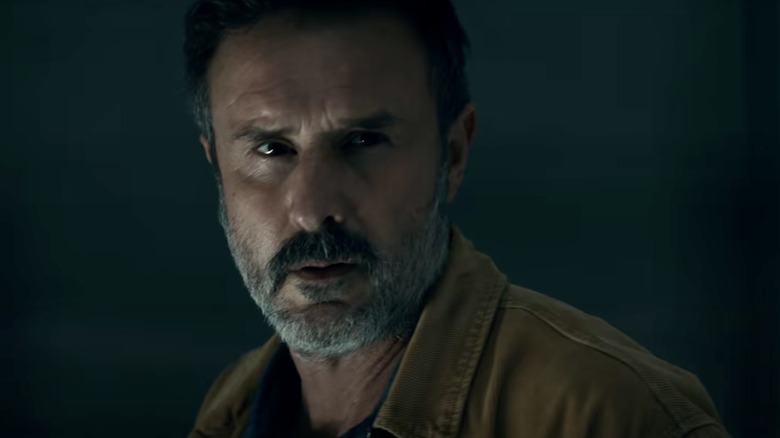
Dewey's death comes after his reunion with Gale, allowing former real-life spouses Arquette and Cox to share a final scene together. Gillett highlighted the romance of that scene and the respect paid to Dewey as a legacy character as a sort of consolation prize for anyone who might be mourning the loss of Dewey too hard. He continued:
"The thread of Gale in that scene ... makes it feel a little bit romantic. And there's maybe a little bit of hope for him at the end when he looks at the phone and he sees that she's calling. All of these ingredients ... make it feel like it is emotionally complicated and not just, this sort of quick brutal kill.
"And even Ghostface saying, 'It's an honor.' The killer in that moment recognizes the gravity of what the movie is doing and what they're doing. And ultimately on a meta level, what they are doing for the [in-universe 'Stab'] movie that will be made based on the events of this movie, there were a lot of things sort of at work, but I think we felt a real reverence for what that had to be. And I mean, look, it's one of the bigger risks of the movie, but we also knew it had to happen. The movie after that happens is so based in the consequence of his death that we just had to be willing to go there."
"Scream" is in theaters now.
Read this next: Every Texas Chainsaw Massacre Movie Ranked Worst To Best
The post Scream Directors Address the Movie's Most Shocking Character Death appeared first on /Film.

