Shared posts

25 Jan 17:40

NVIDIA, AMD & Intel Announce Day One Driver Support For Vulkan 1.3 API on Windows & Linux Platforms

by Hassan Mujtaba

NVIDIA, Intel & AMD have announced that they will offer Day-1 driver support for today's release of Vulkan 1.3 on both Windows and Linux platforms.

Intel, NVIDIA & AMD Bring Day-1 Driver Support For Vulkan 1.3 API on Windows & Linux Platforms

NVIDIA Press Release: Many different platforms, same great performance. That’s why Vulkan is a very big deal.

With the release Tuesday of Vulkan 1.3, NVIDIA continues its unparalleled record of day one driver support for this cross-platform GPU application programming interface for 3D graphics and computing.

Vulkan has been created by experts from across the industry working together at the Khronos Group, an open standards consortium. From the start, NVIDIA has worked to advance this effort. NVIDIA’s Neil Trevett has been Khronos president since its earliest days.

“NVIDIA has consistently been at the forefront of computer graphics with new, enhanced tools, and technologies for developers to create rich game experiences,” said Jon Peddie, president of Jon Peddie Research.

“Their guidance and support for Vulkan 1.3 development, and release of a new compatible driver on day one across NVIDIA GPUs contributes to the successful cross-platform functionality and performance for games and apps this new API will bring,” he said.

With a simpler, thinner driver and efficient CPU multi-threading capabilities, Vulkan has less latency and overhead than alternatives, such as OpenGL or older versions of Direct3D.

If you use Vulkan, NVIDIA GPUs are a no-brainer. Here’s why:

  1. NVIDIA consistently provides industry leadership to evolve new Vulkan functionality and is often the first to make leading-edge computer graphics techniques available to developers. This ensures cutting-edge titles are supported on Vulkan and, by extension, made available to more gamers.
  2. NVIDIA designs hardware to provide the fastest Vulkan performance for your games and applications. For example, NVIDIA GPUs perform up over 30 percent faster than the nearest competition on games such as Doom Eternal with advanced rendering techniques such as ray tracing.
  3. NVIDIA provides the broadest range of Vulkan functionality to ensure you can run the games and apps that you want and need. NVIDIA’s production drivers support advanced features such as ray-tracing and DLSS AI rendering across multiple platforms, including Windows and popular Linux distributions like Ubuntu, Kylin, and RHEL.
  4. NVIDIA works hard to be the platform of choice for Vulkan development with tools that are often the first to support the latest Vulkan functionality, encouraging apps and games to be optimized first for NVIDIA. NVIDIA Nsight, our suite of development tools, has integrated support for Vulkan, including debugging and optimizing of applications using full ray-tracing functionality. NVIDIA also provides extensive Vulkan code samples, tutorials and best practice guidance so developers can get the very best performance from their code.
  5. NVIDIA makes Vulkan available across a wider range of platforms and hardware than anyone else for easier cross-platform portability. NVIDIA ships Vulkan on PCs, embedded platforms, automotive, and the data center. And gamers enjoy ongoing support of the latest Vulkan API changes with older GPUs.
  6. NVIDIA aims to bulletproof your games with highly reliable game-ready drivers. NVIDIA treats Vulkan as a first-class citizen API with focused development and support. In fact, developers can download our zero-day Vulkan 1.3 drivers right now at https://developer.nvidia.com/vulkan-driver.

Khronos Group Press Release: Today, The Khronos Group, an open consortium of industry-leading companies creating advanced interoperability standards, announced the latest updates to Vulkan, the cross-platform 3D graphics API, and its ecosystem.

  • The1.3 specification was released today, incorporating and mandating proven, developer-requested extensions to make that functionality consistently available across all supported platforms.
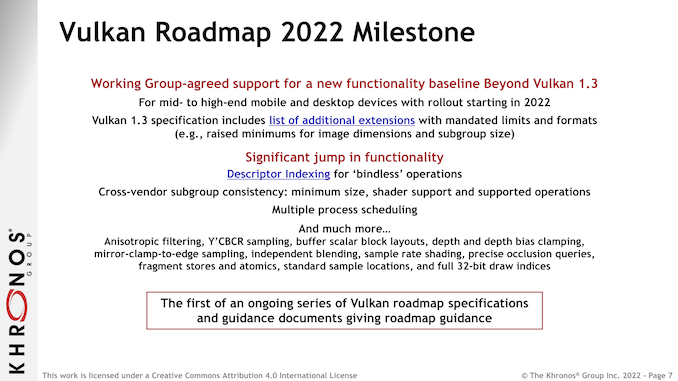
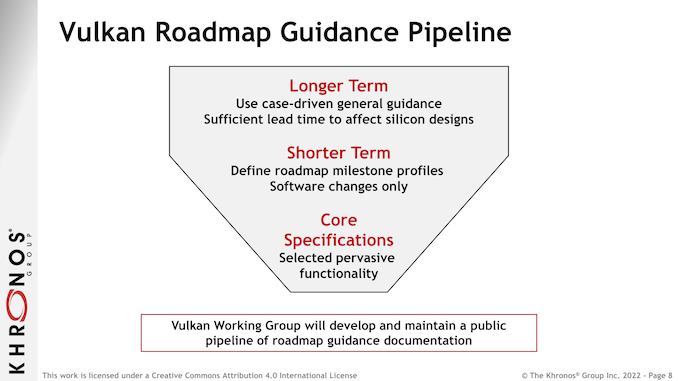
  • The Vulkan Working Group is developing a public roadmap to provide guidance on when and where more advanced functionality will be supported. The Vulkan Roadmap 2022 milestone for mid-to-high-end hardware defines features beyond Vulkan 1.3 that will be available starting this year.
  • Vulkan profiles will be introduced, with tooling, in the February 2022 Vulkan 1.3 SDK to precisely specify, manage and use sets of API capabilities. Profiles will be used to communicate functionality requirements for roadmaps, markets, platforms, and hardware and software developers.

Vulkan 1.3 incorporates a number of carefully selected extensions requested by the developer community into a new core version of the specification. These include dynamic rendering, additional dynamic state, an improved synchronization API, and a range of other features (see the Vulkan 1.3 and Roadmap blog post for details). Crucially, unlike previous revisions, no features added to Vulkan 1.3 are optional, ensuring their consistent availability in all implementations of this new API version.

Presentation (Image Credits: Phoronix):

  • image-61
  • image-1-7
  • image-2-9
  • image-3-5
  • image-4-4
  • image-5-4
  • image-6-5
  • image-7-2
  • image-8-2

Industry Support

“As a long-time supporter of Vulkan, NVIDIA is providing immediate full functionality 1.3 drivers that support the Roadmap 2022 milestone on both Windows 10 and 11 and Linux, including popular distributions such as Ubuntu, Kylin, and RHEL. NVIDIA has also prepared conformant Vulkan 1.3 drivers for our Jetson embedded computing platform,” said Dwight Diercks, senior vice president of software engineering, NVIDIA. “Our Nsight Graphics and Nsight Systems tools have been updated to support Vulkan 1.3, offering a robust environment with deep support for developers to build and optimize games and applications.”

“AMD is pleased to announce that we expect to support for both Vulkan 1.3 and the Vulkan Roadmap 2022 profile on all AMD Radeon™ RX Vega Series and AMD RDNA™ architecture-enabled graphics cards. AMD Radeon Software beta drivers are available for developers today, with support in the final drivers expected in the next few months. The Working Group taking the initiative to standardize hardware features across devices is an important step towards providing consistent support for developers across key markets, and we believe this will ultimately translate to the better developer and end-user experiences,” said Andrej Zdravkovic, Senior Vice President, Software Development, AMD.

“The release of the Vulkan 1.3 Specification is a significant milestone. The latest iteration of the Khronos standard brings enhancements to improve the developer experience, including the introduction of Vulkan profiles, making it simpler for developers to understand platform capabilities and target a wider range of devices. Arm is committed to providing developers the tools and technologies to enable the next generation of compelling on-device experiences, and will support Vulkan 1.3 and the Roadmap 2022 profile on our Mali GPUs,” said Geraint North, senior director, Ecosystems and Engineering, Client Line of Business, Arm.

“Vulkan 1.3 and the Roadmap 2022 milestone bring the much-welcomed quality of life improvements for developers, such as dynamic rendering which eliminates the need for render pass and frame buffer objects and provides a more streamlined approach for rendering. We look forward to making these improvements available on Stadia,” said Hai Nguyen, senior staff technical solutions engineer for Google Stadia.

“Holochip develops light field and AR flight training and simulation technology for the U.S. military and is incorporating new display capabilities into existing NAVAIR training environments. The Vulkan 1.3 spec will enable the wide adoption of next-gen display devices. The Vulkan 1.3 spec paves the way for military simulation environments to benefit from the technical advances in the commercial rendering market. These advances will lead to greater effectiveness and cost savings of training and improve the ability of warfighters to safely mitigate risks,” said Robert Batchko, CEO of Holochip Corporation.

“Vulkan’s ability to enable hardware platforms with vastly different form factors and power envelopes means that it is the key API for our highly scalable GPUs, which are used from wearables to mobile, automotive, and data center and desktop. 1.3’s standardization of different profiles significantly enhances the API’s applicability to such a diverse range of devices and use cases. 1.3 is the work of the leaders in the GPU industry, coming together to enable the future of GPUs, and we are thrilled to be a part of that,” said Ploutarchos Galatsopoulos, director of software product management, Imagination Technologies.

LunarG is excited about the new Vulkan Profiles solution. Using this framework, developers can create portable applications that will run across large sets of hardware guaranteed to have the necessary supported features. The Vulkan Profiles API library and Vulkan Profiles Layer, which are delivered with the SDK, will allow developers to define, use, and develop Vulkan profiles,” said Karen Ghavam, CEO and engineering director, Christophe Riccio, senior engineer, LunarG Inc.

Roadmap 2022 announced today is the first defined milestone in the Vulkan Roadmap. All Vulkan Working Group hardware vendors actively developing mid-to-high-end devices for smartphone, tablet, laptop, console, and desktop platforms are committed to supporting this milestone, starting with several shipping products in 2022. The milestone requires support for Vulkan 1.3 plus a number of extensions the Working Group considers essential for the target market, including descriptor indexing, fragment shader stores, and atomics, subgroup support in fragment shaders, independent blending, sample shading, anisotropic filtering, YCbCr sampling, and scalar block layout for buffer resources. Roadmap 2022 also raises minimum values for many hardware limits, including max image and image array dimensions, max subgroup size, and various limits on how many resources can be accessed per shader stage. See the 1.3 and Roadmap blog post for more details.

The post NVIDIA, AMD & Intel Announce Day One Driver Support For Vulkan 1.3 API on Windows & Linux Platforms by Hassan Mujtaba appeared first on Wccftech.

25 Jan 17:40

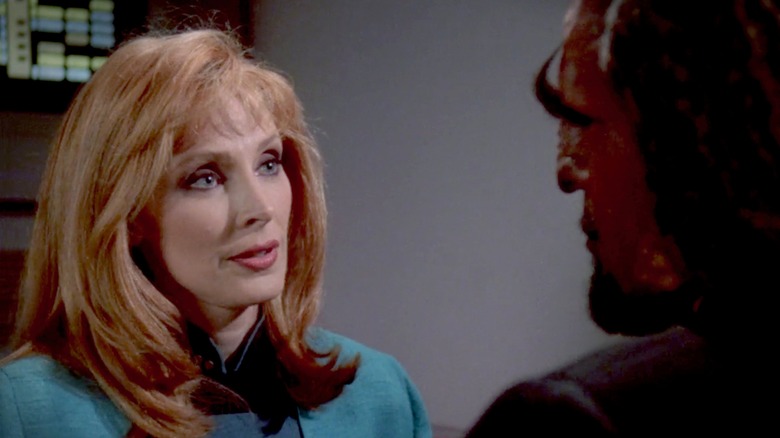
The Controversial Star Trek Episode Gates McFadden Wishes She Could Do Differently

by Collier Jennings

There's two unshakeable truths that most "Star Trek fans" hold concerning "Star Trek: The Next Generation." The first is that it's top-tier Trek, only eclipsed by its sister show "Star Trek: Deep Space Nine." The second is that the show has a ratio of truly great episodes to ... not-so-great episodes. For every gamechanger like the "Best of Both Worlds" two-parter (which served as my own introduction to "The Next Generation"), there's a clunker like the season 1 episode "Justice," where Wesley Crusher is put on trial for stepping on flowers. And in case you don't remember that, I'm not joking -- that was an actual episode of the series. 

And one cast member has ideas on how she would have handled a certain episode many fans don't like to remember.

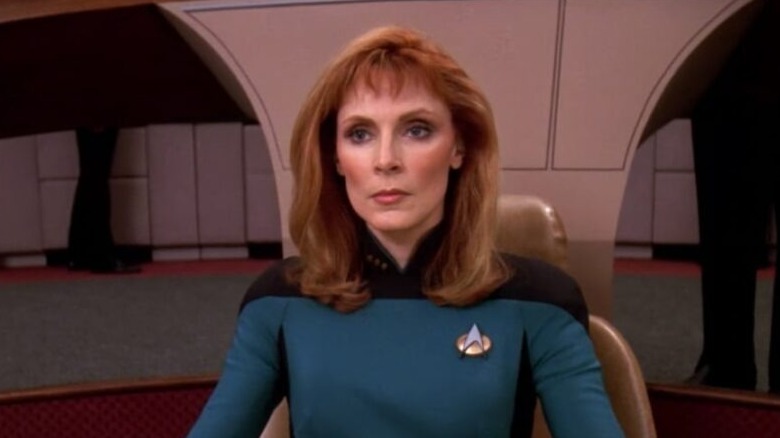
During an interview with Inverse, Gates McFadden -- best known for her role on the series as Dr. Beverly Crusher -- discussed her new podcast "Gates McFadden Investigates: Who Do You Think You Are?," where she talks with her fellow "Next Generation" cast members. The interview touched on an extremely controversial "Next Generation" episode, and McFadden's feelings about it.

The Host Not Taken

In the season 4 episode "The Host," Dr. Crusher fell in love with the Trill meditator Odan, but soon faces trouble when Odan -- secretly a symbiotic alien -- vacates his host body after a fatal incident and bonds with Commander William Riker. Ultimately, Odan finds a permanent host in a female Trill, leaving Crusher to not pursue a relationship. 

The episode has been a source of controversy in the years following its release, and McFadden discussed her own thoughts on the production and Crusher's state of mind:

"First of all, you're given a script and that's your script. You can only change so much. And I think that if anyone actually thought about it, they would see that it's way too fast for Crusher to be able to process all that has happened. This person who looks like a normal human being dies just as you're really getting close and love them. Okay, then you're told no, no, put my thing, this parasite [Trill symbiont] into another body. It could have been anybody's body. But she doesn't know that as soon as that it's in another body that she's going to be attracted to that person."

So Many Ideas, So Little Time

Ultimately, McFadden said that she wished there was more time to explore what Crusher was feeling:

"There was a tremendous amount that Crusher had to process that wasn't seen. I don't think people saw the full amount of things that she was expected to process."

McFadden does have a point. Back when "The Next Generation" was on the air, streaming wasn't even a twinkle in Hollywood execs' eyes. You had to watch the episode when it first aired or wait for reruns. And it would be some time before genre shows embraced the concept of the ongoing arc -- something that another sci-fi show, "Babylon 5" (not to mention (Star Trek: Deep Space Nine") would popularize. If "The Vow" was made today, I think that the events of the episode could lend themselves to a multi-part story and would have given Crusher more time to process some very complicated feelings. And if McFadden ever shows up on "Star Trek: Picard" in some capacity, I hope she has the chance to further flesh out the good doctor.

Read this next: Star Trek: The Next Generation's 10 Best Episodes

The post The Controversial Star Trek Episode Gates McFadden Wishes She Could Do Differently appeared first on /Film.

25 Jan 17:39

What The DHARMA Initiative Was Really Trying To Accomplish On Lost

by Ryan Leston

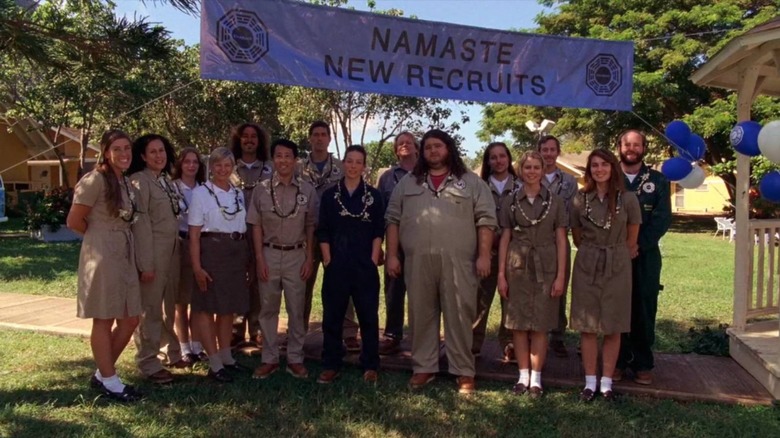
Namaste and welcome to the DHARMA Initiative, the scientific research project at the center of many of the biggest mysteries of the hit TV show, "Lost." As a fan, I remember when John Locke and Boone first encountered the mysterious hatch with no idea what awaited them within. But as the series progressed, we discovered the enigmatic DHARMA Initiative with its shadowy motives and weird orientation videos.

Who were they? What did they want with The Island? And could the DHARMA Initiative help the survivors of Oceanic Flight 815 get home?

The DHARMA Initiative was long gone when Jack, Kate, Locke, and the rest of the gang discovered the remnants of their experiments. But their influence could be felt throughout The Island, whether it was mysterious hatches, weirdly-located polar bears, or random pallet drops in the middle of the night. But who were the DHARMA Initiative and where did they come from?

Who Were The DHARMA Initiative?

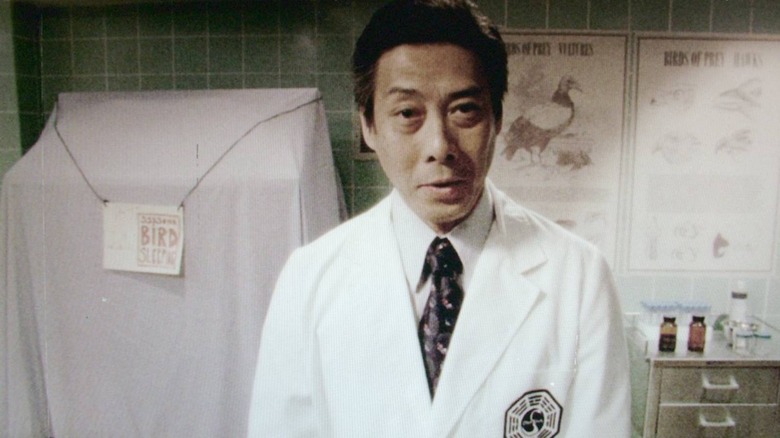
According to the orientation film found in The Swan station (otherwise known as the hatch), the DHARMA Initiative was created in 1970 by Gerald and Karen DeGroot — two doctoral candidates from the University of Michigan in Ann Arbor, Michigan. It was revealed to be financially backed by Danish industrialist, Alvar Hanso through his Hanso Foundation.

But that's just the tip of the iceberg.

"DHARMA" stands for Department of Heuristics And Research on Material Applications. After finding The Island, the DHARMA Initiative set up a small research community with the goal of studying The Island's unique properties. Its research was based on various scientific disciplines including meteorology, psychology, parapsychology, zoology, electromagnetism, and utopian social engineering. And while the mysterious organization comes across as a bit creepy, it turned out their goals were entirely altruistic and for "the betterment of mankind and advancement of world peace."

An alternate reality game known as "The Lost Experience" expanded on this, revealing that the DHARMA Initiative's goal was to manipulate the values of The Valenzetti Equation to extend the lifespan of humanity. But what does that mean?

The Valenzetti Equation

Following the Cuban Missile Crisis between the Soviet Union and the United States, the UN Security Council commissioned the creation of The Valenzetti Equation — a mathematical equation used to predict the extinction of humanity.

According to a 1975 orientation film in the "Sri Lanka Video" (which is part of "The Lost Experience"), the Valenzetti Equation "predicts the exact number of years and months until humanity extinguishes itself."

Created by Enzo Valenzetti, it derived a series of numerical values to represent key factors that determine humanity's fate — 4, 8, 15, 16, 23, and 42. "The numbers" as they came to be known, appeared throughout "Lost" and were the core focus of the DHARMA Initiative's research. Most famously, the numbers appeared on the outside of the hatch and were also used by Hurley to win the lotto, netting him a cool $114 million before he concluded that the numbers were "cursed."

The DHARMA Initiative believed that by changing any of these core values, they would change the course of humanity's future, extending mankind's time on Earth. How would they do that? It's all about the stations.

Dharma Initiative Stations Explained

The DHARMA Initiative believed that The Island was the key to changing the coefficients of The Valenzetti Equation and created a range of scientific research stations across The Island to house their research.

Here's what they created:

  • The Hydra (Station 1 of 6): A zoological research outpost, The Hydra included a variety of animal cages and an underwater aquarium. It previously housed polar bears, sharks, and dolphins which were used for experimental purposes. The Hydra was situated on a small island off the coast of the main Island.
  • The Arrow (Station 2 of 6): A defensive outpost used to develop defensive strategies and gather intelligence on the Island's hostile Indigenous population. It was later used as a shelter by tail section survivors of the doomed Oceanic Flight 815.
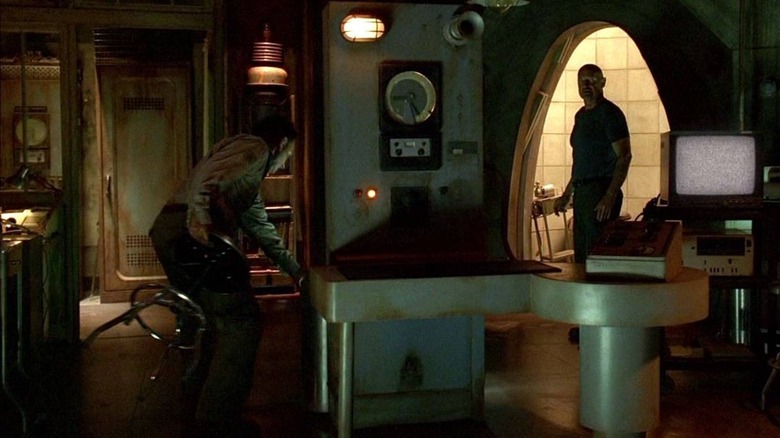
  • The Swan (Station 3 of 6): Originally referred to as "the hatch," this station was an electromagnetic research lab before the "Incident" — caused by drilling into an unknown energy source beneath the station. After this, a protocol had to be followed where a special code (the numbers) was input into a computer every 108 minutes.
  • The Flame (Station 4 of 6): A DHARMA communication station, The Flame was used to communicate with other stations as well as the outside world. A small building with a satellite dish, it also housed a basement storage facility beneath a hidden trapdoor. It was also rigged with C-4 explosives to avoid it falling into the hands of "The Others" — referred to as The Island's natives.
  • The Pearl (Station 5 of 6): A psychological research station, The Pearl occupants were charged with observing the occupants of The Swan and were told that The Hatch was part of a psychological experiment. However, The Pearl itself was the real experiment with hidden cameras installed in the facility to observe them.
  • The Orchid (Station 6 of 6): A facility that, on the surface, supported botanical research, The Orchid was actually the site of a secret elevator that led to a space-time research facility. It was home to The Vault — a time machine used by the DHARMA Initiative to conduct space-time manipulation experiments.

There were also a number of other stations both on and off The Island, but these six are considered to be the core stations concerned with the DHARMA Initiative's research. So, what happened?

Did The DHARMA Initiative Succeed?

After investing all that time, effort, and resources, the DHARMA Initiative must have come close, right? Well ... not quite. After almost 20 years of research, the DHARMA Initiative fell to The Others, a group of Island natives who were at odds with the research group.

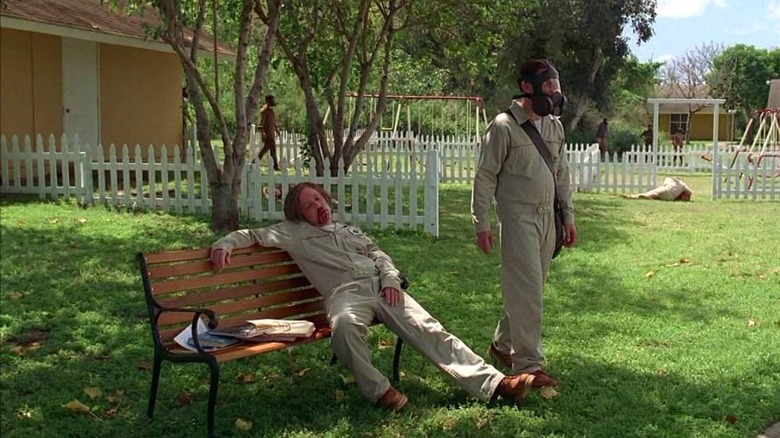
Benjamin Linus (Michael Emerson), a former DHARMA workman, sided with The Others in order to topple the DHARMA Initiative after growing increasingly despondent. He eventually orchestrated The Purge, an event that saw the DHARMA Initiative wiped off the face of The Island in a brutal gas attack, with Linus killing his own father as revenge for years of mistreatment. The DHARMA Initiative collapsed ... and with it, its research failed.

During "The Lost Experience," the new head of the Hanso Foundation Thomas Mittelwerk confirmed it:

"We all know what happened - the DHARMA Initiative failed and in spite of every effort of the Foundation, we are gripped in the tyranny of those six numbers. We have tried to change those values by manipulating the environment in many, many ways. We have done our level best, and yet this inscrutable equation keeps bringing us back to the numbers."

As of 2006, it was assumed that the numbers had not been changed, with the DHARMA Initiative failing in its objective as the island stations fell into disrepair. Whether or not the numbers will ever change remains a mystery. But to the DHARMA Initiative and its successors, we say thank you, namaste, and good luck.

Read this next: 20 Movies About Time Travel Ranked Worst To Best

The post What the DHARMA Initiative Was Really Trying to Accomplish On Lost appeared first on /Film.

25 Jan 17:38

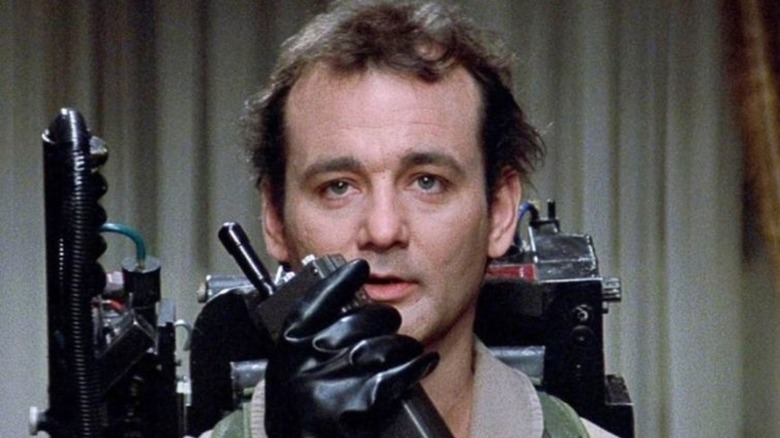
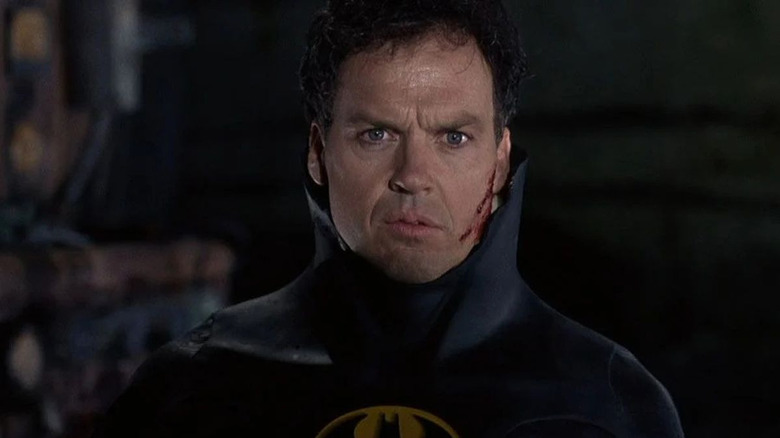
In A Better World, We Would Have A Bill Murray Batman

by Lee Adams

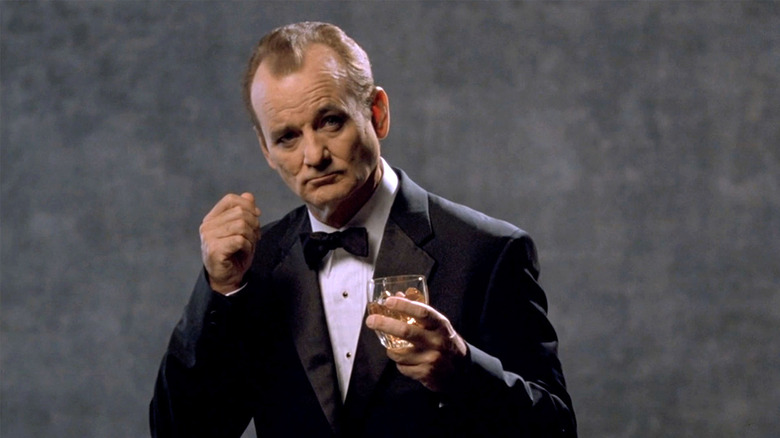
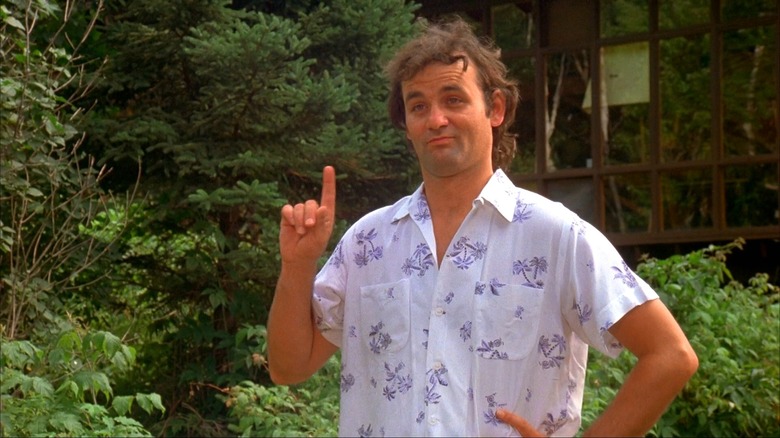
Cinema is awash with intriguing almost casting stories; how about Nicolas Cage as Superman, Al Pacino as Han Solo, or Orson Welles playing Baron Harkonnen? All three (maybe) could have happened, no doubt altering the tone and direction of each IP significantly. One of my favorite alternate-universe casting rumors that was only just recently brought to my attention was that Bill Murray and Eddie Murphy were once lined up to play Batman and Robin. In our current world of grim and grimacing Dark Knights, the idea of two funnymen in the roles of the Caped Crusader and Boy Wonder seems a little ridiculous. But was it really a crazy idea?

We're going back to the early '80s here, when the general public's idea of Batman was the campy '60s TV series with Adam West as the Caped Crusader and Burt Ward as his acrobatic sidekick. There were probably a few old-timers still singing the praises of Lewis G. Wilson or Robert Lowery, but to most regular people, West was Batman. It was also a time when superhero movies and comic book adaptations were barely a thing, with only "Superman" and "Flash Gordon" as two high profile contemporary examples.

The early '80s was also a time when "Saturday Night Live" was starting to have a major impact on the box office, with stars like Dan Aykroyd, Chevy Chase, John Belushi, Bill Murray, and Eddie Murphy all making a successful transition to the big screen with hits like "National Lampoon's Animal House," "The Blues Brothers," "Caddyshack," "Trading Places," "Stripes" and more.

Also consider this: compared to the bright and zany antics of West and Ward's Dynamic Duo, even a Batman movie with a "Ghostbusters" level of grittiness would have seemed like a significant step in a more serious direction. So where did the idea of a Murray-Murphy Batman and Robin come from?

How Did Bill Murray Almost Become Batman?

In the late '70s, the general feeling in the movie industry was that the only comic book property capable of becoming a blockbuster movie was "Superman" (via Batman on Film). This allowed a young producer named Michael Uslan and his business partner Ben Melniker to approach DC and acquire the rights to "Batman." Uslan, a self-proclaimed comic book historian, wanted to create a dark and serious version faithful to how Bob Kane and Bill Finger originally envisioned the character back in the '30s and '40s. He said: 

The answer to that question, how does a kid in his twenties buy the rights to "Batman," is simply, very unglamorous answer (sic), nobody else in the world showed up. Nobody else in the world was interested in or wanted Batman.

The problem was, studios didn't want Uslan's version either, unable to see beyond the frivolous '60s TV series that was still very much in the public consciousness. Disappointed, Uslan wrote his own script entitled "The Return of the Batman" in order to show people film industry his intentions for the character. 

Two more producers, Jon Peters and Peter Guber, came on board in November 1979, and the four decided the best route would be following the template of Richard Donner's "Superman," such a huge hit the previous year. Warner Bros. decided to produce the picture and Tom Mankiewicz, who had worked on a re-write of "Superman," was tasked with delivering the first screenplay. He finished it in 1983, by which time Ivan Reitman was nominally in the frame to direct the picture. He reportedly wanted to cast Bill Murray (via Far Out), who he had worked with on "Meatballs" and "Stripes," and Eddie Murphy, who made a serious name for himself with his back-to-back hits, "48 Hrs" and "Trading Places," not to mention making big waves during a troublesome time at "SNL."

Would Bill Murray As Batman Work?

In a word, maybe. It's hard to imagine Murray playing the role straight, so his performance probably would have been more like West's tongue-in-cheek portrayal than Michael Keaton's scowling version. When it comes to action, he's never been the most physical actor, although he did a little running and jumping in "Stripes," and there are clips of him demonstrating surprising amounts of energy on "SNL". At the very least, Murray would have been the second-tallest modern Batman, coming in just in inch below West (via CelebHeights.com). Perhaps most of the running, jumping, and kapow-ing would have been left to Murphy, who was in good shape in his early twenties and looked credible in the action scenes in "48 Hrs" and "Beverley Hills Cop."

Mankiewicz's script for this iteration of Batman is available online, and it offers some tantalizing glimpses of what might have been. This scene is supposed to be Bruce Wayne in his early teens, but just imagine it tweaked to Murray's age at the time:

ALFRED:

One hardly knows where to begin.

BRUCE:

Those rings seem simple enough...

Bruce crosses to the rings, leaps, catches hold, tries to hoist himself up. His eyes bulge! He tries again, then drops to the floor in a heap.

ALFRED:

Perhaps if we lowered them.

BRUCE:

(grim stare)

If you'll excuse me now, Alfred. I'll see you at dinner.

I can totally see Murray working this with his eye-rolls and droll pauses, no doubt ad-libbing a few lines too. David Niven was also on Mankiewicz's shortlist for Alfred (via Yahoo), and his debonair charm and dry sense of humor would have contrasted beautifully with Murray's deadpan. 

It's more difficult to swallow the idea of Murray as Bruce a few scenes later, however, when he has mastered the gym equipment and become a black belt in karate...

It Wasn't Meant To Be

"Batman" was in production for a long, long time, and it eventually went through a whole bunch of writers before Michael Keaton finally got to growl "I'm Batman." Directing duties eventually landed with Tim Burton, on the strength of his successful debut feature, "Pee-Wee's Big Adventure." Burton kicked out Mankiewicz's script because he felt it was too campy, preferring the dark tone of "The Dark Knight Returns" and "The Killing Joke." 

Perhaps a Bill Murray "Batman" was never really a serious consideration, but it's a fun one to think about. He had good chemistry with Murphy on "SNL," and it's somewhat of a surprise that they never made a film together. Other casting rumors included David Bowie as the Joker, which would have been a fascinating choice. Bowie was making some interesting films around that time, like "The Hunger" and "Merry Christmas, Mr. Lawrence," and went on to play the chief baddie in "Labyrinth" a few years later. He had a great look and laugh that would have suited the part. And don't even get me started on the possibility of John Candy as the Penguin (via CBR).

In 2014, Murray addressed the Batman rumors while talking to David Letterman (via ComicBook.com):

"You know I've heard that story too... Really, I have. And God, I would have been an awesome Batman... but I don't think that's true... but I thought Michael Keaton's Batman was great. I thought he was really cool as Batman. He was like one p**sed guy. He was Batman alright."

Although I love Bill Murray as much as the next person, I'm inclined to think he's right. Michael Keaton was probably the best choice for the role at the time, and (arguably) second only to the late, great Adam West.

Read this next: Batman Movies Ranked From Worst To Best

The post In a Better World, We Would Have A Bill Murray Batman appeared first on /Film.

25 Jan 17:38

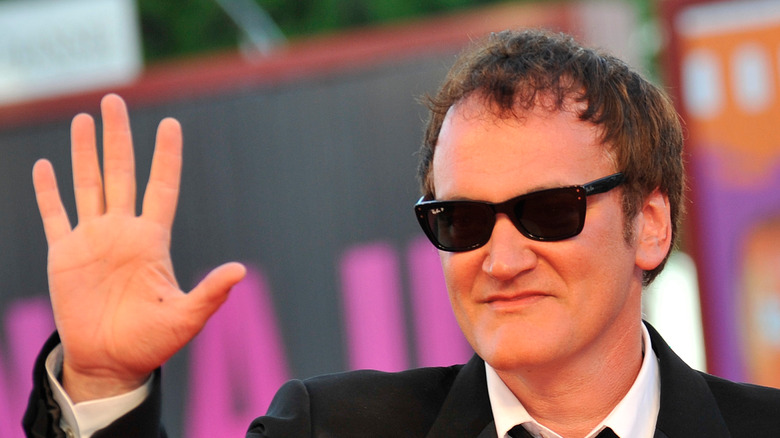
How Quentin Tarantino Influenced Naruto

by Collier Jennings

"Naruto" is one of the most popular anime series in the world. Based on the manga created by Masashi Kishimoto, the series focuses on Naruto Uzumaki and his fellow ninja as they defend the Hidden Leaf Village from all manner of threats. "Naruto" has given birth to a whole franchise, including the sequel series "Boruto: Naruto Next Generations," and is considered to be one of the "Big Three" shonen anime alongside "One Piece" and "Bleach." I've only seen a little bit of "Naruto," but it's not hard to see why the series took off -- its action sequences are full of inventive choreography, including the use of special techniques in battles. Plus, it has ninjas, and everything's more awesome with ninjas.

Kishimoto has been rather open about what media shaped "Naruto." In addition to the classic shonen anime "Dragon Ball Z," Kishimoto also poured his own life experiences into Naruto's journey, helping make the young ninja's transition from Hidden Leaf Village to Hokage feel all the more human. In a 2008 interview with the Los Angeles Times, Kishimoto also revealed that a renowned filmmaker served as a major influence while he was crafting fight scenes.

Kill Sasuke: Vol 1

An avowed cinephile, Kishimoto cited Quentin Tarantino's films as a major influence on "Naruto":

"I watch a lot of movies, and I tend to be influenced by scenes that intrigue me, that make me want to use the same effects or technique...I like the way Quentin Tarantino creates a scene using a series of close-ups or showing very cool images of a person or people walking on some ordinary street in slow motion. I wish I could achieve that kind of slow-motion effect in manga, but it's rather difficult to draw; the only things we can play with are tones of black and white."

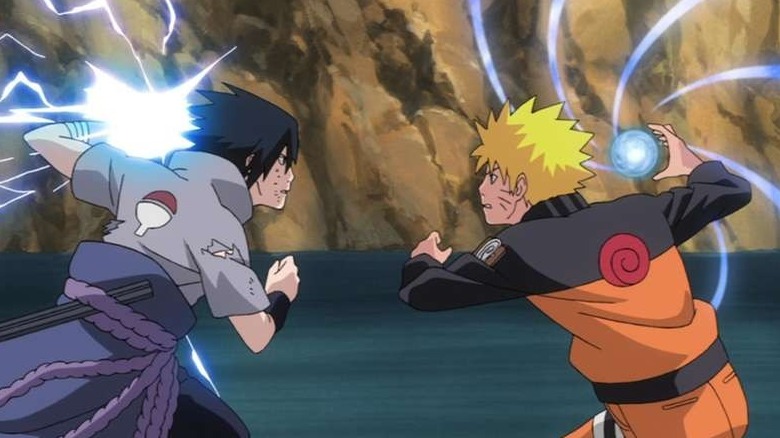
Tarantino's slow-motion action sequences are especially prominent in both "Kill Bill" films and the infamous (and extremely cool) slow-motion walk from "Reservoir Dogs." However, one scene that feels like a possible influence on "Naruto" is the origin story for Lucy Liu's O-Ren Ishii. Not only is it a beautifully animated sequence, but Tarantino's trademark hyper-violence is on full display, especially when an unlucky thug receives a bullet to the brain. It's a technique that would be utilized in multiple fights across the "Naruto" manga and its anime adaptation, especially when Naruto battles his friend/rival Sasuke. Not only is this scene loaded with emotional weight as both men battle for the fate of the world, but it also manages to showcase elements of Tarantino's style as the two run in slow-motion at each other before unleashing a flurry of blows.

Cinema No Jutsu

Tarantino wasn't the only influence on Kishimoto's work; the author also said that Michael Bay's technique of shooting a scene against background light was something he'd wanted to try in manga but felt it would be difficult to pull off. Given that Bay is well-renowned for his frenetic and almost incomprehensible fight scenes, particularly in the "Transformers" film franchise, I'm glad that Kishimoto chose a simpler technique to replicate.

It looks like things may even come full circle as Lionsgate is currently producing a live-action film adaptation of "Naruto" with Michael Gracey ("The Greatest Showman") tapped as director. I don't know if Gracey will look to Tarantino's filmography while making the film, but the elaborately staged numbers in "The Greatest Showman" lead me to believe he'll definitely handle the fight scenes well. And hopefully it escapes the fate that befell Netflix's live action adaptation of "Cowboy Bebop".

Read this next: The 12 Best Neo-Noir Films Ranked

The post How Quentin Tarantino Influenced Naruto appeared first on /Film.

25 Jan 17:36

The Scarface Tribute You Probably Missed In Some Like It Hot

by Witney Seibold

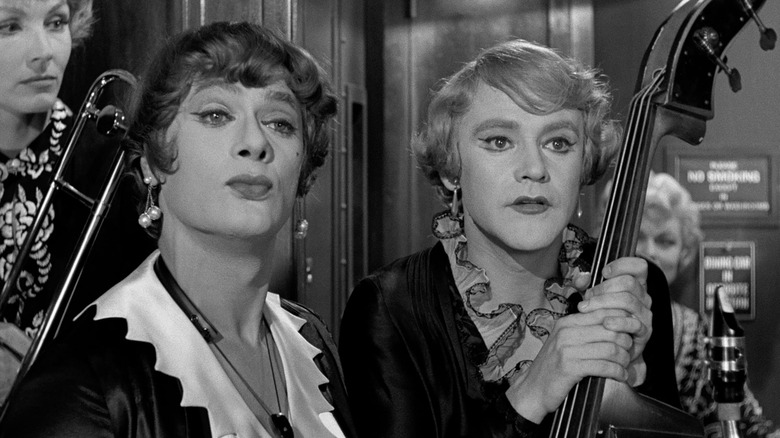
Billy Wilder's 1959 film "Some Like It Hot" is about musicians in disguise, gangsters, and music, but really it's all about sex. In the film, Tony Curtis and Jack Lemmon play a pair of down-on-their-luck musicians - of the saxophone and upright bass - who witness a gangland slaying and have to go on the run. They hide out - in drag - within an all-female traveling music troupe. The bulk of the film is about how Curtis and Lemmon narrowly evading detection, while Curtis also disguises himself as a Cary Grant-like millionaire to romance the troupe's lead attraction Sugar Kane played by the human tidal wave of glitter, Marilyn Monroe

While many of the film's gags stem from the awkward adolescent fantasies of being a straight man hiding out with a group of pent-up young women, there is no small amount of queer subtext -- and just plain text -- in "Some Like It Hot." Indeed, the film was made outside the auspices of the then-eroding Hays Code, and the film's success was a large part of the argument for scrapping the Code entirely (via NPR). 

The bending of gender norms was played for farce in 1959, but Wilder and co-screenwriter I.A.L. Diamond knew what they were doing with sex and sexuality. They were playing with flirtation and arousal, yes, but also gender lines and sexuality. At one point in the film, when Jack Lemmon has been getting too flirty with the women in the troupe, Curtis has to remind his friend that he's a girl, he's a girl, he's a girl. Later, when Lemmon has found himself on the affectionate end of a genuine millionaire (played by Joe E. Brown), and Lemmon finds himself eager to accept said affection, Curtis has to remind him he's a boy, he's a boy, he's a boy. Despite these reminders, Lemmon accepts a marriage proposal from Brown. "Why would a guy marry a guy?" Curtis asks. "Security!" Lemmon shoots back. 

Same-sex couples wouldn't be allowed to legally marry in any of the United States for another 34 years, and would not be federal mandate until 2015. Speaking of the law, "Some Like It Hot" also features a clever nod to "Scarface," one of the most famous organized crime movies in cinema history. And no, we're not talking about the one with Al Pacino.

George Raft

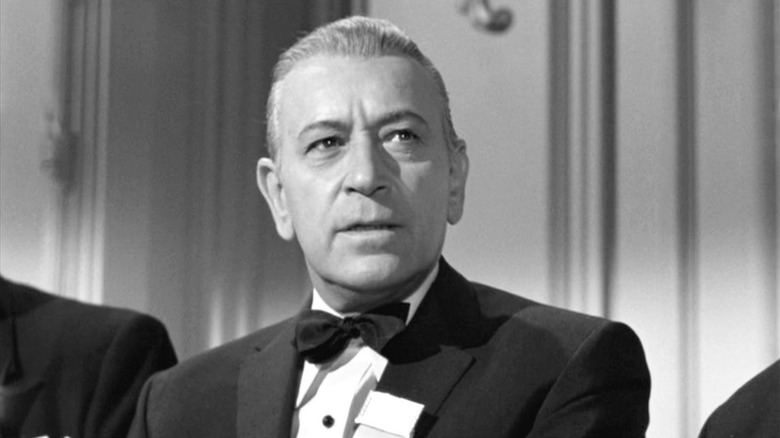
The antagonist of "Some Like It Hot" is the Chicago gangster "Spats" Columbo, so named for his favorite piece of clothing. Indeed, he loves his spats so much that he insist others wash their hands before buttoning them on. "Spats" is an archetypal character, played with all the necessary heft by George Raft, and whose Chicago origins indicated that he was clearly modeled after Al Capone. However, "Spats" was just the latest in a very long line of movie gangsters that had been a fashionable character type throughout the 1930s. 

Indeed, one of the more famous gangster films of the 1930s was Howard Hawks' "Scarface," a violent film (for the time) about an amoral Italian gangster named Antonio "Tony" Comonte, played by the excellent Paul Muni and also inspired by Al Capone. "Scarface" is about the rise of a rough-hewn Chicago criminal who embraces increasingly violent means -- inspired symbolically by a billboard declaring "The World is Yours!" -- to seize power throughout the city. In order to do this, Comonte declares war on the city's other gang leaders, and aspires to kill them off. In a notable scene, and one that kicks off the war to come, Comonte sends one of his lieutenants to murder the leader of Chicago's north side in a flower shop. The lieutenant, a suave, tough, coin-flipping thug named Guido, is played by none other than George Raft. 

There is a scene in "Some Like It Hot" -- made 27 years later, mind you -- that pays homage to Raft's famous role in "Scarface." When "Spats" enters a hotel, one of his own lieutenants can be seen flipping a coin very much in the same way Raft did in "Scarface." In a cute reference, Raft snatches the coin out of the air, looks his thug in the eye and asks, "Where did you pick up that cheap trick?" Raft then, without breaking eye contact, shoves the coin in the man's pocket. Wilder and Raft were clearly having a little fun, simultaneously mocking a visual cliché about gangsters -- that Raft started -- and allowing Raft to remind his underling, and the audience, that he is the "real" gangster in the room.

George Raft's Erotic Power

George Raft's career is deep and extensive, and stretches back, believe it or not, into a career of exotic dancing. In the 1920s, Raft made a living as a taxi dancer, which is a dance partner-for-hire at public clubs; you may have heard the phrase "my dance card is full" in movies, which is an allusion to taxi dancers who would have a roster of pre-planned partners written on a ticket. He also delved into the 1920s New York nightclub scene, dancing with Rudolph Valentino (before he acted in movies), and eventually dancing in night clubs in Paris and London as well. His most notable nightclub gig was at The 300 Club, a notable speakeasy in New York run by Texas Guinan (and read up on Guinan; she is amazing). Raft was part of the nightly show, a reportedly bawdy affair. 

In a 2000 biography on Raft written by Lewis Yablonsky, Raft admitted that he could have been "the first X-Rated dancer." He continued, "I was very erotic. I used to caress myself as I danced. I never felt I was a great dancer. I was more of a stylist, unique. I was never a Fred Astaire or a Gene Kelly, but I was sensuous." 

Perhaps that sensuality is what assured Raft would have such a long career. Raft continued to act and dance until his death in 1980 at the age of 79, with his final film being "The Man With Bogart's Face." The next time you see a gangster flipping a coin, hopefully you'll think of George Raft.

Read this next: The Best Movies Of 2021

The post The Scarface Tribute You Probably Missed in Some Like It Hot appeared first on /Film.

25 Jan 17:35

Emily The Criminal Review: Aubrey Plaza Is Superb In This Gig Economy Crime Saga [Sundance 2022]

by Chris Evangelista

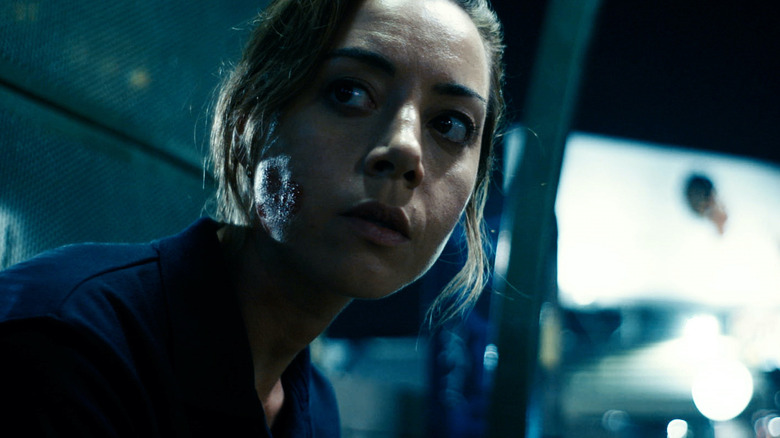
Aubrey Plaza is becoming one of those "must watch" performers; the type you go out of your way to see, no matter what the movie. Heck, she might already be there. With "Emily the Criminal," Plaza takes on perhaps her most dramatic role yet; even more so than her exceptional, unhinged work in the oddball "Black Bear." Despite how frantic and manic that movie became, there remained an air of humor — albeit dark, bleak humor. Not so with "Emily the Criminal," which has Plaza breaking bad as Emily, a young woman with considerable student debt and a criminal record that keeps her from being gainfully employed. Then she learns about something called "dummy shopping," a process that involves buying expensive items (big TVs, cars, you name it) with stolen credit cards and then selling the goods for a profit. The cards are supplied by Youcef (Theo Rossi), who strikes us as vaguely threatening when we first meet him. Emily is understandably hesitant to get involved with this sort of thing, but when she learns she can make $200 for about an hour's work, and later $2,000, she decides to go for it. 

These early moments of "Emily the Criminal" are intriguing, anchored by Plaza's committed performance. Right from the jump, Plaza is constructing Emily in such a way that when the time comes for her to start engaging in full-blown illegal activity, we believe it, and we understand it. She has a deep hurt in her eyes, coupled with a disposition that screams out for some sort of cosmic justice. It's like her life has been stolen from her, and now she's found a way to get it back. And getting it back involves credit card fraud. Lots and lots of credit card fraud. She's reached a point in her life where she seems to have two choices: work incredibly low-paying gig jobs to get by, or cut her losses, leave Los Angeles, and return home to dreaded New Jersey. But then this third, illegal option comes along. And it sure seems mighty tempting. 

After two "dummy shopping" runs, Emily gets it into her head that she can cut out the middleman and go into business for herself. She turns to Youcef for help, and it appears that the character's menacing nature was something of a ruse, or at least a misconception. He's not some one-dimensional crook; he has hopes and shattered dreams of his own, and we can relate. Writer-director John Patton Ford continually finds ways to make these characters seem rounded; believable. Nothing is in black and white. There's no good or evil. There are just struggling characters at the end of their ropes, doing what they need to do to survive. We may not be able to condone their actions, but we can understand them, and that's no small feat for a film like this.

A Crime Saga For The Gig Economy

The first section of "Emily the Criminal," where Emily learns how to build up a credit card fraud empire of her own while growing closer to Youcef, features the film's strongest moments. They seem grounded and gritty, stylized while also maintaining a sense of realism. The down-and-out world the characters inhabit feels genuine and lived-in; a world of bad lighting, bloody noses, crumbling parking lots, and cheap apartments. Adopting a slight but convincing New Jersey accent, Plaza grows confident in her actions and starts raking in the cash. But a movie like this needs conflict, or at least it thinks it does, so the good times can't last. 

First, Emily is ripped-off by some creeps — and after a beat, and with a little help from a taser Youcef gave her, she's able to go get her money back. But "Emily the Criminal" decides to up the stakes even further by introducing a conflict between Youcef and his partners running the fraud scam. And it's here where the movie flounders, because it starts to feel like it's more about Youcef than it is about Emily — as if Emily is just along for the ride. Rossi does good work making Youcef seem three-dimensional, but having Emily take on a supporting role in the character's drama never sits right. 

Still, Plaza's performance, which grows more desperate and more fierce, is what keeps things going. Tension continually mounts and builds, and writer-director Ford stages several anxiety-ridden set-pieces that inspire a sick-to-your-stomach feeling. This is a pressure cooker of a movie, and sooner or later we know it's all going to explode. Coupled with the prevailing sense of economic hopelessness, "Emily the Criminal" often feels like a crime saga for the gig economy; a "Scarface" for people who work at DoorDash, with capitalism as the film's Big Bad. This is all solid stuff, but I can't get beyond the movie's climactic sequence, the one that seems to sideline Emily when this should remain solely her story and her story alone. Ultimately, the most memorable, outstanding element of "Emily the Criminal" is Aubrey Plaza, and I can't wait to see where she goes from here.

/Film Rating: 7 out of 10

Read this next: The Best Movies Of 2021

The post Emily the Criminal Review: Aubrey Plaza is Superb in This Gig Economy Crime Saga [Sundance 2022] appeared first on /Film.

25 Jan 17:35

Vulkan 1.3 Specification Released: Fighting Fragmentation with Profiles

by Ryan Smith

Khronos this morning is taking the wraps off of Vulkan 1.3, the newest iteration of the group’s open and cross-platform API for graphics programming.

Vulkan 1.3 follows Khronos’s usual 2 year release cadence for the API, and it comes at a critical juncture for the API and its future development. Vulkan has been a full and official specification since 2016, turning 6 years old this year. This has given the API plenty of time to mature and have its kinks worked out, as well as to be adopted by software and hardware developers alike. But it also means that with the core aspects of the API having been hammered out, where to go next has become less obvious/harmonious. And with the API in use for everything from smartphones to high-end PCs, Vulkan is beginning to fragment at points thanks to the wide range of capabilities in devices.

As a result, for Vulkan 1.3, Khronos and its consortium members are taking aim at the future of the API, particularly from a development standpoint. Vulkan is still in a healthy place now, but in order to keep it that way, Khronos needs to ensure that Vulkan has room to grow with new features and functionality, but all without leaving behind a bunch of perfectly good hardware in the process. Thankfully, this isn’t a new problem for the consortium – it’s something virtually every standard faces if it lives long enough to become widely used – so Khronos is hitting the ground running with some further refinements to Vulkan.

Vulkan 1.3 Core

But before we get into Khronos’s fragmentation-fighting efforts, let’s first talk about what’s coming to the Vulkan 1.3 core specification. The core spec covers all of the features a Vulkan implementation is required to support, from the most basic smartphone to the most powerful workstation. As a result it has a somewhat narrow scope in terms of graphical features, but as the name says on the tin, it’s the common core of the API.

As with previous versions of the spec, Khronos is targeting this to work on existing Vulkan-compliant hardware. Specifically, Vulkan 1.3 is designed to work on OpenGL ES 3.1 hardware, meaning that of the new features being rolled into the core spec, none of them can be beyond what ES 3.1 hardware can do.

Consequently, Vulkan 1.3’s core spec isn’t focused on adding new graphical features or the like. By design, graphical feature additions are handled by extensions. Instead, the 1.3 core spec additions are largely a quality-of-life update for Vulkan developers, with a focus on adding features that simplify some aspect of the rendering process or add more control over it.

Altogether, Khronos is moving 23 existing extensions into the Vulkan 1.3 core spec. Most of these extensions are very much inside-baseball fodder for graphics programmers, but there are a couple of highlights. These include the integer dot product function, which is already widely used for machine learning inference on GPUs, as well as support for dynamic rendering. These functions already exist as extensions – so many developers can and are already using them – but by moving them into the core spec, they are now required for all Vulkan 1.3 implementations, opening them up to a wider array of developers.

But arguably the single most important addition coming to Vulkan isn’t an extension being promoted into the core specification. Rather, it’s entirely new functionality entirely, in the form of feature profiles.

Vulkan Profiles: Simplifying Feature Sets and Roadmaps

Up until now, Vulkan has not offered a concept of feature levels or other organizational grouping for additional feature sets. Beyond the core specification, everything in Vulkan is optional, all 280+ extensions. Meaning that for developers who are building applications that tap into features that go beyond the core spec – which has quickly become almost everything not written for a smartphone – there hasn’t been good guidance available on what extensions are supported on what platforms, or even what extensions are meant to go together.

The freedom to easily add extensions to Vulkan is one of the standard’s greatest strengths, but it’s also a liability if it’s not done in an organized fashion. And with the core spec essentially locked at the ES 3.1 level for the time being, this means that the number of possible and optional extensions has continued to bloom over the last 6 years.

So in an effort to bring order to the potential chaos, as well as to create a framework for planning future updates, Khronos is adding profiles to the Vulkan standard.

Profiles, in a nutshell, are precisely defined lists of supported features and formats. Profiles don’t define any new API calls (that’s done by creating new extensions outright), so they are very simple conceptually. But, absent any kind of way to define feature sets, they are very important going forward for Vulkan.

The power of profiles is that they allow for 280+ extensions to be organized into a much smaller number of overlapping profiles. Rather than needing to check to see if a specific PC video card supports a given extension, for example, a developer can just code against a (theoretical) “Modern Windows PC” profile, which in turn would contain all of the extensions commonly supported by current-generation PCs. Or alternatively, a mobile developer could stick to an Android-friendly profile, and quickly see what features they can use that will be supported by most devices.

At a high level, profiles are the solution to the widening gap between baseline ES 3.1 hardware, and what current and future hardware can do. Rather than risk fragmenting the Vulkan specification itself (and thus ending up with an OpenGL vs. OpenGL ES redux), profiles allow Vulkan to remain whole while giving various classes and generations of hardware their own common feature sets.

In line with the open and laissez faire nature of the Khronos consortium, profiles are not centrally controlled and can be defined by anyone, be it hardware devs, software devs, potato enthusiasts, or even Khronos itself. Similarly, whether a hardware/platform vendor wants to support a given profile is up to them; if they do, then they will need to make sure they expose the required extensions and formats. So this won’t be as neat and tidy as, say, Direct3D feature levels, but it will still be functional while offering the flexibility the sometimes loose consortium needs.

That said, Khronos’s expectation that we should only see a limited number of widely used profiles, many of which they’ll be involved with in some fashion. So 280 extensions should not become 280 profiles, at least as long as the hardware vendors can find some common ground across their respective platforms.

Finally, on a technical level, it’s worth noting that profiles aren’t just a loose list of features, but they do have technical requirements. Specifically, profiles are built as JSON lists, which along with providing a means to check profile compatibility, also open the door to things like generating human-readable versions of profiles. It’s a small distinction, but it will help developers quickly implement profile support in a generic fashion, relying on the specific JSON lists to guide their programs the rest of the way.

Profiles are also not limited to being built upon Vulkan 1.3. Despite being introduced at the same time as 1.3, they are actually a super-feature of sorts that can work with previous Vulkan versions, as all of the heavy lifting is being done at the application and SDK level. So it will be possible to have a profile that only calls for a Vulkan 1.0 implementation, for example.

Google’s Android Baseline 2021 Profile

The first profile out the door, in turn, comes from Google. The Android author is defining a Vulkan profile for their market that, at a high level, will help to better define and standardize what feature are available on most Android devices.

Interestingly, Google’s profile is built upon Vulkan 1.0, and not a newer version of Vulkan. From what we’re told, there are features in the Vulkan 1.1 core specification that are still not widely supported by mobile devices (even with the ES 3.1 hardware compatibility goal), and as a result, any kind of common progression with Vulkan on Android has become stalled. So since Google can’t get Vulkan 1.1/1.2/1.3 more widely supported across Android devices, the company is doing the next best thing and using a profile to define a bunch of common post-1.0 extensions that are supported by the current crop of devices.

The net result of this is the Android Baseline 2021 Profile. By establishing a baseline profile for the ecosystem, Google is aiming to not only make newer functionality more accessible to developers, but to simplify graphics programming in the process. Essentially, the Baseline 2021 Profile is a fix for existing fragmentation within the Android ecosystem by establishing a reasonable set of commonly supported features and formats.

Of particular note, Google’s profile calls for support for both ETC and ASTC texture compression formats. As well, sample shading and multi-sample interpolation are on the list as well. Given that this is a baseline specification, there aren’t any high-concept next-generation features contained within the profile. But over time, that will change. Google has already indicated that they will be developing a 2022 profile for later this year, and will continue to keep adding further baseline profiles as the situation warrants.

Finally, Google’s use of profiles is also a solid example of taking advantage of the application-centric nature of profiles. According to Google, developers will be able to use profiles on the “vast majority” of Android devices without the need for over-the-air updates for those devices. Since profiles are handled at the application/SDK level, all the device itself needs to present are the necessary Vulkan extensions, which in accordance with a baseline specification are already present and supported in the bulk of Android devices.

Vulkan Roadmap 2022: Making Next-Generation Features Common Features

Last but certainly not least, the other big development to stem from the addition of profiles is a renewed path forward for developing and adopting new features for next-generation hardware. As mentioned previously, Vulkan has until now lacked a way to define feature sets for more advanced (non-core) features, which profiles are finally resolving. As a result, Khronos and the hardware vendors finally have the tools they need to establish baselines for not just low-end hardware, but high-end hardware as well.

In other words, profiles will provide the means to finally create some common standards that incorporate next-generation hardware and the latest programming features.

Because of Vulkan core’s ES 3.1 hardware requirements, there is a significant number of advanced features that have remained optional extensions. This includes everything from ray tracing and sample rate shading to more basic features like anisotropic filtering, multiple processor scheduling, and bindless resources (descriptor indexing). To be sure, these are all features that developers have had access to for years as extensions, but lacking profiles, there has been no assurance for developers that a given feature is going to be in all the platforms they want to target.

To that end, Khronos and its members have developed the Vulkan Roadmap 2022, which is both a roadmap of features they want to become common, as well as a matching profile to go with the roadmap. Conceptually, the Vulkan Roadmap 2022 feature set can be thought of as the inverse of Google’s baseline profile; instead of basing a profile around low-end devices, Roadmap 2022 excises low-end devices entirely in order to focus on common features found in newer hardware.

Roadmap 2022 is being based around features found in mid-end and high-end devices, mobile and PC alike. So while it significantly raises the bar in terms of features supported, it’s still not leaving mobile devices behind entirely – nor would it necessarily be ideal to do so. In practice, this means that Roadmap 2022 is slated to become the common Vulkan feature set for mid-end and better devices across the hardware spectrum.

Meanwhile, adoption of Roadmap 2022 should come very quickly since it’s based around features and formats already supported in existing hardware. AMD and NVIDIA have already committed to enabling support for the necessary features in their Vulkan 1.3 drivers, which are out today in beta and should reach maturity in a couple of months. In fact, the biggest hold-up to using profiles is Khronos itself – the Vulkan SDK won’t get profile support until next month.

Finally, according to Khronos Roadmap 2022 is just the start of the roadmapping process for the group. After getting caught-up with current-generation hardware with this year’s profile, the group will be developing longer-term roadmaps for Vulkan profiles. Specifically, the group wants to get far enough ahead of the process that profiles are being planned out years in advance, when the next-generation of hardware is still under development. This would enable Khronos to have a compete pipeline of profiles in the works, giving hardware and software developers a roadmap for the next couple of years of Vulkan features.

Ultimately, having a roadmap will serve to help keep the development of advanced features for Vulkan on-track. Freed from having to support the oldest of hardware, the Vulkan group members will be able to focus on developing and implementing new features, knowing exactly when support is expected/planned/desired to arrive. Up until now the planning process has been weighed down by the lack of a timeline for making new features a requirement (de jure or otherwise), so having a formal process to standardize advanced features will go a long way towards speeding up and simplifying that process.

25 Jan 17:35

The 'Doomsday Clock' Is Stupid, Actually

by Stephen Johnson

Last week, the Bulletin of the Atomic Scientists announced that the “Doomsday Clock” will remain set at 100 seconds to midnight, the closest humanity has been to complete annihilation since the clock was created. We haven’t moved the needle since 2020, when it sunk to its current, dismal, less-than-two-minutes-left…

Read more...

25 Jan 17:35

Meta Quest 3 prices, specs, and where to buy

by Phil Hayton
Meta Quest 3 prices, specs, and where to buy

The Meta Quest 3 has finally arrived, offering numerous improvements over its predecessor and quickly cementing itself as one of the top virtual reality headsets you can buy today. To help you decide whether this is the device your existing or prospective VR space is missing, we've got all the information you need to know about it.

There are reasons aplenty we think the Meta Quest 3 is the best VR headset for most people, particularly those looking for something that can provide excellent wireless performance in addition to a fantastic experience when wired up to your PC. You'll find all the details on what makes it so great in our Meta Quest 3 review. If you're looking for a general overview of some key points, though, including where to buy the thing, you're in the right place.

MORE FROM PCGAMESN: Best graphics card, Best gaming PC, Best SSD for gaming
25 Jan 17:35

Serious Sam Siberian Mayhem suffers from major stuttering issues

by John Papadopoulos

Devolver has just released a standalone Serious Sam expansion on PC, called Serious Sam Siberian Mayhem. Powered by the latest version of the Serious Engine, Serious Sam Siberian Mayhem supports both DirectX 11 and Vulkan. However, the game currently suffers from major stuttering issues on both of these APIs. Below you can find a video … Continue reading Serious Sam Siberian Mayhem suffers from major stuttering issues →

The post Serious Sam Siberian Mayhem suffers from major stuttering issues appeared first on DSOGaming.

25 Jan 17:35

Queen's Guard performs Meat Loaf classic I Would Do Anything For Love, But I Won't Do That

by Rob Beschizza

In an emotional moment outside Buckingham Palace, the Queen's Guard paid tribute to legendary rocker Meat Loaf, who died Sunday after suffering from Covid. In this context, the song I Would Do Anything For Love, But I Won't Do That refers to Prince Andrew's title, rank and impending legal bill. — Read the rest

25 Jan 17:34

UK's NCSC Pushes NMAP Scanner Scripts to Fill Defender Gap

by Ryan Naraine

The U.K. government’s cybersecurity agency has announced plans to ship a collection of well-tested, reliable scanning scripts to help defenders find and fix high-priority software security vulnerabilities.

read more

25 Jan 11:31

FREEWARE の Enigma Virtual Box を試してみた

by blackwingcat
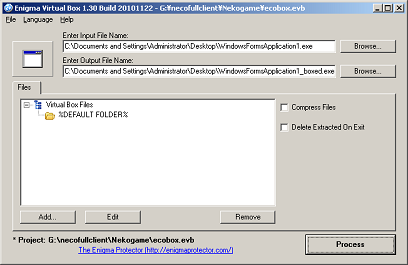
Enigma Virtual Box は、暗号化ソフトではなく、複数のアプリケーションをまとめて1つの実行ファイルに見せかけて実行するソフトらしい。

Software Protection, Software Licensing, Software Virtualization

evb
色々試してみて分かったのは、.Net Framework の実行ファイルを含めると Windows 2000ではバグってまともに動かないという事だった・ω・

[Report] .Net Framework 2.0 executable crashed on Windows 2000 - Enigma Protector
詳しい報告はここに書いたのだけど

このアプリを使って、パックされたアプリはどうあがいても動かないので、UnPackして起動するしかないのである。

Windows NT以降サポート!とか書いてる割になんか詰めが甘いでござる。
25 Jan 11:31

[Sundance Review] PIGGY (CERDITA)

by Dolores Quintana

[Sundance Review] PIGGY (CERDITA)
Courtesy Sundance
PIGGY (CERDITA) is written and directed by Carlota Pereda. It’s a film about a young girl who is bullied by other girls in school, one of whom was formerly her best friend, over her weight. The cruelty that is heaped upon Sara by the school bullies and her family threatens to overwhelm the young and sensitive girl. Meanwhile, a serial killer is at work in the small town where Sara lives and takes notice of how she’s being mistreated. Sara witnesses the kidnapping of the girls who taunted her and her former friend and is terrified, but the killer doesn’t hurt her.

What will Sara do? What can she do? Should she do anything at all?

That’s where PIGGY starts but it has a lot more to say before its denouement. The film has a lot of genre tropes and setups in it, but just when you think you know where it’s going, it takes a quick left turn. The film centers on the plight of the young woman Sara, who has done nothing to deserve the hatred poured on her and you can see her using different strategies to cope but becoming angrier and angrier at her tormentors.

Carlota Pereda has turned the slasher and the revenge story inside out with PIGGY. The elements of both kinds of horror film favorites exist in PIGGY, but it’s centered on the realistic premise and characterizations around emotional abuse and bullying. You might think that isn’t exactly slasher territory, but it is. Where do you think that serial killers come from? If you run your mind back to some of the classics of the genre, bad parenting and bullies figure into those films in some really big ways. Occasionally, you’ll run into a Michael Myers for whom the explanation is simply, “He’s the boogeyman”, but as Hannibal Lecter said himself in Silence of the Lambs, “Our Billy wasn’t born a criminal, Clarice. He was made one through years of systematic abuse.”

PIGGY (CERDITA) is also a coming-of-age story. No one has an easy time of it as a teenager, but teenagers who are different and vulnerable often have the worst transition to adulthood. Pereda’s work with the actors in the film is impeccable. Every part of the story is believable and the actors’ work is phenomenal. She even manages to give the usual stock characters of the local police buffoons a little more gravity and sympathy than usual, but they still aren’t very good at their jobs. There’s a moment with Irene Ferreiro, who plays Claudia, Sara’s former friend where she’s screaming for help that is just devastating and fully believable. It’s not just fear in her face. It’s anger. Anyone who has Spanish blood will recognize the actions and the performances of actors playing Sara’s parents as ringing true. Carmen Machi as Madre and Julián Valcárcel as Padre are those Spanish or Latino parents or aunts and uncles that you know.

Of course, Laura Galán is fantastic as Sara, with a perfectly realized and sympathetic performance. When you watch the film, it’s not just that the POV of the camera is Sara’s POV, the film really makes you step into Sara’s shoes. It gives you a real feel for what it is like to be someone like Sara, hated for no reason but a kind and loving soul nonetheless. The story is hers and it follows her path towards the realization of who she really is. Galán shows real bravery in exposing herself as a human being as much as she does and opening herself to some of the same mockeries that her character experiences in the film. The realistic performances of the actors and the leadership from Pereda as a writer and a director represents some truly outstanding work that uses the genre tropes to explore some really intriguing ideas and terrible failings of human beings.

The cinematography is by Rita Noriega and is as realistic as the rest of the film. You get a sense of the sun-blasted heat of the village during the day when the characters have to go outside and the sense of oppressive heat continues with the subdued lighting of the inside of the homes and outside in the darkness of the countryside. There’s a moment when Sara uses a cell phone as a flashlight and it’s very well done and unsettling. I should also mention that Paula Cámara and Arantza Vélez are the casting directors and they did a splendid job of casting.

The film’s most frightening aspects are the behavior of human beings and the terror that the choices we make engender. It really brings home the idea that our actions, be they kindness or meanness, have consequences, but that also the actions that we don’t take have consequences too. PIGGY (CERDITA) is a very artful film filled with ideas about empathy, some slasher goodness, fright, and horror set-pieces.

With PIGGY, you get your horror fix and food for thought at the same time.

PIGGY (CERDITA) had its world premiere on January 24, 2022, at Sundance. Make sure if you haven’t had the chance yet, check out Pereda’s original short here at ALTER.

The post [Sundance Review] PIGGY (CERDITA) appeared first on Nightmarish Conjurings.

25 Jan 00:19

Steam Deck’s dynamic cloud sync lets you jump to PC without shutting games down

by Ian Boudreau
Steam Deck’s dynamic cloud sync lets you jump to PC without shutting games down

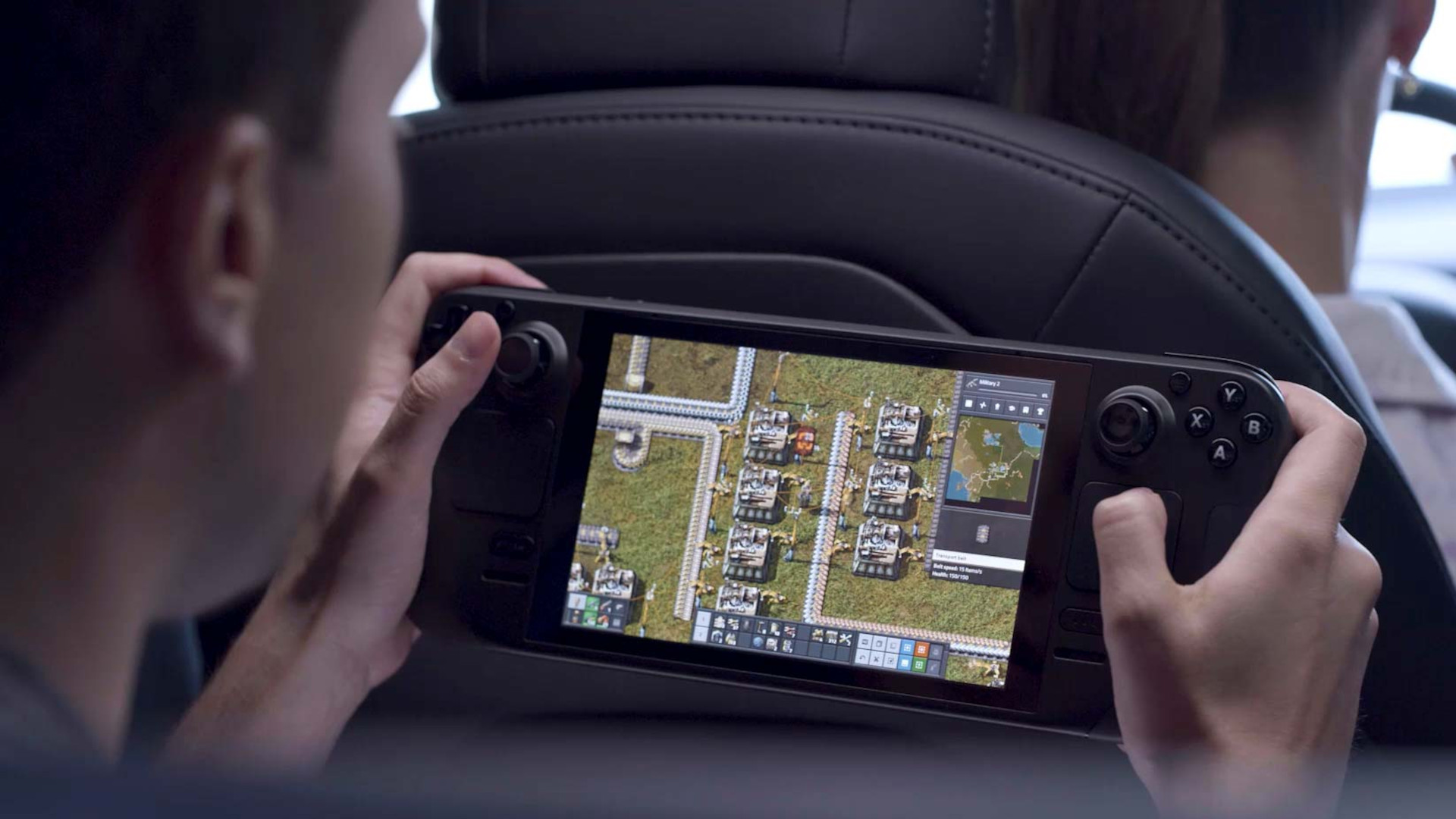
Valve's gearing up for the official launch of its Steam Deck handheld, and it's added a new feature to Steam that's going to make it easier to move back and forth between the Steam Deck and your PC. Dynamic cloud sync will upload any save data to Steam's cloud when you suspend a game on the Steam Deck, which means you won't have to fully exit a game before you can pick back up on your PC.

"We anticipate that users will frequently suspend their Steam Deck without exiting the game, as is common with other hand-held gaming devices," Valve explains in a new post about dynamic cloud sync. When this feature is enabled, "Steam will automatically upload all modified save game data to the cloud prior to the device entering sleep mode."

When you want to move back to the Steam Deck, Steam will then automatically download any new save data when you wake the device back up. If you don't enable dynamic cloud sync, you'll be prompted to shut down the software on the Steam Deck if you try to open the game on another device.

RELATED LINKS: Steam Deck – everything we know, Best Steam Deck games, Which of Valve’s Steam Decks should you pick up?
25 Jan 00:14

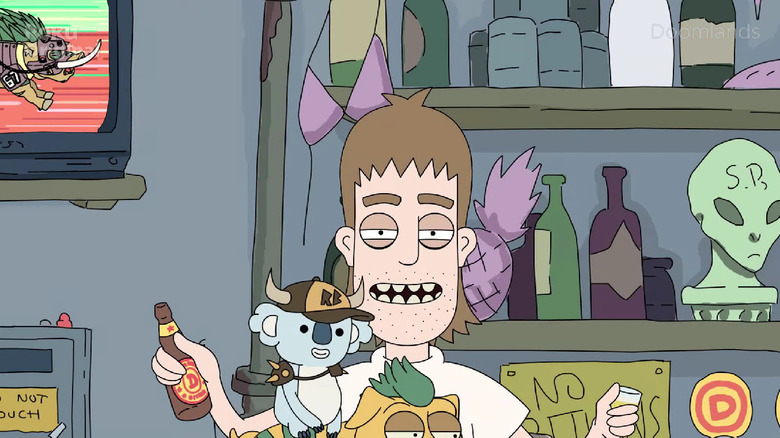
Doomlands Trailer: We Don't Need Another Hero, But Danny Doom Is Here Anyway

by Anya Stanley

Are you ready to Rockatansky? The new adult animated series "Doomlands" is set to drop on The Roku Channel later this week, and there's a trailer available for a peek at what's to come in one of the streaming service's many pickups from the shutdown of Quibi in 2020. 

Josh O'Keefe is behind this post-apocalyptic show, which follows the laborers at the mobile bar Oasis as it coasts along a ruined landscape of "sand, blood, and steel." Terse renegade Danny Doom (voiced by Mark Little) takes the main focus; he's the kind of guy who values trauma as a character-building tool, while his survival partner, a doe-eyed and possibly naive blonde bartender named Lhandi (Kayla Lorette), believes that people are basically good. The show is set in a world that developer Josh Bowen describes as a cross "between 'Mad Max' and 'Cheers,'" which is one hell of a pitch. Rolling through an arid wasteland on "the best bar on treads" and sipping on ice cold bottles of Doom Shine ("The best refreshments the Wastes can offer," its commercial spokesman promises), the duo weather savage scavengers and workplaces woes on their way to a historic death on Fury Road -- or onto the next desert city, whatever works. 

Check out the trailer below.

Doomlands Trailer

The obvious visual callback here is the "Mad Max" franchise and glorious Ozploitation action movies. The trailer showcases an array of potential deathtrap landscapes for the Oasis rig to traverse, from the exotic sand dunes to the blue-tinted lunar lands where "yucky, yucky people" reside as one character warns. Those wanting blood in their animated features will get it by the bucketful, it appears. One trailer glimpse has a backpacked donkey impaled through the chest by a utility pole, begging for the sweet release of a mercy kill. "Gremlins" fans might further appreciate Danny Doom's potential death by tiny green winged goblins. There sit "Adventure Time" levels of worldbuilding creativity with the collection of grotesque or adorable creatures and altered earthlings trying to make it in an altered world, guaranteeing some laughs for a pandemic-weary audience.

Originally a university film project, "Doomlands" is penned by director O'Keefe– who serves as showrunner alongside Lee Porter, along with Roger Bainbridge, Brandon Hackett, Kayla Lorette and Mark Little. It was developed by Josh Bowen, who started with a crowdfunded pilot, before it was produced by Look Mom! Productions."Doomlands" arrives at Roku on January 28, 2022.

Read this next: The 15 Best Rick And Morty Villains Ranked

The post Doomlands Trailer: We Don't Need Another Hero, but Danny Doom is Here Anyway appeared first on /Film.

24 Jan 21:43

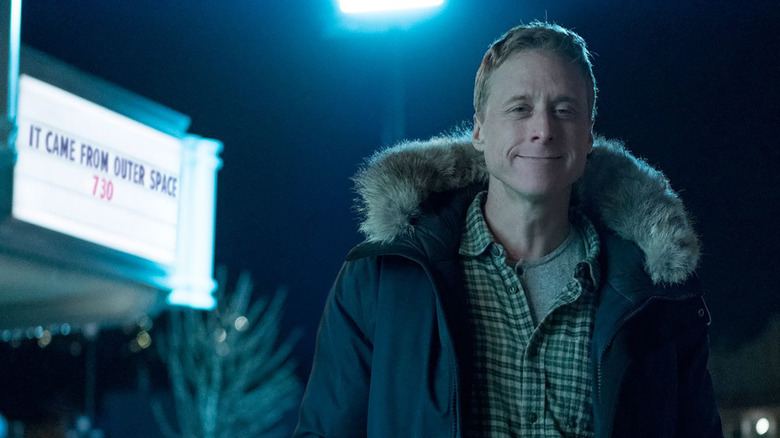
How Alan Tudyk Helped Create The Peacemaker Dance Sequence [Exclusive]

by BJ Colangelo

Did you really think we were done talking about how ridiculously awesome the opening credits for "Peacemaker" are? THINK AGAIN! We, like pretty much everyone else in the world, can't get enough of the moving and shaking of James Gunn's "Peacemaker," finally giving fans in the streaming era an excuse to not hit the "Skip Intro" button on HBO Max. We're so obsessed that we recently sat down to interview the remarkable Charissa Barton, who choreographed the opening number, and y'all are not going to want to miss the deep insider knowledge she was able to provide regarding the dance number's origins, execution, and production. Charissa Barton is a decorated dancer and choreographer (the woman went to The Juilliard School!) and she's also married to one of the most universally beloved genre actors in the biz, Alan Tudyk.

Getting to talk with Barton was an absolute delight (seriously, keep your eyes peeled for that interview very soon), but getting confirmation that Tudyk is just as wonderful off-screen was equally gratifying to discover. In the age of COVID, it wasn't possible to be in-person as much as one normally would, so Barton showed her progress to Gunn by recording videos of the choreography as she designed it. Obviously, not everyone in the cast of "Peacemaker" was going to have the massive dance background that Barton does, but being married to Tudyk meant she had a non-dancer/actor in her own home to test the dances out.

"He Was Such A Willing Partner"

Eventually Barton would record videos of herself and Tudyk doing the choreography so Gunn could see the moves on two different dancers, and Gunn would provide feedback accordingly. Tudyk was even the stand-in for John Cena's Peacemaker on a day he was working, because after all, he already knew the choreography, because he was part of its very creation.

With the entire cast participating in the opening scene, Barton needed to choreograph something that was accessible to a wide variety of skill levels, ages, body types, and comfort levels with dance. As a pro dancer, it's not always obvious what the average person can handle, and Tudyk was a perfect sounding board for Barton. She told us:

"But luckily I had my husband Alan present with me through a lot of it. Sometimes he would get home late and it'd be like 11 o'clock at night. I'd be like, 'Hey, can you try something? I need to see if this is accessible to a non dancer.' Because it is hard for me to gauge sometimes. And he was such a willing partner. He was able to really help me find that line, as I feel like he was an average, like the mid level actor-non-dancer-person."

"Peacemaker" actor Steve Agee recently shared some photos he took of Tudyk on set, doing his very best. James Gunn also joked that he has "hundreds of videos" of Tudyk dancing, so maybe if we're lucky, one day we'll get a special look at his full performance.

Read this next: 14 Greatest Romance Films Of All Time

The post How Alan Tudyk Helped Create the Peacemaker Dance Sequence [Exclusive] appeared first on /Film.

24 Jan 21:30

Rebel FM Episode 526 - 01/21/2022

We're late this week, but we've still got a show with plenty to talk about, including Nobody Saves the World, Vampire Survivors, Walkabout Mini Golf, and a lot more! This week's music:  Lingua Ignota - Wicked Game
24 Jan 21:28

The Top 7 Negotiation Skills You Need to Land a Great Job Offer

by Keyede Erinfolami

First offers aren't always the best offer, but many job seekers are scared to negotiate their salaries in fear of rejection. But the alternative isn't pretty. Settling for an underpaying job will make you feel undervalued and threaten your job satisfaction in the long run.

24 Jan 21:28

Good news: Omicron is going away. Bad news: And being replaced by "stealth" Omicron BA2 [Scary]

24 Jan 21:21

ZTNAs Address Requirements VPNs Cannot. Here's Why.

by noreply@blogger.com (The Hacker News)
I recently hopped on the Lookout podcast to talk about virtual private networks (VPNs) and how they've been extended beyond their original use case of connecting remote laptops to your corporate network. Even in this new world where people are using personal devices and cloud apps, VPN continues to be the go-to solution for remote access and cloud access. After my conversation with Hank Schless,
24 Jan 21:21

Interview with Intel’s Dan Ragland, Head of Overclocking: Tuning Alder Lake For Performance

by Dr. Ian Cutress

The topic of overclocking has been an interesting one to track over the years. Over a decade ago, when dealing with 2-4 core processors, an effective overclock gave a substantial performance uplift, often allowing a $200 processor to perform like the one that cost $999. However, core counts have increased over the last couple of years, but also companies like Intel are getting better at understanding their silicon, and are able to ship it out of the box almost at the silicon limit anyway. So what use is overclocking? We turned to Dan Ragland, who runs Intel’s Overclocking Lab in Hillsboro, Oregon, to find out what overclocking now means for Intel, what it means for Alder Lake, but also how Intel is going to approach overclocking in the future.

24 Jan 21:20

Netflix Drops $50 Billion In Value Overnight After Falling Short Of Subscriber Goals

by Ben F. Silverio

Even before the world was forced to stay home more than ever, Netflix was a major part of the cultural zeitgeist. For better or for worse, the phrase and the associated action of "Netflix and chill" has basically replaced "dinner and a movie." Netflix as a noun, meaning a subscription-based site where one can find a nearly endless amount of movies and shows, is ingrained in our vernacular just as Kleenex, Coke, and Q-Tip has replaced tissue, soda, and cotton swab for many people.

However, that kind of success isn't enough for the company's stock holders and the fat cats of Wall Street. After Netflix fell short of the projected subscriber goals in its fourth quarter earnings last week, the company's market cap dropped around $50 billion in value overnight.

Close But No Cigar

According to The Wrap, this is the worst 24-hour period on the stock market for Netflix since July 2012. On Thursday, Netflix revealed that it very nearly hit the self-imposed goal of accumulating 222 million subscribers in 2021. Since almost crossing the finish line isn't the same as winning the race, investors panicked so much that the company's stock prices dropped 21.8%, which adds up to a loss of more than $100 per share from end of day Thursday to end of day Friday. The majority of these losses came during after-hours trading, so it's possible that the streamer could be pulling in even less than recorded on the last business day.

As bad as that all looked last week, the panic from investors probably took into account the less than stellar projections from the first quarter of 2022 as well. Forecasts currently show only an estimated 2.5 million new subscribers so far. Considering that numbers were closer to 4 million new subs around the same time last year, it's easy to see why those invested in the company are in panic mode. For example, Netflix Co-CEO Reed Hastings holds over 7888,000 shares in the company. By the end of last week, he lost about $95 million due to the drop. However, it's a little hard to feel bad for him when he's still on track to "earn" $34 million this year. Meanwhile, I can't find a dentist that will accept my insurance so I can get a crown on one of my back teeth.

It'll be interesting to see what kind of moves Netflix makes this year to try and recuperate these losses while competing with other streamers like Disney+, Apple TV+, HBO Max, and Peacock. In a perfect world, they might invest more money into creative, original programming or exciting new movies. But in reality, I'll bet that we see more beloved shows like "GLOW" get the ax prematurely.

Read this next: The 17 Best Kids Movies That Adults Will Also Love

The post Netflix Drops $50 Billion in Value Overnight After Falling Short of Subscriber Goals appeared first on /Film.

24 Jan 21:20

Crypto Fall Results In NVIDIA GeForce & AMD Radeon Graphics Card Prices To See A Slight Drop, Availability Better Than Last Year

by Hassan Mujtaba

NVIDIA GeForce RTX 3090 Alone Has Higher GPU Share Than AMD's Entire Radeon RX 6000 RDNA 2 GPU Lineup

The recent crypto crash may have prompted a slight fall to the existing NVIDIA GeForce & AMD Radeon graphics cards prices but don't be too optimistic.

AMD Radeon & NVIDIA GeForce Graphics Card Prices See A Slight Dip As Crypto Falls Into Oblivion

In the latest European market report shared by 3DCenter, it can be seen that prices of current graphics cards could be directly proportional to the falling crypto market. As ETH hits its lowest price in the last 6 months, the prices of NVIDIA GeForce and AMD Radeon graphics cards can also be seen coming down.

AMD Radeon and NVIDIA GeForce Graphics Card Prices 2022_1
AMD Radeon & NVIDIA GeForce graphics card prices see a slight dip as crypto starts falling. (Image Credits: 3DCenter)

Compared to last month when the NVIDIA GeForce RTX 30 series was retailing for over 87% the MSRP and AMD Radeon RX 6000 series were retailing for 83% over MSRP, now, these cards are retailing for 77% (-10%) and 67% (-16%) over MSRP. These may not be the perfect MSRP rates yet, regardless, they could still make one hopeful for times to come. At the same time, availability is almost entirely good right now with several GPUs available on various retail outlets however, the main issue once again is the pricing of these graphics cards.

AMD Radeon RX 6000 Series Graphics Card Prices (RDNA 2 GPUs) via 3DCenter:

6500XT 6600 6600XT 6700XT 6800 6800XT 6900XT
Geizhals 339-399€ 509-659€ 599-749€ 869-1084€ 1219-1490€ 1279-1559€ 1499-2000€
Alternate 359€ 539-619€ 619-699€ 899-1249€ 1239-1299€ 1339-1689€ 1499-1899€
Caseking N/A 579€ 638-708€ 982-1269€ 1275€ 1376-1510€ 1616-1736€
Computeruniverse N/A 590-659€ 680-749€ 910-1049€ 1349€ 1399-1449€ 1590-1749€
Hardwarecamp24 N/A 544-599€ 629-649€ 949-969€ N/A 1489-1554€ 1539-1559€
Mindfactory 339€ 529-549€ 599-639€ 888-948€ 1229-1248€ 1289-1449€ 1499-1689€
Notebooksbilliger 299€ 539-569€ 619-679€ 886-989€ 1199-1299€ 1299-1499€ 1579-1699€
ProShop N/A 539€ 629-730€ 869-1029€ 1299-1399€ 1299-1699€ 1594-1799€
List price $199 $329 $379 $479 $579 $649 $999
Surcharge from +43% from  +47% from  +51% from  +73% from  +97% from  +88% from  +43%
Change as of 2nd January - –12PP –12PP –13PP –12PP –18PP ±0
Availability ★★☆☆☆ ★★★★☆ ★★★★☆ ★★★★★ ★★★☆☆ ★★★★☆ ★★★★★

The AMD Radeon RX 6000 series has seen the largest price adjustment with retailers now asking around -12% surcharge over MSRP compared to early January. The Radeon RX 6700 XT, RX 6800 & RX 6800 XT are still the most hiked variants, retailing at around 2x the MSRP while the flagship and mainstream models are around +50% MSRP.

NVIDIA GeForce RTX 30 Series Graphics Card Prices (Ampere GPUs) via 3DCenter:

3060 3060Ti 3070 3070Ti 3080-10GB 3080Ti 3090
Geizhals 694-994€ 819-1109€ 959-1300€ 1099-1399€ 1499-1999€ 1879-2346€ 2399-3489€
Alternate 749-799€ 799-949€ 989-1259€ 1099-1259€ 1589-1599€ 1979-2129€ 2599-2899€
Caseking 702-840€ 874-991€ 1085-1210€ 1192-1378€ 1529-1741€ 1931-2346€ 2481-2627€
Computeruniverse 750-849€ 900-950€ 1039-1300€ 1149-1379€ 1699-1749€ 1995-2149€ 2799-2999€
Hardwarecamp24 739€ 849€ 1049-1058€ 1159€ 1569€ N/A N/A
Mindfactory 729€ 819-879€ 979-1049€ 1099-1189€ 1699-1739€ 1899-1939€ 2399-2639€
Notebooksbilliger 649€ 819-879€ 999€ 1099€ 1449-1499€ 1899-2019€ 2599-2699€
ProShop 749€ 949€ N/A 1229€ 1639€ 1899-1999€ 2649-2999€
List price $329 $399 $499 $599 $699 $1199 $1499
Surcharge from +88% from  +91% from  +83% from  +75% from  +98% from  +49% from  +53%
Change as of 2nd January –15PP –12PP –8PP –9PP –7PP –2PP –7PP
Availability ★★★★☆ ★★★★☆ ★★★★☆ ★★★★☆ ★★★★☆ ★★★★☆ ★★★★☆

The NVIDIA cards have seen a slight drop, averaging around -10%. Graphics cards such as the RTX 3080 Ti and RTX 3090 retail for around +50% over MSRP while the entirely of the remaining lineup costs around 2x the MSRP which is quite insane.

Once again, these prices are a far cry from the official MSRPs suggested by NVIDIA and AMD. The last time we saw a price drop to their lowest was around 50-60% over MSRP in July 2021 after peaking to 3x over MSRP in May 2021. We were hopeful that we would finally see the return to MSRP within the next few months however that never happened and the prices continued to increase even in 2022.

Current market indicators state that while the availability of graphics cards is definitely a 'non-issue' at the moment, the prices can see a hike with TSMC raising the pricing across all its components, shipping costs getting higher, and retailers/distributors not giving an F about customers and charging as much as they want. One thing is for sure, with the crypto fall, most AIBs who were enjoying the higher profit margins by selling their products directly to miners can now start caring more about the gaming community.

The post Crypto Fall Results In NVIDIA GeForce & AMD Radeon Graphics Card Prices To See A Slight Drop, Availability Better Than Last Year by Hassan Mujtaba appeared first on Wccftech.
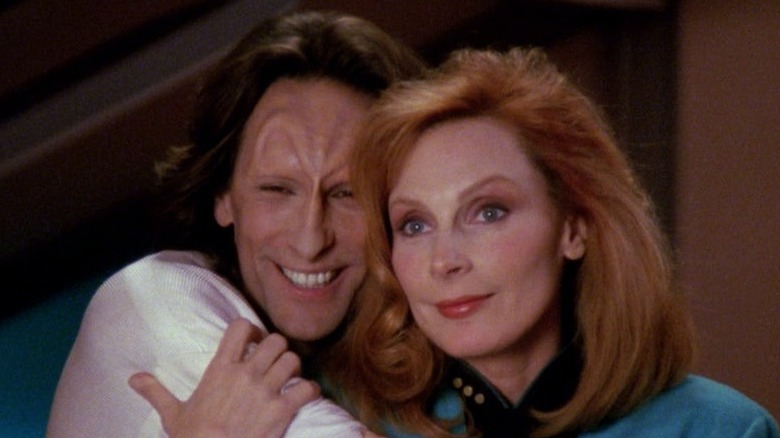
24 Jan 21:18

9 Gadgets You Should Have In Your Emergency Go Bag

by Marinel Sigue

There's nothing worse than getting caught in an emergency. If you find yourself in a situation like this, it's best to have a well-stocked bag of emergency supplies ready in a go-bag or bug-out bag. With basic survival items at your disposal, you and your family can easily flee to a safe location.

24 Jan 21:18

Alice Review: Keke Palmer's Enslaved Character Realizes She's Actually Living In 1973 [Sundance 2022]

by Ben Pearson

"Alice" opens with a marriage, but when the couple's vows include the phrase "until distance do us part," it quickly becomes clear that this is not a typical ceremony. Alice (Keke Palmer) is an enslaved woman living on a plantation in Georgia, now married to Joseph (Gaius Charles) and part of a community of so-called "domestic livestock" who have been long-suffering under the tyranny of cruel landowner Paul Bennet (Jonny Lee Miller). But that ceremony isn't the only atypical thing happening on the plantation: when Paul's young son comes to visit, Alice hears strange static noises coming from his room at night. There are hushed stories about a man who once fell from the sky and could start a fire in his hand. And Paul's mother, riddled with dementia in her old age, seems to be ready to reveal a secret to Alice, although she can't quite get the pieces to add up. It's not until an act of violence opens up an escape route that Alice is finally able to break free from the plantation, running through the Georgia woods until she stumbles across something called a highway and is almost hit by a thing called a truck -- a technological marvel she's never seen before. See, "Alice" doesn't take place in the 1800s. It's set in 1973, and Alice and her family are being held captive on an isolated plantation that doesn't play by the rest of society's rules.

If that premise sounds far-fetched, I regret to inform you it's actually inspired by real events. You probably didn't read about this in history class (I sure as hell didn't), but Black people were still being enslaved in the United States as recently as the 1960s, more than 100 years after Abraham Lincoln issued the Emancipation Proclamation. Writer/director Krystin Ver Linden was profoundly affected when she learned this horrifying truth -- within two days of reading an article about it, she began writing the screenplay for "Alice." It's a killer idea for a movie, and watching Keke Palmer portray Alice's realization about the truth -- a run of emotions traveling from horror to confusion to sadness and ultimately to anger, all in one shot -- almost makes up for the scenes that don't live up to their potential.

Squandered Opportunities

The film's biggest flaw is its pacing. It takes around 40 minutes for Alice to leave the plantation and be rescued by Frank (Common, out of his element), a disillusioned former activist who now works as a truck driver for his racist brother. 40 minutes is a long time, especially knowing this movie will inevitably (and justifiably) lean on its "hey, it's actually the '70s!" hook in its marketing materials. The audience knows that shift is coming, but the wait to finally get there starts to feel interminable after a while. Frank, who seems genuinely interested in helping Alice but not interested enough to ask enough follow-up questions about where she came from, takes her home so she can crash at his place. When she wakes up, he presents her with a smorgasbord of 1970s cultural touchstones to try to jog her memory (he thinks she has amnesia), including books about civil rights and the history of Black people in America. Alice sucks up all this information like Oscar Isaac in "X-Men: Apocalypse," and in a whiplash-inducing amount of time, she transforms from someone who has never experienced electricity into a badass, Pam Grier-inspired blaxploitation heroine who's armed with knowledge and ready to get revenge. In a movie that was relatively grounded until that point, it feels like a major shortcut.

The film's plantation scenes feature a discordant, screaming jazz score (provided by Common, Patrick Warren, Karriem Riggins, and Burniss Travis) which mirrors the upside-down nature of this horrible place, and as the protagonist escapes, there's a percussive rumble punctuated by a flute that also feels like it's been unleashed, no longer bound by the musical constrictions we might expect. Unfortunately, the rest of the music isn't nearly as memorable. Sure, there are a few '70s classics on the soundtrack, and no one is ever disappointed to bounce along to some Stevie Wonder for a few minutes. But the rest of the score never perks back up in an interesting way, which feels like a wasted opportunity to further explore the vacillating emotions at the center of this story.

It's Worth Watching For Keke Palmer

Still, "Alice" has its high points. Palmer's performance, disjointed though it may be because of the script, is solid in each individual time period, and though the movie speeds too quickly across the finish line after taking way too long to get revved up, its metaphors and parallels to the struggles of today are effectively drawn. "I never told anyone they had to stay," Miller's villain sneers when he's confronted about his crimes, "I just never told them that they could go." It's a strong representation of the type of infuriating, loophole-driven mentality which allows people in power to cling to it, always at the expense of others. Perhaps if the rest of the script could have nailed the pacing, the whole endeavor would have felt more successful. But as it is, "Alice" feels like it never quite lives up to the greatness of its premise.

/Film Rating: 6.5 out of 10

Read this next: 17 Horror Movies Based On True Stories That Will Creep You Out

The post Alice Review: Keke Palmer's Enslaved Character Realizes She's Actually Living in 1973 [Sundance 2022] appeared first on /Film.

24 Jan 21:17

Fisherman finds a bag of skulls in river, returns two days later to regain peace of mind, finds a second. Police suspect Dutch oven experiment(s) gone horribly wrong [Scary]

24 Jan 21:17

How to Survive a Massive Winter Storm

by Stephen Johnson

With a historically bad winter storm expected to bring snow, ice, and sub-zero wind chills to many parts of the United States this weekend, it's a good time to make sure you're prepared for a potentially life-threatening disaster.

While winter storms are generally less deadly than hurricanes and heat waves, they can be extremely dangerous, particularly when extremely cold, wind, and ice storms cause power outages. But with a little preparation and common sense, you should be all right when it gets extra snowy and cold. Here are some tips and instructions for blizzard and winter storm survival.

Who is the winter storm likely to affect?

The Winter Storm Severity Index
Credit: National Oceanic and Atmospheric Administration

The map above, from the National Oceanic and Atmospheric Administration's Weather Prediction Center shows the predicted course of the storm through Jan. 26. You can click the link to dig into predicted snow amounts, ice accumulation, and more, but the overall picture is a huge storm that is likely to affect more than 172 million people in the U.S. and bring record low temperatures. If you're anywhere in the affected area, take time to plan for a potential snow-and-cold disaster before it happens.

Make a blizzard emergency kit 

For a winter storm, you want to prepare for a few cold days without power. You should have a basic survival bag tucked away in an easy-to-access spot in your house for any disaster. According to the government, a boilerplate emergency kit will contain:

  • Water and non-perishable food for several days

  • Extra cell phone battery or charger

  • Battery-powered or hand crank radio that can receive NOAA Weather Radio tone alerts and extra batteries

  • Flashlight and extra batteries

  • First aid kit

  • Whistle to signal for help

  • Dust mask to help filter contaminated air, and plastic sheeting and duct tape to shelter in place

  • Moist towelettes, garbage bags, and plastic ties for personal sanitation

  • Non-sparking wrench or pliers to turn off utilities

  • Can opener (if your kit contains canned food)

  • Local maps

  • Extra clothing and blankets (although I bet you already know where these are in your home)

For winter storm saftey, I'd add a carbon monoxide detector, just to be as safe as possible when shut up inside your house. Here’s a handy shopping list you can take to the supermarket, complete with “extra credit” items like prescriptions medicine and games to keep you busy.

Stay home

If you only follow one rule for blizzard survival, make it this one: Do not be outside during a winter storm. If you’re home, you probably won’t be snowbound for more than a week (and even that is unlikely), and you’ll be much warmer than if you were outside.

If you are home during a blizzard or winter storm (and you should be) take the following steps:

  • Stay inside.

  • Don’t forget your pets. Bring them inside, too.

  • Be able to access multiple sources of information about the weather, from the internet, to television, to radio, and make sure you can get updates even if the power goes out.

  • If you have electric heat, crank it up as the storm approaches in case you lose power.

  • Stay in a small, insulated area: To conserve heat, stay in one room as much as possible.

  • Stuff towels and rags under doors to conserve heat.

  • Be careful with alternative heaters like kerosene. They can start a fire, and if not properly ventilated, you can die from carbon monoxide poisoning.

  • Wear layers of light clothing.

  • Cover windows at night but uncover them during day to catch any heat from sunlight.

  • Save batteries: Use your phone to check in on friends, family and neighbors by or to call authorities only.

Know the difference between “advisories,” “watches,” and “warnings”

As cold weather approaches, you may hear difference kinds of buzzwords for approaching storms on your NOAA weather radio and from other sources. Here’s a crash course on the relevant winter weather warnings from the National Weather Service, and what they mean, with the most severe listed first.

Warnings

A warning indicates an 80% or greater probability of conditions that pose a threat to life or property, and that travel will become difficult to impossible. In other words: “This storm is serious business.”

  • Blizzard Warning: A blizzard warning means that the following conditions are occurring or expected within the next 12 to 18 hours: Snow and/or blowing snow reducing visibility to 1/4 mile or less for three hours or longer, and sustained winds of 35 mph or greater or frequent gusts to 35 mph or greater.

  • Winter Storm Warning: A winter storm warning is issued when a significant combination of hazardous winter weather is occurring or imminent. That means five inches or more of snow/sleet within a 12-hour period or seven inches or more of snow/sleet within a 24-hour period, and/or enough ice accumulation to cause damage to trees or power lines. It also can mean a life-threatening or damaging combination of snow and/or ice accumulation with wind.

Watches

Watches are intended to provide enough lead time so you can make plans to stay safe. They are usually issued a day or so before the predicted event when there’s a greater than 50% chance of it happening.

  • Winter Storm Watch: A winter storm watch is issued when there is the potential for significant and hazardous winter weather within 48 hours. This doesn’t mean that significant and hazardous winter weather will occur—it only means it is possible.

  • Blizzard Watch: This means conditions are favorable for a blizzard event—low visibility with winds of at least 35 mph.

Advisories

Winter storm advisories indicate that less serious (but still concerning) weather conditions are possible. Remember, though, a storm can change from one condition to another, so keep checking back. Go to the National Weather Service’s site for more in-depth weather-warning information.

What to do if you are caught in your car during a blizzard or snowstorm

Being trapped in your car during a snow-mergency is bad, but not necessarily deadly. Here’s a detailed trapped-in-your-car survival guide, but here are the main points:

  • Don’t panic: As survival scenarios go, being trapped in a car in a snowstorm is not that bad. It definitely beats being trapped in a snowstorm without a car.

  • Make sure your tailpipe is not clogged: When you first realize you are trapped, check the exhaust pipe to make sure it’s clear. You don’t want to die of carbon monoxide poisoning.

  • Indicate you are in distress to the outside world: Call 911 if you can. Tie a brightly colored cloth or ribbon to your antenna or door. If the snow stops, raise your hood.

  • Stay in your vehicle: A car is an excellent survival shelter—a guy in Sweden survived in his car for two months, and he didn’t even seem to have had food or water. It is a bad idea to go walking around in a blizzard. You will get lost, cold, wet, and maybe even hit by another driver.

  • Bundle up: Wear as many layers as you can with the extra clothing you packed.

  • Create as small a space as possible: If you have blankets or jackets, create a little “fort” for yourself. A smaller space is easier to heat. You could try lining the windows with newspaper or those discarded fast food bags you never cleaned up.

  • Run your car for 10 minutes an hour: Experts recommend starting your car and running the heater, hazard lights, and dome light for about 10 minutes per hour. Roll down the window a crack while the engine is running to avoid the possibility of inhaling carbon monoxide. Other than cold, carbon monoxide is your biggest danger.

  • Don’t play on your phone: I know it’s boring to sit in the car for so long, but only use your cell to call emergency numbers. Don’t be surprised if the authorities tell you to “sit tight,” though.

  • If you run out of water, drink melted snow: You can get a little moisture into your body by drinking melted snow.

What to do if you are caught outside during a blizzard

So you didn’t listen when I said to stay home, huh? Now you’re stumbling blindly through a snowstorm and freezing to death. I won’t sugar coat it: things are bad for you, and your survival depends on the severity of the storm. But here’s what to do:

  • Find shelter: Get out of the wind and snow. Don’t try to make it home or wherever else you’re going if there’s somewhere safe you can wait things out.

  • Cover up your exposed flesh: I imagine this would occur to you anyway, but just in case it doesn’t, cover up as much as possible to stay warm and avoid frostbite.

  • Build a shelter: The National Weather Service recommends the following if you can’t find a shelter: “Build a lean-to, windbreak, or snow cave for protection from the wind. Build a fire for heat and to attract attention. Place rocks around the fire to absorb and reflect heat.” I think they’re being very optimistic. During a serious blizzard, like Minnesota’s “Children’s Blizzard” of 1888, people died yards from their houses because they got disoriented and snow-blind, so you’re probably not going to have time to build an igloo or whatever in a real blizzard. But learn wilderness survival tactics if you are likely to be at risk.

  • Melt snow for water: Melting snow for water is OK, but don’t eat it frozen—that will lower your body temperature.

24 Jan 21:14

Release: XCOM®: Chimera Squad

Get captivated by an all-new story and tactical combat experience set in the XCOM universe.
Genre: turn-based strategy
Discount: 65% off until 31st January 2022, 2 PM UTC