Shared posts

11 Feb 22:56

Horizon Zero Dawn Sales Reached 20 Million; New Horizon Forbidden West Trailer Appears

by Ule Lopez

Horizon Zero Dawn's success is a remarkable feat in the gaming space. The transition to PC has become a great endeavor from what the latest post in the PlayStation Blog has stated as it's been reported that as of November 28, 2021, the game has sold over 20 million copies with a total of 1 billion hours played.

The post on the PlayStation Blog describes this milestone:

We love seeing the never-ending flow of cosplay and in-game photography, and it’s amazing how fast the community has grown as well. We are happy to share that as of November 28, 2021, Horizon Zero Dawn has sold through more than 20 million units worldwide across PlayStation 4 and PC combined, and the community has spent more than 1 billion hours in the game! It humbles us, thank you so much for your love and dedication.

Horizon Zero Dawn Horizon Forbidden West

To celebrate this momentous occasion and to keep the hype going, the company also released a new cinematic trailer for the upcoming title Horizon Forbidden West. In this brand new trailer, we hear Aloy reflect back on Rost’s teachings as she faces new and dangerous threats in the Forbidden West.

You can watch the trailer below:

The PlayStation blog also remarks on the news that Horizon Forbidden West can now be pre-loaded on users' consoles. While this might be some great news, the file size of the game might be quite massive for some users across PlayStation 4 and PlayStation 5. The Japanese and US versions of the game are the lightest at ~80 GB, while the European version is almost 100 GB big, due to the multiple languages not included in the other versions.

PlayStation 4 users might also be delighted to know that Horizon Forbidden West will not look considerably worse than the PlayStation 5 release. Earlier this week, we saw the game running on the base PlayStation 4 with very slight downgrades to performance and graphics. So, players should expect to be satisfied on both the lower and higher ends of the generation.

The post Horizon Zero Dawn Sales Reached 20 Million; New Horizon Forbidden West Trailer Appears by Ule Lopez appeared first on Wccftech.

11 Feb 22:54

XMVM Surgery

by Michal Necasek

Last week I was prompted to take a look at the Intel Code Builder compiler from 1991, a 32-bit compiler targeting 386 extended DOS and shipping with its own DOS extender. It is what one might call an extremely obscure compiler; it had to compete with established offerings from MetaWare, Watcom, or Zortech, and soon also with the compiler heavyweights Borland and Microsoft.

One of Code Builder’s very few claims to fame is that early alpha releases of id Sofware’s DOOM were built with Intel Code Builder 1.1, before id switched to Watcom compilers for the DOS releases of DOOM.

There is one poorly preserved archive of Code Builder 1.0 available. As others have noticed, it won’t even build the trivial hello world program that comes with it:

Linker error caused by missing XMVM

There should be a file called XMVM installed with Code Builder, but it’s just not there. Since it is required by default for linking of 32-bit executables, nothing works unless the /XNOVM switch is passed to the compiler/linker.

The OS/2 Museum happens to have an archive of the Intel 386/486 C Code Builder Kit v1.0 installer which clearly explains why the other copies have no XMVM file. It is in the installer archive… corrupted, and cannot be uncompressed:

XMVM is missing because installer was corrupted

The compiler can be installed, but the XMVM file will be missing.

But wait! If the XMVM module is linked into executables produced by Code Builder, perhaps there is a way to recover it from Code Builder itself?

My first experiment was to create a dummy text file, name it XMVM, and see what happens. The hello world program was successfully linked, but all attempts to run it caused hangs or crashes. Which strongly hints that while the linker does not care about the contents of the XMVM file, it is in fact used at run-time and must be at least somewhat functional. So finding an actual copy would be good.

Sure enough, a closer look at the Code Builder executables shows that several of them (IC32.EXE, IL32.EXE, LIB32.EXE, DB32.EXE) do have XMVM linked in. There is an obvious signature (XMVM 11-19-90 LVL=0208) indicating XMVM presence. But it’s a lot less obvious what the standalone XMVM file should look like, i.e. where XMVM begins and ends when it resides within a larger executable.

There are some clues offered by the executable format Code Builder uses. It’s somehow related to the format PharLap 386|DOS extender used. PharLap .REX 32-bit executables have an MP or MQ signature; Code Builder itself also produces .REX modules with MQ signature, but internally the DOS extender appears to use MR signature.

Sure enough, before the XMVM signature in a larger .EXE file, there is what looks like it might be a relocation table and an MR signature. And then several kilobytes down, there is an MQ signature followed by a large relocation table, presumably the actual 32-bit executable.

The MR signature is at offset C8B9h (51,385) in the file. Not coincidentally, the XMLOD file which holds the core of the DOS extender is 51,385 bytes long. We can guess that when binding 32-bit executables, the linker copies out the XMLOD file, optionally follows it with the XMVM file, and then writes out the 32-bit .REX module.

The XMVM file extracted from Code Builder 1.0 is 9,440 bytes long, i.e. its first byte is at offset C8B9h and the last byte at offset ED98h. Not only does this XMVM not crash, it actually works as a virtual memory manager, supporting paging to a swap file.

Here it is being linked into a hello world program:

The results of a successful XMVM surgery

In that case, XMVM doesn’t really do much, but without a working copy, the example either won’t link or won’t run. Now, the resulting compiler is still not that useful… but the surgery was a success!

Origins

The Intel Code Builder 1.0 compiler is probably an outgrowth of Intel’s earlier iC386 compiler, which I have never seen. Intel combined it with an almost unknown 32-bit DOS extender from IGC. Now, IGC (Intelligent Graphics Corporation) is not an unknown company; in the late 1980s, it marketed a product called VM/386 which was an early hypervisor running multiple DOS virtual machines on a 386 host. But the IGC DOS extender didn’t get far, even though it appears to have been fairly advanced (DPMI, virtual memory, etc.).

It is likely that by bundling the royalty-free DOS/4GW DOS extender with Watcom C/C++, Rational (later Tenberry) and Watcom more or less killed off the DOS extender competition in the early 1990s. While DOS/4GW was limited in comparison to the full DOS/4G product, it could do enough that most developers didn’t need anything more. In the mid-1990s, there was an additional wave of free DOS extenders which made selling a DOS extender a very difficult proposition. Well established products like PharLap’s 386|DOS and later TNT survived, but most commercial DOS extenders (Ergo/Eclipse/A.I. Architects, IGC, FlashTek, Salford SBOS) soon vanished.

It would be nice to compare Code Builder 1.0 with the older iC386, but I failed to find any trace of the latter. It clearly existed as it is mentioned in Intel’s documentation, but that’s about it. The Intel iC386 was probably one of the first 386 C compilers but does not appear to have been used for “normal” application development.

11 Feb 22:53

Kingdom Come: Deliverance – The Amorous Adventures of Bold Sir Hans Capon

by /u/MultiBARS
11 Feb 22:53

[Movie Review] COSMIC DAWN

by Josh Taylor
Courtesy Cranked Up

What do you believe and how far are you willing to go to seek it out? That’s one of the questions asked in the new sci-fi cult film COSMIC DAWN, a film written, produced, and directed by Jefferson Moneo.

If you’ve seen movies about cults before, you’d think that Moneo’s cult of alien and UFO believers are the villains of our story, and to a degree, you would be right. But Moneo is not just interested in the conflict between our protagonist Aurora (Camille Rowe) and a crazy cult led by Elyse (Antonia Zegers). Throughout COSMIC DAWN, we get to understand the inner workings of cult life, from the use of code names and schedules to the comradery of eating together and singing karaoke together. Rather than villainous monsters, Moneo has written his characters as people to empathize with, leaving the audience intrigued and interested in cultism rather than horrified by it.

We pick up our story with Aurora as an adult who has nightmares about her mother disappearing after a camping trip in the woods. Self-medicating with drugs and parties, she’s dedicated her life to figuring out what happened to her mother. After walking into a bookstore and being recommended a book by a mysterious author named Elyse, she is slowly introduced into a cult of others who have had extraterrestrial encounters of some kind. Leaving her life behind, she joins their collective home where she is left to question what is real, and if Elyse is a false prophet or the one to guide her back to her mother.

Courtesy Cranked Up Films

To add further mystery to this movie, we are left not knowing when this movie takes place thanks to the wonderful looking cinematography, costuming, soundtrack, and opening titles. Everything contributes to a vague 1970s to early ‘80s aesthetic despite the use of cell phones in the movie, leaving you to wonder when this movie takes place or if it even matters. This movie is rich with vibrant colors and otherworldly displays of cinematography that leaves you wondering what is and isn’t real, or what did or did not happen to Aurora.

But this film wouldn’t work without great performances. Camille Rowe leads this film with ease, never losing her skepticism in character, which only adds to the mystery this film plays off of. Antonia Zeger’s Elyse is both loving and frightening. I believe she is the type of person to command a room, reward those who are obedient, and punish those who aren’t. Her approach is always soft and welcoming, but unnerving with mysterious intentions. Joshua Bruge and Emmanuelle Chriqui also deliver as the young couple Tom and Natalie who live in the cult. Chriqui’s performances of possession and fragility made me want to hug her and comfort her, while Bruge adds dimension to the mystery and skepticism Aurora and the audience will have with the rest of the cult.

I can see some people watching this movie because of its killer soundtrack, mostly filled with original music by MGMT, but it’s Moneo’s vision of belief and curiosity that will keep you watching and questioning the entire 90-minute runtime. COSMIC DAWN is a stellar exploration of what it is like to join and live in a cult, but it’s also a film determined to leave you wondering about your own beliefs and how far you’d go to find the answers you seek.

COSMIC DAWN is in theaters and available On-Demand today.

The post [Movie Review] COSMIC DAWN appeared first on Nightmarish Conjurings.

11 Feb 22:50

LNK Files, Again

by Unknown

What, again?!?!

I know, right?!?

Not long ago, I read this fascinating article from Joe Helle that discussed malicious uses for Windows shortcuts, or LNK files, and also discussed a Python3 scripts called "lnkbomb".

As a side note, check out what Joe had to share about persistence via WSL2!

As anyone who's followed me for a minute knows, I love...L   O   V   E...me some LNK files. Shortcut files are something that we see all the time, have been around for a long time (much like ADSs), but folks in the DFIR field are so focused on the "shiny hot newness", that this file type is very often overlooked and not fully exploited.

The technique Joe discusses is similar to modifying the iconfilename field of a shortcut file, so that even if the "bad guy" is evicted from an infrastructure, any action that launches the LNK file results in credentials being passed via HTTP or WebDAV, where they can be collected, cracked, and then used by the threat actor.

LNK files have a lot of uses, and understanding the format and structure is helpful in a lot of different ways. One example is that automatic JumpLists follow the OLE/structured storage format, and all but the DestList stream consist of LNK file formatted streams. Another example is that the building blocks of LNK files, shell items, are also the core building blocks of several Registry-based artifacts, such as shellbags.

Beyond that, however, threat actors have used LNK files as lures in social engineering and phishing attacks; this means that the threat actor has built the LNK files within their own infrastructure, within their own development environment. As such, sending these files as lures is "free money" to both DFIR and CTI analysts, if they're able to leverage those files and their component metadata.

So...while I know Windows 11 is out, and everyone's excited about the shiny new hotness, let's not forget that there's a lot that has worked since Windows XP (or even prior to that) and still continues to be an issue today.

Addendum, 12 Feb: After I published this post, Dr. Ali Hadi provided me with a link (get it??) to a site that talks about embedding an EXE in an LNK, with automatic execution. I've actually seen these "in the wild" before, but it's been a while! Thanks, Ali!

11 Feb 22:49

Man says Qanoners told him his wife was a child sex trafficker working for the CIA, so he shot and killed her

by Mark Frauenfelder

Troy Burke (45) says he shot his wife in the head three times in the head because his Qanon compatriots told him she was a transgender child of President Biden involved in a CIA child sex trafficking ring.

Burke is one of many Qanoners who kill people who don't share their politics. — Read the rest

11 Feb 22:49

Joe Rogan delights his fans by mocking Asians and making fun of Angelina Jolie's Bell's Palsy

by Mark Frauenfelder

As long as Joe Rogan remains profitable for his publisher Spotify he'll have a platform there to spread racism, make fun of people's medical conditions, and promote quack Covid-19 nostrums.

Here he is on his podcast talking about Angela Jolie after learning she was diagnosed with Bell's Palsy, a facial paralysis condition:

There's a rule.

Read the rest
11 Feb 22:43

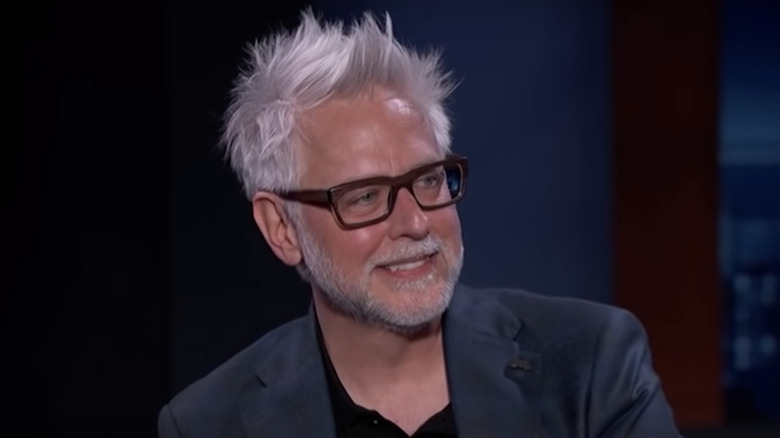
James Gunn Thinks These 60s Horror Films Are Must-See

by BJ Colangelo

If you're a fan of genre films, chances are you're a fan of James Gunn. All directors love movies (we hope), but James Gunn really, really loves movies. The best part of it all? He loves movies just as weird and adventurous as he is. Long before he was directing powerhouse superhero features ("The Suicide Squad," "Peacemaker," and "Guardians of the Galaxy"), before he was making killer cult hits ("Super" and "Slither"), and even before he was penning beloved favorites like "Scooby-Doo" and the 2004 remake of "Dawn of the Dead," Gunn was a die-hard genre geek working for Troma Entertainment. Let's cut to the chase — James Gunn f****** rules! And every time he succeeds, he gives hope to horror dorks everywhere that we, too, can make our dreams come true.

Gunn is notorious for giving out movie recommendations online, and I have to say, he has pretty impeccable taste. The man clearly loves a combination of indisputable classics and downright schlock. Gunn is constantly providing free film education for us all through his recommendations and frequently focuses on underseen gems. Last March, Gunn provided a Twitter thread featuring some of his favorite movies from the 1960s to the 2000s, and every last one of them is a must-see. His picks for the 1960s were my personal favorites and are all acknowledged horror classics, loved by genre fans everywhere. Let's go to film school, y'all.

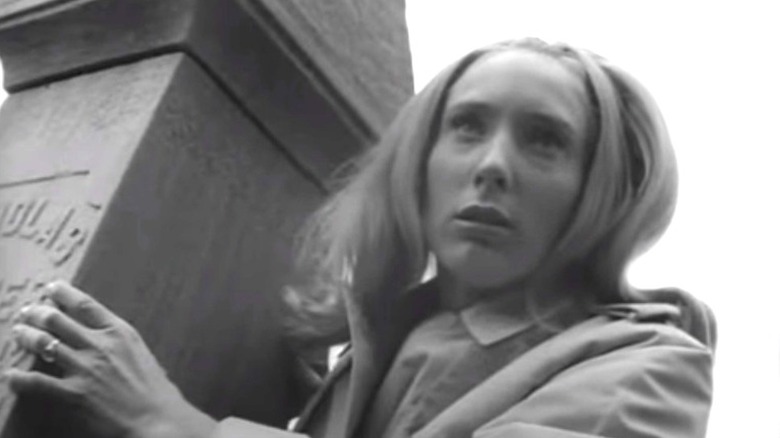
Night Of The Living Dead

James Gunn loves the work of George A. Romero, even going so far as to choose his vampire film "Martin" as one of his favorite horror films of the 1970s. When it comes to the 60s, however, Gunn went with the zombie film that started it all — "Night of the Living Dead." Few films exist that can be described as perfect, but "Night of the Living Dead" is absolutely one of them. Romero invented the modern zombie film as we know it, and the film has been endlessly analyzed for over 50 years. Horror movies have always been used to draw parallels to the increasing anxieties of society, but Romero's masterpiece was so well-executed that it immediately motivated viewers to question what the director was really trying to say with his depiction of a zombie apocalypse. Gunn would go on to write the script for the remake of Romero's "Dawn of the Dead," which must have been an absolute dream opportunity for someone who loves the late Pittsburgh horror master's work so deeply.

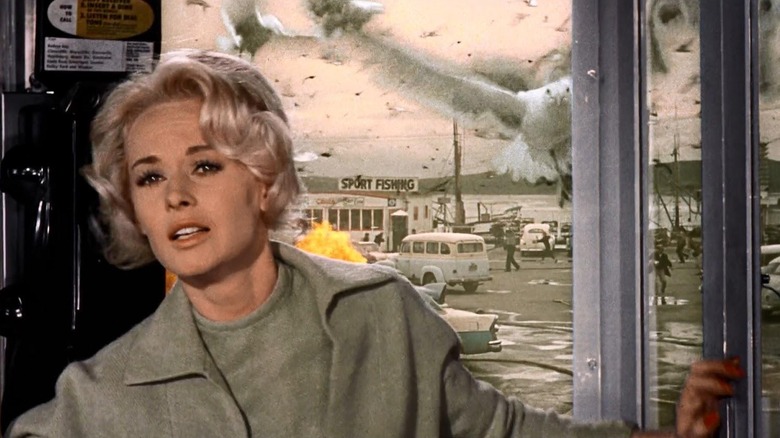
The Birds

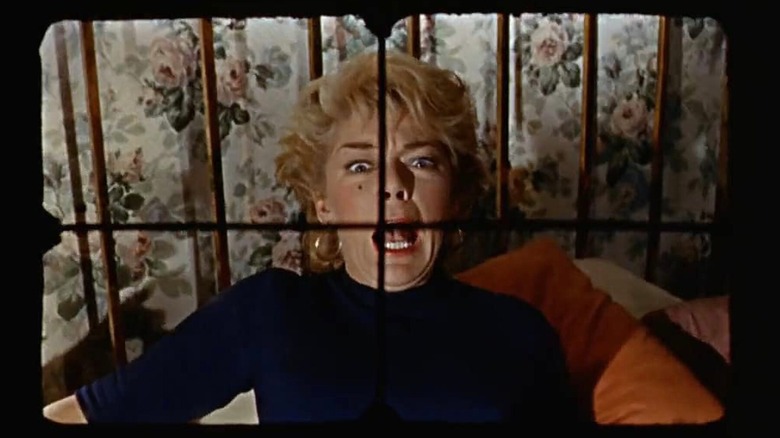
In an extremely bold move, Gunn's choice from Alfred Hitchcock's five films of the 1960s was not "Psycho" but the animals-run-amok classic "The Birds." Made at the peak of Hitchcock's career, "The Birds" feels like the cumulation of an entire life's work. "The Birds" effortlessly weaves the obvious B-movie schlock of birds terrorizing society with the high-class sensibilities of an arthouse film. Every frame, no matter how absurd the scenario, is treated as a work of art. It's also ruthlessly terrifying and completely changed the way we interact with birds in real life. How many times have you seen an unusually large gathering of crows on a wire and said out loud, "Wow! It looks just like 'The Birds' out here"? Hollywood has been trying to remake "The Birds" for the better part of a decade but has yet to make it happen, which is a good thing considering how perfect the film was the first go around. There's no need to remake yet another Hitchcock classic.

Rosemary's Baby

Let's get the elephant in the room out of the way real quick —  Roman Polanski is a problematic human being. However, before Polanski became an admitted sex offender, he made some groundbreaking horror films that completely reshaped the genre — none more so than "Rosemary's Baby." 

On the surface, "Rosemary's Baby" is a horror story about a woman who unknowingly carries the spawn of Satan, but the true terror lies in the way Rosemary Woodhouse (Mia Farrow) is treated throughout the film. She's gaslighted, lied to, manipulated, and relegated to little more than a womb. It's mortifying to watch, it's painfully relatable, and it perfectly encapsulates the everyday horror women often face through the lens of the supernatural. 

The film, based on Ira Levin's novel of the same name, was written in the wake of second-wave feminism and is, unfortunately, still as relevant today as it was over 50 years ago. Gunn knows that there's power in the exploration of trauma as a metaphor, and something as seemingly silly as Peacemaker liking hair-metal as a way to escape the toxic patriarchal hold of his father is rooted in the impact of "Rosemary's Baby." 

Peeping Tom

The true underdog of Gunn's recommendations is also the one that certifies that he's the real deal when it comes to his taste in movies.

Panned by critics upon its release in 1960, the British psychological thriller "Peeping Tom," directed by Michael Powell, is now regarded as a masterpiece and a primogenitor of the slasher film. For the uninitiated, "Peeping Tom" is about a serial killer who targets women and carries around a portable camera to film their dying moments. The use of the camera forces the audience to see through the eyes of a killer, looking at unsuspecting victims in an act of voyeurism. We are forced to see the world through the eyes of a psychopath and in turn, bear witness to the mind of a murderer.

Gunn loves to depict his villains with the same intimacy as his heroes — which is why even his superhero fare feels as fully realized and three-dimensional as his independent features. "Peeping Tom" is still criminally underseen by the general public, but hopefully, the Gunn seal of approval will inspire others to seek it out and get thoroughly creeped out in the process.

Read this next: The 20 Best '60s Horror Movies Ranked

The post James Gunn Thinks These 60s Horror Films Are Must-See appeared first on /Film.

11 Feb 19:01

Death On The Nile Ending Explained: All You Need Is Love

by Mike Shutt

After many, many, MANY delays, Kenneth Branagh's second time donning the exquisite mustache of Agatha Christie's eccentric private detective Hercule Poirot has finally arrived. The press leading up to "Death on the Nile" could not have been worse, as it features a cast featuring at least one person who appears to be ... let's just say not great, Bob. Naturally, there were calls to reshoot the movie, but with a giant production like this, shot on 65mm with an all-star cast, Disney would not be crazy about taking on that level of additional expense. Also, Branagh was busy making a whole other movie in the meantime with "Belfast," which just so happened to get nominated for Best Picture and Best Director.

Anyway, "Death on the Nile" is here, and despite our less than glowing review, I was immensely pleased with Branagh's second foray into the glamorous whodunnit. He has a stronger hold on the Poirot character, both in amplifying his comedic eccentricities and channeling his underlying sadness. The 65mm photography by Haris Zambarloukos, Branagh's regular cinematographer since 2007's "Sleuth," glimmers and shines, matching Branagh's delightfully over cranked tone that he has comfortably honed for all these years. Barring the problematic cast members, the ensemble still has plenty of tremendous actors playing big, broad, fun characters. It's a hoot and a half in my book.

Of course, no whodunnit can truly be satisfying without a great reveal. The ending where Poirot comes in and perfectly explains the events of the central murder is a crucial lynchpin to the effectiveness of the Agatha Christie structure. Seeing someone do their job well is always a thrill, and Poirot is the self-described greatest detective in the world. While the "who" of the whodunnit usually is the important part, in the case of "Death on the Nile," it is the "why" that makes it an interesting film for how it ties to our main character.

Love Is A Battlefield

In most murder mysteries, the motive for killing will either be love or money. They are classic pillars of the genre because they are incredibly potent and understandable ideas. Many people would do whatever they had to for the person they love or to obtain greater wealth. "Death on the Nile" tackles both of those ideas simultaneously. The first victim of the film is Gal Gadot's Linnet Ridgeway-Doyle, an heiress on her honeymoon in Egypt with her new husband, Simon Doyle (Armie Hammer). Celebrating their recent nuptials with them is a cast of family members and friends, all of whom become suspects. The natural first suspect is Jacqueline de Bellefort (Emma Mackey), Simon's former fiancée and Linnet's former friend, who has become an extremely jealous stalker, but she was out cold, given a decent amount of morphine after shooting Simon in the leg and almost shooting herself. Could it be Linnet's spurned former boyfriend (Russell Brand)? Or maybe the lawyer cousin (Ali Fazal) keen on inheriting some wealth? Or another one of the many people on board?

Linnet's killer turns out to be Hammer's Simon, a poor man who married Linnet for her money. But he is not in it alone: He is still very much in love with Mackey's Jacqueline, and they have planned this whole charade of the jealous ex-lover to throw suspicion into the air when she could not have been the killer. The trouble comes when Linnet's maid Louise (Rose Leslie) happens to see Simon exiting Linnet's room after the killing, and after trying to bribe her for silence, Jacqueline offs Louise. That murder is witnessed by Bouc (Tom Bateman), Poirot's friend and confidant, and he is then murdered. A lot of casualties in this one. Upon Poirot revealing the entire scheme, Jacqueline cannot accept the notion that the two will be separated after their eventual arrests. She pulls Simon close and shoots him directly in the back, making sure the bullet makes its way through him and kills her too.

So, we get one murder for money and two for love -- or really four if you count that final murder/suicide. Money may have been the first reason, but love is the motive that truly grabs ahold. The filmography of Kenneth Branagh is filled with high emotions and grand gestures, and love typically brings out those extravagant impulses. Think of the finale to his adaptation of William Shakespeare's "Much Ado About Nothing," where the final shot is this elaborate long take that basically shows a whole town dancing and singing in delight at the prospect of love. The power of that emotion makes people do the most dramatic things -- in this case, kill a bunch of people. But Simon and Jacqueline are nowhere near the only characters in "Death on the Nile" grappling with intense love.

Who Do You Love?

The other key romance of the film is between Tom Bateman's Bouc and Letitia Wright's Rosalie Otterbourne. Rosalie was a classmate and friend of Linnet and serves as the business manager for her aunt Salome (Sophie Okonedo), a blues and jazz singer. The two have been in love for quite some time, much to the disdain of Bouc's mother and benefactor Euphemia (Annette Bening). She's had so many bad experiences with potential partners that she rejects the entire idea outright. While initially claiming to be on vacation, Poirot's actual reason for being in Egypt to be a part of all this was because he was hired by Euphemia to investigate Rosalie for any potential defects in her life and personality. Even when he reveals he has found none and confirms she is quite a catch, Euphemia still cannot accept her as suitable.

This dilemma gets at the sadly ever-present question of who society allows you to love. While Bouc believes the reason for his mother's objections to Rosalie are based on class and that she is American, the unspoken truth of the matter is that she is Black, and this film takes place in the 1930s. Euphemia has Poirot check Rosalie's accounts and money management to see if she is an honest person -- which, you know, is what a racist would do. Plus, her not budging one inch when learning about Rosalie's true character only reinforces her prejudice even more. Thankfully, Rosalie is given the space to be rightly horrified and offended at the whole investigation, because it deserves that kind of scorn.

This is not the only "forbidden" relationship in the film, either. Linnet's godmother, Marie Van Schuyler (Jennifer Saunders), and her nurse, Mrs. Bowers (Dawn French), are a lesbian couple who have to keep their relationship a secret due to the social mores of the time. They have to settle for being an employer/employee relationship in public settings, with their codependent doting being seen as constant health treatment. Their love motivates all of their actions and behaviors in the film, as does Bouc and Rosalie. Even Euphemia, however wrongheaded, still comes from a place of a mother's love for her son.

The Man Behind The Mustache

Then there's Branagh's Poirot. He is a man who knows the power of love and has tried desperately for years to suppress it. As we learned in "Murder on the Orient Express," Poirot keeps a photo of his deceased love, Katherine. "Death on the Nile" opens with a prologue (in gorgeous black and white that actually looks better than anything in "Belfast") showing a young, clean-shaven Poirot is in the trenches of World War I and deduces the perfect ambush attack on the enemy soldiers. While the sneak attack does work and saves his troop, he cannot save his commanding officer who accidentally activates a trip wire bomb that leaves him dead and Poirot's face scarred. Recovering in the army hospital, he receives a visit from Katherine, played by Susannah Fielding, and even though he is horrified by the scars on his face, she merely suggests growing a mustache. That's right: The reason Poirot has that giant, ridiculous thing on his face is in tribute to his beloved dead wife. He also feels partially responsible for Katherine's death, as she died in a train accident on her way to come see him at the hospital for Christmas. Since then, he has stuck to the notion that he has loved enough for one lifetime and will focus solely on his detective work.

So, when he meets Sophie Okonedo's Salome Otterbourne, it surprises him how taken he is with her music, her strength, and her beauty. While society has put a damper on the other relationships in the film, the only thing holding back this one from happening is Poirot himself. I mean, the man has a picture of his wife within arm's reach at all times and wears a tribute to her on his face as a constant reminder. When he tries to verbalize his feelings to Salome, he can barely get out two words before sinking back into himself. It is incredibly sad to see a man who knows how love enriches life not be able to let himself give into it. The people he loves die, be it Katherine or his friend Bouc.

While the resolution to the whodunnit would usually be the finale of the story, the actual ending to "Death on the Nile" is entirely focused on Poirot's progression in accepting love. We see him six months after the central story, entering an empty London jazz club just before closing time. Salome is performing, and Poirot watches her in awe. However, he has shaved off his mustache, letting his facial scars show proudly. It's a surprisingly beautiful and moving ending. Branagh films the entirety of the scene with stage spotlights, putting the entire situation in a heightened state of style that feels like classic Hollywood. Even with all of Poirot's quirks and eccentricities, Branagh has truly made us care for this man and his pain, and seeing this finale is such a satisfying release from that.

Did They Have Enough Champagne To Fill The Nile?

Look, I know all this stuff about Kenneth Branagh's ideas of the power of love and how it affects our lives is not what you came here for. What you all have been waiting for is the tantalizing question posed in the film's trailer. Does the Karnak actually have enough champagne aboard to fill the Nile River? Considering the river has about 79 billion gallons flow through it per day, it is highly unlikely one luxury boat could carry that much champagne without sinking and drowning everyone aboard. So, no. They don't. Gal Gadot lied.

"Death on the Nile" is in theaters now.

Read this next: The Best Movies Of 2021

The post Death on the Nile Ending Explained: All You Need Is Love appeared first on /Film.

11 Feb 19:01

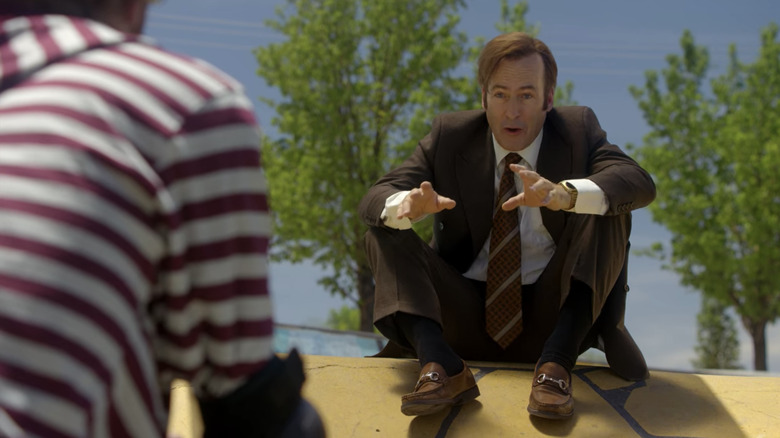
Animated Better Call Saul Spin-Off Slippin' Jimmy Reveals Cast

by Joshua Meyer

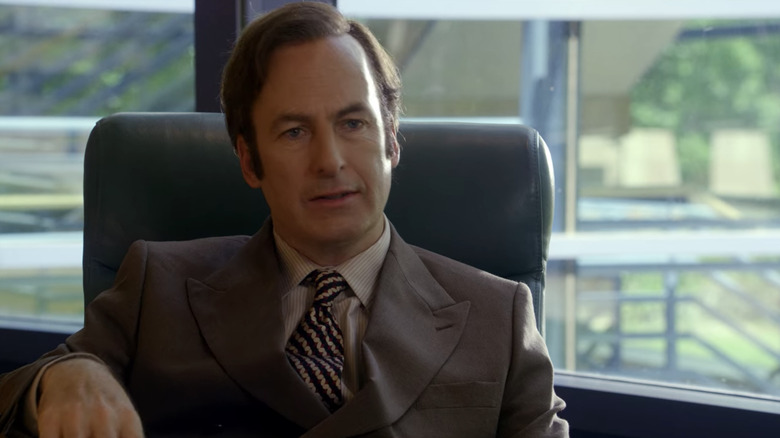
The "Breaking Bad" universe just keeps getting bigger. "Better Call Saul" was the first spin-off of "Breaking Bad," and it took the shyster Saul Goodman (Bob Odenkirk), a supporting character from the world of teacher-turned-meth-kingpin Walter White (Bryan Cranston), and made him into the star of his own well-received show (similar to what "Frasier" once did with a certain "Cheers" character in the sitcom world). We also saw Walter's partner in crime, Jesse Pinkman (Aaron Paul) return in "El Camino: A Breaking Bad Movie." Now we've reached the point where even the spin-offs are getting spin-offs, as "Better Call Saul" has its own animated series coming this spring.

The news that "Better Call Saul" has wrapped production on its sixth and final season and set premiere dates for the two parts of it may have some viewers missing Jimmy McGill, the once and future Saul, already. Yet it comes with the news (per Variety) that AMC has three new short-form series related to "Better Call Saul" in the pipeline. One of those is "Slippin' Jimmy," a six-episode animated series that "follows the misadventures of a young Jimmy McGill and his childhood friends in Chicago." It will reportedly be "told in the style of classic 70s-era cartoons," with each episode functioning as "an ode to a specific movie genre — from spaghetti westerns and Buster Keaton to 'The Exorcist.'"

Starburns Industries, the production service behind the first two seasons of "Rick and Morty," will handle the animation for "Slippin' Jimmy," which will be written by "Better Call Saul" scribes Ariel Levine and Kathleen Williams-Foshee. The voice cast includes Chi McBride (who voiced Nick Fury in the recent "Ultimate Spider-Man" animated series), Laraine Newman "3Below: Tales of Arcadia"), and Sean Giambrone ("Solar Opposites").

A Demon-Possessed Jimmy McGill?

AMC also has new episodes of the "Better Call Saul Employee Training Video" series on tap, as well as another short-form digital series called "Cooper's Bar," starring Rhea Seehorn. Beyond Seehorn's presence, "Cooper's Bar" does not sound like it will be connected to "Better Call Saul," as she is playing a different character — an "awful Hollywood executive" who frequents a neighborhood bar — and not fan-favorite Kim Wexler in that series.

"Slippin' Jimmy" is the nickname that became attributed to Jimmy McGill when he took on the life of a con artist, staging slip-and-fall accidents. From the description of this animated series, it sounds like it will be a prequel to the prequel that is "Better Call Saul," venturing even further back in time to when Jimmy was a kid in Chicago. The idea of having episodes themed to different movie genres is an interesting one, and I can't even imagine what an "Exorcist"-themed episode of a Jimmy McGill animated series would look like. Maybe the young Jimmy devises a scheme to convince someone he's possessed by a demon like Regan MacNeil?

"El Camino" is often regarded as a neo-Western, so a spaghetti Western-style episode isn't quite as hard to imagine. Buster Keaton's physical comedy might also lend itself well to a kid running a slip-and-fall scam on people.

"Slippin' Jimmy" is headed your way this spring.

Read this next: The 15 Best Rick And Morty Villains Ranked

The post Animated Better Call Saul Spin-Off Slippin' Jimmy Reveals Cast appeared first on /Film.

11 Feb 18:55

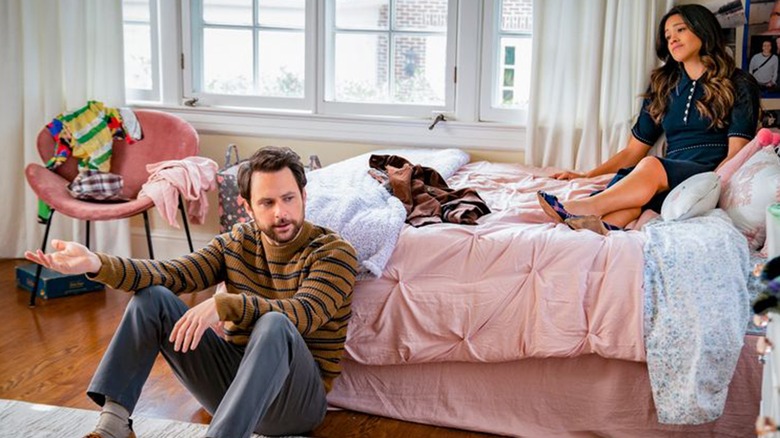
I Want You Back Star Charlie Day On Classic Romances, Hollywood Myth-Making, And More [Interview]

by Jack Giroux

Charlie Day has played the best friend in a romantic comedy. Now, he's playing the lead in Jason Orley's "I Want You Back." It's a starring role the actor wanted to keep grounded, but still infuse with the fun and playfulness for which the genre is known. Together, Day and co-star Jenny Slate adeptly walk that fine line in a rom-com about two flawed, heartbroken people trying to sabotage their exes' new relationships.

It's a story that, on paper, could've been more of a horror movie than a romantic comedy. Screenwriters Isaac Aptaker and Elizabeth Berger, as well as Orley, praise Day and Slate for navigating those tricky waters. Given the story, it's impressive how charming the duo are in the movie. Recently, we spoke with Day about why the story works, some of his favorite biographies, why he's ready to adopt an accent in a movie, and having Danny DeVito as a 10,000 pound gorilla in the room. 

"It's Really The Story, Right?"
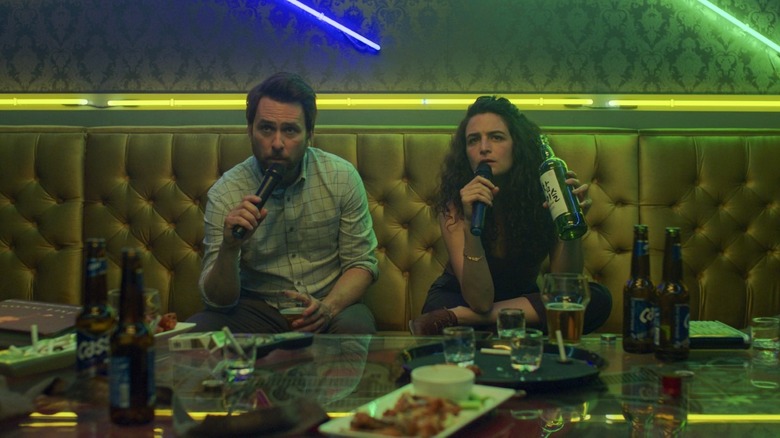
A few minutes ago, Isaac and Elizabeth credited you and Jenny for bringing enough charisma to make these characters get away with more than other actors would. Was that ever on your mind, though? 

No, I think they're being generous with us. I mean, what was so strong in their writing and Jason's directing was that they were able to really come up with three-dimensional characters, and oftentimes in a rom-com, maybe Jenny's character and my character will be three-dimensional, but then the ex-girlfriend or boyfriend, like Scott's character and Gina Rodriguez's character, they might be a little bit more one-dimensional. Certainly, the side characters, like Manny's character or Clark's character, tend to be very one-dimensional. They made these people all real people, not stereotypical villains. I think that was the secret to why you're able to go to some broad places, but the movie never feels unrealistic or too heightened.

Yeah, no villains, everyone's just flawed.

Yeah, which is much more the way we all are as people.

When you first read the script, what's your first impression of how to play this guy?

Well, I haven't yet been given a script that someone was asking me to do where I thought, "Okay, this guy needs a limp and an eye patch and a Czechoslovakian accent." I'm usually looking for the ways in which I can relate to the character, and bring aspects of my own personality to the character to make it as real of a person as possible. I'd start with me, and then if there's something to add on, oftentimes there isn't. I looked for the aspects of Peter's character that felt like parts of who I was as a person, and then just tried to make it as real to my own emotions and personality as I could.

Would you want to wear an eye patch and use the Czechoslovakian accent for a role, though?

Oh, I'd be dying to. I think that half the fun of acting is getting to do that, but then, I don't know. You see a Denzel movie and Denzel always feels like Denzel, and you always want to watch him. There's something to be said, too, to create a very honest performance, but it's really the story, right? Like, if you're playing an alien in a Marvel film, it's probably not going to be very similar to who you are as a person. If you're playing a guy who gets dumped by his girlfriend, who works at a retirement home in Atlanta, I don't know -- I don't really see a reason to create a persona that seems so different than my own.

Jason told me a few minutes ago that he liked showing a new side of you, though, especially when your character is on the hotel room floor, talking to his ex (played by Gina Rodriguez). 

Every time I worked on that scene, I would get choked up reading it. It was just the power of the words. I think as I was doing it, I was doing a lot of takes where my character was breaking down and sort of weeping as he's saying the lines. Jason's like, "No, I don't want all that, that's too much." He was right. He was like, "The character's more resigned." It was really great to get material like this, and be able to play a part where I could have those different levels, and it wasn't like in "Horrible Bosses," where the character's in constant mania. And that's fun. And I love that. But in this character, it's much more well-rounded, highs and lows.

"I'm A Sucker For A Good Hollywood Book."
There's also a scene where your character sneaks into a house, and there's definitely a version of that scene that's very dark and sinister, but how'd you make sure you got the tone of that moment right?

You know, I have to hand that to Jason, right? It's his job as the director to hold the tone of the movie. He's obviously steering me when I'm in scenes, and then he's got scenes where I'm not in it at all. He has to make sure that the other performers are doing the same movie that I'm doing.

He was saying, "I don't ever want you to be too manic," or, "You're playing a very sort of reasonable man. So, you might get into some unreasonable situations, but you have a tendency towards the more rational choice within this situation." And that's why it'll be funny to see a very rational man make this irrational choice, and then how he deals with it.

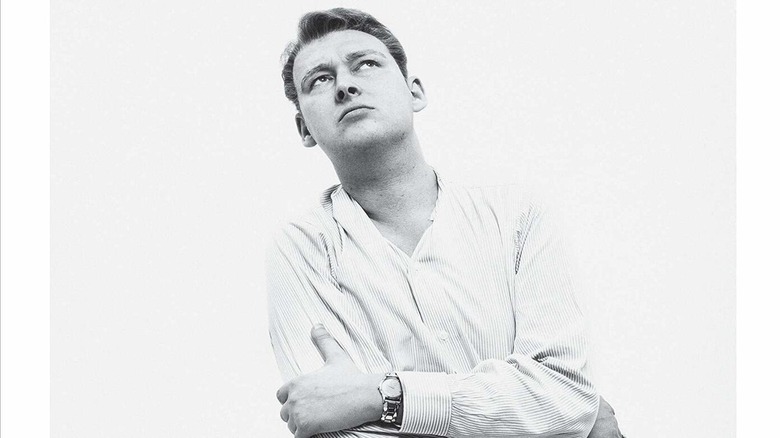
I learned a lot from Jason while doing it. I think he was always searching for some truth first and foremost, and the comedy would come second. I think that's a good model for how to make a movie. In fact, he had turned me onto the Mike Nichols biography.

That's a great read.

Yeah, a great read. He'd read that, and I read it, and I think we were both in a headspace of, "Let's just try to find something very honest and true, even though this story might get heightened at moments." I think having that goal of [finding] the reality and truth of this moment, beginning to end, helped make it better. 

What else did you take away from that Mike Nichols biography?

You know, this sort of speaks to what you were saying about the characters being well-rounded but flawed, you know. Certainly in Hollywood, there's a tendency to build everyone up and create these legends in our mind. But it was nice to read about his struggles as well, and read about the movies where he missed the mark, and understand why a movie worked or didn't. There's no mathematical equation towards making an episode of television, or making a movie that you can plug a story into. The more you can research why something worked, and maybe even more importantly, why something didn't work, I always find biographies like that really educational. That's about as good a guideline as you can get in terms of success and failure, is just looking at the past.

And you never know. Like, he stopped seeing "The Fortune" as a failure and later appreciated it as just a funny movie.

Exactly. Well, there's that side of it, too, which is sometimes you don't like something in the moment, and then you live with it for years and see it with fresh eyes years later, and then you learn to accept it.

Do you read a lot of biographies? Any favorites?

I do like them. I love Sidney Lumet's book on how to direct films. There's a great book actually on the making of "Chinatown," and it has a strange title, because it sounds like "The Long Goodbye." I really enjoyed that one. I'm a sucker for a good Hollywood book, for sure.

Have you read "Conversations with Billy Wilder"? That's a great one on comedy. 

No. I should, because we were just talking about "The Apartment" this morning, you know? Does that qualify as a rom-com? I think it does in a way.

I think so. It does get very dark.

It does get dark, but it's romantic and comedic.

Another one that could fall in that category is [Albert Brooks'] "Modern Romance," which Jason said was a reference for this film. Did you two talk much about that one?

I think that speaks to Jason's sense of tone and sensibility. I can't remember if we talked about that one, but we talked about "Broadcast News" a lot. Obviously, a very obvious one is "When Harry Met Sally," because I think it feels both grounded and funny, but also commercial and big. I feel like we wanted to find that balance. We didn't want it to just feel like a heartfelt indie film. We wanted it both real and grounded, but also popcorn, fun, and good old-fashioned entertainment.

Yeah, there were a lot of films that we discussed. I think we talked about a lot of Coen Brothers films, even though they didn't really apply necessarily to this one. Even Woody Allen, never mind his life mistakes, but a lot of his movies are pretty exceptional. Just looking at a lot of great classic romantic films and trying to dissect why one works and one doesn't.

"A 10,000 Pound Gorilla On Your Side."
Since you spend a lot of time in writers' rooms, do you approach acting like writing?

I always do, because I think one of the benefits of being a writer is you can see beyond your own dialogue, you can see the bigger picture of the story. Maybe it's quicker or easier to read a script and know what the director's going for. I think there's a real benefit, too, to being in the editing room for so many years.

It's all an education, everything you're doing is in education, and allows you to help someone else. But Isaac and Elizabeth's writing was so good and so strong that there was nothing that I could add from a writing standpoint. Honestly, I approached this film much more from a learning standpoint where a lot of these people, I hate to admit, were younger than me.

I had just a lot that I could learn from both Isaac and Elizabeth's writing, and the way they approached the story. And Jason's directing and the way he approached truth and reality. My role in this was really to function as best as I could as an actor and give it my all. And then, in terms of a producer, just take whatever sort of success and weight I had to make sure that these guys were getting all the tools they needed to be able to succeed.

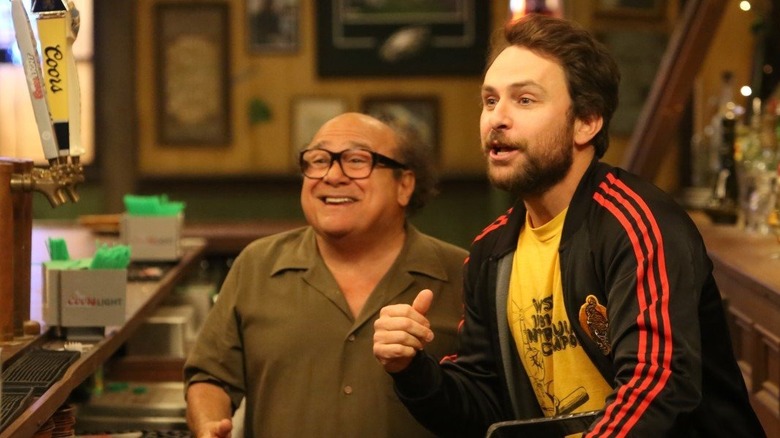
So, if Jason felt like he wanted to have a certain thing on set, and he was worried that the studio wouldn't give it to him, I was always there to say, "Listen, if you want to be on a riverboat, let's make sure we can shoot on a riverboat." Obviously, I have a good relationship with [producer] John Rickard. This is our fifth movie together. I've had the benefit of that in my life working with DeVito, and having him come into "Sunny" and how useful it was to have a 10,000 pound gorilla on your side.

A great director, too.

And a great director. But I think Danny never really was pushing his director stuff and he said, "You guys have a vision, and I'm here to support your vision." And so that was me with Jason and Isaac and Elizabeth, which is, "You guys have a great vision, help me help you execute it." I wasn't there in any way to tell them how to do it.

Danny DeVito has never directed an episode of "It's Always Sunny in Philadelphia," right?

No, he hasn't. The three of us tend not to do that either, because I think we can create a lot of jobs and opportunities for people by giving them chances to direct the show. Nowadays, it's really about giving people a shot.

"I Want You Back" is now streaming on Prime Video.

Read this next: 20 Underrated Rom Coms You Need To Watch

The post I Want You Back Star Charlie Day on Classic Romances, Hollywood Myth-Making, and More [Interview] appeared first on /Film.

11 Feb 17:30

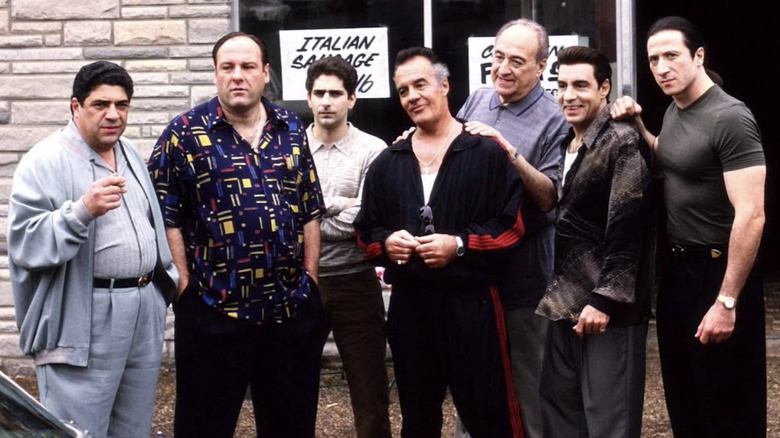
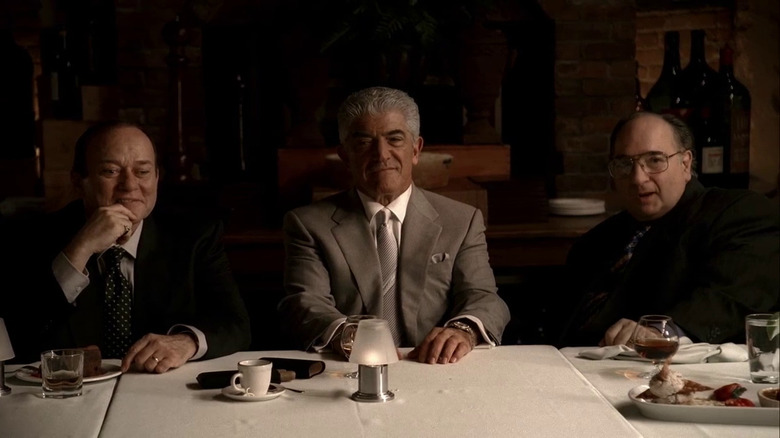
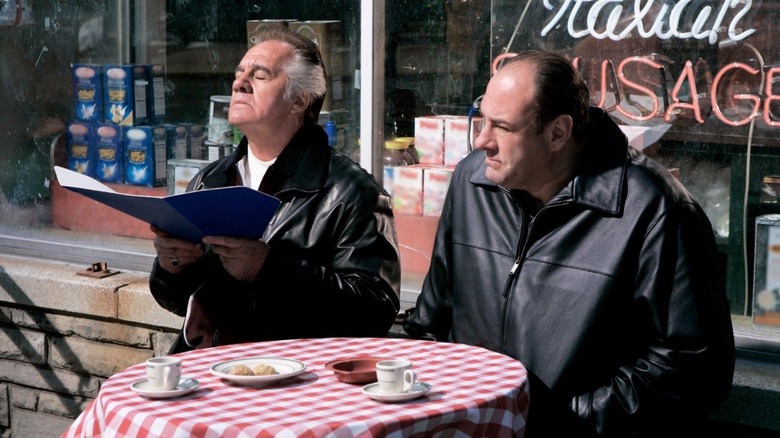
The Real Mob Couldn't Stop Talking About The Sopranos – Here's Why

by Danielle Ryan

Organized crime has always made for good entertainment. 

Our cultural obsession with movie mobsters goes all the way back to the 1920s and 1930s. The first mob movie was Josef von Sternberg's "Underworld" in 1927, and was quickly followed up by a number of pre-code crime flicks like Howard Hawks' "Scarface" and Mervyn LeRoy's "Little Caesar." By the 1980s and early '90s, mafia movies were huge crowd-pleasers. Francis Ford Coppola's "The Godfather," Martin Scorsese's "Goodfellas," and Sergio Leone's "Once Upon a Time in America" have all become revered film classics, and helped reignite interest in these stories. 

In 1999, the HBO series "The Sopranos" took television by storm. It was not only the most popular series around during its airing, but it also became the hottest series of 2020 as people started bingeing it all over again via streaming, according to GQ. People just can't get enough of New Jersey mob boss Tony Soprano (James Gandolfini) and his crew of hard-hitting gangsters. The series dealt with the mundane aspects of crime as well as the glamorized parts we had seen before in the cinema, and is arguably one of the greatest television shows ever made. 

One thing that helped "The Sopranos" become such a juggernaut was its undeniable authenticity. In an oral history of the series in Vanity Fair, it was revealed that F.B.I. agents had told the show's producers that they heard real mafia members talking about the show via wiretaps, and they were convinced the series had a "guy on the inside." It was so authentic that even real-world gangsters questioned just how they managed to pull it off. So how did they do it? It turns out that casting was the key to their success. 

The Who's Who Of Mafia Movies

One way that "The Sopranos" managed to create such incredible authenticity was by casting just about every actor who had ever been in a mafia movie. "The Sopranos" shares a whopping 27 cast members with "Goodfellas," and six of those were regular cast: Lorraine Bracco, Michael Imperioli, Vincent Pastore, Tony Sirico, Frank Vincent, and Joseph R. Gannascoli. Drea de Matteo, who played Adriana La Cerva, the girlfriend of Tony's nephew Christopher (Imperioli), told Vanity Fair that the cast didn't have to do much acting when it came to their accents or behavior:

"It never really felt like we were trying to pretend that we were in the Mafia or that we were Italian. We were just a bunch of Italians that were there. Once the show took off and I started doing press, I never even let go of who the character was. I would keep my accent and everything."

The writing team would often use their experiences around the actors in the scripts, and even took stories from the performers' lives and put them in the show. Gandolfini used to tease the writers about their tactics, telling Vanity Fair:

"I used to call them the vampires, the writers. Say, what have the vampires come up with this week? What blood are they sucking this week?"

There was one actor in particular who inspired the series because he was a real gangster, and his input truly helped set the tone and legitimacy. 

Three Words: Tony Friggin' Sirico

Tony Sirico plays Paulie "Walnuts" Gaultieri, one of Tony's capos and primary enforcers. He's a fascinating character who embraces the toxic masculinity of gangsters while also being a loving caretaker for his elderly mother. Before Sirico played Paulie, however, he was a real-life criminal, with 28 arrests over the years for various charges. He was arrested for the first time at age seven, and was shot twice during his time in Brooklyn as a stick-up guy. Sirico famously only agreed to play Paulie if creator David Chase promised that he would never be a rat, and Chase agreed. Paulie became a fictionalized version of Sirico, with his obsessive neatness and maternal protectiveness written into the character. 

In the Vanity Fair interview with the cast and crew, Sirico shared how bizarre it was to speak dialogue that were just his own words:

"I lived with Ma for 16 years before she passed. David knew that going in. That became one of my story lines. Sticking to the script—that was Rule No. 1. They got the words from us anyway. We'd have the writers sit and talk with us. They heard the cadence of my voice and what I said, and how I expressed myself—you know what I mean? So I had guys put down my own words and shove them right back into my throat."

Sirico grew up in a rough part of Brooklyn, where he said in order to prove yourself you either had to have "a tattoo or a bullet hole." Sirico had both. He would eventually develop his acting chops doing comedy bits for his fellow inmates during a his last prison stint in the 1970s before going on to make a career of it. Sirico is the real deal, and his knowledge and presence gives "The Sopranos" a huge dose of authenticity. Because of Sirico and the other Italian-American actors who gave a part of themselves to the show, "The Sopranos" became one of the biggest series of all time. 

Read this next: Ranking Every Ron Howard Feature Film From Worst To Best

The post The Real Mob Couldn't Stop Talking About The Sopranos – Here's Why appeared first on /Film.
11 Feb 17:29

The One Horror Movie That Actually Scares Quentin Tarantino

by Anya Stanley

What scares the guy who wrote the notorious severed ear sequence in "Reservoir Dogs?"

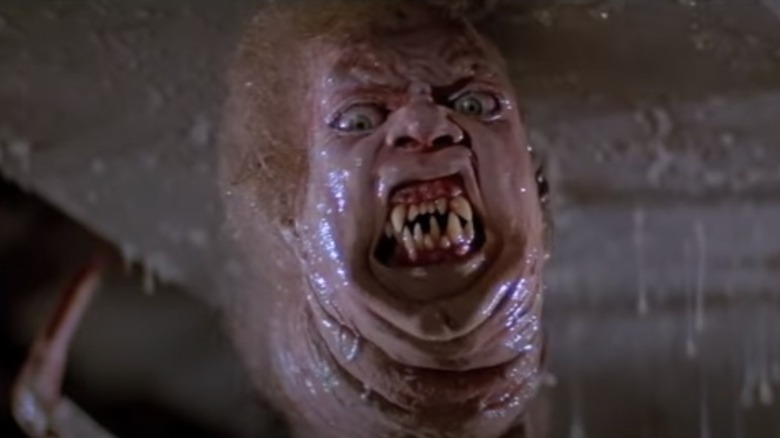
Last fall, director Quentin Tarantino stopped by The Late Show with Stephen Colbert for a chat about the novelization of his 2019 movie "Once Upon A Time... in Hollywood." During the interview, Colbert asks about his favorite adaptations and brings up "Who Goes There?" The 1938 short story written by John W. Campbell Jr centers on a group of researchers at an Antarctic outpost trapped with an unearthly, shape-shifting monster who can imitate any organic thing it consumes. The tale would later get an Atomic Age translation to the big screen with 1951's "The Thing from Another World," directed by Christian Nyby. In 1982, "Halloween" director John Carpenter revisited Campbell's story with "The Thing." Frequent Tarantino collaborator Kurt Russell leads an all-male ensemble cast in the once critically panned sci-fi thriller. "The Thing," however, has since gained new life and is now regarded as one of the scariest, most beloved, and influential movies ever, leaving its creative mark on directors ranging from Guillermo Del Toro to J.J. Abrams to the "Jackie Brown" creator himself. Both adaptations are appreciated, but it's the latter film that the pair gush over. Tarantino has especially high praise for the film's claustrophobic atmosphere and Rob Bottin's groundbreaking practical effects ("Some of the greatest special effects ever put on a movie theater screen," Tarantino states).

"I think it's one of the greatest horror movies ever made, if not one of the greatest movies," Tarantino says. "One of the reasons it holds a special place in my heart is the idea that I love horror movies — I'm a big horror movie fan. I don't get scared at horror movies. I respond to suspense ... but that's not really terror. 'The Thing,' I got scared in."

From the beginning of his career, Tarantino has courted controversy for the ultraviolence and charged language in his films — not much can throw him off guard. So why does "The Thing" get under his skin? After some self-reflection (something everyone should do when they react in an unexpected way to media, positively or negatively), he landed on a reason for his attraction to the sci-fi classic. For Tarantino, the contained setting is filled with suspects, bursting with fear and aggression. "The movie," he says, "makes the paranoia of that so palpable, so real, [that] it's almost like another character in that movie — the sheer paranoia." That paranoia, he observes, has nowhere to go but beyond the screen and out into the audience.

'Nobody Trusts Anybody Now, And We're All Very Tired.'

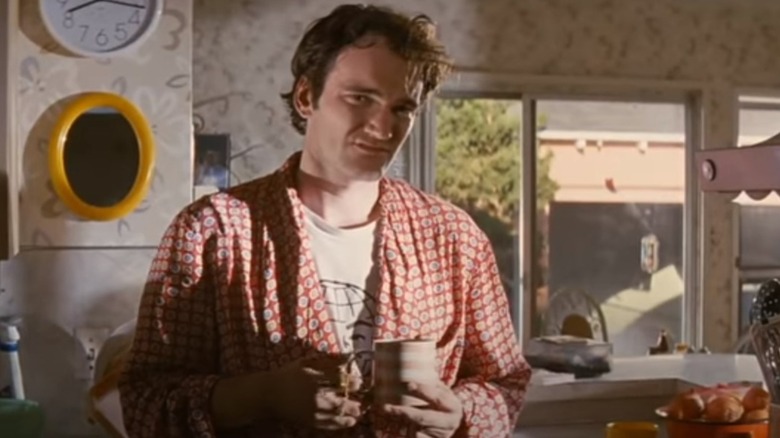
Quentin Tarantino went on to reveal that he consciously infused the screenplay of his debut feature, the 1992 indie crime film "Reservoir Dogs," with the paranoia of "The Thing."  In "Reservoir Dogs," a group of diamond thieves holes up in a warehouse after a heist goes bad. With no one knowing anyone's true identity, the tense atmosphere is similar to that of "The Thing." As Kurt Russell's R.J. MacReady laments in John Carpenters' 1982 film," "Nobody trusts anybody now, and we're all very tired." Likewise, Tarantino kept that friction in mind while penning his script.

"I need to trap these bastards in this warehouse, and no one can trust anybody else," he tells Colbert. The aim was to get the simmering tension of Carpenter's classic to manifest through the grungy walls of the empty warehouse where Nice Guy Eddie (Chris Penn), Mr. White (Harvey Keitel), Mr. Pink (Steve Buscemi), Mr. Orange (Tim Roth), and Joe Cabot (Lawrence Tierney) try to determine whose secret disloyalty brought down the planned heist. It paid off: The third-act standoff scene works fantastically due to the groundwork laid in the screenplay, meticulously fomenting distrust between the criminals. Tarantino has a knack for tense armed negotiations, and he has included variations on the standoff scene in a handful of his subsequent movies, including the 2009 World War II gem "Inglorious Basterds" (which places the fight in a Nazi-filled basement pub) and his 2015 western epic "The Hateful Eight." 

Despite coming close by writing the vampire-crime-action-thriller "From Dusk Till Dawn" and sneaking in a horror-adjacent Manson Family sequence at Spahn Ranch in "Once Upon A Time... in Hollywood," the prolific storyteller has yet to make a real horror picture. Last we heard, Blumhouse is working on a resurrection of "The Thing" with Carpenter's tentative involvement. Still, we can only imagine how Tarantino might handle "Who Goes There?" if given the opportunity.

Read this next: Horror Movies That Even Horror Fans Could Hardly Finish

The post The One Horror Movie That Actually Scares Quentin Tarantino appeared first on /Film.
11 Feb 17:26

Samsung Held An Event In the Metaverse. And It Didn't Quite Go To Plan

by BeauHD
Samsung held a launch event for its new Galaxy smartphones in a metaverse this week but many people struggled to gain access as they encountered technical difficulties. CNBC reports: The South Korean tech giant hosted the event Wednesday on Decentraland, a cryptocurrency-focused virtual world that users can create, explore and trade in. Decentraland, one of many metaverse efforts, is accessed via a desktop browser. Users create an avatar which they can then navigate around the blockchain-powered virtual world using a mouse and keyboard -- something that isn't exactly intuitive for non-gamers. The event specifically took place in Samsung 837X, a virtual building that Samsung has built on Decentraland that's designed to be a replica of its flagship New York experience center. Samsung 837X is there all the time but there just happened to be an event inside the building's "Connectivity Theatre" on Wednesday. But CNBC, and many others, struggled to find the 837X building and when we did many of us were unable to gain access to it. When an avatar is first created on Decentraland, it lands in a sort of atrium where clouds appear to be gliding across the floor. There's a round pool in the middle that has a worrying vortex in the center. Our avatar was soon surrounded by around 20 others. A chat box in the bottom left-hand corner of the screen was full of messages like "help" and "I hate this game." One user named claireinnit#87fa, boldly claimed "we're in the ----in future." On the opposite side of the intimidating pool, three large boards read "classics, events and crowd." An ad for Samsung 837X hang on the "crowd" board. Once clicked (easier said than done), you're then given the option to "jump in." After jumping in, you're transported to Samsung's little world on Decentraland and you can see the 837X building. There's a pizza store next door, but not much else. CNBC immediately noticed a large line of people at the main entrance to the 837X building. People were struggling to get in. Some users were getting their avatars to jump on other people's heads as they clambered to the front of the queue but it didn't help. The doors wouldn't open and the chatbox was again full of pleas for help. A rumor circulated that a YouTuber had managed to find a way in, while a CNET journalist wrote on Twitter that they had managed to gain access by switching to the "ATHENA" server. It wasn't immediately obvious how to do this. "Many people were unable to actually enter Samsung 837X before the event started," wrote CNET's Russell Holly. [...] After around 30 minutes of trying to access Samsung's building in the metaverse, CNBC gave up and went back to the real world.

Read more of this story at Slashdot.

11 Feb 17:26

Senators: Newly Declassified Documents Reveal Previously Secret CIA Bulk Collection

by BeauHD
An anonymous reader quotes a report from the Washington Post: The CIA has a secret, undisclosed data repository that includes information collected about Americans, two Democrats on the Senate Intelligence Committee said Thursday. While neither the agency nor lawmakers would disclose specifics about the data, the senators alleged the CIA had long hidden details about the program from the public and Congress. Sens. Ron Wyden of Oregon and Martin Heinrich of New Mexico sent a letter to top intelligence officials calling for more details about the program to be declassified. Large parts of the letter, which was sent in April 2021 and declassified Thursday, and documents released by the CIA were blacked out. Wyden and Heinrich said the program operated "outside the statutory framework that Congress and the public believe govern this collection." "CIA recognizes and takes very seriously our obligation to respect the privacy and civil liberties of U.S. persons in the conduct of our vital national security mission," Kristi Scott, the agency's privacy and civil liberties officer, said in a statement. "CIA is committed to transparency consistent with our obligation to protect intelligence sources and methods." The CIA released a series of redacted recommendations about the program issued by an oversight panel known as the Privacy and Civil Liberties Oversight Board. According to the document, a pop-up box warns CIA analysts using the program that seeking any information about U.S. citizens or others covered by privacy laws requires a foreign intelligence purpose. "However, analysts are not required to memorialize the justification for their queries," the board said. According to Wyden and Heinrich's letter, the CIA's bulk collection program operates outside of laws passed and reformed by Congress, but under the authority of Executive Order 12333, the document that broadly governs intelligence community activity and was first signed by President Ronald Reagan in 1981. "It is critical that Congress not legislate without awareness of a ... CIA program, and that the American public not be misled into believe that the reforms in any reauthorization legislation fully cover the IC's collection of their records," the senators wrote in their letter. There was a redaction in the letter before "CIA program." Additional documents released by the CIA Thursday also revealed limited details about a program to collect financial data against the Islamic State. That program also has incidentally snared some records held by Americans. "These reports raise serious questions about the kinds of information the CIA is vacuuming up in bulk and how the agency exploits that information to spy on Americans," Patrick Toomey, a lawyer for the American Civil Liberties Union, said in a statement. "The CIA conducts these sweeping surveillance activities without any court approval, and with few, if any, safeguards imposed by Congress."

Read more of this story at Slashdot.

11 Feb 17:25

Google's Privacy Sandbox Ad-tracking Overhaul Clears Major Regulatory Hurdle

by msmash
Google's plan to phase out third-party cookies and replace them with a bundle of new standards referred to as the "Privacy Sandbox" just overcame a key regulatory hurdle. From a report: The UK's competition regulator, the Competition and Markets Authority (CMA), has formally accepted Google's commitments about how it'll develop the new standards so they don't harm competition or unfairly benefit the search giant's own advertising business, the regulator announced today. Google's plans are still in flux, and it's not yet clear exactly what technologies Privacy Sandbox will use to replace third-party cookies. Just last month, Google abandoned one planned approach, FLoC, in favor of a new system called Topics API. Today's approval is for Google's approach, rather than any one specific technology. The regulator notes that in the next phase it will "supervise Google to ensure the Privacy Sandbox is developed in a way that benefits consumers."

Read more of this story at Slashdot.

11 Feb 17:25

Researchers Warn That Social Media May Be 'Fundamentally at Odds' With Science

by msmash
An anonymous reader shares a report: A special set of editorials published in today's issue of the journal Science argue that social media in its current form may well be fundamentally broken for the purposes of presenting and disseminating facts and reason. The algorithms are running the show now, they argue, and the systems priorities are unfortunately backwards. In an incisive (and free to read) opinion piece by Dominique Brossard and Dietram Scheufele of the University of Wisconsin-Madison, the basic disconnect with what scientists need and what social media platforms provide is convincingly laid out. "Rules of scientific discourse and the systematic, objective, and transparent evaluation of evidence are fundamentally at odds with the realities of debates in most online spaces," they write. "It is debatable whether social media platforms that are designed to monetize outrage and disagreement among users are the most productive channel for convincing skeptical publics that settled science about climate change or vaccines is not up for debate." The most elementary feature of social media that reduces the effect of communication by scientists is pervasive sorting and recommendation engines. This produces what Brossard and Scheufele call "homophilic self-sorting" -- the ones who are shown this content are the ones who are already familiar with it. In other words, they're preaching to the choir.

Read more of this story at Slashdot.

11 Feb 17:24

Study Finds Link Between Alzheimer's and Circadian Clock

by msmash
People who develop Alzheimer's disease can experience sleep disturbances years before the condition takes hold, but whether one causes the other, or something more complex is afoot, has always proved hard for scientists to determine. From a report: Now, researchers in the US have shed light on the mystery, in work that raises hopes for new therapies, and how "good sleep hygiene" could help to tackle the disease and its symptoms. The findings show that humans' 24-hour circadian clock controls the brain's ability to mop up wayward proteins linked to Alzheimer's disease. If the scientists are right, the work would explain, at least in part, how disruption to circadian rhythms and sleep disturbances might feed into the onset and progression of Alzheimer's disease, and how preventing such disruption might stave off the condition. "Circadian disruption is correlated with Alzheimer's diagnosis and it has been suggested that sleep disruptions could be an early warning sign of Alzheimer's disease," said Dr Jennifer Hurley, who led the research at Rensselaer Polytechnic Institute, in New York. Alzheimer's takes hold when connections are lost between nerve cells in the brain. The disease is progressive and linked to abnormal plaques and tangles of proteins that steadily build up in the brain. The disease is the most common cause of dementia and affects more than half a million people in the UK, a figure that is set to rise. To keep the brain healthy, immune cells called microglia seek out and destroy troublesome proteins that threaten to accumulate in the brain. One type of protein targeted by the cells is called amyloid beta, a hallmark of Alzheimer's.

Read more of this story at Slashdot.

11 Feb 17:24

The Greatest Physics Demo of All Time Happened on the Moon

by msmash
This true story of a hammer, a feather, the Apollo 15 mission, and the answers to humanity's oldest questions about how stuff falls. From a report: Does a falling object move at a constant speed, or does it speed up? If you drop a heavy object and a light one at the same time, which will fall faster? The great thing about these two questions is that you can ask pretty much anyone and they will have an answer -- even if they are actually wrong. The even greater thing is that it's fairly simple to determine the answers experimentally. [...] OK, but what about dropping a rock and feather -- doesn't the rock hit first? Usually, the answer is yes. But let's replace the rock with a hammer and then just take a change of scenery and move the experiment to the moon. This is exactly what happened during the Apollo 15 lunar mission in 1971. Commander David Scott took a hammer and an eagle feather and dropped them onto the lunar regolith. Here's what happened: The feather and the hammer hit the ground at the same time. Why did it happen? First, it is indeed true that even on the moon there is a greater gravitational force on the hammer than the feather. We can calculate this gravitational force as the product of mass (m in kilograms) and the gravitational field (g in newtons per kilogram). On the surface of the moon, the gravitational field has a value of 1.6 N/kg. If you put this expression in for the net force on a falling object, it looks like this: Fnet = - mg = ma; a = -g. Since both the gravitational force and the acceleration depend on the same mass, it's on both sides of the equation and cancels. That leaves an acceleration of -g. The hammer and the feather fall down with identical motions and hit the ground at the same time. So, what's different about dropping something on the moon versus on Earth? Yes, there is a different gravitational weight on the moon -- but that's not the issue. It's the lack of air that makes the difference. Remember that Newton's second law is a relationship between the net force and the acceleration. If you drop a feather on the surface of the Earth, there are two forces acting on it. First, there is the downward-pulling gravitational force that is equal to the product of mass and the gravitational field. Second, there is an upward-pushing force due to the interaction with the air, which we often call air drag. This air drag force depends on several things, but the important ones are the object's speed and the size of the object. [...]

Read more of this story at Slashdot.

11 Feb 11:54

Senators: CIA Has Secret Program That Collects American Data

by Associated Press

The CIA has a secret, undisclosed data repository that includes information collected about Americans, two Democrats on the Senate Intelligence Committee said. While neither the agency nor lawmakers would disclose specifics about the data, the senators alleged the CIA had long hidden details about the program from the public and Congress.

read more

11 Feb 01:16

Most heroes don't live through that first scene where they jump on the grenade to save the people around them. Neither did this one. "Tell everyone on this train that I love them" [Hero]

11 Feb 01:16

Four Fast Chargers Every 50 Miles -- US Unveils EV Infrastructure Plan

by BeauHD
An anonymous reader quotes a report from Ars Technica: Starting this year, the federal government will begin doling out $5 billion to states over five years to build a nationwide network of fast chargers. The plan initially focuses on the Interstate Highway System, directing states to build one charging station every 50 miles. Those stations must be capable of charging at least four EVs simultaneously at 150 kW. Once states have completed the Interstate charging network, they'll be able to apply for grants to fill in gaps elsewhere. The Joint Office of Energy and Transportation, a new agency formed to help the Transportation and Energy Departments administer the program, will allow case-by-case exceptions to the 50-mile requirement if, for example, no grid connection is available nearby. Funding for the initial Interstate portion of the program will be allocated using a formula that mimics how federal highway grants are distributed. Starting in fiscal year 2022, $615 million will be available to build charging stations, and $300 million will be allocated to set up the Joint Office of Energy and Transportation. Ten percent of each year's funding will go toward filling gaps in the network. After the initial $5 billion program is launched, another $2.5 billion in discretionary grants will be available to build chargers in rural and underserved areas. As part of their plans submitted to the federal government, states will need to ensure that the charging stations will be reliable -- at least one charger per station needs to be working more than 97 percent of the time -- and that they will limit their impact on the electric grid. States are also directed to design stations so they can be easily expanded and upgraded as demand grows and charging rates increase. The new program also encourages states to site chargers near travel centers, convenience stores, visitor centers, or restaurants. To get credit for their Interstate build-out, states will have to install chargers that use the Combined Charging System, also known as CCS. [...] The new program also prioritizes domestic production of chargers, which has already spurred some manufacturers to begin setting up operations in the US. Secretary of Transportation Pete Buttigieg says the agency is looking at how people will pay for charging. "Part of this program is going to be a shared standard. If we're going to use taxpayers' dollars to help private actors put in charging stations, then of course we need to make sure the citizen is getting good value out of it. There may be any number of network benefits through loyalty programs. That's fine," he said, "but we've got to make sure... everybody can benefit."

Read more of this story at Slashdot.

10 Feb 22:49

Intel ArcAlchemist Graphics Lineup Most Likely Pushed Back To A Q2 2022 Launch

by Jason R. Wilson

According to Moore's Law Is Dead, Intel will push back the release of their new Arc Alchemist discrete GPU lineup to the second quarter of the year. Readers will remember that the original timeframe for release was during this first quarter of 2022, with a possible March to April release. With this new information, a lot is changing, and possibly for the better for Intel and consumers.

Intel planning to delay the release of the Arc Alchemist Graphics lineup to the second quarter as the blue team sorts out their drivers

In tonight's video, the well-known leaker discussed several topics—one was NVIDIA GeForce RTX 3090 Ti requiring more voltage before launch and was not receiving the same amount of yield as the company had anticipated.

He mentioned that it is possible that NVIDIA would have to redesign the PCB due to the amount of difficulty the company is receiving from their upcoming graphics card. These changes would essentially push the standard RTX 3090 Ti offerings back more than just a month, but possibly quite longer. However, companies who manufactured RTX 3090 Ti cards that offered much more boost than the basic models, such as the EVGA Kingpin 3090 Ti, will see the normal release window to coincide with the release of "Lovelace." Expect these cards to be upwards of $5,000 starting due to the amount of technology going into each product.

Another mentioned card was the AMD RX 6950XT graphics card. This card is the direct competitor to NVIDIA's GeForce RTX 3090 Ti. There is a whisper of AMD releasing an RX 6750XT, but this is not completely confirmed, so we can only go off of speculation right now. And, that speculation is also added with the fact that AMD has internally mentioned that there are multiple 6X50 products in the development process.

  • intel-arc-alchemist-gpu-lineup-delayed-to-q2-2022-_2
  • intel-arc-alchemist-gpu-lineup-delayed-to-q2-2022-_3

But, the most notable part of the discussion was the release of Intel Arc Alchemist. Over the last year, it has been reported that we would be looking at March 2022 for the release of Intel's DG2 card. Moore's Law is Dead noted that with Intel entering the graphics card market, the company would want to ensure that there will be plenty of stock for consumers.

Intel will also want to ensure that the end product will offer the best graphics users. Issues with drivers are also mentioned in the video as to why the official release is delayed further. This could mean that the company will hold off on the original March/April release and look further into May/June for release. This will allow the company the time needed to get last-minute tests done, samples sent out to enough businesses, and also allow them to do a reveal around the same time as PAX East.

Laptop Arc Alchemist models will see an earlier release, possibly April, but it is expected that the laptop discrete GPU will be a low-end model, with the higher-end models seeing the May/June release.

Intel ARC Gaming GPU Lineup

GPU Family Intel Xe-HPG Intel Xe2-HPG Intel Xe3-HPG Intel Xe Next Intel Xe Next Next
GPU Products ARC Alchemist GPUs ARC Battlemage GPUs ARC Celestial GPUs ARC Druid GPUs ARC E*** GPUs
GPU Segment Mainstream / High-End Gaming (Discrete) Mainstream / High-End Gaming (Discrete) Mainstream / High-End Gaming (Discrete) Mainstream / High-End Gaming (Discrete) Mainstream / High-End Gaming (Discrete)
GPU Gen Gen 12 Gen 13? Gen 14? Gen 15? Gen 16?
Process Node TSMC 6nm TBA TBA TBA TBA
Specs / Design 512 EUs / 1 Tile / 1 GPU TBA TBA TBA TBA
Memory Subsystem GDDR6 TBA TBA TBA TBA
Launch 2022 2023? 2024? 2025? 2026?

The post Intel ArcAlchemist Graphics Lineup Most Likely Pushed Back To A Q2 2022 Launch by Jason R. Wilson appeared first on Wccftech.

10 Feb 22:43

Contamination forces NAND flash storage prices up

According to Western Digital Corp (WDC), this contamination will result in a shortage of at least 6.5 exabytes of flash storage.
10 Feb 22:43

Pam & Tommy Makes It Official, Sebastian Stan Is The Internet's (Sleazy) Boyfriend

by Shania Russell

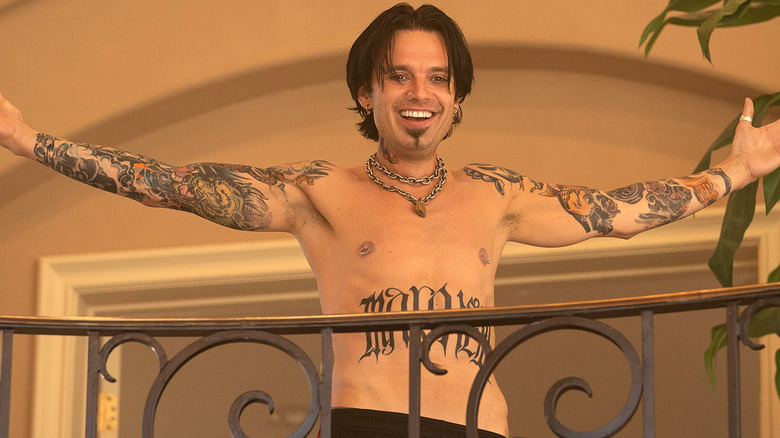
The assification of Sebastian Stan is gloriously upon us. This might be a difficult reality to accept, given Stan's status as a beloved internet boyfriend, but it's time to face the facts: Sebastian Stan makes an excellent douchebag. You know it, I know it and clearly, Craig Gillespie knows it because after seeing the MCU star embrace his sleazy side in "I, Tonya," he called him up for the titular role of abusive creep, Tommy Lee in "Pam & Tommy." The show traces the scandalous tale of "Baywatch" star Pamala Anderson and Mötley Crüe drummer Tommy Lee, whose honeymoon sex tape was famously leaked to the public.

In case you haven't seen the first few episodes of Hulu's new miniseries, just know that there's no shortage of icky hijinks for Stan to partake in. In fact, the rockstar pretty much spends the entire first episode strolling around in a speedo whilst treating everyone around him like utter crap. All the while, it's impossible to look away from Stan, who's giving one of the most compelling performances of his entire career. And when you look back at his other top contenders, you'll notice a neat little pattern: being an absolute a-hole brings out the best in Sebastian Stan.

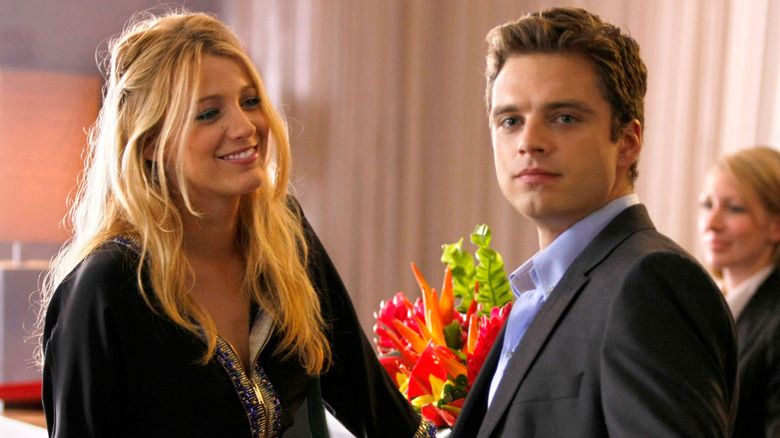
Now I know what you're thinking: Sebastian Stan? A douche?! Not with that prince charming face of his! That's a great point — it's only a matter of time before we learn he's been cast in the latest live-action adaptation of some fairy tale or other, but I promise it won't be nearly as fun as his next sleazy douchebag role. And you can trust me on that, because I've already seen it happen. But more on that later. The important takeaway is this: being an irredeemable creep is Stan's new niche, and we're just gonna have to accept him for who he is. While his role as Captain American's BFF Bucky Barnes (AKA The Winter Soldier) cemented his internet boyfriend status, darkness is where Stan thrives.

I Can Fix Him

All things considered, Bucky wasn't exactly a boy scout. It's nice that we can chalk up most of his wrongdoings to brainwashing, but that was still Sebastian Stan's fists pounding into all our favorite heroes — and boy did we love it. Let's not pretend that Bucky's 1940s flirting techniques are what caught our eye. People hopped aboard the Stan train because of his appearance in "Captain America: The Winter Soldier," as the relentless antagonist hellbent on wreaking havoc. Who doesn't love a good villain? And that's the thing about Stan — he's been bustling around Hollywood, embracing his villainous side for ages. Long before he committed mass murder as Captain America's BFF, Sebastian Stan became a teen heartthrob the old-fashioned way: by starring in a teen drama.

For a brief yet critical 11 episodes, Stan was a smirking, smooth-talking high society jerk on "Gossip Girl." And he wasn't just your typical a**hole, Stan's Carter Baizen was basically introduced to out-douche Chuck Bass and makes the show's resident douche be the hero for once. Not only is this an early example of Stan's sleazeball talents, but he also got to strike the very important balance between conniving and suave. This is key because, for a lot of his more notable roles, Stan slides into one of his two niche corners: sleazy yet endearing, or suave but secretly sleazy. Carter Baizen is the latter, hiding behind money, blazers, and charm, but ultimately spends his screentime duping the show's lead so he can get into her pants.

In his upcoming movie "Fresh," Stan kinda reprises this irresistibly douchey role as Steve, a romantic counterpart for Daisy Edgar Jones' Noa. The film tracks her trials and tribulations when it comes to the awful world of 21st-century dating, which is terribly unbearable until Stan enters the movie. She has an adorable meet-cute with the handsome plastic surgeon and all seems well — but then the movie derails into uh, pretty nasty territory and we see that Steve isn't half as charming as he seems. Sebastian Stan does some pretty horrific things for the runtime of the film but I'll be honest dear reader, I've never loved him more.

Hear me out — lots of internet boyfriends are known for being approachable awkward sweethearts — who doesn't love a Tom Holland or Timothee Chalamet? — but if the Tumblr era taught us anything, it's how much more fun it is to stick with the jerks. Loki, Hannibal, Edward, Bucky and so many more do terrible things but deep in the recesses of our minds, we can't help but think ... I can fix him. And it's so hard not to have this thought when Stan is so perfectly walking the line between awful and adorkable, so you can understand where I'm coming from. But then there's the other side of his sleazy niche, the one that's much harder to withstand ... but somehow, still irresistible. In his latest Gillespie-directed roles, Stan has gone full scumbag.

Never Mind, He's A Monster

Our first glimpse of Stan's even darker side was in "I, Tonya" where he played the former skating queen's husband, Jeff Gillooly. At first, their relationship is pretty close to charming — mostly because of how terribly Tonya is treated beforehand. The relief of her finding happiness in their budding romance makes it easy to root for them. But it doesn't take long for Gillooly to become abusive, lashing out verbally then physically. Playing this abusive lunatic gives Stan a chance to flex his best acting muscles, delivering a captivating performance. Gillooly is criminally stupid (as he spends the entire film proving) but also maintains a certain amount of charm. He has to draw both Tonya and the audience in, so he can lose us later on. And so Stan hits that sleazy-yet-endearing stride, which he repeats with his lead role in "Pam & Tommy."

This time around, Stan goes fully unhinged as Tommy Lee, an annoying a**hole who's increasingly difficult to look away from. Inhabiting the sleazeball put the actor through hours of SFX makeup preparation but the true magic erupts onscreen when he takes the metamorphosis to the next level with his manic, douchey energy. Lee is the life of the party whether he's banging on a drumset, racing around his mansion in a speedo, or downing shots at a bar. He draws Lily James' Pamela Anderson into his orbit and Stan makes it easy to understand why. He's intoxicating, and Stan doesn't shy away from a single aspect of the man, surprisingly irresistible while being an absolute dirtbag.

While it's fun to watch Stan trade snipes with Anthony Mackie or stare at Chris Evans in utterly confused rage, you haven't truly lived until you've sat back on your couch and marveled at Sebastian Stan maniacally proclaiming his love for a woman he just met to his talking, prosthetic penis. What more can I say? Some people were born to be Prince Charming but others are magic when you slather them in grease, tat them up, and demand the heights of douchebaggery.

Read this next: The 14 Best Film Acting Debuts Of All Time

The post Pam & Tommy Makes It Official, Sebastian Stan Is The Internet's (Sleazy) Boyfriend appeared first on /Film.
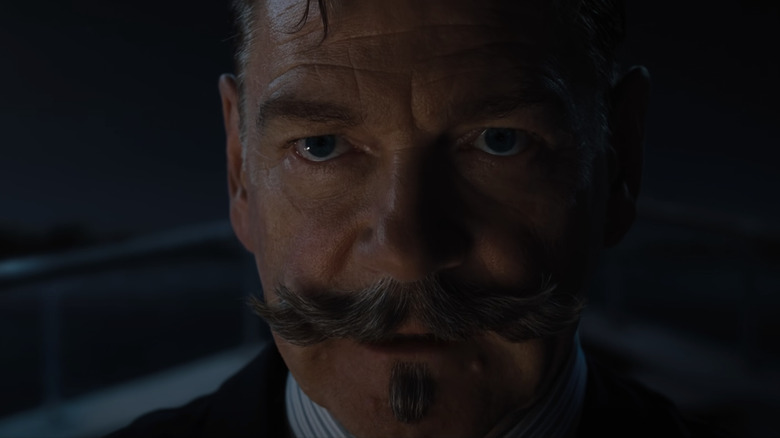
10 Feb 22:39

The Heart Of The Island's Powers In Lost Explained

by Anthony Crislip

By the time "Lost" was nearing its finale, the initial wave of questions from its first season felt fairly quaint. The Others ended up being creepy book club suburbanites. The polar bear was one of many animals brought to the Island decades earlier. The French Woman was the sole survivor of a scientific expedition. Simple enough.

Once immortality, the smoke monster, and time travel had risen to the fore, any hope of a single scientific explanation drifted away. But an idea was threaded throughout the show that the Island housed a potent pocket of electromagnetic energy. Something that scientific organizations and military operations had attempted to locate and exploit throughout the decades: the Heart of the Island. 

Essentially, the Heart of the Island was a catch-all explanation for the most magical of occurrences in the show. Pictured as a golden light emerging from a cavern, it reflected the heights of what made the Island special. And if it had been introduced earlier than three episodes before the show's finale, it might have even been satisfying.

The Protector Of The Light

Originally, the climax of "Lost" was going to be set atop an active volcano, but budgetary concerns and larger aesthetic questions led to the idea being scrapped. Instead, the focus shifted to the idea of a strong light near the Island's center, one that represented "life, death, and rebirth." It was something to be protected, because somebody was always going to attempt to find it.

For most of the show, the Protector is the immortal Jacob (Mark Pellegrino), the oft-alluded-to but rarely seen leader of the Others. However, in the late episode "Across the Sea," set some 2000 years before the crash of Oceanic Flight 815, we meet the earliest Protector in the show -- an unnamed woman (Allison Janney) who steals twin baby boys from a castaway and raises them on her own: Jacob and the Man in Black (Titus Welliver).

She teaches them the value of the light, but the two see things differently. The Man In Black joins a settlement on the Island and starts striving for a means of escape. When his Mother destroys the settlement, he kills her. In turn, Jacob throws the Man in Black into the Heart of the Island, where he emerges as the smoke monster, who represents death and memory.

The brothers spend the next two millennia in constant struggle. As the smoke monster, the Man in Black cannot escape the Island while the light is on. Only the death of the Protector can allow him to destroy it.

The Heart Through The Ages

In the mid-19th century, when Richard (Néstor Carbonell) arrives on the Island from the Black Rock slave ship, he is caught in the battle between the brothers. Jacob explains himself, and his role as Protector. He likens the Island to a cork; once the cork is released (or the light destroyed) the whole world will fall into darkness. Knowing that his brother wants to kill the light and leave, Jacob makes Richard immortal and appoints him as an ally. As Protector, his connection to the light allows him to cure various ailments, such as Locke's paralysis and Rose's cancer.

But human activity can also corrupt the light, leading to an adverse effect on health. For instance, the Incident that led to the creation of the DHARMA Initiative Swan Station also created difficulties for pregnancies on the Island from 1977 onward. For DHARMA, the scientific organization that seeks to prevent the end of the world, the Heart is why they work on the Island: their physicists believe they can harvest the power to manipulate space and time. 

However, the only actual physical time travel on the show comes not from DHARMA's industrial technology, but the same ancient equipment that the Man in Black was hoping to use to escape the Island in the first place: an underground ship wheel plugged directly into a wide shaft of light.

When Ben (Michael Emerson) uses the wheel in the fourth season to move the Island, he is transported to Tunisia, 9 months later. Everybody left behind on the Island is thrown about across the timeline and ultimately ends up joining DHARMA in the 1970s. Our protagonists eventually throw a nuclear warhead into the electromagnetic pocket the Initiative is hoping to utilize, sealing their fates and creating the Swan Station, which ends up being responsible for the plane crash.

Uncorking The Light

The most memorable bit of time travel in the whole show comes from Desmond (Henry Ian Cusick), who ends up exposed to the electromagnetic radiation in the show's second season when the Swan Station blows up. The radiation sends his consciousness back and forth through time, giving him glimpses of the future -- and allowing him to live as his past self, in the show's most beloved episode, "The Constant."

Desmond's vulnerability to radiation is why the Man in Black ultimately uses him to uncork the light in the show's final episodes. Desmond is believed by both him and Charles Widmore (Alan Dale) to be the only person capable of getting the job done successfully, without suffering the same fate that the Man in Black did on entering the cave.

When he does, the light goes out. Red volcanic imagery emerges from where the light was, and the Island begins to experience apocalyptic seismic fissures, suggesting that everything Jacob said about the light was true. Of course, all ends well. Jack (Matthew Fox) is able to reset the cork and set Desmond free from the light. And there's a visual tie to the show's final controversial moment as well, when the light surrounds all of the major characters, suggesting that saving the light in this life also saved it for the next.

Read this next: The 14 Best Sci-Fi Shows On Amazon Prime

The post The Heart of the Island's Powers in Lost Explained appeared first on /Film.
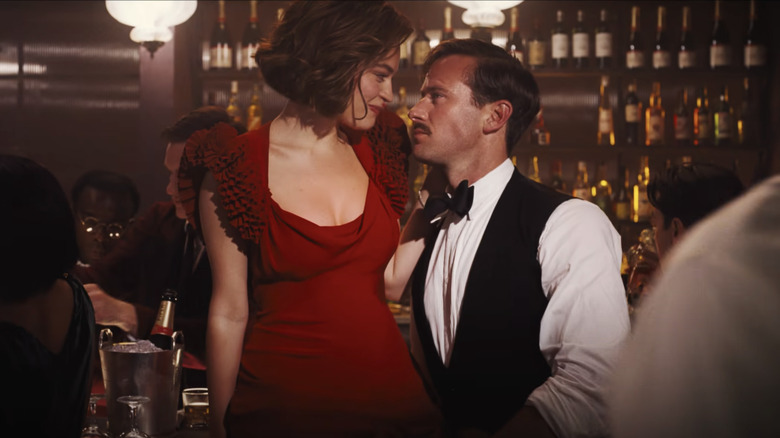
10 Feb 22:37

The Lost City Super Bowl Trailer: Sandra Bullock And Channing Tatum Are Hilariously Unqualified Adventurers

by Valerie Ettenhofer

Ah, Super Bowl Sunday: the one day of the year when some people scream about sports while others -- ourselves included -- scream about movie trailers. There are plenty of things worth screaming about this year, but I'm especially excited to see a big-budget original adult rom-com -- a combination of words Hollywood doesn't often put together these days -- get its time to shine.

The Sandra Bullock and Channing Tatum-led film "The Lost City" is set to debut at South By Southwest next month, before heading to theaters March 25, 2022. The film follows a best-selling romance novelist named Loretta (Bullock) who ends up kidnapped during her book tour by a villainous billionaire named Fairfax (Daniel Radcliffe). Fairfax is convinced the secret civilization and hidden treasure she wrote about are real, and tasks her with helping him find it. Adventure-averse Loretta ends up in the jungle, where she's forced to team up with "the world's sexiest cover model" (Tatum), who came to rescue her. Also, hilariously, Brad Pitt is there.

Here's the new trailer.

The Lost City Trailer

Adventure, comedy, romance: this trailer has it all. In fact, most everything about "The Lost City" looks hilarious. The swashbuckling adventure caught our attention early on, with a trailer that introduced Pitt's self-assured special agent along with laugh-out-loud sequences involving leeches, uncomfortable cliff climbs, and a pit of snakes. Too many blockbusters are heavy on adventure but light on laughs these days; "The Lost City" doesn't look like it'll have that problem. The complete cast also includes several other screamingly funny actors, like Patti Harrison and Bowen Yang.

A movie this strikingly original instantly makes us wonder who's behind the scenes, and it turns out, "The Lost City" isn't made by one of the handful of familiar names that seems to be attached to every original studio comedy. "The Lost City" is directed by Adam and Aaron Nee, who are also set to helm the "Masters of the Universe" movie. The pair co-wrote the film alongside Dana Fox ("Cruella") and Oren Uziel ("Escape Room: Tournament of Champions"), from a story by producer Seth Gordon.

"The Lost City" looks like it'll be a movie worth showing up for, both because it's a lone original idea trying to stay afloat in a sea of sequels and reboots, and because it looks gut-bustingly funny. It's kind of a wonder Tatum and Bullock haven't worked together before, since they're two of the most game comedic actors around, and both can shift easily to seriousness when needed. Add Brad Pitt to the mix, and this just became a can't-miss blockbuster.

"The Lost City" hits theaters on March 25, 2022.

Read this next: The 14 Greatest '80s Romantic Comedies Ranked

The post The Lost City Super Bowl Trailer: Sandra Bullock and Channing Tatum Are Hilariously Unqualified Adventurers appeared first on /Film.
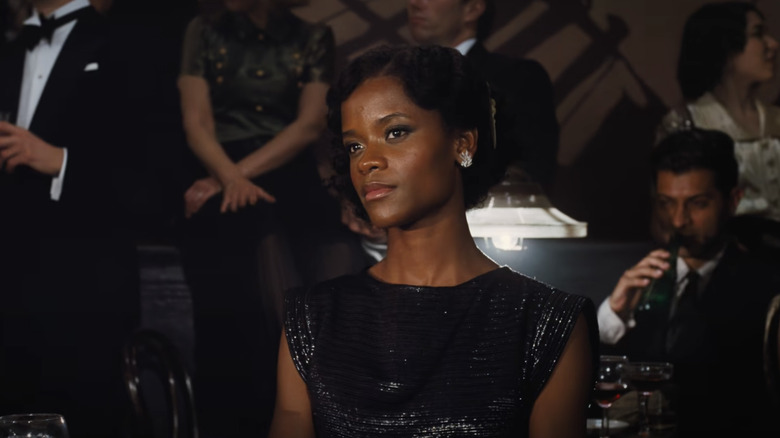
10 Feb 22:33

How The Thing Got John Carpenter Fired From Stephen King's Firestarter

by Miyako Pleines

John Carpenter will go down in history as one of the greatest filmmakers of all time. He is the man responsible for giving us the delectable "shape" of Michael Meyers who changed the face of horror with nothing but a kitchen knife and one terrifying Halloween night in Haddonfield, Illinois. He is the man inviting us to "chew bubblegum and kick ass" with Roddy Piper in "They Live," and he is the man pushing us to get out of a dystopic New York alive alongside the coolest of cools, Snake Plissken, in "Escape from New York." In short, he has created some of the best and most beloved films of the last 30+ years. For fans of his work, it would be blasphemous to deny Carpenter a chance to make any film he wanted. However, wherever there are fans, there are also doubters, and unfortunately for Carpenter, the doubters got the final word on his chance to direct the film adaptation of Stephen King's "Firestarter." 

"Firestarter" tells the story of Charlie McGee (Drew Barrymore), a young girl blessed with pyrotechnic abilities who's wanted by the United States government, as all of those blessed with pyrotechnic abilities are. It's the eighth of King's books to be adapted for the big screen, and when it came time to turn the book into a movie, Carpenter was the first man that Universal Pictures thought of to direct it. At the time, Carpenter was hard at work on another, very different film — a remake of the 1951 movie, "The Thing from Another World," rebranded as just "The Thing."  But when "The Thing" was officially released to a whole host of audiences and critics who absolutely hated it (if you can believe that), Universal Pictures began to panic. Suddenly, Carpenter was dropped from "Firestarter," and the world rotated backwards on its axis. Okay, not really. But just what was so upsetting about "The Thing" that it made Universal Pictures question their initially brilliant choice for a director?

The Thing Had Trouble Assimilating Into The Hearts Of Critics

If you're familiar with "The Thing," then you know it's one chilly movie. The film tells the story of a group of American men stationed at a research center in Antarctica who have the unfortunate luck of encountering a shape-shifting alien that slowly assimilates into their entire team, killing them one-by-one. The movie is brilliant for its suspense and spiral into madness, as well as its amazing practical effects by Rob Bottin. Kurt Russell brings a cooly composed insanity to his role as R.J. MacReady, the groups unofficial leader, and Keith David is phenomenal as Childs, the outpost's mechanic and one of the film's two survivors along with MacReady. The movie immediately sweeps you up in its mesmerizing atmosphere of below zero temperatures, puffy parkas, and a heavily relied upon flamethrowers. It's a true horror classic, but unfortunately, upon its initial release, the critics didn't feel this way at all.

"The Thing" made its official debut during the summer of 1982. If summer seems like kind of a strange time to release a movie set entirely on the frigid continent of Antarctica, you wouldn't be wrong. Perhaps the movie's chilly temperatures were supposed to inspire a sort of vicarious relief from the sweltering summer heat, but the movie really does little to garner a reaction of serenity when you watch it, so that's kind of a moot point. 

At the time of its release, Universal Pictures had already put out a very different alien movie a few weeks before, Steven Spielberg's classic, "E.T. the Extra-Terrestrial." This film was immediately embraced by audiences and critics alike so that when Carpenter's much darker alien movie burst its way onto the screen, people were not as pleased. They wanted the likeable aliens, not ones that spit sinewy tentacles and cut off your hands with their chest teeth.  

Many critics felt "The Thing" was plotless, boring, and too cynical to be enjoyable, and audiences felt similarly. Because of this, Universal Pictures didn't have as much faith in Carpenter, and they began questioning his ability to make successful movies. If "The Thing" performed that badly, then what's to say his adaptation of "Firestarter" would be any different? Suddenly, the Hollywood powers that be were faced with a difficult decision: allow Carpenter to continue and risk another flop, or find another filmmaker willing to take on the role.  

Trading A Cold Movie For Cold Feet

Universal Pictures ultimately decided to drop Carpenter from the "Firestarter" project, but not in the way you might expect. In an interview with Bill Phillips, the screenwriter who Carpenter chose to work with him on "Firestarter," Phillips sheds light on what actually happened during Carpenter's fall from grace. He states: 

"John had a "pay-or-play" deal, which meant that whether Universal made the film or not, he would get paid (it's a normal deal for talent with clout – to get and hold their attention.) When the marketing folks at Universal got cold feet because "The Thing" didn't do well at the box office and Stephen King films were clogging up the pipeline and not doing very well... They decided that since John is very good at delivering low budget films, they would cut the budget from $27 million to $15 million. Since John didn't have to agree to that, he didn't."

Basically, Universal got Carpenter to leave by slashing his budget to an unreasonably low amount. But hey, that's Hollywood for you! Carpenter still walked away with a paycheck, which, according to Phillips, he used to buy "a Bell-Jet Long Ranger Helicopter that he later rented out to the L.A. Olympics." Talk about retail therapy!

"Firestarter" went on to be directed by Mark L. Lester. Stephen King, who had previously been behind the choice of Carpenter to direct the film, has famously described the adaptation as "flavorless" and "like cafeteria mashed potatoes." Ironically, the film made slightly less at the box office than "The Thing," and today, it's Carpenter's chilly trip into the depths of Antarctica that has solidified itself as a true sci-fi horror masterpiece.

For those wondering if Carpenter ever got a chance to adapt another of King's works, the answer is yes. Very soon after Universal dropped him from "Firestarter," Columbia Pictures put him, along with Phillips, in charge of writing and directing the adaptation of King's "Christine." While "Christine" wasn't an immediate home run, it has held up significantly better amongst fans and critics alike than "Firestarter," leaving all of us to wonder about what a Carpenter-directed "Firestarter" might have looked like. Alas, we will never get to see it, but he'll be providing the score for the upcoming remake of "Firestarter." Regardless, I'll take a flame-throwing Kurt Russell over a fiery Drew Barrymore any day.

Read this next: Sci-Fi Box Office Bombs That Deserve A Second Chance

The post How The Thing Got John Carpenter Fired From Stephen King's Firestarter appeared first on /Film.

10 Feb 22:32

Lord Of The Rings: The Rings Of Power Will Feature Hobbit Ancestors Called 'Harfoots'

by Sandy Schaefer

Who doesn't love hobbits? They deeply value second breakfast (and elevenses and luncheon and afternoon tea, and all those other vital meals), prefer to spend their days chilling and smoking Pipe-weed, and have extra-hairy, leathery-soled feet that do away with the need for shoes and socks. Alas, we can't all be hobbits. Just as bad, hobbits simply cannot play a major role in Amazon's "Lord of the Rings" prequel series, "The Lord of the Rings: The Rings of Power," seeing as their historical anonymity was the key to their success in acquiring and later destroying the Dark Lord Sauron's Ring of Power by chucking it into Mount Doom right under his nose (er, eye).

With the first trailer for "The Rings of Power" due to debut at Super Bowl LVI this Sunday (February 13, 2022, for those who could use a reminder, like me), Vanity Fair has gone ahead and unveiled a collection of first-look photos and details for the much-discussed — and very costly — fantasy show. Sadly, for those who were secretly hoping they would get a sneak peek at Bilbo Baggins or Samwise Gamgee's ancestors, there are no hobbits on display in these images. However, the outlet has confirmed that "The Rings of Power" will feature a race of, if you will, proto-hobbits known as "harfoots" as part of its sprawling cast of characters.

Think Of Them As The Show's Rosencrantz And Guildenstern

"The Rings of Power" takes place thousands of years before the events of the "Lord of the Rings' trilogy during the Second Age of Middle-earth. "One of the very specific things the texts [by J.R.R. Tolkien] say is that hobbits never did anything historic or noteworthy before the Third Age," as co-showrunner Patrick McKay noted to Vanity Fair, before adding, "But really, does it feel like Middle-earth if you don't have hobbits or something like hobbits in it?"

As such, McKay and his co-showrunner (not to mention, writing partner and friend since high school), John D. Payne, decided to include the harfoots in "The Rings of Power." And no, they don't reside in the Shire, but the harfoots do lead a similarly quiet, secret pastoral life away from the greater events that transpire over the course of the show. They're even compared to the eponymous "Hamlet" characters from "Rosencrantz and Guildenstern Are Dead" in the way they avoid the spotlight and stay on the margins of the series' main storylines.

Megan Richards ("Wanderlust") and Markella Kavenagh ("My First Summer") will play a pair of harfoots on "The Rings of Power," as part of a sub-plot where the duo cross paths with what Vanity Fair has described as "a mysterious lost man whose origin promises to be one of the show's most enticing enigmas." (Feel free to guess away at who that might be.) Honestly, I'm just happy to know the series won't drop one of my favorite motifs of Tolkien's Middle-earth stories: hobbits —okay, "harfoots" — kicking back and politely minding their own business, only to get swept up in the rest of Middle-earth's nonsense and having to save the day yet again.

"The Lord of the Rings: The Rings of Power" will debut on Amazon Prime Video on September 2, 2022.

Read this next: 13 Fantasy Films That Never Got Sequels

The post Lord of the Rings: The Rings of Power Will Feature Hobbit Ancestors Called 'Harfoots' appeared first on /Film.
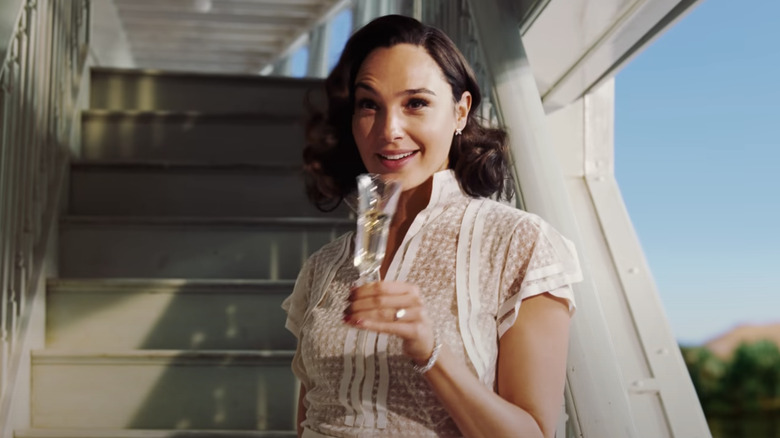
10 Feb 22:31

The Lord Of The Rings: The Rings Of Power Showrunners Address Backlash To Diverse Casting

by Jeremy Mathai

Any adaptation of the work of a beloved author is sure to inspire equal amounts of excitement and kneejerk criticism -- even before anyone's ever actually seen the adaptation in question! Some criticisms can certainly be valid, coming from a well-intentioned place and involving reasonable fans who sincerely want their favorite stories fully realized with respect and faithfulness. Others ... well, others are hardly worth the effort of getting mad about in the first place.
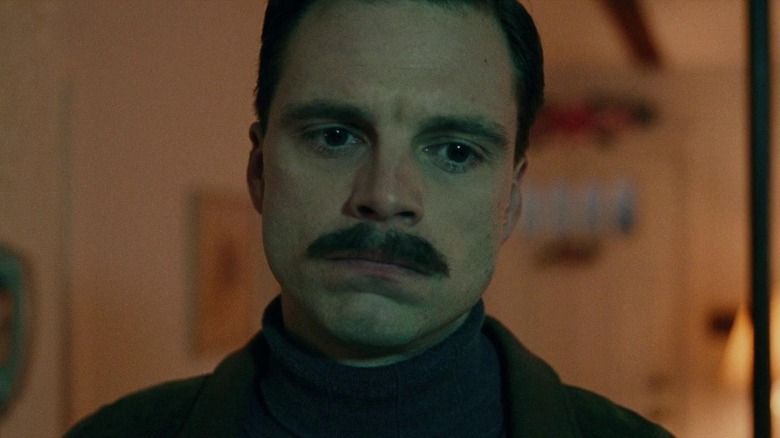
"The Lord of the Rings" comes with a higher amount of scrutiny than many other franchises, having originated from the mind of author J.R.R. Tolkien and resulting in his acclaimed fantasy novels that did much to significantly set the mold for the entire genre in the first place. Thanks to Peter Jackson's film trilogy, another whole generation of fans were introduced to the classic tale of the most insignificant of Hobbits (and their slightly taller allies!) defeating one of the greatest evils that Middle-earth has ever seen. But that's not to say that all opinions about the material are created equally. I'm willing to listen to anyone who might think "The Scouring of the Shire" should've remained in Jackson's adaptation of "The Return of the King," but complaining about (gasp) the audacity to cast more women and people of color in Amazon's "The Lord of the Rings: The Rings of Power" series will get you nowhere.

When Amazon first released a collection of almost two dozen new character posters, one poster in particular drew the ire of some of the absolute worst internet trolls when posted on Twitter, simply because the character's barely visible hands revealed a person of color in the cast. The fact that the resulting onslaught of racist replies forced the official "Rings of Power" account to take the step of hiding some of the most appalling responses says it all. Instances like this didn't escape the notice of the creative team behind the show, who took the opportunity afforded by our first real look at the series to address their commitment to diversifying "The Lord of the Rings: The Rings of Power."

"Tolkien Is For Everyone"

Vanity Fair's in-depth coverage of "The Lord of the Rings: The Rings of Power" has given us our most exhaustive look yet at the upcoming series ... but not everyone is entirely pleased by what they saw. A vocal segment of the fanbase made their racism known loud and clear at the thought of people of color existing in Middle-earth (which, it needs to be said, is fully in-canon with Tolkien's writing ... though his depictions of non-white cultures weren't always the most flattering) and now those behind the scenes are speaking out to let everyone know exactly where they stand.

Among the many new and familiar faces that will comprise the ensemble cast, "The Rings of Power" will feature actor Ismael Cruz Córdova in the role of a Silvan Elf named Arondir, becoming the first person of color in the franchise to play an Elf. The report describes his "forbidden relationship" with a mortal named Bronwyn, played by Nazanin Boniadi (who is of Iranian heritage). Sir Lenny Henry, of Jamaican descent, will portray a Harfoot (an ancestor of Hobbits) while Sophia Nomvete, the franchise's very first Black woman, will portray the franchise's first female Dwarf Disa. How's that for a statement of intent? Executive producer Lindsey Weber reflected on this, saying:

"It felt only natural to us that an adaptation of Tolkien's work would reflect what the world actually looks like. Tolkien is for everyone. His stories are about his fictional races doing their best work when they leave the isolation of their own cultures and come together."

Despite the disturbing insistence among some circles that fantasy characters must always remain Eurocentric in appearance, as many of the most seminal works abided by in decades past, it's reassuring to hear that the artists in charge of these big budget productions are willing to risk "controversy" for the sake of casting the best possible actors for the job. At this point, there really is no excuse anymore. Whether fans like it or not, these conversations will only continue with every major adaptation of a somewhat dated work.

"The Lord of the Rings: The Rings of Power" will premiere on Amazon Prime Video on September 2, 2022.

Read this next: The Best Movies Streaming Right Now: Malignant, A Hero, And More

The post The Lord of the Rings: The Rings of Power Showrunners Address Backlash to Diverse Casting appeared first on /Film.