 |
[link] [20 comments] |
Ronald.phillips
Shared posts
10 Feb 22:31
On this day in history, in 1996, world chess champion Gary Kasparov lost a game of chess to IBM's Deep Blue computer, a defeat partly due to Deep Blue's constant trash talk calling Kasparov a "meatbag" [Vintage]
Ronald.phillips likes this
10 Feb 22:23

5 Distributions Of Linux To Consider For Your Server
by Jeremy 'Jay' LaCroix
Linux servers are everywhere. There's a good chance a number of your favorite websites are running on infrastructure that's powered by Linux, not to mention streaming services, social media platforms, gaming networks, the list goes on. The only thing more staggering than the number of Linux servers there are in the wild, is how many distributions you have to choose from. The distros that are available for download are countless, and the purpose of each ranges from general purpose operating systems, to task-oriented tools such as Clonezilla. If you're just getting started with deploying Linux in your data center, choosing the right distribution can be confusing. If you utilize a cloud provider for your Linux infrastructure, the number of choices is at least somewhat curated, but you still have a choice to make. Which distribution is right for your environment? In this article, we'll discuss some important concepts to keep in mind - and we'll go over the finer points of some of the more popular options. There's no shortage of opinions online regarding desktop distros, but in this article - we're going to focus on server deployments.
Watch the video version of this article
First and foremost, there is no one general answer that's correct. If there was only one suitable choice, then you wouldn't see so many comments online arguing which distribution is best (and this article wouldn't be necessary). The correct answer as far as which distro is superior is the one that enables you or your organization to accomplish the goal you've purchased the server for. All distributions are worth checking out, but some will focus on certain areas more than others. Let's take a quick look at some of the more popular choices, along with the pros and cons of each.
Ronald.phillips likes this
10 Feb 22:23

How to Thrive While Living Alone, According to Reddit
by Meredith Dietz
Walking around naked. Belting show tunes in the shower. Basking in some peace and quiet. There are plenty of perks to living alone. At the same time, there are plenty of concerns, from handling bills, to dealing with emergencies, to generally getting lonely.
Ronald.phillips likes this
10 Feb 22:22

Powerful tiny Bluetooth amp
by Mark Frauenfelder
Class-T amplifiers have been around for over 20 years. They are tiny, cheap, lightweight, and look like toys. But they sound amazing. I bought a Bluetooth model (Nobsound G3 5.0 Amplifier) and hooked it up to a pair of old speakers. — Read the rest
Ronald.phillips likes this

10 Feb 22:21
Exabytes Of Ex-Bytes; Factory Contamination Ruins Western Digital and Kioxia SSDs
by Jeremy Hellstrom
Seriously though, that is how you drive SSD prices up to the levels of GPUs! Don't panic, even if seven million 1TB drives, or the equivalent memory for SSDs, phones and…
Ronald.phillips likes this
10 Feb 22:02
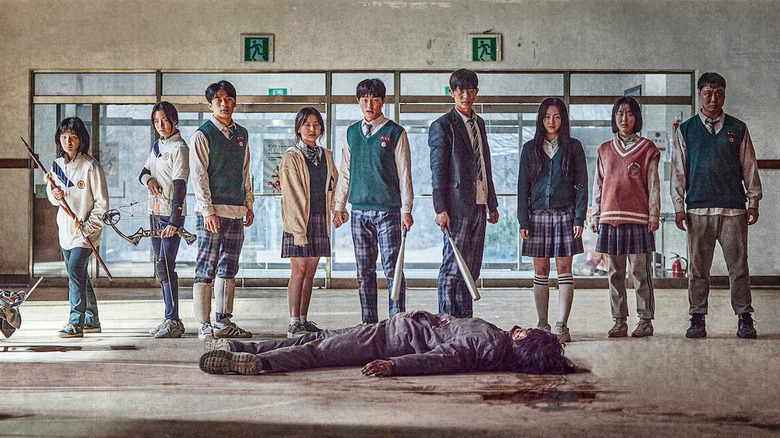
Why This All Of Us Are Dead Kiss Scene Took Forever To Film
by Deshawn "DeLa Doll" Thomas
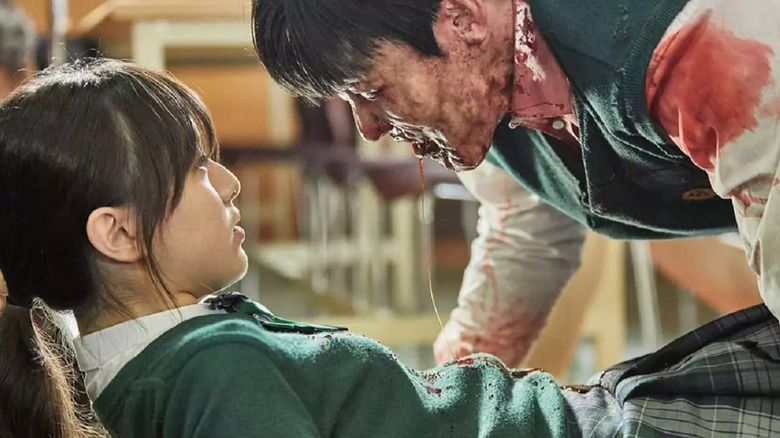
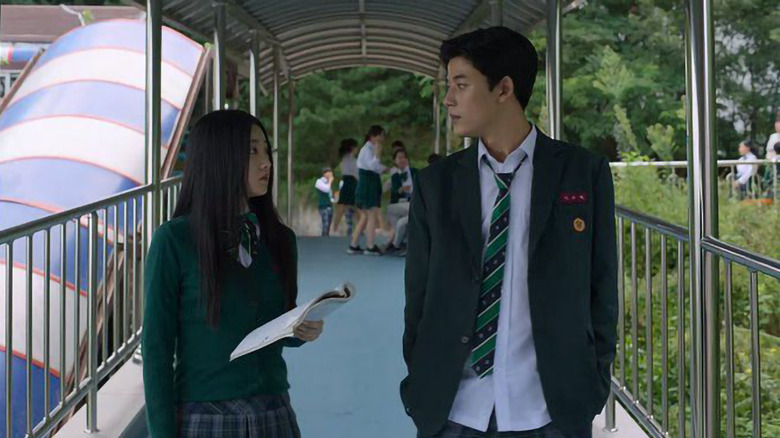
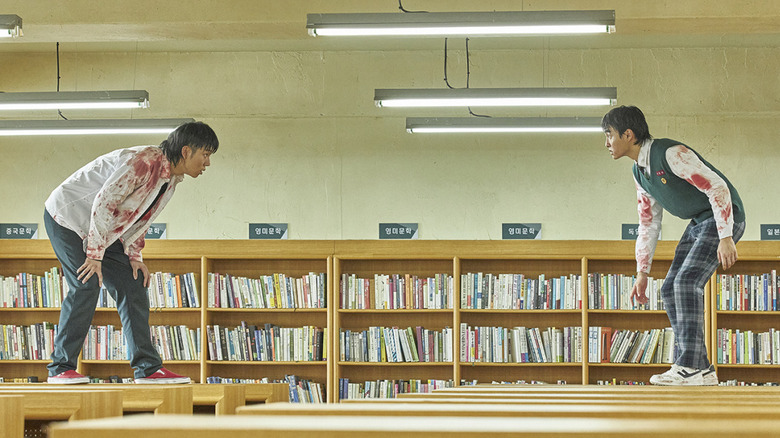
In a lot of ways, the South Korean drama "All of Us Are Dead" is your typical teen coming-of-age series. It's set in a high school that has a distinct social hierarchy, and features a variety of teenage characters who must contend with all the trials and tribulations that come with adolescence and academia – you know, budding romances, bullying, and pressure to figure out what you want to do with the rest of your life. Being a teenager can be a pretty harrowing experience based on that alone, so when you add "survive the sudden zombie infestation" to the mix, things can get downright scary.
That's exactly what the teens in Netflix's hottest new series are up against. Due to the graphic violence and intense action sequences present throughout the series, you'd think that shooting such scenes would be the most difficult part of creating a series like "All of Us Are Dead." But it turns out that a romantic moment between two fan favorites proved to be one of the most time-consuming scenes to film.
Love In A Zombie Apocalypse
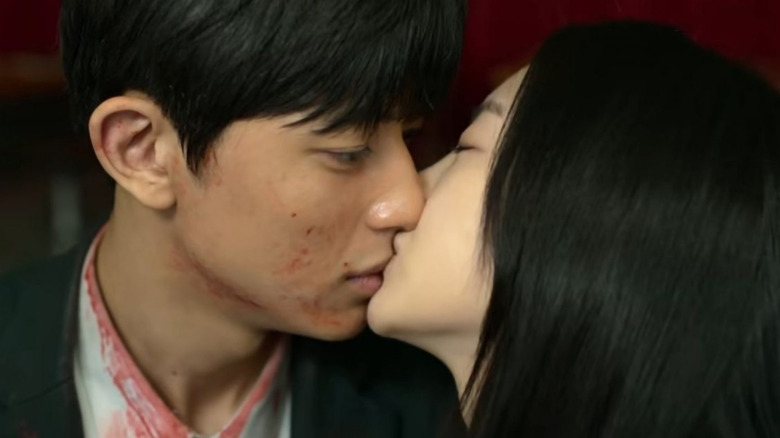
While battling their rabid, zombified peers with little more than school supplies and sheer survival instinct, the characters in "All of Us Are Dead" still find time for typical high school things like confessing your feelings to your crush and having your first kiss. Such is the case with the characters Nam-ra and Su-hyeok, whose relationship has been building since the very first episode of the series. By episode seven, things finally come to a head when Su-Hyeok admits that he has feelings for the class president. She reciprocates, and the two share a heartwarming first kiss in the undead hellscape that their high school has become. While undeniably romantic, the moment is also heartbreaking, tainted by the fact that Nam-ra has been infected with the zombie virus by one of her classmates. Luckily, the bittersweetness of the scene is made a little more lighthearted by the wholly sweet and humorous confessions of the actors who play the two teens.
1 Kiss, 17 Takes
In a behind-the-scenes commentary video with the director, writer, and main cast of the horror drama, it was revealed that the kiss scene took a total of 17 takes to get right. Park Solomon and Cho Yi-hyun, the actors who play Su-Hyeok and Nam-ra respectively, each offered their own insight into what it was like to film the scene, and why it took so long to get the perfect take. Cho blames it on her inability to kiss with her eyes open, saying "I felt really sorry for Lomon. Because I had my eyes closed when I was leaning in, so I couldn't find where his lips were."
As for Park, he says that the scene was an eye-opening experience for him, stating that he now understands why some actors choose to do romantic dramas. He even goes on to state that the kiss was his most favorite scene of all, his adorable confession resulting in the friendly laughter of his fellow castmates and series crewmembers. "All of Us Are Dead" director Lee Jae-kyoo also took part in some good natured teasing about Park's obvious enthusiasm, saying that the young actor "[couldn't] stop smiling" after filming the scene that fans everywhere were hoping to see as the relationship between Su-hyeok and Nam-ra blossomed amidst the chaos.
The Scene Almost Didn't Happen
In addition to telling viewers just how long the kissing scene took to perfect, it was also revealed the scene almost didn't happen at all. Not because of the whole 17 takes thing, but because the series writer, Chun Sung-il, originally planned to edit out the scene entirely. However, after the many attempts at successfully filming the perfect kiss, it ultimately made it into the final cut of "Hatred Is Contagious," the seventh episode in the series. It's hard to imagine the episode without it, and its absence would have no doubt been disappointing for the multitude of fans who were eager to see the teen romance come to fruition, even if it happens to take place during a zombie apocalypse that leaves the fates of their favorite characters hanging in the balance.
All Of Us Are Dead Season 2?
By the series finale, we learn what has become of the couple and everyone else impacted by the deadly zombie virus. While the first season of the show uses all of the source material from the webtoon it was based on, there's a distinct possibility that we could be getting a second season of "All of Us Are Dead." Netflix has yet to officially confirm any plans for a season 2 of the insanely popular series, but in an interview with the "The Korean Herald," the director of the series stated that the first season was intentionally set up to allow for the expansion of the story in additional seasons, including the potential to introduce a completely new race of zombies. In that same interview, he went further into detail about his vision for season 2, saying:
"If the first season can be seen as having presented humanity's survival, the next season can talk about the survival of zombies. I hope to present viewers with another season."
If you still haven't watched season 1 of "All of Us are Dead," the action-packed zombie drama that skillfully combines horror with heart is currently streaming on Netflix.
Read this next: Horror Movies That Even Horror Fans Could Hardly Finish
The post Why This All of Us Are Dead Kiss Scene Took Forever to Film appeared first on /Film.
Ronald.phillips likes this
10 Feb 21:57
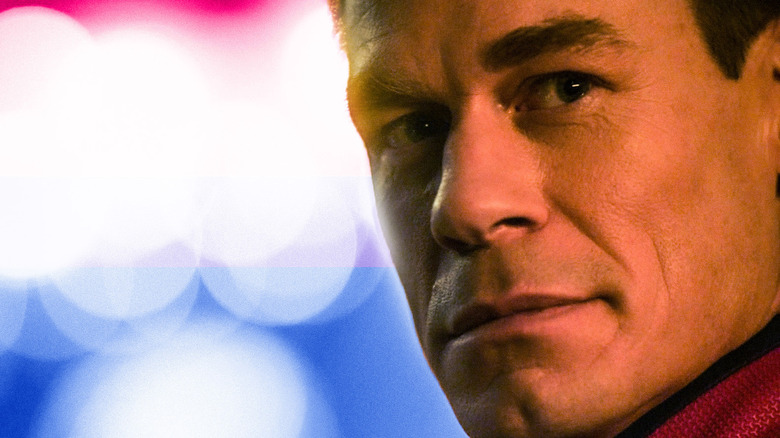
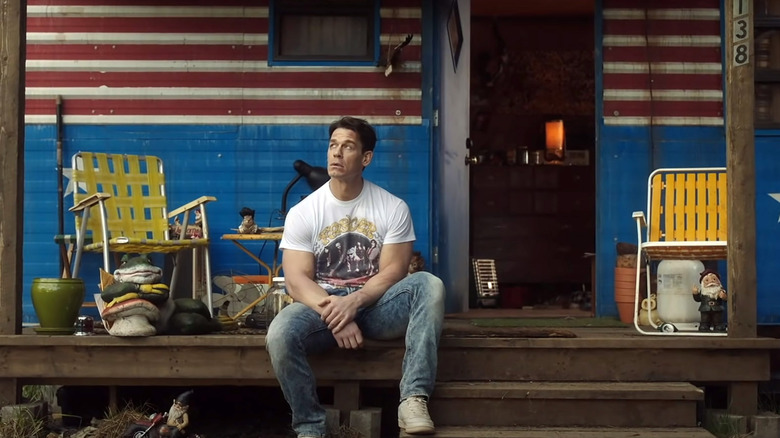
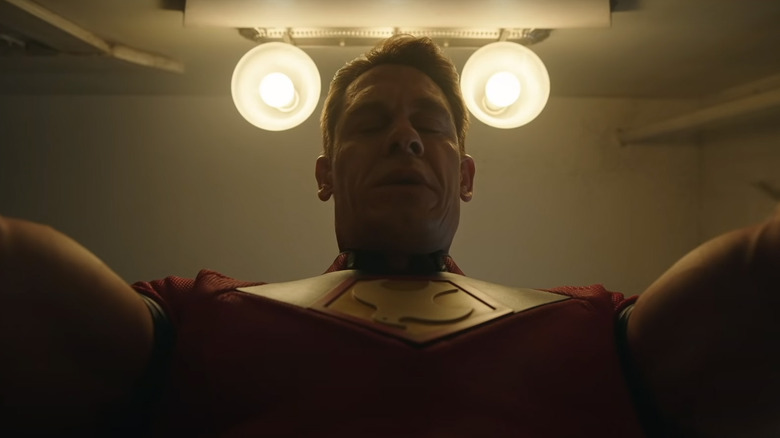
Peacemaker Is The Messy Bisexual Hero We All Need
by Danielle Ryan
While watching James Gunn's rowdy romp of a television series, "Peacemaker," I found myself wondering about the titular character's sexuality. After proudly declaring in "The Suicide Squad" that he would eat an entire beach full of d***s in the name of liberty, Christopher Smith a.k.a. Peacemaker (John Cena) has since confirmed that he's had sex with men, taken part in a threesome with one of his friends (though not his best friend), and overall dropped plenty of hints that he may be bisexual.
"Peacemaker" is a series about people defying expectations and recovering from the insidious effects of toxic masculinity, so its protagonist being something other than straight made a lot of sense. After all, we rarely see bisexual characters in fiction, and when we do they're often scantily-clad women made bisexual to titillate male viewers. Queer male characters tend to face quite a bit of stereotyping in TV and the movies. For every Omar on "The Wire," there are dozens of twinks whose only apparent purpose in life is helping the (straight) lead character find love. A big, beefy, all-American man like Chris being portrayed as queer without challenging his masculinity rules. It forces people to confront stereotypes, and better yet, it provides much-needed representation for men who might be afraid to come out of the closet due to upbringings like Chris's.
In episode 7, "Won't Stop Dragon My Heart Around," we're given yet another clue to Chris's sexuality, and a hint as to why his dad's been so cruel all this time. Let's dig into what it all means, and why it matters.
(Note: The terms "bisexuality" and "pansexuality" are often interchangeable, and for the sake of clarity I am going to stick to "bisexual," though I think there are arguments to be made for his pansexuality as well.)
SPOILERS for "Peacemaker" episode 7 from here on out!
A Different Kind Of Representation
So what's my evidence for Peacemaker's possible bisexuality? In episode 1, he tells Harcourt (Jennifer Holland) that due to his stint in prison he hasn't had sex with anyone in a long time, then amends to "any woman." In episode 2 he has a threesome with Vigilante (Freddie Stroma) and Amber (Alison Araya), which isn't proof in and of itself, but he later comments on Vigilante's genitalia extensively. (Chris also has an obsession with male genitalia going back to his school years, when he would give everyone nicknames based on their junk.)
Peacemaker also makes it clear where he draws the line with sexuality with his comments about Aquaman, saying: "He bangs chicks? Good for him. He f***s dudes? Got no problem with that. He starts f****** fish? That's taking it a step too far."
In an interview with Fox News in 2021, series creator and "The Suicide Squad" writer/director James Gunn explained that Cena played the character as a kind of "omnisexual," but that very little of that made it into the final cut of the movie:
"Peacemaker is sort of omnisexual, right? He loves everybody. He wants to have sex with everybody. So that's where [Cena] went at the end of every scene and it was always disgusting and always hilarious. But none of it's in the movie because it was just too disgusting for even me. And that's saying a lot."
That omnisexuality was reigned in a bit for "Peacemaker," though Adebayo does mention that it seems like Chris would "f*** anything," and she elaborates by naming a bunch of food items he would probably try to have sex with. Instead, he comes across as a battered bisexual himbo, attracted to just about everyone and unsure of what to do about it.
In "Stop Dragon My Heart Around," Peacemaker's dad Auggie (Robert Patrick) points out that his son has had sex with both women and men, and then he calls him a f*****. That's the moment where Chris breaks and unleashes his righteous fury upon his hateful pops, screaming: "You were right only about one thing. I am a piece of s***. I'm a piece of s*** for listening to you for all those years!"
It's a heartbreaking moment made all the more poignant when you realize how much of Chris's self-loathing is wrapped up in his dad's skewed ideas on masculinity. Chris is breaking the cycle, even if he does it in a very violent way. For the first time in his life, Chris isn't hiding who he is from anyone.
Why It Matters
"Peacemaker" offers a redemption arc -- not just for Peacemaker to redeem himself in the eyes of his teammates and the audience, but also to redeem himself in his own eyes. In the early episodes, he beats himself up (both metaphorically and literally) due to the pain he holds inside. He's starting to change, but still clings to the vestiges of his past with his father because it's all he knows. He survived an incredibly abusive childhood with a man who was racist, misogynistic, and homophobic, and who probably saw his son's budding bisexuality early on and punished him extra because of it.
Chris's love of hair metal is not only a way to honor the memory of his brother Keith, but is also the way he's able to express his complex sexuality without forgoing what he thinks of as masculinity. As he begins to open up and grow with the help of his teammates, he even defends the glam rock album covers and their traditionally effeminate looks. After she insults Poison, Peacemaker tells Harcourt: "I believe their preferred pronoun is long live rock, and you are sounding awfully awesomephobic."
So why does this all matter? When I asked James Gunn about the character's potential bisexuality on Twitter, I was set upon by a deluge of people, mostly men, who were furious that I had even asked. The homophobia was quick and vicious, and a reminder of exactly why it's important for LGBTQ people to have characters out there that they can identify with. Instead of being embraced as who they are, many bisexual men are kept in the closet by a society that's trapped in outdated ideas about masculinity.
There also just aren't a whole lot of bisexual characters out there who feel like more than stereotypes, which is especially frustrating because bi folks often feel left out. There's a certain stigma towards being bisexual in certain gay and lesbian communities, and many straight women have irrational hang-ups about dating bisexual men. Bisexual erasure is a painful thing that many of us experience, and having a character as complicated and unconventional as Peacemaker be bi feels like a big step in the right direction.
Peacemaker's bisexuality will not only help people feel more represented, but it could help people reassess some of their own beliefs. The main theme of the series is that often people who seem hopeless are often the most in need of redemption and forgiveness -- and in episode 7, Peacemaker finally learned how to forgive himself. He's no longer letting his father dictate how he feels, and he's taking a huge step towards becoming a whole, healthy human. We still have one episode left to see how that all pans out, but at least now he's only fighting bug aliens and not his father and his long-held self-loathing. Here's hoping Peacemaker can finally find some inner peace.
The finale of "Peacemaker" premieres February 17, 2022, exclusively on HBO Max.
Read this next: The 15 Most Anticipated Comic Book Movies And Shows Of 2022, Ranked
The post Peacemaker is the Messy Bisexual Hero We All Need appeared first on /Film.
Ronald.phillips likes this
10 Feb 21:49
Two Simple Movements Can Reduce Dizziness When Standing Up, Study Finds
by BeauHD
An anonymous reader quotes a report from Gizmodo: Researchers in Canada say they've come up with two simple physical techniques to help prevent a common cause of dizziness and fainting. In a small trial, they found that these maneuvers, which involve nothing more than moving your lower limbs, could effectively reduce the symptoms of initial orthostatic hypotension (IOH), a condition that temporarily leaves people light headed when they stand up. [...] Though many people can experience IOH without ever registering it as a big problem, some sufferers can have repeated or severe enough episodes of IOH that it routinely affects their daily functioning. Study author Satish Raj, a heart rhythm cardiologist at the University of Calgary, and his colleagues have often seen these sorts of patients at their dysautonomia and fainting clinic. And they wondered if there was something more they could offer these patients besides lifestyle changes like drinking more water or medications.
As he explains it, when people stand up, blood flow normally shifts downward to below our chest. But in IOH, this change seems to be accompanied by a reflex, triggered by the activation of muscles as we stand up, that causes blood vessels to open widely -- and it's this combination that then causes the rapid but temporary drop in blood pressure. Based on Raj's team's earlier work, as well as other research, they hypothesized that people with IOH could short-circuit this process by activating the reflex early or by tensing the lower limb muscles as they stood, somewhat mitigating the blood pressure drop.
To test this out, they recruited 22 volunteers with IOH to try out both of the techniques they developed. One method involved pre-activating the muscles behind the reflex from a sitting position, done simply by raising the knees one at a time for up to 30 seconds. The other asked people to stand and then tense up their lower limbs, by crossing their legs and clenching their thighs and butt. As a control, the volunteers would also stand up normally. Compared to the control condition, on measures of both the volunteers' circulation and their self-reported symptoms, people's IOH improved after doing either technique. And Raj's patients in the clinic have anecdotally reported similar success after adopting the strategies. The team's findings were published Wednesday in the journal Heart Rhythm.


Read more of this story at Slashdot.
Anika Kotecha, Ronald.phillips and one other like this
10 Feb 21:46
A Third World May Be Orbiting Around Our Closest Neighboring Star
by msmash
Our nearest neighboring star, Proxima Centauri, may be harboring an extensive solar system, as scientists believe they've found a third planet orbiting it. From a report: It's a find that re-emphasizes just how commonplace planets outside our Solar System may be -- and it provides us with a third possible world nearby to study and potentially explore. Located a little more than 4 light-years from Earth, Proxima Centauri has long captured the imagination of scientists and sci-fi enthusiasts as a prime place to visit if we ever venture far outside our Solar System. The celestial object became even more intriguing in 2016 when astronomers found a planet orbiting around it. Called Proxima b, the planet is located in the star's habitable zone, where temperatures may be just right for water to pool on the surface. Just a few years later, a second planet, called Proxima c, was discovered around the star, too. With the discovery of this third likely exoplanet, called Proxima d, Proxima Centauri is possibly home to a wide array of worlds. While we do not have the means to travel to Proxima Centauri yet in any kind of reasonable time frame, these planets might be the first places we'd visit if we ever do develop such a capability. For now, their close proximity to Earth makes them prime candidates for follow-up study and observations. Astronomers say they could help us in our ever-evolving quest to understand how planets form around distant stars.
Read more of this story at Slashdot.
Ronald.phillips likes this
10 Feb 21:45
Stephen Hawking Exhibition Hopes To Unravel the Mysteries of His Blackboard
by msmash
Having devoted his life to the conundrums of the cosmos, Prof Stephen Hawking has left behind a mystery of his own amid the eclectic contents of his former office. From a report: The Cambridge cosmologist, who died in 2018 at the age of 76, treasured a blackboard that became smothered with cartoons, doodles and equations at a conference he arranged in 1980. But what all the graffiti and in-jokes mean is taking some time to unravel. The blackboard -- as much a perplexing work of art as a memento from the history of physics -- goes on display for the first time on Thursday as part of a collection of office items acquired by the Science Museum in London.
The hope for Juan-Andres Leon, the curator of Stephen Hawking's office, is that surviving attenders of the conference on superspace and supergravity held in Cambridge more than 40 years ago swing by and explain what some of the sketches and comments mean. "We'll certainly try and extract their interpretations," Leon said. Joining the blackboard in a temporary display called Stephen Hawking at Work is a rare copy of the physicist's 1966 PhD thesis, his wheelchair, a formal bet that information swallowed by a black hole is lost for ever, and a host of celebrity memorabilia, including a personalised jacket given to him by the creators of the Simpsons for his many appearances on the show.
Read more of this story at Slashdot.
Ronald.phillips likes this
10 Feb 11:45
CISA, FBI, NSA Issue Advisory on Severe Increase in Ransomware Attacks
by noreply@blogger.com (Ravie Lakshmanan)
Image Source: TechPrivacy
Cybersecurity authorities from Australia, the U.K., and the U.S. have published a joint advisory warning of an increase in sophisticated, high-impact ransomware attacks targeting critical infrastructure organizations across the world in 2021.
The incidents singled out a broad range of sectors, including defense, emergency services, agriculture, government facilities, IT,
Ronald.phillips likes this
10 Feb 02:27
A Geomagnetic Storm May Have Effectively Destroyed 40 SpaceX Starlink Satellites
by BeauHD
Elon Musk's satellite internet service Starlink just got dealt an expensive blow -- the company's currently estimating that 40 of the 49 Starlink satellites it launched on February 3rd will be destroyed because of a geomagnetic storm. The Verge reports: The storm caused "up to 50 percent higher drag than during previous launches," keeping the deployed satellites from reaching their proper orbit around the Earth. And while Starlink tried to fly them "edge-on (like a sheet of paper)" to reduce that drag, it now looks like as many as 40 of them will burn up in the Earth's atmosphere instead of reaching their destinations. SpaceX recently crossed the 2,000 satellite launch milestone, and has plans to launch 12,000 if not a great many more -- so losing 40 of them might not be a huge deal in the grand scheme of things. Still, that's the vast majority of an entire Falcon 9 rocket's Starlink launch capacity burning up in the atmosphere.
Read more of this story at Slashdot.
Ronald.phillips likes this
09 Feb 21:37

How to Lock in Amazon Prime at the Old Rate (at Least for a Year or Two)
by Sarah Showfety
For a while, I held out on getting an Amazon Prime membership. Fancying myself an advance planning wunderkind, I saw no need to pay $100 a year for free shipping on things I could get free shipping on if I thought ahead and bought them at least two weeks in advance. How hard was that? And then I had a third kid, got a…
Ronald.phillips likes this
09 Feb 21:28


Starlink Satellites Become Victim Of Sun Particles Traveling At 662 Km/s
by Ramish Zafar

Space Exploration Technologies Corporation's (SpaceX) Starlink satellite internet constellation failed to withstand the impact of a recent disturbance in the Earth's magnetic sphere (magnetosphere) caused by the Sun releasing a storm of charged particles. Starlink launched its latest batch of satellites last week, and the spacecraft was put into an emergency mode once the geomagnetic storm hit the next day on Friday. Now, the company has confirmed that up to 40 of the launched spacecraft have reentered the Earth's atmosphere, marring its rapid launch cadence that kicked off the year with two Starlink launches for a total of 98 satellites.
Starlink Satellites Hit By Solar Ejection Originally Predicted For Launch Day
SpaceX confirmed on its website late night yesterday that out of the 49 satellites launched on February 3rd last week, it has lost at least 40 of the spacecraft. According to the company, at least 40 of the deployed satellites were unable to exit what SpaceX dubs as the 'safe mode.' They were commanded to enter this mode, which decreases their surface area to combat the effects of a solar storm which the National Oceanic and Atmospheric Administration (NOAA) had predicted would take place on Wednesday and Thursday.
However, the release from SpaceX states that the increased drag in the Earth's atmosphere resulted in the aforementioned satellites being unable to exit their safe mode. Consequently, they are slated to burn up in the Earth's atmosphere without risking other spacecraft. Drag is referred to as the force experienced by an object in the Earth's vicinity, due to particles rubbing against its surface. Starlink, due to the limitations of SpaceX's Falcon 9 rocket, is forced to launch its satellites to a lower altitude and then raise them after performing safety checks.
According to Starlink:
Unfortunately, the satellites deployed on Thursday were significantly impacted by a geomagnetic storm on Friday. These storms cause the atmosphere to warm and atmospheric density at our low deployment altitudes to increase. In fact, onboard GPS suggests the escalation speed and severity of the storm caused atmospheric drag to increase up to 50 percent higher than during previous launches. The Starlink team commanded the satellites into a safe-mode where they would fly edge-on (like a sheet of paper) to minimize drag—to effectively “take cover from the storm”—and continued to work closely with the Space Force’s 18th Space Control Squadron and LeoLabs to provide updates on the satellites based on ground radars.
Preliminary analysis show the increased drag at the low altitudes prevented the satellites from leaving safe-mode to begin orbit raising maneuvers, and up to 40 of the satellites will reenter or already have reentered the Earth’s atmosphere. The deorbiting satellites pose zero collision risk with other satellites and by design demise upon atmospheric reentry—meaning no orbital debris is created and no satellite parts hit the ground. This unique situation demonstrates the great lengths the Starlink team has gone to ensure the system is on the leading edge of on-orbit debris mitigation.
A warning published by the National Oceanic and Atmospheric Administration (NOAA) on Thursday, February 03, 2022, 02:57 UTC indicated that a coronal mass ejection (CME) is likely for Thursday and a warning had been in effect from Wednesday. Starlink launched the latest batch of satellites at 18:13 UTC Thursday, and its statement claims that the geomagnetic storm impacted the satellites on Eastern Time Friday. Image: SWPC NOAA
The timing of the launch and the fact that Starlink is forced to raise their orbits post-launch raises a couple of important questions for the service as it gears up for competition from financially backed rivals who also plan to launch their internet small satellites to orbit.
Firstly, it leaves room for the assumption that perhaps in its eagerness to establish a rapid launch cadence, Starlink decided that since the NOAA had predicted the geomagnetic storm to last only until Friday, and that too at "weakening levels" as outlined by the government agency in its news release, the worst conditions could very well be over before the satellites were under any danger.
Yet, it is also possible that Starlink decided to 'test' how well the satellites hold up in adverse weather conditions in order to determine their design parameters for the future. SpaceX claimed in its press release that launching satellites to a lower altitude to ensure that system checks can be performed for faulty spacecraft before final orbit is reached costs the company more but it is the "right thing to do."
Finally, what it does show is that the battle currently raging on at the Federal Communications Commission (FCC) for Starlink to launch the spacecraft with SpaceX's Starship next-generation rocket will only heat up from now. SpaceX has petitioned the FCC to entertain its request of modifying the launch parameters of second-generation Starlinks to include Starship as well. Through Starship, the company has argued that it will be able to launch satellites at a higher altitude, and therefore reduce the time that they spent in orbit before becoming operational – an event that will also enable it to avoid the denser regions of the Earth's magnetic field.


The NOAA had reported that the solar particles were traveling at an eye-popping speed of 662 km/s, and data from the agency shows increased particle density at the time of the event. Additionally, astrophysicist Jonathan McDowell also compiled the data for all Starlink launches to data which indicates that the latest launch reached a maximum altitude of roughly 340 kilometers.
The post Starlink Satellites Become Victim Of Sun Particles Traveling At 662 Km/s by Ramish Zafar appeared first on Wccftech.

Ronald.phillips likes this
09 Feb 21:25

GWJ Conference Call 800
by Amoebic
Max Payne (Xbox), Avernum 3: Ruined World (PC), Icewind Dale II (PC), Arx Fatalis (PC), Divine Divinity (PC), Kingdom Hearts (PS2), Episode 800, and some borrowed letters.
Ronald.phillips likes this
09 Feb 21:23
History Lessons: Ys I: Ancient Ys Vanished
by Waltorious

Other History Lessons posts can be found here. If you’re looking specifically for console games, those are here. As always, you may click on images to view larger versions.
One of the reasons I wanted to play the early Japanese console role-playing games is that so many have become enduring series. Everyone knows the behemoth Dragon Quest and Final Fantasy franchises, which have been running for more than thirty years, but there are so many others too. Digital Devil Story: Megami Tensei, which released in 1987, spawned the Shin Megami Tensei series and its spinoff Persona series, which had new entries in 2021 and 2020, respectively. Tales of Arise was a big hit last year, the latest entry in a series that started way back in 1995 with Tales of Phantasia on the Super Famicom. And of course, we got Ys IX: Monstrum Nox in 2019, which traces its lineage all the way to Ys I: Ancient Ys Vanished in 1987.
I’m cheating a little bit with the timeline. Nihon Falcom released the first Ys game in 1987, a few months after Esper Dream (the subject of the last entry in this blog series), on NEC’s PC-88 home computer system, although ports quickly appeared for other Japanese home computers such as the X1 and MSX2, as well as Famicom and Master System ports a year later. But the version universally regarded as best among fans — not counting more modern remakes, like the 2013 version currently sold on Steam and GOG — is an enhanced remake (credited to Alfa System) from 1989 for the PC Engine (rebranded in the United Staes as the Turbografx-16) that bundles together Ys I: Ancient Ys Vanished and its sequel Ys II: Ancient Ys Vanished – The Final Chapter in a single release. This was actually the only time (again, not counting modern remakes) that Ys II was officially localized in English, which made my decision about which version to try a bit easier (although I’m waiting to play the second game until my timeline reaches its original release date). But by playing the 1989 remake instead of the 1987 original I’m making a fairly big jump in terms of technology. You see, the PC Engine version used the CD-ROM add-on, and was in fact one of the first games developed for CD-ROM.
For those who might not remember the introduction of the CD-ROM, it was a big deal for games. As a comparison, Famicom/NES cartridges typically held around 128 – 384 kB of data, with the largest ever at 1 MB. A CD-ROM could hold 650 MB (or even more), which is roughly 1700 to 5000 times more data. That’s a ridiculous increase. There’s not just room to make games longer, with more levels and art, but also to store vastly superior audio. CD quality audio, in fact, as defined in the Red Book. Even if music takes up the majority of the CD-ROM, there’s still plenty of room left to make a game many times larger than cartridges at the time. No longer would developers need to write music as a set of instructions for an onboard sound chip to synthesize, they could simply record high quality audio and have the game play that. CD-ROMs were, if you will excuse the term, game changers.

I remember when I first tried playing games on CD-ROM, on my family’s PC, and having my mind blown. But that was in the mid-1990s. I remain shocked that there were games made for CD as early as 1989 (1990 for the US release). I heard about some of the earlier consoles to use CD drives, like the Sega CD, but I never knew anyone who had them. CDs didn’t seem to really kick off until the next generation of consoles hit, in particular the original Playstation in 1994 (1995 in the US). For that matter, I had only ever heard of the PC Engine/Turbografx-16, with or without its CD add-on, and have still never seen one. The PC Engine, made by Hudson Soft and sold by NEC, released in Japan in late 1987, but took a while to come to the US, after a rebranding that emphasized its 16-bit graphics processing unit (its central processor, however, was still 8-bit, which led to some complaints of false advertising) and a larger chassis. The original PC Engine is the smallest console ever made, and the marketing team thought (rightly, I would guess) that Americans would assume its small size meant it lacked power. Ironically, by the time it released in the US in 1989, it did lack power, at least compared to the truly 16-bit Sega Genesis which had already arrived.
But in Japan in 1987, the PC Engine was competing against Nintendo’s Famicom, and doing quite well. It outsold Nintendo’s classic console for a time, and was even the main rival to Nintendo’s successor, the Super Famicom, which released in late 1990. The 16-bit graphics system in the PC Engine included a 9-bit color palette, letting the PC Engine display a total of 512 colors with 482 on-screen at once. That’s a lot more than the Famicom’s 56 total colors, with 25 on-screen at once. It was also the first ever home console to support the CD-ROM format, when its CD add-on appeared in 1988. All this meant it was the most powerful home system available for some time in Japan. Firing up Ys I & II, I was as interested in seeing what this hardware could do as I was in the game itself.

That meant that I didn’t want to play the 2013 remake, even though it’s well regarded by fans and is arguably the ideal way to play the games today. To replicate the experience of the original CD release, I would have to either track down original hardware or use emulation, as I have for the other entries in this blog series so far. But setting up emulation was a little trickier than usual. My cursory internet research revealed that the best emulator for the PC Engine / Turobografx-16 is part of Mednafen, a multi-system emulator that actually contains two PC Engine emulators: PCE-accurate and PCE-fast. The latter sacrifices some accuracy to get better performance on lower-spec hardware. Both of these emulators have been ported to Retroarch, which is convenient since I’ve been using Retroarch to play everything in this blog series. The ported cores are Beetle PCE and Beetle PCE FAST, respectively. But, like the Famicom Disk System emulation I used for Esper Dream, these cores require a BIOS file, and there are actually several different BIOS files out there, since the PC Engine went through a large number of hardware versions. I ended up simply downloading a pack of BIOS files compiled specifically for Retroarch that should work for all supported cores that require BIOS, but if you are looking specifically for PC Engine emulation, the relevant file is “syscard3.pce”, which must be placed in the “system” subfolder of the Retroarch installation.
Further confusion resulted from the fact that there are several possible formats for CD-ROM games themselves, and I wasn’t sure which ones the emulator supported. It turns out the answer is “all of them”, but that wasn’t immediately clear, because I ran into a strange problem. With the BIOS file I was able to get to a boot screen, but it did not respond to any of my inputs. I tried different game formats and BIOS file versions in vain, until I realized that for some reason the Beetle PCE FAST core worked, but Beetle PCE didn’t. Turning to the Retroarch Reddit for help, a kind user provided the solution: with the game running at the boot screen, I had to hit F1 to bring up a Retroarch overlay menu, and navigate to “Controls > Port 1 Controls > Device Type”. This was set to “Retropad with Analog”, but changing it to “PCE Joypad” fixed the problem. From the same overlay menu I then navigated to “Save Core Remap File” to make this control setting the default, and from that point onward everything worked perfectly. I was happy to have Beetle PCE working since my computer is able to run it without any performance issues and it gives the most accurate reproduction of the original game.

Finally firing up the game, it was immediately clear that the developers at Alfa System were having a field day with the CD-ROM format. The first thing that appears is a full anime-style intro cinematic sequence, with actual voiced narration. I cannot overemphasize how crazy it must have been to have full voice acting in a game from 1989/1990. I didn’t encounter that until half a decade later. It’s not limited to the intro, either: while most dialogue in the game is presented as text, at certain key points characters get close-ups of their faces as they actually speak their lines.
Even more impressive is the incredible music. I’d heard the Ys games were famous for their music, but I was still blown away by the quality. Much of it still uses FM synthesis or early sample-based synthesis, which makes it sound a little dated, but it was clearly made with studio-grade synthesizers rather than the comparatively simple sound chips included with most consoles at the time. And these base arrangements are then augmented with live instruments, in a manner that may have been even more mind-blowing than the voice acting. Calmer melodies feature strings and flutes, but the more energetic themes that accompany dangerous locations and boss battles are the standouts, with bona fide electric guitar wailing to underscore the action. The tune that stayed with me the most was the downright funky track that accompanied explorations of Darm Tower in the finale of the game. Clavinets, funky drums and an excellent lead guitar create a kind of jazz-rock fusion that is simultaneously toe-tapping, tense, and exciting. Composers Yuzo Koshiro (who later received acclaim for the Streets of Rage soundtracks) and Mieko Ishikawa, as well as arranger Ryo Yonemitsu, did a fantastic job with the score.

Visually, there are some hints that this is a remake of a more primitive game. Most notably the small viewing area that only takes up the top two thirds of the screen, with oversized health bars for protagonist Adol Christin and whatever enemy he happens to be fighting taking up the rest. But what’s shown within that viewing area looks quite nice. The larger color palette is immediately evident, making it look somewhere in between games for the Famicom/NES and those that would come soon on the 16-bit Super NES. The view scrolls far more smoothly than anything I’ve played so far in this blog series. I was often surprised to find special locations full of their own art, which added a nice thrill to exploration. And while many areas are clearly built from tiles, like most games I’ve coevered, some areas seem to break that mold. In the fields north of the town of Minea, the dirt paths and small river curve and meander in a natural way, unconstrained by an underlying square grid. This actually reminded me of early PC games using VGA graphics, something I also noted about Phantasy Star (which actually came out about six months after Ys; I didn’t have my full timeline in order when I wrote that post). That’s perhaps unsurprising, since Ys began life on a home computer system rather than a console.
The thing that feels most dated about Ys is the way combat works. But I was surprised at how quickly I warmed to it. Ys is an action role-playing game, in the tradition of earlier games for Japanese home computers such as Hydlide or Dragon Slayer (which I decided not to cover in this blog series). These are the games that inspired The Legend of Zelda, but where that game innovated by adding a dedicated attack button and changing the flow of combat with special items, Ys opts to maintain tradition: our hero Adol fights enemies simply by walking into them. There are some nuances to this, such as hitting enemies from behind or from the side to do extra damage, or approaching from “off-center” to avoid counterattacks. But in practice it’s a bit frantic and difficult to approach strategically. Adol has two walking speeds that can be toggled via a menu, but even the slower speed is a lot faster than most of the games I’ve covered so far, making careful approaches tricky. There’s no separate battle screen; enemies appear directly on the explorable maps, and most fights are over in a few seconds. It looks a little awkward, with baddies lurching backwards with jerky motions as they take damage, accompanied by simple sound effects that seem to have been skipped over when redoing all the sound for CD-ROM. It was not always clear why sometimes I’d eliminate a foe by inflicting three or four hits in a row, but other times they’d hit me back after my first strike.

But after playing for a bit I came to like the combat. For one, it’s so much faster than the menu-based combat in most role-playing games at the time. Adol’s ability to sprint around and dispatch adversaries left and right was a breath of fresh air after sitting through the incessant slow message boxes of the Dragon Quest games. I also soon realized that enemies are treated a bit differently than in the turn-based role-playing games that were coming out on consoles. Those usually introduce strategy by giving certain enemies special attacks, magical spells, or other unique features that require different tactics to defeat. In Ys, the only things that set enemies apart are their appearance, their movement speed, their health, and their attack and defense ratings. Otherwise they all behave the same way, wandering around and trying to barge into Adol, while he tries to do the same to them. But since each clash is so quick, and new monsters are constantly spawning everywhere, they soon become kind of a background consideration, a hazard intrinsic to exploring new locations. Mostly, they’re there to ensure players don’t venture somewhere they’re not ready to face yet.
I worried that meant there would be a lot of grind, but the opposite is true. At the very beginning, Adol needs to earn some money for equipment by fighting enemies, but all too soon money becomes completely superfluous. And while Adol gains experience from battling enemies, and will gain levels that modestly increase his maximum health as well as attack and defense ratings, this has a much smaller impact than equipment does. Soon, the focus shifts to finding specific items which allow Adol to face new areas. Some are obvious, like keys, but others are simply better weapons and armor that catapult Adol’s prowess to a new tier, letting him hold his own against monsters that used to tear him apart. I like the way every treasure chest holds something significant. Other games might have treasure chests with just a few measly coins inside, but each chest in Ys contains an item that is either essential or highly useful. Even when the designers wanted to give players a monetary reward, they placed a chest containing valuable jewelry or gems that can later be sold for cash. In this sense Ys reminded me more of an adventure game than a role-playing game, where specific items needed to be found and brought to the right person or place, or used to solve simple puzzles. Even role-playing mainstays like healing potions are significant in Ys, because Adol can only ever carry one of each item at a time. Although, thankfully, finding a second healing potion when Adol already has one causes him to drink it right away, rather than simply wasting it.

Another similarity to adventure games is the relatively small area in which the game is set. There’s a large-scale threat, but it doesn’t lead to a world-spanning quest like most other role-playing games. Instead, the nefarious deeds are going down right here, in the area around the city of Minea and the nearby Darm Tower. There’s no zoomed-out world map like those in the Dragon Quest or Final Fantasy games. Adol simply explores a few interconnected areas, with outdoor locations no different in scale than dungeons (although Adol will heal while standing still outdoors, which is a big help). This allows for each place to have its own character. The fields that connect Minea with the village of Zepik are wide open and hide a few secrets. The shrine in the mountains is a maze of archways and corridors. The tunnels of the mine must be explored carefully, since Adol’s torch only illuminates a small area around him. And Darm Tower, with its excellent music, is a huge multi-floor structure suitable for the dramatic finale. No area is quite labyrinthine enough to require drawing maps, but thorough exploration is rewarded. With each place feeling so different, and every treasure important for Adol’s quest, I always felt that I was making progress, even when I was just double-checking that I’d found every corridor or back room.
The smaller scale also helps with the narrative structure of Ys, which is one of the more striking things about it. The story, centering on the mysterious disappearance of the ancient civilization of Ys long ago, feels the closest of any game so far in this blog series to what would become the archetype for Japanese role-playing games. Even more so than Phantasy Star (which, remember, would not release for another six months). Not only do players control a pre-set character in Adol Christin, but there’s a decent sized cast of other characters for him to meet. And they’re not just static sources of hints or quests (interestingly, Ys features experience rewards for completing tasks, not just for defeating enemies, which is not common in Japanese role-playing game design). Characters start popping up again in unexpected places, as they work to help Adol. For example, maybe someone offers some hints early on in Minea, and then later Adol hears about someone who was taken captive in another location. Upon rescuing them, surprise! It’s the same person, and this time they’ve managed to pocket an item or overhear some key piece of information. This type of thing happens throughout, and does an excellent job fleshing out the supporting cast and making Adol’s quest feel like a group effort even though players only control a single hero. Giving these characters a closeup headshot and some voiced lines at key moments is just icing on the cake.

The writers did a great job giving players just enough guidance to work out how to proceed without making it too obvious. For most of the game I was feeling clever, as I found a mysterious item and then worked out exactly who I should ask about it, or I remembered something someone said a while back which led me to a puzzle solution. There was only one section that would have stumped me, due to having only the faintest hint for what to do, but I accidentally spoiled it for myself when I looked up some advice about one of the bosses. Oh, right, the bosses… I should probably talk about those.
There are several boss battles throughout the game, and they’re interesting bits of design. Basically, each boss has attacks — often projectiles of some sort — that must be dodged, as well as a vulnerable form that Adol must attack by walking into it. I was impressed with how much variety is on display given this simple concept. One boss might switch between vulnerable and deadly modes, requiring careful timing of attacks. For another, Adol might attack a beast’s tail while avoiding its head. These end up feeling like arcade challenges more than anything else, and they are in some ways separate from the rest of the game. During normal exploration, Adol can choose to wear different magical rings that confer certain bonuses: doubling the damage he inflicts, halving incoming damage, slowing down enemies, or — most critically — allowing him to heal while standing still, even when inside a dungeon. But none of these rings have any effect during boss battles. Boss battles feel like separate challenges, albeit ones that are often interesting. They are also the points where Adol is most likely to die, which means going back to the last saved game. Fortunately, players can save at any time (except in the middle of a boss battle) in one of six save slots, so smart players will save right before entering the clearly telegraphed boss rooms. I managed to best most bosses after just a few attempts, and largely enjoyed them.

But the one I looked up advice for was different. Coming very close to the end of the game, it was a huge and very frustrating difficulty spike. This boss’ design was such that Adol can only land one hit at a time, doing a tiny bit of damage while trying to avoid some deadly orbs that absolutely tear through his own health bar. I was only reducing the boss’ health by about a sixth before dying, and I was starting to lose hope. The internet wasn’t much help either, it just told me to use the same tactics I was already using. Eventually I found a Youtube video of another player tackling this boss, a player who was simply much more skilled than I was at evading attacks. But I noticed that they seemed to be inflicting about twice as much damage to the boss per hit as I was. I couldn’t figure out why, until I noticed that in the video Adol had a maximum health of 132, whereas my Adol had a maximum health of 130. That implied that the Youtube player was one level higher. Could gaining one level really double Adol’s damage against this boss?
So, I decided to do some grinding, which I’d never really had to do before. I left the boss room and wandered around fighting some regular enemies. Funnily enough, it only took a couple of minutes to gain a level this way, so I decided to stick with it for another ten minutes or so and gain three or four more levels. Returning to the boss, I had a much easier time, dishing out far more damage per hit and able to weather more hits in return. The boss also gets easier after it takes some damage, so I was able to pass with little trouble at all. The point of this anecdote is that I learned (perhaps too late) that boss battles are where Adol’s level really matters. It seems to make a bigger difference than whatever items he has equipped. For what it’s worth, I had probably been avoiding enemies a bit too much, and other players will likely reach that boss having already reached an appropriate level. But if you do try playing Ys and find yourself having trouble with a boss, know that retreating and gaining a few levels will help, and the process is mercifully quick.

That snag aside, I was hugely impressed with Ys I: Ancient Ys Vanished. I’ve already raved about how technically impressive this CD remake is, but so much of what makes the game great comes from Nihon Falcom’s original 1987 design. The recurring characters, flavorful locations, and wonderful sense of exploration and puzzle solving were all present in the original PC-88 release, and the fancy graphics, voiced dialogue and amazing music in the CD remake are just an extra bonus. I’m not surprised that this is the game NEC and Hudson Soft picked to remake as a showcase for the CD-ROM addon to their PC Engine/Turbografx-16 console, nor am I surprised that it spawned the enduring series that it has. Indeed, upon conquering Darm Tower, this version proceeds straight into Ys II: Ancient Ys Vanished – The Final Chapter, a direct sequel that concludes the story. But since I’m already cheating by jumping ahead to this 1989 remake, I decided to not to play that yet, so I can cover a few other games that released between Ys I and Ys II. Less than a year elapsed between the two games, however, so it won’t be long before I’m back to play Ys II, and I’ll be sure to write about it here when I do.
As I said above, Ys I (and II) is sold today in the form of a more modern remake, Ys I & II Chronicles+, released in 2013 and sold on Steam or GOG. Fans seem to like it, and it’s probably the best way to start if you are mostly interested in the background story as context for the later Ys games. If you want to play the PC Engine CD/Turbografx-CD version like I did, or go even farther back and try the PC-88 original, you’ll need to use emulation. Either way, I recommend checking out Ys, since it holds up really well given its age. The fast pace eliminates common annoyances with older role-playing games, and the entire adventure is on the short side so it won’t consume nearly as much time as a modern Japanese role-playing epic. You might even learn why ancient Ys vanished while you’re at it.
Ronald.phillips likes this
09 Feb 21:22
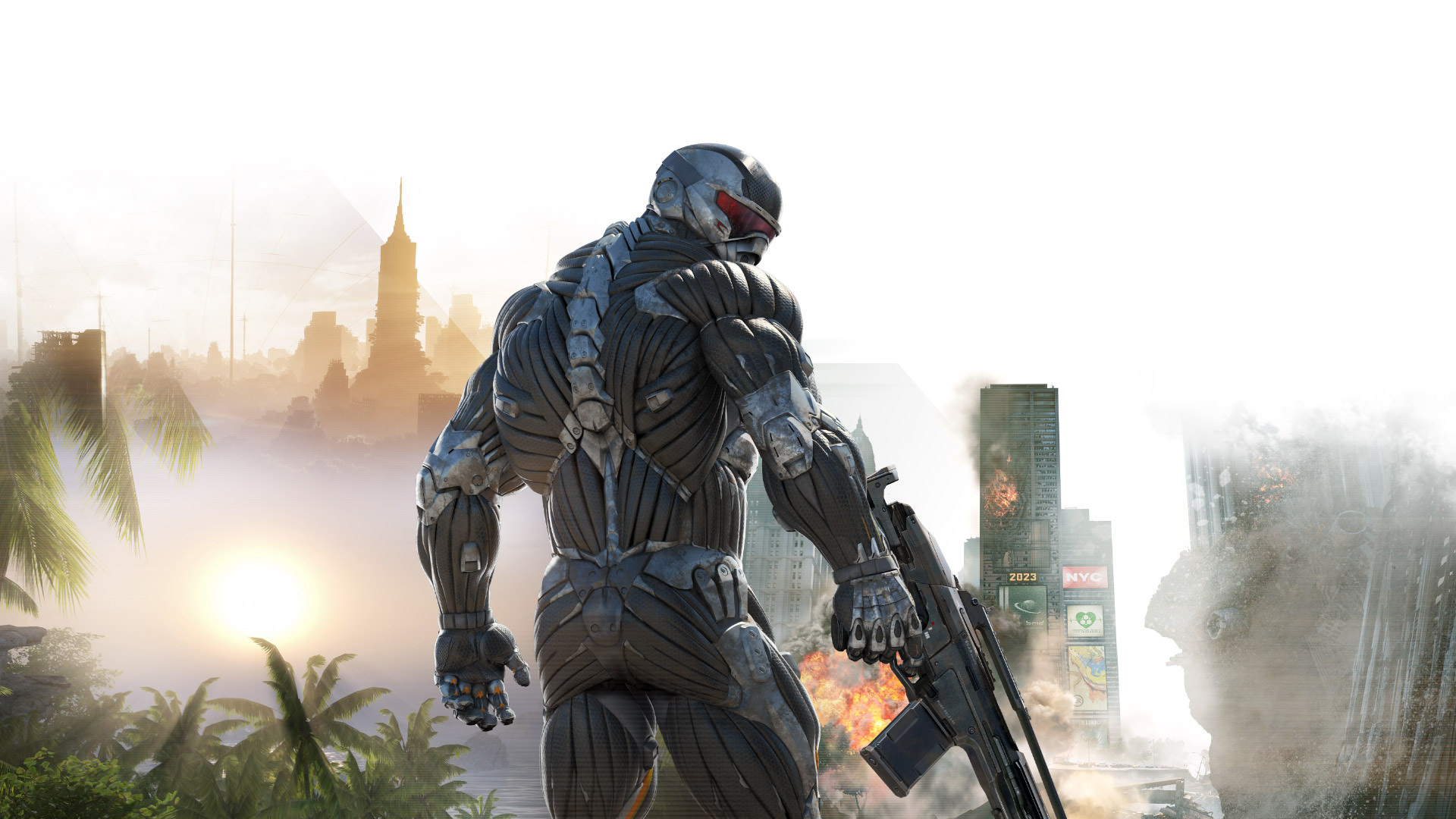
Crysis Remastered’s “most impactful patch” brings big improvements
by Carrie Talbot
Crysis Remastered has just got its "most impactful patch to date", which brings many key improvements to the FPS game's visuals, performance, stability, and more. The latest patch marks the game's third on our home platform, and Crytek has announced that it'll also be the last PC update for the Crysis Remastered Trilogy.
First up, the patch brings "significant GPU and CPU performance and stability improvements" to the game, as well as improved stability more generally. The patch notes don't elaborate on what these updates do, exactly, but given it's a graphically and technically intensive game - it is Crysis, after all - improvements that help make things run all the smoother can only be an exciting thing.
Elsewhere, the update introduces "various" fixes for Nvidia DLSS - the video rendering technique that aims to help you boost fps without sacrificing too much visual quality - as well as across art and rendering. There are also multiple audio issue and main menu fixes in the mix.
RELATED LINKS: Upcoming PC games, Best FPS games on PC
Ronald.phillips likes this
09 Feb 21:20
While You Wait for Horizon Forbidden West, Play Something Weird
by Swapna Krishna
Venture out of your comfort zone, maybe even spend time with some dinosaurs.
Ronald.phillips likes this
09 Feb 21:18
Willem Dafoe Likens His Acting Motives To A 1960s Sex Documentary
by Kaylee Dugan
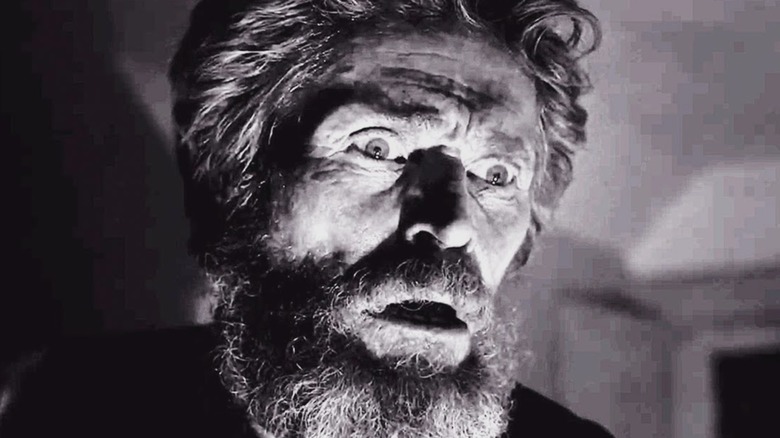
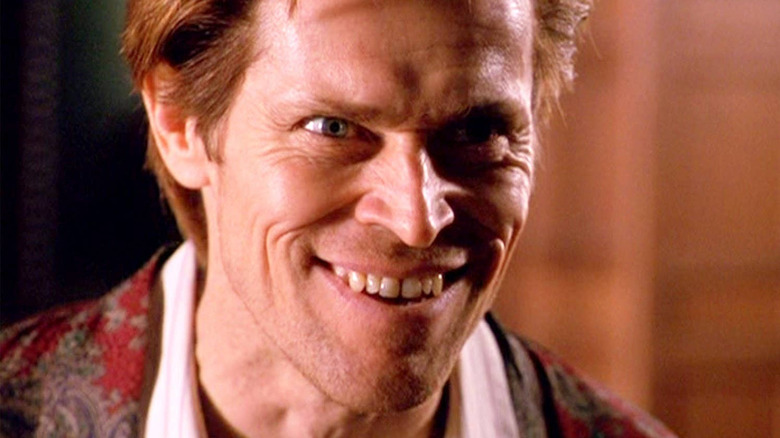
A great interview makes you feel like you've got a first class ticket into someones mind, but a great interview subject makes you feel like you were bumped from coach to first class for free. When a subject is smart, interesting, and open, you've got the perfect cocktail for an excellent read. Considering Willem Dafoe's talent, approach, and general vibe (as the kids would say), it's no surprise that his conversation with Mark Ruffalo in Interview is a pure delight. I mean, Ruffalo did fine, he seems like a nice man, but Dafoe jumps right off of the pages, delivering some sweet and sparking lines about how he views his acting career. The magic of Dafoe is that he seems just as charming as you think he would be.
And the crux of that interview is Dafoe's sweet, and somewhat sexy, relationship with acting. In a job that can come off as mainly ego-driven, it seems like most actors try to distance themselves from the less-pure aspects of their careers. When talking about their motivation to act in certain movies, or to act at all, you hardly see actors speak on the capitalist pros to being a successful professional actor, like good branding and gobs of money and power. Dafoe doesn't dig into that, although he does talk about his negative perception of the concept of ambition, but he does sidestep the self-serving stuff in a way that comes off as genuine. When Dafoe describes acting like it's a volunteer group project, you believe him:
"My father's whole identity was in his work, as well as my mother's. There's something about making things that gives you energy. Probably the scariest thing is a complacency or a kind of deep, deep depression about what your job is, what you're here for. Somehow when you're in a community of people making something, you feel useful, like you're the storyteller in front of the campfire. You're doing a service."
And Then He Starts Talking About A Sex Documentary
Dafoe doesn't stop there. He digs in deeper, referencing the power of pop culture and his privilege to be one of its purveyors:
"That service is playing up these stories. You're putting yourself in a situation where you're having an experience, and hopefully it's transparent and truthful enough that people can go with you and have that experience, too. It's a privileged position."
I love a good recommendation, and Dafoe seems more than happy to supply us all with a fun one. Towards the end of his thoughts about acting, and his own personal understanding of his career and his motivation to keep doing the damn thing, he cites Pier Paolo Pasolini's "Comizi d'Amore." I would describe the documentary myself, since that's my job and I too have my own complicated feelings and motivations for continuing to do it, but it sounds more fun when Dafoe does it:
"It makes me think of [Pier Paolo] Pasolini, who made a very beautiful documentary in the '60s where he went around Italy and interviewed all kinds of people about sex. It wasn't lurid at all, it was very straightforward and direct. I think you can see it on YouTube, 'Comizi d'Amore."'The thing that struck me is that people don't know how they feel about sex. They take their sexuality from society, or things outside of them, and then they try it on for size. It's not just about sexuality, it's about how people live. They learn from watching stuff outside of themselves."
Unsurprisingly, Dafoe is right, "Comizi d'Amore" is very much on YouTube. Also, who else would lean so heavily on a 1960s sex doc to describer their passion and the importance of their career? Dafoe is every interviewers dream. He's a subject that lets you sink into the background while his personality floats to the top. If Dafoe's drive to be in every big movie ever (from "The French Dispatch" to "Nightmare Alley" to "Spider-Man: No Way Home" just in 2021 alone) means we get more of this, what a treat for us.
Read this next: The 14 Best Film Acting Debuts Of All Time
The post Willem Dafoe Likens his Acting Motives to a 1960s Sex Documentary appeared first on /Film.
Ronald.phillips likes this
09 Feb 21:04
The Tragic Real-Life Story Behind The Exorcism Of Emily Rose
by Miyako Pleines
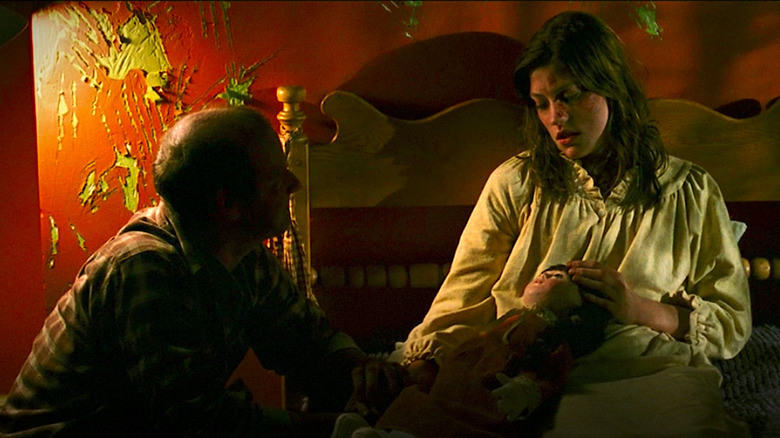
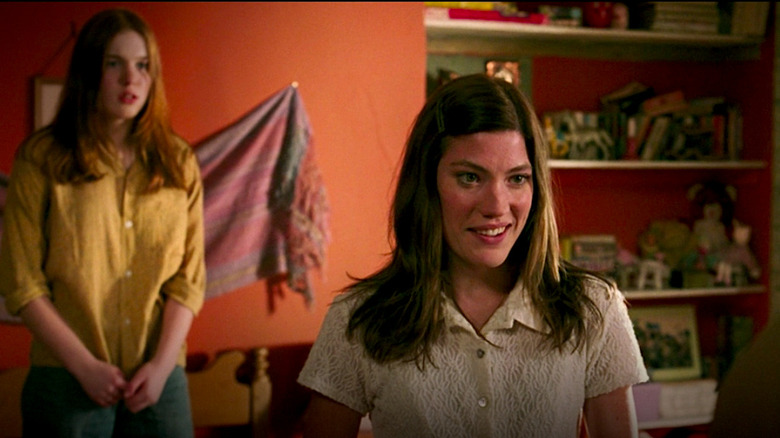
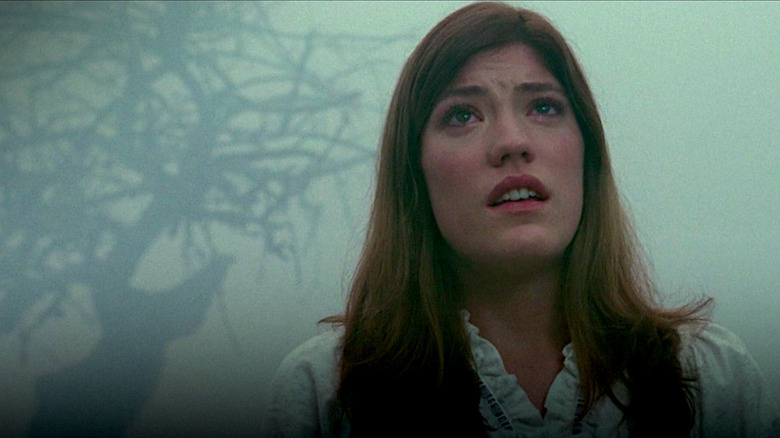
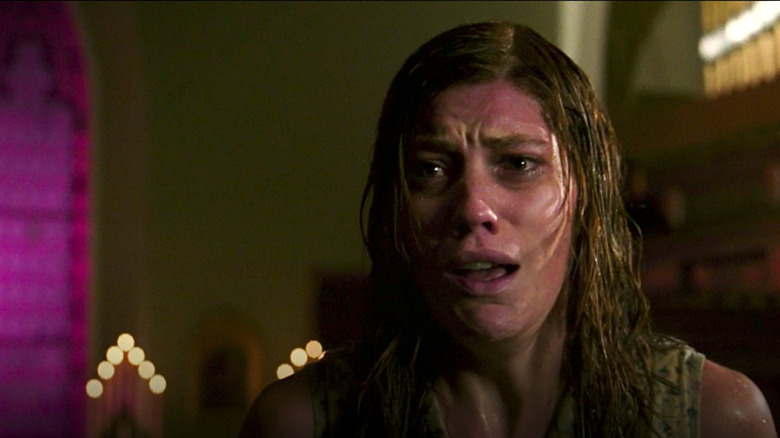
Horror movies are notorious for often basing their stories on real-life events. Famous horror films like "The Texas Chain Saw Massacre" and "The Conjuring" have taken some of their most terrifying details from things that actually happened to real people. And one of the scariest horror flicks allegedly based on a true story is Scott Derrickson's "The Exorcism of Emily Rose." The film is based on the real-life story of Anneliese Michel, a German woman who was believed to be possessed by the Devil and underwent multiple exorcisms to try to get rid of the demon. She, like the fictional Emily Rose, eventually died — and her family and the priests who performed her exorcisms were put on trial for negligent homicide.
In the movie adaptation of this tragic event, defense lawyer Erin Bruner (Laura Linney) takes on Father Richard Moore's (Tom Wilkinson) case, arguing that the priest is not at fault for Emily's (Jennifer Carpenter) tragic death. The prosecuting attorney, Ethan Thomas (Campbell Scott), is trying to prove that Father Moore prevented Emily from being treated for epilepsy and schizophrenia — which resulted in her death. Viewers learn of Emily's story through flashbacks that show what happened to the young woman before she died. The movie is unique in its blending of trial drama and horror, and it's mighty effective in its visceral flashbacks of Emily's final days. In the end, Moore is found guilty by the jury. However, they request that his sentence only be for the time he's already served while waiting for the trial to conclude. He is allowed to leave the courtroom as a guilty, but free, man.
"The Exorcism of Emily Rose" is a compelling horror film because of the way it takes on difficult topics like science and religion. The actual life story of Anneliese Michel differs from the film's depiction of Emily Rose, and to understand both the tragedy of her life and the film's power, it's important to reflect on what really happened.
The Real Emily Rose
Anneliese Michel was born in 1952 in Bavaria. Raised by a devoutly Roman Catholic family, she began to experience seizures at the age of 16. She was eventually diagnosed with epilepsy and put on various medications to help control the convulsions. However, the medications didn't seem to curb her increasingly erratic behavior, and her family began to look for help outside of the traditional medical field.
As her symptoms worsened, she developed an extreme aversion to anything symbolic of Christianity. She also reported seeing demonic faces and hearing demons talking to her. An article for Grunge reports that Michel began "compulsively doing hundreds of squats and genuflections a day — 400 to 600 by most accounts — until she eventually ruptured the ligaments in her knees." She also reportedly screamed incessantly and began to eat bugs, behaviors that were not abated by the use of doctor-prescribed medications. Reports vary on whose idea it was to perform an exorcism — some say Michel demanded it, others say it was a decision made by both her and her parents — but eventually, the family enlisted the help of a priest named Ernst Alst. Along with Pastor Arnold Renz, the two men set about exorcising Michel from her demons.
Anneliese Michel would eventually endure 67 separate exorcisms in her final days. During these intense periods, the Washington Post reports that she would often name the demons that possessed her, "and [she] even answered the exorcists' questions, explaining what was wrong with the church or why they were in Hell." Video recordings exist of these chilling conversations that Anneliese Michell had with Alst and Renz, and listening to them is both disturbing and heartbreaking.
Ultimately, Anneliese Michel passed away after enduring almost a year of multiple weekly exorcisms. Towards the end of her life, she refused to eat — which only sped up her worsening physical condition. When she died, she weighed less than 70 pounds, and her cause of death was reported as "malnutrition and dehydration that resulted from almost a year of semi-starvation during the rites" as reported by the Washington Post. Her parents, along with Alst and Renz, were put on trial for negligent homicide, and they were ultimately found guilty of negligent manslaughter and sentenced to "six-month prison sentences, which were suspended, and three years' probation."
Emily Vs. Anneliese
"The Exorcism of Emily Rose" does a decent job of portraying Anneliese Michel's tragic story. However, like all movies based on real events, some changes have been made. One of the most obvious is that Emily Rose isn't German but American. That being said, there are moments where the movie nods to the original nationality of Anneliese Michel. During the scene depicting Emily's exorcism, Emily begins speaking in German, a moment that harkens back to the actual tapes of Anneliese Michel fervently talking to Alst and Renz. If you're unfamiliar with the source material, you might miss this subtle nod, but it is a nice addition for those familiar with Michel's backstory.
It's also important to note that the only person on trial in "The Exorcism of Emily Rose" is the priest himself, Father Richard Moore. Emily's family has avoided sentencing in the death of their child, and Father Moore is the only one being charged with the same sentence as the real-life case of negligent homicide. The decision to avoid placing Emily's parents on trial along with Father Moore goes a long way toward highlighting the religious significance of Emily's death. Without her parents on trial, the case truly becomes solely about religious belief vs. scientific belief, making the outcome of the movie all the more impactful.
There are other smaller details that have been changed in the movie, like the fact that Emily is only 19 years old at the time of her death, and only one exorcism is ever performed on her (in reality, Anneliese Michel was 23 when she died, and as stated earlier, she underwent nearly 70 separate exorcisms). But the biggest difference between the film and the real story is the sentencing of Father Moore. During the real trial, the prosecution suggested that the only punishment for the priests and for the parents come in the form of a guilty verdict and monetary fines. However, this wish was not reflected in the real outcome. In the film, though, Father Moore is found guilty, but the jury requests his punishment be time served — meaning that he is free to go. This change in sentencing suggests that everyone had a role to play in the death of Emily Rose — or Anneliese Michel, depending on how you want to read it — and everyone hopes their own chosen belief systems could ultimately save her.
How The Exorcism Of Emily Rose Goes Beyond A Good Scare
When you sign on to watch a horror movie, you expect to be scared. Maybe you'll jump a little in your seat, maybe you'll find yourself grossed out at the gore. But if a horror movie fails to add any real suspense into the mix, it can often backfire. So what happens when you take a very real, very tragic story and try to adapt it into a horror movie? Well, one of two things can occur. You can either have a film that focuses solely on shock and scares but ultimately ends up devaluing — and possibly even disrespecting — the story's source material, or you can have a film that tries to tastefully straddle the line between its commitment to the horror genre and to remaining respectful to the original story.
In the case of "The Exorcism of Emily Rose," while not 100% successful, it is definitely a film that strives to achieve the latter effect. Because much of the movie is set in court, the film resists the urge to play into the dark and twisted psychology (and potential gore) of possession. Instead, the only times the audience is privy to the more intense aspects of Emily's condition are during flashbacks that are often prompted by another character recounting their memory of Emily. This means that the scarier parts of the film are few and far between, and when they do happen, they almost always serve a purpose. Rarely are there any gratuitous shows of gore and violence that feel unnecessary or out of place. Anneliese Michel's story is allowed to exist on screen in a way that seeks to shine a light rather than exploit.
In fact, the film's main argument seems to have less to do with objectifying the suffering of Emily, and more to do with drawing attention to the distinction between religious and scientific belief. If a person believes the practices of their religion will save them even if they ultimately end up doing more harm than good, does that constitute neglect? In the current social climate where personal belief is a hot-button issue, this is a question worth ruminating upon. Whether you believe Emily/Anneliese was truly the subject of possession, her story remains one worthy of telling.
Read this next: The 13 Best Movies About The Devil Ranked
The post The Tragic Real-Life Story Behind The Exorcism of Emily Rose appeared first on /Film.
Ronald.phillips likes this
09 Feb 21:01
Revive That Scorched Cast-Iron Skillet With This Pantry Staple - CNET
by David Watsky
Safely clean your skillet with this affordable cooking essential.

Ronald.phillips likes this
09 Feb 20:59
The Top 10 Penetration Testing Tools for Security Professionals
by Gaurav Siyal
A penetration tester needs to have the right tool at hand for inspection, detection, and mitigation of malicious attacks.

Ronald.phillips likes this
09 Feb 19:37
How to create PowerShell scripts on Windows 10 and Windows 11 with Visual Studio Code
by Dave W. Shanahan
Are you looking to learn how to create and run PowerShell scripts on Windows 10 and Windows 11? There is a way to do it, read on to learn how.
Ronald.phillips likes this
09 Feb 19:27

Proven Ways to Treat a Sore Throat (and the Internet Myths That Don't Actually Work)
by Meredith Dietz
A sore throat isn’t exactly the end of the world, but when you have that scratchy, hurts-to-swallow feeling, you’re surely looking for relief beyond an endless stream of cough drops. What other scientifically-backed, at-home methods can you use to soothe the pain?
Ronald.phillips likes this
09 Feb 19:27

These amazing towns and cities are completely abandoned
by David Pescovitz
CNN's Joe Minihane surveys a fascinating array of towns and cities around the globe that were once thriving and now have been totally reclaimed by nature. Above, a building in Kolmanskop, Namibia, a town that is slowly becoming buried in sand. — Read the rest
Ronald.phillips likes this
09 Feb 19:18
Microsoft announces Open App Store Principles to promote transparency and fairness
by João Carrasqueira
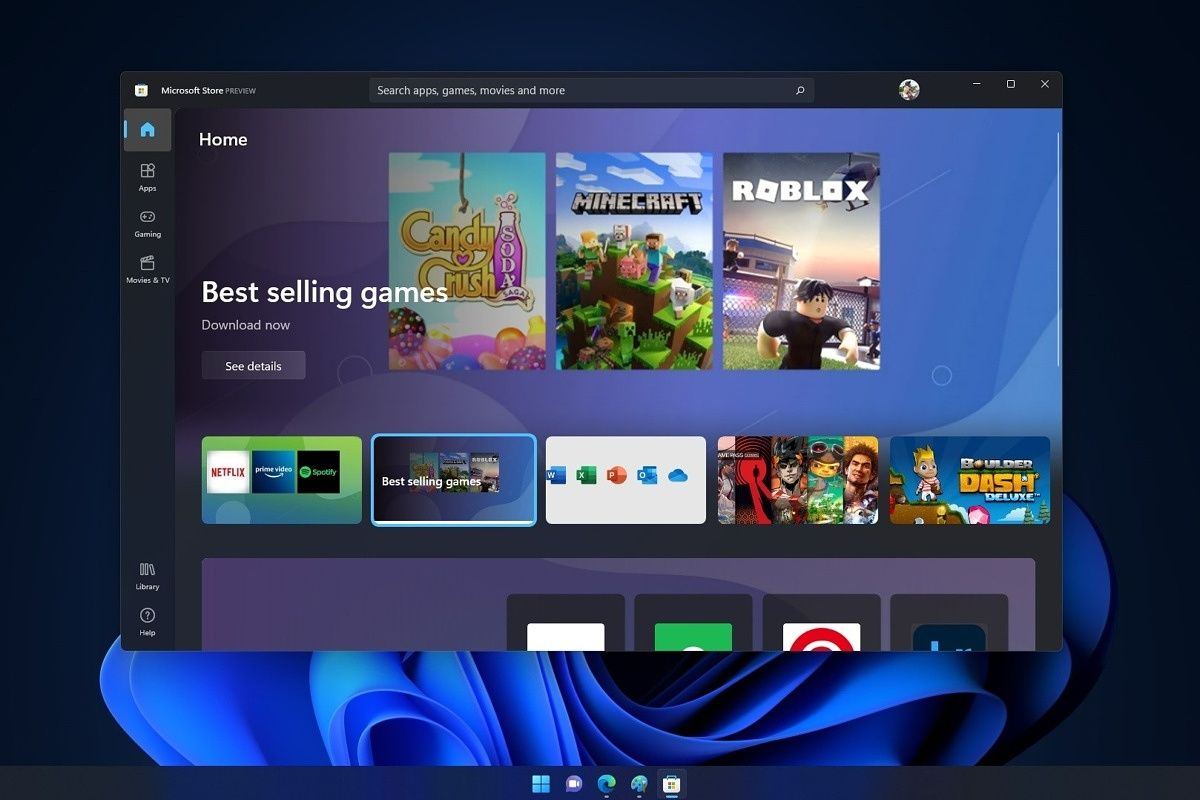
Microsoft has announced the Open App Store Principles, a set of guidelines that will apply to the Microsoft Store on Windows PCs to promote fairness, transparency, and choice. The announcement comes hot on the heels of the Open Markets Act, which passed the Senate Judiciary Committee just last week.
One of the big requirements of the Open Markets Act is that platforms like the Microsoft Store can’t forbid developers from using different payment systems for their apps. That’s something Microsoft had already announced it would be doing. Additionally, Microsoft won’t forbid developers from advertising different payments methods and developers won’t be required to offer more favorable terms on the Microsoft Store compared to other app stores.
This is all part of the Open Markets Act legislation, but it’s also very much in line with what Microsoft had been building up to on Windows. The company has already promised to allow other app stores to be available on the Microsoft Store, and developers can use their own monetization, too.
Aside from payments, Microsoft also wants to promote transparency and fairness in other ways. The company says it will continue to allow all developers to come into the Microsoft Store as long as they meet a reasonable level of quality and safety, and Microsoft will hold its own apps to the same standards that it uses for third-party apps so everyone competes on a level playing field. Microsoft also says it will treat all apps on the Microsoft Store equally and not give “unreasonable” preference to its own apps in rankings and promotions. The rules for marketing and promoting apps on the Microsoft Store will also be clear and transparent.
However, Microsoft was quick to clarify that the Open Markets Act does not target dedicated platforms like video game consoles. As such, the Open App Store Principles related to payments won’t apply to the Microsoft Store on Xbox, and games will still have to use Microsoft’s payment system, just as competing consoles do. As Microsoft mentions, console hardware is generally sold at a loss in order to create a viable ecosystem for developers, and revenue from digital store sales is essential for businesses to be sustainable.
Microsoft did commit to applying the same principles for transparency, fairness, and quality on the Xbox store, though, and the company says it will continue to adapt to the needs of developers and gamers.
The post Microsoft announces Open App Store Principles to promote transparency and fairness appeared first on xda-developers.
Ronald.phillips likes this
09 Feb 18:50
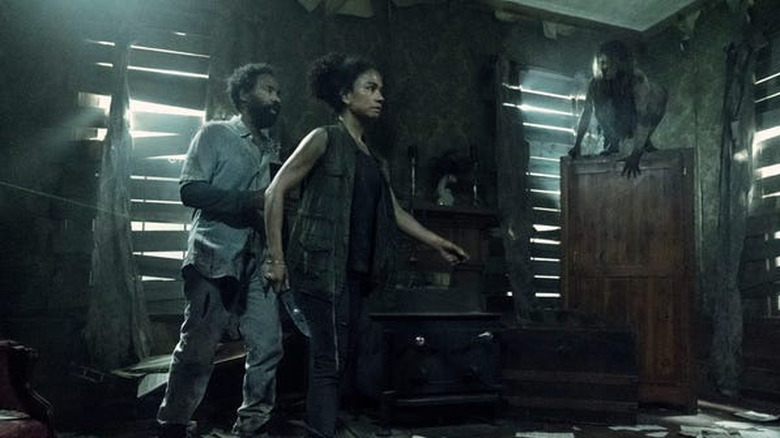
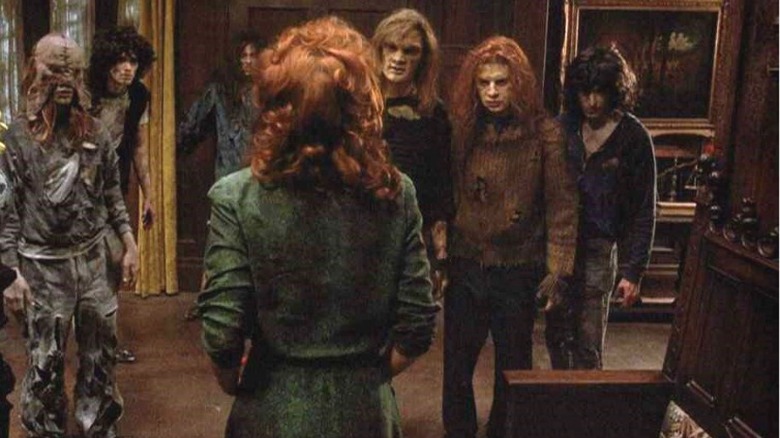
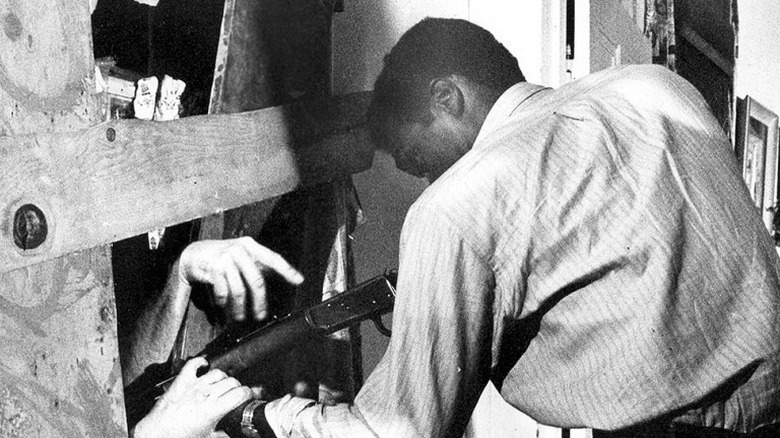
This Was The Walking Dead's Love Letter To The Legends Of Horror
by Anya Stanley
Greg Nicotero is the best kind of busy. Chugging along with the same energy that made him a multi-hyphenate in the horror field and beyond, the special effects artist has been unable to "take the ship out of the dock" when it comes to his usual gig directing the season premiere of "The Walking Dead." That time has been spent helming Shudder's "Creepshow" revival series.
The "Day of the Dead" makeup effects wizard has directed a total of 33 episodes of AMC's long-running zombie series, but the one that has gotten the most chatter lately came in Season 11. "On the Inside" has a few plots going on, but Connie (Lauren Ridloff) and Virgil (Kevin Carroll) get the most harrowing thread, finding themselves trapped in a house with feral people living in the walls. If you got vibes of Wes Craven's 1991 creepfest "The People Under the Stairs" (or a certain 1968 midnight movie) while watching the events of the episode unfold, you can thank Greg Nicotero.
Sitting down with Syfy Wire, Nicotero unpacks the episode and reveals some of the experiences he pulled from to bring audiences one of the scariest episodes of "The Walking Dead" to date.
'I Felt Like I Was A Well-Oiled Machine.'
Beginning with his apprenticeship under famed SFX artist Tom Savini and branching out to work with genre giants like Sam Raimi, George A. Romero, Don Coscarelli, and Wes Craven, Greg Nicotero has enjoyed a long and fruitful career. However, it was his collaboration with Craven that guided Nicotero as he brought "On the Inside" together. He served as SFX artist on "The People Under the Stairs," which features wild children who live in the walls of a house inhabited by one of the kinkiest couples in horror. He tells Syfy:
"I like the idea that we were able to step into the horror roots of Wes Craven's and John Carpenter's world because I worked on a movie called 'The People Under the Stairs' back in the day, so I was channeling some of the great horror directors that I had worked with in the past. Plus having two seasons of 'Creepshow' under my belt definitely kept me sharp which I think was something really unique because with 'Creepshow' you get three days per story."
"So, I know how to shoot fast and I know how to shoot efficiently. I know how to work with actors and I know how to get material done that's good. It's not just shooting it, it's actually shooting it well. Coming into this after having been shooting for a year straight, I felt like I was a well-oiled machine, as much as I can be for me, at that particular point."
When There's No More Room In Hell...
Having worked with the Godfather of Gore himself (he got his first gig on Romero's "Day of the Dead" in 1985), Greg Nicotero doesn't throw around comparisons to George A. Romero's work lightly. But in the course of filming "On the Inside," he couldn't help but feel the influence of the late director as he shot the undead swarming over the set:
"Once we had the movement, I always looked at the ferals as a cat and mouse. They like playing with their food before they eat it. And there's the idea that they're in the room with you watching you. They're very methodical about the way that they hunt you down, and that was something that I really enjoyed. And building the set that we did in the hallways that had that maze feel to it, the opening is pure George Romero out of 'Night of the Living Dead.' When those zombies are climbing against the windows, I was like, 'Guys, this is the closest that we've ever done to shooting something like 'Night of the Living Dead.'' I felt like I had a great opportunity to channel some of these other classic horror moments from these directors."
Not bad company to be in.
Read this next: The 20 Best Zombie Movies Of All Time
The post This Was The Walking Dead's Love Letter to the Legends of Horror appeared first on /Film.
Ronald.phillips likes this
09 Feb 18:50
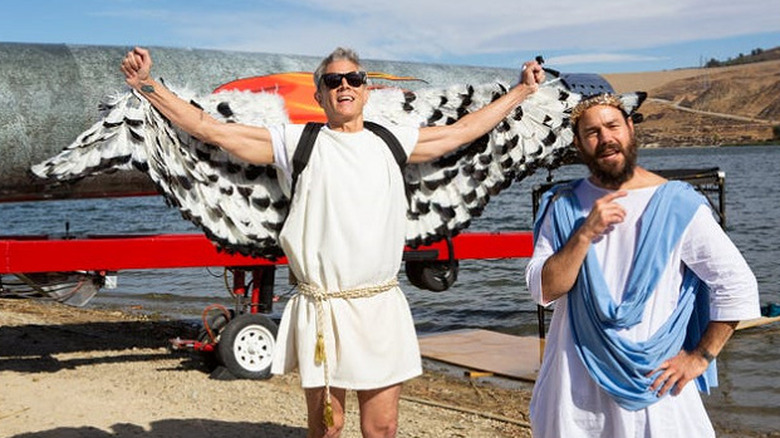
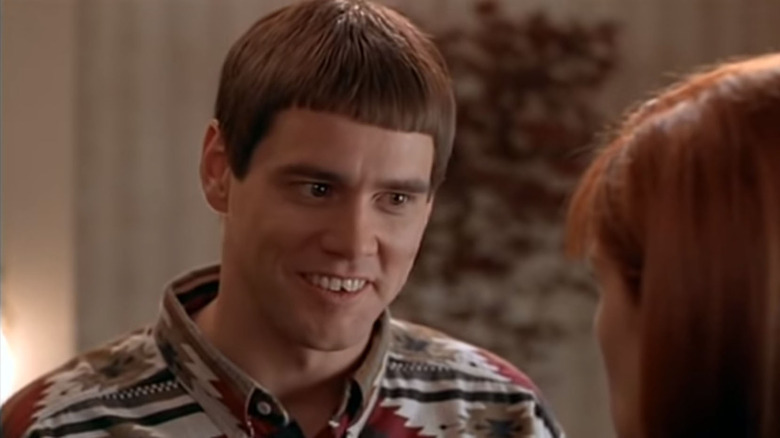
Johnny Knoxville And Chris Pontius On Wildboyz And The Future Of Jackass
by Anya Stanley
"Jackass Forever" just dropped last Friday across theaters, and the 20-plus year old cringe comedy brand laughed all the way to the bank. The fifth installment in the "Jackass" feature film franchise (its first sequel in 11 years) raked in a $23.5 million opening over its first weekend, rocketing past Lionsgate's "Moonfall" at $9.9 million over February 4-6. It's almost as if there is an evergreen, universal appeal to seeing grown men leap into cacti patches and slap each other in the nuts. Here at /Film, there's nothing but love for the goofy band of merrymakers; Josh Spiegel hails it as "enormously, outrageously funny" in his glowing review, while Lex Briscuso got sentimental over the legacy of the late, great Ryan Dunn. Overall, the "Jackass" crew -- that's Johnny Knoxville, Chris Pontius, Dave England, Steve-O, Ryan Dunn, Ehren McGhehey, Preston Lacy, Jason Acuña, and (in one scene) Bam Margera, as well as new blood Sean "Poopies" McInerney, Jasper Dolphin and his pops Compston "Darkshark" Wilson, Zach Holmes, Rachel Wolfson, and Eric Manaka -- seems to have brought sorely-needed levity to a pandemic-weary audience.
Whilst making the rounds promoting the new installment, Knoxville and Pontius sat with Reddit for an Ask Me Anything Q&A session, under the handle u/jackassworld. Naturally, fans wanted to know if the aging and increasingly brittle bones of the troupe can stand up to more sequels, or possibly a series return to "Wildboyz," a traveling proto-vlog stunt series co-hosted by Pontius and Steve-O. /Film is tentatively thrilled to report that the duo have given a definite ... maybe. Says Knoxville and Pontius:
Half ass stunt men are terrible long term planners, so I'm not sure what the future hold but we will definitely do things together. As for another Jackass, who knows...we could do one, we could not do one. But there is a possibility - JK & CP
So You're Telling Me There's A Chance...
That wasn't a definite "no," so hope springs eternal for Dickhouse Productions projects. Further down the AMA, u/FoxMcLOUD420 asked, "Pontius, what are the chances of a wildboyz reboot? Loved the series growing up as a kid...." Pontius (aliases Party Boy, Bunny the Lifeguard, Garbage Man, Stud Boy, and Pontius the Barbarian) offers a glimmer of hope and a casting suggestion to boot:
I would love to do a Wildboyz reboot, I don't think it will be called Wildboyz, but I would love to do another nature/adventure show. And I want Knoxville to be on it with me. - CP
During its 2003-2006 run on MTV, "Wildboyz" had its intrepid hosts committing stunt-centric shenanigans around the world, often exponentially more dangerous than those seen in the "Jackass" series or films. Pontius and Steve-O would taunt death by dressing as zebras and approaching a pack of lions, or receiving as gentle a massage as an elephant could deliver. It's unlikely the late conservationist Steve Irwin would approve of the stunts, which the gentlemen would jump into with no experience, but their bravery and culturally accurate narration regarding the Indigenous peoples of each nation made the show a worthy watch, even before a scorpion stings Steve-O's buttcheeks. Father-of-three Johnny Knoxville might sit out some of the rowdier challenges; a run-in with a bull in "Jackass Forever" benched the stuntman for a good chunk of production, and he has since sworn off dangerous stunts like that for his family's sake. But it's hard to imagine the "Action Point" star and Evel Knievel megafan turning down the chance to dance with a snake or tickle an eel. Be honest, you'd tune in, too.
Read this next: 20 Underrated Comedy Movies You Need To Watch
The post Johnny Knoxville and Chris Pontius On Wildboyz And The Future Of Jackass appeared first on /Film.
Ronald.phillips likes this
09 Feb 18:49
The Book Of Boba Fett Ending Explained: Honor Prevails
by Ryan Scott
After seven weeks, a whole lot of discussion, and much non-linear build-up, "The Book of Boba Fett" has reached its conclusion with Chapter 7 of the "Star Wars" show now available on Disney+. As anyone would expect from anything connected to a galaxy far, far away, the conclusion brought a lot to the table and left much up for discussion. That being the case, we're here to break down the ending of "In the Name of Honor" and discuss what happened, as well as what it all means.
Warning: major spoilers ahead for "The Book of Boba Fett" finale. Proceed with caution.
Never Tell Them The Odds
The episode largely focuses on the long-awaited showdown between the Pyke Syndicate and Boba Fett's gang who are held up in the remnants of the cantina that was blasted to pieces in the previous episode. The Pyke came out in force to meet Boba, Mando, Fennec, and the rest of the rag-tag crew the former bounty hunter has put together, and they brought a few surprises. They paid off various sects of the town to rise up against Boba's forces which put them all in a tough spot. Not only that, but they brought gigantic and deadly Scorponek droids to the party. It kept Boba and Mando on their heels virtually the whole time.
However, Mando and Boba largely stare down all of this in the name of their somewhat differing codes of honor. As does everyone else who has banded with Boba in an attempt to make Mos Espa a better place, and that all circles back to the title of the episode. Despite the odds, the overmatched rose up to fight the good fight, and that's been a theme in "Star Wars" going all the way back to the scrappy Rebellion taking on the Empire and blowing up the Death Star. In that way, it was very much a conclusion befitting the franchise.
This is also why the people of Free Town decided to show up at the 11th hour to help save Boba and Mando from certain doom. Even though Cad Bane had gunned down Cobb Vanth in the street, they felt the need to show up and fight alongside Boba to honor their agreement and to try and make Tatooine a better place. Come what may, they knew that sitting on the sidelines and doing nothing would only allow the Pykes to do as they please bringing crime and problems to their now peaceful town. Despite the overwhelming odds, it came down to doing what was right.
The Bounty Hunter Showdown
One of the major events towards the end of the episode is a long-awaited showdown between Boba Fett and Cad Bane. These two characters were familiar with one another from "The Clone Wars" but there were some deleted scenes/episodes that never made it to air that actually had some influence over what went down here. Because these two duked it out in an episode that never made its way officially into the world, this duel carried some extra meaning for those who had any attachment to these characters. Earlier in the episode, Cad tries to goad Boba into a fight at an inopportune moment. Fennec talks him out of it and it demonstrates a change in the ruthless bounty hunter we once knew. Fans will likely feel one of two ways about that but "The Book of Boba Fett" has largely been about offering a changed version of this character.
The showdown does, however, come much later after the Pyke have largely been handled (in no small part thanks to Grogu, who decided to be with Mando rather than train with Luke). Cad wants to prove something, perhaps to himself, and the two have a very old-school, western-style shoot out in the streets. Two old men whose best days are arguably behind them settling scores with guns while the sun shines high in the sky. At first, Cad definitely gets the better of Boba, shooting him a few times with his quick draw. But it's when Cad decides to monologue and remove Boba's helmet to finish that job where the tide turns.
Boba uses the training he acquired from his adopted Tusken Raider family to pull a quick one on Cad using his Gaffi Stick — not his blaster — to take out Cad. In a moment of old-school, cold-blooded Boba Fett goodness, he stabs Cad in the chest, leaving him dead in the street. Or does he? We do get that lingering shot of Cad's chest armor beeping that might indicate he's not as dead as some think. At the very least, he was left for dead and Boba came out on top. Again, the man with a code of honor got the better of the exchange and that was the simple theme that runs through this entire episode.
Spectacle Conquers All
As mentioned previously, Grogu shows up to reunite with his pal Mando, seemingly for good this time — but he does happen to have a better grip on his Force powers. That becomes incredibly useful during the climactic battle in the streets of Mos Espa as the little guy not only helps to focus Mando but he actually becomes a crucial element in the victory against the Pyke's forces. As does Boba, who ends up paying off something from much earlier in the season to defeat the giant, city-wrecking droids that mere blasters are simply no match for. Yes, Boba heads back to his palace to get his Rancor, which he rides into the city in a pretty epic bit of action. Rancor vs. Scorponek droids. Let them fight, as it were.
The whole episode was a bit shoot-out, but this took the action to another level. We get to see the Rancor dismantle these droids bringing some monster movie-esque spectacle to the table. For better or for worse, Chapter 7 of the show was more focused on spectacle than anything else. That seems to be why Mando and Grogu were brought in for this spin-off show, and that's certainly why the Rancor was set up earlier on in the season. It's all about delivering on the action.
Unfortunately, the Rancor gets loose which leads to some more peril aside from the Pyke. When all hope seems lost, it is Grogu who comes to save the day. Using his enhanced Force powers, the one they call Baby Yoda managed to calm the deadly beast with the wave of a hand and nothing more. Only this time, he didn't pass out as he did at the end of "The Mandalorian" Chapter 2 when we first see him use the Force to calm a beast. Grogu has evolved. With that (mostly) comes peace, save for Fennec dealing with the Mayor and the head of the Pyke, taking them out with precision to ensure that their ugly business is good and truly done on Tatooine.
The Honorable Ones Win The Day
The very end of the show sees Boba and Fennec walking the now peaceful streets of Mos Espa, with its citizens grateful to have their new leader in charge. He intended to rule with honor as opposed to fear, and Boba delivered on that promise. We also see Black Krrsantan healed up and patrolling the streets alongside the speeder gang. All is well. Perhaps too well for Boba's liking, as it turns out, as he says to Fennec that they're not cut out for this, seemingly implying that he is going to leave the throne behind.
The implication here seems to be that he is going to let Black and Drash's crew run the show. They fought with honor and are honorable people who again manage to come out on top as a result of all of this. Good prevailing over evil and all that jazz. But what does this mean for Boba? What is he going to do if not sit on the throne that Jabba once occupied? He sure stirred up a whole lot of crap to secure the throne. Was all of this for nothing? In a sense, no, given that Mos Espa now knows peace but from our main character's perspective it does seem a bit dumbfounding on some level that he so quickly seems ready to walk away from the thing that put this all in motion.
In any event, "The Book of Boba Fett" ended on a spectacle-first note that saw those with honor walking away clean and happy, while those without honor mostly winding up dead. That may be a reductive take on "Star Wars" but that is often what this franchise boils down to, so the shoe does fit.
Read this next: Star Wars Movie Villains Ranked Least To Most Powerful
The post The Book of Boba Fett Ending Explained: Honor Prevails appeared first on /Film.
Ronald.phillips likes this