Shared posts

24 Feb 22:55

What the Codes on Your Car’s Tires Are Telling You

by Jeff Somers

If you own a car, you also own at least four tires—five if you’ve got an actual full-size spare in the trunk instead of one of those humiliating donuts. At every level from single-car owner to tire yard proprietor, there are many tires to be owned. The point is, most of us do. Still, very few of us understand how to…

Read more...

24 Feb 22:54

5 Reasons Multi-GPU Gaming Setups Are Done for Good

by Jowi Morales

When someone talked about the ultimate gaming setup a few years ago, most enthusiasts would say you'd better have two or three video cards installed on your rig. But today, almost no one talks about multi-GPU setups.

24 Feb 22:47

You're Not Washing Your Throw Blankets Enough (and It's Gross)

by Sarah Showfety

Throw blankets—along with mattresses and duvet covers—are the types of household items whose cleanliness tends to be taken for granted. Because we may only use them an hour or two each day, it’s easy to forget them when laundry day arrives. But considering they largely exist in common areas, where all manner of food,…

Read more...

24 Feb 22:46

Russian troops sieze control of Chernobyl. Nobody knows why [Followup]

24 Feb 22:44

10 of the Best Flowering Ground Covers (to Spruce Up Your Boring Grass)

by Jeff Somers

If you have a standard lawn of grass outside your home, you may have had occasion to wonder if our ancestors were crazy. How in the world did grass become the de facto ground covering? Grass is a pain in the ass: It requires constant tending, looks janky if you don’t mow it, will turn brown on you in a heartbeat if…

Read more...

24 Feb 22:43

How to Transform Your Shower Into a Spa-Like Oasis (on the Cheap)

by Sarah Showfety

Your bathroom should be a relaxing oasis, right? At least that’s what we’re led to believe. It’s hard to think about optimal relaxation when you primarily use yours to bathe small children who leave tablespoons of toothpaste in the sink and try to “paint” the walls with soapy water and bath crayons on a nightly basis.…

Read more...

24 Feb 22:19

Ukrainian game studios respond to the Russian invasion

by Alice O'Connor

This morning, Russian armed forces began an invasion of Ukraine. Several Ukrainian video game studios have posted public responses to the invasion, with a range of sentiments.

Read more

24 Feb 22:14

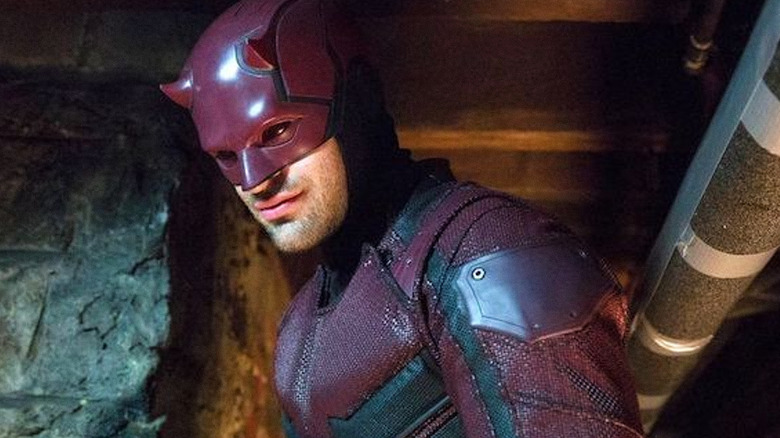
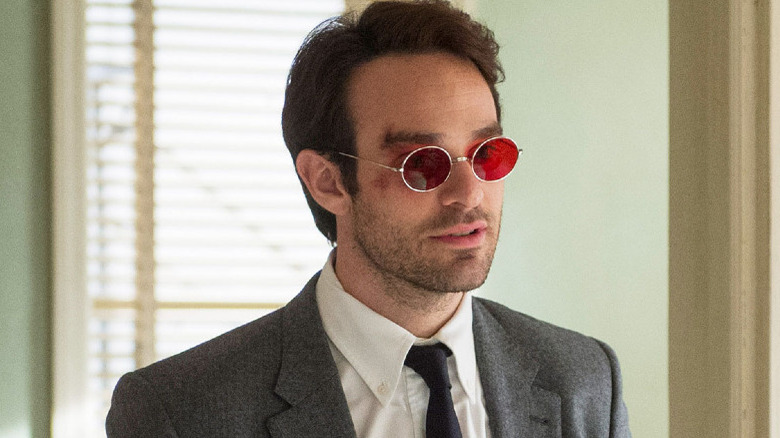
No One Cared About Daredevil At Charlie Cox's Spider-Man: No Way Home Screening

by Debopriyaa Dutta

Apparently, no one cared about the Daredevil cameo during Charlie Cox's screening of "Spider-Man: No Way Home," which is baffling, to say the least. Cox, who played the titular character in Netflix's Marvel show, did not get quite the reaction he was hoping for during his cameo scene from theater audiences, which is a stark contrast to the (almost) unanimous cheers and hoots that the scenes starring the other Spider-Men (Tobey Maguire, Andrew Garfield) received. Netflix's "Daredevil" ran for three seasons, and consisted of characters such as Kingpin (Vincent D'Onofrio), Karen Page (Deborah Ann Woll), Foggy Nelson (Elden Henson), Elektra (Elodie Yung), Bullseye (Wilson Bethel), and The Punisher (Jon Bernthal).

No Cheers For Matt Murdock

Having wrapped "Daredevil" by 2020, Cox was excited at the chance to return in a cameo role in "No Way Home," hoping to do more with the character in a far greater capacity. Well, good news for "Daredevil" fans: according to Radio Times, Cox has confirmed that he will be reprising his roles as the lawyer/vigilante for a future MCU project, although details about the same are scant. Nevertheless, it is pretty shocking that Murdock's cameo received such a poor response during the screening he attended, as the Netflix show was pretty well-known and well-received by the fanbase.

Murdock's cameo was a surprise, as it was hidden from promotional material prior to the release of the film, and he only appears in a single scene, offering Peter Parker (Tom Holland) legal advice. This happens right after Parker's true identity is revealed to the world at large, and the film also hinted at his abilities after he expertly catches a brick thrown at Parker's window without missing a beat. Overall, it is a pretty cool moment and a nice nod to "Daredevil" fans. (Side note: In the screening I personally attended, Cox's cameo was greeted with overwhelming cheers, and everyone in the theatre was ecstatic about the super-cool "brick-save" moment.)

Per Cox, he had snuck into one screening with his wife to witness the reaction to his cameo first-hand, and the results were pretty disappointing:

"It's funny, I got so many text messages and so many calls about that moment in the cinema. My nephew sent me a recording of everyone cheering. So I snuck into a movie theater near where I live and literally stood in the corridor... and, sadly, my experience was it was dead f****** quiet! I was so disappointed – my wife was with me and she was recording me because it'd be fun to have that moment of everyone cheering, and then... tumbleweed!"

This does seem to be an unfortunate, one-off incident, although Cox's reaction is understandable. Nevertheless, it is good news that he will be reprising the role soon in some capacity. Given the character's New York roots and grounded approach in terms of being a vigilante by night, it makes sense for Daredevil to appear in a crossover with other characters of a similar nature. Only time will tell.

Read this next: Spider-Man Movies Ranked From Worst To Best

The post No One Cared About Daredevil at Charlie Cox's Spider-Man: No Way Home Screening appeared first on /Film.

24 Feb 22:13

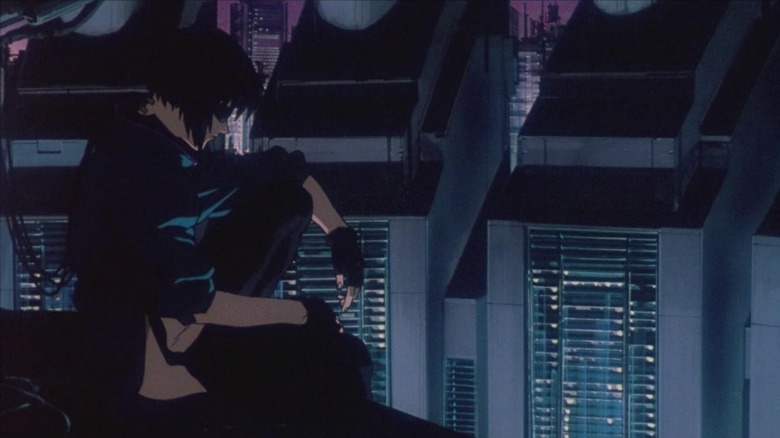
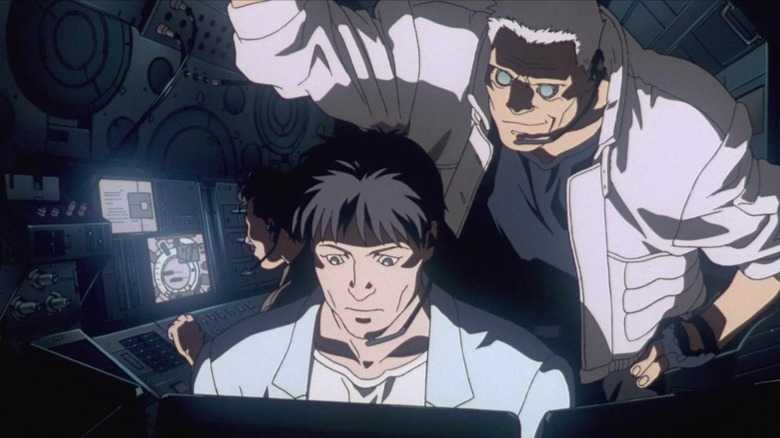
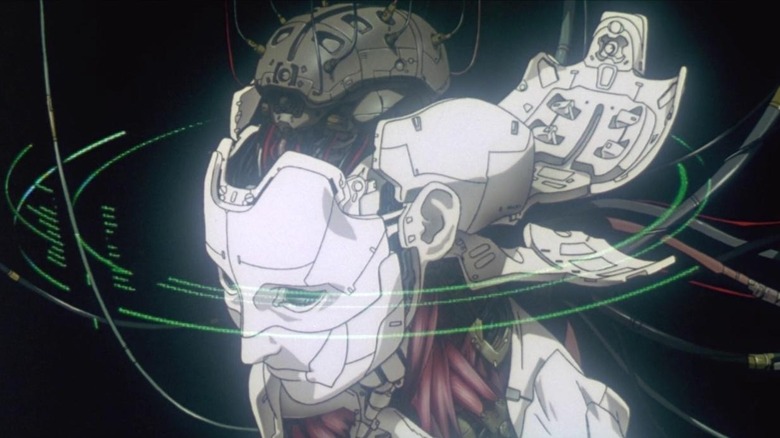
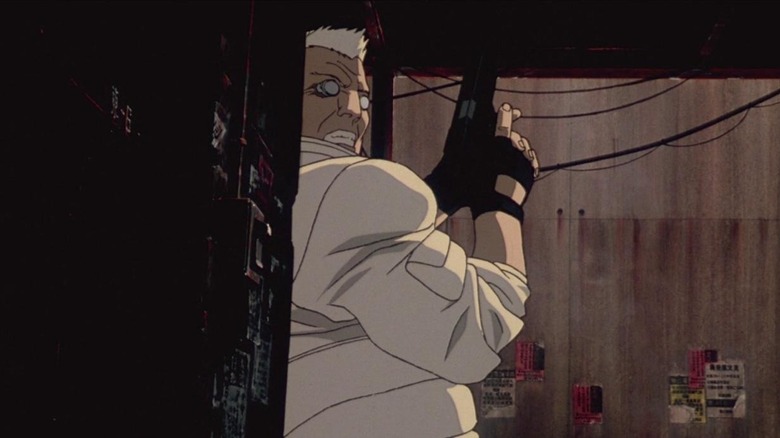
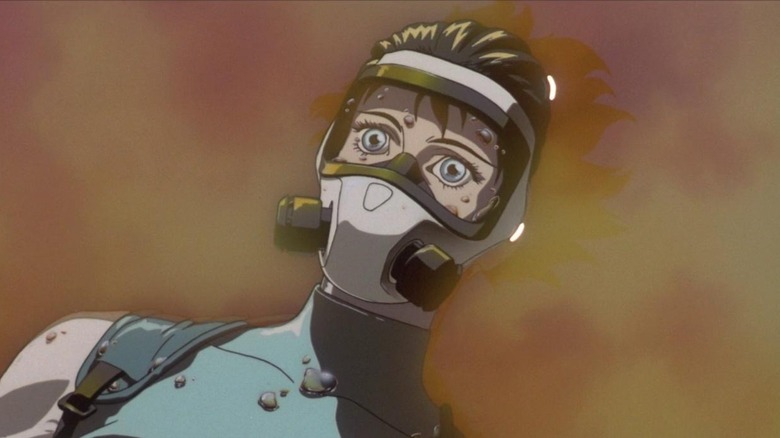
The Classic Anime That Inspired The Matrix

by Adam Wescott

It's hardly a secret that 1999's sci fi martial arts blockbuster masterpiece "The Matrix'' was inspired by 1995's generation-defining cyberpunk film "Ghost in the Shell." "The Matrix" is packed with references to its predecessor: head jacks in the back of the neck, exploding watermelons, a woman in tight clothing falling from a great height through the city. Even the green color grading in "The Matrix" looks to be influenced by "Ghost in the Shell." 

Yet anybody who's seen both movies can tell you the experience of watching one is nothing like the other. "The Matrix" affects a layer of cool, but at its heart it is a deeply sincere action movie about a young person overcoming self-doubt to challenge a cruel and unyielding system. By contrast, "Ghost in the Shell" is a meditative tone piece disguised as a cop thriller. Comparing the two is akin to saying "Mad Max: Fury Road" is an equivalent experience to "Stalker." That doesn't mean that "The Matrix" is better or worse than "Ghost in the Shell," but despite their similarities, they are distinctly different movies. But that leaves open the question: what is "Ghost in the Shell," really?

A Dim Image In The Mirror

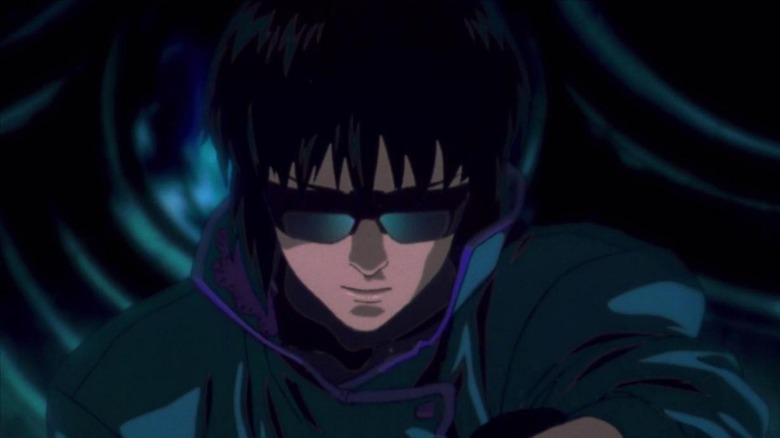
"Ghost in the Shell" is a movie about a woman named Motoko Kusanagi who works for a counterterrorism outfit called Section 9. Motoko is a cyborg, a powerful robot shell housing a human brain. Over the course of the film she and her coworkers come into contact with the Puppet Master, an infamous hacker who may be more than they appear to be. Yet the plot's twists and turns serve more as punctuation than as the heart and soul of the film. Its "ghost" (as Motoko would put it) lies somewhere else.

An early scene follows Section 9 as they pursue a criminal through the city streets. The sequence is framed from the perspective of the criminal; in a crumbling alleyway, he takes a moment to breathe and restock. Motoko does not have to breathe, because she is a machine. She falls from the sky, invisible, and effortlessly beats the criminal to a pulp. It's an exciting sequence, but also an uncomfortable one. Motoko is a tool, an agent of the state. She does her job thoroughly but dispassionately. What does it mean to be Motoko Kusanagi, whose body was bought in exchange for power? Motoko grapples with these feelings throughout the film, but where those feelings emanate from is itself a mystery. Her heart is constructed, her consciousness nothing but a spirit. That is "Ghost in the Shell."

It's Just A Drop In The Bucket

"Ghost in the Shell" is a film about atmosphere (or as zoomers might say, "vibes".) Of course the big action beats are famous. But the sequence where Motoko dives deep into the ocean to better understand her connection to her body and consciousness is just as important. Throughout the film, the plot is repeatedly put on hold as the animated "camera" navigates streets of crumbling architecture without a single word of dialogue. The viewer is impressed with a sense of overpowering loneliness. If "The Matrix" is a film about revolutionizing society and the self, "Ghost in the Shell" is all about that creeping feeling of disassociation. It's about a world where corporations have won, governments dictate world affairs via covert ops squads, and the power of technology and the internet restricts us rather than empowers us.

The tone of "Ghost in the Shell" is very different from its source material, despite sharing characters and certain plot beats. The film's director, Mamoru Oshii, is likely the one responsible. He made his name adapting the romantic comedy comic "Urusei Yatsura" into a hugely successful anime, but in the process, took such great liberties with the source material that fans sent him razor blades in the mail. Of course, Oshii was just the head of a convergence of Japanese anime talent. Future Oshii collaborator Kazunori Ito wrote the scripts, master animator Hiroyuki Okiura designed the characters, and Kenji Kawai composed a score nearly as influential as Shoji Yamashiro's for "Akira." Animator Mitsuo Iso, whose scenes in 1997's "End of Evangelion" would make him a legend, infamously prepared for the famous "spider tank" sequence in "Ghost in the Shell" by trapping a spider in a jar to better understand its reactions. Each of these figures was either an icon in the Japanese anime film industry, or was on their way to becoming one. "Ghost in the Shell" put them all under one roof.

Overspecialize And You Breed In Weakness

Of course, "The Matrix" is a historic production in its own right. The comics artist Geof Darrow ("Hard Boiled,") Chinese martial arts choreographer Yuen Woo-ping and the diligence of actors like Keanu Reeves and Carrie-Anne Moss were all essential in making the film what it was. If the film is more overtly populist than "Ghost in the Shell," with its rousing tale of a chosen one overthrowing a machine empire, that hardly means it is "dumbed down." The Wachowskis have simply always had different priorities as artists than Oshii. Laurence Fishburne's character in "The Matrix" takes great pleasure in explaining Baudrillard to mass audiences. By comparison, characters in "Ghost in the Shell" quote liberally from the Bible but never explain themselves. One film brilliantly condenses politics and philosophy into something anyone can understand, while the other is content to leave audiences grasping for meaning – because that uncertainty itself is the point.

For me, the closest ties between "The Matrix" and "Ghost in the Shell" have less to do with scene-by-scene references and more to do with ground-up creative decisions. In the "Animatrix" featurette "Scrolls to Screen," anime producer Hiroaki Takeuchi says of the Wachowskis:

"They took angles that we used quite a bit in Japanese manga, the direction of Japanese animation, Hong Kong wire action, and successfully combined them into a cohesive whole." 

Similarly, Yoshiaki Kawajiri (director of "Ninja Scroll," another touchstone leading the way to "The Matrix") noticed the way the Wachowkis "edited their scenes was very similar to the way I edit my scenes. But," he says, "when you do it in live action it has a totally different feel." 

In conceptualizing "The Matrix," the Wachowskis did something very impressive: rather than simply copying the art they respected, they internalized the lessons and built something inspired by that earlier material but not devoted to it. Both Takeuchi and Kawajiri clearly recognized how thoroughly the Wachowskis had digested the pacing and structure of manga and anime and came to respect them as artists in turn.

Puppet Without A Ghost

Furthermore, one of the defining aspects of the cyberpunk genre is cross-cultural exchange. Classics like the novel "Neuromancer" and the film "Blade Runner" were inevitably brought to Japan, leading to writers, animators and directors producing their own material, which in turn further inspired artists abroad. At its worst, this process leads to racist and thoughtless art that blindly copies the aesthetics of cyberpunk without considering its structure or themes. At its best, artists produce work like "Ghost in the Shell," which (just like "The Matrix") are in dialogue with their inspirations rather than subsumed by them. That isn't to say that films like "Ghost in the Shell" were made for global consumption, in the same way that some anime today are produced. Oshii continues to insist (in Brian Ruh's book "Stray Dog of Anime") that he has "never directed any of my animations thinking about how they might be made in the West." His films since "Ghost in the Shell" reflect that strong-willed artistic sensibility. Yet "Ghost in the Shell" was an international co-production with Manga Entertainment. It wears its global influences on its sleeve as proudly as "The Matrix" does.

Beyond visual homage, the greatest similarity between "Ghost in the Shell" and "The Matrix" may be that wire connecting the cyberpunk of the United States with the genre's evolution in Japan: the link between humans and machines. At first, "Ghost in the Shell" appears to be the exact opposite of "The Matrix" in being staged from the perspective of the Agents rather than a human resistance force. But "Ghost in the Shell" plays a trick on the audience. While Motoko is initially presented as the hero and the Puppet Master as the villain, it eventually becomes clear that the powers that be are threatened by both. The very existence of a machine with its own agency, a body that works against its owner, is threatening. In the same way that Neo's rebirth at the end of "The Matrix" marks a definite shift in the status quo of that world, Motoko's rebirth at the end of "Ghost in the Shell" represents the beginning of something new: a way of being that is complemented by technology, rather than restricted by it.

The Net Is Vast And Infinite

In today's era of anime supersaturation, "Ghost in the Shell" is no longer an exception. Today's teenagers flock to spectacles like "Demon Slayer: Mugen Train" and "Jujutsu Kaisen 0," adapted straight from the pages of Shounen Jump. Hardcore fans of Oshii advocate for "Patlabor 2: The Movie" and "Urusei Yatsura 2: Beautiful Dreamer" as works that deserve greater attention from folks abroad. Oshii himself re-entered the fray last year with his first romantic comedy in ages, the bizarre and confrontational "Vlad Love." Any anime fan with an internet connection and a guide might have their fill of brilliant animated films without ever needing to touch "Ghost in the Shell."

Even so, "Ghost in the Shell" remains close to the hearts of those who remember it. A friend of mine, whose life was changed when he discovered the comic as a sixth grader, remembers shelling out $35 in the 90s for a VHS copy. Big shot Hollywood directors like James Cameron have insisted on its greatness. Speaking personally, the first time I saw the film, I found it to be an alienating experience. I preferred the likes of "Stand Alone Complex," the 2000s TV adaptation that incorporated more of the comic's humor and character. But in rewatching the film for this piece, there was something I couldn't place. Perhaps you could call it a haunting.  More than camouflaged gear or spider tanks, there's a willingness to linger, to disquiet the audience. It's a quality that can be found throughout anime of the 90s and 2000s, including TV work like "Serial Experiments Lain" and "Texhnolyze." Perhaps that's the "ghost" the Wachowskis saw all those years ago.

Read this next: The Best Adult Animation Of 2021

The post The Classic Anime That Inspired The Matrix appeared first on /Film.

24 Feb 22:12

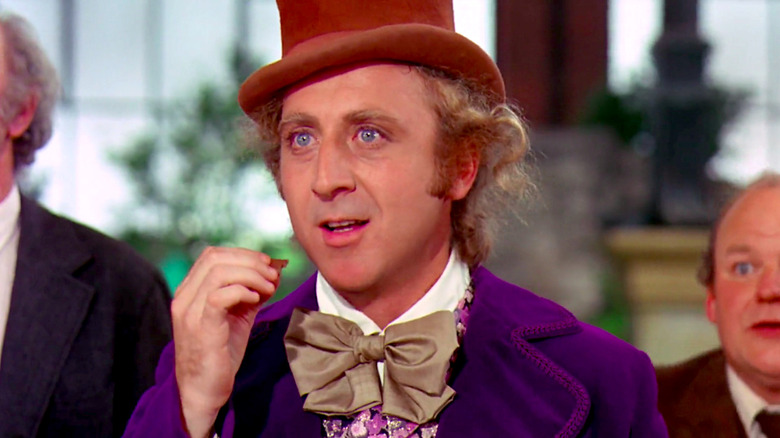
Gene Wilder Insisted On Improvising One Of Willy Wonka's Most Famous Scenes

by Miyako Pleines

As a child, my favorite part of "Willy Wonka and the Chocolate Factory" was always watching Gene Wilder glide around in his purple velvet coat and puffy bow tie. He was captivating in a way no other adult had ever been, and never once did I feel frightened of him. It also never dawned on me that the children, bad seeds that they were, may be disappearing to their deaths at the hands of this charming candy man. But watching him now as an adult, I realize just how terrifying Willy Wonka is. He's soft spoken and not quick to anger, but beneath his seemingly gentle personality is a tricksy man who you can never really trust. 

I recently had the pleasure of watching "Willy Wonka and the Chocolate Factory" with my young niece and nephew. They had never seen it before, and I found myself in awe over how easily they bought in to not only Wonka's world, but also Willy Wonka himself. It's almost as if they completely disregarded Wonka's darker side, seduced instead by chocolate rivers, Everlasting Gobstoppers, and Wilder's buttery singing voice. I wondered why the terrifying tunnel scene didn't make them recoil from Wonka in abject fear, or why they seemed to so easily trust this curly haired, top-hat wearing man. Was he really that elusive as to appear harmless to young children but not adults?

In the documentary "Pure Imagination," Wilder explains why children love Willy Wonka:

"The children understood the movie very well. That there are limits, and they want to know the limits. And it's reassuring to know that someone can tell you what the limits are, and that's what Willy Wonka did."

I think he is on to something here. The Willy Wonka you get is dependent entirely on who you are as a person, and the brilliance of Wilder's portrayal of Willy Wonka lies in this complicated persona. Wilder understood this from the moment he read the script, which is why he insisted upon one of the film's most memorable moments, refusing to take the part if he couldn't film it. And truthfully, this single famous scene, invented by Wilder himself, is the reason Wonka is so captivating while also being terrifying.

Deception And The Importance Of Limits

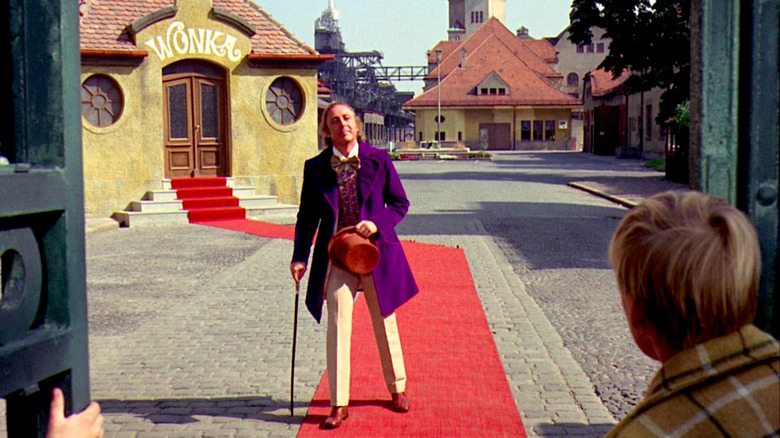
When we first meet Willy Wonka, he walks towards the camera with a cane in hand. He has a pronounced limp, and he appears old and fragile. This is not the man we expected to see emerge from the greatest chocolate factory on Earth. Suddenly, his cane gets stuck in the cobblestone street. Wonka takes a few more unaided steps before stopping. He gives a slight look of concern before falling forward. We panic because we think the man is going down, only to find him tucking himself into an effortless somersault that ends with the audience cheering. 

This is a classic scene, a favorite for many, and it was also created by none other than Gene Wilder himself. In fact, he was so adamant about including this moment in the movie that he refused to take the part unless he was guaranteed this shot. In "Pure Imagination," he talks a bit about his reasoning behind wanting to present Wonka in this way, saying, "No one will know from that time on whether I'm lying or telling the truth." This decision to present Wonka as deceptive from the very beginning laid the groundwork for his entire character.

What makes this idea so brilliant is that even though we find ourselves questioning everything Wonka says, there is always one thing that remains steadfast in his personality and that is the idea of limits and rules. As long as you follow the rules, you have nothing to fear. In this way, Wonka takes on a parental role as he guides his guests through his candy factory. Parents lie to their children all the time, usually (and hopefully) to protect them from harm. And Wonka is really no different in this way. He is deliberately deceptive in order to teach his guests important lessons, but when he tells you not to do something, he is always telling the truth. Perhaps this is why children find Willy Wonka so enticing. They see fragments of their own adult parents in his vibrant personality, and they recognize, much like Wilder says in the documentary, the importance of adhering to rules. It's kind of incredible that all of this hinged on one seemingly insignificant scene thought up by the ever-brilliant Gene Wilder and his deep understanding of a mad man running a candy factory. 

Read this next: The Best Movies Of 2021

The post Gene Wilder Insisted On Improvising One of Willy Wonka's Most Famous Scenes appeared first on /Film.

24 Feb 22:11

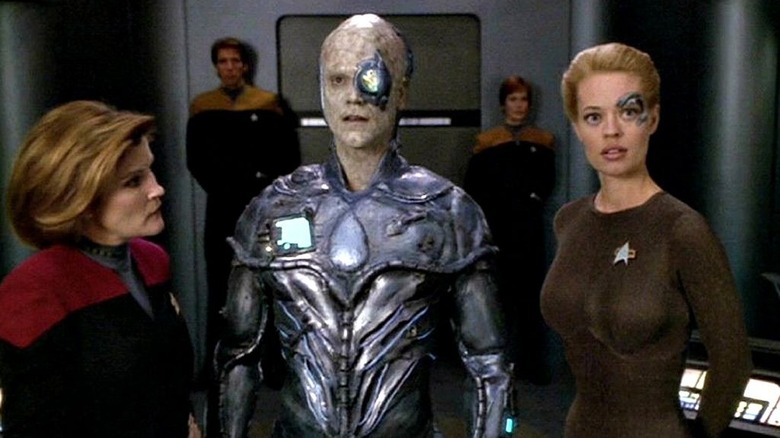
Seven Of Nine's Star Trek Costume Was Even Less Comfortable Than It Looked

by Witney Seibold

In January of 1995, "Star Trek" was riding high. "Star Trek: The Next Generation" had just made its way to the big screen in the form of "Star Trek: Generations," with a new movie already in the works. "Deep Space Nine" was wrapping up its third successful season, and Paramount was poised to launch its own network -- UPN -- with the two-hour pilot of the brand new "Star Trek: Voyager" to mark its debut. 

Also debuting with "Voyager" -- and this is rarely mentioned anymore -- was a trio of sitcoms: "Platypus Man," "Muscle," and "Pig Sty." The three sitcoms lasted only 13 episodes each, signaling a dark new trend for UPN: Nothing would live too long. While "Voyager" was popular at first (21 million homes watched the pilot), it quickly became a signal of the franchise contracting. "Voyager" didn't manage to pull in the kind of numbers that "Next Generation" and "Deep Space Nine" had, and executive at Paramount soon began altering the show to catch up with flagging numbers. In season 3, for instance, the crew of the U.S.S. Voyager -- who had previously spent their off hours in a cozy holographic pub -- suddenly saw themselves spending their off hours on a sexed-up bikini beach with holographic swimsuit models. By the end of the third season, the studio has resolved to shake up the cast by firing one of its members. 

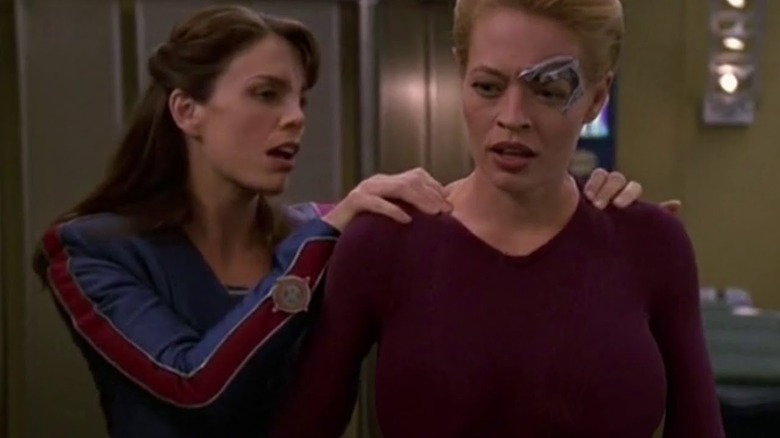
The speculative story is that Paramount had wanted to fire Garrett Wang, who plays ensign Harry Kim on "Voyager," but changed their mind when Wang appeared in People Magazine as one of the 50 Most Beautiful People in the World. The timing of the People magazine let Wang keep his job, and Paramount instead fired Jennifer Lien, who played the compassionate and short-lived character of Kes. Into her place came Seven of Nine, a "Borg babe," in the words of writer Brannon Braga. Seven of Nine was played by actress Jeri Ryan, and certainly caught the audience's eye with her severe hairdo, high heeled shoes, and sleek silvery catsuit-and-corset costume. "Star Trek" tried to boost ratings by, essentially, serving the audience a big unexpected slice of cheesecake. The sad part is, it worked. 

Braga and Ryan, incidentally, would end up dating for several years.

That F***ing Corset

As one might imagine, Ryan hated the costume, designed by longtime "Star Trek" costume designer Robert Blackman. It was a neck-to-toe bodysuit with a corset stitched inside of it, and required help to put on and remove. Ryan has said that she couldn't bend down in it, and even sitting was something of a chore. In an interview with The BBC, Ryan revealed the difficult mechanics that her midsection-cinching outfit required, including the headache involved in merely taking bathroom breaks:

"Initially, I would stay in the costume much longer than I ended up staying in it, because it takes about twenty minutes to get into. Someone has to dress me and undress me. It's a production break if I have to get out of the costume to use the restroom or something. It grinds to a halt unless they can shoot something without me, which typically they can't, if it's a scene that I'm in. So, in the interest of being a team player, the first season, I would not take rest room breaks, I just didn't drink anything on set, which is not the healthiest thing to do."

After a full season of skipping her restroom breaks, Ryan learned to streamline the process of getting in and out of the impossible costume to the point where she could get out of it not just to take bathroom breaks, but also to rest between takes:

"As time progressed, I finally learned that you just heed the call of nature and take breaks when you need to take breaks. And finally it got to the point where, they would just let me get out of it after every take. When I wasn't in the shot, I didn't just wear it to wear it, because it was very uncomfortable. It looks very simple, it looks just like a leotard, but it really was a feat of engineering on Bob Blackman's part to design this costume."

Did She Burn It?

Ryan was diplomatic about the treatment of Seven of Nine as a character, though, as she felt she was given a lot to do, and that Seven was written very well. While she acknowledges that the outfit was meant to read as sexy, she was relieved that Seven of Nine existed beyond her sex appeal: 

"I don't know that I would leap at the opportunity to wear another really, really uncomfortable costume that's not normal clothing, but if it's a great character, of course, I'd be willing to do that. You do whatever it takes to play a wonderful, rich role as an actor. The overt sexiness of the costume I had no problem with. I have no problem with it, because of the way the character was written. If she was written the way everybody thought she was going to be -- when they saw pictures of her initially -- then, yeah, I would have had a big problem playing that character. That was not something I had any interest in doing. But she was brilliant. She's a brilliant character, she was strong, she was a wonderful role model for young women, and I have no problem with it. We have intelligent women in every physical form, in real life, so why shouldn't we see that depicted on television?"

The Character of Seven of Nine belonged to a species called the Borg, a soulless of collective cyborgs who single-mindedly absorb other species into its fold. Seven was freed from the collective, and spent four seasons of "Star Trek: Voyager" (and one season of "Star Trek: Picard") rediscovering her forgotten humanity. Most of Seven's storylines involved her trying to behave more and more human, even as her cold, remaining Borg nature often got the better of her. She would end up developing hobbies, friendships, a sense of protocol, an instinct for command, and even a romance or two. 

After "Voyager" wrapped at the end of its seventh season, Jeri Ryan was happy to leave the corset behind. On StarTrek.com, Ryan admitted that she wanted to burn the dang thing: 

They didn't let me keep the cat suit. I would have loved to have burned it; not so much the cat suit as the corset that was under it. But, no, they didn't let me have that. I do, however, have [a Borg] alcove. I figured, "That's the least you can give me! Give me my alcove." So I have it in my game room.

Ryan is still playing Seven of Nine on "Star Trek: Picard," and voices the character on various ancillary "Star Trek" video games. Most recently, she starred in the Amazon series "Bosch" and appeared on three episodes of the new "MacGyver."

Read this next: 12 Awesome Sci-Fi Movies That Never Got Sequels

The post Seven Of Nine's Star Trek Costume Was Even Less Comfortable Than It Looked appeared first on /Film.

24 Feb 22:09

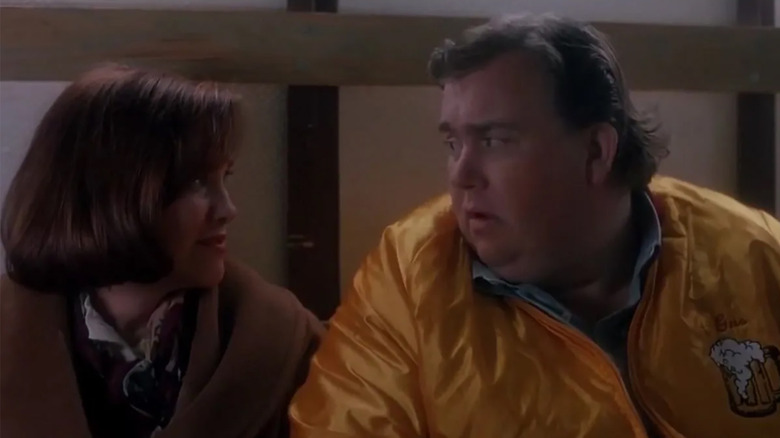
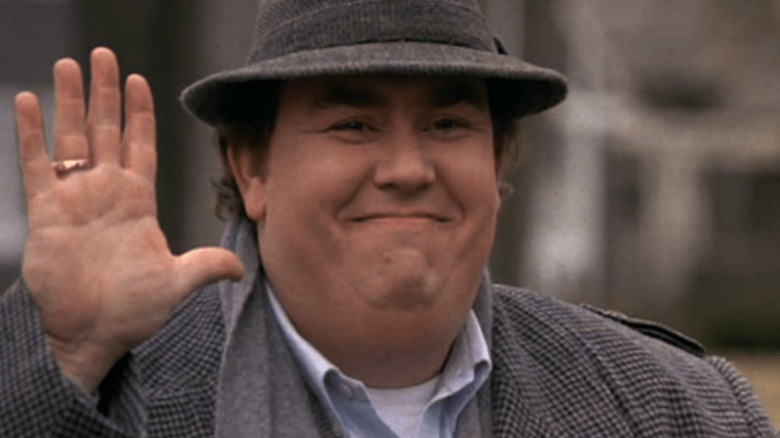
Why John Candy Took Home Less Than $500 For His Home Alone Cameo

by Bill Bria

When it comes to the business of show, movies are a gamble — there are too many variables to know for sure whether a film will be a money-making success or not. That's a big reason why the current cinematic landscape is filled with movies based on IP, as they're the closest thing investors and major studios can come to having an assured financial return. Most films, even those made by well-known filmmakers, need to have a bit of luck if they hope to become a success.

Actor John Candy was all too aware of that uncertainty, which is why he chose to play it safe when agreeing to appear in John Hughes' production of "Home Alone" in 1990. Candy was far from the first actor to choose a guaranteed paycheck over the potential to earn a portion of a film's profits, but he unfortunately became one of the most regretful and bitter to have done so. "Home Alone" didn't just become a success, it became a mega-hit, spawning several sequels and launching young Macaulay Culkin into stardom. While his fellow actors hit paydirt, Candy's take-home for appearing in the film was a mere $414. Though it was mostly his own fault, the low payment caused a rift between the actor and his collaborator friend Hughes, one which sadly did not get repaired before Candy's untimely death just a few years later.

'You Know, It's Christmas Time'

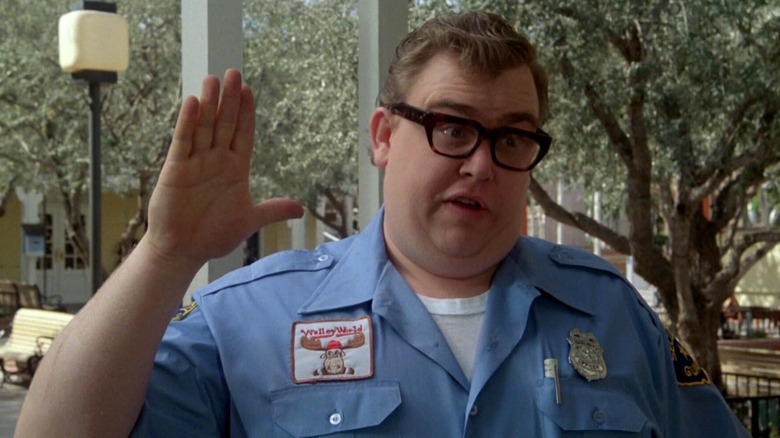
At the time "Home Alone" was made, Candy and Hughes had been colleagues for just under a decade. The two first collaborated on 1983's "National Lampoon's Vacation," a film (seen above) directed by Candy's "SCTV" friend Harold Ramis and written by Hughes. After Hughes began to direct successful films, in addition to writing them, Candy rejoined the filmmaker for 1987's "Planes, Trains, and Automobiles," Hughes' first film as a director to feature adult protagonists. It was a watershed movie for both men, and the two collaborated further on films like "The Great Outdoors" and "Uncle Buck."

It was on "Uncle Buck" that Candy and Hughes met the precocious Culkin, who was then just nine years old. Hughes was so taken with the child actor that he decided to write a movie built around the boy's youthful rapscallion energy, and thus "Home Alone" was born. Given that Candy was the star of "Uncle Buck" and that a subplot of "Home Alone" had a few similarities to "Planes, Trains and Automobiles," it seemed natural to involve the actor.

When Hughes approached Candy with the gig, he made the suggestion that the actor should take a slice of the movie's ultimate profits. Yet Candy was both generous — turning down Hughes' offer by way of saying it was a favor for a friend — and cautious. Strange as it may sound, "Home Alone" was far from a sure thing. It was a holiday family comedy that combined heartfelt sentimentality with sitcom-style kiddie antics and a surprisingly violent third act full of slapstick, when Kevin (Culkin) fends off the burglars attempting to rob his home. While Hughes was certainly an established success, the movie wasn't a teen or adult comedy as he'd made before, and the director was an unknown protegé of his named Chris Columbus, who would go on to direct the first two "Harry Potter" movies.

For all these reasons, Candy didn't feel like rolling the dice on the movie's potentially being a hit. Yet he happily showed up for the "concentrated 22-hour stint" of filming that his cameo role required, ad-libbing some of the movie's best jokes and livening up a subplot with his colorful character of Gus Polinski, "polka king of the midwest."

'You're Beating Yourself Up There, Ya Know...these Things Happen'

"Home Alone" ended up grossing $476 million off an $18 million budget, meaning that if Candy had taken Hughes' suggested deal, he would've made far more than just a couple hundred bucks. While Candy understood his responsibility for the missed opportunity and didn't appear to blame Hughes, he certainly had some bitterness due to the situation and studio 20th Century-Fox. As Columbus recalled, "There was certainly a little resentment on John's part," and when the actor and Columbus reunited for the Hughes-scripted "Only the Lonely," the filmmaker explained, "There were a couple times on set when he would make a cutting remark about Fox and what he was paid." Clearly, Candy was hoping the studio would recognize the actor's generosity and make some additional compensation after the fact, but it was not to be.

The other saving grace Candy expected was a continued working relationship with Hughes, but that sadly also wasn't to be, which resulted in a bigger loss than a small paycheck. After "Only the Lonely" and "Career Opportunities" in 1991, Candy never worked on a Hughes script or production again.

There were allegedly some initial talks about his returning as Gus in 1992's "Home Alone 2: Lost in New York," but "terms couldn't be agreed," and another Hughes project entitled "Dutch" ended up being made without Candy as initially planned. Even worse, according to Martin Knelman's book "Laughing on the Outside: The Life of John Candy," Hughes and Candy stopped speaking after '92, and Candy passed away soon after in March of 1994. Candy's passing was a major factor in Hughes becoming disillusioned with the film industry, causing the filmmaker to retire about a decade before his own death in 2009.

While the "Home Alone" experience didn't work out well for Candy's bank account or his relationship with Hughes, it at least resulted in an all-time classic that's revisited every holiday season. As Gus Polinski himself says as he attempts to console Kate McCallister (Catherine O'Hara), "These things happen."

Read this next: The 15 Best '90s Comedies Ranked

The post Why John Candy Took Home Less Than $500 For His Home Alone Cameo appeared first on /Film.

24 Feb 22:07

The Surprising Character Nicolas Cage Almost Played In Wedding Crashers

by Ryan Leston

Back in 2005, "Wedding Crashers" reignited the R-rated comedy. In fact, it was one of the most successful comedies of the 2000s and a firm favorite of single guys everywhere. It also paved the way for a raunchy resurgence, with the likes of "The 40-Year-Old Virgin" and "Zack and Miri Make a Porno" following in its footsteps.

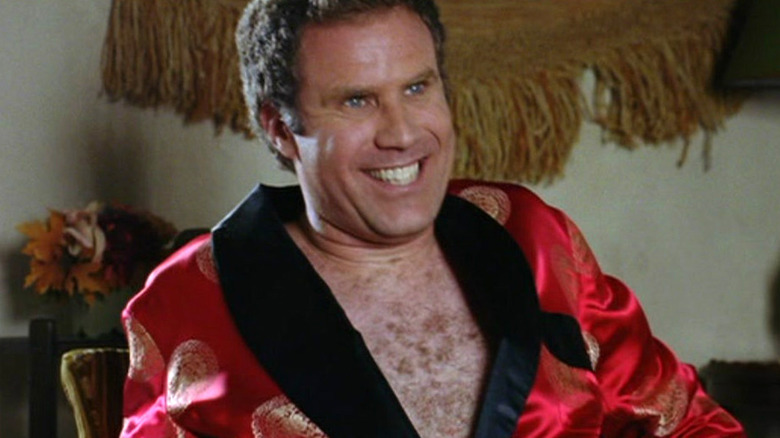
"Wedding Crashers" tells the story of John (Owen Wilson) and Jeremy (Vince Vaughn) — two divorce mediators who crash weddings with the purpose of meeting and seducing women. It obviously all goes awry when they begin to fall in love ... but while Wilson and Vaughn make a formidable comedy duo, there's one standout role that's simply unforgettable: Chazz. An aging wedding crasher, Chazz was Jeremy's mentor — introducing him to the wedding crashing lifestyle. Played by Will Ferrell, it was little more than a cameo, but his appearance had a lasting effect on Owen Wilson's character, John.

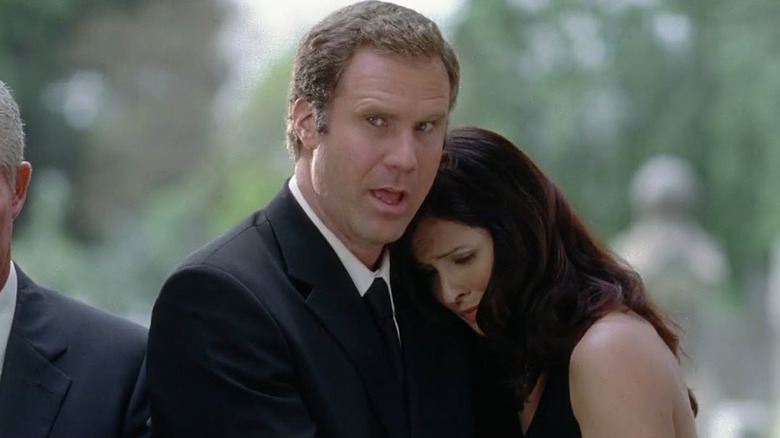
Dragged along to a funeral — now Chazz's hunting grounds instead of weddings — John faces the grim reality of his way of life. And with a winking Will Ferrell screeching at the graveside of a man he never met, it's a frankly iconic appearance. But it looks as though Nicolas Cage almost took the role instead.

'Hey, Ma! Can We Get Some Meatloaf?'

When John finds out Jeremy plans to marry Gloria (Isla Fisher), he's obviously upset. After all, who will crash weddings with him if his ultimate wingman is now a faithful husband? In a fit of desperation, John tracks down Jeremy's former mentor ... and it gives him a grim reality-check when he realizes the kind of loser Chazz really is. But not before they head out and try to score at a funeral.

It's a great scene, but director David Dobkin told SpitballingPod that Will Ferrell was almost replaced by none other than Nicolas Cage:

"We were trying to get Will [Ferrell]. We didn't get Will until midnight the night before he was shooting. It was one day. We were having a very hard time confirming him and we had Nic Cage as a backup. I never told anyone that."

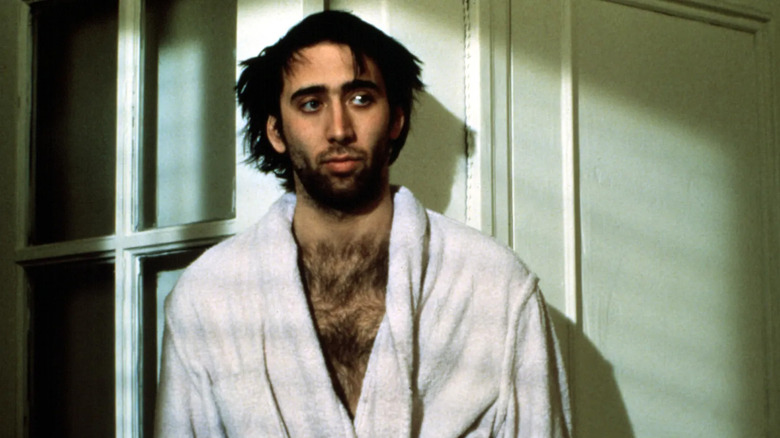
Can you imagine? Nicolas Cage in a lounge robe chewing the scenery as she shouts to his ma about meatloaf? It's certainly one hell of a mental image, but ultimately Ferrell signed on for the cameo and the rest is history. Dobkin even admits that having Cage as a backup was "Oh my God. Crazy ... Weird."

"By the way, now Nic is a whole other thing — totally off the reservation," he added. Although that wild energy could have made an impressive Chazz, it looks as though it just wasn't meant to be.

'It's Like Fishing With Dynamite!'

Nicolas Cage in the role of Chazz would have been a very different direction for the role, and I can't help thinking he would have brought a much more frenzied and chaotic energy. Thankfully, Ferrell made the right choice and joined "Wedding Crashers" at the last minute. However, the now-legendary role wasn't even in the script. "That character didn't even show up in the original script," revealed Dobkin. "It was something that I could not figure out — an 'all is lost' moment for Owen [Wilson] between the second and third act."

The idea for Chazz came from an early pitch by Wilson to give the wedding crashers other events to crash. "Owen, very early on, had pitched to me. He goes, 'Maybe we could crash some funerals, too?' And I'm like, 'I don't think that'll work tonally' But he pitched that idea." Although it was obviously far too dark for John and Jeremy to crash funerals together, the whole thing came full circle when John needed to hit rock bottom.

"I needed a bottom-out moment," said Dobkin. "And I was like, you know we talk about Chazz? What if you went to go see Chazz and he was crashing funerals? And it was just so grim that it sends you back to your friend? Owen wrote most of that scene and it was really funny."

'I'm Just Living The Dream'

Ultimately, Will Ferrell was absolutely perfect as Chazz — a character oblivious to the fact that he was a complete loser while bringing just the right amount of abject craziness. "He was the perfect person to play that character," said Dobkin. "Will was crazy that day, he was so good — crying at the funeral. It was so uncomfortable!"

However, it still took a bit of work to get it all to come together. During an interview with Entertainment Weekly, Dobkin explained how he guided Ferrell to go all in:

"He was very laid back in the first take, and I remember looking at him and I just said, 'I think he's a little crazier. Which is bad direction by the way. He was like, 'Oh, I know what you mean,' and he did it again, and I was like, 'Maybe more?' I mean, I really believe that I directed him by just saying 'more' until he had that fifth take and that is the whole take that is in the movie. It was one of those things that you shoot and you're like, 'Is this really going to work?' It's a pretty weird sequence."

The result is a comedy tour de force with Ferrell hamming it up as we get a glimpse into the aging loser's life. It just wouldn't be the same with anyone else underneath that robe. Not even Nic Cage.

Read this next: The 15 Best '90s Comedies Ranked

The post The Surprising Character Nicolas Cage Almost Played In Wedding Crashers appeared first on /Film.

24 Feb 22:07

How Cyrano Evolved From A Sparse Connecticut Stage Show To A Sprawling Sicily-Set Movie [Exclusive]

by Caroline Cao

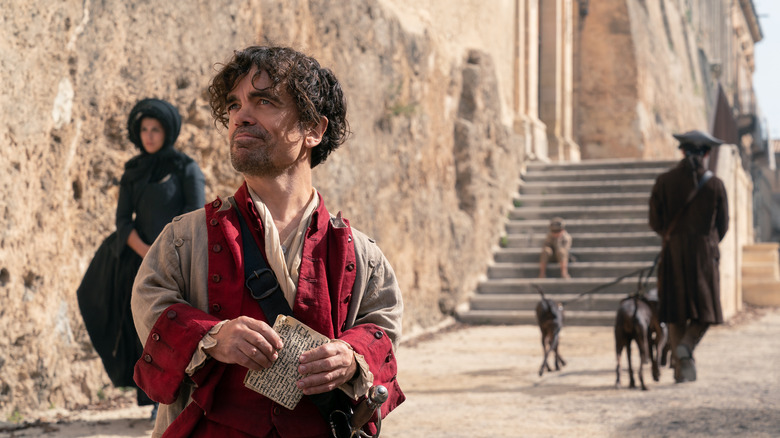
Musicalizing Edmond Rostand's 1897 play "Cyrano de Bergerac" is no novel idea — but cutting Cyrano's infamous nose may be a daring creative choice. Stage director and playwright Erica Schmidt was well acquainted with the "Cyrano" musicals when she adapted Rostand's work into her 10-actor stage musical at the Chester, Connecticut Goodspeed Theatre for a 2018 run. With music by Aaron Dessner and Bryce Dessner and lyrics by Matt Berninger and Carin Besser of the indie band The National, the production starred her husband Peter Dinklage as the sharp-witted but lovelorn Cyrano who loves the poetry-loving Roxanne, played by Haley Bennett.

Schmidt's cinematic direction to the stage attracted "Atonement" director Joe Wright, who was moved by the original Connecticut run, to pursue a stage-to-film translation of her work where Bennett (Wright's life partner) and Dinklage reprise their respective stage roles for the screens. An adaptation of her own play script, "Cyrano" became Schmidt's first major screenplay credit. I saw the play's New York 2019 run at the off-Broadway Daryl Roth Theatre that starred Dinklage, and struck a conversation with screenwriter Erica Schmidt on translating the play to the screen, and what she added and restored. (Warning: spoilers ahead.)

Set in the 1640s, the film follows the duelist and poet Cyrano, who loves Roxanne, his dearest friend, from afar and is deathly frightened of rejection for his looks. His chance to express his love seemingly arrives when he learns that the handsome soldier Christian (Kelvin Harrison Jr.) and Roxanne share a mutual attraction. So he devises a ruse with Christian where he ghostwrites the latter's love letters to Roxanne. But the prolonged ruse only keeps Roxanne away from her true romantic wishes as well as Cyrano from his own happiness.

In Schmidt's original play script, her 1640s-set "Cyrano" is "more modern than period." She said, "[Joe] liked that I taken the story out of Paris, France, but he wanted it to be baroque and set it in a fantasy of a period with corsets and swords." Whereas her theatre approach is spare (due to musical underscoring) with a barebones backdrop, the "Anna Karenina" director naturally goes for the grand and sets the tale against a painterly tableau and lush Sicilian architecture as "he wanted it to kinda return to much more verbose version Rostand had," Schmidt added.

'Cutting The Nose'

In Rostand's original play, Cyrano derides his own nose for 32 lines, a litany of savage self-insults. To him, it's the bulging bulbous barrier between any possible romance with Roxanne — there's a reason why Cyrano movie adaptations frequent the "Best Fake Nose" movie lists.

Schmidt's idea was "cutting the nose" in her stage adaptation even if "the nose" is still referenced in part, when Dinklage's stage-Cyrano declares, "I'm no fool. What woman could love me with this, this — nose?" However, Schmidt's theatrical take doesn't really have the literally ugly nose, traditionally a prosthetic worn by actors like Steve Martin or José Ferrer in other adaptations.

The stage version left Cyrano's insecurities open to interpretation to make a universal point. "I wanted to not tell what is it that makes him feel physically unlovable," Schmidt said, explaining that the actual nose line onstage amplified the adaptational irony in the eyes of average theatregoers. "You would kind of think there's nothing wrong with the nose and [his insecurities] would be left to interpretation to that space that happens between the audience and the actor in the theater," Schmidt said. 

Dinklage has achondroplasia, a form of dwarfism, and stands 4 foot 5 inches. While that specificity may stand out to the average audience, Schmidt noted that, "[Peter's height] was never meant to be a kind of one-to-one replacement for the big nose. But I think that's what the audience saw." In the New York off-Broadway run, Dinklage's understudy was Scott Stangland, who bears a different appearance. "[Scott's] six feet tall and he's ginger. When he would say the line, he would have a very different idea," Schmidt said. However, Dinklage never missed a performance, so Stangland never got to officially play Cyrano.

Wright wanted to put it out there that Cyrano's height was the perceived obstacle to a romance between him and Roxanne. For the movie, Schmidt's lines referencing Cyrano's nose is scrubbed completely.

Script Sacrifices And Additions

A stage-to-cinema scope can be advantageous. For example, Roxanne can sing while riding a carriage gliding through town unlike in the smaller stage space. One last-minute addition to Schmidt's screenplay, prompted by Wright while shooting in Sicily, was the women's meeting in the film where Roxanne reads aloud the importance of poetry. In contrast, the stage version has her attend a poetry reading offstage. The meeting scene was a wise move considering it underlined Roxanne's eventual disappointment with Christian's in-person courtship which takes place shortly after her reading. There's an interesting change in their first face-to-face too: Christian's improvised love poem (penned by Berninger) where he compares Roxanne's flaxen curls to pasta (rhymed with "heart beat fasta'") on Schmidt's stage is replaced with him comparing her to a flower onscreen (not that it endears Roxanne any better) because a pasta comparison was too goofy for Wright's execution.

As the saying "kill your darlings" goes, Schmidt had to see one killed. De Guiche, Roxanne's abhorrent and entitled suitor as played by Ben Mendelsohn, ended up getting his atonement cut. As much as Schmidt wanted to see Mendelsohn play out De Guiche's apologetic actions which happened in the final act of her play, Mendelsohn's scenes at the convent ended up cut from the final product.

Cut Songs, Restored Verses

If you only experienced the New York transfer, it's easy to assume Dinklage's spoken-word "When I Was Born," snarled by the actor in the midst of a thrilling sword fight, is a new number for the movie, until Schmidt clarified (to me, who saw the NY version) that it originated in the Connecticut production. The number was not brought to the New York transfer and started out as a laid-back ballad. Schmidt divulged, "With permission, we sped up the music a ton, and Peter started going faster and faster and it became sort of spoken word. When Matt heard it in New York, he felt it was a bad rap, not that he felt that what Peter was doing was bad but he hadn't written it to be a rap."

She concluded, though, that its removal was a disservice that sacrificed the context of Cyrano's feelings about his appearance while cleverly not specifying the attributes he feels poorly about -- "so it could apply to anyone," she said. When it came time to make the movie, she urged Wright, "We have to have this back" and thus it was restored with a chorus.

A few stage songs, like a warning song sung by Roxanne's chaperone, did not make it into the film. Before "Cyrano" was sold to MGM, the movie also removes the stage's penultimate "Defenseless," Roxanne's mournful solo as she and the nuns dutifully plant bulbs. Schmidt shared that Wright envisioned "this idea of all the nuns dancing, a hundreds nuns. Well, not dancing, but a ritualized motion like in the stageplay." It would have been interspersed with Cyrano visiting Christian's grave and Roxanne's settling into the convent. Schmidt is hoping "Defenseless" could at least get a recording someday.

On a final note in both the Connecticut and New York staging (where "Hamilton" star Jasmine Cephas Jones played Roxanne), Roxanne wails in rage as the gut-punch to her grief. Wright opts for Bennett to weep softly to close the film. The creative change is still just as devastating.

"Cyrano" releases in theaters on February 25, 2022.

Read this next: The 19 Greatest Movie Couples Of All Time Ranked

The post How Cyrano Evolved From a Sparse Connecticut Stage Show to a Sprawling Sicily-Set Movie [Exclusive] appeared first on /Film.


24 Feb 22:05

Russian Forces Seize Control of Chernobyl Nuclear Plant

by BeauHD
"Slashdot has always had an interest in the Chernobyl nuclear power plant, which CNN describes as 'the site of the world's worst nuclear disaster,'" writes Slashdot reader DevNull127. "Today, CNN is reporting that Chernobyl has been captured by Russian troops." From the report: Troops overran the plant on the first day of Russia's multi-pronged invasion of Ukraine, a spokesperson for the State Agency of Ukraine on Exclusion Zone Management, Yevgeniya Kuznetsov, told CNN. "When I came to the office today in the morning (in Kyiv), it turned out that the (Chernobyl nuclear power plant) management had left. So there was no one to give instructions or defend," she said. Earlier Thursday, Ukrainian President Volodymyr Zelensky warned that Russian forces were attempting to wrest control of the nuclear plant. "Russian occupation forces are trying to seize the Chernobyl (nuclear power plant). Our defenders are sacrificing their lives so that the tragedy of 1986 will not be repeated," Zelensky tweeted."This is a declaration of war against the whole of Europe." The Ukrainian Foreign Ministry echoed the President's warning, raising the specter of another nuclear disaster in the city. "In 1986, the world saw the biggest technological disaster in Chernobyl," the ministry tweeted. "If Russia continues the war, Chernobyl can happen again in 2022." "A map shows the power plant is nearly adjacent to the northern border of Ukraine -- so when Russian troops began their invasion, it was one of the first things they encountered," adds DevNull127. Latest Slashdot stories regarding Russia's invasion of Ukraine: Ukraine War Flashes Neon Warning Lights for Chips Companies Shut Ukraine Operations and Watch for Sanctions as Russia Attacks Russia Attacks Ukraine Twitter Accounts Sharing Video From Ukraine Are Being Suspended When They're Needed Most

Read more of this story at Slashdot.

24 Feb 22:04

Elden Ring Review

by hyu@gamingnexus.com
Souls fans rejoice. The legendary Elden Ring is finally here! Rise, Tarnished, to become the next Elden Lord.
24 Feb 22:04

Assassin's Creed The Ezio Collection Review

by ehilderbrand@gamingnexus.com
I finally got to play as Ezio, who turned out to be my favorite Assassin in the series.
24 Feb 22:02

Martha is Dead Review – Martha is Dead Scary

by Rosh Kelly

Martha Is Dead

Martha is Dead, but her story is very much alive. With a handful of previews to keep us excited, it can feel like you know what to expect from Martha is Dead, but there's always more to it than you expect, even when you go in knowing exactly what to expect.

For those that haven't read our earlier coverage on the game, Martha is Dead is a paranormal, psychological horror, and adventure game. You play as Giulia, the estranged identical sister of the titular Martha, who almost accidentally steals her identity when she discovers Martha's body floating in a lake. It's a sobering start to any game, but from there, things become even more intense, strange, and unnerving.

Martha is Dead merges the past and present through its story. The sisters' relationship feels fleshed out, even if you never experience it firsthand, and the history of the region you're exploring is filled with fragmented details and stories. Most notably is the story of the ghost woman that preys on beautiful women that approach her lake. All of this merges with the events happening through the game and the aftermath of the fateful discovery at the beginning of the game. Like other horror adventure games, this often plays out in scenery that changes as your meander through it. Quaint paths that would normally lead uphill instead descend into bone-covered trenches and catacombs. Often, these impossible and shifting locations are used incredibly well to invoke a scene of confusion and building fear as you grapple with the potentially supernatural horrors swirling around you.

Martha is Dead

Other times they slightly miss the mark. This is mostly felt in the chase sequences where Giulia is forced to flee from some imagined or unknowable threat. Here you're subjected to something akin to the QTEs that plagued the industry a decade or two ago as you strive to avoid the obstacles or choose the correct path. While the sound design and the visual effects are impressive, these interactions add little to the atmosphere and often become more of a drag than an exciting rush.

I've spoken before about the surrealist horror that punctuates Martha is Dead, which continues throughout the entire game. It's uncomfortable and almost impossible to describe - perfectly filling in the brief of something dream-like and impossible. These moments, which are often much slower than the chase sequences, truly capture the mood of a fractured young woman wrestling with grief, guilt, and nightmares. The strange imagery could be interpreted a dozen different ways, but the subjects are haunting and horrifying even without further analysis. Martha is Dead recently got some attention for its graphic depictions of surgery, and if those made you feel too uncomfortable, the rest of the game will not act as a balm. Martha is Dead wants to trouble you in the most primal ways and does so with every trick in the book.

But some of the best moments come when it is less overt. The full game allows a frankly huge level of exploration, approaching your missions in whichever manner, and whichever time, you desire. On your bike, you can speed across the landscape with the wind in your hair and almost imagine this is some Italian Holiday Simulator. But while the Italian farmhouse and surrounding countryside are beautiful, it's also just as scary to explore thanks to the incredible audio design and lighting. Stepping inside from the bright sun causes the rooms to appear darker for a moment and give the impression something might be lurking in the shadows. The sound of the wind through the trees and the old house setting give way to imagined or real whispers.

One incredible moment was when Giulia had to take a self-portrait in the house's basement. You patiently position yourself with your back to a long corridor and pose as you set the timer. But as you do, the unmistakable sound of footsteps approach from behind, down the long corridor. They get closer and closer as the timer buzzes, and Giulia does not look away for fear of ruining the photograph. As the camera flashes, you can seize control again and turn around, although there's nothing behind. Rush to the darkroom to develop the photo, and you'll find no evidence of anything on the picture either. But that corridor will never feel safe again.

Some moments fail to live up to the terrible depths that Martha is Dead achieves. Some instructions are confusing and waypoints can be hard to identify, but these moments allow you to explore and don't feel worse for it. What lets it down is the character animation. The world of Martha is Dead is hauntingly beautiful, but the ghost apparition that stalks you doesn't quite fit. It's jarring to look at, which is a shame because the game often forces you to look at her as you round corners or feel a skeletal hand reach out for you. It's a letdown, but each disappointment is forgotten by the stellar storytelling and beautiful yet terrible level design.

Martha is Dead is an actively sinister game. It is trying to upset you. It is trying to cling to the shadowy thoughts as you sleep. It tells a genuinely tragic tale and does so with a level of commitment and detailed pace that few games are brave enough to attempt. But it is not a comfortable journey. Nor is it a friendly one. If Dear Esther or Everyone Has Gone To The Rapture made you squirm, Martha is Dead will make you abandon your living room altogether.

Reviewed on PC (code provided by the publisher).

The post Martha is Dead Review – Martha is Dead Scary by Rosh Kelly appeared first on Wccftech.

24 Feb 22:00

Fallout 2 - Review @ Mortismal

Mortismal Gaming retro-reviewed Fallout 2 as a follow-up to his recent review of Fallout 1. Includes small spoilers. Fallout 2: 2022 Review loading...
24 Feb 21:31

Springtime Asteroid Hit Ramped Up Extinction Rates, Say Scientists

by msmash
Having an asteroid slam into Earth was catastrophic for the dinosaurs, but the season of the strike may have substantially ramped up extinction rates for others species, research suggests. From a report: Scientists have found evidence that the devastating impact 66m years ago, which wiped out three-quarters of Earth's species and created the Chicxulub crater in modern-day Mexico, happened in the spring in the northern hemisphere. The timing means that many animals north of the equator would have been particularly vulnerable to the intense heatwave unleashed by the collision, having just emerged from the harsh months of winter. Other animals in the south may have fared better given that it was autumn, especially if they were hunkering down in burrows. The direct hit from the asteroid triggered an extreme global heatwave that proved lethal for many exposed animals. In the aftermath, temperatures are thought to have plummeted in a nuclear winter that drove many more species to extinction.

Read more of this story at Slashdot.

24 Feb 21:30

Utility Promising To Restore Mining Performance on Nvidia GPUs Actually Malware

by msmash
Web3 is Going Great reports: The popular Tom's Hardware and PC Gamer websites both ran articles about a utility called "Nvidia RTX LHR v2 Unlocker", which claimed to increase the artificially-limited cryptocurrency mining performance of its RTX graphics cards. These graphics cards are shipped with performance-limiting software to reduce the GPUs' attractiveness to cryptocurrency miners, whose thirst for GPUs has made it difficult and expensive for gamers and various others to acquire the hardware. Unfortunately, both publications had to run a second article just a day later to warn their readers away from the software they had just advertised.

Read more of this story at Slashdot.

24 Feb 21:30

The US Government is Ending the China Initiative

by msmash
The Justice Department's effort to prosecute cases of economic espionage had drifted from its stated mission and drawn fierce criticism for appearing to target researchers because of their ethnicity. From a report: The US Justice Department is ending its controversial China Initiative and will pivot to a new strategy to counter threats from nation states, it announced February 24. The program began under the Trump administration as an effort to root out economic espionage, but drew criticism for falling short of that stated goal while increasingly focusing on academics and researchers of Chinese descent. Assistant Attorney General Matthew Olsen, in an announcement made during a talk at the National Security Institute at George Mason University, said that after a review of the program, he has concluded that the China Initiative is "not the right approach" to countering national security threats. "Instead, the current threat landscape, demands a broader approach." "Make no mistake -- we will be relentless in defending our country from China," he said. "But our review convinced us that a new approach is needed to tackle the most severe threats." He emphasized his belief that the department's actions were driven by genuine national security concerns, but said that by grouping cases under the China Initiative, the DOJ helped create a perception that it treats people with ties to China differently. Instead, he announced a new strategy focused broadly on threats from hostile countries. Olsen began a review of the initiative in November, during which he said he heard concerns from the civil rights community about racial bias. He also said he heard concerns from the academic community that prosecutions of researchers for grant fraud and other charges has had a chilling effect. His National Security Division will take a "supervisory" approach to academic integrity and research security prosecutions, but that will not affect pending cases against academics scheduled to go to trial. "I am comfortable with them going forward," he said.

Read more of this story at Slashdot.

24 Feb 18:06

Sensor Breakthrough Paves Way For Groundbreaking Map of World Under Earth Surface

by BeauHD
An anonymous reader writes: An object hidden below ground has been located using quantum technology -- a long-awaited milestone with profound implications for industry, human knowledge and national security. University of Birmingham researchers from the UK National Quantum Technology Hub in Sensors and Timing have reported their achievement in Nature. It is the first in the world for a quantum gravity gradiometer outside of laboratory conditions. The quantum gravity gradiometer, which was developed under a contract for the Ministry of Defense and in the UKRI-funded Gravity Pioneer project, was used to find a tunnel buried outdoors in real-world conditions one meter below the ground surface. It wins an international race to take the technology outside. The sensor works by detecting variations in microgravity using the principles of quantum physics, which is based on manipulating nature at the sub-molecular level. The success opens a commercial path to significantly improved mapping of what exists below ground level. Professor Kai Bongs, head of cold atom physics at the University of Birmingham and principal investigator of the UK Quantum Technology Hub Sensors and Timing, said: "This is an 'Edison moment' in sensing that will transform society, human understanding and economies. "With this breakthrough we have the potential to end reliance on poor records and luck as we explore, build and repair. In addition, an underground map of what is currently invisible is now a significant step closer, ending a situation where we know more about Antarctica than what lies a few feet below our streets." [...] This breakthrough will allow future gravity surveys to be cheaper, more reliable and delivered 10 times faster, reducing the time needed for surveys from a month to a few days. It has the potential to open a range of new applications for gravity survey, providing a new lens into the underground.

Read more of this story at Slashdot.

24 Feb 17:56

FreeDOS Puts Out New Release

by msmash
joshuark writes: FreeDOS has put out release 1.3, the latest release in 6-years. Some of the improvements since the 1.2 release, include: new FreeCOM 0.85a, new Kernel 2043 and an 8086 version with FAT32 support, floppy edition now uses compression...let's party like it's 1994. More specifics can be found at the SourceForge project page.

Read more of this story at Slashdot.

24 Feb 04:15

Russia May Use Cryptocurrencies To Evade US Sanctions

by BeauHD
"The availability of non-bank financial trading in cryptocurrency may allow Russia to avoid the worst of the sanctions coming after their invasion of Ukraine this week," writes Slashdot reader 14erCleaner, sharing a non-paywalled link to the New York Times article. From the report: On Tuesday, the Biden administration enacted fresh sanctions on Russia over the conflict in Ukraine, aiming to thwart its access to foreign capital. But Russian entities are preparing to blunt some of the worst effects by making deals with anyone around the world willing to work with them, experts said. And, they say, those entities can then use digital currencies to bypass the control points that governments rely on -- mainly transfers of money by banks -- to block deal execution. Sanctions are some of the most powerful tools the United States and European countries have to influence the behavior of nations they don't consider allies. The United States in particular is able to use sanctions as a diplomatic tool because the dollar is the world's reserve currency and used in payments worldwide. But American government officials are increasingly aware of the potential for cryptocurrencies to lessen the impact of sanctions and are stepping up their scrutiny of digital assets. Banks have to abide by "know your customer" rules, which include verifying their clients' identities. But exchanges and other platforms that facilitate the buying and selling of cryptocurrencies and digital assets are rarely as good at tracking their customers as banks are, even though they are supposed to follow the same rules. [...] Should it choose to evade sanctions, Russia has multiple cryptocurrency-related tools at its disposal, experts said. All it needs is to find ways to trade without touching the dollar. The Russian government is developing its own central bank digital currency, a so-called digital ruble that it hopes to use to trade directly with other countries willing to accept it without first converting it into dollars. Hacking techniques like ransomware could help Russian actors steal digital currencies and make up revenue lost to sanctions. And while cryptocurrency transactions are recorded on the underlying blockchain, making them transparent, new tools developed in Russia can help mask the origin of such transactions. That would allow businesses to trade with Russian entities without detection. In October 2020, representatives of Russia's central bank told a Moscow newspaper that the new "digital ruble" would make the country less dependent on the United States and better able to resist sanctions. It would let Russian entities conduct transactions outside the international banking system with any country willing to trade in digital currency. Russia could find willing partners in other nations targeted by U.S. sanctions, including Iran, that are also developing government-backed digital currencies. China, Russia's largest trading partner in both imports and exports according to the World Bank, has already launched its own central bank digital currency. The country's leader, Xi Jinping, recently described China's relationship with Russia as having "no limits."

Read more of this story at Slashdot.

23 Feb 22:36

Windows 11 bug leaves some user data on disk after a factory reset

by João Carrasqueira

A newly-discovered bug in Windows 11 and Windows 10 version 21H2 is leaving some user data unprotected on a disk after a factory reset. The bug, discovered by Rudy Ooms on the Call4Cloud blog, means that your data may be easily accessible if you sell or give away your laptop after resetting. This appears to be specifically related to OneDrive files synced locally to your PC, so local-only data wouldn’t be affected.

Ooms made the discovery by attempting to remotely wipe a Windows 11 device using Microsoft Intune, which is a management suite for enterprise customers. However, upon further testing, the bug affects factory resets done locally using the Settings app, even when using the cloud download option.

During the reset process, users are typically asked if they want to keep their user data (and just delete their apps and programs) so they can start fresh, or if they want to delete everything on the drive. The latter option is recommended if you’re planning to sell the laptop, since you don’t want the next owner to see your personal data. In previous versions of Windows 10, it worked as intended, but in version 21H2 and Windows 11, user data from OneDrive is kept in the Windows.old folder. This only includes locally stored data, specifically OneDrive files that were synced to the PC, including files synced using Known Folder Move.

Windows.old folder allowing access to OneDrive files from the previous user after a factory reset

While opening the files wasn’t as easy as just heading into the folder and opening them, users can press Shift + F10 on the Windows login screen to open a Command prompt and access those files easily. It’s not something everyone would think to do, but it’s not a difficult task, either. It’s especially concerning because even if the drive had BitLocker encryption before the reset, that encryption is removed after the reset.

Not everyone will be affected by this bug, since you’ll have to have used the OneDrive integration in Windows 10 or 11 in order for the data to be exposed, plus only files that were available offline can be accessed after the reset, but this is still a major issue. For whatever reason, the reset process was changed with Windows 11 and Windows 10 version 21H2, making it so that these files remain on the disk after a reset.

According to Ooms, Microsoft is working to fix this issue, but until that happens, there’s a PowerShell script that will configure your PC to delete all user data in the Windows.old folder after a reset. You’ll want to run and deploy this script before the reset, so the data is deleted automatically afterwards.

Windows 11 is no stranger to major bugs, including some big security issues. An early bug allowed anyone to gain administrator privileges on Windows 11, Windows 10, and Windows Server back in November.


Source: Call4Cloud

The post Windows 11 bug leaves some user data on disk after a factory reset appeared first on xda-developers.

23 Feb 22:35

Wikipedia Has Millions in the Bank–Why Beg for More?

by Jack Ryan

Every year, Wikipedia flies a massive banner ad across the top of its website. It's an appeal from Wikipedia co-founder Jimmy Wales, asking for donations to keep the website running.

23 Feb 22:35

How to incinerate the International Space Station

by Andrew Tarantola

It took NASA and its partners nearly four dozen trips between 1998 and 2010 to haul the roughly 900,000 pounds worth of various modules into orbit that make up the $100 billion International Space Station. But come the end of this decade, more than 30 years after the first ISS component broke atmosphere, the ISS will reach the end of its venerable service life and be decommissioned in favor of a new, privately-operated cadre of orbital research stations.

The ISS described by module
NASA

The problem NASA faces is what to do with the ISS once it’s been officially shuttered, because it’s not like we can just leave it where it is. Without regular shipments of propellant reactant to keep the station on course, the ISS’ orbit would eventually degrade to the point where it’s forward momentum would be insufficient to overcome the effects of atmospheric drag, subsequently plummeting back to Earth. So, rather than wait for the ISS to de-orbit on its own, or leave it in place for the Russians to use as target practice, NASA will instead cast down the station from upon high like Vader did Palpatine.

NASA is no stranger to getting rid of refuse via atmospheric incineration. The space agency has long relied on it in order to dispose of trash, expended launch vehicles, and derelict satellites. Both America’s Skylab and Russia’s Mir space stations were decommissioned in this manner.

Skylab was America’s first space station, for the whole 24 weeks it was in use. When the final 3-astronaut crew departed in early 1974, the station was boosted one last time to 6.8 miles further out in a 289-mile graveyard orbit. It was expected to remain there until the 1980s when increased solar activity from the waxing 11-year solar cycle would eventually drag it down into a fiery reentry. However, astronomers miscalculated the relative strength of that solar event, which pushed up Skylab’s demise to 1979.

In 1978, NASA toyed with the idea of using its soon-to-be-completed Space Shuttle to help boost Skylab into a higher orbit but abandoned the plan when it became clear that the Shuttle wouldn’t be finished in time, given the accelerated reentry timetable. The agency also rejected a proposal to blow the station up with missiles while still in orbit. The station eventually came down on July 11th, 1979, though it didn’t burn up in the atmosphere as quickly as NASA had predicted. This caused some rather large pieces of debris to overshoot the intended Indian Ocean target South-Southeast of South Africa and instead land in Perth, Australia. Despite NASA’s calculations of a 1 in 152 chance that a piece of the lab could hit someone during its de-orbit, no injuries were reported.

Mir's deorbit went much more smoothly. After 15 years of service it was brought down on March 23rd, 2001, in three stages. First, its orbit was allowed to degrade to an altitude of 140 miles. Then, the Progress M1-5 spacecraft — basically an attachable rocket designed specifically to help deorbit the station — docked with the Mir. It subsequently lit its engine for a little over 22 minutes to precisely put the Mir down over a distant expanse of the Pacific Ocean, east of Fiji.

As for the ISS’ oncoming demise, NASA has a plan — or at least a pretty good idea — for what’s going to happen. "We've done a lot of studies," Kirk Shireman, deputy manager of NASA's space station program, told Space.com in 2011. "We have found an orbit and a change in velocity that we believe is achievable, and it creates a debris footprint that’s all in water in an unpopulated area."

According to NASA standards — specifically NASA-STD-8719.14A, Process for Limiting Orbital Debris — the risk of human casualty on the ground is limited to less than 1 in 10,000 (< 0.0001). However, a 1998 study conducted by the ISS Mission Integration Office discovered that an uncontrolled reentry would carry an unacceptable casualty probability of between .024 to .077 (2 in 100 to 8 in 100). A number of controllable decommissioning alternatives have been discussed over the decades, including boosting the ISS farther into orbit in the event of an unexpected evacuation of the station’s crew.

"We've been working on plans and update the plans periodically," Shireman continued. "We don’t want to ever be in a position where we couldn’t safely deorbit the station. It's been a part of the program from the very beginning."

Beginning about a year before the planned decommissioning date, NASA will allow the ISS to begin degrading from its normal 240-mile high orbit and send up an uncrewed space vehicle (USV) to dock with the station and help propel it back Earthward. The ultimate crew from the ISS will evacuate just before the station hits an altitude of 115 miles, at which point the attached USV will fire its rockets in a series of deorbital burns to set the station into a capture trajectory over the Pacific Ocean.

NASA has not yet settled on which USV will be employed. A 2019 plan approved by NASA’s safety council, ASAP, relied on Roscosmos to outfit and send up another Progress spacecraft to do what it did for the Mir. However, that vehicle might not actually be available when the ISS is set to come down because Russia’s commitment to the ISS program terminates in 2024. In April of last year, Russian state media began making noise that the country would abandon the station entirely by 2025, potentially stripping parts from this station to reuse in its upcoming national station and leaving the ISS without a reliable way to break orbit. The ESA’s Automated Transfer Vehicle or NASA's Orion Multi-Purpose Crew Vehicle, though still in development, are both potential alternatives to the Progress.

“NASA is continuing to work with its international partners to ensure a safe deorbit plan of the station and is considering a number of options," spokeswoman Leah Cheshier told UPI via email in 2021, declining to elaborate on what those options might entail but adding that any deorbiting mission would be "shared by the ISS partnership and is negotiation-sensitive at this time."

The fall of the ISS is sure to be a spectacle on par with the international hubbub surrounding Skylab’s demise, but is still nearly a decade away and there is plenty of science still left to do. According to the January 2022 International Space Station Transition report:

The ISS is now entering its third and most productive decade of utilization, including research advancement, commercial value, and global partnership. The first decade of ISS was dedicated to assembly, and the second was devoted to research and technology development and learning how to conduct these activities most effectively in space. The third decade is one in which NASA aims to verify exploration and human research technologies to support deep space exploration, continue to return medical and environmental benefits to humanity, continue to demonstrate U.S. leadership in LEO through international partnerships, and lay the groundwork for a commercial future in LEO.

More than half of the experiments performed aboard the ISS nowadays are for non-NASA users, according to the report — including nearly two dozen commercial facilities — “hundreds of experiments from other government agencies, academia, and commercial users to return benefits to people and industry on the ground.” This influx of orbital commercial activity is expected — and being actively encouraged — to further increase over the next few years until humanity can collectively realize Jeff Bezos’ dream of building a low Earth orbit mixed-use business park.

23 Feb 22:34

Africa’s Oldest DNA Is Helping Address Science’s Racial Bias

by Matt Reynolds
Scientists have way more DNA from ancient Europeans than Africans. Now analysis of a genome from nearly 20,000 years ago is answering questions about the continent’s past.
23 Feb 22:33

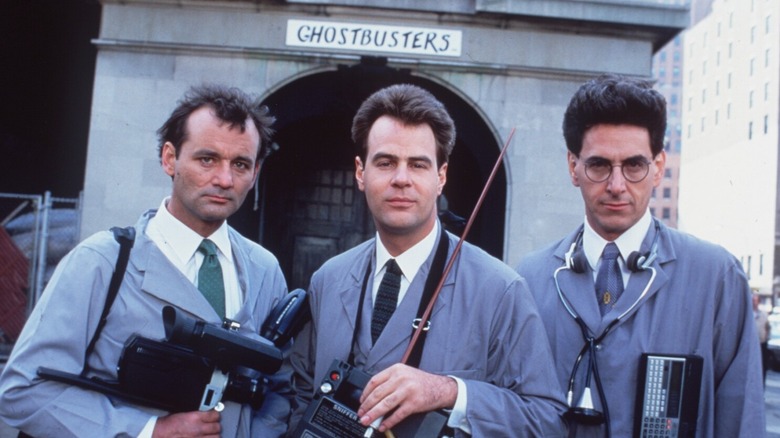
How Dan Aykroyd's Supernatural Experience Shaped The Ghostbusters Script

by Bill Bria
p>Alotofwhatmakestheoriginal"Ghostbusters"anenduringclassicisimmediatelyapparent:agiantkaijuMarshmallowMan,theearwormthatisahref="https://www.slashfilm.com/576574/who-you-gonna-call-ray-parker-jr-interview/">RayParkerJr.'sthemesong/a>, andallthingsahref="https://www.slashfilm.com/624856/the-best-bill-murray-movies-ranked/">BillMurray/a>.Yet"Ghostbusters"wouldfeelfarlesstangibleand,darewesay,lessauthenticwereitnotforitspresentationoftheparanormal.Afterall,paraphernalialiketheghosttrap,ectoplasm,andthephrase"class-5full-roamingvapor"aretoouncannytobewholesaleconjecture./p>p>Thereasonthesupernaturalelementsof"Ghostbusters"feelsoanchoredinreality(oratleastsomeversionofreality,dependingonyourownpersonalviews)isthankstoco-writerandstarDanAykroyd,whoseowngenuinebeliefintheparanormalhasdeeproots.Aykroyd'shistorywiththespiritualandspectralnotonlygavebirthtotheveryconceptof"Ghostbusters,"butprovidedthescriptandeventualfilmwithsuchauniqueandlayeredrichnessthatcouldn'thelpbutmakeitcompelling,nottomentionhilarious./p>
The Aykroyd Family And The Great Beyond

p>Theparanormalisn'tjustasolepersonalinterestofDanAykroyd's—"it'sthefamilybusiness,forGod'ssake,"asheputitinahref="https://www.vanityfair.com/hollywood/214/6/ghostbusters-making-of">a214VanityFairarticle./a> AykroydandhisfamilyconsiderthemselvesSpiritualists,andtheyindeedhavealengthyhistorywiththesupernatural.Hisgreat-grandfatherregularlyheldséancesonahref="https://www.slashfilm.com/66775/take-a-tour-of-the-ghostbusters-afterlife-set-with-adam-savage/">thefamily'sfarmhouse/a>inOntario,wheretheAykroydshadtheirownmediumonhandtohelpcontactthebeyond.Aykroyd'sgrandfatherwasatelephoneengineerwhowasfascinatedbythepossibilityofcommunicatingwiththedeadbywayofradio,andthe"SaturdayNightLive"alum'sfatherauthoredthe29book"ahref="https://www.amazon.com/History-Ghosts-S%C3%A9ances-Mediums-Ghostbusters-ebook/dp/B39RHVOY">AHistoryofGhosts/a>,"whichDanAykroydwrotetheintroductionto./p>p>WhileotherAykroydprojects,suchas"DoctorDetroit"and"NothingButTrouble,"camemorefromhishumorousdailyexperiences,hisinspirationfor"Ghostbusters"unsurprisinglysprungfromanarticleinaparapsychologyjournal.Uponreadingthatarticle,Aykroydthought"I'lldeviseasystemtotrapghosts...andmarryittotheoldghost[films]ofthe193s." Thecomedianobservedthat"virtuallyeverycomedyteamdidaghostmovie,"doubtlesslythinkingofsuchfilmsas"HoldThatGhost"(starringBudAbbottandLouCostello),"TheGhostBreakers"(starringBobHopeandPauletteGoddard),and"GhostChasers"(starringLeoGorceyandtheBoweryBoys)./p>p>Recognizingthathisdepthofknowledgeabouttheparanormalcouldprovideaghostcomedywithenoughrealparapsychologytomakeitunique,Aykroydwrotethescriptfor"Ghostbusters"withaneyetowardgivingthesupernaturalsometangibility./p>
A Dose Of A Freaky Ghost

p>The ahref="https://www.slashfilm.com/648714/dan-aykroyds-original-ghostbusters-script-was-vastly-different/">firstdraftof"Ghostbusters"byAykroyd/a> wasfarfromwhatendeduponcinemascreensin1984.Entitled"GhostSmashers,"Aykroydsetthestoryinafutureworldof212,whereaholetorninthefabricofrealitycausesaninfluxofghoststhatinturngivesrisetotheprofessionofghostbusting.Aykroyd'sSpiritualisthistoryandknowledgeisalloverthemassive18-pagetome,andahref="https://www.esquire.com/entertainment/movies/news/a27498/ghostbusters-oral-history/">directorIvanReitmanrecalled/a> thatitconcerned"manygroupsofGhostbustersfunctioninginanintergalacticsetting"thatwas,accordingtoAykroyd,"alotdarker"and"scarier"thantheeventualmovie./p>p>Fortunately,Aykroydwasnotpreciousabouthiswork,acknowledgingandevenencouragingcollaborativerevisionsthatwouldallowthefilmtobemade.Aykroydknewthathewas"abetteroriginatorthanexecutorofafinishedscreenplay,"admittingthathewas"akitchen-sinkwriter:Ithroweverythinginthere"andthathe's"alwaysreliedonacollaboratortobringitintoreality."/p>p>Thankfully,itwasReitmanwhosuggestedhis"AnimalHouse"and"Stripes"cohortHaroldRamiscouldhelprewriteandshapethescript,andhehappilydiscoveredthat"Danwasgreat,andveryopen"toRamisbeingbroughtonboard.Thetwomenthengottoworkonanewdraftthatplayedtoboththeirstrengths,withAykroyd"creatingfunnysituations,"asRamisputit,whilehewrote"moreintheareaofstrongjokesandfunnydialogue."Withthetwocomedywunderkindssupportingeachother,"Ghostbusters"wasformedintoacoherentandshootablescript./p>
Bustin' Makes Me Feel Good

p>WhileRamis,Reitman,andeventuallyMurray(viahissuperlativead-libs)contributedagreatdealto"Ghostbusters'"finalscript,theuniquetone,terminology,andconceptofAykroyd'soriginalSpiritualist-influencedvisionremained.Aykroyd'sbeliefsgivethemoviebothablue-collar,everydayapproachtothesupernaturalaswellasanuncannyandbizarreconceptionofit.Granted,histalentasacomediandoubtlesslyinfluencedthewiderangeoftheghostcreaturesseeninthefinalfilm,fromthemoreclassicLibraryGhosttothemenacingTerrorDogstothecartoonishOnionhead/SlimerandtheStayPuftMarshmallowMan.Yeteventhemostoutlandishofthesecharactershaveweighttothem,thankstosceneslikethethreeGhostbustershavingtoahref="https://youtu.be/s7zVqK8ZJyA?t=48">cleanupthesticky,gooeyectoplasm/a>or"slime" thatghostsleavebehind./p>p>Aykroydhasalwayshadanaffinityforahref="https://www.youtube.com/watch?v=pT_QRKfv8H4">JoeFriday-style/a> matter-of-factspeeches,andit'snocoincidencethathis"Ghostbusters"characterofRayStantzisthecharacterwhosellstherealityofghostbustingtotheaudience.HisclippedChicago-by-way-of-Ontariodeliverymakessuchwildlyfantasticalideaslikeahref="https://www.slashfilm.com/57968/ghostbusters-ghost-trap-incense-burner/">trappingaghost/a> andthenahref="https://www.youtube.com/watch?v=aLwKMkdVMnQ">"storing"thatghostinacontainmentsystem/a> seemnotonlyplausiblebutpractical.WithhischaracterofRayand"Ghostbusters"asawhole,Aykroydmorethanaccomplishedhisoriginalgoalsforthefilm,creatingacomedyteamghostmoviewhilemakingthesupernaturalseemreal—because,atleastforAykroyd,itis./p>

Read this next: The 14 Best Bill Murray Movies Ranked

The post How Dan Aykroyd's Supernatural Experience Shaped the Ghostbusters Script appeared first on /Film.