Shared posts

04 May 15:26

Sam Raimi Just Can't Keep His Horror And Humor Separate — And That's A Good Thing

by Ryan Scott

Sam Raimi is a filmmaker who has not only managed to endure in the business for more than four decades, but has done so effectively by working in a variety of genres. The man got his start working in the lowest of low budget features with the horror classic "The Evil Dead" and helped cement the superhero movie craze with 2002's "Spider-Man." It's a craze he's circled back around to 20 years later with "Doctor Strange in the Multiverse of Madness," bringing him back to the genre after many years away. He's also effectively directed westerns ("The Quick and the Dead"), thrillers ("A Simple Plan"), and even sports movies ("For the Love of the Game").

One thing that Rami has always done exceptionally well as a filmmaker regardless of the genre that he is working in is injecting a bit of much-needed levity. And yes, this extends to his work in the horror space. It is actually what helps to give him such a distinctive voice when he's working on a horror film and it would be tough to argue against his approach of marrying comedy to genre filmmaking. The results truly do speak for themselves when looking at the entire scope of the picture on a long timeline.

Comedy And Horror, Cinematic Cousins

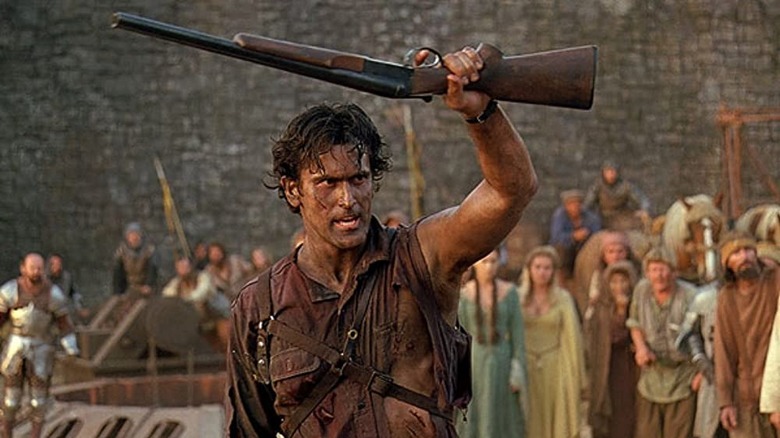
While "The Evil Dead" was a very serious and straightforward (not to mention groundbreaking) horror film, when presented with the idea to make a sequel, Raimi, star Bruce Campbell, and producer Rob Tapert decided to take a different approach. They opted to essentially remake the original while injecting it with a whole lot more humor mixed in with the horror. The result was 1987's "Evil Dead 2," often considered to be the best entry in the franchise and one of the best horror/comedy films ever made. This set Raimi on a path of mixing humor with his future horror endeavors.

So, what is it about horror and comedy that go so well together in the eyes of Raimi? The filmmaker addressed the topic in 2009 while promoting the release of "Drag Me To Hell," another excellent example of blending horror with humor. Speaking with Vanity Fair, Raimi explained that scaring an audience and making them laugh actually share more similarities than one might think.

"Comedy and horror, they're strange cousins. When I'm setting up a suspense sequence, I find it very similar to setting up a joke. They're similar in terms of construction, setup and payoff. There's this built-up anticipation from the audience about what may lie beyond the door, or what the bartender in the joke may say. A scream of horror when the creature leaps out is very similar to the scream of laughter from an unexpected punchline. A scream and a laugh are both involuntary reactions. And also, for me at least, I'll often titter when I'm terrified, because it's the only way I can deal with horror movie moments. I'm a big coward."

Why So Serious?

One of the nice things about the horror genre is that it isn't nearly as limiting as outsiders might believe. There are so many different flavors and variations that exist under the gigantic umbrella that is horror, meaning there really can be something for everyone. But one thing that can often happen is that these films can take themselves a bit too seriously. Frequently, the premise of a horror film demands a little bit of acknowledgment. Just look at something like "Wrong Turn." It's a film about backwoods cannibals and what good does it do to take that too seriously? There is a reason so many fans of the genre love "Wrong Turn 2: Dead End," directed by Joe Lynch, who happens to have a similar sensibility to Raimi in this regard.

That is but one example. The point is, Raimi viewing horror this way and marrying it to comedy so often is something mainstream film could use more of, not less. That might also explain why so many of the horror movies he produces, such as "Don't Breathe" or "Crawl," end up becoming big hits as well. Just having his touch, even if it is not in the director's chair, can indeed be a secret ingredient. One can only hope that Raimi finds his way back to horror after he's done playing in Marvel's big sandbox.

"Doctor Strange in the Multiverse of Madness" hits theaters on May 6, 2022.

Read this next: The 35 Best Documentaries You Can Watch On Netflix Right Now (March 2022)

The post Sam Raimi Just Can't Keep His Horror And Humor Separate — And That's a Good Thing appeared first on /Film.

04 May 15:25

An Original Cast Member Joins Rob Zombie's The Munsters

by Debopriyaa Dutta

A cast member from the original "The Munsters" sitcom has joined Rob Zombie's upcoming reboot of the horror-comedy (via Bloody Disgusting). Pat Priest, who played the role of Marilyn Munster from episodes 14 - 70 of the show (she replaced Beverly Owen, who originally played Marilyn), has officially joined Rob Zombie's "The Munsters" cast, although details about her role have been not been revealed yet. Zombie took to Facebook to confirm the news, stating that "for once the rumors are true." Check out the post below: 

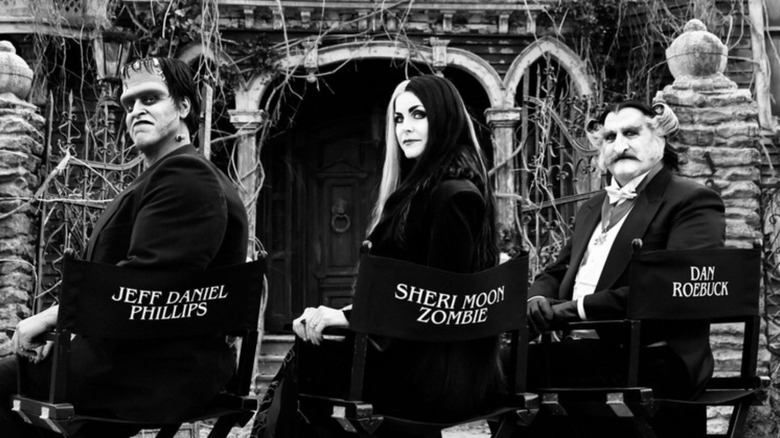
The central characters in Zombie's "The Munsters," namely Lily Munster and Herman Munster, are being played by Sheri Moon Zombie and Jeff Daniel Phillips respectively. 

The Return Of Beloved, Benign Monsters

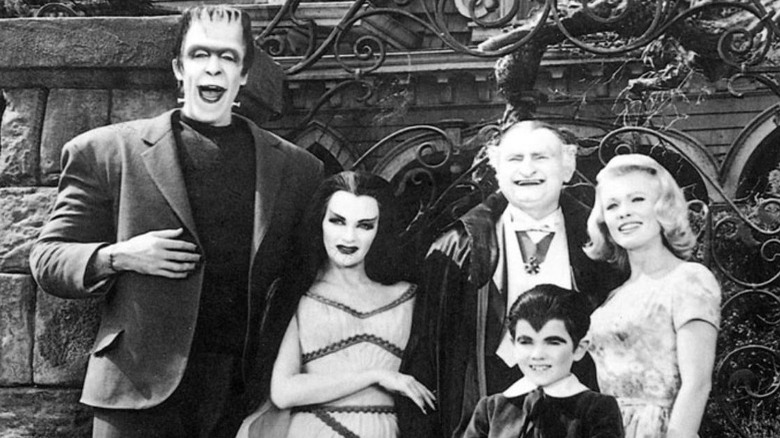
First airing in 1964, "The Munsters" followed a family of monsters led by patriarch Herman Munster (Fred Gwynne), who happens to be Frankenstein's monster, and Lily, the vampire matriarch (Yvonne De Carlo). There's also the Count Dracula-like Grandpa (Al Lewis) and the teenager Marilyn, along with Eddie (Butch Patrick), a werewolf-ish creature. Despite the strangeness of this supernatural family being painfully apparent, the comedy  within the show hinged on the fact that they considered themselves an average family in American suburbia.

Being a long-time fan of the series, Zombie decided to make a reboot. Principal photography for "The Munsters" has begun in Budapest, Hungary, and several members have been added to the cast. Daniel Roebuck will be playing Grandpa Munster, while Richard Brake will be playing Dr. Henry Augustus Wolfgang, and Catherine Schell will assume the role of Zoya Krupp, the gypsy queen.

Apart from this, Dee Wallace, Cassandra "Elvira" Peterson, and Jorge Garcia will also be a part of "The Munsters" reboot.

Despite the relatively dark subject matter of the narrative, Zombie shared on his Instagram, that "The Munsters" will have a PG rating, for "macabre and suggestive material, scary images and language," with the following caption:

"For those of you speculating, wondering and assuming that THE MUNSTERS would be dirty, violent and nasty... well, you are wrong. It's all good down on Mockingbird Lane."

Zombie had also released an exclusive look for Lester the werewolf recently, a character he claims will make you "howl with laughter." Lester is being played by Tomas Boykin, who previously worked with the musician-director in "3 From Hell."

The original "The Munsters" series is currently streaming on Peacock, where you can revisit the genuinely hilarious show. Zombie's "The Munsters" does not have a release date attached to it yet.

Read this next: The 15 Most Anticipated Comic Book Movies And Shows Of 2022, Ranked

The post An Original Cast Member Joins Rob Zombie's The Munsters appeared first on /Film.

04 May 15:24

What We Do In The Shadows Made Matt Berry Face One Of His Worst Fears

by Anthony Orlando

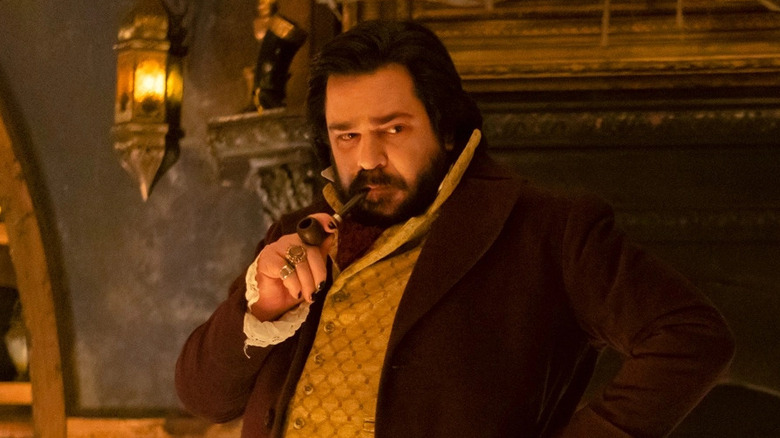
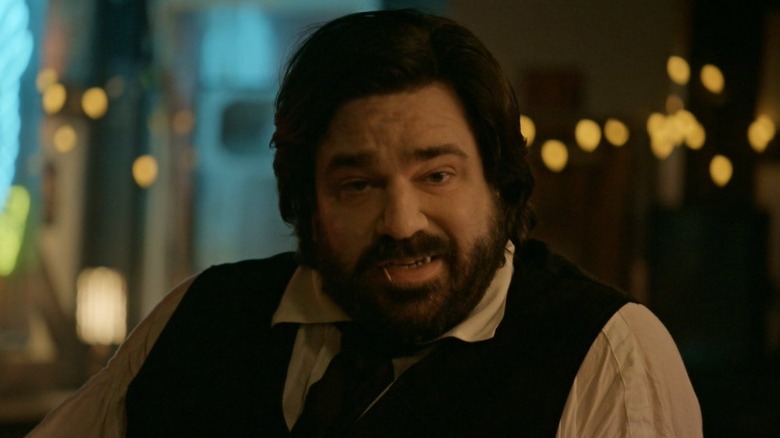
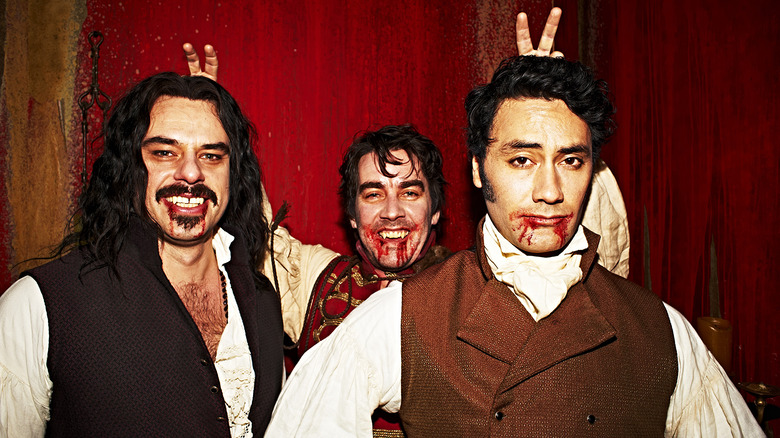
Created by Taika Waititi and Jemaine Clement, "What We Do in the Shadows" follows a group of vampires living in modern-day Staten Island, all filmed in a mockumentary style similar to the "The Office" and "Parks and Recreation." The show is filled with many memorable and hilarious characters, such as Nandor the Relentless, Nadja of Antipaxos, and the Dilbert-looking energy vampire, Colin Robinson. However, Matt Berry's character, Laszlo Cravensworth (aka Jack the Ripper/Jackie Daytona), is arguably the best one in the entire show. 

This pansexual vampire is known for his distinctive British accent, uncanny wit, and erotic obsessions, which include making a century's worth of porno films and topiary sculptures of ladies' private parts. He's also known to shout "Bat!" before he transforms into a bat and flies away. The character is only elevated by Berry's hilarious and magnetic screen presence, which he's honed thanks to years of comedic acting in shows like "The IT Crowd," "Toast of London," "Year of the Rabbit," and "Garth Marenghi's Darkplace." His exceptional acting also helped him face one of his greatest fears while starring in the show.

What Is His Biggest Fear?

For the show about vampires, werewolves, zombies, and even Babadooks, one of the things that scared Berry the most was just being yanked into the air on wires. In an interview with Vulture, Berry was asked what is was like doing the wirework that makes him fly as a vampire so often in the show. He answered:

"Wirework is terrifying. It's terrifying because I'm afraid of heights, and you have to look like you're not, when you're a vampire. There's no reason why a vampire would be afraid of heights, much like a bird wouldn't be afraid of heights. So that's the veil of acting, because one minute you're standing on the floor and then, within two or three seconds, you're 50 feet in the air."

"In one case, we were next to a building, so you can really feel how high up you are," Berry added, "and then you have to do your lines and look as if everything is completely normal. That was hard for me."

Though he said the experience was difficult, the viewer can't tell he was frightened at all, partially because he turns into a bat  ("Bat!") really fast. But also because he's just a good actor, of course. 

This Wasn't The Only Challenge

Filming "Shadows" proved to be a challenge for everyone involved, primarily due to the cast and crew having to do lengthy shoots beginning long before the sun rises. But this is understandable, as a show about vampires should take place in "vampire time." "There's a lot of takes," said Berry. "We shot all the time, it was quite an intense shoot, so that helped for the lack of breaking. You just didn't know your ass from your elbow. You already have jet lag and it's four in the morning."

With such long and early working hours, it's no wonder that Waititi and Berry always fought over getting the best napping spot. "We started scenes at four in the morning, or even later than that -- or earlier than that -- which was something to get used to, but you get on with it," added Berry. "The hours are a lot different in the U.K. There, you shoot from seven in the morning until seven at night and then everyone goes home."

Despite the trials of making this beloved show, everyone involved seems committed to continuing the series -- season 4 is expected to arrive at some point this year. 

Read this next: The 10 Apple TV Shows That Justify A Subscription

The post What We Do In The Shadows Made Matt Berry Face One of His Worst Fears appeared first on /Film.

04 May 10:51

Star Wars Jedi Knight Remastered 2.0 Mod available for download

by John Papadopoulos

GeneralTantor has released a brand new version of a must-have mod for Star Wars Jedi Knight: Dark Forces II, Star Wars Jedi Knight Remastered. Star Wars Jedi Knight Remastered 2.0 features JkGfxMod, the Jedi Knight Neural Upscale Texture Pack and the Enhancement mod, all together in a nice installer. Additionally, it packs a FOV Mod, … Continue reading Star Wars Jedi Knight Remastered 2.0 Mod available for download →

The post Star Wars Jedi Knight Remastered 2.0 Mod available for download appeared first on DSOGaming.

04 May 10:47

GWJ Conference Call 812

by Amoebic

Stacklands (PC), Death Stranding (PS5), Elden Ring (PS5), Games you can play while doing other things, some housekeeping, and more!

04 May 07:10

Putting It All Together

by Unknown

It's great when a plan, or a puzzle, comes together, isn't it? 

I'm not just channeling my inner Hannibal Smith...I'm talking about bringing various pieces or elements together to build a cohesive, clear picture, connecting the dots into a cohesive analysis.

To kick this off, Florian had this to say about threat actors moving to using ISO/IMG files as result of Microsoft disabling VBA macros in docs downloaded from the Internet, a change which results in entirely new artifact constellations. After all, a change in TTPs is going to result in changes as to how the system is impacted, and a change in the resultant constellations. So, this sets the stage for our example.

In this case, the first piece of the puzzle is this tweet from Max_Mal_, which points to the BumbleBee campaign (more info from TAG here), described in the Orion Threat Alert. Per the tweet, the infection looks like this:

Zip -> ISO -> LNK -> rundll32.exe (LOLBin) -> Cobalt Strike

This all starts with a zip archive being delivered to or downloaded by the user; however, what's not mentioned or described here are the system impacts. Downloading the archive often (depending upon the process) results in MOTW being "attached" to the zip archive. This tweet thread by Florian Roth includes a couple of resources that discuss MOTW, one of which is an excellent article by Mike Wolfe that provides a really nice explanation and details regarding MOTW. I've been fascinated by NTFS alternate data streams (ADSs) since I first encountered them, in particular how they're used by the OS, as well as by the adversary. As a result, I've been similarly interested in really leveraging MOTW in every way possible.

The other useful component of Florian's thread is this tweet by Nobutaka Mantani regarding MOTW propagation support in archiver software for Windows. This is huge. What it means is that when the ISO file is extracted from the zip archive by one of the software products that supports MOTW propagation, the extracted file "inherits" MOTW, albeit without the same contents as the original MOTW. Rather, the MOTW attached to the ISO file points back to the zip archive. This then gives us a great deal of insight into the origin of the extracted file, even if the zip archive is deleted.

The benefit is that this may provide us with a detection opportunity, something that depends upon the framework and/or approach you're using. For example, it may be a good idea to alert on files being written to suspicious locations (ProgramData folder, user's StartUp folder, etc.) by one of the archiver software packages, where the target file has a MOTW. Or, we can search for such files, via either proactive or DFIR threat hunting, as a means of locating "badness" on systems or within images. Imagine having an automated process that parses the MFT, either from a triage file collection or from an acquired image, and automatically identifies for the analyst all files with MOTW in suspicious locations. MOTW propagation also appears to occur if the downloaded zip archive includes an LNK file (rather than an ISO file), or a batch file, as well. There have been instances where a batch file is extracted from an archive, to the user's StartUp folder, and has an associated MOTW. As such, automating the detection process, via alerts based on EDR telemetry, or via proactive or DFIR hunting, provides for efficiency and consistency in the analysis process.

So, where we once had to deal with weaponized documents, we're now extracting files from an archive, mounting an ISO or IMG file, and accessing the embedded LNK file within the "new volume". All of this results in a completely new artifact constellation, one that we have to understand in order to fully address coming attacks.

04 May 06:48

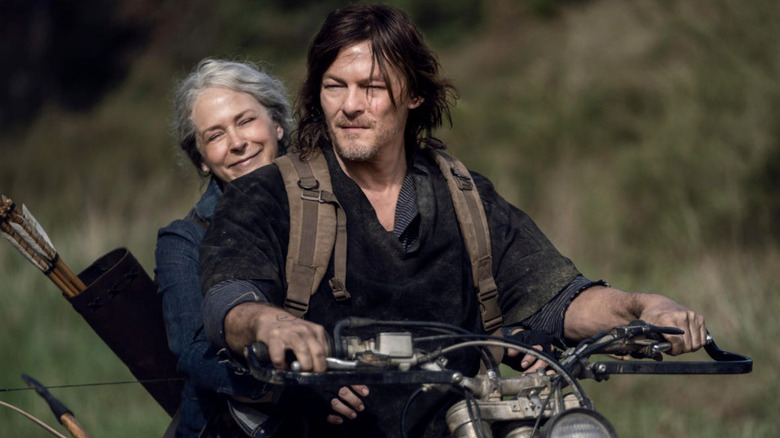
Norman Reedus Doesn't Believe Melissa McBride's Exit From The Walking Dead Spin-Off Is The End For Daryl And Carol

by BJ Colangelo

Fans of "The Walking Dead" were shocked last week when it was announced that series favorite, Melissa McBride, was no longer going to appear in the upcoming spin-off series, "Daryl and Carol." For the uninitiated, that's a huge deal as McBride is the "Carol Peletier" part of that title. The show was set to follow Norman Reedus and McBride's characters as they went on their own adventure, as well as honor the longevity of the two remaining original cast members. Unfortunately, once the production planned to move out of Atlanta, Georgia where "The Walking Dead" primarily shoots and instead head to Europe, McBride no longer felt the logistics of production worked for her and needed to step away from the project. The series is still moving ahead as planned with Reedus still on board to continue the arc of Daryl Dixon, but fans were furious with Reedus, believing that he made the call to move the series to Europe to be closer to his wife, German actress Diane Kruger.

The official AMC Twitter account had to post a three-part statement regarding McBride's departure, as Reedus was being inundated by angry fans, despite the fact Reedus was not a part of the decision to leave Atlanta. "It is inappropriate to direct negativity and anger at another cast member for a disappointing outcome he had nothing to do with," AMC tweeted. The channel also went on to praise McBride's performance, tweeting, "Carol is a beloved & vital character and we are working to find a way for fans to again follow her story, as only Melissa could give life to, in the expanding universe around 'The Walking Dead.'" The social media team behind the account isn't alone in believing this isn't the end of Carol's story. Norman Reedus believes this to be true as well.

'Those Characters Are Going To Meet Back Up At Some Point'

During a recent interview with Jimmy Fallon on "The Tonight Show," Reedus talked about the upcoming spin-off, as well as McBride's departure. "Twelve years is a grueling schedule," Reedus said. "She wanted to take some time off and she's doing that, she deserves it."

Reedus and McBride are the two most veteran members of "The Walking Dead," with their entire lives dictated by the show's scheduling for over a decade. He also spoke to the difficult nature of production, joking with Fallon, "It's not 'Succession' where you're like, on a yacht having caviar, we're eating squirrels and killing each other."

McBride may be taking time off, but Reedus doesn't think this is the end of Daryl and Carol's story.

"I imagine those characters are going to meet back up at some point, and they might even meet up with some other characters down the road. In the meantime, they were like, 'Hey, you wanna go on a mission?' And I'm like, 'Yeah, let's go on a mission.'"

"The Walking Dead" season 11 is currently airing on AMC and the AMC+ streaming app.

Read this next: The 20 Best Zombie Movies Of All Time

The post Norman Reedus Doesn't Believe Melissa McBride's Exit From The Walking Dead Spin-Off is the End for Daryl and Carol appeared first on /Film.

04 May 06:26

The 22 Best Survival Movies Ranked

by Gino Orlandini

Staying alive is the primordial prime directive for life. This deep need to survive pushes humans into incredibly dramatic battles with reality. That's why so many of the stories below are true. Near-death narratives strip away the trappings of society and place their heroes into a state of nature. These protagonists are stranded, starving, mauled, and even disfigured. And yet, they take what's left and fight to keep breathing.

The earliest known human stories have survival elements, of course. "Gilgamesh" is a quest for immortality -- the ultimate survival plot. "Beowulf" and Homer's epics both survive harrowing quests, too, but the true survival story is simpler. There is no grand search for glory or reward; It's just the naked struggle to stay tethered to this mortal coil.

Survival movie heroes don't usually choose their adventures. The universe plucks them from ordinary lives and throws them into extraordinary, yet elementary, battles with mortality. First, they have to find the fortitude to overcome this sheer bad luck, and then, the determination to take what's left and keep living. These are the 22 best survival movies, ranked.

Kon-Tiki
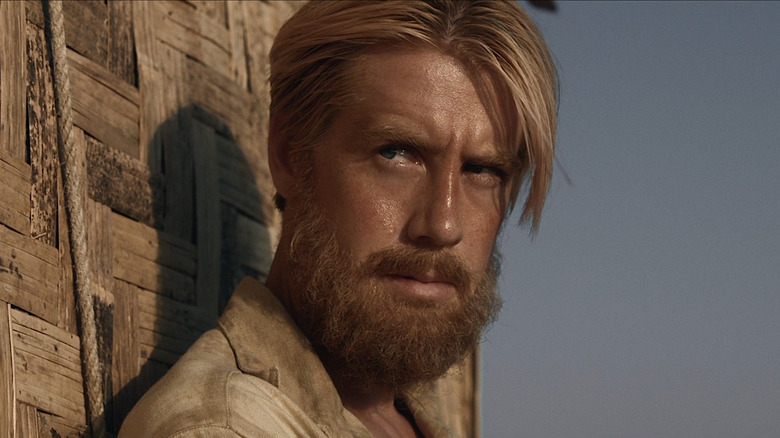
In 1947 Norwegian anthropologist Thor Heyerdahl wanted to prove a wild theory that Polynesia was populated by ancient indigenous South Americans who traversed thousands of miles of ocean to settle there. He'd first lived among Pacific tribes for years and then built a balsa wood raft and set to sea to prove that native Americans did the same 1500 years prior.

Never mind that by modern standards this experiment proves nothing but the guts of Thor and the men who joined him. Decades later, DNA evidence first refuted Heyerdahl's notion, but then a more modern study supported it. In either case, the bold adventure did demonstrate that navigating the vast Pacific on a wooden raft was possible, and the men shot a film along the way that won the Oscar for best documentary in 1952.

This simple black and white film inspired the 2012 "Kon-Tiki" dramatization that captures this perilous voyage, buoyed by the quiet determination of Heyerdahl (Pål Sverre Hagen). Cinematographer Geir Hartly Andreassen's work is immaculate. In one scene, his camera floats from the rickety raft, into outer space, and back down, in one continuous shot. It's a composite effect, of course, but perfectly executed, like the rest of this daring seafaring adventure. The science of Pacific Islander origins may not be settled, but the bravery of Thor and his band of blonde and badly sunburned Norwegian sailors is undeniable.

Cast Away
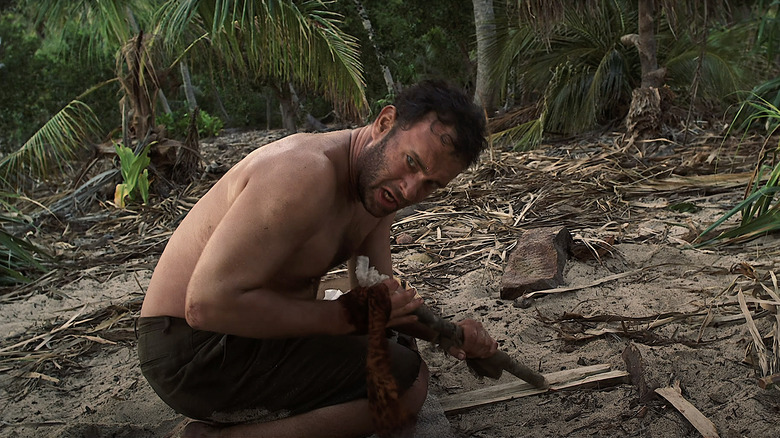
Tom Hanks making friends with a volleyball in the two-and-half-hour one-man show of "Cast Away" is definitely the peak of the desert island genre.

Hanks, however, went into this 2000 film worried about the cliches of this premise. "Because there is a standard way of telling this story, and that's to have a rich, snotty guy who's obviously not in touch with what's important and blah, blah, blah, and then he learns a lesson and he's not like that anymore. But Chuck learns no great lessons." Instead, this film focuses on the practical details of survival, as Hanks further explained.

Screenwriter William J. Boyle actually stranded himself for days in a remote region of Mexico and many of his actual experiences, like the volleyball and his struggle to make fire, are in the film. You don't often hear of scribes going method, but it amounts to a survival movie that feels authentic. The emotional side of this movie works, too. If you've seen the reality series "Alone," you may have noticed contestants who are the best survivalists are the ones who want to be rescued first. With their basic bodily needs met, the isolation is what takes a toll. Desert island survival is way more than a physical challenge, it's "... an emotional, spiritual one as well," Boyle told The Austin Chronicle.

Deliverance
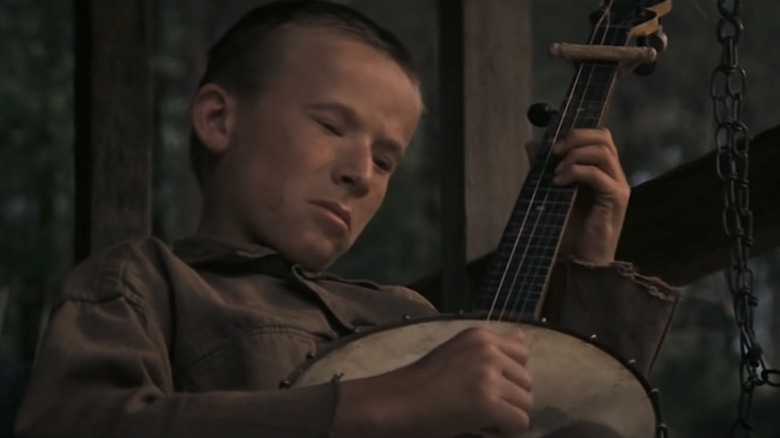
"Deliverance" from 1972 is the ultimate camping-trip-from-hell film. The story follows four city slickers (Jon Voight, Burt Reynolds, Ned Beatty, Ronny Cox) who venture into the wilds of rural Georgia to go canoeing. Soon, the get-away from the grind turns into a deadly fight for survival as they're pursued by relentless backwoods locals.

"Deliverance" is scary because it effectively makes a curiosity of "hillbilly" culture. The friends come across a young local boy with a banjo and Ronny Cox's character "Drew" begins a call-and-response musical duel with the odd-looking youth, who is clearly a musical savant. It's the group's first real contact with these exotic rural folk. As the child begins to play circles around Drew, it's a preview of the uncanny country competency of these sinister locals.

Both "Deliverance" and "Easy Rider" from 1969 take a dim view of flyover America. In both cases, poor rural whites are portrayed as toothless, murderous bigots, but "Deliverance" takes the caricature a step further. The hillbilly villain is a sexual predator and sadist on the hunt. The film can be read as a scathing early salvo in the red-blue culture war still raging today. It's also effectively terrifying and full of stunts that put the excellent cast in real danger. "Deliverance" remains one of the scariest survival movies ever made.

Rescue Dawn
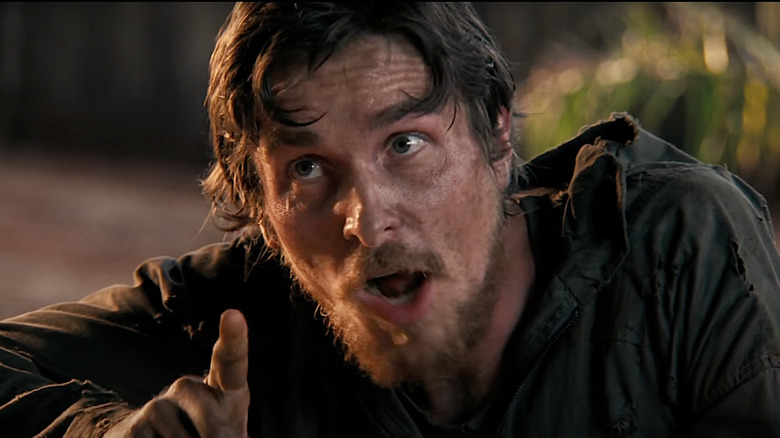
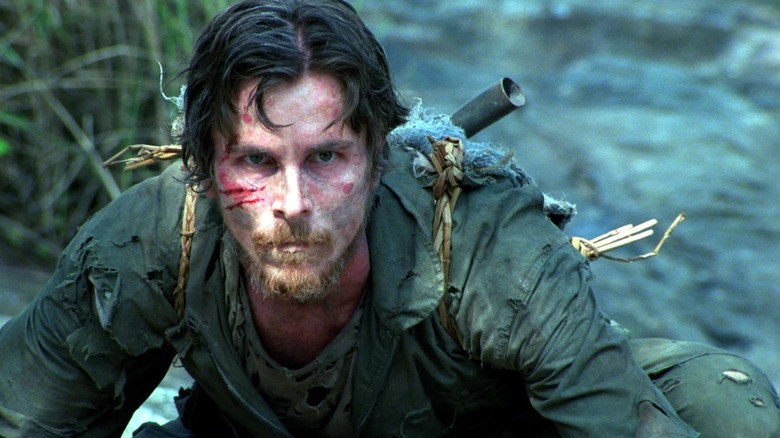
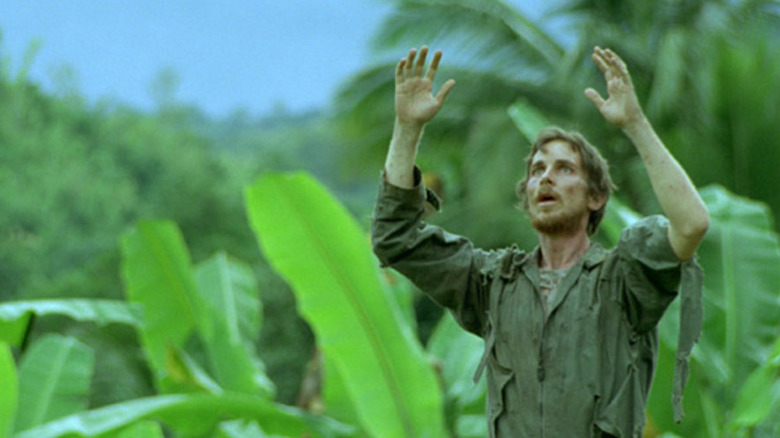
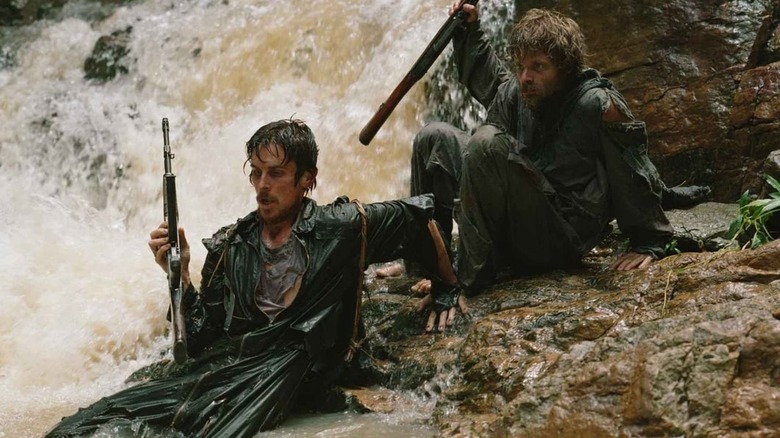
If war is hell, becoming a prisoner of war during Vietnam was the ninth circle. "Rescue Dawn" tells the true story of Dieter Dengler, an American Navy pilot shot down over Laos in 1966. He spent five brutal months in a Viet Kong POW camp, enduring unspeakable torture, but on July 4, he and four other men escaped, barefoot and without supples, only to spend weeks battling the dense and inhospitable jungle in a death-defying march to salvation.

Warner Herzog's 2006 film covers basically the same territory as his haunting 1997 Dengler documentary "Little Dieter Needs to Fly." That film traces the hero's story from his early childhood witnessing the destruction of World War 2 and vowing to become a pilot. Herzog, of "Grizzly Man" fame, may be the greatest living documentarian, and he brings his vivid watchfulness to this dramatization. Christian Bale is fantastic as Dieter, and since Herzog is used to just letting his subjects tell their story, it's clear the director has given this notoriously serious Hollywood megastar creative room to fully embody this man's arduous travails. Bale and Herzog will have you feeling Dieter's pain.

This Is The End
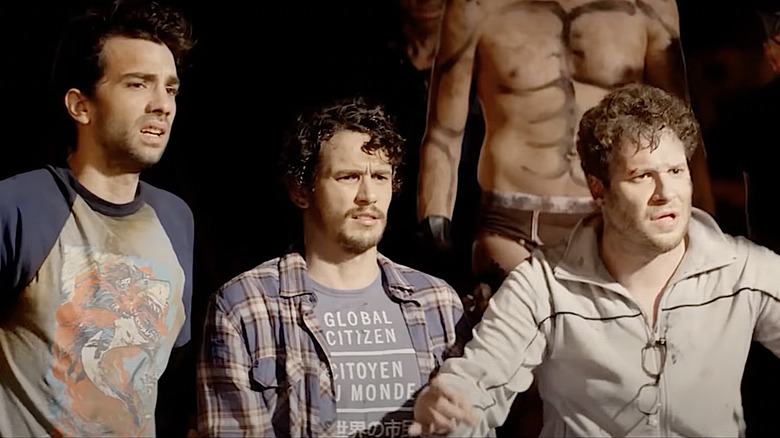
Blockbuster movie premieres are a bummer for the press. We stand for hours lined up along a red carpet for the fleeting opportunity to shout questions as movie stars make a bee-line for E! network cameras. It's no one's fault. If Leo or Brad gave time to every lowly blogger shouting their name, their movie would never open.

That wasn't the case with "This Is The End" in 2013. Writer-director Seth Rogen and cast made lots of time for reporters and then invited us to the screening in a small lower Manhattan theatre. It was 147 minutes of uproarious laughter, but despite the packed house, Rogen's famously deep chortle rose above even the apocalyptic sounds of the end of the world.

Yes, Seth Rogen goes to his own movies and then laughs hysterically, at himself. And it was totally justified. Rogen, Jonah Hill, Danny McBride, Craig Robinson, and James Franco play absurd versions of themselves hunkering down as a biblical end-time comes for Los Angeles. The capricious way Rogen's script dispatches stars like Aziz Ansari, Michael Cera, Rihanna, and many more, is fantastically deviant. The frat-house humor that follows, like McBride's turn as cannibal warlord, is incredibly on-brand. Laughter is infections so maybe Rogen cracking himself up tricked us, but no, upon repeat viewing, this Armageddon survival comedy kills in every way.

The Martian
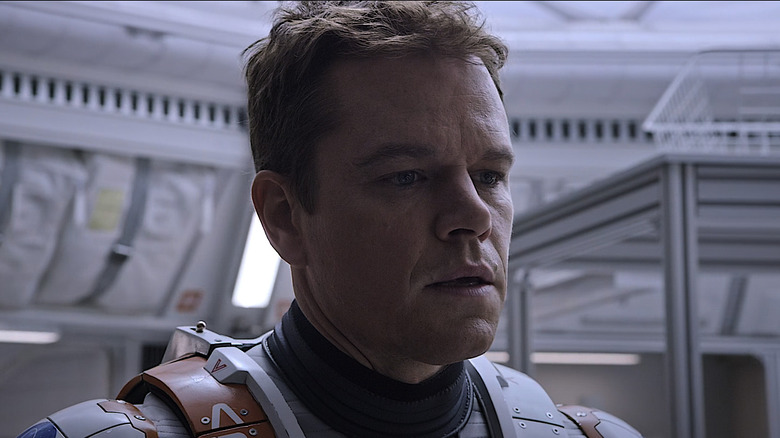
Ridley Scott's excellent 2015 Mars survival film follows Mark Watney (Matt Damon) trapped on the red planet's surface and assumed dead. NASA discovers they've left a man behind, but since it's a bit of a trek, Wayney must science his way to survival over the course of nearly two years in isolation.

"The Martian" is based on the meticulously researched sci-fi novel by Andy Weir. Like all the best survival stories, it's a procedural that hinges on the life-sustaining details. Weir is a self-described science nerd with a serious love of chemistry and found interesting ways to weave his passions into the narrative without getting tediously technical. The author first published the book online for free, and then via Amazon for just .99 cents. The feedback was so great he soon landed both a legit book contract and a movie deal in a single week, according to Business Insider. Weir wasn't very involved in the movie production, but Scott's film doesn't shy from the technical nuances that made the original PDF such a cult success. If human astronauts ever really touch down and live on Mars, it would be best if a Mark Watney type is there to troubleshoot.

A Quiet Place Part 1 & 2
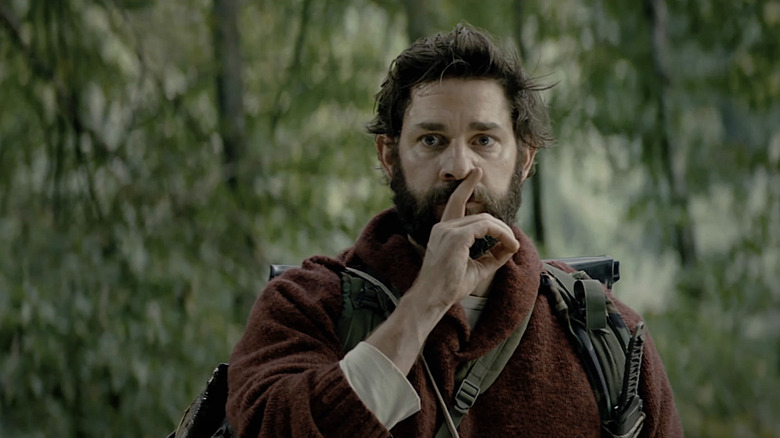
The biggest revelation from "A Quiet Place" is this: wow, Jim from "The Office" is a really, really good director.

Writer-director John Krasinski and wife Emily Blunt play parents to three young children living in upstate New York and forced to live in silence to avoid a race of possibly extraterrestrial but blind monsters who hunt based on sound. The sequel expands on the same story and has the same respect for the audience, never telling us too much about how all this happened.

Krasinski understands the unknown is part of the thrill of the moviegoing. In fact, the first film has no talking in the opening 30 or so minutes. "A Quiet Place" could be taught in film school as the example par excellence of the prime directive for every filmmaker: show, don't tell! Following this rule is probably easier when your characters will be killed if they break it, but it amounts to two of the most suspenseful survival movies ever.

28 Days Later
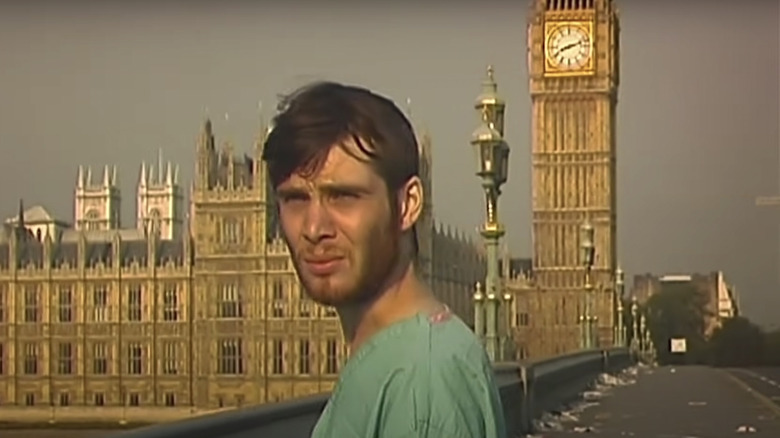
Danny Boyle's riveting 2002 undead masterpiece "28 Days Later" is the scariest of all brain-eating thrillers.

Cillian Murphy plays a London-based bike messenger who wakes up in a hospital dehydrated and starving to find the world has ended. He has no idea animal rights activists have recently freed chimps infected with a "rage" virus and unleashed a zombie apocalypse.

This is an intentionally lo-fi work shot largely with cheap consumer digital cameras, creating a grainy digital version of George Romero's low-resolution film look. "28 Days Later" scribe Alex Garland also wrote Boyle's "The Beach" and confirmed to EW that Romero's "Dawn of the Dead" and "Day of the Dead" were big inspirations for the story too. The references are explicit but these are not your daddy's zombies. The rage virus has created a race of fast and ferocious undead cannibals. The whole viral angle will have your heart pounding as Murphy's hero evades the "infected." And, like any good work in the genre, the only thing more dangerous than zombies are the kind of humans who survive a zombie apocalypse.

The Road
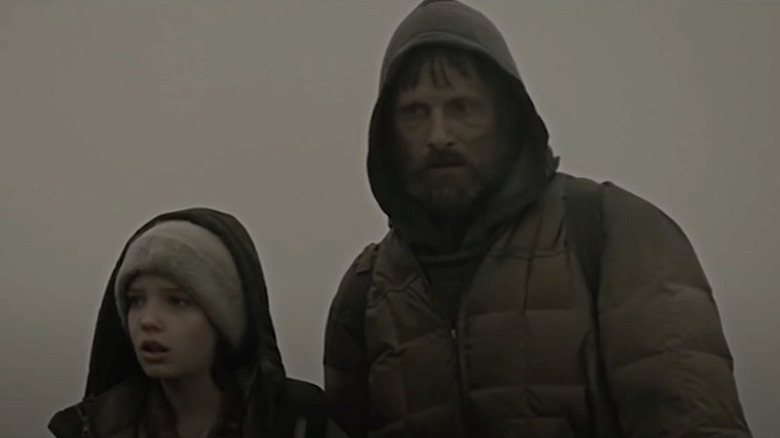
"The Road" is based on the Cormac McCarthy novel of the same name. McCarthy's books, like "No Country For Old Men" or "Blood Meridian," are metaphors for the end of the world, and they use the lawless American west as post-apocalyptic hellscapes. In "The Road,' McCarthy got more literal.

In director John Hillcoat's 2009 adaptation, a man (Viggo Mortensen) and his wife (Charlize Theron) wake up to find the whole world seems to be on fire. The unnamed man calmly fills the bathtub. It's a subtle detail that tells you he instantly realizes life as he knew it is over. His wife is tragically less adaptive to this unexplained disaster and Mortensen and his son (Kodi Smit-McPhee) set out on a perilous journey of survival.

"The Road" is a bleak film, steeped in ash-gray cinematography, but faithfully adapts the excellent source material and is filled with the author's eye for details about survival on a planet burned to the ground. As Mortensen's devoted dad inhales a world of smoke, it's a brutal reminder that if suddenly life was a fight just to live, none would be at full strength to face it.

1917
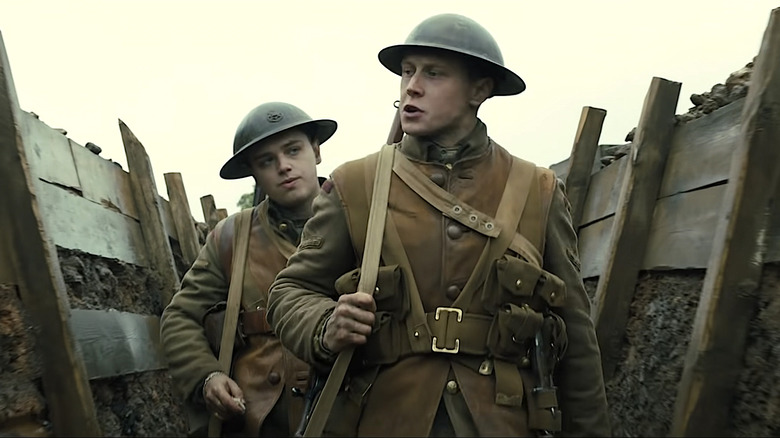
"1917" got a lot of attention for the long-take format in which director Sam Mendes made this entire World War 1 survival tale appear as if it was a single continuous, uninterrupted shot

Audiences don't tend to care about technical tricks. Have you ever tried explaining aspect ratios to a non-movie nerd? What does resonate is the story, and to that end, the long-take conceit of "1917" is a victory. It locks us into the premise as two young soldiers (George MacKay and Dean-Charles Chapman) are tasked to deliver a message past enemy lines that could save 1,600 of their own men, including one of their brothers, played by Richard Madden. 

In the world of film theory, each cut is considered an opportunity for distraction. Cinematographer Rodger Deakins and the crew rehearsed for four months to pull off the action inside each complex shot. Numerous lengthy sequences were then stitched together with some classic editing tricks like match cuts to create the illusion the film is one continuous take. It adds up to one of the most engrossing stories of survival ever shot as the men stave off death in this brutal war.

12 Years A Slave
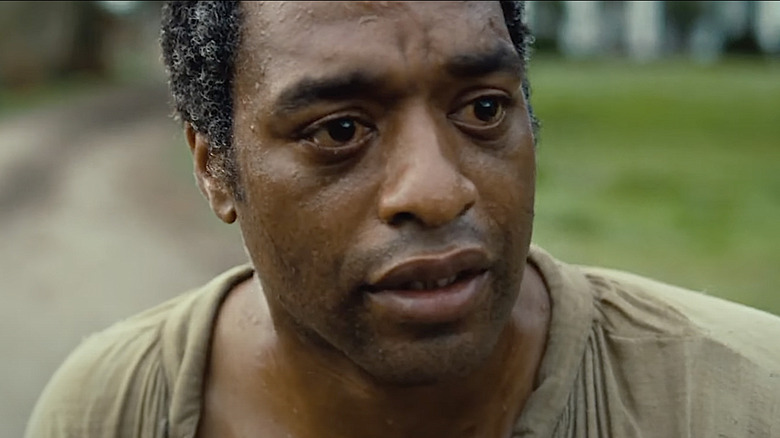
"12 Years A Slave" like "The Shawshank Redemption" is as much about survival of the spirit, as the flesh.

"I will survive. I will not fall into despair. I will keep myself hardy until freedom is opportune." That's the moving battle cry of Solomon Northup (Chiwetel Ejiofor), a free-born Black man abducted and sold into slavery on a plantation run by a cruel master of human chattel played unflinchingly by Michael Fassbender.

Steve McQueen's Oscar-winning film is based on the real Northrup's 1853 memoir of the same name. Some of the details are changed but the essential story of this unbreakable man is all true. Northrup was an accomplished violinist living in upstate New York just before the Civil War. He was adducted by slavers and eventually helped to freedom by a sympathetic Canadian abolitionist named Samuel Bass (played in the film by Brad Pitt). Like "Roots," "Glory," or "Lincoln", this is a seminal Hollywood portrayal of American slavery, and contains both the best and worst of humanity.

Apollo 13
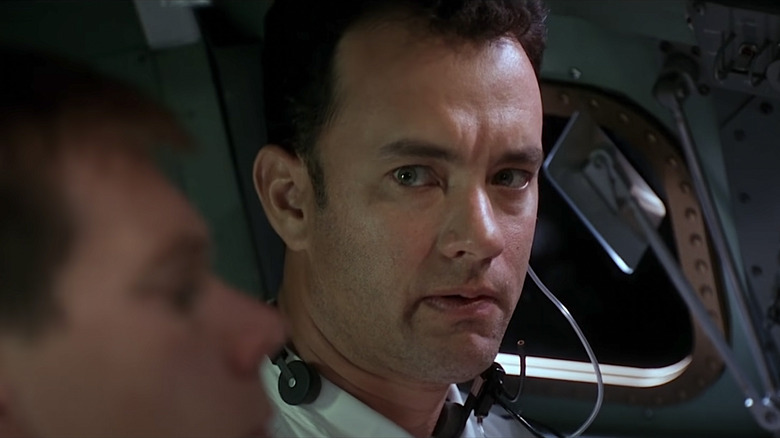
Ron Howard's 1995 retelling of the disastrous 1970 "Apollo 13" moon mission is a riveting survival procedural. The public fanfare surrounding lunar exploits had died down since Neil Armstrong took his small step, but the nation was again riveted when an explosion started spewing oxygen into space on this aborted moon landing. Jim Lovell (Tom Hanks) leads the team of stranded astronauts and Ed Harris plays the legendary Gene Kranz, coordinating the response back at mission control as engineers scramble to piece together a solution.

What really blows up in "Apollo 13" is the illusion that 20th-century space travel could be routine. The thinnest metal and most delicate instruments were insulating these men from oblivion. NASA's early astronauts were specifically picked for their ability to stay level-headed in the face of certain death. That's "The Right Stuff" of legend, and why many space aces were first daredevil test pilots. But these men were also brilliant, and none of them had a chance at survival without their steely resolve and elite smarts.

Into The Wild
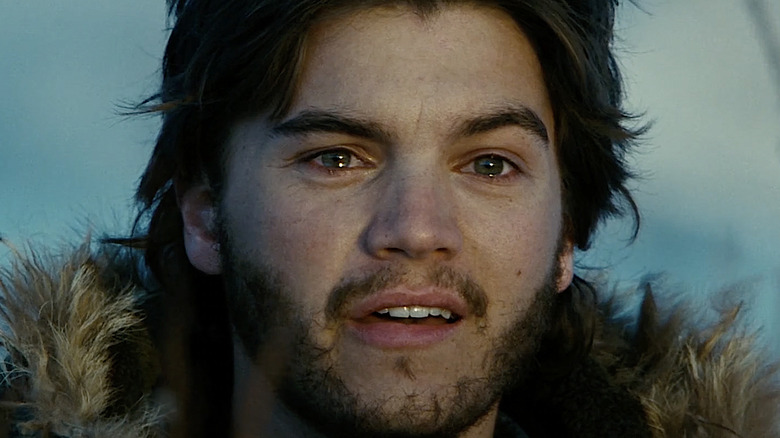
"Into The Wild" is about a young idealist who rejects human society, but enchants every actual human he meets. It's based on the 1996 non-fiction book by Jon Krakauer, itself based on a lengthy essay by Chris McCandless. McCandless was an adventure, wanderer, and academic high achiever who became oddly radicalized by romantic writers like Henry David Thoreau.

The 2007 film adaptation directed by Sean Penn portrays McCandless (Emile Hirsch) as a man alienated from his family as he becomes a post-grad know-it-all who thinks he's found the one true path to enlightenment. He's an intellectual with a nomad's soul and sets out into the Alaska wilds to detach from society's ills. It's in solitude he realizes it's actually the people he left behind that give life meaning.

What's magical about Hirsch's McCandless is he's such a charismatic figure. Everywhere he goes, he's wanted and adored. He forms a deep bond with a farmer (Vince Vaughn) becomes an object of unrequited passion by a young commune girl (Kristen Stewart), and then a quasi-adopted grandson to a lonely old man (Hal Holbrook). He's beloved by all, but his ideas and wild heart mean he can't stay put. Penn's film, propelled by Pearl Jam frontman Eddie Vedder's perfectly strummed score, captures the searching power of youthful idealism, and the terrible cost.

127 Hours
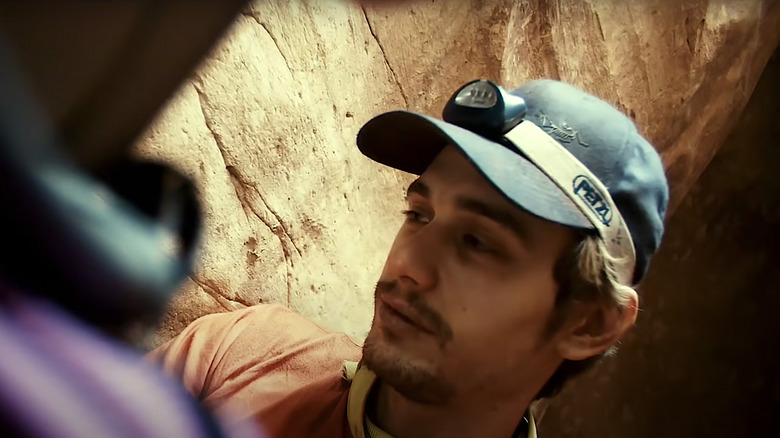
"127 Hours" tells the true story of 27-year-old climber Aron Ralston who got his arm stuck between two rocks while canyoneering in Utah. Ralson recklessly told no one where he was going and so couldn't expect a rescue. He was tapped for five days until he realized that the only way to escape with his life was to cut off his own arm.

The challenge for Danny Boyle's excellent 2010 film starring James Franco was to capture the drama of a story where the protagonist can't even move. The tale includes plenty of obvious tension like a flash flood that almost drowns Ralston. That's all very gripping, but really, this is an internal journey as the combination of exposure, desperation, and spiritual delirium, which push this protagonist to the place of desperation necessary to attempt the gruesome life-saving operation. Boyle and lead editor Jon Harris take you inside the mind of this man in a harrowing journey way past ordinary mental and physical limits.

Gravity
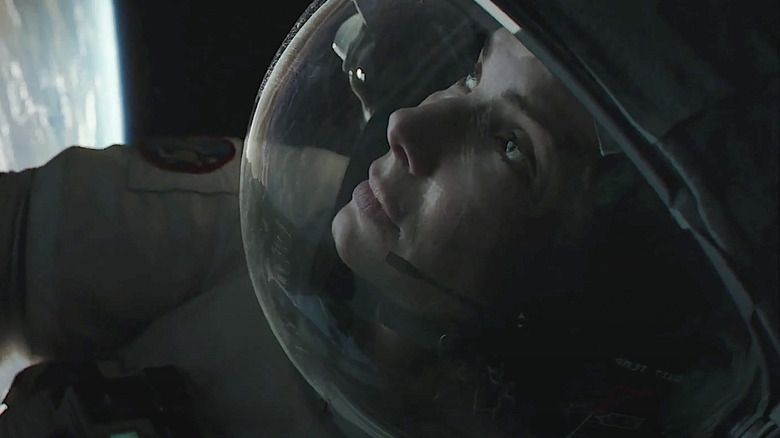
"Gravity" is like an exploding Rube Goldberg device that just keeps twisting into new spectacular shapes. It's one of the most incredible pieces of visual design ever put to film and director Alfonso Cuarón and cinematographer Emmanuel Lubezki both won Oscars for their efforts in 2014.

Sandra Bullock and George Clooney play astronauts servicing the Hubble telescope when a satellite collision causes an ever-expanding debris field orbiting the earth at thousands of miles an hour. Cuarón and his son Jonás Cuarón wrote the ingenious screenplay but waited over four years for technology to catch up to their vision.

"Gravity" borrows motion capture advancements from James Cameron's "Avatar," which helped create the long-takes that keep you trapped alongside Bullock as she navigates from one crisis to the next. The entire film is composed of just 157 different shots, each lingering an average of 40 seconds (the Hollywood norm is just three seconds). Many action flicks feature this many cuts in one poorly staged fight scene. Lubezki's camera rarely blinks so you cant take your eye off the stomach-churning two-hour free fall that is this towering achievement of cinematic engineering.

Children Of Men
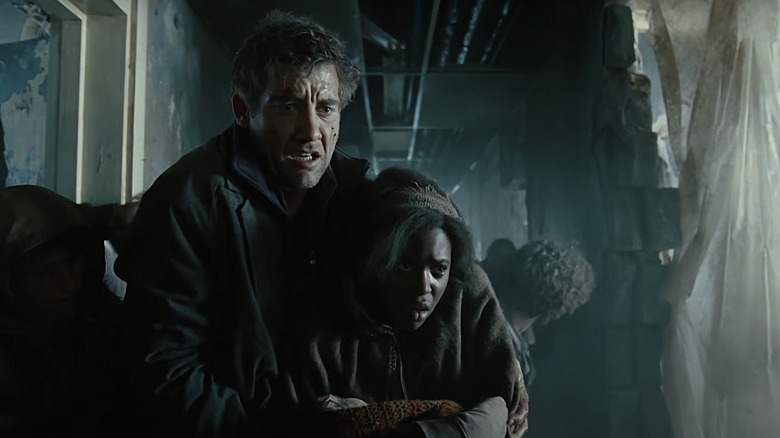
Seven years before the dynamic duo of director Alfonso Cuarón and cinematographer Emmanuel Lubezki stunned audiences with "Gravity," they constructed "Children of Men." It's another survival classic that deploys their love of elaborately blocked long-take action set-pieces.

"Children of Men" is the story of an unusual plague (maybe?) that suddenly renders humanity infertile. Free society collapses as earth's power structures realize their days are numbered. Clive Owen plays a minor civil servant who finds the possible key to survival: the last pregnant woman. He must usher her to safety in a world gone mad.

This is a grim dystopian future where freedom and moral order are crushed in a massive power grab justified by the coming doom. If the human race has no future, what does right or wrong matter in the present? The gripping and sacrificial survival plot in Cuarón and Lubeski's visual masterpiece is a good case against this nihilistic reasoning.

The Pianist
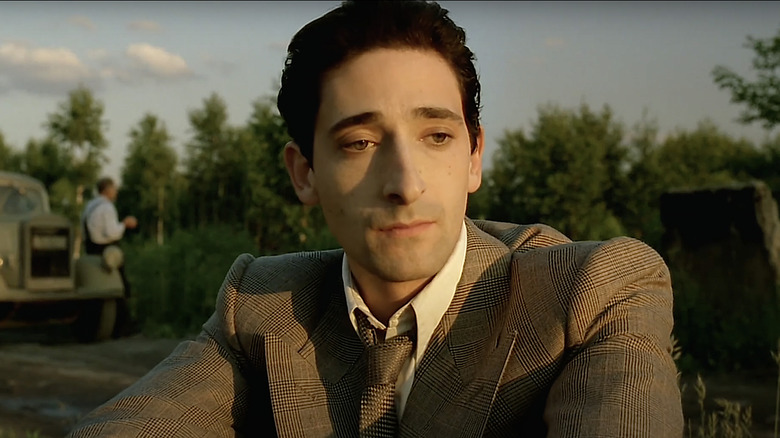
Adrien Brody is one of Hollywood's best actors, but certainly cemented that reputation in his Oscar-winning turn as a Jewish pianist in Poland who survives Hitler's terrifying World War 2 purges.

This achingly beautiful 2002 film is based on the autobiography written by Wladyslaw Szpilman, "The Pianist: The Extraordinary True Story of One Man's Survival in Warsaw, 1939-1945." Szpilman is initially forced into the horrifying Nazi-controlled ghettos of Warsaw but eventually hides in the ruins of his city as his people are murdered in the streets, starved to death, or shipped off to death camps.

Brody lost 30 pounds to play the starving Szpilman, who had to scrounge and freeze during his arduous years in hiding. The tall and often muscular actor got down to a horrifying 129 pounds and then gained it all back during filming because the "The Pianist," like many productions, was shot in reverse order. Brody also learned large portions of Chopin compositions by heart. The actor's extreme commitment and quiet strength carry this moving film about one man's unlikely but true Holocaust survival story.

Dunkirk
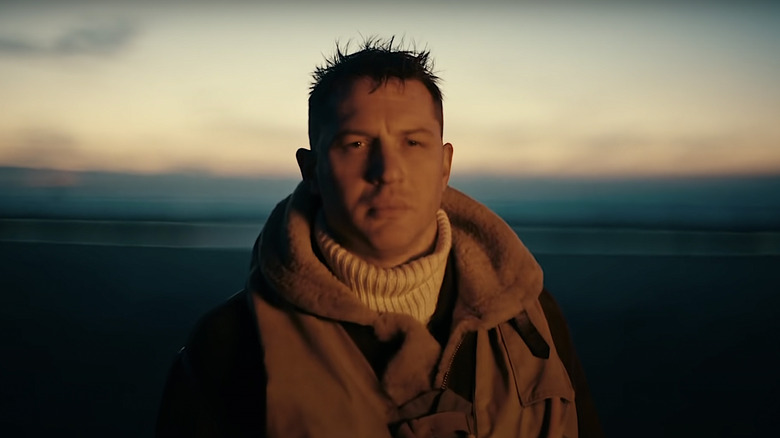
"All we did is survive," laments Harry Styles as a British soldier who braved the beaches of "Dunkirk." "That's enough," replies an old blind man handing out blankets to the haggard soldiers. The men who escaped this death trap in 1940 feel ashamed. No military wins in retreat, but Christopher Nolan's 2017 film captures the moving spirit of living to fight another day.

The evacuation of Dunkirk was a pivotal moment in World War 2. Germany had the bulk of the British Expeditionary Force surrounded and could have crushed them on that beach, but Hitler hesitated. Many have speculated had citizen sailors not rescued these English forces from France, Britain could have fallen to Nazi rule.

The survival of the free world is what's at stake in this imperfect masterpiece. Nolan deploys his signature non-linear editing, hopscotching back and forth in time over the course of multiple days. We're also volleyed between the deadly beaches, a civilian rescue boat, and a brilliant air encounter with Tom Harding as a British flying ace. The cross-cutting is superb but the tricks with time add nothing but confusion to an otherwise superb plot. It's a minor quibble. The British-born auteur has more than earned the right to lean into his temporal fixations in animating the moment his countrymen faced their most dire race against annihilation.

Predator
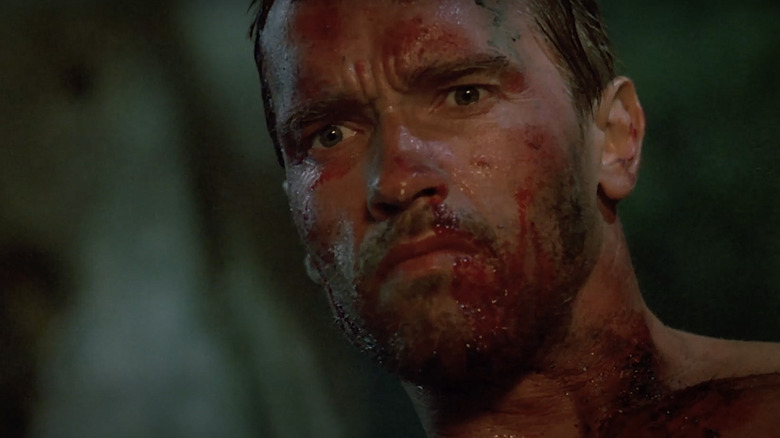
Arnold Schwarzenegger's unforgettable original turn in "Predator" from 1987 rounds out the scariest horror movie ever shot in broad daylight.

A very pumped-up Arnold plays "Dutch," a mercenary hired to rescue some politicians gone missing in the jungles of Guatemala. But Dutch and team find only a trail of mangled bodies and an inhuman force picking them off one-by-one from the trees. Schwarzenegger's final battle with this alien big-game hunter is one of the best action set-pieces of all time. Director John McTiernan ("Die Hard") builds so much fear of this monster in a suspenseful first hour that even for a muscle-bound super-soldier like Dutch, it feels like unfathomable courage to stand and fight.

"Predator" was shot entirely on location in Mexico, so "Lethal Weapon" scribe Shane Black was hired to play one of Dutch's commando comrades, not for his acting chops, but to be available for re-writes in the remote wilderness. Another incredible legend surrounding the film is Jean Claude Van Damme's original casting as the titular monster. Accounts differ as to why he left the film but the funniest is the claim that JCVD wouldn't stop throwing kicks. "You gotta stop kickboxing! Look, the Predator is not a kickboxer," a producer told Van Damme during the shoot, according to visual effects supervisor Joel Hynek, via The Hollywood Reporter.

Alien & Aliens
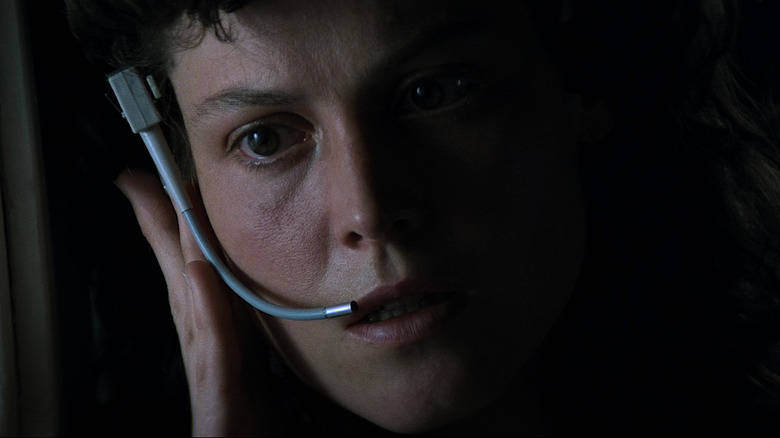
Ridley Scott's "Alien" from 1979 features the most spectacular sci-fi set ever built. The opening scene is just a roving tour of the production team's incredible craft as Scott's camera glides from room to room on this doomed deep-space mining craft.

What Scott is showing us is the physical parameters of the survival game to follow. When the crew accidentally brings an alien aboard that begins picking them off one by one, Ellen Ripley (Sigourney Weaver) must run, hide, and fight this terrifying extraterrestrial.

James Cameron somehow followed this masterpiece with an equally well-constructed survival-oriented sequel. There are more creatures but the game is the same. The first two "Alien" installments work because of Scott and Cameron's skill at building suspense, but also the terrifying creature design based on the work of artist H.R Giger. "Alien" scribe Dan O'Bannon initially met Giger in Paris while working on "Dune" and immediately the painter offered him opium. O'Bannon asked Giger why he used the drug. Giger replied, "I am afraid of my visions," according to "The Beast Within The Making of Alien." It sounds apocryphal, but one look at these drooling monsters and their eerily oblong heads and you know exactly what he means.

The Revenant
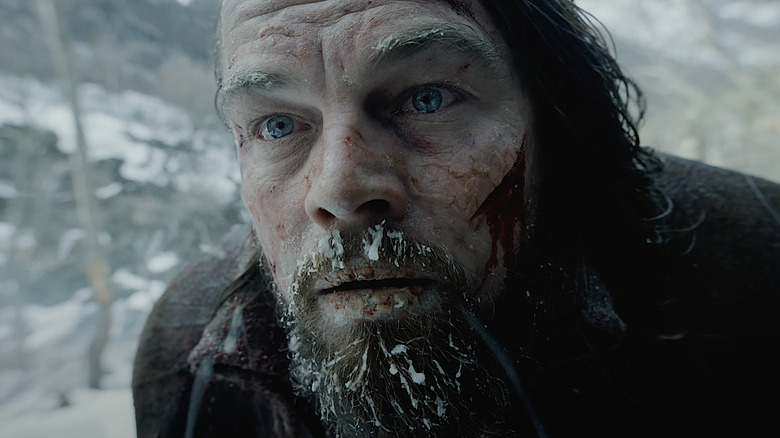
Revenant means a return from the dead. "The Revenant" is the story of frontiersman Hugh Glass (Leonardo DiCaprio) who is mauled by a bear, buried alive, but somehow survives and seeks vengeance on a fellow trapper, played by Tom Hardy.

"Birdman" director Alejandro González Iñárritu followed up that Oscar-winning effort with this equally kinetic masterpiece. The director again tapped his effervescent cinematographer Emmanuel Lubezki ("Gravity") who shot the entire film with only available light, and mostly at the magic hour – that brief window of ambient glow after sunset. Filmmakers like Terrence Malick have always favored this gentle lighting which utilizes all of the earth's atmosphere as one giant bounce board.

The downside is this technique turns the production into a slow grind. Temperatures on location in the Canadian wilderness plummeted to 40 degrees below zero. Iñárritu's movie was over budget and was forced to South America when conditions got too extreme. The director told The Wrap, "There's absolutely nothing that I kept in my pockets — that's all that I've got to give. It almost killed me, too ... maybe having died and been reborn many times during the shooting, I feel extraordinarily proud." This is filmmaking at its most daring, vivid, and beautiful.

The Shawshank Redemption
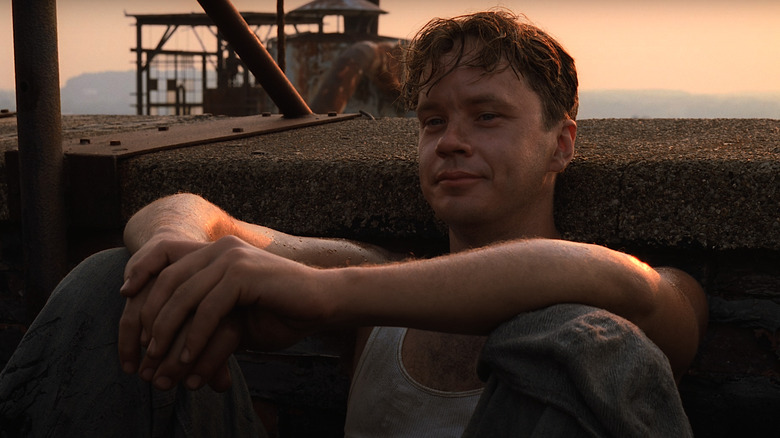
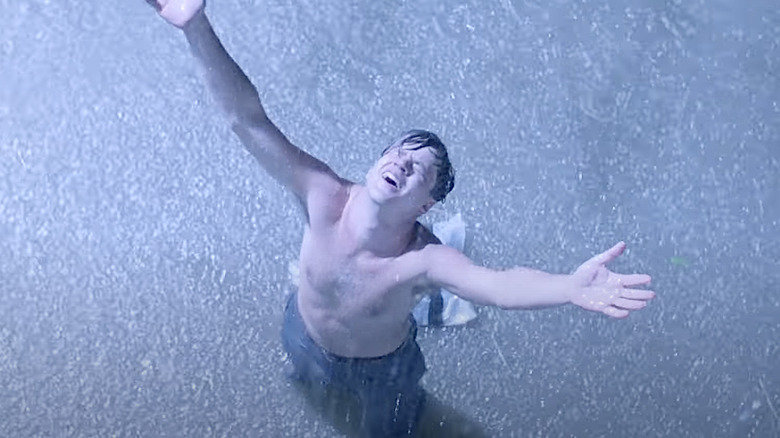
"The Shawshank Redemption" is the ultimate tale of survival of the spirit. Tim Robbins is an inspiration in his best-ever role as that "tall drink of water" Andy Dufresnes. He's been wrongly convicted of killing his wife and sent to the brutal and corrupt Shawshank penitentiary. There, Andy reminds Red (Morgan Freeman) and a small group of fellow convicts that a whole world still exists beyond the prison's demoralizing walls.

Shawshank is based on Stephen King's novella "Rita Hayworth and the Shawshank Redemption." It's also a story of a daring escape, but that's only possible because Dufresnes risks his life to keep his soul alive. This 1994 film is the best ever adaptation of King's work and scored numerous well-deserved Oscar nods in 1995.

Interesting casting fact: Brad Pitt was slated to play Tommy, the illiterate young convict who comes under Andy's tutelage. But after the actor's breakout in "Thelma and Louise," he pulled out for a lead in the solid, but far less seminal, "Interview With A Vampire." 

Read this next: The 14 Greatest War Movies Of The 21st Century

The post The 22 Best Survival Movies Ranked appeared first on /Film.
04 May 06:25

Year Of The Vampire: Vampire Hunter D (1985) Paved The Way For Pulpy Adult Anime OVAs

by Adam Wescott

(Welcome to Year of the Vampire, a series examining the greatest, strangest, and sometimes overlooked vampire movies of all time in honor of "Nosferatu," which turns 100 this year.)

The animated OVA (original video animation) took off in Japan around 1985. These were short animated series and movies released on video for older male audiences, often just 90 to 120 minutes long. Made for a niche viewership, they could be violent and indulgent, but many were detailed enough in their craftsmanship that they remain significant today. Riding that wave was "Vampire Hunter D," a gothic horror Western mash-up that sets its eponymous hunter against monsters, mutants, and a powerful vampire hungry for young women. The premise is simple, but the delivery is something else entirely.

"Vampire Hunter D" has many fathers. First was Hideyuki Kikuchi, who wrote the original novel series. Kikuchi trained under the famous manga writer Kazuo Koike, who taught his students to put "character first." Then there's Yoshitaka Amano, an artist most famous in the United States for his contributions to the Final Fantasy series of video games. Amano's color illustrations of D likely did as much as the novels to solidify the character in the popular imagination.

The story of 1985's "Vampire Hunter D" film is drawn from the first of Kikuchi's novels, and the character designs are provided by Amano. Bringing it all together is director Toyoo Ashida, best known otherwise for his stewardship of the long-running martial arts drama "Fist of the North Star." Before "Akira" redefined what animated movies could look like, "Vampire Hunter D" paved the way for trashy adult genre fare to flourish on video.

What It Brought To The Genre

The world of "Vampire Hunter D" is a truly scrumptious genre soup. The film cribs heavily from Westerns, with a cast including a humble town doctor, a spoiled mayor's son and D himself playing the Man With No Name. The film even ends with the heroine Doris and her younger brother chasing D and calling his name as he gallops away, just as the little boy in "Shane" begged his hero to come back. 

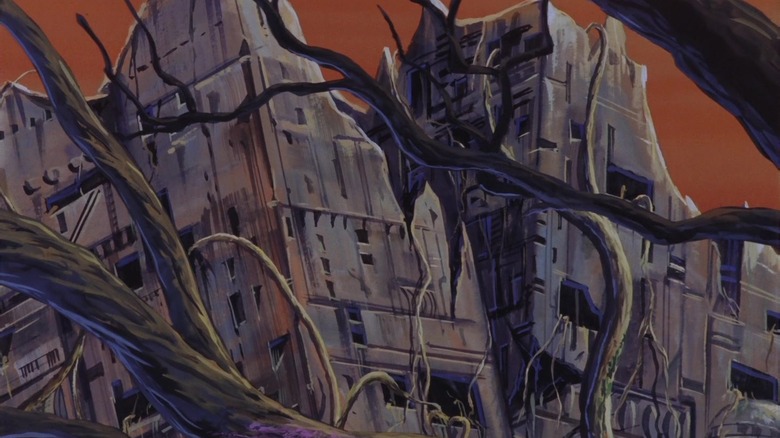
But "Vampire Hunter D" isn't just a Western. It's a post-apocalyptic Western, set in the year 12,090 AD. The characters ride on cyborg horses, vampires exhibit psychic powers, and the landscape overflows with crumbling buildings and rusted metal. No explanation is ever given as to what made the world this way. Kikuchi simply takes for granted that since D is the coolest person alive, he must live in a world that lives up to his billing. Even more than the vampires, the combination of gothic architecture, sprawling technology, and freakish monsters is likely the single most influential aspect of "Vampire Hunter D." 

Despite its indulgences, "Vampire Hunter D" takes care to preserve the thematic heft of the vampire archetype. As we learn at the end of the film, vampires are on the verge of extinction. As powerful as they might be, they are relics of an old world that is halfway in the grave already. By hunting vampires across the planet, D is hastening his own obsolescence. It's a potent device that further connects the story with Westerns and even samurai dramas. Just as D is the gunslinger who must live and die alone, he is also the masterless ronin whose successes heighten his own loneliness.

The Limits Of D

Ashida and his staff had limited resources to work with while creating "Vampire Hunter D." While there are moments of effective animation, the film resorts to cheap tricks that wouldn't be out of place in an early television production in order to save costs. Footage is repeated, speed lines substitute for movement, and people's legs are kept out of frame so as to avoid animating walking or running. In addition, while the action is constant in "Vampire Hunter D," the fights themselves are very rarely creative. D defeats most of his enemies by punching or stabbing them once, and if that doesn't work, he goes berserk and punches or stabs them again. The animation and action would be greatly improved in the 2000 follow-up "Vampire Hunter D: Bloodlust," directed by trashy action anime legend Yoshiaki Kawajiri.

Modern viewers may also be exhausted by the way "Vampire Hunter D" treats its heroine Doris. She's threatened multiple times with violence and sexual assault, is constantly ogled by the animated "camera" and isn't afforded much in the way of interior depth. Another 1985 OVA, "The Time Etranger," gave the heroine of the earlier giant robot series "GoShogun" a complex inner life. "Vampire Hunter D" is by contrast wholly dedicated to being a take-no-prisoners male power fantasy. This isn't a disaster; some of the very best anime are take-no-prisoners male power fantasies. But the film's reductive approach to character can't help but hurt it when the animation itself comes up short.

The Man Who Is Named D

Despite its significant flaws, there's plenty to appreciate in "Vampire Hunter D" if you come to it with the right attitude. Ashida and his crew make good use of a stark color palette to heighten the drama, resulting in memorable images. Its best scenes, like in the opening where Doris has her first run-in with a vampire, effectively use limited animation to produce a truly eerie atmosphere. The creature design is also consistently entertaining from beginning to end, featuring the classic horror monsters you'd expect as well as some uniquely gross terrors. Not to mention the tips of the hat to horror classics, like the villainous vampire sharing a last name with legendary actor Christopher Lee

For me, the world of "Vampire Hunter D" remains its strongest trait. The film is packed with cool environments, rendered skillfully by the background artists. A wasteland of crumbling cities stalked by lizards. Doris's farm, riddled with tech and surrounded by crosses to ward off evil. The vampire castle, whose collapse purges the sky of storm clouds. Successive anime would borrow, directly or indirectly, from D's "anything goes" school of world-building. But while I would put many of those works ahead of 1985's "Vampire Hunter D," there's something to be said for the scrappy confidence of the 1985 original.

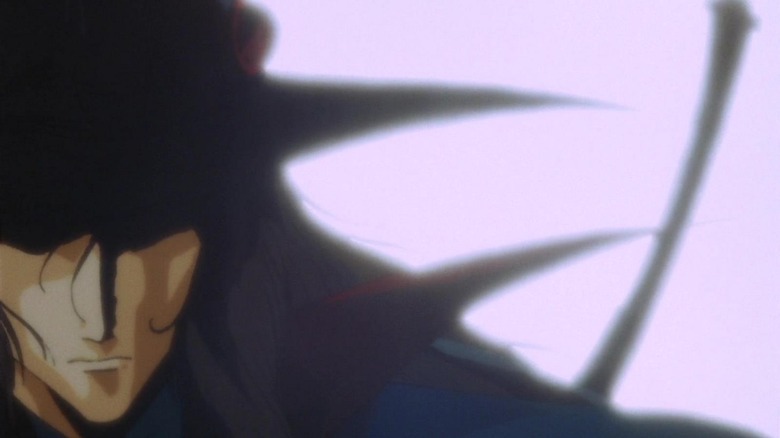
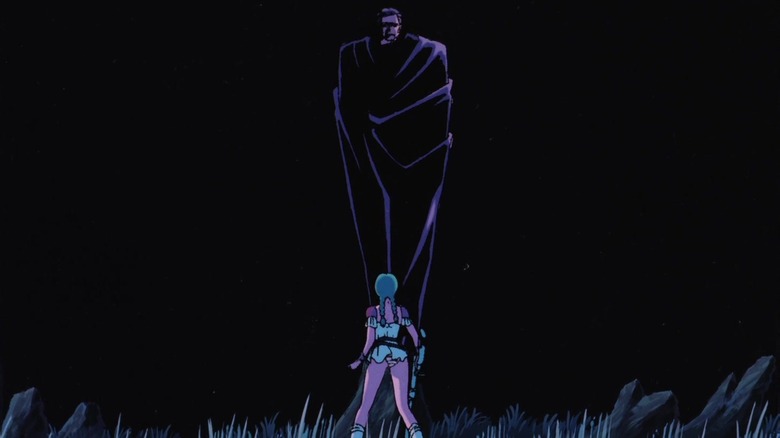
Put aside the threadbare animation and story of the first "Vampire Hunter D" film, and the hero remains. A tall man with long hair, a hat and a cloak, and a weird little parasite living in his hand. Kikuchi understood that any kind of pulp contrivance was acceptable with a strong enough character leading the way. "Vampire Hunter D" may be an indulgent relic of the old world. But the character survives in the cultural memory, casting a long shadow from beyond the grave.

Read this next: 15 Must-See Horror Anime Movies

The post Year of the Vampire: Vampire Hunter D (1985) Paved the Way for Pulpy Adult Anime OVAs appeared first on /Film.

04 May 06:25

[Nightmarish Detour Review] DOCTOR STRANGE IN THE MULTIVERSE OF MADNESS

by Caitlin Kennedy
Courtesy Marvel Studios

DOCTOR STRANGE IN THE MULTIVERSE OF MADNESS enters the MCU at a moment of seemingly endless potential. If Marvel fans have learned anything from the previous films and the Disney+ shows, it’s that Marvel’s horizons are boundless and each new foray only pushes the envelope further. Doctor Strange is a perfectly suited hero to adventure deeper into these new frontiers… and to confront their darkness.

DOCTOR STRANGE IN THE MULTIVERSE OF MADNESS has a distinct bitter flavor that is quite unique within MCU films, up to this point. While imperfect, MULTIVERSE OF MADNESS has a sense of daring that feels fresh and exciting. Will this be a polarizing choice within the carefully curated Marvel brand? Maybe, but I dig it.

Forbidden magic and the unfolding consequences of worlds colliding prove to be Doctor Strange’s greatest challenge yet. Doctor Strange must face interdimensional threats, confront alternate versions of himself, and maintain the delicate balance of what is good and what horrific sacrifices must be made for the greater good.

DOCTOR STRANGE IN THE MULTIVERSE OF MADNESS stars Benedict Cumberbatch, Elizabeth Olsen, and Benedict Wong – returning as Doctor Strange, Wanda Maximoff, and Sorcerer Supreme Wong – and introduces Xochitl Gomez as America Chavez. Iconic horror director Sam Raimi (Evil Dead and Army of Darkness) lets his strong horror instincts come out in full force.

Courtesy of Marvel Studios. 

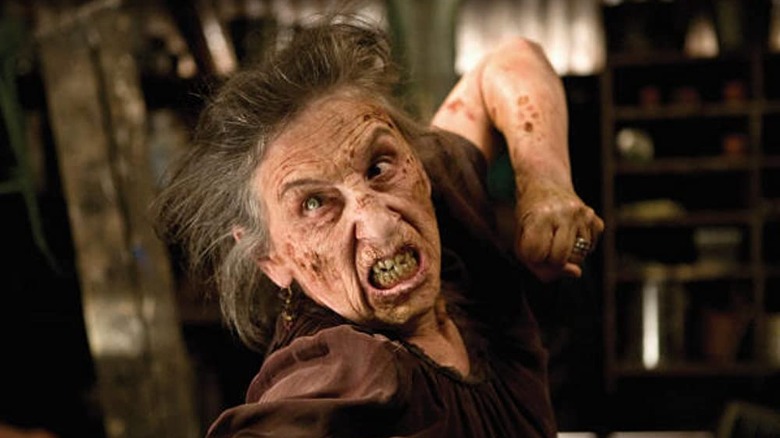
Reader, MULTIVERSE OF MADNESS is horror and it’s damn effective horror. The influence of Evil Dead and Army of Darkness is strong as Raimi brings to life his version of dark magic. From scene to scene quick jump scares, shocking brutality (by Marvel standards), Gothic horror sensibilities, and a good ole fashioned zombie offer a decidedly mature, horror tone that is a total surprise from an MCU film. The comedy factor present in much of Raimi’s work helps bridge the gap between the horror in MULTIVERSE OF MADNESS and the lighter, brighter tone of the rest of the MCU.

Olsen and Cumberbatch are doing incredible work here and add exciting depth and darkness to two tortured characters. MULTIVERSE OF MADNESS distinguishes the both of them as the MCU’s top acting talent, by a long shot. Chaos is imbued in every filmmaking choice. The polished mindbuggery of the first Doctor Strange has been replaced with a more staccato rhythm. Harsh edits and mangled visuals add a frantic note, even a chord of disturbing dissonance to the entire production. If it’s all starting to sound a little symphonic then let me conclude by applauding Danny Elfman’s incredible score. A perfectly assembled orchestra of dread and bedlam.

Regrettably, the massive MCU serpent appears to be eating its own tail. In previous MCU entries, the films were crafted in such a way as to incentivize viewers that happily chase Marvel across its many films and rabbit holes, without alienating new viewers. MULTIVERSE OF MADNESS may be the first Marvel film to fully throw this out the window. Having seen WandaVision is a requirement for understanding the film and familiarity with … What If? and Loki are bolsters. MULTIVERSE OF MADNESS is broadcasting loud and clear that failure to subscribe to Disney+ is a crime punishable by films no longer interested in reaching new audiences or casual fans.

MULTIVERSE OF MADNESS appears to be the foundational stone of this next phase of Marvel. On the one hand, there are exciting and ever-expanding possibilities brought to life by top industry talent, with the following and the cultural foothold to experiment. On the other is the restrictive nature of expectation and relentless branding, a formula that franchise fans need. MULTIVERSE OF MADNESS sits on that axis and will be adored or damned for it. In the opinion of this critic, DOCTOR STRANGE IN THE MULTIVERSE OF MADNESS is like saddling a tornado. An exciting, scary as hell, force of nature.

Marvel Studios’ DOCTOR STRANGE IN THE MULTIVERSE OF MADNESS opens in U.S. theaters next Friday, May 6.

The post [Nightmarish Detour Review] DOCTOR STRANGE IN THE MULTIVERSE OF MADNESS appeared first on Nightmarish Conjurings.

04 May 06:24

How to Grow Plants That Eat Things

by Stephen Johnson

Ferns are nice and all, but they aren’t exactly dynamic. If you’re a person who demands action from your houseplants or wants truly deadly greenery, you should consider growing a carnivorous plant. They look pretty, and as a bonus, these houseplants-that-should-not-be violate generally agreed upon rules of nature.…

Read more...

04 May 06:24

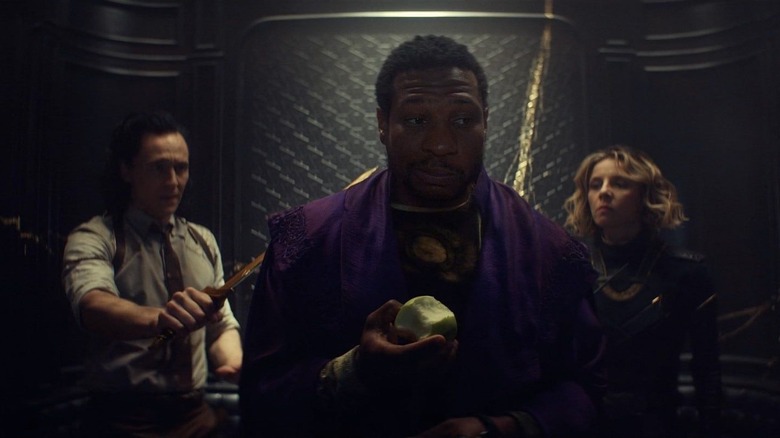
Kevin Feige Confirms Loki And Sylvie Broke The Multiverse, Thanks A Lot Guys

by Jeremy Mathai

Look, he's not called the God of Mischief for no reason, ya know? Even if Tom Hiddleston's over decade-long tenure as Loki in the Marvel Cinematic Universe has mostly been defined by outright villainy rather than actual mischief (Taika Waititi, naturally, understood the character better than most), it's not terribly surprising to find out that he would have something to do with unleashing the multiverse in the Marvel Cinematic Universe. 

Despite originating as a loose thread leftover from the time-travel hijinks in "Avengers: Endgame," the Disney+ "Loki" series somehow managed to defy expectations, with most fans (including me) assuming it would merely be a fun little distraction from the all-consuming stakes of the main series of MCU films. Instead, it introduced the next Thanos-level threat and provided a neat roadmap to the next phase of the franchise.

But that's not the full extent of the trickster god's impact ... even if his mainline universe counterpart bit the dust early in "Avengers: Infinity War." Many fans pointed to "Spider-Man: No Way Home" as the movie that would most affect the rest of the Marvel universe moving forward. After all, with Doctor Strange intervening with a distraught Peter Parker and opening the door to several multiverse villains from Sam Raimi's "Spider-Man" franchise, it's only natural to assume that his actions would have the biggest effect on the character's next appearance in the Raimi-directed "Doctor Strange in the Multiverse of Madness." Well, Kevin Feige sees things slightly differently.

While walking the red carpet during last night's premiere of the "Doctor Strange" sequel (you can read our review for /Film here), Feige let slip this interesting little nugget (via IGN):

"There's always a method to the madness, even in the multiverse, and for Marvel fans, who know that Loki and Sylvie did something at the end of that series, that sort of allowed all this to be possible. He Who Remains is gone, and that allowed a spell to go wrong in 'Spider-Man: No Way Home,' which leads to the multiverse going quite mad in this."

'A Method To The Madness'

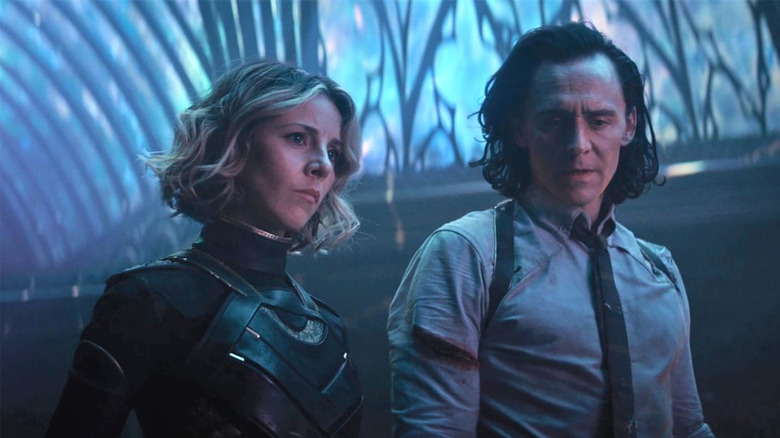
Okay, technically it was Sylvie (Sophia Di Martino) who ultimately took out Kang (Jonathan Majors), the aforementioned He Who Remains, in the season finale of "Loki." But given that she's a variant of the same character we all loved to hate and would never have even been in the position in the first place without the interference of Hiddleston's Loki (along with him doing the most Loki thing ever: falling in love with himself), I feel like we can get away with laying the blame for all this at his feet. Them's the breaks when you mess with the fabric of the universe!

Feige's apparent reveal that the death of "Kang" (in reality, just one variant of the Kang who will eventually appear in the MCU down the line) essentially caused the events of "No Way Home" as well as "Multiverse of Madness" is a bit of a stretch to me, especially since I'm not overly fond of these sorts of details coming about in random interviews as opposed to, you know, the actual movies themselves. I'm sure the canon-obsessed nerds who painstakingly maintain all the subsections of the Marvel Wiki will be thrilled about this, but I'm not sure this knowledge really adds anything to what happened in "No Way Home" or lives up to the "It's All Connected" messaging that Marvel loves so much. I'm tempted to say that the same will very much apply to its impact on "Doctor Strange in the Multiverse of Madness," but I suppose it's eminently possible that the film could go out of its way to actually namedrop the events of "Loki" and draw an actual connection that way. We'll have to wait and see!

In any case, it's at least amusing to know that Loki and his variants continue to wreak havoc, long after the original character's canonical death. As tangential as his influence may be, there's something poetic about Marvel's best villain making his presence felt ... even if none of us really knew about it until now.

"Doctor Strange in the Multiverse of Madness" will (probably) make things even more complicated when it drops into theaters on May 6, 2022.

Read this next: The 15 Most Anticipated Comic Book Movies And Shows Of 2022, Ranked

The post Kevin Feige Confirms Loki and Sylvie Broke the Multiverse, Thanks a Lot Guys appeared first on /Film.

04 May 06:22

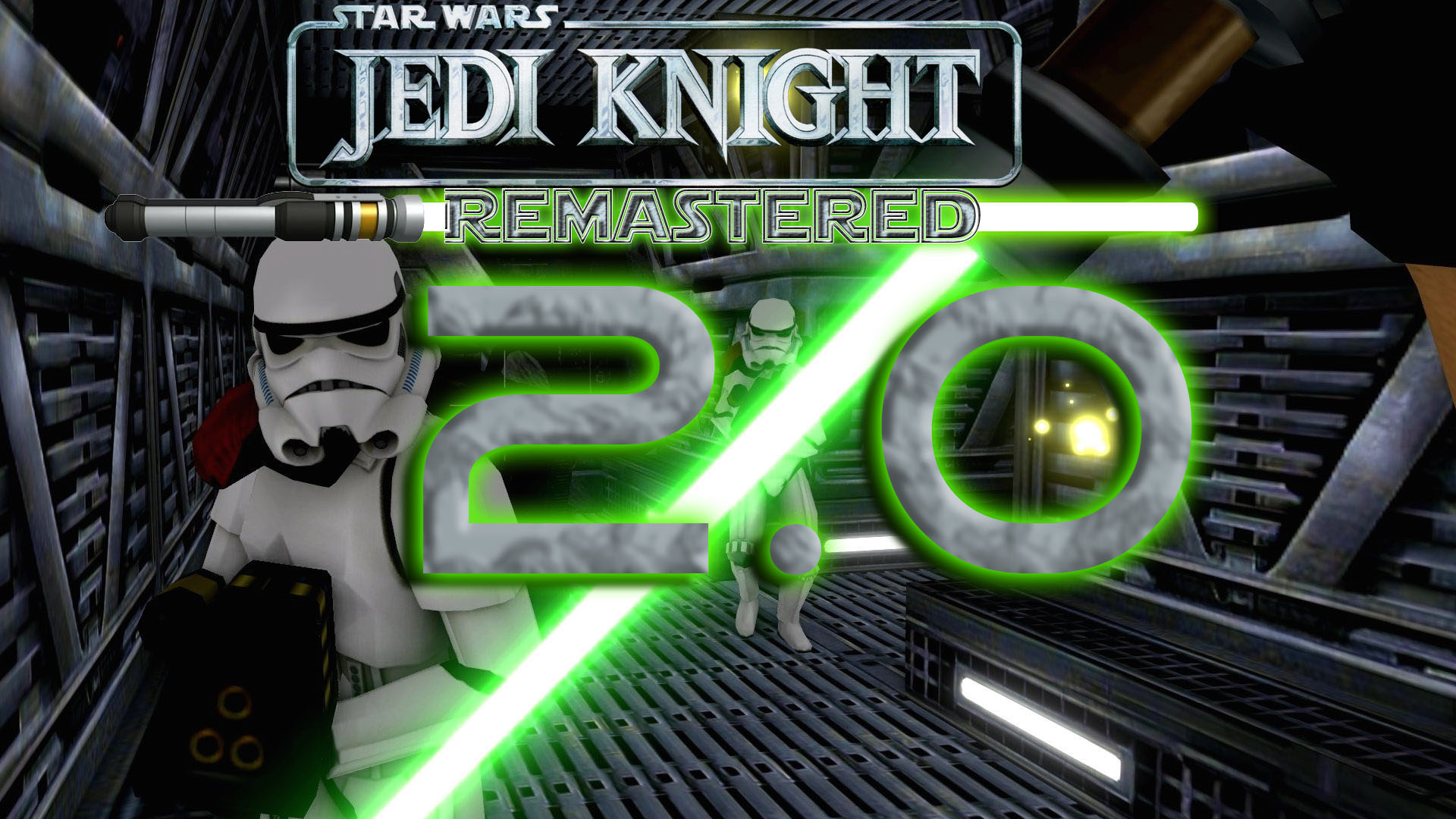
Jedi Knight Remastered 2.0

Jedi Knight Remastered 2.0
The Long awaited 2.0 installer is here! This installation file will install the JKGFXMOD, the Jedi Knight Neural Upscale Texture Pack and the Enhancement mod all together in a nice installer! The FOV Mod is also been added. This also patches the game with the unofficial patch. All mods can be downloaded and installed separately if you desire.
04 May 02:40

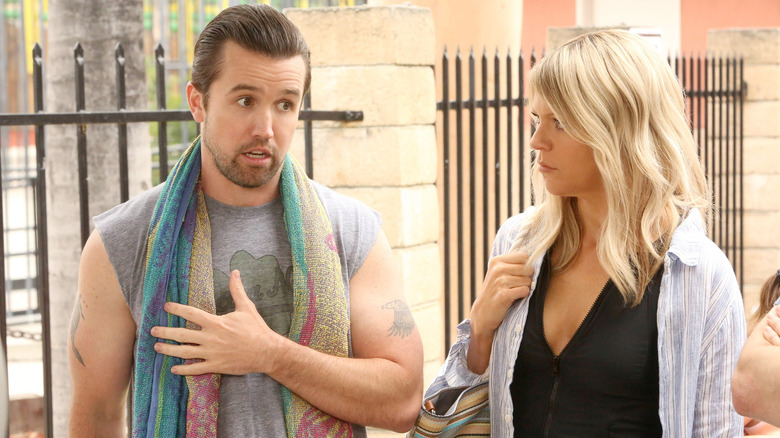
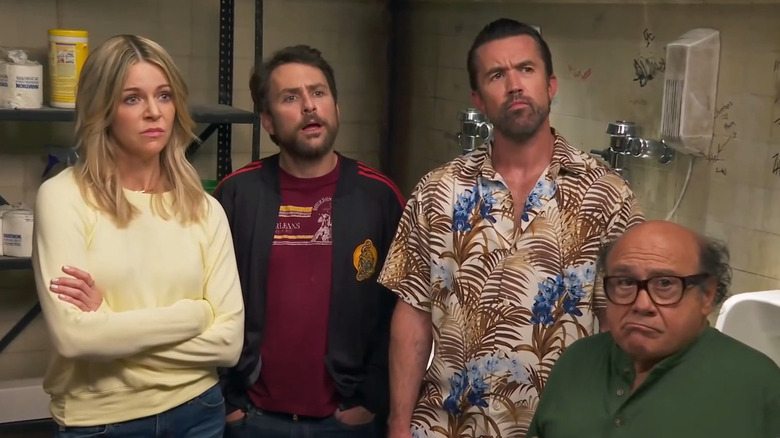
Kaitlin Olson Doesn't Hold Back On Her Stunts For It's Always Sunny In Philadelphia

by Shae Sennett

The success of the FX comedy series "It's Always Sunny in Philadelphia" has launched the careers of its hilarious main cast, including its sole leading lady, Kaitlin Olson. Her ingenius performance as Dee Reynolds is a major asset to the show, which would not be half as funny without her knack for crude jokes and brutal physical comedy.

Some of the most beloved episodes of the series are carried by Olson's performances, such as in Season 9's premiere "The Gang Broke Dee" or the Season 3 episode that delivers much of Dee's backstory, "The Aluminum Monster vs Fatty Magoo." Time and time again, Olson has proven that there is no line she will not cross for the sake of a terrific gag. This no-holds-barred approach to comedy is not qualified by fear of physical stunts, either. The "Sunny" cast is no stranger to dangerous stunts, but Olson in particular has developed a reputation for being the most committed member of the cast when it comes to delivering a dangerous bit.

'We Kind Of Have To Reel Her Back A Little Because She Just Goes For It'

Olson has an undeniably distinctive and expressive flair in her delivery that calls back to the physical comedy of Charlie Chaplin. Marc Scizak, who was the show's stunt coordinator from 2009 to 2019, told The New York Times that her style proved too distinctive for other actresses to replicate. He explained "it is so hard to double her because nobody has her delivery, her body mannerisms," and anyone who's seen the show can agree. "On bigger gags where she's going to get hurt, we have to kind of reel her back a little because she just goes for it," he said.

One of the best episodes that heavily features Olson's physical comedic genius is the second episode of Season 12, "The Gang Goes To The Water Park," wherein Dee goes down a slide built for small children and gets stuck, causing a pile-up. When kids started falling down on top of her, smashing her face against the wall of the tube, Scizak says that Olson "didn't feel like it sold right and [she] wanted to go harder" with the stunt. It's an incredible thing to see such a brave commitment to stunts, but according to Scizak, "she does that stuff all the time."

A Real Dent And A Real Car

In "Who Pooped the Bed?" from the show's fourth season, one of the best bits of the episode almost didn't happen because it was deemed too dangerous by the stunt coordinator, Scizak's predecessor. He was probably right, but luckily Olson didn't listen. When Dee rushes out of a store wearing heels that are too small and too expensive for her to buy, and the character trips and bashes her head into the door of a car, that is all Olson, no body double. 

Olson's co-stars and series creators Charlie Day and Rob McElhenney discussed the stunt with Olson on "The Always Sunny Podcast," where the actress explained her decision to perform the scene herself rather than allow the stunt woman to step in.

"Well, listen, I was angry because [the stunt person] wasn't funny, and she wasn't gonna flail her body in a funny way, and I needed you guys to give me a chance, and I knew I only had one chance, so I just really went for it ... I saw a chiropractic after that, but it was totally worth it."

After Olson did the first take herself, the stunt woman did an additional take "for safety." Day admits that "the stunt woman didn't do it half as good as [Olson] did it," to which McElhenney rebuffs, "No, because she did it safely!" Still, McElhenney (who is also Olson's husband) admits that his wife's fearlessness produced one of his "favorite moments of the show."

Read this next: 20 Underrated Comedy Movies You Need To Watch

The post Kaitlin Olson Doesn't Hold Back On Her Stunts For It's Always Sunny In Philadelphia appeared first on /Film.

04 May 02:35

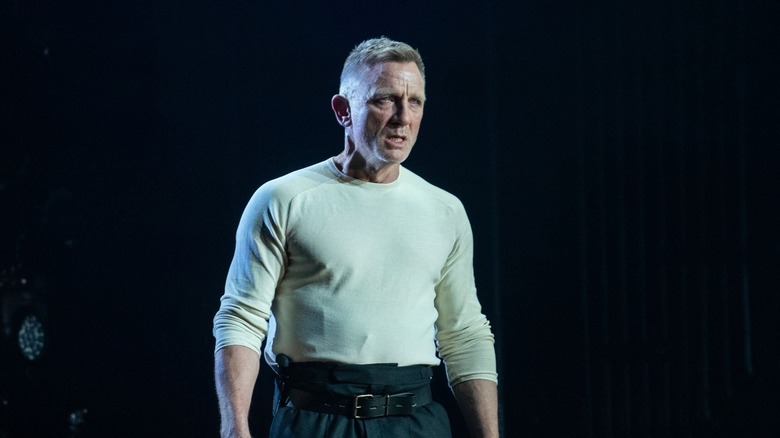
Macbeth Review: Daniel Craig And Ruth Negga Paired In A Hazy Sam Gold's Sound And Fury

by Caroline Cao

"Isn't it great to be back in the theatre?" When Sam Gold's "Macbeth" opens, an actor begins a pre-speech. The sentiment is inviting thanks to the amiable charisma of its messenger, Michael Patrick Thornton (who also plays Lennox). I feel his words, but its placement is bait-y, an "it's nice to have theatre" ubiquitous platitude while pandemic protections on Broadway are fraying (the show itself was among many recently delayed by Covid-infections to the point of Gold temporarily assuming Thornton's role). "Lap it up, pandemic," Thornton ridicules, smirking, our applause signifying that we have taken the bait. He also dispenses historical context that could squeeze into the program's notes: William Shakespeare conceivably wrote "Macbeth" and more of his repertoire during a pandemic, the bubonic plague ripping through England. This is not a trivia that director Gold wants his audience to be already equipped with (the info played its part in a "get things done" quarantining motivational) or learn from incidental Googling. He wants our intimacy with that fact to inform our observation of the tale of sound and fury.

Thornton also coaxes the audience to utter the Scottish Play's title — "underneath our masks" — since it is an accursed title that storms Murphy's Law upon the theatre ("The Scottish Play!" hollered two audience members over whispered Macbeths). The thespian instructs you to feel the communion of theatre and the ensuing spell of the work. It is not an ineffective method to connect with theatergoers. But, in jest, perhaps the utterances cursed the play when the following performance dissolved into a haze.

Set in 11th-century Scotland (or rather a nondescript contemporary location in this case), "Macbeth" is the Bard's bloodlust tale of avarice, corruption, and guilt since 1606. It observes the eponymous man (Daniel Craig), heeding the prophecy of Witches (Philip James Brannon, Maria Dizzia, Bobbi MacKenzie) and his Lady Macbeth's (Ruth Negga of "Passing" fame) urgings, to seize the crown. His assassination of King Duncan, framing of his heir Malcolm (Asia Kate Dillion), and expedient ascension to the throne escalate into a larger bloodbath.

Let's Talk About Sam Gold

When it comes to the Bard's texts, Sam Gold has constructed a theatrical reputation for consummate contemporization (a commonality among Shakespeare directors) often studded with movie-television and theatre stars, many of theatre-screen hybrid backgrounds, who drive its ticket sales.

I've experienced his wild smatterings in a "King Lear" that starred the towering Glenda Jackson as the King: Pedro Pascal grunting and orgasming into one of the Queens onstage (comical in a forced sense), Jackson and entourage thrashing against walls of metal sheets to simulate a storm (an ear-grating dissonance) and Ruth Wilson doubling as the exiled princess-daughter and a Charlie Chaplinesque Fool (an inspired choice). What I have not witnessed of Gold's work was his immersive "Othello" (which featured Daniel Craig) and a "Hamlet" in which Oscar Isaac wears a paper toilet-seat cover around his neck — and purportedly "attacks lasagna in his underwear" an acquaintance dreamily recounted to me.

In Gold's "King Lear," the acting may have been watchable — scrambling to guffawing lengths — as the visual and performative choices struggle to snug into a larger picture. Similar issues in his "Macbeth" are less entertaining and meaningful.

The suggestion of a spell dances around a nearly threadbare stage of blackness (scene design by Christine Jones), decorated sparsely with tables and chairs. Its depth is deepened by an uncurtained black stage wall (I can't spoil its transformation for one of its stronger moments). Actors roam with pneumatic fog machines, spraying it — too liberally — to elicit an eerie atmosphere beneath Jane Cox's minimal lighting. Suttirat Larlarb's contemporary costume design — kitchen garb, a party dress, and bulletproof vests — don't assign place or meaning. Its minimalistic labor lacks a tug of imagination on its audience—in contrast to the program notes that the simplicity "enable[s] a high level of imaginative participation." The presentation is a vacant map that leaves the audience to scribble the squiggles with no idea of an X.

The Players

Though by no means exceptional or elevated, Craig acts out his destination. But grit, grunt, and whimper into staggering compunction, nihilistic despair, feral desperation as he might, the 007 star is acting Macbeth's downward spiral for himself more than the play. As for Lady Macbeth, Negga is a mild approximation to Gollum conversing with her Sméagol, her Macbeth in this case. She oozes but doesn't control her choices. It comes off as erroneous to unhinge her exterior from the start and she overexerts her "we fail...", dampening her development toward the Lady's delirious sleepwalk (in itself her most glorious scene).

Other thespians perform their duties blamelessly. A standout, Dizzia doubles well as one of the weird sisters and Macduff's wife. Fresh out of her "Hadestown" departure, the songstress Amber Gray as Banquo slides into mellow ease with the material (though Banquo's murder is cheap and quick without consequences). Dillion delivers confidence as Malcolm. It's Grantham Coleman as the misfortunate Macduff who connects emotionally to his material, his howling bereavement gnawing him to the core.

It should be noted that it feels purposeful that Gold casts a mid-50s cisgender man as raging against his first rivals, Banquo and Malcolm, both recontextualized away from cis-manhood and their identities explicitly aligning with their performers in the spoken text. Ciswoman Gray plays Banquo as the "[prophesied] mother of many kings" and non-binary performer Dillioni inhabits Malcolm, the rightful inheritor of the kingdom. Though the play only flirts with the notion of white male rage.

Sound And Fury

Gold also ends "Macbeth" with a curious choice: He presents climatic grit, blood-spurting, head-and-body thrashing in all its edge-of-downstage luridness (effective violence direction by David S. Leong) but then denies us the catharsis of a killing blow. 

It sounds fine on paper but un-balletically clumsy in its exercise as it rushes to a restored order: an image of resting soldiers passing bowls of soups among themselves in communion. If the unifying point is as plain as "just enjoy the ride during this pandemic where theatre is precious and we are together," this isn't that Gold production where there is a ride.

"Macbeth" is playing at the Longacre Theatre on Broadway until July 10, 2022.

Read this next: Batman Movies Ranked From Worst To Best

The post Macbeth Review: Daniel Craig and Ruth Negga Paired in a Hazy Sam Gold's Sound and Fury appeared first on /Film.

04 May 02:32

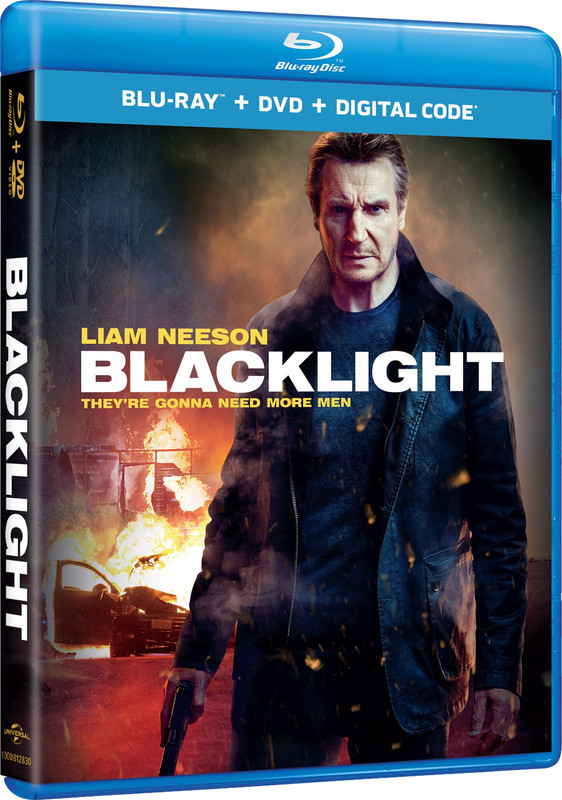
Blacklight 2022 720p BluRay x264-PiGNUS

by Erik
04 May 02:31

The Growing Cinematic Trend Of The Abortion Road Trip Movie Is Our Bleak Reality

by BJ Colangelo

Fifteen years ago, Jason Reitman and Diablo Cody's Academy Award-winning teen pregnancy comedy "Juno" told the story of a pregnant teen who at first walks right into her local abortion clinic, only having to deal with a sole protestor and an odd receptionist who is way too comfortable talking about the smell of her boyfriend's junk. Juno eventually decides against having an abortion, instead choosing to pursue the route of adoption. Emphasis on the word "choosing." Two years later, the market was flooded with pregnant teen media, like MTV's "Teen Mom" and Lifetime movies like "The Pregnancy Pact." In recent years, stories about teen pregnancy have shifted dramatically to more accurately reflect the continued attacks from the United States government on reproductive rights.

In 2015, Paul Weitz introduced the "Abortion Road Trip Movie" to the mainstream with "Grandma" starring Lily Tomlin as a widowed lesbian who is asked by her granddaughter, Sage (Julia Garner) for assistance in paying for and seeking an abortion. Weitz was inspired by the lack of mainstream films that depict abortion, telling The Mary Sue, "There have been a lot of movies in the past which were unwilling to even use the word, despite millions of women having abortions ... so I just wanted it to be real." The film "Knocked Up" even made an entire bit about saying "shmashmortion" in place of the word. 

The taboo nature of abortion in real life has bled into our media, which is probably why so many people end up learning from what they see on screen, and haven't fully grasped the severity of how mind-bogglingly difficult it has become to seek an abortion. The ease of entry shown in "Juno" no longer exists, and so the "Abortion Road Trip Movie" was born.

Abortion Access Is Harder Than Ever

A 2017 study showed that millennials had less access to reproductive care than their parents' generation, as pregnancy and maternal health outcomes continued to get worse. Over 90% of all counties in the U.S. are without an abortion provider, and restrictive "heartbeat" bills have been passing like wildfire in several states. Comprehensive sex education is non-existent in most parts of the country and if the geographical limitations weren't enough, the financial barriers to abortion make it even harder (PLEASE seek out Abortion Funds, they're here to help). Lack of abortion access disproportionately impacts poor communities of color. On an episode of "The Daily Show," "Shout Your Abortion" co-founder and "Shrill" executive producer Lindy West rightfully stated, "Anti-choice people are not trying to stop abortion, they are trying to legislate who can and can't have abortions."

Yesterday, Politico reported that there had been a leak from the Supreme Court, revealing that they were planning on voting to overturn Roe v. Wade, the landmark case that legalized abortion. When Weitz debuted "Grandma" in 2015, the main conflict of the film centered on the fact that Grandma Ellie and granddaughter Sage were struggling to find the funds to pay for her abortion. As abortion legislation became more and more restrictive, the abortion road trip movies reflected the changing barriers.

Outlawing Abortion Doesn't Make Abortion Go Away

Before Nia DaCosta wowed audiences with her sequel to "Candyman" and nabbed the chance to direct "The Marvels," she made her feature directorial debut with the haunting crime thriller, "Little Woods." Set in North Dakota where there is only one abortion provider to service the entire state, "Little Woods" showcases the harrowing lengths people are willing to go through in order to obtain an abortion. "Emotionally authentic portrayals of sexual and reproductive health issues in film and on TV are more important now than ever because access to abortion is under constant attack from politicians," said Planned Parenthood Federation of America Director of Arts and Entertainment Engagement Caren Spruch. The film was hailed by abortion activists for its unflinching approach to the topic and saw the film as a success in destigmatizing people who choose abortion.

In 2020, Eliza Hittman delivered one of the best films of the year with "Never Rarely Sometimes Always." The film centered on 17-year-old Autumn Callahan (Sidney Flanigan) who discovers she's pregnant and is unable to have an abortion in her home state of Pennsylvania without parental consent. After attempting to miscarry by swallowing pills and self-harming, she finally tells her cousin Skylar (Talia Ryder), who robs the grocery store where she works in order to help Autumn reach New York City and have an abortion. The film was praised for its realistic portrayal of how difficult it can be to access safe abortions, and how unnecessarily cruel it is to force a teenager into this scenario.

Abortion Isn't Always A Depressing Nightmare

A few months after "Never Rarely Sometimes Always," HBO Max released the buddy-adventure road trip comedy, "Unpregnant." While tackling a similar story as the former, "Unpregnant" is a genuinely funny look at a trip gone wrong while trying to secure an abortion. Veronica (Haley Lu Richardson) enlists the help of her former best friend Bailey (Barbie Ferreira) to accompany her from Missouri to New Mexico, dealing with unexpected hijinks on the way. The topic is serious but is surrounded by warmth and hilarity, which is a necessity in a political landscape inundated with nothing but depression. Despite the popular framing, abortion isn't always a traumatic experience. "Unpregnant" introduced a new way to talk about abortion by adding levity, and genuine happiness.

In 2021, Hulu released Natalie Morales' "Plan B," about a young Indian girl (Kuhoo Verma) who is denied access to emergency contraception (AKA The Morning After Pill or Plan B) when a pharmacist refuses to sell it to her. If you think that sounds like something out of "The Handmaid's Tale," understand that these "conscience laws" implemented during the Trump administration are very real. In some states, the personal conscience of a pharmacist or health provider has more legal value than someone in need of reproductive medical intervention (Biden claims that he's going to roll these back). The plot of "Plan B" operates on a time crunch as emergency contraceptives are only effective when taken as soon as possible, so this pharmacist's denial puts Sunny and her best friend Lupe (Victoria Moroles) in a race against time. There's a good amount of humor scattered throughout, but the film stands alone in its centering of non-white protagonists. People of color face exponentially more barriers to reproductive health than their white counterparts, and "Plan B" isn't afraid to tackle those realities head-on.

These Films Are Painfully Real

Overturning Roe v. Wade will put the onus on state legislators to determine their own abortion laws, which will immediately make the United States an even more inequitable place than it already is. Road trips for abortions will become more common than they already are, but with warnings that states may try to criminalize traveling for an abortion, issues of extradition and access are going to get even more complicated. If the abortion road movie trend continues, the stories will be horrifying. Movies about seeking abortion are going to look like refugees seeking sanctuary from war, and the light-hearted nature of films like "Unpregnant" and "Plan B," which were steps in the right direction, will be idealistic pursuits cloaked in magical realism. 

If we're being honest, we're not going to see nearly as many abortion road trips as we will at-home abortions more closely resembling "Yellowjackets," where teenagers attempt a DIY abortion in the woods. Coat hangers and bra wires will no longer be punchlines by hack comics, but rather last-ditch efforts to end pregnancies that will result in absolute tragedy.

I've tried my hardest to keep it together writing this piece, but the reality is that this article is nothing more than a Trojan Horse of "movie talk," filled with information about reproductive justice and a call to action. It has been next to impossible to care about anything other than the current state of things, as some of us do not have the privilege to ignore the news and instead focus our energy on MCU cameos and end-credit scenes. I wish I was the kind of person who could compartmentalize my fear and focus on something else, but I can't. Every waking thought is plagued by impending dread, and since my job is to write about movies, this is how I'm choosing to use my platform.

If you have the means, please consider donating to an abortion fund. We're going to need it.

Read this next: The Best Movies Of 2021

The post The Growing Cinematic Trend of the Abortion Road Trip Movie is Our Bleak Reality appeared first on /Film.

04 May 02:29

Here's How Sam Raimi Reacted To Seeing Tobey Maguire Play Peter Parker Again In Spider-Man: No Way Home

by BJ Colangelo

20 years ago today, horror maestro and auteur filmmaker Sam Raimi debuted "Spider-Man," and the world of superhero cinema has never been the same. The success of the Marvel Cinematic Universe and DC Comics film adaptations all owe a great debt to "Spider-Man," as Raimi proved there was a huge market for these kinds of stories. It was the first film to reach $100 million in a single weekend, and at the time was the most successful film based on a comic book ever made. Raimi went on to create two sequel films (one infinitely better received than the other) with Marvel introducing "Iron Man" the year following "Spider-Man 3." The rest, as they say, is history.

Raimi notoriously had a rough go of things with the studio heads during "Spider-Man 3," and stepped away from superhero films for fifteen years. Now, Raimi is back with "Doctor Strange in the Multiverse of Madness," a return to the cinematic universe he was formative in creating. While this is his first time back in the director's chair, it is in no way the first time his impact has been showcased in the MCU. "Spider-Man: No Way Home" may have led with Tom Holland's Peter Parker as the star, but thanks to the magic of the multiverse, both Andrew Garfield of "The Amazing Spider-Man" series and Tobey Maguire from Raimi's original "Spider-Man" series assisted Holland's Parker in an epic battle to save the universe. Raimi was already well into post-production when the film debuted, but seeing his Peter Parker on the screen once again was the perfect welcome wagon from the MCU.

'There's My Old Friend'

During a moving interview with The Hollywood Reporter, Raimi expressed how it felt seeing Tobey Maguire on the big screen as Peter Two in his Spidey suit after all these years away. "It was very emotionally moving," Raimi said. "I probably felt like the audience felt, 'Oh, there's my old friend, the old hero, who I haven't seen in 15 years. He's back.'" Raimi had planned for a fourth "Spider-Man" film with Maguire, but after the production nightmare that was "Spider-Man 3," those plans went out the window. Raimi loved working with Maguire and co-star Kirsten Dunst, going on record to say he'd love to revisit that world with them both, or even work on a non-superhero project with them.

Raimi greatly enjoyed Maguire's performance in "Spider-Man: No Way Home" saying "It looked like he had lived kind of a hard life as Spider-Man." As the oldest Peter Parker in the film, Raimi was absolutely right. The Parker of Peter Two's universe has spent decades keeping the world safe from super-villainy, and that's going to wear a person down. "It was really emotional and so well done," Raimi said, "But it was also like spending an afternoon with old friends who I hadn't seen in 15 years. It was beautiful."

"Doctor Strange in the Multiverse of Madness" hits theaters on May 6, 2022.

Read this next: Every MCU Post-Credits Sequence Ranked From Worst To Best

The post Here's How Sam Raimi Reacted to Seeing Tobey Maguire Play Peter Parker Again in Spider-Man: No Way Home appeared first on /Film.

03 May 18:58

Dying Light’s Hellraid DLC brings magic to Harran with its final update

by CJ Wheeler

Ageing zombie-ridden survival platformer Dying Light is receiving one final free update to its Hellraid mode on May 5th, Techland have announced, and it will let you take magic items into the city of Harran. Hellraid’s cursed arcade cabinet will sell you wands in its shop and let you carry them back to the main game, usually known more for its face-eating. It’s a shame Dying Light’s protag Kyle Crane isn’t silent or I could’ve role-played this as Sooty.

Read more

03 May 18:57

Hold Your Breath The Ice Dive 2022 1080p NF WEB-DL DDP5 1 x264-playWEB

by Erik
03 May 18:57

How nostalgia has become such an important force in gaming

by PCGamesN
How nostalgia has become such an important force in gaming

One of the highlights of the inaugural W.A.S.D. event in April was the series of scintillating panel discussions and talks by a wide range of games industry luminaries. If you couldn't attend in person, don't worry: we're uploading all of the talks that took place at the PCGamesN stage at London's Tobacco Dock to our YouTube channel, including one from several veteran developers about the role nostalgia plays in today's games landscape.

Editor Richard Scott-Jones sat down with Team17's Ashley Day, Revolution Software founder Charles Cecil, and Two Point Studios co-founder Gary Carr to talk about nostalgia in gaming. As Day points out, nostalgia is a normal human feeling - we experience it all the time, when we think of a departed relative, or the place where we grew up. So it makes perfect sense that games, which now have their own decades-long history to draw from, would cast a look back in time and seek to recapture treasured memories.

However, it's not as easy as simply remaking old games and giving them a lick of modern UI polish and high-resolution graphics. Not all games that have attempted to capitalise on nostalgia have done so successfully. So what's the secret to making good nostalgic games?

RELATED LINKS: Best indie games, What is W.A.S.D.?, Upcoming PC games
03 May 18:57

The 15 Best Mockumentaries, Ranked

by Mary Beth McAndrews

The 15 Best Mockumentaries Ranked

The art of the documentary aims to reveal some kind of hidden truth to its audience. And this desire for being earnest makes the genre ripe for comedic material. Enter the mockumentary, an often comedic riff on the documentary, primarily through outlandish characters that are larger than life and oddly specific topics that are almost too weird to be true. If documentaries are seen as documents of truth, then mockumentaries are a mirror reflecting back at the audience, revealing just how easy it is to fabricate reality. They aren't always funny though, especially when looking at films such as "Punishment Park" and "Man Bites Dog," where the films' realities are bleak and provide a harrowing look at the capabilities of human cruelty.

Filmmaker Christopher Guest made a career for himself out of the mockumentary, and quite a few of his works appear on this list. He truly understood how to create a hilarious, yet earnest, mockumentary that was just nice enough to its characters so it avoid being mean-spirited. His work helped inspire a movement of filmmaking that mocked our reality and exposed the ridiculous nature of being human. Alongside the work of Guest, we've compiled and ranked the top 15 mockumentaries out there.

Real Life

Albert Brooks plays himself in his 1973 directorial debut, "Real Life." This is Brooks' spoof on the real reality TV show "An American Family," which was popular in the early 1970s. Brooks decides to follow a regular American family for a year, with a documentary crew documenting the entire endeavor. Cameras are installed on the walls and each family member is given a camera to carry through their daily lives. These surveillance cameras are a precursor to their more common use in contemporary horror found footage films, such as "Paranormal Activity." But, as Brooks begins the project, he quickly realizes he's been dropped into a rather dysfunctional family. This is also a rare instance of a mockumentary with its director or project lead in front of the camera. Brooks isn't just the director, but the fictional character and audience proxy. It culminates in one wild ending that cements "Real Life" as a pitch-black comedy about both the American family and obsession with a project.

Hard Core Logo

"Hard Core Logo" is the first of many movie mockumentaries on the list. While the subjects of this list span a wide range of humanity, musicians are often the topic of the comedic subgenre. Here, director Bruce McDonald looks at the world of punk rock and follows the fictional Canadian hardcore band Hard Core Logo as they get back together for an anti-gun tour. Why guns? Because leader Joe Dick's (Hugh Dillon) mentor and rock legend Bucky Haight (Julian Richings) was shot. Supposedly. It's already off to a wild start. As is common for reunions, emotions run high as the bandmates come back together on their drive across Canada. Also, the band and the crew do acid together, which in reality would be a big ethical violation, but here it's pitch-perfect. It's outlandish and actually quite dark as it looks at Joe's struggle with mental illness. The film is also a loose adaptation of a Canadian novel of the same name, but McDonald takes it a step further by make himself a character and turning the story into a mock music documentary.

Forgotten Silver

Before "The Lord of the Rings," Peter Jackson directed a mockumentary with Costas Botes in 1986 called "Forgotten Silver." Jackson and Botes play themselves as filmmakers who rediscover the lost works of the forgotten New Zealand director Colin McKenzie (who was fabricated for the film). They claim that he accidentally discovered the tracking shot and the close-up, making McKenzie seem like a massive pioneer in the world of cinema. In fact, "Forgotten Silver" aired on TV labeled as a true story, similar to the British pseudo-science film "Ghostwatch." This caused a lot of backlash from viewers, as they were convinced about McKenzie's existence. Jackson and Botes weaved together contemporary footage with faked archival footage to closely mimic the expected conventions of the documentary. They were able to fool viewers and showcase just how easy it is to convince and manipulate audiences with the idea and label of "truth."

I'm Still Here

Do you remember that strange period of time when Joaquin Phoenix said he was quitting acting to pursue a rap career? Who could forget that absolutely bizarre interview on "The Late Show With David Letterman" in 2009? Well, the joke was on all of us because it was all an intricate hoax for his mockumentary "I'm Still Here," directed by his brother-in-law Casey Affleck. It was a shocking look at the level of fabrication behind celebrities. 

It's also downright impressive that Phoenix was both able to keep up the joke for so long and that he was able to make it so convincing. Phoenix even did a cringe-worthy rap set in Miami in the name of comedic filmmaking. It's like "Borat" (which we'll get to later), but without a terrible accent and wig to hide behind. Instead, Phoenix grew out his hair and looked like an absolute train wreck. And honestly, it's a massive power move.

Waiting For Guffman

This is the first Christopher Guest's first appearance on this list, but it certainly isn't his last. This master of mockumentary directed "Waiting for Guffman" in 1996 as a spoof on Simon Beckett's classic "Waiting for Godot." Guest plays Corky St. Claire, a former off-Broadway performer who wishes to get his (second) big break into the theater world. So, he assembles a ragtag group of locals to perform the musical "Red, White, and Blaine" about the history of their fictional town of Blaine, Missouri. Then, Broadway producer Mort Guffman says he'll come to see the show. This cranks the anxiety up quite a few notches as Corky frantically prepares for his arrival. Thus begins the titular wait for Guffman. The musical contains several important points about the town's history, particularly about why it's the stool capital of the world, its UFO, and much more. This is a musical production, so it's another musical mockumentary, but this time poking fun at the world of community theater, which is itself its own unique experience.

Fear Of A Black Hat

Rusty Cundieff is known for his 1995 horror film "Tales From the Hood," but before that, he directed the mockumentary "Fear of a Black Hat" in 1993. This is another mockumentary about music, this time about rappers in the early 90s hip-hop scene. Kasi Lemmons is our filmmaker, writing her thesis about hip-hop music. She decides to follow the rap group N.W.H. (a riff on the real rap group N.W.A.) to study their process, their lives, and their relationship with music. But they aren't just any group. For every performance, they wear ridiculous hats as what they call political commentary about their slave ancestors and how they worked in the hot sun. But political commentary doesn't necessarily match their lyrics, which are poking fun at critiques of rap music being vulgar. Their lyrics are vulgar to the extreme, but again they claim it's a political statement. Cundieff's "Fear of a Black Hat" is to hip-hop what "This is Spinal Tap" is to rock 'n' roll.

A Mighty Wind

The next Christopher Guest entry is his 2003 mockumentary "A Mighty Wind," this time poking fun at folk singers. Three folk bands—The Folksmen, The New Main Street Singers, and Mitch & Mickey—come together for a reunion tour in honor of their deceased manager. This is a decade after their heydays, so of course, nerves are running high. The documentary crew is filming the backstage report and interviews with each group to create a special for the fictional PBN. As filming continues, the crew documents more and more of the complicated dynamics between the quirky folk singers leading up to their reunion tour. The film stars a slew of Guest regulars, including Eugene Levy, Catherine O'Hara, Parker Posey, Fred Willard, John Michael Higgins, Michael McKeen, and Jane Lynch. This concoction of comedic masters results in a hysterical look at washed-up musicians who reflect on their tumultuous careers while still continuing to look at their special idiosyncrasies. Guest really captures the aesthetic of the typical music documentary and uses that to his comedic advantage in how he "interviews" his characters and reveals their backstories.

Drop Dead Gorgeous

Just like the world of music, beauty pageants are another strange ritual just begging to be satirized. Michael Patrick Jann's 1999 film "Drop Dead Gorgeous" does just that but with a dark twist. The mockumentary opens following contestants at the regional American Teen Princess Pageant in Minnesota. Contestants, played by Kirsten Dunst, Denise Richards, Amy Adams, and Brittany Murphy, talk to the camera about their excitement to win the pageant. And of course, there are ridiculous dynamics unfolding between the pageant moms and organizers alike. It wouldn't be a movie about beauty pageants without helicopter stage moms obsessed with their kids. 

But everything takes a strange turn when contestants start to die in freak accidents. This is mockumentary meets dark and outlandish comedy as it takes an already ridiculous tradition even further to the extreme. With each strange accident involving explosions of swan floats or falling stage lights, "Drop Dead Gorgeous" just gets weirder and funnier. Jann knew how to make this funny and took it to the next level to create something incredible.

What We Do In The Shadows

Taika Waititi's "What We Do In The Shadows" is the perfect movie for horror and comedy fans alike. A film crew follows a house of vampire roommates who are trying to navigate life in New Zealand in the 2010s. Each of the vampires, played by Waititi, Jermaine Clement, and Jonathan Brugh, brings something truly zany to the table. Clement's Vladislav is a particular standout who loves orgies and turning into a cat with a human face. 

More than being vampires, these are just three dudes (plus the ancient vampire in the basement) trying to learn how to live together. Dressed in Victorian garb, they meet about the chore wheel and who needs to do the dishes. They also frequently have run-ins with a pack of werewolves led by Rhys Darby. It's a meeting of beloved horror creatures placed into very regular, everyday scenarios. But it's never too scary or gory, making it accessible to those who aren't horror aficionados. Plus, it birthed the "What We Do In The Shadows" series, which is one of the funniest shows on TV.

Man Bites Dog

Released in 1992, "Man Bites Dog" is another early mockumentary -- and it's a rather harrowing one. Two filmmakers follow serial killer Ben (Benoît Poelvoorde) and film his heinous crimes without intervening. While watching and becoming complicit in his crimes, they also listen to his musings about life and the best methods for murdering victims. He's almost amused by his crimes, constantly bragging about his skills. But then the crew shows the excruciating details of his murders, making "Man Bites Dog" feel like a snuff film. It feels forbidden and taboo, a step further into the world of true crime as the crew finds themselves sucked into Ben's murderous tendencies. It's not only a terrifying look at the mind of a sociopath, but it also critiques documentarians who become too personally involved in their work. As soon as they step into the world of Ben as active participants, there's no turning back for their morals or their attempt to depict the truth about serial killers.

Popstar: Never Stop Never Stopping

This mockumentary is the brainchild of the comedy music group The Lonely Island, which is made up of Akiva Schaffer, Jorma Taccone, and Andy Samberg. Schaffer and Taccone direct the film, with Samberg starring as documentary subject and pop star, Connor Friel. After a hit song "Turn Up the Beef" with the rap group The Style Boyz, Friel launches a solo career. His new name: Connor4Real. The mockumentary follows the rise and fall of the pop star and the lengths he'll go to maintain his fame. But it's also a tale of friendship between bandmates that sees a lot of highs and lows. Plus there are musical numbers for songs such as "Finest Girl (Bin Laden Song)."

The music industry is such a popular subject for the mockumentary because it already exists as this ridiculous, over-the-top thing that's full of glamor and fame. This is one of the latest music mockumentaries and it perfectly captures the nature of contemporary pop musicians and their antics (looking at you, Justin Bieber).

Borat 1 & 2

Sacha Baron Cohen's "Borat" series straddles the line with mockumentary because all of his interview subjects are real people. Cohen's Borat is a character, but the people in the scenarios he films don't know that. He takes advantage of ignorance -- and politicians -- to reveal the ridiculous truth about the American people. And in the second "Borat" film, Cohen brought in Maria Bakalova to play his daughter, which only amplifies the comedy and the absolutely bizarre situations they find themselves in. This is where the infamous Rudy Giuliani scene came from as he solicits sex from Bakalova. That's what makes these films so important. Say what you will about the character himself and Cohen's methods, but something about it feels dangerous. We're in on the secret and that facade could be shattered at any moment. This is improv to the extreme, off the cuff and unplanned. It's a terrifying prospect especially as he interacts with the more conservative groups found in the US.

But that doesn't mean "Borat" wasn't met with its fair share of controversy and lawsuits about how Cohen portrayed them without their consent, including a group of fraternity brothers whose drunken antics were rather embarrassing to say the least.

Punishment Park

One of the few non-comedic mockumentaries on this list, "Punishment Park" takes place in an alternate version of the 1970s, where prisons are full. President Nixon declares a state of emergency and a new method of carceral punishment arises. The arrested, all anti-Vietnam War activists, can either go to prison or spend three days in Punishment Park. There, they must run across the California desert and try to escape from the federal officers hunting them. It's a survival horror film told through the lens of a mockumentary. Made in 1971, director Peter Watkins criticized the American occupation of the Vietnam War while we were actively occupying the country. It's an incredible subversive film that even today speaks to a terrifying, and not-so-different, alternate reality where speaking out against the government reduces you to nothing more than an animal to be targeted by the authorities. The ending is especially nihilistic in its attitude about escaping the System with a capital S. It's by no means as cheerful as most of this list, but it's an important document of how mockumentaries can just as effectively, and more creatively, reveal horrific truths about the human condition.

This Is Spinal Tap

Mockumentary? More than rockumentary. In his 1984 cult classic "The is Spinal Tap," Rob Reiner plays documentarian Marty DiBergi who follows the British metal band Spinal Tap. They're also known as England's loudest band. Michael McKean and Christopher Guest star as childhood friends David St. Hubbins and Nigel Tufnel, respectively, and are not always the most clever, to put it lightly. They write "11" on their amps to make it seem like they're getting louder. But, as is often seen in the film, Marty questions their rationale. DiBergi the fictional filmmaker is his own character, which isn't often seen in mockumentaries. The filmmakers are mostly nameless and barely shown. But here, Reiner makes the filmmaker more of a character to provide a foil to the absolute foolishness of this group of musicians who write songs such as "Sex Farm." It's a hilarious look into the world of rock 'n' roll and pokes fun at the rockstars we idolized then, and now. In the book "American Hardcore: A Tribal History," Glen Danzig of The Misfits said he watched the film and thought, "Hey, that's my old band."

Best In Show

As a child who grew up obsessed with watching dog shows, Christopher Guest's 2000 mockumentary "Best In Show" is spot-on in its depictions of the people that breed and show their dogs. And it stars an incredible cast of comedians as cutthroat dog owners gunning for first place at the Mayflower Kennel Club Dog Show. Eugene Levy and Catherine O'Hara play a quirky couple with a terrier named Winky. Jennifer Coolidge plays a woman with a sugar daddy and a love of poodles. John Michael Higgins and Michael McKean play a gay couple with an award-winning Shih Tzu named Miss Anges. Fred Willard is the wacky announcer. Parker Posey steals the show as a yuppie woman obsessed with her Weimaraner. I could go on.

The stakes could not be lower, but somehow Guest makes this both hilarious and weirdly tense. He captures the already ludicrous world of dog handling—if you don't believe it, please google dog show handlers—and makes it the best mockumentary out there, but also a comedic masterpiece.

Read this next: The 35 Best Documentaries You Can Watch On Netflix Right Now (March 2022)

The post The 15 Best Mockumentaries, Ranked appeared first on /Film.
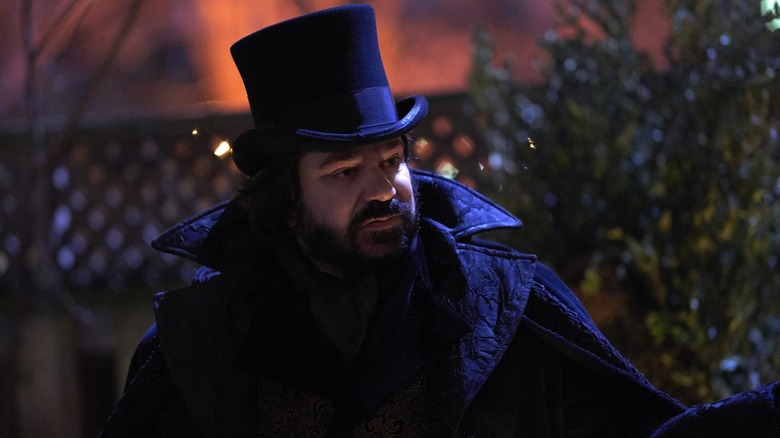
03 May 18:56

Covid Hospitalisation May Affect Thinking Similar To 20 Years of Ageing, Study Says

by msmash
People who have been hospitalised with Covid may be left with difficulties in thinking comparable in magnitude to ageing 20 years, research suggests. From a report: As the pandemic swept the world it became apparent that coronavirus could not only cause immediate health problems but also leave some people with often debilitating symptoms -- a condition known as long Covid. According to one UK study, about a third of patients who experienced symptoms after being hospitalised felt fully recovered a year later, with little improvement for most patients in areas including physical function and cognitive impairment. Now experts have revealed that some patients were left with, on average, a lingering cognitive decline. David Menon, a professor at Cambridge University and senior author of the study, said the degree of impairment was linked to the severity of illness. "[Covid] does cause problems with a variety of organs in the body, including the brain and our cognitive function and our psychological health," he said. "If you can have a vaccine, and all your doses, you will have less severe illness. So all of these problems are going to be less." Writing in the eClinicalMedicine journal, Menon and colleagues report how they examined the results of cognitive tests performed by 46 patients, on average six months after they were admitted to Addenbrooke's hospital in Cambridge between March and July 2020. Of this group, 16 received mechanical ventilation.

Read more of this story at Slashdot.

03 May 18:56

Nicolas Cage Stokes Hopes For Face/Off 2

by Debopriyaa Dutta

Remember "Face/Off?" Yes, the 1997 Nicolas Cage and John Travolta starrer, which follows a bonkers plot of face-swapping, slo-mo gun-wielding, and a lot of (fun) melodrama. It seems like Cage might return for a potential "Face/Off 2," as he recently confirmed that he has been in talks with "Face/Off" producer Neal H. Moritz. Speaking to Comic Book, Cage explained that "some calls" are being made by Moritz in an attempt to help the sequel materialize, and that he might be interested if it were to actually happen:

 "There have been some phone calls with Neal [Moritz], who I enjoyed very much working with on the first Face/Off. He's one of the true great producers in Hollywood, and they have been making some calls. The other ones like National Treasure, their priority was a TV show and godspeed to them, but maybe Face/Off."

While this is not confirmation of any kind, there surely is hope for "Face/Off" fans, and Cage enthusiasts in general (it certainly is for me, as I'm both).

Will Faces Come Off ... Again?

The idea of a "Face/Off" sequel has been in the works for some time, since Paramount's announcement that a remake would be made with a fresh cast of characters. This particular aspect was met with criticism, and understandably so — the beating heart of "Face/Off", and the reason why it is such an unforgettable action-thriller, is Cage and Travolta's face and role swaps, that lead to some pretty badass moments in the film. 

However, since Adam Wingard ("Godzilla vs. Kong") and writer Simon Barrett's names have been attached to the upcoming sequel, there has been a shift in the way in which "Face/Off 2" will be approached. Barrett confirmed sometime last year that "Face/Off" will be a direct sequel instead of a remake, although it remains to be seen whether both leads will for the story to continue (via ComicBook):

"When you're doing a movie like Face/Off 2, you're actually not allowed to talk about it. But we had an announcement and I don't even know if the announcement was actually totally intentional, in that it was announced as like a Face/Off remake, and Adam [Wingard] and I had to actually get vocal and say, 'No, it's not a remake. It's a direct sequel.' 

Whether that's better or worse, we don't really care, because we think it's better, but it definitely is better than a Face/Off remake, because you pretty much know where that would go, don't you? Whereas continuing the story of Castor Troy and Sean Archer and maybe adding some younger characters to the mix, to me, is much more interesting."

At the end of "Face/Off," Cage's character, Castor Troy, was seemingly killed, while Travolta's Archer had gotten his face back and decided to take in Troy's son as his own. A direct sequel could definitely revolve around Troy's son, with Cage's character returning in some capacity, making way for things to get absurd and unpredictable again. However, what made "Face/Off" unique can definitely be attributed to John Woo's vision, whereas Wingard might end up taking a completely different tonal route with the upcoming sequel.

If Cage were to indeed return to the sequel, we would love to see him do something along the lines of headbanging in a priest outfit or shooting bullets in an airport hangar with sunglasses on. Or whatever Nic Cage does best. 

Meanwhile, you can watch Cage play Cage in his most recent film, "The Unbearable Weight of Massive Talent," which is currently playing in theaters.

Read this next: The Horror Movies We Can't Wait To See In 2022

The post Nicolas Cage Stokes Hopes for Face/Off 2 appeared first on /Film.

03 May 18:55

Why Ozark's Laura Linney Won't Call Wendy A Villain

by Shania Russell

The chaos of "Ozark" began when mild-mannered suburbanite Marty Byrde (Jason Bateman) got his family entangled in a dangerous drug operation. Backed into a corner and desperate to keep his family together, he uprooted their lives and whisked them from Chicago to the Lake of the Ozarks, to begin a life of leaping from one disaster to the next, desperate to keep both the FBI and a dangerous drug cartel at arm's length. Though Marty is an exceptionally clever person and gifted with a very effective poker face, the Byrdes haven't survived for four seasons on his merits alone. More than once, he's nearly spiraled right off course but when all else fails, his wife Wendy Byrde (Laura Linney) steps in to save the day.

To be fair, saying that Wendy often "saves" the family is a bit of an oversimplification. In very difficult situations, she's often the one who cooks up a scheme that saves their lives — sometimes it's a bad situation that she got them into and other times, her solution just creates more problems. But say what you will about her harebrained schemes and shaky moral ground, Wendy Byrde has certainly proven herself to be a force of nature. Wendy is a stone-cold, cutthroat political animal with the smile of a midwestern mom. She won't hesitate to strike down anyone who gets int he way of her family's success and the worst part is that she'll do it with a poisonous grin. For Laura Linney, this is the appeal of playing the character. Speaking to GQ Magazine, here's how Linney described Wendy: 

"She's reactive. Her instincts are so good—they're shrewd. They're not the best choices, but they work. And she doesn't think deeply—she acts. She's primal that way. She starts to trust her own power. "I'm right. It might be messy and awful, but I'm right. I know I'm right." And she is right most of the time."

Wendy is the queen of doing the absolute worst thing for what she deems to be the right reasons. As the show approached its end, she delved further and further into darkness, prompting viewers to ponder a core question: had Wendy become the villain of "Ozark"?

Is Wendy Byrde The Villain?

When the going gets tough, Wendy Byrde gets tougher. Moreso than Marty, Wendy has been quick to accept the awful nature of what must be done to keep the Byrde family alive. She does what she believes she must, whether that be covering up murders or scheming some of her own. In the later seasons, she even dabbles in voter suppression and rigging the political system, when she revisits her political roots to recruit partners and investors for the Byrde Foundation. So she isn't one for the moral high ground and surely no one can argue that her actions don't veer into pure evil. So does that make her a villain? In the same chat with GQ, Linney pushed back against this claim.

"I don't know if she's the villain because she's not trying to hurt her family. She's trying to save her family. I think if she were actively, intentionally trying to derail her family then she would be a real villain. Normally, the villain is the person who goes after the protagonist, tries to thwart the protagonist. That's not who she is. I don't know quite what she is but she's not that."

One could make the case that all of Wendy's terrible actions are softened by her desperation to keep her family safe — she loves her children so ferociously she won't hesitate to kill for them – but that isn't the only reason Wendy acts. She also enjoys the power. Marty has made it clear many times that he'd be content to run off to the Gold Coast, or give into witness protection or even do some jail time for the sake of survival. But Wendy doesn't just want to survive — she wants the Byrdes to stay together and thrive. As Linney said, Wendy doesn't thwart Marty for the sake of taking him down. She certainly diverges from his plans and has a tendency to pull the rug out from under him, but ultimately it's because she wants the Byrdes to succeed. If this is their story, then how can the family's greatest champion be their villain?

Wendy Is Shaped By Her Past

Ultimately, the way Wendy operates leads back to her past. The series takes its time to unravel who she was before marrying Marty and still only gives us morsels, but it's more than enough to make sense of the person she's become. Linney explained:

"When we first started doing Ozark, the thing I was most interested in examining was the whole issue of identity within a character, within a group of people, within a family, within a state—how people view themselves, what they present and what they are. How hard some people can work at not being who they really are, which is where I think you first meet Wendy Byrde. She's worked really hard to be something different than what she came from, for the right reasons, and then when she's sent back to the Ozarks, she's put back in a situation that's too familiar. And, slowly, she becomes more aligned with a lot of the values that she experienced growing up."

Over time, Wendy reveals that she grew up in the church, taking care of her mentally ill brother and fending off an abusive, drunkard father. During a dark period in her life, she turned to the church for acceptance but was met with judgment, which prompted her to turn her back on the past and run away to forge a new path. This is the root of her ambition and drive, and why she refuses to let go of the capital that the Byrdes slowly accrue.

In the second season of "Ozark," one of the many precarious situations Wendy finds herself in involves being tied to a chair and held hostage in a basement, kidnapped by Mason Young, the pushed-to-the-brink pastor desperate to get his child back. Despite his threats to her life, Wendy relates to him in a rare moment of honesty. She says, "evil comes when the righteous path is so hidden, it just looks like there's only one way out." It's an excellent summation of Wendy's point of view, one that becomes truer over time as her actions become darker for the sake of survival. And as the final chapter of "Ozark" proves, it's a perspective that eventually rubs off on the entire Byrde family,

The final season of "Ozark" is now streaming on Netflix.

Read this next: The 18 Best Crime Dramas In TV History

The post Why Ozark's Laura Linney Won't Call Wendy A Villain appeared first on /Film.

03 May 18:55

A New Jackass Series Is A Go At Paramount+

by Ryan Scott

It appears as though Johnny Knoxville and the gang are not getting ready to hang up their specific brand of shenanigans just yet. Following the success of this year's "Jackass Forever," it has been revealed that a brand new "Jackass" series is officially in the works for Paramount+. Rejoice, fans of hilarious stuntwork and elaborate pranks, as this will be bringing the franchise back to the small screen for the first time in decades.

Paramount recently held an earnings call to report on the company's financials for the first quarter of the year. As reported by Variety, Paramount Global CEO Bob Bakish revealed during the earnings call that the renewed success of the franchise theatrically has paved the way for a brand new show. Bakish had this to say about it:

"Based off the success of 'Jackass Forever,' we're working with the creators to continue the partnership with a new series, bringing even more ridiculous antics straight to Paramount+."

Admittedly, that is not a lot to go on, though it does sound at the very least like Knoxville and Jeff Tremaine, who has directed all of the films, as well as producer Spike Jonze, will be involved. One has to imagine at least some of the original cast members will be on board as well, even if it's not full-time. Beyond that, much remains uncertain for the time being.

Back To Where It All Began

It's remarkable how the need for content in the streaming age has made so many things that used to seem impossible possible all over again. "Jackass" got its start on MTV in 2000 and became wildly popular seemingly overnight. But the show quickly became a bit much for TV at the time and censorship got in the way of it remaining the thing that made it a pop culture sensation in the first place. So, Tremaine, Knoxville, and the gang decided to make "Jackass: The Movie" instead, and it went on to become a huge hit theatrically in 2002. That paved the way for a series of sequels including "Jackass: Number Two," "Jackass 3D," "Bad Grandpa," and this year's "Jackass Forever." The franchise has lived on as a series of films for two decades now.

But with Paramount+ needing content to attract subscribers and make headway in the streaming wars, a new "Jackass" show suddenly seems appealing. Even if that means a combination of old stars, such as Steve-O and Chris Pontius perhaps, as well as some new additions like Poopies and Rachel Wolfson, the renewed popularity of this very specific brand of humor has brought things full circle. The "Jackass" gang is headed back to TV. What a time to be alive.

There is no word on a possible release window for the new series but we'll be sure to keep you posted as new details come our way.

Read this next: The 35 Best Documentaries You Can Watch On Netflix Right Now (March 2022)

The post A New Jackass Series is a Go at Paramount+ appeared first on /Film.

03 May 18:53

Rescue Dawn Nearly Landed Christian Bale In Taiwanese Jail

by Witney Seibold

Werner Herzog's 2006 survival film "Rescue Dawn" was the Hollywood version of his own 1997 documentary film "Little Dieter Needs to Fly." Both films tell the story of Dieter Dengler, a German pilot who was shot down during the Vietnam War, captured and imprisoned (and starved and tortured), only to eventually escape. In the documentary film, Herzog brought Dengler back to the very Laotian and Thai jungles where he was held captive in order to retrace his steps. "Rescue Dawn," in which Christian Bale played Dengler, shot in jungles as well (this time in Taiwan), and large portions of the film are devoted to Bale and his co-stars trekking through the real jungles. 

"Rescue Dawn" is one of the "bigger" movies in Herzog's canon. Bale was one of the biggest movie stars at the time having just appeared in the hit film "Batman Begins," and the authenticity-forward filmmaker actually employed CGI special effects for the first time in his career; in order to capture a plane in flight, Herzog had one animated. Perhaps to ensure a sense of danger, the film's plane crash was 100% authentic. Also to add to the authenticity, Herzog asked his cast to lose weight to look as if they had been starved. Herzog shot the starvation scenes first and the cast would slowly gain their weight back over the course of the shoot, with Herzog shooting as they bulked back up to normal. 

Herzog, thanks to his work with the notorious Klaus Kinski, had something of a reputation for having a temper on set (although, if you know anything about Kinski, Herzog is the model of patience). But in a 2012 interview with GQ, Bale expressed no trepidation. His mind, he says, was plenty occupied with other risks, including running afoul of the local authorities. Indeed, Herzog, he said, was something of a kindred spirit. 

'The Mind Has Enough To Chew Over'

"Rescue Dawn" was not a relaxing, comfortable shoot, by design, and Bale didn't need to distract himself on set: 

"When you're sitting in the Taiwanese jungle surrounded by snakes and armed guards, the mind has enough to chew over."

When asked if he was hesitant about shooting with Herzog in the jungles — a reasonable question, given the notoriety of the production of Herzog's 1983 film "Fitzcarraldo" — Bale says he was not afraid of the jungles, nor of Herzog's grumpiness. In fact, Bale tried to outdo a lot of Herzog's requests: 

"Not at all. In fact, I relished the opportunity. If anything, I wanted to see more of that legendary temper: Bring on the crazy. I do think of Werner as a kindred spirit and I love so much of what he strives for. He can be the kindest of souls and then the most cantankerous man you've ever come across. There was never a dull moment. The thing with Werner is that he won't be outdone by anyone else, especially not his lead actor. On set he would be diving into rock pools, crawling headfirst over rapids; all entirely unnecessary. But we enjoyed trying to outdo one another."

Herzog once notoriously said that the world is starved for new images, alluding to the steady media diet first started by the popularity of television (and certainly now exacerbated by phones and the internet), and he's further stressed that visual media desperately lacks originality and authenticity. If one is going to use a camera, try to make something new. As such, Herzog would push and push and push. Himself, his crew, his actors, the very medium.

'I Loved The Toxicity'

When asked if working with that constant pushing created a "toxic" working environment, Bale pointed out that, even if it did, it was something he enjoyed. Even when the shoot was interrupted by Taiwanese cops with machine guns, Bale was exhilarated: 

"It depends who you talk to. Some people might have thought of it that way, but personally I loved it. If it was toxic, then I loved the toxicity, it didn't affect me in any way. I was laughing my ass off most of the time. We had half the crew quit at one point. One day we had these heavies with machine guns turn up, dragging people off to court and threatening crew members with jail time ... In the middle of all this chaos we were trying to make this wonderful movie. Walking barefoot through the jungle for hours on end, people cutting themselves, covered in band aids or cuts held together with Sellotape -- I had a terrific time."

Just as Herzog is a wholly committed director, Bale is a wholly committed actor, and he has starved himself for roles (both "Rescue Dawn" and "The Machinist" required he be whip thin), and bulked up (he gained a lot of muscle mass for both "American Psycho" and "Batman Begins"). 

Perhaps surprisingly, the two haven't worked together since. Herzog has continued to make challenging movies firmly outside the mainstream, while Bale, still an enormous movie star who will appear in blockbusters, will still occasionally act in intimate dramas and soulful indies. 

Bale's last film was "Ford vs. Ferrari." His next film will be "Thor: Love and Thunder." Herzog's last fictional film was "Family Romance, LLC" from 2019. His next film will be whatever he wants. 

Read this next: The 20 Greatest War Films Of All Time

The post Rescue Dawn Nearly Landed Christian Bale In Taiwanese Jail appeared first on /Film.

03 May 18:52

Strangers On A Train Features The Most Dangerous Scene Alfred Hitchcock Ever Filmed

by Anya Stanley

From "Foreign Correspondent" to "Marnie," Alfred Hitchcock always got his shot -- but that doesn't mean he always kept his cool during the process. The influential British director spent much of his six-decade career dabbling in the art of suspense over some 50-odd films, so much so that he was dubbed a master of it.

So highly regarded is his work that even his lowest-ranking films, like the single-setting thriller "Lifeboat," are still lauded efforts. Hitchcock isn't too bothered with plausibility in his films, but his approach to suspense is one that's been studied in film courses for decades, summed up by the oft-repeated analogy of the bomb under the table. At a 1972 AFI Seminar roundtable, the filmmaker explains how he creates suspense for an audience:

"Four people are sitting around a table, talking about baseball or whatever you'd like. Five minutes of it. Very dull. Suddenly a bomb goes off. Blows the people to smithereens. What does the audience have? Ten seconds of shock. Now, take the same scene and tell the audience there is a bomb under that table and [it] will go off in five minutes. Well, the whole emotion of the audience is totally different, because you've given them that information."

The method can be seen throughout Hitchcock's oeuvre: The crop-dusting sequence in "North By Northwest," the creeping crows of "The Birds" gathering on a playground, or the greatest exercise in dread-building, which occurs in "Rope" as the audience watches a maid get incrementally closer and closer to uncovering a hidden dead body. Hitchcock's 1951 effort, "Strangers on a Train," contains several such sequences, including a tense tennis match and a botched attempt at breaking and entering. But one climactic moment was too intense even for its steely-eyed director, due to some risky stunt work.

'I'll Never Do Anything Like That Again'

"Strangers on a Train" came about in 1951, just one year after Hitchcock's dazzling Marlene Dietrich-led noir "Stage Fright." The latter is considered one of his creative failures, but he followed up with a personal passion project: An adaptation of Patricia Highsmith's novel of the same name, with a script written first by Whitfield Cook, then "The Big Sleep" author Raymond Chandler. None of the screenplays were quite to Hitchcock's liking, and so the finalized draft was a group effort between (according to "Alfred Hitchcock: A Life in Darkness and Light") three women: Greenhorn screenwriter Czenzi Ormonde, associate producer Barbara Keon, and Alma Reville, Hitchcock's wife. Among the additions given to the story were a climax sequence featuring a knockdown, drag-out fight on an out-of-control merry-go-round. The two main leads, played by Robert Walker and Farley Granger, have finally clashed following a murder -- one has failed to follow through on his deal to "swap" murders with the stranger of the title, and now a death is about to be pinned on the innocent man. The amusement park ride spins at dangerous levels, and with children aboard (gleefully having the time of their lives, it should be noted), the situation is hairy.

It's not Farley Granger's hero who saves the day, though: The savior is a hunched old man who doesn't hesitate before crawling under the massive rogue machine. In "Hitchcock/Truffaut," Hitchcock tells Francois Truffaut that the savior was not a professional stuntman nor even an actor -– he was a volunteer carousel operator.

"My hands still sweat when I think of that scene today. You know, that little man actually crawled under that spinning carousel. If he'd raised his head by an inch, he'd have been killed. I'll never do anything like that again."

The scene itself is a visual powerhouse. After the old man successfully crawls to the center and pulls the switch, the entire ride comes to a crashing halt. The scene was done with a miniature of the carousel, projected onto a screen with live actors screaming in front of it. Hitchcock, it seems, was intimately aware of what stunt-a-riffic creators like Jackie Chan, Zoe Bell, and Michael Bay have been showing us for ages: to paraphrase a quote of his from a book called "It's Only a Movie," sometimes a suspense movie is mere inches away from becoming a graphic horror movie.

Read this next: The 15 Best Cold War Movies Ranked

The post Strangers On a Train Features the Most Dangerous Scene Alfred Hitchcock Ever Filmed appeared first on /Film.

03 May 18:51

The 25 Best Samuel L. Jackson Performances, Ranked

by Jason Baxter

Samuel L. Jackson is practically peerless and one of our most prolific living actors. He's brought his signature brand of charisma to films spanning a number of genres. While he may have peaked somewhat later in his life, Jackson has remained a reliable screen presence for the last 30-plus years. He's a master of every aspect of a given actor's toolkit -- he can be fierce, steely, comforting, conflicted, intimidating, righteous, and more. His cinematic presence is indelible, and some of his most beloved roles almost outshine the man himself. He is one of the most quotable and recognizable actors alive, and has worked with some of the best filmmakers to have ever walked this earth (he also happens to be one of the highest-grossing actors of all time). Though it wasn't broadcast, Jackson was finally recognized by the Academy of Motion Pictures with an honorary award in 2021.

Jackson's filmography is a doozy. To try and summarize it succinctly would be a fool's errand, but here are 25 of his finest turns, ranked from least (amazing) to greatest.

Formula 51

Samuel L. Jackson is having the time of his life in this daft caper film that plays like bargain brand Guy Ritchie. Hong Kong veteran Ronny Yu directs Jackson and a cast of colorful supporting characters in "Formula 51," including a deranged Rhys Ifans, Emily Mortimer, Meat Loaf (as a drug kingpin named "The Lizard"), and a slumming Robert Carlyle.

Jackson's master chemist Elmo McElroy has developed a new superdrug he calls Power of Suggestion 51, or POS-51 for short. He finds himself embroiled in the London underground as various criminal factions vie for control of the powerful substance. If you want to watch Jackson (in cornrows and a kilt) clobber skinheads with a golf club, or gleefully toss rolls of toilet paper to them as they soil themselves, then you may find yourself charmed by this trifle. The movie's final grace note is the revelation that no one knows for sure why McElroy (an African American man) romps around in Scottish regalia.

National Lampoon's Loaded Weapon I

One of Samuel L. Jackson's few out-and-out farces, "National Lampoon's Loaded Weapon 1" is a laugh-a-minute riot along the lines of the "Naked Gun" series or National Lampoon's other genre spoofs like "Hot Shots." This type of lunacy can be an acquired taste (Roger Ebert deemed it pointless, calling it "quotation, not satire"). He's referring, of course, to the "Lethal Weapon" buddy cop franchise, itself already self-aware with tongue planted firmly in cheek.

Jackson co-stars with Emilio Estevez as a pair of Los Angeles detectives investigating a conspiracy around a recipe that converts cookies into cocaine. Sight gags, celebrity cameos, and pop culture references are densely packed into the comedy's speedy 83-minute runtime. It's all incredibly silly -- but that's exactly the point. Jackson plays it straight, which makes all of the flick's ridiculousness even funnier. Keep an eye out for appearances from the likes of William Shatner, Jon Lovitz, Tim Curry, Whoopi Goldberg, Charlie Sheen, Bruce Willis, and more.

Deep Blue Sea

Anyone who's seen "Deep Blue Sea" already knows why it's on this list. Jackson's performance as Russell Franklin is nothing all that remarkable, but what is unforgettable is his character's gruesome and unexpected demise in the film's second act. After giving a long and impassioned speech about teamwork and survival in the face of mortal danger, Jackson is cut off mid-sentence by a bloodthirsty, hyper-intelligent shark that bites down on his midsection and drags him, flailing, into the waters below. It's hilarious, it's unsettling, and it's brutal.

Director Renny Harlin (who also helmed "The Long Kiss Goodnight") convinced the actor to participate in this late-'90s schlockfest by explaining that having an actor of his stature be the first casualty would heighten the stakes of the film considerably (technically, he's not the first to die, but whatever). Jackson agreed and audiences were treated to one of best and boldest death scenes in recent memory.

Black Snake Moan

A controversial offering from Paramount's short-lived "indie" imprint Paramount Vantage, "Black Snake Moan" stars Samuel L. Jackson as retired blues guitarist Lazarus Redd and Christina Ricci as Rae Doole, an ailing and debauched young woman living in the deep South. Craig Brewer's follow up to the acclaimed "Hustle & Flow" collides Jackson and Ricci's characters due to tragic circumstances. Redd chooses to try and rid Doole of her compulsions by chaining her to a rusty radiator. What unfolds is somewhat queasy, as Ricci spends most of the film's runtime unclothed or scantily-clad, and Redd's underlying compassion is partly puritanism and condescension. In the end, they both find redemption and solace.

The sexual politics of the movie are complicated, to say the least (and the film's promotional efforts did it no favor in making it appear any less unseemly), but its worth checking out if only for the remarkable work done by Jackson and Ricci, who shoulder most of the film's runtime more than capably.

The Negotiator

In a career as prolific as Samuel L. Jackson's, he's bound to reunite with more than a few former castmates. 1998's "The Negotiator" includes two: Kevin Spacey ("A Time to Kill") and David Morse ("The Long Kiss Goodnight"). F. Gary Gray's twisty thriller plays out like a high-stakes bottle episode. The script from James DeMonaco and Kevin Fox provides ample real estate for moviedom's most fiery performer and god-level pottymouth to cut loose.

For all his ferocity and magnetism, Jackson excels at playing underdogs and wronged men, and he's once again in that mode here as hostage negotiator Danny Roman. In hopes of uncovering the truth about a web of corruption after being framed for the death of his colleague, Roman takes hostages of his own in a Chicago high-rise. Spacey plays Chris Sabian, a fellow negotiator and Roman's intellectual equal. Their battle of wits is gripping to watch unfold, and fans of police conspiracy films will be pleased by the twist ending of "The Negotiator."

The Caveman's Valentine

"The Caveman's Valentine" heralds the second partnership between Samuel L. Jackson and director Kasi Lemmons, after "Eve's Bayou." Jackson stars as Romulus "Rom" Ledbetter, a homeless paranoid schizophrenic and former musical prodigy living inside of a cave who rants on sidewalks during the daytime. Lemmons' directorial decisions in depicting Rom's mental illness are both haunting and humane, and Jackson delivers some strong work as the unlikely protagonist of this underrated murder mystery. As in the novel by George Dawes Green (who also wrote the screenplay), Rom happens upon the frozen corpse of a gay vagrant in a tree in the park where he lives. As Rom pursues the truth about the young man's death, he finds himself drawn into a twilight world of extreme wealth and depravity.

The narrative allows for explorations on artistry, inspiration, class disparity, and stigmatism around mental illness. In his Master Class, Jackson elaborated on the film and his understanding of Rom. "He can't handle [his] success ... and the reason that he comes up with is a made-up guy who lives in this tower in New York that shoots rays into his head to the point that he can't touch a piano because it's painful ... you are a source of shame for people who pass by you every day and don't do anything to help you, whether they admit it or not."

Kingsman: The Secret Service

How much fun is Samuel L. Jackson having in "Kingsman: The Secret Service?" The answer is all of the fun. His dastardly Richmond Valentine is so over the top that an actor less in control of their instrument would have elicited groans. Jackson takes the mustache-twirling baddie archetype and makes it his own, giving Valentine an impeccable taste in streetwear and a lisp inspired by the stutter that Jackson struggled to overcome as a child. It's a hoot watching Jackson chow down on Big Macs while facing off against Colin Firth's erudite gentleman spy.

Jackson told The Guardian what drew him to the role was that "[he didn't think he would] ever get to be in a Bond film, so I felt like this was an opportunity to play a really great Bond villain." Valentine is yet another supervillain tech mogul, the go-to template for action movie villainy in recent years, but he's so outsized and flamboyant it's easy to forgive the film's reliance on that contemporary trope.

The Avengers

This list would be risible without an acknowledgement of Samuel L. Jackson's contributions to the Marvel Cinematic Universe as S.H.I.E.L.D. head honcho Nick Fury. For the purposes of this list, we've selected one of the franchises' high points, 2012's "The Avengers" (not for nothing, it's also one of the few MCU pictures that gives him a decent chunk of screen time). Jackson opens the film in an exposition-dense and somewhat underwhelming action sequence, but he shines in his moments aboard the helicarrier as he manipulates the rag tag group of heroes into abating their bickering and unite as a team.

Jackson's Fury has appeared in varying capacities in eleven Marvel Studios films to date, and while he's great in "Captain America: The Winter Soldier" and "Captain Marvel," "The Avengers" remains that magic moment where Kevin Feige and the brain trust at Marvel crystalized their blockbuster formula. For those who may be unaware, Jackson taking the role was practically predestined. In the 2002 Marvel comic "The Ultimates" from writer Mark Millar (who also created "Kingsman") and artist Bryan Hitch, Fury was reimagined in the spitting image of Jackson. Rather than take legal action for using his likeness, Jackson was flattered and more than game to step into the character's leather duster and eyepatch for the game-changing post-credits scene of "Iron Man."

Star Wars Episode I: The Phantom Menace

Is "Star Wars Episode I: The Phantom Menace" the best Star Wars prequel that Samuel L. Jackson features in? Absolutely not. But it remains a landmark in cinematic history, and marks the debut of his instantly-iconic Jedi Councilmember Mace Windu. We hardly ever see Windu get out of his chair in this movie, but he electrifies nonetheless as the stern, dogmatic warrior. Jackson would get plenty to do in later entries–including his own custom lightsaber in his trademark purple. George Lucas' first prequel remains unfairly reviled and underappreciated, so it's making this list. The film is not without its problems, but Jackson is far from one of them.

As recounted in Brian Jay Jones' "George Lucas: A Life," Jackson apparently told the talk show "TFI Friday" all the way back in 1996 that he'd be willing to play any role in a Star Wars film. "You can make me a stormtrooper if you want, I don't care. As long as I know I'm in the movie" (via BBC). Fortunately for the veteran actor, he got quite the plum role.

Django Unchained

Stephen is right up there with Samuel L. Jackson's most terrifying and despicable characters. The house slave is fiercely loyal to Calvin Candie (Leonardo DiCaprio, also eschewing any semblance of empathy or dignity) to the point of being a race traitor. As Jackson is wont to do, in "Django Unchained" he undergoes a dramatic physical transformation, glowering under old age prosthetics and a white wig.

Unsurprisingly, "Django Unchained" was the subject of much discussion upon its release, with some criticizing the Stephen character for exploiting the "Uncle Tom" stereotype. Jackson's frequent collaborator Spike Lee minced no words in expressing his distaste for the film, writing in a now-deleted tweet, "American Slavery Was Not A Sergio Leone Spaghetti Western. It Was A Holocaust. My Ancestors are Slaves. Stolen From Africa. I Will Honor Them." However you feel about the film's messy politics and downright reckless treatment of its subject matter, one thing you cannot deny is that Jackson is a frightening presence that stays with you long after the lights come up.

A Time To Kill

Made between his two notorious Batman films, "A Time to Kill" is another team-up between director Joel Schumacher and screenwriter Akiva Goldsman. The film is the fourth adaptation of a John Grisham novel made during Hollywood's '90s love affair with the lawyer-turned-author. Crafted with his characteristic baroque elan, Schumacher's film is one of the finest in that cinematic subcategory (Schumaker had also directed 1994's "The Client").

Matthew McConaughey's crusading public defender Jake Brigance certainly has aspects of the White Savior trope, but the film does make some feints toward interrogating that concept. Brigance is hired by Samuel L. Jackson's Carl Lee Hailey to represent him in his murder trial after an enraged Hailey guns down the two white supremacists who kidnapped and raped his young daughter and left her for dead. Brigance and Hailey must confront the pervasive institutionalized racism of the state of Mississippi and a particularly nasty judge with the not-so-subtle surname of "Noose." They're aided in their case by Sandra Bullock's plucky law student Ellen Roark. Jackson's performance in "A Time to Kill" is a particularly soulful one, making the most of all-too-relevant dialogue like "When you look at me, you don't see a man, you see a Black man," and "America is a wall."

The Great White Hype

Samuel L. Jackson leads this grunge-era satire from Reginald Hudlin ("House Party," "Boomerang") which boasts an absolutely bonkers supporting cast (Jeff Golblum, Damon Wayans, Jamie Foxx, Jon Lovitz, John Rhys-Davies, Cheech Marin, and others). In one of his hammier performances (but not quite "The Spirit"-levels of ridiculousness), Jackson plays the scheming boxing promoter Reverend Fred Sultan. In describing the Reverend's distinctive look for "The Great White Hype," Jackson told The AV Club, "The director wanted me to look like Don King, and everybody knew who Don King was. But I didn't want to be Don King. I wanted the man to be Rev. Fred Sultan, so I decided to make him look like Julius Caesar. So I had a white, silvery Julius Caesar haircut underneath the turbans and all that."

The laughs in "The Great White Hype" come as fast and hard as the boxers' jabs, and the film's commentary on race, celebrity, and greed in late 20th-century America is as potent as smelling salts. Hudlin spares no punches (pun intended) and ridicules each and every character. The result is hugely entertaining and depressingly relevant to this day despite its abject '90s-ness.

Coming To America

Samuel L. Jackson is only in the 1988 fish-out-of-water Eddie Murphy comedy vehicle "Coming to America" for a little over a minute, but he makes a lasting impression. It's one of his earliest cinematic appearances, but it nevertheless establishes many of the hallmarks that would become associated with his oeuvre: the bellowing voice, the hair-trigger temper, and the mastery of profanity-ridden dialogue.

Jackson, credited only as "Hold-Up Man," barges into the McDonald's-parodying restaurant where Murphy's Prince Akeem is working and holds up the cashier (the dearly departed Louie Anderson) in an attempt to rob the place. One can't help but laugh when Akeen tells him, "Please refrain from using any further obscenities in the presence of these people." The spine of Jackson's career to come would largely be built on such a reputation for hurling f-bombs. Despite the scene living on in internet .gif infamy, Jackson was too busy to reprise his role in the recent sequel "Coming 2 America."

Jungle Fever

Though Samuel L. Jackson only plays a supporting role in this 1991 drama, he leaves a lasting impression as "Gator," the crack-addicted brother of Wesley Snipes' Flipper. He steals the scene in every moment he appears in Lee's incendiary exploration of interracial relationships.

His twitchy, profound performance was a deeply personal one for the actor. As recounted to Esquire Magazine, Jackson was "two weeks out of rehab. I'd been smoking cocaine for a year and a half, two years, and I understood the nature of the disease. I had done the research. So when I started talking to Spike about it, I said, 'You don't see him high that much. You always see him when he needs something. He's on a mission to get some s**t. That's what I wanna do.' And that was my breakthrough. That got me into Hollywood. It was the perfect marriage of experience and opportunity." For his incredible work, the prestigious Cannes Film Festival revived their Best Supporting Actor award to commend Jackson for his performance.

Hard Eight

When he first appears onscreen in Paul Thomas Anderson's inaugural feature film, Samuel L. Jackson is as reliably captivating as ever. He struts into frame and chews on every morsel of Anderson's Tarantino-lite dialogue. It's another in a long line of roles that seem to have been written specifically with the actor in mind. Anderson knows the power of a good Samuel L. Jackson monologue, and he serves himself an absolute feast of one in "Hard Eight's" climax.

His Vegas penthouse showdown with Philip Baker Hall is one for the ages. Jimmy (Jackson) is all fire and brimstone, whereas Sydney (Hall) replies in kind with a weary stoicism, keeping his guilt and fear just below the surface. One wonders how John C. Reilly's dopey John fell in with Jimmy in the first place, but it's undeniable that he carries himself with a palpable swagger. Jimmy may be one of Jackson's more typecast roles -- the crass gangster dressed to the nines -- but that doesn't make it any less impressive as a showcase for his particular set of strengths.

Chi-Raq

An impassioned film from Spike Lee's latest wave of socio politically-conscious films, "Chi-Raq" tackles the issue of gang violence in Chicago's south side, dubbing it "a reality TV urban murder show" (via Complex). In an inspired decision, Lee's angle on the hot button subject takes the form of a modern update on the ancient Greek play "Lysistrata" by Aristophanes. In both the play and film, the women of the city (or city-state) take a vow of celibacy to punish the violent men in their society in hopes of bringing an end to warfare.

Samuel L. Jackson serves as a narrator/emcee of sorts for the broad musical comedy, monologuing in a kind of half-rhyme. Tonally, the movie's closest point of comparison might be Baz Luhrmann's 1996 interpretation of "Romeo and Juliet," but "Chi-Raq" is distinctly Lee's joint through and through. No one does social commentary quite like Lee, and "Chi-Raq" is no exception. It's also notable as one of only two collaborations between Jackson and Lee since 1991's "Jungle Fever," as the latter had a falling out with the actor over the use of racial epithets in his films with Quentin Tarantino.

Eve's Bayou

Samuel L. Jackson received a surprisingly-infrequent top billing in this lyrical 1997 southern gothic drama which marked the directorial debut of Kasi Lemmons. Jackson's Louis Batiste is the patriarch of an affluent African American family in rural Louisiana. What should have been another idyllic summer for his kin is tested when his youngest daughter Eve (Jurnee Smollett) catches him in the act of infidelity. "Eve's Bayou" is arresting from its opening frames and is peppered throughout with suggestions of mysticism and the supernatural.

The narrative plays out like a classic of 20th century American literature, and Lemmons (who also wrote the screenplay), makes the most of the film's 1960s trappings. For his commendable performance, Jackson was nominated for an NAACP Image Award for Outstanding Actor in a Motion Picture (he lost to Djimon Honsou in "Amistad"). The late great Roger Ebert selected "Eve's Bayou" as his best film of 1997, writing, "It takes us into a realm of poetry and dreams, and shows us how deceptive memory can be. In the way it examines a family's emotional life, it reminded me of the family dramas of Ingmar Bergman."

The Red Violin

Though he primarily only features in this international coproduction's framing device, Samuel L. Jackson nevertheless makes a strong impression in "The Red Violin." This sumptuous indie is a centuries-spanning anthology chronicling the titular instrument as it passes from hand to hand in the lives of its diverse cast of characters. The origin of the violin is shown in 17th century Cremona, Italy. When a gifted luthier arrives home to find his wife dead and child stillborn, he lacquers a new violin in her blood. The film's second flashback features another tragedy, this time taking place in a Viennese orphanage in the late 18th century. A young Jason Flemyng (fresh off of "Lock, Stock, and Two Smoking Barrels") stars in the movie's third episode, a doomed romance set against the backdrop of 19th century English nobility. The next chapter in the violin's life takes the audience to Maoist China, before finally circling back to Jackson's auction appraiser in modern day Montreal, where he learns of the instrument's sordid history.

"The Red Violin" is a sterling example of Jackson's ability to excel in everything from mega-budget blockbusters to arthouse fare and everything in between, and an indelible tribute to the transformative power of music.

Changing Lanes

The set-up for "Changing Lanes" is a simple but remarkably effective one: two men are speeding down Manhattan's FDR East River Drive, both desperate to make it to life-altering courthouse hearings. Obnoxious lawyer Gavin Banek (Ben Affleck) collides with divorcee and recovering alcoholic Doyle Gipson (Samuel L. Jackson), and acrimony ensues when Banek attempts to pay him off instead of exchanging insurance information. The consequences for their subsequent tardiness to both of their court proceedings are dire --Gipson loses custody of his children and Banek's hotshot career is imperiled. Over the course of a manic 24 hours, the two men go to war with one another, lobbing blows financially, professionally, personally, and physically in this relentless breakneck drama. What starts as a tete-a-tete metastasizes into a cynical rumination on basic human decency.

It's also worth mentioning the outstanding supporting cast of "Changing Lanes": Toni Collette, Sydney Pollack, Richard Jenkins, Dylan Baker, Amanda Peet, and the late William Hurt.

Jurassic Park

By 1993, Samuel L. Jackson had already appeared in a handful of mainstream blockbusters ("Goodfellas" and "Patriot Games," for example), but he really popped off in Steven Spielberg's game-changing crowd-pleaser "Jurassic Park." As the harried InGen chief engineer John "Ray" Arnold, Jackson chain smokes and sweats his way through the film's second and third acts. Jackson serves as an audience surrogate -- smart enough to know something terrible is imminent but resigned to go along for the ride regardless, while David Koepp's screenplay provides him with some of the film's best lines.

It's a shame that Hurricane Iniki prevented Jackson from being able to complete filming on his death scene, as his absence is definitely felt when he essentially walks offscreen. Descriptions of his demise in Michael Crichton's novel, however, are available. One wishes audiences could have heard Jackson's spin on Arnold's parting kiss-off to the velociraptor that's pursuing him: "Too bad, buddy."

Die Hard With A Vengeance

Released just a year after Samuel L. Jackson and Bruce Willis appeared in "Pulp Fiction" (in which they barely share a frame) the third film in the "Die Hard" series wisely matched them up in this breakneck actioner from John McTiernan. Obviously, Jackson and Willis would work together again -- their chemistry is effortless (in another timeline, Laurence Fishburne would have played Zeus Carver, and it's hard to imagine that casting working as well).

Adapted from a spec script from Jonathan Hensleigh called "Simon Says," "Die Hard With a Vengeance" chronicles another hellish 24 hours in the life of New York City police detective John McClane. An extremely hungover McClane is run through a gauntlet of riddles and death traps by a terrorist calling himself Simon, with Jackson along for the explosive ride as his reluctant accomplice. 

The film is an expertly conceived escalation of the basic "Die Hard" premise: the first movie confines the action to a skyscraper, the second to an airport, and in "Die Hard with a Vengeance," all of New York City is a playground for mayhem. Jeremy Irons makes a worthy heir apparent to Alan Rickman's Hans Gruber, bringing an air of Eurotrash smarm to the role of McClane's tormentor. In some corners, "Die Hard with a Vengeance" is considered the franchise's high water mark.

Unbreakable

In retrospect, M. Night Shyamalan's "Unbreakable" was ahead of its time -- a masterclass commentary on comic book superheroism. The somber, grounded film presaged the deconstructions and realistic tones that would become de rigueur after the comic book blockbuster boom. Bruce Willis stars as David Dunn, a stadium security officer with a crumbling marriage. After he's the inexplicable sole survivor of the Eastrail 177 train crash, Dunne is sought out by Samuel L. Jackson's Elijah Price, a comic book obsessive afflicted with Type I Osteogenesis Imperfecta. Price's extremely brittle bones are the opposite of Dunne's seeming invulnerability. He believes they are a fated dyad of sorts, two sides of the same cosmic coin.

Jackson's chemistry with Willis is as strong as ever in "Unbreakable" (less so in the long-promised follow-up "Glass"). Like many Jackson characters, Price has a penchant for purple and dressing stylishly. In a panel at New York Comic-Con celebrating the film's tenth anniversary, Shyamalan revealed that he and Jackson took inspiration for Price's unique haircut from the famous abolitionist Frederick Douglass (via CBR). If you've somehow never had "Unbreakable" spoiled for you, suffice to say that Price's fragility belies a terrible secret.

The Long Kiss Goodnight

"The Long Kiss Goodnight" is the only film listed here to include a dig at the misbegotten mid-'90s spin-off series "Baywatch Nights" (which is truly baffling if you can track it down -- David Hasselhoff fights mummies and aliens. Seriously). The weirdly specific barb comes courtesy of writer Shane Black. With his gift for hurling obscenities and imbuing his characters with a lived-in set of idiosyncrasies, Samuel L. Jackson is a perfect match for Black's signature style, and it's disappointing that the two never collaborated again.

The 1996 romp stars Geena Davis as Sam, a housewife living a modest life of comfortable domesticity. Her world falls to pieces when repressed memories and sinister forces from her past life as a government assassin reemerge. Sam enlists the aid of Jackson's Mitchell Henessey, a hard-living private investigator with terrible aim, great taste in music, and a tic that makes him sing whatever he's doing out loud at any given moment. Jackson and Davis have fantastic chemistry throughout, proving Jackson is in rare form when it comes to playing in action movie two-handers.

Pulp Fiction

The jerry curl. The handlebar mustache. Bellowing one minute, staid, determined, and quiet the next. Samuel L. Jackson's Jules Winnfield embodies all of "Pulp Fiction's" quirks and contradictions. In what is likely his most iconic role, Jackson is perfectly cast as Quentin Tarantino's hitman-turned-philosopher. It would be an understatement to say that Jackson crushes every scene he's in, and Tarantino wisely gives him a series of brilliant monologues (incidentally, the bible verse Jules quotes in the beginning is completely fictional). In Jackson, Tarantino found the ideal vessel for his trademark foul-mouthed verbosity.

"Pulp Fiction" opens and closes with Jules -- he is the heart of the film and the wellspring of its skewed morality. The movie also wisely gives Jackson ample room for comedy in its third chapter. Who amongst us hasn't found themselves quoting, "Goddamn, Jimmy! This is some serious gourmet s**t!" or, "I'm a mushroom cloud laying motherf***er, motherf***er!" The role of Jules would cast a long shadow over Jackson's career, with many of his subsequent roles banking on a similar attitude and bearing (no complaints here).

Jackie Brown

In 1997, Quentin Tarantino liberally adapted Elmore Leonard's novel "Rum Punch" (his only non-original work to date), infusing it with a Blaxploitation flavor and shifting the setting from Florida to Los Angeles. His "Pulp Fiction" follow-up intelligently gave Samuel L. Jackson ample room to play. As the arms dealer Ordell Robbie, Jackson is simply fantastic -- whether in quieter moments such as his scene with Chris Tucker or spitting out fiery diatribes ("The AK-47! When you absolutely, positively have to kill every motherf***er in the room").

Ordell feels like the synthesis of both Jackson and Tarantino's strengths -- a broadly sketched character with plenty of meaty dialogue and an undercurrent of simmering menace. His unique appearance was an intentional choice on Jackson's part. As told The AV Club, "[Robbie's] chin braid was an homage to me and Quentin's love of Hong Kong movies." "Jackie Brown" signifies the epitome of Jackson as a performer -- he can be menacing, engaging, and appealing from moment to moment. He owns the screen whenever he is on it, and that's why he is one of our greatest living actors.

Read this next: The 18 Best Action Movie Actors Ranked

The post The 25 Best Samuel L. Jackson Performances, Ranked appeared first on /Film.

03 May 18:50

Liam Neeson's Best Action Movie Is The Grey

by Joshua Meyer

As a casual Liam Neeson fan, it's easy to get some of his latter-day action movie titles mixed up. There's one where he plays a snowplow driver and another one where he plays an ice road trucker, and I'll confess that I had a moment this week where my memory failed me about which of those was which. It was like I became the assassin whose memory is faltering in Neeson's latest action film, "Memory," which just hit theaters on Friday and which was the subject of our recent interview with him.

However, there's one Old Man Neeson (really, Middle-Aged Neeson) movie set in a snowy landscape that I've never forgotten, and that is "The Grey," a film that is still potent and gut-wrenching in its depiction of survival under harsh conditions. Directed by Joe Carnahan, "The Grey" went into wide release in the U.S. in January 2012, so it's celebrating its tenth anniversary this year. When I first saw the movie a decade ago, I remember thinking it was the first great movie of that year.

Cinemascore respondents on opening weekend were not quite as taken (Neeson pun intended) with it. They gave "The Grey" a B minus. Maybe they were expecting a different kind of action movie.

Part of what makes action movies exciting beyond the spectacle of the stunts is the element of danger that arises from chases, fights, and shootouts. "The Grey" sublimates the danger a different way, putting its plane crash survivors in a hopeless situation with life-or-death stakes. Set in the Alaskan wilderness, it's more of an action-adventure and drama than a straight-up action-packed thrill ride.

Carnahan's film was bookended in late 2012 by Ang Lee's "Life of Pi," which likewise used the survival film template to explore deeper philosophical questions, with a tiger taking the place of wolves as the movie's animal of choice. The plot of "The Grey" is also similar to Showtime's "Yellowjackets," another drama where wolves attack plane crash survivors and the title comes color-coded.

A Job At The End Of The World

In 2002, Carnahan made an auspicious debut with his crime drama "Narc," starring Jason Patric and Ray Liotta. At the time, William Friedkin, the director of "The French Connection" — one of the best cop movies ever made — called "Narc" the "greatest cop movie" he had ever seen. Not every Carnahan film since has lived up to that level of hyperbole, but "The Grey" delivered on the early promise of "Narc," and they both feel like lost '70s movies.

Neeson gives an Oscar-worthy performance in "The Grey," which did receive a limited re-release for awards season, though it went unrecognized. His gruff character, Ottway, enters the frame as a loner, treading through the snow at an oil drilling site with a rifle slung over his shoulder. Through voiceover, we learn that Ottway has taken "a job at the end of the world," in a chilly purgatory, where instead of walking among tombstones, he walks among blue neon crosses and "ex-cons, fugitives, drifters, a**holes, men unfit for mankind."

Inside a rowdy bar, Ottway inhabits his own personal sound vacuum, allowing us to peer inside his head and hear him writing a letter to his MIA wife, where he says, "I move like I imagine the damned do, cursed. I've stopped doing this world any real good."

It does not get much greyer than that. Knowing that Neeson lost his real-life wife, Natasha Richardson, a famous actress in her own right, after a skiing accident in 2009, imbues such moments with even more weight.

Ottway is to wolves what Quint is to sharks in "Jaws." He's employed as a marksman on the site to pick off wolves before they can pick off men. Man-versus-nature stories aren't always terribly compelling when all they have going for them is a conflict against the elements, but soon, Ottway and other roughneck pipeline workers are boarding a plane, which promptly goes down in the wilderness, crash-landing them right in the heart of wolf territory.

Men Among Wolves

"The Grey" drew the ire of animal rights groups like PETA for its depiction of wolves as bloodthirsty, revenge-seeking monsters, but wolves have been used as a metaphor in art since time immemorial. If wolves are to be valued the same as people, then maybe there are good wolves and bad wolves, just like there are good and bad people. Not every movie has to show them being gentle and dancing with guys named Kevin. Sometimes, they might be there to represent the pitiless gaze of nature, red in tooth and claw, as Tennyson termed it.

In addition to Neeson, "The Grey" wrangles some strong supporting performances out of Dallas Roberts ("Walk the Line," "The Walking Dead"), an up-and-coming Frank Grillo, and his fellow "Purge" franchise alum, Dermot Mulroney, as well as James Badge Dale ("The Pacific," "The Empty Man") and Nonso Anozie, Joe Anderson, and Ben Hernandez. Cinematographer Masanobu Takayanagi, who worked previously with Grillo on "Warrior," brings a gritty handheld camera aesthetic to it. The film also boasts a good soundtrack by Marc Streitenfield and makes memorable use of a piece of music called "The City Surf" by Jamie Winans, first featured in the film "Ink."

"The Grey" furthermore distinguishes itself in the way that its sound design enhances the overall cinematic experience. The howling of the wolves, the blowing of the wind, the cracking of tree branches against a desolate winter terrain ... it all adds up to a harrowing ordeal for both the characters and the audience invested in their fate. Ottway almost takes his own life until he hears the howls of the wolves and regains his senses. 

Weighted With Questions

What gives "The Grey" heft is its philosophical underpinning, the small debates that arise between characters on the nature of the universe—whether their plight was somehow ordained, or whether they are just here by "blind luck." Roberts and Mulroney play the believers, uttering prayers over fallen comrades and advocating faith, while Neeson and Grillo play the hard-nosed materialists or agnostics who cannot see anything beyond this earthly realm.
Are we just spinning at random through an indifferent cosmos, or is there a higher power who watches over all this? "The Grey" asks the big questions, never easing up on tension as the wolves draw in closer, their snowy white paw prints going red, filling in with man-blood.

Neeson teaches the men how to make bang sticks with shotgun shells on the end of sharpened branches, and they take to fighting back against the wolves. He quotes an existentialist creed from his father: "Once more into the fray, into the last good fight I'll ever know. Live and die on this day."
There's a scene toward the end where Ottway, his present travails continually juxtaposed with idyllic memories of his wife, cycles through an intense mixture of emotions, literally shouting at the heavens. "The Grey" is the kind of spiritual film where you can sit down and watch it and be religious or an atheist and still take something away from it. Speaking to Patheos, Carnahan (who we also interviewed), discussed the questions that fuel the movie, saying:

"I think it's the contradictions that exist in all of us at times in reference to God or to spirituality or to religion in general. There's a duality of a guy calling on God: 'Where are you when I need you?' and then at the same time 'God helps those who help themselves.' I think that contradiction does exist in all of us, those of faith and those who profess to have no faith."

Once More, Into The Fray

In "The Grey," the wolves are a symbol of the inner struggles and hardships we all face, our physical and mental battles as human beings. There's that saying, "Be kind, for everyone you meet is fighting their own battle," and that has never been truer for this generation than during the pandemic, when the earth suddenly seems to be fighting back against humankind and its deforestation and the environmental havoc it has wrought like something out of a nature-versus-man movie.

"The Grey" is co-written by Ian MacKenzie Jeffers, based on his short story, "Ghost Walker." On the subject of personal pandemic battles, I know that, for me, as an American expat — someone who started out writing online under the pseudonym of "The Gaijin Ghost" — it's been difficult to adjust to a new mode of existence where the only people I interact with on a daily basis (outside typing) are my wife and masked store clerks who are speaking a foreign language.

Before Covid, the job that I had involved conversing with people in person all day long. Even after I started working remotely, I was still Zooming with them face-to-face. Now, as a writer who loves writing but misses socializing, there are times when I leave the house and I feel like Ottway in "The Grey," disconnected from my surroundings, ghost-walking through life.

That's just my own melodrama. For people in more difficult positions, maybe every day is a struggle to survive. In circumstances like those, where you're faced with constant adversity, a person has to draw strength where they can.

By turns propulsive and pensive, "The Grey" is the perfect marriage between the earlier Neeson you might know from "Schindler's List" and the later one from his action-dad phase. Carnahan's film inspires the viewer to pull themselves up by the bootstraps — maybe tape their fists up with some broken bottles between the knuckles — and go out to meet the metaphorical wolves again, repeating Ottway's poem: "Once more, into the fray, into the last good fight I'll ever know. Live and die on this day." And maybe watch "The Grey."

Read this next: The Horror Movies We Can't Wait To See In 2022

The post Liam Neeson's Best Action Movie Is The Grey appeared first on /Film.