Shared posts

05 May 19:11

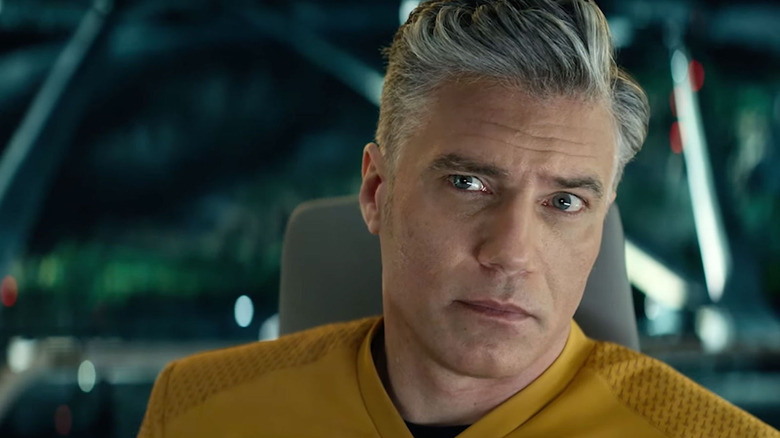
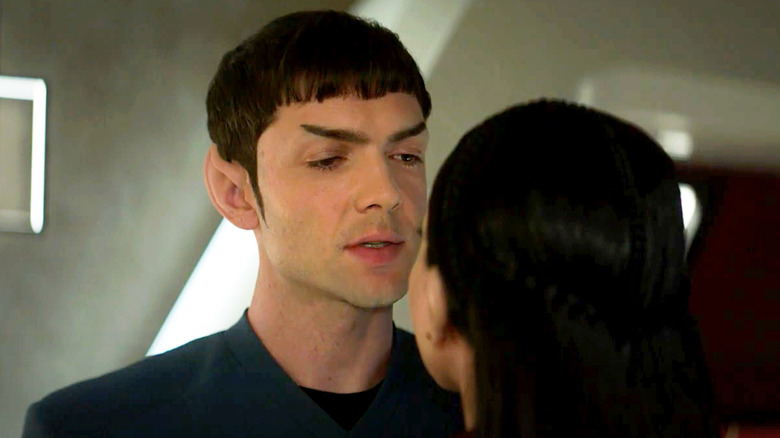
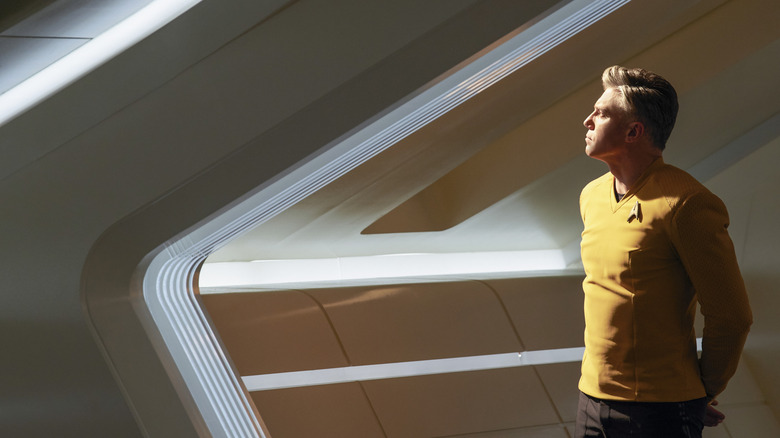
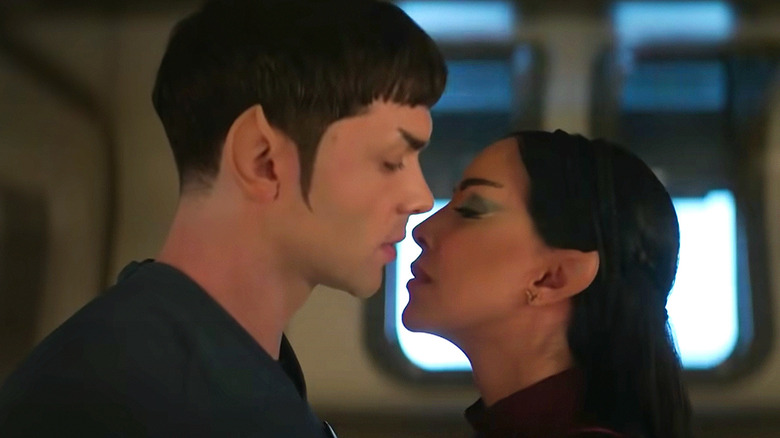
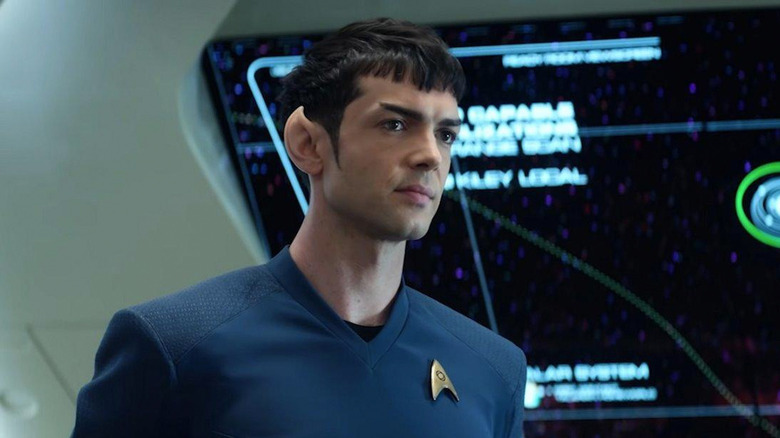
Star Trek: Strange New Worlds Showrunner On Reinventing A Classic Villain And Letting Spock Be Sexy [Interview]

by Jacob Hall

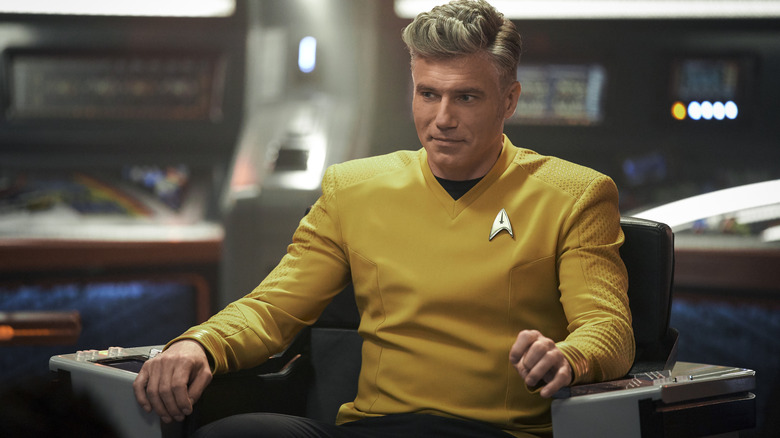
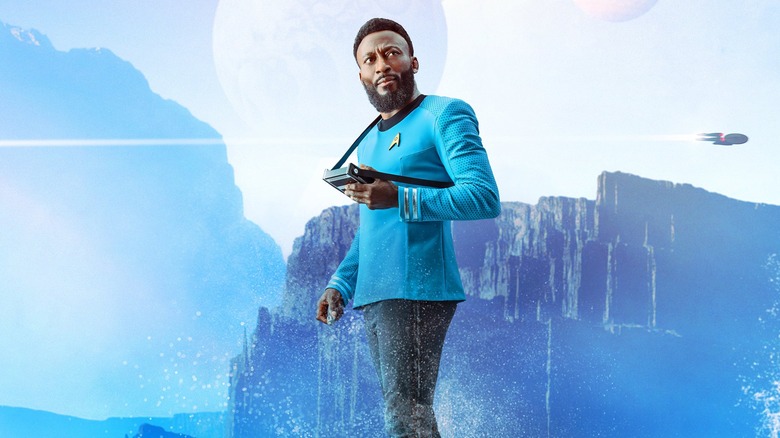
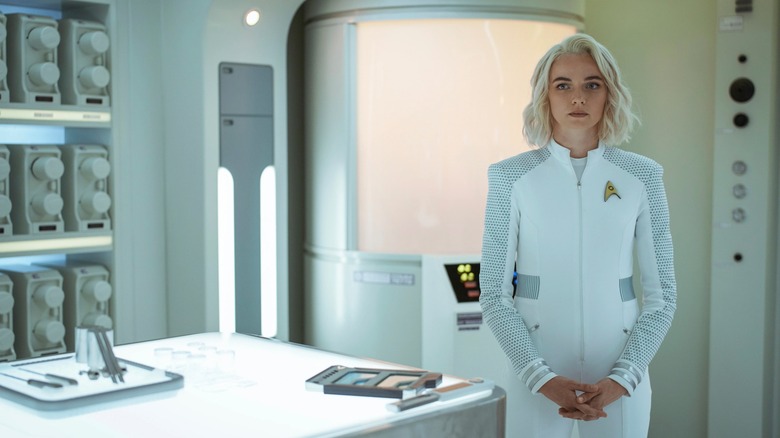
"Star Trek: Strange New Worlds" is a breath of fresh air. The episodic, optimistic, and yes, even sexy new series is both a throwback to classic "Trek" and a bold swing at something different. It's the live-action "Star Trek" show fans have been waiting for, and also a perfect jumping-on point for new viewers wondering what the fuss is all about. It loves franchise history (The Easter eggs! The in-jokes!), but it stands on its own, ready to transform a legion of newbies into die-hard Trekkies. The five episodes provided to critics represent, quite frankly, the best live-action "Star Trek" television since the '90s.

At the helm of the series is co-showrunner Akiva Goldsman (working alongside co-showrunner Henry Alonso Myers), who is no stranger to "Star Trek." Goldsman has been an active presence throughout the franchise's modern era, but "Strange New Worlds" is a very different beast from "Star Trek: Discovery" and "Star Trek: Picard," which are very dark, heavily serialized shows. With its hopeful themes, colorful characters, and one-and-done adventure storytelling, "Strange New Worlds" offers a tricky balancing actor for Goldsman and his team — win over even the most jaded of "Trek" fans while making something that'll stand out in the ever-crowded streaming space. They succeeded.

I recently spoke with Goldsman over the phone about working on the series, creating a new backstory for legacy characters, reinventing iconic villains, and yes, knowing damn well people want to see Spock with his shirt off. Note: there are no spoilers in this conversation, but we do discuss vague elements of episodes that will air in the weeks ahead.

'I Will Take It As High Praise If We Leave People Feeling Hopeful, Connected, And Good'

"Strange New Worlds" is a comforting show. I felt really, really good after watching it.

Thank you. I appreciate that.

Is this what you wanted people to feel? Like they had a warm hug or a good meal?

Well, I mean, sure. I think that more than anything else, what we wanted to do was contemporize or make contemporary the feelings that a bunch of us had when we first saw "Star Trek" when we were young. Certainly, I know in my case, I'm pushing 60 this July. So in my case, when I was watching it, I suppose I was 11 or 12 when it was first on syndication, it made me feel comforted. It's the right word. I felt out of place and not quite connected to the world. And yet here was this place where it felt like I belonged. And so I think that is a form of comfort, and I will take it as high praise if we leave people feeling hopeful, connected, and good.

And a lot has been said about the episodic nature of the show and return to one-off stories. Did you and your writing team have to relearn how to tell these sort of contained stories after years of TV pivoting to serialization?

I think that, interestingly enough, really closed-ended storytelling is a muscle we all developed first, right? We probably had to really learn open-ended storytelling. And open-ended storytelling or serialized storytelling is really just a big version of closed storytelling, but it's where the breakpoints are that becomes a little bit more negotiated between yourself and your keyboard and your peers. But this is an older muscle and by the way, after several seasons of various episodic forays, quite a pleasure.

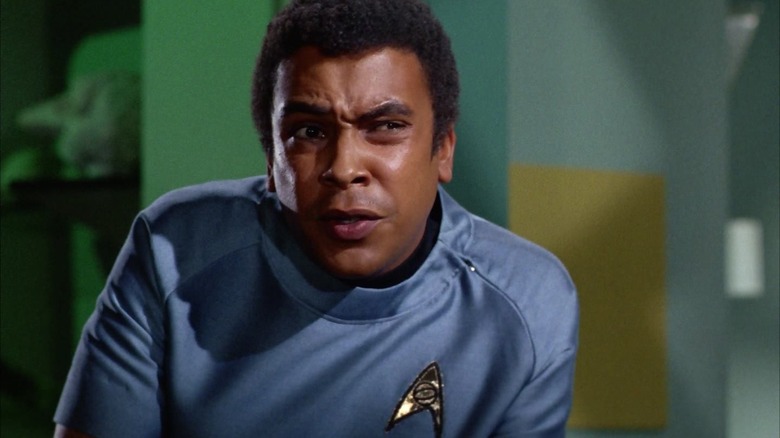
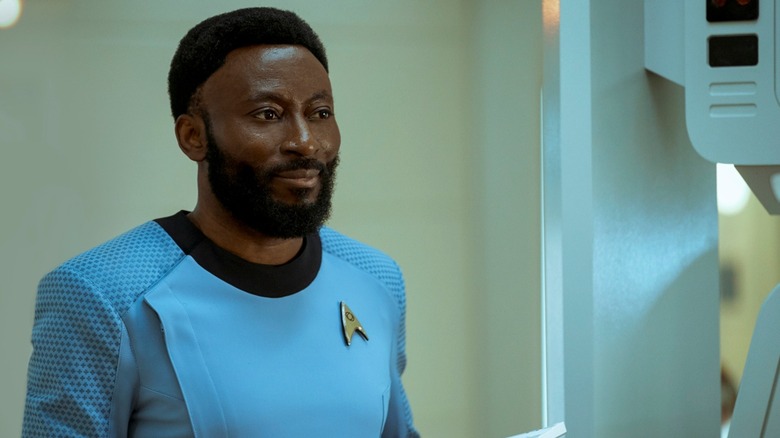
Did you feel pressure about creating backstories for characters like Dr. M'Benga, Number One, and Nurse Chapel, who have existed in our personal headcanon for decades?

There are very few things where I can say this with some level of confidence, but I'm just not that different from a lot of other people who watched "Star Trek" when they were younger. So I probably have about as much headcanon on M'Benga as most folks, and as Number One, and I'm not a person who's super-saturated in the novelizations, or the novels, or even the extended universe per se. You know? So I live very much as a hopefully pretty faithful representative of, "Huh, I wonder whatever happened to that guy?" Which is about where Dr. M'Benga lived for most of us. Wow. He was cool. How come he was only in two [episodes]. Do you know what I mean?

Yeah.

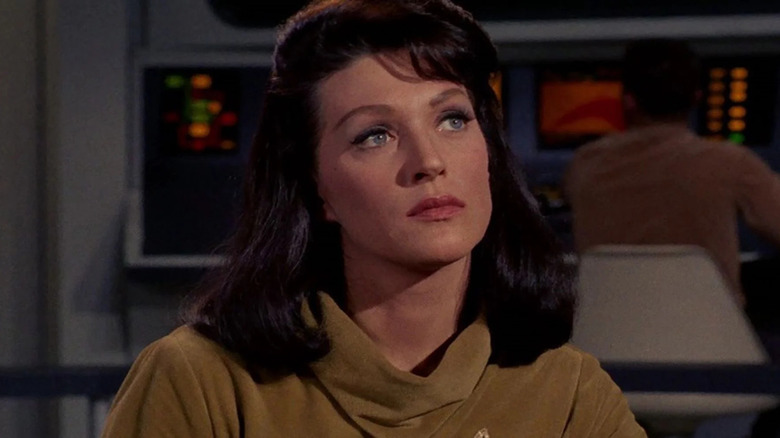
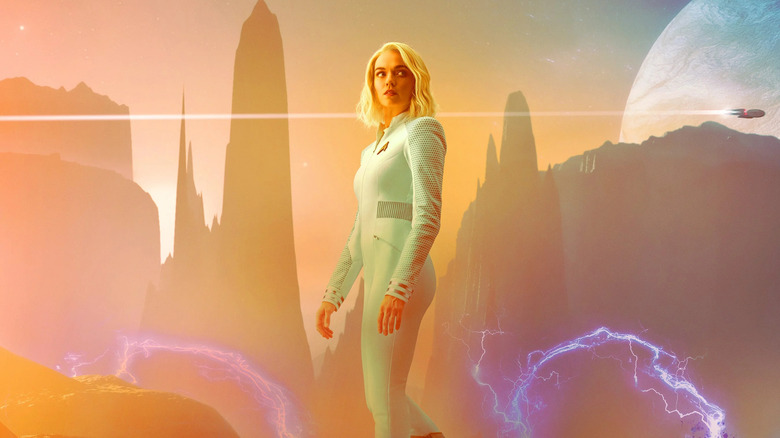
Oh, wow. Wasn't Number One really interesting? Look, she was like Spock. You know what I mean? If you really just kind of feed off of what from having loved it, you feel relatively safe, not entirely screwing it up.

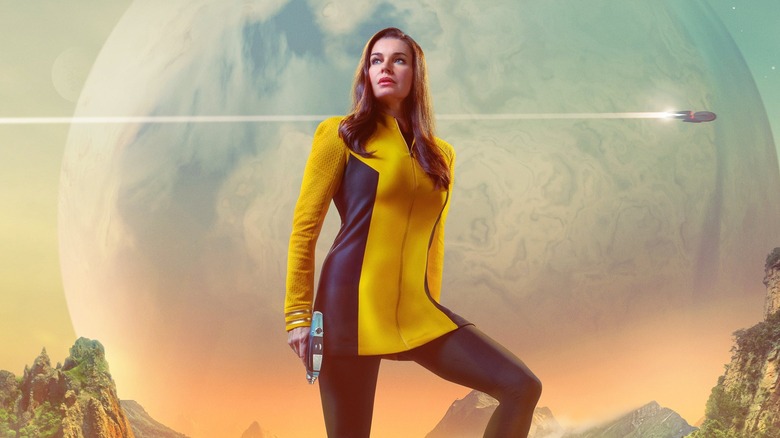
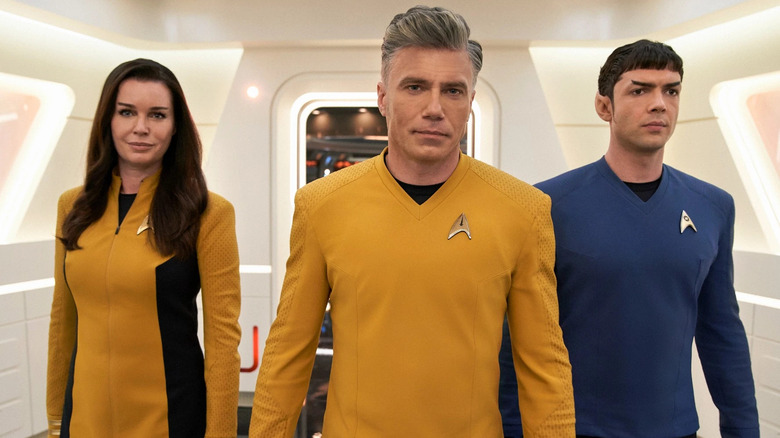
I want to talk about the new uniforms. When I spoke to [Number One actress] Rebecca Romijn at the press junket, she talked about how she really wanted to make the dress uniform happen, and how it ultimately led to everybody having multiple outfits and alternate uniforms. Can you talk about that?

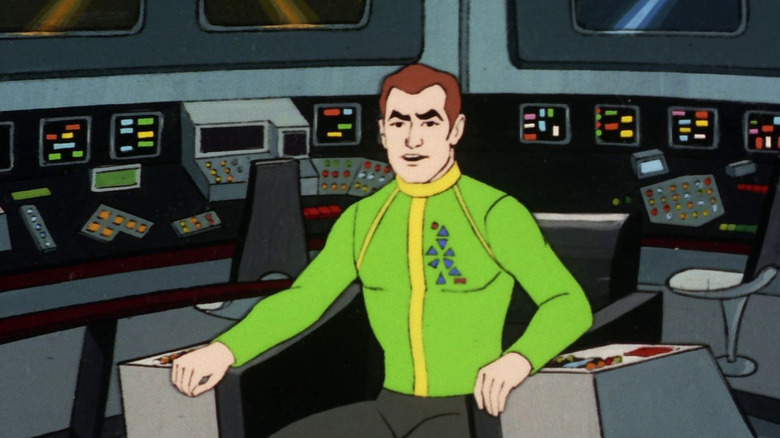
Well, I think what we ended up doing was realizing that people have closets, right? And that you actually have to ... People wear more than one thing. I'm not sure if by episode five Jim's green tunic has shown up yet ...

I laughed in recognition. I was very pleased.

Good. For me, that was like, let's dust that idea off, despite what its actual intentions or its actual reasoning for its existence may have been in season 2 of the original show. And let's talk about a variety of style. You know? And then the other thing that I don't know if Rebecca told you, but that really came from this, which was amazing and fun, is ... so that short skirt tunic is unisex. So we actually have men walking around in a short skirt, too.

'I Have This Long Standing Love For The Gorn'

I'll ask this broadly so you can approach it how you want to. There is a classic, but also extremely under-explored Trek villain in the first five episodes who is reinvented as a genuinely terrifying force. Are you able to talk about them?

Yeah. I'm happy to talk about the Gorn. I mean, I'm a little Gorn-obsessed. You'll notice actually, as Easter eggs within Easter eggs go, at the Lorca's lab in "Star Trek: Discovery," there's an unlabeled Gorn skeleton. And [former "Star Trek: Picard" showrunner] Michael Chabon and I almost had a dayglo Gorn painting in the commissary on the Borg cube.

I have this long-standing love for the Gorn. And when I say love, fascination really is the right word, because I think that one thing that "Star Trek" does great is it generates empathy. It's part of what we do in "Star Trek." And we sort of want to cross the divide, and we use the divide between species as a metaphor [for] the divide between people. But sometimes what gets lost is the possibility of evil, which is also something that I think exists. And so I've yearned a little bit for an enemy who is just that, at least to begin with. And it's been a while since we've had that, and the Gorn sort of presented themselves as such. So off we go.

The /Film team has already started shipping the cast of Strange New Worlds. We've talked about how any pairing of any characters has possible romantic chemistry. Is this something you were aware of in the writers' room?

[noticeably thrilled] No! This is the greatest thing I've ever heard. Tell me.

We've talked about Chapel and Dr. M'Benga. Spock and Pike. Spock and everyone, really.

That's fantastic. I mean, there are some pairings coming, certainly, but I can't say who.

Speaking of which, after decades of Spock being the thinking person's sex symbol, to see Spock actually treated that way in the show was wonderful.

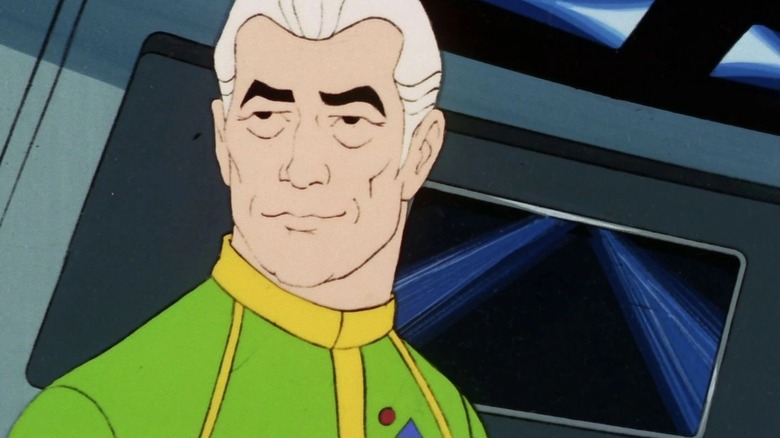
I'm glad. It was really fun. I got to direct that first episode, and [Spock actor Ethan Peck] was like, "What? No shirt?" And then suddenly, yeah, no shirt. I mean he's very, very, he's beautiful as well as being such a compelling actor. And part of what we're doing here ... I'm not the first to say this season. I said this before, but I'm always pretty fascinated [by] what we refer to internally as "smiley Spock," which is yellow-shirted, "Where No Man Has Gone Before" Spock [referring to the second pilot of the original "Star Trek" series]. I'm interested in who that guy was. Because I think Spock's life, if you think about it, we always go logical, logical, logical. But if you really look at it, I mean, you can go to "Star Trek: Motion Picture," it's been a waveform of logic, emotion. So we always see him in the emotion-tamped-down part, but that suggests that there were times when it came through in a way that's more wholesome. And I think we'll be looking at that.

The episode that sealed the deal for me was the shore leave episode [episode 5 of the season]. The franchise's willingness to embrace comedy has always been a strength and I think there's always room for laughter in "Star Trek."

Yeah. You bet. I mean, I think that one thing that we get to do with episodic, which we didn't get to do with serialized except little grace notes, is to it to vary tone the way the original series did. And so you do have these episodes where you can embrace a submarine thriller, like you've seen, or straight horror, you haven't seen yet. Or as you say, a shore leave episode, where we can be funny. We can embrace other tones and our show is strong enough to explore them and deliver character and entertainment as we sort of move somewhat through genre.

"Star Trek: Strange New Worlds" is currently streaming on Paramount+.

Read this next: Every Star Trek Show And Movie In Chronological Order

The post Star Trek: Strange New Worlds Showrunner on Reinventing a Classic Villain and Letting Spock Be Sexy [Interview] appeared first on /Film.

05 May 19:11

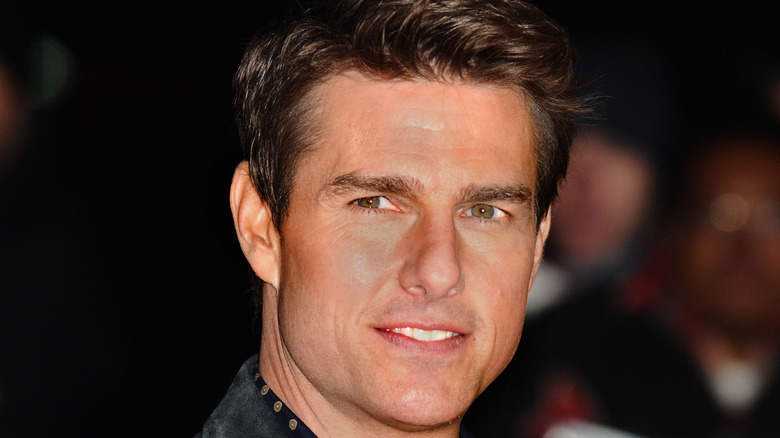
15 Best Tom Cruise Movies Ranked

by Liam Gaughan

Tom Cruise isn't just the greatest movie star working today ... he has been an icon for nearly 40 years. A top box office draw, his taste in projects has kept him on the A-list for the long haul. Despite his popularity, Cruise only seems to pick projects that he's interested in. He has worked with many of the greatest filmmakers of all time and has starred in a wide variety of dramas, comedies, science fiction, and action films. 

Cruise also continues to perform his own dangerous stunts. Although many actors rely on computer-generated special effects or their stunt doubles, Cruise is committed to realism. His dedication makes these action sequences ever more exciting to watch. The "Top Gun: Maverick" star has such an extensive filmography that narrowing down his best roles was a challenge, but we summoned Cruise-like courage and did it. Here are the 15 best Tom Cruise movies, ranked.

Jerry Maguire (1996)

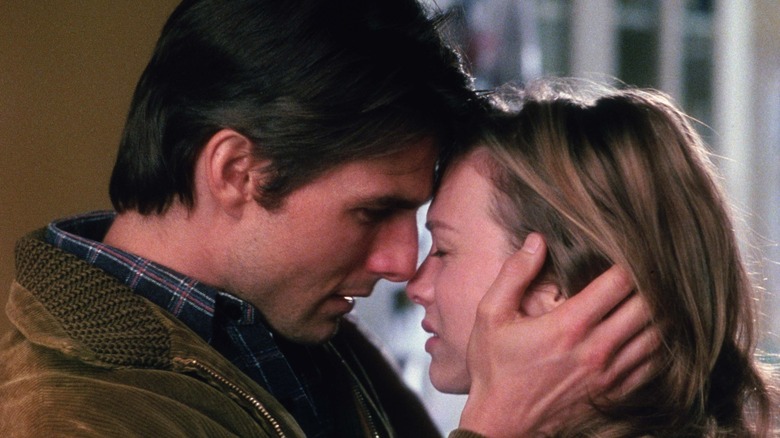
Although he's renowned for his intensity, Tom Cruise has been just as comfortable in more comedic roles. Cameron Crowe's 1996 film "Jerry Maguire" gave Cruise the chance to show off his versatility by bringing his signature sincerity to the titular role while still being very funny. He stars as the titular successful sports agent who is beginning to doubt his own success and winds up going through a change of heart.

In order to give himself a new purpose, Jerry writes an extensive "mission statement," an essay that pledges to bring compassion back to the sports trading profession. Jerry's co-workers think he is having a midlife crisis, and refuse to support him, so he decides to start his own agency. Jerry's only follower is the secretary Dorothy Boyd (Renée Zellweger). Dorothy is a single mother who is hopelessly in love with Jerry, and as they build their new agency the two begin to bond. Jerry becomes a father figure to Dorothy's young son, Ray (Jonathan Lipnicki).

Vanilla Sky (2001)

Cameron Crowe's science-fiction thriller "Vanilla Sky" is a widely misunderstood film. The film mixes mystery, suspense, romance, and philosophy into its highly complex story, which makes it worth revisiting as there are many different ways to interpret the final moments. Crowe has discussed the ending's implications in some of the behind-the-scenes material, but many of the film's secrets remain a mystery. Tom Cruise gives a brilliant performance, which helps to hook the viewer into the story by becoming the audience's avatar. He often seems just as confused as we are. 

"Vanilla Sky" is told mostly in flashbacks. The film follows the publishing tycoon David Aames (Cruise), who has inherited his father's corporation. David is a playboy who falls in love with the mysterious woman Sofia Serrano (Penélope Cruz). David's girlfriend Julie Gianni (Cameron Diaz) discovers his infidelity, and while out for a drive with David she crashes the car on purpose. David explains how he was caught between these two relationships with the futuristic psychologist Dr. Curtis McCabe (Kurt Russell).

Edge Of Tomorrow (2014)

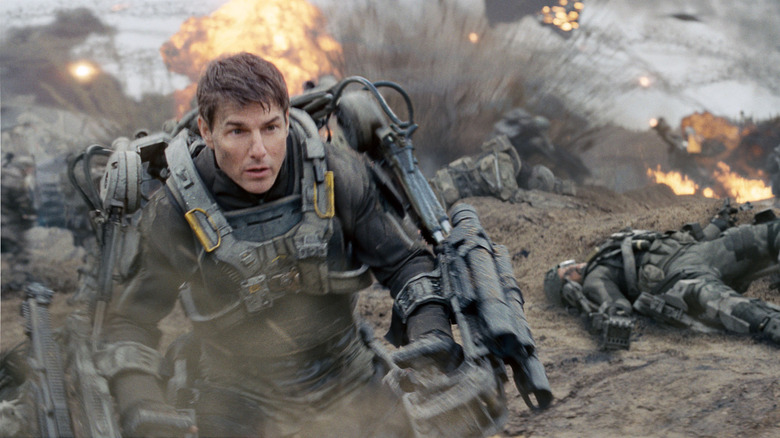
One of Tom Cruise's most admirable qualities is how he consistently chooses ambitious, original science fiction projects. Although the sci-fi action film "Edge of Tomorrow" was loosely based on Hiroshi Sakurazaka's graphic novel "All You Need Is Kill," it felt like a breath of fresh air. By combining the best elements of "Groundhog Day" and "Independence Day," it tells a time loop story set amidst an alien invasion.

Cruise stars as the U.S. Army Major William Cage, a character who is nothing like Ethan Hunt. Not only is Cage not a hero, but he's also a complete coward. After he is caught trying to abandon the service, Cage is assigned to fight on the front lines. He has no combat experience, and during the hectic conflict Cage becomes trapped in a time loop, reliving the same day over and over again. Cage discovers that another soldier, Sergeant Rita Vrataski (Emily Blunt), is also caught in the time loop. They work together to break out of their cycles and defeat the aliens.

Top Gun (1986)

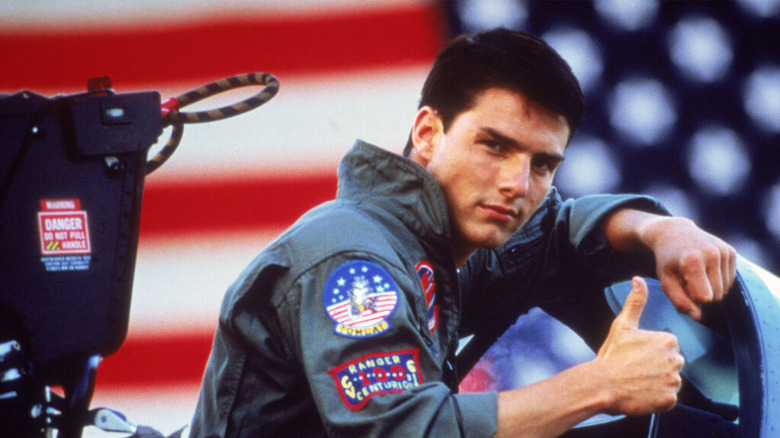
There are few projects in Tom Cruise's filmography that are as iconic as the 1986 film "Top Gun." The military action-thriller was one of the first big hits of Cruise's career, proving his range as a movie star. He had to be a charming romantic lead, a compelling action hero, and an inspirational dramatic character all at once. He pulled it all off with his performance as Lieutenant Pete Mitchell, also known as "Maverick."

"Top Gun" follows a group of young military officers who train at the US Navy's Fighter Weapons School in San Diego, California. Maverick and his best friend Nick "Goose" Bradshaw (Anthony Edwards) have a knack for getting into trouble, competing with their classmates to outdo each other. Although the film is really quite funny at times, Cruise still makes the emotional scenes effective. Maverick's horrified reaction to Goose's death is absolutely heartbreaking to watch.

Born On The Fourth Of July (1989)

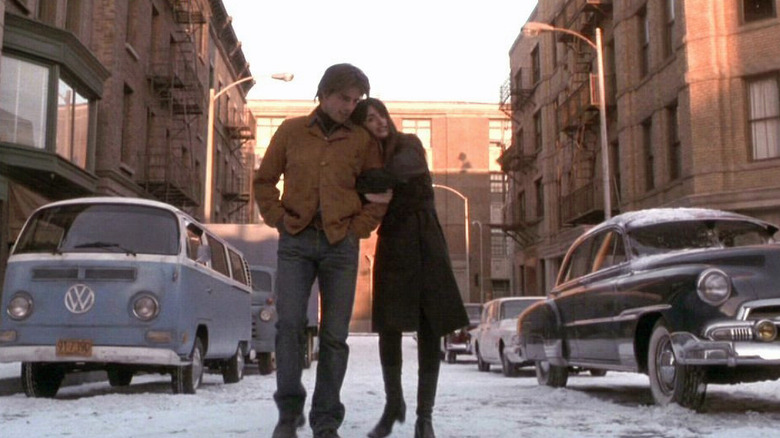
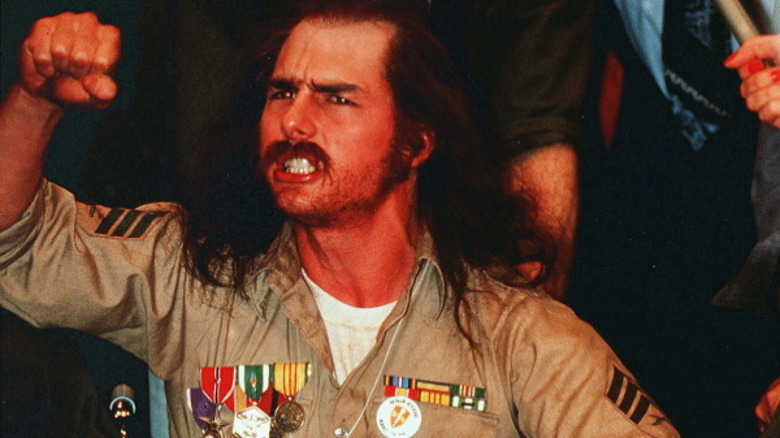
Oliver Stone is a notoriously political filmmaker, outspoken about societal issues related to conspiracies, propaganda, corruption, justice, and democracy. The story of the famous anti-war activist Ron Kovic is one Stone was keen to tell, casting Tom Cruise as Kovic in the biographical film "Born on the Fourth of July." Cruise received his first Academy Award nomination for best actor.

The film explores how Kovic turned from a staunch patriot into a fierce protester after traumatic events during his military service caused him to reconsider his values. Kovic enlisted in the U.S. Marines after hearing President John F. Kennedy's inaugural speech in 1961. However, during a routine military reconnaissance operation in Vietnam, Kovic accidentally kills a young private under his command. His superior officers urge him to stay silent. After he's paralyzed in combat, Kovic returns to the United States and begins campaigning against the war effort.

Risky Business (1983)

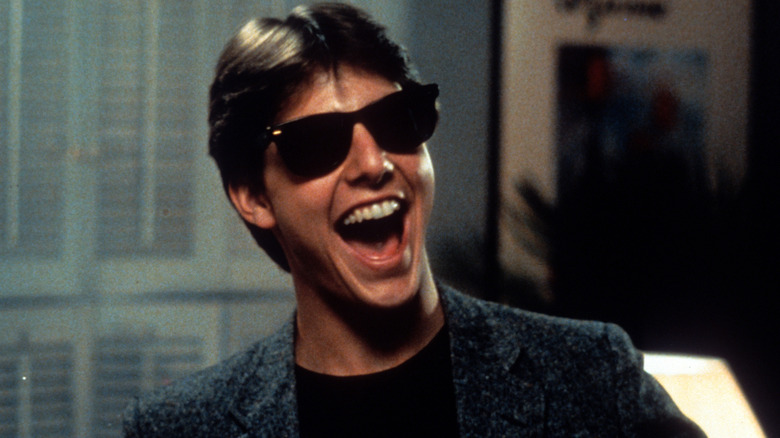
"Risky Business" was the film that truly launched Tom Cruise's career. The 1983 coming-of-age dark comedy was Cruise's first major lead role and proved that he could carry a film with his personality alone. The story deals with some very serious themes, exploring the nature of greed and how disconnected the upper class is from reality.

The film follows top student Joel Goodsen (Cruise), who is poised to gain acceptance to Princeton University. The prestigious school is his father's (Nicholas Pryor) alma mater. Despite his academic success, Joel is looking forward to temporarily escaping his parents while they are away on vacation. He gets into some trouble when his friend Miles Dalby (Curtis Armstrong) hires the prostitute Lana (Rebecca De Mornay) on his behalf, and Joel falls in love with her. Joel is forced to admit his feelings to Lana, interview with a Princeton recruiter, and fix his father's broken car over the course of a hectic weekend.

The Firm (1993)

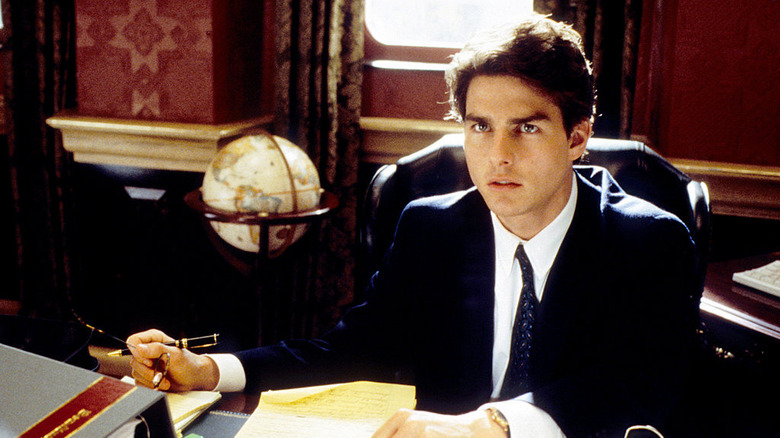
While there were many courtroom dramas released in the 1990s that were based on John Grisham's novels, 1993's "The Firm" is one of the best. Legendary filmmaker Sydney Pollack ("Tootsie," "Out of Africa") explored an intense ethical dilemma, and despite the 154-minute running time the film never loses momentum. Tom Cruise is an actor who naturally embodies confidence, so he was perfectly cast as a slick young lawyer.

The film follows the Harvard Law School graduate Mitch McDeere (Cruise), who is hired by the prestigious law firm Bendini, Lambert & Locke right after he completes school. Mitch immediately accepts his new position and moves with his wife Abby (Jeanne Tripplehorn) to Memphis, Tennessee. While he's overwhelmed by the generosity of the firm, Mitch discovers that his new employer is not everything that it's promised to be: Bendini, Lambert & Locke is involved in a money-laundering scandal. Mitch must avoid being framed for the firm's crimes as he unravels the conspiracy.

The Color Of Money (1986)

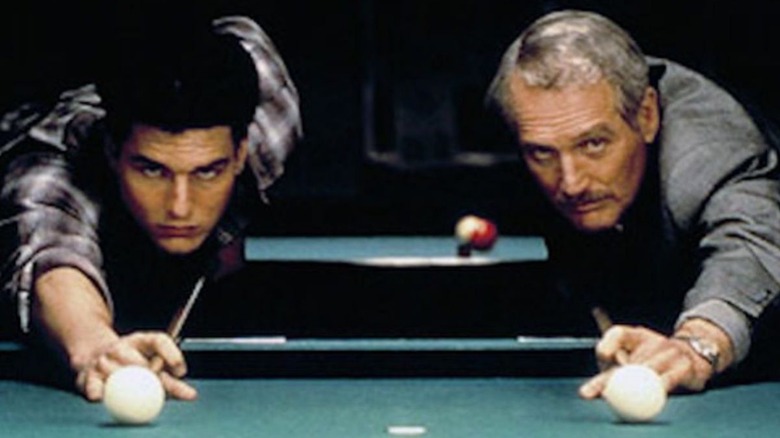
It was very ambitious to make a sequel to the 1961 film "The Hustler." Robert Rossen's gambling thriller was already a beloved classic and featured one of Paul Newman's greatest performances ever. Thankfully, director Martin Scorsese created a sequel that was just as formidable as the original: "The Color of Money" honors the first film's legacy, but you don't need to see "The Hustler" to enjoy it. Newman returned to his iconic role as the troubled pool player Eddie Falson, who goes by the nickname "Fast Eddie." 

After the events of "The Hustler," Eddie has retired from gambling. He knows the consequences of betting big and losing it all. However, he takes an interest in the young pool shark Vincent Lauria (Tom Cruise). He decides to take on Vincent as his protege. While Vincent is incredibly skilled at playing pool, Eddie offers him surprising insights about hustling. Newman finally won the Academy Award for best actor for reprising his role after being nominated in the same category six times previously, but Cruise holds his own. In many ways, it felt like one great movie star passing the torch to the next generation. Their chemistry makes the film very entertaining, but there is depth to both characters as Vincent learns that he's becoming overconfident, determined not to repeat the same mistakes that Eddie made.

Collateral (2004)

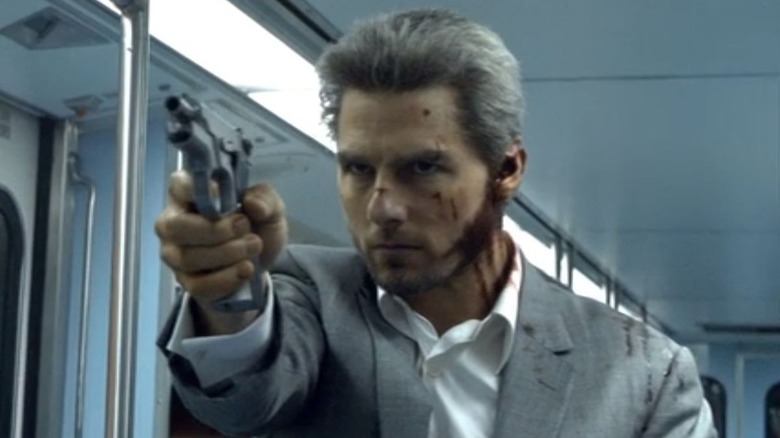
Tom Cruise has played many iconic screen heroes, but he is rarely cast as the villain. However, he managed to subvert his endearing persona in Michael Mann's riveting 2004 thriller "Collateral." His character Vincent is essentially the polar opposite of Ethan Hunt, creating chaos and fear wherever he goes. Cruise is completely terrifying in the role.

"Collateral" explores a violent series of events over the course of one night in Los Angeles. The cab driver Max Durocher (Jamie Foxx) picks up the mysterious Vincent (Cruise) on his second stop of the night. Vincent offers to pay Max an extra $600 if he drives him to a series of different stops, claiming that he is trying to complete a major real estate deal. Max suspects that he has more sinister motivations, and after their first stop discovers that Vincent is actually a hitman. Although Max tries to escape, Vincent forces him to keep driving. They hide a corpse in the back of Max's car, and the events that follow grow even more hectic. However, Mann keeps the film grounded so it never becomes far-fetched. 

Minority Report (2002)

Steven Spielberg's "Minority Report" defies any genre label, containing elements of science fiction, action, drama, mystery, thriller, and social satire. Tom Cruise gives a very complex performance as a compelling action hero struggling to cope with a personal tragedy. "Minority Report" takes place in 2054 when crime has almost vanished entirely thanks to a special police force called "Precrime" that is able to predict murders before they occur by utilizing three psychics called "Precogs." When Precrime commanding officer Chief John Anderton (Cruise) is surprisingly accused of committing a future murder, he refuses to believe his guilt. He eludes the Precrime forces and seeks to clear his name, with the ruthless Department of Justice agent Danny Witwir (Colin Farrell) attempting to track him down.

Anderton has been in mourning since the disappearance of his young son, John (Tyler Patrick Jones). He learns that he's been accused of killing Leo Crow (Mike Binder), who supposedly killed his son. Anderton frees the Precog psychic Agatha (Samantha Morton) to help him investigate how Crow, Burgess, and the other Precrime agents are involved in a government conspiracy. Cruise shows the heartbreak that Anderton had endured, and is determined to uncover the truth behind the tragedy.

Magnolia (1999)

"Magnolia" features one of the strongest ensembles that writer/director Paul Thomas Anderson has ever assembled, yet Tom Cruise somehow managed to give the best performance in the film. He received an Academy Award nomination for best supporting actor. Cruise rarely plays supporting characters, but every second he appears on screen in "Magnolia" is electrifying. In this epic romantic drama exploring a tapestry of love, kinship, and heartbreak in the San Fernando Valley, Cruise plays Frank T.J. Mackey, a motivational speaker who teaches men how to gain confidence. 

Frank personifies toxic masculinity. He is incredibly rude and sexist. Despite his reprehensible demeanor, Frank is hiding traumatic events from his youth, having never been able to connect with his father, Earl Partridge (Jason Robards). Earl abandoned Frank and his dying mother, and Frank has never forgiven him. Earl is on his deathbed and tells the nurse Phil Pharma (Philip Seymour Hoffman) that he wants to reconnect with his son, determined to apologize to Frank before he dies. Initially, Frank rejects his father's invitation, but Phil is able to convince him to visit Earl in the hospital. Their reunion is absolutely devastating, with Cruise completely vulnerable as he sobs and reflects on all of his painful memories.

Rain Man (1988)

Dustin Hoffman may have won the Academy Award for best actor for the 1988 drama "Rain Man," but Tom Cruise's performance was just as worthy. The film wouldn't be nearly as impactful without their great chemistry. "Rain Man" follows the workaholic salesman Charlie Babbitt (Cruise), who has a difficult relationship with his father, Sanford. After Sanford unexpectedly dies, Charlie is tasked with managing his estate, whereupon he learns that he has a brother named Raymond (Hoffman), who is living in a medical institution.

Raymond has autism and savant syndrome and rarely travels outside of the institution. While Raymond has an incredible memory, he becomes very agitated when his routines are disrupted. Both brothers are shocked to learn of each other's existence, and Charlie decides to temporarily break Raymond out of the medical facility and brings him to his hotel. Charlie learns that the only way he can access his father's fortune is to become Raymond's custodial guardian. Although Charlie wants to take his brother with him back to Los Angeles, Raymond refuses to fly. Charlie reluctantly agrees to drive all the way from Cincinnati to California, and the two begin to bond over the course of their trip. Charlie decides to take advantage of his brother's superb recall and takes him to Las Vegas where Raymond learns to count cards while playing blackjack at a casino. Initially, Charlie is only watching over Raymond to take advantage of him, but his intentions become more sincere by the end.

A Few Good Men (1992)

Hollywood does not make enough legal thrillers anymore. There were many in the 1990s, but Rob Reiner's "A Few Good Men" was among the best. Based on a Broadway stage show by Aaron Sorkin, the film explores the ambiguities of the American justice system. Tom Cruise's idealistic Lieutenant Daniel Kaffee is assigned a sensitive case where he must represent two Marines accused of murder. Marines Harold Dawson (Wolfgang Bodison) and Louden Downey (James Marshall) will be placed under court-martial if they are found guilty, having killed a fellow officer named Private William Santiago (Michael DeLorenzo) during a training procedure. 

However, they both claim that they were acting under the orders of Colonel Nathan R. Jessup (Jack Nicholson). The legal experts predict that the only way for Dawson and Downey to avoid a conviction is to plead guilty. However, Kaffee surprisingly enters a plea that they are innocent. Kaffee and his co-counsel, Lieutenant Commander JoAnne Galloway (Demi Moore), investigate the case. They discover that Jessup had ordered a "code red," which is an intense form of punishment given during training. Kaffee decides to expose Jessup for his brutal techniques but faces an uphill battle as the Colonel is incredibly influential within the military. The final trial sequence is absolutely electrifying, and Cruise does a great job of showing Kaffee's nobility.

Mission: Impossible - Fallout (2018)

Tom Cruise has played many iconic characters, but he is perhaps best known for his role as Ethan Hunt in the "Mission: Impossible" franchise. The "Mission: Impossible" saga is that rare blockbuster series that has improved over time. It seemed like there was no limit to the dangerous stunts that Cruise would perform, but 2018's "Mission: Impossible - Fallout" exceeded the high expectations. Writer/director Christopher McQuarrie, who had previously helmed "Rogue Nation," explored Ethan's commitment to his team as well as his tormented visions of the "Rogue Nation" antagonist Solomon Lane (Sean Harris).

Ethan is unable to prevent a group of terrorists called "The Apostles" from escaping with a plutonium device. The IMF discovers that the terrorist sect is under the command of an enigmatic extremist, known only as "John Lark." Ethan and the CIA agent August Walker (Henry Cavill) are assigned to infiltrate a nightclub party in order to investigate while Ethan is unaware that Walker is actually Lark.

Eyes Wide Shut (1999)

Tom Cruise has worked with many amazing filmmakers, but nothing could prepare him for his collaboration with the legendary auteur Stanley Kubrick. Two years before they were divorced, Cruise and Nicole Kidman starred in Kubrick's last film "Eyes Wide Shut." Kubrick was notoriously meticulous and this swan song is one of his most complex films, with film fans debating the film's shocking ending for over 20 years. "Eyes Wide Shut" is set during the Christmas season in New York City, where Dr. Bill Harford (Cruise) and his wife Alice (Kidman) go to a festive holiday party. Bill is reunited with his medical school classmate Nick Nightingale (Todd Field), who tells Bill that he recently attended a private ceremony where he was blindfolded during a secret ritual. 

This fascinates Bill, who has become convinced that Alice is being unfaithful to him. He decides to visit a mansion that Nick mentioned, infiltrating a secret society that performs ceremonial sexual acts. The society's members discover that Bill has broken into the ceremony without an invitation. He is banished from the mansion but becomes obsessed with what he saw, determined to return and learn the cult's secrets. "Eyes Wide Shut" studies obsession, toxic masculinity, and sexual infidelity, with Cruise capturing the delusions of a jealous man unable to resist his own impulses.

Read this next: The 14 Best Film Acting Debuts Of All Time

The post 15 Best Tom Cruise Movies Ranked appeared first on /Film.

05 May 19:11

Terraforming Mars is free at Epic Games Store

by Tonci

Epic Games is giving away FREE copies of Terraforming Mars, a digital boardgame in which you transform Mars into a habitable planet. Get this PC game before May 12th 2022 to keep it forever!

The post Terraforming Mars is free at Epic Games Store appeared first on Indie Game Bundles.

05 May 19:11

How Sam Raimi Took On The Censors And Changed Horror Forever

by Kayleigh Donaldson

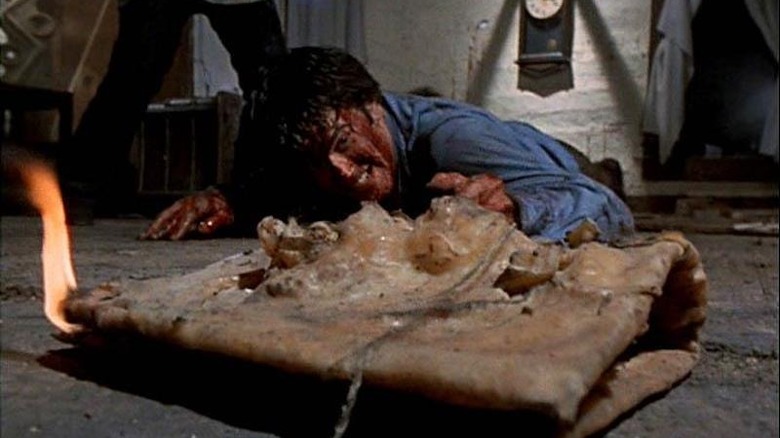
Sam Raimi has returned to the big screen this week with the newest movie in the Marvel Cinematic Universe, "Doctor Strange and the Multiverse of Madness." It's a major step back to the world of blockbusters for the director who helped to define the modern superhero movie with his "Spider-Man" trilogy. But for many film lovers, Raimi will forever be a maestro of horror, the man responsible for one of the all-time great gore trilogies of the 20th century: "The Evil Dead."

As a mere 21-year-old, Raimi gathered together some of his best friends to make his first feature film outside of college. With a tiny budget, an exceedingly difficult shoot, and some boundary-pushing prosthetics, they made what many consider to be greatest first zombie film of all time. Even critics loved "The Evil Dead." Stephen King called it "the most ferociously original horror film of the year" and the Los Angeles Times declared it to be an "instant classic" that was "probably the grisliest well-made movie ever." A simple story of five students who accidentally wreak havoc on their rural cabin with the Book of the Dead, demonically possessed trees, and murderous zombie-like creatures took the midnight movie circuit by storm. It also unleashed a barrage of controversy that highlighted one of the most vicious censorship campaigns of the era.

In the late 1970s and early 1980s, home video became increasingly commonplace in households across the U.K. The devices were still expensive but the popularity of watching films from the comfort of one's home predictably exploded. Major studios still fought over the growth of VHS and whether or not to release their major cinema releases in this format (piracy was still a major fear and it would take years for money-making titles like "E.T." and "Raiders of the Lost Ark" to get video premieres.) But this left a gap in the market for the kind of stuff that didn't get theatrical distribution. Its newness meant that it was also decisively less regulated a market than cinema releases, which had to go through the ratings boards to receive certification. So, if you were a lover of pornography, horror cinema, or just good old-fashioned B-movie schlock, the world of VHS was your oyster. Specialist video magazines and sellers took advantage of this to promote the likes of "The Driller Killer" and "Cannibal Holocaust." But as these films garnered further attention from the public, they became the focus of much fear, and a movement was soon born to get rid of them.

Video Nasties

Mary Whitehouse was a British campaigner against what she saw as the growth of moral indecency in modern entertainment. She led well-funded, very loud, and extremely hypocritical campaigns against everything she considered bad for the kids. This mostly meant that she got a lot of airtime for preaching homophobia and lying about films she hadn't actually seen. She infamously sued the makers of the play "The Romans in Britain" for gross indecency because she thought an on-stage depiction of male rape was real (she hadn't actually seen the play and, no, an actor wasn't literally raped eight shows a week. Whitehouse lost the case then declared that God would deal with her legal fees). It didn't take long for this new age of horror on video to capture her attention.

Whitehouse sparked off a public campaign and coined the term "video nasty" to describe the films that fell under the vast umbrella of her wrath. Soon, she had a lot of powerful people on her side, from the right-wing tabloid The Daily Mail to various Conservative politicians. Member of Parliament Graham Bright led the charge in the British House of Commons, saying, "I believe there is research taking place and it will show that these films not only affect young people but I believe they affect dogs as well."

Soon, video sellers and casual movie fans were being prosecuted for selling or releasing tapes that were considered obscene. Shops were raided, as were people's homes. The Director of Public Prosecutions released a list of 72 films that they believed to violate the 1959 Obscene Publications Act, which defined certain materials as examples of illegal obscenity. Eventually, a second list was released that contained an additional 82 titles which were not believed to lead to obscenity convictions but could nonetheless be confiscated under the Act's vague protocols. "The Evil Dead" was on the list.

A Symbol In The Battle For Horror Freedom

What makes the presence of Raimi's film on the video nasty list so fascinating is that it had originally passed the requirements for a cinema release, albeit with cuts made. Raimi proudly threw every violent and bad taste element he could think of into his movie, admitting that he didn't really care about the threat of censorship. Yet even he couldn't have predicted how quickly "The Evil Dead" would become a symbol in the battle for horror freedom. Whitehouse and her supporters soon claimed that kids who saw the film would try to recreate scenes in real life, most notably the moment where a possessed character stabs a pencil into someone's ankle. There's no recorded proof that any British child watched "The Evil Dead" then copied this attack. There was also no hard evidence that kids were watching these video nasties with the regularity and zeal that Whitehouse insisted was the dark reality of the matter. Indeed, there were interviews with gleeful-looking schoolchildren bragging about having seen all of these nasties, some of which didn't actually exist.

"The Evil Dead" was one of many films now considered classics that made the video nasties list. It was also one of several titles to be censored after initially being declared suitable for cinematic release (this classification duty fell under the auspices of a different group, hence the disconnect) — films like "Phantasm," David Cronenberg's "Rabid," and the fun and very silly Andy Warhol-produced "Flesh for Frankenstein." Soon, it seemed as though movies being seized by the police because their titles sounded weird or because it had the vaguest hint of adult content. In one infamous example, the decidedly un-violent Dolly Parton musical "The Best Little Whorehouse in Texas" was grabbed in a raid, with one confused police officer believing it had to be pornographic because of the title.

Soon, this overreach inspired public backlash, but it still took many years before some of these films could receive home releases. "The Evil Dead" didn't get re-released in an uncut form until 2001, 20 years after it initially premiered. By that point in time, Raimi was a major name in Hollywood and his status as a cult icon long since secured. "The Evil Dead" still holds up as a frenetic and merrily fun zombie horror that throws everything at the wall to see what sticks. The gore is still gross, the jokes still funny, and those infamous set-pieces (hello, tree rape) still able to shock.

Losing The Battle, Winning The Culture War

It's pretty rare in both America and the U.K. for movies to be outright banned. Some films have been denied certification by ratings boards, effectively making it impossible to receive a theatrical release, but such titles typically make a few cuts and move on, which is what happened in 2011 to "The Human Centipede 2 (Full Sequence)." In the internet age, getting a hold of such works is easier than ever. Eroticized sexual violence and pervasive anti-semitic imagery have seen some films be denied ratings in recent years. Nowadays, the question of censorship in cinema is less prominent but no less a continuing concern. The Motion Picture Association of America (MPAA) isn't as moralistic as it used to be but still rates consensual sex higher than blood fests. Bad faith hysteria still runs rampant, now packaged as part of a so-called "culture war," although the newer targets are films with diverse casting and vaguely progressive ideals rather than dismembered limbs.

One wonders how Raimi would respond to such an environment if he were given some real studio freedom and the budget to match. "The Evil Dead" seems tame to many horror nerds in 2022 but its legacy truly matters in so many ways. The video nasty panic reminds us that it doesn't take much to stir up an old-school censorship drive among those who think that art of all kinds shouldn't be viewed on its own terms.

Fortunately, while it took Raimi a few years of battle losses, he fully won the war. He's one of the most influential forces for an entire generation of horror. We wouldn't have Edgar Wright without Raimi, or Peter Jackson. The face of cinema as we know it wouldn't exist had Raimi not made chaos in the woods with his friends and the Book of the Dead. No censor can destroy that.

Read this next: Horror Roles That Changed Actors Forever

The post How Sam Raimi Took on the Censors and Changed Horror Forever appeared first on /Film.

05 May 19:09

Apple will no longer pay you as much for trading in its used products

by Mahmoud Itani

Apple has been trying to be more eco-friendly when it comes to the way it runs its operations. For example, it now resorts to smaller iPhone packages that exclude the charging brick. Another practice to battle climate change is its Trade In program. The company allows users to give up their eligible used devices to get a gift card or discount if they’re upgrading to a newer model. This way users pay less and the company recycles or refurbishes the unwanted product. Apple will reward you when trading in both (select) Android phones and some of its own products. However, it pays significantly more when you’re giving up an Apple device — rather than one manufactured by a different company. For unknown reasons, though, Apple has now dropped the values of its products when trading them in — excluding iPhones.

Device Old Max Value ($) New Max Value ($)
MacBook Pro 1,350 1,000
MacBook Air 490 400
MacBook 315 220
iMac Pro 2,135 1,500
iMac 1,200 850
Mac Pro 2,720 2,000
Mac Mini 600 450
iPad Pro 680 655
iPad Air 335 290
iPad 200 190
iPad Mini 205 200
Apple Watch Series 6 170 150
Apple Watch SE 135 120
Apple Watch Series 5 135 120
Apple Watch Series 4 105 85
Apple Watch Series 3 70 50
Apple Watch Series 2 20

As the table above reflects, some of these devices’ values have dropped significantly. When trading in certain Mac Pro models, for example, Apple will pay you $720 less than it used to. It’s also worth pointing out that the displayed values are the maximum the company is willing to pay you — depending on the device’s condition. So in reality you might be making much less when actually trading in. Though, making some money out of an unneeded device is still infinitely better than throwing it in a drawer. Alternatively, you could try selling it on second-hand markets — if you believe people are willing to pay more than Apple for it.

Do you usually trade in your old Apple device when upgrading to a new one? Why or why not? Let us know in the comments section below.


Source: Apple Trade In

Via: MacRumors

The post Apple will no longer pay you as much for trading in its used products appeared first on XDA.

05 May 19:09

Welcome home, Wesley

by wil@wilwheaton.net (Wil Wheaton)
Image shamelessly stolen from Trek Core

From the moment Star Trek Picard was announced, people asked me if Wesley Crusher would make an appearance. Until August of last year, I told the truth when I said that I would love to do that, but had no idea if it would actually happen. I’m pretty psyched that we were able to keep this secret as long as we did.

I want to take a minute and share why Wesley’s return to Star Trek is so deeply meaningful for me, why this is so much more than merely playing a fun cameo for two pages. I want to tell you what Wesley Crusher means to me, as an almost 50 year-old husband, father, and survivor.

I love Wesley Crusher. I cherish Wesley Crusher. I am fiercely proud of Wesley Crusher. It is an honor and a privilege to be the actor who played him. But that wasn’t always true. For far too long, I allowed my opinion of Wesley, and my opinion of myself, to be defined by others. And it hurt so much, I almost walked away from Star Trek entirely, just to get away from it.

Wesley’s fictional journey and my real life journey are remarkably similar. We were both incredibly smart kids who struggled to fit in with our peer group. Neither one of us had a relationship with our father (Wesley, because his father died when he was a baby, me because my father chose to be my bully instead of my dad). Both of us spent our entire lives on paths we did not choose, struggling every single minute of every single day to make the people who put us on that path proud of us. We both felt uncomfortable in our own skin, and ended up spending as much time in our intellect as we could, because that was a place that felt safe.

Our stories and paths diverge widely in our teens: he’s awkward and angsty, but genuinely loved and supported by the adults in his life, who encourage him to explore his interests. I’m awkward and angsty, but I’m invisible to my dad on a good day, and my mother does not see me. Instead, she only sees the kid from Teen Beat, and all the trappings that come with proximity to him that she can scrape up for herself. In my headcanon, Wesley felt alone because he didn’t get to regularly interact with kids his own age, and if his life mirrored my own at that time, a lot of kids he would have wanted to be friends with judged him before they knew him, because he was kind of famous. Let me tell you, when every room you walk into is filled with people who have already made up their mind about you before you even introduce yourself, you just stop walking into rooms. Or, at least, I did. 

When Wesley saw his opportunity to forge his own path with the Travelers, his entire family supported him, they celebrated the end of one journey and the beginning of another. I did not get that support. When I was about 20 and left the series, followed quickly by leaving the entire entertainment industry, neither of my parents were there for me, at all. By this time in my life, my father had stopped trying to hide his contempt and disinterest for me, and my mother had essentially abandoned me to focus her energy on a friend of my sister’s, who was climbing the teen fame success ladder. My mom was always there when I was chasing her dream of acting fame, but when I needed a mom to help me figure out what I wanted to do with my life, she just did not show up at all. I was left entirely alone to try and figure out how to be an adult. It was terrifying. Luckily for me, when I was 23 I met the woman who would become my wife, and my journey toward discovering and realizing my dream began. 

But let us go back to the moment when we each realized we were not on our paths, but someone else’s. Wesley and I both walked away from everything we knew, every expectation that was ever put on us, every person we ever cared about, because we both knew that something was not right in our lives, and if we were going to fix it, we had to figure out what it was. And to figure out what it was, we had to get off the paths we had been on since we were too young to know what a path even was. 

Wesley was expected to be a Starfleet captain, or maybe a chief engineer. I was expected to be a famous film actor, or at least famous. We both accepted these expectations right until we didn’t. He got there before I did, but there was a moment when we both knew that we were pursuing dreams that were not ours, that they were more important to other people than they were to us. We needed time and space to find out who we were, and what our dream was.

When we had that time and space (or all of time and space, for Wesley), we could discover what was important to us, what we wanted to do with our lives and the time we had in this universe, who we were when we weren’t defining ourselves according to someone else’s expectations. During that time, I met more people than I can count who have told me how much Wesley means to them. They told me he inspired them, that they saw themselves in him at a time when they felt unseen by the people in their lives. They told me he helped them figure out what kind of person they wanted to choose for a partner in love and life.

For two decades I listened, while people told me the ways he was there for them. I never would have expected that he would also be there for me.

And yet.

Ron Moore wrote Wesley’s final episode, Journey’s End. Ron knew Wesley needed to do something different with his life. He knew that Starfleet wasn’t right for Wesley. He knew that Wesley couldn’t keep defining himself through someone else’s expectations. I don’t know if he knew that I also needed that (I didn’t even know it at the time), but like so many other people who watched Wesley’s story, I was inspired by Wesley’s courage and conviction. And I followed him out into the Great Unknown.

I was surprised to discover that as I got to know myself all over again for the first time, I also got to know Wesley. If Wesley could matter so much, to so many people, why couldn’t he matter that much to me, the actor who played him? It took a long time and a lot of work to find the answer to that question. I wrote a whole book about it, in fact. But what’s important is that much in the same way I had allowed myself to be defined by how I was measuring up to someone else’s expectations, I had allowed my relationship with Wesley Crusher to be defined the same way. And the end result of that was a lot of self-inflicted pain and sadness for me. I don’t think it’s a coincidence that around the same time I finally felt seen in the world, I was able to see Wesley the way so many others did. It was a lot of hard work, but it was worth it. I was, and am, worth it. Getting to know Wesley Crusher, to see him the way he was seen by the people who loved him, to love him the way he always deserved to be loved … you can see the parallels, right? Believe me, it was all worth it.

Wesley and Kore may blink out of existence and never come back on camera again. Or they might go literally anywhere through all of space and time, from Strange New Worlds to Discovery to Lower Decks (but not to season three of Picard. Sorry, nerds.). I honestly don’t know what comes next for them in canon, but I’d be lying if I said I haven’t spent some time thinking about it.

I may get to tell more of Wesley’s story at some point – his journey over the last 25 or so years is something I’ve spent a lot of time thinking about – as a writer or as an actor. Maybe both. But even if that never happens, if I never get to be Wesley Crusher on camera again, I will have the privilege of hosting The Ready Room, where I get to be a Starfleet veteran, a member of the exclusive “Legacy Star Trek” club, and an unashamed superfan who gets to take other nerds into the Room Where It Happens. I get to celebrate everything we all love about Star Trek in all its incarnations, for my job. 

I love the life I’ve built for myself. I love and am intensely grateful for the place in Star Trek that belongs to me, as the actor who played Acting Ensign Wesley Crusher, who now plays The Traveler Formerly Known as Wesley Crusher, who is the host of The Ready Room.

I and Wesley will always be part of The Next Generation for the rest of our lives, and that would absolutely have been enough. The fact that we both get to be part of not just The Next Generation, but also part of the larger Star Trek universe, is a privilege and a gift that I will never take for granted.

We talk about how Star Trek is so inspiring when it shows us what’s possible, what we can achieve for ourselves when we work hard and work together with compassion and empathy for each other. For me it goes deeper than that, because finding love and compassion for Wesley Crusher allowed me to find love and compassion for myself.

Welcome home, Wesley. I missed you so much. Thank you for being there for me when I needed you.

05 May 19:09

A Vast Underground Water System Helps Drive Antarctica’s Glaciers

by Gregory Barber
Scientists have finally found Antarctica’s missing groundwater, which will help them predict ice flows on the continent.
05 May 19:09

Captain Pike's Complicated Future Explained

by Jeremy Mathai

Even with his origins tied inextricably with that of "Star Trek" itself, it'd be fair to say that Christopher Pike has always existed on the periphery of various movies and shows in the franchise, doomed to never truly receive extended time in the spotlight all to himself ... until now, that is. As the somewhat surprising recipient of his own spin-off series, the character of Captain Pike has navigated an historically rocky and even quite dark road on the way to serving as the lead of "Star Trek: Strange New Worlds." More obvious fan-favorite characters like James T. Kirk and the rest of the original crew first burst onto the scene with the official "Star Trek: The Original Series" pilot in 1966. Pike's beginnings as Kirk's predecessor on the USS Enterprise, on the other hand, were far more complicated -- though no less intriguing.

Those coming to "Strange New Worlds" with little to no knowledge of previous "Trek" would only seemingly need to know that this updated version of the character, portrayed by actor Anson Mount, first appeared alongside Ethan Peck's Spock and Rebecca Romijn's Una (also known as Number One) in season 2 of "Star Trek: Discovery." Almost immediately, the easy chemistry between the "new" trio of returning characters led to fans calling for them to lead their own standalone series altogether. This absolute no-brainer of a move has finally come to fruition with the debut of the new spin-off series. But as early as the premiere of "Strange New Worlds," the creative team behind the show has loudly announced their intentions to delve into and further refine Pike's potent, dramatically rich backstory moving forward.

From his initial appearance in a rejected pilot to his tragic fate depicted in a later "The Original Series" episode to some nifty retconning in "Discovery" that appears likely to define his arc on "Strange New Worlds," consider this your go-to explainer for everything you could possibly need to know to untangle the history -- and future! -- of Captain Christopher Pike.

The Original Series Introduces Captain Pike

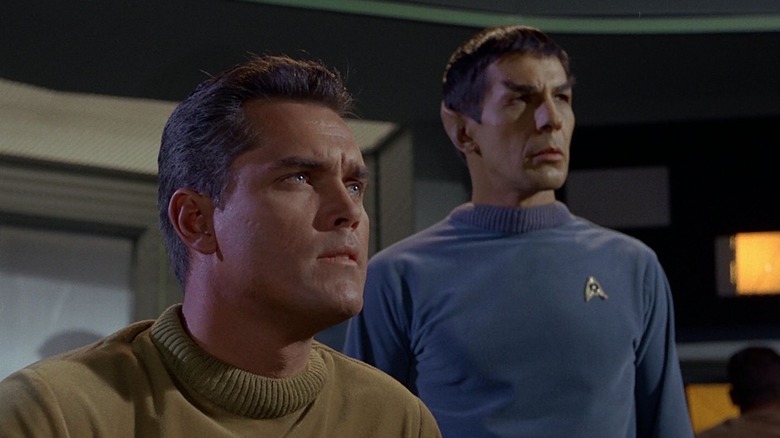
Once upon a time, "Star Trek" could've kicked off with the stirring adventures of the pointy-eared Spock (Leonard Nimoy) and his trusted superior officer -- not William Shatner's Captain Kirk, but Jeffrey Hunter's Captain Pike. And far from the emotionally-repressed Vulcan first officer that we'd grow to know and love, this version of Spock was conceived to be far more extroverted and humanlike -- a conscious choice on Nimoy's part, mostly to make up for Hunter's quiet and reserved Pike. Those are just a few of the many notable differences between the actual series and the original pilot episode for "Star Trek," filmed in 1965 and titled "The Cage."

The basic plot of "The Cage" follows Pike, Spock, and Number One (portrayed by Majel Barrett) as they respond to a radio distress call from the planet of Talos IV. Here, Pike meets the beguiling Vina (Susan Oliver), a survivor of a wrecked science expedition missing for almost two decades (and a character who would recur once more on "Star Trek: Discovery"). This turns out to be a trap set by the native Talosians, a creepy-looking species of telepaths with the ability to create powerful illusions and who seek to repopulate their dying planet through Pike and Vina. When they manage to escape, however, Vina elects to stay behind -- her crash having left her horribly disfigured and reliant on the Talosian illusions to maintain her sense of self.

The pilot wasn't picked up, but it did lead to another pilot, this one starring a new captain: William Shatner's James T. Kirk. This one, as you know, did lead to a series. 

A two-part episode in the first season of the actual "Star Trek" series, "The Menagerie," cleverly recycles much of the first pilot's scrapped footage and rescues "The Cage" from becoming a footnote in the annals of "Trek" history. Taking place over a decade after the events of "The Cage," Spock serves Captain Kirk on the Enterprise and Pike now uses a wheelchair after a horrific accident. This proves to be the impetus for Spock's uncharacteristically reckless actions, commandeering the Enterprise to return to Talos IV. A court martial tribunal gives viewers an excuse to watch clips lifted directly from "The Cage," though this time their return to the Talosian planet offers a sense of closure for both Pike and Vina. The two ravaged individuals are allowed to live out their days together in illusionary bliss, appearing to one another as they once did in a bittersweet ending for both.

Christopher Pike Confronts His Fate In Star Trek: Discovery

For decades, that was the last we ever saw of Captain Pike. After a brief alternate universe detour in the J.J. Abrams movies (in which Pike was portrayed by Bruce Greenwood and ended up with a vastly different fate), actor Anson Mount stepped into the role for "Star Trek: Discovery," which is set before "The Original Series," but after the events of "The Cage."

Throughout its early ups and downs, "Discovery" managed to slot in to a specific era of "Trek" and add some unexpected bits of context to original characters. Sonequa Martin-Green's Michael Burnham is revealed to be the adopted sister of Spock himself, which eventually leads to the appearance of Spock (along with Pike and Number One) in the second season. The overarching storyline of the season, involving time travel and end-of-the-universe stakes, backs Pike into a quintessential "Trek" moral quandary in the episode titled "Through the Valley of Shadows."

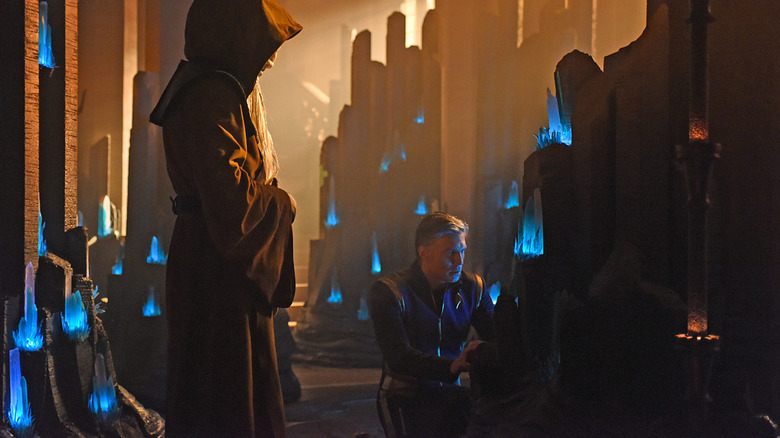
A trip to a Klingon monastery on the planet Boreth provides Pike with the unpredictable time crystals that Burnham and the crew of Discovery so badly need ... but it comes at a terrible cost for Pike himself. Guided by a sober Klingon monk who explains (if somewhat vaguely) that contact with the crystals will confront Pike with future events that he may not want to know about, Pike nonetheless forges ahead and experiences visions of the horrific accident still to come that will relegate him unable to speak and confined to a claustrophobic pod that keeps him alive. In the face of this, he must decide whether to complete his mission and accept his seemingly predestined fate, or walk away from his duty and still maintain the hope of a different outcome. Pike, selfless and honorable as always, makes the impossibly tough choice that saddles him with the crushing knowledge of what lies in store for him years down the line.

As a supporting character with only tangential connections to the main storyline, Pike's presence in "Discovery" understandably means that it doesn't have the time or space to properly explore how such an existential revelation would truly affect him. Luckily, the fan-driven campaign to greenlight what would eventually become "Strange New Worlds" offered the perfect opportunity for the writing team to sink their teeth into this thought-provoking conflict.

Captain Pike's Burden In Strange New Worlds

In a refreshing departure from debut seasons of several "Star Trek" shows in years past, the premiere of "Strange New Worlds" doesn't waste any time beating around the bush. We're reintroduced to Anson Mount's Christopher Pike in the immediate aftermath of the events of "Discovery," which sees his beloved Enterprise relegated to space dock orbiting Earth and the Captain himself cut off from the world, holed up in his cabin in Montana. Sporting a scraggly beard (well, as much as the rugged Anson Mount could possibly be described as "scraggly," that is) and a profound sense of ennui over the inescapable destiny that he's now aware of all too vividly, only the unknown fate of his former Number One in a moment of crisis can snap him out of his woes and press him back into action.

Anchored by Mount's moving performance of a listless man bottling up his overwhelming burden until it poisons him from the inside out, "Strange New Worlds" sees Pike reliving his own "death" (in a manner of speaking, if not necessarily in a literal sense) over and over again, whether in twisted reflections or with burning fire pointedly framed in the foreground of multiple scenes. The dangling threads of fate are always hanging just over his head, it seems, even to the point of distracting him from everyday operations. Gazing at the Enterprise in space dock, Pike interprets his shuttle pilot's awed remark of, "All scrubbed up and as good as new" as a wistful statement on his own state of mind. Later, when enacting a ship-wide message to the crew explaining their mission, his unusually forceful statement that "Nobody dies; this mission will not be anybody's last day" motivates Spock to speak to him alone and discern his turbulent emotions surrounding Pike's own mortality. Even the tragic backstory surrounding crew member and temporary Number One replacement, La'an Noonien-Singh (Christina Chong), plays a crucial role in helping Pike make peace with his own situation, still several years ahead of him.

Throughout the premiere, the knowledge of impending death poses a unique chance -- as much as to the warring species of aliens the Enterprise encounters as to Pike -- to either wallow in fatalism or determine their own future. Captain Pike makes the right choice, but still has a long journey ahead in "Strange New Worlds."

Read this next: The 18 Best Crime Dramas In TV History

The post Captain Pike's Complicated Future Explained appeared first on /Film.

05 May 19:08

Bizarre lawsuit: mechanic kills boss with car, car owner gets sued

by Mark Frauenfelder

The last thing you'd expect when you bring your car to a shop to get an oil change is to be served with a lawsuit. But that's what happened to a car owner who dropped his car off at the Rochester Hills Chrysler Jeep Dodge dealership in Michigan. — Read the rest

05 May 19:08

15 Underrated Thrillers You Really Need To See

by Liam Gaughan

What makes a thriller movie? Does it shock the viewer, or leave them feeling uneasy? Do they center mostly on crime stories, or could it be any film that gets an audience excited and their blood pumping? Is a psychological thriller the same thing as an "elevated horror" movie? Or, can a thriller be something that makes us laugh and shake our heads at the same time? The answer to all of those questions is, arguably, yes. The parameters of the genre are vague, and there's seemingly not a strict or singular guideline that filmmakers are required to follow to explore thrillers. 

One of the great things about the theatrical experience is watching an exciting story with a crowd. If you're lucky enough to have an audience that is engaged in the film, it can make the journey even more memorable. There's nothing quite like watching an entire audience hold their breath at the same time. Over the years, there have been plenty of great thrillers that have slipped under the radar. Even if you missed out on seeing them on the big screen, here are 15 underrated thrillers that you should check out. 

Stoker
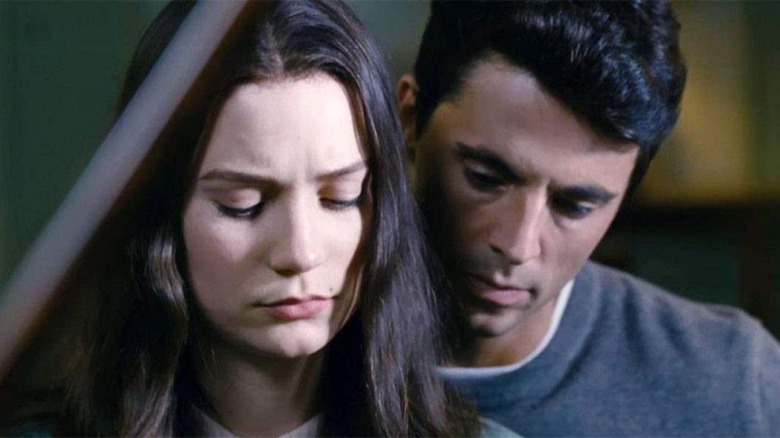
The legendary South Korean filmmaker Park Chan-wook is renowned for his acclaimed thrillers "Oldboy," "The Handmaiden," "Lady Vengeance," and "Thirst." Park's English-language debut "Stoker" is an unusual mix of prestige and sleaze. While Park creates gorgeous aesthetics, he focuses on the shocking behavior of utterly unlikable characters. By bringing his meticulous style to a pulp thriller, Park made something that was completely unique for American audiences.

On her 18th birthday, India Stoker (Mia Wasikowska) loses her father, Richard (Dermot Mulroney), in a car accident. She is sent to live with her domineering mother, Evelyn (Nicole Kidman). India and Richard had been very close, but Evelyn is completely oblivious of the feelings of her daughter, who is also an outsider in the wealthy community. During the funeral, India is introduced to her father's younger brother, Charlie (Matthew Goode). Charlie claims to have traveled the world, but for some reason, he's particularly obsessed with India. India is suspicious of her uncle, but Charlie sticks around and moves into Evelyn's house. India tries to determine Charlie's real motivations as he seduces her mother.

The performances from the entire cast are excellent. Wasikowska doesn't try to make India inherently likable, even though her character is in a difficult situation. Goode does a great job at making Charlie both charismatic and creepy. Kidman perfectly embodies an affluent, wealthy character, but she does not turn Evelyn into a caricature of the upper class.

Saboteur
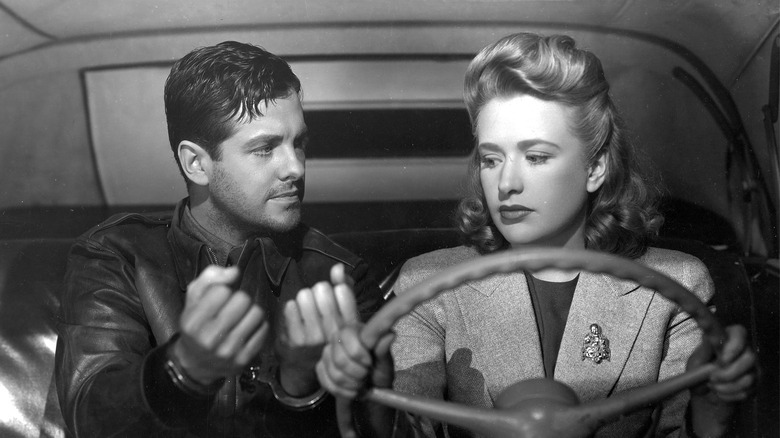
Alfred Hitchcock, also known as the Master of Suspense, directed over 50 films including the 1942 spy thriller "Saboteur," one of his most underrated. Aircraft repairman Barry Kane (Robert Cummings) is accused of sabotaging a military plane that was set on fire. Barry works in the production factory Stewart Aircraft Works in Glendale, California, and helps to build planes for the war effort. When Barry is questioned about his knowledge of the crime, he tells the police that the plane was sabotaged by a man named Fry. The cops don't believe him, but Barry is determined to find the real culprit, so he sneaks away on an early morning train.

Barry is automatically a sympathetic character because he is accused of a crime he didn't commit. Although the stakes are very high, "Saboteur" is very fun because of the ensemble cast. Barry meets an eccentric group of allies as he travels across the country and searches for clues. "Saboteur" is very exciting, and has many amazing action sequences, such as the chase scene on top of the Statue of Liberty in one of Hitchcock's greatest set pieces.

Blackhat
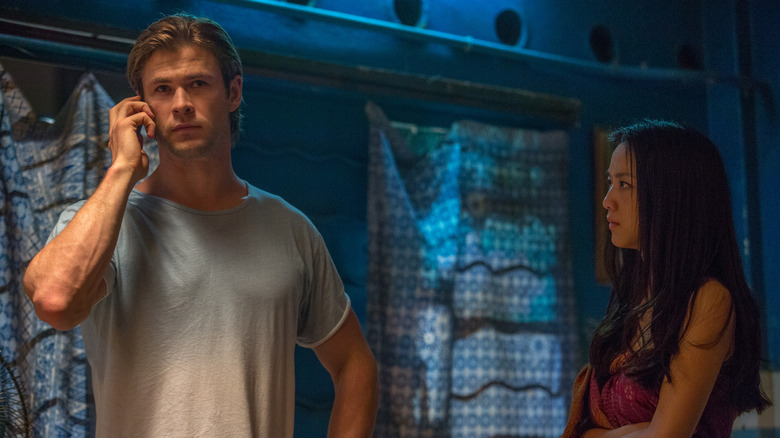
Michael Mann is a fascinating filmmaker who has a unique way of blending action and suspense to create intensity. Mann has many classics under his belt, but his 2015 cyber-thriller "Blackhat" doesn't get the credit it deserves. Although "Blackhat" received scathing reviews upon its debut, it has stood the test of time as a terrifying examination of a potential global financial meltdown.

The film follows the aftermath of a devastating nuclear plant meltdown in Chai Wan, Hong Kong. Shortly thereafter, the Chicago Trade Exchange is hit by a cyber attack. The Hong Kong People's Liberation Army and the FBI determine that the same hacker is responsible for both crimes. This mysterious terrorist is nearly impossible to track down, so P.L.A. Captain Chen Dawai (Leehom Wang) suggests a risky plan.

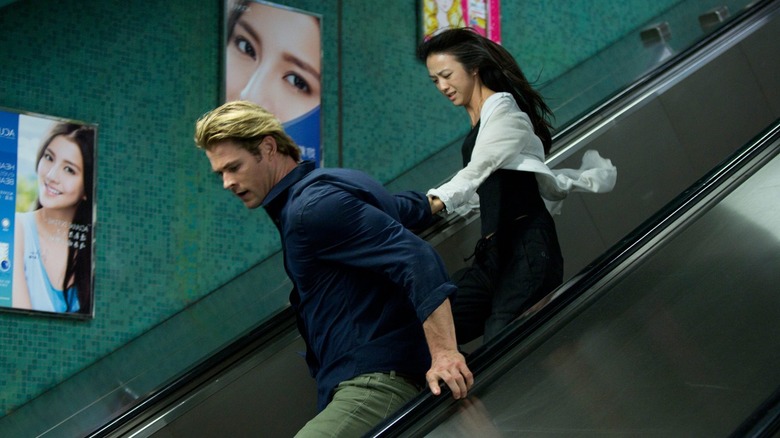
Dawai recruits his old college roommate, Nicholas Hathaway (Chris Hemsworth), to find the hacker. Hathaway is a convicted hacker himself, serving time in prison for a series of bank robberies. He reluctantly agrees to the plan, but only if his sentence is commuted. However, Hathaway isn't prepared for just how dangerous this ghostly threat really is. Several other world markets are attacked as Hathaway and Dawai's sister, Chen Lien, (Tang Wei) travel the globe. Although "Blackhat" is very fast-paced, Mann doesn't just focus on action sequences — he explores how unstable the global economy is.

Cop Land
Sylvester Stallone is one of the greatest action movie stars of all time, starring in fun, enjoyably ludicrous blockbusters since the 1970s. While he's certainly been successful, Stallone's acting abilities aren't always praised. He's not just a charismatic stunt performer — Stallone can deliver amazing dramatic performances.

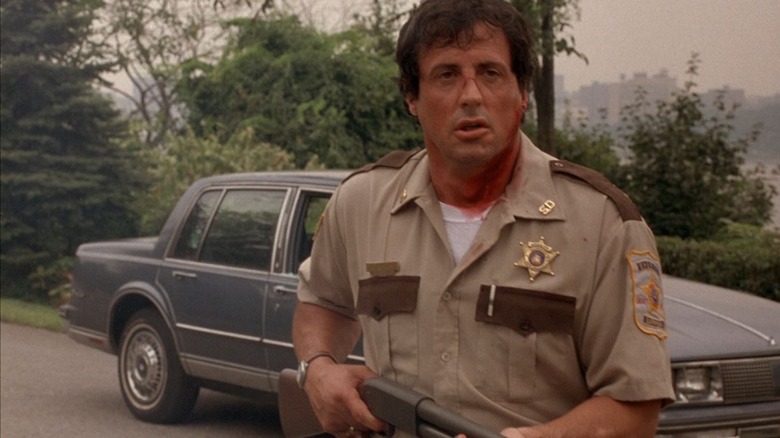
In 1997, Stallone gave one of his best performances ever in the underrated crime thriller "Cop Land." Compared to the action films that Stallone is best known for, "Cop Land" is a much more character-driven story. The film focuses on the systematic corruption of the law enforcement infrastructure in a small New Jersey community.

"Cop Land" follows the local Sheriff Freddy Heflin (Stallone), who has dreamed of joining the New York Police Department for his entire life. Although he cares deeply for the community, Freddy is mocked by the veteran cops for his kindly nature. NYPD Lieutenant Ray Donlan (Harvey Keitel) is Freddy's idol, but he's not worthy of any admiration as he leads a group of corrupt cops. When NYPD Infernal Affairs investigator Moe Tilden (Robert De Niro) asks for help taking down Donlan's gang, Freddy must decide where his loyalties lie.

Trance
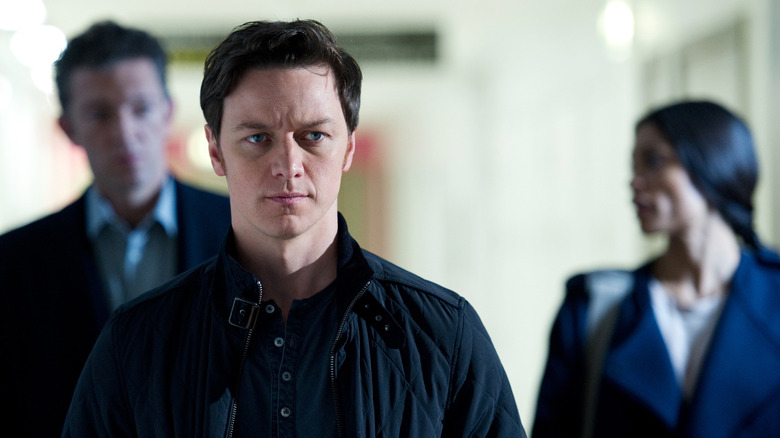
The actual heist isn't always the most interesting part of a caper film. Even if there's an exciting robbery sequence, the events both before and after can be just as engaging. Danny Boyle's 2013 crime thriller "Trance" opens with a thrilling moment, when Francisco Goya's 1798 painting "Witches in the Air" is stolen during an auction. Career criminal Franck (Vincent Cassel) and his men brutalize an auctioneer, Simon Newton (James McAvoy), when he tries to fight back.

After the robbery, it is revealed that Simon was actually an inside informer for Franck's gang. Although he was told to hide the painting in his apartment, Simon can't remember anything about the night of the burglary. Franck is infuriated. He decides to send Simon to a hypnotherapist, Dr. Elizabeth Lamb (Rosario Dawson), to regain his memories.

After a few sessions together, Elizabeth begins to suspect that Simon is in danger. He is forced to wear a listening device during therapy so Franck can listen in. After Elizabeth does some research into Simon's criminal history, she realizes he's being set up by Franck. During their time together, Simon and Elizabeth start to fall in love. Meanwhile, Franck becomes suspicious of their relationship, and he tells Simon that he's willing to kill Elizabeth if they can't find the painting in time. Boyle does a great job of slowly unraveling the story as the mystery unfolds.

Official Secrets
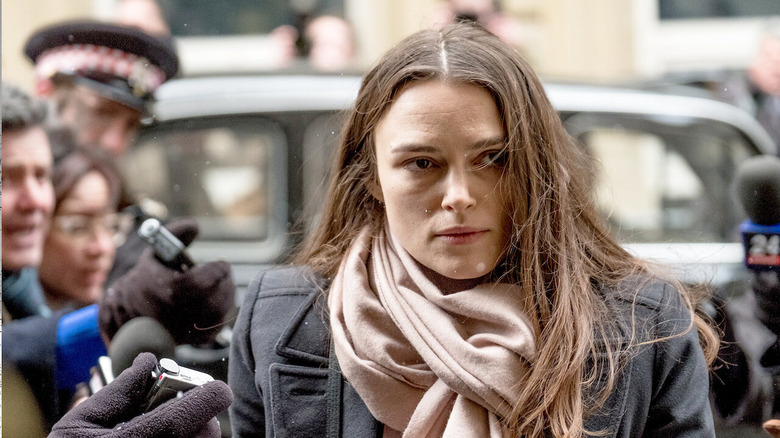
The shocking government conspiracies in the 2019 political thriller "Official Secrets" seem completely implausible. The film focuses on how American and British spies used their influence to promote warfare. If it was fictitious, this unthinkable concept would have strained the film's plausibility. However, "Official Secrets" is based on a true story, inspired by the nonfiction novel "The Spy Who Tried to Stop a War" by Marcia and Thomas Mitchell, which detailed the events leading up to the 2003 invasion of Iraq.

The film focuses on the heroism of GCHQ analyst Katharine Gun (Keira Knightley), who comes across a report that explains how international espionage agents were assigned to covertly operate in Cameroon, Chile, Bulgaria, and Guinea. Their mission was to find information that would incriminate Iraq before the United Nations Security Council meeting. Katharine decides to inform the British public.

"Official Secrets" does a great job of humanizing a brave activist. As Katharine survives a chaotic press cycle and is accused of being a traitor, Knightley wonderfully explores her character's unflinching dedication to the truth.

Nighthawks
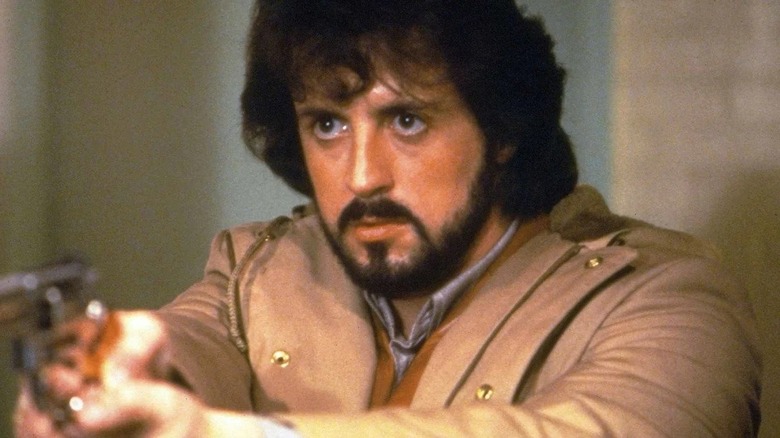
Many buddy cop movies are very comedic. While classics like "Lethal Weapon" and "48 Hrs." contain plenty of action, there's an element of humor that adds levity to the story. Compared to these crowd-pleasers, the 1981 buddy cop film "Nighthawks" is significantly darker. The neo-noir story focuses on two New York City Police Department detectives who search for an elusive terrorist.

Deke DaSilva (Sylvester Stallone) and Matthew Fox (Billy Dee Williams) are attacked by three armed criminals at a subway station. Deke is incapacitated by one of the attackers and is embarrassed by his failure. He decides to prove his merit by investigating a drug network. As Deke and Matthew search for corrupt police officers linked to a Bronx smuggling ring, the British terrorist Wulfgar Reinhardt (Rutger Hauer) travels to New York from London.

Stallone does a great job portraying the complex character of Deke, who feels completely alone between his failed marriage and the corruption in the police department.

Street Smart
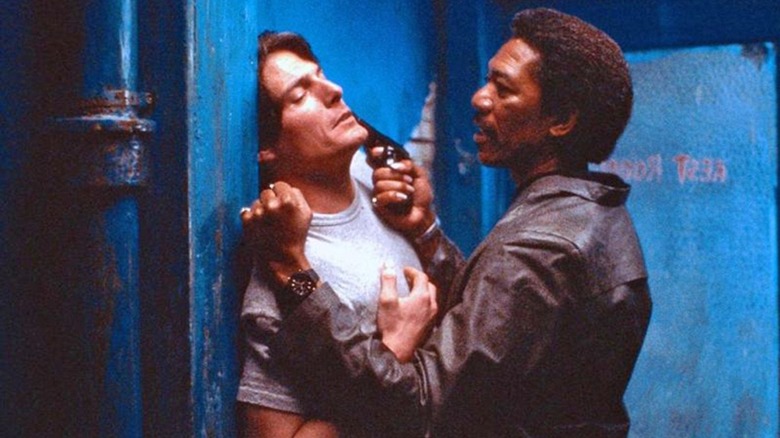
Morgan Freeman is one of the most inherently likable actors of all time. His breakout performance in the 1987 crime thriller "Street Smart" earned him his first Oscar nomination. Before "Driving Miss Daisy" and "The Shawshank Redemption" turned him into one of Hollywood's friendliest faces, Freeman showed just how menacing he could be.

"Street Smart" follows the magazine writer Jonathan Fisher (Christopher Reeve), who struggles to find a story that interests his editor, Ted Avery (Andre Gregory). Jonathan is struggling financially and needs his next story to be a success, so he decides to write a false article about a local pimp. Although the story is completely fictitious, Jonathan's character is very similar to an actual pimp, Leo Smalls (Morgan Freeman). Leo is currently on trial for murder, and he becomes convinced that Jonathan is trying to plant evidence to sway the jury against him.

Freeman is completely terrifying in this role. Leo is feared by the New York criminal underworld, and earns the moniker "Fast Black." Jonathan was also a much different role for Christopher Reeve. After playing Superman in three films, Reeve struggled to be seen as anything but heroic. Jonathan isn't inherently sympathetic, though; his dishonesty as a journalist ends up putting innocent people in danger.

The Holcroft Covenant
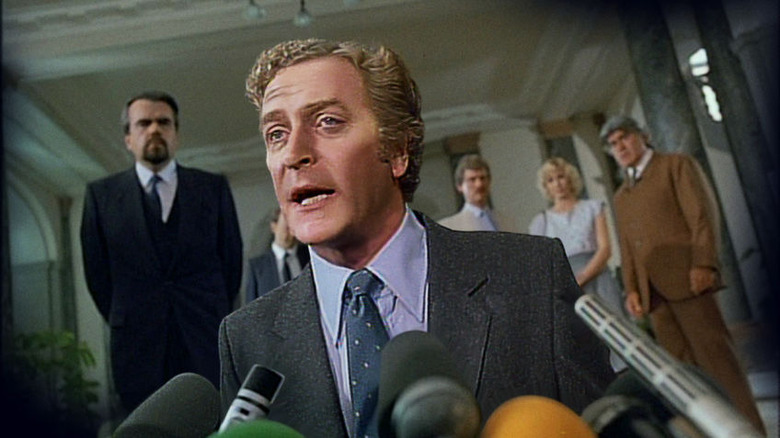
Although he's not exactly a household name, John Frankenheimer has directed many classics. Frankenheimer helmed iconic thrillers such as  "Birdman of Alcatraz," "The Manchurian Candidate," "The Train," and "Grand Prix." The 1985 mystery thriller "The Holcroft Covenant" is one of Frankenheimer's most underrated films. Based on the classic novel of the same name by Robert Ludlum, the movie tells an international story of adventure, suspense, and conspiracy.

"The Holcroft Covenant" centers on the search for a secret Nazi fortune, which has been stashed in secret since the end of World War II. Noel Holcroft (Michael Caine) knows that his late father was one of Adolf Hitler's closest advisors. Although they never had a close relationship, Holcroft learns that his father left him a fortune, to apologize for his crimes. However, a syndicate of Nazi loyalists wants the treasure to fuel a new war effort. Holcroft must follow his father's clues across Europe, and find the treasure before the Nazis do.

The film does not attempt to absolve fascism in any way, and Holcroft himself isn't necessarily a likable character. He is in over his head when he's tasked with stopping a renewed radical movement, and Caine portrays the character well. 

Frantic
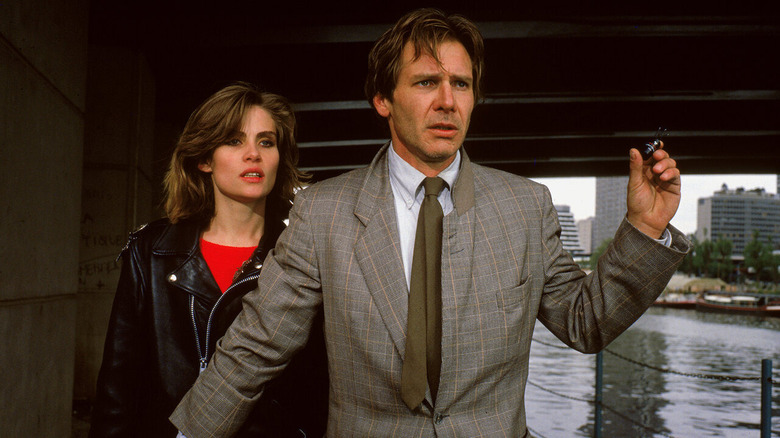
Although Harrison Ford was one of the most popular movie stars in the world in the 1980s, the thriller "Frantic" sadly underperformed. The film's disappointing box office performance does not reflect its quality, though. Ford gives one of his best performances ever as a surgeon who wakes up to find his wife is missing.

Ford's character, Dr. Richard Walker, travels to Paris, France to attend a professional medical conference. His wife, Sondra (Betty Buckley), disappears after they get to their hotel room. After searching the area, Richard doesn't receive any help from the U.S. embassy. They tell him there is little hope that Sondra will be discovered, as they have many ongoing cases. Richard later learns that Sondra was mistaken for Michelle (Emmanuelle Seigner), a local smuggler. Michelle had been carrying a briefcase containing a nuclear detonator.

Richard reluctantly agrees to help Michelle find the briefcase, so he can bargain for Sondra's life. Ford does a great job at showing the stressful situation that his character is in. He doesn't want to be involved with someone like Michelle, but he knows that she's his only clue to finding Sondra alive.

Talk Radio
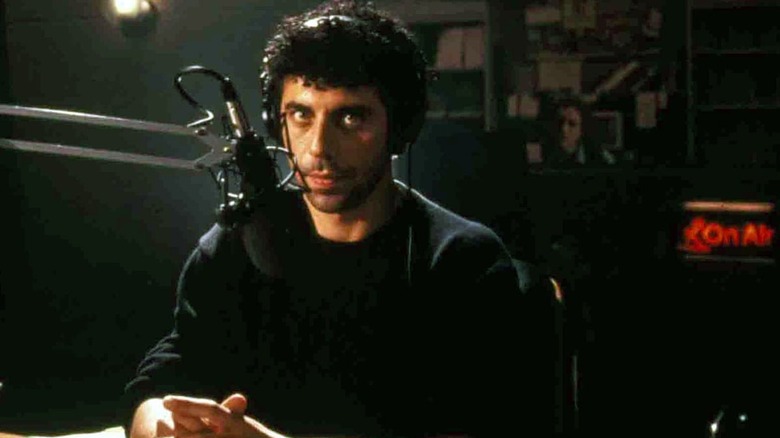
The maverick filmmaker Oliver Stone has never kept quiet about his political beliefs. Stone's films frequently focus on controversial subjects, including his 1988 thriller "Talk Radio," which was based on a Pulitzer Prize-winning play by Eric Bogosian and Ted Savinar. It was loosely inspired by the life of Alan Berg, an inflammatory Denver radio personality. Berg was murdered by the white supremacist group the Order in 1984.

The film stars Bogosian as Barry Champlain, a similarly radical radio personality. Barry hosts a late-night radio program in Dallas, Texas, and his condescending, rude humor generates backlash from his listeners. Despite the controversy that surrounds it, Barry's show is in its final audition to be nationally syndicated. However, Barry receives a disturbing fan mail letter from an outspoken listener, threatening to kill him. Barry tries to determine the writer's identity, but he doesn't stop giving his angry tirades on air.

Dead Again
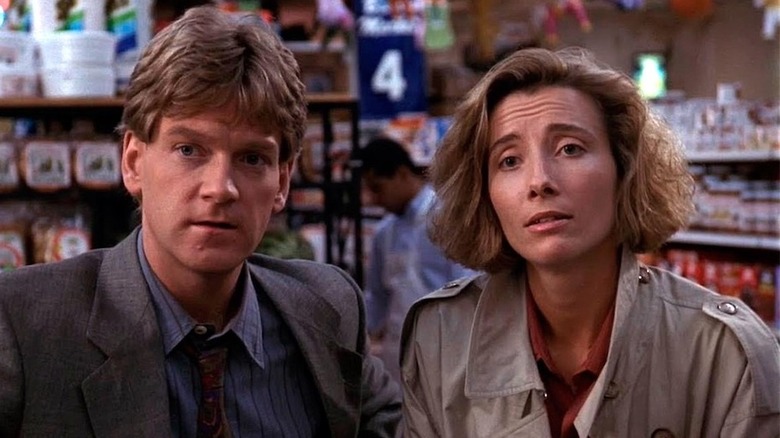
Kenneth Branagh has a fascinating career as a director. Branagh is often associated with his Shakespearean adaptations, including "Much Ado About Nothing," "Henry V," and "Hamlet." He's also no stranger to blockbusters, having helmed major franchise projects such as "Thor," "Jack Ryan: Shadow Recruit," and "Cinderella." Compared to the rest of his filmography, the 1991 thriller "Dead Again" was a novelty. A mid-budget mystery is exactly the type of film that Hollywood should be making more often.

"Dead Again" follows private investigator Mike Church (Branagh), who meets a nameless woman (Emma Thompson) connected to his childhood orphanage. Church nicknames her "Grace." Grace has amnesia, and the hypnotist Franklyn Madson (Derek Jacobi) offers his help in restoring her memories. During their therapy sessions, Grace has visions of a murder from 43 years earlier.

Branagh and Thompson also play the historical characters, Roman and Margaret Strauss, in flashbacks. "Dead Again" does a nice job at linking these two timelines, and intertwining the mystery.

Breakdown
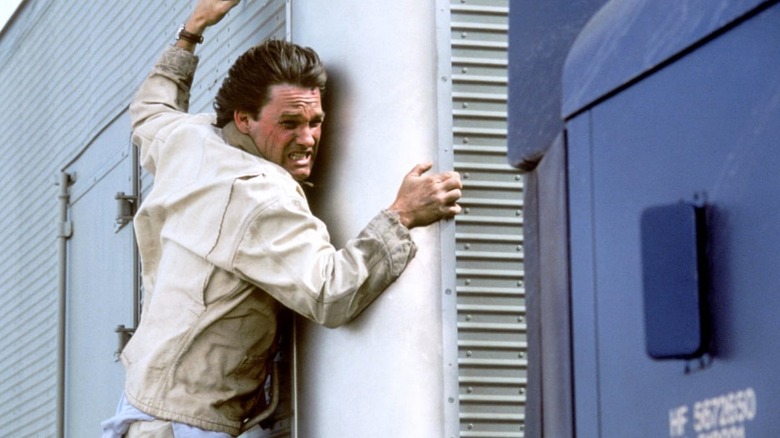
Kurt Russell is possibly best known for his work with filmmaker John Carpenter. The pair collaborated on classics such as "Escape From New York," "Big Trouble in Little China," and "The Thing." However, Russell has given many other great performances in films that aren't quite as well known, such as the 1997 thriller "Breakdown."

Jeff (Russell) and Amy Taylor (Kathleen Quinlan) take a long drive from Boston to San Diego in their new Jeep Grand Cherokee. Although the cross-country trip begins smoothly, the couple's car breaks down after nearly colliding with another vehicle. They are stranded in the middle of the desert, and Jeff goes to a local diner to find help. When he returns to his car, he can't find Amy anywhere.

Russell is a unique movie star, who is still convincing when he's playing realistic characters. Jeff, an ordinary man caught in extraordinary circumstances, is in a relatable position and must rely on his wits to survive.

Outbreak
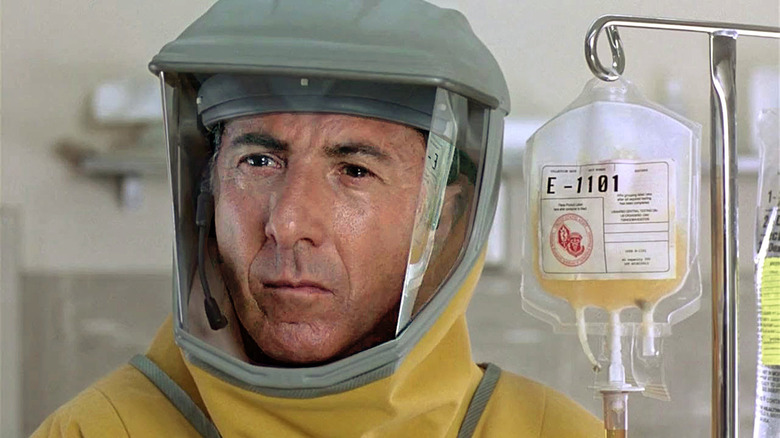
The 1995 thriller "Outbreak" is even more terrifying now than it was during its initial release, as the film centers on the rapid spread of a dangerous virus. Steven Soderbergh's 2011 thriller "Contagion" has been reassessed amidst the COVID-19 pandemic, and "Outbreak" deserves the same critical praise. Although "Outbreak" is the less realistic of the two, it still has many insights into why it is important to listen to scientists.

The film begins by revealing an American cover-up of a virus called Motaba in 1967. A camp of infected soldiers in the Republic of Congo is destroyed in order to erase all evidence of the disease. However, a similar infection emerges 28 years later in Zaire. The USAMRIID virologist Colonel Sam Daniels (Dustin Hoffman) discovers that the virus has become airborne, and could potentially wipe out the global population.

Sam must elude his superior, Major General Donald McClintock (Donald Sutherland), who was involved in the initial cover-up. The movie shows how political inaction only puts more people in danger. 

The Pelican Brief
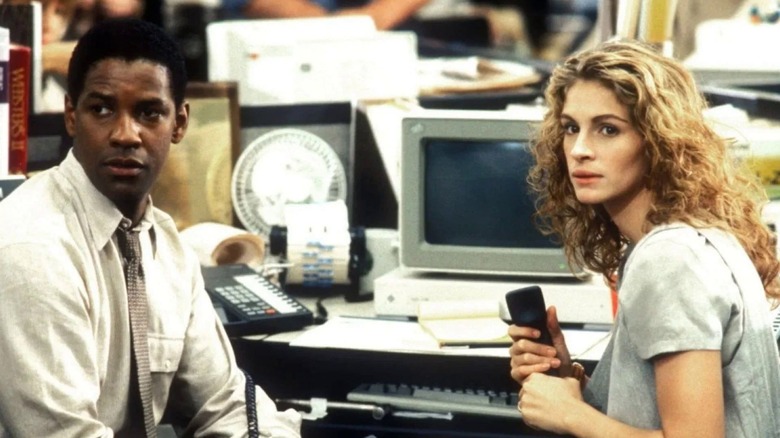
The 1990s were a great decade for fans of legal thrillers. Many of the best courtroom dramas of the decade were based on the novels of John Grisham. Alan J. Pakula's 1993 thriller "The Pelican Brief" is a great example of why Grisham's work was so popular. While Grisham's premises never seemed entirely implausible, they contained just enough intrigue and suspense to create a captivating mystery.

"The Pelican Brief" follows Tulane University law student Darby Shaw (Julia Roberts), who is having an affair with her professor, Thomas Callahan (Sam Shepard). After two Supreme Court justices are murdered by the assassin Khamel (Stanley Tucci), Darby writes a report theorizing why they were killed. She delivers it to Callahan and later realizes her assessment was correct after he is killed by a car bomb. Crime reporter Gary Grantham (Denzel Washington) reaches out to Darby, and they work together to find the conspirators.

Read this next: 13 Box Office Bombs That Are Truly Worth A Watch

The post 15 Underrated Thrillers You Really Need To See appeared first on /Film.
05 May 19:07

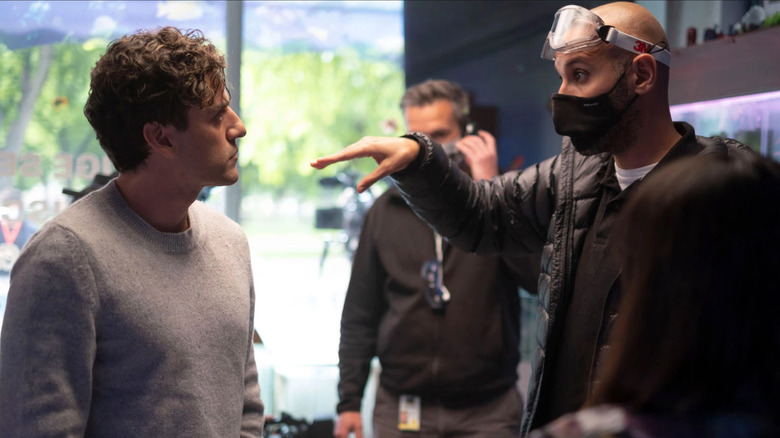
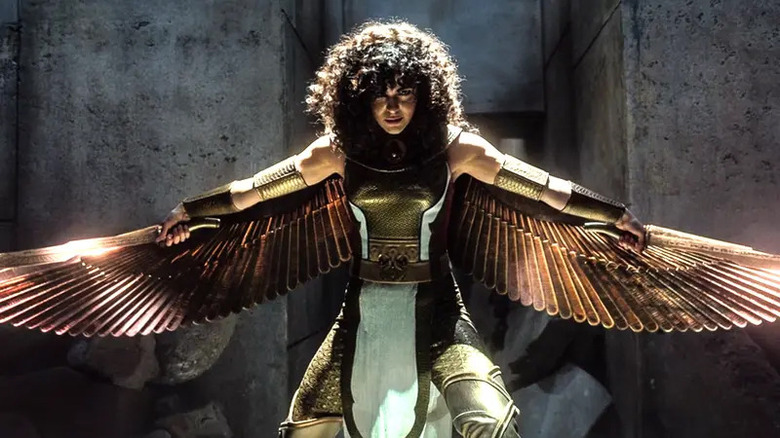
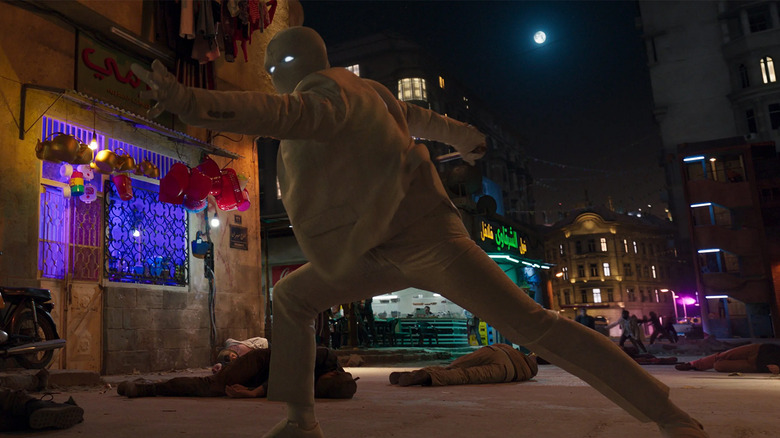
Moon Knight Director Mohamed Diab Talks Action Sequences, The Significance Of Scarlet Scarab & More [Interview]

by Ethan Anderton

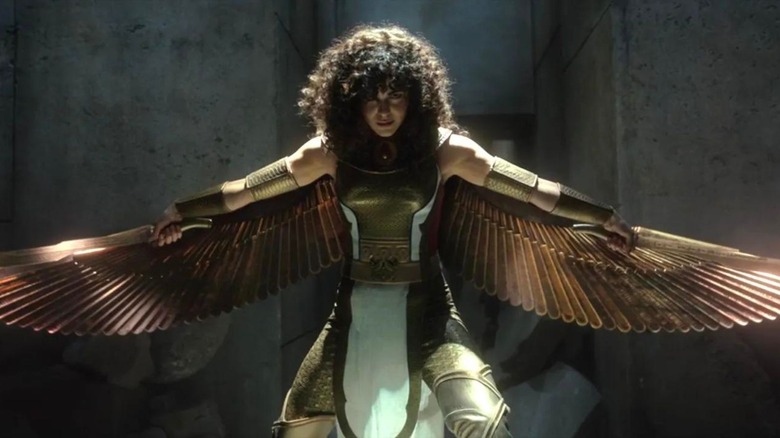
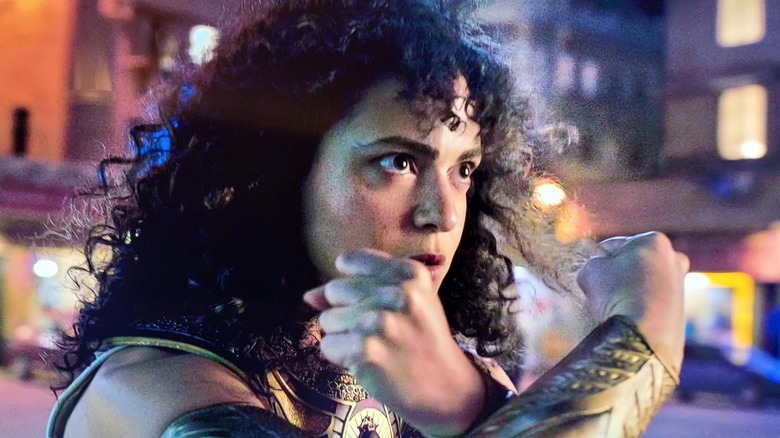
"Moon Knight" has come to an end, at least for now. The season finale arrived earlier this week, and director Mohamed Diab sent the unique superhero story out with a bang by not only introducing a third personality to wreak havoc on the lives of Marc Spector and Steven Grant (both played by Oscar Isaac) but also a new superhero in the form of Layla El-Faouly (May Calamawy) as Scarlet Scarab

For this week's finale, /Film was pleased to speak with Mohamed Diab on everything that went into the finale, from designing Scarlet Scarab's costume to planning out that big final action sequence. Diab also talked about his hopes for what he hopes to see from Moon Knight and Scarlet Scarab in the future, and just how terrifying the new identity of Jake Lockley was when Oscar Isaac unleashed him on set. Check out our full interview below, but beware of major spoilers for the "Moon Knight" finale.

'You Don't Know How Important This Is For Egyptians'

All right, let's talk about introducing the first Egyptian superhero in the MCU. How exciting was that for you?

You don't know how important this is for Egyptians. I want to just start by saying thank you for the writers for coming up with the idea of making Layla an Egyptian. When me and [producer] Sarah [Goher] came in as Egyptians, we helped develop the character. And then when May [Calamawy] came, she helped develop the character for sure. The icing on the cake was her being a superhero. We knew that this is going to be a historical moment. 

For Egyptians, you don't know how they're dealing with the show. There's a feeling of national pride. People from the third world countries, they feel like the west is so superior. And in a way, a lot of people feel culturally defeated. So they don't imagine themselves that they can direct or be on a national international stage. To have Egyptians behind camera and in front of the camera, having the Egyptian music involved and seeing that everyone in the world is loving it, having an Egyptian composer, an Egyptian editor, and then having an Egyptian girl who embodies real woman are strong and fierce, not submissive, and eventually becoming a superhero — it's huge. You don't know. 

My daughter, when she was five, for example, she wanted to straighten her curly hair. She looked beautiful, but she never felt that there is anyone who looks like her in Disney movies and cartoons. But today, she can look at May and feel, "You know what? She looks beautiful and she's a superhero. And I want to be like her." I think next Halloween in the Middle East, there's only going to be one costume. There's going to be, for every girl, it's going to be Scarlet Scarab.

Since you mentioned the costume, how much input did you have as far as the design goes? It feels like there's a little bit of influence of the way Scarlet Scarab looks in Marvel Comics, but obviously, since that version of the character is a man, it had to be much different.

I was lucky that anything you see on the screen [...] anything you see is a collaboration between all of us. But one of the best things about that costume was there was no reference. We started with the costume that looked a bit Arabic, culturally, but I felt she should look ancient Egyptian. I love Isis. We had a design for the goddess Isis, and I felt it was the most fantastic costume. She wasn't like a superhero, but she looked like a goddess. I kept asking the designers to keep stealing from it until they turned her, with that beautiful wing[span], into one of the most beautiful superheroes, in my opinion. I love the way she looks. I have to thank the designers, have to thank Megan Casperlik, our incredible costume designer for creating all those great costumes, and everyone in our show loves all the costumes. They're fantastic. And they were hard to implement, by the way.

'I Always Love The Fluid Camera'

Speaking of collaboration, what's the development process like for creating those distinctive shots that we see during the action sequences? During that fight in the middle of the street with both Marc and Steven and Layla fighting Harrow in the street, there are a lot of cool single take shots with fast-paced choreography. And then you have that moment when Steven's Mr. Knight throws the weapon at Harrow, and he knocks it back and it flies back into Marc's hands. What's that the development process like working with your crew and figuring out how to plan those sequences?

It's such a collaborative work, and it takes months to design a good action sequence. You start by the page, what's written on the page, it always starts with the writers. And then you take that interpretation and talk to an artist who draws the scene. Then we start moving it in previz. It turns into a cartoon action sequence, and you start directing it again. For me, I always love the fluid camera. So I like to minimize the cuts as much as possible. You present it to Marvel, and everyone has an input until we find a middle ground where all of us are happy with it. And that's what happened.

The final action sequence, we kept discussing it for maybe eight months back and forth, back and forth, with the gods getting bigger or not. We were supposed to shoot the whole action sequence in the beginning inside the Chamber of the Gods, everything in the final episode. But Cairo at night, it's so beautiful. We should see it at night. We saw it at day[time] in episode 3, we should see more of Cairo, and everyone agreed. And that's what we did.

I'm curious, because the gods grow to such huge heights, is that something that the people of Cairo can see, or is that something that is only seen by Marc/Steven, Harrow, and Layla. It seems like it's almost on a different plane of existence in a way. Or is it like watching Godzilla versus Kong in front of you?

Right now, because we don't have any reaction from the people, I think they don't see them. At some point, we thought about people seeing them, but we cut it at the end. We decided that people are not going to see them.

That makes sense. Did you use motion capture for the gods? Or is that all strictly computer animation?

Not computer animation by itself. No, we always had two artists. There's an actor on board. Who's moving and acting, great actors. For Khonshu, we had Karim El-Hakim; for Tawaret, we had Antonia Salib; and for Ammit, we had Sophia al-Asir. So three great actors, and we really meticulously picked them, because you needed to interact with the actors and give the feeling. Each one of them, you feel the animation is part of their character. Then we had voice actors. Antonia Salib played her voice because from the get-go, she felt like Tawaret. Then we wanted to make [the gods] older in a way. So we went with F. Murray Abraham, who immediately made the character into his own. And we had the great Saba Mubarak, a very famous Jordanian-Egyptian actress, playing Ammit.

'I Know For A Fact That They're So Interesting That Marvel Is Going To Use Them One Day Again'

Now that we have Moon Knight introduced to the MCU, we have Scarlet Scarab introduced to the MCU. Do you have an ideal hope of where you would like to see these characters go and maybe the other Marvel characters you would like to see them join forces with in the future?

First of all, I know for a fact that they're so interesting that Marvel is going to use them one day again. I see how fans are loving them, but I just don't know what's going to happen. I'm kept in the dark. So I don't know what's going to actually happen. If you ask me, I just wish they interact with as many superheroes as possible. I want them to drive them crazy. I want to see Tawaret and Layla, with the two of them [having] completely different characters, how Tawaret is going to drive Layla crazy, convincing her or not convincing her to continue being a superhero. Oscar had this idea of partnering up with the Hulk, because the Hulk has two [personalities]. So both of them could drive each other crazy. Very interesting. Partnering him up with any character is very interesting. I would love to do that one day.

Obviously Oscar has been managing Marc and Steven throughout the series, but we finally meet Jake Lockley at the end of this episode. Did you have conversations with Oscar about the influences on that character, as far as like how he crafted it. Were any specific pop culture touchstones that influenced the creation of that personalty?

We never spoke about Jake that much, honestly, but I want to tell you, when Oscar just showed us the way he wanted to play him, he scared the hell out of us. He became a scary person for sure. I think the discussion about Jake is going to come one day, if there is an expansion of what's going to happen. We actually decided to meet him at the end, so we don't do this disservice to him, because he needs exactly the same time as Marc and Steven on screen. We need to understand who he is. We need to understand his struggle, but he's one of the reasons that I really want to come back one day to this show and expand that world, whether in film or TV. But I see him as the "Taxi Driver" kind of guy. So I wish one day to play with him and see where it takes us.

Every episode of "Moon Knight" is streaming now on Disney+.

Read this next: The 15 Most Anticipated Comic Book Movies And Shows Of 2022, Ranked

The post Moon Knight Director Mohamed Diab Talks Action Sequences, The Significance of Scarlet Scarab & More [Interview] appeared first on /Film.

05 May 19:07

Oscar Isaac Scared The Hell Out Of The Moon Knight Crew With His Jake Lockley Identity [Exclusive]

by Jeremy Mathai

There are those who resort to Method acting, that all-too-common crutch for those seemingly unable -- in Laurence Olivier's own words, as the story goes -- to "just try acting." And then there are those who truly go the extra mile by simply ... doing the hard work of conjuring up complicated emotions in the moment and bringing multilayered characters to life. "Moon Knight" star Oscar Isaac is certainly one of the most charismatic and talented actors around, even if he doesn't quite operate in the same vein as others such as Daniel Day-Lewis, Jared Leto, or Christian Bale. But that doesn't mean the end result failed to ultimately conjure just as powerful results if he did, somehow, try to stay in-character as the multiple identities of Marc Spector and Steven Grant.

The season finale's post-credits reveal of a third personality, a terrifying fellow by the name of Jake Lockley, proved to be the concluding twist in a series that was chock-full of them. But what about the experience of actually filming the moment when Lockley finally steps out of the shadows and makes his grand reveal? It's not a terribly long scene by any stretch of the imagination, but it certainly seems like Isaac's performance made itself known among the cast and crew. In an interview with /Film, "Moon Knight" director Mohamed Diab spoke about all aspects of the finale. The conversation turned towards the Jake personality and the way that Isaac chose to play him. According to Diab, it was chilling enough to "scare the hell" out of them.

""We never spoke about Jake that much, honestly, but I want to tell you, when Oscar just showed us the way he wanted to play him, he scared the hell out of us. He became a scary person for sure."

'I See Him As The Taxi Driver Kind Of Guy'

After steadily building up the hints and teases towards a mysterious third personality throughout all six episodes of "Moon Knight," the latest and final episode threw back the curtain and let viewers see him for the very first time. Even from just his mannerisms, facial expressions, and demeanor alone, it was clear to see that Oscar Isaac had brought a whole new body language to this far more ruthless and coldblooded identity. The choice to end on the tease of more adventures to come with Jake as a villainous figure of sorts should keep fans invested in the possibility of another season to come, but what about Mohamed Diab himself? The director skillfully guided his episodes to the finish line, including the finale. How does the introduction of Jake Lockley factor into his interests in returning for another round of "Moon Knight" and his multiple personalities? Here's what Diab had to say:

"I think the discussion about Jake is going to come one day, if there is an expansion of what's going to happen. We actually decided to meet him at the end, so we don't do this disservice to him, because he needs exactly the same time as Marc and Steven on screen. We need to understand who he is. We need to understand his struggle, but he's one of the reasons that I really want to come back one day to this show and expand that world, whether in film or TV. But I see him as the 'Taxi Driver' kind of guy. So I wish one day to play with him and see where it takes us."

That's the only trouble about saving the most exciting and promising imagery for last -- not only does it make fans impatient to find out where the story goes, but it makes for a bittersweet experience for the creative team, as well! Here's hoping that Diab and the rest of the creative team are brought back for wherever Moon Knight goes next in the MCU. His offhand comment about "whether in film or TV" should raise some eyebrows, perhaps teasing what Kevin Feige and his storytellers have in store for the character.

Until then, you can catch all six episodes of "Moon Knight" streaming on Disney+.

Read this next: Joker's Wild: Ranking The Cinematic Versions Of The Clown Prince Of Crime

The post Oscar Isaac Scared the Hell Out of the Moon Knight Crew with His Jake Lockley Identity [Exclusive] appeared first on /Film.

05 May 19:07

Those "brutal," "elite" Chechen fighters that were touted as Putin's shock troops in Ukraine? Apparently, they are VERY good at getting themselves killed, and not much else [Followup]

05 May 14:58

Man survives after being shot 15 times in Minneapolis. You'd think after the fourth or fifth time he'd stop going to Minneapolis [Obvious]

05 May 14:58

General Order One: The Prime Directive In Star Trek: Strange New Worlds Explained

by Witney Seibold

If we're going to talk about "Star Trek" and the Prime Directive, we need to talk about rats.

According to an article published by Columbia University, Norway rats were first introduced to the American continent in 1776 when Hessian soldiers -- and the rats -- arrived on ships to fight the American colonists. Rats, being hearty, quickly spread across the continent, thanks to their ability to reproduce quickly, their large size when compared to native rodentia, and their aggressive behavior. They also eat a lot, consuming two-thirds of their body weight in grain daily. The Norway rat has long been considered a destructive pest, and they still occupy large cities to this very day. 

The Norway rat is hardly the most destructive thing to have spawned from Earth's annals of colonialism, and a brief look over your history textbooks reveals far too many examples of cultures infiltrating -- and destroying -- others. Every breath we take in the present contains particles of a horror from the distant -- and not-so-distant -- past. Usurpation, exploitation, and slavery are woven into our every garment. It is a legacy modern humanity must be in a constant state of unpacking. 

When Gene Roddenberry created "Star Trek," he wanted it to take place in a post-colonialist world. In the future, humanity will have access to the greatest technology ever imagined, and will be able to soar from star to star, but they are not there to impose their values on others, and are certainly not there to conquer. There will be no war, interpersonal conflicts will be handled tactfully, and humanity will not interfere with the cultures of others. 

That last bit is well-known throughout "Star Trek" as the Prime Directive, a much lauded and sometime-harangued principle that stands at the very center of the Federation's ethos. It's important enough to be called "The Prime Directive," after all, and it has come into play multiple times throughout "Star Trek" -- sometimes under the name General Order One, a name change that is stated explicitly in the first episode of "Star Trek: Strange New Worlds" -- as a constant ethical struggle. 

Non-interference

The Prime Directive was first mentioned in the "Star Trek" episode "The Return of the Archons," which first aired on February 9, 1967. In that episode (written by Gene L. Coon), the Enterprise is investigating the disappearance of a ship called the U.S.S. Archon that had disappeared a century earlier. In so doing, Kirk (William Shatner) and crew beam down to the planet Beta III and encounter a planet of people dressed in early 20th-century garb, and who all seemed to be placidly hypnotized. When the clock strikes, "Red Hour" begins, and the people go wild, smashing windows, undressing, and rioting. Festival! Festival! The crew eventually finds that the people are under the thrall of an order-seeking computer named Landru that has been brainwashing people for centuries under the auspices of keeping them safe, arranging itself as a benevolent deity. When Kirk meets the computer -- it's intelligent, but not emotional -- the good captain argues that the computer itself is doing more harm than good, and it destroys itself. 

Ethical quandary: Was Kirk right to end the computer's influence over the Betans? It was the place to which their culture had brought itself, after all. Landru, we learn, was a real person who lived 6,000 years previous, and who had become a Messiah figure after reducing a technologically busy planet to something simpler. Now Landru was an automated Savior machine. 

The people on this planet were being robbed of their free will, but were also, unarguably, peaceful. The Prime Directive would dictate that the people be left alone. Kirk makes a (rather weak) argument that noninterference with a growing culture only applies if the culture is actively growing. The computer had stymied evolution, and Kirk felt justified in destroying it. He certainly felt a righteous need to impose his morals on this planet. As a way to make up for essentially toppling society, he orders a team of Federation educators come in and teach the Betans how to live in a functional society again. 

This was followed up in a hilarious episode of "Star Trek: Lower Decks."

Bread And Circuses

"Bread and Circuses" (written by Coon and Roddenberry, originally aired on March 15, 1968) is as ethically tricky as they come, but also features an instance wherein Kirk obeyed the Prime Directive. In the episode, the Enterprise encounters a planet that is very much like Ancient Rome, but evolved into a 20th-century-Earth-like timeframe. As such, there are still slaves forced into gladiatorial combat, but they are broadcast on modern TV equipment. Eventually Kirk and co. are going to be forced into the arena as slaves. 

The Enterprise has encountered a world whereupon slavery still exists. With the ship's superior technology, Kirk could easily free the slaves, assassinate dictators, and install a democratic government with a team of Federation educators, right? Just like in "The Return of the Archons"? Doesn't this sound preferable to slavery? The issue with interfering in the case of "Bread and Circuses" is that it encourages colonialist thinking. If you feel you're in the right and you have superior technology to the "primitive" species you seek to aid, then congratulations, you are a colonialist. 

"Bread and Circuses" leaves audiences on something of an ambiguous but generally optimistic note. Uhura (Nichelle Nichols) points out that the slave uprising they had briefly encountered called themselves The Children of the Sun. Only she had mistranslated the phrase earlier, and finds that the phrase was closer to ... The Son of God. Kirk opines that this planet had a Caesar analogue, but also a Christ analogue. The Enterprise did not end slavery on that planet, but knowing Earth history, one can take comfort in the fact that the Rome planet will continue to evolve. It will have new religions, new philosophies, perhaps Holy Wars, but -- in the long run -- may find itself eventually entering its own Roddenberrian future. They just need time to work all that s*** out. 

Will people die and suffer? Yes. But the Prime Directive prevents humans from being the saviors. Civilization necessarily evolves at its own pace. 

Who Watches The Watchers?

Quis custodiet ipsos custodes? One of the best examples of the Prime Directive at work in "Star Trek: The Next Generation" was in the episode "Who Watches the Watchers?," written by Hans Beimler, which first aired on October 16, 1989. In that episode, a disguised Federation outpost is watching over a primitive species -- they are in their agrarian phase -- suddenly becomes visible after an accident. One of the locals is injured in the accident and Dr. Crusher (Gates McFadden) beams him up to the ship in what is a clear violation of the Prime Directive. She justifies it by saying that they were the ones responsible for his injuries. The local (Ray Wise) witnesses everything on board the starship, including the work of Captain Picard (Patrick Stewart). Although Dr. Crusher tries to erase his memory, it doesn't take, and Wise ends up spreading a legend among his people of a new god called The Picard. Oops. 

So that civilization is tainted. There's no going back. Picard, however, feels he can stem the damage somewhat by explaining to the locals that he is not a god, but a very mortal traveler. A regular person, just like them. Ray Wise, to prove that Picard is immortal, shoots him with an arrow. When Picard is nearly killed, the Wise character reneges. This primitive civilization now knows about the existence of aliens, but their culture will not be altered by a new belief system, a new religion, or a new worship structure. To most eyes, this was the preferable option.

The Communicator

"Star Trek: Enterprise" took place before the inception of General Order One, and the crew of that show's ship had a heck of a time discovering why it might be needed. Captain Archer (Scott Bakula) is told by his Vulcan first officer T'Pol (Jolene Blalock) that Vulcans had a habit of noninterference, and it was they who invented General Order One, not yet adopted by human Starfleet. 

In the episode "The Communicator" (written by André Bormanis, first aired on November 13, 2002), disguised Enterprise crewmembers -- partly for study, but partly for fun -- beam down to a 21st-century-tech-level planet to look around. Upon returning, they find they left behind a communicator, a technology far beyond what the planet currently possessed. The communicator was discovered by a local who thought Archer and his crew were an enemy faction invading their country. Eventually, after Archer returns to retrieve the communicator, the locals will apprehend him, remove his disguise makeup, and learn that his blood is red. Archer claims he's not an alien, but a genetic experiment conducted by his captor's enemies. Good story, bro. Events snowball to the point when shuttlecraft are flown in to rescue Archer. 

The final scene of the episode is T'Pol grilling Archer over what he did wrong. Archer learns that he escalated a conflict on the planet's surface, and revealed tech they never knew possible. 

Yeah. That's a 10 on the Whoops Scale. "The Communicator" is one of the better instances of why a philosophy of noninterference is required in a universe where multiple civilizations were evolving at different rates. 

Roddenberry wanted that pact to be applied throughout history. At least in fiction, we can have it.

Read this next: The 15 Best Anthology TV Series Ranked

The post General Order One: The Prime Directive in Star Trek: Strange New Worlds Explained appeared first on /Film.

05 May 14:57

A Short History Of Number One In The Star Trek Universe

by Mike Williams

If you're exploring the cosmos and going where no one has gone before, it makes sense to have someone reliable at your side. In "Star Trek: Strange New Worlds," Captain Christopher Pike commands the classic Enterprise with Lieutenant Spock as his third. His second-in-command is the steadfast Number One.

But "Number One" is just a nickname. The character's real name is Commander Una Chin-Riley, with Rebecca Romjin reprising the role after her appearances in "Star Trek: Discovery." Like Pike himself and the ship's medical officer, Doctor M'Benga, "Strange New Worlds" has the chance to finally add some more color and life to characters that had only brief appearances in the original "Star Trek".

Trapped In The Cage

Number One first appeared in the original pilot episode of "Star Trek." Entitled "The Cage," the pilot introduces us to the crew of the starship Enterprise, though it's a slightly different iteration from the one most people know. At the helm of this ship is Captain Christopher Pike and his first officer a woman simply known as Number One.

The character was played by actress Majel Barrett, who would transition over to the original series as a different character, Nurse Christine Chapel. In the pilot episode, Number One is a stoic figure, betraying very little emotion and focusing entirely on the business at hand. When Pike is kidnapped on a mission to Talos IV, Number One elects to be a part of the landing party that goes to find him.

Things don't go as planned and Number One becomes kidnapped by the Talosians as well, with the aim of providing Pike with a selection of potential mates. The leader of the Talosians, the Keeper, even notes that Number One's professional demeanor is a shield over her feelings for Pike. Ultimately, Number One sets her weapon to overload in an attempt to stop the Talosians' plans.

Number One was never seen again in the original continuity, as Barrett was now playing Nurse Chapel. There's no indication whether she had a further career with Starfleet after the mission shown in "The Cage." Barrett would later marry series creator Gene Roddenberry, becoming Majel Barrett Roddenberry, and appear as Lwaxana Troi in "Star Trek: The Next Generation."

Discovering A New Side Of Yourself

Number One returned later in "Star Trek: Discovery" and the adjoining "Short Treks" mini-series. In the "Short Treks" episode "Q&A," the newly-assigned Ensign Spock finds himself trapped in a turbolift with the Enterprise's first officer, giving him a chance to ask her about the Captain and the rest of the ship. It's a light episode, mostly played for laughs.

Writer Michael Chabon told Syfy Wire that he also used the episode to explain the differences between the more emotive Spock in the pilot and his later characterization in "Star Trek." The answer? He took after the first officer he met on his first day on the Enterprise -- the impassive Number One.

Number One guest-starred on "Discovery" when Pike took over as Captain for the Discovery in season 2. In the episode "An Obol for Charon," the Enterprise itself is disabled and in spacedock, giving Number One and Pike the chance to discuss murder allegations against Spock. Number One comes across as fiercely protective of Spock, even noting that she did some sanctioned digging to find information about the case.

Number One appears again in the season finale for the second season of "Discovery," welcoming Pike and Spock back to the ship.

More Than Just A Number

In "Strange New Worlds," Number One is finally given her full name: Una Chin-Riley. And as we see in the new Paramount+ show, Commander Una is a first officer who is more than willing to take charge of a situation. She's sadly missing for most of the first episode however, as her capture during First Contact is what gets Pike back onboard the Enterprise.

Still, the series now has a chance to define Number One far beyond her brief appearance in the pilot episode. And Rebeccca Romjin gets the chance to show why Pike calls her "the best first officer in the fleet."

Read this next: The 10 Best Sci-Fi Movie Villains

The post A Short History of Number One in the Star Trek Universe appeared first on /Film.
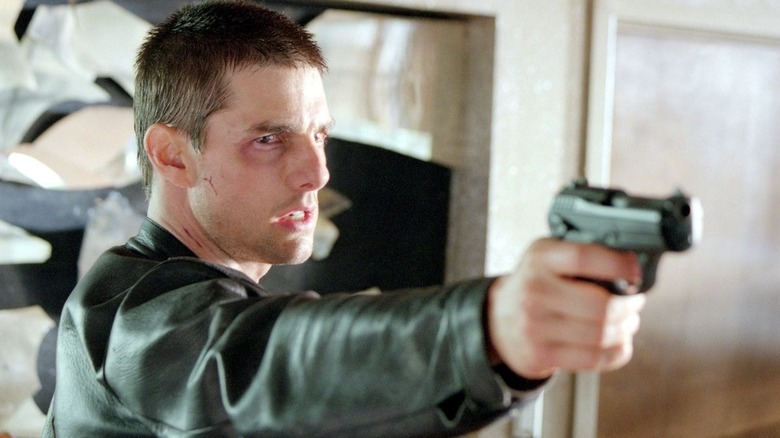
05 May 14:57

Flaws in Avast, AVG Antiviruses Could Have Facilitated Attacks on Millions of Devices

by Eduard Kovacs

Researchers at endpoint security firm SentinelOne have discovered two potentially serious vulnerabilities in antivirus products from Avast and AVG.

read more

05 May 14:56

A Short History Of Dr. M'Benga In The Star Trek Universe

by Mike Williams

"Star Trek: Strange New Worlds" might be taking us to strange new worlds, but it's also relying on re-introductions to characters already known by "Star Trek" fandom. Spock and Uhura are mainstays from the original "Star Trek" series, while characters like Christopher Pike and Nurse Chapel made themselves known in their brief appearances on the classic '60s series. And alongside the new and returning crew members on the Enterprise, there is one face that may be less known than the rest.

That would be Doctor M'Benga, the chief medical officer on Captain Pike's Enterprise. Played by Babs Olusanmokun, M'Benga is a new face for many folks, stepping into a space normally occupied by Dr. Leonard "Bones" McCoy in the original series, sequel films, and subsequent reboots. As such, it's worth taking a look back at where the character came from in the first place.

That Which Survives

Doctor M'Benga was actually a character from the original "Star Trek" show. The Enterprise's second doctor was played by Booker Bradshaw, an actor, voice actor, and writer. Bradshaw had guest-starring roles on "Tarzan" and "The Mod Squad," was a series regular on the original "Alvin and the Chipmunks," and even wrote episodes for "Columbo," "The Rockford Files," and "The Richard Pryor Show."

His first appearance on "Star Trek" is in the second season episode "A Private Little War." In the episode, M'Benga is one of the doctors working on the medical team under Chief Medical Officer Leonard McCoy. When Commander Spock is wounded by small arms fire on the planet Neural, M.Benga is the one who treats Spock, having acquired extensive experience treating Vulcans during an earlier internship.

M'Benga appears again in only one more episode, a third season standalone entitled "That Which Survives." In this episode, he performs an autopsy on a dead away team member. The overall role is much smaller this time around, and it marks the last time that M'Benga is seen on the Enterprise.

A Second Chance For The Nameless

You've probably noticed that I haven't referred to M'Benga's first name yet. That's because the character does not have one in his original incarnation. The character was created for an unproduced "Star Trek" script entitled "Shol," which was ultimately shelved for being too similar to the season two episode "The Apple." In that script, his first name was Joseph, but that information never made it into a produced episode.

M'Benga was likely not used because the ship already had a series regular in Doctor McCoy and recurring medical personnel in Nurse Chapel. The latter appeared earlier and remained tied to the series for the rest of its run.

This means that Babs Olusanmokun and the creative team behind "Strange New Worlds" have far more leeway in crafting Dr. M'Benga. In the first episode, he appears as a warm, wry person who already knows Spock and other crew members. Teaser trailers also highlight a doctor who's willing to use low-tech alternatives if it can help his patients. We're looking forward to seeing how Olusanmokun, a Nigerian-American actor, is able to add some depth to the Starfleet officer of African descent.

Read this next: The 25 Best Movie Robots Of All Time

The post A Short History of Dr. M'Benga in the Star Trek Universe appeared first on /Film.
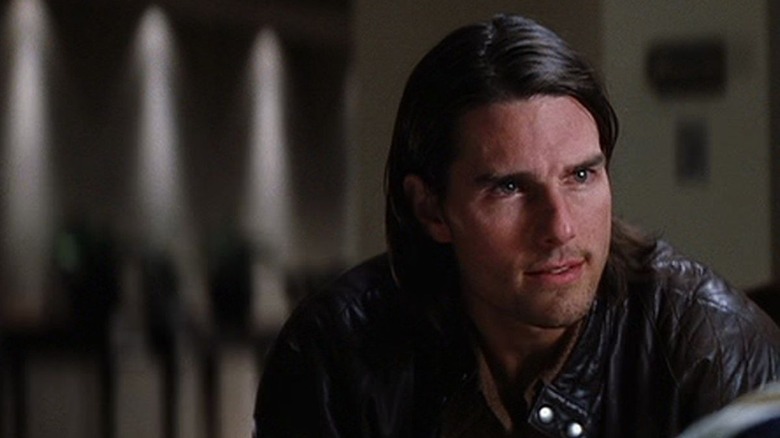
05 May 14:55

A Short History Of Nurse Chapel In The Star Trek Universe

by Mike Williams

If you're exploring the galaxy, it tends to be a good idea to keep an open mind. "Star Trek: Strange New Worlds" showcases new characters and highlights others that only had a brief appearance in the original series, but it's also looking to show us new sides of old favorites. Those old favorites include mainstays like Spock and Uhura, but also the lovely Nurse Christine Chapel, one of the most frequent recurring characters in "Star Trek."

If Dr. Leonard "Bones" McCoy was the face of medicine on the Enterprise, then Nurse Chapel was his right-hand woman. In "Strange New Worlds," Chapel has a similar position, as the head nurse supporting current chief medical officer Doctor M'Benga. She has a long history with the crew of the Enterprise, so let's take a look at Chapel's previous medical adventures on "Star Trek" and its subsequent films.

A Loving Touch

Nurse Chapel first appeared in the first season of "Star Trek" in the classic episode "The Naked Time." She was played by Majel Barrett, who had starred in the unused pilot episode as Enterprise second-in-command Number One. In the episode, the Enterprise is infected by a mysterious contagion that causes the crew to lose control of their emotions. Earlier in the episode, Chapel is seen assisting McCoy with surgery, though the young away team member doesn't survive the procedure.

As the contagion takes over the ship, Chapel makes a noticeable impact when she confesses her love for Spock. It's a lot, considering that the audience had never seen her prior to this episode! Spock lets her down while trying to remain in control of his emotions. Chapel's love for Spock would remain a consistent part of the character for the rest of the original series, even becoming a facet of the animated show.

Chapel would get the chance to kiss Spock in the third season of "Star Trek," but it did come at the hand of alien mind-control. "For so long I've wanted to be close to you. Now all I want to do is crawl away and die," she noted in the episode "Plato's Stepchildren," before having to kiss Spock. It's not great!

Going To The Chapel And Not Getting Married

Chapel continues to be a key part of the first season of "Star Trek" with the episode "What Are Little Girls Made Of?" The crew heads to the planet Exo III to uncover the last whereabouts of Dr. Roger Korby, a scientist who just happens to be Chapel's fiancee. Despite his last message coming five years ago, they find he's actually still down on the surface.

Chapel meets up with her former fiancee, but he seems slow to remember her. This is "Star Trek," so you know that scientific shenanigans are afoot! Korby shows Kirk and Chapel the android simulacrums that he's creating, which should set off red flags for Chapel, but doesn't. Later, he's revealed to be an android himself, which puts a kibosh on that whole fiancee thing.

The intriguing thing about this episode is that it's almost entirely just Kirk and Chapel with the guest stars. Despite that, Barrett was still not a series regular for "Star Trek" at any point. She appeared in 25 of the 79 episodes of the original series, but never rose up the ranks in the cast.

The Ship's Doctor Of The Mind

Long before "Star Trek: The Next Generation" had Counselor Deanna Troi to help with the crew's mental maladies, "Star Trek" did somewhat acknowledge the need for mental health professionals. The Enterprise did have a psychiatrist, Dr. Elizabeth Dehner, but she joined the ship and died in the same episode. Another crew member, Dr. Helen Noel, was also trained in psychiatry, but she likewise vanished after her first episode. With all the deaths on the ship over the years, you'd think a ship psychiatrist or psychologist would be high on the list of priorities for the Enterprise.

This is where Nurse Chapel steps in a bit. In a few episodes, Chapel is the one that's able to help a crew member in mental distress. In the episode "The Changeling," Chapel is the one who tries to help Uhura when she loses her memories to an errant probe. In "Obsession," she's also the one who reaches out to an ensign struggling with the guilt of not firing on a Vampire Cloud that kills his fellow crew members. The ship clearly needed a full-time mental health professional, but Chapel at least tried to step in when needed.

Getting A Promotion

With the advent of the animated series, which continued the five-year mission of Kirk's Enterprise, Chapel was appointed as head nurse. Barrett reprised her role as Chapel, also handling a number of other alien voices, including the new cat-lady communications officer Lieutenant M'Ress. Chapel gets a promotion to lieutenant in the animated series.

When we see Christine Chapel again in "Star Trek: The Motion Picture," she's finally become a full Doctor while still remaining assigned to the Enterprise. Finally, on the last leg of our journey through her history, Chapel appears in "Star Trek IV: The Voyage Home" as a Commander assigned to Starfleet Headquarters. Sadly, she doesn't join her fellow crew members when they steal a Klingon ship and travel back to 20th century Earth to get a humpback whale to stop an alien probe that will destroy 23rd century Earth. Look, I didn't make any of that up, that's the plot of the movie.

Anyways, Commander Chapel appears at the end of the film when the classic crew are under court-martial for their actions. She cheers when they somehow dodge all the charges — which seems suspect because they definitely did all the things they were charged with — but sadly does not rejoin them when they take the helm of the new USS Enterprise-A.

Doing Some Work On The Chapel

Despite her many appearances, Chapel has a mixed reaction among the fandom. Some feel that she's only around to be a love interest or damsel-in-distress in many episodes. Barrett herself leaned in this direction.

"She just wasn't a very exciting character. I didn't care for her that much," she said in an interview with Star Trek Magazine, dated July 2000. "She was a namby-pamby type of woman. First, she was a doctor to start, and to go out and find her fiancé she had to take a demotion, probably in rank and pay, because there was already a doctor aboard the Enterprise. This woman's not too smart; she doesn't have a whole lot going for her."

With "Strange New Worlds," the writing team has the chance to fix some of these complaints about Christine Chapel. Played by Jess Bush, the new Chapel is definitely more wry and feisty compared to her original counterpart. She's also seemingly more of a scientist, rewriting the genomes of the crew in the first episode of the new series. It helps that she's also playing off the more quiet and measured M'Benga, bringing some high-energy to this medical team. A teaser trailer also shows her flirting with Spock bit, so I guess not everything is changing. Why mess with the classics?

Read this next: The 14 Best Star Wars Creatures Ranked

The post A Short History of Nurse Chapel in the Star Trek Universe appeared first on /Film.
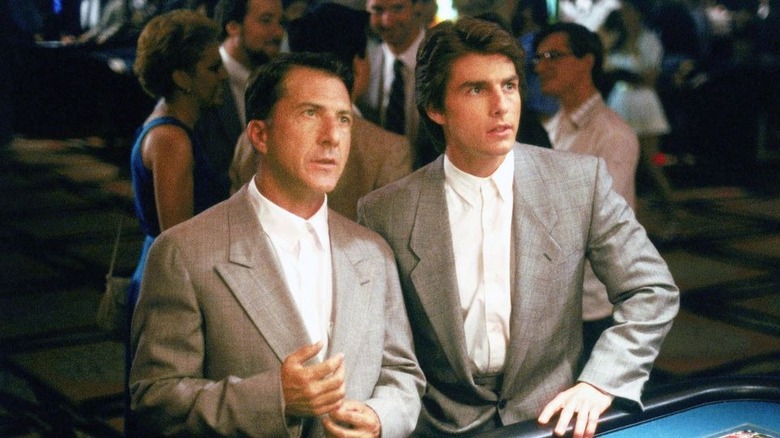
05 May 14:55

According to a University of Texas study, even mild COVID infections affect brain structures. Of course, this doesn't affect the unmasked people who never had brains to begin with [Scary]

05 May 14:55

The Enterprise's First Captain: Admiral Robert April Explained

by Witney Seibold

No show has mined more canonical information from unused material than "Star Trek." Case in point: The new series "Star Trek: Strange New Worlds" is based on characters and events from the two-part original series episode "The Menagerie," wherein a non-verbal and wheelchair-using Captain Pike (Sean Kenney) hijacked the Enterprise (with Spock's help) to return to the planet Talos IV where he had gone on a mission a few years prior to his injuries. In "The Menagerie," audiences saw -- in turn -- repurposed footage from "The Cage," the original "Star Trek" pilot wherein Spock (Leonard Nimoy) was still on board, and the Enterprise was captained by Pike (Jeffrey Hunter). The ship had a completely different crew besides, different uniforms, and a slightly more aggressive tone, but "The Cage" was now a mere additional episode of "Star Trek."

"The Cage" was no longer an unseen first draft, but a recording of events that the show's producers slipped cleverly into the "Trek" timeline immediately before the adventures of Captain Kirk (William Shatner). This was done for economic reasons, of course (two episodes with only a little original footage? Yes, that will save the network some money), but, thanks to the bloody-minded adherence to canon intrinsic to Trekkies, it was now part of the show's fictional history as well. "Strange New Worlds" has begat an entire TV series from the characters and events of "The Cage" and "The Menagerie." 

This expansion of production notes and discarded ideas also includes the character of Robert April, who was commander of the U.S.S. Enterprise NCC-1701 prior to Captain Pike ... and has a role to play in "Star Trek: Strange New Worlds." For Trekkie sticklers who take exception to the headline: Yes, technically Capt. Jonathan Archer (Scott Bakula) from "Star Trek: Enterprise" was the first captain of the Enterprise NX-01. But if you want to get really technical about it -- and you're Trekkies, so I know you do -- the first captain of the Enterprise was Commander John Paul, RN, who took command of the HMS Enterprise in 1705.

Here's a brief rundown on Robert April.

Roddenberry's Robert April

In the 1950s, future "Star Trek" creator Gene Roddenberry was working as a TV journeyman, writing for high-profile TV shows like "West Point," "Highway Patrol," and "Whiplash." For the better part of a decade, Roddenberry honed his TV story writing skills on these programs, getting a sense for what makes a good hour-long TV story, and what makes good TV characters tick. In 1957, Roddenberry was hired as the head writer on the TV Western "Have Gun - Will Travel" for which he wrote 24 episodes. The series followed a freelance vigilante calling himself only Paladin (Richard Boone) as he traversed the 1870s Old West solving problems for $1,000 a pop. The title comes from the phrase printed on Paladin's business card: He has a gun, and he's willing to travel.

Two episodes of "Have Gun" featured a prison chaplain named, you guessed it, Robert April. The name stuck in Roddenberry's mind, and he carried it with him into his original pitch for "Star Trek" only a few years later. 

In a memo from March 11, 1964, Roddenberry laid out his original idea for "Star Trek" to the executives at CBS. In it, Roddenberry wrote that "Star Trek" is:

"A one-hour dramatic television series. Action-Adventure-Science Fiction. The first such concept with strong central lead characters plus other continuing regulars."

The pitch also included episode titles like "To Skin a Tyrannosaurus," "100 A.B.," "A Question of Cannibalism," "President Capone," and "The Day Charlie Became God." Many of these episodes would be re-written or repurposed into future "Star Trek" and "Star Trek: The Next Generation" episodes. The lead character of "Star Trek" was to be Capt. Robert M. April, described in the memo as the 34-year-old "skipper" of the U.S.S. Yorktown (not the Enterprise) and was meant to be a compassionate version of Horatio Hornblower.

The Counter-Clock Incident

Captain April was considered a kind of loose version of canon among Trek fans who had managed to get their hands on the March 11 memo, and April was -- like Pike before him -- folded into the canon of the show. Captain April was the real first captain of the U.S.S. Enterprise NCC-1701, and not Pike. 

In an episode of "Star Trek: The Animated Series" called "The Counter-Clock Incident," first aired in October of 1974, Robert April made his first on-screen appearance. In the episode, April is an elderly Commodore who is visiting the Enterprise as it encounters a colossal negative space wedgie that caused the crew to age in reverse. By the end of the episode, most of the crew are infants. It's up to the old April and his wife, now de-aged into a couple in their early 20s, to save the ship. "The Counter-Clock Incident" is very much an "old guys still got it" story, giving value to a character on the cusp of retirement and facing the notion that he will no longer be useful. The "Star Trek" franchise, incidentally, has lasted so long as to see this same story happen in real time for both William Shatner and Patrick Stewart. 

Robert April was voiced by James Doohan, who played Montgomery Scott in live-action and voiced many ancillary aliens in "The Animated Series."

Discovery And Strange New Worlds

In an episode of "Star Trek: Discovery" called "Choose Your Pain," Robert April was namechecked on a screen of prior captains of the Enterprise, and was described as one of the more decorated captains of his time. 

Because of the show's premise, "Strange New Worlds" has the capability of including Robert April prior to him being elderly. 

It's here that "Star Trek" chronology gets a little wonky. On the fifth year of Kirk's five-year mission, Robert April is seen as an old man, whereas on "Strange New Worlds," he is considerably younger, having just been promoted to Admiral relatively recently. He is also, of course, now played by a newactor: 48-year old Adrian Holmes, who can currently be seen starring in Peacock's "Bel-Air." And this isn't just a minor cameo for "Trek" fans -- April recurs throughout the five episodes of "Strange New Worlds" given to critics, and his inclusion is as welcome as it is canon-defying.

"Star Trek: Strange New Worlds" debuts on Paramount+ on May 5, 2022.

Read this next: The 15 Worst Sci-Fi Movies Of The 21st Century (So Far)

The post The Enterprise's First Captain: Admiral Robert April Explained appeared first on /Film.
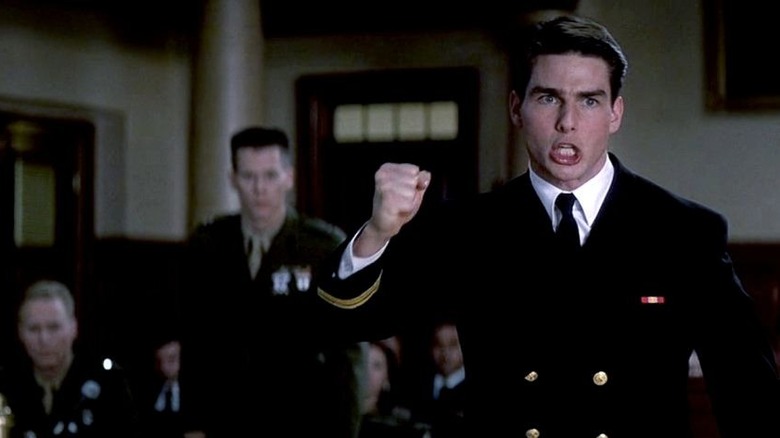
05 May 14:54

LG HU715QW 4K UST Projector Review – 4K Laser Engine With The Clarity Of A Long Throw

by Usman Pirzada

More than two years ago, we reviewed LG's HU85LA triple laser 4K UST projector and were very impressed. When LG told us it had managed to cut the price tag in half, ditch 2 of the laser engines, and created a final product that would have a better-looking image and it didn't even have a focus ring - our interest was definitely piqued.

Introducing the LG HU715QW, which is a single-laser-based DLP laser 4K UST projector from LG that defies all odds (and expectations) and promises to punch far above its weight class. It boasts a maximum lumen count of 2500, a laser capable of lasting 20,000 in bright mode (or 30,000 in eco-mode), and a price tag of $2999. With its older brother, we had noted that this is clearly not a mainstream product (at $5999) but with the LG HU715QW, LG has finally moved into mainstream pricing (when compared to TVs of similar sizes) and created a product that an average consumer could seriously think of buying.

Introduction and specifications

The LG HU715QW gets full HDMI 2.1 support and HDMI 2.0 support with eARC (7.1 channel, 24-bit, 48 KHz, Atmos: Pass-through). The projector supports 12 bit color on YCBCR 4:2:2 (the native format for Blu-rays and most television content) and 10 bit color for RGB 4:4:4. It features a perfectly reasonable DCI P3 85% color gamut (this number is smaller than the LG HU85LA but is easily eclipsed by the other improvements present in this projector) and features an impressive native ANSI contrast ratio thanks to its laser engine. All in all, it punches far above its weight class based on the on-paper specifications so let's see how it performs in real life.

Projector LG HU715QW
Display Type DLP XPR
Source Type 1x Laser (B)
Resolution True 4K UHD (8.3 million pixels)
Projection size 80" to 120"
Projection distance 80"@4.6" 100"@8.5" 120"@12.5"
Optical Zoom Fixed
Throw ratio 0.22
Brightness 2500 ANSI lumens
Contrast (dynamic) 2,000,000 to 1
Color space DCI P3 85%
Focus No focus ring. Edge-rotation only.
Source Life 20,000 hours
HDR HDR10, HLG
Input RGB 444 10 bit / 422 12 bit
HDMI 1x HDMI 2.1, 2x HDMI 2.0
HDCP HDCP 2.2
eARC up to 24 Gbps (Atmos supported)
Warranty 1 year parts & labor
Power consumption 350W
Weight 24.5 pounds

While most DLP projectors (the vast majority of projectors in the mainstream segment) have a light source that lasts, at most, 4000 hours, LG is using a laser light source that will last for at least 20,000 hours (or up to 30,000 hours in eco-mode). Now let's talk about major technical changes from the HU85LA. LG has gone back to traditional DLP design with this particular variant - and in a way that is extremely impressive. With the triple laser design, we had a 100% color lumens and a great color gamut but clarity suffered. The original unit also did not have advanced laser dimming support like the HU715QW does. On the back side of the LG HU715QW we have 2x USB slots, 1x HDMI 2.1 slot and 2x HDMI 2.0 slots (out of which one has eARC enabled), an Optical Out and an Ethernet port. There is no tuning support with this model.

Let's talk a bit about the layout of the LGHU715QW. It uses a blue laser system (presumably from NICHIA Corp) and the blue laser is passed through a phosphor wheel to create Yellow, Green and Blue channels which are then passed through an 8-segment color wheel with RGBYRGBY tracks.

You can easily hear the color wheel spooling up when the projector starts for a few seconds before it reaches its constant speed (7200 RPM) and the color wheel design has extremely low levels of RBE (although users are highly sensitive to RBE in DLP projectors may see it).

The result? We can see from the diagram on the right that the Red channel is the one that will suffer the most in this arrangement - but we will get incredibly vivid blues and very decent greens and yellows. This also explains why the projector has a relatively lower color space of 85% DCI-P3 (which is perfectly usable considering most TV content is mastered on Rec. 709).

The projector is powered by a Texas Instruments 0.47" DMD XPR chip. For the uninitiated, the XPR chip is able to offer true 4k resolution with the true resolving power of 4k pixel grids or 8.3 million pixels on-screen. This is different from PRO-UHD/4k-enhanced variants of XPR which cannot project a true 4K image (only up to 4.15 million pixels - which is half the required resolution for 4k). It sort of works like how CRTs of old used to function (with progressive lines being scanned on the monitor and your brain making them into a single image). Just so I am absolutely clear about this, this is real 4K, unlike 4K enhanced/PRO-UHD projectors which project a sharpened 1440p native image without actually projecting 2160p pixels.

LG appears to have significantly improved the light border situation with this model. We are seeing minimal light border on the sides and we can already tell that this will significantly improve black performance. The company has reduced the size of the ultra-short-throw lens assembly although the quality of the projection casing appears to be clearer and uses a better quality glass. It also boasts a light sensor to dynamically adjust the light output based on ambient light - although we preferred to keep that setting turned off in our testing. The adaptive contrast is great and very rarely made mistakes when judging the scene.

In fact, with all "dynamic" features turned on, the LG HU715QW is capable of achieving a dynamic FOFO contrast ratio of 2 million to 1. The same tech applied to HDR turns into dynamic tone mapping where every frame is analyzed for optimal light output. Frame by frame analysis is a feature that is usually not present in projectors in this price range and reserved for expensive projectors like the JVC NX5 or NX7 (which are more than twice the cost of the LG).

Calibrating the LG HU715QW 4k laser projector

The LG HU715QW is not factory calibrated but we were pleased to see that out-of-box calibration is quite good, however, you do have lackluster reds and a very strong blue cast in our test model. This, however, is easy to calibrate away with LG's fairly competent set of calibrating tools. We measured black levels at 0.12 lux - which are quite impressive for an ultra-short throw projector and probably the best we have ever seen in a UST setup.

With the LG HU715QW, calibrating the projector to a natural yet cinematic-warm color tone resulted in a jaw-dropping image with levels of clarity we have frankly never seen before in an ultra-short throw projector. Our 100-inch screen was filled with razer sharp focus (a lot of UST projectors suffer from edge focus issues - which is another major problem LG improved upon).

Dark Room / Minimal Ambient Light (less than 40 lux):

  • Mode: Standard (SDR)
  • Color: 60
  • Contrast: 80
  • Adaptive Contrast: High
  • White Balance (2-point): High: +15 Red, 0 Green, -10 Blue, Low: +25 Red -11 Green  -10 Blue
  • Color Temperature: Warm
  • Color Gamut: Native
  • Fine Tune, Color Upgrade: Red, Saturation: +15
  • Sharpness: 0
  • Smooth Gradation, Noise Reduction, MPEG Noise All OFF
  • BT.1886

With Ambient Light:

  • Mode: Standard (SDR)
  • Color: 60
  • Contrast: 95
  • Adaptive Contrast: High
  • White Balance (2-point): High: +15 Red, 0 Green, -10 Blue, Low: +25 Red -11 Green  -10 Blue
  • Color Temperature: Warm
  • Color Gamut: Native
  • Fine Tune, Color Upgrade: Red, Saturation: +15
  • Sharpness: 0
  • Smooth Gradation, Noise Reduction, MPEG Noise All OFF
  • Gamma 1.9
Variable Total Lumens (Bright Mode) Typical Lumens (Standard Mode) Typical Lumens (Post Calibration) White Lumens (100-inch Image Center) Blue Lumens (100-inch Image Center) Green Lumens (100-inch Image Center) Red Lumens (100-inch Image Center) Maximum Native Contrast (100-inch screen)
Lumens 2520 2050 1705 801 475 321 243 3331

In the past, we have seen that LG laser projectors tend to be at home with a Gamma setting of 1.9. Any higher and the shadow details start to get crushed. However, this requires external calibration from the source to bring the Gamma back down to 2.1. We are pleased to say that with the LG HU715QW, this is no longer a problem. The projector is comfortable running at BT.1886 and we could see almost no crushed blacks or blown-out highlights.

Calibrated performance (ambient and darkroom)

All testing was done on a motorized, electrically tensioned, Vividstorm 100-inch UST-ALR screen in a room with and without ambient light.

All tests were conducted with Vividstorm's UST-ALR 100 inch gain screen.

Let's start with the ambient light tests since most users that buy this will be comparing it to televisions. Keep in mind that a UST projector - even one equipped with an ambient light rejecting screen will never be able to keep up with TVs. This is why we always recommend adding thick curtains and minimizing ambient light even if you are rocking the ultimate ALR setup (which this definitely counts as). We tested the projector using a standardized ambient light of 99 to 105 lux - which is incredibly harsh for most long throw projectors and were blown away by the level of contrast.

  • img_16061
  • img_16051
  • img_16031
  • img_16021

Apart from the blacks, which were obviously suffering in the harsh overhead light, everything else was spot on. This is definitely what we will consider a "useable" level of performance in ambient light. If you just want to catch the news or see a sports game with some buddies over, this little projector can handle a moderate bit of ambient light just fine.

An almost-perfect color balance can be seen in this frame from Spiderman: No Way Home.

However, the projector shone when we switched to a completely light-controlled environment, and (post-calibration) the skin tones and highlights truly popped. Blacks were impeccable as well and you can see the virtually nonexistent screen border in this frame.

LG HU715QW has incredible color separation

Here is the thing, even though HU715QW boasts 85% DCI P3, it has far better clarity than most ultra-short-throw projectors in its competition (we don't know of any metric to qualitatively measure this but perceptually -  we saw an almost doubling in perceived details at the 6-foot viewing range). Color separation - thanks to the color wheel, is exquisite. The only real weakness of this projector is the red channel (which can be calibrated away to be not much of an issue) and the input lag - which is fairly typical for this class of XPR-based projectors.  Every image and demo reel we ran showcased flawless color separation (once calibrated). Adaptive contrast and the color upgrade actually work great as well.

Image samples of the LG HU715QW 4K laser projectors

LG's incredible contrast and highlight performance are clearly visible in these images (straight from the camera with no additional post-processing) - although pictures clearly do not do them justice and images appear far brighter in real life. The image sample with the oxes is a good representation of the amount of brightness that your eyes actually see from this projector on a 100-inch image.

  • img_16201
  • img_15641
  • img_16211
  • img_16071
  • img_15651
  • img_16231
  • img_16241
  • img_16081
  • img_16171
  • img_16161
  • img_16151
  • img_16141
  • img_15931
  • img_15751

Conclusion

LG continues its masterclass of continued technical innovation and keeps chipping away at the coveted value proposition. Combined with a UST-ALR gain screen, this affordable projector can easily project a 120-inch image (although 100-inch is ideal in our tests) and has one of the best HDR tone mappings we have seen. Post calibration, the picture is crisp, vivid, and easily one of the better quality images we have seen. We prefer to keep things on the saturated side (TV-like) without destroying any details and we were able to achieve just that. For the purists out there, there is a Filmmaker mode included as well that will maximise the color gamut.

With a design aesthetic that will fit in any living space, a laser light source that will last for 20000 hours, and a price tag of just $2,999, we can safely recommend this to anyone that is in the 4K UST projector market in the $1000-3000 price range. It is easily better than its counterparts - Xiaomi, Vava, etc and based on our tests actually punches far above its weight class. While it doesn't quite achieve the same color gamut as far more expensive sony models (which cost $24,999), clarity-wise it is actually in the same league - which is very impressive considering the price tag. We don't know what black magic LG used to improve the glass assembly on this model - but it definitely worked! Because of this, we are happy to give them our Editor's Choice Award.

The post LG HU715QW 4K UST Projector Review – 4K Laser Engine With The Clarity Of A Long Throw by Usman Pirzada appeared first on Wccftech.

05 May 14:54

'Star Trek: Strange New Worlds’ says the quiet part out loud

by Kris Naudus

The following contains spoilers for the premiere episode of ‘Star Trek: Strange New Worlds.

Today Strange New Worlds makes its debut on Paramount+, the long-awaited third live action series in the new Kurtzman-era. But, while Discovery carried the burden of being the first Star Trek show in 12 years and Picard saw the return of a beloved character after 17 years, Strange New Worlds is dealing with a more recent problem: It’s been billed by cast and crew alike as an answer to fan complaints about this new era of Trek, specifically as a return to more episodic storytelling. But, with its series premiere the show also felt the need to fire another shot across the bow to fans: a return to “message” Trek.

Star Trek, from the beginning, has always been imbued with Gene Roddenbury’s humanist philosophy. The original series was meant to depict a universe where all the nations and races of Earth had worked out their differences and traveled to the stars to meet other sentient species and overcome their differences with those groups. Many of the Enterprise’s adventures with alien species were often unsubtle allegories for real-world issues. For example (and most memorably), “Let That Be Your Last Battlefield,” wherein two warring members of the same species hate each other due to the color configuration of their faces — black on the right side, or black on the left side (they looked a lot like a black and white cookie, if you’ve ever eaten one of these New York classics).

Gia Sandhu as T'Pring of the Paramount+ original series STAR TREK: STRANGE NEW WORLDS. Photo Cr: Marni Grossman/Paramount+
Marni Grossman/Paramount+

The followup shows would tackle other issues in their own ways, from The Next Generation handling issues of drug addiction (badly), gender identity (also kind of badly) and basic civil rights (those were actually pretty good). Deep Space Nine can claim one of the best episodes of the entire franchise with “Far Beyond the Stars,” in which Captain Sisko experiences visions that place him in the shoes of a Black science fiction writer trying to tackle the racial injustices of the early 20th century.

That particular episode of Deep Space Nine is not just meaningful in what it has to say about race, but in the role of science fiction as a way to explore social issues and address injustices. There’s a quote from Stargate SG-1 (yeah, the other-other “Star” franchise) that I often go back to: “Science fiction is an existential metaphor that allows us to tell stories about the human condition.” That is, we can take real-world issues and bury them under fanciful elements such that we can portray them without immediately sending up someone’s hackles, then comment on them with the caveat, “this is just a ‘what if,’ after all; it’s not real.” It’s not real, but it makes you think. Science fiction is the storytelling equivalent of hiding your dog’s pills inside a treat.

Adrian Holmes as Admiral April of the Paramount+ original series STAR TREK: STRANGE NEW WORLDS. Photo Cr: Marni Grossman/Paramount+
Marni Grossman/Paramount+

However, Discovery and Picard have largely stayed away from “message” storytelling, choosing largely to focus on long-term character exploration over a long serialized story. If the shows chose to make any broad statements, it was by the mere presence of marginalized groups and integrating them into the universe: Discovery is the first show led by a Black female captain, with many of its main and recurring characters existing on the queer spectrum. Seven and Raffi are a couple on Picard, and Lower Decks even has an asexual character. But the shows for the most part, have shied away from overt messaging, even if wrapped in a science fiction coating.

Strange New Worlds upends that trend in its first episode, where Pike is sent to right a first contact mission gone wrong. For those unfamiliar with the trope, the Federation always reaches out to races developing warp engine technology for the first time, to catch them before they blunder out into trouble in outer space. It’s a fairly standard Star Trek plot, one that makes for a good standalone adventure to kick off a program that’s been billed as an “episodic” show. First contact episodes are good because both the characters and audience are meeting an alien species for the first time at the same time, so there’s no backstory to explain, nor are they expected to follow up (other ships have the task of continuing diplomatic relations, as seen in Lower Decks).

Pictured: Ethan Peck as Spock and Anson Mount as Pike of the Paramount+ original series STAR TREK: STRANGE NEW WORLDS. Photo Cr: Marni Grossman/Paramount+ ©2022 ViacomCBS. All Rights Reserved.
CBS

But in this case, the development of warp on the planet was not natural; instead the planet is not far from the events of Discovery at the end of season two and was witness to sights and readings that led them to build a warp device… as a bomb. While Starfleet protocol would dictate that the planet should just be allowed to blow themselves up, Pike decides to take responsibility instead, stepping in and delivering a message along the lines of The Day the Earth Stood Still, though less “we’ll blow you up” and more “don’t do this to yourselves.” There’s an entire speech about how Earth went through the same kind of struggles, and this is where the message stops being allegorical as Pike specifically shows footage of January 6th, 2021.

It’s rare for Star Trek to directly acknowledge the present day in its storytelling, partly because that facet of continuity is a mess (the worldwide Eugenics Wars were originally supposed to take place in the ‘90s, for example) but mostly because it violates the whole “science fiction as metaphor” principle. When the show specifically points at something you personally know, something you’re almost sure to have an opinion on, it’s easy to feel like it’s turned against you when your opinions don’t align. Even if they do line up, people don’t particularly like being lectured. So for a show that’s trying to win back fans that seem to have turned away from this new era of Trek, it’s a weird path of Strange New Worlds to take.

Pictured: Anson Mount as Pike of the Paramount+ original series STAR TREK: STRANGE NEW WORLDS. Photo Cr: James Dimmock/Paramount+ ©2022 CBS Studios Inc. All Rights Reserved.
CBS

But, between this and the season four finale of Discovery and its Stacey Abrams cameo, it seems that Star Trek has no interest in being metaphorical anymore; too many people are missing the point. There are those on the internet that love to complain about “woke” Trek even though the show has always addressed racism, sexism, gender identity, drug addiction, religious belief, terrorism, persecution of minorities, slavery, colonialism, environmentalism… the list goes on. Many of these situations weren’t even that subtle. And, despite insistences to the contrary, Starfleet is a military organization. The Federation is a government. Almost everything they do is political by definition. But that seems to have escaped many viewers, forcing the franchise to drag the real world in to make its point.

05 May 14:53

The Picard Season 2 Finale Sprints Over The Finish Line

by Witney Seibold

Note: This article will contain spoilers for the final episode of "Star Trek: Picard's" second season.

The final episode of the second season of "Star Trek: Picard" has a lot of ground to cover, and with the clumsy agility of a gazelle on NyQuil, it barely leaps from conclusion to conclusion, hastily wrapping up all the season's loose ends and finally answering questions. The ultimate denouement is not entirely impactful, the themes are not entirely interesting, and a lot of the final ideas are overall pretty dumb, but one might admire the show for remembering everything. 

At the end of episode 9, the following mysteries still remained: Would Renée Picard (Penelope Mitchell) still go on the ever-important Europa mission? Would the evil Adam Soong (Brent Spiner) still manage to become the ever-more-evil perpetrator of a fascistic eugenics program? Will the Borg Queen (Annie Wersching), now sharing a consciousness with Dr. Jurati (Alison Pill), stick to their mission of peace and benevolence? What was the nature of the faceless Borg monster seen in the season's first episode? What was the true nature of Tallinn (Orla Brady), the mysterious Watcher who was tasked with controlling Renée Picard's life? Will Seven (Jeri Ryan) and Raffi (Michelle Hurd) finally admit their feelings for one another? What was Q (John De Lancie) getting at with all this? And just how the heck is everyone supposed to get back to the early 2400s from 2024? 

All of these questions will be answered, even if the answers feel tacked on, rushed, and, in some cases, poorly thought out. Let us walk through the tenth episode of "Picard's" second season, "Farewell," and address each plot threat individually.

The Adam Soong Thread

Adam Soong had previously been convinced by Q that his future as a geneticist was secure, as he was the one to kick off an overwhelming wave of self-satisfied superiority among humanity, and instigate a future of Earth-led, galaxy-wide fascism and genocide. In order for this to happen, however, Renée Picard had to be prevented from going on her Europa mission. Although Renée Picard's crippling doubts were wrapped up when Jean-Luc (Patrick Stewart) gave her a 30-second pep talk back in episode 6, her mission is now in danger again when Soong decides he needs to assassinate her. Thanks to an eerie prophecy from the Jurati Borg, Renée Picard must simultaneously live and die. Picard doesn't strike me as the kind of man who would alter his course of action based on an eerie prophecy, but that's what he and Tallinn do. Tallinn reveals herself to Renée Picard — after a life of being a Watcher, this is their first meeting — and gets to say something weirdly sentimental. She will then make a sacrifice to save Renée. The sacrifice she makes is less than satisfying, as the audience has not yet been clued in as to what a Watcher is, what they do, or whom they serve.

Soong will be doubly foiled when his cloned daughter Kore (Isa Briones) will delete all his evil eugenics files, essentially guaranteeing that he will not be able to instigate a fascist future. Or will he? In a pretty silly twist, we see Soon extract a very old, paper file from the bottom of a drawer with the name of a well-known genetically altered "Star Trek" character printed on it. The name is one you might recognize, and it implies that Adam Soong will be the one responsible for The Eugenics Wars, an important event in "Star Trek" canon. 

It won't be until Kore gives Adam the slip that — oddly — the Tallinn character will be explained. Kore has agreed to meet a stranger in a park, and the stranger is none other than Wesley Crusher (Wil Wheaton), last seen in "Star Trek: Nemesis," but who, in an earlier episode of "Next Generation" had agreed to leave humanity behind to become a super-powered Traveler; an organization of enlightened cosmic beings who traverse the galaxy sans starships. Wheaton had effectively retired from acting, and has been conducting interviews and press for "Picard," so his return is a surprise. Wesley explains that the Watchers are, in fact, Travelers, and that time is fragile and requires constant supervision to ensure it stays on the straight and narrow. Kore, without reason, is asked to join the Travelers. Previously, Wes had to pass a test of philosophy and intellect to become a Traveler. Here, Kore is merely asked. I guess standards are pretty loose when it comes to being an enlightened cosmic being. 

The Seven/Raffi Romance

Raffi and Seven spent the first portion of the "Picard" second season tooling around the year 2024 recusing Capt. Rios from ICE, stealing police cars, and trying to solve the show's central mysteries. Throughout it all, there has been a will-they-or-won't-they tension. Their attraction to one another is one record, but there has been little time for them to bond. Indeed, there has been a lot of bickering between then, and not in a clever "Moonlighting" sort of way. It wouldn't be until episode nine that they would bond. As they appear to be mutually violent, they seemed closest when they murdered a man together. With blood on their hands (and visible on their shirts), Raffi and Seven will finally have a moment when they can admit their love for one another. There is a kiss. It would be sweet if I weren't afraid their romance will lead to a "Natural Born Killers"-style spree. 

Also granted a romance is Capt. Rios (Santiago Cabrera), who has been falling in love with a 2024 doctor (Sol Rodriguez) over the course of the season. When finally presented with an opportunity to return to his present, Rios elects to stay in the past with the Rodriguez character, determined to cure the ills of the 21st century. Early in the season, lip service was paid to the fragility of causality; our ensemble could not engage in anything too dramatic as to upset the timeline and rewrite the future. When Rios is confronted with this notion, the show hand-waves, stating that "maybe it was meant to be this way," — uh, uh-huh — and that he never felt at home in the 25th century. While "never feeling at home" might have been true of Capt. Rios in "Picard's" first season — he was an alcoholic living alone on his own ship with only holograms of himself as company — by the second season, he had shaken the drink and was given his own command of the U.S.S. Stargazer. His alienation seems to have been manufactured for this scene. Indeed, his disgust with the 21st century and his capture by ICE only seemed to cement how awful 2024 was. 

Hasty motivations added for cheap conclusions. 

Picard And Q

Q, it was recently revealed, was dying. It seems even omnipotent space deities can fade. Given the eternal length of Q's life, the last 30 years with him would be, one might think, all part of his final breath. Q reveals in "Farewell" that the reason he instigated the actions of "Picard," season 2, was to let Picard get to know himself a little bit better. How Q's plot to deliberately instigate a fascist future by posing as a shrink or helping Adam Soong plays into this is rather unclear, but it does explain why Q brought Picard to places where he could relive a dark trauma from his childhood. Picard's mother was bipolar, we learn, and would eventually take her own life. Q wanted Picard to face that and overcome his personal suffering. 

Why does Q want to do that for Picard? Somehow Q's and Picard's relationship — formerly antagonistic, if sometimes playful — has been repurposed as a deep and abiding friendship. Not merely mutually respectful, but actually affectionate. Their closeness is also manufactured for this show, and is not based on their past together. In the new version of things, Q wants to do a favor for a friend as a last gesture before he ceases to exist. The notion of Q dying should be fine — Q's, Trekkies know, can indeed die — but many may resent that he has become as personal as he has. 

Q, with a final shred of strength, transports the cast (sans Rios) back to the 25th century at the moment of their departure. He also, as a favor, resurrects Elnor (Evan Evagora), who died earlier in the season. 

The Borg Plot

The second season kicked off with a Borg attack, led by a new, faceless Borg queen that was in the midst of mentally taking over an entire fleet of starships when the show's central ensemble was whisked into an alternate dimension. The mystery of that Queen's identity was not revealed at the time, and viewers have likely been speculating as to who she really was. Given the arc of the show, the faceless Borg could only have been either Picard's mother resurrected (a bad idea), or Agnes Jurati (Alison Pill) as a Borg, now over 400 years old, and turned into a supervillain (perhaps obvious, but a better idea). In no surprise at all, it was the latter thing. 

Jurati, now with a mechanical head and the leather fetish robe of a "Hellraiser" Cenobite, reveals her face and calmly explains that she wasn't trying to assimilate the Starfleet vessels, but merely coordinate them. As it turns out (and this is a rather annoying "as it turns out"), there was a destructive natural space hole nearby — a black hole that was going to explode and destroy the entire sector —that Jurati needed a fleet of ships to stop. She links the fleet's shields into a massive wall and the phenomenon is stopped. This crisis takes up maybe three minutes. Not only will Trekkies be asking questions (Did Starfleet not detect this destructive space hole at all?), but it's a very quick wrapping-thing-up moment that irritates the skin. 

The season ends with Picard returning to his château to confront Laris (also Orla Brady) about lingering romantic feelings he had for her. At least it went out on a sweet moment. 

The second season of "Picard" began strong with a clear mission, a goal for the characters, and some mysteries that one wanted to follow. The experience of watching season two slowly putter along, obviously running out of gas, before coming to a stop was immensely frustrating. "Picard," like in its first season, became too reliant on mayhem, eschewed thought and discussion, and leaned into big dramatic "moments" that, when taken in context, are illogical. 

"Picard" will return for a third season in the early months of 2023. It will be the show's last. One can hope it will finally tell a better story. 

Read this next: Batman Movies Ranked From Worst To Best

The post The Picard Season 2 Finale Sprints Over the Finish Line appeared first on /Film.
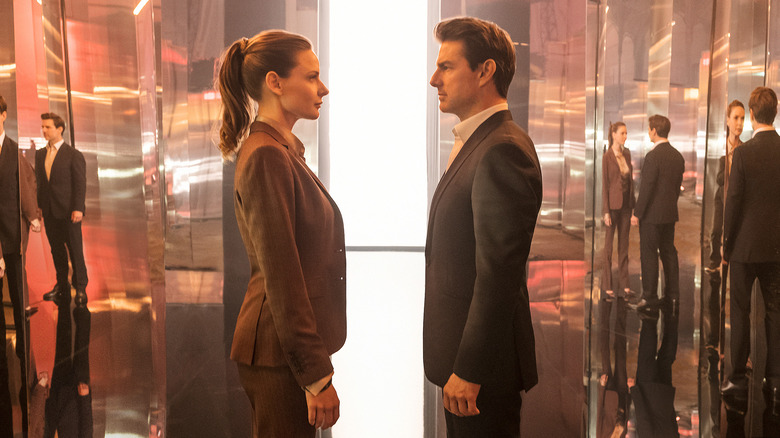
05 May 14:51

The Sci-Fi Classic Featured In Star Trek: Strange New World Has A Cool Trek Connection

by Valerie Ettenhofer

This post contains minor spoilers for the first episode of "Star Trek: Strange New Worlds."

"Star Trek: Strange New Worlds" begins with a mission statement. It's not Captain Kirk's traditional spiel about "boldly going where no man has gone before." It's also not series protagonist Captain Pike's (Anson Mount) words of wisdom that introduce the newest "Trek" series. Instead, it's a familiar monologue for sci-fi lovers, spoken by an alien man called Klaatu.

The new Paramount+ show begins with a brief nod to the concept of "first contact," showing the experience of discovery not through the eyes of the Enterprise crew, but through the eyes of aliens discovering a starship. Directly after, the episode cuts to the snowy, windblown landscape of Bear Creek, Montana, where Captain Pike is holed up on shore leave. As he makes breakfast for his lover, the classic science fiction film "The Day The Earth Stood Still" plays on the TV. Klaatu's final monologue from the film plays in voiceover before we even see the captain, a sign to sit up and pay attention. The episode itself only provides a snippet of the speech, but here's the whole thing:

"The universe grows smaller every day, and the threat of aggression by any group, anywhere, can no longer be tolerated. There must be security for all, or no one is secure. Now, this does not mean giving up any freedom, except the freedom to act irresponsibly. Your ancestors knew this when they made laws to govern themselves and hired policemen to enforce them. We, of the other planets, have long accepted this principle. We have an organization for the mutual protection of all planets and for the complete elimination of aggression."

It's A Cold War Classic

Released in 1951, "The Day The Earth Stood Still" became a science fiction touchstone for its Cold War commentary. The movie begins with a flying saucer visiting Earth with tidings of collaboration and shared technology -- only to be promptly shot by the U.S. military. The alien, Klaatu (Michael Rennie), only encounters more trouble from there. In the film's ominous final scene, he delivers the above speech before warning earthlings that their present path leads only to destruction. He delivers an ultimatum, asking earth to join his interplanetary organization, and the film ends with his departure.

"The Day The Earth Stood Still" wore its heart on its sleeve by setting its story directly in the era it was commenting on, but the humanistic sci-fi titans who followed -- including Rod Serling and "Star Trek" creator Gene Roddenberry himself -- would couch similar moral critique in more allegorical storytelling. Klaatu tries to preach non-violence and collaboration among all peoples, something earthlings in the film and audiences in real life alike tend to have a hard time pulling off. Roddenberry would do the same in the next decade, when the crew of the U.S.S. Enterprise pledged to "seek out new life and new civilizations" with intergalactic allyship in mind.

Trek Has Always Shared These Values

The original run of "Star Trek" showed a space-eye view of the Cold War just like "The Day The Earth Stood Still Did," in episodes that portray civilizations on the brink of warfare, like war games classic "A Taste of Armageddon." Roddenberry imagined a galaxy that, no matter how expansive, still fell into the same pitfalls as humanity, with alien societies often threatening to destroy themselves in the process. Yet no matter who they faced, Captain Kirk (William Shatner), Mr. Spock (Leonard Nimoy), and their crew always had words of measured wisdom -- not unlike Klaatu's -- for the struggling, violent worlds.

Pike's choice of morning entertainment in "Strange New Worlds" is a sort of mission statement, one that will no doubt carry on through the series. It's about as close to conveying the spirit of Gene Roddenberry as the show can get without actually playing an episode from "The Original Series" on Pike's TV. And there's another connection between the two stories, too: Robert Wise, who directed "The Day The Earth Stood Still," would go on to helm the very first "Trek" film, "Star Trek: The Motion Picture."

The first episode of "Star Trek: Strange New Worlds" is an impressive start for a series that has plenty to prove, and it sets the tone perfectly with this classic, grounded sci-fi reference.

Read this next: Sci-Fi Box Office Bombs That Deserve A Second Chance

The post The Sci-fi Classic Featured in Star Trek: Strange New World Has a Cool Trek Connection appeared first on /Film.
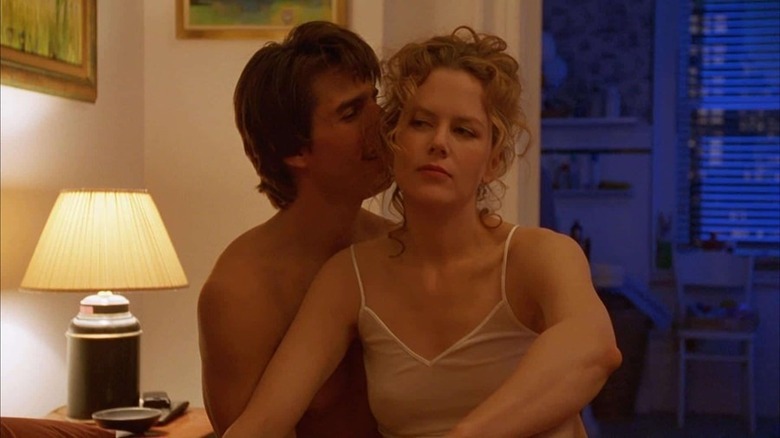
05 May 14:50

The Moon Knight Finale Deepens The Show's Black Panther Connection

by Fatemeh Mirjalili

So far, the Marvel Cinematic Universe's Disney+ slew of shows has followed the adventures of superheroes we've already known and seen at the movies. In "Moon Knight," Marvel explores a new, deeply layered comic book character for the first time via an episodic format, giving the superhero both the time and space to evolve, as he does in the pages of Marvel Comics. Unlike other MCU properties, "Moon Knight" bears little connection to the MCU; there are no notable cameos or Easter eggs that connect it to another Marvel project. It doesn't have a post-credits scene that teases the show's definite future or works towards bringing another character into its rich, Egyptian mythology-heavy universe.

However, what "Moon Knight" does is make subtle references to "Black Panther." In the season's concluding episode, it does that a second time, when both Marc Spector (Oscar Isaac) and Layla El-Faouly (May Calamawy) are seen making the Wakandan hand gesture. 

So, why is that?

Wakanda ... Forever?

The "Moon Knight" finale deepens the show's "Black Panther" connection during Marc and Layla's battle against Harrow (Ethan Hawke) and Ammit. Towards the end of the episode, Layla accepts a temporary position as an avatar of Tawaret (the Egyptian Goddess of childbirth and fertility), Marc finds his way back to life from the peaceful field of reeds, and Harrow releases Ammit, who begins devouring the souls of Cairo. It's an unhinged, chaotic mess.

But during the last fighting sequence, both Marc and Layla fight tooth and nail to save the world from Ammit's wrath and are seen recreating what appears to be the symbolic Wakandan hand gesture — previously made famous by "Black Panther." In addition to the move, "Moon Knight" has already referenced the ancestral plane, aka, the afterlife, also seen in "Black Panther." 

So, what is the symbolism behind the gesture?

The Salute Has A Deeper Meaning

In "Black Panther," the salute is first displayed when T'Challa is buried and travels to the Ancestral Plane to meet his father, where he wakes up with his arms crossed across his chest. The film's director, Ryan Coogler, previously revealed (via Inverse) the inspiration it, stating that the salute was crafted by taking inspiration from three things — the way Egyptian Pharaohs were laid to rest in their sarcophaguses, the nature of specific sculptures from West Africa, and the fact that the movement translated to "love" and "hug" in American Sign Language (ASL).

While it is possible that Marc and Layla made the Wakandan salute due to its apparent Egyptian connection, another possibility could be its connection to Osiris, the Egyptian God of death mentioned in the fifth episode of "Moon Knight." In the book Ancient Egypt Transformed: The Middle Kingdom, which was published in 2015, co-authors Adela Oppenheim, Dorothea Arnold, Dieter Arnold, and Kei Yamamoto assert that the crossed arms represent the loss of control of one's body in death, "an idea expressed" by the Egyptian God Osiris who was betrayed and brutally killed by his brother (via Inverse).

The gesture has become so closely associated with "Black Panther" that its appearance in any other MCU property feels like a direct reference to the show. In this case, the salute means something to both Marc and Layla, and is more than a cool-looking power move. Maybe it is intended as a connection to "Black Panther." Or perhaps it's their way of declaring war against their enemy, and is symbolic of their inevitable deaths.

Read this next: Every Pre-MCU Marvel Movie Ranked

The post The Moon Knight Finale Deepens the Show's Black Panther Connection appeared first on /Film.
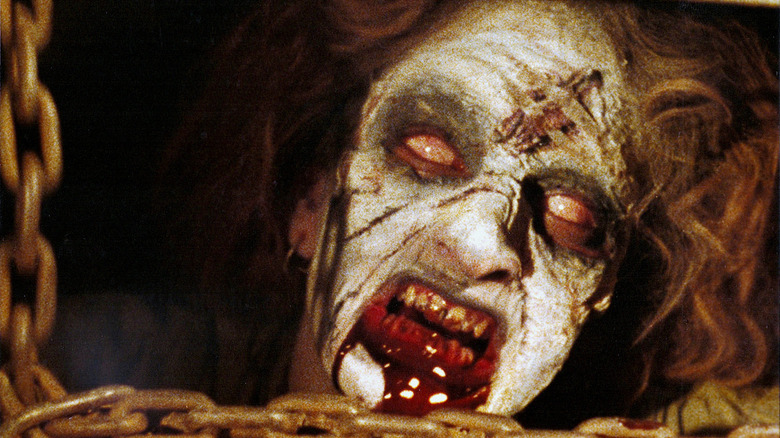
05 May 14:50

A Short History Of Spock's Love Life: T'Pring Explained

by Lyvie Scott

It seems like "Star Trek: Strange New Worlds" is boldly going where few "Trek" voyages have gone before. The new series has pulled the curtain back on an exciting era in "Star Trek" history, which means that some of the fandom's most pressing questions will finally be answered. What was the U.S.S. Enterprise like before Kirk stepped onto the bridge, and what was up with its former captain, Christopher Pike? How did the Enterprise crew really come to meet? And, more importantly: will the enigmatic Mr. Spock ever ... you know ... get down?

Vulcan romance has been used as a conceit in "Star Trek" stories here and there, but "Strange New Worlds" will see the human-Vulcan Spock navigating a serious relationship for the very first time. Granted, Spock has been pursued by women before. He's even pursued them back now and again, but usually while under the influence of sci-fi psychedelics or strange Vulcan mating rituals. Now, he's doing so of his own volition, and with an old flame previously introduced in "The Original Series." That's right: T'Pring is back — and for the long haul, it would seem.

Even if the name T'Pring doesn't immediately ring any bells, it's likely that her introduction in the original series episode "Amok Time" jogs a particular memory. It's a pretty zany episode, one made all the zanier by its introduction of pon farr, the Vulcan tradition that sends Spock into lust-fueled fever.

Let's T'Pring You Up To Speed

Pon farr visits Vulcans (typically the males) once every seven years. "It strips our minds from us," Spock explains to Kirk in "Amok Time." "It brings a madness which rips away our veneer of civilization." This bout of extreme horniness also forces male Vulcans to return to their home planet in order to mate, usually with a betrothed — and they've only got so long to do so. Apparently, if Spock's needs are not addressed within eight days, he'll likely die.

Kirk gets Spock to Vulcan just in time for his koon-ut-kal-if-fee ceremony, which can take the form of either a wedding or a gladiator-like fight to the death. And unfortunately for Spock, his is the latter. Though he was promised to T'Pring when they were children, Spock has been gone long enough for his betrothed to fall in love with somebody else. In an effort to annul their engagement, T'Pring claims kal-if-fee, forcing Spock and Kirk to duel for her hand in marriage. 

Spock's romance with T'Pring — if you can call it a romance at all — doesn't exactly end well, but it certainly wasn't his last. There was also Nurse Christine Chapel, whose crush on Spock came to a head in several episodes, "Amok Time" included. Unfortunately, her confessions (and Spock's subsequent rejections) get increasingly awkward as time goes by. But it's hard not to sympathize with her plight: Spock is weirdly irresistible. Haven't we all swooned a bit at his flawless intellect, or even his uncharacteristic outbursts? He might be prone to a rational approach in all his endeavors, but all that pent-up energy is bound to escape at some point. And when it does, it's kind of hot.

Spock Amok

If we've learned anything from the "Twilight" saga, it's that restraint is inherently sexy. Such a phenomenon didn't begin on the pages of a Stephanie Meyer supernatural romance, but the Team Edward mania was certainly an example of the movement at its peak. Leonard Nimoy's Spock enjoyed similar infamy back in the days of "The Original Series," and it's not hard to see why. That Spock is so tightly wound really adds to his appeal as a sex symbol, in part because "Star Trek" writers know how gratifying it can be to watch him unravel. 

Take his run-in with Leila Kalomi, an ex-girlfriend of sorts, in "This Side of Paradise." Like Chapel, Leila once confessed her feelings for Spock before the events of the original series. Of course Spock couldn't reciprocate then, but when they reunite on an alien planet years later, Leila goes to interesting lengths to win his affections. Her tactics involve the use of a spore-spewing plant that "infects" its hosts with lowered inhibitions. Once Spock is exposed, he's finally able to admit that he loves Leila — but it's not clear how much of his confession is genuine, and how much is influenced by those pesky spores.

With most of these interactions taking place more or less against Spock's will, it's easy to feel icky about the whole affair. Fortunately, there's always the Kelvin timeline, which began with J.J. Abrams' "Star Trek" reboot in 2009. There, Spock enjoys a longterm relationship with Lt. Uhura. Though it's not without its ups and downs (Spock choses self-sacrifice and logic over Uhura's feelings more than once) it's one of the healthiest relationships he's ever had. It also informed Spock's battle between his human and Vulcan sides in a fresh and interesting way.

A Logical Appeal

Now, "Strange New Worlds" is taking that battle in a new direction. By reintroducing T'Pring (now played by Gia Sandhu), this time at the beginning of her long engagement to Spock, fans will finally get to see what he's like in a committed relationship with another Vulcan. We've seen him struggle against his more "human" inclinations in ill-fated flings with human women and we've even seen him forge connections with Romulans and Vulcans, but each was either born out of necessity or some weird extenuating circumstance. Spock's relationship with T'Pring is on an entirely different level from those in past installments. It will allow Spock to explore love and attachment through the lens of logic and tradition, and we can probably thank Ethan Peck — AKA "Hot Spock" — for this new and interesting development. 

Peck turned a lot of heads with his disheveled (and bearded!) Spock in "Star Trek: Discovery." His take on the character is younger and moodier than the Spock he'd grow to become, which means that his emotions — and his sensuality — could be played up a bit more throughout the series. It also doesn't hurt that he really is just plain hot, even when deferring to logic. Despite the obvious appeal of his more primal qualities, Spock's practical side is also a big part of his charm. It takes a certain kind of person to observe their emotions in a way that they can clearly articulate. Plus, his naïveté concerning human inclinations can be really endearing, and Peck plays into that innocence brilliantly.

Though he's clean-shaven and ready for duty aboard the Enterprise once more, Spock's latent sensuality hasn't gone anywhere. With T'Pring, Nurse Chapel, and even Uhura appearing in "Strange New Worlds," who knows what situations Spock will find himself in this time around?

Episodes of "Star Trek: Strange New Worlds" hit Paramount+ each Thursday.

Read this next: Every Star Trek Show And Movie In Chronological Order

The post A Short History of Spock's Love Life: T'Pring Explained appeared first on /Film.
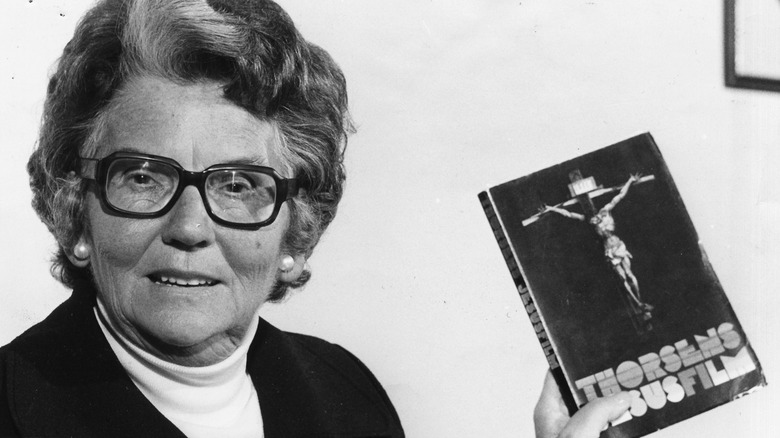
05 May 14:49

Google to Add Passwordless Authentication Support to Android and Chrome

by noreply@blogger.com (Ravie Lakshmanan)
Google today announced plans to implement support for passwordless logins in Android and the Chrome web browser to allow users to seamlessly and securely sign in across different devices and websites irrespective of the platform. "This will simplify sign-ins across devices, websites, and applications no matter the platform — without the need for a single password," Google said. <!--adsense-->
05 May 14:49

May Calamawy Loved One Particular Part Of Her Scarlet Scarab Costume In Moon Knight

by Fatemeh Mirjalili

Towards the end of the "Moon Knight" season 1 finale that dropped on Disney+ on Wednesday, the Marvel Cinematic Universe introduced its first female Egyptian superhero. Donning wings and spectacular superhero armor, Layla El-Faouly (May Calamawy) emerged from the rubble and transformed into an avatar of Tawaret (the Egyptian Goddess of childbirth and fertility) during "Gods and Monsters," the show's sixth episode.

Layla's character arc has always ensured she is more than just Marc's love interest. She's a fully realized character who has no intentions of becoming a full-time avatar, nor does she yearn for the same abilities as her husband. She makes a temporary arrangement with Tawaret to put an end to Harrow's crimes and bind Ammit once again, becoming a superhero in the process. 

As Tawaret's avatar, Layla is granted the gifts of superhuman strength and agility. She can perform some incredible gymnastics and has the ability to absorb energy blasts. She wears an armor of black, white, and gold, complete with bulletproof golden wings, a pair of twin swords, and what appears to be a traditional ancient Egyptian wrap skirt known as the schenti displayed in the front. Fans have different opinions on what the best part of her costume is (seriously, have you seen those wings?), and now, May Calamawy has revealed her favorite. Let's just say that her answer may surprise you!

May Calamawy Loves How 'Royal' Her Costume Is

In an interview with Marvel.com, Calamawy gushed over her impressive new costume, courtesy of Tawaret, the Egyptian hippo goddess. While Layla's golden, magic-deflecting wings appear to be the pièce de résistance in her costume, the Egyptian-Palestinian actress was rather excited about her "incredible" pants and wrap skirt. 

"We had this man named Wilbur, who hand-painted all of the designs on the pants, which I loved, and on the neck. The top part keeps you straight, so you're walking around already like this. And it feels really regal and royal. It's just-- it's really cool. It's cool when you forget, and then you look down, and you're like, whoa."

I can understand Calamawy's sentiments — her character's costume certainly has a regality about it. The Scarlet Scarab is an Egyptian superhero, so it is only fair that her costume is reminiscent of ancient Egyptian clothing!

The Scarlet Scarab Is A New Addition To The MCU

First introduced in 1997, the Scarlet Scarab in the comics is an entirely different character from Layla. The superhero appeared in the pages of "Invaders #23" as part of its World War II series and described the superhero's powers of strength, flight, and the ability to absorb and blast energy. The only connection between Layla and the original Scarlet Scarab is a name — the comic book character was Abdul Faoul, and Layla's late father's name was Abdallah El-Faouly. The original hero was a symbol of bravery for Egypt — a warrior who protected his nation with all his might ... far from Layla's real father, who was an archaeologist.

While Layla isn't officially referred to as the Scarlet Scarab in "Moon Knight," the team behind the series has confirmed the character's superhero identity. Calamawy is the MCU's first Egyptian superhero, and the reveal has been a moment of great joy for the MENA community. Representation is and will always be necessary — so to see an Arab actress bring an Arab superhero to life for the first time in mainstream entertainment culture is a moment worth celebrating. Here's hoping "Moon Knight" gets a second season, so we may see Layla El-Faouly in her badass Scarlet Scarab attire once more.

Read this next: Every MCU Post-Credits Sequence Ranked From Worst To Best

The post May Calamawy Loved One Particular Part of Her Scarlet Scarab Costume in Moon Knight appeared first on /Film.
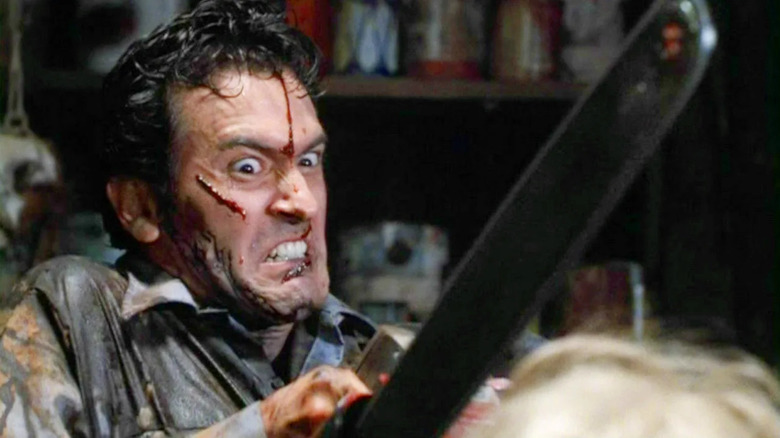
05 May 14:48

So the often delayed requirement of having a "Real ID" to fly is approaching again on May 3, 2023. Finally, the hijackings, murder, and mayhem will end on that day [Facepalm]