Shared posts

17 Jun 18:52

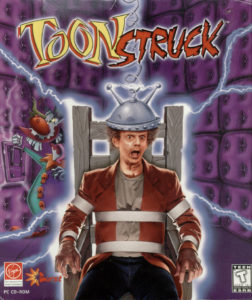
Toonstruck (or, A Case Study in the Death of Adventure Games)

by Jimmy Maher

Some time ago, in the midst of a private email discussion about the general arc of adventure-game history, one of my readers offered up a bold claim: he said that the best single year to be a player of point-and-click graphic adventures was 1996. This rings decidedly counterintuitive, given that 1996 was also the year during which the genre first slid into a precipitous commercial decline that would not even begin to level out for a decade or more. But you know what? Looking at the lineup of games released that year, I found it difficult to argue with him. These were games of high hopes, soaring ambitions, and big budgets. The genre has never seen such a lineup since. How poignant and strange, I thought to myself. Then I thought about it some more, and I decided that it wasn’t really so strange at all.

For when we cast our glance back over entertainment history, we find that it’s not unusual for a strain of creative expression to peak in terms of sophistication and ambition some time after it has passed its zenith of raw popularity. Wings won the first ever best-picture Oscar two years after The Jazz Singer had numbered the days of soundless cinema; Duke Ellington’s big band blew up a storm at Newport two years after “Rock Around the Clock” and “That’s All Right” had heralded the end of jazz music at the top of the hit parade. The same sort of thing has happened on multiple occasions in gaming. I would argue, for example, that more great text adventures were commercially published after 1984, the year that interactive fiction plateaued and prepared for the down slide, than before that point. And then, of course, we have the graphic adventures of 1996 — the year after the release of Phantasmagoria, the last million-selling adventure game to earn such sales numbers entirely on its own intrinsic appeal, without riding the coattails of an earlier game for which it was a sequel or any other pre-existing mass-media sensation.

There are two reasons why this phenomenon occurs. One is that the people who decide what projects to green-light always have a tendency to look backward at least as much as forward; new market paradigms are always hard to get one’s head around. The other becomes increasingly prevalent as projects grow more complex, and the window of time between the day they are begun and the day they are completed grows longer as a result. A lot can happen in the world of media in the span of two years or more — not coincidentally, the type of time span that more and more game-development projects were starting to fill by the mid-1990s. Toonstruck, our subject for today, is a classic example of what can happen when the world in which a game is conceived is dramatically different from the one to which it is finally born.


Let us turn the clock back to late 1993, the moment of Toonstruck‘s genesis. At that time, the conventional wisdom inside the established games industry about gaming’s necessary future hewed almost exclusively to what we might call the Sierra vision, because it was articulated so volubly and persuasively by that major publisher’s founder and president Ken Williams. It claimed that the rich multimedia affordances of CD-ROM would inevitably lead to a merger of interactivity with cinema. Popular movie stars would soon be vying to appear in interactive movies which would boast the same production values and storytelling depth as traditional movies, but which would play out on computer instead of movie-theater or television screens, with the course of the story in the hands of the ones sitting behind the screens. This mooted merger of Silicon Valley and Hollywood — often abbreviated as “Siliwood” — would require development budgets exponentially larger than those the industry had been accustomed to, but the end results would reach an exponentially wider audience.

The games publisher Virgin Interactive, a part of Richard Branson’s sprawling media and travel empire, was every bit as invested in this prophecy as Sierra was. Its Los Angeles-based American arm was the straw that stirred the drink, under the guidance of a Brit named Martin Alper, who had been working to integrate games into a broader media zeitgeist for many years; he had first made a name for himself in his homeland as the co-founder of the budget label Mastertronic, whose games embraced pop-culture icons from Michael Jackson to Clumsy Colin (the mascot of a popular brand of chips), and were sold as often from supermarkets as from software stores. Earlier in 1993, his arm of Virgin had published The 7th Guest, an interactive horror flick which struck many as a better prototype for the Sierra vision than anything Sierra themselves had yet released; it had garnered enormous sales and adoring press notices from the taste-makers of mainstream media as well as those inside the computer-gaming ghetto. Now, Alper was ready to take things to the next level.

He turned for ideas to another Brit who had recently joined him in Los Angeles: a man named David Bishop, who had already worked as a journalist, designer, manager, and producer over the course of his decade in the industry. Bishop proposed an interactive counterpart of sorts to Who Framed Roger Rabbit, the hit 1988 movie which had wowed audiences with the novel feat of inserting cartoon characters into a live-action world. Bishop’s game would do the opposite: insert real actors into a cartoon world. He urged Alper to pull out all the stops in order to make something that would be every bit as gobsmacking as Roger Rabbit had been in its day.

So far, so good. But who should take on the task of turning Bishop’s idea into a reality? The 7th Guest had been created by a then-tiny developer known as Trilobyte, itself a partnership between a frustrated filmmaker and a programming whiz. Taking the press releases that labeled them the avatars of the next generation of entertainment at face value, the two had now left the Virgin fold, signing a contract with a splashy new player in the multimedia sweepstakes called Media Vision. Someone else would have to make the game called Toonstruck.

In a telling statement of just how committed they already were to their interactive cartoon, Virgin USA, who had only acted as a publisher to this point, decided to dive into the development business. In October of 1993, Martin Alper put two of his most trusted producers, Neil Young and Chris Yates, in charge of a new, wholly owned development studio called Burst, formed just to make Toonstruck. The two were given a virtually blank check to do so. Make it amazing was their only directive.

So, Young and Yates went across town to Hollywood. There they hired Nelvana, an animation house that had been making cartoons of every description for over twenty years. And they hired as well a gaggle of voice-acting talent that was worthy of a big-budget Disney feature. There were Tim Curry, star of the camp classic Rocky Horror Picture Show; Dan Castellaneta, the voice of Homer Simpson (“D’oh!”); David Ogden-Stiers, who had played the blue-blooded snob Charles Emerson Winchester III on M*A*S*H; Dom Deluise of The Cannonball Run and All Dogs Go to Heaven fame; plus many other less recognizable names who were nevertheless among the most talented and sought-after voices in cartoon production, the sort that any latch-key kid worth her salt had listened to for countless hours by the time she became a teenager. In hiring the star of the show — the actor destined to actually appear onscreen, inserted into the cartoon world — Burst pulled off their greatest coup of all: they secured the signature of none other than Christopher Lloyd, a veteran character actor best known as the hippie burnout Jim from the beloved sitcom Taxi, the mad scientist Doc Brown from the Back to the Future films… and Judge Doom, the villain from Who Framed Roger Rabbit. Playing in a game that would be the technological opposite of that film’s inserting of cartoon characters into the real world, Lloyd would become his old character’s psychological opposite, the hero rather than the villain. Sure, it was stunt casting — but how much more perfect could it get?

What happened next is impossible to explain in any detail. The fact is that Burst was and has remained something of a black box. What is clear, however, is that Toonstruck‘s designers-in-the-trenches Richard Hare and Jennifer McWilliams took their brief to pull out all the stops and to spare no expense in doing so as literally as everyone else at the studio, concocting a crazily ambitious script. “We were full of ideas, so we designed and designed and designed,” says McWilliams, “with a great deal of emphasis on what would be cool and interesting and funny, and not so much focus on what would actually be achievable within a set schedule and budget. [Virgin] for the most part stepped aside and let us do our thing.”

Their colleagues storyboarded their ever-expanding design document and turned it into hours and hours of quality cartoon animation — animation which was intended to meet or exceed the bar set by a first-string Disney feature film. As they did so, the deadlines flew by unheeded. Originally earmarked with the eternal optimism of game developers and Chicago Cubs fans for the 1994 Christmas season, the project slipped into 1995, then 1996. Virgin trotted it out at trade show after trade show, making ever more sweeping claims about its eventual amazingness at each one, until it became an in-joke among the gaming journalists who dutifully inserted a few lines about it into each successive “coming soon” preview. By 1996, the bill for Toonstruck was approaching a staggering $8 million, enough to make it the second most expensive computer game to date. And yet it was still far from completion.

It seems clear that the project was poorly managed from the start. Take, for example, all that vaunted high-quality animation. Burst’s decision to make the cartoon of Toonstruck first, then figure out how to make use of it in an interactive context later was hardly the most cost-effective way of doing things. It made little sense to aim to compete with Disney on a level playing field when the limitations of the consumer-computing hardware of the time meant that the final product would have to be squashed down to a resolution of 640 X 400, with a palette of just 256 shades, for display on a dinky 15-inch monitor screen.

There are also hints of other sorts of dysfunction inside Burst, and between Burst and its parent company. One Virgin insider who chose to remain anonymous alluded vaguely in 1998 to the way that “internal politics made the situation worse. Some of the project leaders didn’t get on with other senior staff, and some people had friendships to protect. So there was finger-pointing and back-slapping going on at the same time.”


During the three years that Toonstruck spent in development, the Sierra vision of gaming’s necessary future was challenged by a new one. In December of 1993, id Software, a tiny renegade company operating outside the traditional boundaries of the industry by selling its creations largely through the shareware model, released a little game called DOOM, which featured exclusively computer-generated 3D environments, gobs of bloody action, and, to paraphrase a famous statement by its chief programmer John Carmack, no more story than your typical porn movie. Not long after, a studio called Blizzard Entertainment debuted a fantasy strategy game called Warcraft which played like an action game, in hectic real time; not the first of its type, it was nevertheless the one that really caught gamers’ imaginations, especially after Blizzard perfected the concept with 1995’s Warcraft II. With these games and others like them selling at least as well as the hottest adventures, the industry’s One True Way Forward had become a proverbial fork in the road. Publishers could continue to plow money into interactive movies in the hope of cracking into the mainstream of mass entertainment, or they could double down on their longstanding customer demographic of young white males by offering them yet more fast-paced mayhem. Already by 1995, the fact that games of the latter stripe tended to cost far less than those of the former was enough to seal the deal in the minds of many publishers.

Virgin Interactive was given especial food for thought that year when they wound up publishing Trilobyte’s next game after all. Media Vision, the publisher Trilobyte had signed with, had imploded amidst government investigations of securities fraud and other financial crimes, and an opportunistic Virgin had swooped into the bankruptcy auction and made off with the contract for The 11th Hour, the sequel to The 7th Guest. It seemed like quite a clever heist at the time — but it began to seem somewhat less so when The 11th Hour under-performed relative to expectations. Both reviewers and ordinary gamers stated clearly that they were already becoming bored of Trilobyte’s rote mixing of B-movie cinematics with hoary set-piece puzzles that mostly stemmed from well before the computer age — tired of the way that the movie and the gameplay in a Trilobyte creation had virtually nothing to do with one another.

Then, as I noted at the beginning of this article, 1996 brought with it an unprecedentedly large lineup of ambitious, earnest, and expensive games of the Siliwood stripe, with some of them at least much more thoughtfully designed than anything Trilobyte had ever come up with. Nonetheless, as the year went by an alarming fact was more and more in evidence: this year’s crop of multimedia extravaganzas was not producing any towering hits to rival the likes of Sherlock Holmes: Consulting Detective in 1992, The 7th Guest in 1993, Myst in 1994, or Phantasmagoria in 1995. Arguably the best year in history to be a player of graphic adventures, 1996 was also the year that broke the genre. Almost all of the big-budget adventure releases still to come from American publishers would owe their existence to corporate inertia, being projects that executives found easier to complete and hope for a miracle than to cancel outright and then try to explain the massive write-off to their shareholders — even if outright cancellation would have been better for their companies’ bottom lines. In short, by the beginning of 1997 only dreamers doubted that the real future of the gaming mainstream lay with the lineages of DOOM and Warcraft.

Before we rush to condemn the philistines who preferred such games to their higher-toned counterparts, we must acknowledge that their preferences had to do with more than sheer bloody-mindedness. First-person shooters and real-time-strategy games could be a heck of a lot of fun, and lent themselves very well to playing with others, whether gathered together in one room or, increasingly, over the Internet. The generally solitary pursuit of adventure gaming had no answer for this sort of boisterous bonding experience. And there was also an economic factor: an adventure was a once-and-done endeavor that might last a week or two at best, after which you had no recourse but to go out and buy another one. You could, on the other hand, spend literally years playing the likes of DOOM and Warcraft with your mates.

Then there is one final harsh reality to be faced: the fact is that the Sierra vision never came close to living up to its billing for the player. These games were never remotely like waking up in the starring role of a Hollywood film. Boosters like Ken Williams were thrilled to talk about interactive movies in the abstract, but these same people were notably vague about how their interactivity was actually supposed to work. They invested massively in Hollywood acting talent, in orchestral soundtracks, and in the best computer artists money could buy, while leaving the interactivity — the very thing that ostensibly set their creations apart — to muddle through on its own, one way or another.

Inevitably, then, the interactivity ended up taking the form of static puzzles, the bedrock of adventure games since the days when they had been presented all in text. The puzzle paradigm persisted into this brave new era simply because no one could proffer any other ideas about what the player should be doing that were both more compelling and technologically achievable. I hasten to add that some players really, genuinely love puzzles, love few things more than to work through an intricate web of them in order to make something happen; I include myself among this group. When puzzles are done right, they’re as satisfying and creatively valid as any other type of gameplay.

But here’s the rub: most people — perhaps even most gamers — really don’t like solving puzzles all that much at all. (These people are of course no better or worse than those who do — just different.) For the average Joe or Jane, playing one of these new-fangled interactive movies was like watching a conventional movie filmed on an ultra-low-budget, usually with terrible acting. And then, for the pièce de résistance, you were expected to solve a bunch of boring puzzles for the privilege of witnessing the underwhelming next scene. Who on earth wanted to do this after a hard day at the office?

All of which is to say that the stellar sales of Consulting Detective, The 7th Guest, Myst, and Phantasmagora were not quite the public validations of the concept of interactive movies that the industry chose to read them as. The reasons for these titles’ success were orthogonal to their merits as games, whatever the latter might have been. People bought them as technology demonstrations, to show off the new computers they had just purchased and to test out the CD-ROM drives they had just installed. They gawked at them for a while and then, satiated, planted themselves back in front of their televisions to spend their evenings as they always had. This was not, needless to say, a sustainable model for a mainstream gaming genre. By 1996, the days when the mere presence of human actors walking and/or talking on a computer monitor could wow even the technologically unsophisticated were fast waning. That left as customers only the comparatively tiny hardcore of buyers who had always played adventure games. They were thrilled by the diverse and sumptuous smorgasbord that was suddenly set before them — but the industry’s executives, looking at the latest sales numbers, most assuredly were not. Just like that, the era of Siliwood passed into history. One can only hope that all of the hardcore adventure fans enjoyed it while it lasted.


Toonstruck was, as you may have guessed, among the most prominent of the adventures that were released to disappointing results in 1996. That event happened at the very end of the year, and only thanks to a Virgin management team who decided in the summer that enough was enough. “The powers that be in management had to step in and give us a dose of reality,” says Jennifer McWilliams. “We then needed to come up with an ending that could credibly wrap the game up halfway through, with a cliffhanger that would, ideally, introduce part two. I think we did well considering the constraints we were under, but still, it was not what we originally envisioned.” Another, anonymous team member has described what happened more bluntly: “The team was told to ‘cut it or can it’ — it either had to be shipped real soon, or not at all.”

The former option was chosen, and thus Toonstruck shipped just before Christmas, on two discs that between them bore only about one third of the total amount of animation created for the game, and that in a severely degraded form. Greeted with reviews that ran the gamut from raves to pans, it wound up selling about 150,000 copies. For a normal game with a normal budget, such numbers would be just about acceptable; if the 100,000-copy threshold was no longer the mark of an outright hit in the computer-games industry of 1996, selling that many copies and then half again that many more wasn’t too bad either. Unfortunately, all of the usual quantifiers got thrown out for a game that had cost over $8 million to make. One Virgin employee later mused wryly how Toonstruck had been intended to “blow the public away. The only thing that got blown was vast amounts of cash, and the public stayed away.”

Bleeding red ink from the failure of Toonstruck and a number of other games, Virgin’s American arm was ordered by the parent company in London to downsize their budgets and ambitions drastically. After creating a few less expensive but equally commercially disappointing games, Burst Studios was sold in 1998 to Electronic Arts, who renamed it EA Pacific and shifted its focus to 3D real-time strategy — a sign of the times if ever there was one.

Such is one tale of Toonstruck, a game which could only have appeared in its own very specific time and place. But, you might be wondering, how does this relic of a fizzled vision of gaming’s future play?


Toonstruck‘s opening movie is not a cartoon. We instead meet Christopher Lloyd for the first time in the real world, in the role of Drew Blanc (get it?), a cartoonist suffering from writer’s block. He’s called into the office of his impatient boss Sam Schmaltz, who’s played by Ben Stein, an actor of, shall we say, limited range, but one who remains readily recognizable to an entire generation for playing every kid’s nightmare of a boring teacher in Ferris Bueller’s Day Off and The Wonder Years.
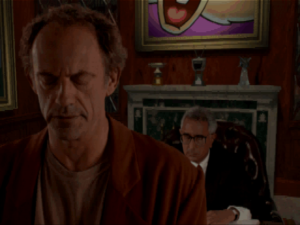
We learn that Drew is unhappy with his current assignment as the illustrator of The Fluffy Fluffy Bun Bun Show, a piece of cartoon pablum with as much edge as a melting stick of butter. He rather wants to do something with his creation Flux Wildly, a hyperactive creature of uncertain taxonomy and chaotic disposition. Schmaltz, however, quickly lives up to his name; he’s having none of it. A deflated Drew resigns himself to an all-nighter in the studio to make up the time he’s wasted daydreaming about the likes of Flux. But in the course of that night, he is somehow drawn into his television — right into a cartoon.
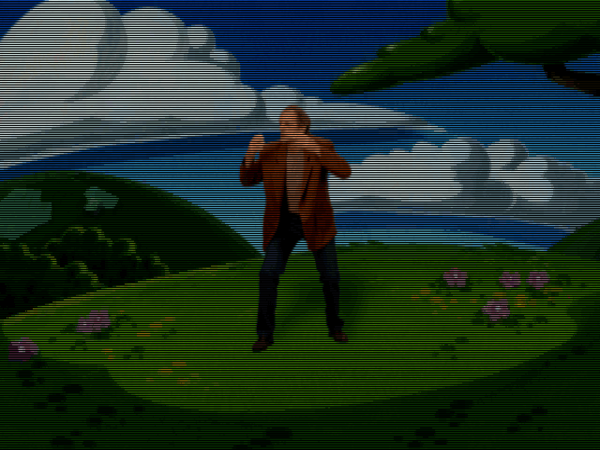
There the bewildered Drew meets none other than Flux Wildly himself, finding him every bit as charmingly unhinged as he’d always imagined him to be. He learns that the cartoon world in which he finds himself is divided into three regions: Cutopia, where the fluffy bun bun bunnies and their ilk live; Zanydu, which anarchists like Flux call home; and Malevoland, where true evil lurks. Trouble is, Count Nefarious of Malevoland has gotten tired of the current balance of power, and has started making bombing raids on the other two regions in his Malevolator, using its ray of evil to turn them as dark and twisted as his homeland. King Hugh of Cutopia promises Drew that, if he first saves them all by collecting the parts necessary to build a Cutifier — the antidote to the Malevolator — he will send Drew back to his own world.
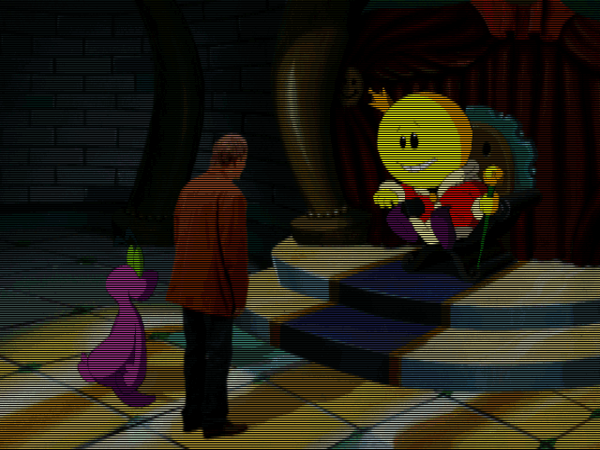
All of that is laid out in the opening movie, after which the plot gears are more or less shifted into neutral while you commence wandering around solving puzzles. And it’s here that the game presents its most welcome surprise: unlike so many other multimedia productions of this era that were sold primarily on the basis of their audiovisuals, this game’s puzzle design is clever, complex, and carefully crafted. I have no knowledge of precisely how this game was tested and balanced, but I have to assume these things were done, and done well. It’s not an easy game by any means — there are dozens and dozens of puzzles here, layered on top of one another in a veritable tangle of dependencies — but it’s never an unfair one. In the best tradition of LucasArts, there are no deaths or dead ends. If you are willing to observe the environment with a meticulous eye, experiment patiently, and enter into the cartoon logic of a world where holes are portable and five minutes on a weight bench can transform your physique, you might just be able to solve this one without hints.
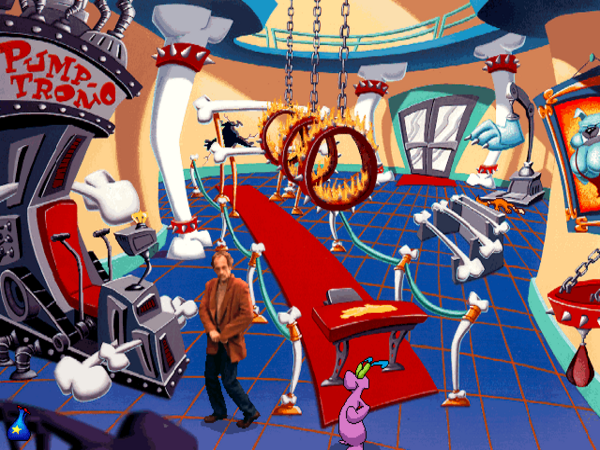
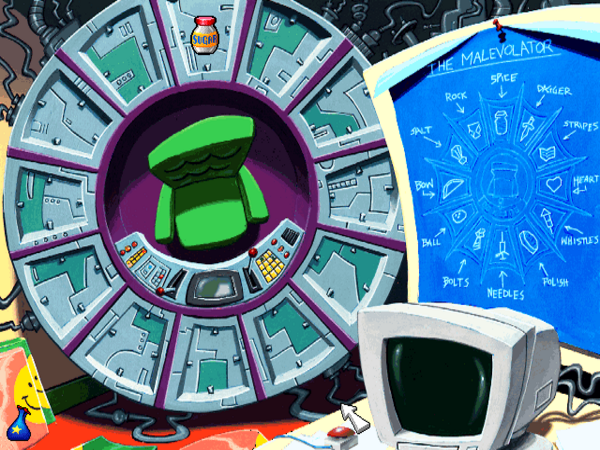
The puzzles manage the neat trick of being whimsical without ever abandoning logic entirely. Take, for example, the overarching meta-puzzle you’re attempting to solve as you wander through the lands. Assembling the Cutifier requires combining matched pairs of objects, such as sugar and spice (that’s a freebie the game gives you to introduce the concept). Other objects waiting for their partners include a dagger, some stripes, a heart, some whistles, some polish, etc. If possible combinations have started leaping to mind already, you might really enjoy this game. If they haven’t, on the other hand, you might not, or you might have fallen afoul of the exception to the rule of its general solubility: it requires a thoroughgoing knowledge of idiomatic English, of the sort that only native speakers or those who have been steeped in the language for many years are likely to possess.
While you’re working out its gnarly puzzle structure, Toonstruck is doing its level best to keep you amused in other ways. Players who are only familiar with Christopher Lloyd from his scenery-chewing portrayals in Back to the Future and Who Framed Roger Rabbit may be surprised at his relatively low-key performance here; more often than not, he’s acting as the straight man for his wise-cracking sidekick Flux Wildly and other gleefully over-the-top cartoon personalities. In truth, Lloyd was (and is) a more multi-faceted and flexible actor than his popular image might suggest, having decades of experience in film, television, and theater productions of all types behind him. His performance here, in what must have been extremely trying circumstances — he was, after all, constantly expected to say his lines to characters who weren’t actually there — feels impressively natural.

Drew Blanc’s friendship with Flux Wildly is the emotional heart of the story. Their relationship can’t help but bring to mind the much-loved LucasArts adventuring duo Sam and Max. Once again, we have here a subdued humanoid straight man paired with a less anthropomorphic pal who comes complete with a predilection for violence. Once again the latter keeps things lively with his antics and his constant patter. And once again you the player can use him like an inventory item from time to time on the problems you encounter, sometimes with productive and often with amusing results. Flux Wildly may just be my favorite thing in the game. I just wish he was around through the whole game; more on that momentarily.
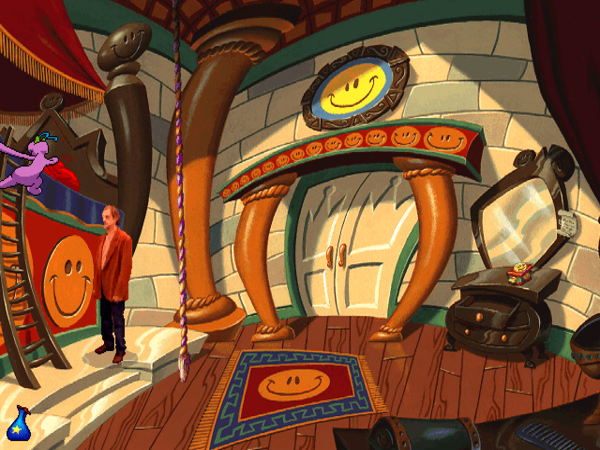
Although Flux is a lot of fun, the writing in general is a bit of a mixed bag. As, for that matter, were contemporary reviews of the writing. Computer Gaming World found Toonstruck “hilarious”: “With humor that ranges from cutesy to risqué, Toonstruck keeps the laughter coming nonstop.” Next Generation, on the other hand, wrote that “the designers have tried desperately hard to make the game zany, wacky, crazy, twisted, madcap, and side-splittingly hilarious — but it just isn’t. The dialog, slapstick humor, and relentless ‘comedy’ situations are tired. You’ve seen most of these jokes done better 40 years ago.”

In a way, both takes are correct. Toonstruck is sometimes genuinely clever and funny, but just as often feels like it’s trying way too hard. There are reports that the intended audience for the game drifted over its three years in development, that it was originally planned as a kid-friendly game and only slowly moved in a more adult direction. This may explain some of the jarring tonal shifts inside its world. At times, the writing doesn’t seem to know what it wants to be, veering wildly from the light and frothy to that depressingly common species of videogame humor that mistakes transgression for wit. The most telling example is also the one scene that absolutely no one who has ever played this game, or for that matter merely watched it being played, can possibly forget, even if she wants to.

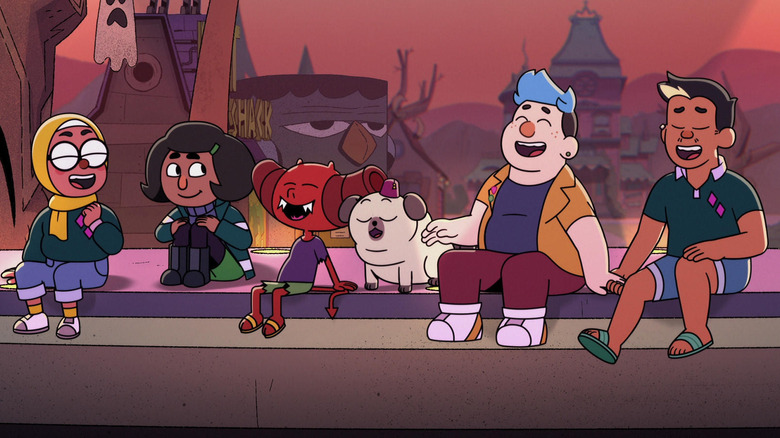
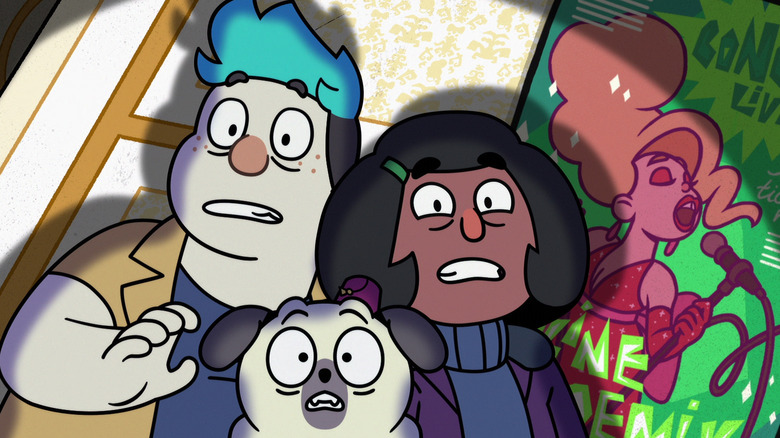
While exploring the land of Cutopia, you come upon a sweet, matronly dairy cow and her two BFFs, a cute and fuzzy sheep and a tired old horse. Some time later, Count Nefarious arrives to zap their farm with his Malevolator. Next time you visit, you find that the horse has been turned into glue. Meanwhile the cow is spread-eagled on a “Wheel-O-Luv,” her udders dangling pendulously in a way that looks downright pornographic, cackling with masochistic delight while the leather-clad sheep gives her her delicious punishment. Words fail me… this is something you have to see for yourself.


Here and in a few other places, Toonstruck is just off, weird in a way that is not just unfunny or immature but that actually leaves you feeling vaguely uncomfortable. It demonstrates that, for all Virgin Interactive’s mainstream ambitions, they were still a long way from mustering the thematic, aesthetic, and writerly unity that goes into a slick piece of mass-market entertainment.

Toonstruck is at its best when it is neither trying to trangress for the sake of it nor to please the mass market, but rather when it’s delicately skewering a certain stripe of sickly sweet, creatively bankrupt, lowest-common denominator children’s programming that was all over television during the 1980s and 1990s. Think of The Care Bears, a program that was drawn by some of the same Nelvana animators who worked on Toonstruck; they must surely have enjoyed ripping their mawkish past to shreds here. Or, even better, think of Barney the hideous purple dinosaur, dawdling through excruciating songs with ripped-off melodies and cloying lyrics that sound like they were made up on the spot. Few media creations have ever been as easy to hate as him, as the erstwhile popularity of the Usenet newsgroup alt.Barney.dinosaur.die.die.die will attest.

Being created by so many insiders to the cartoon racket, Toonstruck is well placed to capture the very adult cynicism that oozes from such productions, engineered as they were mainly to sell plush toys to co-dependent children. It does so not least through King Hugh of Cutopia himself, who turns out to be — spoiler alert! — not quite the heroic exemplar of inclusiveness he’s billed as. Meanwhile Flux Wildly and his friends from Zanydu stand for a different breed of cartoons, ones which demonstrate a measure of respect for their young audience.

There does eventually come a point in Toonstruck, more than a few hours in, when you’ve unraveled the web of puzzles and assembled all twelve matched pairs that are required for the Cutifier. By now you feel like you’ve played a pretty complete game, and are expecting the end credits to start rolling soon. Instead the game pulls its next big trick on you: everything goes to hell in a hand basket and you find yourself in Count Nefarious’s dungeon, about to begin a second act whose presence was heretofore hinted at only by the presence of a second, as-yet unused CD in the game’s (real or virtual) box.
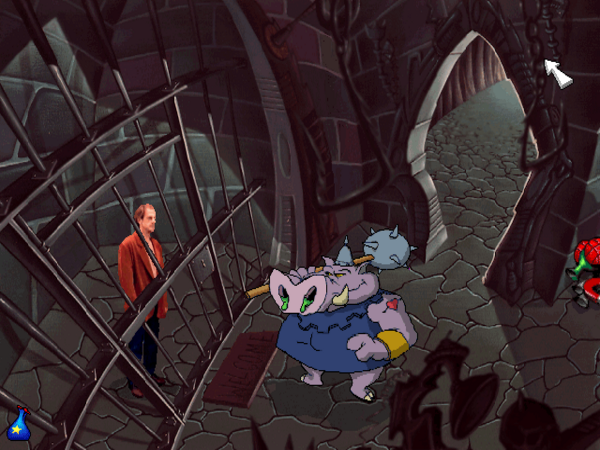
Most players agree that this unexpected second act is, for all the generosity demonstrated by the mere fact of its existence, considerably less enjoyable than the first. Your buddy Flux Wildly is gone, the environment darker and more constrained, and your necessary path through the plot more linear. It feels austere and lonely in contrast to what has come before — and not in a good way. Although the puzzle design remains solid enough, I imagine that this is the point where many players begin to succumb to the temptations of hints and walkthroughs. And it’s hard to blame them; the second act is the very definition of an anticlimax — almost a dramatic non sequitur in the way it throws the game out of its natural rhythm.

But a real ending — or at least a form of ending — does finally arrive. Drew Blanc defeats Count Nefarious and is returned to his own world. All seems well — until Flux Wildly contacts him again in the denouement to tell him that Nefarious really isn’t done away with just yet. Incredibly, this was once intended to mark the beginning of a third act, of four in total, all in the service of a parable about the creative process that the game we have only hints at. Laboring under their managers’ ultimatum to ship or else, the developers had to fall back on the forlorn hope of a surprise, sequel-justifying hit in the face of the marketplace headwinds that were blowing against the game. Jennifer McWilliams:

Toonstruck was meant to be a funny story about defeating some really weird bad guys, as it was when released, but originally it was also about defeating one’s own creative demons. It was a tribute to creative folks of all types, and was meant to offer encouragement to any of them that had lost their way. So, the second part of the game had Drew venturing into his own psyche, facing his fears (like a psychotically overeager dentist), living out his fantasies (like meeting his hero, Vincent van Gogh), and eventually finding a way to restore his creative spark.

It does sound intriguing on one level, but it also sounds like much, much too much for a game that already feels rather overstuffed. If the full conception had been brought to fruition, Toonstruck would have been absolutely massive, in the running for the biggest graphic adventure ever made. But whether its characters and puzzle mechanics could have supported the weight of so much content is another question. It seems that all or most of the animation necessary for acts three and four was created — more fruits of that $8 million budget — and this has occasionally led fans to dream of a hugely belated sequel. Yet it is highly doubtful whether any of the animation still exists, or for that matter whether the economics of using it make any more sense now than they did in the mid-1990s. Once all but completely forgotten, Toonstruck has enjoyed a revival of interest since it was put up for sale on digital storefronts some years ago. But only a small one: it would be a stretch to label it even a cult classic.

What we’re left with instead, then, is a fascinating exemplar of a bygone age; the fact that this game could only have appeared in the mid-1990s is a big part of its charm. Then, too, there’s a refreshing can-do spirit about it. Tasked with making something amazing, its creators did their honest best to achieve just that, on multiple levels. If the end result is imperfect in some fairly obvious ways, it never fails to be playable, which is more than can be said for many of its peers. Indeed, it remains well worth playing today for anyone who shivers with anticipation at the prospect of a pile of convoluted, deviously interconnected puzzles. Ditto for anyone who just wants to know what kind of game $8 million would buy you back in 1996.

(Sources: Starlog of May 1984 and August 1993; Computer Gaming World of January 1997; Electronic Entertainment of December 1995; Next Generation of January 1997, February 1997, and April 1998; PC Zone of August 1995, August 1996, and June 1998; Questbusters 117; Retro Gamer 174.

Toonstruck is available for digital purchase on GOG.com.)
17 Jun 18:52

That Character At The End Of Star Trek: Strange New Worlds Episode 7 Has A Wild History

by Witney Seibold

This article contains spoilers for "The Serene Squall," the seventh episode of "Star Trek: Strange New Worlds."

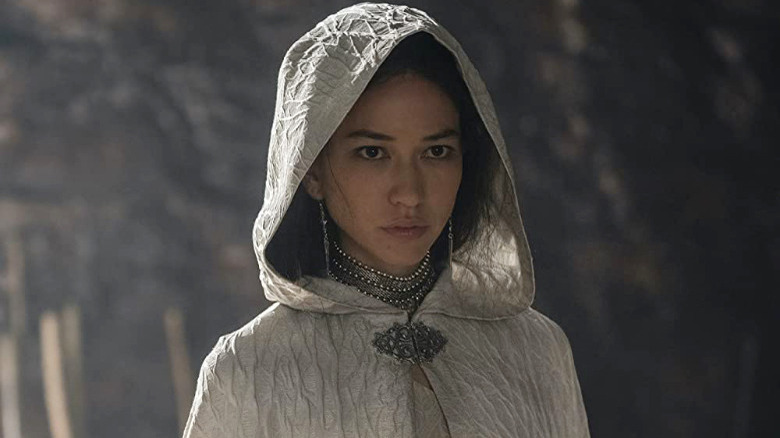
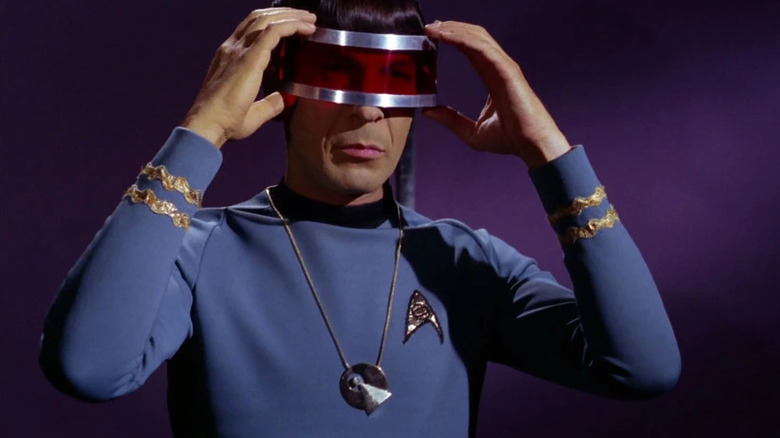
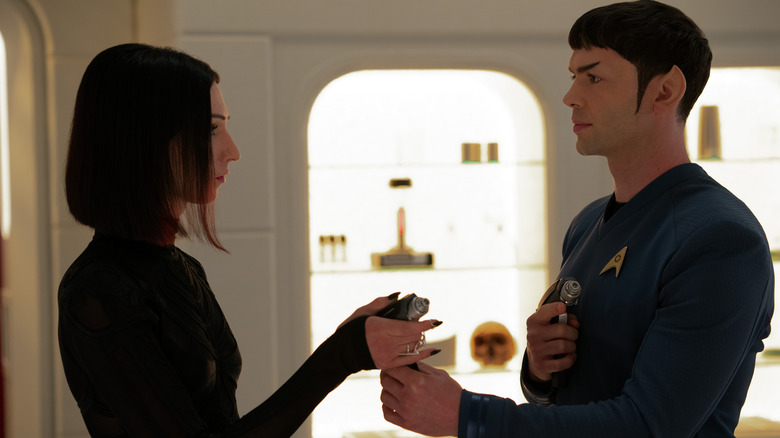
One of the central romantic relationships in "Star Trek: Strange New Worlds" is between Spock (Ethan Peck) and his intended T'Pring (Gia Sandhu) as they struggle to remain in contact while he is off on his five-year mission. Vulcans, to remind the reader, are betrothed at childhood, and T'Pring was to be Spock's wife. She was previously played by Arlene Martel in the original series episode "Amok Time," where all these details were first revealed. On "Strange New Worlds," T'Pring is granted a larger backstory, a vocation, and interests beyond which man she wishes to marry (she'll come to prefer a character named Stonn, played by Lawrence Montaigne in 1967 and Roderick McNeil in 2022). T'Pring works at a rehabilitation facility for Vulcans -- called Ankeshtan K'til -- who have lost sight of their logic, given over to passions, and committed horrible crimes. Yes, even Vulcans kill. Additional reminder: Because Vulcans live by an ethos of rejecting emotion and embracing logic, outward displays of passion are considered near-criminal acts.  

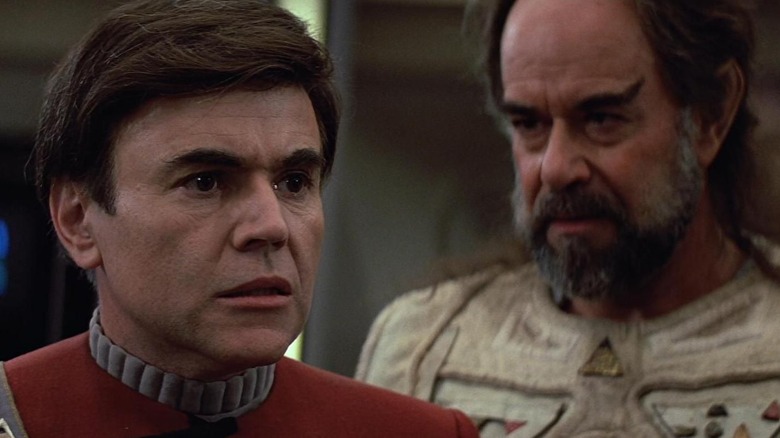
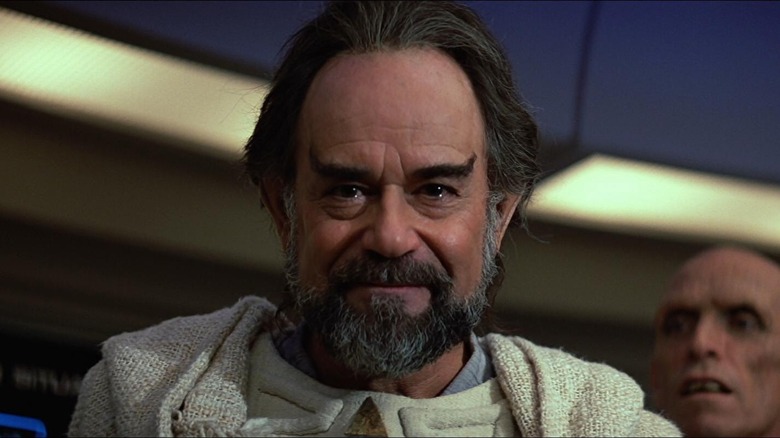
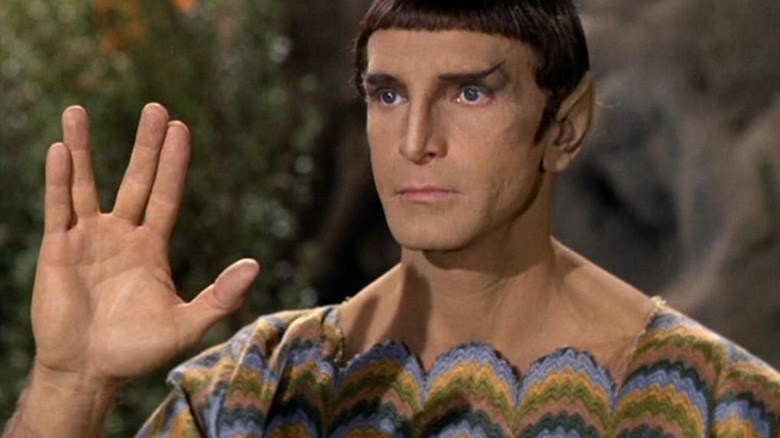
For the most part, "Star Trek" has seen Vulcans ably keeping their emotions under wraps (although certain Trekkies get a perverse thrill over the multiple instances when Spock "breaks" and becomes happy or angry). There has been one notable instance, however, of a passionate Vulcan appearing as a main character in a Trek story: The character of Sybok (Laurence Luckinbill) was the antagonist of William Shatner's 1989 film "Star Trek V: The Final Frontier." Sybok, we learn in that film, was Spock's long-lost, never-mentioned half brother. Sybok has a cameo at the end of "The Serence Squall" as a potentially dangerous inmate at Ankeshtan K'til.

Sybok

It's been mentioned multiple times throughout Trek that Vulcans were once -- many centuries ago -- passionate and violent like humans, and had pushed themselves to the brink of extinction. It was Surak, a messiah-like figure, who introduced the Vulcan ethos of logic-above-all, and their planet has been peaceful and united ever since. Vulcans may be capable of emotions, but have learned to reject, ignore, and suppress them in favor of intellect (there has been no mention of Vulcans evolving to the point of simply not having the parts of their brains that process emotions, but that's a Trek theory for another time). Occasionally, however, a Vulcan will reject their home planet's way of life, and embrace emotions with fringe, criminal groups. 

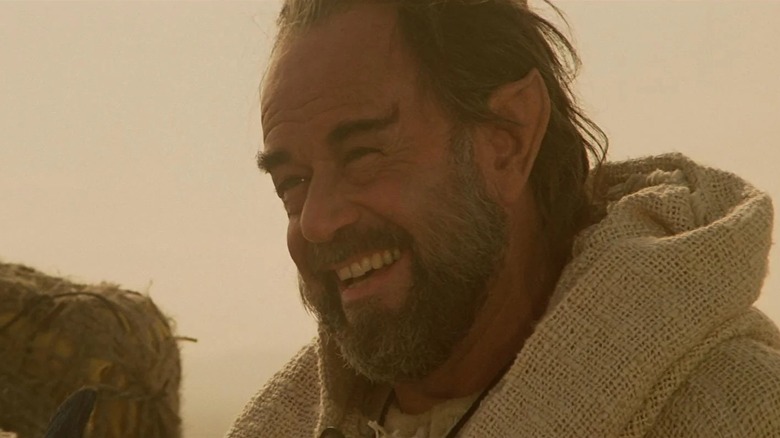
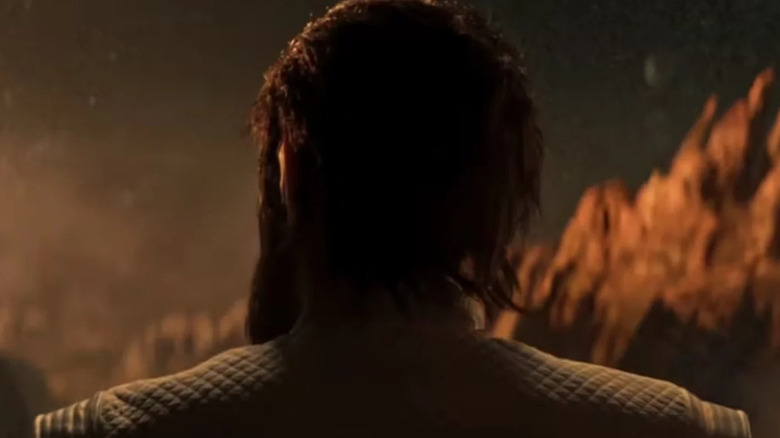
Sybok was one such passionate Vulcan, and his introduction in "Star Trek V" -- a nice cold open on an otherwise pretty dismal film -- shows him as a mysterious man on horseback who psychically "cures" a vagrant in the desert before revealing his Vulcan ears. He then throws his head back in laughter, a shocking image for Trekkies unused to laughing Vulcans. Later, Spock will reveal that he and Sybok share a father (Sarek, played by Mark Lenard), and that he, long ago, left Vulcan society to pursue his passions out on the fringe. In so doing, Sybok developed a technique to reach into people's minds and essentially eradicate the negative emotions connected with their worst memories. In so doing, his "patients" joyously and unquestioningly begin following him as a cult leader. One of the grand ironies of "Star Trek V" is that Sybok doesn't seem to realize that he has simply found a new way to repress emotions.

V'tosh Ka'tur

Sybok also, while pursuing his passions, became obsessed with the legend of Sha Ka Ree (named after Sean Connery, the actor initially approached to play Sybok), that stated that the center of the galaxy was not a supermassive black hole, but a mysterious blue planet where God physically lives. In "Star Trek V," Sybok hijacks the Enterprise, flies it to the center of the galaxy (27,000 lightyears from Earth, by the way), and meets a being that may -- or may not -- be God. If it is, then Spock, a creature of pure logic, kills it. Logic destroys God. There may be an unsubtle theological argument being made. Sybok ultimately dies fighting the God-thing, turning his passions into a wrath that will save others. 

Passionate Vucans would play a large part in several episodes of "Star Trek: Enterprise," as well, specifically in the episode "Fusion" which aired on February 27, 2002. In that episodes, the Enterprise encountered a ship of fringe-dwelling, passionate Vulcans that their homeworld referred to as v'tosh ka'tur or, literally translated, "Vulcans without logic." The characters in "Fusion" weren't without logic, but did embrace an emotional way of life. It was implied in "Fusion" that there was a groundswell of discontentment back on Vulcan, and that some sort of emotional revolution or reckoning might be at hand. 

The v'tosh ka'tur were brought back in episode five of "Strange New Worlds," and Spock, in encountering an adherent, punched him (a character named Barjan T'or) in the face. It was the logical thing to do. Although outcasts, v'tosh ka'tur are seen as people that can be aided in a mental health facility, and several of them are seen being aided by T'Pring at Ankeshtan K'til ... including Sybok.

Sybok And Angel

While "The Serene Squall" focuses on a group of freelance space pirates -- their ship even has a stand-up, two-handed helm like on a three-masted sailing vessel -- it also points to a deeper plot regarding their leader, the badass Angel, played by Jesse James Keitel (aka Peroxide of the drag troupe Haus of Femanon). Angel spends the bulk of the episode conversing with Spock (they are undercover as a person in need) asking about his character. By the episode's end -- after their attempt to take the Enterprise has gone awry -- Angel gives Spock the slip, pointing out that he doesn't have to choose between being Vulcan or Human. He can be unique unto himself. Passionate, perhaps? Angel also makes constant mention of a mysterious lover named Xavierus whom she has been trying to free from Ankeshtan K'til, getting T'Pring involved in the plot. 

Xavierus was -- musical sting -- a mere pseudonym for Sybok, as Spock explains in the episode's epilogue. He reiterates what was stated in "Star Trek V." That Sybok is Spock's older brother, that he was born out of wedlock, and that he left the Vulcan order to follow an emotional life. Given the passions Spock displayed in "The Serene Squall" (he kisses two different people), the parallels between the two characters are more closely drawn.

Fan Service

"Strange New Worlds" may move forward with the Sybok plot, giving him more backstory prior to the events of "Star Trek V," giving a known character a chance to redeem their image after decades of association with a frequently maligned feature film. Depending on how the writing shakes out, Sybok -- and Angel -- may be poised to be recurring antagonists. Or -- less likely -- the showrunners may simply leave the reference as it stands, with no further acknowledgement of Sybok beyond recognizing that he exists in this continuity, and has connections to other Trek shows and movies. 

Sybok's inclusion reveals a delicate game that "Strange New Worlds" has been playing in terms of its fan service. Many of the show's main characters are returning from previous iterations, but the show is not going out of its way to include fan-recognized details or clumsy foreshadowing as a matter of course; non-Trekkies will not be lost for a second and can enjoy the show without necessarily knowing about the instance when Nurse Chapel said she was in love with Spock in 1966. Sybok's appearance, conversely, leans more in the fan-service direction, as he will likely only be recognized by Trekkies, or people who still recall details of "Star Trek V" -- often called "the bad one" -- with clarity. Let's hope the show, should it move forward with Sybok, is tactful.

Read this next: Every Star Trek Show And Movie In Chronological Order

The post That Character at the End of Star Trek: Strange New Worlds Episode 7 Has a Wild History appeared first on /Film.

17 Jun 18:52

We Need To Talk About That Hilariously Disgusting The Boys Season 3 Cameo

by Michael Boyle

There's always something fun about watching a director/producer make an unexpected cameo in their own movie or TV show. John Green had a fun little (unfortunately deleted) cameo in the adaptation of his book "The Fault in Our Stars." Quentin Tarantino has shown up in a couple of movies, usually playing a terrible person. More recently, co-director Daniel Scheinert appeared in his film "Everything Everywhere All at Once" as a guy shown to have a spanking fetish. This is the best sort of cameo: where the celebrity plays a role that should presumably be a little beneath him, a role where dignity is not required. 

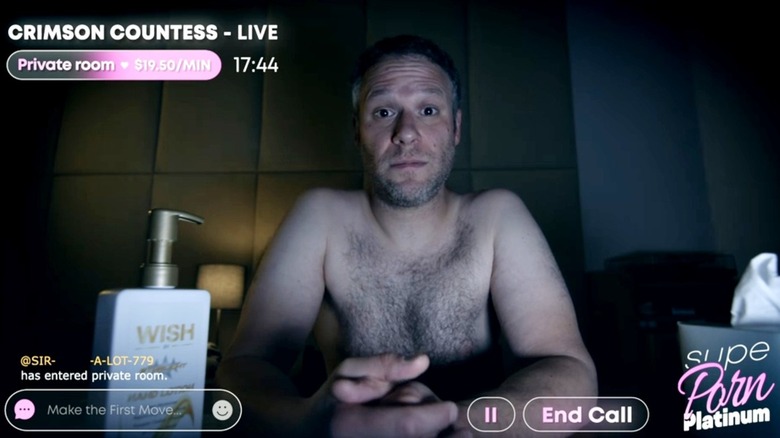
So it goes with the latest episode of "The Boys," where Seth Rogen shows up to play ... a guy pleasuring himself on a webcam. Presumably this is the in-universe version of Rogen who has appeared previously in "The Boys," though in the chatroom he's using a pseudonym (one that we cannot repeat, because we like to keep things clean here on Slash Film Dot Com).

To elaborate a little: the show reveals that superhero Crimson Countess (Laurie Holden) has started a gig as a cam girl for a supe-themed porn website, performing sexual acts on camera in one-on-one sessions with clients. Presumably she was fired from Voughtland after gruesomely killing a poor unsuspecting Homelander mascot in season 3, episode 2.

Unfortunately for Rogen, his session is cut short when the Crimson Countess is attacked by the Boys. He does manage to live up to his username, though, and the show goes out of its way to show us Rogen's face as it happens. But considering all the weird, often violent conclusions of supe-involved sex we've seen on this show, it's honestly just nice to see that [username redacted] got to leave the encounter unharmed.

Seth Rogen's Involvement With The Boys

As mentioned previously, this isn't the first Rogen appearance in "The Boys." He also pops up in season 1 in an interview hyping up Black Noir's solo film in the Vought Cinematic Universe, "Black Noir: Insurrection," and appeared again in the season 2 premiere to pay tribute to the late Translucent. Since Seth Rogen canonically exists in this universe (alongside other celebrities like Lil Nas X and Charlize Theron), it's safe to assume that this chatroom patron is that same Rogen. It would certainly explain how the guy could afford Countess's rate of $19.50 a minute.

The real reason for Rogen's repeated appearances is that he's an executive producer on "The Boys." He tried several times throughout the 2000s and early 2010s to get the comic series the show was based on (also named "The Boys") adapted into a movie, to no avail. It was only in 2015 that Amazon picked up the project and turned it into a TV series, and Rogen could finally help bring the premise to life on screen. He's since been using his platform as a high-profile celebrity to promote the show, with a lot of success so far.

It seems at this point that we can expect Rogen to make an appearance at least once per season, although it's not clear if he'll be returning as the same character he was this time around. Either way, it's always nice to see him on the show, especially considering Rogen's a big reason why the show exists at all.

New episodes of "The Boys" release Fridays on Prime Video.

Read this next: The 14 Best Sci-Fi Shows On Amazon Prime

The post We Need to Talk About That Hilariously Disgusting The Boys Season 3 Cameo appeared first on /Film.

17 Jun 18:06

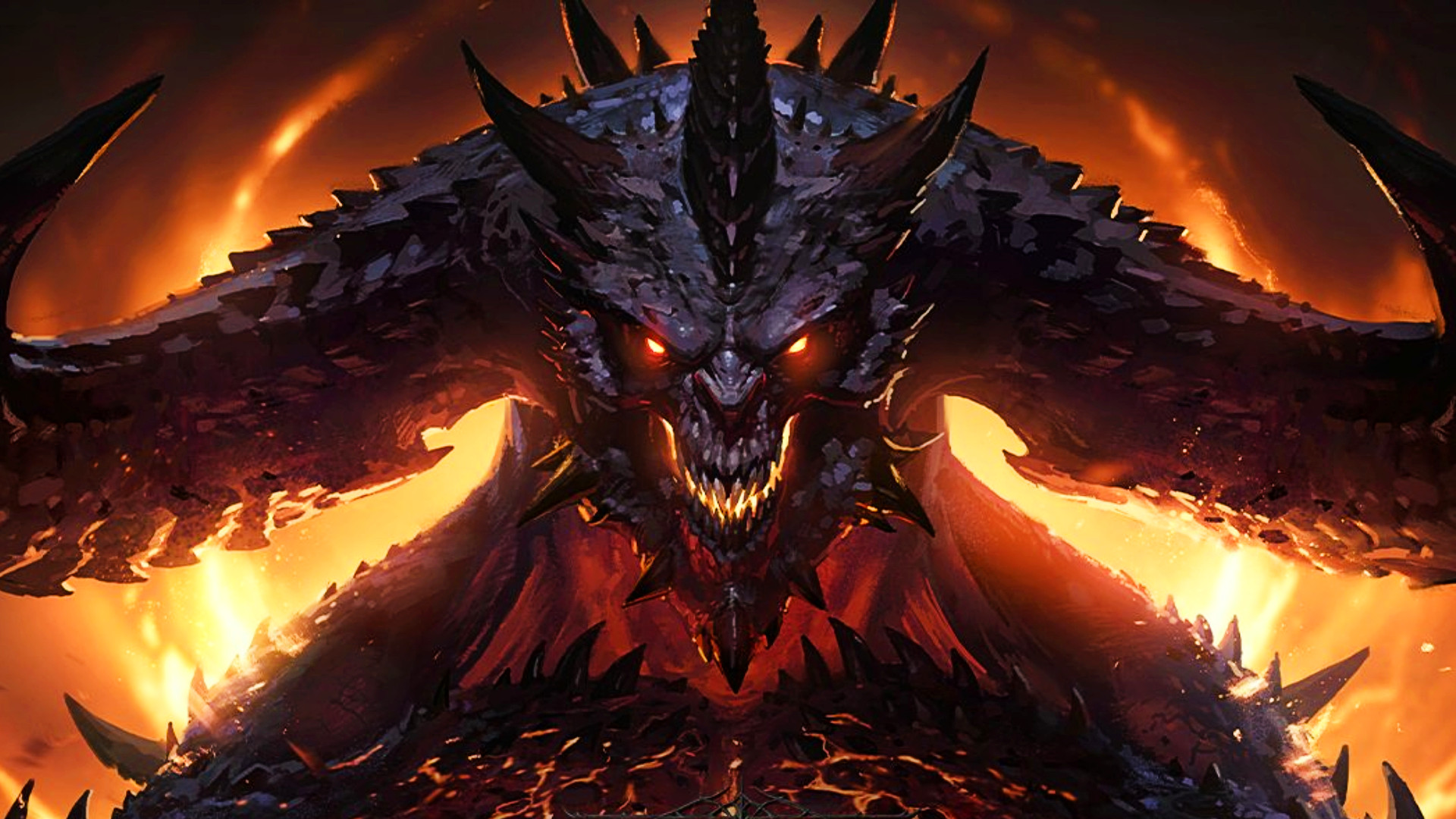
Diablo Immortal microtransactions have made $24 million

by Ed Smith
Diablo Immortal microtransactions have made $24 million

Diablo Immortal microtransactions have generated $24 million USD of revenue in the game's first two weeks, with players in the United States and South Korea spending the most on in-game purchases for the RPG game.

Data from industry tracking website AppMagic reveals that, since its launch on June 2, Blizzard’s latest RPG has been downloaded more than five million times and has quickly become the developer’s second-highest mobile earner, surpassed only by the almighty Hearthstone, which released in 2014.

The majority of Immortal’s downloads come from players in the United States and South Korea, and these two countries have also been the highest spenders in terms of microtransactions – the United States is top, accounting for around 43% of Immortal’s earnings so far, with South Korea coming in second, contributing around 23% to the game’s total yield.

RELATED LINKS: Diablo Immortal tier list, Diablo Immortal system requirements, Best Diablo Immortal builds
17 Jun 17:59

MacBook Air 13 (M2) vs MacBook Pro 14 (M1 Pro or M1 Max): Which notebook should you buy?

by Mahmoud Itani

Apple launched the MacBook Air (2022) during WWDC22. The reveal was made along with that of macOS Ventura — which further enriches the Mac lineup with features. Considering the new MacBook Air packs the all-new M2 chip, you might want to check out the list of best apps for Apple silicon. That’s not the only highlight of this notebook, though. The 2022 Air features a redesigned chassis that almost matches that of the 14-inch MacBook Pro (2021). Despite their design similarities, though, the two notebooks are very different — from the inside out. This is the MacBook Air 13 (2022) vs MacBook Pro 14 (2021) — the battle between M-powered Apple notebooks that shine in different ways.

MacBook Pro 14

Navigate this article:

Apple MacBook Air 13 (2022) vs Apple MacBook Pro 14 (2021): Specifications

Apple MacBook Air 13 Apple MacBook Pro 14
Processor
  • Apple M2 (8-Core CPU)
  • Apple M1 Pro (8-Core CPU)
  • Apple M1 Pro (10-Core CPU)
  • Apple M1 Max (10-Core CPU)
Graphics
  • Apple M2 (8-Core GPU)
  • Apple M2 (10-Core GPU)
  • Apple M1 Pro (14-Core GPU)
  • Apple M1 Pro (16-Core GPU)
  • Apple M1 Max (24-Core GPU)
  • Apple M1 Max (32-Core GPU)
Body
  • 11.97 x 8.46 x 0.44 inches
  • 2.7lbs
  • 12.31 x 8.71 x 0.61 inches
  • 3.5lbs
Display
  • 13.6-inch Liquid Retina display (2560 x 1664), up to 500 nits peak brightness, True Tone technology
  • 14.2-inch Liquid Retina XDR display (3024 x 1964), up to 1600 nits peak brightness, True Tone technology, ProMotion technology for adaptive refresh rates up to 120Hz
Ports
  • Two Thunderbolt/USB 4 ports (40Gbps, Power Delivery, one external display)
  • MagSafe 3 port
  • Headphone jack
  • Three Thunderbolt/USB 4 ports (40Gbps, Power Delivery, up to four external displays)
  • SDXC card slot
  • HDMI port
  • MagSafe 3 port
  • Headphone jack
Storage
  • 256GB
  • 512GB
  • 1TB
  • 2TB
  • 512GB
  • 1TB
  • 2TB
  • 4TB
  • 8TB
Memory
  • 8GB
  • 16GB
  • 24GB
  • 16GB
  • 32GB
  • 64GB
Battery
  • 52.6Whr battery
  • Up to 18 hours of video playback
  • 30W charger
  • 70Whr battery
  • Up to 17 hours of video playback
  • 67W charger
Audio
  • Four-speaker sound system with wide stereo sound and spatial audio support when playing Dolby Atmos content
  • High-fidelity six-speaker sound system with force-cancelling woofers and spatial audio support when playing Dolby Atmos content
Camera
  • 1080p FaceTime HD camera
  • 1080p FaceTime HD camera
Connectivity
  • Wi-Fi 6 (802.11a/b/g/n/ac compatible)
  • Bluetooth 5.0
  • Wi-Fi 6 (802.11a/b/g/n/ac compatible)
  • Bluetooth 5.0
Color
  • Silver
  • Starlight
  • Space Gray
  • Midnight
  • Silver
  • Space Gray
Price
  • Starts at $1,199
  • Starts at $1,999

Design: You sacrifice either minimalism or functionality

MacBook notch

Design is an important aspect to consider when buying a new product. After all, we look at the exterior when we’re about to start using a device before checking the user interface (UI) of its software. In this battle, there are plenty of similarities. However, there are also key differences that you will have to weigh for reaching a conclusion.

MacBook Air side view in four colors

The MacBook Air and the MacBook Pro both feature Apple’s modern design language for its notebook lineup. Notably, though, the Air’s speakers aren’t user-facing. On the contrary, those on the Pro are visible on each side. Additionally, the MacBook Pro includes a wider port variety, while the Air sticks to the traditional ones we’ve been seeing for a few years now (in addition to MagSafe 3). So, objectively, the thinner MacBook Air looks more minimalistic due to its uncomplicated design. The Pro, on the other hand, will spare you the need for dongles. Which is more important to you depends on you and your personal needs/expectations.

Display: The Pro shines over the Air in many ways

The notch on the new MacBook

Another important element to consider when buying a new laptop is its display — especially if your work revolves around photography or videography. The MacBook Air and MacBook Pro also have similarities and differences when it comes to their screens. For starters, both are notched, feature rounded corners, and support the True Tone technology. Otherwise, they’re mostly different.

The MacBook Pro is for power users — as its name suggests. As a result, Apple has equipped it with an upgraded display. It has a higher resolution of 3024-by-1964 with a peak brightness that reaches 1600 nits. More notably, though, it supports the ProMotion technology — which means you’ll get an adaptive refresh rate that can go up to 120Hz.

On the other hand, that of the MacBook Air has a lower resolution of 2560-by-1664 and its brightness can go up to 500 nits only. Additionally, it has a refresh rate of 60Hz and it’s around half an inch smaller than that of the Pro (when measured diagonally).

Performance: A battle between efficiency and performance

Apple M2 specifications graphic

A longer battery life or a higher overall performance? The choice is yours! The newly-introduced M2 focuses on power efficiency, while the the M1 Pro and M1 Max chips score higher in performance tests — particularly multi-core ones. The MacBook Air packs the M2 chip, while the MacBook Pro includes either the M1 Pro or M1 Max. The former will last you longer on a single charge, while the latter chips support more external displays, CPU cores, GPU cores, memory, and storage.

M1 Pro features M1 Max Features

If you’re using your notebook for non-intensive work or studies, the M2 MacBook Air is more than enough to handle your needs. If you’re rendering advanced 3D objects, compiling large files, or editing large videos, you might want to consider the MacBook Pro. That’s because you can get more computing power out of it — not to mention its support for more RAM and SSD.

Bottom Line: It’s all about weighing your pros and cons

The MacBook Air and MacBook Pro scratch different itches. Both of them feature some of the latest Apple technologies and modern-looking bodies. However, as I’ve highlighted above, they each have their own unique strengths and weaknesses — making them two different notebooks that cater to different users and needs. Which is the right MacBook to buy depends on you and your personal use cases. It’s also worth mentioning that the entry-level MacBook Pro is almost twice as expensive as the entry-level MacBook Air. So if you’re on a limited budget, the Air might be the right option for you.

    Apple MacBook Air 13-inch (2022)
    The 2022 MacBook Air offers the M2 chip and a redesigned chassis with MagSafe support. Best Buy can notify you when it's available.
    Apple MacBook Pro 14-inch (2021)
    The 14-inch MacBook Pro is a mighty beast powered by the Apple M1 Pro or M1 Max chip. It runs macOS Monterey and features a top notch.

Which Apple notebook will you be buying, and why? Let us know in the comments section below.

The post MacBook Air 13 (M2) vs MacBook Pro 14 (M1 Pro or M1 Max): Which notebook should you buy? appeared first on XDA.

17 Jun 17:58

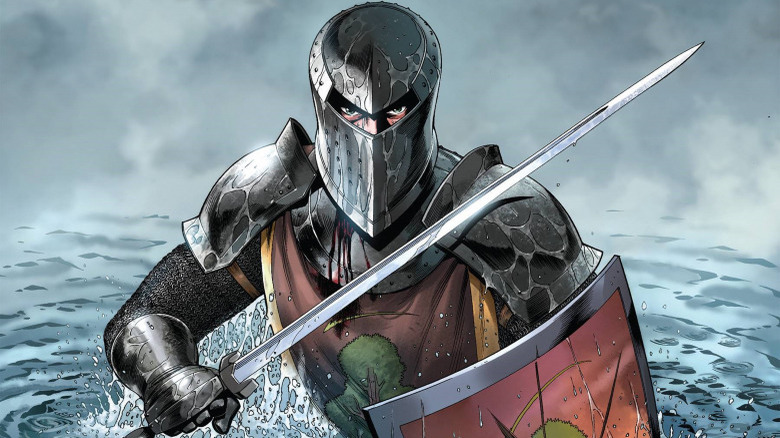
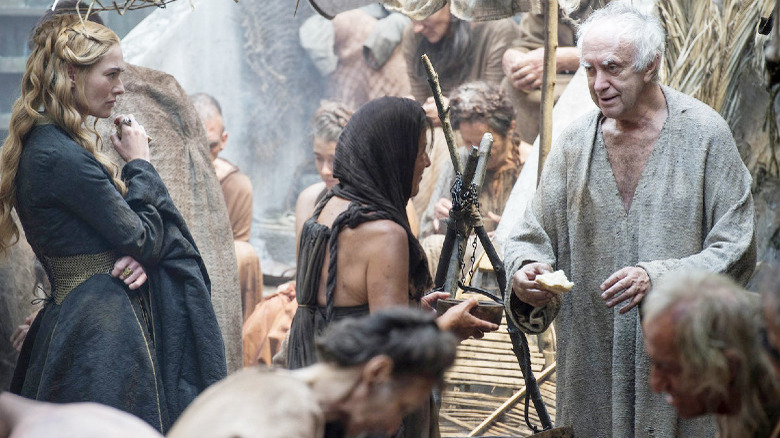
Every Game Of Thrones Spin-Off Show In Development

by Sandy Schaefer

What is dead may never die, but it will launch about a thousand different spin-off shows.

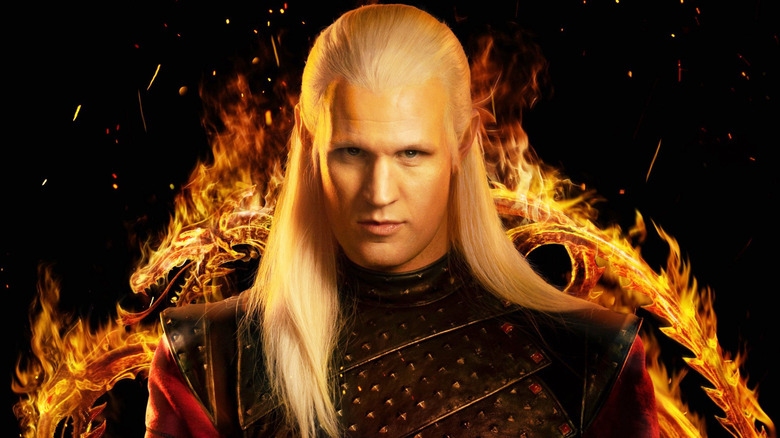
Three years after "Games of Thrones" aired its infamous finale, the Seven Kingdoms of Westeros and beyond are headed back to the small screen. After scrapping a planned prequel show about the Golden Age of Heroes and the origins of the White Walkers, HBO elected to move forward with "House of the Dragon." Set roughly 200 years before the network's original fantasy juggernaut, the show details the beginning of the end for House Targaryen and its hold on the Iron Throne. The Eleventh Doctor himself, Matt Smith, brings Prince Daemon Targaryen and his dubious hairline to life on the series opposite a cast that includes Olivia Cooke, Emma D'Arcy, Paddy Considine, and many more.

After that? HBO means to call it a day on the "Game of Thrones" franchise, and George R.R. Martin will focus all his efforts on writing the last two novels in his "A Song of Ice and Fire" saga, "The Winds of Winter" and "A Dream of Spring." I'm joking, of course. Martin is never going to finish his books (or is he?), and HBO has as many as a half-dozen or more additional "Game of Thrones" spin-offs in the works. Let's run through them all, shall we?

The Jon Snow Show

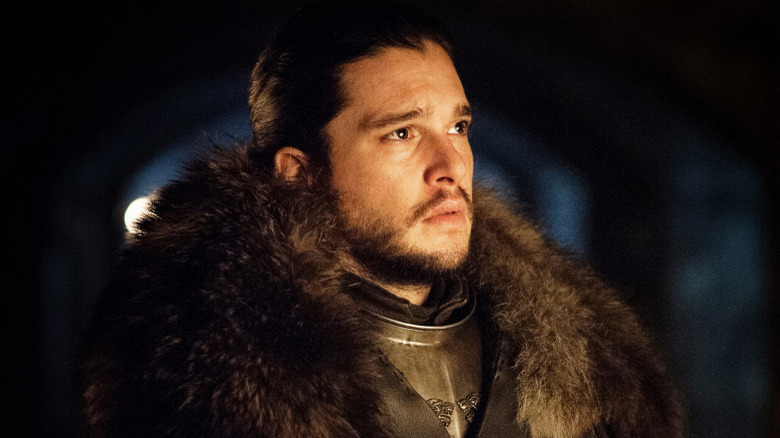
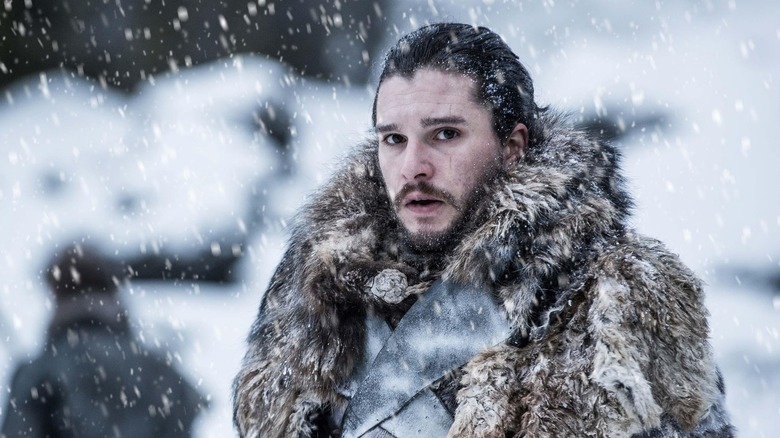
The Marvel Cinematic Universe isn't the only place where Kit Harington may be picking up a sword in the foreseeable future. HBO is also developing a "Game of Thrones" sequel series that would see the actor reprise his role as Jon Snow.

As you no doubt recall, "Game of Thrones" ended with Jon Snow killing his aunt and lover Daenerys Targaryen (there's a lot to unpack there, but, moving on) after she gave in to her thirst for vengeance and reduced King's Landing's to little more than ash and rubble. In the aftermath, Jon's cousin Bran the Broken (yeah, about that title...) ascended to the Iron Throne as king while the North broke away from the Seven Kingdoms, electing Sansa Stark as its queen. As for Jon, he was exiled to live out his days in exile and set off with the Wildlings to places unknown North of the Wall in the finale's closing moments.
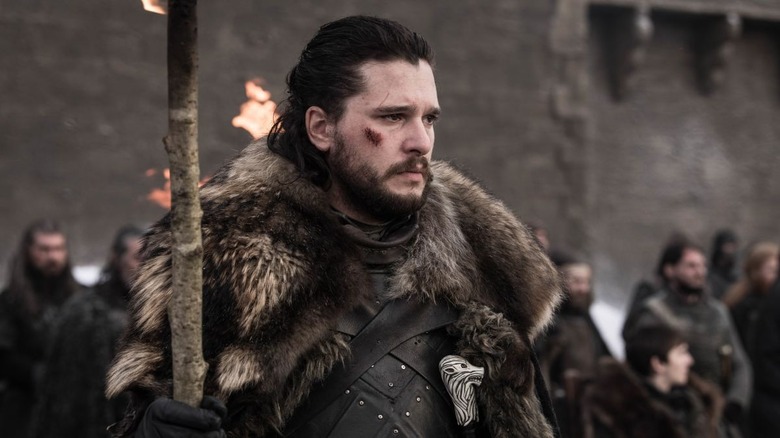
There are a lot of unknowns regarding the Jon Snow series right now, starting with its actual title. Also unclear: Whether this would be more or less a straight-up sequel show that focuses on Jon's surviving relatives (including Arya Stark, last seen sailing away to explore the world west of Westeros) as much as Jon, aka Aegon Targaryen, himself, or exclusively the Jon Snow show. What I'm saying is that, really, we almost -- wait for it -- know nothing about this spin-off at this stage.
Tales Of Dunk And Egg

If neither "Jon Snow: The Series" nor "'Succession' but with the Targaryens" sound appealing, then how about a buddy show? HBO is currently developing a "Tales of Dunk and Egg" series based on George R.R. Martin's novellas about the eponymous duo, which include 1998's "The Hedge Knight," 2003's "The Sworn Sword," and 2010's "The Mystery Knight."

Set 90 years before the events of "Game of Thrones," the "Tales of Dunk and Egg" TV show would follow the adventures of the nearly seven-foot tall rookie hedge knight (that is, a knight with no master who travels about looking for employment) Duncan, or "Dunk," and his spunky, bald young companion, nicknamed "Egg." The twist? The latter, as it turns out, is really Aegon V Targaryen, the Targaryen prince who grows up to become a king of Westeros. 

The "Dunk and Egg" stories themselves are all about Aegon V getting a helpful lesson in humility under Duncan's supervision, and how that allows him to succeed where his power-hungry brothers could not. Indeed, with a premise like the, the TV version has the potential to be a refreshing departure from the in-court political intrigue of "House of the Dragon," should it come to pass.

10,000 Ships

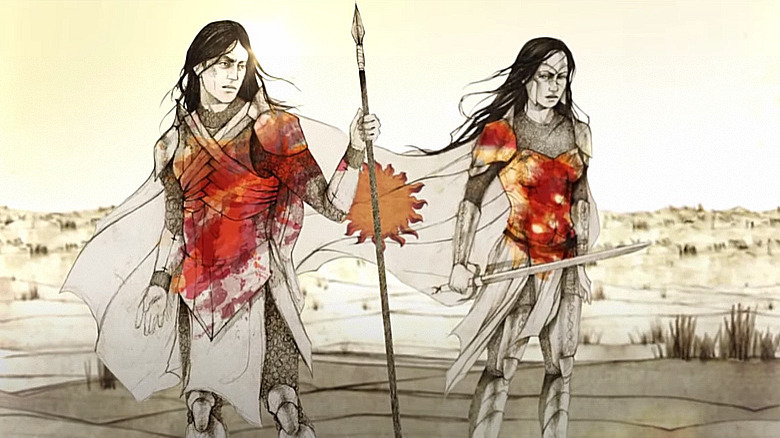
Unlike some of the other "Game of Thrones" spin-off series, "10,000 Ships" is already known to have a head writer onboard in the form of Amanda Segel (whose credits as a writer and producer include the TV series "Without a Trace," "Person of Interest," and "Helstrom"). The show itself would wind the clock back 1,000 years prior to the franchise's flagship series to focus on Princess Nymeria's journey to Dorne.

As covered in George R.R. Martin's supplementary writing about the histories of both the Westeros and Essos continents, the warrior Nymeria and the surviving members of the Rhoynar clan traveled from Essos to Dorne upon being defeated by the Valyrian Freehold during the Second Spice War, bringing 10,000 ships along with them. Nymeria then burnt those ships to ensure no one would leave their new home on her way to transforming Dorne into the powerful kingdom it's presented as in "Game of Thrones."

No doubt, many "Game of Thrones" fans recognize Nymeria as being the name that Arya Stark gives her direwolf on the series, in honor of the warrior queen. "10,000 Ships" would also be a great place to better develop the kingdom of Dorne and, if done well, serve as a correction to the way the realm was portrayed on that flagship series (which often resorted to colorism and other forms of racial and ethnic stereotyping).

9 Voyages

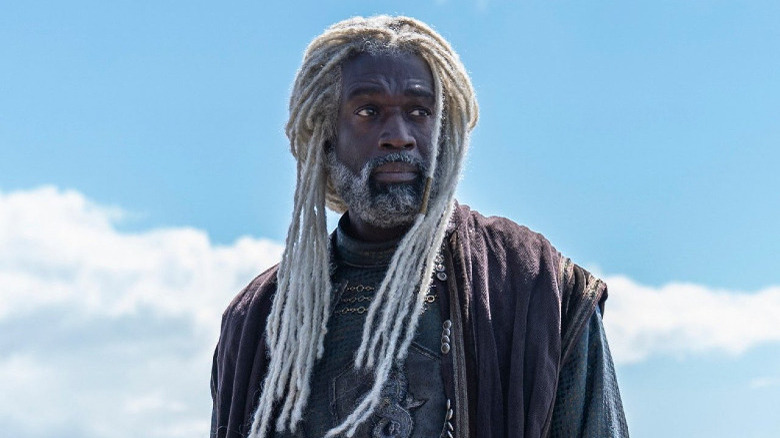
Among the key non-Targaryens on "House of the Dragon" is Lord Corlys Velaryon (Steve Toussaint). Also known as "The Sea Snake," Corlys became the most renowned seafarer in Westeros thanks to the famous nine voyages he took from Westeros to Essos when he was younger. Along with visiting cities like Lys, Myr, and Tyrosh, Corlys ventured to the Golden Empire of Yi Ti and the ancient port city of Qarth, bringing back valuables like jade, silk, and spice to expand the Velaryon family's wealth.

The currently-developing "9 Voyages" spin-off series would, as its title implies, center on Corlys' "Great Voyages" years before the events of "House of the Dragon." That also explains why it's reportedly one of the spin-offs that's further along at this point, seeing as it's basically a prequel to another "Game of Thrones" prequel. (Or, to put it "Star Wars" terms, the "Andor" to its "Rogue One: A Star Wars Story.") "The Mentalist" creator and "Rome" co-creator Bruno Heller is working on the project with George R.R. Martin, and one can see the appeal already. A swashbuckler in the "Game of Thrones" universe? "Black Sails" fans, this one's for you.

Flea Bottom

This one's cheating a little since "Flea Bottom" has reportedly already been canceled by HBO. Still, depending on how its efforts to expand the "Game of Thrones" universe fare, there's always a chance the network will revisit this idea somewhere down the road.

As for the actual show, "Flea Bottom" would explore the lives of those who reside in King's Landing's labyrinth slums. On the one hand, a series that drops the palace intrigue of "Game of Thrones" and "House of the Dragon" entirely could make for a welcome change of pace, shining a light on Westeros' class system. On the other hand, you can see why HBO would be hesitant to green-light a show that avoids the courtly battles and royal family in-fighting that made the property's flagship series so popular to begin with (as intriguing as a narrative about Westeros' working-class citizens sounds). Either way, it seems this is one less spin-off that we have to concern ourselves with for the time being.

Untitled Animated Series

A kid-friendly "Game of Thrones" cartoon series? Sounds wild.

Just kidding! HBO is reported to be working on three different animated spinoff shows, all of which have the same adult tone as the property's flagship series. This would be similar to the approach that Netflix has taken to expanding "The Witcher" with "The Witcher: Nightmare of the Wolf," an animated prequel film that retains its live-action predecessor's mature subject matter and themes. So far, though, there aren't too many details on what these shows would concern beyond that.

That said, it's rumored that one of the animated "Game of Thrones" spin-offs involves a story set in the aforementioned Golden Empire of Yi Ti, a region on the Essos continent that essentially serves as a stand-in for Imperial China. Assuming it's handled well, such a show could make for a welcome correction to the lack of Asian representation on "Game of Thrones." What's more, it seems "House of the Dragon" may lay the groundwork for future projects to further explore the fantasy universe's Asia analogues with the character of Mysaria, a dancer played by Japanese-born British actor Sonoya Mizuno ("Ex Machina," "Devs").

"House of the Dragon" premieres on HBO on August 21, 2022.

Read this next: The 10 Apple TV Shows That Justify A Subscription

The post Every Game of Thrones Spin-off Show in Development appeared first on /Film.

17 Jun 17:56

Leaked Audio From 80 Internal TikTok Meetings Shows That US User Data Has Been Repeatedly Accessed From China

by msmash
Speaking of TikTok moving US users' data to Oracle, a new report says that ByteDance staff in China accessed US TikTok users' data between September 2021 and January 2022. From the report: For years, TikTok has responded to data privacy concerns by promising that information gathered about users in the United States is stored in the United States, rather than China, where ByteDance, the video platform's parent company, is located. But according to leaked audio from more than 80 internal TikTok meetings, China-based employees of ByteDance have repeatedly accessed nonpublic data about US TikTok users -- exactly the type of behavior that inspired former president Donald Trump to threaten to ban the app in the United States. The recordings, which were reviewed by BuzzFeed News, contain 14 statements from nine different TikTok employees indicating that engineers in China had access to US data between September 2021 and January 2022, at the very least. Despite a TikTok executive's sworn testimony in an October 2021 Senate hearing that a "world-renowned, US-based security team" decides who gets access to this data, nine statements by eight different employees describe situations where US employees had to turn to their colleagues in China to determine how US user data was flowing. US staff did not have permission or knowledge of how to access the data on their own, according to the tapes. "Everything is seen in China," said a member of TikTok's Trust and Safety department in a September 2021 meeting. In another September meeting, a director referred to one Beijing-based engineer as a "Master Admin" who "has access to everything." (While many employees introduced themselves by name and title in the recordings, BuzzFeed News is not naming anyone to protect their privacy.) The recordings range from small-group meetings with company leaders and consultants to policy all-hands presentations and are corroborated by screenshots and other documents, providing a vast amount of evidence to corroborate prior reports of China-based employees accessing US user data.
Read more of this story at Slashdot.

17 Jun 17:54

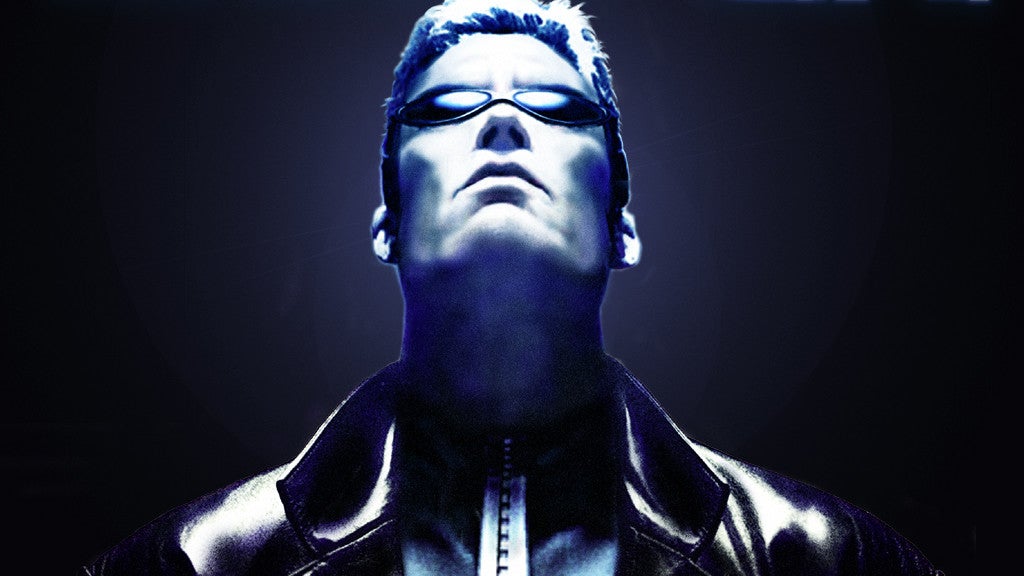
Shake up Deus Ex with the Randomizer mod

by Alice O'Connor

Denton's Law states: whenever someone talks to you about Deus Ex, there is a 45.1% chance you will start a new playthrough. If it's your turn this time, reader dear, wait one second! Perhaps you might enjoy a twist on this classic immersive sim? The Deus Ex Randomizer mod shuffles just about everything in the game, adding random surprises and new challenges to an old favourite, and it recently released a new version. See its random surprises in the new trailer, below.

Read more

17 Jun 13:10

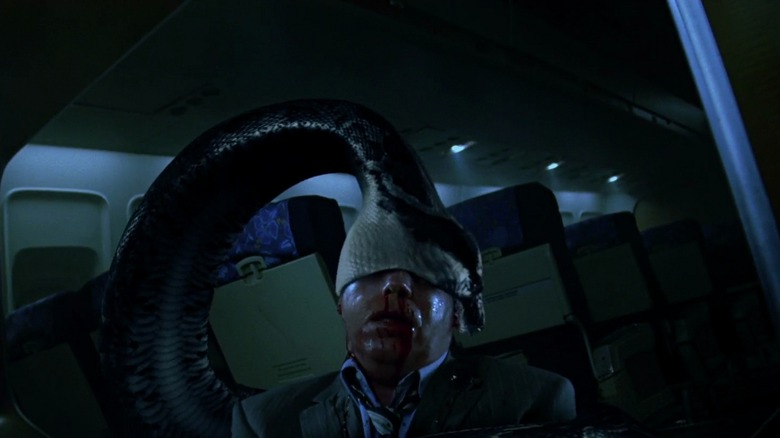
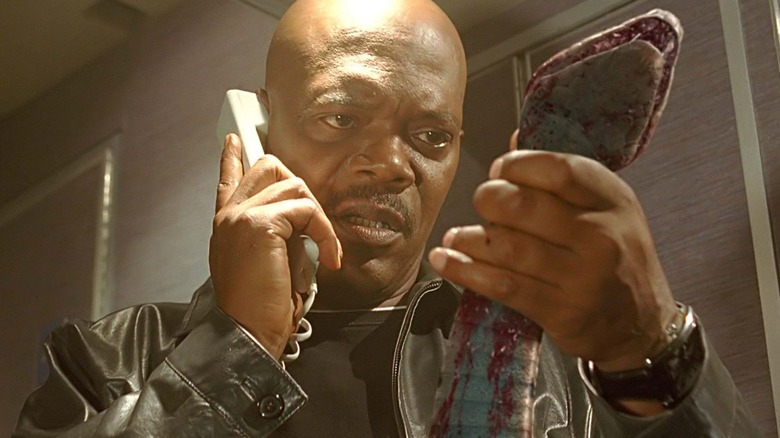
Samuel L. Jackson Saw Snakes On A Plane As A Special Kind Of Movie

by Witney Seibold

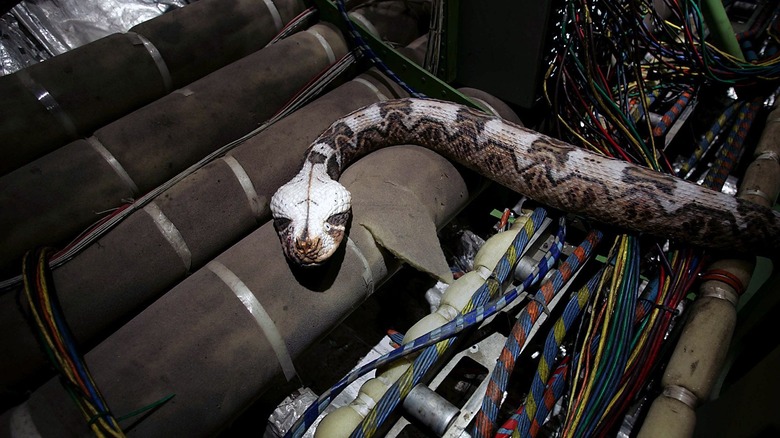
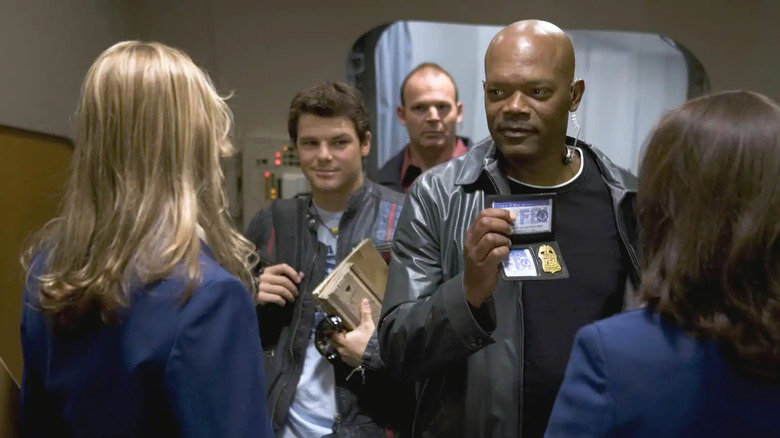
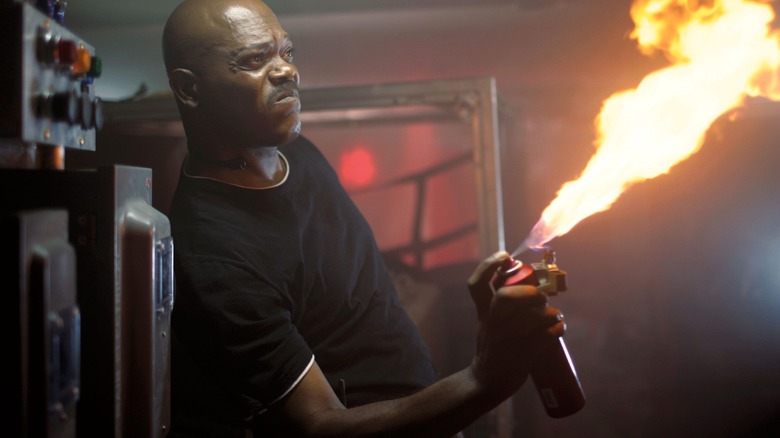
As Samuel L. Jackson said in the TV edit of David R. Ellis' 2006 hit film "Snakes on a Plane": "I have had it with these monkey-fighting snakes on this Monday to Friday plane!" 

"Snakes on a Plane" was part of a curious cinematic trend in the mid-2000s that might be described as neo-grindhouse. The trend was an attempted revival of a certain kind of exploitation movie that was put back into vogue in the 1990s with nostalgia-driven, '70s-retro fare like "Boogie Nights," "The Ice Storm," "The Brady Bunch Movie," "Jackie Brown," and "Shaft." The last two starred Jackson. Even the 1977 film "Star Wars: A New Hope" saw a few prequels in the '00s (which also starred Jackson), not to mention the popular TV series "That '70s Show" (which Jackson did not appear on).

Following the wave of '70s nostalgia came an attempt to re-create the grimy, low-budget wave of monster and gore films that were the staff of a now-extinct moviegoing experience. One might see neo-grindhouse as an antidote to a rise in digital filmmaking, a logical continuation of evolving reflection on our cinematic past, or perhaps merely another need for nostalgic escape following the horrors of 9/11. Whatever the reason, the '00s saw the release of films like "House of 1,000 Corpses," "Zombie Strippers," "Red Line," "Mad Cowgirl," "Bitch Slap," and sequels or remakes of "Two Thousand Maniacs!," "The Last House on the Left," and "I Spit on Your Grave." And there was, of course, a two-for-one film called "Grindhouse."

In the midst of all this came the ultra-cheeky, self-aware, near-comedy exploitation flick "Snakes on a Plane," a movie which, according to a 2006 interview with Jackson in Entertainment Weekly, was particularly special, evoking the exploitation movies of his own youth. 

It's Still Called 'Snakes On A Plane,' Right?

Jackson recalled that he definitely wanted to appear in the movie both as an opportunity to work with its director and to revel in its playful, eye-catching title. Silly, straightforward, and to the point, the title is the premise. Snakes are on a plane. It's as simple an explanation as "Is It Cake?" Originally, director Ronny Yu was in talks to direct, which Jackson was keen on; Jackson played the lead role in Yu's aggressively quirky 2001 action/comedy freakout "Formula 51." Jackson recalled the conversation he had with New Line Cinema: 

"I thought, 'Oh, s***, I need to be in that!' I saw that my friend Ronnie Yu was directing it, so I immediately emailed him and said: 'Are you really directing a movie called 'Snakes on a Plane'? And he was like, 'Yeah. Why?' And I said, 'Because I want to be in it!' He said 'For real?!' I said 'Yeah! Hell yeah!' He told New Line, and New Line was like, 'Are you sure?' One thing turned to another, and as it happened, Ronnie ended up not doing the picture. They said, 'You still want to do it?' I said. 'It's still called "Snakes on a Plane," right?'"

This was after rumors had arisen that New Line Cinema was threatening to change the title to "Pacific Air 121," a terse and far less exciting title. Jackson seems to have had the stipulation that if the title was changed, he would not have wanted to appear in the flick. New Line made the right decision. Not only did one of the world's most profitable movie stars agree to star, but the title became a meme.

A Ridiculous F***** Concept

Jackson also saw something very personally appealing about "Snakes on a Plane" that catered to his own personal taste in films: It's brash, dumb escapism. Jackson talked about seeing movies as a youth, recalling the horror movies that filled his theater with raucous, rowdy energy. He recognized "Snakes on a Plane" is the kind of movie to elicit jeering, pranks, and heavy petting from an audience that came to the movies to have fun, not to respectfully and quietly absorb the art of cinema:

"It's all about going to the movies on Saturday when I was a kid, sitting in a dark theater with all my little friends and screaming and yelling and doing s*** to people while the movie's on. Like taking a piece of wire or something and running it up somebody's neck and making them scream. 'Snakes on a Plane' has all the things that were Saturday afternoon matinees for me, like 'The Wolf Man,' 'Dracula,' 'Tarantula,' and 'Attack of the 50 Foot Woman.' It's just a ridiculous f****** concept that's exciting. Everyone is scared of snakes. And a lot of people are afraid of flying. Combine those two fears and you have a pretty good roller coaster for a lot of people to get caught up in."

Jackson was raised in Chattanooga, Tennessee, in the 1950s, so it's likely he frequented one of the town's many drive-ins or theaters at a time when vertical integration had been dismantled, and low-budget indie shlock could find an audience. Jackson enjoyed the movies for the wild community and sense of fun they provided. Jackson's cinematic experience, according to the EW interview, were unpretentious.

Snakes On Brokeback Mountain

Jackson's directness is the proper attitude to take with a light piece of exploitation cinema like "Snakes on a Plane." Jackson saw no feigning in the direction of art. Jackson's attitudes about movies certainly played out in the future, and they were fully formed for "Snakes." Themes of animal exploitation or the state of airline security are absent. All that remains is the simplest and most prurient. To Jackson, there is purity to that:

"It's all that stuff. It's ... a movie. It's JUST a movie. Not everybody goes to movies to get their life changed. Some of us go to the movies so we can forget about our lives for an hour and half. Have some mindless fun. Don't have to worry about the plot. The plot is: Some people are going to get killed. The thing you need to know is that there are some vicious snakes, some victims, and a hero. It's that kind of mindless, popcorn, you-didn't-need-a-genius-to-write-this kind of script. Nobody has to evaluate at Academy Awards time. Okay, maybe MTV Movie Awards time. But the Golden Globes doesn't have to see it; nobody has to talk it up for the Oscars. Nobody has to act like, 'I wouldn't be caught dead in that film!' Fine! Don't go! Wait until they have 'Snakes on Brokeback Mountain' or something! 'Snakes on a Plane' doesn't speak volumes about s***. It just says people are still making movies that people are having fun going to watch."

Given that "Snakes on a Plane" was something of a hit (it grossed $62 million worldwide on a budget of $33 million) — thanks to its brazenness, paired with an enormously campy ad campaign (Jackson recorded automated phone messages one could order for friends) — Jackson appeared to be right. 

Jackson Vs. Critics

Jackson, perhaps infamously, has nothing to say to critics. In 2012, one might recall, New York Times critic A.O. Scott gave the superhero flick "The Avengers" a lukewarm review. Jackson tweeted: "#Avengers fans,NY Times critic AO Scott needs a new job! Let's help him find one! One he can ACTUALLY do!" Jackson's rant regarding the critical reception to "Snakes on a Plane" is brilliant and is included here in its entirety: 

"Owen Gleiberman, Peter Travers, and all those motherf****** don't need to watch this movie. They need to send some 13-year-old kid with f****** pimples that goes to the mall every Friday to watch movies to review this movie. We don't need those guys talking about this movie. Send some kid to review this. Send a kid to review even 'Pirates of the Caribbean.' Critics don't NEED to talk about 'Pirates.' They KNOW they won't like it. But movies are all about suspending that kind of disbelief and incredulity. Do you critics know how to do that? I would love to be a pirate. I used to go watch Errol Flynn and go, 'Man, I wish I had a sword and could get on a boat and put a knife in my teeth and swing from boat to boat and chop some people up and all that kind of s***.' Critics can't even get to that kind of place. Instead, it's like: 'Once again Johnny Depp wastes his enormous talent'? BULLS***. You know, Johnny's having a GREAT time. He DESERVES to have a great time, because sometimes he expends a lot of energy doing some serious s*** that doesn't make but $150,000. He deserves to have fun, too ... There comes a time when you just want to do some s*** and let it go."

Indeed, Mr. Jackson. Indeed. "Snakes on a Plane" can currently be seen on Tubi and on HBO Max

Read this next: 16 Horror Movies That Ruined Everyday Activities

The post Samuel L. Jackson Saw Snakes On A Plane As A Special Kind Of Movie appeared first on /Film.

17 Jun 10:31

Costa Rica Chaos a Warning That Ransomware Threat Remains

by Associated Press

Teachers unable to get paychecks. Tax and customs systems paralyzed. Health officials unable to access medical records or track the spread of COVID-19. A country’s president declaring war against foreign hackers saying they want to overthrow the government.

read more

17 Jun 10:29

SDL 2.23.1 Released With SDL2 Switching To A New Versioning Scheme

SDL 2.0.22 was released back in April while now it's to be succeeded by the eventual SDL 2.24 stable and out today is the SDL 2.23.1 pre-release. Besides the shift in the versioning scheme there are many additions coming in this release for this library that's widely used by cross-platform games...
17 Jun 10:27

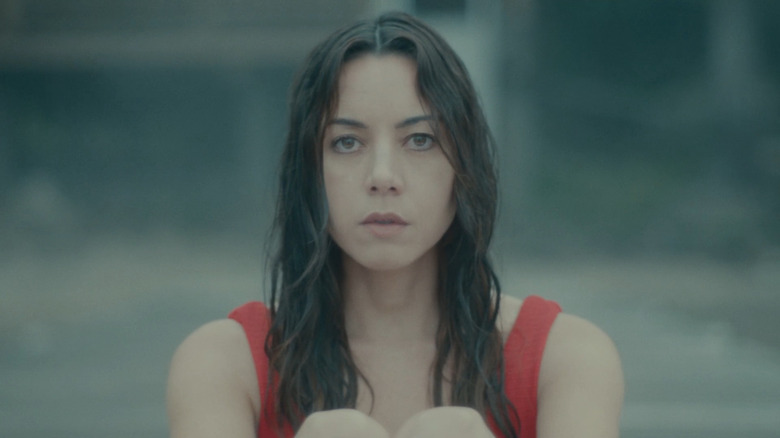
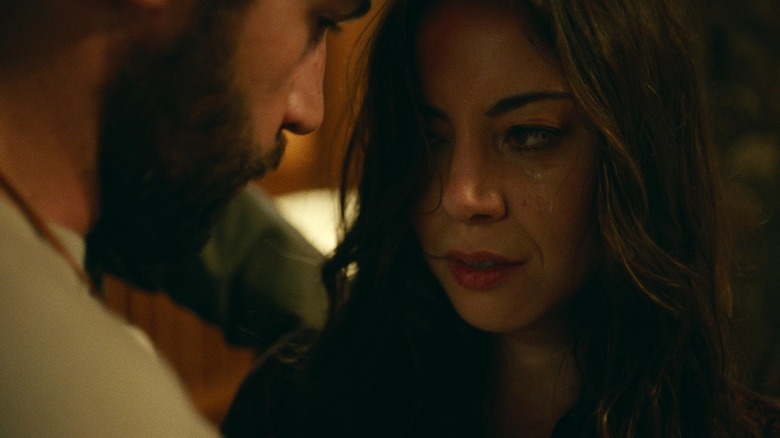
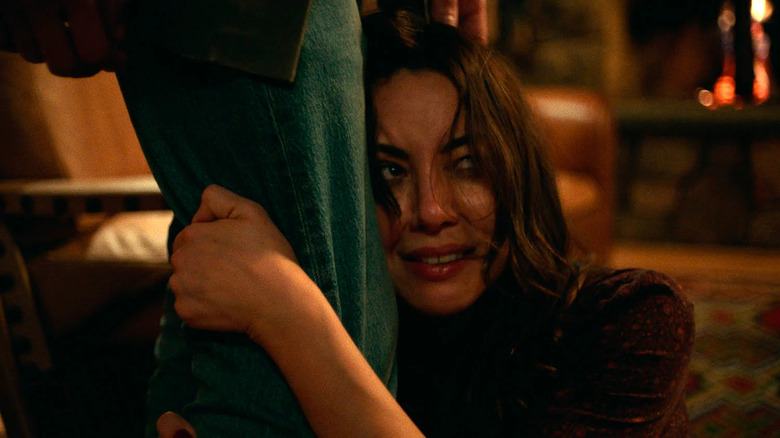
The Terrifying Aubrey Plaza Scene That Still Gives Us Nightmares

by BJ Colangelo

Known by most for her memorable deadpan comedic delivery and sardonic attitude, comedian and actor Aubrey Plaza has a truly fascinating filmography.

Her breakthrough performance as April Ludgate on "Parks and Recreation" made her a household name, leading her to roles in comedy films like "Mystery Team," "Scott Pilgrim vs. The World," "Safety Not Guaranteed," "The To Do List," "Life After Beth," "​​Mike and Dave Need Wedding Dates," and even providing the voice as the titular star of "Grumpy Cat's Worst Christmas Ever." Despite her comedic roots, Plaza has been traversing across genres as of late, starring in edgy or downright scary projects like "Legion," the remake of "Child's Play," and the brilliant "Ingrid Goes West." When not played for laughs, Plaza's straight-faced delivery can easily read as threatening or scary, which makes her a perfect addition to the genre film scene.

With so many instinctively associating Plaza's usual conveyance with laughs, there's an unsettling aura that hangs above the viewer whenever she's on screen and there's no punchline to be found. Plaza is a genuine talent, and it's high-time that her non-comedic work is given the spotlight.

Debuting at Sundance in 2020, Plaza starred in Lawrence Michael Levine's disquieting domestic thriller, "Black Bear." Unfortunately, thanks to the start of the pandemic, the film was released in December 2020 to little fanfare and an even smaller marketing campaign, meaning most audiences missed out on Aubrey Plaza's most nightmarish film yet.

'I've Been Lying Since The Moment I Got Here'

"Black Bear" sees Plaza as Allison, a multi-hyphenate film creative who retreats to a remote lake house in an attempt to buckle down and complete her next screenplay. She's not alone, however, as the lake house is being shared by Gabe (Christopher Abbott) and his pregnant girlfriend Blair (Sarah Gadon). Almost immediately, Gabe's flirtatious interest in Allison becomes obvious, and Blair is forced to sit idly by as the father of her unborn child openly flirts with this stranger. The couple constantly bicker in front of Allison, delivering low blows like bringing up Gabe's struggling career as a musician and Gabe lambasting Blair over her drinking habits. Allison is caught in the middle, frequently shifting her alliances between Gabe and Blair, which only seems to heighten the conflict between them. Eventually, things come to a head and they all head back to their respective bedrooms for the night.

After Blair falls asleep, Gabe follows Allison for a night swim at the lake, and Allison admits that she's been lying to Gabe and Blair since she arrived, for no apparent reason. The two's sexual tension comes to a head, and the two begin to have sex. Blair catches them in the act and attacks Gabe, who violently shoves her against the couch, causing her to bleed. Gabe demands that Allison drive them to the hospital, but on the way, a black bear near the road scares Allison, who crashes the car into a tree. In any other movie, this would be the end of this trio's tale, but in the case of "Black Bear," things have only just begun.

Art Imitating Life

"Black Bear" is broken into two segments, with the car crash signaling the end of the first and start of the second. When we return to the story, the lake house is now the set of a movie Gabe is directing, and Allison and Blair are actresses, albeit with their roles switched. Allison is the wife in an unhappy marriage, and Blair is the hot, new ticket. As it turns out, Allison and Gabe have been married for quite some time, but his on-set treatment of her is abrasive compared to the kindness he shows Blair, which makes everyone on set wildly uncomfortable. Allison accuses her husband of having an affair with Blair, which is sincerely happening as Gabe thinks it will provide the right amount of motivation for Allison's performance. During the film within a film's explosive argument scene, Allison eventually begins screaming and physically hits Blair for real, providing the performance Gabe had wanted.

The scene shows Plaza at her most unhinged and emotionally devastated, and knowing the behind-the-scenes truth of her character's marriage, it's difficult to decipher whether or not Allison is acting, or pushed to the brink of sanity. As the cameras stop rolling, it becomes more apparent that Allison is not acting, and is in fact having an uncontrollable emotional breakdown in real time. The tension in the room grows thicker, and the film that started out so calmly has progressed into an erratic nightmare. The ferocity in Plaza's delivery transforms this moment into a psychological hellscape, and a film that will stay with you long after watching.

Read this next: Horror Roles That Changed Actors Forever

The post The Terrifying Aubrey Plaza Scene That Still Gives Us Nightmares appeared first on /Film.

17 Jun 10:21

Game Of Thrones Jon Snow Spin-Off Series In The Works, Kit Harington To Reprise Role

by Hoai-Tran Bui

Winter has come and gone, the dragons have danced, and the White Walkers have been defeated, but Jon Snow still knows nothing.

Other people who know nothing: "Game of Thrones" fans, who have been caught unawares as HBO has started developing yet another spin-off of its former flagship fantasy series. This live-action spin-off series will be centered on everyone's favorite brooding lord and former King in the North, Jon Snow. The Hollywood Reporter broke the news about the sequel series, which is still in early development. But should the series move forward, Kit Harington is attached to reprise the role as Jon Snow who, when "Game of Thrones" ended its eight-season run, was last seen journeying north of the Wall to live his life in exile among the Wildlings.

The yet-untitled Jon Snow sequel series would likely pick up with character in exile, after he had killed the vengeful Daenerys Targaryen who, in her conquest of Westeros, had turned tyrant. The series ended with Bran the Broken ascending the Iron Throne, while the North seceded from the Seven Kingdoms with Sansa ruling as Queen in the North. And Jon Snow would be banished from Westeros for his queenslaying and kinslaying (because oops! R+L=J, ie Jon Snow is actually a Targaryen), leaving with the Wildlings who embraced him and the cold wintry tundra North of the Wall where his dark curls looked their best.

You Know Something, Jon Snow

"Game of Thrones" has been limping back to relevancy ever since its notoriously polarizing finale aired in 2019. Currently there are seven "Game of Thrones" projects in the works, set to follow the upcoming "House of the Dragon" prequel series, which takes place about 200 years before the events of the War of the Kings. "House of the Dragon," which is due to debut on August 21, stars Matt Smith, Olivia Cooke, Rhys Ifans, and more as players in a civil war within the ruling House Targaryen.

The other live-action prequels in development are "10,000 Ships," the spin-off about the legendary Princess Nymeria; "9 Voyages" (aka "The Sea Snake"), which refers to the "Great Voyages" at sea made by Lord Corlys Velaryon (a distant relation of the Targaryens, also descended from ancient Valyria like them); and "Dunk and Egg," another prequel based on the novellas by "A Song of Ice and Fire" author George R.R. Martin, which are set 90 years before the events of Game of Thrones and follow the adventures of the hedge knight Duncan and his squire Egg, who would become Aegon Targaryen, a prince and eventual king of Westeros. There are also three animated prequel projects, including "The Golden Empire," which would finally expand the franchise's horizons beyond European-inspired fantasy and take viewers to the China-inspired land of Yi Ti.

But a franchise is what HBO hopes to make of "Game of Thrones," despite the show virtually falling out of pop culture memory after the divisive finale. THR notes that the greenlighting of a Jon Snow sequel series means that nothing is off the table for more spin-offs chronicling the further adventures of other fan-favorite "Game of Thrones" characters like Arya Stark (Maisie Williams), Sansa Stark (Sophie Turner) and Brienne of Tarth (Gwendoline Christie).

Personally, I'm gunning for a series about Bran becoming a tree.

Read this next: The 15 Most Anticipated Comic Book Movies And Shows Of 2022, Ranked

The post Game of Thrones Jon Snow Spin-Off Series in the Works, Kit Harington to Reprise Role appeared first on /Film.

17 Jun 00:29

Dead End: Paranormal Park Review: The Cartoon Comedy About Kids Working At A Haunted Amusement Park

by Caroline Cao

Netflix has buried a repertoire of promising what-might-have-beens in a golden age of family-friendly western animation. You can't necessarily start a new Netflix cartoon without thinking about how the streamer giant has been in the news cycle for cutting down on creator-driven animation to save money in the face of its subscriber loss–and increasing subscription cost. While this doesn't mean all of its animated line-up has been canned, the canceled projects gesture to a chasm in which creative audacities, talents, forward-thinking themes, and possibly landmark creations have been flung into the dark.

Which brings us to "Dead End: Paranormal Park" (created by Hamish Steele, creator of the original graphic novel), the latest Netflix animation in the Kids & Family category to cast a spell.

Two human neighbors, Barney (Zach Barack) and Norma (Kody Kavitha), are employed as security guards at a theme park based on the famous blonde actress Pauline Phoenix (Clinton Leupp). They venture to its headquarters, a haunted mansion, to meet their interviewer: the sardonic demon Courtney (Emily Osment). But then they discover that they were intended as a human sacrifice to the demonic Temeluchus (Alex Brightman), who seeks a flesh body to possess. In a bid to protect his human, Barney's pet pug, Pugsley (also Brightman), flings himself in the demon's path and gets possessed. The possession leaves Pugsley with not only talking abilities but magical powers, which play a large role in episodic shenanigans filled with sleep-sucking hags, ghastly spirits, and hungry demons. Ultimately, the kids find themselves investigating the disappearance (and unscrupulous dealings) of its missing owner, Pauline Phoenix.

The Cast Of Mortals And Demons

At its most poignant, the show focuses on the social grapplings within kids like Barney and Norma. Barney has compunctions about leaving his family (more on that) while he invests in the joy of making a new start and forging a found family. Though psyched to work in the theme park and loaded with ramble-worthy encyclopedic trivia of Pauline Phoenix's filmography, Norma confronts social situations outside of her comfort zone (done with honesty to the neurodivergent experience) — and some reckoning the deeper she gets into the mystery. As for Pugsley, he's the comic relief (he says so himself), but it belies the fact that his newfound powers make him the lynchpin of the supernatural dealings.

Zach Barack supplies Barney with delicate anxiety. Kavitha conveys Norma's ease of rambly braininess. As for other park staff, Badyah (Kathreen Khavari) is a priceless pairing with Norma and balances out her ostentatious obsessiveness. Barney also goes gaga for a love interest, the easygoing Logan (Kenny Tran), that makes for a cute courtship.

Alex Brightman, who exercises his notorious vocal strain from the "Beetlejuice" musical, steals the scene and makes the swerves into Pugsley's demonic mode and nice-guy benign mode. But competing with Pugsley's scene-stealing is Courtney, mischievous with morals-in-training, who wants to go back to her demonic homeworld. Applying jagged inflections, Osment is the most pleasant surprise of all—her "I want" song number that subverts Disney skyward-troped lyricism is the major highlight.

Leupp is wickedly fun as the self-absorbed Pauline Phoenix. Mj Rodriguez emits an oozingly delicious hammy performance as a character I won't disclose. I also have a feeling that a character played by Karen Maruyama could be a memetic favorite.

Entering The Canon Of LGBTQ+ Rep In Children's Animation

Starring a transgender lead voiced by transgender actor Zach Barack, "Dead End" also enters a cartoon canon of unapologetic leading LGBTQ+ rep in western children's cartoons alongside "Steven Universe," "Kipo and the Age of Wonderbeasts," "She-Ra and the Princesses of Power," and a growing list of other kid-aimed cartoons starring transgender characters. In the stated examples, queerness unabashedly exists in its worldbuilding (not to say coded queerphobia is non-existent in the case of "Steven Universe"). In this case, "Dead End" stars a human transgender person front-and-center and undertakes an arc-long depiction of the impact of transphobia in a way that leans toward real-world societal implications. (Not surprisingly, the cartoon's existence has enraged U.S. senators in a nation where people in power are enacting dehumanizing exclusionary policies and the elimination of transgender healthcare.)

One point of discussion is observing how trauma (highly implied deadnaming and misgendering) leaves Barney the burden of negotiating with his wishes: he blames himself for not telling his parents and brother that he ran away but he ultimately doesn't apologize for leaving an unsafe household. "Dead End" pushes against the feeble notion that tolerating and cheerfully insisting you support your transgender child's identity is just enough and they should feel grateful for bare minimums (going off the Vol. 1 of the graphic novel, there's a notable change from the theme of "parents didn't accept him" to "parents want to accept him yet failed to have his back"). 

Being loving to your transgender child means holding your own loved ones to account when they spout harmful words. Not to say there are elements in "Dead End" representation of a trans experience I find uncritique-able: I, as a queer cisgender writer, think the arc for Barney to guilt-trip himself for not "facing his demons" and running away, even after he vocalizes his needs to his family, warrants examination. Still, "Dead End" would hopefully help kick open the door for many transgender creators, as expressed by the show's creator, who even as a gay white cisgender male possessed industry-shaped anxiety that was met with the privilege of an uncompromised vision under Netflix). Against the hypocrisy of Netflix also platforming transphobic rhetoric under the guise of comedy, the existence of "Dead End" and transgender-led cartoon creations like Shadi Petosky's "Danger & Eggs" (Prime Video) is important.

The Animation

With animation produced by the London-based Blink Industries studio, the art direction is vibrant and colorful. The character designs by Hamish Steele's team (Liz Whitaker as series director) yield a crisp rounded style. Not dissimilar to "Hilda," the cartoon takes a de-coarsing approach to the source material graphic novel's style (for better or worse, readers of the graphic novel may picture how a style closer to Steele's original aesthetic could potentially soar in ways the final product can't). There is a sequence where the animation flaunts its experimentation that unfurls visual surprises, particularly where it tackles a social anxiety attack with ruthless surreality (innocuous comments being processed as caricatured negativity).

The first three episodes are a stroll that acquaints you with the cast's quirks and frailties and a lay of the land. But the real madcap madness twirls off when the cast does the game show in the pits of Hell, then dives into a genre-riff of television, and then a penultimate musical episode (music and lyrics by Patrick Stump, Steele, Jen Bardekoff). With 10 episodes for season 1, "Dead End" does get clumpy toward its finale, mainly because two big bads compete for the spotlight ("I'm the big bad around here" lampshades the cramming of the two villains).

For those who follow the likes of "Gravity Falls," there's plenty of macabre and gallows humor to go around. The mystery is more of a means to flesh out the interactions, be it characters communicating with others or their environment, and its reflexive sense of humor (Nicole Paglia serves as head writer). "Dead End" is designed to be consumed episodically while having the ending-teaser trademarks of the binge-watch. Time will tell whether this show would attract an audience who love piecing together clues to the extent of "Gravity Falls" since there are teases for season 2.

"Dead End: Paranormal Park" is now streaming on Netflix.

Read this next: 12 Shows Like Stranger Things You Definitely Need To Stream

The post Dead End: Paranormal Park Review: The Cartoon Comedy About Kids Working at a Haunted Amusement Park appeared first on /Film.

17 Jun 00:23

Final Fantasy VII Remake Intergrade Coming to Steam on June 17

by Ule Lopez

Final Fantasy VII Remake Intergrade

The previously Epic Games Store exclusive Final Fantasy VII Remake Intergrade is going to be released on Steam come June 17, 2022. This was announced during the Final Fantasy VII 25th Anniversary celebration stream. The reimagining of the critically acclaimed Final Fantasy VII will be available for PC users on Steam.

It also has been confirmed that the game is going to be fully compatible with the Steam Deck once it releases tomorrow. In other words, the game will be able to be played on the go through Valve's portable console.

Final Fantasy VII Remake Intergrade is a reimagining of the Final Fantasy VII. The game was originally released in 1997 and is currently developed under the guidance of the original key developers. This critically-acclaimed game, which mixes traditional command-based combat and real-time action, makes its Steam debut along with FF7R EPISODE INTERmission─a new story arc featuring Yuffie Kisaragi.

We reviewed both FFVII Remake before. Here's a quote from our review by Francesco de Meo:

Final Fantasy VII Remake is a masterful modernization of the series' classic formula. The game is an extremely solid JRPG that looks, sounds and plays great, despite some pacing issues and linearity. That said, the unexpected story twists may sour the experience a bit for those who expected a faithful remake.

And here's a quote from our FFVII Remake Intergrade review by Francesco de Meo:

While it is the same game at heart, Final Fantasy VII Remake Intergrade brings the first part of the remake to new heights with a 60 FPS gameplay option, some quality of life enhancements, much improved visuals, and a very fun new story episode starring Yuffie.

The new tweaks and additions do not alter how the game feels and play, but there is no denying that they do make Final Fantasy VII Remake Intergrade the best way to enjoy one of the best role-playing games put out by Square Enix in the past few years.

Final Fantasy VII Remake Intergrade will be released on Steam and Steam Deck on June 17, 2022. You can also wishlist the game right now through its Steam Page.

The post Final Fantasy VII Remake Intergrade Coming to Steam on June 17 by Ule Lopez appeared first on Wccftech.

17 Jun 00:23

Mystery of the Black Death: DNA Analysis Reveals Major Clue - CNET

by Monisha Ravisetti
Ancient graves in central Asia might've helped answer an age-old question: Where did the black death begin?
17 Jun 00:21

Halloween II Was A Spiritual Successor To One Of Rob Zombie's Earliest Films

by Anya Stanley

Rob Zombie's "Halloween II" was bigger and fouler than its 2007 predecessor in every way, as is required of most sequels. Swelling beyond the babysitter murders of Haddonfield that encompassed his 2007 "Halloween" (itself a beefed-up origin story of the boogeyman made famous by John Carpenter's original 1978 slasher), the franchise's tenth entry got to the macro by way of the micro, focusing on the shared broken psyches of Laurie Strode (Scout Taylor-Compton) and her assailant, Michael Myers (Tyler Mane). "Halloween II" -- a movie Zombie didn't even want to make at first -- also mythologized Myers in a way that more recent "Halloween" sequels have struggled to do, by focusing on his mommy-issue motivations instead of the ravings of the townspeople at his mercy.

Speaking to Female.com, the multi-hyphenate revealed that while "Halloween II" was obviously a sequel to his 2007 "Halloween," the psycho-drama slasher also operates as creative kin to one of his prior sequels, the Southern-fried festival of grime that is "The Devil's Rejects." The psychotic Firefly family that was first introduced in Zombie's directorial debut, "House of 1000 Corpses," got a grisly makeover in the 2005 sequel. The gore and pitch-black terror of his debut put Zombie on the map, and he cranked the amps up even higher for the blood-soaked cat-and-mouse game that is "Devil's." Such was the spirit the White Zombie founder took on when he returned to Haddonfield for the next installment in the franchise, plunging even deeper into Myers' internal darkness.

'You Really Want To Take It To New Places'

Known to be critical of his own work in interviews, Rob Zombie didn't hold back on his remake of John Carpenter's "Halloween," calling it "a little too safe." It's no surprise that he decided to make the next entry just as bloody, but give it a more grim, surreal aura. He tells Female.com:

"You know, I went back and looked at 'Halloween,' and I thought -- to me, this film looks a little too clean. It looks a little too safe. It looks a little bit claustrophobic. Everything's confined in this suburban neighborhood, in these suburban homes. I really wanted to open up the scope of the movie. This film, 'Halloween II,' is very much like the logical follow-up to 'Devil's Rejects.' I went back, I went for a different approach, just from the film stock to the lighting. It's much darker, grainer [sic], grittier, dirtier film. And it seemed appropriate this time, because in the first 'Halloween,' you have these characters like Laurie Strode. And they're very, like, happy-go-lucky all-American girl characters. They're not dark and damaged. But now, all the characters have survived this horrible night of murder. So, all the characters are scarred inside and out. So it made it much easier to concoct this sort of darker, nastier vision of 'Halloween.' And I thought that -- you know, you really want to take it to new places and make the violence more extreme."

While "Halloween" and "House of 1000 Corpses" had plenty of sprinting victims fleeing their tormentors, they were still in confined to Haddonfield, in the case of the former, and a series of low-light underground tunnels, in the case of the latter. Zombie decided to shake up their respective sagas the next time around by shooting largely during daylight, designing gripping fugitive spree sequences, and exploring more vividly their scoundrels' psyches and motivations.

What's Next?

The actual sequel to "The Devil's Rejects" was, at first, met with confusion. The Firefly family -- Captain Spaulding (Sid Haig), Otis B. Driftwood (Bill Moseley), and Baby (Sheri Moon Zombie) -- were presumably blown away in a hail of bullets at the end of the film, so how would they even come back? Rob Zombie's 2019 feature "3 From Hell" answers that question in the spirit of Tommy Doyle's "Halloween" '78 maxim: "You can't kill the boogeyman." The family returned for more sadistic violence, sex, drugs, and rock and roll, but the mixed reviews of the film suggest that those who were already jazzed for another Firefly film would have liked it anyway, and those who weren't, wouldn't.

The same interview has Zombie citing both films as reasons why he felt, around 2009, that he hadn't been able to stretch his wings far beyond the two contained universes he'd been working within. Following "Halloween II," Zombie branched out with, among other feature films, the adult animation film "The Haunted World of El Superbeasto," and the most penetrating work of his career to date, the occult-happy witch extravaganza "The Lords of Salem." 

Now, the filmmaker will finally get to take on one of the biggest horror influences of his childhood, "The Munsters." Zombie's "Munsters" is an adaptation of the classic black and white monster-family sitcom, and will star Jeff Daniel Phillips and Sheri Moon Zombie as Herman and Lily Munster, with Daniel Roebuck as Grandpa. That's due out October 2022.

Read this next: Horror Movies That Even Horror Fans Could Hardly Finish

The post Halloween II Was A Spiritual Successor To One Of Rob Zombie's Earliest Films appeared first on /Film.

17 Jun 00:18

Gremlins: Secrets Of The Mogwai Review: The Best Gremlins Prequel We Could Have Hoped For [Annecy]

by Rafael Motamayor

Joe Dante's "Gremlins" is one of the greatest horror films of all time. It's a film that works for kids, what with its adorable and very marketable Furby-like creature, wacky sense of humor, and very chaotic energy, while still serving as a very effective horror movie for fans old and new. After all, this is a movie that shows a cute furry creature singing one moment, and a gross green goblin being gruesomely murdered via a blender.

It's a specific mix of childish fun and gruesome murder that worked best in the pre-PG-13 days when kids could go see movies that appeared very much meant for kids but traumatized them for years. All this is to say, after Dante gave us the anti-sequel with the delightfully bonkers "Gremlins 2: A New Batch," it is hard to imagine anyone else getting anywhere near close to replicating the lightning in a bottle of the original film, which remains one of the best gateway horror movies ever.

And yet, that is exactly what "Gremlins: Secrets of the Mogwai" does. This animated prequel is funny without being super silly, cute without being overly childish, and it knows how to build tension and even be scary for young audiences.

The Origins Of Mr. Wing

The show is set in the 1920s, and we start with a scene straight out of a horror version of "The Smurfs," with Gizmo in his little Mogwai village, all furry creatures singing in harmony and having a jolly time when a hawk flies down from the sky with murderous intent. Suddenly, the editing becomes more erratic, as the camera moves as if held by hand, with the little Furby-like creators running and screaming in terror. 

With that scene setting the tone, we see poor Gizmo engage in a fight with the hawk, resulting in him being separated from his village and lost along a river until he gets kidnapped by circus owners that force him to perform as a singing and dancing catdog.

Then we shift gears to our protagonist, 10-year-old Sam Wing, the once and future owner of the antique shop from the original film. Before he moves to the U.S., he's just a kid who helps his parents at their pharmacy, while also taking care of his eccentric adventure-seeking grandpa. When Sam's path crosses Gizmo, his grandpa urges the kid to rescue the Mogwai, or let all of China fall into oblivion.

A Worthy Prequel

While the show doesn't have the most impressive or unique use of 3D animation, it still looks good, particularly when it comes to Gizmo, who has a very tactile feel to him. Without a doubt what makes the show work is that it captures the spirit of Joe Dante's classic (he returns to the franchise as a "Consulting Producer" though Dante joked during a post-screening panel that he acts as Gizmo's agent). Gizmo is very smart, but not so much that doesn't need help from others, and he is just as cute and sassy as you remember. The show's ability to jump from a moment filled with tension to a heartbreaking moment to one of levity and almost over-the-top antics, back to heartwarming feels straight out of a Spielberg project of the '80s, rather than one of the many, many Amblin Entertainment imitators of today.

And even if the show does suffer from the occasional prequel issue like having to explain why people call Gizmo by that name, it is handled with tongue firmly in cheek. "Gremlins: Secrets of the Mogwai" is also very interested in expanding the mythology of the titular Mogwai, with the creators teasing a fourth rule being introduced in the show. Likewise, the best moments in the first episode come from the writers playing with the audience's knowledge of what happens when Mogwai break bad, with grandpa (played by living legend James Hong) warning Sam of what happens when you let Mogwai run wild, like the time they turned one of China's greatest metropoles into a ruin (Gizmo's response? A simple shrug and a smirk). We don't even need a flashback, as the ominous soundtrack and background shadows in the form of gremlins and burning buildings do enough to make us fear what is to come — while also exciting us for the carnage the little gremlins will cause.

"Gremlins: Secrets of the Mogwai" could have easily been a cash-grab show aimed squarely at kids with cute creatures and tons of cameos, but the way the first episode managed not only to pay homage and even expand the lore of the first film while capturing its tone makes this a show worth sticking around for.

"Gremlins: Secrets of the Mogwai" season one will consist of 10 episodes, which will premiere on HBO Max and Cartoon Network at a later date.

"Gremlins: Secrets of the Mogwai" screened its first episode as part of the Annecy International Animation Film Festival 2022.

Read this next: 12 Shows Like Stranger Things You Definitely Need To Stream

The post Gremlins: Secrets of the Mogwai Review: The Best Gremlins Prequel We Could Have Hoped For [Annecy] appeared first on /Film.

16 Jun 20:57

White House Launches Task Force to Tackle Online Harassment - CNET

by Zachary McAuliffe
The task force is meant to address online abuse, which disproportionately affects women, girls, people of color and LGBTQ+ individuals.
16 Jun 20:44

The 2022 Backup Survey: 54% Report Data Loss With Only 10% Backing Up Daily

by Yev

Every June, for Backup Awareness Month, we work with The Harris Poll to gauge the state of backups in the U.S. This is the 14th year of that survey, where we ask simply: “How often do you back up all the data on your computer?”

On occasion, we’ll throw some additional questions into the mix as well, and this year we focused on the confusion we often see between sync and backup services, along with respondents’ history of data loss. The backup frequency results of this year’s survey show that trends are holding pretty steady, but the rest of the results…very interesting!

First Things First: Are YOU Backing Up?

If you’re not backing up, start now and increase the stats for 2023.
 
➔ Sign Up Today

How Backup Frequency Is Trending in 2022

When looking solely at backup frequency, the results are mostly neutral this year when compared to 2021. We see a slight 1% increase in computer owners that are backing up on a yearly basis, but that same 1% decrease in those that are backing up daily. The rest of the results were pretty consistent from year to year.

The main issue we’re seeing here is that the number of computer owners who have never backed up their computer appears to have stopped decreasing, meaning that about 20% of people are still at risk of losing all of their data in the event of a computer crash or loss.

Results are among computer owners.

Some people aren’t into reading charts, so we also have this handy table:

Results are among computer owners.

If you’re not a fan of tables, but do like pie, here’s a comparison of the 2022 data compared to when we first started in 2008:


It’s nice to see the mix changing so much over time, especially with the “never” category fading. While the number of daily backups is still not anywhere close to where we’d like it, the data indicates that:

Overall, computer owners are backing up more frequently than a decade ago. However, as our astute readers know, the longer you go without creating a backup, the more data you are prone to losing should disaster strike.

Who’s “Best” at Backing Up?

Last year, we pored through the data to try and build a “profile” of the person who was most likely to be a “backer upper,” which we had defined as a person who owns a computer and backs it up at least once a day. What we found is that we were looking for:

  • A woman between 35-44 years of age (21% likely to back up versus 9% of those 18-34 and 6% of those 55-64)…
  • Who lives in the Western United States (17% more likely to back up vs. the South and Midwest at 9% and 7%, respectively)…
  • With a household income of over $100K (13% likely to back up their data versus those households of $50K-$74.9K which are at 6%).

Has that changed over the last year? Well, in 2022, the data suggest no statistically significant deviations that we can pull out, so maybe that’s good news across the spectrum?

Is Confusion a Cause for Concern?

While the number of people backing up at least once is good, we think there might still be some confusion in the world about how exactly they are backing up their data and what is getting backed up. We wanted to dive a bit deeper. When looking at the Americans who own a computer:

  • 80% backed up all the data on that computer at least once.
    • 41% of those folks fully back it up once a month or more often.
  • 57% who have ever backed up use a “cloud-based” system as their primary backup.
  • 12% of computer owners use a cloud backup service like Backblaze as their primary backup, and among those who do:
    • 52% say their service automatically backs up all the data on their computer.
    • 25% say it backs up only the data they select with no limitations.
    • 9% say it backs up only the data they select but with some limits.
    • 3% marked “other” and more concerningly…
    • 10% are not sure at all.

    With 57% of computer owners using “the cloud” to back up their data, but only 12% of those using a cloud backup service, we’re left to wonder, what are the others using? In many cases, it’s a cloud drive or cloud sync service which may not actually be performing basic automated backup tasks.

    Refresher: Backup vs. Sync

    We’ve often discussed the differences between sync and backup—how both of them are useful tools, but very different. While sync services are great for collaborating on and sharing data, they are not true backup services in that they’re typically not automated, and don’t provide the same level of protection as dedicated backup services can. And, be careful about only having data in one location—44% lost access to their data when a shared or synced drive was deleted. For more information, read our cloud backup vs. cloud sync blog post!

    Even of those using a proper cloud backup solution, 48% may not be backing up all their data, and 10% of folks aren’t sure at all what their cloud backup service is doing. Yikes.

    We then asked those who use one of the listed backups (i.e., “the cloud,” external hard drive, or NAS) about their confidence level that the service they use is set up to protect all the data on their computer, and 61% of people were not very confident. The numbers are broken down below:

    • 39% were very confident.
    • 48% were somewhat confident.
    • 13% were not at all or not very confident.

    That’s not a ton of confidence, and maybe now is a good time to remind folks to check their backups and to test a restore!

    Why Is Backing Up Important?

    This year’s survey results continue to show us that having a good backup strategy in place, whether for a business or an individual, is a great way to mitigate against different data disasters. Especially when you consider that of Americans who own a computer:

    • 67% report accidentally deleting something.
    • 54% report having lost data.
    • 53% were affected by a security incident.
    • 48% had an external hard drive crash.
      • 21% of those crashes have happened in the last year.
    • 44% lost access to their data when a shared drive or synced drive was deleted.

    External hard drives are a great local backup method, and we recommend them when we discuss having a 3-2-1 backup strategy, but as our own Hard Drive Stats indicate, even in our professional environment, they do fail. And with 48% of computer owners reporting that they experienced a similar failure on their home device, it underscores the importance of having an off-site backup like Backblaze, just in case.

    With over half of computer owners reporting a security incident as well and ransomware on the rise, there’s never been a more appropriate time to start backing up your computer. At Backblaze, we’re on a mission to make storing and using your data astonishingly easy, and we invite you to give our services a try!

    Survey Method:
    This year’s survey was conducted online within the United States by The Harris Poll on behalf of Backblaze from May 19-23, 2022, among 2,068 adults ages 18+, among whom 1,861 own a computer. The sampling precision of Harris online polls is measured by using a Bayesian credible interval. For this study, the sample data is accurate to within +2.8 percentage points using a 95% confidence level.

    Prior year’s surveys were conducted online by The Harris Poll on behalf of Backblaze among U.S. adults ages 18+ who own a computer in May 12-14, 2021 (n=1,870); June 1-3, 2020 (n=1,913); June 6-10, 2019 (n=1,858); June 5-7, 2018 (n=1,871); May 19-23, 2017 (n=1,954); May 13-17, 2016 (n=1,920); May 15-19, 2015 (n=2,009); June 2-4, 2014 (n=1,991); June 13–17, 2013 (n=1,952); May 31–June 4, 2012 (n=2,176); June 28–30, 2011 (n=2,209); June 3–7, 2010 (n=2,051); May 13–14, 2009 (n=2,154); and May 27–29, 2008 (n=2,723).

    For complete survey methodologies, including weighting variables and subgroup sample sizes, please contact Backblaze.

    The post The 2022 Backup Survey: 54% Report Data Loss With Only 10% Backing Up Daily appeared first on Backblaze Blog | Cloud Storage & Cloud Backup.

    16 Jun 20:39

    The Collapse of Complex Software

    by msmash
    Nolan Lawson, writing in a blogpost: Anyone who's worked in the tech industry for long enough, especially at larger organizations, has seen it before. A legacy system exists: it's big, it's complex, and no one fully understands how it works. Architects are brought in to "fix" the system. They might wheel out a big whiteboard showing a lot of boxes and arrows pointing at other boxes, and inevitably, their solution is... to add more boxes and arrows. Nobody can subtract from the system; everyone just adds. This might go on for several years. At some point, though, an organizational shakeup probably occurs -- a merger, a reorg, the polite release of some senior executive to go focus on their painting hobby for a while. A new band of architects is brought in, and their solution to the "big diagram of boxes and arrows" problem is much simpler: draw a big red X through the whole thing. The old system is sunset or deprecated, the haggard veterans who worked on it either leave or are reshuffled to other projects, and a fresh-faced team is brought in to, blessedly, design a new system from scratch. As disappointing as it may be for those of us who might aspire to write the kind of software that is timeless and enduring, you have to admit that this system works. For all its wastefulness, inefficiency, and pure mendacity ("The old code works fine!" "No wait, the old code is terrible!"), this is the model that has sustained a lot of software companies over the past few decades. Will this cycle go on forever, though? I'm not so sure. Right now, the software industry has been in a nearly two-decade economic boom (with some fits and starts), but the one sure thing in economics is that booms eventually turn to busts. During the boom, software companies can keep hiring new headcount to manage their existing software (i.e. more engineers to understand more boxes and arrows), but if their labor force is forced to contract, then that same system may become unmaintainable. A rapid and permanent reduction in complexity may be the only long-term solution. One thing working in complexity's favor, though, is that engineers like complexity. Admit it: as much as we complain about other people's complexity, we love our own. We love sitting around and dreaming up new architectural diagrams that can comfortably sit inside our own heads -- it's only when these diagrams leave our heads, take shape in the real world, and outgrow the size of any one person's head that the problems begin. It takes a lot of discipline to resist complexity, to say "no" to new boxes and arrows. To say, "No, we won't solve that problem, because that will just introduce 10 new problems that we haven't imagined yet." Or to say, "Let's go with a much simpler design, even if it seems amateurish, because at least we can understand it." Or to just say, "Let's do less instead of more."

    Read more of this story at Slashdot.

    16 Jun 19:50

    Why Diversity Is So Important To The Star Trek Universe, According To Rod Roddenberry

    by Witney Seibold

    In the "Star Trek" episode called "The Savage Curtain" (first aired March 7, 1969), an all-powerful, psychic lava alien from the planet Excalbia is able to read the minds of Kirk and Spock (William Shatner and Leonard Nimoy), and resurrect reasonable facsimiles of historical heroes personally dear to them. For Kirk, the alien creates Abraham Lincoln (Lee Bergere) and for Spock, the alien creates Surak (Barry Atwater). Surak is a messianic, philosopher king figure to the people of Vulcan, as it was he who first suggested that emotions be jettisoned in favor of logic. When Surak first appears, he introduces himself to Kirk by saying one of the most "Star Trek" things imaginable: 

    "I am pleased to see that we have differences. May we together become greater than the sum of both of us."

    The episode will also feature Lincoln doing spear-based battle with Genghis Khan (Nathan Jung), but the silliness of "Star Trek" has always been undercut by an overriding philosophy of pragmatism, diplomacy, and togetherness. Gene Roddenberry wanted to set his show in a future that was bursting with diversity, attempting to communicate that petty racism and national hatred have all been disposed of, and starships will gather all nations together to work together for a future of relative peace. Imagine there's no countries. Roddenberry did. The themes of diversity, diplomacy, and post-racism would become especially highlighted by the time Roddenberry made "Star Trek: The Next Generation" in 1987.

    Infinite Diversity In Infinite Combinations

    Roddenberry's son Rod became CEO of the company Roddenberry Entertainment in 2001, and is currently credited as executive producer on all the new Trek projects currently on Paramount+. Continuing the themes laid down by his father, Rod understands that diversity should be at the center of all "Star Trek" projects. All the Trek shows to date (with the exception of "Short Treks") have been ensemble pieces, and it was important to Rod to retain the Trek tradition of a wide variety of character types. This was to ensure that multiple viewpoints be regularly represented on the bridge of whatever Starfleet vessel the series in question follows. 

    In a recent interview with Variety, Rod Roddenberry laid it out explicitly: 

    "If we all do the same thing every day, we don't grow, we don't evolve, we don't learn anything. And so it is the diversity in everything, whether it's something outside, different trees, different looking people. But more importantly, it's the difference in idea. The Enterprise and the crew weren't out exploring the galaxy, looking just for weird looking aliens. They were for species that looked at the universe in a different way than we did."

    "Star Trek" has always employed its genre as a way of offering an outsider's perspective on humanity. Our innate behaviors and philosophies, in being filtered through an alien species, could — perhaps ironically — be pondered more personally. How would we look when greeted by a species more intelligent than us? "Star Trek" aimed to instill humility, not pride. We in the present should only be proud once we finally rid the world of war, hate, and racism. "Star Trek" was aspirational in that regard. 

    Let That Be Your Last Battlefield

    The newest "Star Trek" series, called "Strange New Worlds" (currently in its first season on Paramount+) takes its title from Shatner's and Patrick Stewart's opening narrations to their respective shows. The mission of the Enterprise is to explore strange new worlds, as well as to boldly go where no man/one has gone before. The "boldly" part captures a (notably American) pioneering spirit, and the "strange new worlds" part promises the audience a good deal of kooky space aliens (although the word "strange" seems a little condescending from within the Trek universe). It's the middle part of the narration that strikes the hardest: "To seek out new life, and new civilizations." We seek out civilizations that are new to us. According to Rod, that is the very heart of "Star Trek."

    "Because up to that point, humanity had finally come together and realized that it's our diversity that makes us special. We realized working together, we can do so much more. And so now we were trying to find people who looked at the universe in a different way, because we knew that we could grow and evolve by hearing something we'd never heard before. And whether we agreed with it or not, it was the hearing of that, the analyzing of it and the taking pieces out of it that we agreed with and incorporating into our own that allowed us to grow."

    "Star Trek's" messages of diversity, new philosophies, and pacifism have inspired millions, and continue to encourage open minds. "Star Trek" has always been about diversity, working together, and nonviolent solutions (although there are still plenty of ray gun battles for the action-thirsty). It remains an awakened show for a modern audience as well. May it ever remain so. 

    Read this next: Horror Roles That Changed Actors Forever

    The post Why Diversity is So Important to the Star Trek Universe, According to Rod Roddenberry appeared first on /Film.

    16 Jun 19:47

    "Striker, listen, and you listen close: flying a plane is no different than riding a bicycle, just a lot harder to put baseball cards in the spokes." --Rex Kramer. This is your Fark Writer's Thread, Shirley you can't be Serious Edition [CSB]

    16 Jun 19:45

    I saw this most asinine bumper sticker today on a car in Phoenix

    by Jennifer Sandlin

    I saw this most asinine bumper sticker today on a car in Phoenix. It's so painfully stupid I literally can't even. I'll just point out, though, that whoever created these stupid stickers misspelled misspell. Oooh, maybe they were trying to prove the point that pencils don't misspell words, PEOPLE misspell words. — Read the rest

    16 Jun 19:45

    The Best Ways to Salvage Your Muddy Sneakers

    by Jonathan van Halem

    If your sneakers are extremely dirty but you don’t want to replace them, there are ways to get them back into good shape, if maybe not to their just-out-of-the-shoebox glory days. But with the right tools and materials, you can get pretty close. These are the best ways to restore and revitalize a pair of truly gross…

    Read more...

    16 Jun 19:44

    All 18 Heath Ledger Movies Ranked Worst To Best

    by Scott Thomas

    The phrase "gone too soon" is used to describe someone or something passing, but it implies that whatever's being described — a human life, a relationship, a TV show that got canceled after a season or two — had more to give than it got the chance to share. "Gone too soon" is a powerful act of empathetic imagination with a foundational belief that more greatness was possible. I mention that because when Heath Ledger passed, I remember thinking — and then hearing — that he had gone too soon.

    Rewatching Ledger's filmography gives voice and meaning to that sentiment. The Australian thespian displayed once-in-a-lifetime charisma from the jump but married it to a burgeoning talent that blossomed. By the time Ledger won a posthumous Oscar for "The Dark Knight," it was clear that he had the skill to spare. All of a sudden, it was gone.

    Ledger's movies aren't gone. We still have those. And while nothing can truly heal an irreparable loss, films are a good cause to celebrate, cry, and take stock of life. Ledger's resume offers 18 opportunities, good and bad. Here is every Heath Ledger film ranked from worst to best.

    The Order

    A low-key highlight of Heath Ledger's career was his loyalty to certain directors. Ledger worked with Terry Gilliam twice. He also worked with Brian Helgeland twice. The Oscar-winning writer-director helmed Ledger's iconic hit, "A Knight's Tale," and years later, Helgeland reunited much of that film's cast (Ledger, Shannyn Sossamon, Mark Addy) for an entirely different affair. If "A Knight's Tale" is a carefree mash-up in the vein of "Girl Talk" or "Danger Mouse," then "The Order" is Neurosis-like sludge metal.

    That isn't a compliment. "The Order" would be enthralling if there was any tension in its dirge-like pacing. But the story of a disillusioned priest (Ledger) who travels to Rome in the hopes of solving his mentor's murder never even approaches liftoff. It never shifts gears out of "gloomy." While watching it, one hopes that it will miraculously transform into a fun misfire rather than a leaden one. As with the film's characters, those prayers are never answered. Skip this one.

    Paws

    Reader, to be transparent with you, there were one or two Heath Ledger films I had never seen before assembling this list. "Two Hands" (which we'll discuss later) is one of them. "Paws," an Australian family comedy about talking dogs that features the vocal talents of Billy Connelly and a man getting killed in a stairwell, is the other.

    "A man getting killed in a stairwell" isn't the most violent or strangest thing that happens in "Paws." A child makes a computer program that can translate anything into human language, and his first instinct is to apply it to the stray dog he just took in, a dog who — again, voiced by Billy "The Boondock Saints" Connelly — informs him of a tech conglomerate cover-up. This all happens in the film's first act.

    It is imperative to inform you that "Paws" is far more fun to read about than watch. It's also less than a footnote in Ledger's storied career. The good news is that, like me, you probably haven't seen "Paws" and now isn't the moment to change that.

    Casanova

    Within Heath Ledger's body of cinematic work, there is a separate and lesser body of work, a run of films that could be generously called "handsome Heath Ledger pictures." This title works on multiple levels. Heath Ledger was an attractive human, and each of these movies banks on Ledger's charm and looks to carry the day when their individual stories lag. Each of these films is also handsomely shot. But none of them — from "The Four Feathers" to "Ned Kelly" to "Casanova" — work as pieces of cinema. Each feels like they should and creates a cognitive dissonance while viewing them. It isn't enough.Of these three (and "The Patriot," but more on that in a bit), "Casanova" is the most egregious offender in so far as its lavish aesthetics serve to neuter its story. The real Casanova was bisexual and had multiple relationships with many individuals. The love of his life was a cross-dressing violinist who fled an abusive husband and was ultimately ripped from Casanova's arms. None of that occurs in Lasse Hallström's movie. Instead, he serves up a traditional rom-com in period clothing with a lothario protagonist whose dalliances lack eroticism. That's practically the least satisfying "Casanova" movie imaginable, and so it barely charts on this list.

    The Four Feathers

    Every element of "The Four Feathers" should be better than it is. Consider that the 2002 retelling of the 1939 British imperialist classic comes from Shekhar Kapur, who directed 1998's "Elizabeth" and cast a loving but critical eye on the country's colonial history. It stars a quartet of talented actors in their primes (Heath Ledger, Kate Hudson, Wes Bentley, Djimon Hounsou) and has money to spare for its lavish battles and settings. Little of that matters. "The Four Feathers" gives in to its most dated elements and asks each of its core performers to take on roles they're truly not suited for. Bentley excels when striving for naturalism. "The Four Feathers" is costume-drama heightened. Kate Hudson has chops, but they aren't suited to period pieces. Hounsou, coming off his searing work in "Amistad," is reduced to a trope. Ledger fares the best of the four, but you can see the strain in his work. It should all play better. It doesn't.

    "The Four Feathers" isn't a miserable viewing experience by any means, but it is a cringe-inducing and laborious one. If you haven't seen it, you don't have to. 

    Ned Kelly

    "Ned Kelly" was a viable attempt to make a traditional movie star of Heath Ledger because its subject, a legendary Australian outlaw, is a perfect traditional movie star role. It requires commitment, charisma, and gravitas. Taking Kelly on means embodying a national folk hero and making his story feel relevant, if only through one's performance. On that front, Ledger mostly succeeds. Ned Kelly is portrayed as a man who never stops trying, right up until his dying breath. The part doesn't fit Ledger like a glove so much as he makes the glove fit. "Ned Kelly" is illustrative of why more emotionally complicated and less overtly dashing roles as in "Brokeback Mountain," "The Dark Knight," and strangely enough, "10 Things I Hate About You," better channeled Ledger's innate stardom.As for "Ned Kelly" the movie, the film means well but submits to histrionics in place of actual drama too often. It's a story worth telling, told in too-broad sweeps. Like Ledger as Ned Kelly, the fit isn't right.

    The Brothers Grimm

    There's nothing about "The Brothers Grimm" that isn't bizarre. It's a bizarre Terry Gilliam picture, not because it's strange or unusual but because its singular production woes seem to have manifested on screen. "Grimm" was a disaster from the jump, a film financed by the Weinsteins at the height of their toxic movie mogul powers and helmed by the notoriously difficult Gilliam. "I'm used to riding roughshod over studio executives," Gilliam explained to Time Magazine in 2005, "but the Weinsteins rode roughshod over me." Filming shut down for weeks at a time. The cinematographer was fired. It's a miracle "The Brothers Grimm" was finished.That film has its highs and lows. It's a joy to watch Heath Ledger play in Gilliam's dark fairy-tale world, and the action sequences are bonkers enough to be interesting. However, the film, by and large, feels like the rough draft of a better picture that might be even better if different talents were involved. That's the opposite of the happy ending "The Brothers Grimm" deserves, but maybe it's fitting. Grimm's fairy tales were pretty dark to begin with.

    Blackrock

    "Blackrock" is a humble but starling gut-punch of a motion picture. There's no other way to describe a movie that was seemingly made on a shoestring budget that begins with one character being sexually assaulted and then murdered and stars a predominantly teenage cast to boot. "Blackrock" stares into the void of youthful indiscretions and their sometimes hellish consequences. It does not shy away from them.

    Calling "Blackrock" a Heath Ledger film is a bit of a stretch. It's his feature film debut, and he excels in the role of Toby, a surfer kid whose attempts to hook up with girls at a party take several menacing turns. Comic book fans were surprised when Heath Ledger was cast as the Joker. Had they seen "Blackrock," their shock might have abated. Ledger's Toby isn't calculated or chaotic, but his heart of darkness is remarkably similar. That alone makes "Blackrock" a hard but worthwhile watch for Ledger completionists.

    Candy

    "Candy: A Novel of Love and Addiction" by Luke Davies is loosely based on the author's battles with drug abuse. "Candy" the movie is an adaptation of Davies' novel. Those kernels of truth at the core of the film's plot concerning a pair of lovers (Heath Ledger and Abbie Cornish) pushed towards creative drug use by a kindly professor (Geoffry Rush) give "Candy" an unexpected power. The film isn't perfect, but it feels rooted in honest feelings and experiences. That isn't enough to make it great, but it does make it resonant.

    The other elements "Candy" has going for it are Ledger and Cornish. Ledger was an underrated co-star, the sort of actor who didn't just elevate anyone he shared the screen with so much as he made room for them. He lets Cornish's crackling, electrical-storm charisma and out-of-left-field intensity both mirror and contradict his own. There is no doubt as to why or how Candy and Dan fall in love, and honest affection is the engine that helps "Candy" roar towards a satisfying finish.

    Lords Of Dogtown

    "Lords Of Dogtown" isn't the best entry in Heath Ledger's filmography, but years after his passing, it remains one of the most moving. Catherine Hardwicke's film, which dramatizes Stacy Peralta's 2001 documentary "Dogtown and Z Boys," is a monument to the recklessness of youth. Few directors in the 21st century have ever chronicled that more visibly than Hardwicke, but in "Dogtown" she shifts her eye to teenage boys specifically. The results are mesmerizing. "Dogtown" begins as a chronicle of skateboarding and young male bravado but finishes as a bittersweet acknowledgment of mortality. The three skaters at its core (Emile Hirsch, Victor Rasuk, and John Robinson) fall out after their initial successes and only reunite because their mutual friend, Sid (Michael Angarano), falls ill. His condition is terminal, and the film doesn't shy away from depicting this. In this way, youth culture runs into the all-too-common ending of youth stolen. It's almost impossible to watch "Dogtown" slump towards its conclusion without considering Ledger's own life and death. The Z-Boys believe, however briefly, they're invincible. It's what we believe when we watch movie stars light up the screen. Ledger's presence and life prove both the magic and fallacy of this way of thinking. And both are on display in "Lords of Dogtown."

    A Knight's Tale

    Whether you have or haven't seen the movie, watch the trailer for "A Knight's Tale" before you read any further. That trailer, independent of Brian Helgeland's clunky but ecstatic medieval joust picture, is the last brilliant gasp of the '90s. Chuck Klosterman writes that decades don't begin on their relative January 1sts — they start and end with moments. The '80s are over when the Berlin Wall falls. 9/11 birthed the 2000s. "A Knight's Tale" exists in the 19-month gap between 1999 and that national tragedy, when it was cool not to try too hard and anachronisms could constitute "vision." It was born of the decade's overwhelming ambivalence and underwhelming excess. At no point does "A Knight's Tale" ask why it should open with medieval serfs jamming to "We Will Rock You." It is built from and for a different question: "Why not?"

    I haven't written about whether or not "A Knight's Tale" is good because, honestly, that's almost beside the point. If you want to see a jousting film by way of peak MTV, you should watch it. If you want to watch Heath Ledger, Alan Tudyk, and especially Paul Bettany cement their star power in real-time, you should watch it. Don't ask "why?" Ask "why not?"

    The Imaginarium Of Doctor Parnassus

    It's hard to hate a film that exists to pay tribute to Heath Ledger. That wasn't the intended storytelling thrust of Terry Gilliam's "The Imaginarium of Doctor Parnassus," but that's what it became when Ledger died midway through filming. The plot concerns an aging theater troupe leader (Christopher Plummer) who makes wagers with the devil (Tom Waits) and a disgraced philosopher named Tony (Ledger) caught between them. That's not why you watch "Parnassus." Gilliam's picture was nominated for two design-centric Academy Awards: one for best art direction and best costumes. It's easy to see why. The movie is a visual feast that is as meticulously textured as it is chaotically playful. That's not a surprise given Gilliam's filmography, but the film's vacillations between 1800s London and strange, technicolor worlds are still pleasing.

    The other highlight, of course, is a cadre of Ledger's friends and fellow actors interpolating his work. Every time Tony travels through the Imaginarium to a different dream world, his appearance shifts to that of Johnny Depp, Jude Law, or Colin Farrell. All three thespians do magnificent work under unimaginable circumstances, and it's clear how much each player wants to give to Gilliam's project. As Ethan Hawke noted in a recent interview, "there are movies that people put their heart into and there are movies people try to cash in on." In the wake of Ledger's tragic death, "The Imaginarium of Doctor Parnassus" is the former.

    The Patriot

    Roland Emmerich doesn't make movies about people. He makes movies about people fighting impossible forces. In "Independence Day," we the people, fight for our right to exist by battling a race of landmark-destroying aliens. "The Day After Tomorrow" is Jake Gyllenhaal fighting climate change (but with tidal waves). This is why "The Patriot" is ridiculous. As realized by Emmerich and "Saving Private Ryan" writer Robert Rodat, the British Army is on a level with a world-collapsing cataclysm ("2012") and aliens posing as Egyptian gods ("Stargate"). The whole movie feels overblown as a result. It also rules!Make no mistake. Scrutiny undoes "The Patriot," but there is little time to analyze anything between the film's breathless bouts of action and Mel Gibson and Heath Ledger's scenery-chewing, let alone Jason Issacs mustache-twirling turn as the pernicious Col. Tavington. "The Patriot" is gorgeous sensory overload. It's silly. It's borderline stupid. It plays like gangbusters on the 4th of July or late at night after one too many libations of choice. People fighting and beating the impossible is an American dream. "The Patriot" sells it with wholesale showmanship.

    10 Things I Hate About You

    The rise of Olivia Rodrigo and Machine Gun Kelly's pop-punk phase isn't proof "10 Things I Hate About You" is good. They do suggest it's essential. Gil Birmingham's breezy film is more indebted to the decade's riot grrrl and mall rock subcultures than any other teen comedy the late '90s produced. Letters To Cleo play the third-act prom sequence. The movie deliberately reimagines Bianca from "The Taming of The Shrew," one of Shakespeare's most silver-tongued and remarkably drawn heroines, as a high schooler. Avril Lavigne doesn't get her platform without it, and if it isn't a guidepost for the early aughts renaissance in current music and pop culture, it's an incidental one at least.Thankfully, "10 Things I Hate About You" is a treasure beyond its relative influences. It is the movie that makes Heath Ledger. You could practically put clips of his character, Patrick, flicking his fingers through an open Bunson burner flame or singing "You Drive Me Crazy" on the bleachers next to the dictionary entry for "movie stardom." More importantly, it's a film as quietly in love with language as it is pre-Avril aesthetics. The script by Karen McCullah and Kristen Smith is deliciously quotable (my favorite: "My fenders don't really whip me into a verbal frenzy.") and reinforces learning the language of someone's heart and head to love them. That makes it a movie for the ages, not just the decade which bore it.

    Two Hands

    Whether American audiences realize it or not, Heath Ledger the movie star doesn't happen without "Two Hands." It was the movie Heath Ledger made right before "10 Things I Hate About You," and it almost acts as a case study on why he would become huge. 

    Gregor Jordan's crackling crime-rom-comedy revolves around Ledger. It doesn't just make him the sun of its universe. It adopts his gravity and feeds off his oxygen. As Jimmy, a young criminal both in debt and in love, Ledger is the ideal mix of incessantly charming and casually threatening. We want to be him, even as there's no world in which we'd step into his shoes at any point. "Two Hands" sends Jimmy off and running to get right with crime lord Pando (Bryan Brown) by planning and executing a disastrous bank robbery. The robbery sequence soars. Jimmy's whirlwind courtship of Alex, played by a fresh-faced but still brilliant Rose Byrne, soars. Watching "Two Hands" is enough to make you mad crime films this casually excellent aren't a more regular cinematic experience. That and Ledger are why it's worth celebrating.

    I'm Not There

    The musical biopic has been done to death and then parodied within an inch of its life. You need only look at "Bohemian Rhapsody" and "Walk Hard" for proof. This summer's "Elvis," which has been called a "deliriously awful" by some and features Tom Hanks doing a dialect seemingly pulled from another dimension, suggests it's difficult for even seasoned filmmakers to shake this formula off.

    Maybe that's why "I'm Not There" is so revelatory. Todd Haynes glowing, strange, and incisive look at Bob Dylan finds a singular convention for its storytelling: casting multiple actors as Bob Dylan at different points in his life. These castings are gender and age-fluid. They seem emotionally driven. For a musician who shaped the musical landscape of the turbulent 1960s, that decision is spot on. Haynes' film finds distinct visual languages for each Dylan, creating a film that's as kaleidoscopic in tone as the artist whose discography it pulls from. While Cate Blanchett understandably gives the Dylan performance most remember, Heath Ledger deserves special mention as well. He plays Dylan during one of his most troubled stretches in a moment when he was struggling with art and existence. The performance feels close to the bone. It transcends the biopic genre. 

    Monster's Ball

    "Monster's Ball" knows the power of pain. Every frame is rife with it, whether it's the physical pain prison guard Hank (Billy Bob Thornton) inflicts and witnesses on death row or the painful racism Hank's father Buck (Peter Boyle) spews nightly. And that's to say nothing of the anguish endured and served up by Leticia (Halle Berry), a Black woman living in the South who verbally abuses her overweight son (Coronji Calhoun) and has a husband named Lawrence (Sean Combs) awaiting execution. If you've figured out that Lawrence will connect Hank and Leticia, you're on the wavelength of "Monsters Ball." If you imagine it will be a treatise on race or overcoming prejudice, you've underestimated it. "Monster's Ball" looks beyond easy narratives and genuinely asks what it means to see the pain of others and what kind of growth is possible for people (and society, by extension) if we do. There are no simple answers in "Monster's Ball." That's part of what makes it excellent.

    The other part? It's cast. It's impossible to say too much about what Halle Berry achieves as Leticia. The performance earned her an Oscar, but an award can't convey the blood and sweat she sheds to bring Leticia's troubles, flaws, and quiet hopes to life. Ditto for Heath Ledger, who finds a gear for Hank's son, Sonny, that's both maudlin and rage-filled. It's not the role Ledger is most celebrated for, but it burns into memory nonetheless.

    Brokeback Mountain

    In the 21st century, the annals of pop culture are also those of history. The two are impossible to separate. Whether we like it or not), the Johnny Depp and Amber Heard trial will define who we were as much as inflation and America's lasting gun crisis. Our culture's attitudes are revealed and reshaped through pop culture artifacts. That's why it's impossible to discuss "Brokeback Mountain," Ang Lee's sweeping queer Western, without mentioning that every element of it briefly became pop culture. Most importantly, it radically offered the sight and beating hearts of two queer, masculine men loving each other. Some audiences tried to turn their most searing moment (Jack Twist's angry and heartfelt, "I wish I knew how to quit you") into a gag. Its stars shut those jokes down. That proves that a movie like "Brokeback Mountain" matters as much for existing at the visibility level as it does for being good.The thing, though, is that "Brokeback Mountain" is great. Its deconstruction of American machismo and delicate exploration of queer male intimacy are as sweeping as the Western landscapes which envelop it. For all the praise Heath Ledger and Jake Gyllenhaal get, Anne Hathaway and Michelle Williams are revelatory. "Brokeback Mountain" is a film about America that some Americans still struggle to reckon with because it's pop culture and true and excellent. That makes it a miracle.

    The Dark Knight

    "The Dark Knight" tries to tell us who the Joker is. His jokes are bad. He's more interested in sending a message than having money. Most importantly, the Joker is not a freak. For a character whose legacy is a terrifyingly deep and opaque evil, Heath Ledger's "Clown Prince of Crime" has crystal clear desires. It's their power that clouds them, and that gloom is a safety net. The Joker is scarier if his aims are more focused than chaotic. If a guy like that knows what he wants, the world is his oyster to shuck at his whim.

    You may have noticed I'm writing more about the Joker than "The Dark Knight," and that's by design. This is an article about Heath Ledger's best movies, and there is no "The Dark Knight" without Heath Ledger. It is shaped by his magnetic performance and inextricably linked to his untimely loss.

    The Australian actor's work is so shining that it has become the sun around which comic-book movie villainy orbits. There have been three Jokers since him, and they are all, in different ways, returning to the well Ledger drew from. They are all trying to understand a thesis Ledger spoke plainly. The only sensible way to live in this world is without rules. In "The Dark Knight," Ledger ripped up and rewrote the rulebook forever.

    Read this next: The 14 Best Film Acting Debuts Of All Time

    The post All 18 Heath Ledger Movies Ranked Worst to Best appeared first on /Film.

    16 Jun 19:43

    Rep. Loudermilk whips up amusing excuses on why Capitol "tourists" took pictures of the stairwell (video)

    by Carla Sinclair

    Like a child trying to concoct a good one after skipping a homework assignment, Rep. Barry Loudermilk (R–GA) was seen today coming up with some creative reasons on why his "tour" group snapped photos of stairwells and security checkpoints inside the Capitol on January 5th. — Read the rest

    16 Jun 19:42

    4 Reasons You Shouldn't Buy a Starlink Anytime Soon

    by Maxwell Timothy

    Even with limited numbers of available units in the market, Elon Musk's ambitious Starlink project is one of the world's most talked-about satellite internet projects. Starlink promises incredible speed, low-latency connections, and unparalleled global coverage.

    16 Jun 19:42

    Every Easter Egg Carved Into That Wall In Obi-Wan Kenobi

    by Jenna Busch

    Episode 5 of "Obi-Wan Kenobi" is a powerful one, and if you haven't watched it yet, I implore you to do so before you read further. There are spoilers ahead.

    This week, Obi-Wan, Leia, and the gang end up on Jabiim, the safehouse planet for the Path, the road that secrets away Jedi and Force sensitive people out of the reach of the Empire. There is a whole lot happening in this episode, including me tearing up over a loss and last words, but that's not what I'm talking about today, mostly. As in many places where people stay temporarily while in desperate situations, they often carve their names or quotes or pictures into the walls. If you visit the Metropolitan Museum of Art in New York City and hit the Egyptian room with the Temple of Dendur, you can see carved graffiti from visitors to the site when it was still in Egypt. If you visit the Tower of London, there are carvings in the stone walls from prisoners, including possibly Anne Boleyn, the beheaded queen. We as humans feel the need to make our mark, and likely more so when our lives are in danger. 

    Two episodes ago, we saw carvings in the safehouse that Tala took Leia and Obi-Wan to. Now, we see Obi-Wan reading more carvings in the wall on Jabiim. It's in Aurebesh, the language of Star Wars. Our own Bryan Young found a lot of stuff on there, and I did my level best with my printed Aurebesh alphabet to see some more of them. 

    Quick note: I'm using the Jedi symbol in the center of the wall carvings as a point of reference.

    'There Is No Death'

    "There is no emotion, there is peace. There is no ignorance, there is knowledge. There is no passion, there is serenity. There is no chaos, there is harmony. There is no death, there is the Force."

    This is the Jedi code, something the Jedi learn from the time they're taken away from their parents and families (way too young, which is a major issue with the Jedi). It's a lovely sentiment for the most part, despite it being a bit much for even a Force sensitive person to really commit to. Still, it's comforting. One of the things written on the wall on Jabiim is a line from that code, "There is no death." It's in the upper left corner. 

    Likely the reason this is written out as the only line from the code is the death of so many Jedi during Order 66. All the lightsabers we see from fallen Jedi (especially the younglings) here and in the Fortress Inquisitorius from earlier episodes are heartbreaking, and likely the survivors are dealing with grief. Reminding oneself that there is no death, and only the Force is a powerful thing. Those who have left us are never really gone if we remember them. 

    'May The Force Be With You'

    My heart breaks for Tala and Ned-B, who sacrificed themselves to save the refugees with a thermal detonator. Her last words were, "May the Force be with you." Really didn't expect to be crying this early in the morning, folks. Anyway, another thing carved on that wall, right above the Jedi symbol is "May the Force be with you." 

    It's a line we've heard since the very beginning of the "Star Wars" saga, a nod to the connection between all living beings, a connection that one can draw on if one is sensitive enough to do so, but something that feels very much like the deeper meanings of "aloha" or "namaste." It's an acknowledgement of the light that flows through us and lives within us. It's been used as a goodbye before when things are dire, from Holdo to Leia and back. RIP Tala and Ned-B, you wonderful silent droid.

    Seriously, I did not expect to go this deep before I've finished my coffee.

    'The Light Fades But Is Never Forgotten'

    "The light fades but is never forgotten."

    That one is under the Jedi symbol on the wall. It's not part of any saying I could find, but it does feel like something one says after a loss. Considering that this is "Star Wars" though, it could also mean the passing of a Force ghost who was advising a Jedi. They glow with light. I might be reaching here, but it was my first thought. 

    Since I'm already getting heavy with this stuff, here's another thought. Not that I think the fictional carver would have meant this specifically, but the light has faded from Anakin, who has turned to the dark side of the Force, but as we know from "Return of the Jedi," Padme was right. There was still good in him. His son Luke does uncover it, right at the end. Anakin's light faded, but in the end, wasn't forgotten.

    Youngling Crest?

    Credit to DrunkWooky for finding this, because there is no way I would have figured out that carving, but to the right of the Jedi symbol is another one, that appears to be the crest of the Jedi younglings. It's a sort of circle right under what looks like the letters VAO, but in Aurebesh is "YOU" from the "May the Force be with you" line. 

    It looks like a wing with a four-pointed star balanced on the second feather. This one is heartbreaking, not just because the killing of the younglings was the point Anakin couldn't come back from. It's brutal and awful, and especially poignant in both our current world and in episode 5. We learn in this episode that Reva pretended to be dead among the bodies of her slain friends to survive and it's so close to the news right now that I'm having a hard time typing this. 

    Corwin Shelvay

    In the big letters, to the left of the Jedi symbol, is the name Corwin Shelvay. This character was introduced in the RPG "Galaxy Guide 9: Fragments of the Rim" from 1993. Corwin was a human Jedi Knight during Palpatine's Jedi Purge. According to Wookieepedia, he was the apprentice of Darrin Arkanian, who died saving him from the Empire. He was tempted by the dark side as he wanted revenge. Later he joined the Rebel Alliance and joined the New Jedi Order.

    This is from the Legends side of things, before the dark times, before the decision to make older Star Wars stories non-canon. (I'm mostly kidding, but not completely.) It's been very interesting to see which things from Legends that Disney has been allowing to seep into the current canon. We might not hear more about him, but who knows? Stranger things have happened. In his review, Bryan does mention another Legends character named Corran Horn listed in the credits, who was a member of Luke's Jedi Order, so he's on Jabiim as well. 

    'Tiberus'

    Diagonally to the left, under the Jedi symbol, to the right of Corwin Shelvay's name is what I believe says "Tiberus." The only one I could find is Tiberus Anderlock from "Star Wars Galaxies: Jump to Lightspeed," an extension pack from 2004 that added on to the MMORPG "Star Wars Galaxies: An Empire Divided." 

    Tiberus Anderlock was a human Jedi pilot. We don't know a lot about him, but he was killed after the Battle of Yavin while he was piloting a Kihraxz assault fighter in the Dathomir system. If that sounds familiar to you, it's because of the Witches of Dathomir who were mentioned in "The Book of Boba Fett," which our own Danielle Ryan did an explainer about.

    Tiberus was an NPC, but if he lived until the Battle of Yavin, it means he survived until "A New Hope." It's not much, but at least he made it that far. 

    Ekria

    Under the name "Shelvay" is something very tiny. It's hard to see and Drunk Wooky found this one as well. I did get my Aurebesh alphabet out to double check and I also translated Ekria. 

    Ekria is a Barolian Jedi Padawan who later served in the Grand Army of the Republic during the Clone Wars, according to Wookiepedia. What's important about her, other than just being a Force user in her own right, is that she served under Jedi Master Aayla Secura, who was the first Jedi to fall in Order 66, or at least the first one we saw. Aalya was the padawan of Quinlan Vos, whose name we saw carved on a wall in an earlier episode. He was the one that Obi-Wan mentioned still being alive and who Tala said helps out with the Path from time to time. 

    Roganda Ismaren

    Under the Jedi symbol, sort of on the left side, there are two double letter symbols, and under that we have Roganda Ismaren. I could translate the first name, but had to look it up to get the second. According to Wookieepedia, she is a Jedi Initiate from Alderaan (sniff) who first appeared in the "Children of the Jedi" novel, but I haven't read that one. She survived Order 66 by being smuggled out with other younglings (which would make seeing her name here make sense), but was taken by Imperial fighters. She was -- give yourself a moment before you read this -- one of Palpatine's concubines. She fell to the dark side and had a son who killed her. 

    I'm very squicked out by this one, just as I was when I learned that Palpatine had a kid. Nope. I don't want to think about that.

    There were a few others that I just couldn't translate, like what appears to be "Niami" to the lower right of the Jedi symbol, but I couldn't find that name anywhere. It's that first letter. I've tried every iteration, but no luck. Do let me know if you figure that one out! 

    Read this next: The 20 Best Clone Wars Episodes Ranked

    The post Every Easter Egg Carved Into That Wall In Obi-Wan Kenobi appeared first on /Film.

    16 Jun 19:41

    How The New Munster Movie Designs Compare To The Originals

    by BJ Colangelo

    The Munster family of 1313 Mockingbird Lane are easily one of the most widely recognized families in sitcom history, with Universal Monsters inspired costuming and aesthetics that turned them into pop culture phenomenons. Herman Munster famously resembles Frankenstein's monster, his wife Lily looks like a classic vampire while donning the trademark singular white streak of "The Bride of Frankenstein," and Grandpa Dracula looks as if a Ben Cooper Count Dracula Halloween costume aged into an adorable old man.

    Their looks are as memorable as the wholesome comedy the show became famous for, which meant Rob Zombie had his work cut out for him with his cinematic adaptation of "The Munsters." Fortunately, you'd be hard pressed to find anyone else on the planet with as big of a love for "The Munsters" TV series as Rob Zombie, who traded in his traditional aesthetic of "unwashed serial killer with dirt under his fingernails" and "hot woman has hair matted into dreads that look like the Grinch's fingers" for something a bit more classic.

    In his latest Instagram post, Zombie posted a series of character photos of Jeff Daniel Phillips, Sheri Moon Zombie, and Daniel Roebuck who play Herman Munster, Lily Munster, and Grandpa Dracula, respectively. Zombie has been providing first hand looks behind the scenes all throughout the film's production, but between these photos and the recently unveiled teaser trailer, it's high time that we obsessively analyze Rob Zombie's "Munster" family designs to the original source material. Push up your nerd glasses, monster kids, it's about to get embarrassingly nerdy.

    Herman Munster

    Herman Munster is synonymous with original actor Fred Gwynne, whose large stature and expressive features turned Herman Munster into an essential TV dad. Fortunately, Jeff Daniel Phillips has a proven history of expressive acting. After all, he's the MCU's version of "Angar the Screamer." On a purely aesthetic level, Jeff Daniel Phillips' Herman Munster is right on the money. He's got the bolt necks, the forehead staples, the square top head, the weirdly dark nostrils, the sunken in eyes, and the expertly applied black lips. He similarly dons an oversized jacket, giving him an even larger frame that's ripe for physical comedy like walking through doors and leaving behind a Frankenstein's monster sized silhouette. Gwynne famously had a horrible time in his costume because it made him constantly overheat and sweat off his head prosthesis, but Phillips' looks pretty dang comfortable.

    An interesting change, however, is that in many photos, Phillips' Herman Munster wears a fuzzy duster over his coat, resembling the costume from 1939's "Son of Frankenstein." The fuzzy duster was also shown on "The Munsters" original series run, but worn by Johann (also Fred Gwynee) the first creation of Dr. Frankenstein and Herman's prototype/technical older brother. They refer to him as Herman's "cousin," most likely because Dr. Frankenstein disowned his creation for being too hard to handle. Hey, no one ever said Dr. Frankenstein was a good dad.

    Lily Munster

    The fashion maven that she is, Lily Munster's flowy gowns consistently resembled something out of 1958's "Horror of Dracula" or 1960's "Brides of Dracula." The few instances of color imagery we've seen of Lily Munster show that her dresses have always been a lavender shade, but the neckline and sleeves have changed a handful of times over the course of the character's existence. Sheri Moon Zombie's dress doesn't look like the iconic original, but that's more than okay, as trying to emulate the look too closely risks appearing like cosplay. It's going to sound sacrilegious to say, but Zombie's wig is a great improvement on the stiff original.

    Yvonne De Carlo greatly disliked the thickness of her Lily makeup, which is likely why Sheri Moon Zombie's look isn't quite so jarring. Back in the day, finding quality, non-costume grade goth makeup was a difficult task, but thankfully the world of makeup has evolved to the point where deep shaded lipstick is as easy to find as a bombshell red. Even with the bright, Argento lighting of Zombie's film, it's clear that Sheri Moon Zombie is also wearing a rich, vampy lip similar to De Carlo's memorable pout.

    Looking at these two photos side by side, it's clear that Sheri Moon Zombie is wearing Lily Munster's famous traveling cloak. Lily Munster was far too glamorous to hide her beauty behind a coat, and instead wore a beautiful hooded cloak with dramatic ruching. This is what Sheri Moon Zombie can be seen wearing in this photo as well as many of the others Zombie has shared from the set, and I just need to know where I can get one of my own.

    Grandpa Dracula

    Grandpa Dracula was played by the legendary Al Lewis, who remains one of the funniest character actors to ever grace the small screen, and somehow made the most "costume-y" of all of The Munsters family costumes work. Grandpa Munster's makeup was consistently visibly cheap and his Dracula adornments always looked like something that could be purchased at a costume shop, which admittedly only added to its charm. Over the years, Grandpa Munster's eyebrows ranged from expertly coiffed to resembling the nightmare-inducing look of an elderly woman who insists on using black mascara to "shape" them. It's part of what made the character so lovable, because he reminded the world of their own messy ol' grandpas.

    Thankfully, Rob Zombie is putting some respect on Grandpa Dracula's name, because Daniel Roebuck's look is FLAWLESS. The fabric used on his jacket and gloves are of noticeably higher quality, his mutton chops have been expertly styled, his contouring is on point, and his eyebrows are, as the kids say, "on fleek." The most notable change is that Roebuck is rocking a mustache, a possible homage to Vlad the Impaler who inspired the Dracula character, or as a means of giving the impression of an extended upper lip for Roebuck to match Al Lewis' memorable wide grin. Sincerely and with no disrespect to the original design, this is a massive improvement worthy of praise.

    Read this next: Horror Roles That Changed Actors Forever

    The post How the New Munster Movie Designs Compare to the Originals appeared first on /Film.