

Read more of this story at Slashdot.
Read more of this story at Slashdot.
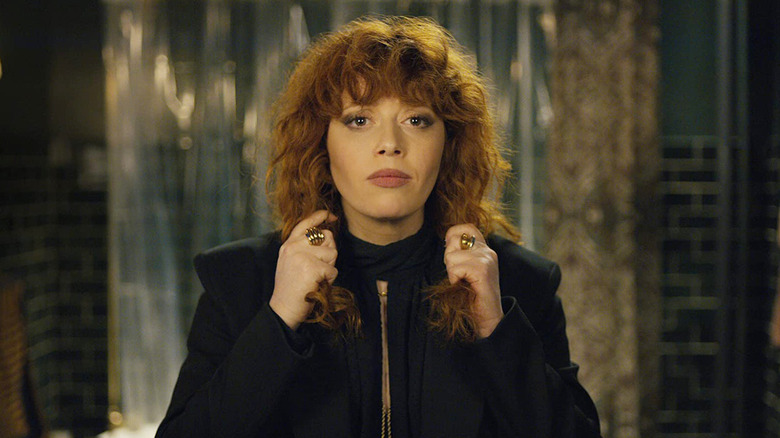
Even to this day, there are few powerhouse women in the film industry quite like the late Nora Ephron. The prolific filmmaker and playwright was the queen of the rom-com in her time, writing classics such as "When Harry Met Sally..." and directing crowd-pleasing hits like "Sleepless in Seattle," "Michael," and "You've Got Mail." Her influence can be felt in the works of others, not least of whom is Natasha Lyonne, a fellow New York City-born Jewish multi-talent with a knack for crafting witty, heightened comedies-of-manner that speak to her personal roots.
In an interview with W Magazine (via IndieWire), the "Orange is the New Black" alum and "Russian Doll" creator/star recalled how her first acting gig came when she was a child in the film "Heartburn." Director Mike Nichols' 1986 dramedy was written by Ephron and is based on her 1983 novel of the same name, itself directly inspired by her real-life marriage to the famed investigative journalist Carl Bernstein. To quote Lyonne:
"Nora Ephron was a very significant figure in my story. My very first acting gig was as a glorified extra in her film 'Heartburn.' ... I was five years old and I am sleeping on some guy's lap at a wedding. And then when I was coming back in my phase two, post-junkie dump, I auditioned for Nora again."
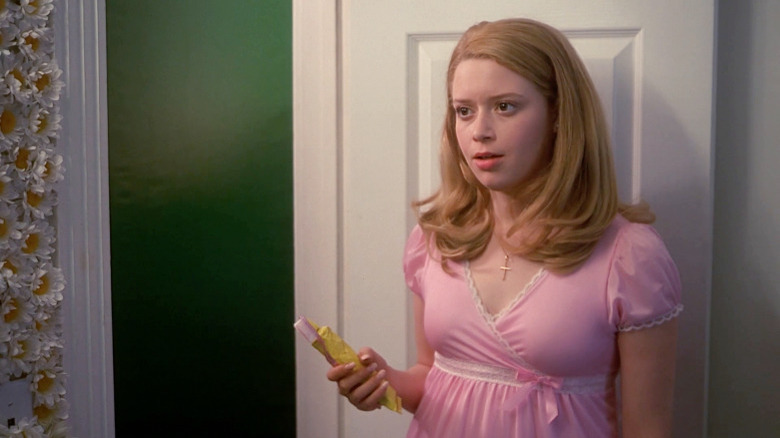
After starring in future cult movies like "Slums of Beverly Hills" and the touchstone queer comedy "But I'm a Cheerleader" in the late 1990s, Natasha Lyonne went through a much-publicized struggle with drug addiction in the early aughts. She would once again cross paths with Nora Ephron again while auditioning for Ephron's 2008 play "Love, Loss, and What I Wore" (an adaptation of Ilene Beckerman's book of the same name). Said Lyonne:
"I wanted a part in her play, but I was having a really hard time with a boyfriend, and I said, 'While I have you — if you could just give me a little advice here. It doesn't matter if I get the job; I see this as a free therapy session.' That's really what I'm doing in showbiz; I've gained access to people who are tremendous thinkers and I'm trying to crack this case."
Far from a one-off encounter, Lyonne said Ephron was "always looking out for me" as she continued on her journey to sobriety. That included making sure Lyonne had "the best room at Columbia-Presbyterian and the greatest surgeon" when she underwent emergency open-heart surgery and joining Lyonne's future "Russian Doll" co-star Chloë Sevigny in helping to "see me through this thing." Lyonne added:
"And then Nora gave me my first gig back. She had me stay at her house in Los Angeles, and I was like, 'Are you crazy?' And she said, 'Everybody has problems.' She really helped me understand that I was OK."
For all her many professional achievements, it's something like Ephron's unwavering support and assistance to Lyonne that speaks the most to what made her admirable as a person.
Read this next: The Best Movies Of 2022 So Far
The post Why Nora Ephron Was 'A Very Significant Figure' In Natasha Lyonne's Story appeared first on /Film.
Recovering data from failing hard drives is something I find myself doing from time to time for others. Recovering data from SSDs – now that’s something new. In this case, I’ll be recovering data from SSDs which aren’t even one year old, after a seemingly successful migration from hard drives, under a very tight timeline that necessitated a bit of exploration and ingenuity as well. It’s not the best way to do things, but it’s the only way given the constraints.
This job was an emergency call-out to attend a computer that controls an expensive piece of equipment. It turns out the expensive piece of equipment had developed a fault and the technician was called out to repair it, but as the controlling computer began to malfunction, the technician would not perform repairs until the computer was fixed. The technician had already been scheduled to return in two days time – so I had two days (at the most) to fix it, but they were also reluctant for me to spend all that much time on it because of concerns about cost to them.
The machine itself was an HP pre-built machine with a Windows 7 installation qualified by the manufacturer. The drive configuration was originally a 4 x 500GB Seagate Hard Disk set-up in RAID10 through Intel “FakeRAID”, but had one drive dropped out for an unknown length of time. It was previously (less than a year ago) migrated to 4 x 500GB Samsung 870 EVO SSDs by rebuilding the RAID one drive at a time, seemingly operating fine for a while.

At the time of call-out though, things apparently went downhill quickly. At first, one drive was seen to have dropped out of the array and a rebuild was initiated by their staff. This rebuild was apparently not successful, instead resulting in the machine locking up. Afterward, they found the machine unbootable and performed some SMART self-tests through the BIOS which reported failures (which I was not too convinced about, as the BIOS may not be compatible with all types of drives). They were desperate to boot the machine and retrieve data, so one of the staff members broke the RAID by removing another drive, leading to the RAID10 operating in a RAID0-like state, to which they were able to now boot but were unable to copy data as it would lock up. They decided to try setting up a network share and pull the data off using another machine … when they finally got me into the picture.
Lesson 0: Keep an eye on your drive health – regardless of the type of drive. While SSDs are usually reliable, they are not infallible!
Lesson 1: Do not rebuild a RAID as a knee-jerk reaction until you know the health of the remaining drives. Check the SMART data first – if the drives are bad and rebuild seems unlikely, it may be best to go straight to recovery.
Lesson 2: Do not forcibly break a RAID – there is not much to be gained but more to be lost as now you have even less redundancy and more “out-of-sync” copies.
Lesson 3: Just because it boots doesn’t mean you’re any closer to fixing the problem. In fact, the process of booting the existing OS is going to cause writes to the disk that will cause further data inconsistencies and potential harm, so have a rescue OS on-hand (e.g. a live Linux) to do your diagnosis with.
Lesson 4: Listen to recommendations to backup your data. It’s never the wrong thing to do!
Now that I’ve managed to take a two-hour trip to get on-site, I get the machine booted into Knoppix and the signs are not good – smartctl gives the following attributes for the four SSDs:
ID# ATTRIBUTE_NAME          FLAGS    VALUE WORST THRESH FAIL RAW_VALUE
  5 Reallocated_Sector_Ct   PO--CK   097   097   010    -    16
  9 Power_On_Hours          -O--CK   098   098   000    -    5344
 12 Power_Cycle_Count       -O--CK   099   099   000    -    47
177 Wear_Leveling_Count     PO--C-   099   099   000    -    2
179 Used_Rsvd_Blk_Cnt_Tot   PO--C-   097   097   010    -    16
181 Program_Fail_Cnt_Total  -O--CK   100   100   010    -    0
182 Erase_Fail_Count_Total  -O--CK   100   100   010    -    0
183 Runtime_Bad_Block       PO--C-   097   097   010    -    16
187 Reported_Uncorrect      -O--CK   099   099   000    -    76
190 Airflow_Temperature_Cel -O--CK   064   056   000    -    36
195 Hardware_ECC_Recovered  -O-RC-   199   199   000    -    76
199 UDMA_CRC_Error_Count    -OSRCK   100   100   000    -    0
235 Unknown_Attribute       -O--C-   099   099   000    -    39
241 Total_LBAs_Written      -O--CK   099   099   000    -    1488494234

ID# ATTRIBUTE_NAME          FLAGS    VALUE WORST THRESH FAIL RAW_VALUE
  5 Reallocated_Sector_Ct   PO--CK   083   083   010    -    97
  9 Power_On_Hours          -O--CK   098   098   000    -    5306
 12 Power_Cycle_Count       -O--CK   099   099   000    -    47
177 Wear_Leveling_Count     PO--C-   099   099   000    -    3
179 Used_Rsvd_Blk_Cnt_Tot   PO--C-   083   083   010    -    97
181 Program_Fail_Cnt_Total  -O--CK   100   100   010    -    0
182 Erase_Fail_Count_Total  -O--CK   100   100   010    -    0
183 Runtime_Bad_Block       PO--C-   083   083   010    -    97
187 Reported_Uncorrect      -O--CK   099   099   000    -    1
190 Airflow_Temperature_Cel -O--CK   075   056   000    -    25
195 Hardware_ECC_Recovered  -O-RC-   199   199   000    -    1
199 UDMA_CRC_Error_Count    -OSRCK   099   099   000    -    7
235 Unknown_Attribute       -O--C-   099   099   000    -    34
241 Total_LBAs_Written      -O--CK   099   099   000    -    2390896270

ID# ATTRIBUTE_NAME          FLAGS    VALUE WORST THRESH FAIL RAW_VALUE
  5 Reallocated_Sector_Ct   PO--CK   081   081   010    -    114
  9 Power_On_Hours          -O--CK   098   098   000    -    5321
 12 Power_Cycle_Count       -O--CK   099   099   000    -    42
177 Wear_Leveling_Count     PO--C-   099   099   000    -    2
179 Used_Rsvd_Blk_Cnt_Tot   PO--C-   081   081   010    -    114
181 Program_Fail_Cnt_Total  -O--CK   100   100   010    -    0
182 Erase_Fail_Count_Total  -O--CK   100   100   010    -    0
183 Runtime_Bad_Block       PO--C-   081   081   010    -    114
187 Reported_Uncorrect      -O--CK   099   099   000    -    506
190 Airflow_Temperature_Cel -O--CK   066   059   000    -    34
195 Hardware_ECC_Recovered  -O-RC-   199   199   000    -    506
199 UDMA_CRC_Error_Count    -OSRCK   100   100   000    -    0
235 Unknown_Attribute       -O--C-   099   099   000    -    35
241 Total_LBAs_Written      -O--CK   099   099   000    -    1437217408

ID# ATTRIBUTE_NAME          FLAGS    VALUE WORST THRESH FAIL RAW_VALUE
  5 Reallocated_Sector_Ct   PO--CK   096   096   010    -    24
  9 Power_On_Hours          -O--CK   098   098   000    -    5256
 12 Power_Cycle_Count       -O--CK   099   099   000    -    47
177 Wear_Leveling_Count     PO--C-   099   099   000    -    2
179 Used_Rsvd_Blk_Cnt_Tot   PO--C-   096   096   010    -    24
181 Program_Fail_Cnt_Total  -O--CK   100   100   010    -    0
182 Erase_Fail_Count_Total  -O--CK   100   100   010    -    0
183 Runtime_Bad_Block       PO--C-   096   096   010    -    24
187 Reported_Uncorrect      -O--CK   099   099   000    -    12
190 Airflow_Temperature_Cel -O--CK   074   059   000    -    26
195 Hardware_ECC_Recovered  -O-RC-   199   199   000    -    12
199 UDMA_CRC_Error_Count    -OSRCK   099   099   000    -    6
235 Unknown_Attribute       -O--C-   099   099   000    -    38
241 Total_LBAs_Written      -O--CK   099   099   000    -    1482576913
Looking at the reallocated sector counts on even just the first disk shows that it outnumbers the total reallocated sector counts on my fleet of SSDs which now number more than 20. The drives have been reporting unrecovered read errors which is the likely cause of the freezes, noting that all the failed blocks are developed as Runtime Bad Block, rather than program/erase failures. Judging from the SMART data, the 2nd drive is the one that dropped out of the array and was rebuilt – seemingly close to completion by the looks of it. It reports a non-zero CRC error count, as does the fourth drive, which suggests to me that the SATA controller or cabling on the unit may be a bit borderline – two of the cables seem to be bent quite a bit to fit, where a right-angled cable would have fit better, possibly contributing to that.
As much as I thought it couldn’t be the SSD … the evidence was staring me in the face – it was the SSDs. Could it be something in common (e.g. a bad power supply) causing the issue? Perhaps … but that hypothesis went out the window when I discovered others having the same problem months after these units were purchased. The earliest seems to be a deleted post at the tail-end of November 2020.
Lesson 5: Just because your experience with other models from a manufacturer is good, and they may have advantages over other manufacturers such as vertical integration, does not mean that everything they produce will be good.
Learning this, my heart sank. I had recommended these drives based on experience with past models (e.g. 840 PRO, 850 EVO, 960 EVO) which have never skipped a beat. I am an honest guy – I really don’t want to be called out to fix things which is why I suggested they migrate from hard drives with >50k hours on the clock to SSDs … but now …


… there are a stack of potential time-bombs, of which I have not been given the time to check. I had recommended the staff take the time to check the SMART data, perform backups and migrations as necessary. But whether this will be done is up to them.
The one thing that did come out was a firmware update with no known changelog. Perhaps it improves the issue and avoids further premature failures – Samsung had made a misstep with the 840 EVO in the past and patched over it with firmware, so perhaps this one is doing a similar thing. I have advised the staff to update the firmware of all drives that are still running in the hopes it will avoid further problems.

For a drive with five years limited warranty, it is quite shocking to see it fail in under a year. Is this a sign of the perils of a supply-chain issue, a victim of the chip shortage? Is lower-grade NAND making its way into SSDs due to pricing pressures? We may all remember what happened during the Thailand floods which caused issues with the hard drive supply chain – drives coming out around that time in my experience show notably degraded reliability.
Ideally, one should always image the drives and work from images. But in this case, time was very short – I had two days to work on the machine which includes diagnosis, recovery, restoration and repair and a “budget” of about eight hours of work. Imaging the drives and reassembling them from images would not have been able to be completed in time, given that I had to travel to site with only whatever that could fit into a backpack.
The array was still “intact” in the sense it was degraded but not offline. Knoppix with its mdraid managed to mount the RAID as a single block device, so I decided to run ddrescue against that to an external USB 3.0 SSD in the interests of speed.

After three-and-a-half hours, we were down to about 20MB remaining to recover, so the majority had been read out but concerningly, the errors appeared to be stubborn. Occasionally a retry would go through and you’d get a blip of data here and there, but whether the data was still intact or whether it was just corrupted was not something I could check at this time.

An hour passes, and there is some progress, but it is very slow. All hopes of finishing for the day are dashed – I’ve decided to let it run overnight and left the site to return and complete it tomorrow.
On my return, I found about 10MB remaining to recover, but no progress had been made for several hours. Figuring I had squeezed practically everything out of the existing pair of drives, I decided it was time for an all-or-nothing kamikaze mission with the remaining pair of drives.
The other pair of drives were out-of-sync as one had naturally dropped out and the other was forcibly removed by the lab staff. But given that we have a lot of “holes” in our image, I felt it was better that we fill them with data even if they are from out-of-sync pairs, as it’s better than just filling them with zeroes. Who knows, one can hope the other drives don’t have bad sectors in the same areas.
The first issue was that the other pair of drives are part of a broken array, so they won’t reassemble just by plugging them in. To avoid further damage to the pair that’s still working, both are removed and the two others are connected. I list the RAID information of the broken pair with dmraid -r and note down important information such as the size, start sector and stripe sizes. Seeing the partition table on one drive and not the other, I know which one is the first drive and which is the second, so I go and remove the RAID metadata using dmraid -x [devicename] and then create a corresponding RAID metadata containing the same parameters but as a RAID0 instead, using a command similar to dmraid -f isw -C Raid0 –type 0 –strip 64k –disk “/dev/sda /dev/sdb”. The device size can be optional, if the start sectors are zero – you will just end up with a potentially-larger device with unused sectors at the end.
Lesson 6: Deleting and re-creating the RAID in the BIOS is never a good idea. If anything, I’ve seen it mangle the partition table, as others will then recommend the use of testdisk to recover lost partitions. However, if you do it with dmraid, it seems that doesn’t happen – it’s actually a lot safer this way as you can also backup and restore RAID metadata!
Trying to mount the devices using dmraid -ay gave an error that the RAID set is already active, even though it was not, and this was because mdraid was busy with the devices. One could stop and remove the mdraid device, or in my case, I was lazy and just rebooted the machine to let mdraid pick up the new RAID. As I got the parameters right, the partition table and device size looked right, and mounting read-only allowed me to see subfolders and more.

Restarting ddrescue with the same logfile, we were able to push from 9747kB of lost data down to 297,472 bytes, although we may have suffered some data inconsistency in the process due to mixing the broken RAID disks into the mix.
To validate the solution and check whether it was workable at this level of error, I zeroed the remaining unrecovered sectors in the clone and then cloned just the first partition onto a 2.5″ SSD in a USB 3.0 cradle. The clone was then plugged into the PC, where it successfully booted into Windows and chkdsk gave it a clean bill of health – so the filesystem metadata seemed to make sense. There will still be silent data corruption, so I advised them to reinstall any important software to ensure integrity.
The next step came to resize the data partition to become smaller so that the whole 1TB disk can be written to a single 500GB spare SSD (yes, another Samsung 870 EVO, but one I had performed a full-surface test on and upgraded the firmware). During this process, however, the drive containing the recovered image decided to spew errors too …

It was at this point I was really frustrated. So close, yet so far … and I have VAVA to thank for this one. Thankfully, as I cloned the first partition to a second SSD, I cloned the full partition back over the error, which did not lead to a reallocation, resized the partition then cloned the result to the target 870 EVO.
Lesson 7: You can suffer a failure of the target medium during a recovery procedure. When things seem to be going well, they can also go badly. Having a copy of the copy can save your bacon!
The result was now a working system, with only minor filesystem inconsistencies in the data partition. I had advised them of the possibility of silent data rot, but did not track down which files were affected. I had also advised them to back-up the result ASAP, as that was the only real “guaranteed” copy.
In the end, I ended up with nine hours for this job, which was done in-time for the technician’s return visit. But in turn, I incurred about six hours of travel time across two days to make it happen … this is why I don’t like having to do these jobs and if anything, my advise is always to try and avoid having to be called out for emergencies.
Samsung SSDs were a no-brainer recommendation for me – vertical integration, large volumes, excellent performance and solid warranties were just what we needed. It’s no surprise they have the largest share in the SSD market. However, after this experience, I cannot make a blanket recommendation of Samsung SSDs any more. Four drives in a RAID, all suffering failures resulting in actual data loss, with reallocated sector counts much higher than I’ve ever seen before and more failures potentially to surface in the future. I am not the only one to have suffered and the silence around the firmware update doesn’t help either. Does it fix the issue or not? Who knows.
Such an incident has been a blow to my reputation – to recommend these drives is perhaps one of my biggest mistakes and I can only offer my apologies. But worse still, it has cost me time and frustration in trying to salvage whatever is left – in part due to the failure and in part due to a failure of the staff to follow recommendations to maintain backups and vigilance around the drive’s health status. I really don’t want to be called out to attend these issues as I’ve always got more important things to do – but when I am called out, I know it’s because there’s no other option and I still care enough about them to rescue them from the situation as best as I can. Their own IT team don’t want anything to do with legacy systems.
The experience has ended up with me learning a bit about using dmraid under Linux to get out of sticky RAID situations. I generally dislike FakeRAIDs, but now that I know such tools can be used to do some metadata mangling, I’m less afraid of being confronted by broken arrays. I also learned (the hard way) that the recovery medium itself can fail – in this case, another SSD which had been pre-qualified and I did not expect to cause issues. Is it a sign that modern SSDs may not be as reliable as older SSDs due to supply-chain issues or a race-to-the-bottom that prioritises price and profit over reliability?
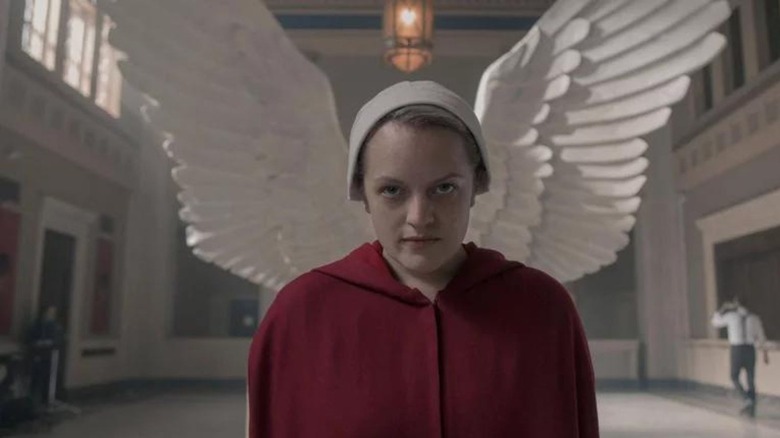
It has been nearly a year since "The Handmaid's Tale" season 4 ended with the most shocking cliffhanger of all time, surprising viewers with its jaw-dropping conclusion. The series is based on author Margaret Atwood's dystopian novel of the same name and is the first production from Hulu to win significant accolades, including being the first series on a streaming service to win an Emmy for Outstanding Drama Series. "The Handmaid's Tale" has been lauded for its addition of seemingly real-life metaphors and has become synonymous with the unsettling political climate in the United States. The show has come a long way since season 1. It depicts dystopia at its most tragic state, unraveling the story of Gilead, a totalitarian patriarchal society with rigid systemic beliefs that take away women's rights and treat them, basically, as baby-making machines.
Season 4 concluded a while ago, and it was the show's most noteworthy season yet. A lot happened that spells uncertainty for June's (Elisabeth Moss) future, so here's a reminder of all you need to remember before the show's fifth season hits the streaming service on September 14, 2022.
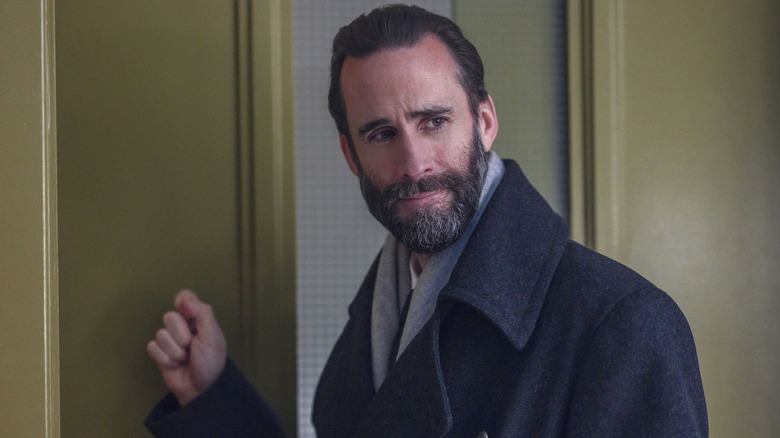
Despite being stuck in Canada, Fred Waterford (Joseph Fiennes) rose to power and managed to cut a deal for freedom in exchange for his intelligence on Gilead's laws and regulations. He was very close to succeeding with his plans, but at the right time, Commander Lawrence's (Bradley Whitford) assistance helps June push back. As her slow-bubbling vengeance rose to the surface, June orchestrates her revenge, so her abuser could get what he deserved.
Along with her fellow Handmaid refugees, June chases after Fred in No Man's Land. What ensued next is the most suspenseful sequence the series has seen yet: Fred runs for his life as he is chased after, beaten up, and brutally murdered. In the end, we see his decapitated body hanging on the wall. Fred's gone — and this won't sit well with Gilead's population, or even Canada (since June sought asylum there), and she'll have to face the music for what she's done. Fred was a central character, so the ripple effect of his death is sure to be seen in season 5. It's an important event to remember before watching the new season!
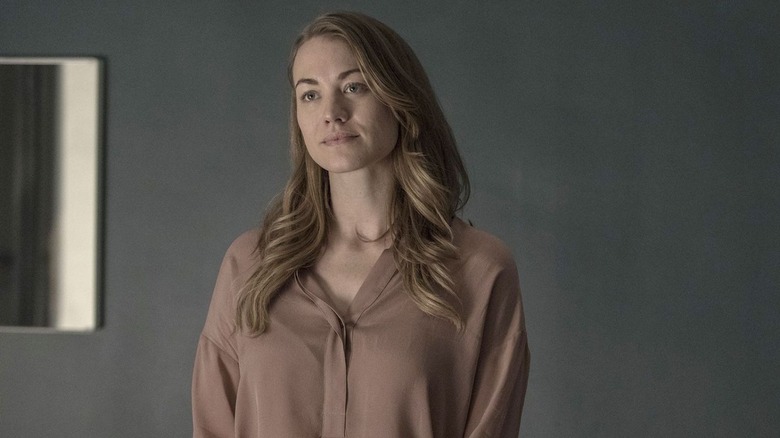
Last we saw Serena (Yvonne Strahovski), she was pregnant, not a big fan of her husband, and trying to stir up something with Mark Tuello (Sam Jaeger), a representative of the U.S. Government-in-Exile. After June murdered her husband, she mailed Serena his ring and severed finger — a show of power as if to threaten her about who's in charge.
While season 4 doesn't suggest Serena has learned of her new status as a widower yet, the trailer for the fifth season hints she's not going to take it well. Her husband had captured the attention of the Gilead government for revealing their system's secrets, and now that he's dead, and Serena's widowed and pregnant, there's a possibility of her repenting for her husband's betrayal. She could be forced to become a handmaid upon her return to Gilead. It's uncertain how brutally the government of Canada will treat Serena — and even if she's awarded freedom, it won't be easy for her to live in peace, knowing her husband's murderer is on a vengeful rampage and could come for her next.
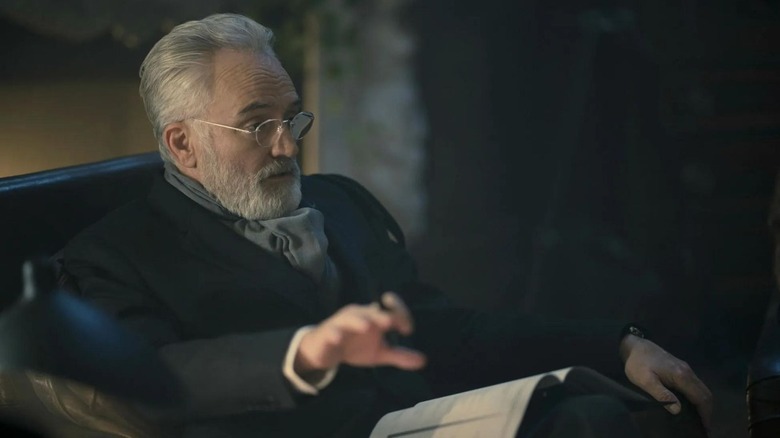
If we've learned anything from "The Handmaid's Tale" season 4, Commander Joseph Lawrence appears to be on June's side for some reason. We've already witnessed that Lawrence is well known as the architect of Gilead's closed economy and had a hand in forming the severe colonies. So why would he help June and save 22 women from their fate of oppression in exchange for Fred?
Whether this resulted from his indifference toward Fred or his desire to help June remains to be seen. The storyline for season 5 explains that Commander Lawrence will be working with Aunt Lydia (Ann Dowd) to "reform Gilead and rise in power." Whatever path that takes, we'll have to wait and see. But for now, it's safe to say it is possible Commander Lawrence may aid June in her quest to save her daughter Hannah, who has been living in Gilead since the beginning of the series.
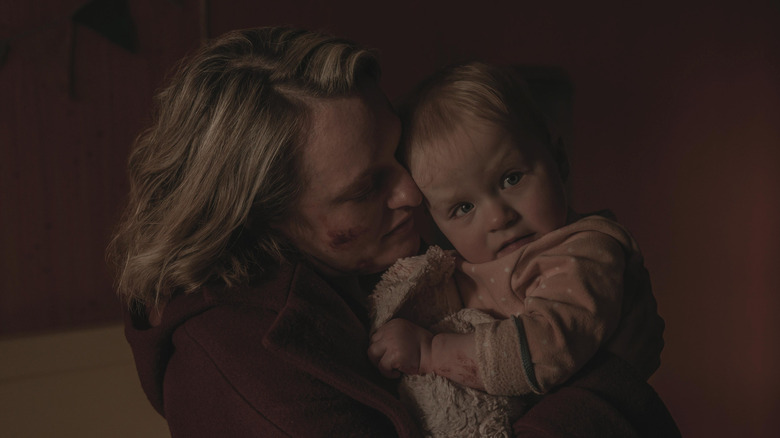
There's simply no way June can get away with murder — it feels impossible that Gilead won't do anything about it. Their sentiments toward Fred Waterford might be nonexistent, but the patriarchal society will not sit by and watch a woman take matters into her own hands. As Gilead's influence creeps into Canada, June will have to face the aftermath of what she's done.
The end of season 4 had the show's biggest cliffhanger yet: June returns home, bloodied from the events of Fred's murder, and cradles baby Nichole in her arms. When her husband, Luke (O-T Fagbenle), witnesses the scene, a realization hits him — there's no going back from the choice June has made for herself. June then informes Luke she would be leaving home soon, she just needed five minutes to bid her daughter goodbye. This signals that June knows she needs to disappear before her crime catches up to her, but whether it leads her back to Gilead is yet to be seen. The plot for season 5 has suggested June will continue fighting Gilead "from a distance" as she embarks on a mission to reunite with and save her daughter Hannah, so maybe there's some hope for her after all.
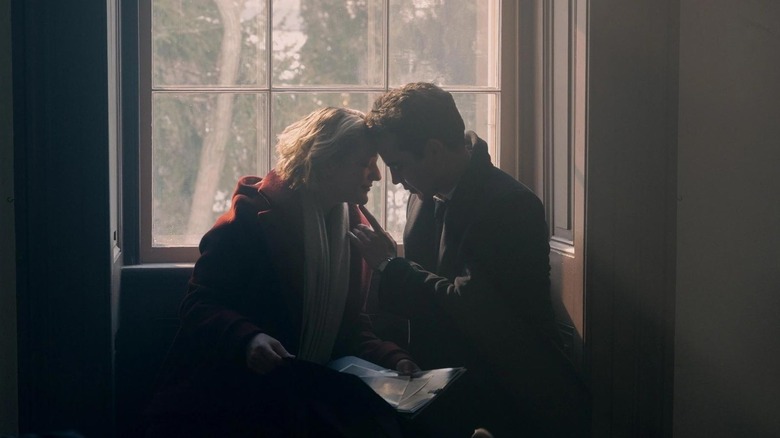
June made some big decisions in "The Handmaid's Tale" season 4 finale — not just about life and death, but also about her love life. Her romantic life has long represented the split in her narrative: Nick represents her present, and her husband, Luke, represents her past — and maybe a safer future. The only disparity is Luke cannot see June for who she has become, and her thirst for revenge is pretty off-putting to him.
Nick might not know who June used to be, but he knows and understands her now, which is something she desperately needs. She doesn't need a reminder of her past life — nor does she have the strength to think about a bright future unless she gets what she wants: to save her daughter from the clutches of Gilead. It's not like Nick and June can have a life together, either — he's married now (we saw him wearing a wedding ring, remember?) and lives in Gilead, and cannot do much but support her from there. The season 4 finale ended by illustrating a rift between June and Luke, so they may need to put some distance between each other and figure things out on their own for now.
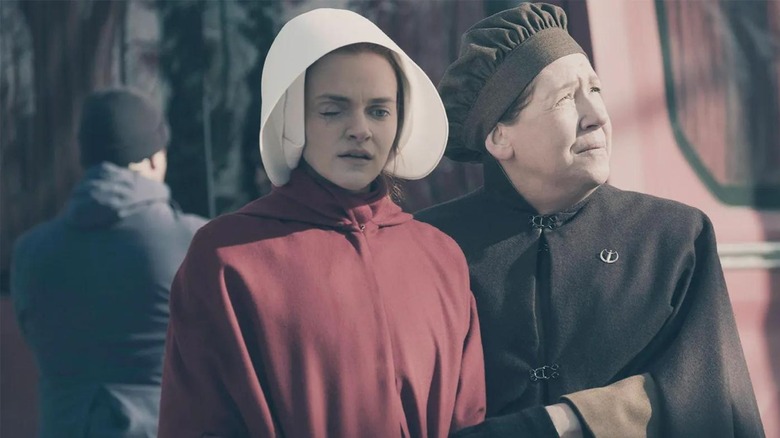
Janine's (Madeline Brewer) season 4 journey ended with her cozying up to Aunt Lydia (who, by the way, has a strange soft spot for her) and doing what it takes to survive in Gilead. She's taken Esther (McKenna Grace), a former wife-turned-handmaid, under her wing, and there's something mysterious going on there. Janine hasn't forgiven Aunt Lydia for her crimes against her; she has lost two children (and an eye) to Gilead, and there must be some reason for her increasingly close association with Aunt Lydia.
There's always been a rebellion in Gilead — albeit hidden from the eyes of those who might harm them. Seeing Janine and Esther lead a revolution of their own in season 5 would be very interesting. We've already seen what Esther is capable of, and for Janine, well, anger is a great motivation. It's also essential to note that nobody's nice to Aunt Lydia unless they have an agenda of their own.
"The Handmaid's Tale" season 5 will premiere its first two episodes on Hulu on September 14, 2022.
Read this next: The 15 Best Horror TV Shows Of All Time
The post What You Need to Remember Before The Handmaid's Tale Season 5 appeared first on /Film.
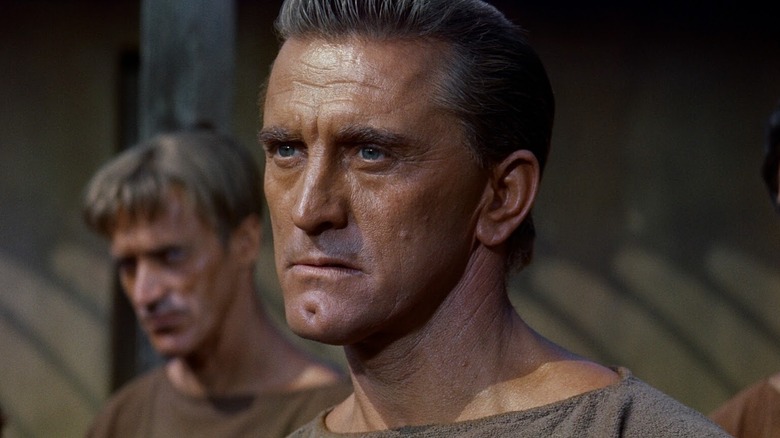
Kirk Douglas had many things to be proud of in his life and career. He was a hugely successful movie star, producer and had a wonderful and multi-talented family, but the accomplishment he was most proud of might surprise you.
Douglas made a name for himself as a heroic tough guy on the silver screen, but it turns out he was a stand up guy in real life, too. When he got enough power within Hollywood he created his own production company called Bryna, named after his mother. He didn't do it as some ego stroking power move, he founded Bryna because he wanted to make more challenging pictures, like the anti-war film "Paths of Glory" and the now infamous epic "Spartacus," both directed by Stanley Kubrick.
Because he was a producer on "Spartacus" he was able to make one monumental decision that had an impact not just in his own industry, but in the wide world of politics itself. And what was that huge, history-making decision? Why, it was simply giving the screenwriter a credit on the movie.
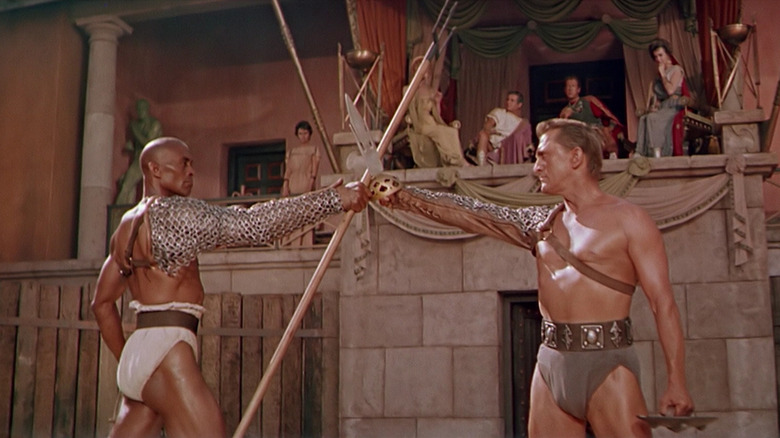
That screenwriter was Dalton Trumbo, one of the best writers of the golden age of Hollywood. If you're not familiar with Trumbo's story you might be scratching your head as to why this is a big deal.
Trumbo flirted with communism in an era where that was really bad news politically and professionally. He was an official party member a mere five years, but it was known enough that he ended up in front of Joseph McCarthy's House Un-American Activities Committee where he and nine other notable liberal filmmakers known by history as "The Hollywood Ten" refused to give any names of other suspected communists. Trumbo was eventually sentenced to almost a year in prison on a contempt of court charge.
Worse still, when Trumbo got out he and the rest of "The Hollywood Ten" were blacklisted by the Motion Picture Association of America, effectively killing his ability to continue his career. The industry didn't want the heat and viewed Trumbo as toxic, but at the same time they also recognized he was one of the best writers in town and wanted his quality screenplays, so Trumbo wrote under a pseudonym at a hugely reduced rate to pay the bills. In this time he wrote a lot of B-movies and also one called "The Brave One," for which his pseudonym won an Oscar for Best Story. Naturally, he couldn't claim his award.
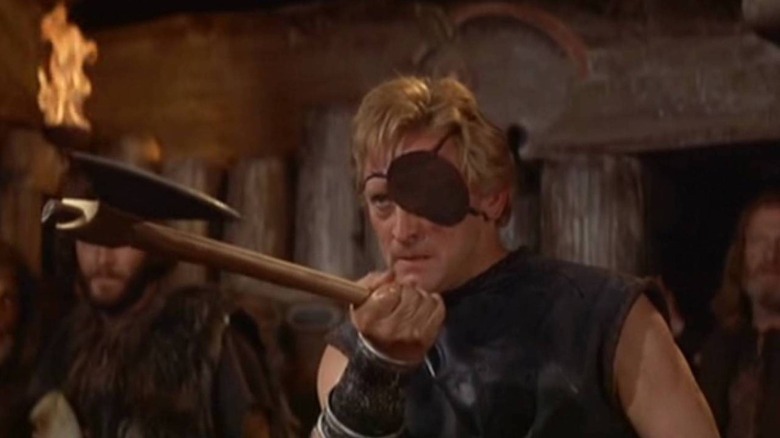
Trumbo was hired to write "Spartacus" and did a bang up job. In an interview with Chet Cooper, Douglas recalled an early conversation with Stanley Kubrick about the screenplay credit on the movie. Would they attribute it to "Sam Jackson" (not that one), Trumbo's preferred pen name at the time? According to Douglas, Kubrick made a move to take the screenplay credit for himself and Douglas shot that down immediately.
Douglas ended up making the brave decision of bringing Dalton Trumbo out from the shadows and giving him the credit he deserved, to hell with whatever political backlash that might stir up.
"I went home that night and I thought, 'The hell with it, I'm going to put Dalton Trumbo [in the credits.]' People thought I was crazy. I said, 'No. What can happen?' So, I invited Dalton Trumbo to come to the studio — the first time he had been in a studio for ten years. I will never forget. He had tears in his eyes. He said, 'Kirk, thank you for giving me back my name.'"
That final quote from Trumbo has stuck with me ever since I first heard this story. Ultimately, Trumbo was credited, the world didn't end, and Kubrick, Douglas, and Trumbo continued to make movie history for a good long time afterward.
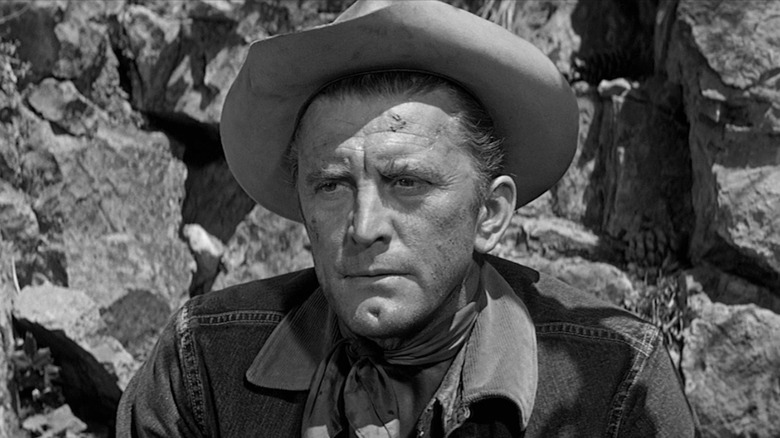
Kirk Douglas has said this was his proudest moment, and took credit for "breaking the Blacklist," which might be a tad overblown. Around this same time, director Otto Preminger also had enough of the pseudonym business and gave Trumbo a credit on "Exodus" which came out the same year as "Spartacus."
So, Douglas wasn't the sole man responsible for shattering that extremely shameful shackle of Hollywood history, but the bravery it took for him to stick his neck out like that shouldn't be under-appreciated, either. Douglas could have very well been blacklisted himself, just for being a "communist sympathizer," and he knew it. But it seems he wagered that his carefully built star image, which granted him a considerable position of power in the movie business at that time, would be enough to protect him and his movie from this risk -- and he wagered correctly.
You don't get a lot of big screen tough guys showing they are just as brave and selfless as the heroes they portray in movies, but Kirk Douglas was one of the real life good guys. The fact that before his death he looked back at that decision as being the thing he's the most proud of having done in his entire career says a lot about his character, and in his way, he helped pull not just the entertainment industry, but America on the hole out of a particularly shameful period.
Read this next: 15 Best Movies Of The 1960s, Ranked
The post This Was Kirk Douglas' Proudest Moment In His Storied Career appeared first on /Film.
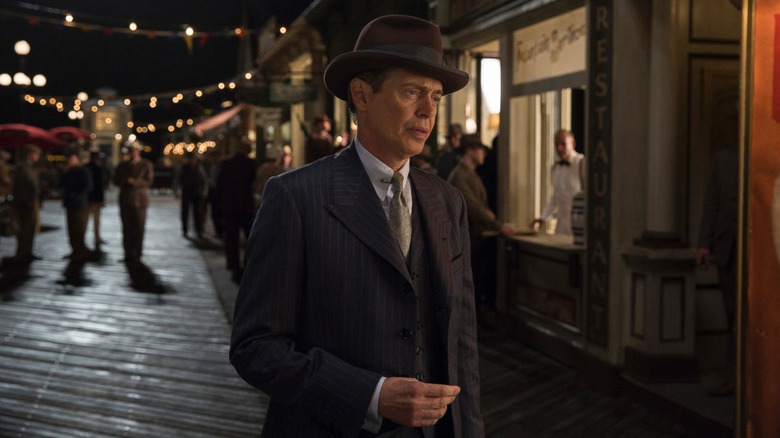
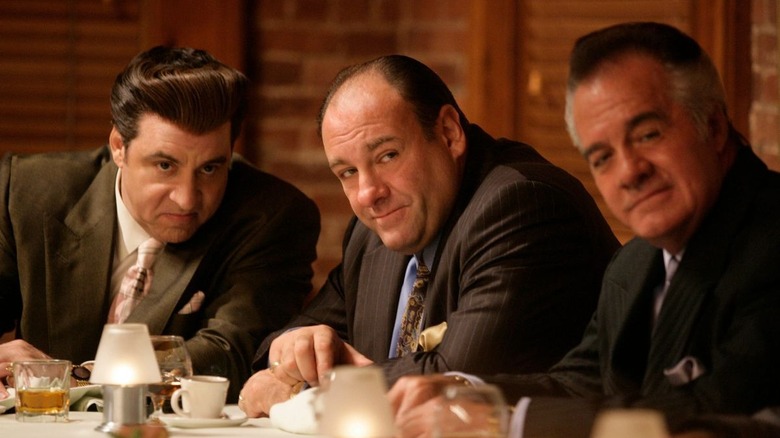
Upon the end of HBO drama "The Sopranos," with the falsetto notes of Journey's "Don't Stop Believin'" still hanging in the air, executive producer and writer Terence Winter was searching for his next project. The massively popular mafia-centric show had concluded at the top of the TV heap, even called "the greatest pop-culture masterpiece of its day" by Peter Biskind. Its complicated leading man Tony Soprano (James Gandolfini) was more than the head of an organized criminal clan; he was a husband and a father living in the suburbs, complexities "The Sopranos" explored thoroughly over its six seasons.
Already an Emmy Award-winner for his work on "The Sopranos," Winter was quickly hired by HBO to develop a new series that would fit right in among the network's showy big-budget genre pieces like "Game of Thrones." Upon reading Nelson Johnson's 2002 book "Boardwalk Empire: The Birth, High Times, and Corruption of Atlantic City," Winter quickly realized that it was really a gangster story with politician Nucky Thompson at the center — and it would make a great focal point for a new series. But "Boardwalk Empire" wasn't a retread of the Soprano saga, though the showrunner considers the two related beyond their New Jersey settings. Winter explains the connection to Esquire:
"What made it interesting for me is that I had just spent eight years of my career telling a story about the end of organized crime basically on 'The Sopranos,' and this was literally the beginning of organized crime. Prohibition was the single event that made organized crime possible — it made millionaires out of criminals overnight — so it was really the chance to explore the flip side of 'The Sopranos.' These are the events that conspired to create the world I had just spent the last eight years writing about."
A period drama every bit as violent as the Tony Soprano story, "Boardwalk Empire" centers around Atlantic City politician Nucky Thompson, played by Steve Buscemi. Seeing enterprise within the national restrictions of Prohibition, Thompson quickly ascends to notoriety in the bootlegging business and interacts with tons of historical figures (and characters based upon them), giving the series creator a spacious sandbox to play in. Winter elaborates with Esquire:
"And the ability to do it as a long-running series, where you get to spend dozens of hours with these characters who were really in their infancy, was just irresistible. You get to meet young Al Capone before he became Al Capone. You get to meet a young Lucky Luciano and these guys still trying to figure out who they were."
Al Capone (played in the show by Stephen Graham) and Lucky Luciano emerged from Chicago and New York gangland, jungles every bit as violent as the North Jersey landscape where the crime families ruled in "The Sopranos" – families whose real-life inspirations, notably, got their start during Prohibition. Crafting pro rum-runners wasn't any more daunting than writing the likes of consigliere Silvio Dante. Per Winters:
"Even with a guy like Al Capone, you're going to see moments of humanity there. You're going to see him with his kid or with his brother dying. And even as horrible of a person as he was, you're going to feel something for him. It was certainly true with Tony Soprano. It's just incredible how you start to shed tears for people who you otherwise wouldn't have given two thoughts about."
Whether by mafia boss having panic attacks or a Chicago gunman teaching his deaf son how to fight, the key to writing scoundrels and knaves across any series, Winters asserts, is tangibility.
Read this next: The 50 Best Documentaries You Can Watch On Netflix Right Now (July 2022)
The post Boardwalk Empire's Creator Saw It As The 'Flip Side' Of The Sopranos appeared first on /Film.
![DOOM I + II: Enhanced (+ 16 Add-ons + Classic DOOMs, MULTi5) 390 MB / DOOM I + II: Enhanced (+ 16 Add-ons + Classic DOOMs, MULTi5) 390 MB [FitGirl Repacks]](https://preview.redd.it/x4m8xofomxi91.jpg?width=640&crop=smart&auto=webp&s=eb4324a65ea7bc556b31f3227e512bca25424e07 "DOOM I + II: Enhanced (+ 16 Add-ons + Classic DOOMs, MULTi5) 390 MB / DOOM I + II: Enhanced (+ 16 Add-ons + Classic DOOMs, MULTi5) 390 MB [FitGirl Repacks]") |
submitted by /u/FitGirlLV [link] [comments] |
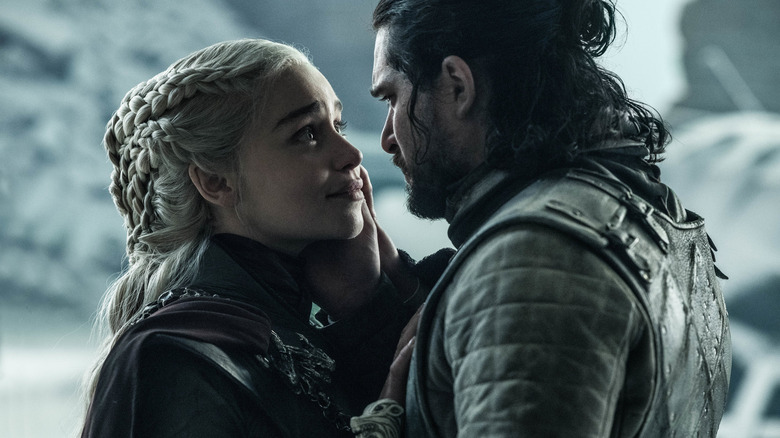
Thanks to the upcoming premiere of "House of the Dragon," George R.R. Martin is back in the press, giving us weekly reminders that yes, he is still hard at work writing the final two installments of "A Song of Fire and Ice." Ad die-hard fans already know, the first book came out in 1996, and the fifth in 2011, so 2022 marks the 11th year of waiting for "The Winds of Winter" to arrive. If you're hoping for an estimate on when book six might be ready, then you must be new here: Martin has no intention of predicting when he'll finish the books. But every now and then, he does offer a morsel of new information to desperately cling to as we await the next tome. This time around, Martin is once again providing an answer to the much-asked question: will the novels have the same ending as the TV series?
This isn't the first time Martin has answered this particular query. Back in 2019, before the "Game of Thrones" finale even aired, he shared, "I don't think [showrunners] Dan [Weiss] and David [Benioff]'s ending is going to be that different from my ending because of the conversations we did have."
But that was before "Game of Thrones" came to its controversial close. The finale was met with a massive outcry from fans who have pretty much spent the past few years debating whether the ending ruined the entire show and, in some extreme cases, petitioning for HBO to "redo" the season. In the wake of all that, Martin's answer to this question was even more urgent — would the books provide the do-over that fans so desperately wanted? Or would it be a repeat of everything that went wrong? The answer is, unsurprisingly, complicated.
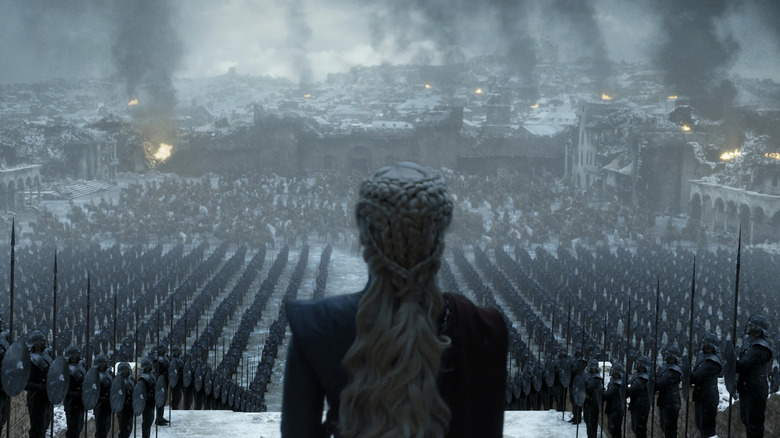
In the beginning, the plan was always for George R.R. Martin to finish the books before "Game of Thrones" came to a close. But that's easier said than done. In the end, only one new novel was released throughout the series' run on HBO. Writing "The Winds of Winter" took much longer than expected and eventually, HBO's adaptation outpaced the books. To compensate, Martin had many long conversations with showrunners Weiss and Benioff, where he shared the endings he had planned for each of the major characters in the story. But that ending was hashed out nearly a decade ago. Nine years later, Martin has made more progress on the sixth book, and along the way realized that the ending won't go exactly as he originally planned.
In short? After years of working on the novel, his answer to the question has changed. He recently told the New York Times, "My ending will be very different."
While some of the events in "The Winds of Winter" will occur similarly to the final seasons of "Thrones," Martin insinuated that the ending he originally had planned (the one he shared with Weiss and Benioff) has changed significantly. And because of that, "A Song of Fire And Ice" won't necessarily match up the way he expected it to.
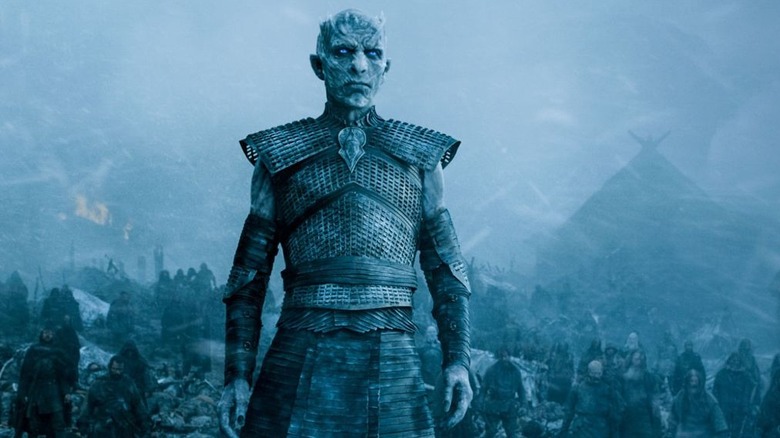
In a blog post from July 2022, Martin explained more in-depth, comparing his writing process to tending a garden:
"Another question that I get a lot, especially since the end of 'Game of Thrones' on HBO, is whether 'A Song of Ice & Fire' will end the same way. An architect would be able to give a short, concise, simple answer to that, but I am much more of a gardener. My stories grow and evolve and change as I write them. I generally know where I am going, sure ... the final destinations, the big set pieces, they have been in my head for years ... for decades, in the case of 'A Song of Ice & Fire.' There are lots of devils in the details, though, and sometimes the ground changes under my feet as the words pour forth."
He added that while writing, he's noticed the story veering "further and further away from the television series." He conceded that "some of the things you saw on HBO in 'Game of Thrones' you will also see in 'The Winds of Winter' (though maybe not in quite the same ways) ... but much of the rest will be quite different."
The idea of the book diverging from the show shouldn't be too hard for book readers to grasp; it's pretty much what was happening the entire time. Even when the books were providing a clear roadmap, "Game of Thrones" made a habit of diverging from Martin's novels: like sending Sansa back to the Winterfell or killing Ser Barristan Selmy in Meereen.
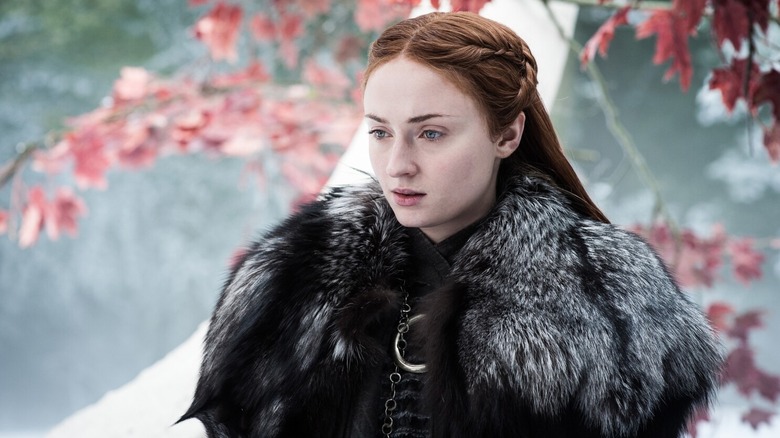
Thanks to the butterfly effect, making small changes often results in larger ones down the line. In the case of GOT, sometimes there were entire characters who never made it onto the screen at all, but played roles that other characters could fill. And then there are those who died off in the show, while they still live in the books. What will become of characters like Young Griff, Jeyne Poole, and Lady Stoneheart? Those aren't questions that the show had to answer, which inherently makes the book ending different.
For years, fans have speculated that the show cutting those characters out must mean they were destined to die anyway. At the very least, it seemed to hint that they would have no significant impact on the novel's story — how else would they be so easily removed? But that's only true if Martin is working towards the same endgame as Weiss and Benioff which, as he hints, might not be true anymore.
In the same post, Martin shared that when it comes to the deaths we saw in "Game of Thrones," nothing is set in stone.
"Not all of the characters who survived until the end of 'Game of Thrones' will survive until the end of 'A Song of Ice & Fire,' and not all of the characters who died on 'Game of Thrones' will die in 'A Song of Ice & Fire.' (Some will, sure. Of course. Maybe most. But definitely not all) ((Of course, I could change my mind again next week, with the next chapter I write. That's gardening))."
All of this to say that we are right back where we started: crossing out fingers and hoping this book actually arrives in our lifetime.
Read this next: The 15 Most Anticipated Comic Book Movies And Shows Of 2022, Ranked
The post Why Game of Thrones Will Have A 'Very Different' Ending In The Books appeared first on /Film.
Read more of this story at Slashdot.
Read more of this story at Slashdot.
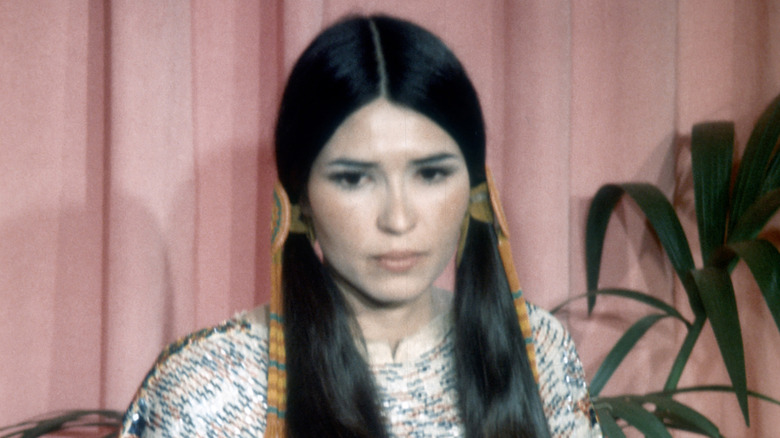
This week, the Academy of Motion Picture Arts and Sciences attempted to right a decades-old wrong with an apology. The Hollywood Reporter broke the news that the Academy privately presented Native American activist and former actress Sacheen Littlefeather with a statement apologizing for her public mistreatment at the 45th Academy Awards. Littlefeather, who is Apache and Yaqui, is 75 years old now, but she was just 26 when she stepped up to the stage to decline Marlon Brando's best actor award and speak about America's mistreatment of Indigenous peoples in 1973.
The actor won the award for his role in "The Godfather," but sent Littlefeather to speak on his behalf with at least eight pages of his remarks typed in advance. The moment that followed is a black mark on the history of the Academy. Littlefeather has since revealed that she wasn't allowed to read Brando's statement, as show producer Howard Koch told her she would be arrested by security if she spoke for more than 60 seconds. That pretty much set the tone for the next few moments, which were captured live on television as part of the telecast.
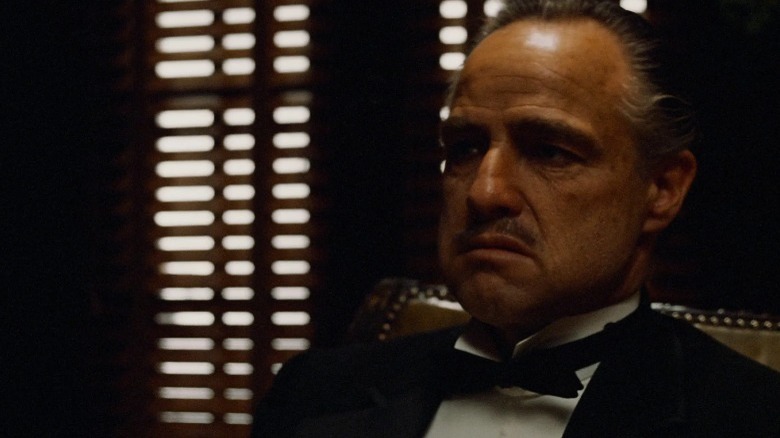
After telling the audience that she wouldn't be able to read Brando's full comments, Littlefeather improvised a very short version of his speech. "He very regretfully cannot accept this very generous award, and the reasons for this being are the treatment of American Indians today by the film industry," Littlefeather said, before a short pause that was interrupted by both loud boos and applause. "And on television and in movie reruns, and also with recent happenings at Wounded Knee."
One month earlier, the Occupation of Wounded Knee had begun, and the standoff between federal agents and the American Indian Movement would ultimately last 71 days and result in bloodshed. In the documentary "Reel Injun," Lakota activist Russell Means said that he and others watched Littlefeather's speech from Wounded Knee, and it raised their morale during a time when they weren't sure they'd make it out of the occupation alive. "Marlon Brando and Sacheen Littlefeather totally uplifted our lives," he told documentarians.
Littlefeather spoke briefly and considerately, ending the speech with a message of hope: "I beg at this time that I have not intruded upon this evening and that in the future, our hearts and our understandings will meet with love and generosity." Despite the message of peace, booing audience members and a threatening producer weren't the only people in the room who treated her with hostility. Littlefeather spoke to the Academy's website A-Frame this week and described the way that popular Western actor and noted racist John Wayne had to be held back, saying: "He came forth in a rage to physically assault and take me off the stage. And he had to be restrained by six security men in order for that not to happen."
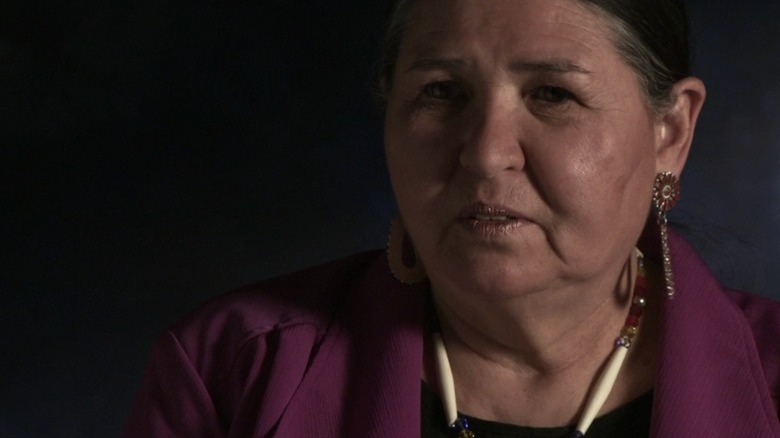
Littlefeather says that people in her line of sight were performing a mocking "tomahawk chop" gesture, and some even reportedly imitated Indigenous war cries. After the moment was over, her life was changed forever. "A lot of cheap shots were thrown at me," she told the Academy. "There were a lot of rumors, gossip columnists that were trying to make it something that it was not. And I was boycotted from every talk show while people talked about me." Littlefeather never even got to read Brando's full typed comments until 2018, when she shared them on Native Trailblazers radio (via Indian Country Today).
Littlefeather was already a notable Native American activist at the time of her Oscars appearance, having participated in the months-long occupation of Alcatraz in 1969. Brando, too, visited Alcatraz during the protest for Native American sovereignty. When she spoke at the Oscar podium, Littlefeather also noted that she was president of the National Native American Affirmative Image Committee. "I knew that I paid the price of admission so that others could follow," she later told the Academy of her groundbreaking moment on the world stage.
The activist is set to be honored on September 17, 2022, at the Academy Museum in Los Angeles, where she will sit in conversation with producer Bird Runningwater. This comes after Littlefeather received a letter from previous Academy president David Rubin apologizing for the shameful events that night in 1973. Here's part of the Academy's statement, as shared by THR:
"The abuse you endured because of this statement was unwarranted and unjustified. The emotional burden you have lived through and the cost to your own career in our industry are irreparable. For too long the courage you showed has been unacknowledged. For this, we offer both our deepest apologies and our sincere admiration."
Littlefeather has never stopped advocating for Indigenous rights and on-screen representation and immediately responded to the news of the apology by paying tribute to Native American artists who have broken through in the film and television industries, including Academy Inclusion Advisory Committee members Runningwater and Heather Rae, actor Wes Studi, and "Reservation Dogs" co-creator Sterlin Harjo. She was also frank about the less-than-perfect timing of the apology, saying, "Yes, there's an apology that's due. As my friends in the Native community said, it's long overdue. I could have been dead by now."
Luckily, Littlefeather is still with us, and still sharing wisdom and insight about the incident that forced Hollywood to look itself in the mirror decades later. "When I was up there refusing the award, I dreamed about someone like [my niece] Calina," she told the Academy. "Someone who would break through the barriers and do her own thing, whether doors would be open. And where she would be able to go through them, to be able to make her dreams come true, of singing, of acting and doing. This is what I did. She is the beginning of a whole new agenda. And so, I passed the baton on to her. And I do it gratefully and thankfully."
Read this next: The Best Movies Of 2022 So Far
The post Why The Academy Owed Sacheen Littlefeather A Long-Overdue Apology appeared first on /Film.
Everything old is new again. Or, in this case, kind of old again since we're going back to the '80s. It has been revealed that the John Hughes classic "Ferris Bueller's Day Off" is getting a spin-off film. While that, on its own, might raise an eyebrow or two, the actual pitch for the movie is more than a little surprising. Rather than focusing on Ferris, Cameron, or one of the other main characters, we are going to take a look at a couple of very minor figures in Ferris' legendary day away from school.
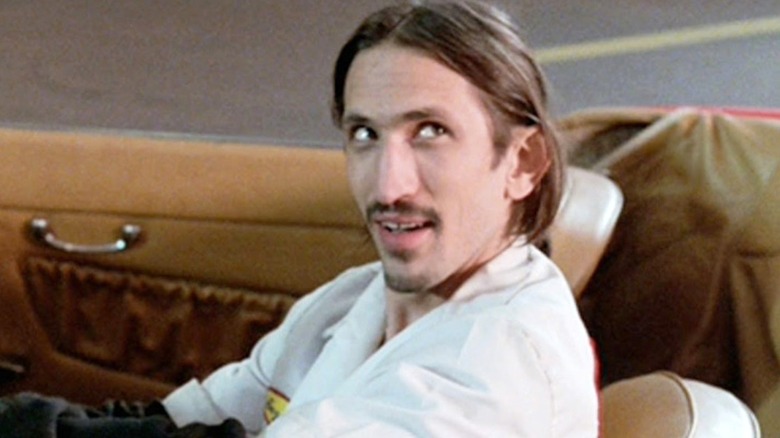
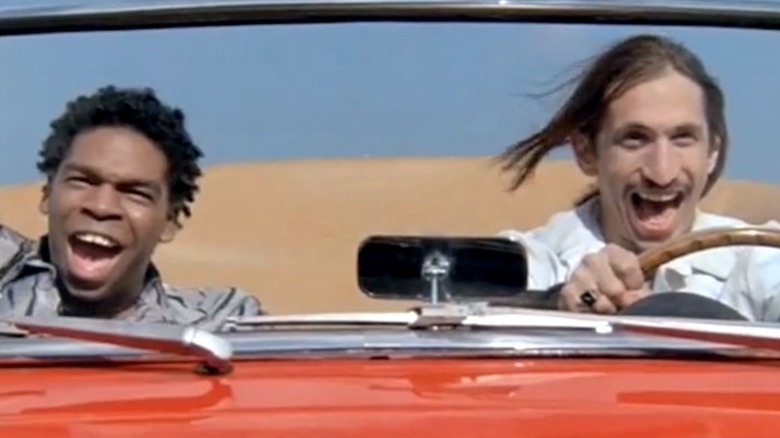
As reported by Deadline, the film is titled "Sam and Victor's Day Off" and is currently in the works at Paramount Pictures. So, who are Sam and Victor? Those who will recall the 1986 classic might remember that Ferris convinced Cameron to borrow his dad's cherished Ferrari. Well, this movie will focus on the valets who took the Ferrari on a joy ride, adding quite a few miles on the odometer that ultimately led to a massive headache for Cameron. It's said that the movie will take place on the same day off Ferris enjoyed, showing audiences what those valets did on that little joy ride.
Perhaps the most intriguing part of all this is that the creators behind "Cobra Kai" -- Jon Hurwitz, Hayden Schlossberg, and Josh Heald -- are said to be tackling the spin-off. Up-and-coming filmmaker Bill Posley, who worked on "Cobra Kai" as an executive story editor, is going to be penning the screenplay. Richard Edson and Larry "Flash" Jenkins played the valets in the original movie, who were not actually given names at the time. There is no word yet on who might be eyed to play them this time around.
Taken at face value, this very much seems like yet another attempt by a Hollywood studio to milk a beloved franchise for all it's worth. '80s nostalgia is running hot and "Ferris Bueller's Day Off" has endured in pop culture well beyond its initial, successful box office run (its post-credits scene inspired the now-ubiquitous trend in Marvel movies). Given what Paramount just experienced with "Top Gun: Maverick," it makes every bit of sense for the studio to make more sequels (or sidequels) to '80s classics.
Aside from the fact that "Maverick" turned out better than any of us could have expected, let us not forget that "Cobra Kai" is one of the most beloved shows going right now and it too came about as a seemingly needless legacy sequel to the "Karate Kid" movies. So, having those people throwing their weight behind this spin-off adds just enough to this to make one wonder if there might be something to the idea.
Paul Young is producing the project with Devon Young overseeing. Stephen Cedars, Benji Kleiman, and Scott Yacyshyn are set as associate producers, while Dina Hillier is on board to executive produce.
"Sam and Victor's Day Off" does not yet have a release date set.
Read this next: The 23 Best Heist Movies Of All Time
The post Ferris Bueller Spin-Off Movie Coming From Cobra Kai Creators, Will Follow The Valets From Original Film appeared first on /Film.
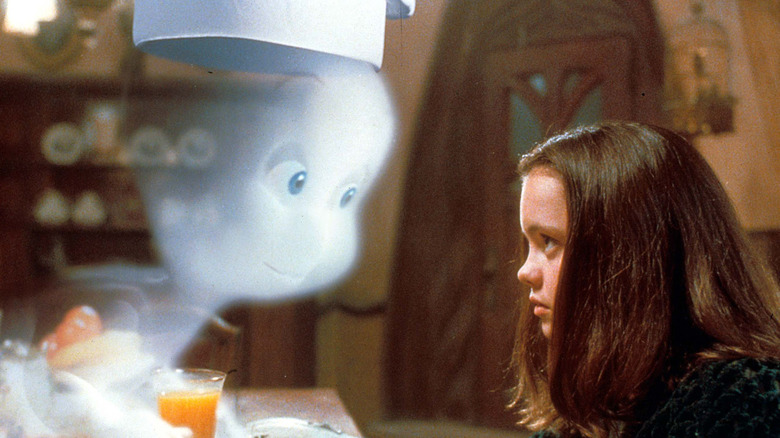
If you were a child of the '90s, there's a high probability that you spent days watching "Casper" on VHS. Every decade comes packaged with those childhood favorites you continue to swear by, and this is undoubtedly one many '90s kids share. The 1995 live-action adaptation of the Famous Studios' character Casper the Friendly Ghost features a stacked cast consisting of Bill Pullman, Devon Sawa, Brad Garrett, and Eric Idle, in addition to a slew of wild cameos.
The performance, however, that many children gravitated towards was Christina Ricci ("Addams Family Values") as Kat, a teenage girl who inadvertently moves into a haunted house with her father after the passing of her mother. It's been nearly two decades since I saw "Casper" as a child, but I distinctly remember Kat at the center of the film. Ricci remembers her performance in the film too, but not, apparently, with much fondness.
During a recent appearance on Marc Maron's podcast, "WTF," Ricci expressed that while she holds no ill will toward the film itself, she thinks her performance in "Casper" was less than extraordinary. "If you actually watch 'Casper,' I'm terrible," she said. "People get so upset when I say that. And I'm like, 'No, it's a wonderful movie ... It's a childhood treasure. But I am terrible in it.'"
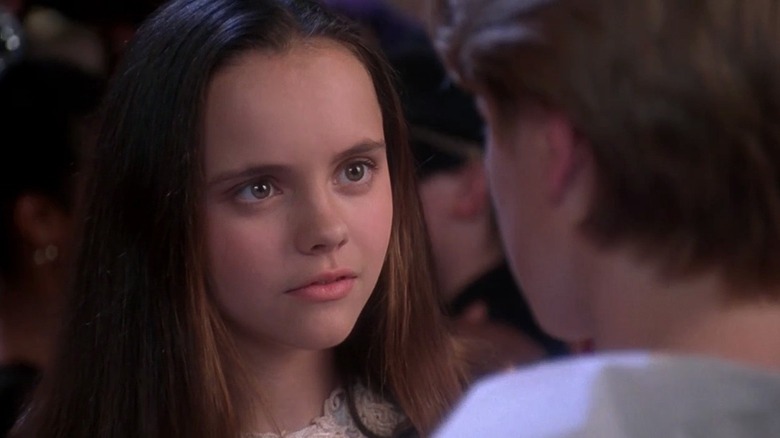
Whether you still see "Casper" through a nostalgic lens or can no longer ignore its unsettling implications, I imagine this is hard for any '90s kid to hear. Ricci adds that it was just one of those periods in her life where there was a lot going on, and it all showed in the finished film. "Everything was very difficult," she told Marc Maron. "I was always annoyed, and I just don't think I tried very hard, to tell you the truth. Embarrassingly, I don't think I tried as hard as maybe I should have."
While a lot of you may disagree with her, it's easy to see where Ricci is coming from. Whether you're an actor or a writer, like myself, reflecting on your past work can be an embarrassing experience even as it's a rewarding one. Even a filmmaker like Robert Eggers has trouble rewatching his critically acclaimed horror film "The Witch" in its present form knowing now what he could have done to make it perfect.
Being detached from a project allows you to see all of the ways in which you could have tweaked your work to make it better, and that can tear you apart. But it isn't inherently a bad thing. Reflection allows you to see where you think you went wrong, but it can also show you how far you've come as an artist. I shudder at my early work, but it feels so gratifying to know it brought me to this moment. As for Ricci, the actress is a core member of the cast of "Yellowjackets," one of the most talked about shows on television last year.
Read this next: The 15 Best Final Girls In Horror Movies Ranked
The post The Biggest Critic of Christina Ricci in Casper is Christina Ricci Herself, Apparently appeared first on /Film.
The perfect needle-drop can elevate a scene from merely effective to totally unforgettable. Think of The Ronettes' "Be My Baby" in the opening of Martin Scorsese's "Mean Streets," Michael Madsen dancing to Stealers Wheel's "Stuck in the Middle with You" as he tortures a police officer, or Max and Rosemary dancing to The Faces' "Ooh La La" as the curtain closes on "Rushmore." These moments and songs felt fated to find each other.
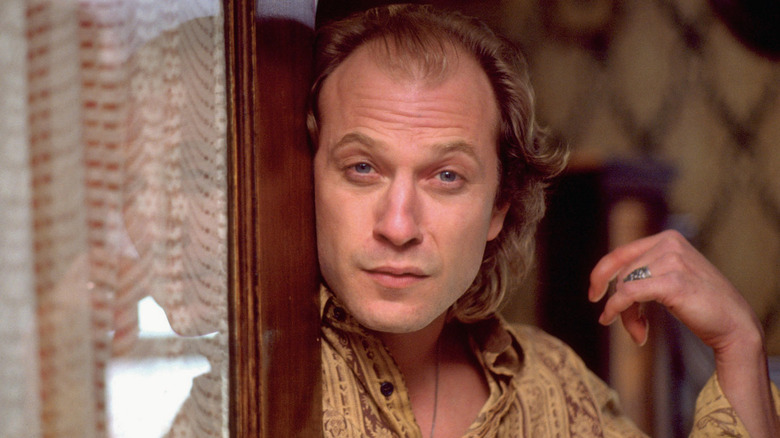
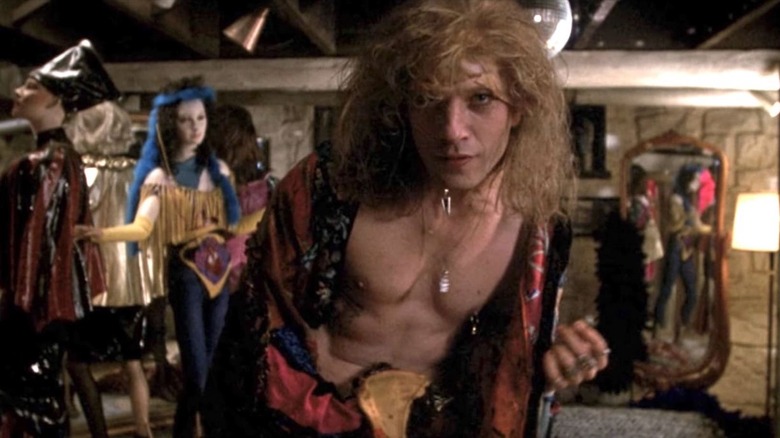
One of the most hauntingly memorable pairings of all time is Jonathan Demme's use of Q Lazzarus' "Goodbye Horses" in "The Silence of the Lambs." Ted Levine, as serial killer Jame Gumb (aka "Buffalo Bill"), dances in front of a mirror, admiring himself to a rather extreme degree ("I'd f**k me") as the kidnapped Catherine Martin (Brooke Smith) plots to take a hostage of her own (poor Precious). Lazzarus, who died July 19 at the age of 61, might've been unknown to the general public when the film hit theaters in February 1991, but Demme fans were already well acquainted with the artist due to the inclusion of "Goodbye Horses" on the superb soundtrack album for "Married to the Mob." Still, years later, one wonders how Demme came across this strange ditty, which sounded like nothing else on the radio at the time.
We all know aspiring artists often work lousy service industry jobs to make ends meet while pursuing their dream. You might've been there before. If so, you might've had a chance encounter with a major player in the entertainment industry, and wondered if you should take a shot and slide them that screenplay or acting reel you keep in your backpack at all times.
For Lazzarus, it was a demo tape. It was 1985. She was driving a cab in New York City when Jonathan Demme hopped in the back of her cab home after finishing the final mix on Little Steven's star-studded "Sun City" video. When she ascertained that Demme was a big deal (his landmark Talking Heads concert film, "Stop Making Sense," had caught fire a year prior), she took her shot and threw her demo tape on the car stereo. As Demme told Rolling Stone in 2012, was astounded. "Oh my god, what is this and who are you," he asked.
The song found its way into "Married to the Mob," and, shockingly, was not Demme's first choice for Buffalo Bill's swaying reverie. They considered songs by The Rolling Stones and David Bowie before settling on Bob Seger's "Her Strut," which is what Levine danced to on set. Do yourself a favor, and throw on that scene while blasting Seger's hard-rocking ode to babes with attitudes. That Demme could veer from that to "Goodbye Horses" is a testament to his unerring musical sense. No filmmaker before or since had a sharper ear.
Lazzarus' song popped at the time, and she turned up in Demme's "Philadelphia" two years later to cover the Talking Heads' "Heaven." But she quit the music business in 1996 and disappeared, resurfacing only recently to DM with musician Kelsey Zimmerman on Twitter. Lazzarus' (whose real name was Diane Luckey) confirmed that she was through with music, and added that she'd been driving a bus in Staten Island for many years. It's a rough industry, and there's probably much more to the story of Lazzarus' abrupt retirement. But there's not a struggling artist in the world who wouldn't give everything to have just one moment in the sun like Lazzarus enjoyed with "Goodbye Horses."
Read this next: 20 Underrated Rom Coms You Need To Watch
The post How Goodbye Horses Ended Up in The Silence of the Lambs appeared first on /Film.
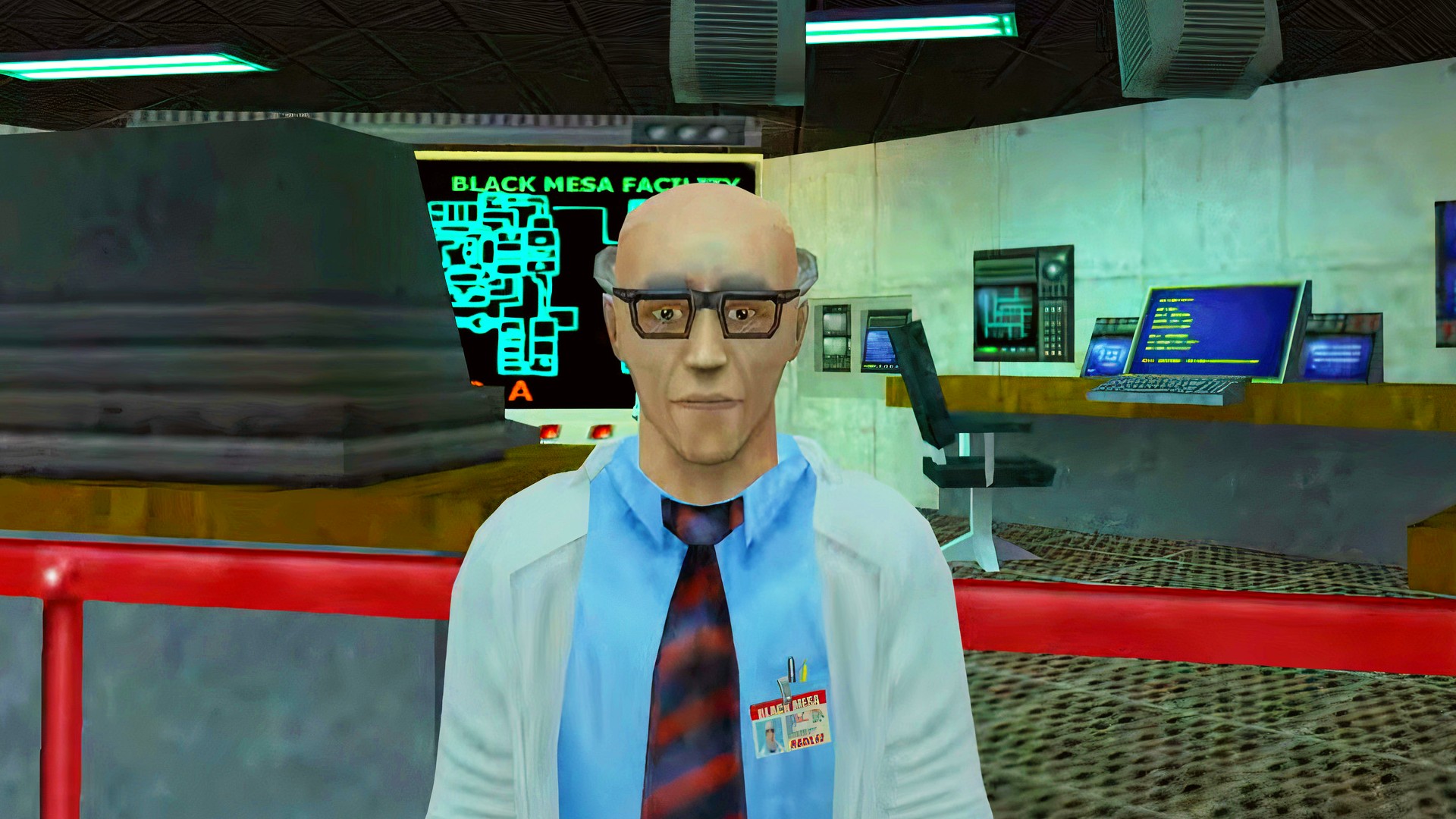
A new Half-Life mod does for the original Valve, sci-fi FPS what Half-Life: Alyx does for Half-Life 2, providing a complete, fully voice-acted prequel, focusing on Gordon Freeman and his work at Black Mesa. We’re still waiting – and dreaming, and hoping – for Half-Life 3 to eventually hit Steam. In the meantime, this looks like the perfect distraction.
Modders ‘smr1957’ and ‘Tasheni’ have released a new DLC-sized mod for Skyrim Special Edition, called Tasheni’s The Pride of Teia. This mod adds six main isles to explore, two dungeons, a lot of wildlife and underwater life. Moreover, this mod comes with The Pride of Teia, a big sailable ship and player home. Thus, players … Continue reading DLC-sized Mod for Skyrim Special Edition adds six main isles to explore →
The post DLC-sized Mod for Skyrim Special Edition adds six main isles to explore appeared first on DSOGaming.
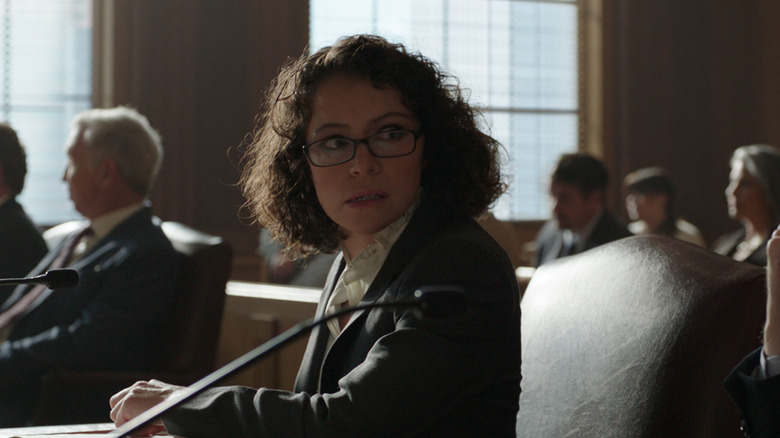
"She-Hulk: Attorney at Law" came out at an interesting time for the Marvel Cinematic Universe. At this point, we've got a few projects (mostly TV shows) that challenge the idea of what an MCU story should be. From "Ms. Marvel" and its slice-of-life, Disney Channel-like tone, "Moon Knight" and its more psychological focus, or even the delicious Sam Raimi horror of "Doctor Strange in the Multiverse of Madness." Now, "She-Hulk" is bringing a different element to the MCU: self-referential, meta humor.
The show's first episode did a great job of presenting the story as something familiar — a person gets superpowers by accident and trains to sort of control them — while wrapping that around something fresh via its humor. The premiere pokes fun at the idea of a world full of heroes and just how annoying it would be to gain powers when you're an adult with a life and a career.
From references to other parts of the MCU, and questions about Captain America's private life, the show is the most meta superhero story we've seen since "Deadpool." This is the secret sauce to the show, taking an already absurd premise of a Hulk with a day job, and adding a fourth-wall-breaking element to heighten the comedy.
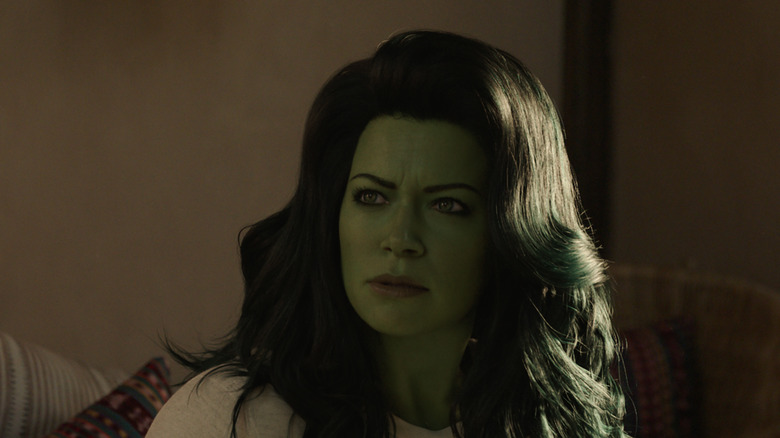
Speaking to Variety, star Tatiana Maslany said the fourth wall breaks were quite intimidating at first.
"It was daunting initially, because I've seen it done so many times so well by like incredibly skilled actors," Maslany said, referring to Phoebe Waller-Bridge on "Fleabag" or the movie "Ferris Bueller. Indeed, because fourth wall breaks aren't incredibly common, each time a movie or TV show features them prominently, it leaves a mark that is hard to forget. The most obvious point of comparison to "She-Hulk" is "Deadpool" for this very reason, even if the stories couldn't be more different.
"What kept me feeling like what we were doing was specific and different was just 'She-Hulk' has always been meta. The comics were incredibly meta," Maslany continued, adding:
"She's always talking to the audience or to the writer. And there's something about her awareness that maintains from her Jen form to She-Hulk, where she has this hyper awareness — it is part of her superpower — that also is now part of her connection to the audience. She's aware of the system within which she operates. She's aware of all the mechanics of it, and engages with that."
Indeed, meta-commentary is one of the key ingredients to a good "She-Hulk" story, at least since the times of John Byrne's "Sensational She-Hulk" from the late '80s. Like Deadpool, or Grant Morrison's Animal Man, Jennifer Walters is fully aware she is a character in a comic book, and she has even escaped the confines of the format on the page throughout the years, even arguing with the comic writer or the editor. At one point, "She-Hulk" almost approached this level of meta, with text boxes on the screen that would be like editor's notes, and Jennifer interacting with them.
"She-Hulk: Attorney at Law" is streaming on Disney+.
Read this next: MCU Jokes That Didn't Age Well
The post She Hulk's Fourth Wall-Breaking Scenes Were Quite Intimidating for Tatiana Maslany appeared first on /Film.

It's not just NVIDIA that has been hurt by the GPU price crash but AIBs are now having a difficult time offloading their AMD Radeon RX 6000 graphics cards too.
A report from graphics card channel dealers published by MyDrivers states that ASUS, Gigabyte, and MSI are having a difficult time trying to convince retailers and distributors to buy Radeon RX 6000 series cards for sale in the consumer segment. The reason is just like NVIDIA's GPUs which saw a huge price jump during the mining boom but pricing has now plummeted heavily. AMD's Radeon RX 6000 series graphics card prices have plummeted even worse than NVIDIA's GPUs & there is little to no demand for gaming cards right now.
In its most recent earnings (Q2 2022), AMD confirmed that their discrete gaming graphics side has seen a decline and while the revenue of the division increased by 32%, it was mostly due to strong growth in the semi-custom business which includes console SOCs for Microsoft's Xbox and Sony's PlayStation platforms.
Revenue increased 32% year over year to $1.7 billion as semi-custom growth more than offset a decline in gaming graphics sales.
Gaming graphics declined in the quarter as macro conditions impacted discretionary spending.
While we expect the gaming graphics market to be down in the third quarter, we remain focused on executing our GPU roadmap, including launching our high-end RDNA three GPUs later this year.
I would say that as we entered this year, we were coming off of a very strong 2021 for consumer graphics where gaming demand was very high, we have seen a slowdown here in the second quarter, and we expect that is somewhat due to sort of demand now -- sort of the supply now and more supply versus demand, as well as some of the macro issues as it relates to consumer spending.
AMD CEO, Dr. Lisa Su
As a result, AMD-exclusive AIB partners, such as Sapphire, have already officially announced a drop in prices for their premium Radeon RX 6000 series graphics cards. It is reported by ITHome that the Sapphire Radeon RX 6700 XT has dropped to a price of 2999 Yuan (originally priced at 3699 Yuan). That's almost a 20% drop in price ($543 US vs $440 US). The manufacturer has also planned similar price reductions on the rest of its high-end and also, lower-end products.


However, these are manufacturer-specific price cuts. On the retailer side of things, we can already see AMD's graphics card prices being lowered almost every day. As of writing this piece, an ASRock Radeon RX 6700 XT Challenger graphics card is already on sale for $395.99 US, that's almost a $100 US reduction from its original MSRP. The Radeon RX 6600 that had an MSRP of $329 US can now be bought for as little as $259.99 US and even the new Radeon RX 6650 XT which launched at $399 US just a few months ago has dropped down to $349.99 US. You can also get up to an $80 US savings on the MSI Radeon RX 6750 XT which is currently retailing for $469.99 US (down from $549.99 US).
The thing is that these AMD Radeon RX 6000 series graphics cards are priced lower than their rivaling NVIDIA GPUs. The RX 6600 series was made to compete with the RTX 3060 series & you can already see a $100-$150 US price difference here. The RTX 3060 series starts at $350 US while the RX 6600 series starts at $260 US. The same is the case with the RX 6700 series which now starts below $480 US but its competition, the RTX 3070 is still selling for $550 US and above. The major price difference in the same segment is once again pointing out that while NVIDIA GPUs are still in demand (albeit much lower than last year), the Radeon side has fallen drastically.

Finally, there's also a new deal on the NVIDIA GeForce RTX 3080 Ti graphics card. An MSI Ventus 3X OC variant is currently going for a low price of $844.99 US after rebate, that's a 30% drop in price vs the MSRP ($1199 US). As I mentioned earlier this week, the AMD Radeon & NVIDIA GeForce GPU prices will continue to drop across the board and there are also some major price cuts expected by the end of this month so don't be shocked if those RTX 3090s drop below $1000 US in a few weeks.
The post GPU Price Crash Is Making It Hard For AIBs To Offload AMD Radeon Graphics Cards Too, RX 6700 XT Drops Below $400 US, RX 6600 Below $260 US by Hassan Mujtaba appeared first on Wccftech.
**Warning – Spoilers ahead for She-Hulk: Attorney at Law**
The She-Hulk series on Disney Plus has expanded tenfold even before the premiere of Episode 1, with the inclusion of Daredevil being revealed and a link to the planet Sakaar being included in a promotional clip.
We provide a recap of an Episode 1 scene that features a spaceship from Sakaar, explain the planet’s origin from Marvel Comics, and discuss how it possibly sets up World War Hulk.
Created by Jessica Gao for Disney+ and based on the Marvel Comics character of the same name, She-Hulk: Attorney at Law follows Jennifer Walters’ transformation into the green superhero, starring Tatiana Maslany, Mark Ruffalo, Jameela Jamil, Tim Roth, and more.
After Jennifer Walters introduces herself in Episode 1, she takes viewers back to the moment when she became She-Hulk.
The sequence shows Jennifer Walters and Bruce Banner driving while Jennifer recaps Steve Roger’s life history to make the point that he might be a virgin.
Before Jennifer can finish her debate, a silver spaceship touches down on the road in front of the car, causing Jennifer and Bruce to get into a crash.
After Bruce brings Jen back to his retreat in Mexico, he explains that they were railroaded by a “Sakaaran Class-Eight courier craft” that is likely bringing Bruce a message from the planet.
We're 1 week away from the premiere of #SheHulk on @DisneyPlus, and this exclusive clip just made us rethink everything we knew about #CaptainAmerica… ? #TatianaMaslany @MarkRuffalo https://t.co/LPqhmqIj7h pic.twitter.com/tHQYXh3rkA
— IMDb (@IMDb) August 11, 2022
Sakaar is known as Marvel Comics’ trash planet located within the Tayo star system and was created and ruled by the Grandmaster.
Home to the Sakaarans, the planet is surrounded by wormholes that cause space waste to be deposited there.
We previously visited Sakaar in the MCU during Thor: Ragnarok, when the God of Thunder was dumped on the Grandmaster’s (Jeff Goldblum) planet and forced to battle gladiator Hulk.
The ship featured in She-Hulk was the exact same model as the Grandmaster’s ship we saw in Thor: Ragnarok.

One popular theory suggests that the person operating the ship is Bruce’s son, Skaar – conceived during the time Bruce Banner’s Hulk spent on Sakaar as a gladiator.
The theory explains that Skaar has used a Sakaaran ship to travel to Earth in order to meet his father.
The union of Hulk and his son has also sparked rumors that we could be getting a World War Hulk narrative on the horizon (possibly in Phase 6) that may see Bruce Banner leave his Smart Hulk variant behind and embark on a new threatening persona more in line with the Hulk we know.

By Jo Craig – jo.craig@grv.media
She-Hulk: Attorney at Law is now streaming on Disney Plus.
The post She-Hulk’s Sakaar Planet from Marvel Comics Explained appeared first on ForeverGeek.

The Physical Activity Guidelines for Americans (and similar recommendations from other countries) call for healthy adults to get 150 minutes of moderate exercise, like walking, per week. Vigorous exercise counts double, so if you’re a runner, you can meet the minimum guidelines with 75 minutes. But what if you have…
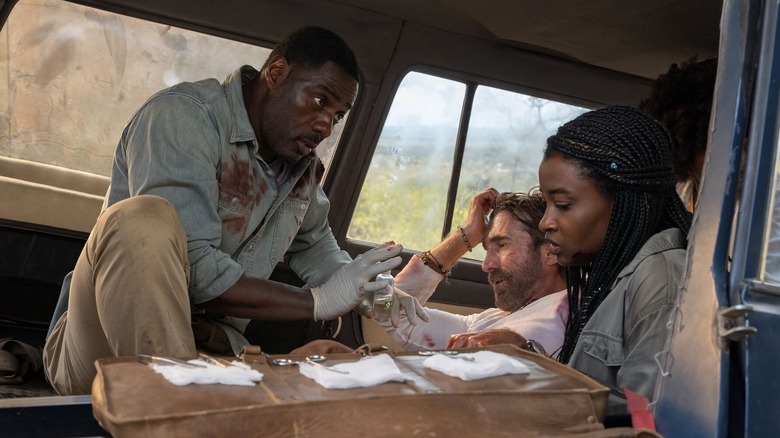
There are countless creative and business-related factors that go into the casting of actors in major motion pictures, much of which boils down to one straightforward but extremely important concept: chemistry. Talent, good looks, and all the charisma in the world can only go so far if one simply doesn't possess those certain intangibles that make sparks fly with co-stars and cause viewers to instantly buy in the relationship and story being depicted on-screen. But for Idris Elba and his real-life daughter, the casting process for "Beast" ended up revealing the awkward reality that actual father/daughter relationships have no bearing on fictional ones.
Other than the obvious draw of pitting a movie star like Elba against killer lions in the South African wild, the part of the role that the actor really sunk his teeth into was the idea of playing a father attempting to reconnect with his daughters following the recent death of his wife and their mother. While the roles of those two daughters went to established young actors in Iyana Halley ("The Hate U Give," "This is Us") and Leah Sava Jeffries ("Rel," "Empire"), Elba revealed in a recent appearance on The Breakfast Club podcast (via Insider) that his actual daughter, Isan Elba, auditioned to play the role of his character's older daughter Meredith. Why didn't she get the art? Believe it or not, the younger Elba ultimately lost out due to a lack of chemistry with her father.
Idris Elba humorously explained:
"Interestingly enough, my daughter auditioned for this role. She wants to be an actress and she auditioned. And it came down to chemistry in the end ... she was great, but the relationship in the film and my relationship between my daughter, the chemistry wasn't right for film, weirdly enough. My daughter didn't talk to me for about three weeks."
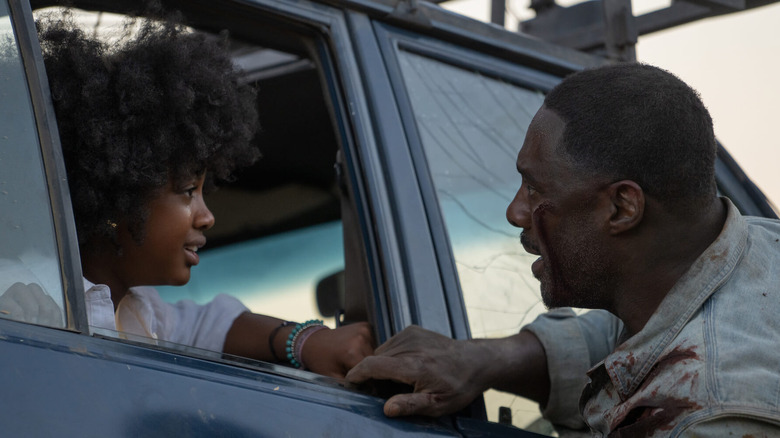
Appearing alongside "Beast" producer Will Packer, the "Luther" star walked listeners through the potentially thorny issue of having to turn down his own daughter for the part. Thankfully, that's where longtime family friend Packer stepped in to soften the blow. As he put it himself:
"I've known her for a very long time, I'm like Uncle Will, that's my little niece and she's amazing. Here's what I will say, I've got to give props to Idris, because a lot of people talk about nepotism ... Idris was definitely like, 'I want to put her through the ropes, go in, audition.' He auditioned with her, he was very tough on her. He said, 'You know, at the end of the day we're going to make the best decision for the movie, I trust you Will, I trust the director [Baltasar Kormákur].' And she was very good, very close. Idris is right, some of the nuances of that real-life relationship sometimes doesn't translate on screen."
Despite potentially causing familial strife, Elba heaped praise on his daughter Isan for being "very gracious about it" and even choosing to attend the premiere alongside her famous dad, as well. The elephant in the room certainly revolves around that idea of nepotism, given how many other actors would've insisted on such casting (regardless of whether it fit the movie or not) and robbed another deserving actor of the role in the process. In addition to his silky smooth voice acting, his recent success with action roles, and his larger-than-life performance in George Miller's upcoming "Three Thousand Years of Longing," let's throw "Dad of the Year" onto his ledger for making the hard but ultimately rewarding choice for his daughter, too.
"Beast" is currently playing in theaters.
Read this next: The Best Movies Of 2022 So Far
The post Idris Elba's Daughter Didn't Land Beast Because 'Their Chemistry Wasn't Right' appeared first on /Film.
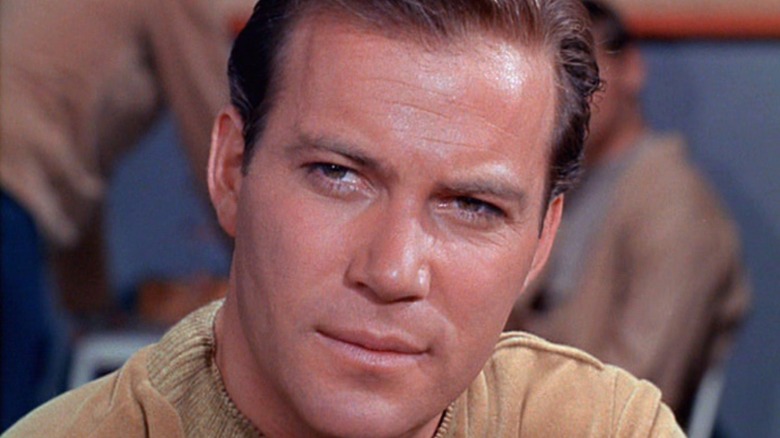
Everyone has their favorite incarnation of "Star Trek." There's something to recommend in just about every version, even if it's just the inevitable Jeffrey Combs cameo. Fans who like weirder aliens can enjoy "Prodigy. Those who want to see characters' moralities challenged in times of war have "Deep Space Nine." For some, Patrick Stewart's master thespian skills make "The Next Generation" an undisputed winner, while others may argue that "Star Trek" was never about great acting, but rather broadly operatic sci-fi adventures.
So, which is the best? Beat-for-beat, episode-for-episode, it has to be the very first "Star Trek" show, known to fans as "Star Trek: The Original Series." Almost every subsequent incarnation of Trek draws its strengths from the original, and their weaker episodes usually occur when they depart from the roadmap that "The Original Series" provided. Meanwhile, every episode featuring William Shatner's Captain Kirk, Leonard Nimoy's Mr. Spock, DeForest Kelley's Dr. McCoy, and the rest is, at its worst, still compulsively watchable. Let's run down the reasons why.
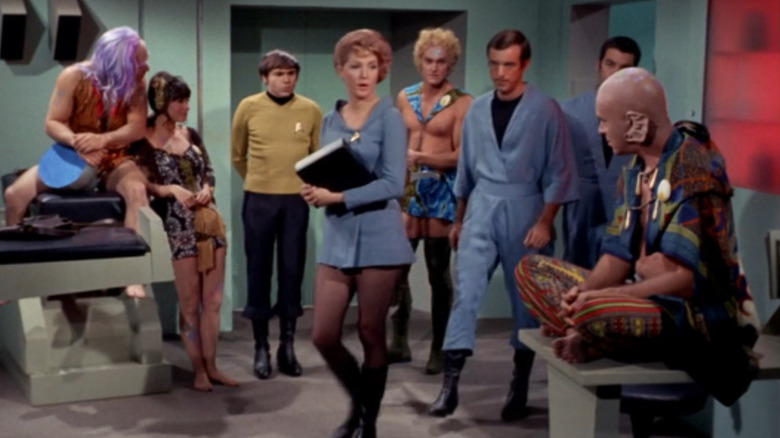
Although Gene Roddenberry originally pitched "Star Trek" as "Wagon Train" in space, it ultimately played less like a TV western and more like "The Twilight Zone," which went off the air two years before "Star Trek" premiered. Like Rod Serling's groundbreaking show -- and not much else -- "Star Trek" was flexible in the genres it covered. It tackled historical fiction by going to planets made up of gangsters and Nazis. It explored prejudice through the metaphors of various alien species. Episodes highlighting Tribbles and Harry Mudd provided comedy, while the pursuit of a Romulan ship had echoes of a submarine drama. Even Biblical allegories were on the table. However, no matter what form an episode's story took, it usually involved a subtle parallel with the present, and a moral applicable to life here on Earth.
By contrast, most other shows on TV in the '60s stayed in their lanes. Even the closest competitor to "Star Trek," "Lost in Space," was a much more straightforward space adventure. Part of the series' versatility came from the push and pull between the network and Roddenberry; the former wanted action, while the latter preferred more cerebral stories. NBC even rejected the first "Star Trek" pilot, "The Cage," but allowed Roddenberry to make a second, "Where No Man Has Gone Before," which sealed the deal. Roddenberry ultimately got the best of both worlds, of course, by reusing footage from "The Cage" in the two-part episode "The Menagerie."
For the most part, subsequent "Star Trek" shows faced relatively little network interference. Sometimes, however, restrictions can be the greatest source of creativity, and that tension between the smart and the visceral helped give the original "Star Trek" its timeless appeal. Its best successors capture a similar balance.
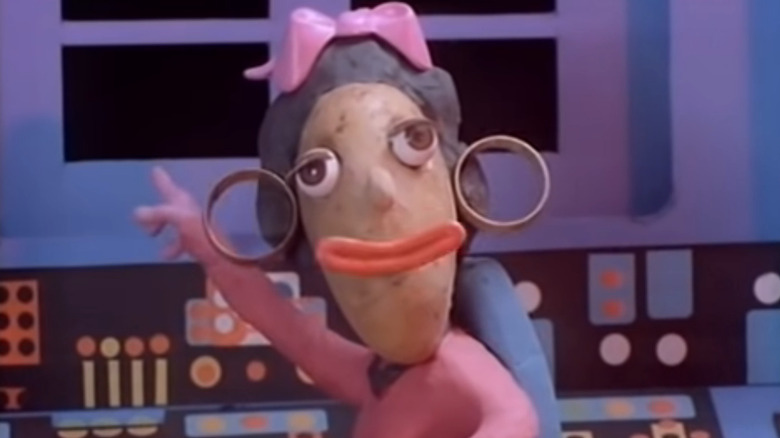
Aside from Jean-Luc Picard's "Engage" and "Make it so," few "Star Trek" deliver memorable catchphrases. However, even people who never watch science fiction can quote all three "The Original Series" leads. The characters' quotability was even the premise of a hit 1987 novelty song by The Firm, which ended up topping the charts in the United Kingdom.
Kirk never actually said "Beam me up, Scotty" on the series, but he did utter a number of variations: "Scotty, beam us up," "Scotty, beam me up," a simple "Beam us up," and so on. On the other hand, Spock did often utter "Illogical" and "Fascinating" when faced with improbable phenomena, and Dr. McCoy's "Damn it, he's dead, Jim," and "I'm a doctor, not a [blank]" are stone-cold classics. We love Captain Sisko and "Deep Space Nine," but does he have a single signature quote as memorable as any of these? If you have to ask, then the answer is a resounding no.
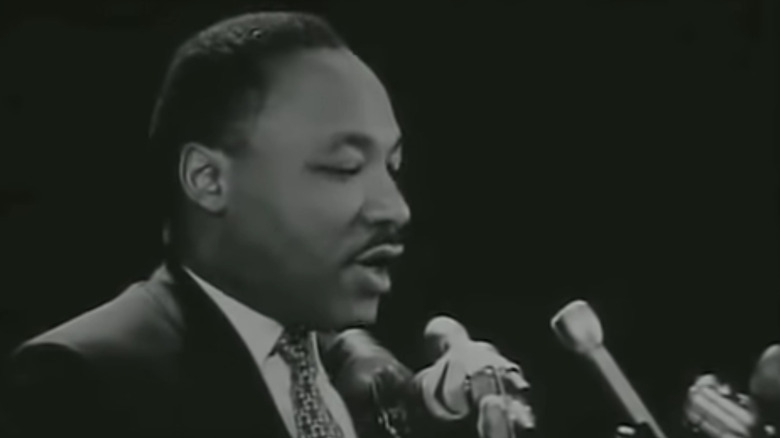
In related what is, perhaps, the most famous anecdote she ever told, the late Nichelle Nichols has talked repeatedly about how she wanted to quit "Star Trek," and how she was talked out of it by none other than the Rev. Martin Luther King, Jr. King met Nichols at an NAACP meeting and told her how important it was for viewers to see a Black woman in a position of authority. This wasn't just conjecture. The character of Uhura was so important to Whoopi Goldberg that she inspired Goldberg to become an actress, and was the main reason why Goldberg pushed so hard for a role on "Star Trek: The Next Generation."
What often gets buried in retellings of this story is that King also confided in Nichols that "Star Trek" was the only show that he and his wife, Coretta, would let their three kids stay up late to watch. Now, King didn't live to see any subsequent "Star Trek" series, but that's still a powerhouse of a recommendation, and none of the other Trek shows have received an equivalent endorsement. It's great to see figures like David Cronenberg and Stacey Abrams make cameos on "Star Trek: Discovery," but let's face it: Neither is on MLK's level.
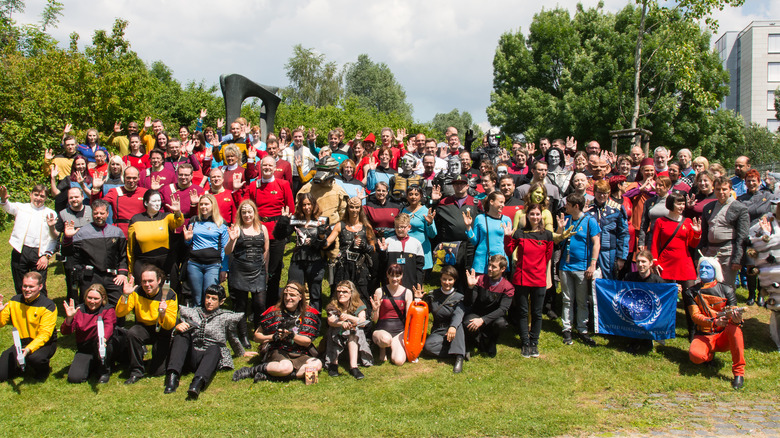
Have you ever signed a petition to keep your favorite show from being canceled? What about attending a fan convention? Well, if so, you're following in the footsteps of the original Trekkies. A letter-writing campaign organized by fans, the first ever designed to keep a show on the air, helped get "Star Trek" renewed for season 3. After the series' cancellation in 1969, conventions kept the show's fandom alive, paving the way for the proposed sequel series that ultimately became the first "Star Trek" movie. In the '80s, comic book fans Gary Berman and Adam Malin formed Creation Entertainment and made "Star Trek" cons a lucrative business.
A number of popular fandom tropes started with "Star Trek," too. The term "Mary Sue," often used to describe a practically perfect female character who's clearly a stand-in for the author, originated in a "Star Trek" fanzine. Similarly, the erotic fan fiction subgenre called "slash," which depicts sex between ostensibly straight male characters, began with Kirk and Spock. "Star Trek" conventions did not invent cosplay; however, they have been a hub for hobbyist costumers from the beginning.
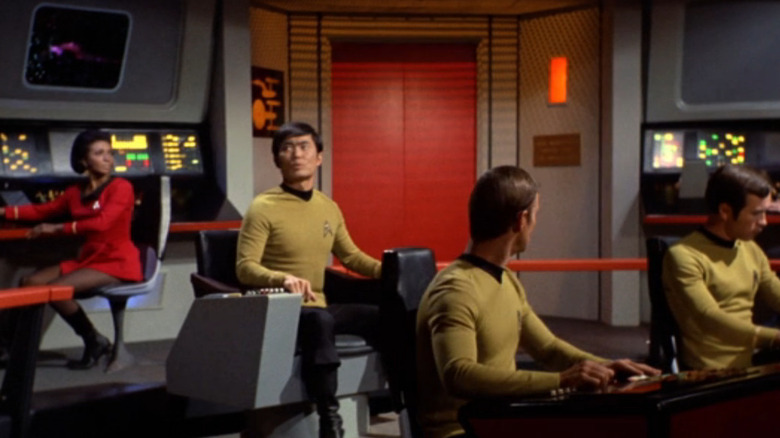
Nowadays, the sour corners of the Internet complain of "wokeness" and "forced diversity" every time an actor of color gets cast in a major sci-fi story. For the original "Star Trek," however, that was the actual point. Gene Roddenberry went out of his way to depict a multi-racial, multinational crew to give Cold War-era audiences hope that in the future, racism, nationalism, and xenophobia would be quaint relics of the past. (Sexism, maybe not so much.) While diversity has continued to be a key value of "Star Trek," the optimism hasn't always, partly because Roddenberry toward the end of his life over-corrected and insisted there never be any conflict between crew members. The moment he was gone, we got the militarism of "Deep Space Nine," the far-from-home despair of "Voyager," and "Enterprise" doing space 9-11.
At least with the likes of Captains Burnham and Georgiou, the franchise has mostly put sexism back in the past.
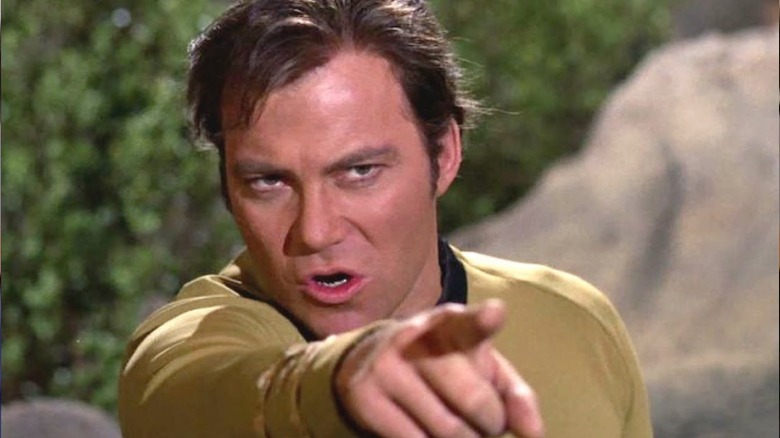
The dramatic ... pauses. The ... hand gestures. William Shatner is one of those impressions that everybody thinks they can do. Some celebrities have his mannerisms down pretty well: Kevin Pollak and Jim Carrey come to mind, and John Belushi wasn't bad, either. However, the point is that, if you start talking in the pauses, doing the hands, and blurting out "Spahk!," almost everyone knows who you're supposed to be.
Can anybody say that about Captain Archer? Or Sisko? Janeway's more distinctive, but impressions of her also resemble Prymaat Conehead. Shatner is a category unto himself, made even more so by the fact that he started leaning into the caricature once it became ubiquitous.
Ironically, the episode from which most Shatner imitations seem to derive is "Turnabout Intruder," in which a neurotic woman possesses Kirk's body. So, really, everyone's actually doing an impression of Shatner's impression of female hysteria.
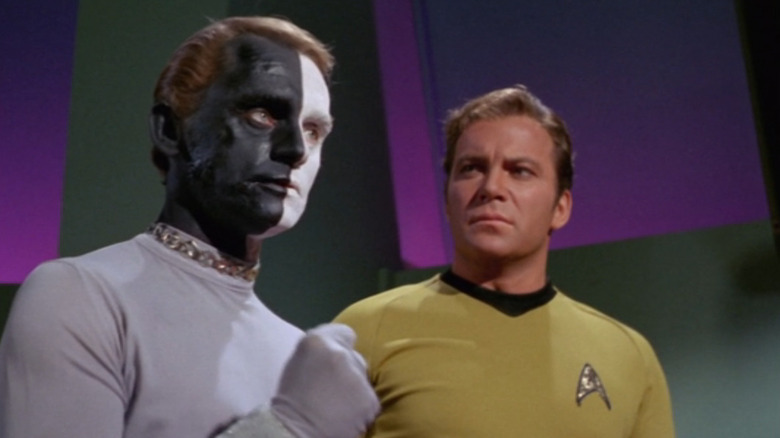
In "The Original Series" episode "Let That Be Your Last Battlefield," Frank Gorshin, best known as the Riddler in 1966's "Batman," sports a paint job that's half white and half black, and plays a character who is bigoted against an alien who's half black and half white simply because his colors are reversed. In "Plato's Stepchildren," omnipotent beings force Kirk and Uhura to smooch, thus creating the first kiss between a white man and a Black woman on a scripted network show. Yes, the original series sometimes had all the subtlety of, well, William Shatner when it wanted to get a point across, but at least it was out there making statements. Very few of its contemporaries could say the same.
At other times, "Star Trek" used the trappings of a more traditional genre story to smuggle in social commentary. "The Devil in the Dark," for example, makes audiences understand that a crawling blob of rock was only killing people in order to protect its eggs, which can be read as either a plea for animal rights or a statement against imperialism, depending how smart you think the Horta actually is. "City on the Edge of Forever," widely regarded as one of the best episodes of the show, is a great, romantic time-travel story, but it's also an argument against going for the quick, short-term gains, as well as a lesson on the need to make sacrifices for the greater good. "The needs of the many outweigh the needs of the few, or the one" became a "Star Trek" catchphrase thanks to the movies, but the series was subtly making the same argument decades before the Enterprise cruised across the silver screen.
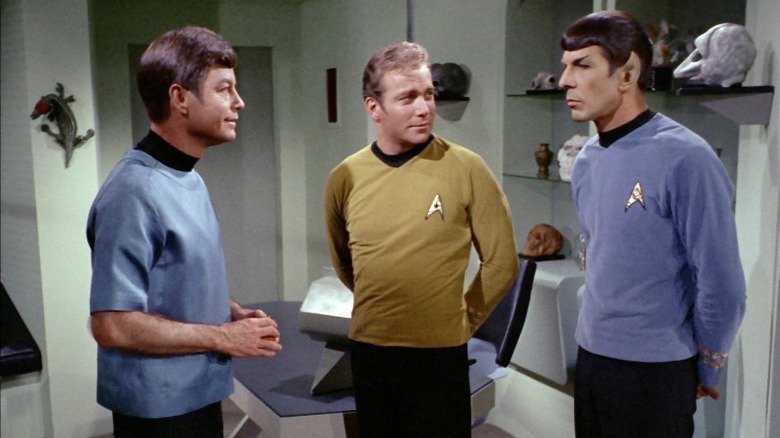
From "The Next Generation" onward, every "Star Trek" series has insisted on giving each one of the major characters their own spotlight episodes; you'll also find many installments in which the two characters who argue the most are stranded together in a shuttle or on an away mission. Well, while Sulu, Uhura, Chekov, and the rest might've deserved individual showcases, the people behind "Star Trek" knew that the relationship between Kirk, Spock, and McCoy was the heart of the show, and "The Original Series" is the better for it. Sure, the trio might separate occasionally, but in the end the crew always works best as an ensemble.
Perhaps the brevity of the show's run is to blame. Had "Star Trek" lasted for longer than three seasons, the writers might have ended up pitching more ideas that didn't revolve around the core three. Still, think about your least-favorite "Star Trek" episode, from any of the series. Chances are that it's one that focuses on a character that you don't care about. That was never the case for the O.G.
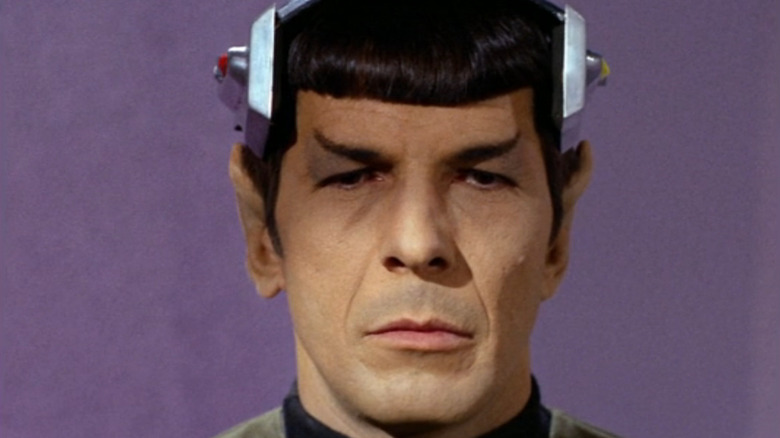
Ask fans of "The Original Series" what the worst episode of the show is, and they'll probably name "Spock's Brain," in which everyone's favorite Vulcan has his brain stolen, leaving him to wander around like a zombie. Or maybe they'll mention "The Way to Eden," in which space-hippies who refer to uncool people as "Herbert" convince Spock to jam with them on his Vulcan harp. Sure, these episodes are incredibly silly, but they're also funny as hell, both as bizarre examples of what NBC thought would be perceived as cool at the time and also because Shatner, Nimoy, and the rest of the cast fully commit to the material.
When "The Next Generation" is bad, you get a Wesley episode. When "Deep Space Nine" is bad, it's probably an episode about Rom and his mother. But when "The Original Series" is bad, you get Shatner going full Shatner, Nimoy indulging his hippie impulses, and some super-'60s weirdness. Despite the absurdity — or, maybe, because of it — it rules.
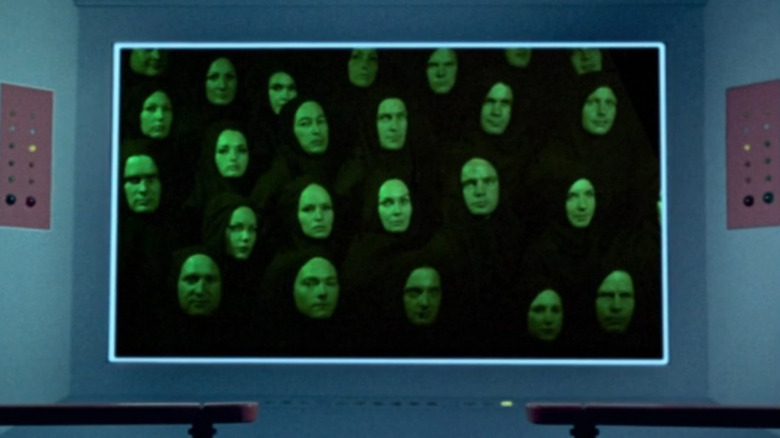
It's not especially controversial to say that classic "Trek" looks dated. However, even with those old-fashioned effects, the show can also be extremely unsettling when it wants to be. Vina suddenly revealing her burned and mangled form in "The Menagerie" is still shocking, and is Captain Pike's radiation-crippled body, which can only beep yes or no. Then there's "The Mark of Gideon," in which frightening faces peer into an abandoned Enterprise from every window. And, of course, we can't forget the original incel Charlie X, whose ability to roll his eyes back in his head every time he uses his psychic powers remains one of the show's creepiest natural special effects.
Within the reality it has established, the original "Star Trek" possesses a real power to scare viewers. Even if fans know that only random ensigns wearing red shirts will die, the show can pull the rug out from under reality at any time. That's a great way to build tension, and makes many "Star Trek" installments truly disturbing.
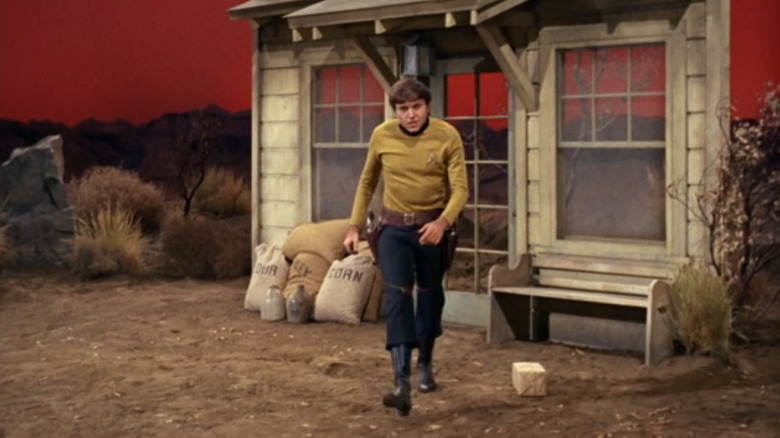
In "Star Trek: Strange New Worlds," reptilian alien babies burst out of human bodies, then quickly grow into man-sized CGI lizards. "The Original Series" had neither the budget nor the freedom to even consider such things, and its take on the Gorn accordingly looks more like a knock-off Godzilla suit than the fearsome creatures that hunt Captain Archer's crew.
What "Star Trek" did have, though, was imagination. The Guardian of Forever, a powerful alien capable of time travel, is basically a walk-through light fixture. When "Spectre of the Gun" called for a Wild West town but the budget didn't allow for a full one to be built, the use of minimal props and sets made for a more surreal, alien landscape. That Romulans and Vulcans share a common heritage is a fun story twist, but it was likely conceived of in order to reuse alien makeup effects (and actors, as Mark Lenard played both a Romulan captain and Spock's father). Now that shows can do anything, they don't always leave room for the writers to serve as the real special effects.
When you can't afford to be realistic, you have to be weird instead. Many, many UK sci-fi shows, from "Doctor Who" to "Sapphire and Steel," have built their cult followings out of that line of thinking. It's an aesthetic that makes "The Original Series" memorable in ways that simply aren't available to more modern "Star Trek" shows.
Many "Star Trek" actors have excellent musical pedigrees. Nichelle Nichols toured with Duke Ellington. Brent Spiner is a musical theater veteran who went on to record an album of show tunes and standards. Ironically, though, their efforts pale in terms of notoriety to those of two "The Original Series" leads.
At the height of the show's popularity, William Shatner recorded "The Transformed Man," which paired monologues from classic plays with dramatically read pop lyrics. While his Shakespeare readings are fairly straightforward, Shatner screaming the lyrics to "Mister Tambourine Man" in an inexplicable Irish accent is the stuff of pop culture legend. Same goes for his attempts to sound high while "singing" the Beatles' "Lucy in the Sky with Diamonds." In 2004, Ben Folds produced Shatner's second album, "Has Been. He's released a number of records since then, including the country album "Why Not Me," the Christmas compilation "Shatner Claus," and the space-themed "Seeking Major Tom."
By contrast, Leonard Nimoy actually tried to hit the right notes when he sang, but his cigarette-enhanced croak was not optimal for crooning. When he indulged his own fandom and recorded an ode to "The Hobbit" protagonist Bilbo Baggins, the results were even more ludicrous than Spock jamming with space hippies. Yet, somehow, we remember these laughable efforts better than Nichols' legitimate singing career. Sadly, no other "Star Trek" actor has dared to emulate Shatner's singing style in the years since, although we'd kill to hear Jeffrey Combs dramatically reading out Nirvana songs.
Read this next: Every Star Trek Show And Movie In Chronological Order
The post 12 reasons why The Original Series is the best Star Trek show appeared first on /Film.
It's hard not to love "Little Miss Sunshine." Sure, some aspects might not have aged as well as others (perhaps most prominently, its depiction of child pageants could be more nuanced), but you can't deny the earnestness and genuine love felt throughout every second of the movie. Made right in the middle of indie filmmaking's mumblecore movement, it seems like a time capsule of a very special time in American film, where you didn't necessarily need a big star producer or director to make your movie; just a good story.
However, it definitely took a while for the movie as we know it to take shape. According to the introduction of the published shooting script, screenwriter Michael Arndt started the first draft of the script all the way back in 2000, finally completing it in 2001. After he abandoned the idea of shooting it himself on a microbudget, he teamed up with Deep River Productions to find a director that would work for the project. Even after finding their directors in the duo of Valerie Faris and Jonathan Dayton, their problems with getting the film off the ground had only just begun.
It was pretty easy to convince the married duo of Dayton and Faris to sign onto the project once they read the script. In a New York Times interview published upon the premiere of "Little Miss Sunshine" at Sundance in 2006, the directors explained why making this their first feature film was an obvious choice. "This film really struck a chord," said Faris. "We felt like it was written for us."
While that win was certainly one to celebrate, it didn't guarantee that the movie would magically get fully financed. That didn't come until producer Marc Turtletaub, who was transitioning into film producing after serving as CEO of The Money Store, bought the rights to the script for $150,000. Reportedly, Turtletaub helped pitch the film to several studios but all rejected it, until they got to USA Films. Again, a situation to celebrate, but then came the question of how to find movie stars to feature in their small indie film.
Before the "Little Miss Sunshine" team could even think about casting, however, they had to weather the course of a major production shake-up. Universal, the parent company of USA Films, merged with General Electric's NBC company to create NBCUniversal. This acquisition resulted in USA Films being rebranded as Focus Features, and with this new image came some new decisions. In the same interview with the New York Times, directors Faris and Dayton explained that Focus decided to cancel their funding of "Little Miss Sunshine" in August 2004.
After receiving news that Focus would no longer be distributing the film, Turtletaub made a risky move; he'd fund the rest of the movie himself, as he had just founded Big Beach with "Adaptation" and "Everything is Illuminated" producer Peter Saraf. According to the New York Times, the producer bought back the rights to the movie from Focus for $400,000, and threw in an additional $9 million to ensure "Little Miss Sunshine" finally got filmed.
It turns out that this was the move that finally put the film on track to eventual critical acclaim. While they weren't movie stars just yet, the production was able to snag Toni Collette, Greg Kinnear, and Steve Carrell for the movie (via Variety), lending it a good amount of industry credibility. Filming went relatively smoothly, and it wasn't until it premiered at the 2006 Sundance Film Festival where its rocky history melted away, as major studios frantically fought for the rights to release the festival favorite. Fox Searchlight Pictures eventually won the battle, releasing it in July 2006 and campaigning for it when it received a Best Picture nomination at the 2007 Academy Awards. Who would have thought that none of this would have happened had it not been for Turtletaub?
"I said: 'You know what? We'll stick our neck out,'" he said. "I'm willing to take a risk on a movie that is there to uplift and enlighten."
Read this next: 14 Awesome Comedies That Never Got Sequels
The post Why Little Miss Sunshine Was Stuck In Limbo For More Than Half A Decade appeared first on /Film.
To this point, few studios can boast that they have as tightly locked-down of a security system as Marvel does these days. Few, if any, have ever managed to spill sensitive information -- superhero movies are very serious business, folks -- and get away with it, unless your name happens to be Mark Ruffalo or Tom Holland, of course. For everyone else subject to the whims of the notorious Marvel snipers or those ever-vigilant DMCA watchdogs on social media, however, you're sorely out of luck.
That even applies to one of the most high-profile stars attached to any Marvel production over the years: Owen Wilson. As co-lead of the time-hopping Disney+ series "Loki," the "Wedding Crashers" and "Zoolander" star actually received a firsthand look at what might happen should he ever run afoul of Kevin Feige's impossibly strict anti-spoiler guidelines. After all, one has to assume that the uptight Time Variance Authority doubles as a pretty accurate representation of the lengths that the studio would probably go to, as well.
In a recent interview with ComicBook.com while promoting his next starring turn in "Secret Headquarters," Wilson showed off how much he's internalized the phrase "Loose lips sink ships" by stopping short of speculating about the future of his "Loki" character Mobius. "Well, I do think that ... you know, we'll see what happens with this one. I immediately get kind of self-conscious because [Marvel's] so kind of uptight." When asked whether he's ever had to deal with blowback from the higher-ups for anything he's said in the past, he ruefully admitted, "Yes. Yeah, multiple times."
All that pales in comparison, however, to the anonymous text he once received from an unknown sender at Marvel -- a mystery that still remains unsolved.
Variety helpfully reminds us that a year ago, Owen Wilson talked to Esquire about the previous brushes he's had with the more eagle-eyed members of Marvel's no-leaks division. The actor regaled the humorous story of how, before "Loki" had ever aired, he mistakenly revealed just a little too much about his character on the show. The bizarre story that follows, told in Wilson's classic deadpan delivery, makes us want to believe that it's 100% true.
"Even when I let it slip that I'm wearing a mustache as agent Mobius, I got an ominous text saying, 'Strike one.' And I don't know who that was from. We looked into and we think it might've been Kevin Feige using a burner phone or something, but that was never confirmed."
While that last part about Feige is obviously a joke (or is it???), there's just something hilarious about the notion of some super-secret Marvel employee whose entire job requires going around under the cover of anonymity, passive-aggressively threatening even their own cast members whenever they step the slightest bit out of line. Granted, someone somewhere is probably going full Pepe Silvia over what's obviously a lighthearted joke ... but for the rest of us, it's fun to entertain these little conspiracy theories.
"Loki" season 2 will bring the gang back together again when it arrives on a to-be-announced date.
Read this next: The Most Powerful MCU Villains Ranked
The post Owen Wilson Got a Mysterious Text Message From Marvel After Talking a Little Too Much About Loki appeared first on /Film.

In a former life, I was a lab technician in a chemistry lab, where I used a very small portion of the knowledge I had gained studying chemistry for four years. I left that industry over a decade ago, but little habits have stuck with me, particularly when it comes to glassware.

Blizzard Entertainment has published its latest Diablo IV quarterly update, this time discussing the game's monetization and shop. While there will be cosmetics for purchase, Blizzard is saying up-front that there won't be any paying for power.
In today's update, the studio says it will have a cosmetics shop and seasonal passes, alongside the Seasons system modeled after Diablo III. For each new season, you create a new character and engage with the new seasonal content, allowing players to jump in even if they missed the last season. The first season will be available soon after launch, and the team is aiming for four seasons a year.
This on-ramp mandates that all power needs to come from playing the game itself. So, in Blizzard's own words, "you will not be able to pay for power in Diablo IV."
https://www.youtube.com/watch?v=7RdDpqCmjb4
The Season Pass rewards will have free and premium tiers. The latter won't contain any in-game power or advantage over other players who don't have that tier, though. The Free Tier will provide gameplay boosts, but those will be available for all players. These Season Boosts can help players out for the duration of the season, adding things like accelerated XP gain.
While players can purchase tiers to advance through the pass, Blizzard also says that you can't just unlock all the seasonal boosts through purchases alone. These will also have level milestones associated with them, so while players can jump ahead to grab cosmetic rewards from higher tiers, they can't shortcut the play-time necessary for the boosts.
The post-launch plans also sound extensive, as Blizzard's Kegan Clark writes that Diablo IV will have an "army of developers" for years to come after launch. Seasons will include new gameplay, quests, challenges, changes to the meta, and quality-of-life improvements.
The Cosmetics Shop, meanwhile, will offer some custom visual appearance options for premium currency. The shop is optional, and according to Blizzard, the "best-looking cosmetics" aren't exclusive to the shop.
Diablo IV will ship with "hundreds" of transmogs that drop in-game, including Unique and Legendary gear, that won't show up in the shop. It seems like the intent behind the Shop is to offer another cosmetic option, rather than the only one. Cosmetics bought in the shop will be usable on all characters of that class too, so no need to buy multiples of a single Necromancer set, for example.
This seems like it could be a comforting note for folks worried about Diablo IV after the monetization seen in Diablo Immortal. Blizzard seems like it really wants to assuage those fears, and that's valid. Immortal had issues, and the launch of Diablo III was marred by the real money auction house. We'll see how the plans work out for this team when Diablo IV goes live sometime in the future.
The post Blizzard outlines its seasonal content and post-launch plans for Diablo IV appeared first on Destructoid.
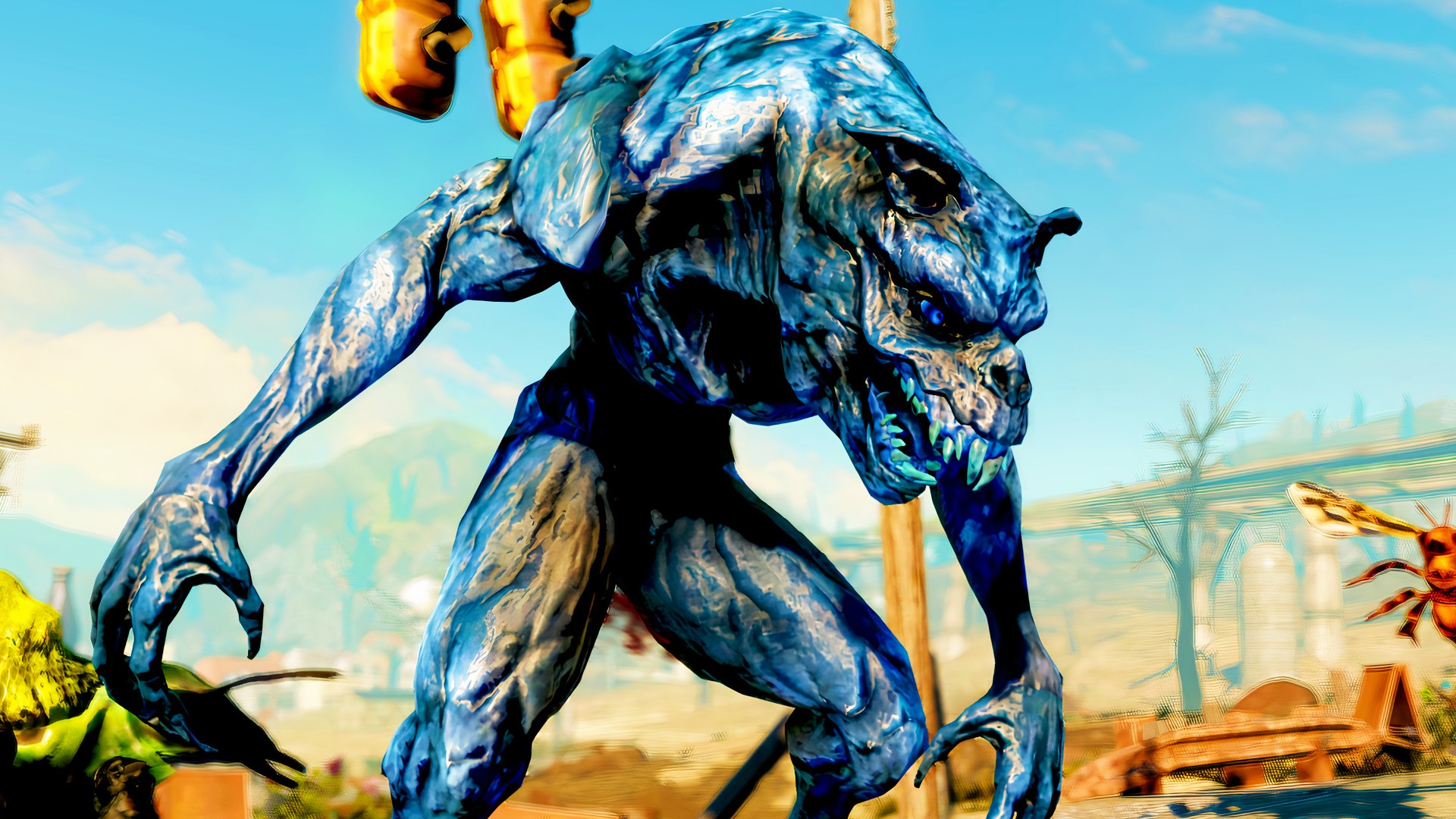
A new Fallout 4 mod offers a level of extra material and content to Bethesda’s apocalypse RPG that’s similar in size to an official DLC pack, bringing new creatures, monsters, and crafting options to the irradiated Commonwealth, and something more to tide you over as we wait for the elusive Starfield release date.
RELATED LINKS: Fallout 4 console commands, Fallout 4 mods, Buy Fallout 4


![[link]](https://i.redd.it/x4m8xofomxi91.jpg)