Shared posts

28 Sep 17:49

Breaking Down The Classic Movies That Inspired Don't Worry Darling

by Caroline Madden

This article contains major spoilers for "Don't Worry Darling."

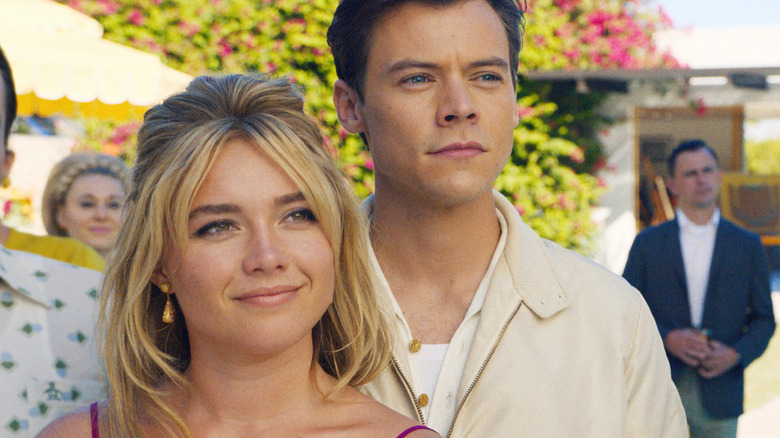
The release of Olivia Wilde's "Don't Worry Darling" has been overshadowed by rumors of on-set affairs and rivalries, like something out of the gossip rags during the Golden Age of Hollywood. Florence Pugh carries the film as Alice, a 1950s housewife living with her husband played by a dead-eyed Harry Styles in the utopian desert community Victory. After the death and disappearance of her friend Margaret, she begins to worry that there is something sinister beneath her perfect and glamorous life. 

The script unfolds in a puzzling twist that dulls the impact of its critique on gender roles. Wilde has a greater command over her mesmerizing visuals. Working with cinematographer Matthew Libatique (who photographed the visually similar "Black Swan"), "Don't Worry Darling" juxtaposes a slick suburban landscape with Alice's psychedelic hallucinations in images that seem inspired by many classic films. 

Douglas Sirk Melodramas

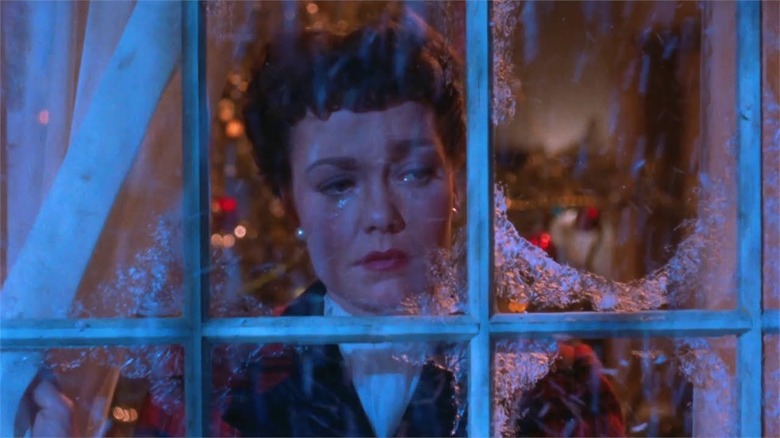
The glossy, well-manicured world of Victory with its palm trees and wide desert skies is not the same as the New England suburbs in a Douglas Sirk melodrama, but there is an uncanniness to the uniformity of these immaculate exteriors shot in bright colors. Both films portray environments that trap the female protagonist with its expectations of perfection. 

In Sirk films, "Homes that are supposed to be havens start to look like prisons as the decor comes to dominate the compositions. Objects that are supposed to be items of support actually seem to be taking over the characters' lives" (via Senses of Cinema). We see this in "Don't Worry Darling" as Wilde's camera marvels the well-designed interior of Alice's home, the repetitive close-ups of her morning breakfast preparations or the neatly-lined rows of alcohol. Alice even tries to suffocate herself with the everyday object of plastic wrap. 

Wilde borrows from Sirk when she frames Alice at home in overwhelming wide shots, as if the space she must meticulously care for every day is going to swallow her whole. "Don't Worry Darling" literalizes the idea of suburban oppression by having the walls close in and nearly crush Alice. The glass window functions as the prison-bar windows do in a Sirk film where a woman looks out at the beautiful nature she cannot be a part of.

Wilde also borrows from Sirk's overuse of mirrors where characters confront the false image they present to the world. Alice's image in front of multiple mirrors while she scrubs the tub every single day, as well as the eerie shot where her reflection moves the opposite of her body, symbolize her fractured mental state and how her perfect identity as a housewife is just an illusion. 

Busby Berkeley Dance Numbers

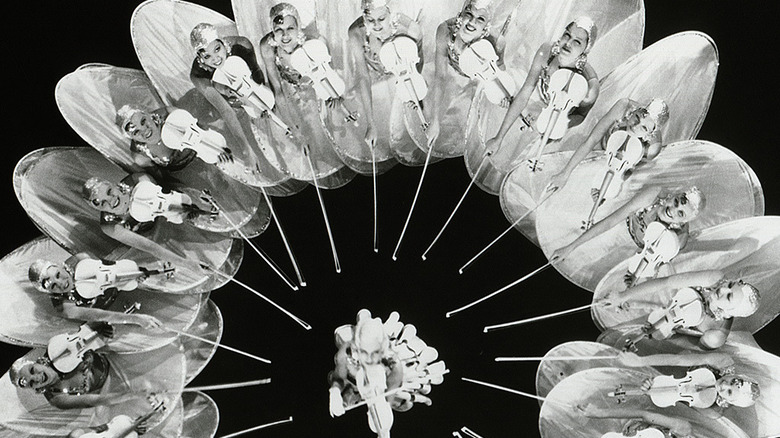
Throughout "Don't Worry Darling," Alice's frequently sees Busby Berkeley style dance numbers reminiscent of "Gold Diggers of 1933." She envisions a circle of scantily dressed dancers with beaming smiles and perfectly synchronized body movements that make unique shapes and kaleidoscopic patterns shot from a bird's eye view — all the quintessential features of a Berkley number. Occasionally, these dancers transform into strange, demonic-like creatures.

These black and white interludes are not completely random. By the end of the film, we see that a video of the dancers is projected onto the ceiling where the real-world Alice is strapped to the bed against her will. It plays on a loop to keep Alice unconscious and transport her to the Victory simulation. 

There's a deeper meaning to Wilde's Berkeley homage. The harmonious movements of Berkley's dancers echo the mantra of Alice's ballet class: "There is a beauty in control. There is a grace in symmetry. We move as one." BFI believes that Berkley numbers are unsettling and unusual because "the only other place you'll find such precise choreography en masse is in footage of the Nuremberg rallies, and it's no surprise that Joseph Goebbels was a huge Berkeley fan." They mirror Victory's ethos where women must remain in their regimented roles and not fall out of place. Uniformity and total submission to the community is valued in Victory, not individuality.

Fritz Lang's Metropolis

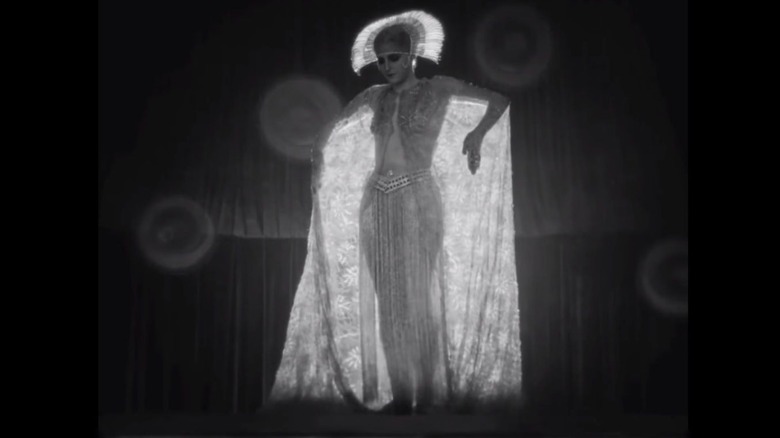
Wilde inserts trippy images of an eyeball into Alice's dreams, manipulating its shape and zooming in and out. By the end of "Don't Worry Darling," we understand that the shots refer to the twist ending where Alice and Jack are actually in the real world using a virtual reality device that holds their eyeballs open and flickers across them. The eyeball images can also be read as a nod to Fritz Lang's "Metropolis" which deals with similar themes as "Don't Worry Darling." 

"Metropolis" shows a kaleidoscope shot of blinking eyes that belong to a group of men at a decadent nightclub. This is very similar to the party scene in "Don't Worry Darling" where the men celebrate their promotions. The affluent men in these films are hypnotized by ostentatious worlds that abuse the working class and women for their own gain. In "Metropolis," the men gaze at the robot Maria who performs a seductive dance for them, driving them into a chaotic frenzy. The back lights illuminate Maria in the same way that the glittering champagne dancer pulls the focus in "Don't Worry Darling." Harry Styles' puppet-like dancing is just as odd as Maria's, demonstrating his ability to blindly follow orders.

Wilde keeps intercutting to a hysterical Alice in the bathroom in the same way that Lang switches from the raucous party to the character of Freder having hallucinations about his beloved Maria who has been replicated as a robot. This rapid shifting from scene to scene heightens the tension. Both Freder and Alice want to expose the cruelty of society and destroy the systems that imprison them — the industrialized oppression of the working class in "Metropolis" and the patriarchy in "Don't Worry Darling."

Read this next: 15 Best Films Of The 1930s

The post Breaking Down the Classic Movies That Inspired Don't Worry Darling appeared first on /Film.

28 Sep 17:44

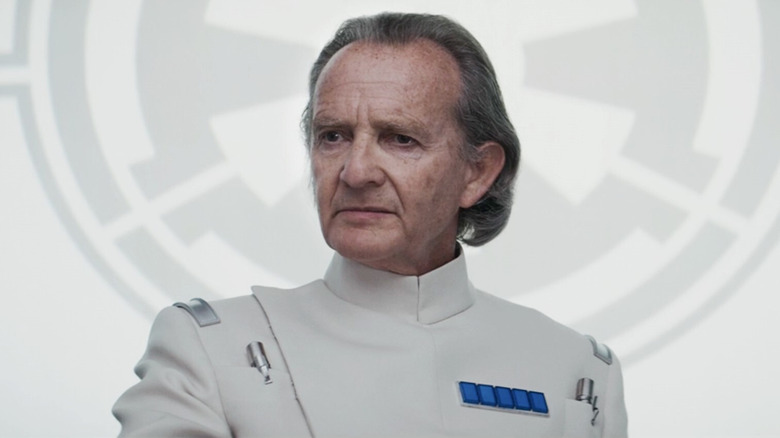
Andor Episode 4 Name Drops A Planet That May Hint At A Certain Space Station's Construction

by Bryan Young

There will be major spoilers for "Andor" Episode 4.

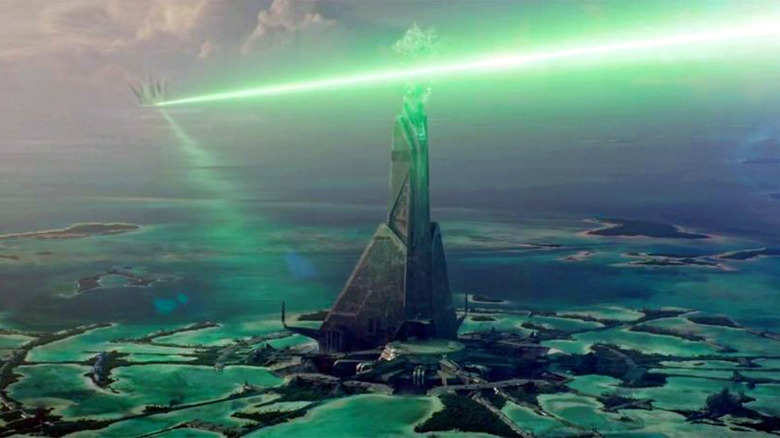
There are a lot of planets name dropped in this new episode of "Andor." From future capital of the galaxy Hosnian Prime to Jason Fry's Eufornis Major, one planet stands above them as a clue to a story playing out in parallel in the background of "Andor." That planet is none other than Scarif, the site of Cassian Andor's eventual heist of the Death Star plans in"Rogue One: A Star Wars Story."

Scarif is a tropical world home to the Imperial Archives and Citadel tower and looks like it would be a dream vacation for most. Much of it was leveled when Grand Moff Tarkin ordered a single reactor ignition blast on the planet in order to prevent the loss of the Death Star plans. Thankfully for the Rebels, that plan didn't work, but the Death Star had a much longer history at Scarif than that one moment.

Scarif And The Death Star

In the Imperial Security Bureau briefing, it's mentioned that they're tracking a massive shipment of construction materials headed toward Scarif. At this point in the timeline, the Death Star is under construction there at Scarif, and those materials are likely destined for the Emperor's super weapon. 

According to the books that give background on the construction of the Death Star in the canon, James Luceno's "Tarkin" and "Catalyst", the Death Star project was moved from Geonosis to Scarif in a bid to keep it secret. Throughout those books and others, like John Jackson Miller's "A New Dawn," we learn that the Death Star is held in the highest secrecy and no one quite knows what all of those construction materials are for, though they're all trying to find out. There's a "Game of Thrones" level game of politics going on to jockey for the Emperor's favor on projects and the ISB is no stranger to trying to pry the Empire's secrets from itself as well as anyone else. The TIE Defender project, dramatized on "Star Wars Rebels" and in the Thrawn books by Timothy Zahn, is another example of a great parallel effort in this regard.

As for Scarif, the Death Star was right there, ready to receive those construction materials and continue on its path to ultimate destruction. If you want more background about what's going on there and with the two chief architects of the Death Star and what's going on at Scarif, read James Luceno's "Tarkin" and "Catalyst", as both help paint that picture in the best ways.

New episodes of "Andor" premiere on Wednesdays on Disney+.

Read this next: Andor Character Guide: Meet The Cast Of The Rogue One Prequel Series

The post Andor Episode 4 Name Drops a Planet That May Hint at a Certain Space Station's Construction appeared first on /Film.

28 Sep 12:25

Apple Has Reportedly Rejected TSMC’s Chip Price Hike of 6 Percent, Decision Could Affect A17 Bionic, M3 Manufacturing

by Omar Sohail

Apple Has Reportedly Rejected TSMC’s Chip Price Hike of 6 Percent, Decision Could Affect A17 Bionic, M3 Manufacturing

New cutting-edge chip technologies introduced by TSMC require a hefty cost to mass produce wafers for clients like Apple. The Taiwanese manufacturer is said to introduce its first 3nm products soon, but according to the latest report, its lucrative partner Apple will not be wanting any part of paying extra to its supplier.

Apple Accounts for 25 Percent of TSMC’s Annual Revenue, so It Has More Leverage to Keep the Same Price

TSMC’s original business plan was to increase prices next year in between the 6-9 percent hike range. Economic News Daily reports that later, there was some negotiation, starting with a 3 percent increment and gradually reaching the 6 percent threshold. We assume that the chip manufacturer would charge a higher percentage to clients for its more advanced chip process, which at this time, is its first-generation 3nm.

Unfortunately for TSMC, Apple has rejected these offers. As the latter accounts for 25 percent of its supplier’s annual revenue, there will be little opportunity to go back and forth for price negotiation. This may be one reason why we reported that the upcoming M2 Pro and the M2 Max for updated MacBook Pro models would be manufactured on the 5nm process instead of 3nm; both entities might not have reached a middle ground for price agreement.

We are contemplating how this rumored price rejection may affect the upcoming A17 Bionic’s launch schedule. According to a previous report, the upcoming SoC is said to take advantage of TSMC’s second-generation 3nm process, as is the M3 for future Macs. A second-generation 3nm wafer will be significantly more expensive to produce, and if Apple intends to price its iPhone 15 Pro and iPhone 15 Ultra at the same level as the iPhone 14 Pro and iPhone 14 Pro Max, it may force TSMC to absorb those higher manufacturing costs or take a hit in profit margins for each high-end iPhone sold.

At this stage, the report does not state when both parties could reach an agreement, but we hope that this unnecessary stalemate does not hinder the progress of Apple’s next-generation custom silicon.

The post Apple Has Reportedly Rejected TSMC’s Chip Price Hike of 6 Percent, Decision Could Affect A17 Bionic, M3 Manufacturing by Omar Sohail appeared first on Wccftech.

28 Sep 12:25

Critical WhatsApp Bugs Could Have Let Attackers Hack Devices Remotely

by noreply@blogger.com (Ravie Lakshmanan)
WhatsApp has released security updates to address two flaws in its messaging app for Android and iOS that could lead to remote code execution on vulnerable devices. One of them concerns CVE-2022-36934 (CVSS score: 9.8), a critical integer overflow vulnerability in WhatsApp that results in the execution of arbitrary code simply by establishing a video call. The issue impacts the WhatsApp and
28 Sep 12:24

GWJ Conference Call 833

by Amoebic
Return to Monkey Island

Amanda and Rich are Joined by The delightful Eleima Stargazer to talk about Return to Monkey Island, Spiritfarer, Ooblets, and Trombone Champ. Later they discuss what games they'd suggest for getting someone back into gaming.

28 Sep 12:24

Who Is the Stranger in 'Rings of Power'? The Finale Sheds Some Light - CNET

by Russell Holly
The meteor man remains a mystery, but a much smaller mystery now that the entire first season of Rings of Power is out.
28 Sep 12:24

Intel Z790 Motherboards Roundup Ft. ASUS, MSI, Gigabyte, ASRock, EVGA, BIOSTAR & NZXT

by Hassan Mujtaba

Intel has officially announced its 13th Gen Raptor Lake CPUs and to accompany it, motherboard manufacturers will be launching their latest Z790 products.

Intel Z790 Chipset Motherboards From ASUS, MSI, Gigabyte, ASRock, EVGA, Biostar & NZXT Rounded Up

Intel is sticking with its LGA 1700 platform for at least one more CPU lineup and that's Raptor Lake. Chipzilla confirmed that Raptor Lake CPUs will be compatible with the existing LGA 1700 boards based on the 600-series chipset. But like each generation, motherboard makers will be offering a brand new lineup of motherboards based on the 700-series chipset which will come with higher I/O lanes. In addition to that, Raptor Lake chips will be supporting DDR5-5600 speeds which is a nice bump over the native DDR5-5200 speeds that Alder Lake supports.

intel-z790-motherboards-platform-features-_1
intel-z790-motherboards-platform-features-_2
intel-z790-motherboards-platform-features-_3
intel-z790-motherboards-platform-features-_4
2 of 9

The Intel Z790 chipset will offer 20 PCIe Gen 4 & 8 PCIe Gen 3 lanes while the CPUs will feature 16 PCIe Gen 5 and 4 PCIe Gen 4 lanes. We know that the motherboard maker will have a few products which will split the x16 discrete graphics card lanes with an x4 PCIe Gen 5 M.2 slot. Intel won't have native PCIe Gen 5 M.2 support till 14th Gen Meteor Lake chips.

This offers a nice upgrade path to users who are currently running a mainstream Core i3 or Core i5 CPU and want to upgrade to a higher-end chip. They can simply replace their existing 12th Gen CPU with a higher-end Core i7 or Core i9 SKU which will increase the overall performance of their PC.

Intel 13th Gen Raptor Lake Desktop CPUs & Z790 Platform Expected Features:

  • Up To 24 Cores & 32 Threads
  • Brand New Raptor Cove CPU Cores (Higher P-Core IPC)
  • Based on 10nm ESF 'Intel 7' process node
  • Up To 6.0 GHz clock speeds (expected)
  • Double The E-Cores on certain variants
  • Increased Cache for both P-Cores & E-Cores
  • Supported on existing LGA 1700 motherboards
  • New Z790, H770, and B760 motherboards
  • Up To 28 PCIe Lanes (PCH Gen 4 + Gen 3)
  • Up To 28 PCIe Lanes (CPU Gen 5 x16 + Gen 4 x12)
  • Dual-Channel DDR5-5600 Memory Support
  • 20 PCIe Gen 5 Lanes
  • Enhanced Overclocking Features
  • 125W PL1 TDP (Flagship SKUs)
  • AI PCIe M.2 Technology
  • Q4 2022 Launch (October Possibly)
ASUS, ASRock, MSI Z790 Motherboards Leak Out, Designed For 13th Gen Raptor Lake Desktop CPUs 2

ASUS Intel Z790 Motherboards Family

ASUS has so far announced a total of ten motherboards that are a part of its ROG Maximus, ROG STRIX, PRIME & TUF Gaming families. The lineup includes:

h732-5-2
h732-2-2
h732-41
h732-3-2
w1000-2
h732-4-2
w1000-3
w1000-1
w1000
h732-1-2
2 of 9

MSI Intel Z790 Motherboards Family

MSI has announced a total of 14 Z790 motherboards within its product portfolio that range from MEG, MPG, MAG, and PRO series offerings. The lineup is the most diverse of all manufacturers & includes:

cutback_compout_00000
1024-13
1024-1-4
1024-2-3
1024-3-3
1024-4-3
1024-5-3
1024-6
1024-7
1024-12
1024-8
1024-9
1024-10
1024-11
2 of 9

ASRock Intel Z790 Motherboards Family

ASRock also has a vast array of motherboards within its Z790 product lineup including the flagship Taichi series. The motherboards include:

  • Z790 Taichi Carrara - $499.99 US
  • Z790 Taichi - $479.99 US
  • Z790 PG-ITX/TB4 - $349.99 US
  • Z790 Steel Legend WIFI - $289.99 US
  • Z790 PG Riptide - $229.99 US
  • Z790M-ITX WIFI - $229.99 US
  • Z790 PRO RS - $219.99 US
  • Z790 PG Lightning - $209.99 US
  • Z790 PRO RS/D4 - $209.99 US
  • Z790 PG Lightning/D4 - $199.99 US
  • Z790M PG Lightning/D4 - $179.99 US
13-162-092-02
13-162-091-04
13-162-087-01
13-162-090-01
13-162-086-01
13-162-088-01
2 of 9

Gigabyte Intel Z790 Motherboards Family

Gigabyte is announcing only four Z790 motherboards, for now, three of which are part of their AORUS lineup and one which will be featured in their AERO lineup. The company also plans on launching more mainstream offerings but hasn't detailed them as of right now.

32068
32074
32048
download-129
2 of 9

EVGA Intel Z790 Motherboards Family

EVGA has prepped up two Z790 motherboards, one in its iconic KINGPIN line and the other in its Classified line.

z790-dark
z790-classified
2 of 9

Biostar Intel Z790 Motherboards Family

Biostar has also announced two motherboards within its Z790 product lineup which includes the flagship Valkyrie.

bz790_valkyrie_45_box_oriu
bz790a_silver_45_box_k67y
2 of 9

NZXT Intel Z790 Motherboards Family

And lastly, we have NZXT who will be offering their next-gen N7 Z790 for Intel's 13th Gen Raptor Lake Desktop CPU lineup.

The Intel 13th Gen Raptor Lake CPUs and the Z790 motherboards which we have mentioned in this post are going to hit retail shelves on the 20th of October and while several stores have already listed them, there doesn't seem to be an option to pre-order them so far.

Which manufacturer's Z790 motherboards are you most interested in?
  • ASUS
  • MSI
  • Gigabyte
  • ASRock
  • EVGA
  • Biostar
  • NZXT
Poll Options are limited because JavaScript is disabled in your browser.

The post Intel Z790 Motherboards Roundup Ft. ASUS, MSI, Gigabyte, ASRock, EVGA, BIOSTAR & NZXT by Hassan Mujtaba appeared first on Wccftech.

28 Sep 12:23

Intel Core i9-13900KS 6 GHz Raptor Lake CPU Benchmarks Leaked, Up To 19% Faster In Single & 55% Faster In Multi-Threaded Versus 12900KS

by Hassan Mujtaba

The first benchmarks of Intel's 6 GHz Core i9-13900KS Raptor Lake CPU have been leaked and it's a massive improvement over the existing "KS" chip.

Intel's Core i9-13900KS 6 GHz "Raptor Lake" CPUs Rips Apart The Core i9-12900KS 5.5 GHz "Alder Lake" In CPU-z Benchmark Leak

The Intel Core i9-13900KS will be the flagship Raptor Lake CPU, featuring 24 cores and 32 threads in an 8 P-Core and 16 E-Core configuration. The CPU is configured at a single-core boost clock of 6.0 GHz (1-2) cores. The CPU will be featuring 68 MB of combined cache and a 125W PL1 rating that goes beyond 253W. The CPU can also consume up to 350W of power when using the "Extreme Performance Mode" which we detailed here.

  • Core i9-13900KS 8+16 (24/32) - 3.2 / 6.0 GHz - 66 MB Cache, 125W (PL1) / 253W (PL2)+
  • Core i9-12900KS 8+8 (16/24) - 3.4 / 5.5 GHz - 30 MB Cache, 125W (PL1) / 241W (PL2)

Compared to the Intel Core i9-12900KS, the Core i9-13900KS offers a 500 MHz boost in max clock speeds and should also offer faster all-core frequencies. This allows the CPU to deliver a massive performance improvement, especially in multi-threaded tasks, since it offers more cores & threads.

Intel's Raptor Lake Core i9-13900KS 6 GHz CPU has been benchmarked within CPU-z ahead of its 2023 launch. (Image Credits: Bilibili)

The Intel Core i9-13900KS 6 GHz Raptor Lake CPU scores 982.5 points in single-core and 18453.4 points in the multi-threaded performance test. Compared to the Core i9-12900KS, that's a 19% boost in single-threaded performance. It also posts 9.5% higher performance than the 13900K, 25% higher performance than the Ryzen 9 7950X, and 52% higher performance than the Ryzen 9 5950X.

In multi-threaded tests, the CPU is up to 55% faster than the Core i9-12900KS, 9% faster than the i9-13900K, 18% faster than the Ryzen 9 7950X, and 56% faster than the Ryzen 9 5950X.

AMD Ryzen 7 7700X "Zen 4" CPU Benchmarks (CPU-z Single-Core)
ST
0
200
400
600
800
1000
1200
0
200
400
600
800
1000
1200
Core i9-13900KS
982.5
Core i9-13900K
897.4
Core i7-13700K
878
Core i9-12900KS
834
Core i5-13600K
831
Core i9-12900K
819
Core i7-12700K
790
Ryzen 9 7950X
787
Ryzen 7 7700X
774
Core i5-12600K
766
Ryzen 9 5950X
647
Ryzen 9 5900X
647
Ryzen 7 5800X
645
Ryzen 5 5600X
624
AMD Ryzen 7 7700X "Zen 4" CPU Benchmarks (CPU-z Multi-Core)
MT
0
4000
8000
12000
16000
20000
24000
0
4000
8000
12000
16000
20000
24000
Core i9-13900KS
18.5k
Core i9-13900K
16.9k
Ryzen 9 7950X
15.8k
Core i7-13700K
12.7k
Core i9-12900KS
11.9k
Ryzen 9 5950X
11.8k
Core i9-12900K
11.7k
Core i5-13600K
10k
Core i7-12700K
9.9k
Ryzen 9 5900X
9.5k
Ryzen 7 7700X
8.4k
Core i5-12600K
7.2k
Ryzen 7 5800X
6.6k
Ryzen 5 5600X
4.8k

There's no information available on what sort of conditions the CPU was tested in such as which motherboard, cooling and whether the chip was running at stock speeds or not. But one thing is definitely sure that the chip will consume much more power than AMD's Ryzen 7000 offerings.

Intel Core i9-13900KS "Raptor Lake", The World's First 6 GHz CPU, Launches In Early 2023 1

While the initial 13th Gen Raptor Lake CPU lineup is planned for launch on the 20th of October, the Intel Core i9-13900KS would launch in early 2023 in limited quantities. The pricing should be close to the $699-$749 US figure.

The post Intel Core i9-13900KS 6 GHz Raptor Lake CPU Benchmarks Leaked, Up To 19% Faster In Single & 55% Faster In Multi-Threaded Versus 12900KS by Hassan Mujtaba appeared first on Wccftech.

28 Sep 12:22

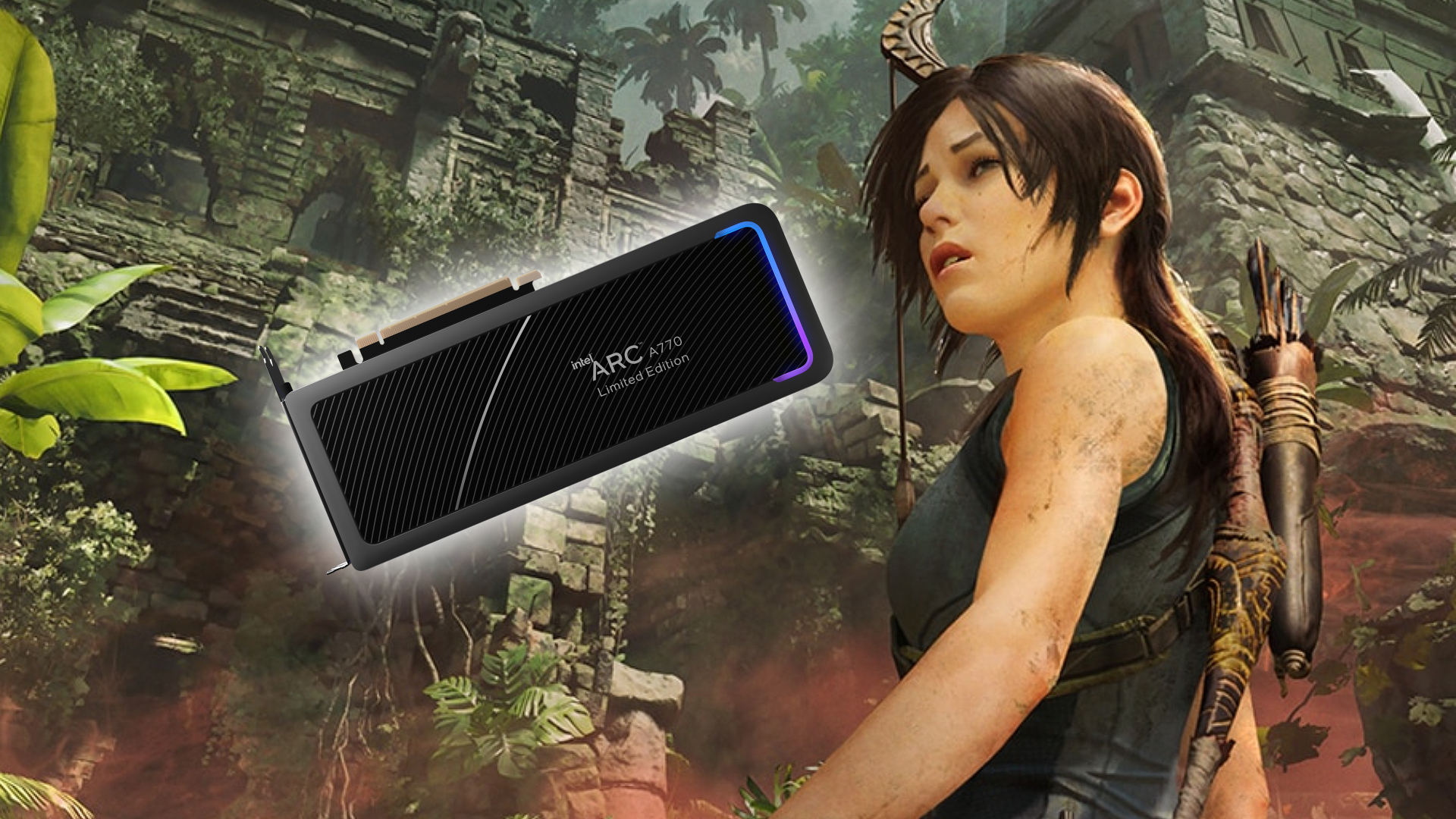
Intel Nvidia DLSS rival sneaks into Shadow of the Tomb Raider

by Phil Hayton
Intel Nvidia DLSS rival sneaks into Shadow of the Tomb Raider

Intel XeSS has arrived, as the Nvidia DLSS upscaling competitor is now available in Shadow of the Tomb Raider. Unlike the green team's RTX offering, the GPU tool is compatible with GeForce and AMD Radeon graphics cards, so you won't need to wait for the Arc A770 to benefit from the tech.

RELATED LINKS: Arc Alchemist GPUs - everything we know, Raptor Lake CPUs - everything we know, Best gaming CPU
28 Sep 12:22

Hackers Using PowerPoint Mouseover Trick to Infect Systems with Malware

by noreply@blogger.com (Ravie Lakshmanan)
The Russian state-sponsored threat actor known as APT28 has been found leveraging a new code execution method that makes use of mouse movement in decoy Microsoft PowerPoint documents to deploy malware. The technique "is designed to be triggered when the user starts the presentation mode and moves the mouse," cybersecurity firm Cluster25 said in a technical report. "The code execution runs a
28 Sep 12:21

Well, that escalated quickly. Hurricane Ian set to cause 12-16ft of storm surge and make landfall with 130mph winds. It jumped up a notch. This is your official Hurricane Ian discussion thread [Live]

28 Sep 12:21

The National Hurricane Center is warning of (and I quote) "life-threatening storm surge", "devastating winds", and "catastrophic flooding". Good luck, Florida [Florida]

28 Sep 12:20

Death Stranding Director’s Cut New PC Update Introduces Intel XeSS, AMD FSR 2.0 Support

by Francesco De Meo

Death Stranding

A new Death Stranding Director's Cut update is now live, introducing new features to the game developed by Kojima Productions.

The new update introduces support for Intel XeSS upscaling technology which was officially released yesterday. Before the Director's Cut was released, it was confirmed that it would be the first game to support Intel's technology, although that wasn't the case in the end, as Nixxes added XeSS support to Shadow of the Tomb Raider before 5050 Games and Kojima Productions did. The update also introduces AMD FSR 2.0 support.

Exciting news! DEATH STRANDING DIRECTOR'S CUT users on PC can now experience Intel's all-new XeSS graphics technology as part of our latest update!

Intel's AI-enhanced upscaling technology will deliver ultra-high-definition visuals at performance levels of lower resolution rendering to create a more immersive experience for the game. We can't wait for you to try it out for yourselves.

Death Stranding Director's Cut is now available on PC and PlayStation 5. You can learn more about the definitive edition of the game by checking out Kai's review of the PS5 release.

Death Stranding Director’s Cut is without a doubt the best way to step into the shoes of Sam Bridges, at least for those that haven’t seen Kojima’s vision of a ruined America. What Kojima Productions brings to the PlayStation 5 are performance and additions that make the experience play better than ever, although what’s actually new to the game feels lacking compared to what’s come in other definitive Sony collections. With all of the additions and enhancements seamlessly integrated into the Director’s Cut, there’s little reason to consider playing the first draft of Hideo Kojima’s vision if you can get your hands on this new release.

The post Death Stranding Director’s Cut New PC Update Introduces Intel XeSS, AMD FSR 2.0 Support by Francesco De Meo appeared first on Wccftech.

28 Sep 12:17

Death Stranding now supports Intel XeSS, AMD FSR 2.0 & NVIDIA DLSS 2

by John Papadopoulos

Kojima Productions has released a brand new update for Death Stranding that adds support for both Intel XeSS and AMD FSR 2.0. As such, Death Stranding is the first PC game that supports all the upscaling techniques that are currently available on PC. Yesterday, we informed you about a new patch that added support for … Continue reading Death Stranding now supports Intel XeSS, AMD FSR 2.0 & NVIDIA DLSS 2 →

The post Death Stranding now supports Intel XeSS, AMD FSR 2.0 & NVIDIA DLSS 2 appeared first on DSOGaming.

28 Sep 11:33

Small Dongle Brings the HDD Clicking Back To SSDs In Retro PCs

by BeauHD
Longtime Slashdot reader root_42 writes: Remember the clicking sounds of spinning hard disks? One "problem" with retro computing is that we replace those disks with compact flash, SD cards or even SSDs. Those do not make any noises that you can hear under usual circumstances, which is partly nice because the computer becomes quieter, but also irritating because sometimes you can't tell if the computer has crashed or is still working. This little device fixes that issue! It's called the HDD Clicker and it's a very unique little gadget. "An ATtiny and a few support components ride on a small PCB along with a piezoelectric speaker," describes Hackaday. "The dongle connects to the hard drive activity light, which triggers a series of clicks from the speaker that sound remarkably like a hard drive heading seeking tracks." A demo of the device can be viewed at 7:09, with a full defragmentation at 13:11.

Read more of this story at Slashdot.

28 Sep 01:56

Why Continuous Security Testing is a Must for Organizations Today

by noreply@blogger.com (The Hacker News)
The global cybersecurity market is flourishing. Experts at Gartner predict that the end-user spending for the information security and risk management market will grow from $172.5 billion in 2022 to $267.3 billion in 2026.  One big area of spending includes the art of putting cybersecurity defenses under pressure, commonly known as security testing. MarketsandMarkets forecasts the global
28 Sep 01:51

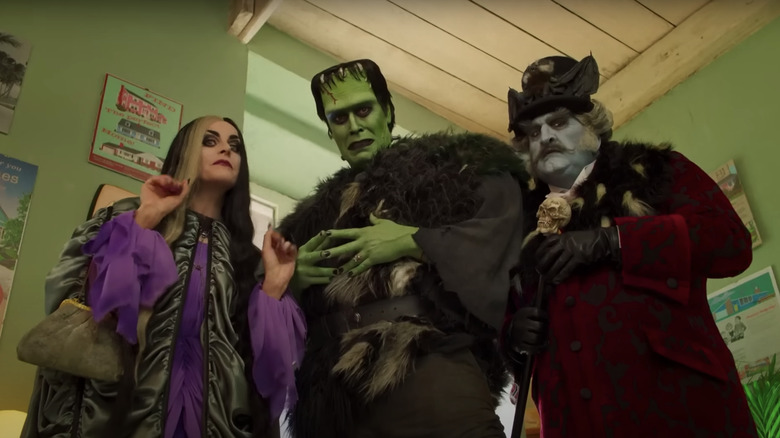
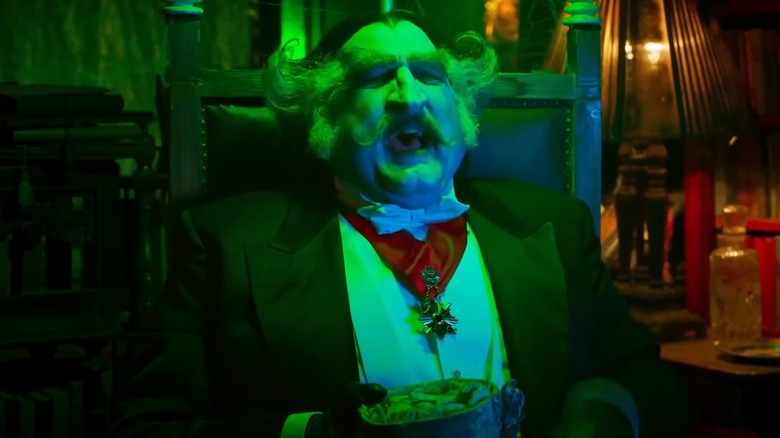
The Munsters Actor Doesn't Understand Complaints About The Rob Zombie Movie Looking Cheap [Exclusive]

by Joshua Meyer

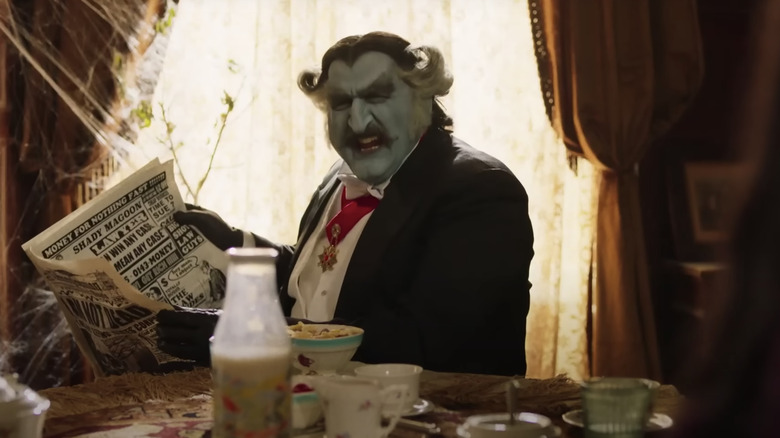
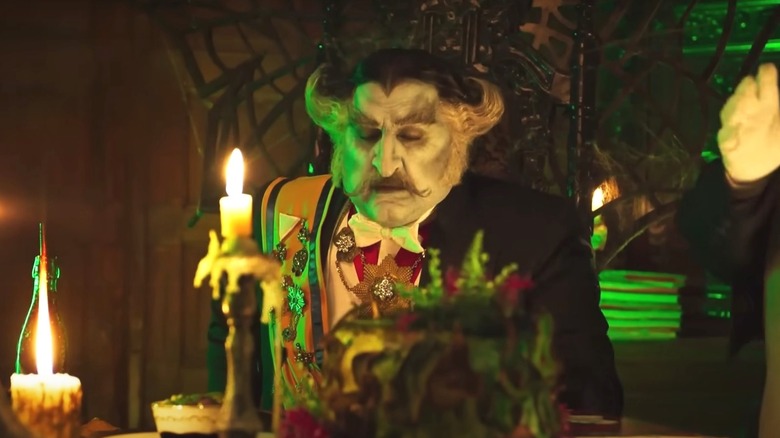
Daniel Roebuck has come a long way from his days playing a private investigator on "Matlock," where he acted opposite '60s sitcom legend Andy Griffith. In Rob Zombie's "The Munsters," Roebuck has donned vampire makeup to play another character from a '60s sitcom: namely, The Count, also known within the franchise as Count Sam Dracula or just "Grandpa." It's a role Roebuck inherited from Al Lewis and it's one that sees him promoting a movie that was already drawing mixed reviews even before its release, based on the lighting and editing of its trailers.

In a forthcoming interview with /Film's Jeff Ewing, Roebuck reveals that he has been reading the newspaper at the breakfast table like Grandpa, or perhaps just hearing some impertinent online anti-Munsters chatter. Roebuck defends "The Munsters" against the Rob Zombie "haters," saying:

"The elephant in the room is there's a lot of haters out there. [...] For whatever reason, they don't like that [Rob Zombie] is successful, that he's married to a beautiful woman, that she's beautiful, that she's an actress, she can be in the movie. There's so much that they complained about when they were going after how this film looked cheap. I thought, 'Are they crazy?' Like, this film is gorgeous. Gorgeous depth, the depth of the sets. It was a joy. You'd go to the set and it went on and on and on and on and on and on. We're in a medieval castle! We're in a building that was built 350 years ago, shooting these scenes -- that's why the design is great and perfect."

Your Munsters May Vary

As a movie director, Rob Zombie has never been a critical darling, with his highest-rated movie on Rotten Tomatoes (for lack of a better quality metric) being "3 From Hell," which currently stands at 58% on the Tomatometer. That's not the movie that topped /Film's own ranking of every Rob Zombie film, but it is the one that a certain contingent of critics found least objectionable.

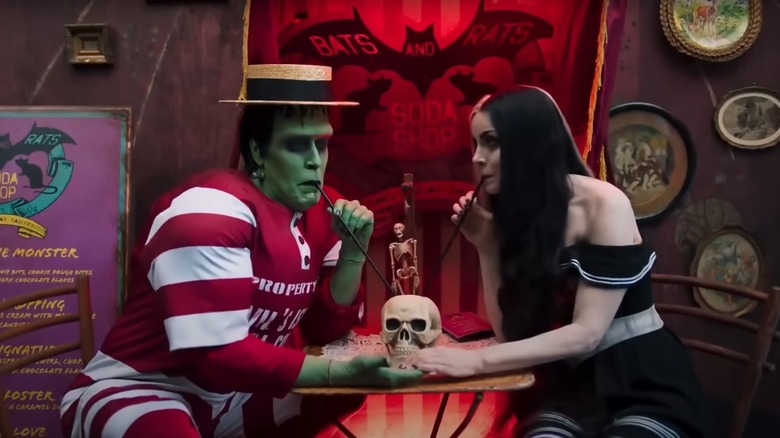
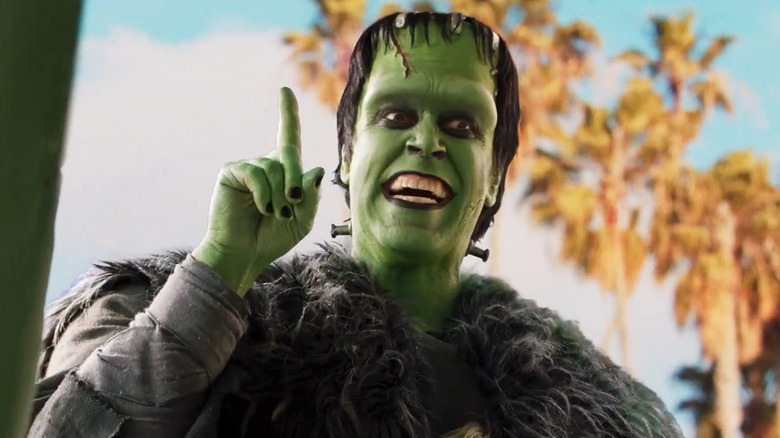
Earlier this year, Zombie gave fans a vicarious tour of the "Munsters" set with some Instagram photos he posted. In his comments, Roebuck is obviously speaking from the perspective of an actor who has walked that set and experienced the depth of it in person. The issue some people seem to have with "The Munsters" is that it looks garish and unfunny. For all we know, this could be intentional; Zombie has never been known for comedy, and the movie's overall aesthetic may just be reflective of his own kitschy sense of humor.

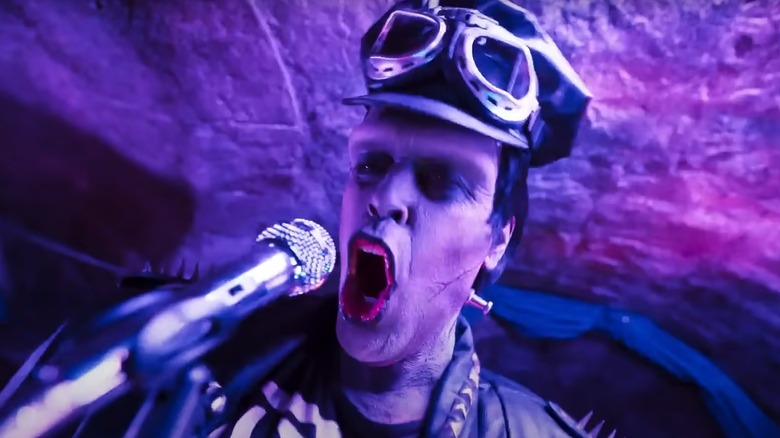
Early black-and-white photos of the 1313 Mockingbird Lane house, where the Munsters live, looked gorgeous, but when the first teaser trailer for "The Munsters" transitioned into "living color," it was less well-received. All I can say is, just this week, I rewatched Zombie's music video for "Living Dead Girl," which also stars Sheri Moon Zombie in a riff on the classic silent horror film "The Cabinet of Dr. Caligari." And I enjoyed it, but it only took up three minutes of my life.

As they say in acronym world: YMMV (Your Mileage May Vary) on the feature-length appeal or lack thereof of Rob Zombie's "The Munsters," which is now streaming on Netflix.

Read this next: 14 Horror Movie Flops That Became Cult Classics

The post The Munsters Actor Doesn't Understand Complaints About The Rob Zombie Movie Looking Cheap [Exclusive] appeared first on /Film.

28 Sep 01:50

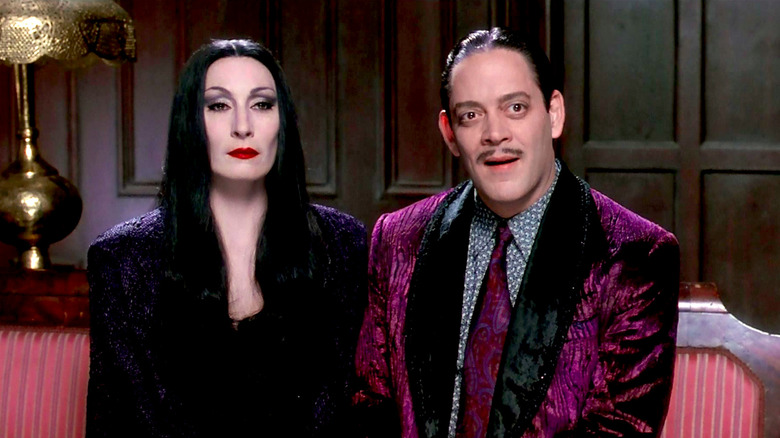
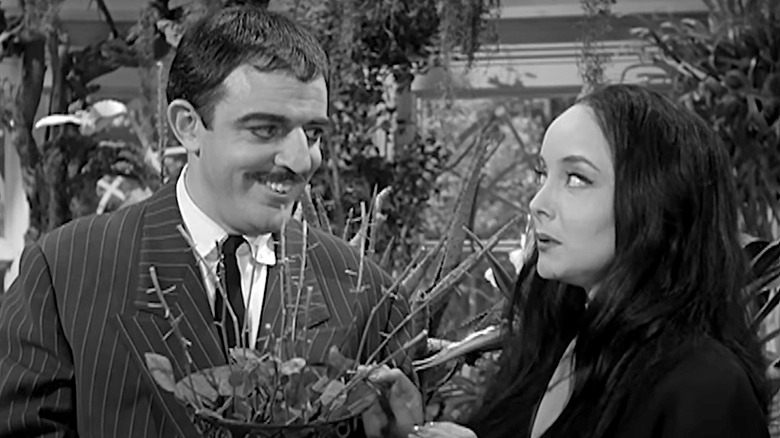
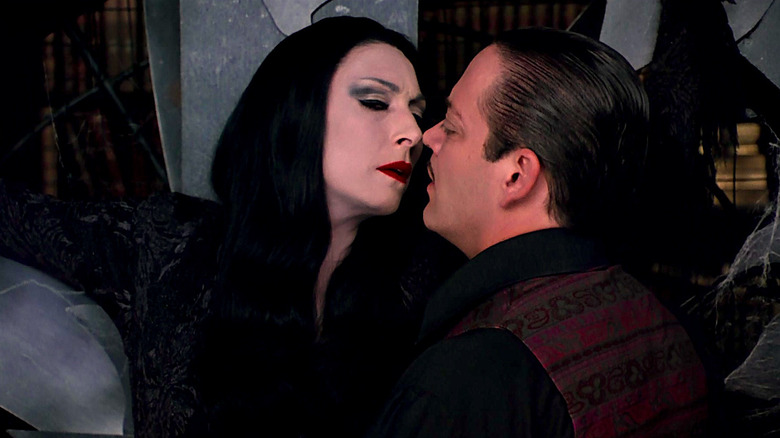
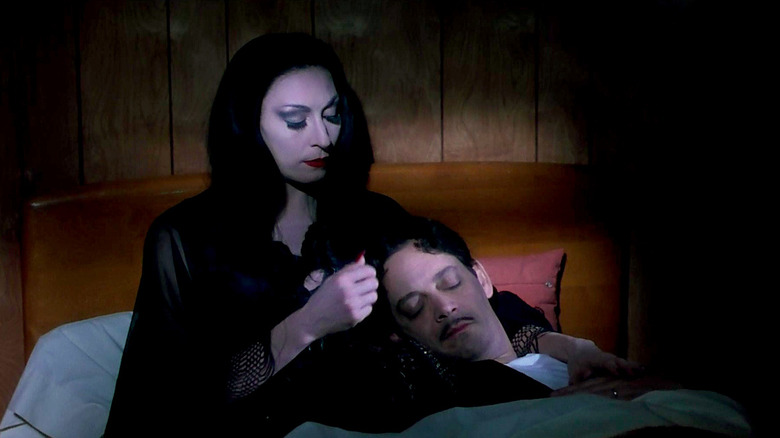
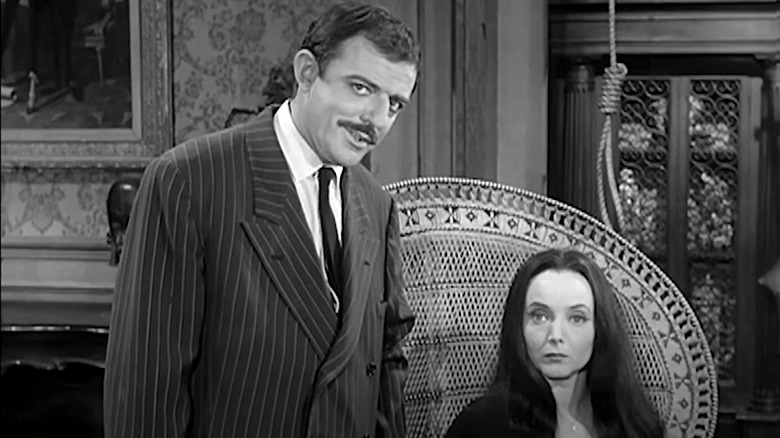
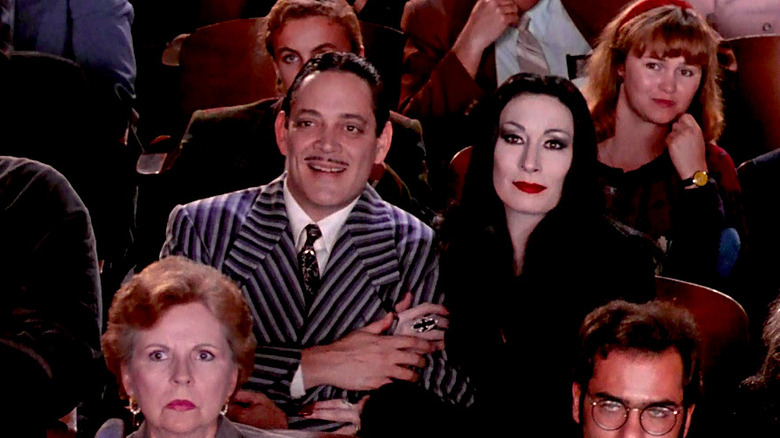
5 Reasons Why Gomez And Morticia Addams Are The Ideal Couple

by Miyako Pleines

It's getting to be that time of year again. The time when spooky season is upon us. And what better a time to reflect on everlasting love than during the month of October when everything is about demons, vampires, and eternal damnation? If that doesn't sound at all romantic to you, think again because spooky season is filled with some of the best relationship ghouls ... I mean goals ... around. 

For starters, there is the romance of the ever popular Jack and Sally from Tim Burton's "The Nightmare Before Christmas." No two undead capture the anguish of true love quite as well as these two. Then you have delightfully charming Herman Munster and his bloodcurdlingly lovely wife Lily from "The Munsters" fame, and we mustn't forget the unwavering devotion of "Beetlejuice's" Adam and Barbara. All of these couples really make it clear that "'Til death do us part" is for chumps.

But perhaps one of the most inspiring couples that horror has to offer is none other than Morticia and Gomez Addams from "The Addams Family." Seriously, no other couple even comes close to their undying devotion, and here's five reasons why. 

They Have Shared Interests

Never ones to turn down a wickedly good time, Morticia and Gomez have many shared interests. They are exceptional dancers as evidenced by their elaborate performance in "Addams Family Values," and they both enjoy romantic nights out in local cemeteries where they can experience the "magic in the air." Their shared appreciation for death and decay means these two understand one another on a whole other level, and while it's said that opposites attract, for Morticia and Gomez, their mutual love of the macabre make them as irresistible to one another as worms on a decaying corpse.

They Can't Keep Their Hands Off Each Other

All romances go through an infatuation stage, but for Morticia and Gomez, this stage never ended. They are as just as deeply attracted to one another now as they were on the day they met at Gomez's cousin Balthazar's funeral. Throughout every iteration of "The Addams Family," Morticia and Gomez's mutual attraction to one another has never waned. They constantly gaze longingly into each another's eyes and look forward to their alone time which is arguably filled with all kinds of sensual debauchery. Whether Gomez is buying Morticia a négligée in her favorite color (black), or Morticia is passionately telling Gomez how much he reminded her of a "desperate, howling demon" last night, these two can't keep their hands off each other.   

They Have Each Other's Backs

"I would die for her. I would kill for her," so says Gomez as he dreamily watches his wife sleeping in "The Addams Family." It's true that this deadly duo would do anything to keep each other out of harm's way, unless, of course, being in harm's way is consensual. For them, danger is only fun when it's mutually desired, and so they will go to great lengths to ensure that they have each other's lace and velvet-clad backs. Whether that means Gomez sword fighting for his wife's life or Morticia consoling a raging Gomez over his brother's request that they cut off all contact, these two understand the importance of "'til death do us part."      

They Are Each Other's Equal

No matter what they're going through, Morticia and Gomez always work together. They make decisions mutually and neither one has more power over the other. Both of them are heavily involved in raising their three children, and Gomez is an active participant in Morticia's pregnancy and birth, expertly coaching her through her labor with love and adoration. But when it is clear that Pugsley and Wednesday are having a little bit of trouble accepting their baby brother Pubert, it is both Morticia and Gomez that sit them down to talk about it. When Gomez falls into a depression over the drama with his brother Fester in "The Addams Family," Morticia secures a job in order to keep her family afloat making it clear that the duo always work in tandem with one another. Their ability to exist as equals in the relationship make them the ultimate couple goals. 

They Value Family Above All

But perhaps the most important aspect of Gomez and Morticia's relationship is their deep devotion to their family. They cherish their children Wednesday and Pugsley (and later, Pubert), and only want the best for them. They attend parent/teacher conferences and express concern when the curriculum being taught in school doesn't reflect their family values on the original "The Addams Family" TV show. Whether they are proudly cheering them on during an unusually bloody school play or working to ensure that their baby boy doesn't grow up to be an orthodontist, they will always make sure their family unit stays strong.

They even support their extended family, going to great lengths to ensure that Gomez's brother Fester isn't taken advantage of by his gold-digging wife. All in all, Morticia and Gomez will support their family even long after the grave.

Read this next: Horror Roles That Changed Actors Forever

The post 5 Reasons Why Gomez and Morticia Addams Are the Ideal Couple appeared first on /Film.

28 Sep 01:50

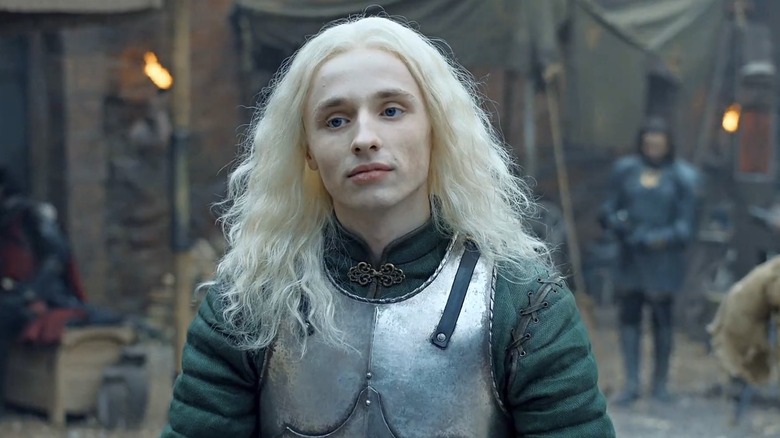
House Of The Dragon's Aegon Is A Dumpster Fire, But You Would Be Too

by BJ Colangelo

This article contains spoilers for "House of the Dragon."

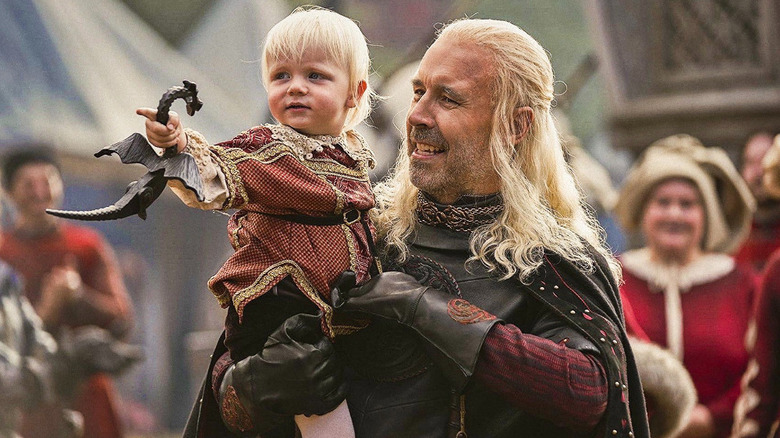
Now that "House of the Dragon" has jumped a decade into the future, the adorable silver-haired bundle of toddler joy of Queen Alicent Hightower and King Viserys Targaryean has transformed into a thing of nightmares -- an entitled, hormonally charged, revolting teenage boy. Prince Aegon (Ty Tennant) is an absolute nuisance, and is filling the void left behind by King Joffrey Baratheon in "Game of Thrones." There's a special brand of privileged jackassery held by the royal teen sons of Westeros, one that can only exist in a person who has been preened and primed since birth to be worshiped, feared, and honored.

While King Viserys has been firm in declaring his daughter Rhaenyra as the heir to his throne, Mama Alicent knows that Westeros won't honor a woman in charge, and has been prepping her precious Aegon to sit on the Iron Throne since birth. To give Aegon credit, his greatest crimes thus far are being a horny jackwagon and an insufferable twat, but as "Game of Thrones" already told us, he's got a nasty future of vindictive evil ahead of him.

And yet, even without the sociopathic tendencies of someone like Joffrey, Aegon is earning himself no fans for simply being himself. In a world where the competition for the title of "Show's Biggest Dumpster Fire" include people who murder their wife for political gain, a knight who gay bashes his lover's husband's lover, and Jason Lannister, Aegon's rise as the resident "Character I Want To Punt Kick" is sincerely impressive. Despite his position as a pest and a half, it's hard to blame him for acting like a major league tool when everything in his life has molded him to be this way.

Socialized To Supremely Suck

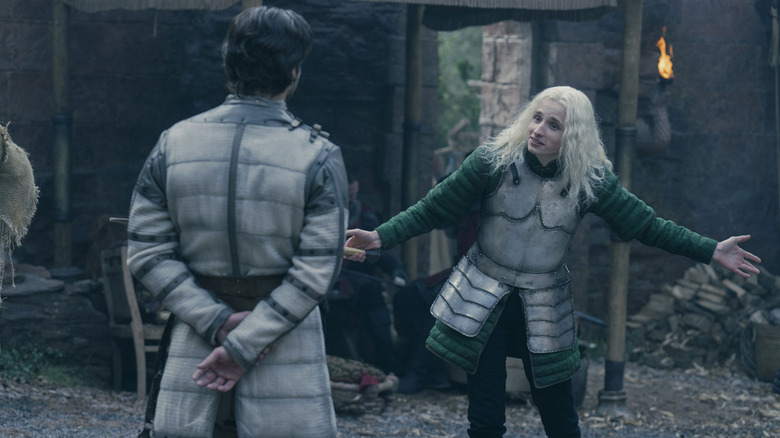
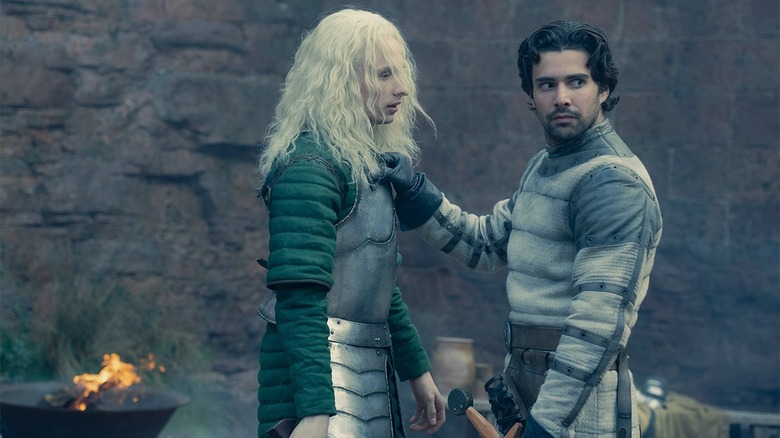
As the oldest of King Viserys and Queen Alicent's sons, Aegon has major Greg Brady/Johnny Bravo syndrome. He's a grade-A jerk to his younger brother Aemond, which could be explained as standard sibling rivalry, but the subconscious knowledge that he'll likely someday be king has definitely armed him with some unearned confidence he exerts over his siblings. This behavior extends to his treatment of his cousins, like Rhaenyra's oldest son Jacaerys, who he tried to whomp with a wooden sword during a training session, simply because he can.

Look, I want to be mad at him and think he's a total jagaloon, but this kid wasn't born evil like Joffrey Baratheon, he was conditioned to be this way. The Westerosi people do indeed live in a society, and it's one that values stroking the ego of a would-be king before they're toilet-trained. Aegon is the oldest son of the most powerful man in all of the seven kingdoms, and plenty of people already view him as their next king. Of course he's going to be an entitled little s*** -- he doesn't have a Tyrion Lannister in his corner to keep him humble. At the same time, King Viserys is steadfast in naming Rhaenyra as his heir, so Aegon's attitude could also be rooted in the age-old tradition of White Boys Who Can't Deal Not Being Daddy's Favorite™, which is the weirdly enough the plot of another HBO hit show, "Succession." Alexa, play "Tale As Old As Time" by Celine Dion.

His Jerk Behavior Does Not Go Unnoticed

Unlike Queen Cersei, who made excuses for Joffrey's behavior at every turn, Queen Alicent is fully aware that her eldest is on his path to becoming the medieval version of the reply guys who worship Elon Musk, but is too busy playing her own game of 3D survival chess to enact any real change. She does her best to call him on his nonsense, especially after pulling a pig prank on Aemond, but in a world that devalues women at every turn, it would shock absolutely no one if one day Aegon pulled a King Theoden in "The Lord of the Rings: The Two Towers" and busted out a "You have no power here."

To make matters worse, King Viserys' current state of health could best be described as "The Maitlands in 'Beetlejuice' when they start decaying on the dining room table," so his attempts to curb Aegon's budding villainy are futile. Queen Alicent is too annoyed with having to take care of everything all the time to heed his advice, and King Viserys is as active as a "thoughts and prayers" tweet from a politician.

Even Ser Harwin Strong, the rumored true father of Rhaenrya's three sons has had enough of his 'tude, manhandling his punkass for bullying Jacaerys during sword training and screaming at Ser Criston Cole (Rhaenyra's ex-lover) "This is how you teach Cole? Cruelty to the weaker opponent?" Ser Criston Cole has taken a liking to using the Targaryen children as vehicles for his own anger toward Rhaenyra, positioning Aegon as his muscle. Again, do we expect the boy to not feel infallible?

The Importance Of Wank In The Window

Aegon's feelings toward those around him is most evident in what will likely be known as "The Window Scene," when Queen Alicent walks in on him standing in the window of the Red Keep in The Full Monty, performing a five-knuckle shuffle with the sun in his face and without a care in the world as to who may possibly see him. This moment could be interpreted as his blatant disregard for the commoners of Westeros, or it could be an example of a teenage boy doing something with his junk because it feels awesome. Have you ever given yourself the "Big O" freely in nature? IT'S GREAT! And given the history of what happens in George R. R. Martin's universe (see: Bran Stark and Tommen Baratheon), Aegon beating his meat with the wind on his face is the least traumatic thing to ever happen to a teen boy in a window!

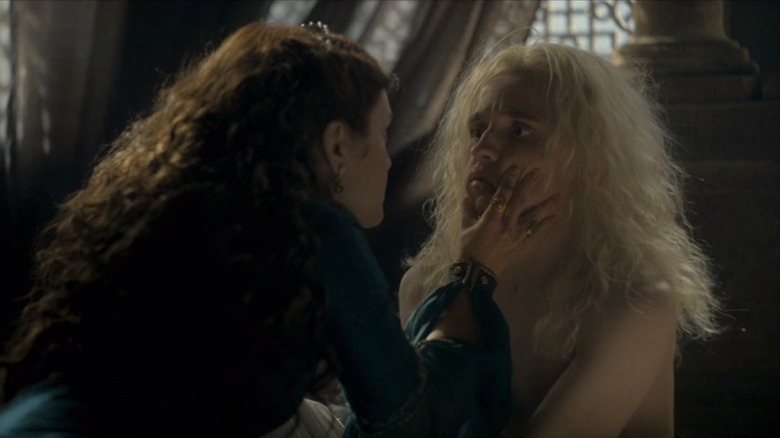
This moment is vital because we see Aegon as the teenage boy he truly is, only to be interrupted by Queen Alicent, who holds his naked face in his hands and basically screams "your Aunt Rhaenyra and her bastard kids are the enemy and they're gonna kill you unless you prepare to take over the throne." JEEZE, MOM. EVER HEARD OF KNOCKING?! This moment is vital because the targeted violence Aegon exerts over his nephews only takes place after this conversation, further proving that this is a kid being influenced by the adults in his life, who are treating children like political pawns. Instead of actually trying to make her son a kinder, more empathetic person, Alicent is weaponizing his budding wickedness for personal gain.

Get This Boy A Therapist

It is true that Aegon has an extremely punchable face, the hair of a Spirit Halloween costume of Marvel's Pietro Maximoff, and a blatant disregard for the feelings of anyone that isn't himself or his mother, but this kid is the poster child of being a product of his environment. Aegon has been doomed to a life of arrogance since jump street, and knowing what madness lies ahead in his future, the blame lies with all of those in Westeros who enabled and encouraged him. The patriarchy hurts everyone, and that includes those who benefit from the oppressive structure. Aegon is walking proof of that fact, and we're witnessing the making of a monster.

Aegon's got some serious issues, but he's an extremely impressionable child who is operating within the circumstances he's been forced into. This is not meant to be a "boys will be boys" defense of the little twerp, but it is a call to reexamine just how this kid ended up this way, and how often society perpetuates the vicious cycle of these little jerks by not intervening and allowing them to revel in their chaotic buttholery. Aegon has little moments where the potential for him to be a kind and protective uncle to his nephews is obvious, but when he's got adults directing him to act in opposition of his instincts, we're left with, well, a wanker.

Read this next: The 13 Best Game Of Thrones Characters Who Weren't In The Show

The post House of the Dragon's Aegon is a Dumpster Fire, But You Would Be Too appeared first on /Film.

28 Sep 01:49

Daniel Roebuck On Loving The Original Munsters And Rob Zombie's Artistic Vision For The Film [Exclusive Interview]

by Jeff Ewing

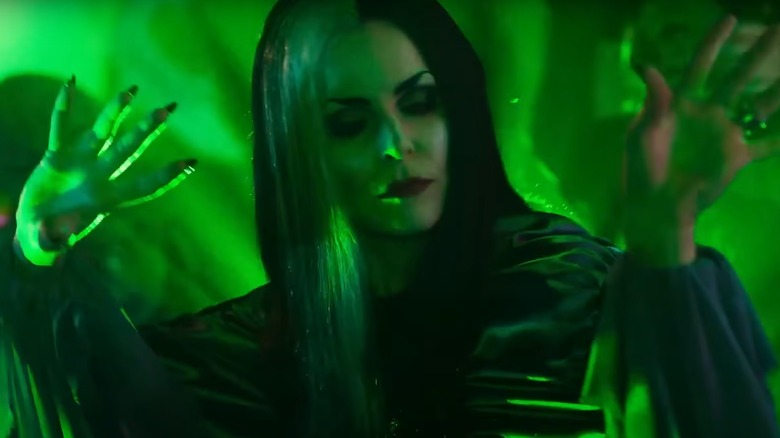
Rob Zombie's "The Munsters" hits home video and streaming today, and it's a loving ode to the widely beloved original 1960s series. Gone are the buckets of blood that accompany some of the director's other work (like, say, "House of 1000 Corpses" or "31"), but his usual flair and attention to detail remain. It's a prequel to the campy classic we know and love, set before the titular Munsters were a happy monstrous family. Starring Zombie staples Jeff Daniel Phillips as Herman Munster, Sheri Moon Zombie as Lily Munster, and Daniel Roebuck as The Count/Grandpa Munster, it's a loving and colorful engagement with the classic franchise.

For fans of "The Munsters," there's a lot of fun to be had here, while Rob Zombie fans will find both differences from his extensive film canon with some stylistic commonalities that make it feel like a proper Zombie affair. I spoke with actor Daniel Roebuck about the film, the original series, what makes Zombie's approach different between "The Munsters" and his adaptation of "Halloween," and more.

'If You Are Punking Me, It Would Be Very Mean'

You've worked with Rob Zombie on a number of projects before: "Devil's Rejects," "Halloween," "31," and others. What was the process of landing the role of Grandpa Munster?

Daniel Roebuck: Well, it was not unlike the other roles that I land, and he generally is kind enough to call me and say "You want to play the part?" This one, because I didn't have to take an axe in the chest, I was I was on board very quickly. We're driving one day to a wedding and my wife is wearing a Lily Munster T-shirt, and the phone rings on the rental car ... and I'm saying rental car because I'll tell you why -- I got confused, it said Rob Zombie ... you know, your phone's plugged in. So he goes, "Hey, Dan, I wanted to talk to you. We're doing a movie, and I really think [you'd] be good for a part. We're doing 'The Munsters,' and I was wondering if you play Grandpa." I looked at my wife, and the first thing I thought of [was], "Is this a TV show where they punk character actors and dangle the dream job in front of them, and then watch them weep when you tell them it was all phony?" But I was thinking, "How could they have rigged this car?" because they didn't know which car I was going to rent. So then I realized it was not [a prank]. I did say, "If you are punking me, it would be very mean," because I'm not a practical joke guy.

So it was that simple. That's what he did! He sent me a picture, he said, "This is what it looks like." And the mustache was on to dry, and that's how he had envisioned him for so long. And then it took years because of this thing called Covid, and they kept postponing our movie. But now we're a week away from the whole world seeing it, thank God! Because it's been three years for me. That's a long time; my hairline has receded at least an inch in those three years.

'How Is That Even Possible, That I Get To Do That In A Movie?'

What did the original series and the work of the original Grandpa Munster, Al Lewis, mean to you?

The original series is very dear to my heart. You may not know this, but I'm a big collector of Universal Monsters memorabilia. I've got a huge, huge collection. Smaller now as I got older, but really great ... Don Post masks, and Munsters stuff. I have great Munsters stuff and always have. In my home, when I watch TV, I have a three-sheet of "Munster, Go Home!" that's on a wall. A three-sheet, to explain to your readers, is seven-and-a-half feet tall and five-and-a-half feet wide. So I always look at that, that's right outside the door where I watch TV. So every night I watch TV, and I look at "Munster, Go Home!," and I have busts of Al and Fred [Gwynne, who played the original Herman Munster].

You may not know this, but I knew Al and Fred. I had worked with Fred on "Disorganized Crime," so we spent months together back in the '80s. And Al I knew through the biggest Munsters collector in the world, Kevin Burns, and we hung out a couple of times. I can't say that we were friends, but I can say we were longtime acquaintances. So I have all that in my brain ... plus, I love the thing. Plus, I collect on it. Plus, I love Universal Monsters. And then I am Count Dracula in a Universal Studios movie! [...] I'm in hog heaven. It's a dream come true. That scene where I rise up out of the coffin, when I read that in the script, I was like, "How is that even possible, that I get to do that in a movie?"

'He's Got A Way Of Seeing Things From A Different Perspective'

It's interesting that Rob Zombie remade two very different classics: "Halloween," which you were also in, and now "The Munsters." Were there differences in how he approached the two?

That's a really good question. The genius of the guy -- and I do say "genius" because he can really do anything -- he's having a different point of view. What was great about his "Halloween" was, "Let's just not make it a guy killing people." And by the way, that's what it devolves back into, which I think is weird. The last "Halloween," there were like 14 stabs in the trailer, and I thought ... now we're just two guys who love horror movies, I was kind of grossed out by it, because it's just like ... they're seven firemen, they get stabbed ... so it devolves back. It first started out as a suspense movie, then it became the supernatural thing, and then Rob turned it back into a family drama. And then with "Part II," he made it an opera, like it was bigger than anything it's ever been. And then, once they went back into the thing, then it just became [does stabbing motion] again. So I think Rob, he's got a way of seeing things from a different perspective.

I think that's definitely helpful in "The Munsters," because we couldn't just do what they do in the TV movies. If you've seen them, great actors and all that in the TV movies. I've known every one of the Hermans over time, I've known several of the Grandpas, but the TV movies are extended episodes, kind of episodic, drawn out to be an hour and 25 minutes ... and that's bad. It's like "A Night at the Roxbury," when they take the 10 minute funny skit and they make it a two hour movie. So that said, Rob Zombie coming at this with an origin story makes it cinematic. He gave it a reason that it should be a movie. He did something that hasn't been done. And it's also Rob Zombie, so it's his art. It looks like Rob's brain: Psychedelic fun, quick cuts, silly cuts. He gets to make his interpretation of it. I love that! It's called Rob Zombie's "The Munsters."

'There Are People Who Just Aren't Going To Ever Like That It's Not The Same'

I like that it doesn't feel like just anyone doing "The Munsters," it still feels like something in his filmography.

That's very good, I like that very much. There are people who just aren't going to ever like that it's not the same, but I think this is more in keeping with the story than -- respectfully, because I always try to be positive, but the Bryan [Fuller] thing where they made "The Munsters" like they were high-fiving themselves because they said, "Well, 'The Munsters' is about scary-looking people that are really nice. Our show's about really great-looking people who are scary." I thought, "Why don't you just call it something else? Because that's 100% not the same thing. Again: Great actors in the thing, but I think what Rob's done is he's given fans another part of the story, and maybe if people like it, maybe we get to go back and do the next part of the story that still isn't the TV series.

What was it like for you to get into character and costume as Grandpa Munster?

Well, it was three years in the making. I saw the Grandpa nose and the chin by January 2020, and then I had to wait. I never got to do a makeup test in L.A. -- Jeff did, but I never got to because of Covid. So once I finally started putting it on, it's not like "Guys, go rent a tuxedo." These geniuses who built our costumes-- my God, the costumes in the movie are gorgeous, and these guys built everything from the ground up. It was all built for me! I loved it, it fit perfectly. Tóth designed the makeup in L.A., a great makeup man, and then in Budapest, I had two beautiful women named Rita making me up. I can tell you that they were joyful, but they were also two top-notch artists. And because of Covid, they were making us up with these beautiful, like, space helmets on -- masks and space helmets.

'I Really Do Hope We Have An Opportunity To Put These Characters On Again'

Were there any elements of Al Lewis's performance that you really tried to pull in, and how did you pull that in? And how did you make it your own still?

Well, that's good casting because Al and I were are essentially from the same part of the United States, the Northeast. He's from the Bronx or Brooklyn, I think the Bronx. I'm from Bethlehem, Pennsylvania. As the crow flies, it's maybe 70 miles or so. And we're, you know, Eastern European descent, so there's so many similarities. The other thing is we're the exact same size. People always thought he was small, he wasn't. He was 6-foot-1, and he weighed 220 pounds. So, big guy, and I know that we are the exact same size because they recently put one of these tuxedos for "Munsters, Go Home!" on auction, and I put it on, and it fit me like my tuxedo.

So what I'm saying is, because I'm from the same kind of place and I grew up in the same kind of area, I'm already able to do that kind of persona. Because we're the same size, I got to fill it in exactly like he did. So a lot of the groundwork was done, and in the series, he and Herman could be more of a comedy team, because their relationship is established beforehand. In our movie, we don't have that relationship yet, so I wasn't able to ping pong the jokes off Jeff. But I do hope and pray there is a sequel, because I love Jeff very much and he's a great actor. I know we'll be able to get into all that by the time we get a sequel going, so let's get that petition!

I love it. The relationship between your character and Herman is so different here initially, and it's obviously building towards what they become. I'd love for you to talk a little bit about their evolving relationship in this film.

Well, we're diametrically opposed as any father who wants his beautiful daughter -- who he knows is beautiful -- to marry a handsome man with money. And then Herman presents himself, he's kind of flat-headed, he's greedy. He tells stupid jokes. He's not funny, and he's poor. So nothing about him is what I want in my family. And he is what I get in my family. (laughs) By the end of the movie, though, we're seeing things kind of the same way. Like, I really do hope we have an opportunity to put these characters on again, so that we can explore that.

'We're In A Building That Was Built 350 Years Ago'

Rob Zombie's movies always have really, really elaborate and rich production design. That was so prevalent in the mansion. Let's talk about that.

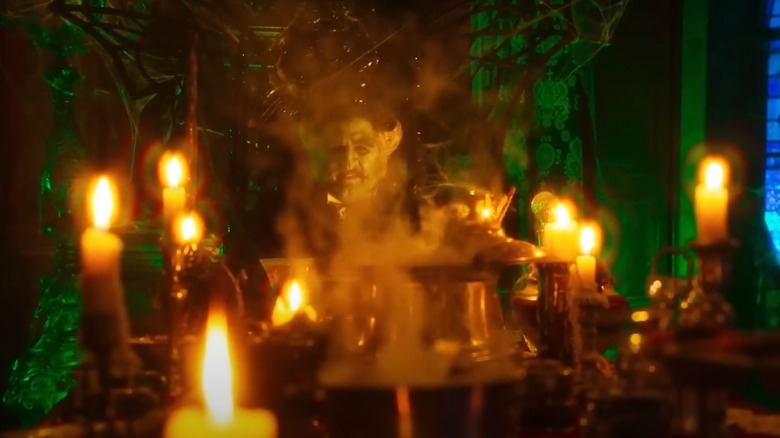
Well, I can tell you that Rob -- people may not know this, but he has an art director's eye. On any movie I've been in, he is completely capable as a director to go, "I want something here," and he'll go get the paint, and he'll go paint what he wants there. You'll see Szurdia very young designer who knocked it out of the park, just like we had the great costumes. Her designs are amazing. Frankenstein's laboratory was Communist-built. Where the electricity came from was under the Communist regime, so it was built very utilitarian, but whoever the designers were, the architects under the Communist rule, were still smart enough to get their color choices and the lighting and everything just right. So that place was unbelievable, and unbelievable that Rob found it and saw its potential.

The elephant in the room is there's a lot of haters out there. [...] For whatever reason, they don't like that he's successful, that he's married to a beautiful woman, that she's beautiful, that she's an actress, she can be in the movie. There's so much that they complained about when they were going after how this film looked cheap. I thought, "Are they crazy?" Like, this film is gorgeous. Gorgeous depth, the depth of the sets. It was a joy. You'd go to the set and it went on and on and on and on and on and on. We're in a medieval castle! We're in a building that was built 350 years ago, shooting these scenes -- that's why the design is great and perfect.

'We Were On An Island For Years'

You can really see the attention to detail.

As Grandpa, they bring the book, and I go like this [waves hand] and the page would turn, and I go like this [waves hand] and I was like, magic! All that stuff's alive -- how cool is the lab?

Absolutely! I also appreciated the look and the dynamic of the wedding scene. Can you tell me about that?

It's the only scene of the movie where all the main actors, except for Cassandra, are in the scene. That was fun to do. Fun to know that Butch was eventually going to be the voice of the of the preacher, Butch Patrick, Eddie Munster ... my friend! I like saying that, "my friend, Butch Patrick." [...] But yeah, that was great, and it was funny. It wasn't written that "Grandpa walks her down the aisle." We were blocking it, and I was like "... I walk her down the aisle, I get to do that." Rob's like "Oh, yeah, right, right." They may not have had that kind of wedding. I don't know. They may not have gotten married in that kind of procession, but I just loved it. Richard Brake is so terrific and funny, and Jorge Garcia, my friend from "Lost," we were on an island for years. I was so glad he was in it. You know, Rob called one day and said, "Do we know any other guys who like horror movies who might come do this movie" I was like, "Oh, I got the guy." I recommended a few people here, and he's the one that he took, thankfully. So that was neat to have Jorge there. He's my friend. That was all just so great."The Munsters" is now available on Blu-ray, DVD, and Digital, and it's currently streaming on Netflix.

Read this next: Horror Roles That Changed Actors Forever

The post Daniel Roebuck on Loving the Original Munsters and Rob Zombie's Artistic Vision For The Film [Exclusive Interview] appeared first on /Film.

27 Sep 23:25

Overlord Season 4 Episode 11 English Dubbed

Episode Title:

Well-prepared Traps

Episode Description:

To gain more information, Ains and Albedo use themselves as bait as they approach the royal capital. Azuth comes to defend the capital and quickly separates the two. While the two of them exchange blows in the air, a mysterious figure comes to visit Ains.

[tab:WCO Player]

[tab:END]

27 Sep 23:09

Game development is more transparent than you think

by Noelle Warner

Developers aren't hiding things from you, I promise

In the wake of the GTA VI leaks last week, a lot of people online made it very clear that they don’t know anything about how video games are made and embarrassed themselves online. One particularly egregious comment stated that visuals are the first thing finished in game development — which is just laughably false. Look, I’m as privy to making false assumptions as the next person, but "fans" going out of their way to harass game developers because they refuse to use Google’s most basic functionality is no one’s fault but their own.

I don’t mean to be harsh, and it is true that game development can be exclusive and gate-keepy — especially to those of marginalized backgrounds. But when it comes to situations where player expectations clash with the reality of what it’s like to make games, players often seem to revert to the argument that game developers are too secretive about what goes on behind the scenes.

There’s an endless list of reasons why leaks suck, but players seeing early footage of a highly anticipated title before the devs are ready to show something is up there. It’s like having someone walk in on you while you’re changing. That's why all these takes about the game looking "unfinished" are so mindbogglingly silly — it literally is unfinished.

Then there’s the issue with social media making everyone feel like an expert, and feel like they need to share their unwarranted opinions — which is something none of us are immune to. Seeking out game devs online with some entitled crybaby comments about something they know absolutely nothing about, though, is when gamers really cross the line.

Just like how working in food service or retail helps you have a lot more empathy for the people working in tough situations, educating ourselves about how games are actually made can help players understand what's really going on and will save everyone a headache in the long run.

What's with the secrecy?

I will say that larger studios working on highly anticipated projects can be particularly withholding — not only is the content of their games confidential, but a lot of proprietary tools like engines or assets are trade secrets they don’t want anyone passing around. If your whole brand is built on prestige, you don’t want anyone seeing broken builds of your game, you know? However, once a game comes out, a lot of stuff becomes fair game in a retrospective “this is how we made our masterpiece” kind of way.

But what really gets my goat is that while gamers are whining about cults of devs deliberately hiding secrets from them, there have been a wealth of resources detailing every aspect of how development works right under their noses — and none of it is all that hard to find.

https://twitter.com/bacon_sanwich/status/1572329874915721219

Let’s start with the fact that a lot of developers took to Twitter in response to the leaks (and the reaction to the leaks) to assure the belligerent players that having incomplete visuals is indeed the hallmark of a game that they are still working on. While this kind of thing is less common with larger studios because of all the corporate bureaucracy, indie devs do that shit for fun all the time.

If you join any kind of indie game community, whether it’s on Twitter, Reddit, Discord, Tumblr, and so on, small devs and teams are constantly releasing up-to-date footage of how they’re progressing through making their games. This includes anything from art and animation, lighting, implementing new gameplay features, and more.

Sharing is caring

Take Squirrel with a Gun, for example — the idea for the ridiculous indie title started as a joke because someone thought it would be funny to give a photorealistic squirrel a gun (it is very funny, by the way). Dan DeEntremont kept developing the idea into a full-blown game, and every step along the way, he showed his followers updates of new features he was adding. When the game is finished and out, the developer’s Twitter feed will serve as a cool kind of time capsule where you can see the progress of the idea from inception to full implementation and release.

https://twitter.com/QuiteDan/status/1525631771387338757

Then there’s the wealth of talks and presentations given by the developers themselves. There’s a huge industry conference every year in the spring called the Game Developers Conference, or GDC, where devs from all kinds of studios, backgrounds, and even countries come together to talk about how they make games. This isn’t an E3-style thing where they’re putting on a show to entertain prospective players — it’s an industry-centric event for professionals to present their findings in one of the most academic settings you can get with games.

The talks cover every topic under the sun, from in-depth discussions of how a programming team implemented state-of-the-art enemy AI, to lighting artists talking about innovations in their field, to narrative writers presenting possible new frameworks to revolutionize interactive storytelling techniques.

GDC talks are full of the brightest minds in games laying all of their work out on the table for everyone to see, and while the full archive of pretty much every GDC talk ever given is unfortunately locked behind a hefty paywall (something that I understand, but should be entirely free in my opinion), there are still hundreds of them available for anyone to watch for free on YouTube right now.

If you haven't heard of Noclip Documentaries, those are also an absolute must to watch. Along with games journalists like Jason Schreier, they're doing some of the most important investigative work in the industry right now. They have some of the content we'd expect, like making-of interviews with devs and coverage of fun news, like a player demaking Bloodborne to look like a PS1 game.

https://www.youtube.com/watch?v=s-2nNksMBpg

But what they're best known for are some of their more hard-hitting pieces, like a documentary-style investigation as to what happened in Telltale's final hours that led to its closure, or an exposé about abuse at some of Annapurna's smaller indie studios. Noclip always does amazing research and has interviews with those actually involved in what they're covering -- overall, it's just good journalism.

Full disclosure

Some studios just outright make documentaries about how they make their games. A favorite of mine is Grounded: The Making of The Last of Us, which includes interviews with designers from pretty much every discipline who detail how they brought their own passion to make the game what it is.

I’m also a huge fan of the developer commentary Valve added to Portal 2, which allows you to hear stories about the game’s creation while you’re actually playing through the game. Studio MDHR has also released some in-depth footage of their process in making Cuphead, my favorite of which is a look into a recording session for the game’s soundtrack.

https://www.youtube.com/watch?v=v6h1vM9W2NM

Think that’s more than enough to get players started? Wrong. We haven’t even touched on the print stuff yet. There are so, so many great books about game development out there. The Art of Game Design: A Book of Lenses by Jesse Schell is a great read for anyone interested in getting into the fundamentals of game design.

Jason Schreier’s Blood, Sweat, and Pixels: The Triumphant, Turbulent Stories of How Video Games Are Made and Press Reset: Ruin and Recovery in the Video Game Industry are some of the most approachable resources for players to understand how game studios actually operate.

Former Naughty Dog developers came together to publish an entire book about how they created the AI for The Last of Us, which goes into a ton of detail — including some scary-looking math. There are books from the creators of classics like Tomb Raider and Doom, and games writers compiled a series of writings about the team that made the SEGA Dreamcast.

There are some awesome podcasts out there that interview developers as well, like Game Maker’s Notebook or Game Dev Advice: The Game Developer’s Podcast — GDC even has its own podcast as well. Point is, if you’re interested in learning more about how any given studio made any given game, there is something on the internet for you.

https://twitter.com/mrsambarlow/status/1572293165201387524

Long story short: do your research and don't harass people

Nothing will compare to actually being at a studio working with other developers, but gamers don’t have a right to complain that studios are keeping them in the dark when it comes to the development process. If a studio isn’t telling us something, it’s usually because they want to make sure all of their ducks are in a row before going public. Making games is so volatile and things change really fast, that if you’re too premature in releasing your info, it can easily backfire. We see this all the time with delays or games that promise more than they can actually deliver.

I understand that waiting for games patiently can be a difficult thing to do, but part of the reality of being in this industry, whether it’s as a professional or a fan, is tempering expectations in an understanding that making games takes a really, really long time, and that developers don’t owe us anything during the development cycle.

I know I’m only yelling at a small, loud minority here, but if nothing else, looking through resources like these can be a lot of fun for any hobbyists who are just interested in learning more about what goes into the games we love playing.

The post Game development is more transparent than you think appeared first on Destructoid.

27 Sep 23:09

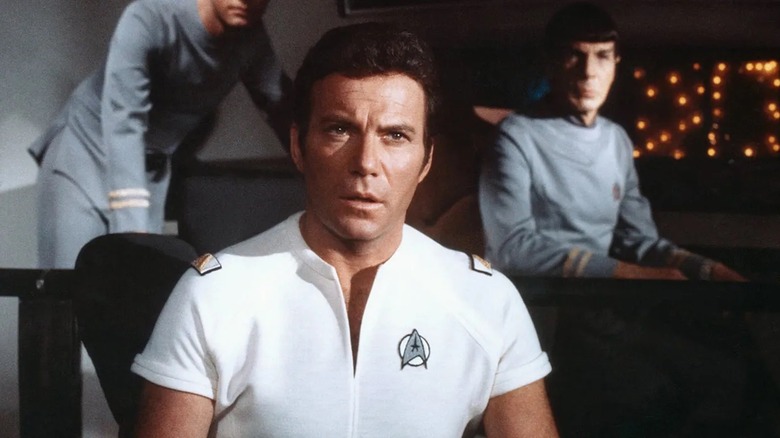
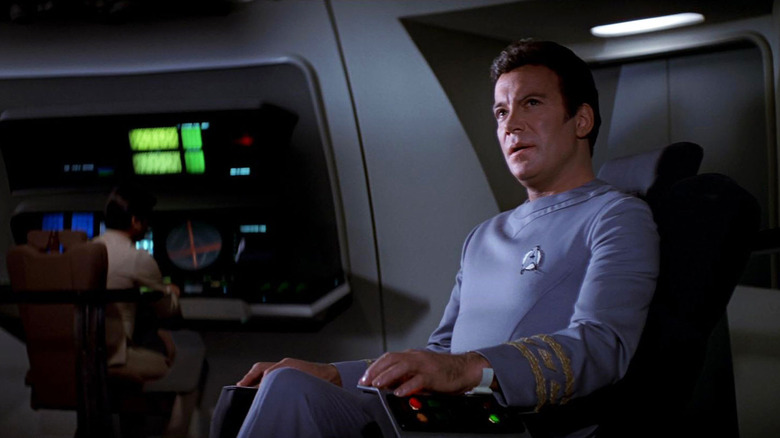
The Director's Edition Of Star Trek: The Motion Picture Wants To Correct The Character Of Kirk

by Witney Seibold

Robert Wise's 1979 film "Star Trek: The Motion Picture" is the perfect adaptation of the 1960s TV series for the big screen. By 1979, "Star Trek" had been off the air for a decade, but had only grown in popularity thanks to eternal syndication. The same decade saw the rise of the "Star Trek" convention as a cultural institution. Series creator Gene Roddenberry began giving lectures, and he and his fans started to form a consensus together as to what "Star Trek" really meant; that is: an optimistic show about peace, philosophy, and diplomacy. After the success of "Star Wars," science fiction proved to be a commercially proven genre, so by 1979, a "Star Trek" motion picture was eminently logical. 

The resulting film was nothing more that "Star Trek" written in the largest possible terms. The ship was no longer a mere TV effect, but a glorious, massive construct that warranted several straight minutes of celebration. The film's plot -- about a possibly malevolent, hyper-intelligent space cloud drifting toward Earth -- opened up conversations about the nature of life, and also its meaning. For Trekkies longing to see their object of affection treated with the appropriate amount of enormity, Wise's film fulfilled on every level. Accusations of "The Motion Picture" being slow or boring aren't relevant in the face of its respect of spatial awe. 

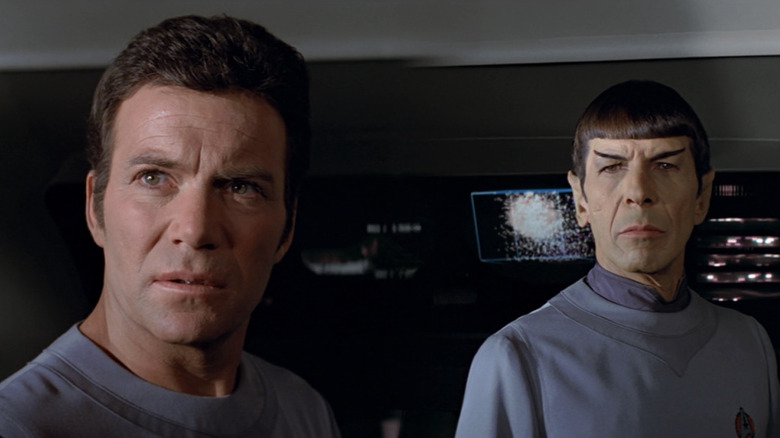
Another notable change from "Star Trek" to "The Motion Picture" was the behavior of Admiral Kirk (William Shatner). While Kirk could be somewhat stern on "Star Trek," he was generally clear-headed and affable, especially with his closest compatriots Spock (Leonard Nimoy) and Dr. McCoy (DeForest Kelley). In "The Motion Picture," Kirk was angrier, more confrontational, less patient. 

In a recent interview with ScreenRant, producer David C. Fein addressed the change.

Robert Wise Was Not A Trekkie

Kirk yells a lot in "Star Trek: The Motion Picture," largely, it seems, as a storytelling device. Fein admitted that director Robert Wise was an effective storyteller and an excellent filmmaker, but that he wasn't familiar with Kirk's history as a character. Wise, according to Fine, made Kirk angry in order to keep certain cinematic rhythms alive; a curt word or two, and Kirk could be silent for a beat after. It was this kind of rhythm that, according to Fine, made editing the film so difficult. He said:

"Well, Kirk ... turned out to be a really angry guy. I mean, he was yelling at people all the time and had to repeat himself. And in a way, that was part of the problem that required some of the more difficult edits, originally. And [Robert Wise] was heavily ... part of the editing. When [Kirk's] in the Rec Deck, and he says, 'Viewer off.' In the theatrical version, he had to yell again, 'Viewer off!'"

The Rec Deck, incidentally, was a room never before seen on the Enterprise. There were lots of new interesting spaces to explore on the ship's new retrofit, and Angry Kirk distracted. He wasn't enjoying himself and, it seems, neither were we. This was not bad storytelling, but it was bad for Kirk. As Fein put it:

"Robert Wise is a brilliant storyteller, but not somebody who had vast experience with Star Trek. [He] originally looked at that as, 'How do you get it? How do you amplify a moment where people are stunned, you don't hear anything?' You say 'Viewer off!' and they are so stunned that they don't respond. But that actually worked against the character."

A Professional Starfleet Crew

Fein, in the interview, also points out that the Enterprise bridge crew is largely the same as it was a decade previous, with Lt. Uhura (Nichelle Nichols), Sulu (George Takei), and all the rest at their usual stations. After four seasons of TV where these characters served on a starship together, there would be a natural understanding between captain and crew. Kirk would make decisions and his crew would efficiently follow them. There would be no need for temper or shouting. Things would presumably just work. Fein said that he and Wise had a conversation about the way Starfleet works:

"I had a conversation with Bob about where we said that Uhura has been with Kirk for much longer than this. If Capt. Kirk says to her 'viewer off,' she might be stunned by the moment, but she's turning the viewer off. And he's not somebody who has ever had to raise his voice in that regard, to get her or his crew to respond, because they are such so tight that it's understood. And yes, it was devastating [that] Epsilon Nine disappeared. But that needed to be one of the ways of addressing the character that he needed to not yell twice."

Epsilon Nine was a space station that was swallowed whole by the above-mentioned intelligent space cloud. It was devastating, but shouldn't have shaken a Starfleet crew in such a fashion. Any Trekkie knows that Uhura has witnessed many equally dramatic things in her career, and would have remained unflappable. Kirk would have known that, too, and would not be yelling at his crew. If he did, he would apologize for losing his temper.

Subtle Edits

"Star Trek: The Motion Picture" has been subject to numerous edits over the years, and Trekkies have a wonderful time debating which "final cut" counts as the "official" version. The original theatrical cut was 132 minutes. When the film was broadcast on television in 1983, additional scenes were reincorporated, forming a 144-minute cut. Then, in 2001, an extended version -- called the Director's Edition -- was released on DVD. That cut was 136 minutes. The Director's Edition was rated PG, while the original release was rated G. 

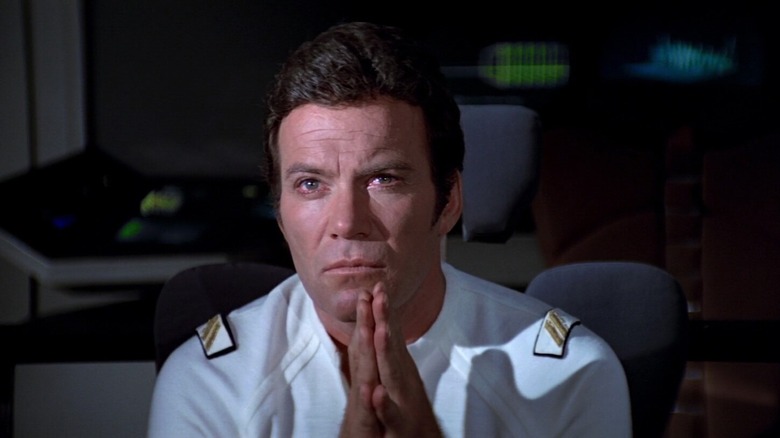
The new 2022 Director's Edition, now on Blu-ray, isn't just a few minutes longer, but also features alternate takes and longer, newly made FX sequences. Comparing the two side-by-side reveals a lot of the enhancements and alterations made to generally tighten up the movie, change the pace, and make it look slicker and less, well, 1970s. In one instance, an angry glare by Kirk is replaced by a tiny moment of panic. Small expressions like that can go a long way to reestablishing a character. 

As scuttlebutt among Trekkies go, "The Motion Picture" has been nicknamed "the boring one" due to its slow pace and lack of mayhem. This author once attended a Trek convention where actor Jonathan Frakes jokingly celebrated the then-new Director's Edition, which featured "20 more minutes of them floating through a cloud." The languidness of "Star Trek: The Motion Picture" has long been acknowledged and derided. What needs to be just as equally loudly touted is the films largesse. Its sense of infinity. The idea that the Enterprise is but a speck in the cosmos. That, "The Motion Picture" does incredibly well. 

Read this next: Every Star Trek Show And Movie In Chronological Order

The post The Director's Edition Of Star Trek: The Motion Picture Wants To Correct The Character Of Kirk appeared first on /Film.

27 Sep 22:35

Shadow of the Tomb Raider is the first game that supports Intel’s XeSS

by John Papadopoulos

Nixxes Software has released a new patch for Shadow of the Tomb Raider that adds XeSS graphics support for DX12-compatible systems. As such, Shadow of the Tomb Raider is the first game that supports Intel’s upscaling tech. What’s really interesting here is that Shadow of the Tomb Raider already supports NVIDIA’s DLSS tech. Thus, we’ll … Continue reading Shadow of the Tomb Raider is the first game that supports Intel’s XeSS →

The post Shadow of the Tomb Raider is the first game that supports Intel’s XeSS appeared first on DSOGaming.

27 Sep 22:34

Here are the first gaming benchmarks for the Intel Core i9-13900K

by John Papadopoulos

Intel has officially announced its 13th-generation CPUs. The blue team has shared their specs, prices, and the first gaming benchmarks for its high-end model, the Intel Core i9 13900K. According to Intel, its 13th-generation CPUs will offer a 15% single-thread performance boost. PC users can also expect a 41% performance increase in multi-threading applications. As … Continue reading Here are the first gaming benchmarks for the Intel Core i9-13900K →

The post Here are the first gaming benchmarks for the Intel Core i9-13900K appeared first on DSOGaming.

27 Sep 20:04

‘Plow’ Your Leaves With Cardboard

by Lindsey Ellefson

Raking leaves is a pain in the ass. It’s time-consuming, wet, cold, and can even trigger your allergies. You have to do it, but so tedious is this task that people have come up with a variety of hacks and devices to help you get it done more efficiently. You can scoop leaves up with plastic or use a tarp or blanket to…

Read more...

27 Sep 20:04

The 12 Best Studio Ghibli Movies, According To Letterboxd – Did They Get It Right?

by Margaret David

There was a beautiful time when film buffs, critics, and dudes with strong opinions could gather in the IMDb forums and debate everything from the oeuvre of Sir David Lean to the latest episode of "Charmed." Today, internet critics make their way to the easier-to-navigate Letterboxd. Boosted by the 2021 COVID pandemic lock-in, it's now the joint for people looking to curate their watch list with the cream of the cinephile crop.

On Letterboxd, you can log your film-viewing history, rate films on a 5-star scale, and share your thoughts. The reviews can be as pithy or insightful as a user desires, and collated scores help fans figure out what's the best of the best in a given section. With this much input from peers, the app's consensus should offer a fair reflection of a film's quality. This Ghibli fan is going to look over Letterboxd's top twelve animated Studio Ghibli features with you, and I'm going to examine just how accurate we think these ratings are.

(A special note before we begin: "Nausicaa of the Valley of Wind" predates the founding of Studio Ghibli. If it was eligible for this list, it would easily deserve a place in the top-five!)

1. Spirited Away

Released in 2001, Hayao Miyazaki's "Spirited Away" is a safe pick for Best Ghibli Movie on most lists. A lyrical coming-of-age tale, Chihiro (Rumi Hiiragi) still has some brattishness left in her. When her parents become pigs, she's lost in a world of unfathomable yokai spirits. It's up to her to grow up and learn to look for the best in others if she wants to free her parents and return home.

Sweet and lovely, it easily earns its rank on Letterboxd for several reasons. "Spirited Away" is the first worldwide Ghibli release after "Princess Mononoke" grabbed the attention of Western mainstream audiences. Every frame is gorgeous, and it's a relatable story for any age. The Joe Hisaishi-composed score is, once again, impeccable. The film's cast of spirits sparks our imaginations -- from the silly Radish Spirit to the lonely No-Face. If someone is on the fence about watching Japanese anime, it's a magnificent film to show them the genre's value. The only quibble to make with its high rating on Letterboxd is a purely subjective one. "Princess Mononoke" would be my pick for the top spot, but I'll get to why soon!

2. Grave Of The Fireflies

Directed by Isao Takahata and adapted from the semi-biographical novel by Akiyuki Nosaka, "Grave of the Fireflies" is the finest film you'll watch once in your life. All you need to know is in the current top Letterboxd review by a user called James: "I'm struggling to think of any other movie that eviscerated my heart quite like this one."

"Grave of the Fireflies" will do that. Two children become orphans in the aftermath of the 1945 firebombing of Kobe. Sadly, their family members who lived through the experience have too many struggles to care for them. Older brother Seita (Tsutomu Tatsumi) and tiny Setsuko (Ayano Shiraishi) must fend for themselves. The film's opening foreshadows the film's ending. Watching how these children end up there is horrific and heartbreaking. Although it's a tough watch, it's beautiful and a reminder that Studio Ghibli has more than one excellent director at the helm.

Listed at number two on Letterboxd, it'd be a hard sell to move it around the ranks. It's not a Miyazaki film, and it's too shattering an experience. Placing it in second helps us understand that it's a masterpiece but not the right pick for a casual night of movie-watching.

3. Princess Mononoke

"Princess Mononoke" is the film that helped take Miyazaki out of the hands of cinephiles and anime clubs and turned the director into a Western phenomenon. With a localization overseen by Neil Gaiman, "Princess Mononoke" is a fantasy epic about the power of humanity to be destructive and kind.

Like J.R.R. Tolkien's work, Miyazaki's story is framed around a conflict between nature and industrialization. Prince Ashitaka (Yōji Matsuda) becomes a victim of this conflict when a wounded boar god shares its deadly infection with him. The pulsating injury is magic and metaphor, a rot inflicted on the once-noble boar clan by iron bullets. His journey introduces him to the gunmaker, Lady Eboshi (Yūko Tanaka), who is no senseless villain but a woman with a desire to protect those that society rejected. In opposition to Eboshi's iron sprawl is San (Yuriko Ishida), the adopted daughter of a wolf god.

It's a story that knows there are no easy answers to this conflict. "Princess Mononoke" gives us what it can, along with the tools to make of its ending what we will. Mature and beautiful, we argue it's better deserving of the number one spot. But landing in the top three spot is fair.

4. Howl's Moving Castle

There's a big problem with stunt-casting Hollywood stars to voice top-shelf animated features. But in Christian Bale's defense, he nails the dramatic twink complexity of the draft-dodging wizard in "Howl's Moving Castle." That's a lot of odd words to explain our titular secondary lead, but they're accurate. Based on Diana Wynne Jones' novel, Miyazaki's take on "Howl's Moving Castle" ups the stakes and makes Howl not just a cowardly slacker with a taste for fashion, but a wizard desperate to avoid getting entangled in a bloody war. That sentiment is foundational to most of Miyazaki's stories, and it fits perfectly into this adaptation.

Meanwhile, Sophie (Emily Mortimer) is the hero everyone needs. She's a celebration of growing up, being true to yourself, and courage. With Heen ( Dee Bradley Baker), the wheezy little mop dog, and Calcifer (Billy Crystal), the grumpy fire elemental, it's a charming film with surprising depth. In the fourth place on Letterboxd, we concede that's fair. It benefits from the high we were still getting from the release of "Spirited Away" three years earlier but acknowledges that it's not as epic as "Mononoke." It's a great movie -- just not good enough to enter the top three.

5. My Neighbor Totoro

At number five on Letterboxd, it's a fair argument to wonder if "My Neighbor Totoro" is ranked too high. (But it's number one in my heart, though!) Especially on dark days, "Totoro" is sweet and cuddly -- practically designed to make you feel warm fuzzies. Sisters Satsuki (Dakota Fanning) and Mei (Elle Fanning) are too young to understand the world's injustices. But they're just the right age to embrace the universe's magical corners -- where trolls come in various squeezable sizes with leaf-hats and a cat that's also a bus. It's the greatest thing ever.

While "Totoro" is a delightful experience, it's not a coherent story. It's a few blessed days, capped by the promise of a better future. But it's so lush, beautiful, and perfect that the Totoro creatures are now synonymous with Studio Ghibli. The big boy himself has a place in their official logo. It may be thin when compared to a Steven Soderbergh film. But it's the right movie for what it is: a sweet fable that brings hope. For parents with kids that can't get enough "Bluey," this offers the same kind of gentle artistry that will engage their imaginations.

6. The Tale Of The Princess Kaguya

Isao Takahata's final movie, "The Tale of the Princess Kaguya," was meant to be (and is) the director's magnum opus. The art style is like no other Ghibli film, telling its heartbreaking folktale via deceptively simple charcoal-style linework and soft watercolor hues. Based on the 9th century "The Tale of the Bamboo Cutter," "The Tale of the Princess Kaguya" follows a hard-working man who finds a baby inside a stalk of bamboo and raises her as his. But he becomes too invested in her future success: Kaguya lives an unhappy life as a caged bird.

Takahata turns the old story into a lament. Kaguya is never free to make choices. Her unhappiness grows throughout her brief life on Earth. The end of her story is a metaphor for death, as her wishes are forever unfulfilled as she returns to the Moon. For its artistry and dedication to its themes, it should rank in front of "Howl's Moving Castle" in the Letterboxd rankings. Likely, it's weighted down (through no fault of its own) by choosing a unique style over Miyazaki's familiar charm. Nonetheless, it's a lovely film and is more than worthy of being in the top ten.

7. Kiki's Delivery Service

"Kiki's Delivery Service" is a nice film. Scratch that, it's not just nice, it's kind. In a world of grimdark directors slapping grey chrome filters onto once-peppy superheroes and Lars Von Trier doing Von Trier things -- sometimes you just want to feel good. Letterboxd puts "Kiki's Delivery Service" at number seven, which may be as overweighted as "Totoro" for harder cinephiles. But it's hard to find any fault in this 1989 Miyazaki classic.

Kiki is a mail-delivering witch who goes through a brief crisis of confidence. It forms the bedrock of the thin plot, giving this coming-of-age fable something to do in between its delightful village scenes. She has, of course, a black cat. Jiji is one of the top ten cats in cinema, a mouthy charmer who'd happily share a saucer of milk with Salem from "Sabrina The Teenage Witch." Even Jiji has a subplot, finding love in this fine little town with a pretty maid down the lane. There is no way to feel bad after watching this movie, except perhaps a twang of longing that being a mail delivery witch isn't a real job. Letterboxd is right to place this movie so high, as it feels like a small act of defiance against an unhappy world.

8. Whisper Of The Heart

Yoshifumi Kondō was one of Ghibli's best animation directors, but he only ever directed one film. 1995's "Whisper of the Heart" puts him at the helm of one of Miyazaki's stories. Less overtly magical than many of Studio Ghibli's films, the film follows Shizuku (Yōko Honna), a girl with a lively imagination and a slow-growing friendship with a taciturn boy. She creates a story for the Baron, a dapper cat statue on display in a local shop, giving him an enemy in the local stray, Muta. Muta is a grumpy cat, and her tale reinvents him as the Wilson Fisk of the feline streets.

Baron's catty tale isn't the main story, but it adds a sweet levity to a sober story of two kids navigating complex emotional twists. "Take Me Home, Country Roads," the Bob Denver classic, may provide some sonic whiplash, but the lyrics make new sense here. At eight on the Letterboxd list, it's in the right place due to its thoughtful quality. But there's a melancholy behind this film. Kondo was meant to be Miyazaki's heir, and this would have been the first of many films guided by him. Unfortunately, Kondo died in 1998, prompting Miyazaki's first temporary retirement.

9. Ponyo

Miyazaki's watery follow-up to the childlike wonder of "My Neighbor Totoro" has some ranking confusion around it on Letterboxd. Sharp eyes will notice that the eighth place is taken by a behind-the-scenes short called "Ponyo: Meet Ponyo" while the film itself is several places down. But the comments are largely the same, suggesting a few dozen people have made an honest mistake in their ratings and accidentally boosted the wrong thing. So let's assume 2008's "Ponyo" is at the ninth-ish place.

That's a fair spot for the film. "Ponyo" has a larger story than "Totoro," with recognizable elements of "The Little Mermaid" and a disruption of the natural world when Ponyo clings to her new human life with an overdose of borrowed magic. Miyazaki renders the deep sea as beautiful and complex as his forests with ancient (and sometimes) unsettling fish appearances. The stunt casting is also less charming in this film compared to other Ghibli. Liam Neeson does a capable job as Ponyo's campy-wizard-dad Fujimoto, but his natural gravel doesn't mesh with this gentle world. Weirder is Matt Damon, who manages to sound pretty much like Matt Damon, which adds little to the dynamic here.

10. The Wind Rises

In America, we think of the Wright Brothers when we think of the history of aviation. Some of us may recall that Orville Wright went to his grave disheartened with the way his invention became a mechanism of war. In 2013's "The Wind Rises," this sentiment is shared by Jiro Horikoshi, who designed several Mitsubishi fighter craft planes for use in World War II.

This biography feels forgettable in discussions of Ghibli greats due to how straightforward it is. There's no magic. There are no fantastical sequences. There's only the wonder of the skies. But it's enough, and it lifts Miyazaki's love for aviation past the awkwardness of "Porco Rosso." Beautiful and bittersweet, the film contains Miyazaki's signature anti-war message running through it. However, it's still a little odd for one of his most understated films to be about a man who brought a brutal war to a new level -- even if that was never his intention.

It's in a decent place on Letterboxd, acknowledging that it's not Miyazaki's strongest film, but still one of his most empathetic. However, our opinion is that it should swap places with "Only Yesterday," another Isao Takahata masterpiece that tackles the inner life and dreams of young women. It sits just outside the top 12, and this would be the right place for it.

11. Castle In The Sky

"Castle in the Sky," Studio Ghibli's premiere film, borrows a couple of things from Miyazaki's "Nausicaa" -- like its heroic blue hues and the adorable fox squirrel critter. However, it borrows a lot more from "Future Boy Conan," one of Miyazaki's earlier television works. Built from a throwaway chapter of "Gulliver's Travels," young Sheeta (Anna Paquin) is the princess of a lost and unusually advanced kingdom (like Conan was). As the film opens, she's the amulet-carrying MacGuffin between a band of pirates and a shady government crew. But an orphan boy named Pazu (Mayumi Tanaka) gets thrown into the mix, and a "Stardust" style adventure quickly ensues.

Speaking of "Stardust," there is no way Robert DeNiro and his eccentric pirate crew didn't find inspiration in the maternal Captain Dola and her family of pirate lads. They're gruff and messy, but they're not the bad guys here. The true nemesis is the rapacious desire for power and control, epitomized by the most blatantly evil villain to be found in a Ghibli film. Overall, the eleventh ranking for this film is fair. It's seminal for being the first official Studio Ghibli film and strongly encapsulating Miyazaki's themes.

12. Porco Rosso

"Porco Rosso" sneaks onto the end of the Letterboxd top twelve, due to the "Ponyo" mishap. It's a fitting ranking for a unique film. Released in 1992, it's the first film to realize the depth of Miyazaki's love of aviation. Like "Whisper of the Heart," it's straightforward stuff. The biggest nod to fantasy is that our hero has a pig's head -- the result of a curse born of his cynicism.

Set in Europe, during a fractious but fictionalized post-World War I era, our heroic ham Porco (Shūichirō Moriyama) has more than a little Humphrey Bogart in him. He's a bounty hunter hero, clearing the skies of airborne pirates. He's never comfortable with the strong-willed women in his life. It's an emotional story typically told from a feminine viewpoint -- a benefit Bogie never enjoyed due to the hard-masc Hollywood era he epitomized.

Porco's curse hides his true nature from himself. He's a good man willing to fight for the right things -- but never for his happiness. For Studio Ghibli, it's a rugged film that's not as tightly connected as Miyazaki's later works. Still, it's valuable for its soaring vistas and emotional heart.

Read this next: 10 Anime Movies That Deserved To Win The Oscar For Best Animated Feature

The post The 12 Best Studio Ghibli Movies, According to Letterboxd - Did They Get It Right? appeared first on /Film.

27 Sep 17:30

[Movie Review] TWO WITCHES

by J.M. Brannyk
TWO WITCHES l ARROW

TWO WITCHES is directed, shot, and edited by Pierre Tsigaridis, and stars Rebekah Kennedy, Kristina Klebe, Tim Fox, Belle Adams, Dina Silva, and Ian Michaels.

TWO WITCHES is essentially about…er, well, two witches and just living the witchy life, I suppose. Eating babies and apples, causing weird cut scenes, turning off lights, smiling a lot, and staring at people (aka The Evil Eye). The usual.

So, TWO WITCHES begins with Sarah (Belle Adams) and her himbo skeptic partner, Simon (Ian Michaels). The beginning is flat and awkward, so I thought that was just going to be the tone of TWO WITCHES – but no, it’s just these two. Sarah and Simon are like Saltine crackers – bland, a bit salty, and better with something else.

Pregnant Sarah believes an “old hag” (played by the not very old hag, Marina Parodi) who was watching them at dinner, gave her the Evil Eye and is now following them around. Simon is supposed to be unsupportive, but he’s really more like a blandly skeptical himbo. He’s someone who gets excited to see a coyote and then describes it like a fox when his partner gets confused as to why he’s so chill with seeing a coyote.

Anyway, it’s when they visit his friends Dustin (Tim Fox) and Melissa (Dina Silva) that you realize that Simon and Sarah are just…like that. Dustin and Melissa breathe a breath of fresh air in the film. Melissa is a bit witchy, what with her largely labeled candles (“Health”, “Faith”, “Good Vibes”) impeccable eye makeup, and ouija boards. And Dustin is that goof we knew in college who loves masks (I was bummed this Chekov gun was never introduced as anything, he should have worn it at a very specific point cough).

When Melissa finds out about the Evil Eye thing, straight to the ouija board they go! Simon is, of course, kind of sus and acts jerkish, which Melissa is not having any of. Until Dustin joins in and then they all laugh it off because surely nothing bad will happen from this, right?

I won’t go into the rest of their night, but it rhymes with snitch.

“Part Two” of TWO WITCHES introduces the other witch, Masha (Rebekah Kennedy), and her weird sex spine as she toys with her one-night stand. It goes poorly for him and that’s when we find out one of a witch’s weaknesses – punches to the face. Oh, yes, there’s a call back to this, you better believe. Also, the second weakness is closed doors, go figure.

Masha is taken under the wing of her sensible roommate, Rachel (Kristina Klebe). Rachel only pushes back when Masha starts to get creepy, well, creepier than usual. And things start to go downhill fast once Masha starts trying to take over Rachel’s life.

TWO WITCHES sometimes lingers into tropes like those jumpy spooky cut scenes, but for the most part, I was impressed by the tension, practical effects, and atmosphere. It keeps raising the stakes enough to keep it interesting and the tension taut.

The acting is a bit over the place, but Rebekah Kennedy absolutely steals the show and keeps you captivated by her intensity. Kristina Klebe as Rachel was a great foil for her, both being kind but also having healthy boundaries. I was a bit obsessed with Dina Silva’s Melissa and thought she was charming and completely “that friend” we all have at one point in our lives, in a good way. And I absolutely adored Danielle Kennedy as Rachel’s mom; she was a tough cookie and I loved it.

The cinematography, I could talk about all day. TWO WITCHES blew me away with its gorgeous shots. Seriously, Pierre Tsigaridis brought his absolute A-game and I want to see more. Honestly, it wouldn’t have been as scary or atmospheric as it was without his cinematography and editing. The way he used light and darkness, the tension and anxiety he created with the scenes, were all so lovely and note-worthy.

Some things that I thought were eh (besides the stiff, non-chemistry acting) was that the music didn’t really stand out as anything gripping. Also, the mention that witches are Romani people in a throw-away line, I thought was a bit….eh. There’s non-graphic animal cruelty, but very graphic child stuff, so watch accordingly to your squicks. Lots of vomiting, so eat accordingly.

But other than that, you get to see Satan’s butt, too, which is cool.

If you’re in the mood for an independent witchy movie with bad, spooky, white-eyed witches, TWO WITCHES will be your scene. If you want something more popcorn movie or a fast-paced flick, maybe skip TWO WITCHES. I stuck around for the Satan bum and wasn’t disappointed.

TWO WITCHES debuts on Arrow Video on October 1, 2022.

The post [Movie Review] TWO WITCHES appeared first on Nightmarish Conjurings.

27 Sep 01:33

AMD Ryzen 9 7900X and AMD Ryzen 5 7600X in review: Back to the fastest gaming CPU crown with Raphael!

Many innovations and a lot of power! | Almost two years after the release of the Ryzen 5000 processors, AMD now unleashes its current line-up aka Raphael with a modern Zen 4 architecture into the race for the performance crown of the fastest CPU. Intel's Core i9-12900K often only sees the taillights with second-fastest model in our review, the Ryzen 9 7900X. You can find out how big the lead is and what AMD's smaller Ryzen 5 7600X can do in this detailed review.
27 Sep 00:40

15 Movies Like Call Me By Your Name That You Really Need To See

by Leo Noboru Lima

Five years on, it's easy to take for granted what an immediate tectonic shift "Call Me by Your Name" represented for queer, romantic, and contemporary cinema. It's one thing for a film to tell a love story between two men as sensitively and perceptively as it did, capturing every one of its microscopic inner movements and honoring their cumulative enormity, with both parties allowed to come alive so thoroughly as characters. To do so while also offering up one of the decade's most profound treatises on the mysteries of human connection, the nuances of identity, and the existential significance of giving oneself over to another is something else entirely.

In countless different ways, "Call Me by Your Name" is a wholly unique film, and — as its rabid fans know well — the most reliable way to recapture its magic is to watch it again and again. Existing as it does as part of a storied tradition of films concerning Achillean connection, Luca Guadagnino's film can just as well serve as an invitation to get to know other, less heralded areas of queer cinematic history. Here, we have compiled 15 movies that, in one form or another, tap into some of the same qualities that make "Call Me by Your Name" special.

Caravaggio (1986)
Derek Jarman is unquestionably one of the most important queer auteurs of all time. His movies understood passion, eroticism, performance, and the possibilities of sensual sublimation intrinsic to cinema like few others. Although a large amount of his career was spent consciously running away from the English-language mainstream (and its obsession with fixed narrative forms) in pursuit of freer, more revelatory designs, he did occasionally dabble in "conventional" filmmaking. The most notorious example is arguably 1986's "Caravaggio."

"Conventional," of course, is a word applied liberally to any Jarman film, even this ostensible historical biopic of Italian Baroque painter Michelangelo Merisi da Caravaggio. Played by Nigel Terry as an adult, the film's Caravaggio looks back on his life as he's about to die, his story told to us in surreal, enigmatic fragments lit and framed with a subject-appropriate eye for ravishing beauty. That alone makes it a vital companion piece to the rich Italian tableaux in "Call Me By Your Name," but there's more. As a drama with dashes of romance, "Caravaggio" offers a rare opportunity to see Jarman's singular understanding of gay desire expressed through a command of dramatic stagecraft, with every moment of seduction or intimacy telling its own epic story in miniature.

Happy Together (1997)
There have been few films about gay love in the past three decades as defining and influential as Wong Kar-wai's "Happy Together," which broke any number of glass ceilings when it cast a spell over film festival audiences worldwide 20 years before "Call Me by Your Name." Considerably messier as a romance, it nonetheless takes a similar view of love as a force of nature, crashing against water bodies and man-made structures alike.

The film stars Leslie Cheung and Tony Leung Chiu-wai as lovers from Hong Kong whose tempestuous dynamic takes them all the way to Argentina, breaks them apart, and then brings them tentatively back together. This candid and unrestrained depiction of a queer relationship's ups and downs was made at a time when these stories were seldom considered in their totality by non-queer audiences. Po-Wing (Cheung) and Yiu-Fai (Leung) are a couple at the end of their rope, given to senseless bickering and fits of mutual hostility. Like so many such couples, they're also drawn to each other like celestial bodies in orbit, and Wong captures each movement in that mutually destructive dance with his typical grand flair.

Wild Reeds (1994)
The delicate balance of forces that allows Elio and Oliver to carve out their little world together in "Call Me by Your Name" is made even more brittle and urgent by Elio's youth; it is crucial to the film that Oliver is his first great love, their attraction blossoming alongside Elio's own emotional maturity. For this and other reasons, André Téchiné's "Wild Reeds" is a film that brings Luca Guadagnino's film to mind at multiple junctures.

Set in 1962 in southern France, "Wild Reeds" follows the growing-up process of François Forestier (Gaël Morel), as he comes to terms with realities including (but not limited to): his homosexuality, his class status, the toll of the then-ongoing Algerian War, and his utter cluelessness about the world around him. Framed through the fraught dynamics of François' relationships with his friends Maïté (Élodie Bouchez), Serge (Stéphane Rideau), and Henri (Frédéric Gorny), this is the rare film that genuinely gets late adolescence, in all its messiness, confusion, unattended longing, and spasmodic pushes towards self-acceptance.

Sunday Bloody Sunday (1971)
An inarguable bisexual classic, "Sunday Bloody Sunday" achieves a stunning degree of matter-of-factness in the treatment it gives its central subjects ... and not just "for a 1971 movie," either. Starring 1970s icons Peter Finch and Glenda Jackson as competing/complementary vertices of a love triangle, the film finds maverick auteur John Schlesinger and literary luminary Penelope Gilliatt embarking on a concentrated exploration of a very simple subject: love — what it is exactly, what feeds it, what it offers, what it demands back.

Murray Head plays the film's pivotal figure, the young and beautiful Bob Elkin, who is simultaneously and openly dating middle-aged doctor Daniel Hirsh (Finch) and thirtysomething divorcee Alex Greville (Jackson). Perhaps because he reciprocates neither the man's nor the woman's feelings for him with the same intensity, Bob becomes a catalyst for both Daniel and Alex's painful reflections on their lifelong wants and needs as well as the nature of romantic relationships in general. It's like a whole film made out of the same piercing, sobering clarity of Mr. Perlman's speech to Elio.

Beautiful Thing (1996)
Sometimes, things ought to be simple. The plot of "Beautiful Thing" is as straightforward as a romance (specifically a gay romance) can get: Boy meets boy, boy eyes boy longingly for some time, friendship blossoms, opportunities for physical intimacy ensue, fear and shame interfere, then love prevails. As tender, acutely-observed stories of first love go, it doesn't get much more satisfying or rewarding than this. Unlike "Call Me by Your Name," there's even an honest-to-goodness happy ending to look forward to.

The key to the film's success is director Hettie MacDonald's eye for authentic texture. Set in the council housing complexes of Thamesmead, "Beautiful Thing" often feels like it approximates the experience of watching actual South East London working-class high schoolers work out their unexpected feelings for each other, with both Glen Berry and Scott Neal turning in incredibly convincing performances complemented by a marvelous supporting cast. It's a coming-out story done to raucous perfection.

My Own Private Idaho (1991)
If what draws you to "Call Me by Your Name" is its sadness — the way that Luca Guadagnino aestheticizes deep currents of sorrow into poetic segues teeming with beauty and romanticism — then watching "My Own Private Idaho" is not optional. One of the greatest queer classics of the '90s, Gus Van Sant's deeply personal road movie-cum-Shakespeare modernization conjures up haunting images and emotional gut punches by the minute, occasionally building up to moments so sad — in that specifically queer, specifically vulnerable, and terrifying way — that it's hard to even put oneself through them.

The plot follows two hustlers/best friends named Mike (River Phoenix) and Scott (Keanu Reeves) as they travel the country in search of Mike's estranged mother while turning occasional tricks for money. Mike is gay and in love with Scott, while Scott is straight and ever beyond Mike's reach. With the stage thus set, Phoenix and Reeves engage in one of the rawest, most complex, most hypnotic duets in American cinema history.

Pink Narcissus (1971)
One of the things that makes "Call Me by Your Name" so unique is the way it immerses itself fully into the messy, dreamy, vibrant emotional point of view of Elio Perlman, allowing his interiority to wash over the screen without restraint. That's not always typical of coming-of-age dramas about young men. Indeed, that rare clarity allowed Timothée Chalamet to become the youngest Best Actor Oscar nominee in 78 years (via The Hollywood Reporter). That all this consideration and acuity should be afforded to a queer young man is the icing on top, which is what makes "Pink Narcissus" a great companion piece, even as a wholly different kind of film from "Call Me by Your Name."

Directed by artist and photographer James Bidgood — who credited himself as "Anonymous," leading to decades of speculation over the film's authorship (via The New York Times) — "Pink Narcissus" is an experimental, near-plotless arthouse confection, in which a young gay prostitute (Bobby Kendall) sequestered in his NYC apartment dreams up a series of elaborate erotic fantasies, casting himself as the protagonist in each of them. Bidgood's hallucinatory, lushly-colored images work not only as indelible queer visual poetry but as strikingly revelatory windows into his hero's blooming youthful wants, sexual or otherwise.

Tropical Malady (2004)
"Just you try going back to normal movies after watching this" is a sentence that could apply just as readily to any film by Apichatpong Weerasethakul. There's no filmmaker more original or visionary working on Earth right now, but it is an especially appropriate way to describe "Tropical Malady" vis-à-vis the broader canon of Achillean romance films.

Which is not to say it doesn't share important commonalities with those films. For instance, "Call Me by Your Name" shares an understanding of love's wordless, sensual, physically intuitive processes, its permeability to nature and weather, and of its elemental pull. The way that Weerasethakul sets about those themes is something every fan of queer cinema owes to themselves to witness. There's not much use in summing up the plot, since its progression is largely a mystery. It starts with two men developing a mutual attraction in the Thai countryside, then gradually opens out into poetic abstraction. What matters is the film itself and the ravishing, transformative experience it provides.

Looking For Langston (1989)
So much of queer life tends to be taken up by the appreciation of art. Be it in the form of impassioned discussions, shared experiences as spectators, or mutually encouraged creation, existing in the world as people of forbidden aesthetic predilections has historically demanded of queer men an authoritative comprehension of the world's beauty. In "Call Me by Your Name," this is demonstrated by the manner of Elio and Oliver's flirtation, which is mediated through Heraclitus passages, variations on a Bach caprice, fragments of ancient statues, and the frenzied beat of a Psychedelic Furs song. In "Looking for Langston," art makes up the very substance of the film as well as the characters' lives.

Part documentary, part fiction, "Looking for Langston" resurrects the spirit of the Harlem Renaissance's queer luminaries by combining quotes from their works, archival footage straight from the 1920s, and surreal inklings of a mythological narrative, all structured loosely around the figure of poet and movement leader Langston Hughes. A free-flowing, gorgeously erotic, endlessly imaginative ode to Black gay desire and creation, it was the film that put Sir Isaac Julien on the map. It remains a must-see memorial to a crucial juncture in 20th-century queer history.

Maurice (1987)
The producer-director power couple of Ismail Merchant and James Ivory was, along with legendary screenwriter Ruth Prawer Jhabvala, responsible for defining a whole cinematic style in the late 20th century with their lush costume dramas under Merchant Ivory Productions. Despite the queerness of its two namesakes, Merchant Ivory only produced one out-and-out queer film in its heyday: "Maurice."

Adapted — by Ivory and Kit Hesketh-Harvey, as Jhabvala was busy — from the eponymous novel by E. M. Forster, "Maurice" tells the life story of one Maurice Hall (James Wilby) as he struggles to find himself and come to terms with his homosexuality in the deeply repressive throes of Edwardian England. The attending romance of stolen glances, subtle overtures, and deeply meaningful consummations against a picturesque background echoes much of what Ivory would do three decades later (to long-overdue Academy Award success) as the screenwriter of "Call Me by Your Name." In many ways, "Maurice" is that film's key genealogical forebear.

Big Eden (2000)
The issue of queer men's relationships to the small towns where they grew up has been explored time and time again in fiction, often under the erga omnes assumption that it's always a proxy for the tension between adult liberation and youthful conservative repression. In "Big Eden," we have a film that opts out of that dichotomy by doing something else entirely with the, shall we say, gays-in-the-country narrative.

Simply put, it is a film that imagines a world in which hate and cultural hostility are non-factors in a gay man's social experience. When New York artist Henry Hart (Arye Gross) travels back to his hometown of Big Eden, Montana to care for his grandfather and mentor Sam (George Coe), he is met with a community that accepts and embraces him wholeheartedly. Instead of being about that, the film follows a more relaxed and wholesome romance structure, as Henry finds himself divided between high school crush Dean Stewart (Tim DeKay) and unexpected suitor Pike Dexter (Eric Schweig), all while reminiscing on his lifelong emotional development. It's the same kind of magic trick as "Call Me by Your Name": A gay love story that presents its kind of love as a mere given, showing what it looks like when allowed to blossom freely.

Your Name Engraved Herein (2020)
The 1980s were a tumultuous time to be a queer man anywhere in the world, but they were an especially tumultuous time to be a queer man in Taiwan, which was undergoing a complex process of transition away from martial law and towards liberalization. That process brought with it all manner of cultural and societal changes. Such is the peculiar moment that Patrick Kuang-Hui Liu's "Your Name Engraved Herein" chronicles through the figures of Jia-han (Edward Chen Hao-Sen) and Birdy (Jing-Hua Tseng), two high schoolers at an all-boys Catholic school who fall in love unexpectedly.

As heteronormative pressures encroach on them from all sides, Jia-han and Birdy work out in real-time the joys and hardships of being together against the grain of the world, leading to some of the most heart-meltingly melancholy moments of tentative gay intimacy in recent film history, including a final phone call scene to rival Elio and Oliver's. Although more outwardly political than "Call Me by Your Name," "Your Name Engraved Herein" struck a similar nerve with young queer audiences eager for visibility, becoming a historical box office hit in Taiwan (via Taipei Times).

Buddies (1985)
"Call Me by Your Name" is set in 1983, but it never mentions the AIDS crisis directly. Save for scripted mentions by Elio's parents that were ultimately cut from the final film (via The Guardian), the epidemic exists only as a tacit contextual backdrop in the film, implicitly maximizing the urgency of its lovebirds' quest for bliss and escape. For large numbers of men, however, AIDS was a part of queer life in that period.

As such, Arthur J. Bressan, Jr.'s "Buddies" is a vital complement to any informed understanding of said life. The first fiction feature to take on AIDS as a primary subject, it tells the story of the friendship that develops between Robert (Geoff Edholm), an activist left alone by family and friends after his diagnosis, and David (David Schachter), a graduate student who is assigned as Robert's volunteer "buddy" in his final days. The film's sheer momentousness as a personal and political statement — Bressan himself died of AIDS-related complications two years after its release — is matched only by its raw emotional import.

Dou Kyu Sei — Classmates (2016)
The languid pacing, the quasi-fantastical remove, the tremulous build-up to each kiss, the curious naïf-experienced hunk dynamic, the nosebleeds ... there's something about "Call Me by Your Name" that's surprisingly reminiscent of yaoi. (Indeed, it kind of goes both ways: As recently spotted by fans on the r/boyslove subreddit, posters of "Call Me by Your Name" have become a frequent art direction shorthand for queerness in Asian BL media.) Any number of Japanese anime films evoke similar emotions to Elio and Oliver's sun-kissed Mediterranean tryst, but one that's particularly close to its aesthetic and tonal ballpark is "Dou kyu sei – Classmates," the Shouko Nakamura-directed adaptation of Asumiko Nakamura's eponymous manga series.

Animated with a stunning watercolor technique, "Classmates" brings the high school romance of nerdy Rihito (Kenji Nojima) and free-spirited Hikaru (Hiroshi Kamiya) to life with overwhelming freedom and fluidity, rendering their awkward courtship in the most dashing colors. Although the storytelling is rather simple and familiar on a basic plot level, few films (animated or otherwise) are so cinematically keyed in on the flurry of emotions of first love.

The Way He Looks (2014)
Brazilian queer cinema has a rich enough tradition to rival any given world market. One of that tradition's most notorious recent examples is "The Way He Looks," which became an instant new entry in the gay coming-of-age canon when it hit theaters around the world in 2014.
In addition to being a satisfyingly realistic, lived-in, thoughtful depiction of the rarely-explored intersection between queerness and disability — in this case, the blindness of protagonist Leonardo (Ghilherme Lobo) — "The Way He Looks" is just an unbelievably cute movie, which meets its teen protagonists at their level and allows their feelings and decisions to develop at a natural pace. Leonardo is as vibrant a young mind as Elio in "Call Me by Your Name," and the slow, gentle interweaving of life perspectives that occurs between him and Gabriel (Fábio Audi) as they guide each other through their respective worlds makes for a singularly tender romantic dynamic.

Read this next: 20 Underrated Rom Coms You Need To Watch

The post 15 Movies Like Call Me By Your Name That You Really Need To See appeared first on /Film.