Shared posts

10 Oct 14:29

Let Us Hear All Of Poppy's Songs In The Rings Of Power

by Jenna Busch

Throughout history, societies have told each other stories through song. Often, those ditties were the only way these stories could be passed down and remembered. There were drinking songs, sea shanties, songs to pass the time, songs to walk by, and songs to lift the heart. There is something about communal singing that lets us be a part of a group, sharing in something we know and love. Songs can keep the beat that soldiers march to or traveling groups walk to. They mourn those who have passed or brighten up a day with a funny twist. 

J.R.R. Tolkien was a scholar of mythology and history and liberally seasoned his writings with songs. We've heard some of them in "The Hobbit" trilogy, and even a few in "The Lord of the Rings" trilogy. Who could forget the song Aragorn sings at his coronation? Go watch it right now and try not to start crying before the line about the Hobbits bowing to no one. Tolkien's writings even inspired the legendary band Led Zeppelin to record songs based on his works, like "Misty Mountain Hop." 

Prime Video's "The Lord of the Rings: The Rings of Power" has given us songs right from some of the first video glimpses we got of the series. The big one, of course, is "Wandering Day," which /Film's own Rafael Motamayor recently wrote about

It's sung by the harfoot's resident songstress, Poppy Proudfellow (Megan Richards), bestie of Nori Brandyfoot (Markella Kavenagh), and it sets the tone for the entire series. 

Drop The Album, Poppy!

These harfoots, ancestors of the hobbits of legend, are big music fans, of course. Poppy may sing the most (songs from her mother, who died along with the rest of her family in a landslide), but every harfoot chants a walking song about nobody walking alone. Poppy's songs are lovely ... and a little weird, if we're going by the one from episode 7:

Old Bolgerbuck went sailing,

One autumn day so fine.

He found a hundred big ones.

I wish that they were mine.

And while he was a snailin'

Upon that autumn day,

His babe he left a-wailin'.

The stream took her away.

[As she] floated down it

So loudly she did wail

The King of the Frog Fishies

Turned her into a snail.

Old Bolgerbuck he caught her

So juicy and so sweet,

They say his little daughter

He could not help but...

You get it. He ate his kid. Gross but funny and kind of a warning song about paying attention and I guess about picking the right snails? I'm putting out a plea right now to the producers of the series. Please release a full album of Poppy songs. We do have "Wandering Day," of course, and the soundtrack to the first season that was released on Spotify has only two singers listed in addition to the work of Bear McCreary and Howard Shore's intro: Sophia Nomvete's "A Plea to the Rocks" and Megan Richards' "This Wandering Day." 

Please add to this! Poppy, we will make t-shirts and merch. We'll come to your concerts in our bare feet with baskets of snails and apples. Just release the rest! I need to know what happened to Old Bolgerbuck once he figured it out! 

Read this next: The Best Lord Of The Rings Characters Who Weren't In The Movies

The post Let Us Hear all of Poppy's Songs in The Rings of Power appeared first on /Film.

09 Oct 11:03

Canonical Launches New Free Tier for Its Security-Focused 'Ubuntu Pro'

by EditorDavid
"Starting with the Ubuntu 16.04 edition and including the later LTS versions, Canonical will offer expanded security coverage for critical, high, and medium Common Vulnerabilities and Exposures (CVEs) to all of Ubuntu's open-source applications and toolchains for ten years," reports ZDNet. "Yes, you read that right, you get security patches not just for the operating system, but for all of Ubuntu's open-source applications for a decade." Most of these are server programs, such as Ansible, Apache Tomcat, Drupal, Nagios, Redis, and WordPress. But, it also includes such developer essentials as Docker, Node.js, phpMyAdmin, Python 2, and Rust. Altogether, Canonical is supporting more than 23,000 packages. Indeed, it's now offering security for, as Mark Shuttleworth, Canonical's CEO, said, "Security coverage to every single package in the Ubuntu distribution." Canonical isn't doing this on its own. It's offering free, improved security in partnership with the security management company Tenable. Robert Huber, Tenable's Chief Security Officer, said, "Ubuntu Pro offers security patch assurance for a broad spectrum of open-source software. Together, we give customers a foundation for trustworthy open source." Beyond ordinary security, Canonical is backporting security fixes from newer application versions. This enables Ubuntu Pro users to use the Ubuntu release of their choice for long-term security without forced upgrades. Happy to keep using Ubuntu 20.04? No problem. You can run it until April 2030. Knock yourself out.... Users can obtain a free personal Ubuntu Pro subscription at ubuntu.com/pro for up to five machines. This free tier is for personal and small-scale commercial use. Mark Shuttleworth, CEO of Ubuntu's parent company company Canonical, explains in a new video that Ubuntu "is now the world's most widely used Linux..." "What makes most proud, though, is that we have found a way to make this available free of charge to anybody for their personal and for small-scale commercial use.... full commercial use for you, and any business you own, on up to five machines."

Read more of this story at Slashdot.

09 Oct 01:33

Rebel FM Episode 556 - 10/07/2022

This week we've got a long show as we dive into Overwatch 2, Steam's Nextfest, Dark Light, and a lot more.  This week's music:  Rammstein - Angst
09 Oct 01:32

Star Trek: Picard’s latest trailer suggests the series will end with a bang

by Igor Bonifacic

With New York Comic Con underway this weekend, Paramount shared a new trailer for the final season of Star Trek: Picard. After the previous teasers mostly played up the nostalgia of the principal cast of The Next Generation returning to the franchise, the new trailer finally offers a look at season three’s story. And judging from the clip, Picard will end with a bang.

The trailer opens with Starfleet facing an entirely new threat in the form of an alien vessel called the Shrike. What follows is a fun series of scenes that sees Admiral Jean-Luc Picard recruit his old friends, some of them a little less than willing, to face a villain played by Pulp Fiction’s Amanda Plummer. There’s something satisfying about seeing how characters like Worf have changed in unexpected ways in their later years. Even more unexpected are the two cameos at the end of the trailer. Daniel Davis is back as holographic Professor Moriarty, while Brent Spiner will play Data’s evil Android twin, Lore.

Alongside a new trailer for Star Trek: Picard, Paramount also shared fresh teasers for season five of Discovery and the midseason return of Prodigy. The latter will debut on October 27th, while the former is expected to arrive sometime next year. The final season of Picard will begin streaming on February 16th, 2023.

09 Oct 01:31

Windows 95 had special code just to fix a bug in the original SimCity

by Graham Smith

It's easy to take backwards compatibility for granted on PC, so much so that we rarely even use the phrase "backwards compatibility". Most old games will simply run, and for everything else there's usually a compatibility mode built into Windows or DOSBox to get it going.

This didn't happen by accident, as an old blog post by a former Microsoft programmer explains. When Microsoft wanted users to switch to Windows 95, for example, they went so far as to add specific code that looked for SimCity and, if it was running, changed how memory allocation worked so that the game wouldn't crash.

Read more

09 Oct 01:31

The Power of The Doctor Trailer is Here!!

by HouseOfMacleod

The Power of The Doctor Trailer is Here!!

Read the full article on AICN

The BBC has released a trailer for Jodie Whittaker’s final outing as the thirteenth incarnation of the famed Timelord in the long-running sci-fi series “Doctor Who”. Ncuti Gatwa will take over the role and is expected to make his first appearance in the October 23rd 90-minute special “The Power of the Doctor”. The special is the last episode to be written by showrunner Chris Chibnall and is Directed by Jamie Magnus Stone. The special features old and returning cast members including Mandip Gill, John Bishop, Nadia Albina, Sophie Aldred, Jacob Anderson, Nicholas Briggs, Silas Carson, Tosin Cole, Janet Fielding, Jo Martin, Patrick O’Kane, Jemma Redgrave Bradley Walsh and Sacha Dhawan returning as The Master alongside series villains The Daleks and The Cybermen.

Finish the article on AICN

09 Oct 01:26

But I'm A Cheerleader Ending Explained: Conversion Camps Are Absurd

by Witney Seibold

Jamie Babbit's 1999 film "But I'm a Cheerleader" is a broad, colorful satire that takes aim at that most deserving of targets: conversion camps for teens. So-called conversion therapy, openly lambasted by the Human Rights Campaign, is the attempt to alter a young person's sexual orientation or gender identity, often using any number of abusive or manipulative means. As of this writing, conversion therapy is illegal in France, Germany, Spain, Mexico, Albania, Canada, and multiple U.S. States. Bans are pending in other countries. Many of these conversion camps are run by church groups, "ex-gay" ministries, and other non-profit organizations. Many people who have run said camps have come out to denounce them as psychologically torturous. 

In media, conversion camps have appeared as the central setting of several recent major feature films. The 2022 slasher film "They/Them" is set at a conversion camp. The Netflix documentary "Pray Away" -- a shortening of the conversion camp catchphrase "pray away the gay" -- traces the extreme evangelical origins of Exodus International, a conversion movement that started in the 1970s and disbanded in 2013. The 2018 film "The Miseducation of Cameron Post" is about a teen girl who falls in love with a female classmate and is sent by her conservative grandparents to a camp, and Joel Edgerton's "Boy Erased" from that same year follows a teenage boy into a camp that is decidedly church-like. 

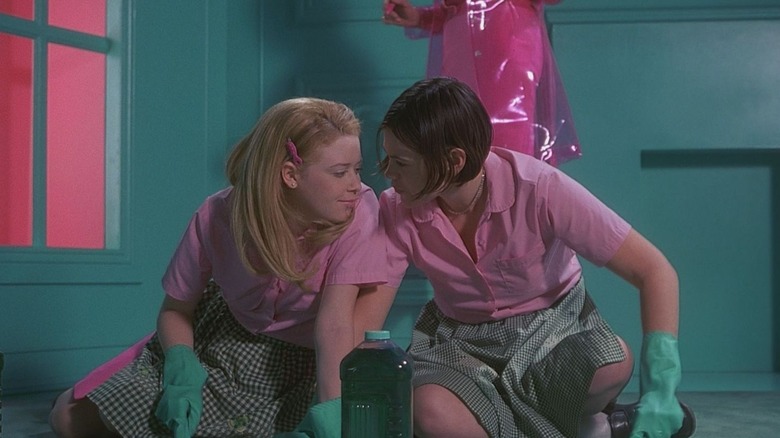
Prior to all those films, though, came Babbit's "But I'm a Cheerleader," a lighthearted, optimistic, and hilarious skewering of conversion camps and traditional heteronormativity seen through a pink-tinged, cartoony, John Waters-inflected lesbian love story. The film wasn't terribly well-received upon its release -- some didn't like Babbit's whimsical leniency -- but some now consider it to be one of the better queer films of all time

True Directions

Babbit appears keen on exposing a practical fallacy of gay conversion camps. If the point is to discourage queer teens from forming relationships with other queer teens, then why gather them together in one location where they can flirt and make out and fall in love? Babbit -- eschewing the real-life abuse of such places -- satirizes conversion camps by pointing out that they could easily function as a catalyst for queer romance. That's certainly how it worked out for Megan (Natasha Lyonne) the titular cheerleader. Megan hates making out with her lascivious hunky sports star boyfriend (he's also not a very good kisser), and seems to spend far more time looking at her fellow cheerleaders. 

Her parents (Bud Cort and Mink Stole) see this as evidence enough that she is a lesbian, and sign her up for True Directions, an ex-gay conversion program that not only seeks to reprogram queer-leaning youths as heterosexual, but also teaches them to embrace bland post-WWII American suburban values and aesthetics. The camp is run by the "ex-gay" Mike (RuPaul) and the iron-fisted ultra-matron Mary Brown (Cathy Moriarity, who is always great).

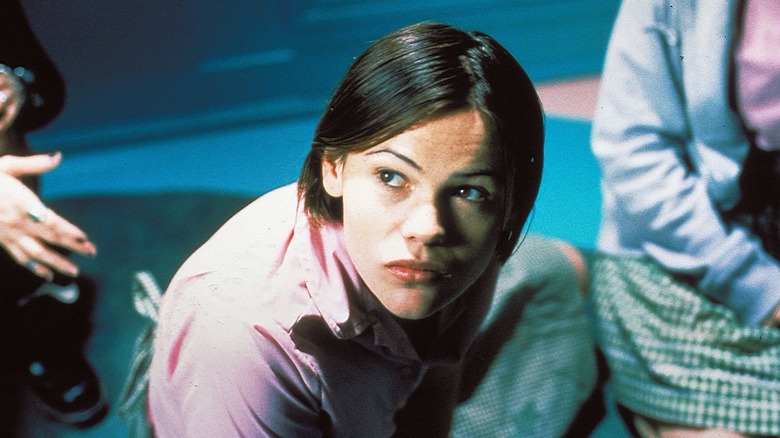
At True Directions, Megan -- assuming she is straight -- meets other queer kids, notably Graham (Clea DuVall) an out-and-proud lesbian eager to defy the system. It's not until she is prodded by the counselors that Megan begins to realize that she is indeed attracted to women. As Megan and Graham are forced through their sexist 1950s housewife training, they clearly begin developing an attraction. It's not until they briefly flee the camp to hang out at a local gay bar -- one populated by ex-ex-gays -- that Megan sees the folly of such camps. She and Graham openly admit their attraction and become properly romantically entwined. 

Censorship Issues

Babbit and her then-girlfriend Andrea Sperling conceived of the idea for "But I'm a Cheerleader" as a sendup of the 12-step recovery programs that Babbit's mother ran. Her ideas were laid out in a Post Script interview, handily compiled in the book "Film Voices." Babbit saw cheerleaders as the pinnacle of archetypal American femininity, and wanted to use a cheerleader character to tell a lesbian love story from the perspective of a "femme" lesbian. Many of the lesbian films of the mid-1990s -- films like "Go Fish" and "The Watermelon Woman" -- were too often about "butch" lesbians. 

In Kirby Dick's 2006 documentary film "This Film is Not Yet Rated," Babbit is interviewed about the struggle she had over her film's rating. Initially, "Cheerleader" was to be rated NC-17 for, it seems, relatively tame sexual references. The contested scenes were a shot of Graham touching Megan over her clothes, a scene where Megan is masturbating, also while fully clothes, and a spoken reference to Megan performing cunnilingus. Babbit was outraged at the rating, citing "American Pie" from that same year as featuring far more explicit scenes of teen sexuality -- including a masturbation scene -- yet still receiving an R rating. "But I'm a Cheerleader" had to be edited down to avoid an NC-17 rating, which, to Babbit, was irrefutable evidence that the MPAA ratings system is a homophobic institution. Notoriously, queer films get harder ratings than heterosexual films. 

If one adopts the thinking patters of a conspiracy theorist, one can perhaps posit that "But I'm a Cheerleader," in being a film about tearing down ridiculous and dated homophobic institutions, attracted the ire of homophobic people. It almost seems like a queer film is being censored. If one were paranoid. 

Everyone Gets Married In The End

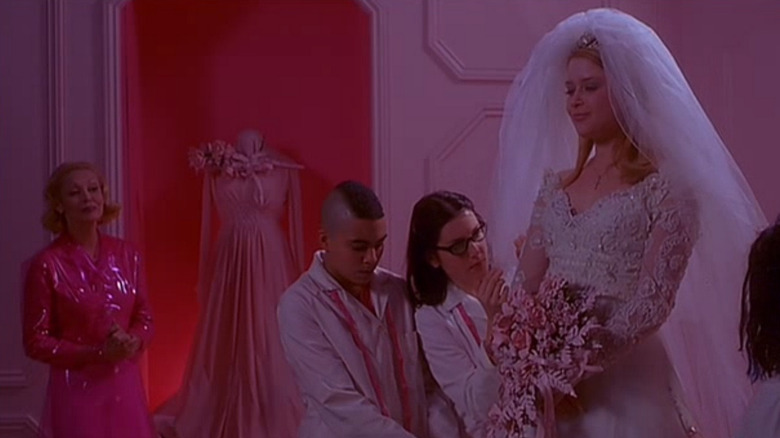
Ancient theatrical traditions demand that lovers marry at the end of the story, and "But I'm a Cheerleader" follows suit. The climax of True Directions is that the boys and the girls select opposite-sex partners and engage in a mock wedding. The young women wear traditional gowns, the young men tuxedos. They are then set out into the world, heteronormatively paired, presumably ready to be straight-presenting in perpetuity. In true rom-com fashion, Graham's sham wedding is interrupted by Megan who performs a cheerleading routine, declaring her love for Graham. This was a doubly sweet moment, as it was the first time Graham was permitted to see Megan ply her favorite skill. The two run off together to kiss and laugh and be in love. 

While Megan and Graham don't officially marry in "But I'm a Cheerleader," the wedding dress and setting present a symbolic version of the act. These two young women are, at least visually, marrying. 

It's worth remembering that "But I'm a Cheerleader" was released in 1999, long before same-sex marriage was legal in the United States. It wouldn't be until 2004 that same-sex marriage would be made legal in Massachusetts, with California and Connecticut following suit in 2008. Over the course of the sext seven years, unions would finally be legalized in the rest of the country, with the landmark 2015 case Obergefell v. Hodges. The decision is, thanks to alarming statements by right-wing politicians, currently under threat. 

Babbit appeared to be mocking marriage as an old, outmoded, discriminatory institution with True Directions. With Graham running off in a wedding dress, she is essentially stealing marriage back. "But I'm a Cheerleader" ends with a stirring political statement: Marriage is for everyone.

Read this next: The 20 Best Dystopian Movies Of All Time

The post But I'm A Cheerleader Ending Explained: Conversion Camps are Absurd appeared first on /Film.

09 Oct 01:19

How 'MythBusters' Helped a Wrongly Convicted Man Prove His Innocence

by EditorDavid
"John Galvan was arrested at 18 and spent 35 years in prison for a crime he didn't commit," writes the Innocence Project, a nonprofit specializing in legal exoneration. "In 2007, John Galvan was about 21 years into a life sentence for a crime he didn't commit when he saw something on the prison television he thought might finally help him prove his innocence and secure his freedom: A re-run of an episode of the Discovery Channel's MythBusters." At the time of his arrest, they write, Galvan had been handcuffed to a wall for hours, physically beaten, and ultimately "agreed to give a confession that was completely fabricated by the detectives to end the abuse" — that Galvan had started a fire in an apartment building "by throwing a bottle filled with gasoline at the building and then tossing a cigarette into the pool of gasoline on the porch to ignite it." And then 21 years later... In his cell, a 39-year-old John watched as the hosts of MythBusters struggled repeatedly to ignite a pool of gasoline with a lit cigarette, despite fervent attempts. Based on the ignition temperature of gasoline and the temperature range of a lit cigarette, the show's hosts had initially hypothesized that a lit cigarette might be able to ignite spilled gasoline as they had seen on TV and in movies. But after several failed attempts to start a fire, including rolling a lit cigarette directly into a pool of gasoline, the team determined it was highly unlikely that dropping a cigarette into gasoline could cause a fire.... The show's findings were confirmed in 2007, by experiments conducted by the U.S. Bureau of Alcohol, Tobacco, Firearms, and Explosives (ATF), which made more than 2,000 attempts to ignite gasoline with a cigarette under various conditions. The bureau's experiments even included a vacuum that increased the cigarette's temperature to the level it would typically reach when being sucked and spraying a mist of gasoline directly onto the lit cigarette. All of the attempts failed. "Despite what you see in action movies, dropping a lit cigarette on to a trail of gasoline won't ignite it, assuming normal oxygen levels and no unusual circumstances," said Richard Tontarski, a forensic scientist and then chief of the ATF's fire research laboratory. In 2017, when John finally had his evidentiary hearing on his post-conviction claims, [his attorney Tara] Thompson and his legal team presented multiple alibi witnesses, in addition to seven witnesses who testified to being tortured by the same officers who had coerced his confession, documents showing that police had fabricated probable cause to arrest him, and an arson expert who testified that John's false confession was scientifically impossible.... In 2019, the appellate court granted John post-conviction relief on the grounds of actual innocence — a rarity in Illinois — largely based on the abuse used to coerce a false confession from John. The court concluded that without John's false confession, which he did not give voluntarily, "the State's case was nonexistent." Thanks to long-time Slashdot reader Sleeping Kirby for sharing the story!

Read more of this story at Slashdot.

08 Oct 14:15

Forget Old-School Money Rules. What I'm Teaching My Kid About Finances Instead - CNET

by Miranda Marquit
Younger generations are thinking differently about education, housing and their careers.
08 Oct 14:13

An Ode To Marvel's Man-Thing, Werewolf By Night's Breakout Character

by Tyler Llewyn Taing

If you haven't seen "Werewolf By Night," there are major spoilers for the special ahead!

Marvel's "Werewolf By Night" is exciting for a multitude of reasons. It's a fun directorial debut from an expert film composer Michael Giacchino, adopting the aesthetics and paying tribute to 1940s creature features, and calling back to the tradition of Marvel Cinematic Universe one-shots. Dubbed a "Marvel Studios' Special Presentation," it sets up a format of shorter one-off stories in the mold of an hour-long TV special.

If "Werewolf by Night" is a good example of what they're aiming to do with the format, it might lead to more exciting genre and stylistic experiments in the MCU down the line. The story follows an unlikely werewolf hero, Jack Russell (Gael García Bernal), and his infiltration of a cabal of monster hunters and their deadly competition to decide the rightful heir of a powerful relic, the Bloodstone. Jack however, has his own motive — to rescue his captured friend, Man-Thing (Carey Jones) from the Bloodstone Manor.

There's a lot to love about the Halloween special, but the introduction of Man-Thing into the MCU is truly the best part. This horrific-looking swamp monster actually is a gentle giant, who possibly might hold the key to Phase 4 & 5's mystery box. We could gush about Man-Thing for a full article, and that's exactly what we're doing here.

Man-Thing's Origin Involves A Tragic And Isolating Transformation

When Jack first explains to Elsa (Laura Donnelly) how to communicate with Man-Thing, he warns her that in order to establish herself as a non-threat, she needs to refer to him by his real name, Ted. While it might seem like a quirky little joke at first, it's actually a nod to Man-Thing's comic book origins.

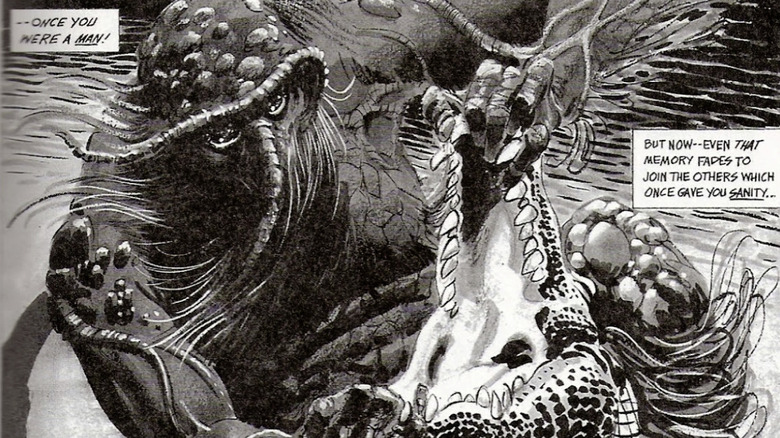
Like most Marvel heroes and villains, Man-Thing's form was born from an accidental transformation. First introduced as Theodore "Ted" Sallis in "Savage Tales #1," he was a biochemist who was tasked to replicate the super-soldier serum that created Captain America. His assignment, "Project Gladiator" saw him in a mysterious swamp in the Florida Everglades, where the habitat's mystical properties fused with the serum and caused Ted to transform into a new composition of the swamp's plant life, becoming the green creature known as Man-Thing (not to be confused with DC's Swamp Thing)!

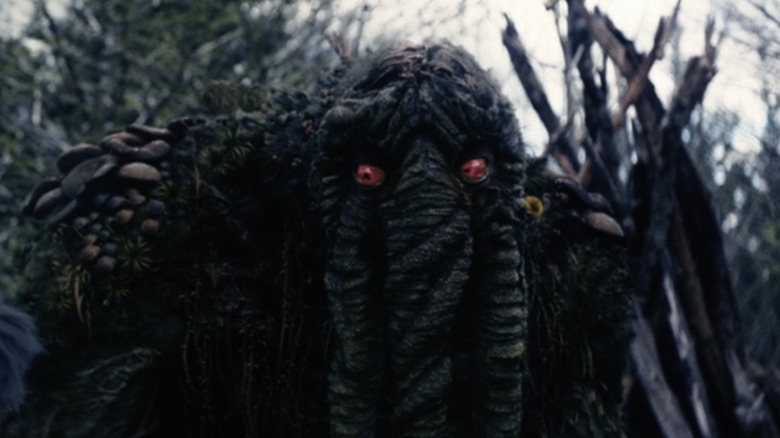
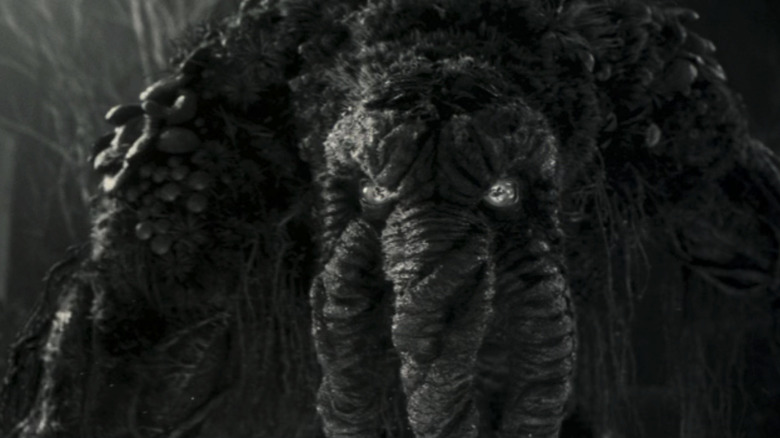
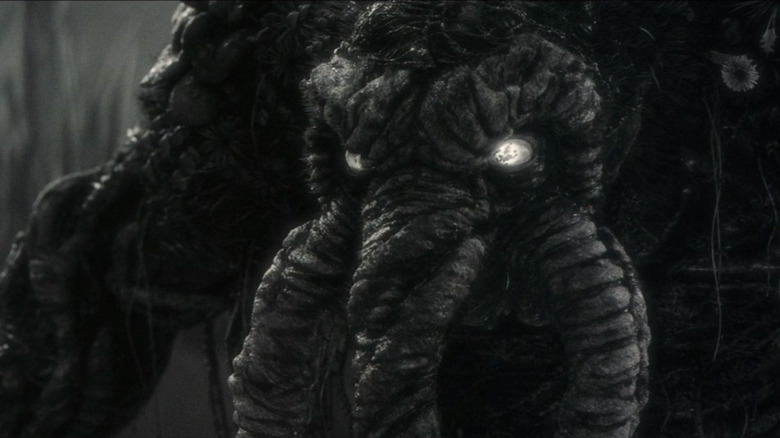
Though it's very easy to be frightened by his Cthulhu-esque tendrils, his piercing red eyes, or his ability to disintegrate his enemies, his clear, trustworthy bond with Jack makes it clear that Ted is a sentient, sympathetic creature that has been othered by his appearance. When Jack and Ted first interact together in the special, it's coming from a place of genuine warmth and respect, an immediate contrast to the cold viciousness of the cabal. It's a quick and compelling way to establish the solidarity these two characters have as "monsters," but it also justifies the classic horror style of direction made in this special; connecting Jack and Ted to a cinematic legacy of misunderstood monsters.

Man-Thing Is One Of Marvel's Best Special Effect Achievements So Far

However, what truly sells Ted as a standout character throughout "Werewolf By Night'' is the fact that there's a physicality to his screen presence. The special breaks away from the MCU's usual habits of over-relying on CG (worsened by poor working conditions of an unionized VFX industry), by returning to classic filmmaking tricks. There are real sets, thoughtful usage of lighting and space, and the "Man-Thing'' we see in the special is built off of a combination of an on-set animatronic, a giant suit worn by Carey Jones for reference, and a mixture of practical and computer effects.

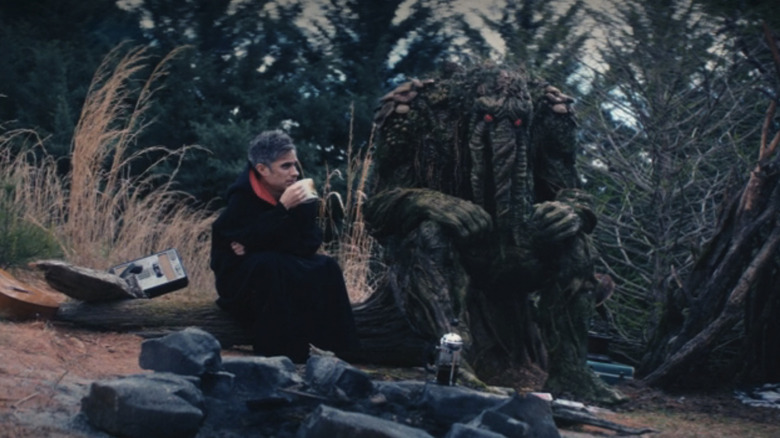
With the relatively lower budget for all the Disney+ MCU projects, it's a gift that Ted looks incredibly convincing. When the special eventually lights itself into full color and the dawn sun rises, Ted watches over Jack as he recovers from his climactic werewolf transformation. Shot in the woods in natural light, this is one moment where the craftsmanship in bringing Ted to life especially shows.

The green of Ted's plant body is perfectly lit, feeling naturally placed with the muted morning tone. García-Bernal looks directly into his eyes while conversing over coffee, clearly reacting to the creature in a way actors in other MCU projects often struggle with due to the lack of a physical element on set. It makes Ted feel real but also gives him an adorable, friendly charm.

Man-Thing Might Hold The Key To The Future Of The Multiverse Saga

"Werewolf By Night" feels mostly disconnected from the rest of the MCU, though Kevin Feige stresses that this one-off story will eventually have importance in one way or another. If that's true, then one can be certain that if any character from this special holds the keys to potential universe expansion, it would be Ted.

The mystical swamp in the Florida Everglades that mutated with Ted's serum and created his Man-Thing form was actually powered by its connection to the "Nexus of All Realities," a pathway that bends all space and time. It is an infinitely powerful doorway to any reality, and as we know now, Phase Four, Five, and Six are all part of Feige's ultimate connective plan, The Multiverse Saga. From what we've seen of Ted in this special, we can't glean too much evidence that his MCU origin is the same as his comic origin, and Feige loves to throw us curve balls every so often, but if he takes that route to connect the multiverse threads back to Ted, the foundation is at least there.

Whatever the plan is, it would be a shame to rob us of more Man-Thing. There is a deserved space in our hearts for creatures shaped like a Lovecraftian horror with the personality of a loveable, loyal friend. We'll go out to sushi with him any day. 

Read this next: The Most Powerful Aliens In The MCU Ranked

The post An Ode to Marvel's Man-Thing, Werewolf By Night's Breakout Character appeared first on /Film.

08 Oct 14:13

The Power Of The Doctor Trailer: The Thirteenth Doctor Fights Her Final Battle

by Joshua Meyer

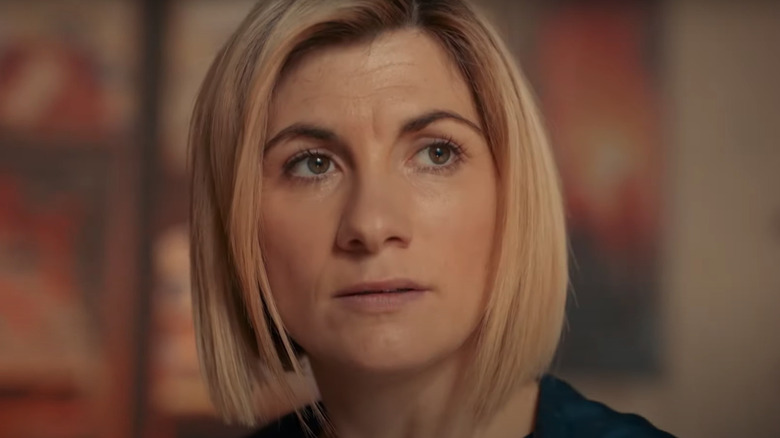
It's been five years since Jodie Whittaker was cast as the first female Doctor on "Doctor Who," and now her stint as the titular Time Lord is at an end. "The Power of the Doctor" is the last of three TV specials in 2022 to wrap up Whittaker's tenure as the Thirteenth Doctor. The actress has teased that her final "Doctor Who" outing is "one for the Whovians" (not to be confused with the residents of Whoville in Dr. Seuss), and now the BBC is here to cater to the same audience with the trailer for "The Power of the Doctor."

After co-starring in "Broadchurch" with the Tenth Doctor, David Tennant, Whittaker made her first appearance as the Thirteenth Doctor in the 2017 Christmas special, "Twice Upon a Time." Her time as the Doctor has coincided with that of showrunner Chris Chibnall, who said that he and Whittaker made "a 'three series and out' pact" when they boarded the long-running science fiction series. Whittaker inherited the role of the Doctor from Peter Capaldi, starring in "Doctor Who" from the 11th series in 2018 to the 13th series in 2021, so she and Chibnall have already made good on their pact, and these three 2022 specials are just coming as a bonus.

If "breaking up is like knocking over a Coke machine," as Jerry Seinfeld once said, then substitute a police callbox for the Coke machine and consider this the final tipping-over of the TARDIS before the Doctor regenerates with the face of another actor. Check out the trailer for "The Power of the Doctor" below.

The Power Of The Doctor Trailer

I'll confess that I'm not a Whovian and have only ever seen one episode of the show; what I know of "Doctor Who" is limited to what I've read in industry news or heard from other enthusiastic viewers. So I'm not the best person to offer commentary on this trailer for "The Power of the Doctor," though I think it's safe to say we haven't seen the last of Whittaker. "Doctor Who" has served as a launch pad for a number of other actors who remain well-known outside the franchise.

Right now, you can see the Eleventh Doctor, Matt Smith, on another one of the biggest shows on television, HBO's "House of the Dragon," which happens to co-star David Tennant's son, Ty Tennant. Meanwhile, the Ninth Doctor, Christopher Eccleston, was recently cast in the fourth season of "True Detective" on the same network, where he also co-starred in three seasons of "The Leftovers."

The aforementioned Twelfth Doctor, Peter Capaldi, has landed himself in serial killer jail in the upcoming Prime Video series, "The Devil's Hour," while Tennant is fresh off a starring role in BBC One's "Inside Man," which hits Netflix on October 31 and is written by former "Doctor Who" showrunner Steven Moffat.

The moral of the story is: the power of each Doctor extends well beyond "Doctor Who." So if you're sad about Whittaker leaving the show, know that she'll probably regenerate in another movie or TV series just as surely as the Doctor will regenerate as "Sex Education" star Ncuti Gatwa.

Read this next: Sci-Fi Movie Deaths No One Saw Coming

The post The Power of the Doctor Trailer: The Thirteenth Doctor Fights Her Final Battle appeared first on /Film.

08 Oct 10:28

Who Is Marvel's Man-Thing From Werewolf By Night? Here's What You Need To Know

by Witney Seibold

As the Marvel Cinematic Universe continues to expand, stranger and stranger characters from the bottomless depths of the Marvel Comics universe are going to begin appearing. At its inception in 2008, the MCU still took place in a world that struck at least a passing resemblance to our own. Sometime in 2016, however, when Scott Derrickson's "Doctor Strange" announced that magic is real, the MCU effectively left much of its connection to the real world behind. By 2022, so many extraordinary super-beings and omnipotent space deities have been introduced that nothing seems impossible anymore. 

Michael Giacchino's new TV special "Werewolf by Night," now available on Disney+, takes a swing that, in earlier years, might have been considered bold for the MCU. As it so happens, monsters are real in the Marvel universe, and they have secret societies and superhero teams of their own. The title character in "Werewolf by Night," played by Gael García Bernal, is indeed a werewolf named Jack Russell who isn't so different from Lyle Talbot in George Waggner's 1941 film "The Wolf Man." Hair, fangs, full moons, the whole schmear. And, wouldn't you know it, the werewolf is old friends with a lumbering, nine-foot swamp monster named Ted. Over the course of the film, Jack Russell endeavors to free his moss-man friend from a stone labyrinth. 

Ted is Dr. Ted Sallis, aka Man-Thing, a Marvel Comics character that was invented in 1971 by Stan Lee, Roy Thomas, Gerry Conway, and Gray Morrow. And, like all Marvel characters, Man-Thing has a storied and colorful history worth looking into. 

Meet Dr. Ted Sallis

In the comics, the backstory of Man-Thing is the stuff of 1950s monster movies. Dr. Ted Sallis was working in a remote lab in the Florida Everglades aiming to reproduce the powerful steroid, the SO-2 Serum, that would protect soldiers from chemical warfare. This was a time when Agent Orange and Agent White were being used by the United States in the Vietnam War, so the research was topical. When a terrorist group breaks into Dr. Sallis' lab, he flees in his car and hastily injects himself with the rudimentary formula, hoping to obtain emergency superpowers. Instead, he crashes his car into a swamp and fuses with the fungus, mosses, and lichens therein, emerging as Man-Thing, a cryptid with facial tendrils and large red eyes. 

It was later explained that Man-Thing's transmutation was due to, in addition to the SO-2 Serum, a vague haze of otherworldly magic that hovered around the swamp where Dr. Sallis crashed. So Man-Thing is also vaguely mystical. 

Man-Thing is large, slow-moving, and doesn't speak. There was even briefly some debate as to whether or not he was even sentient. Man-Thing is vaguely psychic and can read the emotions of others. He can excrete corrosive goop that will burn a victim, but only if they feel fear. In "Werewolf by Night," Man-Thing scorches a person's head with his hand. In the comics, Man-Thing also has healing blood and can seep through small cracks. 

Over his printed history, it has additionally been revealed that Man-Thing is, in fact, one of an abundant species of their own in other dimensions, and multiple Man-Things (Men-Things?) have appeared periodically. Sharp eyes might have seen a Man-Thing represented on a building sculpture in "Thor: Ragnarok."

Man-Thing On Film

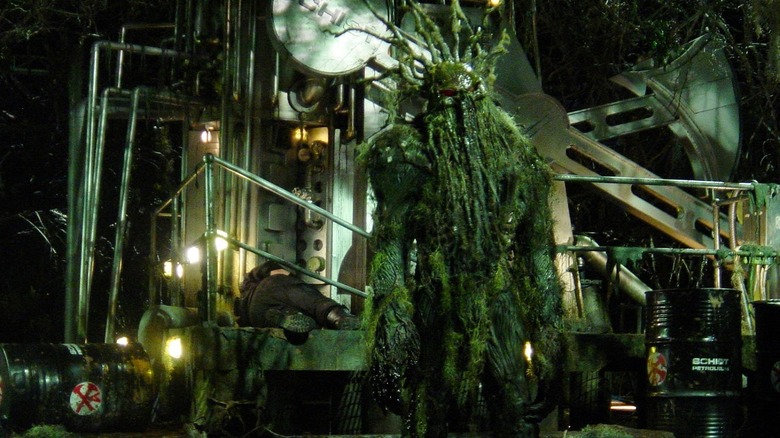
Man-Thing also previously appeared in his own straight-to-video horror/crime thriller in 2005. Directed by Brett Leonard ("The Lawnmower Man," "Virtuosity"), the aptly titled "Man-Thing" reintroduces Ted Sallis as a Seminole chieftain who, as the story goes, sells a tract of Florida land to a corrupt oil tycoon. The tycoon claimed that Ted Sallis kept all the money for himself and disappeared into the swamp, when, in actuality, he was the victim of a land-snatching scheme. Sallis was killed and buried in a magical swamp and returned to life as the Man-Thing, committing acts of revenge and sabotage in the shadows. 

Leonard presents Man-Thing as a monster who lurks and terrifies. He has a crown of gnarled branches, and appears to do real harm. This is not a gentle empath, but a spirit of vengeance. He is the natural world's wrath in humanoid form. As Marvel movies go, "Man-Thing" is passably good. It's dank and spooky and atmospheric. It's also rated R, denoting its scariness and violence. It merely spends far too much time investigating, and not enough time killing and scaring.

Plans for the "Man-Thing" movie first arose in 2000 when Artisan Entertainment managed to secure the film rights to multiple high-profile Marvel Comics characters. Artisan's plan was to make a Captain America feature, and a Thor TV series, too. Other characters announced to be part of the Artisan Marvel Universe included Deadpool, Ant-Man, Black Panther, Morbius, Iron Fist, Longshot, The Power Pack, and Mort the Dead Teenager. "Man-Thing" was announced in 2001. That was the same year Artisan, faltering, elected to abandon the Marvel properties. As "X-Men" and "Spider-Man" were doing big business, other studios began buying the rights. In 2009, Disney bought Marvel and the rest is history. 

Man-Thing Vs. Swamp Thing

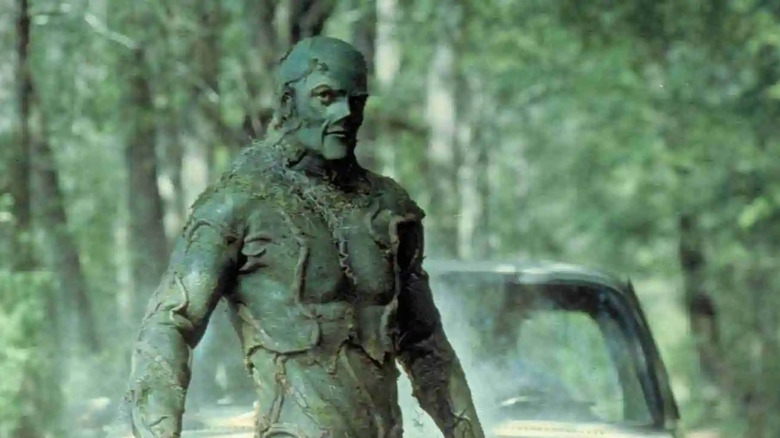
Attentive readers will note that Man-Thing bears a very, very strong similarity to Swamp Thing, a character out of the DC comics canon. Both are shambling, gentle moss men who were transformed into muck thanks to magic and/or science. Swamp Thing has also appeared in films and TV, having been first adapted to cinema in 1982 in his own self-titled movie from director Wes Craven. "Return of the Swamp Thing" was released in 1989, and most recently, a "Swamp Thing" TV series aired in 2019

Man-Thing first appeared in Marvel Comics in May of 1971. Swamp Thing debuted in July that same year. Two major companies introducing lumbering swamp men within two months of each other, and they are both called "Thing." This was far too close together to have been a coincidence, and the timing, as some fans have speculated, could implicate either company in a scheme to rip off the other. 

As it turns out, it actually was a coincidence. Man-Thing's co-creator Gerry Conway and Swamp Thing's creator Len Wein were roommates in college where they, no doubt, discussed their favorite comics and laid out their creative plans for the future. It's likely they both drew their swampy inspiration from a 1942 comic book character called The Heap ("The Nightmare That Could Not Die!"). The Heap was a WWI German pilot who was shot down over a Polish swamp and spent a decade magically musing with the silt. He emerged in WWII as a mossy monster. There is no doubt that Conway and Wein were Heap fans, and merely each updated the character in their own idiom. 

Curiously, there has never been a lawsuit between Man-Thing or Swamp Thing. 

"Werewolf by Night" is currently on Disney+.

Read this next: 9 Filmmakers Who Should Be Given Free Rein In The MCU

The post Who Is Marvel's Man-Thing From Werewolf By Night? Here's What You Need to Know appeared first on /Film.

08 Oct 10:27

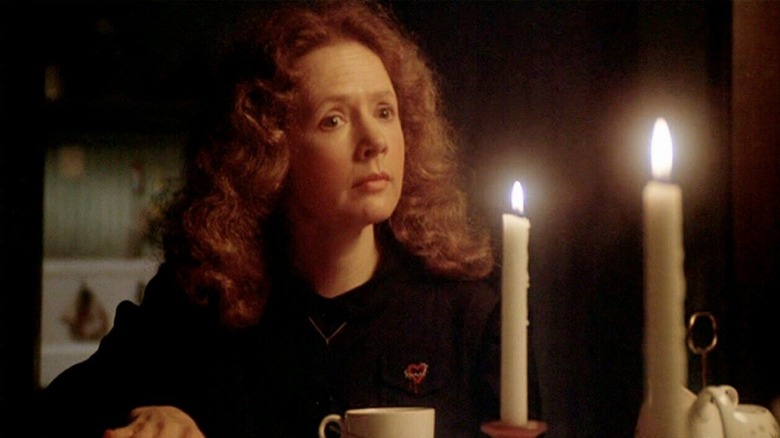
Sissy Spacek Thinks Her Carrie Performance Would Have Been Nothing Without Piper Laurie

by Drew Tinnin

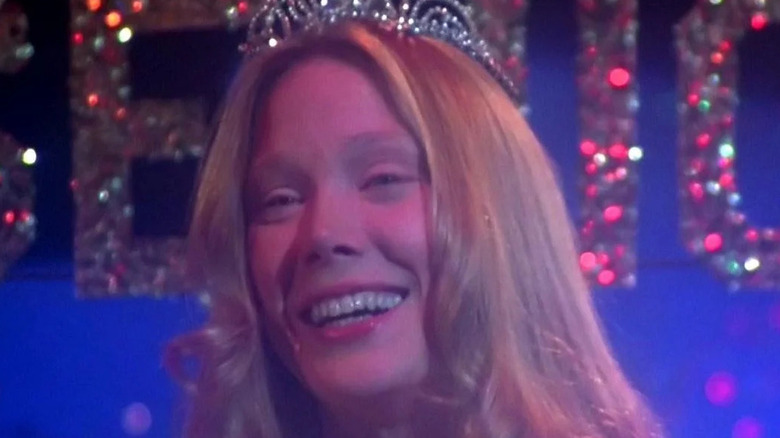
Brian De Palma's "Carrie" is arguably more of an important, relevant horror film today than it was during its original release in 1976. The character arc of Carrie White is one of the most shocking and severe transformations in cinema, and it remains just as powerful today. Carrie represents the bullied outcasts and the quiet masses who never feel any level of acceptance whatsoever. In a decade of legendary performances, Sissy Spacek's portrayal of Carrie remains one of the most memorable acting accomplishments of the seventies. It's tragically poignant at times, and then, eerily triumphant when she enacts her psychic revenge during the bloody, fireball finale. 

In early roles, John Travolta, Amy Irving, Nancy Allen and William Katt play high school bullies who have no idea what's in store for them. Those interactions with the other actors surely put Spacek in the right headspace to play the victim. But her real muse during shooting was Piper Laurie, who plays Carrie's overly religious, abusive mother. In an interview with Coming Soon, Spacek was quick to praise her co-star's acting abilities. "Piper Laurie was just outrageously brilliant!," she exclaimed. "Piper was a young film starlet back in the golden age of Hollywood and then she retired from movies and went to New York and became a star of the theatre. Carrie was her return to the silver screen."

A Magical Chemistry Together

The most disturbing scenes in "Carrie" are, in fact, the intimate, torturous clashes between Carrie and her unhinged mother, Margaret. There's a frightening sense of claustrophobia in their candlelit home making Carrie feel trapped in an environment where she should feel safe. Her mother is supposed to be a calming influence and so are the crosses on the wall. Instead, they're both instruments of fear. Spacek was enraptured by Piper Laurie's performance and her dedication to the craft (via Coming Soon):

"I loved her and her power as an actress. I don't know where that power came from. It came from the depth of her soul and it would have been a very different movie without her and my performance would have been nothing without Piper. We just had a magical connection."

That intensity is nowhere near as palpable in Stephen King's original novel. Sissy Spacek and Piper Laurie breathed new life into the mother-daughter relationship from the book and created some serious on screen fireworks. Carrie's powers are dormant until she's publicly humiliated on prom night, but the hatred for her mother is what truly awakens her terrifying psychic abilities. 

For a horror film that's credited with creating the modern jump scare thanks to its shocking ending, Piper Laurie may have actually been the most frightening thing in "Carrie" by the time the credits roll. "Everyone was always shocked and thrilled with the choices she made," reflected Spacek. "She was truly scary."

Read this next: Horror Roles That Changed Actors Forever

The post Sissy Spacek Thinks Her Carrie Performance Would Have Been Nothing Without Piper Laurie appeared first on /Film.

08 Oct 00:44

Report: Big U.S. Banks Are Stiffing Account Takeover Victims

by BrianKrebs

When U.S. consumers have their online bank accounts hijacked and plundered by hackers, U.S. financial institutions are legally obligated to reverse any unauthorized transactions as long as the victim reports the fraud in a timely manner. But new data released this week suggests that for some of the nation’s largest banks, reimbursing account takeover victims has become more the exception than the rule.

The findings came in a report released by Sen. Elizabeth Warren (D-Mass.), who in April 2022 opened an investigation into fraud tied to Zelle, the “peer-to-peer” digital payment service used by many financial institutions that allows customers to quickly send cash to friends and family.

Zelle is run by Early Warning Services LLC (EWS), a private financial services company which is jointly owned by Bank of America, Capital One, JPMorgan Chase, PNC Bank, Truist, U.S. Bank, and Wells Fargo. Zelle is enabled by default for customers at over 1,000 different financial institutions, even if a great many customers still don’t know it’s there.

Sen. Warren said several of the EWS owner banks — including Capital One, JPMorgan and Wells Fargo — failed to provide all of the requested data. But Warren did get the requested information from PNC, Truist and U.S. Bank.

“Overall, the three banks that provided complete data sets reported 35,848 cases of scams, involving over $25.9 million of payments in 2021 and the first half of 2022,” the report summarized. “In the vast majority of these cases, the banks did not repay the customers that reported being scammed. Overall these three banks reported repaying customers in only 3,473 cases (representing nearly 10% of scam claims) and repaid only $2.9 million.”

Importantly, the report distinguishes between cases that involve straight up bank account takeovers and unauthorized transfers (fraud), and those losses that stem from “fraudulently induced payments,” where the victim is tricked into authorizing the transfer of funds to scammers (scams).

A common example of the latter is the Zelle Fraud Scam, which uses an ever-shifting set of come-ons to trick people into transferring money to fraudsters. The Zelle Fraud Scam often employs text messages and phone calls spoofed to look like they came from your bank, and the scam usually relates to fooling the customer into thinking they’re sending money to themselves when they’re really sending it to the crooks.

Here’s the rub: When a customer issues a payment order to their bank, the bank is obligated to honor that order so long as it passes a two-stage test. The first question asks, Did the request actually come from an authorized owner or signer on the account? In the case of Zelle scams, the answer is yes.

Trace Fooshee, a strategic advisor in the anti money laundering practice at Aite-Novarica, said the second stage requires banks to give the customer’s transfer order a kind of “sniff test” using “commercially reasonable” fraud controls that generally are not designed to detect patterns involving social engineering.

Fooshee said the legal phrase “commercially reasonable” is the primary reason why no bank has much — if anything — in the way of controlling for scam detection.

“In order for them to deploy something that would detect a good chunk of fraud on something so hard to detect they would generate egregiously high rates of false positives which would also make consumers (and, then, regulators) very unhappy,” Fooshee said. “This would tank the business case for the service as a whole rendering it something that the bank can claim to NOT be commercially reasonable.”

Sen. Warren’s report makes clear that banks generally do not pay consumers back if they are fraudulently induced into making Zelle payments.

“In simple terms, Zelle indicated that it would provide redress for users in cases of unauthorized transfers in which a user’s account is accessed by a bad actor and used to transfer a payment,” the report continued. “However, EWS’ response also indicated that neither Zelle nor its parent bank owners would reimburse users fraudulently induced by a bad actor into making a payment on the platform.”

Still, the data suggest banks did repay at least some of the funds stolen from scam victims about 10 percent of the time. Fooshee said he’s surprised that number is so high.

“That banks are paying victims of authorized payment fraud scams anything at all is noteworthy,” he said. “That’s money that they’re paying for out of pocket almost entirely for goodwill. You could argue that repaying all victims is a sound strategy especially in the climate we’re in but to say that it should be what all banks do remains an opinion until Congress changes the law.”

UNAUTHORIZED FRAUD

However, when it comes to reimbursing victims of fraud and account takeovers, the report suggests banks are stiffing their customers whenever they can get away with it. “Overall, the four banks that provided complete data sets indicated that they reimbursed only 47% of the dollar amount of fraud claims they received,” the report notes.

How did the banks behave individually? From the report:

-In 2021 and the first six months of 2022, PNC Bank indicated that its customers reported 10,683 cases of unauthorized payments totaling over $10.6 million, of which only 1,495 cases totaling $1.46 were refunded to consumers. PNC Bank left 86% of its customers that reported cases of fraud without recourse for fraudulent activity that occurred on Zelle.

-Over this same time period, U.S. Bank customers reported a total of 28,642 cases of unauthorized transactions totaling over $16.2 million, while only refunding 8,242 cases totaling less than $4.7 million.

-In the period between January 2021 and September 2022, Bank of America customers reported 81,797 cases of unauthorized transactions, totaling $125 million. Bank of America refunded only $56.1 million in fraud claims – less than 45% of the overall dollar value of claims made in that time.

Truist indicated that the bank had a much better record of reimbursing defrauded customers over this same time period. During 2021 and the first half of 2022, Truist customers filed 24,752 unauthorized transaction claims amounting to $24.4 million. Truist reimbursed 20,349 of those claims, totaling $20.8 million – 82% of Truist claims were reimbursed over this period. Overall, however, the four banks that provided complete data sets indicated that they reimbursed only 47% of the dollar amount of fraud claims they received.

Fooshee said there has long been a great deal of inconsistency in how banks reimburse unauthorized fraud claims — even after the Consumer Financial Protection Bureau (CPFB) came out with guidance on what qualifies as an unauthorized fraud claim.

“Many banks reported that they were still not living up to those standards,” he said. “As a result, I imagine that the CFPB will come down hard on those with fines and we’ll see a correction.”

Fooshee said many banks have recently adjusted their reimbursement policies to bring them more into line with the CFPB’s guidance from last year.

“So this is heading in the right direction but not with sufficient vigor and speed to satisfy critics,” he said.

Seth Ruden is a payments fraud expert who serves as director of global advisory for digital identity company BioCatch. Ruden said Zelle has recently made “significant changes to its fraud program oversight because of consumer influence.”

“It is clear to me that despite sensational headlines, progress has been made to improve outcomes,” Ruden said. “Presently, losses in the network on a volume-adjusted basis are lower than those typical of credit cards.”

But he said any failure to reimburse victims of fraud and account takeovers only adds to pressure on Congress to do more to help victims of those scammed into authorizing Zelle payments.

“The bottom line is that regulations have not kept up with the speed of payment technology in the United States, and we’re not alone,” Ruden said. “For the first time in the UK, authorized payment scam losses have outpaced credit card losses and a regulatory response is now on the table. Banks have the choice right now to take action and increase controls or await regulators to impose a new regulatory environment.”

Sen. Warren’s report is available here (PDF).
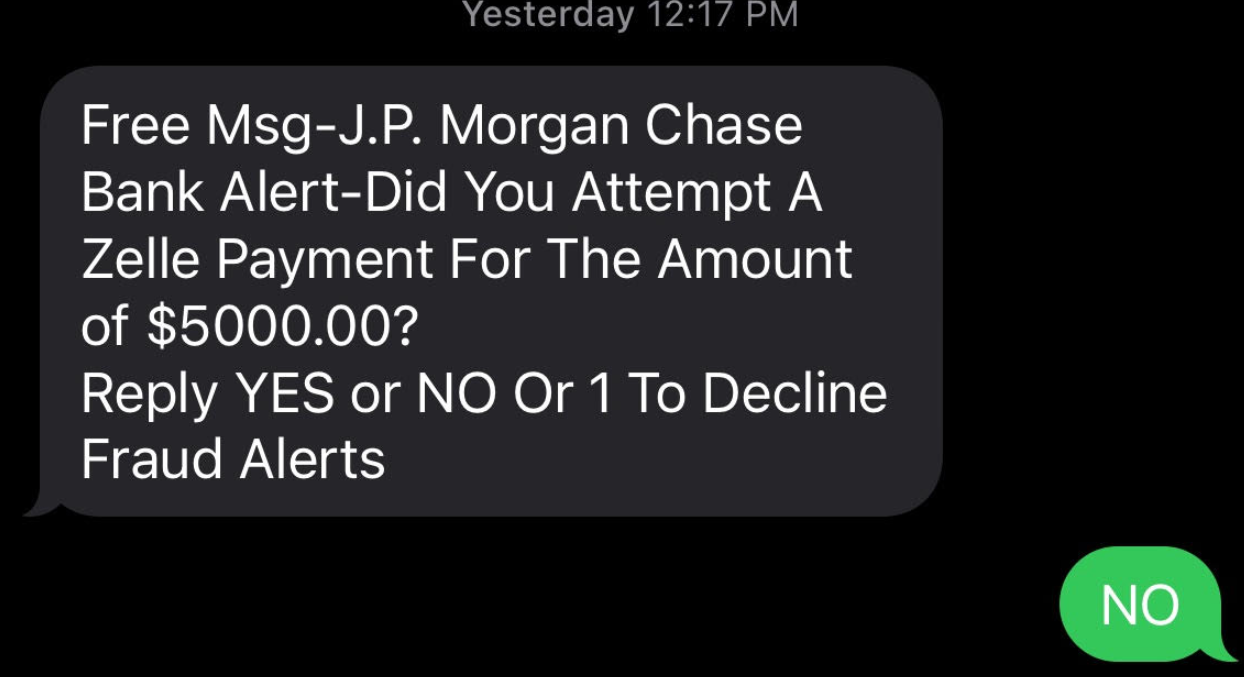
There are, of course, some versions of the Zelle fraud scam that may be confusing financial institutions as to what constitutes “authorized” payment instructions. For example, the variant I wrote about earlier this year began with a text message that spoofed the target’s bank and warned of a pending suspicious transfer.

Those who responded at all received a call from a number spoofed to make it look like the victim’s bank calling, and were asked to validate their identities by reading back a one-time password sent via SMS. In reality, the thieves had simply asked the bank’s website to reset the victim’s password, and that one-time code sent via text by the bank’s site was the only thing the crooks needed to reset the target’s password and drain the account using Zelle.

None of the above discussion involves the risks affecting businesses that bank online. Businesses in the United States do not enjoy the same fraud liability protection afforded to consumers, and if a banking trojan or clever phishing site results in a business account getting drained, most banks will not reimburse that loss.

This is why I have always and will continue to urge small business owners to conduct their online banking affairs only from a dedicated, access restricted and security-hardened device — and preferably a non-Windows machine.

For consumers, the same old advice remains the best: Watch your bank statements like a hawk, and immediately report and contest any charges that appear fraudulent or unauthorized.
08 Oct 00:42

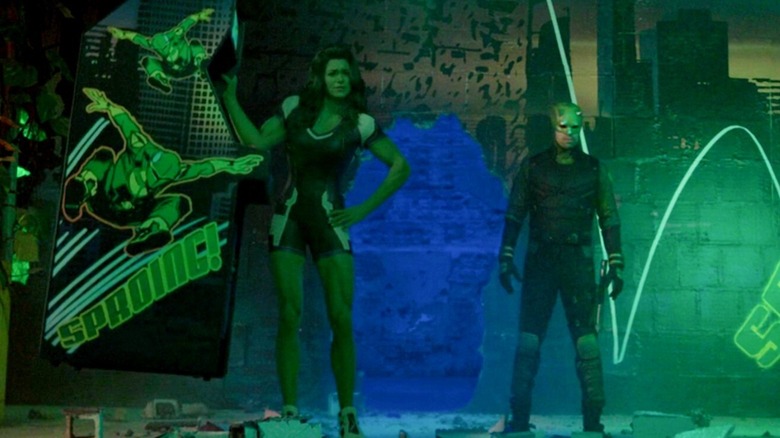
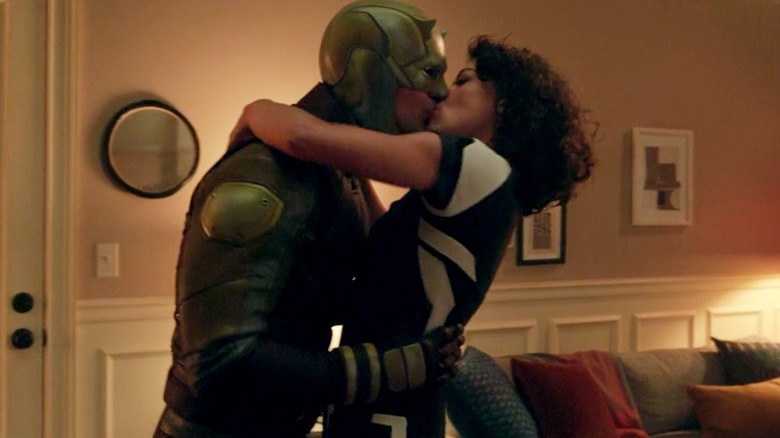
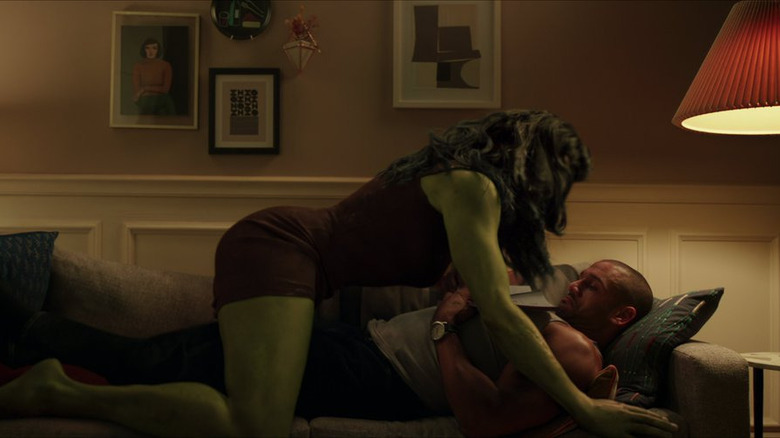
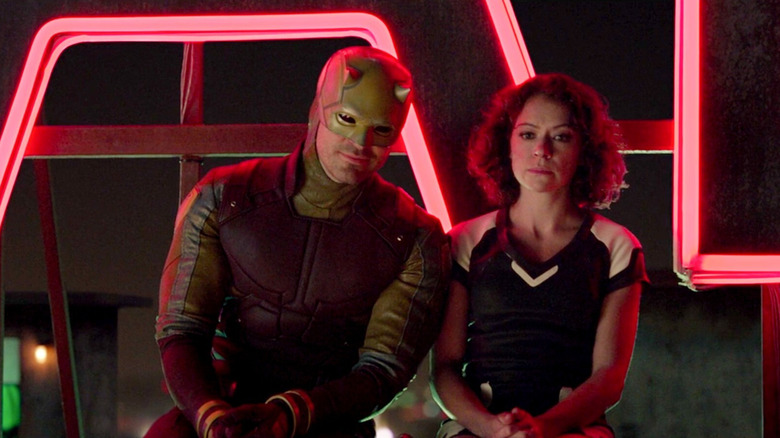
She-Hulk Smashed And Proves More Superheroes Need To Get It On

by Shania Russell

This post contains spoilers for the latest episode of "She-Hulk: Attorney at Law."

The fact that the Marvel Cinematic Universe has a romance problem has long been documented. Across its twenty-some movies and many television series, this franchise has barely crafted a handful of compelling romances. But there's no need to reiterate all that here, because we have bigger fish to fry. Romantic relationships are just one piece of the passion puzzle: there's something else that's been sorely missing from this franchise and that's straight-up raunchy action. I'm not talking sweet, doe-eyed, blooming love — this is about steamy, passionate heat, something that is oddly nonexistent in this world of glistening abs and skintight suits.
Thankfully, "She-Hulk: Attorney At Law" has come to our rescue, bringing the heat as no other hero before her has dared. And with Jennifer Walters (Tatiana Maslany) on the prowl, Marvel has finally taken a step in the best (and horniest) direction.
The Precarious State Of Marvel's Heat

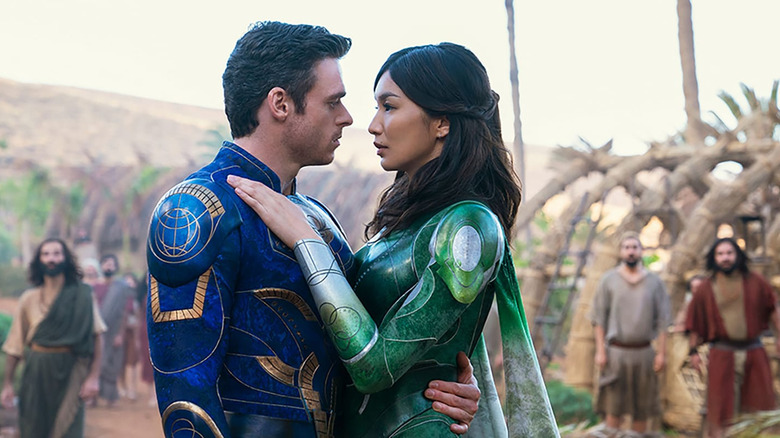
First, you have to understand how dire the situation is. While there's no shortage of charged moments, quippy flirting, and chaste kisses, the MCU has been a largely sexless wasteland, so devoid of physical contact that much fanfare was made when "Eternals" was declared PG-13 for *gasp* "brief sexuality." That ultimately culminated in a heatless sex scene so flat and lifeless that its romantic pairing might have been more believable without it. Other than that (and the one night stand that Tony Stark had in this franchise's FIRST entry), where the hell is the heat?

It's gotten to the point where the savvy writers of "She-Hulk" decided to shape an ongoing joke around the idea that Captain America, a 90-something super-soldier, is probably a virgin. Spoiler alert — they try to make Bruce Banner convince us that he isn't, but it's clearly a lie. In the sanitized world we've been presented onscreen, it makes perfect sense that buff Chris Evans has never shared a bed with anyone. Honestly. it also provides a solid excuse for his lack of romantic knowledge (dating your ex-girlfriend's granddaughter is very improper, Steve). That being said, I will absolutely accept arguments that Steve Rogers consummated a relationship with his greatest paramour of all. But since marvel will never own up to that, you will never convince me that Steve stumbled his way out of his USO tights into the arms of some random dancer.

But no matter, because Steve's time has (probably) come to an end and the latest Disney+ series sees us following the dating life of someone who knows a thing or two about smashing.

Casual Horniness To The Rescue

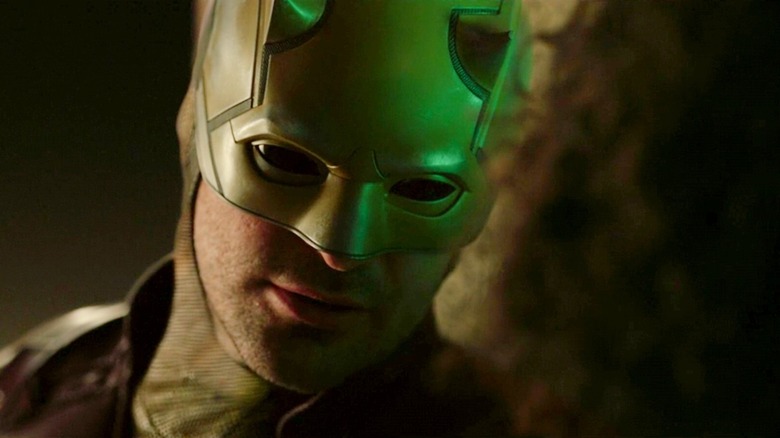
Unless another jewel-obsessed titan touches down on Earth to snap away half of existence, She-Hulk officially wins the battle of toughest opponent yet: Jen Walters has spent the past few episodes waging a war against modern dating. It's a difficult and seemingly endless battle that's resulted in many blows to her self-esteem and evidently, her privacy. Learning the ins-and-outs of dating apps has been much harder than mastering her Hulk powers or even facing off against her first villains. But while the season is not over yet, episode eight sees Jen having a breakthrough of sorts when she comes face-to-face with another Marvel hero who's well-attuned to the struggles of managing a relationship. Yup, I'm taking about our favorite harlot, Matt Murdock (Charlie Cox).

To rewind a bit, the initial announcement that Daredevil would be returning to our screens was absolutely thrilling — but only briefly, until I really considered the reality of Matt Murdock existing within the MCU and on Disney+. Part of what made the character's Marvel Netflix shows so alluring was the distance they had from the rest of this universe. How would the hyperviolent, gritty, and morally complex Matt Murdock fit into the sanitized and quippy world of the MCU? Would they water him down? Sanitize his story of all the aspects that made it great? And how could they ever live up to the badass action sequences that made the series famous?

All of those were very real concerns, but if I'm being honest, there was something else weighing on me from day one. And it's much more important than the violence or Matt's constant Catholic crisis: there was just no way that Marvel would let Matt Murdock f***.

Well. I stand corrected.

Horny Heroes X2

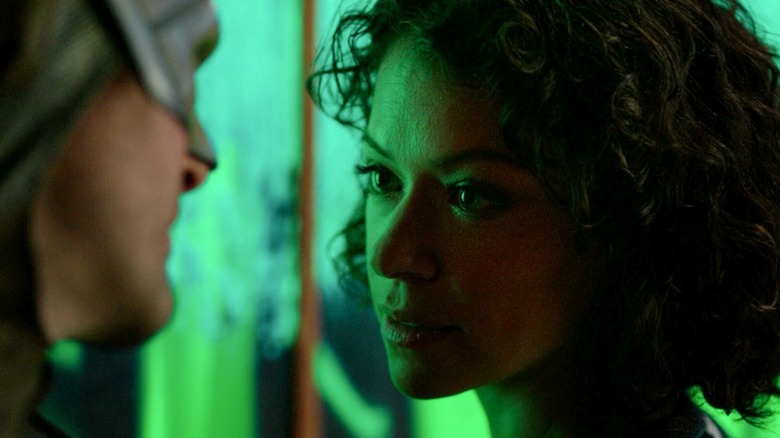
In the words of Foggy Nelson, "If there's a stunning woman with questionable character in the room, Matt Murdock's gonna find her." Personally, I think Jen's character is impeachable, but the point stands — these two connect with each other immediately and with much electricity. Even without showing anything explicit, this is by far one of the hottest romances we've enjoyed in the entire MCU. It's leaps and bounds ahead of whatever the hell was going on with Sersi and Ikaris in "Eternals" (their sex scene was eerily reminiscent of someone rubbing a Barbie and Ken doll together: passionless, plastic action).

Shattering the fourth wall after a couple scenes of flirting with her fellow superhero lawyer, Jen straight-up turns to the audience to ask the question we're all wondering: "We're all feeling this, right? It's not just me?" It's definitely not just her — the chemistry is very real.

I will try my hardest to resist waxing poetic about the many charms of Matt Murdock, but he's a hard one to deny and his short-lived romance with Jen Walters is one for the history books. The duo first cross paths when Matt makes his grand entrance in the courtroom, a charming presence and formidable opponent that decimates Jen's flimsy case and immature client. By the end of the encounter, she's drinking alone in a bar and — oh, who's that buying her a drink? It's none other than Matt Murdock.

And thus the sexual tension grows. For a terrible moment, it seems like they'll be two ships passing in the night, missing their opportunity because duty calls them away ... little do they know that duty will bring them together, where they can bond over some nighttime escapades and flirt their way through a goon takedown sequence.

More Superhero Hookups, Please

It plays out beautifully from there: she pokes fun at his brooding, he listens to her heartbeat, it's all incredibly hot and they know it too — which is why they forego a polite dinner date in favor of heading straight back to Jen's apartment for some alone time.

What makes this particular connection work so well is that is has layers. They connect as Matt and Jen, before even meeting as She-Hulk and Daredevil. He encourages her heroic sensibilities, she makes fun of his costume, and they've got so much suggestive banter between them that it's a wonder they make it through the mission (re: "My ass remains un-whupped"). Also, something about Matt offering legal advice while pummeling the hell out of a random goon really makes me swoon — and clearly has the same effect on Jen. Meanwhile, her effortless and unflinching intro into the word of superheroing clearly does a lot for Matt ... not to mention her ability to easily whup his ass.

This isn't a long-simmering romance. It's not a season-long arc or something occasionally injected into a trilogy of movies. It's not a love that either of them have to die for or live for or orbit their lives around — it's just two people who meet, connect, share some sizzling chemistry and actually see it through. If there are future seasons, will Daredevil re-enter Jen's world? Will she pop up as a cameo in his upcoming show? Maybe. Or maybe not. It wouldn't be the end of the world if these two never crossed paths again (though it might be a waste of Maslany and Cox's chemistry), but there's something so undeniably wonderful about the idea of these two characters doing as they do, living their lives, briefly crossing paths, and then going on to meet other people and continue their love lives as usual.

She-Hulk Does Romance Like No Other

Every week, I become more and more convinced that She-Hulk should be a role model for all Marvel heroes, future and past: not only is she juggling two personas with relative ease, she's also making time for therapeutic getaways, awkward-but-obligatory family time, and flirty drinks with pretty men. She's living her best life and saving other lives while doing it! Take note, Avengers.

To be fair, not all of Jen's nightly excursions have been so successful. She also spent a night with absolute sleazeball Josh, who turned out to be a blood-stealing weirdo, snapped a pic of her in bed, secretly recorded their night together and immediately ghosted her after sex. That was bad and dating apps can be horrible, but that's something Jen is learning for herself, while also coming to terms with her own self-esteem — which has been both boosted and wounded by her newfound abilities. Her romantic exploration is another element of her journey as a hero, but more importantly, as a person. And isn't that what all of this should be about?

Exploring relationships is just a normal, casual part of Jen's story. Her love life doesn't have to be picture-perfect or marked by a monumental romantic encounter nor does it need to be completely ignored to make more time for whatever supervillain reveal this has all been building up to. This show is first and foremost interested in the internal life of Jennifer Walters and she's a richer, more interesting character for it. Also, there's no better way for Daredevil to kickstart his career in the MCU than doing a barefoot walk of shame, carrying his boots as he slinks out of Jen's neighborhood, wearing a devil suit in broad daylight.

The Rest Of The MCU Could Learn A Lot From Jen

Jokes aside, one of the best things about She-Hulk's love life is that it ultimately becomes another way to process her arc as a hero, as Jen comes to terms with the world's altered perception of her. The end of the same episode delves headfirst into some very unexpected territory: revenge porn. Jen finds herself at the center of a slut-shaming campaign, when someone mysteriously projects a video of her having sex, alongside her private messages.

Of course this is happening to her, a woman who doubles as a hero and lawyer and also happens to spend much of her downtime searching for love. In fact, the very same insults hurled her way in the episode reflect a disturbingly sizable faction of the internet that's spent the past eight weeks complaining about her antics and completely missing out on the joys of her story. The point being, Jen's personal life is so seamlessly woven into her story that it becomes the climax of the series. So beyond giving us glorious moments like her Daredevil hookup or the time she carried that big buff man to bed, it also provides sharp commentary and fascinating story developments.

The MCU's Sexual Awakening?

Since the time spent on Jen's love life both delivers on the steamy action this franchise has been missing and also enriches the story, why not just ... do more of that? For one thing, this is the barest minimum: it's a straight couple flirting and barely touching onscreen. It might be a big improvement, but it's also a shining example of how Disney's conservative values are limiting the merits of their own stories. Just think of all the possibilities that would open up if the entire spectrum of sexuality was up for exploration, to be used however best fits the story — rather than whatever best appeals to a mass global market.

If we're lucky, then She-Hulk ad Daredevil's hook-up will be the MCU's sexual awakening. But if not, at least we can always smash the replay button on this episode.

Read this next: 9 Filmmakers Who Should Be Given Free Rein In The MCU

The post She-Hulk Smashed and Proves More Superheroes Need to Get It On appeared first on /Film.

08 Oct 00:25

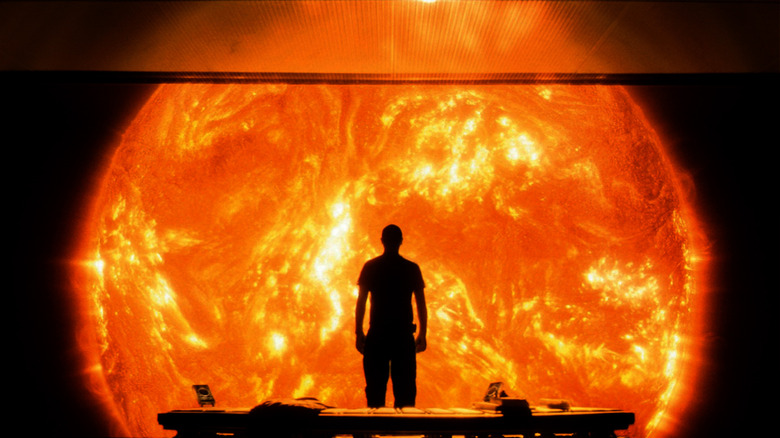
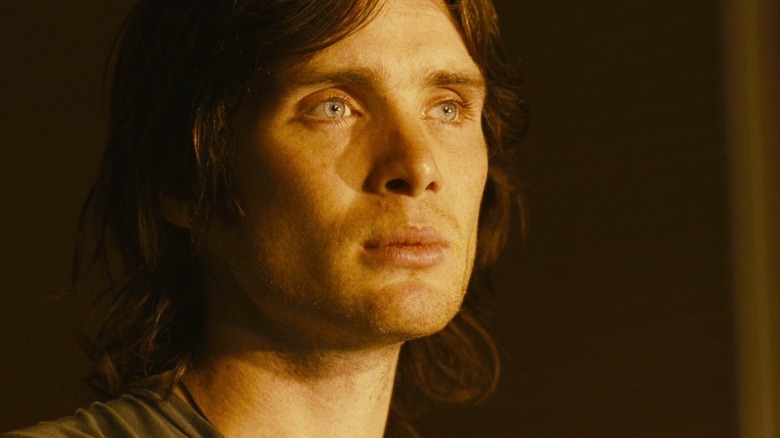
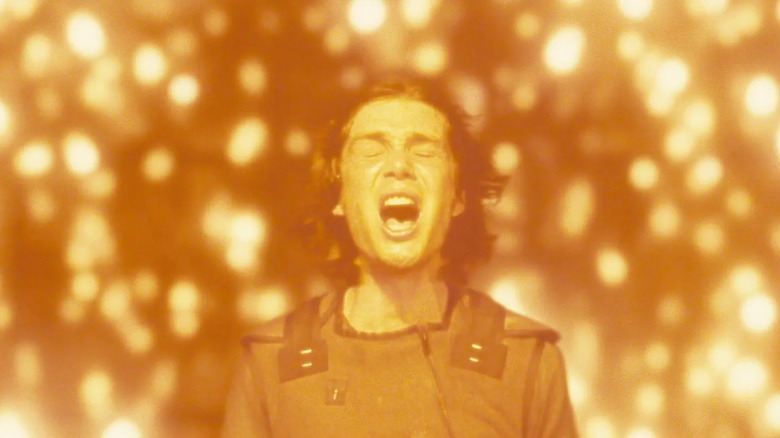
Alex Garland Called In A Favor From NASA For The Science In Sunshine

by Witney Seibold

In 2057, the sun will begin to fade out and die. Life on Earth is under threat of extinction. Humankind's solution is to gather what scant fissile materials that are remaining on the planet, construct a powerful nuclear bomb, and launch it into the sun in the hope of "restarting" it. The first mission, Icarus I, has already failed. It will be up to the crew of Icarus II to complete the mission. Like the ship's namesake, they are to fly too close to the sun. They are literally Earth's last hope. The mission will, thanks to various cosmic powers, become increasingly desperate and difficult. Additionally, facing the awesome power of a heavenly body drives most of the astronauts into an existential torpor. The captain often goes to a heavily shaded observation deck to look at the sun directly. In his more ponderous moments, he orders the computer to reduce the viewscreen's shading by an additional hair. 

This is the premise of Danny Boyle's 2007 science fiction film "Sunshine," written by Alex Garland. Although structured like a rescue thriller -- and an effective one -- "Sunshine" has more in common with Andrei Tarkovsky's "Solaris" or Stanley Kubrick's "2001: A Space Odyssey" than, say, "Mission to Mars" or "The Core." More than survival, "Sunshine" is about the human mind's incapacity for containing something so vast as the universe. It is merely too big to fit in the human imagination. 

in a 2007 interview with Wired, Boyle remembers hearing about the project for the first time. Boyle and Garland had worked together several times in the past, with Boyle adapting Garland's novel "The Beach" in 2000, and with Garland writing Boyle's "28 Days Later." He and Garland, Boyle said, were very keen on scientific accuracy. NASA journals played a large part.

NASA Journals

Garland, Boyle revealed, was always a scientifically and philosophically minded author, a fact that bears itself out in Garland's later directorial efforts like "Ex Machina," "Annihilation" and "Men." It was Garland who initially thought of a story about a dying sun, which Boyle credited to the writer's obsession with scientific journals. Boyle didn't know if there was any one article or journal that interested Garland, but he did acknowledge his partner's interests, saying

"Alex Garland's a nut for the journals. He sent me a first draft with this amazing high-concept idea: a trip to save the sun. As far as we can find, there's never been a film about the sun, yet it's the single most important thing you could jeopardize." 

More importantly, Boyle wanted to acknowledge that Garland's interest in hard science was out of vogue. Modern sci-fi, Boyle feels, has skewed too far away from the "sci" part. Boyle recalls a period when two notable and successful sci-fi films were released within two years of each other, and how the industry definitely skewed toward one of them. Like so many things in Hollywood, "Star Wars" kicked it all down: 

"Hardcore sci-fi has gone out of fashion, hasn't it? There was a strong strain of it into the '70s that tried to depict space realistically, but it's been replaced. 'Alien,' one of the great masterpieces, was quickly followed by 'Star Wars.' And 'Star Wars,' of course, led everyone to fantasy sci-fi, that playground where anything goes. You can imagine any creature, on any planet. And they all talk English."

Boyle, of course, mixed up the dates. "Star Wars" was released in 1977, while "Alien" was in 1979.

My Brain Doesn't Really Do Maths

Boyle, as one might intuit from his tone, prefers the slower, more grounded approach to sci-fi as it was seen in "Alien." Although he admits to fudging certain elements of the technology. As "Sunshine" is set 50 years in the future, at least some speculation would be required. The film's climax did tilt into the fantastical as well as the metaphysical, but Boyle wanted to start from a realistic place. He hired consultants to that very end. He said

"At the end of the film, there's obviously no way a man could reach out his arm and touch the sun. But the beginning of the film is absolutely based in as rigid a realism as we could do. We consulted NASA about it, and had scientific advisors with us the whole time."

Boyle also admitted an irony. As much as he loves scientific research and technological accuracy, Boyle's more of a "right brain" kind of a person. He is more concerned with story, character, and filmmaking than he is to 100% scientific accuracy. A certain kind of engineering nerd might thrill to mathematical detail (including this author), but Boyle felt no such geeky fealty. At the end of the day, he just didn't want to handle the numbers. Boyle said: 

"I loved doing all the science research but I have to be honest: My brain doesn't really do maths. To really do the physics, you need to do the maths, because everything is explicable. You can't encompass it in your brain on a visual level without doing the equations. Ultimately, I had to be loyal to the story. I had no loyalty to the physics."

Boyle's most recent project was the miniseries "Pistol" on FX.

Read this next: Sci-Fi Movies That Accurately Predicted The Future

The post Alex Garland Called In A Favor From NASA For The Science In Sunshine appeared first on /Film.

08 Oct 00:25

Researchers Think a Key To Cooling Cities Lies in Naples' Ancient Aqueducts

by msmash
In the Italian city of Naples, some climate change solutions may be as ancient as the coastal outpost itself, according to researchers who are studying how the area's historic waterways could bring relief from extreme heat as the world warms. From a report: Architects and design students in Italy and the United States are collaborating on an initiative to map ancient aqueducts and water systems in Naples. Known as the Cool City Project, the goal is to assess how this existing infrastructure -- in some cases, centuries old and hidden underground -- could combat life-threatening heat waves in one of the most densely populated parts of Europe and one of the oldest cities in the world. "Naples is sometimes called the capital of the midday sun because of where it's located in the south of Italy," said Nick De Pace, an architect and professor at the Rhode Island School of Design. "It's a dense city in an area that is already dealing with geothermal heating. And then on top of that, you have climate change." [...] To start, the researchers are using laser-scanning technology to map Naples' extensive aqueduct system and underground canals. The idea is to examine if reviving these ancient waterways, or resurfacing them, could counter the urban heat island effect. "Daylighting portions of a canal could have a cooling effect in the summer, just like how you can feel a cooling effect from basements," De Pace said. "Then, you can also divert some of that water to new green spaces in the city where you have plants and other things to cool things down." Naples is a compelling place to test such ideas because the city already has a rich history with water, said Alexander Valentino, an architect and Cool City collaborator who is based in Naples.

Read more of this story at Slashdot.

07 Oct 21:25

No Man’s Sky 4.0 “Waypoint” Update Adds Custom Games, FSR 2.0 Support, and More Today

by Nathan Birch

No Man's Sky

No Man’s Sky 4.0, entitled “Waypoint,” has just been released, and while it’s not quite as groundbreaking as the game’s 2.0 or 3.0 updates, Hello Games has still packed a lot of new features and quality-of-life improvements into the game. These include a new Relaxed mode for folks who don’t like the grind, the ability to set up custom games, dynamic difficulty, FSR 2.0 support, and much more. Of course, the game is also coming to Nintendo Switch for the first time. You can check out a trailer for No Man’s Sky Waypoint, and a rundown of all the update’s new features, below.

  • AMD FidelityFX 2.0 - AMD FidelityFX Super Resolution 2 (FSR 2) is a cutting edge open source temporal upscaling solution, providing high image quality and improved framerates. Learn more on the AMD site. All PC players, including those running integrated graphics, can enjoy the increased performance from this new technology regardless of their graphics card.
  • Relaxed Game Mode - The new relaxed preset provides an accessible, laid-back experience of No Man’s Sky. Perfect for players who want to experience all facets of gameplay, from story to survival to combat, with reduced danger and minimal grind.
  • Custom Game Modes - Tailor every aspect of the game to your unique playstyle with custom game modes. Launch into the action quickly with an existing difficulty preset, or tinker with everything from economy to combat challenge to survival difficulty to perfect your experience.
  • Dynamic Difficulty - Nearly all difficulty settings can be tweaked and adjusted at any time, so you can continue to refine your play experience during the journey. Players with existing saves can adjust their settings to take advantage of new survival challenges or the simplicity of relaxed mode, and continue to change back and forth as they wish.
  • Seamless Auto-Saves - A new continual auto-saving system allows you to fully immerse yourself in the journey without ever needing to think about saving your progress. Manual saves remain, giving you full control when needed.
  • Trade Rocket - Load and launch a personal trade rocket to automatically sell items on the Galactic Trade Network. Summon the device from anywhere on a planetary surface, then fire it off to the local Space Station for profit!
  • Inventory Visuals - The inventory has been visually overhauled, with new slot designs, backgrounds, icons, and more. Item management has been streamlined, with technology and cargo slots now accessible from a single view.
  • Nintendo Switch - Begin your journey from anywhere on Nintendo Switch! Play while on the go in handheld mode, or dock the system to play in TV mode. The portable experience is further enhanced with responsive touch controls, and all modes support Joy‑Con and Pro controllers.
  • Space Anomaly Atmospherics - The bustling Space Anomaly feels deeper and more atmospheric, with a total overhaul of visual effects throughout the Anomaly.
  • Drop Pods - Interacting with damaged Drop Pods on planetary surfaces will generate a marker and guide mission to assist the repair process, allowing players to find their way back if they need to gather materials. Drop Pods can now be found directly with Exosuit Upgrade Charts, rather than having to feed data into the signal booster.
  • Inventory Redesign - Inventory specialisation has been clarified. Upgrades are now confined to technology slots, allowing more space for items and creating more interesting decisions about which upgrades to use. To accompany this, inventory capacity has been dramatically expanded, with storage increased across all inventories from Exosuits to Freighters.
  • Planetary Visual Effects - Ancient alien structures and beacons have been visually enhanced, with brand new effects materialising upon activation.
  • Story Records - Piece together ancient stories and record a log of your journey with the new Collected Knowledge section of the Catalogue & Guide. Historical fragments, alien lore, crucial story choices and more will be collated and recorded as you uncover the many secrets hidden throughout the universe.
  • Inventory Filters - Categories of inventory items can now be highlighted and quickly located using a set of filters, making it easier to organise your belongings.
  • Crafting Trees - The detailed steps for crafting complex products can now be visualised as a tree, allowing explorers to collect and prepare sub-components in advance.
  • Rare Asteroids - Asteroid fields now contain a range of new rare and exotic variants.
  • Milestone Guidance - Journey Milestones may now be pinned from the Catalogue & Guide, providing helpful hints and tips to the Mission Log.
  • Survival Challenges - Hardcore explorers can test their mettle in a new ramped-up Survival Mode, featuring a greater depth of challenges to overcome. In addition to quantitative balance settings such as fuel consumption and hazard intensity, explorers must take care to repair their technology from damage, and rely on their own harvesting capabilities, rather than shops, to acquire key survival resources.
  • Space Visual Effects - Holograms, teleporters, and space station tractor beams have all been given a fresh breath of life with new visual effects.
  • Refreshed Catalogue & Guide - The Catalogue, Guide and Milestone pages have been completely reorganised for clarity and ease of use, decluttering the navigational tabs at the top of the pause menu, and with all information now accessible from a centralised hub.
  • Medals - The celebratory rank medals for progression through Faction and Journey Milestones have been made clearer and more visually diverse.
  • Refiner and Cooking Recipes - Recipes discovered through experimentation with the Refiner and Nutrient Processor are now recorded for future reference.
  • New Faction Milestones - The alien race and guild factions have issued a new set of challenges to explorers, encouraging a broader and deeper play experience.
  • Technology Packaging - Installed technologies may now be disassembled into convenient, transferable packages. Stash them away in your inventory to install in a freshly-acquired Starship or Multi-Tool, or trade with friends to collect your dream loadout.
  • Dramatic Atlas Interfaces - The Atlas are now even more awe-inspiring, with new visual effects.
  • Save Renaming - Save data can now be more easily differentiated with an automatic record of the save’s location, and the option to give the save a custom name.

Of course, No Man’s Sky 4.0 also includes a long list of bug fixes and other minor tweaks. If you need to know about those, you can check out the full, unabridged patch notes here.

No Man’s Sky can be played on PC, Xbox One, Xbox Series X/S, PS4, PS5, and Switch. The 4.0 update is available to download now.

The post No Man’s Sky 4.0 “Waypoint” Update Adds Custom Games, FSR 2.0 Support, and More Today by Nathan Birch appeared first on Wccftech.

07 Oct 20:49

Why Silent Bob's Costume In Clerks III Couldn't Legally Be An Exact Replica Of The Original [Exclusive]

by Danielle Ryan

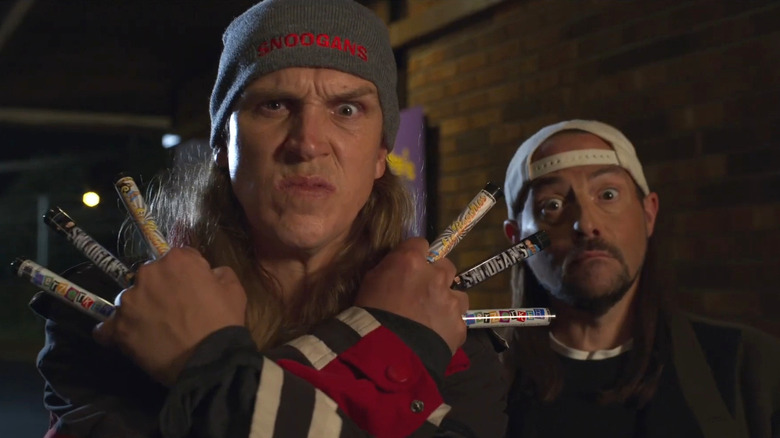
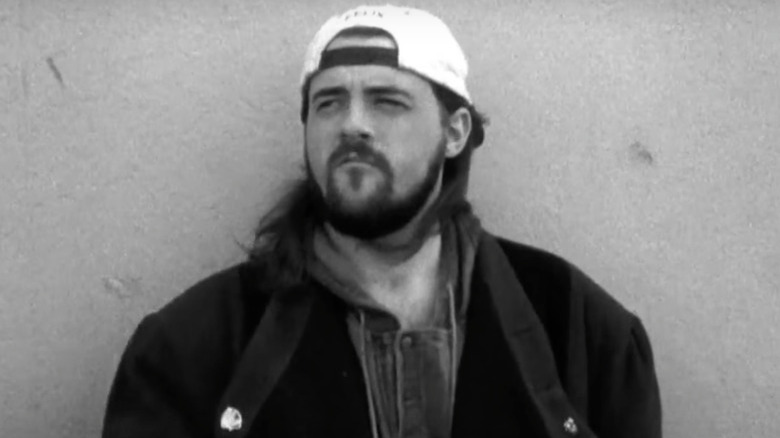
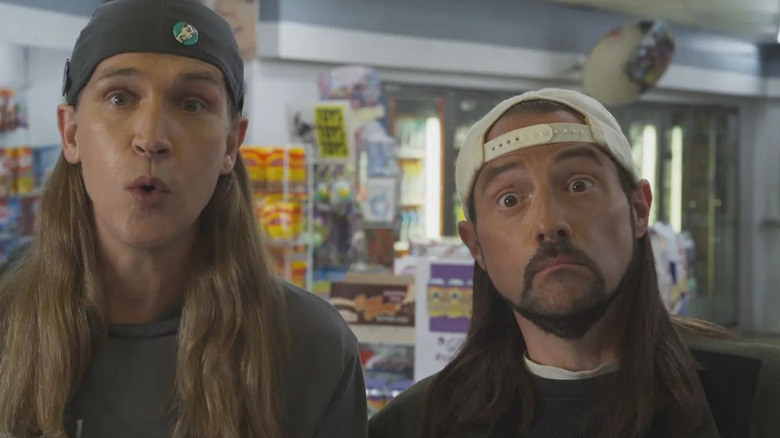
Eagle-eyed fans of Kevin Smith's View Askewniverse might have noticed that one tiny detail in "Clerks III" was missing, and it was a part of one of its most important character's iconic costumes. Though Silent Bob (played by Smith himself) is a man of few words, he is a man of many hats, and wore an all-white one with the word "FELIX" stitched across the back in the original "Clerks" all the way back in 1994. It turns out that while the estate that owns the rights to the old cartoon "Felix the Cat" didn't feel like going after a weird little indie filmmaker back then, they wouldn't be too keen on the now very-famous Smith using the character's likeness. 

In an exclusive interview with /Film's Jack Giroux, "Clerks III" costume designer Allison Pearce spilled the details on all of the Mooby's gear, hockey uniforms, and more, along with the reason behind Silent Bob's minor change of haberdashery in the latest sequel. 

The Perils Of Copyright Law

In the original "Clerks," Smith wore a backwards "Felix the Cat" hat as Silent Bob. While it's pretty tricky to see the cat on the front of the hat given the graininess of the film and the fact that it's always backwards, it is in fact a branded hat. That became a problem for Pearce when she realized she would have to get clearance to use it, something Smith hadn't even thought about back in 1994. Pearce managed to get the original coat and hat from "Clerks" for use, but the hat was a no-go:

"I think originally that was in the Secret Stash, Kevin's comic book shop in Red Bank, that was on display there. I had to crack it out of a display case for him to wear it, and he also wears a Felix the Cat backwards hat. That was a whole rigmarole to be allowed to do it, and in the end, we couldn't. I just made something for Kevin that said Felix on it. We couldn't even show the original graphic that was in the movie. We tried, but there are a lot of graphics in the original 'Clerks' and brands and logos and it's different now. You can't really do that anymore."

In the end, Pearce crafted a new hat for Smith that's not quite the same as the original, though Silent Bob has worn a few different hats over the years, so it's not a huge deal. My favorite is the "Batman"-esque hat in "Mallrats," because Lunchbox looks lovely as the caped crusader. 

A Bittersweet Reminder Of How Far Smith's Come

So how exactly did Smith get away with using the "Felix the Cat" hat in the first place? Pearce explained: 

"Based on my understanding, the way they made 'Clerks,' he made it just with his friends and family and whatever they were wearing, they were wearing, and it was an indie. It did end up getting purchased, obviously, but I think that he wasn't thinking about it. I guess back then it wasn't such a big deal. It's such a thing now. Everything has to get cleared and everyone has to sign paperwork agreeing to put their brands on camera, and it's like, no one ever [notices the logo] anyway."

While "intellectual property" law and copyrights have definitely gotten more stringent over the years, it's also an indicator of just how much Smith's life has changed. Sure, he's not filming after a long day of working at the actual Quick Stop, paying for his little movie with maxed-out credit cards and family loans anymore, but that also means he has to worry about things like if his characters are wearing outfits with copyrighted material on them. Good thing he has a costume designer for that these days. 

Read this next: The 50 Best Documentaries You Can Watch On Netflix Right Now (July 2022)

The post Why Silent Bob's Costume in Clerks III Couldn't Legally Be An Exact Replica of the Original [Exclusive] appeared first on /Film.

07 Oct 20:49

Terrifier 2 Review: A Bigger, Weirder, Bloodier Sequel

by Chris Evangelista

I won't mince words: the first "Terrifier" is what I'd call "crap." That's not always a bad thing — I like a lot of crap! But not this. While I freely admit the film is loaded with some incredibly practical gore, the movie itself is little more than a plotless, storyless, valueless excuse to showcase that gore and not much else. So when I heard a "Terrifier 2" was on the way, I was wary. But color me surprised: "Terrifier 2" is a huge improvement in nearly every way. Sure, it's still loaded with weaknesses — some truly bad performances keep getting in the way, like luggage we keep tripping over on our way to something better. But with this sequel, writer-director Damien Leone has taken the saga of Art the Clown to a whole new level (what a sentence that is). 

The secret to the success of "Terrifier 2" is that Leone has gone bigger in every way. Clocking in at a whopping 138 minutes, "Terrifier 2" has the filmmaker expanding on the mythology of it all, and going for broke. One of my biggest wishes, when I sit down to watch a new movie, is that the filmmaker will not hold back; that whoever is running this show goes big, and bold, and swings for the fences. And that's exactly what "Terrifier 2" does. 

The best comparison I can think of is Rob Zombie's two "Halloween" films. I found Zombie's first "Halloween" to be odious junk; a pale imitation of John Carpenter's classic film, loaded with some of the worst dialogue ever captured on screen. Then Zombie came back with "Halloween II," and surprised me. Sure, "Halloween II" still has problems (Rob Zombie, please hire someone else to write your movies), but it was also bigger, and weirder, and felt more like its own unique experience. "Terrifier 2" is the "Halloween II" of this series, and it's turned me from an Art the Clown agnostic into a bit of a fan. 

Gore Galore, And More

The first "Terrifier" introduced us to Art the Clown (the very committed David Howard Thornton), a malevolent, seemingly immortal serial killer clown who shows up on Halloween to torture and obliterate anyone who gets in his way. And that was it, really! Not much more to say about the film. Art met his apparent demise in the first film, but you can't keep a good killer clown down. Sure enough, he rises from the dead and sets out on another killing spree just in time for Halloween.

This time, Art is after even more fresh meat, including teenager Sienna (Lauren LaVera) and her annoying (and troubled) little brother Jonathan (Elliott Fullam). But Sienna is no normal potential victim. No, she seems to have some sort of psychic connection to Art — and it's all vaguely connected to her dead father. Sienna has an almost comically long nightmare in which she's on the set of a kid's TV show called the Clown Cafe, where, you guessed it, Art shows up — and proceeds to murder everyone via a machine gun. The imagery here is frequently disturbing, including a moment when a woman singing the Clown Cafe theme song is set ablaze — and keeps on strumming her guitar as she burns, and burns, and burns. 

While the overall plotting and storytelling remain simplistic, Leone has a much firmer grasp on tone and atmosphere here, conjuring up gruesome, evocative imagery that has genuine power, in a deranged sort of way. I appreciated the way the filmmaker attempts to build up the mythology of it all; to give Art a worthy adversary, instead of just another screaming girl destined to be hacked and slashed. 

But yes, once again, the gore is massive. Gorehounds will likely have their jaws on the floor at the amount of blood spillage here, all of it created practically. Art the Clown doesn't just kill people, he destroys them, smashing bones, ripping off faces, hurling acid, and more. It's incredibly gruesome while also being almost comical in how over-the-top it all is — there are countless scenes where characters simply stand there, mouths agape, watching as Art performs some wet and gristly task. And then there are victims are who are so cataclysmically destroyed, physically, and yet ... keep living, and screaming, just so Art can continue torturing them. 

You might argue there's no redeeming value to any of this, and I won't fight you on that. And yet, the "everything and the kitchen sink" vibe of the whole thing renders "Terrifier 2" an above-average slasher extravaganza. Watching this gives one the sense that they're watching something new, and that's a feeling you just can't beat. Whatever bloody adventure Art the Clown gets up to next, I'll be sure to watch.

/Film Review: 6 out of 10

Read this next: 12 Underrated Slasher Movies You Need To Check Out

The post Terrifier 2 Review: A Bigger, Weirder, Bloodier Sequel appeared first on /Film.

07 Oct 20:48

Jamie Kennedy Prepared For Scream With Some Deep Cut Horror Research

by Christian Gainey

In 1996's "Scream," horror fans were introduced to a film that openly mocks the genre while exploiting its most famous tropes. Instead of expecting an audience to suspend their disbelief for two hours, "Scream" followed all the classic rules of horror while not so subtly offering the audience a wink and a nod. Final girl Sidney, spunky Tatum, and resident killers, Billy and Stu, all have main roles to play to keep the plot moving, but that doesn't mean that side characters are important.

As the central characters plan or flee death, horror fanatic, Randy Meeks (Jamie Kennedy), acts as the dungeon master of the movie. The nerdy and socially awkward film buff doesn't offer much in the way of muscle, so he relies on an expansive knowledge of scary movie rules and cliches to survive sticky situations, which he is kind enough to share with the audience. For this reason, Randy is one of the most beloved characters in the franchise.

Prior to portraying Randy, Jamie Kennedy was a casual viewer of horror movies, so he had a lot of catching up to do. According to Bloody Disgusting, to prepare for the role, the actor performed a deep dive into gritty horror classics.

'Watch A Few Movies, Take A Few Notes.'

Throughout "Scream," Randy Meeks has three crucial scenes. The first is when he tells a group of drunk teenagers how to survive horror films, the second is when he's watching "Halloween," begging Jamie Lee Curtis to turn around as Ghostface hovers over him, and the third is when he warns Sidney about the Killer's last scare

The character's obsession with horror films is evident in all of these scenes, so it would be easy to dismiss him as simply another horror fan. But Kennedy understood there was more to the character's fascination with scary films than just fanaticism:

"Randy really was on his own island, but that's why he loves movies so much because they're his safe place, his happy place. He can cope with life through movies and learn tropes of movies, tropes of life, through movies, really, and art imitating life imitating art."

Given Kennedy's awesome portrayal of the character, you might think he shared Randy's connection to the horror genre, but the actor was a casual viewer of the genre prior to taking on the role. He'd seen the more famous movies like "Halloween," and "The Exorcist," but he knew he had to go a lot further than that to pull of the role.

"I already watched a lot of movies, but Randy was more like those classics, but he's the type of guy that would know I Spit on Your Grave, the original Texas Chain Saw. He's the type of dude that would know the fan film that inspired. I watched more stuff that was more low-key genre gritty to prepare."

Besides providing Kennedy with a role in one of the most successful franchises ever, "Scream" also gave him a thorough horror education that would make Randy proud.

Read this next: 12 Shows Like Stranger Things You Definitely Need To Stream

The post Jamie Kennedy Prepared For Scream With Some Deep Cut Horror Research appeared first on /Film.

07 Oct 20:47

The Mummy's Hanging Scene Wasn't Entirely Fake For Brendan Fraser

by Steven Ward

Let it never be said that Brendan Fraser isn't willing to risk it all to inject a bit of realism into a role. Part of the reason we're seeing a "Brenaissance" revival at all today is because of the beloved memorability of his characters. From the delightfully naive George in "George of the Jungle" to the swashbuckling Rick O'Connell from "The Mummy." While his early typecasting as the handsome good guy often overshadowed just how much he made what could've easily been two-dimensional characters into lively and even nuanced ones.

But that kind of commitment almost got him into trouble while filming "The Mummy," a role he was only considered for because director Stephen Sommers saw him in "George of the Jungle." Early in the film Evelyn Carnahan (Rachel Weisz) finds herself negotiating the release of O'Connell in order to enlist him in guiding her to the lost city of Hamunaptra. She keeps it up right until he's dropped from the gallows — though being the beefed-up adventurer he is, his neck doesn't snap — so the bargaining continues.

It's supposed to be a hilarious moment of black comedy that's made all the more farcical because the audience certainly knows O'Connell isn't going to die like this so early in the movie. But the same couldn't exactly be said for Fraser — although he and Sommers don't exactly see eye to eye on who's to blame for the whole scary incident.

Fraser's Fake Choking Just Wasn't Cutting It For Sommers

Given how much detail Fraser gives in recalling the distressing memory, it's clear it left a lasting impression on him. "I did fully get choked out," the actor told Entertainment Weekly. "It was scary." Fraser went on to explain that a hanging stuntman with a harness sufficed for the scene's wide shots but he obviously needed to be the one in the noose for the close-ups. An illusion that was accomplished via the light suspension of a hemp rope tied around his neck.

"The first take, I'm doing my best choking acting," Fraser recalled. "Steve says, 'Can we got for another one and take up the tension on the rope?'" The director clearly thought the actor needed some motivational help with his acting but Fraser was starting to feel the effects of even a faux hanging. He told Sommers he'd only do one more take because "a noose around your neck's going to choke you in the arteries, no matter what."

But when the stuntman increased the rope's tension it forced the actor onto the balls of his feet — which is kind of surprising given he's 6' 2" — and then it went up again. "I'm not a ballerina, I can't stand on my tip-toes," Fraser said. It didn't take long for the actor to lose consciousness, which he compared to the "black iris at the end of a silent film" and like "turning down the volume switch on your home stereo, like the Death Star powering down." Two extremely illustrative and terrifyingly specific ways to describe those milliseconds. But it's also a chilling reminder of how quickly things can go wrong onset when it comes to stunts like this. Luckily, this anecdote has a much happier ending.

Fraser Got A Less-Than-Ideal Reaction To Being Really Choked Onset

After losing consciousness Fraser was revived by EMTs and the first person who greeted him according to the actor was the stunt coordinator. To check up on him right? Not exactly. "The stunt coordinator came over, and he said, 'Hi! Welcome to the club, bro! Ha ha ha!'" Fraser told Entertainment Weekly. "And I was like, 'Ha ha, funny? Ha ha?' Like, What the hell? I want to go home!" That's definitely not the reaction Fraser should have received, though it's that kind of attitude that appears indicative of the carelessness that leads to stunt accidents

After nearly asphyxiating onset you'd think you'd such a request would be granted instantaneously. But according to Fraser, the director was a little less than convinced that anything serious had happened. "Steven — he and I disagree — but I think he was trying to go, 'Oh, that wacky Brendan, acting up a storm again!', or something like that," Fraser explained. "I was like, 'Hey, you guys think what you need to, but I'm done for the day.'"

When Sommers looks back on the moment he believes that the actor is "totally to blame." According to the director, it's because of Fraser's overzealous acting that he lost consciousness. "He tightens the noose, and then, as we're about to get the shot, he's trying to make it look like it's really strangling him," Sommers remembered. "I guess it cut off his carotid artery, or whatever, and knocked him out. He did it to himself." Although even if that's true it also doesn't change the fact that Fraser needed to be revived by EMTs. Despite the insane backward nature of having to provide proof beyond that in order to go home, good on the actor for putting his foot down.

Fraser Bears Some Of The Blame

But apparently, Sommers wasn't far from the truth in his perception — as Fraser himself revealed in that Entertainment Weekly interview. "Stephen needed to sell that Rick was actually choking, so, technically yes, it was my fault," he said. "That I was following direction from my director to sell it." Unfortunately, his need to really sell it led to him making one nearly "fatal error." Fraser continued: "You know what? To be fair to that remark, I did make one fatal error. I figured before the camera lands on me, I will take three really deep breaths, so my face turns purple and my veins pop out of my neck. I'll really f***ing sell it, you know! That had to have been a [lesson in how] to asphyxiate yourself. I mean, that had to have been it."

Given the noose's increased tension and an inability to keep his feet on the ground, those deep breaths and Fraser's vigorous squirming probably quickened his descent into unconsciousness. But in the end, he really did sell the hell out of it. As is ever the case in anecdotes like these, Fraser confirmed that the shot in which all hell broke loose ended up being the one used. Apparently, there were no hard feelings between Sommers and Fraser either because the actor returned to play O'Connell in "The Mummy Returns" along with most of the cast — though obviously minus any potential choking scenes. 

Read this next: The 95 Best Horror Movies Ever

The post The Mummy's Hanging Scene Wasn't Entirely Fake For Brendan Fraser appeared first on /Film.

07 Oct 19:45

The Rings Of Power Just Paid Homage To One Of The Scariest Scenes In The Lord Of The Rings

by Jeremy Mathai

Meat's back on the menu, but so are spoilers for the latest episode of "The Lord of the Rings: The Rings of Power."

For most, the prospect of creating a show like "The Rings of Power" and having to live up to the expectations of every fan under the sun would make for a daunting challenge. Never mind that this series is the first major live-action adaptation of author J.R.R. Tolkien's work since Peter Jackson sailed into the sunset with both "The Lord of the Rings" and "The Hobbit" trilogies under his belt. But even without the pressures of having to follow up on one of the most beloved and critically acclaimed blockbuster trilogies of all time, just the brand name alone comes with the kind of scrutiny that most other franchises simply never have to contend with.

In that light, nobody could blame the creative team if they'd chosen to intentionally stay away from as many callbacks or references to the previous movies as possible. Instead, "The Rings of Power" seems to embrace the chance to pay homage to its big-screen predecessors at every opportunity. As of its latest episode, the writers took that to even greater heights with one specific moment shared between the elf warrior Galadriel (Morfyyd Clark) and young Southlander Theo (Tyroe Muhafidin) while both survivors are reeling from the tumultuous events of last week.

While holed up in an alcove, the unlikely pair hide out from a group of marauding orcs. Viewers didn't need to be as keen-eyed as an elf to notice how strikingly similar this sequence was staged to another scene in "The Fellowship of the Ring" -- one that stands out as a tense and terrifying highlight in the entire trilogy.

It's Like Poetry, It Rhymes

Imitation is the best form of flattery, as the saying goes, and "The Rings of Power" hasn't hesitated to heap its admiration upon wildly influential "The Lord of the Rings" movies that came before it. Although rights issues prevent the Prime Video series from drawing explicit and direct connections with the Peter Jackson movies, that doesn't mean the creators can't show their appreciation in other imaginative ways.

Clearly those behind "The Rings of Power" found themselves drawn to a particularly memorable scene from "The Fellowship of the Ring," when Frodo, Sam, and the other hobbits are attempting to escape from the Shire. Instead, they inadvertently run right into the path of a Ringwraith -- a servant of Sauron corrupted over the long years and intent on only its search for the One Ring. In a sequence that was itself inspired directly by the animated "The Lord of the Rings" movie, director Peter Jackson reached back to his horror roots to depict our heroes hiding for their lives under a natural overhang. To the delight of observant fans, "The Rings of Power" put Galadriel and Theo in remarkably similar circumstances. Check out this telling comparison below:

Though the duo in the series are waylaid by a different villain entirely, even the idea of having the orc attempt to smell them out draws even deeper parallels to the creepy Ringwraith in "The Fellowship of the Ring." Admittedly, it doesn't take much talent to borrow from the best. But "The Rings of Power" puts its own impressive stamp on the moment, allowing this brief and subtle similarity to provide similar tension without taking us out of the moment.

"The Rings of Power" will air its season finale on Prime Video October 14, 2022.

Read this next: Movies Like The Lord Of The Rings That Are Definitely Worth Watching

The post The Rings of Power Just Paid Homage to One of the Scariest Scenes in The Lord of the Rings appeared first on /Film.

07 Oct 19:42

EA starts rolling out a new PC app to replace Origin

by Kris Holt

It has been two years since EA announced it was working on a replacement for its Origin PC client, and it's now starting to roll out the new app to Windows users. The publisher claims that the EA app, which has just concluded its open beta phase, is its fastest and lightest PC client to date.

EA is promising a streamlined design and suggests navigation will be easier. It seems the app has improved social features as well, since you'll be able to connect your EA account to platforms including Steam, Xbox and PlayStation — which could come in handy for games with cross-play support, such as Apex Legends and FIFA 23. You'll have a custom EA ID that should make it easy for your pals to recognize you.

The publisher says that it will soon invite Origin users to switch over to the new app. As you might imagine, all your stuff will be present, including your games, save data and friends list. It's worth noting that the new client will only be available on Windows PC for now. If you're a macOS user, you'll continue to use the Origin for Mac app for the foreseeable future. However, EA noted that it will have more to share on that front in the coming months.

07 Oct 17:53

Becoming Morticia For The Addams Family Was An 'Exhausting' Process For Anjelica Houston

by Danielle Ryan

Morticia Addams is #GothGirlGoals, but Anjelica Houston had a heck of a time portraying the macabre matriarch in the 1992 classic "The Addams Family." While Morticia is fairly fond of torture, Huston wasn't exactly a fan of the lengths required to create the cartoonish appearance of her creepy character. In an interview with Entertainment Weekly back in 1991, during the filming of "The Addams Family," Huston opened up about how much she felt "at home" in Morticia's skin, even if she was horribly uncomfortable because of her clothing and makeup. 

In order to create the hourglass figure and line-less, ageless face of mama Morticia, Huston had to put up with some pretty serious pain, wearing a metal corset and having extensive makeup pulling her skin taught. The results are incredible, but they were absolutely exhausting for Huston to endure. It's honestly kind of amazing she came back for "Addams Family Values," but maybe she learned a thing or two about masochism from Morticia. 

The Torture Of Body-Shaping Underwear

In the same interview with EW, director Barry Sonnenfeld explained that Morticia's figure is inhuman, and unfortunately that meant some serious corsetry for Huston:

"Morticia has a shape only a cartoonist can draw, so we lashed Anjelica into a metal corset that created this hips-and-waist thing I've never seen any woman have in reality."

Corsets were invented in the middle ages to help define a person's shape. They were usually a women's garment, though some men's corsets did (and do) exist. Corsetry uses boning made out of steel or genuine whale bone to force the rib cage and abdomen into a new shape. While the results can be visually appealing and some find wearing a corset oddly comfortable because of the extra back support, there are myriad dangers to tightly binding the waist, which Huston learned for herself after long days on set wearing the contraption. 

An Hourglass Figure And Taped-Up Cheekbones

Corsets are laced up and take a while to get into, which meant that Huston couldn't exactly take the corset off between takes. Bending and lying down are also pretty close to impossible, so a day of shooting could feel much longer for the performer:

"Come afternoon, I could be prone to a really good headache from my various bondages. And because I couldn't lie down (in the corset) or rest, it was fairly exhausting."

In addition to the corset, which is painful enough, Huston also had daily gauze eye lifts and neck tucks, using glue and gauze to hold her skin taught. The techniques used to transform the already beautiful Huston into the ethereal Morticia were both as inspired and uncomfortable as those used by Lon Chaney to become the Phantom of the Opera all the way back in 1925. Beauty and the beast were both created through makeup and costuming, but I bet many performers these days are thankful to have a computer-generated nip or tuck instead.

Read this next: The 15 Best '90s Comedies Ranked

The post Becoming Morticia For The Addams Family Was An 'Exhausting' Process For Anjelica Houston appeared first on /Film.

07 Oct 17:48

List of Free PC Games (Updated Oct 7th 2022)

by Tonci

Check out our list of all latest AAA and indie free games, starting with Fallout 76 and Shadow of War on Amazon Prime Gaming, two very heavy metal games on Epic and even more free PC games!

The post List of Free PC Games (Updated Oct 7th 2022) appeared first on Indie Game Bundles.

07 Oct 17:44

Fly You Fools: The Lord Of The Rings' Balrog Explained

by Debopriyaa Dutta

This post contains spoilers for episode 7 of "The Lord of the Rings: The Rings of Power."

In Peter Jackson's "The Fellowship of the Ring," the titular fellowship faces an ancient demonic threat in the mines of Moria. When surrounded by countless orcs inside the mines, a huge, demon-like fiery creature pursues the group to the bridge of Khazad-dûm, where Gandalf (Sir Ian McKellen) fights the creature. Right at the brink of victory, Gandalf is overwhelmed by the power of the creature, and shouts "Fly, you fools!" at his grief-stricken companions, as he falls into the depths of the Misty Mountains along with the demon.

As explained by Gandalf prior to the fight, this gigantic flaming beast is none other than a Balrog, who was inadvertently awakened by the dwarves while excavating too deep into the mines of Moria. Prime Video's "The Rings of Power" offers us a glimpse of this beast, who is seemingly awakened in the depths of the mines after the healed leaf of Lindon incinerates in front of the monster. This is obviously a prelude to what's about to occur, primarily the downfall of the dwarves and the fall of the mighty Khazad-dûm.

But, what exactly is a Balrog, and what role does this creature play in the fraught history of Middle-earth through the ages? Let's find out.

The Creature's Origins And Evolution Through The Ages

Also known as Valaraukar, which means "demon of power" in Quenya, Balrogs are Maiar, beings as old as time, who were sent by the Valar to shape the world. In the wake of Morgoth/Melkor's rise to power, the Balrogs were seduced by his evil scheme and became corrupted in the process. After Melkor destroyed the Two Trees of Valinor (which were symbols of light and purity for the Valar), he roused the Balrogs to attack Ungoliant, his ally-turned-nemesis. As the Balrogs were already in Melkor's service, they diligently did his bidding.

Balrogs have been in combat with various characters in J.R.R. Tolkien's mythos over the First and Second Ages in Middle-earth. A key example is the Ñoldorin Elf, Fëanor, who was mortally wounded by Gothmog, the king of Balrogs at the time. This precipitated a rivalry between the elves and the Balrogs, and the latter attacked Elvish fortresses with the intent of killing them and their allies.

"The Rings of Power" touches upon the bittersweet victory of the War of Wrath, and as per Tolkien's lore, the Balrogs fought in the war but were mostly slain. The remaining beasts sought shelter in deep caverns and mines and were mostly dormant during the Second Age. However, the show seems to be hinting at a slight alteration in canon, as the Balrog in Durin's mine seems to be active. Although the mines are sealed at the moment, we know that they will be opened up for mithril mining pretty soon.

Is The Show's Awakened Balrog Durin's Bane?

Per "The Fellowship of the Ring," the dwarves were driven out of their home after they awakened a Balrog in TA 1980, who ended up killing King Durin VI. This led to the creature being dubbed "Durin's Bane," as it symbolized the downfall of what was once a powerful, prosperous dwarven rule. Thanks to our knowledge of what's about to happen, we know that Durin's Bane will be slain by Gandalf, who will be sent back to the Valar, triggering his transformation into the wiser, mightier Gandalf the White.

If we work out the probable chronology of events, it does seem that the Balrog that makes an appearance in the latest episode is none other than Durin's Bane. Although Tolkien dictates that Durin's Bane awakened sometime during the Third Age, "The Rings of Power" could somehow retrofit this to shape key events during the Second Age. It is unclear as to how things will take shape in that direction, but it is possible that the Balrog's (premature) presence could add layers of tragedy to the fall of Khazad-dûm. Within the context of the show, it does seem like the Balrog shall pass. 

Balrogs Are Somewhat Of A Cultural Icon

There are some inconsistencies in Tolkien's writings about Balrogs, as he often made revisions to origin stories or altered historical accounts to bring narrative threads together. In the initial mentions of these creatures, Tolkien described them as countless in number, although he later mentioned that there were no more than seven Balrogs. Interestingly, although Balrogs play a brief yet key role in Middle-earth's history, the creatures have inspired several video game creature designs over the years:

  • Creatures identical to Balrogs in appearance and characteristics can be seen in "Wartune" and "Dungeon Hunter: Alliance." Apart from a few variant features, these beasts were clearly inspired by Tolkien's work.

  • The Balor from "Dungeons & Dragons" is a clear homage to Balrogs, as earlier renditions of the game dubbed it as The Balrog, which was then changed due to copyright claims.

  • There's a boxer named Balrog in "Street Fighter II!"

  • The anime series Saint Seiya has a character named Balrog Rune, who is a servant of Hades, the ruler of the underworld.

  • Balrog is the name of a classic weapon in "Devil May Cry 5."

Balrogs are clearly influential in popular culture, and the creature's appearance in "Rings of Power" might lead to a Balrog renaissance. At least, that's what I'm hoping for.

"The Lord of the Rings: The Rings of Power" drops a new episode every Friday on Prime Video.

Read this next: The Best Lord Of The Rings Characters Who Weren't In The Movies

The post Fly You Fools: The Lord of the Rings' Balrog Explained appeared first on /Film.

07 Oct 17:44

Noctua to Offer Thermal Paste Guard for AMD AM5 CPUs

by Sebastian Peak

Noctua understands that processor hygiene is an important consideration, and as such they are now offering a way to keep excess thermal paste from gumming up your shiny new AM5 processor. It's…

07 Oct 17:43

Fallout 4 DLC-Sized Mod “Obscurum IV – Statesec” Sets Players in a Civil War; Features a New World, Story, Enemies, and More

by Aernout van de Velde

Fallout 4 DLC-Sized Mod Obscurum IV – Statesec 5

“Obscurum IV – Statesec” is a new Fallout 4 DLC-sized mod that sets players in a civil war, complete with a new world, story, weapons, and more.

Created by modder ‘Thumblesteen’, this new mod focuses on war, and players are part of a group called the "Minutemen". There’s plenty of fighting in the new world, and players can join the war effort as an officer of the “Minutemen”.

“I think Fallout 4 has hit a Zeitgeist of a lot of tacticool army type things”, the modder writes. “But my problem was always how the world was full of comic book type themes like robots and monsters and it never quite seemed to fit with what people wanted. So as you had all these modders porting cool stuff from Call of Duty games and what have you in an effort to make the player be tacticool, I decided to add the missing piece, namely, the surrounding environment.”

In addition to packing a new world and story, this DLC-sized mod adds new enemies to the game alongside an “officer system” which allows players to fight enemies, raid their bases, and play as a commando. According to the creator of the mod, players are free to play as they like, and this includes sniping, stealth actions, use of big guns explosions, and more.

‘Thumblesteen’ adds, “then you recover tactical and strategic resources such as intel, officer's berets (to collect bounties), hazmat materials, even nuclear weapon cores. You then bring these items to your base and use a special terminal to trade them in for resources that can be exchanged for useful things such as shipments, guns, uniforms, you name it.”

It's quite an exciting modification for Fallout 4, which also changes the standard base-building mechanic of the game. As promised by the modder, a future update will also add nuclear weapons.

We’ve included some screenshots of the mod in action below and a trailer.

fallout-4-dlc-sized-mod-obscurum-iv-statesec-2
fallout-4-dlc-sized-mod-obscurum-iv-statesec-3
Fallout 4 DLC-Sized Mod Obscurum IV – Statesec 5
fallout-4-dlc-sized-mod-obscurum-iv-statesec-6
fallout-4-dlc-sized-mod-obscurum-iv-statesec-8
fallout-4-dlc-sized-mod-obscurum-iv-statesec
2 of 9

Those interested can download the Fallout 4 “Obscurum IV – Statesec”  mod from Nexusmods.

Fallout 4 is available globally now for PC and consoles. The game is also available via Xbox Game Pass.

The post Fallout 4 DLC-Sized Mod “Obscurum IV – Statesec” Sets Players in a Civil War; Features a New World, Story, Enemies, and More by Aernout van de Velde appeared first on Wccftech.

07 Oct 17:38

Jeff Goldblum Has Some Ideas For Making A Return To The World Of The Fly

by Witney Seibold

George Langelaan's original 1957 short story "The Fly" is staged as a murder mystery with the title creature already dead at the beginning of the movie. The story's main character is a woman named Hélène who is arrested for the murder of her husband. Evidently, she crushed his head and arm in a hydraulic press, and will not reveal her motivation for doing so. It's only over the course of the story that readers learn her victim was a scientist working on a disintegrator-reintegrator machine, and that his machine had accidentally integrated him with a rogue housefly that flew into the teleportation pod. His head and arm were transposed with that of the fly's, turning him into a hideous fly man. 

The short story was pretty faithfully adapted to film in 1958 by director Kurt Neumann and screenwriter James Clavell. That film had two sequels, "Return of the Fly" in 1959, and "Curse of the Fly" in 1965. 

David Cronenberg's 1986 remake of "The Fly" is, however, mentioned in film conversations more often than any of its forebears. Cronenberg's film had a similar premise as the original short story -- a scientist is accidentally integrated with a housefly in his experimental teleportation pod -- but changed the details to be more disturbing and tragic. The scientist Seth Brundle, played by Jeff Goldblum, doesn't immediately swap extremities with a fly, but has his DNA altered by it. Very slowly over the course of weeks, his body begins slowly taking on fly-like attributes. His skin scabs over and his teeth fall out. He vomits acid on his food the way a fly does. For a long time, he thinks he's merely sick. 

Return Of The Fly

Eventually, Brundle also begins losing his mind. In a final desperate act, he attempts to yank his girlfriend into a pod with him, hoping to integrate the two of them. During the film's climax, Brundle transforms into something that is revolting, horrifying, and certainly no longer human. The pod scheme doesn't work out the way he plans, however, and the monstrous Brundlefly meets a pretty grisly, teleporter-based fate. 

Cronenberg has gone on record saying that his version of "Thy Fly" was inspired by the bodily degradation one encounters at the result of aging or suffering from cancer. Some critics felt that the film, released during the height of the AIDS crisis, was a metaphor for the disease. Cronenberg has said that wasn't his intent, but it is a legitimate interpretation. 

There was at least one sequel to Cronenberg's "The Fly," called fittingly "The Fly II," directed by Chris Walas, the special effects coordinator on the original. "The Fly II" was about Seth Brundle's half-fly son who grows from infancy to adulthood in only two years. Now looking 25 and played by Eric Stoltz, he also begins tinkering with a teleportation pod. "The Fly II" is not nearly as good as Cronenberg's original, but it does have some of the slimiest, most disgusting special effects of any movie. This is not a criticism. This is a profound strength. It seemed that the book was shut on the "The Fly" and no further sequels would be made.

Goldblum, however, had a few idle ideas as to how the series -- the one where his character dies a gruesome, on-screen death -- could continue. In a 2018 interview with Bloody Disgusting, Goldblum shared his thoughts. In brief, what if Seth Brundle had a twin brother?

Seth's Twin Brother

Goldblum, in his inimitable halting fashion, described a scenario where he would get to work with Cronenberg again. Since Brundle's son does indeed survive the ordeal at the end of "The Fly II," there's no reason why Goldblum couldn't play that character's son. And, thanks to the accelerated aging of fly people, he could easily grow into the age of Goldblum today. Or, of course, a twin. Because sure! Goldblum said: 

"I don't think my character would be involved because of course I got tragically mutated with the fly and then the machine, oh boy. But maybe I show up as a grandchild of the original Seth Brundle, or Seth Brundle had a brother. Had a brother that emerges in some ways! Who knows, I don't know but David Cronenberg was a thrill to work with. Boy, if he was involved I'd like to work with him again, I'll tell you that."

Other follow-ups for "The Fly" have been planned over the years. Goldblum's co-star Geena Davis was set to return to the series sometime in the 1990s with her then-husband Renny Harlin directing. Another sequel was arranged in the early 2000s, intended to be made by director Todd Lincoln ("V/H/S Viral"), but that version fell through. Tantalizingly, in 2012, Cronenberg expressed interest in making a follow-up film in an interview with IndieWire. His sequel, he said, was a departure in a way no one could predict, claiming that it was about modern technology and would be "a meditation on flyness." He would elucidate no further. 

"The Fly" was last adapted into an opera in 2008, composed by Howard Shore, the composer on Cronenberg's movie, with a libretto by Henry David Hwang. It was not well-reviewed

Read this next: Horror Movies With Unconventional Monsters

The post Jeff Goldblum Has Some Ideas For Making A Return To The World Of The Fly appeared first on /Film.