Shared posts

11 Feb 20:06

The Monumental Sacrifice of Novak Djokovic

by Stacey Rudin

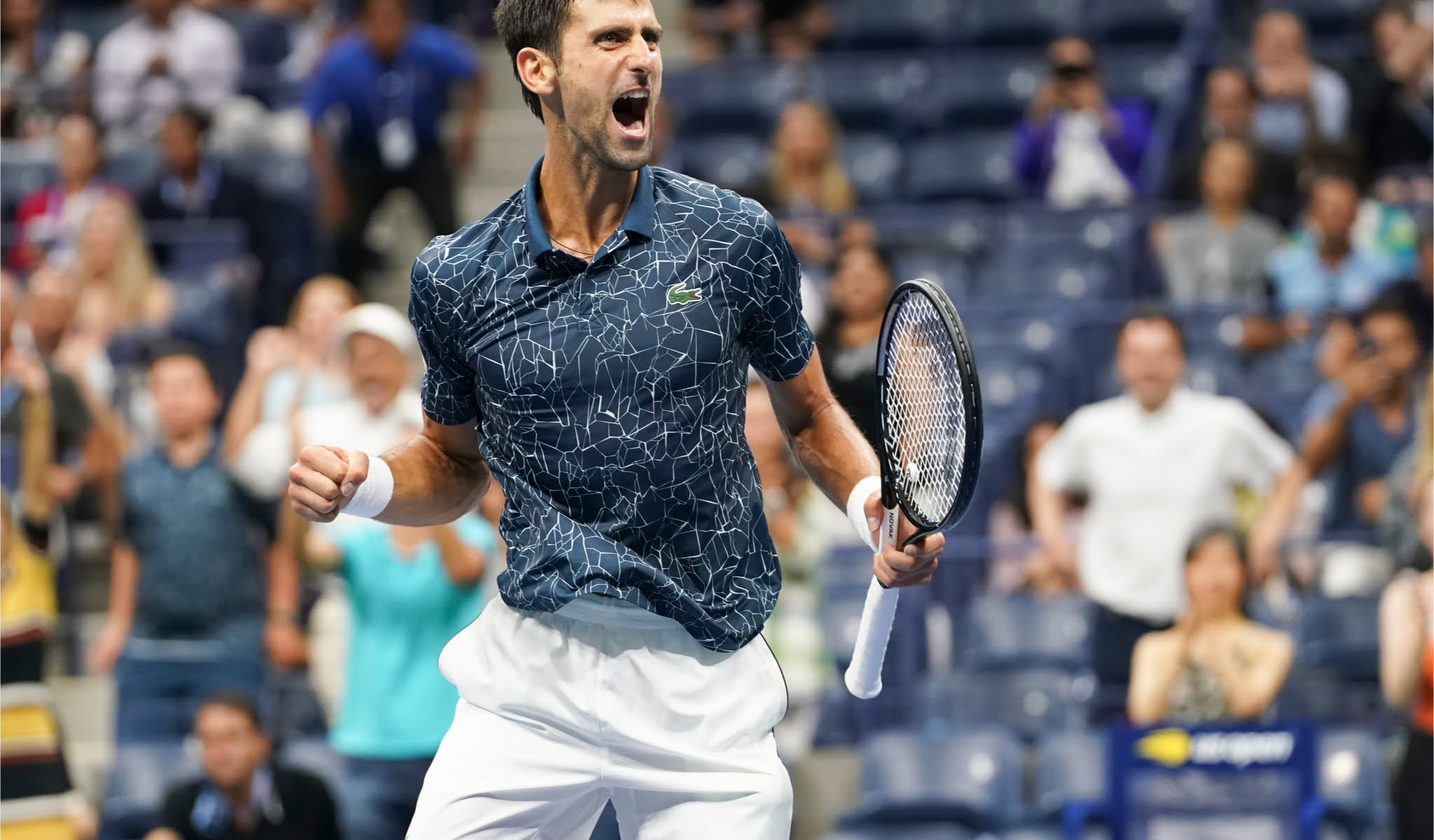
Defending Australian Open Champion Novak Djokovic was deported from Australia, the day before commencement of 2022 tournament play. He entered the country on a visa including a medical exemption based on recent Covid infection. Due to public outry over “special treatment,” his visa was revoked upon arrival in the country, only to be reinstated by a court. It was later revoked by an immigration minister, whose decision was upheld by another court, sending Djokovic packing — potentially for three years. 

This draconian act puts Djokovic at a serious disadvantage in his Grand Slam rivalry with Rafael Nadal, who is competing in Australia this year after vocally supporting vaccines. Both champions, along with Roger Federer, currently hold 20 Grand Slam titles. Djokovic was favored to be the first to reach 21, but his decision to remain unvaccinated leaves Nadal alone with that opportunity for now. (Federer is out recovering from surgery.) 

Djokovic was technically deported for not being vaccinated, but the decision lacks even a superficial “health and safety” justification. Djokovic already had Covid twice, once in early 2020 and again in December 2021. At the time of his deportation, he had been in Australia for ten days, and tested negative. He’s as healthy as a human being can be — you don’t earn “GOAT’ status in the difficult sport of tennis any other way. 

Further proof that Djokovic poses no disease threat to anyone is the fact that this tournament was safely played in January 2021, before vaccines were available for any player or guest. Even if Djokovic had taken the vaccine, he’d be no “safer” in terms of his ability to transmit the virus, as the 100,000 daily cases in highly-vaccinated Australia attest. 

Even the government that deported Djokovic didn’t try very hard to frame its decision as the elimination of a health threat. Rather, it stated that Novak could become an “icon of free choice” if allowed to stay. Ironically, he will undoubtedly become that now that he’s made the supreme sacrifice of forfeiting his chance to play in order to openly oppose mandatory vaccination. 

It’s not a good look for the Covid Regime if an avowed “anti-vaxxer” dominates the sport. The world audience might start thinking about the relative health status of “unvaccinated” people, particularly since athletes have been experiencing heart trouble all over the world — several alreadyat the Australian Open practice courts. 

As it stands, Millions of Australians and others who have already taken the vaccine applaud the government’s decision. They can’t get the vaccine out of their bodies, so the next best thing is to make sure that everyone else has to put themselves into the same spot. 

Nevermind the precedent it sets to allow a government to force people to choose between their health and their career. Such Sophie’s choices are normal these days.

The Regime would not have minded Djokovic playing in an unvaccinated state so long as he publicly expressed support for mandatory universal vaccination. He could have easily done this — a hero in Serbia, the wealthy star could have tapped any number of doctors to provide fake certification of vaccination. But that would have violated his principles. 

In 2010, an “unwell” Djokovic was collapsing at tournaments, unable to complete strenuous matches. A doctor witnessing his condition on TV got in touch with the athlete, recommending that he eliminate gluten, dairy and processed sugar from his diet. Novak thought it sounded strange but agreed to try, and it’s hard to argue with his results. His 2011 season was one of the best in men’s tennis history. On his new fuel, he was unstoppable. He ended the season with an unbelievable 10–1 record against Nadal and Federer, and compiled a 41-match winning streak. 

This experience changed not only the tennis player. It fundamentally changed the man, as Djokovic explains in his book “Serve to Win”:

When it’s not being cared for, your body will send you signals: fatigue, insomnia, cramps, flus, colds, allergies. When that happens, will you ask yourself the questions that matter? Will you answer honestly and with an open mind? 

Open-minded people radiate positive energy. Closed-minded people radiate negativity. Eastern medicine teaches you to align mind, body, and soul. If you have positive feelings in your mind — love, joy, happiness — they affect your body…But a lot of people, especially closed-minded people, are led by fear. That and anger are the most negative energies we have. What are closed-minded people afraid of? It could be many things: Fear that they are wrong, fear that someone might have a better way, fear that something has to change. Fear limits your ability to live your life.

Some people at the top feed off of negativity. The way I see it, pharmaceutical and food companies want people to feel fear. They want people to be sick. How many TV ads are for fast foods and medicines? And what’s at the root of those messages? We’ll make you feel better with our products. But even deeper down: We’ll make you fear that you don’t have enough of the things we say you need. It’s crazy — even when you’re completely healthy, they say you need [products] to stay that way.

Here’s a pattern I’d rather embrace: good food, exercise, openness, positive energy, great results. I’ve been living that pattern for several years now. It works better than the alternative.

Djokovic rejects Big food, Big Ag, Big Chemical, and Big Pharma. He doesn’t need them. His practices allow him to be healthy without any of their products — in fact, he’s achieved an elite level of health by actively avoidingtheir products. 

There is no greater threat to the bottom line of these companies than people like Novak Djokovic. He is not scared, he is not anxious, so he can’t be manipulated or sold an easy fix. He can see the path to health takes hard work, and he’s willing to put it in. When they tell him that he can’t be healthy without a vaccine, he laughs in their faces. They can send him packing, but they can never take away his integrity and self-worth. 

Novak Djokovic doesn’t want to lie to the public, making it appear as if he agrees with The System’s “path to health.” If he did that, he would get to play his tournament, but he would have millions of lives on his conscience. He’d rather give up his career’s crowning achievement in order to stand in truth. To send people the message: you CAN reject this tyranny. You do NOT have to comply. You can SAY NO, and you will be okay. 

It’s easier for him, yes, with his millions of dollars. Healthcare workers on a middle-class salary will have a harder go of it. Military members faced with dishonorable discharge absent vaccination have it worse. But Djokovic has made it easier, at least, for everyone to publicly reject vaccination. If Novak openly rejects this vaccine, they can too, without shame. His very public deportation will hopefully get many people thinking about his approach to health, which if widely understood and adopted, will finally burn the Covid Regime to the ground — once and for all.

26 Jan 17:22

BIDEN ADMINISTRATION: WE’RE GOING AFTER BILLIONAIRE TAX CHEATS! Er, turns out they’re big donors…

by Glenn Reynolds

BIDEN ADMINISTRATION: WE’RE GOING AFTER BILLIONAIRE TAX CHEATS!

Er, turns out they’re big donors, so instead we’re going after eBay sellers and Etsy moms.

26 Jan 14:01

Chesa Boudin gets sued…

by Kane
Man beaten with baseball bat in Chinatown sues DA Chesa Boudin   In what may be the first lawsuit of its kind, a San Francisco resident is suing San Francisco’s controversial District Attorney Chesa Boudin, an Asian advocacy group announced Tuesday.   Anh Lê, 69, was out for a walk in Chinatown on Nov. 2, […]
25 Jan 18:27

PolitiFact Flubs Another Fact Check

by Matt Palumbo
25 Jan 17:58

LORDING IT OVER THE REST OF US IS THE ENTIRE POINT: Scotland Yard wonders: Just how many parties di…

by Ed Driscoll

LORDING IT OVER THE REST OF US IS THE ENTIRE POINT: Scotland Yard wonders: Just how many parties did BoJo throw during COVID lockdowns, anyway?

Shouldn’t the head of a government that forbids social gatherings indoors have followed his own rules at his official residence? That question has come up in Parliament, where MPs recently demanded answers from Boris Johnson over reports of two parties that violated the UK orders against such residential gatherings. In an ominous move, the London Metropolitan Police have announced that they have begun a criminal investigation into multiple reports of such events at 10 Downing Street, in parallel to an ongoing civil probe:

* * * * * * * *

A number of events”? How many are we talking about here — two, four, six, eight? More like nineteen between May 2020 and April of last year, although not all involve Johnson. Most involve Tories, but a number of Conservatives in Parliament have made it clear that they want to give Boris the Order of the Boot to punish the hypocrisy[.]

Oh, and speaking of party time, Old Blighty-style in May of 2020: What Neil Ferguson’s booty call tells us about modern politics. “It is actually incredibly important news that Ferguson, the Imperial College modeller who said it was possible 500,000 Brits would die if we didn’t lock down, defied the lockdown. It deserves the frontpage treatment it is getting today. For Ferguson’s booty call with his married lover actually reveals a great deal about the 21st-century elites and how they view their relationship with the masses. It’s one rule for them and another for us.”

In response, as Stephen Kruiser suggested: Let’s Start Jailing Lawmakers Who Violate Their Own COVID Restrictions. “Imagine the pure, poetic justice of seeing Newsom, Cuomo, and some of the other Hitler youth (stole that from Animal House) cooling their heels in a holding cell after being caught with their masks off and their pants down.”

25 Jan 17:22

This is CNN's current homepage 🤣

by Not the Bee

You know these guys were scrambling all night trying to spin Joe Biden's embarrassing gaffe into a positive light:

25 Jan 16:13

WHY DON’T PEOPLE TRUST THE HEALTHCARE SYSTEM TO...

by Glenn Reynolds

WHY DON’T PEOPLE TRUST THE HEALTHCARE SYSTEM TO PUT THEIR INTERESTS FIRST? Hospital charges $847 ‘facility fee’ for telehealth visit. “I can tell you right now I would’ve gone elsewhere if they had told me there was an $850 fee, essentially for a Zoom call.”

25 Jan 13:49

SHOCKER: Road salt, electric vehicles, drugs, smartphones can all be affected by really cold temps….

by Glenn Reynolds
25 Jan 13:43

CULTURE OF CORRUPTION: Companies Linked to Putin’s Pipeline Contributed to Schumer Campaign: Sen…

by Glenn Reynolds

CULTURE OF CORRUPTION: Companies Linked to Putin’s Pipeline Contributed to Schumer Campaign: Senate majority leader blocked sanctions on the Kremlin-backed project.

Affiliates of two European companies that fund Russia’s Nord Stream 2 pipeline contributed to the campaign of Senate Majority Leader Chuck Schumer (D., N.Y.), who Republicans say has blocked sanctions on the Kremlin-backed project.

ENGIE North America and BASF Corporation each gave $2,500 to Schumer in September through their corporate political action committees, according to newly disclosed Federal Election Commission records. ENGIE North America’s parent company and a BASF subsidiary are part of a consortium of five companies that finance Nord Stream 2, which will transport natural gas from Russia to Germany. While President Joe Biden has called the pipeline a geopolitical threat to Europe that helps Russian president Vladimir Putin, last year he waived sanctions on the project.

We keep getting revelations like this.

The chance that much of our leadership will be hauled before people’s tribunals and then sent to the firing squads remains low, but it’s far and away the highest it’s been in my life time.

24 Jan 22:22

What convinced you containment was a scam?

by eugyppius

Among the privileges of compiling these reports, is the opportunity to tell my own story:

I caught Corona very early, along with a lot of people I know. I was extremely sick with a very high fever for four days, but never hospitalised or anything like that. After the acute symptoms passed, it took me about three weeks to fully recover, at which point Germany had locked down.

I’ll admit that I found the panic propaganda convincing at first. I was never personally worried about infection – I assumed I was immune – though I did find the prospect of mass mortality and social chaos concerning. In retrospect, the propaganda worked above all by presenting the threat of Corona stripped of all context. What kind of social or political threat had past pandemics proven to be? (Answer: Not much of one.) How dangerous is SARS-2 really, compared to other viruses? (Answer: It’s no more dangerous than pandemic influenza, with which we’ve had abundant experience.) What precautions had been taken in the face of past pandemics? (Answer: Not many.) What kinds of countermeasures had our governments planned, and why? (Answer. Definitely not lockdowns, because they have no real chance of working.) These are all questions that went studiously ignored, but their import wasn’t obvious to me at the time.

Like many of you, I was very interested in the Diamond Princess as a natural experiment, but by the time I had recovered enough to consume a lot of news, the narrative had shifted. Lockdowns were demanded not to save lives, but to reduce stress on the healthcare system, and above all to ensure the wide availability of ventilators.

There was no single event that convinced me I had been deceived, just a lot of little things. The first, was when disaster failed to materialise and infections began to recede towards the end of March. I found it hard to believe this could have anything to do with the German lockdown. It looked exactly like a seasonal decline, and the timing wasn’t right. By mid-April, it was clear that hospitals in Germany were never in danger of being overrun, and that ventilators were not any kind of answer to Corona. It sounds crazy to type it now, but the ventilator panic had formed a huge part of the argument for mass containment in those early days, and I was astounded to see a lot of lockdown hardliners continue to insist on widespread closures, now on the strength of totally different arguments. I also didn’t like the growing leftist flavour of containment activism, and the moral scolding of the press, which quickly adopted the tactic of blaming infections and deaths on individual rule-breakers rather than on the virus or our response.

The failure to dismantle containment over the summer; the obviously strategic choice of the press, beginning in August, to hyperventilate about cases rather than hospitalisations or deaths; and the remarkably low quality of public health messaging were all alienating. The final straw for me was the renewed panic over the entirely predictable rise of infections in Fall 2020. I’d always doubted that masks could do very much, but in the course of November it became clear that closures, too, had no detectable effect on the trajectory of infections. By December, I found it hard to see containment as anything other than a theatrical exercise, intended to drive the population into the arms of the vaccines.

This should have made me suspicious of vaccines from the very beginning, but here too I was slow. I thought they would, at the worst, be ineffective if harmless, and provide an excuse for our countries to disengage from containment. I could not have been more wrong, but here I saw the light much sooner. As politicians and media outlets portrayed another seasonal decline in infections as a victory for the vaccines, I was on guard again. The increasingly toxic, bullying information campaign surrounding vaccination didn’t help, and the ever more frequent reports of adverse events soured me on them entirely.


Many academics in fields well outside public health and epidemiology wrote about the valuable perspective provided by their own areas of expertise.

Procopius, a pseudonymous Argentinian professor, reports that it was above all the relentless “threat inflation,” familiar to him from his work on international security, that clued him in that something was wrong:

For me, the wake up moment was early on, more or less around March, when my country decided to plunge itself into an early hard lockdown.

Since my area of study is international security, I follow international news outlets very closely, so I got on to the covid subject early on.

In late February or early March, at a meeting with other academics in my field, I was asked to give an overview of relevant situations unfolding around the globe. At the time I had already come to the conclusion, based on several early data points (South Korea’s reported IFR rate), that the threat was overblown. I risked an early forecast that this would be a an episode similar to the 2009-2010 swine flu scare, but shorter in duration, since we supposedly had learned our lesson from back then. After all, other scares like Ebola, Zika and Chikungunya had blown over much more quickly since then.

Needless to say, my forecast turned out to be spectacularly wrong, and this pushed me to dig ever deeper into the informational environment surrounding Covid, trying to understand why.

My greatest worry then was that the media circus around Covid would push people to stay home, which might cause an economic downturn in an already struggling economy, that our chronically inept government would find difficult to counteract. I never thought the government of our poverty-stricken country would so happily jump on that risky bandwagon of global policy, yet they did.

One red flag that caught my attention early on was threat inflation. Those with knowledge of security issues should recognize the problem immediately, because it is so pervasive in our field. National security bureaucracies have a vested interest in inflating the threats they are facing in order to justify their budgets, prestige, and their powers.

We can see this at work in the war on drugs, human trafficking, military force posture planning, even nuclear strategy. The worst offender is, by far, the global war on terror since 2001. All the mentioned threats are real, which is why they are plausible at face value, it just their likelihood and severity that are grossly exaggerated. 

And the hygiene theater around covid strongly resembles the security theater around terrorism, where most policy measures are meant to show action without actually being effective (or even counterproductive). 

My ignorance about the workings of the public health establishment led me to overlook the danger of these dynamics playing out the same way during this pandemic, with even worse effects on a global scale. And it makes one wonder what other industry-bureaucracy collusions are waiting for a golden opportunity to force their pet projects on the rest of society (yes climate change, I am looking at you!)

Needless to say, as a result of all this, I was already skeptical of the vaccination efforts from the beginning. It was obvious that there was no way to assess long term side effects because there would be no time, period. And there would be immense pressure to cut corners and weaken regulatory oversight. The half-baked PR stunts to discredit ivermectin and HCQ strongly suggested pharma lobby and regulatory capture.

On a final note, working in academia I have long been aware of how our scientific production system has to a large extent been corrupted by perverse incentives to become a paper mill.

I used to think this was mostly a social sciences problem, but after Ioannidis (2005) I increasingly learned how deep the problem went into the supposedly hard sciences as well. If the average citizen were more aware of this, they would probably be much more wary of worshipping at the altar of The Science!

My friend, the physicist Rudolph Rigger (he writes Riggery Pokery), realised that mortality curves for the United Kingdom tended to decelerate far too early for lockdowns to be the cause:

I’m a theoretical physicist with over 30 years research experience. My work has almost exclusively involved squiggles – figuring out math stuff to try and tease some new physis idea out of things. I wasn’t so good with data and stats because I didn’t need to be – the confounders tended to confound me every time. I’ve learned quite a lot over the last 20 months or so, but I’m still a bit slow with the data analysis. I say these things to give an honest contextual frame from which you can evaluate my comments. It is very clear, that other than naïve basics, I am neither an immunologist, or an epidemiologist.

I was working at a university away from my country of birth (the UK) when the dread Rona struck. I remember some of my colleagues trying to push the elevator buttons with their elbows and thinking this might be taking things a tad too far. To be fair, I didn’t know much about things back then, but I doubted very much whether infection from surfaces and objects would be significant – more of a theoretical possibility than any serious risk. The country I was working in followed the rest of the world and eventually imposed lockdown, but I followed the UK situation very closely.

I thought the idea of lockdown was a bit silly, even sillier was the notion that asymptomatic transmission could be a significant factor. Lockdown was just going to be a tool for delaying the inevitable (back then I thought it might “work”) and my naïve understanding of immunology and infection was that if you have sufficient viral load to pose a significant danger to others, you’re going to be experiencing symptoms. I wasn’t sure what lockdown of healthy people was going to achieve over and above “locking down” people with symptoms. I also knew from the Diamond Princess data and the data from Italy that, whilst serious, the situation did not really qualify as an “emergency” for the majority of the world’s population. So lockdown seemed to be a bit of a panic-induced over-reaction.

As things progressed I looked at the UK data a bit more closely. The mortality curve rose, reached a maximum, and then started to come back down again. Well knock me down with a feather, I thought, lockdown actually worked. I wanted to find out when lockdown actually started to “bite” so I started looking at the properties of the curve. In physics and maths you have to delve into the deeper properties of curves if you want to understand them properly – you have to look at things like first and second derivatives. The 2nd derivative is especially important in understanding dynamics because it’s a measure of “acceleration” – it tells you when the brakes are on, so to speak. In physics, accelerations tell you something about the forces that are operating. I worked out, from the data, a decent approximation for this “acceleration” for the UK covid mortality curve – and shifted by a couple of weeks to get an idea for the dynamics of the infection curve (death followed infection by at least a couple of weeks on average).

To my surprise, I found that the acceleration for the infection curve had gone negative (the brakes were on), BEFORE the lockdowns could have had any effect. This strongly indicated, but did not absolutely prove, that the viral dynamics were being driven by natural processes of a virus within a population and largely not affected by policy. From that point on I started to look much more closely at the data across the world, noting geographical/climate patterns, and also noting that there didn’t seem to be a good correlation between policy and outcome. When mandatory masking was introduced in the UK Summer when things had seasonally fizzled out I knew something was very wrong. As a vaper, and having to wear masks in the country I was in, I knew that masks were going to do bugger all, to use a technical term.

One and a half years on my position has only been strengthened by the worldwide data. Almost everything the media and “the powers that be” were telling us was, at best, a distortion of the truth and, at worst, an outright lie. The ramping up of censorship, and the application of various labels like “anti-science” or “science-denier”, only confirmed my feeling that everything was being driven by emotion, rather than data. We were being emotionally manipulated to think and behave in a certain way. What I’ve not been able to figure out is why. Very little about the response to this virus makes sense from the perspective of public health, or evidence-based policy. We’ve not been following science, we’ve been following beliefs.

An orthopedic surgeon from the midwestern US is one of various doctors who were struck from the very beginning by the futility of containment. Direct knowledge of a vaccine-induced death, meanwhile, convinced him that the vaccines were a bad idea very early;

Our hospital went into lockdown in late March 2020. I knew something wasn't right immediately because there were no patients with COVID in the hospital. Our hospitals were empty, but I could not take care of my own patients as all elective surgery was cancelled. Very quickly the hospital realized that they were going to go bankrupt, so we came back to work in 6 weeks and worked pretty much a normal schedule since.  It was not a coherent strategy.

One of my initial responses to the lockdown was to share the story "The Mask of the Red Death" by Edgar Allen Poe with all the physicians in training that I surpervise.  The similarities were too obvious.  I told them "it's a virus.  You can run and you can hide, but eventually we are all going to get it."

When the vaccine was first announced, I found a review paper on mRNA vaccinces from 2018.  It described the 30 years that scientists had been working on mRNA vaccines.  I read about all the problems and thought it was a might odd coincidence that they worked out all the bugs just in time for COVID and an EUA.  I decided to wait and see how the role out went.  Then in March of 2021 a local 16 year girl who was a friend of my son died from a pulmonary embolis after vaccination.  And it was not reported in the media.  I vowed then and there NEVER to get the vaccine.  And I have manage to keep my job despite the mandates - it just takes resolution ( and perhaps being a big biller for the hospital). 


Various people with an insider perspective on the pandemic response wrote in. It’s good to know that the vaccination campaigns look as bad from the inside as they do from the outside:

I worked in one country’s vaccine national roll-out program….I started in their adverse event team…

I could list more as a member of the public but from within the vaccination program:

-When the pharmacovigilance advisors complained about the reporting of the AEFI [adverse events following immunisation] system and why it was not a true phv [pharmacovigilance] reporting system and completely inadequate.

-When they complained that their recommendations based on their research and calls with other countries were ignored (e.g. they had zoom calls with Israel and WHO over the booster roll-outs and Israel initially did it for solely political reasons….there was no data to support doing it).

-When the country sat on publicly announcing a vaccine death for 3 to 4 weeks, because we had entered another lockdown and they didn’t want to deter people from getting vaccinated.

-When they ran an active monitoring text survey on adverse effects to randomly selected people who had doses….but the then.director of the program said not to publish the data, as the reactions were so high.

-When I realised there were 55 people employed to do communications within the program….aka keep up the narrative from the government ….

Eileen Natuzzi, a physician and epidemiologist who also writes on Substack, found the response bizarre from the very beginning:

I worked for the department of public health spanning the pre- and post-vaccine COVID period. I am a physician and a public health epidemiologist. Before the vaccine it was about collecting info from cases, no emphasis on education or allaying media stoked fears. The vast majority of cases were mild but terrified. We failed to separate ‘died with’ from ‘died from.’ There was no stratifying cases by severity of symptoms even though that data was there. The mantra was “just collect the data.” As a physician this made no sense to me. I went rogue recommending Vit D, C, zinc and early monoclonal Ab treatment for the high risk. It was not our policy to do so.

Then came the mass vaccine period, the shifting of human resources in order to jab the population. Any mention of adverse events was met with: “are you trying to sabotage the vaccination campaign?” There was no critical thinking, no unbiased looking at information, it was forge ahead with the mission at all costs. By February and March 2021 the over interpretation of vaccine benefits began: “look at how the cases dropped off once the vaccines were available.” Nope, look at how cases have also dropped off where vaccines were not available. It’s due largely to the virus’s behavior not the vaccines. Our public health bureaucrats have given far too much credit to the vaccines, magical one sided thinking, no objective data analysis. Just look the other way and keep jabbing. Once public health crossed the threshold into biased analysis I was out, tendered my resignation. The system was incapable or unwilling to see the slowly rising breakthrough cases, to understand them, they just buried them. It was quite disappointing and it reinforced to me that a public health overhaul is sorely needed. An overhaul must include a commitment to the individuals they serve, not control, to provide honest up to date data and information. Breakthrough infection data should be as upfront as case and death data, not buried on some obscure page of the local public health website. That is the type of transparency needed especially now as vaccines are failing to eliminate the virus. Public health must be put in a continuum with our illness system so patterns of concern become visible. There is no logic to having separate ineffective systems when one could compliment and perhaps even correct the other.

There is going to be a lot of data to dredge thru after this pandemic is over. Will the honest data be made available? Will it’s analysis be accurately interpreted or will some of the spin we are continuing to see taint it?

An anonymous reader with first hand experience of the SARS outbreak in 2003 found himself immune to the second round of hysteria in 2020:

I played a bit role in SARS Season 1 in Shanghai back in 2003.  I went through the pantomime of containment of that bygone age, complete with lockdowns, hose-downs, temperature taking and effective-action faking.  It was political theater of the highest order.  Before the virus even hit the local news media, we already knew it was extremely difficult to pass and required little more than attention to some basic flu season hygiene.  And then it was gone, thanks to the Wisdom and Leadership of Comrade Jiang Zemin and the Chinese Communist Party.

When Season 2 was released in late 2019 (I brought back COVID from China to the US in September of that year incidentally), it seemed to me a poor rehash of Season 1.  More transmissible, yes, but inversely proportionally in terms of virulence.  You could tell, however, they'd been rehearsing for S2 for a long time, almost dumbstruck their moment on stage had finally and truly arrived.  Before it even hit our shores, it was evident this was a highway to authoritarianism - it worked so well in China twice, how could it not be employed here, in Europe and Oceania?  From the start I asked: where are the exit ramps?  There were none.  Two weeks to flatten the curve.  Uh huh ... have the troops home by Xmas (Korean War) ... over in a matter of weeks (WW I).  History is replete with similar examples and their total failure to communicate an end to containment and what a post-lockdown world would look like only affirmed by suspicions; the St. Floyd riots were simply the mustard on the sh*t sandwich I knew we would be force-fed for as long as they thought they could get away with it, which places like Austria, Canada and Australia are demonstrating could be a very long time, indeed.

An Irish reader, who experienced the first year of the pandemic in China, before returning home to work as a contact tracer, offers many interesting observations:

I worked as a contact tracer here in Ireland for seven months (from February 2021 to September 2021). The contract tracing centre that I worked in was set up in late October or early November 2020. One of the things that I found out that shocked me was that before I joined, one of the contract tracers tested positive for Covid. This was hidden from the other contract tracers and no one working in the contact tracing centre was officially recorded as a close contact. One of the tracers found out eventually and sent a strongly worded email to everyone who worked there calling out the hypocrisy. Managers went round to everyone and told them to delete the email and nothing was done regarding isolation or testing of that worker’s close contacts.

This shocked me, because if the people telling the public to restrict their movements or self-isolate weren’t doing it themselves, then obviously the risk wasn't that great.

Another thing that convinced me that it was a scam was that there was no advice as to what to do when people tested positive. We had a huge script along with a scenario manual to tell us what to say to close contacts depending on their individual circumstances. Some of the close contacts we called happened to already have tested positive. They would ask me for medical advice. Perhaps it was for the best for non-medically trained contact tracers not to give medical advice, but I find it odd that the only response we could give was "Contact your general practitioner if your symptoms worsen". 

*

I lived in China from November 2019 to November 2020 and if I remember correctly, China closed its borders and stopped or rerouted nearly all flights in February 2020. They had, and still have, very strict entry requirements when it comes to testing and quarantining. I remember thinking to myself in the early days that since Ireland is a small, sparsely populated, island nation that it would be able to successfully isolate itself from covid, at least relatively speaking. Ireland didn't do much regarding entry requirements until March, 2021 when they introduced a mandatory hotel quarantine, a whole year after the virus emerged. There were also lots of issues with the hotel quarantine. People challenged it legally, and many simply left the hotel after being checked in. Mandatory hotel quarantine was removed completely in September 2021. Perhaps this says more about the incompetence of the Irish government than anything.

I flew back to China via Hong Kong and London. On my flights to Hong Kong and to London the passengers were socially distanced. Every row at least was only occupied by one person. However, on my flight to Dublin from London every single seat was full! And there was no testing requirement to enter Ireland. While I didn’t care all that much as I had realised through browsing subreddits such as r/China_Flu and r/Wuhan_Flu that covid was only dangerous for people with comorbidities, I thought it was the height of hypocrisy as politicians in Ireland and the media fearmongered about the virus 24/7. The country that I came back to was and still isn't the same one that I left. It felt like the population was traumatised.

An American reader who helped coordinate the state-level Corona response recounts multiple red flags:

I was appointed to the Governor’s Covid Task Force for one of the 50 United States on March 23, 2020, and within two weeks it was clear there were considerable differences between what we were experiencing on the ground in our State and the direction of the Covid narrative in the media. At first we were mostly confused:  why was one set of numbers—Covid cases—the singular focus of the narrative when there was so much context that was necessary to understand that number, even as a leading indicator? It seemed no one in the public narrative was asking any of the critical questions necessary to determine the real extent of the problem, they were simply churning the fear barrel as hard and fast as possible. 

A critical question in our minds: If cases were a leading indicator of hospitalizations and deaths, how accurate were predictions of the progression from cases to hospital to death? In our State, we realized by April 7, 2020 that the publicly available models of the progression were far too pessimistic.  We were also confused why no one was pointing out that the people who were dying were nearly all very old and/or very sick. Public Health Officials knew that age and co-morbidities were critical in determining the seriousness of this new disease but were being nearly ignored in the public narrative. Furthermore, why was no one pointing out that those who were not very old or sick were mostly obese. Those were not negligible factors, those were critical diagnostic variables that were being ignored. 

At the time, the Task Force had to make decisions in the middle of that massive public fear narrative. While some of us on the inside seriously questioned most of what the public believed to be the “truth” about Covid, the Task Force itself (as well as the Governor) had to deal with the significant public pressure to go along with what other States and Governors were doing. By Governor’s order, we shut down the State in mid-April for four weeks “to flatten the curve” because that’s what virtually every other State in the country had done.

During that shutdown, because of the significant differences we were already seeing between the reality on the ground and the national narrative, Task Force insiders began to seriously question nearly all of the conventional Covid wisdom with basic decision-making questions, like:

· Differential deaths—how many people would normally have died by this day in the year versus how many have died this year?  We needed to know whether the people being killed by Covid were mostly so old and/or so sick they would have died anyway.  While it sounds callous, Public Health is about exactly that type of question.

· How critical was obesity?  We have one of the five most obese populations in the United States, particularly among young people.  While it may be politically incorrect to mention, it was the single most responsible question we could ask. 

· How many people were hospitalized or died WITH Covid as opposed to OF Covid?  We quickly realized national Covid case/hospital/death counts included gunshot wounds, cancer victims and a host of other injuries that had nothing to do with the virus.  But federal reimbursement if there was a Covid diagnosis meant providers had a financial incentive to classify everyone who died WITH Covid as a Covid death, which made it difficult to determine this critical information. 

Unfortunately we were unable to get the answers to most of those questions because the noise from the fear narrative was so great that non-compliant questions were simply not allowed (or actively suppressed).  We did our best to actually fight the Covid fight on the ground, but our intelligence seemed to get worse because the fear narrative became both defensive and aggressive—they did not questions like these being asked, much less answered.

My personal journey was highly influenced by the national mask narrative.  I was in charge of purchasing PPE, so when I joined the fight in March I studied everything I could about masks—how they were made, what the certifications were, who tested masks, what various markings like N95 or KN95 meant, etc.  While doing everything I could to purchase and distribute as many masks as possible, that research began to make me doubt the effectiveness of most masks against Covid, especially for the general public.  By early June I knew that the “my mask protects you, your mask protects me” tag line was completely false—masks are designed, tested and certified to protect the wearer and no one else.  Since that line was being used by the same people telling us Covid was the “most dangerous disease of our lifetime” and the only way to combat it was with containment, I knew that they could not be trusted.  Ironically, by June I was engaged in buying tens of millions of masks, knowing that they were unnecessary for Covid given its aerosol nature and the lack of discipline exhibited by most mask wearers.

The final straw for me was when the people screaming loudest for containment (in addition to lying about masks, case/death counts and Covid risk among the young) proudly flouted all their own mandates by participating in crowded, mostly maskless “racial justice” marches across the country.  You only have to beat me over the head with hypocrisy for a little while before I finally wise up. 

A journalist, medical writer and former medical school administrator was put off, above all, by the mass vaccination campaign:

Here briefly are the issues that made me a skeptic of the United States government's approach to the pandemic:

1.  The campaign to vaccinate all adults was a giant red flag for me.  It was clear from the beginning that this virus had an unusual J-shaped morbidity and mortality curve, not the more common U-shaped curve.  Therefore, the emphasis should have been on vaccinating the older age cohort as well as those who had other serious diseases, especially ailments that compromised the immune system.  

2.  Related to this was the decision to vaccinate healthy children.  I actually did a calculation about a year ago based on published CDC data and discovered that of the 73-million people in the U.S. in the 18 and under age cohort there had been less than 500 deaths, virtually all among children with other underlying serious diseases.  This death rate for children works out to about .00000685 percent.  Then I read studies -- first from Iceland and then from other countries -- that found that infected children were very unlikely to spread Covid19 to adults.  At this time, using the flawed VAERS data, I calculated the risk of a child dying from the vaccine.  It was, of course, very rare -- but slightly less rare than a child dying from the disease itself.  I said to myself, surely they won't want to vaccinate healthy children.  When the CDC approved vaccinations for healthy kids -- even preschool age children -- I said to myself, this whole system is corrupt.  There was apparently not one person in a position of authority within the CDC willing to stand up against this nonsense.   

3.  Now we have reports of young men having serious cases of myocarditis, and some even dying.  Nobody seems to care.  It doesn't fit the narrative so the stories are ignored.  The CDC takes no action.  This heightened my skepticism of the whole government approach to the pandemic even more.  

4.  Dr. Fauci continues to spread lies and half-truths.  But, one example:  He initially said, truthfully, that a cloth mask offered some minimal protection for other people from an asymptomatic infection that the person wearing the mask might have.  Later he started to lie about the effectiveness of these types of masks in protecting the wearer.   

These are just a few of the things I could cite, but they are some of keys to how I began to become aware that there was a scam afoot. 

I believe that the CDC and public health officials in the United States have damaged their credibility so badly that it'll take a generation for them to regain public trust.  This was totally unnecessary.  All they had to do was to level with the citizenry.  Tell them about the complexities of the pandemic.  For instance, they should have made clear the age differences in risk.  They should have emphasized the concept of relative risk.  They should have pointed out that though vaccines administered to at-risk groups does reduce those individuals' risk, they may actually increase the the likelihood of significant mutations, and hence, might pose additional risk for the population as a whole.  These are complex matters and one has to weigh various risks against one another.  The CDC knows this, but for whatever reason, decided the public didn't need to know everything -- but just selective information that would support the narrative they had decided on.  In a word their behavior was and is shameful, not to mention paternalistic, in the worst connotation of that term.


A former US Marine Corps officer provides a military perspective. For him and many others, shrill warnings of impending disaster followed by nothing proved decisive:

I recently left the Marine Corps for the civilian world but back in early 2020, I was an officer in a combat arms unit stationed in California. Our unit was scheduled to deploy to the UAE for four weeks for a training exercise with the Emirate military beginning in March. In late February, a small group from our unit went to the UAE as an Advanced Team to prepare for the arrival of the rest of the unit. We heard about COVID on the news but didn’t think it was a serious threat at the time… if anything, we were more worried about the anthrax vaccines we had just received in order to be medically ready to deploy to Central Command.

The rest of us were scheduled to deploy around mid-March, but the Department of Defense canceled our deployment as we were sitting on a runway waiting to leave California. Fast forward a week and we find out from our higher command that they were scrambling to figure out a way to get our Advanced Team back from the UAE, but they probably wouldn’t come back for another three to six months. At this point we all knew COVID was something serious.

In late March, back at our base in California, the base Commanding General issued warnings that all units needed to prepare for a massive wave of COVID cases that would far exceed our base’s hospital capacity. The now infamous Imperial College of London COVID death projections were used as the foundation for our base’s own COVID preparations. We were further told that a M.A.S.H. style tent hospital was being constructed on the base to accommodate the inevitable mass-casualty event COVID was going to cause. Estimates stated that 50% of the base’s military and civilian population would be hospitalized by the initial wave and that most of those hospitalized would likely die. We were told that the civilian population surrounding the base may turn hostile once resources began running out over the coming months. The base began preparations for food and water rationing and units like mine were told to begin preparing our Chemical, Biological, Radiological, and Nuclear (CBRN) protective equipment for real-world use.

Then, nothing happened. From late March to July our unit of roughly 1,000 Marines and sailors had zero COVID cases. Zero. Even when we did have our first case, that individual felt sick for a day or two and then was fine. By late summer I realized that our local base narrative had changed from “we are all going to die” in March/April to “we need to do our part to keep hospitals from filling up” in April/May to something more like “although most military service members are not threatened by the virus, we all need to do our part to not kill the elderly in our surrounding civilian communities.” At that point I finally understood what many of my Marines had already intuited… COVID was no more serious a threat to us than a flu season. I regretfully understand now that I was in the middle of the intelligence curve for the first six months of COVID.

A US government employee with experience of the Defense Department writes that it was the creepy, coordinated internal messaging that caused him to question containment:

What really struck me in late Feb/Early March 2020 was the tone and content of messaging in internal emails addressed to staff members. I can only describe it as fake and creepy with the same sanctimonious air that usually accompanies other "politically correct" bureaucratic priorities. This was in late February, before the public really was exposed to this hysteria and the states began their lockdowns. 

I knew immediately that something was pushing this, that the fear of COVID wasn't natural or spontaneous, and an official playbook had been developed. This playbook would reward those who furthered this agenda and punished those who stood in its way. The messaging was uniform and used certain words like safe, care, protect, etc etc. Within a couple of weeks, this new doctrine had been accepted as gospel by the entire managerial establishment at my government workplace and any naysaying or doubting of the narrative was absolutely unthinkable. 

From the earliest days, this containment ideology was imbued with, not just a medical aspect, but a moral one. Failure to comply, and not only comply, but actively promote COVID ideology and work it into your plans and programs and inspire fear (i.e., "safety") in others would be tantamount to betrayal of the greater social justice ideology our government exists to promote.

As I write this, I am wearing a mask 100% of the time indoors again, after being forced to take a vaccination against my will. There are murmurs of forced boosters despite all we know about non-sterilization and omicron's immune escape capabilities. They won't let go. It's not about science anymore. They won't let us be free. I pray something or someone puts an end to this madness.


Finally, while I’ve tried to highlight interesting or less usual perspectives in these posts, the most instructive thing for me has been reading the literally hundreds of notes from ordinary people. I regret that I can’t publish them all.

No few Christians, Jews and Muslims have written that their faith played a key role in keeping them out of the pandemic hysteria, and their perspective is very important, in view of a hysterical response that has been driven above all by secular liberal societies:

We have known Jesus for 38 and 32 years respectively. In that time we have learnt to hear His voice, and have had long experience of God's ways with us personally, and the world.

I had Chinese students in my English class at our local university, here in Germany, in January 2020, all of whom wore masks when they entered the lecture room, and although I knew that the Chinese have worn masks in China for years, I was surprised that here in the West, they also did so. It got me thinking. I've been a reader of Zero Hedge for some years and when I read an article about a virus which had escaped from Wuhan and that a scientist there had been involved in bat research in 2019, I was suspicious.

I spoke to my husband about it, and shortly afterwards, God spoke to my husband
and told us that the panic over the virus coming from China was a lie and that we shouldn't be influenced by it.

Knowing this has given us peace throughout the last two years, although we have had very little work, our savings have all gone, we are now living hand to mouth - and even collect bottles and cans with deposit on them in order to buy a little food.

We know God is allowing this to effect His plans - we walk by faith in Him every day that He will provide for us (Job 13:15), we are grateful for the opportunity to be able to be a witness to the truth - that perfect love casts out fear - (1 John 4:18) and that knowing God is security and eternal life (John 17:3).

In my prior post, I mentioned that frequent travellers seemed uniquely immune to Corona hysteria. Felix R. Savage reports on his perspective, moving from Tokyo to the American South in early 2020:

Lifelong expat, deeply religious, no television, frequent traveller, sci-fi writer ... it's a mystery I fell for the Covid = Black Plague hoax at all. I did, though, from January-March 2020. During that time I moved my family from Tokyo to the Deep South (the move had been years in the planning). So we saw the panic campaign implemented twice over, once in Japan and then a couple of months later in America. I remember being strongly put off by the spooky lockstep similarity of the messaging. I have been travelling back and forth between Japan and the US for years. Never before had I seen any event framed identically in both countries. This time, it's like the Japanese and American media had both been given the same script. It was freaking creepy. (I still think this needs more explaining.) By March I had begun to notice that people were not, in fact, dropping like flies around us. […]

Painfully stupid hygiene regulations, from illogical mask rules to senseless plexiglass barriers, have done more than a thousand bloggers ever could to discredit the Corona circus:

I first realized this was a sham with the plexiglass barriers that went up all over... they hung from the ceiling in front of the cashier at the grocery store and I thought, "This virus is so smart and can see and can move itself around so well that it will stay on the proper side of plexi sheet?" 

That seemed ludicrous to me.  Grocery stores never closed, yet there are NO stories of Piggly Wiggly staff decimated by corona virus.  There are NO stories of Home Depot stores being "superspreading" locations of death. 

It's been nuts from the start. 


And here at the bottom: Thanks again to all of you for writing in, and I’m sorry I couldn’t include more. Reading and editing your reports has been a fascinating experience, and I’m eager to continue this series. Soon I’ll ask you to submit updates on containment in your respective countries, but if there’s other topics you’d like to see featured, please let me know – either in comments, or via email (containment@tutanota.com).
24 Jan 21:57

Book Review: Which Country Has The World's Best Health Care?

by Scott Alexander

I.

If you’re like me, all you’ve heard about international health care systems is “America sucks and should feel bad, everyone else is probably fine or whatever”. Is there more we can learn?

Our guide to this question will be Which Country Has The World’s Best Health Care, by Dr. Ezekiel Emanuel. Emanuel is a professor of bioethics, but I’ve been told to be less reflexively hostile to bioethicists. He got in trouble a few years ago for a comment that got summed up as “life after 75 is not worth living”, but he never used those exact words, and his point about the dangers of excessive life-prolonging medical care is well-taken. He opposes euthanasia, which I interpret as demanding state-sponsored coercive violence to prevent torture victims from escaping, but I know other people interpret it differently. And he’s the brother of former Chicago mayor Rahm Emanuel, but ... nope, can’t think of any extenuating circumstances for this one.

Still, Emanuel is one of a very few people qualified to compare international health systems. And he claims additional expertise at ranking things, saying:

Which country has the world’s best health system? This is the type of question I usually love. I rank everything. I rank the 10 best meals I’ve ever had (#1 Alinea in Chicago, #2 Tanja Grandits in Basel, and #3 OCD in Tel Aviv). I rank chocolates (#1 Askinosie, #2 Dick Taylor of California, and #3 Fruition of New York. I rank Alpine cheeses (#1 is a tie between Alpha Tolman and Alp Blossom). I rank colleges. I rank academic departments of bioethics and health policy that compete with my own. I rank the meals I cook, the races I run, the bike rides I take, the speeches I give.

So: which country has the world’s best health care?

Emanuel hates having to give a clear answer to that question, but when confronted with the fact that he’s writing a book with that title and can’t really weasel out, he grudgingly admits that “the top tier would include Germany, the Netherlands, Norway, and Taiwan”.

He backs this up with ~300 pages of details about the health care systems of 11 major countries. I have to admit, I found this tough reading. Partly this is because health economics is an inherently boring topic. Partly it’s because national systems are a hodgepodge of historically contingent decisions that don’t really resolve into a single gestalt. And partly it’s because many countries run their medical systems entirely based on three-letter acronyms (did you know PBR financing in the NHS is partly under QOF schemes like BPTs that modify CCGs’ GMS contracts with PCNs?)

But partly it’s because all national health systems are surprisingly similar. One of my favorite books is David Friedman’s Legal Systems Very Different From Ours, which catalogues the world’s weirdest legal systems and expands your space of possibilities about what law codes would be like. I was hoping to find something similar here, but Emanuel’s book could easily have been titled Medical Systems Very Similar To Ours. People talk about how the US system is “privatized” and the Canadian system “socialized”, but a lot of this comes down to whether your payments for the same basic package are marked “paycheck deductions” vs. “taxes”. Or whether your choices are limited to one state insurance company vs. to 2-3 plans offered by your employer which are legally mandated to be basically the same. It was hard to find any really fundamentally different visions. And absent truly different designs, the 300 pages were a lot of stuff on how various bureaucracies were organized and which three-letter acronyms they used.

But after a valiant effort, Emanuel managed to distinguish five general types of health care system (Table 12-2 on page 364).

1: Socialized Medicine, where the government runs everyone’s insurance and most hospitals and clinics, ie it’s the main employer for doctors and other health professionals. Of the 11 countries studied, only the UK does this in general, although the Veterans Affairs system does it at a smaller scale in the US.

2: Single Payer With Very Limited Private Insurance is typical of Canada, China, Norway, and Taiwan. The government runs everyone’s insurance. But doctors, hospitals, etc can be independent businesses or nonprofits. They negotiate some kind of payment rate with the national insurance, who reimburses them. This is similar to how Medicare works in the US.

3: Single Payer With Substantial Private Insurance is typical of Australia and France. It works as above, except that citizens can buy private insurance which purports to be better than the standard government insurance in some way. For example, in Australia sometimes the private insurance has shorter waiting times, or can get you nicer rooms in more luxurious hospitals. Often the same doctors and hospitals treat the government and private patients, but give the private patients more time and resources, which leads to resentment and scandals. On the other hand, the private patients sometimes subsidize the public ones - ie a hospital charges extra for private patients and uses that to make up a funding shortfall if the government doesn’t pay them enough.

4: Single Payer Channeled Through Private Insurance is typical of Germany and the Netherlands. I think this is kind of like how charter schools work in the US: the government pays 100% of your costs, but you get to choose which insurance company (out of various heavily-regulated and basically identical plans) to go with. Then the insurance company pays private doctors and hospitals as usual.

5: Individuals Purchase Private Insurance is typical of the US and Switzerland. Individuals use their own money to buy insurance from private companies, which may be ambiguously-for-profit-but-heavily-regulated (some US companies) or not-for-profit (other US companies, Switzerland). If someone can’t afford to do this, they might get government subsidies (Switzerland) or get shunted to Medicaid / be out of luck (US). Those private insurances negotiate rates with private doctors and hospitals as normal.

How do the various systems compare?

Source: page 370 of WCHWBS and the Commonwealth Fund. Things look a bit different depending on which statistics you chose to highlight; I did my best to be representative but you should double-check. Red countries are fully socialized, yellow ones are more privatized, various shades of blue are various types of single-payer.

The only truly socialist health system here, that of the UK, looks maybe a little worse than average. It has the third-lowest satisfaction, the third-longest wait times, and the fourth-lowest life expectancy. Emanuel’s more thorough look agrees that the UK underperforms. But it’s also very cheap - the cheapest western health system on the list. Emanuel thinks the UK is probably close to the cost-quality Pareto frontier and not making any stupid mistakes, but has made the political decision to not fund its health system very much.

The typical American concern that single-payer-without-private-insurance systems have long wait times seems basically borne out. The two such systems we have good data for - Canada and Norway - are the two with the worst wait times on the list. Emanuel doesn’t think this is a necessary feature of those systems: he blames Canada’s wait times on their bad decision to give hospitals a constant amount of funding regardless of patient load, and says other single-payer systems that avoid this have limited waits. Single payer systems that involve private insurance in any way seem to do basically fine here.

(I’m ignoring China and Taiwan here for two reasons. First, they’re significantly poorer/less developed than the other countries on this list. Second, Taiwan works its doctors incredibly hard - they see about 2-3x as many patients per day as in other countries, for less money, and I’m not sure why they stay in medicine or how they stay sane. Third, China also underpays its doctors, and they compensate by being corrupt and demanding bribes before treating patients. All of these things make it hard to compare them to Western countries.)

The two countries with mostly private systems - Switzerland and the US - are also the two most expensive systems (though see here for a contrarian take on this). But the similarity ends there; Switzerland’s system has one of the highest patient satisfaction ratings, but America has the lowest. When I asked Swiss people about this, they said everyone in Switzerland is rich, which rescues a lot of otherwise-unsustainable systems. Certainly rich people in America get good health care. So maybe Switzerland isn’t as different as the numbers make it look, and these kinds of systems are just bad.

Single-payer implemented through private insurance - Germany and the Netherlands - comes out looking pretty good: these are 2 of the 4 countries Emanuel puts in his top tier. I’m confused here. The US has at least three major problems that Germany/Netherlands lack: nonuniversal coverage, high costs, and poor patient choice (ie you have to worry about “out of network” providers). I can see why single-payer eliminates the first: if the government buys coverage for everyone, of course it will be universal. But why does it eliminate the second two? Germany and the Netherlands have dozens of different insurance providers - why doesn’t that decrease bargaining power and raise costs? Why doesn’t it mean that sometimes they fail to reach an agreement with a hospital, and their patients can’t go there without facing “out-of-network” costs? I thought I understood the reasons why US health care doesn’t work, but Germany and the Netherlands seem to replicate its apparent disadvantages without running into the same problems. Why? Maybe I just don’t fully understand what “single-payer” means?

I’m also surprised this doesn’t get brought up more in discussions of US health reform. Medicare For All asks that we go from one of the most privatized health systems in the world to one of the most socialized, leapfrogging over successful semiprivate ones like Germany and the Netherlands. This is especially odd since those systems seem to be some of the best performers. Why would this be tempting? Absent a theory of why Germany and the Netherlands work so much better than the US, I’m not sure.

II.

Two other features of health systems caught my eye: drug price regulation and general budget setting.

No country except the US pays anything like a market price for drugs. Other countries have some Drug Price Regulator who meets and decide how much drugs will cost.

This part confused me, because it seems to be both a government decision and a negotiation. The government sets a price based on some method. Then the drug companies - well, as far as I can tell, they accept. This article makes me think that in theory drug companies have the right to refuse an unfairly low price, but that in practice neither side wants the PR hit of a country going without a drug, both sides try pretty hard for an agreement, and it’s very rare for the process to fail.

But this made it hard for me to understand this section of the book, which praised countries who managed to keep drug prices low. “Keeping drug prices low” mostly seems to involve having a process that reliably generates low numbers for the government’s offers. For example, Canada used to have high drug prices, because its process was to offer the average price paid by seven other countries: France, Germany, Italy, Sweden, Switzerland, UK, and US. But then the Canadians decided that was too high, and removed the US from their basket; since the US had the highest drug prices, this brought the average price down, and made Canadian drugs cheaper. Emanuel praises this as a good decision. But Norway does even better: they take the average of the cheapest three countries in their basket. Obviously this works, but then why not the cheapest two? Why not just say your drug price will be Norway’s price minus one dollar? Half Norway’s price? I didn’t get a good sense of why some countries had cheaper algorithms and baskets than others. Maybe they had tougher negotiators?

Also, Canada now pays the average price paid by France, Germany, Italy, Sweden, UK, and Switzerland. But Switzerland pays the average price of Austria, Belgium, Denmark, Finland, France, Germany, Sweden, UK, and Netherlands. The Netherlands pays the average price of Belgium, Germany, France, and the UK. And France says they pay the average price of “neighboring countries”. I hope someone has checked over the causal graph to make sure there aren’t any contradictions or infinite loops.

This was another place where I found myself confused about why the US system works so badly. What exactly is “market price” for a drug in the US? Consumers don’t pay for drugs directly; only insurance companies pay for drugs. In Germany, all the insurance companies get together and form a Drug Price Bargaining Group, which bargains with drug companies the same way a government would. Why don’t insurance companies do that in America? Is the problem just that this would be a monopoly (technically a monopsony, I guess?) Is only antitrust law preventing them from trying this? Is this some kind of weird horseshoe theory situation where the maximally socialist response overlaps with the maximally libertarian one?

If you think drug price bargaining feels more like magic than economics, you’ll love the concept of health care budget setting. The idea is: the country decides how fast it wants health care costs to grow in a certain year, for example, “prices must not rise more than 1% this year”. Then they calculate it out and find that a 1% rise in prices corresponds to a health care budget of $1 billion or whatever. Then doctors submit reports on how much health care they’ve done, ie “we have done 500,000 units of health care”, according to some list where a blood test counts as X units, a heart surgery as Y units, etc. Then the government says “Well, we said the budget was going to be $1 billion, doctors did 500,000 units of health care, so we’ll reimburse doctors $2,000 for each unit of health care they did”. If instead doctors say they’ve done 1,000,000 units of health care, the government will only pay them $1,000 per unit. And so on.

I spent a long time staring at this system trying to figure out how it could possibly work. I think if the government will pay you $2,000 per unit in 2020 and only $1,000 per unit in 2021, then you stop doing all the health care with a value of between $1,000 and $2,000 per unit, which reduces this to the usual “if you pay less money, you get less stuff” situation. If costs rise faster than the budget, your care gets worse every year, but in real life this doesn’t seem to happen. No, I don’t know why not.

Overall I got the impression that health care was a bizarro-world where normal economics doesn’t apply. If you have the courage to say loudly and firmly “we refuse to pay a high price for this”, then providers have to give you a low price, and your health care system will be great and affordable. Seems hard to believe, but the US sure does pay twice as much per capita as countries that go with the “loudly refuse to pay more than a certain amount” strategy. I would have appreciated a book by a more economically-minded person explaining why things are like this. Or maybe not; maybe it’s like quantum physics, and the second someone looks at it too closely, the whole structure will collapse, every hospital in the world will go bankrupt, and we’ll have to get our medical problems treated by wolves.

III.

Emanuel deserves a lot of praise for writing this book. It’s hard to find good information on different health care systems outside of incomprehensible technical papers. This book was detailed, thorough, and got me to start investigating a field I’d been putting off learning about.

But it failed to give me a gears-level understanding of why some health care systems succeed and others fail. In fact, the main knowledge it gave me was negative: I realized that my pre-existing ideas of why US healthcare is so bad didn’t really make sense, since other countries do similar things with better results.

It didn’t make me feel like I understood the tradeoffs of health economics. Why do some countries set lower prices for drugs than others? What good or. bad things happen if you deliver single-payer care through the government vs. through nonprofit insurance funds? How does the US model (which doesn’t work) differ from the superficially-similar Swiss, German, and Dutch models (which do)?

The main thing I would have done differently was change the division of chapters. Emanuel had one chapter on each health care system, with subchapters on how it handled hospitals, how it handled drug prices, etc. But it was hard to remember what the last system had been like, and many systems were similar enough that it felt like reading the same bureaucratic structure over and over again. It might have been more readable if there had been a chapter on (eg) hospitals highlighting the different ways hospitals could be run, which countries chose which methods, and which ones seemed to work best. Then another chapter on drug prices, and so on.

I was also sad at the limited selection of 11 health care systems this book presented. I could have done with much less detail on the exact three-letter-acronyms used by Germany vs. France, and more exploration of genuinely novel systems. What do developing countries do? What about the former Soviet states? What about the way the USA worked in 1950, or 1900, or still works today if you’re Amish? These probably aren’t the World’s Best Health System, but they would at least help me understand the dimensions along which systems can vary.

In conclusion, this was a helpful book. But I’m not sure it’s worth paying $22.99 for it. Consider telling Dr. Emanuel that you will only pay however much the Norwegians pay for their books. Or maybe the lowest price paid by any of Belgium, France, or Germany. Maybe you should commit to only spending $100 on books this year, and let Dr. Emanuel know how much you’ll pay him after you decide how many books to read. Only then will we be able to control the spiraling cost of books on health care.

.
24 Jan 20:18

Australian Open fans asked to change 'Where is Peng Shuai?' shirts backing China tennis star

by Madeleine Hubbard
The Australian Open bans "political slogans."
24 Jan 19:07

0.06% of Religious Exemption Requests Have Been Granted for U.S. Marines

by Matt Palumbo
24 Jan 17:31

ENZO ENDED: Mechanic totals $3.4M Ferrari after smashing into tree stump on test drive. A mechanic …

by Ed Driscoll

ENZO ENDED: Mechanic totals $3.4M Ferrari after smashing into tree stump on test drive.

A mechanic totaled a $3.4 million Ferrari when he smashed into a tree stump on a test drive.

The bright red Enzo sports car, one of only 400 made, had two wheels ripped off and may be irreparable.

Local reports suggest a dealership mechanic was behind the wheel. He escaped unhurt but was taken to the hospital for a check-up.

A witness to Tuesday’s smash in Baarn, Netherlands, said: “I think he wanted to turn back to the dealership.”

* * * * * * * *

Just 400 of the mid-engine dream cars left the Ferrari production line between 2002 and 2004.

The photos are painful to look at; here’s Pink Floyd drummer Nick Mason’s Enzo, shortly after delivery, looking much happier:


21 Jan 15:49

Soros General Arguing for a Purge of the U.S. Military

by Matt Palumbo
21 Jan 13:49

USA TODAY SEEMS DISAPPOINTED IN THE U.S. COMMISSION ON CIVIL RIGHTS’ UNWILLINGNESS TO SUPPORT THE PR…

by Gail Heriot

USA TODAY SEEMS DISAPPOINTED IN THE U.S. COMMISSION ON CIVIL RIGHTS’ UNWILLINGNESS TO SUPPORT THE PROGRESSIVE LINE:   “60% of People Awaiting Trial Can’t Afford Bail.  A Civil Rights Commission Can’t Agree on Reform.”

The article laments the Commission’s failure to agree on “findings and recommendations” for its bail reform report and extensively quotes my colleague, Michael Yaki:

“We find ourselves in a position where we lack a majority to continue our mission,” wrote Commissioner Yaki, a Democrat. . . .

. . .

Yaki placed the blame at the feet of the newly Trump-appointed commissioners.

“The first action that the conservatives took was to kill a report–much less findings and recommendations–on voting rights that took over a year and a half of investigation and testimony,” Yaki wrote in an email to USA TODAY.

Alas, the killed voting rights report was killed for a reason.  It was a partisan screed.  The bail reform report released yesterday wasn’t exactly brilliant either, but it made more sense to let it go, so long as the Commission was willing to allow the conservative to include their own (dissenting) statements as part of the reports.  Here’s mine.

Prior to Trump’s appointment of Stephen Gilchrist and Christian Adams to the 8-member Commission, my long-time colleague Peter Kirsanow and I could only dissent from reports, since we didn’t have the votes to actually stop a report (or even to affect them much).  Even clear errors in the reports often went through without correction.  We had to content ourselves with writing dissents.

Some of those dissents include this one on immigration detention centers, this one on environmental racism, and this one on jobs for individuals with Down Syndrome. And don’t forget this one on school discipline.  In each case, the Commission’s report had major flaws that in a sane world would have required the draft to be extensively rewritten.

Now that the Commission is split 4-4, you’d think everyone would understand that compromise is necessary to get anything done.  Some members of the progressive caucus, however, don’t seem to have noticed how the situation has changed.  Even small proposals for improving the Commission’s output are often ignored.

20 Jan 19:44

ONE OF THE (MANY) WAYS GREEN POLICIES KILL: Study: Carbon monoxide deaths soar during power outages…

by Glenn Reynolds

ONE OF THE (MANY) WAYS GREEN POLICIES KILL: Study: Carbon monoxide deaths soar during power outages.

20 Jan 17:30

NOT SATIRE: TSA Says It Will Accept Arrest Warrants as ID for Illegal Aliens at Airports….

by Stephen Green
19 Jan 16:51

Biden just signed a law that will require kill switches in all new cars that monitor you and "allow police or other government authorities to access it whenever"

by Not the Bee
Jts5665

This should make car jacking much easier...

For some strange reason, people are against this idea, which is now the law of the land.

19 Jan 16:07

WHITE SUPREMACY ISN’T WHAT IT USED TO BE: White Supremacists Wanted, Immediate Openings, Applicants …

by Stephen Green
Jts5665

Teaching applied critical race theory in elementary schools may get the resurgence in white supremacists the democrats desire.

19 Jan 16:02

Australian Government Admits Allowing Djokovic To Stay Would’ve Undermined COVID Police State

by Matt Palumbo
Jts5665

#Keepingthepeasantsinline

19 Jan 15:37

TSA: Illegal Aliens Flying Without Proper ID Can Use Arrest Warrant as Form of ID

by Matt Palumbo
19 Jan 14:53

Teaching Censorship: National Education Association Called On Social Media Companies to Silence its Critics

by jonathanturley

A letter has surfaced from the National Education Association (NEA) that raises disturbing questions over the organization pushing social media companies to censor critics. The advocacy of the three-million-member organization for censorship is a chilling position for any group representing educators. It seems that nothing says “excellence in public education” like private censorship.

The letter was apparently sent one week after the National School Boards Association (NSBA) sent its controversial letter to the Biden Administration seeking federal action against its critics, including the suggestion that some parents might qualify as “domestic terrorists.”

In the NEA letter, NEA President Becky Pringle asked “to stamp out” the postings of critics over its support for Critical Race theory and related teaching material.

While the NEA labels such allegations as “misinformation,” it has called for the teaching of CRT and actually deleted one such call from its website after it was cited in the ongoing debate. In the “business item” the NEA expressly included CRT as “reasonable and appropriate for curriculum.”

In the letter to social media companies, however, the NEA denounced its critics as spreading misinformation by claiming that such material is “being taught in K-12 public schools.” Many such groups are seeking to avoid addressing race-related curriculum by insisting that technically CRT is a subject taught in law schools. The fact is that CRT was referenced by groups like NEA and school boards before this spin. Yet, the point is not how it is labeled but rather the objections to the teaching of subjects on white privilege, white supremacy, and related material that overlaps with CRT scholarship.

The letter also objects that “there are [sic] another small yet vocal group of extremists who are putting the safety of our children, educators, and families at risk over the notion that wearing a mask is in [sic]  infringement on personal liberty. The speed and reach of these lies that are manipulating so many of our citizens would not be possible without the use of social media platforms.”

Rather than answer critics and defend its prior support for CRT, the NEA worked to silence critics through corporate censorship, which is now the rage among liberal advocacy groups.

One can understand the expectation that Twitter and other companies would follow suit. After all, YouTube deleted critics of Vladimir Putin, why not the NEA?

Likewise, Democratic leaders are calling for censorship to defend democracy, why not censor to defend education?

There was a time when educators viewed free speech as the touchstone of both our democratic and educational systems. Now these educators advocate censorship as a way to silence those with opposing views. It is part of a growing movement. Faculty and editors are now actively supporting modern versions of book-burning with blacklists and bans for those with opposing political views. Columbia Journalism School Dean Steve Coll has denounced the “weaponization” of free speech, which appears to be the use of free speech by those on the right. So the dean of one of the premier journalism schools now supports censorship.  Free speech advocates are facing a generational shift that is now being reflected in our law schools, where free speech principles were once a touchstone of the rule of law. As millions of students are taught that free speech is a threat and that “China is right” about censorship, these figures are shaping a new society in their own intolerant images.

The NEA letter is antithetical to the very essence of education. Nothing captures the Orwellian message than Pringle’s concluding demand that “[y]our companies have both the power and responsibility to stamp out disinformation and violent trends – for the sake of Public Education [sic] and the future of democracy.”

19 Jan 14:38

FIGHT THE POWER, STICK IT TO THE MAN: Novak Djokovic Saga Causes Refunds to Outstrip Ticket Sales a…

by Glenn Reynolds

FIGHT THE POWER, STICK IT TO THE MAN: Novak Djokovic Saga Causes Refunds to Outstrip Ticket Sales at Australian Open.

Related: Scott Morrison pleads with backpackers and foreign students to return to Australia as country faces workforce shortages. “The Prime Minister is hopeful the return of the two cohorts will help fill critical workforce shortages in industries such as healthcare, aged care, hospitality and agriculture.”

Maybe turning your continent into a prison camp was bad marketing.

19 Jan 14:38

EVERYTHING IS GOING SWIMMINGLY: …

by Glenn Reynolds

EVERYTHING IS GOING SWIMMINGLY:

19 Jan 14:30

THEY LIE AND THEY SMEAR, BECAUSE THAT’S WHAT THEY DO: Remember when people used to worry …

by Glenn Reynolds

THEY LIE AND THEY SMEAR, BECAUSE THAT’S WHAT THEY DO:

Remember when people used to worry about “eliminationist rhetoric?” Now all the cool kids are doing it.

Well, for certain values of “cool” . . . and “kids.”

18 Jan 17:29

BRUCE BAWER: The Rape of Britain: As you can tell from his title, Nazir Ahmed, Baron Ahmed – bor…

by Glenn Reynolds

BRUCE BAWER: The Rape of Britain:

As you can tell from his title, Nazir Ahmed, Baron Ahmed – born in 1957 in Mirpur, Azad Kashmir, Pakistan – is an aristocrat, a nob, a gent, a member of the crème-de-la-crème of the United Kingdom – a man who’s moved in the most rarefied circles and enjoyed the most extraordinary privileges. A former Labour MP, he was created a life peer in 1998 by Her Majesty the Queen on the recommendation of then-Prime Minister Tony Blair. On January 5 of this year, he was convicted by a Sheffield court of buggering a boy under age 11 and of two counts of attempted rape of a girl under age 13. At the same time and in the same courtroom, two of his brothers, Mohammed Farouq and Mohammed Tariq, were found guilty of similar crimes, the former of sexually assaulting a boy of eight (four counts) and the latter of sexually assaulting a boy under eleven (two counts). All three will be sentenced on February 4.

The convictions didn’t come fast, or easily. This was the second trial of Lord Ahmed (pictured above) and his brothers on the same charges. The first began last February. Two days after it started, a judiciary official, Judge Jeremy Richardson QC, called a halt to the proceedings, supposedly because the prosecution hadn’t shared certain items of evidence with the defense. Richardson called the prosecutors “disgraceful” and “shameful.” (I can’t find any indication that he ever described the actions by Lord Ahmed and his brothers in remotely similar terms.) Richardson even sought to prevent a re-trial, which made no sense, given his professed reason for stopping the first trial. This attempt to squelch justice wasn’t surprising: as we’ve seen over and over, there are many elements in the English judiciary – as well as in the most powerful ranks of the political class – who, in the name of multicultural harmony, will do all they can to protect Muslim felons from justice.

Fortunately, the Crown Prosecution Service appealed Richardson’s order and the Court of Appeal overturned it, making a new trial – and convictions – possible.

What, you may ask, did Lord Ahmed do to deserve a title? Not much. He was a Labor Party hack and one of several Muslim cronies to whom Blair doled out aristocratic titles. Why? A few reasons. For one thing, he wanted to suck up to Muslim voters, who form a key part of the Labour Party base. For another, he wanted to make the British nobility more diverse (a pretty funny concept, if you pause to think about it). Finally, he wanted to combat Islamic “extremism” by holding up “moderate” Muslims as role models. Of course, if Blair and his crew had been less blinkered about the horrors of Islamic ideology – and about the consequent everyday horrors of British Muslim life – they might have acted a tad more cautiously. Surely no one who’s paid attention to the grooming-gangs scandal should be surprised to see not just Lord Ahmed but also his two brothers nabbed for molesting kids. . . .

I’ve mentioned that there are many individuals in the corridors of U.K. power who, in the name of multicultural harmony, will go to great lengths to prevent Muslim felons like Lord Ahmed from paying for their crimes. Many of the same eminences, for the same noble reason, have striven to put Tommy Robinson behind bars on the slightest pretext and to keep him there for as long as possible, even at the risk of his very life. The two men form a fascinating contrast: whereas Ahmed, as a young Rotherhamite, sought out English children to exploit, harm, and destroy, Robinson, who’s spent his life in the rough-and-tumble Bedfordshire town of Luton, sought from early on sought to protect the most vulnerable members of his community.

The British nobility is not sending its best people.

Plus, Flashback: “Labour wanted mass immigration to make UK more multicultural, says former adviser. Labour threw open Britain’s borders to mass immigration to help socially engineer a ‘truly multicultural’ country, a former Government adviser has revealed.”

Around the world, mass immigration is only popular with the political elite. The reader will be left to contemplate why that might be.

Meanwhile, at home: Biden Called Kyle Rittenhouse a White Supremacist, but Won’t Speculate on Motive of Malik Faisal Akram.

17 Jan 19:11

THAT’S WHAT XI SAID! Golden State Warriors Owner Chamath Palihapitiya Says He Doesn’t Care About C…

by Ed Driscoll

THAT’S WHAT XI SAID! Golden State Warriors Owner Chamath Palihapitiya Says He Doesn’t Care About China Oppressing The Uyghurs.

Golden State Warriors owner Chamath Palihapitiya wants fans to know he doesn’t care about China trampling on human rights.

During an appearance on the “All-In,” the oppression of the Uyghurs came up, and the part-owner of the Warriors made it crystal clear he doesn’t really care at all about the atrocities being done to them.

“Nobody cares about what’s happening to the Uyghurs, okay. You bring it up because you care and I think it’s nice that you care. The rest of us don’t care. I’m just telling you a very hard, ugly truth. Of all the things that I care about, yes, it is below my line,” Palihapitiya explained.

Moments later, the part-owner of the Warriors noted that he cares about climate change, the potential economic ramifications of China invading Taiwan and our stores not having stocked shelves. He did add that if America is able to solve all of our own issues, he might then prioritize the oppression of the Uyghurs.

Earlier: A Slow Kowtow to China.

Demanding obeisance has a rich history in Chinese culture. In 1793, British envoy Lord George Macartney was charged with opening permanent trade relations with China. The Chinese still clung to the old feudal demand of the kowtow. In the old days, the Chinese believed that the emperor literally ruled the world, which meant foreign rulers were more like vassals. And all vassals must acknowledge the supremacy of the emperor, the Son of Heaven. The problem was that Macartney was essentially a stand-in for the British crown, and he couldn’t in good conscience recognize the emperor as his sovereign.

Kowtowing requires three kneelings and nine prostrations—meaning the supplicant actually lies face down on the floor—in order to demonstrate total inferiority. Macartney agreed to kneel out of respect, but he wouldn’t put his head to the ground nine times.

The Chinese were offended and Britain and China didn’t get the trade deal. I bring up this anecdote for three reasons. First, it’s worth recognizing that the trade deal was in the interests of both countries. Lots of “realists” think that countries do things solely out of raw self-interest. That’s arguably true. But the definition realists use for self-interest is way too narrow. Notions of national pride and honor are also forms of self-interest.

Which brings me to the second reason. America should have some notion of honor. We don’t have a crown, but we do have certain ideas and ideals that we like to claim similar loyalty to. We also like to claim that these ideas and ideals are universal. When we figuratively kowtow to China, we are openly admitting to China that both claims are untrue—or at least negotiable. You can’t claim to believe human rights are universal and inviolable while simultaneously excusing or ignoring the mass violation of human rights that defines China under CCP rule.

Last, none of this is in our interest. It’s not like the Chinese respect us for our groveling. They enjoy watching us bend to their demands and mock our obsequious desire to gain favor as proof of their superior system. They use our self-flagellation over race as a cudgel in their propaganda and diplomacy. Such appeasement only buys greater demands and worse moral and strategic compromises.

* * * * * * * *

I whiggishly believe that one day China will be a free country. And when it is, the Chinese will not look back on America today as a spiritual ally the way those who were slaughtered at Tiananmen Square did. They will see us as a country that sought approval from the regime that persecuted their ancestors for the cheap at any price of Fast and Furious 9 ticket sales.

As Jim Geraghty wrote in October of 2019, when the CCP-NBA connection exposed for millions of Americans to see: We’re Not Exporting Our Values to China — We’re Importing Theirs.

UPDATE: “Chamath was a founder of Zuckerberg’s pro-immigration group FWDus. His family also emigrated to Canada to escape civil war in Sri Lanka. Talk about pulling up the ladder behind you!“, Chuck Ross tweets.

17 Jan 19:09

HEH: …

by Glenn Reynolds
17 Jan 13:32

Fauci, a lifelong public servant, amassed $10.4 million in investments, disclosure shows

by Madeleine Hubbard
Jts5665

He has a good paying job and he's either in or approaching his 70's. If he's been investing since the 1980's, this number isn't that surprising. If it's recent, that's another story.

"Dr. Fauci lied to the American people," Sen. Marshall said. "He is more concerned with being a media star."