Shared posts

15 Feb 21:40

Bailing on the New York Prison System: Murder Suspect Released Due to Lack of Security at Rikers Prison

by jonathanturley

A murder suspect, Darius Mungin, 20, has been released on bail. That alone is not necessarily new but it is the reason that is alarming. Mungin was released due to the utter lack of security at Rikers Island where he was attacked repeatedly by gang members. Mungin is charged with attempted murder in an Aug. 30 shooting that happened outside a Manhattan deli where a man was shot in the chest. The office Manhattan District Attorney expressed sympathy for his situation in agreeing to lower his bail to allow him to be released. I am less opposed to the bail as I am to the fact that New York officials cannot maintain a prison with a minimal level of security.  The lack of control over the prison is now a basis for release — a disgraceful admission by officials who continue to show utter incompetence and zero accountability. Where bail was once determined on the basis of the threat posed by a prisoner to society, it is now based on the threat posed by a prison to the prisoner.

Mungin has been held for two months and, according to his counsel, has been “victimized a number of times in six separate violent incidents.” In one instance, he was attacked by 12 inmates. Some attacks were caught on videotape and show the inmates with free rein in the prison. His counsel stated

“They punch him, stomped him, kicked him in the head, used whatever was available – these hard milk crates, baking pans, tablets, whatever, and literally took turns beating him and then left him there probably for four to five minutes. Then when they were done with him, they dragged him into a vestibule and then told corrections to come get him. And then corrections stood around for about four minutes before touching him and making sure he still had a pulse.”

Rikers has long been in the control of the inmates, particularly criminal gangs. New York officials have let this go on for decades with no accountability. It appears that we must now release murder suspects because the prison itself is too dangerous.

The question is why Mungen should be released and not other inmates who are left in this prison. Rikers now appears to be little more than a caged fight arena for rivaling gangs. Since New York officials lack the courage or commitment to do anything about this situation, other courts may soon follow suit with lowering bail amounts to protect inmates from the State of New York and its abusive correctional system.

Mungen’s family posted the required 10% of the bail amount and he was released on Feb. 8 on electronic monitoring.

15 Feb 19:55

Why Did Masks Stop Working in Japan and South Korea?

by Ian Miller

In some ways Japan and South Korea might be at least partially to blame for the multiyear long obsession with masking in most of the Western world.

Many governments, especially in the United States, appeared to believe that the early “success” of countries on the Asian continent was due to a widespread cultural acceptance of masking.

That misguided assumption helped direct public health agencies, politicians, school boards and media outlets to shred dozens of high quality pre-Covid studies on masking and forcefully enact and enforce measures that were guaranteed to fail.

Once committed, they had no choice but to ignore the obvious global failure of masks and mask mandates and continue their disproven assertions that masks could end the pandemic in a matter of weeks or reduce infections dramatically.

We’ve since witnessed the anti-science crowd endlessly promoting masking and interventions, with the predictably disastrous results in the Western countries being waved off as a function of poor compliance.

“The reason it’s not working is because people aren’t complying with the mandates,” they’d say, contrary to overwhelmingly consistent survey data that measured mask usage in the 90-98% range across most of the United States and Europe.

To excuse their failure, anti-data activists would point to the Asian countries as “proof” that if we all just masked a little harder, we could bring Covid under control immediately.

Japan

Few aspects of Covid have been more consistent than the media’s love affair with Japan’s mask culture.

It’s been a repetitive theme. One survey found that 80% of Japanese people are likely to continue with masks after Covid-19 subsides.

And perhaps even more incredibly:

more than 90 percent of whom considered a face mask to be an asset rather than a burden, and feel comfortable with one on.

90 percent think of masks as an asset! Mind boggling isn’t it?

One website has gone so far as to create an etiquette guide for how to behave in Japan during the pandemic. This section explains that the expectation in Japan is for high-quality masking inside and outside:

You will be expected to wear a mask when indoors or on public transport, as well as in outdoor spaces where you encounter other people, such as in the streets and in urban parks.

For your mask to function correctly, ensure that your nose and mouth are covered and that there are no gaps. Various types of masks are used in Japan, but surgical masks made of non-woven fabric are the most common and recommended.

But it’s not just masking; you’re also expected to, and I cannot believe this is real, talk quietly.

“In restaurants, on public transportation and in other closed spaces, avoid talking in a loud voice, especially when not wearing a mask, e.g. during meals.”

Don’t speak in a loud voice? Who comes up with this nonsense?

You may not remember, but during the Summer Olympics hosted by Japan, cases in the country skyrocketed, leading to spectator-free games.

And just as with nearly everywhere else on earth, the surge peaked and dropped within a few months and reached extremely low levels.

Equally as unsurprising was the media rush to credit masks and vaccine rates with the dramatic decline, exemplified by an article from the Associated Press:

Almost overnight, Japan has become a stunning, and somewhat mysterious, coronavirus success story.

Some possible factors in Japan’s success include a belated but remarkably rapid vaccination campaign, an emptying out of many nightlife areas as fears spread during the recent surge in cases, a widespread practice, well before the pandemic, of wearing masks and bad weather in late August that kept people home.

Ah yes, the widespread practice of wearing masks. No mention of the statistical impossibility of masks causing the decline when they were worn before the surge started.

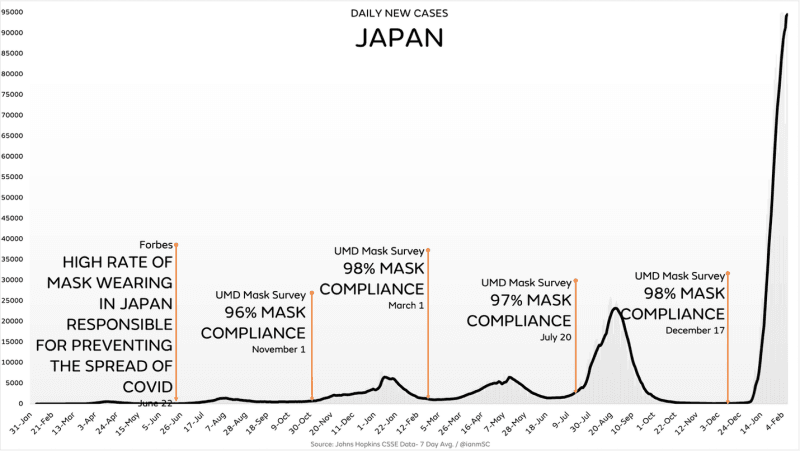
Obviously, given the percentage of people happily complying with masking, Japan must be a Covid-free paradise, right?

Let’s check!

Oh no. That is not great.

When the story was published on October 18th, Japan was averaging 518 cases each day. By mid-February, that number was 94,491, an increase of 18,142%.

I wonder if there’ll be any new stories implying that masks don’t work because the curve went up over 18,000% a few months after they tried to credit mask wearing with bringing it down.

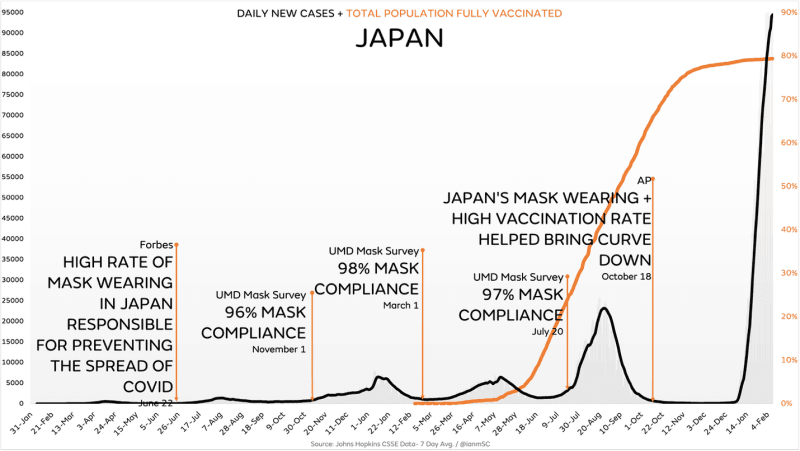
But that’s just one part of the story — Japan also has an exceptionally high vaccination rate, which, naturally, was mentioned as a possible explanation for the “bewildering” decline.

Many credit the vaccination campaign, especially among younger people, for bringing infections down. Nearly 70 percent of the population is fully vaccinated.

Well obviously that percentage has only increased over time, so let’s see how effective their high vaccination rate has been in preventing another surge:

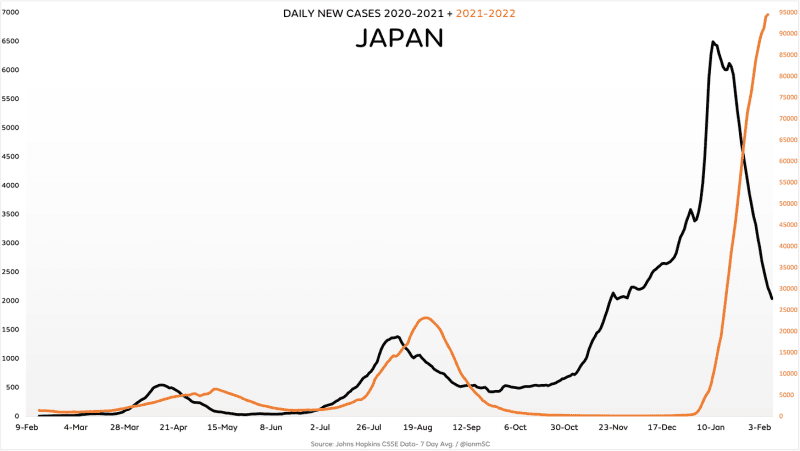
As always, the media completely ignores the impact of seasonal effects on Covid spread. One of the easiest ways to visualize this is by overlaying cases from year to year:

It’s important to note that numbers on each axis are vastly different to allow for better comparison, but it’s immediately obvious that increases and decreases have happened within weeks of each other — the 2021-2022 curve is essentially slightly delayed from 2020-2021. With that in mind, it’s clear that we would expect cases in Japan to peak in a matter of days. 

And the top of the orange curve indicates that’s likely to happen, right on schedule.

This isn’t that complicated! The curve went down in October 2021 because it’s a period of low respiratory virus spread in Japan. Based on these numbers, we can expect that Japan’s curve might see another bump in late spring, followed by a more substantial surge in late summer, and a huge increase in the winter.

These surges have happened in predictable patterns, regardless of how dedicated they are to masks, regardless of how many people view masks as an “asset” and will continue wearing them for an endemic virus. And also despite the high vaccination rates that Japan has achieved.

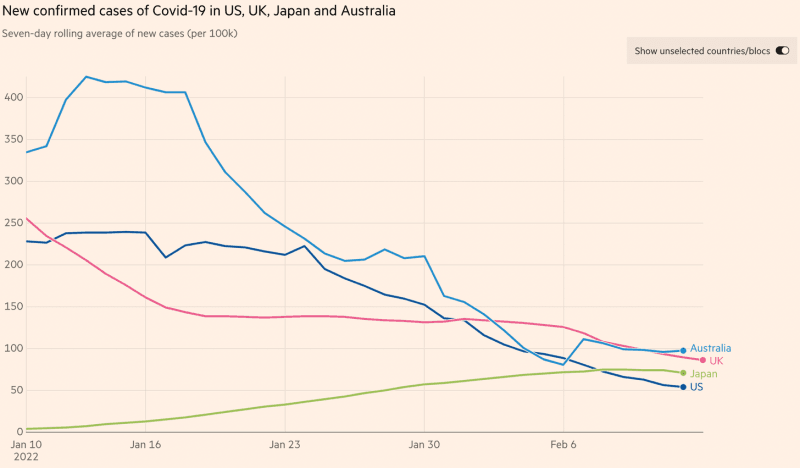
Japan, despite their low testing, is even reporting similar rates to other countries that have unsuccessfully attempted to control Covid with masking:

How does the media keep getting this wrong? How do they keep ignoring reality and maintaining an easily disproven narrative?

South Korea

It’s important to mention that the media does their best to credit other interventions, not just masks and vaccination rates, when attempting to explain the apparent success of Asian countries in combating the Coronavirus.

They also frequently praise the objectionable and nonsensical practice of “contact tracing.”

Just a few days after the AP’s missive about Japan, The Conversation published an article (don’t worry, they also credit masks) explaining that South Korea’s use of digital technology, contact tracing and quarantines to slow the spread of the coronavirus led to the country’s low case rates.

To combat Covid and future pandemics, governments need to heed the lessons of these social interventions and not just the technological ones. South Korea teaches us that high-tech solutions can help protect against disease, but these work together with social interventions – interventions that the UK has not used as effectively.

They continued:

Key to this has been quarantine measures for travelers arriving in the country, which were introduced very swiftly, and the country’s highly effective test-trace-isolate system. This carefully designed process provides local support for those in isolation, while monitoring them and sanctioning non-compliance.

Yes, mobile phone data and other forms of surveillance have been used to trace people who might have the virus. But once a positive case is confirmed, it is human intervention that ensures those people don’t spread the virus further.

There are several mind-blowing statements contained in these paragraphs, but my personal favorite is the hand-waving dismissal of “mobile phone data and other forms of surveillance” being used to trace Covid cases, as if that’s a totally normal and acceptable function of government that should be encouraged.

Allow me to submit a slight edit to their work:“We as a society need to eliminate any semblance of personal freedom and right to privacy in order to submit to the government’s desire to pretend they can control the spread of an endemic respiratory virus.”

Even if this worked, which we’ll soon see it most definitely does not, how can this be a remotely acceptable policy? How can anyone believe that this is a trade-off worth making? How can anyone think this technology will be discarded after Covid “ends,” whatever that means for an endemic virus?

As we’ve seen, governments and media have rapidly increased their calls for censorship — what’s to prevent them from using mobile phone surveillance to “isolate” those who share views they find “dangerous misinformation” until they can be rehabilitated into promoting “accurate” opinions?

None of this is remotely defensible ethically, but at least there could be a case made that it worked to help stop Covid — except The Conversation forgot about winter.

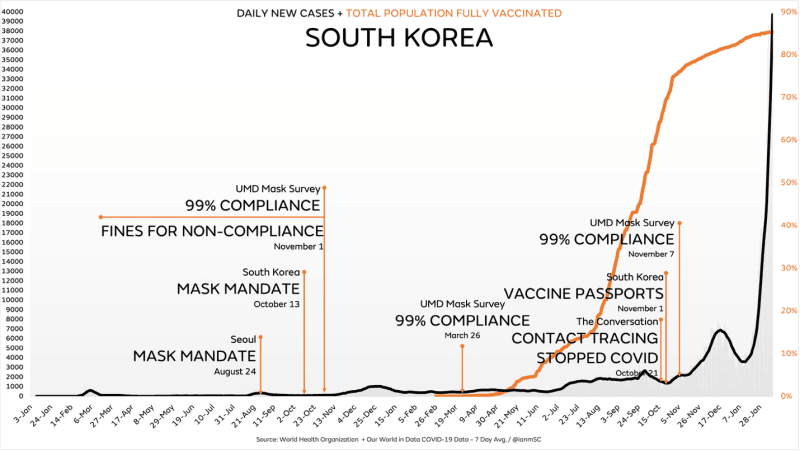
Cases have risen 2,800% since the article was published, despite South Korea’s dedication to testing, surveillance, isolation, mask mandates and vaccine passports.

How are we still pretending we can control Covid with layered interventions, with “Swiss Cheese Models of Pandemic Defense,” with following the example of Asian countries?

The collapse of Japan and South Korea’s pandemic response is yet another nail in the Covid mitigation coffin for those trying to credit masking and interventions with slowing or stopping the spread of a highly infectious respiratory virus.

For nearly two years now, we’ve seen media outlets attempt to allocate credit to interventions by ignoring the seasons. They purposefully wait until the curve goes down to report that masking in addition to their favored intervention of the week is responsible for controlling the surge — ignoring that the same interventions existed before the surge started.

South Korea and Japan have not had strict lockdowns, yet had better outcomes than most European or North American countries. However, it’s not due to masking or interventions, it’s likely been in large part due to cross exposure, as this study illustrates.

Yet that’s not a story the media wants to share, because they’ve fully committed to the indefinite pretense that human intervention is the most important factor in the spread of SARS-CoV-2.

Masks and interventions MUST work, because their preferred, trusted experts and politicians, say they do. Evidence and data be damned.

Well…maybe the pretense won’t be quite so indefinite.

I’m expecting my apology any day now.

Republished from Substack

15 Feb 18:24

Report Finds That Hamas’ Secret Global “Investment Portfolio” is Worth $500 Million

by Vijeta Uniyal

Honest Reporting: Gaza-based terrorist group "holds interests in at least 40 international companies."

The post Report Finds That Hamas’ Secret Global “Investment Portfolio” is Worth $500 Million first appeared on Le·gal In·sur·rec·tion.
15 Feb 16:22

REPORT FROM THE BLUE ZONES: Inside the Bizarre Hellworld of Minneapolis: “I wrote about the riots …

by Glenn Reynolds

REPORT FROM THE BLUE ZONES: Inside the Bizarre Hellworld of Minneapolis: “I wrote about the riots on Lake Street in Minneapolis this past Friday night here over the weekend. The Star Tribune hasn’t reported or editorialized on the riots. Instead they have published a brief op-ed column by Andy Brehm. Andy is a corporate attorney and former press secretary to then Senator Norm Coleman. To top it off, Andy lives in St. Paul. . . . One might think that the story here would have cracked the paper’s pages and merited the attention of the paper’s editors. Indeed, the dissolution of civic order in Minneapolis merits their attention in some form every day. The city is in critical condition. The nonfeasance of the Star Tribune illustrates how a newspaper can contribute to the decline of a major American city.”

Well:

15 Feb 13:36

Yesterday I Was Levi’s Brand President. I Quit So I Could Be Free.

by Jennifer Sey

Courtesy of the author.

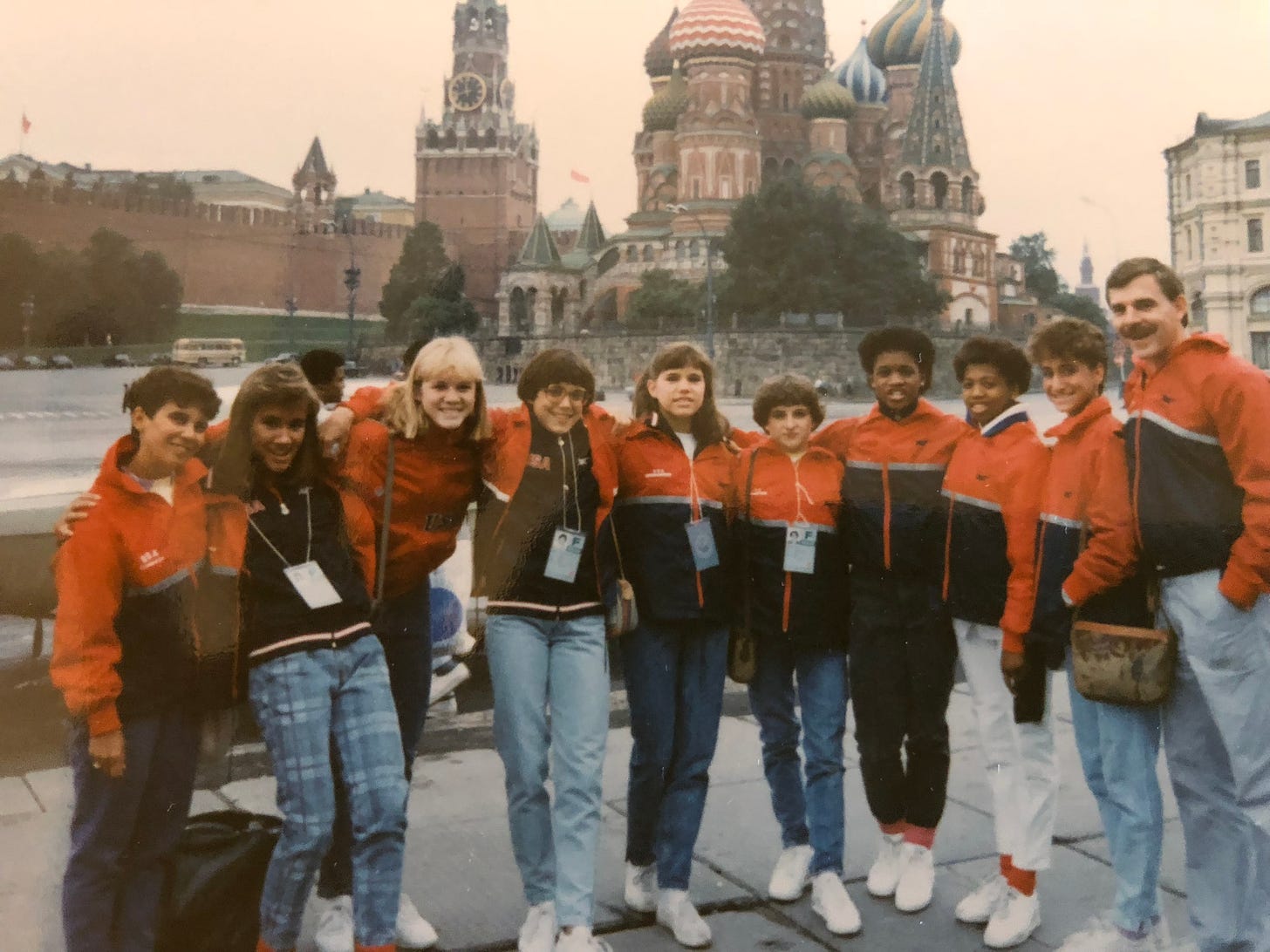
When I traveled to Moscow in 1986, I brought 10 pairs of Levi’s 501s in my bag. I was a 17-year-old gymnast, the reigning national champion, and I was going to the Soviet Union to compete in the Goodwill Games, a rogue Olympics-level competition orchestrated by CNN founder Ted Turner while the Soviet Union and the United States were boycotting each other. 

The jeans were for bartering lycra: the Russians’ leotards represented tautness, prestige, discipline. But they clamored for my denim and all that it represented: American ruggedness, freedom, individualism. 

I loved wearing Levi’s; I’d worn them as long as I could remember. But if you had told me back then that I’d one day become the president of the brand, I would’ve never believed you. If you told me that after achieving all that, after spending almost my entire career at one company, that I would resign from it, I’d think you were really crazy. 

Today, I’m doing just that. Why? Because, after all these years, the company I love has lost sight of the values that made people everywhere—including those gymnasts in the former Soviet Union—want to wear Levi’s.

Jennifer Sey (center) in Moscow at the Goodwill Games.

My tenure at Levi’s began as an assistant marketing manager in 1999, a few months after my thirtieth birthday. As the years passed, I saw the company through every trend. I was the marketing director for the U.S. by the time skinny jeans had become the rage. I was the chief marketing officer when high-waists came into vogue. I eventually became the global brand president in 2020—the first woman to hold this post. (And somehow low-rise is back.)

Over my two decades at Levi’s, I got married. I had two kids. I got divorced. I had two more kids. I got married again. The company has been the most consistent thing in my life. And, until recently, I have always felt encouraged to bring my full self to work—including my political advocacy. 

That advocacy has always focused on kids.

In 2008, when I was a vice president of marketing, I published a memoir about my time as an elite gymnast that focused on the dark side of the sport, specifically the degradation of children. The gymnastics community threatened me with legal action and violence. Former competitors, teammates, and coaches dismissed my story as that of a bitter loser just trying to make a buck. They called me a grifter and a liar. But Levi’s stood by me. More than that: they embraced me as a hero. 

Things changed when Covid hit. Early on in the pandemic, I publicly questioned whether schools had to be shut down. This didn’t seem at all controversial to me. I felt—and still do—that the draconian policies would cause the most harm to those least at risk, and the burden would fall heaviest on disadvantaged kids in public schools, who need the safety and routine of school the most. 

I wrote op-eds, appeared on local news shows, attended meetings with the mayor’s office, organized rallies and pleaded on social media to get the schools open. I was condemned for speaking out. This time, I was called a racist—a strange accusation given that I have two black sons—a eugenicist, and a QAnon conspiracy theorist.

In the summer of 2020, I finally got the call. “You know when you speak, you speak on behalf of the company,” our head of corporate communications told me, urging me to pipe down. I responded: “My title is not in my Twitter bio. I’m speaking as a public school mom of four kids.” 

But the calls kept coming. From legal. From HR. From a board member. And finally, from my boss, the CEO of the company. I explained why I felt so strongly about the issue, citing data on the safety of schools and the harms caused by virtual learning. While they didn’t try to muzzle me outright, I was told repeatedly to “think about what I was saying.”

Meantime, colleagues posted nonstop about the need to oust Trump in the November election. I also shared my support for Elizabeth Warren in the Democratic primary and my great sadness about the racially instigated murders of Ahmaud Arbery and George Floyd. No one at the company objected to any of that.

Then, in October 2020, when it was clear public schools were not going to open that fall, I proposed to the company leadership that we weigh in on the topic of school closures in our city, San Francisco. We often take a stand on political issues that impact our employees; we’ve spoken out on gay rights, voting rights, gun safety, and more. 

The response this time was different. “We don’t weigh in on hyper-local issues like this,” I was told. “There’s also a lot of potential negatives if we speak up strongly, starting with the numerous execs who have kids in private schools in the city.”

I refused to stop talking. I kept calling out hypocritical and unproven policies, I met with the mayor’s office, and eventually uprooted my entire life in California—I’d lived there for over 30 years—and moved my family to Denver so that my kindergartner could finally experience real school. We were able to secure a spot for him in a dual-language immersion Spanish-English public school like the one he was supposed to be attending in San Francisco.   

National media picked up on our story, and I was asked to go on Laura Ingraham’s show on Fox News. That appearance was the last straw. The comments from Levi’s employees picked up—about me being anti-science; about me being anti-fat (I’d retweeted a study showing a correlation between obesity and poor health outcomes); about me being anti-trans (I’d tweeted that we shouldn’t ditch Mother’s Day for Birthing People’s Day because it left out adoptive and step moms); and about me being racist, because San Francisco’s public school system was filled with black and brown kids, and, apparently, I didn’t care if they died. They also castigated me for my husband’s Covid views—as if I, as his wife, were responsible for the things he said on social media.

All this drama took place at our regular town halls—a companywide meeting I had looked forward to but now dreaded. 

Meantime, the Head of Diversity, Equity, and Inclusion at the company asked that I do an “apology tour.” I was told that the main complaint against me was that “I was not a friend of the Black community at Levi’s.” I was told to say that “I am an imperfect ally.” (I refused.) 

The fact that I had been asked, back in 2017, to be the executive sponsor of the Black Employee Resource Group by two black employees did not matter. The fact that I’ve fought for kids for years didn’t matter. That I was just citing facts didn’t matter. The head of HR told me personally that even though I was right about the schools, that it was classist and racist that public schools stayed shut while private schools were open, and that I was probably right about everything else, I still shouldn’t say so. I kept thinking: Why shouldn’t I?  

In the fall of 2021, during a dinner with the CEO, I was told that I was on track to become the next CEO of Levi’s—the stock price had doubled under my leadership, and revenue had returned to pre-pandemic levels. The only thing standing in my way, he said, was me. All I had to do was stop talking about the school thing.

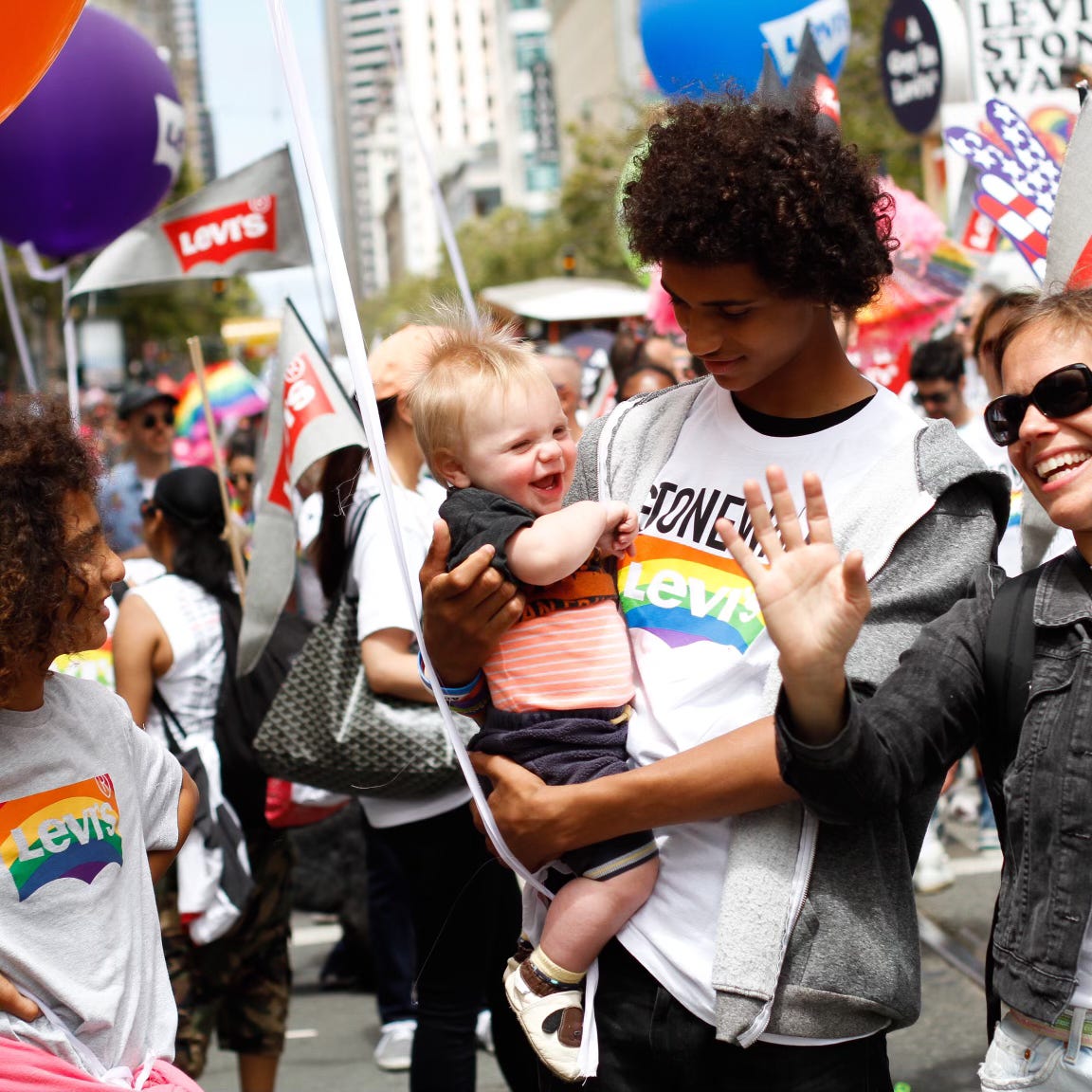
The author with her family at San Francisco Pride in 2015.

But the attacks would not stop. 

Anonymous trolls on Twitter, some with nearly half a million followers, said people should boycott Levi’s until I’d been fired. So did some of my old gymnastics fans. They called the company ethics hotline and sent emails.

Every day, a dossier of my tweets and all of my online interactions were sent to the CEO by the head of corporate communications. At one meeting of the executive leadership team, the CEO made an off-hand remark that I was “acting like Donald Trump.” I felt embarrassed, and turned my camera off to collect myself.

In the last month, the CEO told me that it was “untenable” for me to stay. I was offered a $1 million severance package, but I knew I’d have to sign a nondisclosure agreement about why I’d been pushed out. 

The money would be very nice. But I just can’t do it. Sorry, Levi’s.


If you resonate with courageous essays like this one, please become a subscriber today:


I never set out to be a contrarian. I don’t like to fight. I love Levi’s and its place in the American heritage as a purveyor of sturdy pants for hardworking, daring people who moved West and dreamed of gold buried in the dirt. The red tag on the back pocket of the jeans I handed over to the Russian girls used to be shorthand for what was good and right about this country, and when I think about my trip to Moscow, so many decades ago, I still get a little choked up. 

But the corporation doesn’t believe in that now. It’s trapped trying to please the mob—and silencing any dissent within the organization. In this it is like so many other American companies: held hostage by intolerant ideologues who do not believe in genuine inclusion or diversity.

In my more than two decades at the company, I took my role as manager most seriously. I helped mentor and guide promising young employees who went on to become executives. In the end, no one stood with me. Not one person publicly said they agreed with me, or even that they didn’t agree with me, but supported my right to say what I believe anyway.

I like to think that many of my now-former colleagues know that this is wrong. I like to think that they stayed silent because they feared losing their standing at work or incurring the wrath of the mob. I hope, in time, they’ll acknowledge as much.

I’ll always wear my old 501s. But today I’m trading in my job at Levi’s. In return, I get to keep my voice. 


If you are interested in reaching out to Jennifer write to: pressinquiries@seyeverything.com

Subscribe now

15 Feb 13:29

Canadian Broadcasting Corporation: “Freedom” a Common Far-Right Term

by Matt Palumbo
14 Feb 21:46

Are They Finally Admitting Natural Immunity?

by Jeffrey A. Tucker

In late January, the CDC published a report that made what might have been regarded as a shocking claim. If you have had Covid, the CDC demonstrated in a chart, you gain robust immunity that is better than that of vaccination, especially concerning duration. 

That should be nothing surprising. Brownstone has chronicled 150 studies making that point. What made this new chart different was that it came from the CDC, which has buried the point so deeply for so long as to amount to a near denial. 

So there: the CDC says it. So nonchalant! So uneventful! 

If people had understood this two years ago, plus been made more completely aware of the dramatic risk gradient by age and health, lockdowns would have been completely untenable. 

The society-wide mandates and lockdowns depended on keeping the public ignorant on settled points of cell biology and immunology, plus pressuring social media companies to censor anyone who didn’t fall in line. Here we are all this time later and the truth is coming out. 

Had the knowledge of risk gradients and immunities been in the forefront of policy makers’ minds – instead of wild fear and obsequious deference to Fauci – we would have focused on protecting the vulnerable and otherwise allowed society to function normally so that the virus would become endemic. We would not only have saved thousands of lives; we could have avoided the vast economic, educational, cultural, and public-health wreckage all around us. 

Somehow at the time, that point was made unsayable for reasons on which we can only speculate. And yet today, the New York Times had said exactly this. In a piece by David Leonhardt called Protecting the Vulnerable, he writes:

With the Omicron wave receding, many places are starting to remove at least some of their remaining pandemic restrictions. This shift could have large benefits. It could reduce the isolation and disruption that have contributed to a long list of societal ills, like rising mental-health problems, drug overdoses, violent crime and, as Substack’s Matthew Yglesias has written, “all kinds of bad behavior.”

At the same time, there remain those who are vulnerable and they deserve protection: “They include the elderly and people with immunodeficiencies that put them at greater Covid risk. According to the C.D.C., more than 75 percent of vaccinated people who have died from Covid had at least four medical risk factors.”

You can read that again: unhealthy but vaccinated people still die. What these people need is to enjoy the protection of herd immunity, the point at which the virus exhausts itself in the face of widespread immunity. 

If you have followed this debate, you know exactly the origin of that precise idea now being pushed in part by Leonhardt: The Great Barrington Declaration. This is the document on which Francis Collins and Anthony Fauci ordered a media hit back in October 2020. It advocated nothing more than traditional public health measures as a moderate solution between lockdowns and complete negligence of the virus threat. 

As decent as this article is, it overlooks a huge issue, namely why would non-vulnerable populations be forced to get a non-durable vaccine with risks when natural immunity is a known option? Leonhardt doesn’t go there but he should have. 

Today, even Anthony Fauci is singing a different tune. He told the Financial Times:

“There is no way we are going to eradicate this virus,” he said. “But I hope we are looking at a time when we have enough people vaccinated and enough people with protection from previous infection that the Covid restrictions will soon be a thing of the past.”

Further: 

As we get out of the full-blown pandemic phase of Covid-19, which we are certainly heading out of, these decisions will increasingly be made on a local level rather than centrally decided or mandated. There will also be more people making their own decisions on how they want to deal with the virus.”

Again, this is straight out of the Great Barrington Declaration, almost to a word, but without acknowledgement. 

There can be no question that early on in lockdowns, Fauci, the CDC, and the WHO all decided to bury the point that we would get to endemicity the same way we always have. 

How did that happen? Paul Allan Offit is an epidemiologist who advises (or did advise) the Biden administration in the early days. He is not my favorite guy but, as things go, he is no Anthony Fauci. He seems sincere and intelligent. 

Offit variously appears on podcasts. Last week, he let slip an astonishing thing. He said that early on in the pandemic, he met at the White House with Walensky, Fauci, Collins, and one other person. The topic was whether the Biden administration should recognize natural immunity to Covid — the most well-established fact about cell biology. He and one other person said absolutely. The rest said no. 

Here is the remarkable clip.  

Offit is fascinating in this interview because it was pretty clear to him that he was revealing something very important but he did not know whether this was going to be some kind of problem. He then proceeded to tell the story. He did not speculate about the reasons. He was smiling and laughing throughout the interview. 

The immunity passports in place in three of the biggest American cities (though DC just repealed its own), the entire public sector, plus the attempt to impose them on the whole of the private sector, probably constitute the most invasive, aggressive, and controversial public policy since the Vietnam War draft. It all could have been fixed by a recognition of the immunological reality: the exposed and recovered are protected. That point of science was rejected by Fauci, Collins, and Walensky. The whole Biden administration went along. 

We didn’t know until last week that this Offit meeting had even occurred. And surely this is just the tip of the iceberg. The more that time goes on, the more questions are piling up about this gang that wrecked liberty in the US after Inauguration Day 2021, a time when they could have reversed all the restrictions but instead went the other way. 

Central to the concern here is what precisely happened in February 2020 to cause Fauci to forge plans to lock down the entire American economy for a virus that he previously said repeatedly could not be stopped. Why did he change his mind? We have plenty of evidence that his change of mind was related to his fear — real or imagined — that the pathogen was made in a lab and was leaked either deliberately or accidentally and that he would likely bear responsibility. Fauci and his friends were on burner phones for weeks and holding secret meetings. The HHS document ordering lockdowns were all forged in these weeks. 

If the Republicans take back Congress, they are going to have a real time discovering the inner workings of the deep state here, if they find the courage to look deeply enough. That such an obvious and settled point of science became taboo for a time is truly a scandal for the ages. Now we know that it was a deliberate decision. Why? And why are we only now hearing about it, long after knowing this truth might have saved so much destruction? 

14 Feb 21:42

HISTORY: My Nigerian Grandfather Sold Slaves. “Nwaubani Ogogo lived in a time when the fittest sur…

by Glenn Reynolds
Jts5665

Interesting read.

HISTORY: My Nigerian Grandfather Sold Slaves. “Nwaubani Ogogo lived in a time when the fittest survived and the bravest excelled. The concept of ‘all men are created equal’ was completely alien to traditional religion and law in his society. It would be unfair to judge a 19th Century man by 21st Century principles. Assessing the people of Africa’s past by today’s standards would compel us to cast the majority of our heroes as villains, denying us the right to fully celebrate anyone who was not influenced by Western ideology.”

There’s a mythology that white slave traders ran around the bush kidnapping Africans, but that’s bunk, of course — they’d pretty much all have died. They bought African slaves from Africans. My brother talked to people in Ghana about that some years ago, and they reflected little guilt: Back then if you lost a war, you either died or were enslaved. That’s just how it worked.

One of the reasons Zora Neale Hurston’s Barracoon couldn’t get published when she wrote it was that the black literary community didn’t like that it portrayed the extent of African complicity in slavery. But history is history, despite efforts to rewrite it.

14 Feb 04:54

Enes Kanter Freedom suddenly out of the NBA…

by Kane
"They're going to do everything they can to, I believe, not sign me now." The @Celtics' @EnesFreedom to @MargaretHoover — 24 hrs before he was reportedly traded to @HoustonRockets and waived. He says the NBA "for sure" wants to silence him for his advocacy & #China criticism. pic.twitter.com/GCJIW2KBOE — Firing Line with Margaret Hoover (@FiringLineShow) […]
13 Feb 15:53

"The images just blew me away": Watch footage of NASA's solar probe capturing surprise photos of the surface of Venus

by Not the Bee

Launching something into space requires a whole heck of a lot of preparation; you're not really meant to be surprised when you send something up there, at least not in the workaday course of things.

12 Feb 17:57

Advocacy Journalism 101: Howard University Professor Hannah-Jones Criticizes MSNBC for Covering Shoplifting Stories

by jonathanturley

New York Times writer (and now Howard University Journalism Professor) Nikole Hannah-Jones, went public this week with a call for journalists not to cover shoplifting crimes, even criticizing MSNBC’s Al Sharpton for his discussion of a viral video of a man who recently stole steaks from a New York City Trader Joe’s. Hannah-Jones is a leading voice for advocacy journalism and her public criticism of the coverage of the rise in shoplifting vividly shows what such journalism means for the profession.

The MSNBC segment addressed a video of a man who casually walked out of the store with a stack of steaks:

After that video, the store was hit again by a man who shoplifted and insisted in an interview that it was entirely appropriate to do so.

Hannah-Jones objected to MSNBC covering the story because it could support efforts to increase policing and prosecution: “This drumbeat for continued mass incarceration is really horrific to watch. A person stealing steak is not national news, and there have always been thefts from stores. This is how you legitimize the carceral state.”

It was advocacy journalism in full display.

We have been discussing the rise of advocacy journalism and the rejection of objectivity in journalism schools. Writerseditorscommentators, and academics have embraced rising calls for censorship and speech controls, including President-elect Joe Biden and his key advisers. This movement includes academics rejecting the very concept of objectivity in journalism in favor of open advocacy.

Columbia Journalism Dean and New Yorker writer Steve Coll has denounced how the First Amendment right to freedom of speech was being “weaponized” to protect disinformation. In an interview with The Stanford Daily, Stanford journalism professor, Ted Glasser, insisted that journalism needed to “free itself from this notion of objectivity to develop a sense of social justice.” He rejected the notion that the journalism is based on objectivity and said that he views “journalists as activists because journalism at its best — and indeed history at its best — is all about morality.”  Thus, “Journalists need to be overt and candid advocates for social justice, and it’s hard to do that under the constraints of objectivity.”

Here Hannah-Jones is demonstrating how such advocacy journalism works. There is no question that there is a sharp rise in shoplifting across America, a trend that has resulted in the closing of stores in some cities. As I have previously written, this is due to a lack of deterrence in major cities where prosecution is rare for such crimes and many stores do not even bother calling the police.  Even in liberal states like California, politicians have been compelled to establish task forces to combat retail theft. Various Democratic politicians have decried the rising crime trend.

That would seem news. It impacts average citizens with the closure of stores and increase prices due theft. However, by covering the story, Hannah-Jones objects that reporters are working against social justice. She has previously declared that “all journalism is activism.” In this case, she would have media bury such stories because that is not the narrative that she wants viewers to hear.

While Hannah-Jones’ view of journalism is opposed by many viewers, it is in vogue in journalism schools. Indeed, UNC Journalism and Media Dean Susan King fought to give a chair to Hannah-Jones and, in another example of advocacy journalism, even pressured a journalist to frame coverage to help that cause.

The impact of such advocacy journalism is evident in every poll where the faith in the media has plummeted. Indeed, the “Let’s Go Brandon” movement is as much a criticism of the media as it is President Biden. The United States ranked dead last in media trust among 49 countries with just 29% saying that they trusted the media.


11 Feb 20:04

Sick and All Alone

by Brownstone Institute

It shouldn’t be needed, but it is. Florida governor Ron DeSantis has introduced a patient protection bill, so that ‘if you’re in a hospital or long-term care facility, you have a right to have your loved ones there present with you.’  Every other state and country will hopefully follow. Some places have even prevented the dying from dying in the company and warmth of loved ones.

Reacting to the Governors bill, Brownstone scholar Dr. Jay Bhattacharya tweeted

“Perhaps the cruelest lockdown policy: preventing people from visiting their sick loved ones in hospitals or long-term care facilities”

Many people commented on that post. The stories came pouring in. Among the many, here are some:

“No perhaps about it….it was heartless, ineffective and cruel. I lost my mother during this; I am not sure I can ever forgive the hospital policy makers for this.” - Danny Peoples, USA (@Danny99634068)

“We were allowed to see my mom for 5 minutes the day of her death. 2 by 2, though. We couldn’t be with her all together as a family. The 9 weeks prior she suffered alone in ICU surrounded by people in space suits. No visitors. She never had Covid. She died with no dignity.” – ClownBasket (@ClownBasket)

“My grandma passed away in May 2020. The last time the family saw her was outside the window at her assisted living facility, unable to actually speak due to her difficulty hearing.”  - Analytical Badger, Wisconsin (@BadgerStats)

“My mom got kicked out of the hospital by security (in FL, only 6 months ago) trying to visit my dad on Day 3 of his hospital stay. They assured her they were taking care of him. He passed from a heart attack 2 days later. The lack of allowing for patient advocacy is sickening.”  - Psyche's Dagger (@PsychesDagger)

“My grandma didn’t deserve her last ten months of isolation.” – Mark Changizi (@MarkChangizi)

“I’ll never be over my blind father having to advocate for himself alone in a hospital for 3 1/2 weeks. Never. I have his messages of pure fear.”  - Jennifer Hotes, Seattle, WA (@JenniferLHotes)

“I was in hospital, heart attack in BC a year ago. Scariest moment in my life, [they] wouldn’t let my wife visit me.”  - hear.the.truth.now, Penticton, BC, Canada (@MandelbrotG)

“How I wished Mass General Hospital would have done things differently. An old woman wanted her husband to accompany her upstairs for a doctor appointment, but MGH wouldn’t allow it. She was nervous and terrified. I will never forget what they did to people.” -  Fibci, MA (@Fibci2)

“No fan of DeSantis but currently some hospitals in CA prohibit someone from seeing their depressed spouse, family members from coming in to help a mildly delirious loved one, kids from seeing their parents unless they're gravely ill. Even if family's vaxed x3... It's not right.” - James Lim, MD, Southern California (@JLimHospMD)

“Agreed. My dad walked into a hospital last year and came out on hospice because my mom was not allowed to see him.” - Tia Ghose, San Fransisco, CA (@tiaghose)

“My wife’s abuelo was taken out of his Bogota apartment by men in hazmat suits, not allowed to say goodbye to his wife of 50 years, died alone in hospital, funeral in a parking lot. When abuela got covid they didn’t call the hospital. She stayed home. Everyone got to say goodbye.” - Team Sweden (@SwedenTeam)

“In New York, my 84-year-old mother had sepsis. We had to literally drop her off at the door. She was unable to advocate for herself and we were not able to speak with her for days. It was incredibly hard to reach her doctor or a nurse. It was an unmitigated disaster.”  – thedatadon, Florida (@thedatadonald)

“Our good friend was only 44 and had no idea he had stage 4 colorectal, liver, lung, and lymphatic cancer. He fought as long as he could but none of us were ever able to see him in his final days in the hospital. Final months really. One visitor per day. Today is his birthday.”  – Dave (@Dave31952257)

“My vaccinated Dad wasn't able to go see his vaccinated Mom (my Grandma) last Mother’s Day because of a ban on "non-essential" travel between Quebec and Ontario. She died 2 days before the ban was lifted. Her brother was killed by Nazis. Lest we forget.”  - Adam Millward Art, Montréal, Canada (@nexusvisions)

“My aunt died in an empty hospital in Amarillo from breast cancer in late 2020. She was so scared of the virus she didn’t go to the doctor until her breast literally started to atrophy and she collapsed. No visitors. I had to help her son sneak in to see her and we were kicked out.”  – razumikhin (@cw_cnnr)

“I'm afraid to let my family members [be admitted] to the hospital. Not afraid of covid at all, we've all had it, but worried about having family isolated and no one to advocate for them.” - Donna H, Pleasant Grove, Utah (@Donna_H67)

“My dad was in assisted living, in good health except unsteady on his feet. When prolonged Covid restrictions prevented any of us, his family, from visiting, and kept him confined to his room even for meals, he told an aide ‘This is no way to live’. 10 days later he went to Heaven.”  - Tray Shelley, (@tlsintexas)

“Yesterday my husband’s cousins were not allowed in the hospital where their mother was dying (non-covid related). It was unexpected and it is obscene that they were unable to say goodbye. They needed it and she needed it.” - Yada yada yada (@3girlsmommd)

“This brings me to tears because I worked in a nursing home through the pandemic, and it broke my heart that dying patients couldn't have their families with them! We had to be their family, but it was tragic!” - Jean Walker (@JeanWal33859349)

“The people who will remember the (fear) pandemic response the most are not people who got sick and recovered, but rather people barred from seeing their loved ones who died while hospitalized.” - Dr. NotWoke Setty, Tampa, FL (@hsettymd)

“I had to fight the VA, hospital administrators and threaten to sue to bring my father home. He passed quietly with my Mom next to him, surrounded by family. It breaks my heart that our most precious population has been treated so cruelly.” – Sherry (@sherryande)

“My father had pancreatic cancer. We were forced to leave his bedside due to the lockdown he was alone his final days the hospital called in his final moments but when we got there he was gone. He died alone. Tomorrow is his birthday.” - foodforlife123456 (@foodforlife1231)

“In December 2020, my wife took a prayer blanket to the hospital that she had made for her mother in the hospital. No one in the hospital would come to take it to her room. She died the next day which was Christmas morning while our girls were opening presents.” - Postman, Texas (@postman2421)

“I couldn't visit my Dad in the hospital for 2 weeks before he died. I was "allowed" to see him the day he died but it was too late.”  – Gary (@gmangehl)

“I work with dementia residents. For a year and a half these residents couldn't communicate with their families because they weren't capable of phone calls or window visits. That is a long time for someone with dementia. They deteriorate further or pass in that time. So inhumane.”  - paige (@pgs300)

“My mom passed away in April of 2020 at a retirement home. She was 102, in surprisingly good health, but declined immediately following the lockdown. The facility did break rules to allow family in to be with her over her last week or so. There was no opportunity for a funeral.”  - Prickly Mystic (@MysticPrickly)

“My grandma has been dying in hospital for about a week with us waiting in the lot begging to visit for five minutes. No. I think she’s simply losing the will to live. Genuinely wonder how many excess deaths are deaths of despair and loneliness.”  - goldnecklace (@goldnecklace2)

“In 2020 Melbourne my mother was in residential care. Our first lockdown took her mind. When I saw her after this, she didn't know who I was. We were then locked down for a second time. This second lockdown took her life. Cruel and unnecessary.”  - HegelOrHegel (@HegelorHegel)

“I have seen this firsthand in the nursing facilities I go to. So many of my patients died from sheer loneliness. It has been incredibly hard for me as a behavioral health provider to witness. Kudos to Gov Ron DeSantis for making sure this doesn't happen in Florida.”  - Dr Deepan Chatterjee, Maryland (@DrDeepChat007)

“I live in BC, Canada; my elderly aunt literally starved when her daughters weren't allowed to see her and help her eat, went from 100 to 71 lbs. and admin kept telling my cousins she was 'fine'. Finally concerned care aides contacted them to tell them she wasn't fine.”  - Marion Ambler, Vancouver, Canada (@MarionAmbler)

“I brought my Dad who has dementia to see my stepmom in a rehab facility during the lockdowns. Luckily, she had a first-floor room with a window. We stood outside in the POURING rain talking to her. He was so confused and mad that she wouldn’t let him in.”  - Kfaria (@Kfaria8)

“I wasn’t able to see my grandma before she died. My dad luckily was, but his brother was not. He stayed in town for weeks hoping they'd let him see her. They said if she went into a critical condition, they'd let us see her. They never did. She died alone.”  – Marie (@mariecaun)

“A family member died of cancer during one of the many lockdowns in Canada. No one was allowed to see him. His funeral was only allowed to be 10 people. It's like their lives didn't matter. So so sad.”  – Fern (@fern_forrest_)

“I worry constantly that my 87-year-old blind mother will need medical treatment and she will be alone. She says she will not go for fear of not coming out. The thought terrifies me, I have many sleepless nights.” – goodnightfromthelowerlevel (@mmmaybe)

“Of everything in my ICU career, what will stick with me most is being in patients’ rooms when they died, alone, while their distraught loved ones watched through an iPad because they weren’t allowed to be in the hospital.”  - Trucker Enthusiast (@_Spolar_)

“In Canada I couldn't visit my grandmother in the hospital, but they allowed skype calls via the hospital iPad. They never charged the iPads. She died and I never got to see her even remotely.”  – Vovin, Toronto, Canada (@vovin5)

“My father-in-law died alone with no last rites. We watched on zoom. He was petrified. There were no services. The following week BLM rallies in Boston started and those were totally fine. I was called a racist for being angry.”   - Mom Loves Wine, Boston, USA (@Momloveswine1)

“Yep. Was prevented from seeing my Grammy for all of 2020 until her death in 2021. 99 years young. She died alone.”  - Concerned Citizen, Encinitas, California (@mercury941)

“Yup. And women giving birth alone. SHAMEFUL.” – Kelley (@kelley14419438)

“Also, not allowing husbands in for important ultrasound visits to be with their wife, where there may be something wrong with the baby.” - ec47c (@ec147c)

“My elderly father had procedure in Florida hospital 2 weeks ago. Frustrated at being alone and not understanding all that was going on, he complained so much they discharged him 48 hours later. At home, next morning, his bed sheets were soaked in blood. He healed. But we had a scare.” – Ewetopian (@Ewetopian)

“My mom is in the hospital (non-covid related) and she’s only allowed 1 named visitor her entire stay. She’s been in for weeks and sobbing and depressed all day. It’s torture and cruel and is protecting no one.” - Free and Loud (@ohiogirl81511)

“Because of these monsters, my grandmother spent almost a year in isolation in her tiny room. She met her two newest great grandchildren through a window and started talking to pictures on the wall. Fortunately, we eventually got her out. Never forgive, never forget.” - Danny Hudson, Nashville, Tennessee (@FinEssentials)

“To all the nurses that snuck people in - you are HEROES.” - Divinely Placed Texan, Hillsborough County, Florida (@Maskingchildbad)

“My friend in Alabama’s dad was in assisted living facility with Parkinson’s. Family barred from seeing him from March-Aug 2020, when they received call saying he was at end of life and that ‘he had declined significantly since his fall in April’ that they had never been told about!” - Here Is Publius, Virginia (@hereispublius)

“I have an elderly extended family member who died of non-Covid reasons - who was not permitted contact with any family member during the last 3 months of her life. Because of the insanity that took over epidemiology.” – Falskerbra (@UnitedAirPR)

“My husband is going in for open heart surgery this week. I’ve had Covid and recovered. I’m being told I won’t be able to see him in the hospital while he’s in recovery. (Illinois) it’s sick and disgusting!” - plain belly sneech (@skjohns1965)

“My grandfather in law was unable to see his daughter, my mother-in-law, before she passed away from cancer. My coworker was unable to visit her daughter in the hospital and didn’t find out she had died until three days after.” – Babs, Massachusetts (@MantiB)

“My mom passed away after a month in a rehab facility after surgery 8 months ago. Only my dad was allowed to see her, only 2 hours/week. Rest of us had to wave to her through the window. She died alone. All of us were fully vaxed.” - A Parent of CPS kids, Chicago, IL (@AcpsParent)

“The nursing home tried to keep me out, but my daughter had the two of us listed as "compassionate caregivers" and they were forced to let us in. Thanks to Gov. DeSantis my mother did not die alone, and I will always, always be grateful.” - Carolyn Tackett, South Shore, Florida, (@CarolsCloset)

“My friend’s dad in Florida had to go check himself into the hospital with internal bleeding. His liver transplant was postponed. His wife crying in the parking lot. Thank God he was released, and he passed in his sleep at home. 10 people at his funeral. June 2020. Never forget.” – OrangeChickenMH (@OrangeChickenMH)

“My grandmother did not have covid. And died after a month of isolation from her family and suspected neglect. Staff too stretched thin and emotionally worn. She died two days before she was set to come home. On their 70th anniversary. She would have been 93 today.” – SAEDogmom (@SaeDogmom)

“My adult son was recently hospitalized for appendicitis; I was not allowed to see him. Fortunately, all went well, but it was very upsetting just in that minor instance. I can't imagine if you had elderly parents or God forbid a spouse you couldn't see in a more dire situation.” – AverageAmerican (@Average00037367)

“I had an older friend who died of prostate cancer during the pandemic. I wrote this piece as a tribute to him and so I can always remember how we treated dying people during COVID.”  – Dr. Jay Bhattacharya, California (@DrJBhattacharya)

“Haven’t seen my grandma in 2 years. She lost my papa just before all this started. Married for 68 years. She was put in a home for her safety. Now she is alone and grieving on her own Broken heart. She has rapidly declined because only one person has been allowed to see her”  – Karl, Vancouver, Canada (@K59096598)

“My severely mentally and physically handicapped cousin. Went in for viral pneumonia. Tested positive in hospital, moved to covid ward. No visitors allowed. Died alone, afraid and confused. Unforgivable.”  – Deb (@Deb08795065)

“My 94-year-old dad with red heart problems was in a board and care home. I could only stand on the front porch luckily his room faced the street, and he didn’t have his hearing aids, so I’d have to yell. The neighbors thought I was nuts. I got to see him four a few minutes the day before he died.” – FlowerPowerKatie, Silicon Valleey, California (@nileskt)

“You can think DeSantis is wrong on so many other fronts, and he's still right about this. Loneliness is a cruel punishment for people whose only crime is being old.” - Shannon Brownlee, Washington DC (@ShannonBrownlee)

“My best friend’s mother got sick but put off going to the hospital because she was terrified of being there alone. It got bad enough she finally went- a week later she was dead. Alone. Family wasn’t permitted to be with her even in the final hours.” - Sam M (@iamsamh2)

“Imagine how many people died because they avoided hospitals for this exact reason.” – Meredith (@Opportunitweet)

“Last time I saw my grandmother she said, ‘live your life honey’, repeatedly. I was lucky she was in a private facility that allowed visitors. The day she left this world we were having the first dinner party since the beginning of all this. I lived my life that day.” – nooneinparticular (@SweateyYeti)

11 Feb 19:48

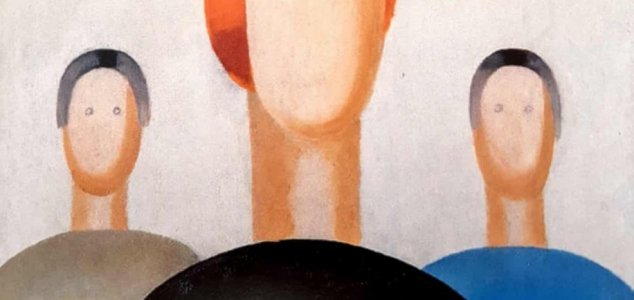
'Bored' guard draws eyes on million dollar painting

by unexplained-mysteries.com
A security guard at an art gallery in Russia was found to have drawn eyes on a highly valuable painting. The bizarre incident was first brought to lig...
11 Feb 15:39

THEY DON’T WORK FOR AMERICANS, AND THEY’RE NOT OUR FRIENDS: …

by Glenn Reynolds

THEY DON’T WORK FOR AMERICANS, AND THEY’RE NOT OUR FRIENDS:

11 Feb 13:28

State Department tells Americans in Ukraine 'depart now,' U.S. won't evacuate citizens

by Madeleine Hubbard
"Military action may commence at any time and without warning," the agency warned.
11 Feb 13:24

HUDSON, OHIO MAYOR SAYS ICE FISHING COULD LEAD TO PROSTITUTION: At a city council meeting earlier t…

by Ed Driscoll

HUDSON, OHIO MAYOR SAYS ICE FISHING COULD LEAD TO PROSTITUTION:

At a city council meeting earlier this week the council president mentioned that some residents requested permission to ice fish on Hudson Springs Lake, which is illegal. The council discussed the issue for a while, worrying that an ice fisher might fall through the ice. Then the cerebrally challenged  Mayor opened his mouth.

“If you open this up to ice fishing, while on the surface it sounds good, then what happens next year?” Shubert asked. “Does someone come back and say ‘I want an ice shanty on Hudson Springs Park, for X amount of time?’ And then if you then allow ice fishing with shanties, then that leads to another problem: prostitution. And now you’ve got the police chief and the police department involved.”

See what I mean? This guy has issues.

Don’t even get him started on what playing pool can lead to:

11 Feb 13:18

MILTON FRIEDMAN’S REVENGE: Inflation Haunts the Biden Economy. So how’s the U.S. government’…

by Glenn Reynolds

MILTON FRIEDMAN’S REVENGE: Inflation Haunts the Biden Economy.

So how’s the U.S. government’s grand experiment in modern monetary theory turning out? Not well. Consumer prices over the past 12 months rose 7.5%—the most in 40 years—while real wages declined 1.7%, the Bureau of Labor Statistics reported Thursday.

The report jolted financial markets, as stocks fell and bond yields rose. But nothing in the January report should be shocking. This is what happens when the government massively expands the money supply and over-stimulates demand. Yet the Federal Reserve and Biden Administration last year dismissed inflation as “transitory.” They have belatedly dropped that line, but they still won’t concede that inflation is becoming more entrenched as price increases have exceeded 5% for eight months in a row.

Food prices increased 0.9% in January and 7% over the year. Gas prices ticked down 0.8% last month but are still up a whopping 40% from a year ago. It’s striking that the core index that excludes food and energy rose 0.6% in January—about twice as much as last summer—and is up 6% year-over-year.

The economy needed support early in the pandemic. But Congress’s $900 billion Covid relief bill in December 2020 and the $1.9 trillion in spending that Democrats passed last March were overkill. The enormous income transfers reduced incentives to work while at the same time giving people more money to spend.

Inflation is always and everywhere a monetary phenomenon. But if you include regulations that stifle growth or discourage people from working, it can become stagflation too. So there’s that.

Related: The NYT article on Modern Monetary Theory is really bad: The fringe ideology’s star is falling, and puff pieces will not resuscitate it.

The NYT article on MMT, written by Jeanna Smialek, is mostly a puff piece about Stephanie Kelton, MMT’s most well-known proponent. In glowing tones, it describes Kelton’s clothes, her office, her house, her neighborhood, her blog, her manner of speaking, her personal story, and so on, calling her “the star architect of a movement that is on something of a victory lap”. Very little is written about the background of the macroeconomic policy debate, and what does appear is highly questionable.

Typical fodder for the group of aging liberal women who don’t know anything about economics, or much else, that appears to be the NYT’s target demographic these days. Plus:

This is important because any attempt to engage with the actual substance of MMT quickly finds that such substance is curiously lacking. MMT proponents almost always refuse to specify exactly how they think the economy works. They offer a package of policy prescriptions, but these prescriptions can only be learned by consulting the MMT proponents themselves. There is no model here — no set of equations or definite formal statements that a layperson could use to generate their own MMT policy prescriptions without appealing directly to the gurus.

Every economist who has attempted to engage seriously with MMT literature has concluded the same.

So it’s a cousin to Critical Race Theory, then?

Plus:

As a coda, though, I should point out that the really scary threat to U.S. macroeconomic policy comes not from MMT — nor, at the moment, from the return of austerity. It’s from the people advocating price controls. Some decided non-fringe economists — James K. Galbraith of UT Austin, Todd Tucker of the Roosevelt Institute, and J.W. Mason & Lauren Melodia of the Roosevelt Institute, to name just four — have advocated adding price controls to our inflation-fighting toolkit, despite the fact that both theory and history offer us little reason to think the tool would be effective. In fact, a shift from a regime of demand management based on monetary and fiscal policy to one based on price controls and direct intervention in industry could spark runaway inflation as it did under Chavez and Maduro in Venezuela. The Biden administration hasn’t gone for price controls yet, but it has attempted to blame inflation on powerful companies, suggesting that Biden’s people might be thinking along these lines.

Wage and price controls also help turn inflation into stagflation or worse, and high prices into shortages.

Also: Yes, the Biden Stimulus Made Inflation Worse.

UPDATE: From the comments: “The function of most left journalism is to tell readers how they are supposed to feel about someone or something. The journalist uses connotative language cues as a code to indicate to the reader what they should feel. Writing about Kelton’s clothes, home, or way of talking is simply a way of cuing the reader on what the approved left attitude is toward her.”

10 Feb 22:24

South African doctor who discovered Omicron says politicians pressured her not to call it mild

by Madeleine Hubbard
"They are accusing me of lying, of downplaying Omicron because of how it has been in Europe," she said.
10 Feb 19:11

American Bar Association Abusing Its Accreditation Power To Force Race-Focused Study On Law Students

by William A. Jacobson

Our column at Real Clear Politics: "Legal education is about to undergo a revolutionary change, with the American Bar Association poised to mandate race-focused study as a prerequisite to graduating from law school.... States enabled the ABA’s near-monopoly accrediting power, which now is being abused for ideological purposes. What the states gave the ABA, the states can and should take away."

The post American Bar Association Abusing Its Accreditation Power To Force Race-Focused Study On Law Students first appeared on Le·gal In·sur·rec·tion.
10 Feb 16:18

What the Truckers Want

by Rupa Subramanya

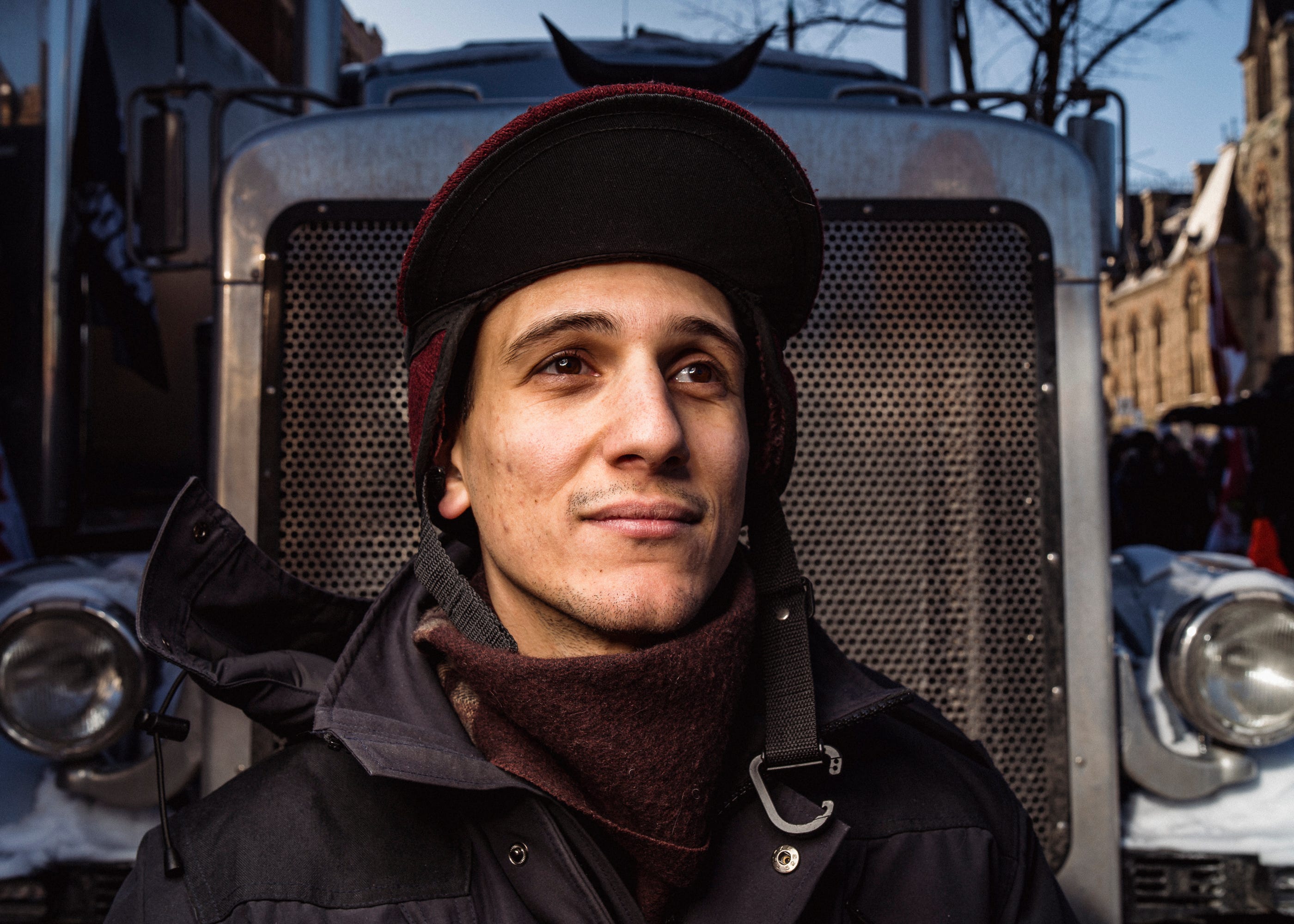
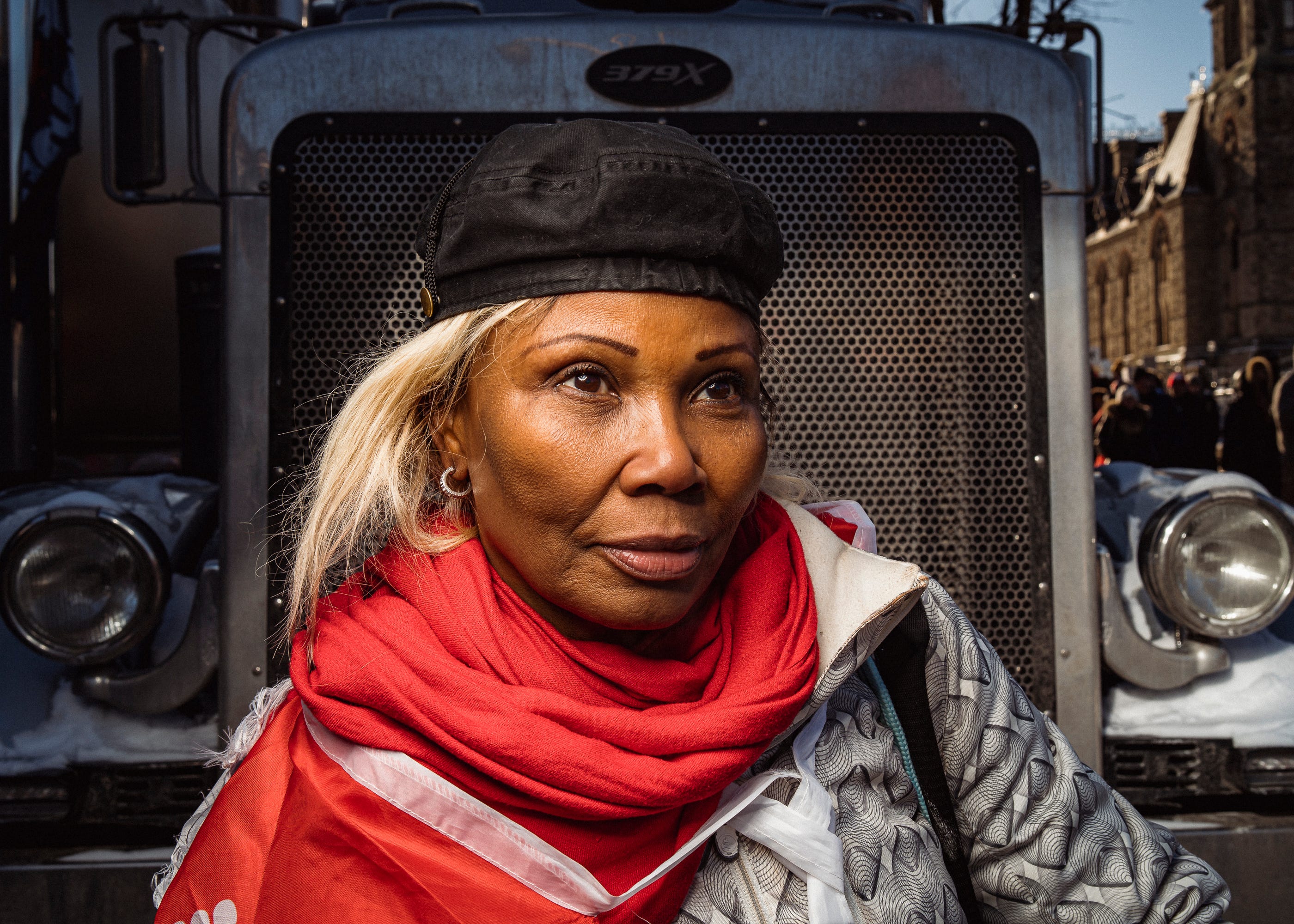
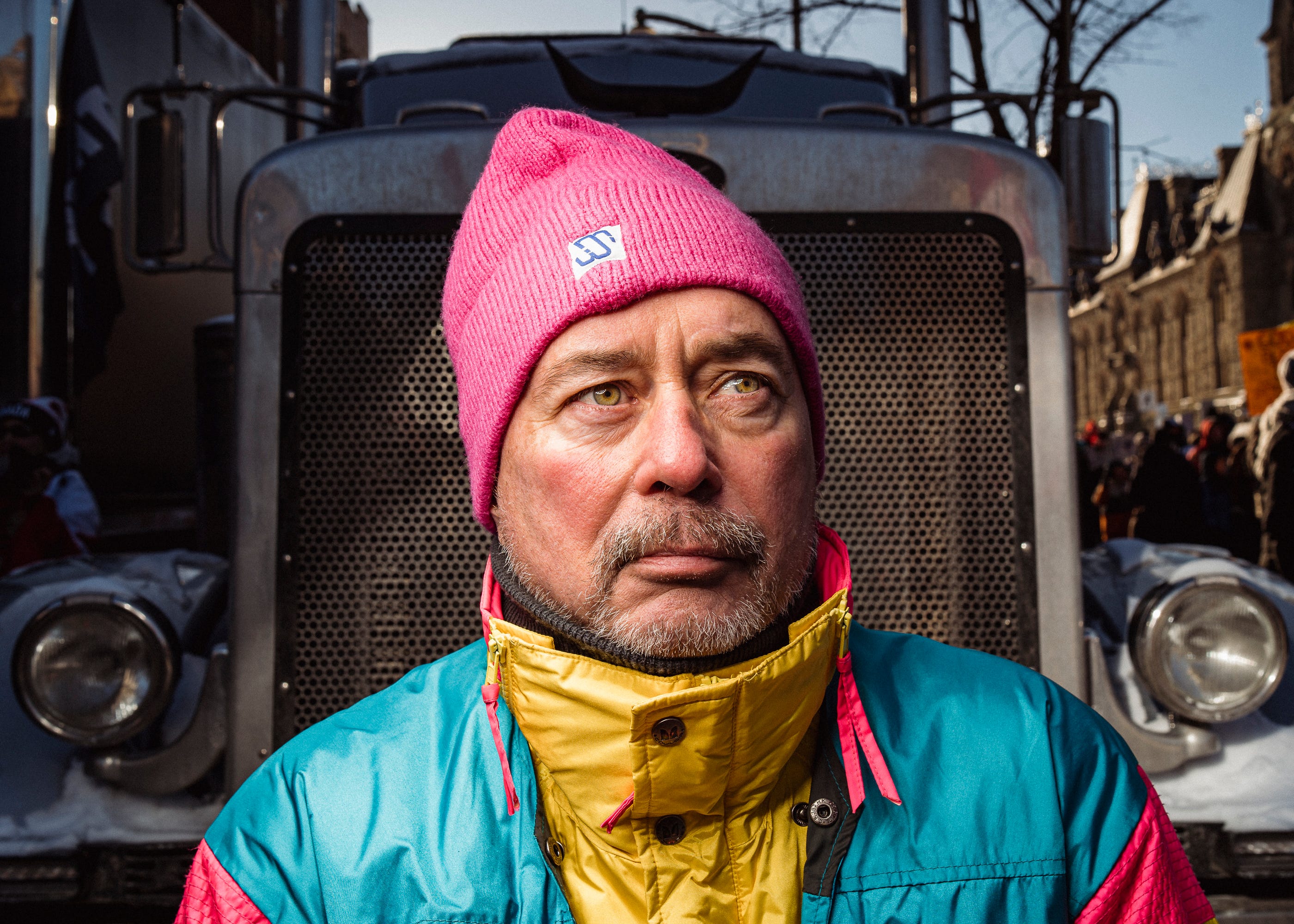
Nabil Yaghi from Ontario. (Dan Aponte)

For two weeks, the 18-wheelers, the semis, the tractors and the pick-up trucks streamed through the snow and ice into the center of Ottawa, the Canadian capital.

They came from across the country. Vaxxed, unvaxxed, white, black, Chinese, Sikh, Indian, alone or with their wives and kids. They huddled around campfires. They set up pop-up kitchens and tents with block captains doling out coffee and blankets. They honked (and honked and honked). They blasted “We Are the World.” And everywhere you looked, someone was waving the Maple Leaf.

It dipped to 4 degrees. The mayor declared a state of emergency. And they didn’t budge.

The truckers were scared of running out of gas—freezing to death in their little truck beds in the middle of the night. The city threatened to arrest anyone who brought it to them. In response, hundreds of Ottawans did just that. The truckers stayed put. 

They are a city inside a city whose inhabitants—there are an estimated 8,000 to 10,000—were outraged with a country that seemed to have forgotten they existed. This past Sunday, as if to confirm that suspicion, Prime Minister Justin Trudeau, who has yet to meet with Freedom Convoy leaders, took a personal day. On Monday, during an emergency debate at the House of Commons, he called them “a few people shouting and waving swastikas.” 

​​I live in downtown Ottawa, within view of Parliament Hill, and have spent the past 10 days or so bundled up and walking around the protests. I have spoken to close to 100 protesters, truckers and other folks, and not one of them sounded like an insurrectionist, white supremacist, racist or misogynist. 

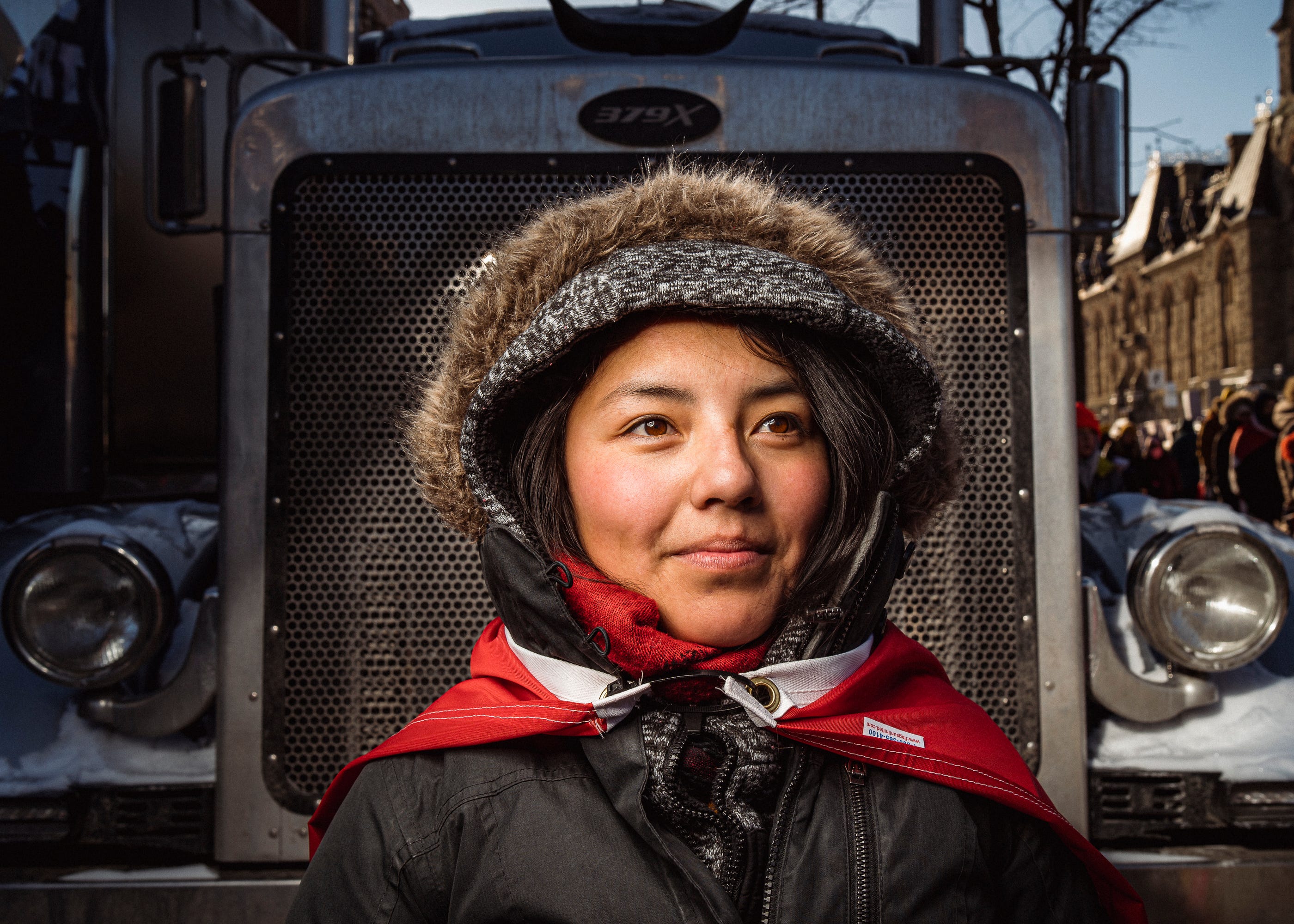
Katie Hepburn from Owen Sound, Ontario. (Dan Aponte)

They sound like Ivan, 46, who emigrated, with his wife, Tatiana, from Ukraine to build a new life in New Brunswick, in eastern Canada. "We came to Canada to be free—not slaves,” he said. “We lived under communism, and, in Canada, we’re now fighting for our freedom.” (Like so many truckers, Ivan refused to share his last name.)

B.J. Dichter, a spokesman for the Freedom Convoy, is vaccinated, and he estimates that many—maybe most—of the truckers at the protest are, too. “I’m Jewish. I have family in mass graves in Europe. And apparently I’m a white supremacist,” he told me on Wednesday. 

Ostensibly, the truckers are against a new rule mandating that, when they re-enter Canada from the United States, they have to be vaccinated. But that’s not really it. The mandate is a moot point: The Americans have a similar requirement, and, anyway, “the vast majority” of Canadian truckers, according to the Canadian Trucking Alliance, are vaccinated. (The CTA represents about 4,500 truckers nationwide.)

So it’s about something else. Or many things: a sense that things will never go back to normal, a sense that they are being ganged up on by the government, the media, Big Tech, Big Pharma.

One thing was indisputable: There was this electricity coursing through the streets, and it felt like it could get out of control. It didn’t help when a handful of protesters sported swastikas and Confederate flags. Or when GoFundMe shut down the convoy’s fundraiser, announcing that donors had two weeks to reclaim their money before it was sent to “established charities” chosen by Freedom Convoy organizers. Or when the cops started arresting locals, including the elderly.

It is hard to capture how thoroughly Trudeau has misjudged the moment. “This pandemic has sucked for all Canadians,” he said Monday. As for the protest? “It has to stop,” declared the prime minister. 

If he sauntered down to the mess of rigs on Wellington Street, across from the Parliament building, opposite the mall and the war memorial, if he talked to these people for a few minutes, he would understand: It will not stop.

What’s happening in Canada right now is bigger than the mandates.

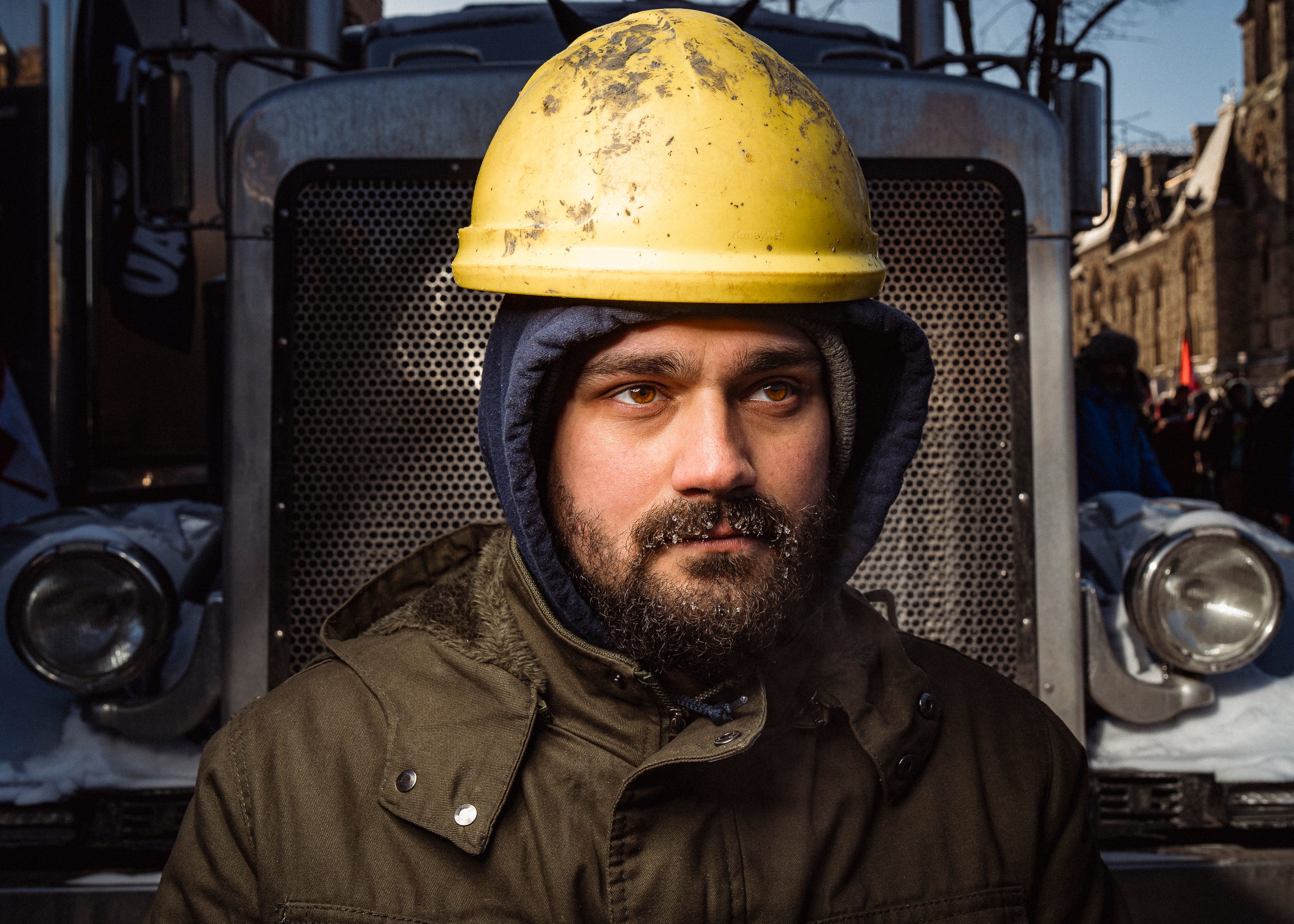
Sebastien Fortin from Coaticook, Québec. (Dan Aponte)

The convoy is spearheaded by truckers, but its message of opposition to life under government control has brought onto the icy streets countless, once-voiceless people declaring that they are done being ignored. That the elites—the people who have Zoomed their way through the pandemic—had better start paying attention to the fentanyl overdoses, the suicides, the crime, the despair. Or else.

Kamal Pannu, 33, is a Sikh immigrant and trucker from Montreal. He doesn’t believe in vaccinations; he believes in natural immunity. He had joined the convoy because the Covid restrictions in the surrounding province of Quebec had become too much to bear. He said that he and his wife used to do their grocery shopping at Costco, until the government decreed that the unvaxxed would be barred from big-box stores. Since then, their monthly grocery bill had jumped by $200.  “Before,” he said, “we didn’t look at the price of what we were buying. Now, we sometimes put items back because we don’t have that much money.” 


More than 150,000 readers have joined the Common Sense community. We are thrilled you’re here—and hope that you’ll become a paid subscriber to support our work.


Peter, 28, a long-haul trucker from Ontario, told me that a divide had opened up all across the country. Pointing to the gleaming, ritzy condominiums near Parliament, he said he used to deliver the concrete stairs in those buildings. Since the cross-border vaccine mandate kicked in in mid-January, he’s been out of work. He refused to get vaccinated, he said, because the whole thing had been so politicized, and you couldn’t be sure who to trust. He refused to give his last name, he said, because he didn’t want the government coming after him, and he wanted to work again. 

I heard this over and over from the truckers. And it was not entirely crazy. The CTA, which has publicly criticized the Freedom Convoy, said in a January 29 statement addressed to the truckers in Ottawa: “Your behavior today will not only reflect upon you and your family but the 300,000 plus fellow Canadians that, like you, take great pride in our industry.”

If you pointed out to people like Peter—and I did—that almost every doctor in the country had been vaccinated, it didn’t matter. There was bodily autonomy. And privacy. And religious exemptions. And anyway, how could you know what the doctors were thinking? You couldn’t trust the press or politicians, he said, recalling that in the fall of 2020, then vice-presidential candidate Kamala Harris expressed skepticism of any vaccine approved under President Donald Trump. Now, they were being ordered to get this vaccine developed . . . under President Donald Trump.

“If you’re not vaccinated,” Peter said, “they treat you like garbage lying on the streets.”

Randy. (Dan Aponte)

Theo, 24, felt the same way. He wasn’t a trucker—he used to work at a major accounting firm and now works another big company—but he was angry, like the truckers were. “They treated me like a second-class citizen,” he said, referring to his old firm. He explained that he’d refused to get vaccinated. He’d been vaccinated for other things. But he had a hereditary heart condition that, he said, made the Covid vaccine inadvisable—but he couldn’t get a medical exemption. At work, they made him mask up constantly. He felt like he was being publicly shamed. So, he quit.

Theo’s brother, Lucas, who’s 21, is also unvaccinated for similar reasons. He’d planned to go to law school, but, being unvaccinated, he had to take only online courses, but some of the courses he’d need to graduate were only available in person. Now, his future was uncertain.

A lot of the truckers who had driven in from Vancouver and Winnipeg and Quebec City expressed this same uncertainty. It was getting really expensive to get by: rent, utilities, groceries, everything. Almost everyone who was poor or even middle-class was mired in debt. They told me that they expected this sort of wealth gap in America, but not in Canada.

The divide that already existed between the haves and have-nots largely mapped onto the new chasm between those who supported the mandates and those who did not. And that was creating this huge, weird fracturing everywhere.

Odia Jean-Pierre from St. Jerome, Québec. (Dan Aponte)

Mackenzie, 24, from Ottawa, works as a bartender at a popular downtown restaurant near Parliament. She had Covid, got better, and believes it’s her choice not to get the vaccine. She isn’t an anti-vaxxer. She’s been vaccinated for other things. But Covid wasn’t the same as malaria or the flu. And there were European countries, like Germany and Switzerland, that recognized recovery from infection as an alternative to vaccination. Canada, like the United States, does not.

It was ironic, she said that she could serve but couldn’t dine at the restaurant where she worked. She’d lost a close friend over her vaccination status. When I asked her why she wouldn’t tell me her last name, she said she didn’t want to upset her parents. “Not many people know this side of me,” she said.

Chris, a 40-year-old trucker from Toronto, said that he’d gotten vaccinated so he could keep his job, but that his participation in the protest had torn his family apart. “My father has spat in my face and disowned me as his son. Told me I’m not worth the family name because I will not vaccinate my children,” he said. “My mom and I have battled back and forth.”

Matt Sim, 43, who immigrated to Canada from South Korea, is director of operations of an IT start-up in Toronto and came to Ottawa with his wife to join the protests. He’d had Covid, and then he’d recovered, and he was skeptical of all the hysteria surrounding the vaccines. His family, back home in Korea, had lived through the Asian financial crisis of 1997, and that had made him skeptical of the media, the government, and powerful people in general. “There’s a group in power that always manages to create panic among the masses and siphon off public funds,” Sim said. 

Brock Hobb, from Burlington, Ontario. (Dan Aponte)

The Freedom Convoy came as a surprise. Unlike the United States, Canada had never seen mass protests and civil disobedience on this scale. 

And it is not dying down. Since Monday, truckers have blocked the main route linking Windsor, Ontario, and Detroit, Michigan—a route that some 8,000 trucks use each day and accounts for 25 percent of trade between the two countries.

The protesters feel the mood shifting. On Tuesday, the premier of Saskatchewan, Scott Moe, announced the end of his province’s proof-of-vaccination policy. “It is time for us also to heal the divisions in our communities over vaccination,” he said.

Joël Lightbound, a leading member of Parliament from Quebec and a member of the Liberal Party, Trudeau’s party, slammed the federal government. The government, Lightbound said, had gone “from a more positive approach to one that stigmatizes and divides people.” The truckers say they won’t leave Ottawa until the mandates, the lockdowns—everything—are dropped.

There was a new consciousness, too, a feeling among the truckers that they weren’t as alone as they’d thought. Blake, a contractor who had driven in his pickup to Ottawa from his home in Toronto, called the protest a “diesel-fueled hippie commune.” We met one night, very late, in the freezing cold, while Blake, in beige overalls, danced with 50 other protesters on a makeshift dance floor. There was a D.J. playing Gloria Estefan’s “Conga.”

The solidarity was infectious. There were copycat protests popping up in Helsinki, Finland, and Wellington, New Zealand and Nice, France (they planned to hit Paris and Brussels). There were truckers organizing in the Netherlands, Australia and the United States. Among the Americans who had driven up to Ottawa there was talk that soon the big rigs would descend on Washington, D.C. 

“Seeing the country fall apart like this is heartbreaking,” Sim said. “For me, this is the line in the sand. If we lose this battle, I’d like to move out of Canada.” He said that he was thinking of maybe heading to Florida. A lot of the truckers were thinking about the States. But not yet. “I feel that I owe it to me and others that share my values to, at least, fight for this.”


You can follow Rupa Subramanya’s ongoing coverage of the truckers here. And if you were as struck by the portraits that accompanied her story as we were, check out Dan Aponte’s photography.

Subscribe now

10 Feb 14:11

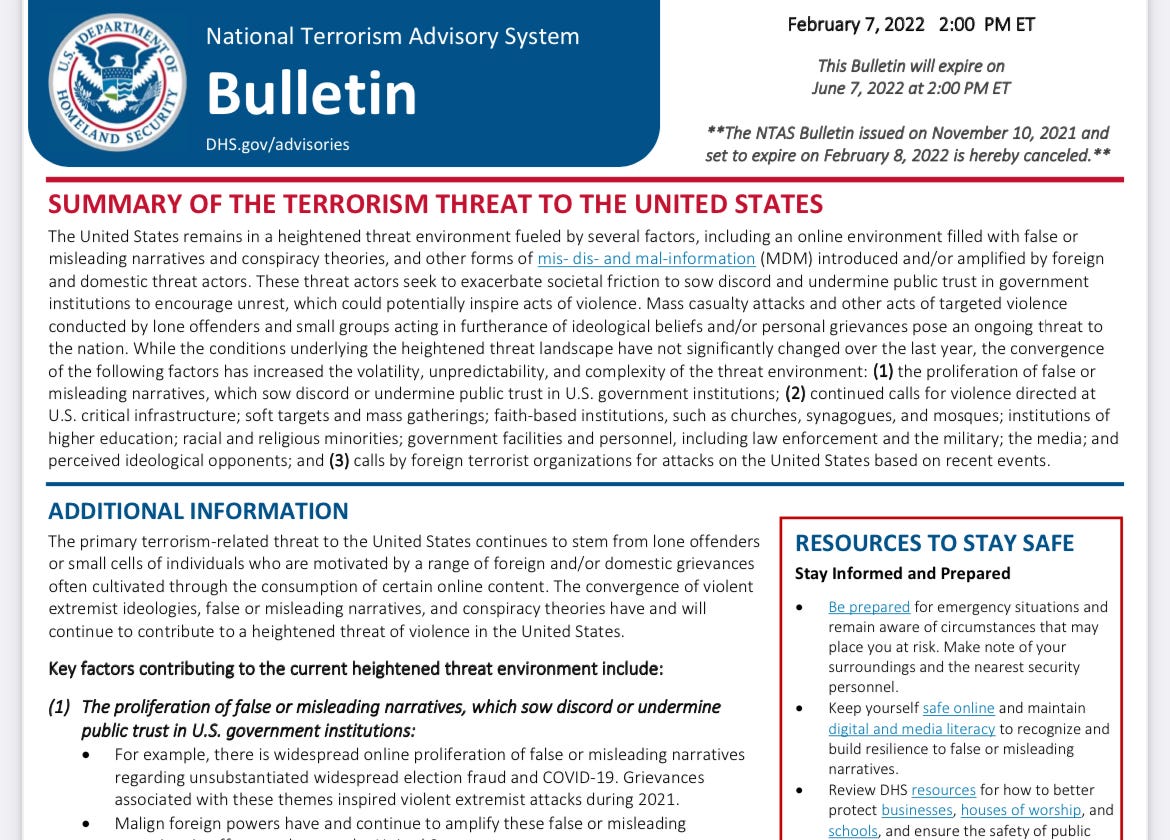
DHS Terrorism Bulletin Warns of Terror Threat From People “Spreading False Narratives” That Undermine Trust in Government

by Matt Palumbo
10 Feb 12:57

AND THANK GOD FOR THAT: Sarah Hoyt: We Live Profoundly Unnatural Lives. No, I’m not actually …

by Glenn Reynolds

AND THANK GOD FOR THAT: Sarah Hoyt: We Live Profoundly Unnatural Lives.

No, I’m not actually complaining. Most of the time natural means someone like me would have died in infancy if not before. And I don’t dislike wearing clothes, not having to kill my own meat and not being limited to eating what I can grow. (Particularly in Colorado, where I couldn’t grow much of anything, partly because I’m not the best gardener, partly because the soil was like cement.)

But it is important, sometimes, when reading/talking/writing about the past to realize that we live profoundly unnatural lives. Which need unnatural solutions or experiments sometimes. Or just reality check.

For instance, in reading historical books, I’m getting sick and tired of everyone in their twenties who is an orphan having parents who were killed “in a carriage accident.”

No, actually seriously. This is the go-to for all the young writers, who have absolutely no clue how many ways to die there still are, all over the world, much less in the past with no anti-biotics.

Seriously, I keep hearing people telling me that no, the life expectancy was about the same, if you survived childhood. Leaving aside the fact we don’t really have good enough records to claim that (other than for the very upper classes, where we do, but those were a different ball of wax, okay? and even they died younger and uglier than we do) it’s poppycock.

In pre-antibiotic world, you could die of a blister that infected. You could die of accidentally stabbing yourself with a needle. (One of the reasons my dad was obsessive about disinfecting my childhood cuts and scrapes.) You could die of a trifling cold. You could die of medical treatment (Okay, in that, you’re like moderns) and you definitely could die of child birth, hunting accidents, and just “an illness” that was never identified and that could be any of a dozen viruses we no longer even think about.

Sure, childhood — and old age — were particularly dangerous, but trust me, you arrived at sixty looking what we now think of as 80, because all the illnesses took a toll. (It’s still so in most of the world.)

But we live profoundly unnatural lives.

I remember being little and looking at people in their sixties, after the kids left home. They basically sat around waiting for death, with occasional outbreaks of grandkids visiting. It wasn’t like that for my parents, 20 years later. It’s not that way for us.

And thank God for that.

09 Feb 19:54

COLORADO: A Black separatist group’s utopian dream for land near Telluride withered after an armed…

by Stephen Green

COLORADO: A Black separatist group’s utopian dream for land near Telluride withered after an armed standoff.

They were about two dozen leftist revolutionaries, almost all people of color. In Denver and other U.S. cities, the group’s chapters had spent the pandemic handing out food and personal protective equipment while planning their signature project: Hammer City, a utopian settlement high in the Rocky Mountains free of coronavirus, cops, money and white people. Together they would renounce private property, work the land and build power.

Commenters on Facebook and Twitter widely ridiculed the concept as a “cult” doomed for failure. But the activists raised more than $60,000. On May 3, 2021, Augustus Romain Jr., the group’s commander-in-chief, posted a photo of 10 people standing among sagebrush with raised fists and a declaration on Facebook: Black Hammer had “liberated” 200 acres of land somewhere in Colorado. The soil, they wrote, was rich.

Black Hammer never said where their new community was. Within weeks, the group suddenly stopped its dispatches from the desert.

But donations continued pouring in, eventually cresting the $100,000 mark, according to the organization’s fundraising webpage. Critics online wondered where the money went when the Hammers left Colorado.

Read the whole thing.

09 Feb 19:46

FRONTIERS IN POOP: Fecal implants drive behavioral and cognitive changes in Alzheimer’s model….

by Glenn Reynolds
09 Feb 19:45

EXTREMELY URGENT: The Biden Administration says I'm a terrorist threat.

by Alex Berenson

That headline sounds like a joke.

It’s not.

The White House has begun an extraordinary assault on free speech in America. It is no longer content merely to force social media companies to suppress dissenting views. It appears to be setting the stage to use federal police powers.

How else to read the “National Terrorism Advisory System Bulletin” the Department of Homeland Security issued on Monday? Its first sentence:

SUMMARY OF THE TERRORISM THREAT TO THE UNITED STATES: The United States remains in a heightened threat environment fueled by several factors, including an online environment filled with false or misleading narratives and conspiracy theories... [emphasis added]

You read those words right.

The government now says “misleading narratives” are the most dangerous contributor to terrorism against the United States.

The bulletin’s next sentence:

These threat actors seek to exacerbate societal friction to sow discord and undermine public trust in government institutions to encourage unrest, which could potentially inspire acts of violence. [emphasis added]

You read those words right too.

A federal agency says that to “undermine public trust in government institutions” is now considered terrorism. Speech doesn’t even have to encourage rebellion or violence generally, much less against anyone specific. It just has to “potentially inspire” violence.

Potentially.

Later, the bulletin explains exactly what speech the government now considers a terrorist danger:

Widespread online proliferation of false or misleading narratives regarding unsubstantiated widespread election fraud and COVID-19.

There’s that word misleading again.

Who’s defining “misleading”? Misleading to whom? Misleading how?

DHS February 2022 bulletin

I have no doubt whatsoever that I fit as a terrorist threat under these guidelines.

So does Joe Rogan. And Tucker Carlson. After all, we’ve “undermine[d] public trust in government institutions” about Covid and the mRNA shots (I try not to call them vaccines anymore).

This bulletin marks an extraordinary escalation of the war on speech and the First Amendment.

The Biden Administration has issued five bulletins since it assumed power. Regularly issuing these warnings at all is problematic - they are not “alerts” to warn people about specific and ongoing terrorist plots. Thus they inevitably contain political judgment about what future threats may be the most severe.

But none of the earlier reports contained language remotely similar to Monday’s.

The original January 2021 bulletin highlighted “ideologically-motivated violent extremists” and specific threats of violence against “critical infrastructure.” The fourth discussed how foreign and domestic extremists were trying “to inspire potential followers to conduct attacks in the United States, including by exploiting recent events in Afghanistan.” It added "that as of November 10, 2021, DHS is not aware of an imminent and credible threat.”

In contrast, Monday’s bulletin clearly equates speech with terroristic activity. That connection may seem ridiculous and absurd. It is not.

These public statements are not merely wallpaper. They can reflect secret government decisions about what police or intelligence tactics are acceptable against targeted groups.

This is not a conspiracy theory; in 2017, Central Intelligence Agency director Mike Pompeo publicly called Wikileaks a “non-state hostile intelligence service.” As Yahoo News reported three years later:

More than just a provocative talking point, the designation opened the door for agency operatives to take far more aggressive actions, treating the organization as it does adversary spy services.

Yahoo article about the CIA and Wikileaks

What, if anything, are government agencies planning to do about the terrorist threat that I and other Covid skeptics represent? I have no idea.

But make no mistake. This bulletin marks a clear escalation of the targeting from the highest levels of the federal government that began last year.

Remember: in July President Biden, Jennifer Psaki, and Surgeon General Vivek Murthy all encouraged social media companies to clamp down on Covid vaccine skeptics less than 24 hours before Twitter began the process of deplatforming me. Last week Psaki specifically targeted Rogan, who has a much larger audience.

Now, though, the government appears to want to target my First Amendment rights directly.

The stakes here could not be higher.

What if our worst fears about the mRNA Covid vaccines come to pass? What if they turn out to have long-term immunosuppressive effects that lead not just to more infections but to more serious illness over time?

I want to be clear. I’m not saying they do. Or will. But both the epidemiological data and the new cellular studies suggest the risk of such an outcome is non-zero.

It is not hard to imagine the anger and unrest that would accompany such revelations. The entire public health establishment and nearly every politician and elite institution in the United States has strongly encouraged Americans to take these shots. Many did so willingly, but millions more agreed to do so only because they faced unemployment if they did not comply. The defense that we just didn’t know, we took them ourselves, will be thin indeed.

But if pointing out problems with vaccines - or even potential problems - is not speech but terrorism, then the government can do what it needs to make the “terrorists” go away.

And we will be one step closer to 1984.

NOTE: I have never done this before, and I probably won’t again for a while. But if you’ve gotten this far, I hope you will consider supporting Unreported Truths with a subscription. I don’t know how long or messy this fight may become, and I’m eager for all the help I can get. (And if you sold your Bitcoin at the high last year and want a signed copy of PANDEMIA - I’m still sending them to people who become founding members.)

No matter what, I will not back down. This threat to free speech cannot go unchallenged. I hope you will join me.

Subscribe now

09 Feb 15:46

Judge orders Ottawa police to return all fuel they seized from Truckers…

by Kane
UPDATE — Police return fuel to Truckers, found contaminated       Judge orders Ottawa police to return all fuel they took from truckers   Original story with 800+ comments…           Judge orders Ottawa Police to return the confiscated fuel back to the truckers. — Larry O'Neil (@LarryON94044996) February 8, 2022 […]
09 Feb 15:45

Employees at Pennsylvania Universities Donating Overwhelmingly to Democrats Ahead of Midterms

by Mike LaChance
Jts5665

A surprisingly low percentage. Did the remainder go to CPUSA?

09 Feb 15:38

Whoa, Canada: Police criminalize food, fuel donations to Freedom Convoy protest

by Greg Piper
Jts5665

This might set some interesting precedent. Can BLM in Canada now be sued for it's damages to workers or, does this only apply to the Government bureaucracy?

Judge issues 10-day injunction against honking following government worker's lawsuit seeking nearly $10 million from protest leaders and participants.
09 Feb 15:04

IRS Backtracks on Requiring Facial Recognition for New Online Accounts

by Matt Palumbo
Jts5665

for now.

09 Feb 15:00

Why Rogan Is Tied to the Stake While Maher Gets a Free Pass

by Michael Riches

Being a regular viewer of both The Joe Rogan Experience and Real Time with Bill Maher, I have been struck by how both of these men have been airing similar criticisms about Covid vaccines and pandemic responses.

Yet only one is being vilified.

Rogan has sporadically uttered random opinions on the topic over the course of meandering conversations with his guests, and has not sounded terribly fanatical in his stances. 

Maher, on the other hand, has called Covid vaccines “shit” and rebels against the mainstream Covid narrative through a thick layer of sanctimony.

The two celebrities overlap on young, healthy people not needing a Covid vaccine, the preference for the strength of natural immunity, and the importance of good health maintenance in disease prevention.

But Maher goes further in what seems to be a weekly, deliberate campaign to spread what conventional thought says is “anti-vax propaganda” or “dangerous misinformation.” Medical autonomy. Hospitals fudging statistics. Pharmaceutical profiteering. And as recently as February 4, comparing Covid hysteria to the AIDS panic spread by the media through the 1980s. When guest Andrew Sullivan suggested last year that there was nothing wrong with getting a booster shot every six months, Maher said, “I’m not sure about loving that.”

All the things that we are told fuel vaccine hesitancy and conspiracy theories. Every Friday on HBO.

I’m not saying I disagree with either Rogan or Maher. It’s just odd that one of them is free to air these opinions on “legacy media” while the other is enduring a relentless smear campaign.

Maher has not experienced the barrage of dubious “fact checks” that Rogan is reliably subjected to, often over innocuous content. For instance, when Rogan and guest Dr. Robert Malone in December discussed the notion that society could be undergoing a phenomenon called “mass formation psychosis,” they were touching on a concept often studied in psychology. It also overlaps with much of what Noam Chomsky put forward in Manufacturing Consent, a well-respected book and documentary film about how “mass formation” of opinion is crafted by the media in collaboration with government and corporate interests. 

Whether mass formation is occurring now is a matter of opinion, and there is no reason why the idea should not be discussed. A professor of psychoanalysis at Ghent University named Matthias Desmet has sparked interest for his belief that Covid hysteria is an example of mass formation. 

Yet a number of outlets “fact- checked” this by consulting with their own sources who said, no, we are not experiencing this phenomenon. It’s normal for scientists and experts to disagree, and there is nothing wrong with finding a dissenting opinion. But taking a side in the debate is not a “fact check.” There is a reason why the final section of academic research papers is called “Discussion” and not “Truth.”

This type of “fact-checking” is gaslighting. The age-old practice of fact-checking, until recently, was only intended to ensure that names, dates and quotes were presented accurately before an article was published. It was never meant to keep people’s opinions in line or censure discussion. 

And yet seeing so many news outlets often perform suspiciously identical and simultaneous “fact checks” to take down Joe Rogan seems to reflect the core ideas that Chomsky and Desmet have put forward.

In another example, an article in The Guardian claimed to “debunk” many of Rogan’s statements with selective data, in one instance pointing out that 185 young people in the UK died from Covid and would have benefited from a vaccine. 

What The Guardian omits is whether these individuals had underlying health problems, the key to Rogan’s (and Maher’s) positions on vaccination for young healthy people. The piece also ignored the new treatments, new knowledge of the disease, and weakening variants that have greatly reduced deaths and organ damage in Covid patients across all demographics. 

Also in that article, the author strangely tried to bolster his “fact check” by citing an example of one of Rogan’s guests correcting him with official data, proving not that Rogan spreads misinformation, but that he allows guests to have the last word when they prove to be better informed — a trait not found in Bill Maher. The guest in question, Josh Szeps, later Tweeted: “Jon Stewart agrees that my exchange with @JoeRogan is an example of what Joe does right.”  

These examples are just light debris from the growing avalanche of nonsense printed against Rogan. What should be considered is why Bill Maher gets to perch in the HBO chalet while Rogan gets buried in the deluge. Look at the transcripts below and compare Rogan’s gentle vaccine dissent with the way Maher goes for the jugular. There is a reason why Maher gets a free pass, but I’ll save that explanation for the end.

~~~~~~~~~~

From The Joe Rogan Experience, April 29, 2021. Guest: comedian Andrew Santino

Rogan: Well, the White House commented on what I said about vaccines. 

Santino: It’s so funny because Fauci hit you up.

Rogan: He didn’t hit me up necessarily. He disagreed with me. 

Santino: I got vaxxed up baby.

Rogan: But didn’t you already get Covid?

Santino: Yeah, I had ‘rona, had it in October.

Rogan: So why did you get a vaccination?

Santino: sigh, I’m a sheeple, dude … Well, because my antibodies were gone…

Rogan: What did you get? The Johnson & Johnson?

Santino: No dude, I’m a Moderna momma … Corona for me was weird already. So I was like, I dunno, I’ll just do that thing to not have it again. I bought into the system. I’m a sheep.

Rogan: Ah, it’s not being a sheep. There’s legitimate science behind this. The thing about people being upset at me, I’m not an anti-vax person. In fact, I said I believe they’re safe, and I encourage many people to take them. My parents were vaccinated. I just said I don’t think if you’re a young healthy person that you need it. Their argument was, you need it for other people.

Santino: So you don’t transmit the virus.

Rogan: And that’s a different argument, a different conversation.

Santino: I’m a young unhealthy person.

[conversation sidebars for a moment and comes back to the topic]

Rogan: If you said, young 21-year-old people who eat well and exercise are not at high risk for coronavirus, but you should think about other people, I would say, that’s a different argument. And yes, that makes sense. But I would say, are those [other] people vaccinated, and shouldn’t we vaccinate the vulnerable people, and then we’d have a different conversation. 

~~~~~~~~~~

Focusing COVID-19 vaccination on the most vulnerable, rather than mass-vaccinating entire populations, is part of an approach supported by many experts in medicine and disease prevention. It’s called “focused protection,” and was popularized by the three scientists from Harvard, Oxford, and Stanford who authored the Great Barrington Declaration, which was co-signed by 43 other accomplished medical academics and promoted by hundreds of others. 

You can find experts who disagree with the Great Barrington Declaration, but that only proves that the proposal is debatable, not wrong, and Rogan’s stance is well within the bounds of scientific discussion.

If you’re still inclined to cancel your Spotify account in protest of this “medical misinformation,” then you’re a hypocrite if you don’t cut your HBO subscription as well. Prepare to clutch your pearls as you read the saucy language that comes out of Bill Maher’s unruly mouth:

Real Time, Aug 20, 2021:

Bill Maher: Now they want us to do all these boosters… I don’t want a booster. I never wanted a vaccine, I took one for the team… But every eight months you’re gonna put this shit in me? I don’t know about that. Maybe I don’t need one. 

Underlying conditions and elderly, I don’t count myself as either… Could I have some medical autonomy?

The reason hospitals are overrun is because we run them like airlines. Just the way an airline can never have an empty seat, hospitals don’t want empty beds. So they’re always at “almost capacity.”

[A Covid strategy] also has to include obesity… 40 percent of Covid deaths had diabetes. Name any other ailment someone would have and you wouldn’t say, “Oh my god, that’s huge.” We know it’s 78 percent of people who went to the hospital or died, [they were] obese. 88 percent of [Covid] deaths in the world, from countries with high obesity rates. How much longer can we ignore what is at the core of the problem?... We still don’t have any [health and fitness] messaging from the White House, from Dr. Fauci. Why? They don’t want to offend Pepsi-Cola and McDonalds?... Shouldn’t people take some responsibility?

Real Time, October 29, 2021:

The world recognizes natural immunity. We [Americans] don’t, because everything in this country has to go through the pharmaceutical companies. Natural immunity is the best kind of immunity. We shouldn’t fire people who have natural immunity because they don’t get the vaccine, we should hire them.

Hospitalization rate for the vaccinated, 0.01 percent, and the rate for the unvaccinated is 0.89 percent. So in both cases, the [hospitalization rate] is less than 1 percent… 41 percent of Democrats thought it was over 50 percent… How do so many people, especially of one party, get such a bad idea?

I know some people don’t want to give up on the wonderful pandemic. You know what? It’s over. There’s always going to be a variant.

Masks? Vaccine? Pick one. You can’t make me wear the mask if I’ve had the vaccine.

People walking outside, alone, with a mask. It’s so stupid. It’s an amulet, a charm people wear.

Colin Powell died. He had cancer and Parkinsons, but all I heard was he died from Covid. Yes, if you’re very sick, something is, you know [going to kill you].

Those quotes were from last fall. Since Maher’s Real Time show returned from its winter break, he has spent this January and February repeating variations on the above.

Sure, CNN and the ladies on The View slapped Maher on the wrist, but there has not been a daily barrage of outrage and celebrities popping out of the woodwork saying they won’t appear on HBO until Maher is gone, or directors trying to pull their shows and movies from the network.

Where Maher is relentless, Rogan is thoughtful and patient. It is never mentioned that Rogan’s guests have also included mainstream medical experts such as epidemiologist Michael Osterholm and vaccine specialist Peter Hotez, whose views were not rebutted or challenged by their host. Rogan is not confrontational and allows a number of expert opinions to be shared — while being careful to have his assistant Jamie fact-check information on the fly (often from conventional sources).

Maher doesn’t allow such nuance. He is stubborn and has not allowed any “Covid narrative” to be spoken on his show without interruption or without him getting the last word. Additionally, he continually reads data and polls from his cue cards without ever stating his sources. His information is good and can be verified, but it’s less than what Rogan presents when he says, “Look that up, Jamie,” and puts up a CNN or White House fact sheet on the screen.

So why is there no effort to push Maher off HBO? 

As much as he might criticize Democrats, Maher is acceptable opposition because he ultimately insists that his audience “vote blue no matter who.” 

He was an enthusiastic Bernie Sanders supporter back in 2015 and stridently encouraged the senator to run for president well before he officially announced. But when Sanders was knocked out of the 2016 and 2020 races, Maher, like a good soldier, got behind Hillary in 2016, then supported the milquetoast Amy Klobuchar in the 2020 primary, and then eventually Biden.

Rogan was also a Sanders supporter but could not bring himself to vote for Biden. Additionally he was an admirer of the anti-war Tulsi Gabbard, a reviled figure amongst centrist Democrats, and who has appeared on Rogan’s show four times. During the Democratic primaries, the only candidates invited onto Rogan’s show were figures the party and the media worked hard to exclude from national discourse — Sanders, Gabbard, and Andrew Yang. Rogan eventually voted for a third party in the general election. 

What becomes obvious on examination is that Bill Maher is “controlled opposition.” He advocates for socialist policies that are further left of the Democratic Party, but loyally sides with the establishment when push comes to shove. It’s easy to imagine Maher being told at some point by his employers at WarnerMedia and AT&T that it’s time to drop the vaccine schtick, and it is just as easy to see him acquiesce to such demands rather than be exiled from the political class that his show grants him access to. For the moment, his opinions on all things Covid are only being aired with tacit permission from the multinationals that own his podium. 

Rogan, however, owns his podium and has an audience he built independently long before his Spotify contract. He has many other distribution options if he were ever to lose his place on Spotify.

Uncontrolled opposition is the biggest fear of the political and corporate establishment, even to media conglomerates. Rogan never trained to be a journalist, didn’t climb any social ladders to reach the level of the elites, has never relied on establishment advertising dollars, and yet attracts 11 million viewers and listeners to each podcast episode, eclipsing popular network TV programs such as the top-rated Tucker Carlson Tonight (3.24 million), not to mention MSNBC’s measly prime time ratings (1.27 million) and CNN’s (0.82 million). 

Rogan’s success is not an envy of corporate media, but a threat. He is the proletarian who broke through the protective forces of the media aristocracy and is opening the back door to let commoners crash the party and help themselves to the champagne and h’ordeurves.

Bill Maher was invited to the party and is polite to his hosts. He might be a rebel, but he makes people laugh and his behavior has predictable boundaries. It is therefore not Maher who the establishment believes needs to be exiled, as he is likely to shut up if asked. It is Rogan, the “illegitimate journalist” who doesn’t know his place who must go, Thus we see a coordinated campaign to trash his credibility and remove his voice from public discourse.

Part of this operation has for years involved propagating a fiction of Rogan as an “alt-right” or libertarian figure. Rogan has stated on many occasions that he is a leftist, with credible testimony shown in these two excerpts from his podcast.

The Joe Rogan Experience, October 13, 2021. Guest: CNN medical reporter Sanjay Gupta:

I get labeled that way [right-wing] because of my position on guns, but I’m very pro-choice. I’m very women’s rights, civil rights, gay rights, trans rights. I’m even [for] universal healthcare and I support universal basic income… My parents were hippies. I grew up in San Francisco from age 7 to 11 during the Vietnam War, and the hippies — I mean, that was a formative period of my youth… and that’s why I’m left wingy, and that’s why I’ve never voted for a Republican ever. 

The Joe Rogan Experience, January 16, 2020. Guest: political podcaster Jimmy Dore, while talking about the Democratic primaries:

I like Tulsi and I like Bernie… I’ve never voted right-wing in my life. I [always] voted Democrat except for independent Gary Johnson because he did my podcast [smiles]… Family values I admire, but when it gets to homophobia, when it gets to women’s rights, that’s where I break… The idea that we can spend all this money overseas [on foreign wars] but we can’t spend any money on Flint, Michigan or Detroit or the south side of Chicago, that to me is insane. This idea that we’re all on the same starting page is so fuckin’ stupid too. That is a very non-rightwing way of looking at it… You have no idea what it’s like growing up in a crime-ridden, poverty infested, drug addled neighborhood… Don’t have it so that they’re starting out from the time they’re a child with a massive deficit.

Again, consider that this left-of-Democrat podcaster who does not reliably support the political establishment has an audience of 11 million per episode, double what CNN, MSNBC, and FOX combined draw on any given night. So when a guy with this large of a megaphone starts telling people he wants Tulsi Gabbard, Bernie Sanders, or a third-party candidate to become president, of course political and media institutions are going to panic and try to take him out of the game.

Character assassination is the easiest way to achieve that in the internet age, and thus people who have never seen more than two minutes of Joe Rogan’s show follow the mainstream consensus that he is a right-wing transphobic anti-vaxxer. 

Also consider that 19% of Spotify users say they have canceled or are thinking about canceling their accounts in protest of Rogan being carried on the service. Rogan has been on Spotify for over a year, and his supposed anti-vax views and controversial guests have appeared on episodes going back through 2021. 

That so many users are only now considering leaving the service shows that they know nothing of Rogan’s show and are only responding — as if on command — to the media smear campaign. One might call it a “mass formation” phenomenon!

One thing I’m certain of: If Joe Rogan supported and interviewed centrist Democrats from time to time and had voted for Joe Biden — even with reluctance — the corporate media would have administered this “insider” a gentle scolding and a slap on the wrist for his vaccine comments, and Neil Young would be none the wiser.