The news of Zahra Jalilian’s death seemed to change as quickly as it spread.
On Dec. 4, 2022, the University of Tehran announced that the nanotechnology graduate student had died following “a tragic self-harm incident.” Political opposition groups quickly countered that darker forces were likely at work, attributing the 31-year-old Ph.D. student’s death to Islamic mercenaries, government functionaries, and other plots. Jalilian’s family, meanwhile, has accused her adviser of getting rid of his student in order to take credit for her work — charges that he steadfastly denies.
What is clear amid the varying and sometimes overheated accounts is that Jalilian was struggling under the pressures of her research. Interviews with her former colleagues, alongside voice memos that appeared on a university messaging platform shortly after her death, provide a rare glimpse into the culture of a scientific lab in a country that is often opaque to the outside world — and where mental illness is often ignored, denied, and deeply freighted with stigma.
Read the rest of this Retraction Watch-Undark story here.
As much as the government probably wishes you would, most of you have hopefully not forgotten how “The Science” unfolded over the course of the pandemic. Pfizer and the rest of the Big Pharma companies assured the government that everything was just fine with the vaccines because they had been doing super serious testing. Outside medical clinics were running trials in parallel. And the government dutifully reported the cheerful news to us, while using all of that “data” to impose lockdowns, mask mandates, and immunity passport systems. But as we have since learned, there really wasn’t all that much testing going on in the rush to get the vaccines out the door. And now, according to one group that tracks publications in scientific journals, a lot of the original research and test results are mysteriously disappearing.
The French historian Fernand Braudel remarks in Out of Italy that “decadence” is what occurs in a civilization when it rejects the ideas and ideals responsible for its origin and growth. In her recently published book, Astrotopia: The Dangerous Religion of the Corporate Space Race, Mary-Jane Rubenstein, Professor of Religion and Science in Society at Wesleyan University, offers just such a bold rejection of everything that Western humanist civilization stands for or has ever stood for. If you think that the world has had quite enough of freedom, progress, science, and reason, this is the book for you.
Get ready for shortages. Price ceilings are pretty much a guarantee that demand will exceed supply by an even larger margin.
In an op-ed last year, Rishi Sunak wrote, “I am a Thatcherite, I am running as a Thatcherite and I will govern as a Thatcherite.” So what's his latest proposal to tackle rising food prices? Socialist price caps!
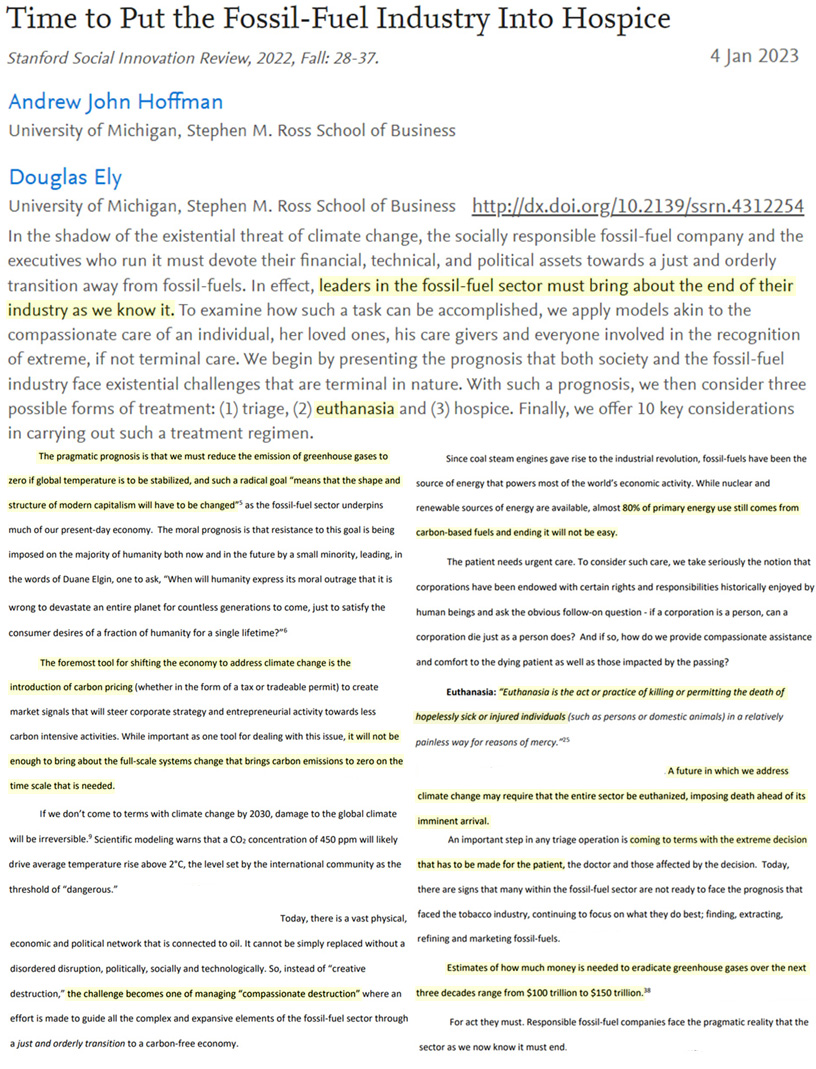
Two University of Michigan professors insist we “must reduce the emission of greenhouse gases to zero” to stabilize the planet’s temperature. But because 80% of our energy use still comes from carbon-based sources today, “ending it will not be easy.” The death of all fossil fuel industry must be imposed, euthanasia-style.
It has now reached the point that academic elites are no longer concealing their real inclinations and intentions in massaged semantics or subtleties.
Two US business professors argue that the looming climate catastrophe (which they believe has been caused solely by human greenhouse gas emissions) necessitates that “the shape and structure of modern capitalism will have to be changed.”
No more roads. No more plastic or steel or electronic products. No more air travel. All the industries that use petroleum products of any kind, no matter how essential, must end this practice, effective immediately. Fossil fuel use must be 100% eliminated.
The cost to get to zero greenhouse gas emissions? Estimates range from $100 to $150 trillion over the next 30 years.
And putting a price on carbon use doesn’t nearly go far enough. It’s not possible to get to zero emissions just by making fossil fuel use more expensive. The entire fossil fuel industry – the producers as well as the recipients – must undergo, as the authors put it, “compassionate destruction.”
If there is any resistance to the total destruction of fossil fuel use, then euthanasia – “the act or practice of killing or permitting the death of hopelessly sick or injured individuals,” must be put into practice. Imposed. Forced.
“A future in which we address climate change may require that the entire sector be euthanized, imposing death ahead of its imminent arrival.”
It is not our job to question. The situation is so real, so dire, that our only job now is to “come to terms with the extreme decision that has to be made for the patient.”
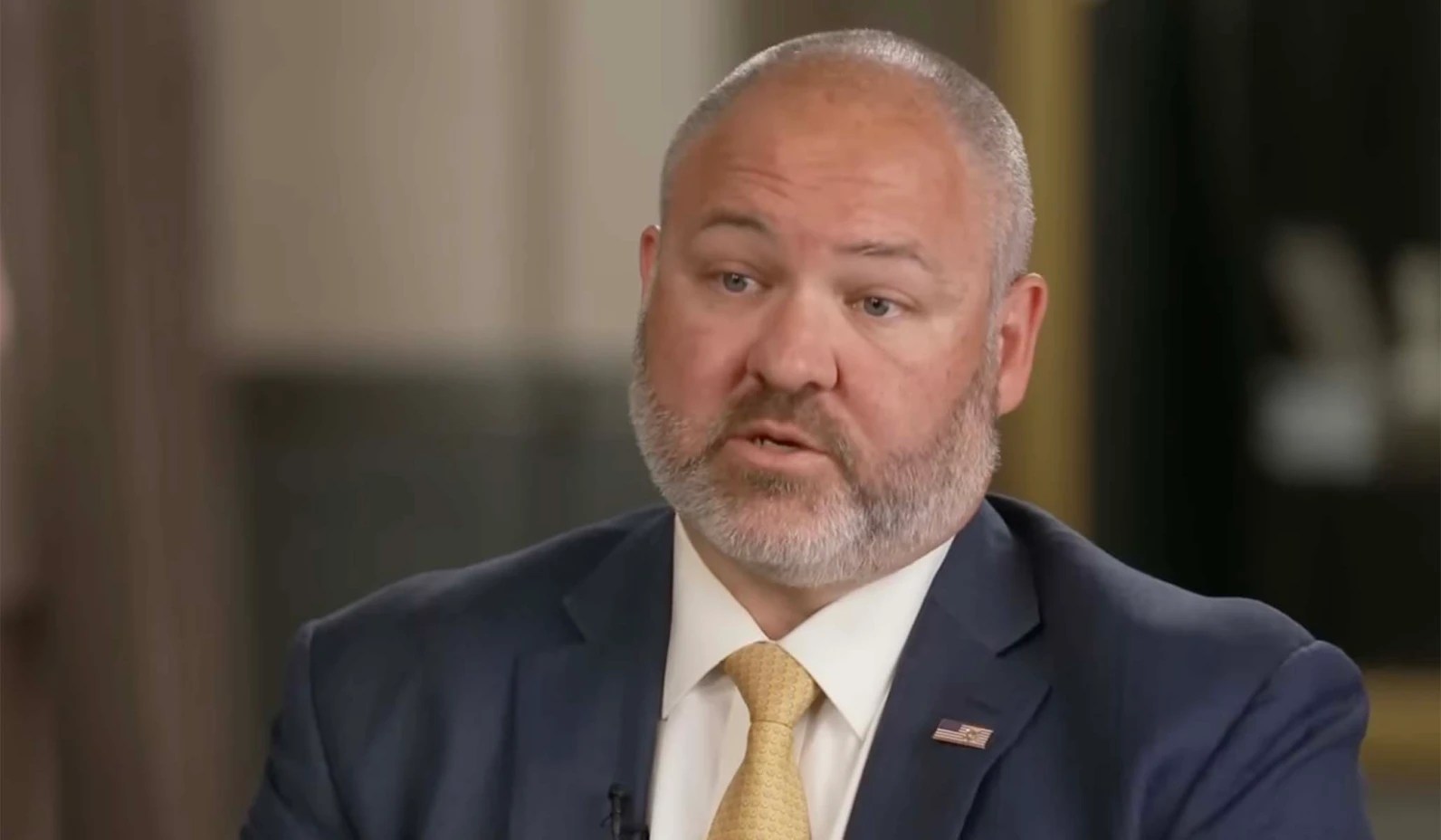
Below is my column in the New York Post on the most recent whistleblower coming forward to publicly accuse the Biden Administration of “slow walking” the investigation of Hunter Biden. The source of the interference with the IRS investigation, according to Gary Shapley, was the Department of Justice. It is the latest chapter in the story of “The Incredibly Shrinking Merrick Garland.”
Here is the column:
“I don’t want to do any of this.”
Those words from 14-year IRS veteran Gary Shapley may be the most important line in his CBS News interview this week.
After weeks of Democrats dismissing whistleblowers alleging the president’s administration interfered with investigations of Hunter Biden, Shapley had enough.
Putting his career and much of his life at risk, Shapley came forward to say he and others believe Hunter is being protected and identified the Justice Department as the source of the protection.
Shapley has every reason not to want to do any of this.
After all, as President Joe Biden stated last year, “No one f–ks with a Biden.”
For years, a Democrat-controlled Congress refused to investigate Biden family influence-peddling, and the press dismissed people raising Hunter’s laptop as spreading “Russian disinformation.”
The media have worked hard to minimize the blowback after acknowledging the laptop’s authenticity and the growing evidence of millions in influence-peddling.
Part of this effort at “scandal implosion” has been to dismiss any criminal charges as relatively minor tax violations unconnected to the president.
Indeed, when the president recently agreed to a rare sit-down interview, the White House chose MSNBC’s Stephanie Ruhle.
Before asking about his son Hunter’s scandal, Ruhle emphasized it was “something personal” with “no ties to you.”
Many of us guffawed at the claim given multiple references on the laptop to President Biden, including possibly sharing in the proceeds from influence-peddling with foreign governments.
The problem is Shapley suggests some uncomfortable questions on how Biden’s administration may have worked to minimize charges against his son and, according to Shapley, “slow-walked” the investigation.
His interview explains why the Justice Department can indict figures like Rep. George Santos (R-NY) on a variety of fraud and money-laundering charges in a few months while spending years investigating Hunter Biden with no conclusion.
Shapley made clear he had never seen this level of interference in his long service at the IRS and said it was done “at the direction of the Department of Justice.”
And he said the interference began as soon as he “took control of this particular investigation”: “I immediately saw deviations from the normal process. It was way outside the norm of what I’ve experienced in the past.”
Shapley did not rush forward or leak to the media.
Rather, after watching decision after decision made to benefit Biden, Shapley reached a breaking point in what he called his “red-line meeting” when he and his team were removed from investigating the president’s son.
The interference came from a familiar source.
The Justice Department under Attorney General Merrick Garland has been criticized for his refusal to appoint a special counsel to investigate the expanding allegations of Biden family influence-peddling — which include possible criminal charges from bribery to tax violations to money-laundering.
Biden associates are warned not to use Joe Biden’s name but to employ code names like “the Big Guy.”
At the same time, the president and first lady are said to have benefited from public office and received payments from Hunter.
The emails also contradict the president’s repeated public declaration that he had no knowledge of his son’s foreign dealings — including by photos with his business associates and an actual audio tape referring to the deals.
Garland refuses to appoint a special counsel who would then have the ability to write a report on the alleged massive influence-peddling operations the Bidens run.
It is all part of the “incredible shrinking Merrick Garland,” who promised to prevent any political influence over his department.
We now have multiple whistleblowers alleging interference from the Justice Department to slow-walk investigations or shield the president’s son.
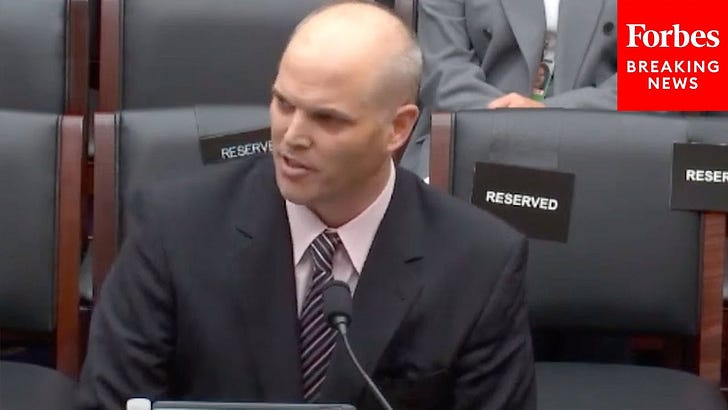
We also have questions raised by IRS agents’ visit to the home of Matt Taibbi, who helped expose the government-Twitter censorship program.
They appeared on the very day Taibbi appeared before Congress and was attacked by Democratic members as a “so-called journalist.”
(The subcommittee’s ranking Democrat, Delaware Stacey Plaskett, later called for Taibbi’s possible arrest.)
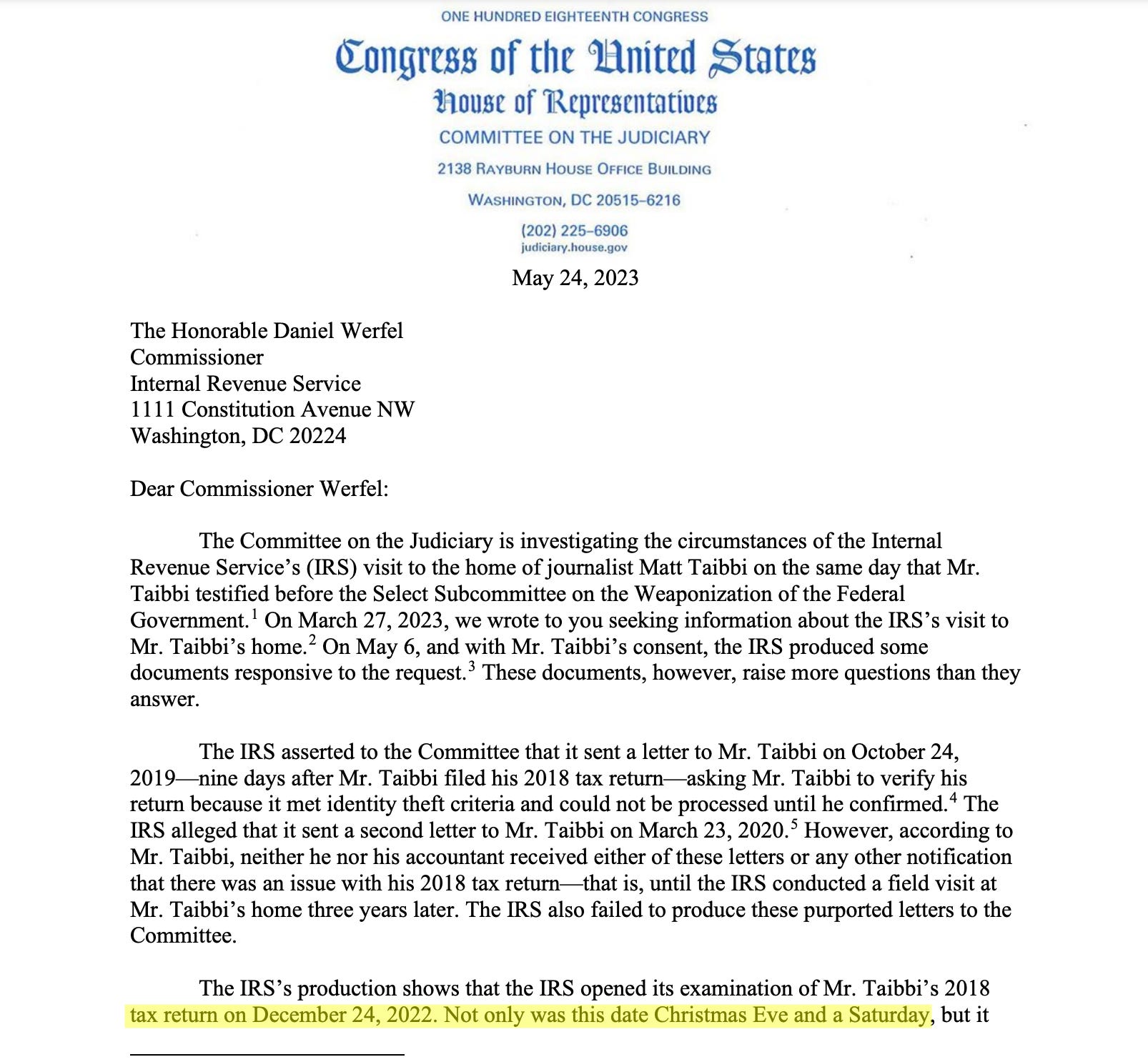
The IRS opened its probe of him on a Saturday — Christmas Eve last year, just weeks after his exposé.
With the GOP controlling the House, there will now be congressional investigation and oversight into these allegations.
But Shapley and other whistleblowers will soon learn that when it comes to many in the media and Congress, they also “don’t want to do any of this.”
Jonathan Turley is an attorney and a professor at George Washington University Law School.
YOU GET WHAT YOU PAY FOR: IRS officials handed a lefty non-profit $15 million to conduct an “independent review” and tell federal agency it should be the nation’s tax preparer, auditor and collector.
I remember over a decade ago when the IRS was targeting Tea Party activists, and even some conservative journalistic outlets didn’t believe it could be happening.
When local bureaucrats in Hennepin County, Minnesota, seized an elderly woman’s home over a small tax debt, sold it, and kept the profit, they likely had no idea they would set in motion a series of events that would cripple the practice known as “home equity theft” across the country.
Yet that’s what happened. The Supreme Court on Thursday unanimously ruled that the government violated the Constitution when it took possession of Geraldine Tyler’s condo over an overdue property tax bill, auctioned the home, and pocketed the proceeds in excess of what she actually owed.
Tyler, who is now 94 years old, purchased the Minneapolis-area condo in 1999. But a series of events, including a neighborhood shooting, prompted her to relocate to a retirement community in 2010, at which point it became difficult for her to pay both her new rent and the property taxes on her former home. She accrued a $2,300 tax bill, which turned into an approximately $15,000 bill after the government added on $13,000 in penalties, interest, and fees. Local officials then sold the home for $40,000—and kept the remaining $25,000.
Negotiations over the debt limit are still ongoing, and we are starting to hear a lot about the imminent prospect of a “default.” The term gets thrown around a lot in the press, usually attached to words like “unprecedented” and “catastrophic.” But the term creates confusion wherever it lands. Some of this reflects garden-variety misunderstanding. But I worry that some of it reflects a kind of intentional slipperiness by motivated actors who want to frame debt-limit issues a certain way.
There are at least two senses in which the term “default” gets used. The first, and probably the more intuitive usage, refers to a failure to make payments on the public debt securities of the United States, like bonds and Treasury bills. On this point I am not Pollyanna: If that kind of default happens it is likely to be a really bad thing. But as I’ll explain more below, I don’t think that outcome is particularly likely. (Though it’s not impossible.)
The second sense in which the word “default” gets used is something like: “Any failure by the United States to make any payment in full and on time.” I confess I find this usage of the term spectacularly unintuitive. But, putting intuitions aside for the moment, this second usage also covers a huge potential breadth of potential outcomes. What payments, exactly? And for how long? There is a big difference between a subset of federal salaries getting paid a day late (perhaps against the backdrop of a deal that has been struck but is still grinding its way through bicameralism and presentment), and large swathes of the federal budget going unfunded for many weeks as Congress and the President continue to flounder.
These distinctions are important. But the difference between usage one and usage two—and the important differences of degree within usage two—are sometimes obscured.
Well, that confusion is not at all by accident, of course. And honestly, given the political system’s utter inability to reduce spending in a rational way, “large swathes of the federal budget going unfunded” may be the best we can do:
Authorized and even appropriated spending isn’t “the public debt.” For constitutional purposes, promised benefits from Social Security, Medicare and other entitlements aren’t even property, as the Supreme Court held in Flemming v. Nestor (1960), and Congress has as much authority to reduce them as to increase them. When lawmakers were drafting the 14th Amendment, they revised Section 4’s language to replace the term “obligations” with “debts.” If the Treasury ran out of money, the constitutional obligation to pay bondholders would trump all statutory obligations to spend. . . .
Ms. Yellen also said that “Treasury’s systems have all been built to pay all of our bills when they’re due and on time, and not to prioritize one form of spending over another.” But as the Journal has reported, department officials conceded in 2011 that the government’s fiscal machinery certainly could prioritize payments to bondholders, and the Federal Reserve prepared for such a contingency. There’s no question enough money would be available: The government collects roughly $450 billion a month in tax revenue, more than enough to cover the $55 billion or so in monthly debt service.
Reducing spending in a rational way would be better, of course, but that’s not on the table.
UPDATE: From the comments: “This conversation is what the debt ceiling is supposed to invoke.”
Saturday, December 24, 2022 was one of the most memorable, and most panicked, days of my life. I spent Christmas Eve last year alone, holed up in the Parc 55 hotel in San Francisco, frantically trying to put together what I thought was the most explosive of the Twitter Files reports, “Twitter and Other Government Agencies.” My wife and children were due to arrive for Christmas the next day, and I spent the morning checking and re-checking a story I knew might make people upset.
It was based on documents passed to Twitter by the FBI-led Foreign Influence Task Force. They showed the company was receiving content recommendations in bulk from an array of federal agencies through the FBI, about a range of topics — from domestic extremist groups in the U.S. to leftist activists in Venezuela to Ukraine, Joe Biden, and the energy company Burisma. Moreover, Twitter was joining Facebook, Microsoft, Verizon, Reddit, and perhaps two dozen other firms in attending regular FITF-led gatherings. At that “industry meeting,” companies often received an “OGA briefing,” usually about foreign policy matters. “OGA” is generally understood to be a euphemism for intelligence services in general, or the CIA in particular.
The FBI had just denounced the Twitter Files as the work of “conspiracy theorists” whose “sole purpose” was “discrediting the agency.” If earlier reports made the Bureau unhappy, what reaction would this story inspire?
Thanks to a just-published letter to IRS Commissioner Daniel Werfel by House Judiciary Chair Jim Jordan, we now know an IRS investigation of me opened that day, December 24, 2022.
Ostensibly the case was about my 2018 tax return, about which even the IRS doesn’t claim to have contacted me for three years before this new “assign date.” The opening of the investigation preceded a visit to my home by an IRS agent on March 9, when I testified in Congress about the Twitter Files and government censorship.
Even more unnerving are other details in Jordan’s letter:
On January 27, 2023, the IRS assigned an agent to Mr. Taibbi’s case to initiate face-to-face contact. The IRS documents reflect that the case agent performed an extensive investigation of Mr. Taibbi, using publicly available search engines and commercial investigative software such as Anywho, Consumer Affairs, LexisNexis Accruint, and Google. The IRS’s dossier about Mr. Taibbi included information such as Mr. Taibbi’s voter registration records, whether he possessed a hunting or fishing license, whether he had a concealed weapons permit, and his telephone numbers.
When the IRS checks to see if you have a carry permit and visits your home, at a time when they owe you money, it’s time to worry.
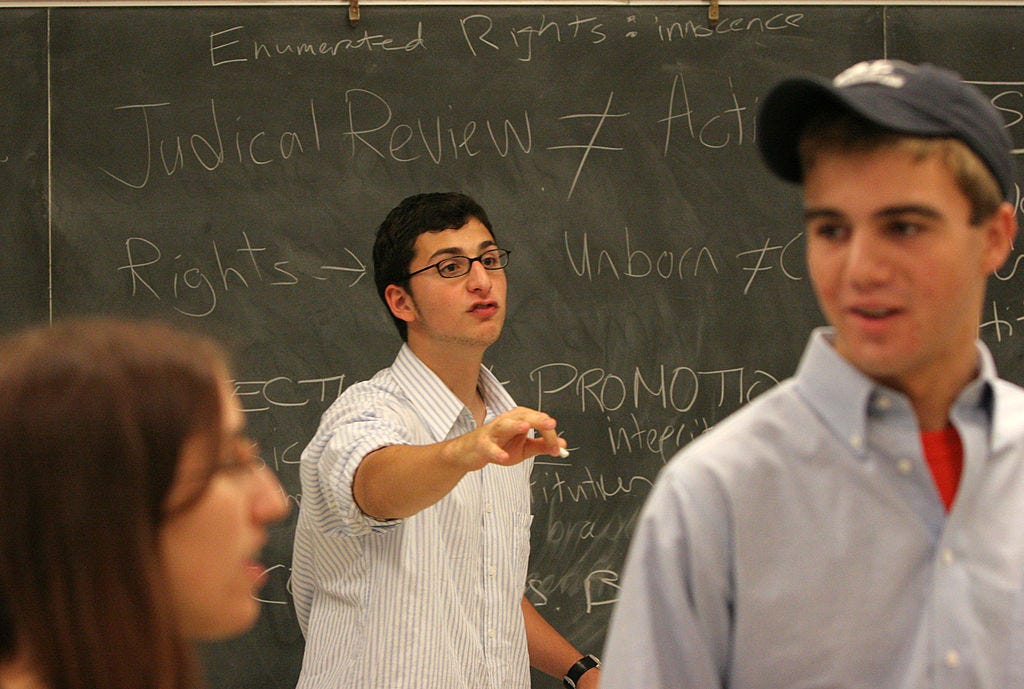
Members of the Walter Johnson High School debate team in Bethesda, Maryland, take part in an American tradition in 2005. (Nikki Kahn via Getty Images)
My four years on a high school debate team in Broward County, Florida, taught me to challenge ideas, question assumptions, and think outside the box. It also helped me overcome a terrible childhood stutter. And I wasn’t half-bad: I placed ninth my first time at the National Speech & Debate Association (NSDA) nationals, sixth at the Harvard national, and was runner-up at the Emory national.
After college, between 2017 and 2019, I coached a debate team at an underprivileged high school in Miami. There, I witnessed the pillars of high school debate start to crumble. Since then, the decline has continued, from a competition that rewards evidence and reasoning to one that punishes students for what they say and how they say it.
First, some background. Imagine a high school sophomore on the debate team. She’s been given her topic about a month in advance, but she won’t know who her judge is until hours before her debate round. During that time squeeze—perhaps she’ll pace the halls as I did at the 2012 national tournament in Indianapolis—she’ll scroll on her phone to look up her judge’s name on Tabroom, a public database maintained by the NSDA. That’s where judges post “paradigms,” which explain what they look for during a debate. If a judge prefers competitors not “spread”—speak a mile a minute—debaters will moderate their pace. If a judge emphasizes “impacts”—the reasons why an argument matters—debaters adjust accordingly.
But let’s say when the high school sophomore clicks Tabroom she sees that her judge is Lila Lavender, the 2019 national debate champion, whose paradigm reads, “Before anything else, including being a debate judge, I am a Marxist-Leninist-Maoist. . . . I cannot check the revolutionary proletarian science at the door when I’m judging. . . . I will no longer evaluate and thus never vote for rightest capitalist-imperialist positions/arguments. . . . Examples of arguments of this nature are as follows: fascism good, capitalism good, imperialist war good, neoliberalism good, defenses of US or otherwise bourgeois nationalism, Zionism or normalizing Israel, colonialism good, US white fascist policing good, etc.”
How does that sophomore feel as she walks into her debate round? How will knowing that information about the judge change the way she makes her case?
Traditionally, high school students would have encountered a judge like former West Point debater Henry Smith, whose paradigm asks students to “focus on clarity over speed” and reminds them that “every argument should explain exactly how [they] win the debate.”
In the past few years, however, judges with paradigms tainted by politics and ideology are becoming common. Debate judge Shubham Gupta’s paradigm reads, “If you are discussing immigrants in a round and describe the person as ‘illegal,’ I will immediately stop the round, give you the loss with low speaks”—low speaker points—“give you a stern lecture, and then talk to your coach. . . . I will not have you making the debate space unsafe.”
Debate Judge Kriti Sharma concurs: under her list of “Things That Will Cause You To Automatically Lose,” number three is “Referring to immigrants as ‘illegal.’ ”
Should a high school student automatically lose and be publicly humiliated for using a term that’s not only ubiquitous in media and politics, but accurate?
Once students have been exposed to enough of these partisan paradigms, they internalize that point of view and adjust their arguments going forward. That’s why you rarely see students present arguments in favor of capitalism, defending Israel, or challenging affirmative action. Most students choose not to fight this coercion. They see it as a necessary evil that’s required to win debates and secure the accolades, scholarships, and college acceptance letters that can come with winning.
On paper, the NSDA rejects what Lavender, Gupta, and Sharma are doing. Its rules state, “Judges should decide the round as it is debated, not based on their personal beliefs.” Founded in 1925, the NSDA chooses the debate topics and facilitates hundreds of tournaments, including the annual national tournament, starting June 11 in Arizona, where six thousand students from across the country will compete. (The NSDA did not respond to emails and phone calls asking for comment before this story went to press.)
A random scroll through Tabroom reveals there are still sane judges out there. “I have been a trial lawyer for 25 years,” reads Amanda Marshall’s paradigm. “I like clash, quality evidence from qualified sources, comparative analysis, and crystallization in last rebuttals. Don’t take anything for granted. You have to explain your arguments, why your evidence is compelling, and how the arguments weigh in the round. It’s your job to persuade me and communicate your positions in a way that is effective—that is how you will win my ballot. I don’t like whining, personal attacks, dominance, aggression, and disrespect. I do appreciate professionalism, kindness, and integrity.”
Or this paradigm, from debate judge Steven Macartney: “My favorite debates are rigorous, but friendly. I actually appreciate when one debater accepts one of their opponent’s arguments as valid, but still persuades me that they should win the round. I will make my decision based on who is the most persuasive, but persuading me will be done by showing with evidence that one side upholds their value and criterion better than the other side. In order to do this, a debater must speak slowly and clearly enough for me to hear and understand the arguments.”
Unfortunately for students and their parents, there are countless judges at tournaments across the country whose biased paradigms disqualify them from being impartial adjudicators of debate. From “I will drop America First framing in a heartbeat,” to “I will listen to conservative-leaning arguments, but be careful,” judges are making it clear they are not only tilting the debate in a left-wing direction, they will also penalize students who don’t adhere to their ideology.
In the past year, Lindsey Shrodek has judged over 120 students at tournaments in Massachusetts, New York, and New Jersey. The NSDA has certified her with its “Cultural Competency” badge, which indicates she has completed a brief online training module in evaluating students with consideration for their identity and cultural background. Until last month, Shrodek’s paradigm told debaters, “[I]f you are white, don’t run arguments with impacts that primarily affect POC [people of color]. These arguments should belong to the communities they affect.” Recently, her paradigm was updated to eliminate that quote. When I asked Shrodek why, she told me she didn’t “eliminate the idea itself,” and that she “doesn’t know if it’s exactly my place to say what arguments will or won’t make marginalized communities feel unsafe in the debate space.”
I disagree. In debate, “unsafe” conversations should be encouraged, even celebrated. How better for young people from all backgrounds to bridge the divides that tear us apart, and to discover what unites them? The debate I knew taught me to think and learn and care about issues that affected people different from me.
We’ve come a long way from the 2004 Democratic National Convention, when an obscure state senator from Illinois named Barack Obama said, “If there’s a child on the south side of Chicago who can’t read, that matters to me, even if it’s not my child. . . . If there’s an Arab American family being rounded up without the benefit of an attorney or due process, that threatens my civil liberties. It’s that fundamental belief—I am my brother’s keeper, I am my sister’s keeper—that makes this country work. It’s what allows us to pursue our individual dreams, yet still come together as a single American family.”
Twenty years ago, the NSDA I knew encouraged me to think and speak about how policies and issues impacted different communities. Not anymore.
One judge gives people of color priority in her debates. In general, students voluntarily, and mutually, disclose their evidence to their opponents before the debate round, as both teams benefit from spending more time with the other team’s evidence. But X Braithwaite, who’s judged 169 debate rounds with 340 students, has her own disclosure policy in her paradigm, which uses a racial epithet: “1. N****s don’t have to disclose to you. 2. Disclose to n****s.”
This is racial discrimination, of course: If you’re black, you get to keep your evidence to yourself and have a competitive advantage. If you’re not black, you must disclose all of your evidence to your opponent and accept a competitive disadvantage. Students who win under this rubric may view their victory as flawed, as if their win isn’t a reflection of their hard work. Those who lose may view this as the singular reason for their loss, even if it wasn’t. Students suffer and so do the sportsmanship and camaraderie that high school debate was once known for.
It’s not just that certain arguments are no longer welcome; it’s also the students who make those arguments. At the 2018 NSDA National Tournament in Fort Lauderdale, a student was publicly ridiculed by peers for making conservative arguments. She later posted an “Open Letter From A Deplorable Shitbag” on Reddit, which read, “To the judge(s) and student(s) wearing the “fuck trump” shirt(s), Tears stream down my face as I write this. I have never felt so hurt in my entire life. I really did not appreciate your words towards me after the round. I did not appreciate the spectators/competitors wearing shirts with matching sentiment with you following me to my next rounds. . . . I understand I speak fast sometimes, and that I often unknowingly use words that offend certain groups of people. . . . Also, I am sorry that my attire did not fit your standards. I know about the stain on my shirt, but it really is all I had.”
During my time as a coach, I saw many students lose interest and quit. They’d had enough of being told what they could and couldn’t say. A black student I coached was told by the debate judge that he would have won his round if he hadn’t condemned Black Lives Matter.
In 2019, I gave up on the NSDA and formed a new debate league, Incubate Debate. To judge debates, we recruit elected officials, members of the armed forces, business executives, faith-based leaders, and others. At the eighteen no-cost tournaments we’ve hosted this year, thousands of students have come together to debate, have fun, and learn from each other.
Think back to that high school sophomore who’s nervously pacing before an NSDA debate. Before she enters her round, she reads her judge’s paradigm and says to herself, “I’m going to lose.” Her loss won’t be because her argument lacked evidence or support. Her argument simply doesn’t conform to her judge’s ideology. Imagine her disappointment and hopelessness, imagine her weeks of research and rehearsal. She never had a shot.
EDITOR’S NOTE: One day after this story published, the NSDA released a statement on Twitter, stating in part: “Our judge training materials in partnership with the National Federation of State High School Associations provide best practices for adjudicating speech and debate, such as ‘Judges should decide the round as it is debated, not based on their personal beliefs.’...Tabroom.com is a project of the National Speech & Debate Association, and its purpose is to provide a tournament management system for debate and speech tournaments worldwide. The 47,000 judge paradigms housed therein represent the opinions and viewpoints of the individual paradigm authors. Schools or other organizations that use Tabroom.com to hire judges are free to evaluate those paradigms before engaging their services.”
This is James Fishback’s first piece for The Free Press. Follow him on Twitter @j_fishback.
And to support our journalism, become a subscriber today:
Get ready for a ton of hysterical reporting. How many will believe it though? Surely their credulity has been strained nearly to its limits.
The Advisory Council on the Environment is a body of experts convened by the Federal Republic of Germany to advise the state on matters of environmental policy. I’m grateful to @tomdabassman on Twitter for drawing attention to their recent and deeply creepy 200-page report on “The obligation of policymakers: Facilitating environmentally friendly behaviour.” It abounds in remarkable and revealing statements, and I’ve spent a good part of the day studying it for a longer post that I hope to write in the coming weeks.
eugyppius: a plague chronicle is a reader-supported publication. maybe you subscribe?
For now, I want to draw your attention to the introduction, which is bad enough. Its authors depart from the premise that the state currently lacks “policy measures … targeting environmentally relevant behaviour,” and join others in affirming that it is the job of the state to nudge individual decisions in the right direction. Tellingly, both the pandemic and the sanctions-induced European energy crisis play a very large role in their thinking:
Although the key environmental crises, such as loss of biodiversity and climate change, are less directly visible and tangible than the energy crisis and the pandemic, environmental policymakers can learn from the sometimes painful but also important experiences of recent years: Behavioural changes in the population can be a part of the solution to crises such as these, and it is possible to adopt and implement policies aimed at changing behaviours.
For example, Germany introduced a series of measures in mid-2022 to alleviate the energy crisis … These measures targeted the behaviour of citizens. In addition to general calls to save energy, building owners were obliged to optimise their heating systems, employees had to accept lower room temperatures at work and it was forbidden to heat private swimming pools …. Earlier, Germany imposed far-reaching pandemic measures to contain the spread of Corona. For example, since 2020, the stated adopted and imposed various lockdowns and social contact limitations. Both highlight the contribution of behavioural changes, whether in energy consumption or social behaviour, to the project of combating a collective problem …
The aforementioned measures doubtless demanded a lot from people and in the specifics of the necessary extent of the restrictions, they proved controversial, as also in their unequal impact on different social groups. Nevertheless, the two crises show that political measures to carefully restrict the behaviour of citizens are possible if the threat is correspondingly great and the importance of the protected good – in these examples, health and energy – is recognised. The state has succeeded (even if not in every individual case) in devising measures such that they achieve their goal while maintaining proportionality. It is also clearly possible for these policies to be designed and communicated in such a way that the majority support them.
Emphasis mine. All of this speaks for itself, and I don’t have much to add, except to observe that the only way for restrictions to be “communicated” such that “the majority support them,” is by renewed forays into state media-fuelled mass panic and hysteria. Corona has taught our rulers that a great deal more is possible than they ever imagined, and they will spend the coming years exploring the limits.
Google and Facebook suppressed vaccine-injury testimony before FDA and Senate, suit claims. Based in part on legal discovery in Missouri and Louisiana attorneys general's ongoing censorship suit.
NOAM CHOMSKY: A Disgraceful Career. “The most devastating articles in the Anti-Chomsky Reader are not those that expose the ideological prejudices, factual misrepresentations, and distorted logic of his political writings but the two at the end of the book that tear up his reputation as one of the towering intellects of our time. Two essays about linguistics reveal Chomsky’s output in that field to be not the work of a rare, great mind but the product of a very familiar kind of academic hack. His reputation turns out not to have been earned by any significant contribution to human understanding but to be the product of a combination of self-promotion, abuse of detractors, and the fudging of his findings.”