Shared posts

05 Oct 17:15

Want to reduce your food waste at home? Here are the 6 best evidence-based ways to do it

by Mark Boulet, Research Fellow, BehaviourWorks Australia, Monash University
Shutterstock

From the farm to the plate, the modern day food system has a waste problem. Each year, a third of all food produced around the world, or 1.3 billion tonnes, ends up as rubbish. Imagine that for a moment – it’s like buying three bags of groceries at the supermarket then throwing one away as you leave.

Wasting food feeds climate change. Food waste accounts for more than 5% of Australia’s greenhouse gas emissions. And this doesn’t include emissions from activities required to actually produce the food in the first place, such as farming and transport.

One of the largest sites of food waste is the home. In Australia, households throw out about 2.5 million tonnes of food each year. That equates to between A$2,000 and $2,500 worth of food per year per household.

But there’s some good news. Our Australian-first research, released today, identified the six most effective behaviours anyone can do to reduce food waste. Combined, these relatively small changes can make a big difference.

fork scrapes food off plate
Australian households throw out up to $2,500 worth of food each year. Shutterstock

What we did

Food waste by households is a complex problem influenced by many factors. Some, such as food type, package size and safety standards, are out of a consumer’s control. But some are insignificant daily behaviours we can easily change, such as buying too much, forgetting about food at the back of your fridge, not eating leftovers and cooking too much food.

We wanted to better understand the complex nature of household food waste. Together with Australia’s leading food rescue organisation OzHarvest, our research sought to identify and prioritise evidence-based actions to reduce the amount of food Australians throw away.

We reviewed Australian and international literature, and held online workshops with 30 experts, to collate a list of 36 actions to reduce food waste. These actions can be broadly grouped into: planning for shopping, shopping, storing food at home, cooking and eating.

We realised this might be an overwhelming number of behaviours to think about, and many people wouldn’t know where to start. So we then surveyed national and international food waste experts, asking them to rank behaviours based on their impact in reducing food waste.

We also surveyed more than 1,600 Australian households. For each behaviour, participants were asked about:

  • the amount of thinking and planning involved (mental effort)

  • how much it costs to undertake the behaviour (financial effort)

  • household “fit” (effort involved in adopting the behaviour based on different schedules and food preferences in the household).

Consumers identified mental effort as the most common barrier to reducing food waste.


Read more: What a simulated Mars mission taught me about food waste


woman holds up hand in front of plate
The researchers surveyed 1,600 consumers about their attitudes to food waste reduction. Shutterstock

What we found

Our research identified the three top behaviours with the highest impact in reducing food waste, which are also relatively easy to implement:

  • Prepare a weekly meal at home that combines food needing to be used up

  • Designate a shelf in the fridge or pantry for foods that need to be used up

  • Before cooking a meal, check who in the household will be eating, to ensure the right amount is cooked.

Despite these actions being relatively easy, we found few Australian consumers had a “use it up” shelf in the fridge or pantry, or checked how many household members will be eating before cooking a meal.

Experts considered a weekly “use-it-up” meal to be the most effective behaviour in reducing food waste. Many consumers reported they already did this at home, but there is plenty of opportunity for others to adopt it.

Some consumers are more advanced players who have already included the above behaviours in their usual routines at home. So for those people, our research identified a further three behaviours requiring slightly more effort:

  • Conduct an audit of weekly food waste and set reduction goals

  • Make a shopping list and stick to it when shopping

  • Make a meal plan for the next three to four days.

Our research showed a number of actions which, while worthwhile for many reasons, experts considered less effective at reducing food waste. They were also less likely to be adopted by consumers. The actions included:

  • Preserving perishable foods by pickling, saucing or stewing for later use

  • Making a stock of any food remains (bones and peels) and freeze for future use

  • Buying food from local specialty stores (such as greengrocers and butchers) rather than large supermarkets.


Read more: Melbourne wastes 200 kg of food per person a year: it's time to get serious


fridge shelf with sign
A designated shelf in the fridge can help reduce food waste. Shutterstock

Doing our bit

Today is the United Nations’ International Day of Awareness of Food Loss and Waste. It seeks to increase awareness and prompt action in support of a key target in the global Sustainable Development Goals to halve food loss and waste by 2030.

Australia has signed up to this goal, and we hope this research helps fast-track those efforts.

OzHarvest is launching its national Use-It-Up food waste campaign today, aiming to support Australians with information, resources and tips. Based on our findings, we’ve also developed a decision-making tool to help policy makers target appropriate food waste behaviours.

Australia, and the world, can stop throwing away perfectly edible food – but everyone must play their part.


Read more: What can go in the compost bin? Tips to help your garden and keep away the pests


The Conversation

Mark Boulet receives funding from multiple State and Federal government agencies to conduct behaviour change research. for this project, Mark was funded by OzHarvest through the Australian government's Environmental Restoration Fund.

05 Oct 17:09

The 9 psychological barriers that lead to COVID-19 vaccine hesitancy and refusal

by Geneviève Beaulieu-Pelletier, Psychologue, conférencière et professeure associée, Université du Québec à Montréal (UQAM)
People wait in line at a mass vaccination and testing clinic in Moncton, N.B., in September 2021. THE CANADIAN PRESS/Christopher Katsarov

The fourth wave of the COVID-19 pandemic is putting pressure on hospital networks, upsetting many and making vaccine refusals seem foolish. To better understand what leads someone refuse or delay vaccination, it is important to identify the psychological barriers that underlie the decision.

Click here for more articles in our series about vaccine confidence.

As a clinical psychologist who works mainly with adults suffering from personality, anxiety and mood disorders, I have a front-row seat for observing the distress, frustration and unease of those at the heart of this pandemic. Behind the refusal to be vaccinated, there is a complex emotional spectrum that colours each person’s behaviour and choices.

Apart from religious and cultural reasons or health conditions that justify not receiving the vaccine, the choice to refuse vaccination can be explained by a range of other factors. The following nine factors provide a good picture of the complexity of the situation.

Misunderstanding and lack of information

A first barrier is lack of understanding about the vaccine or misunderstanding the necessity of vaccination.

Faced with contradictory opinions and a lack of information, some people are perplexed: Why should you get vaccinated if you can still catch the virus and transmit it? Why vaccinate young people if they are less vulnerable to the virus?

Not finding satisfactory answers to these questions can paralyze someone’s thinking and reduce their willingness to take action.


Read more: A researcher's view on COVID-19 vaccine hesitancy: The scientific process needs to be better explained


Fear of needles … and vaccines

Some people have a strong fear of needles or the pain related to vaccination. Although this fear may seem irrational to others, it is something the sufferer feels intensely.

Apprehension about needles or pain is sometimes so anxiety-producing that it can lead a person to avoid any situation that involves vaccination. Sometimes just seeing images of vaccination can provoke anxiety.


Read more: Needle fears can cause COVID-19 vaccine hesitancy, but these strategies can manage pain and fear


In other cases, the fear is related to the possible side effects of the vaccine. Some people may not refuse to be vaccinated, but will wait until more people have been vaccinated so they can see if there are any long-term side effects.

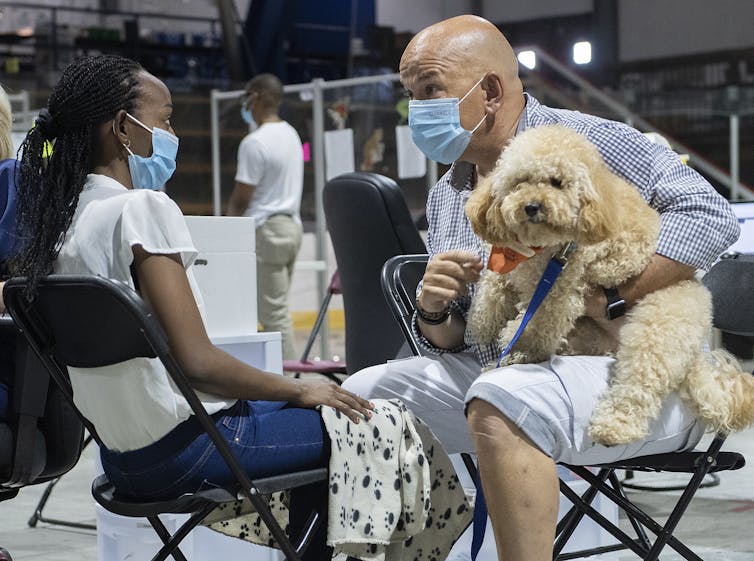
A man in a mask holds a dog in front of a young woman, also wearing the mask
Zootherapist Sylvain Gonthier and his dog Bidule comfort Divine Nsabimana as she waits for her dose of COVID-19 vaccine, in Montréal, on August 26, 2021. The Canadian Press/Graham Hughes

Feelings of helplessness

A further psychological barrier comes from the feelings of helplessness and discouragement in response to the possibility that the pandemic will continue, despite vaccination efforts, especially given the detection of new variants.

The term “pandemic fatigue” reflects the weary and demotivated feeling that arises during a time of crisis when events appear to repeat themselves. Resignation and loss of hope can lead to reduced motivation, and an unwillingness to follow recommendations, including vaccination.

Aware but not concerned

Other people are aware of the impact of the pandemic, but do not feel personally concerned: “I’m healthy, so that protects me.”

These individuals often lack knowledge about the disease and vaccination, so they are not particularly concerned about the harmful effects of the virus on their health or the risks of transmission to others. It’s worth noting that these people are not actually be opposed to the vaccine.

Mistrust of ingredients

Some people pay close attention to what goes into their bodies and may be concerned about the ingredients of the COVID-19 vaccine. They experience visceral discomfort at the idea getting a vaccination, and may perceive the COVID-19 vaccine as an intrusion, contamination or aggression.

Not knowing about the ingredients of the vaccine, they may be reluctant or even opposed to receiving it.

Anxiety and denial

Everyone reacts differently to anxiety-provoking situations. Some will jump into action and look for solutions, others will confide in loved ones or feel emotionally overwhelmed.

Still others will go into denial. Denial is an automatic, unconscious reflex that works as a Band-Aid to control anxiety. In the pandemic context, this may be expressed as denial of the seriousness of the disease, denial of one’s own vulnerability to contracting the virus, or even denial of the existence of the virus itself.

Sense of rejection and exclusion

As social beings, we are extremely sensitive to rejection. Rejection may be more common and painful for some than for others. These people feel more excluded from society and do not recognize themselves in the official discourse or the norms being proposed in response to the pandemic.

When health measures are announced, these people may find them controlling. When one feels neither represented nor listened to by the authorities, or when one is parodied or criticized by other groups in society, the wounds of a past marked by rejection are reactivated and replayed.

These people will also feel excluded and less likely to follow recommendations. They are also more likely to feel better understood by alternative and refractory voices that make them feel heard at last.

Dependency and conflict avoidance

Some people are more dependent on the opinions of those closest to them. The dynamics of the relationship are such that the person doubts themselves, relies on the other person to make day-to-day decisions for them and idealizes the other person or seeks to minimize conflicts with them.

In these cases, the person’s position and choice will be influenced by the fact that their peer does not consider vaccination to be important.

Crisis of confidence

The previously mentioned factors, such as mistrust of what goes into the body, denial and rejection, may crystallize into a greater distrust of government sources, health authorities and the pharmaceutical industry. This can also turn into a crisis of confidence and distrust of public health recommendations.

Belief in conspiracy theories and the rejection of authority can shape one’s thinking and identity. That in turn creates a danger of polarization.

A man holds a sign
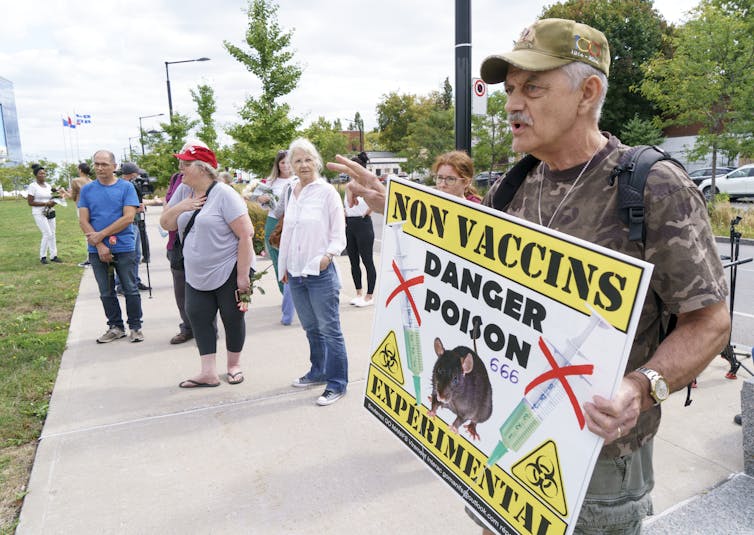
An anti-vaccine protester in front of a Montréal hospital. The Canadian Press/Paul Chiasson

Other factors could be added to this list of what contributes to vaccine hesitancy and refusal. As a psychologist, I consider it essential to understand why a person refuses to be vaccinated. The measures and solutions to encourage vaccination reach people in different ways, depending on how they process information in the first place.

Some people will need explanations, others will need to be accompanied when they get vaccinated, and still others will need to be in a space where they feel listened to and feel that their irritation is accepted. Finally, to avoid feeling “controlled” some people will prefer following alternative recommendations, such as getting regular screening tests.

In order to offer relevant solutions and move forward collectively in this pandemic crisis, we need to better understand each other’s reactions. I believe that this understanding will better guide authorities in communicating information and how to both decide on and present public health measures. For any measure to be respected, we must know the underlying reasons people reject it.

Do you have a question about COVID-19 vaccines? Email us at ca‑vaccination@theconversation.com and vaccine experts will answer questions in upcoming articles.

The Conversation

Geneviève Beaulieu-Pelletier received funding from SSHRC for her work on activism and radicalization.

05 Oct 14:26

Police killings of civilians in the US have been undercounted by more than half in official statistics

by Moshen Naghavi, Professor of Health Metric Science at the Institute for Health Metrics and Evaluation, University of Washington
The names of the dead. Jason Armond / Los Angeles Times via Getty Images

The Research Brief is a short take about interesting academic work.

The big idea

The number of people killed by police officers in the U.S. has been massively underreported in official statistics over the past four decades, with an additional 17,000 deaths over that period, according to our new research.

Our study, which was published on Oct. 2, 2021, in The Lancet, compared statistics from the National Vital Statistics System, a federal database that looks at death certificates, with data from three nongovernmental organizations that more accurately track police violence: Mapping Police Violence, Fatal Encounters, and The Counted.

We found more than 30,000 deaths from police violence between 1980 and 2018. During that time, the National Vital Statistics System underreported fatal police violence by 55.5%.

The figures confirm that fatal police violence in the United States disproportionately affects Black, Indigenous and Hispanic people compared with white Americans. Black Americans were 3.5 times more likely to be killed by police than white Americans over the study period. Indigenous and Hispanic Americans were nearly twice as likely to be killed at the hands of law enforcement as white Americans.

Since 1980, the racial disparities in rates of fatal police violence have remained largely unchanged or worsened in some cases, according to our figures.

Why it matters

Police violence, like all violence, can be prevented.

The systemic racism that drives police violence is a threat to public health. We hope that our estimates of the underreporting of police violence will spur improvements to the accurate reporting of police violence in the death investigation system.

This study was one of the longest of its kind and covers all 50 states by race and ethnicity. As such, we also hope the comprehensive estimates as well as the existing nongovernmental data can be used for targeted, meaningful changes to policing and public safety that will prevent loss of life by highlighting areas of concern.

What still isn’t known

This paper does not calculate or address non-fatal injuries attributed to police violence, police officers killed by civilians, police violence in overseas U.S. territories like Puerto Rico, or residents who may have been harmed by military police in the United States or abroad.

Because this study relied on death certificates, which only allow for a binary designation of sex, we were unable to estimate fatal police violence against non-cisgender people, potentially masking the disproportionately high rates of violence against trans people, particularly Black trans people.

What’s next

Next, our research group is working on a publication on global fatal violence to increase the body of literature on violence as a public health issue.

We also will continue to review police violence estimates produced by the Global Burden of Disease study for all locations to improve reporting on this cause of death.

Finally, we will work to improve cause of death data quality to make the best information available for public health interventions.

[Over 110,000 readers rely on The Conversation’s newsletter to understand the world. Sign up today.]

The Conversation

This study received funding from the Bill & Melinda Gates Foundation, National Institute on Minority Health and Health Disparities, and National Heart, Lung, and Blood Institute. These sources of funding can be found in the research article

This study received funding from the Bill & Melinda Gates Foundation, National Institute on Minority Health and Health Disparities, and National Heart, Lung, and Blood Institute. These sources of funding can be found in the research article.

This study received funding from the Bill & Melinda Gates Foundation, National Institute on Minority Health and Health Disparities, and National Heart, Lung, and Blood Institute. The sources of funding can also be found in the published research article.

05 Oct 14:26

The brutal trade in enslaved people within the US has been largely whitewashed out of history

by Joshua D. Rothman, Professor of History, University of Alabama
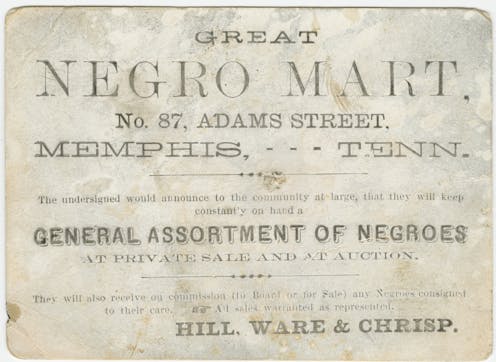
A trade card with printed black type for the domestic slave traders Hill, Ware and Chrisp. Collection of the Smithsonian National Museum of African American History and Culture

For my recently published book, “The Ledger and the Chain,” I visited more than 30 archives in over a dozen states, from Louisiana to Connecticut. Along the way, I uncovered mountains of material that exposed the depravity of the men who ran the largest domestic slave trading operation in American history and revealed the fortitude of the enslaved people they trafficked as merchandise.

But I also learned that many Americans do not realize that a domestic slave trade existed in the U.S. at all.

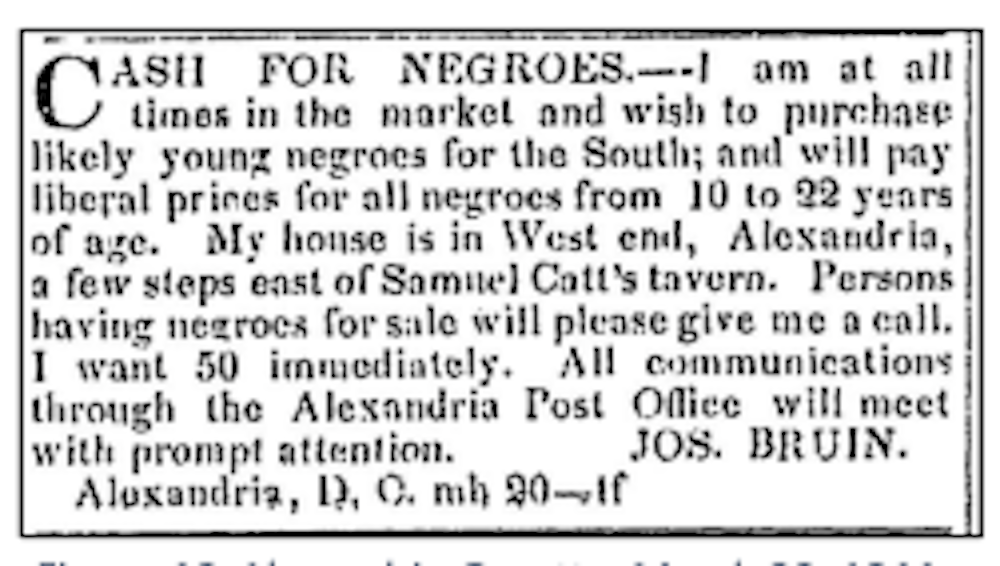
A domestic slave trader's newspaper ad from 1844 says 'CASH FOR NEGROES.'
Slave trader Joseph Bruin placed this advertisement in the Alexandria Gazette on March 20, 1844. City of Alexandria, Virginia

Mentioning my research to others repeatedly provoked questions about Africa, not America. They obviously assumed that a scholar working on the slave trade must be working on the trade that brought millions of Africans to the Western Hemisphere via the terrifying Atlantic Ocean crossing known as the Middle Passage.

They did not appear to know that by the time slavery ended in 1865, more than 1 million enslaved people had been forcibly moved across state lines in their own country, or that hundreds of thousands more had been bought and sold within individual states.

Americans continue to misunderstand how slavery worked and how vast was its reach – even as the histories of race and slavery are central to ongoing public conversations.

Indifference to suffering

Enslaved people were bought and sold within the boundaries of what is now the United States dating back to the Colonial era. But the domestic slave trade accelerated dramatically in the decades after 1808.

That year, Congress outlawed the importation of enslaved people from overseas, and it did so at a moment when demand for enslaved laborers was booming in expanding cotton and sugar plantation regions of the lower South.

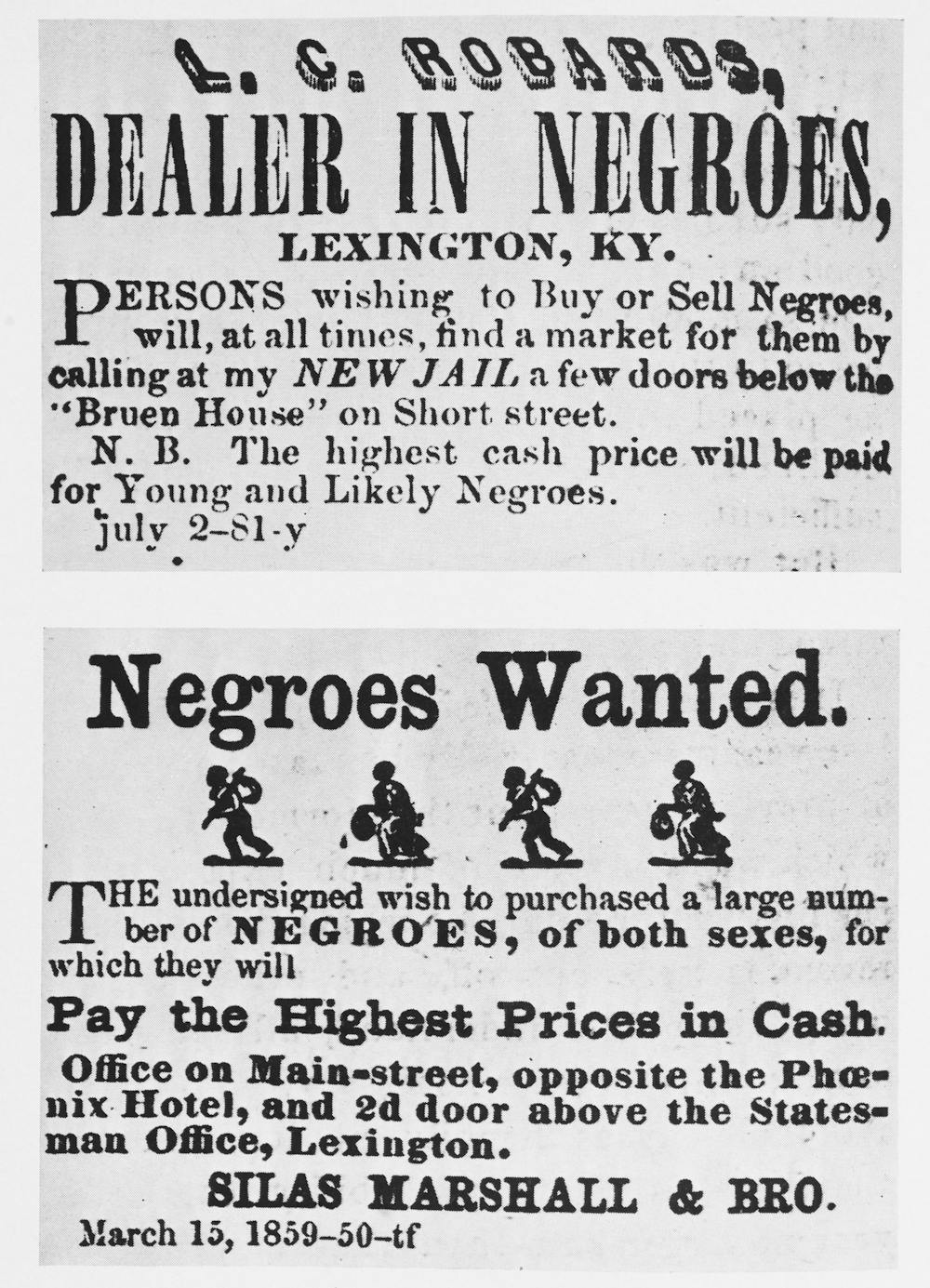
Two vintage posters from the 1840s advertising slave trader services in Kentucky.
Two posters advertising the services of slave traders L.C. Robards, top, and Silas Marshall and Bro, bottom, Lexington, Ky. Smith Collection/Gado/Getty Images

Growing numbers of professional slave traders stepped forward to satisfy that demand. They purchased enslaved people primarily in upper South states like Maryland and Virginia, where a declining tobacco economy left many slaveholders with a surplus of laborers. Traders then forced those enslaved people to migrate hundreds of miles over land and by ship, selling them in Alabama, Mississippi, Louisiana and other states where traders hoped to turn a profit.

The domestic slave trade was a brutal and violent business. Enslaved people lived in constant fear that they or their loved ones would be sold.

William Anderson, who was enslaved in Virginia, remembered seeing “hundreds of slaves pass by for the Southern market, chained and handcuffed together.” Years after he fled the South, Anderson wrote of “wives taken from husbands and husbands from wives, never to see each other again – small and large children separated from their parents,” and he never forgot the sounds of their sorrow. “O, I have seen them and heard them howl like dogs or wolves,” he recalled, “when being under the painful obligation of parting to meet no more.”

Slave traders were largely indifferent to the suffering they caused. Asked in the 1830s whether he broke up slave families in the course of his operations, one trader admitted that he did so “very often,” because “his business is to purchase, and he must take such as are in the market.”

‘So wicked’

Domestic slave traders initially worked mostly out of taverns and hotels. Over time, an increasing number of them established offices, showrooms and prisons where they held enslaved people whom they intended to sell.

By the 1830s, the domestic slave trade was ubiquitous in the slave states. Newspaper advertisements blared “Cash for Negroes.” Storefront signs announced that “dealers in slaves” were inside. At ports and along roads, travelers reported seeing scores of enslaved people in chains.

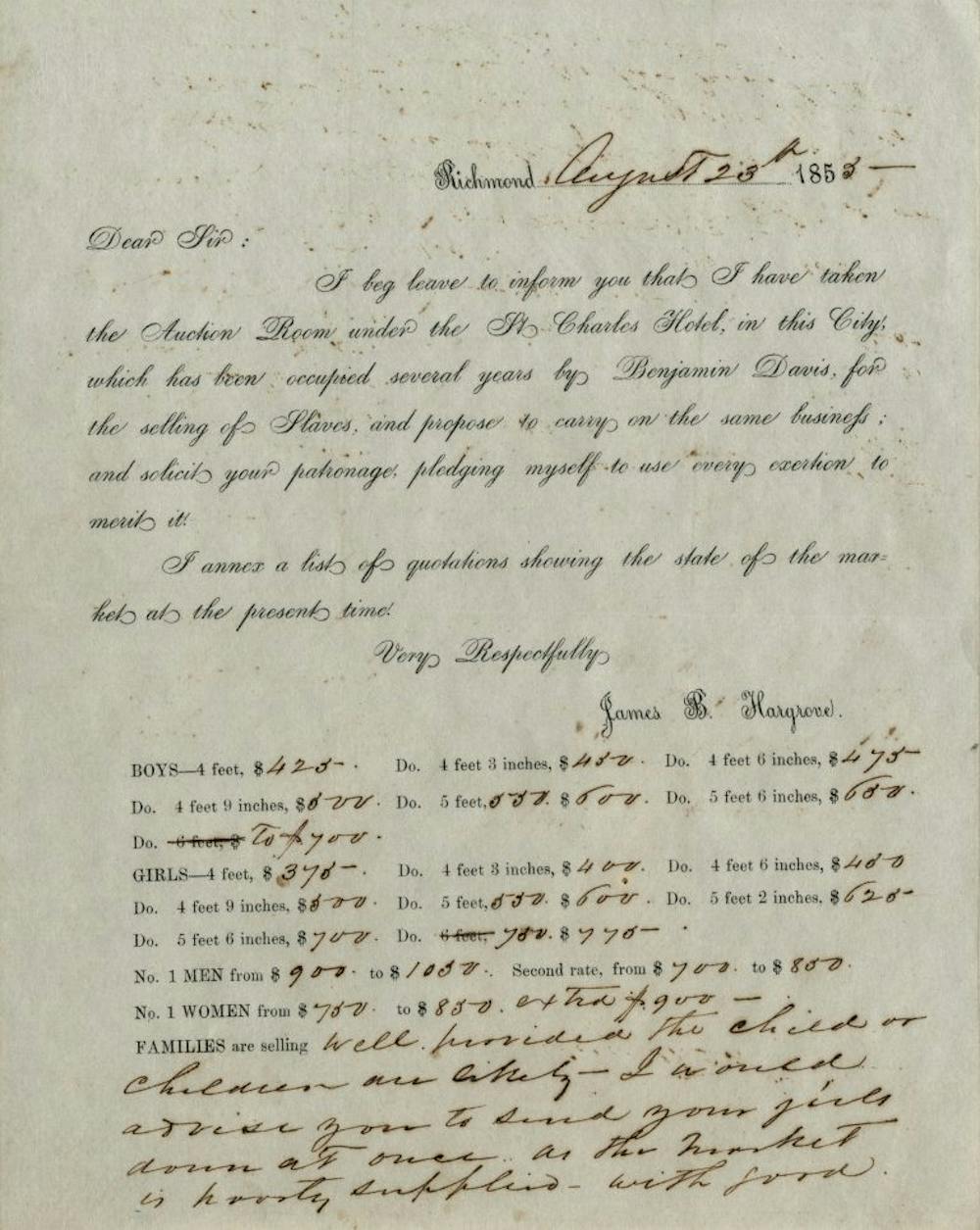
A handwritten letter announcing the opening of a slave trading company at a hotel in Richmond, Virginia.
An 1852 letter from James B. Hargrove quotes the market prices for enslaved men, women and children. Library of Virginia

Meanwhile, the money the trade generated and the credit that financed it circulated throughout the country and across the Atlantic, as even European banks and merchants looked to share in the gains.

The more visible the trade became, the more antislavery activists made it a core of their appeals. When abolitionist editor Benjamin Lundy, for example, asked white Americans in the 1820s how long they could look at the slave trade and “permit so disgraceful, so inhuman, and so wicked a practice to continue in our country, which has been emphatically termed THE HOME OF THE FREE,” he was one among a rising chorus.

But abolitionists made little headway. The domestic slave trade ended only when slavery ended in 1865.

Propaganda obscures history

Vital to the American economy, important to American politics and central to the experience of enslaved people, the domestic slave trade was an atrocity carried out on a massive scale. As British traveler Joseph Sturge noted, by the 1840s, the entire slaveholding portion of the United States could be characterized by division “into the ‘slave-breeding’ and ‘slave-consuming’ States.”

Yet popular historical knowledge of the domestic trade remains hazy, thanks largely to purposeful forgetting and to a propaganda campaign that began before the Civil War and continued long past its conclusion.

White Southerners made denial about the slave trade an important tenet in their defense of slavery. They claimed that slave sales were rare, that they detested the slave trade and that traders were outcasts disdained by respectable people.

Kentucky minister Nathan Lewis Rice’s assertion in 1845 that “the slave-trader is looked upon by decent men in the slave-holding States with disgust” was such a common sentiment that even white Northerners sometimes parroted it. Nehemiah Adams, for example, a Massachusetts resident who visited the South in 1854, came away from his time in the region believing that “Negro traders are the abhorrence of all flesh.”

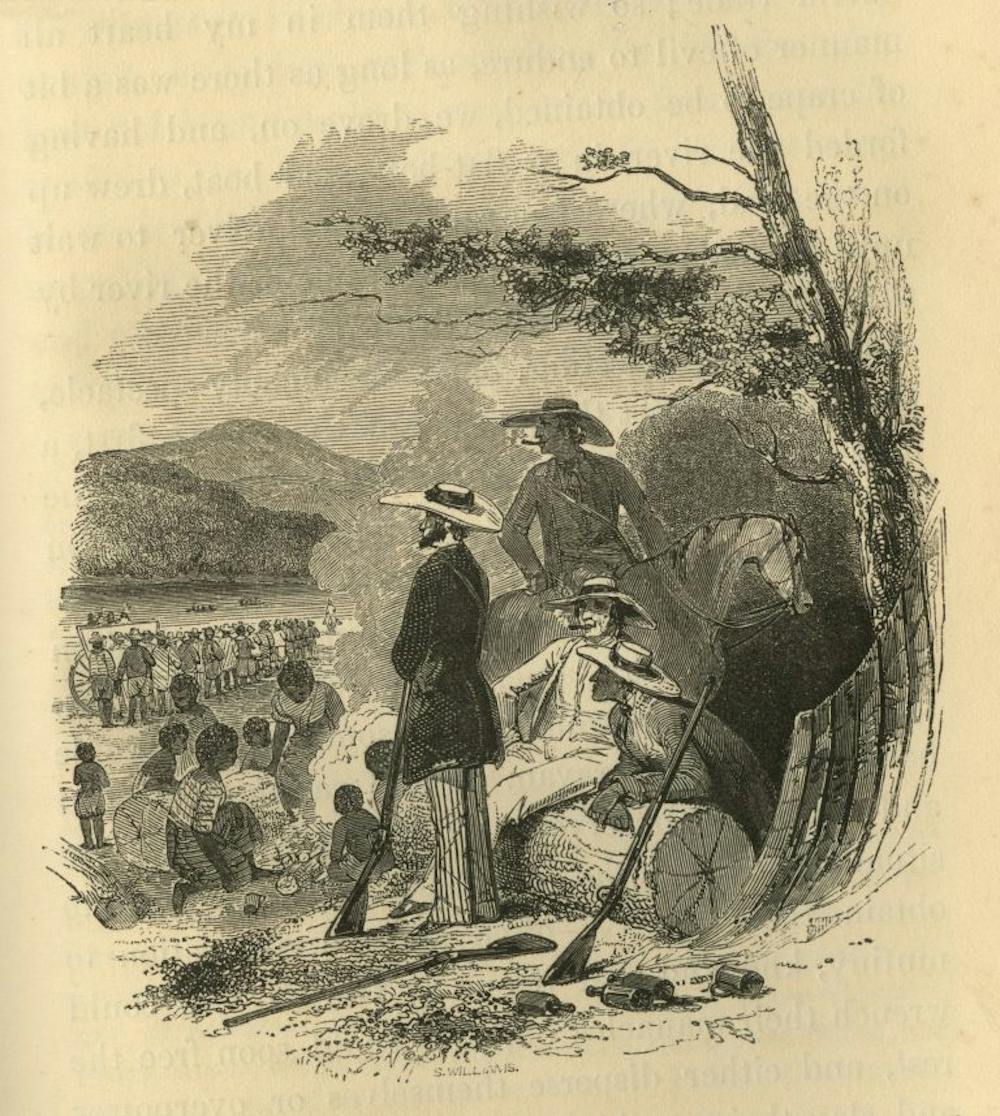
Four slave traders with guns guarding enslaved people they were transporting south from Virginia.
Franklin and Armfield slave trading company partner John Armfield watching over enslaved men and women chained together who he and several employees were moving south from Virginia. John Murray/Library of Virginia

Such claims were almost entirely lies. But downplaying the slave trade became a standard element of the racist mythology embedded in the defense of the Confederacy known as the Lost Cause, whose purveyors minimized slavery’s significance as they discounted its role in bringing about the Civil War.

And while the Confederacy may have lost on the battlefield, its supporters arguably triumphed in the cultural struggle to define the war and its meaning. Well into the 20th century, significant numbers of white Americans throughout the country accepted and embraced the notion that slavery had been relatively benign.

As they did so, the devastations of the domestic slave trade became buried beneath comforting fantasies of moonlight and magnolias evoked by movies like “Gone With the Wind.

Recent years have seen monuments to the Confederacy coming down in cities and towns across the country. But the struggle over how Americans remember and talk about slavery, now perhaps more heated and controversial than ever, arguably remains stuck in terms that are legacies of the Lost Cause.

Slavery still conjures images of Southern farms and plantations. But the institution was grounded in the sales of nearly 2 million human beings in the domestic slave trade, the profits from which nurtured the economy of the entire country.

Until that history makes its way more deeply into our popular memory, it will be impossible to come to terms with slavery and its significance for the American past and present.

The Conversation

I do not currently receive any external funding, but fellowships from the American Council of Learned Societies, Virginia Humanities, and numerous other institutions did help fund the research that produced the scholarship reflected in this piece.

30 Sep 11:12

OPINION: Fund public schools, forget charters

by Marcelene Pilcher, CORRESPONDENT
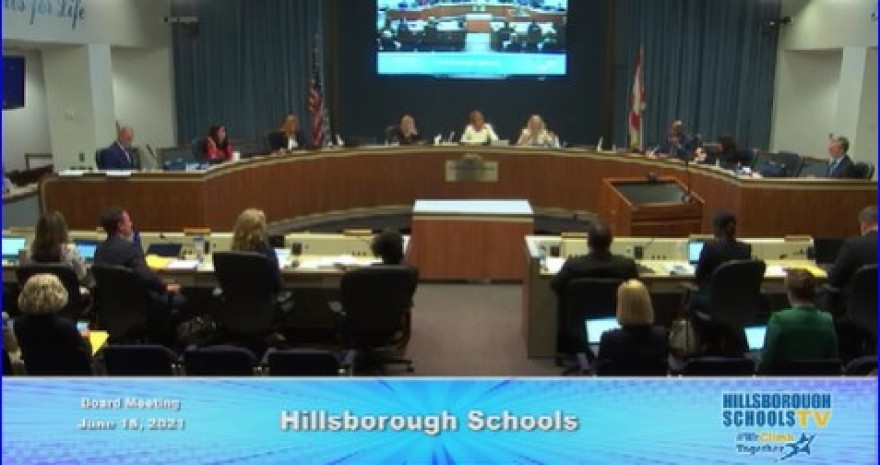
With a history of money mismanagement and compromised education standards, charter schools have no place in Hillsborough County. SPECIAL TO THE ORACLE/Hillsborough County Schools

Mater Academy, Inc., a South Florida charter school company, was granted permission and funding by the Hillsborough County School Board on Sept. 21 to open an elementary and middle school in unspecified Hillsborough locations.

Hillsborough County shouldn’t build more charter schools, which often take advantage of taxpayer dollars to the deficit of students. It should instead focus on improvements to the Hillsborough public education system.

Charter schools were designed to be publicly funded schools, free from heavy oversight to encourage innovation in education. This system has often been taken advantage of by unreliable operators who disappear with hundreds of thousands, and sometimes millions, of taxpayer dollars.

Florida law requires school districts to approve or deny new charters based on applications operators submit outlining their plans in instruction, mission and budget. The statutes don’t require criminal screenings nor a candidate’s financial or educational past.

Individuals with a history of failed schools, shaky personal finances or no experience running schools can open and operate charters.

As such, Broward County didn’t know of former Broward College Dean Winston Thompson’s history of payments to creditors, foreclosures and bankruptcy when it allotted him over $100,000 in 2013 to operate a charter school in its district, according to a 2014 Sun Sentinel investigation.

Thompson opened the College Bound Academy of Excellence, which reportedly had no textbooks nor buses to transport students. Several employees complained of bounced checks, and the school owed nearly $141,000 to its landlord. The academy shut down in October 2013 after two months of subpar education, displacing 60 students.

There have been cases across South Florida of charter schools opening and closing doors within a matter of months. Though Thompson denied keeping any of the money granted by the school district, the funds couldn’t be recovered. When charter schools fail, the funds meant to be refunded to the school district often disappear. 

A handful of South Florida charter schools that failed in the past few years owe over $1 million in taxpayer dollars to local school districts, according to the Sun Sentinel. Because of the lack of oversight granted to charters, school districts struggle to track spending.

Charter schools receive funds in monthly installments based on student enrollment. If a charter school overestimates its enrollment, or if money is unspent, it is required by law to be returned to school districts. Charter schools are required to submit financial reports, but some don’t file them or turn in unreliable paperwork, according to the Sun Sentinel. In a Florida public school, nearly every cent of taxpayer money is tracked and accounted for.

Management companies like Mater Academy make it even more difficult for school districts to track where money flows in charters. These companies provide services ranging from targeted assignments to wholesale management of schools and can receive anywhere from 10% to 97% of a school’s budget.

“They’re public schools in the front door, … for-profit closed entities in the back door,” said Kathleen Oropeza, co-founder of an Orlando-based education advocacy group, in a 2013 interview with the Sentinel. “There’s no transparency. The public has no ability to see where the profits are, how the money is spent.”

Whom these companies hire and how they spend tax money are out of public view. In the last decade, state investigators cited several of these management companies with misusing federal money under the guise of providing meals for low-income children in South Florida.

Hillsborough County School Board should not allot any taxpayer money to a management company for charter schools, which are unreliable in quality and spending practices. Instead, it should focus on improving the Hillsborough County public school system which has over 200,000 students. 

The funds for Mater Academy could be used to repair school buildings, provide school materials to low-income children or buy new books for public schools. 

Instead of shirking the responsibility of education onto unreliable third parties, the school board should funnel that money into improving the current school system which can be openly traced and held accountable for the education provided to students.

27 Sep 17:20

2000 Americans a day dying of Covid, again

by Rob Beschizza

The ride won't end until the fuel's burned up and Florida and Texas are roaring. 2000 Americans are now dying every day from Covid again. Other states with their death rates at (or close to) their highest since the outset of the pandemic include Arkansas, Louisiana, Georgia and Mississippi. — Read the rest

27 Sep 17:18

Interactive map of native lands

by Rob Beschizza

Native Land is an explorable, interactive map that shows the lands once inhabited by native and indigenous peoples of the Earth, their language groups, and the treaties to which they were parties. You can type in the name of your community to see who lived there; the Shawnee and Osage once ranged over the valleys and hills now occupied by Yinzers. — Read the rest

27 Sep 14:40

The U.S. occupation of Afghanistan was colonialism that prevented Afghan self-determination

by Ian Spears, Associate Professor of Political Science (Conflict and Conflict Resolution), University of Guelph
Afghan women march to demand their rights under Taliban rule during a demonstration near the former Women's Affairs Ministry building in Kabul. (AP Photo)

Colonialism — and, more specifically, decolonization — is a sensitive societal issue. Statues have been pulled down so as not to celebrate the legacies of slave traders or politicians deemed offensive; student activists from Canada to South Africa want to rid themselves of Eurocentric reading lists; and museums are wrestling with how to represent African and North American Indigenous Peoples.


Read more: National Day for Truth & Reconciliation: Universities and schools must acknowledge how colonial education has reproduced anti-Indigenous racism


Questions are also bound to be raised about the occupation of Afghanistan now that the international community has withdrawn and the Taliban have taken over. There can be little doubt that for the past 20 years, Afghanistan has been a colonized state.

Observers both within Afghanistan and outside the country fear the Taliban’s return to power will erase 20 years of human rights progress, particularly for Afghan women. There have already been reports that the Taliban have revelled in sabotaging critical road and infrastructure built by American forces.

Punishing the Taliban for harbouring al-Qaida

The 2001 invasion of Afghanistan by the United States was motivated by no other purpose than to end the Taliban’s sanctuary to al-Qaida terrorists who were responsible for the 9/11 attacks on the World Trade Center. Indeed, with the exception of the destruction of sixth-century Buddhas and the attention New York Times journalist Bob Herbert paid to the treatment of women under Taliban rule prior to the U.S. invasion, Afghanistan was largely ignored by the international community.

American intervention had nothing to do with human rights and everything to do with U.S. self-interest. Only once the Taliban were removed did President George W. Bush boast: “We continue to help the Afghan people lay roads, restore hospitals and educate all of their children.” This is often a convenient rationalization for colonial rule.

An Afghan boy plays beside a road as the sun sets.
An Afghan boy plays on the side of a road as the sun sets in Kabul, Afghanistan. (AP Photo/Felipe Dana)

While the West paid lip service to Afghan traditional political institutions, such as the Loya Jirga — an assembly established to select leaders and air the day’s grievances — they could not have operated in the absence of American power, as the U.S. withdrawal has now made clear. This is the unavoidable irony — sustaining local institutions required outside power.

Afghans and non-Afghans alike rightly despair about the future. “It all stands to be lost,” Khaled Hosseini, the author of The Kite Runner, recently told the CBC. Many mainstream news organizations have accused Canada and the West of abandoning and betraying Afghanistan.

But how can we reconcile these competing claims that colonialism of any kind is detrimental with this more specific view that Afghanistan has been “failed by the West?”

Progress was made

Several Canadian diplomats warned against the 2001 invasion of distant, culturally unfamiliar states. Canadian diplomat Robert Fowler, who spent 130 days as a hostage of al-Qaida in West Africa, argued that a more effective approach is to punish the terrorists rather than engage in too much social engineering.

Intervention cannot be about turning states “into Saskatchewan or Nebraska,” he said in reference to Mali. “And it won’t be about exporting our social safety net or funding a government or anything else.”

There’s no doubt progress was made in Afghanistan, at least initially. Schools were open for everyone, a democratic process was established, the rights of women were acknowledged and women served in the government.


Read more: On the brink of disaster: how decades of progress in Afghanistan could be wiped out in short order


But these rights and gains do not represent self-determination if they are dependent on American power.

So what’s to be done? There have been signs that ordinary Afghans are prepared to take risks of their own in order to protect a way of life more in line with liberal-democratic norms. That’s a positive outcome in terms of the well-being of Afghan women, in particular.

But it would be almost impossible for local forces to take down the Taliban again in the absence of American military power, and it would require further conflict. It’s ironic that with the American withdrawal, the total collapse of the U.S.-backed government and the Taliban victory, Afghanistan is now closer to peace than it has been in decades.

Afghans sort through second-hand clothes
Afghans sort through second-hand clothes at a Kabul park. (AP Photo/Bernat Armangue)

Animosity towards the West

Westerners shouldn’t delude themselves that Afghans were unreservedly grateful for the American presence over the past 20 years.

As much as they hate the Taliban, many Afghans also hated the corrupt warlords recruited by the West to impose order in a state with no consolidated political infrastructure.

In many cases, the mere presence of western forces elicited animosity. Indeed, portraying the occupation as an invasion from the West has been an effective way for hardline groups like the Taliban to gain power.

While liberal democracy may be the only acceptable form of government in western countries, it can be a hard sell in Muslim states that were themselves once colonized by those same liberal democracies.

Militiamen loyal to a northern warlord pose for a photo
Militiamen loyal to Ata Mohammad Noor, a powerful northern warlord, pose for a photo in August 2021. (AP Photo/Mirwais Bezhan)

Contrary, then, to what’s been said about Afghanistan being a “failed state,” the country under the Taliban was, and perhaps is again, relatively viable, although theocratic. It was Afghanistan as a liberal democracy that proved to be a failure.

Democratic and human rights often depend on power that can only come from outside. But those who want change only through intervention should also be clear about the moral implications — and the long-term costs — they’re willing to assume in sustaining Afghanistan as a colonial state.

Instead, maybe those concerned about the well-being of Afghan citizens should not be fearful of standing aside and letting them sort out for themselves the kind of country they want.

The Conversation

Ian Spears does not work for, consult, own shares in or receive funding from any company or organization that would benefit from this article, and has disclosed no relevant affiliations beyond their academic appointment.

24 Sep 19:41

How the world's biggest Islamic organization drives religious reform in Indonesia – and seeks to influence the Muslim world

by Ahmet T. Kuru, Professor of Political Science, San Diego State University
A gathering during the 73rd anniversary of the Nahdlatul Ulama (NU), in Jakarta, Indonesia in 2019. Eko Siswono Toyudho/Anadolu Agency/Getty Images

After its return to power in Afghanistan, the Taliban are again imposing their religious ideology, with restrictions on women’s rights and other repressive measures. They are presenting to the world an image of Islam that is intolerant and at odds with social changes.

Islam, however, has multiple interpretations. A humanitarian interpretation, focusing on “rahmah,” loosely translated as love and compassion, has been emphasized by a group I have studied – Nahdlatul Ulama, which literally means “Reawakening of the Islamic Scholars.”

Nahdlatul Ulama, or NU, was founded in 1926 in reaction to the Saudi conquest of Mecca and Medina with their rigid understanding of Islam. It follows mainstream Sunni Islam, while embracing Islamic spirituality and accepting Indonesia’s cultural traditions.

Functioning in Indonesia, the country with the largest Muslim population, Nahdlatul Ulama is the world’s biggest Islamic organization with about 90 million members and followers. In terms of membership, the organization hugely outstrips that of the Taliban – yet this face of Islam has not been sufficiently recognized on the international stage.

In 2014, NU responded to the rise of the Islamic State group and its radical ideology by initiating an Islamic reform. Since then, it has elaborated on this reform that it calls “Humanitarian Islam.”

Humanitarian Islam

During the past seven years, NU’s general secretary, Yahya Cholil Staquf, has organized several meetings of the organization’s Islamic scholars with a reformist agenda. They made public declarations for reforming Islamic thought on controversial issues, including political leadership, equal citizenship and relations with non-Muslims.

The Nahdlatul Ulama declarations include crucial decisions that differentiate “Humanitarian Islam” from other interpretations. First of all, they reject the notion of a global caliphate, or a political leadership that would unite all Muslims. The concept of a caliphate has been accepted by both mainstream Islamic scholars, such as those in Al-Azhar – Egypt’s world-renowned Islamic institution – and radical groups, such as the Islamic State group and al-Qaeda.

Moreover, the NU declarations emphasize the legitimacy of modern states’ constitutional and legal systems, and thus reject the idea that it is a religious obligation to establish a state based on Islamic law.

Additionally, these declarations stress the importance of equal citizenship by refusing to make a distinction between Muslims and non-Muslims as legal categories.

They call for a deeper cooperation among Muslims, Christians and followers of other religions to promote world peace.

Nahdlatul Ulama has taken practical steps for realizing these aims. For example, it has established a working relationship with the World Evangelical Alliance, which claims to represent 600 million Protestants, to promote intercultural solidarity and respect.

These NU declarations may sound insufficient from a Western liberal point of view, since they do not touch upon some issues such as LGBTQ rights. To better understand the importance of NU’s perspective and its limits requires an examination of the Indonesian context.

Indonesia’s tolerant Islam

Yahya Staquf, secretary general of Indonesia's Muslim organization, Nahdlatul Ulama.
Yahya Cholil Staquf, general secretary of Nahdlatul Ulama.

My research on 50 Muslim-majority countries finds that Indonesia is notable because it is one of the few democracies among them.

Indonesia’s foundational credo, Pancasila, means “five principles” and basically refers to the belief in God, humanitarianism, Indonesia’s national unity, democracy and social justice.

About 88% of Indonesia’s population of 270 million are Muslim. Both Nahdlatul Ulama and Muhammadiyah, the country’s second-biggest Islamic organization, have been respectful of these principles. Like NU, Muhammadiyah also has tens of millions of followers, and these two organizations often cooperate against radical Islamist groups.

Robert Hefner, a leading expert on Indonesia, documents in his 2000 book “Civil Islam” how NU and Muhammadiyah made important contributions to the country’s democratization in the late 1990s. During this process, the leader of NU, Abdurrahman Wahid, became Indonesia’s first democratically elected president in 1999.

Wahid, who died in 2009, left a religious legacy, too. During my conversations, senior NU members repeatedly referred to Wahid’s reformist ideas as the main source of inspiration for Humanitarian Islam.

Indonesia’s intolerant Islam

Not all Islamic theories and practices in Indonesia are tolerant toward diversity. The country’s Aceh province has enforced certain rules of Islamic criminal law, including the punishment of caning for those who sell or drink alcohol.

Another example of religious and political intolerance is the country’s blasphemy law, which resulted in the 20-month imprisonment of the capital city Jakarta’s Chinese Christian governor, Basuki Purnama in 2017-2018, for a statement about a verse in the Quran.

In January 2021, the story of a Christian female student being pressured by the school principal to wear a Muslim headscarf went viral on Facebook. In two weeks, the Indonesian government responded with a decree that banned public schools from making any religious attire compulsory.

In short, there is a tug-of-war between tolerant and intolerant interpretations of Islam in Indonesia. Even within NU, there exist disagreements between conservatives and reformists.

Nonetheless, Nahdlatul Ulama reformists are becoming more influential. One example is the current minister of religious affairs, Yaqut Cholil Qoumas, a leading NU member and the younger brother of NU’s reformist general secretary. He was one of the three ministers who signed the joint decree banning the imposition of headscarves on students in February.

NU’s Humanitarian Islam movement might be crucial to promote tolerance among Indonesia’s Islamic majority. But can it have an effect beyond Indonesia?

Influencing the Middle East

This reform movement’s reception in the Middle East, the historical center of Islam, is important if it is to have a global impact. Humanitarian Islam has been mostly ignored by scholars and governments of Middle Eastern countries, who generally see it as a competitor of their own attempts to influence the Muslim world. As a nongovernmental initiative, Humanitarian Islam is different from Middle Eastern efforts to shape the Muslim world, which are mostly government-led schemes.

With its reformist emphasis, Humanitarian Islam may appeal to some young Middle Eastern Muslims who are discontent with their countries’ political and conservative interpretations of Islam.

In order to reach a Middle Eastern audience, the Humanitarian Islam movement is launching an Arabic-language version of its English website. Whether this Indonesian initiative can have an impact in the Middle East and become a truly global movement for Islamic reform remains to be seen.

[Explore the intersection of faith, politics, arts and culture. Sign up for This Week in Religion.]

The Conversation

Ahmet T. Kuru does not work for, consult, own shares in or receive funding from any company or organization that would benefit from this article, and has disclosed no relevant affiliations beyond their academic appointment.

17 Sep 18:09

What is the Moon Festival? A scholar of Chinese religions explains

by Mario Poceski, Professor of Buddhist Studies and Chinese Religions, University of Florida
A popular delicacy eaten during the Mid-Autumn Festival is the mooncake. Xvision/Moment via Getty Images

With the arrival of September and hints of cooler temperatures also comes one of most important traditional festivals in the Chinese calendar, the Mid-Autumn Festival, or Zhongqiu jie (中秋節), also known as the Moon Festival.

At this time of the year, the Chinese store down the road from our home in Gainesville, Florida, is stocked with mooncakes, known in Chinese as yuebing (月餅). The same is true of Chinese stores around the world. There is even the option these days of buying these desserts from online retailers such as Amazon.

These traditional delicacies are readied in anticipation of the festival, observed on the 15th day of the eighth lunar month. This is a time for family and friends to gather, watch the full moon and eat mooncakes and other delicacies. Other festivity highlights include public lantern displays, dance parties, traditional performances and worship of the moon goddess and other deities.

Because of the central theme of family reunion, sometimes the festival evokes comparison to Thanksgiving in the U.S.

Group of smiling people gathered around lit candles at night.
The Mid-Autumn Festival is a time of gathering for families celebrating the holiday. Kong Ding Chek/E+ via Getty Images

Mooncakes: Tradition and innovation

The gifting and eating of mooncakes is arguably the most emblematic feature of the festival. The round shape of the mooncake is meant to evoke an image of the full moon. The roundness of the full moon, in turn, symbolizes wholeness; by extension, it conveys a sense of spiritual contentment, coming together and reunion.

Usually, mooncakes come with traditional fillings, such as red bean or white lotus seed paste. There are many regional variations, some of which contain a preserved egg yolk in the middle. The yellow egg yolk adds another layer of symbolism, as it resembles the round moon in the sky.

Additionally, there are contemporary flavors such as chocolate, coffee or green tea. It is even possible to find ice cream mooncakes. These are created by commercial ice cream companies in order to tap into the lucrative mooncake market and cater to contemporary tastes.

Plate of mooncake slices with yolk center.
The egg yolk center of some mooncakes represents the full moon. insjoy/iStock via Getty Images Plus

The legends behind the festival

As a scholar of Chinese religions, I am especially fascinated by the legends associated with the origins of the festival. These are notable elements of popular lore, rooted in China’s long history and rich cultural traditions.

Customarily, the Mid-Autumn Festival is associated with the popular legend about Chang’e (嫦娥), the goddess of the moon. The earliest versions of the story can be traced back to the Warring States, a significant historical period between 475-221 B.C., marked by recurrent warfare, bureaucratic reforms and political consolidation.

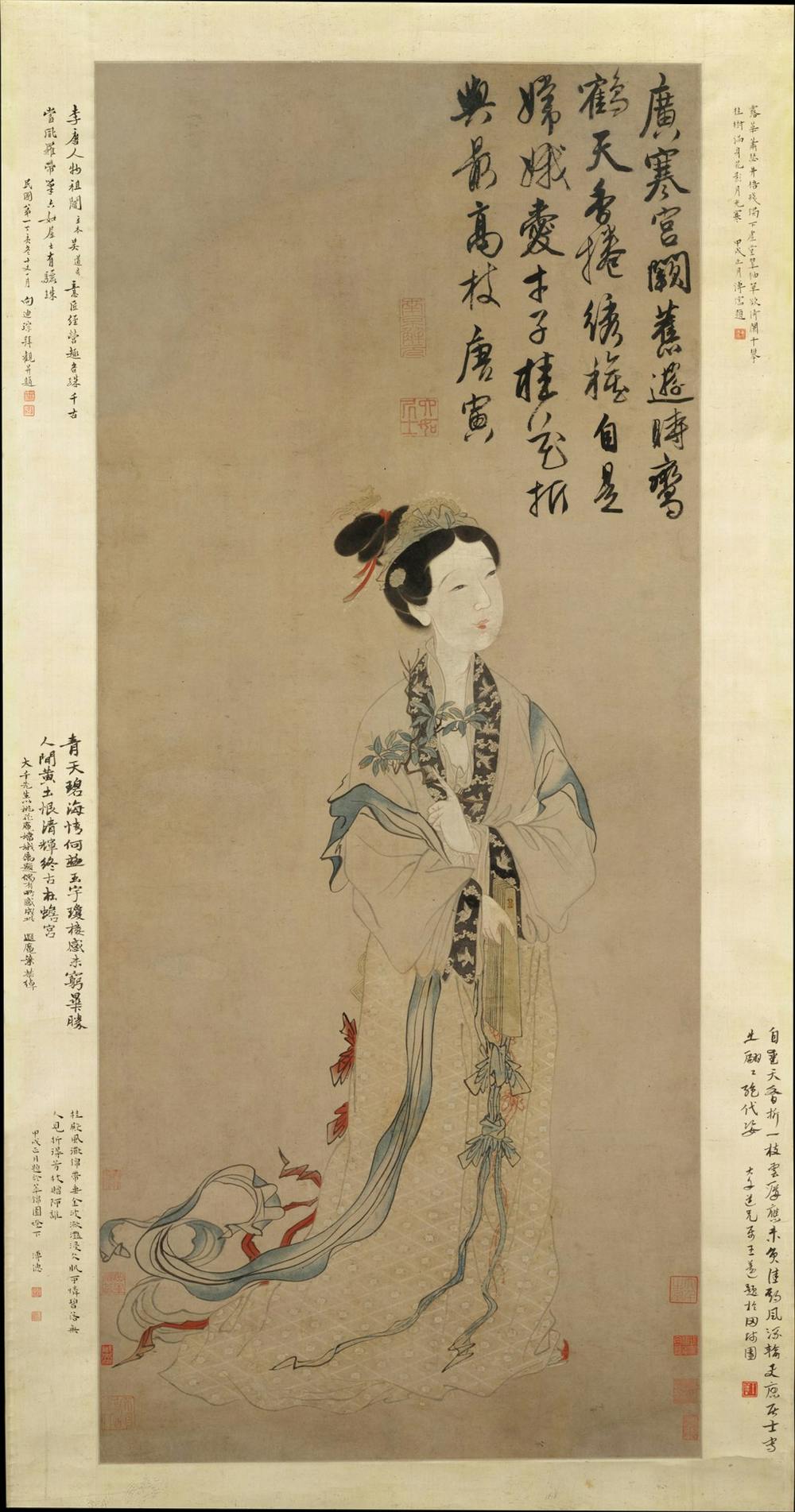
Circa 1368-1644 painting of moon goddess Chang'e,
Offerings are made to the moon goddess Chang'e during the Mid-Autumn Festival. Metropolitan Museum of Art

Chang’e is said to have stolen the elixir of immortality from her husband, Yi, the great archer and hero of Chinese mythology. She then escaped to the moon, where she was condemned to a lonely existence.

Later versions of the story, still told today, present a more flattering image of the goddess. She is described as a model of feminine beauty and elegance. She digests the elixir only in order to prevent it from falling in the hands of an evil person. She then chooses the moon as her immortal abode, to be close to her beloved husband.

On his part, Yi makes sacrifices to his departed wife that feature cakes and fruits. The local people sympathize with him and also start making the same offerings.

To this day, Chinese people continue this tradition, making offerings of mooncakes in commemoration of the goddess as they make wishes or pray for familial unity and harmony.

Historical background

In the agricultural society of premodern China, the Mid-Autumn Festival was linked with harvesting season celebrations.

The term “mid-autumn,” which became the name of the festival, appears in “Zhou li” (周禮), or the Rites of Zhou. This is one of the early Confucian classics, the core texts that constitute the main canon of classical Confucianism. The earliest history of the festival is uncertain, but scholars have shown that its celebration already took place during the Tang era that lasted from 618-907 A.D., and increased in popularity during the later imperial period.

Two people holding lanterns.
Lanterns are a common symbol of the Mid-Autumn Festival. Khanh Bui/Movement via Getty Images

Celebrations in other Asian nations

The Mid-Autumn Festival is also celebrated in Asian countries beyond China, as well as among the Chinese diaspora in other parts of the world. This is especially the case with Southeast Asian countries with large ethnically Chinese populations, such as Singapore, Malaysia and Thailand.

It is also an important festival in Vietnam. Called Tết Trung Thu, it is primarily celebrated as the children’s festival and is associated with unique Vietnamese legends.

Besides moon watching and the ubiquitous mooncakes, among its unique features are the performances of traditional dances and the lanterns carried by children, as they walk under the glow of the full moon with their light illuminating the path.

[Explore the intersection of faith, politics, arts and culture. Sign up for This Week in Religion.]

The Conversation

Mario Poceski does not work for, consult, own shares in or receive funding from any company or organization that would benefit from this article, and has disclosed no relevant affiliations beyond their academic appointment.

17 Sep 18:06

Facebook has known for a year and a half that Instagram is bad for teens despite claiming otherwise – here are the harms researchers have been documenting for years

by Christia Spears Brown, Professor of Psychology, University of Kentucky
Instagram's emphasis on filtered photos of bodies harms girls' self-image. Thomas Barwick/DigitalVision via Getty Images

Facebook officials had internal research in March 2020 showing that Instagram – the social media platform most used by adolescents – is harmful to teen girls’ body image and well-being but swept those findings under the rug to continue conducting business as usual, according to a Sept. 14, 2021, Wall Street Journal report.

Facebook’s policy of pursuing profits regardless of documented harm has sparked comparisons to Big Tobacco, which knew in the 1950s that its products were carcinogenic but publicly denied it into the 21st century. Those of us who study social media use in teens didn’t need a suppressed internal research study to know that Instagram can harm teens. Plenty of peer-reviewed research papers show the same thing.

Understanding the impact of social media on teens is important because almost all teens go online daily. A Pew Research Center poll shows that 89% of teens report they are online “almost constantly” or “several times a day.”

Teens are more likely to log on to Instagram than any other social media site. It is a ubiquitous part of adolescent life. Yet studies consistently show that the more often teens use Instagram, the worse their overall well-being, self-esteem, life satisfaction, mood and body image. One study found that the more college students used Instagram on any given day, the worse their mood and life satisfaction was that day.

Unhealthy comparisons

But Instagram isn’t problematic simply because it is popular. There are two key features of Instagram that seem to make it particularly risky. First, it allows users to follow both celebrities and peers, both of whom can present a manipulated, filtered picture of an unrealistic body along with a highly curated impression of a perfect life.

While all social media allows users to be selective in what they show the world, Instagram is notorious for its photo editing and filtering capabilities. Plus, that is the platform popular among celebrities, models and influencers. Facebook has been relegated to the uncool soccer moms and grandparents. For teens, this seamless integration of celebrities and retouched versions of real-life peers presents a ripe environment for upward social comparison, or comparing yourself to someone who is “better” in some respect.

Humans, as a general rule, look to others to know how to fit in and judge their own lives. Teens are especially vulnerable to these social comparisons. Just about everyone can remember worrying about fitting in in high school. Instagram exacerbates that worry. It is hard enough to compare yourself to a supermodel who looks fantastic (albeit filtered); it can be even worse when the filtered comparison is Natalie down the hall.

Negatively comparing themselves to others leads people to feel envious of others’ seemingly better lives and bodies. Recently, researchers even tried to combat this effect by reminding Instagram users that the posts were unrealistic.

It didn’t work. Negative comparisons, which were nearly impossible to stop, still led to envy and lowered self-esteem. Even in studies in which participants knew the photos they were shown on Instagram were retouched and reshaped, adolescent girls still felt worse about their bodies after viewing them. For girls who tend to make a lot of social comparisons, these effects are even worse.

Objectification and body image

Instagram is also risky for teens because its emphasis on pictures of the body leads users to focus on how their bodies look to others. Our research shows that for teen girls – and increasingly teen boys – thinking about their own bodies as the object of a photo increases worrying thoughts about how they look to others, and that leads to feeling shame about their bodies. Just taking a selfie to be posted later makes them feel worse about how they look to others.

Being an object for others to view doesn’t help the “selfie generation” feel empowered and sure of themselves – it can do exactly the opposite. These are not insignificant health concerns, because body dissatisfaction during the teen years is a powerful and consistent predictor of later eating disorder symptoms.

[Over 100,000 readers rely on The Conversation’s newsletter to understand the world. Sign up today.]

Facebook has acknowledged internally what researchers have been documenting for years: Instagram can be harmful to teens. Parents can help by repeatedly talking to their teens about the difference between appearance and reality, by encouraging their teens to interact with peers face-to-face, and to use their bodies in active ways instead of focusing on the selfie.

The big question will be how Facebook handles these damaging results. History and the courts have been less than forgiving of the head-in-the-sand approach of Big Tobacco.

The Conversation

Christia Spears Brown does not work for, consult, own shares in or receive funding from any company or organisation that would benefit from this article, and has disclosed no relevant affiliations beyond their academic appointment.

13 Sep 17:20

How one woman took on Wikipedia's Nazi fancruft

by Rob Beschizza

Ksenia Coffman noticed all the weirdly exonerative and glorifying turns of phrase in Wikipedia articles about garden-variety Nazis. But when she set about challenging that language, the articles' established editors opposed it. Even after showing that they were often misrepresenting primary sources, it was her who was cast as a vandal and revisionist. — Read the rest

10 Sep 14:23

Massive numbers of new COVID–19 infections, not vaccines, are the main driver of new coronavirus variants

by Vaughn Cooper, Professor of Microbiology and Molecular Genetics, University of Pittsburgh

The rise of coronavirus variants has highlighted the huge influence evolutionary biology has on daily life. But how mutations, random chance and natural selection produce variants is a complicated process, and there has been a lot of confusion about how and why new variants emerge.

Until recently, the most famous example of rapid evolution was the story of the peppered moth. In the mid-1800s, factories in Manchester, England, began covering the moth’s habitat in soot, and the moth’s normal white coloring made them visible to predators. But some moths had a mutation that made them darker. Since they were better camouflaged in their new world, they could evade predators and reproduce more than their white counterparts.

We are an evolutionary biologist and an infectious disease epidemiologist at the University of Pittsburgh who work together to track and control the evolution of pathogens. Over the past year and half, we’ve been closely following how the coronavirus has acquired different mutations around the world.

It’s natural to wonder if highly effective COVID-19 vaccines are leading to the emergence of variants that evade the vaccine – like dark peppered moths evaded birds that hunted them. But with just under 40% of people in the world having received a dose of a vaccine – only 2% in low-income countries – and nearly a million new infections occurring globally every day, the emergence of new, more contagious variants, like delta, is being driven by uncontrolled transmission, not vaccines.

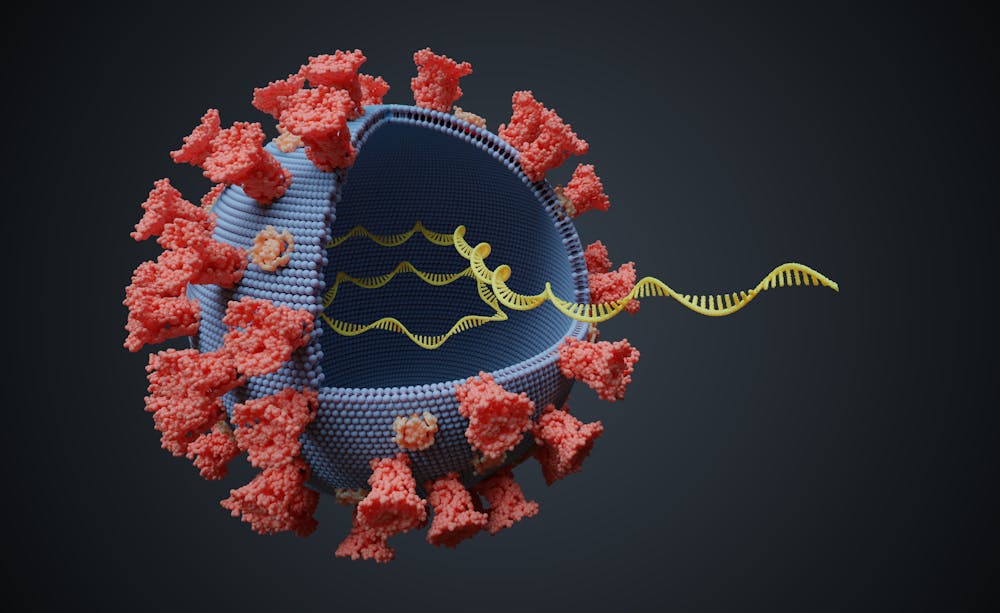
A coronavirus cut open showing a strand of RNA.
Coronaviruses use RNA to store information, and small changes in that genetic code can lead to new strains of the virus. Vchal/ iStock via Getty Images Plus

How a virus mutates

For any organism, including a virus, copying its genetic code is the essence of reproduction – but this process is often imperfect. Coronaviruses use RNA for their genetic information, and copying RNA is more error-prone than using DNA. Researchers have shown that when the coronavirus replicates, around 3% of new virus copies have a new, random error, otherwise known as a mutation.

Each infection produces millions of viruses within a person’s body, leading to many mutated coronaviruses. However, the number of mutated viruses is dwarfed by the much larger number of viruses that are the same as the strain that started the infection.

Nearly all of the mutations that occur are harmless glitches that don’t change how the virus works – and others in fact harm the virus. Some small fraction of changes may make the virus more infectious, but these mutants must also be lucky. To give rise to a new variant, it must successfully jump to a new person and replicate many copies.

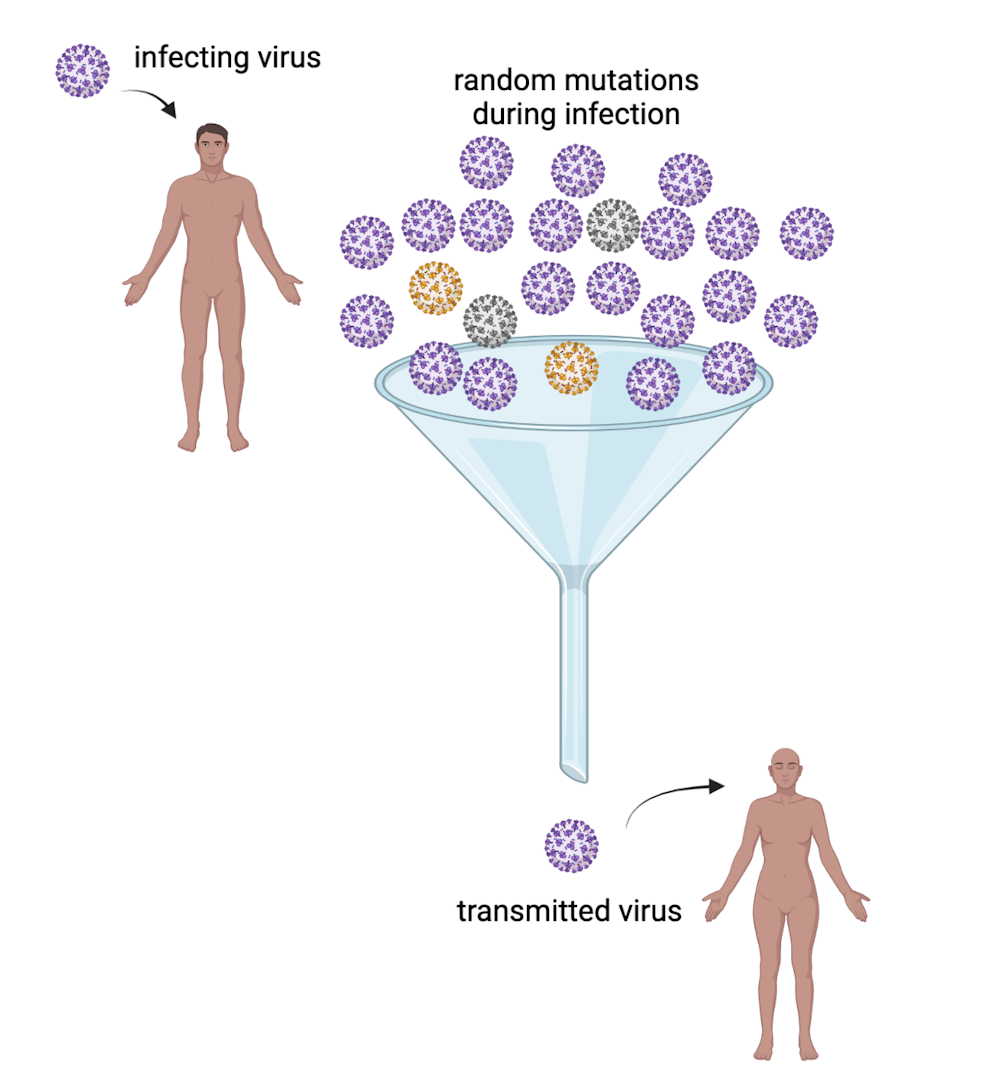
The bottleneck of transmission is what limits the ability of a new variant to infect another person. Vaughn Cooper via Biorender, CC BY-ND

Transmission is the important bottleneck

Most viruses in an infected person are genetically identical to the strain that started the infection. It is much more likely that one of these copies – not a rare mutation – gets passed on to someone else. Research has shown that almost no mutated viruses are transmitted from their original host to another person.

And even if a new mutant causes an infection, the mutant viruses are usually outnumbered by non-mutant viruses in the new host and aren’t usually transmitted to the next person.

The small odds of a mutant being transmitted is called the “population bottleneck.” The fact that it is only a small number of the viruses that start the next infection is the critical, random factor that limits the probability that new variants will arise. The birth of every new variant is a chance event involving a copying error and an unlikely transmission event. Out of the millions of coronavirus copies in an infected person, the odds are remote that a fitter mutant is among the few that spread to another person and become amplified into a new variant.

A close up drawing of a large tower-like structure attaching to a small receptor on a cell.
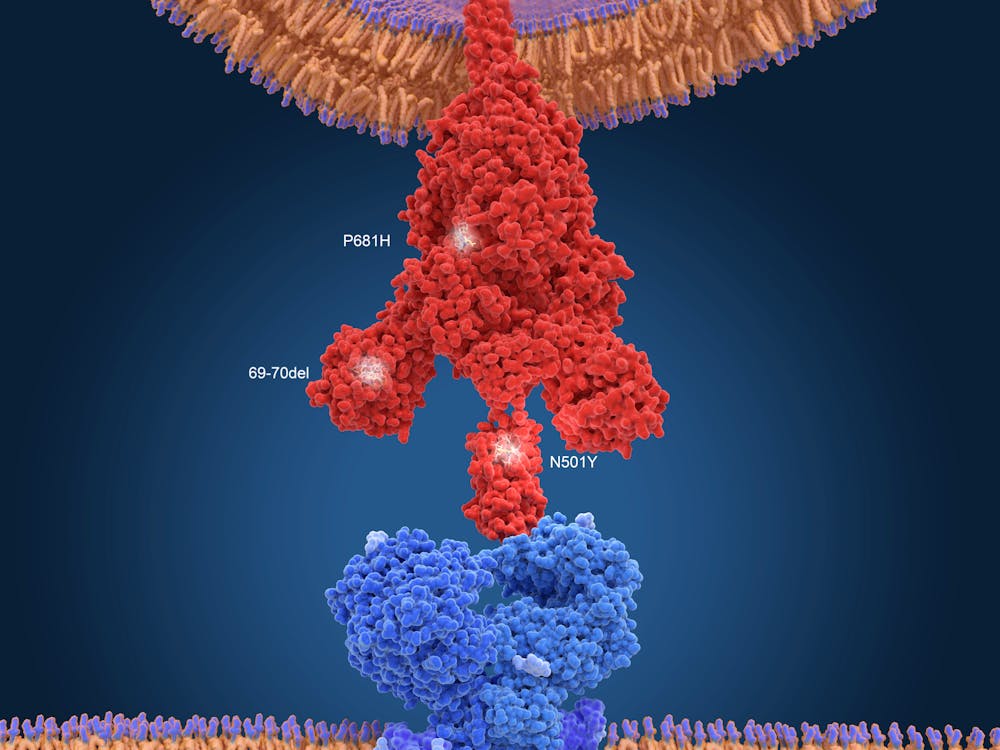
Mutations have changed the structure of the spike protein, seen in red, and made the coronavirus better able to infect cells using the ACE2 receptor, seen in blue. Juan Gaertner/Science Photo Library via Getty Images

How do new variants emerge?

Unfortunately, uncontrolled spread of a virus can overcome even the tightest bottlenecks. While most mutations have no effect on the virus, some can and have increased how contagious the coronavirus is. If a fast-spreading strain is able to cause a large number of COVID-19 cases somewhere, it will start to out-compete less contagious strains and generate a new variant – just like the delta variant did.

Many researchers are studying which mutations lead to more transmissible versions of the coronavirus. It turns out that variants have tended to have many of the same mutations that increase the amount of virus an infected person produces. With more than a million new infections occurring every day and billions of people still unvaccinated, susceptible hosts are rarely in short supply. So, natural selection will favor mutations that can exploit all these unvaccinated people and make the coronavirus more transmissible.

Under these circumstances, the best way to constrain the evolution of the coronavirus is to reduce the number of infections.

Vaccines stop new variants

The delta variant has spread around the globe, and the next variants are already on the rise. If the goal is to limit infections, vaccines are the answer.

Even though vaccinated people can still get infected with the delta variant, they tend to experience shorter, milder infections than unvaccinated individuals. This greatly reduces the chances of any mutated virus – either one that makes the virus more transmissible or one that could allow it to get past immunity from vaccines – from jumping from one person to another.

Eventually, when nearly everyone has some immunity to the coronavirus from vaccination, viruses that break through this immunity could gain a competitive advantage over other strains. It is theoretically possible that in this situation, natural selection will lead to variants that can infect and cause serious disease in vaccinated people.

However, these mutants must still escape the population bottleneck. It is unlikely that vaccine-induced immunity will be the major player in variant emergence as long as there are lots of new infections occurring. It’s simply a numbers game, and for now, the modest benefit the virus would get from vaccine evasion is dwarfed by the vast opportunities to infect unvaccinated people.

The world has already witnessed the relationship between the number of infections and the rise of mutants. The coronavirus remained essentially unchanged for months until the pandemic got out of control. With relatively few infections, the genetic code had limited opportunities to mutate. But as infection clusters exploded, the virus rolled the dice millions of times and some mutations produced fitter mutants.

The best way to stop new variants is to stop their spread, and the answer to that is vaccination.

[You need to understand the coronavirus pandemic, and we can help. Read The Conversation’s newsletter.]

The Conversation

Vaughn Cooper is on the Board of Directors of the American Society of Microbiology and a co-founder and equity holder of Microbial Genome Sequencing Center, LLC.

Lee Harrison does not work for, consult, own shares in or receive funding from any company or organization that would benefit from this article, and has disclosed no relevant affiliations beyond their academic appointment.

10 Sep 13:25

4 ways white people can be accountable for addressing anti-Black racism at universities

by Karine Coen-Sanchez, PhD candidate, Sociological and Anthropological Studies, Faculty of Social Sciences, L’Université d’Ottawa/University of Ottawa
White folk aren't 'beyond race.' Interrogating Black people's pain at forums supposedly dedicated to undoing racism is part of the problem. (Shutterstock)

“I am colonized, and I must live in a world of the colonizer. Although the proverbial shackle has been removed, I am enslaved by systemic barriers. My heart bleeds of pain and anger … My lived experiences will never be based on your level of comfort.”

- passage from the author’s journal

The recent resurgence of the Black Lives Matter movement has ignited an ongoing debate on the role of education in the collective awakening or re-awakening on racial injustice.

Post-secondary institutions can provide the space to cultivate new knowledge and critically discuss social inequality. As the new school year begins, many of us are eager to return to our new “normal” as we both adapt to new health measures due to COVID-19 and prepare to discuss various social issues.

Universities are increasingly establishing formal mandates for addressing anti-Black racism on their campuses. In the attempt to acknowledge their diverse student bodies, some professors may be preparing to teach a new “inclusive” syllabus.

As these changes take place, it is critical to speak openly about social accountability.

Understanding one’s historical social position

I am a Black PhD candidate in sociology who examines systematic racism embedded in educational institutions.

A woman holds a sign up that says 'I can't breathe.'
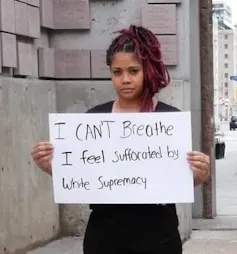
Author Karine Coen-Sanchez at a Black Lives Matter rally in Ottawa. (Author provided)

I have found myself both formally and informally called upon to educate white people about anti-Black racism.

On many campuses, Black academics — regardless of whether they are actually studying racism or not — are asked to take on additional labour related to equity work often without compensation or the assurance that recommendations will be heeded and without acknowledgement of the risks.

What are the risks? Black, racialized and Indigenous people are exposed to white denialism, which provokes a narrative of “us versus them.” We are also subject to emotional eruptions where white people are at the centre or put in a position where they are pressed to offer personal antidotes as a testimony to the realities of systemic racism.

Interconnection of race, power, practices

It is critical that we pay attention to and recognize what scholars like George J. Sefa Dei, a professor of education, has named the interconnection of race, social powers and cultural practices.

White accountability for addressing and eradicating anti-Black racism isn’t about validating the experiences of the Black communities — it is about understanding facets of one’s own social position.

This means understanding the various ways that race or citizenship have shaped access to both material and cultural resources — and shaped what a person takes for granted. For example, white settlers in Canada and other colonial settler societies must acknowledge the harms associated with international colonization and the slave trade and the inter-generational effects on Black, racialized and Indigenous communities.


Read more: How Canada committed genocide against Indigenous Peoples, explained by the lawyer central to the determination


In order to undo anti-Black racism and all systematic racism white people need to take accountability for the various ways they experience and exercise privilege. It also means understanding how they may covertly benefit and contribute to the cycle of racism.

Sefa Dei has advocated for incorporating Africentric curricula and insights into everyday learning to undo the centring of white perspectives. But a deep incorporation of this knowledge hasn’t happened in universities.

A protestor is seen with a megaphone.
Protestors at a Black Lives Matter rally are seen outside a police detachment in downtown Toronto last July. THE CANADIAN PRESS/Colin Perkel

Beyond ‘calling out’ & ‘calling in’

Executive coach Mya Hu-Chan, who helps workplaces address racism, notes that dialogues about addressing racism often revolve around being called out or called in.

This is a start, but much more needs to be done to create space for accountability if campuses are truly to become more diverse and inclusive.


Read more: Twitter shaming won't change university power structures


We all have a social responsibility. The notion of community engagement and dismantling institutional racism involves everyone.

White accountability for addressing and eradicating anti-Black racism means understanding and acknowledging that verbal commitments must be also transformed into actions. The actions must be formed, validated and determined in dialogue with the Black community.

What accountability means

Accountability requires ongoing dialogue between the privileged and the underprivileged, and challenging the ingrained covert forms of racism embedded in our everyday lives.

Accountability also refers to entering a space with sincere purposes. But sincerity alone isn’t enough. Uniting your intent with action will ultimately determine a person’s level of commitment to anti-racism. By first understanding and recognizing our contribution to the systematic barriers, we shift the conversation from intentions to accountability.

Only when honest, open collaboration takes place can we begin to overcome the ingrained racist structures that shape all our lives.

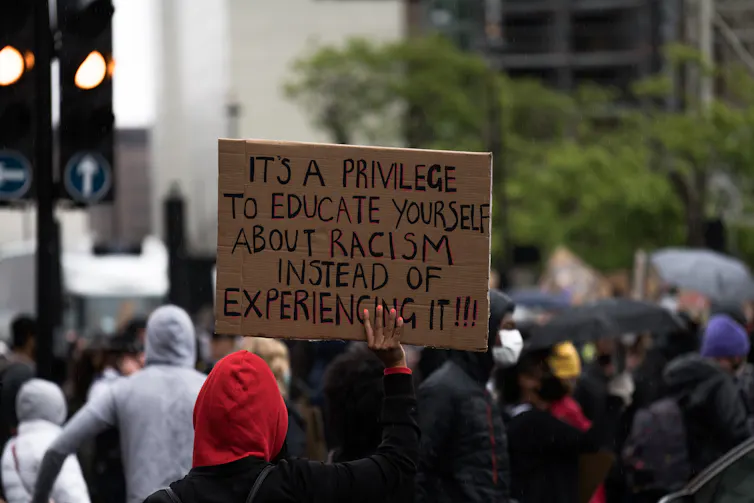
A sign at a demonstration reads 'It's a privilege to educate yourself about racism instead of experiencing it.
We need to shift the conversation from intentions to accountability. (James Eades/Unsplash)

Steps to create space for accountability

Based on my experience and research in the field of educating people about anti-Black racism I propose that creating the space for accountability requires the following:

  1. Listening, trusting and empathizing with the lived experiences of Blacks or maginalized groups; NOT reacting. It is important that before white people engage in anti-racism spaces with maginalized people, they manage their own defensiveness and become adept at regulating their emotions, including anger. They also need to to be aware of the intrusion of “saviour mentality” — the view that white people are especially equipped for and tasked with solving problems.

  2. Awareness and reflecting on your own social positioning: This means spending time in personal self-reflection and also in community contexts. In seeking to address and eradicate anti-Black racism, white people should seek to talk with other white people seeking to be committed to undoing anti-racism — but also with Black people in diverse spaces that are dedicated to anti-racism work.

  3. Educating other whites about privilege and accountability. Calling out racist behaviour and white saviourism with resolve and humility in acknowledging that you too have had help in unlearning racist behaviours.

  4. Developing an action plan that is facilitated and guided by the Black community.


Read more: How to be a mindful anti-racist


Objective of equality

As Malcolm X states: “Education is our passport to the future, for tomorrow belongs to the people who prepare for it today.”

But education needs to happen ethically in a way that respects Black people’s identities and experiences or else we are going the wrong way.

The Conversation

Karine Coen-Sanchez does not work for, consult, own shares in or receive funding from any company or organisation that would benefit from this article, and has disclosed no relevant affiliations beyond their academic appointment.

08 Sep 18:49

Endometriosis: gene identified which could be potential treatment target – new study

by Krina Zondervan, Professor, Reproductive and Genomic Epidemiology, University of Oxford
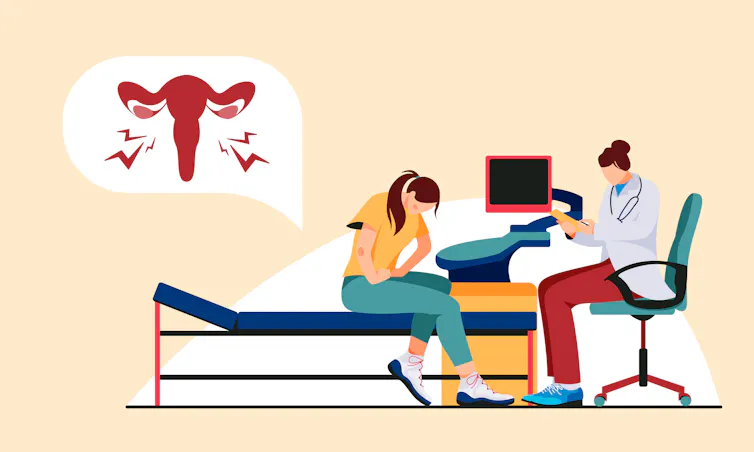
Endometriosis can be an extremely painful condition. Jelena Stanojkovic/ Shutterstock

Up to 10% of women experience endometriosis worldwide. The condition is chronic, extremely painful, and can result in infertility. Endometriosis happens when tissue similar to the lining of the womb (the endometrium) grows outside of the womb, in the abdominal cavity and sometimes on the ovaries and the fallopian tubes. These tissues respond to the hormonal signals of the menstrual cycle just like the endometrium does, which can cause severe pelvic or period pain.

How and why endometriosis develops is unknown – and currently there’s no cure. While treatments such as painkillers, surgery and even hormonal contraceptives are available, they don’t always work, and many women find them to be insufficient.

But our recent collaborative study might have brought us one step closer towards finding a potential new target for treatment. We have discovered that DNA variations in the gene that produces the protein neuropeptide S receptor 1 (NPSR1) occur more often in women with endometriosis than in women who don’t have the condition. NPSR1 plays a role in the transmission of nerve signals and in inflammation.

Our team at Oxford University has been working for decades to understand what genes cause endometriosis. We initially began conducting our research after observing that the condition can run in families – and that up to 50% of endometriosis risk in women is due to genetics. But finding the genes that cause the condition wasn’t a straightforward task. Endometriosis is complex and influenced by many factors – including a person’s genetic make-up, the environment, and the way these two factors interact.

To see what was different in the genetic make-up of endometriosis patients, we analysed the genome – the complete set of genes any person carries – of women with endometriosis and a family history of the condition, and those without a known family history. We then compared their DNA to women without endometriosis. In total, we analysed the genomes from 32 families with at least three women who had endometriosis and 105 women without endometriosis. We also consulted another genetic dataset of more than 3,000 endometriosis cases and 2,300 controls.

The familial analysis at first narrowed the cause down to an area on chromosome seven, which contains around 100 genes. Only after further and more detailed DNA sequencing did we find that it was the NPSR1 gene that carried significantly more harmful variants in women with endometriosis than other genes within the chromosome seven area. Women without endometriosis tended to have the normal NPSR1 gene more often.

Illustration of a woman with endometriosis pain talking with her doctor.
Understanding more about the genetic cause could lead to better treatments. Cadmium_Red/ Shutterstock

To further confirm these findings, our collaborators at the University of Wisconsin-Madison and Baylor College of Medicine then checked DNA variations in a colony of rhesus macaques. These monkeys have periods like humans do – and also get endometriosis. Sure enough, we found that changes within the same region on the macaque equivalent of human chromosome seven occurred more often in monkeys with endometriosis.

After confirming this link, the next step of our research was to test whether shutting down the activity of NPSR1 had any effect on inflammation associated with endometriosis. To do this, we first conducted experiments using cells, then mice. Our team and our collaborators at German pharma group Bayer found that if we shut down the activity of NPSR1 in immune cells, they became less responsive and produced less of a protein that normally drives inflammation. The mice in turn showed diminished inflammation and were in less pain than without the treatment.

However, the drug we used in these experiments is what’s known as a “tool compound” – meaning it’s only approved for use in cell and animal experiments, but is not able to be used on humans. The next step of research will be finding a drug that can be used in humans to similarly shut down NPSR1 activity, and see whether doing so also reduces symptoms of endometriosis.

Understanding NPSR1

There’s still a whole lot we don’t know, though. For example, how exactly is NPSR1 connected to endometriosis – and what does it do (or not do) that leads to inflammation and pain? It will also be important to uncover how DNA variants of NPSR1 affect the protein’s function, and in which tissues.

Interestingly, NPSR1 also has a role in inflammation that occurs with other health conditions, including asthma and inflammatory bowel disease. It’s also found in certain regions of the brain, where it has effects on anxiety and behaviour. This could mean that NPSR1 could play a role in the perception of pain, and in the anxiety that goes along with endometriosis.

Chronic suffering and exposure to pain also changes the brain’s architecture – meaning the wiring of the brain cells and nerves respond differently and change over time. It might also be possible that the connection of NPSR1 to endometriosis happens not just in inflammation and abdominal pain, but also in the brain itself. This is another aspect of NSPR1 that will need to be explored.

Regardless, our research has shown that shutting down this receptor eases pain and inflammation in mouse models of inflammation and endometriosis. This opens up the future possibility for developing drugs against NPSR1 that would ease symptoms of endometriosis without shutting down the menstrual cycle, and potentially alleviate pain for millions of women.

The Conversation

Krina Zondervan has received funding from the Wellcome Trust, Medical Research Council, EU-Horizon 2020, Wellbeing of Women, US National Institutes of Health, Bayer AG, MDNA Life Sciences, Roche Diagnostics Inc. The work described was funded by the Wellcome Trust, US National Institutes of Health and Bayer AG.

Thomas Tapmeier does not work for, consult, own shares in or receive funding from any company or organisation that would benefit from this article, and has disclosed no relevant affiliations beyond their academic appointment.

03 Sep 18:17

Unvaccinated people are 4.4 times more likely to catch Covid and 15.4 times more likely to die from Covid

by Rob Beschizza

The North Carolina Department of Health and Human Service ran the numbers and found that unvaccinated people are 15.4x (or 1,540%) more likely to die from Covid than those who received vaccines, and 4.4x (440%) more likely to catch it. WBTV:

This comes as the state hit a pandemic high on Aug.

Read the rest
30 Aug 18:41

Fracking and poorer surface water quality link established – new research

by Giovanna Michelon, Professor of Accounting, University of Bristol
During fracking, water is mixed with fluids and injected into the ground. Wikimedia Commons

Fracking – hailed by some as the greatest recent advance in energy production, criticised by others for the threat it poses to local life – continues to divide opinion.

The term fracking refers to the high-pressure injection of water mixed with fluid chemical additives – including friction reducers, gels and acids – and “propping agents” such as sand to create fractures in deep rock formations such as shale, allowing oil or gas to flow out.

Tens of thousands of hydraulic fracturing wells have been drilled across the US, generating huge benefits for its energy industry and economy: yet the practice remains globally controversial. It is not permitted in numerous other countries, such as France, Germany, Ireland and, since 2019, the UK.

While some see fracking as the most important change in the energy sector since the introduction of nuclear energy more than 50 years ago, others raise health and environmental concerns: in particular, the threat fracking could pose to our water.

A fracking diagram
Fracking works by injecting fluid into cracks in the earth to extract oil or gas. Wikimedia

Starting in 2010, many US states began to regulate fracking, obliging operators to disclose the substances used in their fluid mix. As economists, we were curious to see whether mandatory disclosures of what’s in fracturing fluids made the practice cleaner, or reduced potential water contamination.

To do that, we needed to compare the environmental impact from fracking before and after the new disclosure rules. We assembled a database that put together existing measurements of surface water quality with the location of fracking wells, and analysed changes in surface water quality around new wells over an 11-year period.

We noticed some strong associations, but also discovered that these associations had not been previously documented. Deciding to study the link between new hydraulic fracturing wells and surface water quality, we were able to provide evidence for a relationship between the two.

Equipment used for fracking
A fracking platform designed to extract oil. Jwigley/Pixabay, CC BY

The link

Our study, published in Science, uses a statistical approach to identify changes in the concentration of certain salts associated with new wells. We discovered a very small but consistent increase in barium, chloride and strontium – for bromide, our results were more mixed and not as robust.

Salt concentrations were most increased at monitoring stations that were located within 15 km and downstream from a well, and in measurements taken within a year of fracking activity.

A figure showing the association between salt concentrations and new fracking wells
This figure plots the associations between salt concentrations and a new fracking well located within 15km and likely upstream of the water monitor.

The increases in salt we discovered were small and within the bounds of what the US Environmental Protection Agency considers safe for drinking water. However, since our water measurements were mostly taken from rivers, not all of the public surface water monitors we used are close to wells, or are in locations where they can detect the effects of fracking: for example, they may be located upstream of new wells. That means the salt concentrations in water flowing downstream from new wells could be even higher.

Our study was also limited by the public data available. We were not able to investigate potentially more toxic substances found in the fracturing fluids or in the produced water, such as radium or arsenic. Public databases do not widely include measurements of these other substances, making it hard for researchers to carry out the statistical analysis needed to detect anomalous concentrations related to new wells.

That said, the salts we analysed are not exactly innocuous. High concentrations of barium in drinking water may lead to increases in blood pressure, while chloride can potentially threaten aquatic life. Elevated strontium levels can even have adverse impacts on human bone development, especially in the young.

Next steps

It is undeniable that fracking has played a big role in replacing the fossil fuel coal as a source of energy. Some studies show that, relative to periods of massive coal-burning, the overall quality of surface water has improved. Fracking has also brought an economic boost to underdeveloped areas. Still, the question remains as to whether it is safe for local communities.

A heavy fracking area, with wells connected by roads
Where fracking is heavy, roads and pipelines make a web across the landscape. Simon Fraser University/Flickr

While our study is an important step towards understanding the environmental impact of fracking, more data are needed to truly answer these safety concerns. The good news is, with new disclosure rules, we have a better awareness of exactly which chemicals are being used.

The next step is for policymakers to make sure that government agencies systematically track these chemical in fracking fluids and produced waters, place monitoring stations in locations where they can better track surface water impacts, and increase the frequency of water quality measurement around the time new wells are drilled.

A more targeted approach could go a long way in enabling research and helping to protect the public health of communities for whom fracking could yet be a blessing or a curse.

The Conversation

The authors do not work for, consult, own shares in or receive funding from any company or organisation that would benefit from this article, and have disclosed no relevant affiliations beyond their academic appointment.

25 Aug 18:56

"It hurts to breathe": Sick Florida anti-vaxxer waits in 2-hour line, hoping for Regeneron

by Carla Sinclair

Reporter Brian Entin visited Miami's Tropical Park, not to jog or play ball or paddle a boat, but to check out the long line of sick folks at the park's makeshift Regeneron center. He saw people infected with Covid sitting in their cars — or laying down in the back seat — waiting up to two hours for the monoclonal antibody treatment, Regeneron. — Read the rest

25 Aug 18:47

Watch: NYT goes to The Ozarks and interviews proudly unvaxxed people dying of Covid

by Mark Frauenfelder

The New York Times went to Mountain Home, Arkansas to find out why only 36% of the people living there are vaccinated. Some of the interviews took place in a hospital where only 50% of the staff are vaccinated.

Alexander Stockton, a producer on the NYT's Opinion Video team, interviewed a 53-year-old Covid patient who said he didn't take the vaccine because "I'm more of a libertarian and I don't like being told what I have to do." — Read the rest

25 Aug 13:06

Disagreements over current COVID-19 policies rise during Tuesday’s BOT meeting

by Leda Alvim, EDITOR IN CHIEF

As COVID-19 cases continue to rise across the state in conjunction with thousands of USF students heading back to campus, Faculty Senate President Timothy Boaz questioned how the university’s approach against COVID-19 was keeping the USF community safe. ORACLE PHOTO/LEDA ALVIM

Tensions rose within the last minutes of Tuesday’s Board of Trustees (BOT) meeting between Faculty Senate President Timothy Boaz and BOT Chair Will Weatherford on the university’s resumption of fall classes at full capacity amid a surge of COVID-19 cases across the state. 

“On behalf of the faculty, I will express our extreme disappointment to the current approach to reopening campus in the context of a pandemic and, with the surge of cases due to the delta variant, [the approach] is not being conducted in accordance with the recommendations of the expert faculty at USF Health,” Boaz said. 

“Likewise, we’re extremely disappointed that decisions of a modified approach are no longer being guided by science and data. Finally, and most disturbing, is the fact that our approach no longer has the health and well-being of our students, staff and faculty as its top priority.”

Boaz’s remarks came after the first day of fall classes Monday, when the university welcomed thousands of students back to full-capacity classrooms. Face masks are no longer required but “expected” across campus while social distancing inside classrooms isn’t enforced, which leaves some faculty members wary about the risks of new infections throughout the semester, according to Boaz.

“While most of our students were wearing masks as we indicated we would expect, we continue to have the problem that many courses are being taught packed in classrooms with no capacity for any physical distancing,” Boaz said.

Weatherford said he appreciated the feedback but disagreed with the claims that the university isn’t prioritizing the health and safety of its students. He emphasized the “legal constraints” placed on USF by the state government which prohibit the university from imposing its own COVID-19 policies.

“We appreciate the voice of the faculty, and we appreciate your voice. You’re on the Board of Trustees and we’re grateful for the transparency,” Weatherford said. “I only take issue with one thing you said that was at the very end. We do take the health of our students and our faculty and our administration to be the most important thing. That’s a responsibility we have as the board. I think everyone here takes that very seriously so I’m going to have to disagree with you on that one, politely.

“I think we’re all aware of legal constraints that we have at the university with regard to some of the actions that the Faculty Senate has called upon us to take.”

While Boaz was the only one in the meeting who showed concern for the university’s current approach and policies for the fall semester, he’s not alone.

The Advisory Council of Faculty Senates (ACFS) on Aug. 12 unanimously adopted a resolution petitioning Gov. Ron DeSantis to allow individual universities to implement their own COVID-19 mitigation measures based on their own community response. 

The resolution, which was forwarded to the governor as well as the Florida Legislature, advocated for the health and safety of students, faculty and staff. From Aug. 13-19, the state reported over 150,118 COVID-19 cases and 346 deaths, leaving the state positivity rate at 19.8%.

Boaz said the council felt universities were in the best positions to gauge their own capacities for in-person classes as well as what their problems and issues were when making decisions to reopen campuses.

The resolution sent to DeSantis’ office was not the only one advocating for the same issue. This time, another resolution was drafted and sent to an address not as far as Tallahassee.

During a special Faculty Senate meeting Aug. 18, the senators adopted a resolution urging USF to require vaccination of students, faculty and staff across all three campuses as well as the use of face coverings and social distancing inside classrooms.

Due to the legal implications preventing such mandates, the resolution requested the university to maintain a “flexible approach to online course delivery that allows faculty to use virtual and hybrid modes of delivery until there is no greater than a moderate risk of transmission in schools in the communities surrounding the USF campuses.” 

The resolution was passed on a 53-5 vote, during which faculty talked about their concerns with resuming in-person classes at full capacity.

“Based on the provisions of the [fall 2020 plan], we would not be fully opening for business at this time, and most instruction would be moved online during this recent surge. But this plan has been tossed out the window,” Boaz said. “Instead, we are charging ahead with a full slate of in-person classes, packed with students, an unknown number of whom are vaccinated and some not wearing masks.”

Weatherford said university faculty and staff should lead by example when it comes to mask wearing and following COVID-19 safety protocols. Amid the tensions between the state government, university leadership and faculty across the university, Weatherford urged the USF community to show “a little bit of grace” toward each other.

“We will have different opinions with regard to how we should be combating this,” Weatherford said. “I would agree with you that there are things you can and should be doing to adhere to the scientific data for how to prevent the spread of disease and that’s with vaccinations first, of which we are heavily encouraging both on campus and in the community, and also wearing masks.

“We have to lead by example, both with regard to wearing masks and getting vaccinated. We have to show a little bit of grace toward each other in the process knowing that not everybody views this the same way.”

While USF might be constrained by laws and policies already in place, Boaz said it doesn’t stop the administration from speaking out on the issue around COVID-19. In his closing statement, he emphasized the issues within the approach used by the university to resume fall classes.

“I will say, I appreciate very much everything that our administration has done and I am cognizant of legal constraints,” Boaz said. “That said, I think it’s incredibly important to speak out on this issue. 

“I don’t mean for that to be a statement about people and their views, I’m talking about the approach not prioritizing the health and welfare of our community.”

23 Aug 17:42

Orlando has so many Covid patients, residents now urged to cut back on water to help hospitals

by Carla Sinclair

Orlando mayor Buddy Dyer is urging residents to cut way back on water, which is now needed for the stream of Covid patients flooding the city's hospitals. "The demand for liquid oxygen is extremely high, as the priority is to use it to save lives and treat critically ill patients…" he announced today (video below). — Read the rest

23 Aug 14:57

When life gives you lemons ... 4 Stoic tips for getting through lockdown from Epictetus

by Matthew Sharpe, Associate Professor in Philosophy, Deakin University
Unsplash/Cristina Anne Costello, CC BY

Born into slavery, then crippled by his master and exiled by the Emperor Domitian, Epictetus (c.60-135 CE) has become arguably the central figure in today’s global revival of Stoicism.

A straight-talking advocate of the idea philosophy should help people flourish even in hard times, Epictetus has much to offer as we wrestle with pandemic lockdowns and uncertainty. Here are four tips from perhaps the most stoic of the Stoics:

1. Don’t worry about things we can’t control

The start of Epictetus’ Enchiridion handbook lays out his famous “dichotomy of control”:

Of things some are depend upon us, and others do not. In our power are opinion, impulse, desire, aversion. Not in our power are the body, property, reputation, offices, and in a word, whatever are not our own acts.

It’s an idea that echoes today in the Serenity Prayer of 12-step recovery programs.

If we worry about things we can’t change, Epictetus continues, we are wasting our energies. If we imagine that we can control the past or future — or even pandemics — we are setting ourselves up for disappointment.

But we can think and act, and do our best to respond to situations with courage, justice, and moderation.

Today’s citizens in lockdown can’t control whether (or when) restrictions are lifted. We can all however wear masks, social distance, get vaccinated as soon as possible, and continue working, exercising and educating our kids as best we can.

2. Prepare for the worst, hope for the best

Like other Stoics, Epictetus observes people are most prone to being disturbed by events which take them by surprise. By premeditating the worst case scenario, and imaginatively working through how we could respond in advance, we can lessen our vulnerability.

If this “premeditation of evils” sounds too frightening, “begin from little things”, Epictetus advises:

Is the oil spilled? Is a little wine stolen? Say on the occasion, at such price is sold freedom from being upset; at such price is sold tranquillity, but nothing is got for nothing.

While the preparation can be confronting, Epictetus suggests that being grieved or angered by things we have no say over, like a sudden lockdown extension, is far worse. “Premeditated is prepared”, he tells us. If things go better than we prepare for, all the better.

sketch of man at desk
Detail from an engraving for Edward Ivie’s Latin translation of Epictetus’ Enchiridon, printed in Oxford in 1715. Wikimedia Commons

3. Contextualise and ‘other-ise’

When we’re under duress, Epictetus observes, we often feel as if what we are experiencing is unprecedented. No one else can understand. But it helps to remember that few experiences, even during a pandemic, are unprecedented.

We are in the second year of COVID. But the world wars lasted four and six years. This is a pandemic, yet other generations have experienced plagues (or the Spanish flu) in which grievous losses were also sustained. Those who survived were able to rebuild. So will we.

It can also help, Epictetus suggests, to “step back” and assess our experience as if it was happening to somebody else:

For example, when a friend’s child breaks a cup it is easy for us to say, ‘That is in the nature of cups and of children.’ [But] when you realise that situation is true of you, it is easy for you to say that same thing to yourself when a child breaks your cup …

So, when we are inclined to despair in difficulties “we ought to remember how we feel when we hear of the same misfortune befalling others”. By looking at ourselves as if we were an other, we can apply the same support and encouragement to ourselves.


Read more: Why philosophers say solitude can be helpful (even if you didn't choose it)


4. Slow down, make sure

Epictetus, echoing Socrates, says that any unexamined idea is not worth having. In life, we can easily leap between ideas in ways which lead us to false beliefs. Epictetus writes:

These reasons do not cohere: I am richer than you, therefore I am better than you; I am more eloquent than you, therefore I am better than you. On the contrary these reasons cohere: I am richer than you, therefore my possessions are greater than yours: I am more eloquent than you, therefore my speech is superior to yours.


Read more: Guide to the Classics: how Marcus Aurelius' Meditations can help us in a time of pandemic


It’s easy to add a lot of avoidable, habitual, evaluative judgements to what we know and experience. Often, these add-ons introduce assumptions which aren’t based on adequate information. These lead us to react excessively or poorly.

Epictetus recommends we slow our roll and our “judginess” down, especially when it comes to condemning others:

Somebody is hasty about bathing; don’t say that he bathes badly, but that he is hasty about bathing. […] For until you have decided what judgement prompts him, how do you know that what he is doing is bad?

In the age of swarming internet conspiracies on social media, this fourth piece of old Epictetan advice is new again.

When presented with allegations of nefarious or appalling conduct by fellow citizens, Epictetus recommends we ask: do I know that that is true? Do I have enough information to be sure?

Such self-examination stops us from becoming enraged on the basis of fictions — let alone spreading misinformation which provokes or enrages others. If enough people do that, we could collectively avoid many future difficulties.

The Conversation

Matthew Sharpe has received ARC funding to research philosophy as a way of life, and teaches at Deakin University. He is also teaching courses on practical Stoicism in the second half of 2021 with Think Inc.

23 Aug 14:56

How will Delta evolve? Here's what the theory tells us

by Hamish McCallum, Director, Centre for Planetary Health and Food Security, Griffith University, Griffith University
Shutterstock

The COVID-19 pandemic is a dramatic demonstration of evolution in action. Evolutionary theory explains much of what has already happened, predicts what will happen in the future and suggests which management strategies are likely to be the most effective.

For instance, evolution explains why the Delta variant spreads faster than the original Wuhan strain. It explains what we might see with future variants. And it suggests how we might step up public health measures to respond.

But Delta is not the end of the story for SARS-CoV-2, the virus that causes COVID-19. Here’s what evolutionary theory tells us happens next.


Read more: What's the difference between mutations, variants and strains? A guide to COVID terminology


Remind me again, how do viruses evolve?

Evolution is a result of random mutations (or errors) in the viral genome when it replicates. A few of these random mutations will be good for the virus, conferring some advantage. Copies of these advantageous genes are more likely to survive into the next generation, via the process of natural selection.

New viral strains can also develop via recombination, when viruses acquire genes from other viruses or even from their hosts.


Read more: Explainer: Theory of evolution


Generally speaking, we can expect evolution to favour virus strains that result in a steeper epidemic curve, producing more cases more quickly, leading to two predictions.

First, the virus should become more transmissible. One infected person will be likely to infect more people; future versions of the virus will have a higher reproductive or R number.

Second, we can also expect evolution will shorten the time it takes between someone becoming infected and infecting others (a shorter “serial interval”).

Both these predicted changes are clearly good news for the virus, but not for its host.

Aha, so that explains Delta

This theory explains why Delta is now sweeping the world and replacing the original Wuhan strain.

The original Wuhan strain had an R value of 2-3 but Delta’s R value is about 5-6 (some researchers say this figure is even higher). So someone infected with Delta is likely to infect at least twice as many people as the original Wuhan strain.

Delta variant coronavirus
The Delta variant is an example of how quickly the virus can evolve. Shutterstock

There’s also evidence Delta has a much shorter serial interval compared with the original Wuhan strain.

This may be related to a higher viral load (more copies of the virus) in someone infected with Delta compared with earlier strains. This may allow Delta to transmit sooner after infection.

A higher viral load may also make Delta transmit more easily in the open air and after “fleeting contact”.


Read more: Why is Delta such a worry? It's more infectious, probably causes more severe disease, and challenges our vaccines


Do vaccines affect how the virus evolves?

We know COVID-19 vaccines designed to protect against the original Wuhan strain work against Delta but are less effective. Evolutionary theory predicts this; viral variants that can evade vaccines have an evolutionary advantage.

So we can expect an arms race between vaccine developers and the virus, with vaccines trying to play catch up with viral evolution. This is why we’re likely to see us having regular booster shots, designed to overcome these new variants, just like we see with flu booster shots.

COVID-19 vaccines reduce your chance of transmitting the virus to others, but they don’t totally block transmission. And evolutionary theory gives us a cautionary tale.

There’s a trade-off between transmissibility and how sick a person gets (virulence) with most disease-causing microorganisms. This is because you need a certain viral load to be able to transmit.

If vaccines are not 100% effective in blocking transmission, we can expect a shift in the trade-off towards higher virulence. In other words, a side-effect of the virus being able to transmit from vaccinated people is, over time, the theory predicts it will become more harmful to unvaccinated people.

How about future variants?

In the short term, it’s highly likely evolution will continue to “fine tune” the virus:

  • its R value will continue to increase (more people will be infected in one generation)

  • the serial interval will decrease (people will become infectious sooner)

  • variants will make vaccines less effective (vaccine evasion).

But we don’t know how far these changes might go and how fast this might happen.

Some scientists think the virus may already be approaching “peak fitness”. Nevertheless, it may still have some tricks up its sleeve.


Read more: SARS-CoV-2 mutations: why the virus might still have some tricks to pull


The UK government’s Scientific Advisory Group for Emergencies (SAGE) has recently explored scenarios for long-term evolution of the virus.

It says it is almost certain there will be “antigenic drift”, accumulation of small mutations leading to the current vaccines becoming less effective, so boosters with modified vaccines will be essential.

It then says more dramatic changes in the virus (“antigenic shift”), which might occur through recombination with other human coronaviruses, is a “realistic possibility”. This would require more substantial re-engineering of the vaccines.

SAGE also thinks there is a realistic possibility of a “reverse zoonosis”, leading to a virus that may be more pathogenic (harmful) to humans or able to evade existing vaccines. This would be a scenario where SARS-CoV-2 infects animals, before crossing back into humans. We’ve already seen SARS-CoV-2 infect mink, felines and rodents.

Will the virus become more deadly?

Versions of the virus that make their host very sick (are highly virulent) are generally selected against. This is because people would be more likely to die or be isolated, lowering the chance of the virus transmitting to others.

SAGE thinks this process is unlikely to cause the virus to become less virulent in the short term, but this is a realistic possibility in the long-term. Yet SAGE says there is a realistic possibility more virulent strains might develop via recombination (which other coronaviruses are known to do).

So the answer to this critical question is we really don’t know if the virus will become more deadly over time. But we can’t expect the virus to magically become harmless.

Will humans evolve to catch up?

Sadly, the answer is “no”. Humans do not reproduce fast enough, and accumulate enough favourable mutations quickly enough, for us to stay ahead of the virus.

The virus also does not kill most people it infects. And in countries with well-resourced health-care systems, it doesn’t kill many people of reproductive age. So there’s no “selection pressure” for humans to mutate favourably to stay ahead of the virus.


Read more: We found traces of humanity's age-old arms race with coronaviruses written in our DNA


What about future pandemics?

Finally, evolutionary theory has a warning about future pandemics.

A gene mutation that allows a virus in an obscure and relatively rare species (such as a bat) to gain access to the most common and widely distributed species of large animal on the planet — humans — will be strongly selected for.

So we can expect future pandemics when animal viruses spill over into humans, just as they have done in the past.


Read more: How do viruses mutate and jump species? And why are 'spillovers' becoming more common?


The Conversation

Hamish McCallum receives funding from the Australian Research Council and the US funding agencies NSF, NIH and DARPA

23 Aug 11:51

OPINION: Please, wear a mask this fall

by Marcelene Pilcher, CORRESPONDENT
Members of the USF community need to get vaccinated and wear masks if we are to achieve herd immunity and move on from this pandemic. ORACLE PHOTO/Leda Alvim

Gov. Ron DeSantis issued Executive Order 21-175 on July 30 that bans schools from enforcing mask mandates, despite the recent surge in COVID-19 cases caused by the delta variant.

COVID-19 hospitalizations in Florida have reached a record high. New cases have increased almost eightfold during the month of July and have more than doubled in the past three weeks, federal data shows, from a surge in cases brought on by the delta variant. 

With USF returning to in-person classes for the fall, the delta variant remains a looming threat for the health of students and faculty, aggravated by a decrease in immunizations, lax mask usage and poor implementation of social distancing. Observing these safety guidelines is crucial to stomping out the pandemic.

This recent mutation has hit Hillsborough County hard, with weekly case averages increasing from 110 in late June to over 1600 this past week.    

Some are still skeptical of the vaccine, with less than 50% of Hillsborough County’s population vaccinated. Parts of the USF population also may not be wearing masks come Monday, which could exacerbate COVID-19 levels combined with the low levels of vaccinated residents.

A recent social media poll from the USF subreddit showed 21%, or over 200 of the nearly 1,000 USF students polled, weren’t planning to wear masks on campus.

Florida, which has a vaccination rate of 52%, has recorded 600,000 new cases in the past month (a record high). New York, with a comparable population and a vaccination rate of 58%, reported only 97,000 cases for the same period of time.

As such, immunizations are crucial to ending the spread, and USF students need to continue to get vaccinated and wear masks to more quickly achieve herd immunity, according to USF epidemiologist Edwin Michael. 

“You’re not out of the woods, because anytime people drop their guard we are further from herd immunity with [mutations like] the delta variant,” said Michael. 

“We are calculating that around 90% of people need to be immune to get herd immunity. In Florida, we are about 75% immune as a result of vaccinations and naturally through infection. Another 15% needs to be vaccinated. If vaccination immunity was generated long term, then this could be the last significant wave, and we will see the back of this pandemic early next year.”

USF makes it easy for students to do their part, offering free vaccinations to students on Tuesdays and Wednesdays in the Argos Study Lounge. The university has also encouraged students to wear masks on campus, according to an Aug. 13 universitywide email. 

The end of the pandemic is in sight, and USF students and faculty can do their part to stomp out the pandemic by taking these precautionary measures while on campus this fall.

23 Aug 11:49

OPINION: USF should defy DeSantis, mandate masks and vaccine passports

by Brielle Lopez, CORRESPONDENT
A cruise line and two Florida school districts are defying Gov. Ron DeSantis’ many legal actions to prohibit vaccine passports and mask mandates, respectively, and USF should follow suit for the safety of the community. SPECIAL TO THE ORACLE/Flickr

Norwegian Gem was the first cruise to directly challenge Gov. Ron DeSantis’ vaccine passport ban and win Aug. 8, setting a precedent not only for future cruise lines, but all Florida institutions restricted by ridiculous legal actions from the governor. 

This could pave the way for other institutions, like USF, to prioritize the safety of its population by ensuring attendees to large events be fully vaccinated or wear masks, such as Week of Welcome events, college football games and Homecoming festivities.

On May 3, the vaccine passport ban SB 2006 was officially signed and enacted by DeSantis, which he said was to prevent unequal treatment of vaccinated and unvaccinated travelers. To enforce this upon institutions, offenders could be fined up to $5,000 per violation, or for every person that has their vaccine card checked.

Judge Kathleen Williams, who presided over the case, wrote in a 60-page ruling Florida failed to “provide a valid evidentiary, factual or legal predicate” that would constitute prohibiting proof of vaccinations.

USF currently is unable to require or enforce masks because of Executive Order 21-175 that prohibits mask mandates at public institutions. The university opted to say students and faculty are “expected” to wear one instead, according to an Aug. 13 universitywide email.

However, with the new variants such as delta emerging, USF and other institutions should use this ruling from Norwegian Gem as an opportunity. Winning such a case against the state of Florida is a huge win for the cruise line, and it will undoubtedly set a precedent for upcoming legal battles.

Broward and Alachua County Schools are already defying the executive order and requiring masks in K-12 classrooms with verbal support from President Joe Biden. He called Broward Interim Superintendent Vickie Cartwright on Aug. 13 and offered financial resources to her county if DeSantis withholds funding, according to the Miami Herald. 

USF could also consider defying the order and force a mask mandate or force vaccine passports to be required for certain events if Biden takes action to support Florida public schools.

The university should either defy the executive order or take the state of Florida to court to ensure students can safely enjoy festivities the upcoming fall semester has in store for them.

23 Aug 11:47

USF health experts wary of return to campus during new wave

by Isabella Rabadi, CORRESPONDENT
With the delta variant spreading and making Florida the epicenter for the pandemic, USF health experts and students weighed in on how they want the school to prepare as students return to campus in the fall. ORACLE PHOTO/Leda Alvim

USF Health experts predict the peak of COVID-19 cases caused by the delta variant is approaching, however, despite the inevitable downward slope that will follow, some believe the impact will be bigger than previous waves.

From his research, Edwin Michael, an epidemiologist at USF Health has predicted Florida will reach its peak in cases by the end of August, but as more people get vaccinated, the cases will begin to drop by mid October. 

“There will be a peak around Aug. 31, but then it will begin to decline,” said Michael. “By the middle of October, we will have gotten closer to herd immunity and, by the end of December, this new wave of the pandemic will end.” 

Professor from the College of Public Health Jill Roberts also predicted there will be an intense increase in not only the number of cases, but also an increase in the overall impact of the virus due to a lack of urgency in the nation’s initial response to the delta variant.  

“I think we should have turned back to the prevention guidelines we used in 2020 weeks ago and it’s probably too late,” she said. “So, what’s going to happen at this point is the delta variant is going to rage badly. It’s going to peak very high, at which point it will do a significant amount of damage in terms of hospitalizations, deaths and even economic impact.”

Roberts said the likelihood of potential outbreaks on campus happening is based on how each individual person handles the situation.

“It’s hard to tell if there will be any outbreaks because it all depends on how serious people take the spread of the delta variant when they get back to campus and what personal precautions each person takes,” said Roberts. 

One of the major risks of returning to campus this fall, according to Roberts, is dealing with students who may potentially get infected with the delta variant since the university is not allowing students to quarantine.

“USF does not have the capacity to quarantine this fall since we do not have the space,” said Roberts. “If a student ends up getting exposed to another infected person they are going to have to quarantine off campus, which is going to be extremely difficult for out-of-state students.”

The university will not accommodate any students who test positive in an isolation hall, Assistant Vice President of Housing and Residential Education Ana Hernandez said during a town hall Aug. 10. Students with a positive COVID-19 test will have to make their own arrangements and bear the costs of isolation off campus.

If the student is vaccinated, however, Hernandez said they won’t be required to quarantine.

“At this time, the guidance may change, but if they are unvaccinated and exposed, then they would be required to quarantine,” she said. “Quarantining would require the student to leave campus and that’s whether they are a residential student or a nonresidential student, they would not be permitted on campus and the dining halls … so they will be it will be up to them to make those arrangements for an off-campus location to fulfill the up to 10 days of that quarantine period.”

Despite the rising numbers in COVID-19 cases across the state, USF’s plans to reopen at full capacity remain in place, with face masks no longer a requirement and classrooms without social distancing.

If an outbreak of cases were to occur, Dean of the College of Public Health Donna Petersen said classes would be shifted online temporarily until all students and faculty were cleared to return. She said faculty has been advised to be prepared to shift to online instruction at any moment in the semester.

“In every case, our intention is that it would be temporary,” Petersen said. “We are not looking to say the whole fall will be online. We’re not looking to empty out the residence halls, we’re not going to do what we did in March of 2020.”

Michael Teng, associate dean of internal medicine at the Morsani College of Medicine, believes USF administrators are in a difficult position as they are limited on what they are able to say and do. 

“The university administration is in a tough position as they do not want to explicitly say something that would be counter to the guidance that we got from the Board of Governors,” said Teng. “On top of that, the Board of Governors in turn was pretty careful about not saying anything explicitly contradicting the governor.” 

Teng said the statewide anti-mask mandate policies put in place by Gov. Ron DeSantis are diminishing the importance of the state’s public health, which provides university administrators with few options to ensure the safety of students and faculty. 

“The administrators are, in a way, hamstrung by policies that have nothing to do with public health, and with that in mind, I think they’re doing the best they can,” said Teng.

Amid DeSantis’ recent decisions regarding the pandemic, Roberts addressed how the pandemic is not a political issue, rather a public health issue that needs to be dealt with as such. 

“No matter what the political environment is, the virus does not care,” said Roberts. “We have to take the strong line against it as a united front or we will simply continue to get overwhelmed and face the detrimental consequences.” 

In contrast with previous semesters, masks are no longer required but will be “expected” across campuses. Roberts said because of this, USF is putting its trust in students and faculty with the hopes they will follow health guidelines to protect themselves and others.

“We can’t legally make people use masks because universities cannot make laws. So what we’re doing is appealing to the intelligence of our students and hope they will read between the lines and see that this is the safest thing for you to do that is both socially responsible and a way to protect yourself,” said Roberts.

Petersen said the expectation is set, and the university will continue to push for a larger portion of the student population to get vaccinated as a way to prevent the rapid increase of COVID-19 cases.

“So we’re going forward with our class schedule as posted, we’re going forward with our events, but we are making clear what we expect for the health and safety of the entire university community,” she said. “We urge people to get a vaccine and we expect people to wear a mask.”

With vaccines readily available across campus and the state, Director of the Center for Leadership in Public Health Practice Marissa Levine said there’s a chance the spread of the delta variant can be limited. However, according to Levine, outbreaks of COVID-19 cases are still possible as students return to full in-person classes.

“I think there is a really good opportunity to control the delta variant because everybody on campus is potentially eligible to be vaccinated,” said Levine. “But do not forget, although we have vaccinations, we do not have mitigation efforts in place, which could lead to outbreaks on campus.” 

Teng continues to encourage those who have not gotten vaccinated to do so and to also continue adhering to previous mitigation measures to decrease the number of cases of the delta variant and protect the USF community. 

“It is honestly just really important that people get vaccinated so we can work as a team to block transmission,” said Teng. “If you are already vaccinated or have just now decided to do so, it is crucial that you still wear your masks and physically distance in order to stop the spread.” 

17 Aug 13:03

How one simple rule change could curb online retailers' snooping on you

by Katharine Kemp, Senior Lecturer, Faculty of Law & Justice, UNSW, UNSW
Rupixen.com/Unsplash, CC BY-SA

I spent last week studying the 26,000 words of privacy terms published by eBay and Amazon, trying to extract some straight answers, and comparing them to the privacy terms of other online marketplaces such as Kogan and Catch (my full summary is here).

There’s bad news and good news.

The bad news is that none of the privacy terms analysed are good. Based on their published policies, there is no major online marketplace operating in Australia that sets a commendable standard for respecting consumers’ data privacy.

All the policies contain vague, confusing terms and give consumers no real choice about how their data are collected, used and disclosed when they shop on these websites. Online retailers that operate in both Australia and the European Union give their customers in the EU better privacy terms and defaults than us, because the EU has stronger privacy laws.

The Australian Competition and Consumer Commission (ACCC) is currently collecting submissions as part of an inquiry into online marketplaces in Australia. You can have your say here by August 19.

The good news is that, as a first step, there is a clear and simple “anti-snooping” rule we could introduce to cut out one unfair and unnecessary, but very common, data practice.

Deep in the fine print of the privacy terms of all the above-named websites, you’ll find an unsettling term.

It says these retailers can obtain extra data about you from other companies, for example, data brokers, advertising companies, or suppliers from whom you have previously purchased.


Read more: It's time for third-party data brokers to emerge from the shadows


eBay, for example, can take the data about you from a data broker and combine it with the data eBay already has about you, to form a detailed profile of your interests, purchases, behaviour and characteristics.

The problem is the online marketplaces give you no choice in this. There’s no privacy setting that lets you opt out of this data collection, and you can’t escape by switching to another major marketplace, because they all do it.

An online bookseller doesn’t need to collect data about your fast-food preferences to sell you a book. It wants these extra data for its own advertising and business purposes.

Empty Amazon packaging
Online shopping leaves a digital paper trail as well as empty boxes. STRF/STAR MAX/IPx/AP

You might well be comfortable giving retailers information about yourself, so as to receive targeted ads and aid the retailer’s other business purposes. But this preference should not be assumed. If you want retailers to collect data about you from third parties, it should be done only on your explicit instructions, rather than automatically for everyone.

The “bundling” of these uses of a consumer’s data is potentially unlawful even under our existing privacy laws, but this needs to be made clear.

Time for an ‘anti-snooping’ rule

Here’s my suggestion, which forms the basis of my own submission to the ACCC inquiry.

Online retailers should be barred from collecting data about a consumer from another company, unless the consumer has clearly and actively requested this.

For example, this could involve clicking on a check-box next to a plainly worded instruction such as:

Please obtain information about my interests, needs, behaviours and/or characteristics from the following data brokers, advertising companies and/or other suppliers.

The third parties should be specifically named. And the default setting should be that third-party data are not collected without the customer’s express request.

This rule would be consistent with what we know from consumer surveys: most Australian consumers are not comfortable with companies unnecessarily sharing their personal information.

There could be reasonable exceptions to this rule, such as for fraud detection, address verification or credit checks. But data obtained for these purposes should not be used for marketing, advertising or generalised “market research”.

Can’t we already opt out of targeted ads?

Online marketplaces do claim to allow choices about “personalised advertising” or marketing communications. Unfortunately, these are worth little in terms of privacy protection.

Amazon says you can opt out of seeing targeted advertising. It does not say you can opt out of all data collection for advertising and marketing purposes.

Similarly, eBay lets you opt out of being shown targeted ads. But the later passages of its Cookie Notice state:

your data may still be collected as described in our User Privacy Notice.

This gives eBay the right to continue to collect data about you from data brokers, and to share them with a range of third parties.

Many retailers and large digital platforms operating in Australia justify their collection of consumer data from third parties on the basis you’ve already given your implied consent to the third parties disclosing it.

That is, there’s some obscure term buried in the thousands of words of privacy policies that supposedly apply to you, which says that Bunnings, for instance, can share data about you with various “related companies”.

Of course, Bunnings didn’t highlight this term, let alone give you a choice in the matter, when you ordered your hedge cutter last year. It only included a “Policies” link at the foot of its website; the term was on another web page, buried in the detail of its Privacy Policy.

Such terms should ideally be eradicated entirely. But in the meantime, we can turn the tap off on this unfair flow of data, by stipulating that online retailers cannot obtain such data about you from a third party without your express, active and unequivocal request.

Who should be bound by an ‘anti-snooping’ rule?

While the focus of this article is on online marketplaces covered by the ACCC inquiry, many other companies have similar third-party data collection terms, including Woolworths, Coles, major banks, and digital platforms such as Google and Facebook.


Read more: Here's how tech giants profit from invading our privacy, and how we can start taking it back


While some argue users of “free” services like Google and Facebook should expect some surveillance as part of the deal, this should not extend to asking other companies about you without your active consent.

The anti-snooping rule should clearly apply to any website selling a product or service.

With lockdowns barring many of us from visiting physical shops, we should be able to make purchases online without being unwittingly roped into a company’s advertising side hustle.

The Conversation

Katharine Kemp receives funding from The Allens Hub for Technology, Law and Innovation. She is a Member of the Advisory Board of the Future of Finance Initiative in India, the Centre for Law, Markets & Regulation and the Australian Privacy Foundation.

16 Aug 13:08

4 teachers die of Covid-19 within 24 hours of each other in Broward County, FL

by Carla Sinclair

Four teachers have died of Covid-19 within a 24-hour period in Broward County, Florida – a state that bans mask mandates. At least three of the teachers were unvaccinated, according to CNN, and they died just days before the fall semester was about to begin. — Read the rest

16 Aug 12:49

How religious fervor and anti-regulation zealotry laid the groundwork for America's $36 billion supplement industry

by Conor Heffernan, Assistant Professor of Physical Culture and Sport Studies, University of Texas at Austin
More than half of Americans regularly take supplements. James Keyser/Getty Images

Spend any time watching television or scrolling through social media, and you’ll inevitably see advertisements for pills, powders and potions that promise to grow muscle, shed body fat, improve your focus and resurrect your youth.

Most of us have used them. At last count, the National Center for Health Statistics found that over 50% of all adults in America have used a supplement in the past 30 days. The center used data from 2017 and 2018, but more recent polls suggest this figure to be closer to over 70%.

Globally, the nutritional supplement industry was said to be worth over US$140 billion in 2020. Within the United States alone, this figure is estimated to be around $36 billion – despite evidence that the majority of these supplements do not work.

How did products with questionable benefits and expensive prices become so mainstream? Nutritional supplements are not a new phenomenon. Their history dates back at least 150 years, and they’ve been able to thrive in the United States thanks to false promises, fanatical adherents and weak regulation.

Stoking an appetite for alternatives

Given the outlandish claims that can adorn supplement labels, it is perhaps unsurprising that some of the earliest supplement enthusiasts were religious figures. Their supplements weren’t pills, but rather food alternatives.

Sylvester Graham, born in 1794, was an American Presbyterian minister who preached salvation through a vegetarian diet.

Part of Graham’s teaching centered on temperance and whole grain foods. Graham’s followers made and marketed Graham bread, crackers and flour with the promise that these products would promote righteous living and eternal salvation.

An ad for graham crackers featuring two kids.
Graham crackers, which are made using course wheat flour, were pitched as a healthy alternative to traditional bread. Transcendental Graphics/Getty Images

While Graham didn’t officially endorse these products, his spiritual successor, Dr. John Harvey Kellogg, was an eager proponent of his family’s line of new foods. A doctor, inventor and businessman rolled into one, Kellogg ran his own health spa in Michigan – the Battle Creek Sanitarium – during the late-19th and early-20th century. Although he did not create cornflakes – that was his brother, Will – Kellogg was responsible for marketing flours, protein replacements, granolas and peanut butters. Like the Graham products, Kellogg’s foods were linked to improved health and virtue.

Graham crackers and granola may seem relatively benign compared to some health and wellness products sold today, such as detox teas and vitamin-enriched waters. But they were nevertheless important in promoting the still-powerful message underpinning most of the supplements we see today: This product will improve your health and your life.

Fitness supplements become all the rage

When teaching this topic to students, I recount a discovery made by historians John Fair and Daniel Hall when they were researching the history of protein powders.

Sometime in the 1940s, the American nutritionist Paul Bragg reached out to barbell manufacturer Bob Hoffman.

At the time, Hoffman was making a small fortune selling his York Barbell workout equipment throughout the United States. Bragg, meanwhile, had firmly established himself as a leading expert on alternative nutrition. Sensing a potentially lucrative partnership, Bragg wrote to Hoffman with an idea.
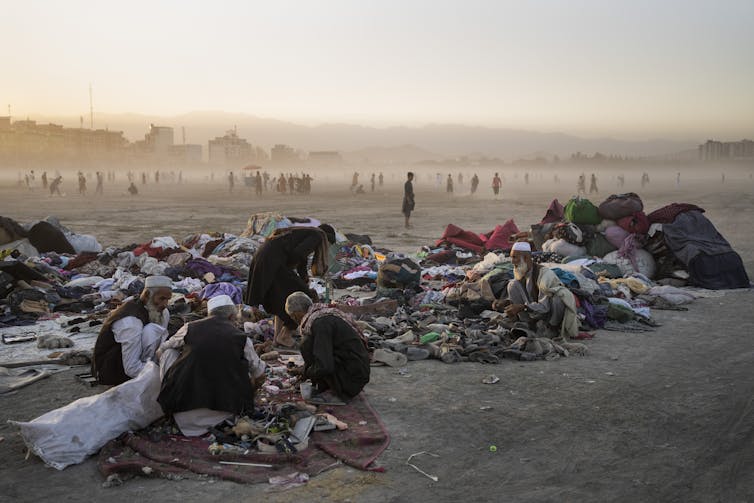
Older man uses a fitness contraption.
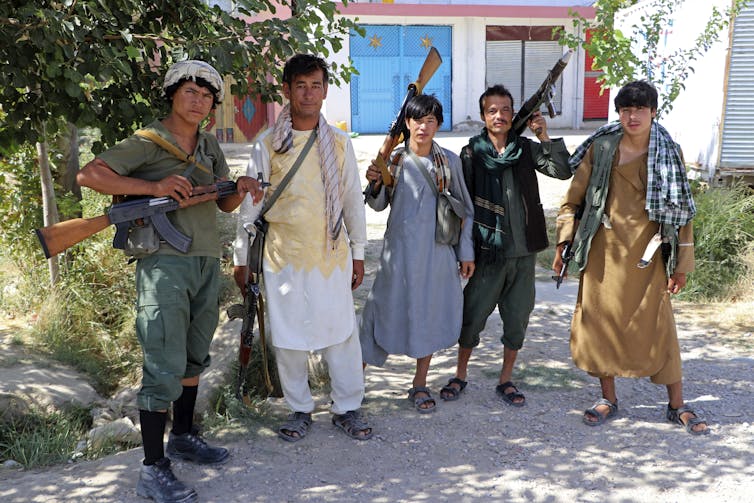
Dr. Paul Bragg saw supplements as a financial windfall because they would always need to be replenished. Stuart William Macgladrie/Fairfax Media via Getty Images

In the letter, Bragg told Hoffman the fundamental flaw in his York business: his products were durable. If someone bought a barbell set in the 1930s, it was likely they could still use it in the 1950s. Bragg recommended selling nutritional supplements, which would need to be replaced on a biweekly or monthly basis.

Hoffman decided to pass on partnering up with Bragg, but he soon recognized the idea’s potential. In the 1950s, nutritionist and bodybuilding coach Irving Johnson began selling protein supplements in Hoffman’s Strength & Health magazine. Made from soy, Johnson’s “Hi Protein” powder was a huge success.

Within a year, Hoffman banned Johnson from his magazine and began selling his own “Hi-Proteen” powder. Protein supplements, as an industry, grew in size and scope. Soy protein products were eventually replaced by milk protein powders in the 1960s. By the late 1990s several other derivatives, ranging from pea protein to collagen powders, existed.

The size and scope of other offerings grew with time. Vitamin and mineral supplements became popular in the 1950s. Energy drinks and energy boosters like creatine started flying off the shelves in the late 1980s and early 1990s. Prohormones – which purported to build muscle and were eventually banned – were introduced in the early 2000s. Each decade, profits ballooned, as did the creativity in the branding of the products.

Outlandish promises were commonplace. Vitamin producers promised cancer-curing products, protein powders advertised steroid-like effects, while pre-workout supplements – often laced with methamphetamines – offered boundless energy.

Government authorities did little to stop them.

The flailing FDA

It wasn’t for lack of trying. The supplements industry and federal authorities have long been playing a game of cat and mouse.

When Hoffman and others began selling supplements, they were technically subject to the policies of the Food and Drug Administration. But during the 1950s, the FDA was ill-equipped to regulate nutritional supplements. However, some of the manufacturers’ outlandish claims and unhygienic practices started to attract the attention of the regulatory body, which soon sought to gain more control.

By the 1960s, Hoffman – who routinely claimed his products added pounds of muscles in rapid time – became a target of the FDA. The secret to his Hi-Proteen powder? A large mixing vat in which he stirred Hershey’s chocolate powder together with soy protein powder using a rowing oar.

Hoffman was regularly censored but never stopped. During the 1960s and 1970s, the FDA regularly locked horns with manufacturers for their lax production methods and incredulous claims.

The problem was that the FDA was never able to fully regulate the industry.

From 1968 to 1970, Congress held several public hearings on the FDA’s plans to regulate supplements. Legislators, supplement trade associations, manufacturers and citizens discussed restrictions and bans on certain products, such as making it illegal to sell supplements with nutrients in excess of 150% of daily intake recommendations.

Public and private outcry stopped such plans in their tracks. The FDA was forced to engage in light-touch regulation. In 1975, a court ruling allowed supplements to advertise themselves as natural. One year later, the Rogers Proxmire Act prohibited the FDA from imposing limits on vitamin and mineral amounts in supplements.

The FDA retained the right to pursue baseless or misleading claims, but this did little to slow down the industry. The number of products continued to grow.

Put simply, it became impossible to oversee what went into products. This also explains why so many supplements include a note to say they are not FDA approved or endorsed.

In the early-1990s the FDA resumed its efforts to regulate the supplement industry. In particular, the agency wanted to increase its own enforcement powers while simultaneously making it illegal to advertise therapeutic claims on supplement labels. Once more, private lobbying and public outcry watered down the agency’s powers.

In 1994, Congress passed the Dietary Supplement Health Education Act, which completely changed the nutritional landscape. Supplements were now classified as foods, not medicines or food additives. By classifying supplements as foods, and not drugs, the act lowered the burden of proof for manufacturer’s claims.

A collage of pills in the shape of a hamburger.
Classifying supplements as a food allowed manufacturers to sidestep stringent FDA regulations applied to drugs. JW LTD/Getty Images

The legislation also expanded which products could be classified as a supplement – and, therefore, not be subjected to the FDA’s purview.

Today, responsibility is placed on producers to self-regulate their potentially harmful products. This does expose producers to lawsuits, but it can be a long and lengthy process for consumers. In effect, supplements are brought to market before being thoroughly tested. Thus, many products are sold despite containing banned substances.

A single promise wrapped in a pill

Since the mid-20th century, nutritional supplements have been promoted in a variety of ways within the United States. But acknowledging the differences in product, taste and price, they’ve generally been marketed based upon a single promise: This product will, in some way, improve your life.

Whether this is true or not for the individual product – some supplements do, in fact, work, with creatine being one example – it has become problematic at a broader level. Federal agencies in the U.S. have continually been impeded from correctly overseeing the market. Private lobbying and public outcry about the government wanting to “take away your vitamins” have encouraged malpractice and dangerous messaging.

Mel Gibson urges people to ‘Call the U.S. Senate and tell them that you want to take your vitamins in peace.’

A study from 2018 found 776 instances of unapproved pharmaceutical ingredients being added to supplements in the United States from 2007 to 2016. Many of these additions were relatively harmless. But several ingredients – from steroid compounds to banned weight loss drugs – were not.

Supplements might promise a great deal. But in reality, most of them are articles of faith.

[Over 100,000 readers rely on The Conversation’s newsletter to understand the world. Sign up today.]

The Conversation

Conor Heffernan does not work for, consult, own shares in or receive funding from any company or organization that would benefit from this article, and has disclosed no relevant affiliations beyond their academic appointment.

16 Aug 11:44

Party Like It’s 1979: The OG Antitrust Is Back, Baby!

by Cory Doctorow

President Biden’s July 9 Executive Order on Promoting Competition in the American Economy is a highly technical, 72-part, fine-grained memo on how to address the ways market concentration harms our lives as workers, citizens, consumers, and beyond. 

To a casual reader, this may seem like a dry bit of industrial policy, but woven into the new order is a revolutionary idea that has rocked the antitrust world to its very foundations.

The Paradox of Antitrust

US antitrust law has three pillars: the Sherman Act (1890), the Clayton Act (1914), and the FTC Act (1914). Beyond their legal text, these laws have a rich context, including the transcripts of the debates that the bills’ sponsors participated in, explaining why the bills were written. They arose as a response to the industrial conglomerates of the Gilded Age, and their “robber baron” leaders, whose control over huge segments of the economy gave them a frightening amount of power.

Despite this clarity of intent, the True Purpose of Antitrust has been hotly contested in US history. For much of that history, including the seminal breakup of John D. Rockefeller’s Standard Oil in 1911, the ruling antitrust theory was “harmful dominance.” That’s the idea that companies that dominate an industry are potentially dangerous merely because they are dominant. With dominance comes the ability to impose corporate will on workers, suppliers, other industries, people who live near factories, even politicians and regulators.

The election of Ronald Reagan in 1980 saw the rise of a new antitrust theory, based on “consumer welfare.” Consumer welfare advocates argue that monopolies can be efficient, able to deliver better products at lower prices to consumers, and therefore the government does us all a disservice when it indiscriminately takes on monopolies. 

Consumer welfare’s standard-bearer was Judge Robert Bork, who served as Solicitor General in the Nixon administration. Bork was part of the conservative Chicago School of economics, and wrote a seminal work called “The Antitrust Paradox.”

The Antitrust Paradox went beyond arguing that consumer welfare was a better way to do antitrust than harmful dominance. In his book, Bork offers a kind of secret history of American antitrust, arguing that consumer welfare had always been the intention of America’s antitrust laws, and that we’d all been misled by the text of these laws, the debates surrounding their passage, and other obvious ways of interpreting Congress’s intent. 

Bork argued the true goal of antitrust was protecting us as consumers—not as citizens, or workers, or human beings. As consumers, we want better goods and lower prices. So long as a company used its market power to make better products at lower prices, Bork’s theories insisted that the government should butt out.

This is the theory that prevailed for the ensuing 40 years. It spread from economic circles to the government to the judiciary. It got a tailwind thanks to a well-funded campaign that included a hugely successful series of summer seminars attended by 40 percent of federal judges, whose rulings were measurably impacted by the program.

Morning in America

Everyone likes lower prices and better products, but all of us also have interests beyond narrow consumer issues. We live our days as parents, spouses, friends—not just as shoppers. We are workers, or small business owners. We care about our environment and about justice and equity. We want a say in how our world works.

Competition matters, but not just because it can make prices lower or products better. Competition matters because it lets us exercise self-determination. Market concentration means that choices about our culture, our built environment, our workplaces, and our climate are gathered into ever-fewer hands. Businesses with billions of users and dollars get to make unilateral decisions about our lives. The larger a business looms in our life, the more ways it can hurt us

The idea that our governments need to regulate companies beyond the narrow confines of “consumer welfare” never died, and now, 40 years on, it’s coming roaring back.

The FTC’s new chair, Lina Khan, burst upon the antitrust scene in 2017, when, as a Yale Law student, she published Amazon’s Antitrust Paradox, a devastating rebuke to Bork’s Antitrust Paradox, demonstrating how a focus on consumer welfare fails to deliver, even on its own terms. Khan is now one of the nation’s leading antitrust enforcers, along with fellow “consumer welfare” skeptics like Jonathan Kanter (now helming the Department of Justice Antitrust Division) and Tim Wu (the White House’s special assistant to the president for technology and competition policy).

Bombshells in the Fine Print

The Biden antitrust order is full of fine detail; it’s clear that the president’s advisors dug deep into competition issues with public interest groups across a wide variety of subjects. We love to nerd out on esoteric points of competition law as much as the next person, and we like a lot of what this memo says about tech and competition, but even more exciting is the big picture stuff.

When the memo charges the FTC with policing corporate concentration to prevent abuses to “consumer autonomy and consumer privacy,” that’s not just a reassurance that this administration is paying attention to some of our top priorities. It’s a bombshell, because it links antitrust to concerns beyond ensuring that prices stay low. 

Decades of consumer welfarism turned the electronic frontier into a monoculture dominated by “a group of five websites, each consisting of screenshots of text from the other four.” This isn’t the internet we signed up for. That’s finally changing.

We get it, this is esoteric, technical stuff. But if there’s one thing we’ve learned in 30 years’ fighting for a better digital future, it’s that all the important stuff starts out as dull, technical esoterica. From DRM to digital privacy, bossware to broadband, our issues too often rise to the level of broad concern once they’ve grown so harmful that everyone has to pay attention to them.

We are living through a profound shift in the framework that determines what kinds of companies are allowed to exist and what they’re allowed to do. It’s a shift for the better. We know nothing is assured. The future won’t fix itself. But this is an opportunity, and we’re delighted to seize it.