Shared posts

11 Mar 15:01

Top 5 Fair Use Myths on Social Media

by Courtney Lang

The last thing anyone wants to do on social media is to get into trouble. But trouble on social media can come from more than just cringey or offensive posts. […]

The post Top 5 Fair Use Myths on Social Media appeared first on Copyright Alliance.

08 Mar 19:16

Auguste Rodin's Sculptures Are In The Public Domain; 3D Scans Of Them Should Be, Too

by Glyn Moody

Auguste Rodin is without doubt one of the greatest sculptors in history. Equally without doubt, his works are now in the public domain, since he died in 1917. Unfortunately, the situation in France is a little more complicated, for reasons the artist and public domain campaigner Cosmo Wenman explains:

Shortly before his death, Rodin willed his estate to the French government, which created the Musée Rodin and assigned to it droit moral (“moral rights”) in Rodin’s oeuvre. By these rights the museum is permitted under French law to manufacture and sell a limited quantity of modern, posthumous bronze casts and represent them as “original” Rodin works. Musée Rodin earns considerable income from sales of such posthumous casts, as well as unlimited, simple reproductions.

Musée Rodin’s moral rights apply only within French jurisdictions, and only in very limited circumstances. They do not impinge on the public domain status of Rodin’s works, nor on the public’s right to freely copy them, even within France.

Wenman believes that museums, art galleries and private collectors around the world should make 3D scans of important public domain works and release them freely, thereby becoming “engines of new cultural creation”. The Musée Rodin disagrees, presumably because it is concerned that its monopoly on “original” posthumous casts might be devalued. As a result, it has been fighting for some years Wenman’s efforts to obtain the museum’s 3D scans of Rodin’s works through the courts.

Wenman has tweeted an update on his lawsuit. One piece of good news is that thanks to his legal campaign, the scans carried out for the Musée Rodin’s of two famous works – “The Kiss” and “Sleep” – are now freely available. Even better news is that Wenman has discovered the Musée Rodin has scanned its entire collection at high resolution. As he says: “These documents are of world wide interest and immeasurable artistic, academic, cultural, and commercial value. I am going after all of them, for everyone.”

It’s regrettable that some museums and galleries are still resisting these attempts to liberate public domain works. When those who are supposedly the guardians of society’s cultural patrimony are fighting to stop people from having full and free access to it, it’s clear that copyright’s poison, based on ownership and exclusion, has entered deep into their souls.

Follow me @glynmoody on TwitterDiaspora, or Mastodon.

Originally published to the Walled Culture site.

08 Mar 13:32

Putin’s biggest mistake of the Ukraine war? Trusting the Western financial system

by Peter Martin, Visiting Fellow, Crawford School of Public Policy, Australian National University

The West is arraying financial weapons never deployed before against a country of Russia’s size, forsaking some of the principles that have defined it.

Part of what has defined the West – and most of what has been the world’s engine of prosperity for the past century and a half – has been the free flow of goods across borders, a working banking system, and property rights.

There’s been an implicit understanding that no sizeable nation (Russia’s economy is about the size of Australia’s) would be denied access to these things. Otherwise the financial system wouldn’t be the financial system.

That seems to have been the understanding of Russian President Vladimir Putin. But ten days ago, the West did the unthinkable, and the global financial system may never be the same again.

Russia’s vast war chest

Over the seven years since Putin last invaded Ukraine (and annexed Crimea) in 2014, Russia’s central bank has almost doubled its holdings of foreign currency and foreign bonds and gold, building up a reserve of US$630 billion at a considerable cost to the living standards of ordinary Russians.

It was a war chest that would enable Russia to continue to buy things that could only be bought in foreign currency, even if customers overseas refused to trade with it and supply it with that currency. It was Russia’s insurance policy.


Read more: 'Just short of nuclear': these sanctions will cripple Russia's economy


And although it could have been stored in Russia, much of it was kept in banks in the UK, Western Europe and the US, for easy access when it was needed to buy things on those markets.

Whatever his other suspicions of the West, Putin seemed to think its financial system wouldn’t be turned off – not to a nation of Russia’s size.

China will learn from Russia’s mistake

On February 27 the West froze the assets and travel of named oligarchs and Russian officials, as was expected.

Also, and less expected, it stopped named Russian banks from accessing the messaging system used to transfer money across borders, ensuring they were “disconnected from the international financial system”.

And, much less expected, it froze the reserves of Russia’s central bank stored in France, Germany, Italy, the United Kingdom, Canada, and the US – the hundreds of billions of savings legitimately placed in foreign banks for safekeeping.


Read more: US-EU sanctions will pummel the Russian economy – two experts explain why they are likely to stick and sting


That action broke the bond of trust that makes a bank a bank. And while effective – Russia can’t get access to hundreds of billions of foreign dollars it has painstakingly built up to buy supplies and support the ruble on currency markets – it can only be done at this scale once.

China will have taken note and won’t be entrusting any more foreign assets to banks in France, Germany, Italy, the UK and the US than it can afford to lose.

Freezing foreign reserves has been done before – but only to the less powerful nations like Iran, Afghanistan and Venezuela. This is the first time it’s ever been done to a member of the G20 or the UN Security Council.

The battle of the fridge vs the TV

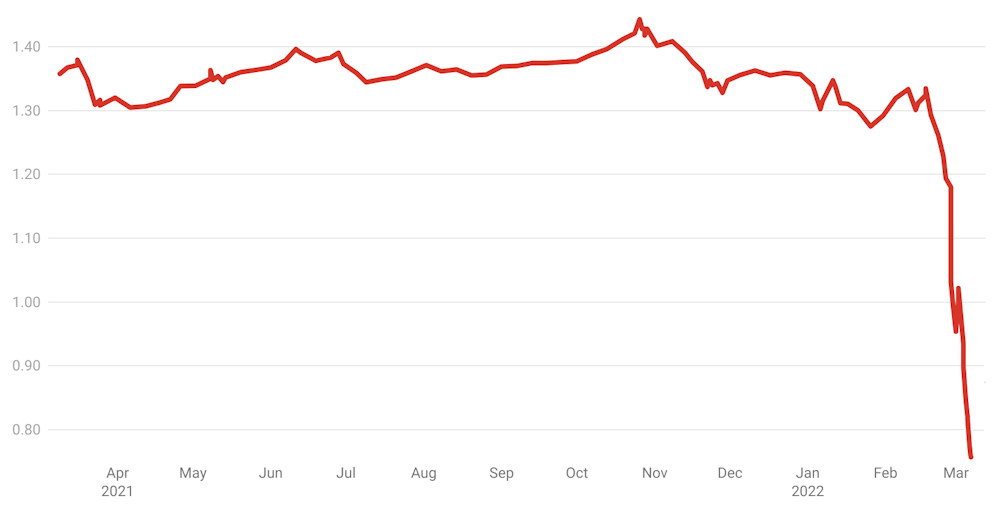
The ruble has collapsed 40%. Denied access to the foreign currency it would need to support the ruble in the market, Russia’s central bank has attempted to stem the tide by more than doubling its key interest rate, lifting it from 9.5% to 20%.


The ruble falls off a cliff

Fraction of a US cent per ruble. Trading Economics

Russia has blocked Russians from sending money abroad, stopped paying foreigners interest payments on government debt and required every Russian firm earning dollars to hand over 80% of them in exchange for rubles.

For ordinary Russians, there’s a “battle of the fridge versus the television”: the stark contrast between the reality of daily life against the claims of state media.

Until recently, Russian TV wasn’t even using the word “war” (although it has started). The television has been telling Russians things are normal.

But Russians’ fridges, ATMs, and their blocked Visa, Mastercard and ApplePay accounts are all telling them something else.

From buying a washing machine to getting a mortgage, an awful lot is suddenly expensive or unavailable. But official polls (for what they are worth) show public support for the “special military operation”. Television has been using the realities of shortages and price increases to attack the West for becoming anti-Russian.

Hitting Russia’s elite and military where it hurts

Whatever ordinary Russians actually think about the war, the impact of the West’s unprecedented sanctions on the Russian elite is likely to matter more. No longer able to travel aboard, access their offshore savings or pay the school fees of their children abroad, the oligarchs have at least the potential to exert influence.

The final way in which the financial embargo might succeed is by starving Russia of foreign exchange to the point where it can’t buy spare parts for its military or the computer chips and other materials needed to make those parts.


Read more: Russian sanctions are biting harder than imagined, and it'll get worse


There’s every chance none of these will work quickly, every chance they will further impoverish Russians, and every chance that, if Russia subjugates Ukraine, the West will find the sanctions impossible withdraw without losing face.

The global financial system changed when the West did the barely thinkable on February 27. It’s hard to see a way back.

The Conversation

Peter Martin does not work for, consult, own shares in or receive funding from any company or organisation that would benefit from this article, and has disclosed no relevant affiliations beyond their academic appointment.

07 Mar 15:20

Statement by Vice President Kamala Harris on Florida House Bill 5

by The White House

Last night, the Florida Senate passed House Bill 5, which effectively bans access to abortions after 15 weeks. This bill is extreme by any standard.  

The right of women to make decisions about their own bodies is non-negotiable. If signed into law, Florida’s bill would violate the constitutional right to abortion that the Supreme Court has recognized for nearly 50 years. It will block access to crucial reproductive health care for Floridians, with a particular impact on low-income communities, communities of color, and rural communities.

Unconstitutional abortion bans and other bills that will dramatically reduce access to reproductive care are pending in state legislatures across the country. These efforts only strengthen our resolve: The Biden-Harris Administration will continue to do everything in our power to protect access to healthcare and defend a woman’s right to make decisions about her body and determine her future.

###

04 Mar 16:48

Wartime Is a Bad Time To Mess With the Internet

by Corynne McSherry

Like most people, we at EFF are horrified by Russia’s invasion of Ukraine. Also like most people, we are not experts on military strategy or international diplomacy. But we do have some expertise with the internet and civil liberties, which is why we are deeply concerned that governments around the world are pressuring internet companies to interfere with fundamental internet infrastructure. Tinkering with the internet as part of a political or military response is likely to backfire in multiple ways.

There is already heavy pressure on social media platforms. Russia is demanding that various companies from Facebook to Google and Netflix carry its state-sponsored content. The European Union, in an unprecedented move, has decided to prohibit the broadcasting and distribution of content by these outlets throughout the European Union, and Ukraine is asking the European Commission to do far more.

But now the government of Ukraine has called on ICANN to disconnect Russia from the internet by revoking its Top Level domain names, “.ru”, “.рф” and “.su” from the root zone, in an attempt to make access to Russian websites and email difficult for people outside as well as inside of Russia. Ukraine also reached out to RIPE, one of the five Regional Registries for Europe, the Middle East and parts of Central Asia, asking the organization to revoke IP address delegation to Russia. 

As a practical matter, some of these calls are essentially impossible; ICANN can’t just press a button and boot a country offline; RIPE can’t just revoke IP addresses. But those are not the only problems: remaking fundamental internet infrastructure protocols is likely to lead to a host of dangerous and long-lasting consequences.

Here are a few:

It deprives people of the most powerful tool for sharing information just when they need it most.

While the internet can be used to spread misinformation, it also enables everyone, including activists, human right defenders, journalists and ordinary people, to document and share the real-time facts and resist propaganda. Indeed, Russia has reportedly been trying for years to “unplug” from the internet so it can completely control communications in the country. Internet providers shouldn’t help the Russian government, or any government, keep people within an information bubble.

It sets a dangerous precedent.

Intervention pathways, once established, will provide state and state-sponsored actors with additional tools for controlling public dialogue. Once processes and tools to take down expression are developed or expanded, companies can expect a flood of demands to apply them, inevitably to speech those tools were not originally designed, and the companies did not originally intend, to target. At the platform level, state and state-sponsored actors have long since weaponized flagging tools to silence dissent.

It compromises security and privacy for everyone.

Any attempt to compromise the internet’s infrastructure will affect the security of the internet and its users. For example, revocation of IP addresses means that things like the Routing Policy Specification Language (RPSL), used by ISPs to describe their routing policies, and Resource Public Key Infrastructure (RPKI), which is used to improve the security for the internet’s BGP routing infrastructure, would be severely compromised. This would expose users to man-in-the-middle attacks, compromise daily activities like bank transactions, and undermine the privacy because users would have nowhere to hide.

It undermines trust in the network and the policies upon which it is built.

Trust is paramount to the way networks self-organize and interoperate with other networks. It is what ensures a resilient global communications infrastructure that can withstand pandemics and wars. That trust depends, in turn, on imperfect but painstaking multi-stakeholder processes to develop neutral policies, rules, and institutional mechanisms. Bypassing those mechanisms irretrievably undermines the trust upon which the internet is founded. 

We were relieved to see that ICANN and RIPE have declined to comply with the Ukrainian government’s requests, and we hope other infrastructure organizations follow suit. In moments of crisis, we are often tempted to take previously unthinkable steps. We should resist that temptation here, and take proposals like these off the table altogether. In dark times, people must be able to reach the light, reassure their loved ones, inform themselves and others, and escape the walls of propaganda and censorship. The internet is a crucial tool for all of that – don’t mess with it.

03 Mar 15:44

Some students say DeSantis’ anti-mask remarks were unnecessary

by Clinton Engelberger, NEWS EDITOR
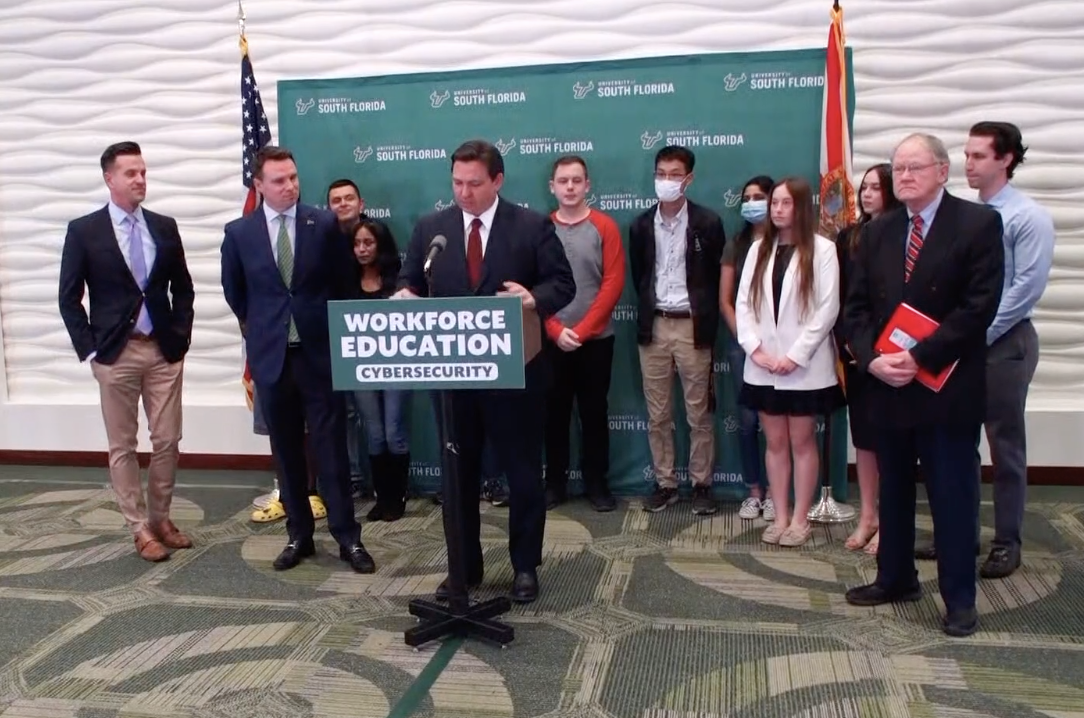
Gov. Ron DeSantis told students at the Wednesday news conference they don’t need to wear masks because it was unnecessary, prompting some of them to remove their masks. WTSP

A Wednesday news conference at the Tampa campus hosted by Gov. Ron DeSantis for a grant to USF’s cybersecurity program became trending on Twitter, but not because of his announcement.

DeSantis presented a $20 million grant from the Florida Department of Education to Cyber Florida, the Florida Center for Cybersecurity at USF. However, the news was overshadowed by his remarks to a group of high school students regarding their decision to wear masks. This sparked nationwide attention and worries from some USF students.

When he arrived at his podium, DeSantis directly addressed the students standing with him after noticing they had masks on.

“You do not have to wear those masks, I mean please take them off,” he said. “Honestly, it’s not doing anything and we have to stop with this COVID theater. So, if you want to wear it, fine. But this is ridiculous.”

A video of this confrontation went viral on social media platforms, as it was No. 1 trending on Twitter on Wednesday afternoon.

Some students felt DeSantis’ remarks were unnecessary, such as senior Aaron Mittelstadt.

Mittelstadt said that while he believes the comments made by the governor won’t cause major damage, they were unprovoked and disrespectful to the students.

“It would have been best for him to not say that because he was just adding his extra two cents that was unnecessary on the matter,” he said. “I just think it’s a little petty and opinionated. I’d say it’s not the most polite thing to really say to someone, it’s just kind of indecent to criticize something like that.”

When speaking to the students, DeSantis said masks aren’t “doing anything.” This claim has been debunked by the Centers for Disease Control and Prevention, as reports have shown masks are up to 83% effective in preventing the spread of COVID-19.

This misinformation is worrying for sophomore Katherine Kozlowski, as she said those in charge should set better examples and care about the health of others.

“A leader is supposed to shape their community, not break it. DeSantis is turning a personal choice to wear a mask into a political statement to further his anti-mask agenda,” she said.

“USF, as well as the entire state of Florida, needs a leader that cares about the citizens’ health, and DeSantis has clearly shown that he is not that leader.”

Other students, such as public health major Claire Cunningham, found his leadership style to be questionable as well. She said the comments from DeSantis were unprofessional, and wearing a mask shouldn’t be publicly mocked.

“It’s very harmful to the community. COVID is definitely still a threat and people are definitely still dying from COVID,” Cunningham said.

“It is not mandated, so if you don’t want to wear a mask I think that’s a personal preference. But publicly discouraging it and humiliating people publicly for wearing a mask [makes] a really bad role model for a politician on a state level.”

Due to the lack of action taken throughout the pandemic by DeSantis, junior Ravin-Marie Perkins said they are not shocked by his comments as they reflect what he has stood for in the past.

“Personally, I’m not surprised that DeSantis would accuse mask-wearing students of performing ‘COVID theater’ seeing his past COVID policies,” Perkins said. “Seeing how careless he was throughout the pandemic with lax mask mandates and vaccination policies makes this moment seem like a natural progression of his mentality.”

Wearing a mask is essential for some students to do in order to protect others around them, according to junior Kayla Williams. She said mask-wearing should be based on preference as every student’s living condition varies, and no one should feel uncomfortable by doing what makes them feel safe.

“[He wasn’t] respecting the fact that if they wanted to wear the mask, they can and that’s their choice,” she said. “He made it seem like, ‘Oh, it’s your choice,’ but then he was really demeaning about it.

“You can’t shame people out of wearing [masks] if that’s what makes them feel comfortable. You also don’t know what’s going on and their home life if they have an immunocompromised family member that lives with them and they want to protect them for that reason.”

Perkins said the message DeSantis is sending by making those comments is harmful to both the USF community and the country as a whole.

“As someone who moved to Florida from Maryland for school, there’s a huge difference between how often people here wear masks and people not getting the vaccine when it became available,” Perkins said.

“DeSantis leads by example and confirms to the people there or watching at home that we shouldn’t be concerned with a virus that’s still going around. He’s actively telling people wearing masks that they’re somehow moralizing something he’s downplayed for two years now.”

Additional reporting done by Assistant News Editor Michael Mardones.

02 Mar 12:45

‘Don’t Say Gay’ bill raises student, faculty concerns for younger generations

by Kellie Murray, STAFF WRITER
Professors and students brought attention to the possible repercussions of the Parental Rights in Education bill as it makes its way to the Senate floor. PIXABAY

Upon hearing about the Parental Rights in Education bill — nicknamed the “Don’t Say Gay” bill — Isaiah Bates, junior philosophy major and vice president of the Pride Alliance at USF, grew concerned when thinking of how the bill would take away from queer students’ safe space.

“A lot of that comfort is going to disappear,” he said. “A lot of people will be ashamed, just because there’s not that normalization aspect.

“Not only does it hurt the queer kids, but it also hurts a lot of straight kids. So they grow up not being able to be an ally. They grow up ignorant of other things.”

Senate Bill 1834 outlines that information regarding child-specific information school personnel is aware of would have to be shared to the parents. It would also limit how sexual orientation and gender identity are discussed in the classroom of primary grade levels.

Gender and sexuality is taught at young ages in school, it’s just not necessarily part of the curriculum, according to professor Milton Wendland.

“I fear this bill, by saying we can’t discuss these things openly and honestly, may actually be teaching a lesson … that these are things we do not talk about,” he said.

The bill passed through the final Florida Senate committee Monday with 12 “yeas” and eight “nays.” Next, it is moving to the Senate floor for a vote.

The Florida Senate first voted in favor of the bill Feb. 8, allowing it to proceed to the House for review and approval.

Bill Sponsor Joe Harding, a Republican member of the Florida House of Representatives, put forth an amendment Feb. 18.

It stated that any personal information regarding the sexual orientation of students that school personnel were aware of would have to be shared with their parents. This would require school principals to “develop a plan to disclose such information within six weeks after the decision to withhold such information from the parent.”

He withdrew the amendment Feb. 22, shortly before the House Q&A session began, according to News Channel 8. During the short time the amendment was proposed, it gained lots of attention online and across numerous social media platforms.

While the bill is directed at primary level students, students in high school and college can potentially start seeing repercussions as the younger generation of students progress through schooling, according to Wendland.

“It really just delays conversations that we need to be having at very early ages. It really creates a lot of difficulties for them when they enter high school and college,” he said. “That’s an incredible burden to put on someone, especially if they don’t have familial support, faith or community support.

“Those are times when we’re supposed to be focusing on education and thinking about our careers. [They] have to catch up and think about their identities, gender and sexual identities.”

Bates believes the bill will change the safe environment students previously had at school. He said he is concerned that when younger generations get to college they will not have the chance to express themselves until they are exposed to more information later.

“College really is that first time that people will be able to see something different, which is a little too late,” Bates said. “At this point, a lot of people have grown into adults and their childhood has been robbed from them.

“They weren’t able to be themselves because they were stuffed in this closet.”

The restriction might lead to more people being curious at all levels, seeking information at public libraries, in their communities and at universities to get more information on gender identity and sexuality, according to Wendland.

Though he has high hopes, Wendland also has concerns that, if the bill and others like it do pass, they will impact certain departments at universities in the future, such as his own — Women’s and Gender Studies.

Not only would departments take a hit, but he said it could affect his current students going into teaching careers at schools in Florida.

“I have a lot of students who are going on to become teachers, educators, counselors, social workers, who work with young people, and this will limit their availability to do their jobs effectively,” Wendland said.

As a member of the LGBTQ community, Bates is concerned about what the bill means for his future and potentially his future children.

“My biggest fear is my children learning to hate themselves or learning to hate other people,” Bates said.

“Although I will not teach that, the school is responsible for also teaching them things, and the lack of teaching is also teaching them. The lack of accessibility teaches people that that shouldn’t be accepted. You don’t have to say something to say something.”

01 Mar 17:19

What you eat can reprogram your genes – an expert explains the emerging science of nutrigenomics

by Monica Dus, Assistant Professor of Molecular, Cellular, and Developmental Biology, University of Michigan Medical School
Along with calories and nutrients, food can influence the genetic blueprints that shape who you are. Maskot via Getty Images

People typically think of food as calories, energy and sustenance. However, the latest evidence suggests that food also “talks” to our genome, which is the genetic blueprint that directs the way the body functions down to the cellular level.

This communication between food and genes may affect your health, physiology and longevity. The idea that food delivers important messages to an animal’s genome is the focus of a field known as nutrigenomics. This is a discipline still in its infancy, and many questions remain cloaked in mystery. Yet already, we researchers have learned a great deal about how food components affect the genome.

I am a molecular biologist who researches the interactions among food, genes and brains in the effort to better understand how food messages affect our biology. The efforts of scientists to decipher this transmission of information could one day result in healthier and happier lives for all of us. But until then, nutrigenomics has unmasked at least one important fact: Our relationship with food is far more intimate than we ever imagined.

The interaction of food and genes

If the idea that food can drive biological processes by interacting with the genome sounds astonishing, one need look no further than a beehive to find a proven and perfect example of how this happens. Worker bees labor nonstop, are sterile and live only a few weeks. The queen bee, sitting deep inside the hive, has a life span that lasts for years and a fecundity so potent she gives birth to an entire colony.

And yet, worker and queen bees are genetically identical organisms. They become two different life forms because of the food they eat. The queen bee feasts on royal jelly; worker bees feed on nectar and pollen. Both foods provide energy, but royal jelly has an extra feature: its nutrients can unlock the genetic instructions to create the anatomy and physiology of a queen bee.

So how is food translated into biological instructions? Remember that food is composed of macronutrients. These include carbohydrates – or sugars – proteins and fat. Food also contains micronutrients such as vitamins and minerals. These compounds and their breakdown products can trigger genetic switches that reside in the genome.

Two shopping carts lined up, one filled with fruits and vegetables, the other with sweets and high-fat foods.
The field of nutrigenomics aims to decipher how different types of foods transmit different – and important – messages to our cells. Peter Dazeley/The Image Bank via Getty Images

Like the switches that control the intensity of the light in your house, genetic switches determine how much of a certain gene product is produced. Royal jelly, for instance, contains compounds that activate genetic controllers to form the queen’s organs and sustain her reproductive ability. In humans and mice, byproducts of the amino acid methionine, which are abundant in meat and fish, are known to influence genetic dials that are important for cell growth and division. And vitamin C plays a role in keeping us healthy by protecting the genome from oxidative damage; it also promotes the function of cellular pathways that can repair the genome if it does get damaged.

Depending on the type of nutritional information, the genetic controls activated and the cell that receives them, the messages in food can influence wellness, disease risk and even life span. But it’s important to note that to date, most of these studies have been conducted in animal models, like bees.

Interestingly, the ability of nutrients to alter the flow of genetic information can span across generations. Studies show that in humans and animals, the diet of grandparents influences the activity of genetic switches and the disease risk and mortality of grandchildren.

Cause and effect

One interesting aspect of thinking of food as a type of biological information is that it gives new meaning to the idea of a food chain. Indeed, if our bodies are influenced by what we have eaten – down to a molecular level – then what the food we consume “ate” also could affect our genome. For example, compared to milk from grass-fed cows, the milk from grain-fed cattle has different amounts and types of fatty acids and vitamins C and A . So when humans drink these different types of milk, their cells also receive different nutritional messages.

Similarly, a human mother’s diet changes the levels of fatty acids as well as vitamins such as B-6, B-12 and folate that are found in her breast milk. This could alter the type of nutritional messages reaching the baby’s own genetic switches, although whether or not this has an effect on the child’s development is, at the moment, unknown.

A smiling young girl drinking a glass of milk through a straw.
Food information derived from animals – such as cow’s milk – is transferred to the person drinking the milk. Image Source/DigitalVision via Getty Images

And, maybe unbeknownst to us, we too are part of this food chain. The food we eat doesn’t tinker with just the genetic switches in our cells, but also with those of the microorganisms living in our guts, skin and mucosa. One striking example: In mice, the breakdown of short-chain fatty acids by gut bacteria alters the levels of serotonin, a brain chemical messenger that regulates mood, anxiety and depression, among other processes.

Food additives and packaging

Added ingredients in food can also alter the flow of genetic information inside cells. Breads and cereals are enriched with folate to prevent birth defects caused by deficiencies of this nutrient. But some scientists hypothesize that high levels of folate in the absence of other naturally occurring micronutrients such as vitamin B-12 could contribute to the higher incidence of colon cancer in Western countries, possibly by affecting the genetic pathways that control growth.

This could also be true with chemicals found in food packaging. Bisphenol A, or BPA, a compound found in plastic, turns on genetic dials in mammals that are critical to development, growth and fertility. For example, some researchers suspect that, in both humans and animal models, BPA influences the age of sexual differentiation and decreases fertility by making genetic switches more likely to turn on.

All of these examples point to the possibility that the genetic information in food could arise not just from its molecular composition – the amino acids, vitamins and the like – but also from the agricultural, environmental and economic policies of a country, or the lack of them.

Scientists have only recently begun decoding these genetic food messages and their role in health and disease. We researchers still don’t know precisely how nutrients act on genetic switches, what their rules of communication are and how the diets of past generations influence their progeny. Many of these studies have so far been done only in animal models, and much remains to be worked out about what the interactions between food and genes mean for humans.

What is clear though, is that unraveling the mysteries of nutrigenomics is likely to empower both present and future societies and generations.

The Conversation

Monica Dus receives funding from the National Science Foundation, the National Institute of Health, the Sloan Foundation, the Rita Allen Foundation, and the Klingenstein Foundation. She is affiliated with The University of Michigan, Ann Arbor. She is on the Advisory Board for the Trends in Endocrinology & Metabolism journal, the Editorial Board for the Chemical Senses journal, and the Advisory Board for the University of Michigan Museum of Natural History.

01 Mar 17:11

How Vladimir Putin's security obsession has eroded Russian living standards

by Richard Foltz, Professor of Religions and Cultures, Concordia University
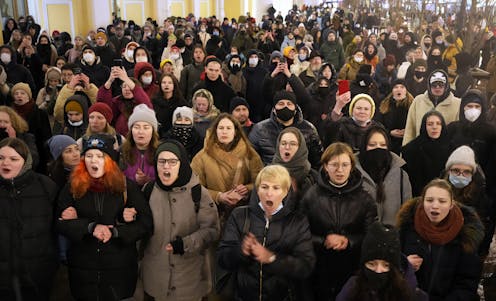
Demonstrators shout anti-war slogans in St. Petersburg, Russia, decrying their country's invasion of Ukraine. (AP Photo/Dmitri Lovetsky)

Russian dramatist Anton Chekhov famously advised young playwrights that “if in the first act you have hung a pistol on the wall, then in the following one it should be fired.

For the past 20 years, Vladimir Putin — a deeply paranoid megalomaniac who has by now completely isolated himself from his own people, to say nothing of the world as a whole — has been progressively diverting Russia’s considerable wealth towards the construction of an all-encompassing security state.

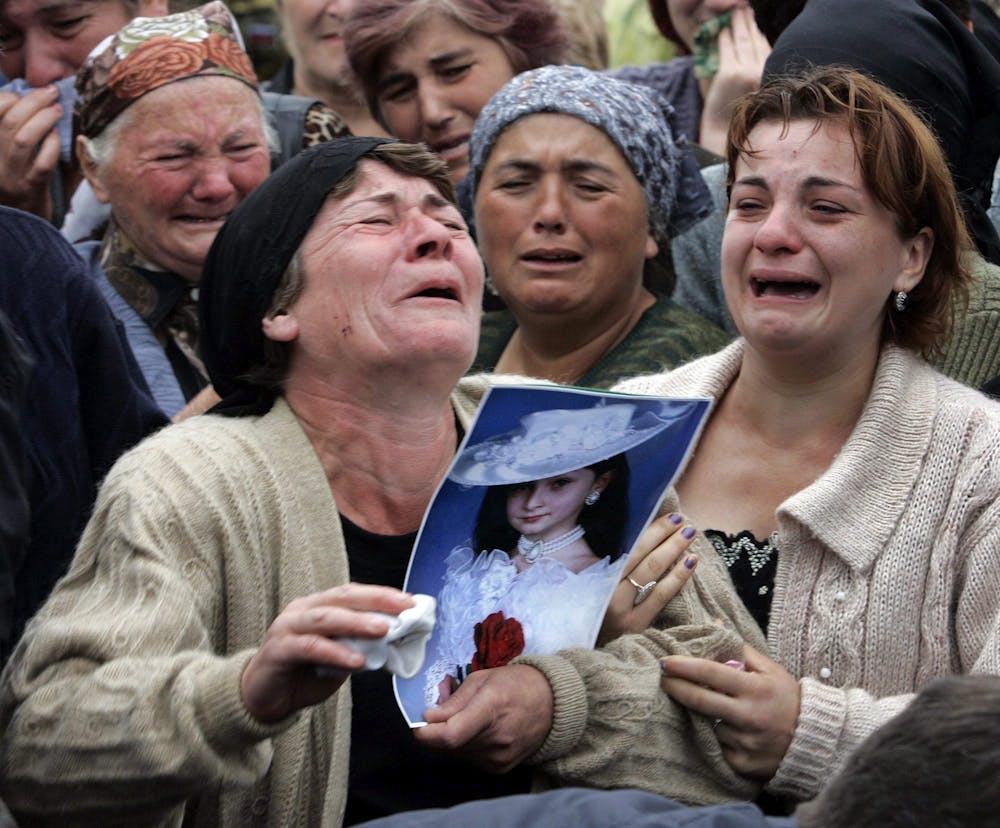
Ever since the 2004 Beslan school massacre that provided the initial pretext for this redirection, the Russian president has been hanging pistols on the walls to the exclusion of any other national project. The massacre was an Islamist, mainly Ingush and Chechen terrorist attack that resulted in the deaths of 333 people, 186 of them children.

Two women weep as one holds a photo of a child.
In this 2004 photo, a relative of a 10-year-old girl who died alongside her mother in Beslan weeps as she holds the child’s portrait during her funeral. (AP Photo/Alexander Zemlianichenko)

This narrow channelling of the country’s resources into security services has brought about a steady decline in living standards for ordinary citizens. Most of them aren’t fortunate enough to be employed in government ministries such as the MVD (Internal Affairs, which includes FBI-like functions), the security forces (the infamously unaccountable siloviki, including the Federal Security Service known as the FSB), the military, the police or connected to oligarch-run business networks with ties to Putin.

An FSB agent can expect to earn the ruble equivalent of US$1,100 a month and a police officer about US$600-700 monthly, in addition to benefits such as housing assistance, free university education for family members and free or heavily discounted vacations.

Best paid jobs out of reach for most

A surgeon, meanwhile, might make US$200-300 per month by working multiple jobs, while a teacher will have to struggle by on a measly $100 or less. Salaries for office workers fall somewhere in between. Generally speaking, any position worth having can only be obtained through nepotism, patronage networks or bribery.

In Russia’s paternalistic society, a man with the requisite skills can sometimes find employment as a car mechanic or construction worker. Low-paying unskilled jobs include food services, private security and retail sales. Those who own cars often work as unofficial taxi drivers.

Some men, unable to find employment, try to survive by betting on sports events. Others rely on the financial support of their wives or girlfriends — if they have them — who bring in money by working in beauty salons or engaging in informal businesses such as buying and selling clothes, cosmetics or household products.

But without the necessary connections and a willingness to participate in corrupt, often criminal activities, it is becoming increasingly difficult if not impossible for the average Russian to lead anything resembling a normal life.

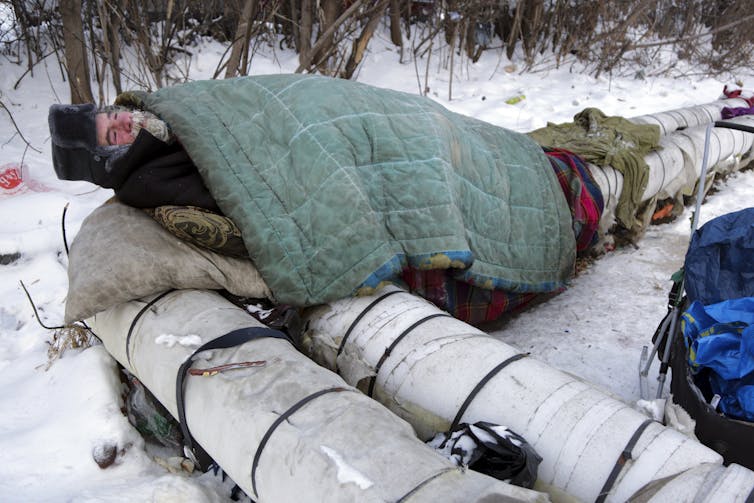
A bearded man in a black hat man lies under a stained blue blanket and on top of large pipes.
An elderly homeless man warms himself lies on the pipe of the city heating system during a frigid day in Omsk, Russia. (AP Photo/Evgeniy Sofiychuk)

Cost of living

The cost of living in Russia — outside of Moscow and St. Petersburg, world-class cities that are priced accordingly — is slightly less than in the West, but not by much. And given the much higher salaries in those aforementioned cities, the nationwide average of US$660 per month should be adjusted considerably downward for most regions.

As the ruble plummets, the cost of living goes up but salaries do not. Pensions barely cover the cost of monthly utilities. Social assistance, including bonuses for health-care workers exhausted by the COVID-19 pandemic, gets diverted along the way into mysterious pockets without ever reaching those in need. Health-care services are being steadily reduced and hospitals closed in the interest of “maximizing efficiency.”

Putin constantly claims to be “operating within the framework of the law,” but the legal system in Russia is manipulated for the sole purpose of supporting and protecting the powerful.

Russia is an advanced, highly educated nation rich in both human and natural resources, giving it considerable economic potential. But its leadership has chosen not to invest that wealth in the development of the country but rather in the build-up of a massive security apparatus that serves only the interests of the president and those close to him.

The Russian state is a kleptocracy in the purest sense of the term, and for years its kleptocrats and the billions they’ve looted from the Russian people have been received with open arms by western countries such as the United Kingdom and the United States.

A grey-haired man in a navy jacket sits in a sports stadium with his hand under his chin.
Chelsea soccer club owner Roman Abramovich, a Russian oligarch, attends a soccer match in Sweden in 2021. Abramovich has a net worth estimated at more than $13 billion and used his fortune to buy the British soccer club Chelsea and homes in London and New York. (AP Photo/Martin Meissner)

Ordinary Russians have no agency

Ordinary Russians had no say in the decision to launch an invasion of Ukraine, which was the longstanding personal obsession of a president most Russians don’t support but aren’t free to oppose.

Teenage conscripts, told they were being sent to participate in “exercises,” have reportedly been shocked to find themselves on the front lines of a war facing people they never considered their enemy.

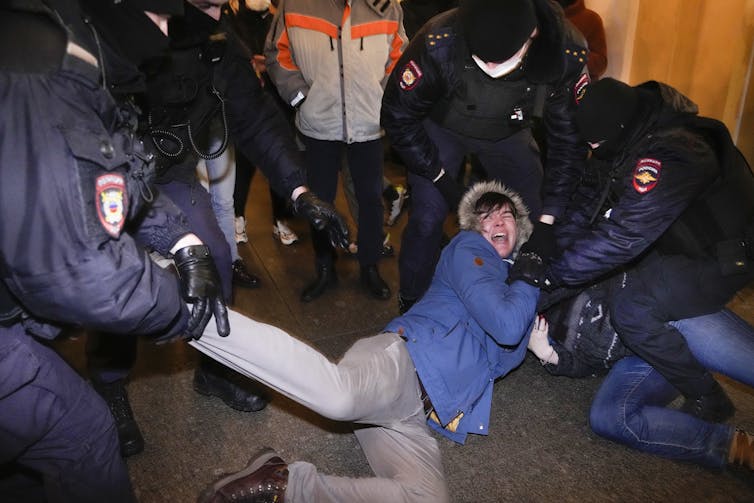
A woman in a blue jacket and grey pants lies on the ground crying out as police restrain her.
Police officers detain a demonstrator in St. Petersburg, Russia, who was protesting against Russia’s invasion of Ukraine. (AP Photo/Dmitri Lovetsky)

As our leaders wring their hands and bemoan the Ukrainians’ fate, they should also take a good look at their own roles in enabling Putin and his circle to build up the war machine that has only too naturally unleashed itself on the nearest and most convenient victim.

The pistols could not hang indefinitely, and now they have been taken down and are being fired at thousands of innocent victims.

The Conversation

Richard Foltz does not work for, consult, own shares in or receive funding from any company or organisation that would benefit from this article, and has disclosed no relevant affiliations beyond their academic appointment.

28 Feb 15:05

Fake viral footage is spreading alongside the real horror in Ukraine. Here are 5 ways to spot it

by T.J. Thomson, Senior Lecturer in Visual Communication & Media, Queensland University of Technology

Amid the alarming images of Russia’s invasion of Ukraine over the past few days, millions of people have also seen misleading, manipulated or false information about the conflict on social media platforms such as Facebook, Twitter, TikTok and Telegram.

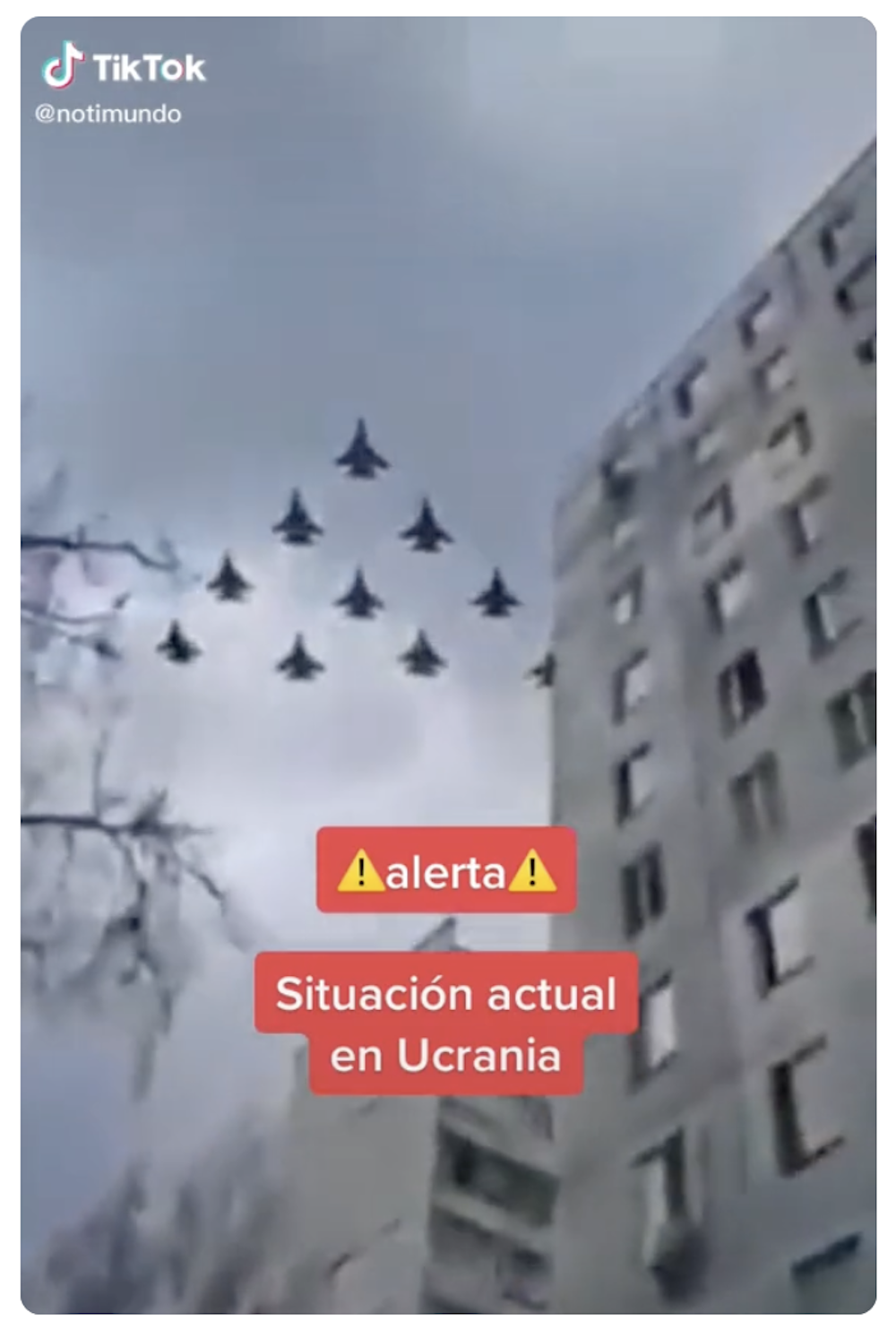
Screenshot of fake news TikTok video
Old footage, rebadged on TikTok as the latest from Ukraine. TikTok

One example is this video of military jets posted to TikTok, which is historical footage but captioned as live video of the situation in Ukraine.

Visuals, because of their persuasive potential and attention-grabbing nature, are an especially potent choice for those seeking to mislead. Where creating, editing or sharing inauthentic visual content isn’t satire or art, it is usually politically or economically motivated.

Disinformation campaigns aim to distract, confuse, manipulate and sow division, discord, and uncertainty in the community. This is a common strategy for highly polarised nations where socioeconomic inequalities, disenfranchisement and propaganda are prevalent.

How is this fake content created and spread, what’s being done to debunk it, and how can you ensure you don’t fall for it yourself?

What are the most common fakery techniques?

Using an existing photo or video and claiming it came from a different time or place is one of the most common forms of misinformation in this context. This requires no special software or technical skills – just a willingness to upload an old video of a missile attack or other arresting image, and describe it as new footage.

Another low-tech option is to stage or pose actions or events and present them as reality. This was the case with destroyed vehicles that Russia claimed were bombed by Ukraine.

Using a particular lens or vantage point can also change how the scene looks and can be used to deceive. A tight shot of people, for example, can make it hard to gauge how many were in a crowd, compared with an aerial shot.

Taking things further still, Photoshop or equivalent software can be used to add or remove people or objects from a scene, or to crop elements out from a photograph. An example of object addition is the below photograph, which purports to show construction machinery outside a kindergarten in eastern Ukraine. The satirical text accompanying the image jokes about the “calibre of the construction machinery” - the author suggesting that reports of damage to buildings from military ordinance are exaggerated or untrue.

Close inspection reveals this image was digitally altered to include the machinery. This tweet could be seen as an attempt to downplay the extent of damage resulting from a Russian-backed missile attack, and in a wider context to create confusion and doubt as to veracity of other images emerging from the conflict zone.

What’s being done about it?

European organisations such as Bellingcat have begun compiling lists of dubious social media claims about the Russia-Ukraine conflict and debunking them where necessary.

Journalists and fact-checkers are also working to verify content and raise awareness of known fakes. Large, well-resourced news outlets such as the BBC are also calling out misinformation.

Social media platforms have added new labels to identify state-run media organisations or provide more background information about sources or people in your networks who have also shared a particular story.

They have also tweaked their algorithms to change what content is amplified and have hired staff to spot and flag misleading content. Platforms are also doing some work behind the scenes to detect and publicly share information on state-linked information operations.


Read more: What can the West do to help Ukraine? It can start by countering Putin's information strategy


What can I do about it?

You can attempt to fact-check images for yourself rather than taking them at face value. An article we wrote late last year for the Australian Associated Press explains the fact-checking process at each stage: image creation, editing and distribution.

Here are five simple steps you can take:

1. Examine the metadata

This Telegram post claims Polish-speaking saboteurs attacked a sewage facility in an attempt to place a tank of chlorine for a “false flag” attack.

But the video’s metadata – the details about how and when the video was created – show it was filmed days before the alleged date of the incident.

To check metadata for yourself, you can download the file and use software such as Adobe Photoshop or Bridge to examine it. Online metadata viewers also exist that allow you to check by using the image’s web link.

One hurdle to this approach is that social media platforms such as Facebook and Twitter often strip the metadata from photos and videos when they are uploaded to their sites. In these cases, you can try requesting the original file or consulting fact-checking websites to see whether they have already verified or debunked the footage in question.

2. Consult a fact-checking resource

Organisations such as the Australian Associated Press, RMIT/ABC, Agence France-Presse (AFP) and Bellingcat maintain lists of fact-checks their teams have performed.

The AFP has already debunked a video claiming to show an explosion from the current conflict in Ukraine as being from the 2020 port disaster in Beirut.

3. Search more broadly

If old content has been recycled and repurposed, you may be able to find the same footage used elsewhere. You can use Google Images or TinEye to “reverse image search” a picture and see where else it appears online.

But be aware that simple edits such as reversing the left-right orientation of an image can fool search engines and make them think the flipped image is new.

4. Look for inconsistencies

Does the purported time of day match the direction of light you would expect at that time, for example? Do watches or clocks visible in the image correspond to the alleged timeline claimed?

You can also compare other data points, such as politicians’ schedules or verified sightings, Google Earth vision or Google Maps imagery, to try and triangulate claims and see whether the details are consistent.

5. Ask yourself some simple questions

Do you know where, when and why the photo or video was made? Do you know who made it, and whether what you’re looking at is the original version?

Using online tools such as InVID or Forensically can potentially help answer some of these questions. Or you might like to refer to this list of 20 questions you can use to “interrogate” social media footage with the right level of healthy scepticism.


Read more: 3.2 billion images and 720,000 hours of video are shared online daily. Can you sort real from fake?


Ultimately, if you’re in doubt, don’t share or repeat claims that haven’t been published by a reputable source such as an international news organisation. And consider using some of these principles when deciding which sources to trust.

By doing this, you can help limit the influence of misinformation, and help clarify the true situation in Ukraine.

The Conversation

T.J. Thomson has received funding from the AAP, the Australian Academy of the Humanities, and from the Australian Research Council through Discovery Project DP210100859. He is also a past contributor to the Australian Associated Press.

Daniel Angus receives funding from Australian Research Council through Discovery Projects DP200100519 ‘Using machine vision to explore Instagram’s everyday promotional cultures’, DP200101317 ‘Evaluating the Challenge of ‘Fake News’ and Other Malinformation’, and Linkage Project LP190101051 'Young Australians and the Promotion of Alcohol on Social Media'.

Paula Dootson has received funding from the Bushfire and Natural Hazards CRC, Queensland Government, and Natural Hazards Research Australia.

28 Feb 15:05

Why did Russia invade Ukraine? FAQs about the conflict that has shocked the world

by Jars Balan, Director, Canadian Institute for Ukrainian Studies, University of Alberta
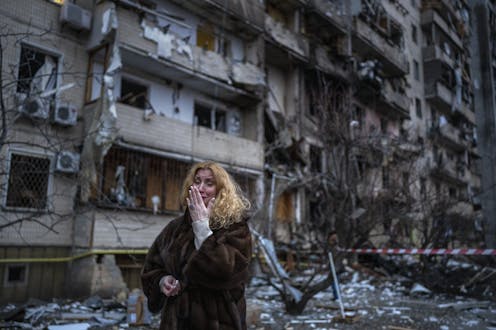
A woman reacts next to her house following a Russian rocket attack Feb. 25 in the Ukranian capital of the city of Kyiv. (AP Photo/Emilio Morenatti)

The invasion of Ukraine by Russia has put the world on edge. The military move by Russian President Vladimir Putin has left many people looking for information on how and why the conflict started. Here are answers to some key questions.

Why did Russia invade Ukraine?

Putin nurses a deep sense of grievance over the loss of Russia’s power and influence since the breakup of the Soviet Union in 1991. Ukraine was formerly part of the Soviet Union but declared its independence in 1991.

Having a prosperous, modern, independent and democratic European state bordering Russia was perceived as posing a threat to Russia’s autocratic regime. If Ukrainians succeeded in fully reforming their country along lines of other western democracies, it would set a bad precedent for former Soviet countries and serve as an example for Russians who want a more democratic country.

Putin also perceives that western democracies are in a weak and particularly vulnerable state — thanks in part due to Russian efforts to create discord and sow divisions in Europe and North America abroad — making this an opportune time to launch a major military adventure.

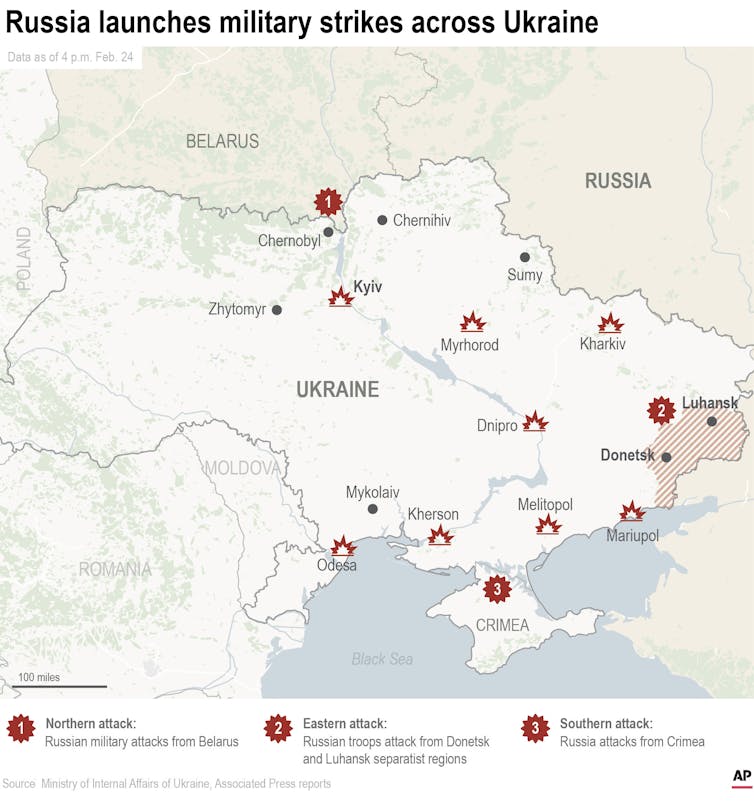
A map of Ukraine
A map from Feb. 24 shows the locations of known Russian military strikes inside Ukraine after Russia announced a military invasion of Ukraine. The Associated Press

Is this a war?

Absolutely, both in the traditional and modern sense. It involves a military assault with air, sea and land forces being deployed in combination with sophisticated cyber attacks and relentless propaganda disseminated by conventional as well as social media.


À lire aussi : Russia is using an onslaught of cyber attacks to undermine Ukraine's defence capabilities


The invasion of Ukraine is just an expansion and escalation of the earlier hybrid war.

It is a war that actually began after Ukraine’s Revolution of Dignity, also known as Euromaidan, in 2013-14. That’s when widespread protests by citizens who wanted a closer relationship with Europe led to the ouster of then-president Viktor Yanukovych, who had asked Russia for help to put down the protests.

Russia responded by illegally annexing Crimea, a section of Ukraine that touches the Russian border on the Black Sea. Russia also supplied military personnel, mercenaries and other resources in support of a small but militant minority of pro-Russian separatists in the largely Russian-speaking cities of Donetsk and Luhansk in Ukraine’s east. More than 14,000 Ukrainians have died since 2014 in fighting in the Donbas.

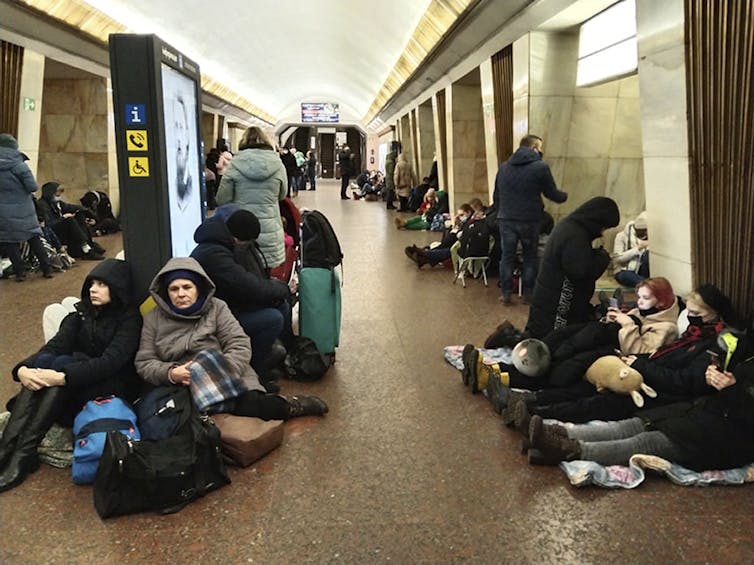
Groups of people are huddled throughout a subway platform.
People sit in the Kyiv subway, using it as a bomb shelter, after Russia launched a full-scale invasion of Ukraine. (AP Photo/Zoya Shu)

Is the invasion tied to Russia’s annexation of Crimea?

Crimea was the only part of Ukraine to have a slight majority of Russians at the time of the breakup of the Soviet Union. Nevertheless, 55 per cent of the peninsula’s population voted for Ukraine’s independence.

Putin mistakenly believed that by successfully annexing Crimea by stealth and orchestrating an armed uprising in the Donbas, he would shake Ukrainian unity and prompt the southern and eastern provinces of the country to break away from the Kyiv government and seek to join the Russian Federation as a new territory to be known as Novorossiya, or “New Russia.”

That failed to happen, so the current invasion is an attempt to achieve a similar end using force on a massive scale.

Is this a renewal of the Cold War?

The term “Cold War” refers to a period after the Second World War when the Soviet Union and Western democracies were aligned against each other in what was essentially an ideological battle between capitalism and communism.

At the height of the Cold War, the United States and the Soviet Union — the two great military powers in the world — engaged in a titanic ideological struggle by means of subversion, propaganda campaigns and proxy wars in the developing world.

Putin and his inner circle are very much products of the Cold War and consider the breakup of the Soviet Union and its Communist Party dictatorship a humiliation. In that sense, the current conflict is a renewal or even a continuation of the Cold War because its goal is to restore Russia as America’s greatest military rival.

Putin is seeking to turn back the clock to a time when the Soviet Union and the West had defined and relatively stable “spheres of influence” in Europe. During that time, there was a military balance achieved through parity in nuclear arsenals. This was also known as the “mutually assured destruction” policy, which suggested that neither the United States or the Soviet Union would go to war because the ensuing nuclear battle would be devastating for both countries and the rest of the world.

How ‘Russian’ is Ukraine?

According to the last full census taken in 2001, 17.3 per cent of the citizens of independent Ukraine identified themselves as ethnic Russians. This was a decline of almost five percentage points from 1989, reflecting in part an out-migration of Russians after the breakup of the Soviet Union.

A protester holds up a sign that says
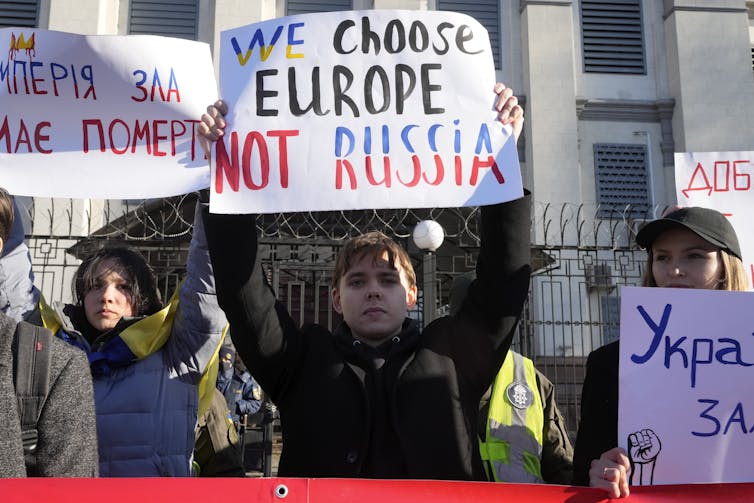
Protesters hold posters in front of the Russian Embassy in Kyiv prior to Russia’s invasion of Ukraine. (AP Photo/Efrem Lukatsky)

There was also a change of identification among Ukrainians who had claimed to be ethnically Russian in the late Soviet period when it was socially and economically advantageous to do so, but reverted to their Ukrainian identity when Ukraine became independent.

Since 2001, the numerical influence of ethnic Russians in Ukraine diminished even further, as a result of the annexation of Crimea and the creation of the two separatist “republics” in the Donbas region of eastern Ukraine. Significantly, even in the Donbas, where ethnic Russians form a substantial minority, they do not outnumber ethnic Ukrainians.

Somewhat confusing the situation is the fact that most Ukrainians are able to speak or easily understand both Russian and Ukrainian. For many Ukrainians, especially in the south and eastern regions of the country, Russian is the first language.

Russian is widely used throughout large parts of Ukraine and it is not unusual for people to easily and even unconsciously move back and forth between languages. Nor is it unusual that many Russian speakers are fervent Ukrainian patriots, just as significant numbers of ethnic Russians are fiercely loyal citizens of Ukraine.

Russians and Russian speakers are not persecuted or discriminated against in Ukraine, even as the Ukrainian state — and increasingly Ukrainian citizens themselves — work to encourage fluency and the use of Ukrainian in daily life after centuries of linguistic and cultural Russification.

Finally, a large number of Ukrainians have ties to Russians and Russia, through mixed marriages, work, professional relations and longstanding friendships.

Sadly, many of these relations have been strained in recent years due to the Putin government’s hostility towards Ukraine and the Russian media’s relentless and baseless attacks on Ukrainians. The situation has resulted in contacts being terminated for political reasons as a result of changing attitudes towards Russia as a whole.

The vast majority of Ukrainians until recently had a positive image of Russia, but a growing number now have a critical or skeptical attitude to Russia. The current conflict is certain to make things worse.

Putin at a desk with the Russian flag in the background
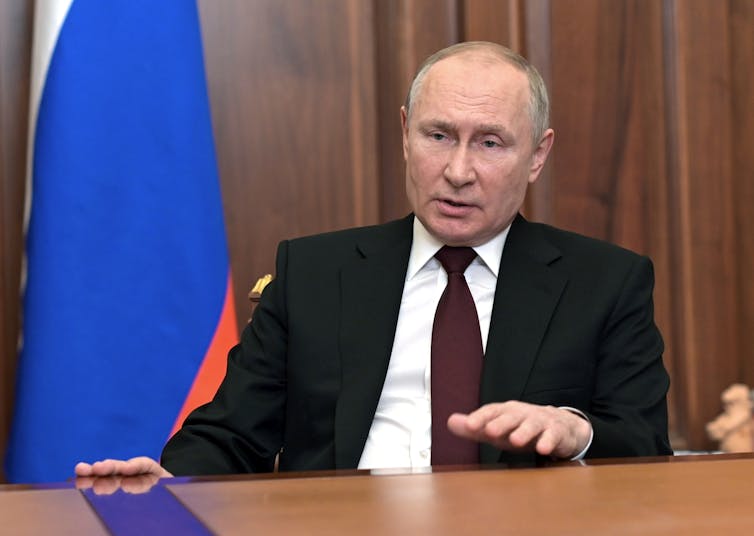
Russian President Vladimir Putin addresses his nation on Feb. 21 in a speech where he recognized the independence of separatist regions in eastern Ukraine. (Alexei Nikolsky/Sputnik/Kremlin Pool Photo via AP)

Why does Putin say Ukraine isn’t a real country?

In a televised speech days before the invasion, Putin suggested that “modern Ukraine was entirely created by Russia.”

Putin has inherited much of his world view from the Russian-chauvinist and Russocentric traditions of the former imperial and Soviet Russian regimes. His Ukrainophobic attitudes can be attributed in part to his being steeped in deeply rooted feelings of both Russian superiority and resentment towards Ukrainians who have consistently asserted their distinct identity.

Russia has for four centuries tried to fully subjugate Ukrainian lands and to subdue the Ukrainian nation by means of laws and policies designed to undermine and suppress the Ukrainian language and culture, while at the same time privileging Russians in Ukraine.

Russia has often resorted to using brutal force to prevent Ukraine from pursuing greater autonomy as well as outright independence, using invasions, ruthlessly crushing rebellions, exiling hundreds of thousands to Siberia and the Far North, starving millions in a genocidal famine, and simultaneously imprisoning and executing legions of gifted artists, intellectuals, spiritual leaders and political activists, who dared to challenge Russian dominance over the country.

As various attempts by Ukrainians to establish an independent state were thwarted by Russia and by other foreign oppressors, Putin has repeatedly sought to disparage Ukraine’s successful declaration of independence in 1991 and is determined to put an end to it.

The Conversation

Jars Balan ne travaille pas, ne conseille pas, ne possède pas de parts, ne reçoit pas de fonds d'une organisation qui pourrait tirer profit de cet article, et n'a déclaré aucune autre affiliation que son organisme de recherche.

25 Feb 17:00

Biden nominates Ketanji Brown Jackson to Supreme Court

by Rob Beschizza

If every Senate Democrat votes for Ketanji Brown Jackson, she'll become the first black woman to serve on the U.S. Supreme Court. Good luck, judge Jackson!

President Biden will deliver remarks this afternoon to announce his decision to nominate Ketanji Brown Jackson to the Supreme Court, the White House said, calling her an "exceptionally qualified and historic nominee."

Read the rest
25 Feb 14:44

What can the West do to help Ukraine? It can start by countering Putin's information strategy

by William Partlett, Associate Professor, The University of Melbourne
People rest in the Kyiv subway, using it as a bomb shelter. AP Photo/Emilio Morenatti

With an all-out war on Ukraine underway, a key question has emerged: what can the West do to help Ukraine?

Sanctions and limited military aid will help. Another key strategy, however, is crucial: to counter Russian president Vladimir Putin’s justifications for the war.

Rebutting Putin’s information strategy will weaken his position in what is likely to be a long, drawn-out conflict.

To do that, we first need to understand what his information strategy is.


Read more: Ukraine invasion: what the west needs to do now – expert view


Putin’s information strategy

In a nearly hour-long speech to the Russian people released on February 21, Putin put forward his case for invasion. This speech has been described by observers as “angry” and “rambling” but it was highly scripted.

In fact, it included two key arguments, which we can expect to see constantly reappearing in Russian messaging in the coming weeks and months.

One is focused primarily on the Russian population. The other has both a domestic and international audience in mind.

The domestic pitch: Russia as victim of Ukrainian neo-Nazis

The first part of Putin’s argument outlined a one-sided narrative of Ukrainian history aimed squarely at appealing to the emotions of a domestic audience by showing Russia’s supposed victimisation at the hands of Ukraine.

The narrative begins with a fantastical version of history claiming Ukraine was “entirely created by Russia, or, to be more precise, by Bolshevik, communist Russia”.

It then turned to the idea that, after the collapse of the Soviet Union, Ukraine “never had stable traditions of real statehood”.

Ukraine’s “pro-West civilisational choice”, Putin argued, then inevitably led to a series of catastrophes: endemic corruption, a “West-supported” neo-Nazi takeover of power in 2014, and systematic discrimination against Russian speakers (including a planned genocide).

He concludes by claiming Ukraine might soon have weapons of mass destruction (including nuclear weapons).

A woman holds her cat in a shelter during Russian shelling, in Mariupol, Ukraine. AP Photo/Evgeniy Maloletka

How to counter this narrative?

This one-sided, neo-imperial interpretation of history is a fantasy that has great emotional appeal to a former mid-level KGB officer like Putin, who experienced at first hand the humiliating end of an empire in 1991 and now sits in the Kremlin.

Putin gets to feel like an agent of history, rebuilding Russia from the terrible humiliation of the 1990s.

But what about 140 million Russian citizens? How does avenging this historical fantasy help them cope with rising prices, a tanking economy, and growing corruption in their country? What future does Putin’s war of vengeance actually offer to coming generations?

Alexey Navalny, the jailed opposition leader, put this well.

He likened Putin’s arguments to your drunk grandfather’s rant at a family gathering – except, this time, your grandfather “holds power in a country with nuclear weapons”.

Russia has all the tools, Navalny argued, for strong economic and cultural development “in the 21st century from oil to educated citizens”. But these are being thrown away on the basis of “war, dirt, lies, and the palace with the golden eagles in Gelendzhik” (a reference to Putin’s alleged palace that features in a notorious YouTube video).

The broader pitch: Russia as victim of the West

The second part of Putin’s speech included geopolitical arguments about the reckless expansion of NATO and the United States into Russia’s sphere of influence.

This included evocative language of a “US-built maritime operations centre in Ochakov”, and dire warnings that it will only take seven to eight minutes for US ballistic missiles to reach Moscow from Kharkiv in Ukraine.

He concluded by arguing the US will always want to dismember and weaken Russia because “they just do not need a big and independent country like Russia around”.

This kind of argument is aimed at both domestic and international audiences. In fact, much of this language could be aimed at Beijing, which sees the US in much the same way.

It also has been a popular discussion in the Western media and academia. Even prominent US academics such as John Mearsheimer have made a version of this argument for years. These academic arguments don’t go as far as Putin’s, and certainly the US would like to contain Russia’s power, but such arguments can be misinterpreted as justifying a war in Ukraine.

Black smoke rises into the air in Ukraine's capital Kyiv.
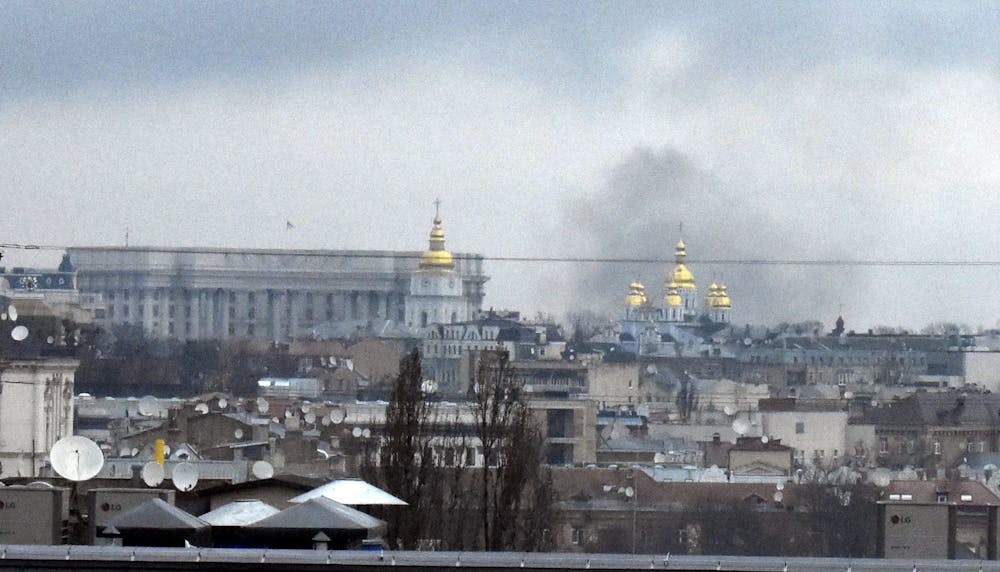
Black smoke rises into the air in Ukraine’s capital Kyiv. Kyodo via AP Images

Countering these arguments requires making a clear distinction between explanation and justification.

An explanation is an argument about why something causes a particular response; it ignores whether the response is good or bad. By contrast, a justification is a claim about why a particular response is the correct one. The West must counter Putin’s justification and show why it was the wrong choice.

In the Ukrainian context, it means being clear that although NATO’s eastward expansion might explain why Putin ordered a full-scale war, it does not justify it.

In fact, a war on Ukraine is the wrong response to NATO expansion because it is likely to encourage the expansion of NATO toward Russia’s borders.

We are already seeing this with growing support for NATO membership in Finland.

Countering Putin’s information strategy

Countering Putin’s information strategy therefore involves making two key arguments.

First, it means pointing out this is not a Russian war on Ukraine. It is war of choice entirely attributable to an increasingly detached clique of leaders led by Putin, who have little interest in solving the everyday problems of millions of Russians.

The protests in many cities across Russia – exceedingly brave in the knowing reality of police brutality – suggest many Russians believe this already.

Second, a successful counter to Putin’s information strategy shows a full-scale invasion of Ukraine will only worsen Russia’s security situation. This war of choice will only isolate Russia from allies and encourage the further expansion of NATO onto its borders.


Read more: Putin is on a personal mission to rewrite Cold War history, making the risks in Ukraine far graver


The Conversation

William Partlett does not work for, consult, own shares in or receive funding from any company or organisation that would benefit from this article, and has disclosed no relevant affiliations beyond their academic appointment.

24 Feb 20:04

Russia invades Ukraine – 5 essential reads from experts

by Naomi Schalit, Senior Editor, Politics + Society, The Conversation US
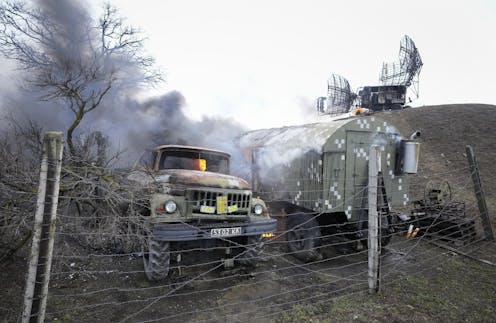
Damaged radar arrays and other equipment is seen at a Ukrainian military facility outside Mariupol, Ukraine, Feb. 24, 2022. AP Photo/Sergei Grits

This is a frightening moment. Russia has invaded Ukraine, and certainly those most frightened right now are the people of Ukraine. But violent aggression – a war mounted by a country with vast military resources against a smaller, weaker country – strikes fear in all of us. As a Washington Post headline writer recently wrote: The Ukraine crisis is “5,000 miles away but hitting home.”

The Conversation U.S. has spent the past couple of months digging into the history and politics of Ukraine and Russia. We’ve looked at their cultures, their religions, their military and technological capacities. We’ve provided you with stories about NATO, about cyberwarfare, the Cold War and the efficacy of sanctions.

Below, you’ll find a selection of stories from our coverage. We hope they will help you understand that today may feel both inevitable – yet inexplicable.

1. The US promised to protect Ukraine

In 1994, Ukraine got a signed commitment from Russia, the U.S. and the U.K. in which the three countries promised to protect the newly independent state’s sovereignty.

“Ukraine as an independent state was born from the 1991 collapse of the Soviet Union,” write scholars Lee Feinstein of Indiana University and Mariana Budjeryn of Harvard. “Its independence came with a complicated Cold War inheritance: the world’s third-largest stockpile of nuclear weapons. Ukraine was one of the three non-Russian former Soviet states, including Belarus and Kazakhstan, that emerged from the Soviet collapse with nuclear weapons on its territory.”

A soldier wearing a helmet peeks out of a tank.
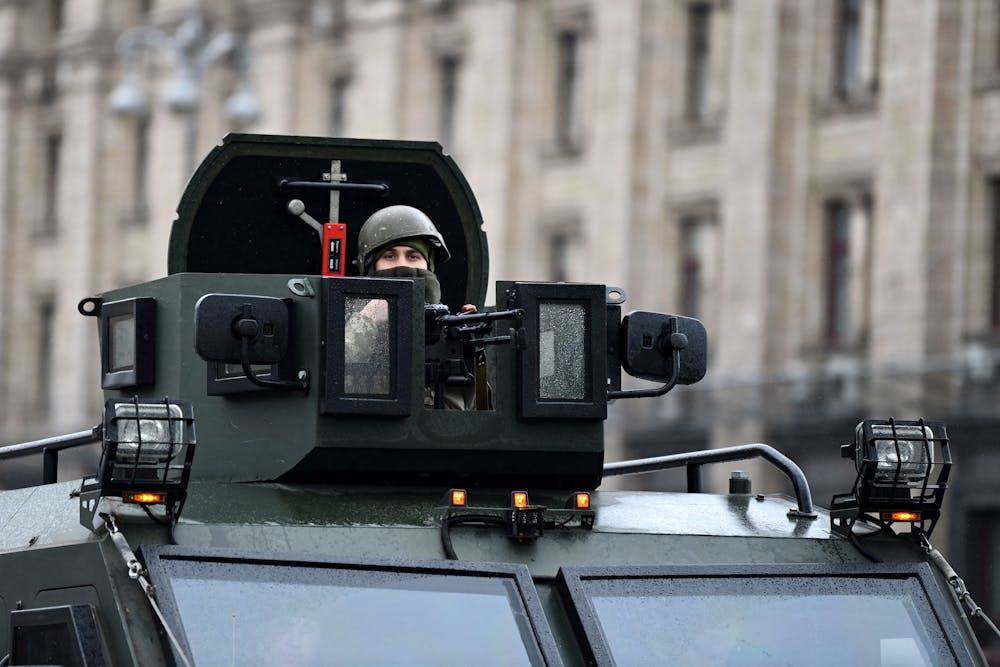
A Ukrainian serviceman rides atop a military vehicle past Independence Square in central Kyiv on Feb. 24, 2022. Daniel Leal/AFP via Getty Images)

The 1994 agreement was signed in return for Ukraine giving up the nuclear weapons within its borders, sending them to Russia for dismantling. But the agreement, not legally binding, was broken by Russia’s illegal annexation of Ukraine’s Crimean Peninsula in 2014. And today’s invasion is yet another example of the weakness of that agreement.


Read more: Ukraine got a signed commitment in 1994 to ensure its security – but can the US and allies stop Putin's aggression now?


2. Clues to how Russia will wage war

During the opening ceremony of the 2008 Beijing Olympics, Russia invaded Georgia, a country on the Black Sea. In 2014, Putin ordered troops to seize Crimea, a peninsula that juts into the Black Sea and housed a Russian naval base.

West Point scholar and career U.S. special forces officer Liam Collins conducted field research on the 2008 and 2014 wars in Georgia and Ukraine.

“From what I have learned, I expect a possible Russian invasion would start with cyberattacks and electronic warfare to sever communications between Ukraine’s capital and the troops. Shortly thereafter, tanks and mechanized infantry formations supported by the Russian air force would cross at multiple points along the nearly 1,200-mile border, assisted by Russian special forces. Russia would seek to bypass large urban areas.”


Read more: Russia's recent invasions of Ukraine and Georgia offer clues to what Putin might be thinking now


3. Spies replaced by smartphones

If you love spy movies, you’ve got an image of how intelligence is gathered: agents on the ground and satellites in the sky.

But you’re way out of date. These days, writes Craig Nazareth, a scholar of intelligence and information operations at the University of Arizona, “massive amounts of valuable information are publicly available, and not all of it is collected by governments. Satellites and drones are much cheaper than they were even a decade ago, allowing private companies to operate them, and nearly everyone has a smartphone with advanced photo and video capabilities.”

This means people around the world may see this invasion unfold in real time. “Commercial imaging companies are posting up-to-the-minute, geographically precise images of Russia’s military forces. Several news agencies are regularly monitoring and reporting on the situation. TikTok users are posting video of Russian military equipment on rail cars allegedly on their way to augment forces already in position around Ukraine. And internet sleuths are tracking this flow of information.”


Read more: Technology is revolutionizing how intelligence is gathered and analyzed – and opening a window onto Russian military activity around Ukraine


A rocket is stuck coming through the ceiling of a damaged apartment with rubble around it.
The body of a rocket stuck in a flat after recent shelling on the northern outskirts of Kharkiv, Ukraine on Feb. 24, 2022. Sergey Bobok/AFP via Getty Images

4. Targeting the US with cyberattacks

As Russia edged closer to war with Ukraine, cybersecurity scholar Justin Pelletier at Rochester Institute of Technology wrote of the growing likelihood of destructive Russian cyberattacks against the U.S.

Pelletier quoted a Department of Homeland Security bulletin from late January that said, “We assess that Russia would consider initiating a cyberattack against the Homeland if it perceived a U.S. or NATO response to a possible Russian invasion of Ukraine threatened its long-term national security.”

And that’s not all. “Americans can probably expect to see Russian-sponsored cyber-activities working in tandem with propaganda campaigns,” writes Pelletier. The aim of such campaigns: to use “social and other online media like a military-grade fog machine that confuses the U.S. population and encourages mistrust in the strength and validity of the U.S. government.”


Read more: Russia could unleash disruptive cyberattacks against the US – but efforts to sow confusion and division are more likely


5. Will war sink Putin’s stock with Russians?

“War ultimately requires an enormous amount of public goodwill and support for a political leader,” writes Arik Burakovsky, a scholar of Russia and public opinion at Tufts University’s Fletcher School.

[Over 140,000 readers rely on The Conversation’s newsletters to understand the world. Sign up today.]

Putin’s support among Russians has been rising as the country massed troops along the Ukrainian border - the public believes that its leaders are defending Russia by standing up to the West. But Burakovsky writes that “the rally ‘round the flag effect of supporting political leadership during an international crisis will likely be short-lived.”

Most Russians, it turns out, don’t want war. The return of body bags from the front could well prove damaging to Putin domestically.


Read more: Putin’s public approval is soaring during the Russia-Ukraine crisis, but it's unlikely to last


Editor’s note: This story is a roundup of articles from The Conversation’s archives.

Want to learn more? Here’s an even bigger collection of our coverage of the crisis in Ukraine.

The Conversation
24 Feb 20:02

Plastic pollution is a global problem – here's how to design an effective treaty to curb it

by Sarah J. Morath, Associate Professor of Legal Writing, Wake Forest University
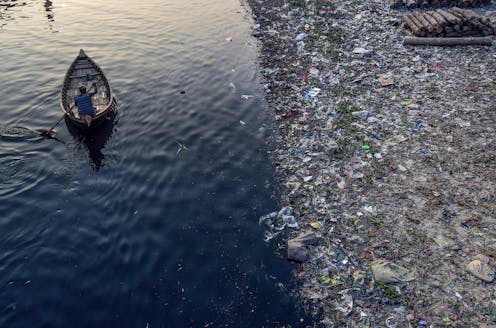
Plastic trash floating on the Buriganga river in Dhaka, Bangladesh, Jan. 21, 2020 Munir Uz Zaman/AFP via Getty Images

Plastic pollution is accumulating worldwide, on land and in the oceans. According to one widely cited estimate, by 2025, 100 million to 250 million metric tons of plastic waste could enter the ocean each year. Another study commissioned by the World Economic Forum projects that without changes to current practices, there may be more plastic by weight than fish in the ocean by 2050.

On Feb. 28, 2022, a meeting of the United Nations Environment Assembly will open in Nairobi, Kenya. At that meeting, representatives from 193 countries are expected to consider a resolution that would launch negotiations on a legally binding global treaty to reduce plastic pollution. “[N]o country can adequately address the various aspects of this challenge alone,” the draft resolution states.

I am a legal scholar and have studied questions related to food, animal welfare and environmental law. My forthcoming book, “Our Plastic Problem and How to Solve It,” explores legislation and policies to address this global “wicked problem.”

I believe plastic pollution requires a local, national and global response. While acting together on a world scale will be challenging, lessons from some other environmental treaties suggest features that can improve an agreement’s chances of success.

A pervasive problem

Scientists have discovered plastic in some of the most remote parts of the globe, from polar ice to Texas-sized gyres in the middle of the ocean. Plastic can enter the environment from a myriad of sources, ranging from laundry wastewater to illegal dumping, waste incineration and accidental spills.

Plastic never completely degrades. Instead, it breaks down into tiny particles and fibers that are easily ingested by fish, birds and land animals. Larger plastic pieces can transport invasive species and accumulate in freshwater and coastal environments, altering ecosystem functions.

A 2021 report by the National Academies of Sciences, Engineering and Medicine on ocean plastic pollution concluded that “[w]ithout modifications to current practices … plastics will continue to accumulate in the environment, particularly the ocean, with adverse consequences for ecosystems and society.”

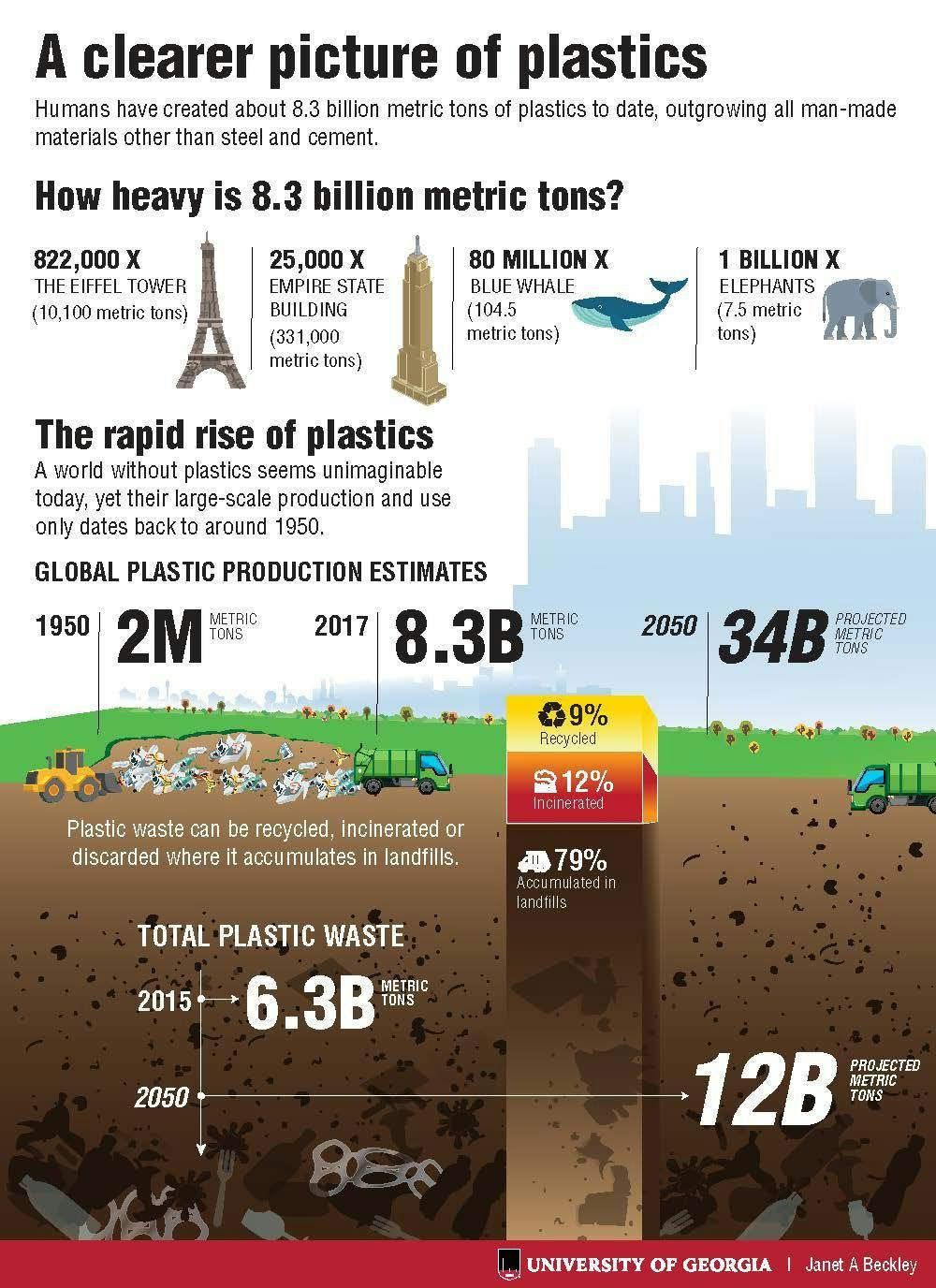
Infographic on quantities of plastic waste
Plastic pollution by the numbers. University of Georgia, CC BY-ND

National policies are not enough

To address this problem, the U.S. has focused on waste management and recycling rather than regulating plastic producers and businesses that use plastic in their products. Failing to address the sources means that policies have limited impact. That’s especially true since the U.S. generates 37.5 million tons of plastic yearly, but only recycles about 9% of it.

Some countries, such as France and Kenya, have banned single-use plastics. Others, like Germany, have mandated plastic bottle deposit schemes. Canada has classified manufactured plastic items as toxic, which gives its national government broad power to regulate them.

In my view, however, these efforts too will fall short if countries producing and using the most plastic do not adopt policies across its life cycle.

Growing consensus

Plastic pollution crosses boundaries, so countries need to work together to curb it. But existing treaties such as the 1989 Basel Convention, which governs international shipment of hazardous wastes, and the 1982 U.N. Convention on the Law of the Sea offer little leverage, for several reasons.

First, these treaties were not designed specifically to address plastic. Second, the largest plastic polluters – notably, the U.S. – have not joined these agreements. Alternative international approaches such as the Ocean Plastics Charter, which encourages governments and global and regional businesses to design plastic products for reuse and recycling, are voluntary and nonbinding.

Fortunately, many world and business leaders now support a uniform, standardized and coordinated global approach to managing and eliminating plastic waste in the form of a treaty.

The American Chemistry Council, an industry trade group, supports an agreement that will accelerate a transition to a more circular economy that promotes waste reduction and reuse by focusing on waste collection, product design and recycling technology. America’s Plastic Makers and the International Council of Chemical Associations have also made public statements supporting a global agreement to establish “a targeted goal to ensure access to proper waste management and eliminate leakage of plastic into the ocean.”

However, these organizations maintain that plastic products can help reduce energy use and greenhouse gas emissions – for example, by enabling automakers to build lighter cars – and are likely to oppose an agreement that limits plastic production. As I see it, this makes leadership and action by governments critical.

The Biden administration also has stated its support for a treaty and is sending Secretary of State Antony Blinken to the Nairobi meeting. On Feb. 11, 2022, the White House released a joint statement with France that expressed support for negotiating “a global agreement to address the full life cycle of plastics and promote a circular economy.”

Early treaty drafts outline two competing approaches. One seeks to reduce plastic throughout its life cycle, from production to disposal, a strategy that would probably include methods such as banning or phasing out single-use plastic products.

A contrasting approach focuses on eliminating plastic waste through innovation and design – for example, by spending more on waste collection, recycling and development of environmentally benign plastics.

Some harmful impacts of plastic waste become more intense as the plastic breaks down into smaller and smaller fragments.

Elements of an effective treaty

Countries have come together to solve environmental problems before. The global community has successfully addressed acid rain, stratospheric ozone depletion and mercury contamination through international treaties. These agreements, which include the U.S., offer strategies for a plastics treaty.

The Montreal Protocol, for example, required countries to report their production and consumption of ozone-depleting substances so that countries could hold each other accountable. As part of the Convention on Long-range Air Pollution, countries agreed to reduce sulfur dioxide emissions, but were allowed to select the method that worked best for them. For the U.S., that involved a system of buying and selling emission allowances that became part of the Clean Air Act Amendments of 1990.

Based on these precedents, I see plastic as a good candidate for an international treaty. Like ozone, sulfur and mercury, plastic comes from specific, identifiable human activities that occur across the globe. Many countries contribute, so the problem is transboundary in nature.

In addition to providing a framework for keeping plastic out of the ocean, I believe a plastic pollution treaty should include reduction targets for both producing less plastic and generating less waste that are specific, measurable and achievable. The treaty should be binding but flexible, allowing countries to meet these targets as they choose.

In my view, negotiations should consider the interests of those who experience the disproportionate impacts of plastic, as well as those who make a living off recycling waste as part of the informal economy. Finally, an international treaty should promote collaboration and sharing of data, resources and best practices.

Since plastic pollution doesn’t stay in one place, all nations will benefit from finding ways to curb it.

[Over 140,000 readers rely on The Conversation’s newsletters to understand the world. Sign up today.]

The Conversation

Sarah J. Morath no recibe salario, ni ejerce labores de consultoría, ni posee acciones, ni recibe financiación de ninguna compañía u organización que pueda obtener beneficio de este artículo, y ha declarado carecer de vínculos relevantes más allá del cargo académico citado.

24 Feb 19:54

A historian corrects misunderstandings about Ukrainian and Russian history

by Ronald Suny, Professor of History and Political Science, University of Michigan
Donetsk residents celebrate recognition of independence of the Donetsk and Lugansk People's Republics by Russia on Feb. 21, 2022. Alexander RyuAlexander Ryumin\TASS via Getty Images

The first casualty of war, says historian Ronald Suny, is not just the truth. Often, he says, “it is what is left out.”

Russian President Vladimir Putin began a full-scale attack on Ukraine on Feb. 24, 2022 and many in the world are now getting a crash course in the complex and intertwined history of those two nations and their peoples. Much of what the public is hearing, though, is jarring to historian Suny’s ears. That’s because some of it is incomplete, some of it is wrong, and some of it is obscured or refracted by the self-interest or the limited perspective of who is telling it. We asked Suny, a professor at the University of Michigan, to respond to a number of popular historical assertions he’s heard recently.

Putin’s view of Russo-Ukrainian history has been widely criticized in the West. What do you think motivates his version of the history?

Putin believes that Ukrainians, Belarusians and Russians are one people, bound by shared history and culture. But he also is aware that they have become separate states recognized in international law and by Russian governments as well. At the same time, he questions the historical formation of the modern Ukrainian state, which he says was the tragic product of decisions by former Russian leaders Vladimir Lenin, Josef Stalin and Nikita Khrushchev. He also questions the sovereignty and distinctive nation-ness of Ukraine. While he promotes national identity in Russia, he denigrates the growing sense of nation-ness in Ukraine.

Russian President Vladimir Putin in a dark suit looking serious as he sits at the head of a very big table.
Russian President Vladimir Putin in a meeting with Azerbaijani President Ilham Aliyev in Moscow on Feb. 22, 2022. Photo by Russian Presidency/Handout/Anadolu Agency via Getty Images

Putin indicates that Ukraine by its very nature ought to be friendly, not hostile, to Russia. But he sees its current government as illegitimate, aggressively nationalist and even fascist. The condition for peaceful relations between states, he repeatedly says, is that they do not threaten the security of other states. Yet, as is clear from the invasion, he presents the greatest threat to Ukraine.

Putin sees Ukraine as an existential threat to Russia, believing that if it enters NATO, offensive weaponry will be placed closer to the Russian border, as already is being done in Romania and Poland.

It’s possible to interpret Putin’s statements about the historical genesis of the Ukrainian state as self-serving history and a way of saying, “We created them, we can take them back.” But I believe he may instead have been making a forceful appeal to Ukraine and the West to recognize the security interests of Russia and provide guarantees that there will be no further moves by NATO toward Russia and into Ukraine. Ironically, his recent actions have driven Ukrainians more tightly into the arms of the West.

The Western position is that the breakaway regions Putin recognized, Donetsk and Luhansk, are integral parts of Ukraine. Russia claims that the Donbass region, which includes these two provinces, is historically and rightfully part of Russia. What does history tell us?

During the Soviet period, these two provinces were officially part of Ukraine. When the USSR disintegrated, the former Soviet republic boundaries became, under international law, the legal boundaries of the post-Soviet states. Russia repeatedly recognized those borders, though reluctantly in the case of Crimea.

But when one raises the fraught question of what lands belong to what people, a whole can of worms is opened. The Donbass has historically been inhabited by Russians, Ukrainians, Jews and others. It was in Soviet and post-Soviet times largely Russian ethnically and linguistically. When in 2014 the Maidan revolution in Kyiv moved the country toward the West and Ukrainian nationalists threatened to limit the use of the Russian language in parts of Ukraine, rebels in the Donbas violently resisted the central government of Ukraine.

A goat stands in front of the rubble of a partially destroyed house.
The War in the Donbas region of eastern Ukraine has caused at least 14,000 deaths. Photo by Martin Trabalik/SOPA Images/LightRocket via Getty Images

After months of fighting between Ukrainian forces and pro-Russian rebel forces in the Donbas in 2014, regular Russian forces moved in from Russia, and a war began that has lasted for the last eight years, with thousands killed and wounded.

Historical claims to land are always contested – think of Israelis and Palestinians, Armenians and Azerbaijanis – and they are countered by claims that the majority living on the land in the present takes precedence over historical claims from the past. Russia can claim Donbass with its own arguments based on ethnicity, but so can Ukrainians with arguments based on historical possession. Such arguments go nowhere and often lead, as can be seen today, to bloody conflict.

Why was Russia’s recognition of Donetsk and Luhansk People’s Republics as independent such a pivotal event in the conflict?

When Putin recognized the Donbass republics as independent states, he seriously escalated the conflict, which turned out to be the prelude to a full-scale invasion of Ukraine. That invasion is a hard, harsh signal to the West that Russia will not back down and accept the further arming of and placing of weaponry in Ukraine, Poland and Romania. The Russian president has now led his country into a dangerous preventive war – a war based on the anxiety that sometime in the future his country will be attacked – the outcome of which is unpredictable.

A New York Times story on Putin’s histories of Ukraine says “The newly created Soviet government under Lenin that drew so much of Mr. Putin’s scorn on Monday would eventually crush the nascent independent Ukrainian state. During the Soviet era, the Ukrainian language was banished from schools and its culture was permitted to exist only as a cartoonish caricature of dancing Cossacks in puffy pants.” Is this history of Soviet repression accurate?

Lenin’s government won the 1918-1921 civil war in Ukraine and drove out foreign interventionists, thus consolidating and recognizing the Ukrainian Soviet Socialist Republic. But Putin is essentially correct that it was Lenin’s policies that promoted Ukrainian statehood within the USSR, within a Soviet empire, officially granting it and other Soviet republics the constitutional right to secede from the Union without conditions. This right, Putin angrily asserts, was a landmine that eventually blew up the Soviet Union.

The Ukrainian language was never banned in the USSR and was taught in schools. In the 1920s, Ukrainian culture was actively promoted by the Leninist nationality policy.

But under Stalin, Ukrainian language and culture began to be powerfully undermined. This started in the early 1930s, when Ukrainian nationalists were repressed, the horrific “Death Famine” killed millions of Ukrainian peasants, and Russification, which is the process of promoting Russian language and culture, accelerated in the republic.

Within the strict bounds of the Soviet system, Ukraine, like many other nationalities in the USSR, became a modern nation, conscious of its history, literate in its language, and even in puffy pants permitted to celebrate its ethnic culture. But the contradictory policies of the Soviets in Ukraine both promoted a Ukrainian cultural nation while restricting its freedoms, sovereignty and expressions of nationalism.

History is both a contested and a subversive social science. It is used and misused by governments and pundits and propagandists. But for historians it is also a way to find out what happened in the past and why. As a search for truth, it becomes subversive of convenient and comfortable but inaccurate views of where we came from and where we might be going.

[Understand key political developments, each week. Subscribe to The Conversation’s politics newsletter.]

The Conversation

Ronald Suny does not work for, consult, own shares in or receive funding from any company or organization that would benefit from this article, and has disclosed no relevant affiliations beyond their academic appointment.

22 Feb 14:32

The State of the Version of Record

by Lisa Janicke Hinchliffe

The "version of record" is an organizing concept in scholarly publishing. It is by referent to that version that others are understood and it is the object of financial models, policies, and recognition and reward systems.

The post The State of the Version of Record appeared first on The Scholarly Kitchen.

22 Feb 14:28

Frau Holle- Grimm Fairy Tale, Legend, and Goddess

by karenanne

, Frau Holle Cover Image- Nickge4, CC BY-SA 4.0, via Wikimedia Commons When it snows in Hessen, people say that Frau Holle shakesg out her feather beds. And thanks to Grimm’s Fairy Tales, we all have an image in our minds of imagine an old woman airing her bedding out the window. But the story […]

The post Frau Holle- Grimm Fairy Tale, Legend, and Goddess appeared first on A German Girl in America.

22 Feb 14:17

Ukraine crisis: Putin recognizes breakaway regions, Biden orders limited sanctions – 5 essential reads

by Naomi Schalit, Senior Editor, Politics + Society, The Conversation US
Russia's President Vladimir Putin, right, signed decrees recognizing the independence of the Donetsk and Lugansk People's Republics on February 21, 2022. Alexei Nikolsky/Russian Presidential Press and Information Office/TASS via Getty Images

Russian President Vladimir Putin, in a provocative address that could be construed as a pretext to war, claimed on Feb. 21, 2022, that all of Ukraine belongs to Russia and formally recognized the independence of two breakaway regions in Ukraine that are largely controlled by Moscow-backed separatists. His government then ordered troops to those regions.

The U.S. and European countries were quick to respond, with the Biden Administration announcing that it “will prohibit new investment, trade, and financing by U.S. persons to, from, or in” the two regions, known since 2014 as the Donetsk People’s Republic and Luhansk People’s Republic. The European Union’s executive branch leader, Ursula von der Leyen, condemned Putin’s action as a “blatant violation of international law.” And NATO chief Jens Stoltenberg said, “I condemn Russia’s decision to extend recognition to the self-proclaimed ‘Donetsk People’s Republic’ and ‘Luhansk People’s Republic.’”

To help readers understand the background of these developments, here are five stories The Conversation has published about the centuries-long bad blood between Ukraine and Russia, manifested in everything from religion to political ideology.

1. Why Putin struggles to accept Ukrainian sovereignty

Putin’s announcement that Russia would recognize the independence of the two Ukrainian territories is a reflection of his view that Ukraine is part of Russia’s once-great empire, which at one time ranged from current-day Poland to the Russian Far East.

The Russian president is not alone in that view. Two scholars, Jacob Lassin of Arizona State University and Emily Channell-Justice of Harvard University, write that “for centuries, within the Russian Empire, Ukraine was known as ‘Malorossiya’ or ‘Little Russia.’ The use of this term strengthened the idea that Ukraine was a junior member of the empire.”

Czarist policies from the 18th century forward, write Lassin and Channel-Justice, “suppressed the use of the Ukrainian language and culture. The intention of these policies was to establish a dominant Russia and later strip Ukraine of an identity as an independent, sovereign nation.”


Read more: Why Putin has such a hard time accepting Ukrainian sovereignty


2. The Soviet era added to resentment toward Russia

Lassin and Channel-Justice also write about how the shared history of Ukraine and Russia has bred ill will among Ukrainians towards Russia.

Among the many historical grievances: The Soviet Union’s collectivist plans helped wreck the once-famed Ukrainian agricultural sector, leading to a widespread famine in 1932 and 1933, known as the Holodomor.

“Research estimates that some 3 million to 4 million Ukrainians died of the famine, around 13% of the population, though the true figure is impossible to establish because of Soviet efforts to hide the famine and its toll,” write Lassin and Channel-Justice. Soviet leader Josef Stalin prevented Ukrainian farmers from traveling in search of food, and severely punished anyone who took produce from collective farms, which made the famine much worse for Ukrainians. “As such, some scholars call the famine a genocide,” they write.


Read more: Famine, subjugation and nuclear fallout: How Soviet experience helped sow resentment among Ukrainians toward Russia


A woman and children, dressed for the cold weather and during the night, leave a piece of fruit at a monument.
People visit a monument to Holodomor victims in Kyiv, Ukraine, in November 2021. Photo by Maxym Marusenko/NurPhoto via Getty Images)

3. Putin’s strategic pipelines

After Putin’s announcement, the Biden Administration said it would impose economic sanctions on those doing business in the eastern Ukraine provinces declared independent by Russia. Biden has also declared that “severe economic consequences” would follow a Russian invasion of Ukraine.

But it may be hard to get allied countries in Europe to go along with such sanctions, writes Ryan Haddad of the University of Maryland. The reason: the dependence of many European countries on Russian energy.

Russia has a long history of using energy to divide the U.S. and Europe, and Haddad writes that “Russian [natural] gas exports to Europe reached a record level in 2021. … Europe got a glimpse of the potential consequences of this dependence in December 2021, when Russia reduced its gas exports to Europe as the crisis involving Ukraine was heating up.”


Read more: How Russia hooked Europe on its oil and gas – and overcame US efforts to prevent energy dependence on Moscow


4. Russia has been at war with Ukraine for years – in cyberspace

As the world awaits the possible start of war between Russia and Ukraine, scholar Maggie Smith at the United States Military Academy at West Point says that Russia has been attacking Ukrainian government operations and infrastructure for years via cyberspace.

“Russia has interfered in Ukrainian elections, targeted its power grid, defaced its government websites and spread disinformation,” writes Smith. “Strategically, Russian cyber operations are designed to undermine the Ukrainian government and private sector organizations. Tactically, the operations aim to influence, scare and subdue the population.”

All of those actions, writes Smith, “destabilize Ukraine’s political environment.”


Read more: Russia has been at war with Ukraine for years – in cyberspace


Priests in long ornate robes bend in worship.
Ukrainian Orthodox Church priests during a 2019 prayer service in Kyiv. Photo by Maxym Marusenko/NurPhoto via Getty Images

5. The conflict is also religious

To understand the present, it helps to understand the past. The tensions between Russia and Ukraine are not just political in nature. They’re also religious, writes Arizona State University scholar J. Eugene Clay.

“Two different Orthodox churches claim to be the one true Ukrainian Orthodox Church for the Ukrainian people,” writes Clay. “The two churches offer strikingly different visions of the relationship between the Ukrainian and the Russian peoples.”

The Ukrainian Orthodox Church – Moscow Patriarchate stresses “the powerful bonds that link the peoples of Ukraine and Russia.” The Orthodox Church of Ukraine, on the other hand, was formally recognized in January 2019 and is “the culmination of decades of efforts by Ukrainian believers who wanted their own national church, free from any foreign religious authority.”

The two churches, writes Clay, reflect a fundamental question: Are Ukrainians and Russians one people or two separate nations?


Read more: Why church conflict in Ukraine reflects historic Russian-Ukrainian tensions


[Understand key political developments, each week. Subscribe to The Conversation’s politics newsletter.]

The Conversation
22 Feb 14:10

How to care for your sore hands and wrists when your life is online

by Dave Parsons, Lecturer, Curtin University
Shutterstock

We are back to pounding keyboards and swiping phones for another year. But with so much of today’s learning, working and socialising happening via devices, hand and wrist injuries are both common and hard to recover from.

Cumulative trauma to the upper limb from prolonged computer use is a significant problem. Technological advances – online meetings anyone? – and the reduced need to leave our desks for inefficient tasks such as photocopying, sending and receiving mail, and chatting with work colleagues (if now working from home) are causing people to remain in static postures for longer periods.

Musculoskeletal disorders of the upper limb are a common phenomenon and are the single largest category of work-related illness, with some studies reporting they make up to 20–60% of cases. Musculoskeletal disorders are responsible for more work-related absenteeism than any other type of disease.

Further, evidence suggests high levels of smartphone use without regular breaks can result in pain and discomfort in the upper limb. High levels of device use can result in neck, shoulder, wrist and hand problems.

But anyone who has suffered from hand or wrist pain will tell you how hard it is to rest and treat injuries when so much of everyday life – from domestic chores to technology use – is done manually. So what to do?

What causes it

The risk of these injuries from technology use is due to the repetitive motions of the thumb in often awkward, static (or still) postures of the wrist and hand. The main other factor in developing symptoms includes remaining in awkward static postures for extended periods of time.

Common upper limb disorders resulting from high levels of keyboard, tablet and smartphone use are nerve compression disorders (carpal tunnel syndrome) and tendon inflammation (tenosynovitis, lateral epicondylalgia or “tennis elbow”). Symptoms from these conditions include numbness and tingling in your hand and forearm, weakness in gripping objects in your hand, or local tenderness at the elbow, wrist and/or hand.

When structures of the hand are repetitively stressed for extended periods, the body doesn’t have a chance to rest and heal. What starts out as a minor irritation can soon exacerbate into a significant problem for everyday living.

person sits at desk with sore wrist
Even short breaks can help prevent strain. Shutterstock

Read more: What younger people can learn from older people about using technology


How to prevent it

The single best piece of advice I can provide is to ensure you have adequate breaks away from your smartphone, tablet or computer. Listen to your body, and ensure you change postures or stop the task if you begin to feel some pain or discomfort.

Microbreaks – as short as 30–60 seconds – can be effective, especially in jobs that require an extended period of sitting in front of a computer hammering away at a keyboard. Remember, it is the repetitive movements in static postures that you are trying to avoid. These microbreaks are especially important for prolonged smartphone or tablet use.

These breaks should occur every 20 minutes and involve changing the posture through some dynamic movements. This could include standing (if you were sitting), moving your joints through their full range of motion, or even better, getting away from your workstation and moving around.

Build these breaks into your work routine through calendar invites or other software programs that ping you an alert at the desired break time.

Alternatively, schedule tasks close together that requires different postures. For example, you could schedule important phone calls or face meetings between more extended periods of keyboard work.

Good postures and workstation ergonomics can make a real difference in reducing and managing these aches and pains. Ensure your computer is well set up on a desk set at the appropriate height.

Your wrists should be slightly extended backwards (towards the ceiling) when resting on the keyboard. All other equipment on your desk that you commonly use should be within easy reach.

You should have a relaxed posture through your shoulders, neck and arms when sitting for extended periods. Specialised ergonomic equipment such as keyboards and mice may be beneficial, as may voice-to-text software.


Read more: How texting turns you into a walking disaster


When the damage is done

If the pain or discomfort continues to worsen or impacts your engagement in your daily activities, it is important to seek professional health advice before the condition significantly progresses.

An accredited hand therapist is an excellent place to start. These health professionals are registered occupational therapists or physiotherapists who have extensive experience and knowledge of the complex anatomy of the hand and wrist.

They will be able to provide individual advice and treatment to help you manage your condition. Treatments could include tailored ergonomic advice, the prescription of specific exercises, hot or ice packs, and custom orthotic devices (splints). In more serious cases, you may be referred to a hand surgeon, who may provide medication, cortisone injections or surgery to address the underlying causes of symptoms.

Given the rapid changes we’ve seen in our how humans interact with their world, research is helping us better understand how to manage the adverse effects of our exploding technology use. While we know a little, there is still much work to be done.

The Conversation

Dave Parsons is an Accredited Hand Therapist and a Board Member of the Australian Hand Therapy Association. He receives some funding from the Australian Hand Therapy Associated for his research.

21 Feb 19:48

A Jewish lawmaker, one of Wyoming's few elected Democrats, convinces a Republican supermajority to reject a ban on Critical Race Theory

by Jason Weisberger

Wyoming state representative Andy Schwartz explained to his colleague in the Wyoming legislature that presenting neutral both-side-ism around astoundingly important events in history is worthless. To truly understand the horrific nature of these actions one must find them uncomfortable.

Schwartz's speech broke the Republican supermajority and they could not achieve a 2/3rds vote to pass their ban on Critical Race Theory. — Read the rest

21 Feb 17:58

Do we really ‘lose our filter’ as we age?

by Stephanie Wong, Lecturer/Research Fellow in Psychology, Flinders University
Eduardo Barrios/Unsplash, CC BY-SA

Many of us will have experienced some unexpected honesty from the older people in our lives. Whether it’s grandma telling you your outfit is unflattering or grandpa saying he doesn’t like the meal you’ve prepared, we often explain it away by saying “Oh, don’t mind grandpa, he’s just lost his filter”.

But do we really have a “filter”, and do we lose it as we get older?

What do we mean when we say ‘filter’?

When someone has no “filter”, it means they say things without thinking about their audience. They may blurt out something rude, inappropriate, or unkind, without considering the likely consequences.

‘Darling, these taste like crap.’ Sometimes Granny is a bit too honest. Andres Molina/Unsplash

“Filters” are an important part of our everyday social interactions. A brief Monday morning chat with your boss is more complex than it may seem. For example, you might stop yourself from telling them they smell awful after their morning bike ride into the office and should’ve showered before your meeting. You might consider telling them about the fungal infection you discovered on your toenail over the weekend but decide against it. Of course, what you do or do not say also depends on how well you know them and what’s considered socially acceptable in your workplace.

Your “filter” relies on cognitive processes such as inhibitory control, which stops you from saying the first thing that pops into your mind. It also relies on social cognition, which refers to the ability to understand and predict other people’s behaviours, thoughts, and intentions. This helps us to recognise what behaviour is appropriate in a particular social setting and to adapt our behaviour based on this.

The prefrontal cortex, which is located within the frontal lobes of our brains, acts as our “filter”, helping us say and do things in a socially appropriate way. When this part of the brain isn’t functioning properly, we might act as though we’ve lost our “filter”.


Read more: Five common myths about the ageing brain and body


What happens to our ‘filter’ as we age?

As we get older, our brains start to shrink. This is a normal part of the ageing process known as brain atrophy. It affects how well our brain cells can communicate with one another. Importantly, brain atrophy doesn’t happen to all areas of the brain at once. It is particularly noticeable in the frontal lobes.

The area of the brain that controls our social cognition shrinks as we age. Tim Kilby/Unsplash, CC BY

Researchers have linked age-related shrinking in the frontal lobes with declines in inhibitory control and social cognition. Studies have also found older adults respond differently to socially awkward situations than younger adults.

For example, older adults have more difficulty recognising when someone’s said something embarrassing or tactless, and show poorer understanding of sarcasm.

So as we get older, normal ageing processes in our brains may make it much easier for things to slip out through our “filters”.


Read more: What's happening in our bodies as we age?


What if it’s more than just a few slip-ups?

In some rare cases, losing your “filter” can be a sign of something more serious, such as damage to the frontal lobes due to a brain injury or stroke, or a neurodegenerative condition such as frontotemporal dementia.

People with frontotemporal dementia present with striking changes in their personality and social behaviour. This could involve losing their normal inhibitions, disregarding social conventions and other socially inappropriate or embarrassing behaviour.

However, these changes are completely out of character and are typically accompanied by other symptoms such as rigidity, loss of empathy, apathy, difficulties with reasoning and judgement, overeating or unusual food preferences and declines in self-care and personal hygiene.


Read more: Explainer: how is frontotemporal dementia different and what are the warning signs?


What other things could be at play?

Aside from changes in the brain that impact inhibitory control and social cognition, it could simply be that as we get older, we care less about what others think.

Compared to younger adults, older adults are less self-conscious, reporting fewer experiences of emotions such as shame, guilt, and embarrassment. They also have higher overall levels of happiness and life satisfaction.

Man in top hat
Older people are also just more comfortable in their own skin. Freddy Kearney/Unsplash, CC BY

Perhaps we learn to let go of our “filters” and embrace the social awkwardness as we get older. Perhaps grandpa really didn’t like your cooking, and feels secure enough to tell you.

So, what does this mean for those of us who seem to be losing our “filter”?

Based on what we know about the brain and ageing, blurting out a remark without thinking isn’t necessarily something to be alarmed about. And if you’re on the receiving end, try not to take it too personally. If these remarks seem out of character or extreme, however, consider raising this with other family members or a doctor.

The Conversation

Stephanie Wong receives funding from the National Health and Medical Research Council.

Hannah Keage does not work for, consult, own shares in or receive funding from any company or organisation that would benefit from this article, and has disclosed no relevant affiliations beyond their academic appointment.

21 Feb 17:49

Tens of thousands of Afghan evacuees made it to the US – here's how the resettlement process works

by Kathryn Libal, Director, Human Rights Institute, Associate Prof. Social Work and Human Rights, University of Connecticut
Mohammad Attaie and his wife, Deena, newly arrived from Afghanistan, get assistance from medical translator Jahannaz Afshar at the Valley Health Center TB/Refugee Program in San Jose, Calif., on Dec. 9, 2021. AP Photo/Eric Risberg

As of February 2022, some 65,000 Afghans evacuated during the American withdrawal from Afghanistan have settled in U.S. communities. Several hundred more remain on military bases in the U.S., while nearly 2,800 are still waiting on U.S. bases abroad.

The Biden administration, which aims to have all Afghan evacuees off domestic military bases by the end of February 2022, has started the final push to place refugees with host communities.

Operation Allies Welcome, the official name for the American government’s Afghan assistance program, is the most significant U.S. resettlement effort since 1975, when more than 140,000 people from Southeast Asia were resettled following the U.S. military withdrawal from Vietnam.

But the media spotlight has moved on, and most Americans have limited understanding of what it means for Afghans to transition to life in the United States. Our work as educators and researchers is focused on migration, human rights and social work. We have studied American volunteers’ role in helping refugees and see public support as crucial for Afghans’ continued adjustment to the U.S.

System under strain

Evacuees brought to U.S. military bases go through rigorous security vetting and health checks. Once these are complete, evacuees await assignment to private groups that will assist in securing housing, work opportunities, education and health care.

Nine domestic agencies partner with the U.S. government to resettle refugees. Six of them are faith-based, reflecting a long history of religious groups’ involvement in immigration policies. These include Jewish, Catholic and Protestant groups, but all offer help regardless of refugees’ religion.

These resettlement agencies are given a one-time payment of US$2,275 in federal funding for each refugee they support. Of this assistance, $1,225 may be used for housing and other basic necessities. The remainder of the funds covers administrative costs.

Two men shake hands in the sparsely furnished living room of a home.
Abdul, right, who left Kabul with his family, shakes hands with Jesse Robbins. Robbins and his wife, Thuy Do, have offered their vacant rental home to house Afghans. AP Photo/Ted S. Warren

The Trump administration severely limited refugee resettlement, dropping admissions to a record low of 15,000 in 2021, compared with an average of 95,000 per year under previous administrations. Our current research examines the extraordinary strain this decrease put on the resettlement system.

Innovations in aid

To evacuate Afghans quickly, the State Department launched an initiative in September 2021 called the Afghan Placement and Assistance Program, which allows Afghans into the U.S. as parolees after security checks. Humanitarian parole can be granted for “urgent humanitarian reasons” or “significant public benefit.”

Those paroled between July 31, 2021, and Sept. 30, 2022, are eligible for refugee assistance and other public benefits until March 31, 2023, or the end of their parole term. Afghan parolees who leave military bases before being assigned to a resettlement organization or placed with a community sponsorship group have 90 days to request aid through the program.

[Like what you’ve read? Want more? Sign up for The Conversation’s daily newsletter.]

Yet the capacity of these organizations is not adequate to meet the large-scale rapid resettlement needs, as agencies struggle to build back from the previous administration’s cuts. The housing shortage for rapid resettlement is so profound that resettlement agencies and some states have partnered with Airbnb to provide emergency housing, following the company’s commitment in August 2021 to support 20,000 Afghan evacuees worldwide.

For this reason, the Biden administration created a parallel program to allow community organizations or groups of five or more individual volunteers to directly sponsor Afghans. These sponsors, many of whom are part of a new initiative called Sponsor Circles, must raise $2,275 on their own for each evacuee and commit to providing at least 90 days’ support, such as helping them secure housing and employment and building connections in their new community.

As of late January 2022 approximately 30 Sponsor Circles had reportedly received approvals and another 100 were being certified.

Several seated young children play on a bare floor surrounded by metal frames draped in white tarps.
A group of children plays inside one of the large tents at an Afghan refugee camp on Joint Base McGuire-Dix-Lakehurst in New Jersey on Sept. 27, 2021. AP Photo/Andrew Harnik

Here – for now

While many Americans think of the arriving Afghans as “refugees,” most of these newcomers have a more tenuous legal status.

The Department of Homeland Security reports that 70,192 have entered the country under humanitarian parole, which allows residence in the U.S. for two years without a visa.

Nearly 40,000 Afghan evacuees who entered under humanitarian parole have applied for refugee status or for special immigrant visas, which are for people who worked with the U.S. government or armed forces in Afghanistan. Another 36,433 Afghans have no clear pathway to permanent legal status, because of many factors such as not having worked at least one year for the U.S. government.

U.S. agencies brought in Afghans under humanitarian parole, rather than standard refugee procedures, because of the urgency of the evacuation. But the consequences may be profound.

Some parolees had to wait weeks or months for the government or social service organizations to file paperwork granting them the right to work. Another challenge for parolees is securing family members’ admission to the U.S., which requires a high level of proof of threat to that particular individual.

Many Afghan parolees should eventually qualify for asylum, but applying is a lengthy and complex process that generally requires significant legal assistance. More than 400,000 asylum cases are pending in the U.S. asylum system.

Refugee resettlement organizations and voluntary groups that could normally help with filing asylum claims are already stretched thin. Evacuees’ advocates have called for approval of the Afghan Adjustment Act, which would allow Afghans to apply for lawful permanent resident status without waiting for the asylum system to rule on their cases or processing of special immigrant visa applications.

Governors, businesses, celebrities, universities, military members, veterans and individuals across the U.S. have stepped in to support recent Afghan evacuees – many in locales with no history of resettling refugees. The responsibilities of resettlement, however, extend beyond helping evacuees in their first few weeks, to helping them secure a stable future.

The Conversation

The authors do not work for, consult, own shares in or receive funding from any company or organisation that would benefit from this article, and have disclosed no relevant affiliations beyond their academic appointment.
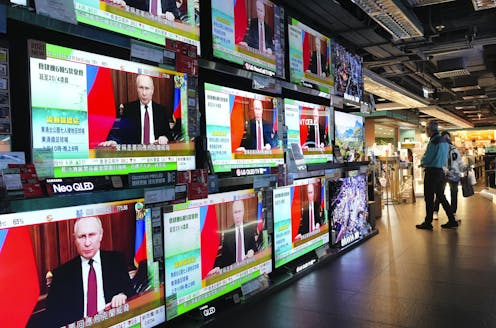
21 Feb 17:42

Remaking history: in hand-making 400-year-old corset designs, I was able to really understand how they impacted women

by Sarah Bendall, Research Fellow, Gender and Women's History Research Centre, Institute for Humanities and Social Sciences, Australian Catholic University
Attributed to Pieter Cornelisz van Rijck, Kitchen interior with the parable of the rich man and the poor Lazarus, c. 1620-20. Rijksmuseum Amsterdam

In this new series, Remaking History, academics take a look at the ways they are recreating historical practices, and how this impacts their research today.


Although I have been sewing as a hobby for many years, making and wearing historical clothing was not something I imagined myself doing when I first began researching the history of corsets and hooped skirts.

But many years on – and many corsets later – the experimental process of reconstructing 400-year-old garments has taught me many things about historical making practices, women’s experiences and about not believing everything you read.

In my research, I look at women’s clothing from the 16th and 17th centuries. There are very few sources from this time where women themselves describe what it was like to wear “bodies”, “stays” and “farthingales” – the names given to corsets and hooped skirts at the time.

The philosopher Michel de Montaigne portrayed these garments as torture devices women used to become slender, reflecting their inherent vanity.

Other men blamed women for deforming their own bodies and that of their children, for causing infertility or miscarriage, and even for hiding sexually transmitted infections.

Male writers often criticised women for wearing corsets, as demonstrated here by John Bulwer in Anthropometamorphosis (1653). Wellcome Library London

Yet, in the face of these criticisms, corsets and hooped skirts went from being elite garments worn by a few aristocrats in royal courts to common among many different classes of women in Europe. During the 17th and 18th centuries, women led the way in purchasing these garments and in dictating to their tailors what they wanted and why.

Despite the demonstrated popularity of this clothing among women, many myths persist. Without physical or historical proof to interrogate whether these garments were as restrictive or painful as they were made out to be, such myths are hard to overcome.

This is where reconstruction comes in.


Read more: Remaking history: how recreating early daguerreotype photographs gave us a window to the past


Reconstructing early corsets

My work follows other approaches that have reconstructed surviving historical clothing.

I focus on making my corsets to the patterns and dimensions of surviving garments.

Two hands sewing
The author’s reconstructions were all hand made. Sarah A. Bendall, Author provided

All my corsets (except one) were completely hand sewn using techniques and stitches visible in the originals.

For many of the reconstructions I kept an online diary of the making process, noting both my successes and failures as I attempted to replicate the work of master craftsmen with many more years of experience than myself.

Reconstructions of historical garments can never be exact replicas: it is always an act of interpretation. Informed compromises between modern and historical materials are necessary.

All my reconstructions are made from natural fibre fabrics that were available in the past such as silk and linen, but differences in modern fabric manufacturing make it impossible to precisely replicate historical fabrics.

Historical corsets often got their shape and stiffness from whale baleen. Commercial whaling was banned in 1986 and so I used modern synthetics specifically designed to mimic the properties of baleen.

Despite these challenges, making historical corsets taught me to think like a tailor, to understand why specific materials or techniques were used and to assess the artisanal making knowledge that we have lost.

Lessons in the wearing

Once the corsets were made, it was time for them to be worn. I both wore them myself, and observed other women in them.

A woman in a corset
By wearing corsets, the author could get a better understanding of how women felt hundreds of years ago. Sarah A. Bendall, Author provided

I instructed models to sit down, bend over and reach up to test the ways these garments limited or impeded movement. I found corsets spanned a wide spectrum of comfort and restrictiveness depending on the design of the garment: the cut, the length and how much it was boned.

Early modern corsets could be uncomfortable if not fitted to individual measurements or made correctly. This shows the importance of well-tailored garment in times before modern off-the-rack standardised clothing made from stretch fabrics.

Most 17th-century garments are front lacing, giving women control over how they wore the garment at different times of the day. A woman could wear it loose or tight laced. She may also have worn it every day or only for formal occasions.

A woman in a corset
The most restrictive feature of 17th century corsets were their off-shoulder straps that limit arm movement. Sarah A. Bendall, Author provided

My experiments also showed the slenderising effects of these early corsets observed by Montaigne were largely due to the optical illusion of their cylindrical shape. My corsets didn’t reduce body measurements by much. I found the most restrictive feature of 17th century corsets to be their off-shoulder straps that limit arm movement, but this is not something unique to corsets.

One of my reconstructions was a maternity corset from the late 17th century. Placing it on a model with a simulated pregnancy bump showed how the design accommodated pregnancy: it supported the breasts and back, while not restricting the abdomen. This is far from the picture painted by sensationalist male moralists that warned of the dangers to pregnancy.

A pregnant woman in a corset.
Corsets were even worn by pregnant women. Sarah A. Bendall, Author provided

We may never know precisely how a 16th or 17th-century woman felt when she wore a corset, nor exactly recapture her bodily experiences. However, reconstructions can help us to assess how much written sources do or do not reflect the lived experiences of historical women – and go one step further in showing how many myths about early corsets written by men are exaggerations.


Read more: Long before Billie Eilish, women wore corsets for form, function and support


The Conversation

Sarah Bendall receives funding from the Australian Research Council and Pasold Research Fund.

16 Feb 20:42

Art Spiegelman responds to the MAUS banning controversy

by Thom Dunn

Over at New York Magazine, Abraham Riesman has a delightful interview with Art Spiegelman, the acclaimed writer/artist of Maus, which has recently been the focus of some book-banning ire. In addition to being a fascinating microcosmic profile of the artist himself — Riesman has a knack for painting wonderful prose portraits of his subjects, as evidenced in his recent book on Stan Lee — it's particularly interesting seeing how the 73-year-old has responded to this new burst of internet-fueled publicity:

"I must have answered at least 50 emails in the past week, but not many more, because it's like 'The Sorcerer's Apprentice': You answer one and three more come in," he says.

Read the rest
16 Feb 19:18

The Worst Timeline: A Printer Company Is Putting DRM in Paper Now

by Cory Doctorow

Update 2/16/22: This article first appeared with a typo as well as a computation error that listed the manufacturing cost of printer ink at $250/oz; the correct figure is $170/gal. We regret the error and thank the eagle-eyed readers who spotted it and pointed it out on Twitter. Your service is appreciated and we salute you.

Are you well organized? Do you have a garage full of well-labeled bins or a pantry full of neatly labeled jars? Do you ship a lot of stuff and print labels? If so, you probably own and cherish your label maker. What’s not to like? 

Well, if you’re a Dymo label maker owner, there’s a new scam that might convince you to switch brands - if it doesn’t scare you off labels altogether, that is.

For a certain kind of corporate executive, the printer business is a source of endless temptation. After all, printers go through lots of “consumables.” That means that printer manufacturers don’t just get to sell you a printer, they also have a chance to sell you ink, forever.

There’s nothing wrong with this business. In theory. 

In practice, though, printer companies are greedy. They’re not content to be one of many companies offering ink in a competitive market. Rather, they want to be your only ink supplier, and boy oh boy do they want to charge you a lot of money for it - up to $12,000 per gallon!

No one would voluntarily pay $12,000/gal for ink that costs about $170/gal to manufacture, so the printer companies roll out an endlessly inventive bag of dirty tricks to force you to buy their $12,000/gal product, and keep you buying it, forever.

Now, printers have two consumables, ink and paper, but all the manufacturers’ effort is focused on the ink side. That’s because ink comes in cartridges, and printer companies can add cheap chips to their cartridges; the printer can send these chips to cryptographic challenges that require secret keys held only by the manufacturer. Other manufacturers don’t have the keys, so they can’t make a cartridge that the printer will recognize and accept. 

This strategy is lucrative but it has its limits: it falls to pieces the minute there’s a supply chain problem that means printer manufacturers can’t get chips anymore!

The pandemic was hard on a lot of companies, but it was a boom-time for the delivery industry and the firms that supply it. The desktop label maker sector thrived during the lockdown, as hundreds of millions of people switched from shopping in person to buying things online - things that were delivered in boxes bearing barcode labels printed on a desktop label-printer.

Label printers are thermal printers, which means that they don’t use ink: instead, the “print-head” consists of tiny electrical elements that heat up special, thermoreactive paper that turns black when it is heated. 

Lacking ink, the label-printing market has been spared the kinds of shenanigans that plague the world of inkjets…until now.

Dymo is a household name: founded in 1958 with a breakthrough gadget that embossed capital letters onto rows of adhesive-backed tape, the company is now a division of Newell Brands, a giant, many-headed corporate hydra whose other companies include Rubbermaid, Mr. Coffee, Oster, Crock-Pot, Yankee Candle, Coleman, Elmer’s, Liquid Paper, Parker, Paper Mate, Sharpie, Waterman, X-Acto and many, many more.

For all that Dymo is part of this corporate empire, it has not heretofore been able to avail itself of the tricks that created $12,000/gal printer ink. That’s because the only consumable that Dymo owners need is labels, and labels are a standardized product, with many, many vendors producing them and selling them for use with many, many different brands of label maker. 

Some people might be willing to pay a little extra for Dymo’s own label-rolls, but if not, there are plenty of other options: not just cheaper labels, but labels designed for other uses, with different adhesives and finishes. 

Those people are going to be disappointed. Dymo’s latest generation of desktop label printers use RFID chips to authenticate the labels that Dymo’s customers put in their printers. This lets Dymo’s products distinguish between Dymo’s official labels and third-party consumables. That way, the printers can force their owners to conduct themselves in the ways that serve the interests of Dymo’s corporate owners - even when that is to the owners’ own detriment.

There is no (good) reason for this. In its sales literature, Dymo extols the virtues of chipping its label-rolls: auto-sensing of label types and auto-counting of remaining labels - and they boast that “[t]he direct thermal printer replaces the need to buy costly ink or toner.” 

But what they don’t say is that this printer forces you to buy Dymo’s own labels, which are substantially more expensive than many of its competitors’ labels (Dymo’s labels retail for about $10-$15  per roll; alternatives, about $2-$5 per roll). The reason they don’t say this is obvious: no one wants this

If a Dymo owner wants to buy Dymo labels, they will buy them. The only reason to add this anti-feature is to force Dymo owners who don’t want to buy Dymo labels to buy them anyway. All the advanced features that Dymo touts for its RFID-locked labels could be attained without the lock-in.  

For years, Dymo owners have assumed that they can use any labels with their printers. While some third party retailers  have added warnings about this label lock-in, the biggest retailers haven’t followed suit - instead, their customers are warning each other about the bait-and-switch. 

From the online reaction, it’s clear that Dymo’s customers are pissed. Some are congregating in technical discussions of how the measure might be defeated, but so far, no vendor has stepped in to offer a jailbreaking tool to let you modify your label maker to serve your interests, not Dymo’s shareholders.

There’s a good reason for that: U.S. Copyright law gives Dymo a powerful tool to intimidate commercial rivals who help us escape from label-jail. Section 1201 of the Digital Millennium Copyright Act exposes those rivals to $500,000 in fines and a five-year prison sentence for trafficking in tools that bypass an “access control” for a copyrighted work, like the firmware on a Dymo printer. While it’s not clear that a judge would rule in Dymo’s favor, very few commercial operators are willing to take the risk when the stakes are that high. That’s why we’re suing to overturn Section 1201.

The law moves slowly, and bad ideas can travel around an industry like a virus. So far, Dymo’s alone in putting DRM in paper. Its rivals, like Zebra and MFLabel, still make printers that let you decide whose labels you want to buy.

These printers aren’t cheap - $110-$120 - but they’re also not so expensive that they constitute the majority of the operating costs of owning one. Over the life of one of these printers, you can expect to spend far more on labels than on your printer.

That means that the smart move for a Dymo 550 and (Dymo 5XL) owner is to throw it away and buy a competing model from a competitor. Even after you eat the cost of your Dymo product, you’ll still save money in the long run.

Dymo is trying something unprecedented here. DRM in paper is such an abysmal, abusive idea that we should all recoil from it. Dymo’s betting that people who get suckered into buying its latest models will shrug and take it. But we don’t have to do that. Dymo has lots of competition, and it is vulnerable to bad publicity. This is one of those rare moments where a terrible plan is being hatched and we have the chance to stake it through the heart before it can reproduce.

16 Feb 12:11

'Don’t say gay’ bill: Florida should learn from the harmful legacy of Britain's section 28

by Catherine Lee, Professor of Inclusive Education, Deputy Dean for Education, Anglia Ruskin University
BearFotos / Shutterstock

Florida lawmakers have advanced a bill that would bar teachers from discussing sexual orientation or gender identity in the classroom. The parental rights in education bill, labelled the “don’t say gay” bill by critics, would also prevent teachers and school counsellors from giving support to LGBTQ+ students, without first getting permission from their parents.

Florida follows other states with similar statutes restricting classroom discussion of same-sex relationships or mandating that sex education teaches “honor and respect for monogamous heterosexual marriage”. Florida’s bill also allows parents to sue school districts for damages if they believe a teacher has broken the law.

This bill has strong echoes of section 28, the 1988 law that prevented local authorities in the UK from promoting homosexuality. As state schools were at the time led by local authorities, section 28 prevented schools from teaching the acceptability of homosexuality as a “pretended family relationship”.

Teachers believed they would lose their jobs if they gave advice and support to LGBTQ+ students, or challenged homophobic language and bullying. LGBTQ+ teachers were left in fear, believing that their identity alone was grounds for dismissal from their job.

The legacy of section 28 shows the long-term impact legislation like this can have on students and teachers. Section 28 emerged from the Conservative party’s 1987 election campaign, based around family values and a “parents know best” agenda. The Conservatives portrayed the opposition Labour party as pro-gay, and school teachers, who traditionally voted Labour, as a danger to children.

Florida’s bill is similarly suspicious of teachers and advocates parental vigilance. Ron DeSantis, Florida governor and 2024 Republican presidential hopeful, stated: “Parents must have a seat at the table when it comes to what’s going on in their schools.” This is reminiscent of a comment in 2000 by Conservative MP Theresa May, who voted to keep section 28 in place: “Most parents want the comfort of knowing section 28 is there.”

Lasting legacy

Research shows that section 28 left a damaging legacy for the LGBTQ+ young people who were students at the time. Many are still scarred by the absence of any pastoral or mental health support at the most challenging period of their adolescence. As one student who went on to become a teacher said:

I thought I was the only person who was gay at my school. I couldn’t talk to my teachers, though I didn’t know why until years later … I now try to be the role model I never had at school, but I know some parents are not happy.

LGBTQ+ teachers are similarly, deeply affected. Fifteen years after section 28 was repealed, I surveyed LGBTQ+ teachers who had taught under the law and compared their responses with LGBTQ+ teachers who entered teaching after section 28 had been repealed. I found that teachers who worked during the section 28 era remain more cautious, vigilant and anxious in their school workplaces than those LGBTQ+ teachers entering the profession more recently.

My research showed that LGBTQ+ teachers’ principal fear remains that parents of students they teach will associate their identity with hypersexuality and paedophilia. One teacher with experience of section 28 said:

I know that I have a responsibility to LGBT+ kids in school and it upsets me when I see them struggling like I did … but I worry what parents will think of me if I try to help. Sometimes I feel like I’d be viewed as a predator or something.

64% of LGBTQ+ teachers who taught under section 28 have experienced a serious episode of anxiety or depression linked to their sexual or gender identity and role as a teacher. This compares with just 31% of the overall teaching population.

Rear shot of young students in a primary school classroom with their hands raised
LGBTQ+ students and teachers who experienced section 28 have lasting emotional scars. Syda Productions / Shutterstock

The LGBTQ+ teachers who had not worked under section 28 were much more confident to be themselves at school. One teacher new to the profession said:

I should be able to bring my whole self to work. I couldn’t stay at a school if I had to keep details of my private life a secret. If anyone had a problem with me I’d expect my headteacher to back me 100%.

Florida’s bill still has to make its way through the rest of the state’s legislature (and the governor’s desk) before it becomes law. LGBTQ+ advocates have begun to mobilise in opposition to the bill, just as opponents of section 28 did 34 years ago.

Florida should look to the UK before passing “don’t say gay”. It took 15 years to repeal section 28 and will take many more to repair the damage done to a generation of LGBTQ+ young people and teachers.

This story has been updated to clarify that the bill has been advanced, not made law, and to clarify the nature of similar statutes in the US.


What did you think of this article?
Great | Good | Okay | Weak

The Conversation

Catherine Lee does not work for, consult, own shares in or receive funding from any company or organisation that would benefit from this article, and has disclosed no relevant affiliations beyond their academic appointment.

14 Feb 14:26

Canada should be preparing for the end of American democracy

by Robert Danisch, Professor, Department of Communication Arts, University of Waterloo
A Donald Trump supporter flies a Trump flat a trucker convoy protest against COVID-19 restrictions in Toronto. THE CANADIAN PRESS/Nathan Denette

The United States is on the precipice of becoming a failed democratic state. In January 2021, pollster John Zogby conducted a survey that showed 46 per cent of Americans believe that the U.S. is headed toward another civil war.

As Canada’s closest neighbour fractures at the seams and slides toward dangerous forms of authoritarianism, we should be deeply worried. As someone whose research has tried to explain how and why democracy works, I am deeply worried.

We should be planning our possible responses and preparing for what comes next. Failing to do so will put our own democracy at risk — as we’re witnessing right now with the so-called freedom convoy in Ottawa and its nefarious funding.
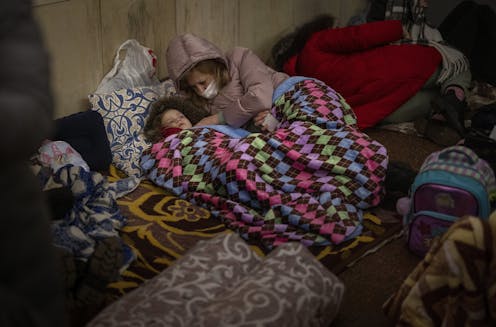
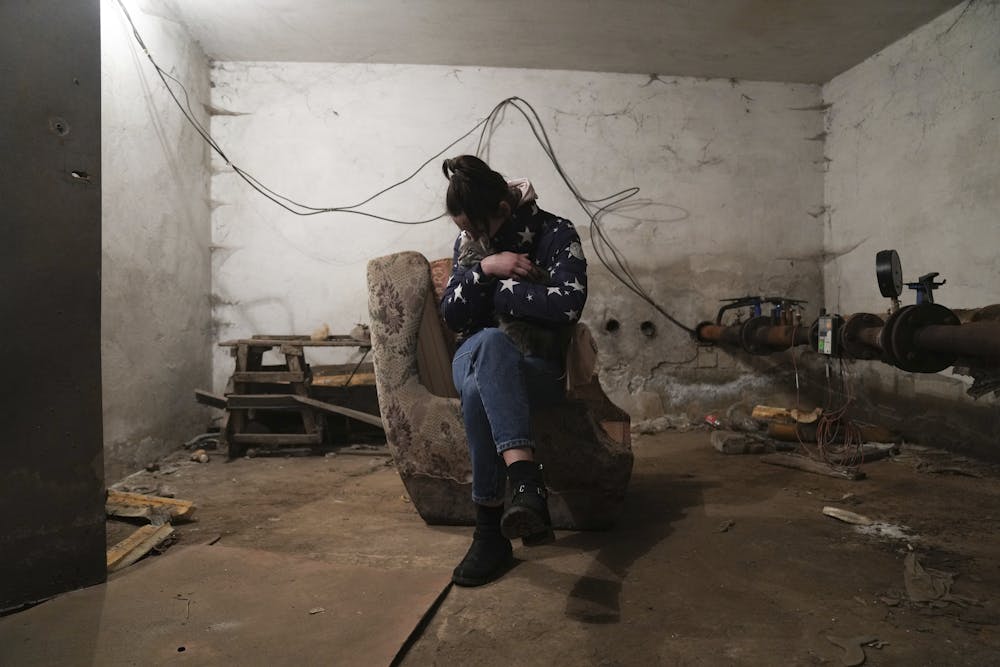
A smiling woman waves a 'Let’s Go Brandon' flag.
A person waves a ‘Let’s Go Brandon’ flag, code for an expletive against U.S. President Joe Biden used by supporters of former president Donald Trump, in Ottawa during the so-called freedom convoy. THE CANADIAN PRESS/Justin Tang

The worst-case scenario in the U.S. — blood in the streets — isn’t necessarily the most likely, but we ought to resist the tendency to assign too low a probability to events that could have serious, catastrophic consequences.

Some of the most constructive academic work in the middle of the 20th century, after all, was motivated by doom-saying around nuclear war (Thomas Schelling’s Nobel Prize work on game theory, for example).

More recently, predictions about the devastation that will result from the climate crisis are being used to drive public policy and political debate. Will all the predictions bear out? Maybe not, but the intellectual exercise of preparing for the worst can improve our decision-making and position Canada to succeed in times of crisis.

Jan. 6 just a prelude?

For some reason, systematic and dispassionate analyses of what will happen if or when the American experiment with democracy ends have not happened, either in Canada or the U.S.

Many are engaged in the battle to prevent the right wing from stealing the next U.S. election, but this is only one, narrow concern. Spend an hour listening to someone like Dan Bongino, a former Secret Service agent and Donald Trump supporter, and you’ll come away certain that the violence we all saw on Jan. 6, 2021, was not an isolated event but the beginning of something bigger.

Rioters climb a wall into the U.S. Capitol with a Trump flag in the foreground.
Rioters loyal to Donald Trump climb the West Wall of the the U.S. Capitol in Washington, D.C., on Jan. 6, 2021. (AP Photo/Jose Luis Magana)

The trucker convoy is one small example of what can happen here when the dangerous forms of anti-democratic rhetoric south of the border spread into Canada.

The people in Ottawa aren’t protesters, they’re occupiers. They reject the use of democratic rhetoric in favour of authoritarian rhetoric, and they aim to dismantle the system that makes protest and free speech possible in the first place.


Read more: What the 'freedom convoy' reveals about the ties among politics, police and the law


What happens when that anti-democratic rhetoric becomes the norm in the U.S.? The combination of media outlets like Fox News that have far-reaching impact and anti-democratic, authoritarian rhetoric is exactly a recipe for the contagious spread of the kinds of behaviours that can threaten our own democracy.

What are the likeliest problems? Most obviously, violent rhetoric tends to fuel violent actions. We will see violent rhetoric normalized by cultural figures like Tucker Carlson but also U.S. politicians.

Imagine Fox News no longer playing the role of a media outlet that’s welcoming to the fringe voices of the far right, but instead is the formally sanctioned voice of the state. The more violent, extremist rhetoric becomes the norm, the more danger and violence we’re likely to see.

What will happen when Carlson turns his attention to Canada as a target and radicalizes our own citizens with the authoritarian rhetoric he regularly employs?

Critical questions for Canada

Can we, should we, regulate American media if they are clearly driving the rise of authoritarianism and the spread of propaganda aimed at ending free, liberal democracy? How do we treat American broadcast media and social media if they become obviously responsible for hastening the end of liberal values like equality, reason and the rule of law?

How will Canada combat the virulent spread of propaganda and misinformation when it comes directly from a government pretending to be democratic while enacting fascism?

What if American journalists wedded to the ideals of free speech, objectivity and professional standards of fairness become targets of state violence? Will we protect the right to a free press? How?

If American elections become obviously rigged, what will our role be in monitoring that kind of democratic backsliding?

A man with dark hair listens as an older man with orange-ish hair talks at him, seemingly angry.
Prime Minister Justin Trudeau and Donald Trump talk at a plenary session at the NATO Summit in England in December 2019. THE CANADIAN PRESS/Sean Kilpatrick

What about American citizens still committed to the rule of law and the basic tenets of liberal society? Will they seek asylum in Canada by the millions?

How do we negotiate trade deals with an ideological, irrational state? We’ve had some preparation for this during Donald Trump’s one term as president, but he was still constrained by a semi-functioning system of checks and balances. What happens when that system is dismantled?

Ripple effects

We need a national conversation on these urgent questions. Our security, our economy and our culture are so deeply enmeshed with the U.S. that any significant change there will have ripple effects here.

Those ripples may turn into a tsunami should the changes be as radical and dire as some predict.

Such a national conversation will require us to shore up our own democracy and to learn how to regulate and prevent the spread of authoritarian rhetoric, hate speech and other forms of misinformation in the U.S.

We must be ready and able to champion the values and advantages that are afforded by living in a democracy. We might avoid the worst, but the preparation will make Canada a stronger, freer, safer country.

The Conversation

Robert Danisch receives funding from the Social Sciences and Humanities Research Council of Canada.

14 Feb 14:17

Extra virgin olive oil: why it's healthier than other cooking oils

by Richard Hoffman, Associate lecturer, Nutritional Biochemistry, University of Hertfordshire
The benefits of extra virgin olive oil might just make it worth the extra cost. Bruno D Andrea/ Shutterstock

It’s common advice for people watching their waistlines or looking to eat healthier to beware of the amount of oil they use while cooking. But that doesn’t mean we should cut oil entirely from our diet. This is because extra virgin olive oil in particular can have many benefits for our health.

Numerous studies have shown that consuming olive oil – in particular extra virgin olive oil (EVOO) – can have many different benefits for our health. For example, the Spanish Predimed study (the largest randomised control trial ever conducted on the Mediterranean diet) showed that women who ate a Mediterranean diet supplemented with extra virgin olive oil had a 62% lower risk of breast cancer compared to women who were advised to eat a low fat diet.

Experts who have since examined multiple scientific studies looking at the Mediterranean diet and its effect on chronic diseases conclude that a primary reason the diet protects against breast cancer is because of EVOO. There’s also evidence that EVOO may protect against type 2 diabetes and possibly even Alzheimer’s disease.

So what makes extra virgin olive oil better for us than other types of cooking oil? The answer lies in its composition.

Alongside its fat, EVOO also contains many natural substances, such as polyphenols. Polyphenols occur naturally in plants, and have been linked to many health benefits, such as reducing the risk of cardiovascular disease and cognitive disorders. Studies also seem to show that a major reason why EVOO is beneficial to our health is because of the polyphenols it contains. Polyphenols are thought to have many benefits in the body, such as improving the gut microbiome.

Research shows that the polyphenols in extra virgin olive oil are linked with lower risk of cardiovascular disease. In fact, when researchers stripped EVOO of its polyphenols, they found it didn’t protect the heart from disease as well. It’s believed that one of the benefits of EVOO on heart health is because its polyphenols prevent cholesterol becoming oxidised. It’s when cholesterol reacts with oxygen and is oxidised that it damages blood vessels.

Freshly pressed olive oil pours out of a spigot into a large metal container.
The simple production method helps EVOO retain polyphenols. pointbreak/ Shutterstock

The reason EVOO contains such high levels of polyphenols is because it’s produced by simply crushing olives. More processed versions of olive oil – such as light olive oil or spreads – don’t contain as many of these polyphenols. This is because to create these requires more processing, resulting in most of the polyphenols being lost.

Other cooking oils

Most other cooking oils, such as sunflower oil or rapeseed oil, are made from seeds. Seeds are very difficult to extract oil from, so they need to be heated and the oil extracted with solvents. This means that most of the polyphenols in seeds are lost during production.

It’s sometimes claimed that rapeseed oil (also known as canola oil or vegetable oil) is a healthy alternative to EVOO. While there is some evidence that raw rapeseed oil (meaning it hasn’t been heated during cooking) can temporarily lower cholesterol levels, there’s currently no evidence it can lower risk of developing diseases associated with high cholesterol – such as heart disease.

Of course, most of us use oils for cooking. But when an oil is heated at too high a temperature it reacts with the oxygen in the air, causing the fat in the oil to break down. This can lead to the formation of harmful substances that irritate the eyes and even carcinogens. Rapeseed oil is particularly prone to this process - called oxidation - especially when used repeatedly for deep fat frying.

Polyphenols help prevent fats from oxidising and so EVOO remains stable even when used at the temperatures needed to shallow fry foods. Because rapeseed oil and other oils such as sunflower oil contain lower levels of polyphenols, the fats aren’t so well protected from breaking down during cooking.

Another important reason for EVOO’s stability is that its main type of fat is monounsaturated fat. This is both a healthy fat and quite resistant to oxidation. Monounsaturated fat is also the main type of fat in rapeseed oil. But unlike EVOO, rapeseed oil also contains quite high levels of a polyunsaturated fat called alpha-linolenic acid. This is not very stable and is another reason why heating rapeseed oil too much is not a good idea.

Coconut oil is often advocated as a healthy oil to use. But coconut oil contains high levels of saturated fats, which can significantly increase low-density lipoprotein (or LDL) cholesterol levels (sometimes know as the “bad” cholesterol). Elevated LDL-cholesterol is linked to cardiovascular disease, and there’s evidence that the saturated fat in coconut oil increases the risk of heart disease.

One of the important messages about EVOO is that it seems to be far more effective when eaten as part of a Mediterranean diet – which is typically high in vegetables, fruits, legumes, grains, fish and olive oil. This is probably because extra virgin olive oil and its beneficial polyphenols interact with other foods incuding the vegetables eaten as part of this diet. The Mediterranean diet is linked with lower risk of many chronic diseases including cancer, cardiovascular disease and Alzheimer’s disease. This might just make the extra price of EVOO worth paying for.

The Conversation

Richard Hoffman is the author of two books on the Mediterranean diet: The Mediterranean Diet: Health and Science (2011) and More Healthy Years - Why a Mediterranean Diet is best for you and for the planet (2020).

10 Feb 18:49

OPINION: Students need to maintain stricter silence on top floors of library

by Eshaani Arvind, CORRESPONDENT
Despite the USF campus’ library maintaining a rule of silence for the fifth floor, students fail to keep the peace and quiet. ORACLE PHOTO/LEDA ALVIM

Students need to maintain silence on the top floor of the library so as to not disturb their peers who go there to study.

Recently, students have been complaining on social media platforms such as the USF sub-reddit and on Instagram accounts like USF confessions about the excessive noise observed on multiple occasions on the fifth floor of the library — which is a designated quiet floor.

The first four floors of the library allow students to collaborate and talk with their friends. In contrast, the fifth floor is dedicated to letting students do their work in silence. 

“The fifth floor is the quiet floor, a no talk zone. Even in the study rooms, people should be at a low level,” said Marie Camacho, a library student assistant, in an interview with The Oracle on Feb. 2. “We have gotten a lot of noise complaints this school year. I get about two to three a day.”

Sometimes it is people whispering to each other nonstop and listening to music and videos without using their earphones. Other times, it’s people having loud conversations on their phones.

This noise issue may be caused by some students who are new to USF or are on campus for the first time after the quarantine period and are unaware of the library etiquette.

The library has put effort into enforcing the golden rule of silence on the top floor of the library. Students who have reported this issue to the library staff have been directed to a website to file this complaint form.

After the form is submitted by students, the library floor monitor gives students a warning. If the same behavior is continued, they are asked to leave — an appropriate response to the complaints.

There is a sign at the entrance of the top level of the library that indicates that it is the quiet floor. Yet the problem persists because of students who ignore the rules.

Some students have also mentioned the study rooms also cause disruptions to the quiet atmosphere on the fourth and fifth floors of the library, since a lot of people have loud discussions, and the rooms are not soundproof.

Students can feel demotivated and annoyed when such noise interrupts their studying, especially in a library where it is meant to be quiet and there are plenty of other places on campus for socializing.

USF students should be more considerate toward others while they are trying to study, and not do things that discourage their peers from studying. The first four floors of the library are open to conversations and discussions, but the fifth floor should be maintained as the quiet floor.