Cover image- Johann Wilhelm Cordes, Wilde Jagd Public domain, via Wikimedia Commons A ferocious storm hit my corner of California in December. The wind howled as it battered the house, moaning sounds came down the chimney, doors rattled, and we could hear branches cracking outside. A sudden popping sound, and we were plunged into darkness. […]
Carrollwood just landed its very own CAVA, and residents are in for a treat. One of the top rated quick service restaurants, CAVA, is working on a major expansion down the Tampa Bay region. The restaurant known for its falafel, spicy Harissa chicken, and roasted eggplant, just recently opened at 942 S Howard Avenue in South Tampa. It’s now open at 15028 N Dale Mabry Highway in Carrollwood.
CAVA started in DC with three Greek friends who wanted to share the thoughtful ingredients and bold Mediterranean flavors they grew up loving. Now you can find their fast-casual restaurants full to the brim with all the bright, craveable ingredients you need to build a meal that fits your food-style, cravings, and appetite.
Their chef-crafted line of dips and spreads are waiting on the shelves of Whole Foods and specialty markets nationwide. The restaurant also recently debuted a location on 4th Street North in St. Petersburg.
Hungry visitors should treat themselves to the sensational grain bowls filled with Saffron Basmati Rice, or filled up on the crunchy splendor of super greens and organic arugula. Harissa honey chicken, spicy lamb meatballs, and flavorful roasted vegetables round out the exceptional array of proteins on the menu.
This nutrition focused restaurant also has a full menu of fresh juices. The variety of juices changes with each season.
Follow CAVA on Facebook and Instagram to learn more about the restaurant.
Scientific discoveries and technological innovation play a vital role in addressing many of the challenges and crises that we face every year. The last year may have come and gone quickly, but scientists and researchers have worked painstakingly hard to advance our knowledge within a number of disciplines, industries, and projects around the world. So here are the important science Headlines of 2022.
At a Glance: Important Science Headlines of 2022
Below we dive a little deeper into some of the most interesting headlines, while providing links in case you want to explore these developments further.
The James Webb Space Telescope Arrives at its Destination
What happened: A new space telescope brings promise of exciting findings and beautiful images from the final frontier. This telescope builds on the legacy of its predecessor, the Hubble Space Telescope, which launched over 30 years ago.
Why it matters: The James Webb Space Telescope is our latest state-of-the-art “window” into deep space. With more access to the infrared spectrum, new images, measurements, and observations of outer space will become available.
To learn more, read this article from The Planetary Society, or watch this video from the Wall Street Journal.
Complete: The Human Genome
What happened: Scientists finish sequencing the human genome.
Why it matters: A complete human genome allows researchers to better understand the genetic basis of human traits and diseases. New therapies and treatments are likely to arise from this development.
What happened: A higher volume of cases of the monkeypox virus in non-endemic countries.
Why it matters: Trailing in the shadow of a global pandemic, researchers are keeping a closer eye on how diseases spread. The sudden spike of multinational incidences of monkeypox raises questions about disease evolution and prevention.
To learn more, read this article by the New York Times.
What happened: Gold miners unearth a 35,000 year old, well-preserved baby woolly mammoth in the Yukon tundra.
Why it matters: The mammoth, named Nun cho ga by the Tr’ondëk Hwëch’in First Nation, is the most complete specimen from North America to date. Each new discovery allows paleontologists to broaden our knowledge of biodiversity and how life changes over time.
To learn more, read this article from Smithsonian Magazine
The Rise of AI Art
What happened: Access to new computer programs, such as DALL-E and Midjourney, give members of the general public the ability to create images from text-prompts.
Why it matters: Widespread access to generative AI tools fuels inspiration—and controversy. Concern for artist rights and copyright violations grow as these programs potentially threaten to diminish creative labor.
What happened: Researchers create a perfusion system that can revitalize organs after cellular death. Using a special mixture of blood and nutrients, organs of a dead pig can sustain after death—and in some cases, even promote cellular repair.
Why it matters: This discovery could potentially lead to a greater shelf-life and supply of organs for transplant.
To learn more, read this article by Scientific American, or this article from the New York Times
DART Delivers A Cosmic Nudge
What happened: NASA crashes a spacecraft into an asteroid just to see how much it would move. Dimorphos, a moonlet orbiting a larger asteroid called Didymos 6.8 million miles (11 million km) from Earth, is struck by the DART (Double Asteroid Redirection Test) spacecraft. NASA estimates that as much as 22 million pounds (10 million kg) was ejected after the impact.
Why it matters: Earth is constantly at risk of being struck by stray asteroids. Developing reliable methods of deflecting near-Earth objects could save us from meeting the same fate as the dinosaurs.
To learn more, watch this video by Real Engineering, or read this article from Space.com
Falling Sperm Counts
What happened: A scientific review suggests human sperm counts are decreasing—up to 62% over the past 50 years.
Why it matters: A lower sperm count makes it more difficult to conceive naturally. Concerns about global declining male health also arise because sperm count is a marker for overall health. Researchers look to extraneous stressors that may be affecting this trend, such as diet, environment, or other means.
To learn more, check out this article from the Guardian.
Finding Ancient DNA
What happened: Two million-year-old DNA is found in Greenland.
Why it matters: DNA is a record of biodiversity. Apart from showing that a desolate Arctic landscape was once teeming with life, ancient DNA gives hints about our advancement to modern life and how biodiversity evolves over time.
To learn more, read this article from National Geographic
Fusing Energy
What happened: The U.S. Department of Energy reports achieving net energy gain for the first time in the development of nuclear fusion.
Why it matters: People often declare that fusion is the Holy Grail of safe, clean energy, and this latest milestone brings researchers one step closer to harnessing nuclear fusion to power the world.
The future of scientific research looks bright. Researchers and scientists are continuing to push the boundaries of what we know and understand about the world around us.
For 2023, some disciplines are likely to continue to dominate headlines:
Advancement in space continues with projects like the James Webb Space Telescope and SETI COSMIC’s hunt for life beyond Earth
Climate action may become more demanding as recovery and prevention from extreme weather events continue into the new year
Generative AI tools such as DALL-e and ChatGPT were opened to public use in 2022, and ignited widespread interest in the potential of artificial intelligence
Even amidst the lingering shadow of COVID-19, new therapeutics should advance medicine into new territories
Where science is going remains to be seen, but this past year instills faith that 2023 will be filled with even more progress.
by Anouk Charlot, Doctorante, Université de Strasbourg
file m k
On top of kickstarting a new exercise regime, the new year is traditionally a period when many people reconsider their eating habits. In recent years, intermittent fasting has become a popular habit – and has been credited with some health benefits, be it to manage excess weight, chronic illnesses or flagging energy levels. But what exactly is intermittent fasting? And does all the hype around it stand up to scientific scrutiny?
The term intermittent fasting covers several approaches, each based on different principles. It is important to note that no matter which method is used, the restrictions only affect food – never water – intake.
The “Eat Stop Eat” method. Put forward by Brad Pilon in his book of the same name, the principle is to alternate days of normal eating and fasting, including two non-consecutive fasting days in a week.
The 5:2 method. Developed in the 2000s by the doctors Michelle Harvie and Tony Howell, this alternates between five days of normal eating and two days (which can be consecutive) of 70-75% calorie reduction during the week.
Summary of the different intermittent fasting methods.
Anouk Charlot
Science’s verdict?
Outcomes vary depending on the adopted strategy.
With the “Eat Stop Eat” and 5:2 approaches, relatively few scientific studies have been conducted. The little data we have available has shown they can effectively help us lose weight and improve certain metabolic parameters such as fasting blood glucose. For example, the nutritionist Surabhi Bhutani showed the use of the 5:2 method for three months resulted in a weight loss of 3-6 kg in participants.
However, both methods are very restrictive and can cause side effects on days of total fasting or severe caloric restriction – hunger, negative effects on mood, and risk of hypoglycaemia.
In the longer term, restriction also increases the risk of developing or worsening eating disorders, as well as yo-yo dieting. These patterns often appear after the individual has attempted to lose weight by restricting themselves: despite initial progress, the deprivation is likely to generate frustrations that will encourage the return of old eating habits.
The most studied method is the one with a daily food intake but limited in time. Two “time slots” are often observed:
When food intake starts with breakfast and ends in the late afternoon – known as “early time-restricted feeding”.
When food intake starts with lunch – known as “late time-restricted feeding”.
This approach appears to improve metabolic regulation and slash the risk of metabolic diseases. However, these benefits vary according to the chosen time slot. When food intake starts in the morning, studies have observed weight loss and improvements in insulin sensitivity.
Research suggests our internal clock and circadian rhythms may have something to do with it. Indeed, the benefits to only eating in the morning is that the periods of food intake and fasting coincide with our biological clock.
In our previous article, we explained that in response to light cycles, our body produces hormones in a cyclical way to adapt our food intake to the body’s energy needs: the optimal period for eating is therefore from around 8 or 9 a.m. (when the sun rises) to 7 p.m. (when the sun starts to set, depending on the season).
However, while time-limited eating seems to be a good approach to metabolic health, much remains to be understood about how it works and how to optimise its effects. Work in 2022 showed no difference in terms of weight loss between opting for early- or late-morning eating. It did, however, have an effect on appetite during the day – this time to the advantage of the former.
And beyond the time of day when it seems preferable to eat, other factors may be at work that are not always measured in the studies carried out: quality and quantity of food absorbed, duration of the fasting period (which can extend from 12 to 20 hours per day), etc. It is also worth remembering every individual has his or her own metabolism and may respond differently to fasting. New, better controlled and more comprehensive studies are therefore needed to confirm the potential benefits of these methods and to understand the mechanisms involved in their effects.
In practice, what to do?
The most suitable method to avoid disrupting one’s circadian clock (and thereby limiting the risk of frustration or eating disorders) appears to be time-limited food intake by synchronising meals with circadian rhythms.
Thus, a typical day could be organised with a hearty breakfast in the morning taking place between 6 and 8 a.m., a lunch around midday and finally bringing dinner forward so that it takes place between 4 and 6 p.m., depending on the season.
This is not necessarily easy to reconcile with one’s social life. It can be complicated to practise intermittent fasting for a family, when one practises a sporting activity in the early evening or when one works in the evening until 7 or 8 p.m.
One solution would be to opt for a big breakfast and not too caloric a meal in the evening – preferably without carbs or sugars, so as not to risk shifting one’s biological clock.
Typical day and foods to be favoured for practising time-limited eating.
Anouk Charlot
Chrono-nutrition
Chrononutrition is increasingly popular and intermittent fasting appears to effectively boost metabolic health. That said, we have seen it is not a panacea. And we must ensure that the periods of fasting and food intake are consistent with our biological clock.
In the face of many existing methods, and potential risks, patients and health professionals still face a lack of information. Further research is essential to better understand their effects. Currently, there is not yet a general consensus on the ideal time to eat/fast, or on the optimal duration of each period. Moreover, these parameters may differ from one person to another, depending on their genetic make-up, history and lifestyle. It is therefore important to consider the use of this dietary strategy with qualified health professionals, with the view of setting up a healthy and balanced diet that will limit the risk of complications.
Anouk Charlot's research is funded by a scholarship from Strasbourg University.
Joffrey Zoll ne travaille pas, ne conseille pas, ne possède pas de parts, ne reçoit pas de fonds d'une organisation qui pourrait tirer profit de cet article, et n'a déclaré aucune autre affiliation que son organisme de recherche.
A lawsuit filed in New York state alleges that the confectionary giant Hershey "fails to disclose" that some of its chocolate products "contain unsafe levels of lead and cadmium".
A New York man, Christopher Lazazzaro, filed the suit in Long Island federal court on 28 December.
You may have noticed the world getting excited about the capabilities of ChatGPT, a text-based AI chat bot. Similarly, some are getting quite worked up over generative AI systems that can turn text prompts into images, including those mimicking the style of particular artists. But less remarked upon is the use of AI in the world of music. Music Business Worldwide has written two detailed news stories on the topic. The first comes from China:
Tencent Music Entertainment (TME) says that it has created and released over 1,000 tracks containing vocals created by AI tech that mimics the human voice.
And get this: one of these tracks has already surpassed 100 million streams.
Some of these songs use synthetic voices based on human singers, both dead and alive:
TME also confirmed today (November 15) that – in addition to “paying tribute” to the vocals of dead artists via the Lingyin Engine – it has also created “an AI singer lineup with the voices of trending [i.e currently active] stars such as Yang Chaoyue, among others”.
The copyright industry will doubtless have something to say about that. It is also unlikely to be delighted by the second Music Business Worldwide story about AI-generated music, this time in the Middle East and North Africa (MENA) market:
MENA-focused Spotify rival, Anghami, is now taking the concept to a whole other level – claiming that it will soon become the first platform to host over 200,000 songs generated by AI.
Anghami has partnered with a generative music platform called Mubert, which says it allows users to create “unique soundtracks” for various uses such as social media, presentations or films using one million samples from over 4,000 musicians.
…
According to Mohammed Ogaily, VP Product at Anghami, the service has already “generated over 170,000 songs, based on three sets of lyrics, three talents, and 2,000 tracks generated by AI”.
It’s striking that the undoubtedly interesting but theoretical possibilities of ChatGPT and generative AI art are dominating the headlines, while we hear relatively little about these AI-based music services that are already up and running, and hugely popular with listeners. It’s probably a result of the generally parochial nature of mainstream Western media, which often ignores the important developments happening elsewhere.
Hopefully, you already know who Tom Lehrer is, and are already familiar with his music, but if you’re somehow in the dark, I suggest you read this excellent profile, or visit his unofficial official YouTube channel. Or, visit his website where you can download everything for free (he even begs you not to send him money).
We’ve written about Lehrer twice before, both regarding his views on effectively releasing his music in the public domain. Back in 2014, we wrote about how a fan had basically put all of his works on YouTube, and then contacted Lehrer to apologize. Lehrer told him there was nothing to apologize for: he was glad the works were out there. The fan then asked if he needed to do something to make sure that no one would ever copyright strike the videos, and Lehrer again says not to worry, as far as he’s concerned it’s all in the public domain, and he has no heirs to cause problems after he dies:
While Lehrer has made startlingly little effort to ensure a future for his work, a handful of superfans have filled in the gap. One is Erik Meyn, a Norwegian who manages the Tom Lehrer Wisdom Channel on YouTube, a feed of performance videos and playlists that has received more than 10 million views since 2007. Meyn originally posted content to the channel without Lehrer’s permission and called him from overseas in December 2008 to apologize, a conversation he later posted on the “Tom Lehrer!” Facebook page. An excerpt:
TL: Well, you see, I’m fine with that channel.
EM: You’re very kind. But my question is: Who in your family will take care of your copyright and your songs in the distant future?
TL: I don’t have a family.
EM: OK, but what do you think will happen to the channel and your songs? And if you have someone who will act on your behalf, could you give them my name in case they’d want the channel taken down?
TL: Yes, but there’s no need to remove that channel.
EM: I was just wondering what will happen in the future, because you’re certainly going to continue to sell records.
TL: Well, I don’t need to make money after I’m dead. These things will be taken care of.
EM: I feel like I gave away some of your songs to public domain without even asking you, and that wasn’t very nice of me.
TL: But I’m fine with that, you know.
EM: Will you establish any kind of foundation or charity or something like that?
TL: No, I won’t. They’re mostly rip-offs.
Then, in 2020, we wrote about him again, noting that he had put up a website where he had announced that all of his lyrics had been officially dedicated to the public domain, and he encouraged people to do what they wanted with them. At the time, we noted that this did not cover the actual music, but Lehrer had suggested he would add that at a future time.
Apparently, that future time has come. Lehrer has expanded the letter on his website, now dated to November of 2022, even if much of it is identical to what we wrote about two years ago. But the big difference is that he’s now including all of the music in the public domain dedication:
I, Tom Lehrer, and the Tom Lehrer Trust 2007, hereby grant the following permissions:
All copyrights to lyrics or music written or composed by me have been relinquished, and therefore such songs are now in the public domain. All of my songs that have never been copyrighted, having been available for free for so long, are now also in the public domain.
The latter includes all lyrics which I have written to music by others, although the music to such parodies, if copyrighted by their composers, are of course not included without permission of their copyright owners. The translated songs on this website may be found on YouTube in their original languages.
Performing and recording rights to all of my songs are included in this permission. Translation rights are also included.
In particular, permission is hereby granted to anyone to set any of these lyrics to their own music, or to set any of this music to their own lyrics, and to publish or perform their parodies or distortions of these songs without payment or fear of legal action.
Some recording, movie, and television rights to songs written by me are merely licensed non-exclusively by me to recording, movie, or TV companies. All such rights are now released herewith and therefore do not require any permission from me or from Maelstrom Music, which is merely me in another hat, nor from the recording, movie, or TV companies involved.
In short, I no longer retain any rights to any of my songs. So help yourselves, and don’t send me any money.
As I said, much of this statement reflects what was on the site before, but now it covers the music as well as the lyrics. He’s also basically put up everything you need. You can download the music as MP3s, you can stream albums, you can download lyrics as PDF files. It’s… pretty comprehensive. And pretty impressive.
Of course, there’s also this semi-ominous warning:
THIS WEBSITE WILL BE SHUT DOWN AT SOME DATE IN THE NOT TOO DISTANT FUTURE, SO IF YOU WANT TO DOWNLOAD ANYTHING, DON’T WAIT TOO LONG.
I hope that someone (hey, Internet Archive?) is making sure that this page, and all the music is preserved long after Lehrer removes it.
Either way, it’s another lovely gift, and it’s a strange one, given that in these days of ever expanding copyright terms, most artists never live to see any of their works enter the public domain. Lehrer should be celebrated for his music and wit, of course, but also for making sure his works are really in the public domain while he’s still alive, which is an amazing contribution to public culture.
Of course, as we’ve discussed for years, there is no official way under US copyright law to put works in the public domain. The best you can do is effectively make clear that you are giving up any rights to enforce your copyrights, which is what Lehrer has done here. It’s a shame that US law does not allow for an official public domain dedication, but maybe one day that will happen.
by Margaret Scull, Adjunct Professor of History, Syracuse University
It has now been more than two decades since the signing of the Good Friday agreement in 1998, formally ending the Troubles in Northern Ireland. But the most recent attempt by the British government to “deal with the past” – the legacy and reconciliation bill – is itself provoking conflict.
The bill, currently going through the House of Lords, seeks to “promote reconciliation” by establishing an Independent Commission for Reconciliation and Information Recovery. It plans to limit criminal investigations, legal proceedings, inquests and police complaints, extend the prisoner release scheme, and provide for experiences to be recorded and preserved and for events to be studied and memorialised.
Victims’ groups, Northern Irish political parties, the Irish government, and Americans and Europeans involved in the peace process are all against the bill in its current form, especially the effective amnesty for unresolved Troubles killings. Nonetheless, the bill is still widely expected to become law early next year. What will the Catholic Church do if it does?
Conflict, religion and politics
Northern Ireland endured almost three decades of the deadly Troubles, which many outside of the country believed was caused by religion. Throughout the conflict, the British government regularly met with religious leaders to ask their opinions on policy initiatives and to gauge the mood of the people.
British Catholics and Protestants alike wrote to Catholic bishops demanding action to end the violence. But when their efforts failed, it was thought a lack of application on the bishops’ part rather than a lack of influence was to blame. However, even a rare public intervention from the Pope was not enough.
John Paul II’s much-celebrated three-day visit to the Republic of Ireland in September 1979 included addressing a 250,000-strong crowd 30 miles from the border at Drogheda. But his appeal for “all men and women engaged in violence” to “return to the ways of peace” fell on deaf ears.
Attempts to stop the 1981 Maze Prison hunger strike through meetings with the queen and the then prime minister, Margaret Thatcher, were unsuccessful. The sending of a papal envoy to speak with lead hunger striker Bobby Sands and British government officials, also ended in failure.
Catholic bishops faced regular questions from the British press asking why IRA members had not been excommunicated. Officially excluding someone from participation in the sacraments and services of the Christian church is not common practice in the modern era.
As the blatantly sectarian cartoon on the cover image of my book, The Catholic Church and the Northern Ireland Troubles 1968-98, demonstrates, there were those in the British press who perpetuated the idea that republicanism and Catholicism were willing bedfellows. But the church knew that excommunicating IRA members could isolate sections of the Catholic community who felt the republican paramilitaries provided protection from perceived corrupt police and British Army forces.
Those who conflated the conflict with religion viewed the lack of excommunication of republican paramilitaries as the church’s compliance and support for violence. This reluctance to tackle the excommunication issue led to missed opportunities for unity.
Hopes for interfaith cooperation were dashed by other issues, too: chiefly the Church’s insistence on segregated education for Catholics, and the 1970 Vatican apostolic letter Matrimonia Mixta which emphasises that children born of “mixed” Catholic and Protestant marriages should be raised Catholic.
IRA paramilitary funerals were another dilemma for the Catholic Church. Irish priests who ministered and conducted these ceremonies were regularly accused of condoning, if not actively supporting, violence. Differing Catholic and Protestant church practices and theologies around death, funerals, and the afterlife exacerbated inter-community tensions.
For Catholics, the dead would be judged when they met their maker and not by those on earth. Therefore it was difficult for the Irish Catholic Church to deny IRA members a funeral and requiem mass. In the late 1980s, Bishop Edward Daly of Derry attempted to ban the bodies of republican paramilitaries being present at their requiem mass but quickly had to reverse his decision when republican mourners brought the coffins to the cathedral and were granted entry.
A carrot and stick approach emerged among the Catholic clergy. Some priests acted as mediators between the Provisional IRA and the British government, resulting in the 1974-75 ceasefire. Priests were supposed to embody neutrality and had historically adjudicated between different Irish groups.
During the late 1980s and early 1990s, priests like Father Alec Reid and Father Gerry Reynolds provided rooms in the Clonard Monastery for Sinn Féin’s Gerry Adams and the SDLP’s John Hume to meet privately. At the same time, priests like Father Denis Faul publicly denounced the IRA’s violence. However, revelations of clerical child abuse in the 1990s shattered the moral authority of the Catholic Church and drastically reduced institutional church involvement in the peace process.
Reconciling or deepening divisions?
Depending on the final shape of the Reconciliation and Information Recovery bill, will the Catholic Church back the oral history projects? Will it support researchers writing thematic reports? Will it be inspired to open its own archives? Or will it boycott the bill in solidarity with victims’ groups?
Archbishop Eamon Martin, the Roman Catholic primate of all Ireland, along with the queen, took part in a service of reflection and hope in Armagh in 2021 alongside Protestant church leaders to mark the centenary of partition and the creation of Northern Ireland. But the president of Ireland, Michael D. Higgins, declined the invitation, saying he was “not in a position to attend”.
While this may indicate a willingness for the Catholic Church to be a part of the legacy process, Archbishop Martin and another Church of Ireland archbishop, John McDowell, jointly warned the bill would “deepen divisions” in the north.
Should the bill go forward in its current form, Church leadership will either have to back the British government or push against it, a doubtless tricky position for an institution declining in influence.
Margaret Scull received funding from the Irish Research Council as a postdoctoral fellow between 2018-2020.
Each January 1st is Public Domain Day, where a new crop of works have their copyrights expire and become free to enjoy, share, and reuse for any purpose.
Chanta Restaurant is a dreamy culinary gem in Tampa. The food here is exquisite, but the charming team behind Chanta put a lot of TLC into making sure the experience and aesthetic inside match the power of its menu. The website Cheapism recently listed the coziest restaurants in every state, and Chanta is number one in Florida. Another notch in Tampa’s foodie belt.
This family-owned spot is known to close for weeks at a time so the team can go back to Europe; make sure you’re following them on Facebook for the most up to date hours.
Chanta is family-owned and super charming
“But when Chanta’s owners are in town they serve a mean goulash soup; Romanian stew with polenta, cheese, and fried egg; or wiener schnitzel, delivered to charming rough-hewn wooden tables surrounded by brick and leaning wagon wheels,” writes review Alisha.
One of the most coveted seats in the city is the cozy chair in front of the fireplace. Need an even warmer invitation to visit Chanta? Just read this note from the owners:
“We would like to invite you to enjoy dinner in little Europe. Our restaurant is fully family-owned. You will meet the grandma who’s cooking everyday at the restaurant, you will enjoy our freshly baked bread and delicious food!”
One of the most unique dining experiences in Tampa
Celebrated appetizers include the grilled eggplant spread, deep fried zucchini, and homemade bread with butter.
Something almost totally unique to Chanta is their Romanian stew with polenta. You won’t find this delicious specialty anywhere else in the city. The combination between the pork stew, the polenta (made out of corn), the fried egg and the feta cheese on top is to die for.
I’m a dessert person, so I highly recommend you save room for a jam-stuffed crepe, or maybe a slice of apple cake. Visit their website to browse the entire menu.
The site of a former Sweetbay grocery store in New Tampa is going to turn into the popular Lotte Plaza Market Asian Grocery Store. Lotte has confirmed they will be opening a location off Bruce B. Downs, though an official opening timeline is still TBA. New photos recently posted in the Tampa Bay Asian Foodies Facebook group show the official Lotte Market signage up at 17605 Bruce B Downs Blvd.
Lotte Plaza currently operates in Orlando, and this will be its first ever Tampa location. “Since 1976, Lotte Plaza Market has strived to be the premier source for Asian groceries in Maryland and Virginia,” writes the ownership team in its company mission statement. “Our desire to continuously improve customer relations and contribute to the community we serve has helped us grow from a single store in 1989 to 12 locations throughout Maryland, Virginia, and Florida.” Their goal is to open 50 Lotte Plaza Market locations by 2030.
Photo via Lotte Plaza
The store offers fine meats, seafood, produce and specialty products from the most popular brands. Lotte’s owners strive to provide quality products at affordable prices, and change their selections as their customers’ tastes change. Packaged teas, unique sauces and fresh fruits and vegetables all have a home at this market.
All the highest quality groceries and specialty products made in Korea are found inside Lotte. From noodles and rice, to unique cooking ingredients, from snacks to ready-to-eat meals, they have a complete selection of the foods and brands for the entire family.
Visit Lotte’s website to learn more about the market.
This is the second day of January and, for many Americans, the first Monday and work day of 2023.
For The Legal Genealogist, it’s the second day of 1927.
No, that’s not a typo. I really do mean 1927.
The year that books like Willa Cather’s Death Comes for the Archbishop and Franklin W. Dixon’s The Tower Treasure (the first Hardy Boys book) and Agatha Christie’s The Big Four were all published for the first time.1
The year that “Puttin’ on the Ritz” and “Ol’ Man River” were first available as sheet music.2
The year that films like The Jazz Singer — the first-ever full-length feature film with synchronized dialogue — was first released.3
And because that’s the year they all were released to the public, they are now all — without exception — free of copyright restrictions. On 1 January 2023, along with thousands and thousands of other books, sheet music, films, photos and more, they entered the public domain in the United States.
A whole year’s worth of materials, wonderfully free for all of us to use in our research, our blogs, our presentations, our publications without having to try to find the copyright owner and secure permission. Remember, that’s what public domain means: when copyright expires and a work goes into the public domain, we’re allowed to use it freely, any way we want, for any purpose (with some limits4), without needing permission from or payment to the creator of the work.5
This really is A Very Big Deal — and it really shouldn’t have been one.
Because of the way the copyright law works, providing protection only for a set number of years, a number of copyrights should have expired every year and we should have been getting a whole year’s worth of materials released into the public domain every year. But that copyright clock stopped ticking in 1998.
There’s a whole long backstory as to why it stopped ticking, and it was basically because the Disney people didn’t want the film where Mickey Mouse made his debut, Steamboat Willie, to become public domain. The copyright statute was changed to add 20 years of protection to all then-copyrighted works — and it provided that the copyright clock would stop, dead, on anything then-copyrighted and wouldn’t start to run again until 12:00.01 a.m. 1 January 2019.6
At that point, the statute said, after those additional 20 years, for most things, the clock would start moving again and, as it ticked over into 2019, the law said we should get an entire year’s worth of published works — everything legally published in the United States during 1923 — transferred into the public domain.7
Of course, since copyright law is a matter of statute, and any statute can always be amended, at any time up until midnight on 31 December 2018 — “the end of the calendar year in which (copyrights) would otherwise expire” — Congress could still have bollixed this up. So, as 2018 drew to a close, all of us who watch copyright issues held our collective breath.
And — somehow, astonishingly — Congress didn’t manage to foul it up. On 1 January 2019, thousands and thousands of items passed from copyright-protected status into the public domain. And we could all then say that the public domain included “everything legally published in the United States before 1924” (instead of the “before 1923” we’d been saying for 20 years).8
And then we started worrying. Because, of course, since copyright law is a matter of statute, and any statute can always be amended…9 Yeah, as of 1 January 2020, we were supposed to get another year’s worth of goodies. But — ulp — Congress could still foul it up.
Amazingly enough, as that year drew to an end, the clock kept right on ticking and, as of 1 January 2020, we began saying that copyright had expired for works published before 1925. Then, as of 1 January 2021, we began saying that copyright had expired for works published before 1926. And as of 1 January 2022, we began saying that copyright had expired for works published before 1927.
And — may miracles never cease — Congress didn’t manage to foul it up last year either. In copyright terms, 1927 finally got here. As of 1 January 2023, we can now say that copyright has expired for works published before 1928. And on 1 January 2024, we can include works published before 1929. And so on.10
For now, at least, that copyright clock is still ticking…
Welcome to 1927 — and the wealth of now-out-of-copyright materials produced that year.
Cite/link to this post: Judy G. Russell, “Welcome to 1927!,” The Legal Genealogist (https://www.legalgenealogist.com/blog : posted 2 Jan 2023).
SOURCES
“Public Domain Day 2023,” Center for the Study of the Public Domain, Duke Law School (https://web.law.duke.edu/cspd/ : accessed 2 Jan 2023). ↩
Just as one example, I really wouldn’t use a photo of a living person without that person’s permission, even a photo that’s out of copyright, on a pornography website. Just sayin’… ↩
See generally Judy G. Russell, “Where is the public domain?,” The Legal Genealogist, posted 21 Dec 2015 (https://www.legalgenealogist.com/blog : accessed 2 Jan 2023). ↩
See generally 17 U.S.C. §305 (“All terms of copyright provided by sections 302 through 304 run to the end of the calendar year in which they would otherwise expire”). ↩
See Judy G. Russell, “Welcome to 1923!,” The Legal Genealogist, posted 2 Jan 2019 (https://www.legalgenealogist.com/blog : accessed 2 Jan 2023). ↩
Note: Today is Public Domain Day; the day that we celebrate new works that have entered the public domain. This year, we welcome works first registered or published in the United States in 1927. Works published during that time, that met all required formalities, enjoyed a maximum term of copyright protection of 95 years. With copyright term running to the end of the calendar year, works first published in 1927 officially enter the public domain in the U.S. on January 1, 2023.
Because public domain works are free of copyright, they may be freely copied, distributed, performed, displayed, and adapted. This blog post, by Heidi Bowles, discusses popular adaptation of public domain works.
Copyright in Derivative Works
Copyright provides authors with a bundle of exclusive rights in their creative works, one of which is to create—or authorize others to create—adaptations of their work. When a work enters the public domain, it becomes free for creators to adapt without worrying about seeking permission, paying royalties, or meeting an exception under copyright law. The lack of copyright restrictions makes it easier for authors to use public domain works for their adaptations. It is important to note that copyright terms can vary from country to country, so materials that are in the public domain in one country may still be protected by copyright in another.
Derivative works, in terms of copyright, are any works that are based on preexisting material.[1] When an author creates a derivative work, they only own the copyright in their new creative expressions (assuming that they used the work lawfully—any unlawful use of copyrighted material is not protected by copyright). Authors of derivative works do not have any copyright in the underlying work or in the elements of their new work that they took from it.[2] For a list of common types of derivative works, see the U.S. Copyright Office’s Circular on Derivative Works and Compilations.
Take, for example, Kenneth Branagh’s delightful and faithful 1993 movie adaptation of William Shakespeare’s play Much Ado About Nothing. This film used Shakespeare’s original dialogue and setting, which is in the public domain. No adaptation can create a new copyright in the original work. There is, however, a new copyright in the typesetting of the script and recording of the performed dialogue, which could make distributing a copy of the script or film a copyright infringement. However, because the elements taken from the original work remain free from copyright, anyone is free to transcribe Shakespeare’s original dialogue from the movie and distribute it without worrying about copyright.
Less faithful works have more independent and copyrightable elements, like Disney’s 1994 animated movie The Lion King, adapted from Shakespeare’s play Hamlet. In a loose adaptation like this, it is more complicated to determine which elements are public domain and which belong to Disney, but essentially, the copyrightable elements taken directly from Hamlet remain public domain, while the new original elements added by Disney are protected by copyright.
Copyright does not protect ideas or concepts, only their tangible, fixed expression. It can be helpful to consider which elements of a story could be copyrightable:[3]
Not copyrightable:
Scènes à faire (elements that are customary or obligatory for a genre)
General themes
Overall plot
Names, titles, slogans, short phrases, and catch phrases
Copyrightable:
The specific expression of scènes à faire, an idea, theme, or overall plot
Characters
Dialogue
A recording of the performance
Therefore, Disney does not have an exclusive right in Hamlet retellings with an animated animal cast, but they do have an exclusive right in the particular way that they did it.
The iconic scene where Scar kills Mufasa is a good example to look at. Disney does not have a copyright in the idea of the king being killed by his brother so the brother can take his place, which was taken from Hamlet (neither would Shakespeare, for the record, if there had been copyright laws in 1600—fratricide is a common and intangible idea and therefore not copyrightable). They also would not likely have a copyright to Scar’s final words to his brother, “Long live the king,” even if they were original to them, because as a short phrase it is not likely substantial enough to be copyrightable. They do, however, have a copyright in other specific elements that they used to express this plot point—Scar holding Mufasa up by his claws, sneering, and dramatically letting go so that Mufasa falls off the cliff into a stampede blow. This specific and original expression of fratricide is what is copyrightable, not its use in the story.
Fair Use
Public domain materials are not the only available option for creating derivative works without the rightsholder’s permission. There are exceptions in the law that allow copyrighted works to be transformed without paying royalties or asking permission from the copyright owner.
The fair use doctrine allows for the use of copyrighted works in certain circumstances, which is determined using a four-factor test that considers the purpose of the use, the nature of the copyrighted work, the amount and substantiality used, and the effect of the use on the market for the copyrighted work. Fair use is purposely vague to avoid unnecessarily limiting the use of copyrighted materials, but this vagueness could also result in uncertainty about whether a use is a fair use or an infringement until it is challenged in court.
So, while there are certainly many derivative works that are considered fair use, the lack of certainty with the fair use doctrine could mean that some creators would prefer the option of using public domain materials when creating derivative works.
Other Examples Based on Public Domain Works
DISCLAIMER: this list is nowhere near comprehensive and is heavily biased in favor of my personal tastes
Shakespeare’s plays have been frequently adapted. A musical adaptation of one of his best-known plays, Romeo and Juliet, gave us one of the most recognizable love themes in modern American culture (Tchaikovsky’s “Romeo and Juliet Fantasy Overture” TH. 42, which itself is in the public domain and used in many movies and TV shows). Some other notable adaptations of Romeo and Juliet include:
West Side Story (1957, 1961, and 2021)
Gnomeo and Juliet (2011)
The Lion King II: Simba’s Pride (1998)
Other popular movies adapted from Shakespeare’s plays include 10 Things I Hate About You (1999; Taming of the Shrew), She’s the Man (2006; Twelfth Night), and Ophelia (2018; Hamlet).
Jane Austen’s classic novel, Pride and Prejudice, is another frequently adapted story. Some recognizable works adapted from Pride and Prejudice include:
The Lizzie Bennet Diaries (2012)
Fire Island (2022)
Pride and Prejudice and Zombies (2016)
Bride and Prejudice (2004)
Bridget Jones’s Diary (2001).
Other Notable Movies and TV Shows:
Clueless (1995; Jane Austen’s Emma)
Monty Python and the Holy Grail (1975; legend of King Arthur)
O Brother, Where Art Thou? (2000; Homer’s The Odyssey)
Anne With an E (2017-2019; Lucy Maud Montgomery’s Anne of Green Gables)
Treasure Planet (2002; Robert Louis Stevenson’s Treasure Island)
This post is authored by Heidi Bowles, current student at the UC Davis School of Law and former research assistant at Ohio State University Libraries’ Copyright Services.
————————————————————————————————————————————-
[1] “Derivative work” is defined in 17 U.S.C. § 101 as “a work based upon one or more preexisting works, such as a translation, musical arrangement, dramatization, fictionalization, motion picture version, sound recording, art reproduction, abridgment, condensation, or any other form in which a work may be recast, transformed, or adapted. A work consisting of editorial revisions, annotations, elaborations, or other modifications, which, as a whole, represent an original work of authorship, is a ‘derivative work.’”
January 1st is Public Domain Day, my favorite day of the year. Today marks the end of copyright for books, movies, and music first published in the U.S. in 1927. Now that these works are in the public domain, everyone is free to use, reprint, quote, remix, and adapt them without permission or payment.
For many years, only works published in the U.S. through 1922 were in the public domain because of retroactive copyright extensions like the 1998 Sony Bono Copyright Term Extension Act, which extended copyright terms of works published before 1978 from 75 to 95 years and works created on or after that date to the life of the author plus 70 years. Without that extension, these 1927 works would have entered the public domain twenty years ago, in 2003. It wasn’t until January 1, 2019 that copyright protection finally ended for 1923 works, and every New Year’s Day the public domain gains another year’s worth of treasures.
Some notable 1927 literary works now in the public domain include: Virginia Woolf’s To the Lighthouse, Arthur Conan Doyle’s The Case Book of Sherlock Holmes (containing the last two original Sherlock Holmes stories), Ernest Hemingway’s Men Without Women, William Faulkner’s Mosquitoes, A. A. Milne’s Now We Are Six, Willa Cather’s Death Comes for the Archbishop, Thornton Wilder’s The Bridge of San Luis Rey, and Sinclair Lewis’ Elmer Gantry, to name just a few.
The full texts of the 1927 books that have been scanned by the Internet Archive, Hathi Trust, Google Books, and other digital archives should soon be publicly available on their websites.
I highly recommend that you visit the Public Domain Day 2023 website created by Jennifer Jenkins from Duke Law’s Center for the Study of the Public Domain to read important news and information about copyright and the public domain and to explore some of the 1927 works that you can now use as you like. But as Jenkins notes, the celebration is bittersweet because of what could have been:
“This site celebrates works from 1927 that are in the public domain after a 95-year copyright term. However, under the laws that were in effect until 1978, thousands of works from 1966 would be entering the public domain this year. Under current copyright terms we will have to wait until 2062. In fact, since copyright used to come in renewable terms of 28 years, and 85% of authors did not renew, 85% of the works from 1994 might be entering the public domain! Imagine what the great libraries of the world—or just internet hobbyists—could do: digitizing those holdings, making them available for education and research, for pleasure and for creative reuse.”
by Claire O'Callaghan, Lecturer in English, Loughborough University
Emily Brontë as portrayed by Emma Mackey in Emily, (2022). Warner Bros
Novelist Charlotte Brontë was devastated when her sister Emily died from tuberculosis on December 19, 1848.
Emily’s only novel, Wuthering Heights, had been published just a year earlier. In a letter to her publisher, composed on Christmas Day, Charlotte wrote that Emily was:
Rooted up in the prime of her own days, in the promise of her powers … sweet is rest after labour and calm after tempest.
The popular account of Emily’s last day envisions her dying on the sofa in the family’s dining room (now the home of the Brontë Parsonage Museum in Haworth, Yorkshire), stubbornly refusing to take to her bed. But ambiguity surrounds the precise details of her death.
Because there is no writing by Emily about her illness, Charlotte’s account has become the dominant one. In letters from October to December that year, she documented Emily’s decline in detail.
Accepted at face value, they suggest that Emily was stubborn in sickness. Charlotte describes trying to persuade her sister to permit medical assessment and treatment and writes of Emily’s consistent refusal.
Besides a “mild aperient – and Locock’s cough wafers” (a product that claimed to offer “instant relief” to “all disorders of the breath and lungs”), Emily rejected all other forms of medical intervention, dismissing at least one proposed treatment (homeopathy) as a “form of Quackery”. She declared that “no poisoning doctor” should come near her.
To many biographers, Emily’s behaviour has not only been interpreted as stubborn, but as evidence of a “violent display of denial” about her illness and as “brittle contempt” for her sister tantamount to “a subtle emotional blackmail”.
But there is another way to understand Emily’s resistance to aid and refusal to speak with Charlotte.
Tuberculosis and the Victorians
Today tuberculosis is understood as a highly contagious disease of the lungs that attacks the body’s organs and circulatory system. But in the 1840s, medical knowledge of the disease was speculative.
Robert Koch won the Nobel Prize in Medicine for his discovery of the tuberculosis bacterium in 1905.
The National Library of Medicine
It was only in 1882, many years after Emily’s death, that Robert Koch showed that tuberculosis was caused by infection by a virulent bacterium.
By late 1848, tuberculosis had claimed the lives of three Brontë children: Branwell, Maria and Elizabeth.
Through the fictional figure of Helen Burns, Charlotte immortalised her older siblings in Jane Eyre. Helen tells Jane: “We all must die one day, and the illness which is removing me is not painful: it is gentle and gradual; my mind is at rest.”
When Emily began displaying symptoms she, like Charlotte, had access to their father’s copy of Graham’s Domestic Modern Medicine. The book describes in graphic detail the stages of the disease and the patient’s prognosis.
From the book Emily would also have known that, despite Charlotte’s suggestions, there was no cure.
As historian of medicine Carolyn A. Day notes: “Once the disease was plainly evident, the patient had passed the stage at which medical authorities believed they could affect any alteration.”
In Wuthering Heights, Emily writes of a similar tubercular situation. Dr Kenneth warns Hindley that he can no longer help his sick wife, as “his medicines were useless at that stage of the malady”.
Brontë sibling tensions
Charlotte does not explain why Emily refused to speak of her illness.
One reason could be that, as Charlotte’s letters show, she was revealing intimate details of her sister’s ill health without Emily’s consent.
Intrusion into Emily’s privacy was a pattern for Charlotte and suggests a logical reason for Emily’s resistance to sharing with her older sister. Charlotte had previously invaded Emily’s privacy when she had read her private notebook containing the poems that inspired the 1846 collection Poems by Currer, Ellis, and Acton Bell.
The letters also reveal tension about Emily’s behaviour. In Charlotte’s mind, Emily was “unfit” to maintain her normal routines (sitting up late and insisting on feeding her dog Keeper and their sister Anne’s dog Flossy). Charlotte was keen to make herself the nurse and her sister the patient – Emily did not want that.
Rewriting Emily’s death
The trauma Charlotte suffered from Emily’s passing was compounded by Anne’s subsequent tuberculosis diagnosis.
Anne accepted her elder sister’s “remedies”, but a letter from a specialist to Charlotte advises her not to indulge false hope about a recovery. Anne died in May 1849.
The loss of three siblings within nine months (their only brother, Branwell, had died just three months before Emily) must have been overwhelming for Charlotte.
Still, in the aftermath of Emily’s death she knowingly misrepresented her sister’s final months.
Emily’s behaviour during her illness may have been (as novelist Stevie Davies puts it) “lacerating to those who loved and cared for her”, but she was perfectly within her rights to behave the way she did. Neither Emily nor Victorian medicine could control how tuberculosis ravaged her body. But rather than judging her behaviour as selfish or stubborn, we should view Emily’s suffering with more compassion, appreciating her strength of character in the face of her own mortality.
Claire O'Callaghan does not work for, consult, own shares in or receive funding from any company or organisation that would benefit from this article, and has disclosed no relevant affiliations beyond their academic appointment.
by Margaret M. Russell, Associate Professor of Law, Santa Clara University
The Jan. 6 House Committee announced four recommended charges against Donald Trump, including conspiracy to defraud the US. Anna Moneymaker/Getty Images
But what does that all mean? The Conversation asked Margaret Russell, professor of constitutional law at Santa Clara University, to help explain why these recommended charges are important, where they fall short – and what could come next.
U.S. Rep. Bennie Thompson, chairman of the House Select Committee to Investigate the January 6th Attack on the U.S. Capitol, talks to reporters in November 2022.
Drew Angerer/Getty Images
1. What are the biggest takeaways from these referrals?
People have wondered whether the proceedings would have any strong result. Now it is clear that the committee does not see these proceedings as primarily about making a historical record. They have done more than that.
One big takeaway is that Trump is at the top of the pile. When the proceedings began it was not clear – though many people suspected and alleged – how much he knew, when he knew it, what he said before Jan. 6, what he knew and said before the election’s certification, and whether he knew he really had not won the election. It is now clear Trump was the architect of most of this conspiracy – and the committee is urging specific accountability for him and other people who played a part in it.
It is also interesting to think about the committee urging criminal prosecution. It really means it reached the brink. This bipartisan committee, which comprised seven Democrats and two Republicans, decided unanimously that backing away from criminal charges would be a dereliction of its duty to recommend, based on what it has found. Committee members are not telling the Department of Justice what it has to do – they can’t. But in their investigatory role they concluded that in order for there to be accountability, they needed to recommend charges.
2. Do these referrals have any legal teeth?
The magnitude of these recommended charges, particularly the insurrection one, is unprecedented. Rather than saying they don’t have legal teeth, I think they certainly have very strong teeth in the sense of urging the Department of Justice to make sure that there is accountability. Accountability is a word that jumped out to me in committee members’ statements on Dec. 19 – there must be accountability, even though this committee, of course, cannot force the Department of Justice to do anything.
The charges, of trying to overthrow the government, essentially, go right to the heart of the Constitution. There is no historical precedent for this. The Justice Department’s determination to pursue the referrals would depend on the validity of the House commitee’s findings. And since the department has been doing its own investigation of Trump, it wouldn’t be starting from ground zero. The committee’s work could be added to what it has.
3. Will the new GOP Congress have any say in these referrals?
Now that the report has been handed over and the referrals made, I would imagine the Department of Justice will start considering it. And, so, when there is a difference in leadership of the House there won’t be any way to undo it. The House can conduct its own investigations, but it cannot stop the Department of Justice and it cannot undo this report and its recommendations. Attorney General Merrick Garland has clearly sent a message that the department he runs is not influenced by outside factors. And he has tried to insulate any prosecutions from accusations of political influence by appointing a special counsel to oversee the Trump investigations.
4. Were lawmakers who ignored the subpoenas legally required to obey the committee’s request for testimony?
I think the answer is yes. The Constitution (Article I, Section 5) states that each chamber makes its own rules that bind its members. The Supreme Court has underscored this constitutional power as well as the legal legitimacy of the congressional subpoena. The consequences of ignoring a congressional subpoena might ultimately wind up within the purview of the Ethics Committee, but there are consequences.
5. Does the House committee’s report increase the likelihood that Trump will be charged?
I think it makes a strong argument in the public sphere for the prosecution of Trump, which is what a lot of people have been waiting for. It doesn’t guarantee a prosecution, but it spells out, I think meticulously, why Trump is included in this and at the forefront.
The House committee’s message of accountability – that if the nation is to consider itself to be a democracy that works there must be accountability for Trump and others – was made very powerfully. As committee member Adam Schiff said on Dec. 19, “I think the day we start giving passes to presidents or former presidents or people of power or influence is the day we can say that this was the beginning of the end of our democracy.”
Margaret M. Russell does not work for, consult, own shares in or receive funding from any company or organization that would benefit from this article, and has disclosed no relevant affiliations beyond their academic appointment.
For many people, Christmas dinner is not complete without a side helping of brussels sprouts. Indeed, they are Britain’s favourite Christmas dinner vegetable. But if you’re not a convert, perhaps these health benefits will convince you to give them a second chance.
Sprouts belong to the wholesome family of cruciferous or brassica vegetables, including cabbage, kale and broccoli. As with all brassica, brussels sprouts are packed with fibre, which is good for keeping the beneficial bacteria in your gut happy.
They also provide essential minerals, such as potassium and calcium, to keep your muscle and bones healthy. They are rich in vitamins K and C, supporting a healthy immune system and bones.
Pound for pound, you’ll get more vitamin C from them when eaten raw than from oranges. Cooked brussels sprouts still contain vitamin C, though – about the same pound for pound as you’d get from orange juice and raw oranges.
Most importantly, brussels sprouts are rich in a wide range of natural chemicals, such as carotenoids and polyphenols, that have been linked to good health. They are particularly abundant in sulphur-containing compounds called glucosinolates.
Think back to when you last cooked brussels sprouts, cabbage or cauliflower. Have you stopped and wondered what that pungent smell is? That is the sulphur compounds in the sprouts being broken down. They are also what gives brussels sprouts that characteristic bitter taste. So to get your fill of these beneficial chemicals, the bitter, the better.
So you may wonder why these chemicals are so special. Several scientific studies have shown that these sulphurous compounds are potent antioxidants that can promote health by preventing cell damage.
Several studies have also shown that consuming more of these glucosinolates from cruciferous vegetables, including brussels sprouts, broccoli, kale and cabbage, are associated with a reduced risk of developing a wide range of cancers. Research continues collecting more evidence of their benefits, but the best advice to keep in mind is to try to consume roughly five portions of brassica vegetables weekly and to vary the options.
The bitter sulphurous compounds are part of a brussels sprouts’ sophisticated defence system, known as the mustard oil bomb, that repels insects from biting them but attracts those insects that allow pollination.
And because plants are clever, about 200 different glucosinolates exist in brassica vegetables, and each of these vegetables has different combinations, giving them their characteristic flavour. This is why the following vegetables, which belong to the brassica family, have different tastes: broccoli, cabbage, kale, swede, wasabi, horseradish, turnip, rocket, watercress, cauliflower and mustard.
How to cook them
For convenience, brussels sprouts are often boiled. But if you boil them for too long, not only will they lose their nutritional value (some of the glucosinolates will be destroyed by heat and lost into the water), but it will also give sprouts an unpleasant smell and taste.
So what are the other options?
You could simply fry sprouts in a pan with some olive oil or butter and a smidgen of garlic and herbs. An alternative would be to steam them or microwave them. But make sure they keep their crunch.
Or why not try being adventurous and trying something new by having them raw, cut into small pieces, and adding sprouts to a salad?
Next time you pass along the supermarket’s fruit and vegetable section, don’t forget to give brussels sprouts, broccoli, cauliflower and cabbage a try. Brassicas like brussels sprouts are for life, not just for Christmas.
Maria Traka has received research funding (as a co-Investigator and principal investigator) related to research on benefits of glucosinolates in human health.
Federico Bernuzzi does not work for, consult, own shares in or receive funding from any company or organisation that would benefit from this article, and has disclosed no relevant affiliations beyond their academic appointment.
by Dafydd Townley, Teaching Fellow in International Security, University of Portsmouth
The US reaction to the Russian invasion of Ukraine has marked a significant transformation in US foreign policy during 2022. President Joe Biden’s wide-ranging backing for Ukraine has met with support from both Democrats and Republicans. In doing so, it has ended any question of a return to his predecessor Donald Trump’s isolationism.
In his inaugural address in January 2021, Biden announced that the US would “repair our alliances and engage with the world once again”.
US leadership on environmental issues started on the first day of his presidency when the US rejoined the Paris climate agreement. Biden’s continued determination to lead on international issues could also be seen through the US’s agreement to the creation of a “loss and damage” fund at Egypt’s COP27, after a 30-year long objection. The fund is designed to compensate poorer countries for climate damages.
Swivel from Trump’s policy
During the Trump presidency, the US withdrew from international treaties and adopted an “America first” attitude towards international affairs. Trump pulled the US out of the Iran nuclear deal which had removed sanctions on Iran in return for a restricted nuclear programme.
Nafta, which established a free trade zone between the US, Canada and Mexico, had been in place since 1994. Trump was a long-term critic, calling it “the worst trade deal signed anywhere”.
Trump’s determination to put America first led to a decline in the US’s global leadership. Some commentators have gone further and suggested that this decline undermined Ukraine’s sovereignty.
It is no surprise that the US has taken a more central role in international affairs under Biden’s leadership. In his presidential campaign, he promised to restore America’s “respected leadership on the world stage”. Experts have identified Biden’s foreign policy as an explicit repudiation of Trump’s “America First” legacy in favour of “the restoration of the multilateral order”.
But it was Russia’s invasion of Ukraine that meant the US had to take the lead in international diplomacy again. Throughout the conflict, it has been resolute in its support of Ukraine – supplying more than US$68 billion (£56 billion) in military and humanitarian aid while encouraging its global partners to add their support.
Internally, there has been considerable bipartisan support for Biden’s policy towards Ukraine. The only sustained Republican opposition has come from the extreme right of the party, mostly consisting of Trump loyalists.
These opponents, such as Marjorie Taylor Greene, have vowed that “not another penny” would be sent to Ukraine. But this opposition is a small minority and significantly outnumbered by those, on both sides of the political divide, who have pledged to continue supporting Ukraine’s defence.
Public opinion on Ukraine
Surveys have shown that the American public generally supports Biden’s response to Ukraine. The most positive responses praised his avoidance of direct conflict with Russia, while the most negative suggested more technologically advanced weaponry should be supplied.
However, foreign policy decisions have not all gone well for Biden. In August 2021, US forces withdrew from Afghanistan in a chaotic manner. This was quickly followed by the collapse of the US-supported Afghan government. The US withdrawal brought international and domestic criticism and undermined Biden’s attempts to re-establish American global diplomatic leadership.
Although Biden was blamed for the manner of this withdrawal, Trump’s ceasefire agreement with the Taliban in February 2020, and subsequent signposted withdrawal of US forces from Afghanistan, has been identified by experts as the catalyst for the collapse of the western-backed Afghan government.
After the midterms
In the recent midterms, surveys indicated that Biden’s support of Ukraine – and his foreign policy in general – failed to register as a priority issue with voters. The US support is not some populist policy but a determination to fulfil Biden’s promise of “a strong and trusted partner for peace, progress, and security”.
Almost two years later, it’s clear that Biden has no intention of diminishing the US’s role in international affairs. In his latest National Security Strategy, he declared: “Around the world, the need for American leadership is as great as it has ever been.”
The new Congress, with a Republican majority in the House, is unlikely to hinder America’s re-emergence into international affairs. Biden is very experienced in working with Republicans in Congress, and that will likely continue in the immediate future.
And Biden has been active in deciding Nato’s position on Ukraine. When questioned at a Nato summit in June, he said on behalf of all the allies that they would “stick with Ukraine, as long as it takes, and in fact make sure they are not defeated”.
A move to become more active in international affairs is welcomed by observers, with a degree of caution. US involvement needs to be enough to be effective, but not too much to be dominating. And this has been backed by recent opinion polls on US foreign policy.
Rather than attempting to build democratic nations overseas, the Biden administration is adopting what some are calling “fortress liberalism” – the protection of democracy where it already exists, such as Ukraine.
Mindful of public concerns over the possibility of boots on the ground, Biden’s approach stops short of resuming the military operations of the Bush and Obama administrations.
Whether the level of support for Ukraine is enough remains to be seen. Experts warn that a severe economic downturn for the US could reduce public support for the amount being authorised. What is clear, however, is that support for Ukraine will continue in one form or another, as Biden continues to repair America’s relationships with the rest of the world.
Dafydd Townley does not work for, consult, own shares in or receive funding from any company or organisation that would benefit from this article, and has disclosed no relevant affiliations beyond their academic appointment.
by Thomas Michael Mueller, Maître de conférence HDR en histoire de la pensée économique à l'Université Paris 8, Université catholique de Louvain (UCLouvain)
Designed by Elizabeth Magie in the early 20th century, _The Landlord Game_ would go on to inspire _Monopoly_. Creative Commons
At the top hat’s turn to roll, the dice land on ‘Chance’ and it’s a one-way ticket to Mayfair. Aged just ten years old, I won my first game of Monopoly, but I strangely didn’t feel a sense of joy. I was rich, very rich indeed. But I was the sole proprietor of the houses, hotels and lots left behind by a fictional society of which I was the last remaining survivor.
Perhaps even back then, I suspected that the true lesson of Monopoly was that capitalism (in its most radical form) would lead most of us either to solitude, if we were lucky, or to bankruptcy, if we weren’t.
And this is exactly what the game’s creator was trying to tell us all along.
The birth of Georgism
At its inception, in 1903, the initial version of the game of Monopoly, which was then called The Landlord’s Game, was intended as a warning against the ills of capitalism. Just like in the modern version, players would play until the last card was drawn and the last hotel was placed.
Unlike its current format, however, the original allowed two jaded and frustrated players to team up against this brutal social experiment. They could revolutionise the game-play by setting alternative rules such as nationalising the bank, converting the jail into a school or giving all stations free state access to water and electricity. But don’t be fooled; this was in no way a proletarian revolution, as all players remained the individual proprietors of their hotels, houses and assets in a sort of balance between state-run and private property.
Although now largely unknown, this utopian model was once popular in the United States under the name of Georgism. The movement advocated a world where individual success and the American dream could be achieved as tangible, real concepts, while countervailing state power would prevent the emergence of large monopolies and help redistribute wealth. Georgism supported the idea of a single tax on land, minerals and inheritances, which would allow us all to reap the fruits of our labour and do away with unearned income. This brings us neatly to our household game, which strove to show how monopolies would generate misery and poverty, whereas opposing models of economic management would ensure well-being and prosperity for all. In the Georgist world, winning the game meant getting rich without causing others to go bust.
Henry George, whose writings and advocacy formed the basis for Georgism.
Wikimedia
Elizabeth Magie: social justice pioneer
The Landlord’s Game was the brainchild of the much-unsung Georgist activist and feminist Elizabeth Magie, whose story is chronicled in The Monopolists by American journalist and author Mary Pilon. The book tells how Magie was never able to enjoy the rewards of her ingenious creation and how her name was lost to the annals for decades. Although Magie’s game did not sell well and was poorly promoted, it was met with avid acclaim from those who shared her Georgist ideals. As the game spread along the East Coast, activists and fans copied the model and passed on the rules by word of mouth, playing in university dorms, parks, smoking rooms and even in the lecture hall. Magie’s game bore many names on its journey to becoming the now-familiar Monopoly.
This game made tangible comparisons between capitalism and Georgism, using the material forms of wealth, banknotes and assets. We can only guess at how many young minds of Princeton and Columbia might have experienced this new rhetoric of numerals, but we know for sure that one of them was Harold Hotelling. A gifted statistician, outstanding economist and devotee of Georgism, Hotelling went on to become the thesis advisor of two Nobel Prize winners.
Hotelling enjoyed playing Monopoly with his family, with students, and even alone at night before succumbing to sleep. His chosen version was, naturally, the original Georgist one. Eventually and no doubt subconsciously, he began incorporating the game into his later-renowned economic models. Following a consistently similar writing structure, Hotelling’s articles dealt with subjects as disparate as taxation, non-renewable resources, geographical economics and social welfare.
Hotelling’s social optimum
Firstly, Hotelling defined a model for society and proposed to study the effects that capitalist policy would have on it. He then compared these potential effects with those offered by alternatives such as socialist management. The resulting blend was what he coined the “social optimum”, his choice of policy that would help achieve the best for society as a whole.
Aspects for us to optimise always depend on the issue at hand, whether this be maximum well-being, more efficient geographical distribution or optimal exploitation of resources. But regardless of topic, Hotelling’s models consistently drew correlations between the social optimum and Georgist policy. To be clear, Hotelling never actually wrote of “Georgism” in his articles, instead concealing his ideology behind rigorous mathematical proofs. He expressed his ideas by describing ever-accumulating sums of money, leaving aside everything except solid logic and discussing it all in terms of social welfare. However, an ingeniously playful theme runs through his articles, whereby he compares various social utopias by replicating them into the microcosm of the board game.
Driven by a tireless thirst for knowledge, Hotelling rose through the ranks of American academia and eventually achieved international renown. The apex of his career as an economist came in 1938 when he turned his attention to natural monopolies, referring to those that make any form of market competition nigh on impossible. These economic phenomena usually occur when initial investment costs are so high that it is extremely difficult and ultimately infeasible for two companies to invest and compete. Some examples are rail transport, electricity and drinking water. Yes, these are the very same companies present on the Monopoly board and no, this is not a coincidence.
Using some clever calculations to compare the level of well-being that would be created by different social models, Hotelling managed to demonstrate how much train tickets, drinking water and electricity would need to be subsidised in order to service the common good. Again, he drew comparisons between capitalist society and his social optimum. And again, the ideas of Elizabeth Magie became reincarnated as an economic model.
A flourishing hypothesis
Hotelling’s writings from 1938 on natural monopolies met with unexpected success. In France, after a turbulent discussion that culminated in a profound friendship with Hotelling, economist Maurice Allais used the idea to support a cogent political argument to change the face of French power and rail management. Meanwhile across the Atlantic, Nancy Ruggle (another researcher whose work deserves more visibility) and a handful of other economists were gradually transforming Hotelling’s concepts into what we now know as the second theorem of welfare economics.
It was also because of Hotelling that one of Allais’s students, Gérard Debreu, came to the United States and brought a new topological angle to the issue at the heart of Hotelling’s 1938 idea. Debreu’s theories were fed by the ever more complex and impassioned debates that he was privy to with Hotelling and Allais. He later applied his method to what is now arguably the most celebrated economic theorem, the Arrow–Debreu model. Kenneth Arrow, a talented student of Hotelling’s, also took his teacher’s social optimum concept further and won a Nobel Prize for it. Another of Hotelling’s protégés was Will Vickrey, who also won a Nobel Prize and expanded on a number of his teacher’s ideas.
Although Hotelling was likely unaware of the existence of Elizabeth Magie, he never stopped playing Monopoly. To this day, the popular board game continues to hide references to a number of economic models, while Georgist ideals have found their way into modern economics under the guise of “social optimum”. So, Monopoly is celebrated and referenced every day by economists and academics the world over. Some will have no knowledge of Magie and her game, nor the teachings of Georgism. And yet, the game continues to creep unnoticed into their research, textbooks and lectures.
Translated from the French by Enda Boorman for Fast ForWord
Thomas Michael Mueller does not work for, consult, own shares in or receive funding from any company or organization that would benefit from this article, and has disclosed no relevant affiliations beyond their academic appointment.
by Jeff Inglis, Freelance Editor, The Conversation US
The congressional investigation into Jan. 6, 2021, focused on one man, not the masses. Al Drago/Pool Photo via AP
As the final report emerges from the congressional committee investigating the insurrection on Jan. 6, 2021, the focus is on the role of then-President Donald Trump and those close to him. That’s crucial information, but it leaves out another important chapter of the story.
There were thousands of people demonstrating on the streets of Washington, D.C., that day, whose actions are not recounted in detail in the congressional report. They carried a variety of political and ideological flags and signs. The Conversation asked scholars to explain what they saw – including ancient Norse images and more recent flags from U.S. history.
Here are five articles from The Conversation’s coverage, explaining what many of the symbols mean.
A man carries the Confederate battle flag in the U.S. Capitol on Jan. 6, between portraits of senators who both opposed and supported slavery.
Saul Loeb/AFP via Getty Images
1. The Confederate battle flag
Perhaps the most recognized symbol of white supremacy is the Confederate battle flag.
“Since its debut during the Civil War, the Confederate battle flag has been flown regularly by white insurrectionists and reactionaries fighting against rising tides of newly won Black political power,” writes Jordan Brasher at Columbus State University, who has studied how the Confederacy has been memorialized.
He notes that in one photo from inside the Capitol, the flag’s history came into sharp relief as the man carrying it was standing between “the portraits of two Civil War-era U.S. senators – one an ardent proponent of slavery and the other an abolitionist once beaten unconscious for his views on the Senate floor.”
Another flag with a racist history is the “Don’t Tread On Me” flag. A symbol warning of self-defense, it was designed by slave owner and trader Christopher Gadsden when the American Revolution began, as Iowa State University graphic design scholar Paul Bruski writes.
“Because of its creator’s history and because it is commonly flown alongside ‘Trump 2020’ flags, the Confederate battle flag and other white-supremacist flags, some may now see the Gadsden flag as a symbol of intolerance and hate – or even racism,” he explains.
It has been adopted by the tea party movement and other Republican-leaning groups, but the flag still carries the legacy, and the name, of its creator.
A gallows symbolizing the lynching of Jews was among the hate symbols carried as crowds stormed the U.S. Capitol on Jan. 6.
Shay Horse/NurPhoto via Getty Images
3. Powerful antisemitism
Another arm of white supremacy doesn’t target Blacks. Instead, it demonizes Jewish people. Plenty of antisemitic symbols were on display during the riot, as Jonathan D. Sarna explains.
Sarna is a Brandeis University scholar of American antisemitism and describes the ways that “[c]alls to exterminate Jews are common in far-right and white nationalist circles.” That included a gallows erected outside the Capitol, evoking a disturbing element of a 1978 novel depicting the takeover of Washington, along with mass lynchings and slaughtering of Jews.
A man known as Jake Angeli, now imprisoned for his role in the Capitol riot, wears a horned hat and tattoos of Norse images.
Saul Loeb/AFP via Getty Images
4. Co-opted Norse mythology
Among the most striking images of the January riot were those of a man wearing a horned hat and no shirt, displaying several large tattoos. He is known as Jake Angeli, but his full name is Jacob Chansley, and he is serving a 41-month sentence in prison for his role in the riot.
Birkett traces the modern use of Norse symbols back to the Nazis and points out that they are a form of code hidden in plain sight: “If certain symbols are hard for the general public to spot, they are certainly dog whistles to members of an increasingly global white supremacist movement who know exactly what they mean.”
Another flag was prominent at the Capitol riot, one that doesn’t strictly represent white supremacy: the flag of the former independent country of South Vietnam.
But Long T. Bui, a global studies scholar at the University of California, Irvine, explains that when flown by Vietnamese Americans, many of whom support Trump, the flag symbolizes militant nationalism.
“[S]ome Vietnamese Americans view their fallen homeland as an extension of the American push for freedom and democracy worldwide. I have interviewed Vietnamese American soldiers who fear American freedom is failing,” he explains.
This story is a roundup of articles from The Conversation’s archives and is an update of an article previously published on Jan. 15, 2021.
If you're a fan of Run-DMC's classic holiday hit "Christmas in Hollis," then you'll definitely want to check out their lesser-known gem from 1992, "Christmas Is." While "Christmas in Hollis" is a banging anthem, "Christmas Is" is a more soulful and introspective track that celebrates the true spirit of the holiday season, that it's better to give than to receive. — Read the rest
You may have heard the phrase "big man history." Suppose you grew up in the United States. In that case, you might have learned that "Lincoln Freed the slaves" or that the "Robber Barons"— Andrew Carnegie, Cornelius Vanderbilt, Pierpont Morgan, Jacob Schiff, and John D. — Read the rest
Adam from the YouTube nerd crafting channel, North of the Border, wanted to make an angel tree topper. But he didn't want no pretty euro-human in a diaphanous gown with fluffy wings, he wanted a more biblically accurate angel. So, he fashioned a multi-eyed ball of six-winged horror. — Read the rest
Elisha Bixler shows what happens when a honeybee changes it's mind after stinging and can CTRL-Z the disembowelment by "going round and around" to work the barbed stinger free.
by Sender Dovchin, Associate Professor and the Director of Research, Curtin University
Research has found people with ethnic-sounding names have felt they need to use more "English-friendly" names to be considered for job interviews. shutterstock
All names of participants mentioned are pseudonyms to protect their identity.
In our recent study of 150 non-English speaking background migrants and refugees living in Australia, nearly 80% revealed using their birth names in their CVs led to fewer call-backs or no response at all.
This highlights language-based discrimination, and is an example of “name microaggressions” – negative assumptions based on ethnic-sounding names.
Our participants said experiencing microaggressions against their birth names has taken a heavy psychological toll on them.
What is name microaggression?
Name microaggression refers to a stigma based on negative assumptions associated with migrants and refugees, purely based on their ethnic-sounding birth names. Research has found more ethnic-sounding birth names can cause unfounded negative beliefs about the person, such as being less skilled or less capable than someone with a more Anglo-sounding name.
Name microaggressions can present as names being mispronounced, misspelled, misunderstood, misgendered, or mocked. A common occurrence is for some people choosing to use a more “English-friendly” variation of a migrant’s name instead of the person’s birth name if it’s not easy to say, spell or remember. This microaggression is an act of symbolic violence that is not always intentional, but is still hurtful and disrespectful.
Our participants talked about why name microaggressions are so hurtful, describing how their birth name carries crucial cultural, ethnic, linguistic, and family significance. Many participants suffered and continue to suffer from psychological distress and negative emotions such as embarrassment, self-shaming, fear, anxiety, and nervousness when they hear their names mispronounced.
Name microaggressions are often barriers to employment
Our interview data found newly arrived migrants and refugees who use their birth names seem to be the most vulnerable. Because their birth name sounds different, looks odd or is hard to pronounce, their skills and qualifications are discounted or rejected in institutional contexts such as recruitment and employment.
Name microaggression is primarily found in the initial hiring process of recruitment when a candidate’s CV is examined before they decide whether to go ahead with an interview.
For example, one research participant, Oksana (pseudonym) from Ukraine, has altered her birth name by removing her heavily “post-Soviet sounding/looking” last name “Пугачева” (Pugacheva) to give a more Western feel. Instead she uses “Pugachev” in order to sound more Western.
Name microaggressions are not limited to job recruitment. We found most of our participants adopted “renaming practices” in every day life. This involves choosing new Anglo-sounding names instead of correcting their teachers, peers, friends, and colleagues when their names are mispronounced.
Some Chinese participants replaced their names with English names during their adolescent years while taking English classes in China.
The first step in maintaining an inclusive multicultural society is to start respecting migrants’ birth names. Names are identities and histories. Names not only specify and individualise their bearers but also serve as means of empowerment and belonging. This sense of belonging connects them to their respective cultures, and the correct usage of birth names can bring a feeling of belonging in society.
When educators, policymakers, or employers practise name microaggressions, they convey a message that people’s racial, ethnic, cultural, and linguistic backgrounds don’t matter.
Most employers in Australia explicitly declare their commitment to diversity. But our research shows they still engage in these microaggressions against migrants. Someone’s birth name may not seem like a big deal, but it shows a significant expression of ignorance.
Workplaces, schools, colleges and universities need to improve their efforts to build an inclusive environment that accepts diverse names originating from many different languages.
Social justice, diversity and inclusion all start here.
Sender Dovchin does not work for, consult, own shares in or receive funding from any company or organisation that would benefit from this article, and has disclosed no relevant affiliations beyond their academic appointment.
by Peter Pudney, Associate Professor of Industrial and Applied Mathematics, University of South Australia
Shutterstock
Batteries are undoubtedly part of our energy future. Should you put one in your home now to store solar output, manage your energy use and cut costs? It really depends on what you want to achieve.
Studies in 2017 and 2021 identified key motivations for installing home batteries:
using your own solar energy
good for environment
independence from the grid
saving money.
With these goals in mind, our research suggests it’s hard to justify buying a battery right now on cost savings alone. If other reasons also matter to you, it might be justified.
Using your own solar
More than 30% of Australian homes have solar systems. They typically generate more than is needed during the middle of the day, less than is needed during morning and evening demand peaks, and nothing at night.
If you don’t have a battery, when you need more power than your solar system generates it’s imported from the grid. You can also export surplus energy to the grid and be paid for it.
But, as solar capacity grows, the maximum power new solar system owners are allowed to export is being limited in many locations. And if too many people in your street are exporting, the local voltage will go high and solar inverters will curtail generation.
One way you can avoid curtailment is by shifting some of your energy use to the middle of the day. Significant loads that could be shifted include:
water heating
pool pumps
air conditioning
appliances such as dishwashers, clothes washers and dryers
electric vehicle charging.
If you still have surplus generation, it can be stored in a battery and used later to reduce the energy you import from the grid to cover loads you can’t shift. The energy you could transfer via a battery each day will be whichever is the minimum of your excess generation and the amount you normally import. For example, if you have 3 kilowatt-hours (kWh) of excess generation in a day but import only 2kWh to meet your overnight loads, the maximimum energy you can transfer via a battery is 2kWh.
The graph below shows an example of the energy that could be transferred each day of a year, averaged over 40 houses at Lochiel Park, a precinct of low-energy housing in Adelaide.
Average energy transfer for each day of a year.
For these households, a battery with an 8kWh capacity could handle the energy transfer most days. However, the average energy transferred each day is only 4kWh because some days have low surplus generation or low overnight demand. Households with large solar systems and large daily energy imports from the grid can transfer more.
The battery itself will limit rates of charging and discharging. If you are generating more power than it can handle, some of the surplus will be exported or the solar output could be curtailed. If your load is more than it can handle, you will need extra power from the grid.
A 2017 study found nearly 70% of respondents wanted to eventually disconnect from the grid. Remote households have done it for decades, but need large solar systems and large batteries backed up by diesel generators and gas for heating and cooking.
Being connected to a grid has significant benefits. When not generating enough solar power you can get energy from somewhere else. And when generating more than you need, you can send the surplus somewhere else that needs it. Connecting many loads to many generators increases flexibility and efficiency.
A home battery can let you run your home when the grid fails, but you may need extra equipment to isolate it from the grid at such times. Being off-grid means you may also need to manage your battery differently to keep enough energy in reserve to meet your needs during outages.
Saving money
You could use a battery to reduce costs in two ways:
store surplus solar energy during periods of a low feed-in tariff (the money you receive for exporting energy to the grid), then use it later instead of importing energy when the price is high
join a virtual power plant (VPP).
Let us explain further.
The cost of electricity varies throughout each day, depending on demand and on available generation. If you have a meter that records when energy is used, time-of-use and dynamic tariffs will allow you to make the most of price fluctuations.
If the difference between your feed-in tariff and your peak import price is 40c/kWh, each kWh of solar energy you store then use during the peak period saves you 40c. The graph above showed an average daily transfer of 4kWh, saving $1.60 per day. But this household requires an 8kWh battery, costing about $9,600. The payback period is over 16 years – beyond the warrantied life of the battery.
In 2017 we simulated battery use for 38 houses with solar to determine the viability and payback period. Each dot in the graph below indicates the payback period for a particular household with given battery size. The horizontal axis shows the annual surplus energy it generated.
Energy storage payback periods for 38 households.
The payback period is better for smaller batteries, which cost less, and for houses with larger annual export.
We assumed a price difference of 40c/kWh between import price and feed-in tariff. We also assumed a future battery price of $600/kWh – we are not there yet (unless you can get a generous subsidy).
The other way of reducing the payback period, and supporting the grid, is to join a virtual power plant (VPP). A VPP is a network of home solar batteries from which the electricity grid can draw energy in times of need.
VPP operators typically offer discounts on the battery cost, its management to take advantage of the retail tariffs on offer, and payments for allowing them to use your battery to trade energy on the electricity markets. Subsidies and payments vary across VPPs.
Understand why you want a battery before you start looking. There are other options for making better use of your solar generation, getting clean energy and reducing your costs.
If you have a large solar system, high grid imports and can get a good subsidy, or if you just want cutting-edge energy technology, then you might be able to justify a battery.
If you don’t have solar already, the economics of a solar system with a battery can look attractive. But the solar panels will provide most of the savings.
Peter Pudney received funding from the Cooperative Research Centre for Low Carbon Living.
Adrian Grantham works for APG Insights and CXC - undertaking contract work for AEMO.
Heather Smith chairs the Coalition for Community Energy. She has received funding from the Australian Government's Remote and Regional Microgrids and Preparing Communities programs and CSIRO. She consults as Changing Weather to community energy groups.
John Boland receives funding from the Regional and Remote Communities reliability Fund, and has in the past received funding from the Australian Renewable Energy Agency.
Allegedly, somewhere in Wake Forest, North Carolina, a 4 bed, 5.5 bathroom house totaling more than 6,600 square feet is for sale at a price of 2.37 million dollars. The house, allegedly, was built in 2021. Allegedly, it looks like this:
A McMansion is, in effect, the same house over and over again - it’s merely dressed up in different costumes. In the 90s, the costume was Colonial; in the 2000s, it was vague forms of European (Tuscan, Mediterranean), and in the 2010s it was Tudor, dovetailed by “the farmhouse” – a kind of Yeti Cooler simulacra of rural America peddled to the populace by Toll Brothers and HGTV.
Now, we’re fully in the era of whatever this is. Whitewashed, quasi-modern, vaguely farmhouse-esque, definitely McMansion. We have reached, in a way, peak color and formal neutrality to the point where even the concept of style has no teeth. At a certain moment in its life cycle, styles in vernacular architecture reach their apex, after which they seem excessively oversaturated and ubiquitous. Soon, it’s time to move on. After all, no one builds houses that look like this anymore:
(This is almost a shame because at least this house is mildly interesting.)
If we return to the basic form of both houses, they are essentially the same: a central foyer, a disguised oversized garage, and an overly complex assemblage of masses, windows, and rooflines. No one can rightfully claim that we no longer live in the age of the McMansion. The McMansion has instead simply become more charmless and dull.
When HGTV and the Gaineses premiered Fixer Upper in 2013, it seemed almost harmless. Attractive couple flips houses. Classic show form. However, Fixer Upper has since (in)famously ballooned into its own media network, a product line I’m confronted with every time I go to Target, and a general 2010s cultural hallmark not unlike the 1976 American Bicentennial - both events after which every house and its furnishings were somehow created in its image. (The patriotism, aesthetic and cultural conservatism of both are not lost on me.)
But there’s one catch: Fixer Upper is over, and after the Gaineses, HGTV hasn’t quite figured out where to go stylistically. With all those advertisers, partners, and eyeballs, the pressure to keep one foot stuck in the rural tweeness that sold extremely well was great. At the same time, the network (and the rest of the vernacular design media) couldn’t risk wearing out its welcome. The answer came in a mix of rehashed, overly neutral modernism – with a few pops of color, yet this part often seems omitted from its imitators – with the prevailing “farmhouse modern” of Magnolia™ stock. The unfortunate result: mega-ultra-greige.
Aside from war-mongering, rarely does the media manufacture consent like it does in terms of interior design. People often ask me: Why is everything so gray? How did we get here? The answer is because it is profitable. Why is it profitable? I’d like to hypothesize several reasons. The first is as I mentioned: today’s total neutrality is an organic outgrowth of a previous but slightly different style, “farmhouse modern,” that mixed the starkness of the vernacular farmhouse with the soft-pastel Pinterest-era rural signifiers that have for the last ten years become ubiquitous.
Second, neutrals have always been common and popular. It’s the default choice if you don’t have a vision for what you want to do in a space. In the 2000s, the neutrals du jour were “earth tones” - beige, sage green, brown. Before that, it was white walls with oak trim in the 80s and 90s. In the 70s, neutrals were textural: brick and wood paneling. We have remarkably short memories when it comes to stylistic evolution because in real time it feels incremental. Such is the case with neutrals.
Finally, the all-gray palette is the end logic of HGTV et al’s gamified methodology of designing houses with commodification in mind: if you blow out this wall, use this color, this flooring, this cabinetry, the asking price of your house goes up. You never want to personalize too much because it’s off-putting to potential buyers. After twenty years of such rhetoric, doesn’t it make all the sense in the world that we’ve ended up with houses that are empty, soulless, and gray?
A common realtor adage is to stage the house so that potential buyers can picture their own lives in it. In other words, create a tabula rasa one can project a fantasy of consumption onto. Implied in that logic is that the buyer will then impose their will on the house. But when the staged-realtor-vision and general-mass-market aesthetic of the time merge into a single dull slurry, we get a form of ultra-neutral that seems unwelcoming if not inescapable.
To impose one’s style on the perfect starkness is almost intimidating, as though one is fouling up something untouchable and superior. If neutrality makes a house sell, then personality - at all - can only be seen as a detriment. Where does such an anti-social practice lead us? Back to the house that may or may not exist.
In my travels as McMansion Hell, I’ve increasingly been confronted with houses full of furniture that isn’t real. This is known as virtual staging and it is to house staging as ChatGPT is to press release writing or DALL-E is to illustration. As this technology improves, fake sofa tables are becoming more and more difficult to discern from the real thing. I’m still not entirely sure which of the things in these photos are genuine or rendered. To walk through this house is to question reality.
Staging ultimately pretends (sometimes successfully, sometimes not) that someone is living in this house, that you, too could live in it. Once discovered, virtual staging erases all pretensions: the house is inhabited by no one. It is generally acknowledged (though I’m not sure on the actual statistics) that a house with furniture - that is, with the pretense of living – sells easier than a house with nothing in it, especially if that house (like this one) has almost no internal walls. Hence the goal is to make the virtual staging undiscoverable.
If you want to talk about the realtor’s tabula rasa, this is its final form. Houses without people, without human involvement whatsoever.
But what makes this particular house so uncanny is that all of these things I’ve mentioned before: real estate listing photography, completely dull interiors and bland colors all make it easy for the virtual furniture to work so well. This is because the softness of overlit white and gray walls enables the fuzzy edges of the renderings to look natural when mixed with an overstylized reality. Even if you notice something’s off in the reflections, that’s enough to cause one to wonder if anything in the house is real: the floors, the fixtures, the moulding, the windows and doors.
This is where things are heading: artifice on top of artifice on top of artifice. It’s cheap, it’s easy. But something about it feels like a violation. When one endeavors to buy a house, one assumes what one is viewing is real. It’s one thing if a realtor photoshops a goofy sunset, it’s another to wonder if anything in a room can be touched with human hands. I won’t know what, if any, part of this estate costing over 2 million dollars actually exists until I visit it myself. Perhaps that’s the whole point - to entice potential buyers out to see for themselves. When they enter, they’ll find the truth: a vast, empty space with nothing in it.
The better this rendering technology gets, the more it will rely on these totally neutral spaces because everything matches and nothing is difficult. You are picking from a catalog of greige furniture to decorate greige rooms. If you look at virtual staging in a non-neutral house it looks immediately plastic and out of place, which is why many realtors opt to either still stage using furniture or leave the place empty.
Due to the aforementioned photography reasons, I would even argue that the greigepocalypse or whatever you want to call it and virtual staging have evolved simultaneously and mutualistically. The more virtual staging becomes an industry standard, the more conditions for making it seamless and successful will become standardized as well.
After all, real staging is expensive and depends on paid labor - selecting furniture, getting workers to deliver and stage it, only to pack it back up again once the property is sold. This is a classic example of technology being used to erase entire industries. Is this a bad thing? For freelance and contract workers, yeah. For realtors? no. For real estate listings, it remains to be seen. For this blog? Absolutely. (Thankfully there is an endless supply of previously existing McMansions.)
The thing is, real estate listings no longer reflect reality. (Did they ever to begin with?) The reason we’re all exasperated with greige is because none of us actually live that way and don’t want to. I’ve never been to anyone’s house that looks like the house that may or may not exist. Even my parents who have followed the trends after becoming empty nesters have plenty of color in their house. Humans like color. Most of us have lots of warmth and creativity in our houses. Compare media intended for renters and younger consumers such as Apartment Therapy with HGTV and you will find a stark difference in palate and tone.
But when it comes to actually existing houses - look at Zillow and it’s greige greige greige. So who’s doing this? The answer is real estate itself aided by their allies in mass media who in turn are aided by the home renovation industry. In other words, it’s the people who sell home as a commodity. That desire to sell has for some time overpowered all other elements that make up a home or an apartment’s interiority to the point where we’ve ended up in a colorless slurry of real and unreal.
Fortunately, after ten years or so, things begin to become dated. We’re hitting the ten year mark of farmhouse modernism and its derivatives now. If you’re getting sick of it, it’s normal. The whole style is hopefully on its last leg. But unlike styles of the past, there’s a real, trenchant material reason why this one is sticking around longer than usual.
Hence, maybe if we want the end of greige, we’re going to have to take color back by force.

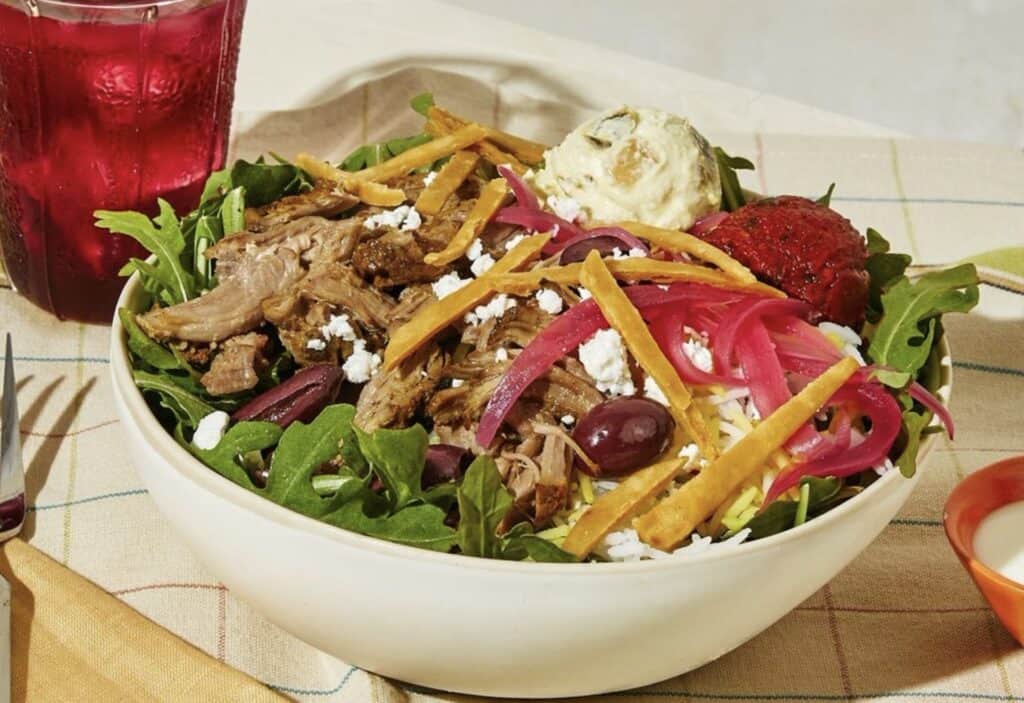



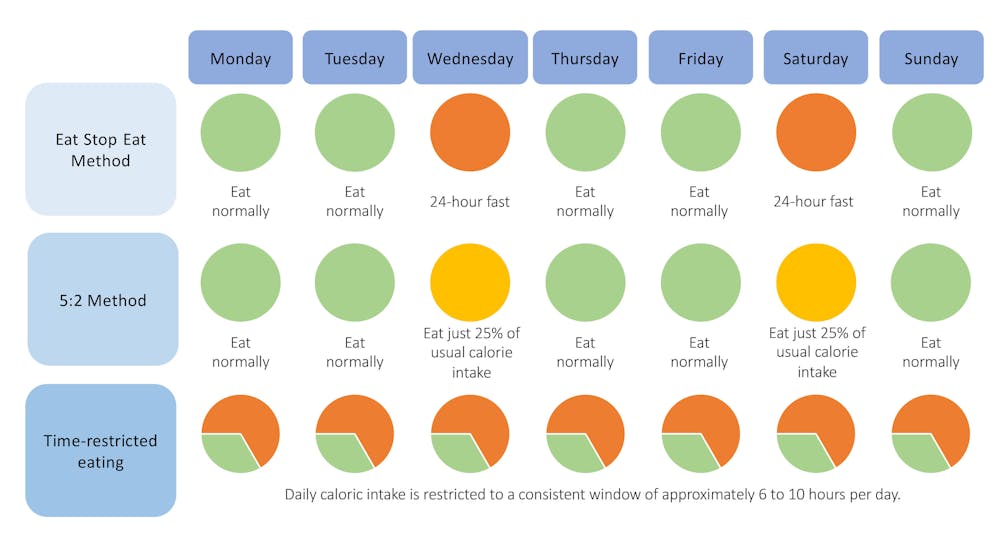
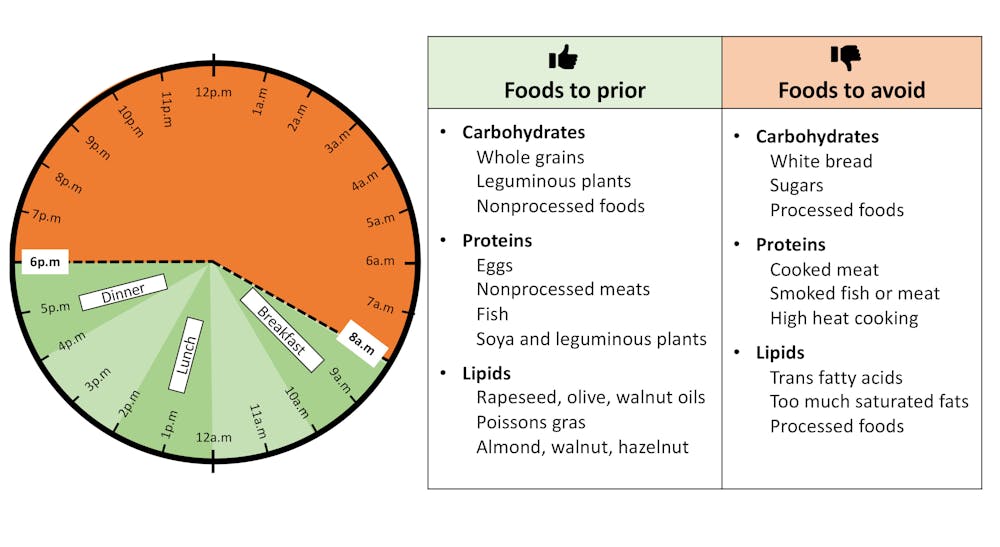


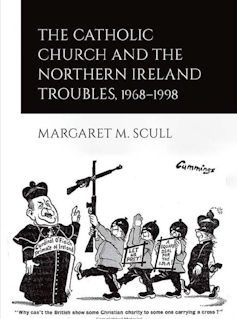








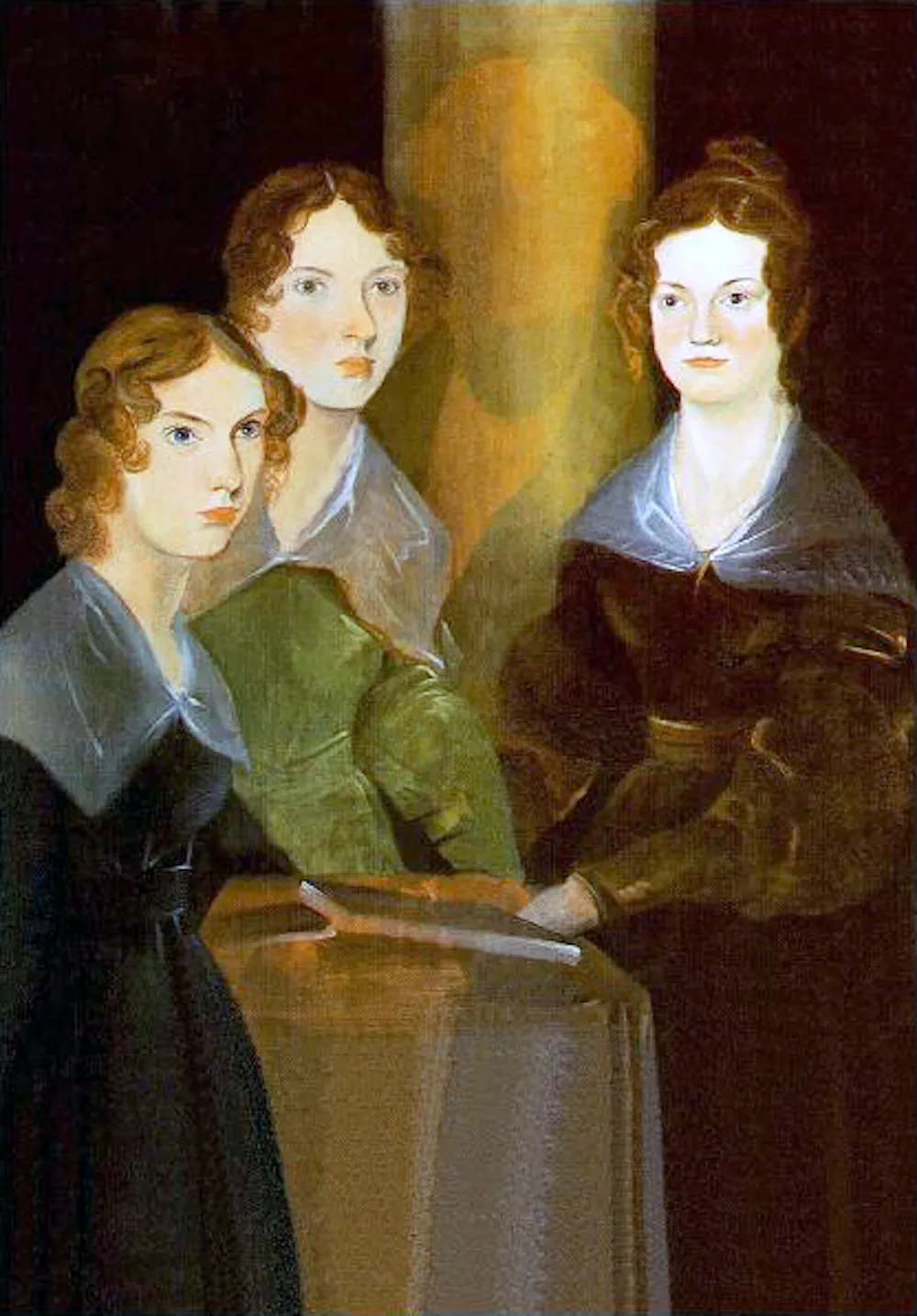
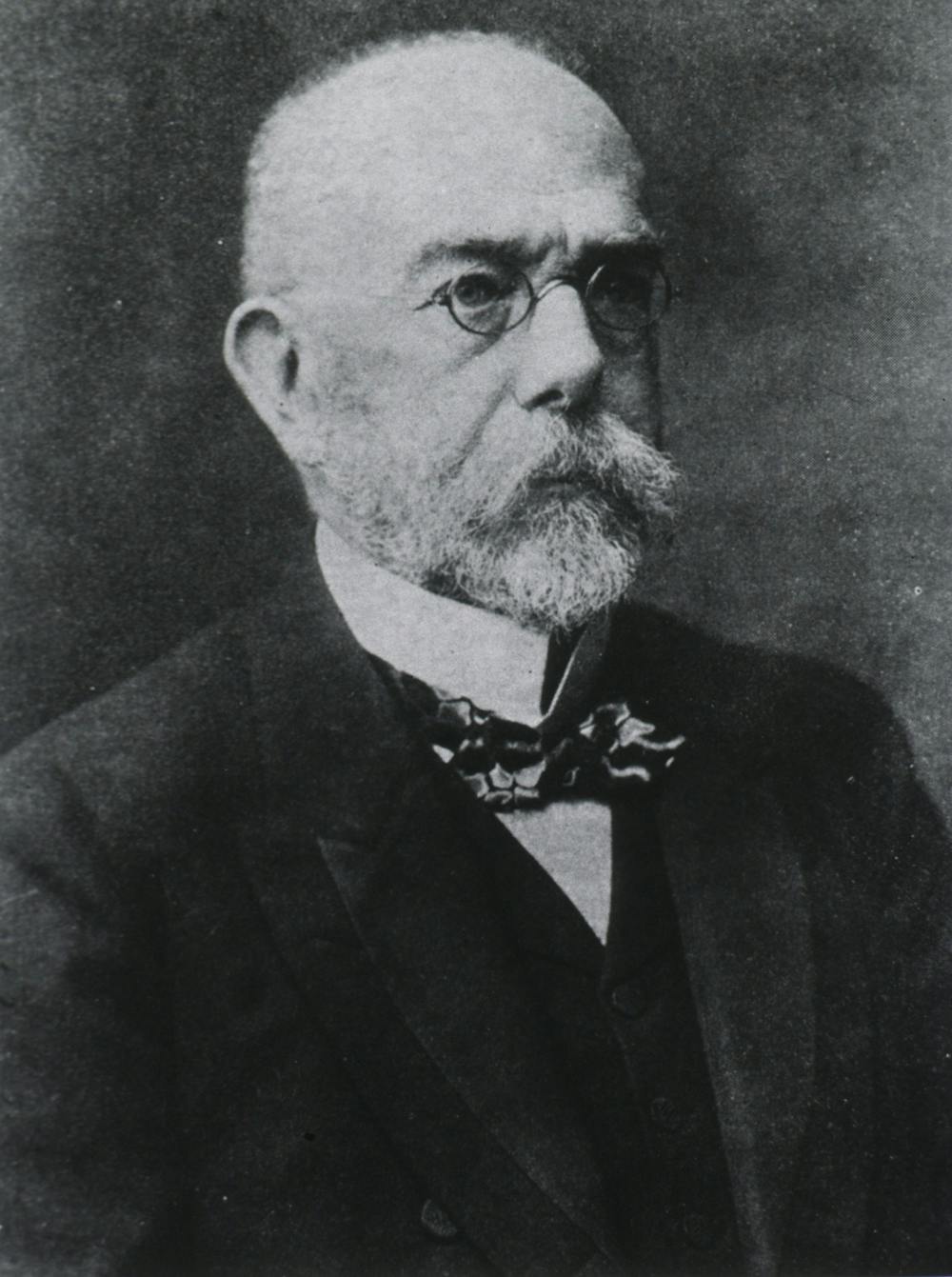


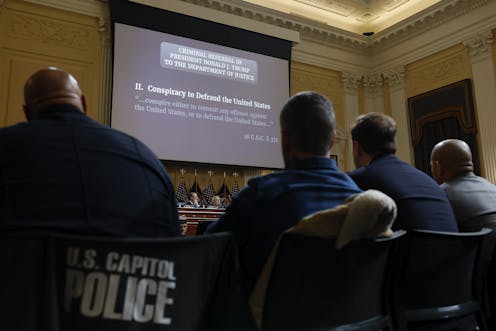
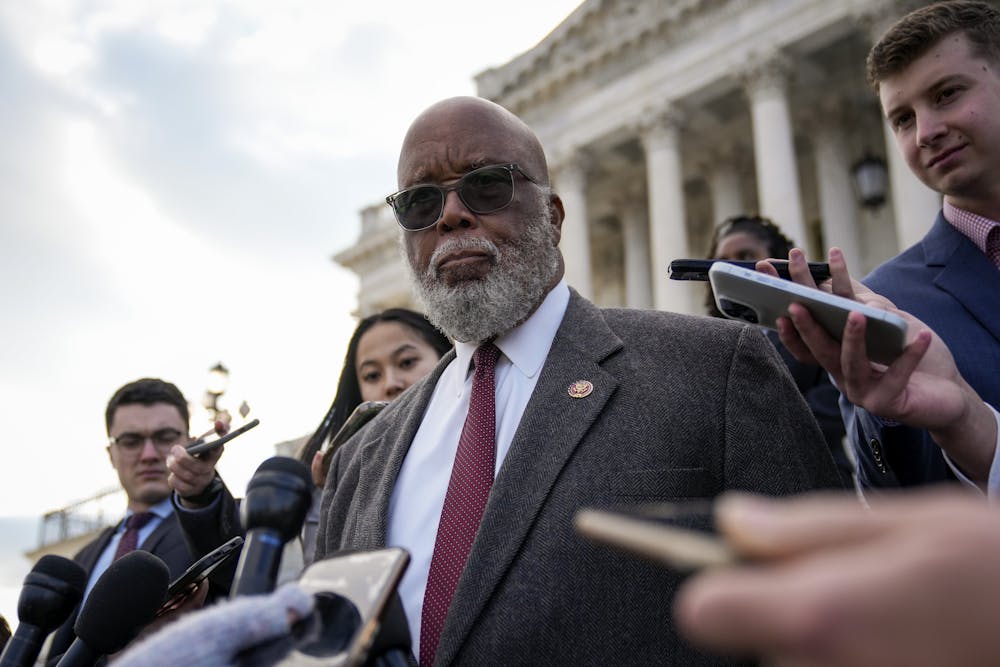







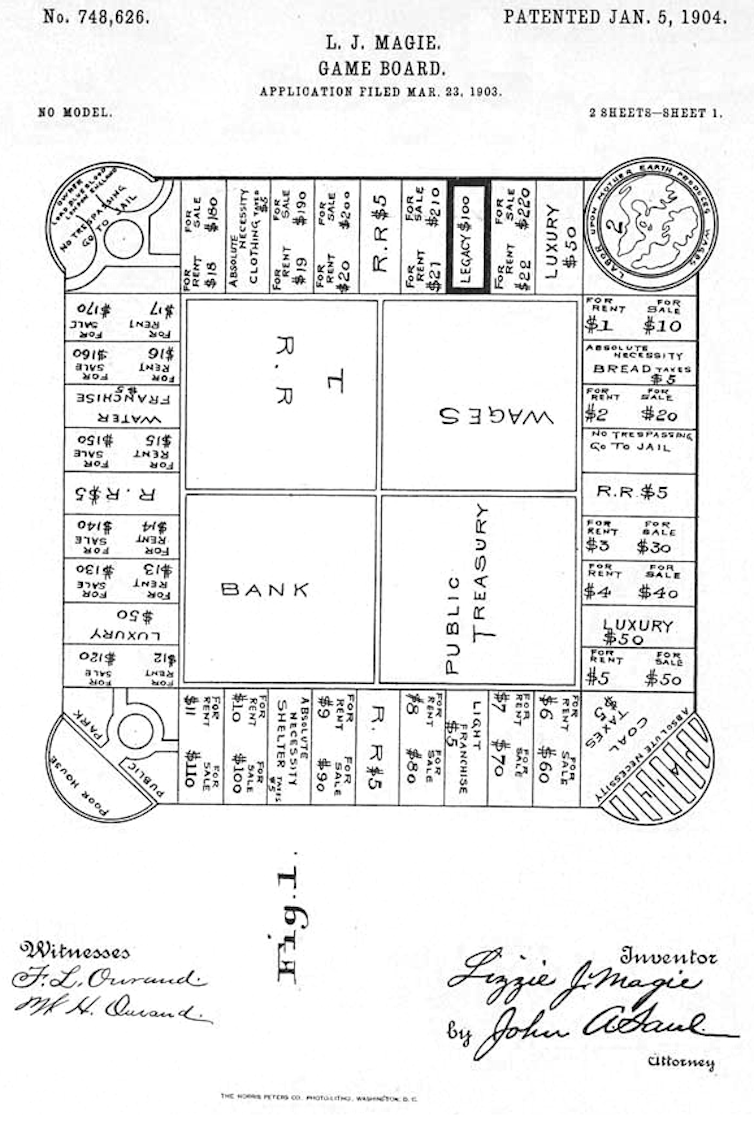
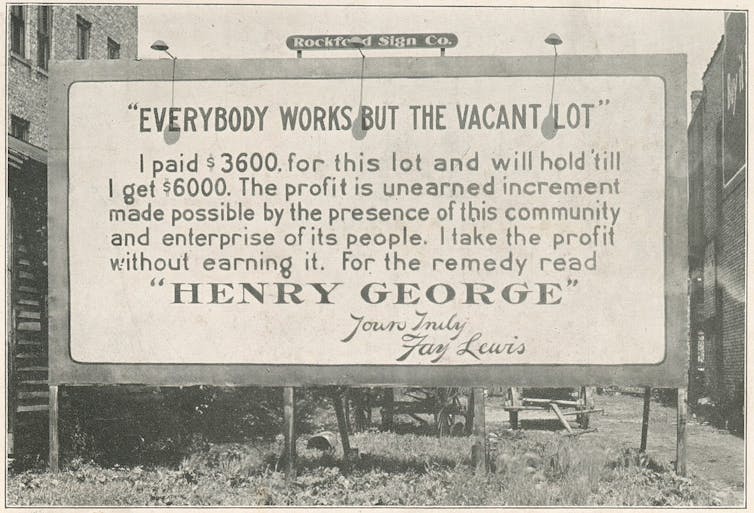
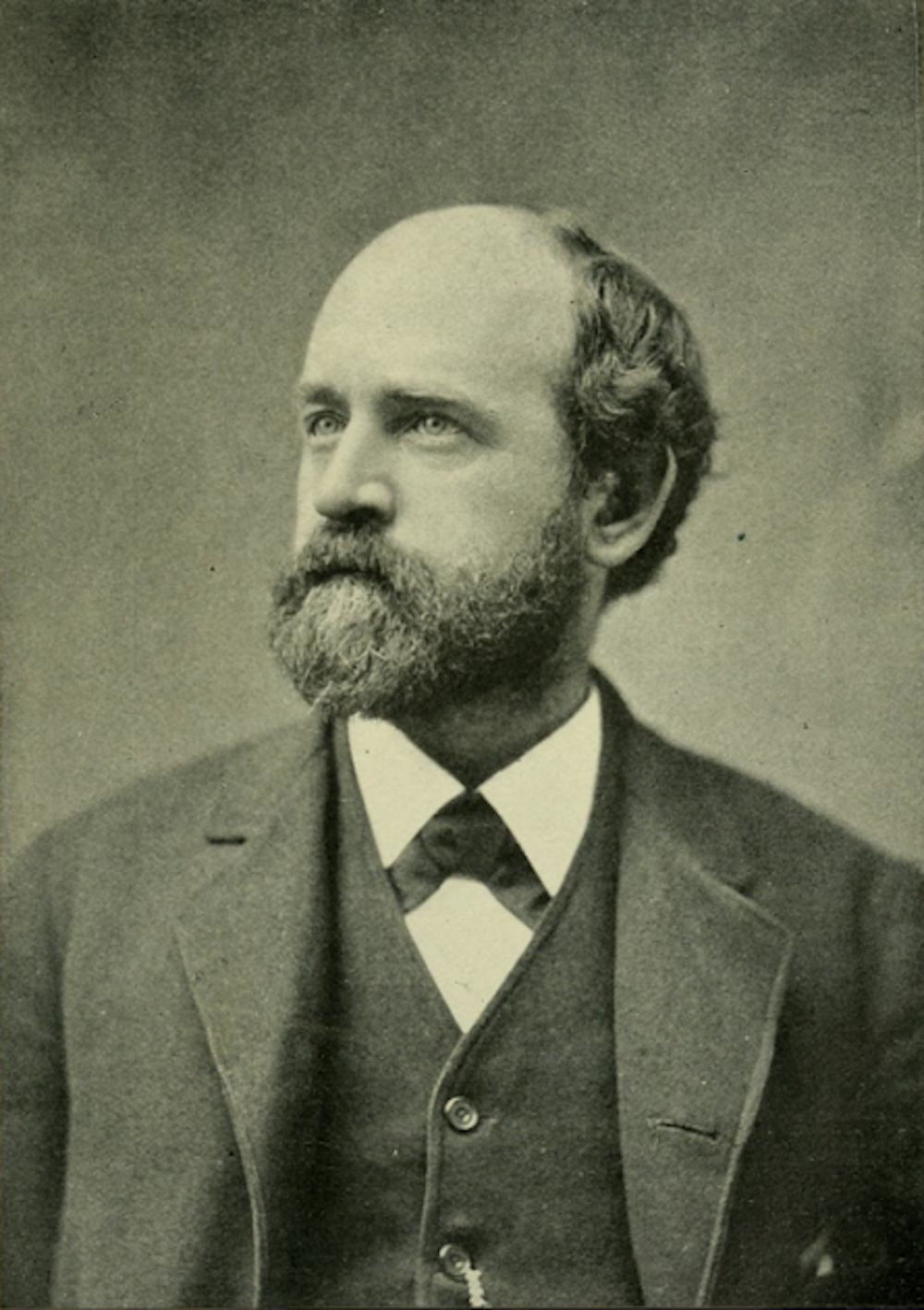





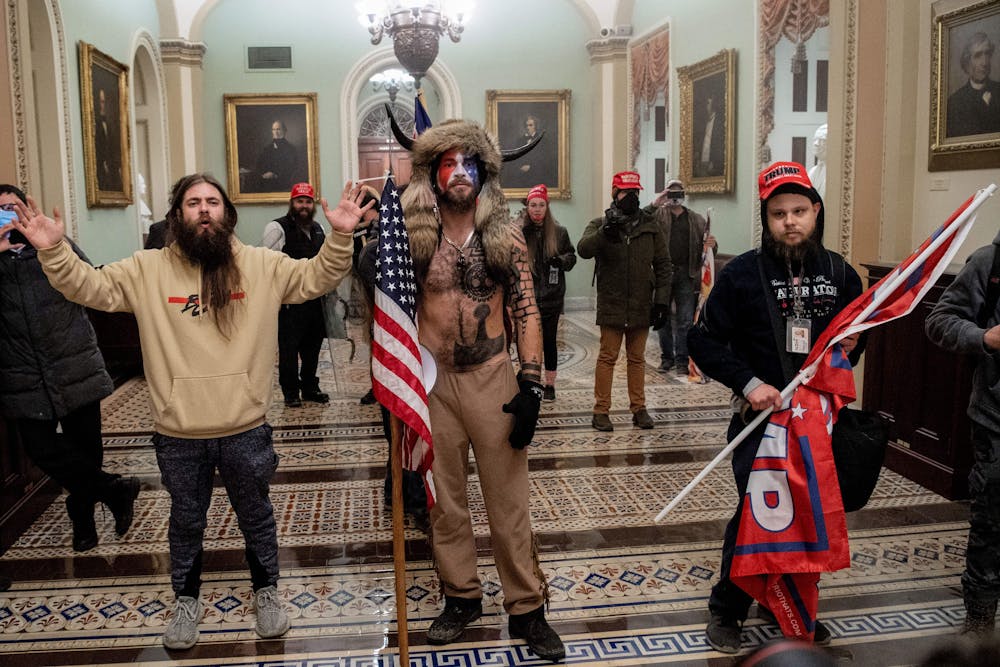







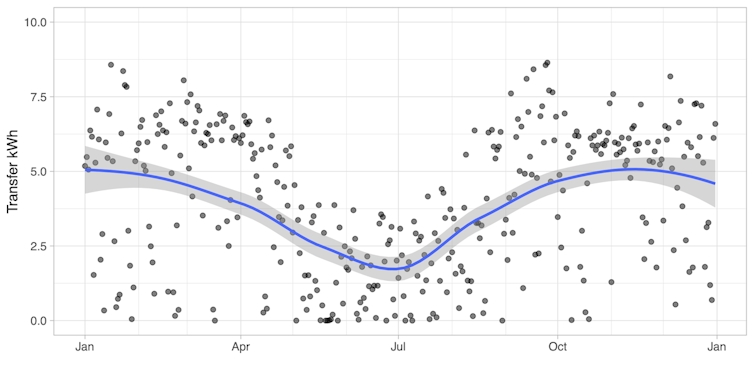
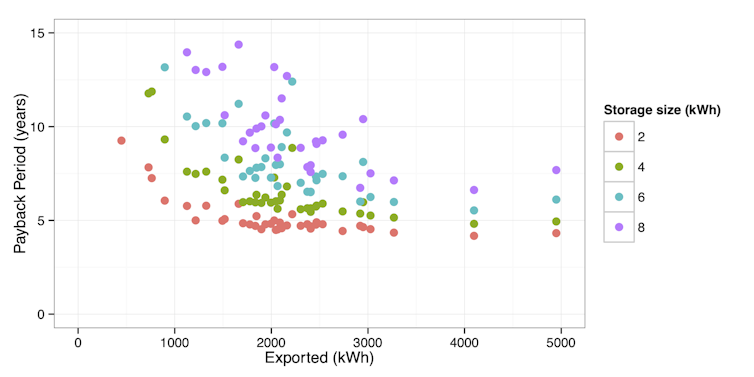


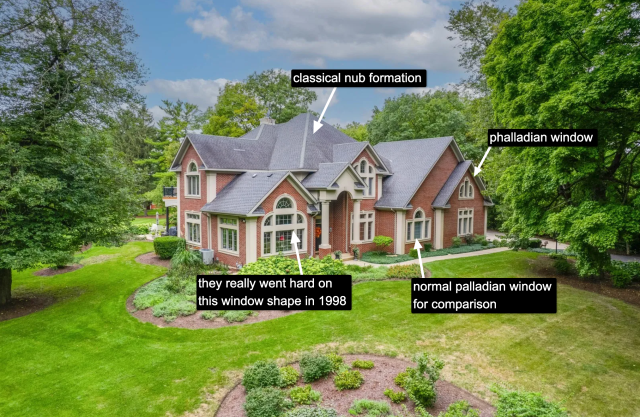








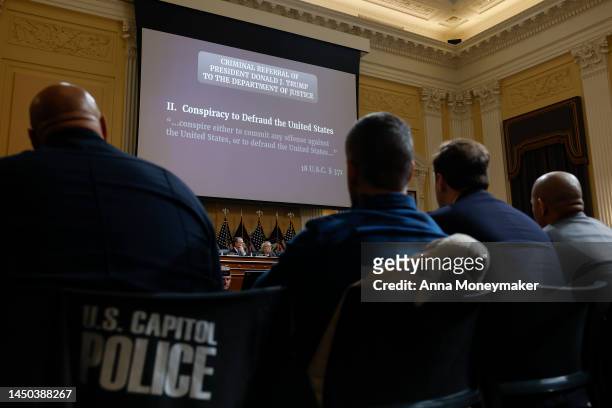
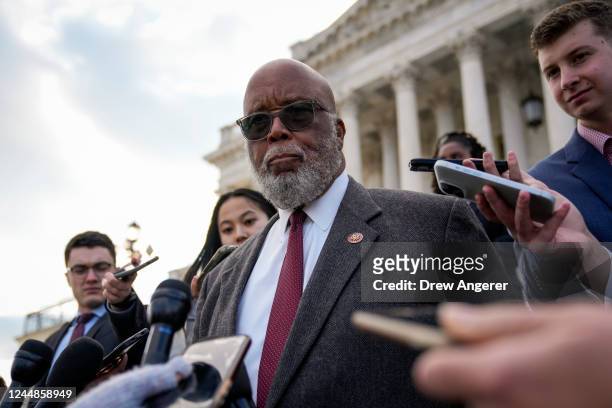



.jpg)
