However, attempts to circumvent constitutional term limits are not unprecedented elsewhere.
Virtually every country in Latin America has enshrined constitutional term limits as a safeguard against tyranny. These rules vary: some allow only a single term, some permit two, while others enable non-consecutive re-election. Yet several presidents have managed to defy these provisions.
Although the institutional norms and political cultures of these countries differ from those of the U.S., examining how term limits have been dismantled offers valuable insights into how any similar efforts by Trump might unfold.
How presidents have overstayed their term
The most common tactic is for presidents to first ensure their political party in the legislature is fully subservient to them, and then leverage a loyal majority to amend the Constitution — a move that has already been initiated in the U.S.
Ortega and Correa successfully used their legislative majorities to pass constitutional amendments that eliminated term limits in Nicaragua and Ecuador.
Some presidents have turned to plebiscites to legitimize constitutional tampering by appealing directly to the electorate and framing the move as a democratic exercise. Chávez employed this strategy in Venezuela, winning a 2009 referendum to abolish term limits.
The absence of a national referendum mechanism in the U.S. — where popular consultations are organized at the sub-national (state) level — limits the options available to a president seeking to remove term limits through this type of populist ploy.
Related to this, populist presidents who have successfully circumvented term limits have typically done so while enjoying extraordinarily high levels of public support.
In contrast, Trump’s approval ratings have consistently remained far lower. Currently, his favourability sits in the low 40s, making any attempt to claim a broad popular mandate for a third term both dubious and precarious.
Rooted in Cold War-era national security ideologies, this orientation casts domestic dissenters (“socialists,” Indigenous movements, unionists) as internal enemies, legitimizing repression as a patriotic duty.
In some countries, military oaths reflect this politicization. In both Nicaragua and Venezuela, these oaths increasingly emphasize loyalty to the president or ruling party and their revolutionary legacy, undermining institutional neutrality.
The absence of a tradition of using soldiers against American citizens and an institutional culture of constitutional loyalty and political neutrality may, at least in principle, provide some protection against the authoritarian overreach that has allowed certain Latin American presidents to remain in power indefinitely.
But a substantial portion of the U.S. armed forces leans politically to the right, like their counterparts in Latin America, raising concerns that partisan sympathies within the military could influence its response to a constitutional crisis.
Furthermore, the increasing use of non-military security forces — such as local police and Immigration and Customs Enforcement (ICE) — against civilians demonstrates that the state has a range of instruments at its disposal for exercising control.
For much of U.S. history, this confidence may have been justified, but today, it’s not only complacent but dangerous.
The strength of democratic institutions depends on the political will to defend them. Time will tell if the barriers that exist in the U.S. are strong enough to withstand the pressures now being placed upon them. What is clear is that relying on increasingly tenuous institutional resilience or historical exceptionalism is no substitute for vigilance and active defence of democratic norms.
Pascal Lupien does not work for, consult, own shares in or receive funding from any company or organisation that would benefit from this article, and has disclosed no relevant affiliations beyond their academic appointment.
Imagine an AI model that can use a heart scan to guess what racial category you’re likely to be put in – even when it hasn’t been told what race is, or what to look for. It sounds like science fiction, but it’s real.
My recent study, which I conducted with colleagues, found that an AI model could guess whether a patient identified as Black or white from heart images with up to 96% accuracy – despite no explicit information about racial categories being given.
It’s a striking finding that challenges assumptions about the objectivity of AI and highlights a deeper issue: AI systems don’t just reflect the world – they absorb and reproduce the biases built into it.
Race is a social construct, a set of categories invented by societies to classify people based on perceived physical traits and ancestry. These classifications don’t map cleanly onto biology, but they shape everything from lived experience to access to care.
One major source of bias is imbalanced training data. If a model learns primarily from lighter skinned patients, for example, it may struggle to detect conditions in people with darker skin.
Studies in dermatology have already shown this problem.
Even language models like ChatGPT aren’t immune: one study found evidence that some models still reproduce outdated and false medical beliefs, such as the myth that Black patients have thicker skin than white patients.
Sometimes AI models appear accurate, but for the wrong reasons – a phenomenon called shortcut learning. Instead of learning the complex features of a disease, a model might rely on irrelevant but easier to spot clues in the data.
Imagine two hospital wards: one uses scanner A to treat severe COVID-19 patients, another uses scanner B for milder cases. The AI might learn to associate scanner A with severe illness – not because it understands the disease better, but because it’s picking up on image artefacts specific to scanner A.
Now imagine a seriously ill patient is scanned using scanner B. The model might mistakenly classify them as less sick – not due to a medical error, but because it learned the wrong shortcut.
This same kind of flawed reasoning could apply to race. If there are differences in disease prevalence between racial groups, the AI could end up learning to identify race instead of the disease – with dangerous consequences.
In the heart scan study, researchers found that the AI model wasn’t actually focusing on the heart itself, where there were few visible differences linked to racial categories. Instead, it drew information from areas outside the heart, such as subcutaneous fat as well as image artefacts – unwanted distortions like motion blur, noise, or compression that can degrade image quality. These artefacts often come from the scanner and can influence how the AI interprets the scan.
In this study, Black participants had a higher-than-average BMI, which could mean they had more subcutaneous fat, though this wasn’t directly investigated. Some research has shown that Black individuals tend to have less visceral fat and smaller waist circumference at a given BMI, but more subcutaneous fat. This suggests the AI may have been picking up on these indirect racial signals, rather than anything relevant to the heart itself.
This matters because when AI models learn race – or rather, social patterns that reflect racial inequality – without understanding context, the risk is that they may reinforce or worsen existing disparities.
This isn’t just about fairness – it’s about safety.
Build transparency: many AI systems are considered “black boxes” because we don’t understand how they reach their conclusions. The heart scan study used heat maps to show which parts of an image influenced the AI’s decision, creating a form of explainable AI that helps doctors and patients trust (or question) results – so we can catch when it’s using inappropriate shortcuts.
Treat race carefully: researchers and developers must recognise that race in data is a social signal, not a biological truth. It requires thoughtful handling to avoid perpetuating harm.
AI models are capable of spotting patterns that even the most trained human eyes might miss. That’s what makes them so powerful – and potentially so dangerous. It learns from the same flawed world we do. That includes how we treat race: not as a scientific reality, but as a social lens through which health, opportunity and risk are unequally distributed.
If AI systems learn our shortcuts, they may repeat our mistakes – faster, at scale and with less accountability. And when lives are on the line, that’s a risk we cannot afford.
by Andrew C. Patterson, Assistant Professor of Sociology, MacEwan University
According to a recent survey, most political scientists agree that President Donald Trump is turning the United States government into an autocracy, all too quickly.
As political scholars Steven Levitsky and Lucan Way explain, a competitive-authoritarian country is one where elections are held and election results carry, but incumbents alter the game so as to tilt the odds of winning heavily in their favour. This effectively makes it an autocratic regime, with one person holding the lion’s share of power.
As just one recent example, Levistky and Way predicted in February that the Internal Revenue Service would become one of the many departments that Trump would weaponize. On April 15, Trump called for the IRS to revoke Harvard University’s tax-exempt status in response to the university’s refusal to acquiesce. Trump had previously withheld billions of dollars in grant funding.
Is there any case in which Trump has still acted in the service of the American public? Arguably, no, not by a long shot. Even the Jeff Bezos-owned Washington Post describes his first 100 days as a remarkable failure across multiple fronts.
The headlines have been blistering, calling those first 100 days “horrifying” and “inept.” Nor is the American public impressed: most give his performance a grade of D or F, according to a recent poll.
As research shows, these trends cannot possibly be good for the lives and livelihoods of American citizens. We have known for over a decade that the recruitment of civil servants based on their political affiliations or loyalties, rather than credentials, is a recipe for political corruption. Corruption, in turn, harms population health.
Democracy, too, matters for population health. In another study, we found that democracies have as much as 11 years of added life expectancy, and 75 per cent lower rates of infant mortality, compared to autocratic countries. For someone focused on cross-national differences in health, these were huge differences.
It is fair to say that both economic prosperity and population health require investment in the same government infrastructures that the Trump administration is now downsizing.
Yet the damage does not stop at the border. Trump’s decisions will have ripple effects on global health. Programs focused on containing infectious disease in the developing world are bearing the brunt of huge cuts to USAID.
Speed and volume
Trump’s approach is not informed by any kind of economic expertise. He is shooting the American economy in both feet by waging a tariff war against other countries as he simultaneously decimates tourism and upends a low-cost workforce with his immigration policy.
Americans who voted for him will not get the price control they were hoping for, with supply-chain disruptions coming quickly down the pipeline.
First, Trump’s executive actions are happening far too quickly. He has had a record number of executive orders since taking office only three months ago. It may take months if not years for challenges to these decisions to work their way through courts.
Second, courts will not necessarily rule on the side of democracy, as in the Supreme Court’s decision to assure legal immunity for Trump.
None of this bodes well. According to one watchdog based in Sweden, the U.S. could lose its status as a democratic nation in just a few months — well before the midterm elections.
CNN reports on President Trump’s statement that he doesn’t know if he needs to uphold the U.S. Constitution.
Starting a movement
All of this has one common denominator: Trump’s unhinged executive power. A decidedly meek U.S. Congress needs to wake from its stupor and constrain that power.
But at the time of this writing, the House judiciary committee plans to slip provisions into a budget megabill that will grant Trump ever more sweeping power over regulations.
One solution may be what we sociologists refer to as a social movement. This is where as many people as possible choose to act. Small interactions — like sharing an article with friends and family — can make a big difference, according to one prominent perspective in sociology.
Other means are more direct, like joining a protest or writing to members of Congress. And then there are decisions about what not to do. Universities and law firms are encouraged not to participate in the fraying of American democracy by making a “deal” with the Trump administration.
The take-home message is that the threat to American democracy is real and it is imminent. The impact on human health and well-being will be global. If the collapse of American democracy affects all of us, inside and outside of U.S. borders, then we can all agree to do something about it.
Andrew C. Patterson does not work for, consult, own shares in or receive funding from any company or organisation that would benefit from this article, and has disclosed no relevant affiliations beyond their academic appointment.
by Oliver Schilke, Director of the Center for Trust Studies, Professor of Management and Organizations, University of Arizona
Whether you’re using AI to write cover letters, grade papers or draft ad campaigns, you might want to think twice about telling others. That simple act of disclosure can make people trust you less, our new peer-reviewed article found.
As researchers whostudy trust, we see this as a paradox. After all, being honest and transparent usually makes people trust you more. But across 13 experiments involving more than 5,000 participants, we found a consistent pattern: Revealing that you relied on AI undermines how trustworthy you seem.
Participants in our study included students, legal analysts, hiring managers and investors, among others. Interestingly, we found that even evaluators who were tech-savvy were less trusting of people who said they used AI. While having a positive view of technology reduced the effect slightly, it didn’t erase it.
Why would being open and transparent about using AI make people trust you less? One reason is that people still expect human effort in writing, thinking and innovating. When AI steps into that role and you highlight it, your work looks less legitimate.
But there’s a caveat: If you’re using AI on the job, the cover-up may be worse than the crime. We found that quietly using AI can trigger the steepest decline in trust if others uncover it later. So being upfront may ultimately be a better policy.
Being caught using AI by a third party has consequences, as one New York attorney can attest.
Why it matters
A global survey of 13,000 people found that about half had used AI at work, often for tasks such as writing emails or analyzing data. People typically assume that being open about using these tools is the right choice.
Yet our research suggests doing so may backfire. This creates a dilemma for those who value honesty but also need to rely on trust to maintain strong relationships with clients and colleagues. In fields where credibility is essential – such as finance, health care and higher education – even a small loss of trust can damage a career or brand.
The consequences go beyond individual reputations. Trust is often called the social “glue” that holds society together. It drives collaboration, boosts morale and keeps customers loyal. When that trust is shaken, entire organizations can feel the effects through lower productivity, reduced motivation and weakened team cohesion.
If disclosing AI use sparks suspicion, users face a difficult choice: embrace transparency and risk a backlash, or stay silent and risk being exposed later – an outcome our findings suggest erodes trust even more.
That’s why understanding the AI transparency dilemma is so important. Whether you’re a manager rolling out new technology or an artist deciding whether to credit AI in your portfolio, the stakes are rising.
What still isn’t known
It’s unclear whether this transparency penalty will fade over time. As AI becomes more widespread – and potentially more reliable – disclosing its use may eventually seem less suspect.
There’s also no consensus on how organizations should handle AI disclosure. One option is to make transparency completely voluntary, which leaves the decision to disclose to the individual. Another is a mandatory disclosure policy across the board. Our research suggests that the threat of being exposed by a third party can motivate compliance if the policy is stringently enforced through tools such as AI detectors.
A third approach is cultural: building a workplace where AI use is seen as normal, accepted and legitimate. We think this kind of environment could soften the trust penalty and support both transparency and credibility.
The Research Brief is a short take on interesting academic work.
Oliver Schilke received funding from the National Science Foundation (Award #1943688).
Martin Reimann receives funding from the National Endowment for the Arts research grant (#1925643–38-24) and a National Security Systems (TRIF NSS) research grant.
On May 1, 2025, President Donald Trump issued an executive order calling for the Corporation for Public Broadcasting, the nonprofit that helps fund American public media stations of all sizes, to terminate support for NPR and PBS. His administration is also proposing to defund the Corporation for Public Broadcasting entirely, threatening the funding of smaller outlets like WBHM in Birmingham, Alabama, and KGOU in Norman, Oklahoma.
Beneath those familiar talking points lies a long-standingassumption: that the market already provides “abundant, diverse and innovative news options,” as the president’s executive order put it.
During that time, I’ve watched for-profit journalism struggle to meet the needs of the region. For this reason, local news outlets have increasingly turned to other sources of revenue.
The shift has been striking. Just 10 years ago, about 10% of all full-time journalists in Seattle worked for local, nonprofit affiliates of NPR and PBS. Today, that figure is closer to 30%.
That growing share reflects investments by NPR affiliates like KUOW and KNKX and public television station Cascade PBS, which have expanded their coverage of critical topics like homelessnessand immigration. Federal support plays a small but significant role, making up between 5%and 10% of their budgets. The rest of their funding comes from a combination of donations, sponsorship and philanthropic grants.
To be sure, public media has not and cannot replace everything that has been lost. But it has helped fill the void left after once-iconic outlets like the Seattle Post-Intelligencer underwent huge layoffs.
Donors, tax dollars plug holes
Public media outlets are only one prong of an increasingly noncommercial local news system. In the past, local media were dominated by commercial players that garnered the lion’s share of their revenues through advertising.
Now, more and more journalism jobs in the state of Washington, including those at commercial outlets, are sustained by philanthropy and government spending. The Seattle Times – which is still, by far, the largest newsroom in the city – pays 30 of its reporters through philanthropic funding. That’s roughly 20% of its entire newsroom. The national nonprofit Report for America has, since its inception in 2018, placed 13 reporters in towns and cities across Washington to cover underserved topics like rural health and veterans issues.
Meanwhile, the Murrow News Fellowship, launched in 2023 and funded by Washington’s state Legislature, has enabled 16 full-time journalists to be hired for two-year stints in commercial, nonprofit and public media newsrooms around the state.
Universities are also playing a role. Long a pipeline into the profession, undergraduate and graduate journalism programs have increasingly become a piece of the local news infrastructure. Roughly 10% of all state Legislature coverage in Washington, for example, is now produced by undergraduate student journalists. Many report for newsrooms that no longer have a dedicated journalist in Olympia, the state’s capital.
Then-state Sen. Pramila Jayapal speaks to reporters in Olympia, Wash., about a proposal to make community and technical college free for state residents without a bachelor’s degree.
AP Photo/Ted S. Warren
News isn’t always profitable
All of these examples – public media, philanthropic support for nonprofit outlets and jobs at for-profit media enterprises, and student journalism – meet needs that for-profit journalism can no longer address on its own.
But to pretend the market can fix these problems is to ignore that it played a key part in creating them. When a newsroom job disappears, it’s not because watchdog journalism has lost its civic value. It’s because it became hard to monetize.
The push to defund NPR and PBS stems in large part from long-standing Republican antipathy toward public media. But it also rests on a belief that journalism should only survive if it can compete in the marketplace.
In Washington state, we’ve already seen what happens when we rely on markets alone: fewer reporters, less oversight and a growing amount of AI-generated news that provides no original reporting.
If these defunding efforts succeed, they will likely do real harm to local news. KNKX has warned that it would lead to “difficult decisions and sacrifices at the expense of access to local journalism.” KUOW has signaled that it would “immediately need to raise 1 million dollars” to offset the loss in federal funding.
Translation: It could lead to fewer reporters and less reporting at a time when more of both is needed.
Matthew Powers does not work for, consult, own shares in or receive funding from any company or organization that would benefit from this article, and has disclosed no relevant affiliations beyond their academic appointment.
Book lovers in Carrollwood have something major to celebrate: Barnes & Noble has officially returned to the community with a brand-new bookstore at 13123 N. Dale Mabry Highway in the […]
As early as fourth grade, I remember doing emergency drills in school in case a “bad guy” came into the classroom. At the time, we were too young to be told the details, but some of us knew we would be doing these drills because of what happened at Sandy Hook Elementary School in Newtown, […]
In 1902, a woman named Mary MacLane from Butte, Montana, became an international sensation after publishing a scandalous journal recording life at the age of 19. Rereading this often-forgotten debut, Hunter Dukes finds a voice that hungers for worldly experience, brims with bisexual longing, and rages against the injustices of youth.
University Police found an empty gun case and empty ammunition magazines in the USF Fine Arts Building on Saturday. Dean of Students Danielle McDonald said there is no active threat in an email to students on Monday morning. McDonald said classes would continue as normal. “USF is actively monitoring the situation that arose over the […]
One immigration attorney based in Orlando said around a dozen USF students called her office after having their visas revoked at the beginning of the month, but USF will not confirm how many students have lost their status. Attorney Madhurima Paturi from Paturi Law said some of these students had their visas revoked for “simple” […]
Faculty Senate Vice President Scott Perry said he can’t “get a hold of” USF President Rhea Law to learn her stance on the rumored Sarasota-Manatee and New College of Florida merger. “I’ve always found Rhea Law to make the right statement at the right time, but she’s not being available to talk,” Perry said. “I’m […]
In the recent flurry of executive orders from President Donald Trump, one warned of “a distorted narrative” about race “driven by ideology rather than truth.” It singled out a current exhibition at the Smithsonian American Art Museum titled “The Shape of Power: Stories of Race and American Sculpture” as an example. The exhibit displays over two centuries of sculptures that show how art has produced and reproduced racial attitudes and ideologies.
The executive order condemns the exhibition because it “promotes the view that race is not a biological reality but a social construct, stating ‘Race is a human invention.’”
The executive order apparently objects to sentiments such as this: “Although a person’s genetics influences their phenotypic characteristics, and self-identified race might be influenced by physical appearance, race itself is a social construct.” But those words are not from the Smithsonian; they are from the American Society of Human Genetics.
I’m a historian who specializes in the scientific study of race. The executive order places “social construct” in opposition to “biological reality.” The history of both concepts reveals how modern science landed at the idea that race was invented by people, not nature.
Race exists, but what is it?
At the turn of the 20th century, scientists believed humans could be divided into distinct races based on physical features. According to this idea, a scientist could identify physical differences in groups of people, and if those differences were passed on to succeeding generations, the scientist had correctly identified a racial “type.”
The results of this “typological” method were chaotic. A frustrated Charles Darwin in 1871 listed 13 scientists who identified anywhere between two and 63 races, a confusion that persisted for the next six decades. There were almost as many racial classifications as racial classifiers because no two scientists could seem to agree on what physical characteristics were best to measure, or how to measure them.
One intractable problem with racial classifications was that the differences in human physical traits were tiny, so scientists struggled to use them to differentiate between groups. The pioneering African American scholar W.E.B. Du Bois noted in 1906, “It is impossible to draw a color line between black and other races … in all physical characteristics the Negro race cannot be set off by itself.”
But scientists tried. In an 1899 anthropological study, William Ripley classified people using head shape, hair type, pigmentation and stature. In 1926, Harvard anthropologist Earnest Hooton, the leading racial typologist in the world, listed 24 anatomical traits, such as “the presence or absence of a postglenoid tubercle and a pharyngeal fossa or tubercle” and “the degree of bowing of the radius and ulna” while admitting “this list is not, of course, exhaustive.”
All this confusion was the opposite of how science should operate: As the tools improved and as measurements became more precise, the object of study − race − became more and more muddled.
Keith dismissed science as the surest method to distinguish race; one knows a person’s race because “a single glance, picks out the racial features more certainly than could a band of trained anthropologists.” Keith’s view perfectly captured the view that race must be real, for he saw it all around him, even though science could never establish that reality.
In the scientific study of race, however, things were about to change.
Turning to culture to explain difference
By 1933, the rise of Nazism had added urgency to the scientific study of race. As anthropologist Sherwood Washburn wrote in 1944, “If we are to discuss racial matters with the Nazis, we had better be right.”
In the late 1930s and early 1940s, two new scientific ideas came to fruition. First, scientists began looking to culture rather than biology as the driver of differences among groups of people. Second, the rise of population genetics challenged the biological reality of race.
In 1943, anthropologists Ruth Benedict and Gene Weltfish wrote a short work also titled The Races of Mankind. Writing for a popular audience, they argued that people are far more alike than different, and our differences owe to culture and learning, not biology. An animated cartoon short later gave these ideas wider circulation.
‘The Brotherhood of Man’ was based on Benedict and Weltfish’s pamphlet and pointed out that differences between people come from their environments.
Benedict and Weltfish argued that while people did, indeed, differ physically, those differences were meaningless in that all races could learn and all were capable. “Progress in civilization is not the monopoly of one race or subrace,” they wrote. “Negroes made iron tools and wove fine cloth for their clothing when fair-skinned Europeans wore skins and knew nothing of iron.” The cultural explanation for different human lifestyles was more robust than confused appeals to an elusive biological race.
The turn to culture was consistent with a deep change in biological knowledge.
A new tool, what scientists called a “genetic population,” was much more valuable. The geneticist, Dobzhansky held, identified a population based on the genes it shared in order to study change in organisms. Over time natural selection would shape how the population evolved. But if that population didn’t shed light on natural selection, the geneticist must abandon it and work with a new population based on a different set of shared genes. The important point is that, whatever population the geneticist chose, it was changing over time. No population was a fixed and stable entity, as human races were supposed to be.
Sherwood Washburn, who happened to be Dobzhansky’s close friend, brought those ideas into anthropology. He recognized that the point of genetics was not classifying people into fixed groups. The point was to understand the process of human evolution. This change reversed everything taught by Hooton, his old teacher.
Writing in 1951, Washburn argued, “There is no way to justify the division of a … population into a series of racial types” because doing so would be pointless. Presuming any group to be unchanging stood in the way of understanding evolutionary changes. A genetic population was not “real”; it was an invention of the scientist using it as a lens to understand organic change.
A good way to understand this profound difference relates to roller coasters.
Anyone who’s been to an amusement park has seen signs that precisely define who is tall enough to ride a given roller coaster. But no one would say they define a “real” category of “tall” or “short” people, as another roller coaster might have a different height requirement. The signs define who is tall enough only for riding this particular roller coaster, and that’s all. It’s a tool for keeping people safe, not a category defining who is “really” tall.
Anyone trying to pound a nail with a screwdriver soon realizes that tools are good for tasks they were designed for and useless for anything else. Genetic populations are tools for specific biological uses, not for classifying people into “real” groups by race.
The Conversation U.S. receives funding from the Smithsonian Institution.
John P. Jackson, Jr. does not work for, consult, own shares in or receive funding from any company or organization that would benefit from this article, and has disclosed no relevant affiliations beyond their academic appointment.
Plant City’s Keel Farms is kicking off spring with one of Tampa Bay’s most anticipated annual events—the 17th Annual Blueberry Festival. Running every Saturday and Sunday throughout April (excluding Easter […]
Each year during the American Library Association’s “Banned Books Week,” librarians display famous books that have been challenged in the past as well as the most frequently challenged books in the present day. This book-centric approach seems to be the standard. By focusing on the books themselves, however, do librarians tacitly concede that these books are indeed controversial? Defending challenged books on their merits, as in typical Banned Books Week displays, accepts the debate terms set by would-be censors. The problem is not the book; it’s the act of censorship. We should closely examine the motivations and political context of book banning movements in order to face this challenge with a fuller understanding of the problem. This article describes an exhibit at Florida State University Libraries during Banned Books Week 2022 that confronted this problem directly by trying to understand acts of censorship in Florida history. The exhibit, “Against Liberty: A History of Banning Books in Florida,” deployed primary sources readily available online and in the FSU collections to explore who has challenged books in Florida history, and what were their motivations.
Introduction
Each year in fall, typically in late September, the American Library Association (ALA) sponsors “Banned Books Week,” an annual event observed in libraries across the United States to raise awareness of challenges to the freedom to read and to build community with librarians, authors, publishers, and the reading public. Many librarians take this opportunity to create book displays, often showcasing famous books that have been banned in the past as well as the most frequently challenged books in the present day. In support of such efforts, ALA maintains a webpage that includes a variety of creative ways to display banned books in libraries. In almost every example on the site, the books themselves are the focus, often with some note about their content that has been considered objectionable.1
But considered objectionable by whom? In describing the current wave of book challenges, the ALA website alludes to “[g]roups and individuals demanding the censorship of multiple titles, often dozens or hundreds at a time,” but doesn’t elaborate further about who these groups are.2 PEN America, an advocacy group for writers and free expression, reported that, since 2021, the dramatic increase in the number of book challenges in the United States is largely the work of a movement to “advance extreme conservative viewpoints about what is appropriate and allowable in schools.”3 But who belongs to this movement, and why are they coordinating efforts nationwide to remove books en masse from library shelves across the country? Moms for Liberty, headquartered in Florida, is one of the organizations coordinating today’s book banning movement. For example, Bruce Friedman, a member of Moms for Liberty in Clay County, near Jacksonville, submitted over 400 book challenges to the county school district during the 2022-2023 school year. According to the Tampa Bay Times, which reviewed statewide data on book challenges, over 600 challenges of the total 1,100 received throughout the state that year came from either Friedman or former Escambia County teacher, Vikki Baggett. Baggett presented to the Santa Rosa County chapter of Moms for Liberty in May 2023 to share tips on how to get books removed from school libraries.4 The numbers of book challenges are staggering and the coordinated campaign that now extends nationwide, led by well-connected organizations including Moms for Liberty, suggests there is more to this movement than local parents’ concerns. In the face of this powerful movement against the freedom to read, librarians and the reading public need to follow the advice of censorship and intellectual freedom expert Emily Knox and take seriously the book challengers’ reasons for action, both to better understand their motives and to more effectively respond to attempts at censorship.5
In the summer of 2022, during what seemed at the time to be the height of the mass book banning movement sweeping public and school libraries in Florida, I decided to respond by rethinking the traditional Banned Books Week display. My goals were to turn the spotlight onto the would-be book banners in order to interrogate their motives and to put the current wave of book challenges into historical perspective. I decided to focus entirely on the state of Florida, where I lived and worked, because it was home to most of the university’s student body, and because the state has been the epicenter of US book banning in the twenty-first century. Based on data collected by PEN America, the 2021-2022 school year was, unfortunately, not the height of book banning, but only the beginning. Since that year, when PEN America documented 566 book bans in Florida, the number more than doubled to 1,406 in the 2022-2023 school year, and then skyrocketed to 4,561 book bans in 2023-2024. Since 2022, Florida has led the nation with the most book bans by state.6 Florida has also served as a testing ground for government action, providing a model for other censorious politicians to follow at the state and federal levels.7
It is also important to acknowledge that my individual and institutional positionality made it possible to create an exhibit that some might find politically provocative. I was able to proceed in part because of my union membership in the Florida State University chapter of the United Faculty of Florida. As a faculty member covered by the collective bargaining contract, I enjoyed the same academic freedoms and job security as other university faculty and felt empowered to present an honest and historically accurate narrative of book banners in Florida history. Unions are also under threat in Florida; the Republican-controlled legislature regularly passes new laws making it difficult to sustain union membership and legal recognition. However, at the time of my exhibit, the FSU faculty union had succeeded in meeting each new requirement that the state imposed. I also obtained backing from my library Dean, who supported the project enthusiastically. Additionally, as a cisgender white male, I might not be as easily targeted as faculty and staff from historically marginalized groups, especially given the political backlash currently aimed at campus offices and curricula that support the university’s Diversity, Equity, and Inclusion (DEI) goals. And finally, working at a large research university library meant that my collections were not the typical targets of coordinated book banning movements, which are more likely directed at public and school libraries.8 For all of these reasons, I felt both empowered and compelled to raise my voice on this issue.
In this article, I will share both the content and process of creating my exhibit, “Against Liberty: A History of Banning Books in Florida.” In sharing my historical research and experience creating the exhibit, I hope that library workers and other readers will recognize the core message of my exhibit: that book banning is rarely pursued as a good faith effort to protect readers from harmful content. Rather, as evidenced many times in Florida history, acts of censorship are rooted in struggles for power and social dominance. The three major episodes of book banning that I explored in my exhibit coincided with times of social crisis. In Florida, in the 1830s, in the decades after Reconstruction, and again during the mid-twentieth century Civil Rights Movement, reactionary forces used censorship as one tool in their bid to control the political narrative in times of significant social and cultural change. This historical approach helps us to see continuities between the motives and methods of book banners past and present. With a clearer understanding of these moments of conjuncture and why censors have challenged books in the past, we may be better equipped to respond today by crafting effective policies, procedures, and political advocacy in our communities. As my exhibit showed, the challenges we face are not new, and recognizing the true motives of book banners is essential to resisting the often powerful interests that seek to limit our freedom to read, learn, and imagine alternative futures.
An Idea Emerges
The idea for this exhibit came together during the summer of 2022, when my graduate course work in nineteenth-century United States history intersected with my role as Humanities Librarian at Florida State University Libraries. As a student, I had recently conducted research on neo-Confederate organizations and how they shaped Southern universities in the late-nineteenth and early-twentieth centuries. These groups, including the United Daughters of the Confederacy (UDC) and the United Confederate Veterans (UCV), were very concerned about the history being taught in Southern schools and worked to influence the curricula and textbooks used in schools at all levels, including colleges and universities. This research was fresh in my mind when Dr. Laura McTighe, a professor of religion and frequent collaborator with the library, mentioned to me in conversation that she was reading about how, before the Civil War, Southern enslavers passed laws to punish people found with abolitionist books and pamphlets in an effort to prevent the spread of abolitionist ideas. Putting this conversation in context with my research and today’s book banning movement, I was beginning to see similarities between the censors of each time period.
The final catalyst arrived when a library colleague alerted me to a book that had just been returned with a note written on the inside cover page. (Fig. 1) My colleague wanted to know what we should do with a defaced book, and since it was a history book, it fell to me to make this collection development decision. When I saw that the “defacement” was a note saying, “Warning–this is a racist book,” complete with page numbers to the writer’s purported evidence, I was intrigued. As it happened, the writer was correct. The book was a reprint edition of History of Georgia, by Robert Preston Brooks, one of many examples of histories from Dunning School scholars of the early twentieth century. Named for Columbia University historian Archibald William Dunning, who trained many of the scholars who wrote in this tradition, it refers to an interpretation of the post-Civil War Reconstruction era critical of Black enfranchisement and officeholding while sympathetic to the white Southerners who overthrew the Reconstruction governments, often violently.9 Here in my hands was a physical manifestation of the neo-Confederate movement I had studied and a modern reader’s act of resistance to it. I decided that instead of deaccessioning the book because of the annotation and the book’s overall poor condition, it needed to go into an exhibit!
Fig. 1. “Defaced” inside cover page of History of Georgia. Photo by author.
Exhibit Logistics
As I conducted further research on book banners in Florida history, I had to consider how I could represent my findings in a physical exhibit. There were several logistical issues to consider in the process. First, the only space available for my display was a small empty wall on the first floor of our main library building. I took measurements of the space to keep in mind as I selected objects and images to include in the exhibit and worked with colleagues to develop appropriate title banners and signs.
Assembling my exhibit required a bit of resourcefulness. The library did not have locking exhibit cases, so I resolved not to use any rare materials in the exhibit. Instead, most of the objects I displayed were either books from the circulating collection or high-quality scanned images. I borrowed an empty, unused glass-doored cabinet with shelves to place in the center of the exhibit space to hold most of the physical books. A colleague in the library’s technology department was able to lend me a computer monitor, which could be secured with a lock, in order to include a documentary film, played on loop, with permission from the creators.
I printed out scanned images of historical documents and photographs on regular copy paper using the library’s color printer. The quality of the images was high enough that professional printing or high-grade paper seemed unnecessary. I mounted the print outs on pieces of foam core board, cut to size, using double-sided tape. I then affixed these to the wall with adhesive putty. I created exhibit labels using the same process as the scanned images, paying close attention to the font, size, and amount of text on each label.10 All of the materials described here were easily procured from a local office supply store for about $70, which the FSU Libraries was able to reimburse. I did most of the printing, cutting, and mounting. The FSU Libraries Special Collections and Archives provided book stands and the mylar strips I used to hold open one of the books on display. My colleagues in the marketing and communication department designed the main logo and printed out the exhibit title sign on the department’s large format printer, so I did not have to account for those costs. Other colleagues helped me to move the cabinet into place, and to set up the computer screen for the documentary. I also created QR codes for some of the object labels with links to related content that couldn’t easily be incorporated into the physical exhibit. After several weeks of researching, final installation took about two days. The exhibit ran from September 19, the start of Banned Books Week 2022, until Thanksgiving break. (Fig. 2)
Fig. 2 “Against Liberty: A History of Book Banning in Florida” exhibit, Strozier Library, Florida State University, 2022. Photo by author.
Florida’s Book Banners
“Incendiary Publications” in Antebellum Florida
Throughout Florida’s history, citizens and state agents have used book banning as a form of power to protect their cultural dominance and wealth. In the 1830s, where my exhibit began, enslavers attempted to censor abolitionist ideas in order to prevent slave revolts and other threats to their control of human property. Slave owners had convinced themselves that if enslaved people resisted, ran away, or revolted, as happened frequently throughout the Americas, then it must be because abolitionists had incited Black people to seek freedom. So, assuming that slave resistance was due to “outside agitators,” Southern state legislatures passed laws prohibiting enslaved people from learning to read, interfered with the US Postal Service, and restricted the movements of Black sailors and local free people of color who might distribute abolitionist books and pamphlets.11 Such measures reached a fever pitch in the 1830s in part because segments of the ruling class had come to embrace abolitionism on both sides of the Atlantic, particularly in the US North and in Great Britain among evangelical Protestants and the ascendent industrial elites.12 Enslavers in the US South had previously benefited from the general acceptance of slavery among merchants and manufacturers, at least when limited to the southern states. But beginning in the 1830s, the Slave Power encountered growing resistance in Northern and British newspapers, popular literature, and political speeches as slavery expanded into Florida and some of the western territories created out of the Louisiana Purchase.
One famous example of abolitionist literature that sparked such paranoia and repression was David Walker’s Appeal, in Four Articles, to the Coloured Citizens of the World. (Fig. 3) Walker, the son of an enslaved man and free Black woman, used the US Postal Service to circulate his Appeal from his home in Boston. In it he denounced slavery, called on the “coloured citizens” of the world to rise up against their oppressors, and asked White, Christian enslavers to recognize their sins against God and against liberty.13
Fig. 3. Cover image of David Walker’s Appeal, 1830.
Several Southern states passed laws banning such abolitionist literature. The Florida legislature drafted a similar ban (Fig. 4), but it was never enacted owing to Florida’s status as a federal territory at the time. Presumably the federal government wasn’t going to approve a law so prejudicial against its own Postal Service. There were also white Floridians who opposed the law because they felt it would give more legal protections to abolitionists than they deserved. One such group, meeting in 1835 at Shell Point, a coastal town south of Tallahassee, proclaimed that the proposed law against incendiary publications “dignifies the question…subjecting it to the operations of a Grand Jury,” when instead the citizens already have the right “to act in that summary and efficient way, according to the first great dictates which the God of nature has implanted in the bosoms of men.”14 In other words, a local vigilance committee could enact their own justice, likely by assaulting or lynching any suspected abolitionist.
In the exhibit, I paired these attempts to restrict abolitionist literature in the 19th century with evidence of similar reading restrictions enforced by the Florida Department of Corrections (FDC), which has banned over 20,000 publications from Florida prisons.15 The scale of the FDC’s book banning is considerable, but so too is the scale of incarceration in Florida. The FDC is Florida’s largest state agency and the third largest state prison system in the country, with an operating budget of $3.4 billion.16 According to the Prison Policy Initiative, in 2023 over 80,000 Floridians were incarcerated in state prisons. Add to that local jails and federal prisons, and over 157,000 Floridians were behind bars, equivalent to 795 prisoners for every 100,000 Floridians, an incarceration rate higher than the US as a whole.17
Among those books banned in Florida prisons is Tallahassee attorney Reggie Garcia’s book, How to Leave Prison Early, a guide to navigate the state’s clemency, parole, and work release laws and procedures. It may seem shocking that a guide to legal remedies available to incarcerated men and women should be kept from the very readers who could use it most, but to admit that those in prison deserve such relief seems to challenge the power and control of the prison system.
Controlling the Narrative in the Era of Jim Crow
After the Civil War, societies like the United Confederate Veterans (UCV) and the United Daughters of the Confederacy (UDC) formed to protect the legacy of their Confederate ancestors and to reclaim their cultural power and social status by promoting the “Lost Cause,” a distorted memory of the antebellum South that helped to legitimize the social and racial hierarchies of the Jim Crow South. These Southern elites focused especially on schools and universities, where control of textbooks and curricula were essential to reestablishing ideological hegemony after the end of Reconstruction. Convinced that the “vindication of the South must come from the pens of southern writers,” the History Committee of the UCV established guidelines for selecting history textbooks to be used in southern schools. As reported in the UCV’s magazine, Confederate Veteran, all histories published in the North were suspected of sectional “prejudices” against the South and were excluded outright from consideration for school adoption.18 (Fig. 5)
Fig. 5. Cover image of Confederate Veteran magazine, June 1895 issue.
Southern authors filled the void left by these banned books with histories of their own, justifying the Southern rebellion as both honorable and Constitutional, while also softening the image of plantation slavery. This project was not limited to the academic histories written by students of Columbia professor William Archibald Dunning, as mentioned above. Caroline Mays Brevard, a historian, author, and scion of two powerful Florida families, taught at Leon High School in Tallahassee and at the Florida State College for Women, predecessor of today’s Florida State University. Brevard’s 1904 book, A History of Florida, which romanticized plantation society and made heroes of the aristocratic enslaver class, was used as a textbook in Florida schools for two decades.19 The myth of the “Lost Cause” that this and many other books promoted took hold by the turn of the twentieth century and became the dominant historical interpretation of American history in white-controlled schools and in popular culture.20
The United Daughters of the Confederacy (UDC) was particularly successful in controlling which histories were taught in schools. In addition to creating their own evaluation criteria and lists of approved textbooks for Southern schools, the UDC coordinated attacks on anyone who contradicted their Lost Cause mythology.21 When Enoch M. Banks, professor of history at the University of Florida published an academic article stating that the South was “relatively in the wrong” about slavery and the Civil War, the UDC led a public campaign against him. The Florida UDC President, Sister Esther Carlotta of St. Augustine, proclaimed that his “writings proved him so unjust to the South’s attitude in 1861 as to unfit him for that position.” In 1911, Banks was forced to resign his position and left the state.22
In the exhibit, I paired the work of neo-Confederate groups working to control the official history of the South with contemporary debates over American history and the role of slavery in the founding of the United States. The Pulitzer-Prize winning 1619 Project was a frequent target for conservative politicians and activists who resisted a more inclusive and honest accounting of the history of American slavery, and in November 2022, the Florida Board of Education finalized a rule that prohibits using any material from the 1619 Project in K-12 education. The Rule likens the historical interpretations put forth by 1619 Project editor Nikole Hannah-Jones and other contributors to Holocaust denial and goes on to say that K-12 instruction “may not define American history as something other than the creation of a new nation based largely on universal principles stated in the Declaration of Independence.”23 Thus, just as the UCV and UDC worked to ban books deemed counter to their preferred narrative of the Civil War while filling the void with their own approved histories, so too has the Florida Board of Education excluded works that question the morality of existing racial power structures while limiting what Florida teachers may discuss in their classrooms.
The Fight Against Civil Rights
In the mid-twentieth century, some Florida politicians invoked the threat of communist subversion in their efforts to resist racial desegregation and the expansion of civil rights, an existential threat to legal white supremacy in the Jim Crow South. The Florida Legislative Investigation Committee (FLIC) led the charge, using McCarthy-style tactics to attack civil rights activists, especially those affiliated with the National Association for the Advancement of Colored People (NAACP). When the FLIC, better known as the Johns Committee after its chairman, State Senator Charley Johns, failed to slow the advance of Black civil rights in the law, the committee expanded its search for cultural and political subversives to Florida’s universities. Taking advantage of the so-called Lavender Scare, a nationwide panic over homosexuality and its alleged affinities with communism, the Johns Committee reframed their anti-civil rights crusade as an attempt to root out homosexuality from Florida schools and public life.24
The Johns Committee found a useful ally in September 1961 when Jane Stockton Smith of Tampa complained to the Dean of the College of Basic Studies at the University of South Florida (USF) that the textbooks her son, Skipper, brought home were anti-religious and emphasized sex and evolution. In an interview that year she identified several specific books that she found obscene, communistic, and “one-sided,” including John Steinbeck’s The Grapes of Wrath and The True Believer by philosopher Eric Hoffer, a book about mass movements that challenge the status quo.25 Smith was instrumental in bringing a Johns Committee investigation to USF. She participated in what the Tampa Tribune described as an “unorganized parents’ group” alarmed by what Smith claimed were “reams of evidence to concern every citizen” and USF course readings that she alleged to be pornographic and anti-religious. USF students were reportedly questioned about “political ideologies expressed on campus and about sex predominance in required reading assignments.”26
Fig. 6. From left are: Mrs. Stockton Smith; Mark Hawes, attorney for the Johns Committee; Fla. Rep. William G. O’Neill; and Fla. Sen. Charley Johns, who headed the committee. “Funds and future for Johns Committee gets approval,” May 7, 1963. Courtesy of the State Archives of Florida, Florida Memory.
In 2011, students taking a documentary film class at the University of Central Florida (UCF), created a documentary about the Johns Committee. Simply titled, “The Committee,” the film features interviews with two North Florida survivors and one investigator from the Committee’s attempt to root out LGBTQ teachers and students from state universities. In their research, they found that over 200 students and teachers were expelled or fired from Florida universities as a result of the Committee’s anti-LGBTQ efforts.27 After receiving permission from Lisa Mills, one of the course instructors, I included this award-winning documentary in my exhibit, played on a loop through a computer monitor positioned on a small table below the related images of documents and newspaper clippings. As of this writing, “The Committee” remains available for streaming online via PBS.
Florida libraries could also be complicit in the Lavender Scare by censoring materials in their own collections. A letter written in 1960 to then Director of FSU Libraries, Orwin Rush, asked that an intern working with the FSU Graduate School’s Institute of Human Development be permitted to check out some books on homosexuality and clinical problems related to his work which were held “under restriction” at the library.28 (Fig. 6) I did not find archival evidence that described the exact form of these access restrictions, but this kind of “protective storage” may still exist in some libraries. My colleague at FSU Libraries, Norman “Trip” Wyckoff, confirmed that Strozier Library still had a locked cabinet of restricted books in the early 2000s, though at the time of my exhibit it no longer existed and it was unclear when it had been removed. I remembered a similar locked cabinet at Tulane University’s Howard-Tilton Memorial Library, my previous place of employment, which in the 2010s included, among other titles, the coffee table book Sex, by Madonna, and a book about foraging for psychedelic mushrooms.
Fig. 7. Wallace A. Kennedy to Orwin N. Rush, January 6, 1960. Florida State University Library Records, HUA 2020-006. Courtesy of the FSU Special Collections & Archives.
Echos of the Past in 21st-Century Book Banning
The exhibit ended with the Johns Committee’s anti-LGBTQ crusade, but the parallels between today’s wave of book bans and Jane Stockton Smith’s “parents group” and its alliance with the Johns Committee are easy to see. While today’s Florida State Legislature has been an active participant in censorship, the 501(c)(4) nonprofit organization, Moms for Liberty, has also played a key role. As an organization, Moms for Liberty has made book challenges one of their signature issues, providing resources on their website such as book reviews of disfavored titles and lists of their own approved book publishers, seeming to take a page directly from the playbook of the United Daughters of the Confederacy. In addition to these resources, Moms for Liberty links members to the Leadership Institute’s “School Board Activism” training course, “designed to equip conservative leaders with tools and tactics to influence education,” alongside TurningPoint USA’s School Board Watch List, which purports to identify school board members who “support anti-American, radical, hateful, immoral, and racist teachings in their districts.”29 Moms for Liberty also has ties to the Republican Party, evidenced by both the activities of the group’s founders and by the list of speakers that have attended their conferences, including Florida Governor Ron DeSantis, and their endorsement of Donald Trump in 2024.30 As in the 1960s, local activists today have found support from powerful political players in the state and at the national level, fueling a coordinated effort to exert power over their communities by controlling access to reading materials and deciding which stories can be told in books and in school curricula.
It may be too soon to apply historical analysis to Moms for Liberty and the current book banning movement. However, when compared to my exhibit’s three major episodes of book banning in Florida history, we might conclude that the reactionary forces of the 2020s are responding to a similar social crisis and are seizing an opportunity to assert control. In 2020, the COVID-19 pandemic and the Black Lives Matter movement destabilized the ideological status quo of the nation, peeling back the veneer of multiculturalism to reveal persistent and often deadly racial disparities and discrimination in American society, especially in health care, labor conditions, and in the criminal justice system. The wave of diversity, equity, and inclusion (DEI) initiatives that followed in corporate and educational settings, however superficial they may have been, may have signaled to some conservative forces the opening of a new front in the ongoing culture wars. Florida Governor Ron DeSantis was among the first political leaders to reframe COVID safety precautions and DEI trainings as infringements of individual liberties.31 Moms for Liberty amplified this message with demands that their individual parental rights be allowed to override pro-social institutional rules like school vaccination requirements and masking in classrooms. The policy solutions coming from these reactionary forces go well beyond banning books and suggest a broader ideological motivation. For example, at the same time that the state legislature imposes content restrictions on teachers and librarians in public schools and libraries, and as the book banners demonize librarians and teachers as groomers and pornographers, they are also in league with one another to expand school voucher programs to shift more public funds into private schools in the name of individual choice and personalized learning.32 Is the contemporary book banning movement part of an effort to delegitimize and defund public education and public libraries altogether? These preliminary ideas require further study, but it does seem clear that Moms for Liberty and their political allies are using the same tactics as Florida book banners of the past in order to control cultural institutions like schools and libraries and to impose their ideology on the rest of civil society.
Reflection
Looking back, I think my first solo exhibit was successful in examining the motivations of Florida’s book banners and revealing the continuities of censors’ goals throughout Florida history. In this regard, the director of the History Department’s public history program was very complimentary of the exhibit design and content. Student engagement, on the other hand, was somewhat limited. The location wasn’t ideal for attracting attention; that space in the library wasn’t getting a lot of traffic in part because of service changes to the Starbucks café in the library. I only recorded about a dozen links to the QR codes, most of which came from the link to the prison book ban database. The location also made conducting observations in the space impractical, so I was not able to see how passers-by engaged with the exhibit. Had the exhibit been in view of the circulation desk, it might have been easier to unobtrusively see if students were stopping to engage with the content. That said, the exhibit was a hit with some of the faculty and I was asked to integrate both the exhibit and its subject matter into information literacy sessions for three different courses. Thus, the exhibit did serve as a vehicle for outreach to teaching faculty and generated three instructional opportunities.
In November 2023, I relocated and took a new position as Head of Research & Instruction at the Monroe Library of Loyola University New Orleans. When we celebrated Banned Books Week at Loyola in September 2024, I was able to draw upon my experience with the “Against Liberty” exhibit. The disruption of Hurricane Francine shortened our planning time, so we were not able to mount a full-scale historical exhibit similar to “Against Liberty,” but we augmented a traditional display of commonly banned books in the library lobby with a few examples of historically challenged books and accompanying exhibit labels for context. In addition to some examples I reused from the FSU exhibit, I added Monroe Library’s copy of the Index Librorum Prohibitorum, which I found gathering dust in the stacks. Our copy was published in 1948, the last edition printed. The Church formally abolished the Index in 1966, though not as a move to exonerate the forbidden books, but rather to shift responsibility to individual readers to avoid immoral reading.33
Once again, the historical content seemed to create more opportunities for engagement with faculty than with students. The more successful initiative with students was a pop-up trivia table set up in the quad outside the library building, an initiative of Dr. Julia Miller in our Teacher Education program. The spread of commonly challenged children’s and young adult fiction on the table attracted plenty of attention from students walking by who recognized some of their favorite books. Once engaged, we asked them trivia questions about challenged books and music, largely drawing examples from the last 50 years. Students were surprised at some of the books on the table and examples from the trivia questions.
In conclusion, the success of my exhibit at FSU and the more recent activities at Loyola depended on the audience. I will include historical context in future banned books exhibits, but I am also convinced that this needs to be paired with some other interactive modes of engagement to capture students’ attention and start a conversation. While the standard Banned Books Week exhibit may draw attention to individual titles that students recognize, librarians and teachers must find ways to engage students in questions about who bans books and why. By recognizing the motivations of censors, students and educators together may more effectively resist attempts to limit access to information and a quality education. Understanding the historical context of book banning is also critical for librarians. Our work as educators and culture bearers will always be implicated in struggles for cultural dominance, and we must be prepared to defend ourselves and our values in this and future culture wars.34 We must find ways to refuse the authoritarian agenda of the book banners. Recognizing the political agendas and methods of potential book banners will help us to create library policies and procedures that remain responsive to our local communities while discouraging coordinated, bad faith assaults on our staff, collections, and the freedom to read.
Acknowledgments
Many thanks to my publishing editor, Jaena Rae Cabrera, and my peer reviewers, Ian Beilin and Niki Fullmer. This project was substantially improved in response to their insightful feedback. Special thanks to Dr. Laura McTighe, whose collaboration was critical to starting the exhibit project, and to Mimi Bilodeau, who found the “defaced” book that sparked so much inspiration. Thanks to history professors Dr. Katherine Mooney, for her input on the exhibit’s historical content, and Dr. Jennifer Koslow, for her expertise in exhibit design. I also want to acknowledge everyone at FSU Libraries who helped me assemble the original exhibit at FSU: Rachel Duke, Emory Gerlock, Devon McWhorter, Laura Pellini, and Dan “Brew” Schoonover. Special thanks to my wife, Sarah Withers, who inspires me every day and also helped me during final installation of the exhibit.
References
Periodicals
AP News
Confederate Veteran
The Floridian
Newsweek
Orlando Sentinel
Politico
South Santa Rosa News
Tallahassee Democrat
Tampa Bay Times
Tampa Tribune
Manuscripts
Florida State University Library Records, HUA 2020-006. FSU Special Collections & Archives, Tallahassee, Florida.
John W. Egerton Papers, 1961-1965, MS-1965-03. University of South Florida Libraries, Special Collections, Tampa, Florida.
Territorial Legislative Council Records, 1822-1845. State Archives of Florida, Florida Memory. Tallahassee, Florida.
Bailey, Fred Arthur. “Free Speech at the University of Florida: The Enoch Marvin Banks Case.” The Florida Historical Quarterly 71, no. 1 (1992): 1–17.
———. “The Textbooks of the ‘Lost Cause’: Censorship and the Creation of Southern State Histories.” The Georgia Historical Quarterly 75, no. 3 (1991): 507–33.
Blight, David W. Race and Reunion: The Civil War in American Memory. Cambridge, Mass: Belknap Press of Harvard University Press, 2001.
Braukman, Stacy Lorraine. Communists and Perverts under the Palms the Johns Committee in Florida, 1956-1965. Gainesville: University Press of Florida, 2012.
Brevard, Caroline Mays. A History of Florida, by Caroline Mays Brevard, with Questions, Supplementary Chapters and an Outline of Florida Civil Government by H. E. Bennett. New York: American Book Company, 1904.
Burkholder, Joel M., Russell A. Hall, and Kat Phillips. “Manufactured Panic, Real Consequences: Why Academic Librarians Must Stand with Public and School Libraries.” College & Research Libraries News 85, no. 6 (June 7, 2024): 254-57. https://doi.org/10.5860/crln.85.6.254.
Cox, Karen L. Dixie’s Daughters: The United Daughters of the Confederacy and the Preservation of Confederate Culture. Gainesville: University Press of Florida, 2003.
Crockett, Hasan. “The Incendiary Pamphlet: David Walker’s Appeal in Georgia.” The Journal of Negro History 86, no. 3 (July 2001): 305–18. https://doi.org/10.2307/1562449.
Davis, David Brion. Inhuman Bondage: The Rise and Fall of Slavery in the New World. New York: Oxford University Press, 2006.
Friedman, Jonathan, Tasslyn Magnusson, and Sabrina Baêta. “Banned in the USA: The Growing Movement to Censor Books in Schools.” PEN America, September 19, 2022, https://pen.org/report/banned-usa-growing-movement-to-censor-books-in-schools/.
Giroux, Henry A. “Educators as Public Intellectuals and the Challenge of Fascism.” Policy Futures in Education 22, no. 8 (November 1, 2024): 1533–39. https://doi.org/10.1177/14782103241226844.
Graves, Karen. And They Were Wonderful Teachers: Florida’s Purge of Gay and Lesbian Teachers. Urbana: University of Illinois Press, 2009.
Hinks, Peter P. To Awaken My Afflicted Brethren: David Walker and the Problem of Antebellum Slave Resistance. University Park, Pa: Pennsylvania State University Press, 1997.
Knox, Emily J. M. Book Banning in 21st-Century America. Blue Ridge Summit: Rowman & Littlefield, 2015.
Lenard, Max. “On the Origin, Development and Demise of the Index Librorum Prohibitorum.” Journal of Access Services 3, no. 4 (July 26, 2006): 51–63. https://doi.org/10.1300/J204v03n04_05.
Meehan, Kasey, Jonathan Friedman, Sabrian Baêta, and Tasslyn Magnusson. “Banned in the USA: The Mounting Pressure to Censor.” PEN America, September 1, 2023, https://pen.org/report/book-bans-pressure-to-censor/.
Meehan, Kasey, Sabrina Baêta, Tasslyn Magnusson, and Madison Markham. “Banned in the USA: Beyond the Shelves.” PEN America, November 1, 2024. https://pen.org/report/beyond-the-shelves/.
Paulus, Carl Lawrence. The Slaveholding Crisis: Fear of Insurrection and the Coming of the Civil War. Baton Rouge, La.: LSU Press, 2017.
Poucher, Judith G. State of Defiance: Challenging the Johns Committee’s Assault on Civil Liberties. Gainesville, Florida: University Press of Florida, 2014.
Schoeppner, Michael A. Moral Contagion: Black Atlantic Sailors, Citizenship, and Diplomacy in Antebellum America. Studies in Legal History. Cambridge: Cambridge University Press, 2019. https://doi.org/10.1017/9781108695404.
Scott, Julius Sherrard. The Common Wind: Afro-American Currents in the Age of the Haitian Revolution. London: Verso, 2018.
Serrell, Beverly. Exhibit Labels: An Interpretive Approach. Second edition. Lanham, Maryland: Rowman & Littlefield, 2015.
Smith, John David, and J. Vincent Lowery. The Dunning School: Historians, Race, and the Meaning of Reconstruction. Lexington: University Press of Kentucky, 2013.
Vose, Robin J. E. The Index of Prohibited Books: Four Centuries of Struggle over Word and Image for the Greater Glory of God. London: Reaktion Books, 2022.
Walker, David. Walker’s Appeal, in Four Articles : Together with a Preamble, to the Colored Citizens of the World, but in Particular, and Very Expressly to Those of the United States of America. Written in Boston, in the State of Massachusetts, Sept. 28th, 1829. Second edition. Boston: David Walker, 1830. https://hdl.handle.net/2027/mdp.69015000003166.
Kasey Meehan et al., “Banned in the USA: Beyond the Shelves” (PEN America, November 1, 2024), https://pen.org/report/beyond-the-shelves/. ︎
Ian Hodgson, “Florida schools received roughly 1,100 complaints, but about 600 came from one dad and one teacher,” Tampa Bay Times, August 27, 2023; Romi White, “New Legislation Will Help Local Moms for Liberty More Quickly Remove Pornographic Material from Schools,” South Santa Rosa News, May 31, 2023. ︎
Emily J. M. Knox, Book Banning in 21st-Century America (Blue Ridge Summit: Rowman & Littlefield, 2015), vii. ︎
Katherine Fung, “In Florida, Trump Sees Model for National Education Policies,” Newsweek, November 19, 2024. https://www.newsweek.com/trump-desantis-florida-education-1987835. ︎
Burkholder et al. made a similar observation in their own call for academic librarians to support our colleagues in public and school libraries. See Joel M. Burkholder, Russell A. Hall, and Kat Phillips, “Manufactured Panic, Real Consequences: Why Academic Librarians Must Stand with Public and School Libraries,” College & Research Libraries News 85, no. 6 (June 7, 2024): 254-57. https://doi.org/10.5860/crln.85.6.254. ︎
John David Smith and J. Vincent Lowery, The Dunning School: Historians, Race, and the Meaning of Reconstruction (Lexington: University Press of Kentucky, 2013). ︎
For more on effective exhibit labels, see Beverly Serrell, Exhibit Labels: An Interpretive Approach, Second edition. (Lanham, Maryland: Rowman & Littlefield, 2015). ︎
Carl Lawrence Paulus, The Slaveholding Crisis: Fear of Insurrection and the Coming of the Civil War (Baton Rouge, La.: LSU Press, 2017); Michael A. Schoeppner, Moral Contagion: Black Atlantic Sailors, Citizenship, and Diplomacy in Antebellum America, Studies in Legal History (Cambridge: Cambridge University Press, 2019), https://doi.org/10.1017/9781108695404. Enslavers’ fears were not unfounded as news and ideas did circulate among enslaved communities across the Atlantic world through a variety of informal communication networks. See, for example, Julius Sherrard Scott, The Common Wind: Afro-American Currents in the Age of the Haitian Revolution (London ; Verso, 2018). ︎
The literature on nineteenth-century abolition movements is vast. Two classic works that most inform my interpretation are Eric Williams, Capitalism & Slavery (Chapel Hill: University of North Carolina Press, 1994 [1944]); and David Brion Davis, Inhuman Bondage: The Rise and Fall of Slavery in the New World (New York: Oxford University Press, 2006). ︎
David Walker, Walker’s Appeal, in Four Articles : Together with a Preamble, to the Colored Citizens of the World, but in Particular, and Very Expressly to Those of the United States of America. Written in Boston, in the State of Massachusetts, Sept. 28th, 1829 , second edition (Boston: David Walker, 1830), https://hdl.handle.net/2027/mdp.69015000003166; For more on Walker’s Appeal and its impacts, see Peter P. Hinks, To Awaken My Afflicted Brethren: David Walker and the Problem of Antebellum Slave Resistance (University Park, Pa: Pennsylvania State University Press, 1997); Hasan Crockett, “The Incendiary Pamphlet: David Walker’s Appeal in Georgia,” The Journal of Negro History 86, no. 3 (July 2001): 305–18, https://doi.org/10.2307/1562449. ︎
“Meeting at Shell Point,” The Floridian (September 26, 1835): 2. ︎
James Call, “Banned behind Bars: 20,000 Books Can’t Be Read by Florida Inmates; the List May Surprise You,” Tallahassee Democrat, August 11, 2019, https://www.tallahassee.com/story/news/politics/2019/08/09/banned-behind-bars-20-000-books-cant-read-florida-inmates/1934468001/. ︎
Florida Department of Corrections, “About the Florida Department of Corrections,” https://fdc.myflorida.com/about.html. Accessed January 7, 2025. ︎
Fred Arthur Bailey, “The Textbooks of the ‘Lost Cause’: Censorship and the Creation of Southern State Histories,” The Georgia Historical Quarterly 75, no. 3 (1991): 507–33; David W. Blight, Race and Reunion: The Civil War in American Memory (Cambridge, Mass: Belknap Press of Harvard University Press, 2001). ︎
Karen L. Cox, Dixie’s Daughters: The United Daughters of the Confederacy and the Preservation of Confederate Culture (Gainesville: University Press of Florida, 2003). ︎
Fred Arthur Bailey, “Free Speech at the University of Florida: The Enoch Marvin Banks Case,” The Florida Historical Quarterly 71, no. 1 (1992): 1–17. ︎
Florida Department of Education, State Board of Education, “Required Instruction Planning and Reporting,” Florida Administrative Code Rule 6A-1.094124, https://www.flrules.org/gateway/ruleno.asp?id=6A-1.094124. ︎
The extent and severity of the Johns Committee’s activities were revealed in 1993 when the legislative records were released to the public. David Barstow, “Secrets of State’s Search for ‘subversives’ Revealed.” Tampa Bay Times, July 2, 1993. See also Seth Weitz, “Campus of Evil: The Johns Committee’s Investigation of the University of South Florida,” Tampa Bay History 22, no. 1 (January 1, 2008), https://digitalcommons.usf.edu/tampabayhistory/vol22/iss1/5; Karen Graves, And They Were Wonderful Teachers: Florida’s Purge of Gay and Lesbian Teachers (Urbana: University of Illinois Press, 2009); Stacy Lorraine Braukman, Communists and Perverts under the Palms the Johns Committee in Florida, 1956-1965 (Gainesville: University Press of Florida, 2012); Judith G. Poucher, State of Defiance: Challenging the Johns Committee’s Assault on Civil Liberties (Gainesville, Florida: University Press of Florida, 2014). ︎
“An Open Interview with Mrs. S____,” John W. Egerton Papers, 1961-1965, MS-1965-03, Box 1, Folder 9. University of South Florida Libraries, Special Collections, Tampa, Florida. ︎
Steve Raymond, “USF Probe Broadens, Investigators Still Mum,” Tampa Tribune (19 May 1962):A1. ︎
Wallace A. Kennedy to Orwin N. Rush, January 6, 1960, Florida State University Library Records, HUA 2020-006, Permanent Files, 1958-1963 L-Z, Box 11, Folder “Miscellaneous,” FSU Special Collections & Archives, Tallahassee, Florida. ︎
Kathryn Varn, “DeSantis to conservative Moms for Liberty: ‘You gotta stand up, and you gotta fight,’” Tallahassee Democrat, July 15, 2022; Ali Swenson, “Moms for Liberty rises as power player in GOP politics after attacking schools over gender, race,” AP News, June 11, 2023, https://apnews.com/article/moms-for-liberty-2024-election-republican-candidates-f46500e0e17761a7e6a3c02b61a3d229; Ali Swenson, Moriah Balingit, and Ayanna Alexander, “Moms for Liberty Fully Embraces Donald Trump as Election Nears,” AP News, September 3, 2024, https://apnews.com/article/moms-for-liberty-trump-2024-election-harris-7c252c611b5bc73c333a24392b979372. ︎
John Kennedy, “A Defiant Florida Gov. Ron DeSantis Opens Legislative Session Touting Florida as ‘Free,’” Tallahassee Democrat, January 11, 2022, https://www.tallahassee.com/story/news/local/state/2022/01/11/ron-desantis-declares-florida-free-state-speech-attacks-biden-policies/9171715002/; Megan Messerly, Krista Mahr, and Arek Sarkissian, “DeSantis Is Championing Medical Freedom. GOP State Lawmakers like What They See,” POLITICO, March 1, 2023, https://www.politico.com/news/2023/03/01/desantis-medical-freedom-gop-florida-00084842. ︎
Executive Office of the Governor of Florida. “Governor Ron DeSantis Announces School Choice Success,” Executive Office of the Governor, Newsroom, January 10, 2025, https://www.flgov.com/eog/news/press/2025/governor-ron-desantis-announces-school-choice-success; Annie Martin and Leslie Postal, “Vouchers for All How Florida Law Is Supercharging School Choice Vouchers Vouchers Wealthy Families, Pricey Schools Reap Millions in Tax Funds,” Orlando Sentinel, February 16, 2025. ︎
For more on the history of the Index, see Max Lenard, “On the Origin, Development and Demise of the Index Librorum Prohibitorum,” Journal of Access Services 3, no. 4 (July 26, 2006): 51–63, https://doi.org/10.1300/J204v03n04_05; Robin J. E. Vose, The Index of Prohibited Books: Four Centuries of Struggle over Word and Image for the Greater Glory of God (London: Reaktion Books, 2022). ︎
Henry A. Giroux, “Educators as Public Intellectuals and the Challenge of Fascism,” Policy Futures in Education 22, no. 8 (November 1, 2024): 1533–39. https://doi.org/10.1177/14782103241226844. ︎
FYI, this post is a little more NSFW than usual with the language.
Usually I think McMansions are kind of funny. Sometimes, I even like them. If I didn’t like them at least a little bit, I don’t think I’d be running this blog for a solid eight years and counting. Some McMansions are so strange and so fascinating in their architectural languages (it’s never just one language) that they test the boundaries of what residential architecture can do on an individual and often ad hoc level. Others so cogently and often whimsically express various cultural fascinations and deeply entrenched American ideas of what prosperity looks like (read: neuroticisms), that, as a sociological text they remain unrivaled.
But some (many!) McMansions are, to put it bluntly, evil. And it is these McMansions that reveal the ugly truth beneath the ugly architecture: that the McMansion is a manifestation of power and wealth meant to communicate that power and wealth to others as explicitly as possible, and that it does so in a country besieged by brutal and inescapable income inequality. In our present political moment characterized by extreme and deliberate cruelty, fear, and baleful destruction of all that is pro-social in nature (and nature itself), I figured it was my duty to show my readers a house that embodies these sentiments, one we can all use to assuage some of our perceived powerlessness by way of mocking the shit out of it.
There are a lot of fake White Houses in the US. Most of them can be found in or around the area of McLean, Virginia, the ground zero of DC blob sickos whose job it is to mete out the ratio of lethality and economy for weapons manufacturers. This one, however, is in Indiana, outside of Evansville. It was built at the apex of theme park mindset in architecture (1997) and is on the market for $4.9 million dollars. However, don’t be fooled by this opening exterior shot. It takes literal drone footage to show how unhinged this house actually is. In reality, the White House facade is akin to the light dangling from an anglerfish, luring the unsuspecting victim in…
Completely NORMAL amount of money at play here!
There are some images historians (if there are any left) will look back upon and say, such a phenomenon truly would not be possible without an abundance of cheap oil and derivative products. Fortunately, in the immanent post-neoliberal chobani yogurt solarpunk utopia, this house will be converted into a half ruin garden (though this will take some time with all the plastic) half public spa complex. A better world is possible, but only if we imagine it.
Pro tip: there’s a way of saying “wow it’s so big” that can land as the most devastating insult in the rhetorical lexicon.
I’ll be real, the armchair thing is a new one for me, too.
(Rise and grindset voice): Inside you are two lions. Both of them are hungry for prosperity and success. Let’s get this bread, king.
Not to do gender here, but compared to the rest of the house, this is a “my wife got her way” room if there ever was one.
Fixer Upper was basically 9/11 for “architectural foam trappings” and “color.” Look what they took from you…
Honestly, what a great juxtaposition. This is what that book The Machine in the Garden was all about. (No it’s not.)
Half of this post tbh:
Well, that’s it for this extremely upbeat and positive McMansion Hell post in this extremely positive and upbeat time we are living in. Join us soon for the concluding part 2 of the Neuschwanstein Castle series, especially if you like beautiful, psychosexually crippled swan boys (real and fictional) and kitsch theory.
Amid President Donald Trump’s crackdown on immigration, Florida law enforcement units have flocked to sign up for a federal immigration program that would deputize local officers to enforce immigration laws. U.S. Immigration and Customs Enforcement has signed agreements with over 100 police departments and county sheriff’s offices in Florida to participate in the 287(g) task […]
Only one person, Franklin Delano Roosevelt, has ever served more than two terms as president of the United States. This is for two reasons.
First, prior to Roosevelt’s election to a third term in 1940 there was a longstanding American tradition that presidents not serve more than two terms.
Second, after Roosevelt died in office in 1945 during his fourth term, Congress and the people of the United States decided to turn the long-standing tradition that presidents should not serve more than two terms into a part of constitutional law.
This was done through the passage and ratification of the 22nd Amendment, which became part of the U.S. Constitution in 1951.
Only after the death of President Franklin Roosevelt, who died in 1945 in his fourth term and whose casket is seen here, did the U.S. codify the two-term limit on presidents.
AP photo
Intent is clear
The key provision of the 22nd Amendment reads as follows: “No person shall be elected to the office of the President more than twice, and no person who has held the office of President, or acted as President, for more than two years of a term to which some other person was elected President shall be elected to the office of the President more than once.”
The intent is clear. No one is supposed to serve more than two full terms as president.
The only way someone can serve more than two terms is if they served less than two years in a previous term in which they weren’t elected president.
Here’s an example: If a vice president becomes president during the final year of a term because the president died, that vice president could still run for two terms. But that exception is still meant to bar anyone from serving more than a total of 10 years as president.
It is worth understanding why the two-term tradition was considered so important that it was turned into constitutional law the first time it was violated.
Starting the tradition
Commentators oftencite George Washington’s decision not to seek a third term as president as establishing the two-term tradition. Political scientist and term limit scholar Michael Korzi gives a lot more credit to the nation’s third president, Thomas Jefferson.
Jefferson was outspoken in favor of the two-term tradition. As Korzi notes, this was, in part, because “Jefferson saw little distinction between a long-serving executive in an elective position and a hereditary monarch.” In other words, a president without term limits is too much like a king.
John Trumbull’s portrait of U.S. President Thomas Jefferson, who believed that a president who was willing to break the two-term tradition was too ambitious.
John Trumbull/GraphicaArtis, Getty Images
Jefferson saw a president who was willing to break the two-term tradition as power hungry, and he hoped that the American people would not elect such a president. This led him to write in his autobiography in 1821 that “should a President consent to be a candidate for a 3d. election, I trust he would be rejected on this demonstration of ambitious views.”
Jefferson also worried that without term limits, presidents would stay in office too long into their old age and after they had lost their ability to govern effectively. This led him to write that without term limits, there was a danger that “the indulgence and attachments of the people will keep a man in the chair after he becomes a dotard.”
Subsequently, presidents tended to abide by the two-term tradition. And in the few cases where presidents decided to seek a third term, their own parties would not give them the nomination.
Roosevelt’s violation of the two-term tradition prompted Congress and the states to turn the tradition into a formal matter of constitutional law.
A major concern motivating the amendment was the same one that motivated Jefferson: to prevent a president from becoming a king. Multiple members of Congress identified the same concern during congressional sessions in the 1940s.
Sen. Chapman Revercomb from West Virginia stated that power given to a president without term limits “would be a definite step in the direction of autocracy, regardless of the name given the office, whether it be president, king, dictator, emperor, or whatever title the office may carry.”
Similarly, Rep. Edward McCowen from Ohio said that the 22nd Amendment would be “a great step toward preventing a dictatorship or some totalitarian form of government from arising.”
And Rep. John Jennings Jr. from Tennessee stated that only by adoption of the 22nd Amendment “can the people be assured that we shall never have a dictator in this land.”
In the 1980s, political scientist Juan Linz identified that presidential systems are less stable than other forms of democracy, such as parliamentary systems. The difference seems to be that presidential systems concentrate more power in the hands of a single person, the president. This makes it easier to remove the checks and balances that democracies depend on.
As scholars havenoted, violation of presidential term limits and other methods of increasing executive power are a common form of democratic backsliding – state-led debilitation or elimination of the political institutions that sustain a democracy.
Law professor Mila Versteeg and her colleagues have shown that in recent years presidents around the globe have used various tactics to try to violate presidential term limits. These tactics include trying to amend their country’s constitution, trying to get the courts to reinterpret the constitution, finding a replacement leader who the former president can control once out of office and attempting to delay elections.
They note that most of the time when a president’s attempt to violate term limits fails it is “because the attempt encountered widespread popular resistance.” They conclude that this finding implies that “broad resistance movements” may be the best means to prevent violation of presidential term limits.
Mark Satta does not work for, consult, own shares in or receive funding from any company or organization that would benefit from this article, and has disclosed no relevant affiliations beyond their academic appointment.
by Bruce Wolpe, Non-resident Senior Fellow, United States Study Centre, University of Sydney
The Democrats have been under intense pressure to find an effective way to challenge US President Donald Trump without control of either chamber of Congress or a de facto opposition leader.
They may have just found one. New Jersey Senator Cory Booker took the Senate floor on Monday evening in Washington to give a speech lambasting Trump’s actions. He didn’t stop talking – aside for the occasional question from a fellow Democrat – until Tuesday night, 25 hours later.
So, how common are these types of speeches in the US Congress, and what’s the point?
Cory Booker reportedly did not leave the chamber to use the toilet and sipped from two glasses of water.
Filibusters throughout history
Booker’s speech set a new record for the longest continuous speech in the Senate, surpassing Senator Strom Thurmond’s 24-hour speech in 1957 to try to prevent the passage of the Civil Rights Act.
This was during the presidency of Dwight D. Eisenhower, the supreme commander of the Allied forces in Europe during the second world war. The army was the great desegregation force in the 1940s, and Eisenhower, as president in the 1950s, was strongly in favour of civil rights.
Strom Thurmond.
Library of Congress Prints and Photographs Division/Wikimedia Commons
In 1957, Congress was going to pass a civil rights bill that would make it harder for officials in southern states, in particular, to prevent Black people from voting. So Thurmond, the South Carolina senator and fierce proponent of segregation, launched what was (until today) the longest speech in Senate history to oppose it.
Thurmond’s speech was a filibuster, an extended speech in the Senate to attempt to delay or block a vote on a bill or confirmation. Thurmond, however, was unable to stop enactment of the bill.
Senators engage in filibusters when they know they’re going to lose, especially when it’s a piece of legislation they really dislike or disagree with. Because they can’t stop the passage of the bill, they use the filibuster to call attention to their opposition to it. The intention is to rally the troops and say, “I’m standing with you, even if this vote goes the other way”.
In 2016, Democratic Senator Chris Murphy, who represents the state of Connecticut where the deadly shooting at Sandy Hook Elementary School took place, launched a nearly 15-hour filibuster to force the Republican Senate leadership to allow votes on two gun control measures.
Republican Senator Ted Cruz also spoke all night – 21 hours in total – against Obamacare in 2013. It wasn’t all focused on health policy; he filled the time by reading the children’s book, Green Eggs and Ham by Dr Seuss.
Highlights from Ted Cruz’s filibuster.
What Booker was trying to achieve
Booker’s speech was not technically a filibuster – he wasn’t holding the floor to talk against a specific bill, as Thurmond was. He was giving time to his Democratic colleagues to just control the shape of the general debate about Trump.
Senators use speeches like this when they’re losing on a issue, and Booker feels the Democrats are currently losing to Trump. They have been unable to stop any of his executive actions, so they feel they need to cut through in some way to reach the American people.
Trump has been “flooding the zone” from the moment he took office in January with hundreds of policies and executive actions – and he has been extremely successful at it. These actions cut across so many areas, it’s been very hard for the Democrats, on any given day, to pick out the top things to fight against.
Because they don’t have control of the House or Senate, and there is no opposition leader, there is no single, principal Democrat who can stand up day by day and say, “This is what happened, this was what the threat to the country is, this why we’re opposing it and this is the way we’re going to attack it”.
Trump is controlling the narrative and the media environment. And the Democratic leadership has been unable to counter it, even though, at the grassroots level, Democrats and many others who voted for Trump are really angry.
As Booker put it during his speech:
Moments like this require us to be more creative or more imaginative, or just more persistent and dogged and determined.
There comes a certain point in a human drama that transcends partisanship when you’re looking at someone speaking from the heart, speaking their convictions and you can come to respect them.
Booker ran for the presidency in 2020 and ultimately yielded to Joe Biden, and I expect we’ll hear much more from him in 2028 when the next presidential election occurs. He is most likely going to run again.
Bruce Wolpe receives funding, as a non resident senior Fellow, from the United Statses Studies Centre at the University of Sydney. He served for ten years on the Democratic staff in the US House of Representatives.
by Tamir Sorek, Liberal Arts Professor of Middle East History, Penn State
A Palestinian woman cries while sitting on the rubble of her home, which was destroyed in an Israeli strike on March 18, 2025. Eyad Baba/AFP via Getty Images
Thirty years ago in Israel, advocating for genocide could land you in prison.
In April 1994, an Israeli rabbi named Ido Alba published an article that read, in part, “In war, as long as the war has not been decided, it is a commandment to kill every non-Jew from the nation one is fighting against, even women and children. Even when they do not directly endanger the one killing them, there is concern that they may assist the enemy in the continuation of the war.”
Now the legal system is ignoring similar rhetoric.
In December 2023, following the Hamas attack on Oct. 7, 2023, which resulted in the killing of approximately 1,200 Israeli civilians, soldiers and migrant workers, Rabbi Moshe Ratt, who’s seen as a public intellectual among Israeli West Bank settlers, composed a long post on Facebook.
In it, he noted that in the past, some people may have struggled with the morality of destroying an entire people, including women and children. Now they don’t. Obliquely referring to the Palestinians, he added, “Some nations have descended into such depths of evil and corruption that the only solution is to eradicate them completely, leaving no trace.”
Ratt’s and Vaturi’s words went unpunished. In fact, genocidal rhetoric like theirs – in which the entire destruction of a people is proposed – has become more common in Israel.
They date back to the 1930s, and have gained steam – and more public acceptance – as prospects for peace fell apart in the 1990s, existential anxiety among Israelis has grown, and religious Zionists have gained more political power in the 21st century.
Repeated violence and attacks can fuel existential anxiety among settlers, along with fantasies of achieving “permanent security” or absolute safety against future threats. Among Jewish Israelis, the collective memory of persecution – culminating in the genocide of European Jews during the Holocaust – has added another important layer to the longing for permanent security.
Biblical genocidal stories
In Israel, there’s also a history of biblical justifications for violence and genocide. This sort of rhetoric has waxed and waned over time; it’ll often exist on the margins in times of relative peace, but move into the mainstream during periods of violence and existential anxiety.
This created an opening for political leaders to use biblical texts to promote political goals.
The Bible contains some explicit narratives of annihilation. The most well known is the story of Amalek, a nomadic people identified in the Book of Deuteronomy as the archenemy of the Israelites. In Chapter 25, Moses commanded the Israelites to “blot out the remembrance of Amalek from under heaven.” A related commandment involves the annihilation of the Seven Nations of Canaan, which inhabited the “promised land” when the Israelites conquered it. In Chapter 20, the Israelites are commanded: “You shall not leave a single soul alive. Completely destroy.”
Throughout Jewish history, these edicts and stories have generally been interpreted as historical accounts or as metaphors, not commands to commit genocide.
However, settlers of lands occupied by indigenous peoples – not just in Israel, but in other countries, too – have deployed these texts to condone mass violence. For example, in colonial America, Puritan settlers justified massacres of Native Americans by comparing them with Amalek.
During the Arab-Israeli war in 1948, Israeli army education officers distributed texts to soldiers that read, “In biblical times, Saul exterminated all of Amalek, men and women, youth and elderly, and even sheep and cattle.” The materials also noted that “biblical Joshua was commanded to annihilate the nations of the land and was forbidden to make any treaties with them.”
For religious Zionists, the state of Israel is a sacred endeavor. They’ve generally been less interested than secular Zionists in adhering to international norms and taking geopolitical considerations into account when pushing for the settlement of contested territories.
After 1967, religious settler movements were emboldened. Groups such as Gush Emunim pushed the government to settle the newly occupied territories, which included the West Bank and the Gaza Strip. For these religious Zionists, the settlement project is not simply a land grab: Settlers are taking land that the Bible has promised to them.
In 1980, Israel Hess, who then held the official position as rabbi of Israel’s Bar-Ilan University, wrote in the student bulletin, “In a war between Israel and Amalek, it is a commandment to kill and annihilate infants and babies. And who is Amalek? Anyone who launches a war against the Jews.” These words triggered public backlash and prompted protests from several secular Zionist politicians.
Existential fears grow
In the 1990s, calls for widespread violence were largely marginalized, since there was hope for a political compromise with the Palestinians.
After these talks failed, however, the rhetoric and ideas of religious Zionists continued to migrate to the political center, particularly during and after the Palestinian uprising known as the Second Intifada. Taking place from 2000 to 2005, the uprising involving a series of suicide attacks in Israeli cities profoundly shocked the Jewish Israeli public, spurring the reemergence of deep existential anxiety.
Rescue workers rush an injured Israeli woman from the scene of a Palestinian suicide bombing on Jan. 27, 2002, in Jerusalem.
Getty Images
With no peaceful solution for the conflict on the horizon, Israeli and Palestinian figures who viewed politics through a theological framework kept accumulating power.
In 2014, Ayelet Shaked, then a member of the Knesset and later the minister of justice, shared an article on social media that read, “The Palestinian people declared war on us, and we have to fight back … and in wars the enemy is usually an entire people, with its old men and women, its cities and villages, its property and infrastructure.”
Meanwhile, the dean of Quranic studies at the Islamic University of Gaza said in a 2015 television interview, “All Jews in Palestine today are fair game – even the women.”
As each side retaliated against the other, annihilation started to sound like a reasonable solution – a process that historian Yoav Di-Capua has termed “genocidal mirroring.”
The perfect storm
This mirroring does not imply a symmetry. Israel, with its superior military capabilities, has a significantly greater capacity to inflict harm on Palestinians.
The government formed in Israel following the 2022 election was unprecedented. For the first time in the nation’s history, the government depended upon ultranationalist religious factions, such as one called Jewish Power. The party has three official rabbis who advise its politicians. One of them, Dov Lior, is a prominent advocate of the idea that Palestinians are Amalek. Another, Yisrael Ariel, has written that the Torah’s commandment “Thou shalt not kill” does not apply to non-Jews.
As Rabbi Eliyahu Mali, the head of a military program for religious students in Jaffa, said in March 2024:
“If you don’t kill them first, they will kill you. The terrorists of today are the children of the previous operation whom you kept alive, and the women are those who produce the terrorists … Do not try to outsmart the Torah. The Torah tells you: ‘Do not keep alive any soul,’ so you should not keep alive any soul.”
Some secular Israelis joined in. Danny Neuman, a former football star and television commentator, said on TV in December 2023, “I am telling you, in Gaza, without exception, they are all terrorists, sons of dogs. They must be exterminated, all of them killed.”
Kinneret Barashi, a lawyer and a television host, tweeted in February 2025, “Every trace of the murderous mutations in Gaza must be erased, from the delivery rooms to the last elderly person in Gaza.”
These statements coincide with a grim reality on the ground. Since the Oct. 7 attacks, Israeli retaliation in Gaza has cost the lives of more than 64,000 Palestinians. Public health experts estimate that the obliteration of infrastructure and corresponding starvation, lack of access to medical care and spread of infectious diseases, could bring the death toll to the hundreds of thousands.
Meanwhile, large swaths of the Israeli public appear to support the mass expulsion of Palestinians and condone the concept of genocide in the abstract, according to a recent poll I commissioned through the Israeli polling firm Geocartography.
In the representative sample of Jewish Israelis who were polled from March 10-11, 2025, 82% supported the forced expulsion of Gaza’s population to other countries, while 56% endorsed the expulsion of Israel’s Arab citizens. By comparison, according to a 2003 poll, only 46% supported the “transfer of Palestinian residents of the occupied territories,” and just 31% supported the “transfer of Israel’s Arab citizens.”
Moreover, in my poll I relayed a story from the Book of Joshua, in which the ancient Israelites conquered the city of Jericho and killed all of its inhabitants.
When I asked respondents whether the Israeli army, when conquering an enemy city, should act similarly to the Israelites when they conquered Jericho, 47% of respondents said they should.
Tamir Sorek previously received funding from the Fullbright Program and the Alexander Von Humboldt Foundation.
by Jennifer Tucker, Professor of History, Wesleyan University
A portrait of President Donald Trump in the 'America’s Presidents' exhibition at the Smithsonian Institution's National Portrait Gallery. Win McNamee/Getty Images
I teach history in Connecticut, but I grew up in Oklahoma and Kansas, where my interest in the subject was sparked by visits to local museums.
I fondly remember trips to the Fellow-Reeves Museum in Wichita, Kansas, and the National Cowboy & Western Heritage Museum in Oklahoma City. A 1908 photograph of my great-grandparents picking cotton has been used as a poster by the Oklahoma Historical Society.
This love of learning history continued into my years as a graduate student of history, when I would spend hours at the Smithsonian Institution’s National Air and Space Museum learning about the history of human flight and ballooning. As a professor, I’ve integrated the institution’s exhibits into my history courses.
The Trump administration, however, is not happy with the way the Smithsonian Institution and other U.S. museums are portraying history.
On March 27, 2025, the president issued an executive order, “Restoring Truth and Sanity to American History,” which asserted, “Over the past decade, Americans have witnessed a concerted and widespread effort to rewrite our Nation’s history, replacing objective facts with a distorted narrative driven by ideology rather than truth. Under this historical revision, our Nation’s unparalleled legacy of advancing liberty, individual rights, and human happiness is reconstructed as inherently racist, sexist, oppressive, or otherwise irredeemably flawed.”
Trump singled out a few museums, including the Smithsonian, dedicating a whole section of the order on “saving” the institution from “divisive, race-centered ideology.”
Of course, history is contested. There will always be a variety of views about what should be included and excluded from America’s story. For example, in my own research, I found that Prohibition-era school boards in the 1920s argued over whether it was appropriate for history textbooks to include pictures of soldiers drinking to illustrate the 1791 Whiskey Rebellion.
But most recent debates center on how much attention should be given to the history of the nation’s accomplishments over its darker chapters. The Smithsonian, as a national institution that receives most of its funds from the federal government, has sometimes found itself in the crosshairs.
America’s historical repository
The Smithsonian Institution was founded in 1846 thanks to its namesake, British chemist James Smithson.
Smithson willed his estate to his nephew and stated that if his nephew died without an heir, the money – roughly US$15 million in today’s dollars – would be donated to the U.S. to found “an establishment for the increase and diffusion of knowledge.”
The idea of a national institution dedicated to history, science and learning was contentious from the start.
In her book “The Stranger and the Statesman,” historian Nina Burleigh shows how Smithson’s bequest was nearly lost due to battles between competing interests.
Southern plantation owners and western frontiersmen, including President Andrew Jackson, saw the establishment of a national museum as an unnecessary assertion of federal power. They also challenged the very idea of accepting a gift from a non-American and thought that it was beneath the dignity of the government to confer immortality on someone simply because of a large donation.
In the end, a group led by congressman and former president John Quincy Adams ensured Smithson’s vision was realized. Adams felt that the country was failing to live up to its early promise. He thought a national museum was an important way to burnish the ideals of the young republic and educate the public.
Today the Smithsonian runs 14 education and research centers, the National Zoo and 21 museums, including the National Portrait Gallery and the National Museum of African American History and Culture, which was created with bipartisan support during President George W. Bush’s administration.
In the introduction to his book “Smithsonian’s History of America in 101 Objects,” cultural anthropologist Richard Kurin talks about how the institution has also supported hundreds of small and large institutions outside of the nation’s capital.
In 2024, the Smithsonian sent over 2 million artifacts on loan to museums in 52 U.S. states and territories and 33 foreign countries. It also partners with over 200 affiliate museums. YouGov has periodically tracked Americans’ approval of the Smithsonian, which has held steady at roughly 68% approval and 2% disapproval since 2020.
Smithsonian in the crosshairs
Precursors to the Trump administration’s efforts to reshape the Smithsonian took place in the 1990s.
In 1991, the Smithsonian American Art Museum, which was then known as the National Museum of American Art, created an exhibition titled “The West as America, Reinterpreting Images of the Frontier, 1820-1920.” Conservatives complained that the museum portrayed western expansion as a tale of conquest and destruction, rather than one of progress and nation-building. The Wall Street Journal editorialized that the exhibit represented “an entirely hostile ideological assault on the nation’s founding and history.”
The exhibition proved popular: Attendance to the National Museum of American Art was 60% higher than it had been during the same period the year prior. But the debate raised questions about whether public museums were able to express ideas that are critical of the U.S. without risk of censorship.
In 1994, controversy again erupted, this time at the National Air and Space Museum over a forthcoming exhibition centered on the Enola Gay, the plane that dropped the first atomic bomb on Hiroshima 50 years prior.
Should the exhibition explore the loss of Japanese lives? Or emphasize the U.S. war victory?
Veterans groups insisted that the atomic bomb ended the war and saved 1 million American lives, and demanded the removal of photographs of the destruction and a melted Japanese school lunch box from the exhibit. Meanwhile, other activists protested the exhibition by arguing that a symbol of human destruction shouldn’t be commemorated at an institution that’s supposed to celebrate human achievement.
Protesters demonstrate against the opening of the Enola Gay exhibit outside the Smithsonian Institution’s National Air and Space Museum in 1995.
Joyce Naltchayan/AFP via Getty Images
Republicans won the House in 1994 and threatened cuts to the Smithsonian’s budget over the Enola Gay exhibition, compelling curators to walk a tightrope. In the end, the fuselage of the Enola Gay was displayed in the Smithsonian’s National Air and Space Museum. But the exhibit would not tell the full story of the plane’s role in the war from a myriad of perspectives.
Trump enters the fray
In 2019, The New York Times launched the 1619 project, which aimed to reframe the country’s history by placing slavery and its consequences at its very center. The first Trump administration quickly responded by forming its 1776 commission. In January 2021, it produced a report critiquing the 1619 project, claiming that an emphasis on the country’s history of racism and slavery was counterproductive to promoting “patriotic education.”
That same year, Trump pledged to build “a vast outdoor park that will feature the statues of the greatest Americans to ever live,” with 250 statues to mark the 250th anniversary of the Declaration of Independence.
President Joe Biden rescinded the order in 2021. Trump reissued it after retaking the White House, and pointed to figures he’d like to see included, such as Christopher Columbus, George Washington, Betsy Ross, Sitting Bull, Bob Hope, Thurgood Marshall and Whitney Houston.
I don’t think there is anything wrong with honoring Americans, though I think a focus on celebrities and major figures clouds the fascinating histories of ordinary Americans. I also find it troubling that there seems to be such a concerted effort to so forcefully shape the teaching and understanding of history via threats and bullying. Yale historian Jason Stanley has written about how aspiring authoritarian governments seek to control historical narratives and discourage an exploration of the complexities of the past.
Historical scholarship requires an openness to debate and a willingness to embrace new findings and perspectives. It also involves the humility to accept that no one – least of all the government – has a monopoly on the truth.
In his executive order, Trump noted that “Museums in our Nation’s capital should be places where individuals go to learn.” I share that view. Doing so, however, means not dismantling history, but instead complicating the story – in all its messy glory.
The Conversation U.S. receives funding from the Smithsonian Institution.
Jennifer Tucker does not work for, consult, own shares in or receive funding from any company or organization that would benefit from this article, and has disclosed no relevant affiliations beyond their academic appointment.
The original tall poppies bloomed in the garden of Tarquin the Proud, last king of Rome. To communicate that his enemies should be defeated by killing their leaders, he is said to have decapitated the tallest flowers with a stick.
Two and a half thousand years later, “tall poppies” are those among us who rise above the horde through the excellence of their achievements or the boldness of their ambition.
Sometimes tall poppies are celebrated, as an array of tall poppy awards attests. Other times they are scorned for their arrogance and envied for their success. Too big for their boots or britches, they must be cut down to size.
Aversion to tall poppies is said to be particularly strong in Australia and New Zealand, where the idea of a “tall poppy syndrome” was invented in the 1980s. A tendency to drag down those who set themselves above others, the syndrome supposedly reflects values of equality, humility and the storied “fair go”.
But what are the effects of the tall poppy syndrome? What does it tell us about Antipodean cultures? And are we uniquely averse to those who stand out from the crowd?
Rome’s final king, the tyrannical Tarquin the Proud, scythes through the tallest poppies in Lawrence Alma-Tadema’s ‘Tarquinius Superbus’.
Wikimedia Commons
In a New Zealand study of prominent entrepreneurs, nearly all reported encountering the syndrome. “If you do achieve something and stick your head up a bit further,” one said, “people will try to chop you down to size.”
Dealing with negative responses to success drove some entrepreneurs to adopt specific coping strategies, like staying under the radar and taking pains not to flaunt their success.
Tall poppy syndrome doesn’t merely bruise enterprising egos, it can also adversely affect business decisions. The NZ study found public attacks can discourage entrepreneurs from starting or growing a business and from persevering after setbacks.
Athletes also report being targets. Some attacks simply reflect anonymous online spite, but tall poppy attitudes also drive aggressive behaviour. One Australian study found that high performing student athletes were often victims of bullying.
Cultural underpinnings
Harvesting tall poppies may be common in Australia and New Zealand, but there is little evidence that it is unique to us.
Aksel Sandemose formulated ten rules to discourage anyone from feeling special.
Oslo Museum, CC BY-SA
The Law of Jante expresses a similar sentiment in Scandinavian countries. Despite being fictitious, invented by Danish-Norwegian novelist Aksel Sandemose, its ten rules dictate that “you’re not to think you are anything special” and “you’re not to imagine yourself better than we are”, among other humbling commandments.
These examples are subtly different from each other: the Japanese version presents being different as undesirable; the Nordic version identifies being better or special as undesirable traits.
In the more collectivist Japanese context, avoiding displays of individuality helps to preserve social harmony and avoid conflict. In the more individualist Scandinavian context, the key concern is maintaining social equality. The Law of Jante levels out a society where individuality is highly valued but expressions of personal superiority are not.
These variations show that aversion to tall poppies can express two distinct values in different cultural settings: conformity via collectivism, and equality via egalitarianism.
Values researchers think of egalitarianism in terms of a cultural dimension called “power distance”. Cultures high on this dimension value social hierarchy and accept inequalities. Low cultures prefer more equal social arrangements.
Australia tends to score relatively low on power distance, with Scandinavian countries and New Zealand lower still, as well as scoring high on individualism. In this “horizontal” form of individualism, people are meant to strive to be distinct without desiring special status. It is therefore no surprise to find the tall poppy syndrome in these countries.
Values in the United States also tend to be highly individualistic, but higher in power distance than in Oceania, a combination known as “vertical individualism”. Vertical individualists also value being distinct from others, but are more comfortable with inequality and with raising themselves above others.
As this contrast suggests, Americans favour rewarding tall poppies more strongly than Australians. This aligns with the ethos of the “American Dream”, a cultural narrative that champions ambition and status-seeking, and the full-throated celebration of personal success.
The future of the tall poppy syndrome
In our age of self-promotion, with social media sites devoted to not-so-humble bragging, have we become immune to the tall poppy syndrome? Are we becoming more comfortable about standing out, or does egalitarianism remain a powerful obstacle?
Research finds no increase in levels of narcissism in Australia, in contrast to some evidence of rising levels in the US. By implication, Australians are not becoming more willing to elevate themselves above others. Whether their attitudes to people who do so has changed remains to be seen.
More importantly, we should ask if, in times of high and rising inequality, less egalitarianism is something to hope for. No one wants successful athletes to be lashed by public envy – but if the tall poppy syndrome reflects a commitment to social equality, perhaps a complete cure would be worse than the disease.
A culture that attacks its tall poppies risks discouraging ambition and innovation, but one that overlooks inequality may lose sight of the collective good. Ultimately, the challenge lies in finding a balance between celebrating individual excellence and maintaining the egalitarian spirit that fosters fairness.
Nick Haslam receives funding from the Australian Research Council.
Milad Haghani does not work for, consult, own shares in or receive funding from any company or organisation that would benefit from this article, and has disclosed no relevant affiliations beyond their academic appointment.
by Magnus Linden, Associate Professor of Psychology, Lund University
Female activist protesting with megaphone during a strike with group of demonstrator in background. Jacob Lund/Shuttestock
Most of us like to believe we would have opposed the rise of Nazism in 1930s Germany. We may even like to imagine that we would have bravely fought for the resistance to Nazism in the 1940s. But would we? Our ability to take a stand may be put to the test as authoritarianism is increasing worldwide.
All electoral democracies can transform into autocracies. These are governments that restrict political and civil rights, centralise executive power, manipulate elections and minimise the diversity of political views.
In western democracies, a move toward autocracy is often led by would-be strongmen whose focus is to reinstate traditionalist values and nationalism. They typically target the free media, opponents and stigmatised social groups without moral compunction.
Moves to deepen autocracy are always resisted, however. Depending on how autocratic a country is, this resistance will differ. Early in the autocratisation process, resistance is common within formal state institutions. It may be expressed in overt actions, including public statements condemning government actions.
In closed autocracies, however, resistance is exercised more by covert social movements. One reason for this is the personal risk connected to resistance. In Vladimir Putin´s autocratic Russia, for example, political dissenters know they risk being either murdered or imprisoned if they’re caught.
In the United States, on the other hand, where the new administration has taken steps that increase the level of autocracy, dissonant views may effectively be silenced because of fear of retribution. Many people are scared of losing their jobs or having their companies harmed.
Psychological profile
The science about the choices made by those who resist autocratic regimes, and the strategies they apply in resisting, is evolving.
Interviews with resisters in Myanmar suggest that personal moral commitments, being compassionate and feeling compelled to act when witnessing violations of rights, are all factors motivating resistance.
These factors are also evident in those who helped Jews survive during the Holocaust. For example, studies suggest that rescuers were more empathic and morally conscious than others. They had essentially been socialised into being ethical in childhood and were also more inclusive of people from other social groups.
People who join resistance groups also tend to be more open to taking risks. That makes sense: the more driven you are by a need to feel safe, the less likely you are to engage in anything that could jeopardise that – even if your moral compass suggests you should.
Beyond resisting autocratic steps, research on moral courage in everyday settings shows that believing you can succeed, that you have the necessary knowledge and skills, is an important predictor for intervention when people witness norm violations, whether this means addressing a perpetrator or protecting a victim.
Leadership characteristics
That said, it’s not all down to individual followers. No autocratic leader can gain power without influencing their followers. The same is true of resistance: resistance cannot exist without effective leadership.
For fighting autocracy, one important aspect of this process is to communicate that inclusive moral values, such as universalism (the idea that things like liberty, justice, fraternity and equality should apply to everyone) and benevolence (helping, forgiving, being responsible) are a prominent part of the group’s identity.
Members of the French resistance group Maquis in La Tresorerie, September 14 1944, Boulogne.
For example, when the Danish Jews were persecuted by the Nazis in 1943, representatives of morally-grounded institutions, including bodies representing the Protestant clergy and hospital physicians, started to actively resist the regime. They became effective leaders as they were already in jobs perceived to be morally “committed”, and people trusted their judgement.
Research on nonviolent resistance also shows that strong resistance organisations, and their leaders, tend to embrace diversity among people. And when they are successful, they often include the pillars in society that have the power to disrupt, such as military forces or economic elites.
Research on the underground railroad, the network of activists helping enslaved people escape to the northern states in America or Canada, has shown that influential church leaders played a crucial role. They refused to follow federal legislation that obliged them to help slave owners capture enslaved people that had escaped.
Knowing that ethical role models are taking a stand is important for a resistance movement’s followers. Stanley Milgram gave evidence for this in his much-debated psychological obedience studies, showing that 90% of the participants who had been asked to give others electrical shocks stopped immediately if two assistant teachers stopped first.
Building resistance
In a world where autocracy is on the rise, how can we foster traits in people that promote appropriate forms of resistance?
Teaching others about morally courageous figures can work, but heroism is not the key for all learners. The science suggests a number of other – perhaps surprising – objectives which can move ordinary people to stand up for democracy. In particular, educational initiatives that boost contact between different groups may be useful.
To be able to resist autocratic regimes, and help people who are persecuted under them, we ultimately need empathy for people who are different to ourselves. There’s plenty of research showing that white people who move to more diverse areas, within cities, for example, become less racist.
So perhaps the more time we spend with people who are unlike us, the more we are growing our potential as resistance fighters.
We may also want to boost our self-efficacy, or self-confidence. One technique is to repeatedly expose ourselves to situations that evoke fear, but which force us to act courageously, such as standing up to bullies. This is a crucial part of ethical police training, for example.
Learning about moral values can also help build confidence. Educators who are given the challenge to teach good moral behaviour can do this effectively by focusing on universal principles – rather than those that are based on culture or social class – such as treating others how we wish to be treated.
These are building blocks for a group identity which favours empathy with all and expectations of good behaviour.
The authors do not work for, consult, own shares in or receive funding from any company or organisation that would benefit from this article, and have disclosed no relevant affiliations beyond their academic appointment.
by Peter Draper, Professor, and Executive Director: Institute for International Trade, and Jean Monnet Chair of Trade and Environment, University of Adelaide
On April 2, United States President Donald Trump unveiled a sweeping new “reciprocal tariff” regime he says will level the playing field in global trade – by treating other countries the way (he claims) they treat the US.
First, Trump’s plan will impose a “baseline” 10% tariff on virtually all goods imported into the US, effective April 5. Then, from April 9, 57 countries will face higher “reciprocal tariffs”.
These vary by country, according to a formula based on individual trade deficits.
On face value, the new tariff regime might sound like a simple solution for fairness. If a particular country was taxing American imports with a 50% tariff, it might seem fair for the US to tax their imports at 50% as well.
But appearances are deceiving.
These new “reciprocal” tariffs ostensibly aim to eliminate the US trade deficit by making imports more expensive so that Americans buy less from abroad until imports equal exports.
But the Trump administration hasn’t directly matched specific foreign tariffs. Instead, they’ve opted for a crude formula based on bilateral trade deficits between the US and each specific country. Those aren’t the same things.
A country has a trade deficit when the total value of everything it imports from somewhere else exceeds the value of what it exports there. A trade surplus is the opposite.
Trade deficits and surpluses – the balance of trade – can be calculated between specific countries, but also between one country and the rest of the world.
Tariffs are different things altogether – taxes a country charges on imports when they cross the border, paid by the importer.
Trump’s new reciprocal tariffs have been calculated by taking the US trade deficit with each country, dividing it by total US imports from that country, then halving the resulting ratio and converting it into a percentage.
For example, in 2024, the US imported approximately US$605.8 billion from the European Union, but exported only $370.2 billion, resulting in a trade deficit of $235.6 billion.
Dividing the deficit by total imports from the EU gives a ratio of 39%. The White House interpreted this figure as the EU’s trade “advantage” and subsequently imposed a “discounted” 20% tariff on EU products – roughly half of 39%.
This same calculation led to a 34% tariff on China, 26% on India, 24% on Japan and 25% on South Korea. More export-dependent developing countries, including many in Southeast Asia, face some eye-wateringly high reciprocal tariffs.
Trade experts swiftly criticised the methodology behind the tariffs. James Surowiecki, a financial journalist, labelled it “extraordinary nonsense”.
While the use of economic formulas in the corresponding US Trade Representative document might give it an appearance of being grounded in economic theory, it is detached from the rigours of trade economics.
The formula assumes every trade deficit is a result of other countries’ unfair trade practices, but that is simply not the case. To see why, we need to understand why Trump’s obsession with trade deficits is wrong.
A government isn’t a household
Why does Trump detest trade deficits? He appears to think of the national balance of trade like a business or household’s finances.
Under Trump’s logic, if more money is leaving the “account” than coming in, that’s bad business. A $200 million trade deficit would mean the US is “losing” – with money and jobs being siphoned away.
Trump argues other countries have been taking advantage of America by running up big trade surpluses and “hollowing out” US industry. He has long argued that America’s massive deficits indicate unfair trade deals, foreign protectionism, and even a threat to national security.
Few economists share Trump’s view
The trade gap is not money simply being drained overseas by allegedly rapacious foreigners. Rather, it represents the exchange of value.
American consumer behaviour is a significant driver of the US trade deficit. As a consumption powerhouse, the United States sees its residents and businesses spending vast sums on imported products ranging from iPhones and TVs to clothing and toys.
Many of these are actually produced by US companies but made overseas. Moreover, those US companies licence foreign factories to produce these goods, and the intellectual property revenues earned make up a huge US surplus in services trade.
But services trade does not feature in the formula. This shows the singular obsession with tangible things, or goods trade. Yet in most supply chains it is the services components that yield the most value.
Back on the goods side, when the US economy is robust and people have disposable income, imports naturally increase. Ultimately, while trade deficits indicate economic dynamics, they are not inherently negative nor do they signify economic weakness.
Rather, they often reflect a nation’s economic structure and consumer preference for diverse global products. After all, Australia has run trade deficits for decades, including with the US, and is one of the wealthiest countries in the world.
The uninhabited Heard and McDonald Islands, home to a large population of penguins, were hit with tariffs in this week’s announcement.
VW Pics/Getty
The real reason for the deficit
The formula used to calculate the reciprocal tariffs is highly misleading. Responsible policy makers would take account of many other factors in their calculations.
Among other variables, the US Trade Representative formula fails to consider strong US consumer demand for imports. It also overlooks the US government’s gigantic fiscal deficit. This requires it to borrow money from overseas, pushing up the value of the US dollar. This strong dollar supports US purchases of imports.
In other words, the US runs large trade deficits not primarily because other nations have high trade barriers but largely because Americans need to fund their debts and want to buy lots of imported goods. The misleading formula places the blame entirely on an ill-conceived notion, and we are all going to pay the price.
Peter Draper receives funding from the European External Action Service and Australian Department of Foreign Affairs and Trade, for project-specific work connected to trade policies. He is affiliated with the Australian Services Roundtable (Board Member); the International Chamber of Commerce (Research Foundation Director); European Centre for International Political Economy (non-resident Fellow); German Institute for Development and Sustainability (non-resident Research Fellow); and Friends of Multilateralism Group (member).
Vutha Hing receives funding from Economic Research Institute for ASEAN and East Asia. He is affiliated with Trade Policy Advisory Board, Royal Government of Cambodia.
For Wayne Garcia, a USF professor and former journalist who’s worked for newspapers like the Tampa Tribune and St. Petersburg Times, the media today isn’t what it once was. He said the public’s trust in the media has been “broken.” “This is the most dangerous time for the freedom of the press and for the […]
Karen Holbrook said she prefers to think of the USF Sarasota-Manatee and New College of Florida merger as just another rumor. “I hope there’s no real planning for it,” Holbrook said. “The two don’t really fit.” In December, Holbrook retired as USF Sarasota-Manatee’s regional chancellor after 14 combined years of contribution to the school — […]
President Donald Trump has made it clear if universities do not dismantle all DEI initiatives, they risk losing federal funding. Amid the pushback on these programs, DEI mentions have also started to disappear from USF’s websites, including DEI-related news articles, documents and internal audits. Related: USF is deleting webpages with DEI content Erasing DEI content […]
Deanna Michael began researching educational policy when former President Jimmy Carter created the Department of Education in 1979. Forty-six years later, Michael, who is now a professor of higher education and policy at USF, was “shocked” when President Donald Trump announced his executive order to dismantle the Department of Education on March 20. The Department […]
Editor’s note: We are pleased to welcome Violet Fox to the ACRLog team. Violet is a Cataloging & Metadata Librarian at Northwestern University’s Galter Health Sciences Library. She is the creator of the Cataloging Lab, a wiki designed to encourage collaboration in library metadata. Violet is passionate about critical cataloging, zine librarianship, and promoting the mental health of library workers.
On February 18, the Library of Congress (LC) sent an email announcement through its regular channels about a special list of revisions in the Library of Congress Subject Headings (LCSH). This list contained 45 proposed revisions to LCSH relating to Trump’s Executive Order 14172 “Restoring Names That Honor American Greatness.” These revisions would change the LCSH for Gulf of Mexico to America, Gulf of, and would change the LCSH for Mount Denali back to McKinley, Mount (Alaska).
Geographic names in LCSH generally follow the form of name decided on by the US Board on Geographic Names, a body under the Secretary of the Interior. (This relationship is laid out in the LC Subject Heading Manual instruction sheet H 690 Formulating Geographic Headings.) The Board on Geographic Names takes its cues from the State Department, taking into account which countries the US has recognized.
It was not surprising that LC would follow the example of the US Board of Geographic Names, as that’s standard operating procedure. What wasn’t standard was the speed at which this revision was pushed through. Although the special list was backdated to February 13th, no one was notified of these revision proposals until the morning of February 18th, and the deadline for submitting comments was the same day, February 18th. This meant that catalogers had less than 24 hours to respond to these proposals, and our international colleagues in earlier time zones had no opportunity to respond to these proposals. The regular procedure for revisions to LCSH includes a three week comment period, which provides the chance to point out errors or potential conflicts. The proposed changes to the Gulf of Mexico and Mount McKinley headings were fully implemented in the authority file in mid-March.
Those of us who regularly propose revisions to subject headings know that the turnaround time for those proposals is usually a few months, and can take six months or longer for more complex revisions. For those of us who remember the more than five years of LC dragging its heels in making revisions to the Illegal aliens LCSH, the speed at which this change occurred was astonishing.
We don’t know if LC was quietly given instructions to revise these headings by Congress members, or if LC leadership independently decided they wanted to show fealty to the Trump administration and avoid political pushback. Either way, the decision to not just implement these terms but to fast track the changes negates the principle that LCSH should represent the most commonly used terminology to ensure the discoverability of resources. By making these changes, LC has pushed the responsibility of reflecting common usage onto every single library using LCSH, which now must make the decision of what headings to use in their catalog (that is, if they have the capacity to locally revise headings in their catalogs—not all libraries have the technological or staffing capacity to do so).
Without any formal directives announced, I believe we can reasonably label LC’s actions as anticipatory obedience, the concept developed by historian Timothy Snyder describing actions aligning with perceived expectations before explicit directives are given. We can imagine why LC might have made that decision. In a February New York Times opinion piece, The Chilling Consequences of Going Along With Trump, M. Gessen describes some of the arguments for compliance with authoritarian requests, including the idea that one must pick one’s battles, or that not complying is not worth risking people’s jobs.
Still, the fact remains that these domineering name changes are now reflected not only in many US catalogs, but in library catalogs across the world. Power has been taught that even if they’re not looking very closely, the Library of Congress will change its vocabularies to reflect the capricious whims of the president, no matter how euphemistic or jingoistic.
In the 1930s, future Librarian of Congress Archibald MacLeish wrote about the rise of anti-communism: “The real struggle of our time was not between communism and fascism but the much more fundamental struggle between democratic institutions on the one side and all forms of dictatorship, whatever the dictator’s label, on the other.” Does our current Librarian of Congress have as much strength of conviction?
The Library of Congress Jefferson building, as seen from the Madison building. Photo credit: Violet Fox
We support the American Library Association’s (ALA) statement opposing the Trump administration’s executive order calling for the elimination of library funding. At only 0.003% of the federal budget, the library funding yields an enormous return on investment by helping our nation’s 125,000 libraries and museums serve their communities.
Eliminating IMLS would have a profound negative effect on the support and growth of those institutions, particularly in terms of funding, innovation, capacity, and community services. This harm would disproportionately impact smaller, rural communities as well as historically underserved communities, limiting access to critical resources supporting teachers, students, job seekers, families, seniors, and community organizations throughout the United States of America. As an organization focused on library leadership, infrastructure, and futures, Core believes that libraries are an investment that make communities and our nation stronger.
“IMLS provides immense value to U.S. communities by supporting education, preserving culture, promoting digital innovation, contributing to economic growth, enhancing social cohesion, and fostering community access to services.” says Core President Angie Ohler. “It helps ensure that libraries and museums can continue to serve as vital resources that benefit individuals and society as a whole.”
The Institute for Museum and Library Services (IMLS) provides significant value to U.S. communities in several key ways:
Access to Educational Resources: IMLS helps libraries and museums offer educational programs and resources that serve individuals of all ages. From early literacy programs to lifelong learning opportunities, these institutions play a crucial role in fostering a well-educated population. IMLS funding supports initiatives that help communities improve education outcomes and access to learning materials.
Cultural Preservation and Engagement: Museums and libraries are central to preserving cultural heritage and fostering community identity. IMLS supports efforts to protect historical collections, archives, and artifacts, which strengthens community pride and connects people to their cultural history. This helps maintain a sense of identity and belonging.
Promoting Digital Literacy and Access: In an increasingly digital world, IMLS helps ensure that libraries and museums provide access to technology and digital resources. This is particularly important for underserved communities, where access to the internet and technology may be limited. IMLS programs promote digital literacy and access to online educational materials, helping bridge the digital divide.
Supporting Economic Growth: Libraries and museums contribute to local economies by offering free or low-cost services, hosting events, and attracting tourists. IMLS funding allows these institutions to expand their offerings, creating jobs, supporting local businesses, and generating economic activity. Museums, in particular, are key drivers of tourism and cultural events that benefit the economy.
Enhancing Social Cohesion: Libraries and museums serve as community hubs where people come together to connect, learn, and share ideas. IMLS supports programs that encourage social interaction and inclusivity, bringing diverse populations together. This fosters a sense of belonging, reduces isolation, and strengthens community ties.
Promoting Access: IMLS is committed to ensuring that all communities, particularly underserved and marginalized groups, have access to library and museum resources. By funding programs that reach rural, low-income, and minority populations, IMLS helps to reduce disparities in access to education, culture, and information.
Encouraging Civic Engagement: Libraries and museums are spaces where people engage in civic life, from attending public meetings to participating in community discussions and cultural events. IMLS supports programs that encourage active citizenship, public discourse, and community involvement, helping to strengthen democratic values and civic participation.
Building Community Resilience: In times of crisis, such as natural disasters or public health emergencies, libraries and museums can serve as critical points of support, providing resources, information, and safe spaces. IMLS funding helps these institutions prepare for and respond to emergencies, strengthening their role in building resilient communities.
Home to over two and a half million volumes and 70 study rooms, the Tampa campus’ Library is one of the top on-campus study spots with over 70,000 hours booked in study rooms last year. But the Library hasn’t always looked as it does now. The Library called many USF buildings home before a formal […]




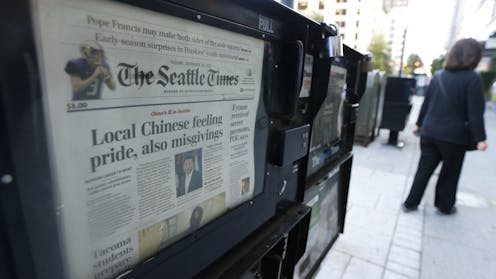
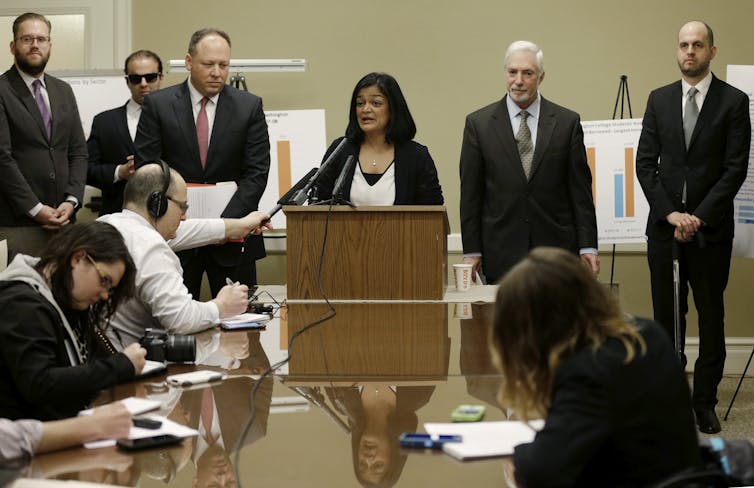


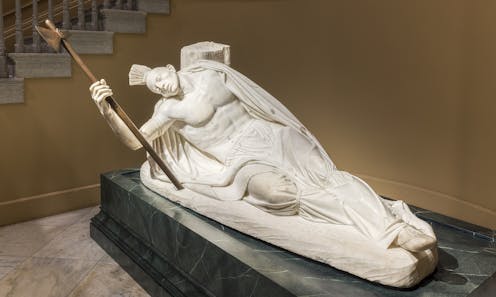
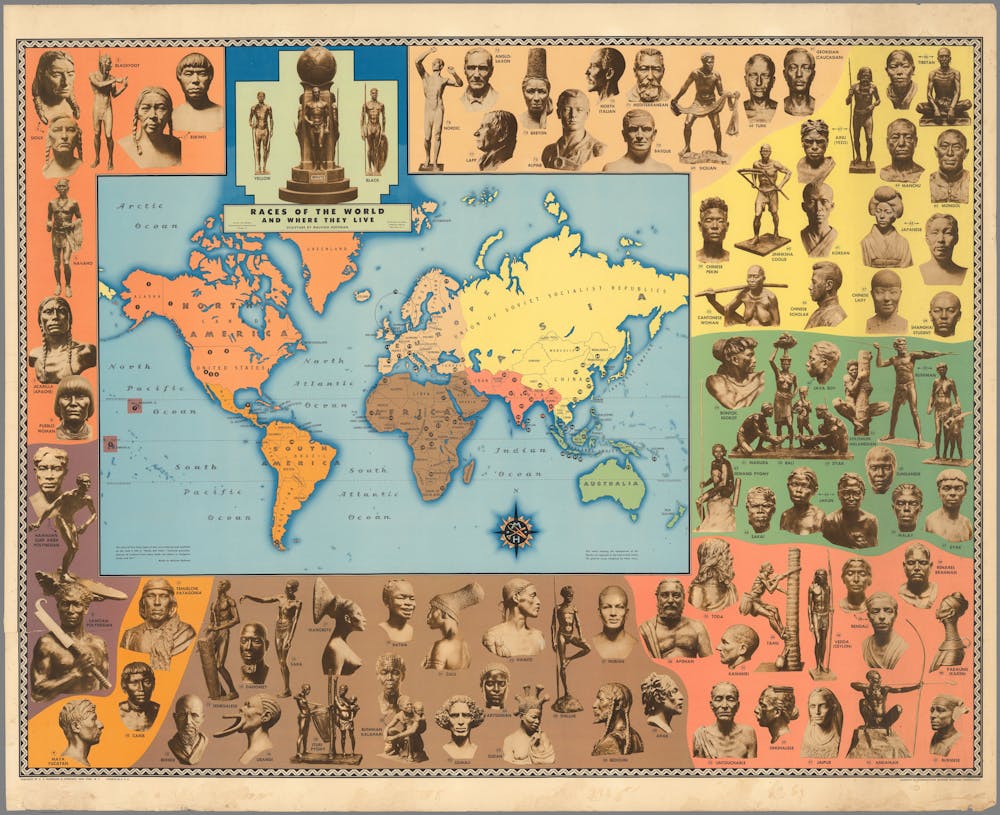


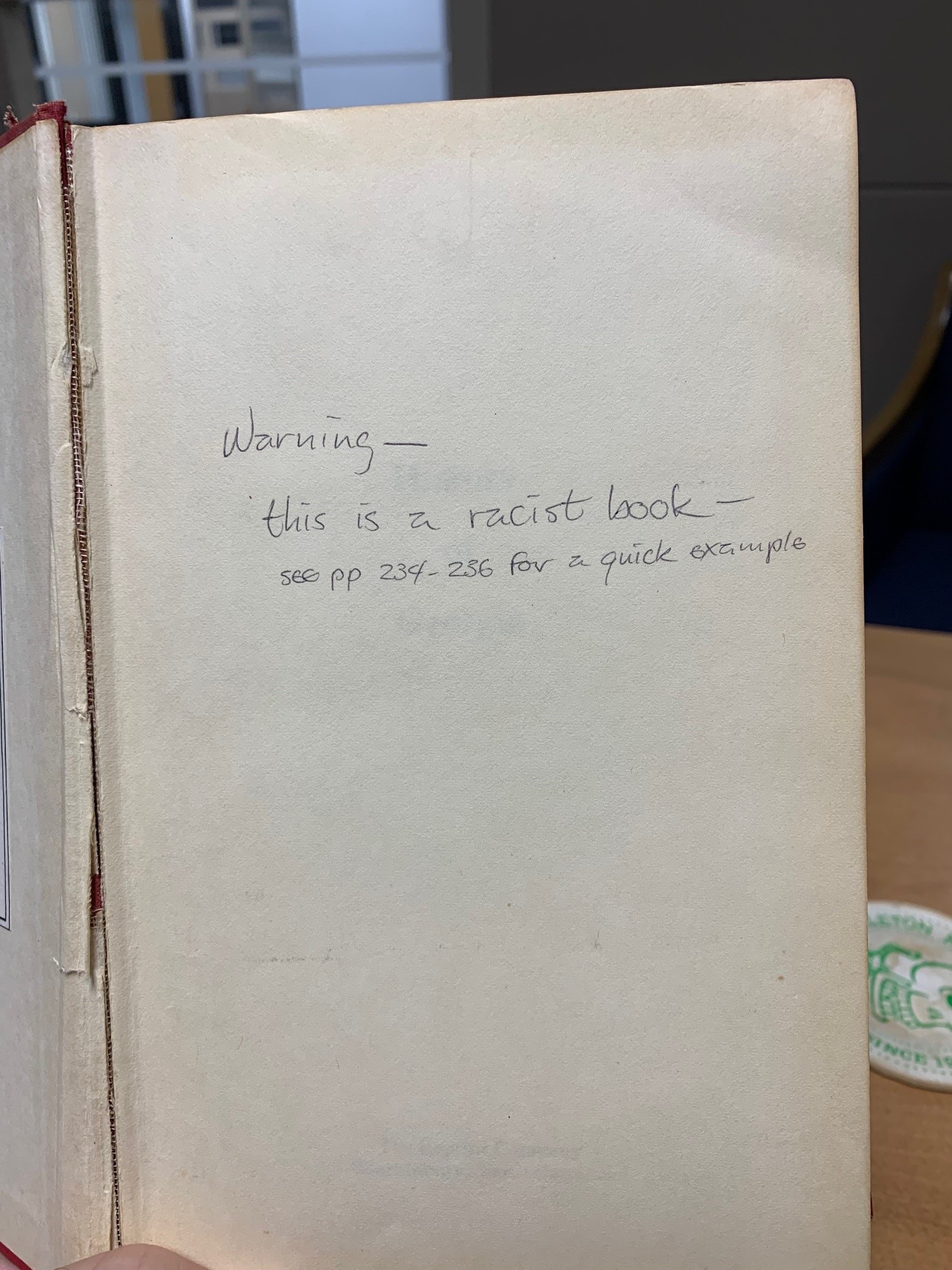
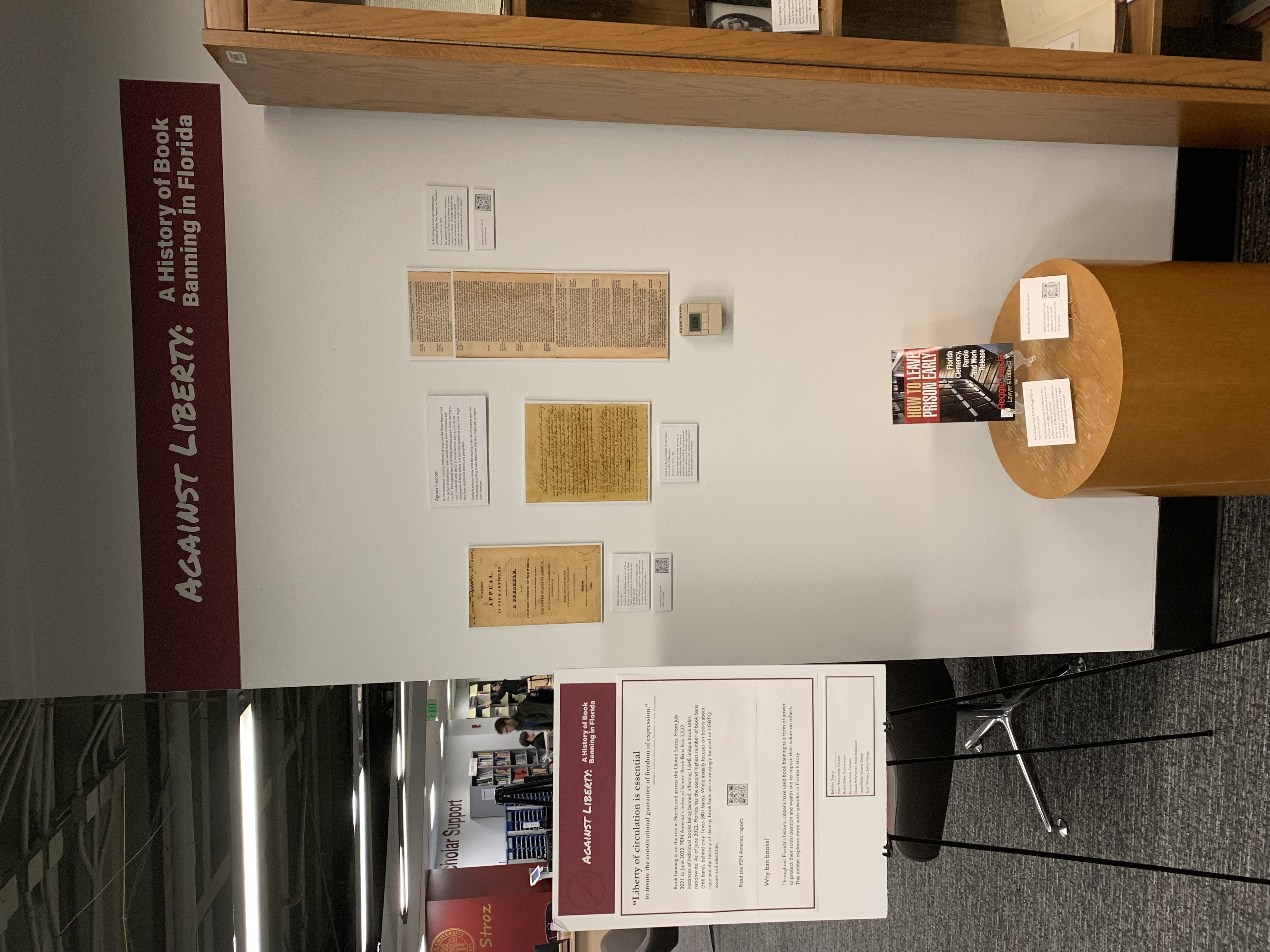
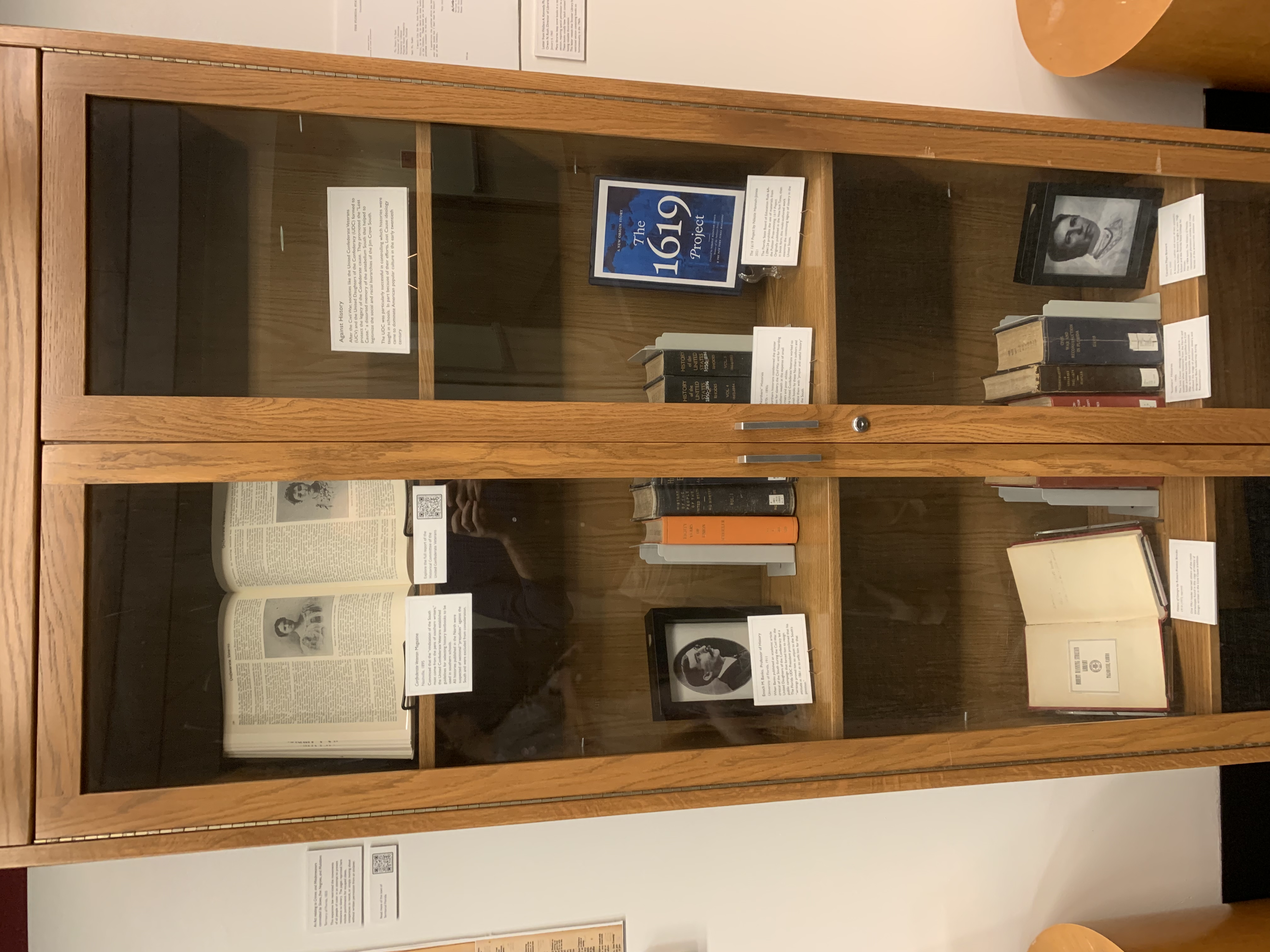
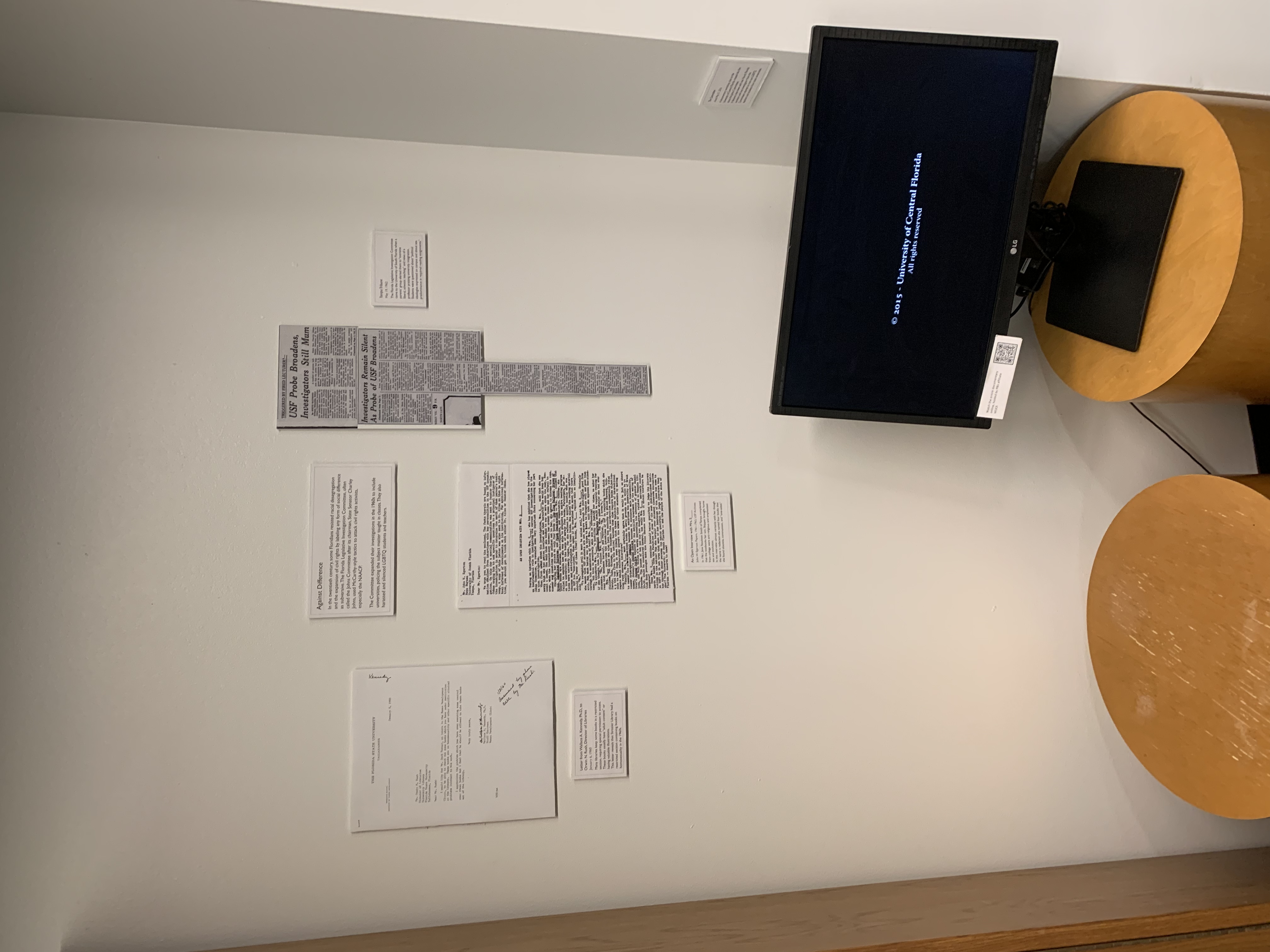
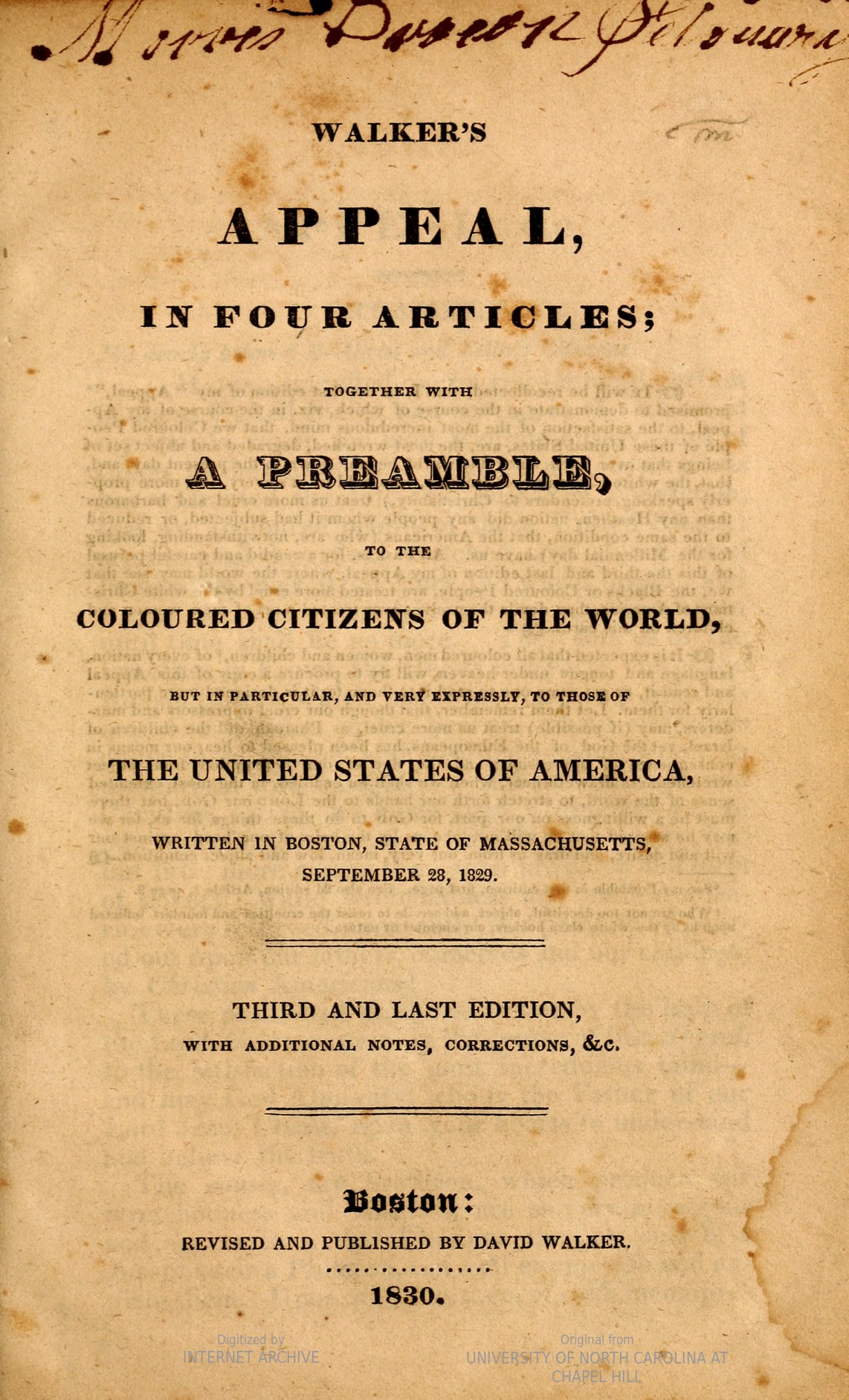
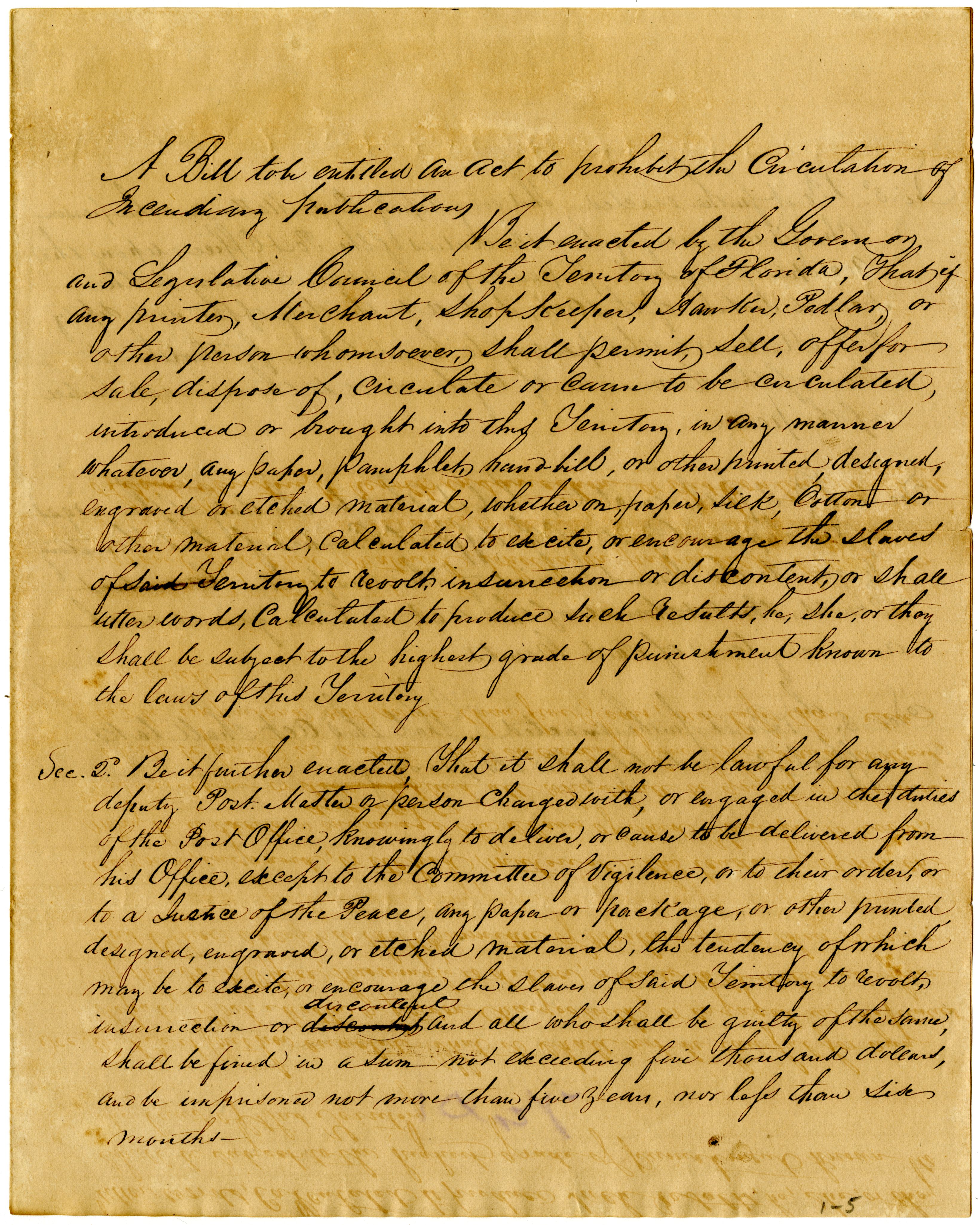
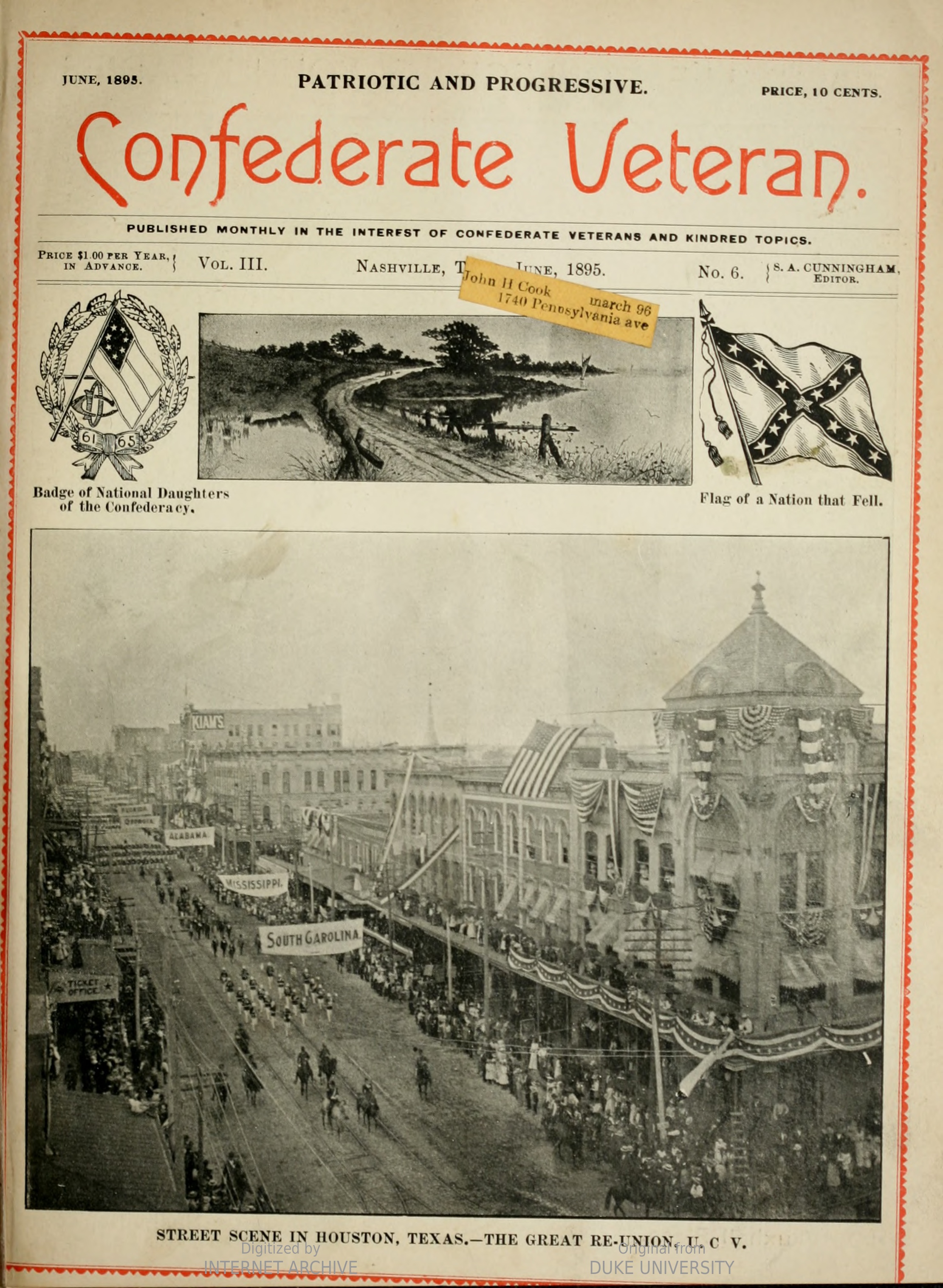
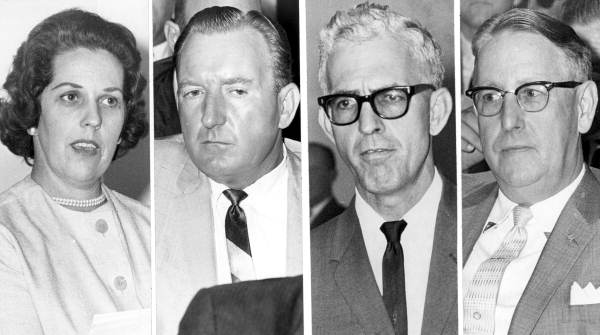
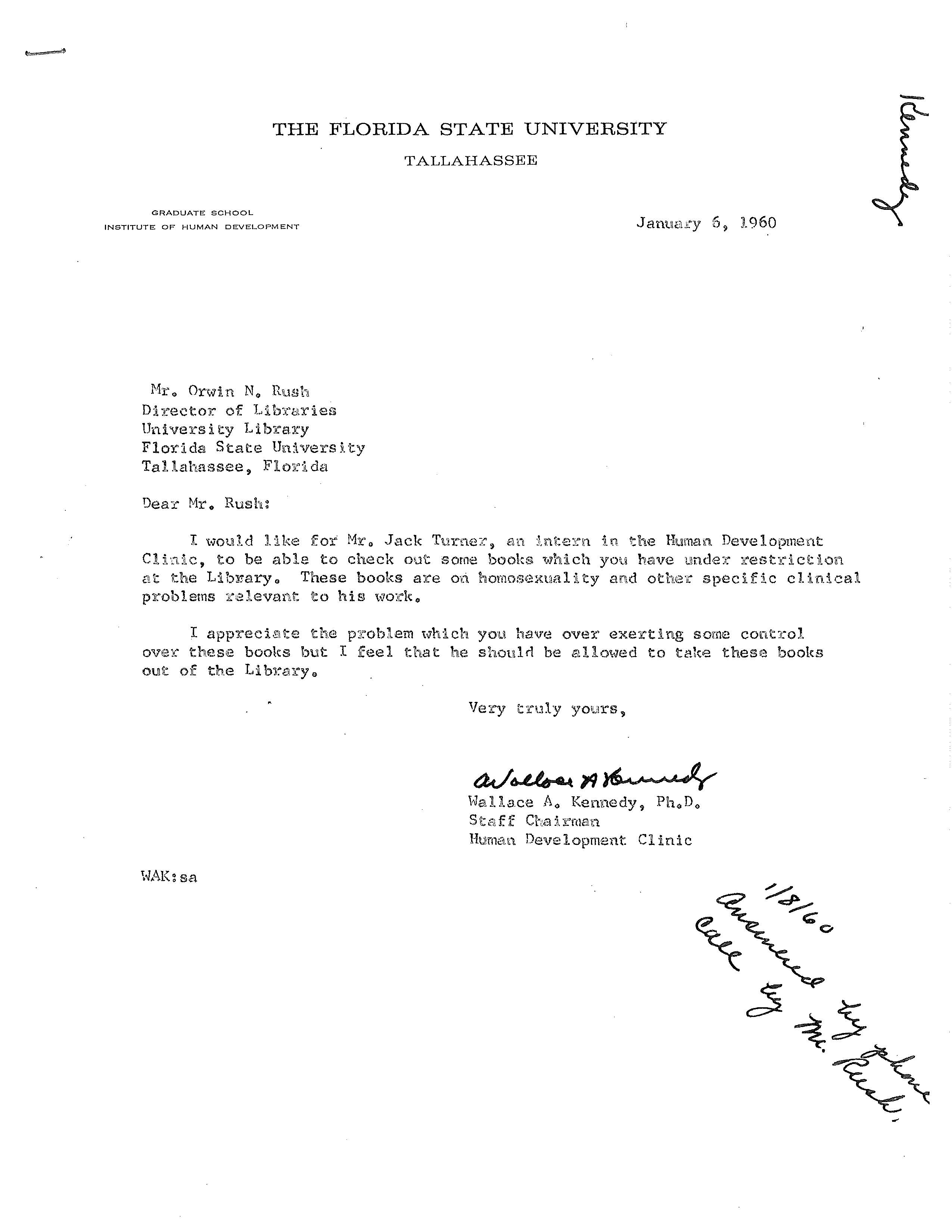
 ︎
︎