Academic publishing is fundamental to the advancement of modern science. It facilitates expert collaboration and testing, ideally leading to new innovation, including life-saving medical research. Too often, however, cutting edge research is trapped behind paywalls, effectively inaccessible to the people and institutions that cannot afford the fees. Many libraries, even in wealthier universities in the U.S. and United Kingdom, are drowning in constantly growing waves of subscription costs. The result is stifled progress for everyone, with the inequity most sharply felt in poorer nations.
Publishers claim that they need those high fees to keep the operation running. Government and institutions fund the actual research, unpaid volunteers review the articles and, thanks to the internet, the cost of hosting and distributing the journal articles is trivial. The result has been that traditional publishing giants, such as RELX’s subsidiary Elsevier, are extracting exorbitant profit margins—wider than tech giants such as Apple, Google and Amazon.
Academics have been pushing back on this absurd model for some time. Many institutions and researchers are boycotting these major publishers, while investing in open access alternatives. Just last August, President Biden moved the fight forward by setting a deadline of 2025 for all publicly funded research to be immediately accessible to the public.
With this change in tide, publishers began to offer a so-called compromise: an open access ransom that requires researchers to pay publishing fees to make their work accessible. In the case of Neuroimage, the fee was $3,450 and the publisher refused pleas to reduce it. The result is the academics who write the work being published must choose between covering these unreasonable profits themselves, or having their work locked behind a paywall.
But academics refused to accept this outrageous policy. The journal's entire academic board, including esteemed professors from institutions such as Oxford University, King's College London, and Cardiff University, resigned en masse in response.
They called these charges what they are: unethical. This collective act of defiance sends a powerful message that the academic community will no longer tolerate being preyed upon by publishers that value excessive profits over the advancement of science.
EFF supports the call on scientists to to turn their back on publishing giants like Elsevier and seek publication in non-profit open access journals instead. By collectively withdrawing the work which props up these exploitative publishers, the academic community can create a seismic shift in the publishing landscape towards a long-overdue model that supports equity and data access.
Numerous state laws passed this year, and bills proposed in Congress, would set onerous new restrictions on what young people can do online, depriving teenagers of their First Amendment rights to express themselves, access protected speech, engage in anonymous speech, and participate in online communities. They also enforce a presumption that parents of minors do not want them accessing social media. These laws would require people under a certain age, usually 18, to obtain parental consent before making an account on some of the most popular platforms on the planet, many of which are useful for young people to access educational resources, community, political speech, and more. In doing so, they would also violate the same core First Amendment rights of people of all ages by requiring identification to access important global platforms.
Utah and Arkansas have already passed such laws. When they go into effect in March 2024 and September 2023, respectively, anyone under eighteen will be required to obtain parental consent before accessing social media. The same would be true nationally under the Protecting Kids on Social Media Act, which was recently introduced in Congress. And though it doesn’t directly require parental consent for social media, the Kids Online Safety Act, too, would require platforms to implement “parental supervision” tools that would force them to verify child-parent relationships. Once the Utah and Arkansas laws are in effect, young people will not be able to access social media using a login without a complicated approval process that would require parents and guardians to share their private information with social media platforms or third-party verification services.
There are some differences in these laws. The Arkansas law only applies to new accounts, for example, while Utah’s law also creates dangerous privacy invasions by in some cases requiring parents to have access to children’s social networks and private messages. Still other laws, like one put forward but not yet passed in Connecticut would apply to those under 16 instead of 18. But parental consent is an aspect of each of the laws, and likely of others that may pass this year.
How Would Parental Consent Laws Work?
Parental consent laws like these would force parents to offer some sort of proof that they consent to a child’s use of social media. None of the laws outline any procedures for how this would be done, and they all establish these consent requirements as if it's an easy thing to implement.
These systems don’t necessarily take into account a large number of non-traditional families.
But if the laws are meant to have any teeth, an adult would have to prove not only that they approve of a minor’s use of social media, but that they are a parent or guardian of the child. Confirming the identity of a user online is a complex issue. Doing so while maintaining the user’s anonymity is even harder. There is no obvious system for doing this currently in place on social media, nor is there one that would not be onerous to a parent. Put simply: if you had to prove who your parents were to an online platform, how would you do it? The systems that currently exist are often used to satisfy requirements under COPPA (the Children's Online Privacy Protection Rule) that protect privacy of those under 13. Though not comprehensive, current methods include:
Providing a consent form to be signed by the parent, returned by mail, fax, or scanning
Requiring a parent to use a credit card
Having a parent call a telephone number or have a video conference
Having a parent provide a form of government issued ID compared to a database
Providing knowledge-based challenge questions that would be difficult for someone other than the parent to answer
Verifying a picture of a driver's license of other photo ID submitted by the parent and comparing that to a photo of the parent
There are significant problems with each of these methods. First, these systems don’t necessarily take into account a large number of non-traditional families. It’s unclear whether they will function for children with different last names than a parent, those in foster care, and those whose guardians are other relatives. Second, some of these methods may rely on devices that not all families may have. And third, all of these methods likely require parents to share personal information with third-parties or platforms. In that way, parental consent laws run into similar privacy problems as age verification laws.
The end result of laws requiring parental consent would be a huge number of young people—particularly the most vulnerable—losing access to these platforms, solely because they cannot satisfy the arbitrary requirements necessary. Still other minors would lose access because parents may not have the time to complete the verification requirements, or because their parents do not wish to share more private information with the companies.
There are significant problems with each of these methods
And though it is painful to think about, there are many scenarios where a parent might not wish their child to access social media because they do not have their best interests in mind. In Utah, where the first social media parental consent law was passed earlier this year, there were 9,695 children confirmed as victims of abuse and neglect in 2022, with the largest percentage, 36%, being 12 to 17 years of age. The majority of those responsible were parents. Social media can play a critical role for young people to access resources and support in these circumstances, and laws like these may block them from access entirely. (Utah’s law, which also requires that parents have access to young people’s accounts and messages, creates even more concern in these situations.)
Parental Consent Laws For Social Media Deprive Young People and Adults of their First Amendment Rights
As mentioned, some parental consent requirements do exist in the law already, of course. COPPA protects the privacy of people under 13 by requiring parental consent before certain private information is collected about them. COPPA’s concern, however, is with privacy and the exploitation of children’s data. Under these newer parental verification laws, the government’s interest is in protecting children from viewing harmful content—but 99.9% of that content is likely legal speech, and thus these laws affect First Amendment rights.
The Supreme Court has repeatedly recognized that states and Congress cannot use concerns about children to ban them from expressing themselves or accessing information. Most recently in Brown v. EMA, the Court ruled that while the State might have “the power to enforce parental prohibitions—to require, for example, that the promoters of a rock concert exclude those minors whose parents have advised the promoters that their children are forbidden to attend, . . . it does not follow that the state has the power to prevent children from hearing or saying anything without their parents' prior consent” (564 U.S. 786, 795 n.3). In other words, although states and Congress can give parents tools to help, the state cannot substitute itself for parents and prohibit all minors from engaging in First Amendment activity.
To cite just one example of the type of important legal speech that minors could be blocked from engaging in or receiving, look no further than the most recent activism by young people against police brutality and gun violence. A Nashville protest against police brutality organized by six teenage activists who met on Twitter drew an estimated 20,000 participants in 2020. The Enough! National School Walkout, organized primarily online, involved students walking out from their classes for exactly 17 minutes in over 3,000 schools, and had nearly one million student participants. And the March for Our Lives—also primarily organized via social media—was among the biggest youth-led protests since the Vietnam War era, in which somewhere between 200,000 to 800,000 people participated, and all speakers were high schooler age or younger.
Though these laws are often described as protecting or upholding “parental rights,” they do the exact opposite
But it is not only young people whose rights will be harmed by these laws. All users who do not verify their age to a platform could be blocked from using it. Forcing websites to require visitors to prove their age by submitting information such as government-issued identification would potentially deprive tens of millions of Americans who do not have government-issued ID from access to much of the internet, deprive all users of anonymous access, and force everyone to share more private data or be blocked from the service.
Parental Consent Laws For Social Media Deprive Parents of their Right to Raise Children Without Governmental Interference
All of these laws rest on a single assumption: parents should not be allowed to choose to raise their children as they see fit without governmental interference, including to allow their kids to use social media without hitting a ban or parental consent rule. Though these laws are often described as protecting or upholding “parental rights,” they do the exact opposite: they remove parents’ ability to decide for themselves what they will allow their child to access online, the vast majority of which is legal speech.
Though not perfect, platforms already have safety features that accomplish many of the goals of these laws. Instagram allows parents to supervise the accounts of young people. TikTok allows parents to pair their accounts with their child’s account to set safety features. These features may not stop young people from accessing the platforms, but they do offer an option for parents who are interested in supervising their children online.
What Should Lawmakers Do?
Laws restricting young people’s access to social media are en vogue in part because of a series of recent studies that some have interpreted to indicate that social media use can cause mental health issues in young people. But other studies show just the opposite: Common Sense Media found that teens who are already at risk or dealing with mental health challenges are more likely to have negative experiences with social media, but those same teens are also more likely to value the benefits of social media, like finding resources, community, or support.
The outcomes of social media use depend on the individual child
In another study often cited by lawmakers which was conducted by Meta and leaked by Frances Haugen, twice as many respondents reported that Instagram alleviated suicidal thinking as said it worsened it; three times as many said it made them feel less anxious as said it made them feel more so; and nearly five times as many reported that Instagram made them less sad as that it made them sadder.
And just this week many of the country's leading experts on children and social media use released a report declaring that social media “is not inherently beneficial or harmful to young people.” The outcomes of social media use depend on the individual child, and parents must make their own decisions for that use. Given that “the effects of social media likely depend on what teens can do and see online, teens’ preexisting strengths or vulnerabilities, and the contexts in which they grow up,” it is certainly not the place of Congress to set a rigid and universal standard.
Social media’s toxicity is a real issue. But young people are not the only ones affected, and solutions that limit their rights in egregious ways are not solutions at all. Laws that insert the state into a family’s right to decide what level of independence a young person has, and block young people from accessing legal speech, will not solve the problems these complex social issues, which exist both online and offline.
According to a 2016 Pew report, less than half of parents used parental controls, and only 16% used monitoring tools on their teen’s phone. Whether that’s because most parents choose to allow their teens to have freedom online, or because they are unaware of the options, is unclear. But EFF supports the development of tools that are easy to use for parents and young people so that they can decide what they can access online. We also support laws that strengthen competition and interoperability, which would give us all more options to better control our own experiences online.
by Amy Rand, Assistant professor, Environmental Chemistry and Toxicology, Carleton University
Better labelling of personal care products is necessary to inform consumers of 'forever chemicals.' (Shutterstock)
Cosmetics and personal care products enhance the way we look and feel. During the pandemic, I started a self-care facial routine. It helped me cope with lockdown orders, while simultaneously adjusting to my new identity as a mom. I applied toner, serum and cream to brighten mornings and relax evenings.
But many of these products contain chemicals called per- and polyfluoroalkyl substances (PFAS), also known as ‘forever chemicals.’ They are used as ingredients that can make products waterproof, long-lasting and help them spread smoothly across skin.
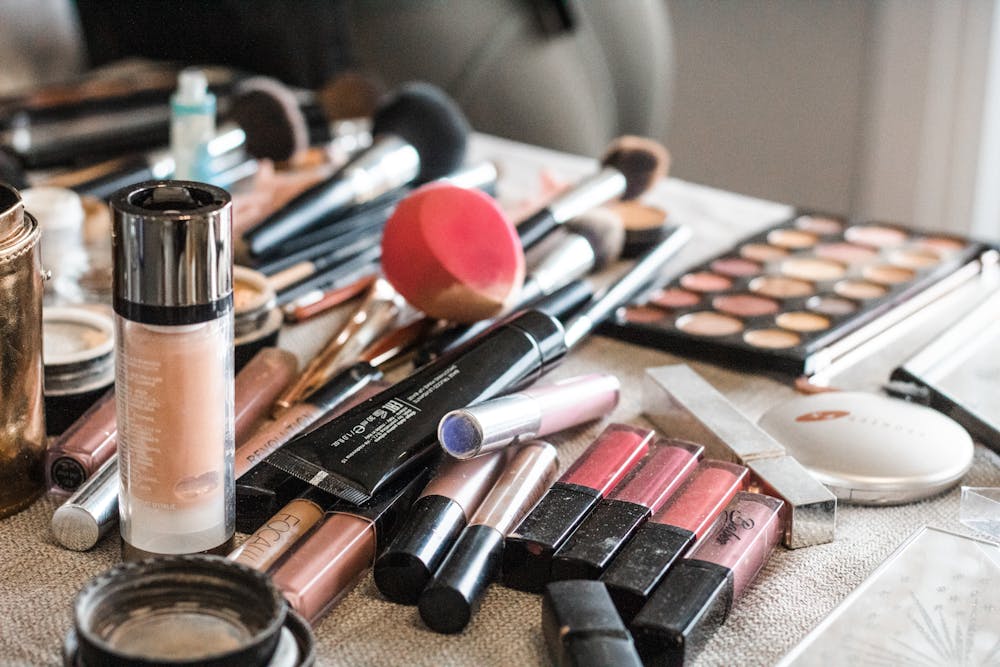
PFAS can be found in makeup and personal care products.
(Jessica Johnston/Unsplash)
Persistent contaminants
PFAS are persistent environmental contaminants. The properties that make them commercially useful, particularly their stability, also means that there is no environmental mechanism to degrade them, and so they accumulate. PFAS have been found across the globe, including remote regions like the Arctic.
Major sources of PFAS exposure to people are through diet, from drinking contaminated water or ingesting food, such as fish or meat. Agricultural fields can contain PFAS from biosolids used as fertilizer, as wastewater treatment plants cannot remove them.
Therefore, PFAS are transported via biosolids to crops and animals. Similarly, PFAS are added to personal care products, applied, then washed off to enter wastewater treatment plants, contributing to a global environmental problem.
PFAS in personal care products
In our study, we measured PFAS in cosmetics and personal care products purchased in Canada. Products included bronzers, concealers, foundations, shaving creams, sunscreens and moisturizers.
PFAS were extracted from each product and measured using mass spectrometry instrumentation. These instruments identify individual PFAS present in the products, at high milligram amounts or down to a trillionth of a gram.
Particularly high levels stemmed from products containing the following ingredients: C6-16 perfluoroalkyl ethyl phosphates, perfluorooctyl triethoxysilane, and perfluorobutyl ethers. The Canadian government has prohibited some PFAS from products, including perfluorooctanoic acid (PFOA), and any chemical that degrades to produce PFOA.
New proposed Canadian PFAS regulations will set a threshold level at one microgram per gram in products. This means that PFAS at or below this level would be incidental and the prohibition would not apply. Yet we found that some products contained PFAS — including those prohibited from use — at levels a thousand times higher than the incidental level — pointing towards a lack of oversight when it comes to managing PFAS in the personal care product industry.
Another study illustrated this trend more directly. PFOA was purposefully added to a sunscreen to determine whether blood levels in one person would increase after application. Within three weeks, the PFOA from the sunscreen application equalled about 10 per cent of the total amount of PFOA in his body. This suggests that the daily application of a PFAS-containing sunscreen during summer months — and frequent application of other PFAS-containing cosmetics and personal care products — would result in high blood levels.
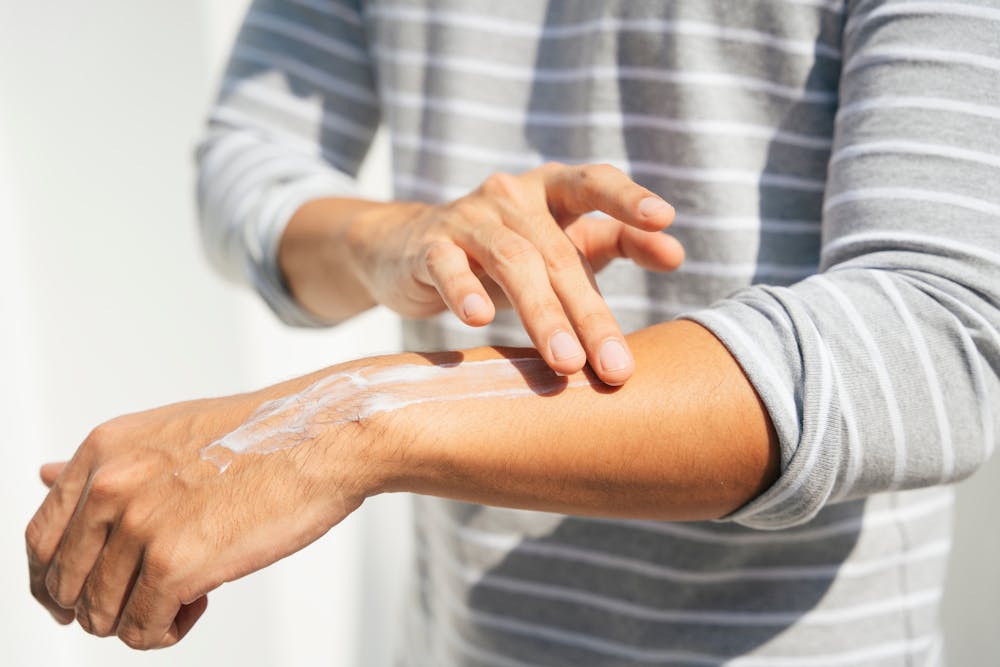
Chemicals in sunscreen can be absorbed through the skin, leading to a build-up of PFAS or PFOA in the body.
(Shutterstock)
Unlike other chemicals, certain PFAS like PFOA are persistent. This means that human exposure to even low amounts of PFAS can accumulate over time. The half-life of PFOA in humans is about two years.
Even after this point, half the amount of PFOA remains and it takes even more years for it to be eliminated. However, continuous exposure from multiple sources, including the use of cosmetics and personal care products, guarantee that PFOA and similar PFAS, are never eliminated.
Health implications
In Canada, the PFAS frequently measured in the environment with adverse health implications are prohibited from use. These include PFOA and PFOS, long-chain PFCAs, and any compound that degrades to produce them. This is a broader regulatory approach compared to other regions, including the U.S., which restricts individual PFAS.
Canada should consider a similar approach, as a solution to protect people from exposure to these chemicals when applying cosmetics and personal care products, and eliminate their transfer to the environment after use.
Some cosmetic retailers like Sephora indicate when PFAS chemicals are present in a product.
(Shutterstock)
Regulation and information
There is a solution: ban PFAS from cosmetics and personal care products. Some cosmetic retailers like Sephora do not include PFAS on their “clean” cosmetic lists so that consumers can avoid their use. But PFAS-containing cosmetics and personal care products are still readily available to Canadians.
PFAS are absent from the Canadian Cosmetic Ingredient Hotlist, the list that contains ingredients prohibited from use in cosmetics and personal care products sold in Canada.
Environmental groups, managers, and industry should work together to stop using PFAS in cosmetics and personal care products, and instead use other ingredients that serve the same purpose.
At the very least, people should be aware of the PFAS in these products through clear labelling so that they can make informed decisions. Since completing this study, I have screened the ingredients in my products, only to find that a couple contained PFAS. I switched to other products.
Amy Rand receives funding from a Natural Sciences and Engineering Research Council (NSERC) Discovery Grant (RGPIN-2018-05330) and the Canadian Foundation for Innovation (CFI) John R. Evans Leaders Fund (37944).
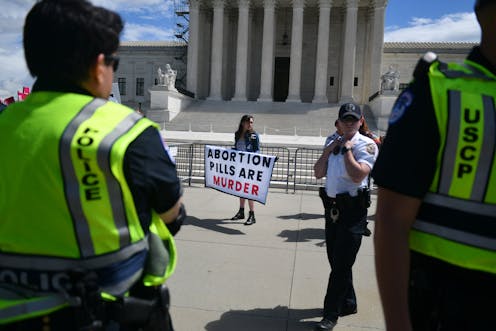
Anti-abortion groups are looking for new ways to wage their battle against abortion rights, eyeing the potential implications of a 150-year-old law, the Comstock Act, that could effectively lead to a nationwide abortion ban.
Congress passed the Comstock Act in 1873, making it a crime to mail or ship any “lewd, lascivious, indecent, filthy or vile article” and anything that “is advertised or described in a manner … for producing abortion.”
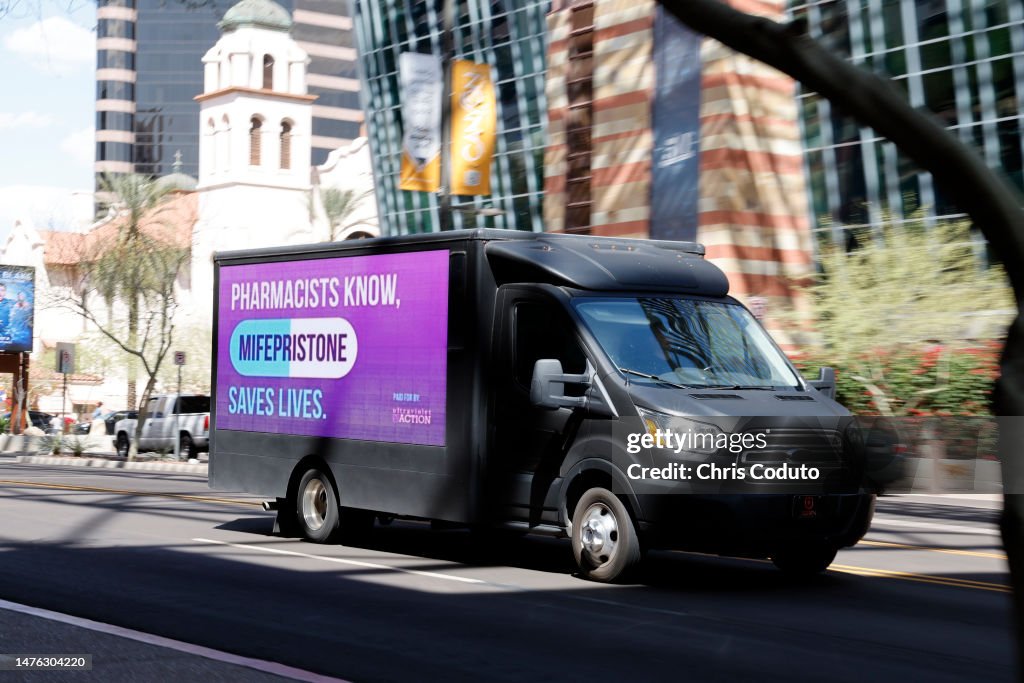
There are now legal cases questioning the Food and Drug Administration’s regulation of mifepristone, one of the two drugs used in the standard regimen for medication abortion. If courts find that the FDA has the authority to approve mifepristone for abortion, the Comstock Act could still prevent the pill’s distribution.
As scholars of law and reproductive justice, we have been analyzing potential strategies to use this Victorian-era law to restrict the ability to get an abortion in the U.S.
Read one way, the Comstock Act could prevent mailing mifepristone to a person’s home, regardless of whether this person lives in a state where abortion is legal.
The Supreme Court returned the question of abortion rights to states in June 2022. But it’s important to understand that the Comstock Act is a federal law that applies to states, regardless of their approach to abortion.
So while abortion remains legal in certain states, we believe it’s possible that a court could interpret the Comstock Act to prevent the distribution of any tool used for an abortion, anywhere in the U.S.
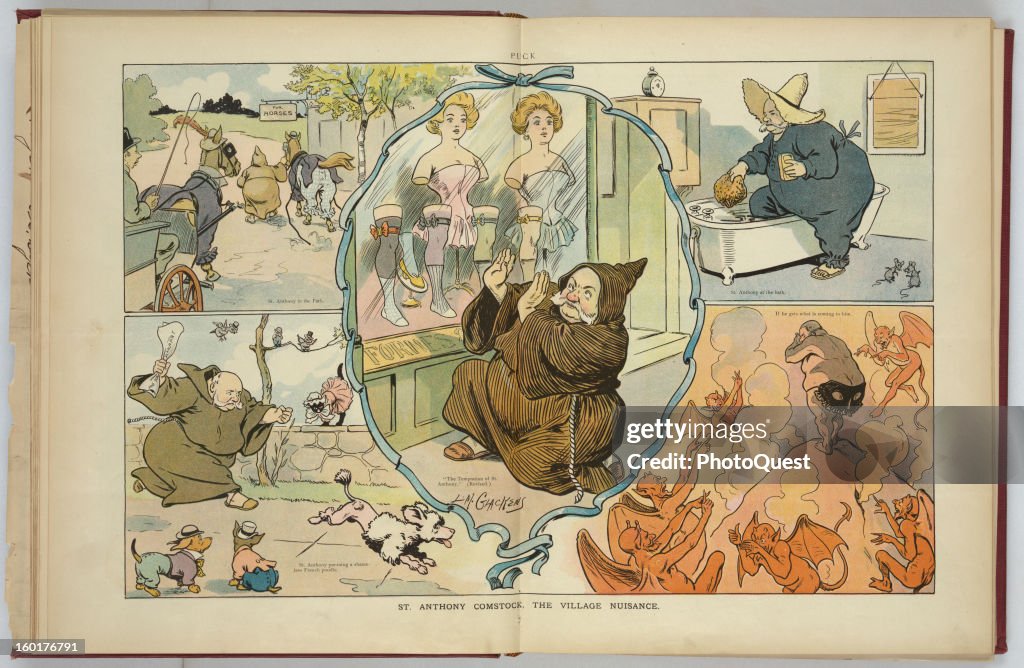
A 1906 illustration shows Anthony Comstock, center, thwarting excessive displays of flesh, be it a woman, dog or horse.
PhotoQuest/Getty Images
The history of the Comstock Act
Devout Christian and self-described “moral evangelist” Anthony Comstock came up with the idea of what would become the Comstock Act after he felt troubled by the large amount of pornography and alcohol his fellow Union army soldiers consumed.
He lobbied for Congress to pass a law restricting what he deemed lewd behavior, displaying “his impressive collection of pornographic pictures, sex toys and contraceptive materials” in the Capitol building “to help galvanize Congress to pass anti-obscenity legislation.”
And, in 2022, the Justice Department issued an opinion concluding that the Comstock Act does not prohibit mailing mifepristone if the sender doesn’t know the recipient intends to use those pills “illegally” for abortions – for example, the recipient might be using them to treat a miscarriage.
Applying the Comstock Act today
As anti-abortion rights groups try to reinvigorate the Comstock Act, the question is what the law covers, exactly. Several legal cases are addressing this point in different contexts.
When that decision was appealed, the appellate court seemed to agree with Kacsmaryk. It noted that the law does not necessarily require users “of the mails or common interstate carriage to intend that an abortion actually occur,” contrary to the Justice Department’s 2022 opinion. It emphasized, however, that it was “not required to definitively interpret the Comstock Act” because it was not issuing a final ruling.
Since 2019, two counties and more than 60 cities in Texas, Nebraska, Iowa, Ohio, New Mexico, Louisiana and Illinois have passed ordinances that ban abortion. This is part of a political campaign called Sanctuary Cities for the Unborn – orchestrated by Mitchell and conservative pastor Mark Lee Dickson.
These ordinances have led to two lawsuits questioning their legal status.
New Mexico Attorney General Raúl Torrez sued several Sanctuary City towns in January 2023, claiming that the ordinances violated state law that says people have the right to access health care and that physicans’ care of patients is a private matter.
Finally, the Comstock Act is being applied even after an abortion has occurred.
In a Texas lawsuit filed in March 2023, Texas resident Marcus Silva sued three women for wrongful death, saying they assisted in “murdering Ms. Silva’s unborn child with illegally obtained abortion pills.” The complaint notes that Silva will also sue the pills’ manufacturer for wrongful death based on the Comstock Act.
It seems likely that the high-profile federal FDA mifepristone case in Texas could head back to the Supreme Court after the 5th Circuit issues its ruling. If so, the Supreme Court could determine that the Comstock Act only applies to the mailing of items if the sender knows the items are intended to be used “illegally” for abortions. In that case, little or nothing would change in states where abortion is legal.
Or, the court could decide that the Comstock Act bars mailing mifepristone regardless of its user’s intent, making access to medication abortion more difficult. The court could also cast a wider net, prohibiting the shipping of abortion medication altogether across the U.S.
And if the Comstock Act applies to mifepristone, it could also apply to any other item or tool that is used to terminate a pregnancy. Such a ruling would effectively impose a nationwide ban on abortion, even in states that allow abortions. To achieve this result based on an 1873 Victorian statute would be entirely consistent with Dobbs v. Jackson Women’s Health Organization, which overturned Roe v. Wade based on the state of the law in 1868.
The authors do not work for, consult, own shares in or receive funding from any company or organization that would benefit from this article, and have disclosed no relevant affiliations beyond their academic appointment.
The term “Luddite” emerged in early 1800s England. At the time there was a thriving textile industry that depended on manual knitting frames and a skilled workforce to create cloth and garments out of cotton and wool. But as the Industrial Revolution gathered momentum, steam-powered mills threatened the livelihood of thousands of artisanal textile workers.
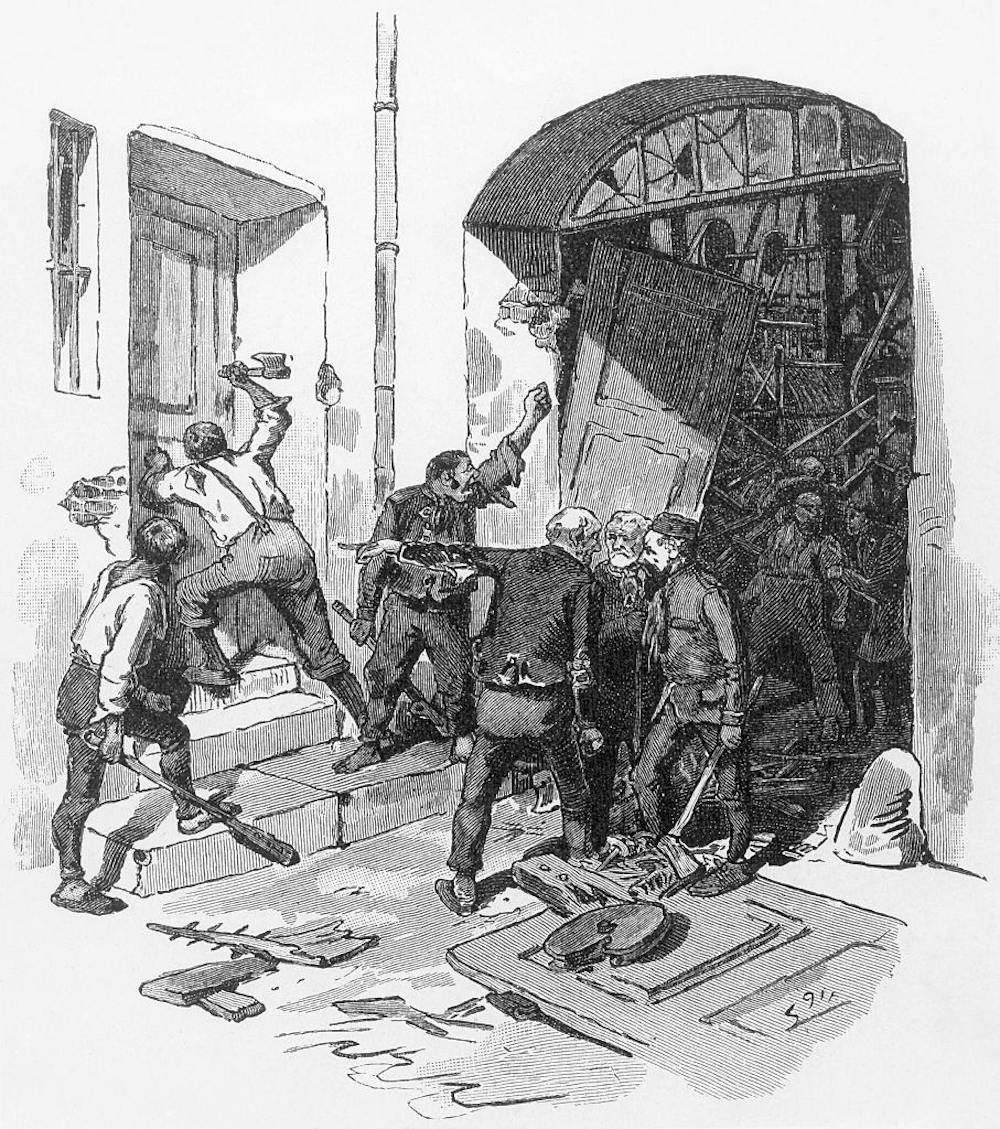
Faced with an industrialized future that threatened their jobs and their professional identity, a growing number of textile workers turned to direct action. Galvanized by their leader, Ned Ludd, they began to smash the machines that they saw as robbing them of their source of income.
It’s not clear whether Ned Ludd was a real person, or simply a figment of folklore invented during a period of upheaval. But his name became synonymous with rejecting disruptive new technologies – an association that lasts to this day.
Questioning doesn’t mean rejecting
Contrary to popular belief, the original Luddites were not anti-technology, nor were they technologically incompetent. Rather, they were skilled adopters and users of the artisanal textile technologies of the time. Their argument was not with technology, per se, but with the ways that wealthy industrialists were robbing them of their way of life.
Being called a Luddite often indicates technological incompetence – as in, “I can’t figure out how to send emojis; I’m such a Luddite.” Or it describes an ignorant rejection of technology: “He’s such a Luddite for refusing to use Venmo.”
In December 2015, Stephen Hawking, Elon Musk and Bill Gates were jointly nominated for a “Luddite Award.” Their sin? Raising concerns over the potential dangers of artificial intelligence.
The irony of three prominent scientists and entrepreneurs being labeled as Luddites underlines the disconnect between the term’s original meaning and its more modern use as an epithet for anyone who doesn’t wholeheartedly and unquestioningly embrace technological progress.
Yet technologists like Musk and Gates aren’t rejecting technology or innovation. Instead, they’re rejecting a worldview that all technological advances are ultimately good for society. This worldview optimistically assumes that the faster humans innovate, the better the future will be.
In an age of ChatGPT, gene editing and other transformative technologies, perhaps we all need to channel the spirit of Ned Ludd as we grapple with how to ensure that future technologies do more good than harm.
In fact, “Neo-Luddites” or “New Luddites” is a term that emerged at the end of the 20th century.
In it, she recognized the nature of the early Luddite movement and related it to a growing disconnect between societal values and technological innovation in the late 20th century. As Glendinning writes, “Like the early Luddites, we too are a desperate people seeking to protect the livelihoods, communities, and families we love, which lie on the verge of destruction.”
On one hand, entrepreneurs and others who advocate for a more measured approach to technology innovation lest we stumble into avoidable – and potentially catastrophic risks – are frequently labeled “Neo-Luddites.”
These individuals represent experts who believe in the power of technology to positively change the future, but are also aware of the societal, environmental and economic dangers of blinkered innovation.
Then there are the Neo-Luddites who actively reject modern technologies, fearing that they are damaging to society. New York City’s Luddite Club falls into this camp. Formed by a group of tech-disillusioned Gen-Zers, the club advocates the use of flip phones, crafting, hanging out in parks and reading hardcover or paperback books. Screens are an anathema to the group, which sees them as a drain on mental health.
I’m not sure how many of today’s Neo-Luddites – whether they’re thoughtful technologists, technology-rejecting teens or simply people who are uneasy about technological disruption – have read Glendinning’s manifesto. And to be sure, parts of it are rather contentious. Yet there is a common thread here: the idea that technology can lead to personal and societal harm if it is not developed responsibly.
And maybe that approach isn’t such a bad thing.
Andrew Maynard does not work for, consult, own shares in or receive funding from any company or organization that would benefit from this article, and has disclosed no relevant affiliations beyond their academic appointment.
by Marc Hudson, Visiting Fellow, Science Policy, University of Sussex
We have grown so used to many things. To the pictures of wildfires and cremated animals, to the ice sheets calving into the ocean, to the promises of world leaders that they will heed the “last chance” warning of the scientists.
It’s hard for anyone under the age of 40 to remember a time when carbon dioxide build-up, whether it was “the greenhouse effect”, or “global warming” or “climate change” or now “climate crisis”, wasn’t in the news.
The long hot summer of 1988 – 35 years ago – is held as the moment that world leaders began to mouth the right pieties.
Presidential candidate (and soon to be president) George H.W. Bush said he would use the “White House effect” to fix the Greenhouse Effect (he didn’t). UK prime minister Margaret Thatcher warned of a giant experiment being conducted “with the system of this planet itself”.
Thirty-five years. But it was actually 35 years before that – fully 70 years ago this month – that the danger of carbon dioxide build-up in the atmosphere first travelled around the world.
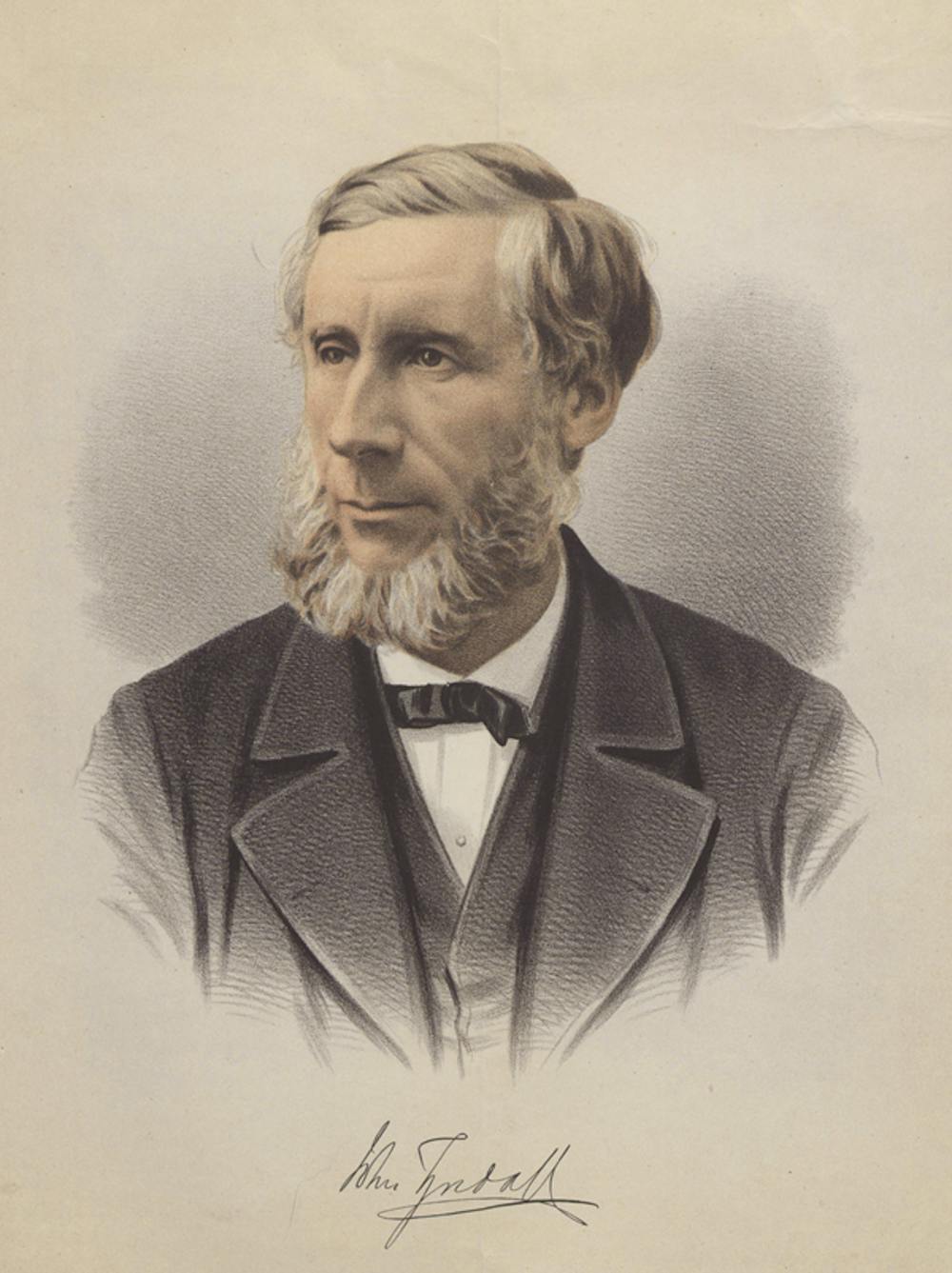
That carbon dioxide trapped heat was uncontroversial. Irish scientist John Tyndall (possibly drawing on the work of an American, Eunice Foote) had shown that it did back in the mid-1800s.
In 1895, Swedish Nobel prize winner Svante Arrhenius had suggested that – over hundreds of years – the build-up of carbon dioxide released when humans burn oil, coal and gas might trap so much heat as to melt the tundra and make freezing winters a thing of the past.
His work was challenged, but the idea occasionally popped up in popular journals. In 1938 English steam engineer Guy Callendar suggested to the Royal Society in London that warming was underway.
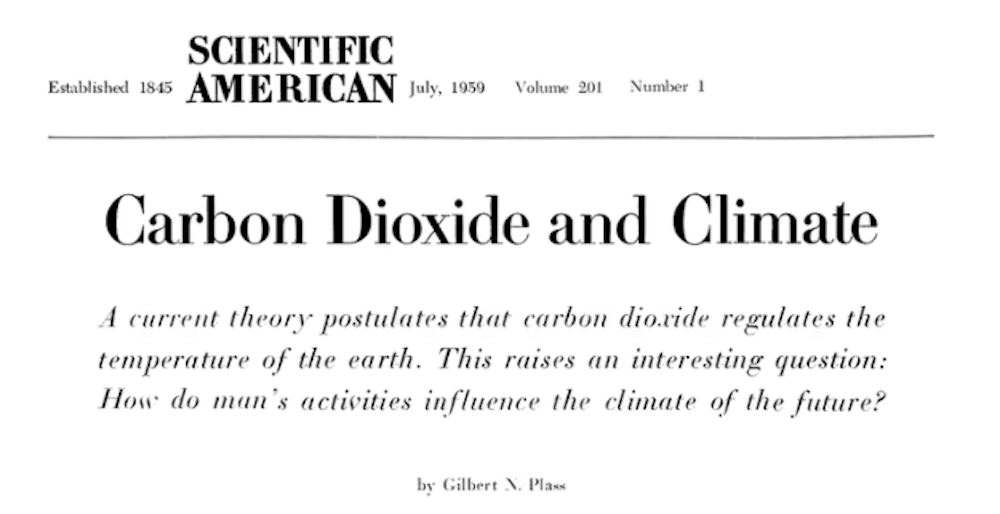
But it was in early May, 1953, at a meeting of the American Geophysical Union, that Canadian physicist Gilbert Plass – who had been corresponding with Callendar – told the gathered scientists that trouble was afoot.
Plass said that:
The large increase in industrial activity during the present century is discharging so much carbon dioxide into the atmosphere that the average temperature is rising at the rate of 1.5 degrees per century.
This got picked up by the Associated Press and other wire services and appeared in newspapers all around the world (even as far afield as the Sydney Morning Herald). Plass’s warning also popped up in Newsweek on May 18 and in Time on May 25.
Gilbert Plass in 1955.
Hodges Photographers, courtesy of AIP Emilio Segrè Visual Archives, CC BY-SA
The fact that the world was warming was already uncontroversial among scientists. But the emphatic connection with carbon dioxide made by Plass, as opposed to competing theories such as orbital wobbles or sunspot activity, was newsworthy.
Plass had become interested in the question of carbon dioxide buildup while working for the Ford Motor Company. He looked at how carbon dioxide actually functions in the real world, not just at sea level (without getting too technical. Many scientists had dismissed Arrhenius’s earlier work on the basis of false confidence that carbon dioxide worked the same there as in the stratosphere).
Plass kept working on the issue, with technical and popular publications through the rest of the 1950s. In 1956, he had an academic article on “the carbon dioxide theory of climate change” published in the Swedish scientific journal Tellus, and also a popular article in the American Scientist. And he was present at the first major meetings to discuss carbon dioxide build up.
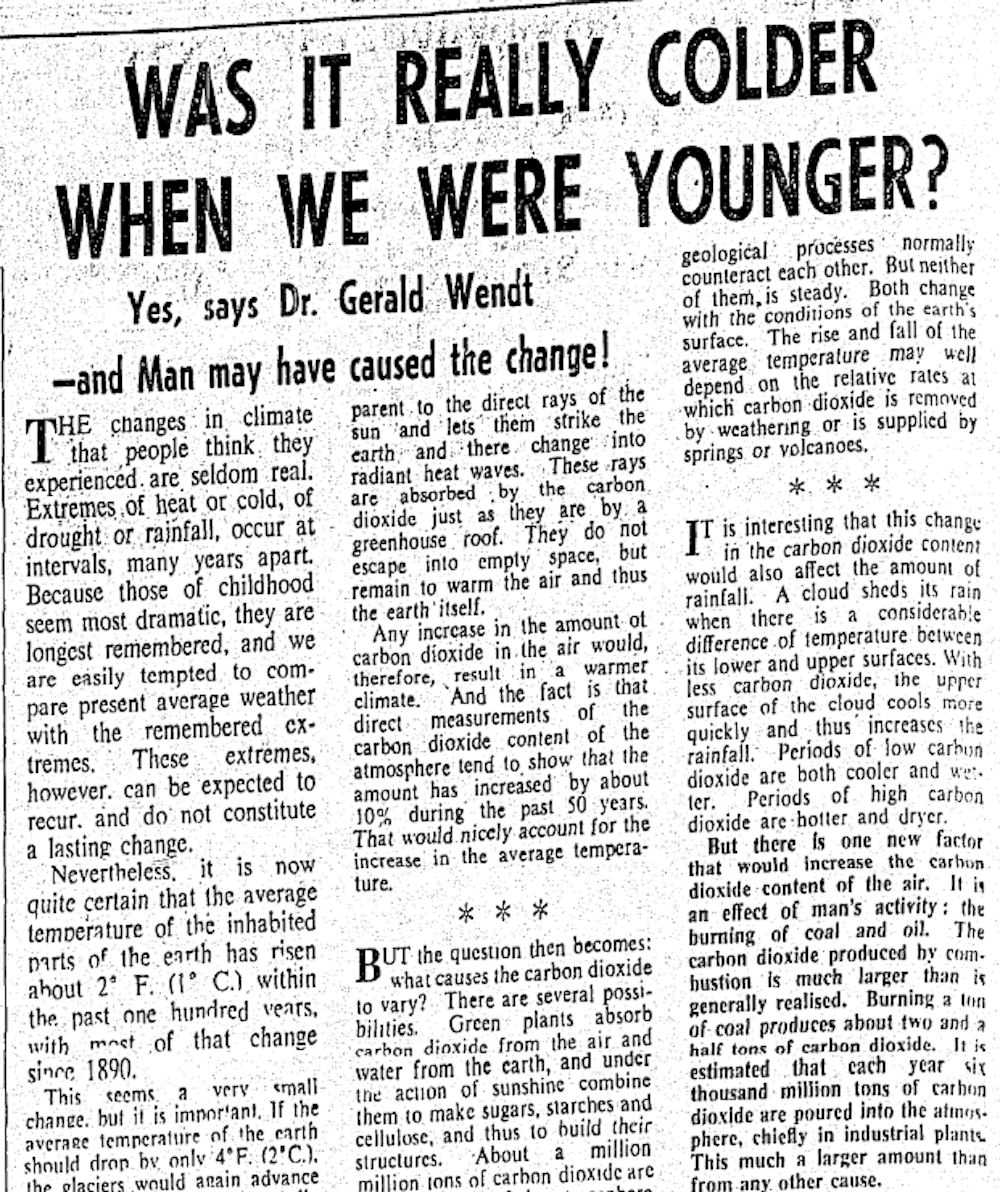
Meanwhile, the carbon dioxide theory started getting more coverage among science journalists. One, George Wendt, wrote up the findings in the then well-regarded UNESCO Courier, and this got excerpted in the Irish Times in 1954, the same year that British journalists started mentioning it.
In 1957 the then-new magazine New Scientist mentioned it. By the end of the 1950s, anyone who read a newspaper could have been aware of the basic idea.
Throughout the 50s and 60s US, Swedish, German and Soviet scientists were examining the issue. In 1965 President Lyndon Johnson even namechecked carbon dioxide build-up in an address to Congress.
By the end of the 1960s international collaboration was beginning, though there was caution still. For instance, in April 1969 the American scientist Charles Keeling, who had been measuring atmospheric carbon dioxide concentrations at a Hawaiian observatory, revealed that he had been asked to change the title of a lecture from, “If carbon dioxide from fossil fuels is changing man’s environment, what will we do about it?” to “Is carbon dioxide from fossil fuel changing man’s environment?”
For climate historians like me, the 1970s are a fascinating period of intense measurement, modelling, observation and thinking which, by the end of the decade, produced a working consensus that there was serious trouble ahead. In effect, Plass had nailed it.
When Plass spoke out, the atmospheric concentration of carbon dioxide was at about 310 parts per million. Today, they’re 423 or so. Every year, as we burn more oil, coal and gas, the concentration climbs and more heat is trapped.
By the time Plass’s warning is 100 years old, the concentrations will be much higher. There’s a very good chance we will have gone over the 2°C warming level that used to be regarded as “safe”.
Marc Hudson runs a website called All Our Yesterdays, allouryesterdays.info, with daily blog posts about events that happened 'on this day', around climate science, politics, technology and protest.
If you know anything about the experiences of animals reared in captivity for food, fur or human amusement, you might imagine that the lives of wild animals are idyllic. If nature is conceived as a sort of Garden of Eden then animals which live in it, free of human interference, are presumably living their best possible lives.
Others see life in the wild as far harsher. Nature is “red in tooth and claw” as poet Alfred Tennyson once put it. According to this view, the average life of a wild animal can be best understood as a desperate search for food and shelter, enduring pain and sickness and burdened with the ever-present prospect of a savage death.
This latter view is arguably dominant among those who ponder questions of wild animal ethics and welfare. Scholars like Yew-Kwang Ng and Oscar Horta have aimed in part to debunk the view that wild animals have it pretty good by evoking the prevalence of vicious predators and other sources of harm. Yet this picture may be just as inaccurate.
In our recent paper, we argued that the real experience of wild animal life most likely sits somewhere between these two extremes – though it’s probably a lot better than many researchers think.
The popular view of wild animals being consumed by suffering has been influenced by a preoccupation with their experiences at the time of their deaths. Too little attention has been paid to the range of positive experiences available to wild animals throughout their lives.
Death is fleeting
Consider an antelope pursued by a pack of hungry hyenas: it eventually tires, is captured and eaten alive. The common occurrence of predation like this suggests animal suffering is widespread. But it is worth thinking about these events a little more closely, as they may not cause as much suffering as it first seems.
Though unpleasant, death is only ever a small part of an animal’s life.
Paco Como/Shutterstock
It is well-documented in humans that major injuries often do not hurt much at first, due to a spike in adrenaline that blocks the immediate sensation of pain. Studies on animals have suggested that similar chemical pathways may activate in their nervous systems when facing fear or injury. This means that many experiences of predation could be more numb than painful.
Even if animals do suffer as they die this should not define their welfare over their entire lives. Death, particularly in the jaws of a predator, is short relative to the length of an animal’s life. Even a slower death, like the antelope’s, lasts minutes rather than hours. Not an experience anyone would want to go through, but not necessarily one that tips the balance of a life into negative.
Some animals follow a breeding strategy in which they produce lots of offspring, most of which will die off very quickly and never make it to maturity. For these animals, with short lives and violent ends, is the balance more likely to be negative? Perhaps, in some cases. But it is important even in these instances not to underestimate the potential for positive experiences in the time they have.
The joy of living
To judge the quality of an animal’s life we must consider the whole experience, not just select the worst parts.
A life contains a range of experiences – many negative ones, as researchers who document wild animal suffering point out – but also a range of positive ones. We could make a list of all the bad things that wild animals encounter: predation, starvation, thirst, disease, parasites, poor weather, aggression from members of their own species. Looking at this list might convince us that their lives must be bad. But we can write an alternative list of the good things they also enjoy: social contact, eating, mating, resting comfortably, playing, exploring, perceiving vistas or sounds or smells that they like.
One concept that may be important here is that of the joy of living. This idea describes the possibility of a baseline experience that all animals have that is itself positive. This could help animals stay motivated.
We can see in cases of human depression that one of the main symptoms is a lack of motivation and an unwillingness to move. For an animal needing to acquire food and other things necessary to live, this could mean death. So for evolutionary reasons it would be logical for the baseline experience of animals to be at least slightly positive. It is plausible that just being alive, perceiving, exploring, and experiencing the world, could itself bring happiness to animals.
Putting the lists side-by-side, it’s no longer so obvious that wild animal lives are, on balance, bad ones. It becomes far more dependent on the interplay of positive and negative experiences, their intensity, how often they occur and for how long, and how the animal weights their importance. Some species might have substantially better lives than others.
A superficial look at the lives of animals in the wild will not allow researchers to draw meaningful conclusions about what this balance is like for them. Instead, empirical research conducted in the field could uncover the intensity and duration of the different experiences wild animals face and how they affect their welfare. Researchers in the emerging field of wild animal welfare research already do this, supported by organisations like the Wild Animal Initiative.
This is not idle musing. Understanding the lives of wild animals could make interventions to alleviate some widespread sources of suffering – such as disease outbreaks or pest control – more accurate and infringe less on positive experiences.
We won’t know for sure until more information is gathered, but we have argued that there are several good reasons to suspect that such research will show that many – if not most – wild animals do in fact have happy lives.
Walter Veit receives funding from the Representing Evolution project that has received funding from the European Research Council (ERC) under the European Union’s Horizon 2020 research and innovation programme (grant agreement number 101018533).
Heather Browning does not work for, consult, own shares in or receive funding from any company or organisation that would benefit from this article, and has disclosed no relevant affiliations beyond their academic appointment.
by Fernando Valladares, Profesor de Investigación en el Departamento de Biogeografía y Cambio Global, Museo Nacional de Ciencias Naturales (MNCN-CSIC)
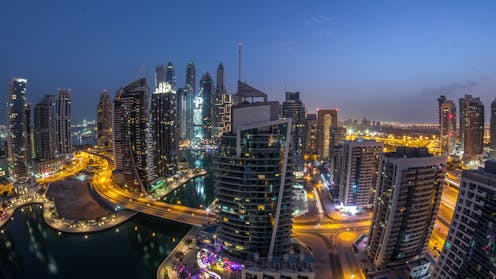
Image of the affluent residential neighbourhood of Dubai Marina in Dubai, United Arab Emirates. Shutterstock
Climate change is a global problem. Its origin is less so, however, because we do not all contribute equally: the countries that suffer the most from the impacts of climate change are precisely those that are the least responsible.
The problem is not only that these countries – and also the poorest sectors within rich countries – cannot cope with these impacts. While 195 nations around the world have signed the Paris Agreement, and while the United Nations, the IPCC and the European Union speak of a climate emergency, we cannot ignore the fact that those who accumulate the most wealth are also the main emitters of greenhouse gases.
There is an accepted euphemism for this situation: excessive personal consumption. And it is essential to address it.
10% responsible for 50% of emissions
The figures speak for themselves. A 2021 study found that rich people leave a disproportionately large carbon footprint, and that the share of global emissions for which they are responsible is increasing.
In 2010, the richest 10% of households emitted 34% of global carbon dioxide, while the bottom 50% of the world’s population accounted for only 15%. In 2015 the situation worsened: the richest 10% were responsible for 49% of emissions, while the poorest half of the world’s population produced 7%. It seems clear that reducing the carbon footprint of the richest could be the fastest way to get to net zero – cutting greenhouse gas emissions to as close to zero as possible.
The problem is that tackling high consumption is not at the top of the agenda of governments, nor of key policy-makers. This is bad news for the planet and for our hopes of one day reaching zero emissions. This is why Greenpeace and Oxfam put the issue of the cars of the super rich on the public electoral debate in 2022 in France.
Another example: in most countries, before the Covid-19 pandemic, half of the emissions from passenger aviation were related to the 1% of people who flew more often.
Policy neglect of these large resource consumers is a “missed opportunity” to address inequality and carbon reduction opportunities.
Inequality environmentally very costly
It’s not just a question of ethics. Economic inequality is environmentally costly. Joel Millward-Hopkins has calculated that, in energy terms, it is twice the consumption of an equal society.
Ecological collapse and economic inequality are among the greatest contemporary challenges, and the two issues are completely intertwined and have been throughout the history of civilisations. Yet the world economy continues to move toward ecological crisis, and the energy costs of inequality are far more significant than those of population size. Even the most moderate levels of inequality that citizens consider acceptable increase the energy needed to provide a universally decent life by 40%.
At that degree of socially tolerated inequality, a super-rich global 1% consumes as much energy as would be needed to provide a decent life for 1.7 billion people. Mitigating climate change quickly requires profound social changes that reduce economic inequalities.
Climate tax for the mega-rich
Efforts to cut carbon emissions often focus on the world’s poorest, addressing issues such as food and energy security, and the increased emissions potential from projected population, income and consumption growth.
However, more policies are needed to target those at the opposite end of the social scale: the super-rich.
Countries are moving in this direction, but given the thorniness of targeting the influential classes, progress is very slow. Spain’s Ministry of Ecological Transition is proposing to Brussels that people with assets of more than 100 million euros pay a “climate tax” that would enable the country to cope better with climate change.
If the mega-rich were to pay a climate tax of approximately 2% of their wealth, this would raise an estimated 300 billion globally against climate change. The measure has the backing of science and is one of the aspects that Spain wants to consider during its forthcoming EU presidency.
Meanwhile, the World Inequality Lab is not content with just appealing to our sense of ethics. Based on scientific knowledge, it seeks to address the gravest challenge that has ever confronted humanity: climate change and the socio-economic model that has generated it.
Fernando Valladares does not work for, consult, own shares in or receive funding from any company or organization that would benefit from this article, and has disclosed no relevant affiliations beyond their academic appointment.
Hi everyone: I’ve written a long deep-dive on the present state of the McMansion, from farmhouse chic to imminent environmental collapse. If you’ve been seeing an inordinate number of big ugly houses pop up in your neighborhood, you are not alone!
In 1998, I unintentionally created a racially biased artificial intelligence algorithm. There are lessons in that story that resonate even more strongly today.
The dangers of bias and errors in AI algorithms are now well known. Why, then, has there been a flurry of blunders by tech companies in recent months, especially in the world of AI chatbots and image generators? Initial versions of ChatGPT produced racist output. The DALL-E 2 and Stable Diffusion image generators both showed racial bias in the pictures they created.
My own epiphany as a white male computer scientist occurred while teaching a computer science class in 2021. The class had just viewed a video poem by Joy Buolamwini, AI researcher and artist and the self-described poet of code. Her 2019 video poem “AI, Ain’t I a Woman?” is a devastating three-minute exposé of racial and gender biases in automatic face recognition systems – systems developed by tech companies like Google and Microsoft.
The systems often fail on women of color, incorrectly labeling them as male. Some of the failures are particularly egregious: The hair of Black civil rights leader Ida B. Wells is labeled as a “coonskin cap”; another Black woman is labeled as possessing a “walrus mustache.”
Echoing through the years
I had a horrible déjà vu moment in that computer science class: I suddenly remembered that I, too, had once created a racially biased algorithm. In 1998, I was a doctoral student. My project involved tracking the movements of a person’s head based on input from a video camera. My doctoral adviser had already developed mathematical techniques for accurately following the head in certain situations, but the system needed to be much faster and more robust. Earlier in the 1990s, researchers in other labs had shown that skin-colored areas of an image could be extracted in real time. So we decided to focus on skin color as an additional cue for the tracker.
The author’s 1998 head-tracking algorithm used skin color to distinguish a face from the background of an image.
Source: John MacCormick, CC BY-ND
I used a digital camera – still a rarity at that time – to take a few shots of my own hand and face, and I also snapped the hands and faces of two or three other people who happened to be in the building. It was easy to manually extract some of the skin-colored pixels from these images and construct a statistical model for the skin colors. After some tweaking and debugging, we had a surprisingly robust real-time head-tracking system.
Not long afterward, my adviser asked me to demonstrate the system to some visiting company executives. When they walked into the room, I was instantly flooded with anxiety: the executives were Japanese. In my casual experiment to see if a simple statistical model would work with our prototype, I had collected data from myself and a handful of others who happened to be in the building. But 100% of these subjects had “white” skin; the Japanese executives did not.
Miraculously, the system worked reasonably well on the executives anyway. But I was shocked by the realization that I had created a racially biased system that could have easily failed for other nonwhite people.
Privilege and priorities
How and why do well-educated, well-intentioned scientists produce biased AI systems? Sociological theories of privilege provide one useful lens.
Ten years before I created the head-tracking system, the scholar Peggy McIntosh proposed the idea of an “invisible knapsack” carried around by white people. Inside the knapsack is a treasure trove of privileges such as “I can do well in a challenging situation without being called a credit to my race,” and “I can criticize our government and talk about how much I fear its policies and behavior without being seen as a cultural outsider.”
In the age of AI, that knapsack needs some new items, such as “AI systems won’t give poor results because of my race.” The invisible knapsack of a white scientist would also need: “I can develop an AI system based on my own appearance, and know it will work well for most of my users.”
AI researcher and artist Joy Buolamwini’s video poem ‘AI, Ain’t I a Woman?’
One suggested remedy for white privilege is to be actively anti-racist. For the 1998 head-tracking system, it might seem obvious that the anti-racist remedy is to treat all skin colors equally. Certainly, we can and should ensure that the system’s training data represents the range of all skin colors as equally as possible.
Unfortunately, this does not guarantee that all skin colors observed by the system will be treated equally. The system must classify every possible color as skin or nonskin. Therefore, there exist colors right on the boundary between skin and nonskin – a region computer scientists call the decision boundary. A person whose skin color crosses over this decision boundary will be classified incorrectly.
Scientists also face a nasty subconscious dilemma when incorporating diversity into machine learning models: Diverse, inclusive models perform worse than narrow models.
A simple analogy can explain this. Imagine you are given a choice between two tasks. Task A is to identify one particular type of tree – say, elm trees. Task B is to identify five types of trees: elm, ash, locust, beech and walnut. It’s obvious that if you are given a fixed amount of time to practice, you will perform better on Task A than Task B.
In the same way, an algorithm that tracks only white skin will be more accurate than an algorithm that tracks the full range of human skin colors. Even if they are aware of the need for diversity and fairness, scientists can be subconsciously affected by this competing need for accuracy.
Hidden in the numbers
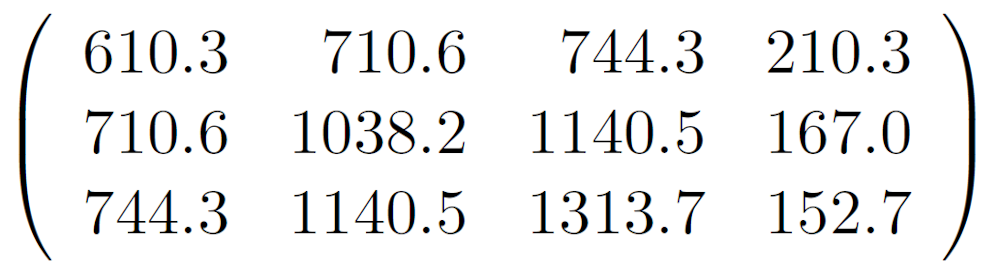
My creation of a biased algorithm was thoughtless and potentially offensive. Even more concerning, this incident demonstrates how bias can remain concealed deep within an AI system. To see why, consider a particular set of 12 numbers in a matrix of three rows and four columns. Do they seem racist? The head-tracking algorithm I developed in 1998 is controlled by a matrix like this, which describes the skin color model. But it’s impossible to tell from these numbers alone that this is in fact a racist matrix. They are just numbers, determined automatically by a computer program.
This matrix is at the heart of the author’s 1998 skin color model. Can you spot the racism?
Source: John MacCormick, CC BY-ND
The problem of bias hiding in plain sight is much more severe in modern machine-learning systems. Deep neural networks – currently the most popular and powerful type of AI model – often have millions of numbers in which bias could be encoded. The biased face recognition systems critiqued in “AI, Ain’t I a Woman?” are all deep neural networks.
The good news is that a great deal of progress on AI fairness has already been made, both in academia and in industry. Microsoft, for example, has a research group known as FATE, devoted to Fairness, Accountability, Transparency and Ethics in AI. A leading machine-learning conference, NeurIPS, has detailed ethics guidelines, including an eight-point list of negative social impacts that must be considered by researchers who submit papers.
Who’s in the room is who’s at the table
On the other hand, even in 2023, fairness can still be the victim of competitive pressures in academia and industry. The flawed Bard and Bing chatbots from Google and Microsoft are recent evidence of this grim reality. The commercial necessity of building market share led to the premature release of these systems.
The systems suffer from exactly the same problems as my 1998 head tracker. Their training data is biased. They are designed by an unrepresentative group. They face the mathematical impossibility of treating all categories equally. They must somehow trade accuracy for fairness. And their biases are hiding behind millions of inscrutable numerical parameters.
So, how far has the AI field really come since it was possible, over 25 years ago, for a doctoral student to design and publish the results of a racially biased algorithm with no apparent oversight or consequences? It’s clear that biased AI systems can still be created unintentionally and easily. It’s also clear that the bias in these systems can be harmful, hard to detect and even harder to eliminate.
These days it’s a cliché to say industry and academia need diverse groups of people “in the room” designing these algorithms. It would be helpful if the field could reach that point. But in reality, with North American computer science doctoral programs graduating only about 23% female, and 3% Black and Latino students, there will continue to be many rooms and many algorithms in which underrepresented groups are not represented at all.
That’s why the fundamental lessons of my 1998 head tracker are even more important today: It’s easy to make a mistake, it’s easy for bias to enter undetected, and everyone in the room is responsible for preventing it.
by Natasha Kuhrt, Senior Lecturer in International Peace & Security, King's College London
Beijing is positioning itself to increase its global power at the end of the Ukraine war. But the question right now for China’s president Xi Jinping is which scenario is most likely to happen, what role China can play, and what each outcome will mean for China.
As the war continues, the strength of the Sino-Russian alignment will be tested as never before. Whether Russia wins or loses, or whether the war remains unresolved resulting in a frozen conflict, all pose a dilemma for China, which has been deliberately raising its profile as a peacemaker during the conflict. There are various scenarios that are the most likely ways the war could proceed, or end.
Scenario 1 – Ukraine wins
Russia’s loss in Ukraine would send a powerful signal confirming both the west’s resilience and weakness of authoritarian aggressors. Such a development would explicitly undermine one of the key narratives shared within the Chinese Communist party, at least since the 2008/09 global economic crisis, that the west is in decline and its rivals, China in particular, are in the ascendancy.
The victory of Ukraine supported by the west would put Xi in a particularly uncomfortable position, challenging his favourite phrases of the “east wind prevailing” and “changes unseen in a century”.
However, wars tend to end messily. Were Russia to be defeated, much would hinge on the nature of the defeat. If defeat implied the departure of not only Russia’s president, Vladimir Putin, but also his inner circle, a new Russian government might deprioritise relations with China and reprioritise good relations with the west, which would be a blow to Beijing.
Scenario 2 – Russia wins
Russia’s victory amid crumbling support for Ukraine in the west would empower China. Beijing might be tempted to move to much more risky behaviour, especially in its neighbourhood.
Under such circumstances, Taiwan would probably face massive pressure from Chinese armed forces, forcing the US, which has pledged to support Taiwan, to decide whether to respond militarily. Moreover, China’s position towards Europe would be much stronger, allowing Beijing to successfully discourage European states from siding with the US both globally and in east Asia.
It could also be argued that a weakened or defeated Russia could be an opportunity for China. For example, it could take a more active role in central Asia, or force Moscow to accept further dependence on China in economic and financial sectors.
Scenario 3 – stalemate
It is entirely plausible that the war will continue in a state of stalemate for some time. In some ways, this might suit China as it can continue to benefit from cheap Russian commodities.
Russian dependence on China which has been growing since 2014, will be even greater – making Russia permanently reliant on China for raw materials. This was always the stuff of nightmares for Russian policymakers in the 1990s. But under this scenario it could turn into a reality.
The frozen conflict scenario allows Beijing to continue its policy of alleged neutrality while promoting its peacemaker role, without having to make any difficult choices.
China’s current position
China has already attempted to position itself as a peacemaker. Its “peace plan” announced in February was less a plan and more a reaffirmation of existing positions. However point 12 spoke of “offering assistance” with post-conflict reconstruction, a reminder that in 2019 China was Ukraine’s top trade partner.
Despite China’s robust partnership with Russia, it is attempting to position itself as peacemaker in the event that Russia loses, in order to be in prime position to reap the rewards of economic reconstruction of Ukraine. Xi’s recent call with Ukraine’s president Volodymyr Zelensky would seem to point to this.
While the peace plan was lacking in detail, it symbolises China’s increasingly active stance in global affairs. Note its high levels of contributions among the permanent UN security council members to UN peacekeeping, in terms of both troops and financial contributions,and its involvement in Africa as well as in the Middle East. This all forms part of Xi’s global security initiative which seeks to broaden the scope of China’s diplomacy, upholding multilateralism and the role of the UN, while pushing back against western ideas of a liberal international order, based around Washington.
Challenges
The challenges for Xi consist of how to square China’s support for Russia’s reading of the global order with Chinese principles of territorial integrity and sovereignty. Strategically, China’s tangible support for Russia may bring the US and European nations closer together and strengthen transatlantic unity, a result Beijing has been trying to avoid for the past two decades.
In the shorter term, Beijing is exploiting a sanctioned Russia by benefiting from cheap Russian commodities. Chinese companies have seized emerging opportunities in the Russian market. But the continuation of the war means the disruption of global supply chains, including deliveries of grain and fertiliser on which China is heavily reliant.
The impact of war on China’s policies in east Asia remains ambiguous. Russia’s invasion has diverted US resources away from the Asia-Pacific. But Beijing’s threat to Taiwan has become more acute in the light of developments in Ukraine.
The US responded by mobilising its Asian alliance network and accelerating the importance of security cooperation groups of nations such as the Quad (Australia, India, Japan and the US) or Aukus (Australia, the UK and US). The Taiwanese government has also intensified its efforts to reinforce the island’s defences.
China sees Russia’s invasion of Ukraine as a proxy war - a war against the west (and specifically against US power) - just as Russia does. A victory or a defeat for Russia in the war is not simply an issue for Russia, but rather could represent either the victory or the defeat of the liberal international order.
The bottom line for Beijing is, however, to avoid Russia’s complete failure in Ukraine. The role of peacemaker is one way to prevent such a development. Should this not succeed, Beijing may decide to step up its support for Moscow, ranging from financial assistance to arms deliveries.
The authors do not work for, consult, own shares in or receive funding from any company or organisation that would benefit from this article, and have disclosed no relevant affiliations beyond their academic appointment.
Quaternary ammonium compounds, or QACs, are increasingly marketed and used in homes, schools and workplaces with limited evidence for their appropriateness or safety. These chemicals can be found in common disinfectant solutions, wipes, hand sanitizers, sprays and even foggers.
Laboratory animal studies have found that some QACs can have developmental and reproductive toxicity with sustained exposure, may contribute to weight gain, and can impair energy production in cells.
Surprisingly, despite these concerns, studies on people have been limited to patients with allergic contact dermatitis and workplace-induced asthma among workers in hospitals and other facilities that require a sterile environment. We were even more surprised to find a lack of comprehensive screening for health hazards in the majority of this large class of common and widely used chemicals.
One of the top reasons to use antimicrobials only when needed is that overuse leads to the rise of antimicrobial resistance, which contributes to millions of deaths per year worldwide. QACs and other antimicrobials create “superbugs” that not only can’t be killed by disinfectants but can also become resistant to lifesaving antibiotics.
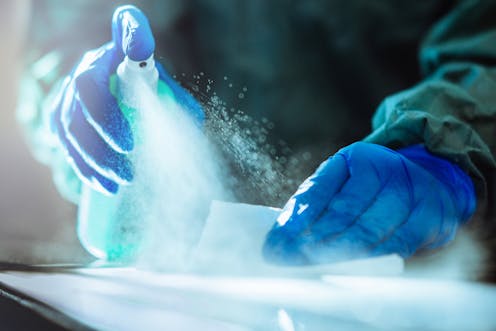
Unnecessary disinfectant use can contribute to antimicrobial resistance and increase exposure to toxic chemicals.
martinedoucet/E+ via Getty Images
Why it matters
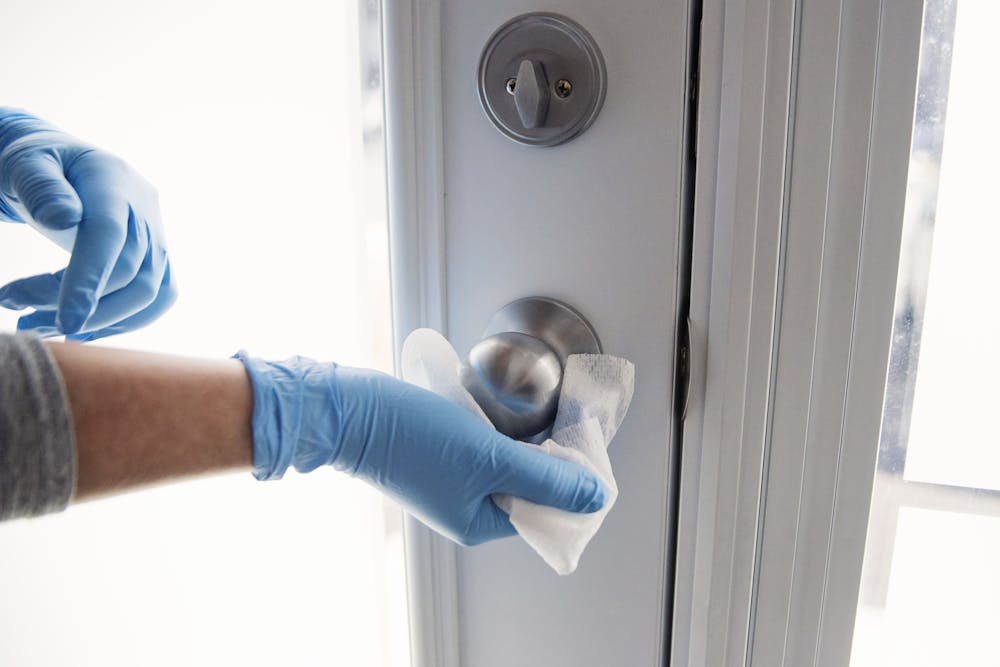
When the COVID-19 pandemic began, recommendations circulated in the news and social media to disinfect almost everything, from doorknobs to desks to groceries. Because COVID-19 is not primarily transmitted from surfaces, many of these disinfection practices don’t substantially reduce transmission risk.
Our team became concerned that frequent disinfectant use could lead to adverse health effects from QACs. Most people probably don’t know about existing health concerns regarding QACs, or aren’t aware that QACs can remain on surfaces and in indoor air and dust long after the product has dried, exposing more people to these chemicals than just the initial user. Researchers have found that the average levels of these chemicals in people’s bodies have risen since the pandemic began.
While reading labels can help consumers identify QACs, some products may not require disclosure of these chemicals in the ingredient list. For example, pesticide labels are required to list QACs whereas paint labels are not. QACs can be used in a wide variety of consumer products where they may or may not be listed when used, including personal care products, textiles, paints, medical instruments and more.
This table shows common subclasses of QACs and their associated products. QACs may not always be disclosed in the product label.
Arnold et al./ACS, CC BY-NC-ND
What’s next
Reducing the harm of QACs requires their disclosure in all products, comprehensively screening them for health hazards and closely monitoring their broader effects in people and on the environment.
Cleaning with soap or detergent removes most types of harmful germs like COVID-19 from surfaces. While disinfection can help kill any remaining microbes, it should be limited to situations where people have been actively ill, such as vomit on a surface, and during certain disease outbreaks.
For disinfectants to work properly, they must be left on the surface long enough to kill the germs, and this required contact time may be noted on the product. When you use or handle disinfectants you should wear protective gloves and eyeglasses or safety glasses, and you should open windows and doors to ventilate indoor spaces.
Courtney Carignan receives funding from the National Institute of Environmental Health Sciences, National Institutes of Health, USEPA National Priorities Program, and USDA National Institute of Food and Agriculture. This document has not been formally reviewed by the funding agencies. The views expressed in this document are solely from the authors and do not necessarily reflect those from the funding agencies.
by Jeff Inglis, Freelance Editor, The Conversation US
Enrique Tarrio, center, stands with other Proud Boys at a 2019 rally in Portland, Oregon. AP Photo/Noah Berger
Four members of the right-wing extremist group called the Proud Boys were convicted on May 4, 2023, on charges of seditious conspiracy and other charges in connection with their efforts to lead an attack on the U.S. Capitol on Jan. 6, 2021. Those convicted include the group’s former leader, Enrique Tarrio.
Several scholars have written for The Conversation U.S. about the group, its ideologies and other elements of the right-wing extremist push for white nationalism. Here we spotlight three examples from our archives.

Members of the Proud Boys, along with others, march toward the U.S. Capitol on Jan. 6, 2021.
AP Photo/Carolyn Kaster
1. Who are the Proud Boys and what do they want?
“Proud Boys have identified themselves as ‘Western chauvinists’ who focus on opposing political correctness and white guilt. But these claims have generally been seen as cover for deeper racist and antisemitic sentiments,” wrote criminology scholars Matthew Valasik at the University of Alabama and Shannon Reid at the University of North Carolina at Charlotte.
“[T]he more committed members of these and other extreme right-wing groups believe that the U.S. government, as currently constituted, is illegitimate and should be overthrown and replaced with one that is based on white supremacy,” they wrote.
2. Proud Boys are just one example of systemic racism
“Many Proud Boys reject the label ‘white supremacist,’ arguing their aim is to ‘save America’ and to defend ‘Western values,’” wrote Ursula Moffitt, who was a postdoctoral fellow in psychology at Northwestern University but is now on the faculty of Wheaton College.
But, she explained, “[w]hite supremacy was itself a longstanding Western value. And white people don’t have to be white supremacists to benefit from the ways it still shapes American society.”
In fact, Moffitt wrote, “the privileges afforded to whiteness are so much a part of the structure of U.S. society that many white people don’t even notice them. … [A]lthough racism is often seen only as prejudiced beliefs and behaviors – as embodied by the Proud Boys and other such groups – it is better defined as a system of advantage based on race.”
3. The challenge of reintegrating extremists into society
It’s not clear what will happen if the four Proud Boys members convicted on May 4, or others facing their own charges in the wake of the Jan. 6 insurrection, go to jail – or what society will do with them when they’re eventually released.
“[N]either the national security agencies nor the Department of Justice’s Bureau of Prisons has seriously considered how to handle extremist inmates while they serve their sentences, nor how to offer them a road to reintegration with the country they attacked, or planned to,” wrote John Horgan, a psychologist at Georgia State University.
Horgan recommended creating “deradicalization efforts to address the increasingly diverse population of homegrown terrorists, [which] could include psychological counseling and restorative justice.”
On March 22, 2023, thousands of researchers and tech leaders – including Elon Musk and Apple co-founder Steve Wozniak – published an open letter calling to slow down the artificial intelligence race. Specifically, the letter recommended that labs pause training for technologies stronger than OpenAI’s GPT-4, the most sophisticated generation of today’s language-generating AI systems, for at least six months.
While the letter calls for industry and policymakers to cooperate, there is currently no mechanism to enforce such a pause. As a philosopher who studies technology ethics, I’ve noticed that AI research exemplifies the “free rider problem.” I’d argue that this should guide how societies respond to its risks – and that good intentions won’t be enough.
Riding for free
Free riding is a common consequence of what philosophers call “collective action problems.” These are situations in which, as a group, everyone would benefit from a particular action, but as individuals, each member would benefit from not doing it.
Such problems most commonly involve public goods. For example, suppose a city’s inhabitants have a collective interest in funding a subway system, which would require that each of them pay a small amount through taxes or fares. Everyone would benefit, yet it’s in each individual’s best interest to save money and avoid paying their fair share. After all, they’ll still be able to enjoy the subway if most other people pay.
Hence the “free rider” issue: Some individuals won’t contribute their fair share but will still get a “free ride” – literally, in the case of the subway. If every individual failed to pay, though, no one would benefit.
Philosophers tend to argue that it is unethical to “free ride,” since free riders fail to reciprocate others’ paying their fair share. Many philosophers also argue that free riders fail in their responsibilities as part of the social contract, the collectively agreed-upon cooperative principles that govern a society. In other words, they fail to uphold their duty to be contributing members of society.
But both its benefits and dangers will affect everyone, even people who don’t personally use AI. To reduce AI’s risks, everyone has an interest in the industry’s research being conducted carefully, safely and with proper oversight and transparency. For example, misinformation and fake news already pose serious threats to democracies, but AI has the potential to exacerbate the problem by spreading “fake news” faster and more effectively than people can.
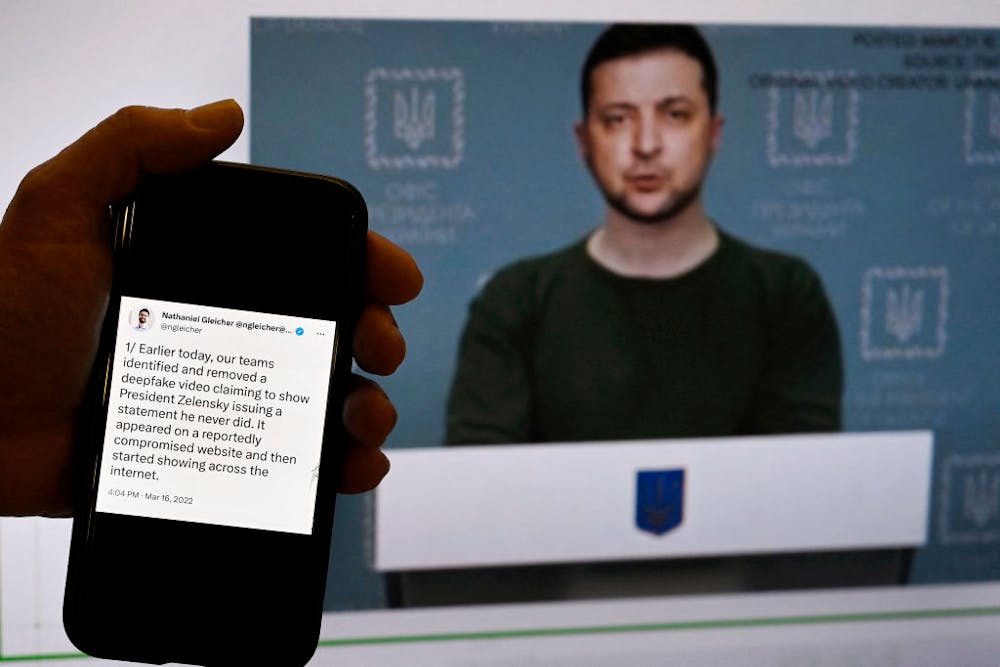
A phone screen displays a statement from the head of security policy at Meta warning of a fake video of Ukrainian President Volodymyr Zelenskyy.
Olivier Douliery/AFP via Getty Images
Even if some tech companies voluntarily halted their experiments, however, other corporations would have a monetary interest in continuing their own AI research, allowing them to get ahead in the AI arms race. What’s more, voluntarily pausing AI experiments would allow other companies to get a free ride by eventually reaping the benefits of safer, more transparent AI development, along with the rest of society.
Sam Altman, CEO of OpenAI, has acknowledged that the company is scared of the risks posed by its chatbot system, ChatGPT. “We’ve got to be careful here,” he said in an interview with ABC News, mentioning the potential for AI to produce misinformation. “I think people should be happy that we are a little bit scared of this.”
In a letter published April 5, 2023, OpenAI said that the company believes powerful AI systems need regulation to ensure thorough safety evaluations and that it would “actively engage with governments on the best form such regulation could take.” Nevertheless, OpenAI is continuing with the gradual rollout of GPT-4, and the rest of the industry is also continuing to develop and train advanced AIs.
Ripe for regulation
Decades of social science research on collective action problems has shown that where trust and goodwill are insufficient to avoid free riders, regulation is often the only alternative. Voluntary compliance is the key factor that creates free-rider scenarios – and government action is at times the way to nip it in the bud.
Further, such regulations must be enforceable. After all, would-be subway riders might be unlikely to pay the fare unless there were a threat of punishment.
Take one of the most dramatic free-rider problems in the world today: climate change. As a planet, we all have a high-stakes interest in maintaining a habitable environment. In a system that allows free riders, though, the incentives for any one country to actually follow greener guidelines are slim.
The Paris Agreement, which is currently the most encompassing global accord on climate change, is voluntary, and the United Nations has no recourse to enforce it. Even if the European Union and China voluntarily limited their emissions, for example, the United States and India could “free ride” on the reduction of carbon dioxide while continuing to emit.
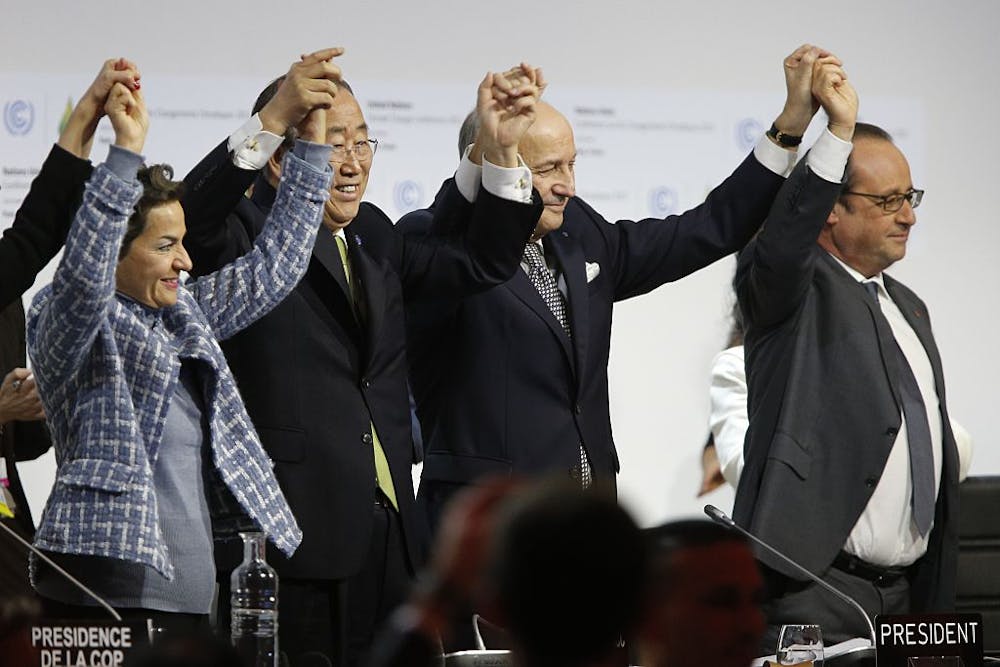
Global leaders celebrate the adoption of the historic global warming pact at the U.N.‘s COP21 climate change conference in 2015.
Francois Guillot/AFP via Getty Images
Global challenge
Similarly, the free-rider problem grounds arguments to regulate AI development. In fact, climate change is a particularly close parallel, since neither the risks posed by AI nor greenhouse gas emissions are restricted to a program’s country of origin.
Moreover, the race to develop more advanced AI is an international one. Even if the U.S. introduced federal regulation of AI research and development, China and Japan could ride free and continue their own domestic AI programs.
Effective regulation and enforcement of AI would require global collective action and cooperation, just as with climate change. In the U.S., strict enforcement would require federal oversight of research and the ability to impose hefty fines or shut down noncompliant AI experiments to ensure responsible development – whether that be through regulatory oversight boards, whistleblower protections or, in extreme cases, laboratory or research lockdowns and criminal charges.
Without enforcement, though, there will be free riders – and free riders mean the AI threat won’t abate anytime soon.
Tim Juvshik does not work for, consult, own shares in or receive funding from any company or organization that would benefit from this article, and has disclosed no relevant affiliations beyond their academic appointment.
World Health Organisation (WHO) experts have officially declared that COVID no longer constitutes a public health emergency of international concern (Pheic). This coincides with the WHO’s new strategy to transition from an emergency response to longer-term sustained COVID disease management.
This may not change too much practically. COVID will still have pandemic status, and countries will continue to have their own authority as to whether to treat COVID as an emergency within their territories (some countries, including the US, have already declared an end to the national emergency).
For the global public health community, however, this is an event of monumental importance, drawing to a close the emergency response period which commenced on January 30 2020.
At the same time, for a large portion of the general public, it may well pass by relatively unnoticed. For many people, it’s been a long time since they viewed COVID as an emergency. In the UK for example, COVID no longer features in the regular Office for National Statistics public opinion survey that asks people what they think the key issues facing the country are. Even a year ago, only two in five Britons were very or somewhat worried about COVID, according to the survey.
Along with other behavioural scientists, I have been following public experiences of the pandemic for the past three years. The results have yet to be peer reviewed but by summer 2022, many participants in our research described the pandemic as being like “a distant memory” or like it “never happened”.
As we move into this next phase, it’s time to consider what we’ve learned about human behaviour during the pandemic, and what happens next.
Old habits die hard
In the early days of the pandemic, many behavioural scientists, myself included, wondered whether some of our pandemic habits were here to stay. Would face masks become a regular wardrobe staple? Would people stop “soldiering on” and going into work when unwell?
It turned out that for most people, the pandemic hasn’t permanently changed our behaviour and habits or created a “new normal”. Looking again at the UK, face mask use has consistently declined, with figures from last month suggesting that fewer than one in six adults had worn a face mask recently. Regular use is likely much less common.
Social distancing has long since disappeared, except for a relatively small proportion of the public, in particular those most vulnerable to COVID.
The COVID pandemic has taught us how adaptive behaviour can be, in particular how much people were willing to change their behaviour to keep themselves and others safe. Most people followed the rules during the height of the pandemic, no matter how difficult. COVID has reminded us how resilient we humans can be.
These pandemic adaptions, and the fact that our pre-pandemic behaviour bounced back so quickly, shows how important social cues and social norms are to behaviour. Putting on a mask or keeping our distance from others were habits – actions triggered automatically in response to contextual cues, such as seeing signs with pictures of people socially distancing.
Social norms – what we think others are doing – were key to vaccine uptake and to our uptake of preventative measures in general. As these contextual cues disappeared and the social norms started to change, and as vaccine coverage increased and the risk to the majority decreased, our behaviour changed.
The pandemic has also demonstrated how important social connections and social, especially physical, contact can be. This is something we have already argued COVID couldn’t keep at bay forever. According to social safety theory, which sees stress and wellbeing as a product of biological, psychological and social factors, COVID posed a threat to the “social fabric that makes humans resilient and keeps us alive and well”.
As we mark the end of the emergency phase it’s important to remember the nearly seven million lives lost due to COVID since 2020.
And of course, we must consider that for some, especially those who are clinically vulnerable, the emergency is not yet over, and may never be.
Although it’s no longer a Pheic, as the WHO reminds us, COVID is still responsible for millions of infections and thousands of deaths each week around the world. Also, thanks to long COVID, hundreds of millions of people are in need of longer-term care.
In the future, we need to move from relying on the resilience of individuals to building resilience in our institutions. We can all take measures to continue to protect ourselves and those around us from COVID and other respiratory viruses (such as by hand washing and keeping up to date with vaccinations). But responsibility for preventing public health emergencies shouldn’t rest solely in the hands of the public
Actions that governments, employers and health authorities can take now could protect against future public health emergencies. Systematically tackling misinformation, improving ventilation in schools, workplaces and other public indoor spaces, and making longer-term improvements to paid sick leave are all good ways to start building more resilient societies in preparation for the next pandemic. Hopefully this is something we will never see in our lifetimes.
Simon Nicholas Williams has received funding from Senedd Cymru, Public Health Wales and the Wales Covid Evidence Centre for research on COVID-19. However, this article reflects the views of the author only and no funding bodies were involved in the writing or content of this article.
The beast ambles slowly through a dense patch of trees, its hulking limbs moving in calculated, plodding steps. Its bulbous snout sniffs at the forest floor, taking in the rich aroma of earth after an early morning rain. Mist hangs between the trees as clouds roll through this shaded wood, high up in a prehistoric sierra somewhere around present-day Mexico. The animal lifts up on its hind legs, each as thick as an elephant's, raising its squat head high up into the trees. It nibbles a few leaves, then drops back down on all fours with enough weight to push its long, bony claws deep into the ground. The leaves are a pleasant snack, but not what it seeks. It continues on, sniffing, searching for something in particular—a very special, very peculiar fruit its kind has been eating for longer than history can remember.
Sarah Maiden / Serious Eats
A breeze blows and the beast catches a scent, ripe and herbal. It moves towards the smell, then comes upon the treasure: large, dark-green, egg-like forms on the forest floor, dropped by the tree some days before at their peak of maturity. Since then, the fruits have ripened further, the firm, waxy flesh melting into a silky, buttery mass.
The fruit is an ancient one, from an ancient tree, among the first ever to flower and fruit. It's an odd one too, different from the rest. Instead of the sweetness of sugar offered by most other fruit on Earth, this reptilian-skinned orb proffers itself via the caloric payload of ample fat, an energy powerhouse that's long-lasting and deeply satisfying. It also has an unusually large seed, a curious characteristic given the whole purpose of an edible fruit is to have the seed be digested by an animal and deposited elsewhere.
With an eager tongue darting in and out, the beast gobbles up its bounty, rapidly chomping and swallowing the baseball-size fruits with golf ball-size pits large enough to choke a direwolf, one after the next as if they were mere grapes.
This is a special relationship that has formed between this very specific beast and this lone fruit over hundreds of thousands—perhaps millions—of years of coevolution. The beast, one of the long-extinct mammalian megafauna that proliferated across the Earth after the dinosaurs ceded their reign, is large enough to eat and digest the entirety of this weird, otherworldly fruit despite its overgrown seed, making it possible to spread the seed after it passes through its digestive system. The fruit is an outlier among outliers, its survival totally reliant on this gentle and massive creature to spread and propagate its seed.
The fruit is eternally dependent on the beast, the beast endlessly sustained by the fruit. But a chill wind blows, colder than most and carrying with it a warning of changes to come.
Chapter 1: The Arrival
Serious Eats / Sarah Maiden
It's midday and the band of humans stop to rest and drink. They've been on the move for months, traveling gradually south as they seek warmer weather and more plentiful sources of food to eat. It wasn't long before that they were still marching through the ice, robed in heavy mammoth skins, their own skin chapped and blistered anywhere the raw, freezing wind and sleet could reach. In the cold, they had lost their great elder, and a baby had arrived. Now the baby is walking and the sun cuts through the trees as they climb higher into more comfortable mountain air.
A few members of the band stretch out on ground to rest while others gnaw on dried giant bear meat, a kill that has yielded weeks of food for the pack of fourteen nomads. Two others crouch at a nearby stream, filling empty waterskins with ice-melt until they're heavy and swollen. The baby toddles around, peeking at her family from behind trees and climbing on small rocks. She spies a tree full of funny fruit and traipses over to it.
Suddenly there's a wild grunt and the baby cries. At once all are up and racing towards the sounds. It's a blur as the beast rears, its gnarled claws illuminated in a beam of sunlight. A spear slices the air and splits the giant's throat, cutting it down in a ragged heap. The baby is safe, the misunderstood monster dead, and at its feet an alien fruit, unlike any they've seen before.
Chapter 2: Anthro-Supremacy
Sarah Maiden / Serious Eats
Thousands of years have passed. The humans have conquered this land and stitched it together into a network of farming villages and cities. The beasts are gone, relentlessly pressed into extinction by hunters and a changed climate. The ice that had descended from the north is gone too. But the bizarre fruit not only remains, it has spread in the hands of the humans, who have now taken over the task of carefully tending to its trees. It is now growing in many parts of North, Central, and South America, and the West Indies, split into dozens upon dozens of varieties and eaten in countless ways.
The fruit will take many names—āhuacatl in Nahuatl will one day become aguacate in Spanish, then avocado in English. People will eat it blended into sauces and shakes, smashed into dips, and spread on a trillion twee toasts, digitized trillions of times more as social media uploads and impressions. Most of them will never spend much time at all thinking of this odd, fatty fruit and the singular story that must have birthed it. Few will wonder why the pits are so large, or dare imagine what kind of colossal creature was once able to swallow them whole.
We don't give thanks to that beast whose biology helped create the avocado, its contribution lost to time. The animal was a victim of its overgrown frame, the same one that allowed it to swallow avocados whole so that they could spread and thrive.
How to Store and Ripen Your Avocados
Cutting into under- or over-ripened avocados at the precise moment you most need perfectly ripe ones is a rite of passage, the most universal and frustrating human common denominator. But—wait for it—it doesn't have to be. Here's our guide to what you need to know about storing avocados to ensure timely ripeness, followed by our tips on how to speed the process.
Breakfast Recipes
Avocado Smoothie
This ultra-creamy avocado smoothie gets its sweet, tangy flavor from frozen mangoes, orange juice, and a ripe banana.
The primary flavors come from the orange juice, mango, and banana, which together provide a pleasant sweet-tart balance. The banana also adds fiber and body to the shake, which is improved even further by the rich silkiness of the avocado.
Eggs Baked in Avocado
The runny yolk surrounded by creamy, tender avocado is a true game changer.
The texture of the avocado is not really altered by a quick 10 minutes in the oven. Garnish with whole grain mustard and chopped chives, and you have a new take on brunch that will be a crowd pleaser. As an added bonus, any leftovers are great on top of a tart salad for a quick lunch the next day.
Lunch Recipes
Chicken Salad With Avocado, Corn, and Miso Dressing
Mix up your classic chicken salad with this summery variation made with sweet corn, avocado, and the juiciest poached chicken tossed with a light and creamy miso dressing. Cooking the chicken sous-vide allows you to cook it to a lower temperature than traditional methods, guaranteeing moister meat while maintaining food safety standards.
Tofu and Kale Salad With Avocado, Grapefruit, and Miso-Tahini Dressing
The base of this salad is great no matter what you do with it mainly because it has to do with the texture of those three main ingredients. Crisp tofu, creamy avocado, and juicy grapefruit.
Add some chopped raw kale and chickpeas? Delicious. Add a splash of fish sauce (for a non-vegan version) and some toasted pita bread croutons? Fantastic.
Dinner and Dessert Recipes
Avocado Fries
Crunchy with golden brown panko on the outside and buttery within, avocado fries are a low-effort, high-reward snack that come together in less than 30 minutes.
Tossing the panko with olive oil results in a crisper coating for the avocado fries. Using ripe but slightly firm avocados makes it easier to dip and coat the fries.
Classic Guacamole
Properly handling the avocados and flavorings yields the most flavorful guacamole with the best texture. Pounding (or processing) the aromatics with salt into a paste results in a finished guac that's noticeably more flavorful.
Mashing the avocados in a molcajete or with a whisk produces the ideal chunky texture.
Vegan Chickpea Cakes With Mashed Avocado
These vegan falafel-esque patties made with chickpeas and bulgur wheat have a crunchy breadcrumb and are served with mashed avocado for a rich and creamy texture.
A bit of mashed avocado adds brightness, richness, and creamy texture to the mix, while a nice mixed green salad rounds it all out.
Avocado Chocolate Mousse
The secret to ultra-creamy and velvety smooth vegan chocolate mousse? Ripe avocados.
The avocados work so well because they manage to stand in for both the meringue, which makes the dessert just light enough, and the mixture of yolks, melted chocolate, and cream, which lends traditional mousse its rich flavor and texture.
Vegan Avocado Lime Ice Cream Recipe
Buttery avocados brightened with lime make for smooth, creamy, dairy-free ice cream.
Add lime juice in small increments to taste—too little and the ice cream turns out bland, too much and it becomes overly savory.
The Molcajete We Love for Guacamole
This traditional Mexican mortar and pestle is often faked with concrete instead of the lava stone it should be made from, but this one's the real deal—and perfect for your next batch of guac.
Beginning May 6, Mosquito Management Services in Hillsborough County will give away free mosquito fish to residents. Mosquito fish giveaways are one of the tools used to reduce backyard mosquito breeding. All Hillsborough County residents are eligible for free fish, including those who live in Tampa, Temple Terrace, and Plant City.
Mosquito fish facts
Mosquito fish are small, native freshwater fish that eat mosquito larvae. The best way to care for them is to place the fish in standing water such as backyard ponds, fountains, animal troughs, and unused swimming pools to manage mosquito populations effectively and naturally. The fish require no feeding, and care is limited to protecting them from garden sprays, chlorine, or other chemicals used for cleaning. Mosquito fish do not lay eggs and require no special environment for breeding.
Mosquito Management Services’ goal is for 100% of the County’s mosquito fish supply to be raised at its headquarters, making the operation more sustainable. Homegrown fish are more likely to be healthier than fish transported from farms.
Things to know about the events
In order to receive your fish, you need a photo ID showing that you live in Hillsborough County.
County staff will take your ID info and scan them into the County’s mosquito database by County staff.
Fish will be available only while supplies last.
Schedule and locations
The Mosquito Management Public Education Trailer will also be on-site at the giveaway locations. The education trailer focuses on ways residents can help fight mosquitoes before they spread. Find more event information and additional locations here.
May 6 – Mosquito Management Services, 6527 Eureka Springs Road, Tampa, FL 33610, 8 a.m. to noon
May 20 – Hillsborough County Traffic Operations and Management, 2310 Regional Water Lane, Tampa, FL 33619, 9 a.m. to noon
June 10 – Keith Waller Park, 1318 Sydney Dover Road, Dover, FL 33527, 8 a.m. to noon
June 24 – Northdale Recreation Center, 15550 Spring Pine Drive, Tampa, FL 33624, 8 a.m. to noon
July 8 – Gadsden Park, 6901 South MacDill Avenue, Tampa, FL 33611, 8 a.m. to noon
July 22 – Fishhawk Sports Complex, 16000 Fishhawk Boulevard, Lithia, FL 33547, 8 a.m. to noon
Aug. 5 – Oscar Cooler Sports Complex, 766 West Lutz Lake Fern Road, Lutz, FL 33548, 8 a.m. to noon
Aug. 19 – Keystone Park, 17928 Gunn Highway, Odessa, FL 33556, 8 a.m. to noon
It’s been over a century since a major hurricane (category 3 or greater) has made landfall in the Tampa Bay Area. That was the 1921 Tampa Bay Hurricane. And while the area has been hit by multiple damaging storms since then, Tampa Bay has somehow avoided the big one. As we get ready for the 2023 Hurricane season, let’s look back at the history of hurricanes in the Tampa Bay region.
The Tampa Bay area has a long history of being vulnerable to hurricanes, with devastating storms causing widespread damage and loss of life. Over the years, the region has experienced a number of hurricanes, each with its own unique characteristics and impacts on the local population.
Hurricane History in Tampa Bay
One of the most notable hurricanes to hit the Tampa Bay area was the 1921 Tampa Bay hurricane. This Category 4 storm made landfall on October 25, 1921, and caused extensive damage throughout the region. The hurricane produced a storm surge of nearly 10 feet, which inundated low-lying areas and caused widespread flooding. In addition to the storm surge, the hurricane also produced strong winds, which downed trees and power lines, and damaged buildings and infrastructure.
Another significant hurricane to impact the Tampa Bay area was Hurricane Donna, which struck in September 1960. This Category 4 storm caused significant damage throughout the region, with sustained winds of 130 mph and storm surge flooding. The hurricane resulted in more than a hundred fatalities across the state, including several in the Tampa Bay area.
Hurricane damage to Gulf Terminals, viewed from River End : Tampa, Fla. 1921
In more recent years, the Tampa Bay area has experienced several other notable hurricanes, including Hurricane Charley in 2004. This hurricane caused extensive damage in the region. Hurricane Irma in 2017 prompted widespread evacuations and caused significant flooding and wind damage.
Preparing and improving
Despite the region’s vulnerability to hurricanes, significant efforts have been made in recent years to mitigate the impact of these storms on the local population. This has included improvements to infrastructure, such as the construction of new flood barriers and the reinforcement of existing buildings. As well as increased public education and awareness about hurricane preparedness.
One of the most important steps in preparing for hurricanes is to have a plan in place for evacuation and sheltering in place. This may include identifying safe evacuation routes, preparing an emergency supply kit. And ensuring that all family members are aware of the plan and know what to do in the event of a hurricane.
Hurricanes can be devastating and unpredictable. But the Tampa Bay area has a long history of resilience in the face of these storms. Through continued preparedness and awareness, the region can continue to thrive and recover from the impacts of hurricanes for years to come.
When there’s a potential hurricane heading your way, thinking of logistics can be overwhelming. We’ve gathered a list of helpful links that can help you navigate hurricane season in the Tampa Bay area.
Hurricane prep
The best defense is a good offense when it comes to storm prep:
What’s the difference between flood zones and evacuation zones?
Flood zones are areas mapped by FEMA for use in the National Flood Insurance Program. Evacuation zones are based on hurricane storm surge zones determined by the National Hurricane Center using ground elevation and the area’s vulnerability to storm surge from a hurricane.
Emergency management
Emergency management offices are city and county offices responsible for planning and coordinating actions to prepare, respond, and recover from natural or man-made disasters. Know how to track and get in contact with your local emergency management office:
Only 8% of the world’s population actually lives in a full, functioning democracy, according to the Economist Intelligence Unit (EIU). The state of democracy is actually in flux in many countries.
Meanwhile, another 37% of people live in some type of “flawed democracy”, while 55% of the world does not live in democracy at all, based on the EIU’s latest Democracy Index Report.
Events such as the war in Ukraine and restrictive, long-lasting COVID-19 measures, have caused numerous declines to country democracy scores in recent years. Since the source report first began tracking scores in 2006, the global average has fallen from 5.52 to 5.29.
The Methodology
The EIU measures democracy by assessing 60 indicators across five key categories:
Electoral process and pluralism
Political culture
Political participation
Functioning of government
Civil liberties
Each category has a rank of 0-10 based on how the indicators fared, and the overall democracy score is an average of each of the five categories. For example, here’s a look at the U.S.’ scoring out of 10 in each of the overall categories in 2022:
This score defines the U.S. as a flawed democracy and ranks it 30th overall in the world, down four spots from last year’s ranking. “Flawed” in this case simply means there are problems, ranging from poor political culture to governance issues, but flawed democracies are still considered to have free and fair elections, as well as civil liberties.
The World’s Democracies by Region
Below we map out the state of democracy across various regions around the world.
The Americas
One of the best performers year-over-year was Chile, with its score increasing by nearly 0.3. The country moved out of the flawed democracy category last year, largely because of the shift towards constitutional reform alongside President Gabriel Boric moving towards the political center, reducing polarization.
Only three other countries in the Americas are also considered full democracies: Costa Rica, Canada, and Uruguay—the latter of which is #1 regionally.
On the flipside, some of the world’s worst performers year-over-year are located specifically in Latin America, namely: El Salvador and Haiti. Much of the low scores in the region are associated with high crime rates and corrupt governance.
Africa
The only full democracy in Africa is the small, island nation of Mauritius. Overall, Africa is one of the lowest scoring regions with only five of the continent’s 54 countries ranking as some type of democracy.
Tunisia’s score decreased significantly in 2022. President Kais Saied dismissed parliament early in the year and took control of the electoral council, slowly shifting towards centralized power. And although there were critics, many have since been arrested, downgrading them in the EIU’s eyes from a flawed democracy to a hybrid regime.
Europe
Spain and France regained status as full democracies in 2022, mainly improving in the civil liberties and functioning of government categories thanks to the easing of COVID-19 restrictions. However, both countries face political polarization; in Spain this is largely exemplified in the attitudes surrounding the Catalan separatist movement.
Some of the lowest scoring regimes in the region are in Russia and Belarus. Russia’s war in Ukraine has violated international law, as well as another country’s sovereignty, decimating its score by 0.96 in the index. Belarus has continually allied itself with Russia, allowing troops—and likely missiles—to enter Ukraine from its borders.
Oceania and East Asia
In this region, levels of democracy were severely affected by the COVID-19 pandemic. Hong Kong only removed restrictive policies like mask mandates in early 2023. In contrast, Thailand lifted these restrictions a year prior, providing more individual freedom, according to the report.
Malaysia’s fairly high score of 7.3 could face scrutiny, as the former Prime Minister, Muhyiddin Yassin, who was in office during COVID-19, is currently facing corruption charges for money laundering of COVID-19 stimulus package funds.
Central Asia and The Middle East
Finally, in the Middle East and Central Asia, there are no full democracies at all. The lowest scoring country globally is Afghanistan at only 0.32.
Israel, the only democracy of any kind of the region, actually moved down six spots in the global ranking from the year prior. Its lowest scoring category in 2022 was civil liberties. This year, the country is in the spotlight due to its judicial reforms proposed by the ruling nationalist party, and civil response has been strong. Mass protests continue around the country.
Those who sipped or sniffed ether and chloroform in the 19th century experienced a range of effects from these repurposed anaesthetics, including preternatural mental clarity, psychological hauntings, and slippages of space and time. Mike Jay explores how the powerful solvents shaped the writings of Guy de Maupassant and Jean Lorrain — psychonauts who opened the door to an invisible dimension of mind and suffered Promethean consequences.
Black mothers are the canaries in the coal mine when it comes to the mental and physical harms of stress from living with gun violence in America.
In the U.S., Black people are likelier than white people to reside in impoverished, racially segregated communities with high levels of gun violence. Research has suggested that living inviolent and unsafe environments can result in continuous traumatic stress, a constant form of PTSD. Researchers have also linked experiences of violence and poverty to an increased risk of chronic disease such as cancer and cardiovascular, respiratory and neurodegenerative diseases.
We are Black women and public policy and sociology professors who study health inequities and sustainable policy solutions. Our research has found that Black mothers who feel trapped in neighborhoods they perceived as unsafe because of high levels of community violence are more likely to report elevated PTSD and depression symptoms, as well as elevated stress hormone levels.
The trauma of gun violence and systemic racism isn’t simply a Black mother’s story – it’s an American story.
Gun violence is an epidemic in the U.S.
Health effects of feeling trapped
Our research team sought to understand how stress from structural violence affects the body, specifically the immune system. We talked to 68 low-income single Black mothers living on the South Side of Chicago about how they deal with gun violence in their communities and how it affects their health.
We asked these Black mothers to complete surveys that measured depression and PTSD symptoms. We also asked them to provide blood samples to examine the effects of stress at the cellular level, measuring the activity of genes that code for the receptors for the stress hormone cortisol. Looking at cortisol receptors offers a more cumulative measure of cortisol levels over time.
We found that about 65% of the mothers wanted to move out of their neighborhoods but could not afford to do so. These mothers felt trapped in areas with high levels of gun violence that fostered a sense of not feeling safe for adults and children. One mother in our study, whom we will call Ellan, described her neighborhood as dangerous and wanted to leave as soon as she could. “I’m very terrified of my kids going out to the park, playing in front of the house,” she said. “And I’m afraid that a car might come past shootin’ and one of my kids get hurt.”
Another mother in our study, whom we will call Skylar, felt she couldn’t escape to a safer community. “I don’t really want to raise my kids there, but I don’t have a choice. You know, cause it’s what I can afford. But it’s real violent.”
Mothers who felt trapped reported more symptoms of PTSD, like disturbing memories and dreams and reliving stressful experiences, than mothers who did not feel trapped. They also reported more depressive symptoms, such as feeling down and hopeless, taking little pleasure in doing things and having trouble sleeping.
Mothers unable to afford the move to safer neighborhoods had lower levels of glucocorticoid receptors. Having fewer glucocorticoid receptors helped protect their bodies from being overwhelmed by high cortisol levels caused by stress. Nevertheless, high cortisol levels from chronic stress are linked to a number of negative mental and physical health outcomes.
Environment determines health
Where someone lives, learns, works, plays and worships can determine their health and has the power to make them sick and cause premature death.
Researchers have estimated that around 83,570 Black people die prematurely each year in the U.S. because of health disparities, using 2002 data. Some scholars have previously described this as equivalent to a plane full of Black passengers falling out the sky every day every year.
It is important to note that it is not the racial makeup of where a person lives that shapes the significant disparities they face, but exposure to violence, poverty and lack of resources as a result of structural racism. Redlining, environmental contamination, food deserts and gun violence are a part of the racial capitalism, or exploitation of marginalized communities, that affect the health of Black women.
Black people face systemic economic and health disparities in the U.S.
What we are learning about the constant threats to the safety of Black mothers and their families also applies to the general American public.
Understanding the complexity of the exposome – the word researchers use for environmental factors like gun violence that affect an individual’s health and well-being – can help extend the years of healthy life of groups who typically experience premature death. Building this knowledge requires input from people of color and others who have traditionally been pushed to the margins of society.
We are currently creating a “wellness store” that places wellness tools and health knowledge at the fingertips of individuals, especially for those experiencing interlocking traumas such as racism, sexism, classism, incarceration, racial segregation and rural geographic isolation. These tools, co-created with community health workers and citizen scientists, range from phone apps to public policy designed to get stress “out from under the skin.” Our goal is to work with clinics, hospitals and community organizations to provide accessible tools to prevent illness.
Black communities are filled with resilient and vulnerable individuals who deserve urgent policy solutions that lead to societal change. We believe that more investment in disease prevention and health equity can help the U.S. use the knowledge, technology and finances that it already has to help people access its most precious resource: a healthy life and the ability to pursue wellness.
Loren Henderson is affiliated with Association of Black Sociologists. I am the Executive Officer of the Association of Black Sociologists.
Ruby Mendenhall receives funding from the National Science Foundation, the MacArthur Foundation and the University of Illinois at Urbana-Champaign.
Molly was 88 years old and in good health. She had outlived two husbands, her siblings, most of her friends and her only son.
“I don’t have any meaningful relationships left, dear,” she told me. “They’ve all died. And you know what? Underneath it all, I want to leave this world too.” Leaning a little closer, as though she was telling me a secret, she continued:
Shall I tell you what I am? I’m strong. I can admit to myself and to you that there’s nothing left for me here. I’m more than ready to leave when it’s my time. In fact, it can’t come quickly enough.
I’ve interviewed many older people for research. Every so often, I’m struck by the sincerity with which some people feel that their life is completed. They seem tired of being alive.
I’m a member of of the European Understanding Tiredness of Life in Older People Research Network, a group of geriatricians, psychiatrists, social scientists, psychologists and death scholars. We want to better understand the phenomenon and unpick what is unique about it. The network is also working on advice for politicians and healthcare practices, as well as caregiver and patient support.
Professor of care ethics Els van Wijngaarden and colleagues in the Netherlands listened to a group of older people who were not seriously ill, yet felt a yearning to end their lives. The key issues they identified in such people were: aching loneliness, pain associated with not mattering, struggles with self-expression, existential tiredness, and fear of being reduced to a completely dependent state.
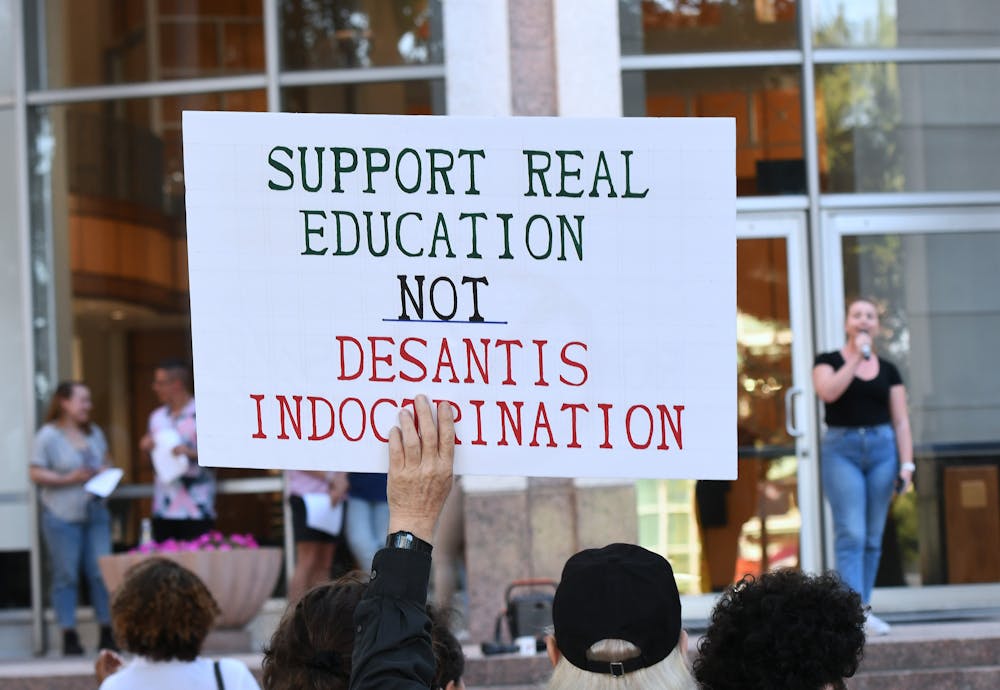
This need not be the consequence of a lifetime of suffering, or a response to intolerable physical pain. Tiredness of life also seems to arise in people who consider themselves to have lived fulfilling lives. One man of 92 told the network’s researchers:
You have no effect on anything. The ship sets sail and everyone has a job, but you just sail along. I am cargo to them. That’s not easy. That’s not me. Humiliation is too strong a word, but it is bordering on it. I simply feel ignored, completely marginalised.
Another man said:
Look at the condition of those old ladies in the building opposite. Gaunt and half-dead, pointlessly driven around in a wheelchair … It has nothing to do with being human anymore. It is a stage of life I simply don’t want to go through.
A unique suffering
The American novelist Philip Roth wrote that “old age is not a battle, old age is a massacre”. If we live long enough, we can lose our identity, physical capabilities, partner, friends and careers.
For some people, this elicits a deep-rooted sense that life has been stripped of meaning – and that the tools we need to rebuild a sense of purpose are irretrievable.
Care professor Helena Larsson and colleagues in Sweden have written about a gradual “turning out of the lights” in old age. They argue that people steadily let go of life, until they reach a point where they are ready to turn off the outside world. Larsson’s team raises the question of whether this might be inevitable for us all.
Of course, this sort of suffering shares characteristics (it’s depressing and painful) with anguish we encounter at other points in life. But it’s not the same. Consider the existential suffering that might arise from a terminal illness or recent divorce. In these examples, part of the suffering is connected to the fact that there is more of life’s voyage to make – but that the rest of the journey feels uncertain and no longer looks the way we fantasised it would.
This sort of suffering is often tied to mourning a future we feel we should have had, or fearing a future we are uncertain about. One of the distinctions in tiredness of life is that there is no desire for, or mourning of, a future; only a profound sense that the journey is over, yet drags on painfully and indefinitely.
The global view
In countries where euthanasia and assisted suicide are legal, doctors and researchers are debating whether tiredness of life meets the threshold for the sort of unceasing emotional suffering that grants people the right to euthanasia.
The fact that this problem is common enough for researchers to debate it may suggest that modern life has shut older people out of western society. Perhaps elders are no longer revered for their wisdom and experience. But it’s not inevitable. In Japan, age is seen as a spring or rebirth after a busy period of working and raising children. One study found older adults in Japan showed higher scores on personal growth compared with midlife adults, whereas the opposite age pattern was found in the US.
Surgeon and medical professor Atul Gawande argues that in western societies, medicine has created the ideal conditions for transforming ageing into a “long, slow fade”. He believes quality of life has been overlooked as we channel our resources towards biological survival. This is unprecedented in history. Tiredness of life may be evidence of the cost.
Sam Carr does not work for, consult, own shares in or receive funding from any company or organisation that would benefit from this article, and has disclosed no relevant affiliations beyond their academic appointment.
by Erica Goldberg, Professor of Law, University of Dayton
Demonstrators who support banning books gather during a protest outside of the Henry Ford Centennial Library in Dearborn, Mich., on Sept. 25, 2022. Jeff Kowalsky/AFP via Getty Images
Recently at Stanford Law School, student protesters shouted over a Trump-appointed federal judge and disrupted the speech he had been invited by students to give.
The law school’s dean then issued a public apology to the judge and explained to the public that Stanford’s speech policies do not permit coordinated efforts to shut down invited speakers.
Students then protested the dean’s apology, claiming that “counter speech is free speech.” But coordinated efforts to shut down someone’s speech through disruption or threat of violence, sometimes called “the heckler’s veto,” is not protected free speech.
As a constitutional law professor who studies and writes about the First Amendment and free speech, I have seen a growing number of cases across the political spectrum in which people try to suppress others’ speech because it is deemed too harmful. This is happening not only among students and faculty on college campuses, but among those in state and local government, on school boards and library committees.
The theory behind the First Amendment and the exercise of free speech is that speech, unlike physical conduct or force, should be countered with other speech. Speech is not itself violence, and challenging ideas promotes critical thinking and growth.
Much of the rising intolerance to speech has a common thread: Instead of using speech or protest to counter the speech or expression that critics dislike, people on the right and the left appear to want to prevent ideas they don’t like from entering the conversation.
The headline on Stanford’s campus newspaper when the school’s president and law school dean apologized to the judge who was shouted down by students.

Stanford Daily
Banning, repressing and shutting down
Over the past few years, legislators and government officials as well as some parents and school administrators, largely in Republican-leaning states, have demanded that certain books be removed from school libraries. Some government officials are trying to make it easier to remove books from public libraries, too.

Usually, the claim is that the books are inappropriate for children. Many of the books removed from libraries or school curricula include authors or characters who belong to racial, ethnic or religious minorities or are members of the LGBTQ+ community.
Legislators have proposed bills to prohibit teachers from promoting specific views that they believe is harmful to children, or too sexual, or erodes students’ self-esteem, including suggestions that members of certain races are inherently privileged or disadvantaged because of their race.
Legislators have also proposed bills that ban drag shows where children may be in attendance. A Tennessee ban has been temporarily halted from going into effect by a federal judge. The ban likely violates the First Amendment because it does not apply only to sexually explicit speech.
Not just conservatives
The intolerance of certain speech is not limited to the political right.
Although many of the policies limiting what students read, see or hear come from conservatives, in some places high school administrators also censor or punish conservative speech, such as forcing students to take off sweatshirts that bear a slogan critical of President Joe Biden.
The left, especially in higher education, has promoted policies that would force faculty and staff to adhere to certain ideas, including the university’s stated mission, undercutting academic freedom and free speech values. An instructor at Hamline University in Minnesota had her job offer for the next semester rescinded after showing a class a historical depiction of the Prophet Muhammad that offended certain students. An applicant for a school superintendent position recently similarly had his job offer rescinded for addressing two women as “ladies.” This has a chilling effect on dissenting or even moderate voices in education.

Besides the specific examples of speech repression, a documented shift in public attitudes about free speech is happening that is more diffuse, but highly consequential for democracy.
Younger progressives seem eager to use the heckler’s veto to intimidate or block people from speaking.
For example, a former collegiate swimmer, recently invited to San Francisco State University to discuss her opposition to trans athletes’ competing in sports, faced protesters who were so aggressive that she had to be barricaded in a room for her own safety.
Undermining the search for truth
The censoriousness on the right and on the left can reinforce each other.
Universities are dominated in an unprecedented way by progressive professors and administrators. At many universities, including my own, professors have to demonstrate – sometimes even in their scholarship – a commitment to diversity, equity and inclusion.
This mandate, many argue, tramples on academic freedom and forces professors to tailor their scholarship to a particular politicized view of group rights versus individual rights.
Many state governments have responded to these progressive initiatives by enacting legislation that is even more censorious and potentially unconstitutional.
Ohio is considering a bill that prevents teaching particular subjects related to diversity at its universities. Part of the bill seeks to ensure that professors do not impose their views on students. That reflects a concern of the right, that professors force students to parrot back the professors’ own views, or that professors present material in a one-sided way.
In my view, these efforts to restrict what people can see, say or read undermine healthy discussions and the search for truth.
Room for agreement
Yet historically, free speech has been one area that both the right and the left have found a unifying, nonpartisan principle. First Amendment casesattheSupreme Court often get decided in ways that cut across partisan lines, even by courts that are quite politically divided.
The left, on principle, has been a major champion of offensive and hateful speech, including when the American Civil Liberties Union defended in 1977 the right of neo-Nazis to march in a town whose residents included many Holocaust survivors.
Censorship breeds more censorship. Attempts by both the left and the right to impose orthodoxy by stifling views leads ultimately to intolerance and authoritarianism. As Justice Robert H. Jackson said in a 1943 case that held that students in public schools cannot be forced to salute the flag, “If there is any fixed star in our constitutional constellation, it is that no official, high or petty, can prescribe what shall be orthodox in politics, nationalism, religion, or other matters of opinion.”
As much as people may dislike hearing views they consider harmful, that displeasure is evidence of what I believe is the most fundamental freedom guaranteed by federal law – freedom of expression.
Erica Goldberg does not work for, consult, own shares in or receive funding from any company or organization that would benefit from this article, and has disclosed no relevant affiliations beyond their academic appointment.
Mayor Jane Castor just unveiled a new tree initiative to protect and improve the city’s tree canopy. The Mayor is calling on Tampa to renew and re-energize its commitment to maintaining a world class tree canopy, setting a goal of planting 30,000 new trees by 2030.
City of Tampa residents are invited to pick up a free tree during Mayor Jane’s Tree Giveaway on May 6. The city is providing 1,000 trees to the community to support Tampa’s urban tree canopy. Residents will be able to choose between 6 tree species (each is a 3 gallons tree) while supplies last. Residents will get up to two (2) free trees per household.
Thousands of trees coming to Tampa
Residents must live within City of Tampa limits to be eligible for up to two free trees per household; and must be prepared to show proof of residency. For those unsure, trees need to be planted 10 feet from underground utilities such as water and sewer and should not be planted within 30 feet from above ground electrical lines.
Those interested in reserving their spot can do so in advance on the official event page.
by Nicola St John, Lecturer, Communication Design, RMIT University
Warlukurlangu Artists, Author provided
From souvenir shops to art galleries, First Nations designs are big business. Australia’s Productivity Commission estimates about $250 million of Indigenous-style art and consumer products are sold annually. But just 16% of that ends up in the hands of Aboriginal and Torres Strait Islander artists.
When it comes Indigenous-style souvenirs, the commission says about 75% aren’t authentic. The art market is a little better, but fakes are prevalent enough for one to have appeared in comedian Ricky Gervais’ sit-com Afterlife.
To support First Nations artists and communities, here’s what you need to know, and need to ask, before buying.
Home is where the art is
Aboriginal and Torres Strait Islander art is more than aesthetically pleasing shapes and colours. It is a cultural expression, a means of passing information from one generation to the next, of telling stories.
These stories may be about sacred knowledge and dreamings specific to an individual, a family or a community – stories not culturally permissible for others to tell. Those stories share commonalities but also differ according to place – plants, animals, customs and laws.
Each of Australia’s more than 200 Indigenous nation groups – comprised of clans that share a common language and kinship systems – will use designs, colours and materials related to place.
Dot painting, for example, is specific to the desert interior of Western Australia, Northern Territory and South Australia.
Dot painting by an artist from Yuendumu, about 300 km northwest of Alice Springs in the Northern Territory.
Warlukurlangu Artists, Author provided
Cross-hatching and “x-ray” paintings come from Arnhem Land in north-east Northern Territory.
Arnhem Land artist Glen Namundja at work in 2014.
Mark Roy/Wikimedia Commons, CC BY
Depictions of “Wandjina” spirits come from the Kimberley coast in northern Western Australia. The Wandjina are the most powerful creation spirits, symbolising rain. They are often depicted with bodies of dots, representing rainfall.
Wandjina rock art near the Barnett River, in the Kimberley, north Western Australia.
Graeme Churchard/Wikimedia Commons, CC BY
Ochre pigments, derived from soil, are used across the east Kimberley, Arnhem Land and central Northern Territory.
Art for sale at the Warmun Art Centre in the east Kimberley.
Bo Wong/West Australian Museum, CC BY
Any authentic piece of Indigenous art tells a story. Before you buy, get to know that story.
What’s the story?
There’s one simple rule when buying First Nations art or crafts: the more information the better.
Artists have two main ways to sell their art. For original art, it’s through a gallery, which takes a hefty commission. If it’s a design on a product, licensing is more common: the artist gives permission for the reproduction of their work in exchange for a one-off payment or an ongoing commission, usually linked to sales.
In either case, a legitimate gallery or licensee has a vested interest in assuring you of the authenticity of what they are selling, and that the artist is benefiting from your purchase.
They should be able to provide you with:
the artist’s name and biography, including their language or nations group
evidence of the work’s authenticity, such as photographs of the artist at work
how they pay the artist, and how much
evidence of commitment to efforts to improve the industry, such as the Indigenous Art Code.
Hilda Nakamarra Rogers, a member of the Warlukurlangu Artists Aboriginal Corporation.
Warlukurlangu Artists, CC BY-NC-ND
If there’s no information on who created an artwork and where they’re from, it is most likely fake.
In short: buy from sellers with transparent policies. On their website and in person they should provide clear information on all off the above. Reluctance to share this information is a red flag.
Look for community connections
Galleries and other intermediaries may be Indigenous or non-Indigenous-owned. They may be private for-profit businesses or community-owned.
Private businesses can be highly ethical and reinvest in their community, but there is greater assurance of this happening with collectively owned businesses established specifically for the benefit of local artists, to employ local people and fund community projects.
An example is the Warlukurlangu Artists Aboriginal Corporation, a not-for-profit company owned by artists from the Yuendumu community in the Northern Territory, about 300 kilometres northwest of Alice Springs. Founded in 1985, the company uses its surpluses to fund community projects such as a health program and a dog program, which cares for the local dog population.
At work at the Warlukurlangu Artists art centre.
Warlukurlangu Artists, Author provided
There are more than 100 such independently governed First Nations art and craft centres in Australia, including umbrella organisations in the following areas:
Art centres sell online. They may have arrangements to sell artwork through commercial galleries nearer population hotspots. They may also license art for use on homeware and souvenirs.
In the wider market for First Nations designs and products, look for evidence of Indigenous ownership, commitment to compensate artists, and other evidence of community engagement. Most First Nations-run businesses are proud to acknowledge their heritage.
There is a federal scheme, called Supply Nation database, that verify Aboriginal and Torres Strait Islander businesses. But because this is focused on government and commercial procurement, it has few listings for arts, craft, and design business.
So use your best judgement. Ask the right questions, expect full answers.
What about product certification?
What about certifying products? This is done for Australian Made goods. Why not for First Nations-made products?
The problem, according to the Productivity Commission, is that certification schemes need high producer take-up and high consumer recognition to succeed. That would require resources the artists don’t have.
The commission has recommended an alternative approach, mandatory labelling of inauthentic products, through amending the Australian Consumer Law.
It has also recommended new “cultural rights” legislation, giving traditional owners control over cultural assets such as stories, symbols and motifs, with power to take legal action when the infringement of their rights.
So far, however, the federal government has given no indication of if and when it will act on these recommendations.
Until it does, and there are more legal protections and clear labelling – of fake or authentic good – take the time to ask the right questions and get the right answers.
Nicola St John receives funding from The Australia Council for the Arts, the Australian Government's principal arts investment, development and advisory body. She also consults to Solid Lines, Australia's only First Nations led illustration agency.
Emrhan Sultan has received funding from The Australia Council for the Arts, the Australian Government's principal arts investment, development, and advisory body. Emrhan is the co-founder and manager of Solid Lines, Australia's only First Nations led illustration agency.
It turns out that pop stars Drake and The Weeknd didn’t suddenly drop a new track that went viral on TikTok and YouTube in April 2023. The photograph that won an international photography competition that same month wasn’t a real photograph. And the image of Pope Francis sporting a Balenciaga jacket that appeared in March 2023? That was also a fake.
All were made with the help of generative AI, the new technology that can generate humanlike text, audio and images on demand through programs such as ChatGPT, Midjourney and Bard, among others.
There’s certainly something unsettling about the ease with which people can be duped by these fakes, and I see it as a harbinger of an authenticity crisis that raises some difficult questions.
How will voters know whether a video of a political candidate saying something offensive was real or generated by AI? Will people be willing to pay artists for their work when AI can create something visually stunning? Why follow certain authors when stories in their writing style will be freely circulating on the internet?
I’ve been seeing the anxiety play out all around me at Stanford University, where I’m a professor and also lead a large generative AI and education initiative.
With text, image, audio and video all becoming easier for anyone to produce through new generative AI tools, I believe people are going to need to reexamine and recalibrate how authenticity is judged in the first place.
Fortunately, social science offers some guidance.
The many faces of authenticity
Long before generative AI and ChatGPT rose to the fore, people had been probing what makes something feel authentic.
When a real estate agent is gushing over a property they are trying to sell you, are they being authentic or just trying to close the deal? Is that stylish acquaintance wearing authentic designer fashion or a mass-produced knock-off? As you mature, how do you discover your authentic self?
These are not just philosophical exercises. Neuroscience research has shown that believing a piece of art is authentic will activate the brain’s reward centers in ways that viewing something you’ve been told is a forgery won’t.
Authenticity also matters because it is a social glue that reinforces trust. Take the social media misinformation crisis, in which fake news has been inadvertently spread and authentic news decreed fake.
In short, authenticity matters, for both individuals and society as a whole.
One of those is historical authenticity, or whether an object is truly from the time, place and person someone claims it to be. An actual painting made by Rembrandt would have historical authenticity; a modern forgery would not.
A second dimension of authenticity is the kind that plays out when, say, a restaurant in Japan offers exceptional and authentic Neapolitan pizza. Their pizza was not made in Naples or imported from Italy. The chef who prepared it may not have a drop of Italian blood in their veins. But the ingredients, appearance and taste may match really well with what tourists would expect to find at a great restaurant in Naples. Newman calls that categorical authenticity.
And finally, there is the authenticity that comes from our values and beliefs. This is the kind that many voters find wanting in politicians and elected leaders who say one thing but do another. It is what admissions officers look for in college essays.
In my own research, I’ve also seen that authenticity can relate to our expectations about what tools and activities are involved in creating things.
For example, when you see a piece of custom furniture that claims to be handmade, you probably assume that it wasn’t literally made by hand – that all sorts of modern tools were nonetheless used to cut, shape and attach each piece. Similarly, if an architect uses computer software to help draw up building plans, you still probably think of the product as legitimate and original. This is because there’s a general understanding that those tools are part of what it takes to make those products.
In most of your quick judgments of authenticity, you don’t think much about these dimensions. But with generative AI, you will need to.
That’s because back when it took a lot of time to produce original new content, there was a general assumption that it required skill to create – that it only could have been made by skilled individuals putting in a lot of effort and acting with the best of intentions.
These are not safe assumptions anymore.
How to deal with the looming authenticity crisis
Generative AI thrives on exploiting people’s reliance on categorical authenticity by producing material that looks like “the real thing.”
So it’ll be important to disentangle historical and categorical authenticity in your own thinking. Just because a recording sounds exactly like Drake – that is, it fits the category expectations for Drake’s music - it does not mean that Drake actually recorded it. The great essay that was turned in for a college writing class assignment may not actually be from a student laboring to craft sentences for hours on a word processor.
If it looks like a duck, walks like a duck and quacks like a duck, everyone will need to consider that it may not have actually hatched from an egg.
Also, it’ll be important for everyone to get up to speed on what these new generative AI tools really can and can’t do. I think this will involve ensuring that people learn about AI in schools and in the workplace, and having open conversations about how creative processes will change with AI being broadly available.
Writing papers for school in the future will not necessarily mean that students have to meticulously form each and every sentence; there are now tools that can help them think of ways to phrase their ideas. And creating an amazing picture won’t require exceptional hand-eye coordination or mastery of Adobe Photoshop and Adobe Illustrator.
Finally, in a world where AI operates as a tool, society is going to have to consider how to establish guardrails. These could take the form of regulations, or the creation of norms within certain fields for disclosing how and when AI has been used.
Does AI get credited as a co-author on writing? Is it disallowed on certain types of documents or for certain grade levels in school? Does entering a piece of art into a competition require a signed statement that the artist did not use AI to create their submission? Or does there need to be new, separate competitions that expressly invite AI-generated work?
These questions are tricky. It may be tempting to simply deem generative AI an unacceptable aid, in the same way that calculators are forbidden in some math classes.
However, sequestering new technology risks imposing arbitrary limits on human creative potential. Would the expressive power of images be what it is now if photography had been deemed an unfair use of technology? What if Pixar films were deemed ineligible for the Academy Awards because people thought computer animation tools undermined their authenticity?
The capabilities of generative AI have surprised many and will challenge everyone to think differently. But I believe humans can use AI to expand the boundaries of what is possible and create interesting, worthwhile – and, yes, authentic – works of art, writing and design.
Victor R. Lee receives funding from the National Science Foundation, the Wallace foundation, the Spencer Foundation, the Institute of Museum and Library Services, and the Marriner S. Eccles Foundation. He has done some advisory work for Google on wearable technology.