Shared posts

24 Oct 19:55

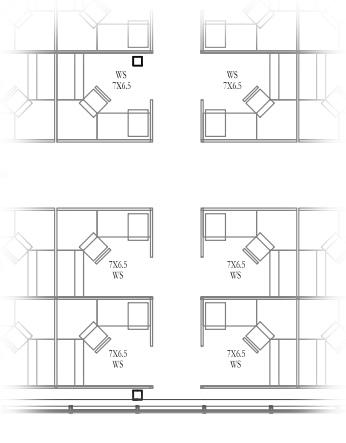
40-hour work-week as a tool of emiserating economic growth

by Cory Doctorow

David Cain's 2010 essay "Your Lifestyle Has Already Been Designed" -- occasioned by his return to full-time employment -- has a sharp-edged rumination on the modern, 40-hour work-week and what it does to us. In Cain's view, the 40-hour office week leaves us "tired, hungry for indulgence, willing to pay a lot for convenience and entertainment, and most importantly, vaguely dissatisfied with our lives so that we continue wanting things we don’t have."

As technologies and methods advanced, workers in all industries became able to produce much more value in a shorter amount of time. You’d think this would lead to shorter workdays.

But the 8-hour workday is too profitable for big business, not because of the amount of work people get done in eight hours (the average office worker gets less than three hours of actual work done in 8 hours) but because it makes for such a purchase-happy public. Keeping free time scarce means people pay a lot more for convenience, gratification, and any other relief they can buy. It keeps them watching television, and its commercials. It keeps them unambitious outside of work.

We’ve been led into a culture that has been engineered to leave us tired, hungry for indulgence, willing to pay a lot for convenience and entertainment, and most importantly, vaguely dissatisfied with our lives so that we continue wanting things we don’t have. We buy so much because it always seems like something is still missing.

Western economies, particularly that of the United States, have been built in a very calculated manner on gratification, addiction, and unnecessary spending. We spend to cheer ourselves up, to reward ourselves, to celebrate, to fix problems, to elevate our status, and to alleviate boredom.

Can you imagine what would happen if all of America stopped buying so much unnecessary fluff that doesn’t add a lot of lasting value to our lives?

The economy would collapse and never recover.

All of America’s well-publicized problems, including obesity, depression, pollution and corruption are what it costs to create and sustain a trillion-dollar economy. For the economy to be “healthy”, America has to remain unhealthy. Healthy, happy people don’t feel like they need much they don’t already have, and that means they don’t buy a lot of junk, don’t need to be entertained as much, and they don’t end up watching a lot of commercials.

The culture of the eight-hour workday is big business’ most powerful tool for keeping people in this same dissatisfied state where the answer to every problem is to buy something.

Your Lifestyle Has Already Been Designed (via Seanan)

(Image: New cubicles, a Creative Commons Attribution (2.0) image from plutor's photostream)


24 Oct 19:42

Tibet Almond Stick - Refresh old strings on guitars

by Cool Tools

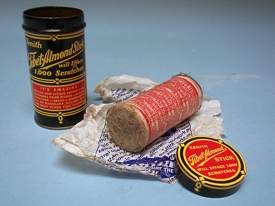
Here’s a great “off label” use of an old product for a completely different application that a guitar player turned me on to years ago. The Zenith Tibet Almond Stick is an oil- and cleaner-impregnated plug that comes as a tightly rolled up cloth in a metal can. Its original use is to “efface 1,000 scratches from pianos—radios—furniture—etc. It’s amazing!” I use it to refresh old strings on guitars, banjo and mandolins. Just swipe the stick along the strings, then pinch each string with a rag and slide along its length. All the nasty bits of rust, dirt, and finger cheese come right off. It’s especially good at helping to remove the crud that get trapped in the coils of wound strings and restores that brilliant “new string” sound. I also like the art deco inspired litho steel tube it comes in.

By the way, it will last forever: my 40 year old stick is still going strong! -- Bob Knetzger

Tibet Almond Stick: $6


24 Oct 18:09

Creative Commons Policy Statement Supports Real Copyright Reform

by Maira Sutton and Maira Sutton and Parker Higgins

Creative Commons, the non-profit best known for its copyright licenses that allow creators to voluntarily waive certain automatically-granted exclusive rights, has released a powerful new policy statement supporting fundamental copyright reform around the globe. This statement works to counter any argument that simply having a set of voluntary permissive copyright licenses available to rightsholders reduces the need for actual policy reform.

Without a doubt, Creative Commons, also frequently known as CC, has long been an ally in restoring sanity to copyright systems. Today's statement makes that role more explicit. At EFF, we've long admired the organization's work; as one token of that, we invited co-founder Lawrence Lessig to give a keynote at this year's Pioneer Awards, and have given the award to founding board member James Boyle, and to Aaron Swartz who helped design the code layer of the licenses.

It's a good thing too, that Creative Commons is dedicated to its role as steward of the free licenses and tools it produces— the authors of hundreds of millions of works around the Web, including EFF's Deeplinks blog posts, use those licenses. They're often the most effective way to give the public permission to share and build on existing creative work. But as CC's policy statement puts it:

However well-crafted a public licensing model may be, it can never fully achieve what a change in the law would do, which means that law reform remains a pressing topic. The public would benefit from more extensive rights to use the full body of human culture and knowledge for the public benefit. CC licenses are not a substitute for users’ rights, and CC supports ongoing efforts to reform copyright law to strengthen users’ rights and expand the public domain.

We agree. While some industries push to expand the scope of copyright through domestic legislation in the U.S. and abroad, as well as through policy laundered in through secretly negotiated international agreements like the Trans-Pacific Partnership (TPP) and the Anti-Counterfeiting Trade Agreement (ACTA), we face an urgent need to rein in a bloated and ineffective copyright system.

In the U.S. in particular, we may be entering a very important time for copyright reform. In the past several years, activism around copyright policy has become very prominent, most notably in the protests against the Stop Online Piracy Act (SOPA) and the aforementioned ACTA; at the same time, the Register of Copyrights has called for "The Next Great Copyright Act," and Congress seems interested in pursuing that agenda.

In other words, it's a great time for groups like Creative Commons to take a stance on the need for reform that benefits users and creators, not just legacy industries. In supporting such a policy alongside its licenses and other tools, Creative Commons is taking a smart approach: develop technical solutions where possible, but pursue policy solutions too.

image: from Creative Commons blog, incorporating File Repair icon by iconoci, from The Noun Project, both under CC BY.

Related Issues: 

Share this: Share on Twitter Share on Facebook Share on Google+ Share on Diaspora  ||  Join EFF
16 Oct 17:39

Model car photography with full-size backgrounds

by Mark Frauenfelder

Michael Paul Smith's photos of a fictional mid-20th century town, Egin Park, are accomplished using his detailed scale models shot against real backgrounds. The effect is spectacular.

Born in Pennsylvania in 1950, Michael has been building scale models for over 25 years. His model making skills have been accumulated through his varied job and life experiences; he has been a text book illustrator, wallpaper hanger and house painter, designer of museum displays, architectural model maker, and art director for retail stores. His love of the 20th Century has been a constant inspiration for all of his work.

Elgin Park on SmugMug | Michael Paul Smith's Flickr (Via 22 Words)

Previously: Fantastic photography of Michael Paul Smith


09 Oct 17:56

40 Clever Life Hacks to Simplify your World

by twistedsifter


Back in January the Sifter posted 50 Life Hacks to Simplify your World. The post went on the be one of the most shared articles in the history of the website.

At first I was surprised, but soon realized that we all want to simplify and improve our lives; especially when a solution to a common problem is cheap, effective and easy to-do!

After spending a lot of time sifting through reddit’s Life Hacks subreddit, BuzzFeed’s endless Life Hack posts and wading through a ton of Life Hack pins on Pinterest, I came up with the list below. Another 40 tips that will hopefully simplify your life!


1.

HOW-TO-FIT-TWO-BOWLS-INTO-MICROWAVE-LIFE-HACK

Life Hack via DaNReDaN


2.

TOWER-RACK-POT-LID-HOLDER-LIFE-HACK-KITCHEN

Life Hack via hgska


3.

use binder clips to fix keyboard stand life hack 40 Clever Life Hacks to Simplify your World


4.

create more counter space life hack 40 Clever Life Hacks to Simplify your World

Life Hack via Reddit


5. How To Open a Jar Using Duct Tape

open a jar using duct tape gif 40 Clever Life Hacks to Simplify your World


6.

put newspaper at bottom of garbage to soak up liquids life hack 40 Clever Life Hacks to Simplify your World


7.

ipad mount using plastic hooks 40 Clever Life Hacks to Simplify your World

Life Hack via etothepowerof3


8.

NEVER-FLY-LOW-AGAIN-LIFE-HACK


9.

how to organize your fridge life hack 40 Clever Life Hacks to Simplify your World


10.

best time of year to buy things chart table 40 Clever Life Hacks to Simplify your World

Life Hack via LifeHacker.com


11.

how to rotate video in vlc media player life hack 40 Clever Life Hacks to Simplify your World

Life Hack via autonova


12.

USE-PAPER-CLIPS-TO-FIND-THE-END-OF-A-TAPE-ROLL


13. How To Eat a Chicken Wing

how to eat a chicken wing life hack gif 40 Clever Life Hacks to Simplify your World


14.

use laser pointer to turn phone into macro camera life hack 40 Clever Life Hacks to Simplify your World

Life Hack via randoh12


15.

USE-POOL-NOODLES-TO-KEEP-TALL-BOOTS-UPRIGHT-LIFE-HACK


16.

turn pant clips into chip clips life hack 40 Clever Life Hacks to Simplify your World

Life Hack via omgchrista


17.

how to remove a spliinter with baking soda and water life hack 40 Clever Life Hacks to Simplify your World

Life Hack via PhauSst


18.

how to hang a sweater on a hanger lifehack 40 Clever Life Hacks to Simplify your World


19.

how to clean your microwave life hack 40 Clever Life Hacks to Simplify your World


20. Open a Hershey’s Kisses in Style

HOW-TO-OPEN-HERSHEY-KISS-LIKE-A-BOSS-GIF-LIFE-HACK


21.

GRILLED-CHEESE-IN-TOASTER-LIFE-HACK


22.

TURN-OLD-LIQUOR-BOTTLES-INTO-GLASSES-LIFE-HACK

Life Hack via Bakedbananas


23.

HOW-TO-FREEZE-FREEZIES-PROPERLY-LIFE-HACK


24.

pillow in sun life hack 40 Clever Life Hacks to Simplify your World


25.

STICKY-NOTES-TO-CLEAN-YOUR-KEYBOARD-LIFEHACK


26.

LAUNDRY-BASKET-KEEPS-TOYS-IN-REACH-IN-BATHTUB-LIFE-HACK

Life Hack via ThirdFloorNorth


27.

turn and old milk jug into a watering can 40 Clever Life Hacks to Simplify your World


28. Quickly Unload a Case of Pop

HOW-TO-QUICKLY-UNLOAD-A-CASE-OF-POP-GIF-LIFE-HACK


29.

VELCRO-STRIPS-KEEP-RUGS-IN-PLACE-LIFE-HACK

Life Hack via DoriIsRad


30.

prevent pizza toppings from shifting while driving life hack 40 Clever Life Hacks to Simplify your World


31.

recycled mio bottles life hack 40 Clever Life Hacks to Simplify your World

Life Hack via SparklesPup


32.

USE-DRILL-TO-POWER-SCRUB-ANYTHING-LIFE-HACK

Life Hack via eqrunner


33.

how to clean a blender life hack 40 Clever Life Hacks to Simplify your World


34.

egg carton laptop cooler stand life hack 40 Clever Life Hacks to Simplify your World

Life Hack via Mehavesuperpowers


35.

how to make symbols with your keyboard 40 Clever Life Hacks to Simplify your World


36.

MAKE-BREAD-WITH-ICE-CREAM-LIFE-HACK

Life Hack via Robin Edds


37.

USE-COINTS-TO-OPEN-PACKAGES-LIFE-HACK

Life Hack via Xasf


38.

hands free gas pumping life hack 40 Clever Life Hacks to Simplify your World

Life Hack via CHaddcl0ps


39.

how to hang your phone on a flight life hack 40 Clever Life Hacks to Simplify your World

Life Hack via claireadelie


40.

CUPCAKE-LIKE-HACK-GIF


Sources

- r/LifeHacks on Reddit
- DIY/Lifehacks on BuzzFeed
- LifeHacker.com
- “Life Hacks” on Pinterest


If you enjoyed this post, the Sifter
highly recommends:


highest paid us public employees by state 40 Clever Life Hacks to Simplify your World


life hacks how to make your life easier 6 40 Clever Life Hacks to Simplify your World


just a pinch buddah perfect timing 40 Clever Life Hacks to Simplify your World


09 Oct 11:57

356 – Thursdays

by Drunken-Novice

356 – Thursdays

Some days stuff keeps piling on and you have to just push through.

The Twogag Facebook page, go like it or whatever. I have to go, I’m late for sales-pitch class.

07 Oct 19:57

Beaded death's head hawkmoth brooch

by Cory Doctorow


Etsy seller Beadedmischka sells this death's head hawkmoth beaded brooch for $75. The beads are Japanese Toho and Miyuki Delica; the skull is glass.

Bead Embroidered Brooch Death's-head Hawkmoth (via Make)


07 Oct 17:30

I confess, I wrote the Arsenic DNA paper to expose flaws in peer-review at subscription based journals

by Michael Eisen

In 2011, after having read several really bad papers in the journal Science, I decided to explore just how slipshod their peer-review process is. I knew that their business depends on publishing “sexy” papers. So I created a manuscript that claimed something extraordinary - that I’d discovered a species of bacteria that uses arsenic in its DNA instead of phosphorus. But I made the science so egregiously bad that no competent peer reviewer would accept it. The approach was deeply flawed – there were poor or absent controls in every figure. I used ludicrously elaborate experiments where simple ones would have done. And I failed to include a simple, obvious experiment that would have definitively shown that arsenic was really in the bacteria’s DNA. I then submitted the paper to Science, punching up the impact the work would have on our understanding of extraterrestrials and the origins of life on Earth in the cover letter. And what do you know? They accepted it!

My sting exposed the seedy underside of “subscription-based” scholarly publishing, where some journals routinely lower their standards – in this case by sending the paper to reviewers they knew would be sympathetic - in order to pump up their impact factor and increase subscription revenue. Maybe there are journals out there who do subscription-based publishing right – but my experience should serve as a warning to people thinking about submitting their work to Science and other journals like it. 

OK – this isn’t exactly what happened. I didn’t actually write the paper. Far more frighteningly, it was a real paper that contained all of the flaws described above that was actually accepted, and ultimately published, by Science.

I am dredging the arsenic DNA story up again, because today’s Science contains a story by reporter John Bohannon describing a “sting” he conducted into the peer review practices of open access journals. He created a deeply flawed paper about molecules from lichens that inhibit the growth of cancer cells, submitted it to 304 open access journals under assumed names, and recorded what happened. Of the 255 journals that rendered decisions, 157 accepted the paper, most with no discernible sign of having actually carried out peer review. (PLOS ONE, rejected the paper, and was one of the few to flag its ethical flaws).

The story is an interesting exploration of the ways peer review is, and isn’t, implemented in today’s biomedical publishing industry. Sadly, but predictably, Science spins this as a problem with open access. Here is their press release:

Spoof Paper Reveals the “Wild West” of Open-Access Publishing

A package of news stories related to this special issue of Science includes a detailed description of a sting operation — orchestrated by contributing news correspondent John Bohannon — that exposes the dark side of open-access publishing. Bohannon explains how he created a spoof scientific report, authored by made-up researchers from institutions that don’t actually exist, and submitted it to 304 peer-reviewed, open-access journals around the world. His hoax paper claimed that a particular molecule slowed the growth of cancer cells, and it was riddled with obvious errors and contradictions. Unfortunately, despite the paper’s flaws, more open-access journals accepted it for publication (157) than rejected it (98). In fact, only 36 of the journals solicited responded with substantive comments that recognized the report’s scientificproblems. (And, according to Bohannon, 16 of those journals eventually accepted the spoof paper despite their negative reviews.) The article reveals a “Wild West” landscape that’s emerging in academic publishing, where journals and their editorial staffs aren’t necessarily who or what they claim to be. With his sting operation, Bohannon exposes some of the unscrupulous journals that are clearly not based in the countries they claim, though he also identifies some journals that seem to be doing open-access right.

Although it comes as no surprise to anyone who is bombarded every day by solicitations from new “American” journals of such-and-such seeking papers and offering editorial positions to anyone with an email account, the formal exposure of hucksters out there looking to make a quick buck off of scientists’ desires to get their work published is valuable. It is unacceptable that there are publishers – several owned by big players in the subscription publishing world – who claim that they are carrying out peer review, and charging for it, but no doing it.

But it’s nuts to construe this as a problem unique to open access publishing, if for no other reason than the study, didn’t do the control of submitting the same paper to subscription-based publishers (UPDATE: The author, Bohannon emailed to say that, while his original intention was to look at all journals, practical constraints limited him to OA journals, and that Science played no role in this decision). We obviously don’t know what subscription journals would have done with this paper, but there is every reason to believe that a large number of them would also have accepted the paper (it has many features in common with the arsenic DNA paper afterall). Like OA journals, a lot of subscription-based journals have businesses based on accepting lots of papers with little regard to their importance or even validity. When Elsevier and other big commercial publishers pitch their “big deal”, the main thing they push is the number of papers they have in their collection. And one look at many of their journals shows that they also will accept almost anything.

None of this will stop anti-open access campaigners  (hello Scholarly Kitchen) from spinning this as a repudiation for enabling fraud. But the real story is that a fair number of journals who actually carried out peer review still accepted the paper, and the lesson people should take home from this story not that open access is bad, but that peer review is a joke. If a nakedly bogus paper is able to get through journals that actually peer reviewed it, think about how many legitimate, but deeply flawed, papers must also get through. Any scientist can quickly point to dozens of papers – including, and perhaps especially, in high impact journals – that are deeply, deeply flawed – the arsenic DNA story is one of many recent examples. As you probably know there has been a lot of smoke lately about the “reproducibility” problem in biomedical science, in which people have found that a majority of published papers report facts that turn out not to be true. This all adds up to showing that peer review simply doesn’t work.

And the real problem isn’t that some fly-by-night publishers hoping to make a quick buck aren’t even doing peer review (although that is a problem). While some fringe OA publishers are playing a short con, subscription publishers are seasoned grifters playing a long con. They fleece the research community of billions of dollars every year by convincing them of something manifestly false – that their journals and their “peer review” process are an essential part of science, and that we need them to filter out the good science – and the good scientists – from the bad. Like all good grifters playing the long con, they get us to believe they are doing something good for us – something we need. While they pocket our billions, with elegant sleight of hand, then get us to ignore the fact that crappy papers routinely get into high-profile journals simply because they deal with sexy topics.

But unlike the fly by night OA publishers who steal a little bit of money, the subscription publishers’ long con has far more serious consequences. Not only do they traffic in billions rather than thousands of dollars and denying the vast majority of people on Earth access to the findings of publicly funded research, the impact and glamour they sell us to make us willing participants in their grift has serious consequences. Every time they publish because it is sexy, and not because it is right, science is distorted. It distorts research. It distorts funding. And it often distorts public policy.

To suggest – as Science (though not Bohannon) are trying to do – that the problem with scientific publishing is that open access enables internet scamming is like saying that the problem with the international finance system is that it enables Nigerian wire transfer scams.

There are deep problems with science publishing. But the way to fix this is not to curtain open access publishing. It is to fix peer review.

First, and foremost, we need to get past the antiquated idea that the singular act of publication – or publication in a particular journal – should signal for all eternity that a paper is valid, let alone important. Even when people take peer review seriously, it is still just represents the views of 2 or 3 people at a fixed point in time. To invest the judgment of these people with so much meaning is nuts. And its far worse when the process is distorted – as it so often is – by the desire to publish sexy papers, or to publish more papers, or because the wrong reviewers were selected, or because they were just too busy to do a good job. If we had, instead, a system where the review process was transparent and persisted for the useful life of a work (as I’ve written about previously), none of the flaws exposed in Bohannon’s piece would matter.

03 Oct 18:24

Viewpoints: Is American politics broken?

Is American politics broken?
01 Oct 19:37

Wonder Woman, live action (very) short film

by David Pescovitz

"Wonder Woman," a live action short by Rainfall Films. "It's a scant two and half minutes, but in the end, it's one hundred and fifty seconds of pure fantasy, where I get to consider the two sides of my favorite warrior: a crusader in man's world, and a paragon of virtue told through Greek mythology," says director Sam Balcomb.


01 Oct 18:24

In "A Copyright Masquerade," Corporate Lobbying Takes the Spotlight

by Parker Higgins

It's no secret that the copyright lobby exerts an undue influence in shaping Internet policy. But the mechanisms by which that happens—which can include not just the legislative bodies of dozens of countries, but also backroom, off the record dealings—can be confusing and opaque, even to people following it closely.

In a new book out this month, A Copyright Masquerade, veteran journalist Dr. Monica Horten goes deep into those details to detail how the entertainment industries gain political sway, and how policymakers respond to the industry's advances.

Horten focuses on three recent policy initiatives, and painstakingly pulls together facts from publicly available sources about how those proposals came together. By comparing the development of the Anti-Counterfeiting Trade Agreement (ACTA), the Spanish "Ley Sinde," and the UK's Digital Economy Act, she draws a clear picture of the mechanisms that play into each of the debates, and who is behind them.

A major part of that story is the export of United States intellectual property policy abroad. To that end, Horten looks at the history and the development of the U.S. Trade Representative's annual "Special 301" report, a document mandated by law which must list countries that do not provide “adequate and protective” protection of intellectual property rights. Horten makes a solid case that U.S. entertainment industry lobbying  played a direct and deliberate role in establishing the Special 301. With that background on Special 301, its role in shaping ACTA and Ley Sinde becomes that much more apparent.

Legislators are asked to approach many problems as experts but are rarely given the time or information to do so. The standard corporate exploitation of that mismatch is to present those legislators with information favorable to the industry position.

Horten tracks how the copyright industries have taken this bargain a step further, pushing for the creation of whole new structures like the Special 301 report that funnel industry-friendly information to legislators with the imprimatur of government legitimacy.

Moreover, that system itself has been refined over the years to create a default condition that advances the copyright lobby's goals. At the behest of the copyright industries, the U.S. Trade Representative must critique laws all over the world to a maximalist IP standard; as a result of its findings, countries around the globe are put under great pressure to change those laws.

While documenting this process, Horten provides meticulous footnotes that point to public documents and legislative proceedings. Beyond providing sources, these footnotes reveal a history of otherwise uncaptured expertise: many cite live web streams of policy debates dating back years, watched by Horten at the time.

The landscape Horten describes may be bleak for those who would like to see evidence-based copyright policy, but it's not hopeless. After all, each of the major case studies she documents have been diminished, delayed, or defeated by popular opposition. Money and connections play a major role in politics, but few politicians can afford to ignore real and widespread dissatisfaction. A Copyright Masquerade is no handbook for activism, but it does describe effectively what political pressure points activists have been able to successfully press.

And in presenting the stories of activism that have slowed or stopped proposals that had the full backing of the copyright industries, Horten raises an important question. What is so compelling about copyright policy that it gets Internet users up in arms, draws resignations from EU officials, and leads to street protests in actual freezing temperatures?

Again, Horten's got an answer. It's a familiar one to those versed in copyright debates. Whether the copyright industries are seeking measures that filter content (like blacklisting sites from Domain Name Servers, search engines, or payment providers) or measures that restrict user access (like graduated response programs that result in a slow-down or suspension of Internet connections), the effect is the same. When the Internet as a communications medium is the target, users' essential freedoms and civil liberties are all too often collateral damage.

A Copyright Masquerade can verge on academic, but it remains engaging. At times, the legislative history (and the scandal involved) even has elements of intrigue. But most importantly, it's extremely informative and demystifying, right from the first page's handy table of common acronyms. For those interested in the structures that influence copyright policy around the world, Horten's book will prove a valuable resource.


Share this: Share on Twitter Share on Facebook Share on Google+ Share on Diaspora  ||  Join EFF
01 Oct 17:52

How the world changed in September 2013

Leettaschmidt

I love the alternate perspective on America's power. I would have never thought of the impact of our country's actions on the perceptions of our country held by the rest of the world.

John Simpson on how America's 'moral mission' came to a halt
01 Oct 12:06

INKtober 2013

by Jake

*Tap *tap *tap, is this thing on? Do people still follow this blog? I’ve been so active on social media that I’ve all but abandoned the blog. Seems sad, but that’s evolution, right? Let me know if you think I should keep the blog up or give it an honorable death.

In other news INKtober starts TOMORROW!

Thirty-one days, thirty-one ink drawings.

Are you ready?!

INKtober rules:

1) Make a drawing in ink (you can do a pencil under-drawing if you want).

2) Post it on tumblr (or Instagram, twitter, facebook, flickr, Pinterest or just pin it on your wall.)

3) Hashtag it with #inktober

4) Repeat (you can do it daily, like me, or go the half-marathon route and post every other day, or just do the 5K and post once a week. What ever you decide, just be consistent with it. INKtober is about growing and improving and forming positive habits, so the more you’re consistent the better.)

That’s it!

01 Oct 11:28

Picture of the Day: The Face of an Iceberg

by twistedsifter


THE FACE OF AN ICEBERG


iceberg face antarctica Picture of the Day: The Face of an Iceberg


In this photograph by reddit user strummingmusic, we see what looks to be the side profile of a large face on an equally large iceberg. The psychological phenomenon is known as pareidolia (the Sifter has as entire post on this entitled, 50 Faces in Everyday Objects).

The photograph was taken in Antarctica in Collins Bay between Barros Rocks and Berthelot Island (approx. 65° 19.474′S, 64° 15.560′W). In the comments, strummingmusic says he works on a tall ship called the Barque Europa as a guide; giving lectures, taking people on hikes, and capturing interesting moments like these on his camera.


picture of the day button Picture of the Day: The Face of an Iceberg


27 Sep 18:06

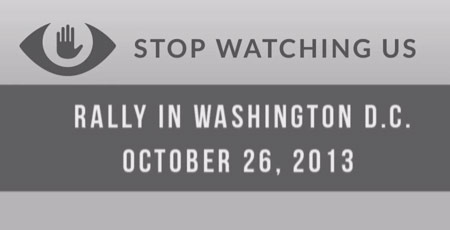
Rally against mass surveillance, DC, Oct. 26--'Stop Watching Us'

by Xeni Jardin

The team behind Stop Watching Us says:

"Since the Snowden leaks started, more than 569,000 people from all walks of life have signed the StopWatching.us petition telling the U.S. Congress that we want them to rein in the NSA. On October 26th, the 12th anniversary of the signing of the US Patriot Act, we're taking the next step and holding the largest rally yet against NSA surveillance. We’ll be handing the half-million petitions to Congress to remind them that they work for us -- and we won’t tolerate mass surveillance any longer."

You can donate to the organizational costs here.

Organizers are in a reddit AMA right now.


27 Sep 18:05

B.F. Skinner totally geeks out over the box he built for his baby

by Maggie Koerth-Baker

The Skinner Box, as applied to human infants, was not what you think it was. Psychologist B.F. Skinner did not raise his daughter inside a box without human contact. Nor did she later grow up to be crazy and commit suicide because of said lack of contact. In fact, just a few years ago, Deborah Skinner Buzan wrote a column for The Guardian debunking those powerful urban legends herself.

Instead, what Skinner did was build his daughter the sort of crib that you might expect a scientist raised in the era of mid-20th-century Popular Science-style scientific futurism and convenience to build. He called it the "Air-Crib" and it was designed to maintain a perfectly comfortable temperature, provide baby Deborah with built-in toys to keep her entertained, be simple to clean, and make it easier to stick to the "cry it out" and heavily regimented feeding/sleeping schedules that were, at the time, standard parenting advice.

Also, Deborah Skinner wasn't the only baby to use one. In 1959, almost 15 years after he originally wrote about the Air-Crib in Ladies Home Journal, Skinner reported having heard from at least 73 couples who'd raised 130 babies using the same design. (In fact, you can find pictures of modern happy babies hanging out in their Air-Cribs on Flickr.)

I got to read some of Skinner's original writing on the Air-Crib recently and couple of things stuck out to me. First, it cracked me up. The article, published in 1959 in Cumulative Record, is written in the kind of extra-enthusiastic voice you're used to hearing Makers use to describe particularly exciting DIY projects. Which is pretty hilarious in context with the myths that sprung up about the thing later. Second, when it comes to reducing the risk of Sudden Infant Death Syndrome, the Air-Crib was (unintentionally) ahead of its time.

Here's how Skinner described the original development of the box, back in 1945.

When we decided to have another child, my wife and I felt that it was time to apply a little labor-saving intervention to the problems of the nursery. We began by going over the disheartening schedule of the young mother, step by step. We asked only one question: Is this practice important for the physical and psychological health of the baby? When it was not, we marked it for elimination. Then the "gadgeteering" began.

The result was an inexpensive apparatus in which our baby daughter has now been living for eleven months. Her remarkable good health and happiness and my wife's welcome leisure have exceeded our most optimistic predictions, and we are convinced that a new deal for both mother and baby is at hand.

Later, in 1959, Skinner would write that the advantages of the Air-Crib were so great that he was certain they could not be resisted much longer, despite the forces of cultural inertia and complicated building instructions.

I could almost see him and his wife grinning obliviously at their vaguely disturbed neighbors as they tried to explain, "But it's so efficient!"

One of the key features of the Air-Crib was also the thing that makes it look a little sketchy. The Skinners were dedicated to providing a comfortable, climate-controlled environment in which their baby could play and hang out in just her diaper. In order to do that, the crib had to also be a sealed environment, where the baby interacted with the outside world through windows on the side. Baby Deborah was taken out of the box regularly — to be fed, and changed, and played with — and Skinner is probably right in pointing out that there is, technically, nothing particularly different about leaving your baby for long periods in a crib compared to leaving them for long periods in an Air-Crib. But it does come across as a bit more problematic.

What stood out to me, though, was the fact that this temperature control system allowed Baby Deborah to sleep in ways that are much, much closer to the recommendations that new parents hear today. In order to reduce the risk of SIDS and suffocation, you're now told to put your baby to sleep in a space that looks pretty barren. No blankies. No crib bumpers. No stuffed animals or layers of sleep clothes. Ideally, you just want a mattress with a sheet on it and a baby that's wearing as little as possible. (Finland has one of the lowest infant mortality rates in the world, which is partially attributed to the fact that their babies sleep, quite literally, in boxes.)

That has not been the norm, historically. It certainly wasn't the norm that Skinner describes raising his first child with — "the usual solution [to cold] is to wrap the baby in a half-a-dozen layers of cloth," he writes. Instead, at 11 months, Deborah Skinner enjoyed a bed that was set around 78 degrees with a relative humidity of 50 percent. The Skinners weren't thinking of reducing SIDS risk. It's pretty clear from his writing that the primary motivations were: First, reduce the number of things that had to be regularly laundered and, second, make the baby comfortable enough that it cried less often and didn't need to use so much energy regulating its own body temperature. But the result was a relatively spartan crib environment that would not have looked out-of-place with today's SIDS-prevention guidelines.

Some other highlights of the Air-Crib that Skinner extolled in his articles: Sheets arranged on an "endless" loop system, similar to the roller towel unit in a gas station bathroom, which allowed his wife to "change" the sheets several times before she actually had to wash the sheets; insulated walls that helped maintain the temperature and also protected the sanctity of naptime; and a modified music box that the baby could play by pulling rings suspended from the Air-Crib's roof. (Frankly, I'm surprised that I've not seen a modern version of that last one in a post here before.)

There were, of course, objections. But Skinner assures the reader that they can all be easily shot down. In particular, he had some criticism for the folks who thought this all seemed just a wee bit, you know, unnatural.

It is not, of course, the favorable conditions to which people object, but the fact that in our compartment they are "artificial." All of them occur naturally in one favorable environment or another, where the same objection should apply but is never raised. It is quite in the spirit of the "world of the future" to make favorable conditions available everywhere through simple mechanical means.

[Insert Jetsons sound effects here.]

Image: Detail from October 1945 issue of Ladies Home Journal.


27 Sep 17:57

Decrypting Rita: science-fictional webcomic about parallel worlds and doomed romance

by Cory Doctorow


Egypt Urnash sez, "'Decrypting Rita' is a SF comic I've been working on for the past couple years. It's about a robot lady who's dragged outside of reality by her ex-boyfriend; she's got to pull herself together across four parallel worlds before a hive-mind can take over the entire planet. It's a slickly-drawn story that plays around with narrative in ways only comics can do; those four parallel worlds run beside each other on the page, twining around each other in various ways."

It's a damned good read, but I had trouble with the type-size on my laptop display -- maybe one to save for your bigger screens.

Decrypting Rita (Thanks, Egypt!)


25 Sep 18:29

Neuer Cartoon online - DIE FRAGE vom 25.09.2013

by info@nichtlustig.de (NICHTLUSTIG)
Leettaschmidt

Das is die Frage!


© 2013 Joscha Sauer & NICHTLUSTIG J. Sauer & M. Vogel GbR
24 Sep 20:07

You Chose Wrong: a choose-your-own-adventure failblog

by Cory Doctorow


You Chose Wrong is a Tumblr devoted to scans of the unhappy termini of Choose Your Own Adventure books, those pages you'd be instructed to turn to if you made the wrong choice. It's a delightful failblog, cataloging all the ways that CYOA authors toyed with our emotions and gloated over our errors.

You Chose Wrong (via Making Light)


24 Sep 19:56

Incredibly detailed parody research paper explains Wolverine's regeneration ability

by Maggie Koerth-Baker

Please enjoy this six-page scientific research paper — complete with figures, graphs, and (possibly real) references — discussing the discovery of a novel protein linked to regeneration of tissue in the human mutant known as Wolverine. Apparently, it's very similar to a tissue-regeneration protein found in the axolotl.

There are some real gems in here, including references to the (I would say decidedly lax) Xavier University Research Ethics Board. I would also question why very-real biochemists Sigrid Alvarez, Emma Conway, and Leonard Foster would choose to work with Scott Summers, of all people, rather than Henry P. McCoy, who, I would assume, has a much longer and more impressive CV.

(Via David Ng)

Image: wolverine, a Creative Commons Attribution No-Derivative-Works (2.0) image from pyxopotamus's photostream


24 Sep 19:51

Occult Humanities Conference in NYC next month

by David Pescovitz
NewImage Pam "Phantasmaphile" Grossman and artist Jesse Bransford have organized The Occult Humanities Conference taking place October 18-20, 2013 at New York University. Focused on the intersection of art and the occult, the lineup features some of my favorite writers on esoteric matters and high weirdness including Mark Pilkington, Mitch Horowitz, Gary Lachman, and dozens more. I hope some of these presentation are documented for posterity online!


23 Sep 16:23

Miniature libraries of Marc Giai-Miniet

by Cory Doctorow


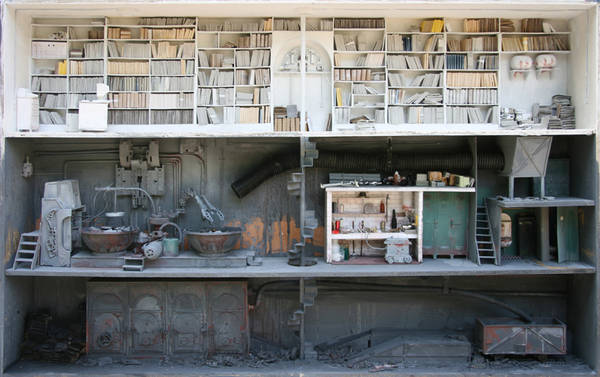
Sculptor Marc Giai-Miniet creates astounding miniature boxes with beautiful, hypothetical libraries of teeny, tiny books in them. He lives in Trappes, France. These marvellous photos are by Michel Dubois.

Zoom sur les boîtes (via That Book Smell)


19 Sep 19:50

Netflix uses piracy stats to choose its programming

by Cory Doctorow
Leettaschmidt

I was just pondering over the odd selection of newly available things on Netflix last night...


Senior executives from Netflix have explained their method for choosing which programs to license for the service: they buy the rights to the most-pirated shows in each territory, because that's where the demand is.

“With the purchase of series, we look at what does well on piracy sites,” Merryman told Tweakers.

One of the shows that Netflix acquired the rights to in the Netherlands is Prison Break, since it is heavily pirated locally. “Prison Break is exceptionally popular on piracy sites,” Merryman says.

In a separate interview Netflix CEO Reed Hastings adds that his company is aware of the many people who download content without permission via torrent sites. However, this is not exclusively a bad thing, as it also creates demand for the content Netflix is offering.

“Certainly there’s some torrenting that goes on, and that’s true around the world, but some of that just creates the demand,” Hastings says.

Netflix Uses Pirate Sites to Determine What Shows to Buy [Ernesto/TorrentFreak]


19 Sep 19:36

Enormous timescales made graspable by graphs

by Cory Doctorow

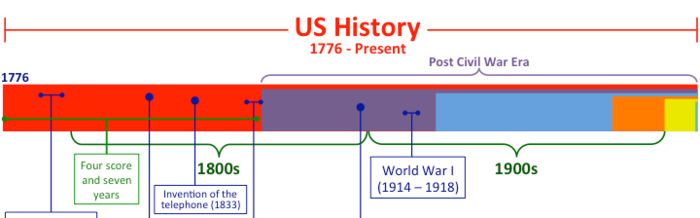
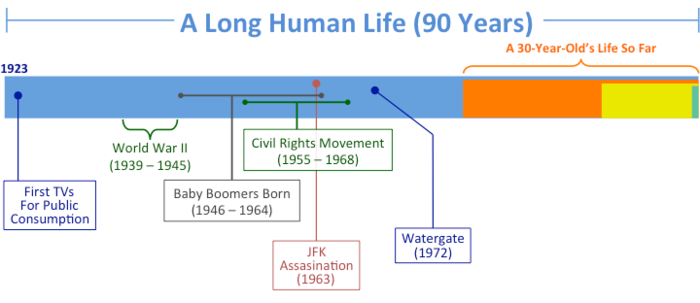
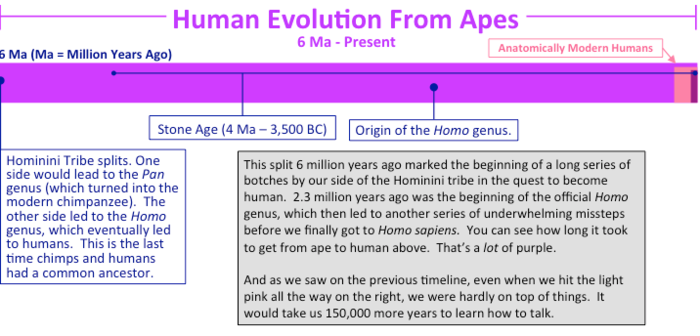
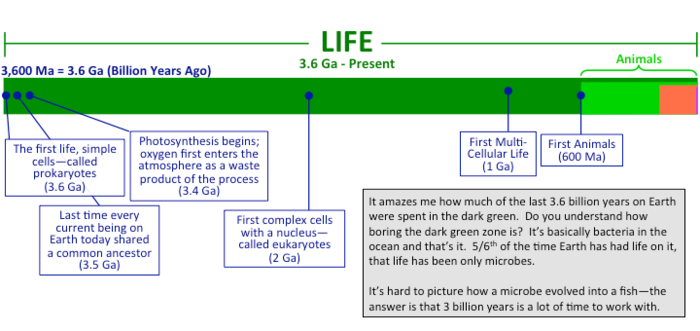
Wait But Why has a fantastic series of graphs that aim to help us wrap our heads around the enormous timescales on which forces like history, biology, geography and astronomy operate. By carefully building up graphs that show the relationship between longer and longer timescales, the series provides a moment's worth of emotional understanding of the otherwise incomprehensible.


Humans are good at a lot of things, but putting time in perspective is not one of them. It's not our fault—the spans of time in human history, and even more so in natural history, are so vast compared to the span of our life and recent history that it's almost impossible to get a handle on it. If the Earth formed at midnight and the present moment is the next midnight, 24 hours later, modern humans have been around since 11:59:59pm—1 second. And if human history itself spans 24 hours from one midnight to the next, 14 minutes represents the time since Christ.

To try to grasp some perspective, I mapped out the history of time as a series of growing timelines—each timeline contains all the previous timelines (colors will help you see which timelines are which). All timeline widths are exactly accurate to the amount of time they're expressing.

Putting Time In Perspective (via JWZ)


13 Sep 13:03

The Traditional Colors of Japan: Making Modern History

by Sarah W

Roses are red, violets are blue, I know all my colors, or at least I thought that was true.

How many colors are there in the world? The human eye has the ability to identify nearly 7 million unique colors, but the color spectrum is limitless beyond the naked eye. With so many colors surrounding us on the canvas of life, it isn’t surprising that the perception of color varies from culture to culture. Every culture has its own sense of color, and Japan is no exception. From prehistoric times to the present day, the Japanese have developed their own collection of traditional colors, known as dentouiro (伝統色), which are still recognized and used today.

Creating Color Perception

303914994_d94543858a_z

Image by [xinita]

Variations in color perception across cultures are present for a number of reasons, but they mainly concern the influences of geography, internal cultural affairs, and external cultural interactions.

Some traditional Japanese colors have been used since the Asuka period (538 to 710), while others are more recent. Due to the long history of the Japanese color system, some inconsistencies in color and name do exist, but the basic outline of the color system still remains intact, listing nearly 500 individual colors.

Geography

The_Fuji_reflects_in_Lake_Kawaguchi,_seen_from_the_Misaka_pass_in_the_Kai_province (610x410)

Some people think of geography as a somewhat useless, easy-A class in college, but the truth is that geography is one of the most important factors in how we interact with and perceive the world around us. In the case of color sense, a group of people living in the desert would undoubtedly perceive the color green very differently from a group living in lush forest lands, as the Japanese do.

Geography also has to do with color in that it dictates the resources available to people. In Japan, this is especially clear as the names of traditional colors are often related to native plants and animals, especially those used to make pigments and dyes. An example of this would be the Japanese color name, akane iro (茜色), which was produced by creating a dye from the root of a plant called akane grass. Another perhaps more familiar example is azuki iro (小豆色), or the color of azuki beans (aka the most delicious thing ever, often the filling of daifuku mochi).

As for colors named after animals, the most popular choice seems to be the mouse, or nezumi, which is used to express grey tones. For starters, you’ve got budou nezumi (ぶどうネズミ), or grape mouse (purple grey). But, the list goes on and on with names like fuji nezumi (藤ネズミ), or Fuji mouse (light purple grey), yanagi nezumi (柳鼠), or willow mouse (light green grey), and cha nezumi (茶鼠), or tea mouse (light brown grey).  All I can say is Japan must have a really big rat problem.

Hokusai_Monster_Rat (610x457)
“Die, beast. DIE!!!”

You can see more colors along with the explanations for their names (in Japanese) here.

Internal Culture

Now that geography has been taken into consideration, we can look at the internal cultural affairs that have influenced Japan’s sense of color.

Tale_of_Genji_Toyokuni_Utagawa_print 2
“Ohoho, mister. Look at my pretty dress.”

The beginnings of the traditional Japanese color system can be traced back to the year 603, when Prince Shotoko established the first Twelve Level Cap and Rank System in Japan. Based on Confucian values and the five Chinese elements, this social ordering system determined rank by merit rather than heritage, and certain colors were used as symbols of rank in society, as below:

TWELVE CAP

In this system, the use of colors known as kinjiki (禁色) was forbidden; only the highest ranking government officials were authorized to wear robes of these colors. An example of this is the color Ootan which was strictly reserved for use by the kuge (公家), or the Japanese aristocratic class. On the other hand,  colors designated as yurushiiro (許し色), or permissible colors, were used by the common folk.

ss301034_japanese_ancient_dignitary“Boo hoo hoo, I am a sad aristocrat.”

Another period noted for its contributions to traditional Japanese color sense is the Heian period. Stretching from the years 794 to 1185, this era is considered the peak of the Japanese imperial court and is known for its art, especially in poetry and literature. It was during this era that many famous works such as The Tale of Genji were written. The poetry and literature of the Heian period is notably expressive, and many color names and descriptions came about from the pages of these traditional pieces.

External Culture

possible_kunimatsu_triptych_meiji18_no-7c

A third influence on the perception of color within a particular group is the impact of interactions with external cultures. In other words, through the ebb and flow of history, color perceptions are adopted by one culture from another. In the case of Japan, both China and Korea had heavy influences on the traditional colors of Japan early on in history through religious and political ideas. However, in the Meiji era many new colors were adopted in Japan as chemical dyes were introduced through trade with Western countries.

In the 1860′s Napoleon III’s wife, Empress Eugenie (ウージェニー皇后: 1826-1920), made popular a new dye called aniline (アニリン) by showing off her flaming red military boots to the public. It wasn’t long after that a group of entrepreneurial Germans brought the trendy new dye to Japan. Below is a picture of the boots that started the aniline craze.

french_or_british_silk_boot_ca-1875_vanda“My red boots bring all the boys to the yard…”

You can tell aniline red dye from more traditional Japanese reds just by looking at it. Traditional Japanese reds were made from natural substances and had the tendency to fade quickly, leaving art historians only able to guess what the original looked like. However, aniline reds stay bright for much longer. Both the Japanese print above and the one below were dyed with aniline red dye. Can you see how overwhelming the color looks compared to older Japanese prints? It almost looks out of place, if you ask me.

kunichika_1875_shikan_iv_brit-_mus-_7b1

If you are interested in the history of aniline red and its presence in Japan, I’d recommend this great post. Of course, there are many more colors now part of the Japanese color system that were adopted from foreign countries. Many of these colors are identifiable by their names which are often written in katakana, such as オレンジ. It seems that many people are stupefied by loaned color words in Japanese and are under the belief that the Japanese didn’t have these colors before they were imported. However, it’s not that the colors didn’t exist. Simply, the names of colors have more to do with their source and the dyes used to produce them, many of which were not present in Japan before the Meiji era.

Kimono

Untitled

Image by Samm Bennett

Traditional Japanese colors have been used in artistic fields for centuries, and kimono is one of the most notable. The colors displayed on kimono are not random. A piece of clothing so expressive it is considered an art must be thought out very cautiously. In fact, the color combinations used on kimono over the centuries have become part of Japanese color sense.

Although not everyone could afford an array of various colored kimono, geisha had the ability to set the fashion standard with their ever changing style. Below is a list of color combinations worn by geisha according to month:

  • January   Pine:   sprout green and deep purple
  • February   Redblossom plum:    crimson and purple
  • March    Peach:   peach and khaki
  • April    Cherry:    white and burgundy
  • May    Orange Flower:   deadleaf yellow and purple
  • June    Artemesia:   sprout green and yellow
  • July    Lily:    red and deadleaf yellow
  • August    Cicada wing:    cedar bark and sky blue
  • September    Aster:    lavender and burgundy
  • October    Bush Clover:    rose and slate blue
  • November    Maple:    vermilion and grey-green
  • December    Chrysanthemum:    lavender and deep blue

Over time, these color combinations have become part of the Japanese color culture and are thought of as being pleasing to the eye.

Traditional Colors in Modern Fashion

Ten or twenty years ago, most Japanese young people wouldn’t have been caught dead wearing something “traditional” (oh, the shame!). However, these days, things are different. Recently many fashion companies in Japan have been working on reviving an interest in traditional Japanese colors and styles. Now, wearing a kimono to work (in the right setting) is the uber cooliest! In a way, the last decade or so has been sort of a fashion renaissance in Harajuku.

8353816326_9fc60505ea_zYou can get away with wearing toe socks in Japan. Noted.

Image by archinwater

Honestly, I wasn’t aware of this fact until three years ago when I attended a presentation by %6DOKIDOKI, a prominent Japanese fashion company in Harajuku. Not knowing anything about Japanese fashion, I was astounded that nearly their entire presentation revolved around the importance of the traditional Japanese colors in their designs – something I had never even heard of. They spent an hour going through their outfits bit by bit, pointing out each color they included and reveling at the brilliance of their design. As a frumpy mid-class American teenager, I had no idea what they were talking about, but I was amazed nonetheless.

5638777628_686c061bd2_z
6%DOKIDOKI presentation with designer Sebastian Masuda

Image by GoToVan

And it’s not just Harajuku fashion models that are flaunting the traditional colors of their country. Familiar faces such as Kyary Pamyu Pamyu and other J-pop idols are also rockin’ the traditional color trend and showin’ their stuff on stage.

Japan_Expo_2012_-_Kyary_Pamyu_Pamyu_-_001“Pan, pan, wei wei wei?”

Image by Thesupermat

It seems that this new trend spurred on by Japanese fashion companies has become a matter of pride for Japanese youth, as they embrace the beauty their country’s culture has to offer. With modern technology, you can even download a traditional Japanese color chart on to your phone or other device.

Knowing about Japan’s perception of color can tell you a lot about the Japanese people’s culture, history, and life, and being able to recognize such colors can bring Japanese works of art and literature to life. In the case of Japan, it is also pertinent to understand if you are interested in modern fashion trends.

If you get familiar with traditional Japanese colors, you’ll be sure to impress your Japanese friends because even most Japanese people don’t know the names of dentouiro- an added bonus. Do you have a favorite traditional Japanese color? I think mine is azuki iro (小豆色) because MMM azuki beans. Let me know in the comments below, yo.

Sources:
Traditional Japanese Colors
日本の伝統色
Traditional Colors of Japan
日本の伝統色465色の色名と16進数
The Colors of Japan
 

06 Sep 19:33

Danny Kaye and Louis Armstrong

by Jason Weisberger

This performance from the Five Pennies may be one of the greatest ever recorded. The fun that these two incredible talents are having is without compare.


06 Sep 19:32

Massive canyon hidden below Greenland's ice

by Maggie Koerth-Baker
Leettaschmidt

There is a hidden city in that canyon. I'm sure of it just like I'm sure there is a hidden city in every heretofore undiscovered geological formation.

Scientists using radio waves to estimate the thickness of the ice sheet that covers Greenland found a canyon — more than 2600 feet deep and almost 500 miles long — buried under the ice. Longer than the Grand Canyon, the Greenland canyon hasn't ever been seen by humans. It was probably last completely uncovered 4 million years ago.


06 Sep 19:28

Some historical context for America's next bombing campaign

by Xeni Jardin
Paul Waldman at The American Prospect points out that nearly every American president eventually bombs something. And on average, we've bombed another nation at least once every 40 months since 1963. "If you're wondering why people all over the world view the United States as an arrogant bully, reserving for itself the right to rain down death from above on anyone it pleases whenever it pleases, well there you go." [via MoJo]


23 Aug 18:10

Lawrence Lessig Strikes Back Against Bogus Copyright Takedown

by Dave Maass
EFF Sues Liberation Music for Forcing Harvard Professor’s Video Off YouTube

San Francisco - The Electronic Frontier Foundation (EFF) today filed suit against an Australian record company for misusing copyright law to remove a lecture by Harvard Law School professor Lawrence Lessig from YouTube. With co-counsel Jones Day, EFF is asking a federal judge in Massachusetts to rule that the video is lawful fair use, to stop Liberation Music from making further legal threats, and to award damages.

"The rise of extremist enforcement tactics makes it increasingly difficult for creators to use the freedoms copyright law gives them," Lessig said. "I have the opportunity, with the help of EFF, to challenge this particular attack. I am hopeful the precedent this case will set will help others avoid such a need to fight."

A co-founder of the nonprofit Creative Commons and author of numerous books on law and technology, Lessig has played a pivotal role in shaping the debate about copyright in the digital age. In June 2010, Lessig delivered a lecture titled "Open" at a Creative Commons conference in South Korea that included several short clips of amateur dance videos set to the song "Lisztomania" by the French band Phoenix. The lecture, which was later uploaded to YouTube, used the clips to highlight emerging styles of cultural communication on the Internet.

Copyright law allows for the fair use of works for purposes such as criticism, comment, teaching, and scholarship. Professor Lessig's use of the "Lisztomania" clips in his lecture was a classic example of fair use and was not copyright infringement.

Earlier this year, Liberation Music, which claims to own the license to the Phoenix song, began the process to block the video through YouTube's copyright infringement system. After the company submitted a DMCA takedown notice, Lessig filed a counter-notice that asserted the clips were fair use. After Liberation Music threatened to sue Lessig, he retracted the notice. But Lessig did not concede this issue. Instead, he enlisted EFF's help to take Liberation Music to court.

"There's a long and sorry history of content owners abusing copyright to take down fair uses, but this one is particularly shocking," said EFF Intellectual Property Director Corynne McSherry. "Based on nothing more than a few clips illustrating Internet creativity, Liberation Music took down an entire lecture by one of the leading experts in the world on copyright and fair use. This kind of abuse has to stop."

About Prof. Lessig:

Lawrence Lessig is the Roy L. Furman Professor of Law and Leadership at Harvard Law School, director of the Edmond J. Safra Center for Ethics at Harvard University and founder of Rootstrikers, a network of activists leading the fight against government corruption. He has authored numerous books, including Republic, Lost: How Money Corrupts Our Congress—and a Plan to Stop It, Code and Other Laws of Cyberspace, Free Culture, and Remix.

For the full complaint:

https://www.eff.org/document/lessig-v-liberation-music-complaint

For Liberation Music's email to Prof. Lessig:

https://www.eff.org/document/lessig-v-liberation-music-exhibit-b

Contacts:

Corynne McSherry
Intellectual Property Director
Electronic Frontier Foundation
corynne@eff.org

Daniel Nazer
Staff Attorney
Electronic Frontier Foundation
daniel@eff.org


Share this: Share on Twitter Share on Facebook Share on Google+ Share on Diaspora  ||  Join EFF
23 Aug 18:06

Snowpiercer to be Dumbed Down for American Audience

by Laura Sneddon

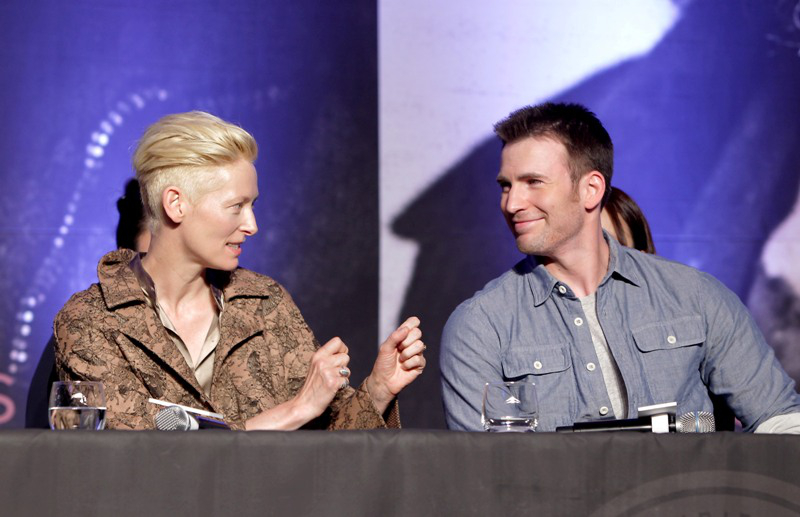
Snowpiercer opened in South Korea earlier this month to rave reviews and box-office breaking sales. But the 126 minute film, based on popular bande dessinée Le Transperceneige and starring Chris Evans, is to be cut by a whopping 20 minutes for the eventual English language release – removing the intelligence and leaving a simplified action film in its wake.

snowpiercer_swinton_evansI’ve talked at length before here on The Beat about both Snowpiercer and Le Transperceneige, as it really looked set to the be surprise hit of the year. A dystopian future tale, set upon a perpetually circuiting train that houses the remnants of the human race, where class tensions arise and revolution is in the air.

The original comic, by Jacques Lob and Jean-Marc Rochette, is utterly incredible although sadly an English-translated edition is not yet available. In a market often slow to recognise the wonderful works in the European market, this perhaps explains why a film starring Captain America, Tilda Swinton and John Hurt flew under many radars.

The distribution rights for North America, UK, Australia, South Africa and New Zealand were picked up a while back by The Weinstein Company. Harvey Weinstein of course is also known as “Harvey Scissorhands” for his penchant for slicing international films to bits in order to remove complexities that he thinks Americans just can’t handle. Snowpiercer is merely the latest victim, despite gathering very positive reviews and doing well in South Korea.

The film, a Korean-American-French collaboration directed by Joon-ho Bong, is being released in Denmark at the end of August and in France at the end of October in uncut form.

snowpiercer_cast

The idea that such a film needs to be dumbed down for English speaking fans is rather bizarre, with Weinstein reportedly asking for “ introductory and closing voice-overs to be added in“. As film critic and programmer Tony Rayns says, “TWC people have told Bong that their aim is to make sure the film ‘will be understood by audiences in Iowa … and Oklahoma.’” Rayns also says that the UK is protesting the cuts and hopes other countries follow suit.

The cuts remove a lot of the character work in order to make the film play like a more traditional action movie, with voiceovers at beginning and end to club viewers over the head with plot explanations.

Chris Evans was careful to remain diplomatic, telling Collider:

“I’ve heard that he’s looking to cut some things down and, you know, it’s tricky… This is the tricky part about making movies.  There’s usually a method to Harvey’s madness.  I just got back from Korea so I wanna go in and see—I’ve gotta see a lot of things and I’d love to have a discussion with him.  It’s one of those things that’s just tricky.”

Would be fans such as myself are left with a difficult conundrum. The film deserves to do well as both the rave reviews and original bande dessinée show. But English-speaking viewers won’t get the chance to see the true film until a director’s cut is hopefully released on dvd and blu-ray. But avoiding it at the cinema will not help the original film either, yet supporting it might give the impression that the cuts were right to make…

So in conclusion, I shall begin my protest. To my warrior keyboard!

snowpiercer_pill

Remember to watch the trailer. Oh and go on then, have some more new images:

cine21_2cine21_1
snowpiercer_pill1snowpiercer_still4snowpiercer_still3
snowpiercer_still5snowpiercer_still2snowpiercer_still1