Shared posts

08 Oct 16:19

The Notting Hill Race Riots, 1958

by The British Pathé Archive

SHAMEFUL_EPISODE_(aka_RACIAL_RIOTS)_1551_04_2

55 years ago, from 29th August – early September, the streets of London witnessed what Pathé News at the time rightly labelled a “shameful episode”. More than three hundred people suddenly attacked West Indian immigrants living on Bramley Road in Notting Hill, London.

British Pathé produced a short newsreel on the attacks. The film has a very different tone to the sort of news broadcasts one would see on television today, at least in Britain. It is an angry denunciation of the riots, containing a particularly powerful commentary which is worth repeating in full:

Something new and ugly raises its head in Britain. In Notting Hill Gate, only a mile or two from London’s West End - racial violence. An angry crowd of youths chases a negro into a green grocer shop while police reinforcements are called up to check the riot, one of many that have broken out here in a few days. The injured victim, a Jamaican, is taken to safety. But the police have not been able to reach all the trouble spots so promptly and the quietest street may flare up at any moment. The most disturbing feature of the riots is the suspicion that not all the troublemakers are locals, for some of the gangs who break windows or throw bottles or burning torches have arrived by car. Opinions differ about Britain’s racial problems. But the mentality which tries to solve them with coshes and broken railings has no place in the British way of life. This violence is evil and the law and public opinion must stamp it out.

The 1958 newsreel can be viewed online here.


Tagged: 1958, Archive, Bramley Road, britain, British Pathe, History, Immigration, London, News, Newsreel, Notting Hill, race, racism, riots, Television, violence, West End, West Indies
08 Oct 16:17

Elmore Leonard has died

by Crof
Via The Globe and Mail, an Associated Press report: Crime fiction author Elmore Leonard dies. As I write this, CBC Radio News is eulogizing him. Excerpt:
Elmore Leonard, the beloved crime novelist whose acclaimed bestsellers and the movies made from them chronicled the violent deaths of many a thug and con man, has died. He was 87. 
Leonard, winner of an honorary National Book Award in 2012, died Tuesday morning at his home in Bloomfield Township, a suburb of Detroit, from complications of a stroke, according to his researcher, Gregg Sutter. He was surrounded by family when he died, Sutter said. 
His millions of fans, from bellhops to Saul Bellow, made all his books since Glitz (1985) bestsellers. When they flocked to watch John Travolta in the movie version of Get Shorty in 1995, its author became the darling of Hollywood’s hippest directors. And book critics and literary lions, prone to dismiss crime novels as mere entertainments, competed for adjectives to praise him. 
His more than 40 novels were populated by pathetic schemers, clever con men and casual killers. Each was characterized by moral ambivalence about crime, black humour and wickedly acute depictions of human nature: the greedy dreams of Armand Degas in Killshot, the wisecracking cool of Chili Palmer in Get Shorty, Jack Belmont’s lust for notoriety in The Hot Kid
“When something sounds like writing, I rewrite it,” Leonard often said; and critics adored the flawlessly unadorned, colloquial style. As author Ann Arensberg put it in a New York Times book review, “I didn’t know it was possible to be as good as Elmore Leonard.”

The story is of course all over the media, but I recommend checking with his official website, which already has the news of the death.

As I said in my 2008 appreciation of him, we will not see his like again.

08 Oct 16:17

21 August (1972): Charles Bukowski to Patricia Connell

by Staff

bukowski_grThough Bukowski once had a weekend-long affair that emerged out of a written correspondence, Patricia Connell was not that particular woman. A handful of letters between the two shows some vague inklings of romantic interest on Bukowski’s part, though it’s never clear if those hopes finally come to fruition and they finally meet. In any case, the poet shows consistent candor about his haphazard romances and views on relationships.

August 21. 1972

It’s noon, slight hangover, coffee on, going to Santa Monica soon to see my daughter—she’s 7. Yes, I suppose we should meet. I lay claim to being the world’s ugliest man. Perhaps we can meet, hate each other right off and get it done with.

A relationship without love is comfortable because you are always in control if the other person loves you. But the one who is in love really has the benefits because (he) (she) is thriving, throbbing, vibrating. I would certainly rather be in love if I had a choice but one doesn’t always have this choice. I’ve only been in love twice in 52 years.

For a person who is supposedly afraid of people you are very open with me. And it would take guts to meet me. It would not be an easy thing. I don’t think you have too much fear of people.

I’ve been going with Liza since May 2nd when Linda and I split. I jumped right out of one bed and into another. I suppose that makes me a bastard. I don’t like to sleep alone.

We could have a friendship. Or let it start that way if it wanted to. Sex is damned nice but not necessary. A Thursday evening might be nice. But I won’t want to drink too much because I have to drive back and already have one drunk driving rap. Liza goes out and has drinks and dinner with these 2 guys every Thursday night. Yes, I have a nightly vigil by Liza’s side as you say. But there aren’t any chains on me. I just don’t want to mess her up. If you and I ever got anything going she would have to fall by the way. But it seems senseless to hurt her without that. She’s a record company exec. and plenty of men are after her. I’m rather honored that she preferred me to all the young handsome men but she’ll hardly be alone if we ever split.

A little luck in the mail today. A German publisher wants to translate Erections, Ejaculations, Exhibitions and General Tales of Ordinary Madness into the Hun. But we’re waiting on Rowolt—the largest German publisher—and if they go it I won’t be driving that 62 Comet much longer.

I enjoy your letters very much. Get relaxing with that Bloody Mary soon and tell me some more things.


From Charles Bukowski: Living on Luck: Selected Letters 1960s-1970s, Volume 2. Edited by Seamus Cooney.Santa Rosa: Black Sparrow Press, 1995.


FURTHER READING:

For a review of Barry Miles’s biography Charles Bukowski, click here.


08 Oct 16:16

27 August (1962): Sylvia Plath to Aurelia Plath

by Staff

plathSylvia Plath writes seriously but optimistically to her mother, informing her of her decision to separate from her husband.

August 27, 1962

Dear Mother,

I hope you will not be too surprised or shocked when I say I am going to try to get a legal separation from Ted. I do not believe in divorce and would never think of this, but I simply cannot go on living the degraded and agonized life I have been living, which has stopped my writing and just about ruined my sleep and health

I feel I need a legal settlement so I can count on so much a week for groceries and bills and the freedom to build up the happy, pleasant life I feel it in myself to make and would but for him…

I have too much at stake and am too rich a person to live as a martyr…I want a clean break, so I can breathe and laugh and enjoy myself again…

The kindest and most helpful thing you can do is send some warm articles of clothing for Frieda at Christmas. I have plenty for Nicholas, AND a big bottle of Vitamin C tablets for me…I can’t afford another cold like this one.

I do hope Warren and dear Maggie will plan to come in Spring and that I can have Marty and Mike Plumer as well. I try to see the Comptons weekly and have met some nice couples with children there.

I would, by the way, appreciate it if you would tell no one but perhaps Margaret and Warren of this and perhaps better not even them. It is a private matter and I do not want people who would never see me anyway to know of it. So do keep it to yourself.

I am actually doing some writing now Kathy is here, so there is hope. And I feel if I can spend the winter in the sun in Spain, I may regain the weight and health I have lost in the last six months. I meant you to have such a lovely stay; I can never say how sorry I am you did not have the lovely reveling and rest I meant you to have…

I love you all very very much and am in need of nothing and am desirous of nothing but staying in this friendly town and my home with my dear children. I am getting estimates about rebuilding the cottage so I can someday install a nanny and lead a freer life.

Lots of love,

Sivvy


From Letters Home by Sylvia Plath: Correspondence 1950-1963. Edited by Aurelia Schober Plath. New York: HarperPerennial, 1992. 502 pp.


FURTHER READING:

Find an interview with Sylvia Plath’s daughter, Frieda Hughes, about a forthcoming book of her mother’s drawings here.

Though best known for her confessional poetry and sometimes overshadowed by her tragic life story, Plath also wrote a cheerful children’s book, The It Doesn’t Matter Suit. Read about it here.

This year, fifty years after Plath’s death, many poets and critics are supporting a renewal of her image. Read about it here.

08 Oct 16:16

10 Free tips for an Indian Wedding Photographer

by Sephi Bergerson

Indian weddings are nothing like anything you’ve ever encountered and being an Indian wedding photographer is not like being a wedding photographer anywhere else in the world. If you are a wedding photographer and are about to shoot your first Indian wedding, here are a few tips that will possibly make your first Indian wedding photography assignment a little less unexpected and a lot more productive.

10 tips for an Indian wedding photographer

1. Welcome to India. Adjust your watch for IST = ‘Indian stretchable time’. Indian weddings are NEVER on time no matter how serious the family is about being on time. It is lovable when you are chilling with a drink in your hand but when you are a photographer ready for the shoot at 9am it can be frustrating if the family is there only two hours later. This might seem like an exaggeration but it actually happened. A day planned for ten hours can sometime become 14 hours or more. It is advised to take this into consideration when planning your day. Including a clause in the agreement to cover for extra hours could be a good idea.

10 tips for indian wedding photographers 08 10 tips for an Indian Wedding Photographer

2. How about working alongside eight more photographers at the same wedding? This could make for a few funny pictures for you but can be challenging to work with. The thing is that more than one team of photographers is not so rare in Indian weddings. You might have been in touch with the bride but the groom’s family might have also hired their own team, ‘just in case’ without even telling the bride. You come to the wedding all prepared and happy only to find that there is a team of six or more other photographers there fighting with you over space. I’m sure I don’t have to elaborate on how bad this could be for your mood and peace of mind. It is very important to let the bride/groom/family/wedding planner know that in a situation like this it is highly recommended to coordinate in advance so that everyone knows what to do and you get your space to work. Keep calm and breath in.

3. Remember that technology has not yet filtered into every corner of this huge continent. Be prepared to sometime be forced to work with videographers still using hot halogen lights, especially in South Indian weddings. I was once told that people in India want to look pale in the the wedding video and the halogen lights that is so terrible for still photographers, is actually the thing to do in south India to make everyone look ‘fair and lovely’. This light can be terrible for your stills if you don’t know how to work around and with it in a creative way. However, it can be a fantastic back-light if you manage to position your subject between you and the halogen.

10 tips for indian wedding photographers 06 10 tips for an Indian Wedding Photographer

4. Prepare for strange hours of the day or night for the wedding ceremony. Many Indian weddings, although not all of them, are timed in collaboration with an astrologer who decides the most auspicious hour for ‘tying the knot’. This auspicious time, how strange, is very often around 2-3AM (!), especially for weddings in Delhi and north India. The guests all arrive, have dinner and leave. The only people left at the venue are the close family and the couple, who might sometime fall asleep before the time comes to start. Tamil Brahmin weddings in south India are likely to take place at about 5AM and the bride starts to get ready . .  well you know. Chill. Make sure to ask if this is a late night or early morning wedding so that you get some sleep during the day before.

5. What is your favorite Indian restaurant? Indian food is a huge thing and I love it. However, I don’t know about you but I have a very fast metabolism and a very short fuse when it comes to hunger. I can work for hours without food but  when I get hungry the red light starts blinking and I must eat immediately. If you are used to having your dinner at 8:30 you might be very disappointed, not to say extremely hungry, when the food does not come before midnight. It is not always so but does happen. People in India have dinner late. Very late. There will be appetizers all the time of course so see that you eat something before dinner or feed on the starters so you can survive and work.

6. Prepare for a very long ceremony. The average wedding ceremony will last about two hours with lots of small details and sanskrit verses. Not only that, it is almost never in the same order that your last wedding was and there is always another small thing that you have never seen before. The most elaborate that I have seen where the Gujarati weddings with long pre-wedding ceremonies involving the bother and his wife performing a whole wedding-like ceremony of their own. A full-scale Tamil Brahmin (TamBram) wedding will last around four (!) hours and there will be a lot of stuff going into the fire so have your memory cards and batteries ready. When you get the hang of it you can relax but I shot thousands of pictures on my first TamBram wedding just because I didn’t know which ‘swaha’ was the important one.

10 tips for indian wedding photographers 031 10 tips for an Indian Wedding Photographer

7. The old-fashioned Indian wedding photographer is a special kind of guy. His job has been rooted in Indian tradition for many years and the expectations are well defined. The photographer has a certain job to do, and a part of this job is to take a picture of EVERY guest that came to the wedding, no less. The couple will be seated on a decorated stage and the guests will pass by one by one to bless, give a present and have their picture taken with the couple. Depending on the number of guests, this process can take hours and is an absolute nightmare for everyone involved. No one will ever look at these pictures but it is culturally expected for the parents to let all the guests feel important enough to have had their picture taken. If you do not want to be the one doing this, and I have a feeling this is not what you have in mind when you imagine your career as Indian wedding photographer, than prepare in advance. Make sure you understand this need of the family but have someone else do this, or confirm that this is not expected of you so you are free to take creative images.

8. Not like the guy I mentioned before, the traditional Indian wedding photographer who will pose the couple to death, there is very little posing in the way I work. I am not crazy about posing and I like it natural anyway. Never the less, there is one picture that unless you stop and pose will not happen and will be missed. It is the picture of the couple alone. The picture that will be framed and kept by the parents and grandparents. You must pose for that. I learned this from the photographer who shot my own wedding and he was right. The thing about Indian weddings is that many times the worst time to do it is after the wedding, although this is the ‘best time to do it’. I lost you? Well, obviously the best time would be to take the picture when the couple are wearing their wedding attire as newly weds but the thing is that because the wedding is so long they will simply be a bit tired and will not look so good in the picture and you don’t want that. On top of that, the vermilion, or Sindoor, applied on the forehead of the bride will ALWAYS fall on the nose and is impossible to brush off. For this reason I always think the official shot is better done before the reception and not right after the wedding. Take one for the road with the dirty nose but make your killer shot before the reception.

10 tips for indian wedding photographers 04 10 tips for an Indian Wedding Photographer

9.  Indian is becoming very popular for destination weddings, especially, but not only, for beach weddings in goa or Kerala. Now the thing to remember about beach weddings in India is that the couple will always face east. This is important because in Goa or Kerala the sun will set behind them and light will be an issue. Not every shot is a silhouette so have some kind of a fill-in with you, a flash or a reflector, just in case.

10. Indian weddings can have many different events over a few days and hectic coordination might mean you spend too much time going back and forth between your hotel and the venue. This, together with somewhat unpredictable traffic and you might miss a part of the event. Insist on staying at the same hotel with the couple, if possible. This will also give you access to your gear so you do not have to carry all the stands and lights with you all the time or leave them behind unattended. Seems silly but I can give you many names of photographers and videographers who will swear that this is one of the most important tips!

11. I know I said ten tips but seriously, 10 does sound better than 11. So one for the road that is true for weddings worldwide and not only in India. Try to be in touch with the couple themselves and not only the wedding planner or the sister/brother/friend. Making sure the bride and the groom know you and know what to expect of you will make the whole experience more personal and this is what we al want. If I am expected to produce the magic I need to see the magic in their eyes. This is so much easier as a friend than as a service provider.

Don’t try to make it happen, it will never happen. Just let it happen.

Good luck.

10 tips for indian wedding photographers 05 10 tips for an Indian Wedding Photographer


Sephi Bergerson is an international wedding photographer based in India since 2002 and is available for Indian wedding photography and destination wedding photography worldwide. If you are looking for an Indian wedding photographer in Udaipur or Jaipur, planing a palace weddings in Rajasthan or a beach wedding in Goa or Kerala. Sephi is also happy to travel for wedding photography in Kenya, Tanzania, Mauritius, Maldives, Thailand and Sri Lanka.

08 Oct 16:16

28 August (1904): Franz Kafka to Max Brod

by Staff

kafka_pinkWriting to his close friend Max Brod, then a university classmate who would later become his biographer and literary executor, twenty-one-year-old Franz Kafka muses on the end of summer and the passage of time.

[Prague]
August 28 [1904]

It is so easy to be cheerful at the beginning of the summer. One has a lively heart, a reasonably brisk gait, and can face the future with a certain hope. One expects something out of the Arabian Nights, while disclaiming any such hope with a comic bow and bumbling speech—an exciting game that makes one feel cosy and all aquiver. One sits in one’s tossed bedding and looks at the clock. It reads late morning. But we paint the evening with subdued colors and distant views that stretch on and on. And we rub our hands red with delight because our shadow grows long and so handsomely crepuscular. We adorn ourselves, secretly hoping that adornment will become our nature. And when people ask us about the life we intend to live, we form the habit, in spring, of answering with an expansive wave of the hand, which goes limp after a while, as if to say that it was ridiculously unnecessary to conjure up sure things.

If we were to be totally disappointed, that would be sad, of course, but then again it would be the fulfillment of our daily prayer that the consistency of our life may be preserved, as far as external appearances go.

But we are not disappointed; this season which has only an end but no beginning puts us into a state so alien and natural that it could be the death of us.

We are literally carried by a vagrant breeze wherever it pleases, and there is a certain whimsicality to the way we clap our hands to our brows in the breeze, or try to reassure ourselves by spoken words, thin fingertips pressed to our knees. Whereas we are usually polite enough not to want to know anything about any insight into ourselves, we now weaken to some extent and go seeking it, although in the same manner as when we pretend to be trying hard to catch up with little children who are toddling slowly in front of us. We burrow through ourselves like a mole and emerge blackened and velvet-haired from our sandy underground vaults, our poor little red feet stretched out for tender pity.

On a walk my dog came upon a mole that was trying to cross the road. The dog repeatedly jumped at it and then let it go again, for he is still young and timid. At first I was amused, and enjoyed watching the mole’s agitation; it kept desperately and vainly looking for a hole in the hard ground. But suddenly when the dog again struck it a blow with its paw, it cried out. Ks, ks, it cried. And then I felt—no, I didn’t feel anything. I merely thought I did, because that day my head started to droop so badly that in the evening I noticed my chin had grown into my chest. But next day I was holding my head nice and high again. Next day a girl put on a white dress and fell in love with me. She was very unhappy over it and I did not manage to comfort her; you know how hard it is to do that. On another day when I opened my eyes after a short afternoon nap, still not quite certain I was alive, I heard my mother calling down from the balcony in a natural tone: “What are you up to?” A woman answered from the garden: “I’m having my teatime in the garden.” I was amazed at the stalwart technique for living some people have. Another day I exulted painfully in the drama of overcast weather. Then a week or two or even more whisked away. Then I fell in love with a woman. Then once there was dancing in the tavern and I didn’t go. Then I was down in the dumps and very stupid, so that I stumbled on the country roads, which are very steep around here. Then once I read this passage in Byron’s diaries (I am only paraphrasing because the book is already packed up): “For a week I have not left my house. For three days I have been boxing four hours daily with a boxing master in the library, with the windows open, to calm my mind.” And then, and then the summer was over and I find it is getting cool, getting to be time to answer the summer letters, that my pen has skidded a little and I might as well lay it down.

Yours, Franz K.


From Franz Kafka: Letters to Friends, Family, & Editors. Translated by Richard and Clara Winston. New York: Schocken Books, 1977. 509 pp.


FURTHER READING:

To explore Kafka’s Wound, a digital literary essay by Will Self, click here.

Kafka retained the interest in moles he seems to exhibit here; his unfinished short story The Burrow describes the experience of a mole-like creature as it tunnels through its “sandy underground vaults.” Read one scholar’s analysis here.

08 Oct 16:15

Space Invader

by johnnyadams

Invader, despite having thousands of your colorful Space Invader mosaics on the streets of cities around the world, you’ve chosen to remain anonymous. How many people know that you’re behind all of that?

Most people don’t know my name and my face. Only a few people know my name and very few people know my face. My parents don’t even realize who I am. They think I’m working in construction, as a tiler…

Seriously? Not even your parents?

Generally, the only people who know who I am are or have been involved in a project I did.

Do you remember the first time you were able to impress a girl by telling her what you are secretly up to?

Haha, I guess I’ve done it fewer times than you think.

How many warrants do you think are out for your arrest? Most of your “invasions” are illegal…

To be honest, I guess it is much more easy for me and my tiles than for a graffiti writer and his spray cans. That said, when I’m abroad it is not always easy. In Newcastle I’ve been arrested, pictured, finger printed, and they took some of my DNA. When I arrived back in my hotel room they told me that the police came to search my room!

How high would you estimate your career damage bill would be?

I have no idea. But I don’t damage, I do work! It is what I answer to the policemen who ask me what I am doing, “I’m doing my work, just like you!” So many things have happened, I should have written a diary about it.

I am sure. You even managed to get an Invader on Jacques Chirac’s lapel back when he was still President of France. How did you pull that off?

I was just lucky: I was visiting the FIAC Art Fair in Paris, and in an alley I saw Jacques Chirac who was visiting the fair too. I had some of my tiny “1point” stickers and a camera in my pocket. I could not resist and went to him and put a sticker on his lapel. I only had time to take 2 pictures of him before a bodyguard strongly grabbed my shoulder and told me to leave! Luckily he didn’t ask for the film from my camera. Jacques Chirac did not notice anything and he kept the sticker on until one of his bodyguards took it off later!

Not only Jacques Chirac left his – apparently 85% of your “invasions” are not removed. The removal rate of graffiti is much higher.

Because they are difficult to be removed! I mean it is easier to buff a painting or a poster than remove my invaders. That said, more than 15% of my early pieces, ones that were small and placed rather low, have been removed.

How do you feel when a piece of your street art becomes protected by the owner of the building it is placed on?

So many of the pieces I have done have been broken by building owners, haters, or people who tried to steal them – which is stupid because they could get the same tiles in any tiles store and make exactly the same piece. So yes, it is nice to see someone who tries to preserve a piece on his building.

What is your position towards vandalism? The word seems to always come up in the context of street art.

I have no limits with my invasions. The choice of the spots is a long process where I study the urban landscape and add something new in it. 99% of my pieces are illegal but I don’t see them like vandal acts but rather like a gift to the city.

Why?

Because I add something to the wall or the street, I don’t take something off or destroy anything. Nevertheless, I agree that the line is not always obvious to find and that is not my role to say what is vandalism and what is not. Maybe the attitude to invade with no permission is the vandal part of it, but at the end my intention is to add something new, not to destroy the existing things.

What city do you find the most ugly, the one that could maybe use the most change in its streets?

Maybe Toulon, it is the only ugly city of the French Riviera.

Why did you choose the streets as your playground in the first place?

It is very exciting to work in the streets because you kind of own the city! You can chose any spot and hit it. And it is a nice reaction to the art situation that has become very elitist.

Do you want to be a part of the “art situation?”

If you mean “art history,” yes I always wanted that. I love art and art history and I always wanted to dialog with it. If you mean “art establishment,” no, this cannot be an aim in itself in my opinion.

Is the fact that your invaders aren’t for sale a reaction to the elitist art world?

No, the elitism for me is more about access: there are very few people going to see shows in art galleries and museums. In old times the art was in churches, and everybody was going to church.

What is your relationship to commercial work? Are you open to commercial collaborations?

I usually refuse commercial collaborations, but I am not against the idea itself. I have a personal ethic about it because I don’t want to sell bullshit to my fans. That said, advertising can be an nice artistic playground if it is well done with a good concept. Actually my philosophy about it is to favor quality over quantity.

Have you ever sold one of your tiles?

Not blank but I did a few printed tiles that I sold. I also gave few signed tiles to people who helped me during an invasion. That is easy for me to sign a tile because I always have some with me.

How long will you continue your invasions?

I hope forever. Because that is the game. I am addicted to it.

08 Oct 16:15

2 September (1931): John Betjeman to Camilla Russell

by Staff

sirjohnbwJohn Betjeman writes playfully to Camilla Russell, with whom he shared a brief, lighthearted secret romance in 1930-1931.

Pakenham Hall
Castlepollard
Co. Westmeath
2 September 1931

My dear, sweet Miller [last word indicated by cartoon drawing of miller and windmill]

Here before I leave for Ethel M. Dell in Cornwall (Trebetherick, Wadebridge) which I think you know, I must write to cheer you up. Mrs D. [Ethel Dugdale] was told by me to foster the Friendship scheme so she is double bluffing. Nothing could be better. She has no secrets from John [Dugdale, her son] and she knows I love you. Do all you can to get John to arrange nice things for the weekend after next—he’s a loyal old thing and will back us up I am sure—tell him everything if you want to. I shall be leaving Cornwall on Monday. A word of cheer from you will be welcome, you ugly little angel…

I would like to know, duckie, whether I ought to write to Catball or to ye Olde—which is the safer and more likely to escape the prying nose and metallic eye of dear old Dorothea. I hope you’re drowning your sorrows over them both. You will be able to make it an excuse for seeing me—we might illustrate it in the Architectural Review or would that look too much like love? I find myself becoming very depressed from five thirty p.m. onwards with the thought of you, I want to be with you so much. I’ve got an idea (my hat, by the way, that’s a bit of all right staying with your dear old grandfather; of course I shall be in London to see you)—take some deadlie Nightshade from ye Olde Worlde Gardeane and mixe it with some potion of henbane and hemlock and place it in a cuppe of tea prepared for Red Nose or laye it on a textile and cause her to cut her fingerres. I shall be living, until the end of September at 47 Upper Brook Street (Mayfair 3542), in the rooms of a friend of mine who is in Italy. They keep shouting to me to come to the Mullingar horse show and a bloody girl staying here whom I have skilfully avoided up till now is coming in the same car with me and the Dean [Maurice Bowra]. She is wearing ‘smart’ clothes, all wrong, and she’s damned serious and doesn’t realize how important and nice the people are with whom she is privileged to stay. Darling, I do love you so much. It is most odd that you are so much more intelligent than any other jolly girl I come across and as nice as Mrs. Dugdale into the bargain. I shall write to her by the next post and tell her to let you talk to her and comfort you, my angel. You must have someone now your Aunt has gone away, to whom it would not be a bad idea to send on my special letter. Darling in the weekend after next I shall be seeing your enormous eyes miles apart (G.W.) and we will be having our old thrilling life of hair-breadth escapes.

Circles and sticks a bird and a tree when will my Miller be wedded to me? Soon, soon. I love you, you hideous little angel. Have you washed your face child? Let me see it—

Love for ever, JB. X    I have kissed this.


From John Betjeman: Letters, Volume One: 1926 to 1951. Edited by Candida Lycett Green. London: Methuen, 2006. 584 pp.

08 Oct 16:15

4 September (1948): Raymond Chandler to Cleve Adams

by Staff

raymond_chandler-orangeRaymond Chandler writes to Cleve Adams about the inability of the law to protect writers from plagiarism. 

4 September 1948

Dear Cleve:

It’s nice to hear from you even in such queer circumstances. What is the source of your information? I may have an action for slander against someone.

I don’t know Roy Huggins and have never laid eyes on him. He sent me an autographed copy of his book Double Take with his apologies and the dedication he says the publishers would not let him put in it. In writing to thank him I said his apologies were either unnecessary or inadequate and that I could name three or four writers who had gone as far as he had, without his frankness about it…

I did not invent the hardboiled murder story and I have never made any secret of my opinion that Hammett deserves most or all of the credit. Everybody imitates in the beginning. What Stevenson called playing the “sedulous ape.” I personally think that a deliberate attempt to lift a writer’s personal tricks, his stock in trade, his mannerisms, his approach to his material, can be carried too far—to the point where it is a kind of plagiarism, and a nasty kind because the law gives no protection. It is nasty for two main reasons. It makes the writer self-conscious about his own work; an example of this is a radio program which ran the use of extravagant similes into the ground, to the point where I am myself inhibited from writing the way I used to. The second reason is that it floods the market with bad money and that drives out the good. But none of these things can be helped. Even if I were granted the absolute power to stop such practices, I doubt that I would know where to draw the line. For one must bear in mind that they can’t steal your style, if you have one. They can as a rule only steal your faults…

The law recognizes no plagiarism except that of basic plots. It is far behind the times in its concept of these things. My ideas have been plagiarized in Hollywood and I have been accused of plagiarism myself, by a guy who said The Blue Dahlia was lifted from an original of his. Luckily Paramount was in a position to show that his story never left the story department. Unconscious plagiarism is widespread and inevitable. Throughout the play The Iceman Cometh O’Neill uses the expression “the big sleep” as a synonym for death. He is apparently under the impression that this is a current underworld or half-world usage, whereas it is a pure invention on my part. If I am remembered long enough, I shall probably be accused of stealing the phrase from O’Neill, since he is a big shot…

If I seem to write at too great length about all this, it is because I am very interested in the subject. Yet curiously enough, when I had a radio program last year, and when the only thing I had to sell was a character, it was found impossible to get a writer who could deliver that character or to write dialogue that sounded like him. As long as this is so, why should I worry?

As for you and [W. T.] Ballard, I wouldn’t know what the idea was at all. We all grew up together, so to speak, and we all wrote the same idiom, and we have all more or less grown out of it. A lot of Black Mask stories sounded alike, just as a lot of Elizabethan plays sound alike. Always when a group exploits a new technique this happens. But even when we all wrote for Joe Shaw, who thought everybody had to write just like Hammett, there were subtle and obvious differences, apparent to any writer, if not to non-writers. Your stuff could never have been mistaken for mine or mine for yours…

Yours always,

Ray


From Selected Letters of Raymond Chandler. Edited by Frank MacShane. New York: Delta, 1987. 502 pp.


08 Oct 16:15

12 September (1827): Mary Shelley to Frances Wright

by Staff

mary_shelley_red

In response to a letter from Frances Wright, who in 1824 had founded the Nashoba settlement in Tennessee as a community where slaves could earn money to buy their liberty, Mary Shelley writes enthusiastically and candidly about the accomplishments of her parents, Mary Wollstonecraft and William Godwin; her admiration for Wright’s antislavery work; and the challenges faced by female activists and intellectuals. Her mother died shortly after giving birth to her; a letter between her parents from the day she was born can be found here.

Arundel. 12 Sepr 1827

You confer on me a very high honor by forgetting for a moment your high & noble views to interest yrself in me; and in addressing me rather on the score of my relations, than myself you touch the right chord to win my attention, & excite my interest. The memory of my Mother has been always been the pride & delight of my life; & the admiration of others for her, has been the cause of most of the happiness I have enjoyed. Her greatness of soul & my father high talents have perpetually reminded me that I ought to degenerate as little as I could from those from whom I derived my being. For several years with Mr Shelley I was blessed with the companionship of one, who fostered this ambition & inspired that of being worthy of him. He who was single among men for Philanthropy—devoted generosity—talent & goodness.—yet you must not fancy that I am what I wish I were, and my chief merit must always be derived, first from the glory these wonderful beings have shed around me, & then for the enthusiasm I have for excellence & the ardent admiration I feel for those who sacrifice themselves for the public good.

If you feel curiosity concerning me—how much more in the refined sense of the word, must I not feel for yrself…a woman, young rich & independent, quits the civilization of England for a life of hardship in the forests of America that by so doing she may contribute to the happiness of her species—Her health fails in the attempt, yet scarcely restored to that, she is eager to return again to the scene of her labours, & again to spend the flower of her life in arduous struggles & beneficent, self sacrificing devotion to others. Such a tale cannot fail to inspire the deepest interest & the most ardent admiration. You do honour to our species & what perhaps is dearer to me, to the feminine part of it.—and that thought, while it makes me doubly interested in you, makes me tremble for you—women are so perpetually the victims of their generosity—& their purer, & more sensitive feelings render them so much less than men capable of battling the selfishness, hardness & ingratitude wh is so often the return made, for the noblest efforts to benefit others.—But you seem satisfied with yr success, so I hope the ill-fortune wh too usually frustrates our best views, will spare to harm the family of love, wh you represent to have assembled at Nashoba…

Do you find the motives you mention sufficient to tame that strange human nature, wh is perpetually the source of wonder to me? It takes a simpler form probably in a forest abode—yet can enthusiasm for public good rein in passion motive benevolence, & unite families? It were a divine sight to behold the reality of such a picture.—

Yet do not be angry with me that I am so much of a woman, that I am far more interested in you than in (except as it is yours) your settlement…Why cannot you come to England?…At least I pray you write again—write about yrself—tell me whether happiness & content repay your exertions. I have found that the first of these blessings can only be found in the exercise of the affections—Yet I have not found mine there—for where moral evil does not interfere—dreadful Death has come to deprive me of all I enjoyed. My life has been not like yours publicly active, but it has been one of tempestuous suffering.—now in a quiet seclusion with my boy & with the companionship of a beloved friend I repose for a few months—& such has been the uncertainty of my fate, that these seem a mighty good torn from cruel destiny & I live in perpetual fear that I shall not be permitted to enjoy it even so long.—

I fully trust that I shall hear from you again—Do not, public spirited as you are, turn from me, because private interests too much opress me. At least tho’ mine be a narrow circle, yet I am willing at all times to sacrifice my being to it, & derive my only pleasure from contributing to the happiness and welfare of others. My sympathy is yours—let me also claim some from you that thus we may establish between us the name of friend.

With the most lively admiration I am yours

Mary Shelley

P.S. I must not forget to say, that I only received yr letter today.—I answer it on the instant.


From Selected Letters of Mary Wollstonecraft Shelley. Edited by Betty T. Bennett. Baltimore, MD: The Johns Hopkins University Press, 1995. 391 pp.

08 Oct 16:14

17 September (1912): Carl Sandburg to Paula Sandburg

by Staff

sandburg_blue

Carl Sandburg—poet, writer, and editor (and recipient of three Pulitzer Prizes)—writes his wife, Paula, a short, simple note about a rainstorm. 

[Chicago]

Thursday. [September, 1912]


Dearest:

To-night it is a rain song that’s a-calling and a-calling you from The House. It is such a House we have here. During a rain as good as a wilderness.—I am going to bundle some Day Books and send on one day this week—sure. And, honest to God, I am going to write you one good first class letter one of these days—just wait and see.—You and Marny [Margaret] call me back to the white blossoms that were singing all by themselves a wonderful soft peace this morning. This was their first real day for greetings of the season, a quiet summer opening without any advertising or any invitations but just a burst of hail salutations. They were all heavy with rain drops, sheer white and wild, the sun gleaming rainbows and prisms from them, a pathos of eager living in them. Again, so long for now, Sweetheart.


Carl

08 Oct 16:14

Art by Annie Dunn

by admin

Art by Annie Dunn         From her obscure beginnings as a doughnut peddler and obsessive doodler in northwestern Iowa, Annie moved to the big city in search of something called computer graphics. She now spends her days painting colorful creatures and other oddities using a Wacom tablet and stylus. Although verified public sightings are rare, Annie is...

08 Oct 16:13

23 September (1951): Marianne Moore to William Carlos Williams

by Staff

moore_purple

Here celebrated poet Marianne Moore writes to her cohort and champion, William Carlos Williams, about his recently published autobiography. Unsurprisingly, Moore’s tone in this letter is both chatty and lyrical; she lends Williams her praise in insightful bursts.

To William Carlos Williams

September 23rd, 1951

But all I meant was that sour grapes are just the same shape as sweet ones.”
Unique.


Dear William:

The Autobiography; some of your very best accuracies and clues to presentment. To say nothing of “the local assertion” and the fervor! “What became of me has never seemed to me important, but the fates of ideas living against the grain in a nondescript world has always held me breathless.” This is the summary, but where did Selden Rodman get it? From In the American Grain, I suppose, or is it here and I don’t see what I read?

I should like to see “The Old Apple Tree.” I suppose, you can’t write it again? And “The Dog and the Fever,” something to look forward to.

The portraits. Marsden Hartley’s elephant eyes. Ezra Pound and “time.” Florence, I am grateful to see, comes out as the hero she is. What a father, and your own father, his silent resignation to events, never making difficulties for anyone. I remember Charles Demuth clearly, in the rather high enormous hospital room at Morristown, and his touching little objects, jade and something china, and I think a few flowers. I was awed by the fact that he made nothing of his disability and gave the impression of being normal. Then Joe who rode along with you because his wife’s cousins were no good, and then walked back.

There are no words for these things; for some others, either. You know my attitude to what I consider uninvigorating.

As for me, you see me in too good a light. I never held up anything and nobody loved me!


Love to Florence and yourself.           Marianne


I am a little puzzled by the statement that Kenneth Burke “took over after I left [The Dial].” I thought he left and I stayed; and we all left, the others of us in July 1929. And that matter of “The Waste Land.” It showed—me at least—that we don’t have to be Austin Dobson; but more important than that, that urgency is the point—urgency in the author, whoever may or may not like the result.

I hesitate to write you lest I rouse you to a letter and you ought to spare yourself. I know you ought. Don’t take risks. You would have heard from me at once, on the other hand for I do not become less impetuous with time, but I couldn’t write—because of an eye, an inflamed retina. I realise how it is that Bryher is Sir John Ellerman here—whereas “Sir John’s money” would not have published Gertrude Stein or anyone or given big parties, if Sir John’s money had not been Bryher’s money—the sad fact being that when one is not wise, there is no end to the penalty!—of a piece to me, William, with “the poor defeated body and its gulf.”


From Marianne Moore: Selected Letters. Edited with an introduction by Bonnie Costello. New York: Penguin, 1997.


FURTHER READING:

In November 1960, “the day before the presidential election,” Donald Hall of The Paris Review interviewed Marianne Moore for The Art of Poetry No. 4. 

Former poet laureate Robert Pinsky analyzes some of Moore’s best known “Poetry” on Slate.


08 Oct 16:13

Ralph Steadman

by johnnyadams

Mr. Steadman, why do you draw?

Drawing is something you do for yourself and for no good reason, really. It’s also something you do on your own. It’s a lone business.

You say it’s a lone business, but often your work has been attached to other people, the most famous example being your work with Hunter S. Thompson.

Yeah and that’s to alleviate loneliness.

I’m sure he alleviated your loneliness. There are lots of wild stories about the two of you.

Yeah, he did. (Laughs)

What did your drawings add to his writing?

They were able to express some of the things he was trying to say that couldn’t be done in any other way but through pictures. “The only thing of value is a thing you cannot say, but you can see it.” That’s Wittgenstein, a German philosopher you probably know. When I first heard that quote, it made me realize that there is something to the idea of drawing something rather than writing it. You can say much more, so much more subtly or more interestingly. Because you try to explain something in words and it just doesn’t work, you can’t quite put into words some of the weird things that you might possibly think of. You let things happen in pictures.

Did you see your role in Hunter’s work as a partnership? You didn’t just illustrate his work after the fact, often you were also present with him in the narrative.

Yeah I think it worked like that. Hunter would say, “What are we doing next Ralph? What should we do? We can’t just do nothing, there must be something to do after this.”

Do you think that Johnny Depp captures the spirit of Hunter S. Thompson? He played the main character in Fear and Loathing in Las Vegas and The Rum Diary and was a dear friend of Hunter’s.

He hasn’t quite got the voice. You’ve got to have that. Tim Robbins tried the same thing, he read the Kentucky Derby piece and it never really was Hunter. They don’t stop… and… start… like… this. Like Hunter did. He’d go like this, “Let’s see now… I need another two Bloody Marys.” He’d work out what he was going to have on the tray and he’d have a whole tray brought into a hotel room! There’d be sandwiches of all sorts on there…

He never had sandwiches, come on!

No, he looked after his health.

Do you ever feel like you can’t escape Hunter, even now that he’s been dead for almost 10 years?

No, I’m doing my own things. I’ve worked on lots of things, also long before I met Hunter. Up to 1970 when I first met him, as an ex-Hell’s Angel who had just shaved his head. That’s how I was introduced to him. So I went to work with him and that’s when I went to Kentucky and found out about these conservative people.

Are you talking about Thompson’s essay “The Kentucky Derby is Decadent and Depraved,” the first piece written in his now-famous “gonzo” style?

Yes, when we went to the Kentucky Derby I had this growth on my chin, and I didn’t mind it, but they did in Kentucky. That is a very strange and uptight manner and they had it in tons. It’s a self-righteous attitude. They have this organization over there called “The Sons of the Kentucky Pioneers.” You can imagine what they are.

It sounds horrible.

They’re like Ku Klux Klan people, like the Masons, that sort of thing. They love all that stuff over there and to me it’s anathema, I can’t stand it. There’s no point in it. People can’t stand on their own two feet and be themselves and declare themselves? I don’t like clubs much.

You’re British and Thompson often used your horror at the American way to his advantage in his work, didn’t he?

I’m not British, how dare you? I’m Welsh! (Laughs)

Fair enough.

Right, Hunter realized that I would be such an embarrassment at the Pendennis Club in Kentucky, and he took me there and I started drawing the people there. It’s a funny thing, but the people there thought that an ugly drawing of somebody is an insult, like tantamount to smacking someone in the face.

Do you draw pictures to insult people?

Yes, I think I have done those things; the line becomes more aggressive. There is a way of doing an aggressive line, that’s not balanced and the way you use the nibs. If you dip them into ink and bring them down hard on the page and try to get them to click over, that makes the thing splat and that makes the line angry.

A lot of artists call themselves perfectionists, but judging from your work I don’t think you’re one of them…

You have to think of it as a journey where a mistake is an opportunity to do something else. I’ll turn it into something else. I may have been trying to draw something really specific, but it doesn’t really matter. I think I can change most things back into what they’re supposed to be…

Have those mistakes sometimes lead you to eureka moments?

Only when I thought, “What am I going to do next?” I did a book about Sigmund Freud and he talked about Leonardo da Vinci, so I immediately thought, “Oh, I must look into Leonardo da Vinci.” That gave me the connection for my next book I, Leonardo. And then I thought again, “Who should I do now? I know, I should go for god!” It’s the Sistine Chapel really. So I did the book The Big I Am. That worked that way, those were eureka moments in a way, but they were natural progressions.

Do you ever give up on anything?

I don’t even throw away paper, that’s the point. I reuse it. If it’s not working, I’ll put it aside, but then I’ll go back and do something else on it. Touch wood (knocks on wood), I’ve never given up on anything!

08 Oct 15:33

The Willow Cathedral

by Greg Ross

http://books.google.com/books?id=BOVZAAAAYAAJ

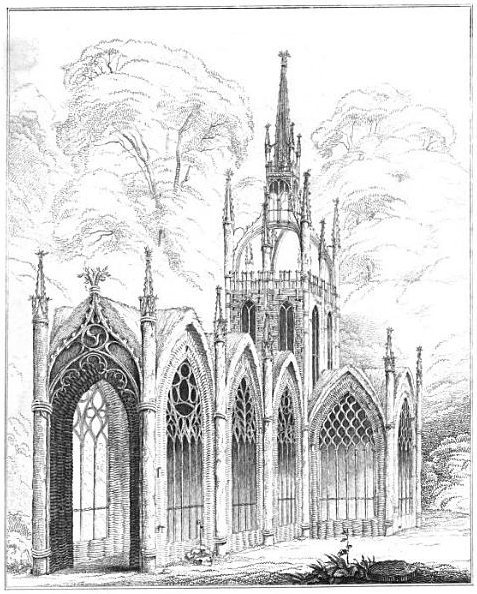
For a 1793 treatise on the principles of Gothic architecture, Scottish architect Sir James Hall built an example using natural materials:

The wicker structure, as shewn in the frontispiece, was formed according to the plan of the cloister of Westminster Abbey, by a set of posts of ash about three inches in diameter thrust into the ground, with a set of willow rods of about an inch in diameter applied to them, the whole being conducted as already fully described. The construction answers perfectly well in practice, and affords a firm support for the thatch.

“The summit of the roof within is about eight feet high,” he added, “so that a person can walk under it with ease.”

08 Oct 15:30

The Football Charge

by Greg Ross

http://commons.wikimedia.org/wiki/File:Going_over_the_top_01.jpg

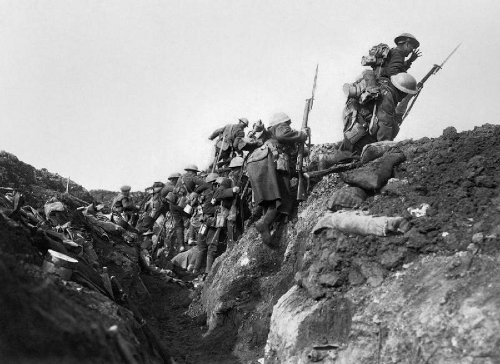
On July 1, 1916, the first day of the Battle of the Somme, British Army captain Wilfred Nevill needed a way to keep the East Surrey Regiment’s B Company organized and advancing toward the German trenches. He had been told that continuous shelling had left nothing alive in the German lines, but night patrols had shown him this wasn’t true.

So Nevill produced four footballs, one for each of his platoons to kick across no man’s land as they charged the German position.

Private L.S. Price of the 8th Royal Sussex, who was looking on, recalled, “As the gunfire died away I saw an infantryman climb onto the parapet into no man’s land, beckoning others to follow. As he did so he kicked off a football; a good kick, the ball rose and travelled well towards the German line. That seemed to be the signal to advance.”

The four platoons followed suit, kicking their balls continuously across 300 yards of ground to reach the German trenches. Twenty thousand British soldiers were killed that day, including Nevill, who was shot when they reached the barbed wire, but his company gained its objective. The Daily Mail commemorated their charge with a poem:

On through the hail of slaughter,
Where gallant comrades fall,
Where blood is poured like water,
They drive the trickling ball.
The fear of death before them
Is but an empty name;
True to the land that bore them,
The Surreys played the game.

Two of the footballs have been recovered. One is in the National Army Museum, the other at the Queen’s Regiment Museum, Howe Barracks, Canterbury.

08 Oct 15:29

Ready Made

by Greg Ross

In 1923 the Acme Code Company published a list of “phrase codes” for use in telegrams — customers could save money by substituting a five-letter code for a longer phrase in their messages. The list of codes was charmingly comprehensive:

BIINC What appliances have you for lifting heavy machinery?

URPXO For what use was the mixing machine intended?

CHOOG lard, in bladders

GAHGU cod-liver oil

GNUEK rubber, slightly moldy

HEHST clammy condition

ZOKIX unhealthy trees

ARPUK The person is an adventurer …

BUKSI Avoid arrest if possible

NARVO Do not part with the documents

OBYNX Escape at once

CULKE Bad as possibly can be

LYADI Arrived here with decks swept … encountered a hurricane

PYTUO Collided with an iceberg

YBDIG Plundered by natives

Similarly, George Holland Ackers’ Universal Yacht Signals (1847) includes signals for “Can I have … quarts of turtle soup?”, “Marmalade — orange unless specified,” and “I can strongly recommend my washerwoman.”

In Film Facts (2001), Patrick Robertson notes that Central Casting installed a Hollerith computer in 1935 to help with the casting of extras in Hollywood films. This meant subdividing humanity into tidy categories — lawyers, for instance, were classed as Shrewd, Dixie, Hawk-faced, Inquisitor and Benevolent. “When the new system was unveiled before the press, the operator was asked to produce ten Englishmen, 6ft tall, blue-eyed, possessed of full evening dress, and able to play polo. The cards of all 600 male dress extras were run through the machine to reveal that there were only two such paragons on the books of Central Casting.”

See Enjoy Your Stay.

08 Oct 11:25

Private Exit

by Greg Ross

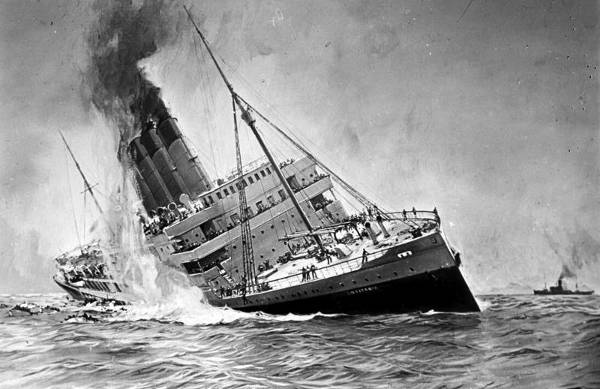
Elbert Hubbard died on the Lusitania. Ernest Cowper, a survivor of the sinking, described the writer’s last moments in a letter to Hubbard’s son the following year:

I can not say specifically where your father and Mrs. Hubbard were when the torpedoes hit, but I can tell you just what happened after that. They emerged from their room, which was on the port side of the vessel, and came on to the boat-deck.

Neither appeared perturbed in the least. Your father and Mrs. Hubbard linked arms — the fashion in which they always walked the deck — and stood apparently wondering what to do. I passed him with a baby which I was taking to a lifeboat when he said, ‘Well, Jack, they have got us. They are a damn sight worse than I ever thought they were.’

They did not move very far away from where they originally stood. As I moved to the other side of the ship, in preparation for a jump when the right moment came, I called to him, ‘What are you going to do?’ and he just shook his head, while Mrs. Hubbard smiled and said, ‘There does not seem to be anything to do.’

The expression seemed to produce action on the part of your father, for then he did one of the most dramatic things I ever saw done. He simply turned with Mrs. Hubbard and entered a room on the top deck, the door of which was open, and closed it behind him.

It was apparent that his idea was that they should die together, and not risk being parted on going into the water.

08 Oct 11:22

Oops

by Greg Ross

http://commons.wikimedia.org/wiki/File:Goldsboro_nuclear_bomb.jpg

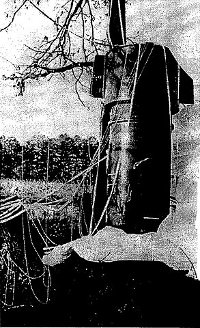
In January 1961, a B-52 Stratofortress began leaking fuel near Goldsboro, N.C., and the crew were forced to eject before they could reach Seymour Johnson Air Force Base.

They watched as the plane descended toward the tobacco farmland below carrying two 3.8-megaton nuclear weapons. As the plane broke up, it dropped both of them. One smashed into a muddy field, but the other deployed a parachute to slow its descent and activated five of its six arming mechanisms.

It stopped short of detonating, which is good, because it packed more than 250 times the destructive power of the Hiroshima bomb.

“How close was it to exploding?” asked disposal team commander Lt. Jack B. ReVelle afterward. “My opinion is damn close. You might now have a very large Bay of North Carolina if that thing had gone off.”

Only three years earlier, a similar mishap had occurred over Georgia.

08 Oct 11:22

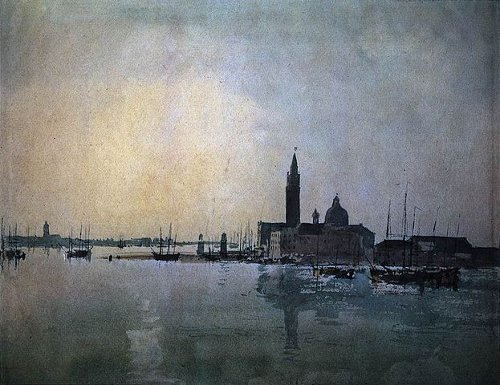
In a Word

by Greg Ross

http://commons.wikimedia.org/wiki/File:Joseph_Mallord_William_Turner_-_San_Giorgio_Maggiore_at_Dawn_-_WGA23170.jpg

ughten
n. the part of the night immediately before daybreak

08 Oct 11:21

A Day’s Work

by Greg Ross

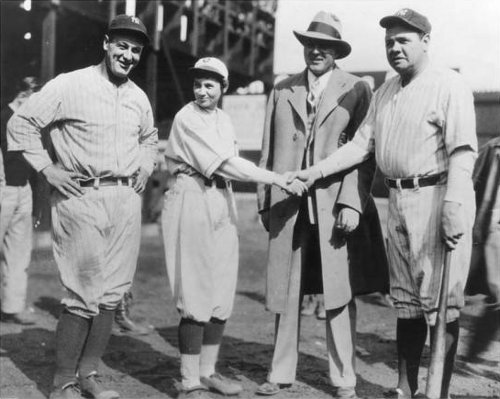
gehrig mitchell ruth

On April 2, 1931, during an exhibition game between the minor-league Chattanooga Lookouts and the New York Yankees, 17-year-old pitcher Jackie Mitchell found herself facing Babe Ruth.

She struck him out in four pitches. “I had a drop pitch,” she said, “and when I was throwing it right, you couldn’t touch it.”

The New York Times reported that Ruth “flung his bat away in high disdain and trudged to the bench, registering disgust with his shoulders and chin.”

“I don’t know what’s going to happen if they begin to let women in baseball,” he told a Chattanooga newspaper. “Of course, they will never make good. Why? Because they are too delicate. It would kill them to play ball every day.”

Next up was Lou Gehrig. She struck him out, too.

08 Oct 11:18

One Last Thrill

by Greg Ross

In 2010 Lithuanian engineer Julijonas Urbonas designed the Euthanasia Coaster, a 7,500-meter roller coaster designed to kill its riders. After a 2-minute climb to the top of the drop tower, the 24 riders plunge 500 meters into a series of seven loops designed to subject them to 10 g for 60 seconds. This forces the blood away from their brains, causing first euphoria, then loss of consciousness and finally death by cerebral hypoxia.

Here’s what that looks like if you don’t black out:

When the train returns to the station, the corpses are unloaded and a new group of passengers can board. Urbonas says, “Thanks to the marriage of the advanced cross-disciplinary research in space medicine, mechanical engineering, material technologies, and, of course, gravity, the fatal journey is made pleasing, elegant, and meaningful.”

08 Oct 11:15

Freak Waves

by Greg Ross

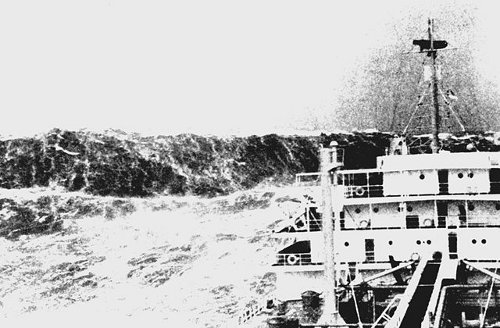
http://commons.wikimedia.org/wiki/File:Wea00800,1.jpg

From the log of the S.S. Esso Lancashire, sailing off Durban in the Indian Ocean, Aug. 5, 1968:

At 0845 GMT the vessel entered a wave at an altitude of approx. 20 ft and emerged seconds later very much the worse for wear. If Cdre. W.S. Byles, R.D. has any idea where ‘The One from Nowhere’ went, we found the wave that should be with his trough! The wave passed unbroken over the monkey island (a height of about 60 ft) and we struck it well above the trough. It was preceded by a wave slightly larger than usual and we rode that one fairly comfortably but the wavelengths to the big one appeared much less and we just did not make it.

The log for 0745 had noted swell reaching heights of 20 feet. If the monkey island was 60 feet tall then this wave towered 80 feet above the trough, four times the average wave height.

The “one from nowhere” was a deep trough encountered by RMS Edinburgh Castle in 1964: Commodore W.S. Byles reported that the cruiser had “charged, as it were, into a hole in the ocean at an angle of 30° or more, shoveling the next wave on board at a height of 15 to 20ft before she could recover.”

The photo above was taken in the Bay of Biscay around 1940 — a merchant ship was laboring in heavy seas off the coast of France when a crew member photographed a huge wave behind them.

On May 5, 1916, Ernest Shackleton and three exhausted companions were sailing in a small boat across the South Atlantic, trying to reach a settlement and get help for their shipmates, who were stranded on Elephant Island. At midnight Shackleton, alone at the tiller, looked behind them and noticed a horizontal line in the sky. At first he thought this was a rift in the clouds, but gradually he realized it was the white crest of an enormous wave:

I shouted ‘For God’s sake, hold on! it’s got us.’ Then came a moment of suspense that seemed drawn out into hours. White surged the foam of the breaking sea around us. We felt our boat lifted and flung forward like a cork in breaking surf. We were in a seething chaos of tortured water; but somehow the boat lived through it, half full of water, sagging to the dead weight and shuddering under the blow. We bailed with the energy of men fighting for life, flinging the water over the sides with every receptacle that came to our hands, and after ten minutes of uncertainty we felt the boat renew her life beneath us.

“During twenty-six years’ experience of the ocean in all its moods I had not encountered a wave so gigantic,” Shackleton wrote later. “It was a mighty upheaval of the ocean, a thing quite apart from the big white-capped seas that had been our tireless enemies for many days.” But they survived the disaster and reached their goal.

08 Oct 11:14

The Titanic Orphans

by Greg Ross

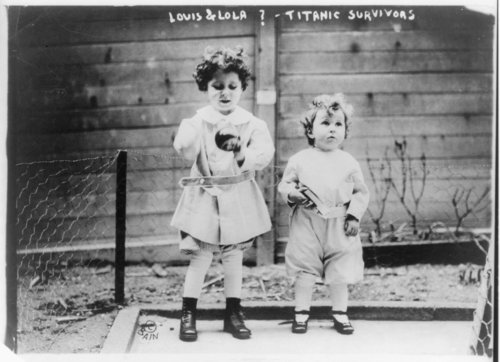
http://en.wikipedia.org/wiki/Michel_Marcel_Navratil

Among the survivors of the Titanic were two boys who were unclaimed by any adult. They were very young, 2 and 3 years old, and they spoke no English, so the two became a brief media sensation as authorities sought to locate their parents.

They turned out to be Edmond and Michel Navratil, sons of a French tailor who had spirited them away from their mother and booked a passage under an assumed name. When the ship hit the iceberg, “He dressed me very warmly and took me in his arms,” Michel recalled. “A stranger did the same for my brother. When I think of it now, I am very moved. They knew they were going to die.”

“I don’t recall being afraid,” Michel said. “I remember the pleasure really of going ‘plop’ into the lifeboat.” A woman in their boat took charge of the orphans when they reached safety, and eventually their mother in France read the news reports and claimed them. Michel grew up to be a professor of philosophy and died in 2001, the last male survivor of the sinking.

“I died at 4,” he once said. “Since then I have been a fare-dodger of life. A gleaner of time.”

08 Oct 11:12

Working Conditions

by Greg Ross

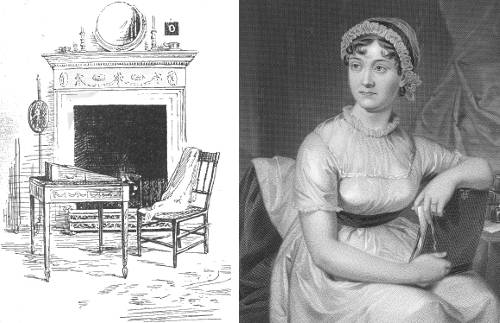
http://commons.wikimedia.org/wiki/File:Jane_Austen.jpg

Half of Jane Austen’s oeuvre was written on a tiny table in the family parlor, subject to continual interruptions. In his Memoir of Jane Austen, James Edward Austen-Leigh wrote:

The first year of her residence at Chawton seems to have been devoted to revising and preparing for the press ‘Sense and Sensibility,’ and ‘Pride and Prejudice’; but between February 1811 and August 1816, she began and completed ‘Mansfield Park,’ ‘Emma,’ and ‘Persuasion,’ so that the last five years of her life produced the same number of novels with those which had been written in her early youth. How she was able to effect all this is surprising, for she had no separate study to retire to, and most of the work must have been done in the general sitting-room, subject to all kinds of casual interruptions. She was careful that her occupation should not be suspected by servants, or visitors, or any persons beyond her own family party. She wrote upon small sheets of paper which could easily be put away, or covered with a piece of blotting paper. There was, between the front door and the offices, a swing door which creaked when it was opened; but she objected to having this little inconvenience remedied, because it gave her notice when anyone was coming.

He adds: “I have no doubt that I, and my sisters and cousins, in our visits to Chawton, frequently disturbed this mystic process, without having any idea of the mischief that we were doing; certainly we never should have guessed it by any signs of impatience or irritability in the writer.”

08 Oct 10:58

Power Clubs

by Greg Ross

http://books.google.com/books?id=X-0vAAAAMAAJ&pg=PA81

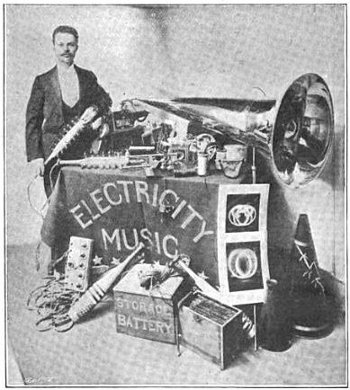
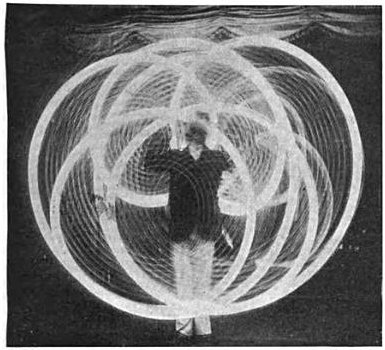
From the Strand, January 1900: As a novel entertainment, George W. Patterson of Chicago fitted a pair of Indian clubs with electric lights powered by a custom-built 35-pound battery. “To give a display the room is darkened, and Mr. Patterson, taking his stand in front of the audience, turns on the current and swings the clubs with the most wonderful results.” The time of these exposures is 5-10 seconds:

http://books.google.com/books?id=X-0vAAAAMAAJ&pg=PA81

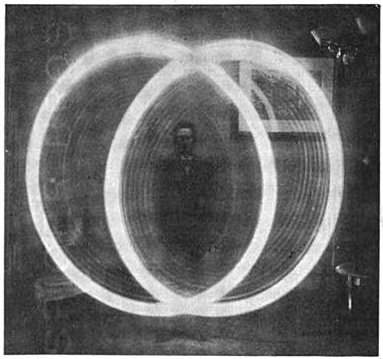
“We notice two distinct ‘O’s,’ with a very thick outer circle or ring. This larger circle is produced by a thirty-two candle-power, fifty volt lamp which is usually run on 110 volts, fixed to the tip of each club. Some idea of the power of these two lights, which are necessary to make the figures, may be gauged from the fact that they are too dazzling for the naked eye when lighted and stationary, and are so powerful that they are capable of illuminating an entire church or public hall of average size.”

http://books.google.com/books?id=X-0vAAAAMAAJ&pg=PA81

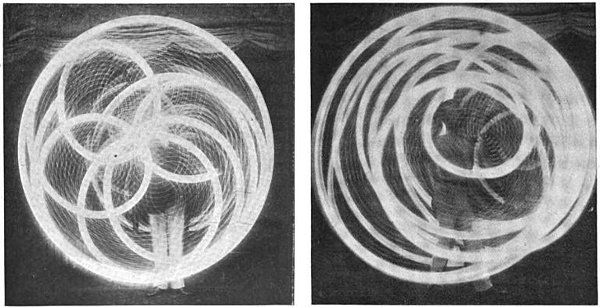
“A pretty design produced by lighted clubs in a darkened hall is seen in our third photograph. The clubs are always swung to music, so that the effect to the audience is still more pleasing. The patterns or figures which may be obtained by the swinging of the clubs are almost infinite in variety. The lights on the clubs are under the control of an operator behind the scenes, who turns on and off the lights of both clubs by means of a switchboard.”

http://books.google.com/books?id=X-0vAAAAMAAJ&pg=PA81

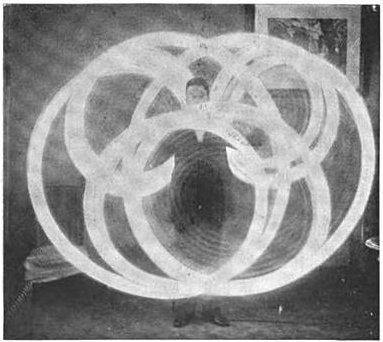
“In order to produce such a charming picture as seen in our next photograph, the clubs, of course, have to be swung fairly rapidly. Indeed, it would be impossible to obtain so many circles with one pair of clubs unless they are swung quickly, while the grace and style of the whole effect speak volumes for Mr. Patterson’s ability as a club-swinger. His club swinging has rightly been termed ‘poetry in motion.’”

http://books.google.com/books?id=X-0vAAAAMAAJ&pg=PA81

“A complication” and a “running figure.” “Although this kind of electrical display with Indian clubs is entirely new so far as the public is concerned, Mr. Patterson has given much time and thought to the subject, and his entertainments have not reached their present high degree of excellence and novelty without a great deal of patient study of that vast and marvellous subject which we call electricity.”

08 Oct 10:58

Open and Shut

by Greg Ross

In 1917 Ben Hecht and Maxwell Bodenheim agreed to debate one another before a Chicago literary society. They chose the topic “Resolved: That People Who Attend Literary Debates Are Imbeciles.”

Hecht took the podium, surveyed the crowd, and said, “The affirmative rests.”

Bodenheim rose and said, “You win.”

08 Oct 10:57

A Bad Night

by Greg Ross

http://commons.wikimedia.org/wiki/Image:Sanfranciscoearthquake1906.jpg

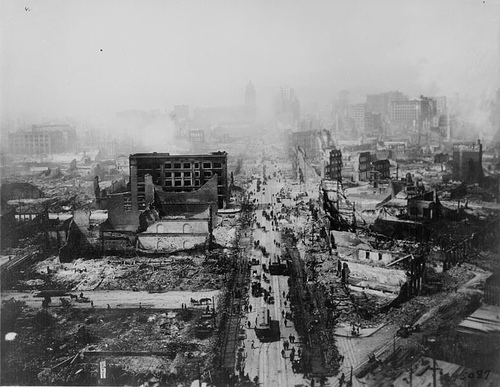
San Francisco reporter James Hopper got to bed at 3 a.m. on April 18, 1906, after a night at the opera. After two hours of sleep he felt himself suddenly shaken “like a fish in a frying-pan”:

I got up and walked to the window. I started to open it, but the pane obligingly fell outward and I poked my head out, the floor like a geyser beneath my feet. Then I heard the roar of bricks coming down in cataracts and the groaning of twisted girders all over the city, and at the same time I saw the moon, a calm, pale crescent in the green sky of dawn. Below it the skeleton frame of an unfinished sky-scraper was swaying from side to side with a swing as exaggerated and absurd as that of a palm in a stage tempest.

Just then the quake, with a sound as of a snarl, rose to its climax of rage, and the back wall of my building for three stories above me fell. I saw the mass pass across my vision swift as a shadow. It struck some little wooden houses in the alley below. I saw them crash in like emptied eggs and the bricks pass through the roof as through tissue paper.

The vibrations ceased and I began to dress. Then I noted the great silence. Throughout the long quaking, in this great house full of people I had not heard a cry, not a sound, not a sob, not a whisper. And now, when the roar of crumbling buildings was over and only a brick was falling here and there like the trickle of a spent rain, this silence continued, and it was an awful thing. But now in the alley someone began to groan. It was a woman’s groan, soft and low.

Jacob Levinson, a director of Fireman’s Fund, weathered the quake with his family at 2420 Pacific Avenue. He wrote later, “I am frequently asked whether I was badly frightened by the shaking, to which I invariably reply that I had passed the point of being frightened, exactly as one might on a sinking vessel in mid-ocean when fully alive to the inevitable. My only thought was to get the family together so that when the house went down we should all go together.”

08 Oct 10:54

Unquote

by Greg Ross

“It is easier to resist at the beginning than at the end.” — Leonardo

08 Oct 10:41

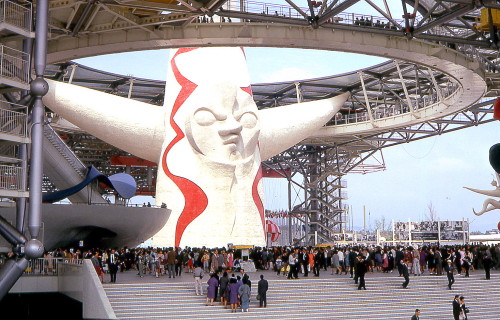
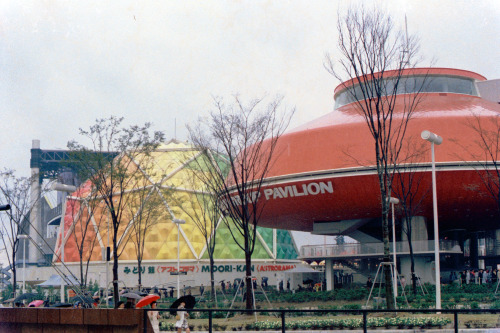
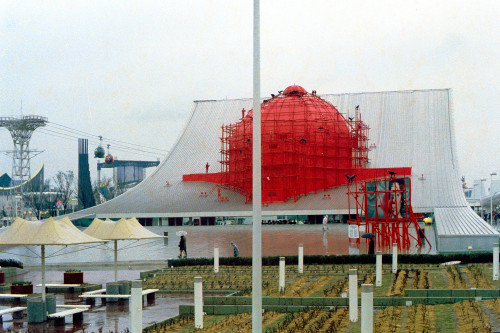
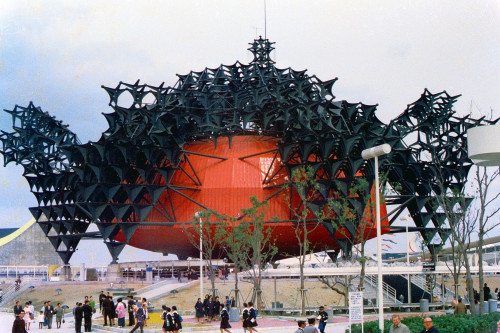
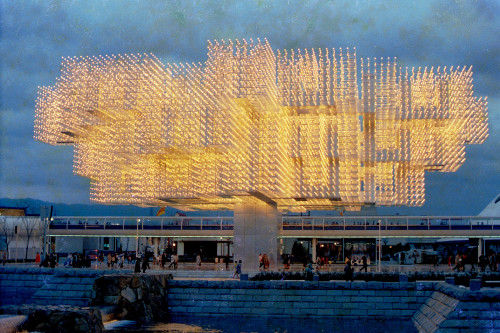
lj7stkok: let-s-build-a-home: Expo ‘70...

John.boddie

Context for the Japanese manga "20th Century Boys"


lj7stkok:

let-s-build-a-home:

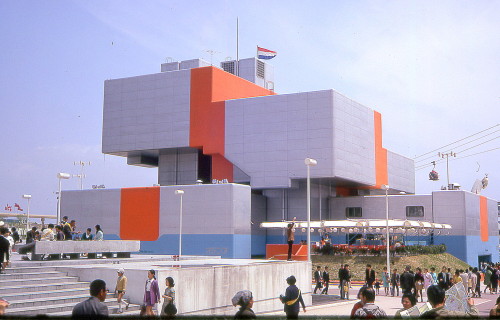
Expo ‘70 Osaka

一番上の噴水は実はまだあるんだよな。