Not many churches can boast their own Garden of Eden, but South Philadelphia’s historic Union Baptist Church (UBC) can. When Loretta Lewis and other veteran congregants of UBC opened a soup kitchen 20 years ago, they made a solemn pledge: “We just vowed that we’re not going feed people anything that we wouldn’t eat or feed our families,” she says. “The people who come are used to eating substandard food, but here they have never had substandard food.”
The soup kitchen volunteers have always prepared for the weekly Friday luncheon by shopping for and cooking food in an industrial kitchen in the church’s basement, adjacent to a dining room with cloth-covered tables, where people from nearby shelters are welcome to enjoy a free, nutritious meal.
And for the past year, sourcing fresh vegetables—often a big challenge for the church—has been easy. The soup kitchen’s pantry is now supplemented by hyper-local produce, harvested the same day from a new garden in a previously underused plot next door to the church.
Meei Ling Ng, an artist and urban grower who lives nearby, began a collaboration with the church a year and a half ago to develop what they’ve jointly called the UBC Garden of Eden. “I want to promote ‘grow food where you live,’” Ng says. “That’s always my project title, everywhere. And ‘provide fresh, healthy food to the needy, to the homeless.’ It benefits the rest of the community, too, through educating how to grow.”
Meei Ling Ng visiting with Loretta Lewis at the UBC Garden of Eden. (Photo courtesy Karen Chernick)
In essence, Ng and UBC have cooperated on of a farm-to-table soup kitchen that supports the church’s need for (often costly) produce, while simultaneously involving the community by inviting them to help tend the garden two days a week. “We were pretty much supporting the soup kitchen on our own,” says Lewis, “but with Meei Ling, even early in the [garden’s first] year, we had salad.”
Ng planted an unusual variety of crops that include black heirloom tomatoes, rainbow chard, summer squash, purple cauliflower, Asian pears, and almonds, all cultivated in raised beds and in an orchard along the church’s perimeter. In a way, she has replicated the model of her childhood home on a five-acre orchid farm in Singapore, where her family self-sustained all of its produce needs.
“We had rows and rows of vegetables and fruit trees everywhere,” Ng recalls. “I grew up in that kind of environment. Everything we picked we ate fresh.” Having lived in Philadelphia for more than two decades, Ng is undeterred by her current home’s urban density in finding places to grow food.
As a working artist, Ng considers the UBC Garden of Eden to be an extension of her multimedia installation sculptures, many of which are food- and farm-themed. Some of her past works in Philadelphia include a musical garden at SpArc Services and the Deep Roots series of installations at two of the city’s urban farms.
The UBC Garden of Eden is the second of her spontaneously developed hunger-relief urban farms; the first such project was at Sunday Breakfast Rescue Mission, Philadelphia’s largest homeless emergency shelter. There, a string of raised beds along the edge of the mission’s parking lot have provided the high-volume kitchen with fresh vegetables (such as tomatoes, salad greens, and fresh herbs) since 2015, as well as farming instruction for those overcoming homelessness.
“Fresh produce is extremely hard to come by,” says Rosalyn Forbes, the director of development at Sunday Breakfast Rescue Mission. “We rely heavily on donated nonperishable food items, which means that much of the fruits and vegetables we serve are canned. The Sunday Breakfast Farm provides fresh produce that can then be served in our kitchen.”
Salads are composed of freshly harvested greens; the herb garden is thoughtfully situated outside the kitchen door so that it is easy to reach while cooking. “It has elevated the quality of the food being served at the Mission,” Forbes continues. “Too often, those experiencing homelessness also suffer from health problems related to a poor diet.”
Solving the Problem of Scale
Sourcing fresh produce—and staying within budget—is a challenge for many soup kitchens. Individual donations of perishable items are rare, so some organizations choose to work with hunger-relief nonprofits that have the logistical capability to glean fruit and vegetable gifts directly from local farmers. The Philadelphia Orchard Project, which contributed fig, almond, and Asian pear trees to the UBC Garden of Eden this year, has a fruit gleaning program. Philabundance, another local nonprofit, is known by Philadelphia-area farmers as a way to keep excess or less cosmetically attractive produce from going to waste.
Distribution of this donated produce requires complex transportation, however, and so soup kitchens must often meet certain volume criteria in order to receive deliveries. Philabundance, for example, requires that its soup-kitchen member agencies serve at least 500 monthly meals in order to qualify. For smaller-scale operations that don’t reach that number, such as UBC’s soup kitchen (which has fed around 70-80 people per week in previous years and feeds between 20-30 each week now), this usually means they have to purchase produce themselves or rely on non-perishable items.
“Produce is hard to come by [for] smaller operations, and [direct] donations of produce [by farmers] could have a major impact,” says Scott Smith, director of food acquisition at Philabundance.
By growing the produce themselves, Ng and the UBC soup kitchen volunteers are slowly sidestepping the need to seek produce donations or purchase fruits and vegetables for the program. Phil Forsyth, executive director of Philadelphia Orchard Project, praised this solution, saying, “Of course, another approach is for soup kitchens to plant their own gardens and orchards to supply themselves with the most fresh, local produce possible.”
Planter beds in the UBC Garden of Eden. (Photo courtesy Karen Chernick)
Even for larger organizations such as Sunday Breakfast Rescue Mission, which serves over 400 meals daily and qualifies for delivery from organizations such as Philabundance, the parking-lot farm developed by Ng serves an important function. “There never seems to be enough donated fresh produce to keep up with the demand,” notes Forbes, “which is why we decided to think outside the box and grow it ourselves.”
As an added benefit, Ng’s farms engage their surrounding urban communities and teach city dwellers that even figs can grow on a city block. An herb garden can flourish in a parking lot, and heirloom tomatoes can thrive in a raised bed built out of salvage materials from the demolition of a nearby growhouse.
The care Ng takes in nurturing the crops at UBC Garden of Eden matches the motivation that the church’s soup kitchen volunteers have for serving food they would feed their own families. The symbiosis has been apparent since Ng’s first harvest last summer. “I was so happy and delighted to see a green area of the plate,” Ng says. “I want to share that experience of fresh produce with people. It tastes different, because it’s so fresh.”
I was sitting in a busy cafe at lunchtime, waiting for my croque monsieur to arrive. It’s just a ham-and-cheese sandwich, but the dish has always held a mystique for me in the way that only French food can, even when it’s nothing more than French comfort food. I see croque monsieurs on menus from time to time in the US, but I never let myself order them in my home country, holding out for when I’m in Europe. And since I was now sitting in a cafe in what technically was Europe, I let myself indulge. My sandwich arrived, I bit into it, and it tasted absolutely delicious. And then after I’d devoured it, the bill came: $25.
Welcome to Iceland.
It was June, and I’d just arrived from the Bay Area, where the weather had finally climbed out of the endless spring gloom, lavishing us with beautiful balmy days. But now I’d exchanged my sundresses and maxi skirts for a winter coat, sweaters, and scarves, hoping to cope with the low temperatures and the harsh winds. Upon arrival at Keflavk airport I’d picked up my trusty white Toyota Auris (it’s like a Camry for the European market), and now I was ready to explore this country that’s an outlier in so many ways—including its special literary culture, where more books are published per capita than anywhere else in the world.
First stop was the National Museum of Iceland, whose two floors give a brisk overview of the island’s entire history, from the first explorers to reach it in the 9th century to the advanced capitalistic nation that exists today. Among the Museum’s holdings is an early edition of The Book of Icelanders, one of the country’s oldest and most important tomes. In short it’s like the Book of Genesis for Iceland, setting down in spare and beautiful prose the many oral tales that tell of the men and women who originally settled the island. It includes such moments as the importation of laws from Norway, the settling of Greenland, and the conversion of Iceland to Christianity—pegged at the year 1000 (although likely actually happening in 999), it was the only time in history that a whole country had been converted en masse.
I was struck by this strange book, absolutely unlike anything in the US. A sort of grand unified history of the land, it made complete sense in a place where many people can trace their ancestry back to the very first inhabitants. I thought about the texts that we hold sacred—the Constitution, the Federalist Papers, possibly Mark Twain—and how they were of such a different character from this book. This was my first, but certainly not my last, engagement with Iceland’s remarkable historical literatures.
But before that, how about more contemporary writing? Reykjavik has, of course, been a font of inspiration for Icelandic authors of all kinds. For instance, you could try the quirky, offbeat Bragi Ólafsson (well-known nationally as Björk’s former bass player), whose bizarre novel The Pets involves a man who hides under his bed while friends break into his apartment and host a lavish party. Quirky, dark Iceland at its very best, it’s the first of three that Open Letter Books has released. There’s also the mega-popular fabulist Sjón, whose novel Moonstone involves a tale of obsession and cinema set against Iceland’s landmark year of 1918: Sjón threads together the destructive Katla volcanic eruption, the Spanish flu’s arrival to Reykjavik, and Iceland’s referendum over sovereignty into a strange historical fable. There is also The Fish Can Sing, a coming-of-age novel set on the outskirts of a modernizing Reykjavik by Iceland’s Nobel laureate, Halldór Laxness, plus the autobiographical trilogy by Reykjavik’s world famous former mayor, Jón Gnarr: The Indian, The Outlaw, and The Pirate.
After Reykjavik I headed north toward tiny Flatey Island, but first I stopped off at the town of Borgarnes, where they have a small but educational museum devoted to the settlement of Iceland. There I learned how the first arrivals discovered a paradisiacal, untouched land: unfathomably dense with vegetation, irrigated by thousands of extraordinarily beautiful rivers and streams that coursed down from Iceland’s many glaciers.
After the settlement history, the museum used somewhat hokey (though vivid and memorable) dioramas to help retell Egil’s saga, one of the best-known and most beautiful of Iceland’s foundational sagas. A little like Shakespeare’s histories, these age-old texts draw on landmark people and events to collectively mythologize the settlement of the island. They can be quite bloody and shocking and bizarre, and they’re also full of ages’ worth of accumulated political wisdom and human insight. Now recognized as one of the world’s landmark literary texts, as well as the origins of Iceland’s peculiarly literary culture, many of the sagas are available in excellent translations—during my trip I picked up Penguin Classics’ 800-page edition and found it absorbing and transformative. Everyone should read it.
“Sitting atop a steep hill, and feeling a little like a cloister, the Library was a tranquil, contemplative place that commanded spectacular views of the nearby harbor. It was not at all hard to see why it has attracted so many writers.”
Arriving in Flatey after a 90-minute ferry ride, I found myself in an idyllic place of lush green grasses and brightly painted homes. This tiny grip of land (one can walk its beauteous length in about 30 minutes) is notable as a stopping place for migratory birds. Perhaps the most astonishing of them is the Arctic tern, which is renowned as having the longest migratory patterns of any bird on the planet, traveling back and forth from the Arctic to Antarctic circles to experience a lifetime of almost unlimited summer. The terns must be grumpy from all that flying. They were everywhere on Flatey, and I quickly nicknamed them the “jerk birds” for the way they would aggressively shriek at me, swooping down claws-out at my head whenever they decided I’d strayed too far from my appointed space.
I was told that Flatey only has a handful of year-round residents (the frigid, sunless winters there must be isolating and brutal), which makes it a fascinating setting for the Umberto Eco-esque novel The Flatey Enigma, by Viktor Arnar Ingolfsson. One of the better instances of Nordic crime fiction, it draws on the real-life esoteric medieval Book of Flatey, imagining that this tome is caught up in a conspiracy around a murder. The Flatey Enigma is also notable for its vivid evocations of Flatey life—worth experiencing if you never get to see this gem of an island in person. It’s a fun one, and I hope it makes you want to visit the island.
In order to reach Flatey, one disembarks from Stykkishólmur, an incredibly scenic small town in the northern part of the famed Snæfellsnes peninsula. While I awaited the ferry, I spent some time wandering around the picture-perfect hills and Nordic buildings, feeling a little out of the loop: everyone in town except me was glued to a TV, watching with bated breath as Iceland shockingly managed a first-round draw in the World Cup.
I also visited the famed Library of Water, a former library renovated by artist Roni Horn into a permanent art installation. The principal attraction at the Library is the 24 glass columns that contain water from 24 of Iceland’s 269 glaciers (the ice covers a whopping 11 percent of the country’s surface area and is a central part of Iceland’s national identity).
Sitting atop a steep hill, and feeling a little like a cloister, the Library was a tranquil, contemplative place that commanded spectacular views of the nearby harbor. It was not at all hard to see why it has attracted so many writers. Early on in the Library’s existence, Icelandic author Oddny Eir Ævarsdóttir, (whose Land of Love and Ruins is published by Restless Books) made a series of broadcasts about the weather (always a big topic in Iceland) in conjunction with the Library. Rebecca Solnit and Anne Carson have also lived in the Library’s thimble-sized, austere, beautiful confines—both wrote about it, Solnit in The Faraway Nearby and Carson in a very good poem titled “Wildly Constant” that appeared in the London Review of Books. Other inhabitants have included Guðrún Eva Mínervudóttir and Oskar Arni Oskarsson, and Horn herself has made a number of books in Iceland.
From there it was further west to Hellnar and the incredible, rocky cliffs of the Snæfellsnes peninsula’s southern shores. I stayed just beneath the region’s resident giant and reigning lord—the mountain and 700,000-year old glacier known as Snæfellsjökull. This mysterious, awe-inducing hulk is famed as the entrance to the Earth’s interior in Jules Verne’s classic Journey to the Center of the Earth, and it’s also the location that Laxness immortalized in his famed novel Under the Glacier. Susan Sontag hailed Under the Glacier as “a marvelous novel about the most ambitious questions” and it is generally agreed to be a remarkably strange, possibly unique work. (Sontag called it science fiction, dream-like, philosophical, comic, fantasy, sexual, and visionary all at once.)
Although Iceland isn’t a terribly big place (you can drive the length of it in about 10 hours), its geography is so spectacular and varied that it feels immense, full of all kinds of little nooks and corners where you feel completely isolated. So how about closing with a few books highlighting the more eerie and isolated parts of the island? One might start with Iceland’s reigning “queen of suspense,” Yrsa Sigurdardottir’s whose I Remember You caused a sensation in her own country. Set in the tiny town of Hesteyri deep in Iceland’s immense, savagely beautiful Westfjords, it combines a creepy house and the mysterious disappearance of a young boy, and it’s won favorable comparisons to Stephen King and Peter Straub.
You might also try out Alda Sigmundsdottir’s The Little Book of the Hidden People, which explores legends and stories around Iceland’s huldufólk, their equivalent of little green men. I never saw any during my time in Iceland, although surveys have found that majorities of Iceland believe in the existence of these creatures (but don’t ask them about it—that’s generally an annoying thing to do). There’s also The Sorrow of Angels from Icelandic Nobel candidate Jón Kalman Stefansson, the standalone second novel of a trilogy about a boy who rebuilds his life in a remote fishing village—Boyd Tonkin declared it “a Nordic version of one of Cormac McCarthy’s journeys.” And lastly, how about Guðrún Eva Mínervudóttir’s The Creator, which sets the standard for quirky and offbeat with its story of a woman who steals a sex doll from its solitary creator in a bizarre plan to help her troubled daughter.
Ryan Northpresents a step-by-step survival guide for the stranded time traveler to invent everything
Screenshot from Back to the Future
Let’s say that you’ve rented a time machine. You travel to another era, you explore, you marvel, you enjoy. But afterward, when you climb back into your time machine, you discover that the thing won’t start. It’s broken. Bad news: you’re stuck in a time that isn’t yours.
Purchase the book
What do you do?
The answer, according to Ryan North’s wonder of a book How to Invent Everything: A Survival Guide for the Stranded Time Traveler, is not to try to fix the time machine — in North’s fictional universe, they’re unrepairable — but to instead “fix” the time that you’ve found yourself in by re-inventing all of the technology that you desire, from scratch. Invention, the book quietly suggests, is its own form of time travel.
With this wonderfully playful premise, North (author of Dinosaur Comics, Romeo and/or Juliet: A Chooseable Path Adventure, The Unbeatable Squirrel Girl) presents a step-by-step guide, complete with flowcharts, a technology tree, scientific appendices, and footnotes, for inventing everything from language to farming to mining to bicycles to computers. Would you like to learn the Universal Edibility Test? Perhaps you’d find it helpful to have major schools of philosophy “summed up in a few quippy sentences about high-fives”? And maybe you’d like to invent buttons way before they were invented in our timeline?
The scale of How to Invent Everything is downright encyclopedic, and the voice, on every page, bubbles with humor. Reading it brought me back to all the afternoons I’d spent as a kid flipping through the big reference books in my local library, and then eagerly running home to tell anyone who’d listen what I’d learned. One of this book’s great achievements is the way it so gracefully combines scholarly rigor with youthful wonder.
Ryan North and I corresponded over email and talked about the book’s formal hybridity, the relationship between technology and civilization, and whether or not storytelling itself is a technology.
Joseph Scapellato: One of the many things that I love about How to Invent Everything: A Survival Guide for the Stranded Time Traveler is how it so exuberantly embraces hybridity. It’s a work of nonfiction, but with a science-fiction frame; it’s part guide, part how-to, and part real-and-imagined history; it’s packed with diagrams, charts, and schematics; and underneath it all runs a lively through-line of voice-driven humor. Can you talk about the genesis of this ambitious project?
Ryan North: The basic idea for the book is something I’ve been thinking about since I was a kid: if I went back in time, what could I change? Once you exhaust the “give myself lotto numbers” angle you’re left with the — to me very vivid — image of being trapped in the past, describing how great the future is, and everyone around you saying “okay, great! How do you invent it?” and me just… shrugging. For decades I’d wanted a book like How to Invent Everything, and finally I decided to write it.
After the book was announced I saw many many people saying “oh wow, I’ve wondered about this exact same scenario myself!” so it seems this fantasy wasn’t unique to just me. I’m really glad to hear that, because it was (and still is) one of my favourite things to think about.
The earliest drafts had a bit more “future history” in them: I had all this detail on the world the time machine had come from. But I ended up taking out most of that and leaving it mostly as broadly suggestive hints, because I realized: once you invent time travel, you’ve invented everything. Need a phaser? Travel to the future, and if it can be invented, you’ll find it there. So I realized I was trying to describe what was effectively the singularity of singularities, and instead refocused on just one element of it: the tourism. The idea that in the future time machines would be rented out willy-nilly to the general public the way Winnebago are now struck me as both a crazy — and really interesting — idea.
I actually wrote a fair section of the book — almost a quarter of it — before I started thinking “okay, yes, this will work”. Because while yes, it’s a comedy book, and while yes, none of us are likely to be stranded in the past anytime soon — I still wanted it to be a sincere book. I wanted it to be an actual guide to actually reinventing civilization, from scratch, in any period in Earth’s history, and I wasn’t at all certain such a book was even possible. I was really relieved to discover that it is!
JS: Do you have any favorite time-travel books/films? (Especially ones that might have influenced the way that you thought about this project?)
RN: Oh my gosh, this whole book exists because I spent most of ages 6–12 thinking about Back To The Future and what I’d do in variations of that situation. And I’m just realizing this now, but How To Invent Everything is really just Gray’s Sports Almanac — the book Marty takes back from the future to give himself an advantage in Back to the Future 2 — taken to its logical conclusion. Only instead of instructions on what horse to bet on, it’s instructions for everything. Marty could really cause a lot of trouble with this book.
Like I said though, the model of time travel used in the book is different than most stories or movies I’ve seen — including the one Marty deals with. By avoiding the one-timeline model and instead having each trip back in time create a new parallel timeline, time travel becomes “safe”, and I think there’s actually a lot of really interesting stories you can tell there!
I wanted “How to Invent Everything” to be an actual guide to actually reinventing civilization, from scratch, in any period in Earth’s history.
JS: The narrator — also named Ryan North — is steadily optimistic and encouraging, but quite critical, at times, of how long humanity went without making certain discoveries. He’s especially embarrassed about buttons:
Look, you know how a button works. We don’t need to explain this. They’re one of the simplest practical inventions we have…but figuring out how buttons work still took humans more than four thousand years […] Buttons could’ve been invented at just about any point in human history. Save humanity from doing the cultural equivalent of walking around with our fly down for four thousand years straight. Invent buttons already.
What, in your opinion, accounts for these long gaps between innovations?
RN: That’s one of the things that was so fun about this book. Lots of popular science takes the approach of “look at us humans, and look at the wonders we have created” — which, yes, is true. But having a book where the voice was “look at us humans, and look at all these times were, in retrospect, we were screwing up the entire time” — that’s fun. And it’s not like there’s a shortage of examples: the countless times we didn’t invent penicillin when we had everything we need to, or kept forgetting that vitamin C cures scurvy, or couldn’t figure out how buttons work, or [etc etc etc, the list goes on for so long].
I think you get these gaps because, in truth, invention is hard. To invent something, you have to take the world as it is, take those pieces lying around you, and put them together in a way nobody else has before to create something original that the world has never seen. That’s hard! And it’s what makes a book like How to Invent Everything possible: by laying out the answers, by showing you what one person can do on their own if they just have the advantage of knowing what they’re supposed to be doing — we can sidestep all those delays and uncertainty, and instead let you skip right to the fun part: making new things.
Buttons are a fun example because we got part of the way there, and then stopped. A modern person would see that and invent the button without even thinking about it, because we all know what the answer looks like. But if you don’t, you think attaching a shell to your shirt is already pretty great, because now you look handsome. You don’t know you can go further to make them practical as well as pretty. You don’t know what you don’t know.
I wonder a lot what scientific discoveries we’ll be looking back on in 200 years and saying “how could they not have seen that?”
JS: The book’s science-fiction frame — the premise that this guide was written in the future, sometime after 2043 — means that the reader is occasionally treated to footnotes that reference future inventions/events. For example: the eventual existence of time machines, weather control machines, and (my favorite) the fact that the moment when time travel is discovered becomes a popular destination for time travelers from the future to visit. At any point, did you sit down and plan out this future setting in detail, or did these references emerge spontaneously?
RN: Generally, most of the science fiction was added spontaneously as I wrote: either as a way to explain something that we don’t know the answer to (like, for example, why the reference kilograms are changing mass, or, in more fundamental questions, why precisely we sleep), or as a way to take a break from some more difficult concepts to have some fun in sci-fi land.
I love the idea that in this utopic future things are so great that that they have retail-market time travel, but people still want to take vacations to get away from it all. And if you think about it, given the model of time travel in the book (each trip back creates a new timeline that doesn’t impact the one you came from, so it’s impossible to mess things up for you/kill your own grandmother/etc) — that’s basically a holodeck. It’s an incredibly ethically-fraught holodeck, for sure, but it’s a scenario in which you can visit any point in history and do whatever you want, and at the end go back to the future again. It’s wildly irresponsible, but also, it would be really, really hard to resist. I can see why people travel through time, even given the non-zero risk of the time machine breaking, stranding you in the past, and forcing you to rebuild everything from scratch.
JS: You conducted a tremendous amount of research to write this book, as shown by the lengthy bibliography. What emerged from this research that you didn’t anticipate — that surprised you about the history of humans/technology?
RN: Hah, it’s funny you mention the bibliography! Originally my intention was to not have a bibliography — or at the very least put it only on a website — because there’d be no reason for this book designed to be read when you’re alone in the past to have one. But we ended up putting it in the book for a couple of reasons: I thought it was useful to be able to point people towards great texts if they wanted to know more, and it was at least a clue that all those facts and figures in the book are, in fact, real. So that ended up being baked into the premise: the book is from the future, I found it, and in preparing it for publication researched everything I could to verify that it was real — and in doing so, built that bibliography.
But! To answer your question: it was those delays in humans figuring out things that surprised me. Before I started I had this vague idea that as soon as something was possible to be invented, then we probably invented it soon afterwards. But that’s reasoning without factoring in all the ways humans can make things complicated, messy, and wrong. My favourite example in the text is how we learned — and then lost — both the causes of and cure for scurvy over a dozen times throughout history. You’d think something that useful would be remembered, but it’s fascinating how things can change and knowledge can be corrupted or lost. In the scurvy case, one of the reasons the disease returned was because the British had switched to a cheaper source of vitamin C (from lemon to lime juice), without realizing their limes had much less vitamin C in them. Then they started running it through copper pipes, which also destroys it. But they didn’t notice that their scurvy cure was now useless, because steamships had been invented (meaning sailors were spending less time at sea, away from those fresh fruits and vegetables high in vitamin C) and nutrition on land had improved too (meaning sailors had greater stores of vitamin C to begin with). It was only when they started to explore places like Antarctica that scurvy “came back”, and with the old cure apparently suddenly ineffective, they were back at square one.
It’s not hard to imagine how a quick tip from a single time traveller could have a massive effect on history here.
When it comes to building civilizations, you can pick and choose just about everything…except for stories. The one thing we can rely on about humans is that we’ll always tell each other about ourselves through stories.
JS: You have a background in computational linguistics, which no doubt came in handy when you were writing the language and computer sections of this book. What sections, though, were the most challenging for you to write or research, and why?
RN: Hah — I can actually give you the specific section: the bit on calculating dates and times for navigation and timekeeping. Some of these calculations are relatively easy if you have known-good stars to use, but since I wanted the book to be useful no matter what time period you’re trapped in, I couldn’t use any of that: the stars we see in the sky are moving, and though it seems slow from our perspective, go back a million years and any star charts I included would be useless. So they all had to be done based on the only star whose location WOULD be known no matter what time period you could survive in: our star, the sun.
And while on the surface it’s just “the Earth goes around the sun”, once you get into it in detail there’s so many things that are happening: the Earth is spinning, and that spin is at an angle, and it’s wobbling like a top, and it’s speeding up or slowing down depending on where in its orbit it is, and most of these values are cycling over time, etc, etc, etc. It turned out that getting all of these variables sorted across time was way more challenging that I thought, but I’m really proud of the chapter that resulted!
JS: How to Invent Everything makes an argument for what a civilization is (and isn’t). An early chapter, titled “Calorie Surplus: The End of Hunting and Gathering and the Beginning of Civilization,” gives a frank assessment of the challenges of farming — the “Extremely Garbage Features of Farming” — then ends on this note:
In light of these downsides, we would like to take this opportunity to remind you that it is inarguable that farming leads to calorie surpluses, which leads to specialization, which leads to innovations like apple pies, time machines, and the latest mass-market portable music players. If you work hard, you will produce these. If you hunt and gather, you will not. Instead, you will eat bugs you find under a rock. Best of luck with your decision.
A running theme is that certain core technologies are essential for civilization. In light of this, how do you define “civilization”? And what is this concept’s relationship, if any, to the state of being “civilized”?
RN: I see civilization beginning at the moment you look around and take the world not as it is, but as it could be. Pure hunting and gathering isn’t really a civilization, because you’re just taking what you can find — plus, since you’re always moving, you’re not building anything for the long term, because there is no long term: just the seasons of the endless now.
But the second you start saying “you know what? It can be done better.” — that’s when you start building a civilization. That’s when you start taking what you can find and combining it in new ways, better ways, to produce a world in which — ideally — other humans and yourself no longer need to worry about basics like food, heat, and protection, and can instead begin worrying about more interesting things, like what gravity is and how a global network of computers might work. You can do this in a hunting and gathering context, but farming is what makes it reliable, sustainable, and scalable.
As for the second part of your question: for me calling someone “civilized” means that that person is someone I can trust to act in an interest outside their own. A civilization means living with other people, and at some point when you’re living with other people — no matter who those people are — you’re going to need to be able to put the needs of the community above yourself. A civilized person will help someone pick up their dropped bag of groceries, because it’s the decent thing to do. An uncivilized person won’t, because there’s nothing directly in it for them. Saying this out loud, it’s making me realize that I can pretty much draw an equals sign between the words “civilized” and “decent”, which I suppose is why I wrote a book on how to create civilization in the first place. We can be done better too.
JS: Just to press you, a little — would you consider a hunting and gathering society a civilization if it approached the “it can be done better” question through culture, rather than technology? And what’s your take on the argument that hunting and gathering is a long-term approach to living a life with others — that it ensures environmental sustainability/stability in a way that, say, the industrial-revolution approach doesn’t?
RN: Oh, for sure! And I’m not here to say you’re not living in a civilization if you’re in a hunting-and-gathering world and doing more than just hunting and gathering, culturally. One of the core issues I had to address early on is answering this question: what is civilization? And rather than try to tease that apart and draw lines in the sand, I decided to sidestep it all and decided my guide would be to reinventing a technological civilization. That comes with pluses and minuses, of course! Heck, as soon as you invent the technology of animal husbandry, you’re bringing in all the diseases that animals carry that you only really get exposed to by close contact with animals — rabies, plague, salmonella, and more. There’s definite downsides.
And in a place and time where food is plentiful, a technological civilization is absolutely going to be a hard sell. I can imagine people responding with “Wait, you want us to labor in order to eat? You have to farm? You have to take care of animals instead of just eating one when you’re hungry?” We sometimes think that as soon as technological civilization started everyone just jumped on board because we all loved it so much, but I don’t think that was the case. And there are still a few (a very few, but still) societies on Earth that have rejected most of the things we associate with “civilization”, and I’m not going to tell you we’re right and they’re wrong.
The core idea of a technological civilization — like I said earlier, that rather than taking the Earth as it is, we can change it to something that better suits us — is an incredibly powerful one, and it can also be incredibly destructive. Depending on your view of humanity and what it’s managed to accomplish, you might think a smaller, sustainable, less ecologically impactful civilization is better for the Earth, and I’m not sure I could argue otherwise. Heck, I have a friend who believes in voluntary human extinction (where humans decide to stop having kids and grow old peacefully, with the motto being “last one out, turn off the lights”) and we’ve had some great discussions about all this stuff.
But I’m a firm believer that the greatest resource we have on Earth is human brains, and the greatest thing we can do to support those brains is to build things — like civilizations — that let more of them survive, thrive, and reach their full potential. Civilization leads to farming, which leads to more calories produced per meter of farmland than you get with hunting and gathering, which in turn leads to more healthy and creative human brains. A properly-configured civilization should let all of those human brains thrive, because you never know where genius lies.
Can civilization-building be done better than what we’ve done in our own history? Absolutely. The “narrator” of the book is often pointing out the parts where we messed up big time, and imploring the reader to do better. There’s so many opportunities for that!
I’m a firm believer that the greatest resource we have on Earth is human brains, and the greatest thing we can do to support those brains is to build things — like civilizations — that let more of them survive, thrive, and reach their full potential.
JS: Early in How to Invent Everything, spoken and written language are identified as fundamental technologies; later on, there are sections on how to innovate in visual art, with musical instruments, and in music theory; but there are no sections on oral storytelling or written literature. Do you consider storytelling/literature to be essential to civilization? Is storytelling/literature a technology?
RN: What a great question! One of the most interesting things to me is how optional a lot of the things we think are fundamental are: a lot of us structure our lives around them, but most civilizations on Earth got along just fine without computers. Heck, many of them got along just fine without the wheel. And that underlines the fact that so much of what we consider essential really isn’t, and that there’s so many ways to live your life. When it comes to building civilizations, you can pick and choose just about everything…
…except for stories.
I couldn’t find a single example of a group of humans that didn’t tell stories. There’s actually a quote in the book from Ursula K. Le Guin — when trapped in the past, you are encouraged to plagiarize it — that reads “There have been great societies that did not use the wheel, but there have been no societies that did not tell stories.” That really resonated with me. As much as the book explores missed opportunities in our own history, we’ve never missed one with storytelling. The one thing we can rely on about humans is that we’ll always tell each other about ourselves through stories. So that made it one of the few things that didn’t require any sort of explanation in the book: we just do it naturally, and it’s innate!
(And while visual art and music are similar in that humans make them on their own, there’s still technologies required — for example visual perspective, instruments — to really help them reach their potential. All you need for storytelling is a voice, and if you want to write them down, well, there’s technologies in the book for that too.)
JS: What are you working on next?
RN: I’m not sure! I’m in that beautiful spot where you finish one book and you don’t know what the next book will be yet. I write a monthly comic with Marvel Comics — The Unbeatable Squirrel Girl — so that’ll continue, but as for my Next Big Book… that’s still (taking it back to time travel)… in the future.
A type specimen is, in biology, the first officially named version of an animal or plant that comes to represent in the characteristics of the species in the popular imagination. I have found, over the years, that humans too utter type specimens—reactive statements that embody a worldview or a fallacy or the way the former is stuck full of the latter like a porcupine with quills. Their value is in demonstrating clearly and dramatically how some minds work or how some beliefs act on us or why shit is fucked up and crazy.
On Thursday the 13th a man uttered so perfect a type specimen of misogyny in all its loopily malicious self-delusion that I made a screenshot of it as if to enter it into the biological record. This was a good move because the misogynist in question after fervently defending his tweet eventually deleted it at some point the next day.
It was about the then-anonymous woman who, in a letter to a Democratic senator and congresswoman, said that she had been assaulted by Brett Kavanaugh but successfully fought him off, when they were both high-school students. The man who tweeted was an Ivy League lawyer named Ed Whelan, and he tweeted at 8:46 pm—close to midnight in the nation’s capital, if he was indeed in the town where he works as the head of the right-wing Ethics and Public Policy Center—which is late to be tweeting about politics, and one could speculate on what was going on in his head, but he kind of gives speculation a bad name or maybe a black eye in his tweet. He tweeted this widening gyre of fantasy about his colleague Brett Kavanaugh’s then-anonymous accuser:
“Wonder if accuser will say she was sober at time of alleged incident at drinking party. If drunk, how drunk? Cognitive dysfunction, impaired memory, mistaken identity, all compounded by 35 years? (I am of course not saying her drunkeness would excuse anyone else’s conduct.)”
It is magnificent in its march, addressing in the first sentence not what she said but what she might say if challenged, which is itself a way to challenge her. She will say it; should we believe her? Perhaps this lawyer pictures himself cross-examining her and destroying her in front of a jury. By the second sentence he’s shifted the focus from whether she’d say she was sober to how drunk she was, although there is no basis to think that she was drunk. Then he fills in the ladies and gentlemen of his imaginary jury on all the deleterious effects of drunkenness, including mistaken identity. Maybe this person who accused Kavanaugh confused him with someone else for 35 years! And then by the end of the statement, he’s talking about her drunkenness as though it’s been established. It sounds as though he’s convinced himself, on the basis of his own testimony out of thin air and a deep commitment to ramming Kavanaugh’s nomination through (he’s been supporting the nomination in various public ways; the two men worked in the Bush Jr. administration together).
This is a lot for Whelan to imagine about a woman about whom he then knew nothing beyond the summary of a letter she wrote describing an attack by Kavanaugh at a party. As the New Yorker put it, “She claimed in the letter that Kavanaugh and a classmate of his, both of whom had been drinking, turned up music that was playing in the room to conceal the sound of her protests, and that Kavanaugh covered her mouth with his hand. She was able to free herself.“ The account adds that “the woman said that the memory had been a source of ongoing distress for her, and that she had sought psychological treatment as a result.” Since then Christine Blasey Ford has come forward, telling the Washington Post that “I feel like my civic responsibility is outweighing my anguish and terror about retaliation.” For the record, “She said that each person had one beer but that Kavanaugh and Judge had started drinking earlier and were heavily intoxicated.”
So many things make this tweet about that incident a specimen we could put in the museum of misogyny. The first is an old habit of men of this ilk of asserting that women are not to be believed but men are. There is a long brutal tradition of asserting that men are credible but women are incredible, men are objective, women are subjective, and this guy has just treated us to how a man might argue that, and in doing so he has unwittingly succeeded in demonstrating something else. He has imagined reasons why she might be unreliable and he seems to give them a credence that maybe we shouldn’t give our imaginings.
Perhaps it’s a model of how men convince themselves their fantasies and delusions are fact. That he’s not aware of what he’s doing—not aware of his subjectivity—is part of the problem, not in this case alone but in so many like it. In a follow-up tweet he said, “Amazed to see how many people responding furiously to this tweet seem to deny that drunkenness could impair a person’s cognitive faculties.” He’s defending what he wishes they were asserting, rather than what they are, since there’s a major difference between quibbling about the nature of drunkenness and about whether someone was drunk.
“There is a long brutal tradition of asserting that men are credible but women are incredible, men are objective, women are subjective.”
It would have been a more exotic specimen if ones just like it weren’t swarming out of the woodwork (which means, maybe, that they are in the termite family?). The day before this iconic tweet, the New York Times reported on the allegations about Les Moonves, the now former CEO of CBS:
“We are going to stay in this meeting until midnight if we need to until we get an agreement that we stand 100 percent behind our C.E.O., and there will be no change in his status,” said one board member, William Cohen, a former congressman and senator who was defense secretary under President Bill Clinton, according to directors who heard the remarks and other people who were briefed on them.
Another director, Arnold Kopelson, an 83-year-old producer who won a Best Picture Oscar for Platoon, was even stronger in his defense of Mr. Moonves, the directors and others said. “I don’t care if 30 more women come forward and allege this kind of stuff,” Mr. Kopelson said in a meeting soon after the conference call. “Les is our leader and it wouldn’t change my opinion of him.”
These powerful men are asserting that they can have whatever facts they want and make the ones they don’t go away. Indeed, these defenders were organizing meetings behind the back of the female majority shareholder and board member, Shari Redstone, who took the allegations seriously. They don’t care what facts women have, because women’s facts can be gotten rid of, and indeed the whole long arc of justice now crashing down that we call #MeToo has been about whether women may be in possession of facts and whether anyone will bother to hear out those facts or believe them or having believed them allow those facts to have consequences.
We began before the dramatic events that launched this #MeToo era with warm-ups. How many women would it take to outweigh Bill Cosby’s word? Ten? Twenty? Thirty? Sixty? But what it really took to outweigh Cosby was, finally, a media and justice system and society that was willing to hear those women and let their testimony be consequential. Because this is what’s really come to my attention of late: that we are not talking about isolated incidents of men who assault women (and sometimes other men): we are talking about elaborate social systems that cover up and protect those men and punish those women more if they don’t silently accept their punishment.
Take the report Buzzfeed published the same day as the New York Times piece on Moonves’s defenders, that “a former Michigan State University athlete alleged in a new lawsuit that she was drugged, raped, and impregnated by disgraced gymnastics doctor Larry Nassar.” She told her coach who told the school’s athletic director and then she told the school’s police; the two women were thwarted; the lawsuit asserts “not only did Defendant Michigan State University have knowledge that Defendant Nassar sexually abused and sexually assaulted minors, but that it would also go to great lengths to conceal this conduct.” We know that Weinstein’s crimes were known to many in his production company, that they required the cooperation of assistants who lured victims in and then left them alone with Weinstein, that they required lawyers and higher-ups in the firm to negotiate nondisclosure agreements and payoffs, that they required the services of spies to go after women who might talk, required an army of accomplices.
Imagine that we were, decades ago, a society that listened to women, and that the careers of Harvey Weinstein, Bill Cosby, Les Moonves, Roger Ailes, Larry Nassar had been stopped in their tracks. Hundreds of lives would be better, but also the very news and entertainment world we live in might be different, and better. Everything would be different. Women who work at McDonald’s and farmworkers from Florida to California have also been addressing the pervasiveness of sexual harassment and assault, as have California janitors, who went on a hundred-mile march to Sacramento to bear witness to the chronic injustice they’ve endured. The problem is everywhere. These high-profile cases give us detailed specimens to examine so we can understand the species, and it’s important to recognize how widespread the species is and how it impacts people who clean offices at night as well as those who write TV scripts by day.
For a long time women who had been sexually assaulted had the facts on their side, but the men who assaulted them and their accomplices controlled the narrative, including the business of who would be heard and believed. It’s in that light that Whelan’s tweet unfolds as a perfect type specimen.
I just read Tara Westover’s gripping memoir Educated, and deep into the narrative she hits the point where her family—fundamentalist Mormon, semi-survivalist, utterly patriarchal—insists on denying the reality of her brother’s horrific serial violence and psychological abuse against her and her sister that everyone else in the family has witnessed. The sisters are being asked to destroy their own ability to perceive reality, to distrust their own memory, to surrender the right to decide what is true. The structure of male authority requires the fiction of unbreakable male legitimacy, which requires the denial of what everyone knows. They will be destroyed that a man may be intact, and his right to abuse may be intact, and everyone will be crazy in this system, because they will all be denying what happened. This is the family-scale version of Orwell’s “War is peace. Freedom is slavery. Ignorance is strength.” Authoritarianism too begins at home.
She writes about the way her memories of her family became “ominous, indicting… This monster child stalked me for a month before I found a logic to banish her: that I was likely insane. If I was insane, everything could be made to make sense. If I was sane nothing could.” Make sense here means correspond to the official acceptable version of her family story. Testimony from other family members, the dissenting minority, and an outside witness and then another helped her recognize that she was sane and nothing made sense, or rather that it made a different kind of sense than her family would accept. Her book is about making her own independent sense of it all as she emerged into the larger world from a domestic sphere defined by her father’s delusions and fanaticism.
This is the horrible conundrum of our two-faced society: we officially condemn rape and molestation, harassment and abuse, but too many within that “we” have also often insisted that those things did not happen when they did, and this denial is part of the fiction that men are objective, women are subjective, so subjective we must find them crazy, delusional—or maybe drunk at the time and prone to mistaken identity. Westover is one among many who has told us how this system can make women believe this of themselves, even demands it of us.
“Convention has it that truth is based on facts and evidence and empirical observation, but it’s often, in all things social and political, determined by who has power.”
TV writer Megan Ganz was extensively harassed by her boss, and in January of this year that boss issued a rare, genuine, extensive apology that included acknowledgment of what he’d done. She said two compelling things about it. One was about “the relief I’d feel just hearing him say these things actually happened. I didn’t dream it. I’m not crazy.” Another was, “it took me years to believe in my talents again,” because she had been given duplicitous messages about whether she was genuinely admired for her ability or that was part of a come-on. In other words if we unpack the trauma often described as the effect of abuse, we find in it an undermining of the victim’s ability to trust her own perception and capacity, a handicapping of the ability to function in any arena whatsoever.
Convention has it that truth is based on facts and evidence and empirical observation, but it’s often, in all things social and political, determined by who has power. “There is no law, only enforcement,” a Black anti-rape activist quipped this weekend. Our society defines truth as a valuable possession to which some people have inherent ownership and others do not, no matter what has transpired and who’s raped or lynched who and what the evidence might show. The novel To Kill a Mockingbird is about whether a black man may own truth and the unsatisfactory answer is that if a white man decides to defend him among white men he can have a small helping. Men with power magnify other men with power, sometimes by commissioning articles by or in defense of men who’ve assaulted women and verbal attacks on those women who were physically attacked or who spoke up for them, as we’ve seen in various New York publications this year.
The New York Review of Books’ editor-in-chief saw fit to give Jian Ghomeshi 7,000 words to weasel around his history of violence and its consequences. Ghomeshi lied about his brutal attacks preemptively, as the stories were breaking four years ago—he issued a Facebook screed saying he was being stigmatized as a member of an oppressed minority, people who practice BDSM. But as actual BDSM practitioners pointed out, consent is fundamental to their love life, and the women who came forward told grim stories of being assaulted suddenly, without warning.
Here are portions of accounts by women from the original Toronto Star report in October of 2014, in a piece that had the kind of impact in Canada that Ronan Farrow’s recent reporting has had in the USA:
… he delivered three sharp punches to the side of her head while she lay on the floor… He began kissing her forcefully and then “put his hands around my neck and choked me…” She alleges Ghomeshi roughly threw her against the wall and kissed and fondled her forcefully. She states that she then performed fellatio on Ghomeshi “just to get out of there.” …Ghomeshi slammed her against a cement wall and she dropped her belongings. When she knelt to pick them up, he choked her from behind and struck her across the head. She says he demanded that she kneel, then hit her repeatedly about the head while she stared up in shock. She asked him about bruising, and he laughed and replied that he knew how to hit her so there wouldn’t be any. He hit her again…
The cover of the Ghomeshi issue of the New York Review of Books is emblazoned “The Fall of Men,” which is a way to frame the rise of women as an unfortunate thing.
Isaac Chotiner of Slate asked NYRB editor Ian Buruma about the charges brought against Ghomeshi, mentioning “punching women against their will.” Buruma replied with a series of sentences whose vagueness suggests something fragile dissolving in a puddle. He said, “Those are the allegations, but as we both know, sexual behavior is a many-faceted business. Take something like biting. Biting can be an aggressive or even criminal act. It can also be construed differently in different circumstances. I am not a judge of exactly what he did.” I am not a judge is supposed to sound reasonable, liberal, but in these sentences it seems to mean, I don’t care what the women said; either I am ignorant (ignorance is strength) or I am indifferent. I don’t want those facts.
In court they were allegations, and in court Ghomeshi’s lawyer ripped into them, because in the legal system we settle not for truth, exactly, but for who can more forcefully argue. Out of court they were stories told by women who were reluctant or fearful to speak up, to journalists who felt they had enough credibility to publish. Many women who did not know each other told stories of the same kind of sudden assault. Ghomeshi lied at the outset; is there a reason to assume that at some point thereafter he became a reliable witness? (It’s worth remembering that perpetrators of sexual and gender abuse routinely lie, as most people accused of crimes do.) As Jeet Heer put it in the New Republic,
The New York Review of Books lets Jian Ghomeshi whitewash his past… Though guaranteed to generate backlash for its personal exculpation marinated in self-pity, the piece’s egotistical approach also obscures the facts of the case.
“Until the lion learns how to write every story will glorify the hunter,” says an African proverb. But what if the lionesses write eloquently but the editors prefer the hunters’ version? Shutting up lionesses is standard, and so is exonerating hunters. Harper’s has a new piece out by a perpetrator, and New York Magazine just published a piece distorting the facts (as described in the custody ruling) of the Woody Allen molestation case and maligning Dylan Farrow all over again. The New York Times reports on how another hunter went after a lioness: “Jeff Fager, who was only the second person in 50 years to oversee 60 Minutes, was fired for sending a text message that threatened the career of a CBS reporter, Jericka Duncan, who was looking into allegations of sexual harassment leveled against him and Mr. Moonves.” Rebecca Traister wrote early in the flood of #MeToo stories last year “we see that the men who have had the power to abuse women’s bodies and psyches throughout their careers are in many cases also the ones in charge of our political and cultural stories.” And those stories were, in both politics and entertainment, centered on men—women in television have described how Moonves shut them out—and on male legitimacy.
Canute the Great, son of Sweyn Forkbeard, King of Norway, Denmark and England, sits, in the famous fable about him, at the edge of the sea and commands the sea to stop: his point is that he’s not actually in charge of the tides, but it might also be read as a story about his being a decent politician who acknowledges the limits of his puissance in the face of the facts. It’s easy to imagine an authoritarian who insists that the sea has obeyed him, or, indeed, a president who insists that 3,000 people did not die in Puerto Rico.
One of the rights that the powerful often assume is the power to dictate reality. As Westover’s family did, as Cosby and Moonves and their supporters did. As Karl Rove did in his famous sneer about the “reality-based community” during the height of the Bush Administration’s power. That was when Kavanaugh was toiling away for the regime that was prone to inventing weapons of mass destruction and imagining that torture could extract useful information from its victims, rather than that torture always tortures the truth too. (In his 2006 judicial hearing, Kavanaugh denied having had anything to do with the torture programs, but some Democrats do not believe him.) The current president is seemingly convinced that through sheer insistence and aggression you can dictate reality, and you cannot regard this as mere delusion, because it often does work for these figures. Ignorance is strength.
Canute is great because he’s not the Emperor whose nonexistent new clothes the courtiers obediently admire. He recognizes that facts are beyond his control. Hans Christian Anderson’s biting fairy tale is about how people go along with the delusions and denials of the powerful, though in his story the emperor is a fool, not a conspirator. But in the case of so many of these men insisting that their colleagues are innocent and their accusers incredible it’s not even new clothes we’re supposed to admire, but old rags.
I don’t know what Kavanaugh did or didn’t do in the early 1980s, but I know that discrediting particular women and constructing narratives in which women are unreliable narrators and men are in charge of the truth are among the emperor’s old rags, and I’d like to make a bonfire of them. Until then, I find it useful to collect type specimens and tell the truth to the best of my ability about this horrible tangle and try to map or machete some paths out of it.
Listen: Paul Holdengraber talks to Rebecca Solnit about how subtly cultural shifts happen, the value of preaching to the choir, and Solnit’s early life in California.
When I was a little girl with little crutches and braces, science fiction was the only place I saw disability represented in a positive way. Of course, the characters weren’t named as disabled. They were humans adapted for high-G worlds who couldn’t exist back on Earth without an assistive exoskeleton or aliens who had to use adaptive breathing mechanisms because their world had a methane-based atmosphere. These characters could be benevolent space farers, evil pirates bent on the pillage of our planet, or just regular people trying to make a living mining in the outer rim asteroid belts. They could be anything and I grabbed hold of that.
I kept reading science fiction. Sturgeon’s story “Affair with a Green Monkey” spoke to my still unnamed lesbian self, the ultimate heroism of Heinlein’s Podkayne and L’Engle’s Meg helped me become sturdy in a world that didn’t expect that of me, and the integrity of LeGuin’s characters (Semley!) has served me well for 50 years.
It was the mid-70s, and I was in my mid-twenties—immersing myself in feminism and coming out—when (from my point-of-view) women, often lesbians, simply took over science fiction. Women had always been there, but the sheer volume of mind-twisting feminist plots and not-creepy lesbian characters on bookstore shelves was heady stuff. By the 80s I was part of a feminist bookstore, and you bet I expanded and carefully curated our science fiction section with great joy. It was as if I and this genre that had supported me most of my life were evolving together. My own bookshelves, despite many moves and purges, are still filled with books from those times. They’re piled around me while I write. Here, I’m going to mostly choose the most forgotten. (Readers will be pissed about the ones I leave out; heck, I’m already mad at myself.)
Joanna Russ, Picnic on Paradise
A list like this has to start with Joanna Russ who honed feminist and lesbian anger into magnificent story telling. I remember reaching the last page of The Female Man, flipping the book over, and reading it again. Her How to Suppress Women’s Writing is no less relevant today. But most forgotten, I think, is her 1968 debut novel. It features, for the first time, her raunchy, violent, and funny heroine, Alyx.
Suzette Haden Elgin, Native Tongue
Elgin proposed a future where women’s civil rights have been eradicated. (Those science fiction writers with their improbable imaginations, right?) A professor of linguistics herself, Elgin constructed a world where language is a weapon in an underground resistance movement of old women.
Joyce Thompson, Conscience Place
This is a problematic book (as I’m sure many of them would be if I reread them), but I adore it. The premise is that with the atomic age “monsters” are born. They are sequestered in a closed community from childhood. Yuck, right? But most of the book is about how these people with disabilities make a community with each other. They have no reference points to know they are anything but typical. Each of them contributes. Each of them is supported. It’s a fragile, ecstatic utopia. It doesn’t end well. And you have to get past the so offensive cover copy. Still, read it.
Amazons!, ed. Jessica Amanda Salmonson
Salmonson gathers together stories from both the established writers of the time (St. Clair, Norton, Tanith Lee, Cherryh) and the up and comers of this new wave. And the epigraph is a poem by Melanie Kaye/Kantrowitz! This was the first place I read one of my still most beloved short stories, Elizabeth A. Lynn’s “The Woman Who Loved the Moon.” And Salmonson was the first transgender writer I, in my limited experience, knew of. Also, there’s a second volume—Amazons II.
Elizabeth A. Lynn, A Different Light
Yes, this is the book the bookstore is named after, and Lynn is most well known for her chock-full-of-lesbians series the Chronicles of Tornor that was published beginning in 1979. And those books are perched at my side as I write, but for the most romantic, galaxy spanning, and tragic (not because they are queer) novel about the death-surviving love between a gay man and bisexual man, and also if you need to cry so hard that you are left keeled over in your chair making seal noises, read this novel.
Vonda N. McIntyre, Dreamsnake
Dreamsnake began as the gorgeous novelette “Of Mist, and Grass, and Sand,” which is included in Pamela Sargent’s (Alive, on FB, send fan mail.) Women of Wonder series. The full-on novel continues the tale of Snake, a healer, traveling in a post-apocalyptic world with her cobra (Mist), rattlesnake (Sand), and a snake of alien origins (Grass). In our bookstore’s science fiction collection of female warriors, amazons, and mages, Snake stood out as gentle, tender, and determined, but a no less powerful heroine. McIntyre is the founder of the Clarion West Writers Workshop.
Octavia E. Butler, Mind of My Mind
No, Butler is not a forgotten writer. But some of her books are. This is my favorite book from Butler’s Patternist series. (Maybe. Since I read the others over 30 years ago, who knows?) Of course Kindred blew me away when I read it. (I still have my 1981 Pocket Book edition.) Of course, Lauren Oya Olamina of the Parable of the Sower is a complex study in power and cults and survival. But Mary—poor, oppressed, and pitted against a 4000-year-old immortal—is an unforgettable portrait of what I can’t quite call a heroine.
Suzy McKee Charnas, Walk to the End of the World
What! Some of you can’t believe I chose this over its sequel Motherlines, but these days I’m in the mood for stories of women escaping unrelenting oppression. Yes, this is another post-apocalyptic world where men keep women in breeding pits. But it’s such a good one.
James Tiptree, Jr. (Alice Sheldon), Star Songs of an Old Primate
I know James Tiptree, Jr. also doesn’t belong on a list of forgotten authors. Sure you’ve read all about her, how she kept her gender secret for years and how she (posing as a man) had a long correspondence with Joanna Russ about feminism, but have you read her? Have you read “Houston, Houston, Do You Read?” or the sublime “The Women Men Don’t See?”
Mary Staton, From the Legend of Biel
When us feminist science fiction fans would meet each other, there would be some jockeying as we checked out each other’s credentials. I’d casually mention my hardback copy of Virginia Kidd’s Millennial Women and wasn’t that Joan D. Vinge story she’d included great. They’d reply with a lesbian-feminist analysis of Gearhart’s The Wanderground. But the ultimate test was if we’d read From the Legend of Biel. It is an odd, obscure, not easily (or ever) understood novel that resonated with all of us hardcore fans. If there was a copy on your shelf, you were automatically way cool. I hope that still works.
I n As You Like It — the play with the most lines for a woman character out of all Shakespeare’s plays, incidentally — Jacques delivers the lines “All the world’s a stage.” He means it metaphorically, but when it comes to Shakespeare, we’ve done our best to make it true. All the continent is a stage: Never forget that Eugene Shiefflien cursed us with the starling, a bullying invasive species that likes to live inside your house, with his plan to bring every bird ever mentioned in Shakespeare to North America. All the solar system is a stage: All 27 known moons of Uranus are named after Shakespeare characters. And we love to perform Shakespeare plays in the unlikeliest places, which means that airplanes, subways, supermarkets, hospitals, and cemeteries become stages too.
Here are 10 performance locations that completely misunderstand Jacques by taking him extremely literally.
“What’s in a name?” Quite a bit for Easy Jet, the budget airline that campaigned to dub April 23rd National William Shakespeare Day. How did they do it? For starters: a large image of William Shakespeare painted on the fuselage of the plane, a petition to get 100,000 signers to ask Parliament to consider the holiday, staged performances of Shakespeare in the waiting areas of airports. But then, they took to the sky — as lovers do, on borrowed cupid wings and jet fuel to “soar with them above a common bound.” As the penultimate wing of the campaign, the airline invited Reduced Shakespeare Company theater troupe to perform Romeo and Juliet onboard a flight to Verona.
I’m pretty sure Shakespeare wrote: “Life’s but a walking shadow, a poor player [being held momentarily in the station by the train’s dispatcher].” Those who live in New York live most of our lives underground in delayed subways all over the city. The subway is a capacious space with multiple uses: transportation, hotel room, toilet, and yes, a stage for buskers and “showtime” dancers. But Paul Marino and Fred Jones, according to The New York Times, have more explicitly made the subway their stage for bilingual performances of Romeo and Juliet, Hamlet, and others. No telling what the L train shutdown will do to their careers.
Pretty much any Shakespearian tragedy or even history would be so cozy in a cemetery. (Hamlet even has a scene in one.) But what about a comedy? As part of the Shakespeare in the Cemetery series this summer, the Mechanical Theater company (which specializes in performing theater in historic monuments and museums around the city) performed A Midsummer Night’s Dream in the Laurel Hill Cemetery in Philadelphia. Which I guess does something to sum up the plot of Shakespearean theatre — everyone gets married, but don’t forget everyone dies, too.
“This above all: to thine own self be true” I guess.(Photo by Aiman Zenn on Unsplash)
In southeast London, Supermarket Shakespeare performs scenes from Shakespeare and other plays. They are “disrupting the spectacle of consumerism with their own spectacle,” as reported by Lyn Gardner for the Guardian. Six actors at a time wander through the grocery story aisles performing 20-minute scenes. Spectators get to follow up to three actors in the hour, watching as sometimes their scenes might intersect with one another. Gardner says there’s little actual Shakespeare, but lots of real life colliding with real theatre.
We credit Shakespeare with a lot of things, but can we credit him with the invention of modern psychoanalysis? Some argue that the plays provide audiences with a shared experience to help us better understand our actions and our fates. As reported by The Huffington Post, the late psychotherapist Murray Cox studied a series of performances of Shakespeare’s plays at the Broadmoor (the maximum security hospital for patients with severe mental illness who have been convicted of serious crimes). The plays include depictions of severe emotions and their consequences — love, lust for power, envy, greed, murder, treason, betrayal, and so on. The plays were performed by professional theater companies. Many in the audience were convicted of the same crimes being performed. After the performance, according to HuffPost, there was a “therapeutic trialogue” between the actors, patients, and clinicians.
While the toast “Good company, good wine, good welcome can make good people” doesn’t ring true by the end of Henry VIII, we can still give it a try, no? In Washington D.C., there’s Shakespeare in the Pub. Guess where it’s performed? Bars around the city. And in New York, there’s Drunk Shakespeare, performed on a more traditional stage. Audience members take a shot as they enter and the players are challenged to drinking games that complicate their ability to deliver their lines.
Prison
Photo from SBB, 2017 Cast & Crew of Julius Caesar at Luther Luckett Correctional Complex
Shakespeare Behind Bars (SBB) is a non-profit that has been putting on productions of Shakespeare in prisons “to offer theatrical encounters with personal and social issues to incarcerated and post-incarcerated adults and juveniles.” According to the National Institute of Social Justice stats reported on the SBB website, the national recidivism rate is 76.6%. The rate for Shakespeare Behind Bars participants is 6%. I’m no statistician, but I’m going to call that statistically significant. Maybe we direct more funding to the arts and away from the prison-industrial complex? Just a thought. You can donate to SBB here.
We’ve paved paradise and put up a production of Julius Caesar. Every summer the Drilling Company puts on bare-bones interpretations of Shakespeare plays in a parking lot in New York City for their Shakespeare in the Parking Lot series. The key is that these parking lots are still in use, with performances taking place alongside cars trying to pull in and back out of their spaces. The founding director, Hamilton Clancy, says they chose the parking lot for a stage because it’s “a tremendously accessible gathering place in the heart of the city” and the space gives the traditional performance “an urban wrinkle.”
Asses, sure, but I don’t remember any Shakespeare with pythons in the backdrop. In “Wild Shakespeare” in Australia, the Wild Voices Music Theater Group performed scenes from Shakespeare “in nooks and crannies” all over the National Zoo to inspire conversation about the relationship between human nature, animals, and the environment.
Briefcase
Last, but not least, but also maybe the littlest stage for Shakespeare. Tiny Ninja Theater performed Macbeth at the New York International Fringe Festival on a “briefcase-sized stage” for an audience of ten, with standing room available for five additional audience members. Mr Smile starred in the role of Macbeth, and Mrs Smile as Lady Macbeth. The directed admitted that working with these inexperienced actors did present some challenges: “Tensions and personality conflicts are bound to arise when a large group of tiny plastic ninjas work this closely on a project that means so much to all of them. But, in the end, we are all stronger for it. I would like to extend a very special thanks to Ninja, who stepped into the role of Donalbain at the last moment, after the original actor was injured in a freak Exacto knife accident.”
The idea for Leslie Jonath’s new cookbook, Feed Your People: Big Batch, Big Hearted Cooking and Recipes to Gather Around, was born—ironically—from an experience she had eating solo. One night, she decided to attend a meal at 18 Reasons, a San Francisco nonprofit that provides cooking classes to low-income residents and hosts monthly community dinners. As a single diner, Jonath was a bit shy at the beginning of the meal, but it didn’t take long for her to feel the warmth of community inclusion.
“The experience confirmed my feeling that there is no easier way to meet and connect with people than at the table,” she writes in the book. That light-bulb moment, in fact, paved the way for a partnership with 18 Reasons and the collaborative creation of a “modern community cookbook,” which features recipes and practical instructions from 60 chefs on how to cook for large groups of people.
On a recent weeknight, another community of people gathered in San Francisco—this time at Airbnb headquarters—to eat a meal together and hear from a panel of four local chefs who contributed to the book: chef and author Preeti Mistry, cookbook author Andrea Nguyen, chef Tanya Holland, and chef and business owner Sam Mogannam. The discussion, led by Airbnb’s food program manager, Regine DesRoches, explored the topic of just what community is, and how food creates, maintains, and strengthens communities. An edited and condensed transcript of the conversation follows.
Regine DesRoches: This question goes to everybody on this panel. How do you feed your people? Is there a special dish or special gathering that feels like an opportunity for you to show love and friendship?
Andrea Nguyen: I feed my people in a lot of different ways and sometimes my people is just my husband. He is one person, but he is also my people. My neighbors are my people, so I feed them by giving them a lot of stuff that I am recipe testing. That’s one way to feed them.
Another way is to invite people over. A dear friend of ours had a fire recently. So I texted him and said ‘I’m so sorry about the fire, and if you want to come over anytime, let’s do it.’ And he said, ‘Let’s do it!’ And he said, ‘When I think of you, I think of dumplings. Can I come over and can we please make dumplings?’ So I set things up, made all the fillings and doughs and he came over and he brought champagne and everything was tremendously better by the end.
Preeti Mistry: As an [Indian] immigrant, I grew up thinking of American food as really exotic because it was not the food that I ate at home.
I really love cooking this super North American traditional Thanksgiving and doing everything, even the cranberries. Nobody eats them, but still. Thanksgiving doesn’t have any religious affiliation. To me it felt like, this is for everyone. Mashed potatoes and stuffing and turkey and gravy, it was like all those things you see on TV that the American people eat like every day and I was so excited about that.
It’s those kinds of moments when I feel like I can do something elaborate and really make people’s days, make their evening, make them feel pumped by food.
Tanya Holland: Even though I went to school in France, I am greatly influenced by my mom: frying chicken and making gumbo and leaving the door open and making sure that anyone who needed a plate or wanted to eat would have it. And those are the most popular dishes at my restaurant.
And then gumbo too, that big pot of slow-cooked food I really enjoy. So those are two dishes I like to feed my people with.
Sam Mogannam: I learned to feed my people from my mom, and I think the most important ingredient that she cooks with is love. It’s the base for everything that I do. My mom was always willing to share, and she taught me how important it was to share whatever it is that you have and to share yourself. And, for me, cooking is that, right? And feeding is that. It’s sharing, it’s giving of yourself and connecting.
DesRoches: Andrea, as a teacher and expert on Asian food, how does the culture embrace big-batch food? Is it a part of the collective heritage?
Nguyen: I think that’s inherent in a lot of Asian cooking. Because there’s so much damn chopping involved; so much prep work. And people traditionally didn’t have a machine, so you’re pounding and chopping and squatting on the floor … But there’s a thing about communal cooking, communal prepping. All the food is labor-intensive, but the labor is reduced because you’re spreading the work out. And it’s not even work because it is time to share and you’re gossiping. When I was growing up my mom had a family of seven to feed and when we fled Vietnam, she packed a little orange notebook with handwritten recipes. My sisters and I became her little minions. We cooked together, with my mom overseeing these projects. And my brother, she’d send him out with a machete to get a piece of a banana leaf from the front [yard].
We were always feeding our family, but also larger family gatherings and reunions happened a lot. And when we came to the United States, it was really important for our family to touch base with other refugees and with our immediate family too. So family gatherings were always extended-family gatherings.
DesRoches: Preeti, so you have a fascinating background. How has your community influenced you in your unique expression of cooking, and what have you done to shape your community in return?
Mistry: As an immigrant community, food is so important: It’s really what binds us. I think about when my father moved to the United States before my sisters and my mother and his first friend was the other Gujarati doctor at the hospital, and his wife was there. So they were like, ‘Hey, come to our house for dinner.’ And my parents really paid that forward as they got older. My mom’s a pretty good cook. And they were known as good entertainers. People always had a good time at their house.
My wife and I met when we were really young, in our early 20s. We went to San Francisco and we didn’t have any money. I realized I couldn’t survive on burritos and slices of pizza, and I started missing my mom’s cooking. I grew up eating from-scratch meals five, six nights a week.
So I started cooking, and we would have friends over and it just kind of came naturally to me. And the entertaining part came really naturally to my wife … It kind of created this community. Ann and I really felt proud that we were the household that everyone wanted to come to and they felt really taken care of while they were there. And then people were like, ‘You guys should really open a restaurant.’
I feel like it really has translated well into our lives: I see my parents and the community around them. And for us it has become the Oakland community, which is a very diverse community. The queer community also really seemed to find Juhu as a place that spoke to them.
I’m sure some of you remember the pride weekend when the Supreme Court legalized same-sex marriage in the whole country. And all of a sudden all these people just started showing up: friends, friends of friends, and random queer people that we didn’t even know. People just felt like this was a place they wanted to come to celebrate this moment and to be in a community. I remember I was working the line and I texted my wife, ‘I think you should get down here right now … and experience this moment.’
I feel this same sort of emotional pride in bringing my community—a community that’s mostly women of color, queer, in Oakland, and their friends and neighbors and allies together—that my family feels with their Indian community in Ohio.
DesRoches: Tanya, how did your upbringing lead you to choose to create Brown Sugar Kitchen in such a way that it feels like a community? Was it your intention from the very beginning?
Holland: I tried to come up with a concept that reflected the neighborhood. Living in Oakland, I saw this largely African-American population and I felt like the eating establishments were not representing that population well. My goal for years was to highlight the cuisine of my heritage.
I’m not a child of an immigrant; I’m a child of a formerly enslaved people. And so…it’s a very different dynamic, especially the baggage that’s associated with the cuisine. And, you know, soul food for so long has been looked upon as bad for you, ‘It’s all fatty, it’s this and that, it’s causing obesity.’ And so I had to deal with that a lot opening up. But clearly, people got over that and because my intention is diversity, I always aspired to have a larger restaurant and I wanted everybody to feel like they could come in because I didn’t want one group to take over, and every day I don’t take for granted how diverse the population is in my restaurant: of gender persuasion, color, ethnicity, age, socioeconomic levels. And it’s because that’s my intention. I welcome everyone and I create this community. My parents always told me, ‘Everyone is welcome.’ So I just kind of carried that through with me and that’s how I connect with other people in this world. So it’s just authentic.
DesRoches: Sam, your mission is to create community through food. At Bi-Rite Market you create community in every aspect of the business, from how you work with farms and vendors to your employee culture and day-to-day operations. Can you give us a specific example of something that you’ve done that has had a positive impact on the community?
Mogannam: The example that I want to share is 18 Reasons. It’s really top of the mind for me because we’re celebrating our 10th anniversary.
18 Reasons started off at this tiny little 200-square-foot space. We started playing around in the space and feeding people, bringing in some of our producers and giving them a chance to connect with the people that they’re actually feeding on a daily basis. It’s so hard for a rancher or a cheesemaker or a winemaker to truly connect with the people that are consuming their food. So many farmers love going to the farmers’ market, that’s their opportunity to connect, right?
We’d work all day and then go and do these events at night and quickly realized that our neighborhood, our community, really needed space to connect like this, around a big table where you can look at each other in the eye, enjoy a glass of wine, and share a big plate of food. It was physical, it was real, it was emotional. We started to expand the program, we started teaching kids and teens, and five years in we were fortunately able to merge with another awesome organization, Three Squares, and then we really began to run the programming and teaching beyond 18th Street.
We’re in the entire Bay Area, teaching 3,000 students for free outside of our 18th Street classroom basic nutrition, basic cooking, and giving them a space to find that pride to connect with other people, to eat a nutritious meal. Our students graduate and they get a certificate, and for many it’s the first time they are recognized publicly for doing anything.
Hey, @jack. I thought, Mr. Dorsey, that we had an understanding. I would not ever concede that telling you or anyone else they ought to die of boils was unjustifiable after their own rhetoric lapsed into abject slander, dishonesty or dishonor, and you — pretending that I had somehow threatened the actual well-being of another […]
Mitali Perkins, Crystal Chan, Jennifer Zeynab Joukhadar, and Cindy Pon bring much-needed perspectives to young people’s literature
Studying the background of writers who write groundbreaking literature is always a fascinating undertaking. What makes underrepresented writers successful? What drives them to persist and ignore the inevitable early rejections, and allows them to tap into new territory and convince new readers to join them?
Full disclosure: when I began this article, I intended to include male writers. But none responded. Each woman, however, responded enthusiastically, despite busy schedules. So this collection of interviews evolved on its own into a concentration of female writers. In any case, I found this to be an empowering experience, as each writer has something different and inspirational to offer—but they also have a lot in common.
What makes underrepresented writers successful? What drives them to persist and ignore the inevitable early rejections, and allows them to tap into new territory and convince new readers to join them?
For instance, each writer is a person of color (POC), either an immigrant or the daughter of an immigrant, and each writer grew up reading books featuring white heroes and heroines. They all read the same classics — A Little Princess, Little Women, The Secret Garden — and a large amount of science fiction and fantasy authors — C.S. Lewis, J.R.R. Tolkein, Madeleine L’engle. For each woman, books functioned as a safety net throughout the difficult years negotiating new cultures, peer groups, and social structures at school and in the neighborhood. They unanimously shared a feeling of displacement in that not one of them had a book to read that mirrored her own experience.
I asked these writers, who are among the first to portray POCs in high profile or bestselling books, about their novels, and about what drove them to keep submitting till they achieved acceptance. Their topics are timely, often developed before the news caught up to their imagination. And in this time of resistance to immigration, think of the loss if we did not have these writers’ books to educate us. Together, the novels comprise a strong list of worthy titles for both young readers and adults. If empathy is taught through reading, the hope is that more will read these necessary stories, gift them to children, donate them to libraries, assign them to students. These voices need to be heard, now more than ever.
Mitali Perkins
Mitali Perkins has an incredibly diverse background. Born in Calcutta, India, she later lived in Ghana, Cameroon, London, New York, and Mexico before settling in California. This award-winning author has written many novels for young readers that reflect her multicultural experiences and feature marginal characters. Her first novel, Rickshaw Girl(chosen by the New York Public Library as one of the top 100 books for children in the past 100 years), broke both gender and culture barriers.
Tara Lynn Masih: Congratulations on the National Book Award nomination (You Bring the Distant Near, 2017). While you’re considered one of our foremost YA authors, I want you to tell me about the journey to publish your first novel, Rickshaw Girl, which came out in 2007. Did you know it would have such a great reception? I see it’s being made into a film directed by Amitabh Chowdhury. That shows how much your character has withstood the test of time. I also love Bamboo People (2010), and how you bring attention to a violent war between two cultures on the border of Burma and Thailand and reveal the one connection all soldiers have. How would you say these two books, or all your books for that matter, tie together?
Mitali Perkins: Half of my books explore the immigrant, or “hyphenated” life, and the other half are fully set overseas with no American characters. Bamboo People and Rickshaw Girl fit in the latter category and tie together in their exploration of justice and poverty.
Rickshaw Girl was rejected by many publishers before it found a home. Some editors thought kids might not want to travel so far without a “bridge” American character. Others felt it wouldn’t find a market here in the States because it was for younger readers but dealt with “big issues” like microcredit for the empowerment of girls. I kept sending it out because I love my little Naima so much and I wanted readers to meet her, too. She is an amalgamation of my grandmothers who both grew up in Bengali villages and the modern-day girls I met while I lived in Bangladesh. Finally, Charlesbridge took a risk and published it.
The book didn’t sell well at first, but bit by bit, Naima found her way to her readers. It’s been translated into eight languages, adapted into a stage play, and will be released as a film in 2019. It’s become my bestselling book. I hear from second graders who are excited to raise money and donate to microcredit nonprofits like Kiva or World Vision.
The moral of the story for me is that we adults continually underestimate what kids care about and how they comprehend “big issues.”
We adults continually underestimate what kids care about and how they comprehend “big issues.”
Crystal Chan
Crystal Chan
Crystal Chan was born in Wisconsin to a Chinese father and a Polish mother. Outside of Chinese food, her father did little to educate Chan in the ways of his ancestors, choosing to assimilate as much as possible (they were the only mixed race couple in Oshkosh), something many immigrants do for safety (my own father did this, as well). It took her years to find herself and take pride in her mixed heritage, and now she is known for her work in educating readers, students, and workplaces on diversity issues. While Bird, her first novel, received much acclaim and was published in nine countries, for her second novel she had to persist through multiple drafts, multiple rejections, and find a new agent.
TLM: I was a huge fan of Bird, your middle-grade novel. It was one of the first novels for young readers I was aware of that had a mixed-race protagonist. Now you are launching your second novel. The main character, Ronney, is male this time, and mixed race once again, but this time you take on mental health issues and gun control. You’re a woman of vision and I know it took time to find a publisher. Now All That I Can Fix is receiving much praise and many starred reviews. As a mixed-race writer as well, I understand why you don’t declare Ronney’s ethnicity, and I applaud you. But tell us what’s behind your decision to keep it from the reader, and if this was an issue for editors or publishers.
Crystal Chan: Ronney’s decision to keep his racial ethnicity from the reader directly stems from his in-your-face personality. He doesn’t do anything he doesn’t want to do, and he’s tired of people’s prying questions into his racial background and the judgments stemming from that. I’ve had a number of readers comments on how odd it was not to have “a box” to assign him to, and at least a couple of people have said that because of the lack of specificity, in their imagination they started to think of him as racially white.
In the editorial process, I didn’t get any pushback from my editor — she is also a POC and actually liked that part of Ronney’s character — although my first agent (who is white) did express reservation about having him be so in-your-face about refusing to specify his race. So, gratefully, I haven’t gotten too much pushback — not yet, anyway! And honestly, if I do, I think it will be a good opportunity to open up a conversation about why measuring the “pieces of the racial pie” for mixed-race individuals is so important for monoracial people in the first place. While I think that identifying your racial background is important — for both the individual and the community — sometimes clinging to the “pieces” can do more harm than good.
Why? Because then you minimize your actual personhood. Don’t get me wrong, as a race activist, I will be the first to say: Race is important, and exceptionally important. But it’s not the only thing. And something that gets lost is the fact that POCs have to navigate all of the other hardships in life that white people do — hardships of loss, families breaking up, mental illness — on top ofmanaging racism and what that does to our psyche, body, and spirit. This is no small task. And so, for All That I Can Fix, I wanted to highlight that yes, Ronney is mixed race, but he has problems just like you and me, just like the white family down the street.
I’m very passionate about highlighting this fact, that POCs struggle with racism on a daily basis — but then they also have to deal with everything else. Ronney does so with a sense of (dark) humor: That is his survival mechanism, how to get by from day to day. All humans have survival mechanisms, right?
Something that gets lost is the fact that POCs have to navigate all of the other hardships in life that white people do — hardships of loss, families breaking up, mental illness — on top ofmanaging racism and what that does to our psyche, body, and spirit.
Jennifer Zeynab Joukhadar (Photo by Neha Gautam)
Jennifer Zeynab Joukhadar
Jennifer Zeynab Joukhadar’s recently released novel, The Map of Salt and Stars, unlike the other books on this list, was not written explicitly for young readers. But the timely topic, the fact that this is one of the first novels released in the U.S. to feature Syrian refugees, and because the 12-year-old protagonist’s voice is accessible to teen readers, makes this novel a must on this list. Joukhadar was born in Manhattan to a Muslim father from Syria, and a Christian mother. When the Syrian Civil War began in 2011, it had a huge impact on her, as she worried about her family overseas. She began writing this novel in 2015 in an attempt to understand the plight of refugees, and “how they can redefine home.”
TLM: In true Arab fashion, you deftly weave two stories together in The Map of Salt and Stars. One storyline follows al-Idrisi, a real mapmaker responsible for creating one of the world’s most accurate maps during the twelfth century. You said you explored this because this piece of history isn’t something that’s taught in this country. (Many contributions from people of color have gotten lost over time and to the predominant white culture in the U.S.) Your second and main storyline follows Nour, a young girl born in America, who ends up back in her parents’ ancestral country of Syria, fleeing for her life after war breaks out. In addition to the attention you place on the Syrian crisis, still ongoing, please put this story in context with the current climate in regard to refugees coming over the Mexican border and the administration’s recent treatment, specifically how their experience relates to your novel and to all refugees universally.
Jennifer Zeynab Joukhadar: It would be impossible for me to talk about how my novel relates to the experiences of refugees in a universal way, because every person’s story is unique. But in writing a book about maps and mapmaking, I also wanted to talk about borders and how they are differentially enforced. Many nations attempt to restrict the movement of people from certain groups (especially Black, brown, poor, and/or Muslim folks), particularly if they are migrants or refugees, while others enjoy much greater freedom of movement. We are seeing examples of this globally, particularly in the U.S. with the Muslim Ban and with the detainment centers in which migrants crossing the U.S.–Mexico border are being held. With The Map of Salt and Stars, I tried to explore the emotional realities of the trauma of displacement, particularly on children and families, and how the violent enforcement of borders affects those families as they search for safety. I think it’s important to be aware of those realities as we try to imagine a different, less violent world in which refugees and migrants are treated with respect and dignity.
In writing about the violence that is happening in Syria and my community’s grief, I did what I felt was my responsibility not only as a Syrian American but also as a human being — I refused to look away from that pain. I had to carve out space in myself to hold the things I was writing about, no matter how difficult. With this novel, I wanted to make space for both the grief that many people in the Syrian diaspora are feeling right now as well as the potential for hope and healing, if only by keeping our heritage and our loved ones alive by telling our stories. I especially wanted to remind other people of Syrian descent, other Arab Americans, and other Muslim Americans that our voices matter, even when we are so often silenced. I think it’s important that we keep fighting to speak our truths.
Cindy Pon
Cindy Pon
Cindy Pon was born in Taipei, Taiwan, and immigrated to California when she was 6 years old. As she learned English, words and reading became her passion and she wrote poetry and short stories. When she married and stayed home to take care of her own children, she finally had the time and desire to tackle a novel. Her debut, Silver Phoenix: Beyond the Kingdom of Xia, was named one of the Top Ten Fantasy and Science Fiction Books for Youth in 2009 by ALA’s Booklist. That year, her novel was the only Asian-inspired YA fantasy released by a major publisher.
Pon describes ancient China as “more foreign and seen as less commercial than Mars or the moon.” She has worked hard to make her female heroines step out of the traditional servant role that literature traditionally placed them in, and her latest novel depicts a variety of ethnic characters. She is on the advisory board for We Need Diverse Books.
TLM: In 2008, you were told early on by an editor that “Asian fantasy doesn’t sell,” and you had to contact 121 agents before being accepted. Four weeks later your novel went to auction. Your most recent one, Want, your first sci-fi novel, is nominated for an Andre Norton Award. That’s a big honor. Its plot eerily parallels our current political times — your futuristic Taipei is suffering from the effects of global warming and pollution (the sky is no longer blue), and only the wealthy have access to the healthcare and protection necessary to survive. Your heroes are eco warriors. And an Asian male headshot graces the cover. Please tell me a bit about your journey as an author from your first novel to Want, and if you’ve seen any changes as a result of your groundbreaking books. And do let us know how this fits in with your work as cofounder of Diversity in YA.
Cindy Pon: Thank you, Tara! So while Want is my best-known title five books in, I had a really hard time selling my second duology (Serpentine + Sacrifice). I feel very fortunate the books found a home with Month9Books, but they are probably my least-known titles. So in the conventional sense of the word, I might not be seen as having a booming upward trajectory if you’re only going by sales numbers.
Even when I was told to stop writing what I loved, I kept doing it. I had a meeting with my agent in 2011 after my first duology tanked, and I thought it was a break-up meal. He told me to look at the market, look at what sells. I replied I knew exactly what sells in the current YA market (and it was NOT Asian fantasy), but I was going to keep writing what I wrote. And he was with me or he wasn’t. He is still with me, ten years later. I didn’t see a book with an Asian girl on the cover until my thirties, and that was Lisa Yee’s Millicent Min, Girl Genius (2003). I continue to write for teen Cindy, who read voraciously, but never got to see herself in a book.
I feel that there has been much more dialogue and awareness in publishing inclusive stories, especially speculative fiction (which is what I write). I’ve seen tremendous changes from when I first debuted nearly a decade ago. It wasn’t until recently that I’ve seen publishers put money behind YA Asian fantasies. I believe Traci Chee and Roshani Chokshi were the first Asian fantasy authors who got a strong lead title push with their debuts and hit the NYT list. That’s only within the last few years that we have seen this kind of investment in YA books with Asian protagonists. It was unheard of when Silver Phoenix debuted as the first Asian YA fantasy back in 2009.
Even when I was told to stop writing what I loved, I kept doing it.
It’s very exciting, but there is still work to be done. Malinda Lo and I started Diversity in YA back in 2011, but are on quasi-hiatus now due to our own very busy personal and writerly lives. Also, we feel that We Need Diverse Books has really launched the conversation to the forefront of publishing and is doing such tremendous and important work. It’s incredible to see!
About the Interviewer
Tara Lynn Masih grew up on Long Island. None of the books she read as a youth represented her experiences as someone of mixed descent. My Real Name Is Hanna, her debut novel from Mandel Vilar Press, seeks to draw attention to the roots of antisemitism and racism, to the fall-out of war, and to the tragedies that befall us when diverse communities don’t stand together. Hanna was recognized as a Goodreads’ Best Book of the Month for Sept. 2018 in YA, and received a Skipping Stones Honor Award in the category of multiculturalism.
Gayle BAS writes: Nearly three-quarters of American Facebook users have changed how they use the social media app in the past year, following a barrage of scandals involving the abuse of personal data, foreign interference in U.S. elections and the spread of hateful or harassing content on the platform, Pew Research has found. According to the survey, over half of Facebook users ages 18 and older (54%) say they have adjusted their privacy settings in the past 12 months. Around four-in-ten (42%) say they have taken a break from checking the platform for a period of several weeks or more, while around a quarter (26%) say they have deleted the Facebook app from their cellphone. All told, some 74% of Facebook users say they have taken at least one of these three actions in the past year. The survey findings include: There are, however, age differences in the share of Facebook users who have recently taken some of these actions. Most notably, 44% of younger users (those ages 18 to 29) say they have deleted the Facebook app from their phone in the past year, nearly four times the share of users ages 65 and older (12%) who have done so. Similarly, older users are much less likely to say they have adjusted their Facebook privacy settings in the past 12 months: Only a third of Facebook users 65 and older have done this, compared with 64% of younger users. In earlier research, Pew Research Center has found that a larger share of younger than older adults use Facebook. Still, similar shares of older and younger users have taken a break from Facebook for a period of several weeks or more.
The FURminator ($22+) is the only really functional cat-grooming tool I’ve ever found. The stiff steel rake grabs the undercoat while leaving the topcoat intact. It does a tremendous job of removing loose fur. Be prepared, especially the first time you brush your cat. For my cats, the big difference between the FURminator and regular brushes is that the softer bristles of standard brushes just get hair from the surface — the topcoat, and a bit of undercoat — whereas the stiffer teeth of the FURminator primarily snag the undercoat (and lots of it!) as well as loose hairs of the topcoat. The best part is that all that fur goes in the trash, and not on your sofa, bed, or carpet. The environment of my apartment has been improved dramatically, and I no longer need to spend a lot of time vacuuming up cat hair. While the FURminator is expensive for a grooming tool, it’s solidly constructed and ergonomically designed, and best of all, it really works. My vet used it on my cats while they were in for a visit. I was shocked at how much hair came off in just a few strokes, so I bought one to take home and have been using it for several months. I then threw out the other standard, cat/slicker brushes I had acquired over the years, and bought two more FURminators to give to cat-owning friends. The one I use is 1.75″ and is intended for cats, so although the FURinator comes in larger sizes for dogs, I can really only speak to its utility when it comes to cats.
In New London, Connecticut’s public elementary schools, the lunch menu sometimes includes a hummus plate many foodies would fawn over: It comes complete with sundried tomatoes, feta cheese, fresh cucumbers, za’atar, paprika vinaigrette, and homemade whole-grain bread. But the first time chef Ryan Kennedy served the dish, only one tiny hand went up to place an order. So he spent the lunch hour in the cafeteria selling it to the kids, showing them how much fun ripping the bread and eating with their hands could be.
Now, says Kennedy, “They ask, ‘When are we going to have hummus again?’”
Chefs like Kennedy—who has worked in restaurants for 20 years and was previously the head chef for a popular local market and catering company—don’t usually have to convince diners to sample their food. But Kennedy now works for Brigaid, a startup that brings high-quality food to public schools, and, at the end of the day, his job is to make hungry kids happy.
Brigaid has gotten a lot of attention since its launch in 2016, primarily because it was founded by Dan Giusti, who ran the kitchen at Noma, a Copenhagen restaurant people travel from all around the world to experience. It’s also one of just a few for-profit companies—like Revolution Foods and Gourmet Gorilla—in a space filled with nonprofits, and Giusti is pioneering a business model that is vastly different from the others. “So many people think this is a charity. We’re a for-profit company and this is the hardest and most engaging job I’ve ever had,” he said.
While getting the numbers to work is a massive challenge Brigaid is facing as it attempts to make real, delicious food available within budgets available to public schools in low-income neighborhoods, Giusti sees a bigger hurdle in getting other chefs to reimagine to career paths that don’t start and end with fine dining.
Dan Giusti prepping a meal for Brigaid. (Photo courtesy of Brigaid)
“I thought [the biggest challenge] would be to get kids to change their perspective, but it’s to get chefs to think differently about their careers and what they do,” he said. “You’re not cooking for you. If the kids aren’t happy, nothing else matters.”
Brigaid’s Beginnings and Model
Kennedy describes Brigaid’s goal as altering a generation’s eating habits, but that wasn’t always Giusti’s plan.
“Working at Noma gave me the confidence to say, ‘I know what I want to do and I’m going to do it,’” he said. “It was about cooking for a lot of people and cooking for them every day as opposed to once in a while, because you can affect the way they live their lives in a real way.”
Giusti explored the idea of launching a fast-casual restaurant and then shifted his thinking to institutions. When he started to think about education, the idea of putting a chef in a school kitchen full-time stood out. “Regardless of anything else, that just made sense, and it still makes sense,” he said. When he declared his intentions in a Washington Post article in 2015, administrators from schools all over the country started to reach out to him.
One of those people was the school superintendent in New London, Connecticut, a small town of about 27,000 people where more than a quarter of the population lives below the poverty line. The district qualifies for a USDA program that pays for free breakfast and lunch for all students, and Giusti immediately felt like the administration there “understood what it would take” to get the program up and running. After ironing out the details, Brigaid’s chefs were cooking for New London’s students by the start of the 2016 school year. This fall, the company will launch its second project at six schools in the Bronx in New York City.
Currently, the program works on what Giusti calls a “consultancy model.” Brigaid partners with a school district and recruits and trains chefs, who then become full-time employees of the schools. Those chefs then run the school kitchens as they would a restaurant kitchen, creating menus, ordering ingredients, and training and managing staff members (who are all kept on) to cook meals from scratch. And Brigaid provides ongoing oversight and support for all the chefs in the network.
Dan Giusti with staff. (Photo courtesy of Brigaid)
Ryan Kennedy says a typical day starts around 5:30 a.m. so that breakfast can be served by 7:00 a.m. After breakfast cleanup, the staff immediately start chopping and prepping for lunch, which involves serving 800 meals in 90 minutes. The early morning grind is foreign to most chefs, but many of the other elements of running the kitchen and taking care of diners are familiar. “While lunch service is happening, you’re walking out, checking in with students, asking if they like it,” Kennedy says. “You’re out there, and you’re trying to make things nice.”
Challenges Facing Healthy School Lunches
For the last few decades, most public schools haven’t had the facilities or the staff to cook meals from scratch. New London’s schools happened to have kitchens that could handle scratch cooking, and the six schools in the Bronx were specifically selected because of their kitchen facilities. Chefs also have to teach existing staff that have been doing things differently—sometimes for decades—new skills, like handling and cutting raw chicken instead of unwrapping and warming up chicken patties.
Then, there’s the budget. Schools that participate pay the chef and pay Brigaid a consulting fee. Some of those funds come out of the reimbursement the schools receive from the federal government’s school lunch program, since the students all qualify for free lunch. This past year, for example, the reimbursement amount was $3.31 per student. Of that $3.31, Brigaid allotted $1.25 for food costs. The remaining $2.06 per student is used for the remaining costs like labor, equipment, and maintenance.
And while the cost of labor increases using this model, Giusti says the chefs save the schools money by purchasing raw ingredients, which are often significantly cheaper than the processed and prepared foods many schools rely on. According to Kennedy, for example, when he makes whole-grain pizza from scratch he can get the cost per slice down to $.05, as opposed to $.28 per slice if he bought it packaged. A processed chicken patty costs the school $.66, while a scratch chicken thigh (which the chefs roast) costs $.56.
Brigaid is also experimenting with ways to help schools raise additional revenue for the programs by hosting occasional fundraisers and by utilizing school kitchens during off hours. In New London, for example, the chefs host a community dinner on Wednesday nights. Since the chefs are on salary and the space is free, they are able to charge just $5 per person, and 200 to 400 people regularly attend. It’s a longer day for the chefs, but it’s also a community-building experience they look forward to.
Chef Bill Telepan, who has been doing similar work with the non-profit Wellness in the Schools (WITS) in New York, New Jersey, Florida, and California for more than a decade, said even schools in low-income communities are able to find funds to implement better-food programs more often than one might think.
Telepan is also a strong believer in the power of having a chef physically present at the school to interact with the students. WITS’s program places trained chefs in school kitchens for three years to train existing staff on healthy scratch cooking, with the chef working full-time the first year and then slowly transitioning to fewer hours.
Wes Barrington, Head Chef Winthrop STEM Elementary Magnet School. (Photo courtesy of Brigaid)
The program charges wealthier schools a significant fee for its services (about $100,000 for three years). In districts with fewer resources, it has generally worked with schools to move money around and look for grants and other sources of private and public funding. This year, its programs will be in over 150 schools nationwide. “There’s money out there; we know there are ways,” he says.
In addition to finding the funds to run these programs, hiring the right chefs can also pose a challenge.
“The hardest thing is not so much training chefs to think differently about food; the cooking is the same,” Giusti says. “It’s training them to drop their egos and not feel the need to prove themselves to other people. We’re getting a lot of young people out of culinary school and [on] bad days they’re thinking, ‘Should I be working at Eleven Madison Park, or should I be doing this?’”
Giusti said he’s working on getting better at recruiting the right candidates and communicating that cooking healthy, delicious food at a low price within restrictive nutrition guidelines is a challenging job that requires culinary talent and creativity. “To consider it a real, legitimate career—it’s a real culture change as a chef,” he adds. Instead of sourcing the most exotic ingredient, for example, a chef might be figuring out how to make a smart substitute—swapping vinegar (which is cheaper) for citrus to incorporate acidity.
A Change in Culinary Culture?
A slow shift in culinary education might also help. The 21-month Culinary Arts program at the Culinary Institute of America (CIA), where Giusti trained, is the most renowned chef-education program in the country. The school also offers bachelor’s degrees that build on the chef training. Those degrees used to be solely focused on business, but in 2015, CIA introduced an Applied Food Studies degree.
Denise Bauer, the CIA’s dean of liberal arts and food studies, said the degree was created partially in response to student demand. “Students were coming to me saying ‘I want to do something about world hunger,’ or ‘I want to fix the broken food system,’” she recalls. “They’re asking big questions, which is really new. If they’re going to be in the kitchen, they want to be doing it with a greater purpose.”
Between 10 and 20 percent of the bachelor’s degree students at the CIA are now majoring in Food Studies, which involves working on projects related to food policy, ecology, and history in addition to the traditional chef training. Some are even taking on school food internships at local school districts in Poughkeepsie and Hyde Park, New York.
Photo courtesy of Brigaid.
They’re likely inspired not only by a chef of Giusti’s caliber taking on feeding the next generation, but also by the chefs he’s recruited to support Brigaid.
In June, chefs like Jessica Koslow of Sqirl in Los Angeles, Jeremiah Langhorne of The Dabney in Washington, D.C., and David Posey of Elske in Chicago went to New London for a “$1.25 Throwdown.” They took on the challenge of cooking within Brigaid’s budget to inspire chefs like Kennedy with new menu ideas and raised more than $30,000 that will go back to the New London schools to help with the food and labor costs. Last month, Giusti headed to Michelin-starred The Restaurant at Meadowood in Northern California for a collaborative dinner alongside chefs Christopher Kostow, Nancy Silverton, and others to raise more.
Still, those splashy, celebrity chef-filled days are few and far between. Most days, Kennedy said, he’s setting up the kitchen as the sun rises and celebrating small victories, like the fact that most kids in New London now eat kale. And they know what cauliflower is, even if they don’t all like it.
“The reason it’s hard is not because of the budgets, the guidelines. It’s because you can show up every day and crush it and it doesn’t necessarily mean anything,” says Giusti. “Kids leave lunch, and that was just lunch. No one’s thinking about it any longer than that.”
But if “just lunch” for kids who previously balked at straying from processed chicken nuggets and chocolate milk was a plate of homemade hummus and vegetables, “crushing it” might also take on new meaning. That’s a shift in thinking that Giusti hopes more of today’s chefs might be willing to make.
I deleted my Facebook account a few months ago and am not sorry I did. For the last couple of months, I've been thinking about deleting my Twitter account, too. It has become a creepy, toxic place. I'm stunned that Twitter has no problem with people who want to inflict additional misery on the parents of murdered children. It's not about the first Amendment. Twitter is a company -- it can choose whomever it wants to be on its platform.
As my friend Sean Bonner posted, Twitter "didn’t start as an open forum for free speech, it started as a way for people to see what their friends were doing. Enforcing the same rules for everyone to promote civil discourse isn’t censorship. Bots spewing hate and attacking people isn’t fun."
He's right. I'm joining Sean and others on August 17 by deactivating my Twitter account. The hashtag for this action is #DeactiDay. If Twitter doesn't fix its hate enabler problem in 30 days, I won't reactivate my account, after which it will be permanently deleted. It's very likely it will be deleted, because Twitter has demonstrated that it badly wants Alex Jones and his ilk on its platform. When CNN reported that Jones violated at least a dozen of Twitter's rules after Twitter CEO Jack Dorsey said Jones hadn't and therefore couldn't be kicked off, Twitter didn't do a thing about it. Then Twitter admitted that Jones had indeed violated rules that had resulted in bans for other people, but said it wouldn't ban Jones.
Twitter can have Jones, and I'll be happy to be the hell away from the place.
We didn’t suspend Alex Jones or Infowars yesterday. We know that’s hard for many but the reason is simple: he hasn’t violated our rules. We’ll enforce if he does. And we’ll continue to promote a healthy conversational environment by ensuring tweets aren’t artificially amplified.
Editor’s note: This week, Civil Eats is publishing a series of articles on food served to incarcerated people; this week also marks the beginning of the 2018 Prison Strike, planned to run from August 21 to September 9.
When police discovered just over a gram of crack cocaine in the trash can of Ron Freeman’s hot-dog cart, they gave him a choice. Either tell them who put it there or take the charge and go to prison. His options were limited.
The culprit was a well-known member of the Crips, and ratting him out would mean certain death. “In our culture, snitches get stitches. You don’t tell,” Freeman told me as we stood outside the dilapidated apartment complex where his cart once sat in the Gardena neighborhood southwest of Los Angeles. He pled no contest and was sentenced to three years in prison.
Chef Ron Freeman in his old neighborhood. (Alexis Gross/The Outline)
Two decades later, Freeman, better known as “Chef Ron” around the Los Angeles neighborhoods where he grew up, stood on a sidewalk in Watts. A bright-blue food truck operated by his friend was parked nearby, surrounded by a group of tourists awaiting their shrimp quesadillas.
A woman looked at 54-year-old Freeman, the sun reflecting off of the frames of his wide-brim glasses, which sat beneath a tiny tuft of perfectly curled hair. He wore a yellow button-down shirt, embroidered with a pair of shrimp emerging from the words “Mama Pat’s” on the pocket. “What’s Mama Pat’s?” she asked. Minutes later, he returned with a few packets of ramen and handed them to her.
Over the past three years, Freeman has been developing a low-sodium ramen that will soon be sold at correctional institution commissaries across the country. Along with honey buns, ramen noodles—typically the kind that comes in a plastic wrapper, made by the brands Maruchan or Nissin—are the most popular items at prison commissaries, filling the gap left by nutritionally inadequate and, at times, inedible correctional meals.
But the ramen currently available in commissaries, sold for 40 to 60 cents a pack, contains dangerous amounts of sodium—between 66 and 72 percent of the daily recommended intake. Those who consume the noodles are more susceptible to health problems such as diabetes, high blood pressure, and heart disease, all chronic illnesses that affect incarcerated people at significantly higher rates than the general population (an estimated 40 percent of jail and prison inmates reported suffering from persistent health problems).
Describing his incarceration as a wake-up call, Freeman’s focus is on improving the lives of the 2.2 million people in the United States’ jails and prisons while also appealing to the pockets of the government, which pays billions of dollars in correctional health care costs each year.
‘What Would Be a Really Good Strong Purpose?’
Selling food isn’t much different from selling drugs, according to Freeman, who briefly sold crack in his teens. “You buy something wholesale, you process it, and you find a clientele, the same thing you do with drugs,” he told me as we sat in the kitchen of his home in Victorville, a desert town 85 miles east of Los Angeles. After completing his prison sentence, Freeman had no intention of going back. “My cellmate told me, ‘If you come back, I’ll kill you, you got too much out there to do.’”
Before he went to prison in 1996, Freeman had been operating his hot dog cart outside a strip club in the Gardena neighborhood of Los Angeles. The cart became so popular that he was asked to park it outside an mid-size apartment complex down the street. The residents told him that they couldn’t leave the immediate area because they sold crack that couldn’t be left unattended. But they needed to eat. Freeman would make hot dogs and smothered chicken, ringing a bell to signal to those inside that food was ready.
At the time, he was serving out the final months of a suspended sentence, which he received in 1993 after he accidentally fired a gun while showing it to a friend. Under the sentence’s terms, he would avoid prison as long as he stayed out of trouble. So when police found the crack in the hot dog cart, Freeman was automatically sent to prison for three years. With good behavior and a drug program, he served less than half of his three year sentence; he was released in 1998.
Upon his reentry to society, something fortuitous happened—Freeman received $3,000 from an anonymous donor. The bills, held together with a rubber band, were handed to him underneath a table at a club. Freeman theorized that the money was an unspoken “thank you” for staying quiet about to whom the crack found in his cart really belonged. (“I knew exactly who it was from,” Freeman said.)
Alexis Gross/The Outline
With this influx of capital, Freeman got rid of his hot dog cart and upgraded to a catering truck, selling tacos and breakfast burgers around Gardena. Business boomed. In 2010, he opened a restaurant, Mama Pat’s Gumbo and Grill, named for his grandmother, Patricia Freeman Darby, who used to cook in the city’s jazz clubs. Freeman’s gumbo, taken from his grandmother’s recipe, became so beloved that he landed a licensing deal to sell it frozen in grocery stores.
While Freeman was in prison, he ate up to two packets of ramen each day; he still ate it from time to time on the outside. One day, he squirted gumbo roux onto his noodles and was struck by an idea—why not make a gumbo-flavored ramen? His distributor loved the idea. Excited by the assessment, Freeman asked himself, “What would be a really good strong purpose? What can I do to tie this into my bad past life?”
Ramen for Health—and Wealth
The world ate roughly 608.7 billion units of ramen between 2012 and 2016. Of those, 21.3 billion were consumed in the U.S., according to the World Instant Noodles Association, which tracks demand for the product.
Alexis Gross/The Outline
A number of those packets are consumed in correctional facilities. Ramen has become such a staple for the incarcerated that it has usurped tobacco as a de facto currency.
Often left feeling unsatisfied after eating at the cafeteria, or subjected to unnatural eating schedules (dinner can be served at 3 p.m.), inmates turn to ramen—or “soups”—to quash hunger. In order to make the noodles more filling and flavorful, they put their own twist on them, adding Doritos or Flaming Hot Cheetos, or bologna or salami from lunch.
On a good day, someone might have a can of tuna, which sells for $3 to $4 in the commissary, and on a really good day, there might be a $6 can of oysters. Inmates might add mayonnaise or cheese to finish off the dish before laying it all out on a plastic garbage bag that serves as a giant bowl.
Inmates’ wealth can be determined by how many packets of ramen they have. Michael Gibson-Light, a Ph.D student at the University of Arizona, conducted a study on the prominence of ramen in correctional facilities, spending 18 months inside an unnamed state prison during which he interviewed dozens of inmates and employees. “Soup is everything,” one inmate told him.
“You can tell how good a man’s doing [financially] by how many soups he’s got in his locker. 20 soups? Oh, that guy’s doing good!” he continued.
Alexis Gross/The Outline
On the correctional black market there, a 59-cent packet of ramen is the gold standard. According to Gibson-Light’s research, an inmate can buy an $11.30 set of thermals with six packs of ramen, which are valued at $3.54 on the street. A $10.81 sweatshirt can be exchanged for just two packs of ramen.
While ramen’s market value is high, its nutritional value is not. A block of Nissin’s chicken flavored Top Ramen has 1,820 milligrams of sodium; the Maruchan brand of chicken-flavored noodles contains 1,660 milligrams of sodium, both more than half the 2,400 milligrams of sodium that the Food and Drug Administration recommends that people limit themselves to each day. Along with their exorbitant sodium levels, both ramen brands are high in calories and saturated fat and low in fiber.
Incarcerated people commonly suffer from ailments to which high sodium intake can contribute. According to a 2016 report from the Bureau of Justice, 44 percent of prisoners reported having a chronic condition such as diabetes, hypertension, and asthma, compared to just 31 percent of the general population; 45 percent of jail inmates reported the same, compared to 27 percent of the general population (the study surveyed different general populations for prisons and jails).
That same report found that high blood pressure was the most common chronic condition plaguing inmates. These illnesses translate to additional costs for taxpayers—prisons spent $8.1 billion on health care in 2015, a Pew Charitable Trust report found.
“I’ve always said if I could wipe out ramen from the commissaries of America, blood pressures would plummet and life expectancies would skyrocket,” said Gabriel Eber, an attorney for the American Civil Liberties Union who specializes in inadequate medical care in correctional facilities.
Inmate wellness is not a priority at prisons and jails. Of the 37 state correctional departments that responded to a survey from The Outline about their food service, all claimed that their offerings were aimed at improving inmate health. But reports from inmates and staffers indicated that this was rarely the case. In states like Alabama, where the corrections department spends just 50 cents per meal, incarcerated people typically do not have access to fresh fruits or vegetables unless they’re on a special wellness diet, according to its dietician.
Meals for facilities are drawn up by registered dietitians, who must adhere to a budget and restrictions on certain foods. Barbara Wakeen, the owner of Correctional Nutrition Consultants, which provides nutritional advice and creates menus for jails and prisons across the country, said some administrators forbid her from using fresh fruit, claiming that inmates use it for “pruno,” a prison wine, or shove it down the toilets to clog them.
Chef Ron kisses a photo of his late mother, Pat. (Alexis Gross/The Outline)
A May 2018 Prison Policy Initiative report found that inmates spend an average of $947 per year on commissary, with the bulk of it going towards food items. Wendy Sawyer, an analyst for Prison Policy Initiative, said this is what it takes for many to get full.
“Folks who are incarcerated end up turning to commissary to kind of fill in the gaps, right, to get the calories they’re not getting, they’re not eating that food that’s nasty or maybe they’re not even getting served enough food, “ she said. “So they turn to a commissary where again, you don’t have a very wide range of options in terms of nutritional value.”
Ramen for the Future
Several inmates at the Jackson Correctional Institution in Wisconsin wrote to Freeman earlier this year chronicling their issues with commissary ramen after they saw on social media that his product would be on the market soon. “Their noodles are high in sodium which cause the high blood pressure and cholesterol, which I have since I been eating these high-sodium ramen noodles,” one man wrote. They wanted to try Chef Ron’s ramen.
By using vegetable salt, a salt substitute made with herbs, his ramen contains an average of 365 milligrams of sodium. Freeman said the trick to ensuring the packets don’t taste bland is to use a combination of spices. The ramen comes in four flavors: seafood gumbo, chicken taco, chicken fajita, and lamb stew, which Freeman said he developed for Muslims. “It’s just not only black inmates, you got Mexicans, white guys in there and they might not know what gumbo tastes like, so I developed something that everybody would eat,” he said.
The final product was the result of years of tinkering. Freeman visited correctional food shows and ingredient shows and met with four different manufacturers to share his vision. He mixed spices together over and over again in his kitchen before finally arriving at the right combination for his seafood gumbo ramen. “It was like when Frankenstein woke up and he went, ‘It’s alive,’ that’s just how I felt,” he said.
The chef at work. (Alexis Gross/The Outline)
In his Victorville kitchen, Freeman prepared a bowl of his ramen for me to try. After boiling the noodles, he sprinkled the spices and a packet of vegetables—dehydrated onion slices, green bell pepper, and celery—over them. The resulting dish was fully flavored without being overwhelmingly salty. The vegetables were the best part, their chewiness adding another dimension to the dish.
Commissary providers have ordered 310,000 packets and cups of Chef Ron’s ramen; the noodles are produced through a manufacturer in China and currently on a ship in the Pacific Ocean on their way to Los Angeles. From there, they will be picked up by vendors and shipped to correctional institutions across the country, where they will retail for 49 to 79 cents a packet.
Freeman and his business partner, Dave Taylor, hope that Mama Pat’s will take over the correctional market and eventually replace Maruchan and Nissin ramen.
Taylor started his own company, the Connecticut-based Live Healthy Snacks, after serving a stint in prison for tax crimes; he was dismayed by the dearth of nutritional items available in the commissary. (He is largely responsible for the business side of Mama Pat’s, brokering deals with the big companies that make up the $1.6-billion commissary industry.) So far, the ramen has received positive feedback from correctional administrators and the commissary providers, who were excited about the prospect of finding a way to cut back on sodium, he said.
Freeman has received comments on his social media criticizing him for taking advantage of mass incarceration to make profits, but he argued that he sees his ramen as a solution and not part of the problem. Maruchan and Nissin should be to blame for manufacturing products that add to incarcerated people’s health problems, he said.
Less than a mile from the apartment complex where Freeman was arrested is a Nissin Foods factory, a mammoth concrete complex that spans an entire block. One day, Freeman wants to open his own factory in the area. He said he would prioritize hiring ex-felons, many of whom struggle to find jobs after being incarcerated.
Freeman himself has experience with the issue, losing a previous factory job after he was caught lying on an application about his criminal record. “I’m going to hire people like me that [are] just hungry, wants to do something with their lives, I wanna give them a shot,” he said.
This article originally appeared in The Outline, and is reprinted with permission.
We’re definitely hurtling towards a horrifying woman-hating future, but which one?
Between the corrupt president’s Supreme Court pick promising to topple Roe v. Wade, the expanded “global gag rule” that prevents international NGOs from disseminating information about abortion, and the constant attacks on Planned Parenthood, it can be easy to feel like we’re living in a misogynistic dystopia straight out of science fiction. We’re not, of course—we’re living in a misogynistic dystopia straight out of reality! But we’ve got plenty of fictional models for where it might go next, if things really get out of hand. What we don’t know, yet, is which one is most prophetic. Which grim woman-hating future is the one most likely to make the move from fiction to fact?
Before we begin, a brief explanation of the two terms. Misogyny, according to the OED, dates from the 17th century, and is the “Dislike of, contempt for, or ingrained prejudice against women.” Dystopia, according to the OED, is “An imagined state or society in which there is great suffering or injustice, typically one that is totalitarian or post-apocalyptic, and comes to us in the 18th century. Because of course we imagined a word for hating women before we imagined a word for a world gone wrong.
So what do you get when you combine the two? Misogynistic dystopia is an imagined state in which the defining injustice is inspired by hate for women. Stories like this have been popular lately—perhaps because it’s comforting to know it could be worse, perhaps because it’s galvanizing to know what might be next. Here are ten recent misogynistic dystopias, ranked according to how likely they are to come true. (We’ve left off The Handmaid’s Tale because it’s more than 30 years old and so much ink has been spilled about it already, but lest you forget: every aspect of Gilead in the book is based on something that has already happened, somewhere in the world.)
What happens in a future Finnish welfare state, where social stability is the most important thing? In the Eusistocratic Republic of Finland, women with brains are being genetically phased out, while the genetically modified sub-species of women called eloiare being phased in. These eloi women are submissive, intellectually non-existent vessels for sex and reproduction. Women with brains — dubbed morlocks— are tasked with menial forms of labor and “sanitized” to eradicate intellectual women from the country. A story about women’s rights, addiction, and patriarchal regimes that’s braided together from fictional folk songs, homework assignments, scripts, and advertisements (including a real Finnish magazine article from 1935), this onelives up to its description as “Finnish weird.” The morlock/eloi setup seems like something out of an incel wet dream, but those guys are probably not going to wind up in charge, and other aspects of the book (the big illegal stimulant is chili peppers?) push it further out of the realm of likelihood. Anyway, if it did happen, it would probably be in the U.S., not Finland.
In The Orchid Nursery, boys are named after royalty and girls are named after dirt, rocks, and minerals. The girls are raised in dorm-like co-living spaces under the rule of a kind of den mother, who indoctrinates them with a misogynist scripture preaching purity, perfection, and submission. To be “Perfected” as a womanidol in the Orchid Nursery is the greatest achievement. The misogynistic dystopia in The Orchid Nursery examines how religious zealotry can be adopted in the service of domination, violence and the obliteration of diversity. That part sounds pretty realistic! But the book envisions a whole new religious system for female oppression, when the ones we’ve already got would probably do the trick just fine.
A lot of misogynistic dystopias focus on restricting women’s reproductive rights. In a misogynistic dystopia, women are only important in so far as they can do something for men, which often means making babies. In Future Home of the Living God evolution is happening in reverse: birth rates have plummeted, and the women who carry to term are dying in childbirth or delivering babies with severe, atavistic birth defects. Naturally, it’s seen as women’s fault, and naturally, the government has a violent solution. The part with the government wanting to force women to get pregnant and give birth is barely fiction, but the “reverse evolution” thing is pretty far-fetched (widespread birth defects maybe, but probably not ones that across the board seem to be returning the species to an earlier form of hominid). They’ll have to find another excuse.
In the future, infertility rates soar. The solution? Blame women, then zap their agency — take them out of the workforce, and regulate child-rearing with standards that are impossible to achieve without the assistance (read: monitoring) of a Nurse Completionist. Rising infertility is pretty plausible, blaming women and using it as an excuse to restrict their freedom (reproductive and otherwise) is extremely plausible. But the government investing in a whole subset of health care? Nah, we don’t see it happening.
In a United States where the character limits of Twitter take on real-life dimensions, women are no longer allowed to speak more than 100 words per day. Shortly after the decree takes hold, women are no longer allowed to hold jobs, and girls are not taught how to read or write. Vox hits hard on the idea that you should speak up while you have a chance, but how likely is this 100-words-a-day regime? Well, a lot of the men in charge do think women should be seen and not heard, but the challenges of outfitting an entire population with Fitbit-style bracelets that both count words (how?) and give them electric shocks when they run out just boggles the mind. A very plausible misogynistic fantasy, but not a likely future.
In the face of oncoming destruction, ten men escape to colonize a nearby island, building a society founded on ancestor worship and breeding where history is censored and knowledge regulated. The sons of the ten men — deemed the Wanderers — are allowed to go back to where they came from, in order to scavenge the wasteland for valuable resources. The daughters of the ten men are groomed for marriage. The “Season of Fruition” is the only time women matter — again, because they are vessels for the production of future men. When the “Season” ends, and they are no longer fertile, the women are killed off. This one moves up a few spaces because of the small size of its dystopian community; while we don’t see, say, the United States summarily murdering women who are too old to reproduce, it’s a lot more believable in a cult situation.
You have three choices for a school major and life plan: companion, concubine, or chastity. As a companion, you will be a submissive wife to a man your age. Become a concubine, and you will service men sexually for the rest of your life. Choose chastity, and you will teach the next generation of girls to make the same choices. But of course, these are not choices you get to make, these are choices made for you. To be a companion is rare and desired — only the top ten of every class are chosen—so you have to look the part. There are mirrors everywhere. Your body is everything. This is the setting for Louisse O’Neill’s novel, which she wroteafter leaving a job at Elle magazine, where she witnessed the daily commodification of women’s bodies. In other words, this is only a lightly exaggerated version of the world we live in already.
As the debate over the 2020 Census citizenship question continues, this one makes it pretty high up on the list. Severe environmental degradation and economic collapse in near-future England coupled with the results of a census have given the powerful few permission to oppress the many in service of the “common good.” Citizens have been corralled into urban centers and reproduction is now fully regulated by the state. Women are chosen to give birth, according to a lottery, and those who aren’t are forcibly fitted with IUDs. Yes, it’s all a bit extreme compared to what anyone’s currently proposing, but the environmental and economic devastation are plausible verging on inevitable.
A plague has swept the country and the odds aren’t good — 10 men for every woman left alive. Pregnancy is fatal for all infants and most women, making women even more vulnerable to the consequences of the fever years after the first fever swept through the country. The protagonist — who goes by Karen, Dusty, or Jane — is a bisexual former nurse and midwife traveling under disguise as a man, from San Francisco across the western US to administer birth control to women. If you’re wondering how a post-apocalyptic novel made it so high up the list, read this Slate article on the correlation between Zika, reproductive rights in El Salvador, and this exact book.
In Red Clocks, a Personhood Amendment—a real piece of legislation really passed by some states, proposed in others, and routinely introduced in Congress—has become law at a national level. The fetus now has the right to life, liberty, and property. Abortion and in vitro fertilization are both illegal, and single parents are soon to be disallowed from adoption. In the small town in Oregon, five women deal with the consequences of being reduced to a uterus. (Spoiler: being reduced to a uterus sucks.) This book is horrifyingly plausible: no made-up oppressive theocracy, just the one we’ve already got, succeeding in goals it’s been nakedly pursuing for decades. It’s not just the most likely dystopia to happen—it practically already has.
I read your book Hillbilly Elegy last year. Actually, my family and I listened to it as a free trial on Audible while traveling back and forth to visit my grandfather in the hospital. He was a career coal miner by the way.
Several friends and colleagues had advised me not to waste my time and money, but after being queried by multiple journalists (and a few audience members at lectures), I could no longer avoid it.
Everything I had read or heard about your book from fellow Appalachians was correct. Ivy Brashear’s article “Why Media Must Stop Misrepresenting Appalachia” hit the nail on the head, as did R. Mike Burr’s “The Self-Serving Hustle of ‘Hillbilly Elegy'”. In light of their articles, I did not feel it necessary to restate what these true Appalachian’s have already stated: you sir, had no authority whatsoever to speak on behalf of Appalachian people as if you are one of our own.
Still, the subject comes up and people continue to ask my opinion of your infernal book. So I’ve chosen this method of addressing it.
I’ll start by saying that Hillbilly Elegy is the first audiobook I’ve listened to. Though many people see the format as the lazy person’s method of reading, I’m glad I chose it for your book. Otherwise, I wouldn’t have known that you pronounce Appalachia as “Appalashia.” Strike one Mr. Vance. No honest-to-God self-respecting Appalachian “Hillbilly” pronounces their ancestral home “Appalashia.” That is the term for northern Appalachia or the term people use who do not come from the coalfields you profess to have such close ties to. The only other people who prounounce it as such are those who have gotten so far above their raising they have disconnected themselves from what it is to be true mountain people.
Your lack of Appalachian credentials also became painfully obvious as you spent time embellishing the caricatures of your extended family in eastern Kentucky (and a few others you encountered on various trips to Jackson). A true Appalachian has felt the ridicule from these stereotypes. We notice when people talk to us more slowly because of our accent. We know that they are hearing Dueling Banjos in the back of their minds and recalling images from the movie Deliverance. A true Appalachian struggles with speaking about our own in ways that reinforces such stereotypes. Instead, many Appalachians work to contextualize our situation.
What you have done is exactly what so many other journalists from outside the region have done. You make meager attempts to lift up a few positive cultural traits with words such as “loyal” and “family oriented” in order to counter the stereotypes you then reinforce as a way to generate readership. You generated more “grist for the media mill” as Ron Eller so succinctly put it 30 years ago. Did you read his book, Miner’s, Millhands, and Mountaineers?
Yes, it is true that Appalachia has many of the people you described. There are people who lack work ethic, people who have strained morals and values. There are people who do drugs, who lie, cheat and steal. But these are issues not specific to our region. These are issues of poverty that occur within similar systemic power structures that abuse and exploit entire communities. When people are given little opportunity in the way of meaningful employment or educational attainment, what are we to expect? Why did you fail to include this perspective in your book?
Had you any actual merit as an Appalachian Hillbilly, your book would have been chocked full of the external issues creating our intense poverty. Why didn’t you mention the inequality in land and mineral ownership? In other words, that the majority of land in Appalachia is held by absentee landowners (many of whom are corporate) who pay very little in property taxes. Why didn’t you then explain how this lack of revenue impacts the public education system, thereby creating a lack of social mobility going back four generations?
No, you believe that since you could succeed, anyone can. Let’s not forget, you didn’t have to attend a school in the coalfields. As one Air Force recruiter told my brother, “If the Air Force was looking to recruit a potential pilot, and it’s up between a valedictorian from Clintwood High School and a valedictorian from Dobyns-Bennet [Kingsport, TN], the kid from Dobyns-Bennet would get it hands down. They had more and better classes and teachers. That’s just the way it is.”
Your book was purely topical and only served to enhance your wealth, provide you false acclaim as an Appalachian spokesperson (to a nation of people who already think they know what’s wrong with Appalachia), and let’s not forget—work to advance a budding political career.
For the rest of us, your book has just been another roadblock in bringing justice to the people of our region.
In pointing out the clear and present dangers posed by out-of-control consumerism, there is no need for Marxism 101 terms like “commodity fetishism.” Simply state in plain terms that we revere cheaply-mass-produced goods, made for the sake of endless growth and consumption, for no particular reason other than perpetual novelty and the creation of wealth for a few. Everyone nods in agreement, then gets back to scrolling through their social media feeds and inboxes, convincing themselves, as I convince myself, that targeted advertising in digital networks—what Jaron Lanier calls “mass behavior-modification regimes”—could not possibly have any effect on me!
While 18th-century French philosopheDenis Diderot in no way predicted (as Lanier largely did) the mass behavior-modification schemes of the internet, he understood something critically important about human behavior and the nascent commodity culture taking shape around him, a culture of anxious disquiet and games of one-upmanship, played, if not with others, then with oneself. Renowned, among other things, for co-founding the Encyclopédie(the first Wikipedia!), Diderot has also acquired a reputation for the insights in his essay “Regrets on Parting with My Old Dressing Gown,” which inspired the concept of the “Diderot Effect.”
This principle states that modern consumption requires us to “identify ourselves using our possessions,” as Esther Inglis-Arkell writes at io9. Thus, when persuaded by naked lust or the enticements of advertising to purchase something new and shiny, we immediately notice how out of place it looks amongst our old things. “Once we own one thing that stands out, that doesn’t fit our current sense of unity, we go on a rampage trying to reconstruct ourselves” by upgrading things that worked perfectly well, in order to maintain a coherent sense of who we arein relation to the first new purchase.
The phenomenon, “part psychological, and part deliberate manipulation,” drives heedless shopping and creates needless waste. Diderot describes the effect in terms consistent with the tastes and prejudices of an educated gentleman of his time. He does so with perspicacious self-awareness. The essay is worth a read for the rich hyperbole of its rhetoric. Beginning with a comparison between his old bathrobe, which “molded all the folds of my body” and his new one (“stiff, and starchy, makes me look stodgy”), Diderot builds to a near-apocalyptic scenario illustrating the “ravages of luxury.”
The purchase of a new dressing gown spoiled his sense of himself as “the writer, the man who works.” The new robe strikes a jarring, dissociative note. “I now have the air of a rich good for nothing. No one knows who I am…. All now is discordant,” he writes, “No more coordination, no more unity, no more beauty.” Rather than get rid of the new purchase, he feels compelled to become the kind of person who wears such a thing, by means of further purchases which he could only newly afford, after receiving an endowment from Catherine the Great. Before this windfall, points out James Clear, he had “lived nearly his entire life in poverty.”
Clear gives several examples of the Diderot effect that take it out of the realm of 18th century aesthetics and into our modern big-box/Amazon reality. “We are rarely looking to downgrade, to simplify,” he writes, “Our natural inclination is always to accumulate.” To counter the tendency, he recommends corrective behaviors such as making sure new purchases fit in with our current possessions; setting self-imposed limits on spending; and reducing exposure to “habit triggers.” This may require admitting that we are susceptible to the ads that clutter both our physical and digital environments, and that limiting time spent on ad-driven platforms may be an act not only of self-care, but of social and environmental care as well. Algorithms now perform Diderot effects for us constantly.
Is the Diderot effect universally bad? Inglis-Arkell argues that “it’s not pure evil… there’s a difference between an Enlightenment screed and real life.” So-called green consumerism—“replacing existing wasteful goods with more durable, cleaner, more responsibly-made goods”—might be a healthy use of Diderot-like avarice. Besides, she says, “there’s nothing wrong with wanting to communicate one’s sense of self through aesthetic choices” or craving a unified look for our physical spaces. Maybe, maybe not, but we can take responsibility for how we direct our desires. In any case, Diderot’s essay is hardly a “screed,” but a light-hearted, yet candid self examination. He is not yet so far gone, he writes: “I have not been corrupted…. But who knows what will happen with time?”
The participants in this seminar will dive into learning basic conversational Italian, Italian culture, and the Mediterranean diet. Each class is based on the preparation of a delicious dish and on the bite-sized acquisition of parts of the Italian language and culture. A good diet is not based on recipes only, it is also rooted in healthy habits and in culture. At the end of the seminar the participants will be able to cook some healthy and tasty recipes and to understand and speak basic Italian.
As Rebusco explains in a short video, this course has the advantage of making the language lessons a little less abstract. It gives students a chance to apply what they've learned (new vocabulary words, pronunciations, etc.) in a fun, practical context.
Note: An earlier version of this post appeared on our site way back in 2012.
Follow Open Culture on Facebook andTwitter and share intelligent media with your friends. Or better yet, sign up for our daily email and get a daily dose of Open Culture in your inbox.
If you'd like to support Open Culture and our mission, please consider making a donation to our site. It's hard to rely 100% on ads, and your contributions will help us provide the best free cultural and educational materials.
Founded in 2003, The Believer magazine gained a reputation for being an off-beat literary magazine with a commitment “to journalism and essays that are frequently very long, book reviews that are not necessarily timely, and interviews that are intimate, frank and also very long.” Founded by authors Vendela Vida, Ed Park and Heidi Julavits, and originally published Dave Eggers' McSweeney's, The Believer has featured contributions by Nick Hornby, Anne Carson, William T. Vollmann; columns by Amy Sedaris and Greil Marcus; and also interviews--like this one where director Errol Morris talks with filmmaker Werner Herzog.
Follow Open Culture on Facebook andTwitter and share intelligent media with your friends. Or better yet, sign up for our daily email and get a daily dose of Open Culture in your inbox.
If you'd like to support Open Culture and our mission, please consider making a donation to our site. It's hard to rely 100% on ads, and your contributions will help us provide the best free cultural and educational materials.
A few nights ago, I tried to teach my two-year-old daughter to sleep alone. The books say to be firm, to close the door and leave, and so I did. I tried to ignore her weeping, but she grew hysterical. When I went to check on her after ten minutes she was standing on the bed, her hands and pajamas and sheets covered in vomit. She shook as I held her. “Don’t leave me,” she begged. She looked terrified, as if I had left her in the dark forest of storybooks; as if home had disappeared behind the closed door.
My partner Sam cleaned up the mess and I took Elena into our bed. As she fell asleep, I said, “goodnight, my big girl.” She nuzzled closer and said, “goodnight, my ballerina.” Now I knew how scared she had been—a ballerina isn’t a dancer in her private world. It’s a degree of bigness, a step in shedding physical vulnerability. The steps of girlhood development go: baby, little girl, big girl, ballerina. Ballerinas are tall women who protect her, like fairy godmothers (they include mommy, nursery workers, a certain aunt) but aren’t the severe grownups out in the scary world, which she calls “America” because I travel there for work.
In the morning she mutters, “Hide fox.” She imagines herself in a dark forest, a small creature alone, stalked by a fox or a bear. She talks about animals that “eat all up Elena” and if I’m sad, she asks, “Was it a crocodile?” She wants me to hide with her, under the covers. We sit silently there for a minute, until she whispers “What-that-noise?” She shivers as we clutch each other as we wait for the fox (dad) to come get us. If she asks for cold milk, she means warm. Hot milk is three seconds longer in the microwave. Actual cold and hot milk aren’t milk.
Sometimes, Elena puts her hands up and says “big and small,” so I do pat-a-cake. She thinks the lyrics are “Pat-a-cake, pat-a-cake, big and small.” Sizes aren’t big, medium, small. They’re daddy, mummy, baby (“need daddy cup!,” “want da mummy peach!”). Here’s what I know of her enchanted forest: child-eating bears aren’t dangerous. They eat you, but being eaten by a bear feels like a hug. Foxes could theoretically hurt you, but they’re just playing; they’re cads with itchy teeth. You have to know how to handle them. Crocodiles are wicked and scary and to be avoided, as are crabs. If she’s nervous, Elena asks a lot of questions. She doesn’t scream. She retreats into silence. A silent Elena is in distress. To Elena, yesterday is all of the past and tomorrow is everything in the future.
Randomly in the middle of every day, I wonder who translates the secret language of those children stuck in border cages. I learn from the news that no one hugs them, that no one even bothers to bathe them or change their clothes. So, probably no one listens to their magical talk.
Elena panics when she loses control of her sensations. I think she may have inherited some of my OCD, and I know just what she’s feeling, the fire in her throat, when she grits her teeth and shakes, her fists ball up as she searches something to bite. I look for one sock that’s tighter or higher than the other. If I’ve taken control away, if I wiped her nose or kissed her cheek, all I have to do is put it back and she’ll stop wailing. Putting back a kiss is a precise thing: it is quick, hard, and you can’t seem to enjoy it. If you complete a zipper, you must unzip and let her do it. If you rub a hurt too soon, she will have to return to the scene of her fall and touch the knee to the rock again. These things cool her anger. They matter, because she can drive herself to vomiting when she senses something off.
“Randomly in the middle of every day, I wonder who translates the secret language of those children stuck in border cages. I learn from the news that no one hugs them, that no one even bothers to bathe them or change their clothes.”
For weeks at odd moments, this store of knowledge has transported me to the cages. I wonder how long it would take for a stranger to decipher each unique toddler tongue. What if the stranger isn’t allowed even to offer a cuddle or a kiss?
If I’m gone inexplicably, Elena’s personality changes. What happens to the wonderland in a child’s head when her mother or father disappears? The forest changes color for a while. Maybe the fire in the throat rages on forever, toothy crocodiles creep out a little farther from the river, and foxes stop playing games.
*
For the longest time, I thought I had left home behind in Isfahan. It was hard to see then that a piece of home did come with us. We had our mother, the guardian of our waking imaginations. Parents do this instinctively: filling their children’s secret worlds with sensory delights. When I was eight, my mother took my brother and me and ran from Iran. She was a Christian convert, and she fell into all kinds of dangers. In Iran, I had attended three years of Islamic school, under a sweaty headscarf, chanting garbage in rows of girls—it was an escape for me too. I had lived inside the dark forest; and yet, leaving was scary. We left my father behind and, in the 30 years since, I’ve only seen him four times.
In escaping Iran, my roots tore, but my mother worked hard to make it an adventure. In Dubai, where we hid for ten months (the first leg of our journey), she told us stories and we played games. We pretended the hostel bed we shared was a ship, and we tucked in our feet as we squealed at shark sightings. We pretended to be one step ahead of the hunters. I imagined the room as island patches; bridges would appear when I learned English words or memorized times tables. My brother vowed to build a castle for my mother in our new home. We were heroes destined for a glorious fate: America, the land of the good.
America was enchanted. We opened up an honored place for it in our private universe. We incorporated it into our mother tongue, even as the language of our imaginations transformed with exile and rootlessness. The waiting was agony, but after 16 months, America swung its doors wide and waved us in. I felt a rush of welcome so intense, I still fight back tears every time I’m welcomed at JFK. Though the welcome didn’t come without expectation or complication, on the day we arrived, it was simple. I was ten years old, my big, bustling world reduced to three. We had just landed in a strange airport full of foreign sounds; and yet, people came for us. Five years later, a football stadium full of born-and-bred American heartlanders cheered as we were declared their fellow citizens. That happened—I tell myself daily that I didn’t dream it.
I remember that our welcome was loosely related to our situation as Christian converts. And I remember that, when we told our story, our Oklahoma hosts were most alarmed at the atrocities of the Islamic Republic. It’s scary enough, for example, to be kidnapped or robbed or blackmailed. If you’re kidnapped, a whole complex infrastructure of the good-state comes looking for you. But what if the state is the one doing the kidnapping? “I can’t even imagine,” they would whisper, heads shaking—and they were right; if the state is doing the harm, no one will ever come for you. “Well, thank god you got out,” they said.
I grew happy, comfortable, safe. I suppose there were things I didn’t see. Something began to shift in the atmosphere. 9-11 happened. Now the children of the same kind people who welcomed us cry out for closed doors. What did I miss? Other tragedies have made Americans better, braver, more protective of the weak. What ghastly thing happened in their collective psyche that they should want to shut themselves in, turning their backs on children with actual monsters nipping at their heels? Did we earlier arrivals fail in the heroic quest of our childhood? In their stories, are we the villains? Were we always that? How did it happen that our neighbors should want to cage the next generation of us?
*
Last winter I traveled to two refugee camps in Greece. All day long, children played in the rows between metal Isoboxes or in the walkways of a dilapidated holiday village that had been repurposed for them. They peeked around corners waiting for any stimulus. They rushed parents or visitors. They had no school, no daily routine. Sometimes they approached English-speaking volunteers, pointed this way or that, trying to explain a need, then gave up and ran away.
I met a boy in Katsikas who asked, each time he met an adult, “What is your card?” When he told me about his teacher, or an uncle, the first thing he said about them was “he has a German card; he has a Greek card.” Already he had shrunk the universe down to a single trait, an identity card, a country willing to claim each person. I thought, this is the imagination wilting and graying, a sacred inner space collapsing in on itself. Who is guarding this boy’s mind?
Budding creativity is so easily crushed. Some things kill it slowly, like aimlessness, statelessness, lack of care and purpose. Others kill it fast.
What is happening to the spirits of those children tossed alone into South Texas cages? Toddlers don’t just need food and nightly bottles and a place to sleep. They’re vulnerable to a kind of solitude unfathomable to adults. They need their guides, their sense makers, the guardian of their fire.
It may seem like a silly, sentimental concern. But that fire molds the adult they will become. Will they be creative and joyful and eager to love? Or will they spend 80 years meandering through a barren wood, numb to the chill, to the gray, because they have no resources to warm it. Once snuffed out, the fire doesn’t easily reignite. When you’re two, it can vanish in a day, if that day is terrifying enough, or full of things that are impossible to process or wish away.
Tiny imaginations are colorful and simple; they thrill the five senses. Nothing is a symbol; everything is a symbol. Every triumph of creativity and industry and law and philosophy has its beginnings in the childish imagination, where complex hopes and fears are simplified to shimmering things and growling things and cackling things and sweet creamy things, just as storytellers are taught to render them. Children are storytellers. They have no thematic intentions. They’re only concerned with tastes and smells and shapes and colors. And yet, everything has meaning—for the one who knows the code.
“Budding creativity is so easily crushed. Some things kill it slowly, like aimlessness, statelessness, lack of care and purpose. Others kill it fast.”
For a long time, home is a mother’s body. Then, it’s the place where every object is a wild other thing, a safe place to experiment without falling into chaos. In that first private language with our mothers and our fathers, we establish names for things that populate our inner world; we try to understand how they work and we create codes and signals and shared knowledge (Foxes are just playing. Crocodiles lie. Ballerinas watch out for you and one day you’ll grow into one). The first person who sees this wonderland lives there with you for a long time, feeding your creative spirit, propping you up, until you can fly on your own. At some point, your guardian sneaks away and leaves you there alone, and you rule that land, and nothing in it is too frightening to handle. They don’t leave you with the predators before you can fend them off alone.
When I was three or four, my mother gave me a book called Are You My Mother? It was about a newly hatched bird who fell out of the nest, and went out looking for his mother, asking the hen and the cow and the tractor, “Are you my mother?” We read it as a tragedy. When Elena sees an unsmiling person in a café, she says, “He wants his mummy.” She can fathom no worse fate than the loss of a parent. It pollutes the imagination, draining it of color. It impoverishes a child’s psyche, leaving her unable to create because she’s always glancing behind her, always in search of refuge.
Christians believe that hell is no more than separation from God, whom they call “The Father.” Hell isn’t snake pits and torture machines and fire and brimstone. That stuff was invented later. According to the Bible, hell is simply a permanent separation from the father, an eternity exiled from home.
A nightmarish forest of cages is now erected in south Texas—it is a literal hell constructed by a Christian nation for children. In all that fearful rhetoric and self-preservation, the logic of their own faith is lost: that children shouldn’t suffer for the sins of their parents, that no one is born entitled to more, that a believer with two shirts should give one away. Let the little children come to me, and do not hinder them, for the kingdom of heaven belongs to such as these.
What happened to America’s inner world? What made it into a place of nightmare and meanness and hate? Where is America’s magic, the enchantment and goodness that we felt from across an ocean, as we made our way toward it? I’ve looked for an answer to this. Here and there, Christian acquaintances post that this isn’t what they intended; that they are holding on to one justification: the supreme court; all those endangered fetuses. In a chilling twist, they have convinced themselves that they’re fighting for children. It happens all the time in stories: they have slowly changed into hobgoblins, complicit in the caging of the innocent, in silencing their mother tongues and damning their spirits to destitution.
Like most Americans, I was raised to be a white man: I read William Faulkner and Ernest Hemingway. I read F. Scott Fitzgerald and Charles Bukowski. I came to identify with the emotionally disengaged characters, the staccato sentences, the irreverent dirty old man voice. The books I read asked me to imagine the power I might have. I got women pregnant and then worried that they wouldn’t get an abortion, tying me down forever when all I wanted to do was continue experiencing my freedom. I wrote poems about the absurdity of writing poems, enjoying the decadence of imagining my readers drinking in my disregard for them. Being likeable, explaining oneself to others, were not prerequisites of protagonism. I watched women move—their hips in dresses, their lips on glasses, their breasts heaving. All of it offered up to me, to enjoy, to consume. The fact that I was a brown woman was not something that seemed immediately relevant when I was younger.
I moved through the world with this sense that I would have access to the same kind of power as the protagonists of the books I read and movies I watched. Of course we all identify with white protagonists—they’re almost always the heroes, the ones with the power to change things, to affect things rather than simply be affected.
As James Baldwin put it,
You go to white movies and, like everybody else, you fall in love with Joan Crawford, and you root for the Good Guys who are killing off the Indians. It comes as a great psychological collision when you realize all of these things are really metaphors for your oppression, and will lead into a kind of psychological warfare in which you may perish.
And whether it be because you are female, brown, queer, or in any other way visibly other from white, able-bodied, cisgender, heterosexual men, it feels like a kind of violence when you suddenly have to reckon with the differences of the body you’re in. Not because of some innate qualities embedded in those differences, but because of all the assumptions made about the body you’re in that you have to confront.
Coming of age in particular constitutes a jarring emergence of double-consciousness—of being forced to see yourself through the eyes of others even as you’re still trying to form a sense of self.
During a summer trip to Florida to visit relatives, my aunt, poolside, remarked upon my 14-year-old form in a bathing suit: When did you get breasts? How big are those things? I felt ashamed—and not just because my body was suddenly a spectacle. I already knew it was. How big are those things was precisely how I felt about the strange lumps of flesh that had sprouted from my body. They were separate from me.
While I was deeply embarrassed by my aunt’s commentary, there was an element of identification, of relating to her perspective. It seemed more of a farce to me that people could look at me and assume that this newly hatched female form was somehow me instead of something that had happened to me.
And yet, that is the presumption: that the general shape you come to take imbues you with certain “female” traits—to be accommodating, empathetic, emotional, sexual (but not too sexual!). Our bodies become shorthand for a grab-bag of assumptions, some of which we grow into, some of which we bristle against.
My femaleness has always been something that seemed to fit me poorly—at turns an oversized garment I could not fill, or some skimpy rag out of which I spilled.
I’ve already made a mistake by calling the femaleness “mine.” It’s never felt like a thing I owned so much as a general shape I grew into that seemed to offer me up for public consumption.
“I moved through the world with this sense that I would have access to the same kind of power as the protagonists of the books I read and movies I watched.“
The phrase “gender is a construct” might strike some as academic claptrap, but ask any woman how they were treated before and after puberty, and you’re well on your way to understanding not just the truth, but how fucked up that truth is—the extent to which the entire world, and the way you must navigate it, is irrevocably changed.
Also at 14, I remember walking down the street with K. and H., my closest friends, in the North Carolina college town where I grew up. We flinched when three men started catcalling us. Yeah, baby. Look at that ass. I remember feeling bewildered and disarmed. Having a reputation as being the outspoken one, I felt vaguely responsible for doing something about it. But I did nothing.
One of the most humiliating aspects of that moment was that in doing nothing, it felt like I had allowed them to do something to us. This is one of the most nefarious aspects of predatory behavior: it makes the target of the behavior feel complicit. You might be going about your business, and then someone who has more power than you demands engagement—the kind in which even your refusal does not always free you, forcing you to play a part in a scene you had no interest in even auditioning for.
A couple hours after the encounter with those men, my friends and I piled back into the car and started our drive home. That’s when I spotted the men, still roving the sidewalk not far from where we’d encountered them. Wait! I told H., who was driving. Slow down. I rolled down the window, started shouting at them the very same things they had lobbed at us: Yeah, baby. Look at that ass. It was a humbling and educational moment because, of course, they loved it. I was startled in my naïveté: I had turned the tables, but the tables had not turned.
I didn’t have the language for it then, but this was one of the first times I experienced how my words would always be shaped by my appearance—how they would be heard differently. How they would often weigh less. How the expectations of my femaleness would become a thing I would repeatedly have to explain, justify, respond to, contradict.
The same was true of my brownness. Growing up in the South, I quickly learned how to translate the questions “What are you?” and “Where are you from?” Obviously, “human” and “North Carolina by way of Connecticut and California” didn’t cut it. What they wanted was for me to explain the parts of me that weren’t white. I came to accept the question, and as I got older, played around with responses. Sometimes I’d say I was “half white” (and in response to “What’s the other half?” I’d add “half non-white”). Sometimes I’d say I was “mostly human.” I played dumb, and answered as literally as possible in an attempt to force people to examine what they were saying, what they actually wanted to know, and whether it was a reasonable thing to ask of a virtual stranger.
This was hardly unique to my experience of growing up in the South. When I was in my twenties, I spoke to a literary agent in New York about a collection of short stories I had written. She was excited by my writing, but concerned that there wasn’t enough of an “overarching emotional arc or theme” to connect the stories. “For instance,” she wrote,
Jhumpa Lahiri’s short stories have something larger to say about first generation Indian-Americans—about marriage, family dynamics, adjusting to a new country, etc., and I’m not quite sure what you’re trying to say here . . . I’d like to see more of your background woven into the stories.
Better yet, one of the stories in the collection I had shared with her included a protagonist who was an Indian writer in conversation with her agent:
“Nobody biting yet,” the agent writes, suggesting that I start something new—something that “takes advantage of your heritage. . . . How about a novel with an Indian-in-America theme? Sort of Jhumpa Lahiri-ish?”
It was darkly comical that the real-life agent was echoing the fictional situation I had written. At the time, I took her feedback to heart. Yet I found myself wondering about what she meant by my “background.” My primary identity is not as a first-generation Indian-American. I identify more as an ambiguously brown American—one who decided to learn Spanish in part because so many people assume I’m Latina, that I figured I should be able to at least say, “No soy Latina. Mi padre es de India y mi madre es blanca—de Estados Unidos.” The unifying theme in the stories I gave the agent was precisely this: my characters were shape-shifters whose appearances were often in tension with their self-identification.
I abandoned those stories, and it wasn’t until almost a decade after my conversation with that agent that I thought: Would she ever have said “I’d like to see more of your background woven into the stories” to a white male writer?
“I didn’t have the language for it then, but this was one of the first times I experienced how my words would always be shaped by my appearance—how they would be heard differently.”
When you ask what terrain a white male fiction writer might explore, the sky is generally the limit. (In fact, it’s rare to even see that question posed.) But if you’re queer, brown, female, differently abled, etc., it’s expected that you’ll discuss that. More than discuss it, you’re often tasked with explaining it—what happened, why you look the way you do, why you identify the way you do in contrast to the expectations projected on you based on your appearance. The conversation you’re supposed to have is the conversation white folks would like to have based on what they see. They’re the kinds of questions we almost never think to ask white folks themselves—particularly white men.
As an “other,” the complex human you are ends up being reduced to a handful of visible traits. It’s a kind of censorship: the world’s questions shape how you define yourself, how you explain yourself. Even individuals and organizations with good intentions end up reinforcing this heavily policed line: there are a number of scholarship and funding initiatives for marginalized individuals, but to be eligible or to have a real chance of being selected, you usually have to prove that this identity is core to who you are and the work you do.
To move beyond the perceived notions of your identity can be destabilizing for other people. As a teenager, I recall a drunken frat boy who, after seeing me teaching a friend basic dance steps, ambled over to ask what kind of dancing we were doing. I told him it was salsa. His brow furrowed. Then he asked, “What are you?” I translated his question, replied that I was half Indian. I watched his face travel a journey of utter bewilderment. There were about eight long seconds of silence before he came out with: “Then . . . shouldn’t you be Indian dancing?” Despite the offensiveness of the question, I laugh when I think about it. In the moment, I recall telling him that I knew he had had a lot to drink, but that I wanted him to try to remember the conversation when he woke up the next morning, and to think about what he’d assumed and why it was problematic. He nodded, a little confused, the effort of earnestly trying to follow my instructions written on his face.
I sometimes get nostalgic about the transparent way that boy responded to me. I knew exactly where he stood. He felt like less of a threat than so many of the folks who count themselves as allies while their bigotry goes unexamined, closeted behind a veneer of progressive cred or good intentions. This outright confusion or even straightforward bigotry and sexism can be easier to navigate than the more veiled way so many Americans—particularly those on the Left—deal with their confusion about, and fear of, otherness.
Listen, I start my day just like everybody else: I sit up, stretch, and then shove my phone directly into my face so I can inundate myself with what happened in the news. It’s a good way to get the blood pumping. Just set yourself up for a day of stress and anxiety, worrying what awful thing will happen next.
I’m kidding.
I mean, sort of kidding. But most of us really do wake up that way now, don’t we? It’s not like we want extra stress, but with what’s going on in our country right now, those horrible feelings are inevitable. There’s the phone next to your bed, and then BAM there’s the news, strobing right into your eyeballs.
I have to deal with the fallout from the news in multiple ways. On a personal level, because I am an American, I live here, and it affects my daily life (wanting to tear my own hair out, yelling at my television, buying all the back supply of Steel Reserve from the 7-Eleven). But as a librarian, I’m also processing and relaying that same news to patrons. That means I need to engage with news on my own, process it, attempt to understand it, and go about sharing it in a way that’s helpful to others and not flavored by my own outrageous levels of upset.
It’s exhausting. And you know what? Sometimes I am super bad at it.
I know everyone’s tired of hearing the phrase “fake news”—I sure as hell am—but librarians are in the business of debunking. Our degrees are in processing and communicating accurate information. In my day-to-day work, I utilize that expertise to make sure that the patrons I’m serving are getting the correct information. My job isn’t just to provide factual resources; it’s to show people how to assess for themselves. I’d be lying if I said this was easy. It gets tough, especially when you have to deal with a slew of bad info. You’re dealing with your own upset, but you’re also dealing with other people’s feelings, too. It’s a struggle not to project all my own outrage onto another human being.
“I’d bet there are tons of other librarians out there trying to find the same measure of peace in this overwhelming shitstorm.”
So what do I do with all that bad energy besides go home and scream into a throw pillow?
As a librarian, I’m used to being able to assist—finding the right answer, the exact right information that will help another person. When I feel bad and outraged from the news, I want to do something right then, but most of the time I can’t. What do I have to give the internet outside of jokes about my dogs?
Last week, I found myself feeling extremely defeated. I watched people online talking about all the ways they felt stressed, too, and wondered what the hell I could possibly do about it. I don’t have that much money. I can only call my representatives so many times in a day. People are hurting. What can I do? Well, I can do library work. Always. So I tweeted that I’d take anyone’s reference questions in my DMs and then I waited to see what would happen. Right away, people began sending me things. I got a lot of questions. A LOT of them.
Over 200 reference questions.
This… was something I hadn’t anticipated. I worked as quickly as I could. I sent out articles and scanned book chapters and downloaded stories from back issues of the New Yorker. I provided access to anyone who couldn’t get through the paywall to the information. I defied copyright. I got people the information they wanted. And it ruled.
Then I worked on tougher stuff. Genealogical queries. Reference questions about paper topics for classes, art projects, or trying to figure out episodes of TV shows they couldn’t recall. I found myself energized, feeling wildly enthusiastic. The more people I helped, the better I felt. I was actually doing something. And people were happy!
Another thing I quickly discovered was that I couldn’t do it all myself. I mean hey, I work a full-time job. I have patrons to help in person, too. Other librarians saw my tweets and immediately volunteered to put in some time. I was able to parcel off a few questions that were out of my scope to more specialized librarians. I ended the day pretty exhausted, but happy, and came back the next day to try to get through the rest.
There’s only so much Kristen to go around, it turns out.
What I know for sure is that I want to find ways to keep helping, even if it’s not Twitter-Ready-Reference every day of the damn week, because when I do work for others it’s also helping me. I feel empowered. I want to keep trying. I’d bet there are tons of other librarians out there trying to find the same measure of peace in this overwhelming shitstorm. If we can do even one small thing to help other people, we are doing okay. Because every morning we’ve still gotta get up, still gotta go to work, still gotta find little pockets of satisfaction.
And if I can make it so people can get even a little joy out of life, then I’m doing good work. Plus I just love it when people laugh at my jokes. Makes dealing with people saying “my fines pay your salary” just a lil easier.
Cousin to the noun dictator is the verb dictate. There are among us people who assume their authority is so great they can dictate what happened, that their assertions will override witnesses, videotapes, evidence, the historical record, that theirs is the only voice that matters, and it matters so much it can stand tall atop the conquered facts. Lies are aggressions. They are attempts to dictate, to trample down the facts and those who hold them, and they lay the groundwork for the dictatorships, the little ones in families, the big ones in nations.
Black Lives Matter has shown us policemen who continued to insist on their version of events when there is videotaped evidence to the contrary, or when physical evidence and eyewitnesses contradicts their account of events. You realize that they had assumed they could dictate reality, because for decades they actually had, and they were having a hard time adjusting to reality dictating back. As one of the Marx Brothers quipped long ago, “Who you gonna believe, me or your own eyes?” The police assumed it was neither our eyes nor the evidence.
In February of 2015, two San Francisco policemen shot a 20-year-old Guatemalan immigrant, Amilcar Perez-Lopez, to death. All the bullets entered him from behind—four went into his torso through his back—but they claim they shot in self-defense because he was rushing them. They did not face consequences, for lying, or for taking the life of a young man trying to get by in a strange land. Two months later, in North Charleston, South Carolina, Walter Scott was shot by a policeman while he too fled. He too died of bullets to the back, but his killer claimed self-defense in an account that differed dramatically from the videotape (which appears to show him planting a weapon on the victim after he had fallen) and eyewitness accounts. Scott’s killer got a 20-year sentence.
That victims will remain voiceless was the presumption behind much of the sexual abuse that’s been uncovered in the #MeToo era. Getting away with it is the same thing as assuming that no one will know, because your victim will be intimidated or shamed into silence, or that if he or she speaks up they can be discredited or menaced back into silence, or that even if they don’t shut up no one will believe them because your credibility crushes theirs. That yours is the only version that counts, even if you have to use savage means to make it so. Jane Mayer and Ronan Farrow reported of former New York attorney general Eric Schneiderman’s four victims, “All have been reluctant to speak out, fearing reprisal.” But it was he who faced reprisal in the end, because the rules changed, because a critical mass of women broke the silence and the system that perpetuated that silence, because the media that largely ignored or trivialized these stories began to take them seriously.
Most of us think of truth as something that arises from facts that exist independently of our wills and whims; we have no choice in the matter, but we also believe in some sort of objective reality—either a thing did or did not happen, a sentence was or was not said, a substance is or is not poison. (And yes, I read lots of postmodern theory once upon a time and know all the counterarguments, but you know what I’m talking about.) What’s clear now is that most is not all, that a minority of us think that they can enforce a version that is divorced from factuality, and they always have. It corrupts everything round them and the corruption begins within them. Somewhere inside they know that they are liars and that they are imposing compliance to lies.
There are lies subordinates tell to avoid culpability, but they tend to be about specific things—I did not eat the cake, I did not show up late—while these fact-bullies can take charge of whole categories, as when a menacing father insists that his whole family pretend that everything is fine and they adore him. Gaslighting is a collective cultural phenomenon too, and it makes cultures feel crazy the way it does individual victims. That we are supposed to pretend that mass shootings and the epidemic gun death rate have nothing to do with the availability of guns is insane. That there is nothing to the Trump team’s dozens of covert contacts with Russian regime figures during the campaign and the Mueller investigation is a baseless witch hunt is a counterfactual agenda being pushed by sheer aggression from the Republicans and right-wing media and some supposedly left-wing darlings.
“The country is now in a sort of civil war, and part of what is at stake is truth and facts in the form of history, scientific fact, political accountability, and adherence to the law.”
This summer we are once again witnessing the indignation that arises in powerful men when it turns out other people have things to say and that they might be listened to and believed. Congressman Jim Jordan is outraged that nine former wrestlers report that when he was the assistant wrestling coach at Ohio State, he knew but did nothing about their sexual abuse by the team doctor. It’s not a wrestling match he’s likely to win, but he seems to be unable to conceive that he’s not the boss of this story. (He tweeted on July 11 that CNN is contacting former staff and interns and “getting desperate,” as though this thing called reporting was both outlandishly unfamiliar and transgressive—“How can you ever trust such #fakenews?” he concluded.) Defenders of Darla Shine, racist conspiracy-theory-pushing wife of former Fox honcho Bill Shine (now the new White House communications director), claim that she is being smeared by having her own words recirculated. How dare you repeat things that I said! How dare you not let me rewrite what did and did not transpire!
It’s kind of like the Bill Cosby case—in which a surprising number of people seemed to be willing to believe that ten or twenty or thirty or eventually more than fifty women, most of whom were strangers to each other, were lying rather than that their idol was. It seemed to be less about the facts in the case than their conviction that he should be able to outweigh them, the way the person with the mic can shout down the crowd. Feminism, like many other human-rights movements, has been a process of amplifying voices until they can hold their own and of solidarity so that small voices can be cumulatively loud enough to counter the dictators. Thus have so many recent cases—from Fox News CEO Roger Ailes to Harvey Weinstein—been built by many other women coming forward to support the testimony of the woman or women who broke the ice.
In 2014, singer Kesha sued to be released from her recording contract on the grounds that her producer, Dr. Luke, aka Luke Gottwald, had raped and otherwise abused her and that she had almost no creative control over her own music (a year earlier, her fans started a Free Kesha petition). Gottwald and the corporation refused to release her from the contracts she signed in her mid-teens, so there was a trial that brought more attention to the situation—when she lost, she remained stuck with him, hostage to a man she seems to dread and loathe. Now, four years later, he’s suing because “Gottwald’s music career will never recover from the damage she has caused.” By speaking up when his assumption seems to be that a superstar singer with a series of #1 hits would remain voiceless. But also, if you assume that Kesha is telling the truth (and I find her credible), Dr. Luke and his backers are blaming her for what he did, or rather for not keeping it secret. They assume he had a right to impunity, which is a right to do what you like and dictate the reality around it, a right to confront no competing versions, even from the other parties involved.
Meanwhile, the radio host who groped Taylor Swift at a meet-and-greet and then sued her for saying so and getting him fired (he lost) complains he’s afraid to talk to women (perhaps because talking to a woman and grabbing a woman’s ass are apparently so hard for him to tell apart, a kind of confusion we’re hearing about from many men who are now “afraid to talk to” women). He says says he wants to tell her, “How can you live with yourself? You ruined my life.” That seems to be his way of saying that he was shocked to find that one of the most powerful figures in pop music had a voice and people believed her when she used it. During the trial that may be her greatest performance to date, Swift noted that contrary to accusations and long-established conventions, she had no responsibility to protect her assailant: “I’m not going to let you or your client make me feel in any way that this is my fault. Here we are years later, and I’m being blamed for the unfortunate events of his life that are the product of his decisions—not mine.” She was going after the assumption that no matter what he did, she has to keep life pleasant for him, by keeping her mouth shut.
“The [media] are among the most dishonest human beings on earth. Right? And they sort of made it sound like I have this feud with the intelligence community.”
–Donald Trump
Politifact published a timeline of White House positions on Trump’s alleged one-off sexual encounter with Stormy Daniels, a rollercoaster of denials and admissions of things that were denied, and other contradictions. What’s noteworthy was that she signed, just before the election, a standard nondisclosure agreement: a contract to pay a woman to be silent so that a man’s version of reality might prevail. These things often happen when unequal status or menace alone don’t enforce the desired silence; Daniels also reports being threatened by a man who approached her and her child in a parking lot: “That’s a beautiful little girl. It’d be a shame if something happened to her mom.’”
Lies require enforcement. Harvey Weinstein used nondisclosure agreements and armies of lawyers, spies from Mossad, threats to people’s careers and reputations, and the aid of a lot of others at the Weinstein Company and beyond to keep his high-profile victims silent, but he also had help from a society that traditionally silenced and discredited women. Long ago I wrote in my essay “Men Explain Things to Me” that credibility is a basic survival skill; the police have assumed that they have more than the people they target; men have assumed they have more than women. Despite everything going on in electoral politics, we are in era of leveling out who has this precious asset—or perhaps what’s going on in Washington is the backlash. Credibility is not inherent; it’s present in our own priorities and assumptions about who to believe. And those who are silenced beforehand don’t even get a chance at credibility.
More and more I come to see the compulsive, frenetic pace of lies by the president as a manic version of that prerogative of dictating reality. It’s a way of saying, I determine what’s real and you suck it up even if you know it’s bullshit. He has abandoned credibility for dictatorial power. When you’re a star, they let you do it, and the size of your stardom can be measured in how much you can force people to accept—or pretend to accept—contrary to their own intelligence and orientation and ethics. This is, after all, the liar who at CIA headquarters on January 21, 2017, told hundreds of CIA employees—skeptics whose profession is the collection and verification of facts—easily disproved lies about the size of his inauguration and the state of the weather the day before.
He told them, “And the reason you’re my first stop is that as you know I have a running war with the media. They are among the most dishonest human beings on earth. Right? And they sort of made it sound like I have this feud with the intelligence community.” Which he did, since he’d compared them to Nazi Germany a few weeks before, but he tends to praise to their faces those he attacks behind their backs, as he’s just done with British Prime Minister Theresa May (and then denied the earlier statements; the Washington Post’s headline read “Trump denies he said something that he said on a tape that everyone has heard.”). One imagines that he has since childhood never been held accountable; it seems more than possible that after a lifetime of this he’s convinced that he actually dictates reality, or rather that it doesn’t exist, or only exists at his whim, that he is as freefloating in a void of unaccountability as the blimp in his image was in the air over London. That is, that he’s a nihilist.
His lying is sometimes regarded as a distraction or an annoyance, but it is a dangerous thing in itself, and he is himself a product of a system of producing and enforcing lies. This week we saw him lying, again, about the Russian role in making him president and corrupting our election; he surrendered to Putin in public with the latter as the victor in a cyberwar both men insist we pretend did not happen, a war they had perhaps just discussed in secret. Trump also insists that we take Putin’s word over that of US intelligence, the world’s news agencies, the Mueller investigation, and a lot of senators and congresspeople. The thing to remember here about an assault on truth is that it’s an assault.
His followers have had their minds weaponized by decades of Fox News and right-wing pundits promoting conspiracies and denying crucial phenomena, including the valuable role immigrants play in our economy and the urgent reality of human-caused climate change. The country is now in a sort of civil war, and part of what is at stake is truth and facts in the form of history, scientific fact, political accountability, and adherence to the law. In “The Prevention of Literature” George Orwell wrote that, “A totalitarian state is in effect a theocracy, and its ruling caste, in order to keep its position, has to be thought of as infallible. But since, in practice, no one is infallible, it is frequently necessary to rearrange past events in order to show that this or that mistake was not made, or that this or that imaginary triumph actually happened… Totalitarianism demands, in fact, the continuous alteration of the past, and in the long run probably demands a disbelief in the very existence of objective truth.”
The internet has produced its own form of informational relativism. Facebook is now taking heat for its refusal, amid what is supposed to be an informational clean-up, to ban InfoWars—which, among the other conspiracy theories it’s pushed, claimed the Sandy Hook massacre of children was a hoax and the teenage Parkland mass shooting survivors were “crisis actors.” Asked about the continued presence of InfoWars, Facebook News Feed head John Hegeman said, “I think part of the fundamental thing here is that we created Facebook to be a place where different people can have a voice. And different publishers have very different points of view.” That some of them are libelous and destructively false doesn’t seem to faze him (Sandy Hook parents, six of whom are suing InfoWars, have received threats from people who InfoWars directed to believe that the massacre was “a hoax to take away your guns”). This is a consequence of internet companies pretending they’re neutral platforms rather than information organizations with the responsibilities that have always come with that role. This is the result of their desire to serve any product to any customer, as long as it’s profitable.
Meanwhile Safiya Umoja Noble’s new book Algorithms of Oppression: How Search Engines Reinforce Racism proposes that one driving force behind Charleston church mass murderer Dylann Roof’s racism was Google. Pacific Standard’s James McWilliams reports in a piece on Noble’s book that Roof did a search on “black on white crime” and was directed to a website by the Council of Conservative Citizens, a white supremacist website promulgating lies. Google owns YouTube, which the Wall Street Journal reported last winter offers recommendations to viewers that “often present divisive, misleading or false content.” Tech critic Zeynep Tufekci noted, their “algorithm seems to have concluded that people are drawn to content that is more extreme than what they started with—or to incendiary content in general,” and it gives them what they want or think they want, whether or not it’s good for them or us or the record. The most powerful corporations on earth have, in other words, concluded that lies are profitable and pursued that profit.
As Hannah Arendt famously said, “The ideal subject of totalitarian rule is not the convinced Nazi or the convinced Communist, but people for whom the distinction between fact and fiction (i.e., the reality of experience) and the distinction between true and false (i.e., the standards of thought) no longer exist.” Making those distinctions, doing the work to be clear, is resistance. It consists in part of supporting and reading good news outlets (including the newspapers whose financial basis has been undermined by the internet), and being informed both about the news they report and the historical background to the current crises to be found in books (and in universities, which makes it worth noting that the value of a humanities education is also under attack; one of its values is making people thoughtful sifters of data who are well-grounded in history). It consists of maintaining your capacity to fact-check and sift and evaluate information and your independence of mind. Solidity and steadfastness are key to resistance, and clarity, about who you are and what you believe. Principles are contagious, and though we need direct and dramatic action, the catalytic power of myriad people standing on principle and living by facts matters too. It means holding yourself and those around you to high standards not only of truth but of accuracy.
Equality is also a weapon against lies. Harvey Weinstein could assault dozens of women because they were not equal to him, in power or in the ability to determine reality. Accountability is a system in which no one is too powerful to answer to others’ versions. If the privilege of dictating leads to dictatorship, then the obligation to be accountable leads to its opposite. Producing that accountability even on a small scale—with police watchdog groups, with support for this victim of sexual assault or that target of racism, with fact-checking and a commitment to accuracy even in your personal conversations—is resistance that matters. The job before us now is to produce it on a national and international scale, with a force that cannot be overcome by lies.
In 2008, a Russian tax law expert named Sergei Magnitsky accused Russian officials and organized crime figures of a $230 million tax fraud as part of a scheme to seize assets belonging to his client, the American-born investor William Browder.
Instead of investigating Magnitsky’s allegations, Russian officials arrested him and accused him of being involved in the fraud himself. The following year, Magnitsky died in a Russian prison. He was denied medical care while suffering from acute pancreatitis and had reportedly been chained to a bed and beaten by prison guards with rubber batons.
Strange and terrible things have been happening to people who get too close to the Magnitsky case in Moscow and beyond ever since. In 2010, Alexander Perepilichny, a Russian who had conspired with the Russian officials involved in the massive tax fraud, fled to Britain; he later gave incriminating banking documents to Swiss officials. In 2012, while jogging in his posh gated community in Britain, he dropped dead. Suspicions persist that he was poisoned, and an inquest into his death is still underway.
Last year, Nikolai Gorokhov, a Russian lawyer representing Magnitsky’s family, was scheduled to appear in a Moscow court to try to force an investigation into new evidence in the Magnitsky case. Just before he was due in court, Gorokhov fell from the fourth floor of his Moscow apartment building. He barely survived the 50-foot fall, suffering a fractured skull and other injuries that sent him to intensive care. He said he couldn’t remember anything about what had happened.
“I am still afraid for my life,” Gorokhov told NBC News last year.
Browder, Magnitsky’s client and once the biggest foreign investor in Russia, has become a vocal critic of Russian President Vladimir Putin. In May, Browder was detained in Spain on an Interpol warrant instigated by Russia. The Russians have accused him of being complicit with Magnitsky in the massive tax fraud that Magnitsky actually uncovered.
Spanish authorities quickly released Browder, but the fact that he was detained in the first place shows the Putin government’s international reach in its bid to punish anyone associated with the Magnitsky case.
In 2012, President Barack Obama signed the Magnitsky Act, which imposed sanctions on Russian officials believed to have been complicit in Magnitsky’s killing. The Putin government has been trying to get them lifted for the last six years. But in Washington, no one has been poisoned or fallen out a window. Instead, the Russians have found Republican allies in Congress willing to help ease the Magnitsky Act restrictions.
Indeed, the Magnitsky case now serves as the backstory to the way in which some congressional Republicans have also sought to impede any serious investigation into evidence that Donald Trump’s presidential campaign colluded with Russia during the 2016 election.
Nataliya Magnitskaya holds a portrait of her son Sergei Magnitsky, a lawyer who died in jail, as she speaks with the Associated Press in Moscow, Russia on Nov. 30, 2009.
Photo: Alexander Zemlianichenko/AP
This is my fourth column for The Intercept about the Trump-Russia case. It is easy to get lost in the daily, incremental stories about Trump and Russia; these columns are my attempt to step back and look at the big picture.
This piece is a companion to my previous column about whether Trump has tried to impede efforts — first by the FBI under then-Director James Comey and later by Special Counsel Robert Mueller — to investigate whether the Trump campaign colluded with the Russians to win the White House. I concluded that the answer is absolutely yes.
The question I’m addressing in this fourth column is whether Republicans in Congress have been aiding Trump’s efforts to obstruct and impede the Russia investigation. I believe the answer to that question is yes as well. Their actions may not meet the legal definition of obstruction of justice, but they are clearly collaborating with Trump to interfere with Mueller’s investigation. They are laying the groundwork to discredit Mueller’s inquiry if Congress is eventually asked to weigh impeachment charges against Trump.
But before the Trump-Russia story, there was the Magnitsky case. In fact, by the time the inquiry into evidence of whether the Trump campaign colluded with Russia got going, some Republicans in Congress were already aiding and abetting Russian operatives who were seeking support in their efforts to get the Magnitsky Act repealed.
In some cases, these Russian operatives were the same ones who later became enmeshed in the Mueller investigation. Moreover, California Republican Rep. Dana Rohrabacher, one of Russia’s chief congressional allies in its attempts to repeal the Magnitsky Act, is now also caught up in Mueller’s investigation into the Trump-Russia case. I believe the Magnitsky case shows how the Russians were already working Capitol Hill to find important allies among congressional Republicans before the Mueller investigation even began.
William Browder, chief executive officer of Hermitage Capital Management, takes his seat as he arrives for a Senate Judiciary Committee hearing, titled “Oversight of the Foreign Agents Registration Act and Attempts to Influence U.S. Elections” in the Hart Senate Office Building on Capitol Hill, July 27, 2017 in Washington, D.C.
Photo: Drew Angerer/Getty Images
Like any good Russian story, the Magnitsky-Browder tale has lots of layers. Some outside observers have been skeptical of Browder and his accusations against the Russian government in the Magnitsky case, and some in the West have accused him of engaging in the same kind of tax evasion that he has accused Russian officials of committing. The skepticism of Browder’s claims comes in part because before he became one of Putin’s loudest critics, he was widely perceived as a vocal Putin supporter.
“I originally met William Browder back when I was a journalist at the Wall Street Journal when I was doing stories about corruption in Russia,” Glenn Simpson, the former journalist who now runs an investigative firm that is caught up in the Trump-Russia case, told the Senate Judiciary Committee last year. While testifying before the committee about his work investigating Trump’s ties to Russia for both Republican and Democratic clients before the election, Simpson was also asked about his separate but overlapping work in a legal case related Browder and Magnitsky.
“I think the first time I met him he lectured me about – I was working on a story about Vladimir Putin corruption and he lectured me about how Vladimir Putin was not corrupt and how he was the best thing that ever happened to Russia.”
Browder and his investment fund, Hermitage Capital Management, thrived in the early Putin years. But even as his investments grew, Browder became well-known in Moscow for speaking out about corruption in Russia. Because he continued to do well financially, however, some surmised that he had a special relationship with Putin.
In his 2015 memoir, “Red Notice,” Browder argues that when Putin first became president in 2000, he needed to gain control over the oligarchs and consolidate his own power. At the time, Browder’s attacks on the oligarchs’ corruption were in Putin’s political interest. The perception that he was allied with Putin helped protect Browder from the oligarchs and allowed him to flourish.
“Because everyone thought I was Putin’s guy, no one touched me,” he wrote.
But as Putin consolidated his power and gained control over corrupt deals throughout Russia, Browder lost his protection, leading to the $230 million tax fraud scheme in 2007, and Magnitsky’s death in 2009.
Rep. Dana Rohrabacher, R-Calif., leaves the House Republican Conference meeting in the Capitol on Tuesday, Dec. 5, 2017.
Photo: Bill Clark/CQ Roll Call/AP
Before Russian lawyer Natalia Veselnitskaya showed up for a now-infamous meeting with Donald Trump Jr. and other Trump campaign operatives at Trump Tower in June 2016, Veselnitskaya already knew Rep. Dana Rohrabacher.
On a congressional delegation’s trip to Moscow in April 2016, Rohrabacher and his longtime aide Paul Behrends met with Veselnitskaya, one of the key Russian advocates for repealing the Magnitsky Act. Veselnitskaya gave Rohrabacher a memo alleging that major Clinton campaign donors had evaded Russian taxes while investing with Browder. She gave a similar memo to Rep. French Hill, an Arkansas Republican who was also on the trip to Moscow, after Behrends reportedly suggested he meet with Veselnitskaya.
Veselnitskaya turned over a memo with the same accusations to Trump Jr. during their June 2016 meeting at Trump Tower.
After he returned from the Moscow trip, Rohrabacher planned a carefully staged congressional hearing of the House Foreign Affairs Subcommittee on Europe, Eurasia and Emerging Threats, which he chairs, in which Browder would testify while also being confronted with an anti-Magnitsky documentary, which was to be screened during the hearing. Veselnitskaya was also supposed to testify.
Behrends, who Politico described as Veselnitskaya’s “chief Capitol Hill contact,” was removed from his post as staff director of the House Foreign Affairs Subcommittee on Europe last summer, even though Rohrabacher continued to chair the panel. Rep. Edward Royce, the chair of the full House Foreign Affairs Committee, reportedly had concerns about Behrends’s Russian contacts. Behrends is now deputy staff director in Rohrabacher’s personal congressional office.
Ken Grubbs, a spokesperson for Rohrabacher, said in an email response to questions, that while Behrends is not doing interviews, “he did want you to know that he met with Russians only as part of his job on the subcommittee.” Behrends’s ouster came despite his deep ties to Rohrabacher as well as to Trumpworld: He first worked for Rohrabacher in the 1990s, when he helped arrange an internship in Rohrabacher’s office for a young Erik Prince, the scion of an auto parts fortune. Prince went on to found the private security firm Blackwater and hired Behrends as a lobbyist. Today, Prince is close to the Trump White House – his sister Betsy DeVos is Trump’s secretary of education – and he has also been caught up in the Trump-Russia story.
In addition to his contacts with the Russians on the Magnitsky case, Rohrabacher is also now more directly linked to the Trump-Russia case.
In February, Richard Gates, a former Trump campaign operative and close associate of former campaign chair Paul Manafort, pleaded guilty to conspiracy and lying to the FBI. He is now cooperating with Mueller’s investigation. As part of his plea deal, Gates revealed that a 2013 meeting between Rohrabacher, Manafort, and Vin Weber, a former Republican congressperson and now a lobbyist, included a discussion about Ukraine. Mueller’s team has accused Manafort and Gates of engaging in a secret and lucrative lobbying campaign for the pro-Russian Ukrainian government of Viktor Yanukovych.
Sen. Howard Baker, R-Tenn., vice chair of the Senate Watergate Investigating Committee, questions witness James McCord during hearing in Washington, D.C. on May 18, 1973.
Photo: AP
I believe that Veselnitskaya and other Russians found willing partners among congressional Republicans in part because Russia is increasingly popular among Republican voters, who seem to approve of Putin’s authoritarianism.
A May 2017 Morning Consult poll found that 49 percent of Republican voters – and half of Americans who voted for Trump – viewed Russia as either friendly to the United States or as an ally. Republican approval for Putin himself has also been rising. A 2017 Pew Research Center poll found that Republican approval for Putin rose to 34 percent last year, up from 17 percent in 2015. Right-wing pundit Christopher Caldwell captured that attitude in a 2017 speech when he said that “Vladimir Putin is a powerful ideological symbol and a highly effective ideological litmus test. He is a hero to populist conservatives around the world and anathema to progressives. I don’t want to compare him to our own president, but if you know enough about what a given American thinks of Putin, you can probably tell what he thinks of Donald Trump.”
This represents a stark change in the Republican Party from 40 or 50 years ago, and I think helps explain why congressional Republicans today are not particularly bothered by allegations that Trump colluded with Russia to win the presidency.
Moreover, Republican fortunes are now so tightly tied to Trump himself that Republicans in Congress will never act in a bipartisan manner and turn on him. They will not follow the honorable precedent set by Howard Baker during Watergate.
In 1973, Baker, a Republican senator from Tennessee who was considered a loyal supporter of President Richard Nixon, was named the ranking minority member of the new Senate committee investigating the growing Watergate scandal. When he joined the committee, Baker thought that Watergate was nothing more than a “political ploy” by the Democrats designed to damage Nixon just as he began his second term following a landslide re-election victory.
At the time, the Democrats controlled both the Senate and the House, and in the early months of Watergate, many Americans still believed the scandal was being blown out of proportion because of partisan politics. But as the committee started investigating, Baker gradually began to recognize the seriousness and scope of the accusations. He and Sen. Sam Ervin, the North Carolina Democrat who chaired the committee, worked closely to ensure that their investigation was bipartisan. And by the summer of 1973, when the nation’s attitudes toward Watergate began to change and the public was so gripped by the televised hearings of the Senate Watergate Committee that celebrities like John Lennon and Yoko Ono had sat in the hearing room audience, Baker was transformed into a star with his piercing questioning of witnesses. He went down in history for asking the most famous question of the Watergate hearings: “What did the president know, and when did he know it?”
U.S. House Intelligence Committee Chair Devin Nunes, R-Calif., leaves after a Republican conference meeting June 7, 2018 on Capitol in Washington, D.C.
Photo: Alex Wong/Getty Images
Unfortunately, Devin Nunes is no Howard Baker.
Nunes, the Republican representative from California who is chairman of the House Intelligence Committee, has turned himself into Trump’s fawning creature when it comes to congressional efforts to investigate the Trump-Russia case. Rather than lead a bipartisan investigation into whether the Trump campaign colluded with Russia, Nunes has become a pro-Trump conspiracy theorist in Congress and has been using his power as Intelligence Committee chair to repeatedly badger the FBI and Justice Department to try to discredit Mueller’s inquiry. He has proven time and again that he is eager to take orders from the White House to hunt down purported evidence to support the latest bits of right-wing conspiracy garbage being spewed on Fox News and other right-wing outlets about the Mueller investigation.
Sadly, Nunes is not alone. He is part of a cadre of congressional Republicans who are eagerly helping to impede the Trump-Russia investigation. Like Nunes, almost all of them represent solidly Republican districts.
They have helped block any legislation to protect Mueller from Trump’s threats to fire him, and they have shown no interest in investigating evidence that Trump has obstructed justice in the Russia inquiry. They have threatened to impeach the head of the FBI and the deputy attorney general for their reluctance to turn over a classified document about how the Trump-Russia inquiry began. They have leaked to Fox News text messages from the ranking Democrat on the Senate Intelligence Committee to embarrass him for trying to get in contact with Christopher Steele, the former MI6 agent who authored the so-called Steele dossier. Two Senate Republicans even sent a letter to the Justice Department urging Steele’s prosecution, despite the lack of evidence that he has broken any laws.
Congressional Republicans have been demanding information from the FBI and the Justice Department about the Russia investigation, and critics believe their only goal is to impede the inquiry. “It infuriates me to observe (and cover) a months-long charade by the House GOP to demand more and more details about those who have shared information with the government, at least some of whom were only trying to prevent real damage to innocent people, all in an attempt to discredit the Mueller investigation,” Marcy Wheeler, an independent journalist who focuses on national security, wrote earlier this month, while disclosing that she has provided information to the FBI in connection with the Trump-Russia investigation.
Congressional Republicans have also consistently pushed for Mueller to quit his post as special prosecutor or to bring his investigation to an abrupt end. (Even House Speaker Paul Ryan, who has tried to present himself as a break on Trump’s desire to fire Mueller, has said that Mueller should start winding down his investigation.) They used the release last month of the Justice Department’s Inspector General’s report on the way the FBI handled the Clinton email case as a vehicle to repeat their claims that during the 2016 campaign, the FBI and the Justice Department were biased in favor of Hillary Clinton and against Trump. A group of eight Senate Republicans drew criticism for spending the Fourth of July in Russia, where they downplayed the significance of the investigation into Russian intervention in the 2016 election. Sen. Richard Shelby of Alabama, who led the delegation, said the point of the visit was to improve relations, not to “accuse Russia of this or that or so forth.
Congressional Republicans have also have become obsessed with the roles played in both the Clinton email investigation and the FBI’s Trump-Russia inquiry by two FBI officials who were having an affair. Former FBI lawyer Lisa Page and FBI official Peter Strzok exchanged anti-Trump text messages, and now Republicans have seized on their relationship and their texts to try to undermine the entire Trump-Russia investigation.
On Thursday, Strzok testified before a joint hearing of the House Judiciary and Oversight committees, which Republicans used as yet another way to attack the Russia investigation. The hearing was bitter from the start, as Republicans demanded Strzok provide details about his role in the early days of the investigation and then angrily threatened to hold him in contempt of Congress when he said the FBI had directed him not to answer such questions. Strzok, in turn, accused the Republicans of purposefully trying to sabotage the Trump-Russia inquiry, saying: “I truly believe that today’s hearing is just another victory notch in Putin’s belt.”
Rep. Matt Gaetz, R-Fla., walks down the House steps of the Capitol following the final votes of the week on Thursday, May 10, 2018.
Photo: Bill Clark/CQ Roll Call/AP
Politico recently published a list of the four House Republicans (besides Nunes) who are both Trump’s most ardent defenders and Mueller’s fiercest critics. Rep. Matt Gaetz of Florida, Rep. Jim Jordan of Ohio, Rep. Mark Meadows of North Carolina, and Rep. Ron DeSantis of Florida are all hungry and ambitious conservatives from strongly Republican districts and have all worked assiduously to block Mueller’s investigation.
Gaetz is perhaps Trump’s most visible backer in the House. He is a 35-year-old freshman Republican from Florida’s 1st Congressional District, which hasn’t supported a Democrat for president since John F. Kennedy in 1960.
The son of a former president of the Florida state Senate, Gaetz has turned himself into a constant presence in the media – any media. Earlier this year, he appeared on Alex Jones’s Infowars radio program to discuss Nunes’s infamous intelligence memo, which made a series of misleading claims about the Trump-Russia investigation.
Gaetz has introduced a resolution in the House urging Mueller to quit and has called on Attorney General Jeff Sessions to undo his recusal from overseeing the Trump-Russia investigation.
In May, Meadows, chair of the conservative House Freedom Caucus, called for a financial audit of Muller’s investigation by the Government Accountability Office. Meadows wants to put public pressure on Mueller by criticizing the spending patterns of the Special Counsel’s Office.
Jordan, like Meadows, is a member of the Freedom Caucus and has called for the appointment of a second special counsel to investigate the Justice Department and the FBI for going too hard on Trump and too easy on Clinton during the 2016 campaign. Jordan is now caught up in a growing scandal over accusations that, while he was an assistant wrestling coach at Ohio State in the 1980s and 1990s, he failed to act on evidence that a team doctor, who has since died, molested wrestling team members.
Jordan has denied the allegations made by a growing list of former Ohio State wrestlers, and Trump has come out strongly in support of Jordan – almost certainly because Jordan has worked so hard to try to block Mueller’s investigation.
For his part, DeSantis has proposed legislation that would halt funding for Mueller’s investigation within six months and bar the special counsel from looking into anything that happened before Trump launched his presidential campaign. DeSantis is now running for governor in Florida. In return for his efforts to curb the Mueller inquiry, Trump tweeted favorably about his gubernatorial campaign.
These representatives’ slavish support for Trump and their attacks on Mueller translate into constant appearances on Fox News as well as controversy and criticism from the mainstream media. But they have all learned that attacking Mueller is good politics for them. Only Rohrabacher, who represents Orange County in California, is in political danger this year.
Nunes, for example, was the target of intense Democratic attacks before the California primary in early June, when a Democratic group put up a series of three billboards in his district, including one that read, “Why is Devin Nunes hot on Russia…” The anti-Nunes campaign was modeled after the movie “Three Billboards Outside Ebbing, Missouri.”
But the billboards and other attacks had no effect. Nunes easily won his primary and is expected to win re-election in November.
The blindly loyal conservative Republican support for Trump in Congress means that he will very likely never be impeached, no matter what Mueller uncovers. Even if the Democrats win control of both the House and the Senate in the 2018 midterms, they will not be able to gain the two-thirds Senate majority they needed for impeachment without any Republican votes.
More troubling is the fact that the Republican eagerness to discredit Mueller and protect Trump at all costs means that Congress is forfeiting its oversight role. Once abandoned, that oversight power may be lost forever.
If you look at lists of canonically funny books on the internet, which I do with some frequency (what, is that not a normal way to spend one’s time?) you will notice that, invariably, almost all the books listed are by men. And when books by women are included, they tend to be nonfiction: memoir or essays. Your Nora Ephrons, your Sloane Crosleys, your various female comedians who have written bestsellers. There’s nothing wrong with that, exactly—except for the fact that I happen to know that there are a ton of very funny novels by women out there, being ignored by the Funny Book Canon.
So, in a gesture towards amelioration, I have collected a few of them below. I should say at the top that in the process of putting this list together, I’ve noticed a few thematic consistencies, which may have as much (or more) to do with my own personal sense of humor as it does with what kinds of funny books women tend to write, but either way: most of these are dark in addition to being funny; few are the literary equivalent of rom-coms. And many of them are told from the perspective of a rude, not-nice, or otherwise subversive woman. I guess that’s just what I think is funny. Perhaps you will agree.
Helen DeWitt, Lightning Rods
In this novel, a down-on-his-luck vacuum cleaner salesman devises a brilliant way to cure sexual harassment in the workplace: hire women to stick their bottom halves through a hole in a bathroom wall so the men in the office can have anonymous sex with them! Then, satisfied, they will cease to harass anyone. I would have been hesitant about such a premise had it been attempted by anyone other than DeWitt, a certifiable genius, and she pulls it off hilariously—it’s a satire of workplace politics, American invention, and the male psyche, and also a ludicrous, juvenile romp, the absolute definition of fun for adults.
Alina Bronsky, The Hottest Dishes of the Tartar Cuisine
Rosalinda is a the perfect anti-heroine: vain, conniving, borderline delusional, abusive to her daughter and husband but obsessed with her grandchild, Aminat, who (as her “turd” of a daughter Sulfia insists) was conceived in a dream. If only Sulfia would cooperate with Rosa’s every demand! A sly, borderline-surrealist, darkly comedic family saga narrated by the most outrageous voice I’ve come across in some time.
Virginia Woolf, Orlando
I admit I was shocked when I read Orlando for the first time. I loved To the Lighthouse and Mrs Dalloway to pieces, but I had no idea that Woolf could be so . . . punchy. This novel is filled with dry remarks, witty rejoinders, and of course, a high surrealist tone and satirical bent. The whole thing reads like someone being gently teased—and, if we take it as a love letter to Vita Sackville-West, maybe it is.
Ottessa Moshfegh, My Year of Rest and Relaxation
I have been informed that not everyone would find this novel funny. I personally find it hilarious; but I suppose if you are not amused by over-the-top mean girl antics and the activities of borderline sociopaths on a mission to sleep for a year, then you may not, and also I can’t possibly understand you.
Mary Robison, Why Did I Ever?
Brevity is the soul of wit, they say, and you would be hard-pressed to find a wittier or briefer novel than this—brief not just in actual length (about 200 pages) but in its internal logic (those 200 pages are comprised of 536 fragments, some only a few words long). Of course it’s not really the brevity that makes this novel hilarious, but the voice of the narrator, Money (short for Monica), as she reports on and considers the actually fairly grim events of her life. For instance, one fragment (fragment 143, if you want to know) reads: “I just regret everything and using my turn signal is too much trouble. Fuck you. Why should you get to know where I’m going, I don’t.” Or perhaps you will laugh at fragment 102, which goes like this: “Each day I make a lot of purchases but I don’t unbag anything. If I took stuff out of the sack I’d have to decide on a place for it, stow it somewhere; there’d be another new thing I’d have to own. Nor am I carrying in any huge sacks of groceries. I’m tossing anything I can’t just eat in the car.”
Helen Fielding, Bridget Jones’s Diary
Yes, this book is really good and extremely funny, and just like the movie except better; don’t @ me.
Alexandra Kleeman, You Too Can Have A Body Like Mine
To be fair, this novel gets pretty dark before the end. And actually it’s pretty dark at the beginning. The middle part? Dark. But mixed into all of it is a smorgasbord of surrealist, semi-dystopian snack food commercials and reality tv shows, and, sure, a cult too, and it’s all very horrifying but also you’ll laugh as you recount it to your friends later, happy and satisfied that you are, for the moment at least, safe.
Chandler Klang Smith, The Sky is Yours
You know the feeling when you’re at a concert and it’s so obvious that the musicians are having the time of their lives up there that you can’t help but have the time of your life, too? That’s what reading this book feels like. No joy for the writer, no joy for the reader, as Frost said—and I’d wager Chandler Klang Smith experienced an exceptional amount of joy writing this book, a futuristic masterpiece that also features dragons. I tried to think of which passage to pull to prove to you that this book is hilarious, but there’s so much going on that I don’t think a single section will really demonstrate it. Oh, what the hell, here’s one part that made me laugh out loud—Swanny, who has too many teeth, considering the Gothic romances she loves to read:
The women in the books sometimes had mysterious ailments, treated with laudanum or heated water; they went mad, drank poison, bungled abortions, and went to the countryside for their health. Sometimes they drowned: seaweed mingled with their hair in thick, dark strands while their eyes gazed on, sightless and knowing; sometimes they wasted away. More than one coughed blood into a handkerchief. More than one owned a pearl-handled revolver. But in none of the books did a woman have thirty-two teeth in her head, seventy-four more in a box, and a new one on the way. In none of the books did a woman have a dentist living in her house.
I mean, you have to love it.
Chris Kraus, I Love Dick
Read it for the hysterical obsession. Read it for the abject self-flaggelation. Read it for the amusing interactions you’ll have on the subway. But more importantly, read it for the amusing antics of Kraus’s rare female anti-hero, for her brashness, her self-importance, and the absurdity of her mission. I Love Dick isn’t exactly a novel, I suppose—nor is it exactly a comedy. Joanna Walsh called it a “screwball tragedy,” which is exactly right. Luckily, I laugh at those.
Sara Levine, Treasure Island!!!
Honestly, I’m a sucker: I started laughing when I saw the exclamation points in the title. But then I started reading the exploits of the very irresponsible, basically rude part-time clerk of the Pet Library who decides to live her life by the “core values” of Robert Louis Stevenson’s you-know-what, mostly, it seems, for something to do. “When had I ever dreamed a scheme?” she asks herself.
When had I ever done a foolish, overbold act? When had I ever, like Jim Hawkins, broke from my friends, raced for the beach, stolen a boat, killed a man, or eliminated an obstacle that stood in the way of my getting a hunk of gold? I, a person unable to decide what to do with my broken mini-blinds, let alone with the rest of my life, lay on my bed, while in the book’s open air, people chased assholes out of pubs and trampled blind beggars with their horses. You needn’t have a violent nature to be impressed with animal energy. If life were a sea adventure, I knew: I wouldn’t be sailor, pirate, or cabin boy but more likely a barnacle clinging to the side of the boat. Why not rise, I thought. Why not spring up that very moment, in the spirit of Jim, and create my own adventure?
Needless to say, things do not go well.
Iris Owens, After Claude
I’ll just leave the first paragraph right here:
I left Claude, the French rat. Six months of devotion wasted on him was more than enough. I left him as the result of an argument we had over a lousy movie, a sort of Communist version of Christ’s life, except it didn’t seem Communistic to me, whatever that is. Everyone was poor all right, and Mary didn’t sport her diamond tiara, but otherwise it was the same old religious crap about how wonderful it is to be a pauper after you’re dead. It took them a good half hour to nail Christ to this authentic cross with wooden pegs and a wooden mallet, thump thump, nice and slow so if your thing happens to be palmistry you could become the world’s leading authority on the fortunes of Jesus Christ. Then, in case we thought we were watching a routine crucifixion, the sky turned black, thunder and lightning, the Roman troops, played by Yugoslavia’s renowned soccer team, squirmed around on their picnic blankets, pondering whether to throw the dice or pack it up.
Stella Gibbons, Cold Comfort Farm
This 1932 novel is pretty much the only one by a woman that does reliably show up on the big “funniest novel of all time” lists. Well, it’s a classic—though its time may have rather come and gone—a satire of pastoral fiction that pokes fun while also being fun, so I’ll include it here as a matter of course.
Helen Oyeyemi, Mr. Fox
I adore this novel, and it’s not exactly laugh-out-loud funny, but it is mordantly witty and wry, a metafictional love story mixed with a sort of slant-rhyme retelling of the Bluebeard myth. For instance, one section opens this way:
Dr. Lustucru’s wife was not particularly talkative. But he beheaded her anyway, thinking to himself that he could replace her head when he wished for her to speak.
How long had the Doc been crazy? I don’t know. Quite some time, I guess. Don’t worry. He was only a general practitioner.
Funnier if you are a female writer, and if you enjoy fairy tales and gallows humor, and oh look who is in charge of writing this list.
Maria Semple, Where’d You Go, Bernadette
Maria Semple started her career as a comedy screenwriter (she wrote for Arrested Development), so it shouldn’t be a shock that this novel is warm and funny and frankly delightful. This one is closer to the romantic comedy mold than most of the others on this list; think of an over-the-top situation sitcom revolving around a mother-daughter relationship.
Alissa Nutting, Made for Love
This book, which Jia Tolentino called “a deranged comic novel,” features a sex doll named Diane (beloved by the protagonist’s father), a tech billionaire named Byron Gogol (literary!) trying to practice microchip mind control, and the heartbreakingly and hilariously down-on-her-luck Hazel, who describes cuddling as “two hard-boiled eggs rubbing up against each other as they pickled together in a jar.” And for more funny-but-darkness, consider Hazel’s recurring daydream, in which the teacher comes into the classroom and yells:
ISN’T EVERYTHING HORRIBLE? DOESN’T THE PAIN OF THE WORLD OUTWEIGH THE JOY BY TRILLIONS? WOULD YOU LIKE TO PUSH ALL OF THE DESKS INTO THE CENTER OF THE ROOM AND BURN THEM IN A GIANT BONFIRE? THEN WE CAN RUN AROUND SCREAMING AND WEEPING AMIDST THE SMOKE IN A TRUTHFUL PARADE OF OUR HUMAN CONDITION. SINCE YOU ARE SMALL STATURED, CHILDREN, IT MIGHT HELP OTHERS TO FEEL THE FULL BRUNT OF YOUR AGITATION IF YOU WAVE STICKS AND SHRUBBERY OVER YOUR HEADS ALL THE WHILE. WE DON’T WANT TO KILL ANYTHING WE DON’T HAVE TO KILL; EVERYTHING LIVING THAT WE’VE EVER SEEN OR KNOWN WILL DIE WITHOUT OUR INTERVENTION, OURSELVES INCLUDED; THIS IS A PSYCHOLOGICAL LEAD BLANKET THAT EVEN OUR MOST PERVASIVE MOMENTS OF COMFORT CANNOT CRAWL OUT FROM UNDER AND ONE UNEXTINGUISHABLE SOURCE OF DESPAIR, SO WE WON’T BE PERFORMING ANY RITUALISTIC SACRIFICES; THAT’S NOT THE DIRECTION WE WILL GO IN JUST YET; HOWEVER, ASSISTANT PRINCIPAL LAWRENCE IS ON THE PROWL FOR A ROAD CARCASS WE MIGHT BE ABLE TO USE AS A REPRESENTATIVE PROP BECAUSE NOWHERE IN OUR AUTUMN-THEMED POSTER BOARD DéCOR IS MORBIDITY OR DECAY SYMBOLIZED. OUR SCHOOL BOARD MEMBERS CANNOT AGREE ON HOW BEST TO ACKNOWLEDGE THE BOUNDLESSNESS OF HUMAN CRUELTY. IN OUR SOCIETY SOME OF YOU ARE FAR SAFER AND MORE ADVANTAGED THAN OTHERS; AT HOME SOME OF YOU ARE FAR MORE LOVED; SOME OF YOU WILL FIND THAT CONCEPTS LIKE FAIRNESS AND JUSTICE WILL BE THIN, FLICKERING HOLOGRAMS ON THE PERIPHERY OF YOUR LIVES. OH, LOOK, CHILDREN—I SEE MR. LAWRENCE IN THE DISTANCE DRAGGING A PORTION OF A HIGHWAY-SLAUGHTERED DEER. LET’S GO HELP HIM LUG IT INSIDE AND BE REMINDED THAT WE TOO INHABIT BODIES MADE OF MEAT-WRAPPED BONES; LET’S MEDITATE ON THIS CORPOREAL TERROR.
“School is great,” Hazel tells her mother when she asks.
Barbara Pym, Excellent Women
This is another one that does show up on lists from time to time—and is often described as the best of her social comedies. As Alexander McCall Smith put it, “One does not laugh out loud while reading Pym; that would be too much. One smiles. One smiles and puts down the book to enjoy the smile. Then one picks it up again and a few minutes later an unexpected observation on human foibles makes one smile again.”
Nell Zink, Mislaid
A young lesbian college student is impregnated by her gay poetry professor in the 60s—and when it all goes hopelessly awry, as of course it must, she . . . runs away and pretends that she and her daughter are black (or at least black enough to join an African American community in rural Virginia). It’s outrageous, outlandish, deeply charming, and (as the best funny stories are) pretty revealing.
Jane Austen, Northanger Abbey
Speaking of social comedies—it wouldn’t do to exclude Jane Austen from this list; her novels couldn’t be described as slapstick (or dark, for that matter), but they are clever and often quite funny. This one is arguably the funniest, a satire of Gothic novels in particular and society in general. Plus, she’s queen of insults, sneers, and quips, like this one: “Where people wish to attach, they should always be ignorant. To come with a well-informed mind, is to come with an inability of administering to the vanity of others, which a sensible person would always wish to avoid. A woman especially, if she have the misfortune of knowing anything, should conceal it was well as she can.”
Melissa Broder, The Pisces
I mean, first of all, it’s a woman-meets-merman story, which is funny enough, but not as funny as the way the story is told: the writing is sardonic, witty, a little surreal, and more than a little erotic, which I suppose is funnier in retrospect than it is in practice, but is still kind of funny, as when Lucy starts talking to her merman about birth control. Let’s just say that on every page here, Broder has exactly what it takes to be funny: she’s fearless.
Kate Christensen, The Epicure’s Lament
Why is misanthropy so funny? I don’t really know (the subversive pleasure of watching someone flout social norms, perhaps?) but Hugo, the misanthropic main character in this novel always makes me laugh. He’s dying of a strange disease, and he could cure himself if only he’d give up cigarettes, but he won’t give up cigarettes, because they’re the only thing he likes about life. Cigarettes and food. Cigarettes, food, and hating his family—though they insist on swarming in around him—and especially his estranged wife.
The man who discovered probability. We now live in a Bayesian age, but for centuries Thomas Bayes was dismissed as a crank. It's a scandal of modern intellectual life
The consolidation of big media in print, TV, and internet has had some seriously deleterious effects on politics and culture, not least of which has been the major dependence on social media as a means of mass communication. While these platforms give space to voices we may not otherwise hear, they also flatten and monetize communication, spread abuse and disinformation, force the use of one-size-fits-all tools, and create the illusion of an open, democratic forum that obscures the gross inequities of real life.
Today’s media landscape stands in stark contrast to that of the mid-to-late twentieth century, when independent and alternative presses flourished, disseminating art, poetry, and radical politics, and offering custom platforms for marginalized communities and dissenters. While the future of independent media seems, today, unclear at best, a look back at the indie presses of decades past may show a way forward.
Paradoxically, the same technology that threatens to impose a global monoculture also enables us to archive and share thousands of unique artifacts from more heterodox ages of communication. One stellar example of such an archive, Independent Voices—“an open access collection of an alternative press”—stores several hundred digitized copies of periodicals “produced by feminists, dissident GIs, campus radicals, Native Americans, anti-war activists, Black Power advocates, Hispanics, LGBT activists, the extreme right-wing press and alternative literary magazines during the latter half of the 20th century.”
These publications come from the special collections of several dozen libraries and individuals and span the years 1951 to 2016. While examples from recent years show that alternative print publications haven’t disappeared, the richest, most historically resonant examples tend to come from the 60s and 70s, when the various strains of the counterculture formed collective movements and aesthetics, often powered by easy-to-use mimeograph machines.
As Georgia State University historian John McMillian says, the “hundreds of radical underground newspapers” that proliferated during the Vietnam war “educated and politicized young people, helped to shore up activist communities, and were the movement’s primary means of internal communication.” These publications, notes The New Yorker’s Louis Menand, represent “one of the most spontaneous and aggressive growths in publishing history.”
Alice Bolin, author of ‘Dead Girls,’ on the lurid consumption of young women’s corpses and the ways women survive
Dead Girls explores America’s obsession with women’s bodies as bright young corpses, from TV shows about fictional murdered women (like Twin Peaks, True Detective, or Veronica Mars) to news cycles about real murdered women. But these stories are rarely about women: “There can be no redemption for the Dead Girl, but it is available to the person solving her murder,” Bolin writes in her opening essay, “Toward a Theory of the Dead Girl Show.” “Just as for the murderers, for the detectives…the victim’s body is a neutral arena on which to work out male problems.”
One week before meeting in person at a conference, we negotiated the time difference between Memphis and Brooklyn to talk about the consumption of fictional Dead Girls, the dehumanizing of Britney Spears, and the ways women survive.
Deirdre Coyle: In Dead Girls, you say you find yourself wanting to apologize for the book’s title because it “evince[s] a lurid and cutesy complicity in the very brutality it critiques.” I can’t imagine it being called anything else. What made you decide to fully lean into that luridness?
Alice Bolin: I knew it was going to be called Dead Girls from the instant I knew that I was writing the book. It definitely did have to do with marketing; in my mind I was like, ‘people will buy a book that’s called that.’ It’s a good title. I didn’t really think beyond that. But as I was finishing the book, I became more and more uncomfortable with the idea of selling it on Dead Girls, because I am critiquing all these other people who are selling their thing that is really is not about women or the struggle of girls at all. Quite often, Dead Girl stories are about men and their problems. But the dead girl is the selling point, or the way in. And I was like, well, am I doing that same thing? It gets to my overall discomfort with whether it’s possible to write a subversive Dead Girls story, or whether there’s a place for those stories at all. So I’m thinking, am I part of the problem, too?
DC: Where did you start in the collection? What was the first essay?
AB: Really, the beginning of the essay collection was when I moved to LA and started writing a lot about the noir, and about my experience moving to LA, and literary LA. That was where it started coming together because I kept coming back to these crime stories that fascinated me. Feeling lonely and bored and kind of morose, I was drawn to stuff that was really morbid: watching true crime shows and Twin Peaks and going to the graveyard and sulking around. My personal life and my more creative interests were dovetailing at that point.
Quite often, Dead Girl stories are about men and their problems. But the dead girl is the selling point, or the way in.
DC: Was this loneliness related to your renewed interest in the noir?
AB: Yeah, for sure. The famous LA noir In a Lonely Place by Dorothy B. Hughes typifies for me that sort of Los Ange-lonely thing. Of course, it’s a huge city, but the kind of loneliness you feel there is a bit perverse, because it’s so beautiful, and the weather is perfect. But there is a lot of dread inherent in the landscape and in all of these natural disasters, or the sort of man-made disasters of urban sprawl and drought. That personal loneliness that I felt I tied to this broader loneliness of the city.
DC: You write that Dead Girls is a “book about [your] fatal flaw: that [you] insist on learning everything from books,” which is very relatable, and probably relatable to most people reading Electric Lit. This seems to apply to your relationship to Dead Girl stories as well as your relationship to Los Angeles (you write about reading Khadijah Queen’s I’m So Fine and Joan Didion’s Play It As It Lays). Would you say that your expectations have been dramatically changed by literature in all aspects of your life?
AB: Absolutely. And not just literature. I grew up in Idaho, and in northern Idaho, which is the even more remote and isolated part of one of the most remote and isolated states in the U.S. I was always reading magazines, watching TV a million hours a day, because I was hungry for this world outside what I could see and experience, this world that felt more valid to me than the world around me. So this idea that I could learn everything from reading, or that I could learn about ‘real life’ from reading, comes a lot from that. It’s not a bad thing, and I think that clearly has been my strength — now I’m a cultural critic. A lot of that comes from this voracious interest in the world just beyond my reach. But at the same time, I do think it is a flaw in a certain way, believing what you read more than what you see, more than what you experience, and subordinating my own experiences, or the experiences of the people around me, to the experiences people I consider more important or smart, like Joan Didion. That is how you start to buy into these dumbass myths and romanticized notions.
DC: In your essay ‘Black Hole,’ you talk about two mass shootings in your hometown of Moscow, Idaho. It’s interesting how you can grow up in a place and feel that it’s not ‘real life,’ and it’s boring, but — and you can correct me if you don’t feel this way — when something really horrible happens, it doesn’t make that place feel more like the ‘real life’ that you aspired to.
AB: Right! And I think there’s always been freaky violence in Moscow for a town that’s so small. I mean, it’s a town of 25,000 people. But growing up, there were always murders that happened there, there were always things that you would read about in the paper. I didn’t realize at the time that that level of violence was beyond what would be normal for a town that small. There are lots of reasons why; it does have to do with gun control, it does have to do with it being a little bit of a hub because the University of Idaho is there, so there are lots of people coming in and out, and cultural things, and political things. It affects your self-esteem in a weird way, to be attached to a place where freaky, violent things happen. Where you’re like, what does this say about me? Why did this happen where I grew up? Once when I was living in LA, there were two murders at the laundromat that was thirty feet from my house. And in this very selfish, self-absorbed way, it made me feel terrible. It made me question everything that I was doing, because that kind of violence really taints your experience. I think it has a lot to do with this ambient dread that we experience in America today, with the level of random violence that can happen at any moment. It affects the way we think about ourselves.
DC: Do you think that being around that more than the average person in a small town channeled your later interest in consuming this type of media as well?
AB: Absolutely. I write about this in the book, but there’s a sense in popular culture that the Northwest is serial killer breeding ground. That’s where Ruby Ridge happened; there’s all of these crime stories, even Twin Peaks. There’s this moody, creepy sense that that’s what the Northwest is. I was very aware of that growing up, and was sort of like, ‘Oh, yeah, sure. There are serial killers everywhere.’ It totally channeled my interest at a really young age in horrible crimes, because they were happening very close to home.
DC: There’s a passage in the essay “A Teen Witch’s Guide to Staying Alive” that I found particularly relatable: “I was afraid to make my darkness real by writing it; reading my own dark thoughts was embarrassing and rife with talismanic power. Revising my diary was a ritual to carve those feelings from myself, protecting my inner life even in a space that was supposed to be secret.” Did you ever feel this way writing Dead Girls?
AB: Definitely. When I was writing, I was very conscious of the witchy power of writing, or the sort of magical power or words and letters. You know, a spell is so interesting to us because it’s the words that make something happen. They aren’t just empty; they’re an action in themselves. I don’t know to what extent it’s just human, but in our culture, we do think of words as having this deep power. There’s a level where it feels like when you say something you make it real. And when you write something in a book, it feels more true than if you think it in your head. So I was thinking about that vulnerability, and the scary power that come with writing.
DC: Writing is a socially acceptable power. If you write something down, it changes the fabric of reality, even if it’s just your own reality.
AB: And I think when I first started writing, when I first started writing poetry, I would write poems about boys who didn’t even care about me or know who I was. But in the poem, we could be together, or there could be something going on between us. That sounds so psycho, but for me that truly was something that made me love writing as a college student. I felt empowered by that, that I could change my reality by writing it. And nobody could say anything about it, and nobody could do anything about it. Clearly I’m more interested now in writing things that are truthful, or discovering the truth, instead of slanting the truth or making a truth that I want to be real. But at the same time, I do still feel like you create a persona, or you craft a self, and that is empowering, being able to revise or revisit a past self.
DC: Throughout these essays, your concept of Dead Girls expands to encompass not only the fictional Dead Girls of shows like Twin Peaks or True Detective, but also living celebrities like Britney Spears and reality TV stars like Alexis Neiers. It’s obviously not a direct comparison, but how do you think public consumption of these celebrities relates to our consumption of fictional televised dead girls?
AB: The connection is metaphorical in some ways. I think about Britney Spears especially as sort of a ‘living Dead Girl.’ Especially at the time of what we think of as her ‘breakdown,’ there was truly this hunger for her, to know what she was doing, to talk and gossip about her, to follow her and document everything she did. It really was a dehumanizing process, basically. Somebody who was so coveted by the culture that essentially she became no longer human.
But the subtitle [of my book] is ‘Essays on Surviving an American Obsession.’ I’m also really interested in stories of survival, and the ways that women outrun the Dead Girl, or the ways that women are actually able to become women, and no longer girls. Some of those stories, like about Britney Spears, or Alexis Neiers, or even Lindsay Lohan, are compelling to me because these women, despite all odds, didn’t die, didn’t succumb, and did find a way to survive. Even if it’s not how we would have wanted them to survive, or even if it’s not the story that we would have chosen for them. They did make it through.
I think about Britney Spears as a ‘living Dead Girl’, somebody who was so coveted by the culture that essentially she became no longer human.
DC: That’s one way that you make the book about women. There’s a line in your introduction, “I have tried to make something about women from stories that were always and only about men.”
AB: Yeah, I think so, too. And often, those stories that we make about women are not going to be completely satisfying, or they’re not going to fulfill our moral or ethical ideas about the ways that women should live their lives. But the fact of our culture, and the double-binds that women are put in, mean that survival often does take those dissatisfying paths.
DC: You also say in the witchcraft essay that “It’s clear that if both good and bad witches are going to find ways to survive, their methods will not always be ones we approve of,” which is a similar idea.
AB: That’s one thing that I’m thinking about in [the essay] “Accomplices” too. Like Patti Hearst, white women often survive because of the ways that we are willing to mercilessly cut off other people who we could be helping. So I want to think about the ways that women survive, and do that without judgment, while at the same time trying to encourage people to think beyond survival, to a more fair society.
White women often survive because of the ways that we are willing to mercilessly cut off other people who we could be helping.
DC: There were a number of meta moments in the text, where you step back and address your readers. To me, the most striking was in the essay “Just Us Girls,” where you write that the teenage girl characters in the movie Ginger Snaps, “in their transgressions and their transformations, are still participating in a narrative authored and perpetuated by a society that desires for girls to be wild, perverse, and ‘in need of the civilizing hand of man.’” And then — I gasped when I read the next line — “I am attempting to avoid these traps sprung in the narratives of female experience, like I’m winding my way through some sort of feminist labyrinth — how do you think I’m doing?” There were a number of moments like that in the text that I found really striking, and I wondered if that happened organically for you, when you were writing?
AB: I can’t remember exactly in that essay. That may have been a result of some back-and-forth with my editor, where I just decided to address the elephant in the room, which was, ‘I’m talking about how difficult it is to write it is to write a feminist story, and how difficult these constraints are of what is feminism and what are we allowed to do and not allowed to do.’ And so I was like, well, maybe I’ll just explain what I’m actually trying to do and let the reader decide. Because I’m interested in those negotiations that we have to make to make a feminist text. And to what extent I want to play with being transgressive, or push the envelope, or question received political notions, while also being ethical and appropriate and not just recreating stories that are satisfying but maybe, in the end, not empowering.
I’m speaking in a lot of abstractions, but in Ginger Snaps, two sisters have this suicide pact because they don’t want to grow up and become a part of this really gross, sexist society. But one of the sisters sees that if they kill themselves when they’re sixteen, they’re playing into this culture that wants them to be dead girls anyway. They have no option. It’s an impossible situation.
Writing this book, I came up against that problem many times, of having no way to be a ‘good feminist,’ in Roxane Gay-speak. So I left it up to the audience to decide. It’s something I learned from poetry, too. I had a teacher in grad school who said, ‘Sometimes you should just write in the poem what your hope for the poem is.’ I’ve always found that in essays it works, too. Write what you’re actually attempting to do, and let your audience decide whether that’s what you’re doing or not.
DC: This is a selfish question, because it’s something I want the answer to. Maybe I’m just looking for recommendations. Do you still consume, or enjoy consuming, the conventional Dead Girl story?
AB: Not as much as I used to. My tolerance for violence has actually gone so far down, through writing the book. Even watching Killing Eve, which I think is great, I was like, ‘Ugh, I can’t do this.’ At times I would have to turn it off because it’s so violent and horrifying. Analyzing my connection to some of those stories made me enjoy them much less.
I talk a lot in the book about our addiction to narrative, and that if something is a good story, we implicitly think that it’s true, or that its values are valid. And I think that’s totally wrong. Often a good story is feeding us really bad politics. It’s like a spoonful of sugar that helps the politics go down. That’s why I just watch YouTube videos of people putting on makeup. I can’t even deal with these stories anymore. I overanalyze them to death.
Anthony Bourdain, the larger-than-life chef, bestselling writer, and traveling television host, died last week at the age of 61 in an apparent suicide. Since then, remembrances, tributes, and messages of love and sadness have poured out from friends, fans, and even President Obama, who, it appears, was both. In the wake of this loss, here are a few suggestions of what to read, including some of the best pieces ever written about Bourdain, and one (yes, that one) by the man himself.
The best piece to be written about Bourdain in the immediate aftermath of his death:
The last time I saw Bourdain was a few months ago, at a party in New York, for one of the books released by his imprint at the publishing house Ecco—of his many projects, his late-career role as a media rainmaker was one he assumed with an almost boyish delight. At the bar, where I’d just picked up my drink, he came up and clapped me on the shoulder. “Remember when you asked me if I was a feminist, and I was afraid to say yes?” he said, in that growling, companionable voice. “Write this down: I’m a fuckin’ feminist.”
The essential essay that became Kitchen Confidential:
Gastronomy is the science of pain. Professional cooks belong to a secret society whose ancient rituals derive from the principles of stoicism in the face of humiliation, injury, fatigue, and the threat of illness. The members of a tight, well-greased kitchen staff are a lot like a submarine crew. Confined for most of their waking hours in hot, airless spaces, and ruled by despotic leaders, they often acquire the characteristics of the poor saps who were press-ganged into the royal navies of Napoleonic times—superstition, a contempt for outsiders, and a loyalty to no flag but their own.
Bourdain is comfortable being seen as a purveyor of escapism; he is less comfortable with the responsibility that attends the show’s more serious material. In an episode set in Laos, he ate freshwater fish and bamboo shoots with a man who had lost an arm and a leg when a U.S. explosive, left over from the war, detonated. In Hanoi, one of Obama’s staffers told him that, until the episode aired, some people in the White House had been unaware of the extent of the unexploded-ordnance problem in Laos. “Very casually, he said, ‘So I guess you do some good after all,’ ” Bourdain recalled. “I’m a little embarrassed. I feel like Bono. I don’t want to be that guy. The show is always about me. I would be bullshitting you if I said I was on some mission. I’m not.”
Nevertheless, Bourdain knows that most viewers who caught his Congo episode had read little about the conflicts there. I was reminded of how Jon Stewart, whenever someone observed that many young people got their news from “The Daily Show,” protested, unpersuasively, that he was just a comedian cracking jokes. Bourdain’s publisher, Dan Halpern, said, “Whether he likes it or not, he’s become a statesman.”
Getting Bourdain to acknowledge that he broke the code on rendering the chef as a complex being is like trying to turn a doorknob using a hand slicked with Astroglide: It doesn’t happen with the ease or the grace you’d expect. It makes me think of something Lucky Peach editor Peter Meehan told me about Bourdain, about how thinking of himself as an outsider fuels Bourdain. “He feels fortunate to be there and tries to do the good work to keep his place at the table,” Meehan said, “and that sets him apart. There is a moment in most people’s careers that’s like, ‘I belong here.’ I’ve never gotten that from Tony.”
We are a violent nation, from the beginning. I’m not arguing for current gun policy, but I think it’s worth acknowledging that this is a country founded in violence, a country that has always worshipped outlaws, loners, cowboys, and people who got the things they got by the gun. We glorify it, we created an entertainment industry that does little but glorify solving complex problems with simple violence.
But I think to mock constantly, as so much of the left has done—to demonize, to ridicule, to treat with abject contempt people who live in a very different America than they live in—is both ugly and counterproductive. There are a lot of people who are pissed off, they’re tired of being talked to like that. There are a lot of people in this world who, when an Applebee’s moves to their town, it’s a big deal—and I don’t mean that in a dismissive way. Where somebody coming to take your guns away is a big concern. Look, I don’t think racism can ever be forgiven. It’s a conversation-ender for me, for sure. But if you grew up isolated, no interaction or little interaction, the only interaction you’ve had has been negative, and you’re fearful of the Other, and somehow everything you read in the paper makes it seem like they’re getting all the breaks, especially when, in the news environment we live in now, it’s perfectly permissible to lie.
The great Warren Zevon was asked, close to death, whether he had any important words of wisdom to pass on and he said, “Enjoy every sandwich.” I definitely enjoy my sandwiches, given how low I fell and how likely it was that there was going to be a different and tragic outcome. I’m a pretty lucky man. I enjoy my food and presenting Parts Unknown. I have the best job in the world.
And a few more good remembrances from the past few days:
His work represented a beautiful merging of love of food with an earnest effort to listen to others, especially marginalized people. After he visited Gaza, he openly criticized what he saw as the dehumanizing representation of Palestinians in the media, and proclaimed that the world was “robbing them of their basic humanity.”
. . .
We live in a time when the simplest protests against racial injustice by athletes and celebrities are considered divisive, and when admitting imperfection while striving for righteousness and truth makes you a rebel. Perhaps that partly explains why people called the curious and empathetic Mr. Bourdain a “bad boy.” If that’s the case, let’s have more like him. May his compassion and indignation live on.
Bourdain’s brashness came with an immense humility that really made up the warp and weft of his TV shows. There’s a long tradition of Western travelers passing sweeping, self-aggrandizing judgments on the rest of the world, and he wanted no part of it.
After learning of his death, I recalled a scene from the Democratic Republic of Congo episode of Parts Unknown, in which Bourdain takes a perilous boat trip down the Congo River. I say perilous not because it was unsafe, but because it threatened to teeter into a dangerously overwrought evocation of Joseph Conrad’s Heart of Darkness: the inscrutable jungle-clad shoreline, the muddy expanse of the river, a white man alone on the prow of the boat as it puttered into the depths of the dark continent. Thankfully, the “horror” he discovers on that voyage lies not in the jungles or in the fallen hearts of men, but in the kitchen.
He wrestles with disaster in trying to make coq au vin for his crew on the boat. The chickens prove tough and scrawny and rather gruesome to kill. Then the single knife onboard is so dull that dismembering and cleaning the carcasses takes up the remaining daylight hours. The boat’s generator fails, plunging the increasingly frantic prep into darkness. “I can’t cut what I can’t see,” Bourdain exclaims. When light does return, it attracts hordes of insects, and the New York chef must finish making dinner with moths swarming around the beam of his headlamp. Finally, a sweating and haggard Bourdain trudges to the table with his cauldron of stew. In a show built on rhapsodies of food, the appreciation for his nightmarish toil is notably muted. A colleague shrugs and offers Bourdain the barest compliment: “Tastes like chicken, man.”
Most people will pay tribute to Anthony Bourdain as a chef, as the author of Kitchen Confidential, and as the host of several food and travel shows, most recently Parts Unknown on CNN. They will say, and already have said, that they looked up to him as a rebel, a truth-teller, a man willing to own up to his mistakes and make changes, to listen to those in pain. These are certainly all of the things I think about with respect to Bourdain, who died early Friday morning in Strasbourg, France, at age 61.
What may be less appreciated, but is what I keep returning to, is his crime fiction. As his celebrity grew in stature, as he transformed from line cook to chef at Les Halles and further high-grade Manhattan restaurants to charismatic television star, I kept hoping, foolishly perhaps, that Bourdain might return to his first writing love, to the books he wrote and published when his audience was smaller, but still devoted.


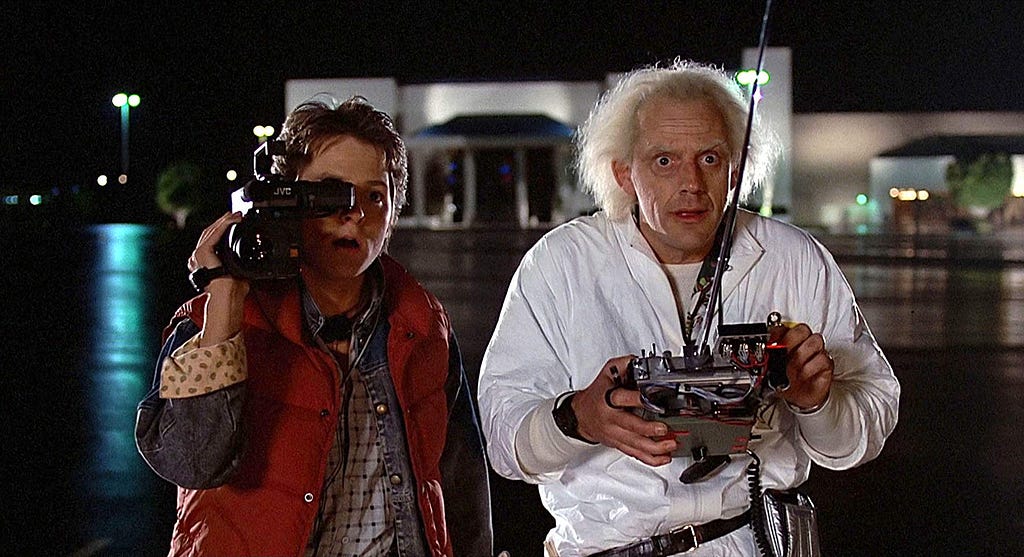
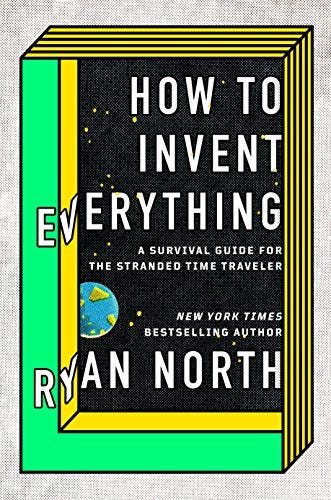




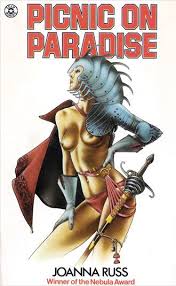
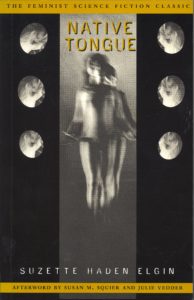
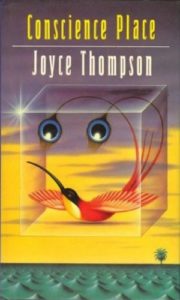
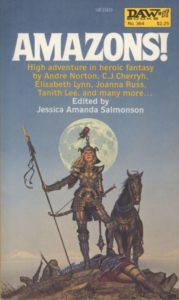
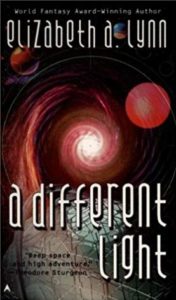
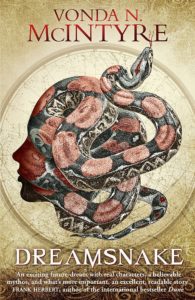
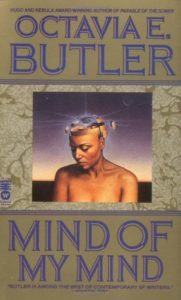

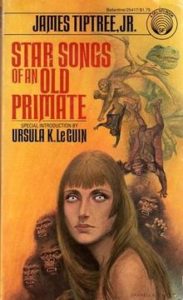
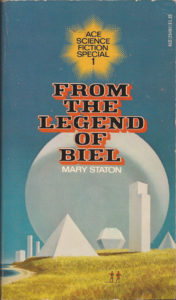



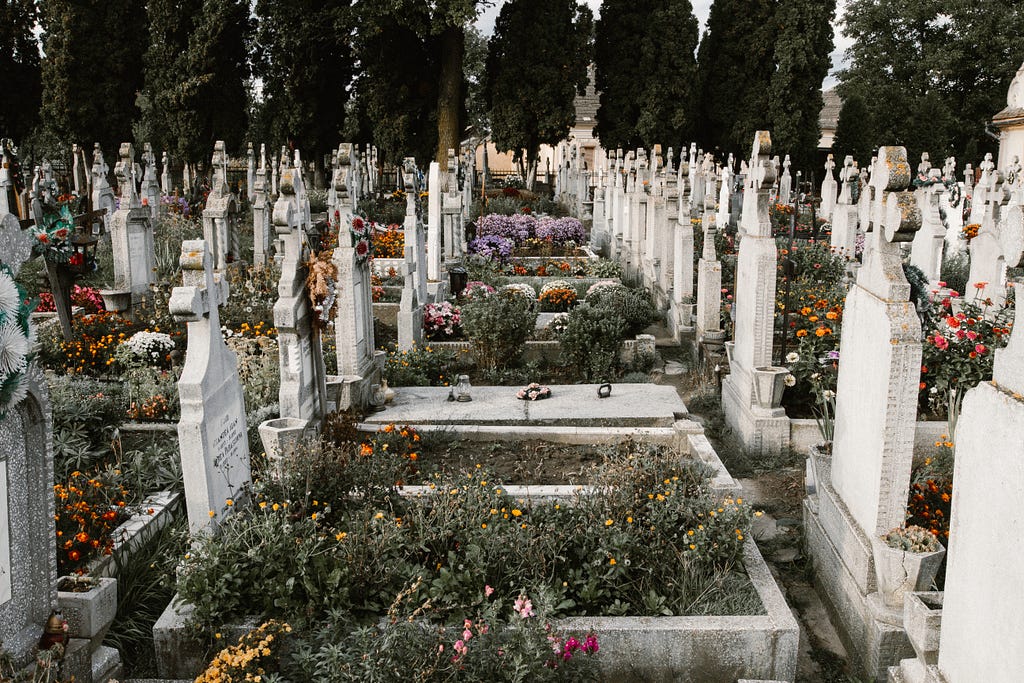

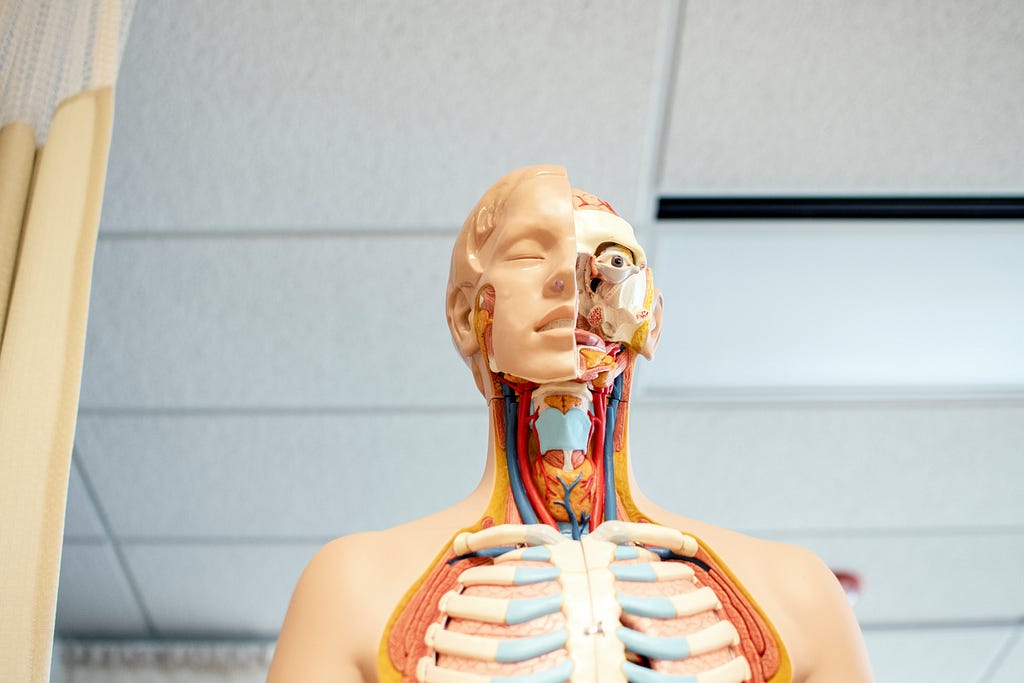

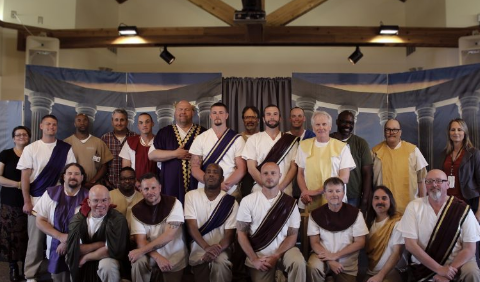


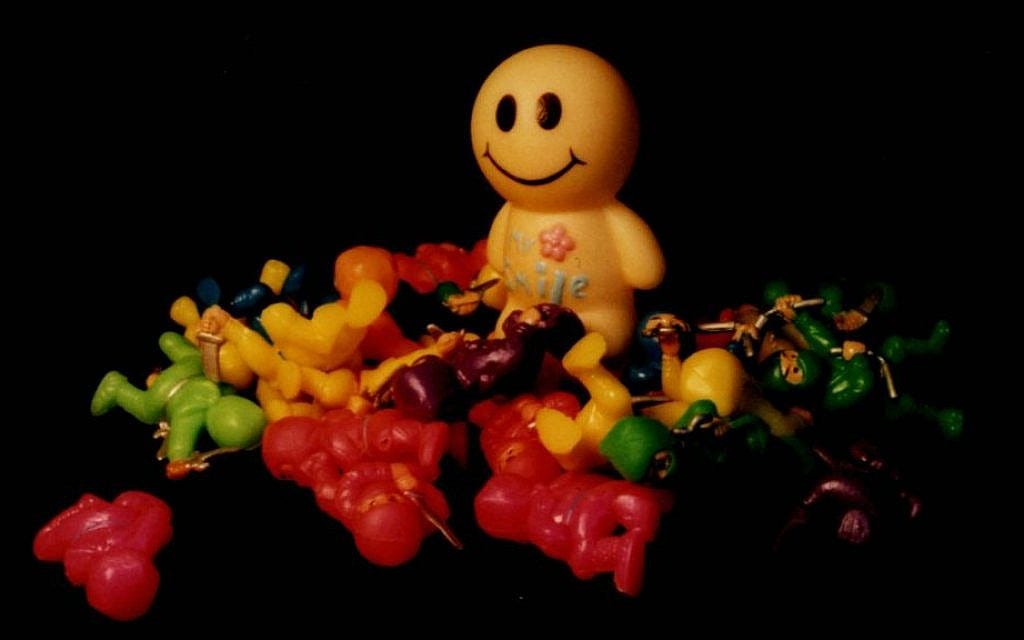


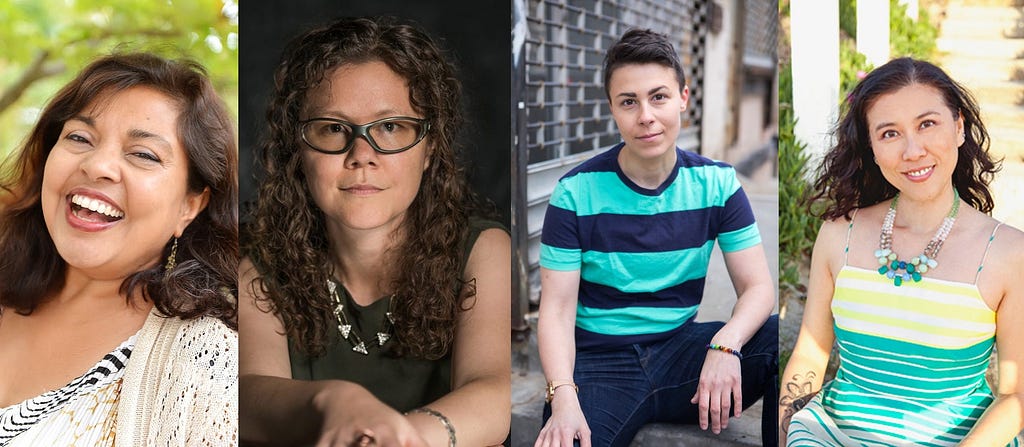
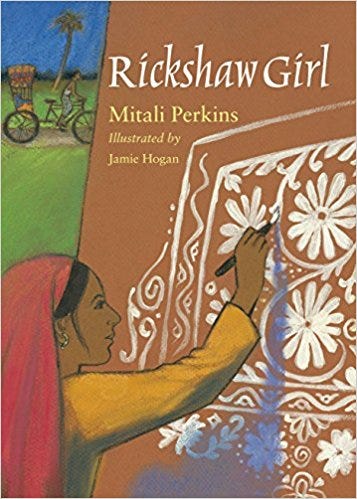

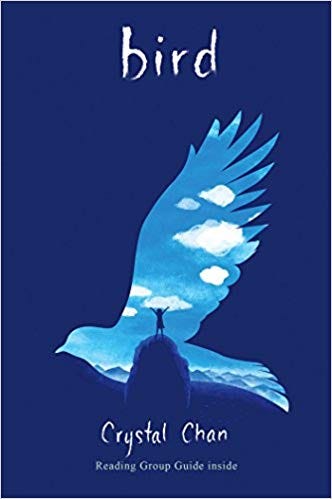

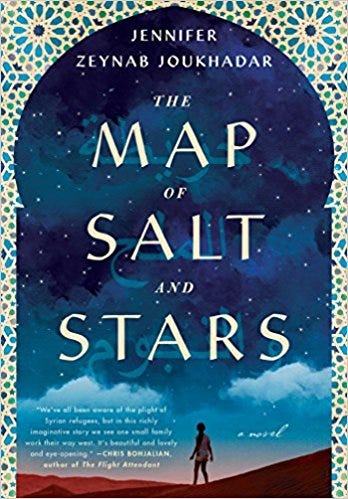





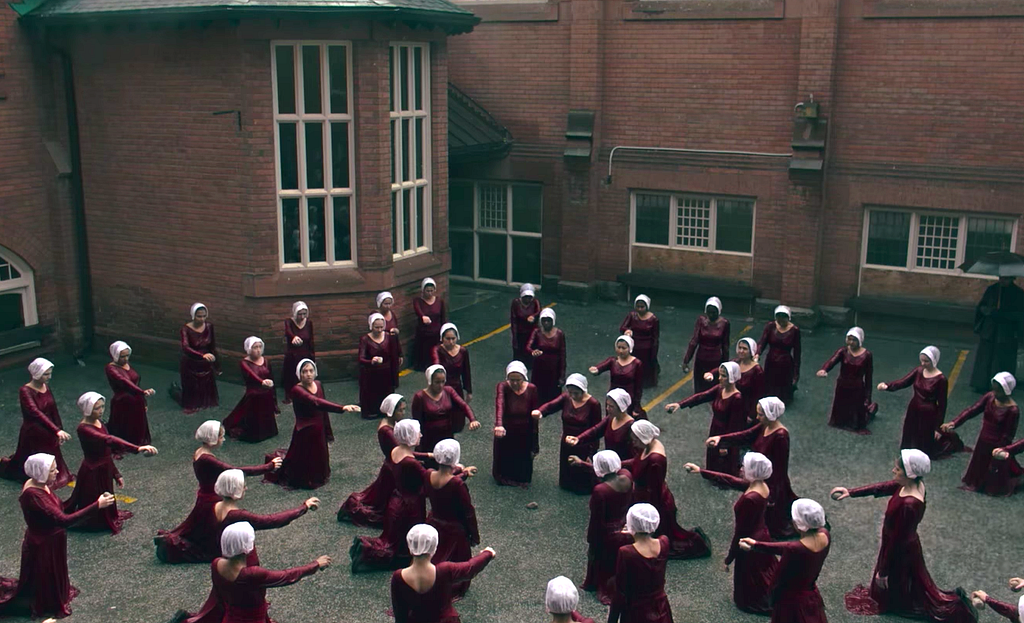






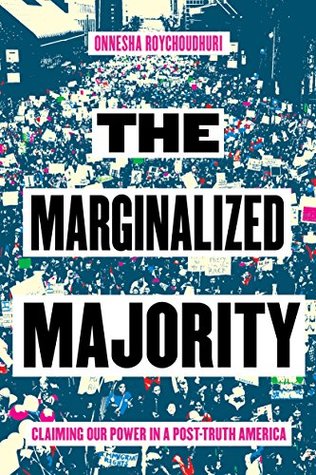
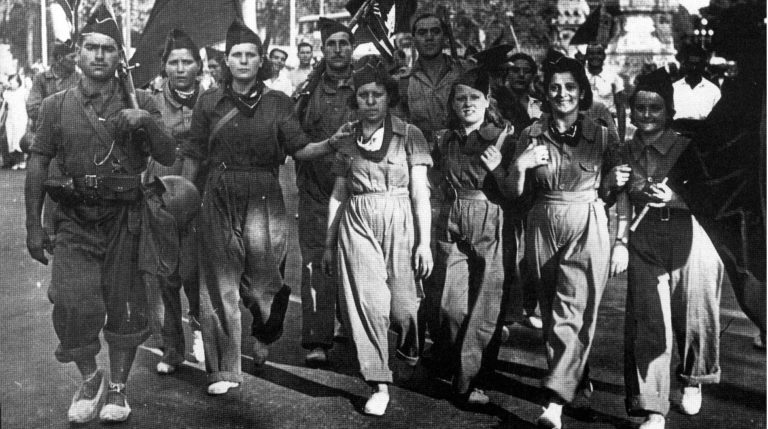




 Helen DeWitt, Lightning Rods
 Alina Bronsky, The Hottest Dishes of the Tartar Cuisine
 Virginia Woolf, Orlando
 Ottessa Moshfegh, My Year of Rest and Relaxation
 Mary Robison, Why Did I Ever?
 Helen Fielding, Bridget Jones’s Diary
 Alexandra Kleeman, You Too Can Have A Body Like Mine
 Chandler Klang Smith, The Sky is Yours
 Chris Kraus, I Love Dick
 Sara Levine, Treasure Island!!!
 Iris Owens, After Claude
 Stella Gibbons, Cold Comfort Farm
 Helen Oyeyemi, Mr. Fox
 Maria Semple, Where’d You Go, Bernadette
 Alissa Nutting, Made for Love
 Barbara Pym, Excellent Women
 Nell Zink, Mislaid
 Jane Austen, Northanger Abbey
 Melissa Broder, The Pisces