Shared posts

11 Nov 02:04

The Former Noma Chef Taking Over School Cafeterias

by Monica Burton

Dan Giusti’s Brigaid is putting chefs in American public schools to change the way kids eat

Welcome to Doing It Right, a column where Eater meets chefs, restaurateurs, and entrepreneurs who recognize challenges in their communities — and are actually doing something about it. In this installment, we head to New London, Connecticut to focus on the work of Brigaid.

The challenge:

Although national nutrition guidelines aim to ensure healthy school lunches for all students, some school districts lack the resources to serve nutritious food that kids want to eat.

What Brigaid is doing about it:

Chef Dan Giusti’s company puts chefs in school kitchens to cook lunches entirely from scratch, and as Brigaid’s chefs create recipes alongside existing cafeteria staff, they make better use of school kitchens and change perceptions of the school cafeteria worker.


Just a few years ago Dan Giusti was cooking at one of the world’s best restaurants. He was the chef de cuisine at Noma, serving 45 people a night at the Copenhagen dining destination. But when he started thinking about next steps, opening his own fine dining institution was never a consideration. Giusti wanted to feed people — lots of people. “You can really affect somebody’s life if you’re cooking for them every day,” he says.

Like many chefs with that inclination, his first instinct was to open a fast-food restaurant, but it felt irresponsible to build new restaurants to feed “millions of people” when there are already so many out there. And so he decided to take his skills to an existing institution — the American public school system. “There’s all this food being made already,” he says. “Why not just make it better?”

In 2015, Giusti announced his intentions to reform school lunches with an article in the Washington Post, promising to put chefs in schools to cook lunches from scratch. And last year, he launched Brigaid in New London, Connecticut, a coastal city with a population of just over 27,000 and a 28.2 percent poverty rate. “[Then-superintendent Manuel Rivera] got it,” Giusti says. “He knew right away that this was a big deal, like if we were going to do this, it’s gonna take money, it’s gonna take buy-in from all the community.”

Samantha Wilson, New London public schools’ child nutrition program manager, worked closely with Giusti to implement the program in New London’s six public schools, including elementary, middle, and high schools. Before Brigaid, the schools handled food service internally, and although kitchen staff prepared some recipes from scratch, Wilson estimates that around 75 percent of meals involved processed food. Now, all school lunches are made from scratch and there’s a trained chef in every cafeteria to develop recipes and introduce new ingredients — in its first year, the New London students were served fresh fish for the first time.

Here’s how it works: Brigaid recruits chefs, who then become employees of the school district. Each Brigaid chef leads the school cafeteria staff in the transition to from-scratch cooking. In addition to overseeing the kitchen staff, the job requires interacting with school administration and the students to figure out what works. Together with Giusti, the chefs create recipes that fit within the National School Lunch Program’s cost and nutrition guidelines — not an easy feat. “I always equate it to speaking a foreign language,” he says. “When you learn a foreign language and you have to translate ahead every time, you can’t be very well versed in it. When you think in that language, that’s when you can be proficient. Same thing with cooking.”

While the USDA determines National School Lunch Program school nutrition requirements, it’s up to individual school districts to decide how to fulfill them. Some schools form purchasing cooperatives, while others contract individually with vendors and distributors or food-service management companies, like Aramark. Increasingly, schools are finding ways to incorporate local produce into school lunches: 42 percent of public school districts participate in “farm to school activities,” which may include serving local food in the cafeteria or leading a field trip to a local farm, and a number of companies and school districts are taking part in the scratch cooking movement. The guidelines and budget ($3.31 per New London student for the 2017 school year) come first during recipe creation. But chefs must also think about how to scale the recipe and how to make it palatable to kids. Unsurprisingly, it hasn’t been easy to find chefs to sign up for the gig.

Brigaid chefs have to put their egos aside in service of an extremely picky customer. Plus, they must adapt to a new kitchen culture. At Brigaid, a certain degree of professionalism is required, not just because of the school environment, but because Brigaid chefs are trying to enforce real change with existing cafeteria staff, school administration, and students. “We are looking for motivated people. We’re trying to make a pretty big cultural shift in food,” Giusti says.

In the coming year, Giusti hopes to work with local farmers to source fruits and vegetables. Wilson notes that getting 3,000 kids to sign on to certain foods is likely to be a slow process. “The idea is to expose them to foods when they’re really young so they don’t have preconceived aversions or preconceived notions about foods they like or they don’t like,” he says. “You see a lot of success in the younger kids and as they start to come up through the grades.”

Brigaid is a private company, not a nonprofit (Giusti wanted to execute his vision for the company without the input of a board, and feared spending much of his time doing fundraising). He compares the way it works to a consulting agreement. The school district agrees to pay the chefs a certain salary and pays Brigaid an annual fee. The program aims to be financially self-sustaining for the school’s food-service department. Giusti says the switch from processed to raw ingredients saves the schools some money, and schools can use their kitchens to produce additional revenue through catering, either at school events or for the wider community.

New London was just the beginning for Brigaid. At the start of the 2018 school year, Giusti launched a pilot program at Morris High School in the Bronx. And as soon as the new system is operating smoothly there, Brigaid will roll out in five other schools in the same district.

For their first Brigaid lunch at Morris, students were offered meatloaf with mashed potatoes and kale chips. Giusti says that, anecdotally, the high school students seem to appreciate the change, but to prove that the program is worth it, Brigaid will need to track how students are participating in the program. “We need to be able to show that more kids are going to eat [school] food now because they really enjoy it,” he says. “We really need to start to get some numbers that back up this kind of change.”

It’s not the only challenge facing Brigaid. The existing school cafeteria staff must also fully embrace change. “The biggest challenge is about making sure that we’re doing things in a way where the staff says happy,” Giusti says. “You’re making this big transition where essentially you are adding on work.” To make the transition easy for the staff and the Brigaid chef who is doing this job for the first time, the lunch menus in the Bronx school are simpler than the menus in New London. Although the new lunch service system isn’t yet seamless, the change will ultimately pay off. “That implementation is going to set things up for scalability and future success across the district,” Giusti says.

To work, Brigaid must please a long list of customers, from the school district to the cafeteria staff to the students. In New York City, there are more stakeholders — hundreds of people on the administrative team oversee the lunch service program in the Bronx, compared to New London’s two, according to Giusti — but, three years in at New London schools, Brigaid is working. “The beauty of our relationship is you have two very specific and unique sets of expertise and knowledge,” says child nutrition program manager Wilson. “I don’t pretend to know the ins and outs and the finer points of recipe development and cooking, but I’m very well-versed about USDA regulations and district guidelines. We really weave all of our strengths in all those spaces together.”

And as Brigaid’s chefs change the recipes for school lunches, the company is also working to change how people think about the school cafeteria. “When we were in school, and when people were in school 100 years ago, the lunch lady was always the bottom of the barrel in the hierarchy of the school, which is ridiculous,” Giusti says. “It’s treated that way from the budgets downward. [Brigaid is] trying to change that whole thing.”

Monica Burton is Eater’s associate restaurant editor.

Brigaid [Official site]

09 Nov 11:37

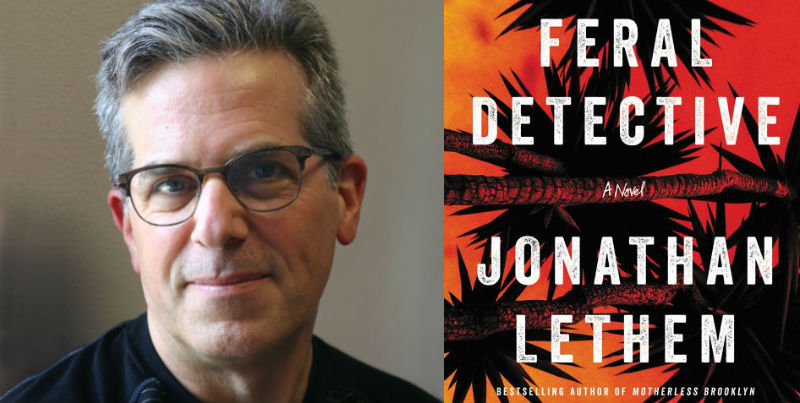
Jonathan Lethem on Detectives, Frontiers, and Utopias - A New Kind of Crime Novel for an Age of Extremes

by Lily Meyer
Bgarland

I'm so excited to read this book.

Jonathan Lethem

Interviewing Jonathan Lethem is a pleasure. On the phone and on the page, he is consistently inventive, philosophical, funny, and introspective, whether he’s speaking as himself, a low-level mobster with Tourette’s, or a former New York Times employee in her thirties who, a month after Trump’s election, flees the paper of record for the California desert.

It’s not quite that simple. Phoebe, the spiky, big-hearted protagonist of Lethem’s latest novel, The Feral Detective, goes to the Inland Empire to look for her friend Roslyn’s disappeared daughter Arabella, a Leonard Cohen-loving Reed dropout who, Phoebe suspects, is on a pilgrimage to Mount Baldy. To track her down, Phoebe turns to the feral detective: Charles Heist, a gentle loner who keeps a rescued opossum in his desk drawer.

Heist, it turns out, is even more feral than he seems. He leads Phoebe to the place where he grew up: Joshua Tree, deep in the desert, home of the Rabbits and the Bears. Not animals: hippies, social dropouts, who have divided themselves into all-female and all-male communities and, more or less, gone to war. The Feral Detective is a classic Lethem crime novel, which is to say that it resembles nothing else on Earth.

I talked to Lethem about Chandler, California, and what it means to write hard-boiled fiction. He was, from start to finish, a delight.

Lily Meyer: The Feral Detective is your first detective novel since Motherless Brooklyn. How did you get back to that space?

Jonathan Lethem: I was asked to write the introduction to an annotated The Big Sleep. That got me re-reading Chandler, who has always been an influential—a formatively influential—voice for me. At the same time, I was thinking about where I live, in Southern California. I’ve been here a few years, and though I’ve been a Californian before, there’s something about the way I’m dwelling here now that’s sinking in differently. The place is more real to me than it was for a long time. That made me turn to Ross Macdonald, especially to his late eco-crime novels. He writes about this landscape so scrupulously and directly.

LM: Phoebe is such an excellent narrator, and such a strong female voice. I think this is a very feminist book. How did you, as a male writer, approach that?

JL: I take that as extraordinary praise. I’ve always worked hard on my female characters, and it’s funny that the books I’m most associated with are, literally, motherless. Motherless Brooklyn and Fortress of Solitude are dad-and-boys books, where women are symbolic presences that are being yearned for. But the book that preceded those two, Girl in Landscape, which is in some ways my favorite, comes from the perspective of a thirteen-year-old girl. Not in first person, though. With Phoebe, I thought, not only is she going to be the protagonist, not only are we going to think and feel what what she thinks and feels, but I’m going to do it in first person.

How do you create a character, though? You consult the only emotions, psyche, and selfhood you actually have access to—your own—and combine it with characters you’ve read in other peoples’ books and projections of people in your own life. Then, if you’re lucky enough, you scrape all these things into one giant space, breathe on it like you’re breathing on an ember to start a fire, and then, sometimes, the person becomes real to you. Phoebe did. I was very lucky. She announced herself. She was funny, and dark, and I was happy to spend time with her. That’s what writing the book was like. It was like talking to Phoebe about what pissed her off, what she wanted, what she was confused about. I loved listening to her.

LM: I did, too. And I love that Phoebe, not the male detective, is the wise-ass. It’s such an inversion of the detective framework. How else do you invert or subvert the genre?

JL: The detective genre was a great instigator for this book, but I’m a very cavalier crime writer. For me, the action is in voice, milieu, and set pieces. I’m a great adherent of Chandler’s, and Chandler himself was a very half-assed storyteller in some ways. He famously lost track of who killed the chauffeur in The Big Sleep. He had that maxim, which has always been a very important and licensing one for me: When you don’t know what should happen in your story, have a person walk through the door with a gun in their hand.

“It’s about velocity and movement across landscape, with brief interruptions for philosophical fugues, sex, and violence.”

Beyond that, The Feral Detective uses the genre as a proscenium arch. It’s a gateway into the story, which turns into a romance and a book-as-chase-scene. It’s about velocity and movement across landscape, with brief interruptions for philosophical fugues, sex, and violence. It’s a detective story nominally, but it’s less about investigation than about the state of being detective stories put you into.

LM: One thing The Feral Detective has in common with Chandler and Macdonald, I think, is it’s a critical investigation of masculinity. Did that happen post-Trump?

JL: Not at all. When I began thinking about an investigation into these ridiculous, off-the-grid communal tribes in the desert, I recognized instantly that I was creating a gender allegory. What Trump has de-sublimated in our culture was all there. Now it’s on the outside, every moment, but it was all there. I was nagging at this material in my own brain for a while, daring myself to write about men and women in this querying way. I wanted to know what men will look like if we get somewhere new. Will they be like the Bears? Will they be Robert Bly-type guys in brocaded vests, drumming and sulking? That was one route to Charles Heist, the feral detective.

I was also thinking of the frontier figure that obsesses American culture. Like John Wayne: a guy on the edge, a guy who makes the frontier safe, but who is himself unsafe for civilization. He’s a traumatized figure who can’t be recuperated for the town he creates, almost like a Tarzan or a Mowgli. In this allegory I’m creating, all men are feral. All men are unsafe. The question is how to bring them into a world where we want to live.

LM: What’s Heist’s relationship to Lionel Essrog in Motherless Brooklyn?

JL: Lionel is such an important character to me, and yet I can’t believe he came from me. People love him so much, and are so often disappointed that I haven’t written more Lionel, or that I’m not as sweet and lovable as Lionel—but nobody is! None of my other characters approach that degree of lovability, though if I were to make a comparison, I would compare Phoebe to Lionel Essrog. She’s a first-person voice, trying to figure herself out on the page for you. And even though she’s so spiky, I hope that she maybe, possibly, is my second-most lovable character.

As far as Heist, his condition of the feral child is a lot like Lionel’s condition of the orphan. It’s something I keep working over. Even though I wasn’t orphaned, and I wasn’t raised by animals, something about my childhood in New York in the seventies was a kind of urban ferality, or I think about it that way. It’s a little like how everyone identifies with characters in Dickens novels. Even though most of us weren’t forced to work as bootblacks at four years old, somehow we still feel disenfranchised and misused in the same way that Oliver Twist or David Copperfield were. By exaggerating my own childhood sense of disenfranchisement into the image of the orphan or feral child, I create an emotionally useful container.

LM: The other Motherless Brooklyn link here is Buddhism. Why bring back the Zendo setting? 

“I’m so invested in the things I make fun of. I love and hate countercultural impulses so deeply. I’m violently ambivalent, really. There’s no middle ground for me.”

JL: It’s true, I’ve made the Buddhists into the bad guys twice. I have a lifelong undeveloped attraction to that mode of thinking, but I’m also such an agitated mind, such a loud, frantic person, that I just can’t imagine sitting still like that. Generationally, people my age, raised by hippies of various kinds, often have an axiomatic, punk-rock distrust of the Aquarian impulses. But I’m invested in those impulses, too. It’s like when you’re American and criticize everything about America—until you go to France, and suddenly you’re like, “We come from the land of freedom!” Every time somebody agrees with one of my characters that hippies are corrupt and useless, I’m like, “No, I’m a hippie.” I’m so invested in the things I make fun of. I love and hate countercultural impulses so deeply. I’m violently ambivalent, really. There’s no middle ground for me.

LM: What about Leonard Cohen, then? I have to admit that I was hoping he’d appear as a character in the book.

JL: He was thrust onto the book, really. Mount Baldy, where he spent his Zen retreat, is right above Claremont. Once I decided I would write an Inland Empire book, Mount Baldy was hovering over the novel. I wanted to write about the weird corners of the landscape where people go to retreat, and that’s Mount Baldy and Joshua Tree. Then, suddenly, Trump is elected and Leonard Cohen dies in the same week, and those two experiences of trauma become welded together in my mind. It was like an electrical bolt in my mind.

I couldn’t bring him onto the page, though. He would have had to have faked his death, and it would have made me feel seasick to claim that. Cohen worked so hard on his death! He crafted it. For a decade, he was making us and himself ready, and so it would have been taking away an extraordinary accomplishment to deny him that death. I just wish it hadn’t happened that week.

LM: How did you get yourself to write about Trump? 

JL: The subject is not wanting to think about Trump. Even though I don’t avoid his name—I name him, but I also use silly euphemisms, like the deal-whore—it’s about avoiding him. It’s about thinking the whole system is abhorrent, and he’s just a flagrant symptom. He’s the thumb in your eye, but everything’s wrong already. The state of existence was already corrupt and ruined. He’s just a cherry on top.

Of course, Phoebe runs away from him. She turns her back, and then runs into a space where the eternal allegorical nightmare of male and female is getting played out in a way she can’t flinch from. She has to participate. But I was running away, too. I was trying to write a book about Trump, and also trying to write a book despite him.

LM: Phoebe is right in the middle of every age relationship in the book. What does that mean to her, and you?

JL: In the book’s originating relationships, Phoebe is right between the mother and the daughter. First she’s friends with the mother, and then she realizes that she’s friends with Arabella, too. Writing about that was me trying to grapple with my own placement in time. I watched the Trump election happen to myself, my students, my children, my eighty-six-year-old father, who has been a political activist his entire life and has very tragic feelings about America. He might die with Trump as the last president he knows.

“[P]eople my age are in charge of accepting change, and straddling the contradictions we see. We have to shut up, look around, and think, Oh, this isn’t the world I remember.”

At this point, I realize that I’ve become a bridge in time. Human reality is changing, and people my age are in charge of accepting change, and straddling the contradictions we see. We have to shut up, look around, and think, Oh, this isn’t the world I remember.

LM: Every writer I talk to seems to have a personal politics of crime. What, to you, are the politics of the detective novel? 

JL: I’ve said this about Chandler for years: Marlowe is a character organically conceived to cut through American class boundaries. He’ll always go from the hothouses of the wealthy to the gambling dens or the gutter. He’s not stuck inside one class milieu, and so he makes the under-described fact that they exist but are quarantined from each other visible. That’s the politics inborn in creating a detective figure like that.

For me, the hard-boiled novel is also a machine for thinking about the end of the frontier. Whenever you think about California, you have to think about the results of the American westward-expansionist utopian dream. Utopia and dystopia nest inside each other out here.

LM: Would you say this is a utopian novel or a dystopian novel?

JL: I think about utopia-dystopia a lot, but I didn’t deliberately develop this book on those terms. It’s innate to the hard-boiled mode to ask what kind of city we’ve made here. So in The Feral Detective, we have a city with no buildings in the desert. All the figures are exposed, not cloaked in buildings or even in clothes. What kind of city have we made where there is no city, just men and women staring at each other? That’s the book’s question: We could have made whatever we wanted—but what the fuck did we make?

Author image credit: Amy Maloof

09 Nov 01:44

Rare Booksellers Rallied Against An Amazon-Owned Company and Won

by Corinne Segal

The typical image of an antiquarian bookstore—sitting quietly next to the banks of Lake Maggiore in northern Italy, in a modest red-shingled house near the Texas bayou, or hidden from view on the type of Parisian side road you will find only if you are lost or very, very dedicated—would not suggest the kind of unprecedented rallying cry heard this week as booksellers forced an about-face from AbeBooks, the Amazon-owned website where a number of them sell the world’s rarest titles, on a controversial decision to drop booksellers from four countries.

Late last month, AbeBooks announced that it would no longer list booksellers from the Czech Republic, South Korea, Hungary and Russia after Nov. 30. It added in a subsequent statement that “a small number of sellers will be impacted as we migrate to a new payment service provider.” Now, after a massive protest by antiquarian booksellers, AbeBooks said Wednesday morning that it would reverse the decision.

So what just happened?

The original announcement—in particular, its abruptness and corporate-seeming, impersonal language—ruffled many in the community who have long regarded AbeBooks, which was bought by Amazon in 2008, with suspicion, even as they rely on it. It also brought alarm from at least one bookseller in the Czech Republic.

“The decision to close our account on such short notice has come as a complete shock, especially since no reason was not [sic] given even upon request,” Jan and Ondrej Schick of Antikvariát Valentinská, a large bookstore in Prague, wrote on Oct. 22 to the listserv of the International League of Antiquarian Booksellers (ILAB), an organization with about 1,900 members worldwide. “Just our company alone will almost certainly have to dismiss at least five employees. Furthermore, we do not have any idea where else to sell about 20,000 foreign books.”

A self-protective instinct swept through the community. The England-based Antiquarian Booksellers Association (ABA) announced it would not renew AbeBooks’ sponsorship for its 2019 bookfair, finding that AbeBooks was inconsistent with its mission to “champion the highest standards of rare bookselling across the world, irrespective of location.”

Simon Beattie, a bookseller based in Chesham, England, was the first bookseller to announce he would pause selling on AbeBooks by marking his page “on vacation,” an option for sellers who want to halt orders without stopping their operation entirely. “We are all affiliates of ILAB; the love of books should unite us,” he wrote to the ILAB listserv.

“Booksellers believe in the free exchange of ideas. The idea that the entirety of the Czech Republic would be excluded from the largest venue for antiquarian books in the world strikes at the core of that belief.”

A number of others joined him from there in a response that shocked him. As of Wednesday morning, a public spreadsheet maintained by organizers listed more than 550 booksellers from 26 countries that had decided to do the same in an action called Banned Booksellers Week. It’s a diverse list, reaching across countries from Malaysia to Mexico, Sweden and other countries, whose sellers range from small online-only operations to a former school building in New Jersey. An incomplete count of their collective inventory in the spreadsheet totals more than 3.5 million books. (AbeBooks, which did not respond to emails, lists about 50 million titles.)

On Wednesday morning, representatives from AbeBooks met Wednesday morning with ILAB president Sally Burdon and vice president Fabrizio Govi, where they said they regretted the decision to shut down the accounts and would work to help the booksellers from those four countries to remain on the site.

“During the meeting there was none of the corporate speak that the statements issued earlier contained,” Burdon wrote in an email to ILAB members. “They did not avoid questions, rush us or in any way try to defend their actions. All questions were answered carefully and they were prepared to answer all of the questions we put to them.”

It was a welcome conclusion to an unusual level of organized action from the antiquarian books community, which has “never” launched this kind of protest before, Govi said. It’s also a protest organized and galvanized almost entirely by sellers who have nothing material on the line; very few dealers fit the profile of being both an antiquarian bookseller in South Korea, Hungary, the Czech Republic or Russia, and one that disproportionately relies on AbeBooks for income.

AbeBooks has its roots in the antique books community itself; two of its co-founders were running a used bookstore in British Columbia, Canada, when it began in 1995. Since then, the community has increasingly relied on it and its online platform has provided a relatively new measure of security for a number of booksellers as they operate out of homes and small businesses around the world, dealing the world’s most valuable volumes.

But that stream of income is also uncomfortable for sellers whose interests and inventory are out of sync with AbeBooks’ owner, a $1 trillion company whose moves to buy out the competition and close small bookstores have threatened to swallow the industry. When Amazon bought AbeBooks in 2008, “we thought, this is going to be the end of Abe,” said Jim Owens of Thorn Books, based in Tuscon, Arizona, who participated in the boycott.

While that juxtaposition sits uneasily with many booksellers, AbeBooks’ massive size is also, now, part of their argument as to why it should be able to serve them effectively. Booksellers were quick to point out that Amazon still listed titles from the same countries that AbeBooks would be banning. “This is a huge technology company owned by a huger technology company. How can they not have a credit card company that does what they want?” Owens asked.

Scott Brown of Eureka Books in California, thousands of miles away from Antikvariát Valentinská, said it was “very easy to put ourselves in the shoes of an antiquarian bookseller in Budapest who’s going to see 5 or 10 percent of their income erased overnight.”

Beyond that personal connection, pulling the plug on bookstores from four countries threatened a larger value system, he said. “Booksellers believe in the free exchange of ideas,” he said. “The idea that the entirety of the Czech Republic would be excluded from the largest venue for antiquarian books in the world strikes at the core of that belief.”

09 Nov 01:43

20 Debut Works of Fiction by Women Over 40

by Jenny Bhatt

When I began querying for my first short story collection, as a woman of color in her mid-40s, what I discovered was not encouraging. Several agents and publishers loved my writing, and even asked to see the novel I was working on, but ultimately felt they could not take on a short story collection from a “debut writer.” What they could not bring themselves to say, I eventually realized, was “debut older woman writer,” because I knew of (and was sometimes even reviewing) many debut short story collections by younger women writers, including writers of color— in fact, they seemed to be coming out all the time.

Curious to know whether this was my paranoia or indeed the way of things, I occasionally began tweeting about ageism in publishing and publishing media, and how I wanted to see literary lists featuring older writers—specifically women writers above 40. The response was overwhelming. Hundreds of women over 40, and 50 and 60 and 70, responded in agreement, and many added their own stories about their experiences as writers and readers in a youth-obsessed literary culture.

Each year, there are the usual lists of debut writers under 30 or 40. We are urged to watch these writers carefully. While these lists have gotten more diverse with respect to gender, race, and ethnicity, there has not been much improvement with respect to age, and over time this can be disheartening to many older writers working on their debut books. The invisibility of middle-aged women that Dorthe Nors has written about continues to be as real in our socio-cultural artifacts as in our societies. But there are also many successful examples to serve as role models and provide ongoing inspiration for older writers—or aspiring writers of any age.

Below is a list of women writers who debuted works of fiction at or after the age of 40 and went on to achieve even more success. While not exhaustive, it shows clearly that women writers are not past their prime after a certain age. In fact, many are not even “late-bloomers”—they have simply deferred publishing due to family or career commitments. But the most striking aspect that unites all of these works is how each incorporates the collected, distilled wisdom, a lifetime of reading, and the sheer radicalism that could not have been possible for a younger writer.

George Eliot, Adam Bede George Eliot, Adam Bede (1859)

One of the most celebrated Victorian novelists, both in her time and since, Eliot did not publish her first novel until she turned 40. By then, she was already a respected scholar as Mary Ann Evans. Set in a rural community, Adam Bede is the story of four characters—a love rectangle, really. Adam Bede is an honest local carpenter caught up in his love for a woman from a different class. She loves another man and troubles abound. Charles Dickens praised the book highly for its psychological realism and polished craft. And, although there has been fair criticism about Eliot’s moralizing (which she toned down somewhat in future works), authorial intrusion, and even the rather pat ending, the novel showcased Eliot’s wisdom, art, and close observation of pastoral life in eighteenth-century England. She would go on to write six more novels, including Middlemarch, which some consider the greatest novel ever written in English.

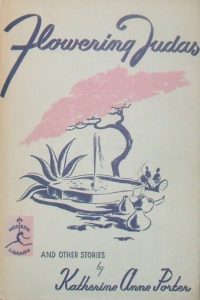
Katherine Anne Porter, Flowering Judas and Other StoriesKatherine Anne Porter, Flowering Judas and Other Stories (1930)
Porter was 40 when this collection of short stories, her first book of fiction, was published; she had already been writing for magazines and newspapers for years. These are eight (or ten, depending on the edition) of her earliest stories, showing all the hallmarks of the classic Porter short story. They were well-received at the time and several continue to be widely-anthologized even now. All of the stories in this first volume are set in the American South and Mexico during its revolutionary days. Porter’s language alternates between spare and colorful but is always well-crafted and precise. Many of her characters are poor and trying to better themselves as best as they can manage. Her women are strong and desirous of independence, even as they deal with their awakening sexuality, or unrequited love, or disappointing relationships. She is now considered one of the early masters of the American short story.

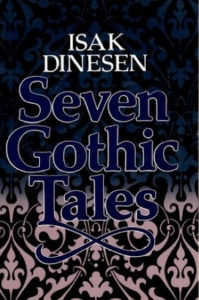
Isak Dinesen, Seven Gothic TalesIsak Dinesen, Seven Gothic Tales (1934)

Though best known for her account of living in Kenya, Out of Africa, Dinesen’s first book was this short story collection, published when she was 49. She had difficulty publishing it in Denmark and England, but eventually found the book a home in the US. It was successful, and eventually she translated it into Danish herself for publication in her home country of Denmark. It is not an exact translation but a close interpretation, with differences she decided made sense for a different readership. Set mostly in the nineteenth-century, these stories were written quickly and under pressure after she had returned from Africa, heartbroken and financially-broken. Most have been written in the old form of yarns or tales, where there are stories within stories in the Arabian-nights Scheherazade style. But her exotic characters are all rooted in the many diverse people she met and knew in Africa, and her baroque, elegiac prose heightens the horrors of rape, abuse, emotional violence, and provincialism she explores.

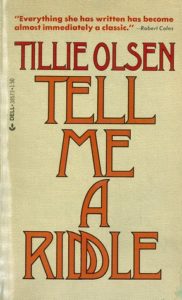
Tillie Olsen, Tell Me a RiddleTillie Olsen, Tell Me a Riddle (1961)

Though Olsen had been doing reportage since her 20s, this linked four-story collection wasn’t published until she was 49. Three of the stories were from the point of view of mothers. The title story is really a novella. All four had already published in literary magazines and also anthologized in the Best American Short Stories series during the year of their original publication. Olsen’s language is spare but the characters’ voices are memorably well-crafted. Beyond family life, the stories also deal with themes like racism, age, motherhood, coming-of-age, and death. The best of the stories, “I Stand Here Ironing,” continues to be widely-anthologized and taught.

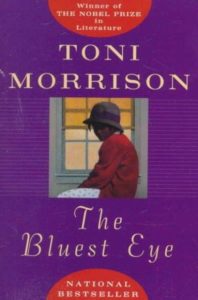
Toni Morrison, The Bluest EyeToni Morrison, The Bluest Eye (1970)

Morrison’s first novel came out just as she was turning 40. Since then, she has written many books and won most of the big literary awards, including the Nobel Prize for Literature. Set in working-class Ohio where she herself grew up, this is the story of a twelve-year-old black girl, Pecola, who has internalized racial self-contempt from an early age and considers herself ugly because she is black. She wants blue eyes, thinking they will make her as beautiful as white people. The people around her, especially the adults, have challenges of their own. And it is to Morrison’s credit that she does not give us monsters or caricatures, but shows us their flaws and frailties with kindness and honesty. The aurality of Morrison’s language brings every scene to life with a folksy musicality. The book continues to be a great example of how to tell a story from a child’s perspective while tackling weighty issues like racism, incest, homosexuality, and child molestation.

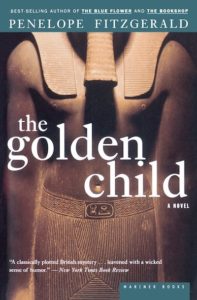
Penelope Fitzgerald, The Golden Child (1977)
Written as a way to amuse her terminally ill husband, this novel was Fitzgerald’s first work of fiction at age 60, though she had already published a couple of biographies. Set around a famous London museum and following all the traditions of an English murder mystery, the story is filled with eccentric characters and historical and political references. Fitzgerald pokes fun at art critics, academics, politicians, law enforcement, classism, and more. Her satirical narrative voice and close observation of the smallest details show that she was no novice to writing fiction but had honed her craft well over decades. She went on to win the Booker for a later novel, Offshore.

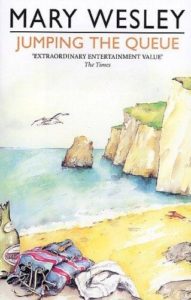
Mary Wesley, Jumping the QueueMary Wesley, Jumping the Queue (1983)

Wesley was 71 and had written three children’s books before this novel was published. She had turned to writing after the death of her husband had left her a poor widow, and after the success of this book, she wrote almost a novel a year well into her eighth decade. But it took Wesley five years to find a publisher for Jumping the Queue because of its uncomfortable themes. Set in Cornwall, England, the story is about a widow (like herself, though a decade younger) contemplating suicide out of guilt and self-reproach. At each opportunity, she is thwarted and unable to carry out her plan. This is a quiet novel, but it has its moments of shock with lies, incest, adultery, and murder. Throughout, Wesley paints a moving, dark portrait of the widow’s grief, despair, anger, disillusionment, and sense of betrayal. Yet, there is no self-pity or indulgence here, and her voice is uniquely hers: quirky, confident, and blackly humorous.

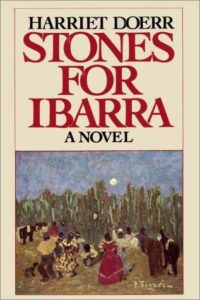
Harriet Doerr, Stones for IbarraHarriet Doerr, Stones for Ibarra (1984)

Published when Doerr was 74, this first novel won the National Book Award for First Work of Fiction. After her husband died, she had gone back to university to finish her education, and like many others on this list, she had published short stories before this book. As it had been for Porter, Doerr’s time in Mexico provided much material for her fiction. Doerr depicts the culture clashes between a transplanted middle-aged American couple and the local Mexican community in a remote mining town, Ibarra, with a keen eye for detail. With her husband in the last years of his life, the wife is trying to deal with her prolonging grief and the many stories and histories around her. Doerr describes the landscapes so beautifully that her prose transports us easily to that time and those lives. Ibarra is both a mystical and a real place—much like the cities and towns in a Márquez story.

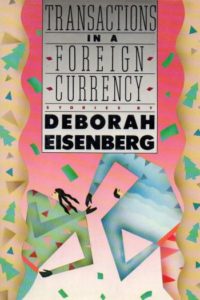
Deborah Eisenberg, Transactions in a Foreign CurrencyDeborah Eisenberg, Transactions in a Foreign Currency (1986)
Eisenberg is famous for taking a year or more to write a single short story, so it shouldn’t be too much of a surprise that her first collection came out when she was 41. The seven stories here are all first-person narratives of young women trying to survive in the 1980s. Whether describing seemingly mundane routines of life or struggling against unspoken societal rules, Eisenberg gives us their desires and desperations in clear, elegant prose. What happens to these women—whether it is love or sorrow or pain or discovery—is not quite as important as how it happens. Even in this first collection, Eisenberg shows her mastery of the form with pacing and economy.

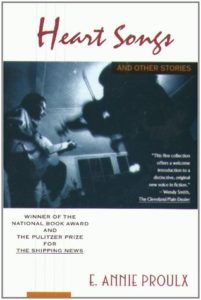
Annie Proulx, Heart Song and Other StoriesAnnie Proulx, Heart Song and Other Stories (1988)
Proulx started as a journalist like several others here. She also wrote short stories, including science fiction stories, for magazines. This first collection is all about rural and small-town American life—a subject she continued to tackle in her Pulitzer-winning novel, The Shipping News. Native Americans and working class folks fill the Northern New England countryside in these nine stories, and Proulx shows her predilection for odd, memorable names early on. Her lyrical descriptions of the beauty and the harshness of wild, barely-tamed landscapes are as singular here as in later works. Whether she is writing about relationships between people, or between people and nature, the passions are always both elemental and extraordinary.

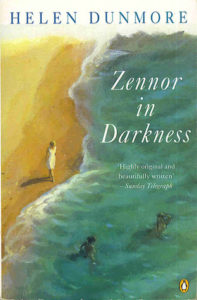
Helen Dunmore, Zennor in DarknessHelen Dunmore, Zennor in Darkness (1993)
Dunmore was a well-known British poet and children’s author before she turned to fiction. This novel was published when she was 42 and won the McKitterick Prize (for debut novels by writers above 40) in the UK. Set in Zennor, Cornwall around World War I, this is the story of a young woman artist spending some time with her lover, a soldier back from the war for a few days. The writer D. H. Lawrence and his wife, Frieda, live in a nearby farmhouse. Written in the present tense, the point of view shifts quite frequently, so that there are some moments of confusion. Nevertheless, through Lawrence’s many personal writings, Dunmore gives us a close enough view of their personal lives and how the events of that time changed the lives of all involved—both the real and the fictional characters. The best parts of the book involve the raw appeal of the Cornish coast that Dunmore, with her poetic sensibilities, recreates on the page with lingering images and sounds.

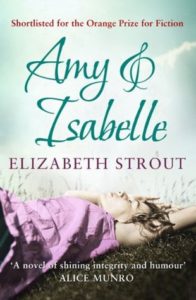
Elizabeth Strout, Amy and IsabelleElizabeth Strout, Amy and Isabelle (1998)
Though Strout studied law, early on she began writing and submitting her stories and novels on the side, without much success. She got her degree, but had only been practicing law for a few months when she gave it up to write full-time. This novel took her six or seven years to finish and brought her considerable attention when it was published. She was 42. The novel is set in a small-town community (a fictional setting Strout revisits in other books), where the secrets between a mother and daughter cause tension and conflict. Soon, there are difficult revelations and confrontations which also involve other members of the community. Whether she is writing about the intimate moments between different characters or describing how gossip and scandal spread in such places, Strout shows the many ways people can harm or help each other with eloquence and insight. Even the minor characters are drawn so well that their longings and complexities are palpably felt throughout.

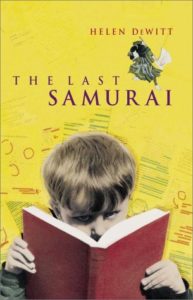
Helen Dewitt, The Last SamuraiHelen Dewitt, The Last Samurai (2000)

Amazingly, this highly-praised novel was DeWitt’s 50th manuscript, written after attempting many other novels. She had worked menial service jobs to support herself while trying to complete it. Whether we look at the story’s plot, characters, style, or themes, the book is truly a masterful feat. A mother brings up her young son in a unique and somewhat isolated manner, educating him in the classics, higher-level math, and multiple languages so that he becomes a child prodigy. When he decides he must find his father, whose identity she withholds, things begin to take sudden, surprising turns. The novel’s title comes from the Kurosawa movie, The Last Samurai, which the mother has introduced to the son so he can have some male figures in his life. The movie features in a few other ways throughout. Dewitt uses some interesting structural and stylistic innovations here with both language and imagery to create rich symbolism and layered allusions that require careful attention while reading.

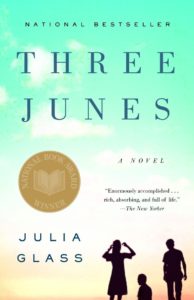
Julia Glass, Three JunesJulia Glass, Three Junes (2002)

This debut novel, published when Glass was 46, won the National Book Award. In it, we follow the McLeods and their friends through three narratives, each from a different perspective and set in a different time period. Glass has said of the three sections that they form a kind of triptych: elements that are smaller in one section are enlarged in another. Frequent flashbacks take us back and forth in time, revealing braided subplots about marital fidelity, the AIDS epidemic, homosexuality, familial expectations, and sibling relationships. The settings—Greece, Scotland, and New York City—are all so well-integrated into the story that they embody the various moods and life phases of the characters perfectly.

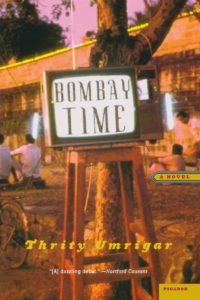
Thrity Umrigar, Bombay TimeThrity Umrigar, Bombay Time (2001)

Umrigar moved to the US from India to study journalism. After reporting for journals and magazines for nearly two decades, she wrote her first novel during a one-year fellowship at Harvard; it was published just as she turned 40. Bombay Time is about a middle-class Parsi community in a Bombay (as Mumbai was known then) apartment complex. An interlinked short story collection rather than a traditional novel, it is reminiscent of Rohinton Mistry’s Tales From Firozsha Baug, but Umrigar brings a more comical, satirical touch in comparison to Mistry’s more ironic and melancholic one. While her journalistic eye for detail and nuance misses very little, her sense of nostalgia does trip her up several times. Her work stands out because of how it includes various socio-political issues of the time as important subplots. A big wedding as the central story allows a wide canvas against which to show all the characters and their backstories. Her language is most powerful when she’s not veering into lyrical prose.

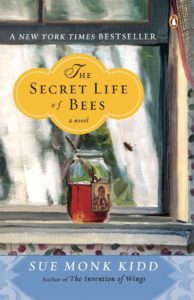
Sue Monk Kidd, The Secret Life of BeesSue Monk Kidd, The Secret Life of Bees (2002)
Kidd published her first work of fiction at 54, after having published three memoirs. Set during the 1964 Civil Rights Movement, The Secret Life of Bees is the story of a young white girl who runs away from home with her black maid. They find refuge with three black sisters who raise bees. As all these lives unfold and intertwine, the racial conflicts in a segregated town and family secrets add plenty of drama about coming-of-age and self-acceptance. Kidd’s writing often gets aphoristic with all the wisdom of the older black women, but the young girl’s wit and sardonic humor add some counter-balance. The movie adaptation was also popular, and the book continues to gain new fans all the time.

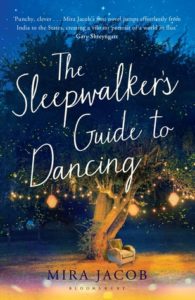
Mira Jacob, The Sleepwalker’s Guide to DancingMira Jacob, The Sleepwalker’s Guide to Dancing (2014)
Jacob’s first book took 10 years to write and was finally published when she was 41. It is the story of an Indian-American family and told through the second-generation daughter’s point of view. When Amina’s father is ill, she goes back home to Albuquerque, NM from Seattle, WA. There is the ever-present shadow of a dead brother and other family secrets to create tensions between all of them. The ongoing struggles with cultural differences and self-identity play out in real, believable ways. Jacob’s strength is in the voices she creates that, while ironic or witty at times, also show heartbreak and grief without sentimentality or over-indulgence.

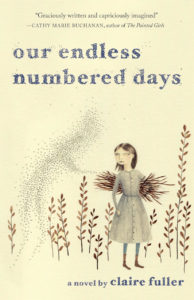
Claire Fuller, Our Endless Numbered Days (2015)

Fuller did not begin writing fiction until she was 40. This novel was published when she was 48, and it won the 2015 Desmond Elliott Prize. It tells the story of Peggy, who as a child lived in a forest with her survivalist father, and spent nine years in near-isolation. Now, a teenage Peggy is trying to assimilate back into the modern world while flashing back frequently to the earlier surreal one. Fuller’s language is rich and lush with detail and the wildly imaginative child’s perspective often steps in and out of fairytale-like fantasy. The forest world is both bewitching and brutal. Suspense and menace hold hands throughout as they take us to an ending that reverberates long after we are done reading. As a coming-of-age and survival novel, it gives us so much more mainly because an older writer has brought all her life history, decades of reading, and well-seasoned craft to it.

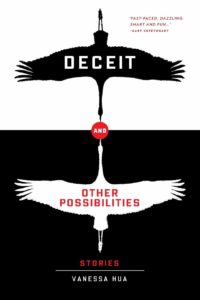
Vanessa Hua, Deceit and Other Possibilities Vanessa Hua, Deceit and Other Possibilities (2016)
For nearly two decades, Hua was a journalist and reported from places around the world. This first book, published when Hua was in her early 40s, is a collection of ten short stories about people caught between cultures and countries. While the stories are about typical immigrant struggles of being torn between tradition and modernity, past and present, society and individuality, the characters here are unique and memorable as they seek to subvert the “model minority” images portrayed so often in news media. Like the other former journalists on this list, Hua’s eye for detail is unerring in how it captures the essentialities of characters, places, and conversations. The deceptions are not just secrets and betrayals between characters but, often, they are also the lies the characters tell themselves in order to survive with the choices they have to make.

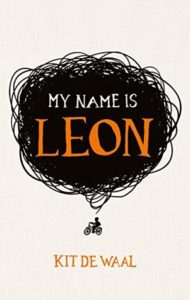
Kit de Waal, My Name is Leon (2016)
Kit de Waal worked in criminal and family law for 15 years before becoming a writer. This award-winning novel came out when she was 56. It tells a powerful story about a world that we do not often see reflected so fully and truthfully in fiction. Leon is a nine-year-old mixed-race boy who, during the 1980s UK race riots, gets put into the foster care system. The child narrator’s captivating voice shows us all the highs and lows of his world with grit and humor, rage and passion. It is a breathtaking feat how de Waal captures the child’s vulnerability, pain, and bravery through careful nuances while also giving us the wider socio-political drama through his eyes. The adult characters could have easily turned into caricatures but de Waal side-steps that landmine skillfully too. And, despite all the anger and sorrow that unfolds, this is a hopeful book because of how Leon finds affection and acceptance in unlikely places and people.

09 Nov 01:41

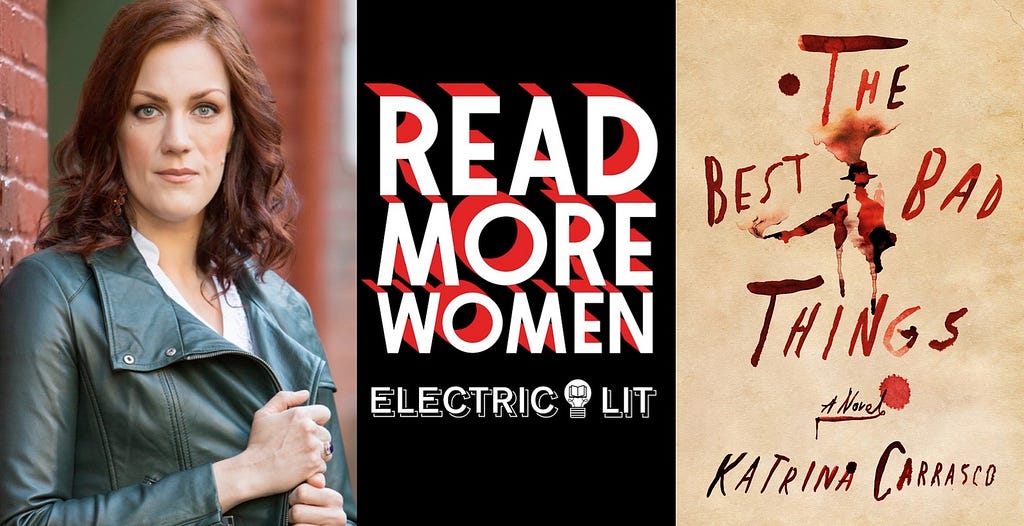
Katrina Carrasco’s Favorite Books by Non-Men

by Electric Literature

The author of “The Best Bad Things” shares her most influential books by women and non-binary writers

What are the best bad things? I think at this moment in history we can all agree: the best bad things are the ones that happened at least a century ago, so we don’t have to constantly worry about them. Which is why Katrina Carrasco’s novel about a 19th-century female detective, despite being full of thrills and suspense, is also kind of a nice break. Getting worked up about opium smuggling rings in 1887 feels wholesome and cleansing compared to getting worked up about the future. Maybe that’s why The Best Bad Things was listed among 2018’s most anticipated crime fiction on CrimeReads.

Many of Carrasco’s picks for her favorite books by non-men also look backward: to 15th-century Italy, to the vaguely-defined 19th century, to the Napoleonic era, or simply to the author’s own childhood.

Read More Women is Electric Literature’s series, presented in collaboration with MCD Books, in which we feature prominent authors, of any gender, recommending their favorite books by women and non-binary writers. Twice a month, you’ll hear about the five non-male authors who most delight, inspire, and influence your favorite writers.

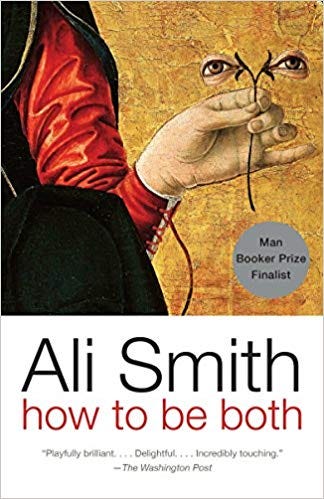
How to Be Both, Ali Smith

How to Be Both is enchanting, with gorgeous prose, playfulness in form, and a deep curiosity about the world. Smith’s ability to examine ordinary objects in an extraordinary new way demonstrates such delight in the human experience, and her writing is a joy to read. The story is split into two sections, with one following a young British girl called George and the other following Francescho, a painter in 1400s Italy. (As another form experiment, some editions begin with George’s story, while others begin with Francescho’s.) The book explores duality and separation, how pictures or memories of people cannot be those people; Francescho says of painting: “As soon as I’d painted them into the skin of the fresco they stopped being the people I knew.” But as alluded to in the title, How to Be Both is perhaps more interested in blurring those binaries: in exploring spaces in between in relation to gender; to memories of people and their present selves; and to fiction and reality. In addition to Smith’s style and the freshness of her observations, I also love the book’s abundance of queer female characters and its carefully rendered, tender mother-daughter relationships.

McGlue, Ottessa Moshfegh

Dense, dark, and gristly prose — McGlue was my introduction to Moshfegh’s work, and I was immediately captivated by her writing and the foggy, twisting narrative she crafts. The book follows McGlue, a sailor in a murky epoch (somewhere in the 1800s) who is in prison for murder. But as he is an habitual drunk, and not inclined to straightforward storytelling, the events that led to his imprisonment must be slowly and painstakingly recollected, questioned, and reconstructed again. I love an unreliable narrator, and in McGlue, Moshfegh has created a grimy paragon of that conceit; for me, this book was a master class in the art of withholding information while keeping the reader engaged and curious. At times, as McGlue drifts in and out of remembering, the narrative lapses into a stream-of-consciousness style that reads more like poetry than prose; yet there is always a sense that Moshfegh has total control of the story, even as it becomes more delirious.

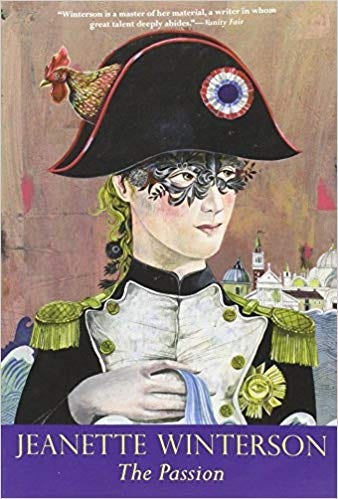
The Passion, Jeanette Winterson

The Passion follows two principal characters: Villanelle, a gambler and adventurer, and Henri, a former cook and soldier for Napoleon. Winterson’s writing is lovely, which makes some of the wartime atrocities in the narrative seem even starker because they are told with such grace. While reading the book, I found myself underlining a great number of passages, either because the turn of phrase was so beautiful, or because Winterson perfectly encapsulated a feeling or experience. I read The Passion during a time of great upheaval in my life, soon after coming out as gay, when I was leaving much behind as I stepped into my new identity. And in the book I found these lines, which stunned me: “When passion comes late in life for the first time, it is harder to give up. And those who meet this beast late in life are offered only devilish choices. Will they say goodbye to what they know and set sail on an unknown sea with no certainty of land again? … And if they do, you will have to strap them to the mast as the boast pulls away because the siren calls are terrible to hear and they may go mad at the thought of what they have lost.” At the moment when I needed to see my heart reflected on the page to know I was neither crazy nor lost forever, The Passion spoke to me so deeply about love, loss, and the journey of living that it will remain one of the most important books I’ve ever read.

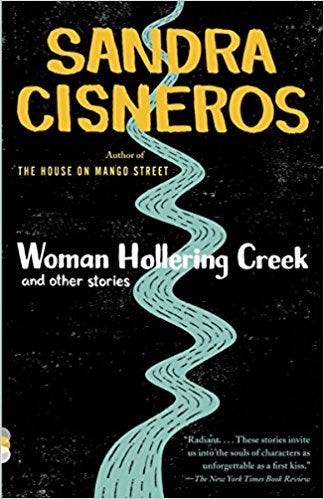
Woman Hollering Creek and Other Stories, Sandra Cisneros

This collection of short stories set along the Mexico/U.S. border crackles with love and pain and fierceness. Woman Hollering Creek and Cisneros’s The House on Mango Street were my first experiences of reading books that wove Spanish and English together — the first time on the page I was welcomed in both languages, with the words of my family and my childhood. These books awoke my interest in the ways in which narratives can perform as open or shut (or call for deciphering, an invitation to unlock their meaning) to specific readers when multiple languages are in play. In Woman Hollering Creek, Cisneros uses her unmistakable voice to narrate “othered” lives. There are queer love stories that bear scars and weather insults, and queer love notes disguised in code. There are stories about women who break the constraints society places on them: women who work through ambivalence around motherhood, or carve their own way as female artists. In search of the furiously powerful divine feminine instead of a patiently suffering saint, one narrator says to the Virgen de Guadalupe: “I wanted you bare-breasted, snakes in your hands. I wanted you leaping and somersaulting on the backs of bulls. I wanted you swallowing raw hearts and rattling volcanic ash.” In her stories, Cisneros makes spaces for women and queer folks to find their own agency. She also writes radiant tales about women helping other women survive and thrive, and deep female friendships.

Fun Home, Alison Bechdel

This memoir in graphic-novel form packs the double-punch of Bechdel’s drawings and her remarkable storytelling skill. Fun Home follows the author from childhood to young adulthood, tracing in parallel how the author comes into her own queerness while discovering her father is having affairs with men. Bechdel’s recounting of her youth and budding sexuality make the memoir an essential queer text, and her exploration of her relationship with her father makes the memoir strikingly singular and deeply emotional. In Fun Home, Bechdel and her father share a love of books — her father was a high school English teacher — and letter, books, and literary quotes appear in the illustrated panels and text accompanying them. These make the book pleasingly dense and rich: there is the sense of many layers of words and images that require decoding and interpretation, much as the adult Bechdel, guiding the narrative, finds herself trying to decipher the essential truth about her father and his character based on their relationship in her youth.


Katrina Carrasco’s Favorite Books by Non-Men was originally published in Electric Literature on Medium, where people are continuing the conversation by highlighting and responding to this story.

07 Nov 14:21

Chile Crisp by Andrew Janjigian

by Andrew Janjigian
Bgarland

Kelly. KELLY. K.E.L.L.Y.

kokblog-chili-crisp-jar

A few weeks ago I got an interesting package in the mail. I had no idea what it could be, but as it was from my friend Andrew Janjigian I suspected it was something tasty. It was a jar of his homemade chili crisp. It looked enticingly appealing with its ruby red texture. And when trying it on rice I found it incredibly delicious. My husband instantly switched out his store bought chili condiment and ended up having it on everything. Now neither of us can think of anything else. So when Andrew asked me to share it on kokblog I was over the top excited.

Andrew is an associate editor at Cook’s Illustrated Magazine, a passionate baker and a mycologist. He is regularly holding bread and pizza classes at King Arthur and on top of everything he is an excellent photographer. Andrew and I have collaborated on several things (mostly baked goods) and here on kokblog he is behind one of the most popular posts: Mushroom Confit

Chile Crisp
by Andrew Janjigian (illustrated by Johanna Kindvall)

Chile crisp is my version of Lao Gan Ma or ‘Godmother Sauce’, a spicy Chinese condiment that is a cross between a hot sauce and a crunchy salsa. But I like to think of it as chile crack, because everyone I share it with becomes just as addicted to it as I am. It tickles nearly all of my culinary erogenous zones: spice (both from chiles and the buzz of Sichuan peppercorns), sweet (from the fried shallots and garlic), umami (from fermented black beans), and heady aromatics from most of the above, along with toasted sesame oil and all the dried spices.  

It’s essential on noodles, fried rice, or just steamed white rice. It makes eggs infinitely better. Combined with a little black vinegar and soy sauce, it makes a great dipping sauce for dumplings. Stir it into a little mayonnaise and it becomes a killer spread for sandwiches. Or (as I do on a daily basis) it can be simply eaten with a spoon right from the jar.

(The recipe is actually fourfer, since its byproducts are a large amount of aromatic chile oil, along with extra fried garlic and shallots. And credit where credit is due: The starting point for my recipe is the version I found in the Mission Chinese Food Cookbook.)
kokblog-crispy-onions

Microwave-fried garlic
makes 3/4 cup (180 ml) garlic and 1 cup (240 ml) garlic oil

Remove the garlic from the oil a few shades lighter than you want it, as it will continue to darken as it cools. Dusting with confectioner’s sugar helps prevent clumping and tempers the garlic’s bitter edge. Fried garlic will keep for several months if stored in a sealed container. (If you don’t have a microwave, the garlic can be fried on a stovetop in a nonstick skillet over medium high heat, 10 to 12 minutes.)

1 cup (150 g) garlic cloves, minced
1 cup (240 ml) vegetable oil
2 teaspoons confectioner’s sugar
1/2 teaspoon kosher salt

Combine garlic and oil in medium bowl. Microwave on high power for 5 minutes. Stir well and cook for 2 minute intervals until just beginning to brown, 2 to 12 minutes total. Stir well and cook for 30 second intervals until evenly light brown, 30 seconds to 1 minute total. Strain garlic through fine-meshed strainer set in bowl, and reserve oil. Drain garlic on paper-towel lined plate. Dust with sugar, season with salt, and allow to cool.

Microwave-fried shallots
makes 3/4 cup (180 ml) shallots and 1 cup (240 ml) shallot oil

Remove the shallots from the oil a few shades lighter than you want them, as they will continue to darken as they cool. They will still be soft at this point, but will crisp up as they cool. Fried shallots will keep for several months if stored in a sealed container. (If you don’t have a microwave, the shallots can be fried on a stovetop in a nonstick skillet over medium high heat, 10 to 12 minutes.)

2 cups (175 g) thinly-sliced shallots
1 cup (240 ml) vegetable oil
1/2 teaspoon kosher salt

Combine shallots and oil in medium bowl. Microwave on high power for 5 minutes. Stir well and cook for 2 minute intervals until just beginning to brown, 2 to 12 minutes total. Stir well and cook for 30 second intervals until evenly light brown, 30 seconds to 1 minute total. Strain shallots through fine-meshed strainer set in bowl and reserve oil. Drain shallots on paper-towel lined plate. Season with salt and allow to cool.
kokblog-chili-crisp-4

Chile Crisp / Chile Oil
makes 3 cups (700 ml) chile crisp and 3 cups (700 ml) chile oil

Using harder-to-find (but delicious) Sichuan chile flakes (“facing heaven” peppers) will make the crisp slightly hotter. Chile crisp will keep for two months or more in the refrigerator. Chile oil will keep for up to two months at room temperature.

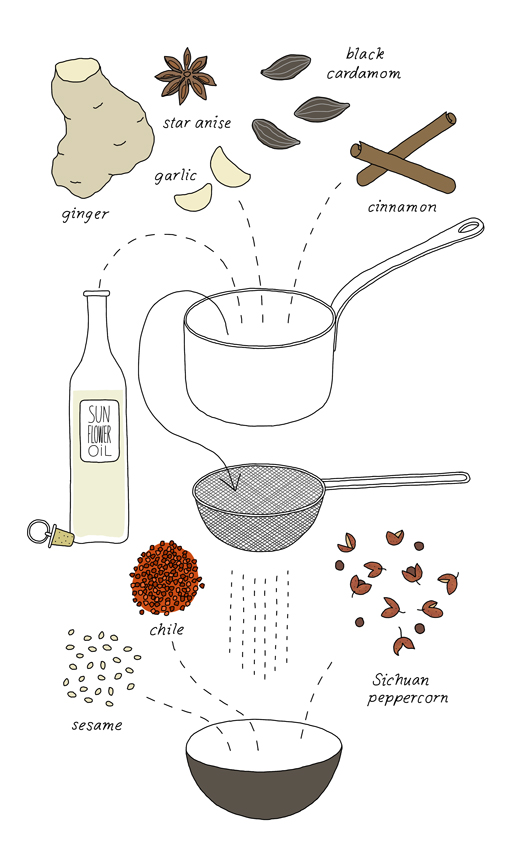
1 cup (240 ml) Korean chile flakes (gochugaru) or Sichuan chile flakes
(or a combination of both)
4 teaspoons Sichuan peppercorns, finely ground
½ cup (120 ml) sesame seeds
4 cups (950 ml) vegetable oil (including oils from shallots and garlic above)
3 (3-inch) cinnamon sticks
6 star anise pods
6 black cardamom pods, lightly crushed
1 (3-inch) piece ginger, peeled and thinly sliced
10 cloves garlic, lightly crushed
1/2 cup (120 ml) toasted sesame oil
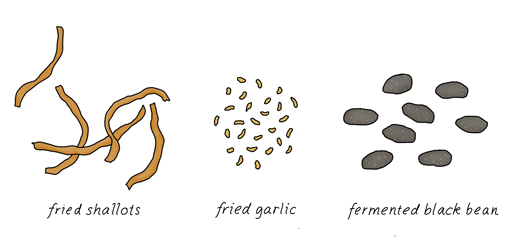
1/4 cup (60 ml) fried garlic (see recipe above)
1/2 cup (120 ml) fried shallots (see recipe above)
1/2 cup (120 ml) fermented black beans, chopped
2 teaspoons kosher salt

Place chile flakes, Sichuan peppercorns, and sesame seeds in large heatproof bowl. Heat oil, cinnamon, star anise, cardamom, ginger, and garlic in large saucepan over medium heat until it reaches 375ºF (190ºC). Pour oil through fine-meshed strainer slowly over chile mixture (be careful, mixture will foam initially). Discard solids in strainer. Allow mixture to cool to room temperature, 1 to 2 hours.

Add sesame oil and stir to combine. Strain through fine-meshed strainer set over bowl.
kokblog-fermented-black-beans2

Transfer solids from strainer into second bowl. Add fried garlic, fried shallots, black beans, and salt, along with enough chile oil to produce a loose, salsa-like consistency, about 1 cup (240 ml).

Transfer chile crisp to jar and refrigerate. Transfer chile oil to jar and store at room temperature.

*

We like this condiment:

as a dipping sauce for dumplings by Rabi Abonourat at Serious Eats

on handpulled noodles by Tim Chin at Cook Science

as a garnish for congee (rice porridge) – recipe from Saveur

and Leftover fried onions are excellent topping
on a classic smørrebrød with roast biff and Danish remoulade

or Middle Eastern mejadra

*

More of Andrew

Fresh Flour Power for Cook’s Science Magazine

From Beehive to Barrel: A Tale of Two Ovens for Edible Boston

Mushroom Confit for kokblog (equally addictive as the Chili Crisp)

Follow Andrew on twitter & instagram


02 Nov 18:06

‘Farming While Black’ is a Guidebook to Dismantle Systemic Racism

by Joan Bailey

At first, Leah Penniman’s new book, Farming While Black, reads like any other aimed at new farmers. In it, she writes about finding land, crop planning, seed saving, and raising animals. When readers get to the chapters called “Healing from Trauma,” “Movement Building,” and “White People Uprooting Racism,” it soon becomes clear that Penniman set out to write much more than a handbook.

Farming While Black is the distillation of Penniman’s work on Soul Fire Farm, an operation in upstate New York where she and her husband have spent the last seven years raising not just organic produce, but a whole new generation of empowered and thoughtful Black and Latinx farmers. Penniman weaves together her experience on the land with the rich, untold history of Black and Latinx farming against a backdrop of what she calls food apartheid. The result is a revolutionary work that opens important doors of opportunity for life and livelihood on the land.

Civil Eats recently spoke with Penniman about her motivation for writing, overcoming the stigma of agricultural work, and why her book is relevant for eaters and farmers of any color. The conversation below has been lightly edited for clarity and length.

You readily share stories and vignettes about the mistakes you made and the lessons you’ve learned while building Soul Fire Farm. Was it difficult to write with such frankness?

We made so many mistakes along the way and will continue to take wrong turns in our land-based social justice work. It is only our grit, hope, and determination that made Soul Fire Farm possible. I share our shortcomings to interrupt the lionizing that sometimes happens around our project. Folks imagine that we are “special” in some way. Vulnerability and courage are sisters.

You write about discovering early on “that transportation and cultural barriers made farmers’ markets all but inaccessible to the communities that we loved.” Can you elaborate?

Farmers’ markets can be inaccessible to communities of color for many reasons. They can be far away or not on the bus line. Food may be priced out of range, product selection culturally misaligned, or they do not accept EBT. Markets can also be inaccessible for reasons largely invisible to white organizers and patrons. In white-dominated spaces, people of color often experience “micro-aggressions”—long, inquisitive stares; questions as to where we’re from; confusion and dramatization as we try to redeem those little wooden EBT tokens; sideways glances if we speak too loudly or play our music; people pulling their children closer as they walk by; and so on. This is part of what is meant by a culturally exclusive space.

Again and again, your book brought things to light that are important to learn as well as devastating. I am not a Black farmer, but I think this book is an important read for everyone.

While the core audience for this book is the aspiring and practicing Black farmer, and the book uses “we” language to emphasize that there is (finally) a book by and for us, you’re right that it is for everybody. It is incumbent upon all of us who love justice and cherish food and land to understand the inherent racism in the food system. This structural racism concentrates land in the hands of white owners, perpetuates poverty and exploitation among farmworkers and food system workers, and prevents nourishing food from reaching our neighborhoods.

Further, many of the sustainable growing practices that our society assumes are European or ahistorical have roots in Black and Indigenous technologies. We need to confront the inequities in our food system and uplift the people who have created the technologies for repair. Black people certainly cannot solve racial injustice on our own; it’s the responsibility of all members of society to engage.

Why are ancestors and community so important to the concept of farming you write about?

In African traditional cosmology (Ifa, Vodun, Santería), we believe that the ancestors are always with us, guiding us to our correct path, and imparting their wisdom. It was essential to interweave that ancestor reverence into the book. As a young person learning to farm, I devoured books by white farmers—Helen and Scott Nearing, Eliot Coleman, John Jeavons—and struggled with the feeling that the choice to live life on land would be a betrayal of my people.

Had I known about George Washington Carver’s legume fields, Booker T. Whatley’s pick-your-own, and Fannie Lou Hamer’s co-op farms, I would have instead experienced pride in carrying on the wisdom of my lineage into my life’s work. I hope that uplifting Black agriculturalists helps the next generation of farmers like me feel that they belong to this land-based life.

Collective and cooperative ownership are two other topics you discuss at length. What particular benefit do they offer Black farmers?

Also central to African traditional cosmology is the “we.” The individualism of U.S. society is a European construct. Black people have konbit (collective work parties), we pool our money (susu), and we share equipment and marketing (farm co-ops). This is part of returning to our indigeneity as people; it’s also profoundly practical. Right now, the white-Black wealth gap is at least 13:1. We do not have enough to go it alone. By pooling resources, we build our economic power and increase our community self-determination.

You write, “There is a danger in confusing the oppression that our people experienced on land with the spirit of the Land itself.” This felt like a core concept of your work and this book. Such deeply embedded beliefs in a society can be difficult to move beyond. How do you work on changing this for Black and Latinx farmers?

We now understand that trauma is inherited in our epigenetics, the proteins that control DNA expression. This means that descendants of Holocaust survivors and enslaved Africans retain the trauma of their forebears. We witness this firsthand at Soul Fire Farm. When folks arrive and see brown backs bent over the land, their immediate association is with slavery. People arrive with a fear of nature, dirt, insects, sweat, stooping, and sore muscles.

Part of the work we do at Soul Fire Farm is to engage our traditional healing modalities such as song, storytelling, dance, and herbal baths to work through that trauma, to reach back across the hundreds of years of land-based oppression to the thousands of years of dignity on land.

Personally, the earth has been a friend of mine since I was a small child. As a brown-skinned youngster in an almost entirely white, rural town, I experienced race-motivated bullying and assault. The forest was my friend, my solace, and my source of belonging.

What do you see or hope to see as a result of this book, beyond the empowerment and training of more Black and Latinx farmers?

We aspire to “scale out” not “scale up” when it comes to Soul Fire Farm’s impact. We have over 500 graduates of our Black-Latinx Farmers Immersion program. In our last survey, 85 percent of them were growing food for others. That said, we do not create farmers; we just support them in realizing they are farmers and attaining the skills and resources they need to tend the land. And I’d like to give a special shout out to Harmony Farm and Homestead in New York; High Hog Farm in Georgia; and Catatumbo Collective in Illinois—three farm projects led by our alumni.

Our hope is certainly to inspire more Black and Brown farmers, increase farmland stewardship by people of color, inspire respect for ancestral and contemporary Black growers, catalyze reparations, and heal our relationship with the land.

Farming While Black is arriving at a time of great tension in America and even globally. It seems, therefore, more important than ever.

In the long view of history, this time is not more important than ever. It is simply a time when the systemic racism that already existed is [being] laid bare, and people in positions of privilege cannot ignore its realities. I hope we can seize on this moment of awakening to inspire all people with a conscious and logical mind to work diligently to return the land and wealth that was stolen from our ancestors, so that we, too, can provide nourishment for our communities and not have to rely on a system set out to devour us.

The post ‘Farming While Black’ is a Guidebook to Dismantle Systemic Racism appeared first on Civil Eats.

02 Nov 18:04

The Library of Congress Makes Thousands of Fabulous Photos, Posters & Images Free to Use & Reuse

by Josh Jones
Bgarland

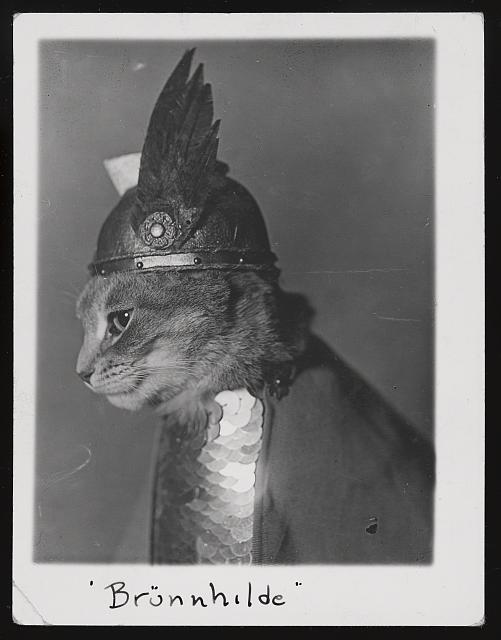
"Brunnhilde."

The history of the venerable Library of Congress demonstrates the vast importance that the founders of the U.S. accorded to reading and studying. It may be one of the country’s most durable institutions, “the oldest federal cultural institution in the nation,” it proclaims. While partisan rancor, war, and violence recur, the LoC has stolidly held an ever-increasingly diverse collection of artifacts sitting peacefully alongside each other on several hundred miles of shelves, a monument to the life of the mind that ought to get more attention.

Touting itself as “the largest library in the world,” its collections “are universal, not limited by subject, format, or national boundary, and include research materials from all parts of the world and in more than 450 languages.”

Its first materials were, of course, books—including over six-thousand books purchased from Thomas Jefferson’s private collection after the British burned the original library down in 1814. Now, it “adds approximately 12,000 items to the collection daily,” in every possible format one can imagine.

And since its digital collections came online, anyone, anywhere in the world can call up these vast resources with an internet connection and a few clicks. Though we tend to take such things for granted in our fervidly distracted times, a little reflection should remind us of how incredible that is. But before we wax too rhapsodic, let’s remember there’s a business end to the LoC and it’s called the U.S. Copyright Office, that guardian of intellectual property that both ensures creators can profit from their labors and prevents the free and open use of so many enriching materials long after those creators have need of them.

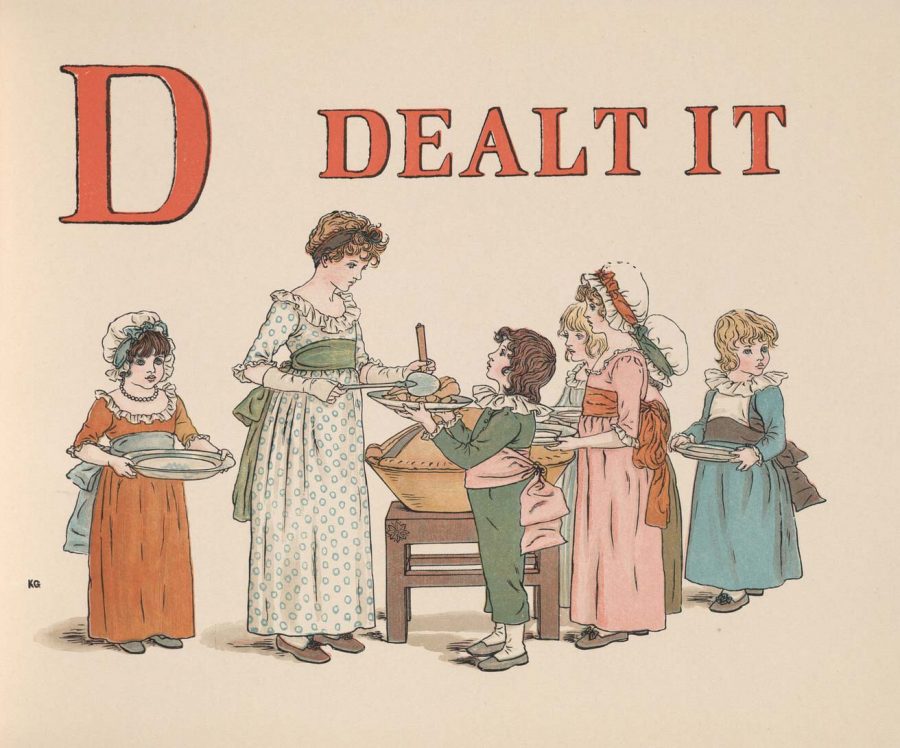
But the Library has done its digital users a service in this regard as well, with its “Free to Use and Reuse Sets,” a sizable collection of images that the Library “believes… is either in the public domain, has no known copyright, or has been cleared by the copyright owner for public use.” (The use of the word “believes” seems to leave room for doubt, but if you got it with permission from the LoC, you’re probably safe.) Need photographs of Abraham Lincoln—and scans of his speeches, letters, and “dueling instructions”—for that book you’re writing? You’re covered with this gallery. Need a collection of classic children's books for your website (or your reading pleasure)? Here you go.

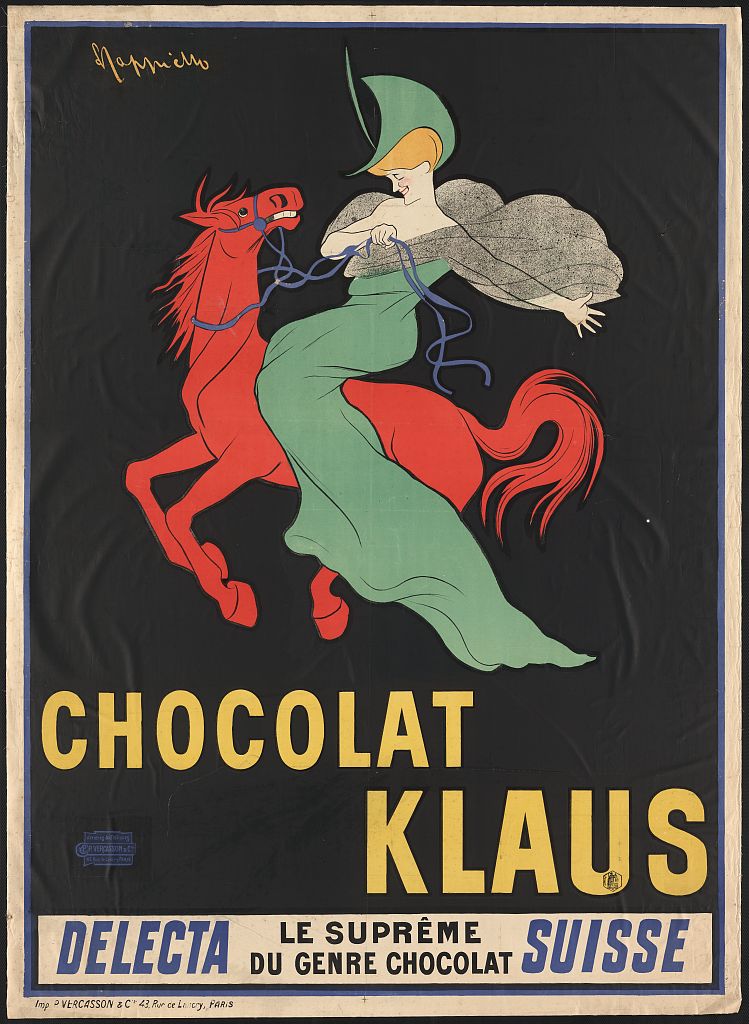
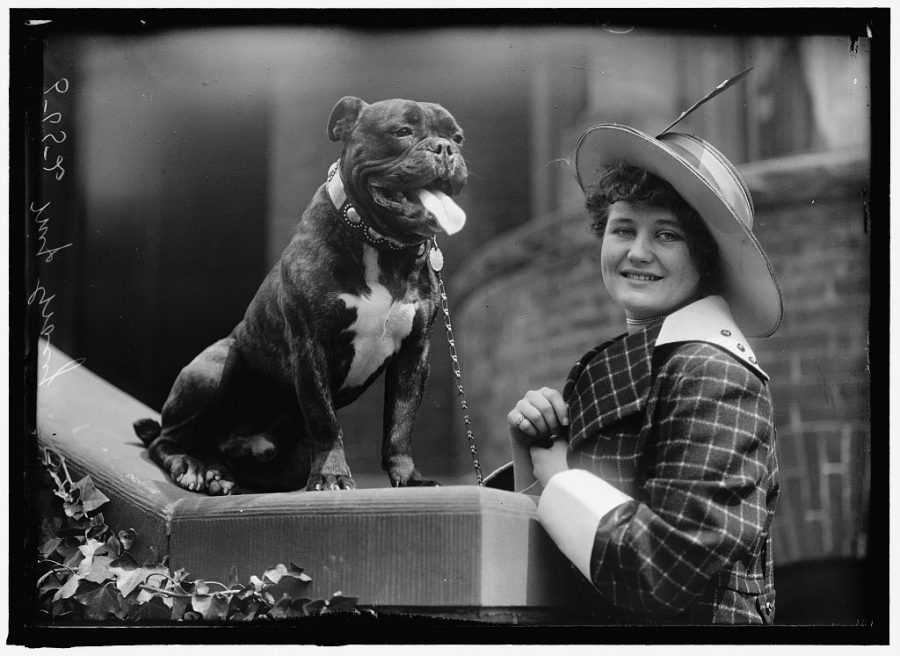
From the graphic genius of vintage WPA and travel posters to iconic jazz portraits by William Gottlieb to baseball cards to endlessly quaint and quirky American roadside attractions to pictures of dogs and their people… you never know when you might need such images, but when you do you now know where to find them. Want to know what’s in the set called “Not an Ostrich”? A valkyrie cat named Brunnhilde, for one thing, and much more here.

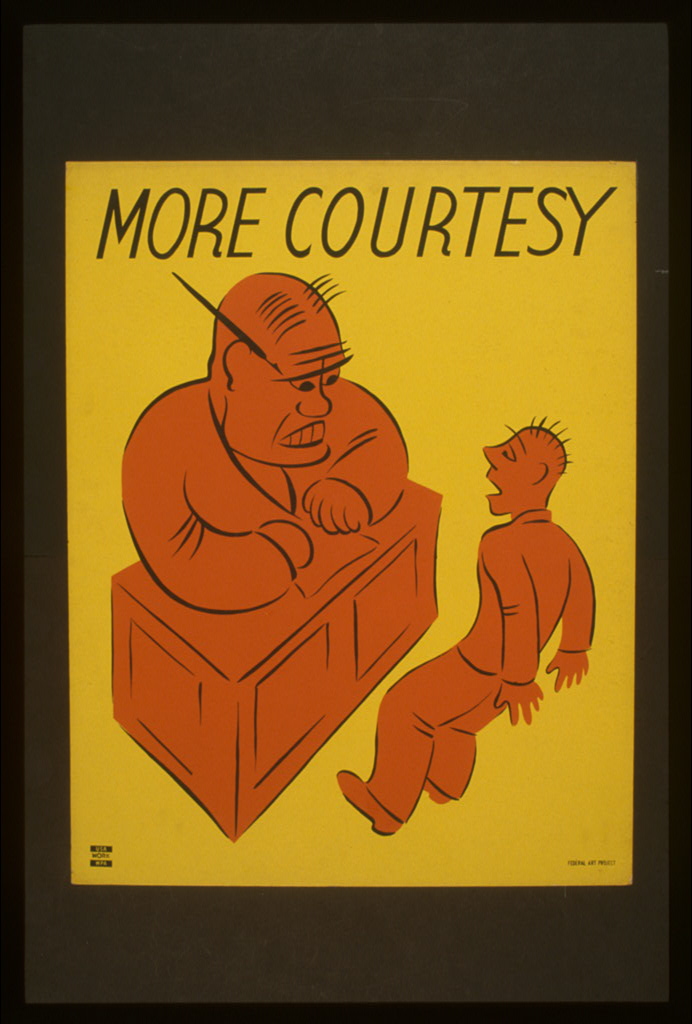
The Library currently highlights its “Poster Parade”—a set of posters from the 1890s to the 1960s featuring “travel, commercial products, war propaganda, entertainment, and more”—in collaboration with Poster House, a museum opening in New York next year. These range from delectable art nouveau ads to shouty broadsides telling you to drink your milk, brush your teeth, or have “More Courtesy.” Sensible prescriptions, but we also need more knowledge, study, and thought. Start at the LoC’s Digital Collections here and harvest your free to use and reuse images here.

Follow Open Culture on Facebook and Twitter and share intelligent media with your friends. Or better yet, sign up for our daily email and get a daily dose of Open Culture in your inbox. 

If you'd like to support Open Culture and our mission, please consider making a donation to our site. It's hard to rely 100% on ads, and your contributions will help us provide the best free cultural and educational materials.

Related Content:

The Library of Congress Makes 25 Million Records From Its Catalog Free to Download

Large Archive of Hannah Arendt’s Papers Digitized by the Library of Congress: Read Her Lectures, Drafts of Articles, Notes & Correspondence

Getty Images Makes 35 Million Photos Free to Use Online

Josh Jones is a writer and musician based in Durham, NC. Follow him at @jdmagness.


The Library of Congress Makes Thousands of Fabulous Photos, Posters & Images Free to Use & Reuse is a post from: Open Culture. Follow us on Facebook, Twitter, and Google Plus, or get our Daily Email. And don't miss our big collections of Free Online Courses, Free Online Movies, Free eBooksFree Audio Books, Free Foreign Language Lessons, and MOOCs.

01 Nov 16:22

18 Thanksgiving Appetizers and Snacks for Maximum Overeating

by Rabi Abonour

18 Thanksgiving appetizers to keep your guests satisfied until the turkey and pie are ready. Read More
01 Nov 15:02

How to Cook a Turkey in Parts

by Daniel Gritzer

Sure, a whole roast turkey is a beautiful sight on the Thanksgiving table. But if you want ultimate control and every bit of the bird perfectly cooked, you need to cook your turkey in parts. Read More
31 Oct 14:46

The True Madness of a Viral Wing Pricing Scheme

by Verge Staff
Bgarland

These graphs made my day.
FEAR THE PHANTOM WING!

25 Oct 19:11

5 Important Books Bearing Witness to America’s Carceral State

by Literary Hub

About Literature for Justice

Literature for Justice (LFJ) is the National Book Foundation’s three-year campaign, made possible by the Art for Justice Fund, that aims to call attention to and encourage the reading of literature that contextualizes and humanizes the experiences of incarcerated people.

The Foundation has brought together esteemed authors who also are experts and leaders within the space of mass incarceration and social justice, to serve on the Literature for Justice Committee. This committee is tasked with the creation and elevation of a contemporary reading list of five books each year that will help shift public perception and understanding of mass incarceration through the power of storytelling. Selected books will bear witness to America’s criminal justice system and what that means for all citizens.

Respected voices in the national conversation, the LFJ Committee will work alongside the Foundation to actively amplify the curated reading list and to encourage readers of all demographics to read these selected books. These books will also be highlighted in a national event series; with targeted public programs will take place in states with the highest rates of prison populations.

These five selected titles will be part of the larger, overarching narrative that will include 15 titles over three years, and will be digitally archived by the National Book Foundation. Join the National Book Foundation and the Los Angeles Public Library to celebrate the launch of the initiative on October 24th.


From the committee:

The Literature for Justice initiative of the National Book Foundation is pleased to select five books that shine a necessary light on the American criminal justice system and provide crucial perspectives that help further the nation’s understanding of this massive apparatus that impacts the lives of citizens and non-citizens alike. In the inaugural year of this initiative, the selection committee chose a body of literature that critically and anecdotally explores our nation’s prisons and the crisis of mass incarceration. The committee felt it essential to select readings that would illuminate myriad elements of this issue—why this country came to lock up more people than any other, how different groups in our society experience prison, and how this society can build new methods and systems to respond to the myriad social ills that land so many behind bars. Equally important to the committee was selecting readings from various genres, from historical nonfiction and memoir to fiction and poetry. Throughout the selection process the 2018 selectors were also deeply committed to foregrounding the work of formerly incarcerated authors.

Reginald Dwayne Betts, Shahid Reads His Own Palm
(Alice James Books, June 2010)

For most Americans, mass incarceration is an abstraction sometimes quantified on the news and in documentaries with graphs and large figures. For others, it’s an American crisis in need of committed reform efforts. For 2.2 million other Americans, mass incarceration is a catchall phrase inadequate in describing the albatross of their everyday life. As a Yale educated lawyer and criminal justice advocate, Reginald Dwayne Betts has evidenced himself as one who understands mass incarceration as a national crisis.

With his award-winning debut poetry collection Shahid Reads His Own Palm, Betts also reveals himself among the too-many millions who own intimate knowledge of living behind the walls. Betts recalls the world of count times and chow times and yard calls and shanks and kites. There are poems in which he reflects on the details of the carjacking that landed him as a teen behind the walls, a moving poem in which he imagines his mother receiving the call that he’s been arrested. There’s a poem in which he recounts a fellow inmate jumping to his death from a tier, a poem in which he reminisces on feeling bereft of a woman’s touch, another where he recalls falling in love with a woman who’s visited a fellow inmate. His poems are revelatory, wise, poignant and help to re-envision mass incarceration and the prison industrial complex as what they are at the elemental level: humans failing humans.

Mitchell S. Jackson

Inside This Place, Not Of It: Narratives From Women’s Prisons (Voice of Witness), ed. Ayelet Waldman and Robin Levi
(Verso Books, July 2017)

Inside this Place, Not of It: Narratives from Women’s Prisons, a collection of oral histories by real people about the astonishing facts of their lives and experiences being incarcerated, is a remarkable work of art. It is insistently, urgently readable. Every story is so different. Those who speak in the book range in age, gender identity, sexual orientation, ethnicity, race, and cultural background. What they have in common is the crushing experience of prison, and also, the wisdom and insight that comes from that experience. They are all riveting storytellers: experts on their own lives, and on the cruelty of institutions. The editors, Robin Levi and Ayelet Waldman, both dedicated human rights lawyers, conducted all the interviews, and did all the editing, which is masterful. The speakers are all incredible raconteurs.

The honesty in this book, and the wide range of voices, make it an obvious choice for a reading list aiming to highlight awareness of the experiences of those sucked into the justice system. And the ethical project of Voice of Witness—the series in which Inside this Place was published, which aims to provide oral histories by those directly impacted by human rights violations—seemed exactly in tune with our project, and the books we wanted to highlight. Mostly, this is a book you really will stay up all night reading. And you will finish not only with a better sense of who the book’s storytellers are, but with real admiration for them.”

–Rachel Kushner

Kalisha Buckhanon, Upstate: A Novel
(St. Martin’s Press, January 2006)

Upstate masterfully takes as its subject a lost world. It’s a toxic world where incarceration is treated as a rite of passage, one created by all of us but too often ignored by artists. Kalisha Buckhanon captures it all perfectly. Antonio and Natasha are indelible and individuated but also tragically emblematic. And this is the novel’s forceful achievement: that the dirty secrets of this country’s mass incarceration program, the great civil rights malfunction of our time, can feel so lyric and personal.

The committee is pleased to draw more attention to this powerful work that highlights the role fiction can play in resisting social injustice. The book can only further our understanding of the devastating impact decades of illegitimate policing has had and should be required reading for anyone hoping to contribute to meaningful reform.

–Sergio de la Pava

James Kilgore, Understanding Mass Incarceration: A People’s Guide to the Key Civil Rights Struggle of Our Time
(The New Press, September 2015)
In the inaugural year of the Literature for Justice program, the committee felt it essential that readers were given an understanding of mass incarceration’s origin story—how it is that the United States came to imprison more people than any other country in the world—as well as some thoughts on how we might imagine a more humane and equitable justice system in the future. In ways powerfully and accessibly James Kilgore’s Understanding Mass Incarceration: A People’s Guide to the Key Civil Rights Struggle of Our Time offers just this sort of historical background while also helping us all to appreciate the the vast reach and destructive impact of today’s carceral apparatus and why we should indeed try to create a different justice future. Kilgore, a formerly incarcerated educator himself, narrows the lens on the complexities of mass incarceration, offering readers history, critique, and a blueprint for moving forward which makes this book an essential selection to include in the launch of this initiative.

–Dr. Heather Ann Thompson

Jimmy Santiago Baca, A Place to Stand
(Grove Press, June 2002)

Poet Jimmy Santiago Baca’s intimate and emotionally raw memoir A Place to Stand takes us from Baca’s tumultuous childhood in Santa Fe, New Mexico, to his nearly seven-year incarceration, and beyond. Baca describes a childhood punctuated by alcoholism, abuse, and illiteracy, an early adulthood scarred by imprisonment and isolation, and an adulthood consumed by the challenges of re-entry and redemption. A Place to Stand also reminds us that while mass incarceration is often viewed as a black-white binary, the Latinx community makes up 20 percent of the U.S. incarcerated population. Baca’s lyrical first-person account of life before, during, and after incarceration is both tender and gut-wrenching. It will leave readers asking what we can do to send fewer people to prison in the first place, and how we can help those who are incarcerated return to our communities successfully.

–James Forman Jr.

25 Oct 19:10

The Year I Stopped Reading White People

by Jerome Blanco

The year I turned 25, I had a bit of an identity crisis. My family and I emigrated from the Philippines to the States when I was 12 years old, which made 25 the year that I’d lived more of my life here than there. Until then, I’d always considered myself more Filipino than American. But was I American now? Was I Filipino still? If so, by how much?

I asked a lot of questions of myself then, as the two cultures and continents inside me moved against each other like tectonic plates ready to quake. This self-examination eventually landed on my writing life. I’d been making up stories for as long as I could remember. I’d graduated with my degree in English, with a novel in hand I’d finished writing my senior year (which thank God will never see the light of day). And I’d finished a handful of stories in my post-college years too. But in that season of self-reflection, I finally considered a reality that I’d only been dully aware of: all the characters in all of my stories were white.

I’d spoken with a good friend about this over coffee once, but concluded the conversation with a shrug and an oh well. I didn’t think it was a problem: all of my stories were about white people, but why shouldn’t they be? That’s what literature was.

But asking myself questions about how American or how Filipino I was finally forced a confrontation.

*

As a boy growing up in Manila, I learned to read “real” books from my family’s shelves of Great Illustrated Classics—Tom Sawyer, Oliver Twist, Heidi. My Filipino parents had me reading C.S. Lewis’s Chronicles of Narnia and Laura Ingalls Wilder’s Little House on the Prairie. High school in America didn’t offer much different, although my reading list was accented here and there by Beloved and Cry, The Beloved Country.

In college, I plowed through the Norton Anthology, and then went on to Dickens, Woolf, Pound, Eliot. Aside from Frederick Douglass and the week set aside for the Harlem Renaissance (which, I shamefully admit, I found uninteresting then), my classes were filled with the words of white writers, taught by white professors, and attended by white classmates. I bought into the anglophile tradition along with my other English-major friends. I did the summer abroad program in England, visited the sites of Shakespeare, Chaucer, and the rest. We pilgrimaged to the graves of our Christian literary heroes, C.S. Lewis and J.R.R. Tolkien (the school was evangelically affiliated), and we relished the fish and chips at the Eagle and the Child where they’d often met. (It’s only in writing this piece that I realize—aside from two biracial peers—I was the only one of our group of 33 who wasn’t white.)

“For years then, my attempts at stories involved white people doing white people things; or as I thought of it, people doing people things.”

I enjoyed it all, learning the great and respectable canon. If I wanted to write, I would write like them. It never occurred to me that I was allowed to write stories that weren’t centered on white characters—that such stories could exist and be called literature.

*

Once, when I was nine, I sat on the floor of the bedroom I shared with my brother and sister, turning a globe slowly in my hands. I asked my brother then if people in the United States knew what the Philippines was, let alone where it was on a map. (This was years before I even imagined my parents would move us across the Pacific.) In college, I found that a close friend of mine, with whom I’d spent much of those four undergraduate years, could not locate my home country on a globe. “I knew you were somewhere near Japan…” she said.

My country’s irrelevance made sense to me. And so why should I ever tell a story that no one could relate to? For years then, my attempts at stories involved white people doing white people things; or as I thought of it, people doing people things.

*

I was 26 when I read a review of Mia Alvar’s In the Country. A collection of stories about Filipinos and Filipinas in the diaspora. But an American literary work, published by Americans, and presumably read by Americans too. It made little sense to me that such a thing could exist. I ordered it immediately.

In her stories, Alvar wrote about sari-sari stores, OFWs, the Aquinos. Sometimes, she used Tagalog words! I felt excited, known. But questions nagged at me as I read. Who would read this but someone like me? And worse: is this even allowed?

My thinking strikes me as naïve now, but more than that, as sad. There are likely people more fortunate than I who wouldn’t have thought to ask such questions. Yet there may be those who ask them still.

I read In the Country in the middle of MFA application season, so it was a risky time to change things up with my writing. Despite the high stakes, I tried for the first time to write a story with a Filipina protagonist. I tossed a story about a small white American town out of my portfolio to make room. The new piece was about a Filipina woman who, wouldn’t you know it, was born in Manila, but moved to California when she was a child.

Those 25 pages had so much of me in them. I thought this a flaw at first, but realize now that that was its gift. I wrote foods and names and places from my own life that I never thought could enter my writing. The whole process rendered me vulnerable but that’s what made it all the more precious. I simply cared more. And how nice a feeling to write a story I could care about.

*

Good literature is good literature and good scholarship is good scholarship, I used to think. I actually argued with friends against affirmative action and their overvaluing of representation. But Alvar rocked me. A million works by a million white authors couldn’t have made me feel what In the Country had. Soon after reading her book, I made a deal with myself: for one year, I would forbid myself from reading any white, male authors. (I was also engaging then with the intersectionality of gender and race, although there isn’t space here to delve into all that.)

I put down Hornby and Eggers, and I read Salman Rushdie, Haruki Murakami, Jhumpa Lahiri, Marjane Satrapi. Like any diet, there was some cheating. I confess I read David Mitchell, excusing myself somehow because he’d lived in Japan, after all. (Cloud Atlas really is a delightful book.)

At the year’s end, I found that reading broadly had expanded my imagination in terms of what and how stories could be told—in terms of what was “allowed.” My own writing changed too. I learned that I could write what I wanted, and knew, and cared about. Even the friend to whom I’d admitted the whiteness of my writing noticed the sharp difference in my new fiction. Apparently, I wrote better when I wrote about the stories, lives, and experiences close to my heart. Who would’ve thought?

*

I read white authors again—I believe I broke the year-long fast with Denis Johnson. But I’m much more intentional now about the books I add to my reading list. I make it a point to read internationally, in particular. I look for stories that take me places I’ve never read before, stories that take me places I have, and stories that anchor me to home. I know now that my writing, and some deep and true part of who I am, depends on it.

A few months ago, I read Elaine Castillo’s America is Not the Heart, which is about a Filipino family’s migration to and life in my own beloved Bay Area. How powerful an experience to read a story like my own. It resonated so much that I couldn’t—didn’t—try to hold back the tears as I read the book in a crowded café. And that was only ten pages in. Books like Castillo’s remind me what a gift it is to find the stories that say you can be unapologetically you. These are books I desperately need. The ones that tell me, when I regrettably forget, that yes, I am allowed.

25 Oct 19:06

23 Halloween Treats: Spooky, Scary, Savory, and Sweet

by Rabi Abonour

Our favorite Halloween recipes for desserts, party snacks, and dinner, including some to make use of your trick-or-treating candy haul. Read More
25 Oct 19:02

How Many Ways Can Men Say “Not All Men”?

by Clementine Ford

Very few people seem to find anything offensive about the presumption that feminism is a cover for “misandry.” The stereotype of the man-hating, ball-breaking scold is so deeply entrenched in cultural ideology that identifying feminists as such is typically absorbed as par for the course. Those women who do take umbrage at this representation (and if you are one of them, I fervently hope that this book will inspire you to let go of those concerns) are met with the same response given to all women who complain about how society or individuals depict them as objects of ridicule. They’re told to get over it, to lighten up, to learn to take a joke. They’re also told that they brought it on themselves, that being a feminist in this day and age is automatically synonymous with man-hating, that if they truly cared about equality they’d call themselves a humanist (which, by the way, is an existing ideology with a definition that has nothing to do with gender or equality at all) or the even more meaningless “egalitarian.” “Outspoken” feminists—by which I mean feminists who dare to speak about their politics in any way, shape or form—incite the anger of people deathly afraid of women’s power, and whose only recourse against it is to try to nullify it by using the threat of male exclusion.

This is standard procedure. It’s seen as perfectly acceptable to accuse a woman of misandry and admonish her for the supposedly gargantuan crime of man-hating. This stereotype is used to control women, because—as I’ve already mentioned—one of the worst things a woman can do is to consciously opt out of the apparently great privilege of enthusiastically sucking on patriarchy’s dick. Man-hating = bad.

But what happens when similar discussions of misogyny or even garden-variety sexism are raised? What happens when a woman criticizes the actions of one man or a group of men, and connects these actions with the gender inequality that thrives in broader society? If you guessed that a dozen or so men would pop up to clarify that, actually, not all men are like this and that must be specified before the feminist discussion goes any further then DING DING DING! Congratulations! You win a prize! It is a cushioned band to protect your noggin from all the head-desking you must do.

“Not all men” has become the notorious battle cry some men (see what I did there?) bellow whenever women start speaking about the impact misogyny has on our lives. It’s become a running joke on my Facebook page, with regular commenters often taking informal bets to see how long it takes for a variation on the “not all men” theme to pop up on posts about domestic violence, sexual assault or just basic male entitlement. I’ve found that the theme of these comments can be separated into three basic categories.

The Super Right-On Male Feminist Ally
Is totally here for women’s rights and equality and totally wants every woman to know just how here he is for them. He’s so here for them that it upsets him to be associated with those other guys. Instead of turning his Super Right-On attention to schooling those bad boys on their behavior, he thinks it’s more important to get women to acknowledge just how much of an ally he is. And if they refuse to do that, how can he in good conscience continue to support them?

Typical comment: “Those men disgust me, but I’m disappointed that you don’t acknowledge that not all men are like this. How are we supposed to be allies if you lump us in with the bad guys?”

What you should say: “If you think the post isn’t about you, then it’s not about you. But if your allegiance is conditional on being flattered and showered with gratitude, then you weren’t really an ally to begin with.”

The Feminism is Dangerous and that’s Why It’s Dying Whiplash Prophet
Is very concerned with letting you know how irrelevant and outdated he finds your views. In fact, he’s so concerned with letting you know how irrelevant you are that he’ll devote multiple hours to the theme, using whatever medium he can to yell at you that men are tired of being demonized and subjugated by the feminist agenda. This guy is deeply aggrieved by the thought men are being stereotyped unfairly, and will defend that stance by building a Straw Feminist and attempting to set her alight.

Typical comment: “This is why feminism is such a joke now, because you act as if all men are criminals. In fact, 99 percent of men are good guys, but you don’t care about that. Feminists are just angry because they’re ugly.”

What you should say: “Can you cite your source for the statistical claim that 99 percent of men are good? Please note that ‘my butt’ is not considered a peer-reviewed journal.”

The Fuck All Feminazis Guy
Hates feminists because his wife left him and/or beautiful women don’t want to date him. Claims this is because he isn’t rich, ripped and willing to treat them like an arsehole. Cannot conceive of the fact that it might actually be because he is a terrifying, sad individual who quite obviously has a problem seeing women as human-being people. Fuck All Feminazis Guy thinks men are genuinely enslaved by an all-powerful matriarchy. He blames feminism and the family courts for male suicide rates. Refuses to be labelled a misogynist because he insists no one loves women more than he does.

Typical comment: “Fat fugly feminazi cunt, do you bathe in the tears of all the men who killed themselves this week? Fuck you, not all men are the bastards you make them out to be, you dumb slut.”

What you should say: Nothing. Block and delete them. These men don’t deserve your time, and their hatred of women is legitimately terrifying. (Of course, if you’re like me you never do what anyone tells you, so if you have to respond, do it with a meme. I like the one of Dawson Leary crying, but kittens sometimes work too.)

We can laugh about these guys (particularly the last one) and we should. In fact, a note on that: women should direct more of their laughter at men, primarily because men can be so ridiculous and they also get so upset when women laugh at them. Ever had a man tell you to relax and take a joke? Ever had him tell you you’re overreacting when you object to something sexist he’s said or behave as if you’re being hysterical and unreasonable because you told him something was offensive? And have you ever hesitated over calling out a man on his rank, sexist humor because you didn’t want to have the inevitable interaction which involved him laughing at you and telling you to stop being so sensitive?

Of course you have—you’re a woman. But compare that attitude to the way men behave when we laugh at them in return. Oh my good giddy aunt, you’d think we’d poured a jar of fire ants all over their junk. The way they erupt into a volcano of rage is hysterically funny in and of itself. It’s almost as if they haven’t spent their entire lives being conditioned to think of themselves as a foolish waste of space who lacks the proper objectivity to understand how ridiculous they are. It’s almost as if they haven’t been shamed and gaslit into absorbing ridicule as part and parcel of simply existing. Why . . . it’s almost as if they’ve been raised to believe they’re worthy of some kind of respect!

I’ve started joking about men more often and more deliberately on social media now just to watch as they stumble over themselves to lecture me on how offensive I’m being and how disgustingly sexist I am. At the end of 2015, I sent out a deliberately provocative tweet that said, I’m not sexist or anything, but men just aren’t funny. Of course, this is the kind of thing women hear all the time. When we argue that maybe, probably, perhaps, possibly this isn’t strictly true, usually in relation to the lack of women on comedy bills or supposed-to-be-funny panel shows, we’re told that if women were funnier, we would get more gigs as funny-makers. That’s how the world works, you see. It’s a meritocracy. And if it’s a meritocracy (which it definitely, definitely is except for in the millions of cases when it isn’t), then we can hardly blame all the white, middle-class, mostly middle-aged, cis-het men for just being better at everything.

“In the vast majority of cases, when men speak to other men about feminism and gender equality, it is through the prism of protection and paternalism.”

So I tweeted out a variation on an argument women hear all the time and I kid you not, within about three seconds there were ten men gnashing to get their gobs around the bait. One of them said he was a Feminist (with a capital F) and followed my work, but he had found this tweet “extremely disappointing” (I guess he can’t follow my work too closely, because most of my tweets are considered extremely disappointing to one man or another). A handful more swiftly rattled off tweets of their own about things women couldn’t do as well as men and that was nice because then it felt like just an ordinary day instead of another Clem Wants To Make A Point On Twitter festivus. Another guy just started tweeting the names of famous male comedians at me alongside a hashtag, as if maybe I’d just woken up that day with temporary amnesia and imagined I might be living in a world where women weren’t constantly reminded of men’s Great Achievements. Oh! I was supposed to think to myself. Billy Connolly! Of course, I forgot about him. Well, I guess that settles the matter. CASE CLOSED.

Rather than dissuade me, that little experiment just further convinced me that women should laugh at men frequently and often and even more so when it makes them mad. Don’t let anyone tell you this is an example of “reverse sexism,” or some other made-up thing that doesn’t exist but which once again makes privileged men out to be the most victimized group in society. Laughing at the men who grow irate whenever women assert themselves isn’t bullying, nor is it a blanket dismissal of men the world over. To borrow an olden day phrase, it is what it is. Pointedly, the “is” of this is highlighting how absurd and ridiculous some men can be when their power is challenged even slightly. If they have even a shred of the self-awareness that they claim to, they might just use it as a teachable moment for how it feels to live in a world where your opinions and hurt are routinely dismissed as “humorless oversensitivity.”

But here’s where we need to get serious. Because while those Not All Men types may be parodies of outrage in and of themselves, they also have a lot of power. They have a lot of power because women have been trained since birth to coddle men’s feelings and to regulate our behavior so as not to appear too intrusive or domineering. We are taught to shrink ourselves so that we take up as little space as possible, but we are also told to sacrifice the little space we do have—and to do so joyfully—to men and their voices.

For feminism to work, apparently we need to be appealing to men. We need to be nice to them. We need to make them feel like it’s a non-threatening movement that will take all of their interests and needs into account and hold their hand as we transition into an equality that will in no way disadvantage or even moderately disrupt their current privilege. Unfortunately, a lot of women take this message to heart because doing anything contrary to it presents as almost frightening. This is why, despite the stereotypes of separatism and misandry that are so repeatedly levelled at feminist activists and workers, so many women bend over backwards to try to be as accommodating as possible to men’s sensitivities. These women believe, with the best of intentions, that we are better served by stroking men’s egos than by issuing some straight talk to them.

No. Feminism is not obligated to provide equal space at the top for men to lead us. That idea is completely ludicrous. It isn’t our duty as women to set a better example so that we can confidently advocate for equality without fear of being accused of hypocrisy. Resisting the urge to allocate time, money, resources and space to ensuring men are given authority in the feminist project isn’t “silencing” them—it’s a deliberately political act that reasserts the rights of women to lead ourselves in a world that would still prefer we toddled off to the parlor after supper so the men could smoke in peace.

Let’s ignore for a moment the fact that the world beyond feminist institutions (and often even within them) does little to nothing to prioritize inclusivity of anyone who occupies a marginalized identity. This “inclusivity” that’s expected of us—the inclusivity that’s in fact demanded of us if we want to demonstrate the true spirit of “equality”—is little more than replicated patriarchy. Consider the reasoning. We need men to speak if we want anyone to take feminism seriously. We need men to speak to other men if we want them to listen to our message. We need men to speak if we want to show that we’re not out to subjugate them all and install a matriarchy.

Really? We want to dismantle a patriarchal system which values men’s voices over women’s and prioritizes them in almost every sphere that’s given value in the world, but if we want our movement to be successful in this venture we need to elevate men to the head of it?

None of that makes sense!

Men’s voices are considered to be fundamentally more authoritative than women’s—this is one of the core expressions of patriarchy and has been throughout all of history. So how is it remotely challenging that perception to insist that men’s voices are the only ones that will be heard on feminism?

Additionally, feminism and the treatment of women has always been constructed differently by men as a group than it has been by women. In our society, a man is able to consider himself a feminist (indeed, he’ll often be promoted by himself and numerous others as a feminist deserving of praise) simply because he says he won’t tolerate violence against women. But how does that same man react when a woman discusses sexual violence with him? Let’s say she argues that women should be able to walk wherever they want, whenever they want and trust that if something “bad” does happen to them, the public and police response won’t be to issue warnings to women about modifying their behavior. Is his reaction to listen to her input, acknowledge her experience and agree that, of course, she’s absolutely right—the emphasis should always be on a zero-tolerance approach to criminal activity and a blanket support for human-being women people? Or, as my own experience suggests, does he react by telling her that she’s wrong? That everyone has a responsibility to take care of themselves and make wise choices, that this isn’t victim blaming, it’s just common sense, that there are Bad People out there and we don’t always know who they are and how dare she or any woman tell him, a man, that he isn’t allowed to advise his daughters or wife or sister or friends that they need to take more care on the streets?

“Feminism is not obligated to provide equal space at the top for men to lead us.” 

There are exceptions, of course. But in the vast majority of cases, when men speak to other men about feminism and gender equality, it is through the prism of protection and paternalism.

Men, we mustn’t do this. Men, we need to take care of our women better. Men, we need to make a pledge to always be Stand-Up Guys. Very rarely will you hear these conversations being framed in ways that incorporate women as anything other than objects requiring masculine defense.

When this tendency towards paternalism is critiqued by women, it is us who bear the brunt of the resulting anger. Why aren’t you being more supportive of men? Men are just trying to help. You’ll never win men over if you keep telling them what they’re doing wrong. You’ll never get men onside if you keep being mean to them. Don’t you dare tell me that I don’t care about women. And then, the best one of all: You’re everything that’s wrong with feminism today.

If you’re still uncertain about the subtle ways in which this paternalism is enforced, consider the different ways men and women are treated when either group advocates vengeance for victims of domestic violence. Men are allowed to say things like, “I would beat the shit out of any man who was a wife beater,” or, “Those bastard men who rape women are pigs and they ought to be castrated and then shot.” Pop culture’s cup runneth over with stories of men banding together to “teach” other men a lesson, while women have been conditioned to find this kind of vigilante behavior attractive. This starring role of Woman Protector is almost exclusively assigned to men, and as reward for their efforts they receive standing ovations and showers of bouquets.

What happens when women say these things or act in similar ways? When women talk about protecting ourselves against violence? When women reference the steps we take just to walk to our cars at night? When we talk about what should be done with rapists and wife beaters and misogynists, or indulge in fantasies of what we might like to do to them? What happens when women stand in front of men and say, “This is what our lives look like and this is why the world is so fucked up. If you care about that in the slightest, you’ll stop telling me and other women what to do and you’ll start listening to what we think YOU can do to help make the world a better place”?

Wow. Fighting violence with violence, hey? That sounds a bit hypocritical. Shouldn’t we be arguing that all violence is bad, not just violence against women? Violence is never tolerable. Also, Not All Men are like that. I insist that you acknowledge Not All Men behave in this way before you make that argument, otherwise I’ll have no choice but to ignore everything you say and write you off as a man-hater.

Men cannot change the world FOR women, because men have no concept of what it’s like to live in the world AS women. They don’t know what it feels like to have their specifically gendered experiences either immediately discounted or assessed (unconsciously or deliberately) as exaggerated. They don’t know the trauma that accumulates from hearing constant commentary about all the ways in which they’re weak, how they inherently lack merit, how they possess less business acumen, how they cannot help but be overly emotional and irrational, how they could succeed just as well as the other side if they tried hard enough, how they’re all their own worst enemies and how in fact it’s other men who disadvantage men the most. Men cannot understand how infuriating it is to have circumstances of safety be reduced to behavioral change not in perpetrators but in victims. Even those opposed to victim-blaming attitudes can’t really appreciate the impact that being exposed to them has, especially when opposition to these ideas is often met with abuse and ridicule.

How can men possibly hope to change the world in all the ways that women need when half the time they don’t even realize we’re living on two different planes of the same dimension? We are the only ones equipped to lead the feminist fight because we are in possession of knowledge that can only be gleaned from experience. Surrendering control of our liberation to the same men who benefit from us being denied it isn’t just a dangerous exercise in irony—it’s a guaranteed way to ensure nothing truly changes.

Women are being killed on a weekly basis by men who hate them so much but want desperately to control them. We’re raped, violated, abused, pushed around, undermined, ridiculed, mocked, beaten, bullied and degraded. And to make matters worse, we’re told that our complaints about these things are overwrought, hysterical and defamatory.

Suck it up, princess, the world isn’t fair. Get over it, it’s just a joke. A good cock up ya will sort you out.

And still they ask: Why do you hate men?

From FIGHT LIKE A GIRL by Clementine Ford, published by Oneworld Publications. Copyright © Clementine Ford 2016, 2018.

23 Oct 16:41

Ice It at These Skating Rinks Around the DMV

by Linda @ KidFriendly DC

Skating under the stars at Washington Harbour in Georgetown


As the weather cools down, ice skating rinks throughout the DC area open up! A few start welcoming skaters in October, and the rest will follow suit by mid-November. Going for a glide on ice is a quintessential way to enjoy some active fun outdoors during the cold months. Of course, it can be a great activity indoors, too! So, lace up your skates and get out there — this list has the scoop on where and when to ice skate around the DMV!

Outdoor

DC

Canal Park Ice Rink
Where: 220 M Street SE | Capitol Riverfront, DC
Open: November thru February
Hours: Mon-Thurs: 12-10pm, Fri 12-11pm, Sat 10am-11pm, Sun 10am-10pm
Cost: $9/adult, $8/child, $5/rental
Bonus: They offer skating aids for beginners to push around the rink. And after you work up an appetite from all the skating, you’ve got your pick of eateries in the Navy Yard neighborhood where you can grab a bite and warm up.

Washington Harbour Ice Rink
Where: 3050 K Street NW | Georgetown, DC
Open: Mid-November 18 – March
Hours: Mon–Tues 12-7pm, Weds-Thurs 12-9pm, Fri 12-10pm, Sat 10am-10pm, Sun 10am-7pm
Cost: $10/adult, $9/child, seniors, military, $6/skate rental
Bonus: Location, location, location. Not only do you get a lovely view of the Potomac, you’re right in Georgetown, where there’s great shopping and places to eat, so you can really make a day and/or night of it. Also, with push penguins available, it’s a good rink for newbie skaters. Be sure to check the website for special on certain days/times!

National Gallery of Art Sculpture Garden Ice Rink
Where: 7th St. & Constitution Ave. NW
Open: November 16 – March 10
Hours: Mon–Thurs 10am–9pm, Fri 10am-11pm, Sat 11am-11pm, Sunday 11am–9pm
Cost: $9/adult, $8/child, $4/skate rental (ID required)
Bonus: You can check out some art on your outing — the rink is literally in the middle of the Sculpture Garden that showcases many big, bold works of art. You can also plan to visit a museum before or after your skating session; it’s easy enough to pop in to one of the free Smithsonian galleries. For some fuel, the Pavilion Cafe is also located within the Sculpture Garden and offers light fare, including warm beverages.

District Wharf Ice Rink
Where: Transit Pier, Water Street Southwest
When: Early December – Late February
Hours: Mon-Tues 12–7pm, Weds-Thursday 12–9pm, Fri 12–11pm, Sat 11am–11pm, Sunday: 11am–7pm
Cost: $10/adult, $8/12 & under, $6/skate rental
Bonus: The rink at The Wharf is located on the Transit Pier, so you’re practically skating over the water. When you’re done zipping around on blades, warm up by the cozy fire pit, grab a bite to eat at one of the many restaurants, browse the shops, or hang out and enjoy the views of the Anacostia River.

Maryland

Silver Spring Veteran’s Plaza Ice Rink
Where: 8523 Fenton Street | Silver Spring, MD
When: Mid-October – Mid-March
Hours: Mon–Thurs 12am–10pm, Fri 12pm-12am, Sat 10am–12am, Sun 10am–10pm
Cost: $9/adult, $8/child, $5/skate rental

Bonus: The rink is right in downtown Silver Spring, surrounded by restaurants, shops, and plenty of parking. It’s also an easy walk from the Metro.

Rockville Town Square Ice Rink
Where: 131 Gibbs Street | Rockville, MD
When: November – Mid-March
Hours: Mon-Thur 12-10pm, Fri 12-11pm, Sat 10am-11pm, Sun 10am-7pm or 10pm
Cost: $9/age 13 and up, $8/age 12 and under, $4/skate rentals
Bonus: Skate in the largest outdoor ice skating rink — 7,200 square feet! — between Baltimore and Washington DC. While you’re at the Town Square, take advantage of the selection of restaurants and shops, or spend some downtime at the Rockville Library or VisArts Center.

Pandora Ice Rink
Where: 201 E. Pratt Street | Baltimore, MD
When: November 9 – January 21
Hours: Mon-Thurs 12-10pm, Fri 12-11pm, Sat 10am – 11pm, Sun 10am – 8pm
Cost: $10/adult, $9/child, $4/skate rentals
Bonus: Located at the Inner Harbor, where there are several great attractions for kiddos — Port Discovery, Maryland Science Center National Aquarium, and more — you could easily add this to a whole day or even weekend spent in Charm City. Head to the Little Italy area, too, for a delicious post-skate meal!

Virginia

Pentagon Row Outdoor Ice Skating Rink
Where: 1201 South Joyce Street | Arlington,VA
When: Late October – Mid-March
Cost: $9/adult, $8/children, $5/skate rental
Hours: Mon–Thurs 12–10pm, Fri 12–11pm, Sat 10am–11pm, Sun 10am–10pm
Bonus: Recently renovated and expanded, it’s a good choice for kiddos learning to skate — Penguin Skating aids are available at the rink kiosk. Also located amid many shopping and dining options. Skate in the snow December 7 – January 1, when “snow” falls nightly on the ice rink. And be sure to check the calendar for occasional special events.

Reston Town Center Ice Skating
Where: 11900 Market Street | Reston, VA
Cost: $10/adults, $9/children, $6/skate rentals
Hours: Sun-Tues 11am-7pm, Weds-Thurs 11am – 10pm, Fri-Sat 11am-11pm
Open: November 9 – March 10
Bonus: The Town Center is like a mini downtown, so you can do some shopping, have a bite to eat, check off some errands, even see a movie along with your skating excursion.

Tysons Corner Center Ice Rink
Where: 1961 Chain Bridge Road | McLean, VA
Cost: $10/adults, $9/children, $6/skate rentals
Hours: Mon-Tues: 3-7pm, Wed-Thurs: 3-9pm, Fri: 1-11pm, Sat 11am-11pm, Sun 11am-7pm
Open: November through February (exact dates TBD)
Bonus: Tack on a skating session to some shopping at the mall — or vice versa. And check the schedule for discounts during certain times.
 

Making the rounds at Fort Dupont Ice Arena

Indoor

DC

Fort Dupont Ice Arena
Where: 3779 Ely Place SE | Anacostia, DC
Cost: $5/adults, $4/children, $3/skate rental
Hours: Fri 12-2pm, Sat 1-3pm, Sun 2:30-4:30pm

Maryland

Herbert Wells Ice Rink
Where: 5211 Paint Branch Parkway | College Park, MD
Cost: $6/adult, $5/child ($1 off for PG County Residents), $2/skate rental
Hours: Weds 12-2pm, Fri 3:15-5:15pm, Sat 2:30-4:30pm & 8-10pm, Sun 2-4pm
Open: Late October through mid-March

Cabin John Ice Rink
Where: 10610 Westlake Drive | Rockville, MD
Cost: $8/age 11+, $5/age 3-4, $7/age 5-10 $4/skate rental
Hours: Vary by day, view the current schedule here
Open: Daily, except for Thanksgiving and Christmas

The Gardens Ice House
Where: 13800 Old Gunpowder Road | Laurel, MD
Cost: $7.70/adult, $6.60/student, $4.15/skate rental
Hours: Vary by day, see the schedule here

Wheaton Ice Arena
Where: 11717 Orebaugh Avenue | Wheaton, MD
Cost: $8/age 11+, $5/age 3-4, $7/age 5-10 $4/skate rental
Hours: Vary, see calendars here

Virginia

MedStar Capitals Iceplex
Where: 627 N. Glebe Road | Arlington, VA (8th Level of Ballston Parking Garage)
Cost: $9/adults, $8/children, $5/skate rental
Hours: Vary by day, view the current public skate schedule here.

23 Oct 15:48

Yale Professor Jason Stanley Identifies Three Essential Features of Fascism: Invoking a Mythic Past, Sowing Division & Attacking Truth

by Josh Jones

New books on fascism are popping up everywhere, from independent presses, former world leaders like Madeleine Albright, and academics like Jason Stanley, Jacob Urowsky Professor of Philosophy at Yale University. Stanley’s latest book, How Fascism Works: The Politics of Us and Them, has been described as a “vital read for a nation under Trump." And yet, as The Guardian’s Tom McCarthy writes, one of the ironies Stanley points out is that—despite the widespread currency of the term these days—fascism succeeds by making “talk of fascism… seem outlandish.”

Is it?

The word has certainly been diluted by years of misuse. Umberto Eco wrote in his 1995 essay “Ur-Fascism” that "fascist" as an epithet was casually thrown around “by American radicals… to refer to a cop who did not approve of their smoking habits.” When every authority figure who seems to abuse power gets labeled a fascist, the word loses its explanatory power and its history disappears. But Eco, who grew up under Mussolini and understood fascist Europe, insisted that fascism has clearly recognizable, and portable, if not particularly coherent, features.


“The fascist game can be played in many forms,” Eco wrote, depending on the national mythologies and cultural history of the country in which it takes root. Rather than a single political philosophy, Eco argued, fascism is "a collage... a beehive of contradictions." He enumerated fourteen features that delineate it from other forms of politics. Like Eco, Stanley also identifies some core traits of fascism, such as “publicizing false charges of corruption,” as he writes in his book, “while engaging in corrupt practice.”

In the short New York Times opinion video above, Stanley summarizes his “formula for fascism”—a “surprisingly simple” pattern now repeating in Europe, South America, India, Myanmar, Turkey, the Philippines, and “right here in the United States.” No matter where they appear, “fascist politicians are cut from the same cloth,” he says. The elements of his formula are:

1. Conjuring a “mythic past” that has supposedly been destroyed (“by liberals, feminists, and immigrants”). Mussolini had Rome, Turkey’s Erdoğan has the Ottoman Empire, and Hungary’s Viktor Orban rewrote the country’s constitution with the aim of “making Hungary great again.” These myths rely on an “overwhelming sense of nostalgia for a past that is racially pure, traditional, and patriarchal.” Fascist leaders “position themselves as father figures and strongmen” who alone can restore lost greatness. And yes, the fascist leader is “always a ‘he.’”

2. Fascist leaders sow division; they succeed by “turning groups against each other,” inflaming historical antagonisms and ancient hatreds for their own advantage. Social divisions in themselves—between classes, religions, ethnic groups and so on—are what we might call pre-existing conditions. Fascists may not invent the hate, but they cynically instrumentalize it: demonizing outgroups, normalizing and naturalizing bigotry, stoking violence to justify repressive “law and order” policies, the curtailing of civil rights and due process, and the mass imprisonment and killing of manufactured enemies.

3. Fascists “attack the truth” with propaganda, in particular “a kind of anti-intellectualism” that “creates a petri dish for conspiracy theories.” (Stanley’s fourth book, published by Princeton University Press, is titled How Propaganda Works.) We would have to be extraordinarily naïve to think that only fascist politicians lie, but we should focus here on the question of degree. For fascists, truth doesn’t matter at all. (As Rudy Giuliani says, "truth isn't truth.") Hannah Arendt wrote that fascism relies on “a consistent and total substitution of lies for factual truth.” She described the phenomenon as destroying “the sense by which we take our bearings in the real world.... [T]he category of truth verses falsehood [being] among the mental means to this end.” In such an atmosphere, anything is possible, no matter how previously unthinkable.

Using this rubric, Stanley links the tactics and statements of fascist leaders around the world with those of the current U.S. president. It’s a persuasive case that would probably sway earlier theorists of fascism like Eco and Arendt. Whether he can convince Americans who find talk of fascism “outlandish”—or who loosely use the word to describe any politician or group they don’t like—is another question entirely.

FYI: You can download Stanley's new book How Fascism Works, as a free audiobook if you want to try out Audible.com's no-risk, 30-day free trial program. Find details here.

Related Content:

Umberto Eco Makes a List of the 14 Common Features of Fascism

Hannah Arendt Explains How Propaganda Uses Lies to Erode All Truth & Morality: Insights from The Origins of Totalitarianism

George Orwell Tries to Identify Who Is Really a “Fascist” and Define the Meaning of This “Much-Abused Word” (1944)

20 Lessons from the 20th Century About How to Defend Democracy from Authoritarianism, According to Yale Historian Timothy Snyder

Josh Jones is a writer and musician based in Durham, NC. Follow him at @jdmagness

Yale Professor Jason Stanley Identifies Three Essential Features of Fascism: Invoking a Mythic Past, Sowing Division & Attacking Truth is a post from: Open Culture. Follow us on Facebook, Twitter, and Google Plus, or get our Daily Email. And don't miss our big collections of Free Online Courses, Free Online Movies, Free eBooksFree Audio Books, Free Foreign Language Lessons, and MOOCs.

19 Oct 20:36

Iggy Pop’s Totally Bonkers Contract Rider for Concerts

by Josh Jones
Iggy Pop’s Totally Bonkers Contract Rider for Concerts

Photo by Man Alive!, via Wikimedia Commons

Theres only a couple of people Ive felt genuinely frightened taking photos in front of live because the person is out of control, says Manchester-based rock photographer Kevin Cummins. The first was Joy Divisions Ian Curtis, and Iggy Pop was another. Iggys onstage mania rivals any lead singer, living or dead. The intimidating Henry Rollins tells a story about his one and only attempt to upstage his idol. He describes Iggy as two guys. Theres Jim (Jim Osterberg)Hey, my names Jim, good to meet you, man, how are you? And then theres Iggy Pop, Rollins says, and does an impression of a seething madman. Jim is cool. Iggy is like this terrifying monster of rock and roll.

Youve probably heard the stories of those early Stooges gigs. Smearing himself with peanut butter, cutting himself open with broken glass and leaping into the audience long before stage-diving was something people did. Weve also heard a lot more from Jim these days: shirtless, but lucid, intelligent, and displaying excellent recall in his interview with Marc Maron in the comedians garage; mostly clothed, bespectacled, and professorial in his delivery of the BBCs 2014 John Peel Lecture.


(adsbygoogle = window.adsbygoogle || []).push({});

In interviews and on his radio show, including a recent two-hour Bowie tribute, he is witty, gregarious, and sometimes wistful. But Iggy's still pretty terrifying onstage even into his elder-statesman-hood. Witness the stage plan drawn up in 2006 by Jos Grain, production manager for the 21st-century touring version of Iggy and The Stooges.

we like to keep it as clear as possible, especially at the front.

This means all cables for the downstage wedges etc must be run off the front in the pit, not accross the front of the stage.

My insurance doesn't cover me for allowing rockstars to fall off the front of the stage.

No lighting or monitor cables, no power cables, no toy robots, no television evangelists, no television cameramen, no substances related to the manufacture of creosote, no plastic seahorses, no bailiwicks, no crepescules, no kooks and especially NO CAMERAMEN.

This way Iggy can run around in his customary manner like a crazed running around-type-thing and we can all relax in a haze of self-satisfied panic. [all sic]

This excerpt comes from the savagely funny, and totally bonkers, text of Grains Marvelous and Most Instructive Information Document: Including Utterly Confusing Comments and Asides otherwise known as the contract rider, the specifications detailing the bands requirements. When youre as legendary as Iggy Pop, writes Luka Osbourne at Enmore Audio, you tend to get away with a lot.

Grains ridera hilarious write-up prone to profane fugue states full of jarring non-sequiturs and riotous asidespushes the genre as far as it can go. If there was a Grammy for best contract rider, writes Brian Mackay at the Springfield, Illinois State Journal-Register, Iggy and the Stooges would retire the category. A note about a guitar rack suddenly swerves into the following reverie:

Horse v Panda? I think the panda might just win it if he managed to get on the horse's back and sink his teeth and claws into its neck. Without getting kicked in the bollocks, of course. Two hooves in a Panda's gonads would probably bring victory to the horse, though I doubt it would celebrate much. Horses arent big champagne drinkers.
And fucking Grand Prix drivers just squirt it all over each other.

The requests get ridiculously specific, but its still more or less standard rock star stuff (nothing on the order of Van Halens no brown M&Ms) ...or is it? When we get down to the requirements for Iggys dressing room, Grain asks for:

Somebody dressed as Bob Hope doing fantastic Bob Hope impersonations and telling all those hilarious Bob Hope jokes about golf and Hollywood and Bing Crosby. Oh God, I wish I'd been alive in those days, so that Bob Hope could have come and entertained me in some World War 2 hell-hole before I went off and got shot. What joy they must have experienced...

OR 

Seven dwarves, dressed up as those dwarves out of that marvelous Walt Disney film about the woman who goes to sleep for a hundred years after biting a poisoned dwarf, or maybe after pricking her finger on a rather sharp apple... or something. What was the name of that film? Was it Cinderella? Taller people are acceptable, of course. It's attitude, more than height, that's important here. Don't forget the pointy hats!

As for the bands needs, other references to pandas come up. The bass player needs three Marshall VBA Bass Amplifiers. Please make sure theyre good ones, Grain writes, or well all end up as wormlike web-based life forms in the bass players online literary diahorrea. Honestly. Hes like a sort of internet Pepys or Boswell, except without the gout and the syphilis. For all I know. The Stooges' bass player, by the way, is punk legend Mike Watt, whose tour diaries really are a species of literary genius.

Sometimes when I get down about the state of rock and roll, I remember that Iggy Pop is still alive and running around shirtless onstage like a lunatic at 71. And I remember this rider exists. Read the whole thing here.

Related Content:

An Animated Marc Maron Recalls Interviewing a Shirtless Iggy Pop in LA Garage

Prof. Iggy Pop Delivers the BBCs 2014 John Peel Lecture on Free Music in a Capitalist Society

Stream Iggy Pops Two-Hour Radio Tribute to David Bowie

Josh Jones is a writer and musician based in Durham, NC. Follow him at @jdmagness.

Iggy Pop’s Totally Bonkers Contract Rider for Concerts is a post from: Open Culture. Follow us on Facebook, Twitter, and Google Plus, or get our Daily Email. And don't miss our big collections of Free Online Courses, Free Online Movies, Free eBooksFree Audio Books, Free Foreign Language Lessons, and MOOCs.

18 Oct 17:00

Idra Novey and Esmé Wang Talk Mental Health and Writing

by Literary Hub

In this episode of the Fiction/Non/Fiction podcast, writers Idra Novey and Esmé Wang talk to hosts V.V. Ganeshananthan and Whitney Terrell about Brett Kavanaugh, Christine Blasey Ford, trauma, and mental health.

To hear the full episode, subscribe to the Fiction/Non/Fiction podcast through iTunes, Google Play, Stitcher, Spotify, or your favorite podcast app (make sure to include the forward slashes when searching). You can also listen by streaming from the player below.

Readings for the episode

The Border of Paradise by Esmé Wang · The Collected Schizophrenias (forthcoming) by Esmé Wang ·  · “Perdition Days: On Experiencing Psychosis,” by Esmé Wang · “The Silence of Sexual Assault in Literature,” by Idra Novey · Ways to Disappear and Those Who Knew by Idra Novey · “Good Country People” by Flannery O’Connor · The Recovering by Leslie Jamison · “Poem About My Rights” by June Jordan

Article continues after advertisement

PART ONE

“It’s a very nuanced thing to leverage shame that way”
–Idra Novey

Whitney Terrell: Well, the reason we’re having you on is because you wrote this piece in the Paris Review that is like a fiction nonfiction podcast episode. You know—

Idra Novey: (laughter)

WT: Because we always say that the news has already been covered in literature, and here you wrote this terrific piece about how the news had already been covered in literature—and the piece is called “The Silence of Sexual Assault in Literature,” and you talk about a number of pieces, but you start with Flannery O’Connor’s “Good Country People,” an amazing story, and you use this phrase, “artful elision,” to describe her method of evoking the silence often imposed by society on survivors of sexual assault. I wonder if you could talk a little bit about that story, and about its strategy of leaving certain things unsaid as a way of indirectly calling attention to the character’s silence and suppressed emotions and memories.

IN: Thank you. When I was listening to Christine Blasey Ford’s testimony and seeing the ignorant responses that it generated all over the Twittersphere and elsewhere, especially from the current president of this country, saying “Why didn’t Dr. Ford tell her parents,” and I think that showed the level of ignorance regarding the forces that push people into silence, and I had just spent four years working on a novel about a woman who felt pushed into silence, who had been assaulted by a man who was powerful in college, and only became more so, and for her—she didn’t tell anyone, she didn’t tell her family, she didn’t tell her friends, it was a mix of shame, it was a fear of becoming a pariah, all of these things that I think Dr. Christine Blasey Ford also saw as fears that then were realized, right? She still can’t live in her house, and it’s impacted her whole family.

So, I was thinking about if we don’t read these books, or even if people in the country read these books, but they don’t know how to read for that silence, and to understand that behind that silence there is a roar of pain and of something unsaid, that we as a society aren’t willing to hear, that—this conversation that has been on mute in our literature for a long time, we really needed to be talking about that now, and how to be able to hear that silence in what we read, and also in the lives of people around us.

WT: That sense also comes through in the O’Connor story, I mean—you talk about the way that the salesman—I remember that story so well, talking about—that it’s the wooden leg that makes her different, and uses this vulnerability against her. I just found that so incredibly powerful.

IN: I think it is powerful because I think that’s—often people with a predatorial impulse do. It’s a sociopathic impulse to want to use somebody’s vulnerability, to leverage it in order to have greater power over them, and in Those Who Knew—in the novel I wrote, it’s a very divided country, and although the two activists that are sort of the center of the novel, and their college years, are sort of fighting on the same side, that one of them comes from a family that supported the regime, and so she has this collective complicity, and feels a great sense of guilt about her family’s role in the regime, and so the boyfriend that assaults her uses her shame and her guilt about her family almost like the wooden leg in the Flannery O’Connor story as a way to shame her and to silence her, and that she knows that she will be made a pariah if she speaks up, because he will just traffic in all of these stereotypes that come of anyone that comes from a family like that, but she wasn’t—she didn’t ask to be born in that family, and she has denounced her family’s politics, and risked her life to do otherwise, in the novel, but she’s still held accountable for the decisions of her grandparents—so that’s what he leverages for her silence, and so I think revisiting the Flannery O’Connor story, I was just thinking about how predators leverage a vulnerability that way, and I think it’s often, in fiction, it’s shown subtly—because it’s a very nuanced thing to leverage shame that way.

PART TWO

“I realized that there was going to be no such thing as a perfect time to speak out about mental health.”
–Esmé Wang

V.V. Ganeshananthan: Thank you so much, Esmé, it’s wonderful to hear you read that essay. I remember it coming out and how powerful it is. The book comes out on February 5th, and your novel The Border of Paradise also takes mental health on really directly, and it seems to me—it’s one thing to have mental health challenges, and another to write about them, and they’re still—you know, you were mentioning giving anti-stigma talks, and I’m wondering how you experience the transition between having a delusion and then writing about it, and then that being published. How did you get through that?

Esmé Wang: Yeah, so the first major step I took into deciding that I would be more open about my experiences with mental illness actually began with blogging. I’ve had different personal blogs here and there, but I avoided writing about mental illness, actually, until I was hired at a startup company in San Francisco. I think one of the main reasons I hadn’t been writing about it was that I had previously been afraid of making myself unhire-able and then once I found a steady job, which I kept until I became much too sick to continue, I realized that there was going to be no such thing as a perfect time to speak out about mental health, and its related stigma, so I started to come out about it online, and that was what led to writing the essays.

Whitney Terrell: I spoke earlier in the podcast, when Sugi and I were chatting at the beginning, about having anxiety attacks after I came back from Iraq, and how helpful therapy was for me, and just learning that this was a thing that I had, it wasn’t, it was something that could be treated, that you could talk about, you need to think about, that other people had had, that other people had dealt with, and that was so incredibly important for me—I wonder, how do you talk about mental health in the classroom?

VG: I think I’d be curious to hear Esmé answer this, since I know you teach in a very different capacity than I do, and I think with a different sense of space with your students. I am often confronted with questions like “Do you believe in content warnings, or trigger warnings,” for example, “How are you considerate of different kinds of material with your students, if your students need space, or some sort of accommodation,” “how can you encourage your students to be generous with themselves, but also to believe that they can do as much as they want,” and, I don’t know, I think on some level I just want my students to know I’m cheering for them.

WT: What is the right moment to say to a student, like, you know you can—these services are available, there’s a counseling center at my university, here are things you can do, you know. When is the right time to say time to say that, or is it never the right time? I always am curious about that because you see stuff in students’ work, you see students say things to you, you wonder how—what is the best way as a teacher to interact with these students, because I think this is a fairly common thing for students.

EW: I actually have an essay in the collection called “Yale Will Not Save You,” and a lot of it is about my experience at Yale, and how I ended up leaving that school, but a lot of it also has to do with the different ways in which colleges and universities treat students with mental illnesses, mental health difficulties, and—where I haven’t spent a lot of time in academia, in terms of teaching, I do remember, and I include in the essay, this experience I had when I was at Michigan, and we were graduate student instructors, and we were getting our teaching training, and I think it was a one- or a two-day thing, and one of the things the main instructors of that session told us was to not believe students who said they were having depression because any students could pretend they had depression—

WT: Oh my goodness—

EW: Yeah, and I found it bewildering, I thought it was awful, I talked to other students about it, and then I mentioned it—because I was a visiting writer at Michigan just this past month, and I mentioned the memory of that experience to my former thesis advisor and he was saying—Oh, no, a lot has changed in terms of the resources we have now, and we would never say that to a student now, we have a lot of things in place—but I think that kind of speaks to how a lot of colleges and universities don’t have—they don’t tend to have these best practices in place, universally, or through all colleges and universities, so some might be really good at that kind of stuff, when I went to Stanford they approached me right away and said “Do you want to be considered a student with a disability,” because they knew I had bipolar disorder, or what was then diagnosed as bipolar disorder, but I had a much different experience at Yale, and so I think that’s something that is important to recognize as well.

Transcribed by Damian Johansson

05 Oct 18:34

‘The Catcher in the Rye’ Is Fired

by Electric Literature

Our latest installment of Fire the Canon suggests alternate coming-of-age stories

There are a lot of reasons to love J.D. Salinger’s first-person novel about a disaffected youngster, even nearly 70 years later. It’s a book with cussing in it that you’re often required to read in school. It’s the way many of us learned to pronounce the name “Phoebe.” It potentially pushes teens towards a career in cold-weather ornithology. And if you’re a white, relatively affluent, permanently grouchy young man with no real problems at all, it’s extraordinarily relatable. The problem comes when you’re not. Where’s the Catcher in the Rye for the majority of readers who are too non-young, non-white, and non-male to be able to stand listening to Holden Caulfield feel sorry for himself?

Fire the Canon is Electric Lit’s limited series on making the standard high school syllabus more inclusive. In this edition, our panel of writers and educators—high school English teacher Larissa Pahomov; National Book Award finalist Carmen Maria Machado; writer Jaya Saxena, who among other things wrote a series about classic children’s literature on The Toast; and writer and professor Kiese Laymon—suggest alternatives and supplements to The Catcher in the Rye.

Carmen Maria Machado suggests: We Have Always Lived in the Castle by Shirley Jackson

Folks who think The Catcher in the Rye is the height of edginess and adolescent angst are not going to be ready for Shirley Jackson’s singular bildungsroman about social ostracism, ne’er-do-well relatives, witchcraft, and murder. Just read this opening paragraph and tell me you don’t want to sit down with this novel immediately:

My name is Mary Katherine Blackwood. I am eighteen years old, and I live with my sister Constance. I have often thought that with any luck at all, I could have been born a werewolf, because the two middle fingers on both my hands are the same length, but I have had to be content with what I had. I dislike washing myself, and dogs, and noise. I like my sister Constance, and Richard Plantagenet, and Amanita phalloides, the death-cup mushroom. Everyone else in our family is dead.

Jaya Saxena suggests: Paper Girls by Brian K. Vaughan

The thing about Catcher is that it’s really great for validating teen angst and really bad at transforming that angst into anything like empathy, because the second you turn 18 Holden Caulfield becomes a whiny brat who only softbois and murderers connect with. It could easily be replaced with Paper Girls, written by Brian K. Vaughan and illustrated by Cliff Chiang. Not only do you get four flavors of teenage angst in there (inspired by poverty, sexual orientation, race, addiction and more), the entire sci-fi story is about how adults fail children, generation after generation, even when they have the ability to time travel. Their angst feels real in a way Holden’s never does, and is complex enough to resonate beyond teen years.

Larissa Pahomov suggests: The Idiot by Elif Batuman

The main character of Elif Batuman’s novel is the kind of student who, had she been assigned “Catcher in the Rye” in English class, would have had a hard time connecting with Holden Caulfield’s dramatic flame-out. Selin is many things that Holden is not: communicative with her mother, going to Harvard in the fall, plays the violin. When she experiences her first love with an ambivalent upperclassman, she doesn’t run away to New York to brood, but her experiences are just as confusing. Am I embarrassing myself in Russian class? What do all of his emails mean? What if I follow him to Europe for the summer? Selin is even-keeled, tentative, hopeful — and ultimately just as vulnerable and troubled as Holden in his hotel room.

Kiese Laymon suggests: Caucasia by Danzy Senna

Caucasia was the first novel I assigned as a 26-year-old professor at Vassar and students more than loved it. They worked with it. The canary in the coal mine metaphor gets a bit clunky at the end, but the pacing and politics of the book are still astounding. While Holden makes his way through New York and a particular kind of white boyish existentialism, Birdie and Cole make their way through Boston, the American family, femininity, hybridity, antiblackness, sexual violence and the rugged unrelenting conundrum of how to love the folks who made you when the folks who made you are tired of loving themselves.

Electric Literature staff suggests: Lucy by Jamaica Kincaid

Like Holden Caulfield, Kincaid’s eponymous Lucy is a teenager who is reckoning for the first time with the fundamental artificiality of white middle-class American life. Unlike Holden, Lucy is an outside observer: an au pair from the West Indies observing the hollowness at the heart of her employer family. When she thinks something’s phony, it stings.


‘The Catcher in the Rye’ Is Fired was originally published in Electric Literature on Medium, where people are continuing the conversation by highlighting and responding to this story.

04 Oct 20:32

12 Books That Prove Women Outlaws Are Even Cooler than Women Heroes

by Melissa Lenhardt

Throw away your princess stories and get into these pirates, gunslingers, mercenaries, and spies

Image by Anushka Holding

While researching and writing my first historical fiction series focused on women’s experiences in the American West, I came face to face with something I should have realized years ago: women — their experiences, their triumphs, and their failures — have been ignored by historians. White heterosexual men have written the story of America and as a result, white heterosexual men have played the starring role. I wish I could say this problem is a thing of the past, but it was recently announced that the Texas Education Agency has voted to write out Helen Keller and Hillary Clinton, the first woman in American history to win a presidential nomination, out of Texas’ social studies curriculum. Women are the majority in this country, but we are still being disbelieved, ignored and, yes, written out of history.

Thank God for fiction, and for the new trend of telling women’s stories in historical non-fiction.

Fiction has focused on women’s stories for decades, but recently there has been a shift in the portrayal of women. Sure, there are still plenty of books with damsels in distress and there will always be way too many female murder victims, but fiction is increasingly focused on showing women in all their complexities. They’re pirates, outlaws, vigilantes, mercenaries, assassins, the smartest person in the room, leaders of the free world, superheroes and (just as importantly) supervillains. More important than being the protagonists of stories, for women to truly have an equal footing in literature, we have to have the opportunity to bebloodthirsty, greedy, intelligent, cunning, and vengeful — just like men. In other words, we have to be not only heroes but outlaws.

Below are 12 books about outlaw women that show female characters being strong, powerful, intelligent, and determined. Some are fiction, some are non-fiction. All are worth a read.

Belle Starr and Her Times: The Literature, the Facts and the Legends by Glenn Shirley

The challenge with writing about women in the West is the lack of official record. Letters, journals, contemporaneous newspaper articles, and word of mouth are the main sources of information, the latter two of which can hardly be considered trustworthy. In Belle Starr and Her Times, Glenn Shirley sifts through the fantastic legends, myths and lies to unearth the facts surrounding the most well-known female bandit in the American West.

Pretty Deadly by Kelly Sue DeConnick, illustrated by Emma Rios, and Bitch Planet by Kelly Sue DeConnick, illustrated by Valentine De Landro and Robert Wilson IV

There’s good news and bad news with Pretty Deadly. The good news is it’s a rich, complicated take on the mythological Western with female characters in all the main roles. The bad news is it’s a creator-owned comic and, as such, doesn’t have a consistent release schedule (but there are two collected volumes for you to catch up with!). As of now, it seems to be on hiatus, with promises from DeConnick that the next volume is coming soon. In the meantime, you can pick up DeConnick’s other wildly popular comic, Bitch Planet, about the forced subjugation of women on a prison planet. Set in a sci-fi dystopian world where women are second class citizens and men are in charge (hmm…why does that sound familiar) women can be imprisoned for the smallest reasons. But get that many angry women together and you know they’re going to organize and fight back. Bitch Planet is also creator-owned, so new releases might be sporadic, but there are two collections of this one, too.

Gunslinger Girl by Lynsday Ely

A young adult novel billed as a futuristic, dystopian Western, Gunslinger Girl tells the story of Serendipity “Pity” Jones, who inherited two six shooters and perfect aim from her mother. On the promise of fame and fortune, she travels to Cessation, a glittering city with an underbelly of corruption, temptation, danger, and darkness. Action-packed, with an unforgettable heroine.

John Larison Fights the Toxic Cowboy Myth By Giving His Western a Female Hero

Becoming Bonnie by Jenni L. Walsh

Bonnie Parker, the female half of Bonnie and Clyde, is without a doubt the most well-known American female outlaw. In Becoming Bonnie, Jenni Walsh tells the story of a young Bonnie Parker, a churchgoing good girl who lives a double life as a moll at night to provide for her family. She starts to believe she can have it all: the American dream, the husband, the family. But little does she know that two things are about to change the direction of her life: the Great Depression and Clyde Barrow.

The Rebel Pirate by Donna Thorland

If you’re looking for women who live outside the norms of society, then romance is the genre for you. Romance is filled with women taking charge of their destiny, and their sex lives, and not settling for less. Thorland has written a series of Revolutionary War romances featuring strong women overcoming obstacles and persevering. Any of the Renegades of the Revolution series would be a good read, but The Rebel Pirate is my pick for the heroine’s focus on protecting her family, even if it means breaking the law.

Apocalypse Nyx by Kameron Hurley

A collection of five sci-fi short stories featuring Nyx, a pansexual mercenary who enjoys sex as much as she enjoys killing people. She’s a drunk and almost completely without scruples, but I somehow kept rooting for her and her band of mercs. Here’s hoping Nyx gets a full-length novel from Hurley.

Codename Villanelle by Luke Jennings

A remorseless assassin being chased across Europe by a dogged British spy sounds like your typical James Bond novel. Swap out the two male leads with two females and it becomes something else altogether: a fast-paced, sexy thriller with two complicated, multifaceted women at the center. It’s also the basis for the AMC series Killing Eve, which I highly recommend as well.

Liar, Temptress, Soldier, Spy by Karen Abbott

Abbott digs into the stories of four women from very different backgrounds who became spies during the Civil War. We have long been exposed to men rising to the occasion when our country is threatened, and now we are finally being exposed to women who rose to the occasion as well. Other non-fiction books that focus on women’s contribution to war efforts specifically include Amelia Earhart’s Daughters by Leslie Haynsworth, Code Girls by Liza Mundy, The Girls of Atomic City by Denise Kiernan, Hidden Figures by Margot Lee Shetterly, and The Woman Who Smashed Codes by Jason Fagone.

Vengeance Road by Erin Bowman

A YA Western with a heroine out to avenge her father’s death at the hand of a brutal gang. Part road trip story, part coming of age story, all grit and pathos. With vivid descriptions of the Wild West and tremendous character development, this story stayed with me long after I closed the book.

Revenge and the Wild by Michelle Modesto

YA billed as “True Grit meets True Blood.” Need I say more? Okay, maybe a little. Westie, a one-armed orphan who has to control her recklessness and anger, aims to get revenge on the gang of cannibals that murdered her family. There’s magic, gold dust, magical gold dust, a makeshift family, a mechanical arm, a brilliant inventor, zombies, vampires, and the aforementioned cannibals.

Bloody Rose by Nicholas Eames

I don’t read epic fantasies. I’m one of “those people” who found Lord of the Rings rather boring and it put me off the genre. But Nicholas Eames’ Kings of the Wyld sounded so cool I had to read it, and I fell in love with the world, the characters, the humor, the action, and the writing. Eames’s much anticipated follow-up, Bloody Rose, follows a new band of mercenaries, this one led by the indomitable Bloody Rose who is determined to step out of her legendary father’s shadow and shed the “damsel in distress” label she received after her former band was destroyed at the end of Kings of the Wyld. To cement her legacy, she pushes her band to takes chances and go to extremes — sometimes illegal, always dangerous — other bands wouldn’t dare. This book is full of heart, adventure, action, and danger. Oh, and all of the characters are inspired by different music genres and ’80s and ’90s pop culture references come at you fast and furious. Eames and I shared an editor and when I asked him after finishing and loving the testosterone driven Kings of the Wyld, “Where are all the women?” he said, “Trust me, they’re coming in Bloody Rose.” Boy was he right, and it was definitely worth the wait.

Children of Blood and Bone by Tomi Adeyemi

A YA fantasy inspired by West Africa and its culture, Children of Blood and Bone is the African diaspora’s answer to Harry Potter and Avatar: The Last Airbender. Much like the young adult heroes in those stories, the three heroes in CoBB have to work outside of society, outside of the law, to complete their quest of returning a balance to the two cultures of their land, the maji and k’osidán. Influenced by a number of real world issues such as Black Lives Matter, decolonization, privilege, and discrimination of the other, this novel is told through the eyes of children who have been forced to mature too soon under a government they cannot trust to protect them.


12 Books That Prove Women Outlaws Are Even Cooler than Women Heroes was originally published in Electric Literature on Medium, where people are continuing the conversation by highlighting and responding to this story.

04 Oct 13:10

The US Has a Concentration Camp for Children

by Charles Mudede
by Charles Mudede
GettyImages-176044009.jpg
176044009/gettyimages.com

According to the New York Times, the US government is surreptiously relocating migrant children to a "tent city" in Tornillo, Texas, which is near El Paso. This location is new and contains "rows of sand-colored tents." When it opened in June, it was meant to hold only 400 migrants, but it was expanded in September to hold nearly 4,000. Children staying at standard shelters around the US are being bussed there in the middle of the night. Immigration officials rudely wake the boys and girls up and force them into the dark unknown.

From the New York Times:

Several shelter workers, who spoke on condition of anonymity for fear of being fired, described what they said has become standard practice for moving the children: In order to avoid escape attempts, the moves are carried out late at night because children will be less likely to try to run away. For the same reason, children are generally given little advance warning that they will be moved.

As Americans sleep and dream, terrified children are being transported to a concentration camp.

But the mass transfers are raising the alarm among immigrant advocates, who were already concerned about the lengthy periods of time migrant children are spending in federal custody.

The roughly 100 shelters that have, until now, been the main location for housing detained migrant children are licensed and monitored by state child welfare authorities, who impose requirements on safety and education as well as staff hiring and training.

The tent city in Tornillo, on the other hand, is unregulated, except for guidelines created by the Department of Health and Human Services. For example, schooling is not required there, as it is in regular migrant children shelters.

The camp in Tornillo operates like a small, pop-up city, about 35 miles southeast of El Paso on the Mexico border, complete with portable toilets. Air-conditioned tents that vary in size are used for housing, recreation, and medical care. Originally opened in June for 30 days with a capacity of 400, it expanded in September to be able to house 3,800, and is now expected to remain open at least through the end of the year.

Those who think that the association with concentration camps is nothing but alarmist liberal nonsense, please read this sentence carefully: "The children [wear] belts etched in pen with phone numbers for their emergency contacts." Can you feel that? Trump's America is not fucking around. The camp, unlike the shelters, also offers few professional services or support. We are basically dumping children into a social black hole during the most informative years of their lives.

The New York Times:

The tent city in Tornillo... is unregulated, except for guidelines created by the Department of Health and Human Services. For example, schooling is not required there, as it is in regular migrant children shelters

None of this will end well for the children and the soul of this very rich nation. A process instituted by monsters will likely produce monsters.

[ Comment on this story ]

[ Subscribe to the comments on this story ]

04 Oct 03:02

A Master Class in Women’s Rage

by Kate Harding

Want to understand what all the women you know are so angry about? Here’s a syllabus

Painting by PABO, photo by urbanartcore.eu

Women’s anger is having a moment. This year has already seen two and a half new books on the subject — Brittney Cooper’s Eloquent Rage and Soraya Chemaly’s Rage Becomes Her, plus the first U.K. and U.S. editions of Clementine Ford’s Fight Like a Girl — with Rebecca Traister’s Good and Mad and Gemma Hartley’s Fed Up coming right around the corner.

Meanwhile, in just the last few weeks, Serena Williams was penalized and pilloried for raising her voice at a referee; a bunch of men whose careers were supposedly ruined by the #MeToo movement were given high-profile comeback platforms; sexual assault allegations against Supreme Court nominee Brett Kavanaugh made women of a certain age relive our fury over the 1991 Clarence Thomas hearings; and Warner Brothers put racist, anti-Semitic abuser Mel Gibson in charge of the Wild Bunch remake.

Right now, every woman I know is a live wire, snapped and flailing, in a storm that doesn’t look like it’ll let up any time soon.

Adding sexist insult to injury, there’s apparently never been any research on misogyny. Certainly, there are no experts to consult, no Ivy League scholars who have published books on the topic in the last year. There’s no obvious way for a media outlet to find someone who can contextualize recent news in terms of structural oppression, because women’s and gender studies departments don’t exist; books on rape culture and toxic masculinity won’t come up in search engines; and women on Twitter are, to a one, keeping mum. LOL, j/k. In reality, everybody just keeps acting like all of this is brand new, because they don’t want to listen to women. Which is, in a nutshell, why we’re so angry.

Everybody just keeps acting like all of this is brand new, because they don’t want to listen to women. Which is, in a nutshell, why we’re so angry.

For those who would like to learn more about (chiefly, though not exclusively, North American) women’s anger — the reasons for it, the shapes it takes, the resistance to it, the energy it saps, and the energy it produces — I present The Rage Syllabus. I’ve kept the number of required texts to a modest 58, so completing all lessons shouldn’t take you much more than a calendar year of full-time study. Sadly, this means I’ve left out enormous amounts of history, including the entire First Wave and a great many important feminist publications from the mid-to-late 20th century. You have a lot of rage to catch up on.

In fact, I have focused as much as possible on texts published in the last few years, because the rage I’m talking about here is centuries old but also fresh as a girl child straight out of the bath, dancing like nobody’s told her how much the world hates her yet.

Lesson 1: Introduction to the Patriarchy

Bates, Laura. Misogynation: The True Scale of Sexism. London, Simon and Schuster UK, 2018.
Beard, Mary. Women and Power: A Manifesto. New York: Liveright, 2017.
Manne, Kate. Down Girl: The Logic of Misogyny. New York, Oxford USA, 2017.

Bates gives us everyday examples, Beard situates it historically, and Manne breaks down how it operates. Welcome to Hell.

Lesson 2: Back to the Beginning

Bonner, Lucy M. What to Do When You’re Raped: An ABC Handbook for Native Girls. Lake Andes, SD, Native American Women’s Health Education Resource Center, 2016.
Deer, Sarah. The Beginning and End of Rape: Confronting Sexual Violence in Native America. Minneapolis, University of Minnesota Press, 2015.
Nagle, Mary Kathryn. “Nasty Native Women” (in Nasty Women: Feminism, Resistance, and Revolution in Trump’s America. New York, Picador, 2017.
Washuta, Elissa. “Apocalypse Logic.” The Offing, 21 Nov. 2016.

First, read Lucy Bonner’s heartbreaking primer for “Native girls” on how to deal with the aftermath of seemingly inevitable rape; the kick-in-the-teeth design recalls a kindergarten picture book. Then, consider why Sarah Deer rejects the word “epidemic” to describe the breathtakingly high rates of sexual violence against Native American girls and women: to wit, because the image of a short-term, treatable contagion masks the important connection between rape as a means of social control and colonialist systems of oppression. See how Elissa Washuta picks up this theme in the personal essay “Apocalypse Logic,” and how Mary Kathryn Nagle connects it to “the trivialization of Native women’s identity and bodies” (#CancelYandy) in the dominant American culture and its laws. Discuss how sexual violence, as a function of white male entitlement, is baked right into the foundation of the United States. If you’re just putting that together now, please stop following this syllabus and go spend a year reading work by Native American women.

Discuss how sexual violence, as a function of white male entitlement, is baked right into the foundation of the United States. If you’re just putting that together now, go spend a year reading work by Native American women.

Lesson 3: The Personal Is Political, Sociological, Psychological, and Economic

Abdulali, Sohaila. What We Talk About When We Talk About Rape. New York, The New Press, 2018 (forthcoming).
Eltahawy, Mona. Headscarves and Hymens: Why the Middle East Needs a Sexual Revolution. New York, Farrar, Strauss and Giroux, 2015.
Penny, Laurie. Bitch Doctrine: Essays for Dissenting Adults. New York, Bloomsbury USA, 2017.
Quinn, Zoe. Crash Override: How Gamergate Nearly Destroyed My Life, and How We Can Win the Fight Against Online Hate. New York: Public Affairs, 2017.
Serano, Julia. Whipping Girl: A Transsexual Woman on Sexism and the Scapegoating of Femininity. 2nded., Berkeley, Seal Press, 2016.

Many of our required reading texts use the author’s personal experience as a starting point for a discussion about larger societal issues. As Abdulali notes, this can make them difficult to categorize properly: “Essays? Not really. Sociology? Not Learned or Academic enough. Psychology? No, too opinionated. Research? Not comprehensive enough. Memoir? Heaven forbid.” Do you suppose that’s why nonfiction discussing the continued oppression of 51 percent of the world’s population frequently ends up stashed on the “Women’s Studies” shelf in bookstores, as opposed to, say, the “Current Affairs” display? Does interdisciplinary, reflective work suggest a peculiarly feminine form of knowledge production? Or do women feel compelled to begin with the personal — especially when the personal is traumatic and/or salacious — because the market typically responds well to the gory details of women’s pain, and to female focalizers who undercut their own authority with damaged vulnerability? Discuss.

Lesson 4: Corporations Are People; Women, Less So

Marçal, Katrine. Who Cooked Adam Smith’s Dinner?: A Story About Women and Economics. New York, Pegasus Books, 2016.
Moore, Kate. The Radium Girls: The Dark Story of America’s Shining Women. Naperville, IL, Sourcebooks, 2017.
Moore, Anne Elizabeth. Body Horror: Capitalism, Fear, Misogyny, Jokes. Chicago: Curbside Splendor, 2017.
Zeisler, Andi. We Were Feminists Once: From Riot Grrrl to Covergirl, the Buying and Selling of a Political Movement. New York, Public Affairs, 2016.

The Radium Girls tells the horrifying true story of women who worked in radium-dial factories in the early 20th century, literally being poisoned by their jobs — first because of ignorance and then, well after their male employers knew the risks, because of greed. Body Horror combines research and personal experience to illuminate the ways women, especially poor women and those with chronic illness or disabilities, suffer under capitalism. Who Cooked Adam Smith’s Dinner? demonstrates that “However you look at the market, it is always built on another economy” — specifically the unpaid and unacknowledged labor of women. And We Were Feminists Once looks at how the feminist movement that once defended women from exploitation has been co-opted by corporations, who sanitize our righteous anger and then try to sell it back to us. Based on your reading of these four texts, consider when would be the optimum time to burn it all the fuck down.

Based on your reading of these four texts, consider when would be the optimum time to burn it all the fuck down.

Lesson 5: (Speaking of Commodified Feminism) We’ve Come a Long Way, Baby

Faludi, Susan. Backlash: The Undeclared War on American Women. Anniversary ed. New York, Broadway Books, 2009.
Marcus, Sara. Girls to the Front: The True Story of the Riot Grrrl Revolution. New York: Harper Perennial, 2010.
Pollitt, Katha. “We Are Living Through the Moment When Women Unleash Decades of Pent-Up Anger.The Nation, 11 Jan. 2018.
Povich, Lynn. The Good Girls Revolt: How the Women of Newsweek Sued their Bosses and Changed the Workplace. New York, Public Affairs, 2012.
Richards, Amy, and Cynthia Greenberg, editors. I Still Believe Anita Hill: Three Generations Discuss the Legacy of Speaking Truth to Power. New York, Feminist Press, 2012.
She’s Beautiful When She’s Angry. Directed by Mary Dore, She’s Beautiful Film Project, 13 Nov. 2014.
Solinger, Rickie. Wake Up, Little Susie: Single Pregnancy and Race Before Roe v. Wade. New York, Routledge, 1992.
Walker, Rebecca. “Becoming the Third Wave.” Ms. Magazine, Jan. 1992.

Watch She’s Beautiful When She’s Angry, then read, in this order: Solinger, Povich, Faludi, Richards and Greenberg, Walker, Marcus, Pollitt. Then call all of your over-40 female friends and relatives to tell them how much you love them.

Lesson 6: Pop Culture Puts Us in Our Place

Chocano, Carina: You Play the Girl: On Playboy Bunnies, Stepford Wives,Trainwrecks, and other Mixed Messages. Boston, Mariner, 2017.
Doyle, Sady. Trainwreck: The Women We Love to Hate, Mock, and Fear… and Why. New York, Melville House, 2016.
Petersen, Anne Helen. Too Fat, Too Slutty, Too Loud: The Rise and Reign of the Unruly Woman. New York, Plume, 2017.
Scovell, Nell. Just the Funny Parts… And a Few Hard Truths About Sneaking into the Hollywood Boys’ Club. New York, Dey Street, 2018.

All of these books examine how our popular culture is driven by literal boys’ clubs and their corresponding ideas about the acceptable uses of a female person. Apart from “fuck toy” and “housekeeper,” what are some examples of these uses, as determined by extremely wealthy, mostly white men? List as many as you can think of. Extra credit to anyone who can make a credible argument for more than three.

Literature Needs Angry Female Heroes

Lesson 7: Black Anger, White Anger

McFadden, Syreeta. “Men Are Allowed to Rage. Serena Williams Has to Be Graceful.” Elle, 11 Sept. 2018.
Jamison, Leslie. “I Used to Insist I Didn’t Get Angry. Not Anymore.” The New York Times, 17 Jan. 2018.
Jerkins, Morgan. “How I Overcame My Anger as a Black Writer Online.” Lenny, 1 Aug. 2017.
Davis, Angela. Freedom Is a Constant Struggle: Ferguson, Palestine, and the Foundations of a Movement. Chicago, Haymarket, 2016.
Khan-Cullors, Patrisse, and asha bandele. When They Call You a Terrorist: A Black Lives Matter Memoir. New York, St. Martin’s, 2018.

McFadden and Jerkins (whose 2017 essay collection This Will Be My Undoing is also recommended) write about the ways expressing anger can hurt Black women — socially, professionally, physically, mentally — while Leslie Jamison, a white woman, writes about the dangers of repressing female rage. How does race, specifically for Black women as opposed to white women, circumscribe the boundaries of acceptable female anger? What effects do those boundaries have on which forms of activism the dominant culture will tolerate, let alone support? Black women are welcome to skip this lesson if they don’t feel like it; white people will be required to write a 10,000-word essay on the above texts before speaking.

Black women are welcome to skip this lesson if they don’t feel like it; white people will be required to write a 10,000-word essay on the above texts before speaking.

Lesson 8: STEMinism

Saini, Angela. Inferior: How Science Got Women Wrong — and the New Research That’s Rewriting the Story. Boston, Beacon Press, 2017.
Dusenbery, Maya. Doing Harm: The Truth About How Bad Medicine and Lazy Science Leave Women Dismissed, Misdiagnosed, and Sick. New York, HarperOne, 2018.
Chang, Emily. Brotopia: Breaking up the Boys’ Club of Silicon Valley. New York, Portfolio, 2018.
Pao, Ellen. Reset: My Fight for Inclusion and Lasting Change. New York: Spiegel and Grau, 2017.
Wachter-Boettcher, Sara. Technically Wrong: Sexist Apps, Biased Algorithms, and Other Threats of Toxic Tech. New York, W.W. Norton, 2017.

The above authors explore different ways in which male domination of science, medicine, and technology has deleterious effects on women, both individually and structurally. In light of what you learn from them, consider questions like: What the actual fuck, even my phone has it in for women? What are the symptoms of heart attack in women, since nobody else is going to teach me? And, if your daughter or niece showed interest and aptitude in a STEM field, how would you talk to her about the future? Would you smoke a bowl first, scream into a pillow after, discreetly jam a needle into your palm, or what?

Lesson 9: Taking It out on Each Other

Chung, Catherine. “Yellow Peril and the American Dream.” The Rumpus, 12 Apr. 2013.
Lorde, Audre. “The Uses of Anger.” Women’s Studies Quarterly, vol. 9, no. 3, Fall 1981, pp. 7–10.
Shraya, Vivek. I’m Afraid of Men. Toronto, Penguin Canada, 2018.

Lorde asks, “What woman is so enamored of her own oppression that she cannot see her heelprint upon another woman’s face?” Vivek Shraya is afraid of men — both despite and because of being raised with the expectation that she’d become one — but also of women “who have internalized their experiences of misogyny so deeply that they make me their punching bag.” Catherine Chung writes of her increasing anger in response to racist microaggressions from white friends: “good people who have told me how they are outraged by racism, hurt by it, bewildered,” but who haven’t done the most basic work to understand their role in it. Looking back on the readings we’ve done so far, how do you think internalized misogyny and/or systemic racism make women dangerous to one another — especially white, cis women to trans women and women of color? If you are a white, cis woman, please try to answer this question without launching into a lengthy explanation of why you aren’t like that. If you are not a white, cis woman, three extra credit points will automatically be deposited in your imaginary student account every time one of us does that anyway.

Why Aren’t Women Allowed to be Angry?

Lesson 10: Mansplaining and Whitesplaining

Fricker, Miranda. Epistemic Injustice: Power and the Ethics of Knowing. Oxford, Oxford University Press, 2007.
Solnit, Rebecca. “Men Explain Things to Me.” Guernica, 20 Aug. 2012.
Rekdal, Paisley. “Biracial Rage.” diaCRITICS, 26 Jun. 2012.

In the essays listed above, Solnit and Rekdal describe having their own books explained to them by men who blithely claimed superior authority over their topics: respectively, the life of Eadweard Muybridge and the experience of being a Chinese-European-American woman. Ever since Solnit’s essay hit the internet in 2008, “mansplaining” and its intersecting cousin “whitesplaining” have become two of the most commonly remarked upon sources of present-day feminist rage. But before that, they were problems without names: irritations and humiliations many of us had experienced without necessarily being able to articulate the widespread patterns to which they belonged. In Epistemic Injustice, Fricker describes two forms of the titular offense: “Testimonial injustice occurs when prejudice causes a hearer to give a deflated level of credibility to a speaker’s word; hermeneutical injustice occurs at a prior stage, when a gap in collective interpretive resources puts someone at an unfair disadvantage when it comes to making sense of their social experiences.” Discuss how these two wrongs “done to someone specifically in their capacity as a knower” explain both the underpinnings of ‘splaining and our collective inability to discuss it as a phenomenon until recently.

Lesson 11: Judith Shakespeare in a Rape Culture

Dworkin, Andrea. “Terror, Torture, and Resistance.” Canadian Woman Studies/Les Cahiers de la Femme, vol. 12, no. 1, Fall 1991.
Elliott, Alicia. “CanLit Is a Raging Dumpster Fire.” Open Book, 7 Sept. 2017.
Friedman, Jaclyn. Unscrewed: Women, Sex, Power, and How to Stop Letting the System Screw Us All. Berkeley, Seal Press, 2017.
Gadsby, Hannah. Nanette. Netflix, 2018.
Gay, Roxane, editor. Not that Bad: Dispatches from Rape Culture. New York, Harper Perennial, 2018.
McGuire, Danielle. At the Dark End of the Street: Black Women, Rape, and Resistance — A New History of the Civil Rights Movement. New York, Knopf, 2010.
Valenti, Jessica. Sex Object: A Memoir. New York, Dey Street, 2016.
Woolf, Virginia. A Room of One’s Own. London, Hogarth Press, 1929.

Virginia Woolf asks us to imagine Shakespeare had a talented, intelligent sister named Judith — “as adventurous, as imaginative, as agog to see the world as he was” — and then consider the many ways in which her society’s treatment of women would have prevented her from achieving anything remotely like her brother’s success. If Judith Shakespeare were alive today, do you think she would become a famous writer — or would she give up after being sexually harassed by her M.F.A. advisor and a celebrated literary magazine editor she thought was genuinely interested in her work? How would her career trajectory be affected if she dropped out of college after being raped? Would prestigious outlets accept her poetry if she kept returning to the subject of her own victimhood, as if enraptured by it, because no matter how hard she tried to write about anything else — and she would try — it just kept demanding its place at the center of her work? Discuss how much women’s art, literature, and creativity has been sacrificed — is still sacrificed, daily — to men’s harassment and violence. Have Kleenex handy.

If Judith Shakespeare were alive today, do you think she would become a famous writer — or would she give up after being sexually harassed by her M.F.A. advisor?

Lesson 12: Feminism, Resistance, and Revolution in Trump’s America

Clinton, Hillary Rodham. What Happened. New York: Simon and Schuster, 2017.
Mukhopadhyay, Samhita, and Harding, Kate, editors. Nasty Women: Feminism, Resistance, and Revolution in Trump’s America. New York, Picador, 2017.

Yes, I am that professor telling you to buy a book I get royalties on, but in this case, I’m doing it because of the 22 other women in this anthology — including Nicole Chung, Randa Jarrar, Melissa Arjona, Meredith Talusan, and Alicia Garza — who explore questions like: How can undocumented women trapped between borders and 100-mile checkpoints access the health services they need? How can a transracial adoptee survive Thanksgiving with white family members who voted for Trump? What precautions does a fat, queer, Muslim woman need to take before road-tripping in this country? How can activists from different backgrounds work together without turning their righteous rage on each other? And when, if ever, is it time to stop asking politely for our human rights and start throwing bricks? Please reserve your answer to that last question until after you finish reading What Happened.

Lesson 13: Hear Us Roar

Chemaly, Soraya. Rage Becomes Her: The Power of Women’s Anger. New York, Atria Books, 2018.
Cooper, Brittney. Eloquent Rage: A Black Feminist Discovers Her Superpower. New York, St. Martin’s, 2018.
Ford, Clementine. Fight Like a Girl. London, One World Publications, 2018.
Hartley, Gemma. Fed Up: Emotional Labor, Women, and the Way Forward. New York, Harper One, 2018 (forthcoming).
Traister, Rebecca. Good and Mad: The Revolutionary Power of Women’s Anger. New York, Simon and Schuster, 2018 (forthcoming).

Congratulations, friend. If you’ve made it this far, you are officially what ye olde femynyst internette’s favorite Spinster Aunt would call an “Advanced Patriarchy Blamer.” Now read these last few texts to get fired up and ready to fight. Or crawl under a blanket and cry, because the news is a lot right now. It’s okay. The fight will still be there when you’re ready. The fight will be there until we win.

And one day, I promise, we will.


A Master Class in Women’s Rage was originally published in Electric Literature on Medium, where people are continuing the conversation by highlighting and responding to this story.

03 Oct 14:45

Why Strikes Matter

by Erik Loomis

The workplace is a site where people struggle for power. Under a capitalist economy such as that of the United States, employers profit by working their employees as hard as they can for as many hours as possible and for as little pay as they can get away with. Their goal is to exploit us. Our lives reflect that reality. Many of us don’t enjoy our work. We don’t get paid enough. We have to work two or three jobs to make ends meet if we have a job at all. Our bosses treat us like garbage and we don’t feel like there is anything we can do about it. We face the threat that machines will replace us. Our jobs have moved overseas, where employers can generate even higher profits. Sometimes a job at Walmart is the only option we have.

In our exploitation, we share common experiences with hundreds of millions of Americans, past and present. Our ancestors resisted. So do we, sometimes by forming a union, sometimes by taking a couple extra minutes on our break or by checking social media on the job. All of these activities take back our time and our dignity from our employer. Class struggle—framed through transformations in capitalism, through other struggles for racial and gendered justice, and through changes in American politics and society—has played a central role in American history. Future historians will see this in our lives as well.

This book places the struggle for worker justice at the heart of American history. This is necessary because we don’t teach class conflict in our public schools. Textbooks have little material about workers. As colleges and universities have devalued the study of the past in favor of emphasizing majors in business and engineering, fewer students take any history courses, including in labor history. Labor unions and stories of work are a footnote at best in most of our public discussions about American history. Most history documentaries on television focus on wars, politicians, and famous leaders, not workers. Labor Day was created as a conservative holiday so that American workers would not celebrate the radical international workers’ holiday May Day. Yet today, we do not remember our workers on Labor Day like we remember our veterans on Veterans Day. Instead, Labor Day just serves as the end of summer, a last weekend of vacation before the fall begins. That erasure of workers from our collective sense of ourselves as Americans is a political act. Americans’ shared memory—shaped by teachers, textbook writers, the media, public monuments, and the stories about the past we tell in our own families, churches, and workplaces—too often erases or downplays critical stories of workplace struggle.

“In our exploitation, we share common experiences with hundreds of millions of Americans, past and present. Our ancestors resisted. So do we, sometimes by forming a union, sometimes by taking a couple extra minutes on our break or by checking social media on the job. All of these activities take back our time and our dignity from our employer.”

Instead, our shared history tells myths about our economy meant to undermine class conflict. We are told that we are all middle class, that class conflict is something only scary socialists talk about and has no relevance to the United States today. Our culture deifies the rich and blames the poor for their own suffering. “Why don’t they pull themselves up by their bootstraps?” so many people say. This ignores the fact that millions of Americans never had boots to pull up. Most of us are not wealthy and never will be wealthy. We are workers, laboring for a few rich and powerful people, mostly white men who are the sons and grandsons of other rich white men. We have a hierarchical society that has used propaganda to get Americans to believe everyone is equal. We are not equal. The law routinely favors the rich, the white, and the male.

During the 20th century, workers fought and died to solve some of these problems, even though white men still benefited more than women or people of color. Workers formed unions, joined them by the millions, and convinced the government to pressure companies to negotiate with them. Unfortunately, the period of union success ended in the 1970s. So did the rising tide for American workers that created the middle class. With the decimation of unions, the fall of the middle class and the evisceration of the working class have followed. Politicians talk about the middle class during elections, but they too often pursue policies that increase inequality and give power to the rich. This has transformed the fundamentals of the American Dream. The idea of getting a job and staying with it your whole life, working hard to feed your family and educate your children, and then retiring with dignity is gone. Now, we are expected to take on massive student debt, enter an uncertain job market, and change jobs every few years, all the while being told by our parents and the media that we should stop eating avocado toast and instead buy a house, as if a $7 appetizer and not $50,000 in student loan debt is why young people suffer financial instability. Pensions are dead, and the idea of retiring seems impossible even for many baby boomers, who have significant consumer debt and shaky finances as they reach their later years.

We cannot fight against pro-capitalist mythology in American society if we do not know our shared history of class struggle. This book reconsiders American history from the perspective of class struggle not by erasing the other critical parts of our history—the politics, the social change, and the struggles around race and gender—but rather by demonstrating how the history of worker uprisings shines a light on these other issues. Some of these strikes fought for justice for all. Sometimes they made America a better place and gave us things we may take for granted today, such as the weekend and the minimum wage. But we also should not romanticize strikes. Some workers went on strike to keep workplaces all white. Sometimes strikes backfire and hurt workers in the end. Working Americans do not always agree with each other. Race, gender, religion, region, ethnicity, and many other identities divide us. Just because a Mexican immigrant and a fourth-generation Italian American work in the same place does not mean that they like each other or see eye-to-eye on any issue, including their own union, if they have one.

“Our shared history tells myths about our economy meant to undermine class conflict. We are told that we are all middle class, that class conflict is something only scary socialists talk about and has no relevance to the United States today. Our culture deifies the rich and blames the poor for their own suffering.”

Taking a hard look at the history of strikes helps us in the present. This book argues for two interlocking necessities for workers to succeed in the past, present, and future. First, workers have to organize collectively to fight employers. Through American history, workers have fought to make their jobs better paid, fought for the right to negotiate a contract with their employer, fought to feed their children or have the chance to send them to college, fought for a completely new society that valued work as it deserved. Like the Chicago Teachers Union in 2012, workers of the past two hundred years also had to strike to win their struggles. Strikes take place when workers collectively decide to stop working in order to win their goals. Usually that happens with a labor union, which is an organization that workers create to represent them collectively. In the United States, this has usually meant the strikers have the aim of the union winning a written contract from the employer that lays out the rules of work and gives workers set wages, working hours, and benefits. But strikes happen with or without unions. They can be spontaneous acts by workers—paid or unpaid, with their union’s support or without it—when they throw down their tools or their washrags or their chalk and they walk off the job for whatever reason they want.

Strikes are special moments. They shut down production, whether of manufacturing cars or manufacturing educated citizens. The strike, the withholding of our labor from our bosses, is the greatest power we have as workers. As unions have weakened in recent decades, we have far fewer strikes today than we did 40 years ago. During the 1970s, there were an average of 289 major strikes per year in the United States. By the 1990s, that fell to 35 per year. In 2003, there were only 13 major strikes. When a strike like the CTU action takes place, it forces people who claim to support the working class to announce which side they are on. Do they really believe in workers’ rights or will they side with employers if a subway strike blocks their commute to work or a teachers’ strike forces them to find something to do with their children for the day? Strikes are moments of tremendous power precisely because they raise the stakes, bringing private moments of poverty and workplace indignity into the public spotlight. And unless you are a millionaire boss, we are all workers with a tremendous amount in common with other workers, if we only realize that all of us—farmworkers and teachers, insurance agents and construction workers, graduate students and union staffers—face bad bosses, financial instability, and the desperate need for dignity and respect on the job.

We might like to believe that if all workers got together and acted for our rights, we could win whatever we want. In theory, if every worker walked off the job, that might happen. Unfortunately, real life does not work that way. Given that we are divided by race, gender, religion, country of origin, sexuality, and many other factors, class identity will never become a universal sign of solidarity. Employers know this and act to divide us upon these bases. For most of American history, the government has served the interests of wealthy employers over those of everyday workers like you and me, sometimes even using the military against us. At the local, state, and national levels, employers have far greater power than workers to implement their agenda, especially unorganized workers who lack a union. Therefore, in addition to worker action, organizers and union leaders have discovered a second requirement for success: Workers have to neutralize the government-employer alliance. After decades of struggle, in the 1930s, a new era of government passed labor legislation that gave workers the right to organize, the minimum wage, and other pillars of dignified work for the first time. While employers’ power never waned in the halls of government, the growing power of unions neutralized the worst corporate attacks until the 1980s. Since then, the decline of unions and a revived, aggressive lobby attempting to drive unions to their death have rolled back many of our gains. Once again we live in a country where the government conspires with employers to make our work lives increasingly miserable. Unions are the only institution in American history to give working people a voice in political life. This is precisely why corporations and conservative politicians want to eliminate them.

There is simply no evidence from American history that unions can succeed if the government and employers combine to crush them. All the other factors are secondary: the structure of a union, how democratic it is, how radical its leaders or the rank-and-file are, their tactics. The potent and often interlocking strategies of the state and bosses build a tremendous amount of power against workers. That was true in the late 19th and early 20th centuries and it is true under the Trump administration. Workers were and are denied basic rights to organize, income inequality is rampant, and the future of unions seems hopeless. Workers and their unions have to be as involved in politics as they are in organizing if they are to create conditions by which they can win. To stop involvement with the two-party political system would be tantamount to suicide. Having friends in government, or at least not having enemies there, makes all the difference in the history of American workers.

“Strikes are special moments. They shut down production, whether of manufacturing cars or manufacturing educated citizens. The strike, the withholding of our labor from our bosses, is the greatest power we have as workers.”

In Donald Trump, we face the most racist and misogynistic president in a century, a fascist Islamophobe who has demonstrated his utter contempt for the Constitution and the values that have made the United States the best it can be, even if it was never great for many of its citizens. Trump won in 2016 in part because he tapped into white Americans’ anxiety about their unstable economic futures. Video footage from Carrier’s announcement that it would close its Indiana heating and air-conditioning manufacturing plant to move its production to Mexico touched home for millions of Americans who do not see a path to a better future. For them, the American Dream is dead. Of course, African American, Asian American, Native American, Middle Eastern, and Latino workers also share those economic anxieties. But as has happened so often throughout American history, Trump managed to divide workers by race, empowering white people to blame workers of color for their problems instead of pointing a finger at who is really responsible for our economic problems: capitalists.

Capitalism is an economic system developed to create private profits. Within that broader definition, there are many forms of capitalism, some with socialist tendencies to ensure that the benefits of the economy are distributed relatively equally throughout all of society. In the modern United States, business and the government have dedicated themselves to a more fundamentalist version that uses the state to promote profit and keep workers subjugated under employer control. That has led to the income inequality that defines modern society. Whether some form of capitalism can work for everybody is a question people have debated for nearly two centuries. Some radicals reject capitalism entirely as a system that will never treat workers fairly. Others believe the state, businesses, and unions can all work together to create a form of capitalism where everyone benefits. We should be debating what the future of American and global capitalism looks like, or whether we should replace it entirely. I argue that at the very least we can use the government to create equitable laws and regulations to ensure that everyone lives a dignified life under a broadly capitalist economy. But that can only happen when workers reject the fundamentalist capitalist propaganda, such as from Ayn Rand and Fox News, and instead stand up for the rights not only of themselves, but of their friends, families, and co-workers. Solidarity is the answer for the future, which means sacrificing for others as they sacrifice for you. The extent that we will stand up for the rights of others, including at the workplace, will determine whether we will continue to see growing inequality and political instability in our world or we will see the world get better in our lifetimes.

__________________________________

From A History Of America In Ten StrikesCourtesy of The New Press. Copyright © 2018 by Erik Loomis.

03 Oct 14:39

23 Great Women Horror Writers to Freak You Out This October

by Emily Temple

It’s finally October, which as we all know is officially the spookiest month—and thus the perfect moment to brush up on your literary horror bookshelf. Sure, it’s really on-brand for the season, but sometimes it actually is nice to accompany the new chills in the air with some new chills in your reading list. Horror writing is traditionally overrun by zombies men, but in recent years (and if you think about it, all along) women have been exploding the genre, writing entertaining, immersive, frightening novels and stories that run the gamut from high-brow, award-winning literary horror to bloody, murky genre masterpieces. So if you’re not sure where to start this season, here are a few recommendations of great writers of horror (the genre admittedly here broadly defined) to get you started. Of course, this is by no means a definitive list—one has to stop somewhere, lest the madness descend. On that note, please feel free to add on in the comments section.

Mary Shelley
Start with: Frankenstein; or, The Modern Prometheus

Most obvious (and most venerable) first. With the staunch prominence of male writers in the genre, it’s easy to forget that one of the earliest and best horror novels was written 200 years ago by a teenage girl showing off for her boyfriend and their friends. I’d say she won that famous campfire competition of who could tell the best horror story by a significant margin—unless you count what happened to Percy’s heart after his death. Actually, that was probably her story too, so she wins twice.

lauren beukes broken monstersLauren Beukes
Start with: Broken Monsters

South African writer Beukes is one of the biggest names in contemporary horror right now, and for good reason: her novels are intelligent, fast-paced, and leave you with that horrible sick feeling—you know, the one you read horror novels for. For me it was a toss-up between Broken Monsters and The Shining Girls, but considering I locate the nexus of horror in the Internet right now, I’d say start with the former, which opens with the discovery of a body in Detroit: a young boy, whose lower half has been cut off and replaced with that of a deer’s.

Tananarive Due my soul to keepTananarive Due
Start with: My Soul to Keep

“What I think readers should understand,” the beloved and brilliant Due said in an interview, “[is that] it’s not just that I like to scare people, although I do like to scare people, because I myself get scared, but I’m trying to take things that are not real, at least to me.”

I have not experienced—I have not had a ghost encounter, for example. So these are not experiences from my life. These are nightmare scenarios that actually act as metaphors for the real-life horrible things that happen to us every day.

All of us on this journey are going to sustain losses, and some of them are going to be quite, quite devastating. And I’ve always felt so ill-prepared for that. I think I decided to write about nightmare scenarios so often, really, to create characters who can walk me through the process. “This is what you do when your world falls apart.” And every book is sort of a re-examination of how all of us and all these characters have to triumph over whatever life throws at us.

My Soul to Keep is the first novel in Due’s African Immortals series, and word on the street is, it even kept Octavia Butler up at night.

mira grant feedMira Grant (Seanan McGuire)
Start with: Feed

Mira Grant primarily writes zombie/political/medical horror—if that sounds like a confusing mix, Feed follows a presidential campaign set in the aftermath of the zombie apocalypse, and it is really great (and the first in a series to boot). Seanan McGuire is primarily known for her urban fantasy novels. They are the same person, and this person writes unputdownable books.

Jennifer McMahon
Start with: The Winter People

Jennifer McMahon has written a host of great horror novels, most of them the kind that won’t make you puke or get squeamish but will make you check all the locks three or four times. So, the best kind (in my view). You may want to tuck this one towards the end of the list, so you can read it once it’s cold. That’s the best environment for this ghost story/murder mystery set in the freezing isolation and dark of rural Vermont

Carmen Maria Machado
Start with: “The Husband Stitch,” from Her Body and Other Parties

Like others on this list, Machado’s work bends and transcends genre, incorporating elements of horror as well as fairy tale, realism, romance, erotica, and (famously) television. “Horror is one of my favorite genres because it’s so limber,” Machado said in a 2017 interview.

In some ways, it’s regressive—it’s still very male and white. . . . On the other hand, horror can be a very transgressive space. It reflects so many of our anxieties and fears. When you enter into horror, you’re entering into your own mind, your own anxiety, your own fear, your own darkest spaces. When horror fails, it’s because the writer or director isn’t drawing on those things. They’re just throwing blood wherever and seeing what sticks. But horror is an intimate, eerie, terrifying thing, and when it’s done well it can unmake you, the viewer, the reader. That tells us a lot about who we are, what we are, and what we, individually and culturally, are afraid of. I love the ability of stories to have spaces in them where the reader can rush in. That is the work I am most interested in, and that is the work I am most interested in writing.

We are interested in reading it, too.

security wohlsdorfGina Wohlsdorf
Start with: Security

Fair warning: Wohlsdorf’s debut is bloody. This would normally put me off, considering I very much prefer cerebral, psychological horror, but the thing is, this book is that too. Its central narrative conceit is brilliant, ultramodern, and shocking, and line by line, it’s a shocking, thrilling delight.

things we lost in the fire mariana enriquezMariana Enriquez
Start with: Things We Lost in the Fire

Another hybrid: gritty Buenos Aires realism plus supernatural-tinged horror makes for a compelling, harrowing debut collection from Enriquez. “My stories are quite rooted in realistic urban and suburban settings and the horror just emanates from these places,” she said in an interview with David Leo Rice. “Some places in cities and especially in the suburbia of Latin American cities—that is, in the slums and poor neighborhoods around the cities, I guess it’s very different from the concept of suburbia in North American cities—have a special feel to them related to their history.”

In the same interview, she explained her interest in female body horror and her affinity with Clive Barker:

I like to write about liberated bodies and desires, especially for women. In the story “No Flesh Over Our Bones,” I’m writing about fascination with death and ultimately about anorexia and a woman’s desire to look like a skeleton because I feel that is a legitimate desire, a desire to be respected and not judged. Mind you, if I had some kind of extreme mental disturbance like that I’d hope my loved ones would help me, but in literature I really care about the themes of bodies and desire and don’t think they should be restrained by medical discourses, or religious or social taboos or whatever. In terms of the expansion and change of the flesh, Clive Barker is my guide.

And yeah, they end badly, but it’s more a matter of genre. They all end badly. In this regard, I follow the genre lines and so I don’t want to save someone that has a particular sexual fetish because of gender politics. That’s for real life. 

. . . Barker is indeed underrated and famous. Very few people actually read him I think, that’s the reason. I take from him the idea that evil can be satisfying and instructive in a way. Pleasure and sin.

anne rice interview with the vampireAnne Rice
Start with: Interview with the Vampire

I feel your side-eye, and I don’t know what to tell you. Rice’s 1976 smutty vampire classic is really good—if you’re into that kind of thing, which you must be, because you’re reading this list—and has also paved the way for all of the various vampire-related media you enjoy or enjoy disparaging today. I mean, the woman has been writing bestselling horror (among other things) for forty years, and there’s a reason. So if you’re starting, start from the beginning.

octavia butler fledglingOctavia Butler
Start with: Fledgling

Hey, speaking of vampires: this is one of the best vampire books out there, and also a little different than the others on this list—more SF, less blood curdling. Though to be fair, blood is consumed, and some pretty horrifying things happen, and it’s basically a masterpiece of the vampire genre, so I’m counting it.

By the way, her most famous novel, Kindred, is also a horror novel of sorts—though since the horror is just What Happened In America Not That Long Ago + time travel, I thought that one was better left to another list.

Samanta Schweblin
Start with: Fever Dream

I don’t know if this really counts as horror, but it’s certainly horrifying—a twisted little novel that resists logic and also health and happiness—so I couldn’t help but mention it here. I don’t know what she’ll do next, but if it’s anything like this I’ll be reading it with every light in the house burning.

we have always lived in the castle coverShirley Jackson
Start with: We Have Always Lived in the Castle

To be fair, it’s really The Haunting of Hill House that’s Jackson’s premiere horror novel, but I just don’t like it as much as We Have Always Lived in the Castle, and I’m in charge of these recommendations. It doesn’t really matter, because Jackson is one of literary horror’s most beloved doyennes, and you really can’t go wrong. Just start reading her, if you haven’t.

kristen roupenian you know you want thisKristen Roupenian
Start with: You Know You Want This

You probably know Kristen Roupenian from her viral hit New Yorker story, “Cat Person.” I have heard her referred to as “the Cat Person Lady” multiple times. What isn’t exactly obvious from that story, but becomes clear as soon as you open her forthcoming collection, is that she’s really a horror writer—and not just “horror” in the sense of modern dating and gross men, but also in the sense of gruesome acts, terrifying scenarios, and creeping dread. Come January, everyone’s in for a surprise. Dum dum dum!

the orange eats creepsGrace Krilanovich
Start with: The Orange Eats Creeps

I really wish Krilanovich would write another novel. I loved her first one, an extremely weird book about “Slutty Teenage Hobo Vampire Junkies” trudging along the California highways that is unlike any horror novel, or indeed any novel of any kind, that you’ve ever read.

Sarah Lotz
Start with: The Three

A novel that makes deft use of both psychological horror and horror horror. Four plane crashes happen around the world, all at the same time. Everyone dies, except three children, who were each on different planes. But why—and what’s wrong with them?

If you can’t get enough, Lotz has no fewer than three pseudonyms: she writes urban horror novels (with Louis Greenberg) under the name S.L. Grey; she writes a “YA pulp-fiction zombie series” (with her daughter) under the name Lily Herne; and she writes “quirky erotica novels” (with authors Helen Moffett and Paige Nick) under the name Helena S. Paige.

jac jemcJac Jemc
Start with: The Grip of It

This is one of the best haunted house novels in recent memory. It’s also a love story. Both aspects are creepy, dreadful, and psychologically unsound.

helen oyeyemi white is for witchingHelen Oyeyemi
Start with: White is for Witching

Oyeyemi is another writer who mixes horror tropes and techniques with those of fairy tale, myth, and realism, creating a genre all her own. This is the creepiest of her novels, in which a young woman with a hunger that cannot be sated lives in a house (and bed-and-breakfast) that can’t tolerate strangers, unable to shake the memory—or is it just a memory—of her mother, who died when she was sixteen.

kanae minatoKanae Minato
Start with: Confessions

If this isn’t a horrifying premise, I don’t know what is: a middle school teacher stands in front of her class. She tells them she knows that two of them killed her daughter. She tells them how she has taken her revenge, and what she has done to them. I suppose Confessions, Minato’s debut, is technically a crime novel, but I think the subject matter, and the intense dread it elicits in the reader, rather pushes it over the edge into horror.

woman in blackSusan Hill
Start with: The Woman in Black

Susan Hill is a giant of 20th-century horror, and her 1983 gothic ghost story The Woman in Black has become a classic.

the hunger katsuAlma Katsu
Start with: The Hunger

If you fancy a bit of historical horror, you may enjoy Katsu’s latest, a fictionalization of the already very horrifying events of the Donner Party. You may think you know everything there is to know about the Donner Party—they ate each other!—but you probably don’t. “I think that while a lot of people have heard of the Donner Party, they don’t know the details,” Katsu said in an interview.

We’re told about it in elementary school and if we remember anything it’s that something terrible happened a long time ago and it involved cannibalism. But once you start digging into it, you see the real dimensions of the horror: after months of struggle in the wilderness, close to 100 people find themselves trapped in the mountains with no food and no chance of escape. These are all families, so it’s mothers and fathers forced to watch their children die of starvation. It’s completely horrific. You can absolutely understand why someone would contemplate cannibalism.

The more I learned, the more it seemed that the party was doomed from the start. So many macabre things happened—they left sick people behind to die; one man, convinced he was going to be robbed, went out to bury his gold and was never seen alive again—that you got the feeling they were cursed. To be cursed implies that you did something to deserve it—and that’s where the idea for the book came from. That we all have the potential in us for evil, and if you feed the evil side, you’ll unleash the monster.

Sounds like a pretty good horror novel to me.

Asa Nonami bodyAsa Nonami
Start with: Bødy

Short stories of body horror from the author of Now You’re One of Us—in case you really can’t handle more than a few pages of utter discomfort at a time. I would understand.

gemma files experimental filmGemma Files
Start with: Experimental Film

Canadian horror master Files was once a film critic for a Toronto newspaper, and she uses her knowledge to great effect here, when her narrator—a newly fired film history professor—catches a glimpse of a figure from Wendish mythology on an old scrap of silver nitrate film. Looking for the story behind the film, she calls exactly the wrong kind of attention to herself.

Bonus: Toni Morrison
Start with: Beloved

In general, I wouldn’t call Toni Morrison a horror writer. But I would call Beloved, her best known and most read novel, a horror novel. Not only is it a compelling and terrifying ghost story, but it also lays bare America’s worst and most horrifying sin.

See also: Silvina Ocampo, Kelly Link, Kathe Koja, Joan Samson, Sarah Pinbourough, Melanie Tem, Alyssa Wong, Camilla Grudova, Elizabeth Kostova, Angela Carter, Agota Kristof, Caroline Kepnes, Daphne du Maurier, Sara Gran, Cass Khaw, Kelly Robson, etc. etc. etc.

30 Sep 22:30

The Middle Class is Too Broke to Afford the American Dream

by Tyrese L. Coleman

The author of ‘Squeezed: Why Our Families Can’t Afford America,’ on the economic realities of the everyday American

Photo by Paweł Czerwiński on Unsplash

Alissa Quart’s new book, Squeezed: Why Our Families Can’t Afford America, puts plain the economic predicament of the middle class in eloquent and heart-wrenching vividness. It is rare that a book hits home for me in such real and practical ways like Squeezed. As a working mother who grew up poor, my understanding of what it meant to be middle class included owning your own home and being able to pay for certain luxuries such as beach vacations, and maybe even, private school for my kids. I’ve realized, however, that despite our tax bracket, we are hardly ever able to afford those vacations, private school is a dream that will never be realized, and in this economy, renting is our only option.

Buy the book

In fact, on the day I conducted my interview with Quart, my own life could’ve been an example of one of the many people highlighted in Squeezed. There I was, a 38-year-old non-practicing attorney (and the debt to show for it) working at her part-time gig as a freelance writer while my five-year-olds were being babysat by a television because a nanny was not in the budget. Toward the end of our conversation, my son burst in on me and made it known that if I thought I was going to get any more work done that day, it was not going to happen. Quart has touched a nerve with Squeezed that will resonate with almost every person I know.

Alissa Quart is the author of four non-fiction books and works as the Executive Editor of the Economic Hardship Reporting Project (EHRP), a non-profit devoted to commissioning, editing and placing reportage about inequality. She is a 2018 Columbia Journalism School Alumna of the year, a Nieman fellow, an Emmy-nominated video writer and producer, and professor and poet.

I spoke with Quart over the phone about what defines the middle class, why caregivers are devalued in our society, and how parents can better equip their children for the economic realities of what it really means to be middle class in America.

Tyrese L. Coleman: I feel like I fit into all the categories discussed in your book. Maybe not so much the chapters on nannies and immigration, but I can relate to everything. Have you come across that a lot?

Alissa Quart: I’ve gotten 80 or so emails from people. Some are from people I know who are, kind of, “coming out” as struggling economically. There are other journalists who are like, “I don’t understand how my friends are able to pay for daycare.” You know, these kinds of mysterious things, “how is Blank Blank able to pay for so much daycare?” People will be like, “I went to business school and my wife is in IT and we can’t afford to have kids, thank you for writing about our experience.” And then a lot of people who were firefighters, adjunct professors, journalists and municipal workers write to me saying, “My husband has cancer and our insurance wouldn’t cover it, and our marriage is totally strained,” things that I don’t even get into as much in the book as I could’ve, which is people feeling depressed and isolated in their relationships. And the reporters who interview me, sometimes they’ll be like, “This really helped me. I’ve been thinking that I’m stigmatized and ashamed and my husband felt ashamed when he couldn’t get a second job on top of his first job and I gave him the book.” Those moments really make this whole process meaningful for me.

As a reporter and writer, there’s always this moment when you’re out of the proverbial cave of a big project and you are blinking in the light. That happened with this book as well. And when I started meeting the book’s audience, I realized that people’s experiences were even worse than I presented them in the book. For instance, I gave a reading in Cambridge and an adjunct professor stood up and said “Oh, I’ve sold my plasma lots of times.” I hadn’t even gone there in the book.

The organization I run, Economic Hardship Reporting Project, has covered the issue, though. With Barbara Ehrenreich, I funded and edited a story by the essayist, Darryl Wellington, who wrote an account of selling his plasma so much that he practically fainted — he did that to survive. I mentioned that in the conversation at the Harvard bookstore as an extreme instance of the squeezed middle class experience and then an adjunct got up and said it’s been his experience as well.

TLC: Most people do not want to talk about money concerns or how much money they make. How did you get people to open up about these topics and discuss the shame of not being able to live up to what it means to be middle class?

AQ: My line of work in running EHRP has put me in touch with people who are comfortable writing about this experience. That made it slightly easier. The fact that I was editing folks in squeezed milieu meant that I was in touch with nonprofits that do poverty alleviation and perhaps lent me more credibility with sources. I also worked really hard to find people who were open, and a bunch of people wanted to be anonymous. I never liked that because I feel like if you’re trying to get your reader to stop feeling ashamed, you don’t want your subject to show the reader that they are [ashamed]. Forget about standard journalistic principles, which would entail me wanting to name everybody. You also don’t want the shame of your sources to be literally coming off the page.

A lot of the way I located sources was through unions or advocacy groups: the Fight for $15 campaign, job counselors, second act types who are coaching people to get them into new careers. Because it’s gotten so bad for lawyers and journalists and academics, now there are all these groups that seek to help people who on paper should be privileged but are actually sometimes hungry and on food stamps. There are literally suicide call lines for lawyers and other specialized organizations for them like Leave Law Behind, and I found subjects through these sorts of for-profit and non-profit groups. I also went to “What’s Your Plan B?” which is a Facebook group with something like 10,000 out-of-work journalist members.

While desperation is still signaled by an empty shopping cart in this country, that’s not an accurate image when you come across the people in my book. It’s bigger things — housing, schooling, daycare, health care.

TLC: Your poetry book, Monetized, discusses this topic as well. Is there a nexus between that book and this one?

AQ: I am very interested in the place where people’s consciousness hits American capitalism. It started with my first book Branded, about how adolescents were dealing with the lust for Air Jordans and Backstreet Boys and the stuff in Delia catalogues that companies created. The objects of the teens’ desire may seem dated now, but the feelings around stuff — teens coveting stuff — is even more intense now. They would say things like “I am Pepsi. I am Coke.” There was such identification with brands and it’s only gotten more extreme in the social media age where they are their own brands.

I also read a lot in that area, not straight economics. It’s more like cultural studies and anthropology. I read books like No Shame in My Game or Evicted or Privilege, about that experience where consciousness hits this incredibly punishing and contemptuous marketplace that is unfair to many Americans. I wanted to capture the feelings around that, not just the numbers. When I wrote Monetized, it was over a 15 year period. I can’t afford to be a poet — we can all barely afford to be journalists! — so I was like, “Ok, I’m going to do this on the side, in the marginalia.” I would literally do poetry versions of the pieces I was reporting, or it would be almost on the side around the margins, like a metatext. That’s what I think that poetry book is and the one I am working on now, it’s the emotional lyrical response to the material I was encountering in my regular life as a journalist.

TLC: What to you does middle class mean these days?

AQ: Numerically, it means $42,000 to $125,000 a year in earnings for a family. That varies from place to place. For example, $117,000 now qualifies a family as lower-income in the San Francisco area. That’s why there’s a chapter about couples who earn say, $100,000 — $125,000, living in expensive areas, because I wanted to show that the middle class squeeze can affect people with higher incomes than we think. Then, on the other hand, my book includes people who, on paper, should be middle class, but they’re school teachers and they’re making $32,000, or the academics that are making $25,000.

I also think of “middle class” as a state-of-mind as well. It’s a way of seeing yourself as comfortable and secure. Somewhat aspirational, but not excessively so.

What I also notice about middle class jobs — ones that women work in particular — is that many of them have some element of caring for others which isn’t the case if you manage a hedge fund! But if you’re a teacher, a nurse, even an accountant, you’re tending to people’s needs in our society.

I didn’t focus on the people who were hardest hit but I focused on the people whose lot changed very dramatically instead.

TLC: I noticed that as well, the care-giving thread. It also seems to come down to whether you decide to have children as almost a deciding a factor as to whether you fit into these categories.

AQ: Yeah, it does. Barbara Ehrenreich, who started EHRP, said at an event we did at Politics and Prose, a bookstore in Washington D.C: “Why on earth would anyone have children after they reading your book?” And I thought, “Yeah that’s kind of thing.”

After all, having kids is really the difference. The cost of college and daycare are the some of the most expensive things right now for consumers, in this country. Daycare is eating up to 38% of people’s salaries in New York State. It can go anywhere from $10,000 to $30,000 per child. And it doesn’t have to be fancy to cost this much. We are talking about just any daycare. And if you have children in America, chances are you’re saving for your kids’ college and you probably also are in debt yourself. Some private college tuition has quadrupled since 1996 and public college cost has doubled. While desperation is still signaled by an empty shopping cart in this country, that’s not an accurate image when you come across the people in my book. It’s bigger things — housing, schooling, daycare, health care.

TLC: Did you see or feel any push back in the decision to focus on middle class? There’s always going to be the argument that there are people who are suffering more.

AQ: I wanted this book to challenge some assumptions. A lot has been written about the poorest people in this country. I wanted to show something related but different — just how an entire class of people, the middle class, has changed in meaning, stability and status, starting decades ago but ramping up recently. I felt a focus on the middle class was a way show something about our society generally, how it has devalued humans and care and many professions, that readers might find particularly identifiable. So yes, I didn’t focus on the people who were hardest hit but I focused on the people whose lot changed very dramatically instead.

TLC: One of the stories that I found striking was about one of your characters who I felt was required to stay below the poverty line. When my children were born prematurely, I was encouraged to quit my job in order to receive certain government benefits. I could relate to this woman.

AQ: I don’t think at that point that she could have made more money. There’s another story in the book about a labor organizer named Carly Fox who made just a little too much to get subsidized daycare. I think at some point she might have even asked to have her salary reduced by a few thousands dollars so she’d be daycare eligible. That’s part of the challenge for many of the people in this book. They aren’t the working poor or the unemployed poor and they’re making a little too much to have access to programs, to have access to affordable housing, or to have access to subsidized daycare or school lunch or food stamps. But they still could really use these forms of help to survive.

Having open conversations with our kids, our colleagues, and friends about social class and money, would ultimately create more solidarity among us, so we can try to create better small worlds among ourselves and a better future overall.

TLC: One person in the book said, “My dreams did this to me.” Do we need to change our American dream of upward mobility? What should that dream look like now knowing what the middle class is going through?

AQ: I think we obviously need more support. Teachers need affordable housing. We need to have more programs: Medicare for all, better maternity leave, universal pre-K. These fundamental things would make this transition easier.

But it doesn’t entirely describe what’s happened — this sort of “do what you love” identity that many of us had as journalists, writers, lawyers even, that we could still be middle class and do what we love. To do what we love now may just be too difficult, and we may have to offer different lessons to our kids about what they should aspire to do. That is challenging to me as a parent. Do I really want to tell my daughter she shouldn’t be an artist? “You should be a coder.” Should I say that? These and not the things my parents ever said to me. To them, being a professor was one of the highest things you could be. But I would not encourage my daughter towards that now. I think we do have to probably change our dream.

Of course, all that said, one of the things we need to look at with these “Make America Great Again” voters is that who was it great for? And my book isn’t saying the past was Edenic either. Sure the middle class was more stable and humdrum, but it was arguably more sexist, racist. Many were left out of that equation of the GI Bill or affordable college or home ownership or middle class professional success due to American racism or sexism. We really do not want to go back to 1960.

Yet there were elements of the past in America, like social welfare and social security, things that were created by the Great Society, that we should want to retain, and that we are losing or have lost. That recognition that people need that kind of support. There are also the things that almost happened in American history, that we need to happen in the future, for example in 1971, Nixon almost passed a childcare act that would’ve given many of us greater access to subsidized daycare. That was nixed by Nixon. And there are things during that period that almost happened that now aren’t even being considered.

One of the things we need to look at with these “Make America Great Again” voters is that who was it great for? Sure the middle class was more stable and humdrum, but many were left out of that equation of the GI Bill or affordable college or home ownership or middle class professional success due to American racism or sexism. We really do not want to go back to 1960.

TLC: What can we so that we don’t have to sacrifice our dreams or tell our children they cannot be artists? How do parents cope during a movement that devalues caregivers?

AQ: We can reframe. We need to think differently about care. And I try to own that process myself. I write about my own prejudices against motherhood. I thought pregnancy and mothering might make me weaker, that it would make me less productive. But there’s been both social science and scientific studies that show mothers are in fact more productive and that’s been my personal experience, that caring for a little person has made me a better reporter. I call it at the end of my book, the “motherhood advantage.” I think we could remind ourselves of this advantage and think about how care can easily coincide with productive labor. We should argue for expanded on-site daycare. Only 17% of fortune-500 companies offer onsite daycare despite the fact that childcare costs rose for the 5th straight year in 2017. We can vote differently. Internally, the things like having open conversations with our kids, our colleagues, and friends about social class and money, would ultimately create more solidarity among us, so we can try to create better small worlds among ourselves and a better future overall.


The Middle Class is Too Broke to Afford the American Dream was originally published in Electric Literature on Medium, where people are continuing the conversation by highlighting and responding to this story.

28 Sep 02:12

10 Little-Known Children’s Books by Famous Writers

by Emily Temple

This week, Duke University Press is reissuing James Baldwin’s children’s book, Little Man, Little Man. If you had no idea that James Baldwin ever wrote a children’s book, you’re not alone. In fact, quite a number of established literary writers have dabbled in kids lit. Most people know about the children’s books of writers like Ian Fleming (Chitty Chitty Bang Bang), Salman Rushdie (Haroun and the Sea of Stories), T.S. Eliot (Old Possum’s Book of Practical Cats), Toni Morrison (The Book of Mean People, etc) and even Mark Twain (Advice to Little Girls). But others are more obscure, and in honor of the republication of James Baldwin’s only children’s book, here are a few of these, all of them children’s books (even if made into them after the fact) and all written by writers more famous for their grown-up fiction. Lots more can be found, by the way, at novelist Ariel S. Winter’s lovely but currently dormant blog We Too Were Children, Mr. Barrie. Check it out.

Little Man Little Man James BaldwinJames Baldwin, Little Man, Little Man (1976)
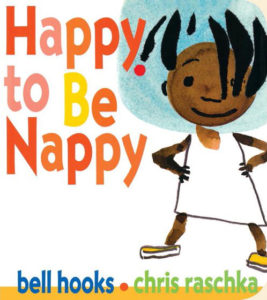
Newly available from Duke University Press is James Baldwin’s only children’s book, which as Alexandra Alter reports in the Times, “unfolds from the perspective of a curious, irrepressible 4-year-old boy named TJ, who loves music and playing ball, and navigates a neighborhood where gun violence, police brutality, alcoholism and drug addiction are looming threats—an outside world that even his warm home life with loving parents can’t shield him from.” The book was partially inspired by Baldwin’s nephew, Tejan Karefa-Smart, who used to pester his uncle to write about him.

“I must tell you, I was very frightened to try to write a children’s story or a story for children, because first of all, I think children object to being called children,” Baldwin told a group of children in 1979. “The one thing a child cannot bear is to be talked down to, to be patronized, to be talked to in baby talk. So what I tried to do was put myself inside the minds of the kids in my story, trying to remember what I myself was like when I was a kid, and the way I sounded, and the way TJ sounds.”

The watercolor images were created by Yoran Cazac, whom Baldwin met while living in the south of France, but who had never been to America. They are lovely and kinetic and very much worth a look—plus, you know, James Baldwin!

*

bell hooks happy to be nappybell hooks, Happy to Be Nappy (1999)

You may know her as a legendary author, feminist thinker, and social activist, but bell hooks also wrote a number of board books (yes, board books, the cutest kind of books!) for small children. These include the above Happy to be Nappy, and also Homemade LoveGrump Groan Growl, and others. Unsurprisingly, this one is an adorable ode to girls and their hair:

Happy to be nappy!
Happy with hair all short and strong.
Happy with locks that twist and curl.
Just all girl happy!
Happy to be nappy hair!

*

langston hughes first book of jazzLangston Hughes, The First Book of Jazz (1955)
In 1955, Langston Hughes, arguably the most important poet of the Harlem Renaissance, published a jazz explainer book for children! It was the first children’s book to tackle the subject, and it’s a good one: a history of the art form—in sections with titles like  “African Drums,” “Old New Orleans,” “Work Songs,” “Jubilees,” “The Blues,” “Ragtime,” and “Boogie-woogie”—and an explanation of the terms, from syncopation to riff. “A part of American music is jazz, born in the South,” Hughes writes. “Woven into it in the Deep South were the rhythms of African drums that today make jazz music different from any other music in the world. Nobody else ever made jazz before we did. Jazz is American music.” NB that The First Book of Jazz was actually the third children’s book written by Hughes. The first was The First Book of Negroes and the second was The First Book of Rhythms. You see the theme here.

*

carson mccullers Sweet as a Pickle and Clean as a Pig Carson McCullers, Sweet as a Pickle and Clean as a Pig (1964)
You can’t beat the title—or cover, for that matter—of Carson McCullers’s collection of poems for children. Unfortunately, the rest of it doesn’t seem to be as successful. “The book was not well received, and it’s not hard to see why,” Ariel S. Winter wrote. “The poems alternate between light nonsense verse in the vein of Mother Goose, and free verse observations and reminiscences tinged with melancholy. It’s hard to imagine what child would be drawn to such disparate work, especially since the poems are neither funny nor particularly rhythmic.” One poem, entitled “Song for a Sailor,” goes like this:

I’ve never seen the ocean,
I’ve never seen the sea,
But once I loved a sailor,
And that’s good enough for me.

Well, it’s almost right . . .

*

Gertrude Stein, The World is Round (1938)
This book is exactly the children’s book I would expect Gertrude Stein to write: obscure and poignant and strange and delightful. It was published by Young Scott Books, after one of their new authors, Margaret Wise Brown (maybe you’ve heard of her), reached out to Stein, as well as Ernest Hemingway and John Steinbeck, asking them to write children’s books. The men declined, but Stein already had a manuscript and happily submitted it. After some struggle (over, you’ll be shocked to hear, whether it was accessible enough), it was accepted. However, according to Maria Popova, Stein had some demands. The pages had to be pink. The ink had to be blue. The illustrator had to be Francis Rose. She got two out of the three—the drawings, in the end, were created by Young Scott standby Clement Hurd, who also illustrated Goodnight Moon and The Runaway Bunny.

Here’s how the book begins:

Once upon a time the world was round and you could go on it around and around.

Everywhere there was somewhere and everywhere there were men women children dogs cows wild pigs little rabbits cats lizards and animals. That is the way it was. And everybody dogs cats sheep rabbits and lizards and children all wanted to tell everybody all about it and they wanted to tell all about themselves.

And then there was Rose.

Rose was her name and would she have been rose if her name had not been Rose. She used to think and then she used to think again.

Read more here.

*

eco three astronautsUmberto Eco, The Three Astronauts (1966)
All told, Eco and Eugenio Carmi published three children’s books together; this is the second one, the middle child. In it, three astronauts from three different countries (the US, Russia, and China) send men to Mars. Topics covered include: Space exploration! World peace! Aliens! Tolerance! Everyone loving their moms! Great.

*

Sylvia Plath, The Bed Book (1976)

Here in the literary world, we love Sylvia Plath. We think about her all the time. We obsess over her doomed marriage. We argue over what she should wear on book covers. We purchase her personal effects. We constantly re-evaluate her life and personality. But, focused as we are on her tragedy, her heartbreak, her suicide, and, to be fair, her extremely good poems, we very rarely talk about the fact that she also wrote two children’s books: The It-Doesn’t-Matter-Suit (1966) and The Bed Book (published posthumously in 1976), as well as another story, “Mrs. Cherry’s Kitchen,” later collected with the first two. Though it was published second, The Bed Book was written first. As Ariel S. Winter points out in a blog post about the book, Plath wrote about its conception in her journal on May 3, 1959:

I wrote a book yesterday. Maybe I’ll write a postscript on top of this in the next month and say I’ve sold it. Yes, after half a year of procrastinating, bad feeling and paralysis, I got to it yesterday morning, having lines in my head here and there, and Wide-Awake Will and Stay-Uppity Sue very real, and bang. I chose ten beds out of the long list of too fancy and ingenious and abstract a list of beds, and once I’d begun I was away and didn’t stop till I typed out and mailed it (8 double-spaced pages only!) to the Atlantic Press. The Bed Book, by Sylvia Plath. Funny how doing it freed me. It was a bat, a bad-conscience bat brooding in my head . . . A ready-made good idea and an editor writing to say she couldn’t get the idea of it out of her head.

That editor was Emilie McLeod, of the Atlantic Monthly Press, who loved the book, but ultimately couldn’t get it past the publisher. It wouldn’t be published until 1976, both in the US, with illustrations by Emily Arnold McCully, and in the UK, with illustrations by Quentin Blake.

*

Patricia Highsmith, Miranda the Panda is on the Veranda (1958)
Here’s another really good title from an author I had no idea published any children’s books. In fact she produced only one, in 1958, with Doris Sanders, a copywriter with whom she was romantically involved. In a shocking twist (for this list at least) it was actually Sanders who wrote the copy—a series of short nonsense rhymes like one used for the title—and Highsmith who drew the illustrations.

*

William Faulkner, The Wishing Tree (1927)
William Faulkner only wrote one children’s book—which Maria Popova calls “a sort of grimly whimsical morality tale, somewhere between Alice In Wonderland, Don Quixote, and To Kill a Mockingbird, about a girl who embarks upon a strange adventure on her birthday only to realize the importance of choosing one’s wishes with consideration and kindness”—and it was really only meant for one child: Victoria Franklin, the daughter of his childhood sweetheart Estelle Oldham. Estelle was still married to Victoria’s father, but Faulkner hoped she would cast him off and remarry him instead, which she did two years later—maybe in part because of this book, which Faulkner illustrated and lovingly bound himself. On the first page, he wrote:

For his dear friend
Victoria
on her eighth birthday
Bill he made
this Book

Anyone would marry such a gentleman! That said, as Popova points out, Faulkner made copies of the book for at least three more children. Not a problem until Victoria Franklin tried to publish hers—which she eventually did, with Random House, in 1964.

*

James Joyce, The Cat and the Devil (1964)
The Cat and the Devil began as a letter to Joyce’s grandson, Stephen Joyce. “I sent you a little cat filled with sweets a few days ago,” he wrote, “but perhaps you do not know the story about the cat of Beaugency.” He goes on to tell him about the time the Devil built a bridge across the Loire for the people of Beaugency, with the condition that the first soul to cross the bridge would belong to him forever—and how the Mayor tricked a cat into being the soul in question. The story was originally published in 1957 in a collection of Joyce’s letters, and was later titled and published as a children’s book in 1964, with illustrations by Richard Erdoes. Two more editions followed: one illustrated by Gerald Rose in 1965, and another illustrated by Roger Blachon in 1980. The James Joyce Centre points out that:

The Devil in the story sounds like Joyce himself, always reading newspapers, speaking his own language “Bellsybabble,” and also speaking bad French with a Dublin accent when he’s angry. As the Mayor, Joyce cast the actual Lord Mayor of Dublin at the time, Alfred Byrne (1882-1956). Byrne was Lord Mayor an astonishing nine times in a row from 1930 to 1939, and Joyce claimed that every time he opened the Irish Times there was a photograph of Alfie Byrne, adorned with his gold mayoral chain, in it.

It is a delight.

24 Sep 16:56

“i’m sick of pretending to give a shit about what whypeepo think”

by Danez Smith

Danez Smith has just become the youngest ever winner of the UK’s Forward Prize.

*

“i’m sick of pretending to give a shit about what whypeepo think”

on the best days, i don’t remember their skin
the kingdom & doom of it, their coy relationship to sunlight

band-aids are the color of the ones who make the wound
& whats a band-aid to a bullet to the rent is sky high & we

gotta move?

i have no desire to desire what they apparently have
i want quiet & peace & enough weed to last through Saturday

so now that we’re done talking about them, do you think
its appropriate to call that nigga Obama a nigga in public?

i have accepted that they who is always they will always be
looking so what’s the use in holding back my black cackle

& juke? what’s the purpose in being black if you have to spend
it trying to prove all the ways your not? i’m done with race

hahahaha could you imagine if it was what easy? to just say
i’m done & all the scars turn into ravens

the trees forget their blood memory & the city
lose all it’s teeth? when people say they’re post race

i think they’re saying their done with black people
done with immigrants, officially believing America

began when the white people demanded their freedom
from the other white people i’m post America in that case

i’m so far in the future i’m on the beaches of Illinois
southern coast of a has been empire

telling my grandkids about the dust that use to rule us


The preceding is from the Freeman’s channel at Literary Hub, which features excerpts from the print editions of Freeman’s, along with supplementary writing from contributors past, present and future. The latest issue of Freeman’s, a special edition gathered around the theme of power, featuring work by Margaret Atwood, Elif Shafak, Eula Biss, Aleksandar Hemon and Aminatta Forna, among others, is published October 17th.

20 Sep 15:33

wheaton's art parade shows how we can reuse vacant suburban spaces

by Dan Reed
This Sunday, works of art will take over the streets of downtown Wheaton for the Wheaton Art Parade. Now in its second year, the parade is a sign of how communities in Montgomery County are finding new uses for vacant suburban retail spaces.

One of the sculptures in the Art Factory, the former mall beauty school where pieces in the Wheaton Art Parade are stored. All photos by the author.

Earlier this month, I stopped by the Art Factory, a former beauty school behind Wheaton Plaza. Nestled between mannequins and barber’s chairs are giant sculptures, including a rainbow-colored chicken and a robot. A piece called “Narcissus” riffs on Michelangelo’s Creation of Adam by putting a smartphone in Adam’s hand as he takes a selfie.

Dan Thompson, executive director of the Wheaton Art Parade and a retired federal worker, wanted to bring local artists together. “The town doesn’t know the artists that are here,” he says. “Artists don’t know each other. You want to call a meeting with artists? They’re all busy scraping by.”


He was inspired by “Parade the Circle,” a parade in Cleveland’s University Circle district, and made a spur-of-the-moment decision to go there and see it. “I got my dog, got in my car, drove to Cleveland,” he says. “And people came out to watch art parade by on the street!”

Like the first parade last September, this parade features work by a mix of professionals and volunteers, as well as students and teachers at Einstein High School. Over 1,500 people turned out last year, including 300 people who walked in the parade itself, each carrying a piece of artwork. As this is an election year, politicians are allowed to march, but only if they hold art.

“Anyone can march for art, you just have to carry it, wear it, or pull it,” says Thompson.

Outside the Art Factory, a former beauty school at Wheaton Plaza.

The Wheaton community has come together to support the parade, which has a budget of $40,000. The Arts and Humanities Council of Montgomery County provided a grant, and several local businesses have sponsored it. But Westfield, which owns Wheaton Plaza, has become a significant partner as well. The Australian-based company donated the space for storage (the artwork is assembled elsewhere) as well as some funding, and has displayed parade floats in the mall.

Jim Epstein, an actor and volunteer with the Wheaton Art Parade, hopes it will raise awareness about the need for art galleries and performance space in Wheaton. Montgomery County is currently studying whether to build a cultural arts center, which could host both of those things. “When you change the perception of Wheaton as an arts-friendly town, it’s good for business,” he says.

Like many aging suburban communities, Montgomery County has a significant amount of vacant commercial space, due in part to changing shopping habits and companies seeking more urban locations. In recent years, many of these spaces have hosted art exhibitions and performances.

One of the pieces at MoCAT, the pop-up museum created by students at Bethesda-Chevy Chase High School.

Last fall, The Museum of the Contemporary American Teenager (MoCAT) briefly took over a former Japanese restaurant in Bethesda that was awaiting demolition. Students at Bethesda-Chevy Chase High School produced a mix of visual pieces and interactive displays, as well as a series of talks on current affairs.

Unjuried art festival Artomatic took over a vacant office building in Park Potomac in 2016, while a visual arts festival occupied three floors of an office building in Pike + Rose. Each of these events allowed local artists to show off their work in their own community, as opposed to traveling to DC or another major city, while helping to build a local cultural scene.

Back in Wheaton, Thompson hopes that the Art Parade and Art Factory can do the same. “It’s been an arts and entertainment district for 10 years. Wheaton had been waiting for development, but it was forestalled,” says Thompson. “What we’re hoping for is that art brings the community together.”
20 Sep 14:46

Power Walking

by Aminatta Forna
Bgarland

"The more I think about it, the more I come to the uneasy conclusion that, whilst #notallmen are rapists or sexual harassers, equally #notallmen are too unhappy about the status quo either. The relative vulnerability of women in public spaces limits our freedom of movement and our choices. Good practice in personal safety—telling someone where we are going, allowing ourselves to be escorted home and not walking alone at night—all add up to an effective form of social control."

Pretty Girl

I am 20. I am walking along the King’s Road in Chelsea in London. It is the 1980s. Three men are coming towards me; they are clearly together, though the foot traffic on the pavement requires each to walk a half pace behind the other. They are white, dressed in tight jeans and cap-sleeve T-shirts. The first man, as he passes, looks me in the eye and says: “You’re a pretty girl.” The second one smirks, but says nothing. The third one leans into my face and breathes: “Nigger!”

My final year at university and I had a part-time job working for an American foreign correspondent. One of my tasks was to pick up the broadsheets each morning, and in those pre-Internet days I would leaf through them and clip and file any articles on the stories he was covering. That day was a Saturday in summer. I generally came in later on the weekend and the street was already busy with people. I was on my way to his house with my haul of newspapers when I passed the three men.

You’re a pretty girl. Nigger.

The first remark did not seem designed to offend. You’re a pretty girl. It intruded on my thoughts, got my attention. Then came the complicity of the second man. Then, “Nigger!” What happened afterwards? Do you imagine that the first man berated the third man? Do you think they argued? And whose side did the second man take? None of that happened. I know it didn’t. You know it didn’t. The three men carried on walking down the road. At some point one of them likely turned to the others.

And they laughed.


Walking

A child learns to walk. The child hauls herself up on a chair or her mother’s knee, finds her balance and takes one tottering step and then another. The parents murmur sounds of encouragement, spread their arms. Come! Come! The father catches the child and swings her up in the air. My mother tells me that my approach was a little different from most infants’. I would crawl into the empty middle of the room and there I would take a breath and slowly rise. And I used my growing independence not to run towards her but to run gleefully away.

I grew up in the compounds of developing countries, in West Africa, where my father was from; and Southern Africa, the Middle and Far East, where my stepfather’s career as a diplomat took us later. The hazards of the compound were snakes mainly, and army ants. As children, my brother, my sister and I didn’t leave the compound alone much except to go and buy sweets or when we broke out in search of adventure. Around the age of five I began to borrow my brother’s clothes. Boys’ clothes afforded a greater practical freedom, were better for sliding down banisters, climbing trees, even the simple act of sitting. There was a lot of focus when I was growing up on making sure I sat properly, that is with my legs closed. My brother didn’t have to sit that way, which seemed odd to me, given that he had something far more prominent to display. I wondered why, if what girls had between their legs needed to be so closely guarded, we were the ones to wear skirts.

I went to boarding school at 6 and left at 18 for university in London. The enclosed worlds of compound life and British boarding school left me unprepared for the streets of the capital, the act of walking, specifically of walking alone and female down a street. Yet in my tomboy/cross-dresser days, which lasted until I was around 14, I had already begun to understand viscerally something I couldn’t articulate. I didn’t want to be a boy; I wanted the freedom I saw belonged to boys but not girls.

“I wondered why, if what girls had between their legs needed to be so closely guarded, we were the ones to wear skirts.”

2017. I am standing on the platform of a London tube station, I’m back in the city where I lived for 30 years, before making my home in the United States. A young man is looking at me. I ignore him, but his stare is intrusive. When we board the train he stands very close to me, and at one point his hand touches mine. I am twice as old as him, which makes this situation somewhat unusual. But everything else about it is familiar, and I’m old enough now to recognize exactly what is going on. The next stop is mine and so I move to stand facing the door. He follows and stands right behind me; I can feel his breath on the back of my neck. The train is crowded, it’s unlikely anyone else has followed his behavior closely enough to think it out of line. What the young man doesn’t realize is that I am facing the wrong door. This is my old home station, and the doors behind us will be the ones to open. At the last moment I swing round and exit.

A week or so later, on the tube again, I catch the eye of a man sitting opposite me. For a few moments I hold his gaze and then I look away. In the moment of turning I see him smile and it is a smile of triumph. He has won something, he has defeated me. Like the first man he is very young, around 20. In that moment I realize something chilling. My God, I thought, he’s practicing.

Nobody tells young girls that men own the power of the gaze. My mother never told me that men may look at me but I may not look back. That if we do our look can be taken as an invitation. Men teach us that. Over the years we train our gaze to skim men’s faces, resting for only a split second, shifting fractionally sideways if our eyes happen to meet. The man on the other hand, if he so wishes, will look at your face, your breasts, your legs, your ass.

In her 1975 essay “Visual Pleasure and Narrative Cinema,” Laura Mulvey described how films are created to be seen from the point of view of the heterosexual male. Their female characters are presented to him as objects of desire. This is the “male gaze.” The gaze is power. Men own the power of the gaze. White people do, too. A white friend tells me of the time she took her adoptive daughter who is black to a small town in Maine and found her daughter the object of stares. “I guess there aren’t too many black people in that part of the country,” she suggests placatingly, because already I am visibly irritated. “And they don’t own a fucking television?” I say. “And they’ve never laid eyes on their president or his family?” (This was early 2016.) They stare because they can, by the gift of the power vested in them by their membership in the ethnic majority. They stare because her daughter’s discomfiture is nothing to them, may be the whole purpose.

When a man stares at a woman in public her sensitivities are, at the very least, immaterial to him. He owns the power of the gaze and he will, if he cares to, exercise it. The real mind-fuck is that enfolded into the action is the defense. The woman who complains may well find herself being told she should be flattered, that she is lucky men find her attractive.

“Where you going, baby?”

“Smile, little lady.”

“Sssssss!”

“Want some of this?”

“Look at the ass on that!”

“You wouldn’t be able to walk if . . .”

“’Til . . . it . . . bleeds.”

“Nobody tells young girls that men own the power of the gaze. My mother never told me that men may look at me but I may not look back. That if we do our look can be taken as an invitation. Men teach us that.”

In the early 90s I shared an apartment in London’s Chelsea with a friend. One week, while repairs to the roof were being undertaken, we had scaffolding erected at the front of the house. My room was on the top floor and faced the street, and from there I could see the roofers go up and down the ladders. At certain times throughout the day they would take their breaks sitting on the scaffold deck right in front of my desk unaware that I could hear them as they took turns yelling comments at the women passing in the street below. The excitement each opportunity provoked was astonishing. “‘Here comes one, here comes one! Your turn!” One man in particular was actually jumping up and down on the scaffolding. The more evidently humiliated the woman, the greater the delight. From where I sat I noticed several things: Firstly, yes, the young and attractive women drew more aggressive attention, as if the men were intent on denigrating what they could not possess, to punish the woman for being desirable and also unobtainable to them; secondly, no woman who was walking alone was exempt; and thirdly, they especially liked to pick on women who were dressed for work, who almost certainly earned more than they did. The women were metaphorically stripped, just as women were in earlier times and still are publicly stripped in some parts of the world, for transgressing the boundaries of womanhood, for stepping out of their place. They were being shamed, stripped not of their clothing, but of their dignity.

As a child I was taught to ignore aggressive dogs, to keep walking. Once you’re out of its territory, the dog will leave you alone, so goes the conventional wisdom, and mostly it works. The same is supposed to be true of men, except it isn’t. They walk alongside you, they kerb-crawl you. If you tell them to leave you alone they will call you a bitch and ask you who the fuck you think you are. Every encounter, however seemingly benign, contains the possibility of violence. By the time it is over (you have entered a shop or a subway), your breath is coming quickly and your heart slamming against your ribcage. Why do men do this? Nobody asks the question and when I ask, I don’t get an answer. Sometimes it is said or suggested that this is simply the nature of men. What is interrogated more often is my response. Submissiveness is what is demanded. Women are taught not to answer back, for if we do we will escalate matters and then—the subtext—whatever follows will be our own fault.

Except I do, I do answer back. For, you see, it is in my nature. In London in those early years, I get into fights. In South Kensington a man threatens to punch me after I tell him to piss off. I say I am going to fetch a policeman and if he is still there I will have him arrested. He swears at me, but he goes. A man in Camden Town pulls out a knife and threatens to stab me in the stomach. A crowd, mostly white, gathers around me and watches to see what will happen. The man is black and so am I. The stand-off goes on for long seconds. “Do you want to fuck with me? Do you want to fuck with me?” Even then the ghost of a joke crosses my mind. Well, I thought I’d made it perfectly clear. Another man, also black and wearing dreads, moves through the audience. He walks up to us both, looks at the man with the knife and says: “What’s the problem, brother?” I never see that man again, not even to thank him, because the friend with whom I am walking has found a policeman and my harasser flees. But he is caught, and he goes to court and I am there, and I see him. His hair is braided and he wears a shirt and suit; he looks so different I wonder if I would have picked him out of a line-up. My statement is read to the court. He is found guilty, not of the sexual harassment which began the whole altercation, although the judge tuts at this part of my statement, but of possession of an offensive weapon. The case is over in minutes, my assailant is sent away to be sentenced at a later date. The girl I was walking with and her father attend the case. They both make it clear, though not unkindly because I have now learned my lesson, that this is my fault.

Later, when I tell the story I will discover that in the eyes of many of my white friends, the fact that I am black and both my harasser and savior are black makes this a “black thing.” Something in which they have no stake and in which the mostly white onlookers are now exempt from interfering; the courage of the dreadlocked man is suddenly not so great.

On the streets race and gender intersect, the dominance of men over women, of white over black, of white men over white women, of black men over black women, of Hispanic men over Hispanic women and so forth. Layered upon that is the relationship between men, the sometime competition and sometime complicity between men of all colors, the upholding of male power. This can play out in a variety of ways. For a woman of color, men of the same ethnicity may be ally or foe.

In London men view street harassment as an equal opportunities occupation. I’ve endured sexually aggressive behavior from men of every color and class. In New York I am rarely publicly bothered by white men. How to account for the difference? In America the edges of racial politics are sharper and more bloodied. Human motivations are often hard to fathom, but I’d give a good guess that white men in New York City are scared to be seen harassing a woman of color. To be seen. In public. There is also this—that within the codes of heterosexual masculinity, black men have ownership of and therefore power over black women. In some places this code is more strictly enforced than in others. On one of my last visits to the city I had to pass a group of workmen on a narrow sidewalk as they stood leaning with their backs against a building. In London this would be an inescapable moment. But we were in New York. All the men were white except one black man at the end. I was dragging an overnight bag and so my progress was slow. The men went silent and watched me as I passed. The unspoken rule, I sensed, was that the job of calling out to me belonged to the last man, the black man. I walked towards him and it seemed we both knew what the other was thinking. Would he betray his race or his place in the patriarchy? As I passed he leaned forward and, audible only to me, whispered: “I like your jacket.”

“In America the edges of racial politics are sharper and more bloodied. Human motivations are often hard to fathom, but I’d give a good guess that white men in New York City are scared to be seen harassing a woman of color. To be seen. In public.”

Emmett Till was murdered. Emmett Till did not own the power of the gaze, at least not as far as Carolyn Bryant was concerned. 50-plus years on, white women friends in New York complain of the behavior of some black guys there. They worry about being thought racist if they complain. This is the power play between men, the revenge exacted by certain black men upon white women but in reality upon white men. Payback is the pickup truck bearing a Confederate flag that cruises me twice on a long, lonely run in Western Massachusetts, the white guy with the baseball cap who turns his head and licks his lips on each pass.


#NotAllMen

At some point most women come to the silent and terrible realization that the men in their lives—fathers, brothers, uncles, boyfriends and husbands—are not especially outraged by their experience of sexual harassment.

Late one evening when I was in my mid-twenties I had a row with my then-boyfriend. I decided to go home until I remembered the time of night, that I didn’t have a car and would have to call a taxi if I hoped to execute my walk-out. I had very little money at the time and I’d have to weigh the cost of the taxi against the level of my outrage. A few months later, arguing with the same boyfriend (things didn’t last too much longer) while on holiday in Southern France, I remained walking on one side of the road while he crossed to the other. We were headed for the beach and the road was more or less empty. A man driving by, assuming I was alone, began to proposition me. I ignored him for a few moments and then I told him to get lost; finally I crossed to walk with my boyfriend and the man drove away. I remember very well my boyfriend’s reaction. He laughed at me.

Writing about South Africa, where the incidence of rape is among the highest in the world, the feminist activist, poet and academic Helen Moffett has stated: “Under apartheid, the dominant group used methods of regulating blacks and reminding them of their subordinate status that permeated not just public and political spaces, but also private and domestic spaces. Today it is gender rankings that are maintained and women that are regulated. This is largely done through sexual violence, in a national project in which it is quite possible that many men are buying into the notion that in enacting intimate violence on women, they are performing a necessary work of social stabilization.”

In other words, rapists are the shock troops of male power.

The more I think about it, the more I come to the uneasy conclusion that, whilst #notallmen are rapists or sexual harassers, equally #notallmen are too unhappy about the status quo either. The relative vulnerability of women in public spaces limits our freedom of movement and our choices. Good practice in personal safety—telling someone where we are going, allowing ourselves to be escorted home and not walking alone at night—all add up to an effective form of social control. “The necessary work of social stabilization.”

Only in the second half of the 20th century did middle-class women in many Western countries acquire some degree of freedom outside the home; before that, to walk unaccompanied was to be taken as a prostitute, a “woman of the streets,” a “streetwalker.” Walking, for a woman, can be an act of transgression against male authority. When a man walks aimlessly and for pleasure he is called a flâneur; a certain louche glamour attaches to the word. One rarely hears the term flâneuse. In her account of women walkers, itself called Flâneuse, Lauren Elkin observes that: “narratives of walking repeatedly leave out a woman’s experience.” Historically the free-ranging woman who dispensed with the domestic to claim ownership of the streets was a rare creature. Virginia Woolf, Jean Rhys, George Sand, the flâneuses who recorded their flânerie were women who all defied male authority in other ways, too. George Sand wore male dress so that she could move more freely around Paris.

“The relative vulnerability of women in public spaces limits our freedom of movement and our choices. Good practice in personal safety—telling someone where we are going, allowing ourselves to be escorted home and not walking alone at night—all add up to an effective form of social control.”

Only once has a man ever stood up for me against harassment by another man (with the exception of the dreadlocked man, though he did not know what had started the trouble) and the man who did so was gay. We were standing outside a bar in Soho in London smoking cigarettes when a young man passed me and made a remark to which I responded with a put-down. His rage was instantaneous. He was smoking too and he threatened to burn me with his cigarette, holding the lit end close to my cheek. My companion intervened and in doing so drew fire away from me, literally because now the burning cigarette tip was being held to his neck. The scene ended when a friend of the assailant pulled him away. Afterwards we talked about it. I observed that a straight man would almost certainly have reprimanded me for my comment but he, notably, had not. No, he told me, because he grew up having much the same fight on the streets: the sexual insults, the shouted provocations. As a gay man he had learned to stand up to bullies.