Shared posts

07 Oct 11:18

Giving Women Permission to Own Their Anger

by Leticia Urieta

I was speaking with a friend recently about how we both deal with our anger as women on a daily basis, but especially during a time in which our reproductive health and our bodies are under attack by our country. So many women carry anger within us as a necessary step towards healing from trauma, from mistreatment, from microaggressions, and daily living. The issue, she said, is when anger is no longer productive and keeps us stuck spinning our wheels, roiling around inside of us with nowhere to go. 
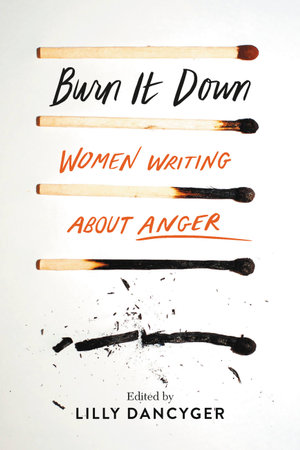
Image result for Burn It Down: Women Writing about Anger

 Burn It Down, a new essay anthology, contains voices from women across cultures and experiences who are attempting to address this very problem. Their work discusses anger caused by many different catalysts: misogyny, transphobia, sexual assault, racism, Islamophobia, gun violence, domestic violence, hormones and the more innocuous things like hunger and annoyance that make us angry just because they do. But, as editor Lilly Dancyger says in her introduction, “this anthology is not about the things that make us angry; it’s about us, and all the many ways we feel and live with our anger.” The authors discuss how they continuously work towards validating their anger first before they can make use of it. So many times, women and femmes are socialized to suppress anger, to push it down and even question whether one’s own anger is justified. The title, Burn It Down, suggests that in order to make real change, anger must be allowed to burn first like a cleansing fire that can make room for new growth. Part of the work of this collection is to say, yes, women’s anger is justified, and more than that, it is necessary to live authentic, healthy lives. 

I spoke with the editor Lilly Dancyger about what  can happen when women are allowed to understand and own their rage. 


Leticia Urieta: Why did it feel important to create this anthology now? Where did it begin for you? 

Lilly Dancyger: The idea started with Seal [Press]; it was a project they developed in-house. I had a good relationship with an editor there and they reached out to me. And I was like, “Have you been reading my diary? Of course I want to work on this!” It felt important now largely, but not entirely because of the political climate and everything happening in the world right now. Many women are tapping into and reclaiming anger that they have been repressing or explaining away that they didn’t know was there. I think that collectively we are angry. Women are so conditioned not to get angry or not to show it when we are. We are supposed to be nice and sweet and kind. So for a lot of people who are experiencing this cultural and communal anger, it is an uncomfortable and confusing experience and they don’t know what to do with it or even if they are right to express it. I was excited at the opportunity for writers to articulate that anger and for others to see it and understand that they are not alone when they feel that way. A lot of the pieces in the book talk about not only feelings of anger but what to do with it, which I think is important to have as we all navigate this really infuriating time. 

Women are so conditioned not to get angry or not to show it when we are.

LU: One of the ideas that I think comes across in this anthology is that anger expressed by women is a threat to patriarchal oppression, and this is why women are socialized to eat their anger before it leaks out and harms others. In your introduction, you describe having to push many of the writers in the anthology to “get angry” despite this socialization. How did you do so as an editor without being triggering or unkind? 

LD: So much of editing is pulling out what is already there without veering into projecting what I think is there that is not. I am pushing them to go all the way there. That is why so much of this is a conversation. A lot of writers described what they were angry about, and so I would ask questions like “What did that feel like or look like? Can you describe it? What does it feel like physically to feel angry?” A lot of this process is getting back into the body. We often talk about emotions in a detached way, particularly as women in personal writing, and so embodying that rage is difficult and takes some digging and that is what an editor is for, to push you to go beyond the edges of the thing, and to go into the moment more deeply. Usually that is enough. But there were some writers who I pushed who pushed back and made me realize that I was imagining a version of the story that was in my head that wasn’t their experience. 

LU: That seems important too because it seems that you are trying to get to an authentic representation of their anger without being performative. 

LD: Yes, and it was really interesting working with so many different writers on the same topic all at once and to leave room for all of them to feel and express their anger differently. There were some things that came up a few times, like a few writers wrote about anger as the color red. I didn’t want to cut those patterns out because it is interesting to see concepts repeat and that there are things that are shared, like embodying physical heat. I also liked the variations. It was important to leave room for them to write about anger authentically to each of them, even in their writing styles. Some are more lyrical and others are more editorial, and I had to resist my impulse to make a uniform style because that was not authentic. I wanted to avoid a preconceived notion of any particular style or tone that I might be seeking. 

LU: Do you think that the anthology is working to dispel the notion that women’s anger is singular in some way? 

Women’s anger can be a positive force politically but it can also be poisonous if we don’t get it out.

LD: I hope so! Women’s anger is “popular” right now. It’s a topic that has emerged as a talking point and a political force, and we have culturally come around to at least admitting that it exists. But that also runs the risk of thinking about it as a singular thing or as uncomplicated or simple. Women’s anger is not just the Women’s March; women’s anger can be quiet, can be internal and self-destructive and sometimes it can be external and destructive, it can be healing, it can be productive, it can be empowering, it can be all kinds of things. It can be a positive force that we talk about politically but it can also be poisonous if we don’t get it out. I wanted to give space to talk about anger beyond, “rah rah, girl power” and to talk about it as it actually is in our lives. 

LU: I think you are touching on how there is a danger in anger if we allow it to consume us. In your introduction you say that “I wanted to treat anger not as a means to an end, but for its own sake.” What healing is there when we allow anger to burn? 

LD: There is harmful, all consuming anger that is expressed, like becoming obsessed with something, or looking for revenge, but a lot of the harm that comes with anger is when it is held inside and not acknowledged. Sometimes just acknowledging that “I’m angry” and allowing that to be true is a huge step. I do that when I fight with my husband. I like to talk through conflict, but sometimes I have to say, “I’m fucking pissed off right now, and you need to give me some space to be angry.” The first time I did that, I felt like I was breaking the rules! But once I did it, I realized that it’s not harsh or mean, it’s just true. Sometimes what you need is space to be angry. 

LU: I think that is something happening in this anthology, which is acknowledging that anger is not an ending place, but a starting place. 

There’s not always a way to redirect anger and turn it into something positive.

LD: Exactly. And I don’t know that there is an ending place. That’s the complicated thing about anger, there’s not always a way to redirect it and turn it into something positive. Sometimes it can be, and a lot of writers in the anthology talk about channeling into creative energy or politically energy, and have found a way to make it useful. But sometimes it’s not. It doesn’t have to become pretty and useful. 

LU: Right, and that if it is allowed to exist, you are allowing yourself to live more authentically. 

LD: Yes, and also that in feeling anger, it loses its power over you. 

LU: How did you make it a priority to feature many different voices and expressions of women’s anger? 

LD: That was a big priority from the beginning. This whole project would be pointless if the entire book is a bunch of cis straight white women talking about anger. It would have made it invalid. At first the process of soliciting pieces was challenging because I wanted to include as many different writers as possible, but I also didn’t want to tokenize people like I’m checking off a list of perspectives or identities. So I prioritized reaching out to writers whose work I admired or am excited about, but also keeping track of demographics and considering representation. I didn’t ask any white women until the second or third round of solicitations. Some of the essays I solicited because of topics I was interested in them covering. I knew we couldn’t create a book about women’s anger without discussing the stereotype of the “angry black woman,” that had to be in there. I also knew that there had to be trans women’s voices included both to dispel any notion that trans women are not women, and to hear their perspectives on how they learned the rules of women’s expressions of anger and what that awareness looked like. 

Why Aren’t Women Allowed to be Angry?

Soraya Chemaly on the complex systems of social control that silence women’s rage

Sep 11 – Candace Williams
Interviews

LU: Several of the essays in the collection, such as Marissa Korbel’s “Why We Cry When We’re Angry” and Meredith Talusan’s “Basic Math” ask the reader to reconsider what expressions of anger we consider feminine and what we consider masculine. Do you think that these pieces are complicating the gender binary and how it limits what expressions of anger are generally considered acceptable from women and femme peoples? 

LD: It’s an immediately fraught topic to talk about gendered anger. We are already starting with a presumption of what that means. Still, that is why I reached out to the smartest writers I know! They already had that question in mind of what makes women’s anger women’s anger as opposed to just anger. The writers were immediately aware of assumptions around that. When I reached out to them I simply said “talk to me about anger and how you experience it.” A lot of it ended up being about how women are socialized to suppress anger, but it was also about how writers who happen to be women feel anger. 

LU: What conversations about women’s anger do you hope to create with this book once the reader is finished with it? 

LD: I hope that the reader will take a closer look at the ways that they experience anger, and the ways that they do or don’t express it. So many of the essays ended up talking about the unexpected ways that anger comes out when we try to repress it; it comes out as tears, or guilt, shame, eating disorders, so many ways. I hope that it encourages people to give themselves permission to get their anger out, to examine it, express it and letting it be what it is. 

LU: Do you feel that examining anger is a path towards social change? 

People don’t change the world by being apathetic, they do it by getting angry and not taking it any more.

LD: Yes, of course. I don’t want to de-value anger as a social tool, but I want to see it as more than that. I do think though that getting angry is essential to being directly engaged with society and making change. We can look around and see what is happening in the world and shrug, or we can get angry and do something about it. People don’t change the world by being apathetic, they do it by getting angry and not taking it any more. That’s a point I think we all need to get to. 

LU: Yes. My hope is that a cis man would read this and understand a bit more and feel some compassion. Not that they will save us. 

LD: It’s funny, I didn’t really think about that. This book felt like a reciprocal act of care between women. But yes, there is something to living in this world as women that cis men are oblivious too and it would be good for them to see what we are going through. However, I think that whether they listen or not, if enough of us get angry and go out and do what needs to be done, they won’t have a choice anymore. 

The post Giving Women Permission to Own Their Anger appeared first on Electric Literature.

01 Oct 14:15

For a Successful Dinner Party, Get a Co-Host

by Morgan Goldberg
A wooden table with platters and bowls of food and a dark red floral arrangement. A person reaches for one of the bowls Lanee Bird/Yardy
Professional party host and Eater Young Gun DeVonn Francis says having a collaborator is the key to a diverse guest list and deep conversation

This is Party Time, a column featuring industry and Young Gun-approved approaches for acing a dinner party.


Eater Young Gun DeVonn Francis (’18) is a professional party thrower. He’s the chef and founder of Yardy, a New York-based event and production company that focuses on Caribbean culture and storytelling through food and art. Yardy often joins forces with like-minded artists, chefs, or brands to create one-of-a-kind experiences. When Francis entertains in his personal life, he takes ideas from his company and recreates them on a smaller scale, which means a co-host is a must.

“I always make it collaborative in some way,” he says. “One of the best things about having a party is being able to meet other people, other communities and creating a more diverse room conversationally.” Francis likes to split the guest list with someone he admires, whether that’s a friend or a mentor. He keeps a list of people that inspire him through fashion, art, wellness, or activism.

A wooden table with platters and bowls of food and a dark red floral arrangement. A person reaches for one of the bowls Lanee Bird/Yardy

The spread at a Yardy party

The two hosts each invite about 15 people and then brainstorm the concept for the gathering. “I am deeply, deeply a Virgo, so there are many planning sessions that happen before I do anything,” says Francis. “I like to sit down or discuss through email or phone call what we’re excited about and if there are any new recipes or wines that we can riff off of. We can volley back and forth for a while and delegate who’s going to do what and why.” Divvying up the responsibilities makes it easy to play to each host’s strengths.

For Francis, a dinner party concept might start as something specific like a certain bottle of wine or an obscure song from the ’70s. The co-hosts then use that starting point as inspiration for the party’s culture, color, and overall vibe and plan the event’s details accordingly. “It’s a really fun project to work on with someone because everyone has their own relationship to wine and music and time and place,” he says. “It’s a way to get to know people in that planning process, which I really like.”

Francis also likes to bring a humanitarian aspect into the mix. “I like throwing a party that raises awareness for something that my co-host and I believe in, something that we can turn into a celebration,” he says. The cause may be reproductive rights, immigration, or climate change. “We can make small gestures to alleviate the pressures of having to raise big sums of money,” he says, noting that each guest can donate $5 through Venmo or the Cash App instantaneously.

“A thank you party for those organizations that want to keep my community safe and thriving through nonprofit work is really fun to do,” Francis explains. “Thinking about how fundraising can happen and what scale it can happen on is really powerful.” With a good co-host, the possibilities are limitless.

29 Sep 21:18

Your Guide to the Essential Crime TV of September 2019

by Camille LeBlanc

They say it’s the Golden Age of Television, but they also say: not all that glitters is gold. That’s why we’re here, every month, to dig through the annals of content, of crime story after crime story after crime story, to identify the gems among the masses. There’s no shortage of quality shows to choose from this month: maybe you’re in the mood for a biker gang? Israeli espionage? The tricks and turns of the interrogation room? A fresh take on a tired hitman? The fall season is just getting started. 

__________________________________

SEPTEMBER’S HIGHLIGHTS

__________________________________

Mayans M.C., Season 2

(FX, 9/3)

Mayans M.C. follows in the footsteps of Better Call Saul, which forever changed the reputation of the spin-off. (We get it, it’s hard to reinvent the wheel.) While Sons of Anarchy fans are surely already familiar with its next chapter, one need not live and breathe Jax Teller to appreciate Ezekiel, ‘EZ’ Reyes, the conflicted new recruit of the titular California/Mexico border biker gang. Creator Kurt Sutter has more than made another show about biker outlaw culture—he has driven it straight into the issues facing America Today. Unlikely allegiances, border fighting, corruption, betrayal, many a leather jacket—Mayans M.C. is sure to tamp down the sociopolitical crises of real-life border crime, but insofar as antiheroes, family drama, and contemporary conflict go, it’s an enjoyable ride. 

The Spy

(Netflix, 9/6)

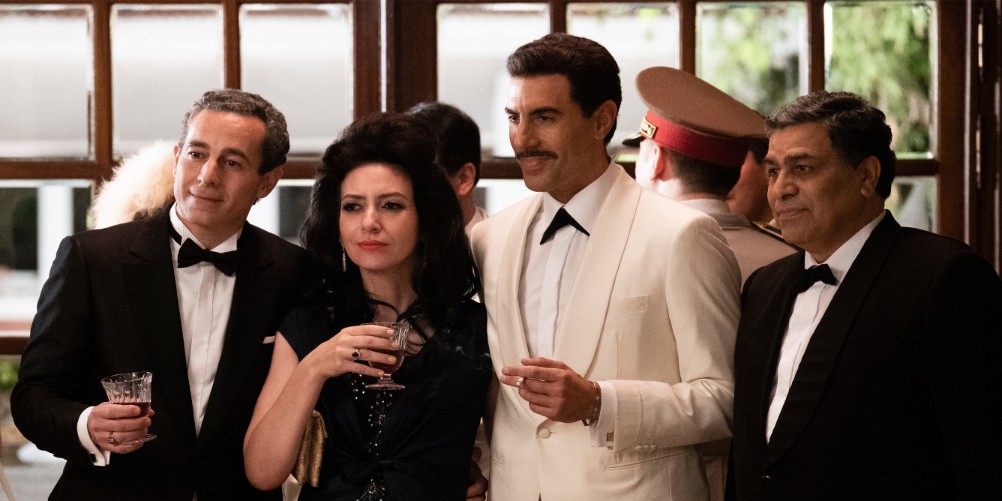
One of the most anticipated miniseries of the season, The Spy leads with comic actor Sacha Baron Cohen taking on a very-serious role as a Mossad agent named Eli Cohen, who goes undercover in Syria in the early 1960s. Based on the true story of Israel’s most renowned spy, the 6-part series raises the stakes of Baron Cohen’s usual undercover sketch-comedy as his character undergoes a multi-year political operation to ingratiate himself to the Damascus elite. Now, the politics of these Israeli shows tend to be a wildcard, and this one is no exception, but with Gideon Raff—whose superb Prisoners of War was remade as Homeland—at the helm, we can expect a degree of emotional nuance, if not politics, driving the story. 

The Deuce, Season 3

(HBO, 9/9)

The third and final season of acclaimed character-driven crime show, The Deuce, carries HBO’s premiere slot this month, jumping from where season 2 left off in 1977 to the mid-’80s, when real estate developers are turning their eyes to the long-anarchic Times Square, VHS is changing the porn industry, and HIV is on the rise. All Simon-Pelecanos creations explore the collision of myriad social, political, and economic forces through the stories of interwoven characters, and on that basis, this is one of their best. Leading lady Maggie Gyllenhall will be remembered for her astounding performance as Candy, and while it may not be everyone’s cup o’ tea, there’s no denying things turn a certain shade of gold with the touch of one David Simon. 

Mr Inbetween, Season 2

(FX, 9/12)

This extraordinarily well done Australian crime-comedy is TV’s most slept-on show. Not to fear, it’s easy to catch up: season 1 consists of just six 30-minute episodes, which you can watch reasonably over the span of a week or, more likely, in one fell swoop. Ray Shoesmith is a hitman as well as a father, a boyfriend, a brother, not to mention a member of an anger management class (get it, Mr. Inbetween?) trying to juggle the duties of his violent professional life—which itself harbors a surprising and sound logic—with the demands of his personal life (the values of one can’t help but infect the other). The show somehow manages to reinvent many a well-trodden cliche with wholly surprising, hilarious, and poignant writing. Scott Ryan’s particular brand of everyman hitman is one of the most compelling characters on screen (he has an unforgettable face and a tendency to smile at the wrong time, which is somehow both creepy and endearing). Lucky for us all, season 2 is on deck.

Unbelievable

(Netflix, 9/13)

Since the beginning of time, books have been adapted into movies and TV series; now we’re in a new age, with longform journalism and podcasts the newfound content frontier (see miniseries Homecoming and The Act). The story behind Unbelievable was originally reported for ProPublica and The Marshall Project in 2015, and broadcasted concurrently on This American Life. The headline: “An 18-year-old said she was attacked at knifepoint. Then she said she made it up. That’s where our story begins.” The eight episode miniseries is timely, surprising, and masterfully made, with Michael Chabon and his mystery-writer wife, Ayelet Waldman, executive producing and staffing the writer’s room. 

Criminal

(Netflix, 9/20)

Don’t let the generic, crimey titles of this month’s shows dissuade you: Criminal is a groundbreaking addition to Netflix’s canon of detective shows (and pairs particularly well in the aftermath of Mindhunter season 2), upping the ante on the conventional procedural format and going European in the process. Starring David Tennant (Doctor Who, Broadchurch) and Hayley Atwell (Agent Carter), each standalone episode takes place within the walls of the interrogation room in one of four countries—France, Spain, Germany, and the UK—as suspected criminals (often known actors in their countries) are heard and questioned. Netflix states that each episode is a “stripped down cat-and-mouse drama” that hones in on “the intense mental conflict between the police officer and the suspect in question.” It’s about time Peak TV saw a high quality episodic procedural.

Godfather of Harlem

(Epix, 9/29)

Forest Whitaker stars in this new drama about the life and times of Bumpy Johnson, a career criminal who returns to a new Harlem in the early ‘60s, after ten years in prison. The Italian mob has taken over in his absence and is plunging the community into poverty. Bumpy, both a drug dealing business man and a beacon of hope, teams up with Malcom X to regain power in the neighborhood. If you haven’t heard of Epix, you’re not alone. The network has been itching for a breakout hit, and with Forest Whitaker and a narrative propelled by the convergence of crime and civil rights (not to mention a splashy soundtrack that reflects the spirit of NYC hip hop), Godfather of Harlem has all the ingredients to rise above the sea of content—you just have to shell out and subscribe to EPIX NOW. 

__________________________________

MORE IN CRIME TV

__________________________________

Elite, Season 2 (Netflix, 9/6) 

A spirited, Euro-cool teen drama about Spain’s most elite high school, where three scholarships were  recently granted to working class kids. When one turns up dead, everyone is a suspect. It’s sort of like Skins, but creepier, crime-ier, and decidedly more Spanish.

The I-Land (Netflix, 9/12) 

This trashy original series is sure to be wildly entertaining and widely watched. Ten strangers wake up on a deserted island. They have no idea how they got there, or how to get off. As things turn from strange to stranger it becomes clear a simulation of sorts is underway, and The I-Land starts to sound like Lost meets Cabin in the Woods, with a dash of Life of Pi

Murder in the Bayou (Showtime, 9/13)

Eight women were murdered in and around Jennings, Louisiana between 2005 and 2009. This 5-part docu-series will rehash and reinvestigate the unsolved killings, which were first compiled in the 2016 book Murder in the Bayou: Who Killed the Women Known as the Jeff Davis 8? 

Taken Down (Acorn, 9/16)

The U.S. premiere of this acclaimed Irish crime drama delves into the murky underworld of human trafficking of refugees, as a team of detectives investigates the murder of a young Nigerian girl from a center for asylum-seekers.

American Horror Story, 1984 (FX, 9/18)

Forget Orwell—this 1984 is all about the slasher flicks. Expect a serial killer, screaming, and lots of blood. 

All Rise (CBS, 9/23)

This courtroom drama seems to take a page from Serial season 3, and will look closely at life in a Los Angeles courthouse—from the perspective of its judges, prosecutors, public defenders, bailiffs, clerks, and cops. 

Prodigal Son (Fox, 9/23)

The son of a serial killer grows up to aid in the investigation of a slew of murders that eerily resemble his father’s. Can the apple ever escape the apple tree? 

Bluff City Law (NBC, 9/23)

A father and daughter lawyer duo rekindle a tenuous relationship after years of estrangement. Together, they pursue controversial civil rights cases in Memphis. 

Emergence (ABC, 9/24)

For those who can’t get enough of amnesia: a police chief rescues a young girl who has lost her memory. As she looks into the accident that erased the girl’s identity, she begins to unravel a series of secrets more dangerous than she could have imagined. 

Stumptown (ABC, 9/25)

A new, hard-hitting PI show, for those who got a taste of new Veronica Mars and now have dry mouth. Based on Greg Rucka and Matthew Southworth’s graphic novels of the same name, and starring Cobie Smulders as Dex Parios, the bold US vet-turned-private investigator.

29 Sep 21:01

Josh Gondelman: Please Stop Trying to Make Dad Shoes Cool

by Josh Gondelman
Bgarland

Saw Josh Gondelman do stand-up last month and he killed. Totally unlike any other delivery or style I have ever seen.

dad sneakers

You don’t have to be rich to dress badly. If you really want to look like shit, you can accomplish that for very little money. Wear your own old threadbare or ill-fitting clothing. Buy an out-of-date outfit from a thrift shop. It’s easy and within reach. In fact, if you’re dressing yourself head to toe for $25, it’s easier to look unfashionable than it is to look stylish. You’ll have to resort to buying out of season clothes or flimsy fast fashion knockoffs. I don’t mean to brag, but I dress like a complete slob at least once a week, totally by accident. All the way down to my shoes. My Dad Shoes.

I’m not alone: according to Justin Bieber’s New Balance sneakers, the Dad Shoe trend has yet to fully die out, with new variants and rereleases of retro styles popping up to cater to a public who yearns to unleash their inner little league coach through fashion. You know: picture a guy pushing a stroller through a mall. Now look down at his feet. Yeah, those. And they’re not just for fathers anymore. Dad Shoes, in their myriad iterations, have gone mainstream.

Even in today’s well-populated dadscape, one Dad Shoe stands bald head and Baby Bjorn-clad shoulders above the rest. The apparent end point of what has become a normcore footwear arms race is the Balenciaga Triple S Trainer. The Triple S, if you don’t know it by name, is the apex predator of the Dad Shoe ecosystem. Its chunky, unwieldy contours make the Nike Air Monarch IV (the platonic ideal of a Dad Shoe) look spritely and nimble in comparison. With its unsubtle color-blocking and the truck tire’s worth of rubber constituting each sole sole, the Triple S seems laboratory-designed for immediate relegation to wear exclusively for hedge trimming and dog walking. Except for the fact that each pair retails for $950. As a person with bad taste who routinely overpays for sneakers, I might seem like the target audience for this particular shoe, yet I remain immune to its siren song (a Steely Dan cover, I imagine).

First off, for a pair of sneakers to be worth $950, the left one would have to be an iPhone, and the right one would have to be a scrapbook of cherished childhood photos that you thought had been lost in a fire. These Triple S is comprised of no such utilitarian items. It is just a sneaker. A hideous sneaker. So ugly it makes me mad just to look at it, like it’s a piece of confrontational performance art or Boston’s Government Center. There are so many real and urgent problems faced by our society that require our time and attention. That said, I cannot help but grow furious at the sight of a Triple S Trainer. Is that a rational response? No. But also… maybe?

I hate the Balenciaga sneakers not just on account of their price, and not just because they are ugly (although they are). It is because they are ugly as a bit. They are ugly in the way Christian Bale is sometimes ugly in movies: on purpose and for attention. Isn’t it weird that I, a famously good-looking man would be bald and paunchy in this film? Couldn’t you just die? The ugliness is intentional, and predicated on an audience that knows that aesthetics are being forsaken ostentatiously and at great expense.

Amanda Mull (now at The Atlantic) wrote last year for Nylon about how in women’s fashion, conventional beauty (especially thinness) allows wearers to “pull off” drab garments, “transform[ing] them them into something aspirational.” What “beauty” does for a prairie dress, wealth and coolness do for footwear.

If I’m being honest, though, my visceral hatred for the Dad Shoe trend stems from the fact that it is a joke I cannot be in on.

If you wanted a shoe that looks like the Triple S, you could get some similar-looking Skechers model for less than 10 percent of the price. But the point isn’t what the shoe looks like; it’s what it stands for. And spending $65 dollars for a pair of chunky, paternal Fila Disruptors does not adequately convey the message: “I don’t look good, but I don’t look good on purpose, you rubes.”

The very fact of the shoe’s existence feels like a thumb in the eye of the 99 percent. It’s the sneaker version of a tony fraternity throwing a “White Trash” theme party. It’s like if chef Thomas Keller were to charge $38 for a plate of house-made corn puffs, dusted with aged parmesan. That would just be Cheetos. Cheetos already exist. And they cost a dollar a bag, and they’re incredibly shitty and completely perfect the way they are.

If I’m being honest, though, my visceral hatred for the Dad Shoe trend stems from the fact that it is a joke I cannot be in on. As a married man in his mid 30s with what I think we’ve socially settled on calling a dadbod, clinging to the Bieber-fueled last burst of the Dad Shoe trend wouldn’t make me look cool. It would make me look like a dad. A lawn-mowing, thermostat-dominating, chain email forwarding-ass dad. I am a human New Balance sneaker. It is the natural outcome of the passage of time.

And yes, Justin Bieber could also be a dad, but not in the same way. Justin Bieber does not have to mow is own lawn. And even if he did, he wouldn’t have to dig deep in his closet for a pair of beat-up old Nikes, long banished from polite company, to wear. Justin Bieber could, if he wanted, wear a pair of bespoke, endangered-species-leather moccasins to do yardwork, throw them out afterwards, and never think of them again. Or, he could continue wearing New Balance and lose no cultural capital. He would not even really be a Dad, he’d be a Cool Dad.

I have nothing against dads. (Some of my best parents are dads.) It’s just that I don’t have kids, and I might never have kids. But I could, and maybe some people are disappointed or confused that I don’t already. There’s no wouldn’t it be weird? factor. It would be totally normal, banal. My decision to wear New Balance or a Balenciaga Triple S wouldn’t read as irony (or rich irony); it would seem like I just needed shoes for running errands and chasing a toddler around after work, a capitulation of comfort over style, an affirmation of my intrinsic dadness.

The worst part is, it wouldn’t even be embarrassing. Riding the wave of other trends (super-distressed jeans, face tattoos, cheating on a Kardashian sister) would come off as pathetic try-hardery. But Dad Shoes practically beckon to me.

You cannot stall the passing of time they say. You belong to us now whether you like it or not.

Join us, they whisper, these leaves aren’t going to rake themselves.

___________________________________

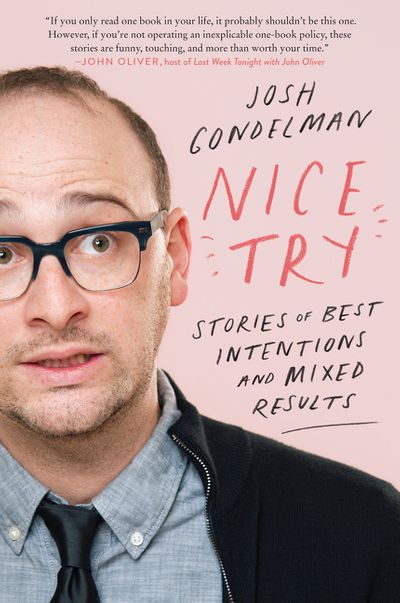
Josh Gondelman’s Nice Try is available now from Harper Perennial.

29 Sep 20:49

A Candle for F***ing Meetings

by swissmiss

This candle made me laugh out loud.

(via)

27 Sep 15:41

The Writer You’ve Never Heard of That Made My Book Possible

by Mark Haber

One of a writer’s most frequently asked questions is the question of influence, a subject as thorny and precarious as it is subjective, fraught with problematic words like taste and opinion. Additionally, the authors whom the writer acknowledges often have very little to do with the book they’ve written (or only in the writer’s mind, which, if we’re being honest, should be left in a locked room). In my case, I felt compelled to write something ahead of my novel’s publication, to give voice to a long-neglected author that’s been consigned to the distant past, a writer whose acclaim is long overdue.

My forthcoming novel, Reinhardt’s Garden, was heavily influenced by several writers I admire and who are all internationally celebrated: Thomas Bernhard, César Aira, Saul Bellow, to name a few. These influences I wear proudly on my sleeve and nothing I shy away from talking about. Any reader familiar with these writers will see their impact with little trouble. However, there’s a little-known author, as significant as she is obscure, whose hands unmistakably shaped the structure, style and themes of Reinhardt’s Garden, a writer ostensibly erased from literary history.

There’s that well-known expression, a writer’s writer, the authors whose influence is profound and far-reaching, writers who single-handedly invent their own language, surpassing their contemporaries and extending across genre and generation to influence other writers: Toni Morrison, Garcia Marquez and Franz Kafka, come to mind. Then there’s those other, more rare cases, those of the writer’s writer’s writer, often more important but lesser known. Mila Menendez Krause, a Swiss-Colombian writer, is one such example.

Often, the more obscure a writer and their works, the closer the reader holds them to their hearts. I’m no exception; the more selfish part of me wanted to keep Mila Menendez Krause to myself, to horde her and her few translated books (secured on my highest shelf like private treasures), yet the more generous part of me realized this wasn’t only unfair, but a disservice to potential readers and Krause herself. For someone, anyone, to read Reinhardt’s Garden, and feel I’d arrived on those shores by my own talents, by sheer will and narrative stamina, to have, in a sense, swam in creative seclusion towards the sands of completion, would’ve been terribly deceived, for ultimately it was Krause and the Krausian influence that enabled me to write Reinhardt’s Garden.

*

Mila Menendez Krause was born on the Swiss-Austrian border in 1894 and moved to South America as an infant where she was raised in the Cordillera Azul outside of Bogota, in a small village as pastoral as it was poor. Her father, Elias Krause, was a Jewish bookkeeper who fled with his young family to the Americas after the battle of Lake Constance in which the first virulent heads of Anti-Semitism reared their despicable heads. The shtetl where they lived, St. Gallen, was pillaged and Elias, rather wisely, felt Europe was no longer hospitable.

Krause began as a poet and her earlier work, virtually impossible to find, were small chapbooks filled with pastoral sonnets devoted to the Cordillera Azul, the region Krause never lost her affection for. These were published by small presses in Bogota that were soon defunct. Virtually nothing is known of Krause’s early years until 1914 when Krause attended Del Rosario University in Bogota and became friends and later an integral member of the Minsky Gang, a radical group of leftist poets, failed architects and rowdy artist types eager for revolution. Five years later, at twenty-three, Krause abandoned politics for the implacable call of literature.

There’s a little-known author, as significant as she is obscure, whose hands unmistakably shaped the structure, style and themes of Reinhardt’s Garden, a writer ostensibly erased from literary history.

So what did Krause write? Novels mostly. What makes Krause so influential? Her voice certainly, the honeycombed complexities of her mind, but her innovative approach to fiction is what truly grabs first-time readers. Krause was the first novelist to ever write in the fifth-person, entirely skipping the fourth, a rare feat that hasn’t been attempted nor replicated since. The Savage Detectives was Bolaño’s failed attempt, in fact, to write in the fifth-person, a subtle—though much overlooked—nod to Krause. His failure, of course, is a victory for us readers. Moreover, Bolaño, notorious for filching from the bookstores of Mexico City in the 1970s of his youth, nearly fainted when he came upon Espadas de Fuego, Krause’s second novel, in a book stall in Nápoles. Long out of print, Bolaño pocketed the book and rumors maintain he wept as he read it in a nearby cantina.

Espadas de Fuego tells the strange and prophetic story of Hans, an officer in the Prussian artillery who, upon finding God in a tangle of wisteria, abandons his post and tramps a war torn and blood-soaked Europe that is not the past, present or future but a region of earth wholly unique in that birds can’t fly, fish don’t swim and monkeys speak in aphorisms ala Emil Cioran. It is filled with incident and anecdote and the book where Krause fully finds her voice, embracing the notorious fifth-person. The second half, when Hans escapes imprisonment (and certainly the firing squad) on a schooner, or English corvette, which eventually lands him in the Cordillera Azul, is where the novel opens like a strange poisonous flower; filled with religious symbolism, hallucination and a full embrace of hyper-modernism. Traditional narrative is abandoned and Hans has a series of philosophical conversations with Vishnu, Lord Buddha, Cervantes and Maeterlinck.

Krause continued writing novels in this vein, books which can only be described as intrepid mixtures of Lispector’s The Passion According to G.H. and what I imagine the second book of Gogol’s Dead Souls (the manuscript famously burned by the author amidst a bout of religious hysteria) resembled. In any event, Krause’s works quickly ran afoul of the critics and politics of the time, a time seeping with aversion to anything experimental or avant garde. Undaunted, Krause continued to produce bold works while traveling through Spain, Russia and Asia. Krause also married and divorced several times while raising three children, products of her first nuptials.

Soon her novels were being read in Europe where a young Vladimir Nabokov, in exile from Russia, was studying at Trinity College, and upon reading Nuestros Vientres Huecos, her fourth book, became an immediate, albeit, hidden convert. I say “hidden” because, be it pride or misogyny, Nabokov never once uttered Krause’s name in an interview or lecture, yet I can confidently say Pale Fire would never have existed without the presence of Krause’s fifth book, Vasos Oscuros, a fictional tale of literary comeuppance about, you guessed it, a fictional poem.

Without her knowledge, Krause’s books began to influence the literary landscape of England, France and Germany. The continent, of course, had a lot on its hands with the rise of fascism and the invasion of Poland by Hitler and, like so many artists of the past century, her works, just as they were beginning to find readers, fell into oblivion. She was rumored to have stayed in Europe for several years, helping the Revolutionary cause during the Spanish Civil war, living in a small house in Catalonia and fruitlessly assisting in routing the Red Terror or Catalan purges. Later she fled Spain to live in Malta (briefly), Mallorca (also briefly), Lisbon (drastically brief) and finally back to Colombia.

Critics, of course, claim Krause was a fifth columnist, or worse, a Falangist. Rumors of treachery, infidelity and treason, all unfounded, clouded her work for decades. The stories are mixed, convoluted and hard to decipher but it seems hardly possible that the author of such experimental and mind-altering works would fall for the temptations of fascism. Still, no one really knows and the one existing biography of Krause (Nuestras Vidas en Reposo, 1959) largely ignores her years in Europe.

Meanwhile, in Latin America, only a handful of serious critics and writers knew of Krause’s works, her name a hidden key, a password to an acutely small and rarefied world of literature, but literature with a capital L. Readers and devotees of Krause were rabid in their loyalty. Though he never wrote about her, Borges was a close friend, staying in her Tumaco guest house several times in the late 30s, deflecting the now-reclusive author from visitors. José Morales was a devoted friend. Eduardo Vega too. Juan and Ursula Gomez, of the infamous Gomez Clan, called upon Krause whenever they were in South America. Ezra Pound dedicated his Cantos of Hieroglyph to her. Unruffled, her novel-writing continued through the 1940s, Krause appearing both indifferent and flippant about their publication and success.

There exist few photographs of Mila Menendez Krause, although the reports of her beauty are stirring and unreserved. Borges confessed his biggest regret in going blind was not, in fact, the inability to read, but the inability to gaze at Krause’s aquiline nose, winsome lips and, in his words, “enigmatic eyes that betrayed an unspoken unhappiness disguised by otherworldly powers.” Going online one of the few photographs I’ve found (sans photo credit) shows a woman sitting upon the steps of a small hut in the Pampas, her dark hair in a bun, a long cigarette in her hand and the Andes looming behind her like angry Gods. Resembling a Goya, her eyes are both somber and driven, possessing tiny explosions or brush fires and whether or not she knows she’s being photographed, she has the determined shoulders of a sphinx. I’ve tried contacting her one surviving child, Rigoberto Delgado, who lives in Salamanca, with no success. Krause retired from writing in her fifties but is rumored to have lived well into old age in the small Afro-Colombian village of Chimayoy in the Atriz Valley.

*

I came upon Krause’s book by happenstance, vacationing along the Skeleton Coast with my two sons. Vaguely aware of her importance by my dear friend, Colombian author, Santiago Gamboa, I picked up her seventh novel, Canciones de Verdad, in a book stall curiously both primitive and chic. I had once been told by Gamboa: whatever the price, if you see a Krause book, buy it. And, by my good fortune, it was an English-language edition! Translated by the late Lindsay Price-Stewart, celebrated translator of Marco Fuente-Rojas’ memoir, The Zenez Quartet, as well as his bildungsroman El Toluco Seminario, I read the book on the sands of the Skeleton Coast, completely neglecting (I can admit it now) my sons, throwing shells and shards of broken glass in their direction to keep them at bay, to buy myself more time with a book that, once finished, took me weeks to recover from.

My reaction is nothing new to initiates: the quickening pulse, the bated breath, numb, speechless; I was in a permanent state of vertigo. My limbs felt lighter though my soul was weighted down. Something astounding had taken place and I couldn’t go back. Literature hadn’t been invented (that’s taking it too far), but surely it had been reinvented.

Serendipity plays a vital role in the books that speak to us and leave the most prized wounds, wounds that, if we’re lucky, turn into scars to be exalted.

Anecdotes abound: Djuna Barnes, an unspoken devotee to Krause, was known to snatch up all of her books whenever she visited England. A college in Belarus (before it was bombed) named their literature department after her. If you love Faulkner and Joyce, Lispector and Perec then, by default, you also love Krause or have, at the very least, Krause to thank. Miguel Unamuno and Porfirio Barba-Jacob kept diaries bursting with fervent adoration for Krause and Krause’s style, a writer both had discovered by happenstance. Happenstance, in fact, is what most devotees claim when asked how they discovered Krause; left on the nightstand of a provincial hotel, a used bookstore or perched in a stall beside a Turkish bath. This is what fate dictates when a writer as significant but outside the canon exists: happenstance, that frivolous and arbitrary augur, always decides who finds the treasure.

*

I have an abiding faith in the serendipity of literature. I’ve always believed the books you’re meant to find, find you, the reader, or perhaps the reverse, that the reader finds the books they’re meant to read; whatever the case, serendipity plays a vital role in the books that speak to us and leave the most prized wounds, wounds that, if we’re lucky, turn into scars to be exalted and lionized like the inflictions obtained in glorious battle.

I may as well confess: much of the narrative devices in Reinhardt’s Garden, not to mention the humor, storyline, the repeated digressions, the accelerated movement through verdant jungle, was my attempt to imitate Canciones de Verdad, one of only three Krause books translated into English, and though my book is a pale substitute, it’s in my reverence for Krause that I admit to it now. Realizing the deep artistic debts I owe Krause, I come forward as an enthusiast and a devotee to Krause. My imitation is not mere caricature, I assure you, but the ultimate way, in fact the only way I know of paying my respects.

In the village square of Tequtez, the town in the Cordillera Azul where Krause grew up, stands a bronze sculpture of four children holding hands, forming a circle with one missing link; the two children furthest apart are reaching their hands (respectively their left and their right) towards the missing child representing the fifth person Krause invented in her novels. The sculpture, made by Japanese master Hidari Watanabe, is visited by both tourists and locals alike, most of them, sadly, uninitiated to the works of Krause herself. The sculpture is both inspiring and disheartening; as the sightseers take photos, posing with the sculpture, one can’t help but ponder our collective destiny as well as the destiny of literature. In a sense, aren’t we all that fifth person, reaching out or being reached for but always out of reach, every one of us the invisible link toward communion?

All of this is to say that no piece of fiction is written in a vacuum; influences seen and unseen flourish, and this should be welcomed, encouraged even. If you read Reinhardt’s Garden and see the glimmer of a new idea, turn of phrase or inventive plot, you have Krause to thank. In the end, if my work does nothing more than bring about a renewed interest in Krause, perhaps bringing about a Krausian Renaissance, with new editions of Krause and translations of Krause and literary panels on Krause and cloying Krausian souvenirs bandied about and sold on the internet along with accompanying gifs and emojis and all the ephemera of our lovely and foolish planet than I say so be it. I’ll feel like I have done my job. Lastly, if you happen upon a book by Krause don’t hesitate for even a second, buy it and cherish it forever.

*

Here is a partial and by no means comprehensive bibliography of Mila Menendez Krause’s books:

Cazadores Salvajes. Bogota: Papel Rasgado Press. 1921 Wild Hunters in English, Trans. by Lindsay Price-Stewart

Espadas de Fuego. Bogota: Editorial Bandada, 1924 (not translated)

Un Lapso en la Direccion (not translated)

Tierra Silenciosa. Corazones Y Mentes Press. 1939 This Silent Earth in English, Trans. By Lindsay Price-Stewart

Canciones de Verdad  Jubiloso Press. 1942  Songs of Truth in English, Trans. by Lindsay Price-Stewart

Nuestros Vientres Huecos (Out of Print)

Vasos Oscuros (Out of Print)

__________________________________

Reinhardt's Garden by Mark Haber

Mark Haber’s Reinhardt’s Garden is out now from Coffee House Press.

26 Sep 14:30

The Woman Leading the Way for Urban Farming in the Nation’s Capital

by Cassie M. Chew

With her background in advocacy, welcoming smile, air of refinement, and down-for-doing-business demeanor, it would be easy to assume that when Gail Taylor visits Capitol Hill in Washington, D.C., every Wednesday, she’s going to meet congressional staffers for high-stakes legislative deal making.

But instead of heading into the halls of Congress in a power suit, Taylor drives into the parking lot of a condo complex near the U.S. Capitol, where she pitches a tent, sets up tables, and unpacks heaps of vegetables. On a recent day, they included orange and purple carrots, dark green cucumbers, heads of green cabbage, green beans, and a milk crate of hardneck garlic. This mid-summer week, she also has baskets of blueberries, red gooseberries, yellow plums, heirloom tomatoes, Presidio rice, and bags of hand-milled flour.

Then she awaits the arrival of 25 of her community supported agriculture (CSA) subscribers, who’ve signed up to retrieve their weekly share from Three Part Harmony, a farm she established three-and-a-half miles from the White House.

Taylor at a CSA pickup site in the city. (Photo by Cassie Chew.)

“I started with six CSA members on my porch, and now we do almost 200 shares, three days, and seven locations,” Taylor says.

Taylor’s efforts have not only led to the first production-focused organic farm and CSA accessible by bus or bike to D.C. residents. They have also led to the passage of legislation encouraging D.C. landowners to give their property over to agricultural purposes, helping make the nation’s capital a more friendly place for urban farms.

The field at Three Part Harmony farm. (Photo © Lise Metzger.)

The field at Three Part Harmony farm. (Photo © Lise Metzger.)

District Councilmember David Grosso helped Taylor in her policy work. “She set up a model that wasn’t just about community gardens, but more about the expansion of urban farming, to grow quality food closer to the source of consumption,” he said. “It wasn’t about sharing a plot; it was bigger than that.”

Marla Karina Larrave, an advocate for justice in food and farming policy and Three Part Harmony CSA member, says, “She’s definitely the people’s farmer. In terms of farming, you’re talking to the most awesome person in D.C.”

Returning to the Land

Taylor’s venture into farming took root during a self-described “quarter-life crisis.” With a degree in U.S. foreign policy and Latin America, she worked as a human rights advocate before quitting to spend nine months in Guatemala on a project to promote healing among women recovering from the trauma of civil war.

Then, instead of continuing a career path in diplomacy when she returned, Taylor signed up to volunteer at a food co-op. A vegetarian since her teens, she wanted to learn more about food and have enough to eat while she was unemployed. She also began volunteering at an organic farm in rural Maryland.

“I was doing a lot of weeding and transplanting and more weeding,” Taylor said. “I loved it. I was like ‘Oh my gosh, I never have to turn on a computer again.’”

Garlic growing. (Photo © Lise Metzger.)

(Photo © Lise Metzger.)

A dozen years later, her passion for farming has become her profession. “My favorite times this year were when I went to the farm on a Saturday afternoon, locked myself in the fence by myself, and worked until the sun went down,” she says.

Corn harvested at Three Part Harmony Farm. (Photo © Lise Metzger.)

Corn harvested at Three Part Harmony Farm. (Photo © Lise Metzger.)

With farmers on both sides of her family tree, Taylor’s connection to the land runs deep. But Taylor doesn’t see her pivot into agriculture as unique to her personal family history. Rather, it’s something she shares with many African Americans, who despite family histories of farm life that include exploitation, are rediscovering the land, redefining their role in the profession, and recognizing the power of food production in revitalizing their communities.

“I’m in part of this return generation—young Black farmers who are returning to the land after having skipped a generation,” she says.

But in order for Taylor to make her newfound mission to provide organic fruits and vegetables to her adopted community in D.C. a sustainable operation, Taylor also had to rely on her diplomacy skillset.

The “I Want D.C. to Grow” Campaign

During her years as a farm hand, Taylor rose from volunteer to member of the vegetable crew to co-manager for the farm. In that time, she learned the most successful strategies for growing vegetables in the D.C. region, where warmer temperatures alter the growing season, as well as how to run that farm’s 485-member CSA.

But after five seasons, Taylor grew tired of the 90-minute round-trip commute. With ideas on starting her own organic farm that she could bike to, she found a two-acre plot of unused land owned by the Oblates of Mary Immaculate, a Catholic order of missionaries.

Within D.C.’s 68 square miles, small plots of land then were being cultivated to grow food to donate to low-income residents. There also were gardens set up to teach people how to grow vegetables. “But at that time in 2012, we didn’t have a farm in D.C. that was dedicated solely to production,” Taylor says.

While the Oblates supported her mission, their attorney worried that leasing the land for a commercial farm could subject them to a property tax assessment. Passed down to Taylor, the bill could make it hard for her to get a farm up and growing.

“We needed a lower property tax rate on land that was in agricultural use, which actually is a model that people have done all over the country since the ’70s to save family farms,” Taylor says.

(Photo © Lise Metzger.)

(Photo © Lise Metzger.)

While hauling in compost to build up the farm’s soil, Taylor simultaneously worked with Councilmember Grosso, students at a pro bono legal clinic, and food and farming advocates on “I Want D.C. to Grow,” a policy campaign designed to support her own goal as well as others interested in farming in the city.

Their efforts led to the passage of the D.C. Urban Farming and Food Security Act, which allows a 90 percent reduction in property taxes to owners of vacant lots who create partnerships with independent urban farmers. Known locally as the “D.C. Farm Bill,” the legislation allows property owners who are exempt from taxation to pass the exemption to the farmer. It also allows would-be growers to submit proposals for leases to cultivate unused public land.

When the D.C. Farm Bill took effect in April 2015, Three Part Harmony became the first farm to benefit. Now, the policy is poised to clear a path for more urban farming in D.C. In 2020, the city’s tax and revenue department will implement the abatement procedures for property owners, says Ona Balkus, food policy director at the D.C. Office of Planning. Balkus is excited about the potential more production farms on unused city property, and even on rooftops.

“Once the urban farming tax abatement goes into effect, private properties will be eligible for the tax credit if they lease their land or their rooftops to urban farms,” Balkus says. “Given the high price of land in D.C., rooftop farms on new real estate developments are a promising way to bring more fresh food to District residents.”

A year after requesting proposals, the city is expected to finalize five-year lease deals with two applicants this fall. Jeremy Brosowsky, who since 2010 has run a business that provides compost to urban farms, is one of those applicants. He credits the “I Want D.C. to Grow” campaign for making his idea possible.

“If this program didn’t exist, the farm couldn’t exist,” Brosowsky said. “Gail is an important advocate for the community and a talented and relentless urban farmer.”

Organic Production in the City

During the years she spent working on the D.C. Farm Bill, Taylor couldn’t sell any of the vegetables she was growing on the Oblates’ property. To earn start-up money, she built a greenhouse in her backyard and began supplying starter plants to local hardware stores and neighbors operating community gardens. She also launched a small, porch-style CSA, which she ran by growing vegetables in her backyard and in the backyards of friends and neighbors.

Taylor watering plants the first year she did a backyard CSA by riding her bike around to three different plots each week. (Photo by Helina Chen.)

Heading into its eighth season, Three Part Harmony offers pesticide-free vegetables, herbs, and cut flowers. Designed as an “edible landscape,” the cultivated rows on the farm’s two-acre plot feature three-foot walkways to allow visitors to “get up close with their food.” Taylor’s technique also includes the companion planting of crops that enhance each other’s growth. She might plant a row of bunching onions and come in three weeks later with romaine lettuce.

“We’re constantly putting in things that can share space together,” Taylor says.

To add nutrients and organics to the soil and allow it to rest between plantings, Taylor also plants a third of the farm with oats, rye, and crimson clover as cover crops, or “green manure.”

A Group Effort

Three Part Harmony takes its name from her father’s often-repeated description of the collaborations her family of musicians created together. Its organic growth is due to efforts of the community of friends and neighbors Taylor has cultivated who come together and do their part, she says.

In addition to volunteers who help with the harvest, some CSA members donate their front porches to Taylor to help with distribution.

Gail Taylor and a helper work on the farm. (Photo © Lise Metzger.)

Gail Taylor and a helper work on the farm. (Photo © Lise Metzger.)

They also help build the farm’s online presence and offer professional bodywork to help Taylor and her two part-time farm hands recover after long days of planting and harvesting. A family member created the farm’s logo, which pays homage to the Monarch butterfly and Taylor’s family’s path during the Great Migration.

Taylor has enlisted nearby orchards and farms run by women and farmers of color to add variety—products like fruit, cheese, honey, rice, herbal items, and eggs—to her weekly CSA menu.

“Two years ago, when we went from under 100 members to over 100, my staff and I went around to all of those farms and said, ‘We want to scale up. This is what we need,’” recalls Taylor.  “That was the first time [other farms] started setting aside some of their acreage and growing just for us.”

One of those growers is Gale Livingstone, a former government IT contractor, who met Taylor at a conference for new farmers. They bonded over the novelty of being young African American women launching production farms. Livingstone began providing organic eggs and vegetables for Taylor’s CSA.

This season Livingstone has relocated to a three-acre plot of land closer to D.C. “My long-term plan is that I’m trying to buy some land in Maryland—a much larger piece of land—so that I can incorporate animals into my operation,” Livingstone says. “I’m hoping to have Gail become an integral part of that—she’s super-organized and is great at managing people, which is one of the areas that I tend to need help with.”

A Deeper Connection

In addition to scaling up her CSA, Three Part Harmony has also donated food to soup kitchens and food pantries. Through her efforts at the farm and within the community, Taylor aims to build an operation that disrupts the historical racism and oppression upon which food systems have been operated, provide alternatives to corporate-based food production, and meet the community’s needs on a deeper level.

(Photo by Cassie Chew.)

As residents within cities like D.C. seek greater food options and policy makers look to urban farming and community supported agriculture to solve challenges such as malnutrition, health disparities, and disinvestment in urban communities, Taylor’s work can serve as a model of urban farming that’s innovative and member-driven.

“People are going out of their way to support this CSA. They’re not saying, ‘I paid this much and this is what I’m getting out of it,’” Taylor says. “A lot of people are saying ‘I paid this much money, and I’m supporting these Black women farmers.’ We’re two right now, but maybe one day there will be more.”

Top photo © Lise Metzger.

The post The Woman Leading the Way for Urban Farming in the Nation’s Capital appeared first on Civil Eats.

26 Sep 14:25

A New Kurt Vonnegut Museum Opens in Indianapolis … Right in Time for Banned Books Week

by Colin Marshall

“All my jokes are Indianapolis,” Kurt Vonnegut once said. “All my attitudes are Indianapolis. My adenoids are Indianapolis. If I ever severed myself from Indianapolis, I would be out of business. What people like about me is Indianapolis.” He delivered those words to a high-school audience in his hometown of Indianapolis in 1986, and a decade later he made his feelings even clearer in a commencement speech at Butler University: "If I had to do it all over, I would choose to be born again in a hospital in Indianapolis. I would choose to spend my childhood again at 4365 North Illinois Street, about 10 blocks from here, and to again be a product of that city’s public schools." Now, at 543 Indiana Avenue, we can experience the legacy of the man who wrote Slaughterhouse-FiveCat's Cradle, and Breakfast of Champions at the newly permanent Kurt Vonnegut Museum and Library.

The museum's founder and CEO Julia Whitehead "conceived the idea for a Vonnegut museum in November of 2008, a year and a half after the author’s death, writes Atlas Obscura's Susan Salaz. "The physical museum opened in a donated storefront in 2011, displaying items donated by friends or on loan from the Vonnegut family" — his Pall Malls, his drawings, a replica of his typewriter, his Purple Heart.

But the collection "has been homeless since January 2019." A fundraising campaign this past spring raised $1.5 million in donations, putting the museum in a position to purchase the Indiana Avenue building, one capacious enough for visitors to, according to the museum's about page, "view photos from family, friends, and fans that reveal Vonnegut as he lived; "ponder rejection letters Vonnegut received from editors"; and "rest a spell and listen to what friends and colleagues have to say about Vonnegut and his work."

The newly re-opened Kurt Vonnegut Museum and Library will also pay tribute to the jazz-loving, censorship-loathing veteran of the Second World War with an outdoor tunnel playing the music of Wes Montgomery and other Indianapolis jazz greats, a "freedom of expression exhibition" that Salaz describes as featuring "the 100 books most frequently banned in libraries and schools across the nation," and veteran-oriented book clubs, writing workshops, and art exhibitions. In the museum's period of absence, Vonnegut pilgrims in Indianapolis had no place to go (apart from the town landmarks designed by the writer's architect father and grandfather), but the 38-foot-tall mural on Massachusetts Avenue by artist Pamela Bliss. Having known nothing of Vonnegut's work before, she fell in love with it after first visiting the museum herself, she'll soon use its Indiana Avenue building as a canvas on which to triple the city's number of Vonnegut murals.

You can see more of the new Kurt Vonnegut Museum and Library, which opened its doors for a sneak preview this past Banned Books Week, in the video at the top of the post, as well as in this four-part local news report. Though Vonnegut expressed appreciation for Indianapolis all throughout his life, he also left the place forever when he headed east to Cornell. He also satirically repurposed it as Midland City, the surreally flat and prosaic Midwestern setting of Breakfast of Champions whose citizens only speak seriously of "money or structures or travel or machinery," their imaginations "flywheels on the ramshackle machinery of awful truth." I happen to be planning a great American road trip that will take me through Indianapolis, and what with the presence of an institution like the Kurt Vonnegut Museum and Library — as well as all the cultural spots revealed by the Indianapolis-based The Art Assignment — it has become one of the cities I'm most excited to visit. Vonnegut, of all Indianapolitans, would surely appreciate the irony.

via Smithsonian.com

Related Content:

Why Should We Read Kurt Vonnegut? An Animated Video Makes the Case

Kurt Vonnegut Creates a Report Card for His Novels, Ranking Them From A+ to D

Benedict Cumberbatch Reads Kurt Vonnegut’s Incensed Letter to the High School That Burned Slaughterhouse-Five

Kurt Vonnegut: Where Do I Get My Ideas From? My Disgust with Civilization

Behold Kurt Vonnegut’s Drawings: Writing is Hard. Art is Pure Pleasure

22-Year-Old P.O.W. Kurt Vonnegut Writes Home from World War II: “I’ll Be Damned If It Was Worth It”

Based in Seoul, Colin Marshall writes and broadcasts on cities, language, and culture. His projects include the book The Stateless City: a Walk through 21st-Century Los Angeles and the video series The City in Cinema. Follow him on Twitter at @colinmarshall or on Facebook.

A New Kurt Vonnegut Museum Opens in Indianapolis … Right in Time for Banned Books Week is a post from: Open Culture. Follow us on Facebook, Twitter, and Google Plus, or get our Daily Email. And don't miss our big collections of Free Online Courses, Free Online Movies, Free eBooksFree Audio Books, Free Foreign Language Lessons, and MOOCs.

20 Sep 23:06

Mona Eltahawy: Civility Will Not Overturn the Patriarchy

by Mona Eltahawy
profanity

Uncle Sam, I want to know what you’re doing with my fucking tax money. . . . Because I’m from New York, and the streets is always dirty. We was voted the dirtiest city in America. There are still rats on the damn trains. I know you’re not spending it in no damn prison because y’all be giving n****s like two underwears, one jumpsuit for like five months. . . . What is y’all doing with my fucking money? . . . I want to know. I want receipts. I want everything.

CARDI B

*

My name is Mona Eltahawy and this is my declaration of faith: Fuck the patriarchy.

Whenever I stand at a podium to give a lecture, I begin with that declaration of faith. Whether I am speaking on a panel on feminism in front of an audience of one thousand in Lahore, Pakistan; at a summit for activists and politicians working to end violence against women and children in Dublin, Ireland; on a stage as part of an evening of multigenerational African feminists in Johannesburg, South Africa; or at a lunch for medical students in New York City, USA, my declaration never changes.

I could say, “Dismantle the patriarchy.” Or, “Smash the patriarchy.” Or use any number of verbs that signal urgency, but I don’t. I am a writer, and I understand how language works. I understand how audiences—and readers—react to the language I use. I know exactly what I am doing. And I say, “Fuck the patriarchy,” because I am a woman, a woman of color, a Muslim woman. And I am not supposed to say “fuck.”

We must recognize that the ubiquitous ways patriarchy has socialized women to shrink themselves extends into language.

In my experience, almost nothing can match the power of profanity delivered by a woman at a podium, unapologetically. Because how many women—not to mention women of color or Muslim women or working-class women, or, or, or . . . —are ever even invited to the podium? And of those, how many, when they get on stage, still speak as if they are asking for permission to speak? I have lost count of the number of times that I have heard women on a panel preface every contribution as if our right to speak is an imposition, as if our contribution is a burden, as if our thoughts are secondary or tertiary even to the discussion at hand. How many times do you hear a woman dismiss or diminish her right to comment on an issue by saying, “I am not an expert, but . . .”? How many times are women interrupted, spoken over, and spoken for?

Article continues after advertisement

We must recognize that the ubiquitous ways patriarchy has socialized women to shrink themselves—physically and intellectually—extend also into language, into what we can and cannot say. It is not just a fight for airtime. It is not just a policing of women’s egos. It polices women’s very language.

At the heart of that policing, standing guard over our language like a baton ready to strike, is a concept that seems deceptively simple: civility.

When Donald Trump was elected, many truths that white Americans were oblivious to—willingly or naively—were forced onto their consciousness. It was impossible to deny that racism was a driving force behind his election, and yet analysts and pundits insisted it was the “suffering working class” (read: white working class) and “economic anxiety,” as if people of color who were working class were immune from suffering or economic anxiety. Many white Americans exclaimed, “This is not the America I know,” precisely because they had refused to or had never had to come face to face with that racism, and Trump’s shameless expression of racism and bigotry finally forced some of them to see that America. Those of us who are not white and who have experienced that racism all too well have long known that America.

Those of us who insisted on calling racism what it was rather than by a series of euphemisms were urged not to call a racist a racist.

Denial and gaslighting—the latter, a form of psychological abuse that aims to make someone doubt their own thoughts, beliefs, and perceptions—went on full throttle as talking heads, politicians, media, and others went out of their way to blame everything but racism for Trump’s success at the polls. Moreover, those of us who insisted on calling racism what it was rather than by a series of euphemisms were urged not to call a racist a racist, and we were instructed to be civil when arguing with Trump supporters. For the sake of unity, free speech, and healing, civility was held up as paramount. The obsession with civility, no matter what, was at times bipartisan, as when both Congresswoman Nancy Pelosi, a Democrat, and Congressman Steve Scalise, a Republican—both of whom are white—criticized Maxine Waters, a Black Democratic congresswoman, for encouraging her supporters to protest Trump administration officials in public wherever they saw them.

But paramount to whom? Who does civility serve?

Racism is not civil. Racism is not polite. And yet here were all those people lined up to insist that we be civil when talking about Trump and his supporters. Those people lined up to insist on civility were, of course, white. For white Americans who have no experience of racism, it is a concept, a theory, an idea to be debated, and not a lived reality to be endured or survived. Fuck that.

Those who insist on civility in the face of its very opposite are those least affected by the incivility that Trump represents. They have more power and privilege than most of us. It is imperative to recognize that we are not playing on a level playing field. I refuse to be civil with someone who refuses to acknowledge my humanity fully.

It is often easier to point out the incivility of racism than it is to point out the incivility of patriarchy. But just as civility is a luxury that only those unaffected by the bold racism of the Trump era can afford, I believe civility is similarly a luxury afforded by those unaffected by patriarchy. I will not be civil to anything or anyone that refuses to acknowledge the full humanity of women and girls. This is a battle. To that end, the shock and the offense profanity causes are necessary and important.

Filthy. Disgraceful. Indecent. Vulgar. That is what the powerful and their enablers will call you if you dare poke them in the eye—even when you are invited to do it.

Take comedian Michelle Wolf who, in April 2018, let loose a bipartisan evisceration of Beltway politicians and media in her role as host/performer at the White House Correspondents’ Dinner. (Tellingly, the notoriously thin-skinned President Donald Trump did not attend.) After peppering her speech with several swear words, as well as references to sex acts and genitalia, Wolf was criticized by an uneasy alliance of both supposedly free-speech obsessed conservatives and supposedly free-speech obsessed journalists. The hypocrisy was hard to miss.

Trump has gone out of his way to be the antithesis of civil toward Black women, displaying blatant misogynoir.

“I think sometimes they look at a woman and they think, ‘Oh, she’ll be nice,’ and if you’ve seen any of my comedy, you know that I don’t—I’m not,” Wolf told National Public Radio (NPR) after the event. “I think they still have preconceived notions of how women will present themselves, and I don’t fit in that box.”

It is instructive that in the era of Trump—a man who has torpedoed the notion of civility—women are still expected to be polite and demure. One criticism of her performance was that she did not cater to the room: “She knew that the speech—at least in parts—was likely to go over like a lead balloon in the room. And that it would stir huge amounts of controversy in its wake. THAT WAS THE POINT,” wrote CNN editor-at-large Chris Cilliza.

At a time when the word “resistance” has been sanitized and neutered, a “vulgar” Wolf understood the power of words and used them to deliver a knockout punch to a crowd more accustomed to being comfortable. As Cillizza put it: “She wanted to napalm the room and she did. Unapologetically.”

That is the power of profanity—and why it is important for women to not shy away from it.

Trump has boasted that his celebrity lets him “grab [women] by the pussy.” He has used a host of epithets to describe women, whether they’re journalists, political opponents, or TV hosts. He has gone out of his way to be the antithesis of civil toward Black women, displaying blatant misogynoir in a country where Black women are disproportionately affected by violence and where medical negligence leaves them especially vulnerable. It is stunning that women are still expected to cater to the room.

Profanity is an essential tool in disrupting patriarchy and its rules. It is the verbal equivalent of civil disobedience. Fewer people are as expert at disrupting patriarchal authority with the power of her words than the Ugandan scholar and feminist Stella Nyanzi, an epidemiologist at Makerere University who holds a PhD in sexuality and queer studies. She understands the agility of words and their ability to disturb the powerful and their networks of wealth and privilege. She describes herself as a “queer laughist” and defends LGBTQ rights in a country where homosexuality is illegal and where, the Guardian reports, the first lady—known as Mama Janet—“has been accused of working with extremist US evangelical Christians to spread homophobia in Uganda [and] said she serves only because she was appointed by God.”

Nyanzi is an activist who goes to schools to teach girls and boys how menstrual health products are used in a country where it is estimated that at least 30 percent of teenage girls miss school when they start their period, according to the nongovernmental organization (NGO) Build Africa. Sanitary pads are imported in Uganda and too expensive for many families. Of the girls that Build Africa spoke to, 90 percent said they used rags in place of pads during their period.

Nyanzi is a feminist who has stripped naked at her university to protest the closure of her office.

Nyanzi is a feminist who has stripped naked at her university to protest the closure of her office and who talks openly about sex in a country where women are expected to be “gentle and quiet” and, as journalist Barbara Among told Canada’s Globe and Mail, discuss sex and menstruation only in private with a mother or aunt.

In other words, Nyanzi is a force who strategically uses profanity to take aim at patriarchy on behalf of those most harmed by it. When Uganda president Yoweri Museveni—who has been in power since 1986—reneged on an election promise to provide Ugandan schoolgirls with sanitary napkins, Nyanzi took to Facebook, writing, “That is what buttocks do. They shake, jiggle, shit and fart. Museveni is just another pair of buttocks . . . . Ugandans should be shocked that we allowed these buttocks to continue leading our country.”

That has been described as the least expletive-laden of the insults she had flung at Museveni by then, and yet she was detained in a maximum-security prison for five weeks in 2017, ostensibly over that post. Many suspect however that her detention was more likely connected to her criticism of “Mama Janet,” the first lady, Janet Kataaha Museveni, who told parliament in her capacity as education minister—a position she was given by her husband—that there was no money for menstrual health products.

“What malice plays in the heart of a woman who sleeps with a man who finds money for millions of bullets, billions of bribes, and uncountable ballots to stuff into boxes but she cannot ask him to prioritize sanitary pads for poor schoolgirls?” Nyanzi asked on Facebook.

It is imperative to understand how civility, decorum, manners, and the like are used to uphold authority.

Nyanzi is a hero. Her insistence on violating patriarchy’s rules by talking explicitly about taboo subjects—be they the president’s buttocks, sex, sexuality, queerness—should be studied everywhere as a masterclass in the power of refusing to obey the rules of “politeness.” Who made those rules?

“Uganda was colonized and Christianized by the British. . . . We were brought up to be good girls, to be decent, to be polite, to speak nicely to authority. Women here are not to be heard, they shut up, they don’t speak, they’re to be seen as beautiful,” Nyanzi told the Globe and Mail in 2017, explaining perfectly the origins of “civility” and why profanity is a powerful tool to upend that civility, which is foundational to patriarchy.

Under the British and other empires, white, Christian values were imposed on colonized people—a narrow set of values, of what is and is not “decent” and “respectable.” It was against that set of values that “radical rudeness” was used by activists in colonial Uganda.

In an article in the Journal of Social History historian Carol Summers explains that activists in 1940s colonial Uganda, especially in the kingdom of Buganda, defied, disobeyed, and disrupted power—both of the British colonizers and of the colonizers’ local allies—via “a rude, publicly celebrated strategy of insults, scandal mongering, disruption, and disorderliness that broke conventions of colonial friendship, partnership, and mutual benefit.”

Who determines what is “civil” and what is “rude”? Who benefits from upholding those social codes? In the 1940s it was British colonizers—the patriarchs of their day—and the networks of power they facilitated.

To place Nyanzi’s deliberate profanity within the historical Ugandan context—and to understand the disruptive power of rudeness then and now—it is instructive to note that what made the rudeness of the “disorderly, intemperate and obnoxious” Buganda rebels “more than just adolescent immaturity . . . was that it was rooted in an understanding of the significance of social rituals, constituted a strategy to disrupt them, and was tied to an effort to build new sorts of public sociability to replace the older elite private networks.”

In other words, it is imperative to understand how civility, decorum, manners, and the like are used to uphold authority—patriarchy, whiteness, other forms of privilege—and that we are urged to acquiesce as a form of maintaining that authority. Whether we are urged to be civil to racists or polite to patriarchy, the goal is the same: to maintain the power of the racist, to maintain the power of patriarchy.

______________________________________

The Seven Necessary Sins for Women and Girls

Excerpted from The Seven Necessary Sins for Women and Girls by Mona Eltahawy, (Beacon Press, 2019). Reprinted with permission by Beacon Press. 

20 Sep 23:04

Josh Gondelman Recommends 5 Hilarious Books By Women

by Electric Literature

If you know of Josh Gondelman, it’s probably for his comedy, but it might also be for his Twitter pep talks or the fact that he’s the kind of white man who, when people are complaining about white men, they add “except for Josh.” In short, Gondelman puts the “nice” in Nice Try, the title of his newly-released essay collection. So we thought he’d appreciate a chance to shout out some of his favorite books by non-men for our Read More Women series, in which we feature prominent authors, of any gender, recommending their favorite books by women and non-binary writers. Sure enough, Josh got so into the project that he couldn’t resist adding a quick list of extra suggestions after the five we asked for. This is technically against the rules, but we’re gonna let it slide because he’s such a good guy.


Okay, so, my book Nice Try: Stories of Best Intentions and Mixed Results is out now. It’s a collection of funny personal essays that I hope you buy and enjoy. But more importantly for the purposes of this column, I have compiled a list of some of my favorite funny essay collections by women that I think you might like. Buy these books before you buy mine. They came out first, so it’s only fair!

One Day We'll All Be Dead and None of This Will Matter

One Day We’ll All Be Dead and None Of This Will Matter by Scaachi Koul

Scaachi writes alternatingly with hilarious scathing fury and equally hilarious aggrieved tenderness. It’s amazing to see the way she turns her laser focused prose from wrath at the world’s sexism to her intense love of her niece to her bemused frustration with her parents in quick and powerful succession. What a joy to read the work of someone in total command of her voice, you know?

We Are Never Meeting in Real Life.

We Are Never Meeting In Real Life by Samantha Irby

We Are Never Meeting In Real Life explores so many difficult topics (painful family dynamics, heartbreak, pooping by the side of the highway) but is full of giant laughs throughout. Samantha Irby writes about misfortune and insecurity in a way that is less “woe is me” and more “fuck this shit.” Sometimes writers throw personal embarrassments into stories as just a parade of calamity, presented as unflinching honesty, but Irby fills her essays with insight and style that make every one worth reading.  And in the end, there’s lots of hope and a ton of jokes, which is really all I want out of a book.

Maeve in America by Maeve Higgins

Maeve In America: Essays by a Girl from Somewhere Else by Maeve Higgins

It’s such well-trod territory to describe an Irish person as “charming” but Maeve Higgins is so charming that it’s ridiculous not to mention. She has such a beautiful way of imbuing every topic she writes about with genuine compassion and such a light touch that she makes for a constantly wonderful and trustworthy narrator. She also has a great reading voice, so consider listening to the audiobook or at the very least digging into one of her many podcasts to get a feel for what she sounds like! 

You Can't Touch My Hair by Phoebe Robinson

You Can’t Touch My Hair: And Other Things I Still Have To Explain by Phoebe Robinson

You probably know that Phoebe Robinson is the co-host of the giant hit podcast Two Dope Queens that became an HBO series. And that she’s in movies now and touring comedy venues across the country. I guess if you know those things, you probably know that she’s also a terrific author. And if you know none of those things, what have you been doing with your life? The point is, enjoy her unflinching, self-aware essays, and then enjoy the rest of her global media takeover.

25229592. sy475

I Can’t Believe It’s Not Better: A Woman’s Guide to Coping With Life by Monica Heisey

Monica Heisey is so funny it makes me shake with anger. She invented the concept of “horny jail.” She’s written for Schitt’s Creek and other hilarious tv shows. Her Twitter feed is great all the time. And you can buy a whole book full of her funny and brilliant thoughts and put them directly into your brain through your eyeballs. It’s an incredible deal!

A few more books you might like: Just The Funny Parts by Nell Scovell; How To Weep In Public by Jacqueline Novak; A Field Guide To Awkward Silences by Alexandra Petri; Nobody Cares by Anne T. Donahue; You’ll Grow Out Of It by Jessi Klein

The post Josh Gondelman Recommends 5 Hilarious Books By Women appeared first on Electric Literature.

06 Sep 23:27

What Not to Expect From a Grad School Workshop

by Lynn Steger Strong
people group coffee

I teach in a graduate art school. I teach in a graduate art school where I used to be a student, and where I think a lot about giving my students as much value, as much strength and confidence as writers, as I can give them as each new semester starts. There has seemed to me perhaps no greater impediment to students’ learning than when they expect a workshop to give them things it does not have the capacity to give.

Below are five of those things, with the hope that they can help you gain as much as you can from the strange, horrifying space that is those three hours, once a week, for all the time that you’re in grad school. It’s a flawed and varied project, workshop. It often fails. But, I hope, in not looking for these five things, you might find space for all the ways that it might make you slightly better at making choices as a writer than you were before.

I. It is not workshop’s job to “fix” your work. It is the project of the workshop to take your story apart and try to understand it. It is the project of the workshop to get inside the story and to try to show the consequences of the choices that you’ve made. Best case scenario, you’ll be better at making choices after workshop; worst case, you’ll take all the notes you got at the end of class, and all the notes you took while people talked, and try to apply them as if, somehow, a story were a broken thing to be fixed by the other people in the room.

II. It is not the workshop’s job to tell you what to do. It’s nearly impossible for readers, especially readers who are writers, not to be prescriptive. They think you need to kill Anya, but you love Anya. They think you need that scene in the coffee shop to go away, but that scene is the heart of your whole piece. They aren’t making these suggestions because they are absolutely the right choices; it’s because the way you’ve presented these parts of your story up until now hasn’t made those characters or moments feel inevitable and imperative. In other words, whenever someone tells you what to do, and you don’t want to do it, you don’t have to listen. At the same time, spend some time trying to imagine why they told you what they told you so that you might strengthen, and make that much more effective, all the aspects of the piece that you most want to keep.

If I’ve done my job well as a teacher, you won’t ever know whether I like your piece or not.

III. It is not the workshop’s job to make you feel good about yourself. I make space in every workshop that I teach to talk about successes, not opinions. I loved this feels good but isn’t helpful. The sharpness of this dialogue helped me see these characters more than any of the descriptions is. We talk about the successes, but even this talk can feel like criticism. It’s exacting and specific and it’s not the ecstatic effusions that we all secretly hope for. You might have written a story people like and they might all hate it. I believe strongly that, if I’ve done my job well as a teacher, you won’t ever know whether I like your piece or not. The class’s opinions shouldn’t really matter to you. (I understand they do; I understand that none of us can help it, but I still think you should try.) Some people will always hate your work and some people will love it. But like and dislike are the least interesting part of the conversations you have in workshop. Those sentiments don’t tell you how and why you’re not doing what you want to be doing. They don’t tell you how and why you might apply your particular abilities to getting that much closer to the thing you want to make.

Article continues after advertisement

IV. It is not workshop’s job to help you with the “business side.” I will admit that I hated this fact about grad school when I was in it. I’m too practical, I whispered quietly to my professors. How will I live? I asked in office hours, my eyes wet. For a long time, I thought this was a failing of my program. I still do, in terms of thinking it’s important to be honest with our students about what it’s like to be in the world as a writer, but also, the truth is, most working writers don’t know much about the business side. Most of us don’t have much money. We have two or three jobs and we’re trying to get our next book done in random pockets between reading student work and copyediting gigs. We don’t know how or why books sell or what they’re worth within the market or even what that means. The project of the workshop is to help you get better at knowing how to make things. How to sell the things you make is a separate and ever-changing beast. It’s often a space of knowledge that we feel only more confused by the longer we’re inside of it.

V. It is not the workshop’s job to tell you it is worth the risk to be a writer. It is nobody’s job to tell you that you should do this. No workshop, no editor, no teacher has the ability to tell you whether what you’re making is worth the risk of making it. It was and is a risk to go to graduate art school. You’ve risked that copywriting job you had that could have turned managerial, the killer dental care that came with it. You’ve risked law school, took loans out. You’ve moved your partner or your children or the plant you finally got to not die last year across the country and it is not within the abilities, either of the workshop or your colleagues or your teacher, to tell you whether this choice was worth that risk. This is you deciding, right now, to be a writer.

You decided it before this, maybe. Maybe this is the first time you decided this with higher stakes. This will not be the last time you’ll be asked to choose this, and, each of those times, there will be no one there to say for sure this choice is good or right. When your first book fails, when your editor leaves your imprint just before your second comes out, when you get that awful review that you read every night for weeks. You might not leave school with a job or a book deal or health insurance. But you’ll leave a smarter writer, and this will hopefully prepare you to decide again about the next set of risks you’ll take.

05 Sep 17:05

John Margolies’ Photographs of Roadside America

by Adam Green
Remarkable collection of photographs documenting the eccentric roadside architecture and ephemera of America.
03 Sep 14:45

Rebecca Solnit: How Change Happens

by Rebecca Solnit

We are building something immense together that, though invisible and immaterial, is a structure, one we reside within—or, rather, many overlapping structures. They’re assembled from ideas, visions and values emerging out of conversations, essays, editorials, arguments, slogans, social-media messages, books, protests, and demonstrations. About race, class, gender, sexuality; about nature, power, climate, the interconnectedness of all things; about compassion, generosity, collectivity, communion; about justice, equality, possibility. Though there are individual voices and people who got there first, these are collective projects that matter not when one person says something but when a million integrate it into how they see and act in the world. The we who inhabits those structures grows as what was once subversive or transgressive settles in as normal, as people outside the walls wake up one day inside them and forget they were ever anywhere else.

The consequences of these transformations are perhaps most important where they are most subtle. They remake the world, and they do so mostly by the accretion of small gestures and statements and the embracing of new visions of what can be and should be. The unknown becomes known, the outcasts come inside, the strange becomes ordinary. You can see changes to the ideas about whose rights matter and what is reasonable and who should decide, if you sit still enough and gather the evidence of transformations that happen by a million tiny steps before they result in a landmark legal decision or an election or some other shift that puts us in a place we’ve never been.

*

I have been watching this beautiful collective process of change unfold with particular intensity over the past several years—generated by the work of countless people separately and together, by the delegitimization of the past and the hope for a better future that lay behind the genesis of Occupy Wall Street (2011), Idle No More (2012), Black Lives Matter (2013), Standing Rock (2016), #MeToo (2017), and the new feminist surges and insurgencies, immigrant and trans rights movements, the Green New Deal (2018), and the growing power and reach of the climate movement. Advocacy of universal healthcare, the elimination of the Electoral College, the end of the death penalty, and an energy revolution that leaves fossil fuels behind have gone from the margins to the center in recent years. A new clarity about how injustice works, from police murders to the endless excuses and victim-blaming for rape, lays bare the machinery of that injustice, makes it recognizable when it recurs, and that recognizability strips away the disguises of and excuses for the old ways.

*

My formative intellectual experience was, in the early 1990s, watching reactions against the celebration of the quincentennial of Columbus’s arrival in the Americas and the rise in visibility and audibility of Native Americans that radically redefined this hemisphere’s history and ideas about nature and culture. That was how I learned that culture matters, that it’s the substructure of beliefs that shape politics, that change begins on the margins and in the shadows and grows toward the center, that the center is a place of arrival and rarely one of real generation, and that even the most foundational stories can be changed. But now I recognize it’s not the margins, the place of beginnings, or the center, the place of arrival, but the pervasiveness that matters most.

It’s easy now to assume that one’s perspectives on race, gender, orientation, and the rest are signs of inherent virtue, but a lot of ideas currently in circulation are gifts that arrived recently, through the labors of others.

We live inside ideas. Some are shelters, some are observatories, some are windowless prisons. We are leaving some behind and entering others. At its best, in recent years, this has been a collaborative process so swift and powerful that those paying closest attention can see the doors being framed, the towers arising, the spaces taking shape in which our thoughts will reside—and other structures being knocked down. Oppressions and exclusions so accepted they’re nearly invisible become visible en route to becoming unacceptable, and other mores replace the old ones. Those who watch with care can see the structure expanding so that some of those who object or ridicule or fail to comprehend will, within a few years, not even question their lives inside those frameworks. Others try to stop these new edifices from arising; they succeed better with legislation than with imagination. That is, you can prevent women from having access to abortions more easily than you can prevent them from thinking they have the right to an abortion.

You can see change itself happening, if you watch carefully and keep track of what was versus what is. That’s some of what I’ve tried to do over the years, in this book and others: to see change and understand how it works and how and where each of us has power within it. To recognize that we live in a transformative time, and that this process will continue beyond what we can now imagine. I’ve watched the arising of new ways of naming how women have been oppressed and erased, heard the insistence that the oppression and erasure will no longer be acceptable or invisible. Often, even things that impacted me most directly became clearer through this process, carried out by many of us together. I’ve seen many writers express versions of the same general principles, seen the ideas catch on, spread, become incorporated into conversations about what is and should be, and sometimes I’ve been one of those writers. To see it unfolding is exhilarating and sometimes awe-inspiring.

*

This is a time in which the power of words to introduce and justify and explain ideas matters, and that power is tangible in the changes at work. Forgetting is a problem; words matter, partly as a means to help us remember. When the cathedrals you build are invisible, made of perspectives and ideas, you forget you are inside them and that the ideas they consist of were, in fact, made, constructed by people who analyzed and argued and shifted our assumptions. They are the fruit of labor. Forgetting means a failure to recognize the power of the process and the fluidity of meanings and values.

*

I heard Gerard Baker talk recently. He’s Mandan-Hidatsa, from the Fort Berthold reservation in North Dakota, and he spoke about his work in the national parks to change the way Native people were present, literally, as visitors and employees, as well as in structures, signs, language, and other representations. Immensely tall, enormously funny, a brilliant raconteur, he told us how he rose from doing janitorial work to being superintendent at two national monuments he’d told his family he’d never work at, Little Bighorn Battlefield (which was, until 1991, named Custer Battlefield National Monument) and Mount Rushmore. At both parks he changed what the place meant and whom it was for. At one he got death threats for doing so; some people intend to keep the old versions in place by violence.

Article continues after advertisement

Recalling what he said, remembering my own early 1990s reeducation about Native American presences in the United States, contemplating the conversations we have now and those we don’t, I wanted to yell at some of the people I run into, “If you think you’re woke, it’s because someone woke you up, so thank the human alarm clocks.” It’s easy now to assume that one’s perspectives on race, gender, orientation, and the rest are signs of inherent virtue, but a lot of ideas currently in circulation are gifts that arrived recently, through the labors of others.

Remembering that people made these ideas, as surely as people made the buildings we live in and the roads we travel on, helps us remember that, first, change is possible, and second, it’s our good luck to live in the wake of this change rather than asserting our superiority to those who came before the new structures, and maybe even to acknowledge that we have not arrived at a state of perfect enlightenment, because there is more change to come, more that we do not yet recognize that will be revealed.

There’s a beautiful passage Black Lives Matter cofounder Alicia Garza wrote in the wake of the 2016 election:

This is a moment for all of us to remember who we were when we stepped into the movement—to remember the organizers who were patient with us, who disagreed with us and yet stayed connected, who smiled knowingly when our self-righteousness consumed us. Building a movement requires reaching out beyond the people who agree with you. I remember who I was before I gave my life to the movement. Someone was patient with me. Someone saw that I had something to contribute. Someone stuck with me. Someone did the work to increase my commitment. Someone taught me how to be accountable. Someone opened my eyes to the root causes of the problems we face. Someone pushed me to call forward my vision for the future. Someone trained me to bring other people who are looking for a movement into one.

Garza acknowledges that each of us had an education and implies that none of our educations is finished. At its best, at its most beautiful, this is a creative process. At its worst, it’s policing by those who are inside aimed at those who are not. Sometimes they’re not inside because they have not yet found the doorway or they hear condemnation rather than invitation issue from the doorstep. But people also forget that this is a historical process rather than ideas that have always been self-evident, and some have had more access to these ideas than others. I find now that most people forget the immense work done around race and gender and sexuality and prisons and power, and that it was, in fact, work—intellectual labor to reject the assumptions built into language, the forces that lift some of us up and push others down, to understand and describe the past and the present and propose new possibilities for the future.

*

Amnesia means that people forget the stunning scope of change in recent decades. That change is itself hopeful, as evidence that people considered marginal or powerless—scholars, activists, people speaking for and from within oppressed groups—have changed the world. For example, an unfortunate consequence of the relative success of what got called #MeToo has been to imagine that something began at that point. This obscures the extraordinary feminism of the five years before, including the work of campus anti-rape activists and the responses to the rape-torture-murder of Jhoti Singh in New Delhi and the Steubenville case.

The watershed called #MeToo in October 2017 was not that people spoke; it’s that other people listened.

Even the surge of public response to those atrocities may obscure, as I wrote in one of the essays in this book, that the reason women’s stories were able to be heard and generated consequences was because of what came before: the long, slow work of feminism to change consciousness and to put women—and men who regarded women as human beings endowed with inalienable rights and the capacity to say things that mattered—in positions of power. And the rise of new generations who were less bound by the old assumptions and denials. To change who tells the story, and who decides, to change whose story this is.

The watershed called #MeToo in October 2017 was not that people spoke; it’s that other people listened. Many had spoken up before—the victims of the gymnastics doctor, the victims of R. Kelly—some over and over, and their testimony was ignored or disregarded. So #MeToo was not the beginning of women speaking up, but of people listening, and even then—as we’ve seen in the case of Christine Blasey Ford, testifying against Supreme Court nominee Brett Kavanaugh—continuing to be rendered inconsequential. Just as Gerard Baker did, for changing the story about the Battle of Little Bighorn, Blasey Ford received death threats. One measure of how much power these voices and stories have is how frantically others try to stop them.

*

The title essay of my new anthology, Whose Story Is This?, is about the struggle of new stories to be born, against the forces that prefer to shut them out or shout us down, against people who work hard at not hearing and not seeing. A far, far too common response to #MeToo has been to bemoan that men feel less comfortable in their workplaces, which springs first of all from a habit of not just valuing male comfort more but centering attention on it. Similarly, the advancement of people of color is framed, by some, as a loss for white people, having to make room, compete on equal terms, or just coexist with difference. It’s about who matters.

Comfort itself is often invoked as though it were a right of the powerful. Last June, CBS This Morning tweeted, “Border Patrol has reached out and said they are ‘very uncomfortable’ with the use of the word cages. They say it’s not inaccurate and added that they may be cages but people are not being treated like animals.” So a cage should not be called a cage, because the discomfort of people in cages is overshadowed by the discomfort of people who put them in cages having cages be called by their true names.

Similarly, racists have objected to being called racists of late, and well-housed people have talked about how seeing the homeless upsets them. “White nationalist, white supremacist, Western civilization—how did that language become offensive?” said Republican congressman and white supremacist Steve King. Comfort is often a code word for the right to be unaware, the right to have no twinges of one’s conscience, no reminders of suffering, the right to be a “we” whose benefits are not limited by the needs and rights of any “them.”

In the name of such comfort, part of the population in the United States and in Europe is moving backward, trying to take up residence in the wreckage of white supremacy and patriarchy, perhaps convinced that there is no shelter that shelters us all, that they need to be in places where whiteness and maleness dominate, that scarcity governs the world and hoarding is a necessary strategy. I said “alarm clocks,” and I’ve been calling this process awakening. Those are value-laden terms, but to become more aware of others unlike you and of the systems that regulate the distribution of power and audibility and credibility and value is to awaken.

The opposite is falling into the nightmare that is also such a powerful force in this time, the nightmare of white supremacy and patriarchy, and the justification of violence to defend them. The permission given by the resurgence of white supremacy and misogyny is to not feel, not value, not extend oneself to solidarity with or even awareness of others, to be unaware, unconcerned, uninformed, unconnected. Not to wake up, not to hear the alarm clocks. You can see that this is often experienced as a giddy liberation from the obligation to be “politically correct,” that is, to treat others as people having value and rights, including the right to tell their version of the story.

I call it a nightmare because it is delusional in its fears and its fantasies of grandeur and its intention of making decades of changes evaporate, of shoving new ideas back into the oblivion from which they emerged, and returning to a past that never existed. And because it turns truth from something to be determined by the evidentiary processes of science or investigative journalism or other empirical means into something decided by threat and force. Truth is whatever they want it to be, and as their wants shift, it bloats and billows and fades and flaps in the wind. To make a death threat against a storyteller is to believe that might makes right and even fact.

Despite the backlashes—or because they are backlashes—I remain hopeful about this project of building new cathedrals for new constituencies. Because it is well under way. Because the real work is not to convert those who hate us but to change the world so that haters don’t hold disproportionate power and so that others are not sucked into the nightmare. Because the rising generation is better, overall, and because demographics are creating a United States in which nonwhite people will be the majority in a quarter century, because the pace of backlash-exclusion cannot keep up with the rate of diversification, because our stories are  more accurate when it’s about the sources of poverty or the reality of climate change or the equality of women, because our stories invite more people in, because these stories invite us to be more generous, more hopeful, more connected, because so much has changed from the dank world I was born into, in which male superiority and white supremacy were only just beginning to be challenged and new languages about the environment, sexuality, power, connection, and pleasure were just being born.

__________________________________________

Whose Story Is This cover 1

Adapted from the introduction to Whose Story Is It?, courtesy Haymarket Books. Copyright 2019 Rebecca Solnit.

31 Aug 19:12

On the Brain: We’re Not As Hardwired As We Think

by Gina Rippon

One of the most important innovations in brain science in the last 30 years or so is the understanding of just how plastic or moldable our brains are, not only in the early years of development but throughout our lives, reflecting our experiences and the things we do and, paradoxically, the things we don’t do.

This is a big change from our early understanding of how our brain developed, which was based on the notion that there were fixed, predetermined patterns of growth and change that unrolled over set time periods, with major deviations only arising via relatively extreme events during these periods. We knew that the phase in the infant brain of massive proliferation of nerve cell connections and the establishment of pathways was a time of tremendous potential flexibility.

The focus here was usually on the failure to establish core competencies if the right input didn’t arrive at the right time, but, in normal circumstances, the connections appeared to develop along pretty standard lines in all brains. Although it was clear that there was a certain amount of redundancy in very young brains, with children being able to recover from the loss of quite significant amounts of brain tissue, it was assumed, once the structures had finished growing and the connections were in place, that we had reached the developmental endpoint. Structures and connections in the brain were hardwired, fixed and unchangeable. Biology was most definitely destiny. No upgrades or new operating systems were on offer and any future damage was irreparable. You were born with all the nerve cells you were ever going to get and no replacements were available.

The discovery of lifelong “experience-dependent plasticity” has drawn attention to the crucial role that the outside world—the lives we live, the jobs we do, the sports we play—will have on our brains. It’s no longer a question of our brains being a product of either nature or nurture but realizing how entangled the “nature” of our brains is with the brain-changing “nurture” provided by our life experiences.

A good source of evidence of plastic processes at work can be found in the brains of experts, people who have excelled at a particular skill, to see if any particular structures or networks in their brain are different from the norm or if their brains process skill-related information in a different way. Luckily, as well as having a particular talent, these experts also seem willing to be guinea pigs for neuroscience researchers. Musicians are a popular choice but there are also judo players, golfers, mountain climbers, ballet dancers, tennis players and slack-liners (I had to look it up) helpfully lying in scanners. The structural differences in their brains compared to ordinary mortals could clearly be related to the demands of their particular skill—the left-hand motor control area was larger in string players, the right-hand one in keyboard players; the part of the brain concerned with hand-eye coordination and correction of errors was larger in elite mountain climbers; networks linking motor planning and execution areas to working memory were larger in elite judo players. Functional differences were evident as well; there were higher levels of activation in the action observation networks of expert ballet dancers; in archery specialists networks subserving visuospatial attention and working memory were more active.

You might be thinking that maybe these people became experts because their brains were different in the first place? Hard though such studies are to run, cognitive neuroscientists have thought of that too. In one study, over a three-month period, a group of volunteers were taught to juggle, with their brains scanned before and after they had learned a particular routine. Compared to a control group, the trainee jugglers showed an increase in gray matter in the part of their visual cortex concerned with perceiving motion and in that part of the visuospatial processing areas responsible for the visual guidance of hand action. The bigger the change, the better the juggler. Three months later, the ex-jugglers (having been given strict instructions not to practice their newfound skill) were back in the scanner, where it was shown that the gray matter increases were disappearing back to baseline.

Brains reflect the lives they have lived, not just the sex of their owners.

The most famous example of plasticity is the well-known London taxi driver studies carried out by UCL neuroscientist Eleanor Maguire and her team. Maguire showed that four years of “doing the Knowledge,” which requires memorizing different routes through the 25,000 or so London streets within a six-mile radius of Charing Cross station, resulted in gray matter increases in the posterior part of the hippocampus, which underpins spatial cognition and memory. This wasn’t because they already had bigger hippocampi (she tracked both learners and retirees and mapped increases in the former and decreases in the latter) or because they were having to navigate complex driving routes (bus drivers with fixed routes didn’t show the same effect).

She also looked at trainees who failed the course and found that they did not show the hippocampal changes that characterized their successful colleagues. There appeared to be a cost to this brain-changing expertise; successful taxi drivers were significantly worse on other tests of spatial memory. However, retired taxi drivers, while showing a return to “normal” gray matter volume in their hippocampi (and declines in their previous London-specific navigational skills), also displayed improved levels of performance in ordinary spatial memory. So this group of studies shows both the ebb and flow of brain plasticity, with shifts in the allocation of brain resources coming and going in the context of acquiring, using and losing a particular skill.

Understanding plasticity also has implications for understanding individual differences in what might seem to be everyday skills. The taxi driver studies could be taken as a measure of the plasticity of the brain, but “the Knowledge” is a highly specialized skill acquired from scratch in adulthood. What about more routine skills? Why are some people better than others? Is this reflected in brain activation patterns? Can you improve these kinds of skills and does this change the brain? There is certainly evidence that more experience with activities related to certain skills can both improve your performance and change your brain. Psychologists Melissa Terlecki and Nora Newcombe showed that computer and video game usage was a powerful predictor of certain spatial skills. It also explained most of the gender differences that had been reported for this particular skill—there was a much higher level of computer use and video game playing among the male participants and it appeared to be this that was driving their better spatial skills.

It seems this kind of behavioral plasticity is actually reflected in structural brain changes as well. Psychologist Richard Haier and colleagues measured structural and functional brain images in a group of girls before and after a three-month stint of playing Tetris for on average one and a half hours a week. Compared to a matched group who didn’t play Tetris, the girls’ brains showed enlargement in cortical areas associated with visuospatial processing. There were also changes in the Tetris-induced blood flow measures. In a different study, thirty minutes a day of playing Super Mario over a period of two months also proved to be a brain-changing experience, with increases in gray matter volume in the hippocampus, as well as the frontal areas of the brain. Interestingly, such brain and performance changes are not task specific. One study showed that eighteen hours of origami training improved mental rotation performance and changed the brain correlates associated with it.

Recognizing lifelong brain plasticity and the role of external factors such as experience and training means that we will need to revisit past certainties about fixed, hardwired, biologically determined differences. Understanding any kind of differences between the brains of different people means we will need to know more than what sex or age they are; we will need to consider what kind of lifetime experiences are embedded in these brains.

If being male means that you have much greater experience of constructing things or manipulating complex 3-D representations (there is an uncanny similarity between the images used in mental rotation tasks and LEGO instructions), it is very likely that that will show up in your brain. Brains reflect the lives they have lived, not just the sex of their owners. This state of lifelong plasticity offers a much more optimistic view of our brains’ futures. But it can also offer insights into what is happening to our brains in the present—how our brains can and will be changed by what they encounter in our world, how our brains can get diverted and derailed. Knowing more about how our brains engage with the world means we have to pay much more attention to what is in that world.

_____________________________________

From Gender And Our Brains by Gina Rippon. Copyright © 2019 by Gina Rippon. Reprinted by permission of Pantheon Books, an imprint of the Knopf Doubleday Publishing Group, a division of Penguin Random House LLC.

30 Aug 11:40

What Do We Owe to the Refugees of the World?

by Frances Nguyen

To be clear, there is never a good—read, a safe—time to be visibly identified as “foreign.” My family and I built ourselves and our life stories as successes, as hardworking people who made everything from nothing, with help from no one; people who do things “the right way” and so have earned our American dreams. Sheltered under diminishing tropes like “the good immigrant” and “model minority,” we even managed to wear the word “refugee” publicly, and proudly, as a badge that showed the measure of our triumph. That is, until more wars brought more people to our country’s doorstep, and suddenly, distinctions between “refugee” and “asylum seeker” and “economic migrant” became a matter of safety. Then, all those words became one consuming threat, and we were brought back to the beginning to prove our exceptionalism and gratitude and worth. Have we not done enough?

The Ungrateful Refugee: What Immigrants Never Tell You by Dina Nayeri

Many of us have resigned ourselves to a lifetime of the sporadic “Go back to your country!” shouted from a passing car, or by an angry stranger itching for confrontation, but when the roaring chorus of “Send her back!” grew unbearably loud, I reached out to one writer whose words had always comforted when my community felt under siege.

I spoke with Dina Nayeri, author of The Ungrateful Refugee: What Immigrants Never Tell You, a week after the attacks on Representative Ilhan Omar by both Tucker Carlson and Donald Trump. Our conversation offered me safe haven from the virulence and exhaustive “otherizing”; more than that, it illuminated all the quiet, painful truths that, in their silence, my own family had hoped to erase.

Nayeri’s masterful storytelling in The Ungrateful Refugee cuts into the marrow of a profoundly human experience. She brings readers past the boundary of personal space and safe distance into uncomfortably close proximity. Through personal stories, including her own, Nayeri invites us to sit in the despair, anxiety, restlessness, and—contemptuously enough, the pride—of people whose lives are separated from ours not by worth or merit but simply by circumstance.


Frances Nguyen: The rhetoric we’ve been hearing against refugees lately isn’t anything new. It revolves around the inherent expectations of debt, worthiness, and, as you’ve written, “the steady refrain of gratitude.” How does your book—and the people you’ve interviewed—respond to these expectations?

Dina Nayeri: The book drops the reader in the middle of some really tough stories, and challenges them to understand the private calculations vulnerable people make every day. There are also philosophical challenges: larger social justice questions that we often ignore about our world because we’re so focused on making things better for ourselves. Often, we ask, “What can immigrants do for our economy,” instead of the more important, “What do we owe to the outcasts of the world?” It’s really a question of where you draw your philosophical baselines. The whole point of thinking deeply about ourselves, about our lives and our privileges, is to challenge where the baseline has been drawn, and to make it fairer, more just. We have an obligation to question the way our systems are set up in the first place.

The problem with, “You’re being ungrateful; why did we let you in?” is that there’s no examination of, “How did I end up here? Do I deserve to be here? Did I do anything to earn this?” It doesn’t take much to realize that there is no justifiable reason, no moral reason.

FN: You subvert a lot of unspoken assumptions about what to expect from a “refugee writer.” I assume some people approach your work expecting a salvation story, which you refuse them. You discuss both the imperative nature and expectation of storytelling in your book, but there’s probably a particular story that most people are after. Who gets our salvation story, if anyone?

Often, we ask, ‘What can immigrants do for our economy,’ instead of ‘What do we owe to the outcasts of the world?’

DN: The story belongs to those who’ve lived it. That in itself is difficult already. For example, my salvation story belongs to me and my mother and my brother, because the three of us went through it together. And already, there is enough turmoil in trying to decide which of our memories and which points of focus are important, without having outsiders coming in to claim the story for themselves (which happened a lot when I was young). I think it was actually almost easier to hand the story over to them at first, to say, “Okay, you can have this is. This is a story of how Jesus saved us for you, the Christian community.” We crafted it in a way that they would love, and then we left it alone. It took a few decades of processing for all three of us to claim different narratives: different incidents we witnessed and kept in our hearts, details we nurtured, realities that took shape—but that’s how memory and memoir work.

Another issue is the notion that, immediately, your salvation becomes your story. One of the first things I wanted to do as a teenager was get myself another story. I immersed myself in taekwondo. I thought if I could win a national championship, I’d get into a terrific university, and I’d no longer be a “refugee girl”; I’d be a taekwondo champion. I’ve always gone searching for the next big identity. It always has to be bigger than the salvation story in order to overpower it. I think many refugees search for that.

FN: I’m from a diasporic community of former Vietnamese refugees who are roughly 40 years removed from the war that made them so, and I see many still struggling to divorce themselves from that singular story. Some are now caught in this narrative conflict of “us” versus “them” and trying to clearly demarcate that line between the refugees “that we were” and refugees today. As far as you’ve experienced, or found from writing this book, when does a refugee stop being a refugee?

DN: I don’t think you ever do. The general arc of it is that, at the very beginning, you’re desperate to be called a “refugee” because that means being believed. Then at some point, you find yourself again, you find your identity [again], and you make a home in a new place. And as you start to understand the significance of this label that has defined, maybe, your childhood or young adulthood—and that it has remade your life—you realize that you will wear that label forever.

I think it is important for people like me, who are 30 years out, to wear that label proudly so that we can show the hostile native-born what we do, but also to show the abject hopeless migrant that there is life on the other side of this; it just takes a really long time. The road is very, very long.

FN: You tackle language and narrative framing in the book. Not only do you confront the weaponization of words like “swarm,” “deluge,” and “flood,” but you also challenge the reductive framing that well-meaning people use, however unintentional, to defend migrants and refugees. I hate to use war terminology here, but it feels like we’re in a battle of narrative and language right now, and we can’t afford to get either of them wrong.

DN: These questions of language, and the language of hostility and aggression, they are not of the responsibility of the newly arrived. Those people are struggling for their lives. They shouldn’t have to defend their existence; that’s our responsibility—you and I, the people who’ve been 30 years out. [And] the way we defend them matters. It’s really important not to repeat the horrible metaphors like “swarm” or “flood”—words that don’t represent the truth. It’s also important to not just say, “Look, they contribute to our economy in this or that way,” because that legitimizes that metric. Contribution to the economy is not the only metric. We need to take people back, again, to the original position: Why do you, as a native-born British or American or French person, get so much of the world’s resources, and the person born in Syria doesn’t even get an education? The world we have built is unfair, and I think it is the responsibility of anyone in a position of comfort and relative privilege, like we all are, to fight against that. We are not going to appease you by telling you how immigrants will benefit your bank account. That’s ugly. 

FN: The converse to this storytelling is silence. In the last two years especially, refugees have been called upon to defend themselves, but given that so many stories out there now hardly seem to scratch the surface of indifference to our humanity, I understand opting into that silence. What are your thoughts on that? Is anyone obligated to speak up or out?

How Love Ends: Scenes from a Refugee Hotel

Dina Nayeri on life and love in Hotel Barba, “a place where time had stopped and people waited without purpose, plan, or country.”

Mar 29 – Dina Nayeri
essays

DN: For me, this was clarified a bit as I started visiting camps in Greece and interviewing asylum seekers and migrants across Europe. Many people have stopped engaging. And there is a question of “refugee” as a title. At the beginning, claiming you’re a refugee is a matter of being believed. If they don’t call you that, then they don’t believe your story. But then, after you’ve settled, you want to shed that title, you want to shed that label. You just want to go back to who you used to be: a professor, doctor, craftsman, whoever.

Unfortunately, the people we most need to hear from are the ones who are living it now, the ones in camps, the ones on the verge of escape, but they’re enduring a horrible, traumatic experience. It feels like no one cares that they’re left alone in the world. It’s a great burden for them to bear and they need allies.

FN: You’ve written at length about shame before, and I find how you speak about it really heartbreaking because there is something devastatingly familiar about what you share. I’ve seen its pervasiveness with my own parents and my aunts and uncles. How do you confront shame in the book specifically?

DN: One thing that I set up in my own story in the first chapter is just how very proud we were and what a good life we had. Then, suddenly, everything changed because of politics, because of my mother’s religion. When we went into the refugee camp, we knew we had fallen hard in the world. We were in a country where we didn’t speak the language, where my mother’s degrees impressed no one, and we didn’t have the same trappings of our life in Iran. We were poor, and I felt my worth very much diminished.

As I traveled through camps last year listening to stories, I realized that rarely do people say, “I’m ashamed.” It comes out in the way they tell their story. It colors every detail: what they choose to say about home and about the journey away from home; the changes they see in their children. Their descriptions are full of humiliation, full of the realization that their identity is forever lost.

There was one camp I visited that was adjacent to a beautiful tourist area with a boardwalk. I asked, “Why don’t you go walk on the boardwalk? It’s free to do that, and it’s beautiful.” One of the refugees said, “And what do I do when my kid begs for a gelato? I don’t want to go and be constantly reminded of what I don’t have, to have my child be reminded of what I can’t give him.” 

Becoming a refugee is years and years of trying to push the blanket down on your feet, and having it come up short. It’s not just the displacement and the loss of identity. Think of the infrastructure of your life: you have your home, your health insurance, your credit card, the place you get your coffee—that infrastructure has taken years to put down. As soon as you have none of that, it’s truly unmooring.

One man pointed out that in the camps, instead of roots, they give you cement shoes. They hold you in place, as roots would, but you can’t grow. You can barely move. Cement shoes are not the same as roots.

FN: Who do you think—and this is an intentionally provocative question—is left to convince, and what is there left to owe?

DN: I just prefer not to keep track of that, because there are so many people we will never convince. And I think it’s better to count the allies and the helpers. This book is full of [the] great feats of the helpers. That’s what surprised me the most. I thought, “Wow, look how many people are on our side. How many good-hearted, wonderful people that embrace your story as it is, take it to heart, and want to help.” That’s the most moving thing about being human, this staggering capacity for kindness.

The world we have built is unfair, and it is the responsibility of anyone in a position of comfort and privilege to fight against that.

You asked, “What do we have left to owe?” That implies that there’s an end to the debt at some point. And while the subtitle of my original essay is, “We have no debt to repay,” I meant something very specific. I meant that, just because you were rescued after having been born in an unlucky place, it doesn’t mean that you have to posture your gratitude to the people who were born lucky; you have no debt to those people.

However, there’s another question of our larger debt as humans: what do we have left to owe each other? Well, everything, forever! If you think of it that way, as a never-ending giving of your skills, then so much clicks into place. If you have a talent, you owe it to the world to improve yourself until you give the world the very best version of that talent. It reframes everything, even the way we look at our personal goals, doesn’t it?

FN: Is there anything in this book that you hope to lay to rest for good?

DN: I really just want people to understand how important dignity is, and how important pride is, and how the biggest losses along the displacement route aren’t houses, or people’s sources of income, or food—although those are [all] vital. It’s important not to damage what remains of a person’s dignity when they arrive on your soil. We should try to minimize further damage to immigrants and refugees, for example, like making a distinction between “economic migrants” and “refugees.” The way we make them wait in camps for years; the way we make them reshape their story into Western stories; or how we demand assimilation theater—all of these things are humiliating, and they rob you of your identity. There are things the native-born can do to make it easier, to make it more dignified. That’s what I want them to get from the book. 

The post What Do We Owe to the Refugees of the World? appeared first on Electric Literature.

27 Aug 01:10

The Amazon is on fire – here are 5 things you need to know

by Lovey Cooper

This piece was originally published by The Conversation.

Record fires are raging in Brazil’s Amazon rainforest, with more than 2,500 fires currently burning. They are collectively emitting huge amounts of carbon, with smoke plumes visible thousands of kilometres away.

Fires in Brazil increased by 85% in 2019, with more than half in the Amazon region, according to Brazil’s space agency.

This sudden increase is likely down to land degradation: land clearing and farming reduces the availability of water, warms the soil and intensifies drought, combining to make fires more frequent and more fierce.


1. Why the Amazon is burning

The growing number of fires are the result of illegal forest clearning to create land for farming. Fires are set deliberately and spread easily in the dry season.

The desire for new land for cattle farming has been the main driver of deforestation in the Brazilian Amazon since the 1970s.

Ironically, farmers may not need to clear new land to graze cattle. Research has found a significant number of currently degraded and unproductive pastures that could offer new opportunities for livestock.

New technical developments also offer the possibility of transforming extensive cattle ranches into more compact and productive farms – offering the same results while consuming less natural resources.

Smoke covers the city of Porto Velho, Rondonia, Brazil. EPA/Roni Carvalho

2. Why the world should care

The devastating loss of biodiversity does not just affect Brazil. The loss of Amazonian vegetation directly reduces rain across South America and other regions of the world.

The planet is losing an important carbon sink, and the fires are directly injecting carbon into the atmosphere. If we can’t stop deforestation in the Amazon, and the associated fires, it raises real questions about our ability to reach the Paris Agreement to slow climate change.

The Brazilian government has set an ambitious target to stop illegal deforestation and restore 4.8 million hectares of degraded Amazonian land by 2030. If these goals are not carefully addressed now, it may not be possible to meaningfully mitigate climate change.

3. What role politics has played

Since 2014, the rate at which Brazil has lost Amazonian forest has expanded by 60%. This is the result of economic crises and the dismantling of Brazilian environmental regulation and ministerial authority since the election of President Jair Bolsonaro in 2018.

Bolsonaro’s political program includes controversial programs that critics claim will threaten both human rights and the environment. One of his first acts as president was to pass ministerial reforms that greatly weakened the Ministry of the Environment.


Regulations and programs for conservation and traditional communities’ rights have been threatened by economic lobbying.

Over the last months, Brazil’s government has announced the reduction and extinction of environmental agencies and commissions, including the body responsible for combating deforestation and fires.

Fires in the Amazon rainforest have increased 85% on the same period last year. EPA/ROGERIO FLORENTINO

4. How the world should react

Although Brazil’s national and state governments are obviously on the front line of Amazon protection, international actors have a key role to play.

International debates and funding, alongside local interventions and responses, have reshaped the way land is used in the tropics. This means any government attempts to further dismantle climate and conservation policies in the Amazon may have significant diplomatic and economic consequences.

For example, trade between the European Union and South American trading blocs that include Brazil is increasingly infused with an environmental agenda. Any commercial barriers to Brazil’s commodities will certainly attract attention: agribusiness is responsible for more than 20% of the country’s GDP.

Brazil’s continued inability to stop deforestation has also reduced international funding for conservation. Norway and Germany, by far the largest donors to the Amazon Fund, have suspended their financial support.

These international commitments and organisations are likely to exert considerable influence over Brazil to maintain existing commitments and agreements, including restoration targets.


5. There is a solution

Brazil has already developed a pioneering political framework to stop illegal deforestation in the Amazon. Deforestation peaked in 2004, but dramatically reduced following environmental governance, and supply change interventions aiming to end illegal deforestation.

Environmental laws were passed to develop a national program to protect the Amazon, with clearing rates in the Amazon falling by more than two-thirds between 2004 and 2011.

Moreover, private global agreements like the Amazon Beef and Soy Moratorium, where companies agree not to buy soy or cattle linked to illegal deforestation, have also significantly dropped clearing rates.

We have financial, diplomatic and political tools we know will work to stop the whole-sale clearing of the Amazon, and in turn halt these devastating fires. Now it is time to use them.

Danilo Ignacio de Urzedo is a PhD candidate at the University of Sydney.

19 Aug 17:55

Just Reading About Four Loko’s New 14 Percent ABV Seltzer Could Make You Black Out

by Jaya Saxena
Bgarland

Kelly, I'm shipping 4 cases of this directly to your house. You're welcome.

A blue and silver can reading ‘Four Loko Seltzer Sour’ tilted sideways in front of a blurred background of other cans. Four Loko

White Claw may be law, But Four Loko is ANARCHY

We’ve spent the summer adorably sipping on low ABV hard seltzers that appeal to all, praising ourselves for staying “healthy” while we get slowly drunk by the pool. But last night, Four Loko, the makers of what was essentially alcoholic Power Thirst, announced that it does not give a fuck about your quest to pace yourself while day drinking, tweeting, “Hard seltzers ran so we could fly,” with a photo of their new product, Four Loko Seltzer Sour With a Hint of Blue Razz.

We have no idea what that combination of words means. Say “Four Loko Seltzer Sour With a Hint of Blue Razz” three times and it’s sure to invoke the ghost of a frat boy named Kyle who calls you a pussy and tries to piss ectoplasm into your sink. Four Loko describes the product as the “hardest seltzer in the universe,” and at a whopping 14 percent ABV, they’re probably right. The original formula of Four Loko contained malt liquor, caffeine, guarana, and taurine, and caused hospitalizations at colleges around the country. Chuck Schumer called the drink a plague, and eventually Four Loko changed the formula to remove the uppers.

Hard seltzer has taken off this summer as “wellness” continues to creep into the alcohol market. As Eater’s own Amy McCarthy wrote, “The 2019 bro hasn’t successfully bucked patriarchal values, but he has managed to spruce them up with face masks, potentially disordered eating, and an open and honest affection for spiked seltzer.” And given that seltzer is one of the preferred beverages of both the sober and “sober curious,” squint and drinking hard seltzer almost feels like not drinking at all.

But Four Loko Seltzer sits at the corner of wellness and apocalypse—yes, avoid your carbs and added sugars, but don’t let that keep you from getting so blotto that you get into a fistfight with a pool floatie that looked at you weird before texting your ex “yu stil in townn? my bbeef hottt ;-&.” Nihilism makes sense in this day and age. This is not about enjoyment. This is death drive.

If White Claw is the law, Four Loko Seltzer Sour With a Hint of Blue Razz is anarchy. TASTE THE CHAOS.

19 Aug 17:50

The 10th Archivist of the United States Talks Bringing the National Archives into the Future

David S. Ferriero opens up about the institution's digital transformation.
16 Aug 14:41

Workshop Scheduled for Aspiring Comedians

by Mike Diegel

Aspiring comedians can learn how to hone their routines during a workshop sponsored by Improbable Comedy, according to an announcement from producer Kim Levone.

Standup comedian Sara Armour, who started in the business in Washington, D.C. in 2011, will lead the three-hour workshop.

“I have done a ton of these workshops before, and they are some of my favorite things to do,” said Armour, who’s now based in New York City.

“I look forward to performing as much as I look forward to the workshop, but actually, on some level, I think the workshops are more fun,” she added.

While still in D.C., Armour was named runner-up as the District’s funniest comedian in 2013 by Washington City Paper. She has since appeared on NBC’s “Last Comic Standing” and “New York’s Funniest” on STARZ.

Armour can be heard on the podcasts “Hot Mic with Dan Savage” and “Sounds Like America,”and is a regular performer at Caroline’s on Broadway, according to her biography.

“Local folks want to try stand-up and they don’t know where to begin,” said Levone in the announcement. “They have been asking us to offer this class for a while.”

Rather than emphasize the technical aspects of comedy and joke writing, “what I really want to do is create an environment where everybody is really comfortable, really having fun,” Armour said.

“It’s less about learning to be funny and really learning more about in what ways you’re funny already, and figuring out how you’re coming off to people, what your creative persona is, or would be, and start to play with your own ideas,” she continued.

Each participant will have the opportunity to do some writing and also perform during the workshop. They’ll get feedback from Armour and the other participants about their ideas, what’s funny about what each performer is doing on stage, and ways to improve.

“I would really like it to be something that you leave feeling like, ‘Oh my God, even if I’m not the best clinical joke writer, I’m funny, and I know in what ways I’m funny,’” she said.

“I want you leave feeling like you could go to an open mic, or you could go to a show, and know what to do,” Armour added.

The workshop will be held on Sunday, Aug. 25 from noon to 3 p.m. at the Cissel-Saxon American Legion Post 41 at 905 Sligo Ave. Registration is $75 per person and participants can sign up here.

Prior to the workshop, Armour will headline “Stand-Up Silver Spring.” The show, featuring four comedians, will also be held at the Legion on Saturday night, Aug. 24, at 8 and 10 p.m. Tickets are $16 to $25 and are available here.

The post Workshop Scheduled for Aspiring Comedians appeared first on Source of the Spring.

15 Aug 00:18

Mayor Pete’s Excellent Iowa State Fair Adventure

by Gary He
Bgarland

This is what happens when you get really high and go to the State Fair...

Presidential candidate Pete Buttegieg eats a pork chop

In the span of four hours, presidential candidate Pete Buttigieg put down a root beer float, a pork chop on a stick, a fried bacon ball BLT, fried Oreos, and more — then washed it all down with chocolate milk

Over the weekend at the 2019 Iowa State Fair, 20 candidates for the Democratic presidential nomination gave stump speeches and ate fried food for the cameras, competing for the attention of prospective caucus goers and journalists alike. Crushes of cameramen, supporters, and operatives mobbed front-runners like Elizabeth Warren, Kamala Harris, and Bernie Sanders, who maybe managed to wolf down a bite or two of a corn dog or pork chop before ducking out of the scrum.

By waiting until Tuesday afternoon to speak, Pete Buttigieg, the 37-year-old mayor of South Bend, Indiana, and the first openly gay presidential candidate, had the run of the fair, taking full advantage of the nearly 200 food stands as he walked around. “I’m a little grumpy there was no lunch,” said Buttigieg. “Now I’m realizing there was no need.”

A man with a Mayor Pete sign stuck in his hat
Mayor Pete supporters gather at a fence

Supporters gathered early to await Buttigieg’s arrival to the Iowa State Fair.

Mayor Pete eats a root beer cream float

Buttigieg arrives and makes a beeline to the nearest vendor to order a root beer float, the perfect energy drink for participating in a Fox News interview.

Mayor Pete delivering a stump speech
Mayor Pete Buttigieg delivering a stump speech at the Iowa State Fair

At the Des Moines Register Soapbox, Buttigieg makes his case to be the Democratic nominee for president, before closing his remarks by polling the crowd on whether he should eat a pork chop or a turkey leg.

Mayor Pete flipping pork chops at a grill at the Iowa Pork Producers Association tent

Buttigieg flips burgers at the Iowa Pork Producers Association tent, a regular stop for candidates wishing to acknowledge the 36.7 billion-dollar industry in Iowa.

Mayor Pete eating a pork chop

At the nearby pork-chop-on-a-stick stand, Buttigieg sniffs the pork to take in its aroma before giving it a hearty bite. “It’s very good!”

Mayor Pete holding a pork chop
Mayor Pete eating a pork chop while talking to a prospective voter

Buttigieg spent more time than any other candidate speaking directly to voters — and did so while slowly munching on his pork-chop-on-a-stick.

Mayor Pete holds a pork chop in his mouth while signing autographs

When you have to sign autographs and eat a pork chop but you only have two hands.

Mayor Pete picks up the iconic Gizmo sandwich

Buttigieg picked up the fair’s iconic Gizmo sandwich, which is made with Italian sausage, tomato sauce, and melted mozzarella cheese. A staffer tucked it away for dinner. “I don’t know the history,” Buttigieg said. “I just know it’s something I shouldn’t be eating on camera.”

Mayor Pete walks through the Iowa State Fair grounds

The BLT bacon ball sandwich from the Bacon Box stand was Buttigieg’s favorite item of the day.

Mayor Pete eats a bacon ball sandwich

According to a sign on the Bacon Box stand’s window, every bacon ball has nine pieces of bacon in it.

Mayor Pete eats a deep-fried Oreo with an intense facial expression

After a quick interview, Buttigieg spotted deep-fried Oreos across the street and walked over to order some. “The Oreo is now giving the bacon ball a pretty good run for its money,” said Buttigieg after washing one down with a bottle of chocolate milk. Food pairings are so in right now.

Mayor Pete pours a slushie from a machine
Mayor Pete sips a red, white, and blue slushie

Buttigieg walks over to a do-it-yourself Slushie Factory with 12 flavors to choose from. The mayor opted to create a red, white, and blue drink.

Mayor Pete walks with a supporters while drinking a slushie

“I’m too full to go on any rides,” said Buttigieg.

Mayor Pete rides a ride at the Iowa State Fair

Buttigieg changes his mind.

Buttigieg boards the Sky Glider for an interview and soon makes his way to the exit, full of fried and sugary treats that the Iowa State Fair is known for. “I will be taking a long run tomorrow, a very long run,” said Buttigieg. “But this is why we run.”

15 Aug 00:16

Your Community Taco Tuesday Could Come With a Cease-and-Desist From Taco John’s

by Jenny G. Zhang
Bgarland

Take note! From now on it's TOSTADA Tuesday at our house! Fight on, Taco John's!

Three tacos in yellow corn tortillas with meat and garnishes. Photo: Joshua Resnick/Shutterstock

The chain has owned the trademark for 30 years, and recently sent a cease-and-desist to a brewery that was advertising a taco truck on its premises

If you live in the U.S., chances are you have encountered the phrase “Taco Tuesday” at some point, whether in pop culture or in everyday conversation to refer to recurring taco dinners, restaurant specials, or just the general ritual of eating tacos and other Mexican food on Tuesdays. The fact that Taco Tuesday is so widespread belies just one little complication: the term has been trademarked for 30 years, and the legal owner of the trademark — Taco John’s, a fast-food chain with nearly 400 locations mostly spread across the Midwest and Mountain region — has fiercely defended it over the decades with “hundreds” of cease-and-desist letters sent to restaurants and other businesses that use Taco Tuesday.

Taco John’s protectiveness over Taco Tuesday, which has been previously surfaced in the news, is drawing attention again after the chain sent a cease-and-desist last month to a brewery half a mile from its headquarters in Cheyenne, Wyoming, the Associated Press reports. “We certainly appreciate our fellow community member’s enthusiasm for tacos on Tuesday and the term is often used inadvertently,” the letter states. “However, it is still extremely important to us to protect our rights in this mark.”

The brewery, Freedom’s Edge Brewing Company, responded on Facebook: “We have nothing against Taco John’s, but do find it comical that some person in their corporate office would choose to send a cease and desist to a brewery that doesn’t sell or profit from the sales of tacos.” Freedom’s Edge’s use of the term has been for the purpose of advertising a taco truck that parks outside the brewery every Tuesday.

Taco John’s may hold the federal trademark for Taco Tuesday, but it’s not a particularly “strong trademark,” attorney Nikki Siesel told Priceonomics in 2016. Michael Atkins, a Seattle-based lawyer specializing in trademark issues, told the AP that the phrase is at risk of “genericide,” the process by which a brand names loses trademark rights when it becomes the generic word used to describe the product or service — like “escalator,” “aspirin,” and “thermos.”

“It’s kind of asinine to me think that one particular taco seller, or taco maker, would have monopoly rights over ‘Taco Tuesday,’” Atkins told the AP. “It has become such a common phrase that it no longer points to Taco John’s and therefore Taco John’s doesn’t have the right to tell anybody to stop using that.”

Taco Tuesday is “part of [Taco John’s] DNA”, Billie Jo Waara, the brand’s chief marketing officer at the time, told Priceonomics. The company’s website even boasts: “Ever hear of Taco Tuesday®? We started it! We even trademarked it. That’s how seriously we take tacos.”

Contrary to Taco John’s assertion that it “started” Taco Tuesday when a Minnesota franchisee supposedly coined the term in the early 1980s, the chain is far from the first to lay claim to the phrase. Before Taco John’s snagged the federal trademark for Taco Tuesday in 1989, the owner of Tortilla Flats, a now-closed restaurant in Laguna Beach, California, applied for a now-lapsed state trademark in 1984. Two years before that, Gregory’s Restaurant and Bar in Somers Point, New Jersey, trademarked Taco Tuesday in the state (which is why, to this day, the Taco John’s trademark does not apply in New Jersey).

Even before the slew of trademarking Taco Tuesday took place in the ‘80s, the phrase had been in use for nearly a decade in the U.S., and the idea of a taco special on Tuesday had existed for even longer, food writer Gustavo Arellano wrote for Thrillist last year. The earliest-documented advertisement for a Tuesday taco special that Arellano found dates back to 1933, while the first documented use of the words “Taco Tuesday” appeared in a newspaper advertisement for a drive-in restaurant in 1973.

With such a long history and ubiquitous presence across the country, Taco Tuesday, it could be argued, is for everyone (although it is worth noting, as Arellano points out in his Thrillist piece, that Taco Tuesday is more of a “white obsession,” as Mexicans would just call a day for tacos a regular Tuesday). In that regard, Taco John’s has already lost the fight to keep Taco Tuesday for itself. While the chain may legally be the sole steward of the phrase (outside of New Jersey), no matter how many cease-and-desist letters it sends, the alliterative and culinary appeal of Taco Tuesday will persist beyond Taco John’s control, an enduring reminder of just how much Mexican cuisine has become an inextricable and vital part of food culture in the United States.

13 Aug 17:14

Just Get the Cheapest Bottle of Wine

by Jaya Saxena
Man pours white wine into a glass at a restaurant table Jacob Lund / Shutterstock

Pro tip: Don’t be shy about your budget with the sommelier

This post originally appeared in the August 12, 2019 edition of The Move, a place for Eater’s editors to reveal their recommendations and pro dining tips — sometimes thoughtful, sometimes weird, but always someone’s go-to move. Subscribe now.


I used to be one of the legion who ordered the second-cheapest bottle of wine on any restaurant menu. Though often I would have rather gone ahead with the first-cheapest bottle, knowing I’d be just as happy with it, the well-documented phenomenon of wine shame would rear up, and I’d get too self-conscious to order what I really wanted — or could afford.

There are so many anxieties surrounding a wine order: What if the server or my friends judges me for having bad taste? What if the chef spits in my food because they’re insulted by my pairing? What if they kick me out because I’m poor?! Not that these things have ever happened, but what if I was so declassé and so offensive in my order that they feel they have no choice but to call the International Confederacy of Restaurants* and bar me from dining out ever again?

But after some hard work on myself, mainly in the Not Giving a Fuck department, I’ve freed myself from this paradigm, and I invite you to do the same. Go ahead and get the cheapest bottle of wine with a clean conscience.

If you need a specific reason, sommeliers have debunked the idea that you’re somehow gaming the system by spending an extra $5 on the not-cheapest bottle. Courtney Schiessl, sommelier and writer, says the idea that the second-cheapest bottle is the best deal is “pretty much a myth.” Firstly, if the wine is on the list, it means a restaurant wants you to drink it, and most of the time they’re not going to offer something they don’t think is good. But secondly, wine prices are determined by a lot of factors: the size of the vineyard, how much the vineyard pays its workers, and how well known the wine varietal or region is. Price and quality are not always directly related.

And besides, restaurants have a lot of power over how much they price wines. “If a wine director really loves a particular wine, or wines from a particular region, she might charge a lower markup for those bottles in order to entice guests to try them,” says Schiessl. This is plenty of reason not to be shy about your budget. “[Your sommelier] can tell you which wines are under-the-radar steals, and most importantly, which wines in your budget will fit your taste preferences,” she says. Plus, it means the sommelier doesn’t have to guess what you’re willing to spend.

Some say it’s rude to discuss money openly, but those are typically the people who don’t want you to know just how much more of it they have than you — not to spare you embarrassment, but so you don’t recognize that capitalism is a scam and decide you’d rather eat the rich than whatever is put in front of you.

But even outside of class struggle, restaurants are a businesses, and they are in the business of wanting you to spend as much money as you can — emphasis on can, as in are able to. The whole point of offering $30 and $100 bottles of wine is so the restaurant has something for everyone. If price is your main concern, get the cheapest bottle. If price isn’t your main concern, but the cheapest bottle looks good, get it anyway! Dining out is meant to be a comforting experience, and if you’re so concerned about looking “not cheap” to your server or your friends, you won’t be able to enjoy your meal, regardless. — Jaya Saxena

*not a real thing… as far as we know.

P.S. You’ve probably noticed that wine bars are having a moment in cities across America. Heres why.

12 Aug 17:05

Cruel calculator will tell you how many extra books you could read a year if you quit social media.

by Jessie Gaynor

If you love books as much as you claim to love books on Twitter, maybe you should get off Twitter and read more books! How many more books? Ask this horrifying new calculator from Omnicalculator, which takes will tell you exactly how many extra books you could read every year if you quit social media.

Just input the number of times you check your social media preciouses every hour, the average length of time you spend for each li’l check-in (this might require some soul-searching). The calculator auto-populates the average length of a book at 240 pages—though you can change that if you just want to know how many times a year you could read Infinite Jest—and average reading speed at 200 words per minute (which you can also change if you happen to know your reading speed).

Et voilà! Your self-loathing is now that much more clearly defined! Or, to be a bit more optimistic about it, you have a more tangible incentive to get off Twitter for the rest of the day.

[h/t Lifehacker]

12 Aug 17:02

On the Great Old White Guy Vocal Fry Panic of 2013

by Amanda Montell

It’s 2013, and Bob Garfield is in a state of exasperation. “Vulgar,” he spits into his microphone. “Repulsive.” I’m listening to an episode of the NPR host’s language-themed podcast, Lexicon Valley. Though I cannot see 58-year-old Garfield with my own eyes, from the disdain in his voice, I can picture him, scornfully stroking his frosty-white facial hair and crossing one corduroy-clad arm over the other. The topic of discussion is a linguistic phenomenon that Garfield says is so endlessly “annoying” that he wishes he could “wave a magic wand over a significant portion of the American public and make it come to an end.” It is an oddity that occurs “exclusively” among young women, he tells co-host Mike Vuolo with conviction. “I don’t have any data [proving this],” he says. “I simply know I’m right.”*

Any guesses as to what this odious feminine speech quality could be? It’s vocal fry, also known by linguists as creaky voice. You may have heard of this phenomenon or even do it yourself: vocal fry is a raspy, low-pitched noise that we often hear as people trail off at the ends of their sentences. The sound is produced when a speaker compresses their vocal cords, reducing the air flow and frequency of vibrations through the larynx, causing the voice to sound sort of, well, creaky. Like a rusty door, or the grate of a Mexican guiro. (Commentators like to reference the voices of Valley girls and Kim Kardashian when describing vocal fry—in fact, it is a part of a legitimate dialect colloquially termed “Valley girl speak”— though people of all genders and geographical locations do it too.)

Garfield says that in recent years, he’s noticed a vocal fry epidemic in the speech of women in their teens and twenties—nothing but a “mindless affectation”—and he is certain that it’s irreparably ruining the English language. To demonstrate the sound, Garfield beckons his eleven-year-old daughter to the microphone. “Ida, be obnoxious,” he instructs.

In the years following this podcast, vocal fry becomes increasingly mauled and mocked by the media—a public emblem of young women’s overall inability to communicate as elegantly as older, wiser men. In 2014 the Atlantic publishes a report that women who talk with vocal fry are less likely to be hired. In 2015 a male Vice reporter publishes a story called “My Girlfriend Went to a Speech Therapist to Cure Her Vocal Fry.” The same year, journalist Naomi Wolf pens an article for the Guardian titled, “Young women, give up the vocal fry and reclaim your strong female voice.” She writes, “‘Vocal fry’ is that guttural growl at the back of the throat, as a Valley girl might sound if she had been shouting herself hoarse at a rave all night.”

I myself remember being berated for using vocal fry in high school by a male theater teacher who told me that if I continued contaminating my lines with creak, I would never make it to Broadway. (Could this be the reason I was not cast as one of the original stars of Hamilton?)

Of course vocal fry isn’t the only thing wrong with young female voices. Around the same time of Bob Garfield’s episode, the internet has a collective freakout over contemporary “lady language,” and journalists everywhere start cranking out think pieces analyzing other characteristics commonly noticed and reviled in women’s speech. Saying like after every other word is a well-known example. So is apologizing too much; using hyperbolic internet slang (“OMG, I AM LITERALLY DYING”); and speaking with uptalk, where you end a declarative sentence with the upward intonation of a question.

Vocal fry, uptalk, and even like, are in fact not signs of ditziness, but instead all have a unique history and specific social utility.

Suddenly, making poorly informed, pseudofeminist claims about how women talk becomes the trendy thing for brands and magazines to do. In 2014 hair care company Pantene releases an advertisement encouraging women to stop saying “sorry” all the time. (Because now not only does your hair need a makeover, so does your speech!) A year later, publications like Time and Business Insider begin claiming that uptalk makes women sound timid and self-conscious. YOUNG LADY, IF YOU EVER WANT A JOB OR A HUSBAND YOU MUST STOP TALKING THIS WAY, the internet screams.

At the height of this media frenzy, I was a twenty-something woman, the very target of these articles and commercials, and I had three concerns: 1) whether or not speech qualities like vocal fry and uptalk are really exclusive to young women; 2) the purpose they serve, if so; and 3) why everybody hates them so much.

Fortunately, there are plenty of language experts who’ve taken “Valley girl” speak seriously enough to figure out what it actually is. One of these scholars is Carmen Fought, a linguist from Pitzer College (who, incidentally, has one of the butteriest, most soothing speaking voices I’ve ever heard). As Fought says, “If women do something like uptalk or vocal fry, it’s immediately interpreted as insecure, emotional, or even stupid.” But the truth is much more interesting: Young women use the linguistic features that they do, not as mindless affectations, but as power tools for establishing and strengthening relationships. Vocal fry, uptalk, and even like, are in fact not signs of ditziness, but instead all have a unique history and specific social utility. And women are not the only people who use them.

In many languages around the world, vocal fry is not some random quirk—it is built into their very phonology. For instance, in Kwak’wala, a Native American language, the word for day cannot be pronounced without using creak, or else it wouldn’t make sense (kind of like pronouncing the English word day without the y). What’s interesting about English speakers’ use of vocal fry is that early studies actually attributed the speech quality primarily to men. One of the first official observations of vocal fry in English was made by a UK linguist in the 1960s, who determined that it was British dudes who employed vocal fry as a way of communicating a higher social standing. There was also an American study of creaky voice in the 1980s that called the phenomenon “hyper-masculine” and a “robust marker of male speech.” Many linguists also agree that using a bit of creak at the ends of sentences has been happening in the United States among English speakers of all genders, with no fuss or fallout, for decades.

But in the mid-2000s, folks started noticing an increase of vocal fry usage in the voices of American college-age women, but not so much in their male classmates. Researchers were intrigued, so they decided to take a gander and see if these observations were accurate. Long story short, they were: in 2010, linguistics scholar Ikuko Patricia Yuasa published a study showing that American women use vocal fry about 7 percent more than American men. And we’ve been getting creakier ever since.

But, like, why? What is vocal fry good for? (Other than to annoy beardy old guys, that is.) As it turns out, a bunch of things. First, Yuasa points out that since vocal fry is so very low in pitch, it could be a way for women to compete with men’s voices—to sound more authoritative. “Creaky voice may provide a growing number of American women with a way to project an image of accomplishment, while retaining female desirability,” she wrote in her study. Personally, I have found myself unconsciously dropping into vocal fry during presentations at work to convey this sort of laid-back authority. “You always sound like you know what you’re talking about to me,” said my boss when I asked her if I ever came off as insecure during meetings. (Then again, she’s a woman in her twenties too.)
On the flip side, Mark Liberman, a linguist at the University of Pennsylvania, told the New York Times in 2012 that vocal fry can also be used to convey a sense of disinterest in a topic (which, as a teenage girl, I certainly loved to do). “It’s a mode of vibration that happens when the vocal cords are relatively lax. . . . So maybe some people use it when they’re relaxed and even bored,” he said. Like a subtle way of telling someone you find them unstimulating.

To sum things up, over the first two decades of the 21st century, women began speaking with increasingly lower-pitched voices, attempting to convey more dominance and expressing more boredom—all things that middle-aged men have historically not been in favor of women doing. Perhaps this could explain why Bob Garfield and his peers have scrutinized vocal fry so mercilessly?

__________________________________


From Wordslut by Amanda Montell. Copyright © 2019 by Amanda Montell. Published on May 28, 2019 by Harper Wave, an imprint of HarperCollins Publishers. Reprinted by permission.

12 Aug 01:41

Little Siberia

by crimefictionlover

Written by Antti Tuomainen, translated by David Hackston — In some ways, Little Siberia is reminiscent of Antti Tuomainen’s very first novel, The Healer, which we reviewed back in 2013. That book was the story of Tapani Lehtinen, a poet searching for his kidnapped wife in a near future version of Helsinki, which is in the grip of climate chaos as sea levels rise. It’s a dark and melancholic novel, full of meaning and quite surreal in places.

In Little Siberia, we also have a slightly philosophical main character – this time it’s the local pastor, Joel Huhta. And, before too long he’ll be searching for his wife, Krista, who likewise gets kidnapped. There’s plenty of the surreal too. The main difference is that in recent novels Tuomainen has managed to elbow the maudlin tone out of his work. It was there in The Healer and Dark As My Heart, but the Finnish author is writing with a much lighter touch these days and, like Palm Beach, Finland and The Man Who Died, Little Siberia brings wry touches of humour alongside the peculiar criminal goings-on.

Two traumatic events get the ball rolling for Joel. One is the crashing to Earth of a meteorite. It’s worth €1 million and so the citizens of the small town of Hurmevaara in eastern Finland decide to keep it in the local museum until the scientific authorities arrive to transport it to London for analysis. Joel is on guard duty when two assailants break into the museum to steal the meteorite. What they don’t bank on is his military experience in Afghanistan and instead of letting them get away with it, he follows them to a cabin in the woods where one of the thieves blows himself to smithereens. They’d accidentally stolen an old grenade the same size as the meteorite… Joel scampers back to base and doesn’t report any of this. Hmm.

The other event is his wife Krista’s pregnancy. This is another lip-biter for Joel. Although he and Krista have been trying for ages, he hasn’t told her that when the improvised explosive device ripped through his nether regions in Afghanistan it left him sterile. So he knows she’s been playing away but to confront her means his own deception will be unveiled. Not a great position to be in if you’re the moral guardian of the community.

Joel takes on two sworn missions. One is to keep the meteorite safe, and the other to find out who impregnated his wife. Early on, he starts to wonder if the person responsible for his impending fatherhood is also involved in a plot to steal the cosmic object down at the museum. Not only is he green with jealousy, but his imagination is running wild and he’s becoming paranoid. That, as we all know, doesn’t mean they’re not out to get you.

The four other men who take it in turns with Joel to guard the meteorite top his list of suspects. Then there’s a pair of Russians who have just crossed over the border and look… well, they look like they just stepped out of a book about a heist to be honest. Hurmevaara is also home to Finland’s most famous failed rally driver, an alcoholic who was kicked off the circuit after crashing and killing his navigator. It was Tarvainen’s car the meteorite hit when it landed and, yes, he was drunk at the time. He could use the money to restart his career. The novel even has a femme fatale who makes Joel quiver.

By now hopefully you’ve got the idea that Tuomainen has thrown everything in that a noir novel needs – moral conundrums, grifters, schemes, infidelity… but there’s more. For one thing, there’s visceral action, and lots of it. Joel tries hard not to be violent, but the fight comes to him most of the time and in between counselling confused partitioners – including some who covet the €1 million meteor – he’s fighting off assailants in increasingly bizarre circumstances. That grenade was just the beginning.

More than that, though, is the author’s wonderful handling of the book’s subtext, which is all about losing and regaining faith. For Joel, even though he’s a minister, it’s not his not faith in God but in his wife and, ultimately, in himself. When Krista is taken, he starts to realise what the problems he faces boil down to. What seems like a cockamamie crime novel full of dark humour is also a wonderfully poignant piece of writing by Antti Tuomainen.

He packs it all into 245 pages too. Whether you’re a Nordic noir lover or not, you should read Little Siberia as soon as you can.

Also see our top eight Scandinavian crime fiction novels of 2018.

Orenda Books
Print/Kindle
£4.99

CFL Rating: 5 Stars

09 Aug 20:17

The St. Paul Sandwich of St. Louis

by Jim Behymer

In 2002, PBS aired a documentary by Rick Sebak of WQED in Pittsburgh, Pennsylvania, called Sandwiches You Will Like. This may not mark the absolute beginning of what would become the Sandwich Tribunal–it would be a few years yet before I met the friends who inspired me to start this website–but watching this documentary (available in full on Youtube currently) certainly nudged Mindy and I along the road to some sandwich-related adventures.

Within a year or two we tried our first Hot Brown together at the Brown Hotel in Louisville Kentucky, while there to attend a friend’s wedding; we cured and smoked our first pastrami in the backyard of the home we owned together at that time in Quincy, IL, and made some tasty (but not quite as tender as I’d have liked) sandwiches from it; and we went on our first entirely-sandwich-related road trip together, to St. Louis, to the same Kim Van restaurant they’d visited in the documentary, to try the St. Paul sandwich.

I remember not liking it very much at the time, sadly. I think the fault was more with me than with the restaurant, but let’s be honest, the St. Paul sandwich itself is a bit of a Frankensteinian experiment to begin with. Chinese-American egg foo yung served on squishy white bread with mayonnaise, pickles, tomatoes, and lettuce? How did such a thing come to be? Why is it considered native to St. Louis, yet named after another city hundreds of miles north?

The History of the St. Paul Sandwich

There are competing theories about that. One is that the sandwich was invented by the proprietor of Park Chop Suey in St. Louis, and named after his hometown. The other, more interesting theory posits that there was another type of St. Paul sandwich, lost to living memory, that was eventually adapted by Chinese restaurant owners in St. Louis to use their own ingredients and techniques in an effort to try to serve their customers’ needs.

St. Louis blues historian Kevin Belford found some evidence to support the latter theory while researching his (out of print, and dear on the second-hand market) book Devil at the Confluence: The Pre-war Blues Music of Saint Louis Missouri, and wrote about it on his blog of the same name, concluding

…the history of the St. Paul sandwich has been an established St. Louis restaurant item now for at least one hundred years. It seems very likely that the various Asian, African and European immigrants in the densely populated city was the unique combination of factors that contributed to the creation of the Americanized Egg Foo Yung sandwich with the Catholic name – the Saint Louis Saint Paul.

Kevin Belford, Devil at the Confluence, 2011

I’m with Kevin to an extent–I believe the St. Paul sandwich as it now exists to have been invented in St. Louis. I believe also that it hung on to popularity in St. Louis far longer than elsewhere, to have been reborn as this Chinese-American specialty. The original St. Paul sandwich may have been popular over much of the midwest. A search of the Library of Congress website Chronicling America shows ads in the African-American weekly newspaper The Appeal, from St. Paul, Minnesota, as early as 1903, advertising the St. Paul sandwich available at Mills’ Sandwich Room in St. Paul.

Mills’ Sandwich Room ad

And again, a more elaborate ad appeared in multiple issues throughout 1905.

J.S.Mills’ Lunch Sandwich Room ad

However, what was this St. Paul sandwich? Was it “composed principally of ham and eggs” as the St. Louis version was, according to Kevin Belford’s research? I found one description of a sandwich called “St. Paul” in a 1943 issue of the linguistics journal American Speech, in an article describing the lingo of diners and tea rooms.

Description of the St. Paul Sandwich in the journal American Speech in 1943

Of course, not only was this journal published in Alabama, far from St. Louis or St. Paul, the sandwich description doesn’t make much sense as is. Four pieces of bread, with chicken between slices 1 and 2, and egg between slices 3 and 4? Unless there’s something else holding slices 2 and 3 together, that’s just an egg sandwich sitting on top of a chicken sandwich as far as I can tell. My continued search brought to light a description from the early 60s, of the sandwich as served at a cafeteria in downtown St. Louis.

Description of the St. Paul Sandwich from Miss Hulling’s in St. Louis, from journal Volume Feeding Institutions, 1963

“The filling combines chopped ham, eggs, and chopped green pepper.” That certainly hews closer to the original St. Paul as described by Kevin Belford. I’m not certain that before the 1960s an African-American would have been able to enjoy a sandwich at Miss Hullings’ lunch counter though. Unfortunately, many downtown restaurants refused to serve African-Americans until 1961, when the Public Accommodations law was passed making it illegal to refuse to serve customers based on race in St. Louis.

So perhaps the Chinese restaurateurs of St. Louis adapted these recipes to cater to their otherwise underserved clientele? A blogger on Medium.com notes that there is a deep connection between the African-American community in St. Louis and the storefront Chinese restaurants that serve those neighborhoods, though there is also much distrust, in part a lingering legacy of the city’s segregationist past.

A Trip to St. Louis

Mindy and I recently had occasion to revisit the St. Paul sandwich as served by Kim Van restaurant in St. Louis. The restaurant hasn’t changed much in the 16 or so years since we were last there. The signs outside are less obviously hand-painted, but the interior still contains the same green and white painted walls, and the same posters from the Sandwiches You Will Like documentary that were there back in 2003.

  • Kim Van Restaurant
  • Sandwiches You Will Like
  • Sandwiches You Will Like
  • Kim Van Restaurant

Thinking of the Medium piece and its description of the unique style of fried rice served in St. Louis Chinese restaurants, we ordered a plate of fried rice. As described, the rice was a dark brown in color, as opposed to the yellowish fried rice I’ve usually seen elsewhere. It was good, but not life-changing.

Fried Rice from Kim Van

We also ordered an item I have not seen on other Chinese restaurant menus outside of St. Louis–“Hot Braised” chicken. The Hot Braised chicken comes in either boneless or with-bone varieties. I assume the boneless would be served somewhat like General Tso’s chicken, but we ordered it bone-in.

“Hot Braised” Chicken from Kim Van

These were fat, meaty chicken wings, fried hard, glazed in a gooey sauce that is somewhat like a General Tso’s, but less sweet, quite savory, spicy, and with a heavy hit of garlic. They were outstanding and I’d drive to St. Louis right now to eat them again if I could.

Chicken St. Paul from Kim Van

The star of the show came wrapped in wax paper, on a plate, along with the plastic knife I’d requested so I could cut it in half. (People get weird if I bring one of my big sharp kitchen knives along with me to a restaurant)

Chicken St. Paul from Kim Van

Inside, the sandwich was as previously described. Squishy white bread, with mayonnaise, lettuce, tomato, and pickles, and of course the thick egg foo yung patty in the middle.

Chicken St. Paul from Kim Van

I had been ordering egg foo yung from our local Chinese restaurant for the past month or two, to get reacquainted with the dish and to develop a taste for it in preparation for this sandwich. This egg foo yung patty was different though. Our local’s patty is onion-heavy but not highly seasoned. This one was largely made up of bean sprouts, glued together with egg, and was somehow more savory as well, possibly due to the addition of MSG. The sandwich was… good? It was.

After an afternoon of browsing independent bookstores and attending a somewhat outrageous performance at a local art foundation, we decided to visit “ground zero” for the Chinese-American St. Paul, where it is said to have originated, Park Chop Suey.

  • Park Chop Suey
  • Park Chop Suey Menu

Here we also ordered fried rice, as good as or better than that at Kim Van. We also ordered more of the hot braised chicken, which despite being not quite as good as Kim Van’s, I was unable to successfully photograph before eating the entire box. Our goal though was again the St. Paul sandwich, ordered with duck meat this time, which was unavailable at our previous stop.

Duck St. Paul from Park Chop Suey

This time we asked the guys behind the counter to cut the sandwich in half for us, and I think the clean cut here demonstrates the prevalence of bean sprouts typical to our experience of the egg foo yung served in St. Paul sandwiches in St. Louis. By way of contrast, here is a version of the St. Paul sandwich that I made from egg foo yung ordered from our go-to local Chinese-American spot, En Lai in Midlothian, IL.

  • Homemade St. Paul with Egg Foo Yung from En Lai
  • Homemade St. Paul with Egg Foo Yung from En Lai

There are some sprouts in there, I’m sure, but diced onions play a much larger part in the makeup of this egg foo yung. En Lai does a great job with many Chinese-American standards, and I’ve enjoyed the egg foo yung I’ve bought there, but it’s best served with their gravy rather than on a sandwich.

An Historical Reenactment

I still really wanted to get a feel for what the original St. Paul sandwich was like, and kept searching indexes of old cookbooks from the first half of the 20th century for recipes. I found a likely source in Emory Hawcock’s 1928 cookbook, Salads and Sandwiches and Specialty Dishes for Restaurants and Tea Rooms. Hawcock was the Chef-Steward of Hawcock’s Cafe, a tea room in Monmouth, a town of around 9,000 in Western Illinois, near Galesburg and the Quad Cities.

I could not locate an online copy of Hawcock’s Salads and Sandwiches, so I paid probably a little bit too much for a copy on eBay. Hawcock’s recipes are sparsely sketched-in–as he puts it in the book’s preface:

If some of them seem a trifle brief, it is because I expect those who read this book to be at least partially experienced in the art of cooking for and serving the public. To them too much detail would be unnecessary and boresome.

Emory Hawcock, Salads and Sandwiches, New York, Harper & Brothers, 1928, p. xiii

And here is Mr. Hawcock’s take on the St. Paul sandwich:

“Chop fine a slice of ham, a slice of onion, a slice of green pepper and a small sweet pickle, stir into a beaten egg and fry brown on both sides. Serve on toast with lettuce and olives.”

So I scrambled up an egg, mixed in a slice of onion, a slice of green pepper, and a slice of ham, all diced finely. I don’t generally care much for sweet pickles and don’t have them on hand, but I did have some sweet pickle relish so I used some of that, and I seasoned the egg mixture with salt and black pepper. I fried it all up in a square sandwich-sized egg mold I just got for this purpose long enough to set its shape and brown the egg, then removed the mold and flipped it.

  • Egg, ham, onion, green pepper, pickle relish
  • Toast, buttered
  • Egg mixture
  • Lettuce
  • Completed sandwich

Hawcock specified for it to be served on toast. I extrapolated that the toast should be buttered. I added lettuce, per spec, a top slice of buttered toasted bread, then cut the sandwich in wedges, garnished it with olives, and served it with chips.

The “original” St. Paul sandwich, garnished with olives

It doesn’t look like much. But I’ll be damned if this wasn’t a tasty sandwich, the kind we look for here at the Tribunal, where the whole is greater than the sum of its parts. I think that touch of sweetness from the pickles is what puts it over the top. You can see why people liked it so much a hundred years ago. I’m not quite sure why it died out the way it did. But you can see that it is a clear precursor to the St. Paul sandwich as served in St. Louis today.

An interesting thing about Emory Hawcock–his only other published work was another cookbook, called Practical and Profitable Chinese Recipes. In fact, there are several pages worth of Chinese recipes in the back of Salads and Sandwiches, including a recipe for egg foo yung. Does this make him some kind of missing link? No, I don’t think so. I think that the innovation that made this sandwich a St. Louis classic belongs to the Asian-American restaurateurs working in the African-American communities of St. Louis, as we earlier surmised.

It’s a fascinating history though, behind an unusual but relatively benign sandwich. Fascinating to me, anyway–thank you if you’re still reading. I feel like I could spend another week or two studying the St. Paul, digging into old food industry journals, learning more about the way a clash of cultures brought it into being. But June is coming to an end, and soon we will have three more sandwiches to research. But if anybody out there has any interesting historical insight into this St. Louis specialty, please reach out and let us know!

08 Aug 19:07

Leonard Cohen’s Cocktail Recipe: Learn How to Make “The Red Needle”

by DC
Bgarland

Kelly?

Image by Jarkko Arjatsalo, The Leonard Cohen Files

Back in 1975, poet and singer-songwriter Leonard Cohen created a cocktail that he called The Red Needle. According to the website, "The Hitchhiker's Guide to the Galaxy," here's how to make it:

If you'd like to entertain your friends with a few Red Needles, and you feel you must have a recipe, here's something too smooth to go by:

Into one very tall glass about half full of crushed ice pour and drop:

2 oz tequila (that's 2½ English measures or about 60ml)
1 slice lemon
enough cranberry juice to top up the glass

Repeat for each friend.

Serve with Montreal smoked meat sandwiches accompanied by Leonard Cohen's Various Positions.

If you don't want to make it at home, you can always visit NYC and head to the Jewish Museum, where, notes the NYTimes, "the drink is being served on Thursdays in August in the museum lobby."

Would you like to support the mission of Open Culture? Please consider making a donation to our site. It's hard to rely 100% on ads, and your contributions will help us continue providing the best free cultural and educational materials to learners everywhere.

Also consider following Open Culture on Facebook and Twitter and sharing intelligent media with your friends. Or sign up for our daily email and get a daily dose of Open Culture in your inbox. 

Related Content:

F. Scott Fitzgerald Conjugates “to Cocktail,” the Ultimate Jazz-Age Verb (1928)

Winston Churchill Gets a Doctor’s Note to Drink “Unlimited” Alcohol in Prohibition America (1932)

Drinking with William Faulkner: The Writer Had a Taste for The Mint Julep & Hot Toddy

Leonard Cohen’s Cocktail Recipe: Learn How to Make “The Red Needle” is a post from: Open Culture. Follow us on Facebook, Twitter, and Google Plus, or get our Daily Email. And don't miss our big collections of Free Online Courses, Free Online Movies, Free eBooksFree Audio Books, Free Foreign Language Lessons, and MOOCs.

06 Aug 13:50

Jia Tolentino’s “Trick Mirror” Unspools the Chaos of the Internet

by Lucie Shelly

Jia Tolentino’s essays are that rare thing: they maintain the clarity of critical distance while discussing the world in which the writer is immersed. The pieces in her new collection, Trick Mirror: Reflections on Self-Delusion, were written during a period when, as she says in the introduction, “American identity, culture, technology, politics, and discourse seemed to coalesce into an unbearable supernova of perpetually escalating conflict.”

Trick Mirror by Jia Tolentino
Buy the book

The essays place the disciples of Lululemon in the same frame as heroines from Greek mythology. They consider the internet’s refraction of selfhood: the self as “the last natural resource of capitalism,” as something to be weaponized, as a state of constant performance. They retrace the falsified Rolling Stone story of a rape at UVA, Tolentino’s alma mater, and they revisit the author’s stint on a reality TV show as a teenager. They talk about drugs and religion and music and scamming. In short, they take the chaotic blaze that is the current era and disperse it into something illuminating. 

Trick Mirror is Tolentino’s first book, but many will know her work from The Hairpin, where she got her start while still pursuing an MFA, or from Jezebel, or from the New Yorker, where she is a staff writer. All of these essays are new, though, and the writing is the kind to which you will look, and look again. On a WiFi call across an ocean and a five-hour time difference, Tolentino and I spoke about what the internet has done to writing, to identity, and to feminism.


Lucie Shelly: Before we dig into individual essays, I thought we could talk about the collection as a whole. To me, it read concentric. I felt it started with this heartbeat essay, “The I in Internet.” That brought so many of the major themes: selfhood, self-delusion versus self-actualization, and feminism—all framed by the internet era. The other essays and ideas seemed to ripple out from there. How did you conceive the arrangement?

Jia Tolentino: I tried two different arrangements. There were certain considerations, like I didn’t want all of the essays that were about women to be together. I didn’t want all the essays that are like here are all the different ways that all of these things are horrible and unbearable—the internet essay, the scams one, and the one about the UVA rape story, for instance—I didn’t want those to be too close together. It started to make sense to put the internet essay first because it introduces the central contradiction that I thought would carry through the book. The internet is the one idea that would be relevant to basically anyone reading the book. I think that the internet has become the governing structure through which you come to know yourself, but that also dilutes what you know about yourself. 

LS: That makes sense. After that first piece, I started noticing so much language around identification, reflection, self-delusion. In the introduction, you announce this triangulated function of writing: for you, it’s a way to shed your self-delusions, it’s a, well, I’m going to use the word “compulsion”—

JT: I’d use the word compulsion.

LS: Okay, so there’s this idea that writing brings you away from your self-delusions, that there’s a compulsive need to get away from them. The internet is a fertile place for self-delusions, though. How do you reconcile writing to define yourself, and writing for the internet? 

Men get to live on a plane of human existence and women are confined to live in this domestic world.

JT: Well, I think that there are two different ways of defining yourself—the two ways that come up in the book. The first one I talk about in the internet essay, about how the internet magnifies opposition and encourages you to define yourself and engage with a sort of designated opposition in an unhealthy way. The sort of thing we see with Bari Weiss: everyone was dunking on her on Twitter and that is making her career—the same way that me writing about her is doing the same thing. Right?

LS: Right. But I wonder how that refracts through an idea you bring up in “Pure Heroines”: entrustment. In that essay, you explain that entrustment is a principle, or rather, a mental framework of principles of the Milan Women’s Bookstore Collective. Reading from your text, the women “recognized that the differences between their stories were central to their identities, and in doing this, they also created these identities and affirmed this difference as strength.”

JT: So I think that that’s a way of defining yourself against something or someone in a way that strengthens those things. The Milan Women’s Bookstore Collective, their framework of entrustment—it’s not defining yourself through opposition, it’s defining yourself through difference. Opposition hardly enters into it. That’s the crucial difference. I quote from a meeting where someone says, “We’re not all equal here.” That scene, in a way, is the beginning of whatever freedom anyone is able to obtain. It’s complicated, but it’s very important to me. I knew as soon as I read that book of theirs. I was like, “This is the framework I’ve been waiting for my whole life.” Something that always, always for them leads towards freedom and self-definition.

LS: I’m so glad you mentioned freedom. I’m Irish but I was born in the U.S. and lived there a long time. I find that with identity, the American mentality finds it very difficult to acknowledge difference without making it a problem.

JT: Right. It’s this language of performative tolerance rather than an idea that tolerance should be a precondition. 

LS: Exactly, so it was such a relief when I was reading your piece on this—that difference was a freedom to these women.

Once you’re at a certain privilege level, it’s a luxury to be off the internet. The real thing is to be able to be off the internet with no adverse consequences.

JT: Yeah it’s tricky because there are plenty of cases in which your difference from someone has already been framed as a problem. I think it makes sense that identity politics in America are like this. America’s entire national identity is structured around the narrative in which we welcome difference—and the reality in which we often punish deviation from the rich white American. There are so many people for whom their difference has been made a real structural problem, but I also think that there’s a way in which—as I talked about it in the internet essay—there’s a way in which acknowledging difference has become the endpoint, rather than the beginning. And there’s a way in which there are more freedoms available to us that enter the discourse.

LS: To move direction a little, I feel like in the internet era, the contemporary essay often descends into navel-gazing even though we have so much access to so much more, if that makes sense. The self exploration that happens is entirely inward looking. Your essays, to me, did a lot of self exploration, but remained outward looking. They had such a scope of history, of literature, of feminist movements. You talk about blogging in its earliest days, and you began your career at The Hairpin and Jezebel, two venerated homes for essays on the internet. I’m curious about your thoughts on the essay in this day and age, specifically the feminist essay. 

JT: I think that, in general, the climate for writing is not great. From the purely economic standpoint, the constraints are severe and so publications have a hard time breaking even and making money. Conditions are not conducive to the type of writing that people want to do or the type of writing that people want to read. When I started writing, there were a lot of places that a person who had never written anything before could try something and it would get edited pretty well and it would get read by a decent amount of people and I don’t think that there are a lot of places like that anymore.

LS: Yeah, there aren’t many. (This very website is a rare gem!) And if they do exist, survival is tricky.

JT: Before, in the days of like xoJane, you would feel like there was this glut of essay writing, especially personal essay writing—especially personal essay writing by women. But it’s not like that anymore and I think that’s kind of a pity. I wrote a piece a while back called “The Personal Essay Boom Is Over” and it got interpreted as me saying the personal essay itself is over. I was like, No. I started out writing personal essays. I still write them. I edited them nonstop for four years. I love them. But there are ways in which economic incentives complicate things. Like the fact that publications were mostly publishing women who would get paid $150 to write something really personal. That wasn’t great, but it was a system that I partook in and that I love and now there’s a lot less of it and it’s kind of sad. What I always say about essay writing on the internet is that the biggest trap is when people start and finish an essay on the same thought. That’s a thing that a writer should try to avoid. The whole point of an essay is to push yourself a little bit further than where you were when you started.

LS: I’m sure you’re doing a lot of talking about your very personal essays at the moment. Do you think that that will have an effect on how you approach your writing going forward?

JT: I don’t think so. This book is new and people who read it will know a lot about me is in here. But I have always written like this—it’s the way my personality is. The fact of being an open book is just a fact of how I live in general, so writing like that is a pre-existing tendency. That being said, that Houston essay is incredibly personal and incredibly intimate and at the same time, there is so much about that time and there’s still a lot that’s hidden. You could write really intensely about five percent of your life and it will create the illusion that you have shown 100 percent of it, but actually there’s still a lot that’s hidden and I’m conscious of trying to take advantage of that. If I’m going to write about something in my life, I’m really going to get into it. But there’s a lot that’s off-limits and always will be. Or maybe not a lot, but there are things that are never going to show up in my writing.

LS: I’m thinking of that reference you make to Rebecca Solnit about her response to the question of how to be a good woman. She says it’s not so much about how to be a good woman, but how we deal with that question, how we refuse to answer it. I wonder if there is something to be gleaned from that for writers. Like you have to be a good gatekeeper of yourself if you want to be a good essay writer. Otherwise, it can lead to over-exposure or preachy writing. You let yourself be subsumed by your reader.

Self-presentation is not limited to the internet. We’re doing it anytime we enact any form in real life.

JT: Right. And related to the question of essay writing on the internet is just how to be on the internet in general. “Being on the internet” implies a huge waste of time. It sort of asks people to constantly be operating on a framework of “Am I good or am I bad?” and “How good am I?” and “How bad am I?”  That’s a question that you can sometimes feel people answering in their writing, but where it’s like, you don’t have to—nobody cares. I don’t need you to be good. I don’t need you to be bad. This shows up in criticism too. People are like, “Okay, just tell me is this thing good or is this bad?” That’s rarely the most interesting question and that is not a question I allow as a first principle. 

LS: Right, right. I happened to be reading your collection in tandem with this book by Marguerite Duras, The Lover, and in the context of your work, this line jumped out at me: “When you’re being looked at, you can’t look. To look is to feel curious, to be interested, to lower yourself. No one you look at is worth it. Looking is always demeaning.” And I don’t really know how I feel about that, but on the internet, we’re so conscious of being looked at, of the need to self-curate, but it’s so easy to forget that everyone is curating themselves as heavily. 

JT: I never forget that. People are always saying, “You gotta remember that Instagram’s not real life.” Like, obviously not. Are you kidding me? That’s never been a struggle that I’ve had, needing to remember that the internet’s not real life. It’s always been quite clear to me. At the same time, I think that I’m almost exactly the same online as I am in real life. The reason the internet is so interesting is because you can watch people. You get to watch people in this much narrower purview than in real life where it’s three-dimensional. Self-presentation is not limited to the internet. We’re doing it anytime we enact any form in real life, anytime. But on the internet, you watch people do it in these really prescribed spaces and it’s interesting. You get to watch people diluting themselves in real-time. It’s kind of amazing. 

LS: I’m thinking now of your essay “Reality TV Me” about being on a reality TV show—that great line you have that when everything is framed as performance, it’s impossible to perform. 

JT: Yea, yea, yea. So that’s why I like the internet—because it’s so artificial that it’s actually easier to be yourself. Like being on reality TV. I was always worried in real life in high school thinking, “Oh, why am I acting different around her than I am around him?” Then I grasped that the self is a product of the circumstances we put it in. I reference what Erving Goffman says in the internet essay—the self is an effect that comes off, it’s not this essential, fixed thing. I think that the internet is a structure that shows that over and over and over. 

LS: In that same essay, you mention that your partner is one of these people that makes a real effort to exist outside of the scaffolding of the internet, thinking about #TBT as something completely wrong. 

JT: Truth be told! It was so funny. He’s like an 80-year-old man, it’s incredible. 

LS: So we know that we live within the system. As you write, we have these platforms that are difficult to regulate even if we try not to live on them, but what is the price of really not participating in that world? Is there a price that he feels, perhaps?

You could write really intensely about 5% of your life and it will create the illusion that you have shown 100%, but actually there’s still a lot that’s hidden.

JT: Oh, not at all. He doesn’t feel a price at all. I do think that, obviously, participation in the internet depends on who you are. For example, if he were in the gig economy, which he’s not, he would need to participate in the internet. He might need to maintain an Instagram profile to show potential employers that he’s normal, or he might need to be constantly available via some internet platform, no matter what that is. There are a lot of people who do pay a price for not being comfortable with technology. The internet is the primary thing that connects to financial stability, or to the possibility of employment.

I think we’re going to see this great wave of digital detox as wellness. The real privilege will be to turn off your phone for a week. I don’t think the people who do that pay any price. Once you’re at a certain privilege level, it’s a luxury to be off the internet. The real thing is to be able to be off the internet with no adverse consequences. He’s still on his phone, he still has to be on his phone for work, but I think it’s working out great for him. 

LS: It will definitely become a luxury to be off the internet. Brian Appleyard had a piece recently about how most of the bigwigs in Silicon Valley send their kids to these device-free schools. 

JT: Exactly! The people who invented these devices—it’s sort of how like Juuling is banned in San Francisco where the company’s based.

LS: Can you describe how you start, how you move from idea to page? How do you know when something is finished?

JT: I research things for as long as I can get away with, and then I start when there are no more good excuses to not start. It helps to remember that the first sentence you write, the first paragraph, probably the first day’s worth of writing at a bare minimum (at least on an essay of the sort of length I was doing for the book) will almost always be discarded—it’s just there to get you closer to what will actually stick, and you can’t get there any other way. And I think I know something is finished when I’m no longer uncovering anything new at all. 

LS: Maybe I’m reaching here, but in “Pure Heroines,” your essay about portrayals of female protagonists in literature, you reference De Beauvoir’s comparison of transcendence and immanence. In literature, the female protagonist is portrayed as “the long-suffering, selfless, socially embedded heroine, being moved in many directions.” Male protagonists are portrayed as “autonomous, ego-enhancing hero[s] single-handedly and single-heartedly progressing towards a goal.” I think the same could be said of women and men in relation to the internet, or certainly new media. It seems like the imminent way of living is to live within the systems of the internet.

JT: Yea, maybe. Men get to live on a plane of human existence and women are confined to live in this domestic world.

The post Jia Tolentino’s “Trick Mirror” Unspools the Chaos of the Internet appeared first on Electric Literature.

06 Aug 01:01

Hair, Food, and Hustle

by Jenna Mason
Atlanta is the capital of black hair. It’s also the locus of a robust network of home cooks serving those doing hair and those getting our hair done.
01 Aug 13:27

Preserving Food, Practicing Politics: The Undercover Activism of Black Women in Rural Arkansas

by Olivia Paschal

Dr. Cherisse Jones-Branch didn’t mean to become a rural historian. But the Arkansas State University professor has spent the last seven years researching Black women in rural spaces for her forthcoming book, Better Living by Their Own Bootstraps: Black Women’s Activism in Rural Arkansas.

Jones-Branch’s accidental specialty originated with a paper she wrote about Black women in rural Arkansas who worked as home demonstration agents for the United States Department of Agriculture’s (USDA) Cooperative Extension Service in the early to mid-20th century.

The women taught rural families, most often other women and girls, how to keep and modernize their households by managing income, preserving food, and keeping healthy at a time when people were migrating out of rural communities in droves. The first home demonstration club in Arkansas started in 1912, and the program received federal funding nationwide in 1914.

The clubs and the agents running them were racially segregated until 1966, as most of the USDA’s work in the South was at the time; Black women were sent to work with Black families. (The USDA has a checkered history marred by significant discrimination against Black farmers and Black landowners, a legacy that persists even into the present day.) As Jones-Branch dug deeper into her research, she became convinced that these Black women served not just as educators, but as political activists.

In her forthcoming book, she explores the ways educated Black women in rural Arkansas navigated and changed the political landscape of the state in the early- and mid-20th century through professional opportunities like the Home Demonstration Service and the Jeanes Industrial Supervising Teachers and clubs like the Arkansas Association of Colored Women. Drawing on research and interviews with Black women who were members of these organizations, Jones-Branch’s research uncovered Black women’s political activism, agency, and a deep attachment to place that is often left out of the rural narrative.

For instance, Annie Zachary Pike, one of the Black farmers she spoke with who worked extensively with USDA, was a mainstay of the Arkansas Republican Party throughout the 1960s and 1970s, and still owns and lives on farmland in the Arkansas Delta. Her activism for the party, which at the time was at the forefront of Black political integration in Arkansas, led her to earn several state and federal appointments, including a seats on the Arkansas Farmers Home Administration Advisory Committee and the USDA Citizens Advisory Committee on Civil Rights.

In 1972, Pike became the first Black person in 20th-century Arkansas to run for elected office. With a grant from Delta Utilities, she and her husband also built and opened a rural subdivision that made homeownership for low-income families in the Delta accessible. Pike’s work, like the work of many of her peers, paved the way for a more diverse slate of political candidates, and greater access to land and natural resources for rural Black families.

Civil Eats spoke with Jones-Branch about her research, the surprising history of the Arkansas Delta, and the effects agribusiness has had on the region. This interview has been edited for length and clarity.

Can you start by talking a bit about your research?

What I found [in my work] was that there’s way more to this [history] than women sitting around canning tomatoes. They were doing it in this very racist and sexist context, which means what was going on around them filtered into their conversations while they were canning tomatoes.

Then I realized that we’re not just talking about home demonstration clubs—we’re talking about Black women who labored in the rural South in a number of different capacities. So you have people who were sharecroppers, tenants, but also educated Black women from rural backgrounds who returned to their homes or a similar community [after completing their education] to really foment change and improve conditions. It really challenges this narrative about Black people quitting the South, going away, and never coming back.

The other part of the story is the people who made a conscious decision to stay. It wasn’t about the fact that they couldn’t get out. They chose to stay, and I think it had a lot to do with family, organizational, institutional connections, and this very real attachment to place.

Talk a bit more about the networks that women created that were not on their face political or activist in nature, but became activist.

My best example is the home demonstration clubs. Someone had written about them in Arkansas, and they said, “Oh, there was no political activism.” I just couldn’t accept that, because I believe that everybody is a political being.

If you’re [an African American, and you’re] talking about poll taxes, not only are you talking about political activism, you’re talking about very dangerous political activism. They don’t want you to think about voting, because what happens when you try to exercise the right to vote? You can start changing systems.

Black women’s organizations were having those kinds of conversations. You’re seeing people who are in oppressed circumstances, who first and foremost see themselves as Americans.

African-American farm and home demonstration agents posing under the Booker T. Washington statue on the Tuskegee Institute campus, July 15, 1925. (Photo courtesy Auburn University Libraries Special Collections and Archives.)

African-American farm and home demonstration agents posing under the Booker T. Washington statue on the Tuskegee Institute campus, July 15, 1925. (Photo courtesy Auburn University Libraries Special Collections and Archives.)

Why is that?

That’s the way it’s always been. What’s really important to understand is despite the racism and the oppression, by and large, Black people have always been loyal to this country. The country hasn’t always been loyal to them.

You wouldn’t say the USDA is a particularly friendly institution to Black people, would you?

No. These programs were being administered at the local level, so local mores applied. What’s really interesting about this kind of activism is the ways that people seek out and, when necessary, create windows of opportunity. In these meetings, in the dark of night on some rural plantation where they know people aren’t going to be bothering them or listening in, they can have different kinds of conversations.

And people are smart: Don’t equate rurality with ignorance. They understood the moments at which they needed to appear like they were teaching people to can tomatoes. But when you are out of certain kinds of gazes, then you can engage in different kinds of things. We miss that because we assume that if you are in a rural environment, if you don’t speak English in a certain way, if you don’t have a certain level of education, then you must be by definition unintelligent. But that’s a bunch of hogwash.

It occurs to me, too, that there’s a subversion of the power dynamic of plantation culture that comes through in your work.

Always. The people in power may have most of the power, but they do not have it all. And when you are among the powerless, you have to be particularly attuned to the ways that you can manipulate the power structure, because you can’t take it for granted in the way that the people with power can.

How does the rural context change this kind of activism? You see a similar thing happening in urban contexts later in the 20th century, but spatially, it’s so different.

It’s very different. Race relations don’t look the same in every space. In the absence of a crisis, Black and white folks were working together all the time in a rural space, and feeding each other, and delivering each other’s babies. There’s a sort of communalism there that you see very clearly, as long as everybody stayed in their place, in a way that you wouldn’t necessarily see it in an urban area.

Could you talk about Annie Zachary Pike and her background?

Annie Zachary Pike, who was an independent landowner, she had a bit more flexibility and freedom than somebody who was laboring on some white person’s land. She was born in rural Phillips County, Arkansas, and then in 1952 married a significant African-American landowner. You don’t have to worry about anybody firing you and kicking you off the land if you own it. That allowed [Annie] a certain level of freedom to do and say things that people around her might not, because she wasn’t worried about losing her home. There are other dangers just by virtue of being Black and a woman and challenging the race and gender status quo, but losing your home ain’t one of them.

You always have somewhere to go back to.

Right, ’cause you own it. They still own it to this day.

Does she still live on that property?

Yes, yes. She lives right in Marvell, Arkansas. Now, she doesn’t farm anymore, but that land is still in the family. People don’t know that the Arkansas Delta is one of the places that African Americans from other parts of the South migrated to for just that reason [the opportunity for landownership]. Two hundred thousand African Americans migrated from various parts of the South to the Arkansas Delta.

There was a lot of Black political power in that area for a long time—is that partially why?

Yes. There’s a lot of Black political power down there, there’s a lot of Black land ownership, African American institution-building. Some of the dynamics that I write about, that people have forgotten about or perhaps never even knew, are not unusual if you understand the background from which it all sprung.

Again, people are smart. They see opportunity, and they create opportunity, and the land is always important. For a great many Black people whose ancestors emerged from slavery, land ownership was the key to independence. For you to give up everything you know in South Carolina, Georgia, Mississippi, to come to this unknown place, gives you a sense of how serious it is.

All Southern states are not the same. For a lot of African Americans, Arkansas wasn’t necessarily the Promised Land, but it was much better than what was going on in Mississippi. Everything is relative.

That’s interesting, because we don’t think of Arkansas as a less repressive state. Especially in the national imagination, we think about Little Rock and its 1957 integration crisis.

Right, and people get fixated on that particular moment in history. That was its own special thing, but that is not the entirety of Arkansas. [Little Rock] is not a rural space.

So what is the effect of these women in the Delta—what do you see now? Are there still a lot of Black landowners in the Delta?

Unfortunately, because of agribusiness, a lot of the opportunity has left. You don’t need 60 families to farm the land when you’ve got a combine that only requires one person. If there are no other job opportunities [and] very poor educational opportunities, if there’s really nothing other than family and maybe the land, there’s not much reason to stay. If you can get out, people of a certain age are getting out.

I don’t know how many [Black landowners] there are. I know there’s Ms. Annie [Zachary Pike], and I don’t think she’s the only one.

Nobody has written a study of how many landowners remain in some of these spaces, because the assumption is that farmers and landowners in Arkansas are white. That’s not true. If you don’t imagine that these people exist, it will never occur to you to look for them. If you think you know, ask about the stuff you don’t see. Assume that any and everything is possible until you determine that it’s not.

The post Preserving Food, Practicing Politics: The Undercover Activism of Black Women in Rural Arkansas appeared first on Civil Eats.