Shared posts

15 Jan 00:59

Life at the End of American Empire

by Richard Lachmann

A specter is haunting the United States—the specter of decline. Discussion of decline leapt in 2016 from academic treatises to the forefront of public debate as the winning presidential candidate made his slogan “Make America Great Again,” which implied America was no longer great, as it once had been. Trump built his platform on the notion that drastic action was needed to recover from a decline brought on by America’s own government. The 2008 crisis and the government’s response made obvious the extent of economic and political inequality in the United States, and the absolute decline in wealth and well-being for a growing fraction of Americans. 

Evidence of decline is manifest to those of us living in America in the first decades of the 21st century. Spending on infrastructure has stagnated as bridges collapse, water and sewer pipes and dams burst, air and road traffic become ever more snarled, and passenger trains on a shrinking network struggle to reach early 20th-century speeds.

From the arrival at the airport to the high-speed train or subway trip into town, a visit to most countries in Europe and East Asia can seem to an American like a journey to a Tomorrowland, never to be realized in the United States outside of Disney World. 

Student achievement at the primary, secondary, and university levels has fallen from the top ranks. US students, who attend ever more decrepit schools, are performing less well than their peers in countries with much lower levels of income or educational spending. The United States, which pioneered mass higher education with the GI Bill of 1944 and held the lead in the percentage of its population with university degrees for the following five decades, has now fallen to fourteenth among developed nations. 

The United States does spend lavishly in two sectors, health care and the military, but its relative standing in both realms has been falling for decades. The United States is now thirty-fourth among nations in life expectancy. Beckfield and Morris report, 

People living in the United States today can expect to live shorter and sicker lives, compared to people living in any other rich democracy. This “health gap” between the US and its peer countries is growing over time, as Canadian, British, Australian, French, German, and Swedish death rates among people aged 45–54 continue falling, and the US fails to keep pace with such changes . . . the US level of [health] inequality is far higher than we observe in most European countries, and the prevalence of poor health is on par with the former Soviet-bloc states of Central and Eastern Europe. 

This is the case despite the fact that medical spending in the US was 17.1 percent of GDP in 2013, almost 50 percent above the next highest country, France, at 11.6 percent. Per capita and adjusted for differences in the cost of living, the United States spent $9,086 in 2013, 44 percent above the runner-up, Switzerland, at $6,325. 

Why does the United States get such a poor return on its health care spending, or, to ask the question another way, why is it so expensive to provide worse care than people get in other wealthy and not-so-wealthy countries? It is not because Americans use so much health care; Americans, in fact, go to the doctor less and spend fewer days in the hospital than people in other OECD countries.

America is unique among the world’s dominant powers of the past 500 years in its repeated failure to achieve military objectives over decades.

Instead, Americans pay much more for doctors, drugs, medical devices, and hospital stays than anywhere else on Earth because Congress has repeatedly rejected cost controls and forbids the federal government from negotiating prices. America also devotes more than twice as large a share of its medical spending to administrative costs as any other OECD nation.

This is so because multiple for-profit insurance companies, each with their own set of procedures and reimbursement schedules, need to hire armies of administrators to process their distinctive forms, while hospitals and doctors’ offices hire medical “coders” who seek to classify the care provided to patients in ways that maximize reimbursements, leading insurance companies to hire yet more administrators to check and challenge the bills submitted by hospitals and physicians. Of course, none of that contributes in any way to patients’ health and longevity. 

The US military has become ever less able to win wars, even as its advantage in spending and in the amount and sophistication of its armaments has widened over its actual and potential rivals to a level unprecedented in world history. America’s only unambiguous military victories since World War II came in the first Gulf War of 1991, a war with the strictly limited objective of expelling Iraq from Kuwait, and in various “police actions” against pathetically small and weak opponents in the Dominican Republic in 1965, Grenada in 1983, and Panama in 1989.

The US war in Korea had an ambiguous result, while Vietnam was a clear defeat. In both those wars, the United States faced significant enemies backed by the rival superpower, and in Korea fought hundreds of thousands of Chinese troops as well. None of those conditions hold for the wars in Iraq and Afghanistan, which, even though they did not end in outright defeat, failed to achieve most of the objectives for which they were fought.

Any single defeat can be attributed to particular and ad hoc circumstances, but America is unique among the world’s dominant powers of the past 500 years in its repeated failure to achieve military objectives over decades. Those failures are even more extraordinary because they occurred in the absence of a rising military rival and as America’s ability and willingness to produce and pay for the weapons needed for military supremacy remained undiminished. 

Outside of the lavishly, if ineffectively, funded military and medical realms, the outlook is bleak. At the very moment when further investment is needed for infrastructure, scientific and industrial research and development, education, and environmental repair, the capacity of the federal and of state and local governments to muster those funds is weakening.

Following the Bush tax cuts, federal receipts fell in 2004 to 16.3 percent of GDP, the lowest level since 1951. To hold spending steady as tax revenues decline, public debt has increased vastly since 2000, mirroring American families’ use of credit to sustain their spending in the face of stagnant incomes. Federal debt as a percentage of GDP more than doubled from 31.7 percent in 1981 to 67.7 percent in 2008, and then after the Great Recession, federal debt further increased to 101.8 percent of GDP in 2015.

Private debt, held by individuals and firms, increased as a percentage of GDP at an even faster rate in those three decades, and right before the financial crisis totaled four times the federal debt. “Between 2000 and 2007—the total [of household debt] doubled to $14 trillion and the household debt-to-income ratio skyrocketed from 1.4 to 2.1.” However, the fastest increase in debt was on the part of financial firms, which rose from 19.7 percent of GDP in 1979 to 117.9 percent in 2007.

Many commentators have described America’s decline, and many have proposed solutions. America’s loss of military and economic supremacy, and its citizens’ continued fall from the first rank in education, health, and well-being, have been accompanied by numerous suggestions of policies that could reverse the process. Yet increasingly those proposals are put forward with a resigned belief that they will not be heeded because the United States is no longer capable of mustering the political will to actually appropriate the revenues needed and has lost the organizational capacity to bring large-scale projects to completion. In essence, American progressives and realists express political options as a series of regrets: 

Yes, we know the economic leader of the 21st century will develop a green energy sector, and that to do so will require massive governmental investment, efficiency mandates, and taxes on fossil fuels, but America lacks China’s resources and the EU’s willingness to tax and regulate, so such a sector cannot really grow here. 

Of course, we understand that a government-directed and -financed universal health care system is the best (perhaps the only) way to lower health care costs and improve outcomes, but the insurance, pharmaceutical, and hospital industries will never allow that here, so America will have to continue to pay more for worse outcomes.

Every country with better educational results has a single national system and recognizes teachers’ professional worth with high levels of autonomy and pay, but America has a tradition of local control, and in any case we can’t afford to pay enough to get capable professionals, so we had better settle for closely supervising teachers by testing their pupils on basic academic skills, even though students who pass those tests are not prepared for university education or international competition. 

When commentators do not fall into despair about the consequences of a supposedly unique American approach to politics and governance, they indulge in magical thinking, hoping for a savior or for the spontaneous eruption of a social movement. Barack Obama certainly embodied such hopes in 2008 as his supporters projected onto him personal qualities that would allow him to single-handedly overcome partisan divisions and enact needed reforms. Obama returned the favor, telling those who attended his rallies, “We are the people we have been waiting for.” 

Ralph Nader’s book Only the Super-Rich Can Save Us!, a utopian novel that imagines billionaires undermining corporate power and revitalizing citizen action, shows the extent to which progressive plans are based on hopes for elite generosity rather than realistic plans for political mobilization. It is especially revealing, and depressing, that this book was written by the American who has been more successful than any other at building citizen organizations over the past half century.

In any case, the contributions from liberal billionaires such as Tom Steyer, a hedge fund manager who spent tens of millions of dollars in the 2014 and 2016 elections on ads criticizing Republican climate change skeptics to little effect, were overwhelmed by spending from the Koch brothers and their allies for federal and state-level candidates committed to gutting environmental protections, weakening unions, and making it difficult for African Americans and other Democratic constituencies to vote in future elections.

“Tea Party” adherents believed that by electing a collection of retired corporate executives, self-satisfied heirs, career politicians, and assorted oddballs they would achieve a dramatic reduction in government spending that would revive the economy while returning government to what they imagine the Founding Fathers intended when writing the Constitution. 

Periodically, a new third party is seen as the engine of change. Before he placed his hopes on the superrich, Ralph Nader thought that his third-party presidential candidacy would disrupt the two-party duopoly on power and, in some never-specified way, open a space for progressive politics. Thomas Friedman, the most prominent US newspaper columnist of the early 21st century, advocated for a third party on the stage of the next presidential debate to look Americans in the eye and say: “These two parties are lying to you. They can’t tell you the truth because they are each trapped in decades of special interests. I am not going to tell you what you want to hear. I am going to tell you what you need to hear if we want to be the world’s leaders, not the new Romans.”

Even when political hurdles are cleared and a new program is instituted, the state’s weakened organizational capacity hampers implementation.

Friedman does not explain how such a party would be organized, or how it would finance itself while flouting the “special interests” that fund the two existing parties. Nor does he discuss how and why a third party would be able to overcome the obstacles that Obama, who also pledged to tell the truth, challenge special interests, and overcome gridlock, was unable to surmount.

Tea Party activists, though they in fact operate within the Republican Party, believe that a new, purer party could renew the nation in (unspecified) ways that even a purged and revitalized Republican Party cannot achieve. 

Another popular trope finds the potential for political transformation in new technologies. Claims that the internet (or Twitter or cell phones) might foster effective political movements that can replace defunct or shrunken unions and mass organizations have yet to be realized. Nor is Donald Trump’s use of Twitter a sign that it can serve as an organizing tool. Twitter worked for Trump because “one group is as intoxicated by Twitter as Mr. Trump is: journalists.” Thus, old-style broadcast media amplified each of his tweets, ensuring that “the social media platforms that were once heralded as democratic tools could also be used to undermine democratic norms.”

So far, the internet is most effective as a fundraising tool, as was the previous technological innovation, direct mail, which was pioneered in George McGovern’s 1972 presidential campaign. Yet, the funds raised online or through the mail continue to be overwhelmed by money collected the 19th-century way, from corporations and wealthy individuals that buy the votes of candidates and officials of both parties. 

Even when political hurdles are cleared and a new program is instituted, the state’s weakened organizational capacity hampers implementation. Compare Medicare, which went into operation, covering 19 million citizens, only 11 months after Lyndon Johnson signed it into law in 1965, with President Obama’s 2010 health care legislation. The recent law was written with a four-year delay before its government-supervised health care plans would take effect.

That long delay was partly an effort to game the accounting rules of the Congressional Budget Office but also reflected the president’s and Congress’s shared belief that the government could not implement such a plan any faster. That belief turned out to be more than justified when the Obama administration postponed the implementation of some elements of the law from 2014 to 2015 and the online system to register applicants for government-subsidized insurance failed to operate properly for several months. 

Or, compare the 2009 stimulus with government jobs programs during the New Deal or with the 2009 stimulus spending in China. In the absence of agencies capable of preparing engineering or architectural plans and managing corps of newly hired workers, the “shovel-ready” projects undertaken in the US in 2009–10 were small-scale and incremental, focused mainly on repaving roads and repairing existing infrastructure, paying for existing state and local workers who otherwise would have been laid off, and passing out tax cuts to be spent on consumer goods in the private sector.

The sum effect of the stimulus spending was to merely slow the rapid decay of American Roads, bridges, dams, and schools, with virtually no progress toward building the new transportation, utility, and other networks needed for international competitiveness or even to sustain existing levels of economic production. The contrast with the monumental dams and other projects constructed in the New Deal, and with the high-speed rail lines, subways, airports, and city centers accelerated by the Chinese stimulus, reveal a decline in the capacity of the US government to plan and execute large-scale projects that parallels the loss of ability to administer benefits. 

__________________________________
Excerpt from First-Class Passengers on a Sinking Ship: Elite Politics and the Decline of Great Powers by Richard Lachmann, published by Verso Books. Copyright © 2020 by Richard Lachmann.
07 Jan 10:37

Has Listening Become a Lost Art?

by Kate Murphy

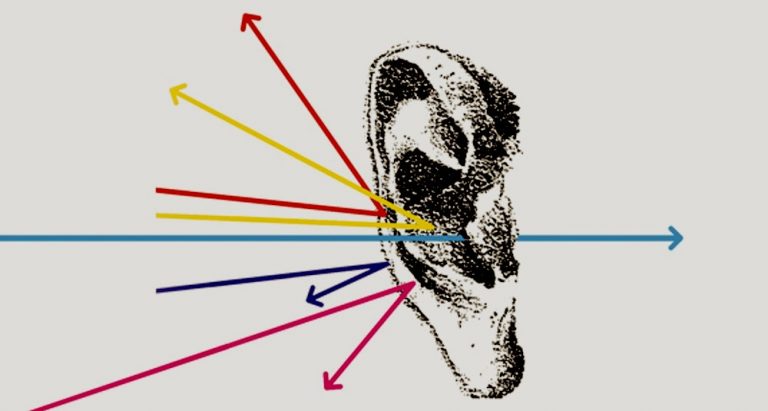
Bad listeners are not necessarily bad people. You likely have a dear friend, family member, or maybe a romantic partner who is a terrible listener. Perhaps you, yourself, are not the best listener. And you could be forgiven since, in many ways, you’ve been conditioned not to listen. Think back to when you were a little kid. If a parent said, “Listen to me!” (perhaps while holding you firmly by the shoulders), it’s a good bet you weren’t going to like what was coming next. When your teacher, Little League coach, or camp counselor beckoned, “Listen up!” what followed was usually a bunch of rules, instructions, and limits on your fun.
And certainly the virtues of listening are not reinforced by the media or in popular culture. News and Sunday talk shows are more often shouting matches or exercises in “gotcha” than respectful forums for exploring disparate views. Late-night talk shows are more about monologues and gags than listening to what guests have to say and encouraging elaboration to get beyond the trite and superficial. And on the morning and daytime shows, the interviews are typically so managed and choreographed by publicists and public relations consultants that host and guest are essentially speaking prepared lines rather than having an authentic exchange.

The dramatic portrayal of conversation on television and in the movies is likewise more often speechifying and monologues than the easy and expanding back-and-forth that listening allows. Screenwriter Aaron Sorkin, for example, is praised as a master of dialogue. Think of his characters’ breathless banter and verbal jousting on The West Wing, A Few Good Men, and The Social Network. His walk-and-talk scenes and epic confrontations, of which there are endless compilations on YouTube, are fun to watch and full of great lines—“You can’t handle the truth!” But instructive on how to listen so you have a mutually responsive and fulfilling conversation, they are not. All this, of course, is in the grand tradition of conversational grandstanding that dates back to the Algonquin Round Table—a group of writers, critics, and actors in the 1920s who met daily for lunch at the Algonquin Hotel in Manhattan to trade wisecracks, wordplay, and witticisms. Their competitive and razor-sharp repartee, which was published in major newspapers at the time, captivated the country and arguably still defines clever conversation in the popular imagination.

They were just waiting for an opening, for someone to take a breath, so they could lob their verbal firecrackers.

And yet, many of the regular members of the Round Table were profoundly lonely and depressed people, despite being part of a lively group that met almost every day. For example, the writer Dorothy Parker made three suicide attempts, and theater critic Alexander Woollcott was so beset with self-loathing that shortly before he died of a heart attack, he said, “I never had anything to say.” But then, this was not a group that listened to one another. They were not trying to truly connect with others around the table. They were just waiting for an opening, for someone to take a breath, so they could lob their verbal firecrackers.

In her more reflective later years, Dorothy Parker said, “The Round Table was just a lot of people telling jokes and telling each other how good they were. Just a bunch of loud-mouths showing off, saving their gags for days, waiting for a chance to spring them . . . There was no truth in anything they said. It was the terrible day of the wisecrack, so there didn’t have to be any truth.”

Our political leaders are not model listeners, either. Consider the spectacle of US congressional hearings, which are not so much hearings as occasions for senators and representatives to pontificate, pander, chastise, berate, or otherwise cut off in mid-sentence whoever is unfortunate enough to appear before them. The most common feature of transcripts of congressional hearings is the all-caps insertion of the word cross-talk, which indicates everyone is talking over one another, and the transcriber, or recorder, of the debate can’t make sense of what anyone is saying.

Similarly, Prime Minister’s Questions, the weekly questioning of the British prime minister by members of Parliament, is seen as less an exercise in listening than Kabuki theater. The showboating has gotten so extreme that many MPs no longer attend. Speaker of the House of Commons John Bercow told the BBC, “I think it is a real problem. A number of seasoned parliamentarians, who are not shrinking violets, not delicate creatures at all, are saying, ‘This is so bad that I am not going to take part, I am not going to come along, I feel embarrassed by it.’”

Seen as efficient and data driven, looking at what’s trending on social media or conducting online surveys is largely how listening is done in the 21st century.

The blowhard factor is in part responsible for ongoing political upheaval and divisiveness both in the United States and abroad, as people feel increasingly disconnected from and unheard by those in power. Those feelings seem justified, as political leaders, the mainstream media, and the upper echelons of society were gobsmacked by the disaffection laid bare in election results, most notably the 2016 victory of President Donald J. Trump and the British vote to exit the European Union the same year. Voters did the equivalent of throwing an electoral grenade to get their leaders’ attention. Few saw it coming.

Polling proved a poor substitute for actually listening to people in their communities and understanding the realities of their everyday lives and the values that drive their decisions. Had political forecasters listened more carefully, critically, and expansively, the election results would have come as little surprise. Data derived from unrepresentative samples (i.e., people who answer unknown numbers popping up on their caller ID and who honestly answer pollsters’ questions when they do) was misleading. So, too, was media coverage that relied heavily on social media to gauge public sentiment.

And yet, social media activity and polling continues to be used as a proxy for what “real people” are thinking. Tempted by the ease and seemingly broad access, it’s now common for print and television journalists and commentators to quote from Twitter and Facebook rather than going out and getting quotes that come from actual people’s mouths. Seen as efficient and data driven, looking at what’s trending on social media or conducting online surveys is largely how listening is done in the 21st century by the press, politicians, lobbyists, activists, and business interests.

But it’s questionable that social media activity reflects society at large. Repeated investigations have shown that fake or bot accounts are responsible for much of the content. It’s estimated that 15 to 60 percent of social media accounts do not belong to real people. One study showed 20 percent of tweets related to the 2016 US election came from bots. Audits of the Twitter accounts of music celebrities, including Taylor Swift, Rihanna, Justin Bieber, and Katy Perry found that the majority of their tens of millions of followers were bots.

Perhaps even more pervasive are lurkers on social media. These are individuals who set up accounts to see what other people are posting but who rarely, if ever, post anything themselves. The 1 percent rule, or 90-9-1 rule, of internet culture holds that 90 percent of users of a given online platform (social media, blogs, wikis, news sites, etc.) just observe and do not participate, 9 percent comment or contribute sparingly, and a scant 1 percent create most of the content. While the number of users contributing may vary somewhat by platform, or perhaps when something in the news particularly stirs passions, the truth remains that the silent are the vast majority.

Moreover, the most active users of social media and commenters on websites tend to be a very particular—and not representative—personality type who a) believe the world is entitled to their opinion and b) have time to routinely express it. Of course, what generates the most interest and attention online is outrage, snark, and hyperbole. Posts that are neutral, earnest, or measured don’t tend to go viral or get quoted in the media. This distorts dialogue and changes the tenor of conversations, casting doubt on how accurately the sentiments expressed track what people would say in the presence of a live, attentive listener.

*

To research this You’re Not Listening, I interviewed people of all ages, races, and social strata, experts and non-experts, about listening. Among the questions I asked was: “Who listens to you?” Almost without exception, what followed was a pause. Hesitation. The lucky ones could come up with one or two people, usually a spouse or maybe a parent, best friend, or sibling. But many said, if they were honest, they didn’t feel like they had anyone who truly listened to them, even those who were married or claimed a vast network of friends and colleagues. Others said they talked to therapists, life coaches, hairdressers, and even astrologers—that is, they paid to be listened to. A few said they went to their pastor or rabbi, but only in a crisis.

It was extraordinary how many people told me they considered it burdensome to ask family or friends to listen to them—not just about their problems but about anything more meaningful than the usual social niceties or jokey banter. An energies trader in Dallas told me it was “rude” not to keep the conversation light; otherwise, you were demanding too much from the listener. A surgeon in Chicago said, “The more you’re a role model, the more you lead, the less permission you have to unload or talk about your concerns.”

The ability to listen carefully, like the ability to read carefully, degrades if you don’t do it often enough.

When asked if they, themselves, were good listeners, many people I interviewed freely admitted that they were not. The executive director of a performing arts organization in Los Angeles told me, “If I really listened to the people in my life, I’d have to face the fact that I detest most of them.” And she was, by far, not the only person who felt that way. Others said they were too busy to listen or just couldn’t be bothered. Text or email was more efficient, they said, because they could pay only as much attention as they felt the message deserved, and they could ignore the message or delete the message if it was uninteresting or awkward. Face-to-face conversations were too fraught. Someone might tell them more than they wanted to know, or they might not know how to respond. Digital communication was more controllable.

So begets the familiar scene of 21st-century life—at cafés, restaurants, coffeehouses, and family dinner tables, rather than talking to one another, people look at their phones. Or if they are talking to one another, the phone is on the table as if a part of the place setting, taken up at intervals as casually as a knife or fork, implicitly signaling that the present company is not sufficiently engaging. As a consequence, people can feel achingly lonely, without quite knowing why.

And then there were the people who told me that they were good listeners, though their claims were often undercut by the fact that they were talking to me on their mobile phones while driving. “I’m a better listener than most people,” said a trial lawyer in Houston returning my call in his car during rush hour traffic. “Wait, hold on a second, I have another call.” Also unconvincing were the people who said that they were good listeners and then immediately pivoted to a wholly unrelated topic, in the vein of The New Yorker cartoon where a guy holding a glass of wine at a cocktail party says, “Behold, as I guide our conversation to my narrow area of expertise.” Other self-described good listeners repeated what I had just said as if it were an original thought.

Again, this is not to say that poor listeners are necessarily bad or boorish people. When they finish your sentences for you, they truly believe that they are being helpful. They may interrupt because they thought of something that you would really want to know or they thought of a joke that was too funny to wait. They are the ones who honestly think that letting you have your say is politely waiting for your lips to stop moving so they can talk. Maybe they nod very quickly to move you along, sneak glances at their watches or phones, lightly tap the table, or look over your shoulder to see if there is someone else they could be talking to. In a culture infused with existential angst and aggressive personal marketing, to be silent is to fall behind. To listen is to miss an opportunity to advance your brand and make your mark.

But think of what would have happened had I been preoccupied with my own agenda when interviewing Oliver Sacks. It was a short column, and all I needed were a few circumscribed answers from him. I didn’t need to listen to him wax poetic about the climate of the mind or describe the challenge of living without a sense of direction. I could have interrupted and made him cut to the chase. Or, wanting to express myself and make an impression, I could have leapt in to share things about my life and experiences. But then I would have disrupted the natural flow of the conversation, halted the unfolding intimacy, and lost much of the joy of the interaction. I would not, to this day, carry his wisdom with me.

None of us are good listeners all the time. It’s human nature to get distracted by what’s going on in your own head. Listening takes effort. Like reading, you might choose to go over some things carefully while skimming others, depending on the situation. But the ability to listen carefully, like the ability to read carefully, degrades if you don’t do it often enough. If you start listening to everyone as you would scan headlines on a celebrity gossip website, you won’t discover the poetry and wisdom that is within people. And you withhold the gift that the people who love you, or could love you, most desire.

————————————————

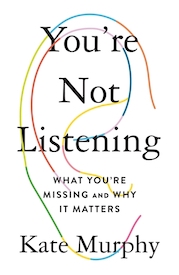
You're not listening

From You’re Not Listening by Kate Murphy. Copyright © 2020 by the author and reprinted by permission of Celadon Books, a division of Macmillan Publishing Group, LLC.

07 Jan 00:49

Massive New Cambridge Analytica Leak Will Show Global Voter Manipulation on 'Industrial Scale'

by EditorDavid
A new leak of more than 100,000 documents from Cambridge Analytica's work in 68 different countries "will lay bare the global infrastructure of an operation used to manipulate voters on 'an industrial scale,'" writes the Guardian. Long-time Slashdot reader Freshly Exhumed shares their report: The release of documents began on New Year's Day on an anonymous Twitter account, @HindsightFiles, with links to material on elections in Malaysia, Kenya and Brazil. The documents were revealed to have come from Brittany Kaiser, an ex-Cambridge Analytica employee turned whistleblower, and to be the same ones subpoenaed by Robert Mueller's investigation into Russian interference in the 2016 presidential election. Kaiser, who starred in the Oscar-shortlisted Netflix documentary The Great Hack, decided to go public after last month's election in Britain. "It's so abundantly clear our electoral systems are wide open to abuse," she said. "I'm very fearful about what is going to happen in the US election later this year, and I think one of the few ways of protecting ourselves is to get as much information out there as possible." The documents were retrieved from her email accounts and hard drives, and though she handed over some material to parliament in April 2018, she said there were thousands and thousands more pages which showed a "breadth and depth of the work" that went "way beyond what people think they know about 'the Cambridge Analytica scandal....'" Kaiser said the Facebook data scandal was part of a much bigger global operation that worked with governments, intelligence agencies, commercial companies and political campaigns to manipulate and influence people, and that raised huge national security implications.

Share on Google+

Read more of this story at Slashdot.

28 Dec 02:45

Hear Every Sample on the Beastie Boys’ Acclaimed Album, Paul’s Boutique–and Discover Where They Came From

by Josh Jones

How would the Beastie Boys follow their debut, Licensed to Ill, wondered critics when the album rose to number one after its 1986 release. The cross-over appeal of their hip hop/frat rock solidified a fan base whose devotion often mirrored their parents’ revulsion. Like many of their later imitators, the Beastie Boys could have played overgrown delinquents till their fans aged out of the act.

Few critics expected more from them. “Rolling Stone entitled their review ‘Three Idiots Create a Masterpiece’ and gave more credit to producer Rick Rubin,” writes Colleen Murphy at Classic Album Sundays. Three years later, they far surpassed expectations with their experimental second album, 1989’s Paul’s Boutique, though it took a little while for the fans to catch up.

It’s a record so dense with allusions both musical and lyrical, so original in its verbal interplay and comic storytelling, that the Beastie Boys were suddenly hailed as serious artists. As Murphy puts it:

Paul’s Boutique gave the Beastie Boys the critical acclaim they desperately desired. Rolling Stone maneuvered a U-turn and brazenly called it, “the Pet Sounds / The Dark Side of the Moon of hip hop.” But more importantly, it also earned the group respect with their peers and idols. Miles Davis claimed he never got tired of listening to it, and Public Enemy’s Chuck D even said, ‘The dirty secret among the Black hip hop community at the time of the release was that Paul’s Boutique had the best beats.”

They spat absurdly hilarious rhymes by the dozen in mock epic narratives brimming with rhythmic and melodic complexity, thanks to the high-concept production by the Dust Brothers. The two producers pieced the album’s soundscape together from an estimated 150-odd samples, a method that “would be prohibitively expensive if not impossible” today, notes Kottke. In the video above, you can hear every sample on the album, “from the soundtrack to Car Wash to the Sugarhill Gang to the Eagles to the Ramones to the Beatles.”

For legal and creative reasons, nothing has ever sounded quite like Paul’s Boutique (except, perhaps, De La Soul’s Three-Feet High and Rising, a similarly groundbreaking, sample-heavy album released the same year). Thirty years after it came out, “it’s still not out of the ordinary to discover something you never heard before across this 15-track odyssey into a thrift story rack full of weird vinyl,” Billboard points out in a list of 10 deep cuts sampled on the record.

Like every classic album, Paul’s Boutique repays endless re-listens, both for its surreal lyrical playfulness and library of musical references. Hearing the breadth of samples that built the album drives home how much those two features are interwoven. Head over to Kottke for more Paul's Boutique goodies, including a remix with source tracks and audio commentary and a Spotify playlist of all the sampled songs.

via Laughing Squid/Kottke

Related Content:

The Beastie Boys Release a New Freewheeling Memoir, and a Star-Studded 13-Hour Audiobook Featuring Snoop Dogg, Elvis Costello, Bette Midler, John Stewart & Dozens More

Look How Young They Are!: The Beastie Boys Performing Live Their Very First Hit, “Cooky Puss” (1983)

‘Beastie Boys on Being Stupid’: An Animated Interview From 1985

Josh Jones is a writer and musician based in Durham, NC. Follow him at @jdmagness.

Hear Every Sample on the Beastie Boys’ Acclaimed Album, Paul’s Boutique–and Discover Where They Came From is a post from: Open Culture. Follow us on Facebook, Twitter, and Google Plus, or get our Daily Email. And don't miss our big collections of Free Online Courses, Free Online Movies, Free eBooksFree Audio Books, Free Foreign Language Lessons, and MOOCs.

23 Dec 18:31

The Difficulty of Making Close Friends As You Get Older

by Lane Moore

I recently went to the gynecologist for my annual vagina exam. I would truly rather do anything than go to the doctor for so many reasons, not the least of which is the “oh shit, here comes a nervous breakdown in the basement of an office building” forms you have to fill out. These seemingly straightforward forms lay bare everything I carry with me about myself, all of the information that tells a story no one wants to read. And this process always starts off with two words followed by a blank space you’re supposed to know what to do with: Emergency contact: ______. Until very recently, this simple question has made me cry in the waiting room of every doctor’s office I’ve ever been in. Because it makes me feel as I have always felt, very deeply: that I belong to no one.

It’s not that I don’t have people in my life. I have my agents (hahaha, I listed them first, which is just the loneliest thing), but they aren’t obligated to give a shit about me really, beyond business, even though that model seems so cruel to me. I truly assume on some level that with anyone I regularly, truly interact with on any level, it’s personal. I don’t expect people who see me passively to, I suppose, but I would just assume that if you talk to me almost daily, you should care if I died. If you deal with suicidal ideation or depression or anxiety, that’s often part of how you define someone’s ability to be close to you, or to be a true friend.

I have some waiting-room friends, my term for people whom I’m in the process of evaluating to see if they’re trustworthy, as well as people who’ve already been through that process but have proven unsafe at various points, which means I’m still trying to determine their long-term eligibility for the role of my friend. (God, even reading that exhausts me; no wonder the idea of getting close to people makes me sleepy.) People who know me might be tempted to be, like, “This bitch talks about being alone, but there are, like, thirty people in her phone,” but here’s why my brain feels like that’s nothing. Every single one of those people falls into one of the following categories, except for my therapist, who is so great that I recently described her to someone as “my only friend,” and this was the saddest fucking thing ever. Still, I have spent most of my life not having a therapist at all, so I’m so grateful I have one now.

Anyway, back to the categories:

• I don’t know them well enough to tell them when things are really bad.

• They’ve told me to reach out when things are really bad, and then I’ve told them when things are really bad, and they didn’t write back, and it gutted me.

• They’ve told me to reach out, reply when I reach out, but don’t really seem to have the empathy, bandwidth, or know-how to respond in a way that feels comforting to me, so I don’t do it anymore.

• They’re selectively helpful, so every time I reach out, I never know if I’ll be helped or disappointed, and it feels easier to just stop trying. They’re super helpful, but I feel like there’s an unspoken time limit in terms of how much I can talk about how hard things are, so I usually keep it to about three texts and then change the subject back to them and how I can help them through their day, and they don’t challenge me when I do this, and it feels awful.

• They’ve been really, really wonderful and helpful before, but I don’t want to “bother them” again by reaching out another time.

• Work contacts.

• People who are fighting their own gigantic battles and are therefore either too triggering or send me into a spiral where I focus all the energy I should be using on myself to help them survive. With these people, I always leave the conversation feeling used and drained. To be fair, they did not ask me to turn myself inside out to help them, but my brain is so hardwired to kill myself to let someone else live, someone who is actually not dying at all, and give them the blood I need to survive when they’ve at no point suggested they needed so much as a drop, that I pour mine out into their veins, and since they absolutely did not need it, it overflows, dripping onto the floor, helping no one.

Because of this, I have always obsessively deleted people in my phone as a way to try and protect myself. “Ugh, I just texted Megan that I really needed her because things are really bad, and she didn’t reply. Lane, come on, she never replies! She says to ask if you need anything and then she doesn’t write back when you do! Delete her number so you don’t forget this again!” And then later I’ll need that number for something and I won’t have it and it’s a whole thing, but in the end, that’s something I’m willing to deal with. Because it’s far better than needing help so desperately, telling myself maybe it’ll be different this time, only to be hurt again because of course it won’t be.

At this point in my life, I often fear it’s too late, as if there were a sign-up deadline for intimacy and friends and family and I just kept missing it.

I have a lot of internet friends with whom I trade voice memos and GIFs, and strangers on the internet who DM me the sweetest fucking things, but on a deep, unrelenting level, I do not have anyone I would call if I were dying. I would blank. I have blanked. There are people who say things like, “I’m here if you need me, I love you,” and I have no idea what the fuck they’re talking about, because I don’t believe it. Because the people who’ve said that to me before later turned out to be unsafe. So now when I hear it, my brain thinks, “Fuck this, I’m out,” as a knee-jerk reflex designed to keep me safe. It’s like my brain says, “Hmm, I’m not sure if there’s arsenic in this lemonade, but since there could be, there is. Don’t drink it.” So I don’t drink it. And it might’ve been wonderful lemonade. Or it could’ve killed me. But better safe than sorry.

At this point in my life, I often fear it’s too late, as if there were a sign-up deadline for intimacy and friends and family and I just kept missing it. And it’s not that I want to, but it’s so easy to get wrapped up in “But this is the normal time to have xyz thing. I do not have xyz thing yet. So it is too late for xyz thing.” Even though my rational brain thinks that’s garbage nonsense. But back to the gyno. The fluorescent lights in the waiting room put pressure on me to hurry up so I can get into the actual doctor’s office and get the fuck out of here, so I refocus and hold my pen in a way that means business. Usually I just leave the emergency contact we’ll see, fingers crossed, I’m fine, maybe they won’t notice. But they always do, damn those properly trained, thorough medical administrators.

“You didn’t fill out the emergency contact,” the woman at the front desk said while pointing her pen directly at the violation. “I don’t have one,” I said, my face turning red. “You can just put down a family member,” she said, a little more slowly this time, as though maybe there was a language barrier between us. “I don’t have any,” I replied, getting angrier, tears mixing with my rage. “Then just put down the name of a friend who would come pick you up if anything happened,” she said, inching dangerously close to pity as she saw the tears pool in my eyes.

On other occasions I have put down a friend I used to be close to years ago who lives three thousand miles away but would at least pick up the phone, or my roommate, who technically knows me. In this particular situation I was getting a full exam, STD testing and all, which is really fun if you like looking back at your sexual history for the last year—the highs and lows, the mistakes, the people you used to be able to count on but can’t anymore. While readying the HIV test, she asked me, in a tone that suggested she said this twelve hundred times a day, like customs officers who stamp a hundred passports without looking at them, “Do you have a support system should your test come back positive?” My first thought was “Oh, definitely not.” And then I panicked about how I suddenly was very, very fucking sure I had HIV. Like, more sure than anything ever. Did it matter that I’d had only one sexual encounter all year? NOT AT ALL. Jesus, those are some fucking scary questions to pose, even hypothetically.

Later, in the exam room, the totally badass, give-no-fucks gyno asked me about my sexual history, and when I told her that the one person I’d been with all year became violent, she asked if I’d reported it. My reply was “Please,” in the way that only someone who knows what happens when you do that does. She followed this with “Have you told your friends?” and I said, while barely letting her finish her question, “Yes, and they don’t care.” I took a frantic breath before thinking, Make a joke so she knows you know that’s fucked up, but feels like you’re fine. TELL HER YOU’RE FINE. So I added, “They’re really cool people.” And she said, “Right, well, what about your family?” Jesus, enough with the third degree!!! Just accept that I’m a Cool Girl in a leather jacket who comes from nowhere and is fun and so alluring and shit. Don’t look closer and don’t make me look closer either.

It’s hard not to throw everything I’ve written so far out the fucking window right now because I don’t want you to know this.

Instead I said, with a quickening pulse and flushed face, “I don’t have any family” for the second time that day. And she said, “Well, we’re happy to be your support system.” I scoffed like I didn’t care, but I cared. On some level I walk through the world like an adult human version of the baby bird in Are You My Mother? subconsciously waiting for someone to see that I’m very take-care-of-able, can I live with you now? I know you’re my age, but have you ever thought of adopting an adult? It’s cool and fun! And I know that sounds stupidly heartbreaking, and I’m not pretending it’s adorable and cool, but I know it’s there, below the surface.

It’s hard not to throw everything I’ve written so far out the fucking window right now because I don’t want you to know this, because I don’t want you to hate me for being so sad and not normal, but then I think, What if you know exactly what I mean? What if you, like me, would at times throw your whole life out the window and walk away, in hopes there was somewhere you could go and buy an entirely new life with new problems, new people, new everything, as if you were replacing a shitty sweater you’d worn through? Except you get only one sweater for your whole life, and anything can happen—theft, weather, cars that splash you with dirt stains that do and don’t come out—but you can’t trade it in or take it off. It’s just yours and it’s you, forever and ever and ever.

So what do you do? Well, as far as I can tell, you explain how your sweater got like this. Why it looks the way it does. And why you put patches where you did, to hold it together and make it look intentional. And you hope people will understand the parts you can’t hide anymore, even if you tried.

__________________________________

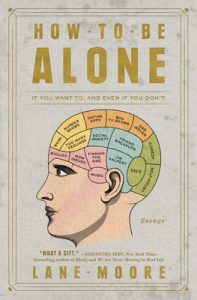
how to be alone

From How to Be Alone by Lane Moore. Used with the permission of Atria. Copyright © 2019 by Lane Moore.

18 Dec 15:03

An Introduction to Surrealism: The Big Aesthetic Ideas Presented in Three Videos

by Josh Jones

Before surrealism became Merriam Webster's word of the year in 2016 for its useful description of reality, it applied to art that incorporates the bizarre juxtapositions of dream logic. We know it from the films of David Lynch and paintings of Salvador Dalí. We may not, however, know it from the poetry of Andre Breton, “but the movement actually began in literature,” points out the Scottish National Gallery introductory video above. Breton, influenced by Freud and Rimbaud, railed against mediocrity, positivism, the ‘realistic attitude,” and the “reign of logic” in his 1924 “Manifesto of Surrealism.”

If this sounds somewhat familiar, it’s because Surrealism was “built on the ashes of Dada." The first group of artists who worked under the term Surrealism included Tristan Tzara, who had penned the “Dada Manifesto” only six years earlier. Where Tzara had claimed that “Dada means nothing,” Breton declared Surrealism in favor of dream states, symbolism, and “the marvelous.”

He also defined the term—a word he took from the Symbolist poet Guillaume Apollinaire—“once and for all."

SURREALISM, n. Psychic automatism in its pure state, by which one proposes to express -- verbally, by means of the written word, or in any other manner -- the actual functioning of thought. Dictated by the thought, in the absence of any control exercised by reason, exempt from any aesthetic or moral concern.

The artists and writers who coalesced around Breton represented a hodgepodge of styles, from the pure abstraction of Joan Miro to the hyperrealist fantasies of Dali and playful symbolist conundrums of Magritte and art pranks of Marcel Duchamp.

As artists, theirs was foremost an aesthetic radicalism invested in Freudian examinations of the psyche through the imagery of the unconscious. “But when [the movement] emerged in Europe,” notes the PBS Art Assignment video above, “during the tenuous, turbulent years following World War I and leading up to World War II, Surrealism positioned itself not as an escape from life, but as a revolutionary force within it.”

Breton joined the French Communist Party in 1927, was tossed out in 1933, and in 1934 delivered a speech, which became a pamphlet entitled “What is Surrealism?” Here Breton redefined Surrealism as an anti-fascist position, “a living movement, that is to say a movement undergoing a constant process of becoming…. surrealism has brought together and is still bringing together diverse temperaments individually obeying or resisting a variety of bents.”

Here he alludes to previous political turmoil in the Surrealist ranks: “The fact that certain of the first participants in surrealist activity have thrown in the sponge and have been discarded has brought about the retiring from circulation of some ways of thinking.” The reference is partly to Dali, whom Breton expelled from the Surrealist group that same year for “the glorification of Hitlerian fascism.”

As World War II began, many Surrealists fled Europe for the United States. Breton traveled the Caribbean, settled in New York, and developed a friendship with Martinican poet, writer, and statesman Aime Cesaire. He met Trotsky, Frida Kahlo, and Diego Rivera in Mexico, and participated in the burgeoning Surrealist movement in the U.S. and Latin America.

The influence of Breton and his Surrealist literary peers on mid-century fiction and poetry in the decolonizing global south was significant. Breton “insisted art be created for revolution not profit”—points out the video above, “Surrealism: The Big Ideas." Dali, on the other hand,“wasn’t really into all that.” The painter retreated to the U.S. in 1940 with his wife Gala, spending his time on both coasts and becoming a popular sensation. America “offered Dali endless opportunities for his talents.”

Dali “introduced Surrealism to the general public, and made it fun!... America loved it, and him. They made Dali a celebrity," and he helped popularize a Surrealist aesthetic in Hollywood film and Madison Avenue advertising. But to really understand the movement, we must not look only to its visual vocabulary and its influence on pop culture, but also to the poetry, philosophy, and politics of its founder.

Related Content:

When The Surrealists Expelled Salvador Dalí for “the Glorification of Hitlerian Fascism” (1934)

A Brief, Visual Introduction to Surrealism: A Primer by Doctor Who Star Peter Capaldi

Watch Dreams That Money Can Buy, a Surrealist Film by Man Ray, Marcel Duchamp, Alexander Calder, Fernand Léger & Hans Richter

Read and Hear Tristan Tzara’s “Dada Manifesto,” the Avant-Garde Document Published 100 Years Ago (March 23, 1918)

When The Surrealists Expelled Salvador Dalí for “the Glorification of Hitlerian Fascism” (1934)

Salvador Dalí Goes to Hollywood & Creates Wild Dream Sequences for Hitchcock & Vincente Minnelli

Josh Jones is a writer and musician based in Durham, NC. Follow him at @jdmagness

An Introduction to Surrealism: The Big Aesthetic Ideas Presented in Three Videos is a post from: Open Culture. Follow us on Facebook, Twitter, and Google Plus, or get our Daily Email. And don't miss our big collections of Free Online Courses, Free Online Movies, Free eBooksFree Audio Books, Free Foreign Language Lessons, and MOOCs.

13 Dec 16:18

“Friendship over business”: Coffee shop owner helps competitor stay open

by Aimee Levitt
Bgarland

Deep kindness and humanity. Just a reminder.

At this time of year, just about everything in media is calculated to make you cry. But this is a story about true human kindness and goodness, not just cheap holiday-related sentimentality.

Read more...

13 Dec 16:12

The Best Books of 2019: International Crime Fiction

by Molly Odintz

It’s been a banner year for international crime fiction. South Korean and Nigerian crime fiction continues to thrive; the French, as always, made their sly, ironic way into being a substantial chunk of the list; and new literary noirs popped up in both expected (Sweden) and unexpected (Poland?!?) places. While last year’s international crime map was peppered with psychological thrillers, this year’s global crime writers took a turn towards classic set-ups and dark conclusions, focusing on the poetry of noir as much as its violence.

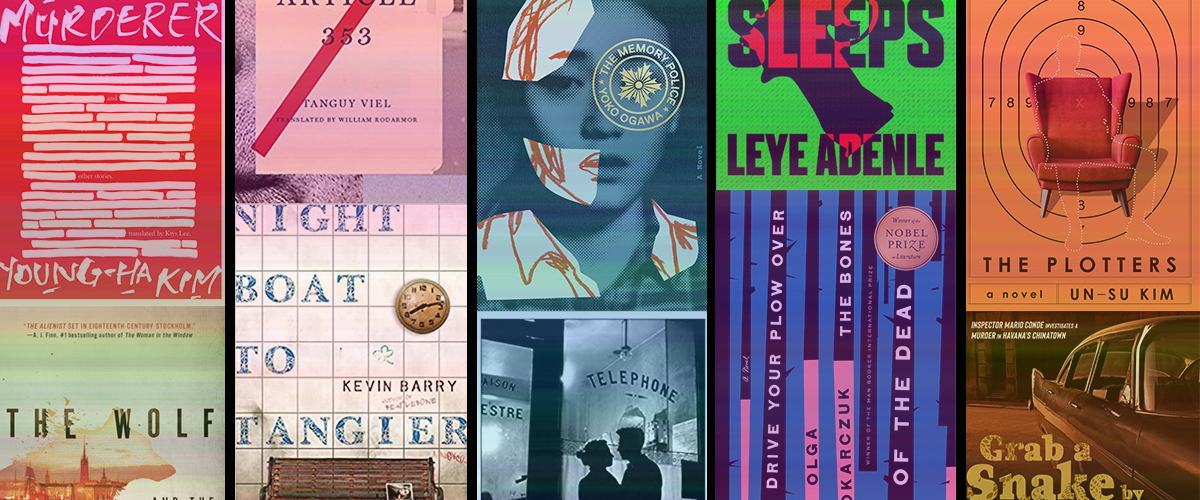
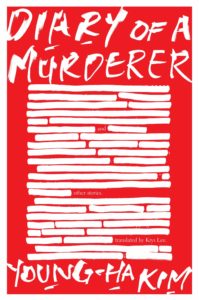
Young-ha Kim, Diary of a Murderer and other stories (Mariner Books)
(translated from the Korean by Krys Lee)

Diary of a Murderer is further proof that we’re living in a golden age of both unreliable narrators and South Korean crime writing. The titular story takes us into the fuzzy brain of a serial killer suffering from alzheimers; he’s convinced that another killer is targeting his surrogate daughter, the only person the narrator cares for in the world, and he’s determined to save her—unless he forgets who she is.

Read an excerpt from Diary of a Murderer on CrimeReads.

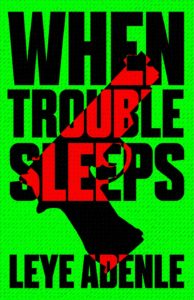
Leye Adenle, When Trouble Sleeps (Cassava)

Amaka, Leye Adenle’s heroine from Easy Motion Tourist, returns to fight the good fight once again. This time, she’s investigating a mysterious high-class brothel that treats its sex workers as disposable—but Amaka’s got a plan to infiltrate the secretive manor and free the women imprisoned within its walls. Leye Adenle’s Lagotian-set thrillers are action-packed, stylishly choreographed, and imbued with a sense of righteous anger against societal mistreatment of the vulnerable.

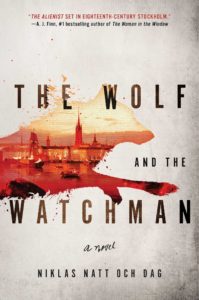
Niklas Natt och Dag, The Wolf and the Watchman (Atria)
(translated from the Swedish by Ebba Segerberg)

Niklas Natt och Dag’s stunning debut takes us into the mud, blood, and effluence of history; set in the late 18th century, The Wolf and the Watchman begins with the discovery of a hideously maimed corpse in a brackish pond at the edge of a Stockholm still recovering from a ruinous fire and even more ruinous war. Revolution is in the air, the aristocracy are conscious of their own excesses, and each character comes with their own complex agenda and dark backstory. Perfect for fans of historicals, politicals, and grotesqueries galore.

Read an excerpt from The Wolf and the Watchman on CrimeReads.

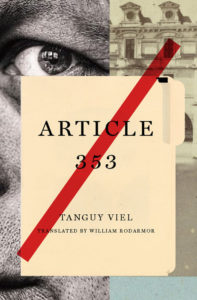
Yves Tanguy, Article 353 (Other Press)
(translated from the French by William Rodar

The art of noir is often the art of the excuse, and never more-so than in Article 353; the entire novel is a monologue told to a judge by a middle-aged man who’s trying to justify his murder of a crooked real-estate developer. The speculator from the South of France had collected investments for a new, never-built seaside resort, bankrupting the entire town, a former bastion of shipbuilding now full of ex-union men down on their luck and ready to be scammed out of their substantial buyouts—but also ready to take their revenge.

Read an excerpt from Article 353 on CrimeReads.

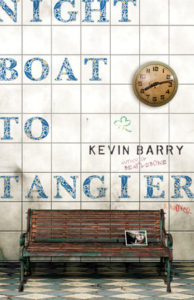
Kevin Barry, Night Boat to Tangiers (Doubleday)

Kevin Barry’s tale of two aging criminals is as beautifully written as it is moving. The two hash-smugglers are camped out at a port, searching for the long-lost daughter of one (who may just be the daughter of the other, given the presence of a complicated love triangle between the two criminals and their heroin-addicted muse). Barry’s background as a playwright shows in the book’s dedication to telling story through dialogue, which has also earned the novel numerous comparisons to Waiting for Godot, but in our book, Night Boat to Tangier is not only literature—it’s noir to the bone.

Read an article about Kevin Barry’s mournful crime fiction on CrimeReads.

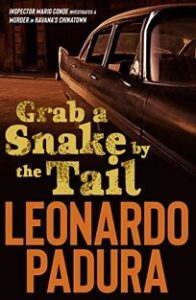
Leonardo Padura, Grab a Snake by the Tail (Bitter Lemon)
(translated from the Spanish by Peter Bush)

Padura is one of the most celebrated crime authors in the world today, and rightly so. This novella, a standalone that the author has been tinkering with for decades, is a Mario Conde investigation, but it stands outside the author’s legendary Havana Quartet to tell a discrete story about a case in Havana’s Barrio Chino, where a particularly heinous murder illuminates a possible drug trafficking ring in the city’s old Chinatown. Readers can expect all the usual Conde charm—long meditations on the meaning of life and language and the trials of the Cuban people—as well as some new terrain, as he navigates a hidden pocket of the city and a community that holds itself apart.—Dwyer Murphy, CrimeReads managing editor

Yoko Ogawa, The Memory Police (Pantheon)
(translated from the Japanese by Stephen Snyder)

Yoko Ogawa’s thought-provoking tale of a dystopian island where objects—and the memories thereof—continuously disappear is a perfect exercise in metafiction. The Memory Police follows a novelist who subtly resists the various vanishings imposed upon her by her society, even as she outwardly allows the memories of all that has been banned to fade from her consciousness. When her editor is about to be arrested by the eponymous Memory Police, who quietly remove all those from society who prove incapable of forgetting, the novelist takes him into hiding—and soon becomes a target of the Memory Police herself.

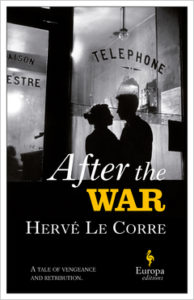
Herve le Corre, After the War (Europa)
(translated by Sam Taylor)

While many would like to think of World War II as neatly bracketed between the years 1939 and 1945, there’s an argument to be made that the war started much earlier, and in many ways, has never ended. In le Corre’s brilliant and brutal tale of Bordeaux in the 1950s, former collaborators rule the police force, young men prepare for war in Algeria, and a confrontation is looming between a crooked cop and a sensitive Holocaust survivor. Le Corre does for Bordeaux what Jean-Claude Izzo did for Marseilles!

Read an excerpt from After the War on CrimeReads.

Olga Tokarczuk, Drive Your Plow Over the Bones of the Dead (Riverhead)
(translated from the Polish by Antonia Lloyd-Jones)

Janina, Olga Tokarczuk’s misanthropic narrator, is a caretaker for the estates of Warsaw’s most wealthy. She prefers the company of animals to humans, and wants nothing more than to be left alone by her neighbors. When one of those neighbors turns up dead, she can’t help but begin her own amateur investigation. But will anyone listen to her suspicions? Tokarczuk won over the literary world with her debut, Flights, and Drive Your Plow Over the Bones of the Dead is just as haunting and beautifully written.

Read an excerpt from Drive Your Plow Over the Bones of the Dead on Lit Hub.

Un-su Kim, The Plotters (Doubleday)
(translated from the Korean by Sora Kim-Russell)

Un-su Kim’s stylish noir about a hit man experiencing a crisis of conscience is one of the best crime books we’ve read in years. When Kim’s protagonist finds himself contracted to kill another hit man he once called a friend, he realizes his own expiration date is nigh. Tightly plotted, elegantly crafted, and as noir as it gets! Plus, it has two cats named Desk and Lampshade, and a cabal of murderous librarians. What’s not to love?

Read an excerpt from The Plotters on CrimeReads.

___________________________________

Notable Selections

___________________________________

Javier Marias, Berta Isla · Fred Vargas, This Poison Will Remain · Andrea Camillieri, The Other End of the Line · Jo Nesbo, The Knife · David Lagercrantz, tr. George Goulding, The Girl Who Lived Twice · Guillaume Musso, The Reunion · Joaquim Zander, The Friend · M.T. Edvardsson, A Nearly Normal Family · Eduardo Albinati, The Catholic School · Ragnar Jonasson, The Island · Julie Zeh, Empty Hearts · Marc Fermandez, Mala Vida · Patrick Senécal, Seven Days ·  Helene Tursten, Hunting Game · Abir Mukherjee, Smoke and Ashes · Daniel Sanchez Arevalo, Alice’s Island · Ragnar Jonasson, The Island · Burhan Sönmez, Labyrinth · Karin Fossum, The Whisperer · Olaf Olafsson, The Sacrament · 

13 Dec 16:11

The Most Underrated Crime Films of the Decade

by Zach Vasquez

As the 2010s comes to close, critics and film lovers have taken to assembling their lists of the Best Films from the past ten years. A majority of those lists are sure to feature any number of great crime thrillers, mysteries, and neo-noirs—since 2010 we’ve been gifted with such modern classics as Winter’s Bone, Gone Girl, Inherent Vice, You Were Never Really Here, and The Irishman, to name just a few.

Of course, the sheer amount of films that come out during any given year means that a number of deserving (even great) efforts get passed over. Given the hunger crime film aficionados have for the genre, now seems a perfect chance to recommend some of the genre gems they’re likely to have overlooked.

Here are 20 of the most underrated crime and mystery films of the past decade.

Author’s Note: This list is made up exclusively of American productions. While a good number of foreign films could have made this list, it’s harder to say which count as underrated, considering so few foreign films break through to American audiences to begin with.

Standoff at Sparrow Creek (2019)

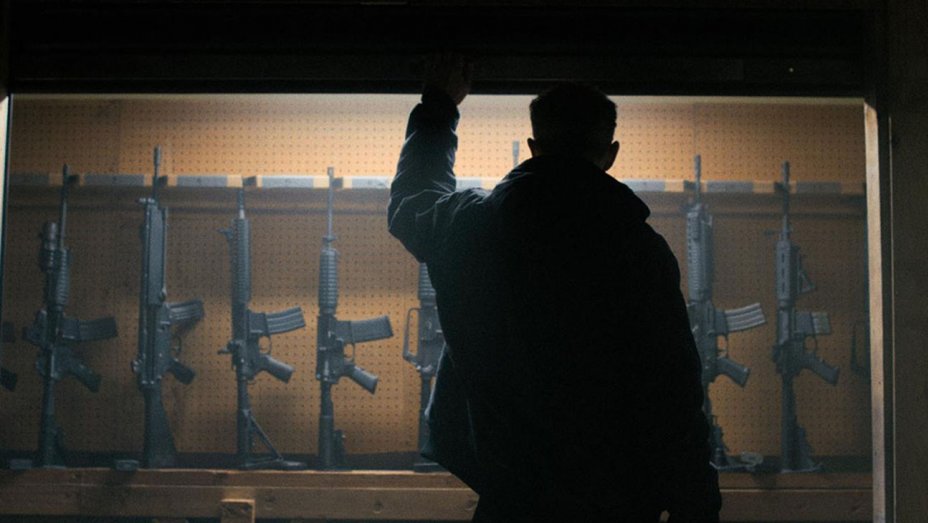
Following an armed attack at a police funeral, a local militia, comprised of seven troubled men whose only connection to one another is a shared hatred of the federal government, convene at their remote headquarters to wait out the manhunt, only to discover that the shooter may be one of their own. It would be easy to call Standoff at Sparrow Creek Reservoir Dogs for the Trump era, but its shadowy beauty and spooky tone place it closer to the paranoid thrillers of the ‘70s. As far as the political nature of the material, writer/director Henry Dunham wisely refrains from judging his characters or telling the audience how to feel about them. This makes for a unique and unnerving experience, and while the final turn of plot will likely to prove controversial, it stands as one of the most original and engaging locked-room mysteries of the past several decades.

Under the Silver Lake (2019)

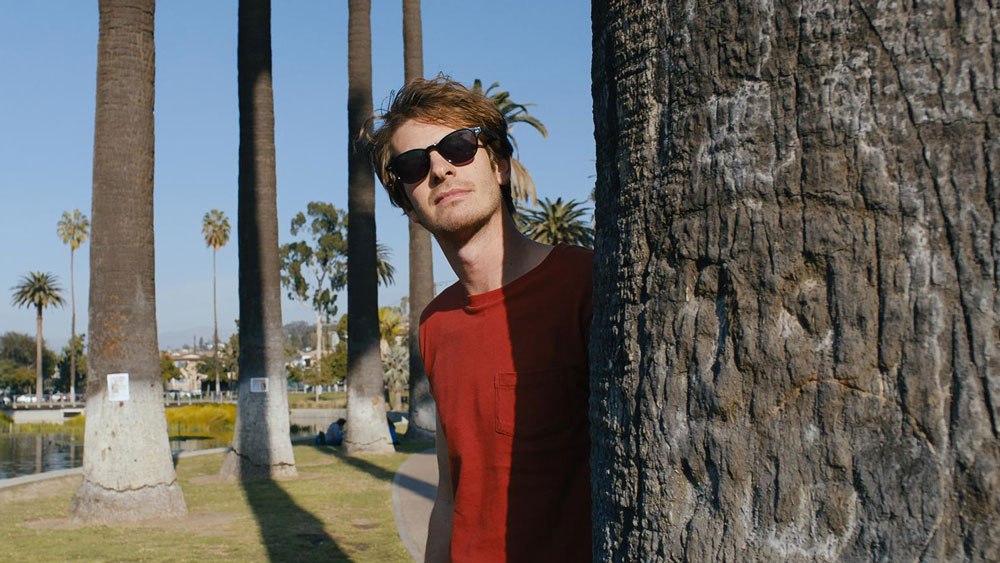
David Robert Mitchell’s follow-up to It Follows proved a much harder sell that than his 2014 horror breakout, with distributer A24 putting it out in only a handful theaters before dumping it on VOD. But then, this baggy, surreal slacker odyssey through the shadowy and sinister environs of hipster Los Angeles was destined to be a cult favorite from the start, something people stumble upon accidentally or learn of through word of mouth not unlike the various esoterica found within it. It’s an inherently divisive film: some will love it, many will hate it, and most will be baffled or left cold by it. But it deserves to be seen, especially by devotees of Raymond Chandler, Thomas Pynchon and David Foster Wallace, whose labyrinthian plots serve as a touchstone for the one found herein.

The Death of Dick Long (2019) 

Like Daniel Scheinert’s previous film, the quirky indie hit Swiss Army Man (which he co-directed with Daniel Kwan), there is a corpse at the center of The Death of Dick Long, but unlike that film, this one is an albatross hanging around the necks of his two best friends and bandmates, forcing them to take desperate measures to cover up the circumstances surrounding his death. As with Under the Silver Lake, distributer A24 seemingly had no clue how to market this wild crime thriller-cum-domestic drama. It’s an even bigger pity in this case, as The Death of Dick Long is a much more straightforward film, one which expertly mixes humor and heart with real knuckle-grinding tension. That said, the film has a few surprises in store that some people may not be able to handle, although to say anymore would be to ruin the mystery.

A Simple Favor (2018)

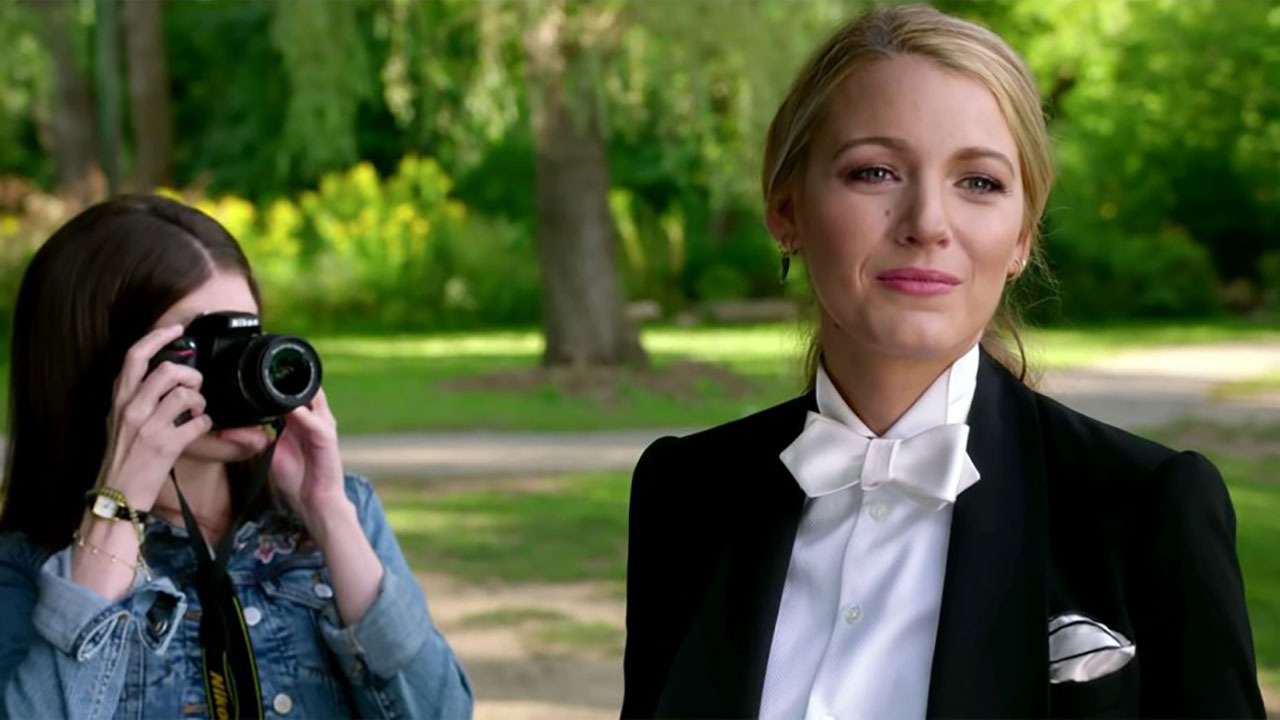
Director Paul Feig’s A Simple Favor was one of the sleeper hits of 2018, but I feel like it hasn’t quite been given its full due yet. Anchored by capital-M movie star performances from Anna Kendrick and Blake Lively (born to vamp it up as a femme fatale), A Simple Favor blends together the proud perversity of Basic Instinct with the steely intelligence of Gone Girl, throwing in ample heaps of humor to keep the viewer off guard for its many twists and turns. While the film does unfortunately pull its punches during the finale, the end result remains a relentlessly entertaining and rewatchable update of the film noir for the age of social media.

Lowlife (2018)

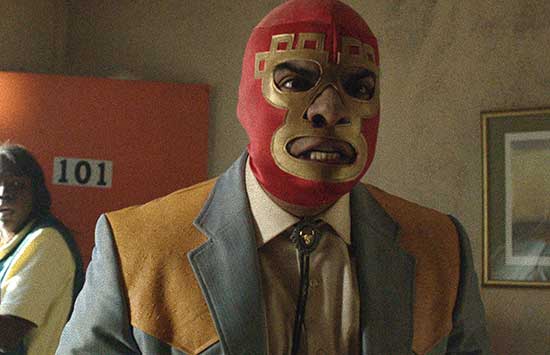
A hyperviolent, Los Angeles-set ensemble crime drama with a fractured narrative, Lowlife certainly invites comparisons to Pulp Fiction, although enough time has passed since the days of Tarantino fatigue that it feels like a refreshing throwback rather than a rote knock-off. Even if that weren’t the case, the film, which charts the fatal intersection of several characters operating in or on the fringes of the black market organ trade—including a pregnant junkie, a desperate hotel owner, a ruthless crime lord, a corrupt ICE agent (a redundancy, I know), a very not racist ex-con with a Swastika face tattoo, and a disgraced luchador possessed of almost superhuman strength—would distinguish itself by way of its utterly delightful derangement and surprising pathos.

The Sisters Brothers (2018)

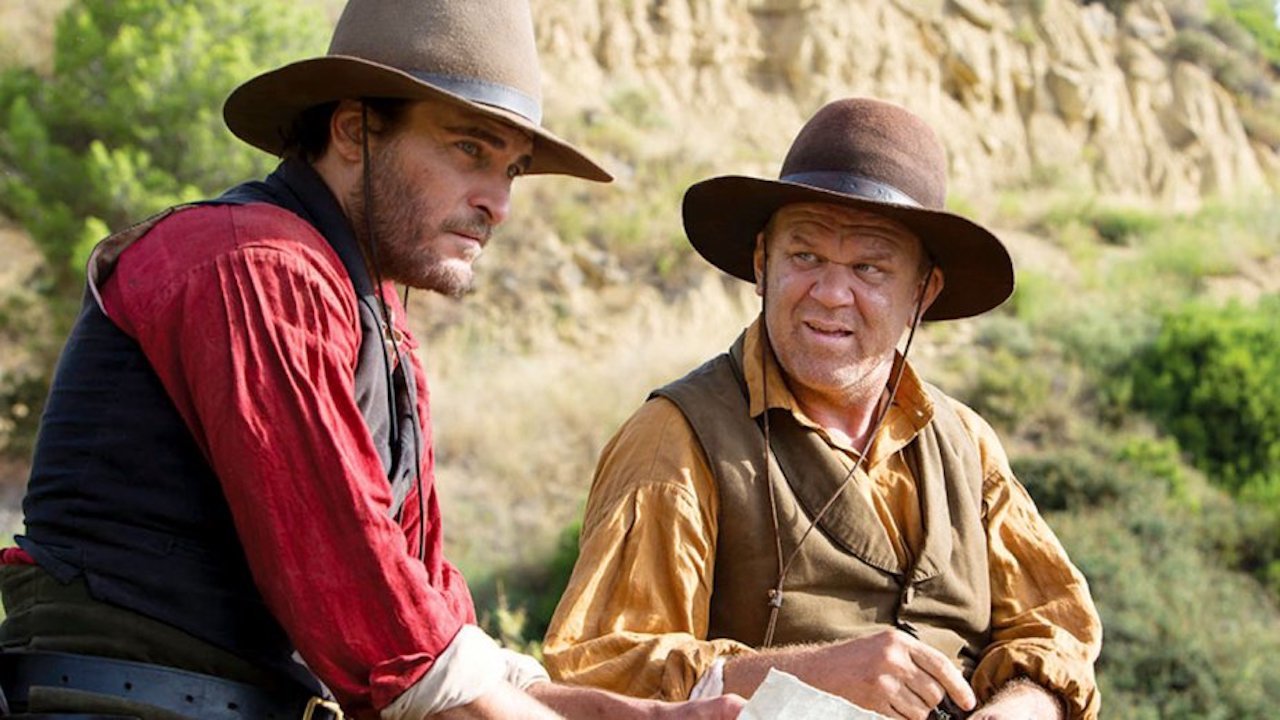
This noir-tinged western—an adaptation of Patrick DeWitt’s popular 2011 novel—follows a ruthless pair of gun-for-hire brothers on a violent journey of self-discovery in the dying days of the Old West. By turns tender and brutal, elegiac and sober, disturbing and funny, The Sisters Brothers would have been right at home during the heyday of revisionist westerns (chances are, it probably would have found a bigger audience too), although it’s impossible to imagine anyone other than Joaquin Phoenix (good as he’s ever been) and John C. Reilly (reminding us that he’s got real gravitas) in the lead roles.

Hold the Dark (2018)

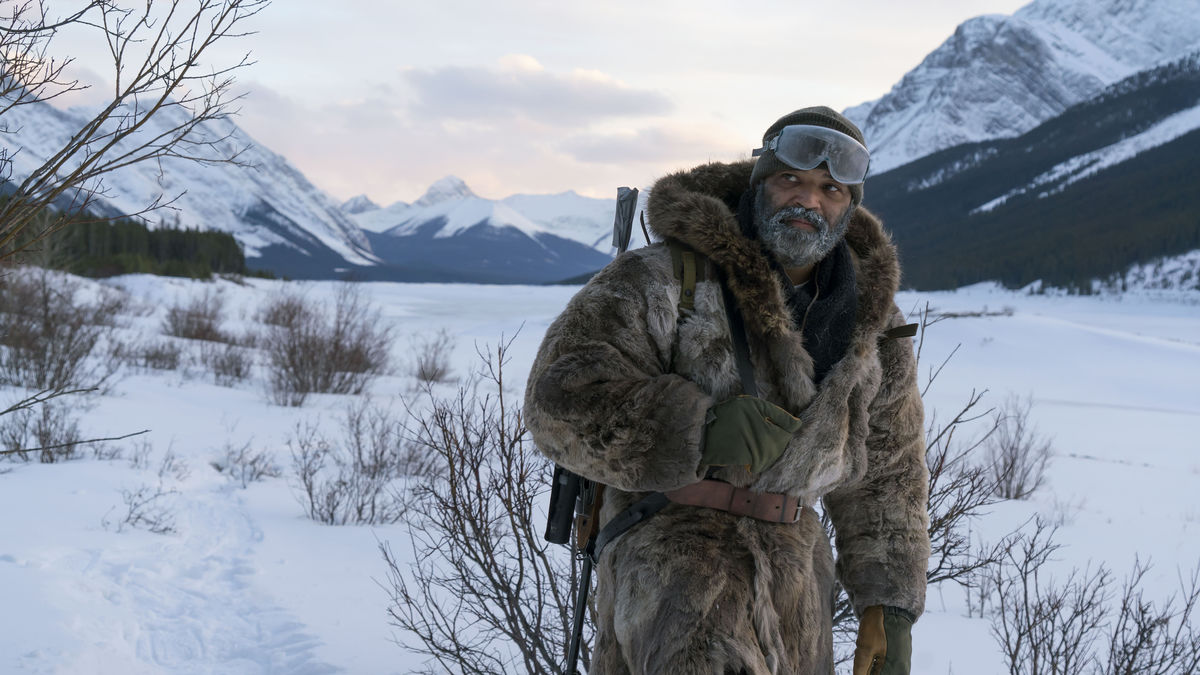
The one-two punch of action-noir masterpieces Blue Ruin and Green Room established director Jeremy Saulnier and writer/actor Macon Blair as the most exciting filmmaker duo to come around in a long time. Disappointing then that their most recent film, Hold the Dark—about an expert hunter-tracker who becomes tangled in a series of increasingly violent events following the death of several children in a remote Alaskan village—should have been met with such mute response. The reaction is understandable though, since the film intentionally keeps the viewer at a distance. However, this is a film that almost demands a second chance, as repeat viewings help reveal the truth at the heart of its mystery, a truth that has its roots set deep in ancient mythology and the supernatural.

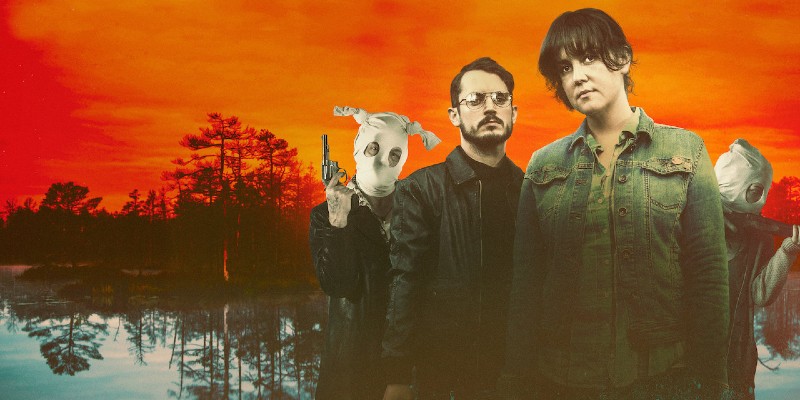
I Don’t Feel at Home in This World Anymore (2017) 

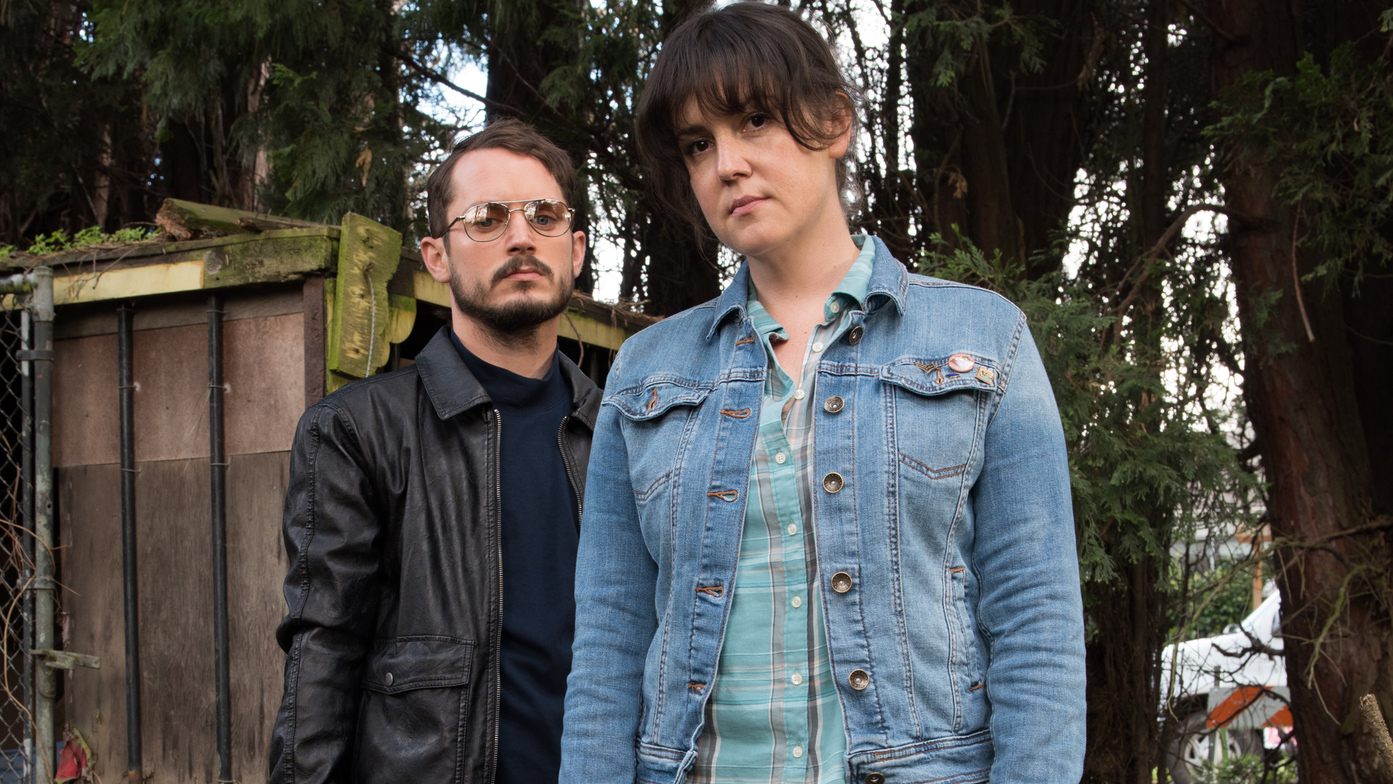
Speaking of Macon Blair, he made his directorial debut in 2017 with this wonderfully twisted amateur sleuth/revenge. After her home is burglarized, a soft-spoken, depressed nursing assistant (Melanie Lynskey) decides she’s tired of being a pushover and teams up with her unhinged hesher neighbor (Elijah Wood) to track down the culprits. Needless to say, this leads them down a rabbit hole of criminality that grows darker and more dangerous they further they follow it. Recalling the simmering menace and black humor of the best Coen Brothers dark comic thrillers, I Don’t Feel at Home in This Word anymore marks Blair as the guy to watch when it comes to modern neo-noir.

Logan Lucky (2017)

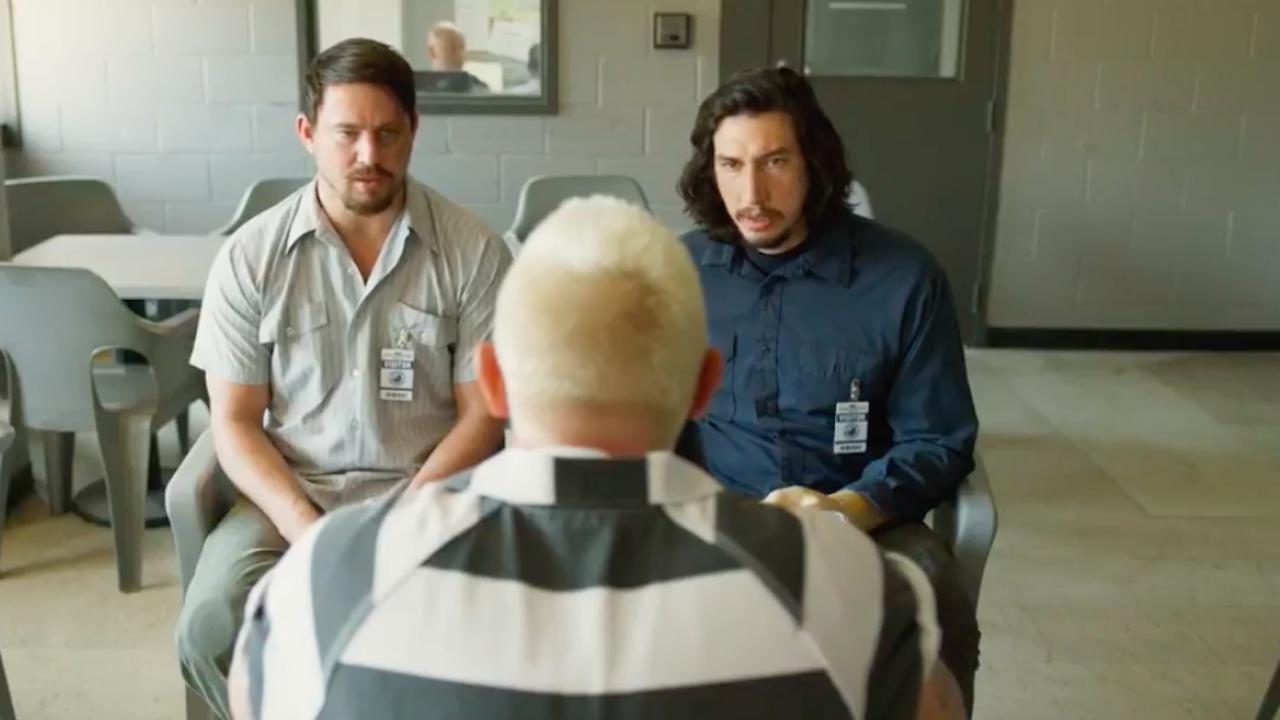
The project that brought Steven Soderbergh out of short-lived retirement, Logan Lucky was probably always too much of a low-key hangout film to catch on big with audiences, despite its star-studded cast and an advertising campaign selling it as a redneck version of Ocean’s Eleven. That’s the public’s loss, since Logan Lucky is every bit as enjoyable as Soderbergh’s Vegas-set heist films, and a more mature and moving picture to boot. If nothing else, it deserves to be watched for the extended Game of Thrones joke, which includes arguably the best punchline of any film this decade. (It also features Macon Blair in a small but memorable role, making him the MVP of this list.)

The Queen of Hollywood Blvd (2017)

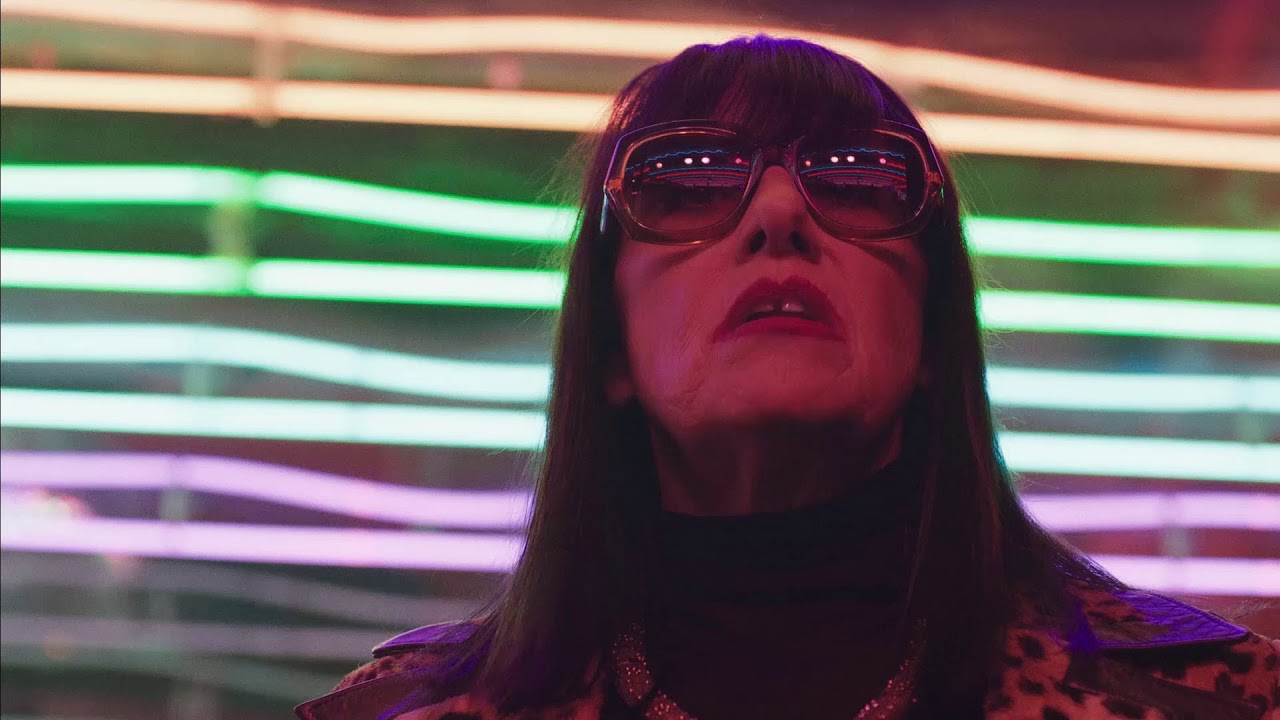
On the morning of her sixtieth birthday, no-nonsense a strip club owner Mary (Rosemary Hochschild) is forced to make good on a years’ old debt to the mob or else give up her club (and potentially much more). Orson Oblowitz’s grungy love letter to tinsel town glitter and doom takes the framework of John Cassavetes’s classic L.A. neo-noir The Killing of a Chinese Bookie and brings into the modern day. Hochschild makes for great anti-hero: decked out in leopard print and black leather, her desiccated face—which, in the words of Warren Zevon, “looks like something death brought with him in his suitcase”—hidden behind two solid black saucers that might as well be empty eye sockets, she carries an aura of death with her through every frame. The same goes for the late, great Michael Parks, who turns in one of his very final performances here.

Always Shine (2016) 

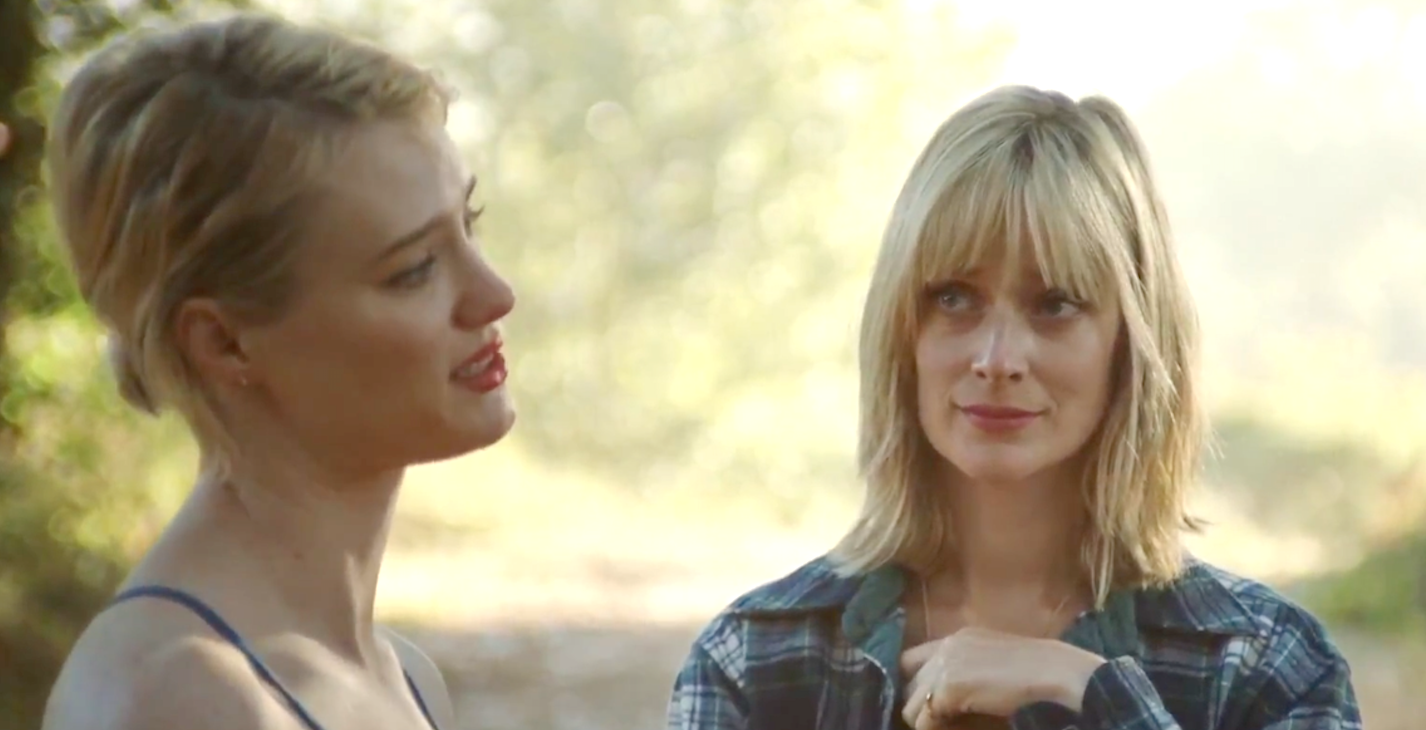
Always Shine, director Sophia Takal’s intense psychological thriller about a pair of friends, both actresses, whose history of professional jealousy and personal resentment comes to a boil during a charged and frightening vacation at an isolated cabin in Big Sur, is a great recent entry in the House of Psychotic Women subgenre. The film’s fierce central performances (especially from Mackenzie Davis) and themes of subsumed identity, combined with the eerie scenery of its setting, bring to mind the uncanny anxieties and terrors of Bergman and Lynch, while the discordant, Bernard Herman-esque score gives the film a spellbinding Hitchockian feel.

Dog Eat Dog (2016)

When First Reformed was released last year, it was hailed as a long-awaited return to form for writer/director Paul Schrader. But while the intense spiritual drama was undoubtedly his best film in almost two decades, that talking point unfairly ignores Dog Eat Dog, his adaptation of Edward Bunker’s 1996 novel about a trio of ex-cons looking to pull off a bigtime kidnapping score. It’s easy to understand why Dog Eat Dog was overlooked: it kicks off with one of the most horrifying opening scenes in recent memory and only gets meaner and nastier from there. No doubt, most viewers don’t have the stomach for the film’s bleakness and brutality, but those who do will definitely want to catch up with this one.

Welcome to New York (2015) 

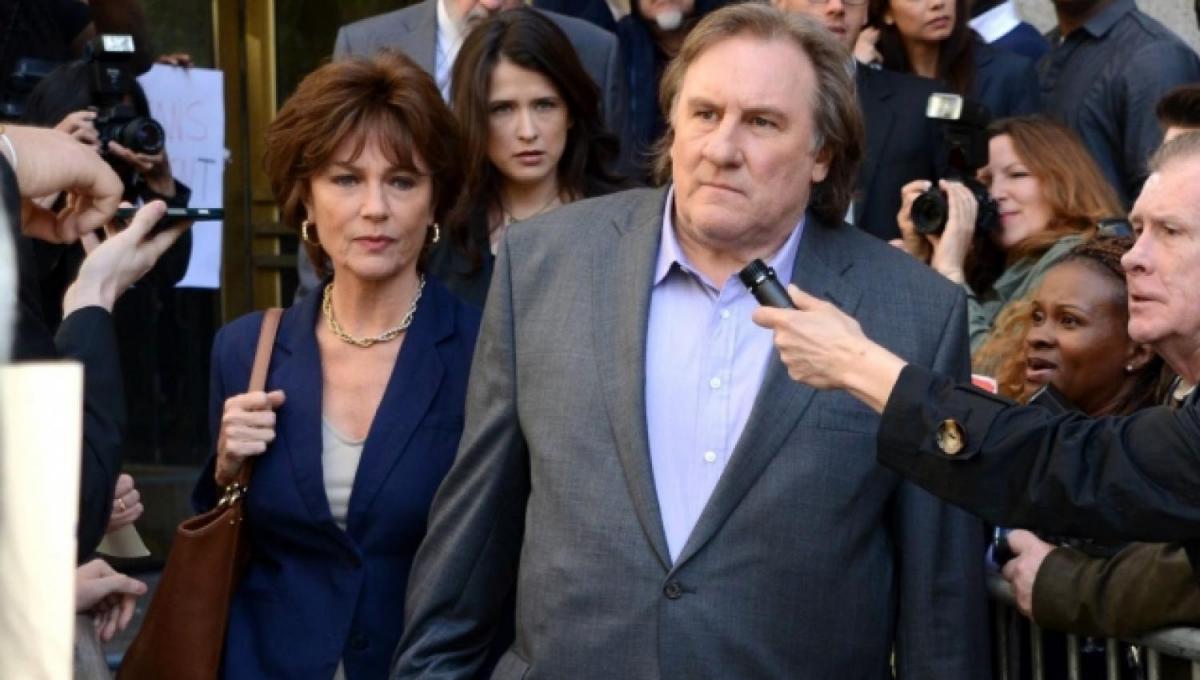
Leave it to Abel Ferrara, the hard living, outspoken poet laureate of New York City’s underbelly, to make one of the best movie about #MeToo three years before the movement truly took hold. This isn’t to credit him with any share of the movement’s success, but only to recognize that Welcome to New York, Ferrara’s quiet, yet coldly furious dramatization of the arrest and prosecution of former IMF director Dominique Strauss-Kahn for sexual assault in 2011, avoids any of the cheap sensationalizing or manufactured and hypocritical outrage found in Hollywood’s response thus far.* Refusing to insult our intelligence with any he said/she said waffling, Welcome to New York is a fully damning portrait of men like Strauss-Kahn, as well as a clear-eyed look at the way wealth and power feed addiction while emptying the addict of their humanity.

*It should, however, be noted that the film’s star, Gerard Depardieu, was himself investigated for sexual assault last year.

The Gift (2015)

Of late, there’s been renewed interest in the subgenre of thrillers about strangers intruding into the lives of others: this year alone saw the release of Greta, Ma, The Intruder and Parasite. While it’s probably too much of a stretch to point to writer/director/star Joel Edgerton’s The Gift—about a married couple who are stalked by a mysterious loner from the husband’s past—as being responsible for the genre’s resurgence, it does deserve credit for at least anticipating the current wave back in 2015, as well as being the best of them, Parasite excepted.

Cold in July (2014)

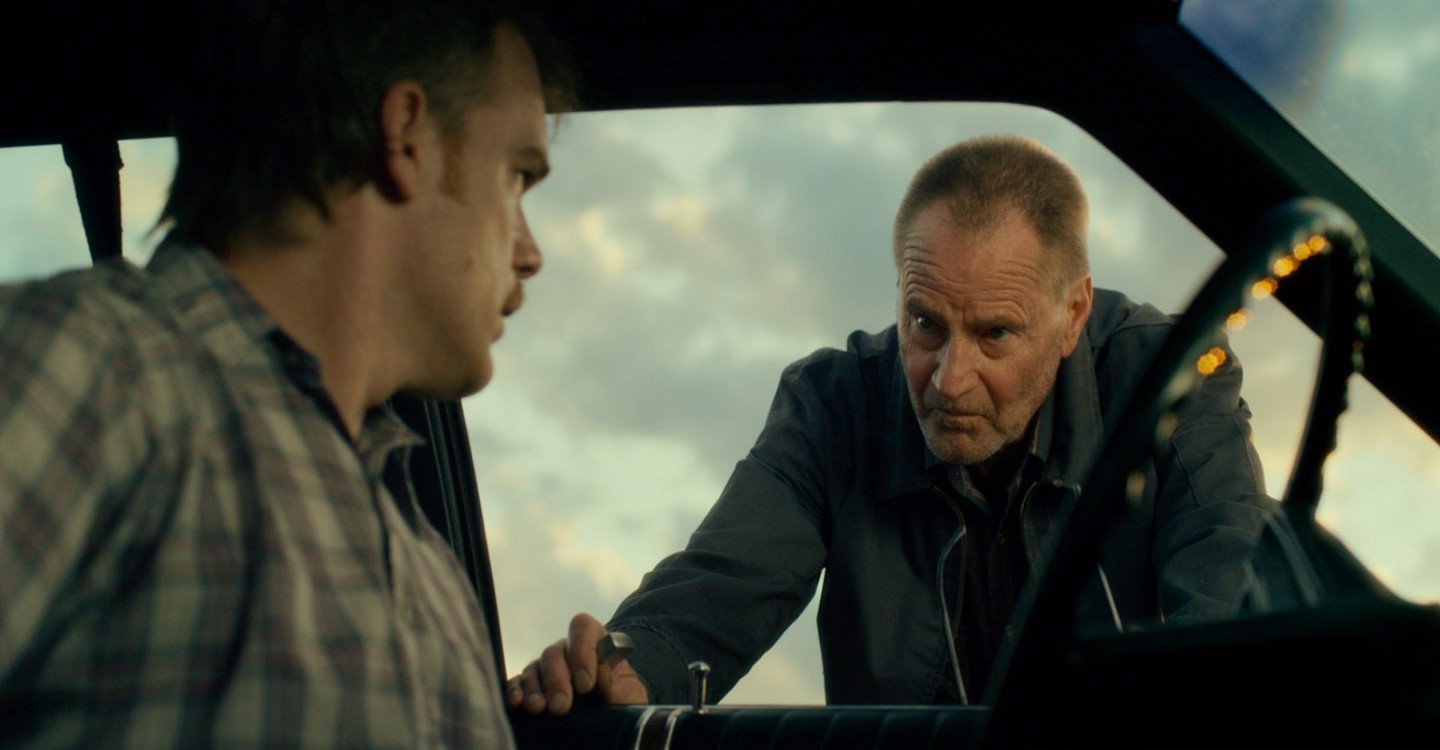
Director Jim Mickle’s adaptation of Joe R. Lansdale’s country-fried noir novel adroitly puts the viewer in the mindset of its reluctant everyman protagonist by never letting them get their bearings. What starts off as a straight revenge thriller—a milquetoast Texas family man (Michael C. Hall) kills a home intruder only for the dead man’s ex-con father to come around looking for payback—suddenly and continuously shifts lanes. While this can result in a little bit of whiplash, it makes for a consistently thrilling ride. Cold in July also boasts two knockout performances from co-stars Don Johnson and the late, great Sam Sheppard, who turns in one of, if not the, best acting performance of his career.

Cheap Thrills (2014)

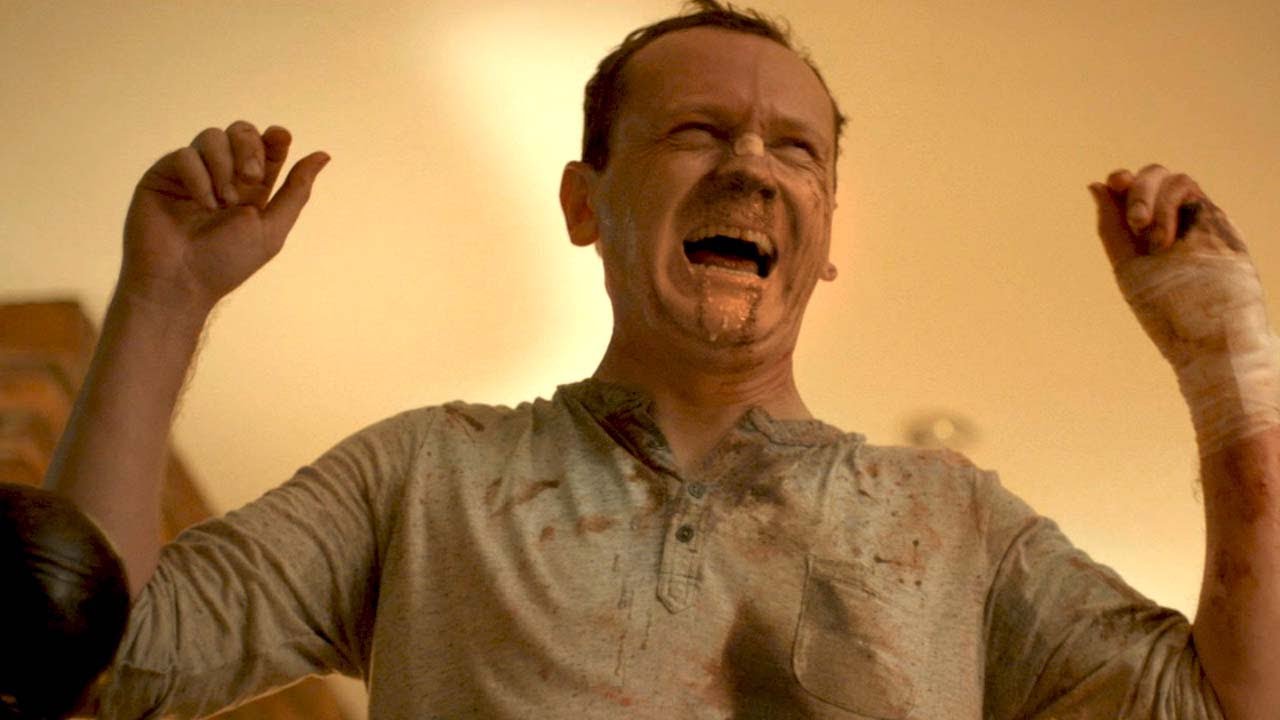
Class warfare has been at heart of many of 2019’s highest profile genre films (Knives Out, Joker, Ballers, Ready or Not, Us, as well as the uncategorizable Parasite), but for all of those films’ individual charms or failures, none cut to the diseased heart of the matter quite as swiftly or brutally as 2014’s Cheap Thrills. Already well on its way to cult classic status, the film—about a pair of cash-strapped old friends made to compete against one another in an escalating series of dares (everything from binge drinking to self-mutilation) at the behest of an ultra-wealthy sociopathic married couple—stacks gruesome set piece on top of gruesome set piece until it all comes crashing down in an unexpectedly devastating finale. Free from any self-congratulatory pedantry or on-the-nose analogy, Cheap Thrills shows us the destructive influence of wealth, rather than telling us about it.

Faults (2014)

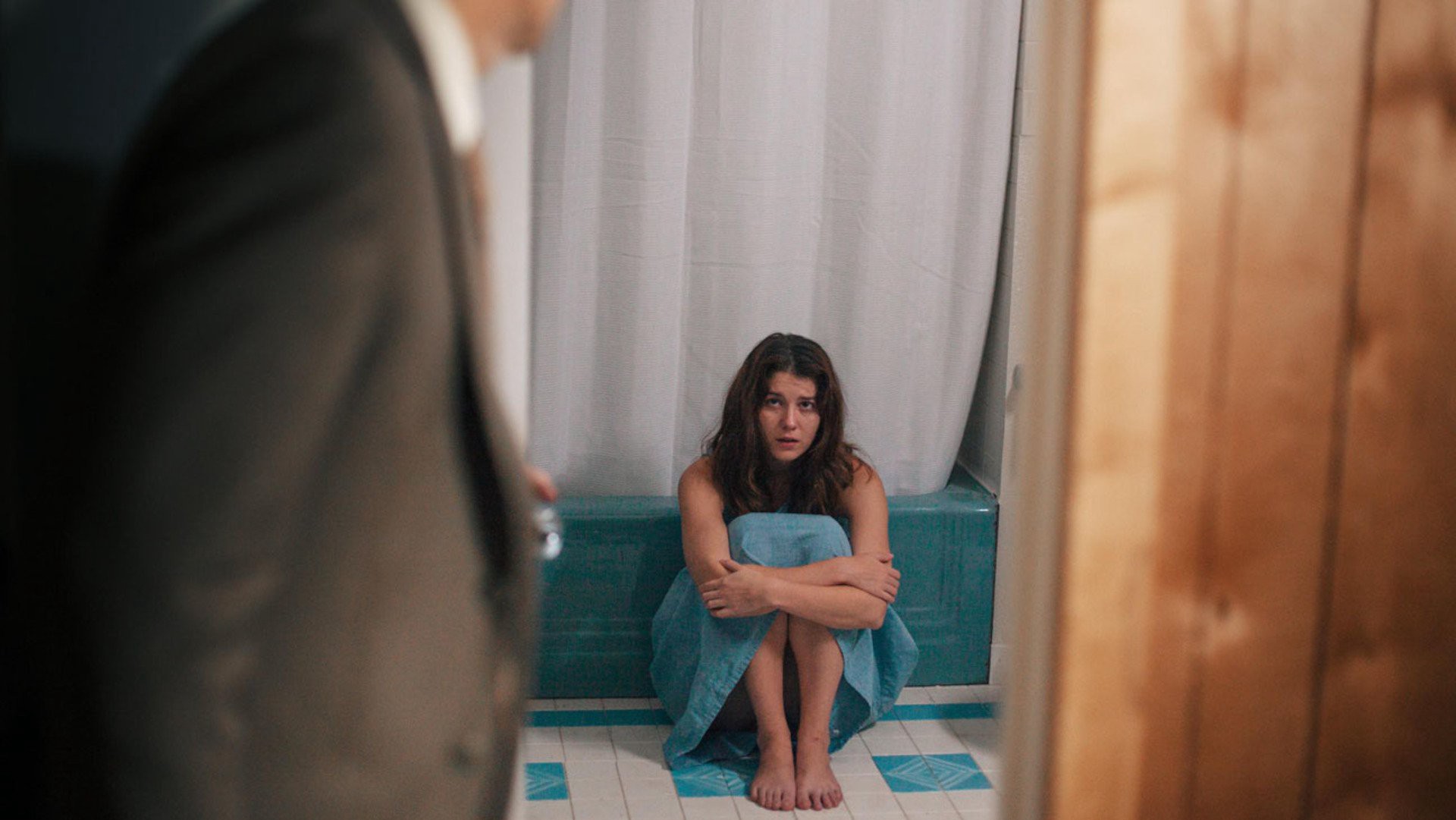
A down-on-his-luck mind-control expert (the great character actor Leland Orser, who you’ll recognize from the most harrowing scene of David Fincher’s Seven) gets a chance to redeem his tarnished reputation by deprogramming a young woman (Mary Elizabeth Winstead) under the sway of a mysterious cult. What follows is a psychological game of one-upmanship set almost entirely inside a seedy motel room. Director Riley Stearns crafts an enticingly twisty minimalist thriller that never feels stagey or, for that matter, all that minimalist. Movies about cults have proven increasingly popular this past decade, and this is one of the best of the crop. After you watch Faults, check out Stearns latest film, the dark comic thriller The Art of Self Defense, which similarly explores the insidious power the cult mentality.

The Counselor (2013)

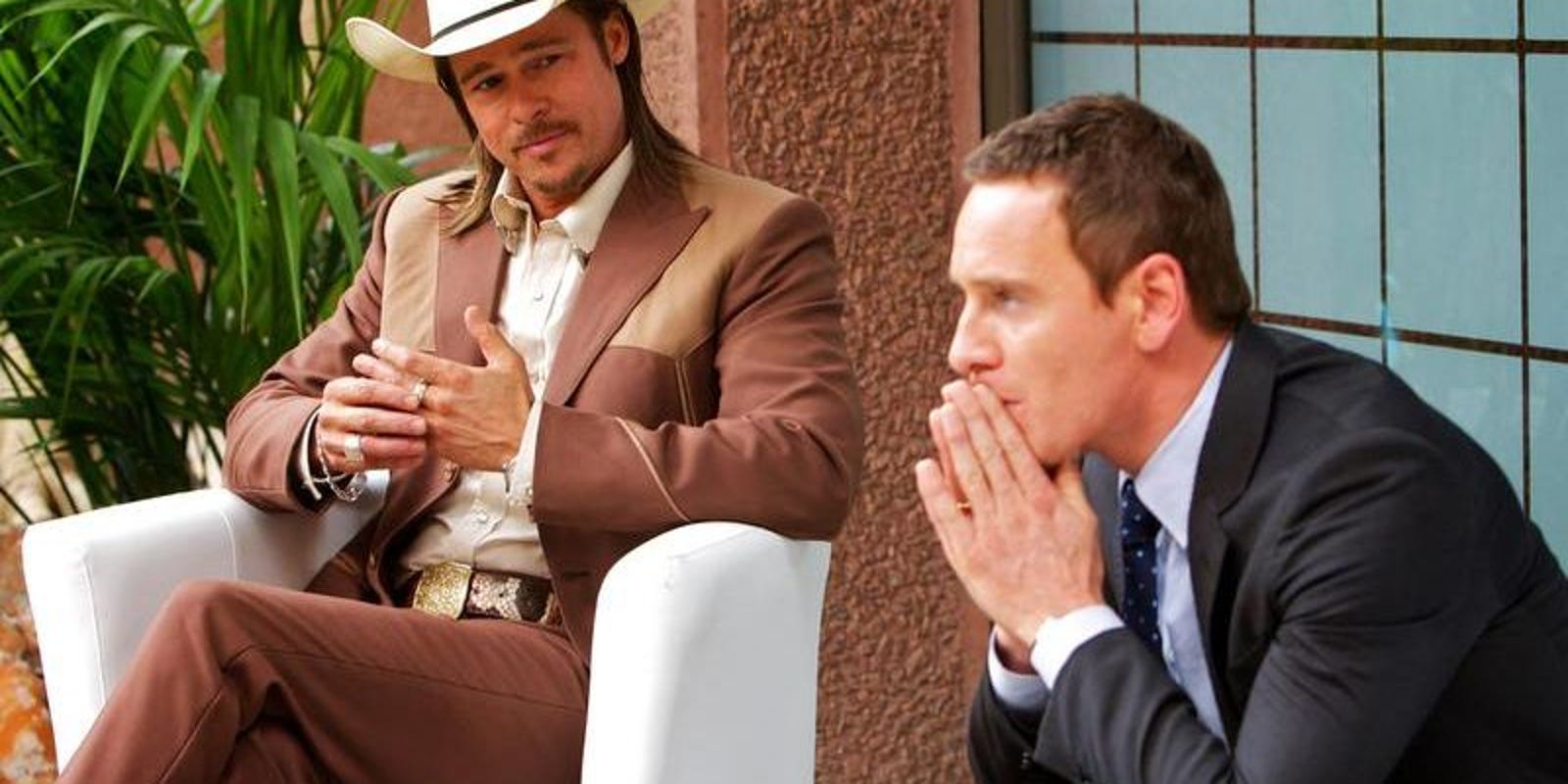
Ridley Scott’s border-set thriller, from a script by Cormac McCarthy, was met with resounding disdain and ridicule upon its original release. To be sure, the film is almost oppressively nasty and nihilistic, with an ungainly structure and number of utterly baffling scenes (the most infamous of which involves Cameron Diaz making love to a Ferrari). But, if you can get on its wavelength, it’s also a consistently frightening and devastating—and surprisingly funny—descent into the inferno. And while the film never fully coalesces (the late Tony Scott would have been better suited to the seediness of the material than his austere older brother), those familiar with McCarthy’s larger body of work, especially his early gothic novels, will find much to appreciate in its strange rhythms and dreamlike quality.

Sun Don’t Shine (2013)

A pair of lovers drive through southern Florida with a body in the trunk of their car. They’re trying to get to the everglades, where they can dump the corpse in a swamp, but their shared distrust and ratcheting desperation ensure that they’re heading straight towards mutually assured doom. Call it mumblenoir: director Amy Seimetz’s low budget road movie contains all the staples of late Aughts/early Teens indie cinema—grainy digital cinematography, naturalistic acting, quiet and sparse dialog, xylophone score—but the simple, Ulmer-esque story and the haunting natural scenery imbue it with a timeless, Southern Gothic quality.

Gone with the Pope (2010)

A recently paroled gangster hatches a genius score: he and three other ex-cons will travel to Rome and kidnap the Pope. Their ransom demands? One dollar from every Catholic in the world.

Nightclub performer turned exploitation auteur Duke Mitchell wrote, directed, produced and starred in this magnum opus from 1976, but unfortunately, he passed away before he could assemble the footage. The film was thought lost until 2009, when the negative and unfinished cut were rediscovered and assembled by a team of editors led by Bob Murawski (who pulled off a similar feat of cinematic resurrection last year with Orson Welles’s The Other Side of the Wind).

Upon first glance, Mitchell seems a kindred spirit to fellow outsider artists Ed Wood, Rudy Ray Moore and Tommy Wiseau, although Pope is a far stranger, and honestly more impressive, beast than any of their ‘so-bad-they’re-good’ productions. For one thing, Mitchell had legitimate skills as a director; for another, in spite of his film’s utter lack of self-awareness and its penchant for deep cruelty (it is, at times, shockingly misogynistic and racist even by 70’s grindhouse standards), it also contains moments of jaw dropping brilliance, such as an out-of-nowhere monologue in which Mitchell delivers a legitimately devastating indictment of the Catholic Church’s complicity in the Holocaust and an ending that is both hilarious in its randomness and honestly terrifying in its implications. A truly singular experience, Gone with the Pope defies all rules of logic, expectation and taste. Of all the films listed here, this is the hardest to find (it’s not streaming anywhere, and the limited-edition Blu-Ray will set you back some) but, assuming you’re willing to put up with it at its ugliest, the most worth your time.

10 Dec 22:54

Marble Machine

by swissmiss

This is pretty magical.

10 Dec 00:00

2019 Saw a Dramatic Shift in the Way Americans Drink

by Rebecca Jennings

How White Claw and wellness changed drinking culture this year

https://www.vox.com/the-goods/2019/12/9/20983910/low-abv-white-claw-hard-seltzer
23 Nov 11:05

Sacha Baron Cohen Links the Decline of Democracy to the Rise of Social Media, “the Greatest Propaganda Machine in History”

by OC

Presenting a keynote address at an ADL conference, comedian Sacha Baron Cohen wasn't kidding around when he painted a bleak picture of our emerging world: "Today ... demagogues appeal to our worst instincts. Conspiracy theories once confined to the fringe are going mainstream. It’s as if the Age of Reason—the era of evidential argument—is ending, and now knowledge is delegitimized and scientific consensus is dismissed. Democracy, which depends on shared truths, is in retreat, and autocracy, which depends on shared lies, is on the march. Hate crimes are surging, as are murderous attacks on religious and ethnic minorities."

What's leading to these destabilizing changes? Baron Cohen could cite many reasons. But if pushed, he'll emphasize one:

But one thing is pretty clear to me. All this hate and violence is being facilitated by a handful of internet companies that amount to the greatest propaganda machine in history.

The greatest propaganda machine in history.

Think about it. Facebook, YouTube and Google, Twitter and others—they reach billions of people. The algorithms these platforms depend on deliberately amplify the type of content that keeps users engaged—stories that appeal to our baser instincts and that trigger outrage and fear. It’s why YouTube recommended videos by the conspiracist Alex Jones billions of times. It’s why fake news outperforms real news, because studies show that lies spread faster than truth. And it’s no surprise that the greatest propaganda machine in history has spread the oldest conspiracy theory in history—the lie that Jews are somehow dangerous. As one headline put it, “Just Think What Goebbels Could Have Done with Facebook.”

On the internet, everything can appear equally legitimate. Breitbart resembles the BBC. The fictitious Protocols of the Elders of Zion look as valid as an ADL report. And the rantings of a lunatic seem as credible as the findings of a Nobel Prize winner. We have lost, it seems, a shared sense of the basic facts upon which democracy depends.

You can watch his sobering talk above, or read the transcript here.

Would you like to support the mission of Open Culture? Please consider making a donation to our site. It's hard to rely 100% on ads, and your contributions will help us continue providing the best free cultural and educational materials to learners everywhere.

Also consider following Open Culture on Facebook and Twitter and sharing intelligent media with your friends. Or sign up for our daily email and get a daily dose of Open Culture in your inbox. 

Related Content:

The Case for Deleting Your Social Media Accounts & Doing Valuable “Deep Work” Instead, According to Prof. Cal Newport

New Animation Explains Sherry Turkle’s Theories on Why Social Media Makes Us Lonely

Lynda Barry on How the Smartphone Is Endangering Three Ingredients of Creativity: Loneliness, Uncertainty & Boredom

Sacha Baron Cohen Links the Decline of Democracy to the Rise of Social Media, “the Greatest Propaganda Machine in History” is a post from: Open Culture. Follow us on Facebook, Twitter, and Google Plus, or get our Daily Email. And don't miss our big collections of Free Online Courses, Free Online Movies, Free eBooksFree Audio Books, Free Foreign Language Lessons, and MOOCs.

22 Nov 11:07

Hopepunk and Solarpunk: On Climate Narratives That Go Beyond the Apocalypse

by Alyssa Hull

I hear the following more often than I would like from some of my fellow educators: “My students can’t or won’t discuss climate change. They’re too privileged/preoccupied with their phones/just not interested.”

Of course these young people—these adolescents, these Gen Z college-goers—don’t want to discuss this with us. We are literally (literally) asking them to confront their own mortality.

Despite the incredible groundswell we are now witnessing around the youth-led climate movement—the school strikes, the UN protests, the anger and the vision of children and teenagers like Greta Thunberg—many of my students hear the words we have 18 months to tackle climate change or it will be too late and they think that in 18 months they are going to die. Maybe this thought is what inspires them to join the youth climate movements or Extinction Rebellion; or more crucially, maybe this is the thought that paralyzes them, anesthetizes them, and keeps them away and keeps them asleep.

I explain to them that the planet is not going to spontaneously combust change in the next 17 or 18 months if we do not “solve” climate change. As a scientist and a science educator, I recognize that to acknowledge the uncertainty inherent to any scientific endeavor, including climate science, risks giving power to denialists. But the choice (even if it’s a forced choice) of 1, 2, 3, or 5 degrees Celsius of global warming was never a scientific one: it is a social and political one, extrapolated from the science, of what we want the future to look like weighed against what we can sacrifice to get there and how fast we can do it.

We are constantly bombarded with messages of “climate catastrophe,” “cataclysm,” and, my least favorite, “apocalypse.” We are in the crisis now and we need, as ecofeminist scholar Donna Haraway says, to stay with the trouble. In order to do so, we need narratives that are not naively optimistic about the future of our species and the others that inhabit this planet alongside us. We desperately need narratives that move past apocalypse as an endpoint, not only because there are people and societies already living in the Western world’s vision of climate apocalypse on a daily basis, but because looking at the climate crisis as an apocalypse can only inspire a helpless waiting for the post-apocalypse to arrive, suddenly, to cleave the past from the future.

Climate is not weather, weather is not climate, and we don’t do ourselves any favors by thinking that climate scientists can provide us with an appropriately optimistic or apocalyptic forecast for our zipcode 18 months or 5 years from now. Instead we need stories that showcase a variety of possible futures, from the bleak to the hopeful.

We desperately need narratives that move past apocalypse as an endpoint.

This is where I look towards speculative fiction, as a writer and reader, to a genre that dabbles in both presents and futures. Pushback against a trend of apocalyptic, dystopian climate futures has inspired the speculative sub-genre solarpunk, which grew out of posts on the social media site Tumblr in the early 2010s. Solarpunk, both a lifestyle and a cultural movement, focuses on green and eco-friendly futures made possible by eliminating fossil fuel energy in favor of solar power and bio-inspired design. It may or may not be wholly utopian, but it certainly aspires to be beautiful, green, and colorful, an aesthetic that frequently mashes together the elegance of Art Nouveau with the wildness of permaculture. While solarpunk as a genre hasn’t yet grasped hold of speculative fiction readers in the same way its predecessors cyberpunk and steampunk did, its short story anthologies, like The Weight of Light (produced through ASU’s Center for Science and Imagination) and Sunvault, and its writers, like Andrew Dana Hudson, have produced compelling visions of the future.

While I find the fashion, architecture, and energy proposals of solarpunk inspiring, I am looking for narratives that offer me something besides absolute optimism or total despair. Enter hopepunk, a term coined by Alexandra Rowland in 2017 to describe genre fiction that is the opposite of the ever-popular grimdark everything-sucks-and-is-terrible mentality. Hopepunk stories are not specifically climate-focused and, more importantly, do not necessitate hopeful worlds. In the age of Trump, this basic act of extending to another person kindness, rather than disdain or vitriol, becomes a political narrative, found in the writings of speculative fiction writers Becky Chambers and Cat Rambo, among others. (If This Goes On: The Science Fiction Future of Today’s Politics, an anthology of speculative fiction shorts edited by Rambo and published this past March, was conceived from her tripartite of “rage and sorrow and hope.”)

Speculative literature could do worse than to broaden its spectrum of proffered climate futures from the dystopian, apocalyptic, and the grimdark, to include those where hopepunk is still necessary in the midst of a changing climate, and even to the optimistic futures of the solarpunks.  I find myself appreciating hopepunk because it allows us to  or 3, or 5 degrees Celsius of warming—what can we handle and how can we know?—means that we will probably lose things (species, homes, people) that we planned to save.

The narratives we construct, the stories we tell ourselves must acknowledge that, while there’s a scientific consensus that the atmosphere is warming due to our fossil fuel emissions, many aspects and extents of climate change remain uncertain. Writing non-apocalyptic climate change narratives can make room, intellectually and emotionally, for our failures to act sooner. Some things will be lost; much already has been.

I want to say to my students: Even if it is already too late, we have no way yet of knowing it is, because I am afraid they will still give up.

*

One of the grimmest and yet most uplifting books I have read recently is Blackfish City, a near-future speculative novel with a world that author Sam J. Miller himself has called “realistically terrifying.” It is bleak because the future it offers is dark, desperate, and yet, occasionally survivable in a way that feels aligned with Rowland’s conception of hopepunk.

Hopepunk stories are not specifically climate-focused and do not necessitate hopeful worlds. In the age of Trump, this basic act of extending to another person kindness becomes a political narrative.

The city of Qaanaaq floats somewhere between Greenland and Iceland, designed to run on methane produced from the city’s waste and divided into radiating arms that contain the different strata of society. Arm One is for the richest and most powerful, the uber-wealthy who escaped the worst of the climate ravages and founded the city before seeking anonymity to protect themselves and their wealth; all the way down to Arm Eight, the poorest and the most over-crowded. It is a city of global refugees who flee water wars, rising seas, and religious fanaticism to come to Qaanaaq. (Do any of these crises sound familiar?) Decision-making in the city occurs via artificial intelligence with only minor input from human managers.

The narrative is a mosaic of different characters; we follow the assistant of a minor politician, a fighter for a local mob boss, and a delivery runner, all attempting to survive within a viciously apathetic system. Their daily acts of resistance are simply existing, as queer people and people of color, until they become entangled trying to stop a disease known as “the breaks.” The breaks is a disease of misplaced remembrance: the afflicted recall memories that aren’t their own, and the who and how of this becomes one of the central plot points of Blackfish City.

These characters aren’t nominated by some unseen hand. None of them are altruists. They are rather intrinsically ordinary. Like the climate activists who have taken to the streets in the past days, months, and decades, their desire to bring about a sea change in Qaanaaq is motivated by the recognition (and perhaps the historical knowledge) that they live in a community where resources are scarce and cooperation is paramount. They are not the pathfinders of the resistance, but rather, they benefit from the triumphs and failures of a previous generation.

There is so much that is so awful about Qaanaaq and how and why it came to be—and yet, here is a world where the characters who form the seed of the resistance against Arm One’s wealthy shareholders are unapologetically queer, non-binary, people of color, or all three; the story offers no explanation for why they are so, nor are the characters asked for one by the society around them. The worldbuilding in Blackfish City makes what is often subtextual in the mainstream climate discussion (race, gender, sexuality) explicitly textual; marginalized groups, particularly the poor and people of color, particularly in the Global South, are enduring and will continue to endure more hardship than those of us who are white, middle-class, and live in the Global North. To see a collective of characters from marginalized identities at the forefront of a resistance movement, to work against a system they see as unjust, is a powerful acknowledgment of this reality.

I want to say to my students: Even if it is already too late, we have no way yet of knowing it is, because I am afraid they will still give up.

I want my students to read these books. I want them to know that they will have a future—if we work towards it, together, now. I want them to have books that make room for the conversation on grief, on failure, and on future.

I am inspired by so many members of this upcoming generation. They are waking up far faster and banding together with far more bravery than I and my fellow millennials did. But I suspect that some, still, are understandably afraid to engage. To recognize that climate change is here, that it will change their lives, is to accept the end of those lives. And it is an end: to a certain way of living; to a certain mindset; but it is not the end.

We need the stories to carry them—us—beyond there.

20 Nov 20:23

Last Call: Now that Nutella and Taco Bell have hotels, which brand should be next?

by Aimee Levitt
Bgarland

Chateau Ex-Lax! Giant bathrooms attached to tiny sleeping pods. Free high-fiber breakfast buffet. Prune juice on tap in every room.

Nutella announced this week that it will be opening the Hotella Nutella in the Napa Valley the weekend of January 10. The press release describes it as “a first-of-its-kind, weekend getaway experience dedicated to the beloved spread.” The hotel will be open for just that single weekend, and the only people who will be…

Read more...

20 Nov 20:22

Goodnight, squeak prince: Chuck E. Cheese removes all its animatronics

by Marnie Shure
Bgarland

And good riddance.

They’re putting the band back together—into storage. Chuck E. Cheese, the children’s entertainment center whose 1980s and ’90s proliferation inspired a warped nostalgia in us all, has unveiled a sweeping redesign that will soon take effect in all 600-plus locations, and is already rolling out this week in several…

Read more...

20 Nov 19:17

If You’re Rich, You Should Absolutely Give Trick-or-Treaters Full-Sized Snickers

by Jaya Saxena
Bgarland

"We have nothing to lose but our Smarties."
VIVA LA REVOLUTION!

An assortment of fun-sized Halloween candies in a bowl JLMcAnally/Shutterstock

This viral Facebook post makes some good points!

Halloween is around the corner, which means it’s once again time for everyone’s insufferable candy opinions. Usually those come in the form of debating the enjoyability of candy corn, or reminding everyone that, no, nobody is wasting their weed-laced chocolates or gummies on your children. But the conversation has escalated in the Rancho Cucamonga Neighborhood Watch regarding what candies are acceptable to give out to trick-or-treaters.

The post is being circulated by the Twitter account Best of Nextdoor, though it’s unclear when it was first posted. Thankfully, its contents are timeless. “Over the last three Halloweens, I’ve noticed candy stock has become more and more diluted with cheap candy,” the neighbor writes. “Dum Dums, Smarties, and Jolly Ranchers may be suitable for Ontario, Fontana and even Montclair, but not here in Rancho Cucamonga. We are an affluent neighborhood and this status should be reflected in our candy provisions for Halloween.” They suggest residents give out full size — or even king sized — candy bars, and god have mercy on anyone who gives out pennies. Quarters, at least!

Honestly, this anonymous busybody is right. According to the U.S. Census Bureau, Rancho Cucamonga, California, has a median household income of $83,736, about $25,000 more than the national average (as represented by the folks in Dum Dum-plagued Ontario). They should absolutely be redistributing that wealth, and in lieu of doing it through higher taxes to provide things like universal health care, they can do it through candy. Can you imagine the insult of showing up to a mansion only to pick from circus peanuts and those cowtail caramels?

Driving to trick-or-treat in other neighborhoods is increasingly common, as is rich people getting pissed off when poor kids who don’t live in their part of time show up asking for candy. But it’s time to put the trick back into trick-or-treat. Egg everyone in Silicon Valley if they don’t give you full bars of Mast chocolate. Demand imported Japanese Kit Kats. Don’t want to give away thousands of dollars in candy? TOO BAD. This is the Halloween tax and you, fancy person of Rancho Cucamonga, must pay it!

The person who posted to this Facebook group is probably just a citizen who wants to keep up appearances in a wealthy town. Or they might be a communist hero. If we share one value on Halloween, it should be from each according to his ability, to each according to his desire for full Reese’s cups. We have nothing to lose but our Smarties.

20 Nov 19:16

Talk About Your Joy

by swissmiss

“Talking about our problems is our greatest addiction. Break the habit. Talk about your joys.”

I don’t remember where I saw this, but it really struck a nerve.

20 Nov 16:11

Make the Day After Turkey Day Ramen Day

by Sho Spaeth
Bgarland

Even better? Don't get a turkey, make an incredible bowl of ramen for Thanksgiving itself!


Turn your leftover Thanksgiving turkey into a light and clear ramen broth. Read More
15 Nov 15:07

The First High-Resolution Map of America’s Food Supply Chain: How It All Really Gets from Farm to Table

by Colin Marshall

The phrase "farm to table" has enjoyed vogue status in American dining long enough to be facing displacement by an even trendier successor, "farm to fork." These labels reflect a new awareness — or an aspiration to awareness — of where, exactly, the food Americans eat comes from. A vast and fertile land, the United States produces a great deal of its own food, but given the distance of most of its population centers from most of its agricultural centers, it also has to move nearly as great a deal of food over long domestic distances. Here we have the very first high-resolution map of that food supply chain, created by researchers at the University of Illinois studying "food flows between counties in the United States."

"Our map is a comprehensive snapshot of all food flows between counties in the U.S. – grains, fruits and vegetables, animal feed, and processed food items," writes Assistant Professor of Civil and Environmental Engineering Megan Konar in an explanatory post at The Conversation. (The top version shows the total tons of food moved, and the bottom one is broken down to the county scale.)

"All Americans, from urban to rural are connected through the food system. Consumers all rely on distant producers; agricultural processing plants; food storage like grain silos and grocery stores; and food transportation systems." The map visualizes such journeys as that of a shipment of corn, which "starts at a farm in Illinois, travels to a grain elevator in Iowa before heading to a feedlot in Kansas, and then travels in animal products being sent to grocery stores in Chicago."

Konar and her collaborators' research arrives at a few surprising conclusions, such as that Los Angeles county is both the largest shipper and receiver of food in the U.S. Not only that, but almost all of the nine counties "most central to the overall structure of the food supply network" are in California. This may surprise anyone who has laid eyes on the sublimely huge agricultural landscapes of the Midwest "Cornbelt." But as Konar notes, "Our estimates are for 2012, an extreme drought year in the Cornbelt. So, in another year, the network may look different." And of the grain produced in the Midwest, much "is transported to the Port of New Orleans for export. This primarily occurs via the waterways of the Ohio and Mississippi Rivers."

Konar also warns of troubling frailties: "The infrastructure along these waterways—such as locks 52 and 53—are critical, but have not been overhauled since their construction in 1929," and if they were to fail, "commodity transport and supply chains would be completely disrupted." The analytical minds at Hacker News have been discussing the implications of the research shown on this map, including whether the U.S. food supply chain is really, as one commenter put it, "very brittle and contains many weak points." The American Society of Civil Engineers, as Konar tells Food & Wine, has given the country's civil engineering infrastructure a grade of D+, which at least implies considerable room for improvement. But against what from some angles look like long odds, food keeps getting from American farms to American tables — and American forks, American mouths, American stomachs, and so on.

Related Content:

Download 91,000 Historic Maps from the Massive David Rumsey Map Collection

The History of Cartography, “the Most Ambitious Overview of Map Making Ever Undertaken,” Is Free Online

View and Download Nearly 60,000 Maps from the U.S. Geological Survey (USGS)

Based in Seoul, Colin Marshall writes and broadcasts on cities, language, and culture. His projects include the book The Stateless City: a Walk through 21st-Century Los Angeles and the video series The City in Cinema. Follow him on Twitter at @colinmarshall or on Facebook.

The First High-Resolution Map of America’s Food Supply Chain: How It All Really Gets from Farm to Table is a post from: Open Culture. Follow us on Facebook, Twitter, and Google Plus, or get our Daily Email. And don't miss our big collections of Free Online Courses, Free Online Movies, Free eBooksFree Audio Books, Free Foreign Language Lessons, and MOOCs.

15 Nov 14:50

Download Hellvetica, a Font that Makes the Elegant Spacing of Helvetica Look as Ugly as Possible

by Colin Marshall

Among typography enthusiasts, all non-contrarians love Helvetica. Some, like filmmaker Gary Hustwit and New York subway map creator Massimo Vignelli, even made a documentary about it. Created by Swiss graphic designer Max Miedinger with Haas Type Foundry president Eduard Hoffmann and first introduced in 1957, Helvetica still stands as a visual definition of not just modernism but modernity itself. That owes in part to its clean, unambiguous lines, and also to its use of space: as all the aforementioned typography enthusiasts will have noticed, Helvetica leaves little room between its letters, which imbues text written in the font with a certain solidity. No wonder it so often appears, more than half a century after its debut, on the signage of public institutions as well as on the promotion of products that live or die by the ostensible timelessness of their designs.

But as times change, so must even near-perfect fonts: hence Helvetica Now. "Four years ago, our German office [was] kicking around the idea of creating a new version of Helvetica," Charles Nix, type director at Helvetica-rights-holder Monotype tells The Verge. "They had identified a short laundry list of things that would be better." What shortcomings they found arose from the fact that the font had been designed for an analog age of optical printing, and "when we went digital, a lot of that nuance of optical sizing sort of washed away." Ultimately, the project was less about updating Helvetica than restoring characters lost in its adaptation to digital, including "the straight-legged capital 'R,' single-story lowercase 'a,' lowercase 'u' without a trailing serif, a lowercase 't' without a tailing stroke on the bottom right, a beardless 'g,' some rounded punctuation."

The development of Helvetica Now also necessitated a close look at all the versions of Helvetica so far developed (the most notable major revision being Neue Helvetica, released in 1983) and adapting their best characteristics for an age of screens. Few of those characteristics demanded more attention than the spacing — or to use the typographical term, the kerning. But however astonishing a showcase it may be, Helvetica Now doesn't drive home the importance of the art of kerning in as visceral a manner as another new typeface: Hellvetica, designed by New York creative directors Zack Roif and Matthew Woodward. Much painstaking labor has also gone into Hellvetica's kerning, but not to make it as beautiful as possible: on the contrary, Roif and Woodard have taken Helvetica and kerned it for maximum ugliness.

The Verge's Jon Porter describes Hellvetica as "a self-aware Comic Sans with kerning that’s somehow much much worse." If that most hated Windows font hasn't been enough to inflict psychological disturbance on the designers in your life, you can head to Hellvetica's official site and "experience it in all its uneven, gappy glory." Roif and Woodard have made Hellvetica free to use, something that certainly can't be said of any genuine version of Helvetica. In fact, the sheer cost of licensing that most modern of all fonts has, in recent years, pushed even the formerly Helvetica-using likes of Apple, Google, and IBM to come up with their own typefaces instead — all of which, tellingly, resemble Helvetica. We can consider them all weapons in the life of a designer, which, as Vignelli put it, "is a life of fight. Fight against the ugliness." Happy downloading...

Related Content:

Comic Sans Turns 25: Graphic Designer Vincent Connare Explains Why He Created the Most Hated Font in the World

The History of Typography Told in Five Animated Minutes

Designer Massimo Vignelli Revisits and Defends His Iconic 1972 New York City Subway Map

Van Gogh’s Ugliest Masterpiece: A Break Down of His Late, Great Painting, The Night Café (1888)

Based in Seoul, Colin Marshall writes and broadcasts on cities, language, and culture. His projects include the book The Stateless City: a Walk through 21st-Century Los Angeles and the video series The City in Cinema. Follow him on Twitter at @colinmarshall or on Facebook.

Download Hellvetica, a Font that Makes the Elegant Spacing of Helvetica Look as Ugly as Possible is a post from: Open Culture. Follow us on Facebook, Twitter, and Google Plus, or get our Daily Email. And don't miss our big collections of Free Online Courses, Free Online Movies, Free eBooksFree Audio Books, Free Foreign Language Lessons, and MOOCs.

13 Nov 11:59

The 100% Vegan Menu to Rock an Animal-Free Thanksgiving

by Max Falkowitz

This hearty vegan Thanksgiving menu has all the classics covered, with a stunning centerpiece to boot. Read More
07 Nov 03:31

Psst. Turns out 80% of books published in 1924-1963 are secretly in the public domain.

by Emily Temple

This year, for the first time in over two decades, a slew of work entered the public domain: everything first published in the United States in 1923, to be precise. (And yes, next year we’ll get the goods from 1924.) “But there’s another source of public domain works,” Cory Doctorow writes at Boing Boing.

Until the 1976 Copyright Act, US works were not copyrighted unless they were registered, and then they quickly became public domain unless that registration was renewed. The problem has been to figure out which of these works were in the public domain, because the US Copyright Office’s records were not organized in a way that made it possible to easily cross-check a work with its registration and renewal.

“This is how Project Gutenberg is able to publish all these science fiction stories from the 50s and 60s,” writes Leonard Richardson, who cooked up the bot Secretly Public Domain in response to this news. “Those stories were published in issues of magazines that didn’t send in the renewal form. But up [un]til now this hasn’t been a big factor, because 1) the big publishers generally made sure to send in their renewals, and 2) it’s been impossible to check renewal status in bulk.”

Impossible, that is, until the NYPL started a project to encode all of the registration records in XML, which makes them readable by machines. And now that they’ve done so, what have the machines told us? It turns out that 80% of the books published in the United States before 1964 are actually (secretly!) in the public domain, because no one filed the correct form. And for the first time, you can actually figure out which ones. Ah, bureaucracy: every reader’s best friend.

[via Boing Boing]

05 Nov 16:52

Baltimore is at the Vanguard of a National Black Vegan Movement

by Jesse James Deconto

On a recent day in Baltimore’s Cherry Hill suburb, within the enclosure of a tall chain-link fence that guards a grassy meadow surrounded by churches, schools, and apartment complexes, Eric Jackson reaches into a garden plot the size of a tennis court, lush with collard greens and dinosaur kale, to pick a green leaf of medicinal mugwort.

“It’s good for your joints,” he says of the leaf. A Cherry Hill native, Jackson (pictured above) is a social worker, community organizer, and, officially, “servant-director” of the Black Yield Institute, where he co-produced the documentary Baltimore’s Strange Fruit, the story of post-Reconstruction lynching, redlining, and land consolidation by white farmers conspiring to estrange Black sharecroppers and their descendants from the soil.

The Cherry Hill Urban Garden where Jackson is working, sits on one of several undeveloped acres near the neighborhood center. It’s the former home of Cherry Hill Homes, one of the nation’s biggest public housing projects; at its peak, it tallied 1,700 apartments. The neighborhood was founded as the nation’s first “Negro Suburb,” developed in the 1940s to house Southern Blacks who were migrating for World War II factory jobs. It’s now home to some 8,000 Black residents, who still make up 90 percent of its population.

Ringed by metalworks shops, paper mills, plastic plants, shipping, trucking, and bus yards—and even one of the city’s eight trash transfer stations—Cherry Hill still faces industrial pollution and flooding and lacks basic amenities like a supermarket with a produce section.

Over the past century, the Jim Crow era approach to land appropriation, the Great Migration to cities, and deep-seated shame about their people’s plantation past have all contributed to the radical decline of Black farmers. The overall number has dropped from 14 percent at the turn of the last century to just 2 percent today. At the same time, the Centers for Disease Control (CDC) reports that Black Americans are more likely than others to eat fast food on any given day and to suffer from diabetes, high blood pressure, heart disease, and a host of other diet-related illnesses.

  • Double Your Donation to Civil Eats through NewsMatch!

    From now until December 31, NewsMatch, the largest grassroots campaign for nonprofit news, will match every individual donation, up to $1,000. Civil Eats is eligible for $20,000 in matching dollars or $40,000 in total.

    Please support us today!

“It’s just a culture of economics that got not only African Americans but other people into eating on the run,” says 70-year-old Warren Blue, Baltimore’s longest-tenured urban farmer, as he peels the dried outer layers of stalk from freshly harvested garlic bulbs. “We have gotten away from so much that nature has afforded us.”

Black Americans however, are finding their way back to the land, even in a dense urban neighborhood like Cherry Hill. From the freight-shipping communities of South Baltimore to the leafy northern suburbs to Freddie Gray’s Sandtown-Winchester neighborhood on the west side, Jackson and Blue are just two of many cultivators working across the city’s 92 square miles to re-root their fellow Black Baltimoreans in the land. They are also increasingly collaborating with chefs, nutritionists, and food-access activists to encourage plant-based eating.

A couple of blocks from the site of D’Angelo Barksdale’s “pit” in HBO’s The Wire, for example, The Land of Kush serves up black-eyed-pea fritters and pork-free collards. It’s headquarters for Baltimore’s multiple vegan restaurant weeks and for the Black Vegetarian Society of Maryland, which boasts an email and social-media reach of 4,000 people. It’s also home to the annual Vegan SoulFest, which draws more than 10,000 people from across the nation, mostly African Americans, and has seen a seven-fold increase since it began in 2014.

Naijha Wright Brown and Gregory Brown of Baltimore Black vegan restaurant The Land of Kush. (Photo courtesy of The Land of Kush)

Naijha Wright Brown and Gregory Brown, owners of The Land of Kush. (Photo courtesy of The Land of Kush)

You can be in line at The GruB Factory, another vegan café certified by Baltimore’s Pan-African Liberation Movement, and meet Marvin Hayes, a 46-year-old Sandtown-Winchester resident who teaches composting to kids and who fought off a proposed trash incinerator in Curtis Bay, south of Cherry Hill, amid already-poor air quality. You can go on a tour of Hayes’ soil-making facility at Filbert Street Community Garden and meet curious farmers who have come here on learning trips from other parts of the city. And you might find a Black Millennial pruning tomato leaves at Whitelock Community Farm, wearing a t-shirt from SoulFest, a co-sponsor of the Afro-Vegan Society, a clearinghouse for finding Black-owned vegan restaurants all over the U.S.

Urban farmers aim to animate dormant land and feed people in food deserts—or areas where Jackson, 33, says residents suffer from “food apartheid.” But they also recognize that providing fresh, healthy fruits and vegetables will nourish Baltimore’s burgeoning vegan and vegetarian movements, addressing racialized health disparities while showing the possibilities for a climate-friendly food system. As the livestock industry contributes an estimated 14.5 percent of global greenhouse emissions, Baltimore’s plant-based food-justice movement is also on the frontlines of grassroots climate intervention.

“The only thing I got to say is, the young folks got to save us,” says Warren Blue’s wife, Lavette, 64. “You’re the next generation, the only one that can kind of understand and see what’s happening.”

Staring Down Baltimore’s Human and Environmental Health Challenges

Jackson’s story begins with his grandmother, Edith Mae Louise Briscoe, who grew her own vegetables in a Cherry Hill Homes courtyard. Still, in a neighborhood of corner-store snack foods and fried-chicken carry-out, she lost a leg to diabetes and lived to meet Cherry Hill’s average life-expectancy: 69 years old, which is four years lower than Baltimore’s as a whole and a decade below the national average.

  • Get the latest articles in your inbox.

Jackson’s family doesn’t know whether the diabetes was genetic or brought on by a steady diet of sweet tea and biscuits. But, in Cherry Hill, as with the nation at large, Black Americans are twice as likely to die of the disease than their white counterparts. Likewise, cancer and heart disease are 50 percent more likely to be what kills you in Baltimore as anywhere else in the nation.

It’s not just human health that suffers; the sickness of the planet manifests in Cherry Hill, too. Public-housing tenants complain of flooding and mold growth amidst an increasing number of hurricanes and tropical storms over the past two decades. Maryland’s coastal waters have risen a foot since the Industrial Revolution, and the Chesapeake Bay set a record during Hurricane Isabel in 2003, surging seven feet above the benchmark sea level at that time.

Without huge reductions in greenhouse gas emissions, the latest five-year report from the University of Maryland Center for Environmental Science predicts the state’s shoreline will recede another two feet, and possibly as much as seven feet, by 2100, flooding Baltimore not just during storms but  daily.

“It’s a changing weather pattern, believe me,” says Lavette Blue, who retired from her job with the state unemployment office to start farming full-time in 2011. She and her husband Warren have worked their little farm, The Greener Garden, in their own suburban yard and their neighbors’ yards, for more than 30 years. They sell greens, garlic, and more at the city’s farmers’ markets, both on their own and through the Farm Alliance of Baltimore.

Warren and Lavette Blue at The Greener Garden. (Photo by Jesse James DeConto)

Warren and Lavette Blue at The Greener Garden. (Photo by Jesse James DeConto)

Many of their crops are in hoop houses, and while 2018’s Hurricane Florence was downgraded to a tropical storm by the time it reached Maryland, it still marked Baltimore’s wettest year on record. Nearly 72 inches of rain drowning everything the Blues had planted outside. “If you talk to some of the farmers, they’ll tell you,” Lavette says. “Are we just going to be Waterworld?”

Harvesting from more than an acre of earth northeast of Morgan State University, she and Warren have eaten meat-free for two and a half decades. “I feel like I’m at least helping the earth kind of recover, helping the people to eat better, learn how to eat differently than what they’re used to,” she says, “and to show them that they don’t have to eat fast food.”

Teaching the Simplicity of Healthy Cooking

About six miles to the southwest, in the gentrifying Hampden neighborhood near Johns Hopkins University, Chef Crystal Forman, 42, cuts bunches of Cherry Hill’s dark, leathery dino kale into tiny strips. She’s in a concrete warehouse, with a ceiling of unfinished sheetrock, Sharpie anime on the walls, well-worn couches, and mismatched chairs.

This is the Baltimore Free Farm, not so much a farm as a self-described “egalitarian collective,” supporting the small Ash Street Community Garden and a kitchen used by the Food Not Bombs meal service and Food Rescue Baltimore, the program that brought Forman here.

About 30 people line up outside the concrete-block building across from the garden, then wind their way through dimly lit halls to wait for boxes of fruits and vegetables rescued from a local organic grocer and a supermarket distributor. Forman’s job is to teach people how to prepare healthy, vegan meals with what they’ve got—in this case, free bread and fruits and vegetables that would have otherwise gone to a landfill. Food waste contributes 8 percent of global greenhouse gases; between diverting waste and boosting vegetarian diets, Food Rescue Baltimore exists to shrink the city’s carbon footprint ever so slightly and improve people’s health at the same time.

Working behind a folding table, Forman tells the crowd the kale is full of vitamins A, C, and K, which means that it nourishes the brain, eyes, bones, blood, and immune system, and can even fight cancer, heart disease, and high blood pressure. She’ll eventually top the salad with nutritional yeast for the nutty flavor and the extra B12 and potassium.

Chef Crystal Forman teaching a meal-prep class. (Photo courtesy of Crystal Forman)

Chef Crystal Forman teaching a meal-prep class. (Photo courtesy of Crystal Forman)

“What type of fruit would be complementary to kale?” asks 28-year-old Brittany Dulin. She’s been looking for recipes to help her mom eat better after chest pains sent her to the hospital and doctors found a partially clogged artery.

Forman pulls out a bag of dried cranberries to add to the salad. She dices organic Fuji apples from the rescue and tells Dulin that avocados, blueberries, or oranges could all work, too. Her recipe includes sunflower and pumpkin seeds, and is topped with a vinaigrette made with balsamic vinegar, fresh garlic, agave syrup, basil, oregano, black pepper, and pink Himalayan salt.

“It’s always good to add an acid,” she says, pouring her  concoction over the leafy greens, “to break down the cell walls of the kale.”

Forman runs these food demonstrations several times a month, all over the city. The local Abell Foundation funds her work through the Farm Alliance of Baltimore, whose 17 members constitute about half the number of urban farms in the city, supported by about 20 farmers’ markets and supplemented by more than 100 community gardens. She teaches cooking at the markets, at community centers, and at two of nine Food Rescue distribution sites. She’s also on the board of directors for the Black Vegetarian Society.

On the previous weekend, Forman presented at the Society’s “Keep It Fresh” vegan youth festival at West Baltimore’s Druid Hill Park, teaching kids how to make her “tuna-less” salad out of chickpeas. She leads monthly workshops at subsidized apartment towers including Monument East or City View at McCulloh.

Over the past two years, using Forman’s recipes, McCulloh resident and Navy veteran Yusuf Hadith, 72, says he’s lost 30 pounds, stopped taking pain meds for arthritic knees and a degenerative disc, and ditched his wheelchair for a cane. Hadith says he often starts preparing Forman’s peanut or pumpkin soups at 6 p.m. and is eating dinner by 6:30.

“The other day she taught us to mix kale and collard greens as a salad,” he says. “The history with African Americans is that you cook that vegetable. As simple as that idea is, it just never occurs to us that it can be a salad. My generation, we complicated things, and we forgot the simplicity of cooking,” he says. “We made a hell of a mess of things. We taught our children speed, convenience, and hopelessness.”

A Co-op Market on The Way

According to a Johns Hopkins study, about a quarter of Baltimore’s residents live in “Healthy Food Priority Areas,” which are defined as being more than a five-minute walk from a supermarket. In these neighborhoods—which cover much of the predominantly Black east and west sides—quick, convenient food comes in the form of the “Baltimore chicken box” of breaded wings and fries, sold at corner carry-outs. Cherry Hill has several of them within a one-mile radius, while the nearest supermarket that sells fresh produce is a Walmart Supercenter two miles away.

Jackson’s Black Yield Institute, along with the Cherry Hill Development Corporation, is working to open a co-op market to provide healthy food from Black-owned farms, and to craft a cookbook with recipes from residents of the Cherry Hill Senior Manor, across the street from the garden. The cookbook will have two versions of each recipe: The classic dishes, full of salt, animal fat, and sugar, plus healthier alternatives—his wife’s vegan take on his grandmother’s biscuits, for instance.

Like other food-justice advocates across the city, Jackson and his collaborators recognize both the damage to health and to the earth that industrialized food has wrought and also the deep roots of healing embedded within African Americans’ own painful history. Enslaved Africans were the ones who crossed the Atlantic with what are now soul-food staples like okra and black-eyed peas; some say the New World didn’t have watermelon before they came, and they even brought coffee to the Americas from Ethiopia through the European slave trade.

“Not only do we not have a relationship with the land; we don’t have a relationship with food,” Jackson says, kneeling to pull weeds from land where sections of the Cherry Hill Homes project were demolished 20 years ago. But Jackson says he and his neighbors are rekindling those connections, “on the shoulders of ancestors, literally.”

This report was supported by an Environmental Justice Reporting Award from the Institute for Journalism and Natural Resources.

The post Baltimore is at the Vanguard of a National Black Vegan Movement appeared first on Civil Eats.

21 Oct 23:46

Cosmic Crisp apples have hit produce aisles, but only in Washington [Updated]

by Aimee Levitt
Bgarland

I'm overly excited by this. Also just got my hands on a bunch of CrimsonCrisp apples from the Rutgers/Perdue program, which are delicious!

Update, December 3, 2019: Finally, the day has arrived, and the Cosmic Crisp now graces grocery store shelves!

Read more...

21 Oct 21:13

Amazon is selling expired food

by Kate Bernot

There are a few methods of purchasing food on Amazon: there’s Amazon Fresh, the company’s grocery-delivery service, and then there are third-party sellers, who may sell everything from candy bars to cookies to coffee creamer. It’s the latter that’s causing headaches for customers who are receiving out-of-date and…

Read more...

18 Oct 10:27

Chill Out to 70 Hours of Oceanscape Nature Videos Filmed by BBC Earth

by Ayun Halliday

Those who harbor a deep-seated fear of the water may want to look for other methods of stress relief than BBC Earth’s relaxing 10-hour video loops, but everyone else is encouraged to take a dip in these stunning natural worlds, presented without commentary or background music.

All seven 10-hour playlists are salt-water based: coral reefscoastlinesdeep oceanopen ocean, frozen seasocean surfaces, and sea forests.

As in most compelling nature documentaries, non-human creatures loom large, but unlike such BBC Earth offerings as Creepiest Insect Moments or Ants Attack Termite Mounds, there’s a benign, live-and-let-live vibe to the proceedings.

Unsurprisingly, the photography is breathtaking, and the uses of these marathon-length portraits are manifold: meditation tool, sleep aid, child soother, social media decompressor, travelogue, and—less calmingly—call to action.

Science tells us that many of these life forms, and the ocean in which they dwell, are in serious danger, thanks to decades of human disregard for the environment. This is an opportunity to immerse ourselves in what we stand to lose while it’s still possible to do something about it.

If that thought seems too depressing, there’s also strong scientific evidence that nature documentaries such as these promote increased feelings of wellbeing

What are you waiting for?

Click here to travel the oceans with polar bears, jellyfish, dolphins, seahorses, brightly colored tropical fish and other creatures of the deep, compliments of BBC’s Earth’s Oceanscapes playlists.

Related Content:

Watching Nature Documentaries Can Produce “Real Happiness,” Finds a Study from the BBC and UC-Berkeley

Bob Odenkirk & Errol Morris Create Comedic Shorts to Help You Take Action Against Global Warming: Watch Them Online

Do Octopi Dream? An Astonishing Nature Documentary Suggests They Do

Ayun Halliday is an author, illustrator, theater maker and Chief Primatologist of the East Village Inky zine.  Join her in NYC on Monday, November 4 when her monthly book-based variety show, Necromancers of the Public Domain celebrates Louise Jordan Miln’s “Wooings and Weddings in Many Climes (1900). Follow her @AyunHalliday.

Chill Out to 70 Hours of Oceanscape Nature Videos Filmed by BBC Earth is a post from: Open Culture. Follow us on Facebook, Twitter, and Google Plus, or get our Daily Email. And don't miss our big collections of Free Online Courses, Free Online Movies, Free eBooksFree Audio Books, Free Foreign Language Lessons, and MOOCs.

16 Oct 12:38

Watching Nature Documentaries Can Produce “Real Happiness,” Finds a Study from the BBC and UC-Berkeley

by Josh Jones
Bgarland

For when you can't get to a forest!

Hollywood science fiction films imagine future humans in worlds that are no longer green, or never were—from Soylent Green’s dying Earth to that of Interstellar. And from Soylent Green to Ad Astra, humans in the future experience plant and animal life as simulations on a screen, in hyperreal photography and video meant to pacify and comfort. Maybe we live in that world already, to some extent, with apocalyptic films and science fiction expressing a collective mourning for the extinctions brought on by climate change.

“Over the course of my lifetime—I’m 46,” writes Washington Post art critic Sebastian Smee, “the planet has lost more than half of its wildlife populations, according to the World Wildlife Fund.” Surely this brute fact explains the immense popularity of high production-value nature documentaries, the antidote to apocalyptic futurism. They have become “blockbuster events,” argues Ed Yong at The Atlantic, with fandoms as fierce as any.

Viewed “from the perspective of the future,” writes Smee, nature documentaries “are great art. Maybe the greatest of our time.” But can viewing film and photographs of nature produce in us the feelings of awe and wonder that poets, artists, and philosophers have described feeling in actual nature for centuries? BBC Earth, producer of several major blockbuster nature documentary series, undertook some psychological research to find out, partnering with researchers from the University of California, Berkeley.

The team examined the effects of watching the BBC’s Planet Earth II documentary series relative to other kinds of programs. “It is a deep human intuition that viewing nature and being in nature is good for the mind and body,” they write in the study, titled “Exploring the Emotional State of ‘Real Happiness.’” (Sociobiologist E.O. Wilson coined the term “biophilia” to describe the evolved preference for natural beauty.) Does screentime equal physical time spent outdoors? Not exactly, but nature documentaries can lower stress levels and, yes, produce feelings of "real happiness."

There have been several previous such studies. The authors cite one in which a few minutes of the original series Planet Earth “led people, compared to control participants, to feel 45.6% more awe and 31.4% more gratitude, but no shifts in feelings of negative emotions such as fear and sadness.” The Planet Earth II study may be the largest of its kind, with almost 3,500 participants in the U.S., around a thousand in the U.K., India, and Australia, each, and around 500 in both South Africa and Singapore for a total of approximately 7,500 viewers.

Participants across a range of age groups, from 16 to 55 and over, were shown short clips of a variety of TV programs, including clips from Planet Earth II. They were surveyed on an array of emotional responses before and after each viewing. The study also measured stress levels using the Perceived Stress Scale (PSS), and used a facial mapping technology called CrowdEmotion to track physical responses. The researchers aggregated the data and controlled for population size in each country.

The findings are fascinating. Across the scale, Planet Earth II clips generated more feelings of happiness and awe, with clips from news and entertainment shows causing more fear. In most of the study’s measures, these good feelings peaked highest at the lower demographic age range of 16-24. Younger viewers showed greater positive emotional responses in facial mapping and survey data, a fact consistent with BBC ratings data showing that 16-34 year-olds make up around 41% of the audience share for Planet Earth II.

“This younger group,” note the authors, “was more likely to experience significant positive shifts in emotion.” They also started out, before viewing the clips, with significantly more environmental anxiety, scoring highly on the stress scale. 71% described themselves as “extremely worried about the state of the world’s environment and what it will mean for my future.” A smaller percentage showed the lowest level of agreement with the statement “I regularly get outside and enjoy spending time with nature.”

For nearly all of the study’s viewers, nature documentaries seemed to produce at least fleeting feelings of “real happiness.” For many, they may also be a way of countering fears of the future, and compensating in advance for a loss of the natural beauty that remains. Unfortunately, the study did not measure the number of participants who viewed Planet Earth II and other “blockbuster” nature documentaries as a call to action against environmental destruction. Maybe that's a subject for another study. Read the full Planet Earth II study results here. And if you're feeling stressed, watch thirty minutes of "Visual Soundscapes," presented by Planet Earth II, above.

Related Content:

How the Japanese Practice of “Forest Bathing”—Or Just Hanging Out in the Woods—Can Lower Stress Levels and Fight Disease

Becoming: A Short Timelapse Film Shows a Single Cell Morphing Into a Complete, Complex Living Organism

Do Octopi Dream? An Astonishing Nature Documentary Suggests They Do

Josh Jones is a writer and musician based in Durham, NC. Follow him at @jdmagness.

Watching Nature Documentaries Can Produce “Real Happiness,” Finds a Study from the BBC and UC-Berkeley is a post from: Open Culture. Follow us on Facebook, Twitter, and Google Plus, or get our Daily Email. And don't miss our big collections of Free Online Courses, Free Online Movies, Free eBooksFree Audio Books, Free Foreign Language Lessons, and MOOCs.

09 Oct 15:23

The Bougie, Classist History of Eggs Benedict

by Rachel Wharton
Bgarland

I knew I hated Eggs Benedict for a reason. Épater la bourgeoisie!!

eggs benedict

If getting to the bottom of Eggs Benedict weren’t already difficult enough—there are invention stories from several Benedicts, most of them scant and secondhand, plus some confusing cookbooks—then you find out about “The Rich Fool and the Clever Pauper.”

That’s the name of an 1894 work of fiction by Horace Annesley Vachell, a British expatriate then living in San Francisco. Printed in the January issue of Overland Monthly, a California literary magazine, it is considered to be the first-known printed reference to eggs à la Benedict, as poached eggs over toast with ham and hollandaise was originally known.

And I quote: “After luncheon, which consisted of Blue Points, potted char, eggs à la Benedict, and a remarkable Maraschino jelly, Jimmy announced his intention of taking a walk by himself.”

Jimmy was the fictional rich fool, and he was dining at the University Club in San Francisco, which was a real fancy club. Blue Point oysters and potted char and fancy jellies were delicacies known to rich white people on both coasts back then, and thus we can assume that eggs à la Benedict were already known, too.

Now, remember that date of publication—January 1894—while you consider the three slim pieces of data that form the foundation of every account of the legend of eggs Benedict published in recent history. (Though most writers tend to embellish the retelling with their own creative details.)

EGGS BENEDICT EVIDENCE, PART ONE: There is the Lemuel Benedict at the Waldorf story, which appeared in The New Yorker in 1942, two years before Lemuel’s death. By his own account to the reporter, the New York City socialite and stockbroker invented the dish forty- eight years earlier by ordering a similar concoction while hungover at the hotel. That could have been 1893, given that these were recollections, but no earlier, as the hotel only opened that year. Note: Lemuel preferred bacon and toast, rather than ham and an English muffin, but the latter was, he told The New Yorker, added to the hotel’s repertoire by Oscar, the hotel’s famous maître d’, who used to work at Delmonico’s, as mentioned below in “Eggs Benedict Evidence, Part Three.”

I like to imagine that the creator of Eggs à la Benedict was a woman, at a time when Delmonico’s was the first place to let them dine by themselves.

EGGS BENEDICT EVIDENCE, PART TWO: The Commodore E. C. Benedict recipe story, from a column by New York Times food editor Craig Claiborne in 1967. A writer from Paris sent Claiborne a version of the recipe (ham plus toast plus hollandaise with a hard-boiled egg), along with the story that he got it from his mother, who got it from her brother, who was a friend of its inventor, the Commodore. E.C. was a New York City stockbroker who would have been hanging out among the other socialites in the 1890s. (Side note: By all accounts E.C. was kind of amazing, even if he didn’t invent eggs Benedict.)

EGGS BENEDICT EVIDENCE, PART THREE: The Mrs. Le Grand Benedict at Delmonico’s story. This is from a letter to the New York Times by Mabel C. Butler in response to the above. According to her family’s lore, Mrs. Benedict was a relative of the commodore, and she created the dish at the “turn of the century” (Mabel’s words) at then-world-famous Delmonico’s, Mrs. Benedict’s regular Saturday brunch spot. Mrs. Benedict told the maître’d what she wanted, in Mabel’s telling, essentially the dish as we know it topped with some truffles. This letter is likely the sole thing backing up a 1978 Bon Appétit article called “Perfect Eggs Benedict,” which enshrined the Le Grand Benedict story in American food history. This article so bothered Lemuel’s first cousin once removed that he began fighting for his relative’s alleged role in food history during the 1980s. He eventually amassed a de facto eggs Benny museum at his house in Colorado and earned, after his death, a 2007 story about his efforts in the New York Times, appropriately titled “Was He the Eggman?”

And that leads to a few questions.

So for Horace Annesley Vachell to publish his piece in January 1894, eggs à la Benedict would have already had to have been the cutting edge of fashion in late 1893. But why didn’t the 1894 version of Charles Ranhofer’s The Epicurean, the Delmonico’s cookbook that features seemingly every recipe ever served at the restaurant and every menu in its 1,183 pages, add the recipe until its second printing in 1912? For that matter why didn’t Oscar’s 1896 Waldorf cookbook include it either? And neither place had it on early menus preserved from the era, to boot.

The first written recipe appears in 1897 in the February issue of Table Talk magazine. It was written by Cornelia C. Bedford, former principal of the New York Cooking School, in response to a reader request from Savannah, Georgia.

In truth, all these Benedicts would have eaten at Delmonico’s and the Waldorf, and anyone who cooked for them anywhere else would have been privy to what they were eating at those places as well. By the time “Eggs à la Benedick” was added to The Epicurean (spelled with a k, just to make it even more confusing), the dish had already been celebrated in the catering, hotel management, and cooking magazines that spread trends among the cooks for the rich and those who aspired to cook like them.

Maybe it doesn’t matter who the first Benedict really was. The real point, as has been said by many others in the past, is that this was a rich dish devised for rich people, and all the creation myths just make it seem even more exclusive—some off-the-menu request made on the fly for a boldfaced name.

As Claiborne noted in his 1967 account, “Eggs Benedict is conceivably the most sophisticated dish ever created in America.” It’s also one that so retains its decadent luster that it remains a very modern dish today, destined for an eternity of brunches.

From what I can tell from census records, Mrs. Le Grand Benedict was actually Emma Frances Gardner Le Grand Benedict. She was a college graduate, writer, and newspaper journalist who in 1887 wrote a charming memoir from her time at the front of the Civil War when she was a newlywed.

I like to imagine that the creator of Eggs à la Benedict was a woman, at a time when Delmonico’s was the first place to let them dine by themselves. (It was a women’s press club that had their first ladies’ supper there, another point in Mrs. Le Grand Benedict’s favor.) Plus, maybe she knew old Horace Vachell, as they were both writers. Maybe she knew Cornelia Bedford. Either way, she was definitely bold enough to ask for exactly what she wanted for brunch.

__________________________________

american food
From American Food by Rachel Wharton, illustrations by Kimberly Hall. Used with the permission of Abrams.

09 Oct 11:29

A New Bill Could Help Protect the Sacred Seeds of Indigenous People

by Gosia Wozniacka

Clayton Brascoupé has farmed in the red-brown foothills of New Mexico’s Sangre de Cristo Mountains for more than 45 years. A Mohawk-Anishnaabe originally from a New York reservation, Brascoupé married into the Pueblo of Tesuque tribe and has since planted at least 60 varieties of corns, beans, squashes, and other heirloom crops grown for millennia by the area’s Native Americans.

For more than three decades, he has taught other indigenous farmers about sustainable agricultural practices, seed saving, healthy eating, and traditional food production. With seed diversity loss a grave concern in recent years, Brascoupé has been cataloguing the seeds stored by his own family. But earlier this spring, two of his tool sheds burned down, destroying several dozen varieties.

Clayton Brascoupé holds several ears of indigenous corn. (Photo courtesy of SEED: The Untold Story / Collective Eye Films)

Clayton Brascoupé holds several ears of indigenous corn. (Photo courtesy of SEED: The Untold Story / Collective Eye Films)

“I will have trouble replacing them. They may be lost for good,” said Brascoupé, who runs the Traditional Native American Farmers Association.

In recent decades, Native Americans across the U.S. have rallied to bring back the traditional crops that fed their ancestors, and the seeds they need to grow them. But many traditional seeds have been lost, and many of those that are still cultivated face environmental and human threats, including poor storage facilities. Assessing seeds’ history can also be challenging. And while several communities have created Native seed exchanges, seed banks, and sanctuaries, their scale is local and relatively small. Moreover, federal law, which protects tribal lands, human tissue, and cultural artifacts, is unclear when it comes to protecting Native traditional seeds—while it does shield hybrid and genetically engineered seeds.

Newly proposed legislation could help. The Native American Seeds Protection Act of 2019 would direct the Government Accountability Office to study the long-term viability of Native seeds and the programs and laws that could safeguard them. The study would assess the cultivation, harvesting, storage, and commercialization of these ancient seeds, as well as investigate the fraudulent marketing of seeds as “traditional” or “produced by Native Americans.”

The six senators who introduced the bipartisan, bicameral bill all hope the effort will “support health care, food security, and economic development in tribal communities.”

The legislation is a step forward, Brascoupé said. Native people urgently need to inventory the seeds they still have, interview elders about rare, old varieties, and create community and regional seed libraries and backup seed banks. “A seed represents potential and wealth,” he said. “There are thousands of older varieties with different strengths and flavors. My priority is keeping that diversity.”

Seeds as Ancestors

To Native Americans, seed protection isn’t just about maintaining diverse genetics and food sustainability, said Lea Zeise, a regional representative for the Intertribal Agriculture Council and a farmer who runs a corn growing cooperative on her reservation. “We need to know about protecting our seeds and foods… to protect the sacredness of our culture,” she added .

Lea Zeise (photo courtesy of Intertribal Agriculture Council)

Lea Zeise (photo courtesy of Intertribal Agriculture Council)

Seeds hold spiritual symbolism, Zeise said, because Native people view them as physical relatives or ancestors.

“They’re not inanimate objects for us,” Zeise said. “The word for corn, o·nʌ́steˀ, is closely related to the word for breastmilk. That’s how intimate a relationship it is, and how closely we’re connected.”

Several years ago, when Zeise visited a Haudenosaunee community, her hosts sent her to a white farmer to buy the sacred Tuscarora White Corn. That’s when Zeise, a member of the Oneida Nation—also part of the Haudenosaunee or Iroquois Confederacy—realized Native Americans were losing control of the ancient plants that had once sustained them.

White corn had nearly disappeared from her tribe’s Wisconsin reservation. Much of the land was owned or leased by non-Native farmers growing conventional, genetically modified corn. And while tribal seed keepers had maintained subsistence plots for decades, most Oneida members no longer knew how to plant, harvest, or hull the traditional crop—nor how to save its seeds.

“We had an awakening and realized that we had to act quickly,” said Zeise. “There aren’t many experienced Native growers left, and we felt that our foods need to be grown by us because we know how to sing for them, hold ceremony for them, and maintain that relationship. When others plant our seeds, they see them as simple inputs to their system.”

But the Oneida people of Wisconsin lacked the seeds to start growing white corn—a challenge because Native seeds are not typically bought in stores or from catalogs but gifted and traded among family and community members. Eventually, Zeise traveled thousands of miles to trade wild rice for corn seeds with the Onondaga Nation in New York state, whose members also taught her how to plant and harvest the corn.

To help her community regain a relationship with the corn and safeguard its seeds for future generations, Zeise and her mother started a cooperative called Ohe·láku, which means “among the corn stalks.” Over the past four years, 20 families have grown the crop on six acres.

Along with community volunteers, they harvest the ears by hand, then husk and braid them and hang them to dry in a barn. In the springtime, the seeds are shelled and ready to be cooked or ground into flour, and turned into posole (hominy soup), cornbread, or Kan^stohale bread. Some of the seeds are set aside to be planted. Zeise’s cooperative now shares and gifts both the corn and its seeds to people within the Oneida tribe and others.

Cooperative members also participate in Braiding the Sacred, a series of regional gatherings that bring Native corn growers to harvest together, exchange seeds and stories, offer mutual encouragement, and talk about the threats facing sacred corn.

Braiding the Sacred also rematriates seeds to other trusted communities to help Native people re-learn to grow them. It’s frowned upon in the Native community to sell or buy seeds, and one must be very careful about who they share them with, said Zeise. “You need to have a relationship with that person, to understand what his or her intentions are. You’re handing off a relative, so it’s not something that’s done lightly.”

Threats to Native Seeds

Advocates like Zeise say indigenous seeds need protecting because they’ve been co-opted by businesses and corporations in the name of profit.

Laura Manthe and Michelle Webster displaying a corn braid.

Laura Manthe and Michelle Webster, members of the Ohe·láku farming cooperative, which grows indigenous white corn on the Oneida Nation’s Wisconsin reservation, display a corn braid. (Photo courtesy of Lea Zeise)

Some seed exchanges and catalogs sell varieties they claim are “traditional,” “ceremonial,” and Native American in origin. If that were the case, said Zeise, “there’s no way that a tribe would allow them to be sold in a catalog.”

The fact that agrochemical companies and seed breeders have altered ancient seeds’ biology to produce hybrid and genetically engineered (GE) varieties is deeply offensive to Native tribes, she added.

“When we hear about someone taking seeds into a lab, pulling them apart, and manipulating their genes… this does not sit well with our community,” she said.

Bioengineered and hybrid varieties also threaten to contaminate the traditional seeds still held and grown by Native people. Native farmers who plant corn too close to commercial fields may expose their crops to cross-pollination by GE and patented seeds (and could be opening themselves up to lawsuits). In Mexico, corn’s place of origin, GE crops have been banned after studies found that GE corn had contaminated traditional varieties.

And in Minnesota, where members of the White Earth Band of Ojibwe still harvest wild rice on the state’s lakes by hand, the University of Minnesota helped develop commercial varieties that Minnesota and California farmers grow in flooded fields. After the university’s scientists announced they had mapped a portion of the wild rice genome, the tribe successfully pushed for a state law that prohibits the introduction of any genetically engineered wild rice paddy stands without a full environmental impact assessment.

Protecting traditional varieties is critical, said Brascoupé of the Traditional Native American Farmers Association, not just because of their cultural and spiritual significance. They’re nutritionally superior and can help fight the epidemic of obesity in Indian Country and across the U.S., he said. They can also better withstand extreme weather events such as droughts, making them more resilient to climate change and valuable to all farmers.

“These older varieties have traits that can handle all sorts of environmental changes and challenges,” said Brascoupé, whose organization participates in seed exchanges and runs trainings on the risk of contamination with GE seeds. The group has helped pass a tribal resolution in support of seed sovereignty and a state memorial recognizing the significance of Native seeds. “We need to educate people about their loss. Many have been around for millennia and once they’re contaminated or lost, there is no place we can go back to get them.”

Brascoupé recalled the recent case of a white farmer selling so-called traditional Hopi corn in the pueblo communities. “The corn looked similar (to Hopi corn), but we were concerned about its origins and whether it was not contaminated with GE corn,” he said. “We asked him to not come to our pueblo to sell anymore.”

Protection of Native Seeds

The loss of seeds is yet another injustice in the long history of discrimination and abuse Native Americans have faced over the last two hundred years, said Joy Hought, the executive director of Native Seeds/SEARCH, a nonprofit that banks and distributes heirloom seeds traditionally grown by indigenous communities in the Southwest.

Like the cancer cells of Henrietta Lacks used for decades by researchers and biotech companies, ancient seeds have been commodified, multiplied, and turned into profit. And while the Convention on Biological Diversity, an international, legally binding treaty that’s supposed to ensure that the benefits produced by biodiversity are shared equitably, the ideal is not reflected in reality. “Beyond cultural theft, there’s economic theft. Corporations take seeds, turn them into hybrids or GMOs and somebody makes a billion dollars,” said Hought.

Blue corn harvest in Pueblo of Tesuque, New Mexico. Photo courtesy of Clayton Brascoupé.

Blue corn harvest in Pueblo of Tesuque, New Mexico. (Photo courtesy of Clayton Brascoupé.)

Protecting Native American seeds won’t be easy, though, said Hought, because most modern agriculture is heavily dependent on proprietary industrial seeds and the legal system is tilted in favor of protecting them.

Over the past century, the U.S. has lost about 93 percent of its food seed variety. The industry is controlled by just four corporations—Bayer, Corteva, ChemChina, and BASF—and the vast majority of the seeds planted across the U.S. are hybrid and GE, herbicide-tolerant and insect-resistant. In 2019, GE seed was planted on 92 percent of U.S. corn acres, 98 percent of U.S. cotton acres, and 94 percent of U.S. soybean acres. And since 1996, when patented, GE seeds were first commercialized, the corporations have aggressively defended their intellectual property rights.

In 1970, the Plant Variety Protection Act granted patent-like protection to sexually reproduced plant varieties, those propagated by seed, though it allowed farmers to save the seeds for their own use. More recently, utility patents (patents for inventions) have been granted for living organisms and plants, including newly developed seed varieties. Farmers cannot save seeds protected under such patents. The U.S. Supreme Court in 2001 reaffirmed that new plant breeds are indeed patentable. Because of these rules, most farmers have stopped saving and replanting seeds and must buy new seeds every year.

Meanwhile, large seed breeders are working within a narrower and narrower niche of diversity, trying to eke out a last drop of what makes a variety distinct. The marketed varieties will all be nearly identical, even if each is protected by a patent, said Hought.

Genetic Diversity

Ancient seed varieties are just the opposite; they’re paragons of biodiversity and that’s what makes them so invaluable. Called landraces, the oldest crop cultivars domesticated by farmers from wild populations come from diverse genetics that adapted over time to suit a local environment and climate. Landrace seeds have never been formally improved through plant breeding, though they developed their unique characteristics through individual grower selection. Some of the landrace seeds, those that have been selectively bred for a few traits and consistently passed down through generations, are called heirloom (they tend to be less genetically diverse than landraces because they are more in-bred).

A variety of native seeds on display on a table. Photo courtesy of Clayton Brascoupé.

Photo courtesy of Clayton Brascoupé.

The genetic diversity and adaptability that make landrace and heirloom seeds so desirable also make their legal protection challenging. “If you want to protect seeds, you need to be able to confirm their identity. And, at this point in history, for many traditional varieties it’s very difficult to say what their identities are,” said Hought. “Biological differences make it more difficult to assess and assign a single identity to an heirloom seed, compared to, say, a hybrid or GMO variety.”

It’s difficult to ascertain traditional seeds’ origins because farmers collect seeds from multiple plants and pull them together, resulting in a genetic mixture. Then over millennia, the seeds drift, are shared by thousands of people, and genetically adapt to different environments.

Seeds are also part of subjective cultural narratives such as creation stories, which may not always reflect historical realities. “Many seeds come out of the oral tradition,” said Hought. “And human cultures and their narratives are not fixed in time, they evolve.”

If two nearby farmers shared the same seeds hundreds of years ago, but gave different names to their varieties, who gets to claim it? “It’s hard to … definitively say that this seed came from the Hopi people or the Navajo people when thousands of years have transpired,” Hought added.

But Zeise of the Oneida Nation said Native people share common knowledge about their ancient seeds and foods. Every tribe has its own seed varieties and Native farmers can identify their characteristics. “How would you know this is an acorn squash? Everyone knows.”

The post A New Bill Could Help Protect the Sacred Seeds of Indigenous People appeared first on Civil Eats.

09 Oct 11:29

Be Afraid

by swissmiss
Bgarland

Sound advice.

“Be afraid of the calmest person in the room.”
— Bruce Lee