 Dear Lifehacker, More »
While not “completely” gaming related, there are more than enough Star Wars titles that I could piece together a mediocre argument as to why this video is relevant. Nonetheless, I thought this was awesome and wanted to share it with as many people as possible. Enjoy!
source: YouTubeTalynebeari heard this before from other reserchers, most the time you hear a song pirated you are more likely to go buy the whole album or purchase the song via itunes because the quality will be better.
 The new EU study found that "digital music piracy should not be viewed as a growing concern for copyright holders in the digital era."
Éole Wind
The new EU study found that "digital music piracy should not be viewed as a growing concern for copyright holders in the digital era."
Éole Wind
Less than two weeks after a study showing that Internet movie piracy displaces digital film sales, new research by two European Commission researchers arrived at the opposite conclusion with respect to music sales. In short, they find that “digital music piracy should not be viewed as a growing concern for copyright holders in the digital era. In addition, our results indicate that new music consumption channels such as online streaming positively affect copyrights owners.”
The two authors, Luis Aguiar and Bertin Martens, are from the EU's Information Society Unit (under the Joint Research Centre) based in Seville, Spain. The duo described their study and conclusions in a new 40-page paper published this month.
"Although there is trespassing of private property rights (copyrights), there is unlikely to be much harm done on digital music revenues," Aguiar and Martens write.
Read 6 remaining paragraphs | Comments
Talynebearsuper tiny memory....omg, think of the possibliities.
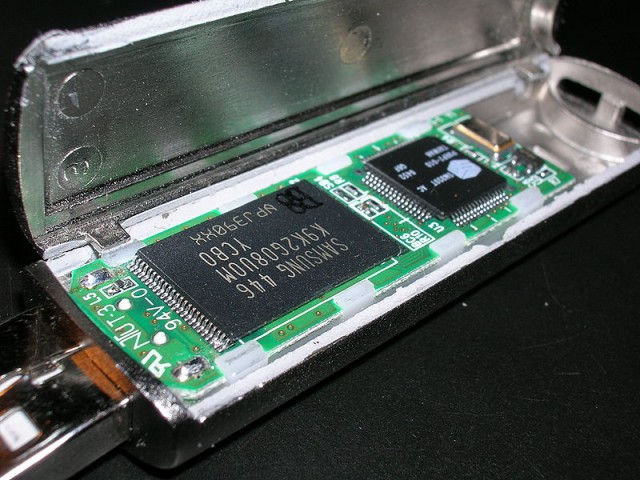 The new development could eventually make flash chips like these obsolete.
Wikimedia Commons
The new development could eventually make flash chips like these obsolete.
Wikimedia Commons
Graphene, a single-atom thick sheet of carbon, has become the focus of a lot of research (and a Nobel Prize) because it has an interesting electronic property: electrons move through the material as if they have no mass. But it's only one of a number of single-atom thick materials that have been discovered, and some of the others have very different properties, acting as semiconductors or insulators.
The discoveries raise the prospect of building more complex electronic devices out of a series of these materials, with each part being only a single atom thick. Now, researchers have used two of these materials—graphene and molybdenum disulfide—and put them together with some more traditional components to make a flash memory device. Although the work is very preliminary, with some of the parts being assembled by hand under a microscope, it shows some excellent properties, like the potential to store more than one bit per device and the ability to retain its state for over a decade.
The basic outline of a flash memory device involves two electrodes that feed current through a semiconductor within the device. When a negative voltage is sent across a device from a control electrode, electrons are able to feed into a reservoir that retains the charge; reversing the voltage allows them to escape. The presence of the electrons in the reservoir can be read out by sending current through the semiconductor.
Read 6 remaining paragraphs | Comments
 Ouya founder Julie Uhrman shows off the developer version of the Ouya console at Nvidia's GPU Technology Conference.
Andrew Cunningham
Ouya founder Julie Uhrman shows off the developer version of the Ouya console at Nvidia's GPU Technology Conference.
Andrew Cunningham
SAN JOSE, CA—Ouya, the Android-based game console that began life as a phenomenally successful Kickstarter project, is supposed to begin shipping to backers later this month. While it seems to have attracted at least some developer interest, it still has an uphill battle to fight once it moves beyond the core audience that backed the project and into the wider marketplace. During a session at Nvidia's GPU Technology Conference today, Ouya founder Julie Uhrman talked a bit about how well the console would need to perform to be considered a success in the company's eyes.
"My [definition of] success for Ouya is that we show momentum month-over-month," said Uhrman. "Every month we're selling more units, every month we're getting more games, every month people are playing those games longer, every month there is a must-have game. That's success, at least in the first year."
"My goal is for everyone who loves games to know that Ouya exists," she continued. "My goal is to have innovative, exclusive, unique content that you can't find anywhere else."
Read 2 remaining paragraphs | Comments
Talynebearha ha, alien scanner....that funny.
 Aurich Lawson (after Aliens)
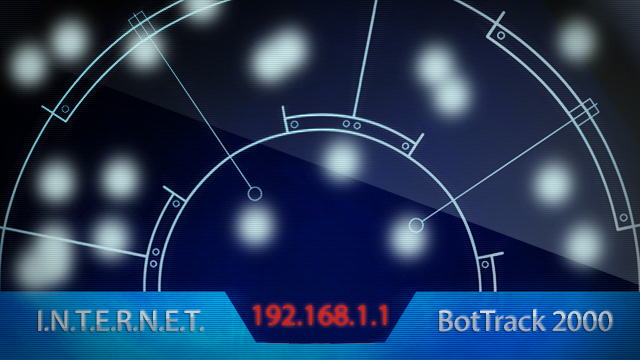
In one of the more audacious and ethically questionable research projects in recent memory, an anonymous hacker built a botnet of more than 420,000 Internet-connected devices and used it to perform one of the most comprehensive surveys ever to measure the insecurity of the global network.
In all, the nine-month scanning project found 420 million IPv4 addresses that responded to probes and 36 million more addresses that had one or more ports open. A large percentage of the unsecured devices bore the hallmarks of broadband modems, network routers, and other devices with embedded operating systems that typically aren't intended to be exposed to the outside world. The researcher found a total of 1.3 billion addresses in use, including 141 million that were behind a firewall and 729 million that returned reverse domain name system records. There were no signs of life from the remaining 2.3 billion IPv4 addresses.
Continually scanning almost 4 billion addresses for nine months is a big job. In true guerilla research fashion, the unknown hacker developed a small scanning program that scoured the Internet for devices that could be logged into using no account credentials at all or the usernames and passwords of either "root" or "admin." When the program encountered unsecured devices, it installed itself on them and used them to conduct additional scans. The viral growth of the botnet allowed it to infect about 100,000 devices within a day of the program's release. The critical mass allowed the hacker to scan the Internet quickly and cheaply. With about 4,000 clients, it could scan one port on all 3.6 billion addresses in a single day. Because the project ran 1,000 unique probes on 742 separate ports, and possibly because the binary was uninstalled each time an infected device was restarted, the hacker commandeered a total of 420,000 devices to perform the survey.
Read 16 remaining paragraphs | Comments
More details of the cyberattack on multiple banks and media companies in South Korea on Wednesday have emerged, suggesting that at least part of the attack was launched through a phishing campaign against employees of the companies. According to a report from Trend Micro's security lab, the "wiper" malware that struck at least six different companies was delivered disguised as a document in an e-mail.
The attachment was first noticed by e-mail scanners on March 18, the day before the attack was triggered. The e-mail was purportedly from a bank; Trend Micro's Deep Discovery threat scanning software recognized the message as coming from a host that had been used to distribute malware in the past.
The attachment, disguised as a document, was actually the installer for the "wiper" malware. It also carried PuTTY SSH and SCP clients, and a bash script designed to be used in an attack against Unix servers that the target machines had connection profiles for. When activated, the dropper attempted to create SSH sessions to Unix hosts with root privileges and erase key directories, as Ars reported yesterday.
Read 1 remaining paragraphs | Comments


Read more of this story at Slashdot.

Filed under: Betas, Sci-fi, EVE Online, Events, in-game, Game mechanics, Interviews, Previews, PvP, War, DUST 514, Sandbox
 CCP is no stranger to massive and often chaotic live events. To keep with tradition and finally illustrate just how DUST 514 console players and EVE Online pilots will interconnect, CCP will host a live event this Friday afternoon (UTC) called the Battle for Caldari Prime.
 The Battle for Caldari Prime is the next step for EVE Online and DUST 514 integration originally appeared on Massively on Wed, 20 Mar 2013 20:00:00 EST. Please see our terms for use of feeds.
 Eating bacon is the best way to start the day, but it can be tough to find the time to cook it in a skillet or waffle iron. Believe it or not, there's a great way to heat it up quickly in the microwave. More »

A wave of bad memories and emotions wash over me whenever I think about the Water Temple in Ocarina of Time. It’s like being in a bad relationship. You hope when you give it a second chance that it will be better than the last time, but it never is…it never is…
source: ChaosLifeThe embattled copyright trolling firm Prenda Law is seeking to contain the fallout from a looming identity theft scandal by voluntarily dismissing lawsuits filed by the shell company AF Holdings. A Minnesota man named Alan Cooper has charged that Prenda fraudulantly used his name as the CEO of AF Holdings, allegations that have attracted the attention of a California judge.
Ken at the legal blog Popehat broke the news that Prenda attorney Paul Duffy has sought dismissal of at least four pending infringement cases involving the Prenda-linked shell company AF Holdings. All four dismissals occurred in the Northern District of Illinois.
An investigation by Ars Technica found two other cases, also in the Northern District of Illinois, in which AF Holdings requested dismissals.
Read 5 remaining paragraphs | Comments
AT&T Labs researchers are set to present data from a recent test that set a record for long-distance network speeds at the Optical Fiber Communication and National Fiber Optics Engineers Conference (OFC/NFOEC) on March 19.
The researchers, led by AT&T researcher Xiang Zhou, have perfected a technology that allows existing 100 gigabit-per-second fiber connections to be used to transmit over four times as much data. When used with a new low-loss optical fiber, they can sustain that data rate at distances over 7,500 miles. The new technology could dramatically increase the amount of bandwidth on the Internet's backbone, especially over submarine cables that connect the continents.
The transmission system developed by Xiang Zhou's team uses a new modulation technique that allows for the tuning of the signal to get the most out of available bandwidth. In the test data being presented next week, the researchers used a recirculating transmission test platform using 100-kilometer fiber cable segments to demonstrate that they could multiplex eight 495Gbps wave-division multiplexed signals with 100GHz of space between them over a distance over 12,000km (7,456.45 miles).
Read 1 remaining paragraphs | Comments
 Aurich Lawson
Bandwidth—the number of bits per second that a device or connection can transfer every second—is the number that everyone loves to talk about. Whether it be the gigabit per second that your Ethernet card does, boasting about your fancy new FTTP Internet connection at 85 megabits per second, or bemoaning the lousy 128 kilobits per second you get on hotel Wi-Fi, bandwidth gets the headlines.
Bandwidth isn't, however, the only number that's important when it comes to network performance. Latency—the time it takes the message you send to arrive at the other end—is also critically important. Depending on what you're trying to do, high latency can make your network connections crawl, even if your bandwidth is abundant.
It's easy to understand why bandwidth is important. If a YouTube stream has a bitrate of 1Mb/s, it's obvious that to play it back in real time, without buffering, you'll need at least 1Mb/s of bandwidth. If the game you're installing from Steam is about 3.6GB and your bandwidth is about 8Mb/s, it will take about an hour to download.
Read 44 remaining paragraphs | Comments
Verizon wants to disrupt the television industry with a simple idea: smaller networks and media outlets shouldn’t be paid as much as big networks that offer channels on cable and satellite providers.
Verizon pays a per-subscriber fee for the right to air various channels via FiOS TV (it's the sixth-largest provider in the US). But that fee is a flat amount based on how many potential viewers those channels could have, not the actual number of viewers.
"We are paying for a customer who never goes to the channel," Terry Denson, the phone company's chief programming negotiator, told the Wall Street Journal on Sunday.
Read 3 remaining paragraphs | Comments
Submitted by: Unknown (via Loading Artist)
Tagged: laptops , pcs , comics , life support , gamers , video games Share on Facebook