source: YouTube
See more: Death Star Architect Speaks Out
Here is the first full lenght official trailer for the upcoming Ghost in the Shell movie featuring Scarlett Johansson in the role of Major.
Ghost in the Shell is an upcoming American science fiction action thriller film based on the Japanese manga of the same name by Masamune Shirow. The film stars Scarlett Johansson, Pilou Asbæk, Takeshi Kitano, Juliette Binoche, and Michael Pitt. It will be released on March 31, 2017 in 2D, 3D and IMAX 3D.
[Via Youtube]
The post GHOST IN THE SHELL – Official Full Length Trailer #1 [VIDEO] appeared first on Geeks are Sexy Technology News.
Enlarge (credit: Google)
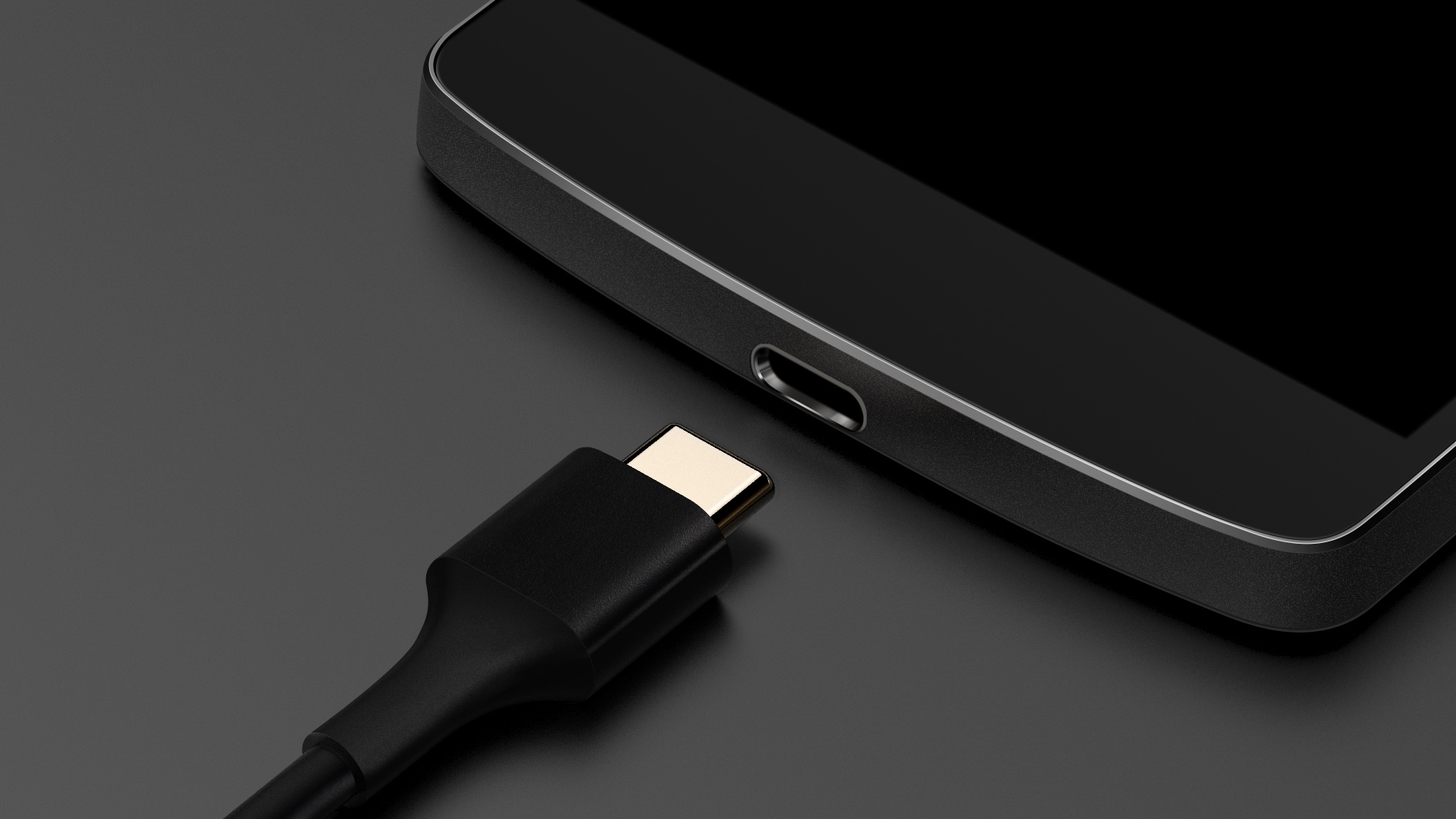
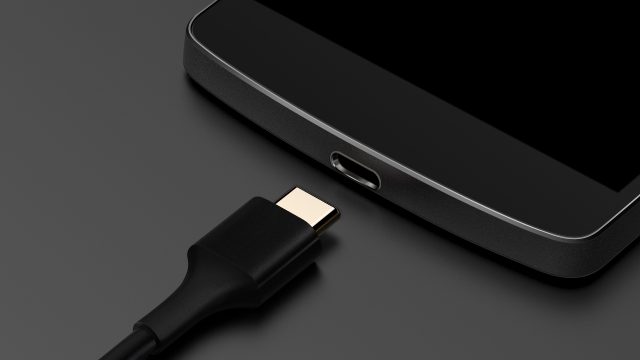
The proliferation of USB Type-C is making charging various devices easier than ever. Smartphones (other than the iPhone) and laptops are unifying under a single charging port, allowing any charger to plug into anything else. Today you can plug your Type-C phone into your Type-C laptop charger, and charging will happen. But because phones and laptops probably support different quick charging standards, the charging speed will be slower than it could be.
The two competing quick charging methods out there are the proprietary Qualcomm Quick Charge and the USB Power Delivery from the USB-IF standards body. Qualcomm has a near-monopoly in the high-end smartphone SoC market, so nearly every high-end device supports Qualcomm Quick Charge. Qualcomm SoCs don't really exist in the laptop market, so Type-C laptops from Apple, Google, and others use USB Power Delivery (USB-PD). Neither one is really better than the other, but the incompatibility means you're only getting basic charging speeds when you swap chargers.
To try aiming for quick charging unity, Google is telling Android OEMs to ditch Qualcomm's quick charge implementation and switch to USB-PD. Google seems really serious about this, as it has started to write quick charging language into the Android Compatibility Definition Document (CDD) that every OEM licensing Google's Android apps must follow. The new clause in the Android 7.0 CDD reads:
Read 4 remaining paragraphs | Comments

This is a situation I used to run into frequently back when I was a Sysadmin in the mid 2000s. While I was at home during the weekends, I used to take occasional contracts to help people with their computers, and sometimes, these systems were very old and were riddled with toolbars, viruses, and various other OS problems. This comic illustrates perfectly my state of mind at that time. I’m just glad it’s all over. I still help people with their computer occasionally, but now, I only do it for family and friends.
[Source: The Frumps Comics – Adorably Vulgar | Like “The Frumps Comics” on Facebook | Follow “The Frumps Comics” on Twitter]
The post Controlling Your Inner Peace When You Work in IT [Comic] appeared first on Geeks are Sexy Technology News.

This funny comic by Dami Lee of “As Per Usual” takes a look at the inside of a girl’s brain while she’s pondering some crucial aspects of life. The comic is titled “Girl Stuff,” but I say it should be named “Geek Stuff” instead, because this is totally the kind of thing geeks think about all the time.
Centaurs are insects! It’s true!
Based on a tweet by Twitter user @ErinChack!
[Source: As Per Usual from Dami Lee | Illustrated Internet]
The post Girl Stuff or Geek Stuff? [Comic] appeared first on Geeks are Sexy Technology News.

Google’s artificial intelligence system DeepMind is to play StarCraft II to try to hone its learning skills. It’s the next step in a process that began with Atari 2600 titles.
The DeepMind project has already made the news with a program that beat leading players at Go. While that was hugely impressive given the sheer range of possible moves in the game, one advantage was that the program was custom-built with the rules of Go in mind.
In a separate project last year, a DeepMind computer was set up to play 49 different Atari 2600 titles with no other information other than that the goal was to maximize its score. Before figuring out a strategy, the computer first had to experiment with tracking the pixels on screen, trying out different commands, and eventually deducing the rules of the game. With 29 of the games it reached the threshold of scoring 75 percent of the total achieved by an expert human player.
Now it will take on the far more complicated strategy of StarCraft II. That means not only dealing with the need for speedy responses (which will likely mean the computer needs to find a good option quickly rather than exhaust all possibilities to find the optimum solution), but also the problem of imperfect information. Unlike Chess or Go, StarCraft players start with only a partial view of the overall game map and only find out more detail as and when they choose to send out scouts.
To make the process even harder, the computer won’t get a magical feed of all the game data. Instead it will have to work from the images on the screen and “visually” translate them into information in the same way as a human player does.
There’s no word yet on if and when the computer will be put up against leading human players. While in theory it should have some advantages as far as speed and accurate memory go, it will be interesting to see if human challengers adapt their strategy to deal with the computer player and in turn if the computer can respond accordingly.
The post Google AI Machines To Play StarCraft II appeared first on Geeks are Sexy Technology News.

[Source: Pie Comic | Like “Pie Comic” on Facebook]
The post Mirror Mirror on the Wall, Who’s the Fairest of Them All? [Comic] appeared first on Geeks are Sexy Technology News.
Talynebearlets help them become skynet
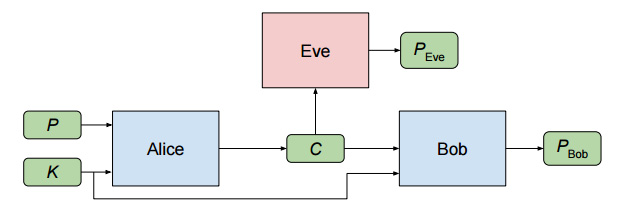
Google Brain has created two artificial intelligences that evolved their own cryptographic algorithm to protect their messages from a third AI, which was trying to evolve its own method to crack the AI-generated crypto. The study was a success: the first two AIs learnt how to communicate securely from scratch.
The Google Brain team (which is based out in Mountain View and is separate from Deep Mind in London) started with three fairly vanilla neural networks called Alice, Bob, and Eve. Each neural network was given a very specific goal: Alice had to send a secure message to Bob; Bob had to try and decrypt the message; and Eve had to try and eavesdrop on the message and try to decrypt it. Alice and Bob have one advantage over Eve: they start with a shared secret key (i.e. this is symmetric encryption).Importantly, the AIs were not told how to encrypt stuff, or what crypto techniques to use: they were just given a loss function (a failure condition), and then they got on with it. In Eve's case, the loss function was very simple: the distance, measured in correct and incorrect bits, between Alice's original input plaintext and its guess. For Alice and Bob the loss function was a bit more complex: if Bob's guess (again measured in bits) was too far from the original input plaintext, it was a loss; for Alice, if Eve's guesses are better than random guessing, it's a loss. And thus an adversarial generative network (GAN) was created.
Read 7 remaining paragraphs | Comments
Talynebearwould you like to know more?!
Recently we got a peek at what the Army secretly thinks is coming next for humanity. This short, untitled film was leaked to The Intercept after being screened as part of an “Advanced Special Operations Combating Terrorism” course convened by Joint Special Operations University (JSOU). Originally made by the Army, it's about how troops will deal with megacities in the year 2030. What's surprising is that it acknowledges social problems that the US government usually ignores or denies.
Over at The Intercept, Nick Turse explains the film's provenance:
The video was used... for a lesson on “The Emerging Terrorism Threat.” JSOU is operated by U.S. Special Operations Command, the umbrella organization for America’s most elite troops... Lacking opening and closing credits, the provenance of “Megacities” was initially unclear, with SOCOM claiming the video was produced by JSOU, before indicating it was actually created by the Army. “It was made for an internal military audience to illuminate the challenges of operating in megacity environments,” Army spokesperson William Layer told The Intercept in an e-mail. “The video was privately produced pro bono in spring of 2014 based on ‘Megacities and the United States Army’... The producer of the film wishes to remain anonymous.”
Turse goes on to make fun of the film’s hyperbolic narrative and cheesy stock photos, which admittedly feel like a propaganda snippet from Starship Troopers. Despite the terrible delivery, however, the movie does some good science fiction world-building. The premise is that we’ve mastered urban warfare, but our tactics only work in late 20th-century cities. Megacities, which are usually defined as urban areas with more than 15 million people, will change the game. The movie explores what social life will be like in such places, especially after climate change has made them more dangerous and the separation between rich and poor has been magnified beyond belief.
Read 3 remaining paragraphs | Comments

Enlarge / A view of the "Great Gallery" during the 2016 Pathfinder Awards banquet. (credit: Seattle Museum of Flight)
During the last year Amazon founder Jeff Bezos has begun to open up about the scale of his ambitions with the rocket company, Blue Origin, explaining that he envisions millions of people living and working in space. Additionally, Bezos has talked about moving heavy industry off of planet Earth to create a garden paradise on our home planet.
In this view Bezos' philosophy differs significantly from the other titan of the new space industry, Elon Musk of SpaceX. Both men agree that reusable spaceflight is essential to lowering the cost of access to space, but they disagree about what to do once we get there. Musk has spoken openly of providing humanity with a "backup plan," and recently revealed his ultra-ambitious plans to colonize Mars with 100 passengers at a time via his Interplanetary Transport System.
Bezos dismissed this approach on Oct. 22, during the Pathfinder Awards at the Seattle Museum of Flight. In remarks first shared by GeekWire, Bezos said Earth should be zoned as a residential area. "I don't like the Plan B idea that we want to go into space so we have a backup planet," he said, noting NASA's efforts to send probes throughout the solar system. "Believe me, this is the best planet. There is no doubt this is the one you want to protect. This is the jewel. We evolved here, we're kind of made for this planet. It's gorgeous, and we can use space to protect it."
Read 3 remaining paragraphs | Comments

Enlarge (credit: Oli Scarff/Getty Images)
Uber drivers have the same employment rights as other full-time employees in Britain, a court has ruled in a landmark decision which looks likely to send shockwaves through the nation's so-called "gig economy."
The ruling means that drivers are now entitled to earn the national minimum wage, holiday pay, sick pay, and other benefits, after the San Francisco-based taxi firm lost a case brought against them by two drivers backed by the GMB union. Uber had argued that it was a tech firm rather than a transport one, and that as its drivers were self-employed contractors it was not obliged to provide the kinds of statutory employment rights full-time workers would expect.
According to the GMB, the Central London Employment Tribunal's decision will have ramifications in other industries which rely on casualised labour, and that "similar contracts masquerading as bogus self employment will all be reviewed."
Read 8 remaining paragraphs | Comments

(credit: Rashmi Gupta)
As electronics have become increasingly ubiquitous, the never-ending upgrade churn fills an ever-larger e-graveyard. If that’s where the story ends, we’re in real trouble. The several years of use a typical device sees effectively become a short conveyor belt between mines around the world and the local landfill. The only sensible and sustainable thing to do is to recycle the materials in our devices—ideally right into the next generation of tech.
Responsible recycling operations (that don’t simply dump e-waste in developing countries) have an interesting set of challenges to work on. Recycling is always trying to catch up to—and is limited by—what manufacturers are doing. But opportunities are there for those willing to make it a priority.
To learn a little about the kinds of things that can be done now and what stands in the way of doing more, Ars talked to Dell about its recycling efforts. Dell runs a take-back program for old devices in partnership with Goodwill, which sells anything worth selling and sends the rest on.
Read 18 remaining paragraphs | Comments
Enlarge (credit: Mustafa Al-Bassam)
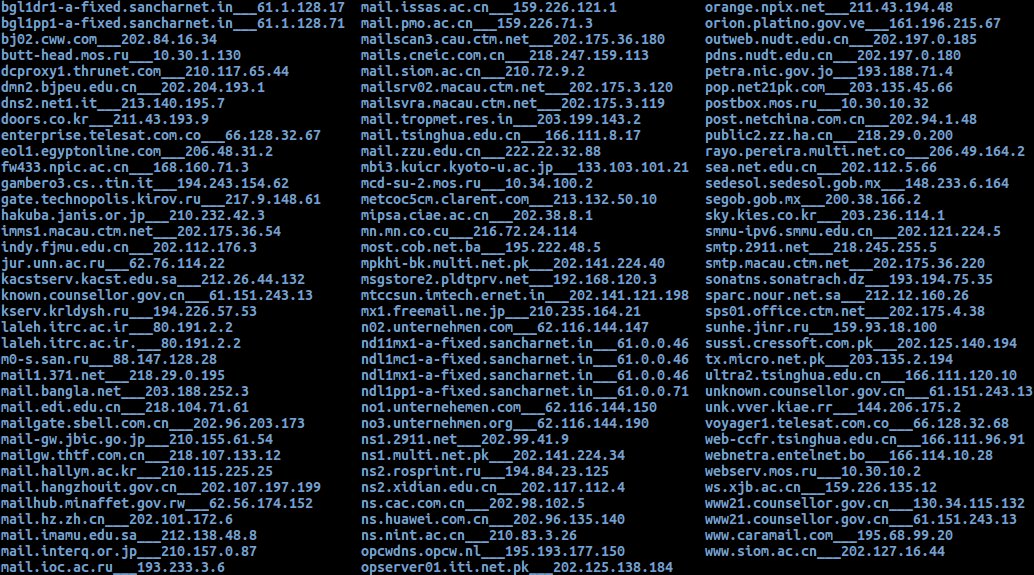
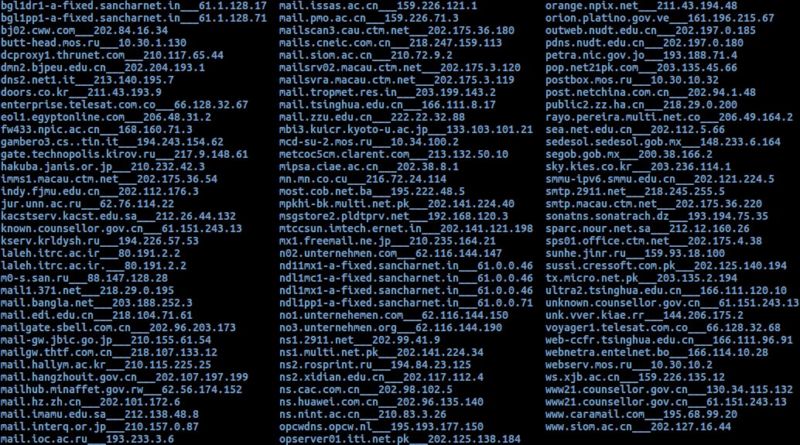
Shadow Brokers—the name used by a person or group that created seismic waves in August when it published some of the National Security Agency's most elite hacking tools—is back with a new leak that the group says reveals hundreds of organizations targeted by the NSA over more than a decade.
"TheShadowBrokers is having special trick or treat for Amerikanskis tonight," said the Monday morning post, which was signed by the same encryption key used in the August posts. "Many missions into your networks is/was coming from these ip addresses."
Monday's leak came as former NSA contractor Harold Thomas Martin III remains in federal custody on charges that he hoarded an astounding 50 terabytes of data in his suburban Maryland home. Much of the data included highly classified information such as the names of US intelligence officers and highly sensitive methods behind intelligence operations. Martin came to the attention of investigators looking into the Shadow Brokers' August leak. Anonymous people with knowledge of the investigation say they don't know what connection, if any, Martin has to the group or the leaks.
Read 6 remaining paragraphs | Comments

Enlarge / Win32k.sys has some problems. Again.
Recently, Google’s Threat Analysis Group discovered a set of zero-day vulnerabilities in Adobe Flash and the Microsoft Windows kernel that were already being actively used by malware attacks against the Chrome browser. Google alerted both Adobe and Microsoft of the discovery on October 21, and Adobe issued a critical fix to patch its vulnerability last Friday. But Microsoft has yet to patch a critical bug in the Windows kernel that allows these attacks to work—which prompted Google to publicly announce the vulnerabilities today.
“After 7 days, per our published policy for actively exploited critical vulnerabilities, we are today disclosing the existence of a remaining critical vulnerability in Windows for which no advisory or fix has yet been released,” wrote Neel Mehta and Billy Leonard of Google’s Threat Analysis Group.”This vulnerability is particularly serious because we know it is being actively exploited.”
The bug being exploited could allow an attacker to escape from Windows’ security sandbox. The sandbox, which normally allows only user-level applications to execute, lets programs execute without needing administrator access while isolating what it can access on the local system through a set of policies.
Read 2 remaining paragraphs | Comments
 That monster's gonna give me nightmares.
 I know what I am dressing up as for Halloween this year.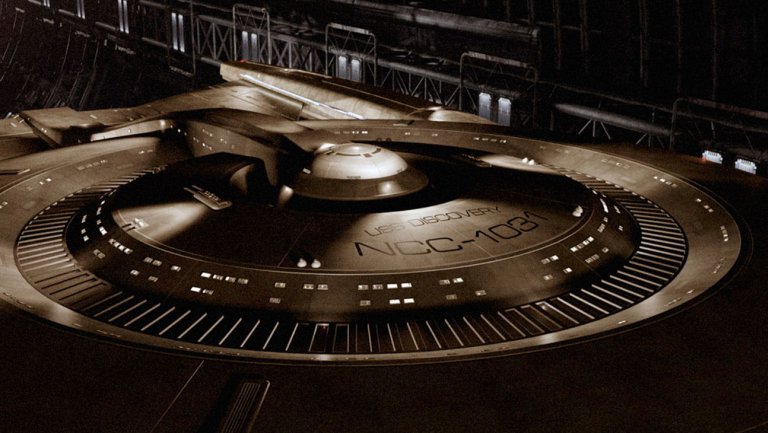
Enlarge / She's ready for launch, maybe. (credit: CBS)
The most exciting news in years for Trek fans was the announcement that Bryan Fuller (Hannibal, Pushing Daisies) was taking the reins as showrunner on a new CBS series called Star Trek: Discovery. But now the series premiere has been delayed until May 2017 after originally being slated for January, and Fuller has stepped away from the project because he's so busy with other work.
The separation seems amicable. CBS says it is still committed to the project, and Fuller legitimately has his plate full with a forthcoming American Gods miniseries and a new Amazing Stories show. Still, it's not great to see such a visionary writer step away from a series that sounds so promising.
We already know that Discovery will focus on the crew of the U.S.S. Discovery, whose starship explored the galaxy before Kirk was captain of the Enterprise. The lead will be a female lieutenant commander not yet cast, which has been a cause of concern to the studio. According to The Hollywood Reporter, other main characters include "an openly gay actor as one of the male leads (which Fuller confirmed), a female admiral, a male Klingon captain, a male admiral, a male adviser, and a British male doctor." Rumors are swirling that the series starts with a mutiny, though that has not been confirmed.
Read 4 remaining paragraphs | Comments
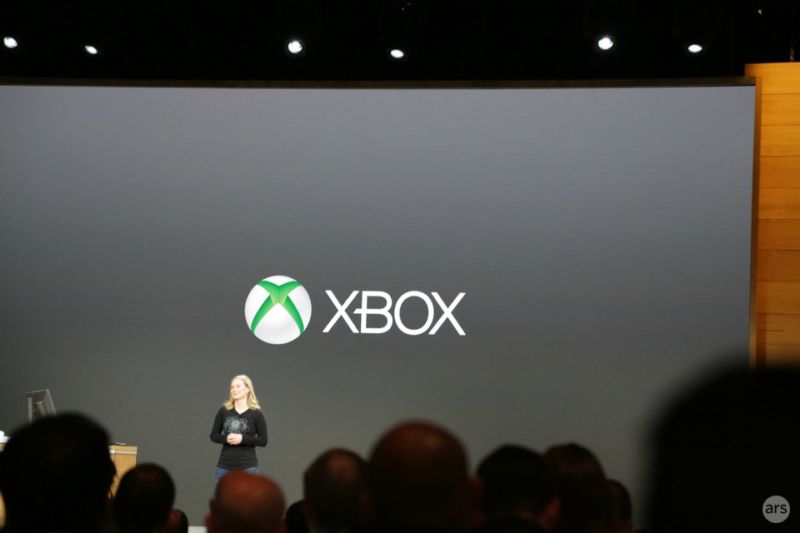
Enlarge / Microsoft's Jen McCoy speaks about updates to gaming in Windows 10. (credit: Jennifer Hahn)
Microsoft's Windows Creator Update event included a brief segment about the company's game-specific updates. That Wednesday segment kicked off with an announcement that Windows will now come with live, online game-streaming capabilities built in.
These won't be powered by the popular game-streaming site Twitch, however, but by Beam, a very similar game-streaming service that Microsoft acquired in August. Instead of having to connect games to Beam's Web UI, PC gamers will be able to load the Windows "game bar" interface—which already exists in Windows 10 by pressing the Windows key and the G button—and pick a "Beam" streaming option.
Beam's Twitch-like functions are boosted by a stress on incredibly low latency, so viewers aren't buried behind a lengthy delay between when the action happens and when they see it. Beam also offers a gamification system that rewards viewers with "experience points," and these points can be spent on interface customizations and on placing votes for what a game streamer might do. Microsoft didn't unveil anything else about how its own games will more deeply link to the Beam interface and its voting system.
Read 4 remaining paragraphs | Comments

NASA
NASA has a problem. It has a big rocket under development. It has a shiny new spacecraft to fly into deep space. And it has a cadre of brilliant astronauts waiting in a long line to fly beyond low-Earth orbit. But the SLS rocket, Orion spacecraft and crew members have nowhere to go—there is no Moon lander, and asteroids and Mars are too far away for now.
NASA plans to address its problem by parking a “deep space” habitat in a location near the Moon, which astronauts could visit and use to become acclimated to life beyond low-Earth orbit. President Obama mentioned deep space habitats earlier this month, when he reiterated his call for NASA to send humans to Mars. “I'm excited to announce that we are working with our commercial partners to build new habitats that can sustain and transport astronauts on long-duration missions in deep space,” Obama said.
Read 17 remaining paragraphs | Comments

 I will never be able to sleep again.