Qui la scheda tecnica.


Gianluigi.ulaulaGame time!
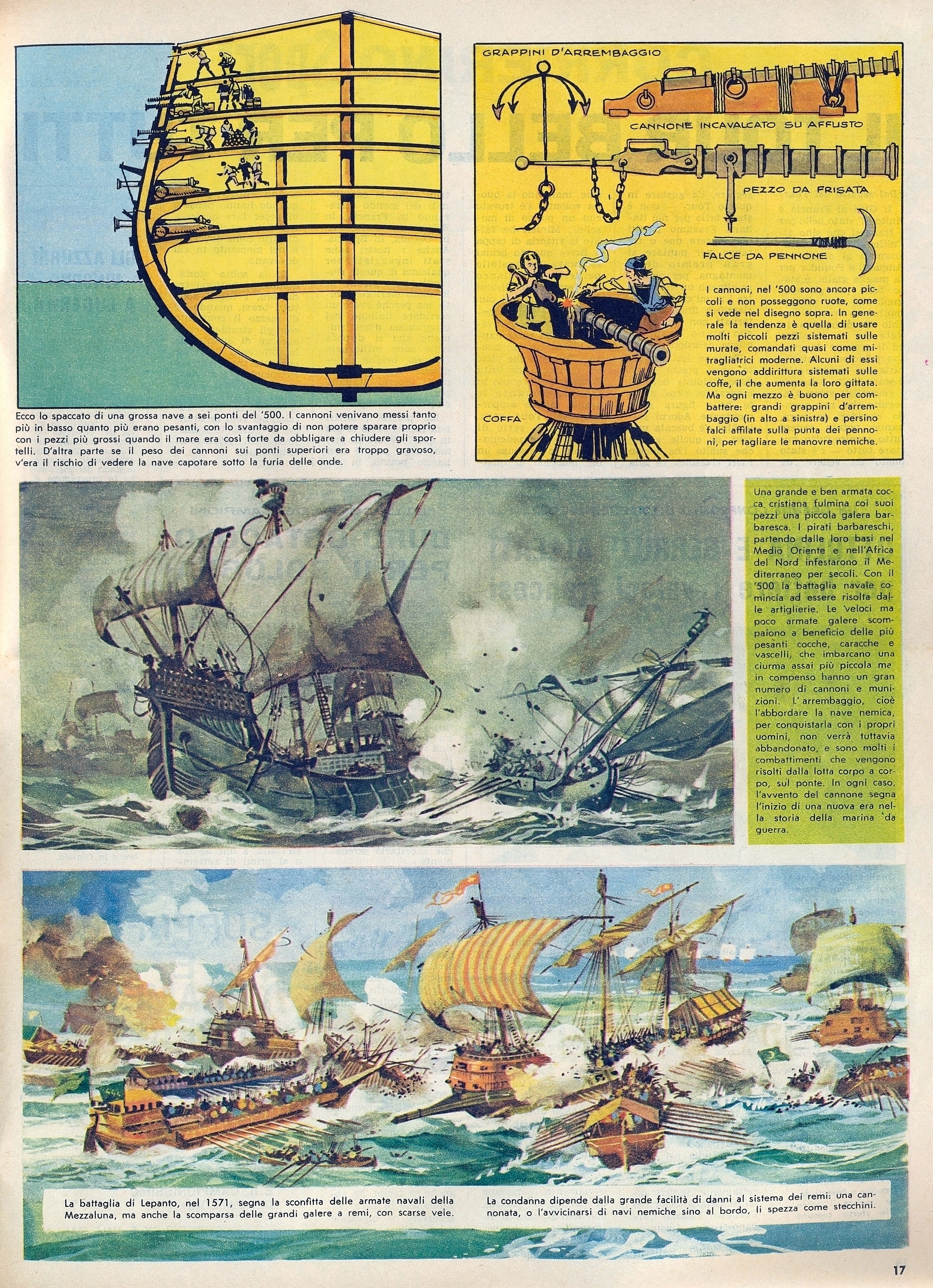
una battaglia navale a furia di formule
The post Axis [Pillole] appeared first on Il Post.
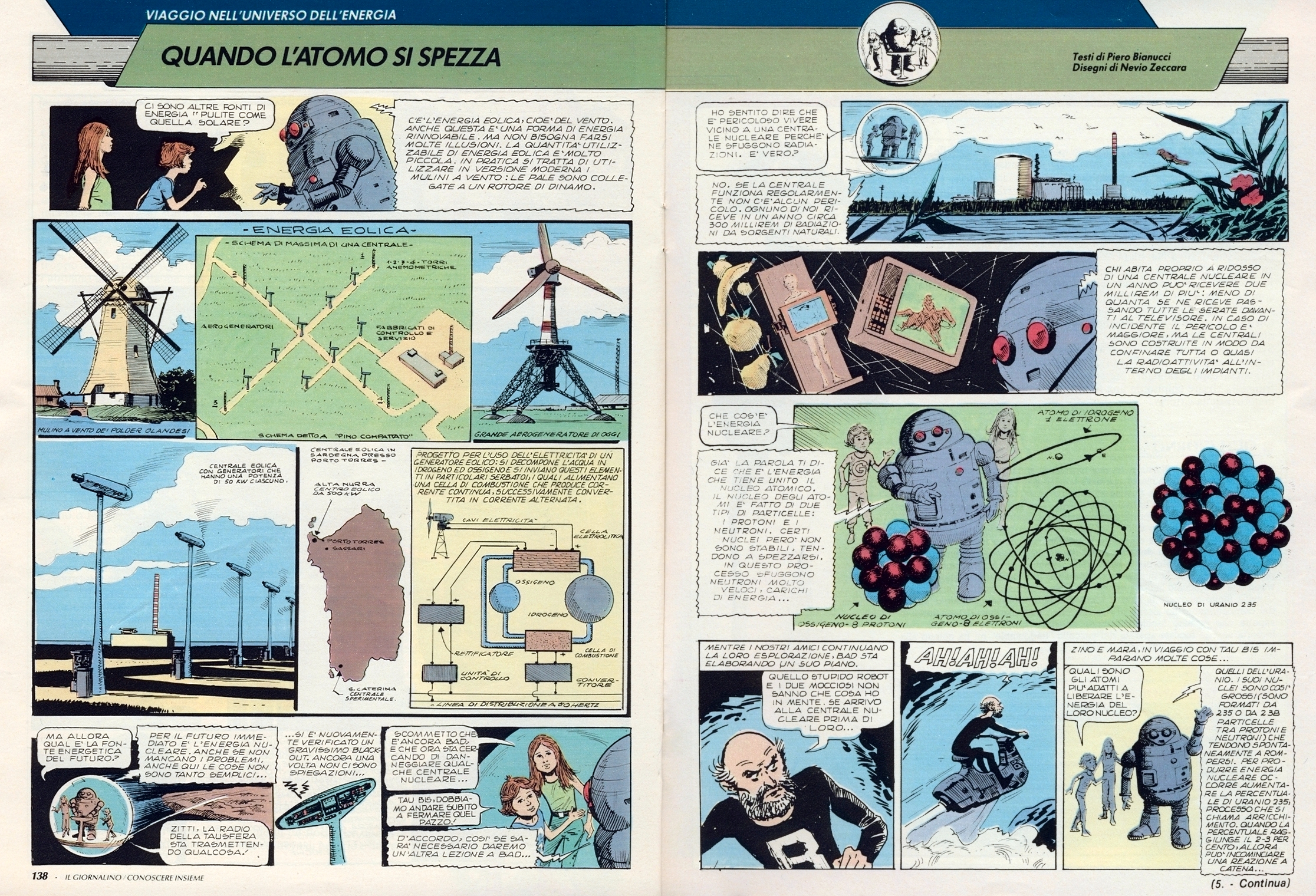
Gianluigi.ulaulaPiero Bianucci scrive. Nevio Zeccara disegna.















Gianluigi.ulaulaUn piccolo gioiello!



Author(s): Alessandro Attanasi, Andrea Cavagna, Lorenzo Del Castello, Irene Giardina, Stefania Melillo, Leonardo Parisi, Oliver Pohl, Bruno Rossaro, Edward Shen, Edmondo Silvestri, and Massimiliano Viale
 The seemingly erratic motion of insects in a swarm exhibits the correlated behavior of particles near the critical point of a phase transition.
[Phys. Rev. Lett. 113, 238102] Published Mon Dec 01, 2014
Nature Physics 10, 891 (2014). doi:10.1038/nphys3195
As the debate on immigration in the UK becomes increasingly visceral, British science risks being caught in the crossfire.
Dispatches from a horrifying alternate universe
This week: Excerpts from What If articles written in a world which, thankfully, is not the one we live in:





 |
| Charles Bachman (da http://amturing.acm.org) |
 |
| Charles Bachman |


Open access is tiring out peer reviewers
Nature 515, 7528 (2014). http://www.nature.com/doifinder/10.1038/515467a
Author: Martijn Arns
As numbers of published articles rise, the scholarly review system must adapt to avoid unmanageable burdens and slipping standards, says Martijn Arns.
Interest in the concept of entropic forces has risen considerably since Verlinde proposed in 2011 to interpret the force in Newton's second law and gravity as entropic forces. Brownian motion—the motion of a small particle (pollen) driven by random impulses from the surrounding molecules—may be the first example of a stochastic process in which such forces are expected to emerge. In this article, it is shown that at least two types of entropic force can be identified in three-dimensional Brownian motion. This analysis yields simple derivations of known results of Brownian motion, Hooke's law, and—applying an external (non-radial) force—Curie's law and the Langevin-Debye equation.
Leggo ogni giorno i maggiori giornali in lingua inglese, ho Google alert su ISIS, Russia, Medio Oriente e vi posso assicurare che nel mondo stanno succedendo delle cose di una importanza storica indescrivibile. E’ desolante notare come l’Italia sia un’isola di ignoranza per quanto riguarda le notizie internazionali. Gli italiani vivono come se il resto del mondo non esistesse. Lasciate perdere i giornali italiani: i giornalisti italiani non hanno alcuna conoscenza del mondo, dell’inglese e di quello che gli succede intorno. Quello che fanno è semplicemente copia-incolla di lanci d’agenzia. E l’unica agenzia da cui prendono notizie è ANSA. Controllata dai soliti noti ovviamente. Monopolio della propaganda governativa come nel fascismo. Ecco perché non leggo più notizie nei giornali italiani: se voglio vedere gattini coccolosi o donne nude ci sono altri siti…
Visto che non tutti capiscono l’inglese credo che sia importante fare un punto della situazione geopolitica attuale senza il filtro della propaganda di regime occidentale: italiana, europea e americana. Motivo? Siamo nella merda fino al collo e gli americani ci stanno scavando una fossa senza accorgercene.
Buona Seconda Guerra Fredda a tutti! Ah dimenticavo: l’importante è che Facebook continui a farci vedere i gattini pucciosi.



| Piled Higher & Deeper by Jorge Cham |
www.phdcomics.com
|
|
 |
||
|
title:
"Research is complicated" - originally published
11/3/2014
For the latest news in PHD Comics, CLICK HERE! |
||

Giusto per ricordarvi che lo Juncker col quale ce l’ha su Renzi in questi giorni è l’eroe che qualche anno fa rifilò questa splendida schiaffetta bennyhilliana a Berlusconi. Tirate le vostre conclusioni; io… IO STO CON JUNCKER.

 2) Ioduro di potassio (che funge da catalizzatore, cioè accelera la velocità della reazione);


A striking example of levitation is encountered in the “kugel fountain” where a granite sphere, sometimes weighing over a ton, is kept aloft by a thin film of flowing water. In this paper, we explain the working principle behind this levitation. We show that the fountain can be viewed as a giant ball bearing and thus forms a prime example of lubrication theory. It is demonstrated how the viscosity and flow rate of the fluid determine (i) the remarkably small thickness of the film supporting the sphere and (ii) the surprisingly long time it takes for rotations to damp out. The theoretical results compare well with measurements on a fountain holding a granite sphere of one meter in diameter. We close by discussing several related cases of levitation by lubrication.