Shared posts

03 May 12:42

The CW Cancels Batwoman After Three Seasons

by Matt Kim

The Batwoman showrunner for The CW, Caroline Dries, has announced on Twitter that the DC superhero show will not be returning for a new season.

In a Tweet Dries writes, "Just got the sad news that #Batwoman will not be seeing an S4. I am bummed, but full of gratitude." Dries added that it was an honor to make 51 episodes and thanked the show's producers, cast, crew, and fans.

Batwoman premiered in 2019 as part of The CW's DC universe of TV shows. The series originally starred Ruby Rose as Kate Kane, Bruce Wayne's cousin who takes on a cowl herself to fight crime.

After the first season, Rose announced she would be leaving the show with both Rose and CW offering different reasons for the split. The original plan was to recast Rose's character but this changed and instead, Batwoman's title was inherited by a new character, Ryan Wilder played by Javicia Leslie.

Leslie played Wilder's Batwoman for two seasons, the most recent of which premiered on October 13, 2021. It would end up being the final season for the character.

No reason has been given for why The CW canceled Batwoman, but the news follows reports that CW owners Warner Bros. Discovery and Paramount Global are looking to sell the network. Despite the report, The CW is still exploring new DC shows, including Gotham Knights while renewing others like The Flash for a ninth season.

Matt T.M. Kim is IGN's News Editor. You can reach him @lawoftd.

03 May 12:41

Legends of Tomorrow Canceled By The CW After Seven Seasons

by Adam Bankhurst

DC's Legends of Tomorrow has been canceled by The CW after seven seasons.

As reported by THR, Legends of Tomorrow follows the cancellation of DC's Batwoman after three seasons and leaves The CW with only The Flash and Superman & Lois for its DC slate in the next year. The Flash is expected to end after its ninth season, and it will be replaced by shows like producer Greg Berlanti's Gotham Knights.

"Well, folks. It’s been an incredible run," co-showrunner Keto Shimizu wrote on Twitter. "However, the CW has let us know that there will be no season 8 of #LegendsOfTomorrow. We are heartbroken, but also immensely grateful for the amazing work our cast, crew, and writers have contributed to the little show that could.

"Thank you to our fans; your love and passion for our strange band of misfits has made every break, every script, every daily, every cut, and every mix worth all the hard work. We see you, we love you, and you’ll always have a place on the Waverider."

The void left by Legends of Tomorrow will be filled by some of The CW's recent renewals, including All American, Kung Fu, Nancy Drew, Riverdale, and Walker. Those seven renewals are fewer than the 10 or more the network usually chooses to continue early.

Legends of Tomorrow recently celebrated its 100th episode and earlier this year we took a look at how Zari and Behrad became a roadmap for better representation.

Have a tip for us? Want to discuss a possible story? Please send an email to newstips@ign.com.

Adam Bankhurst is a news writer for IGN. You can follow him on Twitter @AdamBankhurst and on Twitch.

24 Apr 07:51

Ukraine is Abusing US Facial Recognition Technology to Scan and Identify Faces of Dead Russians and Then Send the Images to Their Families

by Julian Conradson

Psychological warfare has been a common tactic in conflict throughout history, however, with the advent of modern technology, the Ukrainians are taking the strategy to a whole new level thanks to the technological backing of the United States.

According to The Washington Post, the Ukrainian government, led by Volodomir Zelensky, has begun using US facial recognition technology to scan and identify the faces of dead Russian soldiers so they can then contact the families of the deceased – specifically the mothers – in order to horrify them and foment anti-war sentiment among Russian citizens.

In all, the Ukrainian government has run over 8,600 facial recognition scans on dead or captured Russian soldiers since the war began. The operation has been carried out by the country’s IT Army, which is made up of “a volunteer force of hackers and activists that takes its direction from the Ukrainian government.” The clandestine group says it has used the positive identifications obtained from the US-based technology to harass the families of 582 Russian soldiers.

The Ukrainian communications to the horrified family members included sending them photos of the abandoned corpses.

From the Washington Post:

“The country’s IT Army, a volunteer force of hackers and activists that takes its direction from the Ukrainian government, says it has used those identifications to inform the families of the deaths of 582 Russians, including by sending them photos of the abandoned corpses.

The Ukrainians champion the use of face-scanning software from the U.S. tech firm Clearview AI as a brutal but effective way to stir up dissent inside Russia, discourage other fighters and hasten an end to a devastating war.”

But some military and technology analysts worry that the strategy could backfire, inflaming anger over a shock campaign directed at mothers who may be thousands of miles from the drivers of the Kremlin’s war machine.”

Clearview AI’s technology has primarily been used in the US by federal and local law enforcement in investigations. The tool works by comparing photos of suspects or witnesses (or anyone else) to see if they match with any others in the Clearview database, which includes over 20 billion images from the internet, according to the Washington Post.

However, in Ukraine, the Clearview mobile app is reportedly being used to scan the faces of soldiers live on the battlefield. It has been such a ‘success’ that the company’s chief executive officer, Hoan Ton-That, bragged that Clearview AI is holding “daily” training calls with new police and military officials who are looking to begin using the system.

As of now, there are more than 340 officials across five Ukrainian government agencies who now have access to Clearview’s facial recognition technology, with more being added daily. Anyone trained in the system can access it 24/7 and use it as much as they want, free of charge, according to Ton-That.

The technology is so powerful and efficient that Ukrainian officials are apparently experiencing “oh, wow” moments when shown the tool because of the sheer amount of data produced when looking up individuals with the system. Everything from family photos and social media posts, to relationship details and personal information, can be found using a single photo of someone’s face, the Washington Post explained.

The technology brings an entirely new tactic to modern-day warfare.

The post Ukraine is Abusing US Facial Recognition Technology to Scan and Identify Faces of Dead Russians and Then Send the Images to Their Families appeared first on The Gateway Pundit.

24 Apr 07:48

European Union limits targeted advertising and content algorithms under new law

by Igor Bonifacic

Following a marathon 16-hour negotiation session, the European Union reached an agreement early Saturday to adopt the Digital Services Act. The legislation seeks to impose greater accountability on the world's tech giants by enforcing new obligations companies of all sizes must adhere to once the act becomes law in 2024. Like the Digital Markets Act before it, the DSA could have far-reaching implications, some of which could extend beyond Europe.

While the European Commission has yet to release the final text of the Digital Services Act, it did detail some of its provisions on Saturday. Most notably, the law bans ads that target individuals based on their religion, sexual orientation, ethnicity or political affiliation. Companies also cannot serve targeted ads to minors.

Another part of the law singles out recommendation algorithms. Online platforms like Facebook will need to be transparent about how those systems work to display content to users. They will also need to offer alternative systems "not based on profiling," meaning more platforms would need to offer chronological feeds. Additionally, some of the largest platforms today will be required to share "key" data to vetted researchers and NGOs so those groups can provide insights into "how online risks evolve."

"Today's agreement on the Digital Services Act is historic, both in terms of speed and of substance," said European Commission President Ursula von der Leyen. "It will ensure that the online environment remains a safe space, safeguarding freedom of expression and opportunities for digital businesses. It gives practical effect to the principle that what is illegal offline, should be illegal online."

Under the DSA, the EU will have the power to fine tech companies up to six percent of their global turnover for rule violations, with repeat infractions carrying the threat of a ban from the bloc. As The Guardian points out, in the case of a company like Meta, that would translate into a single potential fine of approximately $7 billion.

The DSA differentiates between tech companies of different sizes, with the most scrutiny reserved for platforms that have at least 45 million users in the EU. In that group are companies like Meta and Google. According to a recent report, those two, in addition to Apple, Amazon and Spotify, collectively spent more than €27 million lobbying EU policymakers last year to change the terms of the Digital Services Act and Digital Markets Act. The laws could inspire lawmakers in other countries, including the US, as they look to pass their own antitrust laws.

"We welcome the DSA's goals of making the internet even more safe, transparent and accountable, while ensuring that European users, creators and businesses continue to benefit from the open web," a Google spokesperson told Engadget. "As the law is finalized and implemented, the details will matter. We look forward to working with policymakers to get the remaining technical

24 Apr 07:45

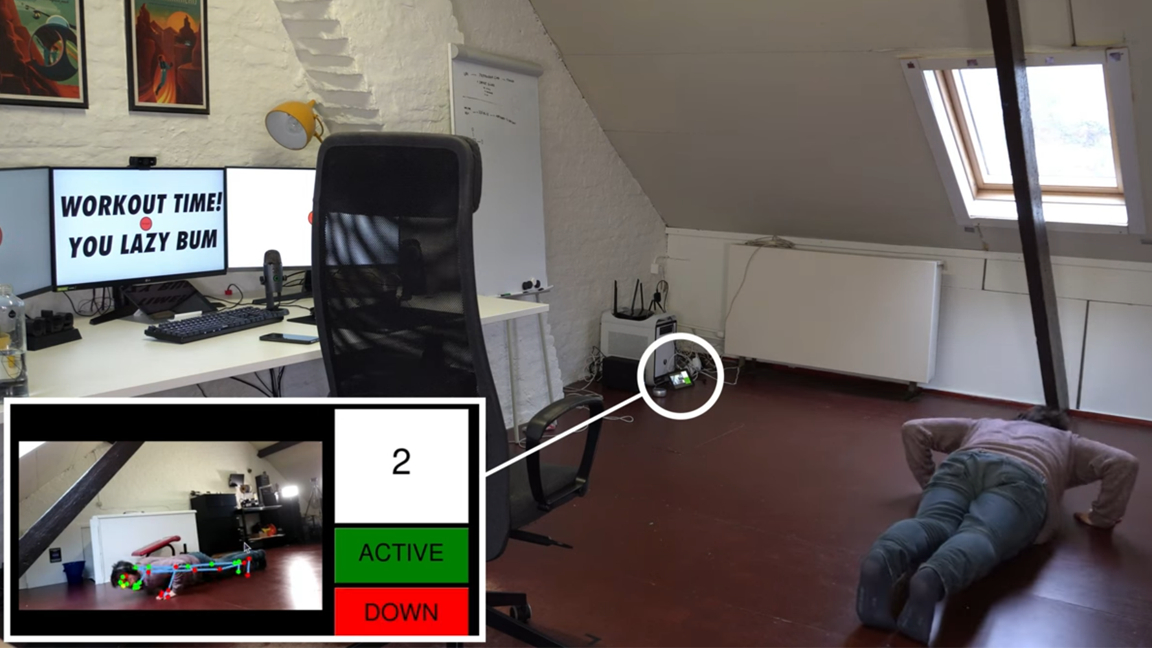
Raspberry Pi Unlocks Computer by Detecting Push-Ups with ML

Victor Sonck is using a Raspberry Pi to detect pushups as an authentication method for his computer’s lock screen.
19 Apr 14:43

Thor: Love and Thunder - Why Does Jane Foster Become Thor?

Warning: Spoilers follow for the Thor comics.

We're finally getting Thor trailers, giving fans their first look at Jane Foster wielding Mjolnir as the new Mighty Thor. But how can Jane be the new Thor, you mask ask? The answer lies in the film's Marvel Comics inspirations.

Portman's return as Jane Foster was first announced at Marvel’s panel at San Diego Comic-Con 2019. Love and Thunder, the fourth movie worthy of the title of Thor, is not only bringing back Chris Hemsworth, Tessa Thompson, and director Taika Waititi, but also Natalie Portman. And this time, she’ll be wielding the title and hammer of the Mighty Thor.

When Waititi introduced Portman and she took the stage back at SDCC 2019, he mentioned the comic book storyline he’d been reading while Thor: Ragnarok was in production: the Jason Aaron run of Thor.

Read on for a rundown on who Jane Foster is in the comics, why she takes up the hammer, what happened to Thor, and what else we might see in Thor: Love and Thunder. (In the comics and in this article, Thor, son of Odin, is referred to as Odinson for clarity.)

Why Does Jane Foster Become Thor?

Jane Foster has been part of the Thor comic books since the 1960s. In her original incarnation, Jane was a nurse who later became a doctor, and she worked with Dr. Donald Blake—Thor’s mortal form. She’s been Thor’s longtime love interest, but over the years the pair have had an on-again, off-again relationship similar to the one we see in the Marvel Cinematic Universe. Jane remained a steadfast ally of both Thor and other Marvel superheroes through it all. In Thor: God of Thunder #12, Jane was diagnosed with breast cancer, and started treatment.

During the 2014 event storyline Original Sin, Nick Fury whispered something he learned from the Watcher in Thor Odinson’s ear. Years would go by in the real world before what Fury said to him was revealed, but the effect was immediately devastating and long-lasting. Odinson dropped the hammer, unable to pick it up again, no matter how hard he tried. Thor was no longer worthy. As Frost Giants unleashed a ferocious attack on Earth, a dark figure bent down and picked up the hammer as it called to her—a woman, and the only name she would give was Thor, Goddess of Thunder.

Thor’s face was masked, her identity hidden from all, even Odin, but we learn in time that it’s Jane Foster who has been deemed worthy to wield the hammer.

Jane Foster Thor's Powers

As Thor, Jane had the same superhuman strength, speed, endurance, flight, and lightning powers as Odinson. When she first picked up the hammer, she didn’t quite know how to use those powers, although her years with Odinson gave her a few clues. As she flew to Earth to find the Frost Giants after she transformed into Thor, she felt Mjolnir guide her both in flight and in battle.

Her connection to the hammer only grew stronger with time. The Goddess of Thunder was able to change Mjolnir’s direction mid-throw, an ability that not even Odinson had, something he noted himself in their first battle together. He understood then that the hammer chose a new Thor, a worthy hero, and trusted its judgement.

The Mighty Thor's Enemies

Like Odinson, Jane found herself embroiled in momentous battles rather quickly. Her first time swinging the hammer was against Malekith the Dark Elf and the Frost Giants, followed soon after by the Absorbing Man, Titania, and The Destroyer from Asgard.

Every time Jane picked up the hammer of Thor, however, the transformation purged the chemotherapy treatment—a “poison”—from her body, leaving her human self wracked with untreated cancer. Her biggest enemy would prove to be time as her human body continued to fail.

Thor would go on to play a role in the Secret Wars (2015), battle a power-hungry Odin one-on-one, join the Avengers, and team up with Doctor Strange, until she ran out of time. One more transformation into Thor would kill her, Strange warned her. But when a foe appeared that only she could defeat, Jane completed that final transformation, and died a true hero. She was resurrected by the combined power of the All-Father and Odinson, who was once again worthy to wield the power of Thor.

The Goddess of Thunder in the Marvel Cinematic Universe

We still don't have much to go on to speculate what this comic book history might mean for Natalie Portman’s incarnation of Thor. Whether Jane will be stricken with cancer (some merch has indicated she will be), or if Hemsworth’s Thor is suddenly deemed unworthy (which seems unlikely given his story in Avengers: Endgame), are both mysteries for now. But no matter the reason Portman picks up the hammer in Thor: Love and Thunder, she will be worthy.

Note: This story originally ran in July of 2019. It was updated on May 24, 2022.

Kelly Knox is a freelance writer who also contributes to StarWars.com, Marvel.com, Nerdist, and more. Follow her on Twitter at @kelly_knox to talk Star Wars, Dungeons & Dragons, comics, and more.

19 Apr 14:37

'Love Death and Robots' Season 3 comes to Netflix on May 20th

by Steve Dent

The third season of Netflix's animation anthology Love, Death and Robots will bow on May 20th. The streamer teased the release with a short video showing the same adult-oriented themes and wide variety of animation styles as the previous volumes

The series is produced by Tim Miller and David Fincher, who has a four-year exclusivity deal with Netflix. In the trailer, Netflix showed short clips of The Crown, The Queen's Gambit and other shows as a way to contrast them with the far more intense "problem child" animated show. "The threesome you've been waiting for," the tagline states.

The styles run the gamut from hyper-realistic with a Gulliver-like character to 2D cel animation, with just about everything in between. The series has garnered solid critic reviews on Rotten Tomatoes, though audience scores dropped in volume 2 when it toned down the nudity and gore. The number of episodes also dropped in the second season with eight compared to 18 in volume 1. Netflix didn't say how many episodes are coming with volume 3, but you'll only have to wait a day to find out. 

12 Apr 08:51

Season 3 of ‘For All Mankind’ is coming to Apple TV+ on June 10th

by Amrita Khalid

The alt-history space race drama For All Mankind is headed to Mars for its third season. Apple unveiled a trailer today for the upcoming season, set to debut on June 10th. While the second season depicted a turf war on the moon between the US and the Soviets set in the eighties, the newest season fast-forwards to 1995. The US is vying to be the first country on Earth to colonize Mars.

Fans of the show can expect to see a mix of familiar faces and new ones. Last season's finale depicted the untimely demise of Gordo Stevens (Michael Dorman) and Tracy Stevens (Sarah Jones). Sonya Walger is returning as Molly Cobb, despite being exposed to (at least what seemed) like a fatal dose of radiation during her walk on the Moon. Returning cast members include Joel Kinnaman (Ed Baldin), Shantel VanSanten (Karen Baldwin), Jodi Balfour (Ellen Wilson) and Cynthy Wu (Kelly Baldwin). Also due back are Coral Peña as Aleida Rosales and Casey W. Johnson as Danny Stevens.

You can watch the new (albeit, frustratingly brief) teaser below.

12 Apr 08:49

The China Model Unravels in Shanghai 

by Jeffrey A. Tucker

At the end of the Cold War, the end-of-history theory was that every country in the world that desired prosperity and progress would necessarily have to embrace both economic liberty and political democracy. You cannot have one without the other, the theory went. It was inevitable. 

The world waited for China to go the direction of Eastern Europe and so many other countries. 

It did not happen. Despite liberalizing economic reforms, the CCP maintained hard-core political control for the decades following. Yet its economy grew and grew. This gave rise to a new theory: perhaps the most successful countries will foster economic liberalism while securing tight political control, thus dispensing with the inefficiencies of democracy. 

China seemed to have it all going. 

Now we have evidence of what’s wrong with a one-party state with a powerful chief executive. It works until it doesn’t. What stopped working in China could not have been expected years ago. The party believed it had solved the problem of pathogens via massive violations of human liberty. 

Today, the people of Shanghai are suffering weeks of lockdowns, food shortage, and extreme quarantine of healthy people, all in the interest of eradicating a virus that the rest of the world has finally realized must become endemic. Even Fauci is admitting this now (following two years of urging more restrictions). 

But in China? Children are being taken from parents, the pets of people with a positive test are being shot, people are screaming from skyscrapers, and food is rotting in warehouses even as people report to be starving. There are videos online of stores being ransacked. There is talk of revolution in the air. 

Never forget: China was the birthplace of lockdowns. The head of the World Health Organization praised the early 2020 lockdowns in Wuhan. In one letter dated January 2020, the WHO congratulated China and urged the country to “enhance public health measures for containment of the current outbreak.” Director Tedros Adhanom Ghebreyesus further underscored the point with a tweet

Neil Ferguson from the Imperial College did too. “It’s a communist one party state, we said. We couldn’t get away with it in Europe, we thought… and then Italy did it. And we realised we could.” And so China became a model for the world: Wuhan, Northern Italy, the US, the UK, and then all but a handful of the countries in the world followed the lockdown paradigm. 

To this day, Xi Jinping surely basks in the warmth of this glowing praise. It put China’s policy prowess on display for the world. As I write, Yahoo reports concerning Shanghai:

China's President Xi Jinping praised the country's "tested" zero-Covid strategy on Friday, even as Shanghai authorities prepared nearly 130,000 beds for Covid-19 patients amid surging cases and mounting public anger.

We can only intuit what is happening here. For Xi Jinping, lockdowns were his greatest triumph. They seemed to work two years ago. He earned plaudits the world over, and the world followed his model. Perhaps this filled him and the CPC with a sense of incredible pride and confidence. They had done it correctly and the rest of the world copied the idea, without having practiced the article of lockdown as perfectly as China. 

Eventually governments can convince themselves of their own propaganda. That appears to be what happened here. That illusion prevented Xi and the party from observing what should have been obvious to anyone with a modicum of knowledge about viruses such as this one: in a functioning society and market, it will spread no matter what. As Vinay Prasad has constantly reminds us, everyone will get Covid. And through that path, we finally move beyond the pandemic.

What has happened now in China is as predictable as the failure of “Zero Covid” in Australia and New Zealand.

This means that cases are nowhere near stopping in China. They will spread to every city, every town, every countryside until vast numbers of 1.4 billion are exposed. This could mean rolling lockdowns for years to come, along with all the damage and political instability that they necessarily entail. This will surely have a profound impact on economic growth and possibly the credibility of the CCP itself. 

The communist party has made a profound error. Most places in the world did. The US was not Shanghai-level terrible but this is a matter of degree because the theory was tried out here too. In political democracies, politicians and bureaucrats have mostly tried to soft land their gross errors while manufacturing excuses for reopening without apology. Many want everyone just to forget this whole disaster. 

Will that happen in China? The trouble is the incredible centrality of lockdowns to China’s perceived achievements over the last two years. So long as there are powerful people in Beijing who genuinely believe that lockdown is the path forward – and no opposition party in place to take a different point of view – this will likely continue, raising fascinating questions about the political and economic future of this country. 

The magic combination of political and economic freedom turned out not to be the end of history. But China-style dictatorship is not the end either, simply because it contains no operational mechanism for the correcting of egregious errors. What saved the US from lockdown terror was political pluralism and federalism; China has institutionalized neither. Thus does intellectual error lead to egregiously immoral outcomes. 

Lockdowns are nowhere a solution to pathogenic spread, contrary to the assurances of the WHO or celebrity scientists in the UK or the US. When governments of the world tried to prove their competence by declaring war on cell biology, they finally met their match. No matter how powerful a state, there are forces of nature that will always outsmart it. 

https://twitter.com/TPostMillennial/status/1513676488377315332
08 Apr 13:04

Star Trek Announce NFTs, Trekkies Push Back

by Adele Ankers
Roumen.ganeff

This is ridiculous

Paramount and RECUR are launching a new Star Trek-themed NFT collection, and many Trekkies are already calling for them to abort the mission.

If anything was ever going to evoke a Picard-style facepalm from Trekkies, it's the news that Star Trek is making its first contact with NFTs. According to an article posted on StarTrek.com, fans will be able to access "digital collectibles" starting April 9 through Paramount.xyz, a new online portal that houses NFT drops for some of Paramount's beloved IP and franchises.

"Fans are looking for new ways to engage with their favorite shows and franchises, and our innovative ecosystem gives them a community to be a part of for years to come," said Zach Bruch, RECUR CEO. "Through the introduction of Paramount.xyz and StarTrek.xyz, we're providing fans with a unique way to embark on a journey to boldly go into the metaverse."

"Fans should be able to engage with our content wherever they are, including the metaverse," Pam Kaufman, President of Global Consumer Products and Experiences at Paramount, added about the company's latest venture. "Paramount.xyz will offer one seamless digital collectible experience for fans across our key franchises, starting with Star Trek."

Star Trek will be the first franchise to launch on the portal, with collectibles available in the "Star Trek Continuum" hub. The Season 0 drop on April 9 will feature "algorithmically-generated starships" that can be purchased for $250 per pack. There will be 20,000 Starship packs available in the 24-hour sale, and no two ships will be the same.

Paramount's fan-focused platform is said to be a space for people to "build a community, engage with peers, and unlock new, innovative and interactive experiences with properties and brands they love" as part of a "unified environment where fans can buy, collect and trade NFTs as digital collectibles," but not everyone is on board with the idea.

Fleets of Trekkies have taken to social media to voice their opinions on the Star Trek NFT announcement, with many berating the decision for being "out of touch" and "going against every Trek principle" as people have struggled to find an association between Star Trek and NFTs, considering that the former prides itself on demonstrating an eco-conscious ethos.

NFTs and cryptocurrencies have seen a massive wave of attention in the tech space in the last year, and continue to be controversial subjects. They are largely unregulated entities often exploited for scam purposes and have been accused of having a huge negative impact on the environment due to the energy consumed during the electronic mining of currency.

As a result, some fans have been left feeling alienated by the announcement of the NFT Star Trek collection, which comes at a time when Trekkies were gearing up to boldly step into another adventure aboard the USS Enterprise with Star Trek: Strange New Worlds. This new series is debuting on Paramount+ on May 5, with new episodes every Thursday after that.

Adele Ankers-Range is a freelance writer for IGN. Follow her on Twitter.

07 Apr 09:41

Preserving art through Tilda’s Vault in Horizon Forbidden West

by Angie Smets

While the stunning landscapes of the Forbidden West may depict a post-post-apocalyptic North America, the world of Horizon is crafted at a studio in the heart of Amsterdam. At Guerrilla, we’re always happy to showcase our Dutch roots to our international community. So when the opportunity presented itself to collaborate with the Rijksmuseum, we had to take it. 

The Rijksmuseum is the national art and history museum of The Netherlands. Its collection features the renowned works of Dutch masters like Rembrandt and Vermeer. Working together with the museum’s experts, a handful of these artworks were chosen to be featured during a pivotal moment in the story of Horizon Forbidden West. 

The result is an intimate experience that not only speaks to the importance of preserving cultural artifacts, but also demonstrates how art helps us process emotion and connect with one another.


Spoiler alert: This section includes some top-level Horizon Forbidden West story spoilers


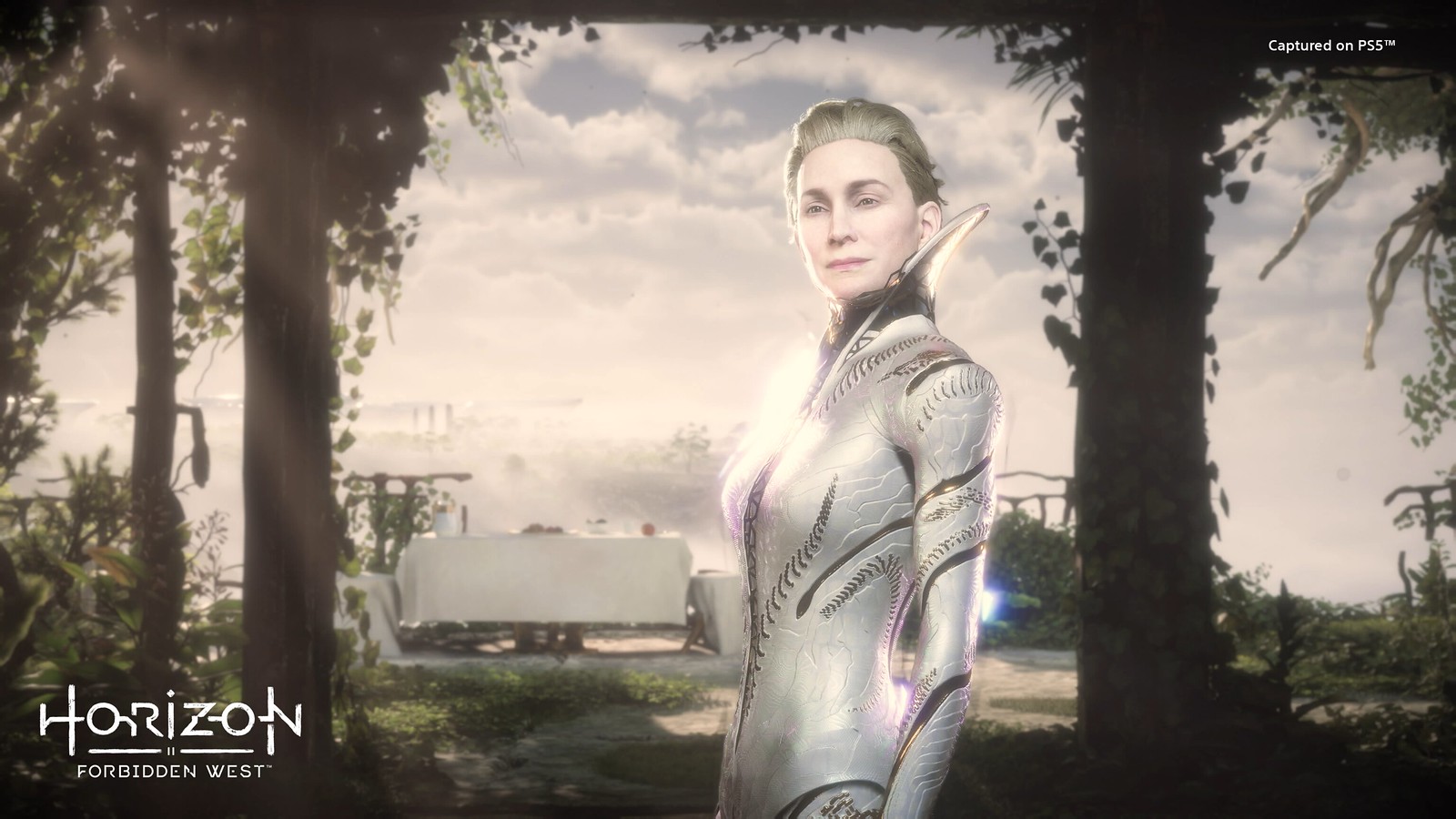
“Don’t be so quick to dismiss the comfort we can find in art. Or the insight we might gain.” These are the words of Tilda van der Meer, a major new character in Horizon Forbidden West. She was always set to be a space-faring immortal who returns to Earth after a thousand-year absence. However, after meeting with the Rijksmuseum back in 2019, Guerrilla’s narrative team reimagined the character as a Dutch technologist, authentication expert, and art collector who fights to preserve elements of the museum’s collection from the ravages of time.

When the Rijksmuseum saw Tilda’s new biography, Curatorial Assistant Denise Campbell and her team were inspired to select ten perfect pieces for the collection featured in the game, each of which resonates with Tilda’s personality.   

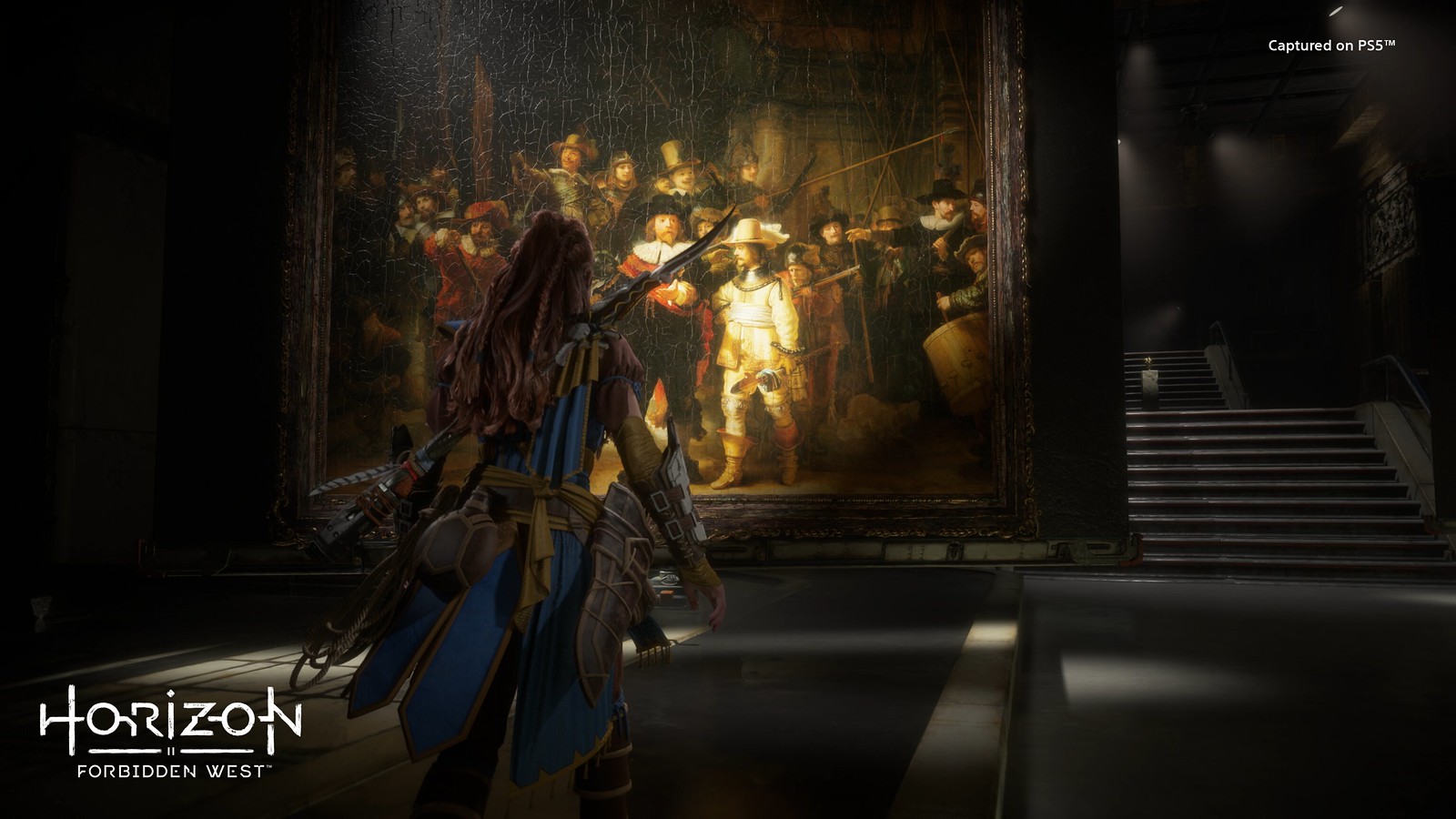
Guerrilla then worked to create a space in the game to show off these works, preserved for a millennium: the vault inside of Tilda’s mansion. When Aloy first enters, she is captivated by the great works featured prominently on the tall concrete walls and pedestals. In this atmospheric area, Aloy—and the player—can linger for however long they wish and discuss the pieces with Tilda through Aloy’s Focus. Ultimately, this provides a connection between both characters, beautifully acted by Ashly Burch and Carrie-Anne Moss, manifested through their mutual admiration and interpretation of Tilda’s collection.

The Rijksmuseum has been a phenomenal collaborator over the past few years, from curating the selection to now. They are cordially inviting Horizon Forbidden West fans and art admirers alike to take the Aloy Tour at any time, and see the magnificent collection up close as displayed in the historic museum halls. The ten selected works are:

  • The Night Watch, Rembrandt van Rijn, 1642
  • Woman Reading a Letter, Johannes Vermeer, ca. 1663
  • Titus in a Monk’s Habit, Rembrandt van Rijn, 1660
  • Jeremiah Lamenting the Destruction of Jerusalem, Rembrandt van Rijn, 1630
  • Woman Reading Music, Han van Meegeren, 1935 – 1940
  • Selene and Endymion, Gerard de Lairesse, ca. 1680
  • A Ship on the High Seas Caught by a Squall, Known as ‘The Gust’, Willem van de Velde (II), ca. 1680
  • Lidded ewer for the Amsterdam Goldsmiths Guild, Adam van Vianen (I), 1614
  • Frenzy, Artus Quellinus (I) (attributed to), na 1648 – in of voor 1662
  • Bacchant, Adriaen de Vries, 1626

If you want to know more about how we created Tilda’s Vault and selected which significant artworks were featured in-game, please check out the video below: 

Play Video Preserving art through Tilda’s Vault in Horizon Forbidden West
07 Apr 09:41

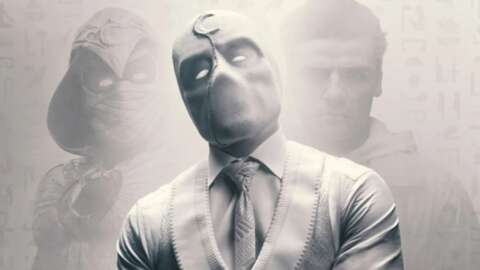
Moon Knight Introduces A Brand-New Mr. Knight To Go With A Brand-New Steven Grant

Moon Knight fans have a lot to look forward to as Marvel's famously bizarre superhero makes the jump to live action for the first time ever this week. But, while the hero's famously fractured personalities are being translated to the MCU, one (or, technically two) of them might catch comic book fans off guard. Steven Grant, who in the comics is Moon Knight's most Bruce Wayne-like identity, wealth, suave, and social, has been adapted for the show as both bumbling and broke with a now infamously silly British accent to top it all off.

In this week's episode, "Summon The Suit," we get an even closer look at Steven's place in Moon Knight's world as well as a glimpse of how he fits into the whole superhero scheme as well. At the end of the episode, he summons his very own version of the Moon Knight costume--which Marc jokes looks like "Colonel Sanders"--and is a pretty far cry from the traditional armor get-up with the billowing cape and hood. Steven's costume is actually based on a relatively recent addition to the Moon Knight canon. Called "Mr. Knight," the suit-wearing version of the superhero was introduced by Declan Shalvey and Warren Ellis in 2014 as, functionally, an additional identity in and of itself. While Moon Knight proper was a ruthless vigilante, Mr. Knight was a significantly more investigative, detective-like persona who would frequently team-up with others to help solve various crimes.

Continue Reading at GameSpot
06 Apr 10:16

Alexander Skarsgård On The Woes Of Being Really, Really, Ridiculously Good-Looking

by Jenna Busch

Alexander Skarsgård is a pretty person. This is just science. This has also sometimes affected his ability to be cast in things. Typecasting is real, and while sometimes it can help you, it does make sense that being really, really ridiculously good-looking (as Skarsgård is) could confine you to a certain type of role.

While speaking about his role in the upcoming Viking film "The Northman," Skarsgård lamented to The Sunday Times that his loveliness actually negatively affected his career at first:

"I don't really know if that was the reason I wasn't getting roles. Starting out in Sweden, there was stuff about being tall and blond. But most people here are tall and blond. Still, after my first job, I was on a stupid 'sexy hunky hot list' and then people didn't take me seriously ... If you want characters with depth but have been labeled 'a dude who takes his shirt off,' you're not going to get those offers." 

A Very Pretty Viking

I know, I know. Poor pretty baby. The thing is, Hollywood isn't always very imaginative when it comes to casting. I sat in on a casting session once, and a very attractive person came in to read for a big role. The casting director said after they left (and I'm paraphrasing, but not by that much), "Wow! Nice read, but no one will believe they're anything but stupid with a body like that." My eyes practically did a backflip, I rolled them so hard. 

It's nice to know that Skarsgård has transcended his perfect form and gotten to do roles that have weight to them. Okay, maybe "True Blood" wasn't high art, but it was fun, and Skarsgård's comedic and acting skills made him one of the best parts of the series. 

In "The Northman," Skarsgård plays a Viking warrior prince who is out to avenge his father. Vikings are all the rage these days with shows like "Vikings: Valhalla" and the video game "Assassin's Creed: Valhalla" -- which is you can find me playing at any given time. 

"The Northman" stars Anya Taylor-Joy, Björk, Nicole Kidman, Ethan Hawke, and Willem Dafoe. The film hits theaters on April 22, 2022.

Read this next: The Best Movies Streaming Right Now: Malignant, A Hero, And More

The post Alexander Skarsgård on the Woes of Being Really, Really, Ridiculously Good-Looking appeared first on /Film.

06 Apr 10:12

Get Ready For The Sherlock Holmes Universe, Courtesy Of Robert Downey Jr. And HBO Max

by Valerie Ettenhofer

Is it the 2010s in here or is it just me? 11 years after Robert Downey Jr. last donned his bowler hat to play Sherlock Holmes on screen, the actor is set to executive produce not one but two Holmes-related shows that are in development for HBO Max, per The Hollywood Reporter. There's no word on whether Downey plans to reprise the role, but both shows will be produced under the Team Downey production banner, which he runs with producer Susan Downey.

The project still appears to be in the early stages of development, with few plot details known. The fact that the streamer is working on not one but two Sherlock Holmes stories, though, indicates that this will be a TV universe of some sort. Lionel Wigram, who produced both of the Guy Ritchie-directed films in which Downey played the famed genius detective, is also slated to executive produce the new shows. Amanda Burrell is also on board to produce.

Get Ready For The SHEU (Sherlock Holmes Extended Universe)

This may come as a bit of a surprise for fans of Sir Arthur Conan Doyle's insufferably smart investigator, as pop culture seemed to reach a crescendo in Sherlock Holmes obsession several years back. Ritchie's Holmes films may have kicked off the trend in 2009, but other titles soon followed, with the BBC series "Sherlock" beginning in 2010 and CBS' "Elementary" debuting two years later. Most recently, Millie Bobby Brown portrayed the detective's kid sister in "Enola Holmes" on Netflix. Still, most of the Doyle stories are in public domain, meaning Holmes fever can keep coming back in as many incarnations as creators want.

Though the news of a Sherlock Holmes TV universe might be unexpected, Downey has been talking about reviving the story for a while now. In 2020, both Susan Downey and Robert Downey Jr. appeared on a panel at Fast Company's Innovation Festival. On the panel, reported on by IndieWire, they expressed enthusiasm for continuing the story that was apparently originally envisioned for a third Ritchie movie. Susan Downey said:

"We do think there's opportunity to build it out more, to spin off some characters from the third movie, to see what's going on in the television landscape, to see how Warner Media is starting to build things out with HBO and HBOMax. We definitely have kind of grand schemes and plans and all that, but it takes a lot. It takes a lot of coordination because again, Marvel wasn't built in a day."

At the same event, Robert Downey Jr. indicated that whatever path the pair pursue would look different than the Holmes movies he worked on before, saying, "Why do a third movie if you're not going to be able to spin off into some real gems of diversity, and other times and elements? We're not repeaters, we don't want to just try to do what's been done somewhere else."

Read this next: The 20 Best Heist Movies Of All Time

The post Get Ready for the Sherlock Holmes Universe, Courtesy of Robert Downey Jr. and HBO Max appeared first on /Film.

06 Apr 07:59

The entire ‘Next Generation’ cast will appear in 'Star Trek: Picard' season three

by Daniel Cooper

The entire* principal cast of Star Trek: The Next Generation will appear on the third and final season of Picard. Jonathan Frakes, Marina Sirtis and Brent Spiner, who have already featured in the series, will be joined by LeVar Burton, Gates McFadden and Michael Dorn. In a statement, executive producer Terry Matalas said that “it’s most fitting that the story of Jean-Luc Picard ends honoring the beginning, with his dearest and most loyal friends from the USS Enterprise.”

Matalas added that the final season will offer a “final, high-stakes, starship-bound adventure,” which, at a guess, nods at the predominantly planet-bound series so far. Of course, long-time fans might be nervous at what the show’s writers will have cooked up for our beloved crew, especially after giving Riker and Troi a minor-key postscript to their Star Trek tenure. Maybe Dr. Crusher is now pushing medical misinformation over subspace while Geordie spends his retirement as a crypto evangelist.

* Sadly, no in-series return for Ready Room host Wil Wheaton, despite the fact he was in almost half the episodes, or Diana Muldaur.

05 Apr 09:33

Elon Musk becomes Twitter's biggest shareholder, pushes for edit button

by Jon Mundy
Elon Musk

Tesla CEO and world’s most notorious tech billionaire Elon Musk has spent $2.9 billion on a 9.2% stake in Twitter, making him the company’s largest shareholder.

Filings made to the US Securities and Exchange Commission (SEC) on Monday reveal that Musk has accrued a 9.2% stake in Twitter. News of Musk’s move initially causes Twitter’s value to spike by $8 billion.

We’re used to Musk pouring his every thought (both smart and not-so-smart) onto Twitter to his 80 million followers, but now the SpaceX boss appears to have put his money where his mouth his.

He has a famously fractious relationship with the platform, frequently calling for changes whilst falling afoul of the platform’s capacity to provide ample rope with its snappy, unfiltered messaging system.

Indeed, Musk’s first significant act as major shareholder appears to have been to lobby (again) for the insertion of an edit button.

Putting a casual (note the deliberate misspelling of ‘yes’ and ‘no’) poll out on a basic feature idea holds a lot more sway when you own a good chunk of shares, of course.

As if to prove that point, Twitter CEO Parag Agrawal retweeted Musk’s poll with the works “The consequences of this poll will be important. Please vote carefully.” It’s leaning ‘yes’ at the time of writing.

Is this the future of a post-Elon Musk Twitter’s product development strategy? Jumping to attention every time its most powerful and prominent shareholder gets annoyed or has a vague idea?

You can bet we’ll be getting a running commentary comprised of pithy 280-character quotes if so.

The post Elon Musk becomes Twitter's biggest shareholder, pushes for edit button appeared first on Trusted Reviews.

04 Apr 08:45

The latest ‘Star Trek: Strange New Worlds’ trailer promises a return to form

by Igor Bonifacic

A little more than a month before its May 5th premiere, Paramount+ has shared a new trailer for Star Trek: Strange New Worlds. For those who have become weary of the franchise’s more dark tone during the Alex Kurtzman era, Strange New Worlds looks like a return to the relentless optimism and romanticism put forward by creator Gene Roddenberry. “I love this job,” Pike whispers to Rebecca Romijn’s Number One, followed by a brief montage of some of the adventures the crew of the Enterprise will find itself in season one of the series.

Set about a decade before The Original Series, Strange New Worlds features a handful of future Star Trek greats before their career-defining stint on the Enterprise, with Anson Mount, Rebecca Romijn and Ethan Peck reprising their respective roles as Pike, Spock and Number One from Star Trek: Discovery season two. To that cast, the series adds the likes of Celia Rose, portraying a young Nyota Uhura, and a few newcomers that we haven’t seen before.

In the US, Star Trek: Strange New Worlds will stream exclusively on Paramount Plus.

30 Mar 07:52

Get in the Dyson Zone with the portable air purifier headphones

by David Ludlow
Dyson Zone product shot

Dyson knows a thing or two about purifying air, both with its dedicated fan purifiers and with its vacuum cleaners, trapping sucked up dirt and preventing it from escaping. Until now, the company has been focused on cleaning the air inside your home. Now with the Dyson Zone wearable, the company wants to purify the air you breathe when you’re outside, as well as making life quieter.

The Dyson Zone is a pair of noise-cancelling over-ear headphones that suck in dirty air through each earcup and then blows out pure air through the removable non-contact visor in front of your nose and mouth. Think of a more comfortable version of Bane’s mask from Batman and you get the idea.

For the system to work, Dyson had to develop a tiny impellor to draw in air, finely balanced so that there’s no vibration to cause unwanted noise. This air then passes through filters to remove harmful particles.

Air filtering

Dyson has used an electrostatic media for the filters, which attracts particles to it. According to Dyson, the filters can remove 99% of particles as small as 0.1-microns, while a potassium enriched carbon layer captures gasses, including NO2, sulphur dioxide and ozone.

Clean air is pushed through to the Clean Air Delivery Visor at a rate of 2.5-litres per minute of air. As Dyson explained to us in a briefing, it was important to create a gentle waft of clean air, rather than blowing it into your face.

We’ve had the chance to try the Dyson Zone and it is as described: you can feel the air coming through, but it’s gentle and not like sitting in front of a fan that would push air at you at high speed.

There are different modes that push air at different rates because different activities require different levels of airflow: you need more when exerting yourself, less when sitting down or walking slowly. To allow for this, the Dyson Zone has low, medium and high settings, plus an auto mode that can adjust airflow automatically based on what you’re doing.

We live in an era where wearing face masks is common. While the Dyson Zone purifies the air that you breathe in, it doesn’t stop what you breathe out. Where you have to wear a facemask, the Dyson Zone ships with an FFP2-compliant mask that clips onto the front of the visor, covering your nose and mouth.

ANC headphones

Not only is the product an air purifier, but it’s also a full set of Active Noise Cancelling (ANC) headphones, designed both to make life around you quieter and for entertainment. The headphones connect to your phone via Bluetooth and can be controlled through the Dyson Link app, the same one used for Dyson’s smart devices, such as the Dyson Purifier Hot+Cool Formaldehyde

As ANC only covers the lower end of the audio spectrum, there’s passive attenuation to further filter out sounds. Dyson tested seven different foams until it settled on the one for the Zone.

The headphones have three ANC modes: Isolation for the maximum noise cancellation to kill background noises; Conversation mode, which activates when you dip the visor, turning off air purification and amplifying conversations; and Transparency mode, which uses the microphones to amplify key noises, such as station announcements or sirens.

Jake Dyson unveils the new Dyson Zone air-purifying headphones
Photo credit: Matt Alexander/PA wire

There are 11 microphones for ANC and two for telephony. Internally, the speakers use 40mm drivers and a large cavity to deliver high-fidelity audio. 

We had a chance to try out the headphones for a short period. The ANC is certainly impressive, and we couldn’t hear any of the conversations going on in the same room until we flipped down the visor for conversation mode. 

With ANC turned on, the headphones will last for 40 hours on a charge. Turn on purifying and battery life drops: Low flow lasts 4.5-hours, Medium lasts 2.5-hours and High flow 1.5-hours.

Price and availability

The Dyson Zone will be available to buy from Dyson Autumn 2022, but the price has not yet been released. We’ll bring you updates as we have them and a review when samples are available.

The post Get in the Dyson Zone with the portable air purifier headphones appeared first on Trusted Reviews.

25 Mar 19:32

Ukrainian Sherlock Holmes Devs Discuss How They're Developing During a War

by Adam Bankhurst

Editor's Note: The war in Ukraine is an ongoing, painful and emotive topic. IGN urges community members to be respectful when engaging in conversation around this subject and does not endorse harassment of any kind.

Sherlock Holmes: Chapter One developer Frogwares is headquartered in Ukraine, and the team has shared a bit of what it's like to develop a game during a war.

Sherlock: Holmes: Chapter One was released on November 15, 2021, and Frogwares has just announced that not only is the M for Mystery DLC now available on PC, PS5, and Xbox Series X/S, but also that Sherlock Holmes: The Devils Daughter will be released on Switch on April 7, 2022.

Frogwares is located in Kyiv, Ukraine (subsidary offices are in Dublin, Ireland), and the team has said that, "despite being embroiled in a horrendous war, the majority Ukrainian-based team managed this through external partners and a handful of remote-based staff. They are now aiming to adapt to the situation and do what they can to keep the studio semi-functioning and afloat."

"Put simply, we need to keep the studio alive and functioning to the best of our abilities now more than ever," Frogwares CEO Wael Amr said. "Nobody on the team is expected to work, only those who can and want to. Some on the team have become full-time volunteers in the humanitarian efforts around the country. Others have joined the defense forces. The rest are in various, safer locations abroad or around the country and have made themselves available to work remotely. And we continue to pay all of these people on the team.

"For those fighting or volunteering, each of their spots on the team will be waiting for them at the end of the war. But essentially it is through a collection of staff that either fled Ukraine to neighboring EU countries and those who have relocated to safer areas who are keeping Frogwares going right now. We are an independent studio with no external financing, investors, or parent company keeping us afloat.

"So it's up to us alone and through the support of our players wanting to play our games that will keep this studio alive. And as this war drags out more and more, we and people all around Ukraine are seeing that even if they are not involved in the fighting directly, they need to somehow keep things moving forward. So that when this is all over and it’s time to rebuild and restart, we are not starting from zero.”

To learn more about this conflict and how you can help, check out how other members of the games and entertainment industry are giving their support, why games and entertainment companies are pulling support in Russia, and how you can help Ukrainian civilians.

Have a tip for us? Want to discuss a possible story? Please send an email to newstips@ign.com.

Adam Bankhurst is a news writer for IGN. You can follow him on Twitter @AdamBankhurst and on Twitch.

25 Mar 19:27

European Union reaches provisional agreement on antitrust law targeting tech giants

by Karissa Bell

The European Union has reached an agreement to adopt the Digital Markets Act (DMA), a sweeping antitrust law meant to rein in Apple, Google, Meta and other tech giants. Lawmakers reached a “provisional” agreement on the law Thursday, following hours of negotiations, the European Parliament wrote in a statement.

The law could have far-reaching implications, some of which could extend beyond Europe. Most notably, one of the primary provisions of the DMA is that messaging providers would need to make their services interoperable with other services, “EU lawmakers agreed that the largest messaging services (such as Whatsapp, Facebook Messenger or iMessage) will have to open up and interoperate with smaller messaging platforms, if they so request,” the EU Parliament said following the agreement.

It’s unclear for now if this requirement would also apply to interoperability between the large messaging platforms themselves. Parliament wrote that the interoperability provisions for social networks “will be assessed in the future.”

In a statement, an Apple spokesperson said the company was "concerned" about some aspects of the law. "We remain concerned that some provisions of the DMA will create unnecessary privacy and security vulnerabilities for our users while others will prohibit us from charging for intellectual property in which we invest a great deal," the spokesperson said. "We believe deeply in competition and in creating thriving competitive markets around the world, and we will continue to work with stakeholders throughout Europe in the hopes of mitigating these vulnerabilities.”

Meta didn't immediately respond to a request for comment. The company's head of WhatsApp, Will Cathcart, wrote on Twitter that he hoped the law was "extremely thoughtful." "Interoperability can have benefits, but if it's not done carefully this could cause a tragic weakening of security and privacy in Europe," he said

The DMA also prohibits companies from “combining personal data for targeted advertising” without explicit consent, a move that could limit Meta and others’ ability to serve targeted ads to users. As The New York Times points out, there are still many questions about how European lawmakers will enforce these new rules and the companies in question are likely to raise legal challenges.

Earlier proposals of the law also included provisions that would change how Apple and Google ran their app stores. Under the proposed rules, Apple would have to allow users to install apps from other stores, and both Apple and Google would be required to allow developers to bypass their companies; storefronts and use their own billing. It’s unclear if those provisions were included in the latest agreement. The European Parliament will hold a press conference Friday, when they are expected to share more details.

Updated to include a comment from Will Cathcart.

25 Mar 19:26

US and EU aim to revive transatlantic data flows in new privacy deal

by Kris Holt

The US and the European Union have struck a preliminary agreement on an updated Privacy Shield framework to re-enable the flow of data between the two regions. A previous agreement was struck down by the EU's top court in 2020 over concerns that Europeans would not be fully protected from mass surveillance by the US.

"We have found an agreement in principle on a new framework for transatlantic data flows," European Commission President Ursula von der Leyen said at a joint press conference with US President Joe Biden. "This will enable predictable and trustworthy data flows between the EU and US, safeguarding privacy and civil liberties."

"Privacy and security are key elements of my digital agenda," Biden said. "And, today, we've agreed to unprecedented protections for data privacy and security for our citizens. This new arrangement will enhance the Privacy Shield framework, promote growth and innovation in Europe and the United States and help companies, both small and large, compete in the digital economy."

Biden added that should the new deal come into force, it will "allow the European Commission to once again authorize transatlantic data flows that help facilitate $7.1 trillion in economic relationships with the EU." He said the US and EU reached other agreements on bolstering renewable sources of energy and reducing Europe's reliance on fossil fuels from Russia.

The provisional deal on data privacy comes one day after the European Union reached an agreement on adopting the Digital Markets Act (DMA), legislation aimed at reining in the power of the biggest tech companies and giving smaller players more of a chance to compete. One provision could force the likes of Meta and Apple to make their messaging services interoperable with other platforms.

At a separate press conference on Friday, Margrethe Vestager, the European Commission's executive vice president for A Europe Fit for the Digital Age, said the DMA will come into force in October.

24 Mar 10:15

IKEA's new outdoor LED lamp is also a Spotify-enabled Bluetooth speaker

by Steve Dent

IKEA has unveiled the Vappeby Bluetooth speaker with a Spotify Tap button that doubles as an outdoor lamp, confirming an FCC filing we saw last year. With IP65 dust and water splash resistance, it's designed to illuminate outdoor parties, barbecues, etc. with LED light while delivering 360 sound, the company said. 

When you press the Spotify Tap button, it will start streaming from wherever you left off and another press will play a different recommendation based on your Spotify history. It also works with other streaming services or any media stored on your smartphone or other connected device. 

Vappeby offers up to 12 hours of music streaming, presumably without the light turned on. It charges via USB-C with a cable, but not a charger, included in the package. The lamp offers two LED light modes (IKEA didn't specify which), and has a grip and lantern-like design.

IKEA's Spotify Tap Bluetooth speaker doubles as an outdoor LED lamp
IKEA/Miguel Perez

Spotify Tap rolled out in September last year and was available at launch on Bluetooth headphones from Samsung, Microsoft Surface, Bose, Skullcandy, and Jabra, Spotify said at the time. The company already has a range of Vappeby Bluetooth speakers (known as Eneby in the US) priced from $25 to $90. It also offers the Symfonisk bookshelf speaker build in collaboration with Sonos, available for €99 in Europe only. 

The company said that Vappeby is "an important step on IKEA's journey to democratize music... increase user experience, lower the thresholds and make music and light easily accessible." The new model is now available to order for $65 in blue or grey, though as mentioned, the USB power adapter is sold separately. 

21 Mar 15:21

Henry Ford's Plant-Based Automobile

by Miss Cellania

The manufacture of organic, eco-friendly, biodegradable products is not strictly a modern-day idea. Henry Ford himself looked into the possibilities of replacing steel with an agriculturally-derived plastic made of soybeans, hemp, wheat, and other crops. His purpose was not environmental sustainability, though. A car made of plant-based plastic would be cheaper than steel, would reduce the weight of a car to increase fuel efficiency, and what his engineers came up with was surprisingly tough.

Ford's prototype plastic car was unveiled in 1941. It had a tubular steel frame that acted as roll bars, was covered in tough and resilient plant-based plastic, and ran on fuel made from hemp. Ford was eager to get the car off the ground as he suspected the availability of steel would be an issue due to World War II. He was right about that, but it turned out to be impossible to manufacture an alternative car when the government forbade all automobile production and shifted manufacturing to military vehicles and weapons. By the time the war ended, Ford was in ailing health and soon retired. Interest in the plastic car faded.

Recent coverage of Ford's plastic car mainly focuses on the hemp aspect, but he had quite a few agricultural products in mind. However, the exact formula for the plastic no longer exists. There are several ideas for what it might have contained, but no one knows for sure. Read about the plant-based plastic car that might have been at Amusing Planet.

(Image credit: Flickr user John Lloyd)

21 Mar 12:56

Raspberry Pi Automates Sustainable Farming

An agricultural robot named Acorn uses Raspberry Pi and Nvidia Jetson to help automate farming
21 Mar 12:55

Mac Studio Dissected: M1 Ultra About 3x Bigger Than AMD's Ryzen CPUs

Mac Studio dissected: A masterpiece of high-precision engineering that will obstruct repairability.
16 Mar 15:30

Soft & Quiet Review

by Alex Stedman

Soft & Quiet was reviewed out of the SXSW Film Festival.

Beth de Araújo's Soft & Quiet is a fearful and compelling feature debut that takes an in-your-face approach to reveal America's greatest domestic threat: racism. It's a worst-case scenario that weaponizes traumatic triggers from hate speak to sexual abuse, as "like-minded women" take white nationalism to its frightening extreme. Soft & Quiet is a complicated watch fueled by nuclear chaos energy that's infuriatingly tense and revolting. Where something like Blumhouse's The Hunt uses humor to help its messages go down smoother, Araújo rubs her audience's noses in the disgusting reality of white supremacy.

The film unfolds in "real-time," following elementary school teacher Emily (Stefanie Estes) as she attends her first meeting for an after-school group of local women with a common agenda. Cinematographer Greta Zozula follows closely behind Emily throughout every step of escalation that begins with a "harmless" place for people to speak their minds. The "Daughters for Aryan Unity" — including ex-convict Leslie (Olivia Luccardi), business owner Kim (Dana Millican), and new face Marjorie (Eleanore Pienta) — share baked goods and wine, occupying a church's rec room to talk about the dangers of multiculturalism. It's abhorrent, and satire is rich because Araújo wants to make sure you understand that Soft & Quiet is a monster movie — monsters of "Karen" origins, purity-white wardrobes, and oppressive ideals.

Araújo's screenplay divides her storytelling into distinct halves to emphasize two tones. First, we sit and listen to Marjorie complain about her coworker — a woman of color — stealing a promotion or Kim's rampant antisemitism like a PSA from Hell. It's intentionally irrational and enraging — the women flash noteworthy white supremacy hand signals as a wink of solidarity or start their complaints against affirmative action with disclaimers like, "I don't hate anyone," or, "This won't be posted online, right?" Soft & Quiet takes special care to show you how easy it is for these horrific identities to empower one another — how hate groups start — and what consequences can occur as a result. That's why Araújo's second half becomes an outright home-invasion thriller, where "harmless" words become heinous actions.

Frame by frame, with each passing second, Soft & Quiet goes down harder than battery acid. It's bitter, choosing methods that will be too aggressive for some, and is steadfast in its channeled anger. Undoubtedly, there will be viewers who flip off Soft & Quiet after its first "wtf" reveal — and that's reasonable. Araújo operates with big swings and doesn't care about ostracizing audiences, but those who might be reminded of personal traumas may elect not to relive them. Soft & Quiet is always a commentary on the characters as they cement their toxic personalities. It's a divisive choice, but Araújo's vision reflects no compromise.

The cast of suburban mothers and middle-class citizens is so good about juxtaposing constitutional rants and deplorable protests against inclusivity with Suzy Homemaker emotes. It feels weird to say I "like" how Stefanie Estes manipulates people by negging them, using compliments like dangled carrots, but it's true; Estes is a scene-stealing villain as Emily. How Estes grabs the largest mayonnaise container at the grocery store is such a chef's kiss detail. Every actress’ portrayal is steeped in criticism of the red, wrong, and blue caricatures that their characters end up being.

Eleanore Pienta is another standout, as she presents as though Marjorie's afraid society will find out she says terrible things about minorities, but then she gets drunker, is encouraged by her newfound pack, and becomes indecipherable when compared against an actual KKK member. Characters continually convince one another they're doing nothing wrong to points of no return so well — Olivia Luccardi becomes the wild card with a stone-cold psychotic presence. Performances, momentum through cinematography, and Araújo's direction blur into a whirlwind of discomfort, obscenity, and morally bankrupt warnings about domestic hatred waiting for the right moment to strike in ways that are too accomplished to ignore.

There's nothing safe about the spaces Beth de Araújo creates.

My biggest gripe is how the ending leaves us, which won't be discussed in detail here but will certainly challenge viewers. There's wonderful full-circle acknowledgment of "soft" and "quiet" as the camera finally leaves Emily's reign of terror, and yet it feels like there's impact left on the table. It works and consciously makes sense given the entire experience — although it's a disclaimer I include with purpose. There's so much about Soft & Quiet that captivates as a visual representation of repugnant evils — never condoning them — and the way it goes out certainly fits with Araújo's commentary, but doesn't land with the same vigor that most of the film carries.

15 Mar 09:22

Kawasaki made a rideable robotic goat

by Igor Bonifacic

Move over, Spot, there’s a new quadruped robot in town. Meet Kawasaki’s Bex. Unveiled at last week’s International Robot Exhibition in Tokyo, Bex is a four-legged robot that’s inexplicably modeled after an Ibex, a species of wild goat that’s native to parts of Eurasia and Africa.

Bex came out of the company’s Kaleido program, which has seen it work on bipedal robots since 2015. Partway through that project, Kawasaki’s engineers decided to build a robot that could both move quickly across level ground and navigate tricky terrain. As you can see from the video spotted by Gizmodo, Bex features a set of wheels on its knees, allowing it to move faster on smooth surfaces than the glacial pace it plods along when walking. 

Bex can carry approximately 220 pounds of cargo. In addition to transporting construction materials and the like, Kawasaki envisions it carrying out remote industrial site inspections, much like Spot is already doing at Hyundai factories in Korea. To that end, the top half of Bex is fully modular, so it doesn’t have to look like a goat. But if you ask us, what kind of monster wouldn't want a goat protecting their factories? 

14 Mar 16:07

Ukraine is reportedly using Clearview AI's facial recognition tech

by Kris Holt

Ukraine is now using Clearview AI's facial recognition technology for purposes such as identifying Russian soldiers, its CEO claimed. Hoan Ton-That told Reuters the company offered Ukraine's defense ministry free access to its system following the invasion by Russia.

According to the report, Clearview suggested Ukraine could use the tech to reunite refugees with family members, fight misinformation, assess at checkpoints whether someone is a person of interest and to identify dead bodies. The company hasn't offered its technology to Russia.

Engadget has contacted the defense ministry for comment. Ukraine officials previously suggested they were considering using the tech.

It's not clear exactly what Ukraine is using the system for, Ton-That said, while noting it shouldn't be used as the sole means of identification. He and Clearview advisor Lee Wolosky claimed other Ukraine government agencies plan to start using the tech over the coming days.

Ton-That said Clearview has access to more than 2 billion photos from VKontakte, the Russian social media service, and more than 10 billion images overall in its database.

Clearview's controversial tech has come under fire from many quarters over the last few years. This month, Italy fined the company €20 million ($27.9 million) and ordered it to delete images of Italian nationals. The UK provisionally fined Clearview £17 million ($22.6 million) in November for breaking data protection laws.

Canada, Australia and France are among the countries that have told Clearview to delete images of its residents and citizens. It's also facing privacy lawsuits in the US, where lawmakers have urged federal agencies to stop using the tech. Meta, Google, Venmo, Twitter and other platforms have demanded that Clearview stop scraping images from them as well.

14 Mar 09:17

'China's Silicon Valley' Locked Down, Could Affect Supply Chains

Shenzhen is a metropolis of 17.5 million people bordering Hong Kong. It is home to SMIC, Huawei, Tencent, OnSemi, and over 14,000 other high-tech companies.
11 Mar 13:31

Google is rolling out air raid alerts on Android phones in Ukraine

by Kris Holt

As the conflict in Ukraine continues, Google is rolling out an Android feature it hopes will help people in the country stay safe. Ukraine's government asked Google to deploy an air raid alert system on Android phones, and it worked with the company to do so. Google says the feature complements the existing air strike alerts — it's based on alerts the government is already providing to its residents.

In the latest update to a blog post in which it details the steps it's taking to help Ukraine, Google says it has now suspended most of its commercial activities in Russia. Those include ads for all entities based in Russia, Google Cloud signups, payments on most services and YouTube monetization features for Russian viewers. Free services such as YouTube, Gmail and Search are still available in Russia for the time being.

Starting today, hotel owners in countries neighboring Ukraine can note on their business profile if they offer discounted or free stays to refugees. Businesses can share details on their business profile on Search and Maps about services and aid they're offering to refugees from Ukraine.

Google is also letting NGOs in Warsaw use one of its campuses to offer legal and psychological support to refugees. It previously announced similar support for NGOs in Slovakia, Romania and Hungary, as well as a $10 million pledge toward local organizations in Poland that are aiding refugees.

Meanwhile, Google's Threat Analysis Group has detected activity from FancyBear and Ghostwriter, hacking groups believed to have ties to Russia and Belarus, respectively. The team shared details about those threats earlier this week to increase awareness among those in the security community and those who may be at risk of cyberattacks.

In addition, the company says it has complied with an EU directive to remove Russian state-funded media websites from search results in the region. It's also removing more Russian media apps from Google Play.