Shared posts

07 Jan 06:43

The Big Bang Theory star Johnny Galecki teases possible final season

by Nick Romano

The Big Bang Theory‘s final season could already be in sight. Following the show’s panel for the Television Critics Association, star and executive producer Johnny Galecki addressed reporters in attendance about when the long-running CBS sitcom might come to an end.

“The only manner in which the cast has discussed wrapping has been that we’re all going to be very sad when that day comes,” Galecki said (via E! News). “But I think at this point everyone’s very comfortable with 12 seasons being a good time to go home and see our families.”

CBS gave The Big Bang Theory — which also stars Jim Parsons, Kaley Cuoco, Simon Helberg, Mayim Bialik, and Kunal Nayyarwill — a two-season renewal last March with the current 11th season premiering this past September.

Galecki is also appearing in an episode of the forthcoming Roseanne revival, and he told reporters that was by virtue of his commitment to The Big Bang Theory.

“It was probably most uncomfortable only to me because obviously Big Bang is my home and my family,” he said, according to TV Line. “But I probably wouldn’t have been on Big Bang if it hadn’t been for Roseanne. So there were the politics to be considerate about, but everyone was very supportive.”

If Roseanne is greenlit for more episodes, however, he said, “I would love to do more than one .”

Meanwhile, Walton Goggins and Beth Behrs were revealed to have guest-starring roles for the Jan. 18th episode of The Big Bang Theory, while spin-off series Young Sheldon secured a second season from CBS.

Young Sheldon has made a huge impact on our schedule in the short time it’s been on the air,” CBS President Kelly Kahl said in a statement. “While the show’s DNA is clearly rooted in The Big Bang Theory, Young Sheldon has staked out its own place in the TV universe with a unique creative tone, brilliant writing and a gifted multi-generational cast. We can’t wait to see Chuck, Steve, Jim, and Todd’s vision for how the Cooper family deals with Sheldon growing a year older… and smarter.”

07 Jan 06:42

Benedict Cumberbatch is a 'schizoid, suicidal alcoholic' in Patrick Melrose trailer

by Dan Snierson

“Patrick: Narcissistic, schizoid, suicidal alcoholic.” That’s certainly one colorful way to introduce yourself. Sherlock vet Benedict Cumberbatch is on the trail of serious dysfunction as the title character in Showtime’s Patrick Melrose. Debuting later this year, the five-part series based on Edward St. Aubyn’s semi-autobiographical novels sends up the upper crust while chronicling Patrick’s “harrowing odyssey from a deeply traumatic childhood through adult substance abuse and, ultimately, toward recovery.” 

Spanning several decades, from France to America to Britain, Patrick Melrose also stars Hugo Weaving as Patrick’s abusive father and Jennifer Jason Leigh as his condoning mother, as well as Anna Madeley, Blythe Danner, Allison Williams, Pip Torrens, Jessica Raine, Prasanna Puwanarajah, Holliday Grainger, Indira Varma, and Celia Imrie.

At the Television Critics Association Winter Press Tour, Showtime unveiled the show’s flashy first trailer, in which Patrick is asked, “Don’t you find it hard not to take drugs?” and responds, “Of course! It’s a f—ing nightmare being lucid.”

06 Jan 10:11

Meltdown and Spectre are wake-up calls for the tech industry

by Devindra Hardawar
It's not hyperbole to say that Meltdown and Spectre CPU vulnerabilities are a disaster. They affect pretty much every processor used over the past two decades and practically every device. In the right hands, they could reveal things like passwords a...
05 Jan 16:44

Final Season of GAME OF THRONES to Premiere in 2019

by Clarissa
HBO has confirmed that the eighth and final season of GAME OF THRONES will premiere in 2019, which means that fans have a long time to wait to see who ends up on the Iron Throne. No specific premiere date has been announced. The specialty channel also confirmed that the final season will consist of […]
05 Jan 08:25

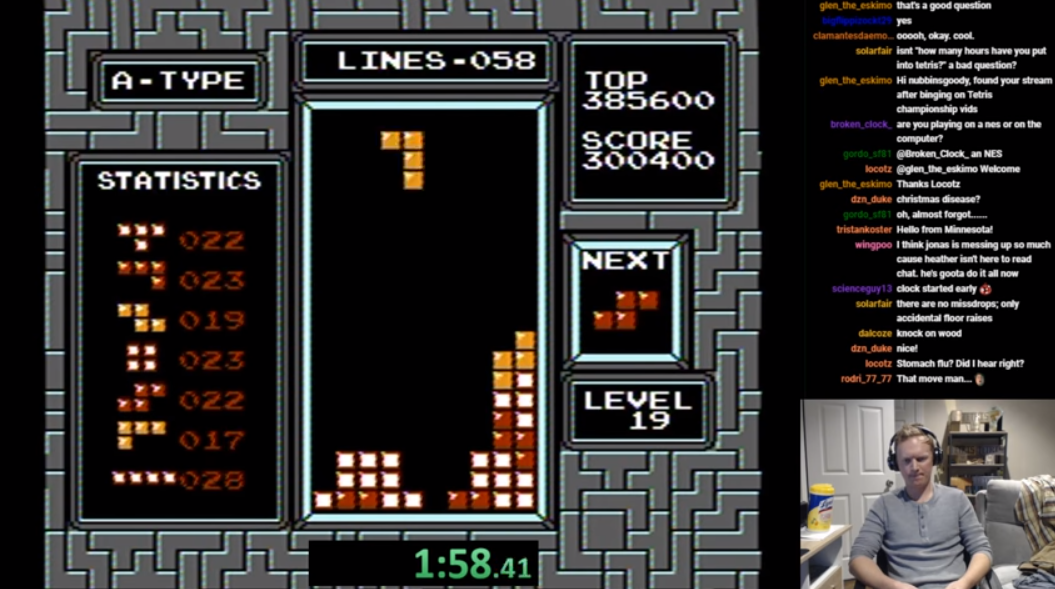
Watch this streamer accidentally break a 'Tetris' world record

by Rachel England
As the old saying goes, if at first you don't succeed, try again. Or, if you're Jonas Neubauer (AKA NubbinsGoody), break a different world record instead. The NES Tetris maestro was trying to break the world record for speed-clearing 100 lines in the...
04 Jan 23:04

Understanding Meltdown & Spectre: What To Know About New Exploits That Affect Virtually All CPUs

by Ryan Smith

It seems only fitting that one of the two hardware based exploits to rock the CPU world this week was named Meltdown. Because for the last 24 hours or so, it feels like I’ve been on the verge of one just trying to keep up with all of the new information that has come out on this and the also aptly named Spectre exploit. Suffice it to say, it’s the kind of week we haven’t seen for a long time in the technology industry. But I’m getting ahead of myself, so let’s start at the beginning.

Security researchers working for Google’s Project Zero group, along with other research groups and academic institutions, have discovered a series of far-ranging security risks involving speculative execution. Speculative execution is one of the cornerstones of high-performance execution on modern CPUs, and is found in essentially all CPU designs more performant than an embedded microcontroller. As a result, essentially every last high-performance CPU on the market or that has been produced in the last couple of decades is vulnerable to one or more of a few different exploit scenarios.

04 Jan 07:32

Grown-ish: Yara Shahidi, Francia Raisa preview the fun black-ish spin-off

by Chancellor Agard

A version of this story appears in the upcoming Winter TV Preview issue of Entertainment Weekly, on stands Friday. Don’t forget to subscribe for more exclusive interviews and photos, only in EW.

No other college-set show in recent history (save, maybe, Community) has captured the diverse group of people you meet during you freshman year quite like grown-ish, Freeform’s black-ish spin-off, does.

Sure, the woke sitcom, which premieres Wednesday night and is centered on Yara Shahidi’s Zoey Johnson, covers relatable first-year experiences (think: sex, drugs, and midterm exams). But its beating heart is the colorful cast of characters creator Kenya Barris has surrounded Zoey with: Cuban Republican roommate Ana (Francia Raisa), pill-dealing Vivek (Jordan Buhat), and free-spirited Nomi (Emily Arlook).

They may challenge Zoey’s privileged worldview, but isn’t that the point of higher education?

EW talked to stars Shahidi, 17, and Raisa, 29, to get the 101 on this different world.

ENTERTAINMENT WEEKLY: Neither of you has been to college. What has it been like working on the show? 
YARA SHAHIDI: I had a whole lot of firsts on set. Francia was there for, I think, one of my favorite firsts: cursing. I’m not saying I enjoy cursing, but it was a funny moment in which my character had to wake up angry and yell out a curse word, and I was just not used to it. So I literally go, “Fudge!” We looked at each other and started laughing.
FRANCIA RAISA: I didn’t go to college, and I’m the oldest one on set. At first I was like, “Oh, I’m going to be the big sister,” but I look up to Yara and Chloe and Halle because they’re just so wise and we have such a great chemistry and we have so much fun going to my first frat party, my first Adderall experience — kind of — and dealing with first sexual experiences. It’s fun going back to that time and actually getting a taste of it for myself.

What was the first scene you guys shot together? 
RAISA: It’s hard to say without giving any spoilers, but let’s just say that I didn’t go to college, and on my first day I went to my first college party.
SHAHIDI: What’s really interesting is because they shot in chronological order, in particular, our story line in the first episode, it really did set the tone for the beginning of our relationship. The first couple of scenes we’re in together don’t go as beautifully as Zoey and Ana had planned.

This show looks like it’s a blast to work on. Is set as fun as it looks? 
SHAHIDI: What I personally love so much about our characters’ relationship is that we’re allowed to, as Francia and Yara, have so much fun on set, and then have those really emotional scenes. Those scenes we have together are so special to me because I feel there’s just a natural reaction that is evoked whenever I act alongside you. I don’t even have to try and act like Zoey cause I can’t help but feel what you are emitting and emoting.
RAISA: Because we’re developing such personal relationships off-screen, it really comes on screen. We look forward to scenes together. It’s like a party for us, and I feel bad for the crew sometimes because we never hear “Action!” because we’re legit talking. When you watch the show and you see some ad-libbing, those are real conversations.

In your opinion, how will grown-ish stand out from other college series?
SHAHIDI: I feel pretty darn lucky about the cast we’ve been able to create and just our relationship because that really shows through.
RAISA: I grew up in the Saved by the Bell/90210 era, and this comedy is so different. I know that was high school, but even when they went to college, they were more focused on the love triangles. This show has that too, but it goes beyond that. I’ve never seen a show that’s been so involved in today’s world, meaning politics — people’s views are seen and heard. I’ve personally learned so much from it. I think this show really portrays why it’s important to be involved in our society.

Francia, what attracted you to this character? 
RAISA: One, I’m a huge fan of black-ish. So, the minute I heard Kenya Barris and Yara Shahidi, I was like, “Um, yes please!” Like I said, I grew up in the 90210 era, so watching black-ish, I was like — I guess you can say — woke and I started learning a lot of things that I didn’t know growing up. I knew that was going to transfer over onto this show, which is why I was so attracted to being a part of it, because I needed to get woken up and I wasn’t. As far as Ana, I didn’t grow up Republican. My mom is very much a Democrat, and so that was even a challenge for me — even telling my mom that. As I started learning Ana and I started learning her views, it actually started changing my mind a little bit and started getting me to understand more so what I believed. I realized, “Oh, wow, I believed in stuff because my mom told me, but I actually didn’t know the detail of it.” I’ve been enjoying being part of this show. I’m so grateful I’m here, and Yara has been waking me up and introducing me to awesome music.

What have you guys been listening to? 
RAISA: Yara has… a lot of different songs in her head.
SHAHIDI: Yeah, I feel like the one thing I say probably every day, “I have a lot of songs in my head,” because they’re playing all at once. That usually consists of Tyler the Creator right now, a lot of Kid Cudi’s Passion, Pain, & Demon Slayin’, then like the Fiddler on the Roof soundtrack.
RAISA: Yep, all of that, and I knew none of it.

What sort of issues will we see Zoey and Ana face this season?
SHAHIDI: Black-ish and grown-ish, like Francia said, are very much socially aware, but I think the way they handle it is both extremely similar and different — if that makes any sense at all. It is the same set up of you have these characters who are so different, allows us to show different perspectives and we don’t necessarily end every episode with “This is the right way of viewing things.” Rather, we just every character express their opinion. A lot of what we’re addressing is cultural — this larger college culture. We talk about drug abuse on campus and the concept of safe spaces in such a politically diverse area. Also, there’s the bigger picture of each character addressing the barriers they have and really coming into their own and coming from a world where they had it all together into a space where they not only have to figure out who they are, but they kind of realize that they have no space for knowing who they are. They have to start over.
RAISA: Growing up, we’re all like, “I can’t wait until I’m on my own and I can do whatever I want and my mom doesn’t have to tell me anything.” Then, we have that opportunity on this show and you see them make a lot of choices that you thought were great growing up and then you hit the reality of what it is: dating, the first of a lot of things, drug addiction, peer pressure — all of this stuff where you have to hold yourself accountable, no one else can.
SHAHIDI: We do have, of course, the big episodes like black-ish does where it’s very much about one topic, but I think a lot of these story lines that are socially relevant are subtly weaved in and out of the narrative that we’re telling. So, it isn’t necessarily at the forefront of the audience’s mind until the story comes full circle. It may take five episodes for you to even fully understand: “Oh this is just the narrative we’re telling with this particular story line.”

Did doing an episode on safe spaces change the way you thought about the topic? 
SHAHIDI: I think it did teach a lot in that it very much addresses the echo-chamber that we live in many times. We surround ourselves with people that, for the most part, generally agree with our basic values. So, it did kind of push the boundaries of, “How do you start a conversation? How are you in a relationship with somebody you like as a human? How do you respect their opinion?”

The one-hour premiere of grown-ish airs Wednesday at 8 p.m. on Freeform.

04 Jan 07:27

Game of Thrones postage stamps issued for 10 characters

by James Hibberd

Another honor for HBO’s Game of Thrones — and another cool collectible for hardcore fans.

The Royal Mail (that is, the U.K.’s postal service) has issued a line of gorgeous Game of Thrones postage stamps that include 10 characters — plus a few creatures — for affixing to your raven mail (see them all below).

The lineup includes Daenerys Targaryen (Emilia Clarke), Jon Snow (Kit Harington), Tyrion Lannister (Peter Dinklage), Jaime Lannister (Nikolaj Coster-Waldau), Arya Stark (Maisie Williams), Cersei Lannister (Lena Headey), Sansa Stark (Sophie Turner), Eddard Stark (Sean Bean), Olenna Tyrell (Diana Rigg), and Tywin Lannister (Charles Dance).

Other stamps feature the Night King, giants, direwolves, dragons, and the Iron Throne.

Here are all the Game of Thrones postage stamps:

The Royal Mail explained the show has made a “very significant British contribution” and its “acclaimed cast is predominantly British and Irish, and British expertise is to the fore in many areas of the production, including award-winning costume design and prosthetic special effects.” Also, most of the filming is done in Northern Ireland. Still, the Mail service included Dinklage (an American) and Coster-Waldau (a Dane) into the stamp mix.

Game of Thrones returns to HBO for six final episodes in 2019.

04 Jan 07:11

Massive Security Flaw Discovered In Intel CPUs

by Chris Jarrard

A recently discovered bug in all Intel CPUs produced in the last decade presents a massive security risk to users. The bug in the CPUs may allow intrusion into a user’s virtual memory. Modern operating systems run everything through virtual memory banks. Accessing and moving information within these banks is governed by systems that keep certain bits of information separated from each other. The recently discovered flaw reveals that these system may not be keeping the information contained in the proper areas. This allows for the possibility that sensitive information may be made available when it should not be.

Researchers and developers already have patched code that fixes this issue. For folks using Linux-based operating systems, the fix has been made available. Initial testing with the new patch indicates that users of heavily virtualized workloads should expect to see substantial performance hits. Currently, any piece of software that makes heavy use of calls into the system kernel—disk reads, network traffic, opening files—will be affected by the patch.

Microsoft is expected to push out its patch this coming Tuesday. Until then, there will be no concrete evidence as to what kind of performance hit that end users will see in day to day use. Some Linux users have posted game benchmark results that show little to no performance impact from the patch, but the data is far from conclusive and should only be used as a rough guide for what to expect on the Windows side of things.

As they swapped over to using Intel CPUs exclusively several years ago, Apple systems are also vulnerable to this flaw. While the company introduced some initial fixes in its December MacOS update, more substantial protections are expected with the MacOS 10.13.3 update.

As it stands now, AMD CPUs are not believed to be affected by this issue. For all you guys who bought the FX-8350 instead of Sandy Bridge, you have finally been proven right 7+ years later!

02 Jan 07:17

Black Mirror season 4 creator interview: Read after watching

by James Hibberd

Now that your mind has been blown by six different flavors of dystopian future-shock, get at least a few answers to your burning questions. Below we interviewed Black Mirror creator Charlie Brooker about each episode of the terrific fourth season of his Netflix series. Note: Spoilers abound, and most of these answers have been previously published in separate stories.

ENTERTAINMENT WEEKLY: “USS Callister.” When we last spoke, you hinted that a certain other piece of material inspired “USS Callister” beyond Star Trek. I’m wondering if it was the classic Twilight Zone episode “It’s a Good Life”?CHARLIE BROOKER: You may well be right! We were on the set of an episode from last season, “Playtest,” and we were talking about virtual reality and video games, and the conversation went to, “Well, you could be the king of the castle in there, you could have an evil emperor or tyrant.” Which reminded me of that episode, a story they revisited again in The Twilight Zone movie. I watched the episode again not that long ago and it’s still utterly terrifying. It’s like a depiction of what it must be like living under King Joffrey. You’ve got to watch your step. That was the starting point. What if we do a story about an all-powerful tyrant who cast himself as the hero?

There’s a lot to metaphorically unpack in this episode: Workplace sexual harassment, criticism of classic science-fiction tropes, white men who long for the entitlements of yesteryear, and even possibly a critique of our current president. What were you trying to say with this one?It was written in November last year, so certainly when we came to film it in January 2017, it was around the time of the inauguration. There was a certain mood among a lot of the cast that we were dealing with a new regime coming in. That’s an aspect of it. It’s not where the idea came from. But as soon as you get into the workplace stuff, forcing people for what he perceives as slights in the workplace, that then gets to a whole other level of stuff. So often with our episodes, really, there’s not a central message or certain thing we’re trying to evoke, but it comes out alongside of that. Certainly, a lot of those things resonate in that episode, but it’s not directly about any one of those things. Really “USS Callister” is about someone who is wielding absolute power who shouldn’t be, and people overthrowing him.

“Arkangel.” Should we take this as a critique of helicopter parenting?
Helicopter parenting is something I have a great deal of sympathy for because I’m probably quite a helicopter parent myself. My kids are 3 and 5 years old and I worry about them constantly. Rather than a critique, it’s sympathetic. I’ve walked out of the room when they’re watching something on YouTube and the algorithm plays video after video, and I walk in and my 5-year-old is watching a trailer for The Thing and I was a bit concerned by that. I have sympathy for the parental need to protect so certainly that’s where it comes from — hopefully Marie’s motivations are understandable throughout even though she does become more and more interfering, you can see why.

You said previously that Jodie Foster changed some things from your original script. What was changed?She had lots of thoughts about Marie’s relationship with her father. She beefed up the role with the father; that role wasn’t really in there. It was very slight before. She thought we should say something about Marie’s relationship with men, generally, so the brittle relationship she has with her father  — he’s kind of a tough character — she added that in there. She also had a lot of observations about how the technology would work. Also, Marie’s motivations to do something about Sara’s relationship with , and that there would be a great sense of protection and a sort of sense of anger in a way because she’s sacrificed a lot of things to bring up her daughter. There’s a flare of anger in there that isn’t just to do with protection, there’s something else going on there. She had thoughts across the board but those were ones that occur to me right now.

I was surprised at the level of violence in her attack on her mom. Was there some discussion of how many whacks mom deserved?Well, yeah, weirdly. Because it’s seeing the sensor from her point of view, there had to be a certain number of whacks so you the viewer understood what was going on as well. You also needed enough to knock her unconscious. And just on a pragmatic level, it needed to be more than a couple because she’s not really aware of what she’s doing fully until the system shuts itself off again. I think we did dial it back, actually. There was quite a few extra whacks in there. There was more that you saw in a longshot that weirdly felt more brutal.

“Crocodile.” This was a nasty piece of work with great performances. What was the inspiration for choosing the Icelandic setting?CHARLIE BROOKER: Originally, the first draft of the script said “Scotland” and then I think Netflix actually suggested Iceland as a stunning backdrop and we went, “Yeah okay! That sounds good.” Actually, the night we shot the accident with the pizza truck, they had their biggest snowfall in 40 years. So we got around a continuity problem by having a character say they think it’s starting to snow at some point. Nobody’s noticed, but it got us around a massive problem because suddenly there was a snowfall after we turned the cameras the other way.

As an American, I have to say the automated pizza truck is the best Black Mirror innovation ever.I like to think that it must make your pizza in the truck.

That’s what I was assuming. It’s like a traditional food truck, except fully automated. And I love that even your pizza truck isn’t entirely benign technology — it still manages to take out a pedestrian here and there.Yeah. You order the pizza using an app, and it comes and finds you like an Uber. There was another sequence with the truck in it — it’s the same pizza company that comes and delivers a pizza in “USS Callister,” if you’re eagle-eyed. Because once we’ve named a company it’s easier to just re-use it. We had lots of debates about the design and look of that truck, but I think they did a really good job creating it.

About the ending: How would they get the hamster to recall a specific memory — in this case, a murder — and not just keep showing them images of food pellets and shavings?Now there is a good question. I think they would do what we saw Kiran character doing throughout the episode where she uses odors and sounds to evoke memories.

I so want to see a trial where a hamster is the star witness. That was the darkest twist. That was one where I was going, “I don’t know if I’m going to get away with this.”

“Hang the DJ.” I absolutely loved this episode. My co-worker was obsessed with wondering: How did you decide on “5 years” as being the right amount of time for a possible relationship to tease our lovestruck hero with before the app started re-calculating?We did have a conversation about that, actually. We figured it was long enough so you’d think that it’s not devastating news, but it’s not forever. He does react like he’s disappointed but not reassured. Five years is long enough so you might think, “Maybe we’re going to drift apart.” Because we realized it couldn’t be infinity, so he knows she’s not going to be his ultimate match. Five years seemed like you’d go, “Okay that’s a reasonable amount of time for a serious relationship, a serious bond.”

Like “San Junipero,” “Hang the DJ” is emotionally a very happy ending yet intellectually perhaps less so since the superiority of technology triumphs again. What should we take from that final moment?I think it’s a very happy moment and I think Tim did a brilliant job of directing it, and Georgina and Joe did a fantastic part playing that final scene. They know they are destined to have a very serious relationship and they’re each others’ chosen ones and I think they go through a gamut of emotions. You see them finding it exciting and taking on the weight of it, and then you see Georgina quite playfully just steps toward him at the very end. I hope the takeaway is that it’s playful and hopeful. So though there’s an algorithm that brought them together, and now they’re about to take the first step on that journey together.

If they didn’t rebel at the end, what would our simulated couple have experienced instead?That is a very good question! Now we do see at the end, runs it 1,000 times and two didn’t rebel. So I would think they would be matched with a random other person and their world would end. We did have a lot of torturous conversations about what’s really going on. We decided it’s a cloud-based system that’s simulating 1,000 different run-throughs of yourself and a potential partner to see how many times you’d rebel against it. And it deliberately is setting a tight framework. And if they do rebel, that means they’re destined to be together. So if you don’t rebel, the system has served its purpose and your reality ends.

“Metalhead.” Also loved this episode. It’s inspired I assume by those Boston Dynamics videos on YouTube crossed with Night of the Living Dead?CHARLIE BROOKER: That’s actually scarily correct. It was from watching Boston Dynamics videos, but crossed with — have you seen the film All Is Lost? I wanted to do a story where there was almost no dialogue. And with those videos, there’s something very creepy watching them where they get knocked over, and they look sort of pathetic laying there, but then they slowly manage to get back up.

You never filled in questions such as: How did the robots take over? Is anybody controlling them? Did you figure that out and is there any backstory you can share?We sort of deliberately decided not to flesh out a lot of the backstory. Originally in my first draft, we also showed a human operator operating the dog robot from across the ocean at his house. There was a bit I liked where he leaves the while the robot is watching her while she’s up in the tree and he goes and gives his kids a bath. But it felt a bit weird and too on-the-nose. It kind of felt superfluous. We deliberately pared it back and did a very simple story.

Why did you shoot black and white? Was it just to be evocative? Or did it also save on CG costs to render the dog?That was the director, David Slade. He wanted it to be black and white. Like you say it does put you in mind of old horror movies and it fit with the sparse, pared-back nature of the story. I don’t think it saved money on CG. It felt like something I hadn’t seen before — doing lots of CG in black and white.

In the end, the crate sought by the humans is revealed to contain teddy bears. Why that? Other than the lost humanity and a possible callback to another action-filled episode, “White Bear”?The bears were actually yellow, but because it was in black and white, they’re white bears — I was happy with that being a little Easter egg. We went back and forth on what should be in that warehouse. Originally in the script, it just said “toys.” The idea was a box of toys for a dying child. David wanted it to be the only soft and comforting thing that we saw in the entire piece. He wanted it to be something softer and more immediately comforting. So we went for bears. Which is probably just as well because a crate full of fidget spinners would have been ridiculous.

“Black Museum.” You’ve had characters trapped in digital worlds a few times since “White Christmas,” and a couple new ways here. Do you feel that needs to be off the table for next season or do you think that’s a trope you can find new angles on?
It’s tricky because on one hand you always want the show to be surprising. On the other, we were aware that this was fairly close to the kitchen egg in “White Christmas”; it’s a similar tech. But it was so irresistible, this notion of being trapped inside a toy where you only have a couple of emotional responses. I don’t know if I’d ever put anything completely off the table but certainly, we’d be thinking of wilder shores. I’m glad that that episode has a lot of crazy concepts thrown at the viewer very quickly, it’s quite a lot of horrific traps people find themselves in, so it’s quintessential Black Mirror in many ways. But I hope its Creepshow, Tales from the Crypt-feeling comes across.

Yes, it’s got a Stephen King-y vibe. I was convinced the character “Rolo Haynes” must be an anagram for something, but the online anagram decoder told me no.No! I don’t know where that name came from. We have a type of candy in the U.K., Rolos, I think I probably had some on my desk.

For our complete ranking of all the Black Mirror episodes, head here. Black Mirror is available on Netflix.

02 Jan 07:08

Women in Hollywood kick off 2018 with massive anti-harassment initiative

by Samantha Highfill

The women of Hollywood are kicking off 2018 with a plan to fight back against the sexual harassment not only in their industry but across industries.

After 2017 ended with an onslaught of sexual harassment allegations coming to light in Hollywood, the #MeToo movement made headlines as the spotlight went back and forth between the accusers and the accused. And on Monday, Time’s Up was announced.

With 300 actresses, female agents, writers, directors, and more women in Hollywood banding together, Time’s Up is described on its website as a “unified call for change from women in entertainment for women everywhere. From movie sets to farm fields to boardrooms alike, we envision nationwide leadership that reflects the world in which we live.”

According to the site, Time’s Up will partner with leading advocates for equality and safety and work to improve laws, employment agreements, and corporate policies. The initiative includes a legal defense fund that has already raised more than $13 million to help less privileged women protect themselves from sexual misconduct, as well as legislation to penalize companies that tolerate harassment.

Among its other actions, Time’s Up encourages women walking the red carpet at the 2018 Golden Globes to raise awareness by wearing black.

Time’s Up is backed by many of Hollywood’s biggest names including Reese Witherspoon, Natalie Portman, Kerry Washington, Shonda Rhimes, Eva Longoria, Ashley Judd, America Ferrera, Emma Stone, Rashida Jones, and more.

https://platform.twitter.com/widgets.js

https://platform.twitter.com/widgets.js

https://platform.twitter.com/widgets.js

https://platform.twitter.com/widgets.js

https://platform.twitter.com/widgets.js

https://platform.twitter.com/widgets.js

https://platform.twitter.com/widgets.js

01 Jan 09:09

PowerSpot Transmitter Can Wirelessly Charge Devices Up To 80 Feet Away

Powercast announced that its newer and small-size PowerSpot transmitter was recently approved by the FCC. The transmitter can deliver up to 3W of power at a distance of up to 80-feet, but that sort of range will only benefit small IoT sensors.
01 Jan 09:07

Russia Says Satellite Launch Failure Due to Programming Error

Russia has lost a $45 million satellite, the Meteor-M, because someone put in the wrong coordinates. In what is being called an "embarrassing programming error," the rocket carrying the satellite thought it was launching from Baikonur instead of Vostochny cosmodrome. Russian space agency Roscosmos said last month it had lost contact with the newly-launched weather satellite - the Meteor-M - after it blasted off from Russia's new Vostochny cosmodrome in the Far East. Speaking to Rossiya 24 state TV channel, Rogozin said the failure had been caused by human error. Discussion
30 Dec 23:29

Black Mirror creator explains that 'Metalhead' robot nightmare

by James Hibberd

Note: This story discusses story elements of the Black Mirror episode “Metalhead.” 

We’ve all seen movies and TV shows about killer robots. But until Netflix’s new season of its future-shock anthology drama Black Mirror, never before have we seen a terrifying vision of machines run amuck that so closely resembles the design of actual real-life robots — namely, those Boston Dynamics “dogs” that have impressed the world with their remarkable balance, speed, and dexterity … yet also unavoidably make you wonder: What if one was chasing me?

Such viral videos were the inspiration for “Metalhead,” a gripping Black Mirror episode which began streaming Friday. Below, series creator Charlie Brooker answers a few of our burning questions.

The set-up: It’s a post-apocalyptic future where robot dogs are hunting human survivors, including our protagonist (Maxine Peake), who faces an unrelenting and surprisingly capable pursuer across a barren landscape. The robot is full of lethal tricks, ranging from operating a car to re-charging from the sun. Yet perhaps the eeriest moment is when the overturned robot simply pushes itself back upright to regain its footing — as that’s something we’ve actually seen robots do in Boston Dynamics online videos. It’s perhaps the most chilling vision yet of the well-worn killer robot trope since the robot’s mechanics overlay so closely with real footage we’ve seen. Adding to the tale’s mood and originality, the episode was shot entirely in black and white by director David Slade (American Gods, Hard Candy), with a soundtrack lifting orchestral cues from The Shining.

Here’s the episode’s trailer, which doesn’t give much away:

If you don’t want any spoilers, however, be sure you watch the episode before continuing.

ENTERTAINMENT WEEKLY: Loved this episode. It’s inspired I assume by those Boston Dynamics videos on YouTube crossed with Night of the Living Dead?CHARLIE BROOKER: That’s actually scarily correct. It was from watching Boston Dynamics videos, but crossed with — have you seen the film All Is Lost? I wanted to do a story where there was almost no dialogue. And with those videos, there’s something very creepy watching them where they get knocked over, and they look sort of pathetic laying there, but then they slowly manage to get back up.

You never filled in questions such as: How did the robots take over? Is anybody controlling them? Did you figure that out and is there any backstory you can share?We sort of deliberately decided not to flesh out a lot of the backstory. Originally in my first draft, we also showed a human operator operating the dog robot from across the ocean at his house. There was a bit I liked where he leaves the while the robot is watching her while she’s up in the tree and he goes and gives his kids a bath. But it felt a bit weird and too on-the-nose. It kind of felt superfluous. We deliberately pared it back and did a very simple story.

Why did you shoot black and white? Was it just to be evocative? Or did it also save on CG costs to render the dog?That was the director, David Slade. He wanted it to be black and white. Like you say it does put you in mind of old horror movies and it fit with the sparse, pared-back nature of the story. I don’t think it saved money on CG. It felt like something I hadn’t seen before — doing lots of CG in black and white.

In the end, the crate sought by the humans is revealed to contain teddy bears. Why that? Other than the lost humanity and a possible callback to another action-filled episode, “White Bear”?The bears were actually yellow, but because it was in black and white, they’re white bears — I was happy with that being a little Easter egg. We went back and forth on what should be in that warehouse. Originally in the script, it just said “toys.” The idea was a box of toys for a dying child. David wanted it to be the only soft and comforting thing that we saw in the entire piece. He wanted it to be something softer and more immediately comforting. So we went for bears. Which is probably just as well because a crate full of fidget spinners would have been ridiculous.

More Black Mirror season 4 postmortem interviews:— Black Mirror creator reveals what Jodie Foster changed in ArkangelBlack Mirror creator answers our burning ‘Crocodile’ questionsBlack Mirror showrunner reveals the ‘Hang the DJ’ ending you didn’t see— Charlie Brooker reveals a secret inspiration for ‘USS Callister’

Black Mirror season 4 is streaming now on Netflix. 

30 Dec 23:26

Black Mirror: Here's the secret inspiration for 'USS Callister'

by James Hibberd

Note: This story discusses spoilers from the Black Mirror episode “USS Callister.” 

When footage from the Black Mirror episode “USS Callister” was first released, it’s a safe bet that everybody had pretty much the same thought: Why, it’s an episode based on Star Trek!

And of course, to some degree, that assumption is perfectly correct. USS Callister tells the story of a classic sci-fi show called Space Fleet that’s very much in the vein of Star Trek. But as is revealed in the episode, it’s really the story of modern-day tech company’s quietly monstrous CTO (Jesse Plemons) who virtually escapes into an immersive virtual version of an old TV show — and drags clones of his coworkers into his sci-fi world so he can torment them mercilessly as an all-powerful god.

As part of a series of interviews with Black Mirror creator Charlie Brooker talking season 4, we briefly discussed “USS Callister” and the other inspiration for the episode — which wasn’t initially Star Trek at all, but rather another 1960s-era TV series, the one that most directly inspired Black Mirror in the first place, The Twilight Zone. Remember the 1961 episode “It’s a Good Life,” about a town terrorized by an all-powerful 6-year-old (who even looks a bit like a young Plemons)?

ENTERTAINMENT WEEKLY: When we last spoke, you hinted that a certain other piece of material inspired “U.S.S. Callister” beyond Star Trek. I’m wondering if it was the classic Twilight Zone episode “It’s a Good Life”?CHARLIE BROOKER: You may well be right! We were on the set of an episode from last season, “Playtest,” and we were talking about virtual reality and video games, and the conversation went to, “Well, you could be the king of the castle in there, you could have an evil emperor or tyrant.” Which reminded me of that episode, a story they revisited again in The Twilight Zone movie. I watched the episode again not that long ago and it’s still utterly terrifying. It’s like a depiction of what it must be like living under King Joffrey. You’ve got to watch your step. That was the starting point. What if we do a story about an all-powerful tyrant who cast himself as the hero?

There’s a lot to metaphorically unpack in this episode: Workplace sexual harassment, criticism of classic science-fiction tropes, white men who long for the entitlements of yesteryear, and even possibly a critique of our current president. What were you trying to say with this one?It was written in November last year, so certainly when we came to film it in January 2017, it was around the time of the inauguration. There was a certain mood among a lot of the cast that we were dealing with a new regime coming in. That’s an aspect of it. It’s not where the idea came from. But as soon as you get into the workplace stuff, forcing people for what he perceives as slights in the workplace, that then gets to a whole other level of stuff. So often with our episodes, really, there’s not a central message or certain thing we’re trying to evoke, but it comes out alongside of that. Certainly, a lot of those things resonate in that episode, but it’s not directly about any one of those things. Really “USS Callister” is about someone who is wielding absolute power who shouldn’t be, and people overthrowing him. 

More Black Mirror season 4 postmortem interviews:
— Black Mirror creator explains that ‘Metalhead’ robot nightmare — Black Mirror creator reveals what Jodie Foster changed in ArkangelBlack Mirror creator answers our burning ‘Crocodile’ questionsBlack Mirror showrunner reveals the ‘Hang the DJ’ ending you didn’t see

Black Mirror season 4 is streaming now on Netflix. 

30 Dec 23:24

Black Mirror creator reveals what Jodie Foster changed in 'Arkangel'

by James Hibberd

Note: This story discusses spoilers from the Black Mirror episode “Arkangel.” 

The new Black Mirror episode “Arkangel” landed a big-name talent in Jodie Foster, who also brought her own specific ideas to the table. Below, our five-part chat with Black Mirror creator Charlie Brooker continues about the latest episodes of his acclaimed Netflix anthology series. In “Arkangel,” a mother (Marie, played by Rosemarie Dewitt) with an over-protective instinct adopts an all-seeing surveillance technology to monitor her daughter (Sara, played as an adult by Brenna Harding), which naturally backfires wildly.

ENTERTAINMENT WEEKLYShould we take this as a critique of helicopter parenting?
CHARLIE BROOKER: Helicopter parenting is something I have a great deal of sympathy for because I’m probably quite a helicopter parent myself. My kids are three and five years old and I worry about them constantly. Rather than a critique, it’s sympathetic. I’ve walked out of the room when they’re watching something on YouTube and the algorithm plays video after video, and I walk in and my five-year-old is watching a trailer for The Thing and I was a bit concerned by that. I have sympathy for the parental need to protect so certainly that’s where it comes from — hopefully Marie’s motivations are understandable throughout even though she does become more and more interfering, you can see why. 

You said previously that Jodie Foster changed some things from your original script. What was changed?She had lots of thoughts about Marie’s relationship with her father. She beefed up the role with the father; that role wasn’t really in there. It was very slight before. She thought we should say something about Marie’s relationship with men, generally, so the brittle relationship she has with her father  — he’s kind of a tough character — she added that in there. She also had a lot of observations about how the technology would work. Also, Marie’s motivations to do something about Sara’s relationship with , and that there would be a great sense of protection and a sort of sense of anger in a way because she’s sacrificed a lot of things to bring up her daughter. There’s a flare of anger in there that isn’t just to do with protection, there’s something else going on there. She had thoughts across the board but those were ones that occur to me right now.

I was surprised at the level of violence in her attack on her mom. Was there some discussion of how many whacks mom deserved?Well, yeah, weirdly. Because it’s seeing the sensor from her point of view, there had to be a certain number of whacks so you the viewer understood what was going on as well. You also needed enough to knock her unconscious. And just on a pragmatic level, it needed to be more than a couple because she’s not really aware of what she’s doing fully until the system shuts itself off again. I think we did dial it back, actually. There was quite a few extra whacks in there. There was more that you saw in a longshot that weirdly felt more brutal.

More Black Mirror season 4 postmortem interviews:
— Black Mirror creator explains that ‘Metalhead’ robot nightmare— Charlie Brooker reveals a secret inspiration for ‘USS Callister’Black Mirror creator answers our burning ‘Crocodile’ questionsBlack Mirror showrunner reveals the ‘Hang the DJ’ ending you didn’t see

Black Mirror season 4 is streaming now on Netflix. 

30 Dec 23:22

Black Mirror creator answers our 'Crocodile' ending questions

by James Hibberd

Note: This story discusses spoilers from the Black Mirror episode “Crocodile.” 

Black Mirror creator Charlie Brooker takes a few burning questions about the season 4 episode “Crocodile,” an Icelandic-set thriller where an executive (Andrea Riseborough) spirals deeper and deeper into a murderous pit while trying to cover up a secret from her past, while an insurance investigator (Kiran Sonia Sawar) uses a tech innovation that Alfred Hitchcock would love — a device that can visually reveal a subject’s memories if they’re properly recalled.  

ENTERTAINMENT WEEKLYThis was a nasty piece of work with great performances. What was the inspiration for choosing the Icelandic setting?CHARLIE BROOKER: Originally, the first draft of the script said “Scotland” and then I think Netflix actually suggested Iceland as a stunning backdrop and we went, “Yeah okay! That sounds good.” Actually, the night we shot the accident with the pizza truck, they had their biggest snowfall in 40 years. So we got around a continuity problem by having a character say they think it’s starting to snow at some point. Nobody’s noticed, but it got us around a massive problem because suddenly there was a snowfall after we turned the cameras the other way.

As an American, I have to say the automated pizza truck is the best Black Mirror innovation ever.I like to think that it must make your pizza in the truck.

That’s what I was assuming. It’s like a traditional food truck, except fully automated. And I love that even your pizza truck isn’t entirely benign technology — it still manages to take out a pedestrian here and there.Yeah. You order the pizza using an app, and it comes and finds you like an Uber. There was another sequence with the truck in it — it’s the same pizza company that comes and delivers a pizza in “U.S.S. Callister,” if you’re eagle-eyed. Because once we’ve named a company it’s easier to just re-use it. We had lots of debates about the design and look of that truck, but I think they did a really good job creating it.

About the ending: How would they get the hamster to recall a specific memory — in this case, a murder — and not just keep showing them images of food pellets and shavings?Now there is a good question. I think they would do what we saw Kiran character doing throughout the episode where she uses odors and sounds to evoke memories.

I so want to see a trial where a hamster is the star witness. That was the darkest twist. That was one where I was going, “I don’t know if I’m going to get away with this.”

More Black Mirror season 4 postmortem interviews:
— Black Mirror creator explains that ‘Metalhead’ robot nightmare— Charlie Brooker reveals a secret inspiration for ‘USS Callister’— Black Mirror creator reveals what Jodie Foster changed in Arkangel
Black Mirror showrunner reveals the ‘Hang the DJ’ ending you didn’t see

Black Mirror season 4 is streaming now on Netflix. 

30 Dec 23:20

Black Mirror: Here's the 'Hang the DJ' ending you didn't see

by James Hibberd

Note: This story discusses major spoilers from the Black Mirror episode “Hang the DJ.” 

Black Mirror took on Tinder, and the result was, surprisingly, perhaps the least cynical and most romantic episode in the show’s history (yes, even rivaling “San Junipero”). In the episode directed by The Sopranos veteran Tim Van Patten, Amy (Georgina Cambell) and Frank (Joe Cole) are matched by a rather uniquely strict dating app which mandates that couples stay together for a certain period of time — ranging from a few hours to mandating marriage. In the end, the duo risks their lives to rebel against the oppressive system in an attempt to stay together, and we learn they’re actually one in 1,000 simulated versions of a coupling run by a dating app. While in the real world, their human versions of themselves are just about to meet for the first time (to the tune of The Smiths’ “Panic,” with its fight-the-system chorus of “hang the DJ!”). 

Here, Black Mirror creator Charlie Brooker takes a few burning questions about “Hang the DJ.”

ENTERTAINMENT WEEKLY: I absolutely loved this episode. My co-worker was obsessed with wondering: How did you decide on “5 years” as being the right amount of time for a possible relationship to tease our lovestruck hero with before the app started re-calculating?CHARLIE BROOKER: We did have a conversation about that, actually. We figured it was long enough so you’d think that it’s not devastating news, but it’s not forever. He does react like he’s disappointed but not reassured. Five years is long enough so you might think, “Maybe we’re going to drift apart.” Because we realized it couldn’t be infinity, so he knows she’s not going to be his ultimate match. Five years seemed like you’d go, “Okay that’s a reasonable amount of time for a serious relationship, a serious bond.”

Like “San Junipero,” “Hang the DJ” is emotionally a very happy ending yet intellectually perhaps less so since the superiority of technology triumphs again. What should we take from that final moment?I think it’s a very happy moment and I think Tim did a brilliant job of directing it, and Georgina and Joe did a fantastic part playing that final scene. They know they are destined to have a very serious relationship and they’re each others’ chosen ones and I think they go through a gamut of emotions. You see them finding it exciting and taking on the weight of it, and then you see Georgina quite playfully just steps toward him at the very end. I hope the takeaway is that it’s playful and hopeful. So though there’s an algorithm that brought them together, and now they’re about to take the first step on that journey together.

If they didn’t rebel at the end, what would our simulated couple have experienced instead?That is a very good question! Now we do see at the end, runs it 1,000 times and two didn’t rebel. So I would think they would be matched with a random other person and their world would end. We did have a lot of torturous conversations about what’s really going on. We decided it’s a cloud-based system that’s simulating 1,000 different run-throughs of yourself and a potential partner to see how many times you’d rebel against it. And it deliberately is setting a tight framework. And if they do rebel, that means they’re destined to be together. So if you don’t rebel, the system has served its purpose and your reality ends.

More Black Mirror season 4 postmortem interviews:
— Charlie Brooker reveals a secret inspiration for ‘USS Callister’
— Black Mirror creator explains that ‘Metalhead’ robot nightmare — Black Mirror creator reveals what Jodie Foster changed in ArkangelBlack Mirror creator answers our burning ‘Crocodile’ questions

Black Mirror season 4 is streaming now on Netflix. 

30 Dec 15:56

Black Mirror hid two sneaky cameos in 'U.S.S. Callister'

by Christian Holub

Season 4 of Black Mirror hit Netflix on Friday, and it kicks off with a truly spectacular episode. “U.S.S. Callister” riffs on Star Trek and plenty of other classic science-fiction stories (from the Twilight Zone episode “It’s a Good Life” to Harlan Ellison’s short story “I Have No Mouth and I Must Scream”) to create a compelling story about toxic fantasies and fandom. At 76 minutes, it’s one of the longest episodes the show has ever done, and it features a top-notch cast that includes Jesse Plemons, Cristin Milioti, Jimmi Simpson, and Michaela Coel, among others. In fact, “U.S.S. Callister” is so jam-packed with good stuff that some viewers might miss two sneaky cameos in the episode. (Warning: Spoilers ahead)

The first low-key cameo is Kirsten Dunst, who once starred with Plemons on season 2 of FX’s Fargo and is currently engaged to the actor in real life. She shows up at the tech company Callister, run by Plemons’ and Simpson’s real-life characters (rather than their Space Fleet video game avatars). It’s truly a blink-and-you’ll-miss-it appearance.

The other cameo belongs to Aaron Paul, who previously acted alongside Plemons in the final seasons of Breaking Bad. Paul does not appear physically, but his distinctive voice belongs to the character at the end who accosts Milioti’s crew after they reach the open internet. He gets the episode’s hilarious final line (“I’m the king of space…”), but his cameo is so low-key that Coel didn’t even realize it was him until the cast discussed the episode at its Paley Fest premiere earlier this year.

Read EW’s recap of “U.S.S. Callister” here, and check here for more postmortem coverage of Black Mirror season 4.

30 Dec 15:56

In praise of 'USS Callister,' the Black Mirror space opera to end all space operas

by Darren Franich

I can’t stop thinking about the best new episode of Black Mirror. Its official title is “USS Callister,” it will forever be known as “The Star Trek Episode,” it is the most exciting motion picture space opera since last decade’s Battlestar Galactica. Go watch it now so I can start spoiling it. It’s a little over an hour — half as long as Star Wars: The Last Jedi and Alien: Covenant and that Star Trek: Discovery premiere we all raved about before we fell asleep watching the rest of Star Trek: Discovery. God, we were lousy with space operatics this year, “lousy” being the operative word. “USS Callister” doesn’t just mercilessly deconstruct those aging sci-fi franchises: It out-thrills them, too. (Warning: Spoilers ahead.)

Start with the casting. Jesse Plemons plays Robert Daly, a brilliant double role. The first time we meet him, he’s a swaggering space commander, strolling onto the bridge of the USS Callister, a ship full of subordinates ready to yes-captain his every command. The man’s hair looks as ridiculous as the wig Patrick Stewart wore in his Picard auditions, as luscious as William Shatner’s dirty blonde hair before it trended dark-brown in the ’80s. And Space Commander Daly speaks ludicrous accent, a modern-day approximation of how you imagine every Roosevelt spoke, “Mid-Atlantic” by way of Brad-Pitt-in-Troy.

The first scene of “USS Callister” is a knowing parody, a loving hyperbolization of everything the original Star Trek was. In a few snappy minutes, Daly leads his crew into battle, tells the anxious blue-shirted first officer to chill out, defeats the bad guy, receives kisses from his adoring female crew. There’s a blue woman, a guy with robot stuff on his face, computers that spark without ever exploding. The colors are garish, the special effects primitive on purpose. It captures the effect of watching the original Star Trek on Netflix, the half-century-old images rendered with such color-popped HD that you figure Starfleet must be Belko Experimenting some weird psychology unto its unknowing officers, “The Effect Of Primary Color Wardrobe And Alien Purple Light On The Human Brain.”

There might actually be a brilliant, heavily-embedded joke in this opening. The bridge of the Callister is actually much more colorful than the bridge of the Enterprise, and there’s a slight purple tint to the lighting more suggestive of how the early Trek liked to shoot nemesis ships. Check out these roughly comparable shots from “USS Callister” and from the all-time Trek classic space-submarine thriller “Balance of Terror,” and notice how Black Mirror immediately casts its space commander in vaguely Romulan color tints:

And then “Callister” SMASH CUTS, to a world we recognize as “Real,” because it’s been 20 years now since The Matrix established the bizarre rule that actual reality is always grayscale whereas even the worst computer simulation is groovily sepia.

Here is the “real” Robert Daly: On a crowded elevator, wearing glasses, hairline receding as all true hairlines must. He walks into his office, and the camera stays close enough to him that we feel what he must feel. The world doesn’t respect him. People don’t get out of his way as he leaves the elevator. The cute receptionist is annoyed when his keycard doesn’t work, does her best not to look at him as she buzzes him in. The intern is making coffee for everyone but him. He trips over a gym bag belonging to some cute brogrammer, who laughs at him behind his back. He retreats to his office, which is full of memorabilia of a TV show he loved when he was a kid, VHS tapes, DVDs, even those figurines you would read about in Wizard Magazine when you thought the whole point of growing up was getting to buy more expensive merchandise. Robert loves this TV show, even convinced his co-founder to name their company after the franchise’s spaceship. The show was called Space Fleet and the ship is the Callister, but you’re encouraged to read between the lines. “It was visionary,” says Robert, not realizing or not caring that what was visionary in the past tense can look backwards in the present.

Plemons has a sweet spot: He is Hollywood’s Apparently Nice Young Man Who Is Unexpectedly Great At Killing People. Ironically, this was his least impressive trait on Friday Night Lights. On NBC’s smalltown symphony, Plemons played Landry Clarke, AP nerd, lonesome kicker, garage rocker so unrockerly that he self-branded his music “extreme grindcore with heavy thrash influences” like he was category-tagging a music-review blog post. Landry was either a freshman or a sophomore when Friday Night Lights started. (The timeline is fuzzy; Landry ages diagonally.) But Plemons was one of the show’s few true teenagers, almost a decade younger than prom-royal costars like Scott Porter and Minka Kelly.

The casting worked, because TV can always make more sense than reality. Plemons’ actual real-kid youth read onscreen as geeky diminution. Next to, like, Taylor Kitsch’s deity-of-wreckage Tim Riggins, Landry could only look approachably small. He was a great character, an entry-point everyman for anyone (like me!) who thought football was pretty dumb. But Landry was also a particular 2000s archetype: The Romantic Nerd, a chatty brainiac questing towards some radiant local princess like every Link quests toward Zelda.

This was not a new idea. Tobey Maguire and Kirsten Dunst spent that decade re-enacting the nerd-sacred romance between Peter Parker and Mary Jane Watson, geek canon from when LBJ was president. Here was a tale as old as time: The chemistry-loving weirdo and the hip drama kid, the public menace and the Broadway diva engaged to an astronaut aristocrat. But those first-and-still-best Spider-Mans defined a catchy new romantic plot arc. Call it Beauty and the Geek. That’s what Ashton Kutcher called his actual mid-2000s reality show; I could’ve sworn that title sounded charming, and yet now now all I hear are the 1,500 appropriately enraged thinkpieces its mere announcement would generate in these enlightened times. On The OC, Seth Cohen and Summer Roberts were unabashedly the beach-money variation of Peter Parker and Mary Jane — except not just symbolically Jewish anymore! — and they even restaged the Maguire-Dunst upside-down kiss, a remix of a remake. Nerds can be sexy, said the 2000s! According to TV Tropes, “This is pretty much the entire point to The Big Bang Theory,” so there.

And so Landry spent most of his years on Friday Night Lights dreaming of Tyra Collette, the no-question coolest girl in school — played by Adrienne Palicki, who makes every man look like the forehead posing next to Nicole Kidman’s chin. The Landry-Tyra arc was weird, cursed with the only plot point Friday Night Lights everyone remembers hating. Suffice it to say that by season 3, they had gotten together and then broken up, and then Landry kisses another girl, and then she thanked Landry for self-actualizing her lesbianhood. Ego-bruised Landry went to local saint Tami Taylor (Connie Britton) seeking advice. “I have some sort of talent that repels females,” said Landry. “I was in love with Tyra for a long time. I chased her away.”

Tami allowed him a benediction; don’t quote me, but this might be the only time those two characters ever properly spoke to each other on the show. Tami’s words are well-intentioned, are in fact not much different from the advice any young vaguely smart-shy student probably receives at some point in their awkward adolescence. I can’t read these words now and not feel a little shiver, but so many things I used to unquestionably love have started to feel wrong somehow. See what you think:

You are gonna go to some great college. You’re gonna have a career that you’ll love. And, I’m telling you right now, women are gonna flock to you. I know it’s hard to believe, but that’s the way it’s gonna work. You are a good person, and this is just the beginning.

If this sounds familiar, it’s because you just recently watched Stranger Things 2. The second season of Netflix’s ’80s pastiche — the season where there’s something wrong with Will, not to be confused with the season where there’s something wrong with Will — ends at a school dance. Dustin (Gaten Matarazzo) has struck out with every girl in school. So his best friend’s big sister Nancy (Natalia Dyer) takes pity on the poor lad, pulling him onto the dance floor, to the general awe of Dustin’s female contempos. She tells him not to worry, things will turn out okay, not just okay, dammit, great:

Out of all my brother’s friends, you’re my favorite. You’ve always been my favorite. Girls this age are dumb. But give them a few years, and they’ll wise up. You’re gonna drive them nuts.

As we see Robert Daly sit in his lonely office, surrounded by the pop culture artifacts of his nerdy youth, you can almost imagine that he is both Landry and Dustin, all grown up. He went to some great college. He has a great career — the CTO! Of his own company! — and yet here he is, all alone.

A woman walks into his office. Nanette Cole (Cristin Milioti) has just been hired by Robert’s company, coding an update to the online videogame Robert invented. She isn’t just the first person who looks at him for more than two seconds. She praises him. “I just wanted to pass on my admiration,” she says, “To the person who actually designed Infinity. The procedural algorithm is amazing. Just…some beautiful…code.”

A decade-plus of Romantic Nerd storytelling has prepared us for this interaction to trend somewhere cute. Here is Robert, a geeky cut off from the world, devoted to an old science fiction idea of far-out space adventure. Here is Nanette, the only person who notices him. Isn’t this what Tami and Nancy promised him? Promised us?

Clearly, Robert thinks they belong together. So he takes a sample of her DNA left on a coffee cup, and downloads her into his own private videogame universe, and makes her his prisoner-plaything. He’s done this to a lot of his coworkers — the annoyed receptionist, the intern who didn’t look happy about getting him coffee, the brogrammer who giggled about his pratfall, and more. These coworkers are now the crew of Daly’s own version of the USS Callister. They have to be…or else.

We get introduced to this whole weird idea via a new Nanette (Milioti again), now sytlistically Star Trek-ified, with retro-hair and the kind of official uniform only Mad Men‘s Harry Crane would’ve designed. Lesser space operas always get hung up on pointless logic, but here we have Chewing Gum‘s Michaela Coel just explaining that Robert has a “gizmo.” Nanette asks her coworkers: What they did do to deserve this punishment? Shania (Coel) called out Robert for staring. Elena (Milanka Brooks), the receptionist, committed the crime of “insufficient smiling.” Nate (Osy Ikhile), the intern, brought Robert the wrong sandwich. It’s a savvy twist, operating on multiple levels. Our lovable nerd is actually a toxic boss. The self-perceived victim of a hundred social slights has created a world where he can be as monstrous as he wants to be. (Most toxic bosses just call that world “the office.”)

Robert walks onto the bridge, back in his “Space Captain” guise, no glasses, better hair, insane accent. Nanette won’t play his weird game. “The whole thing’s much better if you let yourself get into it,” Robert insists, sounding like every nightmare you’ve ever had about a frat dude. “Go f— yourself, sir,” Nanette says. And then Robert takes snaps his fingers, her face disappears.

She crawls on the ground, unable to see or breathe. She won’t die. “I could keep you gasping like this forever, if I wish,” says Robert. “Do you submit?” How can she not? “Good girl,” he says, the matter closed, more fun for him.

———————————————————

The equation of this is simple, in Star Trek terms. Imagine Captain Kirk was actually Q; imagine the crusading space Captain was precisely as egomaniacal as all tyrants (and certain actors) have always been. Imagine Sulu secretly hated Kirk as much as George Takei openly hates William Shatner. According to Walton (Jimmi Simpson) — IRL Robert’s swaggering co-founder, cast in Robert’s dreamspace as the simpering beta-male Wormtongue — they are now living in “a bubble universe ruled by an a–hole god.”

Throwing this out there: That also describes Star Trek for at least some portions of its history. It requires no imagination whatsoever to imagine “USS Callister” as a metafictional portrait of the experience of filming Star Trek V: The Final Frontier, the Trek movie William Shatner directed and the Trek movie that is specifically about how Captain Kirk is a cool, funny, god-crushing, stripper-tossing, mountain-conquesting dudely man. And I say that as someone who kind of likes the movie! But don’t forget about Star Trek III: The Search for Spock, a film about how Spock is the most important person in the universe, coincidentally directed by the man who was Spock. And there was Gene Roddenberry, who created Star Trek: An old-fashioned Difficult Man, alleged womanizing, his own worst enemy, delusions of grandeur.

I don’t want to go too far down the rabbit hole here, don’t want to say “Everyone is an a–hole!” and also don’t want to underrate the fact that the history of human art is a partially (largely?) a history of a–holes. Actually, it’s almost too easy to go back to the original Star Trek and appreciate some of its greatest stories as portraits of utopian douchebaggery in extremis. In the very first proper Star Trek episode ever filmed, “Where No Man Has Gone Before,” Kirk has to kill Gary Mitchell, his own best friend. He never mentions this profound act ever again in his onscreen life. An earlier viewing generation would recognize this as a function of television’s self-erasing history; watching with modern eyes, you wonder if Kirk is a sociopath, or if he never really liked Gary very much to begin with.

(Eerily, before Gary Mitchell dies, he gives us an unusual piece of biographical detail, which runs counter to everything we’ll come to understand about Kirk. Apparently, at Starfleet Academy, our brash space captain was a total nerd, “a stack of books with legs,” so unlucky in love that Gary had to set him up on a date. That date led young Kirk to almost get married, but the relationship ended as badly as all of Kirk’s relationships always do. You wonder: Was Kirk another Robert Daly? Is his own persona an act, like the shy little boy grown up to be a machismo grenade? Later canon will establish Kirk as an absent father and a thrill-seeking workaholic, fascinating character traits that defy our weird modern tendency to drape all genre heroes with life-affirming nostalgia glasses.)

Look, I love a lot of Star Trek, and it’s pointless to make any broad statements about any story cycle that has lasted through so many years and permutations. Then again: If we’ve learned one thing this year, it’s that we can would maybe be better off if we started to throw out some of pop culture’s most sanctified legacies. Or at least question them? The notion of Star Trek as a bold liberal act of utopian idealism can always run aground on the experience of Star Trek as a well-intentioned act of retrograde idealism. You can watch the original show now and appreciate its moves towards diversity — or you can notice how the all-important Kirk-Spock-McCoy dynamic is the ship’s three dudes solving everything for the castmates who barely ever get a B-plot. “USS Callister” doesn’t play up identity politics, but it’s all over this horrific digital prison. The chief white dude, who feels so unhappy in his own life, is a vision of malicious toxic masculinity. There’s only one other white dude onboard the Callister, and he’s the resident coward, least willing to follow bold Nanette and her renegade escape plan.

Now, the most recent iterations of Star Wars and Star Trek have made strides toward greater inclusion. This is admirable and right, but the actual texts themselves are so backward-looking that they bungle the execution. The Last Jedi is most clearly a movie about one large spaceship chasing another large spaceship with all the excitement of a glacier chasing a dying snail. But it is also a movie about a diverse group of young rebels waiting patiently for a legendary white dude to re-become the greatness he never wasn’t. I think there were four scenes where Rey asked Luke Skywalker to be a Jedi, and Luke kept saying he didn’t want to be a Jedi, but then he was a Jedi: Riveting stuff here, folks, like imagine if Samuel Beckett wasn’t funny and had to sell Porgs.

Discovery has the better cast, and the willingness to argue that two men can love each other enough to settle the day’s problems while they’re brushing their teeth. But it has largely squandered Sonequa Martin-Green, a wildly compelling screen presence. In the pilot, her Michael Burnham jumped through space (once without a spacesuit!), and fought Klingons hand to hand. Since then, she has run around her ship carrying the futuristic version of an iPad, and looked very sad about various things that happened in her past, and fallen in puppy wuv with the cutest toughest sad guy in sight. (She fought Klingons again, eventually, already Greatest Hits-ing.) Meanwhile, the show hasn’t quite gotten around to figuring out just how evil it wants Captain Lorca (Jason Isaacs) to be, the result being that he comes off as a typical CBS law dude who does vaguely wrong things for inevitably right reasons.

Both projects also featured pointless mutinies, where the heroic mutineers are quickly reinstated on the grounds that their commanders like the cut of their gib. If you’re a fan of this genre, or of actual drama with compelling stakes, you can’t help but remember the great mutiny in Battlestar Galactica‘s final season, which spiraled into murders and executions. But Battlestar Galactica wanted to be weird, and the Star franchises now just want to be popular.

But there’s a deeper shared weirdness. Both franchises, in their own way, want to become better progressive visions of a science-fiction future — which is great! But both franchises can never quite move too far away from their own traditions, the sanctified legacy, this idea that there is after all some purity of essence that these long-running space operas must worship towards. This subtext — this total kneeling submission to what has come before — becomes the text. So tough Jyn Erso spends Rogue One honoring the suicidal destiny her various dead dads demanded of her. And Michael Burnham spends a whole half-season of Discovery mourning her dead parents, missing her dead captain, and trying to reconnect with her emotionally distant stepdad. And parent-obsessed Rey — who, with no training, is capable of more powerful feats of Jedi strength than pretty much anything we ever saw Luke perform in the original trilogy — spends The Last Jedi trying to convince Luke to go save people, before spending the final climax hanging out in the rearguard as Luke scores a philosophical victory by believing in hope, or whatever.

(LARGE ASIDE: There are probably Last Jedi defenders who think I’m misrepresenting Luke’s final actions — that Luke isn’t actually the legend everyone thinks he is, is in fact a literal mirage in his final battle, and so his act of heroism is actually a deconstruction of heroism. This line of thinking obviously more resonance than, like, the dumbo trolls and their dumb arguments that girls are wrecking their Star Wars, said dumbo trolls hopefully this weekend watching “USS Callister” and having a good think about how a lifetime devoted to a silly science-fiction adventure franchise has warped their mind toward antisocial behavior. But Last Jedi is deconstructive the way the recent James Bond and Batman movies have been deconstructive: Not very much at all. Much time is spent establishing that the great central hero of the story isn’t quite what they used to be — Bond is out of shape in Skyfall, Batman’s got a bum leg and a bad back in The Dark Knight Rises, Luke’s a hobo. You can read this is somehow deep, an attempt to complicate the heroic legends of yore. It looks to me now like a con job, a way of passing time before the inevitable: All three movies end with the hero doing precisely what the hero has always done in movies like this. The Last Jedi even picks up a specific visual concept from Dark Knight Rises, how the little children of the world worship totems of their movie hero, the Bat signal written in chalk, the Rebel Alliance ring. I guess some truly upper-level Last Jedi devotee would claim that Luke’s actions are equivalent to, like, the twisty-theme climax of The Man Who Shot Liberty Valance, John Ford’s actual deconstruction of heroism, which lands on the famous idea that legends are more important than fact. The whole point of Liberty Valance, of course, is that supposed hero Jimmy Stewart is not actually the kind of guy who blows up Death Stars or saves Gotham from neutron bombs. Rarely has the attempt toward confessional deconstruction ever felt so much like ego stroking, but we live in a world where a billionaire pretends to be an outsider every day. Luke Skywalker even gets to expire all alone in his remote coastal refuge, fading into the sun in a burst of pure serenity: Precisely how all rich Californians secretly hope they’ll die someday, and Luke even has servants he never talks to. END OF ASIDE.)

We’re missing something here, and I think the word here is energy. You want to see Sonequa Martin-Green’s version of a swaggering spaceship hero. You wonder why none of the young rebels can ever just brag about how fast they make the Kessel run. The younger characters worship the older characters, and have no clear view of their faults; whereas it feels like the only way forward for humans in our own reality is to look closer at our heroes, and our own bad actions. The only character in any of these projects who actually wants to try something new is Kylo Ren, and he’s the bad guy, because people who wear black are evil, and change is scary for money-grubbing corporations and uninspired creators, and most of all for the fans, who need to feel like their whole life of love hasn’t been in vain.

What is Star Trek? What is Star Wars? “It’s a belief system, founded on the very best of human nature. It is a goal for us to strive towards for the betterment of the universe, for the betterment of life itself.” That’s actually Robert Daly, mansplaining Space Fleet to his prisoners, but I’m almost certain I’ve heard equivalent philosophical propaganda applied to our own most familiar science-fiction franchises. (No one has ever made any utopian philosophical arguments about the Alien franchise, which is why Ridley Scott’s god-addicted prequels are so pointless and fascinating. It’s like someone made a religion out of the Sarlacc Pit.)

Of course, Robert Daly isn’t striving toward the betterment of the universe, or the betterment of life itself. Neither was Space Fleet; from what we see, it was a splendidly junky science-fiction show from a long-ago era when nobody spent three months writing thousand-word prose-grenades about junky science-fiction TV shows. Robert’s just using his preferred ideology as a cudgel to hurt people less powerful than him, and those people happen to be almost exclusively People Who Aren’t White Males.

You are encouraged to see real-world analogies here, although Black Mirror showrunner Charlie Brooker (who cowrote this masterpiece with William Bridges) is clever enough make the characters precise but the themes broad. Every dictator turns their regime into a kind of psychopathic cinematic universe — there’s a reason so many modern-day despots love movies — and it just so happens that Robert’s religion is Space Fleet. He adhered to the letter of law and betrays everything about its spirit.

(Robert’s actually a lot like Kurt Russell’s Ego, the hedonistic cosmic narcissist at the center of this year’s Guardians of the Galaxy Vol. 2, who builds himself his own private planet and wants to remake the whole universe in his own image. Guardians 2 was a nigh-plotless space opera full of secret dark resonance and individual moments that looked like Dr. Seuss illustrating a Blink-182 album, and I kind of loved it when I saw it. I love it even more now that Ego looks in hindsight like a brilliantly lacerating parody of both Luke Skywalker in The Last Jedi and Michael Fassbender’s android in Alien: Covenant. What a year for lonely gods on distant planets!)

Nanette discovers that, here in this digital hellscape, the prisoners have suffered a final indignity: Their sexual organs have been removed. “Okay,” says Nanette — and holy hell is Cristin Milioti great, but this line is the one for the T-shirts — “Stealing my p—y is a red. F—ing. Line.”

One of my learned EW colleagues who suspects that this plot point was a helpful contrivance by Brooker and Bridges. If Robert could have sex in his space simulation, then presumably sex is all he would want to do — the argument everyone uses when we worry about the effect of Virtual Reality on teenage boys and most grown men. That would’ve invariably made this episode an attempt to analyze rape culture which just-as-invariably winds up helplessly furthering rape culture, which cultural theorists refer to as “Being The Movie Sucker Punch.” I would counterargue, though, that Robert’s sex-organ removal is both a hilarious sight gag and a very literal castration, and that Robert’s removal of sexual agency is its own tantalizing allegory. Late in “USS Callister,” Nanette takes off her clothes to go swimming with Robert — part of her con, and also a moment that feels designed to remind you of how every hot young actor, male and female, in the latter-day PG-13 family-friendly science-fiction movies has at least one split-second scene where they’re shirtless, got it thanks guys that’ll be great for the trailer!

———————————————————

“USS Callister” becomes a race against time on multiple fronts, and has one notable dull plot point. The Nanette of the digital world — bold, tough, probably plays Renegade in Mass Effect — tells her crew that to escape, they have to get in touch with her real-world self. This involves an act of blackmail. Digital-Nanette knows that Actual-Nanette has some embarrassing pictures on her phone. And it leads the IRL Nanette — by all appearances a workaholic regular-person coder — to an act of loft-thieving espionage worthy of Jason Bourne. The breakneck pace of its final act robs real-world Nanette of her own agency here; it turns her shock at the private pictures into a too-easy gag, and just assumes she’d break into the home of her hero on a moment’s notice. I’ve never wanted a sequel to a Black Mirror episode more, if only because I keep imagining the theoretical meeting between real-world Nanette and her digital doppelganger: The one too trusting of powerful men and too devoted to disappointing heroes, the other all-too-aware of what evil lurks in the hearts of nice guys.

Whatever: “USS Callister” builds to a full-scale rejection of Robert Daly-ism, and everything he represents. He’s left all alone in the universe he built. (The lights go out, just like they did in Twin Peaks.) The Callister‘s final escape involved the sacrifice of Simpson’s character — the only other white guy, in actual reality the flirty yin to Robert’s leering yang — and so there’s a pleasant feeling of mutual immolation rocketing Nanette and her crew to a brave new world.

This new digital reality looks uncannily like J.J. Abrams’ Star Trek, complete with the tilted angles and the lens flares. (Director Toby Haynes finds so many clever variations on the TV-starship aesthetic in just this single episode!) The crew finds can go explore the infinite universe now: They’re officially online. A ship hails them, someone playing the online game. They’re excited to communicate — and the voice the hear demands that that they trade, fight, or f— off.

“Stick us in hyperwarp,” says Nanette, “And let’s f— off somewhere.”

It’s her own personal “Make It So”! And as this ship of rescued lost souls sets off into the digital ether, we’re left with the voice of the gamer who chased them away. It’s wonderful Aaron Paul, the voice of sad slacker-ish white dudery on Breaking Bad and on Bojack Horseman. He declares himself “King of Space.” He repeats it again, sighing. “King of Space.”

There’s always another bubble universe, another a–hole god. Our most prominent space opera franchises are struggling to evolve; “USS Callister” is how it feels to fight back. Send this episode to HR, show it to the Silicon Valley microaggressionists and the dudes who insist pop culture ended in the ’80s. There’s got to be something better than endless preaching about pop culture legacies, how visionary everything was when we were kids. If not, let’s follow Nanette’s lead, and f— off somewhere better.

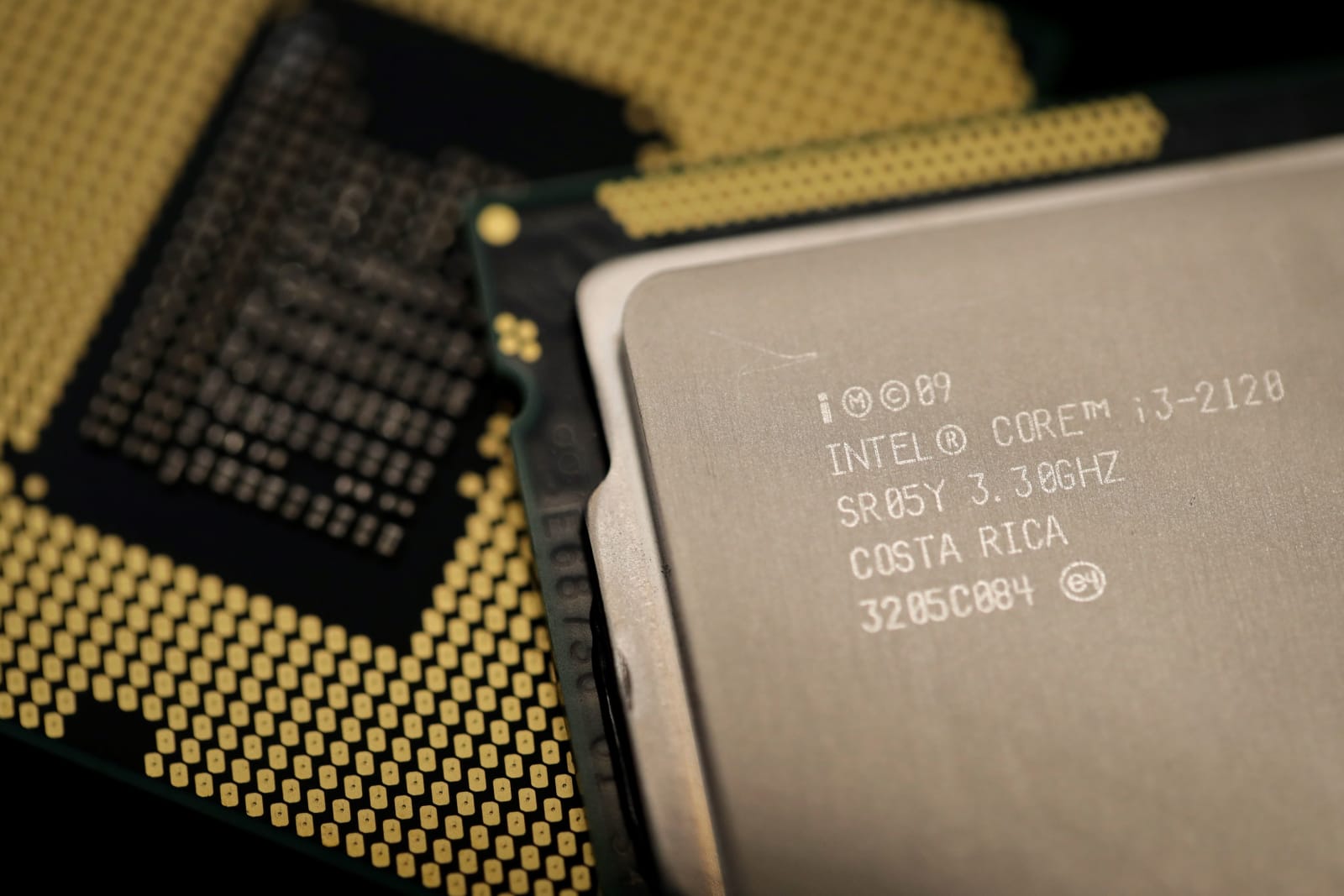
29 Dec 17:23

Star Wars: The Last Jedi Easter Eggs, References and Cameos You Missed

Here's all the cool stuff we found that you might have missed in Episode VIII.
29 Dec 16:51

'Black Mirror' season four is here to ruin your holiday spirit

by Jamie Rigg
At some point during Christmas and New Year, the days just sort of blend together. Sat silently in your parents' living room, you're already bored of your gifts, permanently spaced from 'round-the-clock imbibing, and you can't possibly eat any more c...

29 Dec 16:36

China's Shenzhen city electrifies all 16,359 of its public buses

by Daniel Cooper
If you ever see anyone crowing about how nobody's taking the initiative on sustainable transport, point them in the direction of Shenzhen. The Chinese city has announced that it has successfully electrified its entire fleet of public buses, all 16,35...
29 Dec 09:21

Avengers stars celebrate Stan Lee's 95th birthday: 'The one and only!'

by Nick Romano

Marvel fans seeing Stan Lee‘s name trending on social media shouldn’t be worried: it’s his birthday! Some Avengers movie stars and comic book figures marked the superhero creator’s 95th year of life on Thursday.

Mark Ruffalo (Hulk) called Lee a “legend,” while Chris Evans (Captain America) saluted the “one and only” co-creator behind characters like Doctor Strange, Spider-Man, the Fantastic Four, Thor, Daredevil, Black Panther, and the X-Men. Don Cheadle (War Machine), Jason R. Moore (Curtis Hoyle in Netflix’s The Punisher), and Allegra Acosta (Molly in Hulu’s Runaways) also marked the occasion.

https://platform.twitter.com/widgets.js

https://platform.twitter.com/widgets.js

https://platform.twitter.com/widgets.js

https://platform.twitter.com/widgets.js

https://platform.twitter.com/widgets.js

Kevin Feige, the president of Marvel Studios and the architect of the Marvel Cinematic Universe, repped the birthday wishes on the creative side of Marvel.

Other well-wishes came from Deadpool co-creators Rob Liefeld and Fabian Nicieza, and Civil War comic scribe Mark Millar.

“Happy Birthday Stan Lee! I don’t even begin to fathom how he finds the energy to be Comic Books Premiere Ambassador at 95! Just incredible,” Liefeld wrote on Instagram. “Thanks for every great memory!”

https://platform.twitter.com/widgets.js

https://platform.twitter.com/widgets.js

https://platform.twitter.com/widgets.js

Lee regularly appears in films and TV shows based on his Marvel work in a cameo capacity — even Guardians of the Galaxy, which wasn’t his brainchild.

In a thoughtful note posted to social media, Guardians of the Galaxy director James Gunn wrote how he “was nurtured by imagination as a child and lucky to know him as an adult. I wouldn’t be doing what I’m doing without him. And he’s as great a guy as he seems to be.”

https://platform.twitter.com/widgets.js

Lee’s latest cameo was in Marvel’s Runaways on Hulu. “We heard it was something he was potentially interested in doing,” executive producer Josh Schwartz told EW. “Since we shoot in Los Angeles, it seemed more possible that we might be able to get him to come. Then, we created various scenarios that would be fun to pull him into.”

29 Dec 09:01

Renewable energy outstripped coal use in the UK for most of 2017

by Mallory Locklear
The UK has been working to significantly reduce its carbon emissions and with that effort, it hit some major green milestones this year. In April, the country went a full day without coal-generated power for the first time in 135 years. And in June,...

29 Dec 09:01

South Korea enacts new cryptocurrency regulations

by Mallory Locklear
The South Korean government announced new cryptocurrency regulations today, which led to a 12 percent and eight percent drop in bitcoin and ethereum prices, respectively. After the US and Japan, South Korea is the world's third largest market for cry...

28 Dec 07:59

FCC approves first wireless 'power-at-a-distance' charging system

by Andrew Tarantola
Charging your mobile device wirelessly is certainly less of a hassle than plugging it in, but still requires the device be in physical contact with its station to actually work. That's about to change now that the Federal Communications Commission ha...
26 Dec 09:50

‘Altered Carbon’ Featurette: ‘Blade Runner’ Meets ‘The Matrix’ in Netflix’s New Sci-Fi World

by Ethan Anderton

Altered Carbon Featurette

Netflix continues to expand their roster of original programmer, taking bigger and bigger risks. This time, they’re trying to build their own sci-fi world in the vein of Blade Runner and The Matrix with a new series called Altered Carbon.

Set in the distant future, the story takes place in a world where human consciousness and minds can be transferred liked computer files, downloaded and re-uploaded into different bodies. Existence has become something that can be bought and sold. Even if you’re killed, that doesn’t necessarily mean your life is over. So when the wealthiest man on Earth is murdered, he returns to investigate his death, and he brings someone back from the past to help him.

Watch the Altered Carbon featurette below to learn more.

After Laurens Bancroft (James Purefoy), the richest man on the planet, is murdered, he brings back an ex-Envoy soldier named Takeshi Kovacs (Will Yun Lee) to help him investigate the murder. Kovacs was part of a group aiming to end the immortality that people have gained from being able to download and transfer minds into different bodies, and he ended up getting caught and preserved. It’s 250 years later when he’s woken up to help Bancroft, and he’s given a whole new body in the form of Suicide Squad star Joel Kinnaman.

Altered Carbon is based on a best-selling book by Richard K. Morgan, and there’s an entire series of books set in this world featuring many of the same characters. Having said that, the series is clearly taking cues from the visuals of iconic sci-fi movies that came before it. That’s to be expected though, and it doesn’t change the fact that the story is a compelling one.

However, there’s something that feels a little odd about the fact that when Takeshi Kovacs is brought back to help Laurens Bancroft, it’s no longer Will Yun Lee playing the character. Instead, the character’s mind has been brought into the body of Joel Kinnaman. There’s likely a narrative explanation for this, but replacing Will Yun Lee with Joel Kinnaman seems a little problematic for a variety of reasons. But we’ll hold off to see how the story plays out before we make any judgment calls.

In the future, human minds are digitized and downloaded from body to body. Last night, the wealthiest man on Earth, Laurens Bancroft (James Purefoy) was murdered. To investigate his death, he brings back ex-Envoy soldier Takeshi Kovacs (Joel Kinnaman / Will Yun Lee) and in exchange, Bancroft offers Kovacs the chance to live again.

Altered Carbon debuts exclusively on Netflix on February 2, 2018.

The post ‘Altered Carbon’ Featurette: ‘Blade Runner’ Meets ‘The Matrix’ in Netflix’s New Sci-Fi World appeared first on /Film.

23 Dec 20:42

Arrow Can't Use Deathstroke Anymore Because of DC Movie

by Alex Gilyadov

Arrow will soon no longer be able to use Deathstroke, and it's all because of the upcoming DC movie starring Joe Manganiello as the character.

In an interview with Discussing Film, Arrow executive producer Marc Guggenheim explained there are limitations put in place regarding what DC characters Arrow can use and not use.

“These are DC’s characters; we’re just renting them you know, so we use the characters that they tell us we can use when we can use them, and we work around whatever limitations that places us,” Guggenheim said.

Manu Bennett has portrayed Slade Wilson on The CW show. Now, unfortunately for Arrow fans, Warner Bros. and DC have put said limitations on Deathstroke once again.

Continue reading…

20 Dec 15:34

Horizon Zero Dawn’s art, quest and narrative teams reveal how the PS4 action RPG’s characters come to life

by Jeroen Roding

To celebrate Horizon Zero Dawn: Complete Edition’s recent release, we thought it’d be interesting to offer an insightful deep dive into how the studio creates its in-world characters - from rough ideas to realistic, fully voiced and animated individuals.

During your time exploring, you’ll interact with many colourful personalities, but to example the creative process, the various teams in the studio weighed in on the creation of one of the game’s newest faces: the bumbling fortune hunter Gildun, from the recently released expansion The Frozen Wilds.

Step 1: The quest that determined a quest-giver

“The character of Gildun first emerged from a collaboration between the Quest Team and the Story Team,” Principal Game Designer Tim Stobo says. “He was built to fit the quest, rather than the other way around.” The team started by thinking about the type of experience they wanted the player to have: to explore a large, old-world site in a unique way.

Once the site was determined to be an old dam facility, Quest Designer Samantha Schoonen and Writer Dee Warrick worked out a reason for Aloy to visit the dam.

“While her motivations changed over multiple iterations, Aloy always met a member of the Oseram tribe there,” Tim recalls. “He was either responsible for the damage caused to the dam, or attempting to fix the damage caused by someone else.”

Thus, the Oseram fortune hunter Gildun was born. “Samantha had mapped out exactly what she wanted the player to do in this space and, in the process, did a lot of research into how modern dams work,” Tim says. “It became clear that multiple pieces of the dam had to have failed or been broken for the quest to make sense.”

Step 2: The story team flesh out Gildun’s backstory

In turn, this provided an important clue to Gildun’s personality for the Story Team. “The chain of failures in the dam came close to absurd, and I think that was where Gildun really started to emerge as a person,” Lead Writer Ben McCaw explains. “He struck us as someone who might be eternally optimistic, but also rather clumsy, and that unfortunate combination of character traits put him in his predicament at the dam.”

At the same time, the team didn’t want Gildun to come off as just comic relief. “There’s a sadder side to him, something that becomes apparent towards the end of the quest,” Ben says. “The closest analogue I can think of is John Candy’s character in Planes, Trains and Automobiles -upbeat and overly talkative, but with a tragic background.”

Step 3: The art team conceptualises the character’s look

The Story Team provided an outline of Gildun’s character to the Concept Art Team, who set out to visualize him. “In the main game the Oseram people mostly stuck to warmer climates, so they had no need for thick layers of clothing,” Senior Concept Artist Ilya Golitsyn recalls. “But given the location of Gildun’s quest, we felt that regular Oseram clothing wouldn’t provide enough protection against the elements.”

TITLE

Luckily, the team didn’t have to search far for inspiration. While going through earlier Oseram clothing concepts for ideas, they found a design that closely matched their requirements for Gildun’s outfit. “From there, it was a matter of updating the design to include fur lining and additional padding,” Ilya says.

Step 4: translating the concept into a hyper-realistic game character

After the concept art for Gildun was finished, the Character Art Team oversaw its translation into a game character that could fit with the hyper-realistic style of Horizon Zero Dawn. “This process always involves striking a careful balance,” Character Art Director Dan Calvert explains. “On one hand the concept art, which can be slightly exaggerated, needs to be interpreted into a 3D model with realistic proportions and material expression. On the other hand, the 3D model needs to retain and do justice to the core appeal of the concept art.”

TITLE

A first-pass version of the model consisting of 140,000 polygons was then handed off to the Animation Team for rigging and skinning. “We also did a pass on the procedural setups for Gildun’s clothing and muscles, to allow them to move more realistically” Lead Technical Animator Bart Wijsman says. “We even added procedural bones to dent his scarf based on where he was looking.”

In total, an additional 108 extra joints were added on top of Gildun’s logical skeleton. While the team performed a final optimization pass on Gildun’s body, his face was scanned and rigged in a separate track. Then, with Gildun fully assembled and able to move, all that was needed was for actor Donovan Patton to breathe life into the character.

TITLE

“For Gildun’s most prominent scenes we used full-performance motion capture,” Senior Producer Jochen Willemsen says. “We recorded Patton’s body, face and audio in sync to get a very natural-looking performance.” For other scenes, the team recorded Patton’s face and audio first, then used the recording of his voice performance to inform the movements of a body double, who was recorded separately.

“Patton put so much fervor into his performance, the body double had no trouble finding a body language to match,” Jochen recalls. “Even though our body double only had the voice performance to work with, his movements ended up being remarkably close to those Patton used during the recording.”

TITLE

The result is a unique character that comes across as affable, clumsy and slightly annoying – but also deserving of Aloy’s help and sympathy. Her interactions with Gildun rank as some of the funniest moments in the game, and make an already fun quest even more entertaining.

We hope you enjoyed our dive into the creation of Horizon Zero Dawn’s characters. The game (and the expansion!) are full of interesting individuals like Gildun above, so pick up a copy of Horizon Zero Dawn: Complete Edition if you haven’t played them yet. Also, be sure to follow Guerrilla on Twitter and Facebook for the latest Horizon Zero Dawn news.

The post Horizon Zero Dawn’s art, quest and narrative teams reveal how the PS4 action RPG’s characters come to life appeared first on PlayStation.Blog.Europe.