×You need to sign in to continue.

Shared posts

10 Feb 19:46

The Food Lab: Hearty Vegan Mushroom Bolognese

by J. Kenji López-Alt
Dzaleznik

I <3 vegan week

It's time for another round of The Food Lab. Got a suggestion for an upcoming topic? Email Kenji here, and he'll do his best to answer your queries in a future post. Become a fan of The Food Lab on Facebook or follow it on Twitter for play-by-plays on future kitchen tests and recipe experiments.

Note: For more vegan posts, check here!

20140206-mushroom-ragu-recipe-primary-2.jpg

[Photographs: J. Kenji Lopez-Alt]

I've got to admit it. As much as I love vegan food, there's one thing I do miss about winter: the smell of a slow-cooked bolognese sauce filling the apartment on a cold day. It's one of my favorite parts of the season. It's not that I love the meatiness per se. It's not necessarily about the contrast between the cold outside and the warmth within. It's not even really about getting to eat the sauce that evening. What it's about is that smell being a constant reminder to you that you are in the middle of a project, the middle of creating something great. It's a good feeling to have, knowing that you're being productive.

Bolognese is one of my favorite sauces to make, and I've been doing it with regularity and precision for the last 12 years. I'm pretty damn good at it. I make it so often that I believe I have a built-in correlation in my mind between the scent of bolognese sauce and that feeling of productivity. It's to the point that even if I smell someone else making it, I feel like I've accomplished something. My goal with this vegan version is to create a 100% meat-free sauce that benefits from a long, slow braise, and produces an end result that is every bit as rich, hearty, a deeply flavorful as my own bolognese recipe.

The Base

There were a few big hurdles to tackle here. How would I pack rich flavor into an intense sauce made only with vegetables? What techniques could I use to bump that flavor up? What about nailing the texture of the finished sauce? It must be thick and rich enough to coat pasta, and have a variation of textures ranging from creamy to chewy. I dealt with each problem as it came up, using some of the techniques I've learned from my standard bolognese sauce as the jumping-off point.

20140206-mushroom-ragu-recipe-01.jpg

My traditional bolognese sauce starts out with a traditional Italian soffritto of carrots, onions, and celery (the equivalent of the French mirepoix), gently cooked in really good olive oil. The goal is to soften the vegetables without actually browning them so that their raw edge goes away but they don't become overly sweet.

20140206-mushroom-ragu-recipe-05.jpg

While those vegetables soften, I chop my herbs.

20140206-mushroom-ragu-recipe-02.jpg

Many chefs recommend not adding delicate herbs like basil and parsley until the very end of cooking, because they're at their most flavorful when completely fresh. And those chefs are right, at least about the flavor bit. But here's the thing: cooked herb flavor might not be as intense as fresh herb flavor, but it's different, and desirable in its own way.

20140206-mushroom-ragu-recipe-07.jpg

That's why I almost always add my herbs in two stages: first during cooking to develop and permeate the dish with cooked herb flavors, and then again towards the end to add some fresh herb flavor.

With hearty herbs like sage, rosemary, or thyme, you can get away with only adding them towards the beginning (they can be overpoweringly strong if added at the end).

20140206-mushroom-ragu-recipe-08.jpg

Next up: red wine. Wine adds a few things to the sauce. Primarily, it's a source of acidity, giving the sauce brightness and balancing out the richer flavors we're going to add later. It's also a good source of glutamates, the molecules responsible bolstering the savoriness of a dish. With a meaty ragù, it makes the meat taste meatier. In a vegan ragù, it's even more important.

20140206-mushroom-ragu-recipe-10.jpg

Reducing the wine separately is important for optimal flavor development (read up on that science here). I let the wine reduce along with a few bay leaves until it's nearly dry, creating an intensely flavorful base for the sauce.

The mixture all gets transferred to a large saucepan where it waits for friends to join it.

So far, the method is identical to what I'd do for a standard bolognese sauce. Time to mix things up.

Adding Texture

Almost every recipe I've come across for vegan bolognese sauce relies on a product like tempeh, textured vegetable protein, or firm tofu to add texture to the sauce in place of meat. I personally find TVP and tempeh to be lacking in flavor, and tofu's texture doesn't make it the best meat replacement.

Besides, why try and replicate the flavor and texture of meat when there are so many other delicious options out there?

I turned to a technique I've gotten great success with in the past: frying mushrooms until well-browned and chewy.

20140206-mushroom-ragu-recipe-12.jpg

The method worked wonderfully with my vegan mapo tofu and vegan dan dan noodles. No reason it shouldn't work now, right?

20140206-mushroom-ragu-recipe-13.jpg

To chop mushrooms, I start by squeezing them between my fingertips and thumb to break them down into mid-sized chunks.

20140206-mushroom-ragu-recipe-14.jpg

From there, I take a knife to 'em and chop until the pieces are no larger than 1/4-inch.

20140206-mushroom-ragu-recipe-15.jpg

Using a blend of mushrooms—in this case buttons and shiitakes—can add complexity to the dish.

20140206-mushroom-ragu-recipe-20.jpg

A full pan of mushrooms cooked in olive oil should reduce down to about a quarter of its starting volume, once the mushrooms are nice and browned.

20140206-mushroom-ragu-recipe-21.jpg

Tomato products perform a role very similar to wine in a bolognese sauce, adding acidity and savoriness. Tomato paste is also great for adding body to a sauce. To get the best flavor out of it, you should add it to a hot pan slicked with nothing but oil. Like a Thai curry paste or an Indian spice powder, frying the paste in oil will help you develop sweet, complex flavors that otherwise would never come forward.

20140206-mushroom-ragu-recipe-22.jpg

I knew that my sauce was going to need all the help it could get in the savory flavor department, so I also added a dollop of miso paste and a drizzle of soy sauce; both ingredients are glutamate bombs.

That's Rich

After adding the mushroom mixture to my cooked down soffritto and adding a can of tomatoes that I crushed by hand, I noticed one major thing: the sauce was still pretty thin. I let the whole thing simmer down for an hour, hoping that it would tighten up. It never really did. The liquid element reduced, but it didn't get much thicker or richer, while the chunks of mushroom stayed completely intact. The sauce was simply not integrated as a whole.

What could I add to produce a binding texture that wouldn't weigh the sauce down or make it blander?

20140206-mushroom-ragu-recipe-04.jpg

I thought back to a recipe for turkey burgers I developed several years ago. In that recipe, I used the chopped flesh from a roasted eggplant to bind my meat, adding moisture and a tender texture. I figured with my pasta sauce, a similar trick would work.

20140206-mushroom-ragu-recipe-16.jpg

I roasted an eggplant in a foil pouch until completely tender inside, then scraped out the flesh with a spoon.

20140206-mushroom-ragu-recipe-17.jpg

I chopped it up into a fine purée, then stirred it into a new batch of sauce, letting it simmer just a bit.

The trick worked like a charm, adding a glossy richness to the sauce while simultaneously giving it a bit of eggplant's signature lightly smoky aroma.

20140206-mushroom-ragu-recipe-24.jpg

I'm not a big nut milk drinker—they all taste a little too sweet and chalky to me—but a dash of it stirred into the sauce as it reduces was perfect for aiding in good emulsification of the olive oil and liquids, without detracting anything from the flavor department.

After an hour of simmering, this is about what you get:

20140206-mushroom-ragu-recipe-27.jpg

Now doesn't that look like something worth waiting for? Your kitchen should smell awesome by this point. Breathe that accomplishment in deeply, you deserve it. Now taste the sauce. Feel its texture on your tongue: Creamy, with vegetable pieces of varying degrees of firmness and chewiness rolling across your tongue. Taste the flavors, rich, deep, well-developed, and, above all, balanced. It should taste like a sauce that someone took their time with because, well, it is.

The final key to serving the sauce is to make sure to finish your pasta in it for a few minutes. I like to serve a rich ragù like this with either wide pasta like tagliatelle or pappardelle, or with short tubular pasta like rigatoni, penne, or these cute little crestos di gallos (cock's combs). I cook the pasta until it's not quite al dente, then add it to the sauce along with a half cup or so of its starchy cooking liquid before simmering the whole lot over high heat.

20140206-mushroom-ragu-recipe-primary-1.jpg

As the sauce reduces, the pasta finishes cooking, absorbing its flavor while simultaneously getting fully coated.

When you serve pasta with sauce, it should look integrated, the sauce and the pasta an inseparable unit. If you lift your pasta and the sauce runs off, leaving you with bare noodle, it needs to be reduced a little more!

20140206-mushroom-ragu-recipe-primary-4.jpg

The journey might already be the destination in this case, but that won't stop you from enjoying your reward. Your rich, lip-smackingly delicious, meat-free reward.

About the author: J. Kenji Lopez-Alt is the Chief Creative Officer of Serious Eats where he likes to explore the science of home cooking in his weekly column The Food Lab. You can follow him at @thefoodlab on Twitter, or at The Food Lab on Facebook.

Get the Recipe!
09 Feb 05:20

The Vegan Experience: How to Cook Crispy Tofu Worth Eating

by J. Kenji López-Alt

Note: For more vegan posts, head here!

20140205-fried-tofu-vegan-20.jpg

[Photographs: J. Kenji López-Alt]

Tofu is my favorite food, which makes me an outlier. People don't like tofu. And I get it. There's a lot of bad tofu out there, and it's easy to dislike when it's soggy, mushy, or bland. But great tofu—tofu with a tender center surrounded by a well-seasoned, crisp crust—is one of the most satisfying bites of food I can think of, a food that can and should be appreciated by all serious eaters, no matter their diet.

Here's how to cook tofu so good even tofu-haters might come around. First we're going to talk about how to shop for tofu, then we'll talk about how to crisp up plain slices of tofu, and finally we'll figure out the best way to prepare tofu for stir-frying.

Dry = Good

The goal when frying tofu—whether pan-frying or deep frying—is the same as the goal when frying meat or vegetables: to alter the texture and flavor. In the case of tofu, we're talking about adding some crispness to an otherwise tender food, and adding some rich browning, which brings out tofu's natural sweetness and bring some savory notes to the forefront.

Crispness comes from the dehydration of the exterior layer of proteins in your tofu slices, while browning occurs when those proteins and carbohydrates are exposed to temperatures above around 300°F or so, precipitating the Maillard reaction (that's just the fancy word for "things that make your food golden and delicious").

Some things are not good dry. Cake. Pools. Sex. But tofu is different. The key to both crispness and browning is the removal of moisture, so the drier you get your tofu to begin with, the more efficiently these reactions will take place, and the better the contrast between crisp exterior and moist, tender interior will be.

There are a number of ways to dry your tofu out before cooking it, but the easiest first step is to get the right tofu to begin with. Tofu comes in two basic forms: silken and cottony, which are made using two different coagulating agents. Within these two categories, you'll find varying degrees of firmness from custardy soft to very firm and meaty, depending on their final water content. Some brands conflate soft with silken, but traditionally, the two are orthogonal measures (that is, it is possible to have soft cottony tofu just as it's possible to have firm silken tofu).

For crisping purposes, you want to use cottony (non-silken), extra-firm tofu, which holds its shape and browns better than other varieties.

Cut and Dry

20130205-fried-tofu-vegan-02.jpg

After choosing the right variety, the second step is to slice and dry your tofu. Some recipes recommend pressing your whole block of tofu to remove excess moisture before slicing. This works fine, but takes some time. Much easier is to slice the tofu, then lay the slices out flat on a cutting board or baking sheet lined with paper towels or a clean kitchen towel. More surface area = faster water removal = dinner on the table that much faster.

I've also seen it suggested to employ the microwave in the aid of draining tofu: the theory is a few seconds on high power will cause the protein structure to tighten up slightly, squeezing out excess moisture. It works, but it's frankly a pain in the butt to microwave tofu in batches. An equally effective but much faster and easier method is to do what tofu goddess Andrea Nguyen suggests: pretreat the tofu by pouring hot salted water over it.

20130205-fried-tofu-vegan-03.jpg

It may seem counterintuitive to add water to something you're trying to dry out, but boiling water will actually cause the tofu to squeeze out more moisture, bringing it to the surface and making it easier to blot off, while the salt gently seasons the slices. In any case, your tofu should be dry to the touch before you cook it. Have you ever stuck out your tongue and left it out for few minutes to see how dry it can get? That's what your tofu should feel like.

20140205-fried-tofu-vegan-04.jpg

Marinades

It seems like a no-brainer to marinate tofu, but I'd actually advise against it. While non-silken tofu does have a somewhat spongy texture that will absorb marinades, you end up with tofu that browns too fast and tastes like raw marinade on the inside. I prefer keeping the tofu tasting like tofu, using a sauce applied after cooking to lend it flavor if it needs it. The combination of intense sauce with clean tofu flavor is far more pleasant (or sophisticated, or classy, or whatever it is that'll get you to try it).

Similarly, a dusting of spices can be tasty if the spices are fresh, properly toasted, and balanced, but again, you want to apply them after cooking the tofu. Tofu simply takes too long to crisp up properly to be able to season before cooking without running the risk of burning those spices up.

Where's Your Coat?

20140205-fried-tofu-vegan-05.jpg

Just like there are days when you put on your full winter gear to head out, others in which you lounge around in your pajamas on the couch, and still others where nary a piece of fabric girds your loins from dawn to dusk, the way you coat your tofu depends on the situation.

20140205-fried-tofu-vegan-06.jpg

If you like it plain (as I do from time to time), then the way to do it is to fry the slices in a heavy cast iron skillet over moderate heat until deep brown and crispy on both sides, using a thin metal spatula to flip the slices as they crisp. Taking your time is key: the more gently you brown the slices, the more evenly and deeper brown you can get them without burning them.

20140205-fried-tofu-vegan-07.jpg

If, on the other hand, the tofu is destined for a stir-fry or some other saucy application, you'll want to give them a crispy coating that can both absorb a bit of sauce, and provide a layer of protection so that the tofu can stay crisp even after saucing.

I tried coating tofu with various blends of of flour, potato starch, rice flour, and corn starch, both pan-frying and deep-frying, and found that the crispest, cleanest-tasting results came from a deep-fry in a simple coating of cornstarch.

20140205-fried-tofu-vegan-08.jpg

Crisp fresh out of the fryer, that is. After a few minutes of resting while I prepare the rest of my stir-fry and sauce, the crisp coating had softened. What if I were to use a wet batter instead? I'd spent a long time working out a recipe for a Korean Fried Chicken batter which worked equally well on a batch of Crispy Buffalo-Fried Cauliflower. Would the same coating work on my tofu?

20140205-fried-tofu-vegan-09.jpg

Indeed it did: a quick dredge in dry cornstarch followed by a dip into a cornstarch, water, and vodka mixture before a plunge into a wok with a quart of 350°F oil resulting in ultra-crisp bites of tofu that stay crisp even after you finish them off in a stir-fry.

How To Stir-Fry Crispy Tofu

20130205-fried-tofu-vegan-01.jpg

When stir-frying, the order in which you cook your ingredients is of vital importance. A standard wok range in a Chinese restaurant has separate controls for the gas and oxygen flow, allowing them to reach heat outputs in excess of 80,000 bTUs. This allows cooks to add ingredients in quick succession, keeping everything hot enough to produce smoky, browned flavors without any excess steaming or boiling. It's this high heat that gives a good stir-fry a tender-crisp texture, bright color, and a lightly smoky, charred flavor.

A home burner, on the other hand, is about an order of magnitude weaker than a restaurant wok range. This means that rather than adding all of your ingredients to the same wok, it works far better if you cook your individual ingredients in batches, reheat the wok between batches, and combine them all at the very end. (See our Wok Skills 101 series for more details.) Most stir fries follow the same basic formula: two or three main ingredients, cooked one at a time, followed by some aromatics, and a sauce to bind it all together.

20140205-fried-tofu-vegan-10.jpg

For instance, to make a crispy tofu and broccoli stir-fry with a glossy, garlicky sauce, I start by deep-frying the coated tofu in the wok, then transfer it to a paper towel-lined plate to drain. I then pour off the oil (I save mine in a covered pot to be reused later), wipe out the wok, and heat a little bit more oil in it over high heat until it really starts smoking.

20140205-fried-tofu-vegan-12.jpg

In go the second main ingredient: broccoli florets, cut into bite-sized pieces. For the best flavor, you want a combination of browning through direct conductive heat—that is, heat from the wok—as well as the flavor gained by tossing the broccoli into the air, allowing the hot air rising from the burners to vaporize some of the micro-particles of oil that get sprayed up during the process.

20140205-fried-tofu-vegan-13.jpg

As soon as the broccoli is browned but before it's completely tender, I add the aromatics.

Chinese dishes incorporate a wide range of aromatic vegetables and spices, but for this particular dish, I'm using what's sometimes called the Holy Trinity of Chinese cuisine: finely chopped ginger, scallions, and garlic,. I go heavy on the garlic.

30 seconds-worth of tossing and they're done. The broccoli and aromatics go into a bowl to rest while I cook the sauce.

This particular sauce balances some acidity with some salty, sweet, and savory elements: Chinese rice wine, soy sauce, bean sauce, vegan sugar, vegan stock, and toasted sesame oil. Some cornstarch binds it all together: As it cooks in the hot wok, it should reduce into a syrupy, flavor-packed glaze.

20140205-fried-tofu-vegan-17.jpg

All that's left is to toss your tofu and broccoli in it, garnish with some toasted sesame seeds, and you're ready to eat.

The result is tender-crisp crowns of broccoli and crunchy bites of tofu with moist, tender cores, all coated in a glossy, flavor-packed sauce. Even my wife, the big tofu-hater, finished off her plate (though admittedly, she did very generously insist that my sister take all the leftovers).

20140205-fried-tofu-vegan-18.jpg

The beauty of the technique is that with this coating under my belt, I'm now equipped to incorporate crisp tofu into any number of stir-fries, which means my vegan menu options have just become virtually limitless, and coincidentally, so have yours.

About the author: J. Kenji Lopez-Alt is the Chief Creative Officer of Serious Eats where he likes to explore the science of home cooking in his weekly column The Food Lab. You can follow him at @thefoodlab on Twitter, or at The Food Lab on Facebook.

Get the Recipe!
08 Feb 16:30

Matt Biancaniello on Pairing Cocktails and Food at Plan Check in Los Angeles

by Esther Tseng
Dzaleznik

Cascading Hophead sounds incredible.

From Drinks

20140201biancaniello.jpg

Matt Biancaniello is a veteran of the Los Angeles bar scene. Cocktail connossieurs visited him for bespoke concoctions at the Library Bar at the Roosevelt Hotel. Eater crowned him Best Bartender in LA in 2010, and in 2013, LA Weekly declared his drinks the best cocktails in the city. These days, he does occasional pop-up appearances, bringing emu egg cocktails to Cheetah's, a Los Feliz strip club, and he's currently working on the cocktail menu at Pot, a hot pot restaurant inside The Line Hotel in Koreatown by Roy Choi.

But his role directing the bar program at the new Plan Check location on Fairfax is something of a different challenge. Complicated drinks don't lend well to the notion of high volume bars or 4,000 square foot burger-focused restaurants like Plan Check. Biancaniello has tried to streamline the cocktails so they require less varied barware and fewer garnishes, but he still aims to make each drink as personal to each customer as possible. "I wanted to be able to bring the best of what I know to a broader audience at Plan Check."

That could mean going off-menu, should it suit the customer's fancy; it could also mean making food and cocktail pairing recommendations. I caught up with Biancaniello on one of his Thursday shifts to get the skinny on how the pairing process works at Plan Check.

His basic approach, he says, was to tailor all the drinks to the food's intensity: "The flavors of this food are very bold and the food is a little bit on the heavier side, so I focused on doing lighter, refreshing drinks with a little more citrus to pair with the food."

Different drinks are appropriate for different parts of the evening. Biancaniello suggests starting with the aromatic Fish Out of Water ($12), made with bonito-infused Famous Grouse, agave syrup, lemon, and shiso. It's almost a liquid appetizer: "The savory notes of the bonito-infused Scotch really whet your appetite," Biancaniello says.

20140201breederscup.jpg

Breeder's Cup

Many folks at Plan Check order a platter of oysters on the halfshell. Biancaniello recommends pairing the Breeder's Cup ($12) with the raw shellfish. He designed the drink with Tito's Vodka, lime, agave, and cucumber, to be refreshing, but the savory addition of applewood smoked salt and beet horseradish works, he says, "as an accent on the oysters."

Can even burgers be paired with cocktails? Biancaniello is convinced. He's pushing the Splendor in the Grass($14), made with Chareau aloe liqueur, agave syrup, arugula, lime juice, and white truffle salt. "The bitterness from the arugula is a great way to cut through the grease" of a burger and fries, he says. Another option works in a similar way, he notes: "You can also do that with the hops in Cascading Hophead." In this $14 drink, Hophead Vodka (which is a bit like a gin, flavored with hops instead of juniper) and resiny Sculpin IPA are mixed with rosemary, lemon, tart grapefruit, herbal Yellow Chartreuse, and agave syrup.

20140201cascadinghopyhead.jpg

Cascading Hophead

What makes a pairing work, in Biancaniello's eyes? "Sometimes, I'll make a drink that will taste opposite of the food, providing a contrast, and the next time I'll pair that dish with a drink that's complementary." He's been experimenting with taking an ingredient in a given dish and putting it in the cocktail to make a resonant match. "In a multi-course setting, I'll maybe put one mocktail in the middle to slow [the buzz] down," Biancaniello says. "But as long as it surprises the diner in a positive way, it's a good pairing."

About the Author: Esther Tseng is a Los Angeles based food and cocktail writer. Her best finds are chronicled on e*starLA while her day-to-day ponderings and poisons can be found on Twitter and Instagram @estarLA.

03 Feb 17:40

fennel and blood orange salad

by deb
Dzaleznik

Happening.

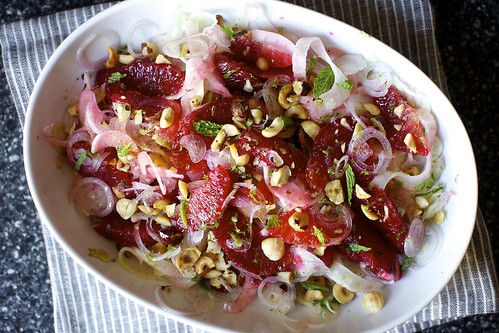
blood orange fennel salad with mint, hazelnuts

This salad improves winter morale. It’s for times when all of the usual charms of winter — snow that’s fallen like a cashmere blanket over the city overnight, reducing all of the usual ruckuses (trucks, sirens, deliveries and your own child’s tantrums, which you may or may not have discovered last week you could hear from a full city block away) to the decibel of thick socks padding over hardwood floors — have waned on you; when the “snow” is, in fact, two inches of gray muck, when you are convinced that it will never be warm again and when you fear the next hunt around the apartment for where the snow mittens/hats/scarves/boots were last scattered will be the end of you. Whereas most cold winter comfort foods are soft, rich, carby and white, this is everything but: brightly hued, crunchy and piercingly fresh. It cuts across everything that’s lost its charm; it will be even brighter in your social media feed than the photos of those so-called friends who have abandoned you for sandy shores and island blue skies. This salad has your back.

what you'll need
ribbons of fennel

It falls into the all too thin category of Great Winter Salads. Kurt Gutenbrunner wrote an article about his favorite ones for the New York Times in 2002 that I go back to every winter when I need a reminder that many of my favorite foods are excellent year round — cabbage, fennel, celery root, cucumbers and potatoes. I’m not surprised that this one is clearly still one of his favorites (it’s in his recent cookbook and we even spied it on the menu at Blaue Gans on Saturday night) because it’s perfectly balanced. The refreshing fennel is dressed with lemon for brightness, then tossed with blood orange segments (though I think any orange or grapefruit segment would work), toasted hazelnuts (though he calls for walnuts) and mint leaves. The dressing is just the juice from the blood oranges and olive oil and it’s all so pretty, it’s nothing short of a sun lamp beaming forth from a salad bowl.

thiny sliced fennel, dressed with lemon

... Read the rest of fennel and blood orange salad on smittenkitchen.com


© smitten kitchen 2006-2012. | permalink to fennel and blood orange salad | 96 comments to date | see more: Fennel, Orange, Photo, Salad, Vegetarian, Winter

02 Feb 15:16

The Food Lab: How to Make Creamy Vegetable Soups Without a Recipe

by J. Kenji López-Alt

It's time for another round of The Food Lab. Got a suggestion for an upcoming topic? Email Kenji here, and he'll do his best to answer your queries in a future post. Become a fan of The Food Lab on Facebook or follow it on Twitter for play-by-plays on future kitchen tests and recipe experiments.

20140125-smooth-vegetable-puree-soup-food-lab-13.jpg

[Photographs: J. Kenji Lopez-Alt]

20140107-soup-month-logo.gif

Editor's Note: All month, the soup's on, with over a dozen new recipes coming at you for everything from simple 15-minute meals, to updated homemade versions of the canned classics you loved as a kid, to all-dayers that are hearty enough to eat like a meal. Check out all the recipes right here, and be sure to come back—we'll be updating all month!

When I was a totally green cook with my first serious restaurant job, working under Chef Jason Bond at what's now a landmark Boston restaurant, No. 9 Park, there were many moments when I learned a new technique or perfected an old one and said to myself, "holy crap, I just made this?" But the very first was when Chef Bond taught me how to make a creamy chanterelle soup (read: Campbell's cream of mushroom soup on tasty, tasty crack), sweating aromatics, sautéeing mushrooms, adding a good stock, and puréeing it all while emulsifying the mixture with fresh butter.

Like any great vegetable soup, the end result was something that tasted like a liquefied, purified, intensified version of itself—this soup tasted more like chanterelles than actual chanterelles. The magic lies in the way that aromatic ingredients can intensify and bring out other flavors, as well as the way in which liquids coat your mouth, giving more direct contact to your taste buds and olfactory sensors, and making for easier release of volatile compounds.

These days, there aren't too many vegetables in the world that I haven't made into a smooth, creamy soup, and there are even fewer that I've not loved*, but my experience has taught me something: that first process of making a chanterelle soup wasn't really just a recipe for chanterelle soup. It was a blueprint for making any creamy vegetable soup. You just need to break it down into its individual steps and figure out how to universalize them.

*wait a minute, something doesn't make sense with that sentence. But you get what I mean.

Let's say, for instance, that I've never made a smooth carrot soup flavored with ginger and harissa, but I really like the idea. Here's how I'd go about it.

Step 1: Prepare Your Main Ingredient

The simplest soups can be made by simply adding your main ingredients raw and simmering them in liquid later on. When preparing this type of soup, all you've got to do is get your main ingredient ready by peeling it (if necessary) and cutting it into moderately small pieces. The smaller you cut, the quicker your soup will cook down the line.

20140125-smooth-vegetable-puree-soup-food-lab-6.jpg

There are times when you may want to boost the flavor of a main ingredient by, say, roasting or browning it. This is an especially effective technique for sweet, dense vegetables like sweet potatoes and squashes, or brassicas like broccoli or cauliflower, all of which intensify in sweetness with some browning. To roast them, cut them into large chunks, toss with some olive oil, salt, and pepper, set them in a baking sheet lined with aluminum foil or parchment paper, and roast in a 375°F oven until tender, with their edges tinged brown.

This works in two ways. First, the process of caramelization breaks down large sugars into smaller, sweeter ones. Second, enzymatic reactions that create simple sugars are accelerated with heat.

For this soup we're using carrots, and we aren't going to roast them, because I want the clean flavor of fresh carrots to come through.

Step 2: Choose Your Aromatics

20140125-smooth-vegetable-puree-soup-food-lab-1.jpg

Alliums—onions, leeks, shallots, garlic, and the like—are like the Best Supporting Actor of the soup pot. They're not there to steal the spotlight, but without them, your soup would be damn boring. Nearly every soup I make starts with either onions or leeks, along with some garlic or shallot (and sometimes all four!) cooked down in olive oil or butter.

Other firm vegetables such as diced carrots, bell peppers, celery, thinly sliced fennel, or ginger can work well in certain situations, but they tend to have a stronger impact on the finished flavor of the dish, so make sure that you really want them there. Make a carrot soup with just onions and it'll taste like carrot soup. Make a carrot soup with fennel or ginger, and it will taste like carrot-and-fennel soup or carrot-and-ginger soup.

20140125-smooth-vegetable-puree-soup-food-lab-5.jpg

For this soup we're going to use a blend of onion, leek, garlic, and ginger, flavors which blend well with harissa.

Step 3: Sweat or Brown Your Aromatics

Next big question: to sweat or to brown?

  • Sweating is the process of slowly cooking chopped vegetables in a fat. You do it over moderate heat, and the goal is to get rid of some of the excess moisture within those vegetable, and to break down their cellular structure so that their flavor is released. With the case of alliums, there's another process going on: onion aroma is created when certain precursor molecules that exist within separate compartments in onion cells break out and combine with each other. Sweating an onion will break down cell walls, allowing this process to happen. The same holds true for garlic, shallots, and leeks.
  • Browning starts out like sweating, but generally takes place over higher heat. Once excess liquid from vegetables has evaporated, the vegetables can begin to brown and caramelize, creating rich flavors, more sweet notes, and more complexity.

You might think that more flavor is always better, and thus you should always brown your vegetables, but more often than not, this browning can be overpowering, making soups too sweet or competing too much with the subtler flavors of your main vegetable.

20140125-smooth-vegetable-puree-soup-food-lab-07.jpg

For this soup we're sweating our vegetables in olive oil with no browning.

Step 4: Add Second-Level Aromatics Like Spices and Pastes

20140125-smooth-vegetable-puree-soup-food-lab-4.jpg

After your aromatics have sweated or browned, the next phase is your secondary aromatics, and it's an optional stage that's often omitted. If you like very clean, pure-tasting soups, jump ahead. If you like playing with flavors and spices, then you'll have fun with this step.

These are things like ground spices (say, curry powder, ground cumin, or chili powder), and moist pastes (like tomato paste, harissa, or chopped chipotle peppers in adobo sauce). These types of ingredients benefit from a brief toasting or frying in hot oil, which alters some of their constituents into more complex, more aromatic products, as well as extracting fat-soluble flavors so that they disperse more evenly into the soup.

Because ground spices have such a high surface area-to-volume ratio and most pastes have already been cooked, the process only takes a few moments—just until the spices start smelling fragrant.

20140125-smooth-vegetable-puree-soup-food-lab-08.jpg

For this soup I'm using spicy harissa paste, along with some cumin and coriander seed to emphasize that North African flavor profile.

Step 5: Add Your Liquid

Your choice of liquid can have a big impact on the finished dish.

20130210-hearty-vegetable-soup-vegan-recipe-1.jpg

  • Chicken stock is an easy fallback and always a good choice. It has a neutral, mild flavor that adds meatiness and savoriness to a dish without overwhelming any flavors. Likewise vegetable stock can bring similar complexity, though buyer beware: unlike store-bought chicken broth, most store-bought vegetable broths are vile. You're better off making your own.
  • Vegetable juice is what you want if you value intensity of vegetable flavor over balance. Carrots cooked and pureed in carrot juice will taste insanely carroty. You can buy many vegetable juices at the supermarket these days, or juice your own with a home juicer. Mixing and matching a main ingredient with a different vegetable juice (like in my recipe for Roasted Squash and Raw Carrot Soup) can lead to great end results.
  • Dairy such as milk or buttermilk is a good way to get yourself a heartier, creamier dish, though dairy fat does have the tendency to dull bright flavors. This is not necessarily a bad thing: dairy is the perfect foil for the intense flavor of broccoli in a creamy broccoli soup, or tomatoes in a cream of tomato soup, for instance.
  • Water is a perfectly fine choice if the other options aren't available.

Whatever liquid you choose, don't use too much. Use just enough to cover your ingredients by an inch or so. You can always thin a thick soup out after blending, but reducing a puréed soup that's too thin is a much more difficult thing to do (if you don't want to risk burning it to the bottom of the pot).

20140125-smooth-vegetable-puree-soup-food-lab-09.jpg

After adding your liquid and main ingredient bring it to a simmer, and let it cook until the vegetables are just cooked through; you want them to be just tender enough to pierce with a knife with no resistance. For things like carrots, parsnips, and other root vegetables, you have a bit of leeway here. Overcooking won't be the end of the world. But for bright green vegetables like broccoli, asparagus, peas, string beans, or leafy greens, you want to make sure to stop cooking them before they start turning a drab green color—if a brightly colored soup is something you care about, that is.

For this soup I'm using a homemade vegetable stock (though chicken stock would be fine).

Step 6: Purée and Emulsify

Here's the fun part: puréeing. The smoothness of your final soup will depend on the tool you use.

20140117-red-lentil-soup-recipe-07.jpg

  • A blender will give you the absolute smoothest results, due to its high speed and vortex action. When blending hot liquids, always hold the lid down with a kitchen towel, start the blender on low, and slowly bring it up to high speed. Unless you enjoy wearing hot soup.
  • An immersion blender can give you decently smooth results, depending on the power of your blender. It's by far the most convenient way to make soup, and it's a good choice if you're fine with a rustic, kind of chunky texture.
  • A food processor should be your last choice. Because of their wide base and relatively low spinning rate, food processors do more chopping than puréeing.

20140125-smooth-vegetable-puree-soup-food-lab-2.jpg

Whatever method you choose to purée, I like to emulsify my soup with some fat during this stage—either butter or olive oil. This adds a rich texture to the soup.

20140117-red-lentil-soup-recipe-08.jpg

Some recipes (including many of mine) will tell you to slowly drizzle in fat or add butter a knob at a time while the blender is running, which is a surefire way to get your fat to emulsify properly, but here's a secret: so long as you don't have the world's worst blender (and somebody out there does!), there's no real need to drizzle in the fat slowly. The vortex action of a blender is plenty powerful enough to emulsify the fat even if you just dump it all in at once.

If the ultimate in smoothness is your goal, finish off your puréed soup by using the bottom of a ladle to press it through a chinois or an ultra fine mesh strainer. The end results should be smoother than John Travolta strutting with a double decker pizza slice.*

*NB: there is one exception to the general rules here: potatoes. Because of their high starch content, potatoes should never be puréed in a blender, unless thick, gluey soup is what you're after. For a potato soup, your best bet to smoothness is to cook the potatoes in liquid, then drain and press them through a ricer, food mill, or tamis, whisking the pressed potato back into the soup to thicken it.

For this soup I'm using a high-speed blender and straining the soup through a chinois.

Step 7: Finish with Acid and Season

Seasoning is the final step just before plating and serving in any recipe. You can season as you go, but you never know if your soup has the right level of salt until you taste it in its final form. Now is the time to do that.

20140125-smooth-vegetable-puree-soup-food-lab-3.jpg

Equally important to bring out the best flavor in a recipe is acid. Because acidic ingredients quickly dull in flavor when cooked, it's best to add fresh acid right at the end, just before serving. For most vegetable-based dishes, lemon juice or lime juice is a great option, as their aroma complements vegetal flavors. Other good options would be a dash of cider vinegar, wine vinegar, or my favorite, sherry vinegar. The latter goes particularly well with soups made with plenty of extra-virgin olive oil.

For this soup I'm using fresh lemon juice.

Step 8: Garnish and Serve

Your soup is essentially done at this stage, but a little garnish never hurt anybody. Think of it as a necktie for your bowl.

At No. 9 Park, our chanterelle soup was garnished with a salad of haricots verts (that's fancy French talk for "green beans"), lobster meat, shallots, and toasted almonds. You don't need to get that fancy. When I'm making a simple soup for my wife and myself, it'll more often than not be a scattering of fresh chopped herbs and a drizzle of olive oil.

Here are some other options:

  • Flavorful oils, like walnut, pistachio, squash seed, or argan.
  • Chopped fresh herbs or tender alliums like parsley, tarragon, chives, or sliced scallions.
  • Sautéed vegetables like mushrooms, leeks, or garlic.
  • Nuts toasted in olive oil or butter, like almonds, hazelnuts, or pine nuts.
  • Simple gremolata-style mixtures, like a blend of parsley, lemon zest, and grated garlic.
  • Thinly sliced chilies.
  • A drizzle of browned butter.
  • Dairy products like sour cream, crème fraîche, or heavy cream; plain or flavored with spices or pastes. Using a hint of the same spice you used earlier in step 4 can be a good way to boost flavor.

I think of the garnish as a final step to layer flavor and/or texture into the bowl.

20140125-smooth-vegetable-puree-soup-food-lab-12.jpg

For this recipe I'm toasting pine nuts in olive oil, then combining them with chopped parsley and lemon zest.

Step 9: Rinse and Repeat

Once you've got these eight basic steps down, you've got what it takes to start creating any number of creamy soups, combining any flavors you like. I'm not promising that every single combination of vegetables and aromatics will work out for you, but use this guide as a blueprint and you're well on your way to building the soup of your dreams. You all dream about soup, right?

Have you got any favorite soup flavor profiles? Let's hear 'em! And in the meantime, check out one of my new favorites below.

About the author: J. Kenji Lopez-Alt is the Chief Creative Officer of Serious Eats where he likes to explore the science of home cooking in his weekly column The Food Lab. You can follow him at @thefoodlab on Twitter, or at The Food Lab on Facebook.

Get the Recipe!
30 Jan 14:51

The decline of snowboarding

by Jason Kottke

I wasn't aware of this: snowboarding numbers are down across the board...revenue from snowboarders is down, snowboard visits to resorts are down, sales of gear is down, the number of first-timers under 14 years-old is down, etc.

Each February I experience the unrestrained joy of attending the ski and snowboard trade show in Denver. Here's what I see when I walk the snowboard section: Underage snowboarders puking in the corridors after one too many keg stands-at 10 a.m. And overseeing all this fabricated youthfulness? Fifty-year-old white dudes in flat-brim caps, tight jeans, and designer flannel. Chuckleheads. Leveraging snowboarding's rebel cred, they modeled its image on skateboarding and aimed it almost entirely at teenagers.

That worked great for a while. Then snowboarding went mainstream-the X Games, Mountain Dew ads, Shaun White-and, inevitably, it lost a bit of its mojo. The first generation of riders got real jobs and started having kids, and snowboarding's image never matured to accommodate them.

As snowboarding went narrow, skiing went big. Today's skiers can choose to carve turns, launch off the slopestyle jumps, hammer bumps, navigate steeps, tour the backcountry, rip bottomless pow, race in a beer league, or just go skiing like a vacationer from Chicago or Boca Friggin' Raton. It's cool; there's a place for you and a group of likeminded folks who would love to have you. Cooler still if you're a lifelong enthusiast? Dabble in all the above. Skiing isn't golf; there's always some new adventure waiting for you.

But industrialized snowboarding hates diversity.

Tags: snowboarding   sports
17 Jan 23:46

Meet the most determined mouse in the world

by Jason Kottke

A mouse finds a cracker about his own size and thinks, "this is great, I'll be able to eat for a week!" But he can't quite get the cracker up and over the short ledge that leads back to his hole. But he doesn't give up that easily:

(via ★interesting)

Tags: video
17 Jan 23:37

Jason Segel to play David Foster Wallace in a movie

by Jason Kottke
Dzaleznik

What? Don't get me wrong, I love Jason Segal, but... WHAT?! Ben, I'm confounded. Help me understand this. I don't like it.

Jason Segel is set to play David Foster Wallace in a movie adaptation of David Lipsky's Although Of Course You End Up Becoming Yourself.

Story finds Lipsky accompanying Wallace across the country on a book tour promoting "Infinite Jest," just as Wallace starts to become famous. Along the way, jealousy and competition bubbles up between the two writers as they discuss women, depression and the pros and cons of fame.

Reaction from the DFW fan club abut Segel playing DFW has been tepid, to say the least.

Tags: Although Of Course You End Up Becoming Yourself   books   David Foster Wallace   David Lipsky   Jason Segel   movies   The End of the Tour
17 Jan 23:33

The green Flying Tomato

by Jason Kottke
Dzaleznik

....10?!?!

Video of Shaun White snowboarding at age 10:

Tags: Shaun White   snowboarding   sports
17 Jan 18:52

The Economic Case for Net Neutrality

by Matthew Yglesias
Dzaleznik

Very good point.

So-called network neutrality principles took a blow this week, but the fight rages on. You ought to understand this regulatory wrangling as first and foremost a dispute between different classes of firms. On the one hand you have broadband companies, and on the other hand you have online services companies. What broadband companies want is to use price discrimination tools to capture a larger share of the flow of money out of your wallet and onto the Web. Online services companies want to stop them from doing that, leaving a larger share in their own pockets.

So why should you care?

You should care because, fundamentally, the structure of those two industries is very different. Think about a major segment of online services such as video. I regularly watch major video content from Netflix, from Amazon, from Apple, and from Hulu. What's more, there are smaller-scale video enterprises such as YouTube and Vimeo that clearly have the technical capacity to serve content.

Or take audio. I use Rdio, iTunes, and Amazon regularly. Spotify and Google are also out there as options.

Now take broadband. I use Comcast. If I don't want to use Comcast, I can opt for drastically inferior Verizon DSL. There are no other options. For fast broadband Internet, I can use Comcast or I can go without fast broadband Internet.

And this is generally what you see. In almost any online services marketplace you see a few competing firms, and you see opportunities for new firms to get into the game. The online services also to some extent compete with offline services (going to the movie theater, etc.) or cross-modally (play games rather than watch movies). Broadband Internet, by contrast, is a profoundly uncompetitive marketplace. So a regulatory shift that pushes money out of the online services sector and into the broadband sector is a regulatory shift that pushes profit opportunities out of a competitive sector and into an uncompetitive sector. That's bad news for the economy.

At least that's how it looks to me. Now maybe you think that making the broadband sector more profitable will be enough to spur massive infrastructure investment and the creation of a robustly competitive marketplace where the vast majority of customers have three or four broadband providers to choose from. To me that sounds like a fantasy that flies in the face of the basic economics of infrastructure construction. And that's why the broadband industry needs to be regulated in such a way as to prevent it from swallowing all the surplus that exists on the Web.

15 Jan 19:14

Carnitas El Atoradero Serves the Mexican Home Cooking We've Been Waiting For

by Chris E. Crowley
Dzaleznik

Lets eat here?

From Serious Eats: New York

20140113-el-atoradero-table.jpg

[Photographs: Max Falkowitz, unless otherwise noted]

"This is some of the best Mexican food I've ever had," former Village Voice food critic Robert Sietsema told me. It was late December and we were sipping spoonfuls of consommé de chivo and munching on carnitas at Mott Haven's new Carnitas El Atoradero.

20130113_279285_lina2.jpg

Denise "Lina" Navarro. [Photograph: Chris Crowley]

Until recently, the only way to enjoy owner Denise "Lina" Navarro's cooking was to eat your picadata while leaning against the narrow store's shelves. Now she has opened up a full restaurant in the former pint-sized Mexicocina space next door. At first glance, the restaurant reads like an basic taqueria, with a menu that mostly lists antojitos and seating for about ten. But take a second look and you'll see that Carnitas El Atoradero is where you go to order the food you never get at your local taqueria. This is the home-style cooking, way beyond the taco, that New York needs.

20140113-el-atoradero-mole.jpg

Mole poblano.

Consider the Mole Poblano (all mains are $9 with rice and beans), the pride of Puebla, which takes Lina four days and dozens of ingredients to make, which is why you can only find it on Sundays. Lina's chocolate-light version is a thick, gleaming sauce that's ladled over chicken garnished with golden sesame seeds. It has the oily sheen of a masterfully cooked curry. The flavor is more earthy than smoky, with a quiet but balanced heat and a sweetness that is kept in check.

20140113-el-atoradero-albondingas.jpg

Albondingas.

But however good, Lina's mole poblano is not the reason to come to Carnitas El Atoradero. Your raison d'etre on Sunday could be the Albondingas, which are served in a soupy chipotle sauce and stuffed with quail egg that stays miraculously tender. Beautifully browned, flecked with herbs, and dripping with chipotle, these are meatballs of the porkiest order, a far cry from the sad, grey, underseasoned and overcooked meat that show up around town.

Then again, you might be here for Saturday's Costillas en Salsa Verde, pork ribs in a seed-strewn sauce that's miles ahead of the green muck many other Mexican restaurants serve. It's made simply, with charred garlic, serrano and arbol chilies, yerbasanta, and tomatillos cooked in abundance like they're going out of style. The ribs are succulent, but it's the bright, invigorating sauce with its creeping heat, puckering tartness, and smoky and earthy notes that take center stage. It's good enough to drink out of a cup, as I caught my friend doing.

20130113_279285_papitas.jpg

Papitas. [Photograph: Chris Crowley]

In her heart, Lina, who grew up in rural Puebla, is a home cook's cook, something you see when tasting her Papitas de Puerco en Vinagre, baby pig's feet cooked in vinegar. The broth, one of the best I've ever had, is a tantalizing medley of pork, vinegar, sweet onions, and fresh epazote. Packed with gelatin, it's deeply rich and playfully acidic. Now you know why your grandmother tossed trotters in her pot of red sauce.

20140113-el-atoradero-adobo.jpg

Pollo en adobo rojo.

You will want to try the Saturday special of Guasmole Verde, the inimitable sauce of guaje seeds and tomatillo that is a crossover hit found in Puebla and Oaxaca. Loaded with cilantro and heavy on the chicken stock, it's bright, fruity, and savory. If you're craving something more piquant, consider the Pollo en Adobo Rojo, which tastes like the scorched dessert, the earthiness of the guajillo peppers carrying the sauce like a backbeat, even if it could use a little more acid. Those who favor soup should get their hands on the Caldo de Camaron, made funky and briny with dried shrimp, roasted shrimp shells, and mussels.

20140113-el-atoradero-guacamole.jpg

Guacamole.

While all these dishes are only available on the weekend, you'll find other specials, like pipian verde, every day of the week. You should safely expect to find certain dishes on particular days.

Inquire about what's available at the front counter, and ask Lina if there's anything she's working on. She's still tinkering with some of the dishes she wants to debut, including a tortilla de camarones ("I need to find the right dried shrimp") and a torta de papas made with egg and potato. Get lucky and you'll step through the looking glass into a whole world of Pueblan home cooking not found in New York.

"I want to do something new," Lina told me. "Every restaurant does the same thing. There is plenty, plenty, plenty of food in Mexico."

20140113-el-atoradero-flautas.jpg

Flautas.

That sentiment inspired her vegetarian flautas (3 for $6), which Max described as "the only good flautas I've ever had." Instead of stuffing them with cheese, chicken, or beef—"everything is the same, there's this with meat, that with meat"—she elects to use potatoes. After frying, the tortillas are sprinkled with salty cheese and drizzled with crema. Tightly rolled, they are perfectly greaseless, with a shatter-crisp snap. The cheese adds a jolt of saltiness to the potato's light and pillowy texture. These flautas, perhaps most of all, capture the uniqueness of what El Atoradero is bringing to New York's restaurant scene.

20140113-el-atoradero-chalupas.jpg

Chalupas.

If you are so inclined, there are also the typical antojitos, which run the gamut from Huaraches ($5) made properly with beans stuffed inside to the less common Picaditas ($2.75-$4.75), large masa boats, and Chalupas (3 for $6), fried tortillas with salsa and meat. There are also pupusas($2.25), made by a Guatemalan cook, in a nod to the burgeoning local Central American community nearby.

20140113-el-atoradero-carnitas-taco.jpg

Carnitas taco.

The tortillas are made fresh to order and cooked on the comal long enough to char and develop that wonderful toasted corn flavor. And those best-in-town carnitas we just can't shut up about? They're available everyday now, kept in a smaller version of the cauldron still at work next door. Football fans take note: her package deal for three pounds of carnitas with thirty tortillas has Superbowl written all over it.

20140113-el-atoradero-beans.jpg

Black beans.

Whatever you do, don't forget to get your share of beans. Cooked with nothing more than fried onions and dried chilies, the dried beans ("Never canned!") are slowly simmered in their own soaking liquid. What distinguishes them is time. They are not tossed in the blender prematurely to mimic the texture that proper, patient cooking creates. The inky broth is given time to thicken naturally, which makes for a side dish, aided only by a sprinkle of salty cheese, that's nothing less than engaging.

20140113-el-atoradero-outside.jpg

There was a some talk last year of New York's ascension as a taco town, which we largely dismissed as bluster. Lina and Carnitas El Atoradero are after something different: not the street food that has unfairly come to define Mexican cuisine in New York, but the rich framework of cooking that lives on in Mexican homes. Though unlike the city's (few) other inventive Mexican restaurants, such as Case Enrique, Gran Electrica, and Cocina Economica, Carnitas El Atoradero is a hole in the wall dive, and priced to match. If you needed any more incentive to try this food, there you have it.

It's hard to quantify the "best" restaurants of any cuisine, but in New York's Mexican food landscape, Carnitas El Atoradero is up there. It moves well beyond the stale, cookie-cutter formula of the taqueria, serving a more unique and varied representation of Puebla's culinary traditions than any other restaurant we've come across in New York.

About the author: Chris Crowley is the author of the Bronx Eats and Anatomy of A Smorgasburg Pop Up columns. Follow him on Twitter, if you'd like. In person, your best bet is the window seat at Neerob, or waiting in line at the Lechonera La Piranha trailer.

15 Jan 17:52

Charred, Oven-Roasted Carrot Salad With Feta Cheese

by Jennifer Olvera
Dzaleznik

Doin' this w/ the bags of carrots we got.

121413-278224-Serious-Eats-Hearty-Salads-Charred-Carrots-FetaC.jpg

Oven-roasted, lightly charred carrots benefit from a blast of vinegar, lemon and salty, crumbled feta. [Photograph: Jennifer Olvera]

Oven-roasted carrots get their caramelized sweetness from honey, balanced by a tangy dose of vinegar and fresh-squeezed lemon juice. When tossed with feta, the result is a refreshing, salty, and multi-textural alternative to staid or overly sweet vegetable preparations.

While wholly unnecessary, if you want to make the dish heftier, you can throw in some shredded roasted or rotisserie chicken. A sprinkle of minced parsley makes a nice addition, too.

About the author: Jennifer Olvera is a veteran food and travel writer and author of "Food Lovers' Guide to Chicago." Follow her on Twitter @olverajennifer.

Get the Recipe!
09 Jan 16:09

Extreme Cold Beats Extreme Heat

by Matthew Yglesias
Dzaleznik

Matt Ygglesias likes to say exactly what I'm thinking, but better.

It is very cold today in Washington, D.C., as it is in much of the country. Unpleasantly so. I am not one of those people here to tell you about how if you think this is cold, you should try January in Burlington, Vt. But I am here with this message. As unpleasant as extreme cold can be, it is much much much less bothersome than extreme heat.

The crucial issue is clothing and adaptability. I went out today wearing a warm hat and warm gloves and a scarf. I had four layers on my torso. I wore some corduroy pants, a warm pair of socks, and some boots. All things considered, I was pretty comfortable. Don't get me wrong, not as comfortable as I am on a nice 72 degree day. I am very glad that D.C. winters don't normally get this cold. Still, I survived.

Contrast that with a very hot and humid day of the sort that we regularly experience in the summertime here and elsewhere in much of the country.

A T-shirt and shorts may be comfortable at 85 degrees. But then what about 95 degrees? What about the occasional day when it's 102? You run out of options fast. And even shorts and a T-shirt only get you so far. If your agenda for the day involve a friend's wedding, a business meeting, or even a nice dinner than you're out of luck. Doomed.

So why are so many people confused about this? Part of it is that in my experience people from California and Texas (and probably from the in-between states) tend to adopt a quasi-principled refusal to dress appropriately on cold days. But that's on them. The larger issue is that I think there's a warm weather cognitive bias because it's a lot more fun to go on vacation in warm weather. If it's a nice hot day and you're on vacation then you're in good shape. Enjoy a cool beverage in the sun. Relax in the pool. Swim in the ocean. This is all good stuff. In terms of cold weather recreation, there's not much. Skiing, I guess, for fancy people. But hot vacation definitely beats cold vacation, and vacation definitely beats working. So people get it mixed up in their heads and think hot = fun while cold = not. But that's a confusion. You're not on vacation most of the time. And when you're not on vacation, you're better off with extreme cold than extreme heat.

30 Dec 15:23

Democrats Build 2014 Strategy Around Minimum Wage

"Democratic Party leaders, bruised by months of attacks on the new health care program, have found an issue they believe can lift their fortunes both locally and nationally in 2014: an increase in the minimum wage," the New York Times reports.

"The effort to take advantage of growing populism among voters in both parties is being coordinated by officials from the White House, labor unions and liberal advocacy groups."

"In a series of strategy meetings and conference calls among them in recent weeks, they have focused on two levels: an effort to raise the federal minimum wage, which will be pushed by President Obama and congressional leaders, and a campaign to place state-level minimum wage proposals on the ballot in states with hotly contested congressional races."

Wonk Wire: "The minimum wage will rise in 13 states this week, and as many as 11 states and Washington, D.C., are expected to consider increases in 2014."
27 Dec 17:28

The Year in Mass Shootings

Gawker has the astonishing run down.
25 Dec 16:20

Miley Cyrus - Wrecking Ball G-Major

by 375serge
08 Dec 22:38

Flashback Quote of the Day

Dzaleznik

Not a promising sign, El.

"If cops are not doing stop-and-frisk, they are not doing their jobs. It is a basic, fundamental tool of police work in the whole country. If you do away with stop-and-frisk, this city will go down the chute as fast as anything you can imagine."

-- New York City police chief designate William Bratton, quoted by the New Yorker in May, expressing very different views than Mayor-elect Bill de Blasio.
06 Dec 21:27

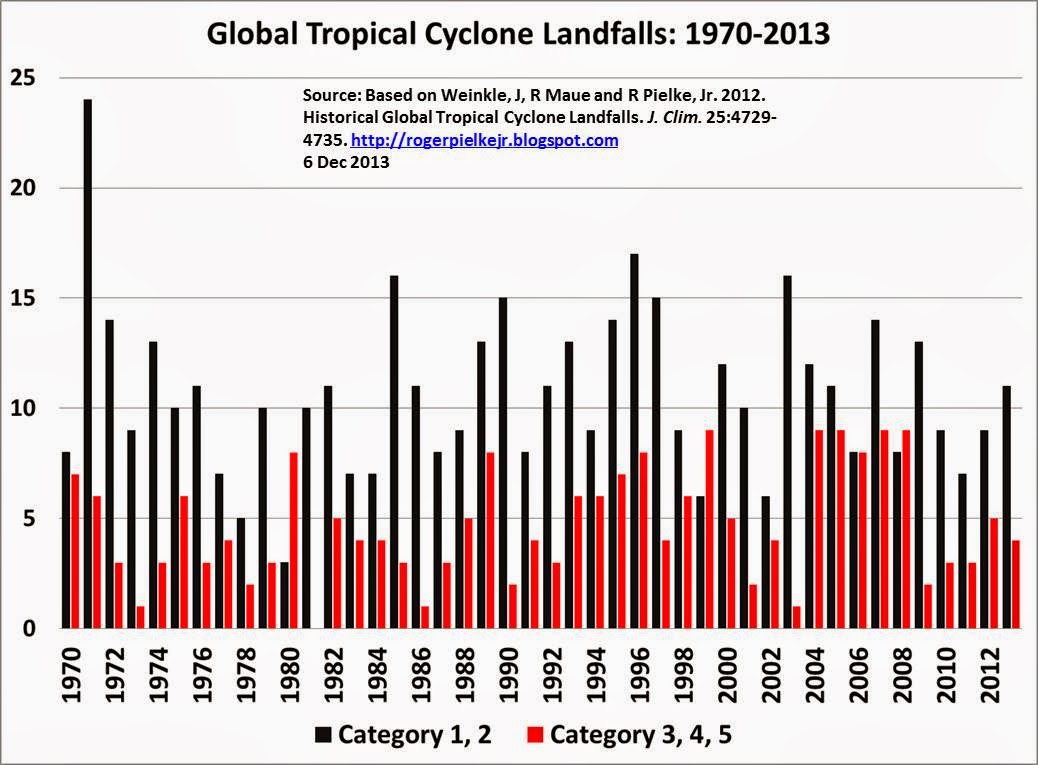
Global Tropical Cyclone Landfalls 2013

by noreply@blogger.com (Roger Pielke, Jr.)
Dzaleznik

Pielke is something of a contrarian on a lot of climate science- so much so that sometimes he's called a denier, though I don't think he is. But this is scary, "The US is currently in the midst of the longest streak ever recorded without an intense hurricane landfall."

Last year Jessica Weinkle, Ryan Maue and I published a paper in the Journal of Climate on trends in global landfalling hurricanes (the paper and data can be found here). At the global level, our paper concludes that the data is good from 1970. Our analysis went through 2010.
Weinkle, J, R Maue and R Pielke (2012), Historical Global Tropical Cyclone Landfalls. J. Clim. 25:4729-4735
With 2013 almost in the books I asked Ryan if he could provide a preliminary tabulation of the 2013 data (note that the data could be revised from these initial estimates, and 2013 is still not quite over).

At the top of this post is the dataset from 1970 first presented in our paper, updated using the same methods through 2013 (remember that there are a few weeks left in the year). In short, 2013 is an average year with 15 total landfalls (15.4 is average) of which 5 characterized as major (4.7 is the average).

Here are some updated statistics summarized from the data:
  • Over 1970 to 2013 the globe averaged about 15 TC landfalls per year (Category 1-5)
  • Of those 15, about 5 are intense (Category 3, 4 or 5) 
  • 1971 had the most global landfalls with 30, far exceeding the second place, 25 in 1996
  • 1978 had the fewest with 7
  • 2011 tied for second place for the fewest global landfalls with 10 (and 3 were intense, tying 1973, 1981 and 2002)
  • Five years share the most intense TC landfalls with 9, most recently 2008.
  • 1981 had the fewest intense TC landfalls with zero
  • The US is currently in the midst of the longest streak ever recorded without an intense hurricane landfall 
  • The past 4 years have seen 15 major landfalling hurricanes, very much on the lower end of activity but not unprecedented -- 1984-1987 had just 11. The most is 35 (2005-2008). 
  • The past 4 years have seen 51 total landfalling hurricanes, also on the low end -- the least is 41 (1978-1981) and the most is 80 (four periods, most recently 2004-2007).
  • There have been frequent four-year periods with more than 25 landfalling major hurricanes, or more than a 60% increase of what has been observed over the past 4 years. 
There is even evidence in our paper (see our Figure 2) that the period before 1970 saw more intense hurricane landfalls than the period since. Older data from the North Atlantic and Western North Pacific (which together represents 64% of all global intense landfalling hurricanes 1970-2010 and 69% of all hurricanes) indicates that landfalling intense hurricanes in these two basins occurred at a 40% higher rate from 1950-1969 than 1970-2010. There were 9 intense landfalls in 1964 and 1965 in just these two basins, which equals the global record for all basins post-1970.

Here is a montage of 2013 activity:

For those interested in the details, here from Ryan are the preliminary details for 2013 to date:

2013 North Atlantic:  1 minor hurricane
  •   Ingrid 65-knots
2013 North East Pacific: 2 minor hurricanes
  •   Barbara 65-knots
  •   Manuel 65-knots
2013 Northern Indian: 1 major hurricane
  •   Phailin 120-knots 
2013 North Western Pacific: 6 minor hurricanes, 3 major hurricanes = total 9 hurricanes (typhoons)
  •   Utor 120-knots (major)
  •   Trami 75-knots
  •   Usagi 80-knots
  •   Wutip 80-knots
  •   Nari 105-knots (major)
  •   Krosa 90-knots
  •   Haiyan 160-knots (major) 
  •   Fitow 65-knots
  •   Soulik 80-knots
2013 Southern Hemisphere: 2 minor hurricanes
  •   Haruna 90-knots
  •   Rusty 95-knots 
*Caveats

1. We are not finished with 2013.  This is calendar year only.
2. Tracks outside of NHC responsibility are not best-tracks or post-storm reanalysis but real-time ATCF.  NHC has mostly finalized their East Pac & NATL tracks, however.
3. All intensity values are 1-minute maximum sustained wind which is used by NHC and JTWC, the source of our historical TC dataset (and this one).
4. Actual instantaneous landfall intensity is unknowable.

Lots more great data and graphs, including the one below on total global tropical cyclone activity (not just those that make landfall) at his website here.
06 Dec 20:18

Freaky optical illusion

by Jason Kottke

Which gray block is actually darker? Hold something over the seam to find out.

Optical Illusion Blocks

Mindblowing, right? Now for the fun science part: how does this effect work? Well, it works because whoever made this thing is a fucking witch. I mean, Jesus. QED. (via ★interesting-links)

Tags: optical illusions
06 Dec 15:37

Bonus Quote of the Day

"Let me explain it this way, Joel, and you might feel the same way. When I find out my wife's been shopping at a home improvement store, I get nervous. I wonder what ideas are going on in her pretty little head and 'What's it going to cost me?'"

-- North Dakota State Sen. Dwight Cook (R), in an interview on KFGO.
01 Dec 22:50

Mental Health Break

by Andrew Sullivan
Dzaleznik

What?

Wait for it … wait for it …

11 Nov 19:17

Palin Says Federal Debt is Like Slavery

Dzaleznik

"This isn't racist"

Speaking in Iowa, Sarah Palin compared the federal debt to slavery, the Des Moines Register reports.

Said Palin: "Our free stuff today is being paid for by taking money from our children and borrowing from China. When that money comes due - and this isn't racist, but it'll be like slavery when that note is due. We are going to beholden to the foreign master."
10 Nov 16:36

White Candidate Wins By Suggesting He's Black

"Dave Wilson chuckles as he talks about his unorthodox political campaign [for a board seat on the Houston Community College system]... As a conservative white Republican running in a district whose voters are overwhelmingly black Democrats, the odds seemed overwhelmingly against him," KHOU reports.

"Then he came up with an idea... If a white guy didn't have a chance in a mostly African-American district, Wilson would lead voters to think he's black."

Said Wilson: "Every time a politician talks, he's out there deceiving voters."

"And it apparently worked. In one of the biggest political upsets in Houston politics this election season, Wilson -- an anti-gay activist and former fringe candidate for mayor -- emerged as the surprise winner over 24-year incumbent Bruce Austin. His razor thin margin of victory, only 26 votes, was almost certainly influenced by his racially tinged campaign."
09 Nov 18:26

MINE

MINE

Submitted by: Unknown

Tagged: gifs , seals , fish , theft , funny
07 Nov 17:53

America-Going-to-Hell Watch, Heady Topper Dept.

by James Fallows

Don't worry -- it's not what you're thinking. The Alchemist brewing company, maker of the famed Heady Topper beer, is not closing closing.

Inside Marriage Special Report bug
Reinvention and resilience across the nation
Read more

But it is calling an end to the experience I described a few weeks ago: driving out to the brewery, in Waterbury some 20 miles from Burlington, where you can watch the beer being made, taste it fresh from the tap, and trudge to the parking lot with your maximum allowable per-customer haul of one 24-can case. It was fairly calm when I was there on a weekday afternoon (above), but apparently too many customers were trudging, drinking, carousing, and generally crowding up the village, and the end has come.

You can read the sad details in an AP story and in My Champlain Valley. From the latter:

Co-owner John Kimmich says, "we have gotten busier and busier and busier as these two years have gone on, and we are busier than we'd ever dreamed we'd be here." [JF: I interviewed his wife and co-owner, Jen, to similar effect.]

The sheer number of people visiting the Alchemist is the biggest problem. The parking lot spills over on holidays, and neighbors, as you can tell from signs reading "keep out", aren't happy about it...

Despite the closure the owners want to reassure fans that production of the beer will not change. In fact they hope to open a new, separate retail space in Waterbury going forward. 

"We have come out of horrible situations in the right direction many times, and this is going to be another one of those," Kimmich says. 

Sic transit gloria breweri. Assuming -- as I do -- that the quality of the beer itself remains high, this step could if anything enhance Heady Topper's magical unicorn image, as an elusive ideal that many people have dreamed of but few have actually seen.

For the archives, the type of scene that previous pilgrims have witnessed, soon to be shielded from general public view.

#1: Ingot-like stacks of Heady Topper, resembling Walter White's barrels full of money in Breaking Bad.

#2: American manufacturing at its best.

#3: Reflecting on a job well done.

To end on a positive note, the brewery is actually open until November 15.


04 Nov 17:38

spinach and egg pizzette

by deb
Dzaleznik

Please add this to the list. Thank you.

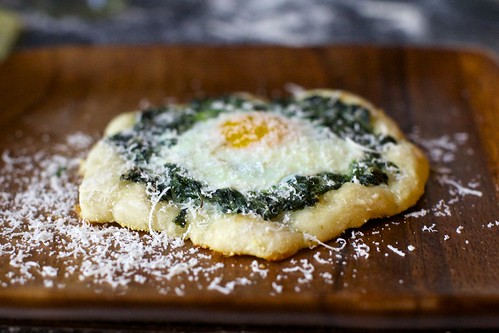
spinach and egg pizzette

This, this mash-, roast-, horseradish-, bangers-, crisps-, and goose fat-free, is one of my favorite things I ate while I was in the UK, and it’s not even British. Technically speaking, it was from a Venetian small plates restaurant, although I came to associate meals with generous helpings of gorgeously cooked spinach with the UK, as it appeared, to my delight, on so many plates. I had spinach tangled with a duck breast at a gastropub in what felt like the middle of nowhere, spinach in small tufts on another pizza (this one alongside a perfect pint) my first jet-lagged night in town, and a perfect amount of spinach at a pub on a Sunday afternoon, kissed with the horseradish sauce that had been ladled, to my glee, over my roast, but this was my favorite.

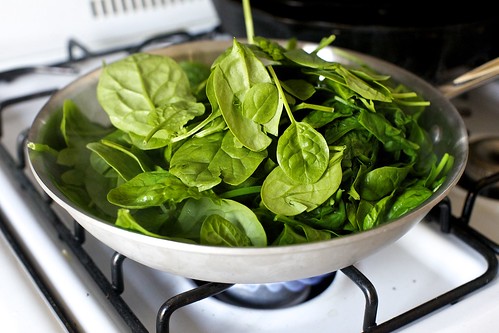
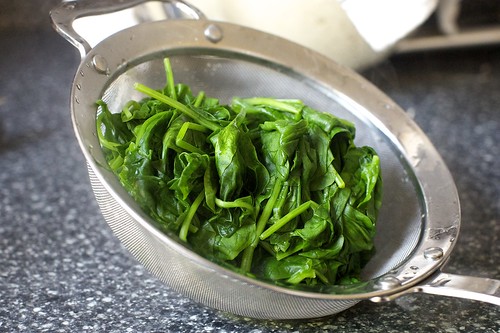
wilting the spinach
wilted spinach, to drain and squeeze

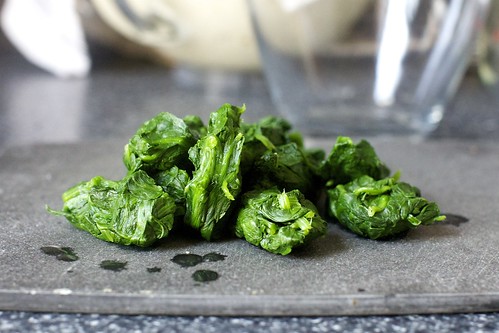
Here, spinach that has been wilted and squeezed, is re-plumped, so to speak, with creme fraiche, parmesan, salt and pepper, and is generously spread over a tiny pizza. An egg centers on this pile (and sometimes around it, at least in my kitchen) and the whole mess is baked together until the edges of the pizzette are brown, the spinach is tender, with a slight gratin-like effect, and the egg is white at the edges and just-runny-enough in the center and I think it might be my perfect meal. I would have it for breakfast, lunch, or dinner almost any day of the week (also in the rain, on a train, on a boat, with a shark…) and now that I’ve discovered that glorious late-season spinach still exists at markets around here, I might just make it happen.

squeezed fistfuls of spinach

... Read the rest of spinach and egg pizzette on smittenkitchen.com


© smitten kitchen 2006-2012. | permalink to spinach and egg pizzette | 135 comments to date | see more: Eggs, Italian, Photo, Pizza, Spinach, Vegetarian

31 Oct 15:52

The Best (Mostly Cheap) Eats on St. Marks Place in the East Village

by Lily Chin

From Serious Eats: New York

20100718-xian-lamb-burger.jpg

Lamb burger from Xi'an Famous Foods. [Photograph: Robyn Lee]

Restaurants on St. Marks Place come and go, but most share one thing in common: they're all about affordable eating. From Japanese hot dogs to chocolate pudding to great sliders, there's no shortage of cheap eats on this one street alone. To help you get the best bang for your buck, here's our guide to the best eating on (or just off) St. Marks between Cooper Square and Tompkins Square Park. Of course there's plenty more good food nearby—this is the East Village after all—but we're keeping tight on the geography for this post. You can find more East Village eating right this way.

Astute St. Marks-ers will notice some omissions from this guide: a certain popular falafel stand, ramen shop, and Chinese restaurant, for starters. That's because with such a wealth of good, cheap options on this one street, we think you can do better. Still feel we left something out? Let us know in the comments.

Quick Bites on the Go

Lam'bretta at Xe Máy Sandwich Shop ($6.50)

Curry lamb banh mi at Xe May. [Photograph: Craig Cavallo]

Xe Máy Sandwich Shop: This small sandwich counter does unconventional banh mi right. Their baguettes are firm and crisp, great support for fillings like curry lamb.

Pommes Frites: Legendary late night hole-in-the-wall that sells thick-cut Belgian fries with dozens of dipping sauces ranging from simple ketchup and mayonnaise to stranger dips like wasabi mayo and "Irish Curry."

Papaya King: Classic, natural casing hot dogs cooked on a griddle—this is the New York hot dog experience done right.

20131029-st-marks-japadog-oroshi.jpg

Oroshi hot dog from Japadog. [Photograph: J. Kenji Lopez-Alt]

Japadog: For a less traditional hot dog, Japadog's Japanese-stylized dogs come with toppings like nori, tonkotsu sauce, and croquettes. The fries come spiced with ingredients like wasabi and shichimi.

Crif Dogs: More hot dogs, but these are wrapped in bacon and topped with everything from eggs and cheese to avocado.

Xi'an Famous Foods: You don't need to trek to Flushing to try Xi'an's famous lamb burger and hand-pulled noodles, this slim shop is here for you. Compared to the other Xi'an locations, we think this one is a little tame on the spice, but it's still a very good thing.

Casual Sit-Downs

Potato pancakes at Stage Restaurant. [Photograph: Max Falkowitz]

Stage Restaurant: Before choosing Veslka as your go-to spot to taste Eastern European fare, visit Stage Restaurant for old school no-frills potato pancakes and pierogi. Pastrami or open-face turkey sandwiches are also well worth an order if they're available that day.

B & H Dairy: Another Eastern European lunch counter with great vegetarian soups and a simple-but-satisfying egg and cheese on homemade challah.

Mark: The griddled sliders here—topped with American cheese and grilled onions and served in a steamed potato roll—are among our favorites in the city.

Natori: The sushi restaurant equivalent of a dive bar with affordable, tasty sushi and sashimi combos under $20. The rest of the menu is also worth a look, such as okonomi yaki served in a sizzling hot plate or wings.

Cafe Orlin: Middle Eastern restaurant especially popular for brunch. We're fans of the creamy hummus and thick, slightly doughy pumpkin pancakes.

Hanjoo: Korean barbecue is pricier than most of the restaurants listed here, but the house specialty of crystal-grilled pork—served with kimchi flavored by the pork's rendered fat—is worth the relative splurge. We don't love the rest of the menu as much, so stick to that pork barbecue and complimentary banchan for best results.

Desserts and Drinks

20131029-st-marks-spot-goldentoast.jpg

Golden Toast from Spot Dessert Bar. [Photograph: Robyn Lee]

Spot Dessert Bar: A more refined but approachable dessert spot with innovative sweets and a classic, simple condensed milk-topped Golden Toast that's slathered in butter and baked until golden brown.

TKettle: TKettle is best known for their bubble drinks; for the classic milk tea, stick with Saint's Alp nearby. Here, you should aim for the more fun drinks, like yogurt shakes, slushes, and milkshakes in flavors like avocado.

CoCo Fresh Tea & Juice: An international tea chain with a few outposts in New York. Things to try: Three Guys (milk tea with tapioca, grass jelly, and pudding), Jasmine Milk Tea, and Cream Black Tea (brewed ice tea with a thick layer of salted whipped cream). The dairy-free grapefruit green tea is a pleasantly tart, refreshing alternative to all the sweetness.

20121018-macaron-parlour-bakery-13.jpg

Macarons from Macaron Parlour. [Photograph: Max Falkowitz]

Macaron Parlour: We dig the offbeat macarons here, but we like other pastries like the kouign amann, cinnamon bun, and cookies even more.

Puddin' by Clio: The specialty is, surprise surprise, pudding—chocolate is our favorite. But moist cakes and pies like the key lime cheesecake are also good dessert options.

PDT: You can expect great drinks at this cocktail destination, but don't be surprised if there's a multi-hour wait when you go.

30 Oct 22:42

How to Make a 7-Layer Candy Bar Dip and Become a Halloween Hero

by Jamie Feldmar
Dzaleznik

This is gross.

From Sweets

Slideshow

VIEW SLIDESHOW: How to Make a 7-Layer Candy Bar Dip and Become a Halloween Hero

[Photographs: Robyn Lee]

Sometimes, if you hang around the Serious Eats office late enough, weird things start to happen. Like the time Max and I, clocking overtime to meet a tight deadline, decided that making a 7-layer candy bar dip was a reasonable undertaking.

Why?

Why not? Given that the unofficial motto amongst editors here is "eat through the pain," the prospect of piling seven candies on top of each other, melting them down, then scooping up the goo with pretzels seemed more or less par for the course.

Like any proper recipe developers, we strategized. We needed candies that would not only melt well, but also taste good when melted together. In the interest of keeping a coherent flavor profile, we ruled out gummy candies in exchange for chocolate-based bars that exhibited various complimentary additions: nuts, caramel, nougat, and crunchy things (i.e., brittle and puffed rice). Decorative color would be reserved for the top layer only, as we feared it would otherwise get lost beneath the many layers of brown.

Layer 5: Snickers

layering the candy

After a pit stop at legendary Lower East Side candy emporium Economy Candy to load up on bars, it was time to get cooking. And by "get cooking" I mean...pile a whole bunch of candy bars on top of each other, line the oven with foil in the event of overflow, and see what happens when you turn it up to 200°F.

In short, nothing disastrous! The oven did not explode, the pan did not runneth over, and the candies melted into each other with only a few tamps from the back of a fork. Plus, our whole kitchen smelled like warm, waxy chocolate, which I understand is a technique real estate agents use to sell houses. Overall: great success.

To see how we put this candy monstrosity together every step of the way, click through the slideshow!

About the author: Jamie Feldmar is a noodle aficionado, barbecue lover, and the managing editor of Serious Eats. You can follow her on Twitter at @jfeldmar.

30 Oct 14:17

If Your Airplane Safety Video Had Spirit Fingers, Would You Actually Watch It?

by Elliot Hannon
Dzaleznik

This makes me hate everything. I think when we are looking back on Kitch that specifically dates to year 2013, this will embody it perfectly. Production values are excellent.
Guizot, for some reason I think you'll enjoy hate watching this, though I'm not sure why.

Virgin America thinks so.

29 Oct 22:52

'Oh, God, You Didn't Just Say That'

Dzaleznik

The "Oh God, You Didn't Just Say That," is in reaction to a mayoral candidate making the following joke,

"I feel like this campaign is in a state like when Adam met Eve, he said "You better back up because I'm not sure how big this thing is gonna get,"

Maybe I should move to Minnesota?

St. Paul Mayor Chris Coleman had a hard time keeping a straight face during an amusing mayoral forum.