world news
this post literally gets me through everything and anything
reblogging again
Need this on my blog again. Best thing ever.

Bwahaha the sneakers Wendy Davis wore during her epic Texas filibuster are enjoying a good old-fashioned Amazon review takeover. It’s pretty great, especially considering how the little the mainstream media covered her feminist win. And just a friendly reminder that if you were inspired by Wendy Davis, you should run for office.
Here’s another PSA: Rachel Jeantel is not on trial so maybe you should stop mocking her.
Feminists have food and body image issues, too.
It’s Pride Weekend in NYC — get in on the goodness!
Fergus NoodleYou can be my boss
|
Information Commissioner $300,480 per annum The Information Commissioner is an independent statutory position accountable directly to the NSW Parliament. The Information Commissioner acts as an independent champion of the open government regime established by the Government Information (Public Access) Act 2009. The Information Commissioner has a range of functions under the legislation including promoting an open government culture; building public awareness of information access rights; reviewing agency decisions and investigating complaints about agencies in relation to their information disclosure obligations. The Information Commissioner advises and assists agencies, including local authorities, to meet their legislative obligations, which include mandatory publication of prescribed ‘open access information’; informal release of other information and a residual requirement to respond to formal access applications. The Information Commissioner drives cultural change throughout the public sector so as to facilitate and encourage, promptly and at the lowest reasonable cost, public access to government information. The Information Commissioner will lead and manage the staff and other resources of the Information and Privacy Commission NSW, to effectively and efficiently meet strategic objectives and fulfil reporting requirements. Selection Criteria:
Inquiries: Mr Laurie Glanfield, Director General, Department of Attorney General and Justice, (02) 8688 7313. Please visit www.lawlink.nsw.gov.au/appointments to apply. Applications in Word or PDF addressing the selection criteria, accompanied by a detailed curriculum vitae and the names of at least two referees, must be completed online by 12 July 2013. ............................... |

Elana M. sent along a fascinating study revealing the gender binary in our brains. The researchers, Homayoun Javadi and Natalie Wee, asked subjects to look at a series of gendered objects — either (a) or (b) — and then judge the masculinity or femininity of a series of androgynous faces. Gender mattered, but not how you might think.
Condition 2:


The findings were counter-intuitive to me. Subjects who saw the feminine objects judged the faces to be more masculine, and vice versa for subjects who saw the masculine objects. The researchers interpret this as an “adaptation effect,” a neurological phenomenon in which “looking at something for a long time makes you more likely to see its opposite” (source). For example if you look at a white screen after looking at a red one for a while, the white screen will appear green (red’s opposite). Or, if you look at lines moving right for a while and then look at static lines, they will appear to move left.
Javadi and Wee’s findings suggest that our brains give gender to both objects and people and that we place masculinity and femininity in a binary. We are “opposite sexes,” then, but only in our minds.
Lisa Wade is a professor of sociology at Occidental College. You can follow her on Twitter and Facebook.(View original at http://thesocietypages.org/socimages)

10/10 would ride it into battle.
WHAT HO IT IS MY BATTLE DOG I RIDE IN THE MORNING WITH MY SWORD DRAWN AND GLINTING IN THE SUN READY TO CUT DOWN MY ENEMIES
if jesus died for our sins that means we get to sin more right


She’s really proud of herself. She rolled this out and then sat on it, admiring it, for a really long time.


This dog was unable to gaze at his beloved cat due to some menacing potted plants, but true love won in the end.
AW
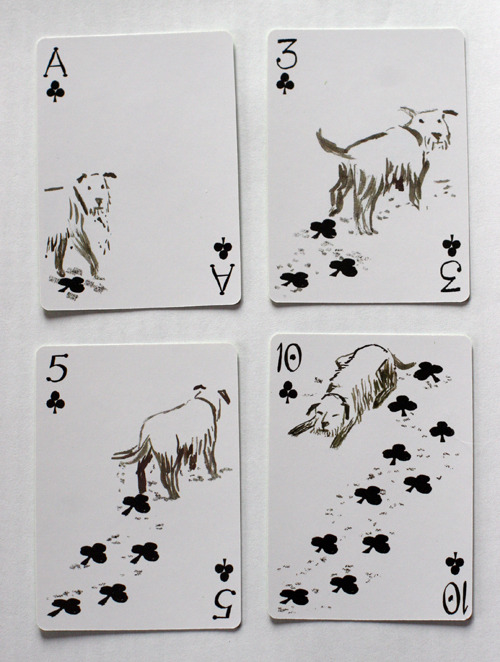
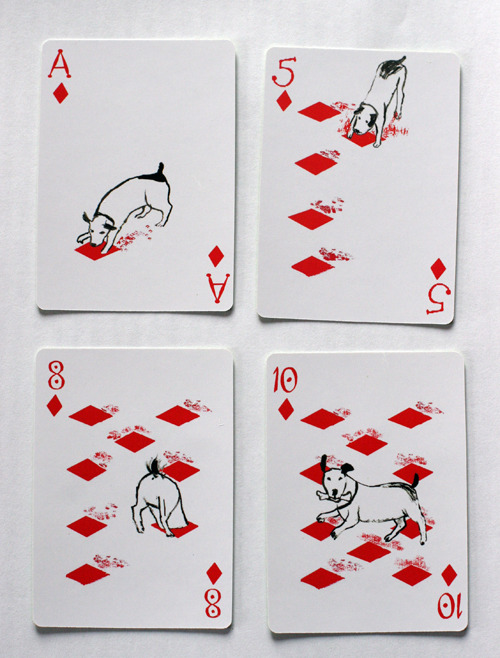
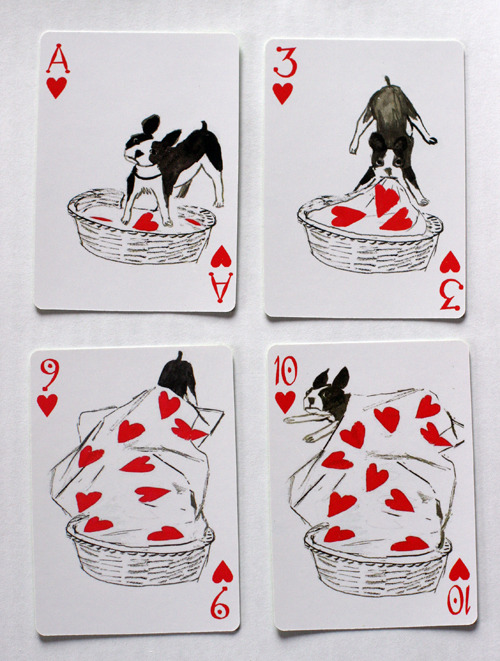
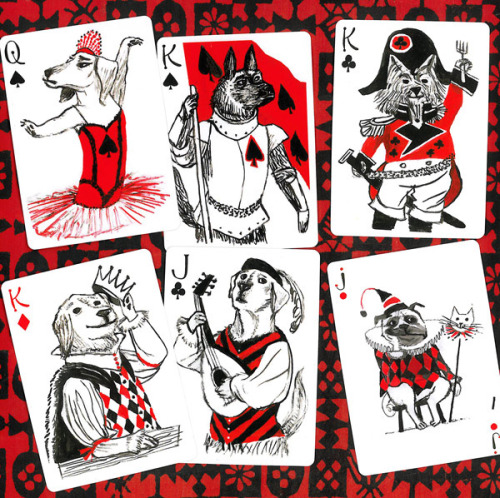
22mg:
Pack of Dogs Playing Cards by John Littleboy
John Littleboy is a self-proclaimed “artist of all things inky-dinky.” Littleboy studied at Rhode Island School of Design and graduated from Stanford University. He currently resides in San Francisco.
i!!!!!!!! want to!!!!! buy these!!!!!!
wowwwww wwwoofffff
attn artwithdogs

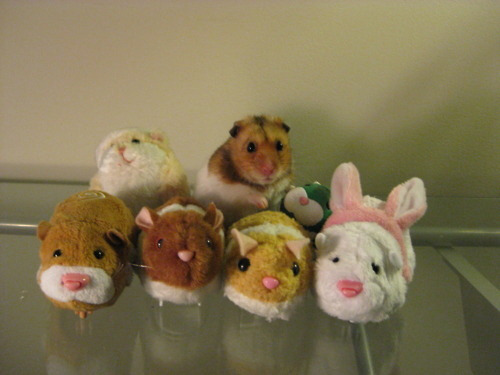








Animals With Stuffed Animals Of Themselves
Here are some animals hanging out with stuffed animal versions of themselves, which is clearly a thing that animals should be doing a lot more often.
Aww the pig one was so unexpected!! ^_^

Lawrence Eagleburger, U.S. Secretary of State under George H.W. Bush, is even more well known for having the most American name ever.

Cat and consoles by Kyle Fewell
One of many wonderful pieces appearing at Attract Mode’s Comics Vs. Games 2 event at The Toronto Comic Arts Festival running from May 11 to 12.
If this cat and game systems look familiar, we featured them about a year ago with another Kyle Fewell illustration!
BUY Nintendo 3DS and 3DS XL consoles, upcoming releases
They’re three times more likely than those who got an abortion to be below the poverty level two years later, for one thing.
The New York Times Magazine takes an in-depth look at a first-of-its-kind study–which we’ve mentioned before–that’s trying to determine how women who are forced to carry an unwanted pregnancy to term after being turned away from abortion clinics fare compared to demographically similar women who got the abortions they wanted. Here’s what head researcher Diana Greene Foster of UCSF has found so far:
When she looked at more objective measures of mental health over time — rates of depression and anxiety — she also found no correlation between having an abortion and increased symptoms. In a working paper based on her study, Foster notes that “women’s depression and anxiety symptoms either remained steady or decreased over the two-year period after receiving an abortion,” and that in fact, “initial and subsequent levels of depressive symptoms were similar” between those who received an abortion and those who were turned away. Turnaways did, however, suffer from higher levels of anxiety, but six months out, there were no appreciable differences between the two groups.
Where the turnaways had more significant negative outcomes was in their physical health and economic stability. Because new mothers are eligible for government programs, Foster thought that they might have better health over time. But women in the turnaway group suffered more ill effects, including higher rates of hypertension and chronic pelvic pain (though Foster cannot say whether turnaways face greater risk from pregnancy than an average woman). Even “later abortions are significantly safer than childbirth,” she says, “and we see that through lower complications and low incidence of chronic conditions.” (In the National Right to Life’s five-part response to preliminary findings of Foster’s study, which were presented at the American Public Health Association conference last year, the group noted that the ill effects of abortion — future miscarriage, breast cancer, infertility — may become apparent only later. Reputable research does not support such claims.)
Economically, the results are even more striking. Adjusting for any previous differences between the two groups, women denied abortion were three times as likely to end up below the federal poverty line two years later. Having a child is expensive, and many mothers have trouble holding down a job while caring for an infant. Had the turnaways not had access to public assistance for women with newborns, Foster says, they would have experienced greater hardship.
One thing that’s clear is that aside from the very real material differences between the two groups, for the most part, “turnaways” like the young mother S. profiled in the piece, come to bond with their babies once they’re born. While this may be taken by anti-choicers as further reason to ban abortion, it’s entirely unsurprising to pro-choicers who believe that people don’t have abortions because they’re heartless monsters but because they want to do what’s best for themselves and their current and/or future kids. As Amanda Marcotte notes, “Being able to love a child who is actually here while being opposed to having the child while it’s in the womb highlights the very real difference between an actual person and a potential one.”
The human capacity to adjust to whatever life throws at us is incredible–but that doesn’t make it any less awful that the turnaways were denied a (constitutionally protected) choice–thanks to unjust, discriminatory policies and logistical hurdles that make abortion difficult for many poor women to access before it’s too late.
Check out the rest of the piece here.

Medieval smiley face
This is a true feel-good doodle, drawn by a medieval reader and found in the lower margin of a 13th-century page. The surprisingly modern-looking smiley face is wearing glasses and seems to float towards the text in a balloon, quite content. This little scene made my day.
Pic: Conches, Bibliothèque municipale, MS 7 (main text 13th century, doodle 14th or 15th century). More medieval doodles in this Tumblr.
You should all follow Erik Kwakkel’s tumblr, all of his amazing medieval posts have lovely annotations, a rare thing on tumblr where too often we see images with little context. Superb!

food? no… friend
I like how the hamster’s fear response is to just eat faster like
If I’m going to die, it should be with a full stomach.
Lindy West (via lavenderlabia)
Whoa! Holly fuckin’!…
Yikes!
(via freshoutoffucksgoddamnit)
Of course there are circumstances where closed-circuit television is useful. For example, out the front of a licensed hotel where there have been instances of assault is a great spot to put high-quality closed-circuit television to identify miscreants. If people know they are going to be recorded closed-circuit television can be a deterrent but it can also assist police to gather evidence to nail people for crimes of violence in particular. It is also entirely appropriate to have them out the front of automatic teller machines if there has been a spate of violence or a robbery. High-quality closed-circuit television monitoring hot spots can have a valid use in fighting crime.Lawyers Hunt & Hunt agree in this respect:
Its use would also be entirely appropriate in cases such as surveillance inside police cells and surveillance inside police stations where footage can be used to protect police from false claims and also to protect people from excessive violence by police. There are clearly cases where closed-circuit television has a valid use, but it is not valid to install second rate closed-circuit television cameras to cover public streets and effectively use them as a very poor sieve of people who go about their ordinary business. This issue is not about stopping councils from using closed-circuit television where it is appropriate, fit for purpose and where it serves a legitimate purpose. It is about making sure that local councils comply with the Privacy and Personal Information Protection Act, that if they roll out closed-circuit television and spend thousands and thousands of ratepayers' money, that it is fit for purpose, competent and addresses one of the core issues of local council. A merits hearing in the Administrative Decisions Tribunal determined that the cameras used by the Shoalhaven Council did none of that. Rather than improving the operation of the closed-circuit television cameras in Nowra, the Government moved to exempt all closed-circuit television operations from the Privacy and Personal Information Protection Act, which is poor public administration. It is a matter of not agreeing with the umpire's call and then changing the rules afterwards.
... the Regulation was not required as the Tribunal found that Shoalhaven City Council did not comply with the PPIP Act. It failed to use the footage collected for law enforcement purposes and failed to monitor the security safeguards Shoalhaven City Council had in place to protect the personal information collected. All Shoalhaven City Council had to do was to get its own affairs in order to comply with the PPIP Act.Privacy advocates point out that exceptions to the collection principle in s 11 are rare, and require a judgment that privacy intrusive practices are so beneficial that they should trump other considerations, with evidence lacking in this case. But are somewhat relieved the pothole isn't as big as it might have been.

Fergus NoodleGood exchange

just had this exchange on okcupid