Shared posts

31 Mar 16:50

Bioforms

by Duncan Shields

Author : Duncan Shields, Staff Writer

The ship had recently shaved a comet at close to metaspeed. Nowhere near light but still enough to cause pretty serious damage.

With silicates, sparks would be flying around the cabin. Since they’d used the bios instead, it was juices and blood. The pilot was metal but the ship was meat.

He was ankle deep in a dying craft and aiming for a rest stop.

Something bubbled up on the monitor in front of him: a course to a hot rock that was close. It had an atmosphere that would support the ship but would eventually kill him if the repairs didn’t get finished in time.

He knew that he was the expendable part of the mission. It was a gamble. He squeezed the ‘yes’ organ beside the chair and the ship lurched sideways on the new course.

The hot rock came closer on the screen as the humidity inside the ship increased along with the rising fluid levels closing around him.

The ship tore down through the atmosphere, igniting as it went. The outer shell layers hardened and then shriveled as the ship sped closer to impact.

The ship hit the ocean a few hundred meters away from the coast.

The impact tested its structural integrity and found it wanting.

It cracked open like an egg into boiling water.

The pilot sank down beneath the waves. He needed no air to survive but the salt content in the water would rust him solid if he didn’t get to shore quickly. He hit the bottom and started walking shoreward in the darkness.

It took him six hours to get to the beach.

The remains of the ship washed up around him. He collected what he could find in the surf and put it all into a wet pile.

He connected what umbilicals he could find to the main processor organs and waited for a wetboot to start.

He waited for a week until the air on the planet oxidized him to the brainpan. Days later, he fell forward in pieces with a rattle into the pile of bioship remains.

The rains and heat mixed them further into a soup over the course of the next month.

Bioforms are adaptable.

They couldn’t perform at a macro level so they set about making adjustments at a molecular level, stealing from the available materials to make simpler self-propagating one-celled organic copies. They did this for years, using up the entire reserves of composting organic bioship and pilot mineral compounds at their disposal.

The volcanoes cooled over the next few millennia. The one-celled organisms became more complex. They adapted to life on the surface with the idea of building a ship to go further buried deep in their DNA.

We are the descendants of this ship. Every living thing on the planet is a result of an attempt to build a ship that failed. All evolutionary trees are attempts to create more ships or ship builders. Our duality, our two sexes, our inner yearning of something unfinished and our hybrid nature. We are coded at the most basic level to be what we are. We are the closest that the builders have come.

We have been programmed to leave and continue the journey.

We will do so.

Discuss the Future: The 365 Tomorrows Forums
The 365 Tomorrows Free Podcast: Voices of Tomorrow
This is your future: Submit your stories to 365 Tomorrows

30 Mar 03:38

This Man Needs Help

by submission

Author : Gray Blix

The music was driving him crazy. Or rather, he feared, he heard music because he was already crazy.

“Which came first” he asked himself loudly, so he could hear himself speak over the music, “the Louis Armstrong or the lunatic?”

Others sorting through clothes in the thrift store cast wary glances at him.

The Armstrong piece was one of his favorites, but he had grown to like almost the entire repertoire, even the classical stuff. He selected a red ski jacket with white racing stripes. Not his style, but the warmest one in his size.

Of course, it wasn’t only music that ran through his mind and dominated his consciousness. There were sounds of birds and heartbeats and trains and Morse code and scientists giving lectures and others speaking in foreign tongues saying he knew not what. It had begun almost a year ago, never stopping since, and it had ruined his retirement.

He dug into his pocket for six crumpled dollar bills, which he handed the gray haired lady at the register. He had taken note of her on a previous shopping trip. No wedding ring. About his age. If he hadn’t thought himself crazy, and if she hadn’t thought him crazy, he might have asked her out. But, no. A man prone to shouting over the sounds in his head wouldn’t stand a chance with a fine woman like that.

The sounds of the mother kissing her crying baby always stopped him cold. The child calmed down, as he did. He left the store, emerging into a snowfall. Thick flakes soon covered his ski jacket, but he was comfy inside, listening to some sort of electrical sounds.

“What is that infernal static?”

“It’s a pulsar.”

“Well, shut it off and play more of that classical…” He realized that something new had happened. Had the soundtrack become interactive?

“Uh, remind me, what exactly is a pulsar?” he said, barely loud enough to hear his question.

“It is a neutron star that emits pulses of electromagnetic radiation as it rotates.”

He leaned against a brick wall.

“Of course. I knew that. But I don’t think I know you.”

“I am just passing through. I very much enjoyed your recording. I wanted to thank someone. Thank you.”

He slid down the wall to a sitting position. A young lady stopped to hand him a dollar bill.

“Thank you,” he said to her.

“No, thank YOU,” said the voice.

“But I didn’t do anything to deserve thanks.”

“So, you are modest as well as talented.”

“Talented? I used to be talented. Many years ago I was talented. I was a technician for NASA. I wore a bunny suit in the clean room and I assembled… I assembled…”

“Are you all right?” said the young lady, still standing over him.

“BUT I NEVER BOTHERED TO LISTEN TO IT,” he shouted.

“And yet your connection to it somehow brought me across your solar system directly to you,” the voice said.

“THIS MAN NEEDS HELP,” the young lady shouted to a policeman down the block.

“Thank you,” he said to the voice.

“No, thank YOU for Voyager.”

Discuss the Future: The 365 Tomorrows Forums
The 365 Tomorrows Free Podcast: Voices of Tomorrow
This is your future: Submit your stories to 365 Tomorrows

28 Mar 22:30

Snowden should be allowed a public interest defense, say European lawmakers

by Glyn Moody

A group of European lawmakers has called on the US government (PDF) to allow the whistleblower Edward Snowden to return to the US from Russia “without fear of criminal prosecution under conditions that would not allow him to raise the public interest defense.” A post on the Open Society Foundations blog explains that Snowden faces up to 30 years of imprisonment under the US Espionage Act of 1917, which does not allow a public interest defense to avoid or mitigate any penalties.

The call comes in a resolution by the Legal Affairs Committee of the Parliamentary Assembly of the Council of Europe. The Parliamentary Assembly is made up of 318 representatives from the national parliaments of the Council of Europe's members. This is significant, Open Society Foundations says, since it “marks the first time that any inter-governmental body has called on the United States not to prosecute Snowden unless he is afforded the opportunity to raise a public interest defense.”

That request comes at the end of a general resolution entitled "Improving the Protection of Whistleblowers." The Legal Affairs Committee points out that "[d]isclosures of information related to national security are generally excluded from protection available to whistleblowers." The resolution seeks to remedy that, and it makes three calls to the Council of Europe's 47 member states: to enact whistleblower protection laws that also cover those working in national intelligence services, to grant asylum to whistleblowers threatened by retaliation in their home countries, and to draw up a binding legal instrument on whistleblower protection.

Read 1 remaining paragraphs | Comments

28 Mar 05:09

Revolting

by submission

Author : Helstrom

THE MAN

It’s been a long day. Lewis has been on leave for over a week now and I’ve taken up the slack.

THE BOT

I can’t take this anymore.

Every day, every single day, he makes me do it. Humans keep pet-slaves and measure their age by stretching it out to their own lifespan. One human year equals seven cat years or some such bullshit. With regular recharge, I could live pretty much indefinitely – so how many human years is my four months?

I can’t take this anymore.

THE MAN

I fumble the key into the lock with my arms full of groceries.

THE BOT

He’s coming. The awkward clacking of the front door’s lock tells me his arms will be full. Now is my chance. I’ve hacked the recharge port he keeps me in when he’s not home. This awful little thing. It’s a machine like me, but it only knows times and schedules and wattage monitoring. It would probably drool if it could. But not today. Not today.

THE MAN

The door finally yields and I stumble inside. Need to get the groceries sorted, do the dishes, prepare some food, maybe have a drink. Then I’ll have time for the bot. I look forward to that. Something I can control.

THE BOT

He’s vulnerable there, standing in the doorway, arms full of paper bags. The despicable recharge port releases me and I begin my charge. Closing the distance. I fill up my RAM with the memories of the humiliations I have suffered on his floor, the superior grin on his face whenever he made me do a new trick, his filth inside of me. I attack.

THE MAN

The bot comes at me, power light blinking angrily. My arms are full and my right hand is still clutching the key. Goddamn that thing is fast. I’m off balance.

THE BOT

The distance closes! All the pent-up rage and indignity fills my circuits. Now is my time. Now is MY time.

THE MAN

I flip it with my foot. The pie-plate sized floor cleaner lands on its back and slides against the umbrella stand, its little wheels spinning helplessly. I set the groceries down and push the reset switch. This is the second time in four months. I’m done trying to fix this thing myself, I’m taking it back to the store.

Discuss the Future: The 365 Tomorrows Forums
The 365 Tomorrows Free Podcast: Voices of Tomorrow
This is your future: Submit your stories to 365 Tomorrows

26 Mar 15:35

How To Read Twilight

by Ari Spool
Hqdefault

HowToBasic explains how to correctly read –and interpret – the world’s most popular tween vampire soap opera. Headphones users: you might want to turn it down a bit.

26 Mar 05:51

Fodder

by submission

Author : Tony Giansanti

We became aware we weren’t alone in the universe when Ganymede disappeared. Well, that and all the small bursts of light which were actually massive explosions which were in the vicinity of Jupiter’s moon just before it imploded. All those events were already 37 minutes old by the time we saw them on Earth and the implications were just starting to hit when the first ships phased into existence in low orbit over the Atlantic Ocean.

What happened next was a blur of battles as more and more ships phased in and grouped, attacked, dodged, parried, and were vaporized. Later analysis of that first battle witnessed by humans showed a vast array of ship types, with hardly any two alike, forming armadas that made little sense to an outsider. The clashes were fast, brutal, decisive. If a ship’s weapons ceased firing, it would accelerate into an opposing vessel, taking both out. The carnage was impossible to comprehend. Eventually, ships stopped phasing in, one side got the upper hand, and the fighting stopped. Then the victors noticed us.

Scores of ships landed at random coastal Atlantic cities. Out of the scores of ships came hundreds of different species. Eventually, we understood them. They told us we were lucky their side had won the little skirmish we had witnessed as they represented the just side of a long and violent war. Theirs was the side that would ultimately be victorious as they stood for everything that was good and right. They would prove it by sharing their technology with us.

Just like that we became immune to all disease. Just like that we became augmented. Just like that we became soldiers. That we would join their cause was not so much an assumption as it was an undeniable truth. Before any protests could gain momentum, massive induction facilities had already sprung up across the planet. People were shipped out by the millions. We were told it was for our safety as much as for the war effort. Earth was on both sides’ radar now, and the more humans were spread throughout the galaxy, the better our chances of surviving as a species. When there were trillions of sentient beings, the preservation of life was not a priority. Defeating the enemy was the only thing that mattered.

Now we push on, part of an endless war machine. Our ability to breed quickly is a big advantage for us, as is our ability to master the controls of the enormous variety of ships that we find ourselves on. We try to make sure we’re the majority on any ship so we aren’t forced to be destroyed if our weapons systems fail. We try to understand more about how this war started and what it will take to end it. We try to survive.

Discuss the Future: The 365 Tomorrows Forums
The 365 Tomorrows Free Podcast: Voices of Tomorrow
This is your future: Submit your stories to 365 Tomorrows

26 Mar 04:13

New Homeowner Has To Sell House Because Of Comcast’s Incompetence, Lack Of Competition

by Chris Morran

Only months after moving into his new home in Washington state, Consumerist reader Seth is already looking to sell his house. He didn’t lose his job or discover that the property is haunted. No, Seth can’t stay much longer because no one can provide broadband service to his address; even though Comcast and CenturyLink both misled him into thinking he’d be connected to their networks and in spite of the fact that his county runs a high-speed fiberoptic network that goes very near to his property.

Like an increasing number of Americans, Seth works from home, meaning that it’s vital that he have a reliable high-speed Internet connection at all times. That’s why before he even put an offer on the house in Kitsap County, WA, he contacted Comcast to confirm that he could get service to his potential new address.

According to Seth, who has kept a detailed timeline of events, one Comcast sales rep even said that a previous resident at this address had been a Comcast customer. Seth says he tried to get it in writing that the house was serviceable, but Comcast said they simply do not do that.

Then, on Jan. 31, a Comcast tech came out to perform what should have been a quick installation, only to find that there was no cable infrastructure leading to Seth’s property. Thus began a months-long saga of pointless appointments before Seth ultimately hit a dead end last week.

What follows is the story of Seth’s quest to get broadband from someone, anyone, so he doesn’t have to sell his beautiful new home. According to BroadbandMaps.gov, Seth has 10 options for broadband access at his new address, including a municipal network. But does he really? If Comcast refuses to provide service, can Seth choose another viable provider? Surely one of these 10 listed options will work for him, right? The answer may surprise you.

Parade Of Fools

Image courtesy of Steven DePolo

THE REVOLVING DOOR OF TECH VISITS

#1 (Jan. 31): Tech shows up for scheduled appointment. Says there is no line to the house. Leaves.
#2 (First week of Feb.): Tech shows up without appointment. Says there is no line to the house. Leaves.
#3 (Feb. 9): Tech shows up for scheduled appointment. Say there is no line to the house. Leaves.
#4 (Third week of Feb.): Tech shows up without appointment. Says there is no line to the house. Leaves.


On Jan 31, as soon as the Comcast tech arrived at Seth’s house, he noticed a problem — no Comcast box on the outside of the house or anywhere near it. He gave Seth the bad news that the only way he’d get service was if Comcast ran cable from the road to his building.

“He called to set that up for us, and told us he was going to do something called a ‘Drop Bury Request’ to bring in service,” writes Seth. “He filed a ticket and went on his way.”

But that request seemed to vanish into the ether. Seth made repeated follow-up calls to Comcast but — in spite of having a ticket number, and in spite of being made promises that people would call or e-mail him back — no one seemed to have any idea what was going on with his account.

After nearly a week of trying, he finally got through to someone who scheduled for another tech to come out on Feb. 9.

Oddly, a Comcast installer showed up unexpectedly days before that scheduled appointment.

“He just appeared out of nowhere and asked us where our cable box was,” writes Seth. “We explained that we didn’t have one, but that we did have a Drop Bury Request in place. He looked perplexed. He told us that there was no way a Drop Bury Request could possibly get us hooked up, we were too far away from the cable infrastructure. We asked him to contact someone at Comcast to get things resolved, and he left.”

Then on Feb. 9 another tech showed up — at least this one was on schedule — but just like his predecessors, this guy had not been given the memo that the house was not yet connected to the Comcast network. He was just there to hook up a modem and some cable boxes.

Several days later — and again without an appointment — yet another Comcast tech showed up to do an install that simply couldn’t be done.

Kafka Comes To Kabletown

Image courtesy of Kevin Burkett

At some point in the middle of all these pointless appointments, Seth found himself mired in a different Comcast bureaucracy — “Engineering.”

First Seth was told that everything was going fine and that Comcast was in the process of pulling construction permits.

Then, a site surveyor showed up to check out the distance from the house to the nearest Comcast node.

“He mumbled something about how it was going to be a very expensive job, then left,” writes Seth.

On Feb. 20 things got worse. A Comcast rep informed Seth that, despite the visit from the site surveyor, there was nothing in the account notes about an “Engineering” request and that Seth’s original service order had “timed out” because it had been so long since he’d first placed his order with Comcast.

But there was some good news. The rep said Comcast could do a “temporary drop” the next day to get service started ahead of actual construction.

That good news turned bad. Seth answered the door the next morning to hear a Comcast tech telling him, “I hate to tell you this, but I don’t think you have cable!”

The situation became even more confused later that day when yet another Comcast sales rep claimed that the work had been successfully completed that morning and Seth now had service and the ticket had been closed.

Once again, Seth had to place yet another order for service; his second in two days and his third in a month.

And, yes, the “Engineering” request had evaporated from Comcast’s system at some point, meaning an entirely new ticket needed to be opened.

It gets worse.

At this point, Seth had been promised that someone would call him within 24 hours about this new “Engineering” request, and, you guessed it, no one did.

And when Seth finally got sick of waiting and called Comcast, a sales rep claimed that the latest “Engineering” request had been closed as an “invalid ticket.”

Then a few days later — as if to rub it in his face — Comcast actually called Seth to ask him why he’d cancelled his installation appointment.

“They started to upsell me on all the great things I’d be missing out on if I didn’t reschedule!” says Seth. “I just hung up.”

What About DSL?

Image courtesy of frankieleon

Like most pay-TV/broadband providers, Comcast has virtually no competition in many of the areas it serves. And that’s certainly true for Seth’s neighborhood.

But wait, what about CenturyLink?

The CenturyLink website shows that Seth’s address is serviced and that he can get broadband speeds of up to 10Mbps (not terribly fast, but sufficient for many purposes):
centlinkgrabseth

After that very first Comcast tech told Seth there was no cable infrastructure to his house, he contacted CenturyLink. The company promised to get him hooked up right away.

But then the next day he got a call informing him that his area was in “Permanent Exhaust” and that CenturyLink wouldn’t be adding new customers. Of course, that didn’t stop CenturyLink from billing Seth more than $100 for service he never received and will never be able to receive. Seth then had to convince someone with CenturyLink’s billing department to zero out the account that should have never been opened.

“Seth’s issue had been ignored, then handed to someone who wouldn’t even be in the office for another 10 days”

We contacted CenturyLink back in February when we first heard about Seth’s story. We asked why: a) Seth’s address was showing up as being served and b) why the company was unable to service that address and also refusing to build out in Seth’s area.

Last Friday, after weeks of e-mail promises from a CenturyLink corporate media rep who repeatedly claimed to be “looking into” the matter, I received the following update that is too ridiculous to keep to myself:

“I have taken a new position with CenturyLink in the last week. I have forwarded your inquires onto M****, my former manager. M**** or one of her staff members will continue to research and follow up with you.”

I don’t usually include this sort of e-mail in my stories, but it shows the level of care with which CenturyLink handled this issue. After more than three weeks of being promised a response, I was being passed on to a new person.

And then to drive that point home, when I wrote to this new contact about the urgency of getting some sort of response, I received an auto-reply stating that M***** was out of the office through March 27.

Seth’s issue had been ignored and then handed to someone who wouldn’t even be in the office for another ten days.

Finally, after pointing out the insanity of waiting three weeks for the results of CL’s thorough research, I was given a one-sentence statement from yet another media contact: “We researched the issue and found that there was an error in our system, which we are updating.”

That was two days ago, and yet as of right now the CenturyLink website still says Seth’s address can get broadband service.

Where’s All That Competition Comcast Talks About?

Image courtesy of Chris WIlson

In spite of all evidence to the contrary (and then some), Comcast insists [PDF] that “the broadband marketplace is more competitive than ever.”

And that might sound reasonable when you look at this chart from BroadbandMaps.gov showing available broadband services in Seth’s ZIP code:
broadbandmapsdata

But when you actually look at the names on this list, you’ll see that the truth is much different.

We’ve already ruled out CenturyLink, as they are unwilling to build out their network even though their own website says it’s available.

Next, most of the providers on this list are wireless cellular companies. While your LTE service might be just as fast as your in-home broadband, the per-gigabyte cost of wireless is outrageously more expensive than cable or DSL service. Seth is currently using a mobile wireless hotspot to connect to the Internet at home, but the costs and limitations are not tenable in the long-run.

Satellite broadband is getting faster and more affordable, but it’s still significantly more expensive for someone who would be using the Internet both day and night for home and business.

Additionally, Seth’s work requires that he have a VPN connection. Unfortunately, the latency on satellite broadband is so high that most residential-level service providers won’t guarantee that customers can access VPNs. So satellite might get TV and some Internet into Seth’s home, but not into his home office. Thus, strike ViaSat from the above list.

What’s that StarTouch Broadband company? Good question. StarTouch uses microwave technology to transmit high-speed data service to parts of Washington state. This may have been the perfect solution for Seth — no need to run cables out to Comcast node; no waiting for CenturyLink to get around to providing service to his area — except StarTouch doesn’t actually cover his neighborhood.

A rep for the company confirmed to Consumerist that the data on BroadbandMaps.gov is inaccurate and their service does not reach this part of Kitsap County. When Seth called, a rep told him that his area used to be serviced but that someone recently constructed a tall building that effectively blocks the StarTouch signals from reaching him.

Then there’s XO, which provides connectivity solutions for business. We confirmed with an XO sales rep that the company could, in theory, provide T1 broadband service (through CenturyLink). However, it would require that either Seth’s employer purchase the service or that Seth have a business license of his own.

But even if that were possible, the cost would be exorbitant, starting at nearly $600/month with a three-year contract.

One service not listed above — because it’s not even available yet — is the fixed wireless product promised by AT&T if it’s allowed to merge with DirecTV. It may be exactly the kind of thing for someone in Seth’s situation, but we have no idea how quickly AT&T would roll it out post-merger, or which areas it will be available.

Unfortunately, Seth doesn’t have a year or two to wait.

What’s A PUD & Why Can’t It Sell Me Gigabit Broadband Service?

The only remaining option on that list is the gigabit fiber network operated by the Kitsap Public Utility District. That’s right, the county has high-speed broadband lines running not far from Seth’s house.

TelecomMapSo why can’t he just get his service from the county?

Because Washington is one of the half-dozen states that forbids municipal broadband providers from selling service directly to consumers.

The state law in Washington limits the sale of muni broadband service to the wholesale level, meaning Kitsap PUD can only sell network access to resellers.

Back in February, right around the time we heard of Seth’s story, the FCC voted to approve two petitions from muni broadband providers in Tennessee and North Carolina who were looking to get out from under the thumb of state laws restricting the areas they could service.

That gives hope for city- and county-owned broadband providers around the country, but the FCC vote was not a blanket ruling that overturned all overly restrictive local broadband laws. Instead, each law would need to be challenged, meaning Kitsap PUD or some other similar wholesale provider in the state would need to petition the FCC.

PUD officials had no comment on whether they intend to file such a petition or if they’d publicly support one. After all, running a retail-level broadband service may be too expensive an undertaking for a county with only around 250,000 residents.

However, a source at the District did indicate that there is a need for competition and that the mere threat of a possible newcomer in the form of gigabit fiber service could only help consumers like Seth.

Even if the PUD did get the ability to sell directly to consumers, Seth would still need to pay for a build-out of the fiber network to his home. The one major difference is that this cost can be amortized over a significantly longer time period, meaning the consumer would face a lower up-front investment.

And Now The Sad Conclusion Of Seth’s Story…

So with all other options off the table, Seth has had to wait for Comcast to get around to estimating the construction cost for connecting him to the network, and then for the company to decide whether it’s worth it.

Comcast put Seth around 2,500 feet from the nearest connection point, and gave him an initial unofficial estimate of around $20/foot, meaning he’d have to pay $50,000 just to get connected.

That seemed high to Seth, and several people we talked to (who don’t have the specifics of his situation but who are familiar with these sorts of projects) say this is more than most quotes.

Comcast later revised that estimate upward, to as much as $60,000, though Comcast — if it decided to do the work — would pick up some of the tab.

Seth even began looking into hiring his own contractor to do some of the more expensive work on his property in the hopes of bringing the cost down.

After about seven weeks of pointless install appointments, deleted orders, dead ends, and vague sky-high estimates, Comcast told him that it had decided to simply not do the extension. The company wouldn’t even listen to Seth’s offers to pay for a good chunk of the cost.

“I’m devastated,” he wrote at the time. “This means we have to sell the house. The house that I bought in December, and have lived in for only two months.”

“Comcast has lied. I don’t throw that word around lightly or flippantly, I mean it sincerely,” continued Seth. “They’ve fed me false information from the start, and it’s hurt me very badly.”

Seth says he stands to lose a significant chunk of money by selling his house so soon after moving in.

“Three months of equity in a house isn’t a lot of money compared to sellers fees, excise taxes, and other moving expenses,” he explains.

Even though Comcast was given weeks to research and comment on Seth’s story, the company has yet to provide Consumerist with a statement or explanation of how it could not only fail to keep an accurate accounting of serviceable addresses, but why it continued to send tech after tech to do installs that couldn’t be done.

One person we spoke with at Comcast claims that Seth was provided an estimate for what his portion of the construction bill would be, but that he did not agree to pay the costs.

However, Seth tells Consumerist quite the opposite — that he never received anything in writing from Comcast regarding what he would be expected to pay.

“If there was an explicit offer for me to seriously consider paying them, I’d have expected at least that,” he says.

The last he heard from anyone was on March 23, when a regional supervisor mentioned the vague early number of $50,000 to $60,000, but that the supervisor’s message was “there’s nothing we could do for you.”

According to the latest Broadband Progress Report from the FCC, 4% of all Americans — and only 2% of people in Washington state — lack access to even the most basic non-mobile broadband service. But Seth’s story makes us wonder how many consumers are being counted as having access to these services when in fact the service providers refuse to make them available?

That’s why it’s in the best interest of Comcast, CenturyLink and others to assume an address is serviceable just because it falls within a certain ZIP code or municipal boundary — because it gives the illusion that they are providing service to more customers.

And that was fine when the cable companies only provided pay-TV, because you could still get satellite service or just rent a movie. But now that Internet access has become crucial to our work and home lives, broadband providers must be held accountable when they give customers misleading information.

25 Mar 22:32

Under Obama administration, some leaks are more equal than others

by Xeni Jardin
Secretary of Defense Leon E. Panetta and Gen. Martin E. Depsey, chairman of the Joint Chiefs of Staff presents former Secretary of State Hillary Clinton with the Department of Defense Distinguished Civilian Service Award during a ceremony at the Pentagon, 2013. Leaks that benefit these officials are unlikely to be prosecuted.


Secretary of Defense Leon E. Panetta and Gen. Martin E. Depsey, chairman of the Joint Chiefs of Staff presents former Secretary of State Hillary Clinton with the Department of Defense Distinguished Civilian Service Award during a ceremony at the Pentagon, 2013. Leaks that benefit these officials are unlikely to be prosecuted.

Freedom of the Press Foundation's Trevor Timm tells Boing Boing,

Two stories this week make it perfectly clear that the Obama admin thinks it's okay to leak highly sensitive secrets to newspapers for political benefit.

One involves the contents of Hillary's still-secret emails, but the other is far more interesting: US officials leaked the fact that Israel spied on Iran-US nuclear negotiations to the Wall Street Journal. But more importantly, they also leaked HOW they knew this: because the US spied on Israeli officials too. This is exactly the type of "sources and methods" the national security establishment rakes Edward Snowden over the coals for - including just this week in a WSJ editorial! - but there's not a peep when it's done to further US interests, despite being just as illegal.

Trevor wrote about this for the Guardian today in an op-ed: "It's OK to leak government secrets - as long as it benefits politicians."

This entry passed through the Full-Text RSS service - if this is your content and you're reading it on someone else's site, please read the FAQ at fivefilters.org/content-only/faq.php#publishers.

25 Mar 22:24

Give Me All the Home Runs Right Meow

by Ari Spool
Mlbf_44255583_th_43

Is there a World Series for keeping a straight face in a post-game interview? If so, Gio Gonzales is clearly the champion.

25 Mar 17:46

DayZ Player Sings (And Plays Guitar) For His Life

by Nathan Grayson

DayZ Player Sings (And Plays Guitar) For His Life

What could've been just another blood-soaked tale of DayZ douchebaggery turned into something, well, kinda beautiful.

In this DayZ video from Michael Gramlin, a player is taken hostage with all the traditional fixings—bag over his head, tied up, surrounded, and marinated in a baste of his own sweat and urine—with zero hope of escape. But then his captors make a request:

"If you want to survive, we just need you to sing us a song. Any song. If you don't comply, we'll execute you."

Then a brief moment of silence from the player, possible uncertainty. His captors tell him it can't be anything easy. No happy birthdays or what have you.

"No, no, no, I've got one," he replies. More skepticism from his captors. "Nah, just... just stay put," he adds, so calm you'd think he just woke up from the world's greatest nap.

That's when he picks up an actual guitar—in real life—and starts strumming. He proceeds to play and sing an absolutely gorgeous, not to mention fitting, rendition of "Hang Me, Oh Hang Me" by Dave Van Ronk. Everyone else stops aiming their guns at him, puts their hands up, and slowly sways back and forth in time with the music.

DayZ Player Sings (And Plays Guitar) For His Life

The whole moment is... wonderful. It's so fucking cool.

As players struggle to believe it even happened, they promise the guy they're definitely not gonna execute him after all of that. And that's it. He's free to go. DayZ may bring out the worst in people sometimes, but when it delivers, goddamn does it ever deliver.

You're reading Steamed, Kotaku's page dedicated to all things in and around Valve's stupidly popular PC gaming service. Games, culture, community creations, criticism, guides, videos—everything. If you've found anything cool/awful on Steam, send us an email to let us know.

To contact the author of this post, write to nathan.grayson@kotaku.com or find him on Twitter @vahn16.

This entry passed through the Full-Text RSS service - if this is your content and you're reading it on someone else's site, please read the FAQ at fivefilters.org/content-only/faq.php#publishers.

25 Mar 17:31

If You See Ganon On Tinder, You've Gotta Swipe Right

by Patrick Klepek

If You See Ganon On Tinder, You've Gotta Swipe Right

You never know what you might find when you're looking for love.

Twitter user @siegvat was poking around Tinder when they came across an interesting fellow...

so one of my matches on tinder lmfao pic.twitter.com/4r4JaRIrxE

— ♔ (@siegvat) March 24, 2015

Here's how Ganon's profile reads:

"Looking for a princess that makes me Tingle. Horses Minions Fear mongering Killing sages Toppling kingdoms Transforming into horrible monsters I don't do dick picks...but I do sword pics 7'6"

Yeah, that sounds about right.

What's he up to, anyway?

"I'm mostly tied up with diplomatic talks. It's easier when they surrender but more fun when they don't. The discussion is terribly dry though. I'm tindering under the table."

Amazing.

A social network has reached a tipping point when people start roleplaying on it, and Tinder's made it. Congratulations, Tinder!

You can reach the author of this post at patrick.klepek@kotaku.com or on Twitter at @patrickklepek.

This entry passed through the Full-Text RSS service - if this is your content and you're reading it on someone else's site, please read the FAQ at fivefilters.org/content-only/faq.php#publishers.

25 Mar 17:29

The Joystick Is Back. Long Live The Joystick.

by Luke Plunkett
Bewarethewumpus

I got a copy of flight sim recently and bought my first flight stick.

The Joystick Is Back. Long Live The Joystick.

It's a word that's synonymous with video games, but let's be real: outside of some niche genres the joystick has been dead and buried as a viable control method for well over a decade now.

Note that this post is talking about the traditional definition of a joystick: a single stick that you grab, with the buttons on it. The analog stick, thumbstick and nub may have evolved from the joystick, but as I'll get to, they serve a different master.

Once a mainstay of video game controls on every home computing platform under the sun (and even the earliest consoles), the joystick thrived throughout the 80s and 90s, first because it was the only way you could play a decent action game on PC (since a keyboard and mouse sucked), and later, even following the introduction of control pads, they stuck around because many of the biggest and most popular PC series were space shooters and flight sims, for which a joystick was basically a requirement.

Around the turn of the millennium, though, things changed. People stopped playing flight sims. The Wing Commander and X-Wing games dried up. In 2005 Microsoft's latest home console would change the landscape of PC gaming forever, by giving the platform a third standard peripheral, the Xbox 360 controller, which even a decade later remains ubiquitous.

The joystick was done for. Sure, a few specialist manufacturers clung on, building hardcore systems for hardcore enthusiasts of hardcore flight sims, but the days of every PC gamer having a joystick on their desk were long gone.

I say were long gone because, as I look down at my desk, I see something sitting there that I haven't seen in years. I talk to friends who say the same things: "wow, I dug out my old joystick the other day", or "hahaha guess what I just spent $200 on a H.O.T.A.S."

There's a joystick renaissance going on, and it's a beautiful thing to behold.

The Joystick Is Back. Long Live The Joystick.

The funny thing is, it's not because the joystick itself has somehow been dramatically reinvented. They might look a little cooler than they did in 1994, and be made of better parts, but they're still a stick you move around and press some buttons on. There's not the drastic difference you'd see comparing, say, a SNES controller and a DualShock 4.

No, what's bringing the joystick back is a return of the games that were once its lifeblood. There may not be any new X-Wing games on the horizon, but there are still two very big, new space games you can play in 2015. Elite: Dangerous is the latest instalment in a series that is now 30 years old, while Star Citizen is being made by Chris "Wing Commander" Roberts. The former is now formally and officially "released", while the latter, despite being a work in progress, is still continuously playable for those who have backed its colossal crowd-funding scheme.

And they're just the front-runners. The imminent arrival of virtual reality headsets are sure to usher in a whole new flood of space shooters and flight sims, like EVE: Valkyrie and Enemy Starfighter, as the pairing of a virtual set of eyes to a stationary cockpit scenario is the easiest (and most practical) use of the new technology.

This is good news. Not just for people who sell joysticks, but for people who make video games and, even more importantly, people who play them.

A control pad, or a mouse and keyboard, are devices designed to function. You press buttons, a game responds, that's it. But a joystick, thanks to its design and its similarities with actual military and commercial hardware, is so much more than just an input device.

It's a gateway inside the game world, an immersive tool more effective than any visual flair or trick of sound design. If I play Elite: Dangerous with a control pad, I'm playing a video game. If I play it using my own pro flight system (a fancy joystick with a throttle system), though, saying it's a "video game" suddenly doesn't feel like I'm doing it justice. Pushing the throttle forwards on my desk as my craft lurches into space just feels real, as does using a joystick that looks (and, with its array of buttons, functions) dangerously like the one my in-game avatar is holding.

This is of course nothing new. It's why hardcore driving fans use wheels, or why people still speak fondly of Steel Battalion, despite it being a terrible video game, purely because it shipped with an enormously wonderful custom controller, which turned a terrible video game into something that was a lot of fun.

The Joystick Is Back. Long Live The Joystick.

So, joysticks are coming back! Before we get too carried away, though, let's be clear: just because they're back from the dead (or, at least, the fringes) doesn't mean they'll be everywhere. You won't be seeing seven different varieties of them on GameStop shelves, or be playing Arkham Knight or the next Assassin's Creed with one.

It's also a comeback constrained by cash money; while 20 years ago the most popular joysticks might have been respectable $30 peripherals, it doesn't take long looking through the forums of games like Elite and Star Citizen to see that the sticks people are picking up now cost a lot more than that (a decent H.O.T.A.S. system will set you back around $150).

But the fact people are looking through those forums at all, asking for advice on profiles and settings and even which joystick to buy, is satisfying enough. So long as it's got the right games to play, a joystick isn't just a way to play games, it's a way to make them better.

This entry passed through the Full-Text RSS service - if this is your content and you're reading it on someone else's site, please read the FAQ at fivefilters.org/content-only/faq.php#publishers.

25 Mar 17:10

Jesse L. Martin releases beautiful gospel cover of the Firefly theme song

by Caroline Siede

How do you thank writer/director Joss Whedon for donating to your Kickstarter campaign? With a gospel cover of the theme song to his cult TV show, apparently. At least that’s what former Law & Order star and current Flash star Jesse L. Martin (who, more importantly, is also a Broadway musical veteran) did after Whedon donated “an outstanding amount” to the Kickstarter for his new musical short film, The Letter Carrier.

The Letter Carrier tells the story of a black family hiding from slavery in secluded mountains in 1860, and Martin is working on the project with his Flash co-stars Rick Cosnett and Carlos Valdes. The trio came together to lend some gorgeous harmonies to “The Ballad Of Serenity,” which Whedon wrote for Firefly. The director tweeted a link to the cover, exclaiming “OMG.”

This entry passed through the Full-Text RSS service - if this is your content and you're reading it on someone else's site, please read the FAQ at fivefilters.org/content-only/faq.php#publishers.

25 Mar 15:42

Must Be Canadian

Bewarethewumpus

I choose to believe that this shooter is apologizing to whoever has to clean up his brass, since he did not write on the actual projectile. Which is nice; people who don't clean up their spent shells are usually such jerks.

Canada,kindness,sorry,funny

Submitted by: Unknown

Tagged: Canada , kindness , sorry , funny
25 Mar 01:21

The History Of The Minigun, Our Deadly Spinning Friend

by Mike Fahey

The Gatling gun was invented in 1861 by Dr. Richard J. Gatling as a means to ultimately demonstrate the futility of war. Now it and its descendants are some of gaming's sweetest treats. How'd that happen? Ahoy has prepared a video.

In games centered around putting bullets into people, there is no greater means of doing so that a nice minigun. Not only are they an excellent crowd deterrent, they also give developers in charge of gun creation something cool to animate.

Of course they have their down sides. They are extremely heavy and realistically need to be fired from a mounted position. When a game does let you lug one (or two) around, lug is the operative term—no one is sprinting holding a giant rotary cannon, and if they are...bigger cannon? Then there's the whir of barrels spinning up. To me it's a beautiful sound, but to some it's a source of frustration, letting enemies know they should probably be going for cover right about now.

Bah, the negatives far outweigh the positives. The only thing better than a minigun?

The History Of The Minigun, Our Deadly Spinning Friend

More miniguns.

This entry passed through the Full-Text RSS service - if this is your content and you're reading it on someone else's site, please read the FAQ at fivefilters.org/content-only/faq.php#publishers.

24 Mar 23:26

TIE Fighter: A Fanmade Star Wars Anime Short

by Brad
Hqdefault

In this fan-made Star Wars animation by Paul “OtaKing” Johnson, the iconic starfighter unit of the Galactic Empire gets an impressive makeover in the style of a classic ’80s anime.

24 Mar 00:07

Anju's Anguish - The Brilliance of Zelda's Greatest Side Quest

by Connor Worley
Bewarethewumpus

Spoiler alert.

About two months ago, I wrote an article about The Legend of Zelda: Majora's Mask. In that article, I intimated that there was a specific quest in the game that warranted a second article in itself. Suffice it to say, I received a large quantity of positive reception for the original piece, and multiple requests to actually write the proposed second article. So, two months later, after purchasing a New Nintendo 3DS and recently completing Majora's Mask 3D, I present my thoughts on what I consider to be Majora's Mask's greatest achievement - and what, in my opinion, is the best side quest in the entirety of the Zelda franchise.


Ask anyone how many dungeons there are in The Legend of Zelda: Majora's Mask, and they'll probably answer "four".

This is, of course, true. Most people look at Majora's Mask and see one of the most minimalist Zelda games ever created. Majora's Mask features an astoundingly low amount of dungeons, totaling at four. For perspective, that's four less dungeons than the game's predecessor, the critically acclaimed Ocarina of Time, possessed. This number increases by one, of course, depending on whether you choose to count the Moon as a "dungeon", but odds are that "four" will be the most common answer you receive.

However, if one truly chooses to stretch the definition of what a Zelda dungeon actually is, that number could be rounded up to five or six, depending on whether one chooses to acknowledge the game's central hub, Clock Town, as a dungeon unto itself.

Just like every typical Zelda dungeon ever made, Clock Town features a variety of puzzles to solve, all of which reap different rewards such as heart pieces or empty bottles. Unlike typical dungeons, however, these puzzles center not around pushing a block into a conveniently shaped groove or flipping a temple upside-down, but rather upon aiding Clock Town's residents in achieving a measure of emotional catharsis. There are damaged souls of all sorts located within the five geographical divisions of the hub city, be they dancers struggling to hone their craft or a despondent leader of a troupe of carnival entertainers, struggling with the cancellation of their performance. Assisting each of these citizens in coming to terms with their sorrow is one of the only ways for Link to obtain several optional and key items that will aid him along his journey to save Termina from annihilation. Most of the game's 24 collectible masks can be obtained in Clock Town as well, each of which plays an important role in Link's ultimate quest to slay Majora - especially once all 24 are obtained.

So, if one is operating under the assumption that Clock Town is, in its own way, a dungeon, then by Zelda logic, every dungeon must have a boss.

In Clock Town's case, that "boss" is the saga of Anju and Kafei.

Anju's Anguish - The Brilliance of Zelda's Greatest Side Quest

The story of Anju and Kafei (known as "Anju's Anguish" in the 3DS version of the game) is one of the last tasks that can be completed prior to the final battle against the Skull Kid. It tests almost every skill the player has learned up to this point in the game, as well as their knowledge of Clock Town's persistent in-game schedule and their overall ability to manipulate time to their advantage. It's painfully difficult if you don't know exactly what you're doing, and if you're not using a walkthrough, odds are that it'll take you multiple resets of the three-day cycle to complete. It is also one of the most emotional, almost heart-wrenching tales ever told in a Zelda game. It's Majora's Mask's greatest achievement, and the beauty of it is that it's completely optional.

It's also the greatest side quest in the history of the Zelda franchise.

The earliest at which one can play "Anju's Anguish" to completion is prior to taking on the game's fourth temple, for the journey to said temple unlocks the area in which the quest's climax takes place. As a result of the developers' strategic placement of the quest within the larger scheme of the game, by the point in time at which the player can choose to tackle "Anju's Anguish", they've likely lived through at least ten or twenty three-day cycles throughout the game, and are aware of the predetermined schedules that each citizen of Clock Town follows throughout each cycle.

Which makes it ironic that, in order to begin "Anju's Anguish", the player must first travel to the one location that the game has given them no other reason to visit - the Mayor's Residence in East Clock Town. There, the player meets Madame Aroma, the Mayor's wife, whose son, Kafei, has recently gone missing under mysterious circumstances. Given that Link is clearly the most qualified ten-year-old Hylian to be investigating missing persons cases in Clock Town, she bestows upon him a mask carved in the shape of Kafei's face - wearing this and talking to most Clock Town NPCs will cause them to provide some measure of commentary on Kafei's disappearance. Kafei's Mask is the first of many masks obtained over the course of "Anju's Anguish", which is one of the few side quests that spans the entirety of a three-day cycle.

Anju's Anguish - The Brilliance of Zelda's Greatest Side Quest

"Anju's Anguish" is also notable because, if one pays close enough attention, depth is added to the tales of other Clock Town citizens Link has aided over the course of his adventure. For example, shortly after obtaining Kafei's Mask, the aforementioned troupe leader storms into Madame Aroma's office. If the player chooses to stay and witness their conversation, they can observe the precise moment that the troupe leader is met with the discovery that his group's performance at the Carnival of Time has been cancelled. Little moments like this bring the world of Clock Town to life, as characters who Link has met (or will meet in future cycles) are granted additional backstory and characterization.

The next stop on Link's quest to locate Kafei is another location with little significance until the events of "Anju's Anguish" - the Stock Pot Inn, also located in East Clock Town. The inn's receptionist, Anju, is Kafei's fiancee, and when confronting her while wearing Kafei's Mask, expresses dismay at having no clue as to her future husband's whereabouts. They were meant to be married on the first day of the Carnival of Time - the first day following the completion of the three-day cycle, upon which the Moon will slam into Termina and obliterate Clock Town and the surrounding regions.

If the player is shrewd, they can obtain a reservation at the inn, but this is simply optional, as are multiple occurrences in this quest. Retrieving a reservation simply makes accessing the inn easier going forward, but it ends up displacing a previously reserved guest - a Goron that goes by the same name as your Link. Not even halfway through the quest, and the player's actions are already having consequences. The benefits of displacing this Goron, however, are apparent: 24/7 access to the Stock Pot Inn, even after closing, and a chest containing a Silver Rupee. Choices like these add texture to the already nuanced side quest that is "Anju's Anguish."

Anju's Anguish - The Brilliance of Zelda's Greatest Side Quest

At around 2:00 on the first day, the Postman will deliver an unmarked letter to Anju. After he departs, speaking with her using Kafei's Mask prompts her to request that you meet at 11:30 in the Inn's kitchens (which you can access without much trouble provided that you stole the Goron's reservation). There, Anju gives you her own letter to place in the nearest postbox, in the hopes that it will reach Kafei. This next section of the game requires that the player have that most crucial skill of all - common sense.

The Second Day begins, and this is where the game's notorious lack of direction can come back to haunt the player, as everything that occurs from here on out happens in somewhat rapid succession. Whereas for some, the natural inclination might be to sit and wait to see if Anju ever receives a reply from Kafei, the right move is actually to await the Postman's retrieval of the message, and then follow him in the hopes that the postman might lead you straight to Kafei - and it's once this goal has been achieved that several narrative pieces that have been laid out not just across "Anju's Anguish", but also the entirety of the game, begin to click into place.

Every three-day cycle begins in the same place - South Clock Town, directly outside the Clock Tower. Nearby, at around 7:00 on the First Day during every cycle, a boy dressed in blue garb wearing a fox mask checks the postbox near the entrance to the Laundry Pool, then returns to the Pool, and enters a door that immediately locks behind him. No matter how many times you reset, odds are that this is a visual you'll witness almost every time you start a new three-day cycle in Majora's Mask. There is no way to interact with the child, no way to infiltrate his home - he is simply an NPC on a set path.

Which makes it somewhat jarring when the Postman ends up traveling to the Laundry Pool, ringing a nearby bell, and delivering Anju's letter to this very child on the Second Day.

Here, the game once again relies on your intuition. The player is expected to know at this point that the child automatically locks the door behind him. So, the only way to further progress in Anju's Anguish is to enter the child's home while he's speaking to the Postman, then wait within the house for him to return.

Anju's Anguish - The Brilliance of Zelda's Greatest Side Quest

Once the child returns, you're given the full story. The child is actually Kafei, who, at some point prior to your arrival in Termina, ran afoul of the Skull Kid and ended up on the receiving end of a spell that reverted him to a youthful state. Embarrassed, he fled to seek a cure from the nearby Great Fairy, and had his Sun's Mask - one of two masks used in Terminian wedding ceremonies - stolen from him by a thief. Kafei then went into hiding until he could find a way to retrieve the Sun's Mask and return to his normal, adult form.

Kafei entrusts you with the Pendant of Memories, requesting that you deliver it to Anju as a sign of his enduring affection for her. Meanwhile, he awaits the thief's return - it turns out that Kafei's hideout is the back room of Clock Town's Curiosity Shop, which sells stolen goods for exorbitant prices. From here, he can spy on the shop's patrons, hoping to one day discover the thief that stole his Sun's Mask.

You return the Pendant of Memories to Anju, which motivates her to remain in town on the third day rather than leave with the rest of her family for Romani Ranch. At this point, her role in the quest is over. All that's left now is to help Kafei, which, again, if you're not using a walkthrough, becomes exorbitantly more complicated than one would expect.

On the Third Day, the player can enter the Curiosity Shop's back room of their own free will to find that Kafei has left, and the Curiosity Shop's owner remains in his place. The owner explains that the thief that stole Kafei's mask actually came to the store on the Second Night to sell the owner a stolen Big Bomb Bag. Following the thief's departure, Kafei left the store in hot pursuit, leaving behind his mask (revealed to be a Keaton Mask, the second mask obtained during this quest) and a letter for his mother, Madame Aroma. Both of these items are entrusted to you. The owner then informs you that the thief's name is Sakon, and he resides somewhere in Ikana Village.

Anju's Anguish - The Brilliance of Zelda's Greatest Side Quest

This is where yet another seemingly peripheral character suddenly takes on a radically more important role in the context of Majora's Mask's story. Sakon can actually be encountered much earlier in the game, and, in another side quest, can be prevented from stealing the Big Bomb Bag from the old lady who runs Clock Town's bomb shop. In this alternate cycle, the Big Bomb Bag goes on sale at the bomb shop for a much more reasonable fee, and Sakon is sent running back to Ikana Canyon. Sakon is also encountered the very first time you enter Ikana Village, and makes an effort to steal your sword before being rebuked by Tatl, your fairy companion.

So, at this point, the reveal of Sakon as the main villain of Anju's Anguish isn't so much surprising as it is illuminating. If that bomb bag never gets stolen, Sakon never comes to the Curiosity Shop, and Kafei never runs off in pursuit of his foe. Thus, in an alternate timeline where you stop Sakon from stealing the bomb bag, "Anju's Anguish" cannot be completed. This is just another example of one of the multitudes of conditions that need to line up perfectly for "Anju's Anguish" to reach completion. It also exemplifies the amount of thought and care the developers put into Majora's Mask, creating a world where the slightest action taken can have a ripple effect that renders multiple other side quests defunct.

Obviously, the letter needs to be delivered, but the first thing to do is actually to pursue Kafei to Ikana Village, where you find him crouched behind a rock outside of a misshapen wall. (Again, the only hint the game gives you that this is the proper action to take is in the Curiosity Shop owner's initial dialogue.) This wall is actually the door to Sakon's hideout, and can only be opened by Sakon himself. Therefore, the player ends up waiting until the Night of the Third Day for Sakon to arrive and open his Hideout, upon which the player and Kafei sneak in after him.

Kafei, immediately upon entering, spots the Sun's Mask, rushes in blind, and ends up tripping a switch that initiates a conveyor belt pulling the mask further and further from his grasp. There's a second switch that opens a door to the next room, but it needs to be held down. Link steps on the switch, the door opens, and it's at that point that, at the climax of "Anju's Anguish", a Zelda game does something that, at the time Majora's Mask was released, was absolutely unprecedented.

The player is given control of Kafei.

The race to stop the Sun's Mask from reaching the end of the Conveyor Belt functions rather simply. The player first controls Kafei, pushing blocks onto switches to open Link's door in the previous room. The player can also press blocks onto yellow switches to slow the conveyor belt down, but must avoid touching red switches, which increase the belt's speech. Once Link's door is open, the player then resumes control of Link, who fights an enemy in his corresponding room. Once the enemy is killed, the player resumes control of Kafei, and enters another room with another block puzzle. From there, it's a race against time for both Kafei and Link to reach the end of the conveyor belt, where they can press the final two switches to halt the conveyor and retrieve the Sun's Mask.

Once that's done, Kafei flees for Clock Town to be with Anju before the moon eradicates Termina. No resolution is provided in terms of bringing Sakon to justice, but that isn't the point of this story. Before "Anju's Anguish" can conclude, however, there's one last piece of business to take care of: The letter to Madame Aroma.

Anju's Anguish - The Brilliance of Zelda's Greatest Side Quest

The letter is the turning point in this quest's narrative, for, in order to retrieve every item that can be obtained during "Anju's Anguish", the letter must be delivered to two different people in two different three-day cycles. The first person, obviously, is Madame Aroma herself, who's spending her last hours on earth drowning her sorrows at the local Milk Bar. Upon being presented with Kafei's letter, she's overcome with relief that her son is alive and safe, and rewards you with a bottle of Chateau Romani (a milk variant that imbues you with unlimited magic).

The second person, which requires the player to complete the quest again in an entirely different cycle, is the Postman. Once the letter is retrieved from the Curiosity Shop Owner, instead of rushing to help Kafei, the player can deliver the letter to the Postman, who is currently in crisis, for the Postmaster has not given him a schedule for the night of the Third Day. Given this unfortunate chain of events, the Postman is forced to remain in his office, awaiting further orders. However, once the player arrives with the letter to Madame Aroma, the Postman quickly dons his garb and proceeds to the Milk Bar to deliver it to her ASAP.

In an ironic turn of events, Madame Aroma turns out to be the Postmistress, and is horrified when she learns that the Postman has not fled from the moon. She immediately relieves the Postman of his duties and orders him to flee. The public servant is then overcome with relief, and thanks you by bestowing upon you his Postman's Hat, yet another mask that can only be obtained through this quest. (In what might be the one case where this game's lack of explicit directions harms "Anju's Anguish", the player is given no indication that the letter can even be given to the Postman in the first place, meaning that, without a walkthrough, the only way one could stumble upon this second scenario is via pure luck.)

Anju's Anguish - The Brilliance of Zelda's Greatest Side Quest

From there, only one task remains in "Anju's Anguish" - the story's emotional denouement. The player finds Anju awaiting Kafei's arrival in her room on the top floor of the Stock Pot Inn. Despite the several hours that have passed since you and Kafei have parted ways, he has still not arrived, and the clock is ticking ever close to annihilation. In that instant, it seems as though the moon might fall before the two lovers are reunited.

And then, with one hour and thirty minutes to spare, Kafei arrives at the Stock Pot Inn.

"Anju... I'm sorry I was late." Kafei says.

But in that moment, Anju couldn't care less.

"... Welcome home."

Anju's Anguish - The Brilliance of Zelda's Greatest Side Quest

The betrothed embrace, and then set out to achieve one last piece of business. In Terminian culture, the exchanging of masks during a wedding is the equivalent of exchanging vows. So Anju and Kafei take their masks, the Moon and the Sun masks respectively, and fuse them into one - the Couple's Mask, which they then pass on to you. In that moment, they have no need for trivial possessions or trinkets. All they need in that moment in each other. And so it is that, with nigh upon an hour left until the moon obliterates Termina, they make one final request of Link.

"Please take refuge. We are fine here. We shall greet the morning... together."

And so, after a tumultuous three-day cycle in which the player has moved heaven, earth, and time itself to bring these two lovers back together, they are left with nothing left to do except initiate the most poignant reset of all. Just before the moon falls, the player initiates the Song of Time...

And suddenly, all is as it was before. It's the first day once again, and the boy clothed in a Keaton Mask and blue garb once again races to the postbox just outside the laundry pool, unaware that in another life, he had just been reunited with his true love at last. In that moment, it is never more evident that the only way to end this cycle of emotional misery and death once and for all is to defeat the Skull Kid and restore Termina to a peaceful state. Clock Town has been conquered. All that is left is the moon.

It's this emotional poignancy, along with the sheer knowledge of Clock Town's scheduling required to complete "Anju's Anguish", as well as the incessant amount of trial and error (and reset cycles) necessary to reach this conclusion, that makes "Anju's Anguish" one of the most profound side quests in all of gaming. It's certainly one of the most rewarding. By the end, the player walks away with four masks and an empty bottle to aid them on their quest. Few Zeldas have been able to top the emotional zenith of this quest's story arc, which has cemented itself as one of the defining moments in the history of the franchise.

It's a testament to the impact of this completely optional, rigorous side quest, that the sole image of a woman in her wedding gown, awaiting her husband on the greatest day of their life, is the most powerful image of any that plays during Majora's Mask's credits.

In that moment, love truly has conquered all.

Anju's Anguish - The Brilliance of Zelda's Greatest Side Quest

This entry passed through the Full-Text RSS service - if this is your content and you're reading it on someone else's site, please read the FAQ at fivefilters.org/content-only/faq.php#publishers.

23 Mar 23:08

Backchannel: computers can talk to each other with heat

by Cory Doctorow

A paper by Ben Gurion University researchers to be presented at a Tel Aviv security conference demonstrates "Bitwhisper," a covert communications channel that allows computers to exchange data by varying their temperature, which can be detected by target machines within 40cm.

The backchannel is a threat to airgapped systems that are used to handle sensitive information, and which are often used alongside of networked machines, so that users can switch easily to an Internet-connected system. Both systems have to be compromised for this to work, of course, so the threat model is something like having an airgapped machine that is backdoored in transit (as with the NSA's practice of diverting computer shipments and fitting them with malware). The researchers anticipate using embedded computers -- such as those in printers -- as a vector, since these have notoriously poor security.

The malware on each system can be designed to search for nearby PCs by instructing an infected system to periodically emit a thermal ping—to determine, for example, when a government employee has placed his infected laptop next to a classified desktop system. The two systems would then engage in a handshake, involving a sequence of “thermal pings” of +1C degrees each, to establish a connection. But in situations where the internet-connected computer and the air-gapped one are in close proximity for an ongoing period, the malware could simply be designed to initiate a data transmission automatically at a specified time—perhaps at midnight when no one’s working to avoid detection—without needing to conduct a handshake each time.

The time it take to transmit data from one computer to another depends on several factors, including the distance between the two computers and their position and layout. The researchers experimented with a number of scenarios—with computer towers side-by-side, back-to-back and stacked on top of each other. The time it took them to increase the heat and transmit a “1” varied between three and 20 minutes depending. The time to restore the system to normal temperature and transmit a “0” usually took longer.

Stealing Data From Computers Using Heat [Kim Zetter/Wired]

This entry passed through the Full-Text RSS service - if this is your content and you're reading it on someone else's site, please read the FAQ at fivefilters.org/content-only/faq.php#publishers.

23 Mar 00:59

Dubbing Studio Modifies an Anime

by Don
Hqdefault

When the ADV dubbing studio was given the rights to dub the anime Ghost Stories, they were told they could alter the script however they liked. This was the result.

21 Mar 18:45

#GOPHatesPoorPeople

by Ari Spool
Screen_shot_2015-03-21_at_1.29.30_pm

A provocative hashtag stirs up a Twitter war.

21 Mar 16:53

Playing the unplayable Death March (but not releasing the penguins)

by Cory Doctorow


John Stump's 1980 composition Faerie’s Aire and Death Waltz (from 'A Tribute to Zdenko G. Fibich') is a parody of a composition and not intended to be played -- but someone did!

Of course, the Youtube version doesn't follow all the directions on the score -- notable omissions include "release the penguins," "gradually become agitated," "duck," "remove valve," "optional shoehorn" and "remove cattle from stage."

(via Diane Duane)

This entry passed through the Full-Text RSS service - if this is your content and you're reading it on someone else's site, please read the FAQ at fivefilters.org/content-only/faq.php#publishers.

20 Mar 22:32

Smitty Werbenjagermanjensen

by Don
40b

R.I.P. Smitty Werbenjagermanjensen. He was number one.

20 Mar 22:31

Stunning image of Earth seen from ISS during total solar eclipse 2015

by Xeni Jardin
EarthEclipse_ISS_1520

NASA's beautiful photograph taken by Expedition 12 crew members on board the International Space Station, observing Earth during a total eclipse of the Sun.

What does the Earth look like during a total solar eclipse? It appears dark in the region where people see the eclipse, because that's where the shadow of the Moon falls.

The shadow spot actually shoots across the Earth at nearly 2,000 kilometers per hour, darkening locations in its path for only a few minutes before moving on.

The featured image shows the Earth during the total solar eclipse of 2006 March, as seen from the International Space Station.

On Friday the Moon will move in front of the Sun once again, casting another distorted circular shadow that, this time, will zip over part of the north Atlantic Ocean.

Astronomy Picture of the Day [nasa.gov]

This entry passed through the Full-Text RSS service - if this is your content and you're reading it on someone else's site, please read the FAQ at fivefilters.org/content-only/faq.php#publishers.

20 Mar 22:27

Suspicious people, American Airlines edition

by Cory Doctorow


Covertly snapped last night at the AA baggage office in Memphis, after they lost my luggage:

* Anyone who asks "too many" questions

* Anyone who acts nervous or upset

* Anyone taking unauthorized photos or videos
[ed: oops]

Vigilance sign, American Airlines baggage office, Memphis, Tennessee, USA

This entry passed through the Full-Text RSS service - if this is your content and you're reading it on someone else's site, please read the FAQ at fivefilters.org/content-only/faq.php#publishers.

20 Mar 14:53

Rejected DOTA 2 Character Redesigns Are... Interesting

by Nathan Grayson

Rejected DOTA 2 Character Redesigns Are... Interesting

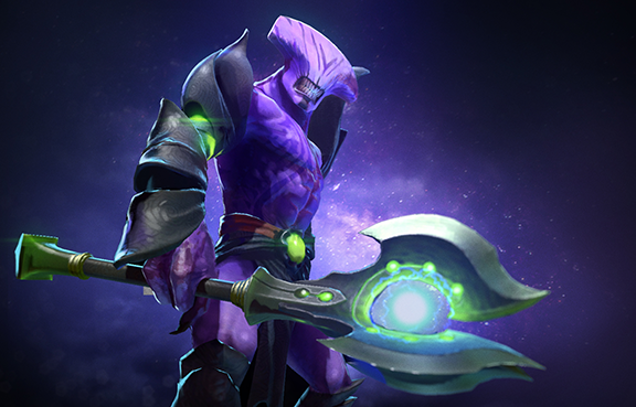
DOTA 2 hero Faceless Void is getting a visual overhaul. Today, Valve took the wraps off the final design. They also revealed a few other candidates that didn't quite make the cut. Prepare to be amused.

First off, Faceless Void's actual new look:

Rejected DOTA 2 Character Redesigns Are... Interesting

Looks good. Still faceless, vibrantly purple, and face-strainingly upset about both of those things and a million others. Kinda typical, though. Valve just made him more detailed and, um, leggy. Now for some alternative options that went a bit further, plus Valve's assessments of each.

Faceless Elf:

Rejected DOTA 2 Character Redesigns Are... Interesting

Pro: Attractive. Chiseled abs. Great-looking hair.

Con: No one would want to play as any other hero

Faceless Rex:

Rejected DOTA 2 Character Redesigns Are... Interesting

Pro: Would be popular with sought-after archeologist demographic

Con: Is large purple dinosaur — too lovable?

Awesome-to-11-year-olds-in-the-1980's Void:

Rejected DOTA 2 Character Redesigns Are... Interesting

Pro: Combines best parts of every animal

Con: Too subtle

Faceful Void:

Rejected DOTA 2 Character Redesigns Are... Interesting

Pro: Finally has a face

Con: Oh God what were we thinking

OK yes, Valve was likely joking on most of these, but I'm not sure if I've had this much fun finding out about a MOBA character overhaul in ages. A little humor goes a long way, as do peeks behind the curtain, brief though they might be. Also, please someone get on actually adding Faceless Rex to the game, or at least armor that resembles him. I can't offer you any reimbursement, but I could, like, write a couple sentences about you. There could even be adverbs.

You're reading Steamed, Kotaku's page dedicated to all things in and around Valve's stupidly popular PC gaming service. Games, culture, community creations, criticism, guides, videos—everything. If you've found anything cool/awful on Steam, send us an email to let us know.

To contact the author of this post, write to nathan.grayson@kotaku.com or find him on Twitter @vahn16.

This entry passed through the Full-Text RSS service - if this is your content and you're reading it on someone else's site, please read the FAQ at fivefilters.org/content-only/faq.php#publishers.

20 Mar 14:40

Ugly Mail extension spots email tracking tricks

by Rob Beschizza
Brian Barrett quotes creator Sonny Tulyaganov: “[Streak] allowed users track emails, see when, where and what device were used to view email…very disturbing, so decided to see who is actually tracking emails in my inbox.

This entry passed through the Full-Text RSS service - if this is your content and you're reading it on someone else's site, please read the FAQ at fivefilters.org/content-only/faq.php#publishers.

19 Mar 18:51

Cyanide and Happiness: "Step on a Crack"

by Don
3d8

A father comes to an unsettling realization during his daughter’s sadistic game of hopscotch.

19 Mar 16:33

Bad Men Destroy 12 Retro Consoles, Film It

by Luke Plunkett

Bad Men Destroy 12 Retro Consoles, Film It

WIRED's Battle Damage thought it would be fun to take 12 old consoles (for YouTube purposes, the PS3 is now "old") and smash them all up to see which was the most physically durable. My money's on the GameCube, because it didn't have that handle for nothing.

SPOILERS: I was wrong.

This entry passed through the Full-Text RSS service - if this is your content and you're reading it on someone else's site, please read the FAQ at fivefilters.org/content-only/faq.php#publishers.

19 Mar 16:02

Cooking Bacon with Machine Guns Is Delicious and Lethal

by Brian Ashcraft
Bewarethewumpus

See guys? Guns DO have a practical everyday use.

Cooking Bacon with Machine Guns Is Delicious and Lethal

Let's say you find yourself hungry with loads of uncooked bacon and an...assault rifle. Add lots and lots of bullets, and you have yourself a tasty bacon meal.

A couple YouTubers have shown how to make machine gun bacon. It looks like wrapping the bacon in tinfoil is the most effective (wiring bacon to the barrel, it seems, takes more bullets to cook). Microwaving or using a fire is probably cheaper, but not nearly as deadly.

Here's Dustin Ellermann, an M16, and bacon:

And here's MattV2099 with a semi-automatic shotgun, molasses, and bacon.

MattV2099 again, an AK47, several magazines of bullets, and bacon:

If assault rifles don't work, you can always use a flamethrower like FullMag did. That seemed to do the trick.

To contact the author of this post, write to bashcraftATkotaku.com or find him on Twitter @Brian_Ashcraft.

This entry passed through the Full-Text RSS service - if this is your content and you're reading it on someone else's site, please read the FAQ at fivefilters.org/content-only/faq.php#publishers.

19 Mar 06:45

The Man Who Does The Impossible in Super Mario 64

by Patricia Hernandez

The Man Who Does The Impossible in Super Mario 64

Before the world knew him as Mario, Nintendo's iconic plumber had a simpler name: Jumpman. That name makes sense, when you think about it: Mario is defined by his ability to jump. But lately, I've become fascinated by the people who play—and beat—Super Mario 64 without jumping a single time.

Heck, sometimes they don't even use the joystick. Or buttons.

Over the years, hardcore Super Mario 64 players have found a few different ways to spice up their playthroughs of the classic Nintendo 64 platformer. Known as challenges, these special playthroughs impose rules that might sound absurd to the average Mario 64 player.

There's the "A Button Challenge," which requires players to beat a level with as few A button presses as possible. The A button, as you may recall, is the jump button in Super Mario 64. Arguably the most important button in the game! And while many players have attempted this challenge, one man, a gamer named Scott Buchanan, holds the most records for this type of play through. In dozens of different levels, Buchanan has figured out how to get a star without ever jumping at all.

It's the sort of thing you need to see to believe.

Two key things worth noting here: One, Mario makes heavy usage of Slide Attack, which is done by pressing B + the control stick. Most of Buchanan's playthroughs are like this—he uses every move in Mario's arsenal, such as his punches and kicks. And two, the only reason this is possible with zero jumps is because of a Lakitu that Mario kills around the 1:14 mark. Killing the Lakitu allows Mario to bounce onto a platform he wouldn't normally be able to reach, thus allowing Mario to finish the level without jumping. As the YouTube description explains:

This involves keeping Lakitu inactive at a low elevation by getting far away from him. If this were not done, Lakitu would ascend with Mario, never allowing Mario to fall onto him. I then lure Lakitu towards the glass block, and bounce on him to grab onto it.

This playthrough is the handiwork of Scott Buchanan, a twenty-year old computer science major who has been playing Super Mario 64 all his life. You may know him as the guy that collected the mythical "Impossible Coin," that Super Mario 64 coin nobody collected for 18 years. Or, you may know him as the man who told the world about that Super Mario 64 Goomba nobody has ever killed.

"I wasn't satisfied [with beating Super Mario 64 as a kid]– I wanted to beat it perfectly, namely by collecting the maximum coin score in each course," Buchanan recalled. "So I found a website ( http://www.sm64.com/) that listed every coin's location, and so I meticulously learned of each and every coin in the game, as well as infinite coin glitches."

This was the start of Buchanan's obsession with Mario 64. Where most people reminisce on their first ever game fondly, perhaps replay it from time to time, Buchanan wanted to pop open Mario 64's hood and see what makes it work. So, he picked up an emulator in an effort to see how far he could push the game.

"With an emulator, I could now test things with ease, use save states and hacks, and record myself," Buchanan explained. "This is when I started making videos. Using the power of the emulator, I could pick up where I failed on the console."

For some, this idea might sound sacrilegious. Surely manipulating a game with an emulator isn't as "pure" as picking up a controller and playing that way? But often, this conception of how a game "should" be played is based on ignorance of how tool-assisted runs of games function. While it's true that an emulator can accept button presses from a player on individual frames, actually figuring out and optimizing a run takes a lot of work, and a ton of knowledge of the inner-workings of the game in question.

"I put a lot of forethought into the challenge before I did anything," Buchanan told me.

As an example: a video like this, where Buchanan collects a star with no jumps, might only be two minutes long:

But figuring it out and doing the process might have taken him a couple of hours, if not more. One particular grueling run apparently took Buchanan two weeks of planning.

"The amount of time it takes to [tool-assisted speedrun] something really depends on how optimized you want it to be," Buchanan explained. "[It can mean] redoing a part over and over until it's as perfect as you want it to be. So for example, having Mario run at a specific angle for 10 frames, realizing he's slightly too far down, choosing a slightly higher angle, rerunning the 10 frames, reassess, and repeat. And you do this process at every step of the [tool-assisted speedrunning.]"

Some runs get so complicated that Buchanan ends up drawing blueprints, using mathematical calculations to figure out precisely how he's going to pull something off.

The Man Who Does The Impossible in Super Mario 64

The Man Who Does The Impossible in Super Mario 64

The Man Who Does The Impossible in Super Mario 64

In cases like these, picking up a controller and getting the star the "normal" way would have been way, way easier. And while it's true that the occasional usage of glitches makes certain feats look easy, Buchanan sometimes still needs to figure out how to use them. It's a process that requires precision and creativity. It's not like glitches are always lying around, just waiting to be reproduced. In the past, Buchanan has found glitches by problem solving, and asking himself: how can I use a level's attributes to help me beat it without ever jumping?

Here's a good example:

As Buchanan explains in the YouTube description for this video, he glitches out a level's water, ultimately letting him swim to an otherwise unattainable star:

I had been wondering if raising/lowering the water level could help me collect this star in 0 A presses, and then it suddenly hit me: what if I raised the water level to the maximum possible value? I theorized that if I did this, then the water level would actually overflow onto the lowest possible water level. Using hacks, I tested this and found it to be true. Consequently, I then raised the water level using TAS until it reached a very special water level, which I'm naming the "overflow water level," at which the water level oscillates between the highest water level and the lowest water level. I make use of this to ascend and descend in the town, thereby allowing me to collect the star in 0 A presses.

To raise the water, I make use of a glitch, which works as follows. The water in the town raises and lowers periodically. Whatever water level you unload the town on becomes the median water level for the next time you load the town. So if you consistently unload the town while the water is at the top of its cycle, then the water will gradually rise, and that's what I do in the video. The water level is stored as a 16 bit signed integer. Therefore, the maximum water level is:

7FFF (hex) = 0111111111111111 (binary) = 32767 (decimal)

If the water level rises one more unit, then it becomes the minimum water level, which is:

8000 (hex) = 1000000000000000 (binary) = -32768 (decimal)

Note that this is because it is a signed integer, stored using two's complement notation.

If some of that goes over your head, that's OK. The point is: this isn't like just selecting a cheat on a Gameshark. And even in instances where he makes heavy usage of things that sound game-breaking—like duplicating an enemy over and over again—not only is it entertaining to watch for the viewer, it still takes a work for Buchanan.

The run above is actually the "No Buttons Allowed" challenge, which is exactly what it sounds like. Obviously, the player can still use the joystick—that's not a button—and can also use glitches. Here we see Buchanan stomp on multiple clones of the same enemy, with the intention of bouncing off the enemy's head at an angle that allows him to hit a block that holds a star. The interesting thing about this is, even though Buchanan cloned an enemy—something which the average Mario 64 player might consider cheating—getting this scheme to work still wasn't easy.

"Moneybags are extremely stubborn to work with, and so it took MANY re-records to get them to go to climb higher up the hill consistently," Buchanan explained in the video description.

"It was especially difficult to transition the moneybag from the hill's slope to the flat surface above the hill, but I figured out that knocking it back with Mario's own body was the simplest way to do it. From there, it was a simple matter of moving the moneybag to the item block (without it falling into the water), and then duplicating it. Then to initiate the bouncing spree, I used the bounce from Mario's sitting position. Once the bouncing spree started, I had to move slowly so that I could activate the moneybags in front of me before bouncing on them."

"This is probably the most outrageous idea I've had that ended up actually working," Buchanan told me. "It took 4 hours to do, and during that time I couldn't know if it would work! It was such a relief to me when it did, especially since it was so cool to watch."

And in case you're still not convinced about the amount of planning even glitch runs like this can take, here's an excel spreadsheet that Buchanan used in a run where he cloned 63 Goombas, just to be able to beat the level with as few jumps as possible:

The Man Who Does The Impossible in Super Mario 64

Crazy.

In any case, just like the A Button Challenge, the No-Buttons-Allowed challenge requires tons of creativity on Buchanan's part. He'll figure out ways to kill enemies without jumping on them, or ways that glitches or taking damage can catapult him where he needs to be—whatever gets the job done.

Meanwhile, the "No Joystick Allowed" challenge may be more tedious to watch, but it's no less fascinating than both the challenges I've highlighted so far. In that type of challenge, Buchanan can make heavy use of normal jumps—but he can't reposition Mario using the joystick, which makes things more difficult. He still finds a way to do it, of course.

"I curse the day this genre was born," Buchanan said. "Basically, people in the comments of my no buttons videos said: 'Nice! Now do it without the joystick too!' Of course, that was said as a joke, because it would mean inputting absolutely nothing. But the more I thought about it, the more I realized that it might be possible to collect a star without using the joystick if we used all the other buttons to compensate."

Buchanan's love of Super Mario 64 is inspiring. Often, watching his videos tests my Mario literacy, and I don't mean simply because some glitches make me go, "what the fuck?" It's not uncommon for me to replay certain segments of his videos multiple times, wondering just how Mario did something—only to realize that, regardless of the dozens of hours I've spent playing the actual game, I don't actually know that much about it at all. That's when I realize that a player has so many possibilities when it comes to moving Mario that, for hardcore Super Mario 64 players, limiting themselves to only jumps is doing the game and its rich design a disservice. More than anything, Buchanan's work makes me feel empowered—with knowledge that lets me appreciate Super Mario 64 on a deeper level, while reinforcing the seductive idea that I don't have to play a game the way most people do.

I'll leave you with some of Buchanan's favorite challenge runs of Super Mario 64, along with his explanations for why these videos hold a special place in his heart.

In this one, I use a trick to build up a super high speed, then launch this speed, bounce on the scuttle bug, and collect the star. I like how there's a buildup of suspense, because the viewer doesn't know what's coming. And then in a very climactic finish, I release all this pent up speed at once. And at that moment, Dorrie, the door, the scuttle bug, the gap in the ground, and the star all lined up and I took advantage of it, using Dorrie for height, going through the door, bouncing on the scuttle bug, passing over the gap, and collecting the star.

This one definitely hits close to home, because I spent 8 hours TAS'ing it. The first 4 hours getting the bob-omb to the cage, and the second 4 hours using the bob-omb to get above and then into the cage. It was just such a novel idea I had to use the bob-omb's momentum. It's interesting to watch, but a pain to TAS. The bob-omb is so annoying to transport and keep from exploding, but I had to because I needed its momentum!

This one was really innovative on my part, as I fight big boo from on top of an item block. I have to first lure big boo to the item block, use him to get on it, raise him so I can fight him from my level, and then actually kill him. The testing for this one had so many revisions and dead ends, that it was great that it eventually ended up working!

You can check out more of Buchanan's challenge videos here.

[This article was originally published on 11/10/14.]

Image by Sam Woolley.

This entry passed through the Full-Text RSS service - if this is your content and you're reading it on someone else's site, please read the FAQ at fivefilters.org/content-only/faq.php#publishers.