Before you cast a disparaging eye on the movie I’ve chosen for this week’s then-and-now look, I’d like to tell you three things about the first Teenage Mutant Ninja Turtles movie that you probably don’t know.
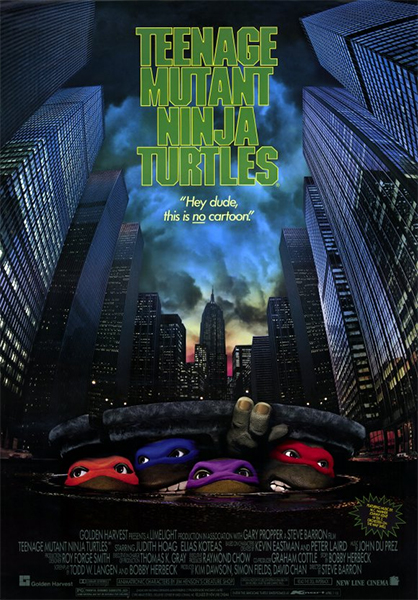
1) The movie was edited by Sally Menke.
Don’t recognize her name? Menke has edited every single film by Quentin Tarantino. Tarantino has described her as “hands-down my number one collaborator,” stating further “I write by myself but when it comes to the editing, I write with Sally.” Menke’s first feature of note was Turtles; her second was Reservoir Dogs. Menke died tragically in 2010 at the age of 56.
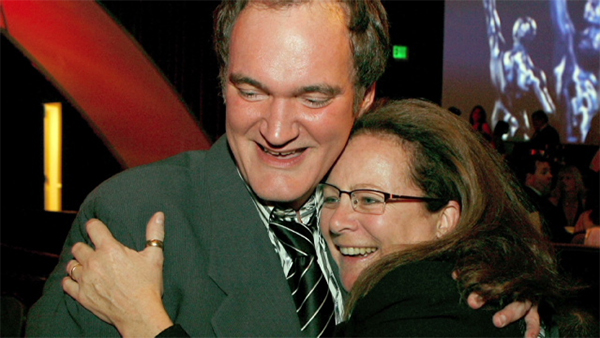
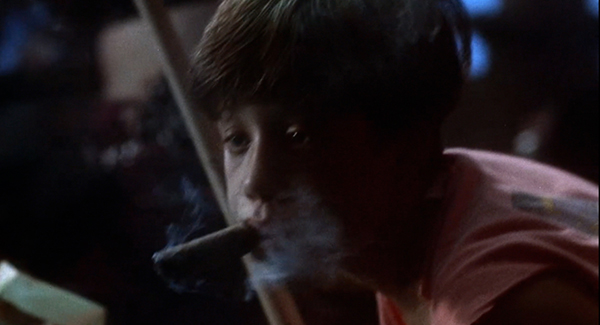
2) There are visual references in the film that are far smarter than need be for a kid’s movie:

3) Roger Ebert wrote that the film “probably is the best possible Teenage Mutant Ninja Turtle movie.”
He goes on to say: “The most interesting part of the film for a non-Turtle fan is the production design – the sewers and the city streets above them [which seem] inspired by a low-rent vision of Batman or maybe Metropolis (1927). The city looks like a grungy back-lot version of shabby film noir, and the sewers are like medieval dungeons. It’s a very dark film, and one wonders, after seeing it, if young Turtle fans are being denied the brightness and bounciness of an earlier generation of kiddie films.”
Teenage Mutant Ninja Turtles happened to be on TV this past Thanksgiving, and I was surprised by how well it holds up since my last viewing at about 10 years old. Though the film was primarily shot at Screen Gems Studios in Wilmington, NC, I found myself recognizing quite a few of the real NYC locations. I decided to take a look to see how the city has changed since the Turtles first arrived in New York 25 years ago.
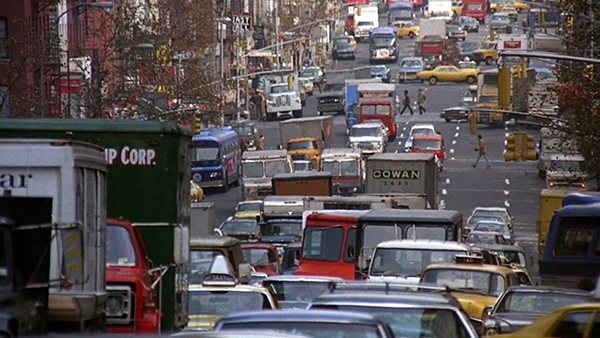
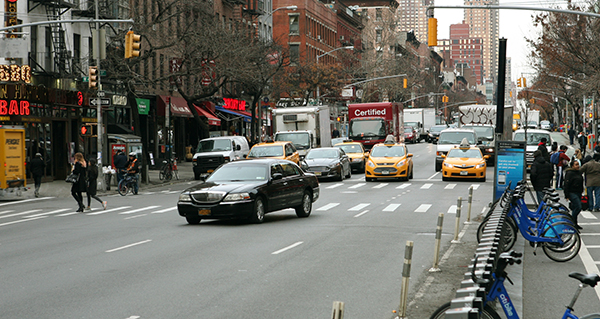
The movie opens with several establishing shots of gritty New York as a crime wave grips the city, beginning with an angle up 9th Avenue at 45th Street…
I swore this next shot was on Madison, with St. Patrick’s in the background, but I was wrong. Anyone out there recognize that gold clock?
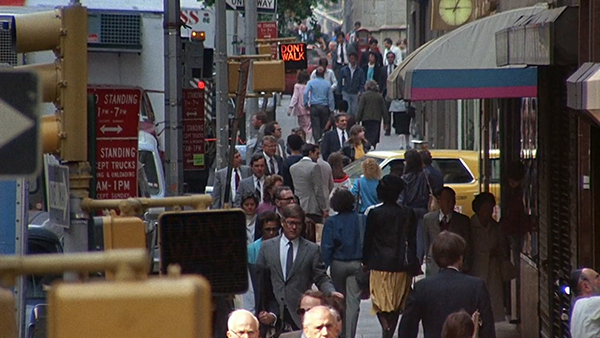
Finally, we get a shot of this strip of stores at the southeast corner of 41st Street and 8th Avenue…
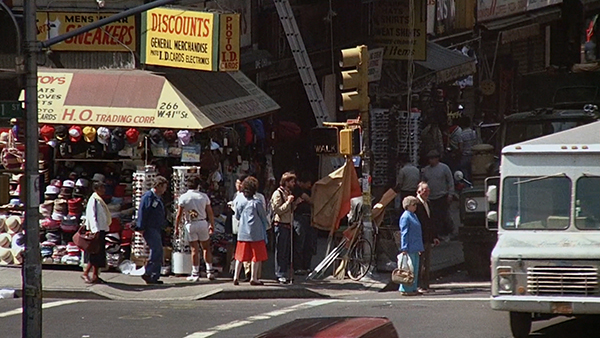
…which were all demolished to make way for the NY Times building in the mid-2000s:

We then cut to the secret lair of the Foot clan, described as the “east warehouse on Lairdman Island” (a reference to Turtles creators Kevin Eastman and Peter Laird).
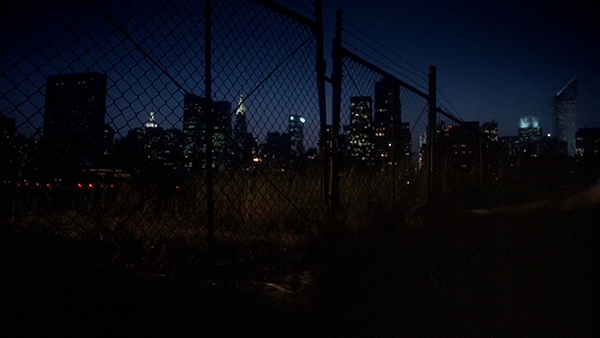
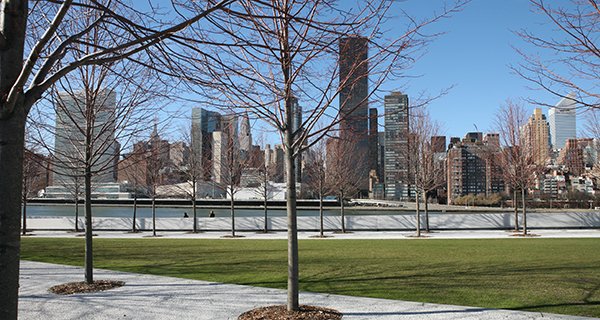
This was definitely shot on Roosevelt Island, and based on the angle of the buildings visible in the background, I’d say it puts us square in the middle of the new Four Freedoms park, designed by Louis Kahn.
But things suddenly get a little confusing. We see several misfits cross a field to an old derelict building…
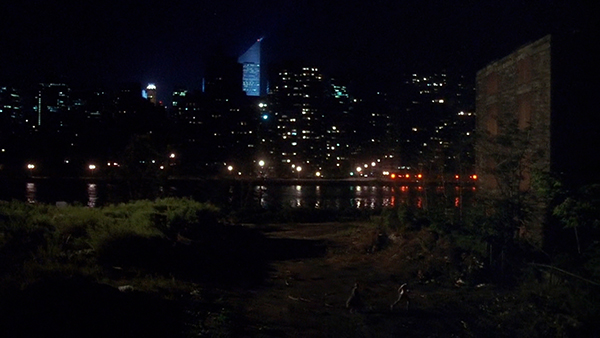
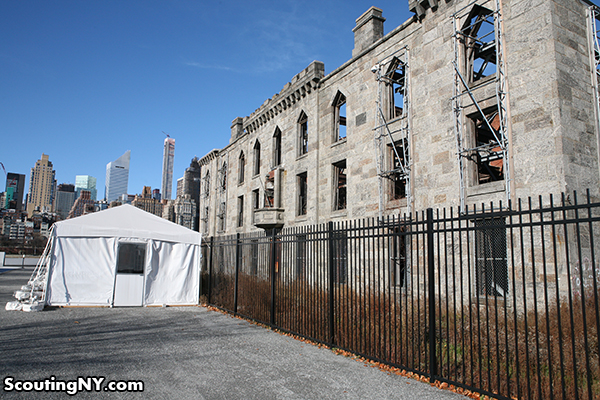
…And for years, I’d always assumed we were seeing the abandoned smallpox hospital, which would make sense geographically.

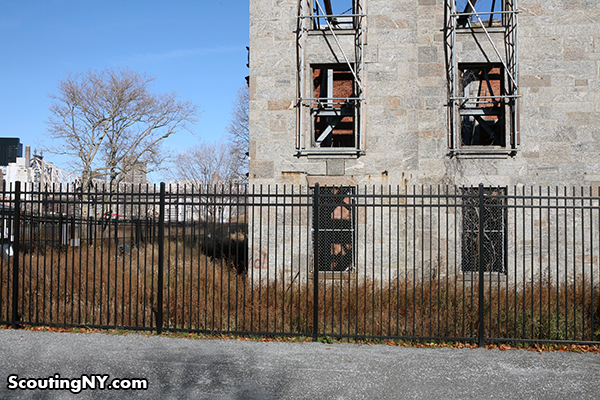
Except it’s not – the facade looks absolutely nothing like the one featured in the film:
Here’s another angle with the 59th Street Bridge prominently featured in the background…
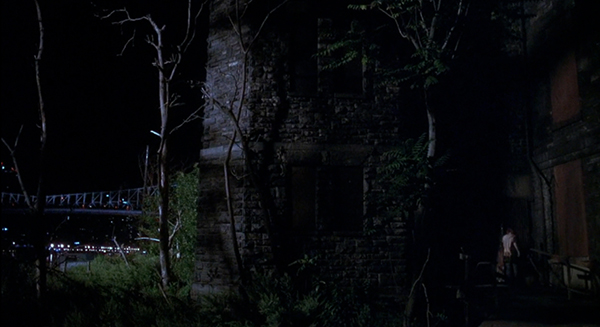
Clearly nothing like the Renwick ruins. So what was this building? Was there another ruin nearby to the smallpox hospital, possibly on the site of the Four Freedoms park, that was demolished at some point after 1990?
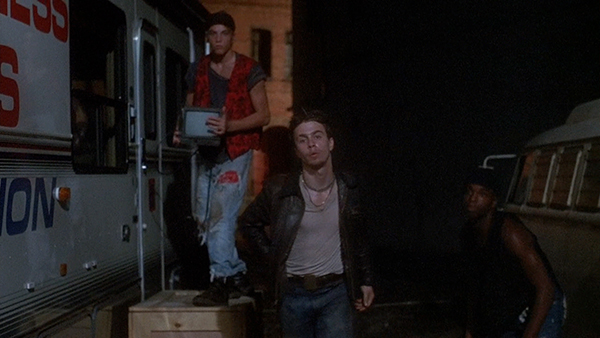
The action resumes outside the Channel 6 news station (in Wilmington) as April O’Neil is attacked by a young Sam Rockwell and gang, only to be saved at the last minute by our heroes.
Raphael loses a sai in the confrontation, and blows off steam by going to see a movie later that night…
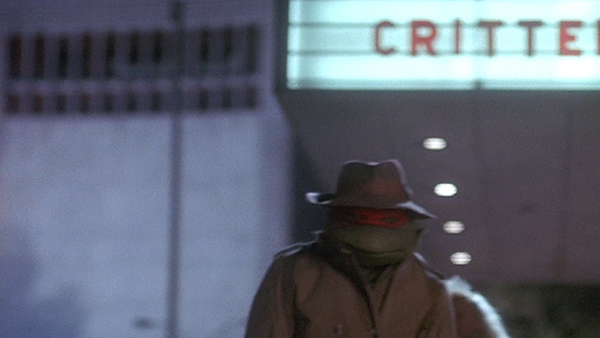
…at what was then the Loews/Paramount theater located in the Gulf+Western building at Columbus Circle. In the mid-1990s, the building was gutted and given an entirely new facade to become the Trump International Hotel (the movie theater is now a parking garage):

Raphael crosses Central Park West. Note how both buildings in the center have since been “modernized”:
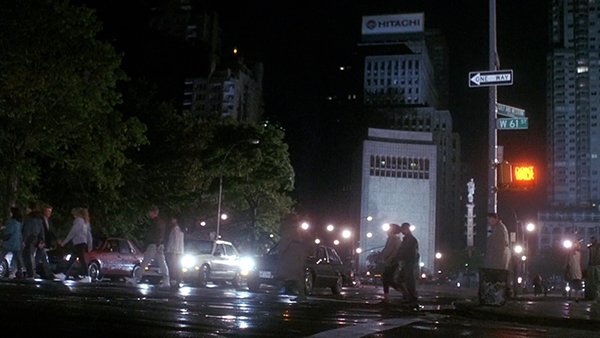
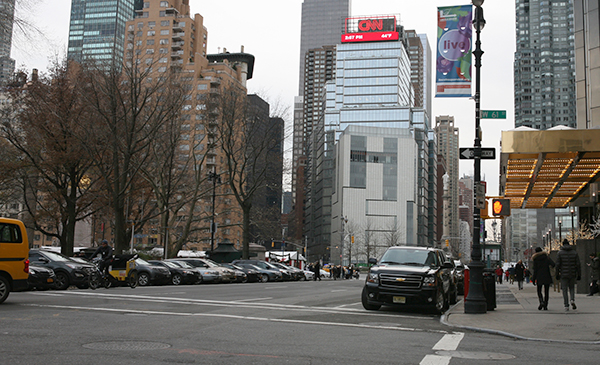
Nearby, two thugs rob a helpless old woman walking up Central Park West…

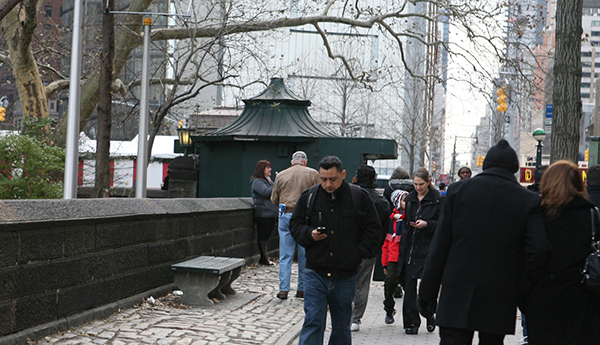
…and take off running!

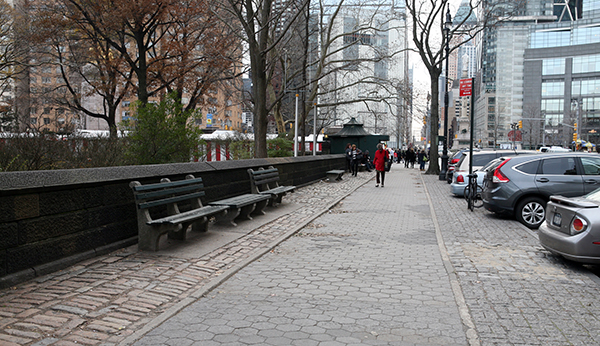
Raphael very quickly takes charge of the situation:
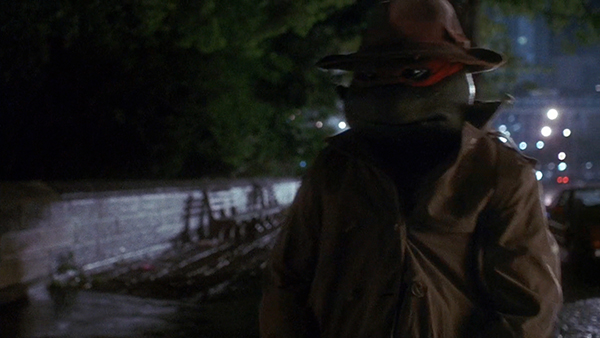

Raphael follows the thugs into Central Park (Wilmington), where he encounters the masked vigilante Casey Jones. The two fight…
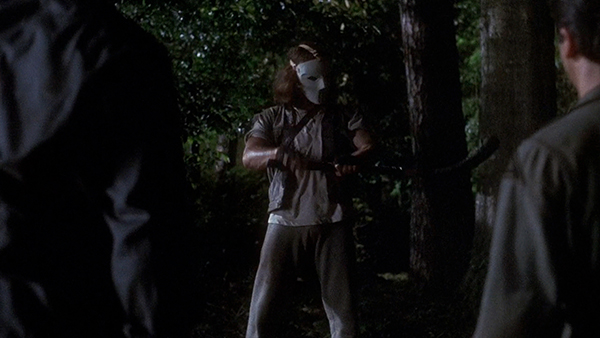
…and Raph chases him out of the park. Note the original facade of the Gulf+Western building on the left…


Raph continues to run up 61st Street but loses Casey Jones into the night.
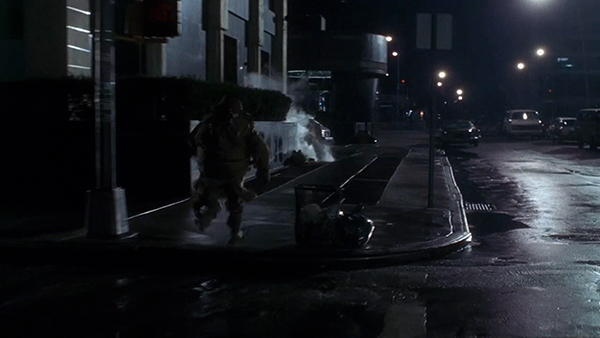
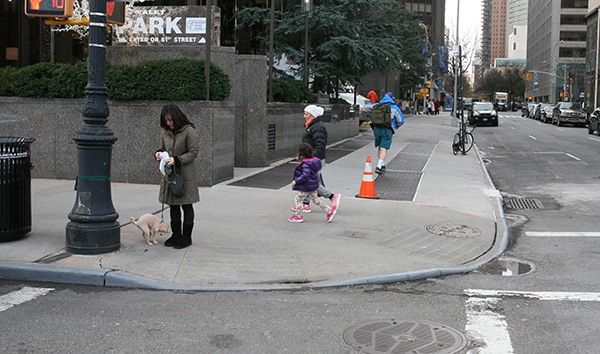
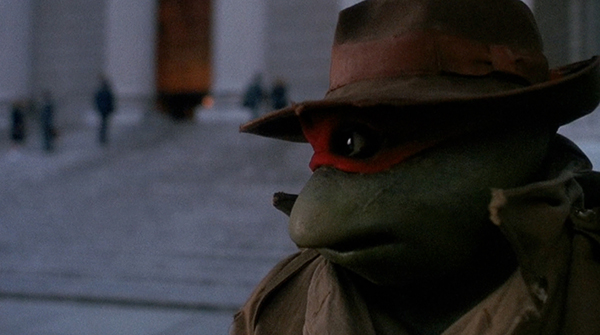
Anxious to get his missing weapon back, Raphael tracks April to the city court house…

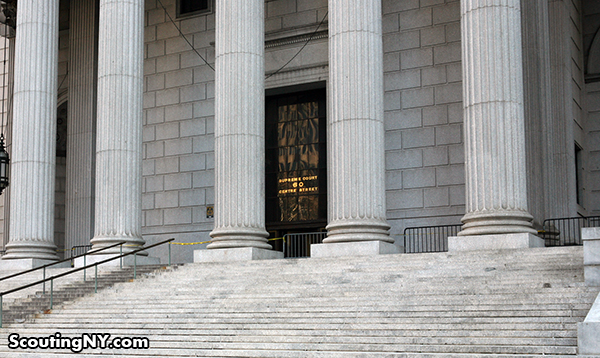
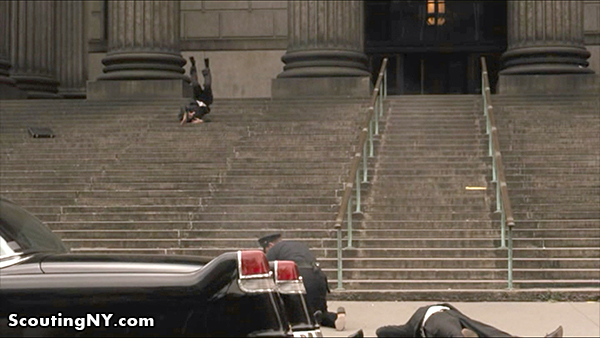
You might recognize the NY County Courthouse building from its most famous cinematic role in The Godfather during the Barzini hit:
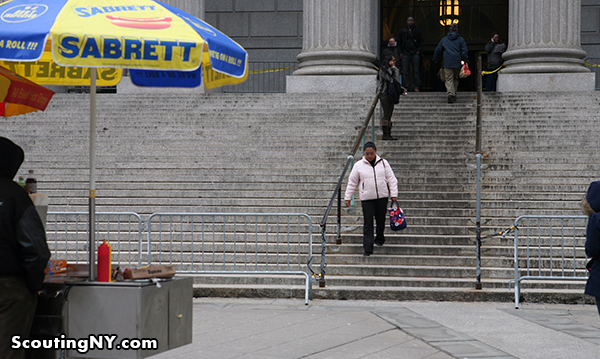
I really, really hope at least a few New Yorkers were confused by the sight of a trench-coat-wearing turtle hanging out at the courthouse the day they filmed this:

April heads down into the deserted City Hall subway station…
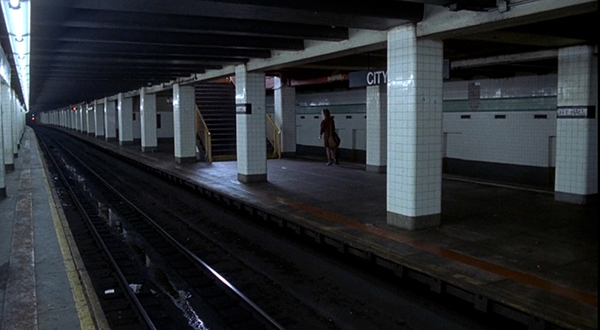
…which was actually shot on the unused Hoyt-Schermerhorn platform in Brooklyn.
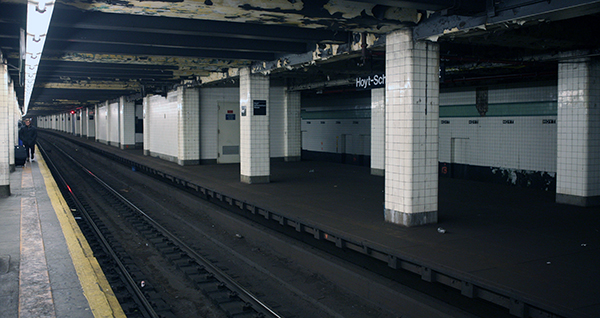
The Hoyt-Schermerhorn platform used to be the go-to station for subway filming. In fact, if you look at this shot of April wielding a sai to fight off a sudden attack by the Foot…
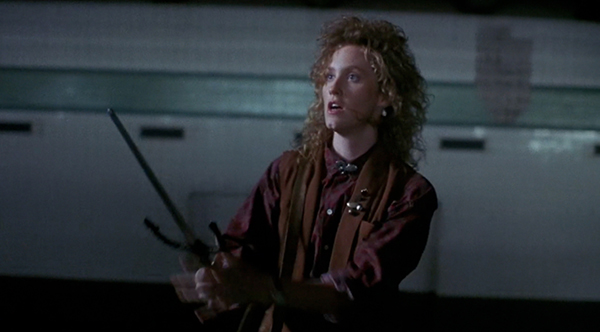
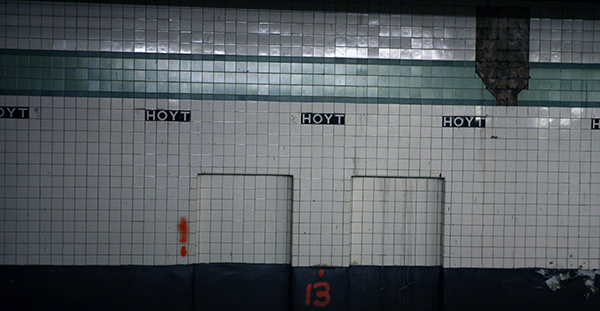
…I’m pretty sure she’s standing exactly where The Warriors met the Lizzies gang:
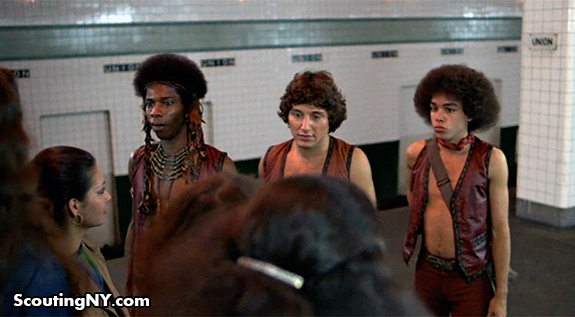
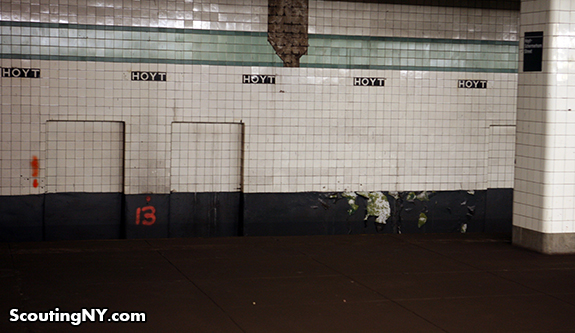
Though the Foot easily disarm April, Raphael is more than happy to help out once he retrieves his lost sai…


A secondary character in the story is Danny, a teenage delinquent toying with the idea of joining the Foot. As his father reprimands him for a recent arrest, Danny suddenly bolts from the car…

…filmed at the corner of Mulberry and Lafayette:
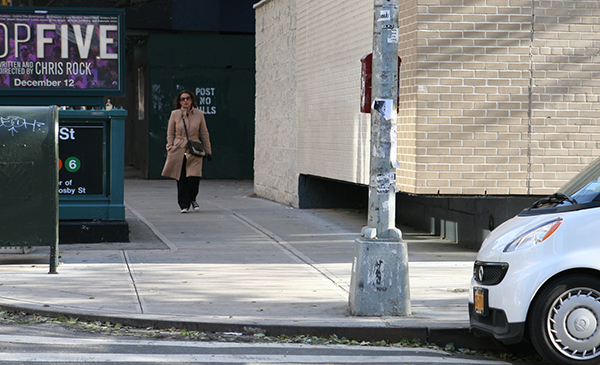
We get a reverse shot of Danny running across the street…and there’s Noho Star!

Still around:
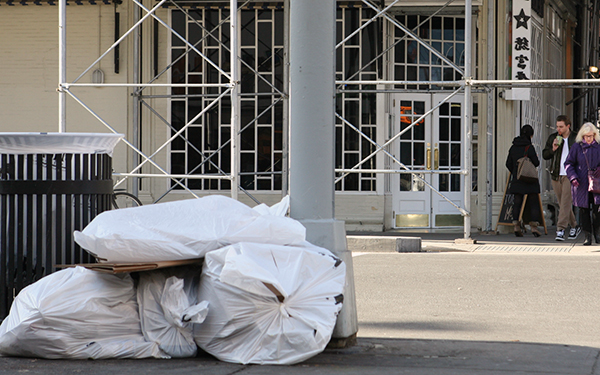
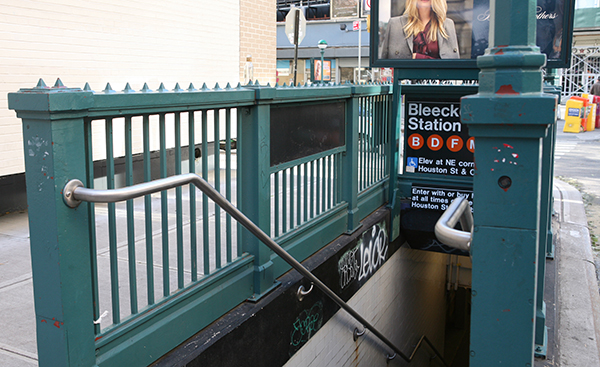
Danny books it down into the Bleecker St station…
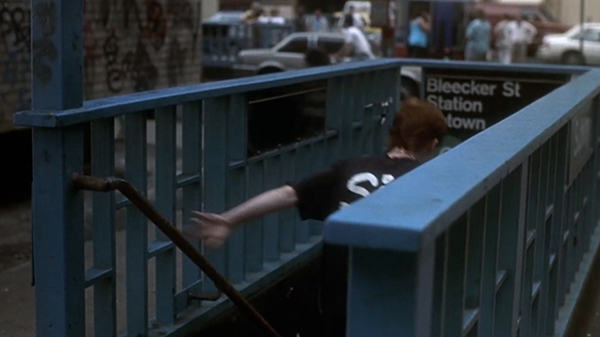
…which has since acquired a new entrance and additional train service:
Back at April’s apartment, Raphael gets in a fight with Leonardo and goes up to the roof to blow off steam. Frustrated with his inability to control his temper, he stares out at the city in a pretty epic shot…
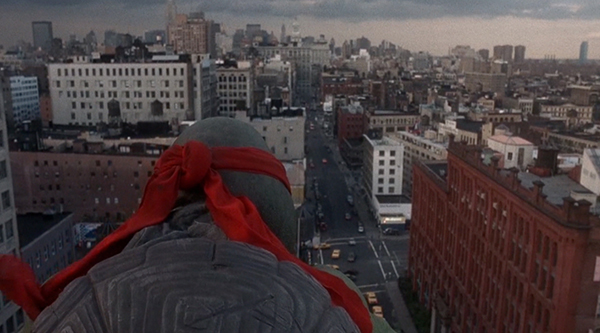
…taken at the rooftop of 270 Lafayette Street. The Puck Building can be seen on the right. Manhattan sure has added a lot of glass in the past 25 years:

And that’s it for NYC locations – the rest of the film was shot on an extensive NYC backlot set featuring a streetscape, sewers, and rooftop. Whereas this would be a glaring problem in most movies, the comic book nature of the film makes it all blend pretty well.
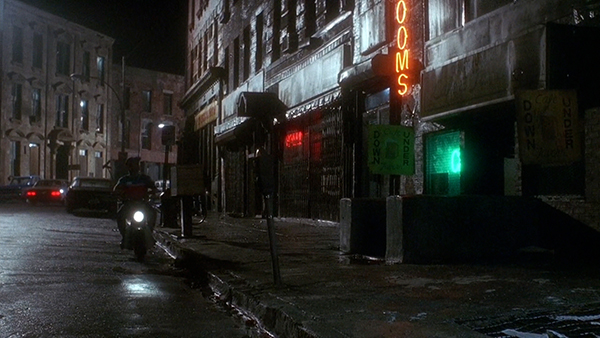
Ebert is dead on with his assessment of the film. Forget Christopher Nolan’s ultra-grim Batman, director Steve Barron somehow manages to take the concept of wise-cracking, pizza-eating, mutated turtles trained in the art of ninja and imbibes it with a pretty amazing amount of gritty realism. Coupled with Jim Henson’s mind-blowing animatronic costumes, you might actually find yourself upset at seeing a giant, elderly rat chained to a wall get smacked across the face.
Don’t get me wrong, this is certainly a kids movie, filled with one-liners my ten year old self must have found uproarious. But like the best of kids movies, it’s not attempting to be a kids movie.
-SCOUT




 facebook
 reddit