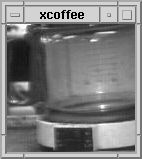
Coffee and computing go hand in hand. The world’s first live streaming webcam was pointed at a coffee pot in the Cambridge University Computer Lab’s Trojan Room (yes, Americans, I know you think that sounds funny), back in the days when it was on a shared site in the centre of Cambridge and none of us had even heard of the internet.
It was 1991. A young Quentin Stafford-Fraser was researching ATM networks in the Trojan Room, and drinking too much coffee. Other people in the lab also liked fresh coffee, but there was only one coffee machine between 15 researchers, it was a long walk up an awful lot of stairs to get to the Trojan Room, and all too often, the pot was empty and the walk upstairs wasted. (I think “wasted” is pushing it a bit far. Quentin’s very good conversation.)
Ever practical, Quentin pointed a camera at the Trojan Room coffee pot, hooked it up to a video frame grabber the ATM researchers were using, got Paul Jardetzky to write some server software, and wrote the client software for it himself. Researchers downstairs could now ping the coffee pot to see whether there was anything in it. “The image was only updated about three times a minute, but that was fine because the pot filled rather slowly, and it was only greyscale, which was also fine, because so was the coffee.”
Quentin didn’t realise it at the time, but he had laid the grounds (badoom tish) for the world’s first webcam. In 1993, the <img> tag was added to HTML, meaning you could embed pictures on a webpage. The same year, two more researchers at the lab, Dan Gordon and Martyn Johnson, made changes to the original coffee pot setup to allow it to respond to requests from the internet, and xcoffee became the first ever live webcam.
The Trojan Room Coffee Pot stayed in place (and maintained an online presence: in 1996 it got its millionth hit, and journalist Steve Farrar noted that it had had more ‘visitors’ than King’s College Chapel and was therefore the number one tourist attraction in East Anglia) until 2001, when the University Computer Lab was moved out of its ramshackle old site to a shiny new building in West Cambridge. I was lucky enough to be at the university just before the move, and drank a couple of cups of coffee from the machine, courtesy of friends at the lab. (Quentin is right about the greyscale thing. Historic it might have been, but it was bloody awful coffee.) Eventually, the pot was auctioned on eBay to raise money for coffee-making in the new lab; Der Spiegel Online bought it for £3350. Apparently, Krups refurbished it free of charge, and it’s still making greyscale coffee for an office full of German journalists.
Anyway. This long preamble doesn’t have much to do with the Pi. (About an hour after I originally posted this, Barney Livingston pointed out on Twitter that The Trojan Room Coffee Server was an Acorn Archimedes, so shares its ARM processor heritage with the Pi.) But it does demonstrate that projects involving coffee and computers have a long and storied history in this part of the world. Technology has moved on, but the coffee is still supremely important. So Sacha Wolter from Deutsche Telekom has incorporated a Raspberry Pi into his coffee machine. It’s a bit more sophisticated than the Trojan Room Coffee Pot; Sacha’s coffee machine rings him up when the coffee’s ready, and if Sacha places a call to the machine, it’ll get a pot ready for his arrival.
Sadly, Sacha hasn’t made the code available, but he does talk some more about the project in this blog post, and points the intrigued at the Pi4J project, which is meant to bridge between native libraries and Java for full access to the Raspberry Pi.
And back in the UK, Quentin Stafford-Fraser is still pratting about with webcams; those of you with long memories might recall this grab-bag from last summer which featured him…pratting about with webcams. More power to your history-making elbow, Quentin.
On an unseasonably warm January 15, 1919, a 50-foot-high storage tank of molasses - meant to be turned into rum in the rush before Prohibition - burst on Commercial Street in the North End, creating a giant wave of sticky brown death that destroyed buildings, bent the el and killed 21 people.
Branch, the online discussion service that encourages focused conversation among friends, has completed its closed beta and is now open to the public. Branch users generate discussion threads (“branches”) and then open them up to their friends for discussion. The branches are publicly viewable but discussion is invite-only. We previously wrote about Branch back in 2012, when the service was still in closed beta.
Starts at 2 p.m. opposite the Moakley Courthouse, where Swartz was scheduled to go on trial in a month for downloading documents from an online database.
In a reductio ad absurdum of gun and 'patriot' paranoia, a group of right-wing patriots are planning a 'fortress' planned community in Idaho, done up with the full list of defensive walls, turrets and plenty of defensive positions to use when the feds finally come to confiscate your guns.
The best part is the map of the planned gun/fortress community. In addition to the defensive perimeter it also has "Interior Defensive Walls & Towers" so that if the Obama forces make a successful incursion into one part of the town patriots can still defend the parts of the town that remain free. Sort of like bulkheads in a ship.
File name: 08_06_030619 Title: Horse jumping accident Creator/Contributor: Jones, Leslie, 1886-1967 (photographer) Date created: 1937 Physical description: 1 negative : film, black & white; 4 x 5 in. Genre: Film negatives Subject: Steeplechases; Horse shows; Jumping (Horsemanship); Accidents Notes: Title and date from information provided by Leslie Jones or the Boston Public Library on the negative or negative sleeve. Collection: Leslie Jones Collection Location: Boston Public Library, Print Department Rights: Copyright Leslie Jones. Preferred credit: Courtesy of the Boston Public Library, Leslie Jones Collection.
File name: 08_06_030626 Title: Horse show Creator/Contributor: Jones, Leslie, 1886-1967 (photographer) Date created: 1934 - 1956 (approximate) Physical description: 1 negative : film, black & white; 4 x 5 in. Genre: Film negatives Subject: Show horses Notes: Title from information provided by Leslie Jones or the Boston Public Library on the negative or negative sleeve.; Date supplied by cataloger. Collection: Leslie Jones Collection Location: Boston Public Library, Print Department Rights: Copyright Leslie Jones. Preferred credit: Courtesy of the Boston Public Library, Leslie Jones Collection.
"Did the wonderful chef Tony Maws know he revealed so much?” asks GQ's Alan Richman, somewhat cryptically, in a jacket blurb for Back of the House, psychologist Scott Haas's scintillating peek at the inner workings of Craigie on Main's kitchen. Well, apparently Maws does know that he divulged all, and he's fine with it.
"I really feel the trust he gave me was of enormous value," says Haas. Maws didn't attempt to censor what Haas wrote, and Haas says he was given unfettered access to all the goings-on in the kitchen, good, bad, and ugly, he says. He logged serious time behind the scenes and witnessed feuds, drama, triumphs, and meltdowns — in other words, the stuff of psychologists' dreams. The book comes out on February 5. In the meantime, watch a video chronicling his time in the Craigie kitchen right here.
There's something both sweet and intriguing about looking back through old magazines and newspapers to see what dishes were popular way back when. Flipping through my mom's food magazines from the 80's reveals strangely complex appetizers, a million variations on cooking shrimp, and heavy cream sauces. If you don't have a mother with decades-old magazines at the ready, you're in luck: The L.A. Times has opened up the recipe vault on their site, a veritable cultural study in the past few decades or so in food. More
redletterdave writes "Instagram scared off a lot of users back in December when it decided to update its original Terms of Service for 2013. But even though the company reneged on its new terms after a week of solid backlash, Instagram users are still fleeing the photo-sharing app in droves. According to new app traffic data, Instagram has lost roughly half of all its active users in the month since proposing to change its original Privacy Policy and Terms of Service. In mid-December, Instagram boasted about 16.3 million daily active users; as of Jan. 14, Instagram only has about 7.6 million daily users." Towards the end of December data showing a 25% drop in Instagram's daily active users came out. While it caused quite a bit of discussion online, it was suggested that the decline was due to the Christmas holiday or an inaccuracy in the data.
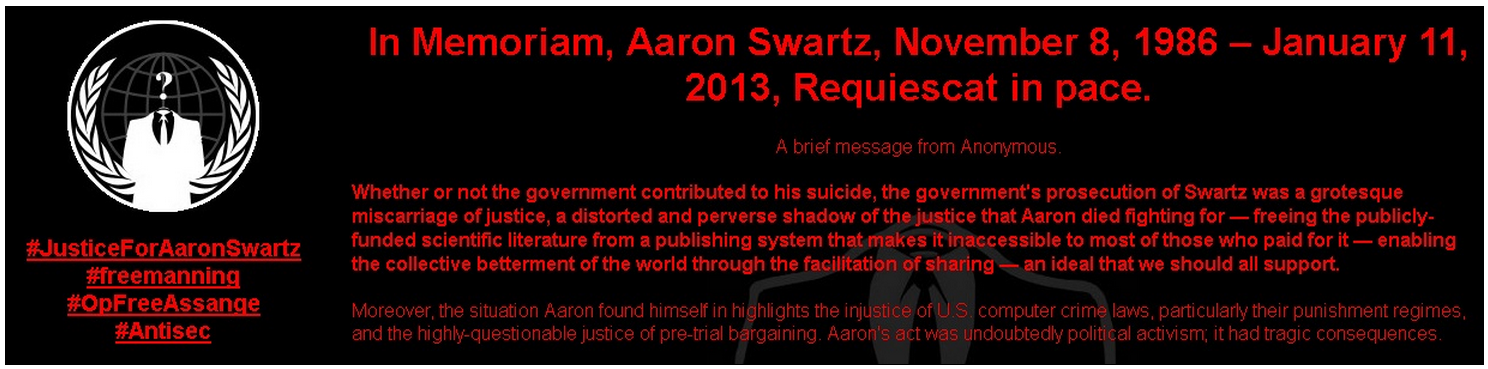
Visitors to the MIT website last night were greeted with a message from Anonymous about Aaron Swartz, calling the government's prosecution of the late open access activist a "grotesque miscarriage of justice."
It was run-of-the-mill website vandalism rather than a serious attack impacting MIT's back-end security. CNET caught a screenshot of the defacement while it was still online:
The "YourAnonNews" Twitter account reported "#MIT Owned by #Anonymous," and used Pastebin to provide the full text of the message that was temporarily on the MIT website. "Whether or not the government contributed to his suicide, the government's prosecution of Swartz was a grotesque miscarriage of justice, a distorted and perverse shadow of the justice that Aaron died fighting for—freeing the publicly-funded scientific literature from a publishing system that makes it inaccessible to most of those who paid for it—enabling the collective betterment of the world through the facilitation of sharing—an ideal that we should all support," the message stated.
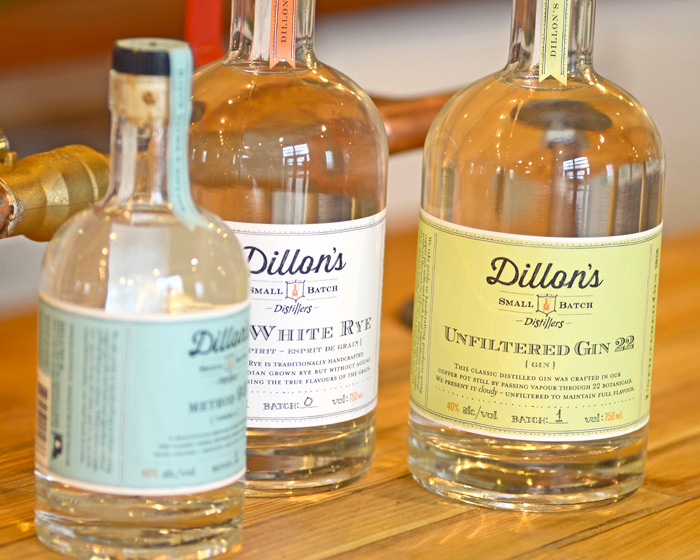
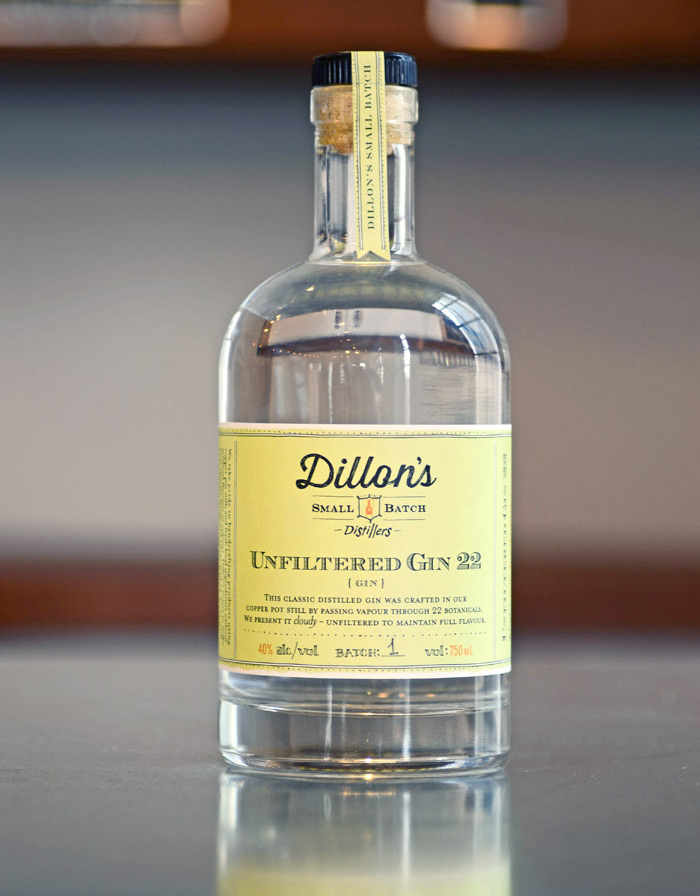
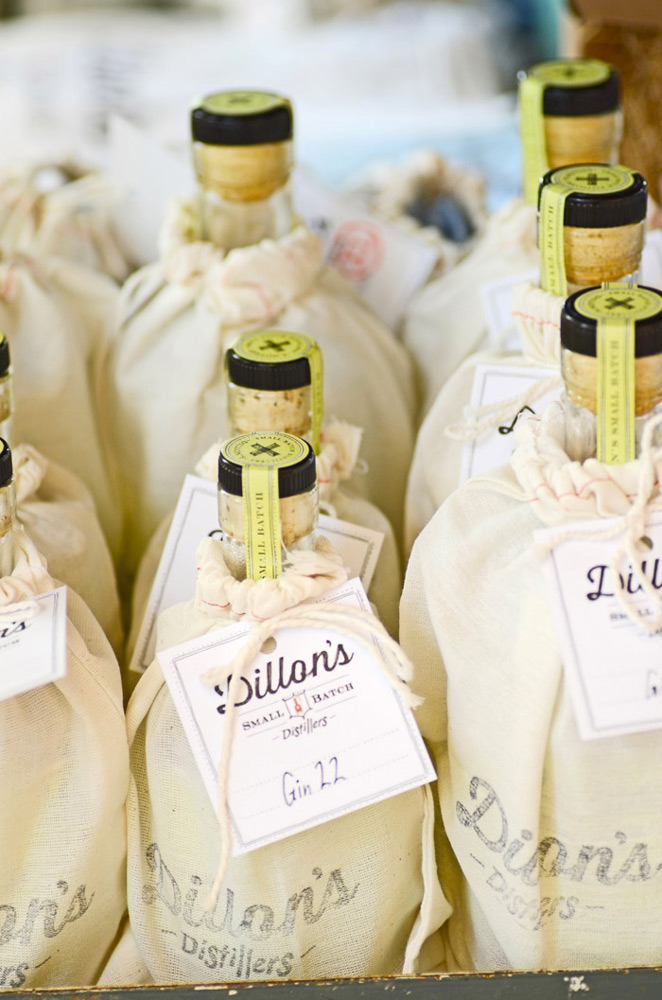
“Dillon’s Small Batch Distillers is a new entry into Canada’s craft spirit scene; making crafty ultra high quality spirits in a Chad copper pot still in Beamsville Ontario, the heart of wine country. The goal was to create a crisp, easy and cheerful brand and package that could tell the story of pure natural ingredients and transparency in the Dillon’s process.
Among the core products — Gin, Rye, Vodka and Bitters, Dillon’s creates ever changing seasonal spirits in small batches so a packaging solution that could be fashionable while cost effective for small volumes was imperative. Consequently the stripped down palette and clear reliance on colour does the trick; modest low volume print costs while telling the brand story and creating a sunny presence on their store shelves and your bar.”
Analysis and recreation (upon a live model) of the "seni crines" hairstyle of ancient Rome's Vestal Virgin priestesses. Research based on ancient artifacts and primary sources. An amplificaton of the poster presented at the Archaeological Institute of America annual meeting, January 3-6, 2013.
NOW, THIS IS THE PARIPURNA NAVASANA, OR BOAT POSE.
WHAT YOU WANT TO DO IS CURL THE UPPER SEGEMNTS OF YOUR PEREON UNTIL YOU’RE RESTING ON YOUR MIDDLE PLATE. AFTER THAT YOU’LL BRING YOUR PLEON TO ABOUT A 40º ANGLE AND HOLD FOR 20 TO 30 SECONDS, RESPIRING DEEPLY AS YOU DO SO.
"In support of this dismissal, the government states that Mr. Swartz died on January 11, 2013," wrote Carmen Ortiz, the United States Attorney for the District Court of Massachusetts.
Swartz faced legal charges after he infamously downloaded a huge cache of documents from JSTOR. Over the weekend, Swartz' family said the aggressive legal tactics of the US Attorney's office contributed to his suicide.
Illegal immigrants are people who want the three things I said. Terrorists want to blow things up and go on missions. Terrorists are Russians, Germans, trinadors, and Jamaicans. In conclusion, I know this is not five paragraphs but I did my best and tried my very hardest.
Toby sez, "Orchestrated Text takes the brilliant content found in the liner notes of classical music CDs, and creates a deeper music streaming experience.
Users click on a piece to play it, and read along as text appears on screen detailing what's happening in the music, what it depicts, and what the composer was inspired by. It uses HTML5 and Javascript to attach text animations to points in the audio, creating a timed annotation rendered in-browser.
The first piece is, appropriately, 'Winter' by Vivaldi.
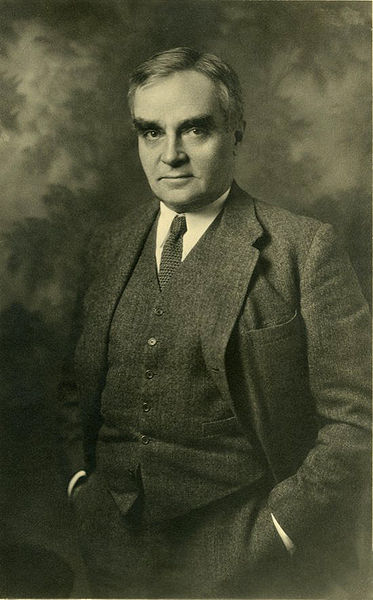
Learned Hand (1872-1961) served on the United States District Court and is commonly thought to be the most influential justice never to serve on the Supreme Court. He corresponded with people in different walks of life, some who were among his friends and acquaintances, others who were strangers to him. In the letter below, Hand writes to Mary McKeon, a New Yorker troubled by Hand’s decision to invalidate the warrantless search and consequent arrest of the Soviet spy, Judith Coplon.
To Mary McKeon
December 28, 1950
Dear Miss McKeon:
I have your letter about the Coplon case and I can understand why you are troubled about the result; and because you were not abusive, I am going to try to explain it to you.
It is a rule — well settled by the decisions of the Supreme Court — that evidence which the Government secures by its own violation of law it may not use against the person whose rights have been invaded. An extreme example of this would be in case a United States marshal were to break into the house of an accused person and seize his papers; the Government would not be allowed to use the papers against the person whose house had been entered. The same thing is true of documents found upon the person of one who is unlawfully arrested as was Judith Coplon. That was one ground for the reversal. The other was that during the trial it became necessary for the Government to depend upon evidence which it was unwilling to let her see. The Constitution provides that a person accused of crime is entitled to have all witnesses, who are called against him, brought into court at the trial.
Thus in these two instances the rights of the accused were violated, which is entirely consistent with her guilt. Perhaps, if you reflect, you will agree that it is not desirable to convict people, even though guilty, if to do so it is necessary to violate those rules on which the liberty of all of us depends.
Truly yours,
Learned Hand
The letter above was excerpted from Reason and Imagination: The Selected Letters of Learned Hand, edited by Constance Jordan, a retired professor of comparative literature and also Hand’s granddaughter. In 1944, Coplon, who worked for the Foreign Agents Registration section, was recruited as a spy by the NKGB, i.e., the People’s Commissariat for State Security. In 1949, FBI agents detained Coplon as she met with Valentin Gubitchev, a KGB official employed by the United Nations, while carrying what she thought were secret U.S. government documents; in actuality, they were fakes, planted in her purse at the order of J. Edgar Hoover. Declared guilty of espionage by the United States District Court for the Southern District of New York in 1949, Coplon appealed to the United States Court of Appeals for the Second Circuit. In United States v. Coplon, in an opinion authored by Hand and announced on December 5th, her conviction was overturned.
Subscribe to the OUPblog via email or RSS.
Subscribe to only law articles on the OUPblog via email or RSS. Image credit: Judge Learned Hand circa 1910. Public domain via Wikimedia Commons.
Mincing, affected; without force, drive, or spirit.
Quots. 1786 may show use as an interjection. 1786 J. Burgoyne Heiress iii. ii. 55 Lady Emily... You have only, when before your glass, to keep pronouncing to yourself nimini-primini. Miss Alscrip. Nimini-pimini-imini, mimini—oh, it's delightfully enfantine. 1786 G. White Let. 25 Mar. in R. Holt-White Life & Lett. G. White (1901) II. 154, I hope you practice every day at your Glass; and that you are by this time perfect mistress of ‘Nimini pimini’. 1801 Monthly Rev. 35 324 With..a smirking countenance, and ‘nimeny pimeny’ lisp. 1822 L. Hunt Indicator No. 23 I. 178 To see her proud, affected, niminy-piminy face in. 1830 J. Jekyll Corr. (1894) 221 She..is an exquisite, her husband a nimini pimini gentleman. 1840 Thackeray in Fraser's Mag. July 115/2 But was there ever such a niminypiminy subject treated in such a niminypiminy way? a1894 R. L. Stevenson St. Ives (1898) xxv. 190 A niminy-piminy creature, afraid of a petticoat and a bottle. 1945 R. Hargreaves Enemy at Gate 45 That niminy-piminy, shallow, self-conscious intellectualism. 1985 R. Davies What's bred in Bone (1986) v. 300 Parents are terribly niminy-piminy about telling their children these things.
How did this place get so filthy? Maybe we're inside one of Frank Halmans's tiny homes. This Dutch artist built functional vacuum cleaners that suck dirt into houses and apartments with dollhouse scale furniture inside. Andrea writes:
his series of functioning vacuums which he has transformed into 'works of architecture' - representing our households and personal space - emphasize this theme, blurring the line between the interior and exterior. here, halman has taken an appliance which we use to clean and de-clutter our dwellings and has modified its role. instead now, dirt and the debris is purposely sucked into the domestic interior, within these imagined dwellings, standing as a metaphor for the things which we experience and collect mentally in our memory and physically in our lives.
The Bible Old Testament Works about the Old Testament Topics (not otherwise provided for), A-Z BS1199.C88 Cutting tools
[BS1199.T642] Tools, Cutting see BS1199.C88
List of new or revised Library of Congress Classification numbers and captions approved by the editorial meeting of the Acquisitions and Bibliographic Access Policy and Standards Division on December 17, 2012
High school teacher Maria C. Waltherr-Willard, 61, is suing a school district for discrimination, claiming it pushed her to resign because of her age but also her disability. Waltherr-Willard has pedophobia, a fear of children. For 35 years, Waltherr-Willard has been a teacher in Mariemont, a community just outside Cincinnati, Ohio. From Cincinnati.com:
Documents filed in the case by her medical doctor, psychiatrists and psychologists note that she experiences stress, anxiety, chest pains, vomiting, nightmares and higher than healthy blood pressure when she’s around young children.
A federal judge on Wednesday dismissed three of the six claims in her lawsuit, claims which alleged Mariemont violated an implied contract to keep her from young students.
District Judge Herman J. Weber said the district lived up to its written contract – with the teachers union – and that Waltherr-Willard would still be employed had she not resigned.
He did not rule on the other main allegations of the suit, giving the district’s attorneys more time to respond to them.
It seems the royal portrait painter doesn't do "pretty".
Poor Paul Emsley. The backlash against his portrait of the Duchess of Cambridge has been swift and sharp – the iron tip of an art critical bullwhip. The Independent’s Michael Glover railed against the catastrophic likeness with its "hamsterish cheeks" and "dropsical face". The Sunday Times’ Waldemar Januszczak found it "ordinary", "a disappointment", and a "letdown to the Duchess". And then there were that unfavorable comparison to an imagined “kitschy” rendering of North Korean despot Kim Jong Un. At least the sitter herself called it "amazing" – though her response rings less of genuine glee and more a general acquiescence to controversy.
It’s a shame Emsley’s come into the spotlight for a picture gone wrong, because in fact he’s quite a talented draftsman. The 2007 PB Portrait Award winner may not be the earth-shaking Lucien Freud type we hoped would warp the new royal face into something more thrilling, but he’s none-the-less a very accomplished artist. Especially with chalk and pencil:
He also appears to have a bit of a thing for floral arrangements:
Emsley has defended his work, saying that “it’s not to everyone’s taste, and I understand that. I’m developed enough as an artist to understand that there are different points of view. I have to believe in what I do.”
He’s also excused the portrait’s flatness by pointing out that painting young pretty people is much harder than painting old wrinkly ones…
‘The fact she is a beautiful woman is, for an artist, difficult. When you have lines and wrinkles it is much easier as an artist to capture them as a person. Obviously she has none of that.”
An interesting point, as this brief tour though his previous work seems to confirm just that. He’s a definite dab hand with those of a wizened visage; it’s when he has a crack at all those fresh pretty flowers (and princesses, it turns out) that things seem to get rather bland.
Carley De Rosa sent in the following photograph taken at the Niujie (Ox Street) Mosque (Niújiē lǐbàisì; simplified 牛街礼拜寺, traditional 牛街禮拜寺) in Beijing:
Forbids to put on the short tutu or clothes illness enter the mosque
Correct English:
It is forbidden to enter the mosque wearing shorts, a short skirt, or other improper clothing.
Since I have just spent the New Year's holiday with my three-year-old granddaughter in Dallas, who loves to wear a gauzy, short skirt — whether at her dance class or at home — I am quite familiar with what a "short tutu" is, but I still have to work at grasping the connotations of "clothes illness" before I am satisfied that I understand all the nuances of this charming sign.








 Toby sez, "Orchestrated Text takes the brilliant content found in the liner notes of classical music CDs, and creates a deeper music streaming experience.
Users click on a piece to play it, and read along as text appears on screen detailing what's happening in the music, what it depicts, and what the composer was inspired by. It uses HTML5 and Javascript to attach text animations to points in the audio, creating a timed annotation rendered in-browser.
The first piece is, appropriately, 'Winter' by Vivaldi.
Toby sez, "Orchestrated Text takes the brilliant content found in the liner notes of classical music CDs, and creates a deeper music streaming experience.
Users click on a piece to play it, and read along as text appears on screen detailing what's happening in the music, what it depicts, and what the composer was inspired by. It uses HTML5 and Javascript to attach text animations to points in the audio, creating a timed annotation rendered in-browser.
The first piece is, appropriately, 'Winter' by Vivaldi.