Russian Sledges
Shared posts
The Inventors Of The Web Ad Banner All Just Admitted That It 'Sucks'
The New Avril Lavigne Song Is Predictably Awesome
Russian Sledges#borges
Brothers in Binary
A number is said to be perfect if it equals the sum of its divisors: 6 is divisible by 1, 2, and 3, and 1 + 2 + 3 = 6.
St. Augustine wrote, “Six is a number perfect in itself, and not because God created all things in six days; rather the converse is true; God created all things in six days because this number is perfect, and it would have been perfect even if the work of the six days did not exist.”
Perfect numbers are rare. No one knows whether an infinite quantity exist, and no one knows whether any of them are odd. The early Greeks knew the first four, and in the ensuing two millennia we’ve uncovered only 44 more. But they have one thing in common — they reveal a curious harmony when expressed in base 2:

Cities Grown to Order
Russian SledgesmaxBastards
The street map below could represent any riverside town, but it is instead a place that was generated in the HTML5-based imagination of a Web browser. The French Web site CEPCAM (discovered via Reddit) lets you choose parameters such as fertility, maxBastards, curveProbability, and curviness, and watch as a city map is drawn on the screen in front of you. Careful, though: tweaking the settings can be mesmerizing. The map below is based on settings 8, 100, 0.15, 5.25, though randomness in the algorithm means no two maps will be the same. We’ve included the map for 8, 80, 0.8, 8 at the end if this post. The more desolate-minded may want to try 2, 25, 0.6, 4. Finally, note that CEPCAM, which published this city-generator, is the European authority charged with defending against zombie attacks. Good to know we are safe.


The truth will set you free. But not until it is finished with...

The truth will set you free. But not until it is finished with you.”
― David Foster Wallace, Infinite Jest
eccyclema: valiantparadox: #there’s another reason why his...
Russian Sledges"#there’s another reason why his picture is beside genocide"


OH YOU LITTLE FUCKER
Team Mendeley is joining Elsevier. Good things are about to happen!
Russian Sledges"Elsevier is a multi-faceted company with over 7000 employees, so it is impossible to put them into a single box"
Study: Any Description Of A Woman's Appearance Hurts With Voters
Study: Any Description Of A Woman's Appearance Hurts With Voters
by Eyder Peralta
 Enlarge image i
President Obama's comments about California Attorney General Kamala Harris' looks made headlines last week.
Justin Sullivan/Getty ImagesAny mention — positive or negative — of a woman's looks, hurts her chances with voters. That's according to two new surveys commissioned by Women's Media Center "Name It, Change It" project.
"In the survey on media coverage of women candidates' appearance, conducted by Celinda Lake of Lake Research Partners and Robert Carpenter of Chesapeake Beach Consulting, the research used actual quotes about women candidates from media coverage of the 2012 elections and demonstrates that when the media focuses on a woman candidate's appearance, she pays a price in the polls," the center said in a press release. "This finding held true whether the coverage of a woman candidate's appearance was framed positively, negatively or in neutral terms."
Another study presented participants with profiles of "candidates" Jane Smith and Dan Jones. If participants only read the profiles, the woman emerged with an edge. But that edge was eclipsed immediately, as soon as physical descriptors — like "Smith dressed in a brown blouse, black skirt, and modest pumps with a short heel..." — were added to a "news story."
The survey also found that when the women themselves or a surrogate called out the sexist language, they earned back some support. That was the case even when the respondents did not read any of the sexist language.
Celinda Lake, one of the researchers, told Poynter that the bottom line is that "women candidate pay a real price" when the media takes notice of their appearence.
"Even what we thought was benign coverage about how a woman dresses has a negative impact on her vote and whether voters perceive her as in touch, likeable, confident, effective, and qualified. And, in close races, sexist coverage on top of the attacks that every candidate faces can make the difference between winning and losing."
Of course, this study gives some context to the uproar over Obama's comments about California Attorney General Kamala Harris, last week.
The study was conducted online last month. It has a margin of error of 2.5 percent.
Copyright 2013 NPR. To see more, visit http://www.npr.org/.9()) Copyright 2013 NPR. To see more, visit http://www.npr.org/.
Copyright 2013 NPR. To see more, visit http://www.npr.org/.
Edward L. Widmer - Wikipedia, the free encyclopedia
Russian Sledgesvia gabe
not-blonde: Winona Ryder in high school “I was wearing an old...

Winona Ryder in high school
“I was wearing an old Salvation Army shop boy’s suit. As I went to the bathroom I heard people saying, ‘Hey, faggot’. They slammed my head into a locker. I fell to the ground and they started to kick the shit out of me. I had to have stitches. The school kicked me out, not the bullies.
“Years later, I went to a coffee shop and I ran into one of the girls who’d kicked me, and she said, ‘Winona, Winona, can I have your autograph?’ And I said, ‘Do you remember me? Remember in seventh grade you beat up that kid?’ And she said, ‘Kind of’. And I said, ‘That was me. Go fuck yourself.’”
ffactory: This is Rose Valland, one of the heroes of...
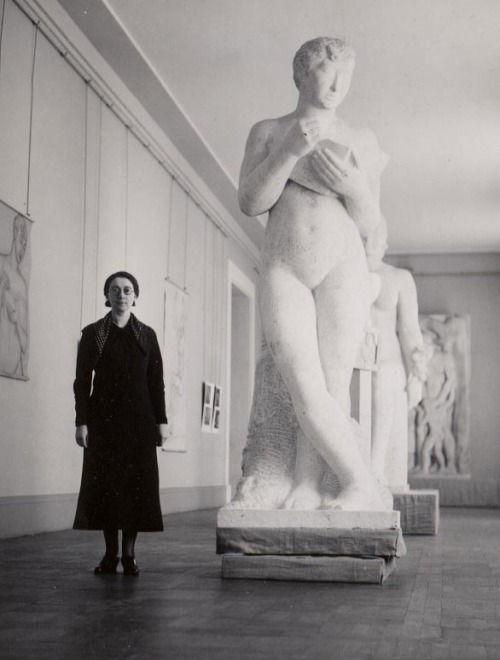
This is Rose Valland, one of the heroes of Nazi-Occupied France. An employee of the Louvre, she kept records of the art stolen by Nazi officers—what was taken, from where, and by whom. She was instrumental in the postwar return of countless stolen pieces, and one of the most decorated women in French history.
Shigehisa Kuriyama, 2013 Edwin O. Reischauer Lectures, "What Truly Matters?" | Fairbank Center
Russian SledgesDate: Wednesday, April 10, 2013, 4:15pm
Location: CGIS South, Tsai Auditorium (S010), 1730 Cambridge St., Harvard University
Every subway system in North America, connected

Here with your daily dose of infrastructure porn is XKCD's Randall Munroe, who's gone and rounded up all of North America's various subway systems and combined them into one big interconnected map.

The End Of All That (Why?)
Exploded Flowers by Fong Qi Wei
Russian SledgesI already shared this, right?

Hydrangea

Pom Pom

Rose

Sunflower
 Gerbera
 Lotus
Lotus
 Lily
Lily
 Gerbera
 Gerbera, detail
 Chrysanthemum
Exploded Flowers is a series of photos by artist Fong Qi Wei that shows a variety of flowers dissected into individual components. Reminiscent of exploding fireworks, it’s fascinating to see the radial footprints each flower makes relative to the size of its actual bloom. The series placed second in the 2012 International Photography Awards. You can see more from the series on Wei’s website and a number of limited edition prints are available here. (via designboom)
Why You Should Compost Your Coffee Grounds
Russian Sledgesattn overbey

Grounds for your garden. [Photograph: Tristan Ferne]
Don't throw out those used coffee grounds: Your plants need 'em.
Composting is a low-maintenance way to minimize personal kitchen waste, create cheap, nutrient-rich fertilizer, and contribute to the health and productivity of a personal or community garden. Compost is a great gift for plants: It naturally helps replenish the nutrients drawn out of the soil by their roots. Good thing, then, that the same stuff we use to perk ourselves up in the morning can do the same for soil.
Used coffee grounds are rich in nitrogen, which is one of the three main nutrient components—along with potassium and phosphorus—in any successful fertilizer. (For you soil geeks, here's why: Nitrogen allows plants to convert sunlight into energy; phosphorus helps that energy get transmitted throughout the plant through its root system and cells; potassium helps the plant retain moisture, which aids photosynthesis.) When managing the "ingredients" in a compost pile, it's important to have proper balance: Nitrogen-rich material (greens) needs to be appropriately tempered by carbon-rich material (browns).
Coffee grounds are considered "green" matter, or nitrogen-supplying to the compost system. They help create and maintain heat inside the pile by giving bacteria a hospitable growth environment; they also can help manage the pile's overall moisture content. When paired with "browns" like leaves, twigs, even coffee filters, coffee is the perfect catalyst for healthy decomposition, which can speed up the composting process and give you better fertilizer faster. Worms love the stuff: They'll munch your day-old coffee happily, turning it into black gold by digesting it and producing nutrient-rich castings. (Just don't spread the grounds themselves straight on your trees and tulips: They can cause more harm than good if they haven't been fully composted yet.)

Jittery and wriggly. [Photograph: rosepetal236 on Flickr]
If you don't brew coffee at home but do have plants to tend to, you can probably source some grounds through a local café: Many shops offer bags of used-but-compost-clean grounds and paper filters for customers and other garden nuts. It reduces their waste, while helping your tomato plants thrive. (Feel free to tip your baristas in produce come harvest time; money isn't the only kind of green we appreciate.)
Side note: Those "compostable" paper cups that you see more and more at coffee shops are also appropriate "browns," but they're only eco-friendly if you actually compost them. Throwing them away means they will likely end up in a landfill, and the anaerobic environment at the dump stalls decomposition, so even corn cups take eons to break down.
Once your compost is completely broken down into a dense, healthy humus, you can use it to fortify sad-looking tree pits in your neighborhood, plant a window-box herb garden, or donate to a local community or school garden.
Who says you should cut back on caffeine? You're actually doing the world a favor! So keep brewing, and start composting.
About the author: Erin Meister trains baristas and inspires coffee-driven people for Counter Culture Coffee. She's a confident barista, an audacious eater, and a smiling runner, but she remains a Nervous Cook.
Vladimir Putin Doesn't Seem to Mind When Topless Women Protest Him
Nobody loves posing for ridiculous photos more than Russia's president, but it's this completely spontaneous image that is sure to be keeper in his iconic collection. Vladimir Putin is in Germany today, where he was greeted by the usual gang of topless protesters that seem to be following him around lately. One in particular, got pretty close to Putin and his host, German Chancellor Angel Merkel, but the man was unfazed. As usual.

He even apparently gave her a thumbs up, as well (link is possibly not safe work) proving that he is nothing if not cool under fire.
The two leaders were visiting the Hannover Fair, an annual high-tech trade show. The protestors are with the group Femen, who have been staging regular topless protests such as this one all over the globe. This one was in defense of the Russian punk group Pussy Riot, which was jailed after their own infamous protest in a Moscow church was deemed offensive by Moscow courts. There's more photos of the protest here, but some are definitely not safe for work.
But as we said, Putin's faces are legendary and those were not the only great ones to come from today's photo ops. We gathered a few more below.


First three photos: AP. Bottom photo: Reuters/Fabian Bimmer

    
|
Margaret Thatcher Dies at 87
 Margaret Thatcher, the first and only woman to ever serve as Prime Minister of the United Kingdom, has died at the age of 87. A spokesperson announced this morning that she had a stroke, though she had been in poor health in recent years and was reportedly suffering from Alzheimer's disease.
A family statement (via the BBC) said, "It is with great sadness that Mark and Carol Thatcher announced that their mother Baroness Thatcher died peacefully following a stroke this morning." She is survived by her two children with her husband, Denis, who died in 2003.
The longest serving Prime Minister of the 20th century, Thatcher was elected to three terms, starting in 1979. A lion of the conservative movement, both in the U.K. and abroad, she took over a Britain that was mired in the economic decline of the 1970s and oversaw a strong and sometimes controversial recovery. Almost no sector of British society was unaffected by her government's philosophy of free markets, privatization, and tighter welfare spending that would eventually come to bear her name as Thatcherism.
"It was with great sadness that l learned of Lady Thatcher’s death. We've lost a great leader, a great Prime Minister and a great Briton"
— UK Prime Minister (@Number10gov) April 8, 2013
Current PM David Cameron said of Thatcher today that "She didn't just lead our country, she saved our country." A statement from the Queen said she was saddened by Thatcher's death and she would send a private message of condolence to her family.
She changed our country forever and all of us owe so much to her. A legacy few will ever equal. Rest in peace Margaret
— William Hague (@WilliamJHague) April 8, 2013
Along with her American counterpart, Ronald Reagan, "The Iron Lady" led the global opposition to the Soviet Union and became an icon of the Cold War, finally leaving office just as the communist grip on Eastern Europe had finally fallen away. Even her toughest political opponents could not deny the mark she left on her nation and the world.
The dominant figure of post war British politics is dead. Love her or loathe her Margaret Thatcher shaped this country as few others did
— Nick Robinson (@bbcnickrobinson) April 8, 2013
Among the controversial decisions from her tenure were the 1982 war with Argentina over the Falkland Islands; a miner's strike that broke one of the nation's most powerful unions (while costing several protester their lives); her negotiations with China on the return of Hong Kong; and her support of South Africa's apartheid government of the 1980s.
 An uncompromising figure—she once said, "There are dangers in consensus: it could be an attempt to satisfy people holding no particular views about anything"—she is still seen as a divisive figure in Britain and continues to have her share of detractors and enemies. Yet, her political skills were undeniable and allowed her to remake the British government and society in her own philosophy: slashing unemployment and inflation; privatizing previously nationalized industries, like energy; while preserving vital programs like the National Health Service. Her continual electoral victories forced the U.K.'s Labour party to remake itself in response, leading to the "Third Way" of Tony Blair that eventually dominated the 1990s.
She was ultimately forced out of her own party in 1990, due to internal disagreement over Britain's approach to the European Union. Although she could proudly say that she never lost an actual election.
After leaving office, Thatcher was made a member of the Order of Merit (a gift given only by the Queen) and was given a lifetime peerage as Baroness Thatcher of Kesteven, which admitted her to the House of Lords. She will receive a state funeral with "military honors" at St. Paul's Cathedral, but will not lie in state, per her own wishes.
---
There are numerous obituaries of Thatcher that were obviously prepared ahead of time, but thoughtfully offer a comprehensive overview of her life and times. Here are some of the key passages and some moments from her life:
From the BBC:
In 1949, she was adopted as the prospective Conservative candidate for the seat of Dartford in Kent which she fought, unsuccessfully, in the 1950 and 1951 general elections.
However, she made a significant dent in the Labour majority and, as the then youngest ever Conservative candidate, attracted a lot of media attention.
In 1951 she married a divorced businessman, Denis Thatcher, and began studying for the Bar exams. She qualified as a barrister in 1953, the year in which her twins Mark and Carol were born.
Photos of Margaret Thatcher as a young woman bzfd.it/Zv0G3v twitter.com/BuzzFeed/statu…
— BuzzFeed (@BuzzFeed) April 8, 2013
In moves that were widely copied, Mrs. Thatcher took on Britain's all-powerful trade unions and privatized state-run industries, governing with a take-no-prisoners style that earned her both admiration and dislike.
"She showed everyone what a political leader with a powerful agenda could accomplish," said George Shultz, who was secretary of state to Ronald Reagan.
From Bloomberg:
Thatcher was defined by the battles she took on: she waged war against Argentina, clashed with striking miners and forced fellow leaders to cut Britain’s financial contributions to the forerunner of the European Union.
She survived an assassination attempt in 1984 when the Irish Republican Army bombed her hotel in Brighton during her Conservative Party’s annual conference, killing five people. She stuck to her schedule and addressed party members the following morning.
From The Washington Post:
“The Iron Lady,” as she was dubbed, was credited with converting a spent Conservative Party from an old boys club into an electoral powerhouse identified with middle-class strivers, investors and entrepreneurs. No one denied her political genius. Future prime minister Tony Blair eventually copied her methods to remake the rival Labor Party.
“Her huge political achievement was to snatch the Conservative Party from the privileged but often well meaning old upper-class gentlemen, and give it to the shopkeepers, the businessmen, the people in advertising and anyone she considered ‘one of us,’ ” writer John Mortimer, a staunch critic, wrote of Mrs. Thatcher. “She greatly improved her party’s electability but robbed it of compassion.”
From The Telegraph:
As for the effects of the Thatcher phenomenon upon British society, these were both more ambiguous and more debatable. Her remark “there is no such thing as society” was wrenched altogether out of the context of the interview in which it was made, and made to seem to be an advocacy of naked individualism, when she was really calling for more personal responsibility. Yet, rightly or wrongly, the 1980s came to be seen as a time of social fragmentation whose consequences are still with us.
From The Economist:
ONLY a handful of peace-time politicians can claim to have changed the world. Margaret Thatcher, who died this morning, was one. She transformed not just her own Conservative Party, but the whole of British politics. Her enthusiasm for privatisation launched a global revolution and her willingness to stand up to tyranny helped to bring an end to the Soviet Union. Winston Churchill won a war, but he never created an “ism”.
The essence of Thatcherism was to oppose the status quo and bet on freedom—odd, since as a prim control freak, she was in some ways the embodiment of conservatism. She thought nations could become great only if individuals were set free. Her struggles had a theme: the right of individuals to run their own lives, as free as possible from the micromanagement of the state.

|
|
Sherlock Holmes knew chemistry
By James F. O’Brien
Sir Arthur Conan Doyle claimed that he wrote the Sherlock Holmes stories while waiting in his medical office for the patients who never came. When this natural teller of tales decided to write a detective story, he borrowed the concept of a cerebral detective from Edgar Allan Poe, who had “invented” the detective story in 1841 when he wrote The Murders in the Rue Morgue. So, in 1887, the brilliant Holmes debuts in A Study in Scarlet. The second Holmes story, The Sign of the Four, is a rewrite of The Murders in the Rue Morgue (1841). Instead of an Orangutan scaling the unscaleable wall and killing the occupant, Doyle uses Tonga, a pygmy from the Andaman Islands to do the job. The third Holmes story, A Scandal in Bohemia, is a rewrite of Poe’s The Purloined Letter. Instead of seeking the Queen of France’s letter, Holmes must find the King of Bohemia’s incriminating photograph.
 Doyle wrote a total of 60 Holmes stories and most of the time Sherlock Holmes and Dr. Watson share lodgings in London. Their very lives reflect the superior English education of that era. At 221b Baker Street the conversation is full of mathematical terms such as surds, conic sections, and the fifth proposition of Euclid. We hear about astronomy too: the obliquity of the ecliptic and the dynamics of asteroids. But Holmes is a chemist at heart. Before Watson even meets Holmes he is told by Young Stamford that Holmes “is a first-class chemist.” Almost every one of the tales contains a reference to some chemical. They range from elements like zinc (Zn) and copper (Cu), to industrial chemicals such as sulphuric acid and the dye Tyrian purple. Of course numerous poisons are mentioned, and several are used.
Watson, the narrator, makes Holmes’s devotion to chemistry very clear. While still a student Holmes spent his Christmas break working on experiments in organic chemistry. Holmes had a “chemical table” in their Baker Street flat. On at least one occasion the odors drove Watson to leave the premises. Another time Holmes suspended working on a case because he had “a chemical analysis of some interest to finish.” Would that Sherlock had solved more cases by chemical means, but still the chemist finds much of interest in nearly every one of the 60 tales.
Arthur Conan Doyle was also at the forefront of forensic innovation. Holmes used fingerprints (before Scotland Yard), footprints, dogs, document analysis (before the FBI started its document section), and cryptology. After Doyle’s death it was noted that,
“Poisons, handwriting, stains, dust, footprints, traces of wheels, the shape and position of wounds, the theory of cryptograms — all these and other excellent methods which germinated in Conan Doyle’s fertile imagination are now part and parcel of every detective’s scientific equipment.”
There is more science in the first half of the “Canon” and its prevalence has clearly affected the popularity of the individual tales. The Holmes stories have been ranked several times and the results consistently support the idea that those stories which contain science are preferred over those that do not. Even Conan Doyle’ own rankings agree with this. In 1927 he listed his favorite stories — 19 of them. Fifteen were from the first 30 stories and only four from the last 30. Other rankings yield the same result. In 1959 The Baker Street Journal listed the results of a poll which named the ten best and the ten worst Sherlock Holmes tales. Eight of the ten best were from the first half; while nine of the ten worst were from the last half. Sherlock Holmes was, and is, a detective that every scientist can love.
James F. O’Brien is the author of The Scientific Sherlock Holmes: Cracking the Case with Science and Forensics. Like our country he was born in Philadelphia on the Fourth of July, many years ago. He has degrees in chemistry from Villanova and Minnesota. He played college and professional basketball. He retired from Missouri State University as Distinguished Professor. A lifelong fan of Holmes, O’Brien presented his paper “What Kind of Chemist Was Sherlock Holmes” at the 1992 national American Chemical Society meeting, which resulted in an invitation to write a chapter on Holmes the chemist in the book Chemistry and Science Fiction. O’Brien has since given over 120 lectures on Holmes and science.
Subscribe to the OUPblog via email or RSS.
Subscribe to only science and medicine articles on the OUPblog via email or RSS.
Image credit: Cover of Beeton’s Christmas Annual for 1887, featuring A. Conan Doyle’s story A Study in Scarlet. Public domain via Wikimedia Commons.
The post Sherlock Holmes knew chemistry appeared first on OUPblog.
Рационально используй металл! / Better use of metal!

Рационально используй металл! / Better use of metal!


Prison Labor as Modern Day Slavery
American companies that once looked to places like Mexico and China for cheap labor are bringing those jobs back to the U.S. Why? Because prison labor is much, much cheaper. Paid between 93¢ and $4.73 per day, and collecting no benefits, prisoners are a cheap labor source for about 100 companies (source).
What does this have to do with you?
If you have insurance, invest, use utilities, have a bank, drive a car, send a child to school, go to a dentist, call service centers, fly on planes, take prescription drugs, or use paper, you might be benefiting from prison labor.
If you’ve bought products by or from Starbucks, Nintendo, Victoria’s Secret, JC Penney, Sears, Wal-Mart, K-Mart, Eddie Bauer, Wendy’s, Proctor & Gamble, Johnson & Johnson, Fruit of the Loom, Motorola, Caterpiller, Sara Lee, Quaker Oats, Mary Kay, or Microsoft, you are part of this system.
"It’s become easier for him to navigate his smartphone than to figure out how to use a TV..."
It’s become easier for him to navigate his smartphone than to figure out how to use a TV set-top box and the button-laden remote control.
“I’m pretty tech savvy, but the TV industry with the cable and the television and the boxes, you don’t know how to use their equipment,” he says. “I try to go over to my grandma’s place and teach her how to do it. I can’t even figure it out myself.”
”- Broadcasters worry about ‘Zero TV’ homes - Yahoo! News
How a banner ad for H&R Block appeared on apple.com—without Apple’s OK
 The ghost of Steve Jobs will not be pleased to see this.
Zack Henkel
The ghost of Steve Jobs will not be pleased to see this.
Zack Henkel
Robert Silvie returned to his parents' home for a Mardi Gras visit this year and immediately noticed something strange: common websites like those belonging to Apple, Walmart, Target, Bing, and eBay were displaying unusual ads. Silvie knew that Bing, for instance, didn't run commodity banner ads along the bottom of its pristine home page—and yet, there they were. Somewhere between Silvie's computer and the Bing servers, something was injecting ads into the data passing through the tubes. Were his parents suffering from some kind of ad-serving malware infection? And if so, what else might the malware be watching—or stealing?
Around the same time, computer science PhD student Zack Henkel also returned to his parents' home for a spring break visit. After several hours of traveling, Henkel settled in with his computer to look up the specs for a Mac mini before bedtime. And then he saw the ads. On his personal blog, Henkel described the moment:
But as Apple.com rendered in my browser, I realized I was in for a long night. What I saw was something that would make both designers and computer programmers wince with great displeasure. At the bottom of the carefully designed white and grey webpage, appeared a bright neon green banner advertisement proclaiming: “File For Free Online, H&R Block.” I quickly deduced that either Apple had entered in to the worst cross-promotional deal ever, or my computer was infected with some type of malware. Unfortunately, I would soon discover there was a third possibility, something much worse.
The ads unnerved both Silvie and Henkel, though neither set of parents had really noticed the issue. Silvie's parents "mostly use Facebook and their employers' e-mail," Silvie told me, and both those services use encrypted HTTPS connections—which are much harder to interfere with in transit. His parents probably saw no ads, therefore, and Silvie didn't bring it up because "I didn't want [them] to worry about it or ask me a lot of questions."
Read 30 remaining paragraphs | Comments
The Smell Of Rain
Russian Sledges#petrichor
by Patrick Appel
[O]ne of the main causes of this distinctive smell is a blend of oils secreted by some plants during arid periods. When a rainstorm comes after a drought, compounds from the oils—which accumulate over time in dry rocks and soil—are mixed and released into the air. The duo also observed that the oils inhibit seed germination, and speculated that plants produce them to limit competition for scarce water supplies during dry times.

Current and former Boston Herald reporters recall South End headquarters before demolition
Russian Sledgesholy crap, it's finally happening

|
|
Eldred G. Smith, ex-Mormon church patriarch, dies
Russian SledgesI did not know "Utahn"

|
|
White Whiskey

A few weeks ago we wrote about moonshine and now we have occasion to write about its close relative, White Whiskey.
Products like the above have become quite popular within the past few years, for reasons well explained by Slate:
The term white whiskey is basically a marketing name for what distillers call white dog, referring to grain-based spirits that haven’t been aged in wood to improve their flavor. [Sometimes] it’s just called moonshine, but legal sales of white dog in recent years have helped upstart microdistilleries earn immediate revenue while their whiskies age. That’s because white dog can be bottled and sold immediately after being distilled without accruing any additional storage and aging expenses. The moonshine connection has been a useful marketing gimmick for hip urban bars, but there’s one considerable downside to white dog: It tastes horrible.
At first, TTB was skeptical and pushed back a bit (saying, for example, there is no such category in the regulations). But as the trickle became a deluge, TTB began to allow white whiskey products more freely. In the light of a large number of recent approvals, it becomes clearer that TTB chiefly wants WHISKEY and WHITE on two different lines — more like Beam and less like Death’s Door (as above). Less clear is whether such products need a formula approval (adding the formula step can add 4-5 weeks to what is already a 4-5 week project). Most of the recent label approvals do not refer to any formula approval, as in the following examples.
Formula mentioned
Formula not mentioned
Chuck Cowdery has lots of discussion about closely-related topics, such as the unaged Jack Daniel’s product, here.
Related Posts:
- Wheat Wine (0)
- The Five Year Rule (0)
- Sparkling Vodka (1)