
Goldin+Senneby After Microsoft :: Carlo Zanni Landscape/Dtp Bliss


Bakst, Léon, 1866-1924. Ballets Russes costume designs for Dieu bleu, Daphnis and Chloe, and Afternoon of a faun, 1911-1912.
Harvard Theatre Collection, Harvard University

Theodore Roosevelt with a horse, during his hunting trip to the Grand Canyon : photograph, 1913.
Houghton Library, Harvard University

    
|
Russian Sledgesvia firehose

The United States Postal Service hasn't delivered regularly on Sundays for 101 years, but a force known as Amazon managed to persuade it to change. The company and USPS announced on Sunday they'd made an arrangement to deliver Amazon packages seven days a week, though they haven't made public the financial details. While the USPS loses money on first-class mail, The New York Times notes, it makes money on package delivery. But it wouldn't say whether it was open to deals with other companies. For now, Amazon gets Sundays all to itself, starting in New York and Los Angeles, and expanding to other cities next year. It's going to be a while yet before that lone mail Jeep goes bouncing down a country lane to deliver a copy of Rush Revere and the Brave Pilgrims a day early.
Read more posts by Adam Martin
Filed Under: amazon ,usps ,mail order
Russian Sledgestossing this one over to overbey
It is with a heavy heart that I sit down at my keyboard this morning, for I must spend the next hour locking horns (see previous post) with a theologian—one suffering so severely from cognitive dissonance that he argues that theology is not about God. Something is wrong on the Internet.
The misguided theologian, David Dunn, is described by HuffPo as an “Eastern Orthodox Christian, independent researcher, lay theologian, blogger, and dad” (his website is here). And he’s ticked off because I criticized a piece in The Atlantic by Sara Isabella Burton arguing that we all need to study more theology. And so Dunn sat down and wrote a longish piece for HuffPo called ”Theology is not about God: An open letter to Jerry A. Coyne.” It even starts with “Dear Dr. Coyne.”
I really should stop here by saying simply, “Are you nuts? Of course it’s about God.” But, as General Patton said, all true Americans love the sting of battle, and so I must engage Dunn in a bit more detail, if for no other reason than to show how a smart theologian, who has obviously spent years in his profession, tries to justify his existence by arguing that theology is about something different from what everyone thinks. Further, Dunn’s piece is larded with humorous deepities.
I’ll pass over Dunn’s ad hominems; he clearly doesn’t like atheists except for ones like Marx and Nietzsche (whose atheism he calls “fantastic”). But he has no use for Dawkins and the New Atheists:
As a general rule, I avoid arguments with kitchen appliances, Christian fundamentalists, and atheists who think Dawkins makes sense. But I feel obliged to make an exception in this case. You pride yourself on being a reasonable person and on giving Christian theology a fair hearing, so I feel a scholarly duty, as one intellectual to another, to critique your recent screed against Sara Isabella Burton. She wrote an article in the Atlantic about why theology is useful for humanities scholars, whether or not they believe in God. You say you have spent the past several years reading Christian theology. Thank you for your efforts. It is important that we try to understand each other, which is why I am writing, because I think you still don’t know what theology actually is.
His argument is that theology is not about God, but about people, and takes me to task for that egregious mistake:
Dr. Coyne, you are correct when you distinguish between biblical scholars and theologians. You also correctly define biblical scholars as people who study ancient religious texts. But you go off course when you add that theologians “try to figure out what God is telling us through those texts.” This description of theology makes me wonder how much you were paying attention to what Burton actually wrote. For her, “[Theology provides] an opportunity to get inside the heads of those whose beliefs and choices shaped so much of our history, and who–in the world outside the ivory tower–still shape plenty of the world today” (emphasis added). In other words, theology is not about trying to figure out the will of God from religious texts. Theology, in a sense, is not really about God at all. It’s about people!
. . . Theological studies is not about trying to figure out what God wants; it’s the study of how human beings respond to what they think God wants. That is why some theologians are atheists. To do what I do, belief in God is kind of irrelevant.
Well, that came as a surprise to me after two years of reading about theology, including theodicy, eschatology, and apologetics. What are those except attempts to analyze why God is doing what he does, what he wants, and how we should conceive of God and behave according to his will or his nature?
In fact, “studying how human beings respond to what they think what God wants” is to a large extent “figuring out the will of God from religious texts.” If it’s not, then what were people like C. S. Lewis, Whitehead, Plantinga, Karen Armstrong, Kierkegaard, Tillich, and so on doing? Theology is certainly more than studying how people act when they believe in God. The latter involves psychology and sociology, and while those may form a part of classical theology, you won’t find a lot of psychology and sociology in Aquinas or Augustine.
Now if you argue that theology is “about people” because it involves arguments about God filtered through the brains of theologians, then yes, it is about how humans respond to the idea of God. But Plantinga is not about sociology; he’s about apologetics: how we know God exists, why it’s rational to believe in him, and why God allows things like suffering. These people don’t write a lot about how the minds of medieval monks were affected by their beliefs.
And really, how many atheist theologians are there? I can’t think of one, except, perhaps, Shelby Spong.
I did in fact look up “theology” in the Oxford English Dictionary and found the following two definitions (the first ones):
a. The study or science which treats of God, His nature and attributes, and His relations with man and the universe; ‘the science of things divine’ (Hooker); divinity.
b. A particular theological system or theory.
Where are the “responses of people” in there?
Perhaps Dunn spends his time, as does Burton, pondering the history of how people act when they think that there’s a God, but that’s certainly not the bulk of theology—at least not the sort I’ve read. What I think Dunn is up to is avoiding all the exegesis and apologetics because he senses that the arguments for God and the interpretations of his will are weak, confused, and conflicting. It’s much easier, and less controversial, to talk about how religious people have behaved—and martyred themselves—through history.
Dunn’s cognitive dissonance, resolved by arguing that theology isn’t about God, leads him down some strange paths:
Theologians sometimes focus exclusively on a narrow swath of the tradition, in the past, but many of us also work to explain to others how our tradition should shape the way we act in the present. Maybe this seems pointless to you. After all, the New Atheist mantra is that religion is dangerous. Okay! Let’s go with that for a minute. Let’s suppose the final solution to religion is to do away with it, but that does not really solve any immediate problems. Trying to convince Ayman al-Zawahiri (the current head of Al-Qaeda) to become an atheist is like trying to turn water into wine when you don’t believe in miracles. It is a pointless exercise. A Muslim theologian who can teach others about orthodox Islam is a more effective opponent of religious extremism than an irate evangelist for New Atheism.
Does that last sentence strike you as strange? After all, it is the imams and Islamic clerics who incite and justify much of the violence of extremist Muslims. We don’t see a lot of “Muslim theologians” decrying the censorship of The Satanic Verses or the violence that followed publication of the Danish cartoons. And how stupid is it to claim that we atheists are trying to change the minds of peolpe like al-Zawahiri, Pat Robertson, or Ken Ham? We aren’t going after them, but after the doubters and the people on the fence.
Dunn appears to see theology as a branch of history: the branch that explains how people behaved because they believed in God. Where I come from we call that “psychology”:
We do read historical documents (often in the original languages), study artistic and archaeological evidence, engage ancient and contemporary philosophy, and utilize a variety of other critical theoretical tools, but theology is not really about religion as sets of ideas, artifacts, or cultural-historical phenomena. (That is more the purview of religious studies departments.) Religion, as you rightly say, is something people kill and die for, but you only half understand why that is the case. History, anthropology, psychology, etc. can help explain the psychopathic corruption of religion as an instrument of murder, but it cannot do justice to Gandhi, Martin Luther King Jr., Teressa of Calcutta, or St. Maria of Paris. For the record, I am not trying to make this a competition between religion and atheism or faith and science. My point is that only theology can begin to unravel the mystery of how these human beings could suffer and die for the love of a God they cannot see, and for people they can only believe are God’s handiwork. Ideology will make murderers, but it cannot make martyrs. Only love can do that! Only love can make a person give her life for the condemned, embrace the untouchables, and expose injustice by suffering violence without retaliation.
Only love can make martyrs? Really? Does he truly believe that? Because if he does, he’s ignorant of all the history behind martyrdom. Did the people of Jonestown kill themselves out of love? Did the 9/11 bombers act out of love? One might consider other factors, including ideology, group pressure, indoctrination and, yes, as in the case of the 9/11 “martyrs,” hatred. And, most of all, the belief that if you die for your faith—the right faith—you’re going to join God, Jesus, or Allah in the hereafter. These things are not love, but groupthink, fear, and indoctrination.
Now you might be able to twist the word “love” in such cases so it becomes the same thing as “conformity,” “indoctrination,” or even “hatred,” but that’s Orwellian doublespeak. But theologians are good at that.
And then comes Dunn’s most hilarious deepity:
Christians believe that God is love. So we academic theologians are not really studying God, because you cannot see love.
That is so amusingly puerile that it merits not a response, but a horselaugh. Suffice it to say that millions of believers throughout the world see God as more than the emotion of “love.” If Dunn simply means that God is a loving God, then he’s committed a deepity—one that completely sabotages his argument. This kind of argument wouldn’t pass muster in one of our introductory philosophy classes.
Dunn finishes off by reiterating his thesis, as if repeating it several times makes it true. (Geneticist J. B. S. Haldane’s armamentarium of wrongheaded arguments included what he called Aunt Jobiska’s Theorem: “What I say three times must be true.”) Dunn also adds a bit of snark:
Maybe God is imaginary. Maybe love is too. So what? The imagination matters. It shapes civilizations and the saints (and even the tyrants) they produce. Understanding what people imagine God to be demands an interdisciplinary approach that is only preserved in theological studies.
One day, New Atheists may convert the world to reason and usher in a thousand years of humanistic peace. When that happens, sure, let’s get theology out of colleges and universities. But until then, the academy needs theology precisely for what you fail to understand about it: theology is about people. So if theology does not matter, then your problem is not with an “imaginary” God. It is with human beings – marvelously flawed humans! Perhaps you wish, Dr. Coyne, that we were imaginary too.
I would suggest that if you want to understand why people martyr themselves over an imaginary God, you need to study psychology, especially ideology, indoctrination, and wish-thinking—not just theology. By all means let us teach religious history and the philosophy of religion in the academy. But what we don’t need are entire schools of theology, staffed largely by believers who occupy themselves with justifying God’s ways to man. Schools of theology do not, for instance, teach courses on “why people believe crazy things.” We don’t need schools of theology any more than we need schools of Marxism, homeopathy, or pseudoscience. Those schools are a waste of money and brainpower. Put the biblical scholars in history departments, and add a couple of philosophers of religion to the philosophy department. But deep-six most of the theologians.
In the end, any sensible person who actually reads theology can see that it is based largely on the idea that God exists. Given that belief, it falls to theologians to explain what kind of God it is, how he acts in the world, and how we should behave according to those lights. For it is God’s will, and his perceived nature, that determines how believers behave. If you don’t believe that, look at how Catholicism has promoted the denigration of women and gays, played hob with people’s sex lives, and tortured them with threats of hell. And don’t tell me these have nothing to do with God or his nature.
Liberal theologians claim the opposite, but the basis is still a belief in God and an interpretation of what his existence means for us. For this is what theologians are paid to do.
Maybe Dunn isn’t that kind of theologian, but he has no basis for claiming that he represents the whole baying pack.


Russian Sledgesvia firehose
Dear Japanese tourists,
Welcome to Portland. I'm honored that you've chosen our city as your vacation destination, however I would like to address one little thing; do not fucking insult us in Japanese. Some of us Portlanders, like myself, speak it quite fluently. I understand that I'm white as a sheet and don't look like it, but I understood all the crass shit you said about me. When you said my ass is huge, and you wanted to get lost in my crack, I understood that. When you said that I look like a cow and you wanted to drink my milk, I fucking understood that, too. You're rude as hell and that's why I called you out by the bus stop near Powell's. That look of utter shock on your face when you realized I understood you was absolutely priceless, and I could tell you were embarrassed as fuck. Good. I'm glad. And I'd be happy to call you out again if call me a dumb American (ばかアメリカン) again. Here's a suggestion, be a good little tourists, shove a voodoo doughnut into your mouth and unless you need directions, leave us the hell alone. 私はあなたの無礼が好きではありません!!! 日本に帰る!!!
• 10,000 people are reported dead in the central Philippine province of Leyte
• EU pledges initial €3m as international assistance efforts begin
• Haiyan becomes one of the strongest recorded storms ever to make landfall
• Philippines calls for help as relief effort gears up
• Many parts of Philippines inaccessible to government and aid, official say

Russian Sledgesyesssssss

|
|

Secret Agent aka Sly Spy (Data East - arcade - 1989)
Russian SledgesLudwig the Bavarian
(but not the crazy one)

Holy Roman Empire. Emperor (1314-1347 : Ludwig IV) Laws promulgated for Bavaria in 1346 : manuscript, [ca. 1500]
Houghton Library, Harvard University
Russian Sledges'A whale ship was my Yale College and my Harvard'

"Lancing a whale" from Journal of a whaling voyage in the barque Andrews in the North Atlantic Ocean to Hudson Bay , commanded by Captn Timothy C. Packard, Apr. 1, 1865.
Houghton Library, Harvard University

Hesiod. Theogony with commentaries by John Tzetzes, 1500-1525.
Houghton Library, Harvard University
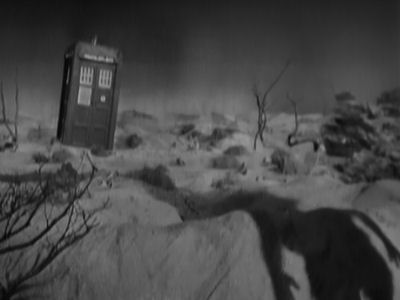 The BBC is being challenged over the ownership of the copyright of the TARDIS, by the son of the author of the first Doctor Who story, Anthony Coburn.
|
|

Russian Sledgesvia firehose
Russian Sledges"By no means was every interaction unpleasant. It's simply that the signal-to-noise ratio of it all dominated the tone of my experience."
welcome to everything
via firehose
Russian Sledgesvia firehose ("Malls: the Facebook of the late 20th century")


Michael Galinsky’s Retro Photos of 1980s Shopping Malls Are, Like, Totally Rad
In the winter of 1989, photographer Michael Galinsky drove across the country recording the seismic change in America’s malls: their transformation from the shiny retail palaces of the ’80s into something weirder. Then 20 years old, Galinsky began with the Smith Haven Mall in Long Island, and drove west: through Michigan, Illinois, South Dakota, Washington State. His photographs—collected in the book Malls Across America, published this month by Steidl—document a nation that had yet to turn against the mall, and saw its culture play out in the atriums of indoor retail palaces.
This mall looks identical to the mall I went to growing up. Some of my earliest memories are at the food court during Christmas
omg. the tape world sign triggered in me a memory of the stale cigarette and carpet cleaner that St. Clair always smelled like.
Dear God. Smith Haven. Too many memories… (chuckle)
Russian Sledgesvia firehose via rosalind


Russian Sledgesvia firehose via Rosalind

my brother found this old menu board at a thrift store and hung it up in his apartment looking like this
Russian Sledgesvia saucie
An anonymous Instagram user in Philadelphia has found a new and terrifying way to utilize the photo sharing app: Identify witnesses in violent crime cases, and encourage people to seek revenge against them.
The Philadelphia Inquirer reports that an Instagram account called rats215 "has outed more than 30 witnesses since February, posting photos, police statements, and testimony on the photo-sharing website." Many of those witnesses testified with the expectation that their identities would be kept secret, yet the account has posted pictures taken in the court room as well as images of testimony available only to prosecutors and secret grand juries.
The Inquirer story suggests that the anonymous account runner is getting help from some people in high places:
Though witness statements are sometimes available in court records when a case is closed, the names of witnesses and victims are redacted for their protection.
But in copies of statements posted on the account, witnesses are clearly and repeatedly named, sometimes with their photographs attached.
In indicting grand juries, tougher rules limit the disclosure of statements from witnesses and victims. Defense lawyers are instructed not to give their clients copies of such statements. The defense is free to go over the statements with their clients, but they can't make copies for the accused.
This isn't the first time criminals have used social media to encourage the harassment and retaliation of witnesses. Facebook pages targeting snitches have been started in Tacoma, Washington, Columbia, Missouri, and Shamokin, Pennsylvania. These encourage people to report neighbors and friends known to be cooperating with law enforcement investigations. In the pre-social media age, witnesses and criminals who'd turned on their own crews had their testimony printed out and posted publicly in their neighborhoods.
Most of these outlets, including Philly's Instagram bandit, don't see a difference between "snitching" and reporting crime. Ron Moten, founder of D.C.'s oft-beleaguered anti-violence group Peaceaholics, wrote an op-ed in 2007 arguing that there's a difference between snitching and calling the cops when someone guns down your neighbor or family member. A snitch, Moten argues is someone:
Who commits a crime but then blames an accomplice so that he can negotiate a lighter sentence or even go free. Often he tells lies and incriminates the innocent. People like that are the real snitches and they are cowardly. Snitching is a way for criminals to game the system.
But not everyone who talks to police is a snitch. If you're a victim of a crime and you or someone you trust cooperates with them, you are not a snitch. If you try to get rid of negativity in your community, you are not "hot" or a snitch.

|
|
Russian Sledgesvia saucie ("someone already wrote my book on medicinal drinking")


From ancient times until the early twentieth century, cocktails were the domain of healers, pharmacists, and apothecaries. Tinctures, bitters, elixirs, and tonics were created from herbs, flowers, fruit, vegetables, and alcohol to cure stomach ailments, respiratory troubles, and more. Warren Bobrow's Apothecary Cocktails draws on this rich and delicious tradition so you can make your own restorative drinks at home.
Russian SledgesATTN EVERYBODY
Russian Sledgestangentially related to stuff at work
Yesterday I remotely joined a lab meeting at my old stomping grounds, Woods Hole Oceanographic Institution. My former advisor, Mike Neubert, asked me to join his math ecology lab meeting to “convince them to get ORCID Identifiers. (Or try anyway!)”. As a result, I’ve spent a little bit of time thinking about ORCIDs in the last few days. I figured I might put the preverbal pen to paper and write a blog post about it for the benefit of other researchers.
An acronym, of course! ORCID stands for “Open Researcher & Contributor ID”. The ORCID Organization is an open, non-profit group working to provide a registry of unique researcher identifiers and a transparent method of linking research activities and outputs to these identifiers (from their website). The endgame is to support the creation of a permanent, clear and unambiguous record of scholarly communication by enabling reliable attribution of authors and contributors.
Wait – let’s back up.
Wikipedia’s entry on ORCIDs might summarize researcher identifiers best:
An ORCID [i.e., researcher identifier] is nonproprietary alphanumeric code to uniquely identify scientific and other academic authors. This addresses the problem that a particular author’s contributions to the scientific literature can be hard to electronically recognize as most personal names are not unique, they can change (such as with marriage), have cultural differences in name order, contain inconsistent use of first-name abbreviations and employ different writing systems. It would provide for humans a persistent identity — an “author DOI” — similar to that created for content-related entities on digital networks by digital object identifiers (DOIs).
Basically, researcher identifiers are like social security numbers for scientists. They unambiguously identify you throughout your research life. It’s important to note that, unlike SSNs, there isn’t just one researcher ID system. Existing researcher identifier systems include ORCID, ResearcherID, Scopus Author Identifier, arXiv Author ID, and eRA Commons Username. So why ORCID?
ORCID is an open system – that means web application developers, publishers, grants administrators, and institutions can hook into ORCID and use those identifiers for all kinds stuff. It’s like having one identifier to rule them all – imagine logging into all kinds of websites, entering your ORCID ID, and having them know who you are, what you’ve published, and what impacts you have had on scientific research. A bonus of the ORCID organization is that they are committed to “transcending discipline, geographic, national and institutional boundaries” and ensuring that ORCID services will be based on transparent and non-discriminatory terms posted on the ORCID website.
This is one of the first question most researchers ask. In fact, CV creation sites like Google Scholar profiles, Academia.edu, Research Gate and the like are a completely different thing. ORCID is an identifier system, so comparing ORCIDs to Research Gate is like comparing your social security number to your Facebook profile. Note, however, that ORCID could work with these CV creation sites in the future – which would make identifying your research outputs even easier. The confusion probably stems from the fact that you can create an ORCID Profile on their website. Note that this is not required, however it helps ensure that past research products are connected to your ORCID ID.
One of the most exciting things about ORCID is its potential to influence the way we think about credit and metrics for researchers. If researchers have unique identifiers, it makes it easier to round up all of their products (data, blog posts, technical documents, theses) and determine how much they have influenced the field. In other words, ORCID plays nice with altmetrics. Read more about altmetrics in these previous Data Pub blog posts on the subject. A 2009 Nature Editorial sums up this topic about altmetrics and identifiers nicely:
…But perhaps the largest challenge will be cultural. Whether ORCID or some other author ID system becomes the accepted standard, the new metrics made possible will need to be taken seriously by everyone involved in the academic-reward system — funding agencies, university administrations, and promotion and tenure committees. Every role in science should be recognized and rewarded, not just those that produce high-profile publications.
You can stop here- you’ve claimed your ORCID ID! It will be a numeric string that looks something like this: 0000-0001-9592-2339 (that’s my ORCID ID!).
…OR you can go ahead build out your ORCID profile. To do add previous work:
ORCID is still quite new – that means it won’t find all of your work, and you might need to manually add some of your products. But given their recently-awarded funding from the Alfred P. Sloan Foundation, and interest from many web application developers and companies, you can be sure that the system will only get better from here.

Orchis morio (Green-winged Orchid) Specimen in Derby Museum herbarium. From Flickr by Derby Museum.


 xkcd.com.
!['Will [ ] allow us to better understand each other and thus make war undesirable?' is one that pops up whenever we invent a new communication medium.](http://imgs.xkcd.com/comics/simple_answers.png "'Will [ ] allow us to better understand each other and thus make war undesirable?' is one that pops up whenever we invent a new communication medium.")
