Andrew Hickey
Shared posts
Mirror, Mask
Basically, cartoons can achieve a kind of universality that isn’t directly available to any other medium, through their sheer simplicity. We’re visual creatures, and to us the world outside is a rich, textured environment, and the people we deal with every day are distinguished via the details that we slowly become familiar with. Other people are something we observe, and take on an elaborate shape in our minds. But, McCloud says, most of us aren’t nearly as familiar with our own face, because we only see it comparatively rarely. To us, on the other side of the mask, our face exists more as a concept, or a series of non-visual sensations. We imagine the basic placement of eyes, mouth, nose, but we don’t connect it in a concrete way with how we look at any given moment. We don’t picture our freckles or pores or the spot we missed shaving, whereas to anyone encountering us these are prominent features. Everyone else is part of the physical architecture, but we exist to ourselves in an almost Platonic, semi-abstract state.
In other words, a simple, undetailed cartoon rendering of a face is a reasonably close approximation of how we see ourselves, and for this reason, McCloud argues, we’re far more likely to project ourselves onto it. The more details you add, the more potential there becomes for the image to break with how you see yourselves, and the more layers of potential detachment you’ve now added to the character. A smiley face could be literally anyone, of any race, age, gender. A detailed drawing of, say, Wonder Woman is a specific person, one with whom you’re likely to have certain differences.
Obviously that doesn’t mean you can’t relate to, or like, a detailed character; it’s just that that, unless you’re a statuesque Amazon brunette, that lavishly rendered Wonder Woman is someone else. The smiley face is YOU.
Of course books take you even more deeply into the character’s heads, but in the kind of story in which we can actually SEE our protagonist, only cartooning really allows for this “pure” a level of projection. But of course this whole principle exists along a continuum: a character played by an actor, for instance, presents us with a specific person, who, by definition, isn’t “us”. However, if the actor is a white male, it’s statistically more likely (in North America) that we’ll be able to project ourselves onto that character than if the actor is a black woman, for instance.
Yes, this is a ludicrous oversimplification that completely discounts the ability of humans to feel empathy for someone different. This is actually part of what I want to talk about. But for now, as relates to the “masking” effect, the idea is that the more universal the character, the more heightened the ability one has to project yourself onto them. Once you cast an actor to play your character, you’re limiting the ability of some of your audience to literally see themselves in their shoes in this way, but you can still trend towards the most “universal” type of look, be it in terms of race, gender (you’ve instantly got to discount 50% of the population there, no matter which way you go!), age, height, weight, etc. etc. etc.
And yeah, I think you may be getting an inkling of why this is a problem.
This goes beyond visuals; the same principle holds true of basic narrative, too. Consider this guy:
We’ve all heard more than we ever needed to about the “Hero’s Journey” and the “Monomyth” and all of Joseph Campbell’s theories in relation to Star Wars—which has, of course, become the template for much of pop culture. Well, what is “The Hero With A Thousand Faces” but a narrative application of the masking effect? Luke Skywalker’s a bland character—that’s not a bug, that’s a feature. He’s supposed to be a stand-in for the viewer, an empty vessel you can pour yourself into for a purer experience in narrative immersion.
Han Solo? There’s a character. He’s a specific person. Because of that, he works on a different level of narrative immersion—the kind that was more common before Star Wars came along. Because of course we want to be Han Solo. Why wouldn’t you? He’s awesome! He’s a badass smuggler who quips and flies a cool spaceship and gets the girl. Luke may have the awesome laser sword, but I’m guessing more little boys pretended to be Han.
So that blows my “masking” theory to shreds, right?
Not really. It’s just that Han represents a different philosophy of storytelling than Luke does. And here’s where we start getting to the root of an issue I have with modern pop culture wizards (because you knew I was going there eventually, right?)
Movies, in the olden days, strove more for Han-style characters. It’s not that there weren’t bland leads—Lord, were there ever!—but for the most part I don’t think they were trying for that. The idea was generally to produce textured characters who felt like real, which is to say, specific people. I do think there was some understanding of the masking effect, though it may have been rooted more in cultural concerns—of course the hero is going to be a square-jawed white guy—or marketing ones (as with the sudden shift to teenage heroes in the postwar years as they became a lucrative market). The idea of appealing to as broad a part of the population as possible isn’t some revelation, and “viewer insert” characters.
But there was something else at work: movies knew they set the trends for culture, and that people would look up to them to a certain extent. The people who made movies knew that if they could make X look cool, people would flock to X. Humphrey Bogart wasn’t an everyman. Marilyn Monroe wasn’t an everywoman. They were who they were, and people tried to be like them. Not vice versa. The movies, and thus pop culture, were dominated by the Han Solos.
This is one of many things Star Wars changed when everyone decided it was going to be the new bedrock for genre storytelling. The use of the masking effect was one of George Lucas’s triumphs, and it’s probably the single greatest reason that Star Wars was glommed onto as a formula—it (supposedly) provides a quick, easy way to make sure your audience of desirably young and cash-flush nerds can instantly relate to and love your story. Make your lead a bland everyman, and the viewer will fill in the blank themselves—with themselves. This is why, for instance, Harry Potter is such a blank slate, while his friends and teachers and enemies are so much more vivid characters. It’s why so many movies about other cultures are seen through the eyes of a white American, a la “Dances With Wolves”. And it’s why Hollywood is stocked full of blandly pretty leading men and women.
Perhaps you’ve noticed that I’ve gone from implicitly praising the masking effect to condemning it. In truth, the masking effect can be employed in far more sophisticated and complex ways. It’s shorthand, a nifty technique that can be laudable in the right hands. There’s nothing wrong with using a viewer insertion character to ease us into a strange world, for instance. But like so many useful artistic techniques, Hollywood has tried to reduce it to a formula, a crutch, or just an excuse to deliver vapid, bland characters. Perhaps more destructively, it’s led to a pop culture where so many protagonists are white heterosexual males in their late teens-early 30s without a distinctive job or any particularly strong beliefs, cultural background, or engagement in the world.
Because the problem is that we still crave Han Solos. Sure, we like being fooled into projecting ourselves into the role of a hero. But we can only be met halfway on this. On some level, when we read or watch stories, we’re looking for role models and aspirational figures. We need someone to admire. The masking effect essentially turns protagonists into mirrors—and thus, we’re constantly being told that we’re the heroes, if just for one day. (Not a coincidence that there are quote marks around that title!) As flattering as that may be, at the end of the day it becomes hollow, a deification of emptiness. If you keep portraying heroes who aren’t fully realized, who stumble through the world without viewpoints or ideas, who are only there to have things happen to them—then that’s the kind of figure people will start emulating.
But then, maybe that’s for the best. Those are exactly the kind of people who are easiest to sell movie tickets to. And everything else.
(I’ll have more to say on this subject after the holidays. Can you stand the suspense?!?)
Today’s Political Comment
My right-wing friend Roger briefly had a few moments of Liberalism before the holidays but now he’s back to the idea that it would be an act of unspeakable evil and treason and depravity for Washington to raise taxes even a nickel. Any Congressperson who so votes will never be forgiven or voted-for…or so he says. Somehow, I think that in any coming election, he’ll still vote for the more conservative of the two candidates even if that person did vote to raise someone’s taxes.
The point I keep making to him is that there may not be one single person in our government who won’t vote to raise taxes. It’s a foregone conclusion that someone’s taxes will go up. Republicans seem to be selling this idea, to the nation and to themselves, that it doesn’t count if taxes go up for the poor and middle-class. This has always, I suspect, been the Grover Norquist position: A tax increase is only a tax increase if the Koch Brothers pay more. If the low-earners pay more, that’s not a tax increase. That’s the 47% finally kicking in with a down payment on their fair share.
My pal Kevin Drum offers up some simple numbers here. If Obama gets what he seems to be proposing, taxes go up 3.84% on the top 1% of earners. If Republicans get what they’re proposing, they go up 2.91% on folks at the bottom…like, say, Roger. He’d pay more and then cheer the G.O.P. for holding firm and not raising taxes.
Presumably, they’ll all someday arrive at a formula where both sides pay a little less than the above numbers. But fighting over that formula — that’s the reason we’re about to go off that Fiscal Cliff. Somehow, I imagine it like that last big drop on Splash Mountain at Disneyland where everyone gets wet and about a third of the women flash their breasts. Wheeeee!
Godel's Completeness and Incompleteness Theorems
Followup to: Standard and Nonstandard Numbers
So... last time you claimed that using first-order axioms to rule out the existence of nonstandard numbers - other chains of numbers besides the 'standard' numbers starting at 0 - was forever and truly impossible, even unto a superintelligence, no matter how clever the first-order logic used, even if you came up with an entirely different way of axiomatizing the numbers.
"Right."
How could you, in your finiteness, possibly know that?
"Have you heard of Godel's Incompleteness Theorem?"
Of course! Godel's Theorem says that for every consistent mathematical system, there are statements which are true within that system, which can't be proven within the system itself. Godel came up with a way to encode theorems and proofs as numbers, and wrote a purely numerical formula to detect whether a proof obeyed proper logical syntax. The basic trick was to use prime factorization to encode lists; for example, the ordered list <3, 7, 1, 4> could be uniquely encoded as:
23 * 37 * 51 * 74
And since prime factorizations are unique, and prime powers don't mix, you could inspect this single number, 210,039,480, and get the unique ordered list <3, 7, 1, 4> back out. From there, going to an encoding for logical formulas was easy; for example, you could use the 2 prefix for NOT and the 3 prefix for AND and get, for any formulas Φ and Ψ encoded by the numbers #Φ and #Ψ:
¬Φ = 22 * 3#Φ
Φ ∧ Ψ = 23 * 3#Φ * 5#Ψ
It was then possible, by dint of crazy amounts of work, for Godel to come up with a gigantic formula of Peano Arithmetic [](p, c) meaning, 'P encodes a valid logical proof using first-order Peano axioms of C', from which directly followed the formula []c, meaning, 'There exists a number P such that P encodes a proof of C' or just 'C is provable in Peano arithmetic.'
Godel then put in some further clever work to invent statements which referred to themselves, by having them contain sub-recipes that would reproduce the entire statement when manipulated by another formula.
And then Godel's Statement encodes the statement, 'There does not exist any number P such that P encodes a proof of (this statement) in Peano arithmetic' or in simpler terms 'I am not provable in Peano arithmetic'. If we assume first-order arithmetic is consistent and sound, then no proof of this statement within first-order arithmetic exists, which means the statement is true but can't be proven within the system. That's Godel's Theorem.
"Er... no."
No?
"No. I've heard rumors that Godel's Incompleteness Theorem is horribly misunderstood in your Everett branch. Have you heard of Godel's Completeness Theorem?"
Is that a thing?
"Yes! Godel's Completeness Theorem says that, for any collection of first-order statements, every semantic implication of those statements is syntactically provable within first-order logic. If something is a genuine implication of a collection of first-order statements - if it actually does follow, in the models pinned down by those statements - then you can prove it, within first-order logic, using only the syntactical rules of proof, from those axioms."
I don't see how that could possibly be true at the same time as Godel's Incompleteness Theorem. The Completeness Theorem and Incompleteness Theorem seem to say diametrically opposite things. Godel's Statement is implied by the axioms of first-order arithmetic - that is, we can see it's true using our own mathematical reasoning -
"Wrong."
What? I mean, I understand we can't prove it within Peano arithmetic, but from outside the system we can see that -

All right, explain.
"Basically, you just committed the equivalent of saying, 'If all kittens are little, and some little things are innocent, then some kittens are innocent.' There are universes - logical models - where it so happens that the premises are true and the conclusion also happens to be true:"

"But there are also valid models of the premises where the conclusion is false:"

"If you, yourself, happened to live in a universe like the first one - if, in your mind, you were only thinking about a universe like that - then you might mistakenly think that you'd proven the conclusion. But your statement is not logically valid, the conclusion is not true in every universe where the premises are true. It's like saying, 'All apples are plants. All fruits are plants. Therefore all apples are fruits.' Both the premises and the conclusions happen to be true in this universe, but it's not valid logic."
Okay, so how does this invalidate my previous explanation of Godel's Theorem?
"Because of the non-standard models of first-order arithmetic. First-order arithmetic narrows things down a lot - it rules out 3-loops of nonstandard numbers, for example, and mandates that every model contain the number 17 - but it doesn't pin down a single model. There's still the possibility of infinite-in-both-directions chains coming after the 'standard' chain that starts with 0. Maybe you have just the standard numbers in mind, but that's not the only possible model of first-order arithmetic."

So?
"So in some of those other models, there are nonstandard numbers which - according to Godel's arithmetical formula for encodes-a-proof - are 'nonstandard proofs' of Godel's Statement. I mean, they're not what we would call actual proofs. An actual proof would have a standard number corresponding to it. A nonstandard proof might look like... well, it's hard to envision, but it might be something like, 'Godel's statement is true, because not-not-Godel's statement, because not-not-not-not-Godel's statement', and so on going backward forever, every step of the proof being valid, because nonstandard numbers have an infinite number of predecessors."
And there's no way to say, 'You can't have an infinite number of derivations in a proof'?
"Not in first-order logic. If you could say that, you could rule out numbers with infinite numbers of predecessors, meaning that you could rule out all infinite-in-both-directions chains, and hence rule out all nonstandard numbers. And then the only remaining model would be the standard numbers. And then Godel's Statement would be a semantic implication of those axioms; there would exist no number encoding a proof of Godel's Statement in any model which obeyed the axioms of first-order arithmetic. And then, by Godel's Completeness Theorem, we could prove Godel's Statement from those axioms using first-order syntax. Because every genuinely valid implication of any collection of first-order axioms - every first-order statement that actually does follow, in every possible model where the premises are true - can always be proven, from those axioms, in first-order logic. Thus, by the combination of Godel's Incompleteness Theorem and Godel's Completeness Theorem, we see that there's no way to uniquely pin down the natural numbers using first-order logic. QED."
Whoa. So everyone in the human-superiority crowd gloating about how they're superior to mere machines and formal systems, because they can see that Godel's Statement is true just by their sacred and mysterious mathematical intuition...
"...Is actually committing a horrendous logical fallacy of the sort that no cleanly designed AI could ever be tricked into, yes. Godel's Statement doesn't actually follow from the first-order axiomatization of Peano arithmetic! There are models where all the first-order axioms are true, and yet Godel's Statement is false! The standard misunderstanding of Godel's Statement is something like the situation as it obtains in second-order logic, where there's no equivalent of Godel's Completeness Theorem. But people in the human-superiority crowd usually don't attach that disclaimer - they usually present arithmetic using the first-order version, when they're explaining what it is that they can see that a formal system can't. It's safe to say that most of them are inadvertently illustrating the irrational overconfidence of humans jumping to conclusions, even though there's a less stupid version of the same argument which invokes second-order logic."
Nice. But still... that proof you've shown me seems like a rather circuitous way of showing that you can't ever rule out infinite chains, especially since I don't see why Godel's Completeness Theorem should be true.
"Well... an equivalent way of stating Godel's Completeness Theorem is that every syntactically consistent set of first-order axioms - that is, every set of first-order axioms such that you cannot syntactically prove a contradiction from them using first-order logic - has at least one semantic model. The proof proceeds by trying to adjoin statements saying P or ~P for every first-order formula P, at least one of which must be possible to adjoin while leaving the expanded theory syntactically consistent -"
Hold on. Is there some more constructive way of seeing why a non-standard model has to exist?
"Mm... you could invoke the Compactness Theorem for first-order logic. The Compactness Theorem says that if a collection of first-order statements has no model, some finite subset of those statements is also semantically unrealizable. In other words, if a collection of first-order statements - even an infinite collection - is unrealizable in the sense that no possible mathematical model fits all of those premises, then there must be some finite subset of premises which are also unrealizable. Or modus ponens to modus tollens, if all finite subsets of a collection of axioms have at least one model, then the whole infinite collection of axioms has at least one model."
Ah, and can you explain why the Compactness Theorem should be true?
"No."
I see.
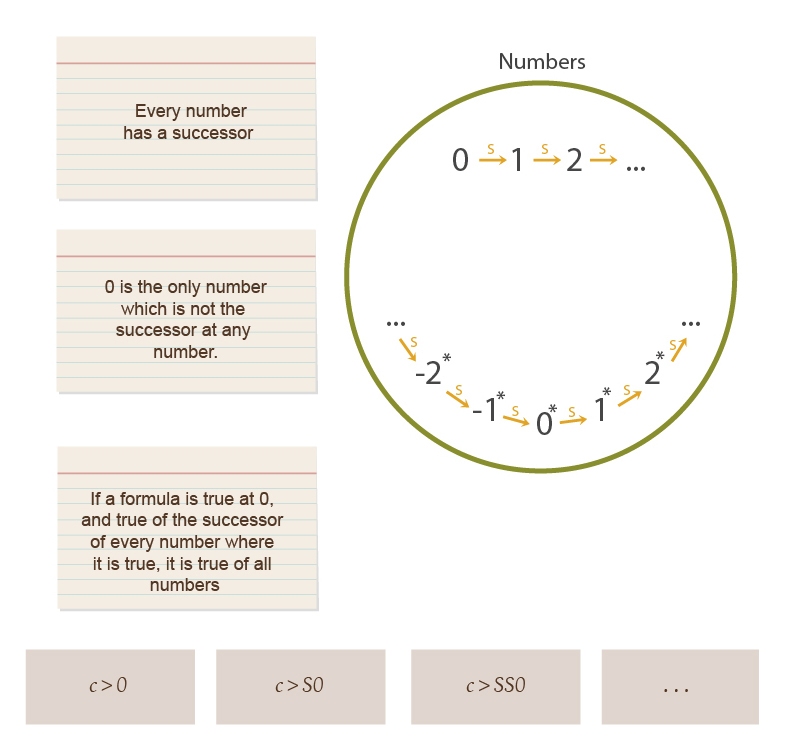
"But at least it's simpler than the Completeness Theorem, and from the Compactness Theorem, the inability of first-order arithmetic to pin down a standard model of numbers follows immediately. Suppose we take first-order arithmetic, and adjoin an axiom which says, 'There exists a number greater than 0.' Since there does in fact exist a number, 1, which is greater than 0, first-order arithmetic plus this new axiom should be semantically okay - it should have a model if any model of first-order arithmetic ever existed in the first place. Now let's adjoin a new constant symbol c to the language, i.e., c is a constant symbol referring to a single object across all statements where it appears, the way 0 is a constant symbol and an axiom then identifies 0 as the object which is not the successor of any object. Then we start adjoining axioms saying 'c is greater than X', where X is some concretely specified number like 0, 1, 17, 2256, and so on. In fact, suppose we adjoin an infinite series of such statements, one for every number:"

Wait, so this new theory is saying that there exists a number c which is larger than every number?
"No, the infinite schema says that there exists a number c which is larger than any standard number."
I see, so this new theory forces a nonstandard model of arithmetic.
"Right. It rules out only the standard model. And the Compactness Theorem says this new theory is still semantically realizable - it has some model, just not the standard one."
Why?
"Because any finite subcollection of the new theory's axioms, can only use a finite number of the extra axioms. Suppose the largest extra axiom you used was 'c is larger than 2256'. In the standard model, there certainly exists a number 2256+1 with which c could be consistently identified. So the standard numbers must be a model of that collection of axioms, and thus that finite subset of axioms must be semantically realizable. Thus by the Compactness Theorem, the full, infinite axiom system must also be semantically realizable; it must have at least one model. Now, adding axioms never increases the number of compatible models of an axiom system - each additional axiom can only filter out models, not add models which are incompatible with the other axioms. So this new model of the larger axiom system - containing a number which is greater than 0, greater than 1, and greater than every other 'standard' number - must also be a model of first-order Peano arithmetic. That's a relatively simpler proof that first-order arithmetic - in fact, any first-order axiomatization of arithmetic - has nonstandard models."
Huh... I can't quite say that seems obvious, because the Compactness Theorem doesn't feel obvious; but at least it seems more specific than trying to prove it using Godel's Theorem.
"A similar construction to the one we used above - adding an infinite series of axioms saying that a thingy is even larger - shows that if a first-order theory has models of unboundedly large finite size, then it has at least one infinite model. To put it even more alarmingly, there's no way to characterize the property of finiteness in first-order logic! You can have a first-order theory which characterizes models of cardinality 3 - just say that there exist x, y, and z which are not equal to each other, but with all objects being equal to x or y or z. But there's no first-order theory which characterizes the property of finiteness in the sense that all finite models fit the theory, and no infinite model fits the theory. A first-order theory either limits the size of models to some particular upper bound, or it has infinitely large models."
So you can't even say, 'x is finite', without using second-order logic? Just forming the concept of infinity and distinguishing it from finiteness requires second-order logic?
"Correct, for pretty much exactly the same reason you can't say 'x is only a finite number of successors away from 0'. You can say, 'x is less than a googolplex' in first-order logic, but not, in full generality, 'x is finite'. In fact there's an even worse theorem, the Lowenheim-Skolem theorem, which roughly says that if a first-order theory has any infinite model, it has models of all possible infinite cardinalities. There are uncountable models of first-order Peano arithmetic. There are countable models of first-order real arithmetic - countable models of any attempt to axiomatize the real numbers in first-order logic. There are countable models of Zermelo-Frankel set theory."
How could you possibly have a countable model of the real numbers? Didn't Cantor prove that the real numbers were uncountable? Wait, let me guess, Cantor implicitly used second-order logic somehow.
"It follows from the Lowenheim-Skolem theorem that he must've. Let's take Cantor's proof as showing that you can't map every set of integers onto a distinct integer - that is, the powerset of integers is larger than the set of integers. The Diagonal Argument is that if you show me a mapping like that, I can take the set which contains 0 if and only if 0 is not in the set mapped to the integer 0, contains 1 if and only if 1 is not in the set mapped to the integer 1, and so on. That gives you a set of integers that no integer maps to."
You know, when I was very young indeed, I thought I'd found a counterexample to Cantor's argument. Just take the base-2 integers - 1='1', 2='10', 3='11', 4='100', 5='101', and so on, and let each integer correspond to a set in the obvious way, keeping in mind that I was also young enough to think the integers started at 1:
| 1 | 10 | 11 | 100 | 101 | 110 | 111 | 1000 | 1001 |
| {1} | {2} | {2, 1} | {3} | {3, 1} | {3, 2} | {3, 2, 1} | {4} | {4, 1} |
Clearly, every set of integers would map onto a unique integer this way.
"Heh."
Yeah, I thought I was going to be famous.
"How'd you realize you were wrong?"
After an embarrassingly long interval, it occurred to me to actually try applying Cantor's Diagonal Argument to my own construction. Since 1 is in {1} and 2 is in {2}, they wouldn't be in the resulting set, but 3, 4, 5 and everything else would be. And of course my construct didn't have the set {3, 4, 5, ...} anywhere in it. I'd mapped all the finite sets of integers onto integers, but none of the infinite sets.
"Indeed."
I was then tempted to go on arguing that Cantor's Diagonal Argument was wrong anyhow because it was wrong to have infinite sets of integers. Thankfully, despite my young age, I was self-aware enough to realize I was being tempted to become a mathematical crank - I had also read a book on mathematical cranks by this point - and so I just quietly gave up, which was a valuable life lesson.
"Indeed."
But how exactly does Cantor's Diagonal Argument depend on second-order logic? Is it something to do with nonstandard integers?
"Not exactly. What happens is that there's no way to make a first-order theory contain all subsets of an infinite set; there's no way to talk about the powerset of the integers. Let's illustrate using a finite metaphor. Suppose you have the axiom "All kittens are innocent." One model of that axiom might contain five kittens, another model might contain six kittens."

"In a second-order logic, you can talk about all possible collections of kittens - in fact, it's built into the syntax of the language when you quantify over all properties."

"In a first-order set theory, there are some subsets of kittens whose existence is provable, but others might be missing."

"Though that image is only metaphorical, since you can prove the existence of all the finite subsets. Just imagine that's an infinite number of kittens we're talking about up there."
And there's no way to say that all possible subsets exist?
"Not in first-order logic, just like there's no way to say that you want as few natural numbers as possible. Let's look at it from the standpoint of first-order set theory. The Axiom of Powerset says:"

Okay, so that says, for every set A, there exists a set P which is the power set of all subsets of A, so that for every set B, B is inside the powerset P if and only if every element of B is an element of A. Any set which contains only elements from A, will be inside the powerset of A. Right?
"Almost. There's just one thing wrong in that explanation - the word 'all' when you say 'all subsets'. The Powerset Axiom says that for any collection of elements from A, if a set B happens to exist which embodies that collection, that set B is inside the powerset P of A. There's no way of saying, within a first-order logical theory, that a set exists for every possible collection of A's elements. There may be some sub-collections of A whose existence you can prove. But other sub-collections of A will happen to exist as sets inside some models, but not exist in others."
So in the same way that first-order Peano arithmetic suffers from mysterious extra numbers, first-order set theory suffers from mysterious missing subsets.

"Precisely. A first-order set theory might happen to be missing the particular infinite set corresponding to, oh, say, {3, 8, 17, 22, 28, ...} where the '...' is an infinite list of random numbers with no compact way of specifying them. If there's a compact way of specifying a set - if there's a finite formula that describes it - you can often prove it exists. But most infinite sets won't have any finite specification. It's precisely the claim to generalize over all possible collections that characterizes second-order logic. So it's trivial to say in a second-order set theory that all subsets exist. You would just say that for any set A, for any possible predicate P, there exists a set B which contains x iff x in A and Px."
I guess that torpedoes my clever idea about using first-order set theory to uniquely characterize the standard numbers by first asserting that there exists a set containing at least the standard numbers, and then talking about the smallest subset which obeys the Peano axioms.
"Right. When you talk about the numbers using first-order set theory, if there are extra numbers inside your set of numbers, the subset containing just the standard numbers must be missing from the powerset of that set. Otherwise you could find the smallest subset inside the powerset such that it contained 0 and contained the successor of every number it contained."
Hm. So then what exactly goes wrong with Cantor's Diagonal Argument?
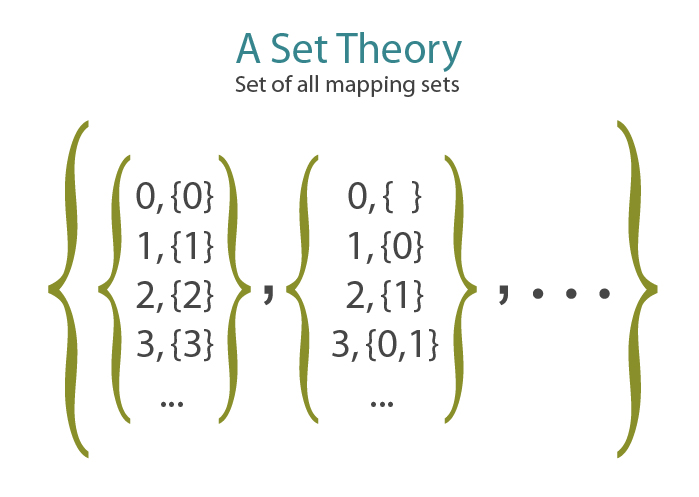
"Cantor's Diagonal Argument uses the idea of a mapping between integers and sets of integers. In set theory, each mapping would itself be a set - in fact there would be a set of all mapping sets:"

"There's no way to first-order assert the existence of every possible mapping that we can imagine from outside. So a first-order version of the Diagonal Argument would show that in any particular model, for any mapping that existed in the model from integers to sets of integers, the model would also contain a diagonalized set of integers that wasn't in that mapping. This doesn't mean that we couldn't count all the sets of integers which existed in the model. The model could have so many 'missing' sets of integers that the remaining sets were denumerable. But then some mappings from integers to sets would also be missing, and in particular, the 'complete' mapping we can imagine from outside would be missing. And for every mapping that was in the model, the Diagonal Argument would construct a set of integers that wasn't in the mapping. On the outside, we would see a possible mapping from integers to sets - but that mapping wouldn't exist inside the model as a set. It takes a logic-of-collections to say that all possible integer-collections exist as sets, or that no possible mapping exists from the integers onto those sets."
So if first-order logic can't even talk about finiteness vs. infiniteness - let alone prove that there are really more sets of integers than integers - then why is anyone interested in first-order logic in the first place? Isn't that like trying to eat dinner using only a fork, when there are lots of interesting foods which provably can't be eaten with a fork, and you have a spoon?
"Ah, well... some people believe there is no spoon. But let's take that up next time."
83 commentsGnome3: User-Friendly Is Not Equal To User-Insult
Like everybody in the Linux community, I have at last been dragged kicking and screaming onto Gnome 3. We had no choice; everything on our Linux desktops has been slowly failing from being so badly aged. My old Fedora release experience has so far been rescued by the graces of "fallback mode" on the laptop, while the desktops were still running old Ubuntus. So I had dodged being affected by Gnome3 so far.
At the same time, Gnome now has the entire Linux desktop world at gunpoint: The majority of software that runs on Linux requires Gnome and GTK. I've tried running everything on alternatives - Gnome has a desktop lock-in going on right now that is worse than anything imagined by Apple or Microsoft in their kinkiest dreams. Do without Gnome, and your printers will break, your Bluetooth will refuse to connect, none of the weather applets will talk to your desktop, your videos will freeze, and taxi cabs will suddenly pass you by in the snow without stopping for you.
So I finally grabbed a copy of Fedora 17, figuring, well, all of the crabbing I've been hearing about Gnome3 must have settled somebody's hash by now. Maybe the claims of UI horror have been greatly exaggerated. They've had months to fix it - how bad could it be?
Imagine being arrested and sentenced for life, in leg irons and chains, to preschool. No more adult for you, you have to sit in those tiny wobbly plastic chairs and drink Hawaiian Punch and play Hi-Ho Cherry-O and watch Barney for the rest of your life.
That bad.
I am not being funny.
And I see that the outraged screams of all of you (INCLUDING Linus Torvalds!) simply are not enough to penetrate the sawdust skull of William Jon McCann, Gnome "designer" who, in this interview from his Stalin-like reality-distortion-bubble, responded to the criticism of Gnome3 thus:
"Even many of the same people who are now claiming that GNOME2 was such a great thing for them were some of the most vocal opponents of the things we did in GNOME2."
Yeah, McCann, let me see if I can explain to you why this is. Pull up a wobbly plastic chair:
You had a house. That was "1". People lived in it. Then you broke all the lights and removed the doors and called it "2". And everybody complained about that. So then you also removed the roof and the furniture, and populated it with rabid pitbulls who attack the tenants, and that's "3". So now people complain even louder, so now you go "Well then, I guess 2 wasn't so bad after all, now was it?"
I'm beginning to question whether somebody who reasons this way has the best interests of users in mind.
In any case, does everybody finally see what happens when you ignore established or competent users in favor of Joe Sixpack? I was complaining about the preschool-ization of the Linux desktop five years ago at least (example). I got yelled down for it. I gave up. Nobody wanted to hear it from me. Apparently, nobody even got it when I framed it in a Joe Sixpack parody (strips #727-#730).
Now I see, what the hey, Tom's Hardware arriving at this conclusion when writing "Gnome 3: Why It Failed":
"So, when the power users are leaving, GNOME doesn't really seem to care. After all, GNOME 3 isn't designed for them. But what the GNOME Project leaders don't seem to understand is that new Linux users are like vampires, or werewolves, or zombies. Stick with me here.
New Linux users don't just spontaneously pop into existence, they have to be 'bitten' by someone who is already involved. Average Joe, who needs to use his computer and doesn't care how it works, doesn't wake up one day and, out of the clear blue sky exclaim, 'You know what? I think I'm gonna screw around with Linux today.' New users are typically converted by a friend or family member who gets them set up and interested.
By gutting GNOME of every power user-oriented feature (a functional desktop, virtual desktops, on-screen task management, applets, hibernation, and so on) it's losing that intermediate-to-advanced crowd that's responsible for bringing users on-board. The power user demographic isn't going to recommend and support GNOME 3-based systems if they've already jumped ship."
That was Adam Overa, and his words, above, ought to be emblazoned on marble slabs at every offramp leading into Silicon valley. You could substitute the name of any technology product and be just as right. This seems to be the single most important fact to technology adoption that nobody, since the Commodore VIC-20, seems to have understood.
Can we get this into the Jargon File or something, please? "Overa's User Base Law", summarized as: "New customers are brought in by old customers. If you shoot at your old customers, you won't get new customers, and you won't have any old customers, either."
Both Gnome 3 and Ubuntu's Unity (not a hair better) suffer from the phone fad: trying to make all devices behave like a phone. Yeah, but if we want a phone, we know where to get one. When you have a desktop, you have it because of reasons, reasons being that you need all that extra power, usually for productivity.
Anyway, we're installing XFCE and using that instead. When you have Gnome and all of the GTK support, you can switch to XFCE and pretend Gnome doesn't exist and almost not know the difference. So that looks like the state of the Linux desktop currently.

Update The Register also has scathing things to say about the Gnome hijack of the Linux desktop.
Regarding Jephthah’s daughter
I linked yesterday to Rachel Barenblatt’s poem on “the nameless daughter of Yiftach (in English, his name is usually rendered Jephthah).”
The story of Jephthah is told in Judges 11, with the fate of his daughter described in Judges 11:34-40. Before going to battle with the Ammonites, Jephthah made a vow to God:
“If you will give the Ammonites into my hand, then whoever comes out of the doors of my house to meet me, when I return victorious from the Ammonites, shall be the Lord’s, to be offered up by me as a burnt-offering.”
He defeats the enemy and returns home, and then:
There was his daughter coming out to meet him with timbrels and with dancing. She was his only child; he had no son or daughter except her. When he saw her, he tore his clothes, and said, “Alas, my daughter! You have brought me very low; you have become the cause of great trouble to me. For I have opened my mouth to the Lord, and I cannot take back my vow.”
Barenblatt teaches me something I hadn’t known about this story, and about the winter holy days we celebrate in December:
Tekufat tevet, the winter solstice, is regarded as the date when Yiftach’s [Jephthah's] daughter was killed.
The darkest day of the year seems appropriate for such a dark story. Note that this tradition assumes that Jephthat’s daughter “was killed.” That is undeniably what this story suggests — a sacrifice to God “as a burnt-offering.” Barenblatt’s powerful poem reflects on this. Read the whole thing, but here is the final stanza:
when he burned her bones
no prophet spoke God’s anger
and the maidens mourned alone
She also points us to Alicia Ostriker’s long poem/ritual script/cantata “Jephthah’s Daughter: A Lament.” Ostriker begins with the final verse in the story of Jephthah and his daughter as the basis for this ritual:
And it was a custom in Israel, that the daughters of Israel went yearly to lament the daughter of Jephthah the Gileadite four days in a year.
This is in the Bible, so for Christians, this story is part of our story.

Narcisse Diaz de la Pena, “Lament of Jephthah’s Daughter,” 1846.
And we don’t even know her name.
Some interpreters of this story have latched onto a slightly less horrifying reading, suggesting that Jephthah’s daughter was not killed as a sacrifice, but was instead dedicated to God, set apart in seclusion as a perpetual virgin.
I certainly prefer that reading to the plainer one, but as much as I’d prefer to read this story that way, I don’t find the case for this reading very persuasive. This is the book of Judges — a relentlessly bloody collection of tales of slaughter, rape, terror and even a suicide bombing. There’s little in the chapters preceding or in the chapters following the story of Jephthah that suggests we should look for a less horrifying way of spinning this story.
The entry on Jephthah in the Jewish Encyclopedia mentions this alternative interpretation, but dismisses it:
According to some commentators … Jephthah only kept his daughter in seclusion. But in Targ. Yer. to Judges xi. 39 and the Midrash it is taken for granted that Jephthah immolated his daughter on the altar, which is regarded as a criminal act; for he might have applied to Phinehas to absolve him from his vow. But Jephthah was proud: “I, a judge of Israel, will not humiliate myself to my inferior.” Neither was Phinehas, the high priest, willing to go to Jephthah. Both were punished. …
The rabbinical commentary on the story is fascinating:
The Rabbis concluded also that Jephthah was an ignorant man, else he would have known that a vow of that kind is not valid; according to R. Johanan, Jephthah had merely to pay a certain sum to the sacred treasury of the Temple in order to be freed from the vow; according to R. Simeon ben Laḳish, he was free even without such a payment (Gen. R. l.c.; comp. Lev. R. xxxvii. 3). According to Tan., Beḥuḳḳotai, 7, and Midrash Haggadah to Lev. xxvii. 2, even when Jephthah made the vow God was irritated against him: “What will Jephthah do if an unclean animal comes out to meet him?”
Later, when he was on the point of immolating his daughter, she inquired, “Is it written in the Torah that human beings should be brought as burnt offerings?” He replied, “My daughter, my vow was, ‘whatsoever cometh forth of the doors of my house.’” She answered, “But Jacob, too, vowed that he would give to Yhwh the tenth part of all that Yhwh gave him (Gen. xxviii. 22); did he sacrifice any of his sons?” But Jephthah remained inflexible.
What impresses me in this commentary is the rabbis’ condemnation of Jephthah’s vow as “not valid.” That’s quite different from the way I was taught this story in my own evangelical/fundamentalist Christian tradition, in which this story is almost always referred to as that of “Jephthah’s Rash Vow.”
That word — “rash” — is treated as the key point of this story, which is presented as a cautionary tale against imprudent or reckless promises. I don’t recall ever hearing a Sunday sermon on the story of Jephthah, but I probably heard a half-dozen Sunday school or Bible class lessons, and all of them pointed to this as the moral of this immoral story: Don’t make rash vows, because you will be bound by them just like Jephthah was.
And that’s monstrous — almost as horrifying as the original story. Those well-meaning Sunday school teachers all assumed, as Jephthah did, that he was absolutely bound by his vow, no matter what. And thus they all repeated Jephthah’s error — assuming that such vows and rules might somehow matter more than the life of Jephthah’s daughter.
That seems to me to be precisely the opposite of what this brutal little story actually illustrates. It shows us the lethal ignorance and sinful pride of remaining “inflexible.” The story of Jephthah is the story of everyone who decides that vows and codes and rules must be absolute. That way of thinking always ends in death.
ISP, WTF?

Instead I found myself looking at the sort of page I hadn’t seen in years, my Internet Service Provider’s own page of results, with nothing but links for various advertisers:

My typo was now serving my ISP’s profit motive. As the Electronic Frontier Foundation reports, the ISP practice of hijacking has been common with both searches and mistyped URLs. Not even the use of non-ISP Domain Name Service servers, such as Google’s 8.8.8.8 and 8.8.4.4, will always stop hijacking.¹
When I went to my ISP’s preferences page to opt out, I was told that my preferences were locked. When I deleted my ISP from Chrome’s list of search engines, it reappeared, again and again. And when I called my ISP to inquire as to what was going on, I found myself talking to a well-meaning fellow who knew much less about these things than I do — which, granted, is not that much. But I have figured out two simple ways to defeat this ISP practice:
1. In Chrome or Safari (I use both), clear the cache, disable all extensions, and attempt to opt out. For whatever reason, I was unable to opt out with my handful of extensions enabled. (I’m not patient enough to go back and try to find the offending extension by disabling one extension at a time.)
2. In Chrome or Firefox, use the EFF’s HTTPS Everywhere. The downside: depending on the speed of your connection, this extension might make browing noticeably slower.
After looking closely at my ISP’s website, I realize that I cannot expect very much in the way of technical experise. Here, from my ISP’s directions for setting up a homepage, is the complete list of supported browsers:

I think that covers it.
¹ And anyway, another DNS might much be slower than your ISP’s DNS. Why? As they say in real estate: location, location, location. Google’s free app namebench gives a fast and easy way to find the fastest DNS for your location.
You’re reading a post from Michael Leddy’s blog Orange Crate Art. This work is licensed under a Creative Commons 3.0 License.
Jeremy Hardy summarises British politics
Tories delight in a spat with Brussels, because upsetting foreigners is second only to killing them in stimulating the pleasure centres of the Conservative Party. Liberals, on the other hand, love Europe. They adore anything continental: the cheeses, the voting systems, anything. Their party’s whole raison d’etre is the vast superiority of French campsites. I refer, obviously, to sleek, modern Liberals, not the old-fashioned radicals who were content with a good cheddar, a thermos and a wet walking holiday, reading a biography of Jo Grimond.
And to be fair to Liberals, all of them have always loved democracy. The left is ambivalent about it. We pay lip-service to it but can’t help suspecting that people might be too stupid to realise the high regard we have for them. And Conservatives, despite belligerently enthusing about western democratic values, have never truly been convinced by this country’s experiment with universal suffrage. Their greatest terror is the mob. That’s probably why they want the troops home from Afghanistan. They don’t want to be left without a squadron of dragoons when the millworkers get restless.
Firewalls!
Regulars from Cosmic Variance will be well acquainted with the idea of “firewalls” around black holes, from reading Joe Polchinski’s guest post on the subject. And then you heard more about them from John Preskill’s post at Quantum Frontiers. Or maybe George Musser’s post at Scientific American. Long story short: there is a believable claim on the market that, if you believe that information is preserved in the evaporation of black holes via Hawking radiation, an infalling observer should be incinerated by a wall of high-energy radiation when they cross the event horizon, in dramatic contradiction to everything classical general relativity would lead you to believe. Important stuff, if true. (“True” might mean “the argument is valid but one of the underlying assumptions is wrong, therefore teaching us something important about quantum gravity.)
Word is now finally leaking out into the more popular press, courtesy of my lovely wife Jennifer Ouellette’s article at Simons Science News, a new initiative from the Simons Foundation. It’s a great article, which I would say even if we were not notoriously nepotistic back-scratchers.
Here’s my attempt to squeeze the firewall argument down to its essence, for people who know a little quantum mechanics. If information escapes from a black hole, the radiation emitted at late times must share quantum entanglement with radiation that escaped at early times, in order to describe a pure quantum state (from which the black hole presumably formed). At the same time, to an observer near the event horizon, the local conditions are supposed to look almost like empty space — the quantum vacuum. But within that vacuum are virtual particles, some of which will eventually escape in the form of radiation and some of which will eventually fall into the black hole. In order for the state near the horizon to look like the vacuum, that outgoing radiation and the ingoing radiation must also be entangled. Therefore, it appears that the outgoing radiation is both entangled with the ingoing radiation, and with the radiation that escaped at earlier times. But that’s impossible; quantum mechanics won’t let degrees of freedom be separately (maximally) entangled with two different other sets of degrees of freedom. Entanglement is monogamous. A simple — but unpalatable — way out is to suggest that the state near the horizon is not a quiet state of maximal entanglement, but a noisy thermal state of high-energy radiation — a firewall.
It’s a slightly tricky business, as you expect it to be when we’re mixing up quantum mechanics with things happening in spacetime, in the absence of a once-and-for-all theory of quantum gravity. Probably most people who have thought about the issue don’t believe firewalls really exist (although some do), but in that either there’s a secret flaw in the argument, or one of our fundamental assumptions is out of whack. Maybe information is not conserved, or maybe it’s transferred faster than light, or maybe quantum mechanics doesn’t work quite the way we thought. The story should continue to be interesting no matter what happens.
Minnesota Vikings briefly considered demolishing Minneapolis's primary Internet hub to extend their stadium.
Day 4377: DOCTOR WHO: The Snowmen
Hark the jolly Christmas Choir,
Jingle Bells roasting on an open fire,
Christmas comes but once ’tis true,
Along with Daddy’s Doctor Who review…
Steven Moffat’s “dark fairy tale” Doctor Who is best at Christmas, so it’s glad tidings that, after last year’s misstep, he’s back on sparkling Winterval form.As we were writing this, we heard the sad news that Gerry Anderson, creator of almost all Britain’s not-Who television sci-fi, has died. Always a generous rival, he can be seen speaking about Doctor Who on the “More Than 30 Years in the TARDIS” documentary released next month as part of the “Legacy” collection.
Call me a fanboy sucker if you will, but give me one juicy returning enemy and I’ll forgive you a “nobody dies (really)” and a “victory by the power of schmaltz” any day.
But let’s be honest, I was in love with this from the new and vastly improved opening title sequence.
For the fiftieth anniversary, they’ve created an homage to all the earlier titles, reminiscent of the McCoy flight through whirling CGI galaxies, but with exploding shapes that resemble the old howl-round patterns of the Hartnell and Troughton eras, finishing up in a whizzy time tunnel like the Tom Baker diamond-era one but done in Pertwee era colours. Even some hints of the pastel vortices of the Cushing movie titles. Toss in a nod to the DVD releases. And, of course, the Doctor’s face back in the titles at long last. Hooray, as Russell T Davies would put it, hooray.
(And as an added bonus… you would hope that they might have secured the sensational Mr Smith’s services for, say, another couple of years before forking out to fit his phizog to the starfield.)
Still not got the theme tune quite right, though.
The acting is pitch-perfect throughout and the look is beautiful too; steampunk era Victoriana can always be made to look good, but the Doctor’s magical cloud contrasting with his machine is very clever. The TARDIS hasn’t looked this mechanical since the return in 2005. Arguably since before McGann’s wood and brass affair, too. The new look, very reminiscent of the design that was being considered for Sylv’s fourth series (had it happened), is cold and steely to fit the Time Lord’s mood. I like the theory that I read that the TARDIS has been regenerating herself since the Time War – first we saw the bones, then the structure of the console room, and now the mechanism itself is growing back.
And on its own terms the story works.
To give Moffat his due, while he clearly has a fundamental failure to understand what Doctor Who is actually about – and we’ll come to that – he does appear willing to try and address his deficiencies as a writer.
Last year, I said he was on a mission to write drama without conflict. No danger of that here, with meaty confrontations to draw the Doctor back into defending the Universe.
The titular Snowmen themselves may have been more Muppet than menace, with a tendency to loom rather than threaten, and, perhaps wisely they opted not to show their instantaneous forming, perhaps lest it resemble something from the Chorlton and the Wheelies Christmas Special (on ice!). But an icy performance from Richard E Grant as baleful Dr Simeon, the child with the frozen heart, paired with the mellifluous tones of Sir Ian McKellen as the world’s most sinister snow globe meant there was no lack of threat.
And if “The Doctor, The Widow and the Wardrobe” was Moffat trying to respect his female characters “as a woman”, this year appears to be an exercise in proving he is willing to kill people.
Of course, I mean the yard-full of workers devoured by the Snowmen at the start, under the disdainful eye of Dr Simeon (when weall knew where the “I promised to feed them” line was going.)
Because if they’re “important” people, Moffat brings them back to life again, which may be sign of missing the point somewhat.
When even a Sontaran clone – surely the least irreplaceable lifeform in the galaxy – gets a touch of the resurrection, then you’re left with a distinct feeling of “what’s the point?”.
(Not that Dan Starkey’s Strax isn’t a terrific addition to the ensemble; at the very least he makes a terrific straight-man. Bit troubled by the Doctor repeatedly mocking his height, intelligence and body-shape, though, as I don’t think the Time Lord should be encouraging bullying.)
There’s something a bit, well, class-ist here, when the obvious workers are disposable drones while the Sontaran (and “Commander” Strax is officer class after all) gets resurrected. And there’s also the question of whether Clara is posh-Clara pretending to be working class or Cockney-Clara pretending to be gentlefolk class. In fact this is the same with Strax: mockable as a manservant, he’s actually a displaced Commander, so “important” and gets to live.
Is this going somewhere though? The Doctor says that Strax gave his life for a friend… and then another friend brought him back. Who? And why? Will we find out?
There’s a sense that this is a point that ought to be followed up, but Moffat’s got form on this sort of dangling thread. Does anyone really understand why or how the Silence – and we must assume it was they – blew up the TARDIS in “The Pandorica Opens” or what made them feel that blowing up the Universe would further their alleged aim of, er, saving the universe? One suspects that this unsatisfying plot got lost with the Ponds’ leaving (it would be a little odd to refer back to it for an explanation now); on the other hand, the plot was unsatisfying precisely because it kept deferring its explanations. But then – to drag this back to relevance – here we see Moffat providing an “explanation” forty-five years after the original story. We can but hope he’s not leaving the “Silence arc” to be explained in the hundredth anniversary series.
But instead he’s found a shiny new plot arc to go chasing after, the mystery of new companion – or potential companion – Clara, who has already died twice. Appearing in multiple time zones, yet able to quote the words of her other selves… clearly she’s part- Jagaroth on her mother’s side.
More seriously, Alex was immediately struck by the patterns of speech and behaviour shared by Clara and the Doctor. It might just be Moffat’s inability to write in more than one “voice” (note: all other Moffat women are basically Sue Virtue with escalating levels of weaponry) but the ingenious theory is that these “Clara”s are constructs made out of the Doctor. Running with this idea, I suggest that all the ladies around the Doctor – Madam Vastra and Jennie Flint… and the TARDIS – all disapprove of his self-imposed hermitage, and want to encourage him back into the world. And the TARDIS is the one able to make a “perfect companion” out of his memories and his (tawdry) quirks. The Doctor himself says he doesn’t know why but he knows who.
The opening scene could in fact be very clever. It features a snowman, naturally, that appears out of nowhere. Just at the right moment, the Doctor happens to be walking past – as though he is the one who has appeared from nowhere. But there’s a third person in the scene, Clara, who’s just emerged from the Rose and Crown (the “Rose and Pond” would have been more on the money). Perhaps it’s not a coincidence that she’s there at just the perfect moment to bump into the lonely Doctor. And perhaps she’s the one to have appeared from nowhere.
“Oswin” means “god’s friend” and “Osgood” means “god’s gift” which are clearly pointing in the right direction (although “Clara” means “clear”, “bright” or “famous” or possibly “I can’t go having the Doctor shout “come on Oswin”). If you want more evidence, then a look at her gravestone tells us she was born on 23rd November and died aged 26. And is still alive. A metatextual in-joke, or a heavy hint that she’s made of the story of Doctor Who? Even her introduction “Clara Who? Doctor Who?” points this way.
The notion of a “perfect companion” made from the Doctor’s own biodata (“time DNA”) was first seen in the Faction Paradox stories of the early Eighth Doctor Adventures (notably “Alien Bodies” and “Unnatural Selection”). But who said Moffat had to be original? And why change the habit of a lifetime? Fortunately Jenna-Louise Coleman has more personality in one cheeky grin than Sam ever had in her entire time in the novels.
Moffat has – flattering himself – suggested that the Doctor “in retirement” is a plot that has been waiting to be done since Douglas Adams was told to write “Shada” instead. But Moffat’s self-absorbed, sulking Doctor – “the Universe doesn’t care” – couldn’t be further away from Adams’ conception of a Time Lord that the Universe just won’t let go. (Which is even more odd when remembering that Moffat himself was so much more on the money in his spoof Doctor Who “Curse of the Fatal Death”.)
The Doctor has suffered losses before. He lost his entire species. He lost his love when Rose fell into a parallel world. He lost his faith in himself when he destroyed Martha’s life. He lost his best friend when he wiped Donna’s memories. He lost his entire species again. But it’s the loss of his mother-in-law that drives him into seclusion?
Partly, this is Moffat flattering himself again – it’s his companions who are the “most important evah” ones. But partly it’s another example of the way that for all his cleverness in story and story arc writing, Moffat is very short-termist in his thinking, grasping an idea and using it as soon as he has it, rather than moulding the series to prepare for it. Recall the way that the Ponds were suddenly getting divorced and then it was totally forgotten all within one episode. Of course you remember that episode; it’s the one he kept asking you to remember during this one.
The least we needed was a scene – perhaps one with Madam Vastra – to say, “You’ve suffered losses before.” For him to reply: “Yes, and this is one too many. This camel’s back is broken”. What we really wanted was a crisis that was bigger, where victory cost him more than “The End of Time”. But Moffat’s not good at that, as “A Good Man Goes to War” showed. “You have never risen higher.” Er, he has, you know.
(Ironically, losing River would be crisis enough to justify this fugue, which from his point of view would have meant arriving at the start of her story… which happened in “A Good Man Goes to War”; had that and “The Wedding of River Song” been swapped round, and then followed by this, it might have worked. But to do that you’d need to be following the emotional logic of the tragedy, not trying to pull off flashy card tricks with the plot.)
This same sense that Moffat doesn’t understand the importance of scale, or emotional weight, if I can use such a term, shows itself in his treatment of the Great Intelligence.
The whole premise of this story is – spoilers – as a prequel to two classics of the Troughton era: “The Abominable Snowmen” and “The Web of Fear” where the second Doctor encounters a disembodied power that calls itself “the Great Intelligence”, a force from the astral plane that seeks physical domination of the Earth, the plots of which Moffat refers to disparagingly at the end (okay, it is using robot Yeti, but it was a less complicated age).
What those stories have, which means they do not deserve the Mister Moffster’s mockery, is heart. “The Abominable Snowmen” is one of several Buddhist parables in Doctor Who, where the Intelligence represents everything that Buddhism is about getting rid of: it is the ultimate sense of self, all ego and ambition. The “Web” in “The Web of Fear” is as much the tangle of greed, hubris, jealousy and paranoia that keep us bound to the wheel of life (or the Circle Line of destiny) as it is the sticky mess on the Underground.
On the one hand, Moffat has the Intelligence as an idea that – like the Angels – has escaped from the person that is thinking it, which is great. A child’s imaginary friend that has made itself real… no wait that was the Doctor. (Nice moment when the Doctor modulates the Intelligence’s voice back to child Walter’s – borrowed from “The Face of Evil” of course, but nice nonetheless.) But on the other hand, he expresses this as basically, a computer virus (operating on an operating system of programmable snow) with ideas above its station. As an idea it is expressly described as “a child’s fear crossed with Victorian Values”, something essentially “Earthly” in origin.
The Great Intelligence of Season Five is “Lovecraftian” not in the mundane sense that it is literally Yog-Sothoth trading under a pseudonym, as the New Adventures (specifically “The Adventure of the All-Consuming Fire”) might have it, but because it is something totally alien even to our sense of reality, an intrusion into our existence that causes the Universe to fray at the edges (or bubble up with the BBC foam machine, subject to budget).
And, because he thinks he’s so clever, Moffat never checks his facts. Although “The Abominable Snowmen” takes place in 1935, Padmasambhava has been kept live by the Intelligence for hundreds of years before hand (so not just since 1892). And “The Web of Fear” was broadcast in 1968, not ’67, and is set in the future. (Probably at least 1975, given a line of dialogue that says it is more than 40 years after the events of “The Abominable Snowmen”. Only Larry and Tat date “Web” to before it was broadcast, so good luck with that date.) In fairness, the date of a tube map is not what determines when the Intelligence chooses to attack London via the Tube (it takes its chance as soon as Professor Travers reactivates one of the Yeti control spheres – though there’s the possibility he’s acting under astral influence, who knows).
Moffat’s undeniable cleverness with plot – compared with the feel of the series under Terrance Dicks or Robert Holmes or Andrew Cartmel – reminds me of the difference between Classical and Romantic music. For all the genius shown in the twiddles of a Back or Mozart, it doesn’t move you in the way Beethoven or Tchaikovsky or even (heaven – Valhalla? – help us) Wagner can.
So this is all constructed with utter ingenuity. The Doctor is living on a cloud – water vapour – while the Intelligence is inhabiting snow – water solid, establishing them as elemental opposites. Clara’s tears are, of course, water. The sit-com business with Strax, and the memory worm, while hilariously establishing that the Doctor is really bad at the Torchwood sort of stuff is, obviously, a Chekov’s gun for the Doctor’s ultimate attack on Dr Simeon. A lot of the dialogue is enormously clever wordplay (“The snow will fall and so will mankind”), particularly the “single word responses” to Madam Vastra’s questioning (“Do you understand what I am saying to you?” “Words.”) although perhaps too much use of “Pond” as the magic word.
(And, incidentally, it is not “a first” when Clara describes the TARDIS as “smaller on the outside” as Donna did so in “The Runaway Bride” having, uniquely, seen the interior first.)
All of which makes it more ironic that "emotion" is increasingly used as the universal plot device. Yes, you can look at the conclusion as an Avengers-esque "killed by his own weapon" as the Intelligence's attack on Darkover House is what leads directly to all the mirroring snow being there and nowhere else, and hence getting reprogrammed by grief, as though only one family could be grieving on Christmas Eve. Heavens, to really give the Snowmen what for he should have had them hang around another hour for EastEnders.
But then using emotion as a plot device is still a device, another shiny cog in Moffat's machine. Instead of people reacting to events, it's just another of the events.
In many ways, the right time emotionally for this story was straight after “The End of Time”, but instead we had “The Eleventh Hour”, where the Doctor essentially forgot all the trauma and went back to saving the world as normal.
People have suggested that this has the feel of a “mini reboot” to it. In a way that may be true: a reboot not of the series, but of the Moffat era.
It’s possible that his first series, the “carry on as normal” series, came about through a lack of courage on the new team’s part, falling back into following the RTD model that worked but was… safe. Moffat’s second series struck out in much more… bold directions. But the story arc spiralled out of control and betrayed the characters along the way. What was most noticeable about the five stories we had in September was their disconnectedness from anything Silence-related. Even River Song, when she appeared, was treated as a recurring character, not part of a developing story. Like the television adaptation of John Christopher’s “The Tripods” this feels very much like a trilogy without its closing chapter.
So instead we’re trying again.
Matt is a great Doctor, and has sparkling chemistry with Jenna-Louise. They deserve to have a really good series written for them, something with joy, humour, drama and a touch of fatal death. Well, three out of four ain’t bad. A decent (re) start.
Next Time… You’re once, twice, three times exactly the same lady, apparently. Where will the Doctor find Clara next? Where will he run? And what will he remember? Fifty years on and Doctor Who returns once more in April with “The Bells of St John”. Now is that St John as in "Ambulance" (like the badge on his TARDIS) or as in "the Beheaded" (like the Library in "All-Consuming Fire")?
Responsible for such classic series as “Captain Scarlet”, “Stingray”, the highly underrated “UFO” (not least for Wanda “now remembered as mum of Sherlock/Smaug” Ventham), ill-omened but fondly-remembered “Space 1999” and of course “Thunderbirds”, he also created the CGI return of Captain Scarlet that gave us Phil Ford, who has gone on to be a stalwart of “Sarah-Jane” and now “Wizards v Aliens”.
More recently and bravely Gerry was an ambassador for the Alzheimer’s society, speaking about his condition as recently as June this year. Arguably a mercy if the disease was starting to bite, nevertheless his passing is a tragic loss.
Secret Courts: Nick Clegg’s refusal to meet campaigners is not helping
Way back in March, I wrote a few words of advice to Nick Clegg in the wake of the NHS debate at Spring Conference. They seem relevant today as activists and leaders are at loggerheads over Part II of the Justice and Security Bill. That’s the part that introduces Closed Material Procedures, or secret courts. This would mean that if national security, Government vetted Special Advocates would represent the non-Government side, but would not be allowed to share any details with them. You can see how difficult it would be to prepare a case if you aren’t even allowed to have one of the parties give their take on the evidence.
In September Liberal Democrat conference overwhelmingly backed a motion which called for:
- The Coalition Government to withdraw Part II of the Justice and Security Bill; and put in place instead a statutory scheme reflecting the current Public Interest Immunity system to be enacted which will retain judicial discretion, be a proportionate means of ensuring national security is not jeopardised by any litigation, and ensure the working successful democratic principle of open justice is retained.
- All Liberal Democrats in parliament to press the government to do this and in any event to press for the withdrawal or defeat of Part II of the Justice and Security Bill.
So far there has been little sign that the Parliamentary Party is taking heed. Last month, many of them voted for amendments in the House of Lords supported by the Joint Committee on Human Rights, but only 16 voted to withdraw Part II. MPs appear to have been assured by the Government’s acceptance of these amendments. They should not be. They miss the point, as our own Nick Thornsby told the Spectator’s Coffee House blog:
The bill, establishing the principle of court cases where one side can’t hear the evidence from the other, is fundamentally illiberal. It is difficult to see how Part II can remain intact and be acceptable to Liberal Democrats.
Leading Liberal Democrat anti secret courts campaigner Jo Shaw,who spent 12 years as a barrister, outlined the next steps in the campaign, including a motion to Spring Conference, earlier this week. For me, the crucial sentence in that article was:
Nick Clegg has refused to meet with us to discuss the Bill, and the Liberal Democrat response to it.
I have a lot of time for our leader, but I am losing patience with him on this issue, not just for the substance, but for the way he is handling it. He needs to wake up and realise that Lib Dems against secret courts isn’t the Awkward Squad being difficult. It’s a heartfelt campaign which unites the entire party. I don’t know what on earth he thinks refusing to engage with these reasonable people will achieve.
In March, I suggested three things that Nick needed to do to get his relationship with the Party back on track. One was to get everyone on the same page before agreeing to legislation. That ship has sailed in relation to secret courts. Rebuttal is another element. If Nick believes that secret courts are a good idea, then he needs to tell us why. Of course, it may be that he knows fine he has mucked this one up and that there is no such defence.
It’s too late for getting people on the same page. Rebuttal of the indefensible is not an option. Rapport is the only thing left. Nick needs to listen to the experts in the party who may be able to help him find a way through this. The risks of being so dismissive of the overwhelming view of the party are clear. As I wrote in March:
There is no point in Nick or other ministers getting cross and deciding to retreat from the party. That way lies tumbling satisfaction numbers. The party’s future, more than the others, relies on having lots of activists getting out there and knocking on doors and doing the work on the ground to get our Councillors and MPs re-elected.
I call on Nick to sit down with Jo Shaw and Martin Tod, listen to them and work to find a way forward. If you agree, then you might like to sign up to the petition against secret courts if you haven’t done so already. The campaign is also seeking signatures for a new motion to Spring Conference. It may help persuade Nick to engage with the party rather than ignore it if voting representatives were to support it. You can email your support to jo@libdemsagainstsecretcourts.org.uk.
* Caron Lindsay is Wednesday editor at Lib Dem Voice and blogs at Caron's Musings
The generous tale of Christmas Williams
If you were called Christmas Williams, you might well want to be known as Chris. This was indeed the case with Christmas Price Williams, Liberal MP for Wrexham from 1924 until his defeat in the 1929 election.
Christmas nearly returned early to parliament in October 1931, for Montgomeryshire, when Clement Davies, who had been elected for the seat in 1929 was told that he would not be allowed to stand for re-election and to continue with his lucrative new day job as Managing Director of Unilever. Williams was selected as Davies’s successor, but at the last minute Unilever relented and agreed that Clement Davies could stand again for parliament and keep his job.
Chris Williams very generously bowed out of the race, giving Clement Davies the opportunity to remain in parliament. Davies at that stage supported the National Government and was returned unopposed as the MP for Montgomeryshire in the 1931 election, as indeed he was again in 1935.
Chris Williams did not reappear in parliament, but he is perhaps remembered more often than he would have been (especially at this time of year) if Chris had been short for Christopher.
And no prizes for guessing Christmas Williams’s birthday!
Konrath's Resolutions For Writers
2006
Newbie Writer Resolutions
- I will start/finish the damn book
- I will always have at least three stories on submission, while working on a fourth
- I will attend at least one writer's conference, and introduce myself to agents, editors, and other writers
- I will subscribe to the magazines I submit to
- I will join a critique group. If one doesn't exist, I will start one at the local bookstore or library
- I will finish every story I start
- I will listen to criticism
- I will create/update my website
- I will master the query process and search for an agent
- I'll quit procrastinating in the form of research, outlines, synopses, taking classes, reading how-to books, talking about writing, and actually write something
- I will refuse to get discouraged, because I know JA Konrath wrote 9 novels, received almost 500 rejections, and penned over 1 million words before he sold a thing--and I'm a lot more talented than that guy
- I will keep my website updated
- I will keep up with my blog and social networks
- I will schedule bookstore signings, and while at the bookstore I'll meet and greet the customers rather than sit dejected in the corner
- I will send out a newsletter, emphasizing what I have to offer rather than what I have for sale, and I won't send out more than four a year
- I will learn to speak in public, even if I think I already know how
- I will make selling my books my responsibility, not my publisher's
- I will stay in touch with my fans
- I will contact local libraries, and tell them I'm available for speaking engagements
- I will attend as many writing conferences as I can afford
- I will spend a large portion of my advance on self-promotion
- I will help out other writers
- I will not get jealous, will never compare myself to my peers, and will cleanse my soul of envy
- I will be accessible, amiable, and enthusiastic
- I will do one thing every day to self-promote
- I will always remember where I came from
2007
-
Keep an Open Mind. It's easier to defend your position than seriously consider new ways of thinking. But there is no innovation, no evolution, no "next big thing" unless someone thinks differently. Be that someone.
-
Look Inward. We tend to write for ourselves. But for some reason we don't market for ourselves. Figure out what sort of marketing works on you; that's the type of marketing you should be trying. You should always know why you're doing what you're doing, and what results are acceptable to you.
-
Find Your Own Way. Advice is cheap, and the Internet abounds with people telling you how to do things. Question everything. The only advice you should take is the advice that makes sense to you. And if it doesn't work, don't be afraid to ditch it.
-
Set Attainable Goals. Saying you'll find an agent, or sell 30,000 books, isn't attainable, because it involves things out of your control. Saying you'll query 50 agents next month, or do signings at 20 bookstores, is within your power and fully attainable.
-
Enjoy the Ride. John Lennon said that life is what happens while you're busy planning other things. Writing isn't about the destination; it's about the journey. If you aren't enjoying the process, why are you doing it?
- Help Each Other. One hand should always be reaching up for your next goal. The other should be reaching down to help others get where you're at. We're all in the same boat. Start passing out oars.
2008
I Will Use Anger As Fuel
We all know that this is a hard business. Luck plays a huge part. Rejection is part of the job. Things happen beyond our control, and we can get screwed.
It's impossible not to dwell on it when we're wronged. But rather than vent or stew or rage against the world and everyone in it, we should use that anger and the energy it provides for productive things.
The next time you get bad news, resolve to use that pain to drive your work. Show fate that when it pushes you, you push right back. By writing. By querying. By marketing.
I Will Abandon My Comfort Zone
The only difference between routine and rut is spelling.
As a writer, you are part artist and part businessman.
Great artists take chances.
Successful businessmen take chances.
This means doing things you're afraid of, and things you hate, and things you've never tried before.
If, in 2008, you don't fail at something, you weren't trying hard enough.
I Will Feed My Addiction
Life is busy. There are always things you can and should be doing, and your writing career often comes second.
So make it come first.
Right now, you're reading A Newbie's Guide to Publishing. Not A Newbie's Guide to Leading a Content and Balanced Life.
You want to get published and stay published? That means making writing a priority. That means making sacrifices. A sacrifice involves choosing one thing over another.
If you can't devote the time, energy, and money it takes to pursue this career, go do something else.
I Will Never Be Satisfied
Think the last resolution was extreme? This one really separates the die-hards from the hobbyists.
While an overwhelming sense of peace and enlightenment sounds pretty nice, I wouldn't want to hire a bunch of Zen masters to build an addition on my house.
Satisfaction and contentment are great for your personal life. In your professional life, once you start accepting the way things are, you stop trying.
No one is going to hand you anything in this business. You have to be smart, be good, work hard, and get lucky.
Every time you get published, you got lucky. Don't take it for granted.
When something bad happens, it should make you work harder. But when something good happens, you can't believe you earned it. Because it isn't true. You aren't entitled to this career. No one is.
Yes, you should celebrate successes. Sure, you should enjoy good things when they happen. Smile and laugh and feel warm and fuzzy whenever you finish a story or make a sale or reach a goal.
But remember that happiness isn't productive. Mankind's greatest accomplishments are all tales of struggle, hardship, sacrifice, work, and effort. You won't do any of those things if you're satisfied with the status quo.
Who do you want on your team? The kid who plays for fun? Or the kid who plays to win?
If you want this to be your year, you know which kid you have to be.
2009
This year I'm only going to add one resolution to this growing list, but if you're writing for a living, or trying to write for a living, it's an important one.
I Won't Blame Anyone For Anything
It's tempting to look at the many problems that arise in this business and start pointing fingers. This is a slippery slope, and no good can come from it.
Do agents, editors, and publishers make mistakes? Of course.
You make mistakes too.
Hindsight is 20/20, so we can all look at things that didn't go our way and fantasize about how things should have gone.
But blaming others, or yourself, is dwelling on the past. What's done is done, and being bitter isn't going to help your career.
So try to learn from misfortune, forgive yourself and others, and make 2009 a blameless year.
2010
I Will Be Wary
The medium in which stories are absorbed is changing in a big way, and it will continue to change. 2009 will go down in publishing history as Year Zero for the upcoming ebook revolution. Writers should explore this new territory, but we need to understand that Print is still King, and any goals and dreams a writer might have regarding publication should be focused on getting into print.
That's not to say that ebooks shouldn't be explored and experimented with. They should be, and in a serious way. Erights are a very long tail--one that can potentially continue long after our lifetimes.
Don't forsake print for ebooks without understanding what you're giving up, and don't give away your ebook rights to get a print deal.
I Will Be A Pioneer
Remember the old saying about how to recognize a pioneer? They're the one with the arrows in their backs and fronts.
I've tried to be forward-thinking in my career, rather than being content with my role as a cog in a broken machine. Your best chance for longevity is to question everything, test boundaries, experiment with new ideas, and be willing to change your mind and learn from your mistakes.
Your job is to survive, by any means necessary. So pull out the arrows and forge ahead. Discover the difference between determination and stupidity by being an example for one or the other or both.
Though this may seem at odds with the previous resolution about being wary, it's actually quite simpatico.
Q: What do you call a wary pioneer? A: Still alive.
I Will Read Books
I'm surprised I haven't mentioned this in previous years. If you're a writer, you must be a reader. I don't care if you read on your Kindle, or on stone tablets. Reading, and giving the gift of reading to others, is essential. Period.
I Will Stop Worrying
Worrying, along with envy, blame, guilt, and regret, is a useless emotion. It's also bad storytelling. Protagonists should be proactive, not reactive. They should forge ahead, not dwell on things beyond their control. Fretting, whining, complaining, and bemoaning the state of the industry isn't the way to get ahead.
You are the hero in the story of your life. Act like it.
2011
I Will Self-Publish
Just twelve short months ago, I made $1650 on Kindle in December, and was amazed I could pay my mortgage with ebook sales.
This December, I'll earn over $22,000.
The majority of this is on Kindle. But I'm also doing well self-pubbing in print through Amazon's Createspace program, and will earn $2700 this month on nine POD books. I'm also finally trying out B&N's PubIt program, which looks to be good for over $1k a month, and I'm doing okay on Smashwords, with Sony, Apple, and Kobo combining for another $1k.
This is nothing short of revolutionary.
The gatekeepers--agents who submit to editors who acquire books to publish and distribute to booksellers--are no longer needed to make a living as a fiction writer. For the first time in history, writers can reach readers without having to jump through hoops, get anointed, compromise integrity, or fit the cookie-cutter definition for What New York Wants.
I'm not saying you should give up on traditional publishing. But I am saying that there is ZERO downside to self-pubbing. At worst, you'll make a few bucks. At best, you'll make a fortune, and have agents and editors fighting over you.
But remember: even if you are being fought over, you still have a choice.
DO NOT take any deal that's less than what you believe you could earn in six years. If you're selling 1000 ebooks a month, that means $144,000 is the minimum advance you should be offered before you consider signing.
It blows my mind to think that way, let alone blog about it. I got a $34,000 advance for my first novel, and even less for my last few.
Currently, I have seven self-pubbed novels, each earning more than $24k a year. In six years, at the current rate, I'll earn more than one million bucks on those.
But I don't expect them to maintain their current sales.
I expect sales to go up.
Ebooks haven't saturated the market yet. But they will. And you need to be ready for it. Which leads me to...
I Won't Self-Publish Crap
Just because it's easier than ever before to reach an audience doesn't mean you should.
I can safely say that I'm either directly or indirectly responsible for thousands of writers trying out self-publishing. The majority of these writers aren't making the same amount of money that I am, and are scratching their heads, wondering what they're doing wrong.
Luck still plays a part in success. But so does professionalism.
Being a professional means you make sure you have a professional cover (http://www.extendedimagery.com), and you have been professionally formatted for ebooks (www.52novels.com) and for print books (http://yourepublished.blogspot.com.)
Being a professional means you're prolific, with many titles for sale, and that you diversify, exploiting all possible places to sell your work (Kindle, Createspace, Smashwords, iBooks, iTunes, Sony, Nook, Kobo, Borders, Android, and no doubt more to come.)
But most of all, being a professional means you won't inflict your shitty writing on the public.
Self-pubbing is not the kiddie pool, where you learn how to swim. You need to be an excellent swimmer before you jump in.
If your sales aren't where you'd like them to be, especially if you've done everything else I've mentioned, then it's time to take a cold, hard, critical look at the writing. Which segues into...
I'll Pay Attention to the Market
To say I'm excited about the ebook future is putting it mildly. But that doesn't mean I have carte blanche to write whatever the hell I want to, and then expect it to sell.
Yes, writers now have more freedom. Yes, we can now cater to niche tastes, and write novellas, and focus on more personal projects.
But if you want to make a living, you still have to understand your audience, and how to give them what they want.
Self-pubbing is not an excuse to be a self-indulgent egomaniac. On the contrary, it's a chance for you to learn what sells.
For the very first time, the writer can conduct their own real-world experiments. By trying different things, learning from mistakes, and constantly tweaking and improving, we have more power than ever before to find our readers.
A lot of folks know how much money I'm making. But how many know:
I've changed or tweaked cover art 45 times.
I've reformatted my books five times each.
I've changed product descriptions over 80 times.
I've changed prices on each book two or three times.
Unlike the traditional publishing world, where published books are static, self-publishing is dynamic. If something isn't selling as well as you'd like, you can change it. The work doesn't end when you upload your ebook to Kindle. The work is never-ending, and vigilance is mandatory.
Self-publishing is a wonderful opportunity to learn and to grow. This means you MUST try new things.
2011 is going to be a turbulent year for publishers and bookstores and editors and agents. Change is coming, and many of the stalwarts of the industry aren't going to be around for much longer.
But savvy writers will be safe from harm. In fact, they'll thrive like never before.
For the first time in the history of publishing, we have control. Embrace that control, and make 2011 your year.
2012
Hard to believe this will be my sixth year offering New Year's Resolutions to writers. Even harder to believe is how much the publishing industry has changed during that time.
When I first began this blog, it was about helping authors find an agent and a legacy publishing deal. And once they did, it was about working with your publisher to sell as many books as possible by understanding how to self-promote and market.
Now, writers are much better served learning how to upload their work to Kindle and write a product description than learning how to write a query letter or do a successful book signing.
So is there still anything left for me to say?
Yes. There's plenty.
I Will Experiment
Don't let fear prevent you from taking chances and trying new things. I'm talking to all of you who refuse to raise or lower your ebook prices. I'm talking to all of you who pass judgement without any experience to back up your position. I'm talking to all of you who insist that your way is the right way without ever having tried any other way--or in some cases, knowing nothing about the path you want to take (I'm looking right at you folks still chasing legacy deals.)
The goals you set should constantly be adapting and changing as more data comes in. But don't be a lump, expecting data to come to you by surfing the net, or reading this blog, or praying Santa Claus helps you out.
You need to be the one actively trying different things, taking different directions, and learning through trial and error.
In the past, there were a lot of gatekeepers who could hold you back.
Today the only one holding you back is you.
I Will Help Other Writers
If you learn something, share it. If you have some success, show others how to follow your lead. If you fail miserably, warn your peers.
Writing and publishing were once solitary, private matters, and everyone played their cards close to their chests. No one knew how much anyone else was earning, or how many books they sold, and this suited the publishers just fine. The dark ages are all about being kept in the dark.
Well, let there be light.
The more we share, and help one another, the more our collective base of knowledge can grow.
Self-publishing is an open source project. Add to the database.
I Will Control My Fear
There will always be doubt and uncertainty, because luck plays such a big role in success. I know there are writers who are doing everything right, who still haven't found readers.
But don't let fear own you.
It is easy to get frustrated.
It is easy to get envious of those doing better.
It is easy to dismiss the success or failures of others.
It is easy to worry about the future.
It is easy to ignore good advice. It's also easy to take bad advice.
It is easy to make snap judgments and quick dismissals.
It is easy to make predictions without evidence.
It is easy to give up.
BUT NOBODY EVER SAID SUCCESS IS EASY.
Yes, it is the greatest time ever to be a writer. But no one owes you a living, and no one promised that even if you write a great book and promote the hell out of it you'll get stinking rich.
Not to get all Yoda here, but fear leads to doubt, and doubt will take you down the wrong path.
Controlling fear is easier than you might think. Just accept that failure is part of the process.
Nothing worthwhile is ever easy. All major success stories are filled with setbacks and mistakes and bad luck. But all successful people persevere.
We've all heard that luck favors those who are prepared. So be prepared, and stay prepared, for as long as it takes for success to find you.
Remember that. You don't find success. Success finds you.
This is especially important when you realize this truism:
What Goes Up Must Come Down
I've had a lot of writers email me that their sales are down. Mine are, too. Because ebooks are so new, no one knows what this means, and it is easy to let fear cause doubt.
Here's a mantra for you to help you get over it.
1. Ebooks are forever, and shelf space is infinite. Once you're published, you'll always be selling.
2. Ebooks are not a trend. They are the new, preferred way to read, and mankind will always have the need and desire to read.
3. Ebooks are global. Doing poorly in the USA? That's okay. There are plenty of other countries where you can make money.
4. Sales fluctuate. Always. And there is often no logical or discernible reason why. Riding high in April, shot down in May, that's life.
5. This is a marathon, not a sprint. You're a writer. You're in this until the day you die. As long as you continue to write good books, you'll find readers.
2012 is going to be a very interesting year. We'll see unknown writers get rich. We'll see big name writers leave their publishers. We'll see more and more people buy ereaders throughout the world. We'll see some companies go out of business. We'll see other companies start growing market share.
We're part of something big, and it's going to get even bigger. And while everything that goes up must come down, we've got a very long time before that happens with ebooks.
And when it does? That's okay. Formats and gadgets come and go.
But the world will always need storytellers.
Have a great 2012.
2013
I've lived long enough to see my advice become obsolete, and that gives me hope for the future.
Back when I began, this business was all about finding an agent, finding a publisher, then doing whatever you could to promote yourself.
This blog spoke at length about social media, and book tours, and partnering with your publisher.
Things have changed.
I have 10,000 followers on Twitter, but I only use it occasionally Facebook? Haven't been on there in eight months. I witnessed the rise and fall of MySpace. I've opted out of Google+ because I saw no benefits. LinkedIn? I can't even remember my password.
I'll never do another book tour. I doubt I'll ever do another official booksigning. I've stopped speaking in public, stopped attending events. Once it was important to meet fans and network with peers. Now I can do that just fine via email.
Partnering with your publisher? Why would you do that, when they offer so little? 17.5% ebook royalties with them, vs. 70% on your own.
I haven't blogged or Tweeted in months. I've been busy doing what writers should be doing: writing.
And guess what? My sales have remained constant.
Many times this year, I took industry practices to task. I saw stupidity, or unfairness, and I did my best to discredit it. I fought, tooth and nail, for what I believed, and wasted untold hours arguing with pinheads.
Which brings me to my resolution for 2013.
Get Over Yourself
I have turned off Google Alerts, and don't Google my name or my pen names.
I don't go on message boards.
I don't read my book reviews.
I don't care what people are saying about me, good or bad, in blogs or on Twitter or in the media.
There will always be people who don't like you, and don't like your books.
Ignore them.
Trust me, it is liberating to be free of the opinions of strangers. We all need to focus on our writing. Because the millions of readers out there don't care about your blog. They aren't searching for you on Twitter and avoiding your books based on the comments of others. They aren't taking one star reviews seriously.
It's very easy to obsess in this business. But I haven't seen a single shred of evidence that obsession helps careers.
The thing that I have seen, over and over, is people finding success by writing good books.
I really think it is possible to make a very nice living by writing and not worrying about anything else.
We all want to believe we're doing something good for our careers, so we abuse social media, buy ads, rigorously defend our good name, cultivate media contacts, make appearances, and celebrate our own very minor celebrity.
Let it all go. Spend your time working on your books. That's the only thing that really matters, and the only thing you have control over.
I hope everyone reading this has a very successful 2013. Happy new year.
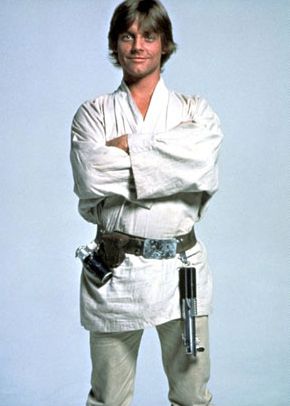
Doctor Who 50 Great Scenes – 49: The End of Time
“Who knows? Perhaps he’s coming back.”
“Oh, that would make my Christmas.”

Doctor Who 50 – The End of Time
Russell T Davies’ ministry to us ended as it began: zooming in to Earth from space to London streets and the Doctor’s companion. But now, instead of young, excitable Billie Piper, it’s old, troubled Bernard Cribbins; not bright morning, but dark night; not Murray Gold’s upbeat music as the camera races around town, but a mournful old brass band playing Klokleda Partha Mennin Klatch as people slowly wander, alone. And across it all, the ominous voice of he-only-thinks-he’s-God telling us of a pagan rite to banish the cold and the dark, of nightmares of fire and war and insanity, and of the final days of planet Earth…
Stepping back one story from last week’s Number 50, Number 49 in the chart is from a story that made an appearance in one of my not-quite-in-the-Fifty posts three weeks ago, for its cliffhanger. Compiling the Fifty, I realised that I had many cliffhangers but was rather lacking in their modern little brothers, the pre-titles sequence, so I chose this one as particularly special to me. Bernard Cribbins’ Wilfred Mott is an utterly loveable character, both for his joy and sadness, his bravery and dread, and for simply being Bernard Cribbins. Not a churchgoer, the old man is drawn by singing and light to an old church one cold Winter’s night. He takes off his hat, framed against the war memorial at the back of the church, and looks in wonder down the nave towards the stained glass window, and something strangely familiar depicted in the corner of it.
It might be the woman in white, framed with her own halo, who appears behind Wilf; it might be the stained glass TARDIS, tonight on the brink of Doctor Who’s Fiftieth Anniversary recalling the finest story of the Fortieth, Rob Shearman’s Jubilee, which in turn influenced Russell T Davies’ Doctor Who; it might be The Legend of the Blue Box, in which long ago the Sainted Physician followed a demon down from the sky to this site, smote it and vanished, later immortalised in glass. It might even be the Master’s laughter echoing through poor Wilf’s head as the end tumbles closer, the Doctor (David Tennant)’s old friend seeing flashes of the Doctor’s much older friend as he throws back his head and cackles, the camera zooming into his eye as the titles cut in. But I think it’s just that yearning as Wilf looks toward the TARDIS and wishes with all his heart that it was there. We all have that.
I offered my choice of Seasonal songs a few weeks ago; for some strange reason, I didn’t include any of Bernard Cribbins’ hits. But you can. Or, if you want another friend of the Doctor’s singing, here are some brand new Songtaran Carols to tide you over ’til Tuesday.
Bonus Great Doctor Who Quotation – The Doctor, the Widow and the Wardrobe
“Lily and Cyril’s room. I’m going to be honest: masterpiece! The ultimate bedroom. A science-wiencey workbench – a jungle – a maze – a window disguised as a mirror – a mirror disguised as a window! Selection of torches, for midnight feasts and secret reading. Zen garden – mysterious cupboard – zone of tranquillity – rubber wall – dream tank – exact model of the rest of the house, not quite to scale, apologies – dolls with comical expressions – the Magna Carta – a foot spa – Cluedo – a yellow fort!”Early in last year’s Christmas special, the Caretaker (the Doctor [Matt Smith]) introduces a war-torn, forlorn family to Uncle Digby’s house big old house, with its faulty door, less boring than it used to be smaller sitting room, triple-tippled-tapped kitchen, faulty stairs, possible panthers, boring Mum’s bedroom and, most importantly, the children’s room. It makes me laugh. Matt’s Doctor is just so infectiously Doctorish that I love this even with the words science-wiencey. And it’s good to know that, after having such fun decorating himself – fezzes are cool – he can apply himself to decorate something smaller, too.
“Where are the beds?”
“Well, I couldn’t fit everything in. There had to be sacrifices.”
Bonus Extra-Christmassy Great Doctor Who Quotation – The Daleks’ Master Plan: The Feast of Steven
How could I let Christmas pass by without the Doctor (William Hartnell) in the first of all his Christmas specials? In the middle of a massive Dalek epic, he takes the time out for – well, for all sorts of fun, but at the end of this episode, a drink. Come to think of it, last night I was listening to the series’ other great Dalek epic, The Evil of the Daleks, in which the Doctor takes a quiet moment for a not even festive drink (probably more wine, though it might be a brandy balloon) and tries to force it on someone who’s suspiciously more than teetotal. Then, infamously, he has more wine in the next Dalek story and his next body. Perhaps they drive him to drink? Back here, for once, it’s his own bottle, probably, with which he joyously toasts his companions before turning to the rest of us:
“And incidentally, a happy Christmas to all of you at home!”And a very happy birthday to Sir Bernard of Cribbins next Saturday, too. But Wilf’s not in that one – so who is?
Next Time… The year ends with a bang.
*Santa? But that’s an anagram of—! Oh, all right, it isn’t, but if you look at the “n” after a few glasses and there’s an “r” in the month…
How buying a round shows the limits of economics
For the anthropologists, the custom of standing a round represented ritual gift exchange. They drew an analogy with Native American potlatch festivals, where tribes would gather to eat, sing, dance and confer lavish presents – sometimes treasured or essential possessions – on each other. The economists preferred a more hard-nosed explanation. Buying drinks in rounds rather than individually was a means of reducing transaction costs. The number of dealings between the customers and the bar was reduced, and the need for small change diminished.
I proposed an empirical test between the competing hypotheses. Did you feel successful or unsuccessful if you had bought more drinks than had been bought for you? Unfortunately, the result was inconclusive. The anthropologists believed their generosity enhanced their status. The economists sought to maximise the difference between the number of drinks they had consumed and the number they had bought. They computed appropriate strategies for finite games and even for extended evenings of indeterminate length. The lesson is that if you want a good time at a bar, go with an anthropologist rather than an economist.We can also see the limits of economics when we consider the act of starting a family:
The economists who argue that the rationale of the family is found in cost savings have a point. Two together can live more cheaply than two separately, if not as cheaply as one. But anyone who thinks the quest for scale economies is the primary explanation of the human desire for family life is strangely deficient in observational capacity, as well as common sense.
The ‘economics of the family’ is a prime example of an economic imperialism that seeks to account for all behaviour through a distorted concept of rationality, an extreme example of economists’ notorious physics envy. Some models developed in physics demonstrate a combination of simplicity and wide explanatory power so remarkable that it makes no sense to think about the world in any other way.
But such powerful explanations are rarely available in other natural sciences, and almost never in social sciences. Even the visit to the bar is governed by a complex and tacit collection of social conventions. How do you know that you have bought the beer but only rented the glass?The point is not that economics has no value but that, by itself, it can neither fully explain nor provide a rounded understanding of human needs and human behaviour. The specific problem here is economism, the reductionist idea that all social phenomena can be reduced to economic dimensions. This reductionism enables believers in neoclassical economics to argue that the market outstrips or permits ignoring ethical, social, political or cultural values. It is why the orthodox economic ideology of the past three decades has, amongst other things, led to so much social corrosion.
Following the banking crisis of 2007/8, this orthodoxy is, in Adair Turner’s famous phrase, “a fairly complete train wreck of a predominant theory of economics and finance”. It is now only a matter of time before that predominance ends. But it would be a mistake, and ironically an economistic one, to view the old orthodoxy purely as a practical failure. It is also a moral failure, precisely because it is economistic.
The Liberal Democrats need to move on and develop radical alternatives (The Theory and Practice of Community Economics by David Boyle and Bernard Greaves is a good place to start). This is a vital element in any recovery strategy for the Liberal Democrats because the party will be doomed if it fights the other parties for the right to cling to the wreckage of TINA (‘There Is No Alternative’). Moving on, however, requires not just a Plan B, C or D but also an ethical and human dimension. This means a decisive rejection of economism, and an insistence that human welfare and human values come before ideological constructs.
Why armed guards in schools are a bad idea
I just saw this tweet from National Rifle Association (NRA):
Why is the idea of a gun good when it’s used to protect the Pres … but bad when it’s used to protect our children in our schools #NRA
— NRA (@NRA) December 21, 2012
On the assumption that this is a genuine query, I thought I’d take a moment to talk about some simple statistics and probabilities.
First, Wikipedia notes that four presidents (Lincoln, Garfield, McKinley and Kennedy) have been shot by assassins. For simplicity, we will leave aside the failed assassination attempts on thirteen other presidents (and the failed attempts on the lives of Lincoln and Kennedy before the successful ones). Let’s consider the time from Lincoln’s death to now (147 years from 1865 to 2012), and say that the chance of a president being shot dead in any given year is 4 in 147, or about one in 40. (The real chance is surely much higher than that — note that there have been attempts on the lives of all the last eight presidents.)
The population of the US is 315 million, of which 27.3% are under 20 years of age. Let’s assume that about half of those are school age (between 5 and 15), which is 43 million schoolchildren. In 2012, there have been seven notable school shootings, but “only” 29 children murdered as a result. So let’s say that the chance of schoolchild being shot dead in any given year is 29 in 43 million, or about one in 1,500,000.
There were 600 accidental deaths by gunshot in the USA in 2010. Somewhere in the range of 30-34% of adults own a gun. Given that there are 230 million adults in the USA (and assuming that the number of children owning guns is negligible), that means there are about 74 million gun owners in the USA. So the chance of any gun owner accidentally killing someone in a given year is 600 in 74 million, or about one in 123,000.
In reality, of course the armed guards who protect the president are the best of the best: very highly trained, and much less like to have accidents than the general gun-owning population. But even assuming they are no more competent than hypothetical armed school guards, here’s how it works out.
- Giving the president an armed guard increases his chance of being shot, due to accident, by one in 123,000. Given that his chance of being shot is already one in 40, this is negligible.
- Giving children an armed guard increases their chance of being shot, due to accident, by one in 123,000. Given that their chance of being shot was previously one in 15,000,000, it means they are now 122 times as likely to be shot.
These numbers are all approximate. I could easily be wrong by a factor of two or more. Even if I’m wrong by a factor of six, it still means that the president is much, much, much better off with an armed guard where as a schoolchild would be twenty times as likely to be shot.
I hope that clears things up.
Outside the Government 7 (Down)
I do not mean my criticism of Oh No It Isn’t! to suggest that Virgin’s Benny line simply misused the character. It didn’t. Oh No It Isn’t! is a fantastic Benny novel, and its flaws are almost entirely as an attempt to launch the line, instead of being what it would have been happier being, a particularly silly entry within the line. And there are other books that absolutely play on what Benny is specifically suited to. Lawrence Miles’s Down, for instance, although it falls just short of being a successful book in its own right, is a book that absolutely could not work with any other lead character.The setup of the book is simple enough: Benny is fished out of the water on an alien planet and spends the majority of the book explaining what happened to her. This explanation is overtly structured as a pastiche of classic adventure fiction in the H. Rider Haggard mould, with chapter titles such as “Dirigibles of Death!” and “The Primordial Soup Dragon!” The exclamation points are, to be clear, part of almost all of the chapter titles. There’s a character called Mister Misnomer who is an overt parody of classic pulp action heroes. To be clear, the story is not merely a pastiche of adventure fiction, it’s a self-aware one. Mister Misnomer isn’t just a parody to the audience, the characters in the story recognize that he is, in reality, an old pulp action hero who shouldn’t even be real. What he’s doing there is one of the basic mysteries of the story.
That’s the superficial structure, at least. It being Lawrence Miles, it’s also a big, soaring book of ideas. Actually, soaring is almost the exact wrong word for this. The book, by the author’s description, is a psychological descent into hell where the frothy adventure story it appears to be gives way to abject psychological horror. The adventure story stuff is, in Miles’s account, window dressing. This actually makes the book come off as less interesting and intelligent than it is. First of all, the adventure stuff isn’t window-dressing, it’s part and parcel of the book’s theme. Second, the book doesn’t give way to psychological horror entirely: it almost gives way, and then gives Benny one of her greatest moments as she resolves the central tension of the book.
Here, at last, we have to talk about the twist. There are two big plot actions Mister Misnomer takes - he begins gunning down a bunch of ape creatures that Benny believes are likely sentient, and he sacrifices himself to save everybody towards the end. Then, at the very end of the book, we find out that Benny has actually edited her own memories to insert Mister Misnomer: in truth she gunned down the ape creatures in a moment of panic, and it was a mildly reformed futuristic Nazi that sacrificed himself to save everybody, which Benny was unable to square away with her own torture at the hands of the Nazis in Just War. Mister Misnomer, in fact, never existed in the story at all.
But this is not simply a moment where the adventure story gives way to psychological torment. What’s key here is not merely that Benny edited her memories to remove some horrible stuff, but the way in which she did, inserting a stereotypical adventure character into the narrative. And, more to the point, what’s key is that the adventure character fits. The end nature of the planet turns out to be that the archetype of dystopia took root inside the planet and turned it into the purest expression of hell imaginable. And then, when people arrived on the planet, it began expressing this idea in terms of human adventure stories. Specifically, it took on the iconography of the hollow earth and the prehistoric creatures that might live within it. The story spends most of its time acting as though its origins are in things like Journey to the Center of the Earth and The Lost World - stories that feature eccentric spaces. (Actually, the most amusing reference in the book is the fact that several character names are drawn from Krazy Kat, itself a celebration of eccentric spaces.) But the real inspiration is one that isn’t so directly alluded to: H.P. Lovecraft’s short novel At the Mountains of Madness.
What’s key about At the Mountains of Madness is that it explicitly ties the eccentric space of primordial creatures as a source of unfathomable horror. The Lovecraftian horror, recall, is the fear that the universe might be completely irrational and terrifying, and that human reason is not a tool to understand it but a flickering bulwark against the tide of utter horror lurking in the darkness. Where At the Mountains of Madness simply framed this in terms of the pulp tradition of eccentric spaces (and recall that Lovecraft was first and foremost a pulp writer - his work appeared alongside Robert E. Howard’s Conan stories and other such classics), Miles pushes it further, arguing for the inherent connection between this sort of adventure fiction and the idea of hell.
Mister Misnomer, in other words, isn’t just interesting for the fact that he doesn’t exist. He’s interesting for the fact that he largely does belong in the world of Down despite the fact that he’s not “real” within it. There’s a point about halfway through when Benny writes in her diary: “‘Archetypal. Not just the idea of the Hollow Earth. This place is full of archetypal encounters. Absolute values. Predator/prey conflicts. Kill-or-be-killed struggles. Good guys and bad guys.’ And then in even larger letters: ‘Mr Misnomer fits in here perfectly.’ Finally, taking up the whole of the opposing page: ‘This place has no subtlety.’”
Miles, in other words, isn’t just going from adventure fiction to hell, he’s offering a critique of adventure fiction and the way in which its simplistic ethics lead to outright horror when paired with even remotely psychologically real characters. In this regard the most telling section may be the one in which one of the supporting characters, Lucretia, turns out to have an existential terror of teleporters based on the fact that they in fact do not transport you but instead murder you and then create a clone of you in a different location. This is, of course, one of the classic objections to Star Trek, along with the fact that the real application of this technology is not, in fact, teleportation but the fact that all objects regardless of value are now trivially reproducible out of thin air and thus a post-scarcity economy can be achieved straightforwardly. But the real point is that it’s a very human anxiety of the sort that is actively pushed out of standard issue genre fiction.
Miles is not, of course, the first person to do this. Sci-fi fans have been harping on that exact problem with Star Trek transporters since they debuted. Heck, Star Trek itself has dealt with it a few times. But normally it’s dealt with in one of two ways: poking at the issue without actually acknowledging its full impact (as the Star Trek episodes do - for instance, one posits a transporter accident that creates a clone of Riker, who actually ends up surviving the episode, but doesn’t bother to deal with the fact that this means every other use of a transport has murdered someone with their own viable life. Another episode, “Realm of Fear,” confirms explicitly that this is how transporters work, then keeps using them anyway.), or doing a postmodern bit in which the horrific aspect of the transporters derails the whole narrative. (The Prestige is a prime example of the latter, albeit one about Victorian magic and not Star Trek.)
But Miles picks the otherwise largely unexplored option of simply adopting the psychological horror of the transporter into the narrative and carrying on. The narrative continues cheerily along its standard adventure story lines, just in a world where people are routinely murdered and cloned without much thought about it except from the margins of society.
The real sting, however, comes when you realize that the basic plot of Down is largely a mirror of Underworld, only with the People substituting for the Time Lords - a connection that The Also People made it exceedingly easy to make. Underworld, it should be noted, is the story Miles proclaims to be the worst story of the 1970s in a large part because of its banal sci-fi cliches. In that regard Down is, unlike Oh No It Isn’t!, firmly engaged with Doctor Who. That’s nowhere near the same as it being Doctor Who, but it’s commenting on Doctor Who. And specifically, it’s making a critique that is central to most of Miles’s work, because Miles has little patience with or regard for most of science fiction as a genre. So he takes what he sees as a particularly science fictiony bit of Doctor Who and redoes it to his own aesthetic. So instead of a sci-fi cliche like a mad computer at the center of the planet we have an idea made incarnate - a concept he doesn’t even bother trying to explain as anything other than the mad and fantastic idea that it is.
And this, in turn, becomes a way of playing with the idea of the People. Miles introduces a murderous and psychopathic member of the People, !X, who is used by God to bring the dystopic idea back to the Worldsphere as part of a hazily defined plot by God to speed the development of the universe. This is all very sharp, and contains some of the most thematically interesting implications, containing as it does an implicit critique of the idea of utopia as something history might aspire to. It’s nothing hugely original - indeed, it’s basically a warmed over version of Blake’s The Marriage of Heaven and Hell. But given that the People are a part of the Benny mythology and that The Also People was so praised, it’s a sensible complication of the idea.
There are flaws, to be sure. Underworld is a pathetically easy target, and it’s fair to ask why Miles didn’t line up a critique of something that isn’t, you know, widely reviled when it’s even remembered. On top of that, he never quite manages to sell the innate connection between genre-centric adventure fiction and dystopian hell. This is not for lack of trying, and the argument he makes strikes me as at least an interesting one. He claims that the genre “is based on the supposition that the male-aggressive participant will lead the way, regardless of qualification,” a viewpoint that leads towards the kill-or-be-killed absolutism that Miles equates with dystopian hell. All the steps of this basically work, but with all the postmodern posturing of the story you’d think Miles might have found space to provide the connective tissue.
In the absence of this it becomes easy to miss the signal for the noise. Miles has admitted that the book flopped a bit and was widely misread, and it’s fairly easy to see why. The funny bits are just too numerous and too good for the psychological descent into hell to land. It gets completely outshone, which blunts the impact considerably. The book needs to push its hell a little further. There’s a constant and nagging sense that Miles is parrotting back cliched critiques of sci-fi/adventure stories instead of really breaking new ground. There’s nothing here that’s quite surprising enough to make the radical and clever point Miles thinks he’s making. It’s not that the book isn’t clever. It’s terribly clever. But it’s clever in a knowing, in-joke way that reflects a well-drilled knowledge of genre fiction. In this regard the taking on of Underworld is ironic. Miles tries to come up with the antithesis of that story and ends up with something that feels for all the world like a family-unfriendly version of the Graham Williams era. Which is surely not what he was going for, given his known antipathy to it.
Still, it’s a compelling book that reads like the book of someone who’s about to produce Alien Bodies. And it’s a book that could only work with Benny, since its ultimate resolution is perfectly suited to her, and, perhaps more to the point, would never in a million years work with the Doctor. !X confronts Benny, pulls a gun on her, and puts her in a kill-or-be-killed position, trying to force her into the dualistic logic of dystopia and force her to become a vector for its spread. Benny realizes that he’ll let her disarm him and kill him, but that if she doesn’t he’s going to kill her. And so, faced with a kill or be killed choice with the fundamental teleology of the universe on the line, Benny does exactly what you’d expect her to, and in doing so triumphantly resolves the central tensions of the book.
She takes the gun from !X and shoves it up his ass.
Will 2015 be a bumper year for political defections?
All except 1919 and 1926 were election years. There was a clear pattern for MPs and former MPs to defect just before or just after elections. The 1918 election had only just taken place in December, so 1919 saw much of the ensuing political fallout. Another factor which increased the numbers of defections in the past was a rapid fluctuation in party fortunes. The first Labour government was formed in 1924 and the second in 1929. 1931 saw the formation of the National Government, the Labour Party expelling their former leader, Ramsay MacDonald and the Liberal Party divided over support for the National Government. 1926 saw Lloyd George succeed Asquith as Liberal Party leader. 1981 was also a significant year seeing the SDP attracting 28 MPs away from the Labour Party, although this was a party split (more akin to the Liberal Unionists) rather than a series of individual defections.
There also seems to be one other factor which plays a part - the ending of coalition governments. The Lloyd George Liberal/Conservative coalition government ended in 1922.
2015 could very well be one of those years when all of these factors come together.
Defectors and the Liberal Party 1910 to 2010 - a study of interparty relations published by Manchester University Press charts the fluctuating numbers of defections and accounts for all of the 122 defections of MPs and former MPs to and from the Liberal Party over the century to 2010.
Danny Boyle's Jerusalem: The High Magic of the 2012 Olympics Opening Ceremony
This comes at the end of a monologue about the triumph of consumerism. Its inclusion makes more sense in the context of the original screenplay, which differs from the scene as filmed. In the screenplay, Grant also quotes the opening lines of that poem, "And did those feet in ancient time / Walk upon England's mountains green?" and denounces them as pure marketing. The idea that Jesus visited England is obviously bollocks, he points out, regardless of what myths they tell you around Glastonbury. Blake was using the old advertiser's trick of false suggestion in order to make his audience believe that England was more special than it really was.
I read that screenplay twenty years ago, but I remembered it whenever I heard Jerusalem. Bruce Robinson had made a strong point and he had skewered the poem for me. I wondered if the reason why those lines were cut was because they were too close to the bone - Jerusalem means a lot to many people, both politically on the left and the right, and exposing the poem as a manipulative sham seemed cruel.
Watching Danny Boyles 2012 Olympics opening ceremony, however, showed me the error in the screenplay's logic and allowed me to understand Blake's poem. To understand why, it is necessary to appreciate why Boyle's ceremony was such a success.
Those involved in creative work have two different approaches that they can take in order to make their audience feel emotion. The simplest and easiest way is to force that emotion on them. This is the approach used in advertising - pummel the audience with emotive music, doe-eyed kids and as much pathos as you can muster. Doing this treats the audience like Pavlov's dogs, and the advertiser knows exactly what bell to ring to bypass the audience's critical mind and force the required emotion on them. It's not just advertisers who use this approach, of course. Writers and directors can make a good living out of it, as Richard Curtis' accountant would be the first to tell you.
Advertisers create that forced emotion in order to link it to a product you would not otherwise buy. The hard cut between a shot of a smiling child and an image of a sugary drink creates a link in a parents mind between their love of their children and the product, and this increases how positively they feel about the sugary drink. Unfortunately, that link goes both ways. Parental love has become linked with some valueless crap, and the parent's personal emotional landscape has been ever so slightly diminished. The arts of advertising are a form of subtle psychic vampire, feeding on what you value most and, over time, leaving you emotionally poorer and unsatisfied. It is black magic. That is why Richard E. Grant's character was evil. This is also at the heart of Bill Hick's advice to those who work in advertising and marketing.
What then, is the other approach?
Instead of forcing an emotion on an audience, it is possible to create a mental environment where that emotion will spontaneously rise within them - when they do not expect it and are unable to say how or why the emotion occurred. This is the approach used by poets and artists, and it is the approach used by Danny Boyle and his team in the 2012 Olympics opening ceremony. Who, amongst those who watched it, could explain why they felt the way they did when the torch-petals were lit and rose to form the flaming cauldron, accompanied by the simplest of whistled music? There was no bombast or Eye of the Tiger-type fanfare to demand a reaction. Emotions that arise like this are far more powerful than those forced upon you, because they are genuine and they come with deep roots. They are your own emotions, not ones that have been given to you.
Make no mistake, working on this level is hard. It is with good reason why those who succeed in doing so attract the title of genius, while those who do not attract the title of hack.
None of the decisions made by Boyle to lead you to that moment were obvious - from the sheep and the fake rain clouds, to the recreation of the spoiling of the landscape, or the comedy of James Bond and the Queen's parachute jump. The arguments that followed the celebration of the NHS in one section showed how little people understood what Boyle was doing. The use of NHS nurses was just one element in a much deeper tapestry linking children's fiction, the Exorcist theme, nightmares, protection, care and the value of a national community. The Tory MP only saw the surface of what Boyle was doing, and wrongly considered it to be a standalone item that could have been discarded without affecting anything else. He did not understand that Boyle's work was creating links in his subconscious throughout, or that Boyle knew what he was doing.
Boyles' opening ceremony - and ceremony is absolutely the correct word for it - was deeply inspired by Blake's poem. It began with a single child singing Jerusalem, and it reenacted the spoiling of the Green and Pleasant Land with the arrival of the Dark Satanic Mills. The flags of the nations of the world were arranged on a recreation of Glastonbury Tor (a recreation topped with the World Tree rather than St. Michael's Tower) where "those feet" were alleged to have stood. All this, though, brings up the question of what 'building Jerusalem in England's green and pleasant land' actually means? With all due respect to the citizens of the real city of Jerusalem, there is no desire to recreate that physical city over here.
It's hard to remember now, but before the London Olympics the expectations were that they would be a shambles. When Mitt Romney publicly wondered how well things would proceed during his visit to London, the negative reaction was caused by his undiplomatic rudeness, not by the sense that he was wrong. The build up to the Olympics, with the Visa-only booking, terrible mascots, McDonalds-only chips and the G4S security debacle did not look promising. The opening ceremony, it was thought, would be a pretentious embarrassment which would pale beside the vast fireworks-and-drumming display of state control seen at Beijing in 2008. It was imagined that it would be a empty, vapid spectacle much like, well, much like 2012 Olympics closing ceremony.
But after three hours of Boyle's magic, things were very different. It was not that a theatrical event had gone well. It was that the British were suddenly living in a different country. Our innate cynicism had been dispelled and we were now able to appreciate the sport on the level that the competitors' deserved. More than this, though, was the fact that we knew things had changed. The weeks that followed were a joy. Suddenly we had different values. We behaved differently to strangers. We celebrated the act of contribution. Perhaps in time we will forget how different we felt during those games, but I suspect that part of us will always remember, deep down.
Boyle and his team could have made a ceremony to please the rest of the world, but they opted to be true to the national character regardless of how baffling or eccentric it made us appear - or just what an effect it would have on those living in the UK. Boyle did not make us "proud to be British," as the political cliche goes, he did something far better. He made us grateful to be British. And he did this by evoking our higher values - acceptance, belonging, humour - and merging those ideas with the actual country itself (Oscar Pistorius' comment that "the world will now have to see disability through the eyes of the British" is perhaps the finest illustration of this). Ed Milliband's use of the political slogan 'One Nation' is a direct reaction to Boyle's work.
The 2012 Olympics opening ceremony was not as politically radical as the end of the Paralympics opening ceremony, or as blatantly pagan as the start of the Paralympics closing ceremony. It had bigger goals than that, because this bringing down and enacting of our higher values was what Blake was referring to when he spoke of 'building Jerusalem in England's green and pleasant land'. That was not advertising, for nothing was being sold. Blake was asking us recognise how much better things could be, should we look through different eyes. And the fallacy of Richard E. Grant's character in How To Get Ahead In Advertising is that he does not know that this is possible. Few people did, of course, until Boyle showed us what 'building Jerusalem' actually meant.
It did not last, alas. You could argue that the spiritually empty closing ceremony acted like a banishing ritual, dispelling the changes Boyle had created. The terrible Damien Hirst Union Flag and the appearance of Churchill brought back the "proud to be British" bullshit, and the cognitive dissonance created by Jessie J singing "It's not about the money, money" as she was driven round in a gold Rolls Royce proved that any coherent meaning had left the stadium. The smiling stage-school faces contrasted strongly with the genuine humanity of Boyle's non-professional cast. Others have detailed the problems with this ceremony far better than I can, but suffice to say that Jerusalem was dispelled and business-as-usual returned. We were back to the Spice Girls.
But we know that it is possible now - and that is Danny Boyle's legacy, right there.
Unlike Richard E. Grant's character, we now know it is possible.
Oops – They Got It Wrong (and will not admit it)
Mainstream medicine branded Linus Pauling a pseudo-scientific quack for suggesting that people required mega-doses of vitamin C for good health. This attack was despite Pauling being a leading physicist and perhaps the greatest chemist of the 20th century. Corporate medicine conveniently forgot medical science is built upon Pauling’s massive contribution to molecular biology. Now the Linus Pauling Institute (LPI) at Oregon State University continues his approach to nutrition and medicine. But Dr Balz Frei, the head of the LPI, has other ideas.
Following Linus Pauling’s death in 1994 the NIH (US National Institutes of Health) claimed that people were wasting their money on high dose vitamin C supplements. They had blown apart the supposedly unscientific idea that gram level or above doses of vitamin C could work. The NIH claimed that the human adult was “saturated” at a dose of only 200 mg.[link][link] Oddly, the head of the Linus Pauling Institute supports this suggestion, and claims people need only low levels of vitamin C.[link] The National Academies of Science put it this way: “The rigorous criteria for achieving steady-state plasma concentrations (five daily samples that varied less than or equal to 10 percent) make the … data unique among depletion-repletion studies.”[link] Here “steady-state” means the NIH saturation level.
Silly errors
Corporate medicine grabbed this idea with a vengeance. They thought the NIH had shown that Pauling and his upstart followers were quacks and obviously wrong. They based RDA (Recommended Dietary Allowance) values for the population on this new research. Corporate medicine had won and classified the vitamin C “fanatics” as pseudo-scientists.
Then in 2004 Steve Hickey and Hilary Roberts showed that high-dose supplements of vitamin C had a short half-life in blood plasma. Indeed, the half-life of large doses was only 30 minutes and not the several weeks assumed earlier. The NIH claims for plasma saturation were just silly. The NIH gave a dose of vitamin C waited until it was excreted and then measured the blood levels. When the level did not rise, they described the blood as saturated. This was a blatant and obvious error that any scientist could have discovered. But the reviewers of the NIH papers, the journal editors, and the numerous authorities were taken in.
The supposedly uniquely rigorous NIH research was wrong and Pauling and the flaky health freaks may have been onto something. Amusingly, Hickey and Roberts demonstrated the silliness using the NIH’s own data.[link] Here is their graph of plasma levels of vitamin C. The added red arrows show the initially injected vitamin’s concentration falls by half in a few minutes. This is a standard method of measuring the half-life. With oral intakes the body is both absorbing and excreting the vitamin over a period of some hours, which extends and flattens the curves somewhat. Note, however, oral doses return to the baseline of about 70 (microM/L).
According to the NIH the plasma saturates at (70 microM/L) and doses higher than 200 mg would thus not increase the levels. This is clearly bizarre as higher levels are clearly shown in their own graphs! Don’t believe Hickey and Roberts – check the data in the chart yourself. Seventy is the minimum not the maximum. What could have possessed the NIH to make such a mistake? Moreover, what could have caused the authorities, such as the Institutes of Medicine, to avoid seeing the blunder?
The Real Steady State
To add to the nonsense the NIH published graphs for high doses showing how they expected multiple doses of 3 grams every 4 hours to raise the plasma levels consistently to 220 (microM/L). This concentration is more than 3 times the level they claimed was a maximum (saturated at 70 microM/L).[link] Their graph is shown below. The red arrow shows the approximate steady state for 18 grams a day, which we consider an underestimate. Note that the highest levels in this graph occurred with a dose of 18,000 mg a day or 90 times the dose they claimed to give maximum levels. So once again the NIH debunked their own “saturation” claims.
The NIH data showed that blood plasma was not “saturated” at an intake of only 200 mg a day but would need at least a dose of about 20 grams a day, or 20,000 mg, to be anything like what could reasonably be described as saturated. Once again, check the NIH data in the graph yourself. Is there really any room to doubt that their data show that the highest levels come from the largest intakes?
Even now the NIH is trying to claim that plasma levels after supplements are always below 250 (microM/L) [link]. This is despite levels of about 400 (microM/L) being described for liposomal vitamin C supplements [link] and up to about 800 (microM/L) observed for a joint supplement of ascorbic acid and liposomal vitamin C. [link] Chemist Irwin Stone reported even higher values (~2000 microM/L or 35 mg%) in a cancer patient taking 130-150 grams of oral vitamin C a day.[link] The reader may like to ask themselves what is so important to institutional medicine that it must misrepresent data about high-doses of vitamin C.
Since Hickey and Roberts pointed out the blunder several years ago, you might think that institutional medicine would have made the necessary corrections. However, the only change appears was to replace the word “saturation” with the phrase “tightly controlled” and the intakes stay at 200 mg giving rise to a plasma level of about 70 (microM/L).
Incredibly a decade after the explanation, the “experts” continue to publish papers on vitamin C claiming that the body saturates at an intake of only 200 mg. Moreover, claims for high doses are still considered inappropriate and not even studied. So for example the highly acclaimed Cochrane review on vitamin C and the common cold does not include the doses claimed to prevent or treat the illness.[check the full document here]
Can we really trust the judgment of scientists that cannot even read a chart? Recent reviews continue this silliness. One review asked if large vitamin C supplements can be beneficial because of “saturation”, sorry “tightly controlled” levels.[link] No we are not kidding. The final irony is the assertion by the head of the Linus Pauling Institute that an RDA of 200 mg per day is the optimum amount of vitamin C.
Scientists at the Linus Pauling Institute support higher intakes and suggest a minimum of 400 mg daily.[link] So why is Dr Frei their director of research supporting the NIH claims? We note that the directors LPI “laboratory is supported primarily by grant P01 AT002034 from the National Center for Complementary and Alternative Medicine (NCCAM)” – in other words the NIH.[link]
Doubleplusungood
The problem is that this error potentially has implications for the health of humanity. Consider the claims for high dose vitamin C by Pauling and others are that it will prevent heart disease, stroke, and cancer. If these claims are correct, the main ills facing advanced nations could be largely a result of shortage of this simple vitamin. In their book Medical Blunders, Robert Youngson and Ian Schott listed medicine’s denial of Pauling’s claims for vitamin C in their history of amazing true stories of mad, bad, and dangerous doctors.[link] People suggesting low intakes need to be sure that they are on solid ground.
Why are these people so unwilling to admit a simple error?
Red cabbage
[Photograph by Michael Leddy.]Red cabbage: the psychedelica of the vegetable kingdom.
A related post
Psychedelic book cover
You’re reading a post from Michael Leddy’s blog Orange Crate Art. This work is licensed under a Creative Commons 3.0 License.
America plans Guantanamo Bay prisons for US citizens.
On Spelling, Punctuation and Grammar
Most people will say "well, as long as you get your meaning across, what does it matter?". It matters because language is a code, and if you get the code wrong, your meaning becomes less clear. It matters because poor SPaG makes it more likely you will be misunderstood. It matters because if you want to disseminate a message, surely you want as many people as possible to understand it?
And yet... Everybody makes mistakes. Even me. So I can forgive the odd typo; a substitution that has clearly been made by an autocorrect or spell-checker; a slip of the fingers when typing or pen when writing (my own personal mental block is that I always tend to spell the word teeth as "tetth"). There is one spelling error that gets my goat more than others, though. One that I find pretty difficult to forgive. And that's getting people's names wrong.
I can understand typing in the wrong username on twitter (there's some poor Aussie lawyer called @jennierigg who often gets replies aimed at me) because unless you're replying directly to the person their name is not visible when you are typing. What I don't get is when you are replying to a blog post, when the author's name is clearly visible, and getting it wrong. There's a post by Caron Lindsay on Lib Dem Voice today where someone refers to her in the comments as Carol. When I used to write for Illiberal Conspiracy, I was regularly referred to as Jenny. This sort of thing really fucks me off.
If you are talking to a person, and you can't even be arsed to check you've spelled their name right, what do you think that says about the amount of attention you think they are worth? The amount of attention you have paid to what they are saying?
Now I'll admit, I have as much form on this as the next person. Poor James Shaddock still suffers from me misreading his twitter name as James S Haddock, and
Doing it again is the action that really takes the cake. I got a Christmas email the other day from a prominent Lib Dem. Someone I have known both online and in the flesh for well over five years now. It was addressed to "dear Jenny". This robbed the email of any festive goodwill it might have engendered - and as regular readers will know, I'm not massively full of festive goodwill at the best of times.
Where this matters to politicians is as follows:
- if you get someone's name wrong, you're going to annoy them and make them less likely to be persuaded of your point.
- If you habitually get someone's name wrong, you're going to make them dismiss you out of hand and not pay a blind bit of notice to what you say.
Anniversary of nearest election to a three-way split
Today is the anniversary of the 1923 general election. The Conservatives won the most seats with 258, Labour had 191 and the Liberals (with the Asquith and Lloyd George wings recently reunited) won 159. It was the nearest that the country has ever come to a three-way equal split of seats.
The Conservatives, who had been in power before the election, tried to form a minority government. However, the Liberals and (unsurprisingly) Labour refused to support them on the King’s Speech (their proposed programme for government, not the making of the film!).
Liberal leader, Asquith could potentially have formed a minority Liberal government, or a coalition with one of the other parties. Instead, he let Labour form their first administration with the words:
"There could be no safer conditions under which to make the experiment" of a Labour government.
Asquith was right in the sense that the first Labour government was not dangerous - indeed it was safe, proper, unadventurous and pretty much unobjectionable, even to its opponents.
However, the experiment turned out to be worse than dangerous for the Liberals. Once Labour had become a party of government, the Liberals appeared to have lost their purpose and were punished at the next election, held less than a year later in October 1924. Labour lost office in 1924, but the Liberals lost almost three-quarters of their seats, crashing to only 40 MPs.
One conclusion could be, that given the chance, it is always better to be a party of government.
Anniversary of 1918 Election, but not first votes for women
Today is the anniversary of the 1918 general election. There were many unusual features about this election:
It was held on a Saturday, just five weeks after the end of the First World War - the first election for eight years.
Despite the deaths of 885,000 British troops in the war, the electorate tripled. Over 21 million people were eligible to vote in 1918 (including women over 30 years old), compared to only 7.7 million in 1910. But the turnout was only 58.9%. Spanish Flu was ravaging the population and young adults were particularly susceptible – 250,000 died in the UK. 24 MPs had been killed in the war – 15 Conservatives, 7 Liberals and 2 Irish Home Rulers.
This election was not actually the first time that women had been allowed to vote in Britain. Women had had the vote in elections for school boards since 1870 and, in theory at least, some women met the qualifications to vote in elections before the 1832 ‘Reform’ Act, although historians are still searching for evidence of whether any actually did vote.
The outcome of the 1918 election was a coalition government of Conservatives and Lloyd George Liberals, faced with a mountain of debt.
New Tory Policy: Pretending to protect children more important than protecting children
Last week, a government committee produced what was a switched-on report on Internet filtering. (PDF link) In it, they rejected calls for a default-on internet filter, pointing out that “default filtering can create a false sense of security” and that “there was no great appetite amongst parents for the introduction of default filtering“.
Personally, I’ve always preferred the educational approach to keeping kids safe online. In our house, the computers are all kept in public areas so when they were younger, before they had smart phones, we had some idea what they’re up to. (Which mostly consists of doing their homework and looking at videos of Ponies, Minecraft and cute cats on YouTube) The trouble with blocking is that parents and carers assume it will work, but it doesn’t. It will block the obvious sites, but might fail to find more obscure items. And if there is one thing kids are good at it’s finding obscure sites.
Oh, actually, there are two things kids are good at with computers. The second thing is bypassing blocks put in place by parents and ISPs. There’s even a project part-funded by the US Military to allow people to bypass such filters, often used by those in oppressive regimes such as China or, uh, the UK.
On filtering, the government report stated they “work to filter out certain kinds of internet content but do not prevent… online bulling… sharing personal sexual content… online grooming… sharing personal information online“. There is also the risk of blocking positive content, such as help sites for LGBT+ youth or even content for other adults in the house who are being emotionally or physically abused.
Sadly, the evidence that blocking is unhelpful isn’t enough to deter Claire Perry MP and the Daily Mail from their “WON’T SOMEONE PLEASE THINK OF THE CHILDREN” campaign. Potentially increasing risk to children isn’t enough reason to stop such campaigns of course. It appears they’ve dragged David Cameron along with them. He’s announced today that publicity-seeking Claire Perry is to be put in charge of plans to create internet filters, which contrary to the recommendations in the report parents will be forced to choose between.
Well, I say parents. Actually, it will be whoever sets up the computer. Because nobody will ever give their 13 year old the new X-Box to set up on Christmas Day, will they? Vague plans that people will need to prove their age to be able to configure these things do make me wonder if anyone involved has even even been online.
Are you 18 or over? Please click “Yes, honestly, I’d never lie to you” or “No”.
The Prime Minister’s announcement was very motherhood-and-apple-pie, even containing the statement “These should be distinct and precious years, full of security and love, untainted by the worries and complexities of adulthood.“. How much engagement do Tory MPs have with their kids if they think you can protect a 13 or 14 year old from “the worries and complexities of adulthood”. That’s exactly when you do need to deal with such issues if you want to become a healthy, well-adjusted adult.
But I guess life is easier for non-LGBT+ and non-queer youth.