Shared posts

20 Jul 02:29

Dams and Demand for Sand Threaten World Beaches

by John Freeland

Picture max & dad lake erie

Documentary filmmaker Denis Delestrac has recently completed the movie Sand Wars, which looks at the intense demand for what may seem like an abundant natural resource. In some cases worldwide, the sand business has taken on a dangerous criminal dimension.

In a TedxBarcelona Talk called Let’s talk about sand, Delestrac introduces the complex subject of beach sand, including erosion and exploitation, with style and charisma. There are also some good aerial images, video clips and diagrams embedded in the talk. I especially liked the video describing how offshore sand dredging depletes sand from a distant beach.

Worth noting, Delestrac’s talk does not address sand used for hydraulic fracturing. By far, the construction of buildings, roads, and other infrastructure comprise the biggest use for sand, although the wide variety of products requiring sand is, perhaps, surprising. I’m not aware of any “frac sand” sand currently mined from beaches. Rather, the frac-quality quartzose sand with well-rounded grains is mostly mined form sandstone formations in the central United States.

“Sand Wars” and “Let’s talk about sand” came to my attention by way of the website Coastal Care.

07 Jan 00:01

SPEKTRMODULE: Podcast 30 – Not Waking

by Warren Ellis
SPEKTRMODULE
30 
Not Waking
37 minutes and 49 seconds


If you don’t know what you’re looking at: SPEKTRMODULE is a podcast of haunted, ambient and sleepy music I compile for my own amusement.

A minor one to begin the new year, the new run, and to remind myself how I do this.

Direct mp3 link.  Or press Play on the player.  iTunes link.

@warrenellis / warrenellis@gmail.com / t-shirt? mug?

Please tell other people about this podcast for sleepy people if you like it.  We are #SPEKTRMODULE

1. logotone

2.  “IT DOESNT MATTER” -  Dionysus    (album:  UNEXPECTED PATH)

3.  “FIELDS OF DUST” -  Echo Planar      (EP:  LOW FREQUENCIES)

4.  “Heaven’s Fire” -  Narita Mamoru     (album:  Music for Butoh Dance Improvisation)

5. "Asteroid Taproom” – Neil Campbell    (album: Boomerang is Love)

6.  “Annealing Oceans of Venetian Potions pt i” -   Alabaster Falcons  (album: Alabaster Falcons)

7.  “2-Cavatina” – Larry Lake     (album: CAPAC Musical Portrait QC-1287)

8.  “a rose for the white witch” -    Stag Hare     (album:  Spirit Canoes)

9.  logotone


All previous SPEKTRMODULE podcasts live under this category header or at spkmdl.libsyn.com.

06 Jan 16:33

Knowing When to Move On

by Christopher Wright
05 Jan 04:40

Two Peter Gabriel Albums ‘Scratch My Back … And I’ll Scratch Yours,’ Streaming Free for a Limited Time

by Dan Colman
Tertiarymatt

Free choons

garbriel sampler

Peter Gabriel’s cover album, Scratch My Back, came out in early 2010, and it featured Gabriel’s quite original remakes of songs by David Bowie, Lou Reed, David Byrne, Regina Spektor and other major artists. Now comes the follow-up: Set to be released on January 6, the new album,  And I’ll Scratch Yours, flips the concept of the previous album. This time around, artists like Bon Iver, Arcade Fire, Lou Reed, Paul Simon and Feist record some of Peter Gabriel’s biggest hits — songs like ”Games Without Frontiers,” “Mercy Street” and “Biko.” The albums can be purchased together here, but, happily, you can stream them online for free — but only for a a limited time — on NPR’s First Listen site. Enjoy.

Don’t miss anything from Open Culture in 2014. Sign up for our Daily Email or RSS Feed. And we’ll send cultural curiosities your way, every day.

Related Content:

Peter Gabriel and Genesis Live on Belgian TV in 1972: The Full Show

Peter Gabriel Plays Full Concert in Modena, Italy (1994)

Peter Gabriel and His Big Orchestra Play Live at the Ed Sullivan Theater

Two Peter Gabriel Albums ‘Scratch My Back … And I’ll Scratch Yours,’ Streaming Free for a Limited Time is a post from: Open Culture. You can follow Open Culture by signing up for our Daily Email. That is the most reliable and convenient option. You can also find us on Facebook, Twitter, and Google Plus.

05 Jan 04:37

Cartoonist R. Crumb Assesses 21 Cultural Figures, from Dylan & Hitchcock, to Kafka & The Beatles

by Colin Marshall

alex&crumb

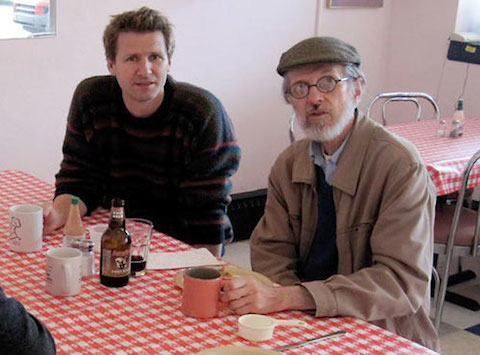
Any fan of “underground” comic artist Robert Crumb knows that the man has no shyness about his preferences: not in jazz music, not in politics, and certainly not in the female form. Alex Wood, co-operator of the official R. Crumb site (pictured with Crumb above), has discovered that the artist’s opinions offer a vivid window into the artist’s mind. “Over the years, talking with Robert about many different things, I’ve been surprised by some of the things he likes and dislikes,” Wood writes. “We all know he loves old music from the early part of the last century, and doesn’t like rock music. But then he says he likes Tommy James and the Shondells, and Sam the Sham and the Pharaohs? So in a discussion in May, 2011, I asked his opinion on a list of people in the news past and present.” This became part one of the series “Crumb on Others,” which has at this point grown to seven full pages.

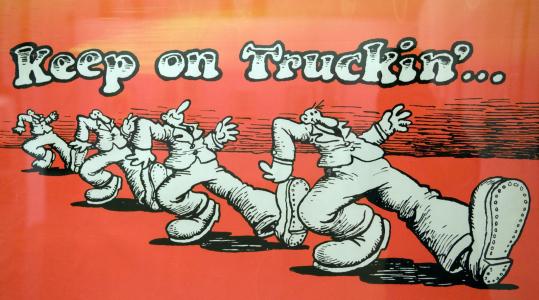
Below, we offer you a selection of the roughly 150 figures from music, film, visual art, and letters Crumb has so far assessed, his reactions ranging from high praise to outright dismissal to amusing anecdotes of his own encounters with the luminaries in question. With these, you can see how your notes on the likes of Bob Dylan, Alfred Hitchcock, Philip K. Dick, and Charles Darwin compare with those of the creator of Fritz the Cat and Mr. Natural, the hand that gave us “Keep on Truckin‘,” and the leading light of of Zap Comix — a luminary who has generated no small amount of high praise, outright dismissal, and amusing anecdote himself. Here are the remaining parts. Part 2, Part 3, Part 4, Part 5, Part 6, and Part 7.

On Mark Twain: “Tom Sawyer and Huckleberry Finn don’t do that much for me. But his later stuff, he gets more cranky as he gets older. His critique gets more interesting. When I was 15, I read What Is Man? and it made a profound impression on me. It changed my life. It’s all about predestination versus freewill. He was a big believer in predestination. He didn’t think we had any free will.”

On Bob Dylan: ”I hate his voice. I can’t stand to hear him sing. I thought some of the songs that he wrote in the mid-60s were kind of clever, with clever lyrics. But I just can’t stand to hear him or see him perform. And I think his heart is in the right place a lot of times, you know. Someone told me he was an aficionado of old 20s, old time music, and that he listens to the same kind of stuff I like.”

On Walt Disney: “When I was a little kid in the 50s, we were profoundly enthralled by Disney, and profoundly affected by the Disney vision. But to my taste, the whole thing starts to decline in the early 1950s. The last one that I think is a truly visionary work is Alice In Wonderland. Beginning with Peter Pan circa 1953 it starts to slide into something too corporate.”

On Janis Joplin: ”Sad case, very sad case. She tried to act like she was hard and tough, but she wasn’t at all. She was soft and vulnerable. She drank a lot, and got a lot of bad advice. She was surrounded by vultures and vampires and scoundrels, and they just did her in. She finally ended up face-down in her own vomit alone in some hotel room; too much heroin and alcohol, 27 years old.”

On Alfred Hitchcock: “I talked to somebody who knew Kim Novak, some older woman, and Kim Novak told her shocking things about Alfred Hitchcock and his sexual proclivities. That kind of surprised me. I don’t know why. I guess when you look at Hitchcock you don’t see a guy with an aggressive sexual libido. Just goes to show you can never tell a book by its cover. I ought to know that by now.”

On The Beatles: “Some of the last stuff they did, you know, it kind of gets dark, and that’s more interesting to me, the last stuff they did before they broke up. Well, that and the music they did before they actually started recording under Brian Epstein. The only way you can hear that, I think, is to see the documentaries where it shows them playing in Hamburg and the Cavern Club. Before Brian Epstein got ahold of them and cleaned them up and made them over into those cute mop-tops and put them in those mod suits. Before that, they were greaser guys – leather jackets and greasy hair. And they just played this sort of driving, hard rock-a-billy music. And they were really good at that.”

On Pablo Picasso: “I once wrote that I envied Picasso, because he was the type of artist who didn’t let anything stand in the way of his art. He would just slam the door on his wives, his girlfriends, his children – anybody, when it was time to do his art. I always envied that about him. Also his powerful, penetrating, hypnotic way with women. I envied that about him too.”

On Franz Kafka: “Before I did that book on Kafka, I had never read him and didn’t know anything about him. But once I took that book project on, then I had to read all his stuff. And then I really got to like him. And while working on that project, I felt a very close kinship with Kafka. It was very strange. I started feeling deeply connected to Kafka somehow. Something I hadn’t expected at all.”

On Charles Bukowski: “Love ’im, love his writing. He was a very difficult guy to hang out with in person, but on paper he was great. One of the great American writers of the late 20th Century. [ ... ] The last time I saw Bukowski, he came to this party in San Francisco, it was a poetry reading. And these two women that I knew  they just kind of closed in on Bukowski. One was talking to him in one ear and the other was talking to him in his other ear. He was standing there with a beer bottle in each hand and getting drunk as fast as he could. And the last moment I saw him, they were leading him off to the bedroom.”

On William Burroughs: “He was a very eccentric character; very eccentric ideas and thoughts. He tried all kinds of strange, avant-garde psychotherapies. He was into psychic experimentation. He built himself an orgone box based upon the theories of Wilhelm Reich. He later got involved in Scientology and had this E-meter and used it as a way to psychically clear himself. He said it was his electrical Ouija board. He tried other stuff too, like out of body experience. I can relate to all that stuff because I’m interested in all that fringe, psychic experimentation also. But he was very serious about that stuff.”

On Bettie Page: “She had the most perfect body and the cutest face of all in that pinup era of the 1940s and 1950s. She was the gold standard. There was nobody superior to her physically. And her poses, she always looked cheerful and wholesome, she never looked sleazy. It didn’t matter if she was posing in a sadomasochistic setup with those high heel boots and whips, it always looks like it’s just a funny game to her, you know? She could have a ball-gag in her mouth and she looks like the girl next door just having fun.”

On Woody Allen: One of my favorite movies of his was Crimes and Misdemeanors. It was a great movie. In that movie, there was an esteemed ophthalmologist, very respected in his profession. He has this mistress, this neurotic woman and she’s threatening to expose him and the secret affair he’s having. She threatens to come over to his house and make a big scene and ruin his life. He also has a brother who’s involved in the crime syndicate. So he goes to the brother and the brother has her killed by a professional. All the main male characters in the movie, I’ve come to suspect that they’re all parts of Woody Allen’s personality. The respected ophthalmologist is part of him; this nerdy, idealistic documentary film-maker — that’s part of him. And there’s this really arrogant comedy writer/director played by Alan Alda who plays such a jerk, and that’s part of Woody Allen also; very interesting. And I suspect that movie is kind of — and I don’t even know how aware of it he was — a confession. It was right around the time that whole scandal with Mia Farrow’s daughter happened — maybe right before — because Mia Farrow was in it. But, the ophthalmologist gets away with it.”

On Philip K. Dick: “I’ve actually never read any of his books. All I ever read was interviews with him and that account he gave of his religious experience — his mystical experience. The whole experience… the way he described it, it was great. I should read his books but I never got around to it. I was never big on science fiction, but he was always more interesting and imaginative than a lot of science fiction writers.” (Crumb illustrated Dick’s “meeting with God.”)

On Charles Darwin: “I never really read Darwin or studied much about him. I have the most broad, general idea about his theories of natural selection and evolution. But I do know that when a lot of upper class English people started reading his books, and his theories began to be widely known in the 1870s, it created a huge change that hasn’t been widely recognized by historians, to my knowledge. People’s attitudes toward religion changed due to his book, particularly in the upper classes in England, they stopped considering it their absolute duty to go to church and be a good church-going person. A lot of the upper class dropped out, let their church membership lapse. Before that. they all went to church, for appearance sake if nothing else. But after Darwin, that all changed.”

On Jack Kerouac: “When I was 17, I read On The Road, and it sickened me, because my reaction was, ‘Oh God, these guys are out there having so much fun. I’m not having any fun at all. I’m just sitting here in my parents house. But them — the girls, the adventures, they’re just like having a fuckin’ lark On The Road.’”

On Jean-Paul Sartre: “A funny guy, Sarte’s a funny guy. You know, people don’t think of him as funny because he was so serious about existentialism and communism and stuff like that. [ ... ] He wrote a book about his childhood that was pretty funny. It’s very self-deprecating, and he writes about what a little bourgeois, arrogant shit he was as a kid. Funny guy, I like Sarte.”

On Michelangelo: ”The guy is just like glorifying the male body. It’s all about writhing, muscular male bodies. And even the women, they have male bodies with tits pasted on. The guy’s not into women, you can tell. He’s not into feminine at all. He’s not interested in the round, elliptical charms of the female form. No, he’s interested in the lumpy, muscular male body. And the whole [Sistine] Chapel is nothing but that.”

On Henry Miller:  ”Just like Kerouac, I was about nineteen when I read him, and again, I was devastated because he was having too much fucking fun. He was fucking so many women. He was so successful with women, it made me sick. He’d brag about how he came on to some woman on the street and ended up fucking her in the bushes. I thought, ‘God, how does he do that?’ It made me sick with envy. But trying to read him later, I thought he was way, way, too long-winded. I thought he needed serious editing.”

On Orson Welles: “I don’t understand why some people are so impressed by that guy. The most entertaining Orson Welles thing I’ve ever heard was some outtakes from a radio commercial that he was doing. And he’s really in a bad mood and he’s insulting the producers and technicians in the studio and telling them, ‘This is a lot of shit I hope you know.’”

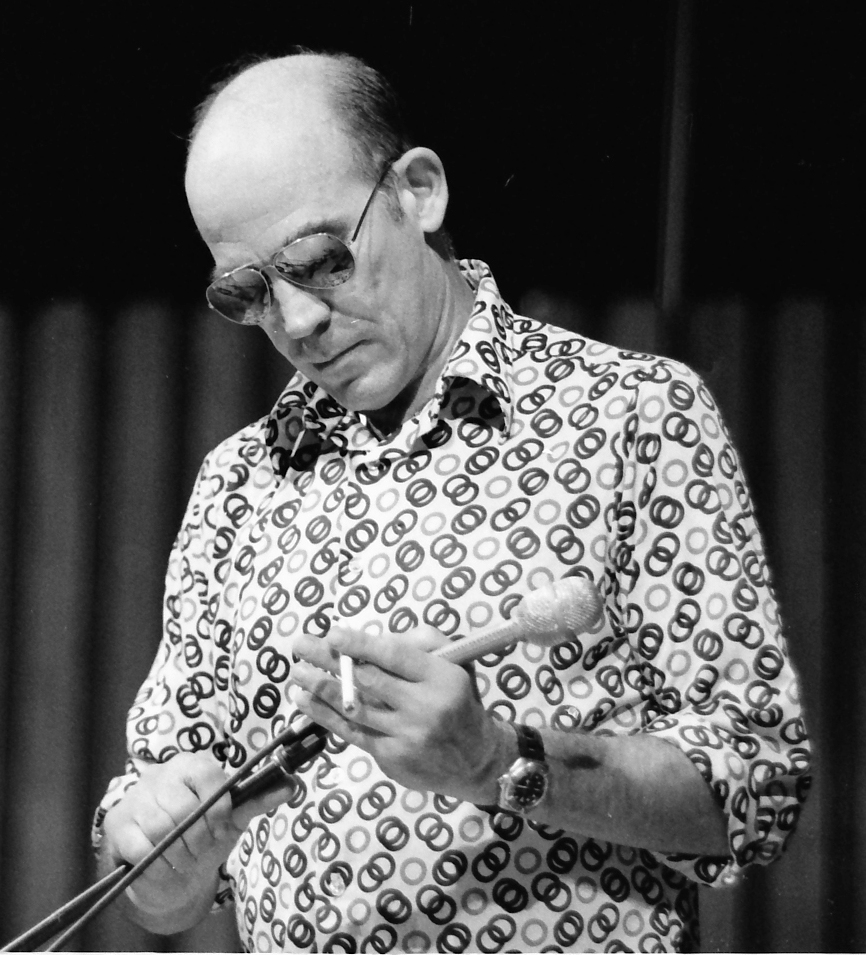
On Hunter Thompson: ”I met him a couple of times. He used to hang out at that Mitchell Brothers Theater on O’Farrell Street in San Francisco, which was a strip joint run by the Mitchell Brothers. There was this kind of like Irish-Journalist-Mafia that used to hang around there. He and these other Irish characters from San Francisco who were into journalism there, newspaper guys, they hung around there for some reason, I don’t know why. But Thompson did a lot of cocaine and drank, and then he would go on these long ‘cocaine raps,’ ranting and raving. But by the time I met him, y’ know, he was already well-advanced to being really fucking out of his mind.”

On Martin Scorsese: ”I think Goodfellas is probably the best film about the modern American crime syndicates. Casino was kind of a follow-up to Goodfellas, and I didn’t think it was quite as good. Probably Goodfellas got so much praise it kind of went to his head so everybody got together and made this indulgent film. It had it’s good parts, it was good, it just wasn’t as good as Goodfellas. For one thing, there were too many close ups on DeNiro’s face. I just kept wanting the camera to back-off. OK, you think the guy’s great looking, but Jesus, OK, it’s enough, back-off!”

Related Content:

The Confessions of Robert Crumb: A Portrait Scripted by the Underground Comics Legend Himself (1987)

Record Cover Art by Underground Cartoonist Robert Crumb

A Short History of America, According to the Irreverent Comic Satirist Robert Crumb

R. Crumb’s Heroes of Blues, Jazz & Country Features 114 Illustrations of the Artist’s Favorite Musicians

Robert Crumb Illustrates Philip K. Dick’s Infamous, Hallucinatory Meeting with God (1974)

Colin Marshall hosts and produces Notebook on Cities and Culture and writes essays on cities, Asia, film, literature, and aesthetics. He’s at work on a book about Los Angeles, A Los Angeles Primer. Follow him on Twitter at @colinmarshall or on his brand new Facebook page.

Cartoonist R. Crumb Assesses 21 Cultural Figures, from Dylan & Hitchcock, to Kafka & The Beatles is a post from: Open Culture. You can follow Open Culture by signing up for our Daily Email. That is the most reliable and convenient option. You can also find us on Facebook, Twitter, and Google Plus.

05 Jan 04:30

Michael Pollan: How Smart Are Plants? : The New Yorker

Tertiarymatt

Very interesting. Vegans take note.

Michael Pollan: How Smart Are Plants? : The New Yorker:

There is some really odd and incredible stuff in here. 

04 Jan 06:24

Perfect Design for a Flatpack Trestle Table: Gumdesign's Mastro

Tertiarymatt

This is pretty slick.

0mastrotable-001.jpg

I'm loving the design of the Mastro Table, created for Italian manufacturer DeCastelli by Viareggio-based Gumdesign. It's not just the clean look—it's the perfect, elegant simplicity of proper materials exploitation.

Take a sheet of iron and it's pretty strong. Bend the edges twice and it's even stronger, gaining I-beam-like rigidity. And now that you've bent those edges, a channel is created--the perfect place to slot a crossbeam for trestle legs.

0mastrotable-002.jpg

(more...)
04 Jan 06:23

You'll Forget That Johnson Tsang's Surreal Ceramics Are Actually Fully Functioning Cups and Bowls

Tsang-Lead.jpg

Johnson Tsang takes the common bowl or cup to the next level. His ceramic housewares constantly bring deeper meaning to dining receptacles, far past simply housing your tea and soup. He's even managed to make a spitting face look surprisingly appetizing.

Tang-Comp.jpg

Tsang—who lives and creates in Hong Kong—has a whole portfolio full of captivating faces and figures. His website serves as an ongoing chronicle of works-in-progress, a sequence of shots from first coils to finished products like these:

(more...)
04 Jan 04:35

Downsides of Dog Design

Tertiarymatt

Core77 is so weird sometimes in what they cover.

1907_AmericanBloodhound-880.jpg

I'm a big fan of the "campsite rule" in most realms of life. You should be too. You're going to tinker with something for fun or profit? Make sure you're contributing positively in both the long and short terms, and above all, do no harm. Seems pretty straightforward, right? So when I stumbled across a series of "then vs. now" photos of dog breed development through the ages my Aghast Button got a good poke. My conclusion was this:

Many purebred dogs are the product of idiotic aestheticized design sense, and engineered to fail.

This might provoke some internal knee-jerks. Whether you're thinking "Well, MY [favored breed] is happy, healthy and recently rescued a bus full of children from a fire," or "Sure, all breeders are immoral and should be shot," I'm not here to argue the meta point on animal husbandry. In fact, I'll cop to being both a shelter-only wonk and a big Viszla fan. Rather, I'd encourage you to consider the purebred dog as a heritage brand product that has lost hold of the function side of the scales and any vision of the object as a whole. (Think PT Cruiser.)

No denying it, some beloved purebred dogs are terribly configured, and it's hardly surprising. When you allow aesthetics or a single praised trait to dictate form, you run the risk of compromising overall quality, usability and durability. If there's one thing pedigreed breeding is all about, it's single-minded dedication to very specific traits, and when you multiply that dedication over the course of generations... the results can be bizarrely out of touch. Here are a couple of examples.

bloodhound_880.jpg

The new, improved, even more horrifying bloodhound

Bloodhounds: Bred as a practical purpose-built dog for game chasing and savvy sniffing as far back as medieval France, the bloodhound dipped deeply in popularity around the early 1900s (as pictured above) and may have disappeared if competitive dog shows hadn't taken off around that time. Subsequently, their prized scenting skills have been "improved" on with increasingly unreasonable physical characteristics: a tall peaked skull, ears like grandma's caftans, sunken eyes, and lots and lots of wrinkly skin. The jowelled face on these guys could belong to an aging president. While handsome to a bloodhound fancier, some of these bred-in traits are in direct conflict with the dog's hunting nature. What's worse, they now commonly suffer from eye, nose and ear problems, cancer, and high instances of bloat. Some surveys report an average lifespan as short as 6 or 7 years. Planned obsolescence? Pretty sure that's unethical.

(more...)
04 Jan 04:29

Video of How an Impact Driver Works

0impactdriver-001.jpg

Of the power tools I own, this diminutive Makita impact driver is one of my favorites. I recently had to install a Murphy Bed and this thing drove lag screws into the subfloor like I was hammering brad nails. As someone who cut his teeth with bulky, cordless, keyed-chuck power drills with no hammering action, that something this small could pack so much punch has always amazed me.

0impactdriver-002.jpg

I always pictured a powerful little leprechaun inside making the magic happen; but as it turns out, the impact mechanism's a bit more prosaic. Nick Moore, whose YouTube channel is dedicated to sharing "Science on a budget, [to] take a closer look at the world we live in," cut the housing away on an impact driver extension to show you how it works. Pretty cool:

(more...)
03 Jan 04:41

A Tale of Two Stephen King Novels: Our modern day Dickens at his best

by Bill Treadway
Tertiarymatt

Interesting.

I recall my first experience with the universe of Stephen King. I was a small child, who vividly remembers the brightly colored paperback covers that my parents borrowed from the local library. King was also a popular presence on the video store shelves back then, with each latest film adaptation being a surefire rental in my household. I was 12 when I read my first King novel, Needful Things. The lure was the author photo on the back: here was a nerdish looking gentleman who wore glasses, just like me. Silly, I know but the strangest things often serve as spurs in a young boy’s mind. After reading that book, I promptly started mowing my way through whatever King novels the library had and what my godfather loaned me. I was a King fan for life.

For years, I often wondered whatever happened to Danny Torrance, the young 5-year old Doctor Sleep Coverantagonist terrorized by a cabal of malevolent ghosts in Stephen King’s classic 1977 novel, The Shining. King must have been wondering the same thing, for in 2013, he delivered the answer in his latest novel, Doctor Sleep. The result is one of King’s best novels; a briskly paced and often terrifying tale of humanity, horror and family ties.

Doctor Sleep begins approximately three years after the horrifying events of The Shining. The malevolent ghosts that terrorized young Danny in the Overlook Hotel have followed him and his mother to their new home. Luckily, former Overlook chef Dick Hallorann visits and teaches now 8-year-old Danny how to make mental lockboxes within his mind that can trap the ghosts permanently. Fast forward another 20 years, Dan Torrance has followed in the drunken footsteps of his father Jack. Dan hits rock bottom and, with the support of a kind-hearted employer, finally sobers up. He settles into a new job: night watchman at a rest home. He also has an unofficial job, which is where the title of the novel comes into play.

Like Charles Dickens often did in his best novels, King has some other intriguing storylines playing out simultaneously. One involves a young girl named Abra Stone, who has an extremely potent form of the same shining Dan Torrance possesses. We also find out more about those evil ghosts, who are part of a group of creepy half-beings known as the True Knot. I can already foresee some questions: What plans do the degenerates that make up the True Knot have for Abra? How does Dan connect to all of this? Well, you’ll just have to read the book to find out the neat twists and turns King pulls this material to.

Jack Nicholson Shining

In an afterword to Doctor Sleep, King warns all potential readers that his 1977 novel is the true history of the Torrance family, rather than the 1980 Stanley Kubrick film. It really should have preceded the main novel since those who have seen the Kubrick film and have never read The Shining will be surprised. For instance, Hallorann was killed in the 1980 movie but survived in the book. There are other small subtleties in King’s novel that Kubrick’s film omitted. You really should read The Shining before even attempting to start Doctor Sleep. It will be a much richer experience.

Usually sequels seldom equal the first installment, but Doctor Sleep is a worthy conclusion to a great original. As is his wont, King uses the first 200 pages as setup, giving us plenty of backstory and information. At first, this lengthy setup seems superfluous, but as is the case with King, it pays off later as you delve deeper into the novel. There are many times when I first started reading King’s work that I often had to flip back and re-read sections just to reabsorb some of the smaller details that didn’t seem important at the time. With King, every detail is important and pays off later in the book. King’s writing often hooks the reader and make them lose all track of time. Even in these slower pages, King’s writing leaps out from the page and hooks the reader. With Doctor Sleep, I once sat intending to read for only a few minutes. When I looked at the clock, two hours had passed by. If that isn’t an indicator of how good a writer King is, I don’t know what is.

The nice thing about Doctor Sleep is how King finds the humanity in all characters, even those who Danny Torranceare evil. Much like Dickens. The True Knot is a pack of half-human murderers who feed off the energy of psychic children, dubbed “steam”. Yet they are not without some small traces of humanity, albeit very twisted. Dan Torrance starts out as a tragic figure that gains redemption after hitting rock bottom. Abra Stone is an engaging young antagonist, wiser than Danny was when the ghosts terrorized him, but still a child in danger. The rapport between Abra and Dan forms the heart of the second half of the novel and leads to a final revelation that makes for a moving finale.

Doctor Sleep wasn’t King’s only 2013 novel to deal with the telepathic phenomenon known as shining. It also slyly appears in his other 2013 offering Joyland, a hard-boiled thriller released straight to paperback last June via the Hard Case Crime label. I had missed Joyland when it was released in June. I found it at the local library quite by accident. While perusing the science section, lo and behold, there was Joyland, misplaced.

I read it immediately after finishing Doctor Sleep. I found that doing so gave Joyland an even Joylanddeeper resonance than it might not have had otherwise. This isn’t the first time King has released several novels in a single year that somehow connect together. In 1996, King released The Regulators and Desperation, which featured the same set of characters in different situations. That same year was his classic serial novel The Green Mile. King is also known for cross-referencing characters and plot elements from other novels – take The Dark Tower series as the primary example.

Joyland is set in 1973 at a small-scale amusement park somewhere in North Carolina. An unsolved murder spree climaxed at Joyland years earlier and rumor has it the ghost of the latest victim haunts the Haunted House. Young college student and recent Joyland hire, Devin Jones, finds himself embroiled in the mystery. When Devin encounters a young boy who claims he can see ghosts, you just know this isn’t going to end happily…

Joyland is quite different than Doctor Sleep. At 288 pages, it’s a slim tome compared to the 531 pages of Doctor Sleep. Instead of lengthy set-up, King tries something different and gradually reveals the backstory details just as the protagonist figures everything out. The writing is more hard-boiled and brusque. The tone of the story is less optimistic. King intended Joyland to be a quick read, so he delivers a lightning pace from start to finish.

The fantastical elements come into play in the second half of the book, when Devin befriends a dying child named Mike. King slyly alludes to the idea that this child has the shining, as Mike can see the ghost of the woman who was murdered at the park. He can also read minds and feelings, much like Abra Stone in Doctor Sleep. King reveals these elements with subtlety, not even calling the kid’s abilities by the term shining, mentioning the term shine once. I do recall from various interviews, The Shining was originally titled The Shine. Perhaps I’m reading too much into the shining connection. But it’s there and I think it’s valid.

Despite what the literary snobs claim, Stephen King is one of our best novelists. He is the modern day Charles Dickens. Do yourself a favor and do like I did. Pick up Doctor Sleep and Joyland and read both back-to-back in that order. You won’t regret it. See if you agree with me or not about how these novels connect together.

03 Jan 04:41

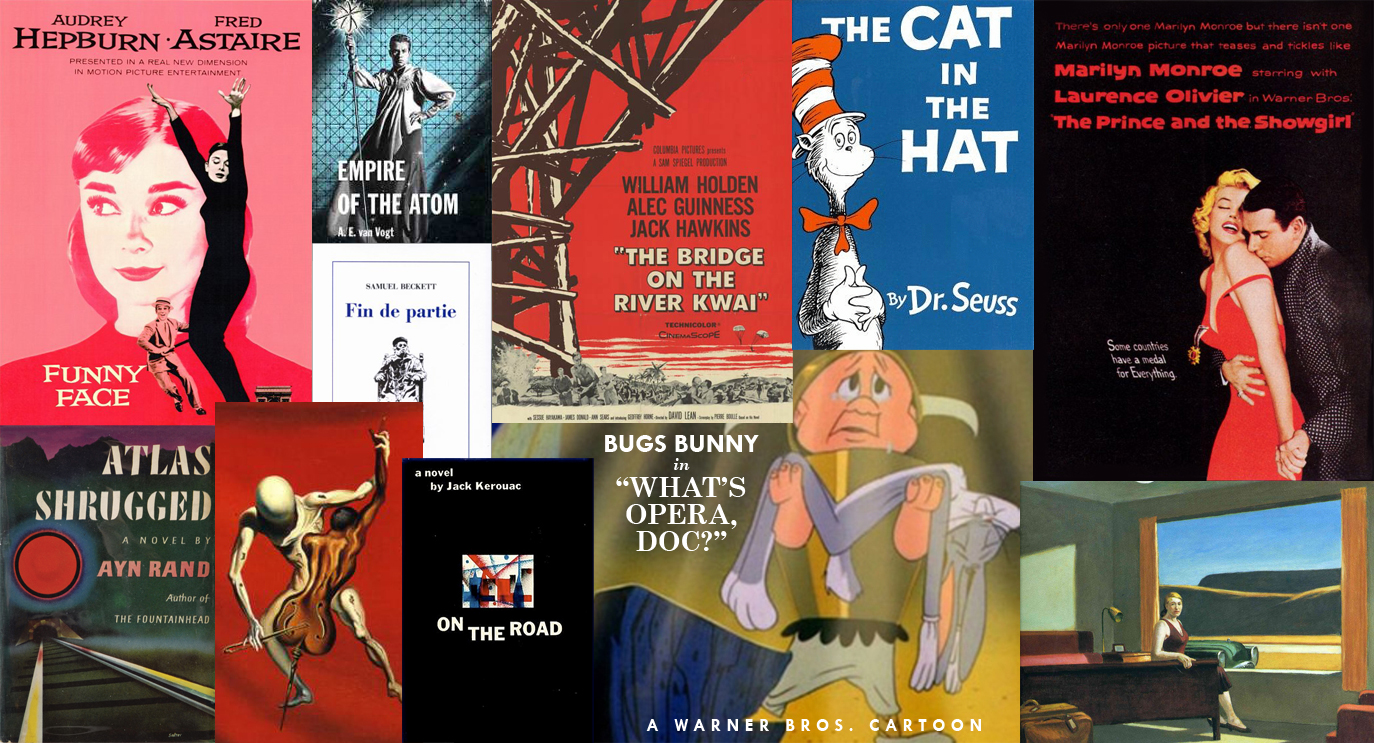
What Books, Movies, Songs & Paintings Could Have Entered the Public Domain on January 1, 2014?

by Dan Colman
Tertiarymatt

More on that.

2014whatcouldhavebeencollage

Every year, Duke University’s Center for the Study of the Public Domain highlights major works that would have entered the public domain had the copyright law that prevailed until 1978 still remained in effect today. That law (established in 1909) allowed works to remain under copyright for a maximum of 56 years — which means that 2014 would have welcomed into the public domain works first published in 1957. Some highlights (from the longer list) include:

Books

  • Jack Kerouac, On the Road
  • Ayn Rand, Atlas Shrugged
  • Dr. Seuss, How the Grinch Stole Christmas and The Cat in the Hat
  • Studs Terkel, Giants of Jazz
  • Ian Fleming, From Russia, with Love

Movies

  • 12 Angry Men (Henry Fonda, Lee J. Cobb, Jack Klugman, Ed Begley, and more)
  • A Farewell to Arms (Rock Hudson and Jennifer Jones)
  • Jailhouse Rock (Elvis Presley)
  • The Seventh Seal (written and directed by Ingmar Bergman and starring Max von Sydow and Bengt Ekerot)
  • Funny Face (Audrey Hepburn and Fred Astaire)
  • Gunfight at the O.K. Corral (Burt Lancaster and Kirk Douglas)

Music

  • “That’ll Be the Day” and “Peggy Sue” (Buddy Holly, Jerry Allison, and Norman Petty)
  • “Great Balls of Fire” (Otis Blackwell and Jack Hammer)
  • “Wake Up, Little Susie” (Felice and Boudleaux Bryant)
  • Elvis Presley’s hits: “All Shook Up” (Otis Blackwell and Elvis Presley) and “Jailhouse Rock” (Jerry Leiber and Mike Stoller)
  • The musical “West Side Story” (music by Leonard Bernstein, lyrics by Stephen Sondheim, and book by Arthur Laurents)

Art

  • Dali’s “Celestial Ride” and “Music: the Red Orchestra”
  • Edward Hopper’s “Western Motel”
  • Picasso’s “Las Meninas” set of paintings

Under the current copyright regime, you’ll have to wait another 39 years — until 2053 — before these works hit the commons.

You can find a longer list of 1957 works still under copyright on Duke’s website.

Related Content:

Sherlock Holmes Is Now in the Public Domain, Declares US Judge

The British Library Puts 1,000,000 Images into the Public Domain, Making Them Free to Reuse & Remix

Free Philip K. Dick: Download 13 Great Science Fiction Stories

What Books, Movies, Songs & Paintings Could Have Entered the Public Domain on January 1, 2014? is a post from: Open Culture. You can follow Open Culture by signing up for our Daily Email. That is the most reliable and convenient option. You can also find us on Facebook, Twitter, and Google Plus.

03 Jan 04:40

Chaos Cinema: A Breakdown of How 21st-Century Action Films Became Incoherent

by Colin Marshall
Tertiarymatt

This, a million times.

If you read Open Culture, you probably love watching movies. I’d wager, however, that you don’t love watching action movies. I don’t mean that you operate at an intellectual level far above any such paltry entertainments; I mean that the craft of action filmmaking has itself declined. You’ve surely felt that today’s big-budget spectacles of chase, fight, and explosion — Transformers, the Jason Bourne films, last few Bonds, the latest Batman trilogy — don’t thrill you as did those of decades past — Hard Boiled, Raiders of the Lost ArkThe Wild BunchDie Hard — but perhaps you can’t pin down quite why. Have action movies changed, you may wonder, or have I? German-born, UCLA-based film scholar Matthias Stork argues for the former, breaking down the corruption of modern action filmmaking in his video essay Chaos Cinema. ”Throughout the first century of moviemaking, the default style of commercial cinema was classical,” he begins. “It was meticulous and patient. In theory, at least, every composition and camera move had a meaning, a purpose, and movies did not cut without good reason.”

No longer. Where action filmmakers once “prided themselves on keeping the viewer well-oriented” in time and space, they now throw disparate images together haphazardly, enslaved to ”rapid editing, close framings, bipolar lens lengths, and promiscuous camera movement,” trading “visual intelligibility for sensory overload,” leaving it to the soundtrack to provide a semblance of continuity. Stork examines the qualities and effects of this new style of “chaos cinema” in three parts. The first covers the visual disintegration of action sequences themselves; the second covers the deficiency’s penetration even into scenes of dialogue and music and the emergence of the “shaky-cam”; the third summarizes and engages responses to the first two parts. Whether or not mainstream commercial filmmaking will ever cure itself and return to convincing, coherent action rather than the impressionistic ”general idea of action,” we now have a fascinating diagnosis of the disease. (For further discussion of Chaos Cinema, consider listening to Stork’s appearance on Battleship Pretension, a favorite film podcast of mine.)

Related Content:

The Dark Knight: Anatomy of a Flawed Action Scene

Alfred Hitchcock’s Seven-Minute Editing Master Class

The 10 Hidden Cuts in Rope (1948), Alfred Hitchcock’s Famous “One-Shot” Feature Film

Colin Marshall hosts and produces Notebook on Cities and Culture and writes essays on cities, Asia, film, literature, and aesthetics. He’s at work on a book about Los Angeles, A Los Angeles Primer. Follow him on Twitter at @colinmarshall or on his brand new Facebook page.

Chaos Cinema: A Breakdown of How 21st-Century Action Films Became Incoherent is a post from: Open Culture. You can follow Open Culture by signing up for our Daily Email. That is the most reliable and convenient option. You can also find us on Facebook, Twitter, and Google Plus.

03 Jan 03:48

January 02, 2014

Tertiarymatt

I have felt this way.


Yep.
02 Jan 01:32

2013's Most Terrifying Weather Disasters

by Chris Mooney
Tertiarymatt

Not a great year, weatherwise.
Also, tornado 2.6 miles wide.

The year 2013 has seen no less than 39 weather-related disasters costing $1 billion or more in damage. That's far more than last year, when there were only 27, according to an analysis of disaster statistics by the Weather Underground's Jeff Masters—and very near the all time high of 40, in 2010.

In other words, even as most of us lived in relative comfort this year, we shouldn't forget that nature dealt out quite a lot of misery and suffering in the world around us. So here's a rundown of some of the most extreme weather events of 2013, from around the world:

1. Brazil's Worst Drought in 50 Years


Dead farm animals in Pernambuco, northeastern Brazil. (Rodrigo Lobo/ZUMA)

From January through May, northeastern Brazil experienced a devastating drought. According to the agricultural secretary of the Brazilian state of Bahia, it was the worst in 50 years. All told, the damage toll was an estimated $8 billion. The drought was so powerful that some experts speculated that the dryness influenced the North Atlantic hurricane season, which was much quieter than expected.

2. Australia's Hottest Summer Ever


A bushfire in Tasmania on January 4. Image courtesy of ToniFish/Wikimedia Commons

The continent had never seen a summer like it. January 2013 was Australia's hottest month since recordkeeping began. Sydney set a new record temperature of 114.4 degrees Fahrenheit on January 18, and that's just one in a very, very long list of heat records. A study subsequently published in the journal Geophysical Research Letters found that global warming had increased the odds of this type of extreme heat wave.

3. Oklahoma's Terrifying Tornados


Moore, Oklahoma, on May 23. (Zhang Yongxing/ZUMA)

The US always has tornadoes, but this year they were particularly devastating. The May 20 tornado in Moore, Oklahoma, was the third most destructive in history. It was an EF-5 on the Enhanced Fujita scale, the highest classification. Twenty-four people were killed, and the total damage was on the order of $2 billion, due to the fact that the tornado stayed on the ground for a long time in a highly populated area. And the Moore tornado was followed shortly afterward by the largest tornado on record on May 31: The El Reno tornado, an EF-5 whose winds reached 295 miles per hour, and whose maximum width was 2.6 miles. (Whenever there are devastating tornadoes, some ask whether climate change could be responsible. The answer is that at this point, top experts just don't know what effect global warming may be having on tornadoes.)

4.  Central Europe's Historic Flooding


Budapest, Hungary, on June 9. (Attila Volgyi/ZUMA)

In late May and early June, many central European countries—including Germany, Switzerland, Austria, and the Czech Republic—experienced record flooding as the Danube, Vltava, and Rhine rivers overtopped their banks. The result was $22 billion in damage, representing the fifth-costliest non-US weather disaster on record. It was the worst European flooding "since the Middle Ages," according to weather expert Jeff Masters. As with so many extremes of late, the flooding was tied to "blocked weather" as a result of a stuck jet stream pattern, which led to extreme rains. Some climate experts think global warming is producing more of these blocking patterns and the resultant extremes.

5. Heat Records Fall From Shanghai to Slovenia


 Pedestrians in Shanghai cover themselves from the sun on August 6. (Imaginechina/ZUMA)

In many parts of the Northern Hemisphere, the summer of 2013 brought record heat. Alaska tied its all-time heat record of 98 degrees Fahrenheit during a July heat wave. As for Death Valley, California, 129.2 degrees Fahrenheit on June 30 just might be Earth's overall heat record (see discussion here). Austria, Slovenia, and Shanghai also all set new heat records. On August 7, Shanghai's temperature hit 105.4 degrees.

6. North India's Deadly Monsoon Floods


Flooding in New Delhi. (Partha Sarkar/Xinhua/ZUMA)

According to data from the reinsurance industry intermediary firm Aon Benfield, the deadliest weather event officially recorded so far in 2013 occurred in June in northern India and Nepal, where severe flooding claimed 6,500 lives. The disaster was caused by extreme monsoon rains over the Indian state of Uttarakhand, whose capital, Dehradun, received more than 14 inches of rain in a 24-hour period, a new record. Monsoon floods are often deadly, but this single event may be the deadliest ever.

7. California's Massive Rim Fire


A firefighter in Groveland, California, battles the Rim Fire. (Elias Funez/Modesto Bee/ZUMA)

After starting in late August, the enormous Yosemite Rim fire eventually grew to encompass more than 250,000 acres, gaining it a ranking of the third largest in California history. To put that in perspective, the Rim Fire grew almost as large as all the other 2013 California fires combined (thus far). It was not fully contained until October 26, more than two months after it formed. (Notably, 7 of the 10 largest California fires have occurred since the year 2000.)

8. Colorado's Thousand-Year Flood


Country Road 34 near Platteville, Colorado, on September 14. (Dejan Smaic/ZUMA)

The local office of the National Weather Service just went ahead and called it "biblical." NOAA climate scientist Martin Hoerling added that "this single event has now made the calendar year (2013) the single wettest year on record for Boulder." The rains that fell in Colorado in September were so intense, and the flooding so damaging, that in some areas, it was the kind of disaster that will only happen once in a thousand years. (The total damage was estimated at $2 billion.) Was climate change involved? For extreme rainfall events, global warming is already contributing a small percentage of additional rainfall through increased atmospheric water vapor. What's more, the Colorado floods were also tied to yet another suspicious atmospheric blocking pattern.

9. The Bay of Bengal's Massive Cyclone Phailin

Cyclone Phailin in the Bay of Bengal on October 10, 2013.
Cyclone Phailin on October 10. (NASA)
 

The deadliest cyclones in the world, historically, have occurred in the Bay of Bengal. So when a storm here named Phailin reached Category 5 strength in October, fears were great that it could rival the deadly 1999 Odisha Cyclone, which killed as many as 10,000 people in India. Fortunately, evacuation planning and preparedness measures prevented a comparable disaster when Phailin made landfall in India at near full strength. Due to data problems, it is hard to say whether Phailin was the strongest storm ever observed in the Bay of Bengal, but it was certainly close.

10. Super Typhoon Haiyan Devastates the Philippines


A young girl looks out over the devastated town of Tanauan in Leyte province, the Philippines. (Lucas Oleniuk/The Toronto Star/ZUMA)

Super Typhoon Haiyan in the northwestern Pacific didn't just reach Category 5 strength: With winds of 195 miles per hour, it may be the strongest hurricane by wind speed ever reliably observed. We've all seen the ensuing images of disaster: The death toll is more than 6,000, and there are still 1,000-plus people missing. In the end, Haiyan may be 2013's deadliest weather event as well.


02 Jan 01:26

Urbanist Buzzwords to Rethink in 2014

by Atlantic Cities Staff
Tertiarymatt

There are some shitty attitudes in this piece.

Writing about urban policy issues, as we do here at The Atlantic Cities each day, can often be an exercise in translating wonky terminology for the everyday reader. The kinds of issues that these terms bring up –– how and where we live, get to work, and enjoy our free time –– are far too relevant to be the victims of off-putting technical jargon and lame buzzwords. Below, some of the worst offenders we hope urbanists (that one, too) think more carefully about deploying in 2014, including some New Year's resolutions of our own.

Urbanism: At first glance, this word might seem utilitarian: urban is a perfectly fine word, and -ism, meaning a "distinctive practice, system, or philosophy, typically a political ideology or an artistic movement," a frequently helpful English language suffix. But this particular combination never fails to makes me cringe when I hear it spoken aloud. Not only does it imply that there exists some universally accepted ideology of the best way to construct, organize, and manage any given urban area, it's frequently misapplied as a term for the study of urban issues (shouldn't that be urbanology?) or the basic interaction of people and things within an urban environment. Deploying this word should be undertaken with extreme caution, and always with the understanding that it almost never carries real meaning.  -Sommer Mathis

Bus Rapid Transit: To me, Bus Rapid Transit sounds like some kind of near-future transportation fantasy that involves tubes and electrons. But really, it describes something pretty simple –– a bus that goes faster because there are fewer and more efficient stops, and no other traffic in the way. This jargon-y expression obscures BRT's real selling point: it's a relatively affordable public transit solution that even a non-urbanist can love. My nomination for a replacement term? Traffic-free express buses. Still long, but a lot more lovable-sounding. -Amanda Erickson

Everyone hates congestion. Why burden a good idea with a bad name? (Shutterstock.com/chungking)

Congestion Pricing: Congestion pricing may be the best hope for reducing city traffic, but despite popularity abroad it hasn't caught on in the United States. Part of the public perception problem may be tied to the term itself. A far less wonky alternative is road fares: it's sharp, adaptable, and best of all draws a parallel between driving on public roads and riding on public transit. -Eric Jaffe

Placemaking: This word (which Word doesn't believe is a word) fails the repetition test. Say it out loud, over and over and over again, and whatever meaning it originally had evaporates entirely. Placemaking, placemaking, placemaking. Isn't everywhere a place? Then how exactly would you make one? Worst of all: What does it mean to be a "placemaker?" If a placemaker comes into a place and placemakes it, then what was that place before the placemaker arrived? What advocates of this idea really support is a particular kind of public place: one that's lively and welcoming, that attracts people instead of repelling them. It's somewhere –– a plaza, a park, a street corner –– where you'd actually want to spend time. Its antonym: a poorly lit, empty park that no one wants to use. None of this, though, is intuitively implied by "placemaking." -Emily Badger

Sometimes unapproved beautification activists aren't as great. Stop the yarn bombing already. (Courtesy Flickr user Twilight Taggers.)

Tactical Urbanism and “Guerrilla” Anything: Ho Chi Minh was a guerrilla. Julius Caesar was a tactician. People who paint bike lanes in the dead of night and plant flowers where there previously were none, are neither. That doesn't mean these unapproved beautification activists aren't great, only that we should describe them using language that reflects the peaceful nature of their activities, and save the militant words for the military. -Mike Riggs

Big Data: Are any two consecutive words more useless than "Big Data"? It's like using "Internet" to describe every activity that takes place on a computer network. "People are connecting on Internet. People are buying things on Internet. The Internet is changing the way we live." The next time someone talks to you about "Big Data," they're either trying to sell you something or they have no idea what they're talking about (possibly both). Demand nuance. Demand details. -Mike Riggs

Built Environment: There’s a whole category of words that people who write about cities love to use that you could probably dub "academic-ese." Built Environment is one of the worst offenders. It describes something that’s both fairly important and rather mundane: the physical stuff of our cities –– the streets, the buildings, the sewers, the parks. Really, anything man-made that we interact with on a regular basis. But using the term "built environment" mostly sounds to me like you were an expert at looking like you’d done the reading in Sociology 101. Even worse, the second search term that Google auto-complete offers when you begin typing is "built environment a.p. human geography." Can there be any worse endorsement? -Stephanie Garlock

The abandoned Packard factory in Detroit, Michigan –– the Rustbelt poster child (Shutterstock.com/Atomazul).

Rust Belt: Historically a disparaging term to describe old industrial cities in the Northeast and Midwest, post-recession changes around the country have now made the term 'Rust Belt' pretty useless. Which is why I've personally finally stopped using the term. Las Vegas still struggles with housing foreclosures and private companies are demanding ridiculous public subsidies in Atlanta. Up north, where similar problems persist, Google now employs hundreds in inner city Pittsburgh and insufferable newcomers are as easy to find in a Detroit coffeeshop as anywhere in San Francisco. ‘Rust Belt’s’ connotations have become as far-ranging and meaningless as calling someone a 'Hipster' (are you trying to say Toledo is really cool or terrible? I have no idea anymore). No one region in the U.S. has a monopoly on urban decay, inequality, or economic failure. North, south, east, west, we all live in moderately struggling places. -Mark Byrnes

Gritty: Gritty is one those condescending terms in the urbanist lexicon that can often say more about the writer’s preconceptions than the place they’re describing. For me, it implies an attitude posed between admiration and fastidiousness: inner city ‘hoods are great and all, but a few extra little farmers’ markets and independent boutiques for People Like Us wouldn’t go amiss. It’s also way too vague. Does the perceived grit come from a place’s poor state of repair? Or is gritty just a shorthand to describe a place inhabited by the urban working class? It’s time we got a little more specific. I must confess that I’ve been guilty of employing the term myself in the past. From now on, I’ll only use it to describe gravel or undercooked rice. -Feargus O’Sullivan

Stakeholders: Planners and architects and government agencies know that they are supposed to care about the opinions of the vast mass of people who are not planners or architects or bureaucrats. That’s what the now sacred “community input process” is supposed to be for –– to gather those opinions, presumably with the ultimate goal of producing something (say, a building or a park or a “sustainable future”) that is informed by them. But some professionals will confess privately that the real reason for the community input process is to make people who aren’t in decision-making positions feel like their input is important. What better way to accomplish that than to honor those folks with a fancy business term like “stakeholders?” The word conveys a flattering sense of value, and it’s vague enough to fit anybody who’s interested enough to care. The problem is, while so-called stakeholders in many of these processes may have a vested interest in the outcome, they don’t actually have the rights of a traditional stakeholder –– i.e., someone who has invested money in something. But hey, it can’t hurt to give them a title that makes them feel like they actually have some influence over the process. Can it? -Sarah Goodyear

Smart Growth: We get the allure of these two words. "Smart growth" is so much more succinct than "compact development that keeps housing, jobs, transportation, and amenities in close proximity, reducing pressure on the environment and public services." The idea is a valid one. But the phrase itself awkwardly implies that all other ways of living are "dumb." And, surprise, people who don't use terms like "smart growth" in casual conversation don't like to feel like they're dumb. In short, this may be useful code for talking to other people who already know what you mean. But it's a freighted way to communicate a good idea to everyone else. -Emily Badger

Gentrification is maybe the most overused word to describe cities today. (Shutterstock.com/SeanPavonePhoto)

Gentrification: Unless you live on the Upper East Side of Manhattan, someone has likely described your neighborhood as 'gentrifying.' Higher rents? Gentrifying. New yogurt store? Gentrifying. The word is so ubiquitous that it's lost most of its real meaning. That's made it hard to talk seriously about the different ways neighborhoods change and whether those changes might benefit a city's less fortunate. -Amanda Erickson


02 Jan 01:23

The Improbable Expectations of Bill de Blasio

by Sarah Goodyear

Last weekend, Bill de Blasio corrected a reporter who said he only had 36 hours to go before taking the oath of office as the next mayor of New York City. From the New York Times:

[On Sunday,] when Mr. de Blasio was reminded that he had a mere 36 hours to fill positions ahead of Wednesday’s inauguration, the mayor-elect disagreed.

“Don’t take away my hours!” he interjected, adding, pointedly, that he still had three days until his swearing-in.

You could hardly blame de Blasio for savoring every moment of being mayor-elect rather than mayor-in-fact. All fall, his surprising come-from-behind campaign went from one feel-good moment to the next, culminating in a crushing landslide over the Republican candidate, Joe Lhota. (After the primary, the Daily Show’s Jon Stewart declared that he wanted to be adopted by the charismatic de Blasio family.) New Yorkers sick of Michael Bloomberg’s billionaire-centric policies and worried about the future of the city’s middle and working classes embraced de Blasio’s progressive agenda and his talk of “a tale of two cities,” separate and unequal.

It wasn’t just New Yorkers who were fired up by the election. Left-of-center Democrats around the nation looked to New York and saw a fresh opening for their kind of politics. To some, the de Blasio win looked like the beginning of a new era — one of hope and change (sound familiar?).

But on January 1, hope will have to start translating into action. New Yorkers are not well-known for their patience, but neither is de Blasio famous for his speed. He is often late to press conferences and other events. On a more substantive note, he has moved slowly (although he would probably prefer to say deliberately) to fill key jobs within the administration. According to the Times’s count, de Blasio had only filled eight senior-level positions by December 30, in contrast with 30 for Bloomberg, 32 for Rudy Giuliani, and 20 for David Dinkins. (On December 31, at nearly the eleventh hour, he appointed four more.)

But the new mayor has promised he is going to be forceful in implementing his campaign promises. Soon after the election, de Blasio told the crowd at a meeting of Al Sharpton’s National Action Network that “It’s one thing to win an election, it’s another thing to achieve an agenda. We are going to get on with a very — not only progressive — but aggressive agenda.”

Some of the key elements of that agenda as he laid them out before taking office:

Creating affordable housing: The skyrocketing price of housing in the city is one of the things that strikes fear into the heart of the average New Yorker. De Blasio has proposed creating a whopping 200,000 units of affordable housing through a variety of strategies. Among them is mandatory inclusionary zoning, which would require developers to construct a certain percentage of affordable units in exchange for the permission to build profitable new residential developments. It’s an approach that his predecessor shied away from on the grounds that it would stifle economic growth. De Blasio has also proposed using $1 billion from the city’s pension fund to invest in building and preserving affordable housing and has said he’s committed to reforming New York’s shelter system, whose population has soared to a record high 55,000 under Bloomberg’s watch. WIll he really be able to play tough with politically influential real estate interests?

Changing NYPD’s stop-and-frisk policy and improving police-community relations: Aggressive policing tactics were among the most controversial legacies of the Bloomberg era. Outgoing NYPD chief Ray Kelly stuck by the department’s “stop and frisk” model even as a federal judge ruled that it was unconstitutional as implemented, amounting to "indirect racial profiling." De Blasio has said that his administration will drop the city’s challenge to that ruling. Donna Lieberman, executive director of the New York Civil Liberties Union, expressed optimism about initial signals from de Blasio and his incoming police commissioner, Bill Bratton: “Changing the culture of the department is an enormous challenge, but I think it starts from the top,” she says. “The devil is in the details, but I’m hopeful and confident, given the campaign, that [de Blasio] gets it, and that his commitment will be reflected.”

Instituting universal pre-Kindergarten: De Blasio has repeatedly called for an increase in the income tax on wealthy New Yorkers — those who make $500,000 or more — to fund “truly universal” pre-K programs for the city’s public school students, as well as after-school programs for all middle-school students. This plan will have to make its way through the infamously sticky legislative process in Albany in order to become reality, a process that will test de Blasio’s political chops.

Creating better jobs and economic opportunities for New Yorkers: Here again, de Blasio says he’ll put the emphasis on education. He’s called for a strengthening on the City University of New York system and bolstering job-training programs. Perhaps most significant, from a political point of view, is that de Blasio thinks that government can and should play a significant role in job creation. “Without a dramatic change of direction — an economic policy that combats inequality and rebuilds our middle class — New York will become little more than a playground for the rich, where millions upon millions of New Yorkers struggle each and every day to keep their heads above water.”

All this high-minded rhetoric triggered a surprising outpouring of idealism in the September primary and in the general election. Now, advocates on a variety of issues — from street safety to school reform — are expecting a new brand of leadership and a new direction from City Hall. Can de Blasio possibly deliver on all of them?

“People are aspirational,” says Noel Hidalgo, cofounder of Beta NYC, which has produced a “People’s Roadmap to a Digital New York City,” calling for more inclusive and participatory government. That’s another thing Hidalgo says many activist New Yorkers are hoping for from de Blasio. “Some progressives that I know are really happy to not have Bloomberg 2.0, but instead someone who’s young and progressive and wants to change the vision of New York,” says Hidalgo. “But a lot of people are also concerned, will he be stymied by the machine — the internal operations of government, the legislative process?”

And the clock, as the mayor-elect well knows, is already ticking.


01 Jan 22:24

Isaac Asimov Predicts in 1964 What the World Will Look Like Today — in 2014

by Dan Colman

asimov-65-e1377841403918

When New York City hosted The World’s Fair in 1964, Isaac Asimov, the prolific sci-fi author and professor of biochemistry at Boston University, took the opportunity to wonder what the world would look like 50 years hence — assuming the world survived the nuclear threats of the Cold War. Writing in The New York Times, Asimov imagined a world that you might partly recognize today, a world where:

  • “Gadgetry will continue to relieve mankind of tedious jobs. Kitchen units will be devised that will prepare ‘automeals,’ heating water and converting it to coffee; toasting bread; frying, poaching or scrambling eggs, grilling bacon, and so on. Breakfasts will be ‘ordered’ the night before to be ready by a specified hour the next morning.”
  • “Communications will become sight-sound and you will see as well as hear the person you telephone. The screen can be used not only to see the people you call but also for studying documents and photographs and reading passages from books. Synchronous satellites, hovering in space will make it possible for you to direct-dial any spot on earth, including the weather stations in Antarctica.”
  • “[M]en will continue to withdraw from nature in order to create an environment that will suit them better. By 2014, electroluminescent panels will be in common use. Ceilings and walls will glow softly, and in a variety of colors that will change at the touch of a push button.”
  • “Robots will neither be common nor very good in 2014, but they will be in existence.”
  • “The appliances of 2014 will have no electric cords, of course, for they will be powered by long- lived batteries running on radioisotopes.”
  • “[H]ighways … in the more advanced sections of the world will have passed their peak in 2014; there will be increasing emphasis on transportation that makes the least possible contact with the surface. There will be aircraft, of course, but even ground travel will increasingly take to the air a foot or two off the ground.”
  • “[V]ehicles with ‘Robot-brains’ … can be set for particular destinations … that will then proceed there without interference by the slow reflexes of a human driver.”
  • “[W]all screens will have replaced the ordinary set; but transparent cubes will be making their appearance in which three-dimensional viewing will be possible.”
  • “[T]he world population will be 6,500,000,000 and the population of the United States will be 350,000,000.” And later he warns that if the population growth continues unchecked, “All earth will be a single choked Manhattan by A.D. 2450 and society will collapse long before that!” As a result, “There will, therefore, be a worldwide propaganda drive in favor of birth control by rational and humane methods and, by 2014, it will undoubtedly have taken serious effect.” [See our Walt Disney Family Planning cartoon from earlier this week.]
  • “Ordinary agriculture will keep up with great difficulty and there will be ‘farms’ turning to the more efficient micro-organisms. Processed yeast and algae products will be available in a variety of flavors.”
  • “The world of A.D. 2014 will have few routine jobs that cannot be done better by some machine than by any human being. Mankind will therefore have become largely a race of machine tenders. Schools will have to be oriented in this direction…. All the high-school students will be taught the fundamentals of computer technology will become proficient in binary arithmetic and will be trained to perfection in the use of the computer languages that will have developed out of those like the contemporary “Fortran.”
  • “[M]ankind will suffer badly from the disease of boredom, a disease spreading more widely each year and growing in intensity. This will have serious mental, emotional and sociological consequences, and I dare say that psychiatry will be far and away the most important medical specialty in 2014.”
  •  ”[T]he most glorious single word in the vocabulary will have become work!” in our ”a society of enforced leisure.”

Isaac Asimov wasn’t the only person during the 60s who peered into the future in a fairly prescient way. You can find a few more on-the-mark predictions from contemporaries below:

Arthur C. Clarke Predicts the Future in 1964 … And Kind of Nails It

Walter Cronkite Imagines the Home of the 21st Century … Back in 1967

The Internet Imagined in 1969

Marshall McLuhan Announces That The World is a Global Village

Note: This post originally appeared on Open Culture last August. If there was ever a time to show it again, it’s today. So, with your indulgence, we’re giving it an encore performance. 

Don’t miss anything from Open Culture in 2014. Sign up for our Daily Email or RSS Feed. And we’ll send cultural curiosities your way, every day.

Isaac Asimov Predicts in 1964 What the World Will Look Like Today — in 2014 is a post from: Open Culture. You can follow Open Culture by signing up for our Daily Email. That is the most reliable and convenient option. You can also find us on Facebook, Twitter, and Google Plus.

01 Jan 22:06

Watch Dinner for One, the Short Film That Has Become a Baffling New Year’s Tradition in Europe

by Ilia Blinderman
Tertiarymatt

The introduction to this so goddamn German.

There are myriad New Year’s Eve customs worldwide. In Japan, toshikoshi soba noodles are eaten to bring in the coming year. In North America, finding someone to share a New Year’s Eve kiss with as the clock winds down has become a boon to the romantically-challenged. In Germany, however, a different tradition has taken form: every year on December 31st, TV networks broadcast an 18-minute-long black and white two-hander comedy skit.

In 1963, Germany’s Norddeutscher Rundfunk television station recorded a sketch entitled Dinner For One, performed by the British comics Freddie Frinton and May Warden. The duo depicted an aging butler serving his aristocratic mistress, Miss Sophie, dinner on the occasion of her 90th birthday. Although four additional spots have been set at the table, the nonagenarian’s friends have long since passed away, and the butler is forced to take their places in drinking copious amounts of alcohol while toasting Miss Sophie’s health. Hilarity, as it is wont to do in such cases, ensues.

Since its initial recording, the clip has become a New Year’s Eve staple in Germany. Although Dinner For One has never been broadcast in the U. S. or Canada, the clip has spread throughout Europe to Norway, Finland, Estonia, Lithuania, Austria, Switzerland, and beyond the continent’s shores, to South Africa and Australia. In Sweden, a bowdlerized 11-minute version of the clip has been produced, where, for decency’s sake, much of the butler’s boozing was excised alongside its attendant comedic effect. In Denmark, after the national television network failed to broadcast the sketch in 1985, an avalanche of viewer complaints has guaranteed its subsequent yearly appearance. Although the category is now defunct, the clip held the Guinness World Record for Most Frequently Repeated TV Program. As for why the video’s garnered so much attention? No one’s really sure. The Wall Street Journal’s Todd Buell posits that the sketch’s easy to understand English combined with a German longing for security and simplicity may have led to its iconic status. To me, however, it seems that the finely tuned physical comedy translates readily beyond any linguistic boundaries, and simply hit the right note at the right time.

Above, you can view the original 18-minute comedic opus and celebrate New Year’s day in the same way that much of Europe brought in 2014 (don’t mind the German introduction — the video is in English). In future years, you can always find Dinner for One in our collection of 600 Free Movies Online.

From all of us at Open Culture to you, have a happy new year!

Related Content:

The Science of Willpower: 15 Tips for Making Your New Year’s Resolutions Last from Dr. Kelly McGonigal

The Ramones Play New Year’s Eve Concert in London, 1977

A New Year’s Wish from Neil Gaiman

The Top 10 New Year’s Resolutions Read by Bob Dylan


Watch Dinner for One, the Short Film That Has Become a Baffling New Year’s Tradition in Europe is a post from: Open Culture. You can follow Open Culture by signing up for our Daily Email. That is the most reliable and convenient option. You can also find us on Facebook, Twitter, and Google Plus.

01 Jan 22:01

A Brave New Modernism, Part 2: Dubai

Tertiarymatt

A Bold New Modernism Built on the Same Exploitation of Invisible Underclasses as the Bold Old Modernism.

shaun_fynn_dubai18.jpg

This is the second part in STUDIOFYNN's 'Brave New Modernism' series, which launched with a photo essay on Shanghai.

Dubai symbolizes the megacity with the megaprojects like no other. Rarely have our talents as builders been so effectively combined with our talents as storytellers. Dubai tells the story of unprecedented and rapid economic expansion spurred by oil wealth and the city's desire to be the hub of commerce for the region. The enactment of carefully crafted policies has created an international center for finance, tourism, trade and manufacture.

The fictional nature of Dubai has been the subject of much debate but interpreting the elements that contribute to the increasingly blurred lines between fact and fiction, myth and realty are a challenge for our era. Our abilities as architects and designers to understand the power of a brand now bridges every aspect of what we create. From handbags to high-rises, the entire built world becomes ever more sophisticated as we evolve our practices to better cater for the motivations and desires of both business and the individual.

shaun_fynn_dubai1.jpg

shaun_fynn_dubai3.jpg

One of the key differences on how cities develop visual characteristics and urban plans today is the power of the media. The media is not only a modern phenomenon capable of generating huge revenue and needing many square feet of office space to do this, but also a conduit that creates new visual myths and realities, especially through the photographic image and the cinema. Dubai is characterized strongly by these phenomena as its architecture takes on visual codes inspired by science fiction cinema and a need to communicate its value through the TV, online media, billboards and magazines. The built environment therefore has to take on a form conducive to dissemination of value propositions through media channels, possibly more so than catering to our basic needs and sensitivities towards issues of relative human scale, climate, recreation and keeping in balance with the natural world.

Such brave thrusts forward come with their wake, something we have much less understanding of than the pursuit of progress. Apart from disconnecting us from some basic elements of well being, there are the issues of environment, carbon footprint and the inevitable social consequences of rapid development and labour migration. With the need to desalinate its water supply and air condition its interior spaces, Dubai is one of the world leaders of energy consumption per capita. One persons shopping paradise can be another's environmental transgression so the definition of success and failure has many facets. What is apparent is that designers and architects, in conjunction with policy makers, marketers, industrialists and alike need to anticipate the wake of progress and learn to design for it with equal measure, otherwise our long term visions may not achieve the much vaunted status of 'sustainable.'

shaun_fynn_dubai8.jpg

shaun_fynn_dubai10.jpg

shaun_fynn_dubai16.jpg

(more...)
01 Jan 07:20

Every Appearance James Brown Ever Made On Soul Train. So Nice, So Nice!

by Ayun Halliday

Are you ready for some Super Brother Music for the Soul?

Yes? How fortuitous! We just happen to have 45 minutes worth of James Brown Soul Train appearances from the early-to-mid-’70s to share. Get down!

It’s worth noting that Brown’s band, the JBs, were the only ones in the history of the show who host Don Cornelius trusted to play live. The Godfather of Soul ran a tight ship, fining band members for sour notes and untidy costumes, and it shows. The dance show’s stage was tight, but the performances here are even tighter, as lean and mean as those funkadelic Curtis Gibson ensembles!

If your New Year’s Eve plans pale in comparison with the playlist below, cancel them and stay in. Feel good. So good. We got you.

Hot Pants

Get Up (I Feel Like A) Sex Machine 2:36

Get On The Good Foot 4:06

Soul Power 6:51

Make It Funky 9:53

Cold Sweat 11:07

Try Me 14:22

Please Please, Please 17:21

Say It Loud I’m Black and I’m Proud 17:57

Super Bad 23:53  (featuring Soul Train Gang dancer Damita Jo Freeman‘s insane Robot)

Papa Don’t Take No Mess 26:18

My Thang 29:57

Hell 33:33 (the little girl sharing the stage is Brown’s daughter, Deanna)

The Payback 35:57

Damn Right, I Am Somebody 40:25 (with Fred Wesley & the JB’s)

via That Eric Alper

Related Content: 

James Brown Gives You Dancing Lessons: From The Funky Chicken to The Boogaloo

James Brown Saves Boston After MLK’s Assassination, Calls for Peace Across America (1968)

James Brown Brings Down the House at the Paris Olympia, 1971

Ayun Halliday is the author of seven books, including No Touch Monkey! And Other Travel Lessons Learned Too Late  and the Zinester’s Guide to NYC. Follow her @AyunHalliday

Every Appearance James Brown Ever Made On Soul Train. So Nice, So Nice! is a post from: Open Culture. You can follow Open Culture by signing up for our Daily Email. That is the most reliable and convenient option. You can also find us on Facebook, Twitter, and Google Plus.

01 Jan 06:33

The 15 Most Popular Posts from Open Culture in 2013

by Dan Colman
Tertiarymatt

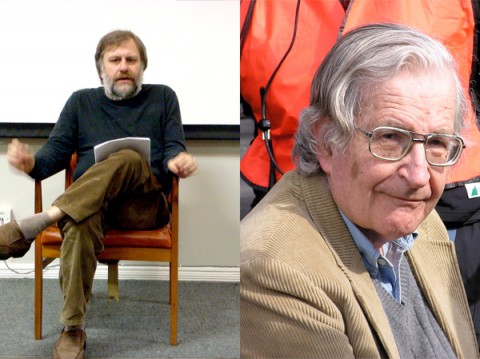
Shared in large part due to mockery of Zizek.

chomsky-zizek-feud-continues-e1374507471201

In 2013, we published 1300+ posts on a wide range of cultural subjects. Looking back through our logs we were able to identify the 15 posts that resonated most widely with our readers. We hope you enjoy this recap, and share some of the items with friends. And we look forward to seeing you in 2014. Happy New Year to you all.

Noam Chomsky Slams Žižek and Lacan: Empty ‘Posturing’: A little spat broke out between Chomsky and Žižek this summer. Chomsky got the debate going after he accused Jacques Lacan of being a “total charlatan” and Slavoj Žižek of posturing rather than offering real intellectual substance. Žižek replied sharply. Chomsky rebutted. Žižek countered again. Some scored it a draw.

The 10 Greatest Films of All Time According to 846 Film Critics: Throughout the year, our resident film scholar Colin Marshall revisited the favorite films of some of the greatest filmmakers – Stanley KubrickMartin ScorseseWoody Allen, and Quentin Tarantino, to name a few. But it also made sense to take a more global view of things, to survey the films loved by 800+ directors and film critics. That’s what you can find here.

Listen to Freddie Mercury and David Bowie on the Isolated Vocal Track for the Queen Hit ‘Under Pressure,’ 1981: In 2013, we featured a series of isolated tracks that offer unique insights into classic songs. You might recall Kurt Cobain’s Vocals From ‘Smells Like Teen Spirit,’ Eric Clapton’s Isolated Guitar Track From ‘While My Guitar Gently Weeps’, and Merry Clayton’s Haunting Background Vocals on the Rolling Stones’ ‘Gimme Shelter’. But your favorite was Freddie Mercury and David Bowie’s unforgettable performance on Queen’s Under Pressure. You have good taste. Bowie fans should also check his list of his Top 100 Books.

Read 18 Short Stories From Nobel Prize-Winning Writer Alice Munro Free Online: When Alice Munro won the Nobel Prize on the strength of her many short stories, Josh Jones gathered for you 18 free short stories written by the now 82-year-old author. They’re all free to read online. During the year, we also put together collections of 10 Free Stories by George Saunders10 Free Articles by Hunter S. ThompsonFour Stories by Jennifer Egan, and 30 Free Essays & Stories by David Foster Wallace. Be sure to enjoy them as well.

Free: The Metropolitan Museum of Art and the Guggenheim Offer 474 Free Art Books Online: Art catalogues from museums can be downright expensive. That’s why we were excited when The Met and the Guggenheim put an archive of art catalogues online for free. For no cost, you can read highly visual introductions to the work of Alexander CalderEdvard MunchFrancis BaconGustav Klimt & Egon Schiele, Wassily Kandinsky, Georgia O’KeeffeFrank Lloyd Wright and many other influential artists.

The British Library Puts 1,000,000 Images into the Public Domain, Making Them Free to Reuse & Remix: Some of the world’s great libraries are also opening access to our cultural heritage. Take for example the British Library, which announced this month that it has released over a million images onto Flickr Commons for anyone to use, remix and repurpose. Culled from the pages of 17th, 18th and 19th century books, the images include a dizzying array of “maps, geological diagrams, beautiful illustrations, comical satire, illuminated and decorative letters, colorful illustrations, landscapes, wall-paintings” and more.

John Coltrane’s Handwritten Outline for His Masterpiece A Love Supreme: To celebrate Trane’s birthday, we featured a rare document from the Smithsonian’s National Museum of American History: Coltrane’s handwritten outline of his groundbreaking jazz composition A Love Supreme. In terms of popularity, this post was just about tied with another great (but very different) jazz document: Thelonious Monk’s List of Tips for Playing a Gig.

The Genius of J.S. Bach’s “Crab Canon” Visualized on a Möbius Strip: Bach wrote his “Crab Canon” in such a way that it could be played backwards as well as forwards. But prepare yourself for the mind-blowing coup de grâce when mathematical image-maker Jos Ley lays the piece out on a Möbius strip.

Seven Tips From Ernest Hemingway on How to Write FictionHemingway never wrote a treatise on the art of writing fiction. He did, however, leave behind a great many passages in letters, articles and books with opinions and advice on writing. Some of the best of those were assembled in 1984 by Larry W. Phillips into a book, Ernest Hemingway on Writing. We’ve selected seven of our favorite quotations from the book and placed them, along with our own commentary, on this page. Readers will also want to peruse these related posts: 18 (Free) Books Ernest Hemingway Wished He Could Read Again for the First Time and Hemingway Creates a Reading List for a Young Writer, 1934, plus F. Scott Fitzgerald Creates a List of 22 Essential Books, 1936.

Pink Floyd’s David Gilmour Sings Shakespeare’s Sonnet 18: In the early 2000s, Pink Floyd guitarist and singer David Gilmour recorded a musical interpretation of William Shakespeare’s “Sonnet 18″ at his home studio aboard the historic, 90-foot houseboat the Astoria. This video of Gilmour singing the sonnet was released as an extra on the 2002 DVD David Gilmour in Concert, and it’s pretty sublime.

Learn to Code with Harvard’s Intro to Computer Science Course And Other Free Tech Classes: These days, it could never hurt to make sure you have some good tech chops. Many of you understand that, and that’s why you jumped on Harvard’s free, introductory computer science course. Taught by David Malan, the introductory course covers “abstraction, algorithms, encapsulation, data structures, databases, memory management, security, software development, virtualization, and websites. Languages include C, PHP, and JavaScript plus SQL, CSS, and HTML.” You can always find the course listed in the Computer Science section of our collection of 800 Free Courses Online.

Michelangelo’s Illustrated 16th-Century Grocery List: Very few of Michelangelo’s papers survive today, but we do oddly have the grocery lists that he had his servant bring to the food market. “Because the servant he was sending to market was illiterate,” writes the Oregonian‘s Steve Duin, “Michelangelo illustrated the shopping lists — a herring, tortelli, two fennel soups, four anchovies and ‘a small quarter of a rough wine’ — with rushed … caricatures in pen and ink.” It’s a unique historical item, certainly worth checking out.

Prize-Winning Animation Lets You Fly Through 17th Century London: Six students from De Montfort University created a stellar 3D representation of 17th century London, as it existed before The Great Fire of 1666. The three-minute video provides a realistic animation of Tudor London, and particularly a section called Pudding Lane where the fire started. Grab a small handful of popcorn, and sit back and enjoy.

Hermann Rorschach’s Original Rorschach Test: What Do You See?: In honor of Hermann Rorschach’s birthday in November, we highlighted the original images used in his famous psychology test back in 1921. And we invited you to say what you saw in these images. The answers were often amusing, sometimes perplexing.

Simone de Beauvoir Explains “Why I’m a Feminist” in a Rare TV Interview (1975): In a 1975 interview, Simone de Beauvoir picked up on ideas she explored in The Second Sex. This revealing clip can be watched alongside other 2013 posts featuring de Beauvoir and her partner Jean-Paul Sartre. See Lovers and Philosophers — Jean-Paul Sartre & Simone de Beauvoir Together in 1967 and Philosophy’s Power Couple, Jean-Paul Sartre and Simone de Beauvoir, Featured in 1967 TV Interview.

BonusFill Your New Kindle, iPad, iPhone, eReader with Free eBooks, Movies, Audio Books, Online Courses & More: Just last week, we told you where to load up your new iPads, Kindles, and other devices with free intelligent media. If you missed it the first time around, it’s not too late to circle back.

Don’t miss anything from Open Culture in 2014. Sign up for our Daily Email or RSS Feed. And we’ll send cultural curiosities your way, every day.

The 15 Most Popular Posts from Open Culture in 2013 is a post from: Open Culture. You can follow Open Culture by signing up for our Daily Email. That is the most reliable and convenient option. You can also find us on Facebook, Twitter, and Google Plus.

01 Jan 06:31

From one year ago, the New Year’s Eve celebration in...

by rion
Tertiarymatt

Watching fireworks might be a little weird after this.


From one year ago, the New Year’s Eve celebration in Melbourne, Australia… in reverse. 

via NPR.

01 Jan 06:28

The Only Three Ways You Should Open Your Bottle of Choice This New Year's

Tertiarymatt

Topical.

DaveHax-ChampagneChop.jpgThis method might end up contaminating your champagne with glass shards, but it sure does look cool.

New Year's Eve is synonymous with "popping bottles." Now what you have in that bottle is up to you (sometimes sparkling grape juice is all you need to celebrate), but the frantic realization that you're sans opener is never a good thing. Even the best attempts of opening beer bottles on the edge of tables (cue cringing) or haphazardly with keys (cue sliced finger) usually don't end up well.

DaveHax-Bottles.jpgGive Dave Hax some string and he'll have that wine bottle opened in a jiffy.

But Dave Haxworth—whose DIY videos we've covered before—has the perfect life hack for you—if you've got a sharp knife, piece of ribbon or an English ten pound note on you. Instead of the old tried-and-true method of yanking the rounded end of the cork out of your bottle of bubbly, Hax (as he calls himself on Youtube) shows us how to chop off the top with a knife (seriously). We all know how it feels to lose a wine cork to the inside of the bottle—take back your vino with a piece of ribbon. We'd be willing to bet a tenner that Hax's £10 note method would work with a greenback too. Check out this video completely breaking down the delicate process of popping three different bottles sans openers:

(more...)
31 Dec 18:50

(via Crypton.io)

Tertiarymatt

Attn. Bl00.


(via Crypton.io)

30 Dec 19:00

on Apocalypses

by Ian
Tertiarymatt

Hat tip to those who defeated the 2012 Mayan and Rapture Bosses.

on Apocalypses

29 Dec 07:52

Bee thinking

by Rusty
Tertiarymatt

So much of modern suburban/exurban development is just wretchedly terrible.

When I see photos of embattled cities waist deep in concrete and rebar, or images of urban streets paved with asphalt and lined with brick, I wonder about the bees. Where did they go? How did they die? Did anyone care? I think about it, but it seems removed. It happened in some other place. […]
28 Dec 05:32

The Junky’s Christmas: William S. Burrough’s Dark Claymation Christmas Film Produced by Francis Ford Coppola (1993)

by Dan Colman
Tertiarymatt

A holiday classic.

Back in 1993, the Beat writer William S. Burroughs wrote and narrated a 21 minute claymation Christmas film. And, as you can well imagine, it’s not your normal happy Christmas flick. Nope, this film – The Junky’s Christmas – is all about Danny the Carwiper, a junkie, who spends Christmas Day trying to score a fix. Eventually he finds the Christmas spirit when he shares some morphine with a young man suffering from kidney stones, giving him the “immaculate fix.” There you have it. This film produced by Francis Ford Coppola appears in our collection of Free Movies Online, or you can buy it on Amazon here. via @UBUWeb

This post originally appeared on our site on Christmas, 2010.

Don’t miss anything from Open Culture. Sign up for our Daily Email or RSS Feed. And we’ll send cultural curiosities your way, every day.

Related Content:

William S. Burroughs on Saturday Night Live, 1981

William S. Burroughs Explains What Artists & Creative Thinkers Do for Humanity: From Galileo to Cézanne and James Joyce

Patti Smith Shares William S. Burroughs’ Advice for Writers and Artists

Dementia 13: The Film That Took Francis Ford Coppola From Schlockster to Auteur

The Junky’s Christmas: William S. Burrough’s Dark Claymation Christmas Film Produced by Francis Ford Coppola (1993) is a post from: Open Culture. You can follow Open Culture by signing up for our Daily Email. That is the most reliable and convenient option. You can also find us on Facebook, Twitter, and Google Plus.

28 Dec 05:26

Read 10 Free Articles by Hunter S. Thompson That Span His Gonzo Journalist Career (1965-2005)

by Colin Marshall
Tertiarymatt

Something to keep you occupied for a while.

Hunter_S._Thompson,_1988_crop

Most readers know Hunter S. Thompson for his 1971 book Fear and Loathing in Las Vegas: A Savage Journey to the Heart of the American Dream. But in over 45 years of writing, this prolific observer of the American scene wrote voluminously, often hilariously, and usually with deceptively clear-eyed vitriol on sports, politics, media, and other viciously addictive pursuits. (“I hate to advocate drugs, alcohol, violence, or insanity to anyone,” he famously said, “but they’ve always worked for me.”) His distinctive style, often imitated but never replicated, all but forced the coining of the term “gonzo” journalism. But what could define it? One clue comes in Fear and Loathing in Las Vegas itself, when Thompson reflects on his experience in the city, ostensibly as a reporter: “What was the story? Nobody had bothered to say. So we would have to drum it up on our own. Free Enterprise. The American Dream. Horatio Alger gone mad on drugs in Las Vegas. Do it now: pure Gonzo journalism.”

You’ll find out more in the Paris Review‘s interview with Thompson, in which he recounts once feeling that “journalism was just a ticket to ride out, that I was basically meant for higher things. Novels.” Sitting down to begin his proper literary career, Thompson took a quick job writing up the Hell’s Angels, which let him get over “the idea that journalism was a lower calling. Journalism is fun because it offers immediate work. You get hired and at least you can cover the f&cking City Hall. It’s exciting.” And then came the real epiphany, after he went to cover the Kentucky Derby for Scanlan‘s: “Most depressing days of my life. I’d lie in my tub at the Royalton. I thought I had failed completely as a journalist. Finally, in desperation and embarrassment, I began to rip the pages out of my notebook and give them to a copyboy to take to a fax machine down the street. When I left I was a broken man, failed totally, and convinced I’d be exposed when the stuff came out.”

Indeed, the exposure came, but not in the way he expected. Below, we’ve collected ten of Thompson’s articles freely available online, from those early pieces on the Hell’s Angels and the Kentucky Derby to others on the 1972 Presidential race, the Honolulu Marathon, Richard Nixon, and wee-hour conversations with Bill Murray. But don’t take these subjects too literally; Thompson always had a way of finding something even more interesting in exactly the opposite direction from whatever he’d initially meant to write about. And that, perhaps, reveals more about the gonzo method than anything else.

The Motorcycle Gangs: Losers and Outsiders” (The Nation, 1965) The article that would become the basis for Thompson’s first book, Hell’s Angels: The Strange and Terrible Saga of the Outlaw Motorcycle Gangs. ”When you get in an argument with a group of outlaw motorcyclists, you can generally count your chances of emerging unmaimed by the number of heavy-handed allies you can muster in the time it takes to smash a beer bottle. In this league, sportsmanship is for old liberals and young fools.”

The Hippies” (Collier’s, 1968) Thompson’s assessment of the actual lifespan of American hippie culture. “The hippie in 1967 was put in the strange position of being an anti-culture hero at the same time as he was also becoming a hot commercial property. His banner of alienation appeared to be planted in quicksand. The very society he was trying to drop out of began idealizing him. He was famous in a hazy kind of way that was not quite infamy but still colorfully ambivalent and vaguely disturbing.”

The Kentucky Derby is Decadent and Depraved” (Scanlan’s Monthly, 1970) A report from the bacchanal surrounding the Kentucky Derby, America’s most famous — and, in this depiction, by far its most grotesque — horse race. Also Thompson’s first collaboration with his longtime illustrator Ralph Steadman. (See also further background at Grantland.) ”Unlike most of the others in the press box, we didn’t give a hoot in hell what was happening on the track. We had come there to watch the real beasts perform.”

Fear and Loathing on the Campaign Trail in ’72” (Rolling Stone, 1973) Excerpts from Thompson’s book of nearly the same name, an examination of Democratic Party candidate George McGovern’s unsuccessful bid for the Presidency that McGovern’s campaign manager Frank Mankiewicz called “the least factual, most accurate account” in print. “My own theory, which sounds like madness, is that McGovern would have been better off running against Nixon with the same kind of neo-’radical’ campaign he ran in the primaries. Not radical in the left/right sense, but radical in a sense that he was coming on with a new… a different type of politician… a person who actually would grab the system by the ears and shake it.”

The Curse of Lono” (Playboy, 1983) Thompson and Steadman’s assignment from Running magazine to cover the Honololu marathon turns into a characteristically “terrible misadventure,” this one even involving the old Hawaiian gods. “It was not easy for me, either, to accept the fact that I was born 1700 years ago in an ocean-going canoe somewhere off the Kona Coast of Hawaii, a prince of royal Polynesian blood, and lived my first life as King Lono, ruler of all the islands, god of excess, undefeated boxer. How’s that for roots?”

He Was a Crook” (Rolling Stone, 1994) Thompson’s obituary of, and personal history of his hatred for, President Richard M. Nixon. ”Some people will say that words like scum and rotten are wrong for Objective Journalism — which is true, but they miss the point. It was the built-in blind spots of the Objective rules and dogma that allowed Nixon to slither into the White House in the first place.

Doomed Love at the Taco Stand” (Time, 2001) Thompson’s adventures in California, to which he has returned for the production of Terry Gilliam’s film adaptation of Fear and Loathing in Las Vegas starring Johnny Depp. ”I had to settle for half of Depp’s trailer, along with his C4 Porsche and his wig, so I could look more like myself when I drove around Beverly Hills and stared at people when we rolled to a halt at stoplights on Rodeo Drive.”

Fear & Loathing in America” (ESPN.com, 2001) In the immediate aftermath of 9/11, Thompson looks out onto the grim and paranoid future he sees ahead. “This is going to be a very expensive war, and Victory is not guaranteed — for anyone, and certainly not for anyone as baffled as George W. Bush.”

“Prisoner of Denver” (Vanity Fair, 2004) A chronicle of Thompson’s (posthumously successful) involvement in the case of Lisl Auman, a young woman he believed wrongfully imprisoned for the murder of a police officer. “‘We’ is the most powerful word in politics. Today it’s Lisl Auman, but tomorrow it could be you, me, us.”

Shotgun Golf with Bill Murray” (ESPN.com, 2005) Thompson’s final piece of writing, in which he runs an idea for a new sport —combining golf, Japanese multistory driving ranges, and the discharging of shotguns — by the comedy legend at 3:30 in the morning. “It was Bill Murray who taught me how to mortify your opponents in any sporting contest, honest or otherwise. He taught me my humiliating PGA fadeaway shot, which has earned me a lot of money… after that, I taught him how to swim, and then I introduced him to the shooting arts, and now he wins everything he touches.”

Related Content:

Hunter S. Thompson’s Harrowing, Chemical-Filled Daily Routine

Hunter S. Thompson Calls Tech Support, Unleashes a Tirade Full of Fear and Loathing (NSFW)

Johnny Depp Reads Letters from Hunter S. Thompson (NSFW)

Hunter S. Thompson Remembers Jimmy Carter’s Captivating Bob Dylan Speech (1974)

Colin Marshall hosts and produces Notebook on Cities and Culture and writes essays on cities, Asia, film, literature, and aesthetics. He’s at work on a book about Los Angeles, A Los Angeles Primer. Follow him on Twitter at @colinmarshall or on his brand new Facebook page.

Read 10 Free Articles by Hunter S. Thompson That Span His Gonzo Journalist Career (1965-2005) is a post from: Open Culture. You can follow Open Culture by signing up for our Daily Email. That is the most reliable and convenient option. You can also find us on Facebook, Twitter, and Google Plus.

28 Dec 05:23

Sherlock Holmes Is Now in the Public Domain, Declares US Judge

by Dan Colman
Tertiarymatt

You are now free to sell all your slash on Amazon.

sherlock_holmes_in_public domain

Chief Judge Rubén Castillo of the United States District Court of the Northern District of Illinois has ruled that the characters and story lines used in 50 Sherlock Holmes texts published by Arthur Conan Doyle before Jan. 1, 1923 “are no longer covered by United States copyright law and can be freely used by creators without paying any licensing fee to the Conan Doyle estate,” reports The New York Times. This gives contemporary authors the ability to write their own Sherlock Holmes mystery stories and keep contributing to a rich tradition of detective fiction. It would also seemingly put pre-1923 texts firmly in the public domain. (You can find The Adventures of Sherlock Holmes and other related stories in our Free eBooks and Free Audio Books collections. ) Leslie S. Klinger, the editor of The Complete Annotated Sherlock Holmes, who filed the civil suit, praised the judge’s decision, saying “People want to celebrate Holmes and Watson, and now they can do that without fear.” Now it’s time for them to write something that can hold a candle to what Conan Doyle created those many years ago.

Don’t miss anything from Open Culture. Sign up for our Daily Email or RSS Feed. And we’ll send cultural curiosities your way, every day.

via Arts Beat

Related Content:

Arthur Conan Doyle Discusses Sherlock Holmes and Psychics in a Rare Filmed Interview (1927)

Arthur Conan Doyle & The Cottingley Fairies: How Two Young Girls Fooled Sherlock Holmes’ Creator

Arthur Conan Doyle Fills Out the Questionnaire Made Famous By Marcel Proust (1899)

Watch John Cleese as Sherlock Holmes in The Strange Case of the End of Civilization as We Know It

Sherlock Holmes Is Now in the Public Domain, Declares US Judge is a post from: Open Culture. You can follow Open Culture by signing up for our Daily Email. That is the most reliable and convenient option. You can also find us on Facebook, Twitter, and Google Plus.