Shared posts

17 Jan 00:40

A Map of the 124 United States of America That Could Have Been

by Kimber Streams

124 States That Could Have Been

In 2011, Andrew Shears created this interesting map that shows 124 states that could have existed in America if various failed partition proposals throughout history had succeeded. Visit Shears’ website to read more about how he created the map, and to see a larger version of the full map of the United States that could have been.

124 States That Could Have Been

images via Andrew Shears

via The Washington Post, Gizmodo

17 Jan 00:13

Different Types of Female Dancers in Clubs

by Kimber Streams

Celeste Chen demonstrates the different types of female dancers found in Singapore clubs in this 2013 video. The music choices for different dance moves are spot on.

via Daily Picks and Flicks

12 Jan 19:27

The 13 Most Obvious Scientific Findings of 2013

Common sense is no replacement for science; plenty of "everyone knows" knowledge has had its legs cut out from under it by a well-designed study. Nevertheless, some research turns up results that don't exactly shock and awe.

[More]
09 Jan 20:51

Sperm Journey

by Rob Beschizza
An educational video for you, from Japan. [Video Link. Thanks, Heather!]


07 Jan 21:15

Exciting linguistic developments of 2013

by Cory Doctorow


The American Dialect Society's 2013 Words of the Year (PDF) (voted on earlier this week -- "because" won, because Internet) had some fascinating entries.

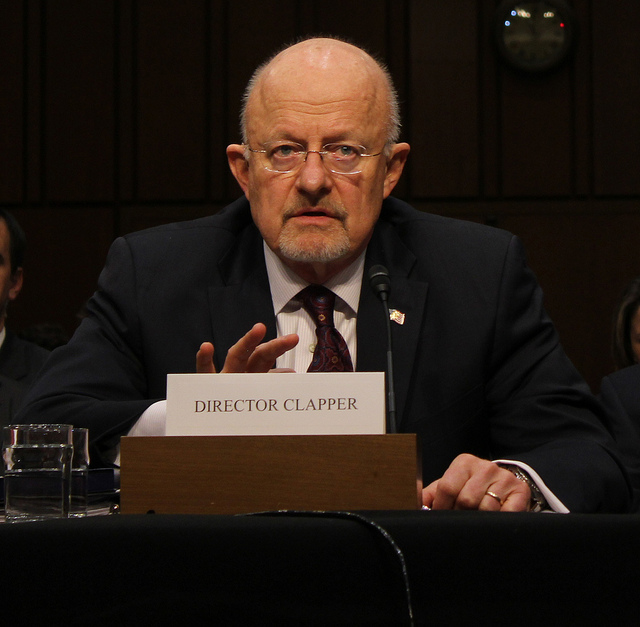
I liked "Most Productive" (such as "-(el)fie: (from selfie) type of self-portrait (drelfie ‘drunk selfie,’ twofie ‘selfie with two people’)" and "Most Euphemistic" (" least untruthful: involving the smallest necessary lie (used by intelligence director James Clapper)").

MOST EUPHEMISTIC
demised: laid off from employment (used by the bank HSBC)
least untruthful: involving the smallest necessary lie (used by intelligence director James Clapper)
slimdown: reinterpretation of “shutdown” used on Fox News site

“MOST PRODUCTIVE (new category)
-coin: (from bitcoin) type of cryptocurrency (peercoin, namecoin, dogecoin)
-(el)fie: (from selfie) type of self-portrait (drelfie ‘drunk selfie,’ twofie ‘selfie with two people’)
-shaming: (from slut-shaming) type of public humiliation (fat-shaming, pet-shaming)
-splaining: (from mansplaining) type of condescending explanation (whitesplaining, journosplaining)
-spo: (from thinspo) type of photo or video montage intended to inspire viewers to lose weight or stay fit (fitspo, sportspo)

American Dialect Society 2013 Words of the Year (via Beyond the Beyond)

(Image: IMG_0438, a Creative Commons Attribution (2.0) image from medilldc's photostream)


04 Jan 09:28

Tweet Police

by Frank D. LoMonte

This article originally appeared in Inside Higher Ed.

30 Dec 05:06

Scientists tell us their favourite jokes: 'An electron and a positron walked into a bar…'

by The Observer

Science is a very serious business, so what tickles a rational mind? In a not very scientific experiment, we asked a sample of great minds for their favourite jokes

Physics

■ Two theoretical physicists are lost at the top of a mountain. Theoretical physicist No 1 pulls out a map and peruses it for a while. Then he turns to theoretical physicist No 2 and says: "Hey, I've figured it out. I know where we are."
"Where are we then?"
"Do you see that mountain over there?"
"Yes."
"Well… THAT'S where we are."

I heard this joke at a physics conference in Les Arcs (I was at the top of a mountain skiing at the time, so it was quite apt). It was explained to me that it was first told by a Nobel prize-winning experimental physicist by way of indicating how out-of-touch with the real world theoretical physicists can sometimes be.
Jeff Forshaw, professor of physics and astronomy, University of Manchester

■ An electron and a positron go into a bar.
Positron: "You're round."
Electron: "Are you sure?"
Positron: "I'm positive."
I think I heard this on Radio 4 after the publication of a record (small) measurement of the electron electric dipole moment – often explained as the roundness of the electron – by Jony Hudson et al in Nature 2011.
Joanna Haigh, professor of atmospheric physics, Imperial College, London

■ A group of wealthy investors wanted to be able to predict the outcome of a horse race. So they hired a group of biologists, a group of statisticians, and a group of physicists. Each group was given a year to research the issue. After one year, the groups all reported to the investors. The biologists said that they could genetically engineer an unbeatable racehorse, but it would take 200 years and $100bn. The statisticians reported next. They said that they could predict the outcome of any race, at a cost of $100m per race, and they would only be right 10% of the time. Finally, the physicists reported that they could also predict the outcome of any race, and that their process was cheap and simple. The investors listened eagerly to this proposal. The head physicist reported, "We have made several simplifying assumptions: first, let each horse be a perfect rolling sphere… "

This is really the joke form of "all models are wrong, some models are useful" and also sums up the sort of physics confidence that they can solve problems (ie, by making the model solvable).
Ewan Birney, associate director, European Bioinformatics Institute

■ What is a physicist's favourite food? Fission chips.
Callum Roberts, professor in marine conservation, University of York

■ Why did Erwin Schrödinger, Paul Dirac and Wolfgang Pauli work in very small garages? Because they were quantum mechanics.
Lloyd Peck, professor, British Antarctic Survey

■ A friend who's in liquor production,
Has a still of astounding construction,
The alcohol boils,
Through old magnet coils,
He says that it's proof by induction.

I knew this limerick when I was at school. I've always loved comic poetry and I like the pun in it. And it is pretty geeky …
Helen Czerski, Institute of Sound and Vibration Research, Southampton

Biology

■ What does DNA stand for? National Dyslexia Association.

I first read this joke when I was an undergraduate as a mature student in 1990. I'd just come to terms with my own severe reading difficulties and neurophysiology was full of acronyms, which I always got mixed up. For example, the first time I heard about Adenosine Triphosphate it was abbreviated by the lecturer to ATP, which I heard as 80p. I had no clue what she was talking about every time she mentioned 80p. And another thing, how does Adenosine Triphosphate reduce to ATP? Where's the P?
Peter Lovatt, lecturer in psychology of dance, University of Hertfordshire

■ A new monk shows up at a monastery where the monks spend their time making copies of ancient books. The new monk goes to the basement of the monastery saying he wants to make copies of the originals rather than of others' copies so as to avoid duplicating errors they might have made. Several hours later the monks, wondering where their new friend is, find him crying in the basement. They ask him what is wrong and he says "the word is CELEBRATE, not CELIBATE!"

I first heard this maybe more than 10 years ago in conjunction with the general theme of "copying errors" or mutations in biology.
Mark Pagel, professor of biological sciences, University of Reading

■ A blowfly goes into a bar and asks: "Is that stool taken?"

No idea where I got this from!
Amoret Whitaker, entomologist, Natural History Museum

■ They have just found the gene for shyness. They would have found it earlier, but it was hiding behind two other genes.
Stuart Peirson, senior research scientist, Nuffield Laboratory of Ophthalmology

Maths

■ What does the 'B' in Benoit B Mandelbrot stand for? Benoit B Mandelbrot.

Mathematician Mandelbrot coined the word fractal – a form of geometric repetition.
Adam Rutherford, science writer and broadcaster

■ Why did the chicken cross the Möbius strip? To get to the other… eh? Hang on…

The most recent time I saw this joke was in Simon Singh's lovely book on maths in The Simpsons. I've heard it before though. I guess its origins are lost in the mists of time.
David Colquhoun, professor of pharmacology, University College London

■ A statistician is someone who tells you, when you've got your head in the fridge and your feet in the oven, that you're – on average - very comfortable.

This is a joke I was told a long time ago, probably as a high school student in India, trying to come to terms with the baffling ways of statistics. What I like about it is how it alerts you to the limitations of reductionist thinking but also makes you aware that we are unlikely to fall into such traps, even if we are not experts in the field.
Sunetra Gupta, professor of theoretical epidemiology, Oxford

■ At a party for functions, ex is at the bar looking despondent. The barman says: "Why don't you go and integrate?" To which ex replies: "It would not make any difference."

Heard by my daughter in a student bar in Oxford.
Jean-Paul Vincent, head of developmental biology, National Institute for Medical Research

■ There are 10 kinds of people in this world, those who understand binary, and those who don't.

I think this is just part of the cultural soup, so to speak. I don't remember hearing it myself until the mid-90s, when computers started getting in the way of everyone's lives!
Max Little, mathematician, Aston University

■ The floods had subsided, and Noah had safely landed his ark on Mount Sinai. "Go forth and multiply!" he told the animals, and so off they went two by two, and within a few weeks Noah heard the chatter of tiny monkeys, the snarl of tiny tigers and the stomp of baby elephants. Then he heard something he didn't recognise… a loud, revving buzz coming from the woods. He went in to find out what strange animal's offspring was making this noise, and discovered a pair of snakes wielding a chainsaw. "What on earth are you doing?" he cried. "You're destroying the trees!" "Well Noah," the snakes replied, "we tried to multiply as you bade us, but we're adders… so we have to use logs."
Alan Turnbull, National Physical Laboratory

■ A statistician gave birth to twins, but only had one of them baptised. She kept the other as a control.
David Spiegelhalter, professor of statistics, University of Cambridge

Chemistry

■ A chemistry teacher is recruited as a radio operator in the first world war. He soon becomes familiar with the military habit of abbreviating everything. As his unit comes under sustained attack, he is asked to urgently inform his HQ. "NaCl over NaOH! NaCl over NaOH!" he says. "NaCl over NaOH?" shouts his officer. "What do you mean?" "The base is under a salt!" came the reply.

I think I heard this when I was a student in the early 1980s.
Hugh Montgomery, professor of intensive care medicine, University College London

■ Sodium sodium sodium sodium sodium sodium sodium sodium Batman!

This is my current favourite. It comes from my daughter, who is a 17-year-old A-level science student.
Tony Ryan, professor of physical chemistry, University of Sheffield

■ A weed scientist goes into a shop. He asks: "Hey, you got any of that inhibitor of 3-phosphoshikimate-carboxyvinyl transferase? Shopkeeper: "You mean Roundup?" Scientist: "Yeah, that's it. I can never remember that dang name."

Made up by and first told by me.
John A Pickett, scientific leader of chemical ecology, Rothamsted Research

■ A mosquito was heard to complain
That chemists had poisoned her brain.
The cause of her sorrow
Was para-dichloro-
diphenyl-trichloroethane.

I first read this limerick in a science magazine when I was at school. I taught it to my baby sister, then to my children, and to my students. It's the only poem in their degree course.

Martyn Poliakoff, research professor of chemistry, University of Nottingham

Psychology

■ A psychoanalyst shows a patient an inkblot, and asks him what he sees. The patient says: "A man and woman making love." The psychoanalyst shows him a second inkblot, and the patient says: "That's also a man and woman making love." The psychoanalyst says: "You are obsessed with sex." The patient says: "What do you mean I am obsessed? You are the one with all the dirty pictures.''

I have no idea where I first heard this joke. I suspect when I was an undergraduate and was first taught about Freudian psychology.
Richard Wiseman, professor of public understanding of psychology, University of Hertfordshire

■ Psychiatrist to patient: "Don't worry. You're not deluded. You only think you are."

I heard this joke from my husband, my source of all good jokes. It is a variation of the type of joke I particularly like: a paradoxical twist of meaning. Here the surprising paradox is that you can at once be deluded and not deluded. This links to an aspect of my work that goes under the label "mentalising" and involves attributing thoughts to oneself and others. It's a mechanism that works beautifully, but the joke reveals how it can go wrong.
Uta Frith, professor in cognitive neuroscience, University College London

■ After sex, one behaviourist turned to another behaviourist and said, "That was great for you, but how was it for me?"

It's an oldie. I came across it in the late 1980s in a book by cognitive science legend Philip Johnson-Laird. Behaviourism was a movement in psychology that put the scientific observation of behaviour above theorising about unobservables like thoughts, feelings and beliefs. Johnson-Laird was one of my teachers at Cambridge, and he was using the joke to comment on the "cognitive revolution" that had overthrown behaviourism and shown that we can indeed have a rigorous science of cognitive states. Charles Fernyhough, professor of psychology at the University of Durham

Multidisciplinary

■ An interviewer approaches a variety of scientists, and asks them: "Is it true that all odd numbers are prime?" The mathematician rejects the conjecture. "One is prime, three is prime, five is prime, seven is prime, but nine is not. The conjecture is false." The physicist is less certain. "One is prime, three is prime, five is prime, seven is prime, but nine is not. Then again 11 is and so is 13. Up to the limits of measurement error, the conjecture appears to be true." The psychologist says: "One is prime, three is prime, five is prime, seven is prime, nine is not. Eleven is and so is 13. The result is statistically significant." The artist says: "One is prime, three is prime, five is prime, seven is prime, nine is prime. It's true, all odd numbers are prime!"
Gary Marcus, professor of psychology, New York University

■ What do scientists say when they go to the bar? Climate change scientists say: "Where's the ice?" Seismologists might ask for their drinks to be "shaken and not stirred". Microbiologists request just a small one. Neuroscientists ask for their drinks "to be spiked". Scientists studying the defective gubernaculum say: "Put mine in a highball", and finally, social scientists say: "I'd like something soft." When paying at the bar, geneticists say: "I think I have some change in my jeans." And at the end of the evening a shy benzene biochemist might say to his companion: "Please give me a ring."

Professor Ron Douglas of City University and I made these feeble jokes up after pondering the question: "What do scientists say at a cocktail party". Of course this idea can be developed – and may even stimulate your readers to come up with additional contributions.
Russell Foster, professor of circadian neuroscience, University of Oxford


theguardian.com © 2014 Guardian News and Media Limited or its affiliated companies. All rights reserved. | Use of this content is subject to our Terms & Conditions | More Feeds

29 Dec 06:04

73-Year-Old Man Creates Magnificent Paintings Using Nothing But Excel

by Lina

Tatsuo Horiuchi is a 73-year-old artist, who found his passion in digital art 13 years ago, right before his retirement. However, as graphics software often can be quite expensive, Horiuchi chose to challenge his artistic capabilities by creating his beautiful and highly intricate pictures with Excel.

The idea of trying out something new in life came naturally to Horiuchi – the retirement was approaching quickly and uncompromisingly, and like in most such cases, a new hobby becomes a must. Horiuchi’s been interested in graphic arts for quite some time and it was only a matter of choosing the most affordable and practical software.

Horiuchi had never used Excel at work, nevertheless he soon mastered the technique and even won Excel Autoshape Art Contest in 2006. His deeply delicate and harmoniously colourful images mirror the traditional Japanese paintings, often exhibiting gorgeous landscapes and pieces of natural and cultural heritage.

P.S.: If you don’t believe the works were made with Excel, download the raw files here:

Cherry Blossoms at Jogo Castle (2006)

Kegon Falls (2007)

Source: odn.ne.jp  (via: spoon-tamago)

excel-art-tatsuo-horiuchi-11

excel-art-tatsuo-horiuchi-19

excel-art-tatsuo-horiuchi-12

excel-art-tatsuo-horiuchi-15

excel-art-tatsuo-horiuchi-14

73-Year-Old Man Creates Magnificent Paintings Using Nothing But Excel originally appeared on Bored Panda on December 27, 2013.

26 Dec 01:58

Kansas Universities can fire faculty for tweets that are "contrary to best interest of the University"

by Cory Doctorow
The Kansas Board of Regents has adopted a new police that makes it a firing offense to use social media if you communicate sentiments that are "contrary to the best interests of the University." The policy applies to tenured faculty as well as non-tenured plebs. (via Hacker News)


26 Dec 01:48

Sea-slug sex-life: love among forehead-penetrating, fork-penised hermaphrodites

by Cory Doctorow

Forget sea-slugs with detachable pensises: the Siphopteron species 1, recently discovered by the University of Tubigen's Rolanda Lange, has the most awesomely weird sex-life of any sea-slug heretofore known to sea-slug perverts.

The 2-3mm-long slugs are fork-penised hermaphrodites, and during sex, they interpenetrate each other -- each slug puts one tip in the other's female sex organ; and uses the other tip to skewer its partner's forehead and pump prostate fluid directly into its head during a sex-act that lasts for 40 mind-blowing minutes.

This process is known as "cephalo-traumatic secretion transfer."

Every individual is a hermaphrodite with both male and female genitals. When they have sex, they can simultaneously penetrate each other, with penises that extend to their whole body length. “They are relatively well-endowed, says Lange.

The penises are also forked. One branch ends in a cone-shaped structure called the penile bulb, which is ringed by small spines. It goes inside the partner’s female genital opening, and delivers sperm. The other branch ends in a fiendish spine called the penile stylet. It stabs straight into the partner’s forehead, and pumps fluid from the prostate gland. So, during sex, each slug gets a dose of sperm in the usual place, and an injection of prostate fluid just above its eyes. This goes on for just over 40 minutes.

“You may imagine I was quite excited and surprised to find out they reciprocally injected into their partners’ head!” says Lange.

These Sea Slugs Penetrate Each Other In The Head During Sex [Ed Yong/National Geographic] (via JWZ)


26 Dec 00:19

Polynesian People Used Binary Numbers 600 Years Ago

Binary arithmetic, the basis of all virtually digital computation today, is usually said to have been invented at the start of the eighteenth century by the German mathematician Gottfried Leibniz. But a study now shows that a kind of binary system was already in use 300 years earlier among the people of the tiny Pacific island of Mangareva in French Polynesia.

[More]
24 Dec 22:04

Vladimir "Secret Squirrel" Putin meats the Gipper, 1988

by Cory Doctorow


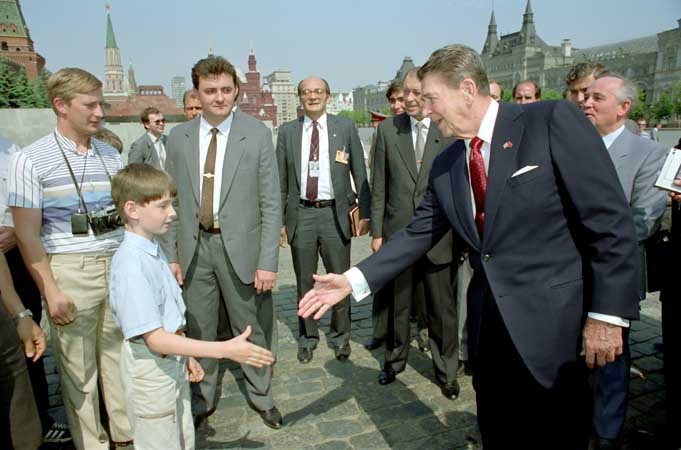
Here's a photo that purports to show Vladimir Putin -- during his time as a KGB agent -- in plainclothes, inconspicuously hanging out near Ronald Reagan during the Gipper's visit to the USSR in 1988.

[Allegedly] Vladimir Putin (far left) when he was a KGB agent posing as a family member out for a stroll in Red Square when Reagan was visiting the USSR, 1988


24 Dec 21:24

Thinning the Ph.D. Herd

by Rebecca Schuman
Yasutada.sudo

This might be a good idea.

Faculty and graduate students at Johns Hopkins University, an elite private research institution that costs undergrads $61,000 per year, are up in arms about a new strategic plan that proposes sweeping changes (and cuts) to its Ph.D. programs. Some 275 graduate students, concerned about the viability of their departments, have petitioned the university to reconsider, arguing to Inside Higher Ed that such downsizing could be emulated around the country if it takes effect. But these grad students should be more concerned about their viability after the Ph.D.—which is grim. Johns Hopkins knows this, and is taking drastic but needed measures. I’m all for it, and I’d be delighted, not dismayed, if other universities emulated this strategy.

24 Dec 21:23

What are the best-paid jobs in 2013?

by Donna Ferguson

We take a look at what you need to do get among the top 10 earning professions in the country, according to the Annual Survey of Hours and Earnings

Think you deserve a better paid job? The Office of National Statistics has just released its Annual Survey of Hours and Earnings 2013, so we can tell you exactly how to get one.

Just bear in mind, when reading the results of the survey, that it measures salary only; it doesn't take into account bonuses, the self-employed or celebrities who don't appear on company payrolls. The data is taken from a sample of employees paid via PAYE and works out the median gross salary, and the pay range is the lowest and highest percentiles available.

With all that in mind, here are the 10 best-paid jobs and some of the things you need to know if you are considering a career change.

1. Head of major organisations

Includes: CEOs and presidents leading organisations of more than 500 people.

Also known as: managing director, director, head honcho, boss of bosses, captain of industry.

Median gross pay: £84,453.

Annual change: +5.6%.

Pay range: £23,388 (10th percentile) to £126,229 (75th percentile).

What they do: steer (metaphorical) ships through troubled waters, ride the waves of new industries and put a steady hand on the tiller. But jump ship if you hear them say they are all at sea.

Defining characteristics: jetlagged. Sits in a lot of meetings. Talks on the phone in glass offices. Shakes hands with a good firm grip. Has people who "reach out" to other people.

The best actually ... lead and inspire their workers to succeed.

How to get there: many highly successful CEOs who earn mega-bucks don't have any formal qualifications, just experience leading teams and making profits. And sucking up to board members, no doubt.

Well, I never! CEO succession plans – ie, what should happen if the current CEO leaves – are reviewed by board members at least once a year in 84% of companies surveyed by Deloitte in 2012.

2. Aircraft pilots

Includes: flight engineers and flying instructors.

Also known as: flight captain, co-pilot, Ace.

Median gross pay: £78,356.

Annual change: -0.4%.

Pay range: £56,017 (25th percentile) to £82,944 (60th percentile).

What they do: talk to Roger a lot. Work 55 hours a week in a cockpit. Also fly, navigate, test engines and other equipment, conduct flight deck checks and generally try to avoid crashing aircrafts.

Defining characteristics: good vision. Wearers of uniforms, huge headphones and (hopefully) smiles on their faces.

The best actually ... fly us from A to B in one piece. And hold a licence.

How to get there: GCSEs, A-levels and learn to fly. You will need to have flown for 150 hours before you can even start to pursue a commercial pilot's licence. And to pass this, you'll need to undertake nine theoretical examinations and 25 more hours of flight training – and pay around £60,000.

Well, I never! 56% of commercial pilots recently surveyed by the British Airline Pilots' Association admitted to falling asleep while on the flight deck and, of those, nearly a third had woken up to find the co-pilot also asleep.

3. Marketing directors

Includes: sales directors.

Also known as: brand positioner, brand essence creator, brand refresher, brand explorer, president of brand.

Median gross pay: £68,438.

Annual change: +4.2%.

Pay range: £24,000 (10th percentile) to £104,636 (90th percentile).

What they do: use the brand to increase the organisation's market share. Guard the logo with their life. Undertake market research and brand audits. Make projections. Use mnemonics, venn diagrams and schematics in meetings … sorry, no, in "discoveries".

Defining characteristics: creative and often full of self-belief. May talks about occupying spaces, creating new silos and generally use language in a way no one else can understand.

The best actually ... get the word out about a product or service, and ensure demand is high.

How to get there: graduate from the school of life or get a qualification from the Chartered Institute of Marketing .

Well, I never! Women make up 75% of the professional marketing population in the UK, yet men are twice as likely to reach top marketing positions, says marketing recruiter EMR.

4. Transport associate professionals

Includes: air traffic controllers and ship and hovercraft officers.

Also known as: flight planner, ground movement controller, tin pusher.

Median gross pay: £64,889.

Annual change: +6.7%.

Pay range: £37,443 (20th percentile) to £88,829 (75th percentile).

What they do: direct planes and ships safely in all weathers and situations. Make judgment calls using complex navigational equipment, often in semi-darkness, working round the clock.

Defining characteristics: quick reflexes. Good at problem-solving, multitasking and planning ahead. Tech-savvy and calm under pressure. Tired.

The best actually ... get us where we're going alive – and on time.

How to get there: to become an air traffic controller, you only need five GCSEs and a couple of A-levels. But then you need to undertake an online skills assessment, a cognitive computer test, realistic scenario tests and competency interviews. Only 25 out of every 3,000 applicants are accepted on to National Air Traffic Services training course each year.

Well, I never! Errors by air traffic controllers often occur during periods of light or non-complex traffic, due to the effort required to maintain high levels of diligence and vigilance in these conditions.

5. Medical practitioners

Includes: surgeons, anaesthetists, consultants, GPs, physicians, psychiatrists, clinicians, registrars.

Also known as: doctors, quacks (not to their face). Sawbones if you're unlucky.

Median gross pay: £63,677.

Annual change: +4.4%.

Pay range: £19,123 (10th percentile) to £131,298 (90th percentile).

What they do: diagnose, treat, cure. Wear white coats. Ask for instruments abruptly and, some might say, rather brusquely. Sew.

Defining characteristics: confidence, strong stomachs and rubbish handwriting. Hard-working.

The best actually ... put us back together without leaving anything odd inside. Care about their patients. And cure us.

How to get there: the good news is, it only takes, oh, about 10 years of postgraduate training to become a consultant. Plus, of course, the initial five to six-year medical degree. The time will fly by! Just don't plan on getting much sleep.

Well, I never! According to dating website Uniformdating.com, 41% of men have flirted with a doctor while in the process of being treated for an injury or illness.

6. Company lawyers

Includes: patent attorney.

Also known as: corporate lawyer, legal executive, attorney.

Median gross pay: £63,484.

Annual change: +10.2%.

Pay range: £29,161 (10th percentile) to £93,847 (75th percentile).

What they do: fight battles with other company lawyers. Caveat everything, talk in jargon and work crazily long hours.

Defining characteristics: never give you a straight answer. Love small print. Often pessimistic and very cautious.

The best actually ... protect the company from getting sued. And save its bacon if it does.

How to get there: first university, then a post-graduate legal qualification, then years of practice as a solicitor, then apply. Your (social) life will never be the same again.

Well, I never! According to Etymonline.com, the word "attorney" was at one time such a term of contempt that it was formally abolished in 1873 and merged with "solicitor".

7. Public relations directors

Includes: communications directors, media directors, publicity managers and advertising directors.

Also known as: head of media relations, chief press officer, spin doctor.

Median gross pay: £60,486.

Annual change: unknown (sample size too small last year).

Salary range: £51,869 (40th percentile) to £66,088 (60th percentile).

What they do: co-ordinate the media strategy of their organisation. Listen to pitches, buy drinks for journalists and get flattered by agencies and subordinates.

Defining characteristics: imaginative, friendly and talented … or ruthlessly competitive and untrustworthy. It depends how you spin it.

The best actually ... change the way people perceive their organisation – for the better.

How to get there: a BA or MA in public relations or journalism experience. Having friends in high places never hurts.

Well, I never! More than 40% of PR professionals claim to spend two hours or more a week identifying market influencers on social networks like Twitter and Facebook.

8. Senior police officers

Includes: chief inspectors, chief superintendents, chief constables, chief officers and police commissioners.

Also known as: top bobbies (if you read certain newspapers).

Median gross pay: £57,664.

Annual change: -2.2%.

Pay range: £50,791 (10th percentile) to £63,103 (75th percentile).

What they do: lead police forces throughout the country. Deal with red tape. Attend meetings. Appear in front of the media.

Defining characteristics: respected by colleagues, with a whiter-than-white service record. Driven around by lower-ranking officers.

The best actually ... keep the peace. Without killing innocent people.

How to get there: at the moment, work your way up from the lowest ranks of police officers – but not for long. The government has announced plans to open up chief constables' jobs to experienced overseas recruits, to the anger of existing chiefs.

Well, I never! 54% of police officers believe public opinion has changed for the worse over the last 10 years and fewer than a quarter (22%) feel closely aligned with the stated values of their force.

9. Information Technology directors

Includes: telecommunications directors and CIOs.

Also known as: IT managers, data processing manager, head of IT, techie.

Median gross pay: £55,426.

Annual change: -11.5%.

Pay range: £30,240 (20th percentile) to £76,335 (70th percentile).

What they do: plan and manage IT projects.

Defining characteristics: knows lots of technical jargon about software incompatibilities. Enjoys a good rant about non-standard technology and security threats. Worries.

The best actually ... make their organisation more efficient and ensure it has the technology to compete.

How to get there: develop your IT and management skills, typically at university and then in the workplace. The Information Technology Management for Business degree is a recognised route.

Well, I never! A survey by consultancy CEB recently found that 40% of IT spending in an organisation is typically outside the IT director's control. That could be frustrating.

10. Senior officers in protective services

Includes: top officers in the armed forces, fire services, ambulance services and prison services.

Also known as: heroes.

Median gross pay: £54,539.

Annual change: -1%.

Pay range: £44,446 (20th percentile) to £63,481 (80th percentile).

What they do: keep us safe. They are responsible for protecting us from warfare, fire, accidents and, well, the bad guys. OK, so some do it from behind a desk, but others are out there serving in war zones and life-threatening situations, where the risk of death or injury is real.

Defining characteristics: brave. Calm, especially under pressure and in emergencies. Organised and well-prepared. Fed up (see below).

How to get there: prison governors are required to pass the National Offender Management Service graduate programme. Firefighters can boost promotion opportunities through qualification with the Institute of Fire Engineers. Armed forces require you to pass an Army Officer Selection Board followed by officer training.

Well, I never! In a 2013 Ministry of Defence survey, 44% of active service personnel rated their workload as too high and only 28% said they felt valued.


theguardian.com © 2013 Guardian News and Media Limited or its affiliated companies. All rights reserved. | Use of this content is subject to our Terms & Conditions | More Feeds
22 Dec 21:54

Little Girl Enthusiastically Signs Her Christmas Concert for Deaf Parents

by Kimber Streams

A little girl enthusiastically signs her kindergarten’s Christmas concert for deaf parents in the audience. Her facial expressions really hold the performance together!

video via Lori Koch

via Gawker

22 Dec 20:24

Cloody the Bunny Takes A Bath

by Lori Dorn

Cloody the Bunny is seen here deliriously enjoying a bath. While it is true that rabbits are usually self-cleaning animals, Cloody doesn’t seem to mind the assistance of his human even one tiny bit.

I hold him in a baby position in my arms as well and it relaxes him to sit that way so he falls asleep. He also enjoys a body massage, except for his feet. After his baths he goes outside to dry off as usual. Rabbits rarely bathe because they can use their tongues to clean themselves, but since he can’t reach his back he likes the water. It is absolutely harmless!

As a general rule, it is not recommended that rabbits be bathed on a regular basis, but if a bath is needed due to the animal’s inability to self-clean, My House Rabbit has some very good advice in this area.

Only in rare circumstances should you ever give your rabbit a bath. Rabbits are naturally very clean animals and groom themselves constantly. They will be able to keep themselves clean as long as their living environment is clean. Make sure to clean their litterboxes frequently. In some situations, giving your rabbit a bath may be necessary. An example would be if your rabbit is suffering from “poopy butt” and wiping the area with a damp paper towel is not effective. If this is the case, try to keep as much of the rabbit dry as possible, and only give the rabbit a shallow bath if you can. Then dry your bunny with a towel and make sure he’s able to stay warm. That is, don’t put him outside if it’s cold, and he’s still wet.

video by lee22leo

via Neatorama

20 Dec 22:34

A Map of Different Terms for ‘Santa Claus’ Across Europe

by Kimber Streams
19 Dec 21:09

University Animal Research Practices Slammed in Report

The treatment of laboratory animals at one of the United Kingdom’s most prestigious universities came under severe criticism today from an independent review set up in the wake of allegations of malpractice.

[More]
18 Dec 17:10

Hand-Colored Photographs of 19th Century Japan

by Dan Colman

hand colored japanese photos

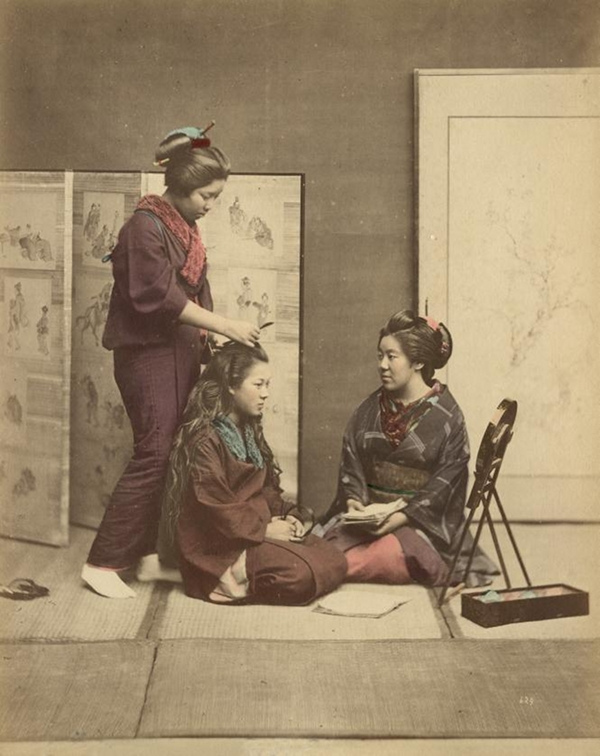
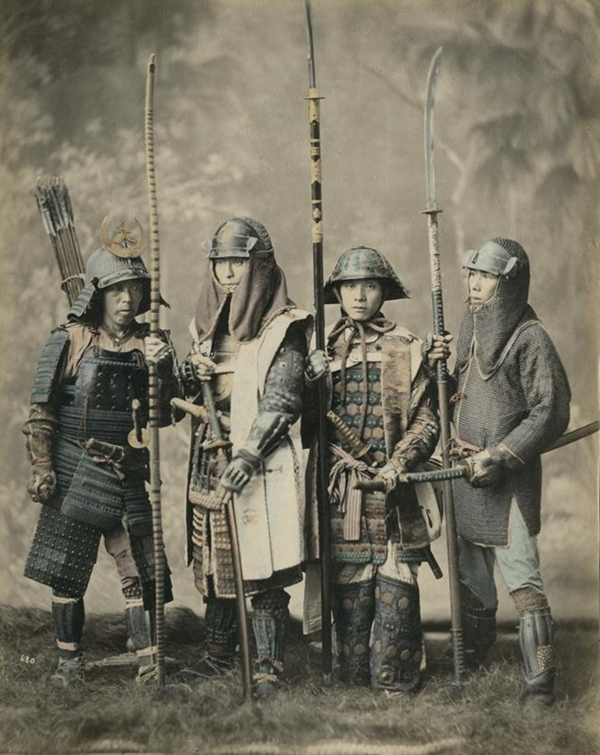
This week, The Public Domain Review (PDR) posted a series hand-colored albumine prints (“a process which used the albumen found in egg whites to bind the photographic chemicals to the paper) from 19th century Japan. They date back to 1880.

Some of the prints, like the one below, certainly have a foreign quality to them. They feel far away in terms of time and place. But others (like the shot above) feel remarkably close, something we can all relate to today.

Hand coloured photographs of 19th century Japan

According to the PDR, the pictures came to reside in the Dutch National Archive as a result of the centuries-long commercial relationship between the Dutch and the Japanese. More vintage pix can be viewed here.

Related Content:

The Oldest Color Movies Bring Sunflowers, Exotic Birds and Goldfish Back to Life (1902)

One of the Earliest Known Photos of Guys Sitting Around and Drinking Beer (Circa 1845)

1922 Photo: Claude Monet Stands on the Japanese Footbridge He Painted Through the Years

Hand-Colored Photographs of 19th Century Japan is a post from: Open Culture. You can follow Open Culture by signing up for our Daily Email. That is the most reliable and convenient option. You can also find us on Facebook, Twitter, and Google Plus.

16 Dec 20:24

Greg Benson Confuses People at the Airport by Crashing Their Cell Phone Conversations

by Justin Page

Internet prankster Greg Benson of Mediocre Films recently confused people at an airport by crashing their cell phone conversations. Greg pulled off his prank by sitting next to someone who was chatting away on their cell phone. Then, he pulled out his own phone and pretended he was the person on the other end of their conversation.

Don’t you hate when people talk loudly on their phones in public? Why not have some fun with it and “crash” their calls!

videos via MediocreFilms

15 Dec 16:46

The Rubber Band Machine Gun is Ready to Launch on Kickstarter!

by Dmitry

1268 The Rubber Band Machine Gun is Ready to Launch on Kickstarter!

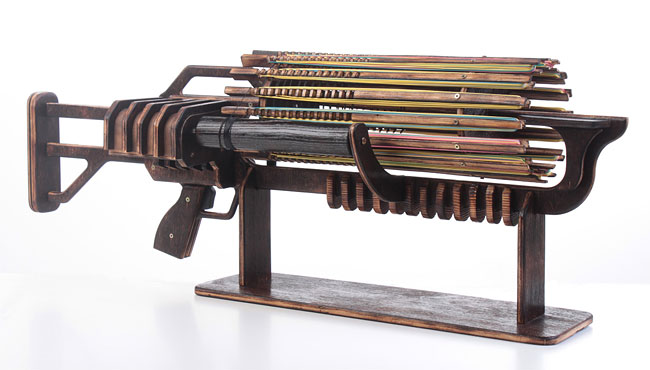
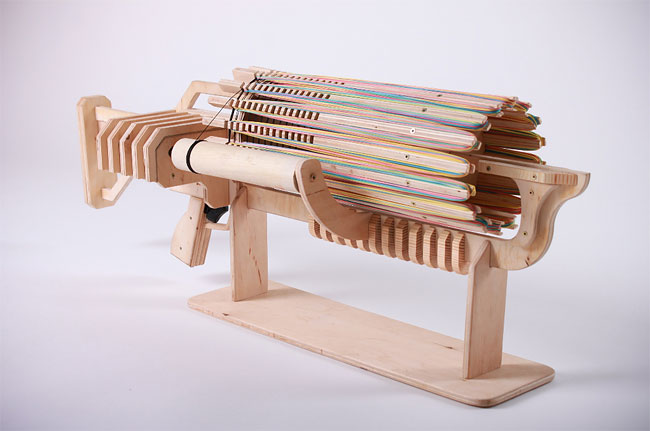
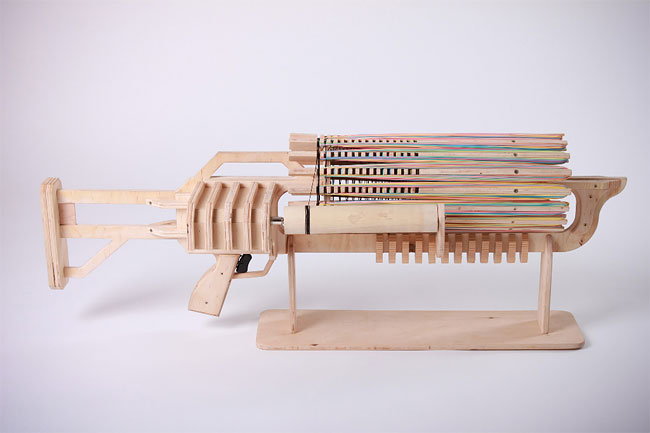
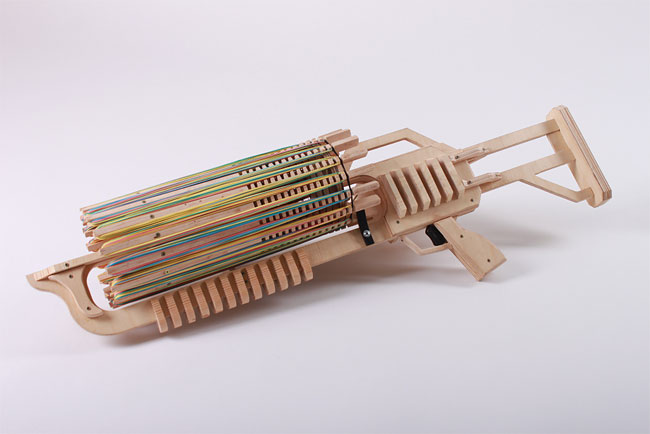
Alexander Shpetniy, a young designer from Ukraine, is proud to announce the launch of the kickstarter for his project the Rubber Band Machine Gun (hereinafter the RBMG). The plan is to raise $ 5,000 by January 17, to run a serial production of the RBMGs. Launching is appointed on Monday, December 16. The project rewards set includes a machine gun in three versions of color: light wood (standard version), black colored and burnt wood color. In addition to the basic RBMG unit there is a special fast charger add-on, which will be very practical for those who prefer speed up the process of the gun charging.

2165 The Rubber Band Machine Gun is Ready to Launch on Kickstarter!

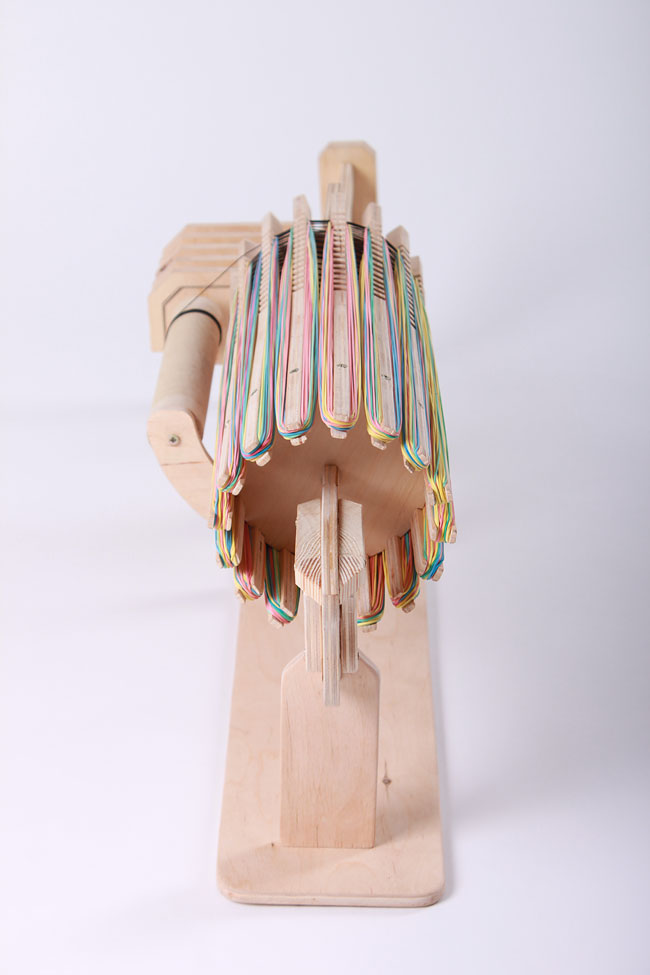
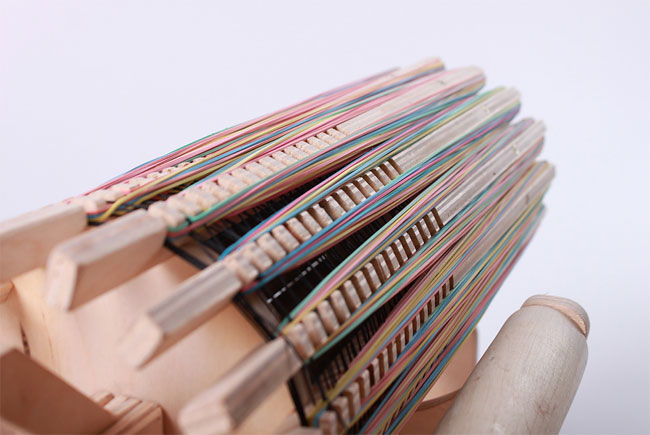
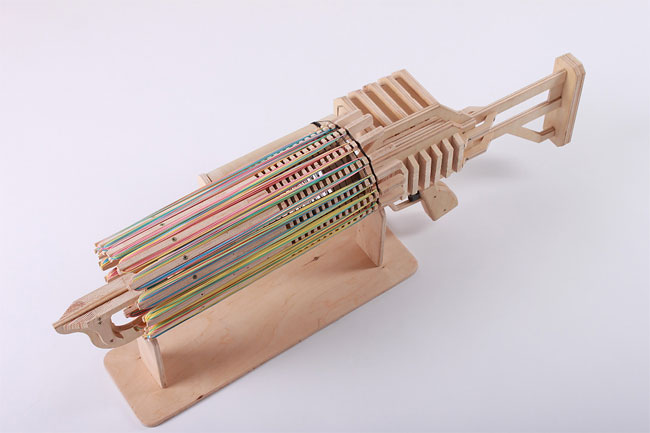
The RBMG is a fully automatic weaponry toy, that is shooting by rubber bands. Its construction is based on the Gatling machine gun principle. The body of gun is made from the oak plywood and cut out on the CNC machine.

3132 The Rubber Band Machine Gun is Ready to Launch on Kickstarter!

The market unique features of the RBMG are a rich set of rubber bands ammo (672 shots per shooting session), and the firing speed of 14 shots per second. But the most amazing feature, which distinguishes the RBMG from its competitors, is the Fast Charging device, which lets player charge 14 rubber bands simultaneously.
4100 The Rubber Band Machine Gun is Ready to Launch on Kickstarter!

The construction of the Fast Charger is a brand new original idea, developed by Alexander Shpetniy, and it never been used in any rubber band weaponry before. Thanks to the Fast Charger the charging of the machine gun takes minutes.

585 The Rubber Band Machine Gun is Ready to Launch on Kickstarter!

There are 3 versions of the RBMG: Standard version, black colored and burnt wood color. With this RBMG everyone can feel like Rambo, launching a rubber storm, and throwing over a pound of rubber bands into the opponent.

667 The Rubber Band Machine Gun is Ready to Launch on Kickstarter!

Alexander Shpetniy is a young designer from Ukraine, who is studying the art & design course in the National University of Lugansk (Ukraine). He is an author of the Rubber Band Machine Gun, as well as an author of the original idea of ​​the Fast Charger.

751 The Rubber Band Machine Gun is Ready to Launch on Kickstarter!
847 The Rubber Band Machine Gun is Ready to Launch on Kickstarter!
946 The Rubber Band Machine Gun is Ready to Launch on Kickstarter!


Creative Market: Download Free Design Assets – New Every Week!


15 Dec 02:19

Politeness Is Rewarded at the Le Petite Syrah Cafe in Nice, France

by Lori Dorn

Discount for Politeness

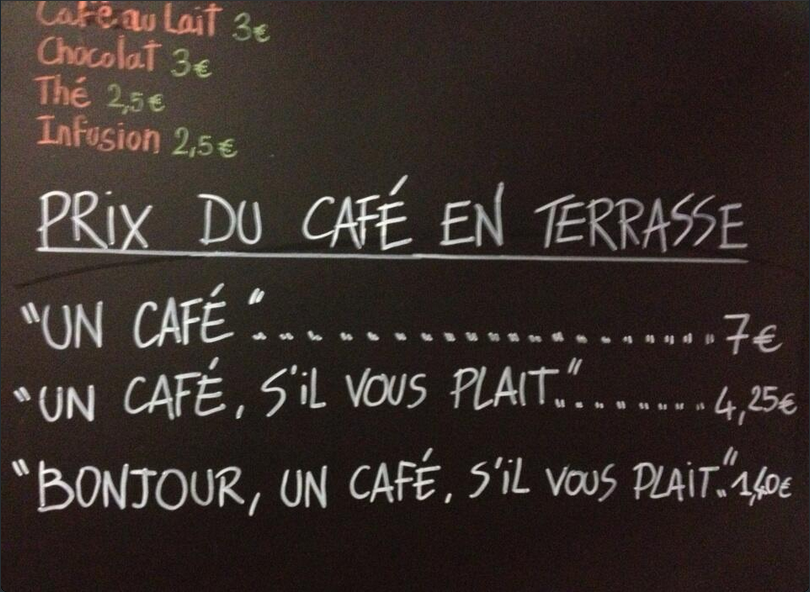
Politeness is very much rewarded at the La Petit Syrah cafe in Nice, France. If you’re well-mannered, then a cup of coffee is 1,40€, if you fail to be polite then you will pay close to seven times more. As tweeted by Egalliano06 “Some people still know how to live!” (Il y a encore des gens qui savent vivre!)

One can’t help but be reminded of that old adage about catching more flies with honey than vinegar. In this case, however, it’s getting a reasonably priced cup of coffee just by being polite.

La Petite Syrah

La Petite Syrah

photo by Egalliano06

via Nice Matin, Huffington Post

15 Dec 02:12

The End of the College Essay

by Rebecca Schuman

Everybody in college hates papers. Students hate writing them so much that they buy, borrow, or steal them instead. Plagiarism is now so commonplace that if we flunked every kid who did it, we’d have a worse attrition rate than a MOOC. And on those rare occasions undergrads do deign to compose their own essays, said exegetic masterpieces usually take them all of half an hour at 4 a.m. to write, and consist accordingly of “arguments” that are at best tangentially related to the coursework, font-manipulated to meet the minimum required page-count. Oh, “attitudes about cultures have changed over time”? I’m so glad you let me know.

11 Dec 21:57

Chinese Professor Who Advocated Free Speech Is Fired

by By ANDREW JACOBS
Zhang Xuezhong, who teaches at the East China University of Political Science and Law in Shanghai, has repeatedly called on the Chinese government to abide by its own Constitution.
    
11 Dec 19:44

Why Can't Anyone Fill in a Blank QWERTY Keyboard?

by Dallas Jensen
11 Dec 18:47

Map Overlays Show How Big Countries Are Compared to One Another

by Kimber Streams

Map Overlays

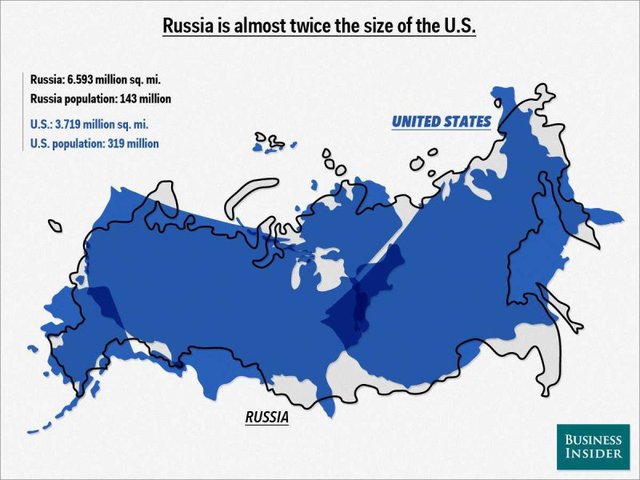
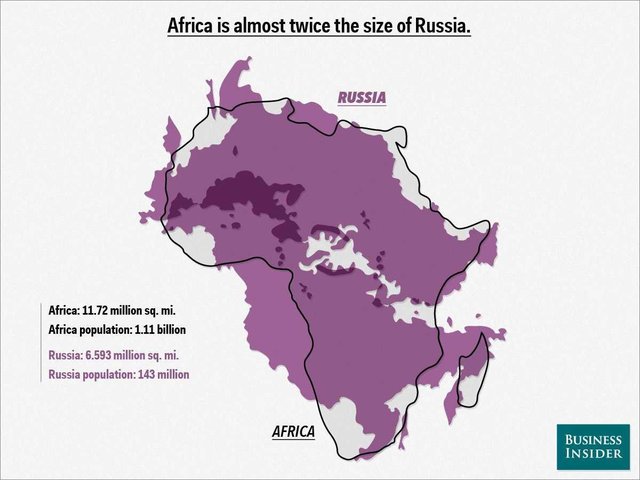
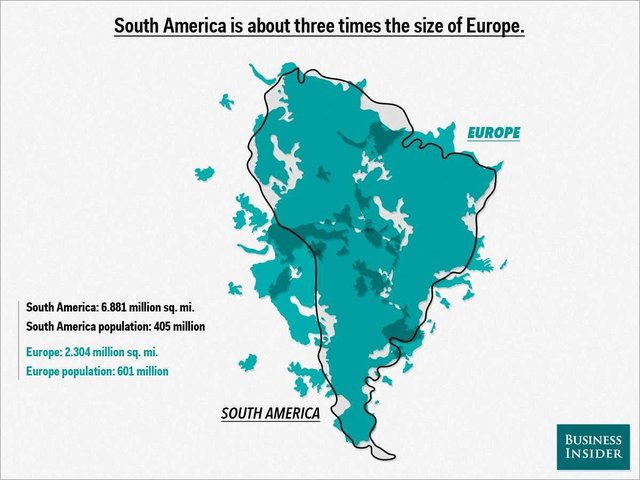
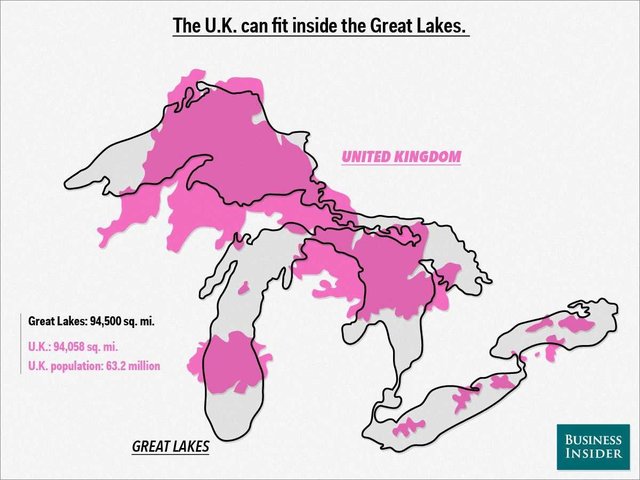
Inspired by a map illustrating Africa’s true size by German graphic designer Kai Krause, Mike Nudelman of Business Insider has created a series of map overlays that give some perspective on the sizes of countries around the world. For example, Russia is nearly twice the size of the United States, while Africa is almost twice the size of Russia. Head over to Business Insider to see more of the fascinating maps.

Map Overlays

Map Overlays

Map Overlays

images via Business Insider

11 Dec 14:26

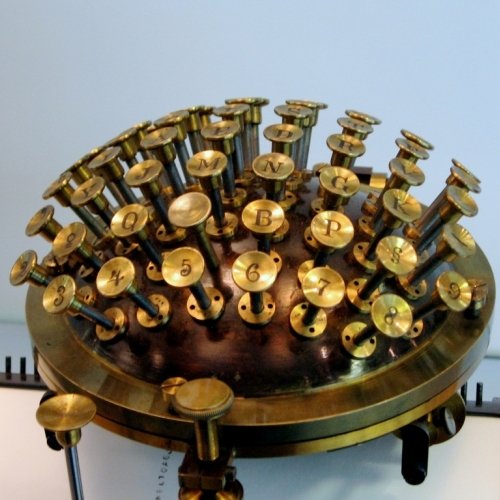
Discover Friedrich Nietzsche’s Curious Typewriter, the “Malling-Hansen Writing Ball”

by Ilia Blinderman

writing ball

During his final decade, Friedrich Nietzsche’s worsening constitution continued to plague the philosopher. In addition to having suffered from incapacitating indigestion, insomnia, and migraines for much of his life, the 1880s brought about a dramatic deterioration in Nietzsche’s eyesight, with a doctor noting that his “right eye could only perceive mistaken and distorted images.” Nietzsche himself declared that writing and reading for more than twenty minutes had grown excessively painful. With his intellectual output reaching its peak during this period, Nietzsche required a device that would let him write while making minimal demands on his vision. So he sought to buy a typewriter in 1881. Although he was aware of Remington typewriters, the ailing philosopher looked for a model that would be fairly portable, allowing him to travel, when necessary, to more salubrious climates. The Malling-Hansen Writing Ball seemed to fit the bill:

In Dieter Eberwein’s free Nietzches Screibkugel e-book (an English outline is available here), the vice president of the Malling-Hansen Society explains that the writing ball was the closest thing to a 19th century laptop. The first commercially-produced typewriter, the writing ball was the 1865 creation of Danish inventor Rasmus Malling-Hansen, and was shown at the 1878 Paris Universal Exhibition to journalistic acclaim:

“In the year 1875, a quick writing apparatus, designed by Mr. L. Sholes in America, and manufactured by Mr. Remington, was introduced in London. This machine was superior to the Malling-Hansen writing apparatus; but the writing ball in its present form far excels the Remington machine. It secures greater rapidity, and its writing is clearer and more precise than that of the American instrument. The Danish apparatus has more keys, is much less complicated, built with greater precision, more solid, and much smaller and lighter than the Remington, and moreover, is cheaper.”

Despite his initial excitement, Nietzsche quickly grew tired of the intricate contraption. According to Eberwein, the philosopher struggled with the device after it was damaged during a trip to Genoa;  an inept mechanic trying to make the necessary repairs may have broken the writing ball even further. Still, Nietzsche typed some 60 manuscripts on his writing ball, including what may be the most poignant poetic treatment of typewriters to date:

“THE WRITING BALL IS A THING LIKE ME:

MADE OF IRON YET EASILY TWISTED ON JOURNEYS.

PATIENCE AND TACT ARE REQUIRED IN ABUNDANCE

AS WELL AS FINE FINGERS TO USE US.”

In addition to viewing several of Nietzsche’s original typescripts at the Malling-Hansen Society website, those wanting a closer look at Nietzsche’s model can view it in the video above. Felix Herbst, the video’s creator, has kindly provided a functional writing ball simulator on his website. I’d encourage you to give typing a shot—there’s something oddly satisfying about the crisp imprints made by its clattering metallic keys.

via The Malling-Hansen Society

Ilia Blinderman is a Montreal-based culture and science writer. Follow him at @iliablinderman.

Related Content:

Mark Twain Wrote the First Book Ever Written With a Typewriter

Woody Allen’s Typewriter, Scissors and Stapler: The Great Filmmaker Shows Us How He Writes

Walter Kaufmann’s Classic Lectures on Nietzsche, Kierkegaard and Sartre (1960)

The Philosophy of Nietzsche: An Introduction by Alain de Botton

Download 90 Free Philosophy Courses and Start Living the Examined Life

Discover Friedrich Nietzsche’s Curious Typewriter, the “Malling-Hansen Writing Ball” is a post from: Open Culture. You can follow Open Culture on Facebook, Twitter, Google Plus and by Email.

11 Dec 14:24

Mandela memorial sign language interpreter accused of being a fake

by Alexandra Topping

Leader of World Deaf Federation says man who signed at ceremony during Obama speech was 'making it up'

The translation of speeches into sign language at Nelson Mandela's memorial service was seen as a sign of inclusiveness, but it appears the sign language interpreter was a fake, according to several expert organisations.

Braam Jordaan, a deaf South African and board member of the World Deaf Federation, said the interpreter was making up signs as he went along. "The structure of his hand, facial expressions and the body movements did not follow what the speaker was saying," Jordaan said.

The man who signed for a section of the ceremony, including Barack Obama's speech, was simply making up his own signs, he said.

"I was really upset and humiliated," Jordaan told the SBS news website. "He made up his own signs. What happened at the memorial service is truly disgraceful thing to see – it should not happen at all. What happened today will be forever aligned with Nelson Mandela and the deaf community, thanks to this fake interpreter."

Members of South Africa's deaf community have previously raised concerns about the interpreter, who has been used at other African National Congress events. Despite this an ANC spokesman said on Wednesday: "I don't know this guy. He doesn't work for the ANC. It was a government event."

Collins Chabane, a government minister, told a news conference: "The government is looking in to the matter but has not been able to conclude this inquiry due to the demanding schedule of organising events."

A spokesman for the president, Jacob Zuma, said he was checking the reports, while the SABC state broadcaster, which covered the memorial, said it was not involved as it had its own on-screen signers.

During the interpreter's appearance on Tuesday, Wilma Newhoudt-Druchen, the first deaf woman to be elected to the South African parliament tweeted: "ANC-linked interpreter on the stage with dep president of ANC is signing rubbish. He cannot sign. Please get him off."

South African sign language interpreter Francois Deysel added on Twitter that the interpreter was "making a mockery of our profession".

Sheena Walters, of the World Association of Sign Language Interpreters, noted that the sign language the interpreter was using was unconventional at best and not recognisable as any accepted form of international or South African sign language. "It seems quite obvious that the interpreter isn't using South African sign language," she told SBS.

"Most sign languages across the world share a similar structure and pattern and this person seems to be making a lot of repetitive signs and isn't displaying the usual facial expression or structure of sign language that you would normally see."

Deaf news blog The Limping Chicken agreed and criticised the interpreter's methods of communication. He signed with a "strange repetitive rhythm to his movements" and "the structure of his hand and body movements didn't seem to change no matter what the speaker was saying", they wrote.


theguardian.com © 2013 Guardian News and Media Limited or its affiliated companies. All rights reserved. | Use of this content is subject to our Terms & Conditions | More Feeds


10 Dec 19:23

Nobel winner declares boycott of top science journals

by Ian Sample

Randy Schekman says his lab will no longer send papers to Nature, Cell and Science as they distort scientific process

Leading academic journals are distorting the scientific process and represent a "tyranny" that must be broken, according to a Nobel prize winner who has declared a boycott on the publications.

Randy Schekman, a US biologist who won the Nobel prize in physiology or medicine this year and receives his prize in Stockholm on Tuesday, said his lab would no longer send research papers to the top-tier journals, Nature, Cell and Science.

Schekman said pressure to publish in "luxury" journals encouraged researchers to cut corners and pursue trendy fields of science instead of doing more important work. The problem was exacerbated, he said, by editors who were not active scientists but professionals who favoured studies that were likely to make a splash.

The prestige of appearing in the major journals has led the Chinese Academy of Sciences to pay successful authors the equivalent of $30,000 (£18,000). Some researchers made half of their income through such "bribes", Schekman said in an interview.

Writing in the Guardian, Schekman raises serious concerns over the journals' practices and calls on others in the scientific community to take action.

"I have published in the big brands, including papers that won me a Nobel prize. But no longer," he writes. "Just as Wall Street needs to break the hold of bonus culture, so science must break the tyranny of the luxury journals."

Schekman is the editor of eLife, an online journal set up by the Wellcome Trust. Articles submitted to the journal – a competitor to Nature, Cell and Science – are discussed by reviewers who are working scientists and accepted if all agree. The papers are free for anyone to read.

Schekman criticises Nature, Cell and Science for artificially restricting the number of papers they accept, a policy he says stokes demand "like fashion designers who create limited-edition handbags." He also attacks a widespread metric called an "impact factor", used by many top-tier journals in their marketing.

A journal's impact factor is a measure of how often its papers are cited, and is used as a proxy for quality. But Schekman said it was "toxic influence" on science that "introduced a distortion". He writes: "A paper can become highly cited because it is good science - or because it is eye-catching, provocative, or wrong."

Daniel Sirkis, a postdoc in Schekman's lab, said many scientists wasted a lot of time trying to get their work into Cell, Science and Nature. "It's true I could have a harder time getting my foot in the door of certain elite institutions without papers in these journals during my postdoc, but I don't think I'd want to do science at a place that had this as one of their most important criteria for hiring anyway," he told the Guardian.

Sebastian Springer, a biochemist at Jacobs University in Bremen, who worked with Schekman at the University of California, Berkeley, said he agreed there were major problems in scientific publishing, but no better model yet existed. "The system is not meritocratic. You don't necessarily see the best papers published in those journals. The editors are not professional scientists, they are journalists which isn't necessarily the greatest problem, but they emphasise novelty over solid work," he said.

Springer said it was not enough for individual scientists to take a stand. Scientists are hired and awarded grants and fellowships on the basis of which journals they publish in. "The hiring committees all around the world need to acknowledge this issue," he said.

Philip Campbell, editor-in-chief at Nature, said the journal had worked with the scientific community for more than 140 years and the support it had from authors and reviewers was validation that it served their needs.

"We select research for publication in Nature on the basis of scientific significance. That in turn may lead to citation impact and media coverage, but Nature editors aren't driven by those considerations, and couldn't predict them even if they wished to do so," he said.

"The research community tends towards an over-reliance in assessing research by the journal in which it appears, or the impact factor of that journal. In a survey Nature Publishing Group conducted this year of over 20,000 scientists, the three most important factors in choosing a journal to submit to were: the reputation of the journal; the relevance of the journal content to their discipline; and the journal's impact factor. My colleagues and I have expressed concerns about over-reliance on impact factors many times over the years, both in the pages of Nature and elsewhere."

Monica Bradford, executive editor at Science, said: "We have a large circulation and printing additional papers has a real economic cost … Our editorial staff is dedicated to ensuring a thorough and professional peer review upon which they determine which papers to select for inclusion in our journal. There is nothing artificial about the acceptance rate. It reflects the scope and mission of our journal."

Emilie Marcus, editor of Cell, said: "Since its launch nearly 40 years ago, Cell has focused on providing strong editorial vision, best-in-class author service with informed and responsive professional editors, rapid and rigorous peer-review from leading academic researchers, and sophisticated production quality. Cell's raison d'etre is to serve science and scientists and if we fail to offer value for both our authors and readers, the journal will not flourish; for us doing so is a founding principle, not a luxury."

• This article was amended on 10 December 2013 to include a response from Cell editor Emilie Marcus, which arrived after the initial publication deadline.


theguardian.com © 2013 Guardian News and Media Limited or its affiliated companies. All rights reserved. | Use of this content is subject to our Terms & Conditions | More Feeds

10 Dec 19:20

The Egg is Hard

by swissmiss

Going down memory lane. This is one of my Loriot favorites.