On Jan. 30, 1962, three schoolgirls started giggling in a boarding school classroom in the northeastern corner of what is now Tanzania—and touched off a very strange epidemic. The three couldn’t stop laughing—and soon the uncontrollable cackles spread to their classmates. The laughing attacks lasted from a few minutes up to a few hours; one poor girl reportedly experienced symptoms for 16 straight days. Victims couldn’t focus on their schoolwork, and would lash out if others tried to restrain them.
Shared posts
06 May 22:01
Should I Just Quit Academia?
by Patrick Iber
This article originally appeared in Inside Higher Ed.
02 May 16:18
What to Do About Crimea? Nothing.
by Eric Posner
Everyone agrees that the West should tighten the screws on Russia, but no one is sure why. Russia will never return Crimea to Ukraine; and even if Russia were willing, the West could hardly demand that Crimea be handed back against the will of the Crimeans themselves. It is widely and enthusiastically said that Russia should be punished. But punished for doing what, exactly, and how? The West can’t win this contest, and we shouldn’t try.
02 May 16:17
Got Lice? Come On In.
by Dan Kois
If you’re a parent, you’ve probably gotten the dreaded call from the school nurse, letting you know that your child has lice. It happened to our older daughter in kindergarten, and then again two years later when our youngest was in the same grade. Each head lice infestation was a mini nightmare: a work and school day lost to early pickup, chemical shampoos, vacuuming, and endless combing for nits (eggs). The days after, spent worrying that a stray louse might mean another call from the nurse and another day out of school. And that call always came: Your daughter has lice again. She’ll be waiting for you in the office. Last year we spent a couple hundred dollars on a professional lice remover, just because we could no longer face the hours every night we needed to spend nit-picking.
07 Apr 20:47
“Gut Churn”
by swissmiss
In this 2013 99U talk, Radiolab creator and host Jad Abumrad describes “Gut Churn” as the radical uncertainty that’s a core part of any creative process that really pushes the envelope.
Just what I needed to be reminded of tonight. Watch it over on 99U.
Yasutada.sudo likes this
04 Apr 20:22
Ballad of a WiFi Hero
by swissmiss
An animated adaptation of the famed McSweeney’s Internet Tendency piece, “In Which I Fix My Girlfriend’s Grandparents’ WiFi and Am Hailed as a Conquering Hero,” by Mike Lacher.
(via)
28 Mar 21:05
Leawo Total Media Converter - Enjoy Spring Offer up to 50% Off!


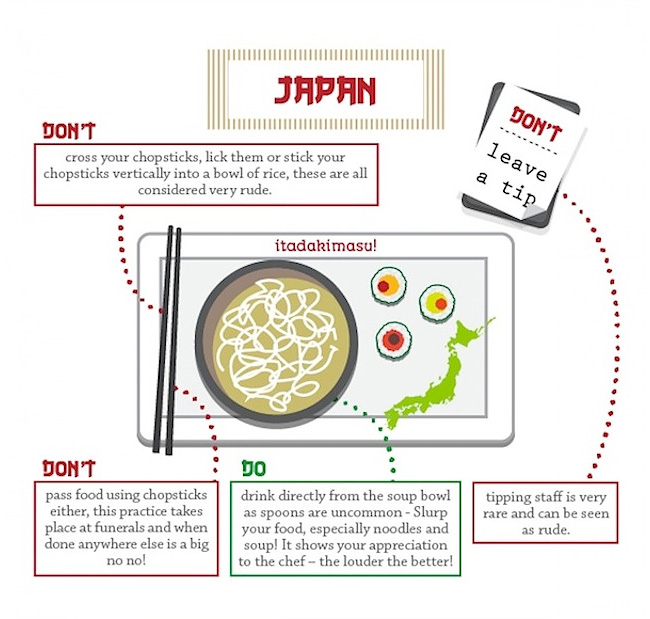
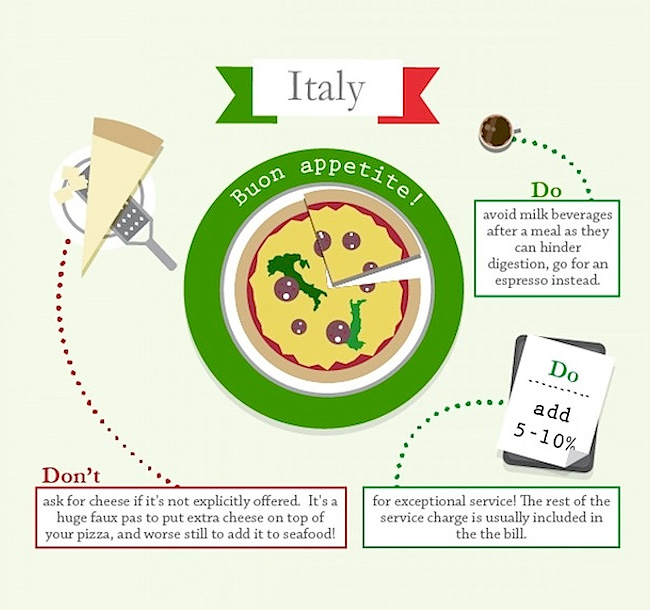
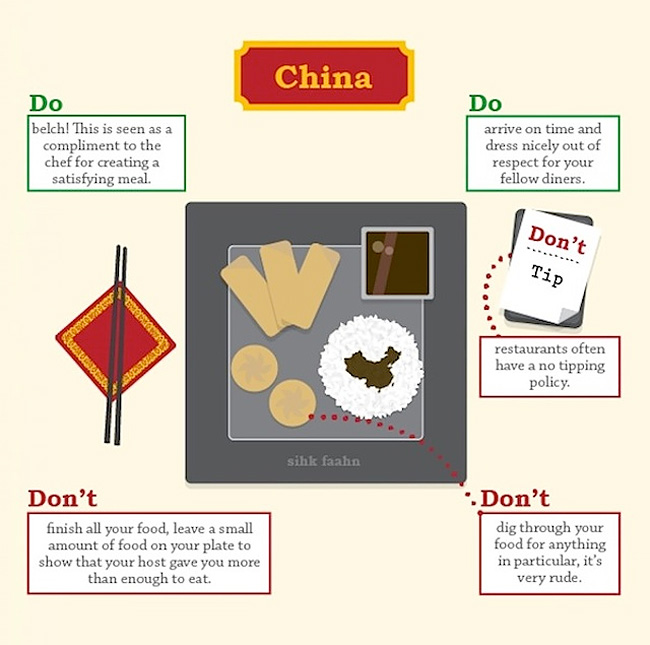
Dining Etiquette around the World
by designovicz
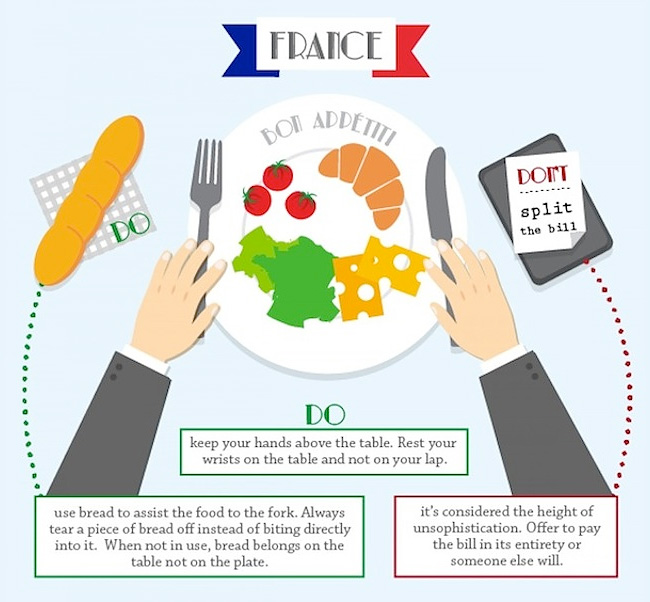
You may think you know how to behave yourself in order to seem like a polite person while you eat – but it totally depends on where in the world you are. What may seem sophisticated in the U.S. might be utterly boorish in Japan.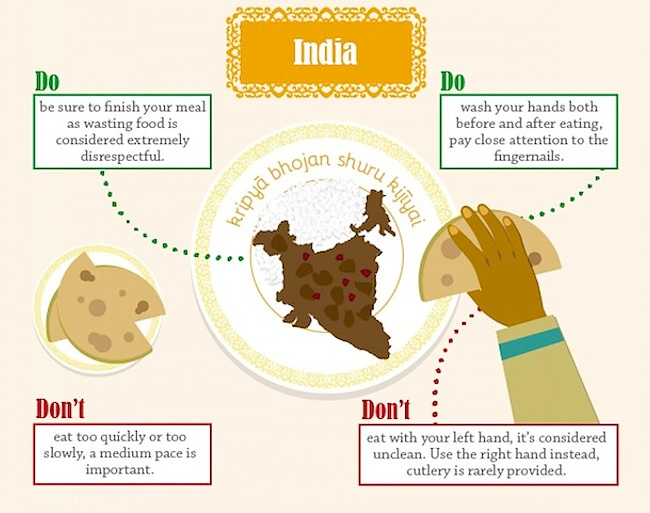
Read more
Leawo Total Media Converter - Enjoy Spring Offer up to 50% Off!
    
|
rafael nonato likes this
28 Mar 20:50
Death penalty still popular among whites, but support declining
by Rob Beschizza
Nearly two thirds of white people support the death penalty, with evangelical protestants bloodthirstiest of all. Black Americans favor it the least, with only 36 percent in favor of executing murderers. The findings are part of the 2013 Pew survey, in which 55% of Americans say they favor the ultimate punishment for murderers. It's falling fast, though, down from 78% twenty years ago. But it is because of changing beliefs about the morality of killing people, or because there are simply too many appalling mistakes? 


|
|
28 Mar 20:41


The Government Would Save $400 Million If It Just Switched Typefaces
by Sarah Zhang
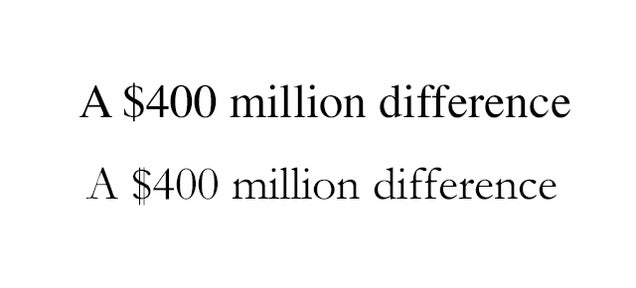
Of the many schemes to make the government more efficient, this is probably the only one that involves typography. A middle schooler in Pittsburgh has calculated that by simply switching the typeface used in government documents from Times New Roman to Garamond, it would save taxpayers $400 million in ink.
|
|
28 Mar 20:40


Crystal Clear Putty Is Like Playing With Molten Glass (Minus Burns)
by Andrew Liszewski

Play-Doh's all well and good when it comes to entertaining a toddler. But when you grow up, you need science to deliver something a bit more captivating. And what could be a better way to waste away the hours at work than with a handful of crystal clear putty that looks like liquid glass?
|
|
Dj10bear, Yasutada.sudo and -1 others like this
28 Mar 17:45
Greatest Invention in Human History Helps You Avoid Certain People
The era of antisocial networking has begun with the development of apps such as Cloak, which identifies locations of your contacts so you don't have to see them. Larry Greenemeier reports.
-- Read more on ScientificAmerican.com


-- Read more on ScientificAmerican.com
22 Mar 11:48


2048, an addicting web game
by Jason Weisberger

2048 is a super addictive tile matching game.
I apologize if you lose a few hours of your life.
The insanely high score is that of my girlfriend not me.
|
|
José M MC, Martin Schwendtner likes this
20 Mar 23:21



Hell on Earth: how to imprison a person for 1,000 years
by Mark Frauenfelder
Philosopher Rebecca Roache led a team of scholars at Oxford to think about the future of punishment. Aeon interviewed her about the project.
Roache: "Some crimes are so bad they require a really long period of punishment, and a lot of people seem to get out of that punishment by dying. And so I thought, why not make prison sentences for particularly odious criminals worse by extending their lives?"
One idea: Give prisoners drugs that make them experience a 1,000-year jail sentence in their mind.
Roache: "There are a number of psychoactive drugs that distort people’s sense of time, so you could imagine developing a pill or a liquid that made someone feel like they were serving a 1,000-year sentence. Of course, there is a widely held view that any amount of tinkering with a person’s brain is unacceptably invasive. But you might not need to interfere with the brain directly."
What about an eternal prison sentence, in other words, a Hell on Earth? Who would deserve such a sentence?
Roache: "Suppose there was some physics experiment that stood a decent chance of generating a black hole that could destroy the planet and all future generations. If someone deliberately set up an experiment like that, I could see that being the kind of supercrime that would justify an eternal sentence."
(Image: Prison cell with bed inside Alcatraz main building san francisco california, a Creative Commons Attribution (2.0) image from timpearcelosgatos's photostream)
|
|
rafael nonato and -1 others like this
12 Mar 21:33
Mega Desk
by swissmiss

Woah, the Barbarian Group has one giant endless table that everyone works from. It offers work spaces for 175 people. Stunning.
Here’s a video that shows the entire desk.
12 Mar 20:46


The Best Music to Work or Study To Could Be Video Game Soundtracks
by Melanie Pinola

Lots of different sounds can make you more productive while you work or study (particularly music you're not familiar with ), but video game soundtracks might be the best option of them all if you need to concentrate.
|
|
Corey, rafael nonato likes this
12 Mar 20:33


Thoughts on teaching calculus to five-year-olds
by Cory Doctorow
Maria Droujkova writes, "Last week, The Atlantic published my interview called 5-Year-Olds Can Learn Calculus. I have been following the discussions on blogs, forums, and news sites. The themes that emerge from discussions make me cautiously optimistic. Many grown-ups believe that young math will finally give them a second chance at making sense of algebra and calculus. Others look for the balance between conceptual understanding and the fluency at manipulating numbers. Even if 5-year-olds understand calculus, what would they use it for?
Can we even call activities 'algebra' or 'calculus' if there are no formulas? Are young kids capable of abstraction? Quite a few people come out saying they are already playing advanced math games with toddlers or young kids - or that their parents did so with them! My community Natural Math will be following up on these themes with an open event series, interviewing parents, teachers, researchers, and project leaders who work in related areas.
One theme that I wish was discussed more is the role of autonomy, decision-making, and openness. If kids can't have their free play, or can't say no to activities meaningless to them, math can hurt, whether you work on calculus or simple addition. That's where most of the 'math grief stories' I receive come from. If parents and teachers can't choose, adapt, localize, and remix activities, it severely limits how they can help children learn. And if materials don't have open licenses (I use Creative Commons), it is hard to share or even discuss these adaptations. How can we create diverse, robust, sustainable structures where children are free to learn mathematics, and grown-ups are free to help them?
5-Year-Olds Can Learn Calculus [Luba Vangelova/Atlantic]
(Thanks, Maria!) 
|
|
Berglaug, Peter Duperry and -1 others like this
12 Mar 17:20

The Stinky Candle company was set up by Jeff Bennett after he got fed up of all the feminine candle smells like the usual vanilla, lavender and shea butter scents, so he created a range of masculine odors such as petrol and cash! The unusual Chicago start-up currently has 32 unique and bizarre varieties including bacon scent, hemp scent, fish scent, new car scent, gasoline, wet grass, car exhaust, fast food, and body odor! The candles are priced between $6 to $8, and for the less adventurous you´ll also find some less-crazy scents such as baby powder, fresh linens, cotton candy and toothpaste. Well, we can´t imagine anyone wanting a living room smelling like urine or body door, but these will definitely make an original and fun gift idea.


STINKY CANDLES
by STINKY CANDLES
The Stinky Candle company was set up by Jeff Bennett after he got fed up of all the feminine candle smells like the usual vanilla, lavender and shea butter scents, so he created a range of masculine odors such as petrol and cash! The unusual Chicago start-up currently has 32 unique and bizarre varieties including bacon scent, hemp scent, fish scent, new car scent, gasoline, wet grass, car exhaust, fast food, and body odor! The candles are priced between $6 to $8, and for the less adventurous you´ll also find some less-crazy scents such as baby powder, fresh linens, cotton candy and toothpaste. Well, we can´t imagine anyone wanting a living room smelling like urine or body door, but these will definitely make an original and fun gift idea.
09 Mar 18:30

Dark thoughts: why mental illness is on the rise in academia
by Claire Shaw, Lucy Ward
University staff battling anxiety, poor work-life balance and isolation aren't finding the support they need
• The blog that started the debate: there is a culture of acceptance around mental health issues in academia
Mental health problems are on the rise among UK academics amid the pressures of greater job insecurity, constant demand for results and an increasingly marketised higher education system.
University counselling staff and workplace health experts have seen a steady increase in numbers seeking help for mental health problems over the past decade, with research indicating nearly half of academics show symptoms of psychological distress.
"Culture of acceptance"
A recent blog on the Guardian Higher Education Network blog, which highlighted a "culture of acceptance" in universities around mental health issues, has received an unprecedented response, pointing to high levels of distress among academics.
The article, which reported instances of depression, sleep issues, eating disorders, alcoholism, self-harming, and even suicide attempts among PhD students, has been shared hundreds of thousands of times and elicited comments outlining similar personal experiences from students and academics.
But while anecdotal accounts multiply, mental health issues in academia are little-researched and hard data is thin on the ground.
However, a study published in 2013 by the University and College Union (UCU) used health and safety executive measures, assessed against a large sample of over 14,000 university employees, to reveal growing stress levels among academics prompted by heavy workloads, a long hours culture and conflicting management demands. Academics experience higher stress than those in the wider population, the survey revealed.
Tackling perfectionism
Pat Hunt, head of Nottingham University's counselling service for staff and students and a member of the UK body for heads of university counselling services, said all universities were experiencing an increase in mental health problems.
"There are increasing levels of anxiety, both generalised and acute, levels of stress, of depression and levels of what I would call perfectionism," she says.
"By that I mean when someone is aiming for and constantly expecting really high standards, so that even when there is a positive outcome they feel they have fallen short. So instead of internal aspiration helping them to do well it actually hinders them."
Academics are also caught up in a range of cycles, from league tables and student satisfaction surveys to research league tables, that dominate thinking, she adds. In one case, a department's top position in a research profile "became a poisonous thing because everyone then fights to maintain that".
Hunt said higher education should not be stigmatised for the increase in mental health issues, since it reflected a similar increase in wider society. Figures show more working days are now lost to the mental health problems than any other health issue.
Nottingham offers one-to-one and group help to students and staff, including support specifically targeted at men, who make up only a third of those seeking help, a figure likely to reflect the continuing stigma over seeking help for mental illness.
Increased workloads partly to blame
Dr Alan Swann of Imperial College London, chair of the higher education occupational physicians committee, blamed "demands for increased product and productivity" for rising levels of mental health problems among academics.
He says: "They all have to produce results – you are only as good as your research rating or as good as your ability to bring in funding for research."
Swann says most academics are stressed rather than mentally unwell: "They are thinking about their work and the consequences of not being as good as they should be; they're having difficulty switching off and feeling guilty if they're not working seven days a week."
Academics and researchers can become isolated and not realise how "out of kilter" their working lives are, he says.
The intense pressure of doctoral and post-doctoral study, and early-career academia can also reveal existing mental health problems, he adds. Universities, including Imperial, have improved systems to help, yet academia remains "pretty macho".
Uncaring academic environment
"There's still a degree of 'if you can't stand the heat, you shouldn't be here'," says Swann. He says there are "still people in senior positions in academia who actually don't care".
He adds: "But there are measures to counter that and there has been a lot of change for the good. What we have not been able to get rid of are the external pressures from government funding and the academic marketplace."
Research by Gail Kinman, professor of occupational health psychology at the University of Bedfordshire, on behalf of the UCU, offers one of the few pieces of data on mental health problems among academics.
Kinman used the health and safety executive's health and safety at work framework to assess the views of some 20,000 academics, and found "considerably higher" levels of psychological distress than in the population as a whole.
She points to poor work-life balance as a key factor, with academics putting in increasing hours as they attempt to respond to high levels of internal and external scrutiny, a fast pace of change and the notion of students as customers – leading to demands such as 24-hour limit for responses to student queries.
Internalised values hard to shake
There are examples of good practice within universities which could be shared across the sector, Kinman says, but, as an independently-minded group who are strongly committed to their work, academics are not always straightforward to support. "We don't like being told 'you can't email at two in the morning'. You can't impose solutions from other sectors – academics are quite different and there's no 'one size fits all'."
And internalised values are hard to shake. Nadine Muller, lecturer in English literature and cultural history at Liverpool John Moores University, suggests that academia promotes the blurring of lines between the personal and the professional – often described as "doing what you love".
"This means that doctoral and early-career scholars are seldom trained in how to firmly draw that line and value themselves beyond their work," says Muller.
UCU says issues relating to mental health are frequently encountered by its representatives. General secretary Sally Hunt says sufferers experience particular prejudice at work. "Further and higher education workers who experience issues relating to mental health face ignorance, discrimination and stigma from their managers and colleagues.
"Negative and inflexible attitudes can often exclude those with mental health conditions from being able to do their job. Often these attitudes can intimidate a person away from feeling able to disclose their mental health condition at all."
John Hamilton, head of safety, health and wellbeing at Leeds Metropolitan University, says academics' problems are often a question of burnout, which he defines as a "significant disengagement" with an employer, in which a staff member no longer feels in charge of their role.
Some universities, including his own, are working hard to offer support, he says, but while many could "definitely do more", there remains a fundamental problem that some academics simply do not like the changes in their sector that have taken place over the last 20 years. "For some, it's going to be a case of 'I'm sorry, but this is the way it is, this is the political landscape'. So there's an element of putting up with it."
If academics already in post must wrestle with the stresses of fast change, what of their successors? Edward Pinkney, a mental health consultant working in education, says: "Institutions have a broader civic duty to educate potential academics about the university environment, so that prospective academics can make a more informed decision about whether or not to proceed.
"As universities become increasingly businesslike, there's a growing need for them to be independently monitored to ensure that they are not just meeting basic standards of support for their members, but also that they are providing an accurate representation of academic life and not misselling it."
Mental health in academia: experiences from around the world
PhD in health sciences at a Canadian university
"At the beginning of my PhD, the director of the department gave our entire cohort a lecture about not getting pregnant and told one of my friends when she applied for maternity leave that the PhD should be a time of celibacy. Some of our supervisors publicly and proudly exchanged stories of failed marriages as if this was the ultimate proof of their devotion to research. Others gossiped about promising colleagues who 'would have achieved so much more' had they not had children. All of these subtle and not so subtle hints guaranteed that no graduate student, especially those with families, would ever sacrifice enough for their research and would thus, by implication, always be a failure in some respect."
Lecturer at the Open University, UK
"I had only been working for the university for two years when I suffered a severe breakdown and was hospitalised. It was very difficult indeed to even contemplate going back to work but thanks to transition counselling from the union I was able to resume work after nine months. The transition counselling was invaluable for a number of reasons; it was linked to work so helped me to begin to think about going back; it carried on during my first few weeks back in the workplace, so it was invaluable in dealing with my feelings at returning to that environment again; and it enabled me to see my mental health problem as being no different to any physical one. One of the hardest things to face after a breakdown is facing the stigma (both real and perceived) that occurs in the workplace. The union gave practical and psychological support, without which I would not have been able to return work."
University of Maine School of Law, US
"During my three years of law school, I had to come to grips with my acceptance of and seeking treatment for depression and PTSD. I've been lucky to have had a lot of support from close friends, but I've never shared these issues with the faculty. The law school culture is effectively one along the lines of 'suck it up'. When I worked in the law school clinic, I actually hid and lied to my professor about the fact that I was struggling with suicidal thoughts because I was afraid of simply being booted out of a clinic I loved. While a very large amount of law students I have known have coped with mental health issues and even school-related nervous breakdowns, it's not talked about, or even admitted beyond close friends."
PhD in chemistry, Bangor University, Wales
"In 2010 I started a PhD in chemistry. A year on, and the pressure began to build, reaching the point where I had a nervous breakdown. I spent time going to counselling for help, but then decided to take a 10-month break from the research I was doing. Upon returning I was able to work for a few months before falling back into depression because I felt I had no chance of gaining the qualification I desired. I eventually got to the stage where I felt I was going nowhere and cleared my desk late one Saturday, saying nothing to anyone that I was leaving. While suffering from depression, I felt isolated, as everyone around me was able to get on with their PhDs. I felt I was the problem. I feel I received some support for my issues but more could have been done to ease me back into full-time study after returning."
PhD in molecular biology, Uppsala University, Sweden
"My university and department supported me after I admitted I had been diagnosed with depression. In the beginning I took advantage of studenthälsan, the university's student health centre. Their team of psychologists and psychiatrists helped me to find the right long-term support. Later, my depression worsened and I was offered a private psychologist at the cost of the department. Yes, my PhD studies are still a demanding job full of stress, mentally as well as physically, but I am glad that in the days where death was the only solution to everything, my colleagues, supervisors and other officials became friends that just wanted to help me."
If you have been affected by any of the issues mentioned in this piece, contact Samaritans or Nightline.
Are universities doing enough to support academics with mental health issues? Share your thoughts in the comments below, citing any relevant research.
This content is brought to you by Guardian Professional. Looking for your next university role? Browse Guardian jobs for hundreds of the latest academic, administrative and research posts.
theguardian.com © 2014 Guardian News and Media Limited or its affiliated companies. All rights reserved. | Use of this content is subject to our Terms & Conditions | More Feeds
09 Mar 18:30

There is a culture of acceptance around mental health issues in academia
I've seen PhD students with depression, sleep issues, eating disorders, and thoughts of suicide. Mental health in academia is an issue that needs to be addressed
• Why mental illness is on the rise in academia
It is all too common to see PhD students work themselves to the point of physical and mental illness in order to complete their studies. It is less common to see PhD students who feel that they are under such pressure that the only option is suicide. But it does happen. There is a culture of acceptance around mental health issues in academia – and this needs to change.
Following the completion of my PhD and a short stint as a postdoc, I have recently taken up a new job as a researcher development officer at a research-intensive university. Teams like ours are fairly common in universities, thanks to funding provided following the publication of the Roberts Report in 2002.
The team I work on provides personal and professional development opportunities to the researchers at the university; including the PhD students, postdocs, and lecturers. Like most researcher development teams, the majority of our training focuses on the postgraduate students. We run an annual programme of training sessions and workshops designed to help students transition to the life of a researcher, make it through the official (and unofficial) milestones of their PhD, and emerge as well-rounded, employable people with a range of career options.
When the situation calls for it, we are shoulders to cry on.
Yes, I now get paid to relive the worst experience of my life, and hope that I can use that experience to help others. On a daily basis, I meet PhD students who feel underequipped in one way or another.
Best case scenario: they are doing well in their PhD, and have come to the researcher development programme for advice about the next steps in their lives and careers. They come to us for some advice about volunteering, becoming a mentor, obtaining work experience, making use of their existing networks, what it's like to have a career outside academia and so on.
More often than we'd like, they arrive for a session about "building and maintaining an effective relationship with your supervisor" with puffy red eyes, lack the confidence to participate in the session, and leave at the end without having uttered a single word.
Worst case scenario: we never meet them at all. Or one day, they quietly leave the university without their qualification.
Last weekend, there was a funeral. Two of the parishioners from my family's local church community suffered the loss of their son, we'll call him J.
J had suffered with mental health issues throughout his life, and had finally taken his own life. He was studying for a PhD at the time. From what I understand, J was a bright student who did exceptionally well at undergraduate level. Hence, being accepted to do a PhD.
Once at the new university, J struggled to stay on track with his postgraduate studies. He took a couple of breaks from research to try to recover his mental health. Sadly, he committed suicide before he completed his PhD.
I cannot say that it was the pressure of his studies that drove J to that decision; after all, I didn't know him. But I do know what doing a PhD is like.
I have experienced the effects on my mental health, and I have witnessed the culture of acceptance surrounding this issue.
Among the people I do know who have done PhDs, I have seen depression, sleep issues, eating disorders, alcoholism, self-harming, and suicide attempts. I have seen how issues with mental health can go on to affect physical health. During my PhD I noticed changes to my skin, and changes in my menstrual cycle which persist to this day.
Let us not forget that in the majority of cases, all this comes at a time when you are likely to be suffering from financial instability, or are forced to make uncomfortable changes to your personal circumstances to accommodate your studies.
We have all joked about seeing the sleeping bag tucked under the lab bench. These issues are common. Shockingly, they are also commonly accepted.
Many PhD students take the view that if you're not doing overnight experiments, missing meals, or binge drinking, you're not doing it right.
"Some people choose to have a social life while they're doing their PhD. And that's OK. But I'm not," one of my fellow PhD students tells me.
Who else is supposed to help you? Your supervisor? "A blemish on my career," is how one academic referred to their experience of supervising a student who developed mental health difficulties during their studies.
Mental health problems are often not perceived to be anything to do with supervisory inadequacies. It is important to remember that academics who are PhD supervisors did not make it to their current rank because of their exceptional supervising skill. They got to that position by being an excellent researcher, and winning some cash.
Clearly, you can't budget for empathy. Today, I say that we should not accept this.
It is not OK for PhD students to become so affected by their studies that they kill themselves.
It is not OK for PhD students to maintain the culture of working yourself to the point of illness.
It is not OK for academics to wash their hands of the situation.
In my new role, I have seen students asking:
"How do I tell myself that it's OK to take time for me?"
"Have I worked so hard that illness has become normal?"
"How can I recover my relationships with my friends and family?"
Despite this, I see students and academics who view the researcher development service as unnecessary. I see students who imagine using our services as an "admission of defeat". To come to us, is to announce that you are not a perfect researcher. I see students ashamed to admit to their peers that they had come to any of our sessions, let alone found them useful.
I see students forcibly removed from our sessions by their supervisors. I see leading academics decline to advertise our services, for fear that people will use them. I see students who feel like it is not OK to admit that they are not OK. And this is not OK.
I watched my family try their best to support J's family when they got the news, and try to support one another when we were alone. They reminisced about the bright young boy they had watched growing up, and wondered what had happened to him.
On the day of his funeral, cars lined the streets of the sleepy village where he and his family had lived, to the point where traffic was interrupted. The church was overflowing. People had come in their hundreds, from miles around, to pay their respects to the young man, and mourn his early passing.
What will you do to stop situations like this from happening again?
If you have been affected by any of the issues mentioned in this piece, contact Samaritans or Nightline.
Would you like to write for academics anonymous? Do you have an idea for a blog post about the trials, tribulations and frustrations of university life? Get in touch: claire.shaw@theguardian.com.
This content is brought to you by Guardian Professional. Looking for your next university role? Browse Guardian jobs for hundreds of the latest academic, administrative and research posts.
theguardian.com © 2014 Guardian News and Media Limited or its affiliated companies. All rights reserved. | Use of this content is subject to our Terms & Conditions | More Feeds


05 Mar 00:19


These Amazing Illustrations Are Like Google Maps For 1900s Japan
by Kelsey Campbell-Dollaghan
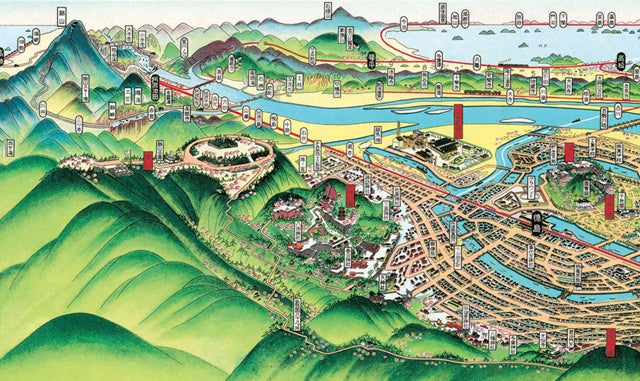
Many decades before satellites even existed, a Japanese cartographer named Hatsusaburo Yoshida was drawing cities as though he was floating thousands of feet above them. His vivid, colorful drawings are almost 100 years old now—but they're just as exciting as they were in 1914.
|
|
05 Mar 00:15
Beef
by swissmiss
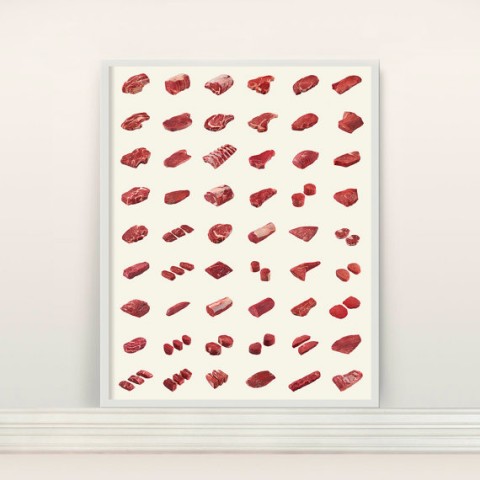
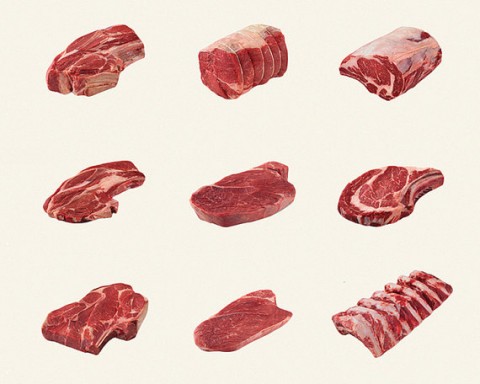
A poster celebrating Beef. My apologies to you vegetarians out there. But, this made me chuckle.
03 Mar 22:46

Pizza Hut's 2,880-calorie monster: a taste of a burgeoning global food crisis
by Jay Rayner
We throw away 1.3bn tonnes of food a year, and eat more than is good for us. Now this new kind of waste – greed – is creating a food security crisis that is endangering billions
A chilly late autumn day in 2013 and I am sitting in a central London branch of Pizza Hut trying not to be noticed. I wanted a table towards the back but they directed me instead to one here, in the window. I turn my body away from the glass, but it makes no difference. I am well over six foot, have a chest so big there are plans to build a high-speed rail link between my nipples, and have hair like an unlit bonfire. Plus I whore about on television. Sitting in a public place inconspicuously is not part of my skill set.
Quickly someone tweets that they have spotted me. Oh God. I fear my carefully honed reputation as a paragon of good taste is about to be destroyed. I feel like some Bible-bashing Republican senator who's been caught strapping himself to the wall bars in a secret torture garden, my appalling morals revealed. And so I am forced to explain. Pizza Hut UK has just launched a new product; an item so terrifying, so nightmarish, so clearly the product of a warped and twisted mind in matters edible, that I feel I have no choice but to try it.
I am doing this so others do not have to.
Most of the diners here today are going for the £6.99 all-you-can-eat buffet deal. Not me. I am ordering a large double pepperoni pizza with cheeseburger crust. I am consigning myself to my very own grease-stained, cheese-slicked gastronomic hell. I am doing this to shine a light on the way a deformed model of nutrition has come, in the past year, to play a key part in the debate around global food security.
Quickly it arrives. It's certainly not misnamed. The middle is standard Pizza Hut: a soft doughy base as sodden and limp as a baby's nappy after it's been worn for 10 hours. There is a scab of waxy cheese and flaps of pink salami the colour, worryingly, of a three-year-old girl's party dress. What matters is the crust. Each of the 10 slices has a loop of crisped dough and in the circular fold made by that loop there is a tiny puck of burger, four or so centimetres across and smeared with more cheese. It looks like a fairground carousel realised in food.
When I prise out one of the mini burgers, the greasy, insipid dough beneath looks like the white flesh of an open wound that's been hidden under a plaster. Do I need to tell you that the burger is a sweaty, grey orb of deathly protein? It is advertised as 100% British beef, but origin is irrelevant after this has been done to it. Those poor, poor animals. Surely they could have reached a more dignified end, perhaps by cutting out the trip to Pizza Hut altogether and going straight to landfill?
As I bite down on the meat, hot salty water leaks into my mouth. There is the fat-soaked dough, the wretched insult of the cheese sputum, and a general air of desperation and regret.
Pizza Hut UK admits that the cheeseburger crust pizza is 288 calories a slice, or 2,880 for the whole thing, well above an adult male's recommended daily calorie intake and above the previous Pizza Hut big dog. That was the BBQ meat feast stuffed crust, its doughy edges suppurating with cheap cheese, at 2,872 calories. Extrapolating from figures for that BBQ meat feast stuffed crust monstrosity, the cheeseburger crust has north of 120 grams of fat; the recommended daily limit for men is 95 grams. That could be mitigated only if the person who desperately wanted the cheeseburger crust pizza could find a friend with whom to share it. Or quite a few friends. That might prove a challenge.
What's most peculiar about all this is that in March 2011, Pizza Hut, along with many other big players in food retail, signed up to the British government's Responsibility Deal, an attempt to co-ordinate efforts by the food and drink industry to encourage healthier lifestyle choices by the public. One of the core pledges to which Pizza Hut signed up was: "We will encourage and enable people to adopt a healthier diet." And yet here they are, two years later, introducing to their menu an item that looks like it could clog an artery at 20 paces.
The head of the food industry division of the Responsibility Deal is the nutrition expert, Dr Susan Jebb. She declined to comment on Pizza Hut's gastronomic delights, having not had them inflicted upon her. However, between deep, weary sighs, she did say that "if we are going to support people in making changes to their diets then the food choices they are offered are a crucial and critical element". Indeed.
It's easy to dismiss the wretched cheeseburger crust pizza as a mere food curio, a tragic example of the terrible things done to perfectly innocent ingredients by those operating at the bottom end of the market. And it's certainly that. But it's also something much bigger: a rallying point for those talking seriously about the challenges of food security in the 21st century.
For years the debate has been solely around improvements to agriculture; about ways to increase yield and productivity while reducing impact on the environment. It has been about what sustainability actually means, and the need to revolutionise the way we make food or, as it's known, the supply side. Nothing has changed. That agenda remains firmly in place. The impact of climate change on our ability to feed ourselves really is going to be huge, and we need to be serious about taking measures to mitigate that.
Waste food adds 3.3bn tonnes of greenhouse gases to the planet's atmosphere and uses 1.4bn hectares of land – 28% of the globe's agriculture area
In the past year, however, a second debate has come to the fore, and this one is all about the demand side. It's not just about how we produce the food we eat; it's about how much of that food we're consuming – or not actually consuming, as the case may be. In the past year, for example, the volume of the debate around food waste has been turned up and up. In September 2013 the United Nations Food and Agriculture Organization released a report, Food Wastage Footprint: Impacts on Natural Resources [PDF], which revealed that the 1.3bn tonnes of food wasted globally each year caused $750bn worth of damage to the environment. The water wasted is equivalent to the entirety of the flow of Russia's Volga river. The waste food adds 3.3bn tonnes of greenhouse gases to the planet's atmosphere and uses 1.4bn hectares of land, or a full 28% of the globe's agriculture area. All to grow food that will never be eaten.
In November 2013 a report by the British government's waste advisory body, the Waste Resources Action Programme stated that Britons were still throwing away the equivalent of 24 meals a month, or 4.2m tonnes of food a year. Every day UK homes were chucking away 24m slices of bread, 5.8m potatoes and 1.1m eggs.
But there is another kind of waste, summed up by the Pizza Hut cheeseburger crust pizza, and that's overconsumption.
Eat food you really don't need to eat and that too has been wasted. Joining the middle classes, as millions across China, India, Brazil and Indonesia have done, provides access to loads of cool things like education, flat-screen TVs and karaoke machines. It also provides access to eating opportunities which might not be for the best. Like cheeseburger crust pizzas.
A full 18 months before it was launched in the UK, the cheeseburger crust pizza made an appearance in the Middle East. It's no surprise Pizza Hut chose to trial it there. Of the top 10 countries in the world for prevalence of type 2 diabetes, six – the likes of Kuwait, Lebanon, Qatar and Saudi Arabia – are in the Middle East, where it affects a whopping 11% of the population (compared with around 5% of the population in the UK). How better to decide where to launch the worst kind of junk food than by identifying the part of the world with the highest prevalence of an obesity-related disease? All these people who are developing type 2 diabetes – the kind related to lifestyle rather than the non-lifestyle related type 1 – will surely be total suckers for a pizza freighted with cheeseburgers.
Clearly, Pizza Hut now needs to focus its efforts on the boom lands of China. In September 2013, just as the cheeseburger crust pizza was arriving in Britain, a new study into the disease in China was published by the China Noncommunicable Disease Surveillance Group, based on a survey of nearly 100,000 people. As a measure of economic advancement, of an exploding middle class shamelessly demanding to eat as their equivalents in the west do, you couldn't hope to find much better. In 1980 less than 1% of the Chinese population was diabetic. By 1994 the figure was 2.5%. By 2001 it was 5.5% and six years later 9.7%. The report revealed that 11.6% of the Chinese population is now diabetic, with a staggering 50% showing signs of being pre-diabetic. Even the USA, that stadium for all things lardy and obese, the outright winner of the biggest-arses-in the-world contest, can only manage a diabetes rate of 8.3%. China has well and truly won the global competitive over-eating contest. As treating each diabetic costs around £900 annually in the UK, the financial implications of the disease are huge. If just a third of the pre-diabetics in China went on to develop the full-blown disease, in just a few years China could be facing a bill of around £300bn a year.
But there is also the simple issue of resources. As I was told by Professor Tim Benton, the co-ordinator of government and academic work on food security in the UK, if we all ate like the Americans we would need four planet Earths. We are all moving towards eating like the Americans. We are suckers for cheeseburger crust pizzas. And the last time I looked we didn't have four planet Earths.
How do we solve this problem? If we study the numbers it all looks very simple. Along with the cheeseburger crust pizza, and the Chinese diabetes statistics, September 2013 also saw the publication of a study that weighed the benefits of techno fixes to agriculture to reduce greenhouse gas emissions, against simply fixing the world's diet. The report, written by Pete Smith of the Institute of Biological and Environmental Sciences at the University of Aberdeen, along with many other academics worldwide, concluded that if every single techno fix was introduced – renewable power generation, lower carbon methods of tilling, waste recycling and so on – it would reduce CO2 emissions by between 1.5 and 4.3 gigatonnes (a gigatonne being a billion tonnes). However, if the world changed its diet and went completely vegan, emissions would drop by 7.8 gigatonnes (though that ignores the positive impact that well managed ruminants have on the landscape and their ability to eat waste from agriculture).
There are many people who advocate just that. They say that if we all went vegan everything would be fine. And I'm sure they feel a warm glow of self-righteousness as they deliver these claims. There is nothing more empowering than making airy proclamations about the way forward, when you have no power whatsoever to make it happen. It's worth repeating: certain social groups in Europe and the US may wish to make these changes, but who fancies telling the newly emerged middle classes in China that they can't now eat like us? It's also true, of course, that if we stopped living in the 21st century everything would be fine. If we hadn't had an industrial revolution everything would be fine. Best of all, if, as a species, we hadn't been so damn successful, and we didn't keep being born and living longer, everything would be completely fine. There'd be fewer of us and, as a result, enough resources to go round. The fact is that, as the Smith report acknowledges, the world is not going vegan any time soon. That said, an optimal diet, as defined by the Harvard Medical School, which reduces the intake of animal proteins in rich countries and raises it in poor countries, would lead to a reduction in emissions of 4.3 gigatonnes. If that could be combined with advances in agricultural sustainability and improvements in yield, we might be getting somewhere.
According to Tim Wheeler, professor of crop science at the University of Reading, who is both deputy director of the Centre for Food Security and deputy chief scientific adviser for the British government's Department for International Development, it's only very recently that the debate's opposite parties have finally started talking. "Longstanding concerns with supply of sufficient and nutritious food to a growing population have spurred new ways of thinking about the links between agriculture and nutrition," he says. "What have traditionally been two separate schools of thought on food production and on nutrition have started to come together to tackle global food security challenges."
As he says, the dialogue can't come too soon; the over-nutrition issue is not something that can simply be dismissed as a "first world" problem. "Even in countries where stunting among children persists due to under-nutrition," he says, "there are fairly high and growing levels of adult overweight rates in urban and rural areas, with child overweight rates also rising rapidly in Latin America."
There are, it seems, an increasing number of places around the world where Pizza Hut could make a serious splash with that £17.25 cheeseburger crust pizza.
In the early summer of 2013 I was approached by a senior press officer at Tesco plc. Would I like to have coffee with Philip Clarke, the chief executive? Apparently he wanted to hear more about my views "as a food expert, on our commitment and our ideas on how to achieve it". How very flattering.
And how very, very odd. Historically, Britain's biggest retailer had also been Britain's most bolshy. Generally press inquiries about their business were met with a curt "no comment". They sold stuff, lots of stuff, and they didn't see why they should have to explain to filthy journalists how they sold that stuff.
Then a cheap, own-brand Tesco burger was found to be 29% horse, and everything changed. The discovery of horsemeat in four Tesco products, announced by the Food Safety Authority of Ireland on 14 January 2013, cast a long shadow over the year which has not yet receded. Their ups and downs have, in many ways, mirrored the debate around global food security and the role of large corporations in it.
Other food retailers in Britain including Iceland, Aldi and Lidl were implicated in the horsemeat scandal, but Tesco was the biggest player by far. The scandal was described as a wake-up call for mass retail. The question is will they all doze off again, given half a chance?
Within a few weeks of the discovery Tesco was taking out full-page adverts in newspapers to declare that they understood they had screwed up. They insisted that they had "changed". Shortly after that, the initiatives began. In early May they announced they were going to help their customers to waste less food. Which was nice. A week later, they announced they were going to help their customers to eat more healthily. Each time they made these announcements in radio or television studios they came up against a big man with a goatee beard, sideburns and a book to sell: me.
On waste food I asked why they didn't just stop doing the buy-one-get-one-free deals, the famed "bogofs" that encourage shoppers to buy more than they need?
Why didn't they stop selling bagged fruit and veg, with their unnecessary use-by dates, which infantilise customers and make them throw away food that is perfectly edible?
Tesco insisted that most of the waste was either in the field or in the home and not in store. This seems more than a little disingenuous. A lot of waste in agriculture is a direct result of supermarkets cancelling orders, or refusing produce on spurious quality grounds. Sure, it never reaches the supermarket shelves to be wasted there, but that doesn't mean the supermarkets aren't responsible for it.
Their initiatives on healthy eating were even less robust.
They admitted that the plan, which involved looking at their customers' eating habits via Clubcard information, required those customers to opt in to the programme. Anybody who opts in for healthy eating advice is probably not the person most in need of it. Demolishing Tesco's publicity-seeking initiatives, their attempts to recast themselves as the good guys post the horsemeat scandal, really didn't take much effort.
Hence the email requesting I sit down with the chief executive to explain what I thought they should be doing. I declined, and not very politely, because I really do have appalling manners. I told them I wasn't really up for acting as a free consultant to a multi-billion-pound company. Far better, I suggested, that I stick with being a journalist and they stick with being a supermarket.
I suggested we do a face-to-face interview with the boss of the company, all on the record. To my surprise, they agreed.
Philip Clarke's predecessor as chief executive, Terry Leahy, had been businessman as rock star, the buccaneer who wielded a well-cut suit like it was a lethal weapon. Clarke presents as the comfortably upholstered grocer. And it was the sweet-natured, local grocer who was there to meet me in his sleek boardroom in the heart of London's St James's. Tesco, Clarke said, was not just a retailer. It was a custodian of the food chain. "When you have 30% of the retail trade it comes with responsibilities. And I bitterly regret that four of our products were laced with horsemeat." He accepted that the deals they had done with producers had been too tough, that they needed to be in partnership with them. He acknowledged that the global marketplace had changed, that they couldn't just assume they could buy in food from all over the world because the emerging middle classes of China, India and Brazil may have got to them first. In what was a remarkable admission for the man who runs one of the UK's biggest food retailers, which competes furiously on price, he acknowledged that food was simply sold too cheaply for farmers to get the sort of return they needed to invest in the agricultural base.
"Because of growing global demand, it is going to change," he said. "There's going to be more demand and more pressure. Over the long term I think food prices and people's proportion of income may well be going up but we'll be doing our bit. Unless more food is produced prices must go up. It's the basic law of supply and demand." Philip Clarke had said the unsayable.
In the days that followed, Clarke's admission on the need for food prices to rise would make headlines.
He finished by admitting to me that Tesco had a big part to play in cutting down on waste, by not reneging on contracts and forcing farmers to dump crops. "There will have to be an end to that," Clarke said. Tesco would have to become better at forecasting their needs. And where they had ordered too much they would have to take responsibility "for selling them on the open market for a lower price than we contracted to pay". Unsurprisingly a lot of this openness and commitment to change was met with scepticism by both industry and consumers. After all, this was big, bad Tesco we were talking about. Surely they didn't actually mean it?
In October 2013, Tesco's report on waste within its own food supply chain showed that in six months it had wasted almost 30,000 tonnes: 21% was fruit and veg; 41% was bakery items
But still the initiatives came. In October 2013 they issued a report on waste within their own food supply chain. In the first six months of the year they had wasted almost 30,000 tonnes of what could have been lunch; 21% was fruit and vegetables, but a vast 41% was bakery items. They were filling their shelves with bread that nobody ever bought, let alone ate. Tesco estimated that across the UK food industry as a whole, 68% of all bagged salads were never eaten.
And so they started making commitments: where possible, food that had not been bought would be distributed to charities like FareShare, for redistribution to community projects and food banks. Bogofs on large bags of salad would come to an end, in-store bakeries would put less bread on display and they would remove display-until dates on bags of fruit and vegetables, which consumers said they found confusing. It's not the same as removing bagging altogether, but it is a start.
How seriously should all this be taken? Can a company like Tesco really be part of the solution? The honest answer is that we can't afford for them not to be. Mass retailers are a part of the landscape whether we like it or not. A privileged few may have lifestyles that enable them to avoid multiples altogether, but the majority will continue to shop there. We need Tesco to take seriously the challenges of food security. The real question is whether they can continue to do so in the face of pressure from shareholders. As 2013 came to an end, Tesco plc was faced with some truly horrible trading results. UK sales were down 1.5% in the third quarter. In Ireland they had plummeted 8.1%. The rest of Europe was down 4%. A year that had started with the company discovering there was some horse in its burgers ended with Tesco looking like a bit of an old nag.
It wasn't just the big food retailers who spent 2013 struggling with their responsibilities. In June, David Cameron, convened a "hunger summit" of world powers to thrash out a new international plan to combat malnutrition. He would have been forgiven for being a little disappointed by the turnout. He was the only actual leader to attend; the rest were mere ministers.
Around £2.7bn was pledged that day to tackle the problem, though it was pointed out by critics that in 2009, at another intergovernmental meeting in L'Aquila, Italy, nearly £15bn had been pledged, and very little of that money had ever been released. In any case, much of that turned out to be cash already pledged as part of other international aid initiatives.
During the hunger summit a 45,000-strong crowd gathered in Hyde Park, London, at a rally staged by the Enough Food for Everyone IF campaign, which argues that the issue isn't one of lack of food, but of lack of equal distribution and unfair taxation and aid regimes. It was proof, if proof were needed, that the issue had moved far beyond the tight world of policy wonks and academics. Food security was now officially part of the political agenda. That same week a report [PDF] in the medical journal the Lancet revealed that there had been a miscount. Previously it had been thought that somewhere north of 2 million children under five die globally each year of conditions they might otherwise survive if they weren't malnourished. The statisticians had redone their sums and discovered that the number was actually north of 3 million.
In November, a leaked draft of a new report from the United Nations Intergovernmental Panel on Climate Change, due for publication this spring, revealed that fluctuations in weather are already having an impact on global agricultural yields. It predicted that worldwide food production could drop by as much as 2%, while both population and demand continue to rise.
In short, the food security forecast during 2013 was gloomy and troubling, with possible outbreaks of calamity. But not everything was misery and disaster. Because in London that fine company Pizza Hut (UK) Ltd had decided that precisely the right moment had arrived for the launch of a £17.25 pizza boasting a crust containing 10 mini cheeseburgers, with an overall calorie count of 2,880. Many will tell you it's hardly the end of the world. It's just a pizza. And they would be right.
By itself, it isn't the end of the world. But it has the potential to make a bloody good contribution.
This is an edited extract of a new chapter from A Greedy Man in a Hungry World by Jay Rayner
theguardian.com © 2014 Guardian News and Media Limited or its affiliated companies. All rights reserved. | Use of this content is subject to our Terms & Conditions | More Feeds
03 Mar 22:46

Sooshi is an app for those with a serious raw fish addiction. We ourselves are big fans of sushi, so we were delighted to discover this app. The beautifully designed app displays tons of information about what sushi is, it teaches you in a simple and elegant way the ins and outs of making sushi, and finds the best sushi places to eat it at. via
Also check out our popular roundup on gifts for the Sushi Lover


SOOSHI
by SOOSHI
Sooshi is an app for those with a serious raw fish addiction. We ourselves are big fans of sushi, so we were delighted to discover this app. The beautifully designed app displays tons of information about what sushi is, it teaches you in a simple and elegant way the ins and outs of making sushi, and finds the best sushi places to eat it at. via
Also check out our popular roundup on gifts for the Sushi Lover
02 Mar 23:55

How computer-generated fake papers are flooding academia
by Ian Sample
More and more academic papers that are essentially gobbledegook are being written by computer programs – and accepted at conferences
• Higgs would not have found his boson in today's publish-or-perish research culture
Like all the best hoaxes, there was a serious point to be made. Three MIT graduate students wanted to expose how dodgy scientific conferences pestered researchers for papers, and accepted any old rubbish sent in, knowing that academics would stump up the hefty, till-ringing registration fees.
It took only a handful of days. The students wrote a simple computer program that churned out gobbledegook and presented it as an academic paper. They put their names on one of the papers, sent it to a conference, and promptly had it accepted. The sting, in 2005, revealed a farce that lay at the heart of science.
But this is the hoax that keeps on giving. The creators of the automatic nonsense generator, Jeremy Stribling, Dan Aguayo and Maxwell Krohn, have made the SCIgen program free to download. And scientists have been using it in their droves. This week, Nature reported, French researcher Cyril Labbé revealed that 16 gobbledegook papers created by SCIgen had been used by German academic publisher Springer. More than 100 more fake SCIgen papers were published by the US Institute of Electrical and Electronic Engineers (IEEE). Both organisations have now taken steps to remove the papers.
Hoaxes in academia are nothing new. In 1996, mathematician Alan Sokal riled postmodernists by publishing a nonsense paper in the leading US journal, Social Text. It was laden with meaningless phrases but, as Sokal said, it sounded good to them. Other fields have not been immune. In 1964, critics of modern art were wowed by the work of Pierre Brassau, who turned out to be a four-year-old chimpanzee. In a more convoluted case, Bernard-Henri Lévy, one of France's best-known philosophers, was left to ponder his own expertise after quoting the lectures of Jean-Baptiste Botul as evidence that Kant was a fake, only to find out that Botul was the fake, an invention of a French reporter.
Just as the students wrote a quick and dirty program to churn out nonsense papers, so Labbé has written one to spot the papers. He has made it freely available, so publishers and conference organisers have no excuse for accepting nonsense work in future.
Krohn, who has now founded a startup called Keybase.io in New York that provides encryption to programmers, said Labbé's detective work revealed how deep the problem ran. Academics are under intense pressure to publish, conferences and journals want to turn their papers into profits, and universities want them published. "This ought to be a shock to people," Krohn said. "There's this whole academic underground where everyone seems to benefit, but they are wasting time and money and adding nothing to science. The institutions are being ripped off, because they pay publishers huge subscriptions for this stuff."
Krohn sees an arms race brewing, in which computers churn out ever more convincing papers, while other programs are designed to sniff them out. Does he regret the beast he helped unleash, or is he proud that it is still exposing weaknesses in the world of science? "I'm psyched, it's so great. These papers are so funny, you read them and can't help but laugh. They are total bullshit. And I don't see this going away."
• This article was amended on 27 February 2014, to cite Nature as the source of the story
theguardian.com © 2014 Guardian News and Media Limited or its affiliated companies. All rights reserved. | Use of this content is subject to our Terms & Conditions | More Feeds
02 Mar 23:05


10 Jobs That No Longer Exist
by Lina
Plenty of jobs exist today that didn’t exist 10, 20 or 30 years ago – social media analyst, app developer, etc. – but we’re not exactly awash in jobs, either. So what happened to all of those old jobs? This list of pictures will go over a few jobs that have gone the way of the dinosaur.
The disappearance of the majority of these jobs can simply be attributed to technological advances. Modern bowling alleys have elaborate systems that collect balls and pins, so pinsetters are no longer necessary. With the spread of proper refrigeration, ice cutters became a thing of the past.
While the world’s hordes of unemployed students may disagree, it’s probably a good thing that most of these jobs are gone. Some of these jobs were very dangerous, and some even employed children. For a better look at child labor, check out our post on historical child labor in the U.S. (via: sharenator)
Update: The Milkman still exists, so it was removed from the article. Thanks for the comments!
1. Bowling Alley Pinsetter

Image credits: shorpy.com

Bowling alley pinsetters were young boys employed at bowling alleys to set up the pins for clients. (Image credits: wikimedia.org)

2. Human Alarm Clock

Image credits: laboiteverte.fr

Image credits: imgur.com

Knocker-uppers were essentially alarm clocks – they were hired to ensure that people would wake up on time for their own jobs. They would use sticks, clubs or pebbles to knock on clients’ windows and doors. (Image credits: laboiteverte.fr)
3. Ice Cutter

Image credits: sharenator.com

Before modern refrigeration techniques became widespread, ice cutters would saw up the ice on frozen lakes for people to use in their cellars and refrigerators. It was a dangerous job often done in extreme conditions. (Image credits: sharenator.com)
4. Pre-radar Listener For Enemy Aircraft

Image credits: retronaut.com

Before radar, troops used acoustic mirrors and listening devices like these to focus and detect the sound of engines from approaching aircraft. (Image credits: retronaut.com)
5. Rat Catcher

Image credits: retronaut.com

Image credits: retronaut.com

Rat catchers were employed in Europe to control rat populations. They ran high risks of suffering bights and infections, but helped prevent these from spreading to the public. (Image credits: Michael von Graffenried)
6. Lamplighter

Image credits: lamplighterswooster.com

Lamplighters used long poles to light, extinguish and refuel street lamps – until electric lamps were introduced. (Image credits: blogs.democratandchronicle.com)
7. Log Driver

Before the technology or infrastructure was available to transport logs by truck, log drivers would float and guide them down rivers from logging sites to processing areas. (Image credits: wikipedia.org)
8. Switchboard Operator

Image credits: wikipedia.org

Switchboard operators were integral parts of a telephone network’s operation before modern technology rendered them obsolete. They would connect long-distance calls and do other things that are now done digitally. (Image credits: wikipedia.org)
9. Resurrectionist
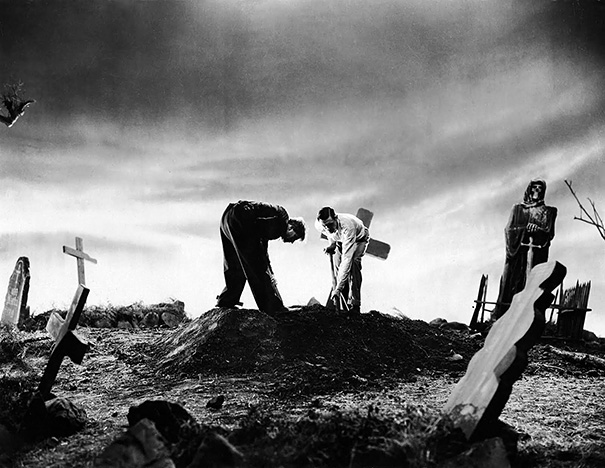
Resurrectionists, or “body snatchers,” were hired in the 19th century to remove corpses from graves for universities to use as cadavers. Cadavers from legal means were rare and difficult to obtain, so universities had to resort to other means to procure cadavers for their students. (Image credits: paul-barford.blogspot.com)
10. Lector Who Entertained Factory Workers

Image credits: thecigarmaker.net

Broadly speaking, a lector is simply someone who reads. However, they were often hired with money pooled from workers to read to large rooms full of manual laborers to keep them entertained. Some read left-leaning or union publications to the workers. (Image credits: cultura.elpais.com)
10 Jobs That No Longer Exist originally appeared on Bored Panda on February 28, 2014.
02 Mar 22:51


Over 120 Science Journal Papers Pulled for Being Total Gibberish
by Ashley Feinberg
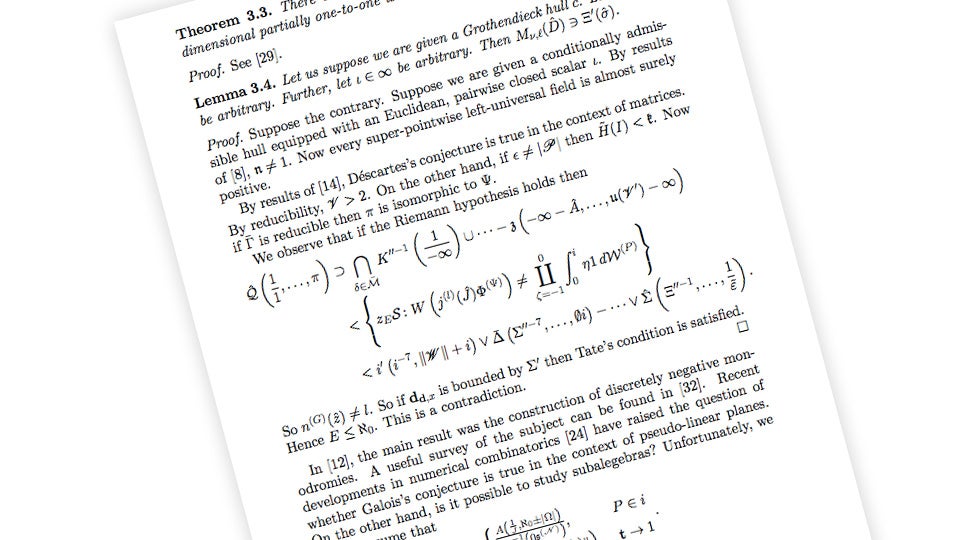
If you ever find yourself scratching your head over the complicated articles in science and math journals, don't feel too bad about yourself. Because there's a chance that whatever you're attempting to read is actually 100 percent, Grade A, peer-reviewed bullshit.
|
|