The Moving to Opportunity (MTO) experiment offered randomly selected families living in high-poverty housing projects housing vouchers to move to lower-poverty neighborhoods.
We present new evidence on the impacts of MTO on children’s long-term outcomes using administrative data from tax returns. We find that moving to a lower-poverty neighborhood significantly improves college attendance rates and earnings for children who were young (below age 13) when their families moved. These children also live in better neighborhoods themselves as adults and are less likely to become single parents.
The treatment effects are substantial: children whose families take up an experimental voucher to move to a lower-poverty area when they are less than 13 years old have an annual income that is $3,477 (31%) higher on average relative to a mean of $11,270 in the control group in their mid-twenties. In contrast, the same moves have, if anything, negative long-term impacts on children who are more than 13 years old when their families move, perhaps because of disruption effects.
The gains from moving fall with the age when children move, consistent with recent evidence that the duration of exposure to a better environment during childhood is a key determinant of an individual’s long-term outcomes. The findings imply that offering families with young children living in high-poverty housing projects vouchers to move to lower-poverty neighborhoods may reduce the intergenerational persistence of poverty and ultimately generate positive returns for taxpayers.
Continue to file under “migration is still the most effective development intervention known to humankind”.
You have probably not heard of this show. An Australian comedy about sad things, including mental illness. It stars an aimless, kind of sad, bitterly witty young gay man. Maybe one of my favorite TV shows of the last couple of years. Highly recommended.
Henry Marsh is one of Britain’s leading neurosurgeons, distinguished among his medical peers and the subject of two television documentaries, the most recent chronicling his volunteer work in the Ukraine. But as he approaches the end of his career, Marsh feels a rising need to “bear witness to past mistakes I have made.” His latest book Do No Harm is an act of atonement, an analysis of his mistakes and why he made them.
Shamus Khan, a sociologist colleague here at Columbia, returned to his elite secondary school as a teacher cum ethnographer. I have finally gotten around to reading his book, Privilege, which is superb.
The main reason to read the book, other than the voyeuristic peep into the Harvard of high schools, is an insight into culture and inequality in the US. An example:
…the new elite are not an entitled group of boys who rely on family wealth and slide through trust-funded lives. The new elite feel their heritage is not sufficient to guarantee a seat at the top of the social hierarchy, nor should their lives require the exclusion of others.
…Like new immigrants and middle-class Americans, they believe that anyone can achieve what they have, that upward mobility is a perpetual American possibility. And looking around at their many-hued peers, they are provided with experiential, though anecdotal, evidence that they are correct.
Instead of entitlement, I have found that St. Paul’s increasingly cultivates privilege. Whereas elites of the past were entitled—building their worlds around the “right” breeding, connections, and culture—new elites develop privilege: a sense of self and a mode of interaction that advantage them.
The old entitled elites constituted a class that worked to construct moats and walls around the resources that advantaged them. The new elite think of themselves as far more individualized, supposing that their position is a product of what they have done. They deemphasize refined tastes and “who you know” and instead highlight how you act in and approach the world.
Other insightful bits:
What students cultivate is a sense of how to carry themselves, and at its core this practice of privilege is ease: feeling comfortable in just about any social situation.
And this::
[In the past,] Elites knew who they were as a group, and they knew who wasn’t one of them. They were a “class” who protected their interests. They had a distinct culture that they isolated from others and used to distinguish themselves.
But today elites are far more “omnivorous,” culturally constituting themselves quite freely across social boundaries or distinctions. They no longer define themselves by what they exclude, but rather their power now comes from including everything. What marks elites as elites is not a singular point of view or purpose but rather their capacity to pick, choose, combine, and consume a wide gamut of the social strata.
The “highbrow snob” is almost dead. In its place is a cosmopolitan elite that freely consumes high and low culture, and everything in between.
Personally, there is not enough scholarly fame or rewards to make me go anywhere near my high school, but I’m glad someone else had the courage. I will stick to conflict zones.
There’s an out of control trolley speeding towards Immanuel Kant. You have the ability to pull a lever and change the trolley’s path so it hits Jeremy Bentham instead. Jeremy Bentham clutches the only existing copy of Kant’s Groundwork of the Metaphysic of Morals. Kant holds the only existing copy of Bentham’s The Principles of Morals and Legislation. Both of them are shouting at you that they have recently started to reconsider their ethical stances.
A dreamworld where it rains fish instead of water, people dance through dinner, and children sleep with tigers -- welcome to the imagination of author/artist Leif Parsons, whose detailed dreamscapes make ONLY FISH FALL FROM THE SKY a charming bedtime book sure to fascinate preschoolers and young readers.
On the road in Cuba with Spike Jonze, shooting news footage for Vice, which has grown in 20 years from a small music magazine to a $4bn video-led media group. Rupert Murdoch calls it “a wild, interesting effort to interest millennials who don’t read”. Vice will soon have its own US cable channel. It may even try an IPO. The secret of its success? “We’ve just tried to make stuff that sucks less than everyone else”
My Baltimore friends who had seen the show also believed, given the police violence in their town, that The Wire‘s view of Baltimore’s finest was almost comically kind. The one policeman who accidentally shoots someone (a fellow officer) not only isn’t prosecuted but gets reintroduced later in the series as a big-hearted public school teacher. And then other people just said to me that living in Baltimore was a struggle and the idea of anyone making commerce out of their pain was simply not their idea of entertainment.
That is Dave Zirin in The Nation. I have to agree. The more I’ve been reading lately the more broken and discriminatory the policing seems to be. I don’t think this is a story of a few bad cops and many good ones, but rather normal people in a perverted system that brings out their bad.
This article by Emily Badger in WashPo doesn’t say it outright, but for lower class black Americans, this country basically looks like a failed state.
With one exception, these have all been written by white people. And I would bet all fall in the category of reading The New Yorker and find Starbucks lowbrow. While I am myself in that category (well, I’m actually sick of The New Yorker) I would appreciate pointers to the best of the best books and essays by another race and class.
The number of nail salons in New York City has tripled in 15 years, while prices have been driven down to half the national average, thanks to ruthless salon owners who exploit new immigrant workers by paying them next to nothing and sometimes charging them for the privilege of working. Your obliging manicurist may well be earning $10 a day, if she is new to the job — before deductions for training and rent. Tip well!
The Vangardist, a German men’s magazine, is printing an entire issue using HIV-infected blood in a quest to educate the public and eliminate misconceptions about HIV and AIDS.
Of course, there’s also the issue of taking this approach to raise the magazine’s literary and commercial value. The Vangardist‘s May issue is already being considered a collector’s item since just 3,000 copies featuring the HIV-positive ink blood have been printed.
Expertise literature in mainstream cognitive psychology is rarely applied to criminal behaviour. Yet, if closely scrutinised, examples of the characteristics of expertise can be identified in many studies examining the cognitive processes of offenders, especially regarding residential burglary. We evaluated two new methodologies that might improve our understanding of cognitive processing in offenders through empirically observing offending behaviour and decision-making in a free-responding environment. We tested hypotheses regarding expertise in burglars in a small, exploratory study observing the behaviour of ‘expert’ offenders (ex-burglars) and novices (students) in a real and in a simulated environment. Both samples undertook a mock burglary in a real house and in a simulated house on a computer. Both environments elicited notably different behaviours between the experts and the novices with experts demonstrating superior skill. This was seen in: more time spent in high value areas; fewer and more valuable items stolen; and more systematic routes taken around the environments. The findings are encouraging and provide support for the development of these observational methods to examine offender cognitive processing and behaviour.
The lead researcher calls this “dysfunctional expertise,” but I disagree. It’s expertise.
Claire Nee, a researcher at the University of Portsmouth in the U.K., has been studying burglary and other crime for over 20 years. Nee says that the low clearance rate means that burglars often remain active, and some will even gain expertise in the crime. As with any job, practice results in skills. “By interviewing burglars over a number of years we’ve discovered that their thought processes become like experts in any field, that is they learn to automatically pick up cues in the environment that signify a successful burglary without even being aware of it. We call it ‘dysfunctional expertise,'” explains Nee.
A mistranslation on a Chinese restaurant menu — Wonton in Zanthoxylum schinifolium etzucc sauce — provokes a tour de force of explication touching on botany, Chinese characters, dialects, the history of Chinese food in America, and the folk-etymology of ma-po tofu, a dish of bean-curd and ground meat spiced with Sichuan peppers which probably does not derive its name from a pock-marked old woman called Ma
The sub-title is A Gigantic List Of Strategies. So a long read, almost an e-book, but clearly written and easily read, which explains plausibly why things are priced for sale the way that they are, right down to the omission of dollar signs from restaurant menus. And all the 0.99 price tags, the “charm pricing”? It’s about getting the first digit down, the anchor number. Even when we think we know the trick, we are easily manipulated
In the 2001 movie Donnie Darko, a group of teenage boys are drinking and shooting guns when the topic of conversation turns, as you might expect, to the topic of women. “We gotta find ourselves a Smurfette,” one of them says.
“Smurfette?” his friend asks.
“Mm-hmm. Not some, like, tight-ass Middlesex chick, you know? Like, this cute little blonde that will get down and dirty with the guys. Like Smurfette does.”
This exchange came to mind when watching the actor Jeremy Renner's appearance on Conan this week, during which he called Black Widow, the Avenger played by Scarlett Johansson, “a slut.” He'd already made a joke along these lines a few weeks ago, after which he apologized to anyone who'd been offended. But apparently Renner believed his joke wasn't actually vile—just misunderstood. “Conan, if you slept with four of the six Avengers, no matter how much fun you had, you’d be a slut,” he said. “I’d be a slut.”
Setting aside the strange idea that it’s hilarious instead of depressingly predictable for a man to go around judging a woman’s sexual activities, and the strange idea that "slut" is a gender-neutral term even though Renner's using it in exactly the same way it's historically been used to condemn women, there’s a nerd-level problem with the actor’s comments. Black Widow hasn’t had sex with four of the six Avengers. She hasn’t had sex with any of them. Renner knows this, but by making jokes to the contrary, he's indulging the same tendency those fictional Donnie Darko kids were—seeing the only woman on a male-dominated team solely in terms of her sex, and by extension, in terms of sex.
As of the end of the new Avengers: Age of Ultron, Natasha Romanov (a.k.a. Black Widow) has had an explicitly discussed romance with exactly one character, Bruce Banner (The Hulk). Among the precious few moments in the film that don’t revolve around genocidal robots are scenes of Romanov flirting with, pining for, and pleading with Banner; at one point—spoiler alert—she reveals that she, like him, can never have children. He's attracted to her, but he never accepts her advances out of fear of hurting her. Sex is not had.
Black Widow hasn't had sex with four of the six Avengers. She hasn't had sex with any of them.
So why do people like Renner say she's sleeping around? As Jen Yamato recently pointed out at The Daily Beast, the Marvel franchise has in fact used Black Widow as a tease for different characters in different films—a storytelling choice that stems, in part, from the fact that she's been the only female Avenger. When she’s introduced in Iron Man II, she’s an undercover legal aid who Tony Stark openly hits on before she surprises him with her combat skills. In the first Avengers movie, she acts as an affectionate confidante for Renner’s Hawkeye (a.k.a Clint Barton), though Ultron makes it very clear they were just friends. In Captain America: The Winter Soldier, she flirtatiously taunts Steve Rodgers, and at one point the two kiss for purely professional reasons. Modern-day fans of all kinds of pop-cultural products are famous for "shipping" any two characters with a hint of spark, and it’s no surprise Avengers viewers have done so with Romanov and her various buddies.
But Renner's “slut” joke isn’t an example of “shipping”—i.e. rooting for a romance to happen. It’s an insistence upon seeing a woman purely in sexual terms. It's also a rejection of the notion that men and women can have platonic relationships—that Smurfette could just be friends with the other 99 blue people in her village. Avengers director Joss Whedon recently spoke out against this idea when asked whether Hawkeye and Black Widow were ever meant for each other:
I find strong bonds between men and women that aren’t sexual not only cool and useful, but very romantic in a broad sense. There’s a lot of hate from the Clintasha crowd. It was never my intention that they were an item. I thought what was awesome was two people who would lay down their lives for each other who are not trying to sleep with each other. People keep saying that doesn’t exist, that men and women can’t be friends unless blah, blah, blah, and I’m just like, “Oh shut up.”
Critics of the Marvel Cinematic Universe have loudly protested the fact that Black Widow has been until very recently the only female superhero on screen, one who gets sidelined in the toy aisles and has been denied a standalone film. The case for more diverse heroes says, in part, that Marvel's diverse fans deserve and crave representation. But Renner's comments also underline the fact that it's also it’s just plain bad storytelling to have only one woman on the team. It makes the entire scenario feel even more far-fetched, it leads screenwriters to make her a potential love interest for multiple characters, and it encourages people to start saying weird, sexist stuff: No matter what else she does, the character's biggest distinguishing characteristic is her gender.
This phenomenon, incidentally, really is called The Smurfette Principle. Coined by Katha Pollitt in a 1991 New York Timesessay, it refers to stories in which “a group of male buddies will be accented by a lone female, stereotypically defined.” Winnie the Pooh, Teenage Mutant Ninja Turtles, and Muppet Babies were examples at the time; 24 years later, the largest action-movie franchise in the world has kept the tradition up. But by the end of Ultron, another woman has been added to the main hero squad, and in the coming years, Disney plans to introduce a film about Ms. Marvel. The man behind Hawkeye can crack jokes all he wants, but eventually one of these women might just replace him.
“For too long, too many judges have been too quiet about an evil of which we are a part: mass incarceration. More than 2.2 million people are currently incarcerated in US jails and prisons. Most of the increase in imprisonment has been for nonviolent offenses, such as drug possession. If current rates hold, one-third of all black men will be imprisoned at some point in their lifetimes … Basically, we treat them like dirt”
The balance of power has changed beyond recognition since America signed the Taiwan Relations Act in 1979. Back then China was poor and weak. Now it is rich and strong. None of America’s Asian allies, except possibly Japan, would join a war with China. “Today a US-China conflict would impose equal risks and costs on both sides.” Which gives, in effect, the advantage to China. It has more at stake, and thus greater resolve
On Sunday's episode of Mad Men, "Lost Horizon," the former SC&P partner and account executive Joan Harris (played by Christina Hendricks) faced more of the odious sexual harassment and discrimination the character's endured over the years. This time, the executives belittling her judgment, ignoring her opinions, and urging her to sleep with them were executives working at her new employer, the advertising firm McCann Erickson.
McCann Worldwide, as the firm is known today, reacted with a series of playful tweets, cut with a snarky defensiveness that indicated the company had taken the episode at least a little personally.
While some brands like Heineken have actually paid for product placement on the show, others like McCann have had to hold their breath and pray Mad Men won't invent a closeted drunkard CEO for them (Lucky Strike); use their product in the backdrop of a suicide attempt (Jaguar); or remind viewers of how they contributed to civilian deaths (American Airlines and Dow Chemical). For brands, a Mad Men mention, or even a full storyline, could summon either excitement or dread; and the way companies react to their portrayal reveals how they're often willing to let themselves be seduced by the show's nostalgic sheen. If the depiction is kind or neutral, it's free advertising. If it's ugly, brands have the excuse that it's just fiction. But either way, leaning into the publicity hints at a willingness to ignore Mad Men's series-long effort to lay bare the hollowness of so many popular products, and the cynical attempts by marketers to tie them inextricably to the American Dream.
Of course, for some brands, the exposure is innocuous, even salutary: The headphone-maker Koss seized on its unexpected Mad Men appearance with a brief marketing blitz, and no one, fictional or otherwise, got hurt. (Let's also not forget the slew of fake or already dead companies that have made their way into the show: Burger Chef, Topaz, Sugarberry Ham, Menken's Department Store, Secor Laxatives). But McCann couldn't back away from its portrayal so easily: For the ad agency, the sexism that pervades the higher rungs of large companies can't be written off simply as a plot device—nor can it be necessarily corralled by claims that the show belongs to a different time.
Perhaps the murkiest and most high-profile instance of Mad Men tying a storyline to a brand involves Jaguar. In a pivotal season-five episode, an executive from the company coerced Joan into sleeping with him to get the account, and the partner Lane Pryce tried and failed to kill himself in one of the cars, which wouldn't start. Initially, the vice president of brand development for Jaguar, David Pryor, told AdAge that the company was "fairly surprised at the turn of events" with regards to Joan, and that "obviously [the portrayal] was kind of tainted," but that ultimately the company was "confident that people know [the sleazy Jaguar executive was] a fictional character." Later, in a post for Jalopnik, Pryor and a colleague described how they felt watching the episode: They tried to "ignore" Joan's storyline, which inspired "revulsion," and they were sad about Lane's death because "it was Lane who first brought Jaguar to SCDP." All this dissonance and ambivalence aside, the company's verdict was simple: "Our job is to promote the desirability of our cars, not the morality of our fictional executives." Which, fair enough.
But brands are often willing to embrace that fictitiousness when it's convenient. Hershey's was thoroughly delighted by its role in the show's season-six finale, even going so far as to send the show's creator Matthew Weiner chocolate. When Vanity Fair asked what Hershey thought about being linked with Don's childhood memories of living in a brothel, the company said it wasn't concerned—"Obviously we know that this is a fictitious television show set in the 1960s"—but that it found the episode otherwise "wonderful, organic," and "memorable."
Some have complained that the show's nostalgic feel can have a tempering or softening effect on otherwise bad behavior like alcoholism, adultery, sexism, or racism. As a result, it can be easy to take the brand exposure at face value, and to overlook how the show critiques consumerism and the illusory nature of advertising, as well as how it often works its way into the uncomfortable corners of corporate (and American) history. But if Mad Men only reflected on the pitfalls of the past, it would still be at most just a "good" show, despite its superb writing, acting, production design, and cinematography. It's a great show in part because, in talking about the past, it illuminates the flaws of today.
Mad Men is a show that has little respect for things, products, stuff, and images.
Which brings us back to Joan's McCann storyline from "Lost Horizon." The slightly embarrassed tenor of the company's tweets in response is understandable—no one wants to be associated with the kind of ruthless chauvinism on display in that episode.
But before Sunday, McCann didn't seem to terribly mind the attention Mad Men sent its way. It's certainly not as ubiquitous a brand in the way Hershey's, Coca-Cola, Heinz, American Airlines, or Playtex are, so the average viewer likely wouldn't be curious how the firm would respond to its portrayal. Yet the firm's proactive efforts to gamely play along on Twitter, to make villainade out of the fruit of villainy, paid off in at least one way: Since the show returned for its final stretch April 5, McCann's online mentions/impressions rose 46 percent, according to data reported by AdWeek. But being framed as a subsidiary-swallowing behemoth is preferable to being painted as a claustrophobic den of sexists. Even if the latter portrayal was fake in its specifics, it had authenticity in a broader sense, pointing an uncomfortable neon-lit arrow at the persistent issues of sexual harassment and gender discrimination in the workplace.
Not to mention the advertising industry's own ongoing gender-makeup problem. As FastCompany reported in 2013, while 80 percent of women control consumer spending, just 3 percent of creative directors are women. Just five of the 19 individuals listed on McCann's leadership page are women. With all this in mind, the awkwardly coexisting narratives of, "Well, it's just a story," and, "Thanks for the free publicity," collapse.
Against that canvas, does it truly make sense to embrace the Mad Men spotlight? In purely practical terms, probably, according to Kelly Cutrone of the PR firm People's Revolution:
Does having your products on a popular TV show in a subliminal or obvious way help sell them? Yes, it does. Does it increase awareness and comfort with the product — do viewers feel psychologically closer? Yes, they do.
Still, Mad Men is a show that has little respect for things, products, stuff, and images. It's a show deeply interested in exposing how desire is manufactured, how much effort goes into the appearance of effortlessness, how more can be less, and how the person who has everything can be left with nothing. Though there's always a degree of credibility to be wrung from self-awareness and self-deprecation, these themes are hardly great slogan-makers.
Among the show's most enduring images is the silhouette of a man—the guy who once said happiness "is the moment before you need more happiness" and that "people want to be told what to do so badly that they'll listen to anyone"—falling helplessly past a collage of images promising that fulfillment is just one purchase away. It makes sense that brands and companies like McCann would try to make the most of a Mad Men cameo, however risky. But in light of the overarching message from the show's seven seasons, it's hard not to conclude that they might be missing the point.
After promoting women’s groups in West Bengal as a route to development a West Bengali woman asked Lant Pritchett:
You all are from countries that are much richer and doing much better than our country so your country’s women’s self-help groups must also be much better, tell us how women’s self-help groups work in your country.
Pritchett’s inability to answer the question led him to what I call Pritchett’s postulates of development, four criteria to decide whether factor X is an important determinant of development.
More developed countries must have more X than less developed countries.
The developed countries must have more X than when they were less developed.
Recent development successes must have more X than development failures.
Countries that are developing rapidly must have more rapid growth of X than those that are developing slowly.
Since more developed countries don’t have noticeably more women’s self-help groups, this idea fails Pritchett’s postulates. Indeed, so do many fashionable development ideas being tested by RCTs which is one reason why Pritchett’s postulates are controversial in the development community.
Paul Romer, however, (whose important blog post led me to Pritchett’s postulates) has a different approach. Instead of dismissing ideas that fail the Pritchett postulates let’s look for ideas that pass them.
Romer provides evidence that urbanization passes all of Pritchett’s postulates. I think he is correct and that suggests that policies to increase the rate of urbanization could have a very big payoff for development.
We are used to thinking about urbanization as a consequence of development but it is surely also a cause. Consider, for example, the micro evidence. It’s not that rich people move to cities, it’s poor people who move to cities to become rich. We also know that cities are engines of innovation.
We can have too much urbanization or too much in one place as when we get a bloated capital city. Nevertheless, it seems that we could speed the rate of urbanization by reducing the cost of urban development – both the obvious costs like improving land allocation in say India but also improving sanitation and air quality in order to lower the health costs of urbanization. Similarly, well planned, efficient, even beautiful cities increase the benefits of urbanization. Urbanization policy in general becomes growth policy.
How else can we increase the rate of urbanization in developing countries?
His best guess is population would rise 10% and this would have more benefits than costs, even to lower-income EU residents. But there are far more interesting parts of the interview.
VICE: Mr. Clemens, apart from political reasons—why do people try to migrate to wealthy countries? Michael Clemens: People from poor countries migrate mainly to get safety for themselves and their families, and to get proper compensation for their hard work and study. Safety and opportunity depend mostly on what country you live in, and 97 percent of humanity lives in the country they were born in. For those of us born in safe, prosperous countries, such a random lottery seems quite satisfactory. Most migrants are people who have simply decided that they will not let lottery results enforced by others determine the course of their lives.
Within our own countries, we know why people leave neighborhoods that are dangerous, poor, or both. These are the same reasons that people leave countries that are dangerous, poor, or both. But there are two differences. Many people in dangerous, poor countries live with risk and destitution that even the poorest people in rich countries will never face and cannot imagine. And, of course, no one stands at the exit to poor neighborhoods, coercing people to stay inside with a gun.
…VICE: Alright then. But would easier emigration not hurt the development of those poorer countries that the people come from? Michael Clemens: We are talking about immigration policy here. That is, we are not talking about whether people should or shouldn’t stay in poor countries. We’re talking about the extent to which rich countries should or shouldn’t forcibly obstruct migration. That is what “migration policy” does. A visa doesn’t oblige a person to move; a visa is a decision not to actively stop that person from moving.
So if we’re talking about immigration policy, the question “Does migration substantially harm low-income countries?” is the same as the question, “Does forcibly stopping people from leaving low income countries substantially help those countries?” To put it mildly, social science has absolutely no evidence of such a effect.
Would it be different in poor countries? How about in poor areas of Africa? We do not need to wonder that either. Parts of Africa that are as prosperous as parts of Europe—Johannesburg, Pretoria, and Cape Town—have spent several generations actively blocking most black Africans from living and working there. Many people in those enclaves claimed that this was somehow beneficial to black Africans, encouraging them to “develop” their own lands. There is no evidence at all of such a positive effect.
I think bringing the debate back to basic notions of liberty is important, especially the reminders about men with guns enforcing the status quo.
Even so, I would have thought it’s also true that emigration is not just the best development intervention in the world for the person to gets to migrate, but it’s good for poor countries too.
For instance, when people migrate out of a place, labor supply decreases, increasing wages and incentives to mechanize and improve productivity. Plus remittances from the huge increase in migrant incomes reduce poverty and increase demand, again putting upward pressure on wages. Surely this study exists?
Yes, I am too lazy to open the development textbooks on myself to the undergraduate chapters on “Migration” that no doubt supply this answer. Besides, the random responses from readers are probably far more interesting.
Every week, Todd VanDerWerff will be joined by two of Vox's other writers to discuss the previous episode of Mad Men over the course of that week. Check out the recap for this episode here, and follow the whole discussion here. This week, Todd is joined by education reporter Libby Nelson and political writer Dylan Matthews. Keep checking in all week long for new entries.
Spoilers for Breaking Bad's final season follow.
Todd VanDerWerff: On the one hand, Joan's storyline in "Lost Horizon" does something I hate: it turns everybody from McCann Erickson into a braying jackass, devoid of nuance or subtlety. They're all pretty much evil, because the final arc of episodes needs one final Big Bad for the good folks of Sterling Cooper & Partners to face off against. (Leave aside for a moment that this has not traditionally been a show about the characters battling evil. Just go with me here.)
I've been thinking a lot about other TV show's final seasons in connection to this episode, obviously, and a big realization struck me just now as I sat down to write about this: McCann Erickson fulfills roughly the same function in this final arc of episodes as the evil neo-Nazis did in the final eight episodes of Breaking Bad. They're there to be so much worse than our regular characters that we root for our regulars to succeed one last time.
While I think the final stretch of episodes of Breaking Bad is, on the whole, really, really good, I have some significant problems with it, and many of those problems boil down to the Nazis. To me, it almost felt as if the show blinked when it came time to finally make Walter White the villain of the show, because it needed viewers to stay invested in him somehow, when both Hank and Jesse were right there, ready to take up the mantle of protagonist (perhaps together) and bring Walter down.
Now, to a degree, that's not what Breaking Bad creator Vince Gilligan and company were up to. They were looking into Walter's soul to see if any glimmer of decency remained, then eventually found it. But by contrasting Walter against literal Nazis, they stacked the deck so far in Walter's favor that they almost had to find what they were looking for.
This is sort of what Mad Men is doing with McCann as well, but it doesn't bother me nearly as much. It's a little narratively convenient, sure, but endings of stories almost always are. For one thing, McCann has always been presented as opposition to the various iterations of Sterling Cooper through the years (all the way back to season one).
And for another, one of the show's major themes has always been the ways that women navigate around a power structure invented by men to get what they want. McCann's open, bald-faced sexism lacks anything approaching nuance, but it also sort of makes sense within the story Mad Men has always been trying to tell (and it's not as if open, bald-faced sexism has never existed).
But where you, Libby, and other women I know are terrified for Peggy as she walks into that office, I think she's going to be just the person to tear apart the old boys' club that runs McCann. Matthew Weiner has always used Joan and Peggy as examples of how being born even a few years apart can make a huge difference when it comes to opportunities, and I think he's carefully contrasting the way Joan doesn't get what she wants with how Peggy gets the office she demands.
Remember how the episode seemed to be setting things up for Peggy to get shunted down to the secretarial pool, a horrible regression to her earliest days on the show? Well, she hangs out with Roger, she holds out for an office, and she finally gets it. She might have to work on a drafting table while her furniture is located, but she's at least on the right track.
The tragedy of Joan — which can be a little overwhelming at times — is that she was born just late enough to see some of the benefits of feminism but just early enough to see too few of them. She's forever watching doors shut just ahead of her, while women younger than her climb on board the train toward wherever they're going. Mad Men has always positioned Peggy as a trailblazer, someone who might kick that door open, but it's also never lost sight of the women who spotted the trail in the first place — women like Joan.
That's likely cold comfort to her as she heads out into a world where she has no job, much less the fulfilling job she had invented for herself at SC&P, but seeing Joan leave hell while Peggy enters it, guns blazing, struck me as perhaps the most forthright example yet of the show playing with this theme.
I'll let Dylan deal with your other questions, Libby, except to say that if Don's cross-country voyage doesn't somehow bring him to California, I will eat my hat.
Read the recap, and check back tomorrow for thoughts from Dylan.
Nepal was recently affected by a 7.8 earthquake, which resulted in the deaths of more than 6000 people and much property damage.
Katmandu was an intensely ornate city that is easily damaged. The carvings, details, public spaces were glorious. My heart goes out to its citizens who suffer with their city. As you can see from these images I took in 1976, the medieval town has been delicate for decades. Loosely stacked bricks are everywhere. One can also see what splendid art has been lost. Not all has been destroyed, and I am sure the Nepalis will rebuild as they have in the past. Still, the earthquake shook more than just buildings.
If you look carefully you may notice something unusual about these photos. They show no cars, pedicabs, or even bicycles. At the time I took these images, Katmandu was an entirely pedestrian city. Everyone walked everywhere. Part of why I loved it. That has not been true for decades, so this is something else that was lost long ago. Also missing back then was signage. There are few signs for stores, or the typical wordage you would see in any urban landscape today. Katmandu today is much more modern, much more livable, or at least it was.
By Heart is a series in which authors share and discuss their all-time favorite passages in literature. See entries from Jonathan Franzen, Amy Tan, Khaled Hosseini, and more.
Doug McLean
Karl Ove Knausgaard isn’t known for being brief. My Struggle—his celebrated six-volume, 3,600-page autobiographical novel—is an experiment in radical scope, a kind of literary ultra-marathon. How long can a narrator extend a moment?, he seems to ask. How much banality can a story include? How long can a novel digress and still remain compelling?
In our conversation for this series, though, Knausgaard chose to examine the biblical story of Cain and Abel—a text he admires for its extreme compression. We discussed the story’s extraordinary economy, its multivalence, and the eternal appeal of family as a subject. (Cain and Abel’s themes—family, ambition, violence, shame—are Knausgaard’s own.) Finally, he gave insight into the process he used to write My Struggle: a willed naivety, a way of writing without thinking, that he compares to improvising music.
My Struggle is being serially translated into English, and the latest volume—Book Four—comes out Tuesday. This installment focuses on 18-year-old Karl Ove’s first job as a schoolteacher in a Norwegian fishing town. Living alone for the first time, he makes his first stumbling forays into work, writing, self-determination, and sex. It’s a story told with a comic grimace—the mature narrator bears unblinking witness as a young man’s overblown ambitions are cut down, one humiliation at a time.
Knausgaard’s work has been translated into more than 15 languages. In addition to the widely-praised My Struggle series, he is the author of Out of This World and A Time For Everything. He lives in Sweden and spoke to me by phone.
Karl Ove Knausgaard: I first heard the Cain and Abel story at school, when I was seven or eight. My teacher told it to our class, and it very much made an impression on me. I returned to it later when I was writing a novel which is set in the Bible, so to speak, and I re-read all those stories again. I was struck by how extremely small it was, just 12 lines or something. It was almost shocking to see that this little story could have such an impact, and become the big story about killing, violence, jealousy, brothers—so many huge topics within the culture.
I need 300 or 400 pages to say something significant. I need space to express simple, banal truths—I don’t have the ability to express them without that space, and a novel for me is the way of building that space. But Cain and Abel always surprises me in the way it manages to be both extremely powerful and extremely short.
In some ways, this concision is typical of the Old Testament. If you look at other very important texts—say, The Odyssey—it’s often different. The Odyssey is very loose and very long, and it’s a completely different way of storytelling. You have that looser, longer form in the Bible, too, but not in this story. In the Bible, if it’s very important, it’s very short. If it’s not important, it’s very long. That’s a rule in almost all texts.
I was invited to be a consultant for the New Norwegian Bible translation of this story. They made lots of different bibles available to us—the King James, of course, but also Swedish bibles, Danish bibles, old Norwegian bibles. The fun and most interesting thing for me was that we had a bible-translation computer program that made all these different editions available. We could click on a single word and get a translation of it. This helped me get closer to the Hebraic original, which was extremely useful during the work with the text.
The Hebrew text is very raw and very direct—almost impossible to translate. I tried to keep as much of that intact. That version has tremendous power because it’s so simple, with the same words coming over and over again in this short passage: earth, blood, faith. The language is so archaic and interesting. Though I haven’t shown this to anyone who’s mastered the language, so I may get everything wrong, this is my sense of the Hebrew original, when Cain has seen his sacrifice rejected by God:
It burned in Cain and his face fell.
Jehovah said to Cain: “Why do you burn, and why does your face fall?”
The simplicity, and the complexity in the simplicity: It’s bottomless. These are texts people have written about for thousands of years, and keep having different kinds of understandings about. The text is so rich and complex that you can take out one element and look at it, and find it expresses something deeply true. It can support all kinds of different interpretations depending on the way you live, or when you live, or who you are.
For instance, I became very interested in the way looking is described in the text. Jehovah looks down at Abel instead of Cain, and that’s when the jealousy begins. As a result, Cain’s face falls—another way of looking down. Jehovah then tells him, “Look up, because if you don’t look up evil will creep at your door.” I interpret this as being about the obligation of looking up at others, of facing the other. To look down is to not face your community—to be alone, to exist outside of society—and, as we see in this story, that is dangerous. I wrote about this when I wrote about the killing in Olso and Utoya three years ago. He [the mass-murderer Anders Behring Breivik] looked down. And if he planned this massacre with someone else, it would have stopped him. It would have been impossible. He could only do it because he was alone.
All those kinds of relevancies exist in this text. You may say that you reduce it when you use it as a psycho-sociological thing, but I don’t see it like that. I see it as the opposite. You can take one element out and look at it, and let it express something deeply true—without diminishing other potential interpretations, or the text’s overall richness and complexity.
I need 300 or 400 pages to say something significant. I need space to express simple, banal truths.
This piece could also be about a basic moment in human history: the first murder, and its connection with sacrifice. The story shows us that sacrifice is meant to take the place of violence. The sacrifice Jehovah wants to see is the sacrifice of Abel’s sheep, which is blood—not the vegetables Cain grew. The next thing you know, Cain’s killed his brother—which is not just blood, but his own blood, spilled on the earth. This brings us in a direct circle back to the sacrifice. When he wrote about this story, the French philosopher Rene Girard wrote that sacrifice—symbolic violence—is an act meant to replace transgression against life. It unites us as a “we.” Without it, there is no “we”—and Cain turns against Abel, brother turns against brother. Symbolic blood becomes real blood. Inside a society, that’s a very dangerous thing.
Of course, it’s a story about family, too. And though I don’t reflect on themes when I’m writing, it’s obvious to me that I’ve always been writing about family. I think it’s because I’m interested in identity—and the family is the first group of people who form your identity and sense of self.
When my last daughter was born, I saw what happened when she was lifted up in the first seconds of her life. She was just by herself. She hadn’t met anyone. But she was lifted, held onto by the neck, and looked at by my wife, and by myself. Those kinds of bonds are the first you have, and you’ll always define yourself in relation to those few people. Later, you’ve got your larger community. You’ve got your nation, and your profession. But it’s all layered on top of this core. The core is the same, no matter what.
I wrote my own version of the Cain and Abel story because I wanted to write about brothers. There’s a lot of me and my brother in that retelling of the story. I’ve always been interested in writing about all those mixed feelings brothers have: your jealousy, and hatred, but always a kind of unremitting love. My brother could do anything he wants—but no matter what kind of horrible thing he does, he would still be my brother. And I think it’s the same way with him.
Part of it is because it’s always been us against our parents—the bond there of coming from the same place, but still being very, very different. When so many qualities are the same, but so much is different, it allows for the kind of compression you see in the Cain and Abel story. It’s a very good place to write from. It’s also a story about losing complete control. Because losing control is the worst thing you can do, and no one wants to do it—I’m sure about that. What is it to lose control so completely?
In a completely different sense, writing My Struggle has been an exercise in giving up control. Every morning now, I write one page. I get up early and write one page in two hours. I start with a word. It could be “apple” or “sun” or “tooth,” anything—it doesn’t matter. It’s just a starting point—a word, an association—and the restriction that I write about that. It can’t be about anything else. Then I just start, without knowing what it’s going to be about. And it’s like the text produces itself.
I’m not talking about quality. For God’s sake, no. It’s not like this text ever looks good or anything. It’s just sitting there writing. Not thinking, and writing. I think it’s a state of mind, one I usually compare with music. When you watch musicians, they’re not thinking about what they’re doing, they’re just playing. Well, the same thing can be with writing. It’s just writing.
When you are not aware of yourself, you start to write things you have never thought about before. Your thoughts do not take the path they would normally have followed, and the thinking is different from your own. The language is in you, but it’s out of you, and it doesn’t belong to you. That’s what literature can do—when you throw something in, something else comes back.
This approach was something I discovered very early on, when I first started to write with ambition. I was 17, 18. I just wrote. I didn’t think. It wasn’t hard, because I was so naive and innocent. But what I mostly did was spit out clichés.
Later, I had many years when I couldn’t write because I felt I knew too much—suddenly, I had a notion of quality. But when I was 27 or 28, I had a new experience for the first time: I just disappeared somewhere. I just wrote and followed the text. It was like reading, basically. I knew I was onto something because I couldn’t predict what was coming and I couldn’t identify it with myself when I read it—it was outside my normal reach, in a way. Not that it was better. But it was different.
This is what makes my work so difficult for me to read and see again. The first thing I think is—oh Jesus, it’s naïve. But in that naivety there is something that’s very direct and true, in a sense.
There’s a difference between writing naively now and when I was 20. When you’ve been writing for 20 years, you know something about writing. You don’t have that knowledge present as you work, but it is still there somewhere and kind of directs you.
Now I have to learn to write differently. I can’t repeat what I did in My Struggle.
For My Struggle, the revision process developed during the process of writing those six novels. I edited the first novel with my editor—we did it like a classical novel, more or less. It wasn’t hard. There were some bridges made, and then it looked like a novel. But the second book we hardly edited at all. Much of the editing I’m doing while I’m writing, so when I reached the end—we just kept it, basically. We took out some pages, of course, but it was mostly there. The other books were written in a similar way, with the exception of Book Six—that was so long we needed to take out 150 pages. The others are more or less left alone.
But now I have to learn to write differently. I can’t repeat what I did in My Struggle. It’s become a kind of technique: I write a little bit about how I feel about something, a little bit about failure or shame for something, and then there is a reflection of a more essayistic kind, and then there is a description of something ordinary, and so on. I can’t write that way for the rest of my life. I would be less and less satisfying for myself because there’s nothing new in it. Or, the subjects can be new, but the insights are exactly the same.
What I’d really like to do is think differently, but that’s impossible.
Starting to write differently will be very difficult. Maybe it will create a kind a vacuum where it will be impossible to write. That has happened before. It will happen again. And it will pass again.
The privilege of a novelist is that you’re able to sit for three years by yourself, and no one’s interfering with anything if you don’t want them to. If you have faith in your writing, it’s easy. It’s when you remove that faith that things become difficult—when you start to think, this is stupid, this is idiotic, this is worthless, and so on. That’s the real fight: to overcome those kinds of thoughts. When you start a novel—well, 99 out of 100 novels start in a stupid way, I’m sure. You need to go on so that it can become something. Maybe it will take 50 pages, or 100 pages, but it will be okay.
When I go to bed, I look forward to the next morning because I know I have these two hours to write. It’s a magical place. And I know it’s going to happen. I can trust it.
Republican presidential candidates including Rand Paul are opining about last night's violent unrest in Baltimore and continued protests over the death of Freddie Gray, who suffered a fatal spinal injury while in police custody earlier this month. But only one GOP presidential hopeful has spent time in the community protesting right now: surgeon turned likely Republican candidate Ben Carson, who began his medical career at Baltimore's Johns Hopkins University Hospital.
Carson's comments to GQ have attracted some scorn from the internet for comparing protests against police to protests against plumbers. That's a dumb line that obscures a more nuanced argument. Carson acknowledges discrimination and problems with individual police officers in Baltimore, but says those problems can't be fixed by tarring all police with a broad brush.
In no way am I saying that all the police are righteous, by no stretch of the imagination. And clearly we need to be dealing with that. But recognize that we're dealing with a people problem. When you look at the Baltimore police force, it's about as diverse as any police force you're going to find in a big city. There may even be more minorities on that police force than there are non-minorities. The point being that inappropriate behavior comes in all colors, it's not specific. And just because it comes by one color or another color doesn't mean it should be ignored. It needs to be dealt with.
What's striking about this is that Carson isn't just saying, "Don't talk about 'the police'; talk about individual police officers." He's also saying the same about the protesters themselves. Other political figures (including President Obama) have simply condemned last night's violence as the actions of "criminals" who took advantage of the Gray protests to steal, break, and burn things. But Carson is talking about the unrest as an act of protest. That's a lot more sympathetic to the protesters themselves.
Elsewhere in the interview, Carson points out how much of the damage from last night's violence was borne by black business owners who may have "spent their whole lives building up those businesses." That's a criticism of the violence, but it's also a way to point out that the African-American community in Baltimore isn't a monolith — and it's a contrast with people who point to broad, deeper problems with inner-city "culture" at large, like Rand Paul did in a radio interview with Laura Ingraham Tuesday morning.
Carson still misses the real "larger issue"
The takeaway from Carson's GQ interview is that he wants to avoid any broad characterization of how groups behave, and focus on individual responsibility: a traditionally conservative perspective. But when it comes to policing in America — or to race relations in America, more generally — that perspective is simply not complete. You don't have to believe that all police officers are bad people to believe that "get[ting] to the bottom of any problems of discrimination" is bigger than individual police officers.
Carson tips his hand when he declares that "how do you react when something is wrong" is a "larger issue" here than discrimination is.
We need to get to the bottom of any problems of discrimination. But the larger issue here is, how do you react when something is wrong? If you have an unpleasant experience with a plumber, do you go out and declare a war on all plumbers? Or teachers or doctors? Of course not. And it makes no sense to do that with police either.
Much has been made of his plumber comment, but what he's saying here is that whatever police have done to Baltimore's black community is less important than how residents respond — he's asking protesters to take the high road in the face of well-documented, systemic mistreatment. There's a long history of this sort of message in black conservatism. But protesters and others can be forgiven for thinking it's a double standard.
To hear Oliver Sacks tell it, writing books for a mass audience was once considered one of the worst things a doctor could do.
In his new memoir On the Move, Sacks recalls the day his first book was published in 1970. Born in 1933 to two prominent doctors, Sacks happened to be staying in his family's London home at the time.
Oliver Sacks's new memoir, On The Move. (Knopf via Amazon.com)
"My father came into my bedroom, pale and shaking," Sacks writes, "holding the Times in his hands. He said, fearfully, ‘You’re in the papers.’" The article in question was actually a glowing review of Sacks's book, Migraine. "But so far as my father was concerned, this made no difference; I had committed a grave impropriety, if not a criminal folly, by being in the papers." At the time, popular writing by physicians was viewed as something vulgar, perhaps even a breach of medical ethics.
Nowadays, of course, that's changed. Thanks to the work of Sacks and others — as well as to systemic shifts in science communication — doctors and medical researchers are often encouraged to communicate with a broader audience. Atul Gawande and Jerome Groopman, both doctors, are widely respected staff writers for the New Yorker. Indeed, as Sacks tells it, even his parents eventually accepted his career as a best-selling writer as the glowing reviews kept coming in.
But the story of how those attitudes morphed is an important one. For much of the 20th century, doctors and scientists who appealed to the public were derided by their peers, seen as popularizers who watered down knowledge and exploited patients. The shift was an uneasy one, and many scientists and doctors — including Sacks himself — still aren't entirely comfortable with the results.
How scientists learned — grudgingly — to love pop science
Actor Robin Williams (left) who played Sacks in the film Awakenings, based on Sacks's book of the same title. (Courtesy of Oliver Sacks)
"The tension that permeates Sacks’s book is one that has historically permeated science itself over the value of popular communication of scientific ideas," says Declan Fahy, a communications professor at American University and the author of The New Celebrity Scientists.
Until very recently, Fahy explains, scientists who engaged in public communication were seen as "second-class scientists, doing a lower form of work." Carl Sagan, the astronomer and great popularizer of science, was famously lambasted by his peers, and denied tenure at Harvard University and membership to the National Academy of Sciences.
Many scientists believed it was impossible to be both a first-class researcher and a popularizer. They spoke of "the Sagan effect" — the notion that as a scientist spends more time communicating to the public, the quality of his scientific research goes down. As it turns out, the Sagan effect was actually false, notes Fahy: "[Sagan] published an average of about one peer-reviewed paper a month." Research has even uncovered a link between being active in the media and being a well-published academic. Still, for a long time, the stigma stuck.
Starting in the 1970s, however, researchers were increasingly facing pressure to demonstrate the broader value of their work in order to attract research funding. And bringing public attention to that work through the media, Fahy said, was one way "to enhance public legitimacy of their work." Suddenly, scientists started fretting less about the Sagan effect and started thinking more about how to communicate with the public.
Nowadays, hospitals and research institutions keep track of media mentions as closely as they count peer-to-peer journal citations. The two are often related: several studies have found that when research is mentioned in the lay press, it’s more likely to be cited in scientific literature. On top of that, most medical and scientific institutions have begun training their staff in communicating with the media.
Fahy referred to this as a "democratic argument" for public engagement. "Citizens in many cases pay through tax money for their research, and citizens live with the results of the research, so scientists have this duty to engage citizens." This push to publish — or even hype — academic work in the press was furthered in the 1990s, when the National Science Foundation began requiring scientists to show that their work had a broader impact outside of science.
It's easier than ever for scientists to communicate with the public
Louis Pasteur, the French chemist, biologist, and microbiologist, was an early popularizer. (DeAgostini/Getty Images)
Jeremy Greene, an associate professor of the history of medicine at Johns Hopkins, explained that there have always been scientists who popularized, even very early on. Louis Pasteur used the press to attract attention to his findings. "He knew how to make his experiments media events," Greene said.
But what’s different now, he added, is the sheer volume of interactions. In the beginning of the 20th century, newspapers began including science and health sections. As we move from print to digital, there’s no end to the space we can fill with science and health information audiences are hungry for.
"With that expanding volume comes more demand for content and more space for [scientists and doctors] willing to engage with general public," Greene said.
"There’s no one thing that caused the transition," Bruce Lewenstein, a Cornell University researcher on the public communication of science, summed up. "But it’s part of a general movement that has been growing since World War II. So Oliver Sacks’s career started in early 1950s, and it’s not surprising to me that it’s something he felt early in his career. He really has lived through a tremendous change in the culture, and he’s been part of it."
The rise of popular science still has plenty of critics — and potential downsides
Dr. Oz is interviewed by Barbara Walters on The View. The surgeon has come under attack for misusing and abusing science on his daily talk show. (Getty Images)
Yet even as scientists were increasingly becoming comfortable with speaking with the public, many were finding serious potential drawbacks to this new age.
For instance: one factor that drove the proliferation of popular science communication in 1980s and '90s was the growth of the biotech industry, says Lewenstein. This was an industry hungry for publicity and attention, and that worried some researchers. "There were a great many scientists who objected, who thought that biotech was engaging in hype, and there were worries about what was called science by press conferences," he said.
Others have expressed worry about the rise of showmen like Dr. Oz, a cardiothoracic surgeon who has faced heavy criticism for making unscientific health claims on his widely viewed Dr. Oz Show. "He’s a one-man morality play about the temptations of mammon and the seduction of applause," Frank Bruni wrote in the New York Times, "a Faustian parable with a stethoscope."
Oz certainly isn't the only MD to use his white coat to influence the public's health habits for the worse. The Common Sense Book of Baby and Child Care, the best-selling tome by the American pediatrician Dr. Spock, encouraged mothers to put their little ones to sleep on their abdomens, despite the emerging evidence that this increased the risk of sudden infant death syndrome. Today, Dr. Bob Sears, a California-based pediatrician, is the author of the The Vaccine Book, which is both the top-selling children's health book on Amazon and essentially an anti-vaccine guide.
Even Sacks has his critics. One fellow scientist, according to the Washington Post, savaged Sacks's use of patient stories in his 1985 book The Man Who Mistook His Wife for a Hat. The scientist called Sacks "the man who mistook his patients for a literary career."
In a Wired profile about Sacks, science writer Steve Silberman describes this tension between Sacks and science. He pointed out that Sacks's tendency to value storytelling over data "pushed against the tide of 100 years of medical practice." After all, modern medicine has differentiated itself from the healing arts of the past by embracing science. A scientific approach to medical care — well-designed experiments such as randomized control trials — has given us life-saving surgeries, life-sustaining antibiotics, and vaccines. In many ways, Sacks's reliance on anecdotes felt like backsliding.
"The compiling of detailed case histories was considered an indispensable tool of physicians from the time of Hippocrates," Silberman explained. "It fell into disrepute in the 20th century, as lab tests replaced time-consuming observation, merely 'anecdotal' evidence was dismissed in favor of generalizable data, and the house call was rendered quaintly obsolete." Through his writing, Sacks embraced the former. That helped him find a public audience. But it made some of his peers uneasy. As Sacks writes in On the Move, he was met with suspicion by his fellow neurologists. "I had, it seemed, defined myself as a 'popular' writer, and if one is popular, then, ipso facto, one is not to be taken seriously."
Scientists and doctors are still grappling with the tensions around pop science
Early on, Sacks — pictured here in 1956 — identified the ongoing tension between media and medicine. (Courtesy of Oliver Sacks)
There are vast differences between Oliver Sacks and someone like Dr. Oz, of course. "Someone like Oz starts their career as a scientist, but what he is now has nothing to do with the production and circulation of new science. He runs a media empire," said Greene. "Sacks is the introspective physician-writer who finds writing as something he needs to do that is inescapable from his identity as a physician."
Still, in many ways Oz embodies the problem that Sacks was anxious about his entire career. (In his memoir, Sacks notes that after the New York Times published a 1971 article about his research, lots of people wanted to seek out his medical advice. He felt it was improper to profit off of his celebrity in this way, "since this would be profiting, in a sense, from a newspaper article.") There's always going to be the potential for abuse as more and more doctors and scientists try to communicate with the public, using their authority and white coats to influence public thinking. This is a question that the medical and scientific communities need to grapple with.
Recently, eight of Dr. Oz's colleagues at Columbia University wrote an op-ed in USA Today trying to think through this conundrum. "What happens when a doctor's job in media-medicine collides with office- or hospital-based medicine?" they asked.
Their conclusion was not that doctors should be silenced or stop engaging in public discourse. After all, we want scientists and doctors to come forward and enrich the world outside the clinic and lab with their views. People like, for instance, Oliver Sacks. But that means these professions need to find a way to encourage and enable intelligent debate about medicine and research, and prevent hucksterism and hype.
Some are trying to push that conversation along. One guide to public communication for the science-minded suggested scientists can best popularize — and avoid alienating their peers — by dutifully reporting on their own work, waiting until they are approached by media instead of marketing themselves, and avoiding self-promotion. This sounds rather sensible.
A very insightful medical student at Rochester, Benjamin Mazer, has been lobbying the American Medical Association to publish media guidelines for doctors — as well as to condemn and discipline those who use the mainstream press to spread false medical information.
I asked Mazer why he made this the focus of his advocacy. "We’re on the very beginning of a technological and societal change that will allow mass media to be an important component of public health — if not the most important component," he told me. "We need to begin the conversation about how we’re going to give people information through technology responsibly and accurately."
Here, Mazer was again raising a conflict that Sacks foreshadowed. With the publication of his best-selling books Awakenings and Migraine, Sacks recalls in his memoir, "Suddenly I was in contact with a great many people. I had powers to help — but also powers to harm." If only all doctors would realize the same.
Here's a basic rule: if you're reading or watching a Shakespeare play, and you're not imagining the actors standing in front of a mosh pit of jeering Londoners waiting to throw vegetables at the stage, you're doing it wrong. Shakespeare might have written the best works in the English language, or given us profound insight into the nature of humanity, or whatever — but his works wouldn't have survived to our day if he hadn't been popular when he was alive, and he wouldn't have been popular when he was alive if he hadn't been able to please the crowd. And that includes a lot of dirty jokes. A lot. Sometimes in incredibly inappropriate places.
We're here to rescue a few of those for you, and retroactively embarrass the heck out of your 14-year-old self who had to stand up in English class and read things that, in retrospect, are absolutely filthy.
This isn't about the stuff that always does crack up 14-year-olds in English class but is totally innocent: the "bring me my long sword, ho!" sort of thing. But the kids who lose it every time the word "ho" is uttered are closer to the spirit of Shakespeare than the teacher who demands they treat the words like museum pieces. Sure, it would be awkward for teachers to explain the Elizabethan double entendres to their students — but pretending they don't exist makes Shakespeare seem unnecessarily stuffy and difficult. So we're going to start with the most obvious innuendoes, and then move on to some seriously advanced sex punnery that is probably going to blow your mind.
"Her very C's, her U's, and her T's"
Scandalous! (Rene Fosshag/ullstein bild)
In Twelfth Night, the pompous butler Malvolio (think of Zazu from The Lion King and you've got the idea) is given a letter that he thinks is from the lady of the house, declaring her love for him. This is how he convinces himself the letter's in her writing:
By my life, this is my lady's hand: these be her very C's, her U's, and her T's; and thus makes she her great P's.
Looking at it on the page, it spells out "CUT." But if you read it aloud — "her C's, her U's, and her T's" (hint: read the "and" as "N")— it gets a lot dirtier. "And thus makes she her great P's." Uh huh.
Maybe if you were reading Twelfth Night in high school, you might have noticed the acrostic here. But if you did, you probably thought it was unintentional — that stuck-up, stuffy Shakespeare was just obliviously wandering into a sex joke. The irony is that that's exactly what the audience is supposed to think about Malvolio. The other characters spend the rest of the play laughing at him, and he doesn't get why he's a joke.
"Thou wilt fall backward when thou hast more wit"
Romeo and Juliet is probably the most common play to force high schoolers to read. If your English teacher made you read it in class, she probably emphasized the immortal love story, the heartbreaking tragedy. But if you've seen a good stage production, you probably noticed that the first half of Romeo and Juliet is much funnier than the conventional wisdom gives it credit for — it's basically a sex comedy.
Now, this looks like a woman who appreciates a good bawdy joke, (Edward Miller/Hulton Archive)
There are way too many examples to note — if you'd like a more thorough account of all the innuendoes in the play, go here — but take this one, from the Nurse's first big monologue, talking about something her husband said to a 3-year-old Juliet:
'Yea,' quoth he, 'dost thou fall upon thy face? Thou wilt fall backward when thou hast more wit; Wilt thou not, Jule?' and, by my holidame, The pretty wretch left crying and said 'Ay.'
You know the embarrassing stories parents will tell about things their kids said before they understood they were inappropriate, like asking strangers "Do you have a penis?" This is basically that. The nurse is cracking up at her husband getting Juliet to agree that when she's older, instead of being on her face she'll be on her back.
This comes at the end of a long monologue, and by the point high school students get to it they're probably so overwhelmed by the unfamiliar vocabulary that they're just reading the words on the page without comprehending them. Then the teacher calls the Nurse comic relief and nobody understands why. This is why.
"Stray lower, where the pleasant fountains lie"
Most teachers don't require that their high schoolers read Shakespeare's poetry — maybe the sonnets, but not the long "narrative poems" like "Venus and Adonis." That's a shame, because "Venus and Adonis" is probably more obviously sexual, and therefore more interesting to teenagers, than a lot of the Bard's other work. Here's just one, self-evident example:
Graze on my lips, and if those hills be dry
Stray lower, where the pleasant fountains lie.
"I will live in thy heart, die in thy lap, and be buried in thine eyes"
Now we're beginning to get into Advanced Shakespearean Innuendo. This is from Much Ado About Nothing — a play that teachers often sell as very funny that then flops when kids only get a few of the jokes. This line, in particular sounds extremely lovey-dovey:
BEATRICE Will you go hear this news, signior?
BENEDICK I will live in thy heart, die in thy lap, and be buried in thy eyes; and moreover I will go with thee to thy uncle's.
Beatrice and Benedick are famous for their zingy dialogue, but this just sounds mushy. You might giggle at the part about the lap, but the rest of it sounds sweet.
Except that "die" is actually an Elizabethan euphemism for orgasm. No, seriously. (You might want to reread Romeo and Juliet after finding this out — the main characters spend a lot of the second half of the play talking about death, which sounds pubescently melodramatic at first, but is actually both pubescently melodramatic and pubescently sex-obsessed.)
The most romantic-sounding line in Much Ado About Nothing is actually Benedick slipping a sex joke into an endearment. Doesn't that make Benedick and Beatrice seem much more interesting as a couple?
"It would cost you a groaning to take off my edge"
Hamlet, like Romeo and Juliet, is a play that loses a lot of its depth when it's taught as tragedy with a capital T. That's especially true during the scenes when Hamlet is pretending to be crazy — it's tempting just to write off everything he says as nonsense, and assume you're not supposed to understand it. That's a mistake. There are lots of double entendres — more cruel than sexy, but probably appealing to an adolescent guy looking for ways to call his ex-girlfriend a whore. (Note: Calling your ex-girlfriend a whore is stupid and patriarchal, and Vox does not recommend it, in Elizabethan English or otherwise.)
I don't think these actors understood how dirty this scene was. Probably a boring production. (Binder/ullstein bild)
Take the scene where Hamlet asks Ophelia, "Lady, shall I lie in your lap?" You can figure that one out on your own. But it gets bawdier a few hundred lines later:
OPHELIA You are keen, my lord, you are keen.
HAMLET It would cost you a groaning to take off my edge.
Poor Ophelia is just trying to compliment Hamlet's wit, but he turns "keen" into a synonym for "horny," makes a reference to an erection (his "edge"), and promises to make her moan. It makes the scene a lot more awkward — but it also makes Hamlet much clearer and more human than how he's often taught (and sometimes acted), as a melancholy philosopher. That goes a long way toward understanding Hamlet as a play rather than just a series of soliloquies with a lot of death at the end.
"From hour to hour we ripe and ripe"
Here's a passage from As You Like It, which doesn't need much introduction:
And then he drew a dial from his poke, And, looking on it with lack-lustre eye, Says very wisely, 'It is ten o'clock: Thus we may see,' quoth he, 'how the world wags: 'Tis but an hour ago since it was nine, And after one hour more 'twill be eleven; And so, from hour to hour, we ripe and ripe, And then, from hour to hour, we rot and rot; And thereby hangs a tale.'
You can already get glimmers of innuendo here, what with the "ripe" and the "rot" and the "hangs." But while a lot of Elizabethan innuendoes make more sense once you understand the vocabulary, this one makes more sense once you understand the pronunciation. Check out this video at minute 8:05 or so:
Thereby hangs a tale (or a "tail," which is a euphemism for, duh, a penis), indeed.
"Too much of a good thing"
This phrase, from As You Like It, is often used as an example of "Look how Shakespeare's inventions have stayed in our language through the centuries!" But check it out in context, and you'll see what "thing" is supposed to mean (if you can't already guess):
ORLANDO And wilt thou have me?
ROSALIND Ay, and twenty such.
ORLANDO What sayest thou?
ROSALIND Are you not good?
ORLANDO I hope so.
ROSALIND Why then, can one desire too much of a good thing?
To get the deeper layer of humor here (beyond the bawdy joke), it helps to go through a little bit of trademark complicated-Shakespearean-comedy plotting. In this scene, a) Rosalind is disguised as a man; b) she's trying to "tutor" Orlando in how to woo a woman; c) the particular woman Orlando wants to woo is Rosalind, whom he fell in love with pre-disguise; and d) Rosalind is "pretending" to be "Rosalind" in a role-play to help train Orlando. But she's making fake Rosalind sound like a terrible person — like any stereotype a young man would have about "females." So in this joke, she's definitely flirting with Orlando about how much she wants his "thing" — but she's also making a faux-misogynistic joke about how sex-obsessed women are.
Much Ado About Nothing
This is pretty straightforward in connection to the last one. Just as male genitals are a "thing," female genitals are "nothing" or "no thing." (In that Hamlet scene from earlier, Hamlet says that "nothing" is "a good thought to lie between maids' legs.") So "much ado about nothing" doesn't just mean a big deal about nothing — it means, well, a lot of hoo-hah over a hoo-hah.
Shakespeare's later (or "mature") comedies often have titles that seem vague and interchangeable: Measure for Measure, As You Like It, All's Well That Ends Well. But Much Ado About Nothing, as an innuendo, makes a lot of sense as the title of the play. The plot really is driven by a bunch of dudes making a big deal out of the supposed virtue or lack of virtue of one woman, Hero. In the end, it becomes clear that everyone was really worked up for no particularly good reason, and everyone can live happily ever after.
"O happy dagger! This is thy sheath"
I am warning you, you are never going to see this scene the same way again. (Doug Gifford/Getty)
This is where Shakespearean sex-joke-ology starts getting really dangerous, because we're messing with the very last scene of Romeo and Juliet — something that's supposed to be indisputably tragic. These are Juliet's last words before she dies:
O happy dagger! (Snatching ROMEO's dagger)
This is thy sheath; (Stabs herself)
there rust, and let me die. (Falls on ROMEO's body, and dies)
Seems pretty straightforward to the naked eye. But scholars of Shakespeare are pretty much agreed that Shakespeare was making a Latin sex pun here: the Latin word for "sheath" is vagina. That, in turn, gives a whole new meaning to "let me die" (remember that "die" is a euphemism for orgasm).
Does this ruin a beautiful, romantic tragic tableau? Maybe, if you're the sort of person who thinks that sex and tragedy can't coexist, or who thinks that Romeo and Juliet is supposed to be some kind of model for romance. That's the kind of interpretation that leads people, once they're adults, to look back at the play and shake their heads that it's silly and overrated. But if you think of the title characters as a couple of kids who are in love with love, with sex, and with death — in the way a lot of teenagers are — what happens to them seems both more interesting and more tragic, in an unnecessary and easily preventable sort of way. The really great thing about Shakespearean innuendoes, see, is that they don't just make Shakespeare better for teenagers — they make it better for adults.
The awards show is perpetually in need of a host who will bring the kind of stability Johnny Carson and Billy Crystal once offered and has yet to hire someone to host the 2017 show.
Hosting the Oscars is a particularly unforgiving job. It requires somebody who can play to the gigantic Dolby Theatre while also offering winks and nods to the viewers at home. It combines the scale of live theater with the intimacy of television, and that's a mix not everybody can handle.
What you need is someone with a sincere appreciation for show business to appease old-timers, with the sort of ironic detachment the kids are all about these days. You need someone who is good at delivering corny jokes and can be almost supernaturally charming while doing so. And ideally, you'd need somebody who's got a healthy movie career — if not an outright movie star.
All of which brings me back to my first sentence: The Rock should host the Oscars.
Can you think of anybody better?
Okay, maybe Ellen DeGeneres
Ellen's not bad. Her first hosting gig in 2007 was only okay, but she had clearly learned from it when she hosted again in 2014, delivering a solid show. (Oscar hosts are almost always better their second time around, but unfortunately the awards are often too quick to boot hosts who didn't quite work the first time through.)
Also, she did this, and even if it turned out to be product placement it was still fun.
Ellen's certainly charming, and she can handle goofy sincerity as well as anybody. But she skews a little too much toward the TV side of things, and her film career has never really taken off.
So, yes, if you can't get The Rock, get Ellen DeGeneres. She's great.
But seriously. The Rock.
The Rock has already proved himself a great host
Let's look at that list of qualifiers for a good Oscars host I made above. Dwayne "The Rock" Johnson can deliver a cheesy one-liner with the best of them. It's basically his entire role in the Fast & Furious franchise. Because of those movies, he's popular with younger viewers, and they've also proven his ability to be deeply sincere at the drop of a hat. They're also proof he has box office power. (Now consider an Oscars co-hosted by Johnson and fellow Fast & Furious star Vin Diesel. That might be even better.)
And Johnson's also built up a resume full of proof that he could be a tremendous Oscars host.
Every time he drops by Saturday Night Live, it's an event. His recent hosting gig on the show was a terrific episode, packed with great bits that showed off his gift for comedy. And, yes, hosting SNL isn't exactly the same as hosting the Oscars, but outside of hosting another awards show, it's one of the closest tasks out there to the gig. It's another show where the host plays to a studio audience (albeit a much smaller one than at the Oscars), while also having to play to viewers at home.
But there's an even better example of Johnson's potential than SNL: professional wrestling.
How wrestling paves the way for the Oscars
Johnson rose out of the world of the WWE, where he was one of the best, most charismatic wrestlers of his era, so good that he pretty much had to turn to movies because of how clearly he exuded star quality.
It might seem odd, but pro wrestling might actually be one of the entertainment arenas most like the Oscars. Sure, everybody's in their skivvies, but it's playing to a live audience in an arena somewhere while also playing to TV viewers at home. Johnson, in other words, already knows intuitively how to do this.
Here is something completely unlike wrestling that will give you the idea just as well.
The sad thing is that Johnson's stardom, derived as it is from wrestling and movies about cars being used as weapons, is probably the chief thing standing in the way of his ever getting the hosting gig.
The Oscar host is usually a sly comedian, and the few times the awards have tried something else, it's proved disastrous. Remember James Franco and Anne Hathaway hosting in 2011? The Oscars would rather you didn't.
But the Oscars also could stand to try something new. The show has felt increasingly moribund in recent years. The easiest way to switch that up is by trying an off-the-wall host, but candidates like Franco, Hathaway, and Seth MacFarlane (who hosted in 2013) didn't really know what they were doing.
The Rock does, though. He'll do the Oscars up right.
Also, he looks great in a suit
I mean ...
Michael Kovac/Getty Images for Dodge
Dwayne "The Rock" Johnson looks tremendous in a suit at the Furious 7 Los Angeles premiere in Hollywood, California.
After more than a year of rumors and speculation, Bruce Jenner publicly came out as transgender with four simple words: “I am a woman.”
“My brain is much more female than male,” he explained to Diane Sawyer, who conducted a prime-time interview with Jenner on ABC Friday night. (Jenner indicated he prefers to be addressed with male pronouns at this time.) During the two-hour program, Jenner discussed his personal struggle with gender dysphoria and personal identity, how they shaped his past and current relationships and marriages, and how he finally told his family about his gender identity.
During the interview, Sawyer made a conspicuous point of discussing broadly unfamiliar ideas about gender and sexuality to its audience. It didn't always go smoothly; her questions occasionally came off as awkward and tone-deaf. But she showed no lack of empathy.
While transgender people may still be relatively low-profile in the U.S., Jenner himself isn’t. At the 1976 Summer Olympics in Montreal, he won the gold medal in the decathlon for the United States, setting a world record and becoming a national icon overnight. A new generation of Americans knows Jenner from his presence in the Kardashian reality-television empire, thanks to his 1991 marriage to Kris Jenner, the mother of Kim Kardashian, and her sisters Khloe and Kourtney (Bruce and Kris Jenner announced they were divorcing last year). The irony of Jenner’s highly public life and deeply private struggle wasn’t lost on him. “The one real, true story in the family was the one I was hiding that nobody knew about,” he told Sawyer. “The one thing that could really make a difference in people’s lives was right here in my soul, and I could not tell that story.”
Perhaps the show’s most emotional charged moment came when Jenner discussed his struggle hiding his true gender identity from his family and the public. During the interview, Jenner said that his lowest point came during a visit to a doctor’s office last year while he sought a tracheal shave, a form of cosmetic surgery in male-to-female transitions. The paparazzi had been alerted to his visit and ambushed him outside the facility. After the invasion of his privacy and subsequent media speculation, Jenner told Sawyer that he considered committing suicide.
Jenner's announcement comes at a time of increasing visibility for transgender people. Laverne Cox, a black transgender actress who has depicted the struggles of trans inmates on the Netflix series Orange is the New Black, made the cover of Time last May. The caption read, “America’s next civil-rights frontier.” As Sawyer noted, many U.S. states lack anti-discrimination laws to protect trans rights; and anti-transgender legislation, including a proposed bill in California that would fine trans people for using the “wrong” bathroom, is not uncommon.
In many ways, Jenner’s experience as a transgender person is atypical. He told Sawyer that he didn't begin to transition until after the family’s TV success allowed him the money to afford it. In addition to financial security, Jenner has a loving family and a supportive social circle. Some of his children joined him during the interview, while the rest gave statements or tweets in support of him.
Many others are not so fortunate. Transgender men and women often report facing the risk of ostracism, harassment, and worse for simply existing. Many lack legal protections in the workplace and elsewhere. Although transgender people represent a small fraction of the population, some estimates suggest there is at least one trans homicide a week in America. Transgender people who are non-white or from disadvantaged backgrounds are especially at risk. A 2014 survey found that nearly 40 percent of transgender people have attempted suicide at least once. In December, Leelah Alcorn, a 17-year-old girl whose parents tried to convince her to reject her gender identity, killed herself by walking into traffic. In response, President Obama invoked transgender rights during his State of the Union address in January and called for a national ban on conversion therapy last month.
A two-hour special with Diane Sawyer may only be able do so much to change a national conversation. But now Bruce Jenner, already an object of pop-culture fascination, is the most famous openly transgender person in America. That alone could mean a cultural turning point.
That is the subtitle, the title proper is Pedigree, by Lauren A. Rivera. This is a very good book on the microdynamics of inequality and the important role played by social networks, how you present yourself, and…pedigree. Not all of it is a revelation, because by now many of these mechanisms are well-known. Still, it is unfailingly intelligent, well-written, and it documents these matters better than any other book I know. Here is one excerpt:
…individual sponsors did not need to be high up in the organization. HR professionals and school teams typically trusted the recommendations of even the most junior firm employees. Insider-outsider status was more salient than vertical position within a firm. First-year analysts or associates could successfully push through an individual they knew from class, athletics, extracurricular activities, their hometowns, or word-of-mouth to the interview phase, provided that they could successfully get the application on the “right desk,” in person or via email…In addition, the tie to an individual sponsor did not have to be strong.
More generally, it is often better to have a contact “within” an institution rather than at the very top. Recommended, for all those who have an interest in such topics.
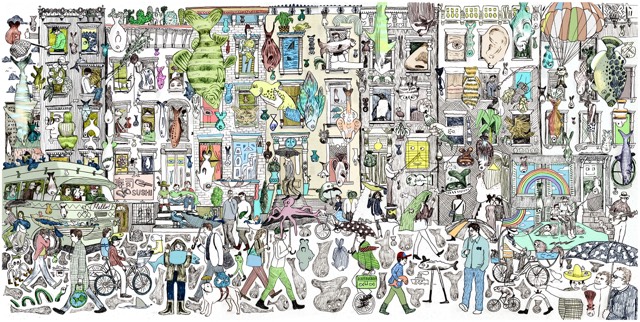

 facebook
 reddit
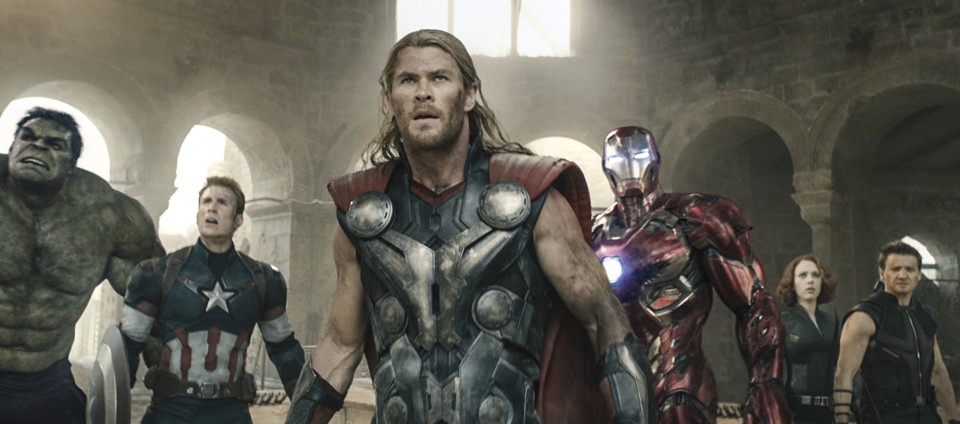


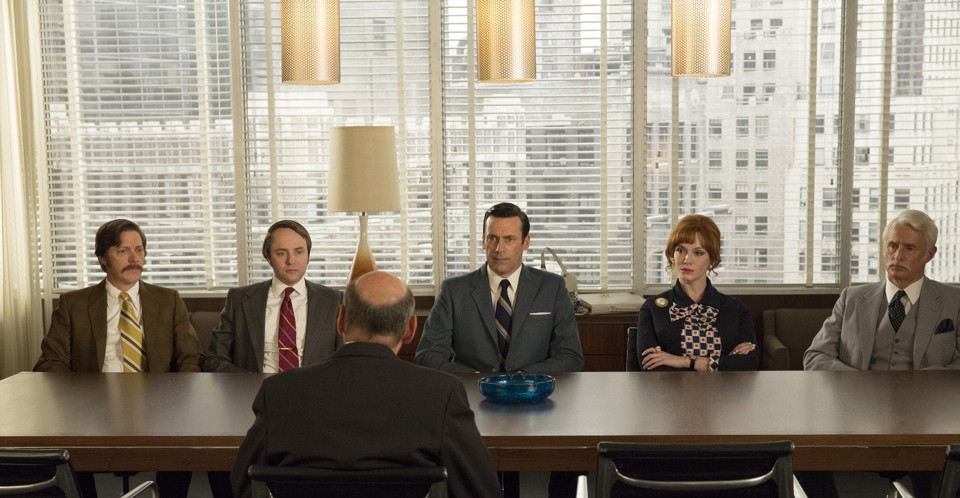



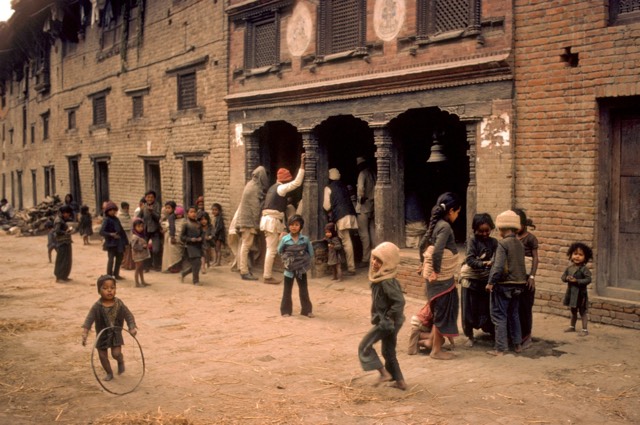
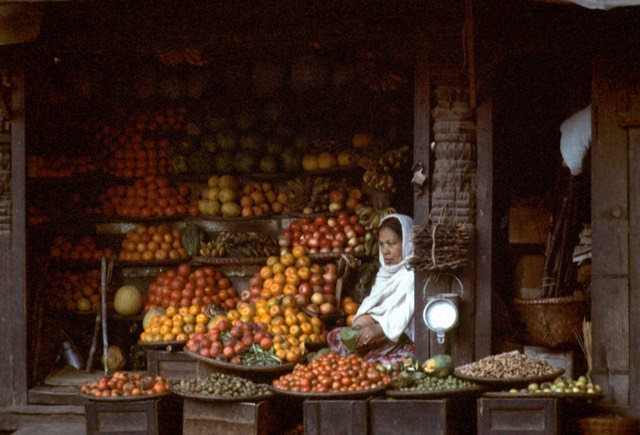
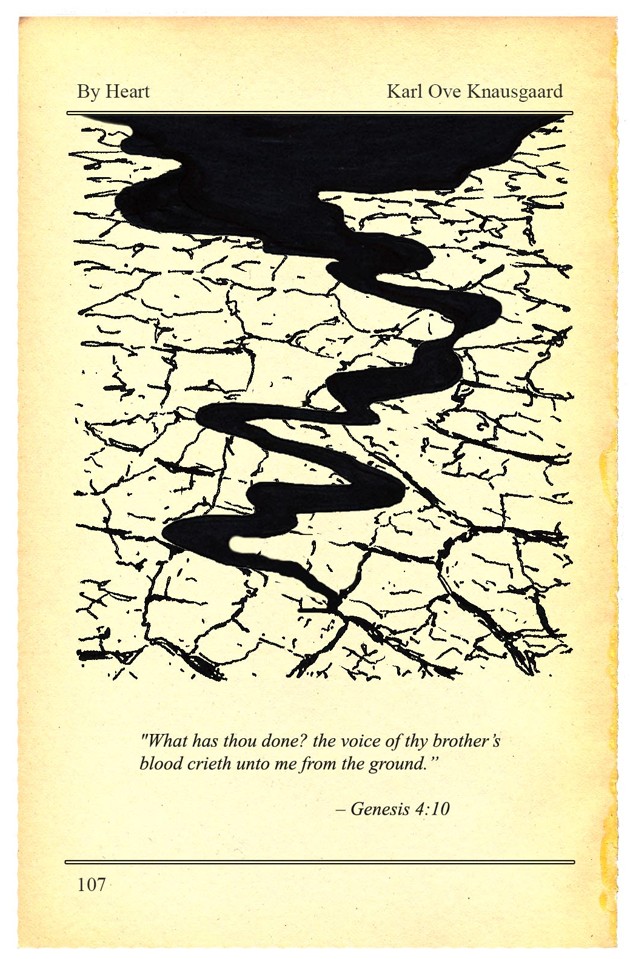


/cdn0.vox-cdn.com/uploads/chorus_asset/file/3634024/468316144.jpg)

