For a while new theory has been in short supply. So top plaudits are won by quality empirical work, but lots of people have good skills. There is thus a premium on a mix of clever ideas — often identification strategies — and access to quality data. Over time, let’s say that data become less scarce, as arguably has been the case in the field of history; for instance lots of economics researchers might have access to “Big Data.” Clever identification strategies won’t disappear, but they might become more commonplace.
We would then still need a standard for elevating some work as more important or higher quality than other work. Popularity of topic could play an increasingly large role over time, and that is how economics might become more trendy.
New entry for the Stanford Encyclopedia Of Philosophy. The first section, on “Core Fallacies”, is probably going to do the job for the general reader, but there is plenty more on the history and theory of fallacies. Useful reading in conjunction with anything on, for example, nudge theory and behavioural economics. Psychology tells us how mistakes are made; fallacy theory tells us what the mistakes are
We're knee-deep in summer movie season, and it's been a thrilling one for comic book fans. This year's biggest comic book film,Avengers: Age of Ultron, is already behind us, while Ant-Man and Fantastic Four are on tap for July and August, respectively. And just beyond those, tantalizing prospects like Captain America: Civil War and Batman v. Superman: Dawn of Justice loom on the horizon.
In the days leading up to Age of Ultron's May 1 release, Marvel supplied us with teaser after teaser and trailer after trailer. And once the movie debuted, it brought with it a final scene that's bound to shake up the Marvel Cinematic Universe. That's made the relative silence of late May and early June feel deafening.
Luckily, for fans of great superhero or comic book stories who are looking for their next hit, there are more options than what's on the silver screen. Here are 10 television shows, comic books, and animated features for you to stream, read, or watch until the next comic-based movie comes along:
Why it's worth checking out: Marvel's Daredevil, a co-venture with Netflix, is brooding, bloody, and haunting. The show's grit and gore set it apart from Marvel's other projects in that it really delves into human fragility within the framework of its hyper-violent, noir world. There's a vulnerability to Daredevil's characters — both its heroes and villains — that isn't present in Avengers: Age of Ultron, and it carries over into the show's kinetic fight scenes, where even our hero gets exhausted.
Perfect for: Someone who's been itching for Marvel to experiment with noir.
Where to find it: The first season of Daredevil — 13 episodes — is available on Netflix.
Why it's worth checking out: The Flash's best asset is that it's unabashedly fun. The CW series isn't afraid to be silly — and we're talking "it involves a psychic gorilla" levels of silly — in the face of so many fellow movies and television shows where everything is grounded in reality. It's more concerned with having fun and being fun than with being critically acclaimed.
Everything starts with the hero. Barry Allen is cut from a different pattern. He's a superhero who is happy and joyful. He's someone who is organically good, even with his own tragic backstory (involving the murder of his mother and his father's imprisonment for the crime). The Flash is infused with this joy and goodness, and its first season became a delight to watch.
Perfect for: Someone who prefers Guardians of the Galaxy to The Dark Knight.
Where to find it: The first season of The Flash is available on Hulu.
Why it's worth checking out: One of the more puzzling things about DC Comics and Warner Bros.' middling films (with the exception of some of Christopher Nolan's work) and the lack of excitement surrounding the Batman v. Superman trailer is that DC and Warner Bros. absolutely dominate Marvel in other geek genres like animation and video games. The animated featureJustice League: Flashpoint Paradox is a great example. The film is true to its challenging source material — a story where the Flash wakes up in a dystopian, completely messed-up reality where two of Earth's heroes are at war and Superman doesn't exist — and translates it to a weighty, pensive piece of art that even comic book neophytes can understand.
Perfect for: Someone who doesn't quite get why Superman and Batman will be fighting each other next year.
Why it's worth checking out: The Dark Knight Returns isn't Batman's first appearance in comic books, but it's the most epochal. Today, in large part due to Nolan's cinematic interpretation of the hero in films like The Dark Knight, Batman is seen as a dark, brooding antihero. Frank Miller's The Dark Knight Returns was the comic book that crystallized that image when it was published back in the '80s. Set in a dystopian future, The Dark Knight Returns imagines a world in which Superman is an agent of the government and crime is rampant. The series explores the idea of a hero going as dark as any villain. Fear, it argues, can be as inspiring as hope.
"I don't remember any covers with a zillion characters fighting with flame and smoke," Batman artist Greg Capullo told me at New York Comic-Con last year. "They're beautiful pieces of art. But they're there, and they're gone. They didn't live with me. The Dark Knight Returns is iconic. It sticks in my head because of its simplicity."
Perfect for: Someone who watched the aforementioned Justice League: Flashpoint Paradox but still doesn't quite get why Superman and Batman will be fighting each other next year.
Where to find it: The Dark Knight Returns is available as a digital comic and on Amazon.
Why it's worth checking out: Mad Max: Fury Road is this summer's biggest surprise, and one of the most riveting things about the film is the feminism in its bones. In that same vein, Kelly Sue DeConnick and Valentine De Landro's Bitch Planet features a more diverse and realized sense of the feminism and exploitation film tropes we find in Mad Max. DeConnick and De Landro's tale is a dystopian sci-fi space adventure. Noncompliant women who don't conform to the whims of a juiced-up patriarchy are sent to an interplanetary jail, and some are chosen to participate in a televised death match, an event meant to entertain the public.
"I also seem to be obsessed with that moment when our hero picks herself off the ground," DeConnick told me in an interview. "She's bloodied and battered, but she's not done yet. It's like I'm always writing to get to that moment."
Perfect for: Someone who wished Mad Max: Fury Road was called Imperator Furiosa: Fury Road.
Where to find it: Bitch Planet is available as a digital comic, on Amazon, and in stores.
Why it's worth checking out: The beauty of Mad Max: Fury Road is there are so many questions the film unapologetically does not answer. What ails Immortan Joe? How do people take baths? Where do Immortan Joe's wives come from? Who are those people in Max's flashbacks?
Some of these questions and many others will be answered in Vertigo's Mad Max: Fury Road: Nux & Immortan Joe comic book prequel, which aims to tell the story of Max and the rest of the gang of Fury Road and how things became the way they were in the film.
Perfect for: Someone who doesn't understand where all that shiny spray paint came from.
Where to find it: Mad Max: Fury Road: Nux & Immortan Joe is available as a digital comic and in stores.
Why it's worth checking out: By the time Marvel's first female-led movie, Captain Marvel, hits theaters in 2018, there will have been 19 Marvel movies centered on leading men or male-dominated superhero teams. That's a travesty. But everything is different in Marvel's comic books. Series like the female Thor and Ms. Marvel are big sellers, and the company has made an even bigger push as of late to get more women into the spotlight.
That effort has culminated in A-Force, a comic about an all-female superhero team composed of heavy hitters like She-Hulk, Captain Marvel, Storm, and Medusa. These women live in a place called Arcadia, where they make all the rules and call all the shots until one of their own makes a crucial mistake and exposes the fragile structure of this world and who's really in power. There's an anxious energy in this book, because you just know that Marvel's most powerful women won't go down without a fight.
Perfect for: Someone who would like to see the Scarlet Witch and Black Widow get their own spinoff movie.
Where to find it: A-Force is available as a digital comic and in stores.
Why it's worth checking out: Superheroes are often (sometimes literally) gods among men and women. We've seen this dynamic explored in several different ways, dealing with both morality and humanity; often, and particularly with the stories like those of Thor and Superman, our heroes are out there to prove they're just like you and me.
The Wicked + The Divine isn't interested in that notion. Created by Jamie McKelvie and Kieron Gillen, WicDiv is a story about gods living on a two-year prayer here on Earth. Once those two years are up, they die. So, like any god working against an expiration date, they become pop stars, enjoying the lavish life of fame and celebrity.
The story is as effortless as it is smart and chic — which is to say, immensely. What's more, it was recently announced that the comic book will be adapted into a television series.
Why it's worth checking out: Mark Millar's Jupiter franchise boasts two wildly different twists on the superhero narrative. Legacy, illustrated by artist Frank Quitely, is a dark, gothic tale of betrayal and power about the children of legendary superheroes who plot a bloody coup and have their sights set on strangling all the good from this world. It's a swirling, dark story with the faintest glimmer of hope.
Circle, drawn by artist Wilfredo Torres, is Legacy's inverted prequel — it lays down the foundation for the events we'll later see and glorifies the goodness of heroes, but also deals with the ugliness of human history. The story is less about action and more about the personal drama surrounding the parents in Legacy — they serve as a mirror image of Americans growing up in the 1950s and '60s.
It's utterly impossible that the details in Circle are anything like your relationship with your parents, yet the story feels strangely familiar because it delves into the universal idea that our parents will always be the most puzzling and well-known people in our lives.
Together, the two comics attempt to resolve a universal mystery of humanity: what's this weird thing we call family?
Perfect for: Someone who's going through Mad Men withdrawal and can't wait for Captain America: Civil War.
Where to find them: Jupiter's Legacy and Jupiter's Circle are available as digitalcomics and in stores.
With the women’s World Cup in full swing this week, The Atlantic has two pieces examining the differences that female soccer players face compared to their male counterparts. Arguing that soccer is a “feminist issue,” Maggie Mertens is frustrated that female players don’t get much attention from the mainstream media and feminist activists alike. Gwendolyn Oxenham, a former pro, hones in on the “unequal fortunes” of Brazilian superstars Neymar, a man who makes $15 million a year, and Marta, a woman struggling to even find a team without it folding soon after.
Mertens’s piece was the most contentious among Atlantic commenters. A key passage:
The thinking goes that if women’s sports were worthy of more coverage, they would receive it.But as [Perdue professor Cheryl Cooky] points out, a lot of our perceptions of how interesting women’s sports are come from the media itself. “Men’s sports are going to seem more exciting,” she says. “They have higher production values, higher-quality coverage, and higher-quality commentary ... When you watch women’s sports, and there are fewer camera angles, fewer cuts to shot, fewer instant replays, yeah, it’s going to seem to be a slower game, [and] it’s going to seem to be less exciting.”
I would have found this article more interesting if the author could have just conceded the obvious fact that elite female athletes are simply not equal to their male counterparts in terms of physical ability—kind of an important thing for an athlete, unlike in other professions. Look at any world record, or watch an NBA and WNBA game back-to-back. The difference is real and impossible to ignore. It’s just physiology.
To put it another way, who would have the advantage in any athletic competition you can think of: an elite female athlete or her identical twin who trained just as hard but also took testosterone injections from the age of 12?
TwoHatchet snarks, “Caitlyn Jenner has shown the world that women can compete at the very highest levels of sport and leave men in the dust.” Field Zhukov’s view:
Women’s sports that are identical to men’s sports—soccer and basketball, for example—will never be popular, because men are faster, stronger and more athletic. On the other hand, sports that highlight the different strengths of female athletes—tennis, gymnastics, ice skating—are popular. None of those are team sports, so there may be something there.
Tg297527 adds, “No one cares about men’s gymnastics and men’s figure skating.” TheMeInTeam responds to Field Zhukov:
I think you may be on to something about the difference with team sports. When the Olympics come around (winter and summer), I enjoy the women’s and men’s events pretty much equally. The women may be running/swimming/skiing slightly slower than their male counterparts, but I can’t really tell, and it’s just as exciting. For some reason, however, when it comes to team sports where I’m used to watching men, that slight difference in physical ability becomes glaringly obvious and I just can’t stay interested in the women.
One of the best soccer matches I ever saw, men or women, was Canada versus USA in the 2012 Olympics.
Canada’s Christine Sinclair put her team on her back and almost carried them into the Gold Medal match, only to be thwarted by questionable officiating. That game represented the beauty of athletic competition.
GeorgeOrwellGeorge points to a sport where relative female weakness is actually an asset for spectating:
I actually prefer watching women’s tennis. Men hit the ball so hard, particularly on the serve, that there’s less volleying and it’s less exciting to watch.
Likewise, Diozkouroi looks to another sport to argue that physical dominance isn’t everything:
If people only paid attention to the top performers, there would be no categories apart from “heavyweight” in sports like boxing. Floyd Mayweather can get easily beaten by a heavyweight, but he is the one who gets more money and attention in that sport.
And by my count, only 19 of the 50 “greatest boxers of all time” fought primarily as heavyweights, and likewise for only half of the “most popular of all time.” As vkg123 puts it, “People don't make stupid comparisons like Mike Tyson vs Manny Pacquiao, and it doesn't stop people from enjoying one or the other.” A retort from ksmugg:
That’s a fair point, but it’s generally one that’s distinct to individual competition instead of team sports. I’m curious if you or anyone else can provide an example in a team sport.
Maybe women’s volleyball? According to this study:
Women earn fewer quick points than men due to differences in arm strength, so digging becomes essential to victory for women. With the ball in play longer, staying alive determines the winner of a match.
You know how in men’s soccer, a strong wind is enough to knock a player over [and] they play-act like babies? The women don’t have time for that. According to a study, women fake injury half as much as men do. And when they are on the ground rolling around, they’re back up 30 seconds faster than men.
Commenter j r turns the debate toward equal pay and Mertens’s frustration that “female athletes have historically received very little attention from activists and advocates for gender equality”:
Somewhere in this world, there is the world’s greatest ultimate frisbee player and the world’s greatest lawn bowler. Chances are, you don't know their names and they probably don’t make much money. Why? Because not a lot of people are willing to pay to watch ultimate frisbee and lawn bowling.
For that matter, compare the salaries of Major League Soccer players to those playing in Europe’s La Liga or the English Premier League. The former get paid a lot less for the same reasons.
If the day comes when as many people want to pay to watch women’s soccer as want to watch men’s soccer, then female players will earn similar money. That’s it. End of story.
Another simple but strong argument from Ivan Lendl:
They are entertaining and inspirational to young women all over the world. For that reason, they have great value, and I think they are worthy of charitable help when teams get insolvent.
But let’s not pretend that there is some sexist conspiracy driving the pay discrepancy between Neymar and Marta. If she were able to compete on the same level as Neymar, she would, and she’d be compensated accordingly.
Oxenham’s article doesn’t really address why women’s soccer should be given charity by men’s organizations if it can’t survive on its own. If enough female fans can’t be bothered to get together and support women’s teams so they can remain solvent, why should men care?
If women want to support their own gender by becoming sport fanatics like the droves of idiot men, there is nothing stopping them. They appear to have other interests and that’s totally fine … isn’t feminism about doing whatever you as an individual want to do?
But Diane (DeeG) thinks the cards have been too stacked against female athletes:
After centuries of getting all the advantages over women in every aspect of life, of course men’s sport is more “popular.” As those advantages are starting to be shared on a more equal footing, more people are deciding that they like women’s sports.
Men’s and women’s soccer may be the same game, but they don't have to be played identically to be appreciated.
Fox Sports is banking on that sentiment, with this stirring ad:
I’m 100 percent in favor of equal opportunity and equal pay. But in the entertainment business (which is what sports is), there is inherently huge inequality based on what’s popular or not.
In another part of the entertainment business, pop music, there is more gender parity; women hold four of the top 10 slots for wealth among recording artists, including the #1 slot, which goes to Madonna. In the acting world, however, men sweep the top 10. Back to sports, tennis seems to be the only place of parity—five of the top 10 earners are women. But that causes Thurman Ulrich to complain:
The four Grand Slam tournaments pay women the same cash prize as it does for men, despite the fact that men have to play two more sets than women.
Cxt points to general disparities across the sports world:
The best track and field athletes don't make as much as most basketball players. The strongest men in the world and the toughest MMA fighters only make a fraction of the endorsement money of golfers like Tiger Woods or tennis players like Maria Sharapova. Baseball players make much more than football players, despite their sport having less chance of serious injury and a much longer playing life.
Yes, it sucks to be that talented yet not as financially rewarded, but that is the nature of spectator sports.
TwoHatchet tries to simplify things when it comes to sports and gender:
Mertens’s argument seems to be that women are equal to men and it’s only discrimination causing the disparity of results. The solution here is simple: abolish women’s soccer and open up men’s soccer to women. Now we can compare, person to person, how well each player performs and teams can be composed of the best players, both men and women.
Former Serie A side Perugia attempted to sign German international Birgit Prinz and Sweden striker Hanna Ljungberg in 2003, while Brazilian forward Marta has continually claimed she could cut it in a men’s league. Meanwhile, Mexican club Celaya actually announced it had signed El Tri’s Maribel Dominguez in 2004, but FIFA stepped in to veto the move, and [U.S. goalie Hope] Solo says it was wrong.
“It’s unfortunate that it wouldn’t be allowed by FIFA because I think as women, we need a place to play and there’s not always a lot of opportunities to become the best in the world, and if you look at the players who want to do it, they want to be the best in the world; the Martas, Maribel Dominguez, the Ljungbergs,” Solo said. “I think it should be allowed if it’s fair and if they deserve to be on the team. Not out of charity.”
Dr_Ads takes that notion of equality to a radical end:
If there were such a thing as an equality movement, as opposed to a feminist movement, there would be calls for the abolition of “men’s” and “women’s” sport. Gender is an arbitrary distinction, and it’s just as wrong to divide people by gender as it would be to have separate races for black sprinters and white sprinters to give the latter a chance of winning.
I’m opposed to the Paralympics for the same reason. Want people with disabilities to be treated identically to the able-bodied in society? Then stop making them a special case.
It’s the copycatting that is limiting female professional sports. I think it’s time the brains behind these feminist ambitions started inventing sports that women are particularly good at, ones that fit the female anatomy, physiology, and skill set. That is when the fun begins. Stop using male role models and male athletic archetypes to create meaning and legitimacy. Start making something new—that everyone will love.
Phil Heinricke simply wants skeptics of women’s soccer to give it a second look:
I asked some people if they intended to watch the World Cup. They all said hell no. But then someone turned on the TV and Germany was playing, and a young woman they were calling "Sausage" (real name Sasic) was kicking some tail. [Yesterday she led Germany to a 10-0 victory10-0 victory over Ivory Coast, the second-biggest in World Cup history:
The people watching the German game were impressed with the women’s ball handling skills, their teamwork and their propensity to always be in position. Three men sat there and watched the whole game.
Sasic and Marta aren’t the only talented female athletes. There is Debora, Beatriz Zaneratto, Andressa Alves, Thaisinha, young Byanca and the baby-faced Andressinha—and that’s just Brasil.
I’m a big fan who has always said that the problem is that people just don't want to watch the women, but I think if they at least gave them a chance, a lot of people would like it.
You can track the following month of World Cup matches here. For daily coverage, check out espnW and Screamer.
The Red Cross raised nearly half a billion dollars after the Haitian earthquake of 2010, claiming to be helping 4.5m Haitians, almost half the population. It didn’t happen. The charity built six permanent houses in the whole of Haiti. Most of its money went into planning and overheads, or was given to other charities. “They had a problem. And the problem was that they had absolutely no expertise”
The business model for most online publications is invasive surveillance. Journalists are central to the process. They make their money luring readers to websites where spyware is implanted. “For years, as a writer at Wired, I watched more companies put tracking cookies and scripts in every article I wrote. Unlike most of the people I worked with at Wired, I understood the implications of what we were doing”
I was asked about this recently, so I thought I would put down some basic thoughts. Note that mental illness is a major underlying issue behind both crime and unemployment. Federal, state, and local policies toward the mentally ill are highly complex, but here are a few points:
1. As is often the case in health care policy, my inclination is to fund research and development, in this case through the NIH and NSF, before worrying about improving coverage in extant programs. The long-term dynamic gains have the potential to outweigh the one-time static gains.
2. Medicaid offers a highly imperfect coverage of mental illness. Fine-tuning the coverage may well be a good idea, but perhaps first Medicaid needs to be put on a sounder footing. If you are a liberal this may mean federalizing Medicaid, and if you are a conservative this may mean block grants to the states for Medicaid experimentation. If we are simply asking which policy is better for the mentally ill, federalization is likely the answer, although that does not settle the broader debate as to which alternative would be better overall.
3. We could retool Obamacare mandates, and other health insurance default settings, to have more coverage for mental illness and less coverage for other health conditions. Both practical and “individual responsibility” arguments might point in that direction.
4. The deinstitutionalization of the 1980s has come in for a lot of criticism, but I remain a fan of that policy. I’m well aware of its connection to homelessness, and also how many mentally ill people have ended up in jail. Still, that change ended a kind of slavery for many, and if you oppose slavery you should oppose the previous policies, even if the transition brought some very large practical problems. Of course some of these people were lobotomized or otherwise treated coercively in addition to their involuntary confinement. In 1955 the institutionalized population peaked at about 500,000 and many of those were not voluntary admissions; a 2003 measure put that same population at only 50,000. I recommend this Samuel R. Bagenstos piece on the topic.
5. Further deregulation could boost telemedicine and also telepsychiatry; this would lower cost and is especially important for rural areas.
6. When the family of a mentally ill adult should be notified, given individual privacy rights, is worth further discussion. I don’t have a simple answer, here is some background.
7. The future debate will be all about wearables, including those that monitor the excited or violent states of mentally ill people. I am skeptical about this development, mostly for slippery slope reasons, but this will become a major policy issue, for criminals and high risk individuals too.
8. Crime rates have been falling since the 1980s. That suggests some very large gains are coming through peer effects. There is plenty of evidence that mentally ill people, to some extent, slot into their culture’s conception of what mental illness should consist of (mentally ill Malaysians for instance are more likely to “run amok,” because that is a salient concept there.) It seems that our culture is communicating an increasingly peaceful notion of what mental illness should consist of. This development should be studied further, as perhaps those gains can be extended or accelerated in some way.
In a story circulating widely now, Science journalist John Bohannon, explains how he planted a fake study in the news showing chocolate can help with weight loss. The study was really done, but “p-hacked” – they compared two diet groups (one including chocolate) to a control and measured lots of outcomes so at least one one would come out as statistically significant by chance, then published in a fee-for-publication journal and put out a press release about it, which several outlets picked up without asking any critical questions.
3 points:
-There may ethical questions around deliberately misleading the public, especially about health.
-None of the outlets who picked it up were particularly big names.
-Dean Karlan (in a very cursory glance), points out that they were already dieting and 1.5 oz of chocolate is very few calories, so having that outlet could have kept people from eating other sweets (as another study suggests). The findings were in weight loss, the area one would hypothesize, rather than other areas like sodium level, so the findings might actually be legit, which would be the greatest con of all. (h/t Everybody.)
Psychologist Michael Inzlicht says that researchers have to start being honest with themselves about cherry picking findings, starting with himself. He subjects his own results to three tests anybody can do: First a “p-curve” which checks your results against a pre-set rule to see if your findings are consistently too good (paper and calculator here). He did OK there, but fared worse on the Test for Insufficient Variance (TIVA) which involves converting p values to z-scores (explained here), and Replication Index (or R-index) which tries to determine the probability a finding can be replicated using power and frequency of success rates across a series of studies. However supporting Chris’ Drama Queen rule, Inzlicht wasn’t alone:
Uli Schimmack … also reanalyzed a set of psychological studies appearing in Science, finding that they achieved a painfully low R-index of 33.9%. These low values raise concerns about the empirical support for the underlying articles.
A mystery phone without many features is taking Ghana by storm, entirely by word of mouth, according to Quartz. It’s bulky, ugly and doesn’t work well, but its main feature is “power banking” – a huge battery that lets people save up power and charge their other devices during frequent outages (there’s a mobile banking joke in there somewhere).
NPR looks at Somali refugees who’ve spent the past 24 years in a refugee camp in Kenya (the subject of a forthcoming book by Ben Rawlence). A generation has grown up there with western-style education and job training, and under rules designed to promote gender equality.Rawlence points out that in many ways they look more like a middle class than those still in Somalia. A group of the refugees were recently taken on a U.N.-sponsored visit back to Somalia and were unimpressed, according to the story.
And, from Ian Bremmer, who titles this “Theory vs. Practice”:
Evolution, moral sentiments, and the welfare state: Many now maintain that multilevel selection created a sympathetic species with yearnings for social solidarity. Several evolutionary authors on the political left suggest that collectivist politics is an appropriate way to meet that yearning. Harrison Searles agrees on evolution and human nature, but faults them for neglecting Hayek’s charge of atavism: The modern polity and the ancestral band are worlds apart, rendering collectivist politics inappropriate and misguided. David Sloan Wilson, Robert Kadar, and Steve Roth respond, suggesting that new evolutionary paradigms promise to transcend old ideological categories.
Evidence of no problem, or a problem of no evidence? In 2009, Laura Langbein and Mark Yost published an empirical study of the relationship between same-sex marriage and social outcomes. Here Douglas Allen and Joseph Price replicate their investigation, insisting that conceptual problems and a lack of empirical power undermine any claim of evidence on outcomes. Langbein and Yost reply.
The progress of replication in economics: Maren Duvendack, Richard W. Palmer-Jones, and W. Robert Reed investigate all Web of Science-indexed economics journals with regard to matters concerning replication of research, including provision of the data and code necessary to make articles replicable and editorial openness to publishing replication studies. They explain the value of replication as well as the challenges, describe its history in economics, and report the results of their investigation, which included corresponding with journal editors.
A Beginner’s Guide to Esoteric Reading: Arthur Melzer describes techniques and devices used in esoteric writing.
Symposium:
Classical Liberalism in Econ, by Country (Part I): Authors from around the world tell us about their country’s culture of political economy, in particular the vitality of liberalism in the original political sense, historically and currently, with special attention to profession economics as practiced in academia, think tanks, and intellectual networks.
Ants — most are teeny creatures with brains smaller than pinheads — engineer traffic better than humans do. Ants never run into stop-and-go-traffic or gridlock on the trail. In fact, the more ants of one species there are on the road, the faster they go, according to new research.
Researchers from two German institutions — the University of Potsdam and the Martin Luther University of Halle-Wittenberg — found a nest of black meadow ants (Formica pratensis) in the woods of Saxony. The nest had four trunk trails leading to foraging areas, some of them 60 feet long. The researchers set up a camera that took time-lapse photography, and recorded the ants’ comings and goings.
…Oddly, the heavier the traffic, the faster the ants marched. Unlike humans driving cars, their velocity increased as their numbers did, and the trail widened as the ants spread out.
In essence ants vary the number of open lanes, but they have another trick as well:
“Ant vision is not that great, so I suspect that most of the information comes from tactile senses (antennas, legs). This means they are actually aware of not only the ant in front, but the ant behind as well,” he wrote in an e-mail. “That reduces the instability found in automobile highways, where drivers only know about the car in front.”
Driverless vehicles can of course in this regard be more like ants than humans.
Biographer talks about Nash’s journey through schizophrenia. He was in bad shape when he won his Nobel prize in 1994: “His clothes were mismatched. His front teeth were rotted down to the gums. He didn’t make eye contact”. But then he started “ageing out” of his illness. The Nobel, and the film A Beautiful Mind, lifted him. “He got his teeth fixed. He got a driver’s license. He had lunch most days with other mathematicians”
On the problems of constructing rule-based experiments involving human behaviour. The “large game” of life always outflanks the “small game” with rules. Participants in a role-playing game will bring their real-life moral and social instincts into the game; they know that they might meet again outside the game. “A sufficiently large market predicting an individual’s death is also, necessarily, an assassination market”
This week, in a much-anticipated sketch on her Comedy Central show, Amy Schumer staged a trial of Bill Cosby in “the court of public opinion.” Schumer—her character, at any rate—played the role of the defense. “Let’s remind ourselves what’s at stake here,” she argued to the jury. “If convicted, the next time you put on a rerun of The Cosby Show you may wince a little. Might feel a little pang. And none of us deserve that. We don’t deserve to feel that pang.”
Her conclusion? “We deserve to dance like no one’s watching, and watch like no one’s raping.”
Ooof. This is the kind of thing that gets Inside Amy Schumer referred to as “the most feminist show on television,” and her act in general called, in a phrase that reveals as much about her craft as about Schumer herself, “comedy with a message.” But while Schumer’s work is operating at the vanguard of popular comedy, it’s also in line with the work being done by her fellow performers: jokes that tend to treat humor not just as an end in itself, but as a vehicle for making a point. Watch like no one’s raping.
The stuff of late-night LOLs used to be quippy monologues, vapid celebrity interviews, Stupid Human Tricks both official and less so. It still is, to some extent. More often, though, TV comedy that self-consciously defines itself as “comedy”—the stuff that originally airs on Comedy Central and FXX and HBO, the stuff that is firmly rooted in traditions of sketch and standup—is taking on subjects like racism and sexism and inequality and issues including police brutality and trigger warnings and intersectional feminism and helicopter parenting and the end of men. Its jokes double as arguments. “Comedy with a message” may be vaguely ironic; it is also, increasingly, redundant.
So when Schumer, in a set that aired on her show, comments with purposeful nonchalance that “we’ve all been a little bit raped,” she may be making viewers laugh. But she is, much more importantly, making us squirm. She’s daring us to consider the definition of “rape,” and also the definition of another word that can be awkward in comedy and democracy alike: “we.” She’s making a point about inclusion and exclusion, about the individuality of experience, about the often flawed way we think about ourselves as a collective. This is comedy at only the most superficial level; what it is, really, is cultural criticism.
Comedians are acting not just as joke-tellers, but as truth-tellers—as guides through our cultural debates.
So is the work of Key and Peele, who make productive fun of racial politics. And of Abbi Jacobson and Ilana Glazer, who make fun of a culture that’s obsessed, at varying levels of ingenuousness, with authenticity. And of Sarah Silverman, who makes fun of religion. And of Patton Oswalt, who makes fun of civilization. And of Louis C.K., who makes fun of himself. And of Nick Kroll, who explored the deep cultural influences of reality TV. And of Stephen Colbert, who satirized the equally deep influences of partisan news networks. And of Jon Stewart and John Oliver and Larry Wilmore, who take the Roonian rant to its apotheosis, blurring whatever line there might be between “comedy” and “commentary.”
Which, on the one hand, puts the current crop of culturally influential comedians in league with pretty much any human who has ever, in the face of an awkward silence, decided to make a fart joke. The point of comedy has always been, on some level, a kind of productive subversion. Observational comedy, situational comedy, slapstick comedy, comedy that both enlightens and offends—these are forms of creative destruction, at their height and in their depths, and they’ve long allowed us to talk about things that taboos, or at the very least taste, might otherwise preclude. Long before Jon Stewart came along, there was Richard Pryor and Joan Rivers and George Carlin. There were people who used laughter as a lubricant for cultural conversations—to help us to talk about the things that needed to be talked about.
The difference now, though, is that comedians are doing their work not just in sweaty clubs or network variety shows or cable sitcoms, but also on the Internet. Wherever the jokes start—Comedy Central, The Tonight Show, Marc Maron’s garage—they will end up, eventually and probably immediately, living online. They will, at their best, go “really, insanely viral.” The frenzy to post a John Oliver rant after it airs on HBO has become a cliché at this point; its effect, though, is to create a kind of tentacular influence for an otherwise niche comedy show. Some people may watch Oliver’s stuff live, or DVRed; but most watch it while riding the bus, or waiting for a meeting, or eating a sad desk lunch, delivered via Facebook or Twitter or the Huffington Post. Most people watch Schumer’s stuff that way, too. And Wilmore’s. And Stewart’s. Comedy, like so much else in the culture, now exists largely of, by, and for the Internet.
Comedy, which relies on productive subversion, has long helped us to talk about the things we need to talk about.
Which is to say that there are two broad things happening right now—comedy with moral messaging, and comedy with mass attention—and their combined effect is this: Comedians have taken on the role of public intellectuals. They’re exploring and wrestling with important ideas. They’re sharing their conclusions with the rest of us. They’re providing fodder for discussion, not just of the minutiae of everyday experience, but of the biggest questions of the day. Amy Schumer on misogyny, Key and Peele on terrorism, Louis C.K. on parenting, Sarah Silverman on Rand Paul, John Oliver on FIFA … these are bits intended not just to help us escape from the realities of the world, but also, and more so, to help us understand them. Comedians are fashioning themselves not just as joke-tellers, but as truth-tellers—as intellectual and moral guides through the cultural debates of the moment.
Our comedic intellectuals, just like their counterparts in the academy, regularly debate among themselves (Oswalt on C.K., C.K. on Tracy Morgan, this week’s much-hyped roundtable of lady comics). But their most important function is to stimulate debates among the rest of us. They are adjuncts—to op-ed pages, to TV news programs, to periodicals and journals and book reviews, to the several institutions that have been self-consciously modeled as guardians of the national discourse. And we, for our part—“we,” the cultural and constitutional collective that Amy Schumer provokes us to define—allow them to be. As Mike Sacks, an editor at Vanity Fair and the author, most recently, of Poking a Dead Frog: Conversations with Today's Top Comedy Writers, told me: There’s a general feeling right now that “comedy can change people's opinions.”
The outrage over Trevor Noah took for granted a radical idea: that the new host of The Daily Show would have influence over the national soul.
That feeling has been around for a while. In 2009, Foreign Policy published a list of the world’s top 20 public intellectuals, among them Amartya Sen, Noam Chomsky, and Mario Vargas Llosa. It was telling that, when the magazine gave the public the opportunity to suggest a write-in addition to the official list, readers didn’t select an economist or a novelist or a philosopher for the honor. They selected Stephen Colbert.
Which is, all in all, a very good thing. While it’s hard to know why, precisely, comedy has taken an echelonic place in the culture—though it probably has something to do with the creation of YouTube and the invention of Facebook and the popularity of basic cable and the influence of Jon Stewart and the power of Karl Rove and the genius of Tina Fey and the rise of “p.c. culture” and auteur theory and Pareto distributions and all those dire predications about the end of the age of irony—the basic explanation is the same as the one that will explain most things when it comes to marketplaces of ideas: There was an unmet need. Recent years have been especially interesting, as “interesting times” go; the microcosmic comedy that was popular in the ‘90s—an observational strain that culminated in a show that proudly claimed to be “about nothing”—quickly became unfit for them. Gradually and then suddenly, the smug nihilism of Larry David and Adam Sandler and Carrot Top and that guy who smashed watermelons with comically oversized mallets came to seem not just out of place, but regressive.
Comedy ceased to be the province of angsty and possibly drug-addled white guys making jokes about their needy girlfriends and airplane food. It became (slightly) less exclusionary to women and minorities. It began to ask, and answer, the questions that newfound diversity will tend to bring up—questions about power dynamics and privilege and cultural authority.
As comedy began to do a better job of reflecting the world, it began, as well, to take on the responsibilities associated with that reflection. It began to recognize the fact that the long debate about the things comedy owes to its audiences and itself—the old “hey, I’m just making a joke” line of logic—can be partially resolved in the idea that nothing, ultimately, is “just a joke.” Humor has moral purpose. Humor has intellectual heft. Humor can change the world. We may well deserve, as Schumer said this week, to “watch like no one’s raping.” What she didn’t say, but what is clear from her comedy, is that jokes themselves have a way of getting us what we deserve.
It is what it is. What's done is done. My name is not my name. My name is my name.1 Derek Donahue found all of the tautologies from The Wire and collected them into one video:
These types of phrases characterize the immovable forces the characters feel govern their lives and actions: poverty, bureaucracy, addiction, institutional corruption, ethnicity, etc.
The juxtaposition of Vondas' "my name is not my name" from season two and "my name is my name" from Marlo in the final season is one of my favorite little moments in the show. Two men pursuing similar ends going about it in opposite ways.↩
This study asked students and adults in the United States why they find it OK to eat meat. The largest category used to justify their choice was that that it is “necessary” followed by the other three categories.
Typical comments used to justify eating meat include these 4Ns:
Unfortunately, “marginal effect” does not begin with an N, because that would probably be my preferred response alongside “nice”.
In terms of environmental degradation I see a strong argument for reducing meat consumption, but surely the marginal benefits of going to zero meat are small compared to reducing some other environmentally unsound behavior on the margin. Such as transatlantic flights or certain types of energy-intensive food or travel.
The zero meat move makes more sense from a behavioral perspective, where we recognize we are frail and impulsive creatures. Vegetarianism lets you draw a bright red line not to cross. Otherwise it’s easy for you to slip in the moment and eat that bacon. It’s possible that, in practice, vegetarianism is easier to stick to than reduced meat consumption, and so you could pre-commit yourself.
My alternative, unwitting solution was to marry someone who does not eat red meat and hence never cook it at home. A commitment device. Literally!
You can also get to zero meat if you object to raising animals for slaughter for moral reasons. This is a way of saying that the one’s marginal cost of going from zero to a little meat consumption is very high. But I don’t feel that way. I do favor more reasonable treatment of animals and try to buy such meat. I’d personally prefer an equilibrium where everyone chooses this, and/or it’s regulated, because I think that would make the choice cheaper and more easily available, and is probably the right thing to do.
Vegetarian readers: I await your comments or objections.
But the new app finally gives the boot to the hideous absolute justification of text that the Kindle's been rocking since 2007. The new layout engine justifies text more like print typesetting. Even if you max out the font size on the new Kindle app, it will keep the spacing between words even, intelligently hyphenating words and spreading them between lines as need may be.
The layout engine also contains some beautiful new kerning options. They're subtle, but once you see them, you can't unsee them: for example, the way that the top and bottom of a drop cap on the Kindle now perfectly lines up with the tops and bottoms of its neighboring lines. Like I said, it's a small detail, but one that even Apple's iBooks and Google Play Books doesn't manage to quite get right.
Huzzah! The company is still working through a backlog of converting titles to the new layout, so give it some time if the changes aren't showing up. (via nextdraft)
My first job abroad was helping to roll out rural Internet in India, by radio. It was 2001, the peak of the dot com boom, but before the ubiquity of mobile phones. Connecting remote villages in India to the Internet via radio waves was the great frontier, and I was hired to help roll it out and evaluate it.
Fifteen years later the idea of radio-based Internet seems quaint, but I recall Paul Samuelson telling one of the professors I worked for that he thought it was the most exciting idea he’d heard in years. Like I said, dot com boom. Unless you lived through it it’s hard to explain, but everybody was a little crazy when it came to the web those days.
The project was a debacle for more reasons I can recount in a blog post. A big one: relieving an information and communication constraint was not going to cause markets to surge or governments to become accountable. Even if that information mattered, any surge would come to a screeching halt with the dozen other greater constraints holding change back.
You could say I became a geek heretic. No longer would I believe that technology is the solution. It didn’t hurt that the stock market bubble was popping at the same time.
Many years later, I met Kentaro Toyama, a kindred spirit, but one who had gone to much further lengths and depths in his fervor for and against technology in development. The onetime director of Microsoft Research India, he’s just released his book, Geek Heresy: Rescuing Social Change from the Cult of Technology:
For twelve years I worked at Microsoft, where, like every other gizmo-happy technologist, I unconsciously embraced a peculiar paradox. It revealed itself in the most innocuous things that the company said. At corporate gatherings, executives would tell us, “You are our greatest asset!” But in their marketing, they would tell customers, “Our technology is your greatest asset!” In other words, what matters most to the company is capable people, but what should matter to the rest of the world is new technology. Somehow what was best for us and what was best for others were two different things.
This book is about this subtle contradiction and its outsize consequences. I explore how a misunderstanding about technology’s role in society has infected us–not just the tech industry, but global civilization as a whole–and how it confuses our attempts to address the world’s persistent
social problems. Th e confusion expresses itself as Silicon Valley executives who evangelize cutting-edge technologies at work but send their children to Waldorf schools that ban electronics. Or as a government that spies on its citizens’ emails while promoting the Internet abroad as a bulwark of human rights.
One of the ideas in the book is that technology takes us only as far as our capabilities. A nice quote from Bill Gates sums it up:
The first rule of any technology used in a business is that automation applied to an
efficient operation will magnify the efficiency. The second is that automation applied to an inefficient operation will magnify the inefficiency.”
If you find yourself even remotely optimistic about technology and development, you should read this book.
"The Culture of Poverty”, published in 1966 (pdf), was hugely influential, persuading many policy makers that children from low-income families are destined for lives of “criminality, joblessness, and poverty” because they exist in enclaves characterised by dysfunctional beliefs and practices. Thankfully, this fatalistic view has since been largely refuted and attention has turned to ways to help poor children, including giving them access to books, good teachers and stable environments.
Now a review from the University of Massachusetts has highlighted a different way that poverty can leave a lasting impression on children: by altering their psychological states in ways that shape their future. This sounds like a bleak picture, but the review urges the situation is one we can combat.
Authors Amy Heberle and Alice Carter point out that adults belonging to a disadvantaged group are vulnerable to a pair of effects: higher levels of stress when their low status is made clear to them, termed status anxiety; and underperformance on a task when reminded that their social group is stereotypically poor at the task, termed stereotype threat. If these phenomena apply to young children, as Heberle and Carter propose, then even if they have a stable, stress-free family life, poor kids are likely to generate their own stress and underperform simply through awareness of their own in-poverty status.
For this to be the case, young children would need to possess social categories and understand stereotypical beliefs. It appears they do. The review explains how, from the age of five, children in Western countries have a handle on the category of "poor people", and are able to describe it coherently. Interestingly, middle income children are likely to use "dirty", "mean", and other stereotypes in their descriptions, whereas poorer children are more likely to describe how poor people feel, suggesting greater empathy and an awareness that they lie within or close to that group.
In terms of stereotypical beliefs, children from first grade (aged six to seven) onwards endorse the belief that poor kids do worse in school. Moreover, there is evidence from a single study that children believe that although poorer children have a similarly broad range of ambitions to that of other children, less than a quarter of these dreams would be achieved, whereas non-poor children should achieve the majority of theirs.
For poor children to be burdened by stereotype threat, they would also need to be conscious that others might assign them to a stereotypical category. Here the evidence is thinner, but we know that poor kids who say they would prefer poor friends give reasons including “they wouldn’t judge you on how you look, you talk, and the way you were.”
Heberle and Carter emphasise that more research is needed to establish exactly when children begin to experience status anxiety and stereotype threat. They urge far more work on the under-5s (children begin drawing social categories and stereotypes by the age of two), which would require the use of non-verbal techniques (e.g. preferential looking) in place of questions and conversation. They predict such research will show that social class and stereotypes fall into place by age three, very early in a child’s sense-making of the world.
If these mechanisms do have an impact, it would explain why researchers have struggled to establish a causal link between inequality and health outcomes at a personal level, even though we know more equal nations have better health. At least in developed nations, it may be that the harm comes not so much from lack of absolute material wealth but from the psychological mechanisms triggered by comparative poverty. These mechanisms might even be a contributing factor in the recent finding that 12-13 year olds from low-income families have thinner cortices in brain regions associated with academic performance.
If Heberle and Carter are right, then growing up poor does throw up psychological obstacles to healthy functioning. But these are issues that teachers and families can challenge by discussing and countering negative beliefs about poverty with their children, and that policy-makers can tackle too. Even innocuous, discretionary costs, such as a museum trip fee, can be too much for a stretched family budget, creating separation between poorer children and their peers. Recognising this, societies can try harder to lessen these burdens.
_________________________________
Heberle, A., & Carter, A. (2015). Cognitive Aspects of Young Children’s Experience of Economic Disadvantage. Psychological Bulletin DOI: 10.1037/bul0000010
Most people who read health journalism with a critical eye would say it's in bad shape. For evidence, look no further than your local newspaper (if one still exists) or open your favorite website and learn about "the 10 ways to bust your belly fat for good." Coffee will help you live longer on Monday and kill you quicker by the weekend.
It is often assumed that this state of affairs is linked to the collapse of media as we knew it. Gone are the days when science desks were staples of newsrooms and journalists had time to read the studies that they reported on or call their best sources. Those pseudoscientific examples of health journalism, the argument goes, are nothing more than side effects of a traditional media that has fallen ill. The oft-cited causes of the disease: digital upheaval, a decline in advertising revenue, and the death knell of global financial crisis.
The news business can be gloomy but the prognosis for health reporting matters for three reasons. First, people barely follow their doctor's prescriptions, yet they will bet their health and dollars on whatever miracle cure is being promoted in the media. This is as true for Dr. Oz's weight-loss wonders in America as it is for cricket players who promote the polio vaccine in Pakistan.
Second, decision-makers, like politicians, policymakers, and even doctors, rely on journalists to tell them what's new and important in the world of medicine and health research. When journalists get it wrong, their work can have a harmful, reverberating impact.
Third, health care is a business like any other and it needs to be kept accountable. The fourth estate, it should be clear by now, is not only a pillar of a functioning democracy; it's a pillar of public health.
Still, the idea that health journalism is at its end stages is no longer true. We are in the midst of a journalism revolution, and if harnessed for public health, the press can have a greater positive impact than ever before. Web-based publications canuse the endless space afforded by the internet to explain the news in a more nuanced and research-driven manner than print media — with its limited real estate — ever could. Stories link back to primary sources and studies so that readers can immediately verify or follow up as part of their news-consuming experience.
At Vox, we link news updates in storystreams so audiences can see how reporting developed over time. Card stacks help answer readers' most basic questions so they have more entry points to important stories. We are no longer confined by the limits of daily print deadlines; instead, we post quickly and develop our coverage as we learn more. W hen you think about online news this way, anxieties about too much speed and reactivity dissipate. Instead, journalists can now report the news and new research as they were meant to — in an iterative and contextualized manner that actually reflects current events and science as they evolve.
The digital revolution in media has also given rise to a cadre of science-oriented blogs like Retraction Watch, Science-Based Medicine, and Bad Science. They publish more frequently than traditional beat reporters, correcting the record, illuminating health research, and holding opinion leaders or decision-makers to account. In addition to speaking directly to their sizable audiences, their work is picked up by mainstream media or they are called upon as sources, elevating the discourse about science along the way.
Many of these bloggers came from academia and in the past would have never had a voice beyond the Ivory Tower. Now, they do, as the gap between research and journalism shrinks.
This new direction includes reporting on and using "big data" for journalism. Every day, the amount of data we produce grows, and jour- nalists have more at their disposal to learn about themselves and the world. We can also measure the scope and impact of our work more eas- ily and precisely than we ever could previously. We can quantify which health topics we reported on, which ones we ignored, and how that com- pares with other important factors such as public investment in research and disease burden.
With potential come pitfalls. More information means more bad information. Big data cannot replace old-fashioned journalistic inquiry. But in this time of media transition, health journalists need to keep their eyes on the possibilities. We need to remember that, whether we like it or not, our stories are often used as medicine by readers. We need to publish with the care and deliberateness of a doctor writing a prescription and use all the new tools at our disposal to make sure it's a prescription that will actually help. Billions of people are counting on us.
“Colonel” is pronounced just like “kernel.” How did this happen? From borrowing the same word from two different places. In the 1500s, English borrowed a bunch of military vocabulary from French, words like cavalerie, infanterie, citadelle, canon, and also, coronel. The French had borrowed them from the Italians, then the reigning experts in the art of war, but in doing so, had changed colonello to coronel.
Why did they do that? A common process called dissimilation—when two instances of the same sound occur close to each other in a word, people tend to change one of the instances to something else. Here, the first “l” was changed to “r.” The opposite process happened with the Latin word peregrinus (pilgrim), when the first “r” was changed to an “l” (now it’s peregrino in Spanish and Pellegrino in Italian. English inherited the “l” version in pilgrim.)
After the dissimilated French coronel made its way into English, late 16th century scholars started producing English translations of Italian military treatises. Under the influence of the originals, people started spelling it “colonel.” By the middle of the 17th century, the spelling had standardized to the “l” version, but the “r” pronunciation was still popular (it later lost a syllable, turning kor-o-nel to ker-nel). Both pronunciations were in play for a while, and adding to the confusion was the mistaken idea that “coronel” was etymologically related to “crown”—a colonel was sometimes translated as “crowner” in English. In fact, the root is colonna, Italian for column.
Meanwhile, French switched back to “colonel,” in both spelling and pronunciation. English throws its shoulders back, puts its hands on its hips and asks, how boring is that?
The classical MU [differential marginal utility of money] argument has, in my view, been moderated by the findings of behavioral economics, namely loss-aversion. Taking from the higher-incomes to give it to the lower incomes may be negative utility as the higher incomes are valuing their loss at an exaggerated rate (it’s a loss), while the lower income recipients under value it.
Many on the Left are too quick to grab on to the findings of behavioral economics as a critique of neoclassical economics, but while they often do point away from simplistic free-market views, they do not necessarily point towards left-wing solutions. They are just as likely to point to non-market conservative views.
For example, isn’t it another consequence of the asymmetry of the utility function with respect to the status quo (loss aversion) that social mobility destroys utility? I mean, if the tide is lifting all boats, then you can argue that it’s still better for everyone (the libertarian view), but if your utility function is heavily rank-based (a standard left-wing view) and you accept loss-aversion from the behavioral literature, then social mobility is suspect from an utility point-of-view.
This sounds shockingly old-school conservative when we discuss our own societies (“why should the children of the poor compete with my kids for a place in a good university? they have lower expectations, after all, State U is a step up for them. My kids, on the other hand, would be crushed if they had to go to their safety school”), but is quite acceptable when discussing international inequalities (“it doesn’t morally matter that people in Mexico have much less material wealth, their society has lower expectations”).
I’ve been reading your blog for years and it remains my favorite. I am an attorney planning to travel for 1-2 months in Eastern/Northern Asia and Europe this fall before starting work at a law firm. Since you are so widely traveled, I would love to read a post listing the most memorable places you’ve traveled or travel experiences you’ve had.
An answer to that could fill many books, but here is a simple rule to start: follow the per capita gdp. Perhaps my favorite travel experience of all time is Tokyo, but more generally I say master the area lying between London, Paris, Berlin, Rome, and Madrid, give or take. There are so many high quality sights and experiences to be had there you can chunk it many different ways.
If you wish to visit the United States, specialize in the eastern seaboard, Chicago, but most of all southern Utah down to the northern rim of the Grand Canyon, much better than the southern rim but book in advance. That latter part of the country has perhaps the world’s most compelling natural beauty, plus a good look at real American culture along the way. For all its fame, it remains oddly under-visited (thank goodness). Toss in San Francisco for good measure, and then drive through some godforsaken parts for a few days, the worse the better.
For the emerging economies, I say Beijing and Mumbai are good places to start, how can you not wish to be introduced to a country of a billion people or more? Mexico City is extremely underrated, especially if you live nearby in North America, just don’t expect English to be spoken. By the way, it is safer than you might think. Then spend some serious time in the countryside, almost any safe (or unsafe) emerging economy can serve this function.
If you haven’t heard about the article, the apparent fraud, and the aftermath, follow the links. The duped coauthor, Don Green, speaks to New York Magazine here. It’s a great interview.
My view: Asking what social science should learn is like asking how we reform corporate governance after Apple’s accountant steals $2 million. After the audit firm caught him.
Actually, paying attention to such fraud is a harmful distraction. This kind of blatant fraud is rare. What concerns me is that every other paper, as far as I’m concerned, massages its data until it fits a nice story. Those that don’t are less likely to get published in the best journals. This is true of everything from ethnography to experiments.
According to my “drama queen” rule, the journal Science is worse than some. The rule is simple: if a journal issues press releases and embargoes work for the biggest news splash, take it less seriously. Gratefully political science and economics journals do not do this.
Some other rules of thumb I use: Real data never look perfect. Large results are usually wrong. And scholars who have big splashy result after splashy result have a huge file drawer full of papers with null results. Discount their work.
But saying we shouldn’t learn much from this episode doesn’t mean we learn nothing at all. Here are a few points I take away:
The production of knowledge is changing, with teams of researchers on bigger projects. We all have to trust our coauthors not to make mistakes or be sloppy. Probably we all trust a little too much, and are too lazy in checking each others work. Especially work by our least experienced coauthors.
Social science probably needs to move to a slightly lower “trust equilibrium” to do good work, even if that means fewer projects and findings.
This balance is going to be trickiest for the senior scholars who foster dozens of studies and students. The people who do this are delivering a huge good to the world by apprenticing so many people, and producing so many great social scientists. But it comes with risks. I don’t know the right balance.
Fields and methods that are more transparent will get bitten by more discoveries of malfeasance. Do not penalize them for this, or you mess up incentives even more.
I have heard snide remarks about field experiments over this incident. The virtue of experimental work is that there are strong norms of describing replicable methods, and sharing data and code. Arguably this makes it easier to discover problems than with ethnography or observational data. Indeed it did, in just weeks.
The conversation worth having is how norms of data sharing and replicability can be extended to all kinds of empirical work.
This episode reinforces what I tell my students: your reputation for careful, conscientious work is everything in this business.
Don’t undermine it by hiding your study’s weaknesses, massaging results, or keeping null results in the file drawer. Even if the journals penalize the current paper, your reputation will be enhanced, because people notice.
In the interests of full disclosure, I have some biases: I run lots of field experiments; foster grad student coauthors; consider Don Green a friend, colleague and mentor; and (last but not least) stole $2 million from Apple but didn’t get caught.
We have entered a new, unexpected landscape. Truth is not typeface dependent, but a typeface can subtly influence us to believe that a sentence is true. Could it swing an election? Induce us to buy a new dinette set? Change some of our most deeply held and cherished beliefs? Indeed, we may be at the mercy of typefaces in ways that we are only dimly beginning to recognize. An effect — subtle, almost indiscernible, but irrefutablythere. (“Mommy, Mommy, the typeface made me do it.”)
For every thousand respondents to the Times quiz, nearly five more people agreed with Deutsch’s statement when written in Baskerville’s typeface than they did when they read it in Helvetica. A typeface that nudges (to use the vernacular of experimental psychology) us to uncritical belief? Did Baskerville, despite his opposition to the irrationalities of religion, create a typeface that has a religious pull?
While we are on the subject of transparency of methods, and sharing of data and code: has anyone replicated this? Getting the data and scrutinizing it strikes me as a great term paper for a PhD student.
“Very possibly the greatest war story ever published in Esquire“, says Esquire — and why stop there; Michael Herr’s reports on America’s war in Vietnam, compiled later as Dispatches, are some of the greatest war stories of all time. “We are not really a particularly brutal people, certainly no more brutal now than we’ve been in other wars, but our machine is devastating. And versatile. It can do almost everything but stop”
The campaign to roll back mass National Security Agency surveillance has reached a critical point. Section 215 of the Patriot Act, the supposed legal justification for the NSA's big phone records snooping program, is set to expire on June 1. There's a huge fight in Congress over whether it should be reauthorized, replaced with a new law, or simply just left to die.
Edward Snowden, the leaker who revealed the NSA program in the first place, has some pretty strong feelings about all of this. On May 21, he did a Q&A session on Reddit alongside the American Civil Liberties Union's Jameel Jaffer. The discussion was an extended, impassioned, and sometimes surprisingly funny case against the American surveillance state. It's also a window into Snowden's really intense online fan club.
Here are nine of the most informative answers from the Q&A.
1) What Snowden would say to people inside the CIA
Chiwebdevjsx: My sister works for a three letter agency and whenever I try to have a conversations with her about [surveillance], her reply is always, "if you knew what we knew on the inside you'd know it was different"... What would be your approach to talking with her about the dangers of mass data collection?
Edward Snowden: I think the central issue is to point out that regardless of the results, the ends (preventing a crime) do not justify the means (violating the rights of the millions whose private records are unconstitutionally seized and analyzed).
Some might say "I don't care if they violate my privacy; I've got nothing to hide." Help them understand that they are misunderstanding the fundamental nature of human rights. Nobody needs to justify why they "need" a right: the burden of justification falls on the one seeking to infringe upon the right. But even if they did, you can't give away the rights of others because they're not useful to you.
2) Why everyone should #StandWithRand
Masshamacide: What're your thoughts on Rand Paul's filibuster against the renewal of the Patriot Act?
Edward Snowden: It represents a sea change from a few years ago, when intrusive new surveillance laws were passed without any kind of meaningful opposition or debate. Whatever you think about Rand Paul or his politics, it's important to remember that when he took the floor to say "No" to any length of reauthorization of the Patriot Act, he was speaking for the majority of Americans — more than 60% of whom want to see this kind of mass surveillance reformed or ended.
3) Who really runs American politics
Legionof7: Do you think that a majority of American citizens care enough [about surveillance] that they will call Congress?
Edward Snowden: We know from very recent, non-partisan polling that Americans (and everyone else around the world) care tremendously about mass surveillance. The more central question, from my perspective, is "why don't lawmakers seem to care?"
The recent Princeton Study on politicians' responsiveness to the policy preferences of different sections of society [says that] of all groups expressing a policy preference within society, the views of the public at large are given the very least weight, whereas those of economic elites (think bankers, lobbyists, and the people on the Board of Directors at defense contracting companies) exercise more than ten times as much influence on what laws get passed — and what laws don't.
4) John Oliver's penis
Noahfischel: During the interview with John Oliver, was that really a picture of his junk in that folder?
Edward Snowden: ( ͡° ͜ʖ ͡°) [ed. note: click the link]
5) Can mass surveillance really be stopped?
Tomcat1108: Even if section 215 is not renewed, do you believe that the NSA/ US government will still accomplish phone surveillance without approval and in secret?
Edward Snowden: There are always reasons to be concerned that regardless of the laws passed, some agencies in government (FBI, NSA, CIA, and DEA, for example, have flouted laws in the past) will misconstrue the intent of Congress in passing limiting laws — or simply disregard them totally...However, that's no excuse for the public or Congress to turn a blind eye to unlawful or immoral operations — and the kind of mass surveillance happening under Section 215 of the Patriot Act right now is very much unlawful.
6) The creepy surveillance that isn't just phone records
Courtiebabe420: What is the next program you'd like to see the USA end in the mass surveillance system?
Jameel Jaffer: The NSA's call-records program is only the tip of the iceberg when it comes to dragnet surveillance by the U.S. government. For example, the NSA is copying and searching through vast quantities of internet communications as they transit the internet backbone under a law known as the FISA Amendments Act. The surveillance affects virtually every American who uses the Internet to connect with people overseas —and many who do little more than email their friends or family or browse the web.
7) How to send messages if you don't want to be snooped on
Edjca: What do you think about the rise of encrypted messaging apps like Threema and Bleep by Bittorrent? Which (if any) would you recommend?
Edward Snowden: Signal for iOS, Redphone/TextSecure for Android.
Nonamemini: Do you ever see yourself living back in the United States one day? I hope so!
Edward Snowden: Me too. The White House has been working on that petition for a couple years, now, and the courts have finally confirmed that the 2013 revelations revealed unlawful activity on the part of the government. Maybe they'll surprise us.
In his new book The Alliance, Reid Hoffman argues that the relationship between employers and employees is built on "a dishonest conversation."
Hoffman would know. As co-founder and executive chairman of LinkedIn, he sits atop the largest, most data-rich hiring platform the world has ever seen. As a venture capitalist who made early investments in everything from Facebook to Airbnb, he's helped some of the era's most successful companies grow.
And now he wants both workers and employers to begin having honest conversations with one another — conversations that admit employment isn't for life, that loyalty only lasts so long as it coincides with self-interest, and that the relationship doesn't have to end when the worker leaves.
1) The biggest lie that employers tell employees
"The biggest lie is that the employment relationship is like family," Hoffman says.
He goes on to describe two versions of the lie. "One is where the employer is actually deluding themselves." Employers may want to believe their workplace really is like a family, and, in that moment, they may convince themselves it actually is like a family.
The other version of the lie comes because the employer wants the employee to believe it. "They really want the employee to be loyal to the company," Hoffman continues. "That's when it gets deceptive."
But the employer-employee relationship isn't like a family. "You don't fire your kid because of bad grades," Hoffman says.
2) The biggest lie employees tell employers
But it's not just employers who lie. Prospective employees do, too.
"They know that employers want loyalty," Hoffman says. "They know they want to hear, 'Oh, I plan on working here for the rest of my career.' But most employees recognize that career progression probably requires eventually moving to another company. But that never comes up."
This is core to Hoffman's idea that both employers and employees should look at a particular job less as a lifetime contract and more as a "tour of duty" — a limited-time engagement meant to achieve specific ends on both sides. But until employers stop pretending employees are family and employees stop pretending their aim is a job they'll never leave, neither side can have that conversation.
3) The most unusual question LinkedIn asks prospective hires
Photo by Justin Sullivan/Getty Images
LinkedIn is an organization dedicated to helping other companies hire talent. It has access to more hiring data than arguably any other corporation on earth. So I asked Hoffman: how do they hire? What do they ask that most companies don't?
"All of our managers and recruiters ask about how working here will be transformational to your career," Hoffman says. "For example, our SVP of engineering, Kevin Scott, will ask, 'What's the next job that you would like to have post-LinkedIn?' That's not because we don't want our stars to stay at LinkedIn for a long time. It's because we're so committed to the idea that we're going to be transformative in the prospective employee's career. So we need to know, what's the next job after this? What do you want it to be?"
But don't job candidates find that weird?
"No," Hoffman says. "It's framed as, 'We're planning on having a huge impact in your career if you're working here.' And they find that liberating. It brings some honesty to what is otherwise kind of a collective self-deception dance. And it also means that when they leave, we still care about them."
"I was at an Airbnb board meeting and I ran into two former LinkedIn employees who walked up to me and said, 'Hey, how's it going? I'm working here now. I'd love to tell you about some of the stuff that I'm learning.' They know the way that we operate, is not, 'Oh, you've left LinkedIn, so you're no longer part of our tribe.' We continue to be allies. We can continue to try to help each other. That lets them come up and start telling me things about things could be really helpful to LinkedIn."
Want more Vox in your inbox? Sign up for Vox Sentences!
4) Employers put too much weight on interviews and too little weight on references
A key part of every hiring process I've ever been a part of — both as the applicant and as the employer — is the job interview. And I've never felt very good about it. Don't job interviews bias you toward gregariousness? Is there any real reason to believe shy employees perform worse than extroverted ones?
"I think you can learn some useful things from an interview," Hoffman says. "You just have to be clear about what it is you're actually trying to learn. I think you can learn about chemistry and fit. I think you can learn about a person's immediate response to a challenge. But if you told me, 'Pick one — you could either get references or an interview,' I would pick references every day of the week.
"I advise all the companies that I affiliate with to take reference checking very seriously. References actually tell you how people work, what their work ethic is. That is a critical piece of data that cannot be put aside or done casually. Frequently employers are so casual about references they either a) don't check them, or b) only check the ones the prospective candidate gives them. In fact, you want both those references and others."
5) The case for hiring your friends
Photo by Justin Sullivan/Getty Images
Remember Web 2.0?
Hoffman's former chief of staff, Ben Casnocha, wrote an interesting piece on leadership lessons he's learned from Hoffman. This one in particular surprised me: "If you’re choosing between working with someone who’s a trusted friend and a 7 out of 10 on competence, versus a stranger who’s a 9 out of 10 on competence, who should you pick? Answer: if the trusted friend is a fast learner, pick the trusted friend."
The normal management guidance is don't hire your friends. According to Nick Bilton's history of Twitter, when Evan Williams asked legendary CEO coach Bill Campbell what the worst mistake he could make is, Campbell replied: "Hire your fucking friends!" So I asked Hoffman why he believes in hiring friends.
"You need to handle it well," Hoffman replied. "If I get to the point where I'm hiring a friend, I say, 'Look. Here's how we keep the friendship and the work stuff different. Here's how I'm going to treat you a little differently as a friend. Here's how you're going to act a little differently as a friend.' I'm going to be clear about the fact that I'm not going to privilege them at all in the continuum to the job and promotions and bonuses. All of that will be done in a very fair way.
"On the other hand, I will actually, as a friend, go out of my way to invest even more energy than I normally do to make this work. I'm committing to put in a little bit more energy. In return, one thing is I want you, as a friend, to do the same. The benefit you get from this is both a) a higher level of trust, and b) you get to work with people that you actually really like to spend time with. Which usually facilitates a generally positive working relationship anyway."
6) How philosophy training makes you a better investor
Hoffman's background isn't typical. He didn't study computer science or get an MBA. He studied philosophy. And he thinks he's better off for it.
"One of the things that philosophy is very helpful on is how to think pretty precisely about arguments, and an investment thesis is fundamentally an argument. Part of philosophical training is making you really understand how good an argument is and how to think through the alternatives. Philosophy is really good at posing the question, 'If the universe were such that this data would be different or the universe was such that this framework would be wrong, what happens to the argument then?' Questioning those premises really helps you figure out why someone smart might actually hold a different point of view.
"We live in a probabilistic universe, and we tend to think in determinist ways. If A is data-driven and I think I have that data, how certain am I that I have that data? What could I discover that might actually tell me that that data is formulated wrongly? When you dig into it, most of your arguments are actually probabilistic. They're not certain, even when you have data. You're really trying to get a sense of whether you have a reasonable bet on the probability."
Correction: Ben Casnocha is Hoffman's former chief of staff, not his current one. The text has been updated to reflect this fact.
WATCH: How a teen solved a Rubik's Cube in 5.25 seconds



/cdn0.vox-cdn.com/uploads/chorus_asset/file/2912768/marve_pds_002_h.0.jpg)
/cdn0.vox-cdn.com/uploads/chorus_asset/file/2328022/MV5BMjE1Mjc3MjIzNV5BMl5BanBnXkFtZTgwMTg3NzM4MjE_._V1__SX1121_SY648_.0.jpg)
/cdn0.vox-cdn.com/uploads/chorus_asset/file/3774174/MV5BMjI0MDIwMzk3NV5BMl5BanBnXkFtZTgwNDgxNTEwMDE_._V1__SX1345_SY705_.0.jpg)
/cdn0.vox-cdn.com/uploads/chorus_asset/file/3418912/Screen_Shot_2015-02-17_at_1.53.12_PM.0.png)
/cdn0.vox-cdn.com/uploads/chorus_asset/file/2532168/Screen_Shot_2014-12-09_at_12.20.33_AM.0.png)
/cdn0.vox-cdn.com/uploads/chorus_asset/file/3774180/GalleryComics_V_1920x1080_20141500_MadMax_nux-immortanjoe_1_552eb898105d12.22623229.0.jpg)
/cdn0.vox-cdn.com/uploads/chorus_asset/file/3774184/detail__16_.0.jpg)
/cdn0.vox-cdn.com/uploads/chorus_asset/file/2523566/Screen_Shot_2014-12-05_at_5.22.02_PM.0.png)
/cdn0.vox-cdn.com/uploads/chorus_asset/file/3699282/Jupiters-Circle-03_0.0.jpg)

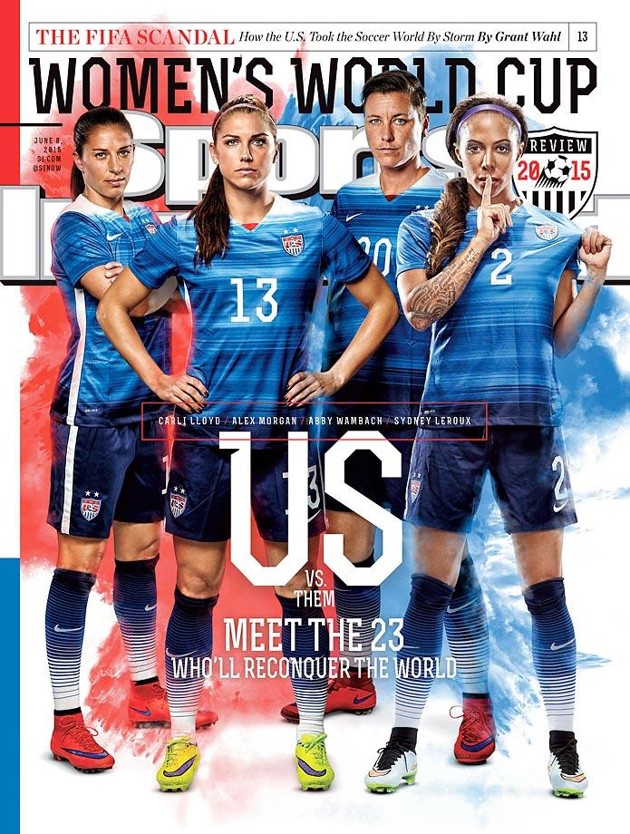
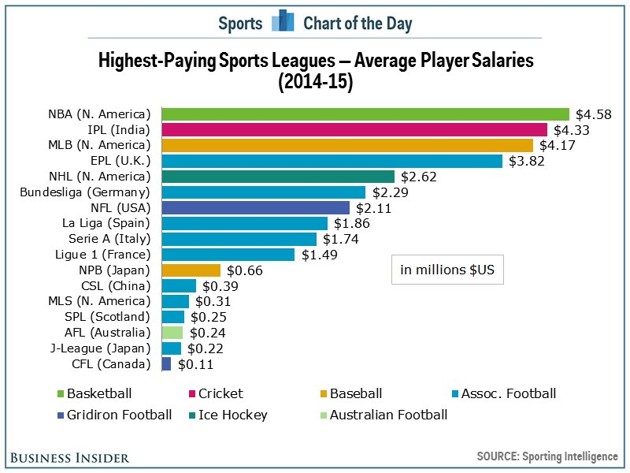






/cdn0.vox-cdn.com/uploads/chorus_asset/file/3720018/shutterstock_158732369.0.0.0.jpg)


/cdn0.vox-cdn.com/uploads/chorus_asset/file/3717682/109008985.jpg) Photo by Justin Sullivan/Getty Images
Photo by Justin Sullivan/Getty Images
/cdn0.vox-cdn.com/uploads/chorus_asset/file/3717688/129678204.jpg) Photo by Justin Sullivan/Getty Images
Photo by Justin Sullivan/Getty Images