eating is so badass i mean you put something in a cavity where you smash and destroy it with 32 protruding bones and then a meat tentacle pushes it into a pool of acid and after a few hours later you absorb its essence and transform it in energy just wow
That is the most metal thing I have ever read in my whole life.
Shared posts
04 Apr 16:34
photoshoppedreality: hussiescondensedevil: eating is so badass i mean you put something in a...
04 Apr 16:27
Complex - Ep. 3 Mike Leffingwell and Ben Seimon are two of the...
Complex - Ep. 3
Mike Leffingwell and Ben Seimon are two of the funniest guys around. I LOVE this new web show that they are doing.
Please watch and share this internet video despite the fact that it doesn’t feature animals, 90’s nostalgia, or celebrities having fun with their image. Just hilarious people being hilarious!
04 Apr 16:27
Paul F. Tompkins - Driven to Drink I really love this early PFT...
Paul F. Tompkins - Driven to Drink
I really love this early PFT special. It’s slow and thoughful and just a little bit theater-y. Also, hilarious.
Related: I should hang out at Cafe Formosa more.

03 Apr 20:45
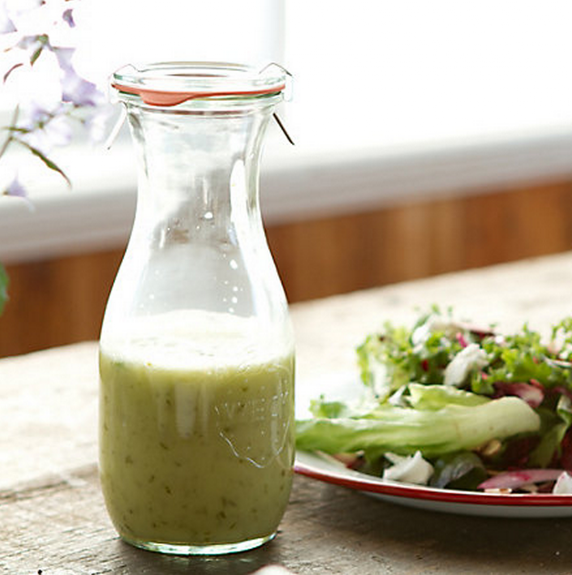 Every night, I always want to make homemade dressing—after all, a great dressing really makes the salad—but at the end of a long day, I don’t feel like chopping shallots and sauteeing garlic. So, I don't. Instead, I end up using oil and vinegar and the salad is subpar.
But Real Simple recently had a great tip: Make salad dressing ahead of time for the week. What a no-brainer, but it never occurred to me to just make a larger amount and store it in a bottle. (These would work well.)
Now I'm inspired to experiment with vinaigrettes. This book looks good, and below are three dressings I'd like to try...Read More >
Smart tip: Make your own salad dressing for the week
by Joanna Goddard
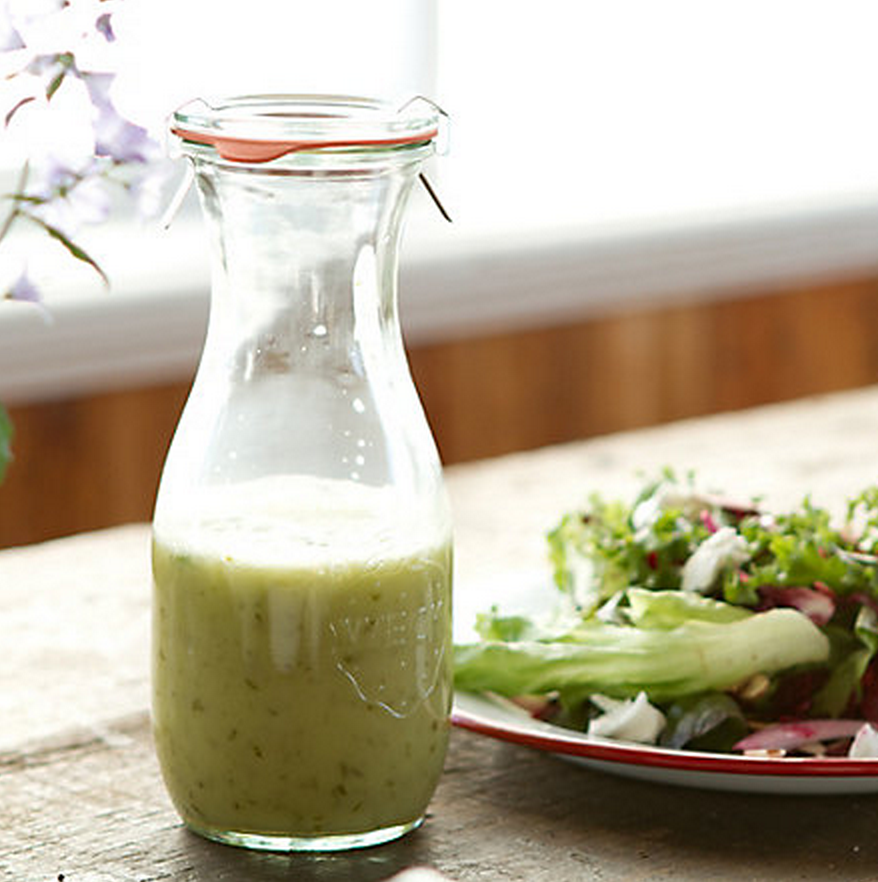 Every night, I always want to make homemade dressing—after all, a great dressing really makes the salad—but at the end of a long day, I don’t feel like chopping shallots and sauteeing garlic. So, I don't. Instead, I end up using oil and vinegar and the salad is subpar.
But Real Simple recently had a great tip: Make salad dressing ahead of time for the week. What a no-brainer, but it never occurred to me to just make a larger amount and store it in a bottle. (These would work well.)
Now I'm inspired to experiment with vinaigrettes. This book looks good, and below are three dressings I'd like to try...Read More >
03 Apr 20:39

5 Cooking Mistakes We All Make, and How to Fix Them
by Alan Henry
 Cleaning your cast iron with soap and water? Squeezing every last bit of ground beef into that pan? Even if you know your way around the kitchen, there are a few mistakes nearly all of us make in the kitchen. Let's take a look at some common kitchen errors that may plague your cooking, and why they're bad for your food.

You're Cleaning Cast Iron Pans with Soap and Water
The Problem: You've just finished dinner, and the cast iron pans you used to cook with are full of oil and stuck-on food. It's time to clean them, and you know cast iron pans require special treatment, but ain't nobody got time for that. You give them a quick scrub with a sponge and soapy water, rinse with hot water, and a dry them with a paper towel. You might think that a light scrub can't possibly hurt too much, but the moment that hot soapy water touched your pan, it started to destroy the "seasoning" on the pan, or the layer of fat and oil that's been cooked onto the iron itself over regular use. Photo by Ross Catrow.
It's that season that makes cooking with cast iron so great. Not only does it protect the iron of the pan from rust, it also provides a cooking surface that's non-stick, naturally oiling, and keeps your food from interacting with the oil of the pan. Some people even say the season imparts flavor. Here's the problem: since the season is all polymerized oil, hitting it with dish soap, and then scrubbing at it with a sponge and rinsing it with hot water causes those oils to break down and float away—taking that protective coating and washing it very literally down the drain. It may be easy, but it's destructive.
The Solution: Instead of using soap and water, try Alton Brown's method (seen in the video to the right). When you're finished cooking, pour a little oil into the pan (if there isn't any left from cooking), dump in a handful of kosher salt, and then just scrub the salt around the pan with an old rag or some wadded up paper towels. The salt will get dirty, and the pan will get clean. Dump out the salt, wipe the pan clean, and put it away. We've discussed this method before too, and it works brilliantly. This is the real beauty of cast iron: You don't actually have to wash it.
If your pan has started to lose its season, it's not too late: try re-seasoning your pan with flax seed oil (read here for more on why this method works), and toss it in the oven while you're baking to season and save time. Check our recent CrowdHacker guide for more tips.
You Thaw Meat at Room Temperature
 The Problem: You need to figure out dinner tonight, but you forgot to pull something out of the freezer to thaw slowly in the fridge. You only have a few hours to thaw the steaks or chops you'll wind up cooking tonight, so you take them out of the fridge and put them right into the sink. Maybe you just leave them on the countertop—that'll thaw them out quickly, right? Perhaps, but you're risking your safety and the safety of your dinner guests in the process. Photo by Taryn.
Remember, the "danger zone" for bacterial growth in food is between 40°F and 140°F (5°C and 60°C), and sitting right in the middle of that is "room temperature," around 68°-70°F (20°-22°C). A couple of hours at room temperature will certainly make sure that the meat is thawed, but it's a field day for bacterial growth as well, especially as the deeper parts of your cut begin to come up to temp while the outsides have been room temperature for hours.
"But surely," you're asking, "It'll all come up to temp when I cook it, right?" Maybe, assuming you're sure to cook your meat until the core is minimum safe temperature for what you're making, but it's an incredible risk, and it doesn't take much E.Coli or Salmonella to make you really regret the way you thawed those porkchops or chicken thighs.
 The Solution: Use a cold water bath to thaw your meats. It's fast, safe, and by far the easiest. It requires a little more attention than some other safe methods of quick-thawing, but it works the best. Just take your meat and put it in a sealed bag (if it's not already in one) and submerge it in a bowl of cold water. You'll need to change the water out every half-hour or so (so the water doesn't come to room temp and bacteria start growing) but I've found after a half-hour or so, the meat is thawed and ready to cook. Photo by Waifer X.
If you don't like that method, there are other ways to thaw meat quickly that are easy and safe. Both StillTasty and The USDA recommend one of three methods: In cold water like we described, in the fridge until the meat is properly thawed (since your fridge keeps food below the danger zone), and in the microwave (because some parts of the meat may be warmer than others or cook in the microwave when you do this, the USDA says you should cook the meat immediately after microwaving.) We've also mentioned a hot water method if you're in a hurry, but note: it only works with thin cuts of meat.
You're Overcrowding Your Pan, Baking Dish, Cookie Sheet, Etc.
 The Problem: If you've ever baked cookies only to have them all stuck to one another, or sauteed meat or veggies in a pan only to have them take forever to cook through, the problem may be that you're overcrowding your pan. Perfect example: you're cooking up a batch of ground beef or turkey in the pan, and while everything seems great at first, over time the meat starts to get kind of gray and bubbly, releasing a ton of moisture that takes forever to cook away. Your meat isn't getting the delicious brown you'd hoped for. Sound familiar? You should have cooked it in batches. Photo by ilovebutter.
The same problem occurs in baking. If you've ever put meat in the oven only to take it out while it's swimming in its own bubbling juices, or baked french fries or veggies without making sure they're spread out evenly, you know what I'm talking about. Thankfully, it's an easy problem to fix.
The Solution: Separate your cooking into batches. It's simple, but that's all it takes. Resist the urge to try and get everything done in one go. Overcrowding your pan actually slows down the cooking process. If you're satueeing veggies, all of the moisture released as they cook stays in the pan and steams them, which gives you a mushy, wet mess, instead of the crisp, firm texture you're looking for.
With meat, large, cold cuts rob the pan of heat every time you put one in, so overcrowding the pan actually lowers the temperature of the whole cooking surface. This increases the overall cooking time, and in the worst case brings the temperature of the pan down below the threshold required for the Maillard reaction to take place (approx 300°F/150°C). Even worse, the pan may linger above the boiling point of water (212°F/100°C), which means you're essentially steaming your meat, and that's no good. Give your food plenty of room to move around in the pan, and let them cook in a single layer.
You're Cooking at the Wrong Temperature
 The Problem: Speaking of cooking temperatures, even the most seasoned home cook can catch themselves cooking either entirely too hot or too cold. Usually this applies to on-stove cooking, so sauteing, frying, and stir-frying are the big problems. Here are the symptoms:
- When you're cooking too hot: You tossed those chicken breasts into a pan, and while the outside is cooked well, the inside is next to raw. Your scrambled eggs are brown and firm on the outside but still runny and liquidy on the inside. You can't seem to cook anything without setting off the smoke alarm? Sound familiar? Listen, every beginning cook has trouble controlling heat, but you don't need to fry everything to a crisp. The problem here is self-evident: Food isn't evenly cooked (which can lead to undercooked and dangerous-to-eat insides) at best, or completely burned and overdone at worst. Photo by normanack.
- When you're cooking too cold: The opposite problem doesn't happen as often, but it's still an issue. Cooking with the heat down too low may get your dish done, but avoiding higher heat will keep liquids from simmering, herbs from wilting, flavors from developing, and aromas from opening up fully. It'll keep that delicious sear and browning action we just discussed from taking place on steaks and chops, and of course, you also run the risk of underdone food. Veggies and other foods where texture is important run the risk of being a bland mush that's been cooked down too far, too long.
 The Solution: Get to know your stove or oven, and stop cooking everything on high heat. Here are a few quick ways:
- Try all of your burners and watch them heat up. If you have an electric range, see how long each one takes to heat up. If you use gas, tweak the control knob to see the level of fine control you have over the flame intensity. With luck, you'll have great control over the level of heat your stove puts out. Sadly, not all stovetops really know the difference between "medium" and "medium high," and testing the burners is the only way to find out. Photo by Steven Depolo.
- Use more than one burner. If your stovetop doesn't give you the control you need, don't just use a different burner—a smaller burner turned down may be the equivalent of "medium" of your large one. You'd be surprised how few home cooks really learn the difference between "medium high" and "high," or how many kitchens I've visited where the large front-corner burner is the only one anyone ever uses.
- Make a heat map of your oven. Most commercial ovens have hot and cold spots. They can be hard to identify, but once you make a heat map with a cookie sheet and a few slices of bread, you'll see your oven's hot and cold spots.
You're Cooking with the Wrong Oils
 The Problem: You probably already know that heating oil until it smokes is a very bad thing, and keeping multiple oils around for different purposes is a good idea. Still, frying everything with extra virgin olive oil is a surefire way to set off the smoke alarm every time you sautee, and baking with an extremely flavorful oil like sesame or coconut will certainly introduce flavors to your dish that you may not expect. Even though we talked about smoke points and which oils work best for which cooking methods, going just by smoke point (or by someone's diet book) isn't the best way to pick an oil. Photo by Arthur Caranta.
The Solution: Choose your oils not just for their smoke points, but for whether or not their flavor works with the type of food that you like to cook. If you like asian flavors, sesame oil is a great staple to keep around. If you prefer your oil also add its own savory, fatty flavor, consider cooking with more butter, lard, or ghee (clarified butter). Coconut oil is great for a number of reasons, but it can impart a nutty, rich flavor to lighter dishes you may not want.
Also, consider neutral oils that let the flavor of your dish shine through without adding their own. Safflower oil, for example, is completely neutral, and has a high smoke point. Grapeseed oil has a very light flavor that you may not even notice in your dishes, and is also well suited to high-temperature cooking. Don't just assume that you can do everything with olive oil or "vegetable oil," which is usually either a mix of oils or (more often) store-shelf code for "soybean oil."
These five are just the tip of the iceberg. There are plenty of other common cooking mistakes many of us make all the time, and sometimes even knowing better doesn't stop us. The key is to remember why they're dangerous, cost us money, or make our food taste terrible: That's the key to putting an end to them for good.
Title photo made using Corey Seeman, Boring Soap, Consumatron, Biswarup Ganguly, and Juan de Vojníkov.


03 Apr 14:44

I thought we were cool… WHAT THE FUCK SPOON?
I thought we were cool… WHAT THE FUCK SPOON?
Krankota and -1 others like this
03 Apr 14:41

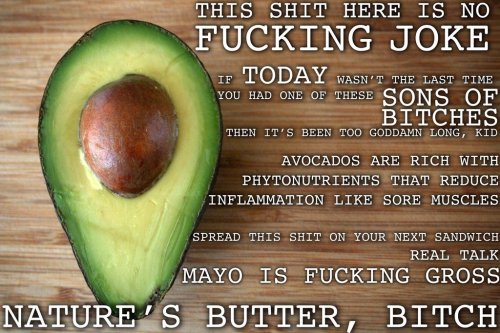
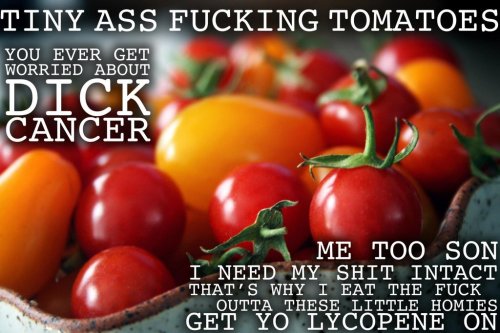
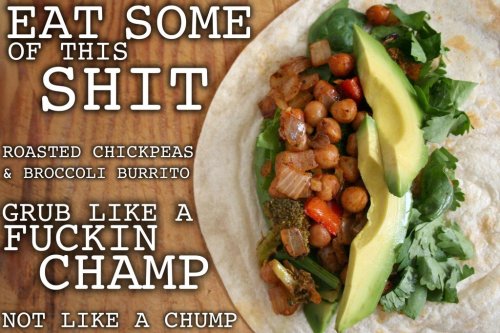
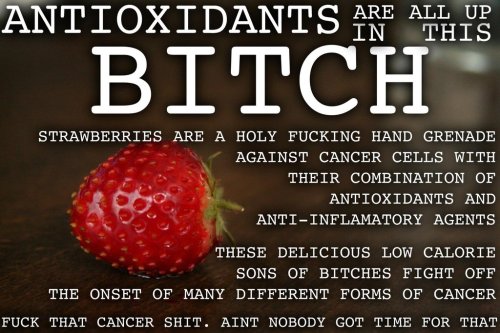
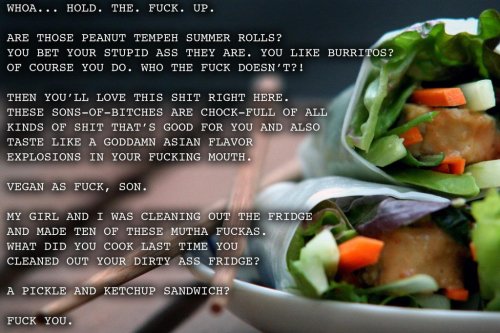
No lie, it’s been a while since a thug has been in the...
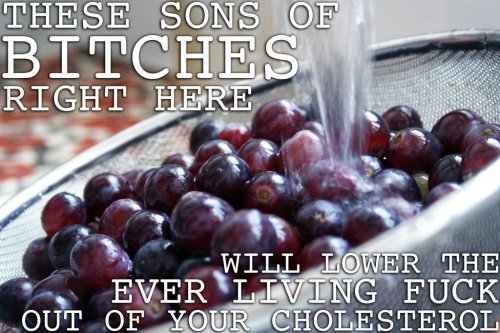
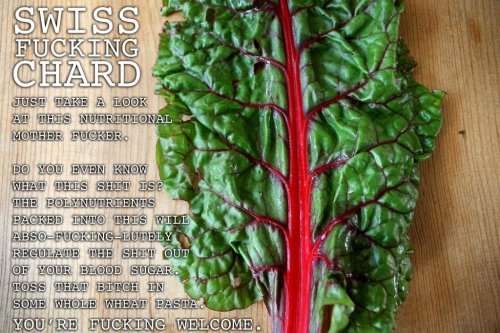
No lie, it’s been a while since a thug has been in the kitchen. So I log into the tumblrverse today to check my shit, maybe dust off the dash and get some new content out. Son, I’ve got a TON of fucking messages (I’m going to try to reply to them all, I promise) and I’m seeing my shit posted all over the god damn place.
I’m glad all you healthy/sexy mother fuckers kept the kitchen warm while I was away. I’m officially back and stepping up my game. Seriously, all the love I’ve got from my followers makes me want to post the best content I can for you. Thug Kitchen undergoing reconstruction as of right now. I’m so fucking heated right now. Shit.
Ally.pregulman and -1 others like this
02 Apr 02:19

How to Fearlessly Deep Fry Just About Anything
by Marian Bull
 The satisfaction of biting into a piece of perfectly crispy fried chicken is matched only by some cooks' fear of deep frying. After all, it requires a large pot of hot, bubbling oil sitting on your stove, ready to dole out third degree burns, or soggy chicken (or both!) at will. By monitoring the temperature of your oil and following a few easy guidelines, however, you too can fry chicken—or green beans, or fritters—at home with confidence and ease.
Listen Up: Fried Foods May Not Be as Terrible as You Think
Yes, frying adds fat to your food. But it likely doesn't add as much as you would expect. Cook's Illustrated conducted a test where they fried chicken in 3 cups of oil, and then poured off almost 3 cups of oil after all the chicken was cooked—meaning that very little was actually absorbed by the chicken itself. As long as you're keeping your oil hot enough—high heat ensures that the water in your food will boil, evaporate, and keep oil from seeping in—your food won't get overly soggy or greasy.
Choose Your Oil Wisely
Neutral oil is best for frying, because it won't impart its flavor on whatever you drop into it. Refined peanut oil is preferred by many master fryers for its neutral taste, high smoke point, and low levels of saturated fats. Canola oil is another good option—you can even use olive oil if you're cooking at a low enough temperature, as in this recipe for tiny, crispy purple artichokes. Intrigued? Check out our post on oils and their varying smoke points for more information.

Solid fats, namely lard, are lauded by some for their ability to produce the perfect crisp fried chicken—see Pete Wells' treatise on rendered pig fat—but procuring enough lard to fill a large pot may require buying your own farm. We'll leave the decision up to you.
Equip Yourself
Success in the kitchen means arming yourself with the right tools, and frying is no different. A heavy-bottomed pot or deep sauté pan is the most traditional choice, but Serious Eats has discovered that woks make great vessels for deep frying, too. To make sure you're frying your oil at the right temperature, a clip-on thermometer is your best bet.
Don't have a thermometer? No problem. Oil that's ready for frying will bubble around the stick end of a wooden spoon when it's inserted. Alternatively, a piece of dried popcorn will pop in hot oil somewhere between 325 and 350 degrees—and will give you something to snack on while you cook.
Get Your Temperature Just Right
Once you add food to your hot oil, the temperature will drop—therefore, you'll want to get it hot before cooking. Recipes may vary, but you'll want to preheat your oil to somewhere between 325 and 375 degrees. During cooking, you should aim to keep it between 250 and 325 degrees. Keeping your oil hot enough—but not too hot—will ensure crispy, golden, never-soggy results.
If your oil begins to smoke, you know it's too hot. This can impart bad flavor on your food, so if you see smoke, remove your pan from the heat carefully.

Beware of Crowding
Frying in large batches will cause the temperature of your oil to drop too low, resulting in a less crispy (and, therefore, less delicious) finished product. Fry in small batches, and be sure to stir while cooking—this will fry your food more evenly. Frozen food should be cooked in very small batches in order to keep cooking temperatures level. Between batches, keep your oil clean by scooping out any pieces of food left behind.
Don't Forget to Drain and Season
Once your food is done, drain on a paper towel-lined plate; this will absorb more oil than draining it on a wire rack. And be sure to season your food immediately—after all, what is fried food without salt?
Steer Clear of the Burn Unit
One of the biggest deterrents to deep frying is the fear of hot oil splashing all over your kitchen and your self. Armed with confidence and a few tips up your sleeve, you can keep your skin intact and your food crispy. While it's tempting to throw your food into the pot from afar to maximize the distance between yourself and the bubbling oil, this will actually increase the likelihood of splashing. Food dropped in from a short distance—either by a fearless hand close to the oil's surface or a slotted spoon or bamboo strainer—won't cause as much of a disturbance.

Dispose of Your Oil Properly
Don't want to pour hot oil down the sink? (You shouldn't.) Save your oil bottles, let your oil cool after you're done cooking, and pour it back into the bottles with a funnel. Seal them tightly and toss them in the trash.
...or Don't Toss Them
If you're looking to conserve money and oil, you can safely store used oil for a few weeks after its first use. Be sure to strain out any lingering pieces of food—a fine mesh strainer is great for this. To keep your oil from smelling stale or fishy, keep it in as dark and as cold of a place as you can find. Cook's Illustrated suggests keeping your used oil in a very dark, very cold freezer for up to two months.
Ready to get frying? Try you hand with these recipes from Food52:

Baby Purple Artichokes Fried in Olive Oil
Rosemary-Brined, Buttermilk Fried Chicken
Deep Frying Without Fear Food52
Marian Bull is an editor at Food52. She takes any chance she gets to travel, explore, and eat. Coffee is the most anticipated part of her day. She expresses affection by feeding people. And she loves vegetables, especially chocolate.
Images via Food52.
Want to see your work on Lifehacker? Email Tessa.
31 Mar 22:40
*Scale number of reps or duration of cardio to your pace. Doing a little is better than doing nothing.

Seven Tips for Making Nutrition and Fitness Greater Priorities
by Matt Ragland
 We live busy lives, shuttling back and forth between home, jobs, social events, and many other commitments. At times, we feel there is no time to exercise, or we have no choice but to grab the convenient food over the healthy food.
I completely understand these feelings, and experience them myself. When I'm in full-time writing mode, I feel like all I can do is write, go to work, spend time with my wife, and then write some more before going to bed.
We're tricking ourselves in to thinking our time and options are limited. Even if our time is (which is a separate post entirely), our options don't have to be. We need to be a little better at starting small, balancing our needs, and planning. The benefits of a healthier diet and active lifestyle are well-documented, stimulating both brain power and productivity. In The Power of Habit, Charles Duhigg names exercise one of the keystone habits that empower a healthy, productive life. Exercise fuels the ability to make other habit changes in your life possible, including diet.
Start Small
The first and biggest lie is the mindset that you need to make life-changing, wholesale changes to make a difference. Not so! Even if your diet and fitness habits are non-existent, you can begin to make small changes which can snowball into big results. Consider snow or rain. One flake or drop of water isn't going to make a big difference, and is easy to dismiss. But compounded by consistency and quantity, they accumulate into a force of nature.
Here's a little sub-list for you, little ways you can start small in fitness and food. Start with any of these once a week, or every 2-3 days. Starting small will keep you motivated for the next opportunity.
- Go for a 10 minute walk or a 5 minute run
- Swing a kettlebell 10 times
- Do 10 squats, then 10 pushups
- Drink 1 liter of water instead of soda
- Eat 1 salad a week
Resist the temptation to start big, because big starts normally end in big crashes. If you go for a big workout or run, you'll be sore and need to rest even longer, or risk injury. If you eat incredibly healthy for a few days, the sugar craving will be too much to resist, along with the thought of "I've been eating so healthy anyway!" So start small, and allow the snowball to grow.

Food Over Fitness
Many people, myself included, tend to flip the equation, prioritizing fitness over food. We use our exercise as an excuse to eat whatever we want and burn the calories off later. While the plan isn't bad, it's very short-sighted. A healthy diet combined with regular exercise is clearly the best way to live, instead of constantly trying to burn off the donuts you ate.
Food is one of the constants of our lives, something we truly can't function without. Fueling yourself with good food simply makes sense. When you combine healthy eating with your exercise, you'll notice you feel even better! Elite athletes understand this balance, and though they routinely burn over 2,000 calories in a workout, don't immediately go refuel with soda, fried chicken, and ice cream.
Plus, when a day comes up where finding your exercise time is difficult, making smart choices with your meals will help keep your body and mind in top shape. So when the choice is in front of you, choose the right food. I won't drop a diet plan bomb on you now, and certainly there is a lot of information on what to eat. We tend to make eating over-complicated, even healthy eating! So here are a few simple rules to keep in mind.
- Eat as many whole foods as possible, i.e. fruits & vegetables.
- Eat lean cuts of meat.
- Eat smaller portions, but a little more often.
- Drink plenty of water.
Move In a Way That's Fun
If you don't enjoy running, don't run. If you don't enjoy lifting weights, don't lift weights. Move in a way you enjoy, and you'll see the benefits much quicker. Your exercise won't be a burden because it's fun! Maybe it's a dance class, yoga, hiking, canoeing, martial arts, cycling, soccer, or tennis. If you stop forcing the workouts, following what you're "supposed" to be doing, then the habit won't take hold. I enjoy running, but only on trails. I enjoy lifting weights, but not in slow, uni-directional ways (bench press). I also enjoy mixing up my workouts, keeping them fresh and interesting by trying new things. Bottom line: Do what moves you.
Follow the Pareto Principle (AKA the 80/20 Rule)
Disclaimer: This isn't the Pareto Principle exactly. But the 80/20 mindset is helpful when figuring out what kind of grace you can extend to yourself when your food and fitness isn't measuring up. Basically, if you're eating well in 80% of your meals, you can be flexible in the other 20%. If you exercise most of the week, don't stress out over taking a couple of days off.
CrossFit offers a pretty solid principle for their workouts. 3 days on, 1 day off. Not quite 80%, but close enough. If you're taking care of your body and mind 75-80% of the time, you'd have to do a lot of damage in the remaining time to screw it up. One more suggestion though, from my own experience: mix up your rest and cheat days so they don't occur at the same time. Being able to workout on a day you've eaten some unhealthy food will help negate the bad calories, and eating well on a day you're resting will increase the benefits of your rest.

Buy a Kettlebell
A kettlebell is far and away the most important and useful piece of equipment I own. The functionality of a KB design allows it to be used in so many more ways than a dumbbell or barbell. You can swing, carry, press, power clean, and tons more. Since the bulk of the weight lies directly beneath the handle, the weight displacement allows gravity to pull the weight in a more natural manner. Classic dumbbells place the weight on the sides, making some exercises awkward or impossible.
If you own just one piece of equipment, make it a kettlebell. The good people at FringeSport offer great prices and free shipping, which is pretty much unheard of. Gals, start around 15 lbs or less if you're not used to weights. Guys, 25-30 lbs is a good starting point. If you want, go to your local sporting goods store and feel one out, then save some money and buy from FringeSport.
Eat More Color
Have you ever admired the rich color palette of fruits and vegetables? Orange, after all, is both a fruit and a major color. Dark greens, apple red, or banana yellow? Ever noticed the basic color names on the Apple palette?Simply increasing the diversity of colors on your plate will help you eat healthier, even if that's all you do! No, Skittles don't count. Red meat, sweet potatoes, spinach salad, and squash? Nailed it.
Embrace a Routine
If figuring out a daily workout just adds more stress to your life, don't do that either! Write one workout you're going to do for the week, and then simply do only that. I find I don't work out well in the morning because I haven't planned anything. I need something concrete to get out of bed for. If our goal is to wake up and move around for 15 minutes, let's have a plan for it, and just do it for a week! I mentioned that enjoy mixing up my workouts, but it's comforting to know there's something I can fall back on that I know will bear results.
If you're interested, join me this week in the following routine! No equipment required, ha! Your excuses have been reduced to ash.
- Monday: 25 pushups, 25 squats, 25 burpees, 25 box jumps
- Tuesday: Repeat
- Wednesday: Run or walk for 15-30 minutes
- Thursday: Rest
- Friday: 25 pushups, 25 squats, 25 burpees, 25 box jumps
- Saturday: Repeat, or your choice of cardio
*Scale number of reps or duration of cardio to your pace. Doing a little is better than doing nothing.
If you do want more variety, check out TheSimpleGym.com. Morgan writes 4 workouts every week and puts up a video of the movements so you can see how they're done.
In a go big or go home lifestyle, we tend to overcomplicate matters, and the ways we move and eat are at the top of the list. We want to say we finished a killer workout or are on a fad diet, because it makes us interesting. Consider instead the snowball effect, building flake by flake until you're a force of nature.
7 Tips for Prioritizing Your Food and Fitness⎪Matt Ragland
Matt Ragland is a writer and adventure junkie, helping people align their priorities and choices with what they really love. He wrote a workbook called Choose What You Love, and it's free for LifeHacker readers. Click here to get it, and follow Matt on Twitter @mattragland.
Image remixed from risteski goce (Shutterstock) and pixabay.
Want to see your work on Lifehacker? Email Tessa.
29 Mar 20:30
"Adoption by gay couples is one of the best arguments for gay marriage."
by Eli Sanders
Ezra Klein elegantly knocks down Justice Antonin Scalia's suggestion on Tuesday that gay marriage will harm children:
According to the Congressional Coalition on Adoption, 400,00 children are living in the United States without permanent families — or, as they’re more commonly called by the children, “forever homes,” a term that breaks my heart every time I hear it.
More than 100,000 of these children are, right now, eligible for adoption, which means they can’t go back to their biological families. On average, these children will be in foster care for three years before being adopted. Twenty percent will be in foster care for more than five years.
Foster parents are, in most cases, genuine heroes. But being in the foster-care system is not easy for children, or good for them. A world in which more of these children can go to loving, stable forever homes faster is a better world.
The idea that there is something so wrong with same-sex households that it would be preferable for these children to go two or four or six years without permanent parents — an idea, again, that has little to no evidence behind it, and that is in fact contradicted by most of the evidence — bespeaks a homophobia so deep that it is hard for me to believe it could persist long among people who actually know any children in the foster system, and who actually know many gay couples.
You gotta read the whole thing.
29 Mar 20:29

The Justices' Most Pressing Questions about the Defense of Marriage Act
by Joseph Landau
- Mesut Dogan / Shutterstock.com
- This is "totally unprecedented," Chief Justice Roberts said more than once.
• "I don't see why he doesn't have the courage of his convictions," Chief Justice John Roberts said this morning, referring to President Obama. This statement came early in today's oral arguments over the constitutionality of Section 3 of the Defense of Marriage Act (DOMA), which defines marriage for federal purposes as solely between one man and one woman. In fact, it came before the merits of the constitutional question were even discussed. It came during briefing and argument on the first of two procedural questions—whether the Obama Administration's enforce-but-not-defend policy regarding DOMA Section 3 left this case without the requisite features of an Article III case or controversy. Some of the justices, including Chief Justice Roberts, seemed particularly troubled by the Obama Administration's decision to enforce DOMA while refusing to defend the law's constitutionality in court. Here is a fuller version of Chief Justice Roberts' comment: "…[T]he Executive's obligation to execute the law includes the obligation to execute the law consistent with the Constitution. And if [the President] has made a determination that executing the law by enforcing the terms is unconstitutional, I don't see why he doesn't have the courage of his convictions and execute not only the statute, but do it consistent with his view of the Constitution, rather than saying, 'Oh, we'll wait till the Supreme Court tells us we have no choice.'"
• Justice Breyer suggested, in response, that the president's policy might be based on a sound reading of the Take Care Clause, which says that the president shall take care that the laws be faithfully executed. In other words, according to Justice Breyer, the president's thinking may be that "because I have this obligation... I will continue to execute this law. I will continue to execute it though I disagree with it. And I execute it until I have an authoritative determination not to."
• Other Justices wondered whether this type of policy would undermine congress's assurance that its laws would be properly defended in court. Chief Justice Roberts asked, "What is the test for when you think your obligation to take care that the laws be faithfully executed means you'll follow your view about whether it's constitutional or not or you won't follow your view?" Justice Scalia took a similar tack when he asked, "So when Congress enacts a statute... it has no assurance that that statute will be defended in court, if the Solicitor General in his view thinks it's unconstitutional?" These justices were seemingly not persuaded by the similarities between this case and prior cases in which previous presidential administrations have also refused to defend laws they believed violated the Constitution. Chief Justice Roberts distinguished those prior cases on their facts, which for him meant that this case was "totally unprecedented. You're asking us to do something we have never done before to reach the issue" of whether DOMA is constitutional. When the government's lawyer responded that "it's unusual, but not at all surprising," Chief Justice Roberts reiterated, "No, it's not just—it's not just unusual, it's totally unprecedented."
• On the question of DOMA's constitutionality, Justice Kennedy quickly cited DOMA's massive impact on married same-sex couples. In an exchange with Paul Clement, the attorney representing the House Republicans who stepped in to defend DOMA's constitutionality when the Obama Administration refused, Justice Kennedy pointed out that Section 3 of DOMA "applies to over, what, 1,100 federal laws." Given the number of federal benefits predicated on marriage, it "means that the federal government is intertwined with the citizens' day-to-day life," putting the federal government "at real risk of running in conflict with what has always been thought to be the essence of the state police power, which is to regulate marriage, divorce, custody." For Justice Kennedy, that seemed to mean that while DOMA may undermine equal protection principles by denying important benefits to couples with valid marriages, it may also suffer from the fact that it intrudes into the prerogative of the states to set the terms of their own marriage laws.
• Clement tried to argue that DOMA was motivated not by animus, but rather a mere desire for a uniform definition of marriage in the face of state experimentation, but Justice Kagan pushed Clement on his claim to an animus-free rationale. She noted that "for the most part and historically, the only uniformity that the federal government has pursued is that it's uniformly recognized the marriages that are recognized by the state. So, this was a real difference in the uniformity that the federal government was pursuing. And it suggests that maybe something—maybe Congress had something different in mind than uniformity. [W]e have a whole series of cases which suggest . . . that when Congress targets a group that is not everybody's favorite group in the world, that we look at those cases with some—even if they're not suspect—with some rigor to say, 'Do we really think that Congress was doing this for uniformity reasons, or do we think that Congress's judgment was infected by dislike, by fear, by animus, and so forth?' I guess the question that this statute raises, this statute that does something that's really never been done before, is whether that sends up a pretty good red flag that that's what was going on."
• Justice Ginsburg did not seem persuaded, either. DOMA "touch[es] every aspect of life. Your partner is sick. Social Security. I mean, it's pervasive. It's not as though, well, there's this little federal sphere and it's only a tax question. It's—it's—as Justice Kennedy said, 1100 statutes, and it affects every area of life." Once a state recognizes the freedom of gay and lesbian couples to marry, "for the federal government then to come in to say no joint return, no marital deduction, no Social Security benefits; your spouse is very sick but you can't get leave . . . one might well ask, what kind of marriage is this?"
Joseph Landau, a former assistant managing editor at The New Republic, is an associate professor at Fordham Law School. He's been covering oral arguments at the Supreme Court for The Stranger this week. His summary of yesterday's arguments about Prop. 8 can be found here.
29 Mar 20:25
Be Careful What You Wish for on Prop 8 and DOMA
by Goldy
If I were Benevolent Dictator I'd legalize same-sex marriage. The moral argument for doing so is overwhelming, and the public policy argument is nearly as strong. Apart from offending people who find homosexuality to be upsetting, it's hard to see the downside of allowing two people to marry each other.
But I'm not Benevolent Dictator. And neither is the US Supreme Court. And so there's a part of me that wonders if hoped for rulings striking down both Prop 8 and DOMA should really be hoped for?
Justice Samuel Alito declared that same-sex marriage ... should be left to the voters. “On a question like that, of such fundamental importance,” he said, “why should it not be left for the people, either acting through initiatives and referendums or through their elected public officials?”
Legally, I think that's a stupid argument. The Constitution is the Constitution. If the right exists, the right exists, regardless of what the people say at the polls. And morally, yeah, I'm disturbed at the notion of subjecting the civil rights of any minority to the whims of a popular vote.
But politically, well, I worry that a court decision undermining the constitutionality of gay marriage bans could also undermine the extraordinary progress that is being made toward public acceptance of gay marriage. Think Roe v. Wade.
By the time Roe was decided in 1973, our nation was well on its way along the long arc toward liberalizing our abortion laws through the political process. Washington State, for example, had legalized abortion via citizen initiative in 1970. But it's fair to wonder if the sweeping Roe decision ended up preempting that political process? Reproductive rights advocates have been on the legal and political defensive almost since the day the Roe opinion was published. Forty years later, throughout much of the nation, the right to a legal and safe abortion may soon hang on the opinion of a single swing (though conservative) justice.
If not for Roe, progress toward reproductive rights would have surely been slower and more haphazard. But ground won through political persuasion might also have been more securely held. Fought at the ballot box instead of in the courts, Abortion is an issue that might have been settled for good 20 or 30 years ago, instead of one that continues to be viciously fought to this very day. You know, maybe. It's an argument that I've heard others make that I find intriguing, if not entirely convincing.
It's also an argument that I would have been reluctant to apply to marriage equality just five years ago, when public opinion was still so decidedly against righting this wrong. But the shift in public opinion since then has been so astounding that the attainment of full marriage equality through the political process now seems all but inevitable. We don't need the courts to overturn Prop 8 and repeal DOMA. Public opinion eventually will. And if by leaving this progress to the political process we end up more permanently changing American attitudes toward marriage equality, wouldn't that be worth the wait?
29 Mar 20:23
The Tough Questions in the Supreme Court's Prop. 8 Case, and What They Mean
by Joseph Landau
S.e.corriganThis is a great run down of the arguments from day 1 of the gay marriage cases.
Joseph Landau, a former assistant managing editor at The New Republic, is an associate professor at Fordham Law School. He's covering oral arguments at the Supreme Court for The Stranger this week.
Today the court heard arguments in Hollingsworth v. Perry, which addresses whether California’s Proposition 8—a ballot initiative amending the state constitution to define marriage as solely between one man and one woman—violated the U.S. Constitution. As you probably know, a federal trial court struck down Prop. 8 as violating the guarantees of due process and equal protection under the U.S. Constitution. The state decided not to appeal the decision, and a group of private defenders stepped in to champion Prop. 8 and come to its defense.
The court spent considerable time on whether Prop. 8's private defenders have the requisite “standing” to appeal the decision. It then moved on to the constitutionality of Prop. 8 itself. It is never a good idea to make predictions about a case based on what one hears during the arguments, so I'm not going to do that. But there were some fascinating exchanges, and perhaps a few surprises, that I highlight below:
• The Justices seemed surprisingly cold to two distinctive middle-ground alternatives that the plaintiffs, several amici, and the U.S. government championed. The first of these arguments, often called the "one state" or "California only" solution, focuses on the Prop. 8's unique effect within the State of California—specifically, that it took away the right of same-sex couples to marry after the California Supreme Court ruled that the state constitution guaranteed them that right. (Eighteen thousand same-sex couples were married during that period, and those marriages remain in effect today.) The Ninth Circuit adopted this very rationale—perhaps in the hopes of appealing to Justice Kennedy. The second, slightly broader argument is that the nine states that currently provide comprehensive domestic partnerships or civil unions to same-sex couples—i.e., all the benefits of marriage without including those same-sex couples within the actual definition of "marriage"—place a badge of inferiority on them by excluding them from that critical institution. As Ted Olson, the lawyer for the plaintiffs, put it during oral argument, "It is like you were to say you can vote, you can travel, but you may not be a citizen. There are certain labels in this country that are very, very critical."
• Neither Justice Kennedy nor the other justices appeared to be persuaded by Olson's argument for a middle-ground solution. Instead, several of the justices seemed uncomfortable with a ruling that, on the one hand, states making some progress on gay rights (by providing domestic partnerships) would have to go all the way, while those providing no benefits get off scot-free. As Justice Kennedy put it, the Ninth Circuit "basically said that California, which has been more generous, more open to protecting same-sex couples than almost any state in the union, just didn't go far enough, and it's being penalized for not going far enough. That's a very odd rationale on which to sustain this opinion."
• Justice Kennedy asked whether the prohibition on same-sex marriage could "be treated as a gender-based classification," adding, "It's a difficult question that I've been trying to wrestle with." This is a meaningful question because it revives an issue that featured in the trial court's opinion but not in the Ninth Circuit's ruling. The argument, which gay-rights advocates have made for years, is that the exclusion of gay and lesbians from the institution of marriage imposes a kind of sex-based discrimination by prohibiting men from doing something that women are allowed to do (that is, marry a man), and prohibiting women from doing something that men are allowed to do (that is, marry a woman). Some LGBT advocates find the argument unsatisfying because it downplays the extent to which prohibitions on same-sex marriage are really about sexual orientation discrimination, yet the argument could have appeal because it builds on a body of Supreme Court cases that have held gender-based classifications to exacting scrutiny. Interestingly, the justices spent very little time asking questions regarding whether the Court should apply that same standard—known as "heightened scrutiny"—to sexual-orientation-based classifications, despite the fact that this argument has been championed by both the plaintiff couples and the federal government, both as an amicus in this case, and as a party in tomorrow's case, Windsor v. United States.
• Justice Kennedy asked about the children of same-sex couples.
This was in the course of discussing whether it is appropriate for California to proceed with caution by denying same-sex couples the right to marry until more sociological data is available regarding gay and lesbian families with children. Justice Kennedy noted that "there's substance to the point that sociological information is new.... On the other hand, there is an immediate legal injury or legal—what could be a legal injury—and that's the voice of these children. There are some 40,000 children in California... that live with same-sex parents, and they want their parents to have full recognition and full status. The voice of those children is important in this case, don't you think?” Indeed, despite all of the arguments made by Prop. 8 supporters that respecting the rights of same-sex couples to marry will somehow “redefine” the institution, or dilute it of its function as a providing a mechanism for the stability of families with children, there are thousands of counter-examples of happy, healthy, and loving families headed by two moms or two dads.
• Justice Antonin Scalia and Mr. Olson had the most stirring back and forth in all of today's oral arguments over the question of "when it became unconstitutional" to prohibit same-sex marriage. It began with Justice Scalia asking Mr. Olson: “I'm curious, when did it become unconstitutional to exclude homosexual couples from marriage? 1791? 1868, when the Fourteenth Amendment was adopted?... When—when—when did the law become this?" Olson answered this question rhetorically, asking, “When did it become unconstitutional to prohibit interracial marriages? When did it become unconstitutional to assign children to separate schools?"
Justice Scalia shot back: “It's an easy question, I think, for that one. At the time that the Equal Protection Clause was adopted... But don't give me a question to my question.” This drew laughter from the spectators. Justice Scalia continued, “When do you think it became unconstitutional? Has it always been unconstitutional?”
Mr. Olson: “When the California Supreme Court faced the decision, which it had never faced before"—the question of whether it was constitutional to exclude gays and lesbians from marriage.
Justice Scalia: "That's not when it became unconstitutional. That's when they acted in an unconstitutional matter—in an unconstitutional matter. When did it become unconstitutional to prohibit gays from marrying?”
Mr. Olson responded that the California Supreme Court "did not assign a date to it, Justice Scalia, as you know. What the court decided was the case that came before it...”
But Justice Scalia interrupted: "I'm not talking about the California Supreme Court. I'm talking about your argument. You say it is now unconstitutional.”
Mr. Olson: “Yes.”
Justice Scalia: “Was it always unconstitutional?"
Mr. Olson: “It was constitutional when we, as a culture, determined that sexual orientation is a characteristic of individuals that they cannot control..."
Justice Scalia interrupted again: “When did that happen? When did that happen?"
Mr. Olson: "There's no specific date in time. This is an evolutionary cycle."
Justice Scalia: “Well, how am I supposed to know how to decide a case . . . if you can't give me a date when the Constitution changes?”
They went back and forth like this a while longer, and then Chief Justice Roberts, followed by Justice Kennedy, took the conversation elsewhere. Read the full transcript of today's oral arguments here.
29 Mar 13:29
49 Powerful Living Arguments In Favor Of Gay Marriage
All of the following photos were taken outside of the Supreme Court over the past two days during the DOMA and Prop 8 arguments. Basically, here's what everyone outside of the Supreme Court was fighting for.
This man who can't be with his husband:


This woman who can't be with her wife:

This couple that might have to move to Sweden:

29 Mar 11:15
Doug The Cat Hearts Charlie The Golden
The cuteness might make Instagram explode. Douglas and Charlie want to melt your hearts.
Meet Douglas, an exotic shorthair cat.

Source: distilleryimage11.s3.amazonaws.com / via: instagram.com

And Charles, a hat-wearing golden retriever.

Source: distilleryimage6.s3.amazonaws.com / via: instagram.com

To say they enjoy snuggling together would be an understatement.

Source: distilleryimage9.s3.amazonaws.com / via: instagram.com

They LOVE it.

Source: distilleryimage0.s3.amazonaws.com / via: instagram.com

28 Mar 23:31

How Numbers Affect Your Happiness
by Thorin Klosowski
 It's pretty clear that money can't buy you happiness, and generally speaking we're pretty bad at predicting what else will. If you've ever wondered exactly why that is, the BBC takes a look at how numbers change our expectations.
We know that people who've had big payouts from the lottery aren't usually any happier for it, and the hedonic treadmill suggests that we just move back to the baseline of happiness after we get what we want. As far as predicting happiness is concerned, we're a little more unclear on why we're so bad at it. To figure it out, the BBC points to a study by Christopher Hsee of the Chicago School of Business:
[P]articipants were offered the option of working at a 6-minute task for a gallon of vanilla ice cream reward, or a 7-minute task for a gallon of pistachio ice cream. Under normal conditions, less than 30% of people chose the 7-minute task, mainly because they liked pistachio ice cream more than vanilla. For happiness scholars, this isn't hard to interpret –those who preferred pistachio ice cream had enough motivation to choose the longer task. But the experiment had a vital extra comparison. Another group of participants were offered the same choice, but with an intervening points system: the choice was between working for 6 minutes to earn 60 points, or 7 minutes to earn 100 points. With 50-99 points, participants were told they could receive a gallon of vanilla ice cream. For 100 points they could receive a gallon of pistachio ice cream. Although the actions and the effects are the same, introducing the points system dramatically affected the choices people made. Now, the majority chose the longer task and earn the 100 points, which they could spend on the pistachio reward—even though the same proportion (about 70%) still said they preferred vanilla.
Essentially, participants in the study were maximizing their points even if that came at the expense of their happiness. The higher the points, the more they want it—even if doesn't make them as happy as the "cheaper" one. Basically, the higher number changed expectations. The fix? Don't rely on numbers when your happiness is concerned:
So next time you are buying a lottery ticket because of the amount it is paying out, or choosing wine by looking at the price, or comparing jobs by looking at the salaries, you might do well to remember to think hard about how much the bet, wine, or job will really promote your happiness, rather than simply relying on the numbers to do the comparison. Money doesn't buy you happiness, and part of the reason for that might be that money itself distracts us from what we really enjoy.
We've heard before that we're bad at interpreting numbers in retail, but it's usually in the context of getting a good deal (or not). In this case, it shows we're prone to sacrificing happiness for a bigger number, just because the higher price makes a product seem better.
Why money can't buy you happiness | BBC
Photo by Gregg O'Connell.
28 Mar 18:29
35 Astounding And Uplifting Facts About The Universe
I Fucking Love Science is the liveliest science community on the web, with over 4 million fans on Facebook. Here are a few of the most powerful posts.

Source: facebook.com

Source: facebook.com

Source: fbcdn-sphotos-g-a.akamaihd.net


Source: facebook.com
28 Mar 16:43
Douglas Rushkoff, author of Present Shock, is here to answer your questions about why we've lost touch with the future
by Annalee Newitz

Today from 1-2 PM PDT, we'll be joined by media theorist Douglas Rushkoff, whose new book Present Shock: When Everything Happens Now is getting rave reviews and making people's heads explode. It's about how, in our media-saturated, data-driven age, we are no longer able to plan for the future because we're so stifled by the overwhelming demands of the now. Ask Rushkoff a question in comments below!
Rushkoff's book is riffing on the idea of "future shock," a term popularized by futurists Alvin and Heidi Toffler in the 1970s to describe the sense that tomorrow was coming too fast. But now we're beyond that.

Here are the five major symptoms of present shock, according to Rushkoff on his website:
Narrative collapse - the loss of linear stories and their replacement with both crass reality programming and highly intelligent post-narrative shows like The Simpsons. With no goals to justify journeys, we get the impatient impulsiveness of the Tea Party, as well as the unbearably patient presentism of the Occupy movement. The new path to sense-making is more like an open game than a story.
Digiphrenia – how technology lets us be in more than one place – and self - at the same time. Drone pilots suffer more burnout than real-world pilots, as they attempt to live in two worlds - home and battlefield - simultaneously. We all become overwhelmed until we learn to distinguish between data flows (like Twitter) that can only be dipped into, and data storage (like books and emails) that can be fully consumed.
Overwinding – trying to squish huge timescales into much smaller ones, like attempting to experience the catharsis of a well-crafted, five-act play in the random flash of a reality show; packing a year’s worth of retail sales expectations into a single Black Friday event – which only results in a fatal stampede; or – like the Real Housewives - freezing one’s age with Botox only to lose the ability to make facial expressions in the moment. Instead, we can “springload” time into things, like the “pop-up” hospital Israel sent to Tsunami-wrecked Japan.
Fractalnoia – making sense of our world entirely in the present tense, by drawing connections between things – sometimes inappropriately. The conspiracy theories of the web, the use of Big Data to predict the direction of entire populations, and the frantic effort of government to function with no “grand narrative.” But also the emerging skill of “pattern recognition” and the efforts of people to map the world as a set of relationships called TheBrain – a grandchild of McLuhan’s “global village”.
Apocalypto – the intolerance for presentism leads us to fantasize a grand finale. “Preppers” stock their underground shelters while the mainstream ponders a zombie apocalypse, all yearning for a simpler life devoid of pings, by any means necessary. Leading scientists – even outspoken atheists - prove they are not immune to the same apocalyptic religiosity in their depictions of “the singularity” and “emergence”, through which human evolution will surrender to that of pure information.
Ask Rushkoff about these ideas, or anything else related to the overwhelming present -- or the future! He also popularized the idea of "viral media" back in the 1990s, so feel free to blame him for lolcats if you want, too.
Just ask a question in comments, and Rushkoff will be here between 1-2 PM PDT today, and will answer as many questions as he can. Please be polite!
28 Mar 14:17
The Unsettling Theories about The Shining That You Haven't Heard Yet
by Meredith Woerner
S.e.corriganLet's watch this movie.

Duality, blood, mirrors, the Holocaust and American genocide against the Native Americans are all things hidden somewhere inside Stanley Kubrick's infamous creep show The Shining. And now you can hear just about every single amazing Shining theory and idea in one documentary, Room 237.
Room 237 is a compilation of every argument you've ever had about what Kubrick was really doing, complete with scholarly voice overs and frame-by-frame breakdowns. We sat with the documentary's director, Rodney Ascher, to discuss what really happened in the Overlook Hotel.
How many times have you watched The Shining now?
Rodney Ascher: 16 or 17 times, if you don't count watching it a frame at a time, forwards and backwards for a year and a half through the course of this film.
This isn't really a movie, it's more like the equivalent of getting stoned in your college dorm with a bunch of lit majors all dissecting pop culture. Was that your intention?
I'm going to take that as a compliment, because I used to love to do that. And yeah as you move on into your adult life, I miss the intensity of those kinds of conversations. Where it's 4 or 5 in the morning and you couldn't leave, even though you had a class in a couple hours. You couldn't stop because the ideas were coming to you quicker than you could say them out loud.
Why do you think everyone describes their first viewing of The Shining as "off." Not scared, not haunted, but "off." Why do you think that's a common emotion?
I think part of it is that you don't leave the theater understanding… I can't imagine someone leaving the theater having seen The Shining once and saying, "oh I totally understood that." The black and white photo at the end is in some ways presented as like a eureka moment. [Whereas] at the end of Citizen Kane there's the "Rosebud was the sled," or Shutter Island, "oh this whole thing was a charade he's crazy." No, if anything you ended that movie with an entirely new puzzle. Which troubled a lot of folks, but at the end of the day you're realizing that what you're watching is a horror movie. And leaving it a little off-balanced and confused and upset, makes a lot more sense. That feeling where you understand everything, you don't need to revisit it anymore. Mission accomplished. The Shining doesn't let you go that easily.

But where do you draw the line between symbolic interpretation and continuity errors. The typewriter changes color, the car almost hits Jack but is cut out in the next shot? A lot of those things can easily be explained away?
What's funny is, not one particular [thing] can be indefinitely explained away. [Film historian] Geoffrey Cocks talks about this when he's discussing the chair, something that might have been a mistake on set would almost certainly have been something he noticed in edit, but he decided to leave it in anyway. If you look at something like that typewriter [changing color] or Danny's position on the carpet, those are things that are harder to get wrong, often, than to get right.
The toys would have had to have been picked up and rearranged and rebuilt in exactly the same order in a different part of the room. Someone either had to bring in a different typewriter, or they painted this typewriter after it had already been shot. So the fact that it would look different couldn't possibly be a surprise to them. The typewriter itself is very interesting and we barely touched upon it except to highlight the weirdness of it [Edit Note: for example the typewriter is a German model which could represent the systematic and mechanical genocide that happened during the Holocaust]. But if can spring off in a couple different ways. Cocks talks more about the implications of the changing colors of the typewriter in his book The Wolf at the Door [and in the documentary]. The Shining is full of twins and doubles. Even the typewriter has a double.

The cans of Calumet is featured in the poster for Room 237 and it's one of the first real theories you discuss, why was that featured so prominently?
I think what's important about that can -- in many ways Bill Blakemore The Shining theorist wrote his article about the Native Americans back in 1987 and that was reprinted in newspapers and republished online. For a lot of people, his idea was kind of a symbolic theory of The Shining of record. And the can was the trigger that sent him down the path [Edit Note: For example Blakemore hypothesized that the cans, which mean ceremonial pipe, stood for various peace treaties being reinforced or broken with the hotel over their various appearances in the film] Other people had similar ones. Juli Kearns talks about the skiing poster, Geoffrey Cocks was the typewriter a lot of people have found singular elements of the movie that work almost as decoder rings. They're the first step on a path to making a new discovery about that film.
Which theory about the themes in The Shining resonates the deepest with you?
It's hard to pick one, but one thing I got really excited about was when John Fell Ryan was talking about looking through film archives and watching old newsreel films and beginning to develop a skepticism about the relationship between what you see and what you hear. And I think quite logically, we can make the jump that Kubrick as a kid growing up in the 30s and 40s who was always haunting movie theaters would likely have seen, if not these same films, the same type of films. And because a lot of us feel a connection to what Kubrick was trying to do, maybe he made the same connection. I thought it was kind of eerie that Geoffrey Cocks also talks about himself growing up on a diet of these news reel films. When their ideas start to cross pollinate. And Jay Weidner was talking about how Kubrick making similar discoveries while researching advertising. The way that they would use sexuality and hype in order to create connections to their audience. As these ideas started coming together, I found that very exciting.

What object are people most obsessed with in The Shining that surprised you the most? I was pretty surprised with the amount of attention paid to Ullman's impossible office window. And now I feel like a dummy for not noticing it earlier!
I must say Bill Watson, the summer caretaker, who seems like a very bright character but hardly has any lines. He's sort of prominent in a weird way, even how he's framed symmetrically to mirror Jack in that one shot. People had ideas about the connections to him in the movie. I don't think his role ever gets called out in the film, but he has a relationship with Jack in a way that is similar to Grady's relationship.
What's the least persuasive argument you've heard thus far?
Well, that The Shining is just a horror movie about a family trapped in a hotel.
To hear even more theories check out Room 237 which opens theatrically on March 29th, and will also be available on VOD,SundanceNOW
27 Mar 18:28
 Print Recipe

Eggs in Hash Brown Nests
by Ree
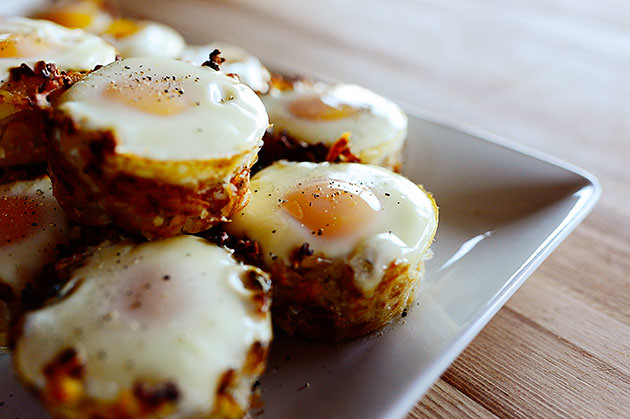 These are the perfect little side dish for Easter Brunch: Tender-but-crispy potato nests with a luscious baked egg in the middle. They go perfectly with ham for a more substantial brunch, or they’re great for a casual breakfast with a piece of bacon. Or two. Or three. Or nineteen.
I will say, when I first decided to try these out, I was excited. I’d seen different iterations of the little cutie-pies and I figured they’d be a piece of cake to whip up. But in fact, I had to go through quite a bit of trial and error before I cracked the dang code. And by the time I figured it all out, I think I’d shaved a good seven months off of my life expectancy.
I started off trying frozen hash brown potatoes, which I initially assumed would work fine. But they wound up being way, way too dry: During the initial baking of the nest, they shriveled to almost nothing, and after the egg baked inside the nests, the hash browns turned a very strange consistency—and there was hardly any potato flavor at all. Super dry, super weird.
Frozen Hash Browns = A no-go for this recipe. Like, totally.
After giving up on the frozen potatoes, I wound up fiddling with fresh potatoes in a couple of different ways: First I tried grating them from a raw state, which didn’t work at all. Too mushy. Didn’t crisp up. Produced angst. Made me crazy.
Finally, the best result came from grating almost-fully-baked potatoes: The consistency was perfect and the potato flavor was fabulous.
Then I slept for a month because I was so exhausted.
It would be a long, long time before I’d be able to trust again.
 Here’s how to make them! Start by baking a few potatoes. I scrubbed the potatoes, then baked them until they were not quite tender enough to eat: Soft, but with the tiniest bit of bite left. This will make them easier to grate, and will also allow more room for baking later.
 I let them cool almost completely (you could bake the potatoes Saturday night and keep them in the fridge), then peeled them with a paring knife.
 Grate all the potatoes, using the largest grating size. As you grate them, if you hear just a tiny bit of “crunch” signifying that the potato isn’t fully cooked, that’s just fine, Maynard.
Sorry I called you Maynard.
Next, season the potatoes generously with salt and pepper: Just toss them around with your hands as you sprinkle.
 Spray a muffin pan lightly with a little cooking spray…
 Then drop a small amount (a little less than 1/4 cup) into each muffin cup.
 Use your fingers to lightly press the center so that the potatoes spill over the top a bit. They’ll shrink when they bake, so don’t be afraid to really spill over the top.
 Sprinkle on a tiny bit more salt and pepper…
 Then give the tops just a very light spray again.
 Bake them for about 20-25 minutes (note the increased oven temp in printable recipe below) until they’re golden brown. Keep an eye on them so the ends of the potato shreds don’t burn.
You can see how much the potatoes shrink up!
 Now, I let the nests cool a bit (you can even bake them off an hour or two ahead of time and let them totally cool) before cracking in the eggs.
 Let the eggs bake for 10-15 minutes, until they get to the level of doneness you’re looking for. I still like to have a little softness to the yolks, and mine baked for probably 12 minutes or so.
* Note: Be assured that no matter what, all of your eggs will probably bake a little differently and won’t all look exactly the same on top. Some whites will look perfect, some might look a little funky. Some whites will cover the yolk, some will gloriously reveal the yolk.
But that’s the beauty of these things! They’re rustic.
Ha.
These are great with Easter Ham (I’ll post the recipe here next)! If you feel like you need a little practice before Sunday, you can pare down the amounts and do a practice run with one potato and two or three eggs. The instructions are the same whether you make a big batch or a small one.
These are totally delicious. My family loves them. My brother-in-law Tim likes to douse them with hot sauce. (I have to admit, I do too.)
Here’s the handy printable:
RecipeEggs in Hash Brown Nests
- Prep Time:
- Cook Time:
- Difficulty:
- Easy
- Servings:
- 12
Print Recipe
Ingredients
- 6 whole Medium Russet Potatoes (6 To 8)
- Salt And Pepper, to taste
- 24 whole Large Eggs
- Non-stick Cooking Spray
Preparation Instructions
Preheat the oven to 400 degrees.
Bake the potatoes until almost tender (potatoes should still have a little bite) 45 minutes to 1 hour. Allow to cool, and then peel and grate them. Season well with salt and pepper.
INCREASE OVEN TEMP TO 425 DEGREES.
Spray two muffin pans generously with cooking spray. Scoop 3 to 4 tablespoons of grated potato into each muffin cup. Use your fingers to gently press the sides and bottom in each muffin hole to make a nest (don't press the potatoes firmly against the pan; they should sit lightly in the pan.) Spray again (very lightly!) with cooking spray. Bake for 15 to 20 minutes. Watch and make sure they do not burn. (If they seem like they're not browning, kick up the temp to 450.) Remove when the nests are golden brown.
Allow the nests to cool. Crack an egg into each one. Sprinkle with salt and pepper and bake until the whites are set, about 15 minutes. Don't be concerned if some whites bake differently; no two nests will look alike!
Remove from the muffin pan with a spoon or fork and serve.
Posted by Ree on March 26 2013
Elizabethnelson and -1 others like this
No more posts. Check out what's trending.