You can approach this puzzle from two very different angles. Which will you choose?


A number of research labs around the world are experimenting with an interesting medication: hallucinogenic psilocybin mushrooms.
Scientists studied psychedelic drugs and their therapeutic potential back in the 1950s and 60s, but in the 1970s, restrictive federal policies put an end to most research. It's only in the last decade or so that scientific research into the possible benefits of hallucinogens has made a comeback.
research into the benefits of hallucinogens has made a comeback
"There's now research involving all sorts of hallucinogens — psilocybin, LSD, Ayahuasca, MDMA, and ketamine — and their therapeutic benefits in many different places, both in the US and abroad," says Dr. Albert Garcia-Romeu, who studies psilocybin at Johns Hopkins University School of Medicine.
In controlled trials of psilocybin, his colleagues Roland Griffiths and Matthew Johnson have found that the drug can be administered safely to humans — and that it routinely elicits spiritually profound experiences that, months and even years later, participants rate as some of the most significant experiences of their lives.
More surprisingly, the researchers have found that psilocybin can lead to permanent personality changes, making people more open to new experiences, and that when combined with talk therapy, a dose or two can even help people quit smoking at rates far higher than current treatments.
I recently spoke to Dr. Garcia-Romeu to learn a bit more about his work.
/assets.sbnation.com/uploads/chorus_asset/file/2758146/157876694.0.jpg)
((Photofusion/Universal Images Group via Getty Images)
"We usually spend a total of about eight hours — four weekly two-hour meetings over the course of a month — preparing participants before administering the drug," Garcia-Romeu says. "We talk about their lives, their worldview, and in the smoking study, their motivations for quitting. This is done by two co-therapists, usually a male and a female."
'participants lie on a couch in a comfortable, living-room like setting'
"Then we have our session, during which participants are mostly lying on a couch in a comfortable, living-room like setting, with eye shades covering their eyes, and headphones playing classical music. For most of the day we generally encourage participants to 'go inward,' and to 'trust, let go, and be open' to the experience. So we actually try to limit interaction, and ask participants to focus on their inner experience instead."
"Of course, this doesn't always go as planned. When people are just very chatty and want to talk about all that they are experiencing, we try to tell them that it's like a movie, and that they should focus on the experience itself and that we can discuss the details afterwards, rather than talking through the movie and potentially missing an important part. When there is a challenging experience, we often sit and hold hands with the participant, as well as instructing them to breathe through it, and to face any challenging content rather than avoiding it."
"Afterward, individuals will usually spend several weeks or more reflecting on and working through the content with the same session monitors who were present during the drug session."
"In studies with healthy volunteers, our team has found that psilocybin administration in healthy people can lead to really profound, mystical experiences," Garcia-Romeu explains. "In a 2006 study, 67 percent of the participants rated their experience with psilocybin to be either the single most meaningful experience of their life or one of the top five. And then in a 2011 paper, 61 percent considered it to be the single most spiritually significant of their lives, and 83 percent put it in the top five."
'61 percent of participants considered it to be the single most spiritually significant [experience] of their lives'
"We've also found that these experiences can have long-term benefits, in terms of people's well-being, attitudes, behavior, and mood. In another study, my colleagues have found that high doses of psilocybin actually changed people's personalities — by increasing openness — which is pretty groundbreaking, since personality is generally considered to be fairly stable after age 30, and no one has previously reported a laboratory manipulation to be able to change personality, to my knowledge."
"We and other research teams have also been studying how psilocybin may help people with life-threatening illnesses — usually cancer patients — come to terms with their condition, and overcome their anxiety. UCLA researchers found that cancer patients with end-of-life anxiety showed significantly decreased anxiety and depression after psilocybin treatment. There are now similar studies going on at NYU and Johns Hopkins, and you can watch interviews with some of the participants online."
/assets.sbnation.com/uploads/chorus_asset/file/2758208/shutterstock_96467003.0.jpg)
(Shutterstock.com)
"In our smoking research, which was initiated by Matt Johnson, we administered two to three doses of psilocybin as part of a broader cognitive behavioral therapy treatment for smoking cessation. In previous studies, the same therapy program without psilocybin showed success rates of about 17 percent at a six-month follow-up," says Garcia-Romeu.
"But we found that 80 percent of individuals receiving our combination treatment of psilocybin and therapy had successfully quit smoking at a six-month follow-up. This is way more than even the most successful treatments — drugs like Chantix or behavioral therapy alone usually have less than 35 percent success rates."
80 percent of people successfully quit smoking 6 months later
"The closest I've actually seen was a 71 percent success rate in people quitting smoking just after they've had a heart attack. And I think that's very telling, because it speaks to the inherent impact of these psychedelic experiences for them to be on par with something like a heart attack in terms of motivating a change in behavior."
"There are some limitations in our study, though, which bear mentioning. First, our trial had no control group, and was performed "open-label" — so we didn't have any participants who did not receive psilocybin to compare our results to, and no one was blinded to the drug treatment conditions. So in theory, people could have simply quit smoking because they believed the treatment would be effective. That's the placebo effect."
"Whether or not this is actually the case remains to be seen. We're currently beginning a randomized controlled trial with 80 subjects — half will get psilocybin, and half will get the patch, with everyone receiving the same therapy. That should address some of those methodological issues from the first study, and will also allow us to see whether there are any observable neural correlates of this treatment using fMRI."
/assets.sbnation.com/uploads/chorus_asset/file/2758424/shutterstock_124729081.0.jpg)
(Shutterstock.com)
"From a neurological standpoint, we don't fully know," Garcia-Romeu says. "But there are a few different potential mechanisms. Both psilocybin and LSD activate a particular serotonin receptor, and this in turn affects other neurotransmitter systems, like glutamate and dopamine, that appear to mediate the efficacy of these drugs in treating addiction or depression, or bringing about long-term changes in personality or behavior. Our team and other researchers are looking at mechanisms of these drugs, so I suspect we'll be learning a lot more in the next decade or so."
"From a more psychological standpoint, one of the common themes that we continue to see is that people have highly salient, meaningful experiences under the influence of psychedelics that are sometimes mystical or spiritual in nature. These experiences might help them to make big changes in their lives if they are so inclined, and if they have access to a supportive therapist and environment."
Read more: Tripping on LSD and mushrooms could help you quit smoking and cure depression

Shaneka Thompson, 29. The name the NYPD is not speaking because they only care about other cops. The black woman shot before the NYPD Shooter went to New York. Say her name. KNOW her name.

Monkeys not only have language, but distinct local dialects. Research into the variations could throw light on both our own linguistics and the way our fellow primates think.
Bridgetderp


Next time I’m in Melbourne I need to revisit the Royal Botanic Gardens and FIND THIS TREE.

What happens when you step on lava? (First off, don’t try this yourself.) Lava is both very dense and very viscous, so, as illustrated in the animation above, it does not give all that much under pressure. If you were to fall on it, you’d land, sink a little bit, and then get burned. It’s also interesting to note that the lava springs back after being indented. Basaltic lava like that found in Hawaii, where this clip originates, does have viscoelastic properties, which might explain the elasticity of the deformed fluid. (Image credit: A. Rivest, source video; via Gizmodo)
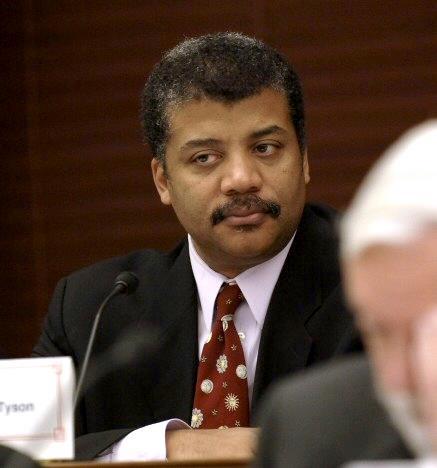
“In 2002, having spent more than three years in one residence for the first time in my life, I got called for jury duty. I show up on time, ready to serve. When we get to the voir dire, the lawyer says to me, “I see you’re an astrophysicist. What’s that?” I answer, “Astrophysics is the laws of physics, applied to the universe—the Big Bang, black holes, that sort of thing.” Then he asks, “What do you teach at Princeton?” and I say, “I teach a class on the evaluation of evidence and the relative unreliability of eyewitness testimony.” Five minutes later, I’m on the street.
A few years later, jury duty again. The judge states that the defendant is charged with possession of 1,700 milligrams of cocaine. It was found on his body, he was arrested, and he is now on trial. This time, after the Q&A is over, the judge asks us whether there are any questions we’d like to ask the court, and I say, “Yes, Your Honor. Why did you say he was in possession of 1,700 milligrams of cocaine? That equals 1.7 grams. The ‘thousand’ cancels with the ‘milli-’ and you get 1.7 grams, which is less than the weight of a dime.” Again I’m out on the street.”

Not a day after word spread that Markus "Notch" Persson, the creator of Minecraft, purchased the most expensive home in Beverly Hills, did someone recreate it in the game that has made him so wealthy.
Moreover, when filming it, Dan Bovey made sure to recreate it shot-for-shot with this piece of real-estate porn advertising the spread.
Bovey says the download for Notch's digs will be coming soon on his page at Planet Minecraft.
Notch created Minecraft, one of the all-time runaway hits of video gaming, and this summer sold the game and his studio, Mojang, to Microsoft for a reported $2.5 billion. He has since left the company.

A self-published erotica author who goes by Valeria O. has written a thinly-veiled work of fiction about Gamergate, in which a video game designer gets gang-raped by a group of men offended by her latest game. Holy shit, Valeria. Holy shit.

Bridgetand to end it on nmh.

The final episode of The Colbert Report aired last night, and though it wasn't the show's finest episode ever, it was a fond, surprisingly moving farewell to one of TV's most ridiculous — and memorable — characters.
"Stephen Colbert," cable news blowhard, bid farewell the only way he possibly could — by riding off into the darkness in Santa's sleigh. If all you want to see is the one moment everybody is talking about, look over here.
But if you want to know everything else that happened, keep reading.
Colbert was joined by Jon Stewart, whose Daily Show brought him to prominence, to sing "We'll Meet Again." They were promptly joined by every celebrity and media personality in existence (including Big Bird!), in a sequence seemingly designed to gently mock other talk-show send-offs that, nonetheless, managed to achieve a sentimentality of its own.
<div>Please enable Javascript to watch this video</div>And that helped build perfectly to the show's excellent, never mawkish climax. Colbert even did a direct, to-camera list of thanks to the people who worked on and watched the show, without breaking character. And it worked.
/assets.sbnation.com/uploads/chorus_asset/file/2732480/Screen_Shot_2014-12-19_at_1.32.39_AM.0.png)
It would be impossible to list all of them. A short list of our favorites, however, would include Doris Kearns Goodwin, Smaug, George Lucas, Paul Krugman, and Sam Waterston, which should give you some idea of how eclectic the lineup was.
If you want more names, we've made you a thorough, though still incomplete, list over here. And if you just want to watch them sing and dance awkwardly, we made you some gifs, too. You're welcome.
Sure. It's on Hulu and the Comedy Central website.
Despite rumors that the man behind the fake host would be ridding himself of that persona entirely (since said persona won't be turning up on his upcoming CBS show), Colbert instead did the opposite. "Stephen Colbert" actually killed death in the final installment of the recurring segment "Cheating Death with Dr. Stephen T. Colbert, D.F.A." This, naturally, resulted in his immortality.
Yep. In the grand tradition of series finales everywhere, Colbert nodded toward some of his show's greatest hits over the years. He opened with The Wørd, a long-running segment that used to be a staple of the program but has been used less and less in recent years. In it, Colbert talks to the audience, with a sidebar offering sarcastic text commentary.
/assets.sbnation.com/uploads/chorus_asset/file/2732476/Screen_Shot_2014-12-19_at_1.07.32_AM.0.png)
It was a fitting way to lead off the final episode of the show, though many of the jokes fell flat. (This is actually a common occurrence for late-night shows that are ending their runs.) It gave Colbert a chance to riff on his history, while also mocking the persistence of the political world that gave him so many jokes over the years.
In the segment's best riff, Colbert said that he had "samed" the world from 2005, rather than "changed" it. After all, another governor named Bush is running for president, people are defending torture on TV, and American soldiers are going into Iraq. The Colbert Report was always at its best when pointing out the dark absurdity of modern life, and this was a pitch-perfect joke in that vein.
You're probably not a regular Colbert Report viewer, it would seem. Unlike its parent series, The Daily Show, The Colbert Report has always had a bit more of a sketch comedy mentality, occupying a constantly shifting space between sitcom and late-night news parody and hitting that mark over and over again with surprising accuracy.
Colbert has always featured not just recurring segments but recurring characters, and he's turned things like his presidential run, or even his inability to get Daft Punk to play "Get Lucky" on his show into something very like story arcs. Yes, all late-night talk shows have their running gags, but The Colbert Report's genius was in wedding those to the current excitement for all things serialized. No, it was never Breaking Bad, but the show's gentle experimentation with the late-night talk show format seems like something the host can push even further with twice the running time on his CBS show, launching next summer.
The episode ended with the now-immortal Colbert meeting Santa on the roof of the building where his studio is located. Santa was joined by Abraham Lincoln (revealed to be a unicorn) and "the man with all the answers," Alex Trebek. Colbert climbed in the sleigh with them and flew off into the night, later delivering his heartfelt thanks with Alex Trebek sitting right there next to him.
It was, ultimately, an elegant way for Colbert to say farewell to "Colbert," without actually bumping the character off. "Stephen Colbert" still exists. He's just now a completely separate fictional entity from the man who played him.
Colbert was already on The Daily Show when Jon Stewart took over hosting duties in 1999, but under Stewart's tutelage, Colbert became the absolutely perfect parodist of cable news's faux seriousness. Yes, he parlayed that into his own show, but Stewart and Colbert have always been joined at the hip in the public consciousness, and not without good reason.
So the final Colbert Report paid suitable tribute to its parent show. It all began with Stewart handing off hosting duties to Colbert one last time, then saw Stewart join Colbert for "We'll Meet Again." And Stewart closed out the episode with one last, "Thanks for the report, Stephen."
The final tribute was an outtake from 2010, of the two just goofing around, trying to get away with a half-assed handoff as the one that would actually make it to television. It was sweet and funny and everything you'd want it to be.
/assets.sbnation.com/uploads/chorus_asset/file/2732472/Screen_Shot_2014-12-19_at_1.42.56_AM.0.png)
The Colbert Report has always been a show that is capable of earnest sincerity but doesn't want to go to that well too often. And yet the TV series finale — even for cynical shows — is almost always a place to be as sincere as possible.
This goes for late-night talk shows, too. Who could forget, for instance, Johnny Carson's heartfelt farewell from Bette Midler (technically in his next-to-last episode, but close enough)? Or Conan O'Brien saying farewell to his brief tenure on The Tonight Show with a deeply felt speech about following your dreams? Or even Jay Leno bringing out everybody who worked on his version of The Tonight Show?
So Colbert and his team had a tough balancing act. They could skew toward sincerity and throw off the mix that had made their program so beloved, or they could skew toward sarcasm and perhaps not allow their most faithful fans a little time to grieve the end of a show they loved.
Truth be told, the writers didn't exactly nail this mixture. The "immortality" gambit was shoehorned into the proceedings, and the jokes could have been sharper. (The bit about the plumber whose truck turned up in the hands of ISIS felt a little too tossed-off.) But roughly everything from "We'll Meet Again" through the ending was so perfectly pitched that nobody's going to care how shaky some of the early material was.
And given the way so many series finales have completely bungled the landing, a mostly successful one is more than welcome.
That bit of wondrousness was Neutral Milk Hotel's "Holland 1945." It's a great song, and you should check it out.
]]>Bridgetthe feels. seriously i can't imagine how exciting it must be for colbert et al to get tapped to do network tv, but the world needs more of this and less stupid pet tricks

The Colbert Report's final episode wasn't particularly eventful for the first 23 minutes or so. Then, Stephen Colbert started singing "We'll Meet Again", brought out Jon Stewart, and then guest after guest, after guest joined in. Like a snowball speeding down a mountain, the number of guests singing along got bigger and bigger.
Our unofficial, possibly never to be completed guest list:
Correction: The original version of this post misidentified Barry Manilow as Rod Stewart. We deeply regret the error.

It's hard to remember a time when Stephen Colbert wasn't a fixture in pop culture. Even after The Colbert Report debuted in October of 2005, he was known more as a sidekick of sorts to Jon Stewart rather than a force in his own right.
Then it all changed. In April of 2006 — a few months after the Report's debut— Colbert took the stage at the White House Correspondents Dinner in character, dispensed with the event's usual jokey yet cordial tone, and completely eviscerated then-President George W. Bush.
"I stand by this man because he stands for things. Not only for things, he stands on things. Things like aircraft carriers, and rubble, and recently flooded city squares," he said. "And that sends a strong message: that no matter what happens to America, she will always rebound — with the most powerfully staged photo ops in the world." Watch the whole thing above.
]]>Bridgetthe video shot by the real estate agency is hilarious. also it looks like he replaced the fucking wine cellar with candy machines.
Bridgetvile
:strip_icc(1)/https%3A%2F%2Fs3.amazonaws.com%2Fpolicymic-images%2Fjwtffwhi1qx0dn6hb4znecvurwi0jwssycmphovsjehfr0dhj2hzitdvwfqt0sl9.jpg)
BridgetOh my god these look awesome.
 Real-life escape games are a new puzzle game trend sweeping Los Angeles. Are you clever enough to escape? [ more › ]
Bridgetfucking Neuschwanstein

Earlier this month, fashion's fanciest gathered in Salzburg for the annual Chanel Métiers d'Art collection. The runway show, meant to showcase the brand's couture bona fides, was held in a palace, featured Alpine-inspired looks and models looped around a centerpiece laden with fruits and sweets. To launch the festivities, Karl Lagerfeld made a short film imagining Pharrell Williams and Cara Delevingne as a pair of glamorous Austrian royals.


If there are two words that probably shouldn’t hang out it’s “robot” and “shark.”
No let’s keep those two trouble-makers separated, shall we? Surely no good can come of that. But since military researchers love nothing more than combining words like “nuclear” and “bomb” and making them into actual, terrible things… lo and behold the Navy’s newest project: the robot shark.
If you want to get technical, the new gizmo is a “UUV” or “Unmanned Underwater Vehicle” but it’s, by all appearances, basically a “Jaws” drone.
Known as the GhostSwimmer (Hey these are some catchy names, Navy… May I suggest the next contraption be called the “Knight Rider”?) the underwater drone is 5 feet long and weighs 100 pounds and is designed to look and swim like a fish.
Potential applications include surveillance, recon, and mine-detection, the latter of which is now sometimes tasked to trained dolphins and sea lions.
Before you get your water-wings in a bunch you should know that this bad boy isn’t in use yet, and probably won’t have rows and rows of unlimited, razor-sharp teeth.
But, according to the Navy, it has passed the testing phase!
Yay?
[Source: Wired]
In the wake of Sony Pictures canceling its release of The Interview , some theaters with actual balls opted to show Team America: World Police as a protest. No such luck. In a truly staggering act of cowardice, Paramount appears to be telling theaters to shut it all down. What the fuck.