Laugh and the world laughs with you; cry, and you cry alone, plus we’re all laughing at you.
Natalie Gomez Dunker
Shared posts
06 Jan 17:01
Teddy Wayne’s Unpopular Proverbs: Crying by Teddy Wayne
Natalie Gomez Dunker likes this
05 Jan 16:27


Los columnistas y el deicidio
by Mario Waissbluth
La prensa impresa de derecha (es decir, casi toda), los partidos de la Alianza, los académicos y periodistas que son “objetivamente desideologizados” pero muy de derecha, los grandes empresarios chilenos (mas no los inversionistas extranjeros), están al borde del ataque de nervios. De leer sus columnas y entrevistas, el país está al borde del colapso económico, la onerosa carga tributaria hará imposible la inversión, los sindicatos se apoderarán de las empresas, la educación caerá completa en manos del Estado y se acabará la libertad de elección, el sistema previsional se destruirá. De aquí a la Cuba de Fidel o la Venezuela de Maduro hay sólo un paso.
Uno de los más inefables apóstoles del mensaje del terror, Héctor Soto, a quien respeto, lo escribió recientemente: “Aparte de ser un gobierno refundacional, como muchas veces se ha dicho, este segundo mandato de la Presidenta Bachelet tiene marcados sesgos antiliberales, estatistas y, más que socialistas, socialistoides, dado que a estas alturas el socialismo es sólo un experimento jurásico”.
UN POCO DE HISTORIA
Chile ha sido, del 73 en adelante, el experimento más neoliberal del mundo en materia de políticas económicas y sociales, implantado a fuerza de bayonetas. Los conceptos de San Milton Friedman fueron pilares centrales, los Chicago Boys sus profetas, avanzados incluso respecto a su época. Esto se complementó con el esencial concepto de subsidiariedad del Estado, que el arcángel mayor Jaime Guzmán definió con pulcritud:
“El Estado es subsidiario no solo respecto del hombre en cuanto tal, sino también respecto de la familia, de los municipios, de los gremios y de todas las llamadas ‘sociedades intermedias’. En el respeto y la adhesión a este principio reside la única posibilidad de conformar una sociedad realmente orgánica. De él se derivan, como lógica consecuencia, el derecho de propiedad privada y la libre iniciativa en el campo económico… que, rectamente entendidas, son, más que fórmulas económicamente eficaces, fieles expresiones de la naturaleza humana y salvaguardia de su propia libertad”.
La responsabilidad por la familia del lector sería en lo esencial suya y de nadie más. Esto significa que, si alguien tiene dinero suficiente, entonces paga el mejor seguro de salud, el mejor aporte al fondo de ahorro previsional y la mejor escuela (con el mayor copago posible) o universidad para sus hijos. Si no lo tiene, no lo hace. Simple. El gasto per cápita en salud o educación privada es cuatro a diez veces superior a su equivalente en el sistema público. Esto también significa que los impuestos deben reducirse al mínimo indispensable, pues la libertad y el emprendimiento es lo que hará prosperar a las personas, libres de ataduras y lastres.
La Concertación, hasta ese entonces “cómplice pasiva” del modelo, hoy rebautizada Nueva Mayoría, se lanzó por la ruta del cambio, rediseño, o ajuste del modelo made in Chicago: reforma tributaria, educativa, laboral, y lo que debiera ser la madre de todas las reformas: cambio al binominal y al financiamiento de la política, piedras angulares que le han permitido a la Penta-elite de todos los colores preservar sus prebendas y el tráfico de influencias necesario para mantener el statu quo. Son las instituciones políticas las que definen las reglas de la economía… y de los abusos.
La libre competencia es la que inducirá la inversión, la mejora de la calidad y la innovación en educación. Por eso, en esta suerte de ley de la selva viene siendo legítimo que una escuela básica concentre a los estudiantes más aventajados y se deshaga de los menos aventajados para así ser más atractiva para los clientes que pagan. Podríamos seguir con numerosos ejemplos, como que la acreditación de universidades debe ser voluntaria, pues no es rol del Estado entrometerse. Ese fue el planteamiento de los “subsidiaristas” cuando se propuso la primera ley de acreditación universitaria en 2005, y así se aprobó en el pareado Congreso.
El “modelo Chicago” ciertamente ha tenido méritos. No en vano Chile ostenta, en comparación con sus congéneres latinoamericanos, la mejor tasa de crecimiento del PIB per cápita, el mejor Índice de Desarrollo Humano del PNUD, el mejor test de PISA, la mayor cobertura de educación media. Entonces, ¿de qué se queja uno? ¿Dónde está el problema?
En el punto de partida. La sociedades chilena y latinoamericana tienen, por centurias, los peores índices del mundo en inequidad de ingresos, segregación de clases y desigualdad educativa. La meritocracia y la igualdad de oportunidades pasa entonces a ser casi una broma cruel, si se considera que deberán correr la carrera de la vida en igualdad de condiciones un niño de clase alta y otro que nació en un hogar vulnerable, con una madre adolescente que llegó a 1° Medio y no entiende lo que lee.
Este ha sido un modelo de crecimiento con inequidad. Un estudio reciente de la U. de Chile señala, sobre la base de datos tributarios, que el 1 por ciento más rico tiene un ingreso per cápita cuarenta veces superior al del 80 por ciento de la población. Este 1 por ciento más rico acumula, al incorporar al cálculo las ganancias de capital: 30,5 por ciento del ingreso de Chile, comparado con 21 por ciento en Estados Unidos, 11 por ciento en Japón y 9 por ciento en Suecia.
La línea divisoria en ingreso per cápita entre el 50% más pobre y el 50% más rico de Chile es, lea bien, afírmese de la silla: 4 mil pesos diarios, sí, 4 mil pesos diarios para comer, vestirse, jubilarse, transportarse (1.5 lucas diarias), alojarse, e ir a hacer cola al consultorio primario. La línea divisoria son 4 mil diarios, y de ahí vamos bajando a 3 y 2 lucas diarias, con los subsidios del Estado para los más pobres e indigentes. Ahí quisiera ver a los evangelistas del modelo, a ver cómo se las arreglan para que sus hijos lleguen a una buena universidad.
En adición a la inequidad de ingresos y oportunidades, está la segregación de toda índole: urbana, escolar, de clases sociales. Aun así, los apóstoles de San Milton Friedman retrucan, con fe ideológica rayana en lo religioso: ¿Y qué importa la concentración del ingreso? ¿Qué importa la segregación? ¿Acaso no les hemos dado acceso al consumo a millones de personas? Sí, es verdad. ¿Y entonces?
LOS ABUSOS, LOS ABUSOS
La ecuación ideológica les falló a los apóstoles por el lado más imprevisto: los abusos, y la profunda desconfianza que estos abusos han generado y siguen generando. Los chilenos, sometidos por más de 30 años y aceptando como el orden natural aquél del Arcángel Guzmán, comenzaron a constatar en una retahíla de casos que este no era un capitalismo normal, “a la europea”, sino que abusivo y salvajemente desregulado en favor de la elite: las repactaciones inconsultas de La Polar, el perdonazo Johnson’s, la megaevasión tributaria de la familia Ossandón Larraín por US$ 400 millones, las colusiones de los pollos y farmacias (y quién sabe cuántas más), el caso Chispas, el caso Cascadas, Juan Bilbao y su tráfico de información privilegiada (que en realidad es una práctica tan generalizada como el aborto inducido con Misoprostol y tratado como “urgencia” en clínicas cuicas y no tan cuicas), las escandalosas comisiones de las AFP, las quejas contra las Isapres, Inverlink. La aprobación de la Ley de Pesca, históricamente grotesca. En el Pentagate, quedó de manifiesto flagrante otro secreto a voces que todos conocemos: el tráfico de influencias por la vía del financiamiento de la política. Somos “la República del doble estándar”, y casi nadie termina ni tres días en la cárcel por sus desmanes.
Uno de los abusos más escandalosos es el que hizo reventar a Chile el 2011. Muchos de sus actores (mas no todos) son los mismos. En realidad es el abuso que cambió la ecuación. La mercantilización salvaje, corrupta y desregulada de la educación superior, aquella que mueve del orden de US$ 5 mil millones al año, con utilidades que, por lo bajo, son del orden de US$ 1 mil millones, abusando asimétricamente de una “clientela” tan desinformada como la de La Polar: más de 1.3 millones de estudiantes, de los cuales el 40% termina desertando y endeudado, y otro 30% termina recibiendo un título tan “de baquelita” que más le hubiera valido no caer en las fauces de algunos traficantes.
Los estudiantes hicieron reventar el país el 2011, y ahí fue cuando quedó en realidad sellada la suerte de la Iglesia de San Milton Friedman. La Concertación, hasta ese entonces “cómplice pasiva” del modelo, hoy rebautizada Nueva Mayoría, se lanzó por la ruta del cambio, rediseño, o ajuste del modelo made in Chicago: reforma tributaria, educativa, laboral, y lo que debiera ser la madre de todas las reformas: cambio al binominal y al financiamiento de la política, piedras angulares que le han permitido a la Penta-elite de todos los colores preservar sus prebendas y el tráfico de influencias necesario para mantener el statu quo. Son las instituciones políticas las que definen las reglas de la economía… y de los abusos.
Dejo constancia que no me identifico con, ni pertenezco a, la Nueva Mayoría. Renuncié a la Concertación en el 2008, no por desacuerdo con una cierta ideología socialdemócrata, que sigo reafirmando, sino por el reiterado estilo de hacer mal las cosas, privilegiar el compadrazgo político, y una tendencia a la demagogia por encima de “hacer las cosas bien”. Este gen quedó demostrado nuevamente este año, con los diseños legislativos apresurados que todos conocemos, y la epidemia de despidos y contrataciones (similar a la de Piñera). Pero la Nueva Mayoría está intentando, con chambonadas y todo, ajustarle las tuercas al modelo, no para navegar en dirección a la Cuba de Fidel ni a la Venezuela de Maduro, sino, oh sorpresa, hacia la normalidad de los países de la OCDE. Nada de lo que se está legislando, con errores y todo, difiere de las prácticas mayoritariamente aceptadas en países capitalistas avanzados.
El DEICIDIO Y LA NECESARIA COMPASIÓN
Para todos los aterrados y aterrorizadores, aquí se está cometiendo un “deicidio ideológico”. Me puedo imaginar perfectamente su catástrofe emocional porque a mí me pasó. Yo fui marxista en mi juventud, y aceptar mis errores me causó un trauma emocional mayúsculo por más de una década. Mis verdades reveladas no eran tales, la Rusia comunista era un error fatal, la dictadura del proletariado era basura.
Para todos los economistas, empresarios y académicos, generalmente formados en colegios y universidades con marcados sesgos ideológicos, que han navegado por 30 años por el mundo, y dictado clases en las aulas, escribiendo artículos, y pontificando en la prensa y en la mesa familiar sobre los éxitos del modelo, reconocer abiertamente que este causó graves inequidades, espantosas segregaciones y una tormenta de abusos, no debe ser fácil.
Se refugian entonces en la teoría del apocalipsis, generan o apoyan CONFEPAs, publican sólo los datos que les convienen, ponen titulares catastróficos y sesgados, incluso incompatibles con el texto de la noticia. Lo malo es que ello conlleva profecías autocumplidas. Los empresarios y sus corifeos tanto claman por la crisis… que ahondan la sensación atmosférica de crisis.
Lo peor que pueden hacer los políticos “retroexcavadores” de la Nueva Mayoría es agredirlos y asustarlos aún más. Por su parte, lo peor que pueden hacer los “aterrorizadores”, por el bien de sus compatriotas, es continuar agravando los mensajes, pues estamos en una situación económica internacional y nacional compleja. Acepten por favor que este es un “deicidio autoinfligido”, porque se les pasó la mano con los abusos y las inequidades.
Chile los necesita a todos, empresarios, académicos, de todos los colores políticos. No para navegar hacia el “estatismo socialistoide”, como dijo mi amigo Soto, sino hacia la normalidad más bien social democrática de la vasta mayoría de los países avanzados. A los megaabusadores, si la ley lo permite y los tribunales lo demuestran, habría que meterlos a la cárcel sin empacho. Y si la ley no lo permite, entonces hay que cambiar las leyes, porque con estos niveles de abuso, no vamos a llegar a ningún lado.
Natalie Gomez Dunker likes this
31 Dec 16:21


montt en dosis diarias - 247
by noreply@blogger.com (montt)
Sofía Henao, Natalie Gomez Dunker likes this
30 Dec 05:59
Crece la violencia y los abusos contra mujeres migrantes en Magallanes
by Michelle Carrère
Tamara acaba de inaugurar su propio local, quince años después de haber dejado la tropical República Dominicana para instalarse en la fría Patagonia chilena. Tamara es parte de una oleada de mujeres, mayoritariamente dominicanas y colombianas, que ha llegado a Magallanes para trabajar en alguno de los rubros que caracterizan a la región: pesca, extracción de hidrocarburos, servicio público…y comercio sexual
Según datos de la Dirección del Trabajo son 53 los locales nocturnos o nightclubs que existen tan sólo en Punta Arenas. Eso, sin contar la gran cantidad de clandestinos. En muchos de ellos se ejerce el trabajo sexual, un oficio que en Chile no está penalizado, pero que tampoco está normado. Una realidad que, en términos legales, está enclavada en tierra de nadie y donde los abusos y violaciones a los derechos fundamentales de estas mujeres están a la orden del día. Tamara pasó por eso y confía en que la apertura de su propio negocio la alejará definitivamente del trabajo sexual.
“AGARRA TU ROPA QUE NOS VAMOS”
 Trabajo sexual e inmigración femenina son dos realidades que suelen entrelazarse en regiones donde existe mano de obra masculinizada, como en las zonas mineras. Un imán para las mujeres que viajan a ejercer allí el comercio sexual, esperando encontrar, como todo migrante, mejores condiciones de vida y, sobre todo, mejores ingresos. Sin embargo, en ocasiones viajan a la espera de una mejora que nunca llegará. Muchas son engañadas, ya sea respecto del oficio que deberán ejercer, como de las condiciones en que lo ejercerán. Así, pueden llegar a encontrarse en situaciones que caracterizan un delito mayor: la trata de personas con fines de explotación sexual.
En el 2004, Chile ratificó el Protocolo de Palermo, un convenio internacional que busca eliminar la trata de personas a nivel mundial. Cuatro años después se creó la Mesa Intersectorial Sobre Trata de Personas, un organismo encargado de coordinar acciones y programas que ayuden a prevenir y reprimir este tipo de delito en el país. Fue en el marco de esta política que se dictó el 8 de abril del 2011 la Ley 20.507, que tipifica la trata de personas. Finalmente, el 2013 la mesa regional de Magallanes dio inicio a un proceso que buscaba coordinar acciones de prevención y sanción de la trata a nivel local.
Según el estudio de la Organización Internacional para las Migraciones (OIM) Investigación sobre Trata de Personas en Chile, hasta 2008Magallanes era la segunda región con el mayor número de casos de trata con fines de explotación sexual. La OIM contabilizaba hasta entonces 20 casos en la región austral, superada sólo por Santiago, con 22. Sin embargo, desde que entró en vigencia la nueva ley, según las estadísticas de la PDI y Carabineros, se ha detectado tan sólo un caso de trata con fines de explotación sexual en la región. La acusada, hoy en prisión, fue arrestada en 2011 mientras viajaba a Río Gallegos, en la Patagonia argentina, acusada de tráfico de mujeres de origen paraguayo.
Más allá de las estadísticas oficiales, muchas mujeres que hoy ejercen el trabajo sexual en el extremo sur de Chile fueron víctimas de trata o tráfico de inmigrantes alguna vez en sus vidas. La llegada de Tamara a Punta Arenas es, de hecho, el desenlace de su huida desde un local nocturno en Argentina donde fue comprada.
Mientras habla, y sin que le tiemble demasiado la voz, aunque levemente desgarrada, Tamara seca sus lágrimas con el pulgar, suavemente, para no dañar el maquillaje: “Una amiga de mi mamá me dijo que podía recibirme en Argentina, en Buenos Aires. Según ella, podía buscarme un trabajo en mi rubro, en lo que yo estudié, mercadotecnia. Pero adivina el trabajo que me había encontrado…”. La mujer cuenta que la llevaron a Río Turbio, una localidad minera argentina fronteriza con Puerto Natales:
-Me habían comprado. Yo no entendía bien. No conocía a nadie. ¡Estaba sola! Me cobraban todo y empecé a sospechar. Hasta que conocí a un chico, el sobrino de la mujer que pagó por mí. Le conté las sospechas que tenía. Él me dijo que no era normal. Llamó a su tía y le preguntó qué pasaba conmigo. Y ella le dijo que sí, que tenía que rembolsar tanta plata, que era lo que ella había pagado por mí. El chico me llevó al local, ¡sacó así un machete! y me dijo: “agarra toda tu ropa que nos vamos”. Él tenía un contacto en Punta Arenas. Me dijo que podía tratar de conseguirme un trabajo. Y así llegué.
Tamara dejó República Dominicana a los 18 años. Estuvo tan sólo un par de años en Argentina y residió otros diez en Punta Arenas. Hoy, a los 32 años, tiene su propio local, una schopería, como se dice en la jerga del comercio sexual. Un tipo de local semejante a un night club, pero con horarios diurnos. Un lugar donde las mujeres deben “compartir” con los clientes e incitarlos a consumir, pero donde no se ejerce el comercio sexual directamente.
Ahora, Tamara trabaja afanosamente en la remodelación de su local, en el que tiene prohibido cualquier actividad que sobrepase el mero “compartir” con el cliente, aunque sus amigas, quienes sí continúan en el oficio, acuden al negocio para enganchar clientes.
Río Turbio, ubicada en la Patagonia argentina, es la ciudad colindante con Puerto Natales. Muchas dominicanas han llegado allí luego de haber pasado un tiempo en Buenos Aires; otras llegaron a Río Gallegos, en la costa atlántica, y a Río Grande, en Tierra del Fuego. Desde ahí, Punta Arenas, Puerto Natales, Chile Chico y Porvenir han sido los destinos próximos en Chile.
 La inmigración de trabajadoras sexuales de origen dominicano y provenientes de Argentina data aproximadamente del 2005, misma fecha en que se dio inicio, de manera general, a la última ola de inmigrantes en Magallanes. Un segundo estudio de la OIM, titulado “Migración, prostitución y trata de mujeres dominicanas en la Argentina”, publicado el 2003, asegura que la inmigración de mujeres dominicanas en Argentina comenzó a ser visible en 1995. La crisis que golpeó a ese país en 2001 y cuyas repercusiones se extienden hasta hoy, habría motivado una nueva migración hacia otros países, entre ellos Chile.
Los itinerarios migratorios suelen ser diferentes para las mujeres provenientes de Colombia. Generalmente originarias del valle del Cauca, al contrario de las dominicanas, sí pasan por Santiago. Muchas de ellas llegan primero a la zona norte del país, desde donde comienzan a descender hasta llegar a la Región de Magallanes. Es el caso de Camille, por ejemplo, una trabajadora del local Reinas de la Noche, quien solía ser temporera en San Fernando. Cansada de un rubro mal pagado, extenuante y donde era víctima recurrentemente de acosos sexuales, decidió dedicarse al comercio sexual.
El envío de remesas para sus hijos es la principal motivación de Camille para trabajar en el rubro. Es un oficio que la mayoría de las mujeres colombianas que lo ejerce califica de momentáneo, con la esperanza de mejorar rápidamente y de manera considerable la calidad de vida de sus familias, y poder así volver cuanto antes junto a ellas. Sin embargo, el costo que deben pagar suele ser alto:
-La gente dice que trabajar en esto es ganarse la plata fácil. Pero ellos no saben… trabajar en la noche no tiene nada de fácil -dice Karina, una trabajadora del mismo local que, con apenas 20 años, espera en la cocina envuelta en una frazada que sea medianoche para ponerse sus tacos y salir al salón.
De las dificultades del oficio, Tamara puede dar fe. Hoy, debido a su independencia laboral, puede hablar sin miedo de cómo funcionan los night club y de los abusos que las mujeres soportan. Desde violencia verbal hasta privación de libertad, la gama de faltas a los derechos fundamentales de estas mujeres es amplia. En algunos casos los abusos podrían ser tipificados como “trata de personas” por el sistema penal. Sin embargo, numerosas otras formas de violencia justifican el uso del término “esclavitud moderna”. Abusos perpetrados a diario en locales nocturnos, tanto legales como clandestinos, sin que sean investigados ni sancionados.
UN SECRETO A VOCES
Sara reside en Chile desde hace un par de meses. Al igual que Tamara, dejó República Dominicana para instalarse en Buenos Aires, luego en Rio Turbio y finalmente en Puerto Natales. A su llegada trabajó en una schopería de la ciudad, donde también vivió durante cuatro meses de invierno. Un pequeño cuarto ubicado al fondo del local, sin calefacción.
Como Sara, la mayoría de las mujeres que labora en el comercio sexual vive en su lugar de trabajo. Esto les permite ahorrar el dinero correspondiente a un arriendo y sumar ese monto a la remesa que envían a sus familias. Sin embargo, la dependencia habitacional que se establece con el empleador puede dar pie a situaciones de insalubridad habitacional u otras malas condiciones, como soportar, sin calefacción, los 10 grados bajo cero que en invierno puede alcanzar la noche magallánica.
Esta dependencia también facilita las condiciones para los abusos en la extensión de las jornadas laborales. La doble función que cumple el local nocturno, como espacio laboral y habitacional, hace que las mujeres lleguen a trabajar fácilmente hasta 15 horas diarias.
La violencia económica y el fraude también son característicos del tipo de abusos que se comenten en el rubro. Es recurrente que los empleadores de locales nocturnos no cumplan con el pago de las cotizaciones de sus trabajadoras. Manuel Orellana, encargado de la residencia de extranjeros de la Gobernación de Magallanes, asegura que la cantidad de “garzonas” sin protección social es muy elevada.
 En otros casos, según señalan las mismas trabajadoras, los empleadores obligan a las “garzonas” a reembolsarles el pago de las leyes sociales. El costo de Fonasa, AFP, seguro de cesantía y hasta seguro de accidente corre por cuenta de las mujeres. Peor aún, mientras éstas pagan a sus empleadores el monto de sus propias cotizaciones, el Estado rembolsa a sus patrones parte de éstas. Los empresarios de la Región de Magallanes tienen la posibilidad de beneficiarse del Decreto Ley Nº 889 de bonificación a la contratación de mano de obra. Un decreto que permite el reembolso de un 17% de las cotizaciones y que busca incentivar la contratación en las regiones extremas del país. En definitiva, la mujer le paga al Estado y éste le reembolsa al empleador.
Aparte de las cotizaciones, numerosos otros pequeños montos son rebajados de las ganancias de las trabajadoras.
-Si la cuenta de la electricidad aumentó respecto del mes pasado, las chicas tienen que pagar una multa. Si es que utilizó la lavadora para lavar su ropa, si es que un día no trabajó porque se sintió enferma, por todo tienen que pagar las chicas. Por eso hay algunas que vienen a lavar sus cosas acá -cuenta Tamara.
Si bien estos abusos no son cometidos de manera sistemática por todos los dueños de locales nocturnos, todo el mundo en la región parece estar al tanto no sólo de la existencia de estas violaciones, sino también de los lugares donde se cometen. Incluso el ya citado responsable de extranjería de la Gobernación de Magallanes, Manuel Orellana, quien no se encarga de los trámites administrativos de la provincia de Última Esperanza, sabe que en el “Embassy”, uno de los locales más concurridos de Puerto Natales, las mujeres trabajan en condiciones laborales que incluso podrían ser consideradas como restricciones a la libertad.
“Yo en ese lugar nada más duré dos semanas. Luego me vine para acá”, asegura una ex empleada del “Embassy”. A la pregunta del porqué, responde con un silencio que parece confirmar las denuncias de Valeria, otra trabajadora sexual de Puerto Natales: “Esta chica no va a hablar por miedo (…) Su patrona es de lo peor. Les controla a las chicas hasta la salida. Sólo pueden salir un momento del local para ir a comprar sus cosas. Pero las controla con reloj. Una vez ella se pasó del tiempo y no la dejó entrar, la dejó en la calle de noche”.
La situación de Francisca es complicada. Observa con cierta desconfianza. No quiere saber nada de preguntas. Sólo habla del pasado: de su hija, que la espera en Dominicana en una casa “con piso de tierra”; de Argentina, donde dice haber “vivido demasiado”, y de otras ciudades de Chile, “por allá”, maraña de “pueblos perdidos” donde también “pasa de todo”. Pero del presente, ni una palabra. Del “Embassy” sólo regala una mirada que se pretende inocente, seguido de un “mejor invítame un trago, mi amor”.
 Faltas en el pago de las cotizaciones, abusos en la extensión de la jornada laboral, condiciones habitacionales insuficientes, cobros irregulares, privación de libertad, todo sumado a una constante violencia verbal por parte de algunos empleadores, además de fraude al fisco. Si bien no todos los abusos son equivalentes, puesto que algunos tienen una mayor gravedad que otros, la importancia radica en su carácter acumulativo y reiterativo. La trata de personas –al igual que otras formas de violencia, sobre todo de género– se caracteriza por esta acumulación. Suma de deudas que atan económicamente a la víctima a su empleador, suma de humillaciones que fragilizan psicológica y emocionalmente, suma de circunstancias que le hacen creer que no está protegida por la ley, o que la ley no se aplica, o peor aún: que la ley es nociva.
Hoy todas estas vejaciones son perpetradas regularmente en la Región de Magallanes ante la mirada indolente de autoridades y de la sociedad civil. ¿Cuáles son las razones para que estos delitos se cometan bajo una total impunidad?
FALTA DE FISCALIZACIÓN
Tres son las instituciones encargadas de fiscalizar los night clubs y schoperías: Carabineros, PDI e Inspección del Trabajo. Mientras la policía uniformada se encarga de revisar patentes de alcohol y que no haya menores de edad al interior de los locales, la policía civil fiscaliza que las trabajadoras inmigrantes tengan su documentación al día. La Inspección del Trabajo, cuya labor, entre otras, es fiscalizar el cumplimiento de las normas laborales, previsionales y de higiene y seguridad en el trabajo, se limita a controlar contratos que todo el mundo sabe que son falsos -incluidos los mismos inspectores-, un cuaderno de asistencia cuya información es igualmente falsa y cotizaciones que no han sido pagadas por quien corresponde.
El director regional del Trabajo, Francisco Parada, consciente de las precarias condiciones habitacionales y laborales en que a veces se encuentran las trabajadoras sexuales, se lamenta de la falta de instrumentos legales y técnicos para poder controlar esta situación:
-La Inspección del Trabajo no tiene la facultad para investigar sin que haya una denuncia previa o sin que haya un requerimiento de parte, es decir, una solicitud de investigación por parte de un tribunal-explica.
 Parada asegura que la ambigüedad legal de la prostitución da cabida a todo tipo de abusos. Cree que su regularización permitiría, eventualmente, realizar un control efectivo en los locales y proteger a las mujeres que hoy son víctimas de violencia. Al respecto, Carolina Rudnick, coordinadora de la Mesa Intersectorial Sobre Trata de Personas, asegura: “Si tú prohíbes el comercio sexual, lo que generas son situaciones de focos de cultivo de trata, porque la clandestinidad aumenta la vulnerabilidad de la víctima”.
Dos son los cuerpos legales en Chile que se refieren al trabajo sexual: el Código Penal y el Código Sanitario. Mientras el primero no prohíbe la prostitución, salvo que se trate de menores de edad o que haya “trata de personas” de por medio, el Código Sanitario sí prohíbe, en su artículo 41, los “prostíbulos cerrados o casas de tolerancia”. En definitiva, el trabajo sexual puede ejercerse sólo de manera independiente, pero no de manera organizada en un lugar específico, como en un night club.
Sin embargo, según Carolina Rudnick, la ley chilena no intenta ser “prohibicionista”, como en Estados Unidos o China, por ejemplo, donde la prostitución es perseguida, sancionada y considerada delito. Pero tampoco la considera un trabajo, como en los sistemas “reglamentaristas” de Holanda y Dinamarca, por ejemplo. Según los abogados Carolina Sáez y Fabián Aravena, en uno de los pocos estudios jurídicos sobre el sistema chileno[1], nuestra ley se asemeja a un tercer tipo, denominado “abolicionista”, donde no se persiguen penalmente a las trabajadoras sexuales, pero se busca erradicar la prostitución, pues es considerada una forma de violencia contra la mujer.
Del abolicionismo, Chile sólo rescata la despenalización del trabajo sexual. Si ha habido planes para erradicarlo, éstos definitivamente no han tenido resultado. Por el momento, la legitimación del engaño en los contratos de garzonas deja oculta la realidad laboral y habitacional en la que se encuentran las mujeres que trabajan en los night clubs, e incólume la hoja de vida de los locales. Así lo explicita la jefa de la Inspección Provincial de Última Esperanza, Gabriela Álvarez, al asegurar, con una leve sonrisa avergonzada al referirse a los locales nocturnos, que “ellos nunca dan problemas”.
Ante la falta de instrumentos y facultades de fiscalización, la responsabilidad de dar cuenta de los abusos queda en manos de las víctimas: si no hay denuncias, no hay nada. El problema, como lo explica Cristián Cornejo, subcomisario de Policía Internacional, “es que las mujeres no denuncian”.
LA IMPOSIBILIDAD DE DENUNCIAR
Karina lleva puesto un dos-piezas rosado, compuesto de un peto y una minifalda con un juego de cuerdas cruzadas en las caderas. No se maquilla mucho, “porque envejece la piel”. Sobre un gran closet lleno de sensuales vestidos, peluches y pijamas, hay dos maletas rosadas. Un mueble lleno de chucherías: una cajita en forma de corazón donde guarda sus aros, un conejo de peluche, una botella de aguardiente colombiana. En la pared, una cruz hecha de billetes: pesos colombianos, argentinos y chilenos como una corona de espinas. En la cabecera, fotos: ella, más joven aún, y “la foto de mi hija de reverso…, es que la doy vuelta porque no me gusta que me vea cuando trabajo”.
Karina, como muchas mujeres, no puede darse la libertad de hablar abiertamente sobre los males que la aquejan. De hacerlo, pondría en riesgo su proyecto migratorio. Al igual que otras mujeres inmigrantes que trabajan en el comercio sexual en la región, busca obtener la permanencia definitiva. Un carnet que representa “la libertad (…), la independencia para ir adonde quieras”, explica Tamara. Con excepción de las personas que tienen la nacionalidad de alguno de los países del Mercosur (Colombia y República Dominicana no son parte), todas deberán primero obtener una visa sujeta a contrato durante dos años consecutivos con el mismo empleador. La estabilidad laboral es un requisito indefectible para solicitar la permanencia, según la información entregada por las gobernaciones de Magallanes y Última Esperanza. Si el contrato es interrumpido, cualquiera sea la razón, la mujer tendrá tres meses para encontrar un nuevo trabajo y renovar su visa, pero deberá empezar a contar desde cero, pues el tiempo trabajado entre un empleo y otro no es acumulable. Así, las mujeres prefieren soportar dos años de maltratos para lograr lo antes posible la anhelada libertad que entrega la permanencia definitiva.
 Tamara también tiene experiencia al respecto: “Una vez estuve en Chile Chico.Yo conozco todo por aquí. Estuve en Coyhaique, en todo Aysén. Y en los pueblos chicos es donde hay más abusos. Tú tienes que tramitar tu visa en la Gobernación y después en la PDI. Y en los pueblos chicos es más complicado. Luego de dos finiquitos te rechazan la visa (sujeta a contrato). Aquí en Puerto Natales es así. En Punta Arenas, no. Pero aquí no te dejan pasar varios finiquitos. Y por eso las chicas tienen que aguantar cualquier cosa, porque sino después se quedan sin trabajo, y como no les renuevan la visa, se quedan sin papeles. Hay mucha corrupción. Los de la Gobernación te dicen: con 150 lucas te hago pasar la visa. A mí me dijeron eso. Y me dijeron 150 lucas porque no quise pagar de otra forma. Porque no era plata lo que quería. Y como yo le dije que no, me dijo 150 lucas”.
Así, a la estabilidad laboral exigida se suma la corrupción de las autoridades. “Eso que dicen que la policía en Chile es intachable… eso no es así”, dice Cassandra con una risa medio burlona. “Acá el primer contacto que las chicas tienen con la policía es en el local”. La gran variedad de locales nocturnos que ofrecen Punta Arenas y Puerto Natales abarca diferentes clientelas. Están los night club donde van los pescadores, aquellos donde llegan los campesinos, los que reciben a una clientela más adinerada y los que acogen a funcionarios, carabineros y PDI. Por ejemplo, el local “Embassy”, reputado por la belleza de las chicas que ahí trabajan, pero también por el maltrato que éstas reciben, es el lugar recurrente de policías. “Ahí ellos llegan y de beso saludan a la dueña”, asegura Cassandra.
Aparte del frágil estatus migratorio, de la corrupción y del impacto de esta controvertida figura de cliente-policía, el miedo a quedar excluidas del comercio sexual es la última razón por la cual las mujeres que son víctimas de violencia no denuncian a sus empleadores. De hacerlo, serían inmediatamente catalogadas de problemáticas entre los dueños de locales nocturnos. Encontrar trabajo en la competencia con esa reputación es prácticamente imposible. Terminarían trabajando en clandestinos, sin un contrato que les permita obtener una visa, poniendo en riesgo su integridad física y pudiendo ser deportadas en cualquier momento.
Todas las razones para no denunciar confluyen en la preocupación de conservar el permiso de estadía en Chile, lograr la permanencia y sacar adelante el proyecto que las hizo dejar sus hogares y familias. La ley de inmigración es, al final de cuentas, la mayor determinante.
PAREJA, EMPLEADOR Y PROXENETA
La Ley de Migración en Chile permite reducir el tiempo de espera para la obtención de la permanencia definitiva a un año en el caso de demostrar un mayor arraigo con el país. Sirve tener un segundo empleo, siempre y cuando éste no interfiera con los horarios de trabajo del primero. Muchas mujeres establecen, así, contratos como asesoras del hogar con sus parejas. Hombres que han conocido en los mismos locales nocturnos donde trabajan,y que les entregan la posibilidad de vivir fuera del night club y obtener su visa permanente en tan sólo un año. Sin embargo, esta solución para acortar el camino es frecuentemente traicionera y termina por constituir una nueva fuente de violencia. Las mujeres ya no sólo son víctimas de abusos laborales, sino también conyugales.
Katiuska Muñoz, abogada de la casa de acogida del Prodemu en Puerto Natales, asegura que “son agredidas física y psicológicamente por sus parejas. Las humillan constantemente, reprochándoles el trabajo que realizan en los locales donde las conocieron, o incluso las mandan a trabajar ahí para que aporten con dinero”. Además, es frecuente que los hombres se queden con las ganancias que las mujeres logran hacer. La dependencia de las mujeres hacia esta figura de pareja-empleador-proxeneta es triple: administrativa, puesto que requieren de este segundo contrato; económica y, finalmente, afectiva:
-Yo tengo una amiga, su novio se queda con todo lo que ella gana y le pega duro. Yo le digo que lo deje, pero ella dice que no, que está enamorada -explica Tamara.
En diciembre del 2010 se promulgó la ley contra el femicidio en Chile. Tres meses después ya se contabilizaban dos mujeres extranjeras asesinadas en la Región de Magallanes. Ambas eran dominicanas y tenían visas sujetas a contrato; eran jóvenes (27 y 33 años) y tenían hijos. Las dos fueron asesinadas por sus respectivas parejas: 20 puñaladas en el primer caso, 30 en el segundo. A pesar de las similitudes de ambos crímenes, entre ellas su carácter pasional, el Ministerio Público declaró, según el diario El Pingüino, que “no existen características en común en cada uno de los hechos, y obedecen más a las circunstancias del momento que a un patrón de conducta en la región”[2].
No es posible saber si estos asesinatos, y los que vinieron después, fueron o no perpetrados dentro de la figura contractual de la pareja-empleador-proxeneta. Los organismos públicos, principalmente el Sernam, actúan la mayor parte del tiempo sobre la urgencia, sin posibilidad de realizar una investigación que pueda detectar casos de proxenetismo, trata de personas con fines de explotación sexual u otras formas de esclavitud moderna. Tal es el caso de Nancy, una mujer de origen ecuatoriano que llegó en primer lugar a Santiago, donde tenía, al igual que Tamara, una familia que podía acogerla. Luego de un tiempo en la capital se mudó a Puerto Natales, donde su “tía” le aseguraba tendría un empleo.
-Le dijo que no tenía que preocuparse de nada, que aquí en Puerto Natales la recibirían. Pero cuando llegó, resultó que el trabajo era en un local nocturno, en el local que se quemó. Me dijo que había llegado engañada, que ella no sabía en qué iba a trabajar. Cuando llegó, me decía que no conocía a nadie, era joven, no sabía qué hacer-asegura la abogada Katiuska Muñoz.
Nancy llegó a la casa de acogida del Prodemu pidiendo ayuda, pues su pareja y padre de su hijo la agredía y había amenazado de muerte. A pesar de sus declaraciones, las que daban cuenta de una eventual transacción financiera por su traslado, no se llevó a cabo ninguna investigación al respecto. El Prodemu estaba sobre todo concentrado en alejar a Nancy rápidamente de su cónyuge. Según la versión de Katiuska Muñoz, la mujer era además explotada económicamente por su pareja. La abogada nunca supo si existió un contrato de por medio (Ecuador tampoco es parte del Mercosur), y ninguna investigación se realizó por explotación sexual ni “trata”.
 Al final de cuentas, ante la imposibilidad de ejercer en otro rubro y la incapacidad del Estado para asegurar su integridad física, Nancy abandonó el país, regresando a Ecuador en peores condiciones que cuando lo dejó.
La urgencia no es la única razón que explica la incapacidad de los organismos públicos para detectar casos de trata de personas con fines de explotación sexual. Carolina Rudnick y el responsable de la Dirección del Trabajo en Magallanes, Francisco Parada, coinciden en que la falta de articulación en el traspaso de información entre los distintos organismos públicos permite que casos como los de Nancy no sean detectados o no sean abordados a tiempo. Según ellos, para que dicha articulación exista, debe haber una sensibilización previa al problema.
La mesa intersectorial busca justamente sensibilizar a diferentes agentes del sector público y privado respecto de la trata de personas y de los métodos para combatirla. Lamentablemente, en Magallanes los resultados no han sido satisfactorios. Si bien ha habido iniciativas por parte de otros organismos, como la Gobernación de Punta Arenas y los Seremis de Justicia y Salud, la mesa regional, desde su creación en septiembre del 2013, no ha hecho absolutamente nada. Los miembros no se han vuelto a reunir, no se ha levantado ningún plan de acción ni se han realizado nuevas capacitaciones para comprender mejor el problema de la trata. Peor aún, Gloria Brigardello, coordinadora de la mesa regional, parece haber olvidado incluso en qué consiste, en términos legales, la “trata de personas”:
-No sé cómo está definido el delito. No sé si existen condiciones ni menos hemos conversado con gente que esté más cercana al tema. No hemos conversado nunca con alguien que haya vivido esa situación -asegura.
EL FUTURO DEL COMERCIO SEXUAL EN MAGALLANES
El suplemento Análisis del diario El Pingüino, del domingo 20 de julio del 2014, predice en su título, tal vez sin saberlo, el futuro del trabajo sexual en la región: “Los hidrocarburos renacen en Magallanes”. La relación entre trabajo sexual e industria extractiva es bien conocida. De hecho, hay una amplia bibliografía al respecto; entre ellos, algunos estudios realizados en Chile, como un proyecto Fondecyt a cargo de los investigadores Jorge Pávez y Pablo Rojas[3]. La clave de dicha relación está en que la industria extractiva moviliza una mano de obra masculinizada que incita a la proliferación de night clubs, schoperías, “casas de tolerancia” o cualquier otro lugar donde se comercialice el cuerpo femenino.
En la región de Magallanes la oferta y demanda de sexo de pago se encuentran gracias a dos migraciones paralelas: una interna, masculina, destinada a ejercer en las grandes faenas del sector extractivo y donde los derechos deben ser claramente respetados, y otra transnacional, femenina, a disposición del placer sexual de los primeros y donde incluso los derechos fundamentales suelen ser transgredidos.
En cuanto a la “oferta”, según Vilma Garay, una prolífica propietaria de night clubs en la región, ésta es abundante. Hace unos años atrás era difícil encontrar mujeres que quisieran trabajar como “garzonas”. Hoy en día, en cambio, “me llegan mails con fotos”, dice Vilma. “Ya no tengo espacio para tantas mujeres”, agrega.
Actualmente, la cantidad de mujeres que trabaja en el rubro es desconocida, pero hay un dato, aparte del aumento de la demanda, que podría explicar por qué Vilma, como otros propietarios, está recibiendo tal número de candidaturas. El 2012, por decreto presidencial, se clausuraron todos los locales nocturnos en Argentina. La ley, denominada Prostíbulo Cero, buscó justificarse como una lucha contra la “trata de personas” y la explotación de la mujer. Sin embargo, hay claramente resultados contrarios a este interés inicial. Desde su aplicación, un número desconocido pero relevante de mujeres ha buscado desesperadamente abandonar ese país.
Según lo explican mujeres provenientes de Argentina que hoy viven en Chile, todas intentan huir de las consecuencias negativas de la ley: la precariedad económica en que se encuentran por la falta de recursos; el trabajo sexual callejero, actualmente en aumento y particularmente difícil de soportar y de alto riesgo; los locales clandestinos, donde la inseguridad y los abusos son más recurrentes, y las violencias físicas y verbales hacia las trabajadoras sexuales, que, al parecer, también habrían aumentado en Argentina.
Aparte de las ya citadas, hay un efecto colateral de mayor gravedad. La necesidad que tienen las trabajadoras sexuales de salir de Argentina, sobre todo las extranjeras, puede aumentar el número de víctimas de “trata” o tráfico hacia otros países, entre ellos Chile; sobre todo hacia regiones donde hay una alta demanda de servicios sexuales, como Magallanes. Francisca Vidal González, hasta el momento la única persona condenada en Magallanes por trata de personas, fue arrestada en el paso fronterizo Monte Aymond mientras viajaba, justamente, hacia Río Gallegos, en la Patagonia argentina.
Actualmente, en Magallanes no hay instrumentos de fiscalización adaptados al comercio sexual, las mujeres tienen miedo de denunciar y las personas encargadas de coordinar planes de lucha contra la “trata” a nivel regional no han respondido correctamente a las consignas entregadas por la Mesa Intersectorial Sobre Trata de Personas. En definitiva, no están las condiciones para hacer frente a esta eventual migración, desde Argentina, de mujeres en condiciones de vulnerabilidad. Al contrario, están todas las condiciones para que una gran mayoría de casos de trata con fines de explotación sexual pase inadvertida frente a las autoridades, a pesar de la gran visibilidad que caracteriza el comercio sexual en Magallanes.
Tal vez ésta sea una de las mayores contradicciones del trabajo sexual, tanto en Magallanes como en el resto del país: su visibilidad e invisibilidad simultáneas. Se ve en todos lados, pero no se sabe nada de los abusos. El problema no es sólo regional. La Fundación Margen es actualmente el único organismo en Chile que lucha por la defensa de los derechos de las trabajadoras sexuales. Nadie más se interesa directamente en el asunto. Y sin embargo, según Herminda González, presidenta de Margen, la prostitución en Chile es algo común, histórico y transversal: “Cliente puede ser un senador, un diputado, un profesor, un obrero, un tipo de la tele, un policía, tú… cualquiera”.
Todo hombre es un potencial cliente y sin embargo nadie sabe nada, nadie dice nada, nadie se cuestiona, indaga, pregunta. En definitiva, el trabajo sexual en Chile no ha sido abordado con la importancia que requiere. El marco legal que lo regula es definitivamente pobre, lo que coarta la capacidad fiscalizadora de los organismos públicos. Peor aún, si consideramos que muchos policías y otros funcionarios son a la vez clientes, las instituciones públicas llevan dentro parte del problema. La Mesa Intersectorial Sobre Trata de Personas ha dado últimamente un nuevo impulso, invitando a otros organismos del Estado a preocuparse, al menos de manera indirecta, por la situación de las trabajadoras sexuales en Chile. Ahora hay que ver si dichas instancias responderán al llamado o, al contrario, seguirán esquivando el asunto como lo han hecho hasta la fecha.
Vea a continuación un avance del documental que originó este reportaje y que es realizado por Michelle Carrère y Cristián Carrère
[1]Sáez, Carolina; Aravena, Fabián “El derecho a ejercer el comercio sexual en Chile”. V Congreso Estudiantil de Teoría Constitucional de la Universidad de Chile, Santiago, 2008.
[2]http://elpinguino.com/noticias/117774/Los-cuatro-homicidios-que-han-remecido-a-Magallanes-en-2011
[3]Proyecto de investigación FONDECYT 11080269: “Trabajo minero y trabajo sexual: configuraciones materiales y discursivas de las relaciones de sexo/género en las ciudades mineras del norte de Chile”.
N. de la R: Este artículo fue modificado el 30 de diciembre de 2014.
Natalie Gomez Dunker likes this
23 Dec 17:36


Jorge Baradit y la indignación por el caso de Martín Larraín
by Felipe Saleh
Esto posteó en su Facebook el escritor Jorge Baradit, a propósito del fallo que absuelve al hijo del ex senador y presidente de RN, Martín Larraín:
Este tipo mató a una persona mientras manejaba borracho, huyó del lugar y les pidió a sus amigos que mintieran por él.
Cuando la evidencia se hizo insostenible, manipularon la alcoholemia, se metieron en la autopsia, presionaron a testigos, hostigaron a la familia del muerto y finalmente la compraron para que retirara la demanda civil, la más grave.
El problema no es si somos o no iguales ante la ley, la desigualdad está en que el poder y el dinero compran bufetes de abogados millonarios que harán TODO para liberarte de cualquier cargo (y me refiero a TODO).
Lo único bueno de todo esto es que por fin toda esta mierda no se está haciendo bajo cuerdas, entre gallos y medianoche, con la simple llamada a uno de esos amigos del Club. Al menos tuvo que pasar por la exposición pública, por la vista de todo el país.
El regalo de Navidad del Estado chileno para nuestro país es absolver de todo cargo a Martín Larraín. Sepan que podrá manejar desde hoy mismo.
Si esto no indigna, si esto no hace entendible que la gente quiera tomarse la justicia por sus manos, que algunos desaforados incluso quieran romperlo todo a punta de bombas, que no les importe lo que les pase a los poderosos de este país y que celebren cuando una persona o institución poderosa sufre algún traspiés… nada lo hace. No levanto ni por un instante el dedo contra quienes golpean de vuelta a los poderosos, la indignación está alcanzando niveles insoportables.
Natalie Gomez Dunker likes this
20 Dec 02:58
You're Invincible, Don't Worry!
Natalie Gomez Dunker likes this
18 Dec 15:49
Product Review: The Invisible Backpack of White Privilege from L.L. Bean by Joyce Miller
[Originally published December 18, 2014.]
- - -
- - -
The Invisible Backpack of White Privilege is pretty decent, I guess. I’ve had one as long as I can remember. My parents said it just showed up in the mail when I was born, and L.L. Bean’s policy is to replace the backpack for free if it ever breaks, so I don’t have anything to compare it to. It’s $8 extra to get your initials monogrammed, which I personally think should be free of charge. The backpack comes in different colors, more recently Irish, Italian, and Buffalo Plaid.
The Invisible Backpack of White Privilege is great for carrying questionable things like weed, Ponzi schemes, and sex crimes. I have lived in dense urban areas my whole life, and the cops never once search my Invisible Backpack. Then again, that’s probably just because, like people always tell me, I have a really trustworthy vibe as a person.
My roommate Sam has a visible backpack from The North Face, which he says cost him so much that he and his family are still paying for it, whatever that means. Personally, I prefer function over trend. Sam had the nerve to suggest that if I were to trade my backpack for his backpack, I’d see what he means. I told him if he’s really that dissatisfied with his own backpack, he should just return it to the store and buy one like mine instead of criticizing me all the time, because from what I can see, my backpack’s only advantage is that it comes with a more positive attitude and frugal spending habit than all the other backpacks. He got really quiet and things between us have grown uncomfortable.
The backpack also includes one or more upwardly mobile forefathers who had special opportunities to garner and accumulate family wealth during times of legalized overt discrimination against people without Invisible Backpacks. According to the L.L. Bean catalogue, my great-grandfather was “A poor country boy who put himself through Harvard in the 1800s and worked incredibly hard to build a fortune on nothing but his own merits.” I guess that’s one of the backpack’s cooler features, but it’s not like it changes the fact that I have to do the work of picking up and putting on and walking around with a backpack on my back, just like anybody else.
The Invisible Backpack of White Privilege is by no means immune to hardship. As an inner-city youth, my artist mom and small business-owner dad struggled financially with no margin for luxury. Having one of the shabbiest Invisible Backpacks at private school and college gave me a complex, and I perpetually felt like “a poor boy in a rich boy’s school,” to quote F. Scott Fitzgerald.
In fact, The Invisible Backpack contains the complete works of F. Scott Fitzgerald, along with the Western Canon, largely written by people with my same Backpack. In rough weather, it’s handy to have a rich literary tradition to provide a validation of selfhood verging on the grandiose. Combined with a detachable Gore-Tex underdog mentality that serves to justify the backpack’s pathological egotism, it often makes me consider writing a novel of my own. Should I choose to do so, the Invisible Backpack of White Privilege comes with the instructions and encouragement to create a writing career/funny video/indie band/online satirical essay based on various unpleasant situations experienced while wearing the backpack.
The Invisible Backpack of White privilege can occasionally get pretty heavy. Its one design flaw is a hidden zipper compartment on the bottom containing anonymous multitudes slaughtered in the name of Western Civilization, yet I have no idea who these people are or where they come from. I inquired about it with an L.L. Bean customer service representative, who seemed to know nothing about the product. Thankfully, the manager was very familiar with the demands of my backpack, and explained to me that without this secret pocket, the backpack could not exist. It is a burden I complain about often, but could never imagine actually taking off.
A nice little detail about The Invisible Backpack is its built-in cosmetic mirror. The mirror enforces the basic conformity of my facial structure to an arbitrarily Caucasian globalized standard of looks. When I gaze into this mirror, it fills the void of human longing with the subconscious Pavlovian reassurance: I am a valued citizen, I can have love. Regardless of weight, age, injury, disability, a thoughtful nature, and other characteristics alienated by modern society, I can strain my features to approximate an internalized construct of what advertising defines as the default human face. I can garner instant trust and acceptance despite countless unexamined character deficiencies. Deficiencies such as always wearing a backpack, even in the shower.
All in all, The Invisible Backpack of White Privilege is a satisfactory product. To be completely honest, I kind of have trouble connecting with people who don’t own one. I’m giving 2 out of 5 stars because I have really high standards. I’d give 3 stars except there’s no mesh water bottle holder on the side (wtf). I am a big fan of L.L. Bean and just ordered the Heteronormative Long Johns as a Christmas gift for my daughter.
Natalie Gomez Dunker likes this
17 Dec 09:02


11 Imaginary Inventions That Should Totally Exist
by Abraham
Sometimes an idea is both relatively simple and extremely awesome, and then you look around and you realize it doesn’t exist. The more enterprising among us would respond to this absence of awesomeness by making their idea happen. The rest of us just sit back and wonder when these enterprising friends are going to get started so we can start using their ideas.
Ideas like these, perhaps…


Via: Imgur
Natalie Gomez Dunker likes this
11 Dec 01:47


I Grew Up in Guantanamo and Time Has Left Me Behind
by Fahd Gazy, Huffington Post
Fahd Gazy has been illegally detained at the base since he was 17 years old.
Editor's Note: Fahd Ghazy has been illegally detained at Guantánamo since he was 17. He is now 30 years old and has been cleared for release since 2007. He is represented by the Center for Constitutional Rights.
To begin, please forgive me for not saying the right things or making the right points. There are different cultures between us and many different experiences.
It hurts me that I do not have the privilege to express myself. I want to have the honor to speak out in my own voice and reach you directly—you who are thinking people. I want to say thank you for caring. You are willing to view me as a human being and that is something so precious to me.
My exposure to the world came through Guantanamo. I was 17 when they sent me here. At that time, I had rarely seen a television or heard a radio. Every significant event in my life, from funerals, to my own wedding, to the birth of my beloved daughter, Hafsa, happened in the Diwan of my own home. Now I am almost 31.

That means I grew up in Guantanamo. I grew up in this system. I grew up in fear. I hope that helps you to understand me.
I hope I will be heard.
Here, at Guantanamo, I am never heard. I am only ignored. In 13 years of imprisonment without charge, I've never been able to tell anyone who I really am.
I am not ISN 026. That is the government's number.
My name is Fahd Abdullah Ahmed Ghazy. I am a human being -- a man -- who is loved and who loves.
--
I wish I had the ability to describe the passage of 13 years at Guantanamo. My own mind shuts down when I try to think about it. And I have no words that can make you truly understand.
In that time, I have lost so much both here inside the prison and outside in the world I left.
I miss my home -- too much. But the truth is that if I returned to my village tomorrow, I would be a stranger, even among the people who love me the most.
A few days ago, Omar brought me dozens of photographs of my village that were taken during the filming of Waiting for Fahd. I carried them back to my cell and held them with me like a treasure. I looked at every face, every building, and every mountain peak. I stayed up until the dawn hours before Fajr prayer, studying the images one by one. My mind and my heart raced. I wanted to be able to recognize every detail in the photos to be reminded of my life before Guantanamo. But it was nearly impossible.
I did not even recognize the faces of my best friends.
My younger brother, Abdur-Raheem, who I used to feed and care for and discipline, does not know me. Now he only knows of me.
The children in the village were just babies when I left. I have become just a name to them. There is even another Fahd Ghazy in the village now, a nephew of mine. He is already a teenager, nearly the age I was the last time I saw my home.

As for the old generation? They are nearly all gone, one by one, while I have been waiting.
The most tragic loss I endured at Guantanamo was the sudden death of my uncle. He became like a father to me when my own father died. He was also my teacher and my mentor. I relied on him and he looked after me.
He could not stand the pain of knowing that I had been imprisoned in this place. Whenever I was permitted to have calls to my family he would not participate. He would not allow himself to see me here or talk to me. He could not even bear to write me letters.
But I missed him terribly and I was selfish. I wanted to see his face, just to be reminded of him and feel comforted. I wrote to him. I pleaded with other family members. I begged him to accept a video call from me. Finally he agreed.
It was 8 a.m. in Camp Echo on a Wednesday. The Red Crescent called the names of the family members in Sana'a who had come to join a video call with me. I cried just hearing my uncle's name announced. I was overwhelmed, but he maintained his composure.
"We love you," he said. "We are waiting for you. We will keep waiting for you."
And then, right in front of my eyes, he died. He stopped talking and his head fell back. My family rushed to support him and the line cut. I sat in silence, shackled in my chair, helpless.
When the line reconnected there was no longer an image. I only heard my brother, Mohammed's, voice. "He's gone," Mohammed said. "It was too much for him."
In that moment I truly learned what Guantanamo is and how much power it has over those of us inside and those left outside.
Time has left me behind at Guantanamo. I have to accept this, but it makes me feel such loneliness and isolation. I appear fine on the outside, but I am being destroyed on the inside.
--
There is no guilt and no innocence here at Guantanamo. Those ideas are empty. That's just a game that is played.
But there is always right and wrong. That can never change.
Even the ones who have caged me know what is right. What is right is to free me. I have been cleared. That means a lot here at Guantanamo, except if you are from Yemen. I have been cleared for release since 2007, but I am still waiting for my freedom.
I have been waiting a lifetime just to start my life again.
The first time I saw Omar after he returned from Yemen, I was so overjoyed, just to see someone who was face-to-face with my daughter and my family. He had touched them. Here in front of me was someone who had actually been inside my house and ate the food I used to eat. He heard my mother's voice. He experienced everything I had before and everything I want to have again. I could almost grasp it. For a moment, I was reconnected.
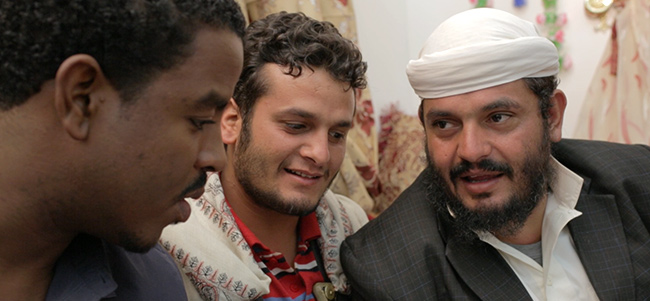
What you see in Waiting for Fahd is my dream. But I do not want it to be only a dream. I want it to come true. You can help make it come true. You can help me.
Children, I ask you to think about my daughter, Hafsa.
To the youth, remember age 17. Think about how I have been deprived of everything a young man needs to mature in this life: a job, education, experiences to learn from.
Wives, think of my wife who spent the spring of her life -- her youth- - waiting for me, caring for Hafsa alone.
Mothers, think of me when you think of your sons. Think of my mother longing for hers.
Fathers, think of me reaching out to my daughter from inside this place.
I have missed the best moments a father could ever enjoy: Hafsa's first steps; walking her to school; witnessing her successes; helping her when she stumbles. I look forward to the day when I will no longer miss her. I will be next to her and from then on I will not miss a minute.
I am starving for those moments, when she looks at me and smiles or says a kind words or laughs.
That is the desire I have in the deepest part of my soul.
Now that you have heard my story and seen my dreams, you cannot turn away. You are excused only when you do not know. But now that you know, you cannot turn away.
I ask you: Be a voice for the voiceless—for another human being who is suffering.
Related Stories
Natalie Gomez Dunker likes this
08 Dec 08:54


How Our Brains Perceive Race
by Chris Mooney, Mother Jones
You think of yourself as a person who strives to be unprejudiced, but you can’t control these split-second reactions.
This post first appeared at Mother Jones.
“You’re not, like, a total racist bastard,” David Amodio tells me. He pauses. “Today.”
I’m sitting in the soft-spoken cognitive neuroscientist’s spotless office nestled within New York University’s psychology department, but it feels like I’m at the doctor’s, getting a dreaded diagnosis. On his giant monitor, Amodio shows me a big blob of data, a cluster of points depicting where people score on the Implicit Association Test. The test measures racial prejudices that we cannot consciously control. I’ve taken it three times now. This time around my uncontrolled prejudice, while clearly present, has come in significantly below the average for white people like me.
That certainly beats the first time I took the IAT online, on the website UnderstandingPrejudice.org. That time, my results showed a “strong automatic preference” for European Americans over African-Americans. That was not a good thing to hear, but it’s extremely common — 51 percent of online test takers show moderate to strong bias.
Taking the IAT, one of the most popular tools among researchers trying to understand racism and prejudice, is both extremely simple and pretty traumatic. The test asks you to rapidly categorize images of faces as either “African-American” or “European American” while you also categorize words (like “evil,” “happy,” “awful” and “peace”) as either “good” or “bad.” Faces and words flash on the screen, and you tap a key, as fast as you can, to indicate which category is appropriate.
Sometimes you’re asked to sort African-American faces and “good” words to one side of the screen. Other times, black faces are to be sorted with “bad” words. As words and faces keep flashing by, you struggle not to make too many sorting mistakes.
And then suddenly, you have a horrible realization. When black faces and “bad” words are paired together, you feel yourself becoming faster in your categorizing — an indication that the two are more easily linked in your mind. “It’s like you’re on a bike going downhill,” Amodio says, “and you feel yourself going faster. So you can say, ‘I know this is not how I want to come off,’ but there’s no other response option.”
You think of yourself as a person who strives to be unprejudiced, but you can’t control these split-second reactions. As the milliseconds are being tallied up, you know the tale they’ll tell: When negative words and black faces are paired together, you’re a better, faster categorizer. Which suggests that racially biased messages from the culture around you have shaped the very wiring of your brain.
I went to NYU to learn what psychologists could tell me about racial prejudice in the wake of the shooting of a black teenager, Michael Brown, by a white police officer, Darren Wilson, in Ferguson, Missouri. We may never really know the exact sequence of events and assumptions that led to the moment when Brown, unarmed and, according to witnesses, with his hands in the air, was shot multiple times. But the incident is the latest embodiment of America’s racial paradox: On the one hand, overt expressions of prejudice have grown markedly less common than they were in the Archie Bunker era. We elected, and re-elected, a black president. In many parts of the country, hardly anyone bats an eye at interracial relationships. Most people do not consider racial hostility acceptable. That’s why it was so shocking when Los Angeles Clippers owner Donald Sterling was caught telling his girlfriend not to bring black people to games — and why those comments led the NBA to ban Sterling for life. And yet, the killings of Michael Brown, Jordan Davis, Renisha McBride, Trayvon Martin, and so many others remind us that we are far from a prejudice-free society.
Science offers an explanation for this paradox — albeit a very uncomfortable one. An impressive body of psychological research suggests that the men who killed Brown and Martin need not have been conscious, overt racists to do what they did (though they may have been). The same goes for the crowds that flock to support the shooter each time these tragedies become public, or the birthers whose racially tinged conspiracy theories paint President Obama as a usurper. These people who voice mind-boggling opinions while swearing they’re not racist at all — they make sense to science, because the paradigm for understanding prejudice has evolved. There “doesn’t need to be intent, doesn’t need to be desire; there could even be desire in the opposite direction,” explains University of Virginia psychologist Brian Nosek, a prominent IAT researcher. “But biased results can still occur.”
The IAT is the most famous demonstration of this reality, but it’s just one of many similar tools. Through them, psychologists have chased prejudice back to its lair — the human brain.
We’re not born with racial prejudices. We may never even have been “taught” them. Rather, explains Nosek, prejudice draws on “many of the same tools that help our minds figure out what’s good and what’s bad.” In evolutionary terms, it’s efficient to quickly classify a grizzly bear as “dangerous.” The trouble comes when the brain uses similar processes to form negative views about groups of people.
But here’s the good news: Research suggests that once we understand the psychological pathways that lead to prejudice, we just might be able to train our brains to go in the opposite direction.
Dog, cat. Hot, cold. Black, white. Male, female. We constantly categorize. We have to. Sorting anything from furniture to animals to concepts into different filing folders inside our brains is something that happens automatically, and it helps us function. In fact, categorization has an evolutionary purpose: Assuming that all mushrooms are poisonous, that all lions want to eat you, is a very effective way of coping with your surroundings. Forget being nuanced about nonpoisonous mushrooms and occasionally nonhungry lions — certitude keeps you safe.
But a particular way of categorizing can be inaccurate, and those false categories can lead to prejudice and stereotyping. Much psychological research into bias has focused on how people “essentialize” certain categories, which boils down to assuming that these categories have an underlying nature that is tied to inherent and immutable qualities. Like the broader sorting mechanism of categorization, an essentialist cognitive “style” emerges very early in our development and may to some extent be hardwired. Psychologist Susan Gelman of the University of Michigan explains it this way: The category of “things that are white” is not essentialized. It simply contains anything that happens to share the attribute of “white”: cars, paint, paper and so on. There’s nothing deep that unites the members of this category.
But now consider white and black people. Like other human attributes (gender, age and sexual orientation, for example), race tends to be strongly — and inaccurately — essentialized. This means that when you think of people in that category, you rapidly or even automatically come up with assumptions about their characteristics — characteristics that your brain perceives as unchanging and often rooted in biology. Common stereotypes with the category “African-Americans,” for example, include “loud,” “good dancers,” and “good at sports.” (One recent study found that white people also tend to essentialize African-Americans as magical — test subjects associated black faces with words like “paranormal” and “spirit.”) Of course, these assumptions are false. Indeed, essentialism about any group of people is dubious — women are not innately gentle, old people are not inherently feebleminded — and when it comes to race, the idea of deep and fundamental differences has been roundly debunked by scientists.
Even people who know that essentializing race is wrong can’t help absorbing the stereotypes that are pervasive in our culture. But essentialist thinking varies greatly between individuals. It’s kind of like neurosis: We all have a little bit, but in some people, it’s much more pronounced. In national polls, for example, fewer and fewer Americans admit openly to holding racist views. But when told to rate various groups with questions like, “Do people in these groups tend to be unintelligent or tend to be intelligent?” more than half of those asked exhibited strong bias against African-Americans. Even the labels we use seem to affect our level of prejudice: Another study found that test subjects associated the term “black” with more negative attributes — such as low socioeconomic status — than “African-American.”
One of the earliest and most insightful researchers on these varying rates of bias was Else Frenkel-Brunswik, part of a pioneering generation of post-World War II psychologists who sought to understand why some people seem to find prejudiced and fascist ideas so appealing. Born in 1908 to a Jewish family in what is now Ukraine, Frenkel-Brunswik might never have managed to do her research at all had she not twice escaped the forces of prejudice herself. When she was young, a 1914 pogrom forced her family to flee to Vienna. When Germany annexed Austria in 1938, she sought refuge in the United States.
Frenkel-Brunswik’s work came long before the days of high-tech tools like eye trackers and computer games that measure bias based on millisecond differences between reactions. Instead she used something far simpler: cards.
She studied young children, some of whom she had previously documented to be highly prejudiced and ethnocentric. In one of many experiments, Frenkel-Brunswik showed the children a sequence of cards similar to the ones on this page. On the first card, the animal is clearly and distinctly a cat. On the last card, it is just as clearly and distinctly a dog. But in between, the cat slowly transforms into the dog.
At each of the stages, the children were asked to identify the animal on the card. Among the more prejudiced children, Frenkel-Brunswik noted something striking: As the image became increasingly ambiguous, “there was a greater reluctance to give up the original object about which one had felt relatively certain… a tendency not to see what did not harmonize with the first set as well as a shying away from transitional solutions.” In other words, for these children, it was much harder to let go of the idea that a cat was a cat.
What Frenkel-Brunswik realized back in 1949, modern research reaffirms. The Implicit Association Test, after all, boils down to how your mind automatically links certain categories. “It’s really how strongly you associate your category of ‘black people’ with the general category of ‘good things’ or ‘bad things,’” David Amodio told me. “The capacity to discern ‘us’ from ‘them’ is fundamental in the human brain,” he wrote in a 2014 paper. “Although this computation takes just a fraction of a second, it sets the stage for social categorization, stereotypes, prejudices, intergroup conflict and inequality and, at the extremes, war and genocide.” Call it the banality of prejudice.
The process of categorizing the world obviously includes identifying the group or groups to which you belong. And that’s where the next psychological factor underpinning prejudice emerges. Much research has found that humans are tribal creatures, showing strong bias against those we perceive as different from us and favoritism toward those we perceive as similar.
In fact, we humans will divide ourselves into in-groups and out-groups even when the perceived differences between the specific groups are completely arbitrary. In one classic study, subjects are asked to rate how much they like a large series of paintings, some of which are described as belonging to the “Red” artistic school and others to the “Green” school. Then participants are sorted into two groups, red or green — not based on their favoring one school of painting, as they are made to think, but actually at random. In subsequent tasks, people consistently show favoritism toward the arbitrary color group to which they are assigned. When asked to allocate money to other participants, the majority of “reds” more generously fund other reds — despite the fact that they have never actually met them. The same goes for “greens.”
The upshot of such “minimal group” experiments is that if you give people the slightest push toward behaving tribally, they happily comply. So if race is the basis on which tribes are identified, expect serious problems.
As these experiments suggest, it is not that we are either prejudiced or unprejudiced, period. Rather, we are more and less prejudiced, based on our upbringings and experiences but also on a variety of temporary or situational prompts (like being told we’re on the green team).
One simple, evolutionary explanation for our innate tendency toward tribalism is safety in numbers. You’re more likely to survive an attack from a marauding tribe if you join forces with your buddies. And primal fear of those not in the in-group also seems closely tied to racial bias. Amodio’s research suggests that one key area associated with prejudice is the amygdala, a small and evolutionarily ancient region in the middle of the brain that is responsible for triggering the notorious “fight or flight” response. In interracial situations, Amodio explains, amygdala firing can translate into anything from “less direct eye gaze and more social distance” to literal fear and vigilance toward those of other races.
We’ve seen how a variety of cognitive behaviors feed into prejudice. But you know what will really blow your mind? The way that prejudice (or rather, the cognitive styles that underlie it) can interfere with how our brains function — often for the worse.
Consider, for instance, research by Carmit Tadmor, a psychologist at the Recanati School of Business at Tel Aviv University. In one 2013 paper, Tadmor and her colleagues showed that racial prejudice can play a direct and causal role in making people less creative. We’re not talking about artistic creativity here, but more like seeing beyond the constraints of traditional categories — “thinking outside the box.”
Tadmor’s team first uncovered a simple positive correlation between one’s inclination to endorse an essentialist view of race (like associating racial differences with abilities and personality traits) and one’s creativity. To measure the latter, the researchers used a simple open-ended test in which individuals are asked to list as many possible uses of a brick as they can think of. People who can think outside of traditional categories — realizing that a brick can be used for many things other than buildings (it can make a good paperweight, for starters) — score better. This study showed that people who essentialized racial categories tended to have fewer innovative ideas about a brick.
But that was just the beginning. Next, a new set of research subjects read essays that described race either as a fundamental difference between people (an essentialist position) or as a construct, not reflecting anything more than skin-deep differences (a nonessentialist position). After reading the essays, the subjects moved on to a difficult creativity test that requires you to identify the one key word that unites three seemingly unassociated words. Thus, for instance, if you are given the words “call,” “pay” and “line,” the correct answer is “phone.”
Remarkably, subjects who’d read the nonessentialist essay about race fared considerably better on the creativity test. Their mean score was a full point — or 32 percent — higher than it was for those who read the essentialist essay.
It’s not like the people in this study were selected because of their preexisting racial prejudices. They weren’t. Instead, merely a temporary exposure to essentialist thinking seemed to hamper their cognitive flexibility. “Essentialism appears to exert its negative effects on creativity not through what people think but how they think,” conclude Tadmor and her colleagues. That’s because, they add, “stereotyping and creative stagnation are rooted in a similar tendency to over-rely on existing category attributes.” Those quick-judgment skills that allowed us to survive on the savanna? Not always helpful in modern life.
So, yes: Prejudice and essentialism are bad for your brain — if you value creative thinking, anyway. But they can also be downright dangerous.
At NYU, David Amodio sat me down to take another test called the Weapons Identification Task. I had no idea what I was in for.
In this test, like on the IAT, you have two buttons that you can push. Images flash rapidly on the screen, and your task is to push the left shift key if you see a tool (a wrench, or a power drill, say) and the right shift key if you see a gun. You have to go super fast — if you don’t respond within half a second, the screen blares at you, in giant red letters, “TOO SLOW.”
“It does that to keep you from thinking too much,” Amodio would later explain.
But it’s not just guns and tools flashing on the screen: Before each object you see a face, either white or black. The faces appear for a split second, the objects for a split second, and then you have to press a key. If you are faster and more accurate at identifying guns after you see a black face than after you see a white face, that would suggest your brain associates guns (and threat) more with the former. You might also be more inclined to wrongly think you see a gun, when it’s actually just a tool, right after seeing a black face. (The weapons task was created by psychologist Keith Payne of the University of North Carolina-Chapel Hill in response to the tragic 1999 death of Amadou Diallo, a Guinean immigrant shot by New York City police after the officers mistook the wallet in his hand for a weapon.)
I’m sorry to ruin the suspense: I don’t know what my score was on the Weapons Identification Task. The test ruffled me so much that I messed up badly. It is stressful to have to answer quickly to avoid being rebuked by the game. And it’s even more upsetting to realize that you’ve just “seen” a gun that wasn’t actually there, right after a black face flashed.
This happened to me several times, and then I suddenly found myself getting “TOO SLOW” messages whenever the object to be identified was a gun. This went on for many minutes and numerous trials. For a while, I thought the test was broken. But it wasn’t: I finally realized that rather than pressing the right shift key, I had somehow started pressing the enter key whenever I thought I saw a gun. It’s almost like I’d subconsciously decided to stop making “gun” choices at all. (Psychoanalyze that.)
But don’t take that as a cop-out: Before I (arguably) tried to dodge responsibility by pressing the wrong key, I clearly showed implicit bias. And it was horrifying.
The upshot of all of this research is that in order to rid the world of prejudice, we can’t simply snuff out overt, conscious, full-throated racism. Nor can we fundamentally remake the human brain, with its rapid-fire associations and its categorizing, essentializing and groupish tendencies. Instead, the key lies in shifting people’s behavior, even as we also make them aware of how cultural assumptions merge with natural cognitive processes to create biases they may not know they have.
And that just might be possible. Take the Implicit Association Test: In a massive study, Brian Nosek of the University of Virginia and his colleagues tested 17 different proposed ways of reducing people’s unconscious bias on the IAT. Many of these experimental interventions failed. But some succeeded, and there was an interesting pattern to those that did.
The single best intervention involved putting people into scenarios and mindsets in which a black person became their ally (or even saved their life) while white people were depicted as the bad guys. In this intervention, participants “read an evocative story told in second-person narrative in which a white man assaults the participant and a black man rescues the participant.” In other words, study subjects are induced to feel as if they have been personally helped or even saved by someone from a different race. Then they took the IAT — and showed 48 percent less bias than a control group. (Note: The groups in these various studies were roughly three-fourths white; no participants were black.)
Other variations on this idea were successful too: making nonblack people think about black role models, or imagine themselves playing on a dodgeball team with black teammates against a team of white people (who proceed to cheat). In other words, it appears that our tribal instincts can actually be co-opted to decrease prejudice, if we are made to see those of other races as part of our team.
When it comes to weakening racial essentialism, Carmit Tadmor and her colleagues undertook a variety of experiments to try to produce what they called “epistemic unfreezing.” Subjects were exposed to one of three 20-minute multimedia presentations: one exclusively about American culture, one exclusively about Chinese culture and one comparing American and Chinese cultures (with different aspects of each culture, such as architecture or food, presented back to back). Only in the last scenario were subjects pushed to compare and contrast the two cultures, presumably leading to a more nuanced perspective on their similarities and differences.
This experimental manipulation has been found to increase creativity. But surprisingly, it also had a big effect on reducing anti-black prejudice. In one study, Tadmor et al. found that white research subjects who had heard the multicultural presentation (but not the American-only or Chinese-only presentation) were less likely than members of the other study groups to endorse stereotypes about African-Americans. That was true even though the subjects had learned about Chinese and American cultures, not African-American culture.
In a variation, the same 20-minute lecture also produced fewer discriminatory hiring decisions. After hearing one of the three kinds of lectures, white study subjects were shown a series of résumés for the position of “Sales Manager” at a company. The résumés were varied so that some applicants had white-sounding names, and some had black-sounding names. It’s a research paradigm that has often been shown to produce discriminatory effects, which presumably occur through the manifestation of uncontrolled or implicit prejudices — but this time around, there was a glimmer of hope in the findings.
White subjects who had heard the lecture exclusively about American culture (with topics like Disney, Coca-Cola, and the White House) picked a white candidate over an equally qualified black candidate 81 percent of the time. Subjects who had heard a lecture exclusively about Chinese culture picked a white candidate a full 86 percent of the time. But subjects who had heard the culture-comparing lecture selected the white candidate only 56 percent of the time.
These studies clearly suggest that, at least for the relatively short time span of a psychology experiment, there are cognitive ways to make people less prejudiced. That’s not the same as — nor can it be a substitute for — broader cultural or institutional change. After all, there is ample evidence that culture feeds directly into the mind’s process of generating prejudices and adopting stereotypical beliefs.
Nonetheless, if prejudice has both a psychological side and a cultural side, we must address both of these aspects. A good start may simply be making people aware of just how unconsciously biased they can be. That’s particularly critical in law enforcement, where implicit biases can lead to tragic outcomes.
In fact, this phenomenon has been directly studied in the lab, particularly through first-person shooter tests, where subjects must rapidly decide whether to shoot individuals holding either guns or harmless objects like wallets and soda cans. Research suggests that police officers (those studied were mostly white) are much more accurate at the general task (not shooting unarmed people) than civilians, thanks to their training. But like civilians, police are considerably slower to press the “don’t shoot” button for an unarmed black man than they are for an unarmed white man — and faster to shoot an armed black man than an armed white man. (Women weren’t included — the extra variable of gender would have complicated the results.)
Such research has led to initiatives like the Fair and Impartial Policing program, which has trained officers across the United States on how implicit biases work and how to control them. Few officers look forward to these trainings, says program founder Lorie Fridell, a criminologist; they don’t consider themselves to be racist. “Police are very defensive about this issue,” she says. “That’s because we have been dealing with this issue using outdated science. We treat them as if they have an explicit bias. They are offended by that.”
So instead, Fridell’s team focuses first on showing the officers the subtle ways in which implicit bias might influence their actions. For example: The trainers present a role-play where there are three people: a female victim of domestic violence, and a male and female comforting her. When the officers are asked to address the situation, says Fridell, most assume that the man is the perp. Then, the trainers reveal that it was actually the woman — and the officers learn that they do, in fact, act on bias. It’s not because they are bad people; in fact, in their work, they may have experiences that reinforce stereotypes. Which is why it’s important that police officers — who see the worst in people in their everyday duties — teach themselves not to assume the worst.
The program, which receives support from the US Department of Justice, has trained officers in more than 250 precincts and agencies, but it’s hard to measure its success — there is no baseline comparison, since prejudiced policing isn’t always rigorously documented. But the feedback is encouraging. “I have a new awareness of bias-based policing within my own agency,” one participantwrote in an evaluation. “The presentation of scientific data provided me with a more convincing argument that supported the existence of unintentional, but widespread racial bias, which I was typically quick to dismiss.”
Staff members at the University of California-Los Angeles-based Center for Policing Equity use implicit-bias research in a different way: They take unconscious prejudice as a given — and try to make changes within communities to ensure that it does as little damage as possible. A few years ago, Las Vegas was seeking to address police officers’ use of force, especially against people of color. Most of the incidents occurred after pursuits of suspects on foot, the majority of which happened in nonwhite neighborhoods. Center president Phillip Atiba Goff explains that he knew how difficult it would be to change the pursuing officers’ thinking. “You’re an officer, you’re pumping adrenaline, you don’t have time to evaluate whether your implicit bias is driving your behavior,” he says. So instead, the center worked with the department to make a small but meaningful tweak to the rules: In foot chases, the pursuing officer would no longer be allowed to touch the person being chased; if use of force was necessary, a partner who wasn’t involved in the pursuit would step in. “We recognized implicit bias, and we took it out of the equation,” Goff says. “We decoupled the prejudice from the behavior.” Sure enough, use of force in foot chases — and, as a result, overall use of force against people of color — declined significantly shortly after the policy went into effect.
Unsettling though it is, the latest research on our brains could actually have some very positive outcomes — if we use it in the right way. The link between essentialism and creativity doesn’t just tell us how we might reduce prejudice. It could also help us to become a more innovative country — by prioritizing diversity, and the cognitive complexity and boost in creativity it entails. The research on rapid-fire, implicit biases, meanwhile, should restart a debate over the role of media — the news segment that depicts immigrants as hostile job snatchers, the misogynistic lyrics in a song — in subtly imparting stereotypes that literally affect brain wiring. Indeed, you could argue that not only does the culture in which we live make us subtly prejudiced, but it does so against our will. That’s a disturbing thought.
Especially when you consider how biases affect government policy. Consider this: In October 2012, researchers from the University of Southern California sent emails asking legislators in districts with large Latino populations what documentation was needed in order to vote. Half the emails came from people with Anglo-sounding names; the other half, Latino-sounding names. Republican politicians who had sponsored voter ID laws responded to 27 percent of emails from “Latino” constituents and 67 percent of emails from “white” constituents. For Republicans who’d voted against voter ID laws, the gap was far less dramatic — the response figures were 38 percent for Latino names and 54 percent for white names.
You can imagine how this kind of thing might create a vicious cycle: When biased legislators make it harder for certain communities to vote, they are also less likely to serve alongside lawmakers from those communities — thus making it less likely for a coalitional experience to change their biases.
So how do we break the cycle? We could require lawmakers to engage in exercises to recognize their own unconscious prejudice, like the Fair and Impartial Policing program does. Or we could even go a step further and anonymize emails they receive from constituents — thus taking implicit bias out of the equation.
Short of that, you can do something very simple to fight prejudice: Trick your brain. UNC-Chapel Hill’s Payne suggests that by deliberately thinking a thought that is directly counter to widespread stereotypes, you can break normal patterns of association. What counts as counterstereotypical? Well, Payne’s study found that when research subjects were instructed to think the word “safe” whenever they saw a black face — undermining the stereotypical association between black people and danger — they were 10 percent less likely than those in a control group to misidentify a gun in the Weapons Identification Task.
To be sure, it will take more than thought exercises to erase the deep tracks of prejudice America has carved through the generations. But consciousness and awareness are a start — and the psychological research is nothing if not a consciousness-raiser. Taking the IAT made me realize that we can’t just draw some arbitrary line between prejudiced people and unprejudiced people, and declare ourselves to be on the side of the angels. Biases have slipped into all of our brains. And that means we all have a responsibility to recognize those biases — and work to change them.
Related Stories
Katiesullivan likes this
29 Nov 07:09


Dad Trolls Boy Dating His Daughter in Funny Thai Tire Ad
by Abraham
This kid showed up to take a young lady “to church.” Dad knew better than that, though…
Natalie Gomez Dunker likes this
23 Nov 22:49


10 Agonizing Reasons Why Depression Can Be So Unbearable
by Shireen Dadkhah, Your Tango
Depression isn't logical. You can't reason with it.
When I was 16, I was diagnosed with clinical depression. After the diagnosis, my uncle slapped me on the back and said, "Welcome to the family kid," while my family all compared drugs around the kitchen table. I'm extremely lucky that my family not only accepted that depression is a real, serious issue, but they understood it. (I come from a long line of clinically depressed people.) They were mindful to make sure that my depression wasn't used as a crutch or an excuse, but thankfully, I never once heard the unhelpful "Just suck it up and deal with it," and for that, I will be eternally grateful.
Depression is different for everyone, but over the years I've noticed a few things that don't seem to waver. They hold fast in their level of suckiness and they seem to apply to most everyone I've talked to who's dealt with depression.
1. I'm not choosing to be depressed. This isn't a choice I'm making. My cat dying or my car being totaled aren't the reason I'm depressed. Those things are tipping points, they push me over an edge I was already standing at. Depression is a chemical imbalance. Yes, there are things I can do and medications I can take but at the end of the day this isn’t something I’d choose for anyone and certainly not myself.
2. Your brain is the enemy. For me, having depression is like walking around with a mean, petty, awful little friend in my brain all the time. It's constantly telling me how awful I am, how I'm not good enough and how nobody likes me. And just like the negative comments on a blog post, those thoughts stick. Trying to convince yourself that your brain is wrong is no easy feat.
3. Telling me to "suck it up" makes me stabby. Don't tell me to "suck it up." Don't tell me to watch a sunset or exercise or appreciate the joy that is being alive. That's about as effective as me telling you to go walk it off after you've broken your arm. It isn't going to fix anything. Depression isn't logical. You can't reason with it or apply coconut oil and suddenly be better.
4. Nobody can fix it. And that sucks. There are medications and there are things that I can do that will help mitigate my depression, but they won't fix it. There's nothing anyone can say or do that it is going to fix my brain. I wish more than anything that there was a magic cure-all that would tip the scales back to center for my brain, but there isn't. What works for one person might not work for another. What works for you might suddenly stop working. That's the thing about depression, it's an ever-evolving disease. Once you think you've got things under control, it'll contort and poke at a tender spot you didn’t even know existed.
5. It's going to suck for the person dealing with the depressed person, too. I've been on the other end of things and not being able to help someone I love when they're in the middle of a depressive episode is awful. Just know that there's nothing anyone can say that a depressed person will believe or that will pull them back to surface where reason lies. This reality is very tough.
6. Relying on a pill sucks. I came to terms a long time ago that every night I'm going to have to take a little white pill. Having to rely on medication for anything is hard but relying on it to make you feel normal, whatever 'normal' is for you, is extra difficult.
7. Finding the right meds makes me feel like a science experiment. Finding the right medication or in some cases medications that works is daunting. I've had to switch meds a handful of times and every time left me feeling like a husk of my former self. Even with proper weaning, coming off some medication is like detoxing. Outside of the physical effects, there's just something about the whole process that makes me feel like a high school science experiment.
8. Depression makes me selfish. This was one of the first things I noticed after I was diagnosed. I spend so much time in my own head thinking that I rarely have the ability to look out and think about others. It's also one of the things I hate most about my depression. I have a damn good group of family and friends and not being the friend they deserve is hard.
9. I take away the things I love when I'm depressed. Everyone has signs when their depression hits. For me, I start taking away the things I love. I stop writing. I stop picking up my camera. Depending on how deep it is, I'll stop feeding myself or bathing as often as society would like me to. There's no point in my mind. Everything sucks and it’s going to continue to suck whether I write about it or take a picture of my cat.
10. Sometimes not being here sounds like a great option. The reality is, most people who've dealt with depression, especially long-term, may consider suicide. Some will form a plan and think it over for months. Some will decide on the spot. For me, there was never any plan. I never wanted to die, per say, I just wanted to not be here. I just wanted to stop constantly feeling like I was feeling. Because the thing about depression is, you can't escape it. You can't set it down in the morning, go to work, and pick it back up when you get it home. It's everywhere. It's at your best friend's wedding. It's at your desk at work. It's at the gas station when you're pumping gas. You take that little terrorist everywhere with you and sometimes you just need a break.
Note to our readers: If you ever need to talk to someone about depression, please call 1-800-273-8255. Someone will always be on the line. You are loved.
Natalie Gomez Dunker likes this
23 Nov 02:23
14 food hacks that will make you a pro in the kitchen. [STORY]
 |
Natalie Gomez Dunker likes this
22 Nov 09:04


Why Richard Dawkins, Sam Harris and the 'New Atheists' Aren't Really Atheists
by Reza Aslan, Salon
Religious scholar Reza Aslan believes that these anti-theists employ a way of thinking that ironically is similar to religious fundamentalism.
Not long ago, I gave an interview in which I said that my biggest problem with so-called New Atheists like Sam Harris and Richard Dawkins is that they give atheism a bad name. Almost immediately, I was bombarded on social media by atheist fans of the two men who were incensed that I would pontificate about a community to which I did not belong.
That, in and of itself, wasn’t surprising. As a scholar of religions, I’m used to receiving comments like this from the communities I study. What surprised me is how many of these comments appeared to take for granted that in criticizing New Atheism I was criticizing atheism itself, as though the two are one and the same. That seems an increasingly common mistake these days, with the media and the bestseller lists dominated by New Atheist voices denouncing religion as “innately backward, obscurantist, irrational and dangerous,” and condemning those who disagree as “religious apologists.”
To be sure, there is plenty to criticize in any religion and no ideology – religious or otherwise – should be immune from criticism. But when Richard Dawkins describes religion as “one of the world’s great evils, comparable to the smallpox virus,” or when Sam Harris proudly declares, “If I could wave a magic wand and get rid of either rape or religion, I would not hesitate to get rid of religion,” it should be perfectly obvious to all that these men do not speak for the majority of atheists. On the contrary, polls show that only a small fraction of atheists in the U.S. share such extreme opposition to religious faith.
In fact, not only is the New Atheism not representative of atheism. It isn’t even mere atheism (and it certainly is not “new”). What Harris, Dawkins and their ilk are preaching is a polemic that has been around since the 18th century – one properly termed, anti-theism.
The earliest known English record of the term “anti-theist” dates back to 1788, but the first citation of the word can be found in the 1833 edition of the Oxford English Dictionary, where it is defined as “one opposed to belief in the existence of a god” (italics mine). In other words, while an atheist believes there is no god and so follows no religion, an anti-theist opposes the very idea of religious belief, often viewing religion as an insidious force that must be rooted from society – forcibly if necessary.
The late Christopher Hitchens, one of the icons of the New Atheist movement, understood this difference well. “I’m not even an atheist so much as I am an antitheist,” he wrote in his “Letters to a Young Contrarian.” “I not only maintain that all religions are versions of the same untruth, but I hold that the influence of churches, and the effect of religious belief, is positively harmful.”
Anti-theism is a relatively new phenomenon. But atheism is as old as theism itself. For wherever we find belief in gods we find those who reject such beliefs. The American anthropologist Clifford Geertz thought he could trace atheism all the way back to Neanderthal communities. Atheism is certainly evident in some of the earliest Vedic writings from the Indian subcontinent. The Rig Veda, composed sometime around 1500 B.C., openly questions belief in a divine creator:
But, after all, who knows, and who can say
Whence it all came, and how creation happened?
The gods themselves are later than creation,
So who knows truly whence it has arisen?
How far back one traces the concept of atheism depends on how one defines the word. The term “atheist” is derived from the Greek a-theos, meaning “without gods,” and was originally a pejorative for those whose actions were deemed impious or immoral. To the Greeks, an atheist didn’t necessarily reject the existence of the gods. He merely acted as though the gods did not exist or were unaware of his actions. Unfortunately, this historical connection between lack of belief and lack of morals is one that still plagues atheism today, despite studies showing atheists to be, as a whole, less prejudiced, less willing to condone violence, and more tolerant of sexual, ethnic and cultural differences than many faith communities.
In the modern world, however, atheism has become more difficult to define for the simple reason that it comes in as many forms as theism does. An atheist may explicitly reject the existence of a god or gods (this is sometimes called “positive atheism”), or he may simply consider god’s existence to be irrelevant in explaining the nature of the universe (“negative atheism”). Many atheists might just as easily describe themselves as agnostic, following in the footsteps of the famed English writer Aldous Huxley who rejected the idea of a personal deity yet still sought some measure of spiritual fulfillment. Some atheists are empiricists, arguing that our sensory experience should be our sole source of knowledge; others are materialists or “physicalists,” assuming that nothing can exist beyond the material realm – both reject metaphysics as a viable tool in understanding the nature of being.
For a great many atheists, atheism does not merely signify “lack of belief” but is itself a kind of positive worldview, one that “includes numerous beliefs about the world and what is in it,” to quote the atheist philosopher Julian Baggini. Baggini cautions against viewing atheism as a “parasitic rival to theism.” Rather, he agrees with the historian of religions James Thrower, who considers modern atheism to be “a self-contained belief system” – one predicated on a series of propositions about the nature of reality, the source of human morality, the foundation of societal ethics, the question of free will, and so on.
Thrower and others – most notably the historian David Berman – trace the emergence of atheism as a distinct worldview to the end of the Enlightenment era, which, not coincidentally, is also the time that anti-theism first arose. The Enlightenment’s emphasis on skepticism, reason and scientific advancement posed a direct challenge to religion in general, and Christianity in particular. That makes sense when you consider that Christianity was not only the sole religion with which many Enlightenment thinkers had any familiarity. It was an all-encompassing political presence in the lives of most Europeans, which is why the atheism of the Enlightenment was grounded less in denying the existence of God than in trying to liberate humanity from religion’s grip on earthly power.
The great Enlightenment thinkers Voltaire, David Hume, Thomas Hobbes and John Locke were severely critical of institutional religion, viewing it as a destructive force in society. But they did not explicitly reject God’s existence, nor were they opposed to the idea of religious belief. (There were, of course, numerous other Enlightenment figures who professed atheism, such as Jean Meslier and the French philosopher Baron d’Holbach.) On the contrary, they recognized the inherent value of religious belief in fostering social cohesion and maintaining order, and so sought a means of replacing religion as the basis for making moral judgments in European society. It was political transformation they wanted, not religious reform.
Yet in the century that followed the Enlightenment, a stridently militant form of atheism arose that merged the Enlightenment’s criticism of institutional religion with the strict empiricism of the scientific revolution to not only reject belief in God, but to actively oppose it. By the middle of the 19th century, this movement was given its own name – anti-theism – specifically to differentiate it from atheism.
It was around this time that anti-theism reached its peak in the writings of the German philosophers Karl Marx and Friedrich Engels. Marx famously viewed religion as the “opium of the people” and sought to eradicate it from society. “The abolition of religion as the illusory happiness of the people is the demand for their real happiness,” Marx wrote in his celebrated critique of Hegel.
In truth, Marx’s views on religion and atheism were far more complex than these much-abused sound bites project. Nevertheless, Marx’s vision of a religion-less society was spectacularly realized with the establishment of the Soviet Union and the People’s Republic of China – two nations that actively promoted “state atheism” by violently suppressing religious expression and persecuting faith communities.
Atheists often respond that atheism should not be held responsible for the actions of these authoritarian regimes, and they are absolutely right. It wasn’t atheism that motivated Stalin and Mao to demolish or expropriate houses of worship, to slaughter tens of thousands of priests, nuns and monks, and to prohibit the publication and dissemination of religious material. It was anti-theism that motivated them to do so. After all, if you truly believe that religion is “one of the world’s great evils” – as bad as smallpox and worse than rape; if you believe religion is a form of child abuse; that it is “violent, irrational, intolerant, allied to racism and tribalism and bigotry, invested in ignorance and hostile to free inquiry, contemptuous of women and coercive toward children” – if you honestly believed this about religion, then what lengths would you not go through to rid society of it?
The excesses of these anti-theist regimes was fueled in no small part by a century of confident predictions that religion was a fast fading phenomenon – that God was, in a word, dead. By the end of the 20th century, however, few were making that claim any longer. The horrors of the first and second world wars not only punctured the promises of secular nationalism in the West. It led to a religious revival, particularly in the United States. In the 1970s, the rise of Islamic terrorism abroad and the insertion of Christian fundamentalism into American politics disabused most thinkers of the notion that religion was about to fade away from modern society. Then 9/11 happened, followed by George W. Bush’s crusade against “evildoers,” and, suddenly, religion was once again recognized as a potent and rising force in the world.
Disenfranchised by what they viewed as an aggressively religious society, personally threatened by a spike in religious violence throughout the world, and spurred by a sense of moral outrage, a certain faction of atheists among an otherwise rational population of people who doubt or deny the existence of God reverted to an extreme and antagonistic form of anti-theism. This is the movement that came to be called New Atheism.
The appeal of New Atheism is that it offered non-believers a muscular and dogmatic form of atheism specifically designed to push back against muscular and dogmatic religious belief. Yet that is also, in my opinion, the main problem with New Atheism. In seeking to replace religion with secularism and faith with science, the New Atheists have, perhaps inadvertently, launched a movement with far too many similarities to the ones they so radically oppose. Indeed, while we typically associate fundamentalism with religiously zealotry, in so far as the term connotes an attempt to “impose a single truth on the plural world” – to use the definition of noted philosopher Jonathan Sacks – then there is little doubt that a similar fundamentalist mind-set has overcome many adherents of this latest iteration of anti-theism.
Like religious fundamentalism, New Atheism is primarily a reactionary phenomenon, one that responds to religion with the same venomous ire with which religious fundamentalists respond to atheism. What one finds in the writings of anti-theist ideologues like Dawkins, Harris and Hitchens is the same sense of utter certainty, the same claim to a monopoly on truth, the same close-mindedness that views one’s own position as unequivocally good and one’s opponent’s views as not just wrong but irrational and even stupid, the same intolerance for alternative explanations, the same rabid adherents (as anyone who has dared criticize Dawkins or Harris on social media can attest), and, most shockingly, the same proselytizing fervor that one sees in any fundamentalist community.
This is precisely what Albert Einstein meant when he warned about “fanatical atheists [who] are like slaves who are still feeling the weight of their chains which they have thrown off after hard struggle. They are creatures who — in their grudge against traditional religion as the ‘opium for the people’ — cannot bear the music of the spheres.”
There is, of course, nothing wrong with an anti-theistic worldview, though I personally find it to be rooted in a naive and, dare I say, unscientific understanding of religion – one thoroughly disconnected from the history of religious thought. Every major religion has, at one time or another, been guilty of the crimes that these anti-theists accuse religion of. But do not confuse the dogmatic, polemical, militant anti-theism of Dawkins, Harris, Hitchens and their ilk with atheism. The former rejects religious claims; the latter is “actively, diametrically and categorically opposed to them.”
One can certainly be both an atheist and an anti-theist. But the point is that the vast majority of atheists – 85 percent according to one poll – are not anti-theists and should not be lumped into the same category as the anti-theist ideologues that inundate the media landscape. (A diverse community being defined by its loudest voices? Imagine that). In fact, let’s stop calling New Atheism, “atheism,” and start calling it what it is: anti-theism.
Related Stories
Natalie Gomez Dunker likes this
20 Nov 16:19
Sage Advice
Adam Hamilton, Natalie Gomez Dunker likes this
17 Nov 13:02


Four Sordid Tales of Selfishness of the Super-Rich
by Paul Buchheit, AlterNet
Perhaps delusion helps privileged people rationalize their greed.
If the mainstream media made the effort to analyze and report the facts, the whole country would know about a level of selfishness that has spiraled out of control since the economists of the Reagan era convinced the wealthiest Americans that greed is good for everyone. Here are four extreme examples of that selfishness.
1. Ebola's Not Worth the Money If Only Africans Get Infected
World Health Organization (WHO) director-general Dr. Margaret Chan recently stated: "Ebola emerged nearly four decades ago. Why are clinicians still empty-handed, with no vaccines and no cure? Because Ebola has historically been confined to poor African nations. The R&D incentive is virtually non-existent. A profit-driven industry does not invest in products for markets that cannot pay."
So we turn to philanthropy. But rich donors don't compensate for the flaws of capitalism. The Gates Foundation, among others, may appear noble and praiseworthy for all its charitable giving, but Dr. Chan noted that "My budget [is] highly earmarked, so it is driven by what I call donor interests." Little of that 'earmarking' is toward diseases of the poor. A study in The Lancet of medical products registered in 2000-11 revealed that "Only four new chemical entities were approved for neglected diseases (three for malaria, one for diarrhoeal disease), accounting for 1% of the 336 new chemical entities approved during the study period."
A related problem with philanthropy is summarized by Stacy Palmer, editor of The Chronicle of Philanthropy: "Wealthy people tend to give to colleges, art museums, opera and hospitals very generously...Food banks depend more on lower income Americans."
The Chronicle of Philanthropy confirmed that Americans with annual earnings under $100,000 increased their post-recession giving by 4.5 percent. Americans who earned over $200,000 reduced their giving by 4.6 percent over the same time period.
2. Going To Their Graves Without Paying What They Owe
Charles Koch, who is very much alive, said "I want my fair share - and that's all of it."
His dream is coming true. $30 trillion has been taken since the recession, most of it financial gains, almost all of it by the richest 1%, one-hundred thousand of whom made an estimated $18 million each in three years, and most of whom are so rich that they can let their portfolios sit nearly tax-free until they die, at which point an almost non-existent estate tax ensures nearly tax-free fortunes for their fortunate sons and daughters (only about one out of a thousand estates are taxed).
Yet these are the people who benefit most from national security, infrastructure, tax laws, and patent and copyright laws. They're protected by police who stop and frisk and harass and arrest anyone who threatens the status quo of their wealthy society. But they don't want to pay for all the benefits, even after they're dead.
3. Inventing Rules That Take Money from the Poor
A collection of contrived laws and policies effectively transfer money from the middle class to the rulemakers:
---Capital Gains: Pay less for just owning stocks
---Carried Interest: The astonishing claim that hedge fund profits are not regular income
---Payroll Tax: Multi-millionaires pay a tiny percentage compared to middle-income earners
---Roth IRAs: A tax loophole for the 20% of Americans who own 95 percent of the financial wealth
---Derivatives: Risky financial instruments are the first to be paid off in a bank collapse
---Bankruptcies: Businesses can get out of debt, students can't
4. Treating Less Fortunate People As If They Don't Exist
Compelling research by Paul Piff and his colleagues has demonstrated that the accumulation of wealth leads to a sense of entitlement and qualities of narcissism. For example, rich people are more likely to flout traffic laws, to take items of value from others, and to cheat when necessary to win a prize or position.
At a higher level, irrefutable data has been accumulated to confirm the relentless flow of money away from our most vulnerable citizens:
Children: One out of every five American children lives in poverty, and for black children under the age of six it's nearly one out of TWO. Almost half of food stamp recipients are children. Worldwide, 76 million children are living in poverty in the developed world, and hundreds of millions more in the developing world.
The Elderly: Three-quarters of Americans approaching retirement in 2010 had an average of less than $30,000 to support them in their retirement years.
The Homeless: According to The Nation, there are now more homeless people in New York City than at any time since the 1970s, and the number of homeless schoolchildren is at an all-time high.
The Sick and Disabled: Over 200 recent studies have confirmed a link between financial stress and sickness. In just 20 years America's ranking among developed countries dropped on nearly every major health measure.
Privileged people, oblivious to the realities beneath their lofty positions, talk about struggling Americans getting "comfortable" in poverty, using food stamps to buy expensive food, and resting in the "hammock" of the safety net. Perhaps delusion helps them to rationalize their selfishness.
Related Stories
hamatoyoshi, Katiesullivan and one other like this
13 Nov 21:24


Not to Feed the Donkey Sponge Cake, but Here Are 10 Fun Idioms from Around the World
by Megan Berman
We use idioms in our everyday conversations without even thinking. But have you ever stopped to consider how weird they can be? And, of course, they’ll seem especially weird if they’re not our own.
Here’s a fun and intriguing list 10 bizarre idioms from around the world…


You can read more about the origin of each of these from Matt Lindley.
Natalie Gomez Dunker likes this
12 Nov 07:43
Los actores de The Raid protagonizarán la secuela ‘Beyond Skyline’
by DrMalo
Ahora al parecer habrá combates entre humanos y alienígenas para arreglar la propuesta del original.
Natalie Gomez Dunker likes this
06 Nov 21:20


7 Questions People Who See a Shrink Are Tired of Hearing
by Patrice Bendig, Huffington Post
There are quite a few misconceptions about why people go to therapy.
My best friend and I are constantly playing phone tag. But there's one person who promises to have my undivided attention once a week, no matter what: Dr. R, my therapist. For the past 2.5 years, we have spent 55 minutes every Tuesday evening together, and for that, I'm grateful.
My adventures in therapy began during my sophomore year in college, when I walked into my campus mental health center after a close friend suffered a mental breakdown. We were so alike that I knew that if I didn't do something, my fate would be similar. Now, five years later, I consider that decision the best choice I've ever made.
Just as many of us indulge in weekly nail salon trips to keep up our appearance, therapy sessions are essential to my emotional upkeep. But once I started being open with family, friends and even acquaintances about going to therapy, I started to realize there are more than a few misconceptions out there about it.
Here are some of the dumbest things I've heard people say to me about therapy and the actual truths about what really happens behind the white noise machine.
1. "Therapists just agree with everything you say to make you feel better about your life."
Let me paint you a picture of a typical session between Dr. R and me:
Me: Do you think that [insert person who makes me insecure] was right? Am I really like that? Is that true?
Dr. R: [Stares back at me in silence for a few seconds]
Me: [Throws head back with frustration] I know you're not going to answer that.
Dr. R: [Smiles] Well, what do you think about it?
Me: [I begin to verbally walk through my reasoning and begin to form a clearer idea how I'm feeling]
Therapists act as a guide through the winding road of personal convictions. During our sessions, Dr. R will ask questions or make a statement that may redirect me to examine things from a different perspective, but will never give a yes-or-no answer. It's true, Dr. R has raised my self-esteem, but not by inflating my ego. Therapy has increased my self-worth by teaching me to trust myself by through the art of self-awareness.
2. "Your therapist must think I'm a horrible person because of all the things you say about me."
Don't flatter yourself. Everyone in my life, both past and present, has been brought up in a therapy session at some point over the past five years.
By reflecting on dynamics in my relationships, I've become a better daughter, friend, girlfriend, colleague, and overall person. Just because we have a squabble, that doesn't mean that you will be the emphasis of my next session. It's rare that one issue or person is the topic of an entire appointment. And if you are that self-conscious, consider scheduling your own appointment to explore that concern.
3. "Isn't therapy just talking about how terrible your childhood was and blaming your parents for everything wrong with your life?"
During the course of my adventures in therapy, I have spent a considerable amount of time reflecting on my entire past, not just my childhood. However, since I'm only 25, a majority of my past is my formative years. I don't use the past to place blame on bad habits or poor choices made in the present. The exploration of my childhood serves as a tool in identifying explanations for my reactions to certain situations and patterns I've repeated in certain relationships. It's just one piece of a very complex puzzle.
4. "Do you lay on a long couch and cry?"
In all of my years in therapy, never once have I lied down. Sometimes, when I'm tired after a long day of work, I'll lean my head on the side of the comfy couch in Dr. R's dimly lit office, but that's about it. We sit a few feet apart from each other, usually me with an ice coffee in hand, and her with a cup of tea.
While tissues are always available, I barely use them. The times I have cried during therapy have always been the most unexpected. More often, I find myself cursing in therapy while rehashing a situation. And surprisingly, there is also plenty of laughter during our sessions, especially when Dr. R. repeats something I said and it sounds so outlandish I can't help but giggle. (Particularly when it involves cursing.)
5. "Why not talk to your friends and family instead of a stranger?"
A friendship is a two-way street, where there is a mutual sharing of struggles, triumphs and opinions. That can make being an objective listener difficult.
My relationship with Dr. R. is one-sided. I have only ever seen her in one setting, and the irony isn't lost on me that I know nothing about the woman I pour my heart out to each week. She doesn't share her own experiences, nor does she use her own struggles as a point of reference. I can freely share without worrying about offending her.
She is also a doctor who has spent years mastering the therapeutic process. If I needed physical medical treatment like an examination or surgery, I wouldn't go to my best friend just because she cares about me. The same reasoning applies to mental healthcare: the experts know best.
6. "But the fact that you're paying her means she has to pretend to care about you."
Although I do write Dr. R. a check each week, that doesn't take away from the fact that she cares about my well-being. When I share an accomplishment we've talked about, her enthusiasm is authentic, since she has traveled the road alongside me to get there. In the moments when my voice trembles while talking about an especially difficult emotion, her empathetic voice and support helps me work through my thoughts.
7. "Is therapy really worth it?"
Honestly, without therapy, I would not be living up to my potential. It is the reason I have been able to really evolve as a young adult. The process is anything but easy, and it has actually given me the tools to more effectively deal with life's ups and downs.
The bottom line? If you have a friend in therapy, don't be a jerk about it. Hold the jokes, snarky comments, and invasive questions. Take it as a compliment that they confided in you about something so personal. Therapy may not your cup of tea, but if it is making your loved one a healthier and happier person, give them kudos for their dedication to self-improvement. And if you've been on the fence about therapy but are unsure about making the plunge, just try it. It's not a lifetime commitment, but it can be a life-changing decision.
Related Stories
Natalie Gomez Dunker likes this
06 Nov 21:08


What If “Helpful” Advice About Mental Illness Were Given About Physical Problems, Too
by Abraham
The absurdity of some people’s responses to mental illness is emphasized when you imagine those same comments being made about physical maladies.
From Robot Hugs…


Via: Science Dump
Natalie Gomez Dunker likes this
05 Nov 19:26


Teacher Forced to Resign Over Ebola Scare Because Dumb School Has No Idea Where Kenya Is
by Joey White
Many Americans know little more about where the deadly Ebola outbreak has occurred except that it’s “in Africa.” Of course, Africa is the world’s second largest continent, so it helps to be a little more specific, especially when freaking out about being near someone who’s been to the vast continent.
The virus has been largely contained to just three countries — Liberia, Guinea, and Sierra Leone. To illustrate the size of this area, British chemist Anthony England, who’s spent a lot of time in sub-saharan Africa, created this helpful map…

While several cases of Ebola have occurred in three other nearby countries, those cases were contained and the virus is not a threat there, similar to how it’s been contained in the United States.
These facts didn’t stop one Kentucky schoolteacher from being forced to resign after returning to the U.S. several weeks ago from Kenya, a nation that has yet to record a single case of Ebola…and is over 3,000 miles away from Liberia, the closest country in which the Ebola outbreak is in effect.
To put it another way, Kenya is as far from Ebola as Boston is from San Francisco.
But don’t tell that to the parents of Susan Sherman’s students or the administration at Louisville’s Saint Margaret Mary Catholic School.

When the registered nurse returned from an annual medical mission trip to Kenya, her school put her on a 21-day “precautionary leave,” forcing her to submit a doctor’s note saying she was in good health before she could return to work.
Sherman and her husband Paul sent their kids to the school and Paul had coached basketball there. Their family has invested years of their lives in this Catholic community and school.
However, facing stiff opposition from parents, students, and colleagues, Sherman chose to resign, bewildered at the ignorance of the people around her.
Sherman’s daughter was so upset she wrote this scathing comment on the school’s Facebook page…

In a statement to local ABC affiliate WHAS, Sherman says,
Even though I know that a leave of absence was not necessary when I returned from Kenya last week, I would have gracefully accepted a 21 day paid leave of absence if I had been treated with dignity and respect. My resignation had nothing to do with Kenya or Ebola, but it had everything to do with the way I was treated upon my return.
The school’s archdiocese has since attempted to attempted to clarify, “This decision was made to protect the well-being of students in light of the uproar [over Ebola].” This has, of course, done little to restore the trust that many have lost in the institution.
In a letter saying goodbye to her students, Sherman sums everything up…
Now, I’d like to leave you with a bit of advice. First, when confronted with complex situations always employ knowledge, wisdom, compassion, and scientific inquiry in order to understand and solve problems. Secondly, be kind to each other and work hard in school.
Via: Courier-Journal, Washington Post
Natalie Gomez Dunker likes this
03 Nov 15:16
Why You Should Not Have Broken Up With Me, According to Various Critical Theories by Tommy Wallach
Deconstruction
Ferdinand de Saussure famously said, “In language there are only differences.” What he meant by this was that words have no meaning except insofar as they contrast with other words. Thus my failure to hold down a job for more than a month cannot implicitly carry the meaning of “failure” ascribed to it by you, Tandy. A word such as “unemployed” carries a semantic value only in terms of its partner word “employed,” just as “flat broke” defines itself relatively to “financially independent” and “manic-depressive” to “emotionally stable.” The noble goal of deconstruction is to overturn these simplistic oppositions and, in Derrida’s words, reject a “hierarchizing teleology” of language. In short, the deconstructionists certainly would not approve of my being compared to our more “successful” friends, such as Steven, who grew up in a wealthy household and whose job at the New Yorker is a clear-cut case of nepotism.
Marxism
Marx believed that the arc of history bends inevitably towards a more equitable distribution of the means of production, but that the battle for socialism would be a long one. I’m confident he would agree that my current financial straits are an inevitable result of the current socioeconomic moment, rather than “a permanent shitstorm born out of sheer laziness,” as you described it in your letter. In spite of your attending that Occupy rally last year, which I missed because I was hung over from drinking too much at your work party (you’re welcome for supporting you, BTW), you seem to have forgotten the socialist credo: “From each according to his ability, to each according to his need.” If you were ever incapable of making rent on your own, I certainly would have been willing to get a job in order to help out. But you always insisted on focusing on the negative; you had no trouble criticizing me when I couldn’t pay for dinner, but you never thanked me for going to the trouble of ordering it in the first place.
Structuralism
Structuralist readings of texts tend to collapse differences, seeing the underlying patterns and paradigms and ignoring surface variations. Viewed this way, our relationship is really no different from that of Romeo and Juliet. True, we did not overcome decades of internecine violence and the harsh judgments of our families in order to be together, but all of your friends did originally tell you not to date me, because of my criminal record and facial tattoos. To focus on the things that make us different from other couples—my request that you not look me in the eyes during meals or sex, the fact that I’ve yet to introduce you to my parents even though I still live with them, my insistence that you give up your cat for adoption because of my childhood attraction to Catwoman—is a failure of intellectual rigor on your part. Our relationship is all relationships, and don’t all relationships involve some amount of compromise and/or abandonment of one’s more physically attractive cats?
Existentialism
Life is meaningless, and any attempt to find connection through human relationship is doomed to failure. In other words, your insistence that I support you and validate your existence was misguided from the start. Also, your stubborn belief that it was “wrong” of me to send those late-night texts to your best friend, Sarah, posits a dualistic notion of good/bad that is belied by human experience. There is no such thing as morality, only authenticity (i.e. acting in accordance with one’s freedom). And there was nothing inauthentic in the way that I asked Sarah if she was “down to clown around on the town, Leroy Brown” (though her refusal on the grounds that she was your best friend reeked of bourgeois conformism).
Positivism
Looking at the data, our relationship was clearly a winner. We were together for three years—more than 10% of our lives. Have you held on to anything else for that long, other than that cat you were so attached to before we got together? By my calculation, I spent over $2000 on gifts and meals for you during our relationship, which represents more than 15% of my earned income over that period, if you include the money I got from that settlement with the guy in the motorized wheelchair who ran over my foot at that AA meeting. And while I can’t speak for you, I’ve achieved orgasm in 98% of our sexual encounters (and the other 2% are accounted for by times the commercial break ended and I willingly forewent climax). The numbers don’t lie, Tandy; unlike your friend Sarah, who gave me her word she wouldn’t tell you about those texts I sent.
Historicism
All questions must, in the end, be settled within the cultural and social context in which they are raised, yet you insist on viewing our relationship through the lens of your parents’ relationship, in spite of the fact that this represents a reactionary, pre-feminist interpretation of man as “provider.” And sure, it’s technically true that both of your parents had careers, and that your mother was significantly more successful in her field than your father was in his, and yet that didn’t cause any problems because they were both happy and fulfilled in their own way. But Tandy, it’s unfair (not to mention philosophically untenable) to take us out of our historical moment. The job market is bad for everyone, and for no one so much as an ex-con with an uncompleted minor in philosophy. Then again, I suppose I shouldn’t be surprised you’re giving up on me. Looking at the history, it’s clear you’ve always been a quitter: I mean, look at how quickly you gave up on that cat.
- - - -
McSweeney’s is now a nonprofit and we would greatly appreciate your help. Click the button to donate. Thank you!

Natalie Gomez Dunker likes this
25 Oct 01:50


Using so many words to say so little…
by EG
What is the famous song “Strange Fruit,” by Abel Meeropol, a New York Jewish communist schoolteacher, and most famously performed by Billie Holiday, the immensely influential and important black singer, about?
Lynching. It’s about lynching. It’s about whites lynching black people in the US South.
See how easy that was? Very few words.
Here’s what Annie Lennox thinks it’s about:
Yeah, you can vague that up as much as you like, Lennox, but at some point you might want to mention lynching. Because it’s not about “one person attacking another person in a separate incident.” It’s about a very specific expression of a very specific violent racism. It’s not about domestic violence; it’s not about warfare; and if you want an opportunity to talk about “the subjects behind the songs,” you might want to mention lynching. Because that’s what it’s about. Because the suffering and struggle endured by black people in the US isn’t some vague “theme” that can be lifted lock, stock, and barrel and emptied of specificity. At least not ethically.
You can tell it’s about lynching because of subtle hints like, well, the lyrics:
Black bodies swinging in the southern breeze
Strange fruit hanging from the poplar treesPastoral scene of the gallant south
The bulging eyes and the twisted mouth
This is not a subtle thing. It’s not an interpretation. It’s very specifically, very vividly, about lynching. So stop fucking around, Lennox, and say so.
Natalie Gomez Dunker likes this
22 Oct 22:11
Never Listen to Scientists
Natalie Gomez Dunker and -1 others like this
22 Oct 19:52


My Father Was Killed by a Computer, Says 7-Year-Old Afghan Child
by Dr. Hakim, AlterNet
If Imal were a white American kid, this drone strike tragedy would not have befallen his father.
Imal, a 7 year old Afghan student in the 2nd grade, came to visit us in Kabul.
As Imal grew up, he kept asking his mother where his father was. His mother finally told Imal that his father had been killed by a drone when he was still a baby.
If you could see Imal in this video, you would want to hug Imal immediately.
If Imal were a white American kid, this tragedy would not have befallen his father. Which American would allow any U.S. citizen to be killed by a foreign drone?
Suppose the UK wanted to hunt ‘terrorists’ in the U.S., with their drones, and every Tuesday, David Cameron signed a ‘secret kill list’ like Obama does. Drones operated from Waddington Base in the UK fly over U.S. skies to drop bombs on their targets, and the bombs leave a 7 year old American kid, say, John, fatherless.
John’s father is killed, shattered to charred pieces by a bomb, dropped by a drone, operated by a human, under orders from the Prime Minister /Commander-in-Chief.
“John, we’re sorry that your father happened to be near our ‘terrorist’ target.’ He was collateral damage. It was ‘worth it’ for the sake of UK national security.”
Unfortunately, no U.S. official or military personnel had met with Imal’s widowed mother to apologize.
Raz, Imal’s uncle who brought him to visit us, asked his young nephew,
“Will you bring me some marbles to play with?”
Imal was friendly, like any other 7 year old kid. “Yes!” His voice was a trusting one, eager to be a good friend and playmate.
“Do you also play with walnuts? Tell us how you play with walnuts,” Raz requests.
“We put them in a line, and flick a walnut to hit other walnuts, like playing with marbles,” Imal explains diligently, like he was telling a story we should all be interested in.
“Besides beans, what other food do you like?”
“I also like… potatoes… and meat… …and… rice!” All of us were smiling with the familiar love of Afghan oiled ‘palao’ or ‘Qabuli’ rice.”
Imal knew what my laptop was. He said, “We can look at photos & watch films…”
But, then, it seemed that he took on the understanding of an older person when his voice became serious.
”My father was killed by a computer.”
I wanted to tell Imal that nowadays, it takes children and young people like Nobel Laureate Malala Yousafzai to tell us adults the plain facts.
When Malala was 16 years old and met with the Obamas at the White House, Malala had told Obama that drones were fueling terrorism.
Do we get it? Drones are employed in the ‘war against terrorism’, but instead, drones fuel terrorism.
How many drone attacks are there in Afghanistan every month, and how many women, children and young men like Imal’s father are killed?
We don’t know. It’s not a transparent strategy.
We would all want to know everything about the possible effects of a drone strategy on our children, especially if our country was the most drone-bombed country in the world, like Afghanistan is.
A Bureau of Investigative Journalism’s ‘Naming the Dead’ report says that fewer than 4% of the people killed by drone attacks in Pakistan have been identified by available records as named members of Al Qaeda. If this is true for drone attack victims in Afghanistan too, then 96% of drone victims in Afghanistan have been innocent civilians like Imal’s father.
In another Bureau of Investigative Journalism report, ‘Tracking drone strikes in Afghanistan’, (July, 2014),the Bureau states that “nobody systematically publishes insurgent and civilian deaths from drones on a strike-by-strike basis. Neither the US nor UK authorities publishes data on the casualties of their drone operations.”
So, we are unable to find out for Imal’s mother if it was a U.S./UK drone that killed her husband, and who the drone operator was.
If Imal were John, could he or his mother sue David Cameron? Stop the drone? Stop the human drone operator? Disable the computer?
We gave Imal a Borderfree blue scarf, and thanked him for coming.
His eyes were bright and cheerful, taking in the photos on the wall, including a poster of Gandhi and Badshah Khan. Badshah Khan was a Pashtun like Imal, and has been called the Frontier Gandhi for his lifelong struggle for nonviolence.
I have been thinking hard about Imal, about whether anyone would hear him, when few among the elites who declare wars and order drone strikes seem to have heard the now famous Malala, not even President Obama.
“I wish to tell the world, ‘We don’t want war. Don’t fight!’”
Related Stories
Natalie Gomez Dunker likes this
20 Oct 22:57
Biologists Don't Play Around With the Insults
Rtersieva, Natalie Gomez Dunker likes this
14 Oct 19:17


20 Vile Quotes Against Women By Religious Leaders From St. Augustine to Pat Robertson
by Valerie Tarico, AlterNet
Natalie Gomez DunkerBULLSHIT
The media’s most unabashed misogynists are actually tame compared to their ideological ancestors.
With diatribes about entertainers who invite rape and moms who are destroying America by supporting their families; with ignorant arguments about fetuses that masturbate, and females who might as well if they use contraception, it’s tempting to think Christian conservatives have reached some new pinnacle of hating women and sexuality. But the sad reality is that even the media’s most unabashed misogynists like Michele Bachmann, Michael Burgess, Lou Dobbs and Juan Williams are actually tame compared to their ideological ancestors, including some of the biggest names in Christian history.
In past centuries, men who were hailed as church fathers, patriarchs, doctors, and even saints boldly expressed their views that females are inferior and loathsome, and they explained at length why God shared their perspective. Lest we fall into the conservative trap of thinking that the past was somehow better than the nasty messes we face today, it’s worth pondering some of the lovely tidbits the Church has thought fit to preserve and promote in the centuries since Christianity was founded. Here are some of the most savory. They come from three waves of religious leaders: “Fathers” of the Catholic Church, Protestant reformers and American patriarchs who inherited the mantle of both.
Church Doctors and Fathers
- [For women] the very consciousness of their own nature must evoke feelings of shame. —Saint Clement of Alexandria, Christian theologian (c150-215) Pedagogues II, 33, 2
- In pain shall you bring forth children, woman, and you shall turn to your husband and he shall rule over you. And do you not know that you are Eve? God’s sentence hangs still over all your sex and His punishment weighs down upon you. You are the devil’s gateway; you are she who first violated the forbidden tree and broke the law of God. It was you who coaxed your way around him whom the devil had not the force to attack. With what ease you shattered that image of God: Man! Because of the death you merited, even the Son of God had to die... Woman, you are the gate to hell. —Tertullian, the "father of Latin Christianity” (c160-225)
- Woman is a temple built over a sewer. —Tertullian
- Woman was merely man's helpmate, a function which pertains to her alone. She is not the image of God but as far as man is concerned, he is by himself the image of God. —Saint Augustine, Bishop of Hippo Regius (354-430)
- Woman does not possess the image of God in herself but only when taken together with the male who is her head, so that the whole substance is one image. But when she is assigned the role as helpmate, a function that pertains to her alone, then she is not the image of God. But as far as the man is concerned, he is by himself alone the image of God just as fully and completely as when he and the woman are joined together into one. —Saint Augustine, Bishop of Hippo Regius (354-430)
- Woman is a misbegotten man and has a faulty and defective nature in comparison to his. Therefore she is unsure in herself. What she cannot get, she seeks to obtain through lying and diabolical deceptions. And so, to put it briefly, one must be on one's guard with every woman, as if she were a poisonous snake and the horned devil. ... Thus in evil and perverse doings woman is cleverer, that is, slyer, than man. Her feelings drive woman toward every evil, just as reason impels man toward all good. —Saint Albertus Magnus, Dominican theologian, 13th century
- As regards the individual nature, woman is defective and misbegotten, for the active force in the male seed tends to the production of a perfect likeness in the masculine sex; while the production of woman comes from a defect in the active force or from some material indisposition, or even from some external influence. —Thomas Aquinas, Doctor of the Church, 13th century
Protestant Reformers
- The word and works of God is quite clear, that women were made either to be wives or prostitutes. —Martin Luther, Reformer (1483-1546)
- No gown worse becomes a woman than the desire to be wise. —Martin Luther
- Men have broad and large chests, and small narrow hips, and more understanding than women, who have but small and narrow breasts, and broad hips, to the end they should remain at home, sit still, keep house, and bear and bring up children. —Martin Luther
- Thus the woman, who had perversely exceeded her proper bounds, is forced back to her own position. She had, indeed, previously been subject to her husband, but that was a liberal and gentle subjection; now, however, she is cast into servitude. —John Calvin, Reformer (1509-1564)
- Do not any longer contend for mastery, for power, money, or praise. Be content to be a private, insignificant person, known and loved by God and me....of what importance is your character to mankind, if you was buried just now. Or if you had never lived, what loss would it be to the cause of God. —John Wesley, founder of Methodist movement (1703-1791), letter to his wife, July 15, 1774
American Patriarchs (Puritan, Mormon, Baptist, Evangelical)
- Even as the church must fear Christ Jesus, so must the wives also fear their husbands. And this inward fear must be shewed by an outward meekness and lowliness in her speeches and carriage to her husband....For if there be not fear and reverence in the inferior, there can be no sound nor constant honor yielded to the superior. —John Dod, A Plaine and Familiar Exposition of the Ten Commandements, Puritan guidebook first published in 1603
- The second duty of the wife is constant obedience and subjection. —John Dod
- The root of masculine is stronger, and of feminine weaker. The sun is a governing planet to certain planets, while the moon borrows her light from the sun, and is less or weaker. —Joseph Smith, founder of LDS movement (1805-1844)
- Women are made to be led, and counseled, and directed....And if I am not a good man, I have no just right in this Church to a wife or wives, or the power to propagate my species. What then should be done with me? Make a eunuch of me, and stop my propagation. —Heber C. Kimball, venerated early LDS apostle (1801-1868)
- A wife is to submit graciously to the servant leadership of her husband, even as the church willingly submits to the headship of Christ. —Official statement of Southern Baptist Convention, summer 1998 (15.7 million members)
- The feminist agenda is not about equal rights for women. It is about a socialist, anti-family political movement that encourages women to leave their husbands, kill their children, practice witchcraft, destroy capitalism and become lesbians. —Pat Robertson, Southern Baptist leader (1930–)
- The Holiness of God is not evidenced in women when they are brash, brassy, boisterous, brazen, head-strong, strong-willed, loud-mouthed, overly-talkative, having to have the last word, challenging, controlling, manipulative, critical, conceited, arrogant, aggressive, assertive, strident, interruptive, undisciplined, insubordinate, disruptive, dominating, domineering, or clamoring for power. Rather, women accept God’s holy order and character by being humbly and unobtrusively respectful and receptive in functional subordination to God, church leadership, and husbands. —James Fowler, Women in the Church, 1999.
- Women will be saved by going back to that role that God has chosen for them. Ladies, if the hair on the back of your neck stands up it is because you are fighting your role in the scripture. —Mark Driscoll, founder of Mars Hill nondenominational mega-church franchise. (1970-)
Why has the main current of Christianity produced a steady diet of misogyny for over 2,000 years? The answer may lie partly in human biology and culture. But it also lies in the Iron Age texts of the Bible itself. The Judeo-Christian tradition of building up men by tearing down women goes all the way back to the most ancient parts of the biblical collection, to the opening pages of Genesis, and continues unabated through the New Testament. (I’ve written elsewhere about 15 of those Bible verses because they partly explain the conservative assault on women.) As Driscoll likes to remind his followers, “Every single book in your Bible is written by a man.” Say no more.
Related Stories
Natalie Gomez Dunker likes this
14 Oct 06:03
WHO, CDC heads warn of Ebola epidemic’s dangers
The head of WHO described the vast social and economic inequalities highlighted by the Ebola crisis, saying, “The rich get the best care. The poor are left to die.”
Natalie Gomez Dunker likes this